
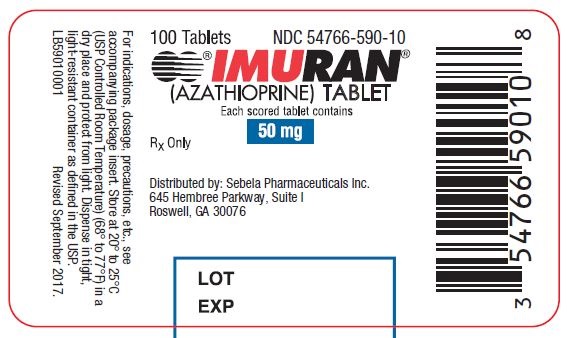
Imuran azathioprine 50 mg Tablet, 100-count — NDC 54766-590-10 (Billing 54766-0590-10)
This is a package of 100 tablets of Imuran azathioprine 50 mg Tablet from Sebela Pharmaceuticals Inc., marketed since Dec 2017 and currently FDA-listed, this package's marketing is listed to end Apr 2028; retail pharmacies pay about $8.89 per tablet (NADAC). It is this product's only package size.
NDC database record
One package, one record: these facts belong to NDC 54766-590-10 alone.
- Record
- FDA NDC Directory package listing · Human prescription drug
- Code segments
- 54766 labeler · 590 product · 10 package
- Package marketed since
- Dec 1, 2017
- Package marketing ended
- Apr 30, 2028
- Sample package
- No — commercial package
- Billing quantity
- 100 EA per package
- Barcode (UPC)
- 0354766590108
- FDA record last changed
- Jul 24, 2026
Identity & classification
Regulatory identifiers FDA, NLM and CMS codes for this package
Drug-database identifiers Medi-Span GPI and First Databank GCN / HICL / AHFS classification
- GSN (GCN sequence number): 011682
- GCN: 46771
- GPI-14 (Medi-Span): 99406010000305
- HICL (First Databank): 004523
- AHFS class code: 90:28.08.92
- RxCUI (RxNorm): 105611
Where does this data come from?
- FDA openFDA NDC Directory · synced Oct 1, 2026
- FDA label on DailyMed · label index refreshed Oct 6, 2026
- RxNorm (NLM RxNav) · catalog refreshed Oct 1, 2026
- Medi-Span GPI (licensed)
- First Databank (licensed) · refreshed Oct 1, 2026
RxNorm drug class
This medicine belongs to the Purine Antimetabolite class.
Where does this data come from?
- RxClass (NLM) · catalog refreshed Oct 1, 2026
Clinical
Azathioprine is used with other medications to prevent transplant rejection (attack of the transplanted organ by the immune system) in people who received kidney transplants. It is also used to treat severe rheumatoid arthritis (a condition in which the body attacks its own joints, causing pain, swelling, and loss of function) when other medications and treatments have not helped. Azathioprine is in a class of medications called immunosuppressants. It works by decreasing the activity of the body's immune system so it will not attack the transplanted organ or the joints.
Read the full MedlinePlus article ↗- It helps prevent your body from rejecting a transplanted kidney, and it is also used to reduce the signs and symptoms of active rheumatoid arthritis. It works by calming down the i...
- The tablets (Imuran, Azasan or generic azathioprine) are taken by mouth, usually once daily, though for rheumatoid arthritis the day's dose may be split in two. Follow your prescri...
- It usually takes about 6 to 8 weeks, and your doctor will want to give it at least 12 weeks before deciding whether it is helping. Keep taking it as directed in the meantime.
- How long before it works for my arthritis?
Patient education
Supplement & herbal interactions
Some supplements/herbs that may interact with Azathioprine — tap one for details:
Azathioprine may be associated with lower levels of 1 nutrient — worth a chat with your pharmacist, not a cause for alarm.
Where does this data come from?
- MedlinePlus (NLM) · refreshed Oct 1, 2026
- FDA label on DailyMed · label index refreshed Oct 6, 2026
Ask a licensed pharmacist directly — free, answered by our team.
Pricing
A drug doesn't have one price. Each row is a different public payment system, and none is what you'd pay at the counter — that depends on your insurance. The ⓘ on each row explains what it measures.
| Price system | Per ea | Per package |
|---|---|---|
| Retail pharmacies payNADAC · weekly | $8.891 | $889.07 / 100 tablets |
| Medicaid paysCMS SDUD · 12 mo | No recent Medicaid claims on file for this NDC — rare and low-volume NDCs are suppressed in the public data. | |
| Medicare drug plans payPart D · Q2 2026 | $8.73 | $873.12 / 100 tablets |
| Medicare Part B allowsASP · J7500 | $0.136 / J7500 unit | — |
Where does this data come from?
- CMS NADAC weekly file · file of Apr 15, 2026
- CMS ASP pricing files · refreshed Sep 20, 2026
- CMS Medicaid State Drug Utilization Data · refreshed Oct 8, 2026
- CMS Part D plan pricing files · refreshed Sep 24, 2026
- VA National Acquisition Center price file
Billing & reimbursement
Where does this data come from?
- CMS ASP NDC-HCPCS crosswalk · refreshed Sep 22, 2026
- DMEPDAC NDC-HCPCS crosswalk
- openFDA NSDE billing units · refreshed Oct 7, 2026
Packaging — all sizes for this product
| Package NDC | Description | Marketing start | Marketing end | Status |
|---|---|---|---|---|
| 54766-0590-10 You're viewing this Main listing | 100 TABLET in 1 BOTTLE | 2017-12-01 | Apr 30, 2028 | Active |
Therapeutic equivalents
| Product | Labeler | Pack | NADAC/unit | TE | Status | Price vs. this |
|---|---|---|---|---|---|---|
| Azathioprine 50 mg 16571-0835-01 | Rising | 100 tablets | $0.124 | AB | Availability likely | save 99% |
| Azathioprine 50 mg 60219-1076-01 | Amneal | 100 tablets | $0.124 | AB | Availability likely | save 99% |
| Azathioprine 50 mg 67877-0493-01 | Ascend | 100 tablets | $0.124 | AB | Availability likely | save 99% |
| Azathioprine 50 mg 68084-0229-01 | American | 100 tablets | $0.124 | AB | Availability likely | save 99% |
| Azathioprine 50 mg 68382-0003-01 | Zydus | 100 tablets | $0.124 | AB | Availability likely | save 99% |
| Azathioprine 50 mg 68462-0502-01 | Glenmark | 100 tablets | $0.124 | AB | Availability likely | save 99% |
| Imuran 50 mgthis 54766-0590-10 | Sebela | 100 tablets | $8.891 | AB | Availability likely | — |
| Azathioprine 50 mg 42291-0071-01 | AvKARE | 100 tablets | — | AB | FDA listed | — |
| Azathioprine 50 mg 51407-0182-01 | Golden | 100 tablets | — | AB | FDA listed | — |
| Azathioprine 50 mg 65841-0602-01 | Zydus | 100 tablets | — | AB | FDA listed | — |
| Azathioprine 50 mg 68071-3772-06 | NuCare | 60 tablets | — | AB | FDA listed | — |
| Azathioprine 50 mg 68071-3997-06 | NuCare | 60 tablets | — | AB | FDA listed | — |
| Azathioprine 50 mg 69238-1076-01 | Amneal | 100 tablets | — | AB | FDA listed | — |
| Azathioprine 50 mg 70518-3544-00 | REMEDYREPACK | 100 tablets | — | AB | FDA listed | — |
| Azathioprine 50 mg 71610-0124-09 | Aphena | 9000 tablets | — | AB | FDA listed | — |
| Azathioprine 50 mg 72789-0129-30 | PD-Rx | 30 tablets | — | AB | FDA listed | — |
| Imuran 50 mg 83107-0025-10 | Legacy | 100 tablets | — | AB | FDA listed | — |
Where does this data come from?
- FDA openFDA NDC Directory · synced Oct 1, 2026
- FDA Orange Book · refreshed Oct 3, 2026
- CMS NADAC weekly file · file of Apr 15, 2026
Availability & generic status
FDA-approved generic versions are listed, and recent pricing/market data suggests they may be available — see Therapeutic equivalents.
Where does this data come from?
- FDA Orange Book · refreshed Oct 3, 2026
Inactive Ingredients / Excipients
Inactive ingredients, also called excipients, are components of the drug product other than the active ingredient. They may include fillers, dyes, coatings, preservatives, flavors, or other formulation ingredients.
🧪 Avoiding an ingredient? See Azathioprine inactive ingredients by manufacturer: every current product's list side by side, so you can ask your pharmacy for the version that does not list it.
💡 Tap an ingredient (hover on desktop) to see what it is and why it’s used.
-
UNII J2B2A4N98G
Lactose is a natural sugar derived from milk. In medications, it serves as a filler and binder to add bulk and help hold tablet or capsule ingredients together during manufacturing.
-
UNII 70097M6I30
Magnesium stearate is a salt made from magnesium and stearic acid, a fatty substance. It's used in tablets and capsules as a lubricant and glidant to help ingredients flow smoothly during manufacturing and prevent sticking.
-
UNII FZ989GH94E
Povidone is a synthetic polymer made from a plastic-like material. It acts as a binder to hold tablet ingredients together and as a disintegrant to help the tablet break apart in your stomach so the medicine can be absorbed.
-
UNII 8I089SAH3T
A carbohydrate powder extracted from potatoes. It serves as a filler to add bulk and volume to the tablet or capsule, and as a disintegrant to help the medicine break apart and release its active ingredient in your body.
-
UNII 4ELV7Z65AP
Stearic acid is a fatty acid derived from plant or animal sources. It acts as a binder and lubricant in tablets and capsules, helping them hold together and flow smoothly during manufacturing.
5 inactive ingredients listed in the exact product block matched to this NDC.
Where does this data come from?
ingredient classCode="IACT" elements from the exact product block matched by this NDC. Label-section narrative from DailyMed / the openFDA label index is shown separately when available.- FDA label on DailyMed · label index refreshed Oct 6, 2026
- FDA openFDA NDC Directory · synced Oct 1, 2026
Inactive ingredient FAQ
Are inactive ingredients the same for every manufacturer?
Why might an inactive ingredient be missing?
Can inactive ingredients matter?
Manufacturer & labeler
More NDCs from Sebela Pharmaceuticals Inc. labeler code 54766
- Ridaura auranofin 3 mg Capsule NDC 54766-093-06
- Motofen difenoxin and atropine sulfate 1 mg; .025 mg Tablet NDC 54766-200-04
- Pramosone Cream hydrocortisone acetate and pramoxine hydrochloride 10 mg/g; 10 mg/g Cream NDC 54766-716-03
- Pramosone hydrocortisone acetate and pramoxine hydrochloride 25 mg/mL; 10 mg/mL Lotion NDC 54766-726-04
- Pramosone hydrocortisone acetate and pramoxine hydrochloride 10 mg/mL; 10 mg/mL Lotion NDC 54766-729-04
- Pramosone hydrocortisone acetate and pramoxine hydrochloride 10 mg/g; 10 mg/g Ointment NDC 54766-763-04
- Naftin Naftifine Hydrochloride 2 g/100g Gel NDC 54766-772-45
- Pramosone hydrocortisone acetate and pramoxine hydrochloride 25 mg/g; 10 mg/g Ointment NDC 54766-777-04
Where does this data come from?
- FDA openFDA NDC Directory · synced Oct 1, 2026
- Drugs@FDA
Full prescribing information FDA SPL
🚨 Boxed Warning ▾
WARNING - MALIGNANCY Chronic immunosuppression with IMURAN, a purine antimetabolite increases risk of malignancy in humans. Reports of malignancy include post-transplant lymphoma and hepatosplenic T-cell lymphoma (HSTCL) in patients with inflammatory bowel disease. Physicians using this drug should be very familiar with this risk as well as with the mutagenic potential to both men and women and with possible hematologic toxicities.
Physicians should inform patients of the risk of malignancy with IMURAN. See WARNINGS.
🎯 Indications and Usage ▾
INDICATIONS AND USAGE: IMURAN is indicated as an adjunct for the prevention of rejection in renal homotransplantation. It is also indicated for the management of active rheumatoid arthritis to reduce signs and symptoms. Renal Homotransplantation: IMURAN is indicated as an adjunct for the prevention of rejection in renal homotransplantation.
Experience with over 16,000 transplants shows a 5-year patient survival of 35% to 55%, but this is dependent on donor, match for HLA antigens, anti-donor or anti-B-cell alloantigen antibody, and other variables. The effect of IMURAN on these variables has not been tested in controlled trials. Rheumatoid Arthritis: IMURAN is indicated for the treatment of active rheumatoid arthritis (RA) to reduce signs and symptoms.
Aspirin, non-steroidal anti-inflammatory drugs and/or low dose glucocorticoids may be continued during treatment with IMURAN. The combined use of IMURAN with disease modifying anti-rheumatic drugs (DMARDs) has not been studied for either added benefit or unexpected adverse effects. The use of IMURAN with these agents cannot be recommended.
⏱️ Dosage and Administration ▾
DOSAGE AND ADMINISTRATION: TPMT TESTING CANNOT SUBSTITUTE FOR COMPLETE BLOOD COUNT (CBC) MONITORING IN PATIENTS RECEIVING IMURAN. TPMT genotyping or phenotyping can be used to identify patients with absent or reduced TPMT activity. Patients with low or absent TPMT activity are at an increased risk of developing severe, life-threatening myelotoxicity from IMURAN if conventional doses are given.
Physicians may consider alternative therapies for patients who have low or absent TPMT activity (homozygous for non-functional alleles). IMURAN should be administered with caution to patients having one non-functional allele (heterozygous) who are at risk for reduced TPMT activity that may lead to toxicity if conventional doses are given. Dosage reduction is recommended in patients with reduced TPMT activity.
Early drug discontinuation may be considered in patients with abnormal CBC results that do not respond to dose reduction. Renal Homotransplantation: The dose of IMURAN required to prevent rejection and minimize toxicity will vary with individual patients; this necessitates careful management. The initial dose is usually 3 to 5 mg/kg daily, beginning at the time of transplant.
IMURAN is usually given as a single daily dose on the day of, and in a minority of cases 1 to 3 days before, transplantation. Dose reduction to maintenance levels of 1 to 3 mg/kg daily is usually possible. The dose of IMURAN should not be increased to toxic levels because of threatened rejection.
Discontinuation may be necessary for severe hematologic or other toxicity, even if rejection of the homograft may be a consequence of drug withdrawal. Rheumatoid Arthritis: IMURAN is usually given on a daily basis. The initial dose should be approximately 1.0 mg/kg (50 to 100 mg) given as a single dose or on a twice-daily schedule.
The dose may be increased, beginning at 6 to 8 weeks and thereafter by steps at 4-week intervals, if there are no serious toxicities and if initial response is unsatisfactory. Dose increments should be 0.5 mg/kg daily, up to a maximum dose of 2.5 mg/kg per day. Therapeutic response occurs after several weeks of treatment, usually 6 to 8; an adequate trial should be a minimum of 12 weeks.
Patients not improved after 12 weeks can be considered refractory. IMURAN may be continued long-term in patients with clinical response, but patients should be monitored carefully, and gradual dosage reduction should be attempted to reduce risk of toxicities. Maintenance therapy should be at the lowest effective dose, and the dose given can be lowered decrementally with changes of 0.5 mg/kg or approximately 25 mg daily every 4 weeks while other therapy is kept constant.
The optimum duration of maintenance IMURAN has not been determined. IMURAN can be discontinued abruptly, but delayed effects are possible. Patients with TPMT and/or NUDT15 Deficiency Consider testing for TPMT and NUDT15 deficiency in patients who experience severe bone marrow toxicities.
Early drug discontinuation may be considered in patients with abnormal CBC results that do not respond to dose reduction (see CLINICAL PHARMACOLOGY, WARNINGS: Cytopenias, and PRECAUTIONS: Laboratory Tests). Homozygous deficiency in either TPMT or NUDT15 Because of the risk of increased toxicity, consider alternative therapies for patients who are known to have TPMT or NUDT15 deficiency (see CLINICAL PHARMACOLOGY, WARNINGS: Cytopenias, and PRECAUTIONS: Laboratory Tests). Heterozygous deficiency in TPMT and/or NUDT15 Because of the risk of increased toxicity, dosage reduction is recommended in patients known to have heterozygous deficiency of TPMT or NUDT15.
Patients who are heterozygous for both TPMT and NUDT15 deficiency may require more substantial dosage reductions (see CLINICAL PHARMACOLOGY, WARNINGS: Cytopenias, and PRECAUTIONS: Laboratory Tests). Use in Renal Dysfunction: Relatively oliguric patients, especially those with tubular necrosis in the immediate postcadaveric transplant period, may have delaye… [Excerpted — this section continues on DailyMed.]
⛔ Contraindications ▾
CONTRAINDICATIONS: IMURAN should not be given to patients who have shown hypersensitivity to the drug. IMURAN should not be used for treating rheumatoid arthritis in pregnant women. Patients with rheumatoid arthritis previously treated with alkylating agents (cyclophosphamide, chlorambucil, melphalan, or others) may have a prohibitive risk of malignancy if treated with IMURAN.
⚠️ Warnings ▾
WARNINGS: Malignancy Patients receiving immunosuppressants, including IMURAN, are at increased risk of developing lymphoma and other malignancies, particularly of the skin. Physicians should inform patients of the risk of malignancy with IMURAN. As usual for patients with increased risk for skin cancer, exposure to sunlight and ultraviolet light should be limited by wearing protective clothing and using a sunscreen with a high protection factor.
Post-transplant Renal transplant patients are known to have an increased risk of malignancy, predominantly skin cancer and reticulum cell or lymphomatous tumors. The risk of post-transplant lymphomas may be increased in patients who receive aggressive treatment with immunosuppressive drugs, including IMURAN. Therefore, immunosuppressive drug therapy should be maintained at the lowest effective levels.
Rheumatoid Arthritis Information is available on the risk of malignancy with the use of IMURAN in rheumatoid arthritis (see ADVERSE REACTIONS ). It has not been possible to define the precise risk of malignancy due to IMURAN. The data suggest the risk may be elevated in patients with rheumatoid arthritis, though lower than for renal transplant patients.
However, acute myelogenous leukemia as well as solid tumors have been reported in patients with rheumatoid arthritis who have received IMURAN. Inflammatory Bowel Disease Postmarketing cases of hepatosplenic T-cell lymphoma (HSTCL), a rare type of T-cell lymphoma, have been reported in patients treated with IMURAN. These cases have had a very aggressive disease course and have been fatal.
The majority of reported cases have occurred in patients with Crohn's disease or ulcerative colitis and the majority were in adolescent and young adult males. Some of the patients were treated with IMURAN as monotherapy and some had received concomitant treatment with a TNFα blocker at or prior to diagnosis. The safety and efficacy of IMURAN for the treatment of Crohn's disease and ulcerative colitis have not been established.
Cytopenias Severe leukopenia, thrombocytopenia, anemias including macrocytic anemia, and/or pancytopenia may occur in patients being treated with IMURAN. Severe bone marrow suppression may also occur. Hematologic toxicities are dose-related and may be more severe in renal transplant patients whose homograft is undergoing rejection.
It is suggested that patients on IMURAN have complete blood counts, including platelet counts, weekly during the first month, twice monthly for the second and third months of treatment, then monthly or more frequently if dosage alterations or other therapy changes are necessary. Delayed hematologic suppression may occur. Prompt reduction in dosage or temporary withdrawal of the drug may be necessary if there is a rapid fall in or persistently low leukocyte count, or other evidence of bone marrow depression.
Leukopenia does not correlate with therapeutic effect; therefore, the dose should not be increased intentionally to lower the white blood cell count. TPMT or NUDT15 Deficiency Patients with thiopurine S-methyl transferase (TPMT) or nucleotide diphosphatase (NUDT15) deficiency may be at an increased risk of severe and life-threatening myelotoxicity if receiving conventional doses of IMURAN (see CLINCIAL PHARMACOLOGY). Death associated with pancytopenia has been reported in patients with absent TPMT activity receiving azathioprine.
In patients with severe myelosuppression, consider evaluation for TPMT and NUDT15 deficiency (see PRECAUTIONS: Laboratory Tests). Consider alternative therapy in patients with homozygous TPMT or NUDT15 deficiency and reduced dosages in patients with heterozygous deficiency (see DOSAGE AND ADMINISTRATION). Serious infections Patients receiving immunosuppressants, including Imuran, are at increased risk for bacterial, viral, fungal, protozoal, and opportunistic infections, including reactivation of latent infections.
These infections may lead to serious, including fatal outcomes.… [Excerpted — this section continues on DailyMed.]
🤒 Adverse Reactions ▾
ADVERSE REACTIONS: The principal and potentially serious toxic effects of IMURAN are hematologic and gastrointestinal. The risks of secondary infection and malignancy are also significant (see WARNINGS ). The frequency and severity of adverse reactions depend on the dose and duration of IMURAN as well as on the patient's underlying disease or concomitant therapies.
The incidence of hematologic toxicities and neoplasia encountered in groups of renal homograft recipients is significantly higher than that in studies employing IMURAN for rheumatoid arthritis. The relative incidences in clinical studies are summarized below: * Data on the rate and risk of neoplasia among persons with rheumatoid arthritis treated with azathioprine are limited. The incidence of lymphoproliferative disease in patients with RA appears to be significantly higher than that in the general population.
In one completed study, the rate of lymphoproliferative disease in RA patients receiving higher than recommended doses of azathioprine (5 mg/kg per day) was 1.8 cases per 1000 patient-years of follow-up, compared with 0.8 cases per 1000 patient-years of follow-up in those not receiving azathioprine. However, the proportion of the increased risk attributable to the azathioprine dosage or to other therapies (i.e., alkylating agents) received by patients treated with azathioprine cannot be determined. Toxicity Renal Homograft Rheumatoid Arthritis Leukopenia (any degree) >50% 28% <2500 cells/mm 3 16% 5.3% Infections 20% <1% Neoplasia * Lymphoma 0.5% Others 2.8% Hematologic: Leukopenia and/or thrombocytopenia are dose-dependent and may occur late in the course of therapy with IMURAN.
Dose reduction or temporary withdrawal may result in reversal of these toxicities. Infection may occur as a secondary manifestation of bone marrow suppression or leukopenia, but the incidence of infection in renal homotransplantation is 30 to 60 times that in rheumatoid arthritis. Anemias, including macrocytic anemia, and/or bleeding have been reported.
Patients with low or absent TPMT or NUDT15 activity are at increased risk for severe, life-threatening myelosuppression from IMURAN (see CLINICAL PHARMACOLOGY, WARNINGS: Cytopenias and PRECAUTIONS: Laboratory Tests, DOSAGE AND ADMINISTRATION). Gastrointestinal: Nausea and vomiting may occur within the first few months of therapy with IMURAN, and occurred in approximately 12% of 676 rheumatoid arthritis patients. The frequency of gastric disturbance often can be reduced by administration of the drug in divided doses and/or after meals.
However, in some patients, nausea and vomiting may be severe and may be accompanied by symptoms such as diarrhea, fever, malaise, and myalgias (see PRECAUTIONS ). Vomiting with abdominal pain may occur rarely with a hypersensitivity pancreatitis. Hepatotoxicity manifest by elevation of serum alkaline phosphatase, bilirubin, and/or serum transaminases is known to occur following azathioprine use, primarily in allograft recipients.
Hepatotoxicity has been uncommon (less than 1%) in rheumatoid arthritis patients. Hepatotoxicity following transplantation most often occurs within 6 months of transplantation and is generally reversible after interruption of IMURAN. A rare, but life-threatening hepatic veno-occlusive disease associated with chronic administration of azathioprine has been described in transplant patients and in one patient receiving IMURAN for panuveitis.
11, 12, 13 Periodic measurement of serum transaminases, alkaline phosphatase, and bilirubin is indicated for early detection of hepatotoxicity. If hepatic veno-occlusive disease is clinically suspected, IMURAN should be permanently withdrawn. Others: Additional side effects of low frequency have been reported.
These include skin rashes, alopecia, fever, arthralgias, diarrhea, steatorrhea, negative nitrogen balance, reversible interstitial pneumonitis, hepatosplenic T-cell lymphoma (see Warnings – Malignancy ), and Sweet's Syndrome (acute febrile… [Excerpted — this section continues on DailyMed.]
🔄 Drug Interactions ▾
Drug Interactions: Use with xanthine oxidase (XO) inhibitors: One of the pathways for inactivation of azathioprine is inhibited by XO inhibitors (allopurinol or febuxostat). Patients receiving IMURAN and allopurinol concomitantly should have a dose reduction of IMURAN, to approximately 1/ 3 to 1/ 4 the usual dose. Concomitant use of IMURAN and febuxostat is not recommended.
Inhibition of XO may cause increased plasma concentrations of azathioprine or its metabolite, 6-MP, leading to toxicity. It is recommended that a further dose reduction or alternative therapies be considered for patients with low or absent TPMT activity receiving IMURAN and xanthine oxidase inhibitors because both TPMT and XO inactivation pathways are affected (see CLINICAL PHARMACOLOGY, WARNINGS, PRECAUTIONS: Laboratory Tests and ADVERSE REACTIONS sections). Use with Aminosalicylates: There is in vitro evidence that aminosalicylate derivatives (e.g., sulphasalazine, mesalazine, or olsalazine) inhibit the TPMT enzyme.
Concomitant use of these agents with IMURAN should be done with caution. Use with Other Agents Affecting Myelopoesis: Drugs which may affect leukocyte production, including co-trimoxazole, may lead to exaggerated leukopenia, especially in renal transplant recipients. Use with Angiotensin-Converting Enzyme Inhibitors: The use of angiotensin-converting enzyme inhibitors to control hypertension in patients on azathioprine has been reported to induce anemia and severe leukopenia.
Use with Warfarin: IMURAN may inhibit the anticoagulant effect of warfarin. Use with ribavirin: The use of ribavirin for hepatitis C in patients receiving azathioprine has been reported to induce severe pancytopenia and may increase the risk of azathioprine-related myelotoxicity. Inosine monophosphate dehydrogenase (IMDH) is required for one of the metabolic pathways of azathioprine.
Ribavirin is known to inhibit IMDH, thereby leading to accumulation of an azathioprine metabolite, 6-methylthioionosine monophosphate (6-MTITP), which is associated with myelotoxicity (neutropenia, thrombocytopenia, and anemia). Patients receiving azathioprine with ribavirin should have complete blood counts, including platelet counts, monitored weekly for the first month, twice monthly for the second and third months of treatment, then monthly or more frequently if dosage or other therapy changes are necessary.
🤰 Pregnancy ▾
Pregnancy: Teratogenic Effects: See WARNINGS section.
🧒 Pediatric Use ▾
Pediatric Use: Safety and efficacy of azathioprine in pediatric patients have not been established.
🆘 Overdosage ▾
OVERDOSAGE: The oral LD 50 s for single doses of IMURAN in mice and rats are 2500 mg/kg and 400 mg/kg, respectively. Very large doses of this antimetabolite may lead to marrow hypoplasia, bleeding, infection, and death. About 30% of IMURAN is bound to serum proteins, but approximately 45% is removed during an 8-hour hemodialysis.
14 A single case has been reported of a renal transplant patient who ingested a single dose of 7500 mg IMURAN. The immediate toxic reactions were nausea, vomiting, and diarrhea, followed by mild leukopenia and mild abnormalities in liver function. The white blood cell count, SGOT, and bilirubin returned to normal 6 days after the overdose.
🧬 Clinical Pharmacology ▾
CLINICAL PHARMACOLOGY: Azathioprine is well absorbed following oral administration. Maximum serum radioactivity occurs at 1 to 2 hours after oral 35 S-azathioprine and decays with a half-life of 5 hours. This is not an estimate of the half-life of azathioprine itself, but is the decay rate for all 35 S-containing metabolites of the drug.
Because of extensive metabolism, only a fraction of the radioactivity is present as azathioprine. Usual doses produce blood levels of azathioprine, and of mercaptopurine derived from it, which are low (<1 mcg/mL). Blood levels are of little predictive value for therapy since the magnitude and duration of clinical effects correlate with thiopurine nucleotide levels in tissues rather than with plasma drug levels.
Azathioprine and mercaptopurine are moderately bound to serum proteins (30%) and are partially dialyzable. See OVERDOSAGE . Azathioprine is metabolized to 6-mercaptopurine (6-MP).
Both compounds are rapidly eliminated from blood and are oxidized or methylated in erythrocytes and liver; no azathioprine or mercaptopurine is detectable in urine after 8 hours. Activation of 6-mercaptopurine occurs via hypoxanthine-guanine phosphoribosyltransferase (HGPRT) and a series of multi-enzymatic processes involving kinases to form 6-thioguanine nucleotides (6-TGNs) as major metabolites). The cytotoxicity of azathioprine is due, in part, to the incorporation of 6-TGN into DNA.
6-MP undergoes two major inactivation routes. One is thiol methylation, which is catalyzed by the enzyme thiopurine S-methyltransferase (TPMT), to form the inactive metabolite methyl-6-MP (6-MeMP). Another inactivation pathway is oxidation, which is catalyzed by xanthine oxidase (XO) to form 6-thiouric acid.
The nucleotide diphosphatase (NUDT15) enzyme is involved in conversion of the 6-TGNs to inactive 6-TG monophosphates. TPMT activity correlates inversely with 6-TGN levels in erythrocytes and presumably other hematopoietic tissues, since these cells have negligible xanthine oxidase (involved in the other inactivation pathway) activities. Genetic polymorphisms influence TPMT and NUDT15 activity.
Several published studies indicate that patients with reduced TPMT or NUDT15 activity receiving usual doses of 6-MP or azathioprine, accumulate excessive cellular concentrations of active 6-TGNs, and are at higher risk for severe myelosuppression. Because of the risk of toxicity, patients with TPMT or NUDT15 deficiency require alternative therapy or dose modification (see DOSAGE and ADMINISTRATION). Approximately 0.3% (1:300) of patients of European or African ancestry have two loss-of-function alleles of the TPMT gene and have little or no TPMT activity (homozygous deficient or poor metabolizers), and approximately 10% of patients have one loss-of-function TPMT allele leading to intermediate TPMT activity (heterozygous deficient or intermediate metabolizers).
The TPMT*2, TPMT*3A, and TPMT*3C alleles account for about 95% of individuals with reduced levels of TPMT activity. NUDT15 deficiency is detected in <1% of patients of European or African ancestry. Among patients of East Asian ancestry (i.e., Chinese, Japanese, Vietnamese), 2% have two loss-of-function alleles of the NUDT15 gene, and approximately 21% have one loss-of-function allele.
The p.R139C variant of NUDT15 (present on the *2 and *3 alleles) is the most commonly observed, but other less common loss-of-function NUDT15 alleles have been observed. Inhibition of xanthine oxidase (XO) may cause increased plasma concentrations of azathioprine or its metabolites leading to toxicity (see PRECAUTIONS: Drug Interactions). Proportions of metabolites are different in individual patients, and this presumably accounts for variable magnitude and duration of drug effects.
Renal clearance is probably not important in predicting biological effectiveness or toxicities, although dose reduction is practiced in patients with poor renal function. Homograft Survival: The use of azathioprine for… [Excerpted — this section continues on DailyMed.]
📦 How Supplied / Storage and Handling ▾
HOW SUPPLIED: 50 mg overlapping circle-shaped, yellow to off-white, scored tablets imprinted with “IMURAN” and “50” on each tablet; bottle of 100 (NDC 54766-590-10). Store at 20-25 °C (USP Controlled Room Temperature) (68° to 77°F) in a dry place and protect from light.
📦 Storage and Handling ▾
Store at 20-25 °C (USP Controlled Room Temperature) (68° to 77°F) in a dry place and protect from light.
📋 Description ▾
DESCRIPTION: IMURAN (azathioprine), an immunosuppressive antimetabolite, is available in tablet form for oral administration. Each scored tablet contains 50 mg azathioprine and the inactive ingredients lactose, magnesium stearate, potato starch, povidone, and stearic acid. Azathioprine is chemically 6-[(1-methyl-4-nitro-1 H -imidazol-5-yl)thio]-1 H -purine.
The structural formula of azathioprine is: It is an imidazolyl derivative of 6-mercaptopurine and many of its biological effects are similar to those of the parent compound. Azathioprine is insoluble in water, but may be dissolved with addition of one molar equivalent of alkali. Azathioprine is stable in solution at neutral or acid pH but hydrolysis to mercaptopurine occurs in excess sodium hydroxide (0.1N), especially on warming.
Conversion to mercaptopurine also occurs in the presence of sulfhydryl compounds such as cysteine, glutathione, and hydrogen sulfide. Structural Formula
💬 Information for Patients ▾
Information for Patients: Patients being started on IMURAN should be informed of the necessity of periodic blood counts while they are receiving the drug and should be encouraged to report any unusual bleeding or bruising to their physician. They should be informed of the danger of infection while receiving IMURAN and asked to report signs and symptoms of infection to their physician. Careful dosage instructions should be given to the patient, especially when IMURAN is being administered in the presence of impaired renal function or concomitantly with allopurinol (see Drug Interactions subsection and DOSAGE AND ADMINISTRATION ).
Patients should be advised of the potential risks of the use of IMURAN during pregnancy and during the nursing period. The increased risk of malignancy following therapy with IMURAN should be explained to the patient.
⚠️ Precautions ▾
PRECAUTIONS: General: A gastrointestinal hypersensitivity reaction characterized by severe nausea and vomiting has been reported. These symptoms may also be accompanied by diarrhea, rash, fever, malaise, myalgias, elevations in liver enzymes, and occasionally, hypotension. Symptoms of gastrointestinal toxicity most often develop within the first several weeks of therapy with IMURAN and are reversible upon discontinuation of the drug.
The reaction can recur within hours after re-challenge with a single dose of IMURAN. Information for Patients: Patients being started on IMURAN should be informed of the necessity of periodic blood counts while they are receiving the drug and should be encouraged to report any unusual bleeding or bruising to their physician. They should be informed of the danger of infection while receiving IMURAN and asked to report signs and symptoms of infection to their physician.
Careful dosage instructions should be given to the patient, especially when IMURAN is being administered in the presence of impaired renal function or concomitantly with allopurinol (see Drug Interactions subsection and DOSAGE AND ADMINISTRATION ). Patients should be advised of the potential risks of the use of IMURAN during pregnancy and during the nursing period. The increased risk of malignancy following therapy with IMURAN should be explained to the patient.
Laboratory Tests: Complete Blood Count (CBC) Monitoring: Patients on IMURAN should have complete blood counts, including platelet counts, weekly during the first month, twice monthly for the second and third months of treatment, then monthly or more frequently if dosage alterations or other therapy changes are necessary. TPMT and NUDT15 Testing: Consider genotyping or phenotyping patients for TPMT deficiency and genotyping for NUDT15 deficiency in patients with severe myelosuppression. TPMT and NUDT15 testing cannot substitute for complete blood count (CBC) monitoring in patients receiving IMURAN.
Accurate phenotyping (red blood cell TPMT activity) results are not possible in patients who have received recent blood transfusions (see CLINICAL PHARMACOLOGY, WARNINGS: Cytopenias, ADVERSE REACTIONS and DOSAGE AND ADMINISTRATION sections). Drug Interactions: Use with xanthine oxidase (XO) inhibitors: One of the pathways for inactivation of azathioprine is inhibited by XO inhibitors (allopurinol or febuxostat). Patients receiving IMURAN and allopurinol concomitantly should have a dose reduction of IMURAN, to approximately 1/ 3 to 1/ 4 the usual dose.
Concomitant use of IMURAN and febuxostat is not recommended. Inhibition of XO may cause increased plasma concentrations of azathioprine or its metabolite, 6-MP, leading to toxicity. It is recommended that a further dose reduction or alternative therapies be considered for patients with low or absent TPMT activity receiving IMURAN and xanthine oxidase inhibitors because both TPMT and XO inactivation pathways are affected (see CLINICAL PHARMACOLOGY, WARNINGS, PRECAUTIONS: Laboratory Tests and ADVERSE REACTIONS sections).
Use with Aminosalicylates: There is in vitro evidence that aminosalicylate derivatives (e.g., sulphasalazine, mesalazine, or olsalazine) inhibit the TPMT enzyme. Concomitant use of these agents with IMURAN should be done with caution. Use with Other Agents Affecting Myelopoesis: Drugs which may affect leukocyte production, including co-trimoxazole, may lead to exaggerated leukopenia, especially in renal transplant recipients.
Use with Angiotensin-Converting Enzyme Inhibitors: The use of angiotensin-converting enzyme inhibitors to control hypertension in patients on azathioprine has been reported to induce anemia and severe leukopenia. Use with Warfarin: IMURAN may inhibit the anticoagulant effect of warfarin. Use with ribavirin: The use of ribavirin for hepatitis C in patients receiving azathioprine has been reported to induce severe pancytopenia and may increase the risk of azathioprine-related myelotoxicity.
Inosine mo… [Excerpted — this section continues on DailyMed.]
🍼 Nursing Mothers ▾
Nursing Mothers: The use of IMURAN in nursing mothers is not recommended. Azathioprine or its metabolites are transferred at low levels, both transplacentally and in breast milk. 8, 9, 10 Because of the potential for tumorigenicity shown for azathioprine, a decision should be made whether to discontinue nursing or discontinue the drug, taking into account the importance of the drug to the mother.
📄 Carcinogenesis, Mutagenesis, Impairment of Fertility ▾
Carcinogenesis, Mutagenesis, Impairment of Fertility: See WARNINGS section.
📚 References ▾
REFERENCES: Clark JM. The mutagenicity of azathioprine in mice, Drosophila melanogaster, and Neurospora crassa. Mutat Res.
1975; 28:87-99. Data on file, Sebela Ireland Ltd. Tagatz GE, Simmons RL.
Pregnancy after renal transplantation. Ann Intern Med . 1975; 82:113-114.
Editorial Notes. Cote' CJ, Meuwissen HJ, Pickering RJ. Effects on the neonate of prednisone and azathioprine administered to the mother during pregnancy .
J Pediatr . 1974; 85:324-328. DeWitte DB, Buick MK, Cyran SE, et al.
Neonatal pancytopenia and severe combined immunodeficiency associated with antenatal administration of azathioprine and prednisone. J Pediatr . 1984; 105:625-628.
Williamson RA, Karp LE. Azathioprine teratogenicity: review of the literature and case report. Obstet Gynecol .
1981; 58:247-250. Tallent MB, Simmons RL, Najarian JS. Birth defects in child of male recipient of kidney transplant.
JAMA . 1970; 211: 1854-1855. Data on file, Sebela Ireland Ltd.
Saarikoski S, Seppälä M. Immunosuppression during pregnancy: transmission of azathioprine and its metabolites from the mother to the fetus. Am J Obstet Gynecol .
1973; 115:1100-1106. Coulam CB, Moyer TP, Jiang NS, et al. Breast-feeding after renal transplantation.
Transplant Proc . 1982; 14: 605-609. Read AE, Wiesner RH, LaBrecque DR, et al.
Hepatic veno-occlusive disease associated with renal transplantation and azathioprine therapy. Ann Intern Med . 1986; 104:651-655.
Katzka DA, Saul SH, Jorkasky D, et al. Azathioprine and hepatic veno-occlusive disease in renal transplant patients. Gastroenterology .
1986; 90:446-454. Weitz H, Gokel JM, Loeshke K, et al. Veno-occlusive disease of the liver in patients receiving immunosuppressive therapy.
Virchows Arch A Pathol Anat Histol . 1982; 395:245-256. Schusziarra V, Ziekursch V, Schlamp R, et al.
Pharmacokinetics of azathioprine under haemodialysis. Int J Clin Pharmacol Biopharm . 1976; 14:298-302.
Recommendations for the safe handling of parenteral antineoplastic drugs. Washington, DC: Division of Safety; Clinical Center Pharmacy Department and Cancer Nursing Services, National Institute of Health; 1992. US Dept of Health and Human Services.
Public Health Service Publication NIH 92-2621. AMA Council on Scientific Affairs. Guidelines for handling parenteral antineoplastics.
JAMA . 1985; 253:1590-1592. National Study Commission on Cytotoxic Exposure.
Recommendations for handling cytotoxic agents. 1987. Available from Louis P.
Jeffrey, Chairman, National Study Commission on Cytotoxic Exposure. Massachusetts College of Pharmacy and Allied Health Sciences, 179 Longwood Avenue, Boston, MA 02115. Clinical Oncological Society of Australia.
Guidelines and recommendations for safe handling of antineoplastic agents. Med J Aust . 1983; 1:426-428.
Jones RB, Frank R, Mass T. Safe handling of chemotherapeutic agents: a report from The Mount Sinai Medical Center. CA Cancer J for Clinicians .
1983; 33:258-263. American Society of Hospital Pharmacists. ASHP technical assistance bulletin on handling cytotoxic and hazardous drugs.
Am J Hosp Pharm . 1990; 47:1033-1049. Yodaiken RE, Bennett D.
OSHA Work-Practice guidelines for personnel dealing with cytotoxic (antineoplastic) drugs. Am J Hosp Pharm , 1996; 43:1193-1204. IMURAN is a registered trademark of Sebela International Ltd.
Distributed by Sebela Pharmaceuticals Inc. 645 Hembree Parkway, Suite I Roswell, GA 30076 www.sebelapharma.com Toll Free 1-844-732-3521 ©2024 Sebela Pharmaceuticals Inc. All rights reserved.
Revised 07/2024 PI59010001 Sebela Pharmaceuticals Inc.
📄 Package Label / Principal Display Panel ▾
Imuran 50mg - 100 count Carton CA59010001
100 Tablets NDC 54766-590-10 IMURAN ® (AZATHIOPRINE) Each scored tablet contains 50 mg Rx Only Sebela Pharmaceuticals Inc. Package Label