
Erlotinib 25 mg Tablet, Film Coated — NDC 63304-095-11 (Billing 63304-0095-11)
This is a package of Erlotinib 25 mg Tablet, Film Coated from Sun Pharmaceutical Industries, Inc., marketed since Nov 2019 and currently FDA-listed. It is the main listing for this product, which comes in 2 package sizes.
NDC database record
One package, one record: these facts belong to NDC 63304-095-11 alone.
- Record
- FDA NDC Directory package listing · Human prescription drug
- Code segments
- 63304 labeler · 095 product · 11 package
- Package marketed since
- Nov 5, 2019
- Sample package
- No — commercial package
- Listing certified through
- Dec 31, 2026
- Barcode (UPC)
- 0363304095302
- FDA record last changed
- Jul 24, 2026
Identity & classification
Regulatory identifiers FDA, NLM and CMS codes for this package
Drug-database identifiers Medi-Span GPI and First Databank GCN / HICL / AHFS classification
- GSN (GCN sequence number): 058376
- GCN: 23795
- GPI-14 (Medi-Span): 21360025100320
- HICL (First Databank): 026745
- AHFS class code: 10:00.00.00
- RxCUI (RxNorm): 603203
Where does this data come from?
- FDA openFDA NDC Directory · synced Oct 8, 2026
- FDA label on DailyMed · label index refreshed Oct 8, 2026
- RxNorm (NLM RxNav) · catalog refreshed Oct 1, 2026
- Medi-Span GPI (licensed)
- First Databank (licensed) · refreshed Oct 8, 2026
RxNorm drug class
This medicine belongs to the Kinase Inhibitor class.
Where does this data come from?
- RxClass (NLM) · catalog refreshed Oct 1, 2026
Clinical
Erlotinib is used to treat certain types of non-small cell lung cancer that has spread to nearby tissues or to other parts of the body in patients who have already been treated with at least one other chemotherapy medication and have not gotten better. Erlotinib is also used in combination with another medication (gemcitabine [Gemzar]) to treat pancreatic cancer that has spread to nearby tissues or to other parts of the body and cannot be treated with surgery. Erlotinib is in a class of medications called kinase inhibitors. It works by blocking the action of an abnormal protein that signals ca...
Read the full MedlinePlus article ↗- It treats metastatic non-small cell lung cancer when the tumor has certain EGFR mutations. It is also used with gemcitabine as first treatment for advanced pancreatic cancer. Your...
- Take it by mouth once a day on an empty stomach, at least an hour before or two hours after food. Taking it with food changes how much your body absorbs. Follow your prescriber's i...
- Rash and diarrhea are the most common, usually starting in the first month. Fatigue, appetite loss, cough, shortness of breath, nausea and vomiting are also common. Call us if the...
- Call for new or worsening breathing trouble, cough or fever, severe diarrhea, blistering or peeling skin, eye pain, or severe stomach pain. Also report any unusual bleeding. These...
Patient education
Supplement & herbal interactions
Some supplements/herbs that may interact with Erlotinib — tap one for details:
Where does this data come from?
- MedlinePlus (NLM) · refreshed Oct 8, 2026
- FDA label on DailyMed · label index refreshed Oct 8, 2026
Ask a licensed pharmacist directly — free, answered by our team.
Pricing
A drug doesn't have one price. Each row is a different public payment system, and none is what you'd pay at the counter — that depends on your insurance. The ⓘ on each row explains what it measures.
| Price system | Per each | Per package |
|---|---|---|
| Retail pharmacies payNADAC · weekly | Not in the retail survey — common for institutional, discontinued, or low-volume packs. | |
| Medicaid paysCMS SDUD · 12 mo | No recent Medicaid claims on file for this NDC — rare and low-volume NDCs are suppressed in the public data. | |
| Medicare drug plans payPart D · Q2 2026 | $31.23 | $936.90 / 30 tablets |
Where does this data come from?
- CMS NADAC weekly file
- CMS ASP pricing files · refreshed Sep 20, 2026
- CMS Medicaid State Drug Utilization Data · refreshed Oct 8, 2026
- CMS Part D plan pricing files · refreshed Sep 24, 2026
- VA National Acquisition Center price file
Packaging — all sizes for this product
| Package NDC | Description | Marketing start | Marketing end | Status |
|---|---|---|---|---|
| 63304-0095-11 You're viewing this Main listing | 3 BLISTER PACK in 1 CARTON / 10 TABLET, FILM COATED in 1 BLISTER PACK | 2019-11-05 | — | Active |
| 63304-0095-30 63304-095-30 | 30 TABLET, FILM COATED in 1 BOTTLE | 2019-11-05 | — | Active |
Pack size FAQ
What quantity is in this package?
What NDC number is used to bill for this package of Erlotinib 25 mg Tablet, Film Coated?
Therapeutic equivalents
| Product | Labeler | Pack | NADAC/unit | TE | Status | Price vs. this |
|---|---|---|---|---|---|---|
| Erlotinib 25 mg 00093-7662-56 | Teva | 30 tablets | — | AB | FDA listed | — |
| Erlotinib 25 mg 31722-0263-30 | Camber | 30 tablets | — | AB | FDA listed | — |
| Erlotinib Hydrochloride 25 mg 46708-0565-30 | Alembic | 30 tablets | — | AB | FDA listed | — |
| Erlotinib 25 mg 59651-0530-03 | Aurobindo | 30 tablets | — | — | FDA listed | — |
| Erlotinib Hydrochloride 25 mg 62332-0565-30 | Alembic | 30 tablets | — | AB | FDA listed | — |
| Erlotinib 25 mgthis 63304-0095-11 | Sun | 10 tablets | — | — | FDA listed | — |
| Erlotinib 25 mg 68382-0913-06 | Zydus | 30 tablets | — | AB | FDA listed | — |
| Erlotinib 25 mg 70771-1521-03 | Zydus | 30 tablets | — | AB | FDA listed | — |
| Erlotinib Hydrochloride 25 mg 72205-0080-30 | Novadoz | 30 tablets | — | AB | FDA listed | — |
| Erlotinib 25 mg 72485-0217-30 | Armas | 30 tablets | — | AB | FDA listed | — |
Where does this data come from?
- FDA openFDA NDC Directory · synced Oct 8, 2026
- FDA Orange Book · refreshed Oct 3, 2026
- CMS NADAC weekly file
Availability & generic status
This product is an FDA-approved generic. Other versions of the same drug are listed under Therapeutic equivalents, least expensive first.
Where does this data come from?
- FDA Orange Book · refreshed Oct 3, 2026
What it looks like
Where does this data come from?
- FDA label on DailyMed · label index refreshed Oct 8, 2026
Inactive Ingredients / Excipients
Inactive ingredients, also called excipients, are components of the drug product other than the active ingredient. They may include fillers, dyes, coatings, preservatives, flavors, or other formulation ingredients.
🧪 Avoiding an ingredient? See Erlotinib inactive ingredients by manufacturer: every current product's list side by side, so you can ask your pharmacy for the version that does not list it.
💡 Tap an ingredient (hover on desktop) to see what it is and why it’s used.
-
UNII B1QE5P712K
Hypromellose 2208 is a plant-derived thickening agent that dissolves in water. It's used as a binder to help hold tablet ingredients together and as a coating on pills to control how quickly the medicine releases in your body.
-
UNII EWQ57Q8I5X
Lactose monohydrate is a natural sugar derived from milk. It serves as a filler and binder in tablets and capsules, helping create the proper size, texture, and consistency of the medicine.
-
UNII 70097M6I30
Magnesium stearate is a salt made from magnesium and stearic acid, a fatty substance. It's used in tablets and capsules as a lubricant and glidant to help ingredients flow smoothly during manufacturing and prevent sticking.
-
UNII OP1R32D61U
Microcrystalline cellulose is a purified form of cellulose, a natural fiber from plant sources. It acts as a binder and filler in tablets and capsules, helping hold ingredients together and give the medicine its shape and size.
-
UNII 3WJQ0SDW1A
Polyethylene glycol is a synthetic liquid or solid polymer used in medicines as a solvent, lubricant, and humectant. It helps dissolve active ingredients, reduces friction during manufacturing, and retains moisture in the final product.
-
UNII 368GB5141J
A detergent and foaming agent derived from coconut or palm oil. In medications, it helps break down and mix oil and water-based ingredients, aids in tablet disintegration, and improves how the drug dissolves and spreads in the mouth or digestive system.
-
UNII 5856J3G2A2
A starch-based powder made from potatoes and processed with sodium. It acts as a disintegrant, helping the tablet or capsule break apart quickly in the stomach so the medicine can be absorbed.
-
UNII 7SEV7J4R1U
A powder made from a naturally occurring mineral. In medicines, talc works as a glidant and anti-caking agent, helping tablets and capsules flow smoothly during manufacturing and preventing clumping.
-
UNII 15FIX9V2JP
Titanium dioxide is a bright white mineral powder commonly used as a colorant and opacifying agent. It makes pills and tablets white or lighter in color and helps make coatings non-transparent.
9 inactive ingredients listed in the exact product block matched to this NDC.
Where does this data come from?
ingredient classCode="IACT" elements from the exact product block matched by this NDC. Label-section narrative from DailyMed / the openFDA label index is shown separately when available.- FDA label on DailyMed · label index refreshed Oct 8, 2026
- FDA openFDA NDC Directory · synced Oct 8, 2026
Inactive ingredient FAQ
Are inactive ingredients the same for every manufacturer?
Why might an inactive ingredient be missing?
Can inactive ingredients matter?
Manufacturer & labeler
More NDCs from Sun Pharmaceutical Industries, Inc. labeler code 63304
- Mesalamine 500 mg Capsule, Extended Release NDC 63304-089-13
- Potassium Chloride 750 mg Capsule, Extended Release NDC 63304-090-01
- Sunitinib malate 12.5 mg Capsule NDC 63304-091-27
- Sunitinib malate 25 mg Capsule NDC 63304-092-27
- Sunitinib malate 37.5 mg Capsule NDC 63304-093-27
- Sunitinib malate 50 mg Capsule NDC 63304-094-27
- Erlotinib 100 mg Tablet, Film Coated NDC 63304-096-11
- Sumatriptan 25 mg Tablet NDC 63304-097-13
- Sumatriptan 50 mg Tablet NDC 63304-098-13
- Sumatriptan 100 mg Tablet NDC 63304-099-13
- droxidopa 200 ug Capsule NDC 63304-104-90
- Guaifenesin and Dextromethorphan HBr 600 mg; 30 mg Tablet, Extended Release NDC 63304-106-21
Where does this data come from?
- FDA openFDA NDC Directory · synced Oct 8, 2026
- Drugs@FDA
Full prescribing information FDA SPL
🎯 Indications and Usage ▾
1 INDICATIONS AND USAGE Erlotinib tablets are kinase inhibitors indicated for: • The treatment of patients with metastatic non-small cell lung cancer (NSCLC) whose tumors have epidermal growth factor receptor (EGFR) exon 19 deletions or exon 21 (L858R) substitution mutations as detected by an FDA-approved test receiving first-line, maintenance, or second or greater line treatment after progression following at least one prior chemotherapy regimen. (1.1) • First-line treatment of patients with locally advanced, unresectable or metastatic pancreatic cancer, in combination with gemcitabine.
(1.2) Limitations of Use : • Safety and efficacy of erlotinib tablets have not been established in patients with NSCLC whose tumors have other EGFR mutations. (1.1) • Erlotinib tablets are not recommended for use in combination with platinum-based chemotherapy. (1.1)
1.1Non-Small Cell Lung Cancer (NSCLC) Erlotinib tablets are indicated for: • The treatment of patients with metastatic non-small cell lung cancer (NSCLC) whose tumors have epidermal growth factor receptor (EGFR) exon 19 deletions or exon 21 (L858R) substitution mutations as detected by an FDA-approved test receiving first-line, maintenance, or second or greater line treatment after progression following at least one prior chemotherapy regimen [see Clinical Studies (14.1, 14.3)] . Limitations of use: • Safety and efficacy of erlotinib tablets have not been established in patients with NSCLC whose tumors have other EGFR mutations [see Clinical Studies (14.1, 14.2)] . • Erlotinib tablets are not recommended for use in combination with platinum-based chemotherapy [see ClinicalStudies (14.4)] .
1.2Pancreatic Cancer Erlotinib tablets in combination with gemcitabine are indicated for the first-line treatment of patients with locally advanced, unresectable or metastatic pancreatic cancer [see Clinical Studies (14.5)] .
⏱️ Dosage and Administration ▾
2 DOSAGE AND ADMINISTRATION • NSCLC: 150 mg orally, on an empty stomach, once daily. (2.2) • Pancreatic cancer: 100 mg orally, on an empty stomach, once daily. (2.3)
2.1Selection of Patients with Metastatic NSCLC Select patients for the treatment of metastatic NSCLC with erlotinib tablets based on the presence of EGFR exon 19 deletions or exon 21 (L858R) substitution mutations in tumor or plasma specimens [See Clinical Studies (14.1, 14.2)] . If these mutations are not detected in a plasma specimen, test tumor tissue if available. Information on FDA-approved tests for the detection of EGFR mutations in NSCLC is available at: http://www.fda.gov/CompanionDiagnostics.
2.2Recommended Dose – NSCLC The recommended daily dose of erlotinib tablets for NSCLC is 150 mg taken on an empty stomach, i.e., at least one hour before or two hours after the ingestion of food. Treatment should continue until disease progression or unacceptable toxicity occurs.
2.3Recommended Dose – Pancreatic Cancer The recommended daily dose of erlotinib tablets for pancreatic cancer is 100 mg taken once daily in combination with gemcitabine. Take erlotinib tablets on an empty stomach, i.e., at least one hour before or two hours after the ingestion of food. Treatment should continue until disease progression or unacceptable toxicity occurs [see Clinical Studies (14.5)] .
2.4Dose Modifications Adverse Reactions Pulmonary † Interstitial Lung Disease (ILD) Discontinue erlotinib tablets During diagnostic evaluation for possible ILD Withhold erlotinib tablets * Hepatic † Severe hepatic toxicity that does not improve significantly or resolve within three weeks Discontinue erlotinib tablets In patients with pre-existing hepatic impairment or biliary obstruction for doubling of bilirubin or tripling of transaminases values over baseline Withhold erlotinib tablets * and consider discontinuation In patients without pre-existing hepatic impairment for total bilirubin levels greater than 3 times the upper limit of normal or transaminases greater than 5 times the upper limit of normal Withhold erlotinib tablets * and consider discontinuation Renal † For severe (CTCAE grade 3 to 4) renal toxicity Withhold erlotinib tablets * and consider discontinuation Gastrointestinal † Gastrointestinal perforation Discontinue erlotinib tablets For persistent severe diarrhea not responsive to medical management (e.g., loperamide) Withhold erlotinib tablets * Skin † Severe bullous, blistering or exfoliating skin conditions Discontinue erlotinib tablets For severe rash not responsive to medical management Withhold erlotinib tablets * Ocular † Corneal perforation or severe ulceration Discontinue erlotinib tablets For keratitis of (NCI-CTC version 4) grade 3 to 4 or for grade 2 lasting more than 2 weeks Withhold erlotinib tablets* For acute/worsening ocular disorders such as eye pain Withhold erlotinib tablets* and consider discontinuation Drug Interactions CYP3A4 inhibitors ‡ If severe reactions occur with concomitant use of strong CYP3A4 inhibitors [such as atazanavir, clarithromycin, indinavir, itraconazole, ketoconazole, nefazodone, nelfinavir, ritonavir, saquinavir, telithromycin, troleandomycin (TAO), voriconazole, or grapefruit or grapefruit juice] or when using concomitantly with an inhibitor of both CYP3A4 and CYP1A2 (e.g., ciprofloxacin) Reduce erlotinib tablets by 50 mg decrements; avoid concomitant use if possible CYP3A4 inducers ‡ Concomitant use with CYP3A4 inducers, such as rifampin, rifabutin, rifapentine, phenytoin, carbamazepine, phenobarbital, or St.
John’s Wort Increase erlotinib tablets by 50 mg increments at 2- week intervals to a maximum of 450 mg as tolerated. Avoid concomitant use if possible Concurrent Cigarette Smoking ‡§ Concurrent cigarette smoking Increase erlotinib tablets by 50 mg increments at 2- week intervals to a maximum of 300 mg. Immediately reduce the dose of erlotinib tablets to the recommended dose (150 mg or 100 mg daily) upon cessation of smoking P… [Excerpted — this section continues on DailyMed.]
💊 Dosage Forms and Strengths ▾
3 DOSAGE FORMS AND STRENGTHS 25 mg tablets: white to off-white, round, biconvex film-coated tablets debossed with “ RL ” on one side and “ 11 ” on other side. 100 mg tablets: white to off-white, round, biconvex film-coated tablets debossed with “ RL ” on one side and “ 12 ”on other side. 150 mg tablets: white to off-white, round, biconvex film-coated tablets debossed with “ RL ” on one side and “ 13 ” on other side. Tablets: 25 mg, 100 mg, and 150 mg (3)
⛔ Contraindications ▾
4 CONTRAINDICATIONS None. None. (4)
⚠️ Warnings and Cautions ▾
5 WARNINGS AND PRECAUTIONS • Interstitial lung disease (ILD) : Occurs in 1.1% of patients. Withhold erlotinib for acute onset of new or progressive unexplained pulmonary symptoms, such as dyspnea, cough and fever. Discontinue erlotinib if ILD is diagnosed.
(5.1) • Renal failure : Monitor renal function and electrolytes, particularly in patients at risk of dehydration. Withhold erlotinib for severe renal toxicity. (5.2) • Hepatotoxicity : Occurs with or without hepatic impairment, including hepatic failure and hepatorenal syndrome: Monitor periodic liver testing.
Withhold or discontinue erlotinib for severe or worsening liver tests. (5.3) • Gastrointestinal perforations : Discontinue erlotinib. (5.4) • Bullous and exfoliative skin disorders : Discontinue erlotinib.
(5.5) • Cerebrovascular accident (CVA) : The risk of CVA is increased in patients with pancreatic cancer. (5.6) • Microangiopathic hemolytic anemia (MAHA) : The risk of MAHA is increased in patients with pancreatic cancer. (5.7) • Ocular disorders : Discontinue erlotinib for corneal perforation, ulceration or persistent severe keratitis.
(5.8) • Hemorrhage in patients taking warfarin : Regularly monitor INR in patients taking warfarin or other coumarin-derivative anticoagulants. (5.9) • Embryo-fetal toxicity : Can cause fetal harm. Advise females of reproductive potential of the potential risk to the fetus and to use effective contraception.
(5.10, 8.1, 8.3)
5.1Interstitial Lung Disease (ILD) Cases of serious ILD, including fatal cases, can occur with erlotinib treatment. The overall incidence of ILD in approximately 32,000 erlotinib-treated patients in uncontrolled studies and studies with concurrent chemotherapy was approximately 1.1%. In patients with ILD, the onset of symptoms was between 5 days to more than 9 months (median 39 days) after initiating erlotinib therapy.
Withhold erlotinib for acute onset of new or progressive unexplained pulmonary symptoms such as dyspnea, cough, and fever pending diagnostic evaluation. If ILD is confirmed, permanently discontinue erlotinib [see Dosage and Administration (2.4)] .
5.2Renal Failure Hepatorenal syndrome, severe acute renal failure including fatal cases, and renal insufficiency can occur with erlotinib treatment. Renal failure may arise from exacerbation of underlying baseline hepatic impairment or severe dehydration. The pooled incidence of severe renal impairment in the 3 monotherapy lung cancer studies was 0.5% in the erlotinib arms and 0.8% in the control arms.
The incidence of renal impairment in the pancreatic cancer study was 1.4% in the erlotinib plus gemcitabine arm and 0.4% in the control arm. Withhold erlotinib in patients developing severe renal impairment until renal toxicity is resolved. Perform periodic monitoring of renal function and serum electrolytes during erlotinib treatment [see Adverse Reactions (6.1) and Dosage and Administration (2.4)] .
5.3Hepatotoxicity with or without Hepatic Impairment Hepatic failure and hepatorenal syndrome, including fatal cases, can occur with erlotinib treatment in patients with normal hepatic function; the risk of hepatic toxicity is increased in patients with baseline hepatic impairment. In clinical studies where patients with moderate to severe hepatic impairment were excluded, the pooled incidence of hepatic failure in the 3 monotherapy lung cancer studies was 0.4% in the erlotinib arms and 0% in the control arms. The incidence of hepatic failure in the pancreatic cancer study was 0.4% in the erlotinib plus gemcitabine arm and 0.4% in the control arm.
In a pharmacokinetic study in 15 patients with moderate hepatic impairment (Child-Pugh B) associated with significant liver tumor burden, 10 of these 15 patients died within 30 days of the last erlotinib dose. One patient died from hepatorenal syndrome, 1 patient died from rapidly progressing liver failure and the remaining 8 patients died from progressive disease. Six out of the 10 patients who died had baseline… [Excerpted — this section continues on DailyMed.]
🤒 Adverse Reactions ▾
6 ADVERSE REACTIONS The following serious adverse reactions, which may include fatalities, are discussed in greater detail in other sections of the labeling: • Interstitial Lung Disease (ILD) [see Warnings and Precautions (5.1)] • Renal Failure [see Warnings and Precautions (5.2)] • Hepatotoxicity with or without Hepatic Impairment [see Warnings and Precautions (5.3)] • Gastrointestinal Perforation [see Warnings and Precautions (5.4)] • Bullous and Exfoliative Skin Disorders [see Warnings and Precautions (5.5)] • Cerebrovascular Accident [see Warnings and Precautions (5.6)] • Microangiopathic Hemolytic Anemia with Thrombocytopenia [see Warnings and Precautions (5.7)] • Ocular Disorders [see Warnings and Precautions (5.8)] • Hemorrhage in Patients Taking Warfarin [see Warnings and Precautions (5.9)] The most common adverse reactions (≥ 20%) with erlotinib from a pooled analysis in patients with NSCLC across all approved lines of therapy, with and without EGFR mutations, and in patients with pancreatic cancer were rash, diarrhea, anorexia, fatigue, dyspnea, cough, nausea, and vomiting.
(6.1) To report SUSPECTED ADVERSE REACTIONS, contact Sun Pharmaceutical Industries, Inc. at 1-800-406-7984 or FDA at 1-800-FDA-1088 or www.fda.gov/medwatch.
6.1Clinical Trial Experience Because clinical trials are conducted under widely varying conditions, adverse reaction rates observed in the clinical trials of a drug cannot be directly compared to rates in the clinical trials of another drug and may not reflect the rates observed in practice. Safety evaluation of erlotinib is based on more than 1200 cancer patients who received erlotinib as monotherapy, more than 300 patients who received erlotinib 100 or 150 mg plus gemcitabine, and 1228 patients who received erlotinib concurrently with other chemotherapies.
The most common adverse reactions with erlotinib are rash and diarrhea usually with onset during the first month of treatment. The incidences of rash and diarrhea from clinical studies of erlotinib for the treatment of NSCLC and pancreatic cancer were 70% for rash and 42% for diarrhea. Non-Small Cell Lung Cancer First-Line Treatment of Patients with EGFR Mutations The most frequent (≥ 30%) adverse reactions in erlotinib-treated patients were diarrhea, asthenia, rash, cough, dyspnea, and decreased appetite.
In erlotinib-treated patients the median time to onset of rash was 15 days and the median time to onset of diarrhea was 32 days. The most frequent Grade 3 to 4 adverse reactions in erlotinib-treated patients were rash and diarrhea. Dose interruptions or reductions due to adverse reactions occurred in 37% of erlotinib-treated patients, and 14.3% of erlotinib-treated patients discontinued therapy due to adverse reactions.
In erlotinib-treated patients, the most frequently reported adverse reactions leading to dose modification were rash (13%), diarrhea (10%), and asthenia (3.6%). Common adverse reactions in Study 1, occurring in at least 10% of patients who received erlotinib or chemotherapy and an increase in ≥ 5% in the erlotinib-treated group, are graded by National Cancer Institute Common Toxicity Criteria for Adverse Events version 3 (NCI-CTCAE v3) Grade in Table 1. The median duration of erlotinib treatment was 9.6 months in Study 1.
Table 1: Adverse Reactions with an Incidence Rate ≥ 10% and an Increase of ≥ 5% in the Erlotinib-Treated Group (Study 1) Erlotinib N = 84 Chemotherapy † N = 83 Adverse Reaction All Grades % Grades 3 to 4 % All Grades % Grades 3 to 4 % Rash ‡ 85 14 5 0 Diarrhea 62 5 21 1 Cough 48 1 40 0 Dyspnea 45 8 30 4 Dry skin 21 1 2 0 Back pain 19 2 5 0 Chest pain 18 1 12 0 Conjunctivitis 18 0 0 0 Mucosal inflammation 18 1 6 0 Pruritus 16 0 1 0 Paronychia 14 0 0 0 Arthralgia 13 1 6 1 Musculoskeletal pain 11 1 1 0 † Platinum-based chemotherapy (cisplatin or carboplatin with gemcitabine or docetaxel). ‡ Rash as a composite term includes rash, acne, folliculitis, erythema, acneiform dermatitis, dermatitis, palmar-planta… [Excerpted — this section continues on DailyMed.]
🔄 Drug Interactions ▾
7 DRUG INTERACTIONS CYP3A4 Inhibitors Co-administration of erlotinib with a strong CYP3A4 inhibitor or a combined CYP3A4 and CYP1A2 inhibitor increased erlotinib exposure. Erlotinib is metabolized primarily by CYP3A4 and to a lesser extent by CYP1A2. Increased erlotinib exposure may increase the risk of exposure-related toxicity [see Clinical Pharmacology (12.3)] .
Avoid co-administering erlotinib with strong CYP3A4 inhibitors (e.g., boceprevir, clarithromycin, conivaptan, indinavir, itraconazole, ketoconazole, lopinavir/ritonavir, nefazodone, nelfinavir, posaconazole, ritonavir, saquinavir, telithromycin, voriconazole, grapefruit or grapefruit juice) or a combined CYP3A4 and CYP1A2 inhibitor (e.g., ciprofloxacin). Reduce the erlotinib dosage when co-administering with a strong CYP3A4 inhibitor or a combined CYP3A4 and CYP1A2 inhibitor if co-administration is unavoidable [see Dosage and Administration (2.4)] .
CYP3A4 Inducers Pre-treatment with a CYP3A4 inducer prior to erlotinib decreased erlotinib exposure [see Clinical Pharmacology (12.3)]. Increase the erlotinib dosage if co-administration with CYP3A4 inducers (e.g., carbamazepine, phenytoin, rifampin, rifabutin, rifapentine, phenobarbital and St. John's wort) is unavoidable [see Dosage and Administration (2.4)] .
CYP1A2 Inducers and Cigarette Smoking Cigarette smoking decreased erlotinib exposure. Avoid smoking tobacco (CYP1A2 inducer) and avoid concomitant use of erlotinib with moderate CYP1A2 inducers (e.g., teriflunomide, rifampin, or phenytoin). Increase the erlotinib dosage in patients that smoke tobacco or when co-administration with moderate CYP1A2 inducers is unavoidable [see Dosage and Administration (2.4) and Clinical Pharmacology (12.3)] .
Drugs that Increase Gastric pH Co-administration of erlotinib with proton pump inhibitors (e.g., omeprazole) and H-2 receptor antagonists (e.g., ranitidine) decreased erlotinib exposure [see Clinical Pharmacology (12.3)] . For proton pump inhibitors, avoid concomitant use if possible. For H‑2 receptor antagonists and antacids, modify the dosing schedule [see Dosage and Administration (2.4)] .
Increasing the dose of erlotinib when co-administered with gastric PH elevating agents is not likely to compensate for the loss of exposure. Anticoagulants Interaction with coumarin-derived anticoagulants, including warfarin, leading to increased International Normalized Ratio (INR) and bleeding adverse reactions, which in some cases were fatal, have been reported in patients receiving erlotinib. Regularly monitor prothrombin time or INR in patients taking coumarin-derived anticoagulants.
Dose modifications of erlotinib are not recommended [see Warnings and Precautions (5.9) and Adverse Reactions (6.1)] . • CYP3A4 inhibitors or a combined CYP3A4 and CYP1A2 inhibitor increase erlotinib plasma concentrations. Avoid concomitant use. If not possible, reduce erlotinib dose.
(2.4, 7) • CYP3A4 inducers decrease erlotinib plasma concentrations. Avoid concomitant use. If not possible, increase erlotinib dose.
(2.4, 7) • Cigarette smoking and CYP1A2 inducers decrease erlotinib plasma concentrations. Avoid concomitant use. If not possible, increase erlotinib dose.
(2.4, 7) • Drugs that increase gastric pH decrease erlotinib plasma concentrations. For proton pump inhibitors avoid concomitant use if possible. For H-2 receptor antagonists, take erlotinib 10 hours after H-2 receptor antagonist dosing.
For use with antacids, separate dosing by several hours. (2.4, 7)
👥 Use in Specific Populations ▾
8 USE IN SPECIFIC POPULATIONS Lactation: Do not breastfeed (8.2)
8.1Pregnancy Risk Summary Based on animal data and its mechanism of action, erlotinib can cause fetal harm when administered to a pregnant woman. Limited available data on use of erlotinib in pregnant women are not sufficient to inform a risk of major birth defects or miscarriage. When given during organogenesis, erlotinib administration resulted in embryo-fetal lethality and abortion in rabbits at exposures approximately 3 times the exposure at the recommended human daily dose of 150 mg.
Advise pregnant women of the potential risk to a fetus. In the U.S. general population, the estimated background risk of major birth defects and miscarriage in clinically recognized pregnancies is 2 to 4% and 15 to 20%, respectively. Data Animal Data Erlotinib has been shown to cause maternal toxicity resulting in embryo-fetal lethality and abortion in rabbits when given during the period of organogenesis at doses that result in plasma drug concentrations approximately 3 times those achieved at the recommended dose in humans (AUCs at 150 mg daily dose).
During the same period, there was no increase in the incidence of embryo-fetal lethality or abortion in rabbits or rats at doses resulting in exposures approximately equal to those in humans at the recommended daily dose. In an independent fertility study female rats treated with 30 mg/m 2 /day or 60 mg/m 2 /day (0.3 or 0.7 times the recommended daily dose, on a mg/m 2 basis) of erlotinib had an increase in early resorptions that resulted in a decrease in the number of live fetuses. No teratogenic effects were observed in rabbits or rats dosed with erlotinib during organogenesis at doses up to 600 mg/m 2 /day in the rabbit (3 times the plasma drug concentration seen in humans at 150 mg/day) and up to 60 mg/m 2 /day in the rat (0.7 times the recommended dose of 150 mg/day on a mg/m 2 basis).
8.2Lactation Risk Summary There are no data on the presence of erlotinib in human milk, or the effects of erlotinib on the breastfed infant or on milk production. Because of the potential for serious adverse reactions in breastfed infants from erlotinib, including interstitial lung disease, hepatotoxicity, bullous and exfoliative skin disorders, microangiopathic hemolytic anemia with thrombocytopenia, ocular disorders, and diarrhea. Advise a lactating woman not to breastfeed during treatment with erlotinib and for 2 weeks after the final dose.
8.3Females and Males of Reproductive Potential Contraception Females Erlotinib can cause fetal harm when administered to a pregnant woman [see Use in Specific Populations (8.1) ]. Advise females of reproductive potential to use effective contraception during treatment with erlotinib and for one month after the last dose of erlotinib.
8.4Pediatric Use The safety and effectiveness of erlotinib in pediatric patients have not been established. In an open-label, multicenter trial, 25 pediatric patients (median age 14 years, range 3 to 20 years) with recurrent or refractory ependymoma were randomized (1:1) to erlotinib or etoposide. Thirteen patients received erlotinib at a dose of 85 mg/m 2 /day orally until disease progression, death, patient request, investigator decision to discontinue study drug, or intolerable toxicity.
Four patients randomized to etoposide also received erlotinib following disease progression. The trial was terminated prematurely for lack of efficacy; there were no objective responses observed in these 17 erlotinib-treated patients. No new adverse events were identified in the pediatric population.
Based on the population pharmacokinetics analysis conducted in 105 pediatric patients (2 to 21 years old) with cancer, the geometric mean estimates of CL/F/BSA (apparent clearance normalized to body surface area) were comparable across the three age groups: 2 to 6 years (n = 29), 7 to 16 years (n = 59), and 17 to 21 years (n = 17).
8.5Geriatric Use Of the 1297 subjects in clinical studie… [Excerpted — this section continues on DailyMed.]
🤰 Pregnancy ▾
8.1Pregnancy Risk Summary Based on animal data and its mechanism of action, erlotinib can cause fetal harm when administered to a pregnant woman. Limited available data on use of erlotinib in pregnant women are not sufficient to inform a risk of major birth defects or miscarriage. When given during organogenesis, erlotinib administration resulted in embryo-fetal lethality and abortion in rabbits at exposures approximately 3 times the exposure at the recommended human daily dose of 150 mg.
Advise pregnant women of the potential risk to a fetus. In the U.S. general population, the estimated background risk of major birth defects and miscarriage in clinically recognized pregnancies is 2 to 4% and 15 to 20%, respectively. Data Animal Data Erlotinib has been shown to cause maternal toxicity resulting in embryo-fetal lethality and abortion in rabbits when given during the period of organogenesis at doses that result in plasma drug concentrations approximately 3 times those achieved at the recommended dose in humans (AUCs at 150 mg daily dose).
During the same period, there was no increase in the incidence of embryo-fetal lethality or abortion in rabbits or rats at doses resulting in exposures approximately equal to those in humans at the recommended daily dose. In an independent fertility study female rats treated with 30 mg/m 2 /day or 60 mg/m 2 /day (0.3 or 0.7 times the recommended daily dose, on a mg/m 2 basis) of erlotinib had an increase in early resorptions that resulted in a decrease in the number of live fetuses. No teratogenic effects were observed in rabbits or rats dosed with erlotinib during organogenesis at doses up to 600 mg/m 2 /day in the rabbit (3 times the plasma drug concentration seen in humans at 150 mg/day) and up to 60 mg/m 2 /day in the rat (0.7 times the recommended dose of 150 mg/day on a mg/m 2 basis).
🧒 Pediatric Use ▾
8.4Pediatric Use The safety and effectiveness of erlotinib in pediatric patients have not been established. In an open-label, multicenter trial, 25 pediatric patients (median age 14 years, range 3 to 20 years) with recurrent or refractory ependymoma were randomized (1:1) to erlotinib or etoposide. Thirteen patients received erlotinib at a dose of 85 mg/m 2 /day orally until disease progression, death, patient request, investigator decision to discontinue study drug, or intolerable toxicity.
Four patients randomized to etoposide also received erlotinib following disease progression. The trial was terminated prematurely for lack of efficacy; there were no objective responses observed in these 17 erlotinib-treated patients. No new adverse events were identified in the pediatric population.
Based on the population pharmacokinetics analysis conducted in 105 pediatric patients (2 to 21 years old) with cancer, the geometric mean estimates of CL/F/BSA (apparent clearance normalized to body surface area) were comparable across the three age groups: 2 to 6 years (n = 29), 7 to 16 years (n = 59), and 17 to 21 years (n = 17).
🧓 Geriatric Use ▾
8.5Geriatric Use Of the 1297 subjects in clinical studies of erlotinib for the treatment of NSCLC and pancreatic cancer 40% were 65 and older while 10% were 75 and older. No overall differences in safety or efficacy were observed between subjects 65 years and older and those younger than 65.
🆘 Overdosage ▾
10 OVERDOSAGE Withhold erlotinib in patients with an overdose or suspected overdose and institute symptomatic treatment.
🧬 Clinical Pharmacology ▾
12 CLINICAL PHARMACOLOGY
12.1Mechanism of Action Epidermal growth factor receptor (EGFR) is expressed on the cell surface of both normal and cancer cells. In some tumor cells signaling through this receptor plays a role in tumor cell survival and proliferation irrespective of EGFR mutation status. Erlotinib reversibly inhibits the kinase activity of EGFR, preventing autophosphorylation of tyrosine residues associated with the receptor and thereby inhibiting further downstream signaling.
Erlotinib binding affinity for EGFR exon 19 deletion or exon 21 (L858R) mutations is higher than its affinity for the wild type receptor. Erlotinib inhibition of other tyrosine kinase receptors has not been fully characterized.
12.3Pharmacokinetics Absorption Erlotinib is about 60% absorbed after oral administration. Peak plasma levels occur 4 hours after dosing. Effect of Food Food increased the bioavailability of erlotinib to approximately 100%.
Distribution: Erlotinib is 93% protein bound to plasma albumin and alpha-1 acid glycoprotein (AAG). Erlotinib has an apparent volume of distribution of 232 liters. Elimination Erlotinib is eliminated with a median half-life of 36.2 hours in patients receiving the single-agent erlotinib 2 nd /3 rd line regimen.
Time to reach steady state plasma concentration would therefore be 7 to 8 days. Metabolism Erlotinib is metabolized primarily by CYP3A4 and to a lesser extent by CYP1A2, and the extrahepatic isoform CYP1A1, in vitro . Excretion Following a 100 mg oral dose, 91% of the dose was recovered: 83% in feces (1% of the dose as intact parent) and 8% in urine (0.3% of the dose as intact parent).
Specific Populations Neither age, body weight, nor gender had a clinically significant effect on the systemic exposure of erlotinib in NSCLC patients receiving single-agent erlotinib for 2 nd /3 rd line treatment or for maintenance treatment, and in pancreatic cancer patients who received erlotinib plus gemcitabine. The pharmacokinetics of erlotinib in patients with compromised renal function is unknown. Patients with Hepatic Impairment In vitro and in vivo evidence suggest that erlotinib is cleared primarily by the liver.
However, erlotinib exposure was similar in patients with moderately impaired hepatic function (Child-Pugh B) compared with patients with adequate hepatic function including patients with primary liver cancer or hepatic metastases. Patients That Smoke Tobacco Cigarettes In a single-dose pharmacokinetics trial in healthy volunteers, cigarette smoking (moderate CYP1A2 inducer) increased erlotinib clearance and decreased erlotinib AUC 0-inf by 64% (95% CI, 46 to 76%) in current smokers compared with former/never smokers .
In a NSCLC trial, current smokers achieved erlotinib steady-state trough plasma concentrations which were approximately 2-fold less than the former smokers or patients who had never smoked. This effect was accompanied by a 24% increase in apparent erlotinib plasma clearance. In another study which was conducted in NSCLC patients who were current smokers, pharmacokinetic analyses at steady-state indicated a dose-proportional increase in erlotinib exposure when the erlotinib dose was increased from 150 mg to 300 mg. [see Dosage and Administration (2.4), Drug Interactions (7) and Patient Counseling Information (17)] .
Drug Interaction Studies Co-administration of gemcitabine had no effect on erlotinib plasma clearance. CYP3A4 Inhibitors Co-administration with a strong CYP3A4 inhibitor, ketoconazole, increased erlotinib AUC by 67%. Co-administration with a combined CYP3A4 and CYP1A2 inhibitor, ciprofloxacin, increased erlotinib exposure [AUC] by 39%, and increased erlotinib maximum concentration [C max ] by 17%. [see Dose Modifications (2.4), Drug Interactions (7)] .
CYP3A4 Inducers Pre-treatment with the CYP3A4 inducer rifampicin, for 7 to 11 days prior to erlotinib, decreased erlotinib AUC by 58% to 80% [see Dose Modifications (2.4), Drug Interactions (7)] . CYP1A2 Inducers or Smok… [Excerpted — this section continues on DailyMed.]
🧬 Mechanism of Action ▾
12.1Mechanism of Action Epidermal growth factor receptor (EGFR) is expressed on the cell surface of both normal and cancer cells. In some tumor cells signaling through this receptor plays a role in tumor cell survival and proliferation irrespective of EGFR mutation status. Erlotinib reversibly inhibits the kinase activity of EGFR, preventing autophosphorylation of tyrosine residues associated with the receptor and thereby inhibiting further downstream signaling.
Erlotinib binding affinity for EGFR exon 19 deletion or exon 21 (L858R) mutations is higher than its affinity for the wild type receptor. Erlotinib inhibition of other tyrosine kinase receptors has not been fully characterized.
📦 How Supplied / Storage and Handling ▾
16 HOW SUPPLIED/STORAGE AND HANDLING 25 mg Tablets: white to off-white, round, biconvex film-coated tablets debossed with “ RL ” on one side and “ 11 ”on other side; supplied in bottle of 30 and blister pack of 3 x 10 tablets: NDC 63304-095-30 Bottles of 30 NDC 63304-095-31 Blister Pack of 3X10 100 mg Tablets: white to off-white, round, biconvex film-coated tablets debossed with “ RL ” on one side and “ 12 ”on other side; supplied in bottle of 30 and blister pack of 3 x 10 tablets: NDC 63304-096-30 Bottles of 30 NDC 63304-096-31 Blister Pack of 3X10 150 mg Tablets: white to off-white, film-coated tablets debossed with “ RL ” on one side and “ 13 ”on other side; supplied in bottle of 30 and blister pack of 3 x 10 tablets: NDC 63304-135-30 Bottles of 30 NDC 63304-135-31 Blister Pack of 3X10 Store at 20° C - 25° C (68° F - 77° F). [See USP Controlled Room Temperature].
📋 Description ▾
11 DESCRIPTION Erlotinib, a kinase inhibitor, is a quinazolinamine with the chemical name N-(3-ethynylphenyl)-6,7-bis(2-methoxyethoxy)‑4-quinazolinamine hydrochloride. Erlotinib tablets contain erlotinib as the hydrochloride salt that has the following structural formula: Erlotinib hydrochloride is off-white to pale yellow powder and has the molecular formula C 22 H 24 ClN 3 O 4 and a molecular weight of 429.90. The molecule has a pK a of about 4.44 at 25°C.
Erlotinib hydrochloride is slightly soluble in methanol; practically insoluble in acetonitrile and in acetone. Erlotinib hydrochloride is insoluble over the pH range of 1.2 to
8.0Erlotinib tablets for oral administration are available in three dosage strengths containing erlotinib hydrochloride (27.3 mg, 109.3 mg and 163.9 mg) equivalent to 25 mg, 100 mg and 150 mg erlotinib and the following inactive ingredients: hypromellose, lactose monohydrate, magnesium stearate, microcrystalline cellulose, polyethylene glycol, sodium lauryl sulfate, sodium starch glycolate, talc and titanium dioxide. structure
💬 Information for Patients ▾
17 PATIENT COUNSELING INFORMATION Skin rash, bullous and exfoliative skin disorders • Advise patients that skin reactions can occur or worsen on sun-exposed areas while taking erlotinib tablets, and proactive intervention may include alcohol-free emollient cream and use of sunscreen or avoidance of sun exposure. Advise patients that hyperpigmentation or dry skin, with or without digital skin fissures, have been reported and in the majority of cases were associated with rash [see Adverse Reactions (6.1)] . • Advise patients that erlotinib tablets can increase the risk of bullous and exfoliative skin disorders and to seek immediately medical attention for severe skin reactions [see Warnings and Precautions (5.5)].
Diarrhea Advise patients that diarrhea can usually be managed with loperamide and to contact their healthcare provider for severe or persistent diarrhea [see Adverse Reactions (6.1)]. Interstitial lung disease Advise patients of the risk of severe or fatal ILD, including pneumonitis. Advise patients to contact their healthcare provider immediately to report new of worsening unexplained shortness of breath or coughing [see Dosage and Administration (2.4) and Warnings and Precautions (5.1)] .
Renal failure Advise patients of the risk of developing renal failure. Inform patients of the need for the healthcare provider to monitor kidney function and electrolytes [see Warnings and Precautions (5.2)] . Hepatotoxicity Advise patients to immediately report signs or symptoms of hepatotoxicity [see Warnings and Precautions (5.3)].
Gastrointestinal perforations Advise patients that erlotinib tablets can increase the risk of gastrointestinal perforation or fistula and to seek immediate medical attention for severe abdominal pain [see Dosage and Administration (2.4) and Warnings and Precautions (5.4)] . Cerebrovascular accident Advise patients of the risk of cerebrovascular accident and see immediate medical attention [see Dosage and Administration (2.4) and Warnings and Precautions (5.6)]. Ocular disorders Advise patients promptly to contact their healthcare provider if they develop eye signs or symptoms, lacrimation, light sensitivity, blurred vision, eye pain, red eye, or changes in vision [see Dosage and Administration (2.4) and Warnings and Precautions (5.8)].
Hemorrhage in patients taking warfarin Advise patients who are receiving warfarin of the need to monitor INR or other coumarin-derivative anticoagulants [see Warnings and Precautions (5.9) and Drug Interactions (7)] . Hair and nail disorders Advise patients that hair and nail disorders, including hirsutism and brittle and loose nails, have been reported [see Adverse Reactions (6.1)] . Embryo-fetal toxicity • Advise pregnant women and females of reproductive potential of the potential risk to a fetus.
Advise females of reproductive potential to inform their healthcare provider of a known or suspected pregnancy [see Warnings and Precautions (5.10), Use in Specific Populations (8.1)]. • Advise females of reproductive potential to use effective contraception during treatment with erlotinib tablets, and for 1 month after the last dose [see Use in Specific Populations (8.3)]. Lactation • Advise women not to breastfeed during treatment with erlotinib tablets and for 2 weeks after the final dose [see Use in Specific Populations (8.2)] .
Smoking • Advise patients to contact their health care provider for any changes in smoking status and that the dose of erlotinib tablets may need to be adjusted if they smoke [see Drug Interactions (7) and Clinical Pharmacology (12.3)] • Advise patients to stop smoking [see Clinical Pharmacology (12.3)] . Distributed by: Sun Pharmaceutical Industries, Inc. Cranbury, NJ 08512 Manufactured by: Sun Pharmaceutical Industries Ltd.
Halol-Baroda Highway, Halol-389 350, Gujarat, India. All trademarks are the property of their respective owners. August 2019 FDA-02
🧬 Pharmacokinetics ▾
12.3Pharmacokinetics Absorption Erlotinib is about 60% absorbed after oral administration. Peak plasma levels occur 4 hours after dosing. Effect of Food Food increased the bioavailability of erlotinib to approximately 100%.
Distribution: Erlotinib is 93% protein bound to plasma albumin and alpha-1 acid glycoprotein (AAG). Erlotinib has an apparent volume of distribution of 232 liters. Elimination Erlotinib is eliminated with a median half-life of 36.2 hours in patients receiving the single-agent erlotinib 2 nd /3 rd line regimen.
Time to reach steady state plasma concentration would therefore be 7 to 8 days. Metabolism Erlotinib is metabolized primarily by CYP3A4 and to a lesser extent by CYP1A2, and the extrahepatic isoform CYP1A1, in vitro . Excretion Following a 100 mg oral dose, 91% of the dose was recovered: 83% in feces (1% of the dose as intact parent) and 8% in urine (0.3% of the dose as intact parent).
Specific Populations Neither age, body weight, nor gender had a clinically significant effect on the systemic exposure of erlotinib in NSCLC patients receiving single-agent erlotinib for 2 nd /3 rd line treatment or for maintenance treatment, and in pancreatic cancer patients who received erlotinib plus gemcitabine. The pharmacokinetics of erlotinib in patients with compromised renal function is unknown. Patients with Hepatic Impairment In vitro and in vivo evidence suggest that erlotinib is cleared primarily by the liver.
However, erlotinib exposure was similar in patients with moderately impaired hepatic function (Child-Pugh B) compared with patients with adequate hepatic function including patients with primary liver cancer or hepatic metastases. Patients That Smoke Tobacco Cigarettes In a single-dose pharmacokinetics trial in healthy volunteers, cigarette smoking (moderate CYP1A2 inducer) increased erlotinib clearance and decreased erlotinib AUC 0-inf by 64% (95% CI, 46 to 76%) in current smokers compared with former/never smokers .
In a NSCLC trial, current smokers achieved erlotinib steady-state trough plasma concentrations which were approximately 2-fold less than the former smokers or patients who had never smoked. This effect was accompanied by a 24% increase in apparent erlotinib plasma clearance. In another study which was conducted in NSCLC patients who were current smokers, pharmacokinetic analyses at steady-state indicated a dose-proportional increase in erlotinib exposure when the erlotinib dose was increased from 150 mg to 300 mg. [see Dosage and Administration (2.4), Drug Interactions (7) and Patient Counseling Information (17)] .
Drug Interaction Studies Co-administration of gemcitabine had no effect on erlotinib plasma clearance. CYP3A4 Inhibitors Co-administration with a strong CYP3A4 inhibitor, ketoconazole, increased erlotinib AUC by 67%. Co-administration with a combined CYP3A4 and CYP1A2 inhibitor, ciprofloxacin, increased erlotinib exposure [AUC] by 39%, and increased erlotinib maximum concentration [C max ] by 17%. [see Dose Modifications (2.4), Drug Interactions (7)] .
CYP3A4 Inducers Pre-treatment with the CYP3A4 inducer rifampicin, for 7 to 11 days prior to erlotinib, decreased erlotinib AUC by 58% to 80% [see Dose Modifications (2.4), Drug Interactions (7)] . CYP1A2 Inducers or Smoking Tobacco See Specific Populations Section [see Dose Modifications (2.4), Drug Interactions (7)] . Drugs that Increase Gastric pH Erlotinib solubility is pH dependent and decreases as pH increases.
When a proton pump inhibitor (omeprazole) was co-administered with erlotinib the erlotinib exposure [AUC] was decreased by 46% and the erlotinib maximum concentration [C max ] was decreased by 61%. When erlotinib was administered 2 hours following a 300 mg dose of an H-2 receptor antagonist (ranitidine), the erlotinib AUC was reduced by 33% and the erlotinib C max was reduced by 54%. When erlotinib was administered with ranitidine 150 mg twice daily (at least 10 h after the previous ranitidine evening dose and 2 h b… [Excerpted — this section continues on DailyMed.]
🔬 Clinical Studies ▾
14 CLINICAL STUDIES
14.1Non-Small Cell Lung Cancer (NSCLC) – First-Line Treatment of Patients with EGFR Mutations Study 1 The safety and efficacy of erlotinib as monotherapy for the first-line treatment of patients with metastatic NSCLC containing EGFR exon 19 deletions or exon 21 (L858R) substitution mutations was demonstrated in Study 1, a randomized, open-label, clinical trial conducted in Europe. One hundred seventy-four (174) White patients were randomized 1:1 to receive erlotinib 150 mg once daily until disease progression (n = 86) or four cycles of a standard platinum-based doublet chemotherapy (n = 88); standard chemotherapy regimens were cisplatin plus gemcitabine, cisplatin plus docetaxel, carboplatin plus gemcitabine, and carboplatin plus docetaxel.
The main efficacy outcome measure was progression-free survival (PFS) as assessed by the investigator. Randomization was stratified by EGFR mutation (exon 19 deletion or exon 21 (L858R) substitution) and Eastern Cooperative Oncology Group Performance Status (ECOG PS) (0 vs. 1 vs.
2). EGFR mutation status for screening and enrollment of patients was determined by a clinical trials assay (CTA). Tumor samples from 134 patients (69 patients from the erlotinib arm and 65 patients from the chemotherapy arm) were tested retrospectively by the FDA-approved companion diagnostic, cobas ® EGFR Mutation Test.
Baseline demographics of the overall study population were: female (72%), White (99%), age ≥ 65 years (51%), ECOG PS 1 (53%), with ECOG PS 0 (33%), and ECOG PS 2 (14%), current smoker (11%), past-smoker (20%), and never smoker (69%). The disease characteristics were 93% Stage IV and 7% Stage IIIb with pleural effusion as classified by the American Joint Commission on Cancer (AJCC, 6 th edition), 93% adenocarcinoma, 66% exon 19 mutation deletions and 34% exon 21 (L858R) point mutation by CTA. A statistically significant improvement in investigator-determined PFS (based on RECIST 1 or clinical progression) was demonstrated for patients randomized to erlotinib compared to those randomized to chemotherapy (see Table 6 and Figure 1).
Similar results for PFS (based on RECIST 1) were observed for the subgroup evaluated by an independent-review committee (approximately 75% of patients evaluated in Study 1) and in the subgroup of 134 patients (77% of Study 1 population) with EGFR mutations confirmed by the cobas ® EGFR Mutation Test. A protocol-specified analysis of overall survival (OS) conducted at the time of the final analysis of PFS showed no statistically significant difference between the erlotinib and chemotherapy arms. At the time of the data cut-off, 84% of patients in the chemotherapy arm had received at least one subsequent treatment, of whom 97% received an EGFR-tyrosine kinase inhibitor.
In the erlotinib arm, 66% of patients had received at least one subsequent treatment. Table 6: Efficacy Results (Study 1) Efficacy Parameter Erlotinib (N = 86) Chemotherapy (N = 88) Progression-Free Survival Number of Progressions or Deaths 71 (83%) 63 (72%) Median PFS in Months (95% CI) 10.4 (8.7, 12.9) 5.2 (4.6, 6) Hazard Ratio (95% CI) (1) 0.34 (0.23, 0.49) p-value (unstratified log-rank test) < 0.001 Overall Survival Number of Deaths (%) 55 (64%) 54 (61%) Median OS in Months (95% CI) 22.9 (17, 26.8) 19.5 (17.3, 28.4) Hazard Ratio (95% CI) 1 0.93 (0.64, 1.35) Objective Response Objective Response Rate (95% CI) 65% (54.1%, 75.1%) 16% (9%, 25.3%) (1) Unstratified Cox regression model.
Figure 1: Kaplan-Meier Curves of Investigator-Assessed PFS in Study 1 In exploratory subgroup analyses based on EGFR mutation subtype, the hazard ratio (HR) for PFS was 0.27 (95% CI 0.17 to 0.43) in patients with exon 19 deletions and 0.52 (95% CI 0.29 to 0.95) in patients with exon 21 (L858R) substitution. The HR for OS was 0.94 (95% CI 0.57 to 1.54) in the exon 19 deletion subgroup and 0.99 (95% CI 0.56 to 1.76) in the exon 21 (L858R) substitution subgroup. figure 1
14.2NSCLC - Lack of Efficacy of Erloti… [Excerpted — this section continues on DailyMed.]
🧪 Nonclinical Toxicology ▾
13 NONCLINICAL TOXICOLOGY
13.1Carcinogenesis, Mutagenesis, Impairment of Fertility Two-year carcinogenicity studies were conducted in mice and rats with erlotinib at oral doses of up to 60 mg/kg/day in mice, 5 mg/kg/day in female rats, and 10 mg/kg/day in male rats. The studies were negative for carcinogenic findings. Exposure in mice at the highest dose tested was approximately 10 times the exposure in humans at the erlotinib dose of 150 mg/day.
The highest dose evaluated in male rats resulted in exposures that were twice those in humans and exposures at the highest tested dose in female rats were slightly lower than those in humans. Erlotinib did not cause genetic damage in a series of in vitro assays (bacterial mutation, human lymphocyte chromosome aberration and mammalian cell mutation) and in the in vivo mouse bone marrow micronucleus test. Erlotinib did not impair fertility in either male or female rats.
📄 Carcinogenesis, Mutagenesis, Impairment of Fertility ▾
13.1Carcinogenesis, Mutagenesis, Impairment of Fertility Two-year carcinogenicity studies were conducted in mice and rats with erlotinib at oral doses of up to 60 mg/kg/day in mice, 5 mg/kg/day in female rats, and 10 mg/kg/day in male rats. The studies were negative for carcinogenic findings. Exposure in mice at the highest dose tested was approximately 10 times the exposure in humans at the erlotinib dose of 150 mg/day.
The highest dose evaluated in male rats resulted in exposures that were twice those in humans and exposures at the highest tested dose in female rats were slightly lower than those in humans. Erlotinib did not cause genetic damage in a series of in vitro assays (bacterial mutation, human lymphocyte chromosome aberration and mammalian cell mutation) and in the in vivo mouse bone marrow micronucleus test. Erlotinib did not impair fertility in either male or female rats.
📄 Recent Major Changes ▾
Indications and Usage, Non-Small Cell Lung Cancer (NSCLC) (1.1) 10/2016 Dosage and Administration (2.1) 06/2016 Dosage and Administration, Dose Modifications (2.4) 05/2016 Warnings and Precautions, Cerebrovascular Accident (5.6) 10/2016 Warnings and Precautions, Embryo-fetal Toxicity (5.10) 10/2016
📄 Package Label / Principal Display Panel ▾
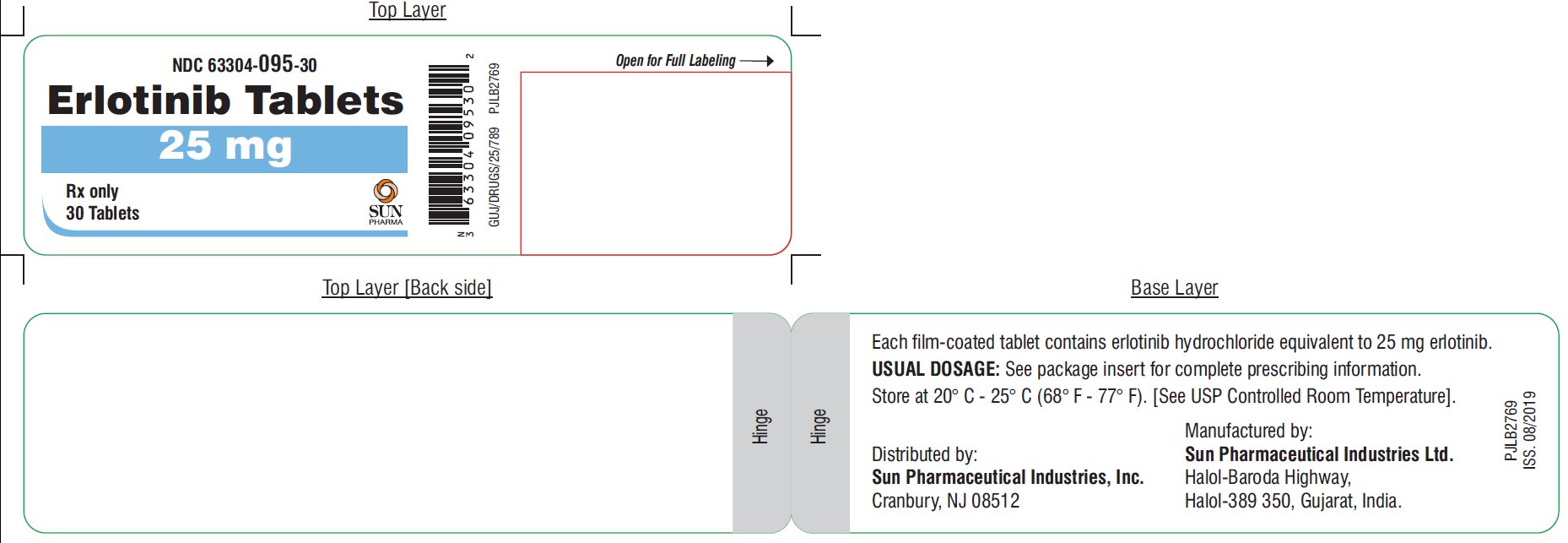
PACKAGE/LABEL PRINCIPAL DISPLAY PANEL NDC 63304-095-30 Erlotinib Tablets 25 mg Rx only 30 Tablets SUN PHARMA Erlotinib 25 mg_30 Capsules
Package/Label Display Panel NDC 63304-096-30 Erlotinib Tablets 100 mg Rx only 30 Tablets SUN PHARMA Erlotinib 100 mg_30 Capsules
Package/Label Display Panel NDC 63304-135-30 Erlotinib Tablets 150 mg Rx only 30 Tablets SUN PHARMA Erlotinib 150 mg_30 Capsules
Reported adverse events (FAERS)
Top reported reactions
Age at onset
Reporter sex
Serious outcomes
Where does this data come from?
About this NDC listing & data coverage
What data is (and isn’t) available for this NDC — tap to expand
| NDC identity (package / product / labeler codes) | ✓ Available |
| Labeler | ✓ Available |
| Product & package description | ✓ Available |
| Marketing category & status | ✓ Available |
| Active ingredient / dosage form / route | ✓ Available |
| FDA label (SPL via DailyMed) | ✓ Available |
| Package photos | ✓ Available |
| Inactive ingredients (structured) | ✓ Available |
| NADAC pharmacy acquisition price (CMS) | — Not published for this NDC CMS publishes NADAC only for NDCs reported in its retail-pharmacy survey. |
| Orange Book / therapeutic-equivalence data | — Not published for this NDC Applies only to products approved under an NDA/ANDA; many listings are out of scope. |
| HCPCS J-code billing crosswalk | — Not published for this NDC Most self-administered / retail products have no J-code — that is normal. |
| Medicaid utilization (CMS SDUD) | — Not published for this NDC CMS reports utilization only for NDCs with Medicaid claims above its privacy threshold. |