
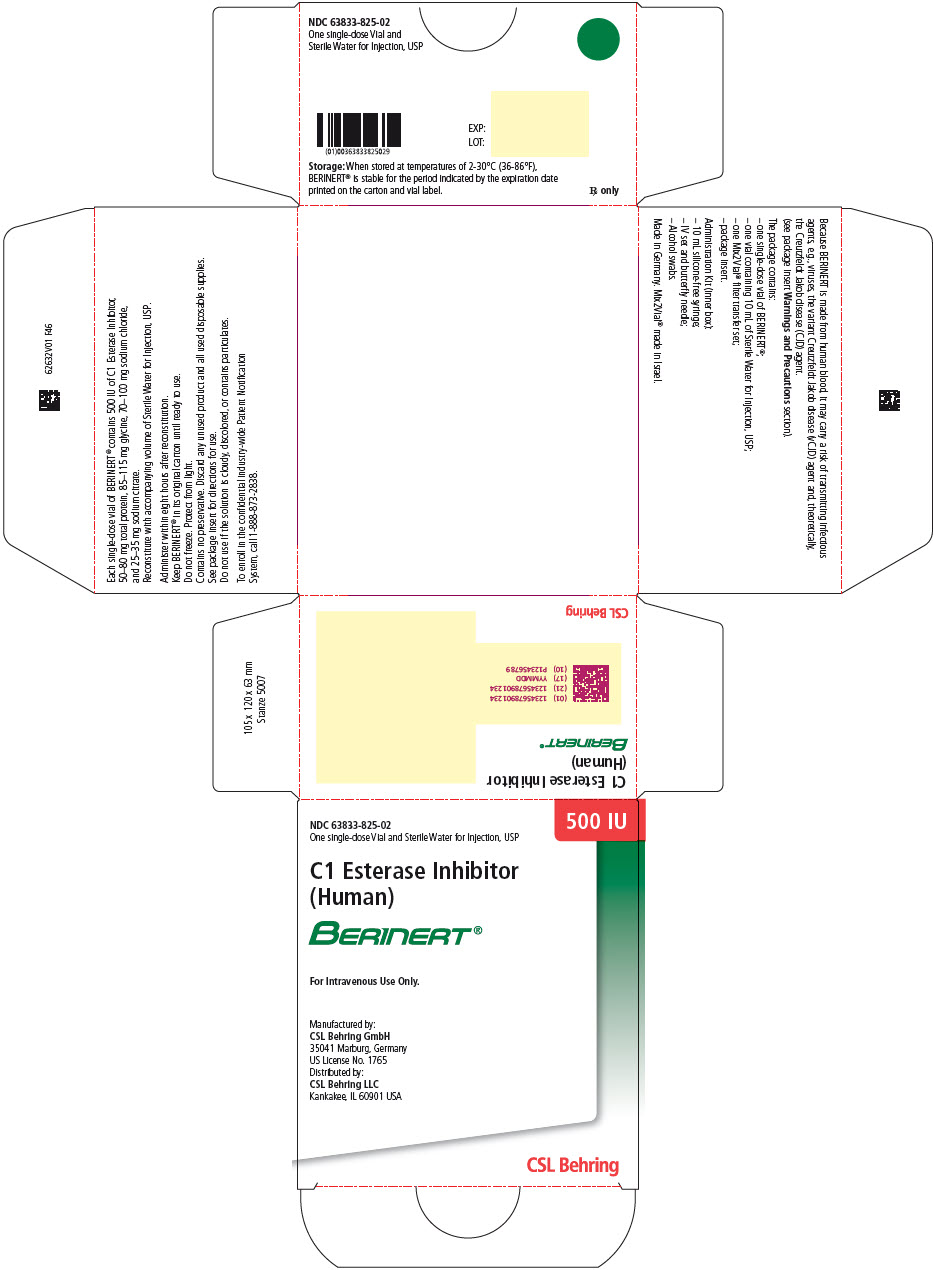
Berinert HUMAN C1-ESTERASE INHIBITOR Kit — NDC 63833-825-02 (Billing 63833-0825-02)
This is a package of Berinert HUMAN C1-ESTERASE INHIBITOR Kit from CSL Behring GmbH, marketed since Dec 2011 and currently FDA-listed. It is this product's only package size.
NDC database record
One package, one record: these facts belong to NDC 63833-825-02 alone.
- Record
- FDA NDC Directory package listing · Plasma derivative
- Code segments
- 63833 labeler · 825 product · 02 package
- Package marketed since
- Dec 22, 2011
- Sample package
- No — commercial package
- Listing certified through
- Dec 31, 2026
- Barcode (UPC-A, from the NDC)
- 3 6383382502 9
- Medicaid fills, this package
- 203 prescriptions in the last four reported quarters
- FDA record last changed
- Oct 8, 2026
Identity & classification
Regulatory identifiers FDA, NLM and CMS codes for this package
Drug-database identifiers Medi-Span GPI and First Databank GCN / HICL / AHFS classification
- GSN (GCN sequence number): 068384
- GCN: 31159
- GPI-14 (Medi-Span): 85802022006420
- HICL (First Databank): 018568
- AHFS class code: 92:32.00.00
Where does this data come from?
- FDA openFDA NDC Directory · synced Oct 8, 2026
- FDA label on DailyMed · label index refreshed Oct 8, 2026
- RxNorm (NLM RxNav) · catalog refreshed Oct 8, 2026
- Medi-Span GPI (licensed)
- First Databank (licensed) · refreshed Oct 8, 2026
Clinical
Patient education
Supplement & herbal interactions
Where does this data come from?
- MedlinePlus (NLM) · refreshed Oct 8, 2026
- FDA label on DailyMed · label index refreshed Oct 8, 2026
Ask a licensed pharmacist directly — free, answered by our team.
Pricing
A drug doesn't have one price. Each row is a different public payment system, and none is what you'd pay at the counter — that depends on your insurance. The ⓘ on each row explains what it measures.
| Price system | Per each | Per package |
|---|---|---|
| Retail pharmacies payNADAC · weekly | Not in the retail survey — common for institutional, discontinued, or low-volume packs. | |
| Medicaid paysCMS SDUD · 12 mo | $4,037.63 | — |
| Medicare drug plans payPart D · Q2 2026 | $4,506.38 | — |
| Medicare Part B allowsASP · J0597 | $79.262 / J0597 unit | — |
Where does this data come from?
- CMS NADAC weekly file
- CMS ASP pricing files · refreshed Sep 20, 2026
- CMS Medicaid State Drug Utilization Data · through Q1 2026
- CMS Part D plan pricing files · refreshed Sep 24, 2026
- VA National Acquisition Center price file
Billing & reimbursement
Where does this data come from?
- CMS ASP NDC-HCPCS crosswalk · refreshed Sep 22, 2026
- DMEPDAC NDC-HCPCS crosswalk
- openFDA NSDE billing units · refreshed Oct 7, 2026
Packaging — all sizes for this product
| Package NDC | Description | Marketing start | Marketing end | Status |
|---|---|---|---|---|
| 63833-0825-02 You're viewing this Main listing | 1 KIT in 1 CARTON * 10 mL in 1 VIAL * 10 mL in 1 VIAL | 2011-12-22 | — | Active |
Therapeutic equivalents
| Product | Labeler | Pack | NADAC/unit | TE | Status | Price vs. this |
|---|---|---|---|---|---|---|
| Berinertthis 63833-0825-02 | CSL | 1 kit | — | — | FDA listed | — |
| HAEGARDA C1 Esterase Inhibitor Subcutaneous (Human) 63833-0828-02 | CSL | 1 kit | — | — | FDA listed | — |
| HAEGARDA C1 Esterase Inhibitor Subcutaneous (Human) 63833-0829-02 | CSL | 1 kit | — | — | FDA listed | — |
| Cinryze 42227-0083-01 | Takeda | 1 kit | — | — | FDA listed | — |
Where does this data come from?
- FDA openFDA NDC Directory · synced Oct 8, 2026
- FDA Purple Book · refreshed Oct 5, 2026
- CMS NADAC weekly file
Availability & biosimilar status
Biologics have no small-molecule generics; biosimilar competition is tracked in the FDA Purple Book.
Where does this data come from?
- FDA Purple Book · refreshed Oct 5, 2026
Inactive Ingredients / Excipients
Inactive ingredients, also called excipients, are components of the drug product other than the active ingredient. They may include fillers, dyes, coatings, preservatives, flavors, or other formulation ingredients.
Where does this data come from?
IACT rows and label-wide narrative are kept separate; availability and product-level specificity depend on the submitted label.- FDA label on DailyMed · label index refreshed Oct 8, 2026
- FDA openFDA NDC Directory · synced Oct 8, 2026
Inactive ingredient FAQ
Are inactive ingredients the same for every manufacturer?
Why might an inactive ingredient be missing?
Can inactive ingredients matter?
Manufacturer & labeler
More NDCs from CSL Behring GmbH labeler code 63833
- Kcentra PROTHROMBIN, COAGULATION FACTOR VII HUMAN, COAGULATION FACTOR IX HUMAN, COAGULATION FACTOR X HUMAN, Protein C, Protein S Human, and Water Kit NDC 63833-386-02
- Kcentra PROTHROMBIN, COAGULATION FACTOR VII HUMAN, COAGULATION FACTOR IX HUMAN, COAGULATION FACTOR X HUMAN, Protein C, Protein S Human, and Water Kit NDC 63833-387-02
- Corifact Factor XIII Concentrate (Human) Kit NDC 63833-518-02
- Humate-P antihemophilic factor/von willebrand factor complex (human) Kit NDC 63833-615-02
- Humate-P antihemophilic factor/von willebrand factor complex (human) Kit NDC 63833-616-02
- Humate-P antihemophilic factor/von willebrand factor complex (human) Kit NDC 63833-617-02
- HAEGARDA C1 Esterase Inhibitor Subcutaneous (Human) Kit NDC 63833-828-02
- HAEGARDA C1 Esterase Inhibitor Subcutaneous (Human) Kit NDC 63833-829-02
- RiaSTAP FIBRINOGEN HUMAN 1300 mg/50mL Injection, Powder, Lyophilized, For Solution NDC 63833-891-51
- Riastap FIBRINOGEN HUMAN 2600 mg/100mL Injection, Solution NDC 63833-892-51
- ANDEMBRY Garadacimab 200 mg/1.2mL Injection, Solution NDC 63833-925-01
Where does this data come from?
- FDA openFDA NDC Directory · synced Oct 8, 2026
- Drugs@FDA
Full FDA label FDA SPL
🎯 Indications and Usage ▾
1 INDICATIONS AND USAGE Berinert is a plasma-derived concentrate of C1 Esterase Inhibitor (Human) indicated for the treatment of acute abdominal or facial attacks of hereditary angioedema (HAE) in adult and adolescent patients. The safety and efficacy of Berinert for prophylactic therapy have not been established. Berinert is a plasma-derived C1 Esterase Inhibitor (Human) indicated for the treatment of acute abdominal or facial attacks of hereditary angioedema (HAE) in adult and adolescent patients ( 1 ).
The safety and efficacy of Berinert for prophylactic therapy have not been established ( 1 ).
⏱️ Dosage and Administration ▾
2 DOSAGE AND ADMINISTRATION For Intravenous Use Only. Administer Berinert at a dose of 20 units per kg body weight by intravenous injection. Berinert is provided as a freeze-dried powder for reconstitution with the diluent (sterile water) provided.
Store the vial in the original carton in order to protect from light. Do not freeze. For intravenous use only.
Store the vial in the original carton in order to protect from light. Store at 2-25°C (36-77°F). Do not freeze ( 2 ).
Administer 20 units per kg body weight ( 2 ). Reconstitute Berinert prior to use using the diluent (sterile water) provided ( 2.1 ). Administer at room temperature within 8 hours of reconstitution ( 2.1 ).
Inject at a rate of approximately 4 mL per minute ( 2.2 ). Do not mix Berinert with other medicinal products or solutions ( 2.2 ).
2.1Preparation and Handling Check the expiration date on the product vial label. Do not use beyond the expiration date. Use aseptic technique when preparing and administering Berinert (see Reconstitution and Administration [2.2] ).
After reconstitution and prior to administration, inspect Berinert visually for particulate matter and discoloration. The reconstituted solution should be colorless, clear, and free from visible particles. Do not use if the solution is cloudy, discolored, or contains particulates.
The Berinert vial is for single use only. Berinert contains no preservative. Any product that has been reconstituted should be used promptly.
The reconstituted solution must be used within 8 hours. Discard partially used vials. Do not freeze the reconstituted solution.
2.2Reconstitution and Administration Each Berinert kit consists of one carton containing one single-use vial of Berinert, one 10 mL vial of diluent (sterile water), one Mix2Vial ™ transfer set, and one alcohol swab. Use either the Mix2Vial transfer set provided with Berinert ( see How Supplied [16.1] ) or a commercially available double-ended needle and vented filter spike. Reconstitution The procedures below are provided as general guidelines for the reconstitution and administration of Berinert.
1. Ensure that the Berinert vial and diluent vial are at room temperature. Use aseptic technique during the reconstitution procedure.
2. Place the Berinert vial, diluent vial and Mix2Vial transfer set on a flat surface. 3.
Remove the flip caps from the Berinert and diluent vials. Treat the vial stoppers with the alcohol swab provided and allow to dry prior to opening the Mix2Vial transfer set package. 4.
Open the Mix2Vial transfer set package by peeling away the lid (Fig. 1). Leave the Mix2Vial transfer set in the clear package.
Fig. 1 5. Place the diluent vial on a flat surface and hold the vial tightly.
Grip the Mix2Vial transfer set together with the clear package and snap the blue end of the Mix2Vial transfer set onto the diluent vial stopper at a 90° angle (Fig. 2). Fig.
2 6. Carefully remove the clear package from the Mix2Vial transfer set. Make sure that you pull up only the clear package, and not the Mix2Vial transfer set (Fig.
3). Fig. 3 7.
With the Berinert vial placed firmly on a flat surface, invert the diluent vial with the Mix2Vial transfer set attached and snap the transparent adapter onto the Berinert vial stopper at a 90° angle (Fig. 4). The diluent will automatically transfer into the Berinert vial.
Fig. 4 8. With the diluent and Berinert vial still attached to the Mix2Vial transfer set, gently swirl the Berinert vial to ensure that the Berinert is fully dissolved (Fig.
5). Do not shake the vial. Fig.
5 9. With one hand, grasp the Berinert-side of the Mix2Vial transfer set and with the other hand grasp the blue diluent-side of the Mix2Vial transfer set and unscrew the set into two pieces. (Fig.
6). Fig. 6 10.
Draw air into an empty, sterile syringe. While the Berinert vial is upright, screw the syringe to the Mix2Vial transfer set. Inject air into the Berinert vial.
While keeping the syringe plunger pressed, invert the system upside down and draw… [Excerpted — this section continues on DailyMed.]
💊 Dosage Forms and Strengths ▾
3 DOSAGE FORMS AND STRENGTHS Berinert is available in a single-use vial that contains 500 units of C1 esterase inhibitor as a lyophilized concentrate. Each vial must be reconstituted with 10 mL of diluent (sterile water) provided. 500 units lyophilized concentrate in a single-use vial for reconstitution with 10 mL of diluent (sterile water) ( 3 ).
⛔ Contraindications ▾
4 CONTRAINDICATIONS Berinert is contraindicated in individuals who have experienced life-threatening hypersensitivity reactions, including anaphylaxis, to C1 esterase inhibitor preparations. Do not use in patients with a history of life-threatening immediate hypersensitivity reactions, including anaphylaxis, to C1 esterase inhibitor preparations ( 4 ).
⚠️ Warnings and Cautions ▾
5 WARNINGS AND PRECAUTIONS Hypersensitivity reactions may occur. Epinephrine should be immediately available to treat any acute severe hypersensitivity reactions following discontinuation of administration ( 5.1 ). Thrombotic events have occurred in patients receiving off-label high doses of Berinert.
Monitor patients with known risk factors for thrombotic events ( 5.2 ). Berinert is made from human plasma and may contain infectious agents, eg, viruses and, theoretically, the Creutzfeldt-Jakob disease (CJD) agent ( 5.3 ).
5.1Hypersensitivity Severe hypersensitivity reactions may occur. Epinephrine should be immediately available for treatment of acute severe hypersensitivity reaction (see Patient Counseling Information [17] ). The signs and symptoms of hypersensitivity reactions may include hives, generalized urticaria, tightness of the chest, wheezing, hypotension, and/or anaphylaxis during or after injection of Berinert.
Because hypersensitivity reactions may have symptoms similar to HAE attacks, treatment methods should be carefully considered. In case of suspected hypersensitivity, immediately discontinue administration of Berinert and institute appropriate treatment.
5.2Thrombotic Events Thrombotic events have been reported in association with Berinert when used off-label and at higher than labeled doses. 1 Animal studies have confirmed the risk of thrombosis from intravenous administration of C1 esterase inhibitor products 2 ( see Overdosage [10] and Animal Toxicology and/or Pharmacology [13.2] ).
5.3Transmission of Infectious Agents Because Berinert is made from human blood, it may contain infectious agents (eg, viruses and, theoretically, the Creutzfeldt-Jakob disease [CJD] agent) that can cause disease. The risk that such products will transmit an infectious agent has been reduced by screening plasma donors for prior exposure to certain viruses, by testing for the presence of certain current virus infections, and by processes demonstrated to inactivate and/or remove certain viruses during manufacturing ( see Description [11] and Patient Counseling Information [17] ).
Despite these measures, such products may still potentially transmit disease. There is also the possibility that unknown infectious agents may be present in such products. Since 1979, a few suspected cases of viral transmission have been reported with the use of Berinert outside the US, including cases of acute hepatitis C.
From the incomplete information available from these cases, it was not possible to determine with certainty if the infections were or were not related to prior administration of Berinert. The physician should discuss the risks and benefits of this product with the patient before prescribing or administering it to the patient. (See Patient Counseling Information [17.1] ).
All infections thought by a physician possibly to have been transmitted by Berinert should be reported by lot number, by the physician, or other healthcare provider to the CSL Behring Pharmacovigilance Department at 1-866-915-6958.
🤒 Adverse Reactions ▾
6 ADVERSE REACTIONS The most serious adverse reaction reported in subjects enrolled in clinical studies who received Berinert was an increase in the severity of pain associated with HAE. The most common adverse reactions that have been reported in greater than 4% of the subjects who received Berinert in clinical studies were subsequent HAE attack, headache, abdominal pain, nausea, muscle spasm, pain, diarrhea and vomiting. The most serious adverse reaction reported in subjects who received Berinert was an increase in the severity of pain associated with HAE ( 6.1 ).
The most common adverse reactions observed by ≥4% of subjects after Berinert treatment were subsequent HAE attack, headache, abdominal pain, nausea, muscle spasm, pain, diarrhea and vomiting ( 6.1 ). To report SUSPECTED ADVERSE REACTIONS, contact the CSL Behring Pharmacovigilance Department at 1-866-915-6958 or to the FDA at 1-800-FDA-1088 or www.fda.gov/medwatch.
6.1Clinical Trials Experience Because clinical studies are conducted under widely varying conditions, adverse reaction rates observed in the clinical trials of a drug cannot be directly compared to rates in the clinical trials of another drug and may not reflect the rates observed in practice. Placebo-controlled Clinical Study In the placebo-controlled clinical study, referred to as the randomized clinical trial (RCT) ( see Clinical Studies [14] ), 124 subjects experiencing an acute moderate to severe abdominal or facial HAE attack were treated with Berinert (either a 10 unit per kg body weight or a 20 unit per kg body weight dose), or placebo (physiological saline solution).
The treatment-emergent serious adverse reactions/events that occurred in 5 subjects in the RCT were laryngeal edema, facial attack with laryngeal edema, swelling (shoulder and chest), exacerbation of hereditary angioedema, and laryngospasm. Table 1: Adverse Reactions The study protocol specified that adverse events that began within 72 hours of blinded study medication administration were to be classified as at least possibly related to study medication (ie, adverse reactions). Occurring up to 4 hours After Initial Infusion in More Than 4% of Subjects, Irrespective of Causality The following abdominal symptoms were identified in the protocol as associated with HAE abdominal attacks: abdominal pain, bloating, cramps, nausea, vomiting, and diarrhea.
Adverse Reactions Number (%) of Subjects Reporting Adverse Reactions Berinert 20 units/kg (n = 43) Number (%) of Subjects Reporting Adverse Reactions Placebo Group (n = 42) Nausea 3 (7%) 5 (11.9%) Dysgeusia 2 (4.7%) 0 (0) Abdominal Pain 2 (4.7%) 3 (7.1%) Vomiting 1 (2.3%) 3 (7.1%) Diarrhea 0 (0) 4 (9.5%) Headache 0 (0) 2 (4.8%) Table 2: Adverse Reactions The study protocol specified that adverse events that began within 72 hours of blinded study medication administration were to be classified as at least possibly related to study medication (ie, adverse reactions).
Occurring in More Than 4% of Subjects up to 72 hours After Infusion of Initial or Rescue Medication If a subject experienced no relief or insufficient relief of symptoms within 4 hours after infusion, investigators had the option to administer a blinded second infusion (“rescue” treatment) of Berinert (20 units/kg for the placebo group or 10 units/kg for the 10 units/kg group), or placebo (for the 20 units/kg group). by Intent-to-Treat, Irrespective of Causality Adverse Reactions Number (%) of Subjects Reporting Adverse Reactions Adverse reactions following either initial treatment and/or blinded "rescue" treatment.
Because more subjects in the placebo randomization group than in the Berinert randomization group received rescue treatment, the median observation period in this analysis for subjects randomized to placebo was slightly longer than for subjects randomized to receive Berinert. Berinert 20 units/kg (n = 43) Number (%) of Subjects Reporting Adverse Reactions Placebo Group (n = 42) Nausea 3 (7%) 11 (26.2%) Headache 3 (7%… [Excerpted — this section continues on DailyMed.]
🔄 Drug Interactions ▾
7 DRUG INTERACTIONS No drug interaction studies have been conducted. No drug interaction studies have been conducted ( 7 ).
👥 Use in Specific Populations ▾
8 USE IN SPECIFIC POPULATIONS Pregnancy: No animal data. Limited human data. Use only if clearly needed ( 8.1 ).
Children: Safety and effectiveness in children ages 0 through 12 have not been established. Berinert was evaluated in 5 children (ages 3 through 12) and in 8 adolescent subjects (ages 13 through 16) [ 8.4 ]. Compared to adults, the half-life of Berinert was shorter and clearance was faster in children.
The clinical implication of this difference is not known ( 12.3 ).
8.1Pregnancy Pregnancy Category C. Animal reproduction studies have not been conducted with Berinert. It is not known whether Berinert can cause fetal harm when administered to a pregnant woman or can affect reproduction capacity.
Berinert should be given to a pregnant woman only if clearly needed. In a retrospective case collection study, 20 pregnant women ranging in age from 20 to 35 years received Berinert with repeated doses up to 3,500 units per attack; these women reported no complications during delivery and no harmful effects on their 34 neonates.
8.2Labor and Delivery The safety and effectiveness of Berinert administration prior to or during labor and delivery have not been established. Use only if clearly needed.
8.3Nursing Mothers It is not known whether Berinert is excreted in human milk. Because many drugs are excreted in human milk, use only if clearly needed when treating a nursing woman.
8.4Pediatric Use Safety and efficacy of Berinert in children (ages 0 through 12) have not been established. The clinical studies included an insufficient number of subjects in this age group to determine whether they respond differently from older subjects. The safety and efficacy of Berinert were evaluated in 5 children (ages 3 through 12) and in 8 adolescent subjects (ages 13 through 16) ( see Pharmacokinetics [12.3] ).
8.5Geriatric Use Safety and efficacy of Berinert in the geriatric population have not been established. Clinical studies with Berinert included four subjects older than 65 years. The clinical studies included an insufficient number of subjects in this age group to determine whether they respond differently from younger subjects.
🤰 Pregnancy ▾
8.1Pregnancy Pregnancy Category C. Animal reproduction studies have not been conducted with Berinert. It is not known whether Berinert can cause fetal harm when administered to a pregnant woman or can affect reproduction capacity.
Berinert should be given to a pregnant woman only if clearly needed. In a retrospective case collection study, 20 pregnant women ranging in age from 20 to 35 years received Berinert with repeated doses up to 3,500 units per attack; these women reported no complications during delivery and no harmful effects on their 34 neonates.
🧒 Pediatric Use ▾
8.4Pediatric Use Safety and efficacy of Berinert in children (ages 0 through 12) have not been established. The clinical studies included an insufficient number of subjects in this age group to determine whether they respond differently from older subjects. The safety and efficacy of Berinert were evaluated in 5 children (ages 3 through 12) and in 8 adolescent subjects (ages 13 through 16) ( see Pharmacokinetics [12.3] ).
🧓 Geriatric Use ▾
8.5Geriatric Use Safety and efficacy of Berinert in the geriatric population have not been established. Clinical studies with Berinert included four subjects older than 65 years. The clinical studies included an insufficient number of subjects in this age group to determine whether they respond differently from younger subjects.
🆘 Overdosage ▾
10 OVERDOSAGE The development of thrombosis has been reported after doses exceeding 20 units/kg body weight of Berinert when used off-label 1 in newborns and young children with congenital heart anomalies during or after cardiac surgery under extracorporeal circulation. The maximum dose administered in clinical studies in hereditary angioedema was 20 units/kg body weight. Overdosage did not occur in connection with treatment of HAE.
🧬 Clinical Pharmacology ▾
12 CLINICAL PHARMACOLOGY
12.1Mechanism of Action C1 esterase inhibitor is a normal constituent of human plasma and belongs to the group of serine protease inhibitors (serpins) that includes antithrombin III, alpha 1 -protease inhibitor, alpha 2 -antiplasmin, and heparin cofactor II. As with the other inhibitors in this group, C1 esterase inhibitor has an important inhibiting potential on several of the major cascade systems of the human body, including the complement system, the intrinsic coagulation (contact) system, the fibrinolytic system, and the coagulation cascade.
Regulation of these systems is performed through the formation of complexes between the proteinase and the inhibitor, resulting in inactivation of both and consumption of the C1 esterase inhibitor. C1 esterase inhibitor, which is usually activated during the inflammatory process, inactivates its substrate by covalently binding to the reactive site. C1 esterase inhibitor is the only known inhibitor for the subcomponent of the complement component 1 (C1r), C1s, coagulation factor XIIa, and kallikrein.
Additionally, C1 esterase inhibitor is the main inhibitor for coagulation factor XIa of the intrinsic coagulation cascade. HAE patients have low levels of endogenous or functional C1 esterase inhibitor. Although the events that induce attacks of angioedema in HAE patients are not well defined, it has been postulated that increased vascular permeability and the clinical manifestation of HAE attacks may be primarily mediated through contact system activation.
Suppression of contact system activation by C1 esterase inhibitor through the inactivation of plasma kallikrein and factor XIIa is thought to modulate this vascular permeability by preventing the generation of bradykinin. 5 Administration of Berinert to patients with C1 esterase inhibitor deficiency replaces the missing or malfunctioning protein in patients. The plasma concentration of C1 esterase inhibitor in healthy volunteers is approximately 270 mg/L.
6
12.3Pharmacokinetics The pharmacokinetics of Berinert were evaluated in an open-label, uncontrolled, single-center study in 40 subjects (35 adults and 5 children under 16 years of age) with either mild or severe HAE. All subjects received a single intravenous injection of Berinert ranging from 500 units to 1500 units. Blood samples were taken during an attack-free period at baseline and for up to 72 hours after drug administration.
Pharmacokinetic parameters were estimated using non-compartmental analysis (with or without baseline adjustment). Table 6 summarizes the pharmacokinetic parameters in 35 adult subjects with HAE. Table 6: Pharmacokinetic Parameters of Berinert in Adult Subjects with HAE by Non-compartmental Analysis (n=35) Parameters Unadjusted for baseline Adjusted for baseline AUC: Area under the curve CL: Clearance V ss: Volume steady state MRT: Mean residence time AUC (0-t) (hr × IU/mL) Based on a 15 unit/kg dose.
Numbers in parenthesis are the range. 27.5 ± 8.5 (15.7-44.7) 12.8 ± 6.7 (3.9-34.7) CL (mL/hr/kg) 0.60 ± 0.17 (0.34-0.96) 1.44 ± 0.67 (0.43-3.85) V ss (mL/kg) 18.6 ± 4.9 (11.1-27.6) 35.4 ± 10.5 (14.1-56.1) Half-life (hrs) 21.9 ± 1.7 (16.5-24.4) 18.4 ± 3.5 (7.4-22.8) MRT (hrs) 31.5 ± 2.4 (23.7-35.2) 26.4 ± 5.0 (10.7-33.0) Table 7 summarizes the pharmacokinetic parameters in 5 pediatric subjects (ages 6 through 13) with HAE. Based on adjusted baseline, compared to adults, the half-life of Berinert was shorter and clearance was faster in this limited cohort of children.
However, the clinical implication of this difference is not known. Table 7: Pharmacokinetic Parameters of Berinert in Pediatric Subjects with HAE by Non-compartmental Analysis (n=5) Parameters Unadjusted for baseline Adjusted for baseline AUC: Area under the curve CL: Clearance V ss: Volume steady state MRT: Mean residence time AUC (0-t) (hr × IU/mL) Based on a 15 unit/kg dose. Numbers in parenthesis are the range.
25.45± 5.8 (16.8-31.7) 9.78 ± 4.37 (4.1-15.2) CL (mL/hr/… [Excerpted — this section continues on DailyMed.]
🧬 Mechanism of Action ▾
12.1Mechanism of Action C1 esterase inhibitor is a normal constituent of human plasma and belongs to the group of serine protease inhibitors (serpins) that includes antithrombin III, alpha 1 -protease inhibitor, alpha 2 -antiplasmin, and heparin cofactor II. As with the other inhibitors in this group, C1 esterase inhibitor has an important inhibiting potential on several of the major cascade systems of the human body, including the complement system, the intrinsic coagulation (contact) system, the fibrinolytic system, and the coagulation cascade.
Regulation of these systems is performed through the formation of complexes between the proteinase and the inhibitor, resulting in inactivation of both and consumption of the C1 esterase inhibitor. C1 esterase inhibitor, which is usually activated during the inflammatory process, inactivates its substrate by covalently binding to the reactive site. C1 esterase inhibitor is the only known inhibitor for the subcomponent of the complement component 1 (C1r), C1s, coagulation factor XIIa, and kallikrein.
Additionally, C1 esterase inhibitor is the main inhibitor for coagulation factor XIa of the intrinsic coagulation cascade. HAE patients have low levels of endogenous or functional C1 esterase inhibitor. Although the events that induce attacks of angioedema in HAE patients are not well defined, it has been postulated that increased vascular permeability and the clinical manifestation of HAE attacks may be primarily mediated through contact system activation.
Suppression of contact system activation by C1 esterase inhibitor through the inactivation of plasma kallikrein and factor XIIa is thought to modulate this vascular permeability by preventing the generation of bradykinin. 5 Administration of Berinert to patients with C1 esterase inhibitor deficiency replaces the missing or malfunctioning protein in patients. The plasma concentration of C1 esterase inhibitor in healthy volunteers is approximately 270 mg/L.
6
📦 How Supplied / Storage and Handling ▾
16 HOW SUPPLIED/STORAGE AND HANDLING
16.1How Supplied Berinert is supplied in a single-use vial. Each carton contains a 500 unit vial of Berinert for reconstitution with 10 mL of diluent containing sterile water (meets USP chemistry requirements except for pH; pH 4.5-8.5). The components used in the packaging for Berinert are latex-free.
Each product package consists of the following: NDC Number Component 63833-825-02 Carton (kit) containing one 500 unit vial of Berinert [NDC 63833-835-01], one 10 mL vial of diluent (sterile water) [NDC 63833-765-15], one Mix2Vial filter transfer set, and one alcohol swab.
16.2Storage and Handling When stored at temperatures of 2-25°C (36-77°F), Berinert is stable for the period indicated by the expiration date on the carton and vial label (up to 30 months). Keep Berinert in its original carton until ready to use. Do not freeze. Protect from light.
📦 Storage and Handling ▾
16.2Storage and Handling When stored at temperatures of 2-25°C (36-77°F), Berinert is stable for the period indicated by the expiration date on the carton and vial label (up to 30 months). Keep Berinert in its original carton until ready to use. Do not freeze. Protect from light.
📋 Description ▾
11 DESCRIPTION Berinert is a human plasma-derived, purified, pasteurized, lyophilized concentrate of C1 esterase inhibitor to be reconstituted for intravenous administration. Berinert is prepared from large pools of human plasma from US donors. One standard unit of C1 esterase inhibitor concentrate is equal to the amount of C1 esterase inhibitor in 1 mL of fresh citrated human plasma, which is equivalent to 270 mg/L or 2.5 µM/L.
No international laboratory standard for quantifying C1 esterase inhibitor. An in-house standard is used to assure lot-to-lot consistency in product potency. C1 esterase inhibitor is a soluble, single-chain glycoprotein containing 478 amino acid residues organized into three beta-sheets and eight or nine alpha-helices.
3 The heavily glycosylated molecule has an apparent molecular weight of 105 kD, of which the carbohydrate chains comprise 26% to 35%. 4 Each vial of Berinert contains 500 units C1 esterase inhibitor, 50 to 80 mg total protein, 85 to 115 mg glycine, 70 to 100 mg sodium chloride, and 25 to 35 mg sodium citrate. All plasma used in the manufacture of Berinert is obtained from US donors and is tested using serological assays for hepatitis B surface antigen and antibodies to HIV-1/2 and HCV.
Additionally, the plasma is tested with Nucleic Acid Testing (NAT) for HCV and HIV-1 and found to be non-reactive (negative). In addition, the plasma is tested by NAT for HAV and Human Parvovirus B19. Only plasma that has passed virus screening is used for production, and the limit for Parvovirus B19 in the fractionation pool is set not to exceed 10 4 IU of Parvovirus B19 DNA per mL.
The manufacturing process for Berinert includes multiple steps that reduce the risk of virus transmission. The virus inactivation/reduction capacity of three steps (pasteurization in aqueous solution at 60°C for 10 hours, hydrophobic interaction chromatography, and the combination of ion exchange chromatographies and ammonium sulphate precipitation) was evaluated in a series of in vitro spiking experiments. The total mean cumulative virus inactivation/reduction is shown in Table 5.
Table 5: Mean Virus Inactivation/Reductions in Berinert Virus Studied Pasteurization [log 10 ] Hydrophobic Interaction Chromatography [log 10 ] DEAE-Sephadex A50 Chromatography QAE-Sephadex Chromatography and Ammonium Sulphate Precipitation [log10] Total Cumulative [log 10 ] HIV-1, Human immunodeficiency virus type 1, a model for HIV-1 and HIV-2 BVDV, Bovine viral diarrhea virus, a model for HCV PRV, Pseudorabies virus, a model for large enveloped DNA viruses (eg, herpes virus) WNV, West Nile virus HAV, Hepatitis A virus CPV, Canine parvovirus B19V, Human Parvovirus B19 ND, Not determined NA, Not applicable Enveloped Viruses HIV-1 ≥6.6 ≥4.5 4.3 ≥15.4 BVDV ≥9.2 ≥4.6 NA ≥13.8 PRV 6.3 ≥6.5 ≥7.7 ≥20.5 WNV ≥7.0 ND NA NA Non-Enveloped Viruses HAV ≥6.4
4.5NA ≥10.9 CPV 1.4
6.1 NA
7.5 B19V
3.9 ND NA NA
💬 Information for Patients ▾
17 PATIENT COUNSELING INFORMATION Inform patients to immediately report the following to their physician: Signs and symptoms of allergic hypersensitivity reactions, such as hives, urticaria, tightness of the chest, wheezing, hypotension and/or anaphylaxis experienced during or after injection of Berinert (see WARNINGS AND PRECAUTIONS/Hypersensitivity [5.1] ) Signs and symptoms of thrombosis, such as new onset swelling and pain in the limbs or abdomen, new onset chest pain, shortness of breath, loss of sensation or motor power, or altered consciousness, vision, or speech (see WARNINGS AND PRECAUTIONS/Thrombotic Events [5.2] ) Advise female patients to notify their physician if they become pregnant or intend to become pregnant during the treatment of acute abdominal or facial attacks of HAE with Berinert.
Advise patients to notify their physician if they are breastfeeding or plan to breastfeed. Advise patients to consult with their healthcare professional prior to travel. Advise patients that, because Berinert is made from human blood, it may carry a risk of transmitting infectious agents, eg, viruses, and, theoretically, the Creutzfeldt-Jakob (CJD) agent (see WARNINGS AND PRECAUTIONS/Transmission of Infectious Agents [5.3] and Description [11] ).
Inform patients of the risks and benefits of Berinert before prescribing or administering it to the patient .
17.1 FDA-Approved Patient Labeling – Patient Product Information (PPI)
🍼 Nursing Mothers ▾
8.3Nursing Mothers It is not known whether Berinert is excreted in human milk. Because many drugs are excreted in human milk, use only if clearly needed when treating a nursing woman.
🧬 Pharmacokinetics ▾
12.3Pharmacokinetics The pharmacokinetics of Berinert were evaluated in an open-label, uncontrolled, single-center study in 40 subjects (35 adults and 5 children under 16 years of age) with either mild or severe HAE. All subjects received a single intravenous injection of Berinert ranging from 500 units to 1500 units. Blood samples were taken during an attack-free period at baseline and for up to 72 hours after drug administration.
Pharmacokinetic parameters were estimated using non-compartmental analysis (with or without baseline adjustment). Table 6 summarizes the pharmacokinetic parameters in 35 adult subjects with HAE. Table 6: Pharmacokinetic Parameters of Berinert in Adult Subjects with HAE by Non-compartmental Analysis (n=35) Parameters Unadjusted for baseline Adjusted for baseline AUC: Area under the curve CL: Clearance V ss: Volume steady state MRT: Mean residence time AUC (0-t) (hr × IU/mL) Based on a 15 unit/kg dose.
Numbers in parenthesis are the range. 27.5 ± 8.5 (15.7-44.7) 12.8 ± 6.7 (3.9-34.7) CL (mL/hr/kg) 0.60 ± 0.17 (0.34-0.96) 1.44 ± 0.67 (0.43-3.85) V ss (mL/kg) 18.6 ± 4.9 (11.1-27.6) 35.4 ± 10.5 (14.1-56.1) Half-life (hrs) 21.9 ± 1.7 (16.5-24.4) 18.4 ± 3.5 (7.4-22.8) MRT (hrs) 31.5 ± 2.4 (23.7-35.2) 26.4 ± 5.0 (10.7-33.0) Table 7 summarizes the pharmacokinetic parameters in 5 pediatric subjects (ages 6 through 13) with HAE. Based on adjusted baseline, compared to adults, the half-life of Berinert was shorter and clearance was faster in this limited cohort of children.
However, the clinical implication of this difference is not known. Table 7: Pharmacokinetic Parameters of Berinert in Pediatric Subjects with HAE by Non-compartmental Analysis (n=5) Parameters Unadjusted for baseline Adjusted for baseline AUC: Area under the curve CL: Clearance V ss: Volume steady state MRT: Mean residence time AUC (0-t) (hr × IU/mL) Based on a 15 unit/kg dose. Numbers in parenthesis are the range.
25.45± 5.8 (16.8-31.7) 9.78 ± 4.37 (4.1-15.2) CL (mL/hr/kg) 0.62 ± 0.17 (0.47-0.89) 1.9 ± 1.1 (0.98-3.69) V ss (mL/kg) 19.8 ± 4.0 (16.7-26.1) 38.8 ± 8.9 (31.9-54.0) Half-life (hrs) 22.4 ± 1.6 (20.3-24.4) 16.7 ± 5.8 (7.4-22.5) MRT (hrs) 32.3 ± 2.3 (29.3-35.2) 24.0 ± 8.3 (10.7-32.4) Studies have not been conducted to evaluate the pharmacokinetics of Berinert in special patient populations identified by gender, race, geriatric age, or the presence of renal or hepatic impairment.
🔬 Clinical Studies ▾
14 CLINICAL STUDIES The safety and efficacy of Berinert in the treatment of acute abdominal or facial attacks in subjects with hereditary angioedema were demonstrated in a placebo-controlled, double-blind, prospective, multinational, randomized, parallel-group, dose-finding, three-arm, clinical study, referred to as the randomized clinical trial (RCT). The RCT assessed the efficacy and safety of Berinert in 124 adult and pediatric subjects with C1 esterase inhibitor deficiency who were experiencing an acute moderate to severe attack of abdominal or facial HAE.
Subjects ranged in age from six to 72 years of age; 67.7% were female and 32.3% were male; and approximately 90% were Caucasian. The study objectives were to evaluate whether Berinert shortens the time to onset of relief of symptoms of an abdominal or facial attack compared to placebo and to compare the efficacy of two different doses of Berinert. The time to onset of relief of symptoms was determined by the subject's response to a standard question posed at appropriate time intervals for as long as 24 hours after start of treatment, taking into account all single HAE symptoms.
In addition the severity of the single HAE symptoms was assessed over time. Subjects were randomized to receive a single 10 unit/kg body weight dose of Berinert (39 subjects), a single 20 unit/kg dose of Berinert (43 subjects), or a single dose of placebo (42 subjects) by slow intravenous infusion (recommended to be given at a rate of approximately 4 mL per minute) within 5 hours of an HAE attack. At least 70% of the subjects in each treatment group were required to be experiencing an abdominal attack.
If a subject experienced no relief or insufficient relief of symptoms by 4 hours after infusion, investigators had the option to administer a second infusion of Berinert (20 units/kg for the placebo group, 10 units/kg for the 10 units/kg group), or placebo (for the 20 units/kg group). This masked (blinded) "rescue study medication" was administered to subjects and they were then followed until complete resolution of symptoms was achieved. Adverse events were collected for up to 7 to 9 days following the initial administration of Berinert or placebo.
In the rare case that a subject developed life-threatening laryngeal edema after inclusion into the study, immediate start of open-label treatment with a 20 unit/kg body weight dose of Berinert was allowed. All subjects who received confounding medication (rescue medication) before symptom relief were regarded as "non-responders." Therefore, time to onset of symptom relief was set at 24 hours if a subject received any rescue medication (ie, rescue study medication, narcotic analgesics, non-narcotic analgesics, anti-emetics, open-label C1 inhibitor, androgens at increased dose, or fresh frozen plasma) between 5 hours before administration of blinded study medication until time to onset of relief.
For the trial to be considered successful, the study protocol specified the following criteria for the differences between the Berinert 20 units/kg and the placebo group: The time to onset of relief of symptoms of the HAE attack had to achieve a one-sided p-value of less than 0.0249 for the final analysis, and at least one of the following criteria had to demonstrate a trend in favor of Berinert with a one-sided p-value of less than 0.1: The proportion of subjects with increased intensity of clinical HAE symptoms between 2 and 4 hours after start of treatment with study medication compared to baseline, or The number of vomiting episodes within 4 hours after start of study treatment.
Subjects treated with 20 units/kg body weight of Berinert experienced a significant reduction (p=0.0016; “Wilcoxon Rank Sum test”) in time to onset of relief from symptoms of an HAE attack as compared to placebo (median of 48 minutes for Berinert 20 units/kg body weight, as compared to a median of >4 hours for placebo). The time to onset of relief from symptoms of an HAE attack for su… [Excerpted — this section continues on DailyMed.]
🧪 Nonclinical Toxicology ▾
13 NONCLINICAL TOXICOLOGY
13.1Carcinogenesis, Mutagenesis, Impairment of Fertility No animal studies have been completed to evaluate the effects of Berinert on carcinogenesis, mutagenesis, and impairment of fertility.
13.2Animal Toxicology and/or Pharmacology Acute intravenous toxicity of Berinert was performed in mice at 1500, 3000, and 6000 units/kg and in rats at 1000, 2000, and 3000 units/kg. Berinert was well tolerated and no signs of toxicity were observed up to the highest dose administered. Repeat intravenous dose toxicity was studied in a 14-day repeat dose study in rats at doses of 20, 60, and 200 units/kg/day.
Berinert was well tolerated and no toxicity was observed up to the highest dose administered. No antibody response against C1 esterase inhibitor could be demonstrated in this study after multiple dosing with Berinert. In a safety pharmacology study, Berinert was administered to beagle dogs intravenously at a cumulative dose of 3500 units/kg.
No adverse effects were seen on the cardiovascular and respiratory system. There was a drop in body temperature, reduced coagulation time, and a decrease in thrombocyte aggregation. Local intravenous tolerance of Berinert was evaluated in rabbits at 1500 units.
No pathological changes were noted at the time of injection or during the following 24 hours. No pathological signs were noted during necropsy. Thrombotic events have been reported in association with C1 esterase inhibitor products when used off-label and at higher than labeled doses 1 ( see Overdosage [10] ).
Animal studies have confirmed the risk of thrombosis from intravenous administration of C1 esterase inhibitor products. 2
📄 Carcinogenesis, Mutagenesis, Impairment of Fertility ▾
13.1Carcinogenesis, Mutagenesis, Impairment of Fertility No animal studies have been completed to evaluate the effects of Berinert on carcinogenesis, mutagenesis, and impairment of fertility.
📚 References ▾
15 REFERENCES German Medical Profession's Drugs Committee. Severe thrombus formation of Berinert ® HS. Deutsches Ärzteblatt .
2000;97:B-864. Horstick, G et al . Application of C1-Esterase Inhibitor During Reperfusion of Ischemic Myocardium: Dose-Related Beneficial Versus Detrimental Effects.
Circulation. 2002;104:3125-3131. Carrell RW, Boswell DR.
Serpins: the superfamily of plasma serine proteinase inhibitors. In: Barrett A, Salvesen G, eds. Proteinase Inhibitors .
Amsterdam: Elsevier. 1986;12:403-420. Harrison RA.
Human C1 inhibitor: Improved isolation and preliminary structural characterization. Biochemistry 1983;22:5001-5007. Davis AE, The pathophysiology of hereditary angioedema.
Clin Immunol. 2005; 114:3-9. Nuijens JH, Eerenberg-Belmer AJM, Huijbregts CCM, et al.
Proteolytic inactivation of plasma C1 inhibitor in sepsis. J Clin Invest . 1989;84:443-450.
📄 Patient Package Insert ▾
Berinert (BEAR-ĭ-nert) C1 Esterase Inhibitor (Human) Freeze-Dried Powder for Reconstitution This leaflet summarizes important information about BERINERT. Please read it carefully before using Berinert and each time you get a refill. There may be new information provided.
This information does not take the place of talking with your healthcare provider, and it does not include all of the important information about BERINERT. If you have any questions after reading this, ask your healthcare provider. What is BERINERT?
BERINERT is an injectable medicine used to treat swelling and/or painful attacks in adults and adolescents with hereditary angioedema (HAE). HAE is caused by the poor functioning or lack of a protein called C1 that is present in your blood and helps control inflammation (swelling) and parts of the immune system. Berinert contains C1 esterase inhibitor, a protein that helps control C1.
Who should not use BERINERT? You should not use BERINERT if you have experienced life-threatening immediate hypersensitivity reactions, including anaphylaxis to the product. What should I tell my healthcare provider before BERINERT is given?
Tell your healthcare provider about all of your medical conditions, including if you: Are pregnant or planning to become pregnant. It is not known if BERINERT can harm your unborn baby. Are breastfeeding or plan to breastfeed.
It is not known if BERINERT passes into your milk and if it can harm your baby. Have a history of blood clotting problems. Blood clots (thrombosis) have occurred in patients receiving large amounts of Berinert.
Very high doses of C1 esterase inhibitor could increase the risk of blood clots. Tell your healthcare provider and pharmacist about all of the medicines you take, including all prescription and non-prescription medicines such as over-the-counter medicines, supplements, or herbal remedies. How is BERINERT given?
Your healthcare provider will infuse BERINERT into your vein (intravenous injection). Before infusing, he or she must dissolve the BERINERT powder using the sterile water provided. Your healthcare provider will prescribe the dose that you should be given.
What are the possible side effects of BERINERT? Allergic reactions may occur with BERINERT. Call your healthcare provider or the emergency department right away if you have any of the following symptoms after using BERINERT: wheezing difficulty breathing chest tightness turning blue (look at lips and gums) fast heartbeat swelling of the face faintness rash hives Signs of a blood clot include: new onset of swelling and pain in the limbs or abdomen new onset of chest pain shortness of breath loss of sensation or control of muscles/muscle weakness on one side of the body altered consciousness, vision, or speech.
In clinical studies, the most severe side effect reported in subjects who received BERINERT was an increase in the severity of pain associated with HAE. Other side effects patients experienced during clinical research studies include: subsequent HAE attack headache abdominal pain nausea muscle spasms pain diarrhea vomiting Because BERINERT is made from human blood, it may carry a risk of transmitting infectious agents, eg, viruses, and, theoretically, the Creutzfeldt-Jakob (CJD) agent. These are not all the possible side effects of BERINERT.
Tell your healthcare provider about any side effect that bothers you or that does not go away. You can also report side effects to the FDA at 1-800-FDA-1088. What else should I know about BERINERT?
Medicines are sometimes prescribed for purposes other than those listed here. Do not use BERINERT for a condition for which it is not prescribed. Do not share BERINERT with other people, even if they have the same symptoms that you have.
This leaflet summarizes the most important information about BERINERT. If you would like more information, talk to your healthcare provider. You can ask your healthcare provider or pharmacist for information about BERINERT that was written… [Excerpted — this section continues on DailyMed.]
📄 Package Label / Principal Display Panel ▾
PRINCIPAL DISPLAY PANEL NDC 63833-825-02 One vial and Diluent (sterile water) 500 U C1 Esterase Inhibitor (Human) BERINERT ® For Intravenous Use Only. Rx only EXP: LOT: CSL Behring Figure Figure Figure Figure Figure
Medicaid utilization & spend
Medicare Part D spend CMS · PART D · 2026 (Q1)
About this NDC listing & data coverage
Kit / multi-component package
This NDC identifies a kit — a package containing more than one component. Structured data (pricing, ingredients, equivalents) is often reported per component rather than for the kit NDC itself, which can make this page look thinner than the components' own pages.
What data is (and isn’t) available for this NDC — tap to expand
| NDC identity (package / product / labeler codes) | ✓ Available |
| Labeler | ✓ Available |
| Product & package description | ✓ Available |
| Marketing category & status | ✓ Available |
| Active ingredient / dosage form / route | ✓ Available |
| FDA label (SPL via DailyMed) | ✓ Available |
| Package photos | ✓ Available |
| Inactive ingredients (structured) | — Not published for this NDC The labeler did not submit a structured excipient list, or no SPL is available. |
| NADAC pharmacy acquisition price (CMS) | — Not published for this NDC CMS publishes NADAC only for NDCs reported in its retail-pharmacy survey. |
| Orange Book / therapeutic-equivalence data | — Not published for this NDC Applies only to products approved under an NDA/ANDA; many listings are out of scope. |
| HCPCS J-code billing crosswalk | ✓ Available |
| Medicaid utilization (CMS SDUD) | ✓ Available |