
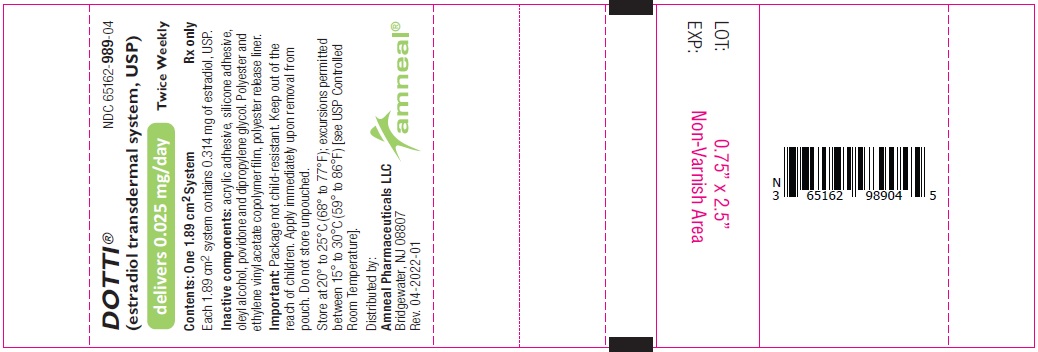
DOTTI Estradiol .075 mg/d Patch, Extended Release, 8 pouches — NDC 65162-995-08 (Billing 65162-0995-08)
This is a package of 8 pouches of DOTTI Estradiol .075 mg/d Patch, Extended Release from Amneal Pharmaceuticals LLC, marketed since Feb 2019 and currently FDA-listed; retail pharmacies pay about $8.11 per pouche (NADAC). It is this product's only package size.
Other active recalls for Estradiol (different manufacturers) — 4 · tap to view
Identity & classification
Regulatory identifiers FDA, NLM and CMS codes for this package
Drug-database identifiers Medi-Span GPI and First Databank GCN / HICL / AHFS classification
- GSN (GCN sequence number): 023270
- GCN: 28843
- GPI-14 (Medi-Span): 24000035008730
- HICL (First Databank): 001421
- AHFS class code: 68:16.04.00
- RxCUI (RxNorm): 241946
Where does this data come from?
- FDA openFDA NDC Directory · synced Oct 1, 2026
- FDA label on DailyMed · label index refreshed Oct 1, 2026
- RxNorm (NLM RxNav) · catalog refreshed Oct 1, 2026
- Medi-Span GPI (licensed)
- First Databank (licensed) · refreshed Oct 1, 2026
RxNorm drug class
This medicine belongs to the Radioactive Diagnostic Agent class.
Where does this data come from?
- RxClass (NLM) · catalog refreshed Oct 1, 2026
Clinical
- It's an estrogen used mainly for menopause symptoms like hot flashes and vaginal dryness. Some patches are also used for low estrogen from ovarian problems or to prevent osteoporos...
- That depends on the form. Patches go on the skin once or twice a week depending on the brand, and the injection goes into a muscle. Use the lowest dose that works for the shortest...
- Headache, breast tenderness, spotting or irregular bleeding, cold-like symptoms and skin irritation where a patch sits are the most common. Tell your doctor if they bother you or d...
- Get urgent help for chest pain, sudden weakness or trouble speaking, a swollen painful leg, sudden shortness of breath or sudden vision changes. These could be a stroke or blood cl...
Patient education
Supplement & herbal interactions
Some supplements/herbs that may interact with Estradiol — tap one for details:
Estradiol may be associated with lower levels of 5 nutrients — worth a chat with your pharmacist, not a cause for alarm.
Where does this data come from?
- MedlinePlus (NLM) · refreshed Oct 1, 2026
- FDA label on DailyMed · label index refreshed Oct 1, 2026
Ask a licensed pharmacist directly — free, answered by our team.
Pricing
A drug doesn't have one price. Each row is a different public payment system, and none is what you'd pay at the counter — that depends on your insurance. The ⓘ on each row explains what it measures.
| Price system | Per ea | Per package |
|---|---|---|
| Retail pharmacies payNADAC · weekly | $8.113 | $64.90 / 8 d |
| Medicaid paysCMS SDUD · 12 mo | $6.77 | $54.12 / 8 d |
| Medicare drug plans payPart D · Q2 2026 | $7.31 | $58.50 / 8 d |
Where does this data come from?
- CMS NADAC weekly file · file of Sep 30, 2026
- CMS ASP pricing files · refreshed Sep 20, 2026
- CMS Medicaid State Drug Utilization Data · through Q1 2026
- CMS Part D plan pricing files · refreshed Sep 24, 2026
- VA National Acquisition Center price file
Packaging — all sizes for this product
| Package NDC | Description | Marketing start | Marketing end | Status |
|---|---|---|---|---|
| 65162-0995-08 You're viewing this Main listing | 8 POUCH in 1 CARTON / 1 d in 1 POUCH | 2019-02-04 | — | Active |
Therapeutic equivalents
| Product | Labeler | Pack | NADAC/unit | TE | Status | Price vs. this |
|---|---|---|---|---|---|---|
| Estradiol .075 mg/d 00378-4622-26 | Mylan | 8 patches | $8.113 | AB3 | Availability likely | — |
| Estradiol .075 mg/d 00378-4641-26 | Mylan | 8 patches | $8.113 | AB1 | Availability likely | — |
| Lyllana .075 mg/d 65162-0150-08 | Amneal | 8 pouches | $8.113 | AB3 | Availability likely | — |
| Dotti .075 mg/dthis 65162-0995-08 | Amneal | 8 pouches | $8.113 | AB1 | Availability likely | — |
| Estradiol .075 mg/d 68968-3475-08 | Noven | 8 pouches | $8.113 | AB3 | Availability likely | — |
| Estradiol .075 mg/d 70710-1194-08 | Zydus | 8 patches | $8.113 | AB1 | Availability likely | — |
| Minivelle .075 mg/d 68968-6675-08 | Noven | 8 pouches | $11.575 | AB3 | Availability likely | +43% |
| Estradiol Transdermal System .075 mg/d 00781-7136-54 | Sandoz | 4 patches | $13.059 | AB2 | Availability likely | +61% |
| Estradiol .075 mg/d 00378-3351-99 | Mylan | 4 patches | $13.059 | AB2 | Availability likely | +61% |
| Climara .075 mg/d 50419-0453-04 | Bayer | 4 patches | $18.251 | AB2 | Availability likely | +125% |
| Vivelle-Dot .075 mg/d 66758-0148-83 | Sandoz | 8 patches | $18.430 | AB1 | Availability likely | +127% |
| Estradiol .075 mg/d 00781-7156-40 | Sandoz | 24 patches | — | AB1 | Discontinued | — |
| Estradiol .075 mg/d 69238-1294-07 | Amneal | 8 pouches | — | AB3 | FDA listed | — |
| Estradiol .075 mg/d 69238-1632-07 | Amneal | 8 pouches | — | AB1 | FDA listed | — |
| Estradiol .075 mg/d 70771-1566-08 | Zydus | 8 patches | — | AB1 | FDA listed | — |
| Dotti .075 mg/d 72162-2035-02 | Bryant | 8 pouches | — | AB1 | FDA listed | — |
| estradiol .075 mg/d 70771-1405-04 | Zydus | 4 patches | — | AB2 | FDA listed | — |
| estradiol .075 mg/d 68382-0328-04 | Zydus | 4 patches | — | AB2 | FDA listed | — |
| Estradiol .075 mg/d 50090-7986-00 | A-S | 4 pouches | — | AB2 | FDA listed | — |
Where does this data come from?
- FDA openFDA NDC Directory · synced Oct 1, 2026
- FDA Orange Book · refreshed Oct 3, 2026
- CMS NADAC weekly file · file of Sep 30, 2026
Availability & generic status
This product is an FDA-approved generic. Other versions of the same drug are listed under Therapeutic equivalents, least expensive first.
Where does this data come from?
- FDA Orange Book · refreshed Oct 3, 2026
What it looks like
Where does this data come from?
- FDA label on DailyMed · label index refreshed Oct 1, 2026
Inactive Ingredients / Excipients
Inactive ingredients, also called excipients, are components of the drug product other than the active ingredient. They may include fillers, dyes, coatings, preservatives, flavors, or other formulation ingredients.
💡 Tap an ingredient (hover on desktop) to see what it is and why it’s used.
-
UNII 83D19O7250
A silicone-based polymer that forms a smooth, water-repellent coating. It's used in topical products as a skin protectant and to improve spreadability and texture.
-
UNII E107L85C40
Dipropylene glycol is a clear liquid made from propylene glycol. It acts as a solvent and humectant in medicines, helping dissolve active ingredients and retain moisture in the formulation.
-
UNII 172F2WN8DV
A fatty alcohol derived from animal or plant oils. It acts as an emollient and helps stabilize emulsions, allowing oil and water to mix evenly in the medication.
-
UNII FZ989GH94E
Povidone is a synthetic polymer made from a plastic-like material. It acts as a binder to hold tablet ingredients together and as a disintegrant to help the tablet break apart in your stomach so the medicine can be absorbed.
4 inactive ingredients listed in the exact product block matched to this NDC.
Where does this data come from?
ingredient classCode="IACT" elements from the exact product block matched by this NDC. Label-section narrative from DailyMed / the openFDA label index is shown separately when available.- FDA label on DailyMed · label index refreshed Oct 1, 2026
- FDA openFDA NDC Directory · synced Oct 1, 2026
Inactive ingredient FAQ
Are inactive ingredients the same for every manufacturer?
Why might an inactive ingredient be missing?
Can inactive ingredients matter?
Manufacturer & labeler
Where does this data come from?
- FDA openFDA NDC Directory · synced Oct 1, 2026
- Drugs@FDA
Full prescribing information FDA SPL
🚨 Boxed Warning ▾
WARNING: ENDOMETRIAL CANCER, CARDIOVASCULAR DISORDERS, PROBABLE DEMENTIA, and BREAST CANCER Estrogen-Alone Therapy Endometrial Cancer There is an increased risk of endometrial cancer in a woman with a uterus who uses unopposed estrogens. Adding a progestogen to estrogen therapy has been shown to reduce the risk of endometrial hyperplasia, which may be a precursor to endometrial cancer. Perform a dequate diagnostic measures, including directed or random endometrial sampling when indicated, to rule out malignancy in postmenopausal women with undiagnosed persistent or recurring abnormal genital bleeding [see Warnings and Precautions (5.2) ] .
Cardiovascular Disorders and Probable Dementia The Women's Health Initiative (WHI) estrogen-alone substudy reported increased risks of stroke and deep vein thrombosis (DVT) in postmenopausal women (50 to 79 years of age) during 7.1 years of treatment with daily oral conjugated estrogens (CE) [0.625 mg]-alone, relative to placebo [see Warnings and Precautions (5.1) , and Clinical Studies (14.3) ] . The WHI Memory Study (WHIMS) estrogen-alone ancillary study of the WHI reported an increased risk of developing probable dementia in postmenopausal women 65 years of age and older during 5.2 years of treatment with daily CE (0.625 mg)-alone, relative to placebo.
It is unknown whether this finding applies to younger postmenopausal women [see Warnings and Precautions (5.3) , Use in Specific Populations (8.5) , and Clinical Studies (14.4) ] . Do not use estrogen-alone therapy for the prevention of cardiovascular disease or dementia [see Warnings and Precautions (5.1 , 5.3) , and Clinical Studies (14.3 , 14.4) ] . Only daily oral 0.625 mg CE was studied in the estrogen-alone substudy of WHI.
Therefore, the relevance of the WHI findings regarding adverse cardiovascular events and dementia to lower CE doses, other routes of administration, or other estrogen-alone products is not known. Without such data, it is not possible to definitively exclude these risks or determine the extent of these risks for other products. Discuss with your patient the benefits and risks of estrogen-alone therapy, taking into account her individual risk profile.
Prescribe e strogens with or without progestogens at the lowest effective doses and for the shortest duration consistent with treatment goals and risks for the individual woman. Estrogen Plus Progestin Therapy Cardiovascular Disorders and Probable Dementia The WHI estrogen plus progestin substudy reported increased risks of DVT, pulmonary embolism (PE), stroke and myocardial infarction (MI) in postmenopausal women (50 to 79 years of age) during 5.6 years of treatment with daily oral CE (0.625 mg) combined with medroxyprogesterone acetate (MPA) [2.5 mg], relative to placebo [see Warnings and Precautions (5.1) , and Clinical Studies (14.3) ] .
The WHIMS estrogen plus progestin ancillary study of the WHI reported an increased risk of developing probable dementia in postmenopausal women 65 years of age and older during 4 years of treatment with daily CE (0.625 mg) combined with MPA (2.5 mg), relative to placebo. It is unknown whether this finding applies to younger postmenopausal women [see Warnings and Precautions (5.3) , Use in Specific Populations (8.5) , and Clinical Studies (14.4) ] . Do not use estrogen plus progestogen therapy for the prevention of cardiovascular disease or dementia [see Warnings and Precautions (5.1 , 5.3) , and Clinical Studies (14.3 , 14.4) ] .
Breast Cancer The WHI estrogen plus progestin substudy also demonstrated an increased risk of invasive breast cancer [see Warnings and Precautions (5.2) , and Clinical Studies (14.3) ] . Only daily oral 0.625 mg CE and 2.5 mg MPA were studied in the estrogen plus progestin substudy of the WHI. Therefore, the relevance of the WHI findings regarding adverse cardiovascular events, dementia and breast cancer to lower CE plus other MPA doses, other routes of administration, or other estrogen plus progestogen pro… [Excerpted — this section continues on DailyMed.]
🎯 Indications and Usage ▾
1 INDICATIONS AND USAGE DOTTI is indicated for: DOTTI is an estrogen indicated for: Treatment of moderate to severe vasomotor symptoms due to menopause (1.1) Treatment of moderate to severe symptoms of vulvar and vaginal atrophy due to menopause (1.2) Limitations of Use When prescribing solely for the treatment of moderate to severe vaginal atrophy, first consider the use of topical vaginal products. Treatment of hypoestrogenism due to hypogonadism, castration, or primary ovarian failure (1.3) Prevention of postmenopausal osteoporosis (1.4) Limitations of Use When prescribing solely for the prevention of postmenopausal osteoporosis, first consider the use of non-estrogen medications.
Consider estrogen therapy only for women at significant risk of osteoporosis.
1.1 Treatment of Moderate to Severe Vasomotor Symptoms Due to Menopause
1.2Treatment of Moderate to Severe Symptoms of Vulvar and Vaginal Atrophy Due to Menopause Limitations of Use : When prescribing solely for the treatment of moderate to severe symptoms of vulvar and vaginal atrophy, first consider the use of topical vaginal products.
1.3Treatment of Hypoestrogenism Due to Hypogonadism, Castration, or Primary Ovarian Failure
1.4Prevention of Postmenopausal Osteoporosis Limitations of Use : When prescribing solely for the prevention of postmenopausal osteoporosis, first consider the use of non-estrogen medications. Consider estrogen therapy only for women at significant risk of osteoporosis.
⏱️ Dosage and Administration ▾
2 DOSAGE AND ADMINISTRATION Generally, when estrogen is prescribed for a postmenopausal woman with a uterus, consider addition of a progestogen to reduce the risk of endometrial cancer. Generally, a woman without a uterus does not need to use a progestogen in addition to her estrogen therapy. In some cases, however, hysterectomized women who have a history of endometriosis may need a progestogen [see Warnings and Precautions (5.2 , 5.14) ] .
Use estrogen-alone or in combination with a progestogen at the lowest effective dose and the shortest duration consistent with treatment goals and risks for the individual woman. Reevaluate postmenopausal women periodically as clinically appropriate to determine whether treatment is still necessary. Start therapy with DOTTI 0.0375 mg/day applied to the skin twice weekly for the treatment of moderate to severe vasomotor symptoms due to menopause or moderate to severe symptoms of vulvar and vaginal atrophy symptoms due to menopause.
Dosage adjustment should be guided by the clinical response (2.1 , 2.2 , 2.3) Start therapy with DOTTI 0.025 mg/day for the prevention of postmenopausal osteoporosis (2.4) Place DOTTI on a clean, dry area of the lower abdomen or buttocks. Do not apply DOTTI to the breasts (2.5)
2.1Treatment of Moderate to Severe Vasomotor Symptoms due to Menopause Start therapy with DOTTI 0.0375 mg per day applied to the skin twice weekly. Make dosage adjustments based on the clinical response. Initiate DOTTI at once in a woman not currently taking oral estrogens or in a woman switching from another estradiol transdermal therapy.
In women who are currently taking oral estrogens, initiate treatment with DOTTI 1 week after withdrawal of oral hormone therapy, or sooner if menopausal symptoms reappear in less than 1 week. Attempts to taper or discontinue DOTTI at 3 to 6 month intervals. Give DOTTI continuously in a woman who does not have an intact uterus.
In a woman with an intact uterus, give DOTTI on a cyclic schedule (for example, 3 weeks on DOTTI followed by 1 week off DOTTI).
2.2Treatment of Moderate to Severe Symptoms of Vulvar and Vaginal Atrophy due to Menopause Start therapy with DOTTI 0.0375 mg per day applied to the skin twice weekly. Dosage adjustment should be guided by the clinical response. Attempts to taper or discontinue DOTTI at 3 to 6 month intervals.
In women not currently taking oral estrogens or in women switching from another estradiol transdermal therapy, treatment with DOTTI may be initiated at once. In women who are currently taking oral estrogens, initiate treatment with DOTTI 1 week after withdrawal of oral hormone therapy, or sooner if menopausal symptoms reappear in less than 1 week. Give DOTTI continuously in a woman who does not have an intact uterus.
In a woman with an intact uterus, give DOTTI on a cyclic schedule (for example, 3 weeks on DOTTI followed by 1 week off DOTTI).
2.3 Hypoestrogenism Due to Hypogonadism, Castration, or Primary Ovarian Failure
2.4Prevention of Postmenopausal Osteoporosis Start therapy with DOTTI 0.025 mg per day applied to the skin twice weekly. In women not currently taking oral estrogens or in women switching from another estradiol transdermal therapy, treatment with DOTTI may be initiated at once. In women who are currently taking oral estrogens, initiate treatment with DOTTI 1 week after withdrawal of oral hormone therapy, or sooner if menopausal symptoms reappear in less than 1 week.
DOTTI may be given continuously in a woman who does not have an intact uterus. In a woman with an intact uterus, DOTTI may be given on a cyclic schedule (for example, 3 weeks on DOTTI followed by 1 week off DOTTI).
2.5Application Instructions Place the adhesive side of DOTTI on a clean, dry area of the trunk of the body (including the abdomen or buttocks). Do not apply DOTTI to the breasts. Replace DOTTI twice weekly. Rotate the sites of application, with an interval of at least 1 week allowed between applications to a particular site… [Excerpted — this section continues on DailyMed.]
💊 Dosage Forms and Strengths ▾
3 DOSAGE FORMS AND STRENGTHS Transdermal system, USP: 0.025 mg/day, 0.0375 mg/day, 0.05 mg/day, 0.075 mg/day, and 0.1 mg/day. Transdermal system, USP: 0.025 mg/day, 0.0375 mg/day, 0.05 mg/day, 0.075 mg/day, and 0.1 mg/day (3)
⛔ Contraindications ▾
4 CONTRAINDICATIONS DOTTI is contraindicated in women with any of the following conditions: Undiagnosed abnormal genital bleeding [see Warnings and Precautions (5.2) ] . Breast cancer or a history of breast cancer [see Warnings and Precautions (5.2) ] . Estrogen-dependent neoplasia [see Warnings and Precautions (5.2) ] .
Active DVT, PE, or a history of these conditions [see Warnings and Precautions (5.1) ] . Active arterial thromboembolic disease (for example, stroke and MI), or a history of these conditions [see Warnings and Precautions (5.1) ] . Known anaphylactic reaction, or angioedema, or hypersensitivity to DOTTI Hepatic impairment or disease Protein C, protein S, or antithrombin deficiency, or other known thrombophilic disorders Undiagnosed abnormal genital bleeding (4 , 5.2) Breast cancer or a history of breast cancer (4 , 5.2) Estrogen-dependent neoplasia (4 , 5.2) Active DVT, PE or a history of these conditions (4 , 5.1) Active arterial thromboembolic disease (for example, stroke and MI), or a history of these conditions (4 , 5.1) Known anaphylactic reaction, or angioedema, or hypersensitivity with DOTTI (4 , 5.15) Hepatic impairment or disease (4 , 5.10) Protein C, protein S, or antithrombin deficiency, or other known thrombophilic disorders (4)
⚠️ Warnings and Cautions ▾
5 WARNINGS AND PRECAUTIONS Estrogens increase the risk of gallbladder disease (5.4) Discontinue estrogen if severe hypercalcemia, loss of vision, severe hypertriglyceridemia or cholestatic jaundice occurs (5.5 , 5.6 , 5.9 , 5.10 ) Monitor thyroid function in women on thyroid replacement therapy (5.11 , 5.18)
5.1Cardiovascular Disorders Increased risks of stroke and DVT are reported with estrogen-alone therapy. Increased risks of PE, DVT, stroke, and MI are reported with estrogen plus progestin therapy. Immediately discontinue estrogen with or without progestogen therapy if any of these occur or are suspected.
Manage appropriately any risk factors for arterial vascular disease (for example, hypertension, diabetes mellitus, tobacco use, hypercholesterolemia, and obesity) and/or venous thromboembolism (VTE) (for example, personal history or family history of VTE, obesity, and systemic lupus erythematosus). Stroke The WHI estrogen-alone substudy reported a statistically significant increased risk of stroke in women 50 to 79 years of age receiving daily CE (0.625 mg)-alone compared to women in the same age group receiving placebo (45 versus 33 strokes per 10,000 women-years, respectively).
The increase in risk was demonstrated in year 1 and persisted [see Clinical Studies (14.3) ] . Immediately discontinue estrogen-alone therapy if a stroke occurs or is suspected. Subgroup analyses of women 50 to 59 years of age suggest no increased risk of stroke for those women receiving CE (0.625 mg)-alone versus those receiving placebo (18 versus 21 per 10,000 women-years).
1 The WHI estrogen plus progestin substudy reported a statistically significant increased risk of stroke in women 50 to 79 years of age receiving CE (0.625 mg) plus MPA (2.5 mg) compared to women in the same age group receiving placebo (33 versus 25 stokes per 10,000 women-years) [see Clinical Studies (14.3 )] . The increase in risk was demonstrated after the first year and persisted. 1 Immediately discontinue estrogen plus progestogen therapy if a stroke occurs or is suspected.
Coronary Heart Disease The WHI estrogen-alone substudy reported no overall effect on coronary heart disease (CHD) events (defined as nonfatal MI, silent MI, or CHD death) in women receiving estrogen-alone compared to placebo 2 [see Clinical Studies (14.3) ] . Subgroup analyses of women 50 to 59 years of age, who were less than 10 years since menopause, suggest a reduction (not statistically significant) in CHD events in those women receiving daily CE (0.625 mg)–alone compared to placebo (8 versus 16 per 10,000 women-years).
1 The WHI estrogen plus progestin substudy reported an increased risk (not statistically significant) in CHD events in women receiving daily CE (0.625 mg) plus MPA (2.5 mg) compared to women receiving placebo (41 versus 34 per 10,000 women-years). 1 An increase in relative risk was demonstrated in year 1, and a trend toward decreasing relative risk was reported in years 2 through 5 [see Clinical Studies (14.3) ] . In postmenopausal women with documented heart disease (n=2,763, average 66.7 years of age), in a controlled clinical trial of secondary prevention of cardiovascular disease (Heart and Estrogen/Progestin Replacement Study; HERS), treatment with daily CE (0.625 mg) plus MPA (2.5 mg) demonstrated no cardiovascular benefit.
During an average follow-up of 4.1 years, treatment with CE plus MPA did not reduce the overall rate of CHD events in postmenopausal women with established CHD. There were more CHD events in the CE plus MPA-treated group than in the placebo group in year 1, but not during the subsequent years. Two thousand three hundred twenty-one (2,321) women from the original HERS trial agreed to participate in an open-label extension of HERS, HERS II.
Average follow-up in HERS II was an additional 2.7 years, for a total of 6.8 years overall. Rates of CHD events were comparable among women in the CE plus MPA group and the placebo group in the HERS, the HERS II, and ov… [Excerpted — this section continues on DailyMed.]
🤒 Adverse Reactions ▾
6 ADVERSE REACTIONS The following serious adverse reactions are discussed elsewhere in labeling: Cardiovascular Disorders [see Boxed Warning , Warnings and Precautions (5.1) ] Malignant Neoplasms [see Boxed Warning , Warnings and Precautions (5.2) ] The most common adverse reactions (≥10%) with DOTTI are: headache, breast tenderness, nasopharyngitis, sinusitis, sinus headache, upper respiratory tract infection, back pain, depression, and irregular vaginal bleeding or spotting. ( 6.1 ) To report SUSPECTED ADVERSE REACTIONS, contact Amneal Pharmaceuticals at 1-877-835-5472 or FDA at 1-800-FDA-1088 or www.fda.gov/medwatch.
6.1Clinical Trials Experience Because clinical trials are conducted under widely varying conditions, adverse reaction rates observed in the clinical trials of a drug cannot be directly compared to rates in the clinical trials of another drug and may not reflect the rates observed in practice. There were no clinical trials conducted with DOTTI. DOTTI is bioequivalent to the original formulation of estradiol transdermal system.
The following adverse reactions have been reported with the original formulation of estradiol transdermal system therapy: Table 1. Summary of Most Frequently Reported Adverse Reactions Regardless of Relationship Reported at a Frequency ≥5 Percent Estradiol 0.025 mg/day † (N=47) N (%) Estradiol 0.0375 mg/day † (N=130) N (%) Estradiol 0.05 mg/day † (N=103) N (%) Estradiol 0.075 mg/day † (N=46) N (%) Estradiol 0.1 mg/day † (N=132) N (%) Placebo (N=157) N (%) Gastrointestinal disorders Constipation 2 (4.3) 5 (3.8) 4 (3.9) 3 (6.5) 2 (1.5) 4 (2.5) Dyspepsia 4 (8.5) 12 (9.2) 3 (2.9) 2 (4.3) 0 10 (6.4) Nausea 2 (4.3) 8 (6.2) 4 (3.9) 0 7 (5.3) 5 (3.2) General disorders and administration site conditions*** Influenza-like illness 3 (6.4) 6 (4.6) 8 (7.8) 0 3 (2.3) 10 (6.4) Pain NOS* 0 8 (6.2) 0 2 (4.3) 7 (5.3) 7 (4.5) Infections and infestations Influenza 4 (8.5) 4 (3.1) 6 (5.8) 0 10 (7.6) 14 (8.9) Nasopharyngitis 3 (6.4) 16 (12.3) 10 (9.7) 9 (19.6) 11 (8.3) 24 (15.3) Sinusitis NOS* 4 (8.5) 17 (13.1) 13 (12.6) 3 (6.5) 7 (5.3) 16 (10.2) Upper respiratory tract infection NOS* 3 (6.4) 8 (6.2) 11 (10.7) 4 (8.7) 6 (4.5) 9 (5.7) Investigations Weight increased 4 (8.5) 5 (3.8) 2 (1.9) 2 (4.3) 0 3 (1.9) Musculoskeletal and connective tissue disorders Arthralgia 0 11 (8.5) 4 (3.9) 2 (4.3) 5 (3.8) 9 (5.7) Back pain 4 (8.5) 10 (7.7) 9 (8.7) 4 (8.7) 14 (10.6) 10 (6.4) Neck pain 3 (6.4) 4 (3.1) 4 (3.9) 0 6 (4.5) 2 (1.3) Pain in limb 0 10 (7.7) 7 (6.8) 2 (4.3) 6 (4.5) 9 (5.7) Nervous system disorders Headache NOS* 7 (14.9) 35 (26.9) 32 (31.1) 23 (50.0) 34 (25.8) 37 (23.6) Sinus headache 0 12 (9.2) 5 (4.9) 5 (10.9) 2 (1.5) 8 (5.1) Psychiatric disorders Anxiety NEC** 3 (6.4) 5 (3.8) 0 0 2 (1.5) 4 (2.5) Depression 5 (10.6) 4 (3.1) 7 (6.8) 0 4 (3.0) 6 (3.8) Insomnia 3 (6.4) 6 (4.6) 4 (3.9) 2 (4.3) 2 (1.5) 9 (5.7) Reproductive system and breast disorders Breast tenderness 8 (17.0) 10 (7.7) 8 (7.8) 3 (6.5) 17 (12.9) 0 Dysmenorrhea 0 0 0 3 (6.5) 0 0 Intermenstrual bleeding 3 (6.4) 9 (6.9) 6 (5.8) 0 14 (10.6) 7 (4.5) Respiratory, thoracic and mediastinal disorders Sinus congestion 0 4 (3.1) 3 (2.9) 3 (6.5) 6 (4.5) 7 (4.5) Vascular disorders Hot flushes NOS* 3 (6.4) 0 3 (2.9) 0 0 6 (3.8) Hypertension NOS* 2 (4.3) 0 3 (2.9) 0 0 2 (1.3) † Represents milligrams of estradiol delivered daily by each system. * NOS represents not otherwise specified. ** NEC represents not elsewhere classified. *** Application site erythema and application site irritation were observed in a small number of patients (3.2% or less of patients across treatment groups).
6.2Post-marketing Experience The following additional adverse reactions have been identified during post-approval use of DOTTI. Because these reactions are reported voluntarily from a population of uncertain size, it is not always possible to reliably estimate their frequency or establish a causal relationship to drug exposure. Genitourinary System Vaginal hemorrhage and abnormal wit… [Excerpted — this section continues on DailyMed.]
🔄 Drug Interactions ▾
7 DRUG INTERACTIONS In vitro and in vivo studies have shown that estrogens are metabolized partially by cytochrome P450 3A4 (CYP3A4). Therefore, inducers or inhibitors of CYP3A4 may affect estrogen drug metabolism. Inducers of CYP3A4 such as St.
John’s wort ( Hypericum perforatum ) preparations, phenobarbital, carbamazepine and rifampin may reduce plasma concentrations of estrogens, possibly resulting in a decrease in therapeutic effects and/or changes in the uterine bleeding profile. Inhibitors of CYP3A4 such as erythromycin, clarithromycin, ketoconazole, itraconazole, ritonavir, and grapefruit juice may increase plasma concentrations of estrogens and may result in adverse reactions. Inducers and/or inhibitors of CYP3A4 may affect estrogen drug metabolism and decrease or increase the estrogen plasma concentration.
( 7 )
👥 Use in Specific Populations ▾
8 USE IN SPECIFIC POPULATIONS
8.1Pregnancy Risk Summary DOTTI is not indicated for use in pregnancy. There are no data with the use of DOTTI in pregnant women; however, epidemiologic studies and meta-analyses have not found an increased risk of genital or nongenital birth defects (including cardiac anomalies and limb-reduction defects) following exposure to combined hormonal contraceptives (estrogen and progestins) before conception or during early pregnancy. In the U.S. general population, the estimated background risk of major birth defects and miscarriage in clinically recognized pregnancies is 2% to 4% and 15% to 20%, respectively.
8.2Lactation Risk Summary Estrogens are present in human milk and can reduce milk production in breast-feeding women. This reduction can occur at any time but is less likely to occur once breast-feeding is well-established. The developmental and health benefits of breastfeeding should be considered along with the mother’s clinical need for DOTTI and any potential adverse effects on the breastfed child from DOTTI or from the underlying maternal condition.
8.4Pediatric Use DOTTI is not indicated for use in pediatric patients. Clinical studies have not been conducted in the pediatric population. If estrogen is administered to patients whose bone growth is not complete, periodic monitoring of bone maturation and effects on epiphyseal centers is recommended during estrogen administration.
8.5Geriatric Use There have not been sufficient numbers of geriatric women involved in clinical studies utilizing DOTTI to determine whether those over 65 years of age differ from younger subjects in their response to DOTTI. The Women’s Health Initiative Studies In the WHI estrogen-alone substudy (daily CE [0.625 mg]-alone versus placebo), there was a higher relative risk of stroke in women greater than 65 years of age [see Warnings and Precautions (5.1) , and Clinical Studies (14.3) ] . In the WHI estrogen plus progestin substudy (daily CE [0.625 mg] plus MPA [2.5 mg] versus placebo), there was a higher relative risk of nonfatal stroke and invasive breast cancer in women greater than 65 years of age [see Warnings and Precautions (5.1) , and Clinical Studies (14.3) ] .
The Women’s Health Initiative Memory Study In the WHIMS ancillary studies of postmenopausal women 65 to 79 years of age, there was an increased risk of developing probable dementia in women receiving estrogen-alone or estrogen plus progestin when compared to placebo [see Warnings and Precautions (5.3) , and Clinical Studies (14.4) ] . Since both ancillary studies were conducted in women 65 to 79 years of age, it is unknown whether these findings apply to younger postmenopausal women 8 [see Warnings and Precautions (5.3) , and Clinical Studies (14.4) ] .
🤰 Pregnancy ▾
8.1Pregnancy Risk Summary DOTTI is not indicated for use in pregnancy. There are no data with the use of DOTTI in pregnant women; however, epidemiologic studies and meta-analyses have not found an increased risk of genital or nongenital birth defects (including cardiac anomalies and limb-reduction defects) following exposure to combined hormonal contraceptives (estrogen and progestins) before conception or during early pregnancy. In the U.S. general population, the estimated background risk of major birth defects and miscarriage in clinically recognized pregnancies is 2% to 4% and 15% to 20%, respectively.
🧒 Pediatric Use ▾
8.4Pediatric Use DOTTI is not indicated for use in pediatric patients. Clinical studies have not been conducted in the pediatric population. If estrogen is administered to patients whose bone growth is not complete, periodic monitoring of bone maturation and effects on epiphyseal centers is recommended during estrogen administration.
🧓 Geriatric Use ▾
8.5Geriatric Use There have not been sufficient numbers of geriatric women involved in clinical studies utilizing DOTTI to determine whether those over 65 years of age differ from younger subjects in their response to DOTTI. The Women’s Health Initiative Studies In the WHI estrogen-alone substudy (daily CE [0.625 mg]-alone versus placebo), there was a higher relative risk of stroke in women greater than 65 years of age [see Warnings and Precautions (5.1) , and Clinical Studies (14.3) ] . In the WHI estrogen plus progestin substudy (daily CE [0.625 mg] plus MPA [2.5 mg] versus placebo), there was a higher relative risk of nonfatal stroke and invasive breast cancer in women greater than 65 years of age [see Warnings and Precautions (5.1) , and Clinical Studies (14.3) ] .
The Women’s Health Initiative Memory Study In the WHIMS ancillary studies of postmenopausal women 65 to 79 years of age, there was an increased risk of developing probable dementia in women receiving estrogen-alone or estrogen plus progestin when compared to placebo [see Warnings and Precautions (5.3) , and Clinical Studies (14.4) ] . Since both ancillary studies were conducted in women 65 to 79 years of age, it is unknown whether these findings apply to younger postmenopausal women 8 [see Warnings and Precautions (5.3) , and Clinical Studies (14.4) ] .
🆘 Overdosage ▾
10 OVERDOSAGE Overdosage of estrogen may cause nausea, vomiting, breast tenderness, abdominal pain, drowsiness and fatigue, and withdrawal bleeding may occur in women. Treatment of overdose consists of discontinuation of DOTTI therapy with institution of appropriate symptomatic care.
🧬 Clinical Pharmacology ▾
12 CLINICAL PHARMACOLOGY
12.1Mechanism of Action Endogenous estrogens are largely responsible for the development and maintenance of the female reproductive system and secondary sexual characteristics. Although circulating estrogens exist in a dynamic equilibrium of metabolic interconversions, estradiol is the principal intracellular human estrogen and is substantially more potent than its metabolites, estrone and estriol, at the receptor level. The primary source of estrogen in normally cycling adult women is the ovarian follicle, which secretes 70 to 500 mcg of estradiol daily, depending on the phase of the menstrual cycle.
After menopause, most endogenous estrogen is produced by conversion of androstenedione, secreted by the adrenal cortex, to estrone in the peripheral tissues. Thus, estrone and the sulfate conjugated form, estrone sulfate, are the most abundant circulating estrogens in postmenopausal women. Estrogens act through binding to nuclear receptors in estrogen-responsive tissues.
To date, 2 estrogen receptors have been identified. These vary in proportion from tissue to tissue. Circulating estrogens modulate the pituitary secretion of the gonadotropins, luteinizing hormone (LH) and follicle stimulating hormone (FSH) through a negative feedback mechanism.
Estrogens act to reduce the elevated levels of these hormones seen in postmenopausal women.
12.2Pharmacodynamics Generally, a serum estrogen concentration does not predict an individual woman’s therapeutic response to DOTTI nor her risk for adverse outcomes. Likewise, exposure comparisons across different estrogen products to infer efficacy or safety for the individual woman may not be valid.
12.3Pharmacokinetics Absorption In a multiple-dose study consisting of 3 consecutive system applications of the original formulation of estradiol transdermal system which was conducted in 17 healthy, postmenopausal women, blood levels of estradiol and estrone were compared following application of these units to sites on the abdomen and buttocks in a crossover fashion. Systems that deliver nominal estradiol doses of approximately 0.0375 mg per day and 0.1 mg per day were applied to abdominal application sites while the 0.1 mg per day doses were also applied to sites on the buttocks.
These systems increased estradiol levels above baseline within 4 hours and maintained respective mean levels of 25 and 79 pg/mL above baseline following application to the abdomen; slightly higher mean levels of 88 pg/mL above baseline were observed following application to the buttocks. At the same time, increases in estrone plasma concentrations averaged about 12 and 50 pg/mL, respectively, following application to the abdomen and 61 pg/mL for the buttocks. While plasma concentrations of estradiol and estrone remained slightly above baseline at 12 hours following removal of the systems in this study, results from another study show these levels to return to baseline values within 24 hours following removal of the systems.
Figure 1 illustrates the mean plasma concentrations of estradiol at steady-state during application of these patches at 4 different dosages. Figure 1. Steady-State Estradiol Plasma Concentrations for Systems Applied to the Abdomen Nonbaseline-corrected Levels The corresponding pharmacokinetic parameters are summarized in Table 2.
Table 2. Steady-State Estradiol Pharmacokinetic Parameters for Systems Applied to the Abdomen (mean ± standard deviation) Nonbaseline-corrected Data* Dosage (mg/day) C max † (pg/mL) C avg ‡ (pg/mL) C min (84 hr) § (pg/mL) 0.0375 46 ± 16 34 ± 10 30 ±10 0.05 83 ± 41 57 ± 23 # 41 ± 11 # 0.075 99 ± 35 72 ± 24 60 ± 24 0.1 133 ± 51 89 ± 38 90 ± 44 0.1 ¶ 145 ± 71 104 ± 52 85 ± 47 *Mean baseline estradiol concentration =11.7 pg/mL. † Peak plasma concentration. ‡ Average plasma concentration. § Minimum plasma concentration at 84 hr. # Measured over 80 hr. ¶ Applied to the buttocks.
DOTTI (estradiol transdermal system), the revised formulation with smaller sy… [Excerpted — this section continues on DailyMed.]
🧬 Mechanism of Action ▾
12.1Mechanism of Action Endogenous estrogens are largely responsible for the development and maintenance of the female reproductive system and secondary sexual characteristics. Although circulating estrogens exist in a dynamic equilibrium of metabolic interconversions, estradiol is the principal intracellular human estrogen and is substantially more potent than its metabolites, estrone and estriol, at the receptor level. The primary source of estrogen in normally cycling adult women is the ovarian follicle, which secretes 70 to 500 mcg of estradiol daily, depending on the phase of the menstrual cycle.
After menopause, most endogenous estrogen is produced by conversion of androstenedione, secreted by the adrenal cortex, to estrone in the peripheral tissues. Thus, estrone and the sulfate conjugated form, estrone sulfate, are the most abundant circulating estrogens in postmenopausal women. Estrogens act through binding to nuclear receptors in estrogen-responsive tissues.
To date, 2 estrogen receptors have been identified. These vary in proportion from tissue to tissue. Circulating estrogens modulate the pituitary secretion of the gonadotropins, luteinizing hormone (LH) and follicle stimulating hormone (FSH) through a negative feedback mechanism.
Estrogens act to reduce the elevated levels of these hormones seen in postmenopausal women.
📦 How Supplied / Storage and Handling ▾
16 HOW SUPPLIED/STORAGE AND HANDLING
16.1How Supplied DOTTI (estradiol transdermal system, USP), 0.025 mg per day -each 1.89 cm 2 system contains 0.314 mg of estradiol, USP for nominal* delivery of 0.025 mg of estradiol, USP per day. Patient Calendar Pack of 8 Systems………………………………….NDC 65162-989-08 DOTTI (estradiol transdermal system, USP), 0.0375 mg per day -each 2.83 cm 2 system contains 0.470 mg of estradiol, USP for nominal* delivery of 0.0375 mg of estradiol, USP per day. Patient Calendar Pack of 8 Systems………………………………….NDC 65162-992-08 DOTTI (estradiol transdermal system, USP), 0.05 mg per day -each 3.78 cm 2 system contains 0.627 mg of estradiol, USP for nominal* delivery of 0.05 mg of estradiol, USP per day.
Patient Calendar Pack of 8 Systems………………………………….NDC 65162-993-08 DOTTI (estradiol transdermal system, USP), 0.075 mg per day -each 5.66 cm 2 system contains 0.940 mg of estradiol, USP for nominal* delivery of 0.075 mg of estradiol, USP per day. Patient Calendar Pack of 8 Systems………………………………….NDC 65162-995-08 DOTTI (estradiol transdermal system, USP), 0.1 mg per day -each 7.55 cm 2 system contains 1.253 mg of estradiol, USP for nominal* delivery of 0.1 mg of estradiol, USP per day. Patient Calendar Pack of 8 Systems………………………………….NDC 65162-997-08 [*see DESCRIPTION (11) ]
16.2Storage and Handling Store at 20° to 25°C (68° to 77°F); excursions permitted between 15° to 30°C (59° to 86°F) [see USP Controlled Room Temperature]. Do not store unpouched. Apply immediately upon removal from the protective pouch.
Used transdermal systems still contain active hormone. To discard, fold the sticky side of the transdermal system together, place it in a sturdy child-proof container, and place this container in the trash. Used transdermal systems should not be flushed in the toilet.
📋 Description ▾
11 DESCRIPTION DOTTI (estradiol transdermal system, USP) contains estradiol, USP in a multipolymeric adhesive. The system is designed to release estradiol, USP continuously upon application to intact skin. Five dosage strengths of DOTTI are available to provide nominal in vivo delivery rates of 0.025, 0.0375, 0.05, 0.075, or 0.1 mg of estradiol, USP per day via the skin.
Each corresponding system has an active surface area of 1.89, 2.83, 3.78, 5.66, or 7.55 cm 2 and contains 0.314, 0.470, 0.627, 0.940, or 1.253 mg of estradiol USP, respectively. The composition of the systems per unit area is identical. Estradiol, USP is a white to practically white powder, chemically described as estra-1,3,5 (10)- triene-3,17β-diol.
The structural formula is: The molecular formula of estradiol, USP is C 18 H 24 0 2 . The molecular weight is 272.39 g/mol. DOTTI is comprised of 3 layers.
Proceeding from the visible surface toward the surface attached to the skin, these layers are (1) polyester and ethylene vinyl acetate copolymer film (2) an adhesive formulation containing estradiol USP, acrylic adhesive, silicone adhesive, oleyl alcohol, NF, povidone, USP and dipropylene glycol, and (3) a polyester release liner which is attached to the adhesive surface and must be removed before the system can be used. The active component of the system is estradiol, USP. The remaining components of the system are pharmacologically inactive.
FDA approved acceptance criteria for dissolution test specifications differ from USP. 1 2
💬 Information for Patients ▾
17 PATIENT COUNSELING INFORMATION Advise women to read the FDA-approved patient labeling ( Patient Information and Instructions for Use ) Vaginal Bleeding Inform postmenopausal women to report any vaginal bleeding to their healthcare providers as soon as possible [see Warnings and Precautions (5.2) ] . Possible Serious Adverse Reactions with Estrogen-Alone Therapy Inform postmenopausal women of possible serious adverse reactions of estrogen-alone therapy including Cardiovascular Disorders, Malignant Neoplasms, and Probable Dementia [see Warnings and Precautions (5.1 , 5.2 , 5.3) ] .
Possible Common Adverse Reactions with Estrogen-Alone Therapy Inform postmenopausal women of possible less serious but common adverse reactions of estrogen-alone therapy such as headache, breast pain and tenderness, nausea and vomiting. Distributed by: Amneal Pharmaceuticals LLC Bridgewater, NJ 08807 Rev. 05-2024-03
💬 Patient Medication Information ▾
PATIENT INFORMATION DOTTI (dah ʹ tee) ( estradiol transdermal system) Read this Patient Information before you start using DOTTI and each time you get a refill. There may be new information. This information does not take the place of talking to your healthcare provider about your menopausal symptoms or your treatment.
What is the most important information I should know about DOTTI (an estrogen hormone)? Using estrogen-alone increases your chance of getting cancer of the uterus (womb). Report any unusual vaginal bleeding right away while you are using DOTTI.
Vaginal bleeding after menopause may be a warning sign of cancer of the uterus (womb). Your healthcare provider should check any unusual vaginal bleeding to find out the cause. Do not use estrogen-alone to prevent heart disease, heart attacks, strokes, or dementia (decline in brain function).
Using estrogen-alone may increase your chances of getting strokes or blood clots. Using estrogen-alone may increase your chance of getting dementia, based on a study of women 65 years of age and older. Do not use estrogens with progestogens to prevent heart disease, heart attacks, strokes, or dementia.
Using estrogens with progestogens may increase your chances of getting heart attacks, strokes, breast cancer, or blood clots. Using estrogens with progestogens may increase your chance of getting dementia, based on a study of women 65 years of age and older. Only one estrogen-alone product and dose have been shown to increase your chances of getting strokes, blood clots, and dementia.
Only one estrogen with progestogen product and dose have been shown to increase your chances of getting heart attacks, strokes, breast cancer, blood clots, and dementia. Because other products and doses have not been studied in the same way, it is not known how the use of DOTTI will affect your chances of these conditions. You and your healthcare provider should talk regularly about whether you still need treatment with DOTTI.
What is DOTTI? DOTTI is a prescription medicine patch (transdermal system) that contains the estrogen hormone estradiol. When applied to the skin, estradiol is absorbed through the skin into the bloodstream.
What is DOTTI used for? DOTTI is used after menopause to: Reduce moderate to severe hot flashes Estrogens are hormones made by a woman’s ovaries. The ovaries normally stop making estrogens when a woman is between 45 and 55 years old.
This drop in body estrogen levels causes the “change of life” or menopause (the end of monthly menstrual periods). Sometimes, both ovaries are removed during an operation before natural menopause takes place. The sudden drop in estrogen levels causes “surgical menopause.” When estrogen levels begin dropping, some women develop very uncomfortable symptoms, such as feelings of warmth in the face, neck, and chest or sudden intense feelings of heat and sweating (“hot flashes” or “hot flushes”).
In some women the symptoms are mild, and they will not need to use estrogens. In other women, symptoms can be more severe. Treat moderate to severe menopausal changes in and around the vagina You and your healthcare provider should talk regularly about whether you still need treatment with DOTTI to control these problems.
If you use DOTTI only to treat your menopausal changes in and around your vagina, talk with your healthcare provider about whether a topical vaginal product would be better for you. Treat certain conditions in women before menopause if their ovaries do not produce enough estrogens naturally Help reduce your chances of getting osteoporosis (thin weak bones) Osteoporosis from menopause is a thinning of the bones that makes them weaker and easier to break. If you use DOTTI to prevent osteoporosis due to menopause, talk with your healthcare provider about whether a different treatment or medicine without estrogens might be better for you.
You and your healthcare provider should talk regularly about whether you should continue treatment with DOTTI. W… [Excerpted — this section continues on DailyMed.]
🍼 Nursing Mothers ▾
8.2Lactation Risk Summary Estrogens are present in human milk and can reduce milk production in breast-feeding women. This reduction can occur at any time but is less likely to occur once breast-feeding is well-established. The developmental and health benefits of breastfeeding should be considered along with the mother’s clinical need for DOTTI and any potential adverse effects on the breastfed child from DOTTI or from the underlying maternal condition.
🧬 Pharmacokinetics ▾
12.3Pharmacokinetics Absorption In a multiple-dose study consisting of 3 consecutive system applications of the original formulation of estradiol transdermal system which was conducted in 17 healthy, postmenopausal women, blood levels of estradiol and estrone were compared following application of these units to sites on the abdomen and buttocks in a crossover fashion. Systems that deliver nominal estradiol doses of approximately 0.0375 mg per day and 0.1 mg per day were applied to abdominal application sites while the 0.1 mg per day doses were also applied to sites on the buttocks.
These systems increased estradiol levels above baseline within 4 hours and maintained respective mean levels of 25 and 79 pg/mL above baseline following application to the abdomen; slightly higher mean levels of 88 pg/mL above baseline were observed following application to the buttocks. At the same time, increases in estrone plasma concentrations averaged about 12 and 50 pg/mL, respectively, following application to the abdomen and 61 pg/mL for the buttocks. While plasma concentrations of estradiol and estrone remained slightly above baseline at 12 hours following removal of the systems in this study, results from another study show these levels to return to baseline values within 24 hours following removal of the systems.
Figure 1 illustrates the mean plasma concentrations of estradiol at steady-state during application of these patches at 4 different dosages. Figure 1. Steady-State Estradiol Plasma Concentrations for Systems Applied to the Abdomen Nonbaseline-corrected Levels The corresponding pharmacokinetic parameters are summarized in Table 2.
Table 2. Steady-State Estradiol Pharmacokinetic Parameters for Systems Applied to the Abdomen (mean ± standard deviation) Nonbaseline-corrected Data* Dosage (mg/day) C max † (pg/mL) C avg ‡ (pg/mL) C min (84 hr) § (pg/mL) 0.0375 46 ± 16 34 ± 10 30 ±10 0.05 83 ± 41 57 ± 23 # 41 ± 11 # 0.075 99 ± 35 72 ± 24 60 ± 24 0.1 133 ± 51 89 ± 38 90 ± 44 0.1 ¶ 145 ± 71 104 ± 52 85 ± 47 *Mean baseline estradiol concentration =11.7 pg/mL. † Peak plasma concentration. ‡ Average plasma concentration. § Minimum plasma concentration at 84 hr. # Measured over 80 hr. ¶ Applied to the buttocks.
DOTTI (estradiol transdermal system), the revised formulation with smaller system sizes, was shown to be bioequivalent to the original formulation of estradiol transdermal system, used in the clinical trials. Distribution The distribution of exogenous estrogens is similar to that of endogenous estrogens. Estrogens are widely distributed in the body and are generally found in higher concentrations in the sex hormone target organs.
Estrogens circulate in the blood largely bound to sex hormone-binding globulin (SHBG) and albumin. Metabolism Exogenous estrogens are metabolized in the same manner as endogenous estrogens. Circulating estrogens exist in a dynamic equilibrium of metabolic interconversions.
These transformations take place mainly in the liver by Cytochrome 450 isoforms CYP1A2 and CYP3A4. Estradiol undergoes further metabolism to sulfate and glucuronide conjugates. Estradiol and its metabolites are glucuronidated by UGT1A1 and UGT2B7.
Estradiol is converted reversibly to estrone, and both can be converted to estriol, which is a major urinary metabolite. Estrogens also undergo enterohepatic recirculation via sulfate and glucuronide conjugation in the liver, biliary secretion of conjugates into the intestine, and hydrolysis in the intestine followed by reabsorption. In postmenopausal women a significant portion of the circulating estrogens exist as sulfate conjugates, especially estrone sulfate, which serves as a circulating reservoir for the formation of more active estrogens.
Excretion Estradiol, estrone and estriol are excreted in the urine along with glucuronide and sulfate conjugates. The half-life values calculated after dosing with DOTTI ranged from 5.9 to 7.7 hours. After removal of the transdermal systems, serum concent… [Excerpted — this section continues on DailyMed.]
🧬 Pharmacodynamics ▾
12.2Pharmacodynamics Generally, a serum estrogen concentration does not predict an individual woman’s therapeutic response to DOTTI nor her risk for adverse outcomes. Likewise, exposure comparisons across different estrogen products to infer efficacy or safety for the individual woman may not be valid.
🔬 Clinical Studies ▾
14 CLINICAL STUDIES
14.1Effects on Vasomotor Symptoms in Postmenopausal Women In a pharmacokinetic study, DOTTI was shown to be bioequivalent to the original estradiol formulation. In 2 controlled clinical trials with the original estradiol formulation, of 356 women, the 0.075 and 0.1 mg doses were superior to placebo in relieving vasomotor symptoms at Week 4, and maintained efficacy through Weeks 8 and 12 of treatment. In this original study, the 0.0375 and 0.05 mg doses, however, did not differ from placebo until approximately Week 6, therefore, an additional 12-week, placebo-controlled study in 255 women was performed with the original estradiol formulation to establish the efficacy of the lowest dose of 0.0375 mg.
The baseline mean daily number of hot flushes in these 255 women was 11.5. Results at Weeks 4, 8, and 12 of treatment are shown in Figure 2. Figure 2.
Mean (SD) Change from Baseline in Mean Daily Number of Flushes for Estradiol 0.0375 mg Versus Placebo in a 12-week Trial The 0.0375 mg dose was superior to placebo in reducing both the frequency and severity of vasomotor symptoms at Week 4 and maintained efficacy through Weeks 8 and 12 of treatment. All doses of the original estradiol formulation (0.0375 mg, 0.05 mg, 0.075 mg, and 0.1 mg) are effective for the control of vasomotor symptoms. 2
14.2Effects on Bone Mineral Density in Postmenopausal Women Efficacy and safety of the original estradiol formulation in the prevention of postmenopausal osteoporosis have been studied in a 2-year, double-blind, randomized, placebo-controlled, parallel-group study. A total of 261 hysterectomized (161) and non-hysterectomized (100), surgically or naturally menopausal women (within 5 years of menopause), with no evidence of osteoporosis (lumbar spine bone mineral density within 2 standard deviations of average peak bone mass, i.e., at least 0.827 g/cm 2 ) were enrolled in this study; 194 women were randomized to 1 of the 4 doses of the original estradiol formulation (0.1, 0.05, 0.0375, or 0.025 mg/day) and 67 patients to placebo.
Over 2 years, study systems were applied to the buttock or the abdomen twice a week. Non-hysterectomized women received oral medroxyprogesterone acetate (2.5 mg/day) throughout the study. The study population comprised naturally (82%) or surgically (18%) menopausal, hysterectomized (61%) or non-hysterectomized (39%) women with a mean age of 52 years (range 27 to 62 years); the mean duration of menopause was 31.7 months (range 2 to 72 months).
Two hundred thirty-two (89%) of randomized women (173 on active drug, 59 on placebo) contributed data to the analysis of percent change from baseline in bone mineral density (BMD) of the AP lumbar spine, the primary efficacy variable. Women were given supplemental dietary calcium (1000 mg elemental calcium/day) but no supplemental vitamin D. There was an increase in BMD of the AP lumbar spine in all the original estradiol formulation dose groups; in contrast to this, a decrease in AP lumbar spine BMD was observed in placebo patients.
All estradiol doses were significantly superior to placebo (p<0.05) at all time points with the exception of estradiol 0.05 mg/day at 6 months. The highest dose of estradiol was superior to the 3 lower doses. There were no statistically significant differences in pairwise comparisons among the 3 lower doses (See Figure 3).
Figure 3. Bone Mineral Density-AP Lumbar Spine Least Squares Means of Percentage Change from Baseline All Randomized Patients with at Least One Post-baseline Assessment Available with Last Post-baseline Observation Carried Forward Analysis of percent change from baseline in femoral neck BMD, a secondary efficacy outcome variable, showed qualitatively similar results; all doses of the original estradiol formulation were significantly superior to placebo (p<0.05) at 24 months. The highest estradiol dose was superior to placebo at all time points.
A mixture of significant and nonsignificant results were obtained for t… [Excerpted — this section continues on DailyMed.]
🧪 Nonclinical Toxicology ▾
13 NONCLINICAL TOXICOLOGY
13.1Carcinogenesis, Mutagenesis, Impairment of Fertility Long-term, continuous administration of natural and synthetic estrogens in certain animal species increases the frequency of carcinomas of the breast, uterus, cervix, vagina, testis, and liver.
📄 Carcinogenesis, Mutagenesis, Impairment of Fertility ▾
13.1Carcinogenesis, Mutagenesis, Impairment of Fertility Long-term, continuous administration of natural and synthetic estrogens in certain animal species increases the frequency of carcinomas of the breast, uterus, cervix, vagina, testis, and liver.
📚 References ▾
15 REFERENCES Rossouw JE, et al. Postmenopausal Hormone Therapy and Risk of Cardiovascular Disease by Age and Years Since Menopause. JAMA.
2007; 297:1465-1477. Hsia J, et al. Conjugated Equine Estrogens and Coronary Heart Disease.
Arch Int Med. 2006; 166:357-365. Curb JD, et al.
Venous Thrombosis and Conjugated Equine Estrogen in Women Without a Uterus. Arch Int Med. 2006; 166:772-780.
Cushman M, et al. Estrogen Plus Progestin and Risk of Venous Thrombosis. JAMA.
2004; 292:1573-1580. Stefanick ML, et al. Effects of Conjugated Equine Estrogens on Breast Cancer and Mammography Screening in Postmenopausal Women With Hysterectomy.
JAMA. 2006; 295:1647-1657. Chlebowski RT, et al.
Influence of Estrogen Plus Progestin on Breast Cancer and Mammography in Healthy Postmenopausal Women. JAMA. 2003; 289:3234-3253.
Anderson GL, et al. Effects of Estrogen Plus Progestin on Gynecologic Cancers and Associated Diagnostic Procedures. JAMA.
2003; 290:1739-1748. Shumaker SA, et al. Conjugated Equine Estrogens and Incidence of Probable Dementia and Mild Cognitive Impairment in Postmenopausal Women.
JAMA. 2004; 291:2947-2958. Jackson RD, et al.
Effects of Conjugated Equine Estrogen on Risk of Fractures and BMD in Postmenopausal Women With Hysterectomy: Results From the Women's Health Initiative Randomized Trial. J Bone Miner Res. 2006; 21:817-828.
Hendrix SL, et al. Effects of Conjugated Equine Estrogen on Stroke in the Women's Health Initiative. Circulation.
2006; 113:2425-2434.
📖 Instructions for Use ▾
INSTRUCTIONS FOR USE DOTTI (dah ʹ tee) (estradiol transdermal system) Read this Instructions for Use before you start using DOTTI and each time you get a refill. There may be new information. This information does not take the place of talking to your healthcare provider about your menopausal symptoms or your treatment.
1. Determine Your Schedule for Your Twice-a-Week Application Decide upon which 2 days you will change your patch. Your DOTTI (estradiol transdermal system) individual carton contains a calendar card printed on its inner flap.
Mark the 2-day schedule you plan to follow on your carton’s inner flap. Be consistent. If you forget to change your patch on the correct date, apply a new one as soon as you remember.
No matter what day this happens, stick to the schedule you have marked on the inner flap of your carton (your calendar card). 2. Where to Apply DOTTI Apply patch to a dry area of the skin of the trunk of the body, including the lower abdomen, or buttocks.
Avoid the waistline, since clothing may cause the patch to rub off. Do not apply patch to breasts. When changing your patch, based on your twice-a-week schedule, apply your new patch to a different site.
Do not apply a new patch to that same area for at least 1 week. 3. Before You Apply DOTTI Make sure your skin is: Clean (freshly washed), dry and cool.
Free of any powder, oil, moisturizer or lotion. Free of cuts or irritations (rashes or other skin problems). 4.
How to Apply DOTTI Each patch is individually sealed in a protective pouch. Tear open the pouch at the tear notch (do not use scissors). Remove the patch.
Apply the patch immediately after removing from the pouch. Holding the patch with the rigid protective liner facing you, remove half of the liner, which covers the sticky surface of the patch. Avoid touching the sticky side of the patch with your fingers.
Using the other half of the rigid protective liner as a handle, apply the sticky side of the patch to the selected area of the abdomen or buttocks. Press the sticky side of the patch firmly into place. Smooth it down.
While still holding the sticky side down, fold back the other half of the patch. Grasp an edge of the remaining protective liner and gently pull it off. Avoid touching the sticky side of the patch with your fingers.
Press the entire patch firmly into place with the palm of your hand. Continue to apply pressure, with the palm of your hand over the patch, for approximately 10 seconds. Make sure that the patch is properly adhered to your skin.
Go over the edges with your finger to ensure good contact around the patch. Note: Showering will not cause your patch to fall off. If your patch falls off reapply it.
If you cannot reapply the patch, apply a new patch to another area and continue to follow your original placement schedule. If you stop using your DOTTI patch or forget to apply a new patch as scheduled, you may have spotting, or bleeding, and recurrence of symptoms. 5.
Throwing Away Your Used Patch When it is time to change your patch, remove the old patch before you apply a new patch. To throw away the patch, fold the sticky side of the patch together, place it in a sturdy child-proof container, and place the container in the trash. Used patches should not be flushed in the toilet.
This Patient Information and Instructions for Use have been approved by the U.S. Food and Drug Administration. Distributed by: Amneal Pharmaceuticals LLC Bridgewater, NJ 08807 Rev.
05-2024-03 1 2 3 4a 4b 4c 4d 4e 4f 4g
📄 Recent Major Changes ▾
RECENT MAJOR CHANGES Warnings and Precautions, Malignant Neoplasms (5.2) 11/2017 Warnings and Precautions, Malignant Neoplasms (5.2) 11/2023
📄 Package Label / Principal Display Panel ▾
PRINCIPAL DISPLAY PANEL 1 01 2 02 3 03 4 04 5 05