
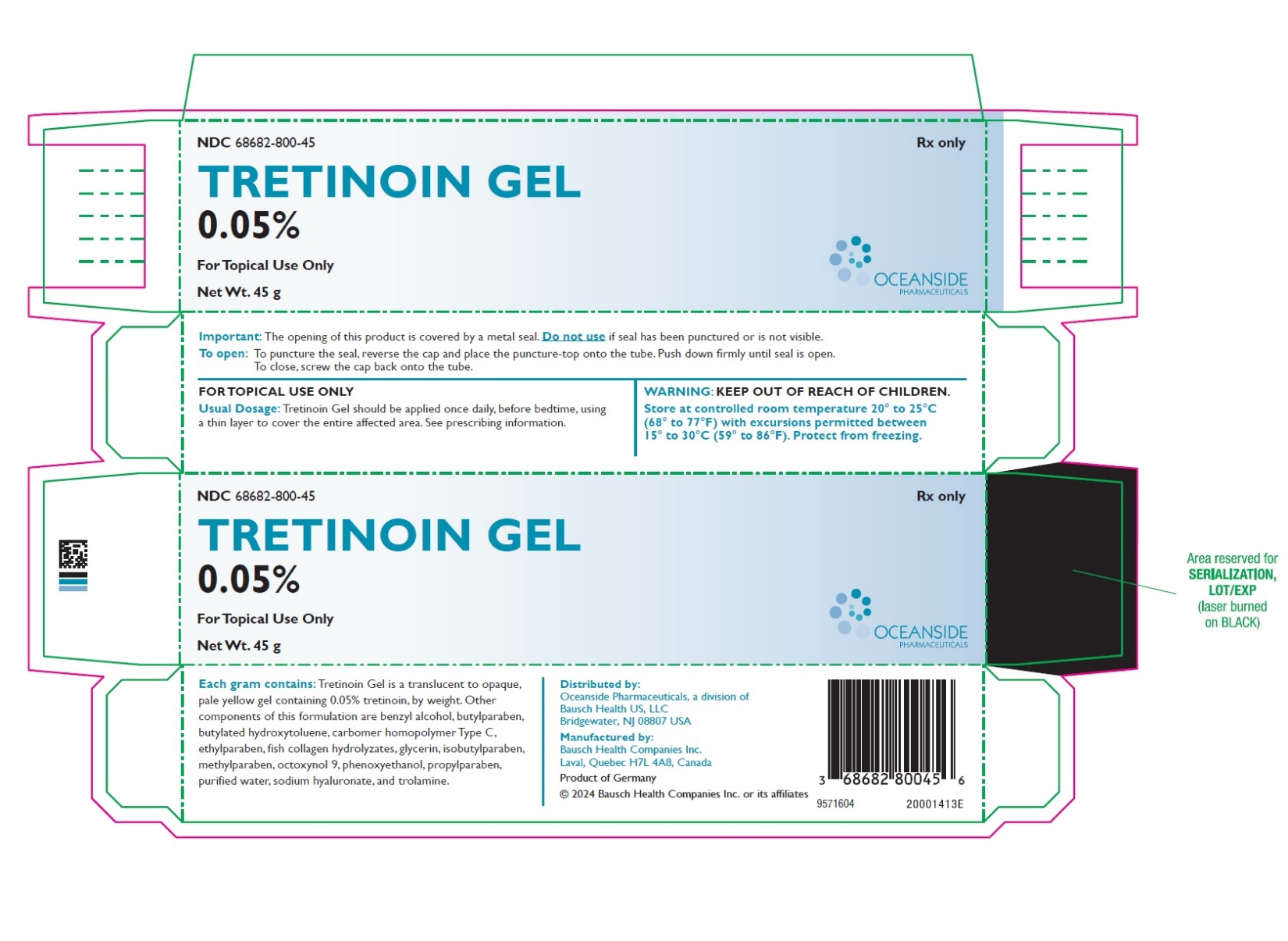
Tretinoin .05 g/100g Gel — NDC 68682-800-45 (Billing 68682-0800-45)
This is a package of Tretinoin .05 g/100g Gel from Oceanside Pharmaceuticals, marketed since Jul 2007 and currently FDA-listed; retail pharmacies pay about $3.89 per g (NADAC). It is this product's only package size.
NDC database record
One package, one record: these facts belong to NDC 68682-800-45 alone.
- Record
- FDA NDC Directory package listing · Human prescription drug
- Code segments
- 68682 labeler · 800 product · 45 package
- Package marketed since
- Jul 26, 2007
- Sample package
- No — commercial package
- Listing certified through
- Dec 31, 2026
- Barcode (UPC-A, from the NDC)
- 3 6868280045 6
- Medicaid fills, this package
- 5,488 prescriptions in the last four reported quarters
- FDA record last changed
- Jul 24, 2026
Identity & classification
Regulatory identifiers FDA, NLM and CMS codes for this package
Drug-database identifiers Medi-Span GPI and First Databank GCN / HICL / AHFS classification
- GSN (GCN sequence number): 021108
- GCN: 22872
- GPI-14 (Medi-Span): 90050030004015
- HICL (First Databank): 002468
- AHFS class code: 10:00.00.00
- RxCUI (RxNorm): 245723
Where does this data come from?
- FDA openFDA NDC Directory · synced Oct 8, 2026
- FDA label on DailyMed · label index refreshed Oct 8, 2026
- RxNorm (NLM RxNav) · catalog refreshed Oct 1, 2026
- Medi-Span GPI (licensed)
- First Databank (licensed) · refreshed Oct 8, 2026
RxNorm drug class
This medicine belongs to the Retinoid class.
Where does this data come from?
- RxClass (NLM) · catalog refreshed Oct 1, 2026
Clinical
Tretinoin is used to treat acne. Tretinoin is also used to reduce fine wrinkles. Tretinoin is in a class of medications called retinoids. It works by increasing production of new skin cells and unclogging pores.
Read the full MedlinePlus article ↗- It depends on the form. Creams, gels and lotions treat acne, and Renova eases fine facial wrinkles. The capsules treat a blood cancer called acute promyelocytic leukemia.
- Wash the area, pat dry, and apply a thin layer once daily, usually in the evening. Keep it away from your eyes, mouth, nose creases and mucous membranes. More does not work faster...
- Mild warmth or stinging, redness and peeling are common. If it becomes severe, call your prescriber, who may have you use less or pause. Acne can seem to flare early on, which is n...
- What side effects should I expect on the skin?
Patient education
Supplement & herbal interactions
Some supplements/herbs that may interact with Tretinoin — tap one for details:
Tretinoin may be associated with lower levels of 1 nutrient — worth a chat with your pharmacist, not a cause for alarm.
Where does this data come from?
- MedlinePlus (NLM) · refreshed Oct 8, 2026
- FDA label on DailyMed · label index refreshed Oct 8, 2026
Ask a licensed pharmacist directly — free, answered by our team.
Pricing
A drug doesn't have one price. Each row is a different public payment system, and none is what you'd pay at the counter — that depends on your insurance. The ⓘ on each row explains what it measures.
| Price system | Per g | Per package |
|---|---|---|
| Retail pharmacies payNADAC · weekly | $3.892 | $175.15 / 45 g |
| Medicaid paysCMS SDUD · 12 mo | $6.22 | $279.94 / 45 g |
| Medicare drug plans payPart D · Q2 2026 | $5.10 | $229.49 / 45 g |
Where does this data come from?
- CMS NADAC weekly file · file of Feb 21, 2024
- CMS ASP pricing files · refreshed Sep 20, 2026
- CMS Medicaid State Drug Utilization Data · through Q4 2025
- CMS Part D plan pricing files · refreshed Sep 24, 2026
- VA National Acquisition Center price file
Packaging — all sizes for this product
| Package NDC | Description | Marketing start | Marketing end | Status |
|---|---|---|---|---|
| 68682-0800-45 You're viewing this Main listing | 1 TUBE in 1 PACKAGE / 45 g in 1 TUBE | 2007-07-26 | — | Active |
Therapeutic equivalents
| Product | Labeler | Pack | NADAC/unit | TE | Status | Price vs. this |
|---|---|---|---|---|---|---|
| Tretinoin .05 g/100gthis 68682-0800-45 | Oceanside | 1 tube | $3.892 | AB | FDA listed | — |
| Tretinoin .5 mg/g 00378-8090-45 | Mylan | 1 tube | $3.933 | AB | Availability likely | +1% |
| Atralin .05 g/100g 13548-0070-45 | Bausch | 1 tube | — | AB | FDA listed | — |
| Tretinoin .05 g/100g 62032-0413-20 | Obagi | 20 g | — | AB | FDA listed | — |
Where does this data come from?
- FDA openFDA NDC Directory · synced Oct 8, 2026
- FDA Orange Book · refreshed Oct 3, 2026
- CMS NADAC weekly file · file of Feb 21, 2024
Availability & generic status
FDA-approved generic versions are listed, and recent pricing/market data suggests they may be available — see Therapeutic equivalents.
Where does this data come from?
- FDA Orange Book · refreshed Oct 3, 2026
Inactive Ingredients / Excipients
Inactive ingredients, also called excipients, are components of the drug product other than the active ingredient. They may include fillers, dyes, coatings, preservatives, flavors, or other formulation ingredients.
🧪 Avoiding an ingredient? See Tretinoin inactive ingredients by manufacturer: every current product's list side by side, so you can ask your pharmacy for the version that does not list it.
💡 Tap an ingredient (hover on desktop) to see what it is and why it’s used.
-
UNII LKG8494WBH
Benzyl alcohol is a clear liquid used as a preservative and solvent in medicines. It helps prevent bacterial and fungal growth and dissolves other ingredients to create uniform liquid formulations.
-
UNII 1P9D0Z171K
BHT is a synthetic antioxidant that prevents fats and oils in medicines from breaking down and becoming rancid. It helps keep the product stable and effective during storage.
-
UNII 3QPI1U3FV8
A preservative derived from benzoic acid that prevents bacterial and fungal growth in medicines. It helps extend shelf life and maintain product safety during storage and use.
-
UNII 4Q93RCW27E
A synthetic polymer made from acrylic acid that's crosslinked for stability. It acts as a thickener and gelling agent in creams and gels, helping the medicine spread evenly and maintain its texture.
-
UNII 14255EXE39
Ethylparaben is a preservative, a chemical that stops bacteria and mold from growing in the medicine. It keeps the product safe and effective throughout its shelf life.
-
UNII PDC6A3C0OX
Glycerin is a clear, thick liquid derived from plant oils or fats. It acts as a humectant to retain moisture, a sweetener, and a solvent in medications.
-
UNII YSE9PPT4TH
Hyaluronate sodium is a natural carbohydrate that holds moisture. It's used in medicines as a lubricant, thickener, and moisture-retaining agent to improve texture and delivery of the active ingredient.
-
UNII 0QQJ25X58G
Isobutylparaben is a preservative derived from para-hydroxybenzoic acid. It prevents bacterial and fungal growth in medicines, extending shelf life and maintaining product safety during storage.
-
UNII 8JC99XGU4W
Soluble fish skin collagen is a protein derived from fish skin that acts as a binder and thickening agent in medicines. It helps hold ingredients together and gives the product the right texture or consistency.
-
UNII A2I8C7HI9T
Methylparaben is a preservative derived from benzoic acid that prevents growth of bacteria, fungi, and mold in medicines. It extends the product's shelf life and maintains safety during storage.
-
UNII 7JPC6Y25QS
A synthetic nonionic surfactant, a type of cleaning agent used in pharmaceutical formulations. It functions as an emulsifier and solubilizer, helping mix water and oil-based ingredients and improving how the medicine dissolves and spreads in the body.
-
UNII HIE492ZZ3T
Phenoxyethanol is a synthetic preservative and antimicrobial agent used to prevent bacterial and fungal growth in medicines and cosmetic products, extending shelf life and maintaining product safety.
-
UNII Z8IX2SC1OH
Propylparaben is a chemical preservative used to prevent bacterial and fungal growth in medicines and personal care products. It helps extend shelf life and maintain product safety during storage.
-
UNII 9O3K93S3TK
Trolamine is an alkaline compound used as a pH buffer and emulsifier in medicines. It helps neutralize acids, stabilize formulations, and enable mixing of oil and water-based ingredients.
-
UNII 059QF0KO0R
Water is a liquid solvent that dissolves and mixes ingredients together in liquid medicines, syrups, and injections. It helps distribute the active drug evenly throughout the product.
15 inactive ingredients listed in the exact product block matched to this NDC.
Where does this data come from?
ingredient classCode="IACT" elements from the exact product block matched by this NDC. Label-section narrative from DailyMed / the openFDA label index is shown separately when available.- FDA label on DailyMed · label index refreshed Oct 8, 2026
- FDA openFDA NDC Directory · synced Oct 8, 2026
Inactive ingredient FAQ
Are inactive ingredients the same for every manufacturer?
Why might an inactive ingredient be missing?
Can inactive ingredients matter?
Manufacturer & labeler
More NDCs from Oceanside Pharmaceuticals labeler code 68682
- Diltiazem Hydrochloride 360 mg Tablet, Extended Release NDC 68682-708-30
- Diltiazem Hydrochloride 420 mg Tablet, Extended Release NDC 68682-709-30
- Enalapril Maleate 2.5 mg Tablet NDC 68682-710-01
- Enalapril Maleate 5 mg Tablet NDC 68682-711-01
- Enalapril Maleate 10 mg Tablet NDC 68682-712-01
- Enalapril Maleate 20 mg Tablet NDC 68682-713-01
- Luliconazole 10 mg/g Cream NDC 68682-850-60
- Erythromycin and Benzoyl Peroxide Kit NDC 68682-900-23
- Erythromycin and Benzoyl Peroxide Kit NDC 68682-901-46
- Tetracaine Hydrochloride 5 mg/mL Solution/ Drops NDC 68682-920-05
- Tolcapone 100 mg Tablet, Film Coated NDC 68682-938-90
- Omeprazole and Sodium Bicarbonate 20 mg; 1680 mg Powder, For Suspension NDC 68682-990-30
Where does this data come from?
- FDA openFDA NDC Directory · synced Oct 8, 2026
- Drugs@FDA
Full prescribing information FDA SPL
🎯 Indications and Usage ▾
1 INDICATIONS AND USAGE Tretinoin Gel is indicated for topical treatment of acne vulgaris. Tretinoin Gel is a retinoid indicated for topical treatment of acne vulgaris. ( 1 )
⏱️ Dosage and Administration ▾
2 DOSAGE AND ADMINISTRATION For topical use only. Not for oral, ophthalmic, or intravaginal use. Tretinoin Gel should be applied once daily, before bedtime, to the skin where acne lesions appear, using a thin layer to cover the entire affected area.
Tretinoin Gel should be kept away from the eyes, the mouth, paranasal creases, and mucous membranes. Application of excessive amounts of gel will not provide incremental efficacy. Patients treated with Tretinoin Gel may use cosmetics, but the areas to be treated should be cleansed thoroughly before the medication is applied.
When treating with Tretinoin Gel, caution should be exercised with the use of concomitant topical over-the-counter preparations, topical medications, medicated or abrasive soaps and cleansers, products that have strong drying effect, and products with high concentrations of alcohol, astringents, spices, or lime. Particular caution should be exercised with acne preparations containing benzoyl peroxide, sulfur, resorcinol, or salicylic acid. Allow the effects of such preparations to subside before use of Tretinoin Gel has begun. • Apply a thin layer of Tretinoin Gel once daily, before bedtime, to skin where lesions occur.
Keep away from eyes, mouth, nasal creases, and mucous membranes. ( 2 ) • Tretinoin Gel is not for oral, ophthalmic, or intravaginal use. ( 2 )
💊 Dosage Forms and Strengths ▾
3 DOSAGE FORMS AND STRENGTHS Gel, 0.05% Each gram of Tretinoin Gel contains 0.5 mg (0.05%) tretinoin in a translucent to opaque, pale yellow topical gel. Gel, 0.05% ( 3 )
⛔ Contraindications ▾
4 CONTRAINDICATIONS None. None ( 4 )
⚠️ Warnings and Cautions ▾
5 WARNINGS AND PRECAUTIONS • Tretinoin Gel should not be used on eczematous or sunburned skin due to potential for severe irritation. ( 5.1 ) • Topical over-the-counter acne preparations, concomitant topical medications, medicated cleansers, topical products with alcohol or astringents: Use with caution, irritation may occur. ( 5.1 ) • Avoid unprotected exposure to sunlight including sunlamps (UV light) when using Tretinoin Gel due to potential for increased photosensitization.
Use sunscreen of at least SPF 15 and protective clothing during exposure. ( 5.2 ) • Avoid use of Tretinoin Gel with weather extremes, such as wind or cold due to potential for increased irritation. ( 5.2 ) • Use Tretinoin Gel with caution if allergic to fish due to potential for allergenicity to fish protein.
Patients who develop pruritus or urticaria should contact their healthcare provider. ( 5.3 )
5.1Skin Irritation The skin of certain individuals may become dry, red, or exfoliated while using Tretinoin Gel. If the degree of irritation warrants, patients should be directed to temporarily reduce the amount or frequency of application of the medication, discontinue use temporarily, or discontinue use all together. Efficacy at reduced frequencies of application has not been established.
If a reaction suggesting sensitivity occurs, use of the medication should be discontinued. Mild to moderate skin dryness may also be experienced; if so, use of an appropriate moisturizer during the day may be helpful. Tretinoin has been reported to cause severe irritation on eczematous or sunburned skin and should be used with caution in patients with these conditions.
To help limit skin irritation, patients must: • wash the treated skin gently, using a mild, non-medicated soap, and pat it dry, • avoid washing the treated skin too often and scrubbing the affected skin area, and • avoid contact with the peels of limes.
5.2Ultraviolet Light and Environmental Exposure Unprotected exposure to sunlight, including sunlamps, should be minimized during the use of Tretinoin Gel. Patients who normally experience high levels of sun exposure, and those with inherent sensitivity to sun, should be warned to exercise caution. Use of sunscreen products of at least SPF 15 and protective clothing over treated areas is recommended when exposure cannot be avoided.
Weather extremes, such as wind or cold, also may be irritating to tretinoin-treated skin.
5.3Fish Allergies Tretinoin Gel contains soluble fish proteins and should be used with caution in patients with known sensitivity or allergy to fish. Patients who develop pruritus or urticaria should contact their healthcare provider.
🤒 Adverse Reactions ▾
6 ADVERSE REACTIONS The most common adverse reactions (incidence ≥5%) with Tretinoin Gel are dry skin, peeling/scaling/flaking skin, skin burning sensation, and erythema. ( 6.1 ) To report SUSPECTED ADVERSE REACTIONS, contact Oceanside Pharmaceuticals at 1-800-321-4576 or FDA at 1-800-FDA-1088 or www.fda.gov/medwatch.
6.1Clinical Trials Experience Because clinical trials are conducted under prescribing conditions, adverse reaction rates observed in the clinical trials of a drug cannot be directly compared to rates in the clinical trials of another drug and may not reflect the rates observed in practice. In two randomized, controlled trials, 674 subjects received treatment for up to 12 weeks with Tretinoin Gel [see Clinical Studies (14) ]. In these studies, 50% of the subjects who were treated with Tretinoin Gel reported one or more adverse reactions; 30% of the subjects reported treatment-related adverse reactions.
In the vehicle group, 29% of the 487 randomized subjects reported at least one adverse reaction; 5% of the subjects reported events that were treatment-related. There were no serious, treatment-related adverse reactions reported by subjects in any of the treatment groups. Selected adverse reactions that occurred in at least 1% of subjects in the two trials combined are shown in Table 1 (below).
Most skin-related adverse reactions first appear during the first two weeks of treatment with Tretinoin Gel, and the incidence rate for skin-related reactions peaks around the second and third week of treatment. In some subjects, the skin-related adverse reactions persist throughout the treatment period. Table 1: Number of Subjects with Selected Adverse Reactions (Occurring in at Least 1% of Subjects) Event Tretinoin Gel (N = 674) Vehicle (N = 487) Dry Skin 109 (16%) 8 (2%) Peeling/Scaling/Flaking Skin 78 (12%) 7 (1%) Skin Burning Sensation 53 (8%) 8 (2%) Erythema 47 (7%) 1 (<1%) Pruritus 11 (2%) 3 (1%) Pain of Skin 7 (1%) 0 (0%) Sunburn 7 (1%) 3 (1%)
6.2Postmarketing Experience The following adverse reactions have been identified during post-approval use of Tretinoin Gel. Because these reactions are reported voluntarily from a population of uncertain size, it is not always possible to reliably estimate their frequency or establish a causal relationship to drug exposure. Temporary hyper- or hypopigmentation has been reported with repeated application of tretinoin.
👥 Use in Specific Populations ▾
8 USE IN SPECIFIC POPULATIONS
8.1Pregnancy There are no well-controlled trials in pregnant women treated with Tretinoin Gel. Tretinoin Gel should be used during pregnancy only if the potential benefit justifies the potential risk to the fetus. Tretinoin Gel at doses of 0.1, 0.3 and 1 g/kg/day was tested for maternal and developmental toxicity in pregnant Sprague-Dawley rats by dermal application.
The dose of 1 g/kg/day was approximately four times the clinical dose assuming 100% absorption and based on body surface area comparison. Possible tretinoin-associated teratogenic effects (craniofacial abnormalities [hydrocephaly], asymmetrical thyroids, variations in ossification, and increased supernumerary ribs) were noted in the fetuses of Tretinoin Gel-treated animals. These findings were not observed in control animals.
Other maternal and reproductive parameters in the Tretinoin Gel-treated animals were not different from control. For purposes of comparison of the animal exposure to human exposure, the clinical dose is defined as 2 g of Tretinoin Gel applied daily to a 50 kg person. Oral tretinoin has been shown to be teratogenic in rats, mice, rabbits, hamsters and nonhuman primates.
Tretinoin was teratogenic in Wistar rats when given orally in doses greater than 1 mg/kg/day (approximately eight times the clinical dose based on body surface area comparison). In the cynomolgus monkey, fetal malformations were reported for doses of 10 mg/kg/day, but none were observed at 5 mg/kg/day (approximately 80 times the clinical dose based on body surface area comparison), although increased skeletal variations were observed at all doses. Dose-related increases in embryolethality and abortion also were reported.
Similar results have also been reported in pigtail macaques. Topical tretinoin in a different formulation has generated equivocal results in animal teratogenicity tests. There is evidence for teratogenicity (shortened or kinked tail) of topical tretinoin in Wistar rats at doses greater than 1 mg/kg/day (approximately eight times the clinical dose assuming 100% absorption and based on body surface area comparison).
Anomalies (humerus: short 13%, bent 6%, os parietal incompletely ossified 14%) have also been reported when 10 mg/kg/day (approximately 160 times the clinical dose assuming 100% absorption and based on body surface area comparison) was topically applied. Supernumerary ribs have been a consistent finding in rats when dams were treated topically or orally with retinoids. With widespread use of any drug, a small number of birth defect reports associated temporally with the administration of the drug would be expected by chance alone.
Cases of temporally associated congenital malformations have been reported with use of other topical tretinoin products. The significance of these spontaneous reports in terms of risk to the fetus is not known. Nonteratogenic Effects on Fetuses: Oral tretinoin has been shown to be fetotoxic in rats when administered in doses 20 times the clinical dose based on body surface area comparison.
Topical tretinoin has been shown to be fetotoxic in rabbits when administered in doses eight times the clinical dose based on body surface area comparison.
8.3Nursing Mothers It is not known whether this drug is excreted in human milk. Because many drugs are excreted in human milk, caution should be exercised when Tretinoin Gel is administered to a nursing woman.
8.4Pediatric Use Safety and effectiveness in children below the age of 10 have not been established. A total of 381 pediatric subjects (aged 10 to 16 years) treated with Tretinoin Gel were enrolled into the two clinical studies. Across these two studies, comparable safety and efficacy were observed between pediatric and adult subjects.
8.5Geriatric Use Safety and effectiveness in a geriatric population have not been established. Clinical studies of Tretinoin Gel did not include any subjects over age 65 to determine whether they respond differently… [Excerpted — this section continues on DailyMed.]
🤰 Pregnancy ▾
8.1Pregnancy There are no well-controlled trials in pregnant women treated with Tretinoin Gel. Tretinoin Gel should be used during pregnancy only if the potential benefit justifies the potential risk to the fetus. Tretinoin Gel at doses of 0.1, 0.3 and 1 g/kg/day was tested for maternal and developmental toxicity in pregnant Sprague-Dawley rats by dermal application.
The dose of 1 g/kg/day was approximately four times the clinical dose assuming 100% absorption and based on body surface area comparison. Possible tretinoin-associated teratogenic effects (craniofacial abnormalities [hydrocephaly], asymmetrical thyroids, variations in ossification, and increased supernumerary ribs) were noted in the fetuses of Tretinoin Gel-treated animals. These findings were not observed in control animals.
Other maternal and reproductive parameters in the Tretinoin Gel-treated animals were not different from control. For purposes of comparison of the animal exposure to human exposure, the clinical dose is defined as 2 g of Tretinoin Gel applied daily to a 50 kg person. Oral tretinoin has been shown to be teratogenic in rats, mice, rabbits, hamsters and nonhuman primates.
Tretinoin was teratogenic in Wistar rats when given orally in doses greater than 1 mg/kg/day (approximately eight times the clinical dose based on body surface area comparison). In the cynomolgus monkey, fetal malformations were reported for doses of 10 mg/kg/day, but none were observed at 5 mg/kg/day (approximately 80 times the clinical dose based on body surface area comparison), although increased skeletal variations were observed at all doses. Dose-related increases in embryolethality and abortion also were reported.
Similar results have also been reported in pigtail macaques. Topical tretinoin in a different formulation has generated equivocal results in animal teratogenicity tests. There is evidence for teratogenicity (shortened or kinked tail) of topical tretinoin in Wistar rats at doses greater than 1 mg/kg/day (approximately eight times the clinical dose assuming 100% absorption and based on body surface area comparison).
Anomalies (humerus: short 13%, bent 6%, os parietal incompletely ossified 14%) have also been reported when 10 mg/kg/day (approximately 160 times the clinical dose assuming 100% absorption and based on body surface area comparison) was topically applied. Supernumerary ribs have been a consistent finding in rats when dams were treated topically or orally with retinoids. With widespread use of any drug, a small number of birth defect reports associated temporally with the administration of the drug would be expected by chance alone.
Cases of temporally associated congenital malformations have been reported with use of other topical tretinoin products. The significance of these spontaneous reports in terms of risk to the fetus is not known. Nonteratogenic Effects on Fetuses: Oral tretinoin has been shown to be fetotoxic in rats when administered in doses 20 times the clinical dose based on body surface area comparison.
Topical tretinoin has been shown to be fetotoxic in rabbits when administered in doses eight times the clinical dose based on body surface area comparison.
🧒 Pediatric Use ▾
8.4Pediatric Use Safety and effectiveness in children below the age of 10 have not been established. A total of 381 pediatric subjects (aged 10 to 16 years) treated with Tretinoin Gel were enrolled into the two clinical studies. Across these two studies, comparable safety and efficacy were observed between pediatric and adult subjects.
🧓 Geriatric Use ▾
8.5Geriatric Use Safety and effectiveness in a geriatric population have not been established. Clinical studies of Tretinoin Gel did not include any subjects over age 65 to determine whether they respond differently from younger subjects.
🧬 Clinical Pharmacology ▾
12 CLINICAL PHARMACOLOGY
12.1Mechanism of Action Tretinoin is a metabolite of Vitamin A that binds with high affinity to specific retinoic acid receptors located in both the cytosol and nucleus, but cutaneous levels of tretinoin in excess of physiologic concentrations occur following application of a tretinoin-containing topical drug product. Although tretinoin activates three members of the retinoid acid (RAR) nuclear receptors (RARα, RARβ, and RARγ) which act to modify gene expression, subsequent protein synthesis, and epithelial cell growth and differentiation, it has not been established whether the clinical effects of tretinoin are mediated through activation of retinoic acid receptors, other mechanisms, or both.
Although the exact mode of action of tretinoin is unknown, current evidence suggests that topical tretinoin decreases cohesiveness of follicular epithelial cells with decreased microcomedo formation. Additionally, tretinoin stimulates mitotic activity and increased turnover of follicular epithelial cells causing extrusion of the comedones.
12.3Pharmacokinetics In two studies, the plasma levels of tretinoin and its major metabolites (13-cis-retinoic acid and 4-oxo-13-cis-retinoic acid) were investigated in a total of 14 patients (age: 13 – 25 years) with severe acne, who applied 4 g ± 0.5 g (range 3.5 g – 4.5 g) of Tretinoin Gel once daily to face, back and chest, as compared to a mean of 0.71 g (range of 0.07 – 3.71 g) applied in the controlled clinical trials. Blood samples were taken at baseline and immediately prior to treatment on Days 1, 5, 10 and 14.
On Day 14, the final study day, samples also were taken 1, 2, 4, 6, 8, 10, 12, 16, and 24 hours post-treatment. The plasma concentrations of tretinoin and its metabolites could be measured (LOQ = 0.5 ng/mL for all three analytes) in all patients at all time points. The range of plasma concentrations of tretinoin and its metabolites, 13-cis-retinoic acid and all-trans-4-oxo-retinoic acid at baseline and after multiple once-daily applications of Tretinoin Gel, 0.05% for 14 days are given in Table 2 (below).
Although some patients had increased concentrations of tretinoin or its metabolites over baseline values, no consistent increase in these concentrations were observed across patients. Table 2: Concentrations of Active and Metabolites at Baseline and at Day 14 After Exposure to Tretinoin Gel, 0.05% Compound Baseline Concentration Range (ng/mL) Day 14 Concentration Range (ng/mL) Tretinoin 0.68-1.62 0.69-2.88 13-cis-retinoic acid 0.67-1.79 0.51-2.26 4-oxo-13-cis-retinoic acid 0.82-5.92 0.59-6.96
🧬 Mechanism of Action ▾
12.1Mechanism of Action Tretinoin is a metabolite of Vitamin A that binds with high affinity to specific retinoic acid receptors located in both the cytosol and nucleus, but cutaneous levels of tretinoin in excess of physiologic concentrations occur following application of a tretinoin-containing topical drug product. Although tretinoin activates three members of the retinoid acid (RAR) nuclear receptors (RARα, RARβ, and RARγ) which act to modify gene expression, subsequent protein synthesis, and epithelial cell growth and differentiation, it has not been established whether the clinical effects of tretinoin are mediated through activation of retinoic acid receptors, other mechanisms, or both.
Although the exact mode of action of tretinoin is unknown, current evidence suggests that topical tretinoin decreases cohesiveness of follicular epithelial cells with decreased microcomedo formation. Additionally, tretinoin stimulates mitotic activity and increased turnover of follicular epithelial cells causing extrusion of the comedones.
📦 How Supplied / Storage and Handling ▾
16 HOW SUPPLIED/STORAGE AND HANDLING Tretinoin Gel, 0.05% is a translucent to opaque, pale yellow topical gel and available as: • NDC 68682-800-45 45 g tube Storage and Handling: Store at controlled room temperature 20° to 25°C (68° to 77°F) with excursions permitted between 15° to 30°C (59° to 86°F). Protect from freezing. Keep out of reach of children.
📦 Storage and Handling ▾
Storage and Handling: Store at controlled room temperature 20° to 25°C (68° to 77°F) with excursions permitted between 15° to 30°C (59° to 86°F). Protect from freezing. Keep out of reach of children.
📋 Description ▾
11 DESCRIPTION Tretinoin Gel, 0.05% is a translucent to opaque, pale yellow gel containing 0.05% tretinoin, by weight for topical administration. Chemically, tretinoin is all- trans -retinoic acid, also known as (all- E )-3,7-dimethyl-9-(2,6,6-trimethyl-1-cyclohexen-1-yl)-2,4,6,8-nonatetraenoic acid. It is a member of the retinoid class of compounds, and a metabolite of Vitamin A.
Tretinoin has a molecular weight of 300.44, a molecular formula of C 20 H 28 O 2 and the following structure: Each gram of Tretinoin Gel, 0.05% contains 0.5 mg of tretinoin. Other components of this formulation are benzyl alcohol, butylparaben, butylated hydroxytoluene, carbomer homopolymer Type C, ethylparaben, fish collagen hydrolyzates, glycerin, isobutylparaben, methylparaben, octoxynol 9, phenoxyethanol, propylparaben, purified water, sodium hyaluronate, and trolamine. The contribution to efficacy of individual components of the vehicle has not been evaluated. chem.jpg
💬 Information for Patients ▾
17 PATIENT COUNSELING INFORMATION Advise the patient to read the FDA-approved patient labeling (Patient Information). Instruct patients to clean the affected areas with an appropriate cleanser before applying Tretinoin Gel. Patients may use moisturizers that are noncomedogenic and should avoid products that could be drying or irritating.
Patients may also wear cosmetics while being treated with Tretinoin Gel; however, they should be instructed to remove the cosmetics and clean the area thoroughly before applying Tretinoin Gel. Warn patients of the drying and irritation effects often seen during treatment. Continue use of the medication if these effects are tolerable.
Caution patients against application of Tretinoin Gel around the eyes, mouth, paranasal creases, and mucous membranes as the skin is especially prone to irritation. Minimize exposure to sunlight, including sunlamps. Recommend the use of sunscreen products and protective apparel (e.g., hat) when exposure cannot be avoided.
Distributed by: Oceanside Pharmaceuticals, a division of Bausch Health US, LLC Bridgewater, NJ 08807 USA Manufactured by: Bausch Health Companies Inc. Laval, Quebec H7L 4A8, Canada All other product/brand names and/or logos are trademarks of the respective owners. © 2024 Bausch Health Companies Inc. or its affiliates 9571701
🍼 Nursing Mothers ▾
8.3Nursing Mothers It is not known whether this drug is excreted in human milk. Because many drugs are excreted in human milk, caution should be exercised when Tretinoin Gel is administered to a nursing woman.
🧬 Pharmacokinetics ▾
12.3Pharmacokinetics In two studies, the plasma levels of tretinoin and its major metabolites (13-cis-retinoic acid and 4-oxo-13-cis-retinoic acid) were investigated in a total of 14 patients (age: 13 – 25 years) with severe acne, who applied 4 g ± 0.5 g (range 3.5 g – 4.5 g) of Tretinoin Gel once daily to face, back and chest, as compared to a mean of 0.71 g (range of 0.07 – 3.71 g) applied in the controlled clinical trials. Blood samples were taken at baseline and immediately prior to treatment on Days 1, 5, 10 and 14.
On Day 14, the final study day, samples also were taken 1, 2, 4, 6, 8, 10, 12, 16, and 24 hours post-treatment. The plasma concentrations of tretinoin and its metabolites could be measured (LOQ = 0.5 ng/mL for all three analytes) in all patients at all time points. The range of plasma concentrations of tretinoin and its metabolites, 13-cis-retinoic acid and all-trans-4-oxo-retinoic acid at baseline and after multiple once-daily applications of Tretinoin Gel, 0.05% for 14 days are given in Table 2 (below).
Although some patients had increased concentrations of tretinoin or its metabolites over baseline values, no consistent increase in these concentrations were observed across patients. Table 2: Concentrations of Active and Metabolites at Baseline and at Day 14 After Exposure to Tretinoin Gel, 0.05% Compound Baseline Concentration Range (ng/mL) Day 14 Concentration Range (ng/mL) Tretinoin 0.68-1.62 0.69-2.88 13-cis-retinoic acid 0.67-1.79 0.51-2.26 4-oxo-13-cis-retinoic acid 0.82-5.92 0.59-6.96
🔬 Clinical Studies ▾
14 CLINICAL STUDIES The safety and efficacy of Tretinoin Gel used once daily before bedtime for the treatment of mild to moderate acne vulgaris were assessed in two 12-week prospective, multicenter, randomized, controlled trials. Subjects in these two trials ranged from 10 to 65 years of age, were approximately 52% female, 48% male, and were 74% Caucasian, 15% Black or African American, 3% Asian, and 8% Other. Efficacy results at Week 12 are presented in Table 3.
Success on the 6-point Global Severity Score is defined as a score of 0 (clear) or 1 (very mild). In Trial 2, subjects were also required to have at least two grades reduction from baseline for success. ‘Very mild’ acne is defined as: skin almost clear; rare non-inflammatory lesions present, with rare non-inflamed papules (papules may be hyperpigmented, though not pink-red, less than 4 lesions). The database was not large enough to assess whether there were differences in effects in age, gender, or race subgroups.
Table 3: Efficacy Results at Week 12 in Trials 1 and 2 Trial 1 Tretinoin Gel (N=375) Vehicle (N=185) Global Severity Score Success Success was defined as 0 (clear) or 1 (very mild) 78 (21%) 23 (12%) Non-Inflammatory Facial Lesions Mean Baseline Count 50.7
52.4Mean Absolute Reduction 21.8
10.3Mean Percent Reduction 43% 21% Inflammatory Facial Lesions Mean Baseline Count 23.4
23.9Mean Absolute Reduction 9.7
5.8Mean Percent Reduction 41% 26% Total Facial Lesions Mean Baseline Count 74.1
76.3Mean Absolute Reduction 31.4
16.1Mean Percent Reduction 43% 22% Trial 2 Tretinoin Gel (N=299) Vehicle (N=302) Global Severity Score Success Success was defined as 0 (clear) or 1 (very mild) with at least two grades reduction from baseline 69 (23%) 42 (14%) Non-Inflammatory Facial Lesions Mean Baseline Count 51.9
52.7Mean Absolute Reduction 18.7
10.8Mean Percent Reduction 37% 20% Inflammatory Facial Lesions Mean Baseline Count 22.9
23.4Mean Absolute Reduction 7.0
4.0Mean Percent Reduction 30% 17% Total Facial Lesions Mean Baseline Count 74.8
76.1Mean Absolute Reduction 25.7
14.7 Mean Percent Reduction 35% 19%
🧪 Nonclinical Toxicology ▾
13 NONCLINICAL TOXICOLOGY
13.1Carcinogenesis, Mutagenesis, Impairment of Fertility A 2-year dermal mouse carcinogenicity study was initiated with topical administration of 0.005%, 0.025% and 0.05% Tretinoin Gel. Although no drug-related tumors were observed in surviving animals, the irritating nature of the drug product precluded daily dosing, confounding data interpretation and reducing the biological significance of these results. Studies in hairless albino mice with a different formulation suggest that concurrent exposure to tretinoin may enhance the tumorigenic potential of carcinogenic doses of UVB and UVA light from a solar simulator.
This effect was confirmed in a later study in pigmented mice, and dark pigmentation did not overcome the enhancement of photocarcinogenesis by 0.05% tretinoin. Although the significance of these studies to humans is not clear, patients should minimize exposure to sunlight or artificial ultraviolet irradiation sources. The genotoxic potential of tretinoin was evaluated in an in vitro bacterial reversion test, an in vitro chromosomal aberration assay in human lymphocytes and an in vivo rat micronucleus assay.
All tests were negative. In dermal fertility studies of another tretinoin formulation in rats, slight (not statistically significant) decreases in sperm count and motility were seen at 0.5 mg/kg/day (3 mg/m 2 , approximately four times the clinical dose based on body surface area comparison), and slight (not statistically significant) increases in the number and percent of nonviable embryos in females treated with 0.25 mg/kg/day and above (1.5 mg/m 2 , approximately two times the clinical dose based on body surface area comparison) were observed.
📄 Carcinogenesis, Mutagenesis, Impairment of Fertility ▾
13.1Carcinogenesis, Mutagenesis, Impairment of Fertility A 2-year dermal mouse carcinogenicity study was initiated with topical administration of 0.005%, 0.025% and 0.05% Tretinoin Gel. Although no drug-related tumors were observed in surviving animals, the irritating nature of the drug product precluded daily dosing, confounding data interpretation and reducing the biological significance of these results. Studies in hairless albino mice with a different formulation suggest that concurrent exposure to tretinoin may enhance the tumorigenic potential of carcinogenic doses of UVB and UVA light from a solar simulator.
This effect was confirmed in a later study in pigmented mice, and dark pigmentation did not overcome the enhancement of photocarcinogenesis by 0.05% tretinoin. Although the significance of these studies to humans is not clear, patients should minimize exposure to sunlight or artificial ultraviolet irradiation sources. The genotoxic potential of tretinoin was evaluated in an in vitro bacterial reversion test, an in vitro chromosomal aberration assay in human lymphocytes and an in vivo rat micronucleus assay.
All tests were negative. In dermal fertility studies of another tretinoin formulation in rats, slight (not statistically significant) decreases in sperm count and motility were seen at 0.5 mg/kg/day (3 mg/m 2 , approximately four times the clinical dose based on body surface area comparison), and slight (not statistically significant) increases in the number and percent of nonviable embryos in females treated with 0.25 mg/kg/day and above (1.5 mg/m 2 , approximately two times the clinical dose based on body surface area comparison) were observed.
📄 Patient Package Insert ▾
Patient Information Tretinoin Gel, 0.05% for topical use Important information: Tretinoin Gel is for use on skin only. Do not get Tretinoin Gel in your mouth, eyes, vagina, or the corners of your nose. What is Tretinoin Gel?
Tretinoin Gel is a prescription medicine used on the skin (topical) to treat acne. Acne is a condition in which the skin has blackheads, whiteheads, and other pimples. It is not known if Tretinoin Gel is safe and effective in children under 10 years of age.
What should I tell my healthcare provider before using Tretinoin Gel? Before using Tretinoin Gel, tell your healthcare provider about all of your medical conditions, including if you: • are allergic to fish. Tretinoin Gel contains fish proteins.
Tell your healthcare provider if you get hives or itching during treatment with Tretinoin Gel. • have a skin condition called eczema. • have a sunburn. • are pregnant or plan to become pregnant. It is not known if Tretinoin Gel will harm your unborn baby. • are breastfeeding or plan to breastfeed. It is not known if Tretinoin Gel passes into your breast milk.
Tell your healthcare provider about all the medicines you take, including prescription and over-the-counter medicines, vitamins, herbal supplements, and any skin products that you use. Especially tell your healthcare provider if you use any other medicines to treat your acne, including medicated cleansers or soaps. Using other topical acne products may increase the irritation of your skin when used with Tretinoin Gel.
How should I use Tretinoin Gel? • Use Tretinoin Gel exactly as your healthcare provider tells you to use it. • Before you apply Tretinoin Gel, gently wash the affected skin area with a mild, non-medicated soap. Rinse and pat your skin dry. • Apply Tretinoin Gel 1 time a day before bedtime. • Apply a thin layer of Tretinoin Gel to cover the affected skin areas. Gently rub Tretinoin Gel into your skin. • Do not use more Tretinoin Gel than you need to cover the affected area and do not apply Tretinoin Gel more than 1 time a day.
Using too much Tretinoin Gel may irritate or increase the irritation of your skin, and will not give faster or better results. • You may use moisturizers and cosmetics. What should I avoid while using Tretinoin Gel? • Avoid washing your skin too often and scrubbing the affected skin area. • You should avoid sunlamps, tanning beds, and ultraviolet light during treatment with Tretinoin Gel. • Minimize exposure to sunlight. • If you have to be in the sunlight or are sensitive to sunlight, use a sunscreen with a sun protection factor (SPF) of 15 or more and wear protective clothing, and a wide brimmed hat to cover the treated areas. • If you do get sunburned, stop using Tretinoin Gel until your skin has healed and is back to normal. • Cold weather and wind may irritate skin treated with Tretinoin Gel.
Skin treated with Tretinoin Gel may dry out or get wind burned more easily. Talk to your healthcare provider about ways to manage skin irritation. • Avoid contact with the peels of limes. What are the possible side effects of Tretinoin Gel?
Tretinoin Gel may cause skin irritation, including: skin dryness, burning, redness, excessive flaking or peeling. If you develop these symptoms, your healthcare provider may tell you to stop using Tretinoin Gel for a while, decrease the number of times you apply Tretinoin Gel, or completely stop treatment with Tretinoin Gel. It is not known if Tretinoin Gel is effective when used less than 1 time a day.
Tell your healthcare provider if you have any side effect that bothers you or that does not go away. These are not all of the side effects possible with Tretinoin Gel. Call your doctor for medical advice about side effects.
You may report side effects to FDA at 1-800-FDA-1088. How should I store Tretinoin Gel? • Store Tretinoin Gel at room temperature, 68°F to 77°F (20°C to 25°C). • Protect from freezing. Keep Tretinoin Gel and all medicines out of the reach of children.
General information ab… [Excerpted — this section continues on DailyMed.]
📄 Package Label / Principal Display Panel ▾
PRINCIPAL DISPLAY PANEL - 45 g Tube Carton NDC 68682-800-45 Rx only TRETINOIN GEL 0.05% FOR TOPICAL USE ONLY Net Wt. 45 g OCEANSIDE PHARMACEUTICALS carton