
Avocado Drug Interactions, Uses, Effectiveness, Safety & More
What is this page for?
First and foremost: how Avocado interacts with medications. The heart of this page is the interaction list — every drug Avocado is known to interact with, and how serious each one is.
But these pages have grown well beyond that into a full monograph — what Avocado is, what people use it for and how strong the evidence is, its safety and side effects, and answers to the questions we’re asked most — written and reviewed by the clinical staff at HelloPharmacist. It’s educational information from our licensed clinical databases, not medical advice, and we don’t sell or endorse products. Our editorial policy
Check Avocado against your medication
Add one medicationAvocado Drug Interactions: The Bottom Line
From the HelloPharmacist Editorial Team · Updated July 2026Based on the available evidence, the overall risk of a clinically significant Avocado drug interaction appears low for most people. Avocado interacts with only a couple of medications, none of the interactions are rated major, and the supporting evidence is weak.
The one combination worth knowing about involves warfarin, a blood thinner with a narrow margin where even small changes in effect can matter. Avocado may work against warfarin's anticoagulant effect, which could in theory make blood more likely to clot. That said, this concern rests on a single case report, and the interaction is graded as unlikely to occur in most people. Anyone taking warfarin already has regular blood monitoring, which would typically catch a change like this.
Unlike many supplements, avocado has a very short interaction profile, and nothing on it is well documented in human studies. A single published report is not proof that a problem will happen, only a signal that has been noted once. For the average person eating avocado, the data does not point to a meaningful concern.
Based on HelloPharmacist’s Avocado interaction data and reviewed under our editorial standards.
Drugs that interact with Avocado
2 medications have a known interaction with Avocado, graded by severity. Select any drug for the full evidence-based detail.
Don’t want to scroll the list? Just ask.
Tell us the medications you take and we’ll check each one against Avocado using our pharmacist-reviewed interaction data.
AI summaries are generated from our Avocado interaction data for education only — always confirm with your pharmacist. How we use AI
No drugs match “”.
What Severity, Likelihood & Evidence Mean
Severity — How Serious It Can Be
- Major. Clinically significant; generally best avoided, or used only under direct professional supervision.
- Moderate. May need monitoring, a dose adjustment, or separating the times you take each one.
- Minor. Generally not clinically significant, but still worth noting and mentioning to your pharmacist.
- No known interaction. Checked against our sources with nothing documented — not the same as proven safety.
Likelihood — How Well It’s Documented
- Likely. Well-controlled human studies have demonstrated the likely existence of this interaction
- Probable. Interaction has not been documented in well-controlled studies, however, the interaction has been demonstrated in some small human studies or in controlled animal studies in conjunction with multiple case reports.
- Possible. Interaction has been documented in animal or in lab research, or the interaction has been documented in humans but is limited to case reports or conflicting clinical research exists
- Unlikely. Interaction has been demonstrated in animal or in lab research but has been shown not to occur in humans.
Where This Data Comes From
- Interaction records are evidence-graded and sourced from the Natural Medicines database (TRC Healthcare), the same reference used by pharmacists and hospitals.
- Each drug listed above links to the full report for that exact Avocado combination — clinical detail, likelihood, evidence level, and citations.
- Content is reviewed by licensed HelloPharmacist pharmacists — see our data sources and editorial standards.
The kinds of drugs Avocado affects
Every type of medication (drug category) Avocado is known to interact with. Open any category for the detail — or search your exact drug in the checker above.
Warfarin (Coumadin)
Avocado may antagonize the anticoagulant effects of warfarin.
Avocado may antagonize the anticoagulant effects of warfarin; however, there has been only one case report of this interaction.
Avocado: Uses, Safety & Side Effects
Avocado is a nutritious fruit rich in healthy monounsaturated fats, fiber, and potassium, and eating it as part of a balanced diet may support heart health. A specific extract called avocado/soybean unsaponifiables (ASU) has been studied for osteoarthritis, but evidence is mixed. As a food it is very safe for most people; talk to your pharmacist or doctor before using concentrated supplements.
- Scientific name
- Persea americana
- Family
- Lauraceae
- Part used
- Fruit pulp, oil, seed, and leaves
- Common forms
- Whole fruit, avocado oil, capsules (avocado/soybean unsaponifiables or ASU), powders
- Heart and cholesterol health
- Osteoarthritis (as ASU)
- General nutrition and healthy fats
- Skin and hair care
- Blood sugar support
Popular and traditional uses — not proof it works. See “Uses & effectiveness” below for the evidence.
Avocado is widely eaten and considered safe as a food for most people.
Insufficient reliable information available; avoid using in amounts exceeding those commonly found in foods.
Read the full pregnancy detailInsufficient reliable information available; avoid using in amounts exceeding those commonly found in foods.
Read the full breastfeeding detailPregnancy & breastfeeding ratings are from Natural Medicines (Therapeutic Research Center). Safety guidance is general; always confirm with your pharmacist or doctor for your situation.
Overview
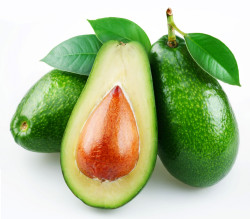
Avocado is the fruit of the avocado tree (Persea americana), an evergreen tree native to Mexico and Central America that is now grown in warm regions around the world. The fruit has a creamy green flesh, a large central seed, and bumpy skin, which is why it is sometimes called an 'alligator pear.' The Hass variety is the most common type in the United States.
Most people simply eat avocado as a food. It is prized for its smooth texture and high content of healthy fats. Avocado oil is used in cooking and in skin and hair products. There are also dietary supplements, including a special extract called avocado/soybean unsaponifiables (ASU), that are sold for joint health.
How it works
Avocado contains monounsaturated fats (mainly oleic acid), which is the same kind of healthy fat found in olive oil. These fats may help support healthy cholesterol levels when they replace less healthy saturated fats in the diet.
The fruit also provides fiber, potassium, and plant compounds such as beta-sitosterol and various antioxidants. In laboratory and animal studies, certain avocado compounds (like persenones) show antioxidant and anti-inflammatory activity, but these effects have not been clearly proven in people.
For joint health, the ASU extract is thought to reduce inflammation and slow the breakdown of cartilage. Much of this understanding comes from lab and cell studies, so it should be viewed cautiously.
Does Avocado work?
How to read these evidence grades
Natural Medicines’ 7-point scale. We show each rating’s label word-for-word.
Possibly Effective Hypercholesterolemia
Consuming a diet rich in avocados seems to improve serum lipid levels.
Also studied for 11 conditions — evidence insufficient to rate
Insufficient Reliable Evidence To Rate Aging skin
It is unclear if consuming avocado is beneficial for aging skin.
Insufficient Reliable Evidence To Rate Atopic disease
It is unclear if consuming avocado during pregnancy reduces the risk of atopic disease in offspring.
Insufficient Reliable Evidence To Rate Cardiovascular disease (CVD)
It is unclear if consuming avocado is beneficial for reducing the risk of CVD.
Insufficient Reliable Evidence To Rate Cognitive function
It is unclear if consuming avocados is beneficial for improving cognitive function.
Insufficient Reliable Evidence To Rate Colorectal cancer
It is unclear if consuming avocados decreases the risk of colorectal cancer.
Insufficient Reliable Evidence To Rate Diabetes
It is unclear if consuming avocado is beneficial for reducing the risk of diabetes or improving glycemic control in those with diabetes.
Insufficient Reliable Evidence To Rate Hypertension
It is unclear if consuming avocado is beneficial for the prevention or treatment of hypertension in healthy adults.
Insufficient Reliable Evidence To Rate Metabolic dysfunction-associated steatotic liver disease (MASLD)
It is unclear if consuming avocados is beneficial for MASLD, previously called nonalcoholic fatty liver disease (NAFLD).
Insufficient Reliable Evidence To Rate Metabolic syndrome
It is unclear if consuming avocados is beneficial for metabolic syndrome.
Insufficient Reliable Evidence To Rate Obesity
It is unclear if consuming avocados is beneficial for weight loss or prevention of weight gain.
Insufficient Reliable Evidence To Rate Psoriasis
Topical avocado has only been evaluated in combination with other ingredients; its effect when used alone is unclear.
Source & disclaimer. Effectiveness ratings and evidence summaries are provided by Natural Medicines (Therapeutic Research Center) and shown as licensed. Where Natural Medicines hasn’t rated a use, HelloPharmacist’s pharmacists may add their own reviewed rating and evidence (each such entry is labeled). This is educational information, not medical advice — talk with your pharmacist or doctor before starting, stopping, or changing a supplement.
Safety & precautions
Avocado is a common food and is considered safe for most people when eaten in normal amounts. Concentrated supplements and extracts have been studied less, so it is harder to be sure about their safety.
Some people have a latex-fruit allergy, meaning they react to avocado as well as latex, banana, or kiwi. If you have a known latex allergy, use caution. People with kidney problems who must limit potassium should be aware that avocado is high in potassium.
Pregnancy and breastfeeding: Eating avocado as a food is generally fine. However, there is not enough information on concentrated avocado supplements or extracts during pregnancy or breastfeeding, so it is safest to avoid them unless your doctor approves.
Side effects
Avocado as a food rarely causes side effects. Eating large amounts may lead to extra calories and weight gain because avocados are high in fat (though it is a healthy kind of fat).
Some people may experience allergic reactions, which can range from mild itching to, rarely, more serious reactions—especially in people with a latex allergy. Digestive upset is possible in sensitive people. If you notice swelling, hives, or trouble breathing after eating avocado, seek medical care right away.
Avocado: Reported Adverse Effects
Documented safety reports on Avocado from the evidence-graded Natural Medicines (TRC Healthcare) database, shown word-for-word from the licensed record.
Orally, avocado has been generally well tolerated in clinical research.
Most Common Adverse Effects:
Topically: A cream containing avocado oil in combination with vitamin B12 can cause itching.
Serious Adverse Effects (Rare):
Orally: Avocado may lead to allergic cross-sensitivity in latex sensitive patients. While rare, avocado can cause acute food protein-induced enterocolitis syndrome (FPIES), a food hypersensitivity reaction characterized by excessive vomiting and diarrhea.
Diarrhea Gastrointestinal
Orally, avocado can cause acute food protein-induced enterocolitis syndrome (FPIES). This is a rare, delayed, non-IgE-mediated gastrointestinal food hypersensitivity reaction most often reported in infants and young children. Symptoms of FPIES include excessive vomiting within 1-4 hours of avocado consumption and diarrhea. Treatment is generally supportive in nature, including oral or intravenous rehydration, along with avoidance of avocado. There have also been reports of gastrointestinal upset including gas, bloating, and diarrhea due to daily avocado consumption, though it is possible that these symptoms were due to E. coli infection.
- Cherian S, Neupert K, Varshney P. Avocado as an emerging trigger for food protein-induced enterocolitis syndrome. Ann Allergy Asthma Immunol. 2018;121(3):369-71.
- Lichtenstein AH, Kris-Etherton PM, Petersen KS, et al. Effect of Incorporating 1 Avocado Per Day Versus Habitual Diet on Visceral Adiposity: A Randomized Trial. J Am Heart Assoc 2022;11(14):e025657.
Diarrhea Immunologic
Orally, avocado may lead to type I hypersensitivity reactions in people who are allergic to latex. While rare, avocado can also cause acute food protein-induced enterocolitis syndrome (FPIES). This is a delayed, non-IgE-mediated gastrointestinal food hypersensitivity reaction most often reported in infants and young children. Symptoms of FPIES include excessive vomiting within 1-4 hours of avocado consumption and diarrhea. Many infants and children who experience FPIES after eating avocado will have the same reaction to other foods, such as milk, oat, and rice.
- Blanco C, Diaz-Perales A, Collada C, et al. Class I chitinases as potential panallergens involved in the latex-fruit syndrome. J Allergy Clin Immunol 1999;103(3 Pt 1):507-13.
- Diaz-Perales A, Collada C, Blanco C, et al. Cross-reactions in the latex-fruit syndrome: A relevant role of chitinases but not of complex asparagine-linked glycans. J Allergy Clin Immunol 1999;104:681-7.
- Ahlroth, M., Alenius, H., Turjanmaa, K., Makinen-Kiljunen, S., Reunala, T., and Palosuo, T. Cross-reacting allergens in natural rubber latex and avocado. J.Allergy Clin.Immunol. 1995;96(2):167-173.
- de Groot, A. C., van der Meeren, H. L., and Weyland, J. W. Contact allergy to avocado oil in a sunscreen. Contact Dermatitis 1987;16(2):108-109.
- Blanco, C., Carrillo, T., Castillo, R., Quiralte, J., and Cuevas, M. Avocado hypersensitivity. Allergy 1994;49(6):454-459.
- Crisi, G. and Belsito, D. V. Contact urticaria from latex in a patient with immediate hypersensitivity to banana, avocado and peach. Contact Dermatitis 1993;28(4):247-248.
- Cherian S, Neupert K, Varshney P. Avocado as an emerging trigger for food protein-induced enterocolitis syndrome. Ann Allergy Asthma Immunol. 2018;121(3):369-71.
Pruritus Dermatologic
Topically, a cream containing avocado oil in combination with vitamin B12 can cause itching when applied initially, but itching appears to diminish with continued use. Orally, avocado may cause skin rash.
- Stucker M, Memmel U, Hoffmann M, et al. Vitamin B(12) cream containing avocado oil in the therapy of plaque psoriasis. Dermatology 2001;203:141-7.
- Lichtenstein AH, Kris-Etherton PM, Petersen KS, et al. Effect of Incorporating 1 Avocado Per Day Versus Habitual Diet on Visceral Adiposity: A Randomized Trial. J Am Heart Assoc 2022;11(14):e025657.
Adverse-effects data: Natural Medicines, Therapeutic Research Center
Dosing
There is no official standardized dose of avocado, since it is mainly eaten as a food. A common serving is part of a whole fruit, eaten as part of a balanced diet.
For supplements such as ASU, the right amount depends on the specific product, so it is best to follow the directions on the label. Because product strengths differ and quality can vary, check with your pharmacist or doctor before starting any avocado supplement.
Avocado & Pregnancy
Avocado & Breastfeeding
© 2026 Therapeutic Research Center
Pregnancy & lactation ratings: Natural Medicines, Therapeutic Research Center
References & further reading
The 10 references that drive our Avocado monograph and interaction data, from the evidence-graded Natural Medicines (TRC Healthcare) database. Citations with a link open the study on PubMed or the publisher’s site.
- Blickstein D, Shaklai M, Inbal A. Warfarin antagonism by avocado. Lancet 1991;337:914-5. PubMed
- Blanco C, Diaz-Perales A, Collada C, et al. Class I chitinases as potential panallergens involved in the latex-fruit syndrome. J Allergy Clin Immunol 1999;103(3 Pt 1):507-13. PubMed
- Diaz-Perales A, Collada C, Blanco C, et al. Cross-reactions in the latex-fruit syndrome: A relevant role of chitinases but not of complex asparagine-linked glycans. J Allergy Clin Immunol 1999;104:681-7. PubMed
- Stucker M, Memmel U, Hoffmann M, et al. Vitamin B(12) cream containing avocado oil in the therapy of plaque psoriasis. Dermatology 2001;203:141-7.
- Ahlroth, M., Alenius, H., Turjanmaa, K., Makinen-Kiljunen, S., Reunala, T., and Palosuo, T. Cross-reacting allergens in natural rubber latex and avocado. J.Allergy Clin.Immunol. 1995;96(2):167-173. PubMed
- de Groot, A. C., van der Meeren, H. L., and Weyland, J. W. Contact allergy to avocado oil in a sunscreen. Contact Dermatitis 1987;16(2):108-109. PubMed
- Blanco, C., Carrillo, T., Castillo, R., Quiralte, J., and Cuevas, M. Avocado hypersensitivity. Allergy 1994;49(6):454-459. PubMed
- Crisi, G. and Belsito, D. V. Contact urticaria from latex in a patient with immediate hypersensitivity to banana, avocado and peach. Contact Dermatitis 1993;28(4):247-248.
- Cherian S, Neupert K, Varshney P. Avocado as an emerging trigger for food protein-induced enterocolitis syndrome. Ann Allergy Asthma Immunol. 2018;121(3):369-71. PubMed
- Lichtenstein AH, Kris-Etherton PM, Petersen KS, et al. Effect of Incorporating 1 Avocado Per Day Versus Habitual Diet on Visceral Adiposity: A Randomized Trial. J Am Heart Assoc 2022;11(14):e025657.
This information is for education only and is not a substitute for professional medical advice. Always check with your pharmacist or doctor before starting, stopping, or combining supplements and medications.
Parts of this content are provided by the Therapeutic Research Center, LLC.
DISCLAIMER: Currently this does not check for drug-drug interactions. This is not an all-inclusive comprehensive list of potential interactions and is for informational purposes only. Not all interactions are known or well-reported in the scientific literature, and new interactions are continually being reported. Input is needed from a qualified healthcare provider including a pharmacist before starting any therapy. Application of clinical judgment is necessary.
© 2021 Therapeutic Research Center, LLC
Brands that make products with Avocado
43 brands in our database make a supplement containing Avocado.
Supplement products with Avocado
86 products in our database contain Avocado. Open any to see its full ingredient list and every drug interaction we check.
Avocado: Common Questions
What is Avocado used for, and does it work?
Does Avocado interact with prescription medications?
How are Avocado interactions rated?
Is it safe to take Avocado with my medications?
Where does this Avocado interaction information come from?
Is it healthy to eat Avocado every day?
Can Avocado help with arthritis?
Is Avocado safe during pregnancy?
Can I be allergic to Avocado?
Written and reviewed by the HelloPharmacist editorial staff. Our editorial policy
Products that contain Avocado
A rotating sample of real supplements in our database that list Avocado — open any to see its full ingredients and every drug interaction we check.
- Liposomal Glutathione 500 mg by Supplements Studio
- Vitamin E 180 mg by NATURELO Premium Supplements
- Avocado by Hawaii Pharm
- Metavo by SP Nutraceuticals
- Dexy Fat Burning Agent by Image Sports
- Avocado Powder by TerraVita Premium Collection
- Whole Food Multivitamin Prenatal by HerbTonics
- Keto Shake Chocolate Coconut by VMI Sports Keto Series
- Avocado by Herbal Terra
- Organic Super Greens Energizer by Ancient Nutrition
Have a question about Avocado?
Our pharmacists answer your medication & supplement questions — free.