
Blood Sugar Support Ingredients & Drug Interactions
by Carotec
What is this page for?
First and foremost: checking Blood Sugar Support against your medications. The heart of this page is the interaction checker and the full interaction report — how this product’s ingredients may interact with prescription and over-the-counter medicines you may be taking.
Around that, we add a pharmacist’s high-level view of the product as a whole — what’s inside, the evidence for its stated use, how transparent the label is, and what safety data exists — so you can see the full picture in one place. It’s educational information from our licensed clinical databases and the clinical staff at HelloPharmacist — not medical advice — and we don’t sell or endorse products. Our editorial policy
Blood Sugar Support is a dietary supplement by Carotec with 3 active ingredients. Its ingredients are commonly taken for blood sugar support in type 2 diabetes, weight loss and appetite control, insulin sensitivity.Based on those ingredients, 1,318 medications have a known interaction with it, the most serious rated major. The ingredients most likely to interact are Berbevis, ABAlife, Chromium. Use the checker below to test your specific medication, or read the full HelloPharmacist Interaction Report.
Check Your Meds Against Blood Sugar Support by Carotec
Ask about any prescription or over-the-counter medication and we check it for interactions with Blood Sugar Support by Carotec — and tell you which ingredient is responsible.
AI summaries are generated from our interaction database for education only — always confirm with your pharmacist. How we use AI
Ask the Pharmacist
A licensed pharmacist will answer your question by email — free, usually within 24 hours.
Got it — thank you!
A licensed pharmacist will answer within 24 hours. Keep an eye on your email (worth checking spam, just in case).
HelloPharmacist Scorecard of Blood Sugar Support by Carotec
Our pharmacy team’s full take, with four database checks built into the cards below — a summary of what is known, not a grade of the product itself.
What’s inside
Low disclosure
Blood Sugar Support contains 6 active ingredients. Sunflower lecithin is a compound derived from sunflower oil that supports cellular function.
Grape seed extract provides antioxidants called proanthocyanidins. Chromium is a mineral that plays a role in blood sugar metabolism.
Pea protein isolate is a plant-based protein source. The product also includes two proprietary blends—Berbevis and ABAlife—which contribute Indian barberry root extract and fig leaf extract respectively.
The capsules contain inactive ingredients (hypromellose, microcrystalline cellulose, and hydroxypropyl cellulose) that serve as fillers and binders.
Does it work?
Strong evidence
Evidence for blood sugar support varies by ingredient. Chromium is possibly effective for diabetes and is likely effective for chromium deficiency.
Grape seed extract is possibly effective for chronic venous insufficiency (poor circulation in the legs), though the data we hold doesn't establish its role in blood sugar control. Sunflower lecithin, pea protein isolate, fig leaf, and Indian barberry root extract all lack sufficient established evidence in our data for the conditions this product targets.
Talk with your pharmacist about what you're hoping to achieve—they can tell you which ingredients have the strongest evidence for your particular goal.
How safe is it?
Well-documented data
Most of these ingredients are generally well tolerated at typical doses. Sunflower lecithin, grape seed extract, and fig fruit are considered likely safe in pregnancy.
Chromium poses caution in pregnancy and lactation—only small amounts from food or a prenatal vitamin are recommended; avoid extra supplement doses unless your doctor advises it. Pea protein lacks concentrated supplement safety data in pregnancy and breastfeeding, so check with your doctor first.
The most common side effects reported across these ingredients include stomach upset (abdominal pain, diarrhea, nausea), headache, and dry mouth. Grape seed extract can rarely cause anaphylaxis in people with grape allergies, and fig leaf can cause photodermatitis (a rash triggered by sun exposure after touching or ingesting it).
Chromium at high doses has rarely caused kidney or liver damage.
Meds to double-check
Moderate interaction found
Check your medications against this product if you take blood sugar medications (antidiabetes drugs or insulin)—chromium and fig leaf can lower blood sugar further. If you're on levothyroxine (thyroid medication), chromium may reduce how much your body absorbs.
Blood thinners (anticoagulants) or antiplatelet drugs like aspirin may have increased bleeding risk with grape seed extract. Also flag any sun-sensitizing drugs (quinolone antibiotics, tetracyclines, sulfa drugs, or certain antidepressants like amitriptyline) because fig leaf theoretically raises photosensitivity risk, and cyclosporine levels may drop if taken with grape seed extract.
Use the medication checker on this page with your exact drugs.
The bottom line
Scorecard at a glanceFormula with limited ingredient disclosure with clinical evidence supporting its stated purpose. Moderate medication interactions have been identified, and safety information is well characterized.
Blood Sugar Support may be worth considering if you're looking to support healthy glucose metabolism, but the evidence is mixed and depends on which ingredient matters most to you. Anyone on diabetes medications, thyroid medication, blood thinners, or immunosuppressants should check with their pharmacist before starting—chromium and grape seed extract in particular can change how these drugs work.
If you're pregnant, breastfeeding, or take multiple medications, talk with your pharmacist or doctor first.
Educational only — not medical advice; always confirm with your pharmacist. Our editorial policy · How we use AI
Assessment coverage: 5 of 6 active ingredients matched to our full ingredient reviews (monographs). Based on the product label dated Nov 22, 2024.
This Scorecard evaluates available label information, ingredient evidence, and known medication-safety considerations. It does not independently verify product identity, purity, potency, contamination, or manufacturing quality. How these ratings are computed
General information
Key facts about Blood Sugar Support, straight from the product label.
Everything in this section is reproduced from the manufacturer’s own product label — it’s the label speaking, not HelloPharmacist. We show it so you can see exactly what the maker states; we don’t verify or endorse those statements.
Supplement Facts
The label details for Blood Sugar Support by Carotec, sourced from the NIH Dietary Supplement Label Database.
Supplement Facts
| Ingredient | Amount | % DV |
|---|---|---|
| Sunflower Lecithin | 0 NP | -- |
| Grape Seed Extract | 0 NP | -- |
| Chromium | 200 mcg | 571% |
| Pea Protein Isolate | 0 NP | -- |
| Berbevis | 550 mg | -- |
| Indian Barberry root extract | 0 NP | -- |
| ABAlife | 200 mg | -- |
Other ingredients: Hypromellose, Microcrystalline Cellulose, Hydroxypropyl Cellulose
Tap any ingredient to jump to its full detail below.
These statements are the manufacturer’s wording, reproduced from the product label — the label is saying it, not HelloPharmacist. We don’t verify or endorse them.
Precautions
Warning: Keep out of reach of children.
If you are pregnant, nursing or taking medication, consult physician before use.
Discontinue use and consult physician if adverse reactions occur. Do not use if shrink-wrap is broken or missing.
Storage
Store in cool dry place (59F-85F) away from direct sunlight.
Formulation
Blood Sugar Support contains ingredients which help support glucose metabolism.
FDA Disclaimer Statement
These statements have not been evaluated by the Food and Drug Administration. This product is not intended to diagnose, treat, cure or prevent any disease.
FDA Statement of Identity
Dietary Supplement
Suggested/Recommended/Usage/Directions
Suggested Use: Take two (2) capsules per day with meals or as directed by physician.
Brand IP Statement(s)
Bervebis is a registered trademark of Indena S.p.A., Italy ABAlife is a trademark of material of Euromed, S.A.
Is this label outdated? Report a formula or label change and our pharmacy team will review it.
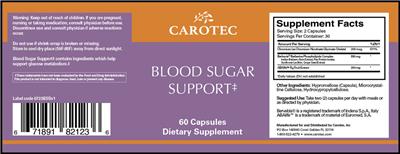
Blood Sugar Support by Carotec label
The label scan from the NIH Dietary Supplement Label Database. Tap to enlarge.
Label images are published by the NIH Dietary Supplement Label Database for the version of this product on file. Always read your actual product label.
View the full label (PDF)The Ingredients in Blood Sugar Support by Carotec
These are the 3 active ingredients this product is made of. Select any to open its full monograph.
Serving size2 Capsule(s) Dosage formCapsule Servings per container30 Amounts shown are per serving.
Most supplement products combine several ingredients, and a medication can interact with the product through any one of them. Each ingredient below shows whether it has known drug interactions.
Chromium
Interacts with178 drugs
Chromium is an essential trace mineral involved in how the body handles sugar and fat. Some studies suggest it may modestly help blood sugar control i...
Chromium monograph & interactionsBerbevis
Interacts with1,162 drugs
Berberine is a yellow plant compound that has shown promise for lowering blood sugar and cholesterol in some studies, but the quality of research vari...
Berbevis monograph & interactions- › Sunflower Lecithin
- › Grape Seed Extract
- › Pea Protein Isolate
- › Indian Barberry root extract
ABAlife
Interacts with410 drugs
Fig (Ficus carica) is a common fruit that has long been used as a gentle food remedy for constipation, and its leaves are used traditionally for blood...
ABAlife monograph & interactionsOther (inactive) ingredients: Hypromellose, Microcrystalline Cellulose, Hydroxypropyl Cellulose. These complete the product’s ingredient list but are not active constituents.
Blood Sugar Support by Carotec Drug Interactions
HelloPharmacist Interaction Report
Carotec's Blood Sugar Support contains several ingredients with documented interactions.
The most serious concern involves grape seed extract, which has Moderate-severity interactions affecting multiple drug types that work through liver enzymes (CYP1A2, CYP2D6, CYP3A4, and CYP2E1 substrates). This can either raise or lower drug levels unpredictably—research is still conflicting on some of these pathways.
Grape seed extract also theoretically increases bleeding risk with blood thinners and antiplatelet drugs (anticoagulants or aspirin-like medications), and can reduce absorption of cyclosporine (an immunosuppressant) and midazolam (a sedative).
Read the full breakdown — every affected drug type, severity by severity
Chromium in this product has Moderate interactions with antidiabetes drugs and insulin—it may lower blood sugar further and raise the risk of low blood sugar (hypoglycemia). It also interacts with levothyroxine (thyroid medication), potentially reducing its absorption by up to 17%.
Minor interactions exist with NSAIDs and aspirin, which may increase chromium levels. Fig leaf extract (in ABAlife) has Moderate interactions with antidiabetes drugs and insulin, again raising hypoglycemia risk, and theoretically increases photosensitivity if you take sun-sensitizing drugs like certain antibiotics or antidepressants.
Sunflower lecithin, pea protein isolate, and Indian barberry root extract have either no known interactions or insufficient data to check. Altogether, these interactions span 1,155 individual medications.
Before starting this product, check your exact medications with the search tool on this page.
Check your own medications below · Editorial policy · How we use AI
Want to check YOUR meds against Blood Sugar Support?
Ask about interactions with your drugs in plain English — “Can I take it with lisinopril?” — and we find you the answer in seconds, ingredient by ingredient.
Go to the checkerIngredients driving the most interactions
Individual Drug Interactions
The ingredients in Blood Sugar Support interact with 1,318 drugs. Click any drug to see the details.
3 of the 3 ingredients in Blood Sugar Support interact with drugs. Each result below shows which ingredient is responsible. Berbevis ABAlife Chromium
CyclosporineCequa, Ciclosporine, Gengraf, Neoral, Sandimmune, Verkazia +1 more
How Cyclosporine interacts with Blood Sugar Support — through 2 ingredients. Tap an ingredient for the detail:
BerbevisCytochrome P450 3a4 (cyp3a4) Substrates, Cyclosporine (neoral, Sandimmune) Major
Interaction Summary
Theoretically, berberine might increase serum levels of drugs metabolized by CYP3A4.
Read the full Berbevis + Cyclosporine interactionGrape Seed ExtractCyclosporine (neoral, Sandimmune), Cytochrome P450 3a4 (cyp3a4) Substrates Moderate
Interaction Summary
Ingesting grape juice with cyclosporine can reduce cyclosporine absorption.
Read the full Grape Seed Extract + Cyclosporine interactionAdo-trastuzumab EmtansineKadcyla
How Ado-trastuzumab Emtansine interacts with Blood Sugar Support — through 2 ingredients. Tap an ingredient for the detail:
BerbevisCytochrome P450 3a4 (cyp3a4) Substrates Moderate
Interaction Summary
Theoretically, berberine might increase serum levels of drugs metabolized by CYP3A4.
Read the full Berbevis + Ado-trastuzumab Emtansine interactionGrape Seed ExtractCytochrome P450 3a4 (cyp3a4) Substrates Moderate
Interaction Summary
It is unclear if grape seed extract inhibits or induces CYP3A4; research is conflicting.
Read the full Grape Seed Extract + Ado-trastuzumab Emtansine interactionAbciximabReoPro
How Abciximab interacts with Blood Sugar Support — through 2 ingredients. Tap an ingredient for the detail:
BerbevisAnticoagulant/antiplatelet Drugs Moderate
Interaction Summary
Theoretically, berberine might increase the risk of bleeding when used with anticoagulant or antiplatelet drugs.
Read the full Berbevis + Abciximab interactionGrape Seed ExtractAnticoagulant/antiplatelet Drugs Moderate
Interaction Summary
Theoretically, grape extracts may have antiplatelet effects and may increase the risk of bleeding if used with anticoagulant or antiplatelet drugs.
Read the full Grape Seed Extract + Abciximab interactionAbemaciclibVerzenio
How Abemaciclib interacts with Blood Sugar Support — through 2 ingredients. Tap an ingredient for the detail:
BerbevisCytochrome P450 3a4 (cyp3a4) Substrates Moderate
Interaction Summary
Theoretically, berberine might increase serum levels of drugs metabolized by CYP3A4.
Read the full Berbevis + Abemaciclib interactionGrape Seed ExtractCytochrome P450 3a4 (cyp3a4) Substrates Moderate
Interaction Summary
It is unclear if grape seed extract inhibits or induces CYP3A4; research is conflicting.
Read the full Grape Seed Extract + Abemaciclib interactionAbiraterone
How Abiraterone interacts with Blood Sugar Support — through 2 ingredients. Tap an ingredient for the detail:
Grape Seed ExtractCytochrome P450 3a4 (cyp3a4) Substrates Moderate
Interaction Summary
It is unclear if grape seed extract inhibits or induces CYP3A4; research is conflicting.
Read the full Grape Seed Extract + Abiraterone interactionBerbevisCytochrome P450 3a4 (cyp3a4) Substrates Moderate
Interaction Summary
Theoretically, berberine might increase serum levels of drugs metabolized by CYP3A4.
Read the full Berbevis + Abiraterone interactionAbiraterone AcetateYonsa, Zytiga
How Abiraterone Acetate interacts with Blood Sugar Support — through 2 ingredients. Tap an ingredient for the detail:
BerbevisCytochrome P450 3a4 (cyp3a4) Substrates Moderate
Interaction Summary
Theoretically, berberine might increase serum levels of drugs metabolized by CYP3A4.
Read the full Berbevis + Abiraterone Acetate interactionGrape Seed ExtractCytochrome P450 3a4 (cyp3a4) Substrates Moderate
Interaction Summary
It is unclear if grape seed extract inhibits or induces CYP3A4; research is conflicting.
Read the full Grape Seed Extract + Abiraterone Acetate interactionAbrocitinibCibinqo
How Abrocitinib interacts with Blood Sugar Support — through 2 ingredients. Tap an ingredient for the detail:
Grape Seed ExtractCytochrome P450 2c9 (cyp2c9) Substrates, Anticoagulant/antiplatelet Drugs Moderate
Interaction Summary
It is unclear if grape juice or grape seed extract inhibits CYP2C9; research is conflicting.
Read the full Grape Seed Extract + Abrocitinib interactionBerbevisAnticoagulant/antiplatelet Drugs, Cytochrome P450 2c9 (cyp2c9) Substrates Moderate
Interaction Summary
Theoretically, berberine might increase the risk of bleeding when used with anticoagulant or antiplatelet drugs.
Read the full Berbevis + Abrocitinib interactionAcalabrutinibCalquence
How Acalabrutinib interacts with Blood Sugar Support — through 2 ingredients. Tap an ingredient for the detail:
BerbevisCytochrome P450 3a4 (cyp3a4) Substrates Moderate
Interaction Summary
Theoretically, berberine might increase serum levels of drugs metabolized by CYP3A4.
Read the full Berbevis + Acalabrutinib interactionGrape Seed ExtractCytochrome P450 3a4 (cyp3a4) Substrates Moderate
Interaction Summary
It is unclear if grape seed extract inhibits or induces CYP3A4; research is conflicting.
Read the full Grape Seed Extract + Acalabrutinib interactionAcarboseGlucobay, Prandase, Precose
How Acarbose interacts with Blood Sugar Support — through 3 ingredients. Tap an ingredient for the detail:
AbalifeAntidiabetes Drugs Moderate
Interaction Summary
Theoretically, fig leaf might enhance the blood glucose lowering effects of hypoglycemic drugs.
Read the full Abalife + Acarbose interactionChromiumAntidiabetes Drugs Moderate
Interaction Summary
Theoretically, chromium may have additive effects with antidiabetic agents and increase the risk of hypoglycemia.
Read the full Chromium + Acarbose interactionBerbevisAntidiabetes Drugs Moderate
Interaction Summary
Theoretically, berberine may increase the risk of hypoglycemia when taken with antidiabetes drugs.
Read the full Berbevis + Acarbose interactionAcebutololRhotral, Sectral
How Acebutolol interacts with Blood Sugar Support — through 1 ingredient. Tap an ingredient for the detail:
BerbevisAntihypertensive Drugs Moderate
Interaction Summary
Theoretically, berberine might have additive effects with antihypertensive drugs.
Read the full Berbevis + Acebutolol interactionAcenocoumarolSintrom
How Acenocoumarol interacts with Blood Sugar Support — through 2 ingredients. Tap an ingredient for the detail:
Grape Seed ExtractAnticoagulant/antiplatelet Drugs Moderate
Interaction Summary
Theoretically, grape extracts may have antiplatelet effects and may increase the risk of bleeding if used with anticoagulant or antiplatelet drugs.
Read the full Grape Seed Extract + Acenocoumarol interactionBerbevisAnticoagulant/antiplatelet Drugs Moderate
Interaction Summary
Theoretically, berberine might increase the risk of bleeding when used with anticoagulant or antiplatelet drugs.
Read the full Berbevis + Acenocoumarol interactionAcepromazineAtravet
How Acepromazine interacts with Blood Sugar Support — through 2 ingredients. Tap an ingredient for the detail:
BerbevisCns Depressants Moderate
Interaction Summary
Theoretically, berberine might increase the sedative effects of CNS depressants.
Read the full Berbevis + Acepromazine interactionAbalifePhotosensitizing Drugs Moderate
Interaction Summary
Theoretically, fig might increase the risk of photosensitivity when used in combination with photosensitizing drugs.
Read the full Abalife + Acepromazine interactionAcetaminophenChildren's Tylenol, Children's Tylenol Meltaways, Tylenol, Tylenol Ex Strength
How Acetaminophen interacts with Blood Sugar Support — through 1 ingredient. Tap an ingredient for the detail:
Grape Seed ExtractCytochrome P450 1a2 (cyp1a2) Substrates, Cytochrome P450 2e1 (cyp2e1) Substrates Moderate
Interaction Summary
Theoretically, grape juice might reduce the levels of CYP1A2 substrates.
Read the full Grape Seed Extract + Acetaminophen interactionAcetaminophen, AspirinGemnisyn
How Acetaminophen, Aspirin interacts with Blood Sugar Support — through 3 ingredients. Tap an ingredient for the detail:
Grape Seed ExtractAnticoagulant/antiplatelet Drugs, Cytochrome P450 2e1 (cyp2e1) Substrates +1 Moderate
Interaction Summary
Theoretically, grape extracts may have antiplatelet effects and may increase the risk of bleeding if used with anticoagulant or antiplatelet drugs.
Read the full Grape Seed Extract + Acetaminophen, Aspirin interactionBerbevisAnticoagulant/antiplatelet Drugs Moderate
Interaction Summary
Theoretically, berberine might increase the risk of bleeding when used with anticoagulant or antiplatelet drugs.
Read the full Berbevis + Acetaminophen, Aspirin interactionChromiumNonsteroidal Anti-inflammatory Drugs (nsaids), Aspirin Minor
Interaction Summary
NSAIDs might increase chromium levels in the body.
Read the full Chromium + Acetaminophen, Aspirin interactionAcetaminophen, Aspirin, CaffeineExcedrin, Excedrin Extra Strength, Excedrin Migraine
How Acetaminophen, Aspirin, Caffeine interacts with Blood Sugar Support — through 3 ingredients. Tap an ingredient for the detail:
Grape Seed ExtractAnticoagulant/antiplatelet Drugs, Cytochrome P450 1a2 (cyp1a2) Substrates +2 Moderate
Interaction Summary
Theoretically, grape extracts may have antiplatelet effects and may increase the risk of bleeding if used with anticoagulant or antiplatelet drugs.
Read the full Grape Seed Extract + Acetaminophen, Aspirin, Caffeine interactionBerbevisAnticoagulant/antiplatelet Drugs, Cytochrome P450 3a4 (cyp3a4) Substrates Moderate
Interaction Summary
Theoretically, berberine might increase the risk of bleeding when used with anticoagulant or antiplatelet drugs.
Read the full Berbevis + Acetaminophen, Aspirin, Caffeine interactionChromiumAspirin, Nonsteroidal Anti-inflammatory Drugs (nsaids) Minor
Interaction Summary
Theoretically, aspirin might increase chromium absorption.
Read the full Chromium + Acetaminophen, Aspirin, Caffeine interactionAcetaminophen, Brompheniramine, PhenylpropanolamineDimetapp Cold and Flu
How Acetaminophen, Brompheniramine, Phenylpropanolamine interacts with Blood Sugar Support — through 2 ingredients. Tap an ingredient for the detail:
Grape Seed ExtractCytochrome P450 2e1 (cyp2e1) Substrates, Cytochrome P450 1a2 (cyp1a2) Substrates Moderate
Interaction Summary
Theoretically, grape seed extract might increase the levels of CYP2E1 substrates.
Read the full Grape Seed Extract + Acetaminophen, Brompheniramine, Phenylpropanolamine interactionAbalifePhotosensitizing Drugs Moderate
Interaction Summary
Theoretically, fig might increase the risk of photosensitivity when used in combination with photosensitizing drugs.
Read the full Abalife + Acetaminophen, Brompheniramine, Phenylpropanolamine interactionAcetaminophen, ButalbitalAxocet, Bancap, Bucet, Butex Forte, Esgic CF, Orbivan CF +5 more
How Acetaminophen, Butalbital interacts with Blood Sugar Support — through 1 ingredient. Tap an ingredient for the detail:
Grape Seed ExtractCytochrome P450 1a2 (cyp1a2) Substrates, Cytochrome P450 2e1 (cyp2e1) Substrates Moderate
Interaction Summary
Theoretically, grape juice might reduce the levels of CYP1A2 substrates.
Read the full Grape Seed Extract + Acetaminophen, Butalbital interactionAcetaminophen, Butalbital, CaffeineEsgic, Esgic Plus, Fiogesic, Fioricet, Repan, Tecnal +1 more
How Acetaminophen, Butalbital, Caffeine interacts with Blood Sugar Support — through 2 ingredients. Tap an ingredient for the detail:
Grape Seed ExtractCytochrome P450 2e1 (cyp2e1) Substrates, Cytochrome P450 1a2 (cyp1a2) Substrates +1 Moderate
Interaction Summary
Theoretically, grape seed extract might increase the levels of CYP2E1 substrates.
Read the full Grape Seed Extract + Acetaminophen, Butalbital, Caffeine interactionBerbevisCytochrome P450 3a4 (cyp3a4) Substrates Moderate
Interaction Summary
Theoretically, berberine might increase serum levels of drugs metabolized by CYP3A4.
Read the full Berbevis + Acetaminophen, Butalbital, Caffeine interactionAcetaminophen, Butalbital, Caffeine, CodeineEsgic with Codeine, Fioricet w/ Codeine
How Acetaminophen, Butalbital, Caffeine, Codeine interacts with Blood Sugar Support — through 2 ingredients. Tap an ingredient for the detail:
Grape Seed ExtractCytochrome P450 3a4 (cyp3a4) Substrates, Cytochrome P450 1a2 (cyp1a2) Substrates +2 Moderate
Interaction Summary
It is unclear if grape seed extract inhibits or induces CYP3A4; research is conflicting.
Read the full Grape Seed Extract + Acetaminophen, Butalbital, Caffeine, Codeine interactionBerbevisCytochrome P450 3a4 (cyp3a4) Substrates, Cytochrome P450 2d6 (cyp2d6) Substrates +1 Moderate
Interaction Summary
Theoretically, berberine might increase serum levels of drugs metabolized by CYP3A4.
Read the full Berbevis + Acetaminophen, Butalbital, Caffeine, Codeine interactionAcetaminophen, Butalbital, CodeineBancap w/ Codeine
How Acetaminophen, Butalbital, Codeine interacts with Blood Sugar Support — through 2 ingredients. Tap an ingredient for the detail:
Grape Seed ExtractCytochrome P450 2e1 (cyp2e1) Substrates, Cytochrome P450 1a2 (cyp1a2) Substrates +1 Moderate
Interaction Summary
Theoretically, grape seed extract might increase the levels of CYP2E1 substrates.
Read the full Grape Seed Extract + Acetaminophen, Butalbital, Codeine interactionBerbevisCytochrome P450 2d6 (cyp2d6) Substrates, Cns Depressants Moderate
Interaction Summary
Theoretically, berberine might increase serum levels of drugs metabolized by CYP2D6.
Read the full Berbevis + Acetaminophen, Butalbital, Codeine interactionAcetaminophen, Butalbital, Codeine PhosphatePhrenilin #3
How Acetaminophen, Butalbital, Codeine Phosphate interacts with Blood Sugar Support — through 2 ingredients. Tap an ingredient for the detail:
Grape Seed ExtractCytochrome P450 1a2 (cyp1a2) Substrates, Cytochrome P450 2d6 (cyp2d6) Substrates +1 Moderate
Interaction Summary
Theoretically, grape juice might reduce the levels of CYP1A2 substrates.
Read the full Grape Seed Extract + Acetaminophen, Butalbital, Codeine Phosphate interactionBerbevisCytochrome P450 2d6 (cyp2d6) Substrates, Cns Depressants Moderate
Interaction Summary
Theoretically, berberine might increase serum levels of drugs metabolized by CYP2D6.
Read the full Berbevis + Acetaminophen, Butalbital, Codeine Phosphate interactionAcetaminophen, Caffeine, Chlorpheniramine, Hydrocodone, PhenylephrineHycomine Compound
How Acetaminophen, Caffeine, Chlorpheniramine, Hydrocodone, Phenylephrine interacts with Blood Sugar Support — through 3 ingredients. Tap an ingredient for the detail:
BerbevisCns Depressants, Cytochrome P450 3a4 (cyp3a4) Substrates +1 Moderate
Interaction Summary
Theoretically, berberine might increase the sedative effects of CNS depressants.
Read the full Berbevis + Acetaminophen, Caffeine, Chlorpheniramine, Hydrocodone, Phenylephrine interactionGrape Seed ExtractCytochrome P450 2e1 (cyp2e1) Substrates, Cytochrome P450 2d6 (cyp2d6) Substrates +2 Moderate
Interaction Summary
Theoretically, grape seed extract might increase the levels of CYP2E1 substrates.
Read the full Grape Seed Extract + Acetaminophen, Caffeine, Chlorpheniramine, Hydrocodone, Phenylephrine interactionAbalifePhotosensitizing Drugs Moderate
Interaction Summary
Theoretically, fig might increase the risk of photosensitivity when used in combination with photosensitizing drugs.
Read the full Abalife + Acetaminophen, Caffeine, Chlorpheniramine, Hydrocodone, Phenylephrine interactionAcetaminophen, Caffeine, CodeineGesic C15, Gesic C30, Gesic C8, Lenoltec 1, Lenoltec 2, Lenoltec 3 +1 more
How Acetaminophen, Caffeine, Codeine interacts with Blood Sugar Support — through 2 ingredients. Tap an ingredient for the detail:
Grape Seed ExtractCytochrome P450 3a4 (cyp3a4) Substrates, Cytochrome P450 2d6 (cyp2d6) Substrates +2 Moderate
Interaction Summary
It is unclear if grape seed extract inhibits or induces CYP3A4; research is conflicting.
Read the full Grape Seed Extract + Acetaminophen, Caffeine, Codeine interactionBerbevisCns Depressants, Cytochrome P450 2d6 (cyp2d6) Substrates +1 Moderate
Interaction Summary
Theoretically, berberine might increase the sedative effects of CNS depressants.
Read the full Berbevis + Acetaminophen, Caffeine, Codeine interactionAcetaminophen, Caffeine, Codeine, SalicylamideCodalan No.1, Codalan No.2, Codalan No.3
How Acetaminophen, Caffeine, Codeine, Salicylamide interacts with Blood Sugar Support — through 2 ingredients. Tap an ingredient for the detail:
BerbevisCytochrome P450 3a4 (cyp3a4) Substrates, Cns Depressants +1 Moderate
Interaction Summary
Theoretically, berberine might increase serum levels of drugs metabolized by CYP3A4.
Read the full Berbevis + Acetaminophen, Caffeine, Codeine, Salicylamide interactionGrape Seed ExtractCytochrome P450 2e1 (cyp2e1) Substrates, Cytochrome P450 3a4 (cyp3a4) Substrates +2 Moderate
Interaction Summary
Theoretically, grape seed extract might increase the levels of CYP2E1 substrates.
Read the full Grape Seed Extract + Acetaminophen, Caffeine, Codeine, Salicylamide interactionAcetaminophen, Caffeine, DihydrocodeineDHC Plus, Panlor DC, Panlor SS
How Acetaminophen, Caffeine, Dihydrocodeine interacts with Blood Sugar Support — through 2 ingredients. Tap an ingredient for the detail:
Grape Seed ExtractCytochrome P450 1a2 (cyp1a2) Substrates, Cytochrome P450 2d6 (cyp2d6) Substrates +2 Moderate
Interaction Summary
Theoretically, grape juice might reduce the levels of CYP1A2 substrates.
Read the full Grape Seed Extract + Acetaminophen, Caffeine, Dihydrocodeine interactionBerbevisCytochrome P450 2d6 (cyp2d6) Substrates, Cytochrome P450 3a4 (cyp3a4) Substrates +1 Moderate
Interaction Summary
Theoretically, berberine might increase serum levels of drugs metabolized by CYP2D6.
Read the full Berbevis + Acetaminophen, Caffeine, Dihydrocodeine interactionAcetaminophen, Caffeine, IsomethepteneMigralam
How Acetaminophen, Caffeine, Isometheptene interacts with Blood Sugar Support — through 2 ingredients. Tap an ingredient for the detail:
Grape Seed ExtractCytochrome P450 2e1 (cyp2e1) Substrates, Cytochrome P450 3a4 (cyp3a4) Substrates +1 Moderate
Interaction Summary
Theoretically, grape seed extract might increase the levels of CYP2E1 substrates.
Read the full Grape Seed Extract + Acetaminophen, Caffeine, Isometheptene interactionBerbevisCytochrome P450 3a4 (cyp3a4) Substrates Moderate
Interaction Summary
Theoretically, berberine might increase serum levels of drugs metabolized by CYP3A4.
Read the full Berbevis + Acetaminophen, Caffeine, Isometheptene interactionAcetaminophen, Caffeine, PyrilamineMidol Max Strength Menstrual
How Acetaminophen, Caffeine, Pyrilamine interacts with Blood Sugar Support — through 2 ingredients. Tap an ingredient for the detail:
Grape Seed ExtractCytochrome P450 1a2 (cyp1a2) Substrates, Cytochrome P450 3a4 (cyp3a4) Substrates +1 Moderate
Interaction Summary
Theoretically, grape juice might reduce the levels of CYP1A2 substrates.
Read the full Grape Seed Extract + Acetaminophen, Caffeine, Pyrilamine interactionBerbevisCytochrome P450 3a4 (cyp3a4) Substrates Moderate
Interaction Summary
Theoretically, berberine might increase serum levels of drugs metabolized by CYP3A4.
Read the full Berbevis + Acetaminophen, Caffeine, Pyrilamine interactionAcetaminophen, Chlorpheniramine Maleate, Dextromethorphan HbrVicks Formula 44M Cough, Cold & Flu Relief
How Acetaminophen, Chlorpheniramine Maleate, Dextromethorphan Hbr interacts with Blood Sugar Support — through 3 ingredients. Tap an ingredient for the detail:
Grape Seed ExtractCytochrome P450 2e1 (cyp2e1) Substrates, Cytochrome P450 2d6 (cyp2d6) Substrates +2 Moderate
Interaction Summary
Theoretically, grape seed extract might increase the levels of CYP2E1 substrates.
Read the full Grape Seed Extract + Acetaminophen, Chlorpheniramine Maleate, Dextromethorphan Hbr interactionBerbevisDextromethorphan (robitussin Dm, Others), Cytochrome P450 2d6 (cyp2d6) Substrates +1 Moderate
Interaction Summary
Theoretically, berberine may increase serum levels of dextromethorphan.
Read the full Berbevis + Acetaminophen, Chlorpheniramine Maleate, Dextromethorphan Hbr interactionAbalifePhotosensitizing Drugs Moderate
Interaction Summary
Theoretically, fig might increase the risk of photosensitivity when used in combination with photosensitizing drugs.
Read the full Abalife + Acetaminophen, Chlorpheniramine Maleate, Dextromethorphan Hbr interactionAcetaminophen, Chlorpheniramine, Codeine, PhenylephrineColrex
How Acetaminophen, Chlorpheniramine, Codeine, Phenylephrine interacts with Blood Sugar Support — through 3 ingredients. Tap an ingredient for the detail:
Grape Seed ExtractCytochrome P450 3a4 (cyp3a4) Substrates, Cytochrome P450 1a2 (cyp1a2) Substrates +2 Moderate
Interaction Summary
It is unclear if grape seed extract inhibits or induces CYP3A4; research is conflicting.
Read the full Grape Seed Extract + Acetaminophen, Chlorpheniramine, Codeine, Phenylephrine interactionAbalifePhotosensitizing Drugs Moderate
Interaction Summary
Theoretically, fig might increase the risk of photosensitivity when used in combination with photosensitizing drugs.
Read the full Abalife + Acetaminophen, Chlorpheniramine, Codeine, Phenylephrine interactionBerbevisCytochrome P450 2d6 (cyp2d6) Substrates, Cns Depressants +1 Moderate
Interaction Summary
Theoretically, berberine might increase serum levels of drugs metabolized by CYP2D6.
Read the full Berbevis + Acetaminophen, Chlorpheniramine, Codeine, Phenylephrine interactionAcetaminophen, Chlorpheniramine, DextromethorphanCoricidin II Extra Strength Cold and Flu
How Acetaminophen, Chlorpheniramine, Dextromethorphan interacts with Blood Sugar Support — through 3 ingredients. Tap an ingredient for the detail:
Grape Seed ExtractCytochrome P450 2e1 (cyp2e1) Substrates, Cytochrome P450 1a2 (cyp1a2) Substrates +2 Moderate
Interaction Summary
Theoretically, grape seed extract might increase the levels of CYP2E1 substrates.
Read the full Grape Seed Extract + Acetaminophen, Chlorpheniramine, Dextromethorphan interactionBerbevisDextromethorphan (robitussin Dm, Others), Cytochrome P450 3a4 (cyp3a4) Substrates +1 Moderate
Interaction Summary
Theoretically, berberine may increase serum levels of dextromethorphan.
Read the full Berbevis + Acetaminophen, Chlorpheniramine, Dextromethorphan interactionAbalifePhotosensitizing Drugs Moderate
Interaction Summary
Theoretically, fig might increase the risk of photosensitivity when used in combination with photosensitizing drugs.
Read the full Abalife + Acetaminophen, Chlorpheniramine, Dextromethorphan interactionEach ingredient & the kinds of drugs it affects
For each ingredient in Blood Sugar Support with known interactions, here are the types of medications they can affect. Open any type for the detail — or search your exact drug in the checker above.
Berbevis
Cyclosporine (Neoral, Sandimmune)
Berberine can increase serum levels of cyclosporine.
Berberine can reduce metabolism and increase serum levels of cyclosporine. Berberine might inhibit cytochrome P450 3A4 (CYP3A4), which metabolizes cyclosporine.
Anticoagulant/Antiplatelet Drugs
Theoretically, berberine might increase the risk of bleeding when used with anticoagulant or antiplatelet drugs.
In vitro and in vivo research suggest that berberine can inhibit platelet aggregation. Theoretically, berberine might have additive effects when used with anticoagulant and antiplatelet drugs and increase the risk of bleeding.
Antidiabetes Drugs
Theoretically, berberine may increase the risk of hypoglycemia when taken with antidiabetes drugs.
Clinical research shows that berberine may lower blood glucose levels. Theoretically, berberine might have additive effects with antidiabetes drugs and increase the risk of hypoglycemia.
Antihypertensive Drugs
Theoretically, berberine might have additive effects with antihypertensive drugs.
Animal research suggests that berberine can have hypotensive effects. Also, a clinical study suggests that taking berberine in combination with amlodipine can lower systolic and diastolic blood pressure when compared with amlodipine alone.
Cns Depressants
Theoretically, berberine might increase the sedative effects of CNS depressants.
Animal research suggests that berberine may have sedative effects. Theoretically, use of berberine along with CNS depressants might produce additive therapeutic and adverse effects.
Cytochrome P450 2C9 (Cyp2C9) Substrates
Theoretically, berberine might increase serum levels of drugs metabolized by CYP2C9.
Preliminary clinical research shows that berberine can inhibit CYP2C9. Theoretically, taking berberine with drugs metabolized by CYP2C9 might increase drug levels and increase the risk of adverse effects.
Cytochrome P450 2D6 (Cyp2D6) Substrates
Theoretically, berberine might increase serum levels of drugs metabolized by CYP2D6.
In vitro research and preliminary clinical evidence show that berberine can inhibit CYP2D6. Theoretically, use of berberine with drugs metabolized by CYP2D6 might increase drug levels and increase the risk of adverse effects.
Cytochrome P450 3A4 (Cyp3A4) Substrates
Theoretically, berberine might increase serum levels of drugs metabolized by CYP3A4.
In vitro research and preliminary clinical research show that berberine moderately inhibits CYP3A4. Theoretically, use of berberine with drugs metabolized by CYP3A4 might increase drug levels and increase the risk of adverse effects.
Dextromethorphan (Robitussin Dm, Others)
Theoretically, berberine may increase serum levels of dextromethorphan.
Preliminary clinical research shows that berberine can inhibit cytochrome P450 2D6 (CYP2D6) activity and reduce the metabolism of dextromethorphan. This may increase the effects and side effects of dextromethorphan.
Losartan (Cozaar)
Berberine might reduce the therapeutic effects of losartan by decreasing its conversion to its active form.
Preliminary clinical research suggests that berberine can inhibit cytochrome P450 2C9 (CYP2C9) activity and reduce metabolism of losartan.
Metformin (Glucophage)
Theoretically, berberine might increase the therapeutic and adverse effects of metformin.
In vitro and animal studies show that berberine can increase the systemic exposure and half-life of metformin, potentially increasing metformin's effects and side effects. This interaction seems to be most apparent when berberine is administered 2 hours prior to metformin. Taking berberine and metformin at the same time does not appear to increase systemic exposure to metformin.
Midazolam (Versed)
Berberine can reduce metabolism of midazolam, which might increase the risk of severe adverse effects.
Preliminary clinical research shows that berberine can inhibit cytochrome P450 3A4 (CYP3A4) activity and reduce metabolism of midazolam.
Pentobarbital (Nembutal)
Berberine might increase the sedative effect of pentobarbital.
Evidence from animal research shows that berberine can prolong pentobarbital-induced sleeping time. Theoretically, combining berberine and pentobarbital might increase the sedative effects of pentobarbital.
Tacrolimus (Prograf)
Berberine has been associated with increased blood levels of tacrolimus.
In a 16-year-old patient with idiopathic nephrotic syndrome who was being treated with tacrolimus 6.5 mg twice daily, intake of berberine 200 mg three times daily increased the blood concentration of tacrolimus from 8 to 22 ng/mL. Following a reduction of the tacrolimus dose to 3 mg daily, blood levels of tacrolimus decreased to 12 ng/mL.
Acetazolamide
Laboratory studies and initial clinical findings suggest that berberine has the potential to increase acetazolamide concentrations in the body. More research is needed to confirm this interaction.
ABAlife
Antidiabetes Drugs
Theoretically, fig leaf might enhance the blood glucose lowering effects of hypoglycemic drugs.
A small clinical study in patients with type 1 diabetes shows that consuming a tea made from fig leaves modestly reduces postprandial glucose levels and insulin requirements.
Insulin
Fig leaf may enhance the blood glucose lowering effects of insulin.
A small clinical study in patients with type 1 diabetes shows that consuming a tea made from fig leaves modestly reduces postprandial glucose levels and insulin requirements.
Photosensitizing Drugs
Theoretically, fig might increase the risk of photosensitivity when used in combination with photosensitizing drugs.
Many cases of photodermatitis from fig leaf have been reported. Some drugs that also cause photosensitivity include amitriptyline (Elavil), quinolones (Ciprofloxacin, others), sulfa drugs (Septra, Bactrim, others), and tetracycline.
Chromium
Antidiabetes Drugs
Theoretically, chromium may have additive effects with antidiabetic agents and increase the risk of hypoglycemia.
Some research shows that taking chromium might lower blood glucose levels, especially in patients with poorly controlled type 2 diabetes.
Insulin
Theoretically, concomitant use of chromium and insulin might increase the risk of hypoglycemia.
In clinical research, chromium has been shown to increase insulin sensitivity,
Levothyroxine (Synthroid, Others)
Chromium might bind levothyroxine in the intestinal tract and decrease levothyroxine absorption.
Clinical research in healthy volunteers shows that taking chromium picolinate 1000 mcg with levothyroxine 1 mg decreases serum levels of levothyroxine by 17% when compared to taking levothyroxine alone. Advise patients to take levothyroxine at least 30 minutes before or 3-4 hours after taking chromium.
Aspirin
Theoretically, aspirin might increase chromium absorption.
Animal research suggests that aspirin may increase chromium absorption and chromium levels in the blood.
Nonsteroidal Anti-Inflammatory Drugs (Nsaids)
NSAIDs might increase chromium levels in the body.
Drugs that are prostaglandin inhibitors, such as NSAIDs, seem to increase chromium absorption and retention.
Brand information
Manufacturer and brand details for Blood Sugar Support, from the product label.
Carotec
See all Carotec products- Name
- Carotec, Inc.
- Street Address
- PO Box 140940
- City
- Coral Gables
- State
- FL
- ZipCode
- 33114
- Phone Number
- 1-800-522-4279
- Web Address
- www.carotec.com
Blood Sugar Support by Carotec: Common Questions
Does Blood Sugar Support by Carotec interact with any medications?
How can one product interact with so many drugs?
Where does this information come from?
Does this product actually help with blood sugar?
Can I take this if I'm on insulin or metformin?
What are the most common side effects?
Is this safe during pregnancy?
What's in ABAlife and Berbevis?
Will this interact with my thyroid medication?
Written and reviewed by the HelloPharmacist editorial staff. Our editorial policy
Not sure if Blood Sugar Support is safe with your meds?
Our pharmacists answer your medication & supplement questions — free.
Label information is sourced from the NIH Dietary Supplement Label Database and reflects the product version on file; always read your actual product label. This page is for education only and is not a substitute for professional medical advice. Confirm with your pharmacist or doctor before combining supplements and medications.
The Full Monographs Behind Blood Sugar Support’s Ingredients
Every ingredient we hold a full HelloPharmacist monograph for — uses, evidence, safety, and the complete interaction list.
Chromium
Interacts with 178 drugsChromium is an essential trace mineral involved in how the body handles sugar and fat. Some studies suggest it may modestly help blood sugar control in certain people with type 2 diabetes, b...
Read the full Chromium monograph → Herb & supplement monographBerberine
Interacts with 1,162 drugsBerberine is a yellow plant compound that has shown promise for lowering blood sugar and cholesterol in some studies, but the quality of research varies and it is not a replacement for presc...
Read the full Berberine monograph → Herb & supplement monographLecithin
Lecithin is a natural fatty substance found in foods and made by the body that is widely used as a supplement and food emulsifier. Evidence supporting most of its health claims is limited, t...
Read the full Lecithin monograph → Herb & supplement monographGrape
Interacts with 912 drugsGrapes and grape products like grape seed extract contain antioxidant compounds such as resveratrol and proanthocyanidins that may support heart and blood vessel health. While the food is he...
Read the full Grape monograph → Herb & supplement monographPea Protein
Pea protein is a plant-based protein powder made from yellow split peas, commonly used by people who want a dairy-free or vegan source of protein to support muscle and overall protein intake...
Read the full Pea Protein monograph → Herb & supplement monographFig
Interacts with 410 drugsFig (Ficus carica) is a common fruit that has long been used as a gentle food remedy for constipation, and its leaves are used traditionally for blood sugar and coughs. The fruit is a safe a...
Read the full Fig monograph →Sources & How We Checked
Blood Sugar Support's label data comes from the NIH Dietary Supplement Label Database; the ingredient interaction data is from the Natural Medicines database, reviewed by our pharmacists.
- NIH Dietary Supplement Label Database (DSLD) — The official product label on file for this supplement.
- Natural Medicines (Therapeutic Research Center) — Evidence-graded clinical reference behind the ingredient interaction data.
Content is written and reviewed by licensed HelloPharmacist pharmacists. See our data sources and editorial standards for how this information is built and checked.
The 151 references behind this product’s interaction data
Every citation that drives the interaction findings for this product’s ingredients, from the evidence-graded Natural Medicines (TRC Healthcare) database. Open an ingredient to browse its citations — links open the study on PubMed or the publisher’s site.
Lecithin 9 references
- Buchman AL, Dubin M, Jenden D, et al. Lecithin increases plasma free choline and decreases hepatic steatosis in long-term total parenteral nutrition patients. Gastroenterology 1992;102:1363-70.
- Food and Nutrition Board, Institute of Medicine. Dietary Reference Intakes for Thiamin, Riboflavin, Niacin, Vitamin B6, Folate, Vitamin B12, Pantothenic Acid, Biotin, and Choline (2000). Washington, DC: National Academy Press, 2000. Available at: http://b
- Chatellier G, Lacomblez L. Tacrine (tetrahydroaminoacridine; THA) and lecithin in senile dementia of the Alzheimer type: a multicentre trial. Groupe Francais d'Etude de la Tetrahydroaminoacridine. BMJ 1990;300:495-9.
- Gelenberg AJ, Dorer DJ, Wojcik JD, et al. A crossover study of lecithin treatment of tardive dyskinesia. J Clin Psychiatry 1990;51:149-53.
- Little A, Levy R, Chuaqui-Kidd P, Hand D. A double-blind, placebo controlled trial of high-dose lecithin in Alzheimer's disease. J Neurol Neurosurg Psychiatry 1985;48:736-42. PubMed
- Palm M, Moneret-Vautrin DA, Kanny G, et al. Food allergy to egg and soy lecithins. Allergy 1999;54:1116-7. PubMed
- Drachman DA, Glosser G, Fleming P, et al. Memory decline in the aged: treatment with lecithin and physostigmine. Neurology 1982;32:944-50. PubMed
- Gelenberg, A. J., Doller-Wojcik, J. C., and Growdon, J. H. Choline and lecithin in the treatment of tardive dyskinesia: preliminary results from a pilot study. Am J Psychiatry 1979;136(6):772-776. PubMed
- Electronic Code of Federal Regulations. Title 21, Chapter 1, Subchapter B, Part 184: Direct food substances affirmed as Generally Recognized as Safe. Subpart B - listing of specific substances affirmed as GRAS. Sec. 184.1400 Lecithin. Available at: https:
Grape 34 references
- Kiesewetter H, Koscielny J, Kalus U, et al. Efficacy of orally administered extract of red vine leaf AS 195 (folia vitis viniferae) in chronic venous insufficiency (stages I-II). A randomized, double-blind, placebo-controlled trial. Arzneimittelforschung
- Xiao Dong S, Zhi Ping Z, Zhong Xiao W, et al. Possible enhancement of the first-pass metabolism of phenacetin by ingestion of grape juice in Chinese subjects. Br J Clin Pharmacol 1999;48:638-40. PubMed
- Vaswani SK, Hamilton RG, Carey RN, et al. Anaphylaxis recurrent urticaria and angioedema from grape hypersensitivity. J Allergy Clin Immunol 1998;101:S31.
- Chevallier A. The Encyclopedia of Medicinal Plants. London, UK: Dorling Kindersley, Ltd., 1996.
- Bernstein DI, Bernstein CK, Deng C, et al. Evaluation of the clinical efficacy and safety of grapeseed extract in the treatment of fall seasonal allergic rhinitis: a pilot study. Ann Allergy Asthma Immunol 2002;88:272-8.. PubMed
- Greenblatt DJ, von Moltke LL, Perloff ES, et al. Interaction of flurbiprofen with cranberry juice, grape juice, tea, and fluconazole: in vitro and clinical studies. Clin Pharmacol Ther 2006;79:125-33. PubMed
- Ward NC, Hodgson JM, Croft KD, et al. The combination of vitamin C and grape-seed polyphenols increases blood pressure: a randomized, double-blind, placebo-controlled trial. J Hypertens 2005;23:427-34.. PubMed
- Ray, S. D., Parikh, H., Hickey, E., Bagchi, M., and Bagchi, D. Differential effects of IH636 grape seed proanthocyanidin extract and a DNA repair modulator 4-aminobenzamide on liver microsomal cytochrome 4502E1-dependent aniline hydroxylation. Mol Cell B PubMed
- O'Byrne, D. J., Devaraj, S., Grundy, S. M., and Jialal, I. Comparison of the antioxidant effects of Concord grape juice flavonoids alpha-tocopherol on markers of oxidative stress in healthy adults. Am J Clin.Nutr. 2002;76(6):1367-1374.
- Schaefer, E., Peil, H., Ambrosetti, L., and Petrini, O. Oedema protective properties of the red vine leaf extract AS 195 (Folia vitis viniferae) in the treatment of chronic venous insufficiency. A 6-week observational clinical trial. Arzneimittelforschun PubMed
- Nishikawa, M., Ariyoshi, N., Kotani, A., Ishii, I., Nakamura, H., Nakasa, H., Ida, M., Nakamura, H., Kimura, N., Kimura, M., Hasegawa, A., Kusu, F., Ohmori, S., Nakazawa, K., and Kitada, M. Effects of continuous ingestion of green tea or grape seed extra
- de Lange, D. W., Scholman, W. L., Kraaijenhagen, R. J., Akkerman, J. W., and van de Wiel, A. Alcohol and polyphenolic grape extract inhibit platelet adhesion in flowing blood. Eur.J Clin.Invest 2004;34(12):818-824. PubMed
- Samet, J. M. and Coultas, D. B. Reduced forced vital capacity in California grape workers. What does it mean? Am Rev.Respir.Dis 1992;145(2 Pt 1):255-256. PubMed
- Gamsky, T. E., McCurdy, S. A., Samuels, S. J., and Schenker, M. B. Reduced FVC among California grape workers. Am Rev.Respir.Dis 1992;145(2 Pt 1):257-262. PubMed
- de Lange, D. W., Verhoef, S., Gorter, G., Kraaijenhagen, R. J., van de Wiel, A., and Akkerman, J. W. Polyphenolic grape extract inhibits platelet activation through PECAM-1: an explanation for the French paradox. Alcohol Clin.Exp.Res 2007;31(8):1308-1314 PubMed
- Etheridge, A. S., Black, S. R., Patel, P. R., So, J., and Mathews, J. M. An in vitro evaluation of cytochrome P450 inhibition and P-glycoprotein interaction with goldenseal, Ginkgo biloba, grape seed, milk thistle, and ginseng extracts and their constitu
- Krikorian, R., Nash, T. A., Shidler, M. D., Shukitt-Hale, B., and Joseph, J. A. Concord grape juice supplementation improves memory function in older adults with mild cognitive impairment. Br J Nutr. 2010;103(5):730-734. PubMed
- Ingersoll, G. L., Wasilewski, A., Haller, M., Pandya, K., Bennett, J., He, H., Hoffmire, C., and Berry, C. Effect of concord grape juice on chemotherapy-induced nausea and vomiting: results of a pilot study. Oncol.Nurs.Forum 2010;37(2):213-221. PubMed
- Oliveira-Freitas, V. L., Dalla, Costa T., Manfro, R. C., Cruz, L. B., and Schwartsmann, G. Influence of purple grape juice in cyclosporine bioavailability. J Ren Nutr. 2010;20(5):309-313. PubMed
- Hollis, J. H., Houchins, J. A., Blumberg, J. B., and Mattes, R. D. Effects of concord grape juice on appetite, diet, body weight, lipid profile, and antioxidant status of adults. J Am Coll.Nutr. 2009;28(5):574-582. PubMed
- Dohadwala, M. M., Hamburg, N. M., Holbrook, M., Kim, B. H., Duess, M. A., Levit, A., Titas, M., Chung, W. B., Vincent, F. B., Caiano, T. L., Frame, A. A., Keaney, J. F., Jr., and Vita, J. A. Effects of Concord grape juice on ambulatory blood pressure in
- Rabe, E., Stucker, M., Esperester, A., Schafer, E., and Ottillinger, B. Efficacy and tolerability of a red-vine-leaf extract in patients suffering from chronic venous insufficiency--results of a double-blind placebo-controlled study. Eur.J Vasc.Endovasc. PubMed
- Trotta, M., Cesaretti, M., Conzi, R., Derchi, L. E., and Borgonovo, G. Elderly male with mesogastric pain. Small bowel obstruction caused by an intact fresh grape. Ann.Emerg.Med 2011;58(4):e1-e2. PubMed
- McCurdy, S. A., Wiggins, P., Schenker, M. B., Munn, S., Shaieb, A. M., Weinbaum, Z., Goldsmith, D., McGillis, S. T., Berman, B., and Samuels, S. Assessing dermatitis in epidemiologic studies: occupational skin disease among California grape and tomato ha
- Winter, C. K. and Kurtz, P. H. Factors influencing grape worker susceptibility to skin rashes. Bull.Environ.Contam Toxicol. 1985;35(3):418-426. PubMed
- Yamasaki, R., Dekio, S., and Jidoi, J. Contact dermatitis from grape bud. Contact Dermatitis 1985;12(4):226-227. PubMed
- Cox, J. and Grigg, M. Small bowel obstruction by an intact grape. J Am Geriatr.Soc 1986;34(7):550. PubMed
- Faircloth, D. E. and Robison, W. J. Obstruction of the sigmoid colon by grape seeds. JAMA 11-27-1981;246(21):2430. PubMed
- Marguerie, C. and Drouet, M. [Occupational eosinophilic lung in a grape grower: role of sulfites]. Allerg.Immunol.(Paris) 1995;27(5):163-167.
- Brito, FF., Martinez, A., Palacios, R., Mur, P., Gomez, E., Galindo, P. A., Borja, J., and Martinez, J. Rhinoconjunctivitis and asthma caused by vine pollen: a case report. J Allergy Clin Immunol 1999;103(2 Pt 1):262-266. PubMed
- Ras RT, Zock PL, Zebregs YE, et al. Effect of polyphenol-rich grape seed extract on ambulatory blood pressure in subjects with pre- and stage I hypertension. Br J Nutr 2013;110(12):2234-41. PubMed
- Berry AC, Nakshabendi R, Abidali H, et al. Adverse effects of grape seed extract supplement: A clinical case and long-term follow-up. J Diet Suppl. 2016;13(2):232-5. PubMed
- Martínez-Maqueda D, Zapatera B, Gallego-Narbón A, Vaquero MP, Saura-Calixto F, Pérez-Jiménez J. A 6-week supplementation with grape pomace to subjects at cardiometabolic risk ameliorates insulin sensitivity, without affecting other metabolic syndrome mark
- Moon SW, Shin YU, Cho H, Bae SH, Kim HK; and for the Mogen Study Group. Effect of grape seed proanthocyanidin extract on hard exudates in patients with non-proliferative diabetic retinopathy. Medicine (Baltimore) 2019;98(21):e15515. PubMed
Chromium 53 references
- Cerulli J, Grabe DW, Gauthier I, et al. Chromium picolinate toxicity. Ann Pharmacother 1998;32:428-31. PubMed
- Urberg M, Zemel MB. Evidence for synergism between chromium and nicotinic acid in the control of glucose tolerance in elderly humans. Metabolism 1987;36:896-9. PubMed
- Mohamedshah FY, Moser-Veillon PB, Yamini S, et al. Distribution of a stable isotope of chromium (53Cr) in serum, urine, and breast milk in lactating women. Am J Clin Nutr 1998;67:1250-5. PubMed
- Wasser WG, Feldman NS, D'Agati VD. Chronic renal failure after ingestion of over-the-counter chromium picolinate. [letter]. Ann Intern Med 1997;126:410. PubMed
- Mertz W. Interaction of chromium with insulin: a progress report. Nutr Rev 1998;56:174-7. PubMed
- Anderson RA. Chromium, glucose intolerance and diabetes. J Am Coll Nutr 1998;17:548-55. PubMed
- McLeod MN, Gaynes BN, Golden RN. Chromium potentiation of antidepressant pharmacotherapy for dysthymic disorder in 5 patients. J Clin Psych 1999;60:237-40. PubMed
- Fowler JF Jr. Systemic contact dermatitis caused by oral chromium picolinate. Cutis 2000;65:116. DOI
- Trent LK, Thieding-Cancel D. Effects of chromium picolinate on body composition. J Sports Med Phys Fitness 1995;35:273-80.
- Food and Nutrition Board, Institute of Medicine. Dietary Reference Intakes for Vitamin A, Vitamin K, Arsenic, Boron, Chromium, Copper, Iodine, Iron, Manganese, Molybdenum, Nickel, Silicon, Vanadium, and Zinc. Washington, DC: National Academy Press, 2002.
- Rabinovitz H, Friedensohn A, Leibovitz A, et al. Effect of chromium supplementation on blood glucose and lipid levels in type 2 diabetes mellitus elderly patients. Int J Vitam Nutr Res 2004;74:178-82. PubMed
- Lanca S, Alves A, Vieira AI, et al. Chromium-induced toxic hepatitis. Eur J Intern Med 2002;13:518-20. PubMed
- Kockler DR, McCarthy MW, Lawson CL. Seizure activity and unresponsiveness after hydroxycut ingestion. Pharmacotherapy 2001;21:647-51.. PubMed
- Davidson JR, Abraham K, Connor KM, McLeod MN. Effectiveness of chromium in atypical depression: a placebo-controlled trial. Biol Psychiatry 2003;53:261-4.. PubMed
- Food Standards Agency. Medicines and Healthcare products Regulatory Agency (MHRA). Expert Group on Vitamins and Minerals. Available at: http://cot.food.gov.uk/sites/default/files/vitmin2003.pdf.
- Mouser JF, Hak EB, Helms RA, et al. Chromium and zinc concentrations in pediatric patients receiving long-term parenteral nutrition. Am J Health Syst Pharm 1999;56:1950-6. PubMed
- Stevens T, Qadri A, Zein NN. Two patients with acute liver injury associated with use of the herbal weight-loss supplement hydroxycut. Ann Intern Med 2005;142:477-8. PubMed
- Wani S, Weskamp C, Marple J, Spry L. Acute tubular necrosis associated with chromium picolinate-containing dietary supplement. Ann Pharmacother 2006;40:563-6. PubMed
- Kleefstra N, Houweling ST, Jansman FG, et al. Chromium treatment has no effect in patients with poorly controlled, insulin-treated type 2 diabetes in an obese Western population: a randomized, double-blind, placebo-controlled trial. Diabetes Care 2006;29: PubMed
- Martin J, Wang ZQ, Zhang XH, et al. Chromium picolinate supplementation attenuates body weight gain and increases insulin sensitivity in subjects with type 2 diabetes. Diabetes Care 2006;29:1826-32. PubMed
- Singer GM, Geohas J. The effect of chromium picolinate and biotin supplementation on glycemic control in poorly controlled patients with type 2 diabetes mellitus: a placebo-controlled, double-blinded, randomized trial. Diabetes Technol Ther 2006;8:636-43. PubMed
- John-Kalarickal J, Pearlman G, Carlson HE. New medications which decrease levothyroxine absorption. Thyroid 2007;17:763-5. PubMed
- Yazaki Y, Faridi Z, Ma Y, et al. A pilot study of chromium picolinate for weight loss. J Altern Complement Med 2010;16:291-9. PubMed
- Davis ML, Seaborn CD, and Stoecker BJ. Effects of over-the-counter drugs on chromium retention and urinary excretion in rats. Nutrition Research 1995;15(2):201-210.
- Young P, Turiansky G, Bonner M, and et al. Acute generalized exanthematous pustulosis induced by chromium picolinate. J.Am Acad.Dermatol. 1999;41(5 Pt 2):820-823. PubMed
- Gibb, H. J., Lees, P. S., Pinsky, P. F., and Rooney, B. C. Lung cancer among workers in chromium chemical production. Am J Ind.Med 2000;38(2):115-126. DOI
- Gibb, H. J., Lees, P. S., Pinsky, P. F., and Rooney, B. C. Clinical findings of irritation among chromium chemical production workers. Am J Ind.Med 2000;38(2):127-131. PubMed
- Pittler, M. H. and Ernst, E. Dietary supplements for body-weight reduction: a systematic review. Am.J.Clin Nutr. 2004;79(4):529-536. PubMed
- Pei, D., Hsieh, C. H., Hung, Y. J., Li, J. C., Lee, C. H., and Kuo, S. W. The influence of chromium chloride-containing milk to glycemic control of patients with type 2 diabetes mellitus: a randomized, double-blind, placebo-controlled trial. Metabolism 2 PubMed
- Hisatomi, K., Ishii, H., Hashiguchi, K., Seki, M., Ide, M., Sugiyama, K., Ishimoto, H., Nakayama, S., Mukae, H., and Kohno, S. Interstitial pneumonia caused by inhalation of fumes of nickel and chrome. Respirology. 2006;11(6):814-817. PubMed
- Kleefstra, N., Houweling, S. T., Bakker, S. J., Verhoeven, S., Gans, R. O., Meyboom-de Jong, B., and Bilo, H. J. Chromium treatment has no effect in patients with type 2 diabetes in a Western population: a randomized, double-blind, placebo-controlled tri DOI
- Parsons, A., Ingram, J., Inglis, J., Aveyard, P., Johnstone, E., Brown, K., Franklin, M., and Bermudez, I. A proof of concept randomised placebo controlled factorial trial to examine the efficacy of St John's wort for smoking cessation and chromium to pr
- Bagdon RE and Hazen RE. Skin permeation and cutaneous hypersensitivity as a basis for making risk assessments of chromium as a soil contaminant. Environ.Health Perspect. 1991;92:111-119. PubMed
- Bharmal, S. V., Moyes, V., Ahmed, S., and Grossman, A. Hypoglycaemia: possible mediation by chromium salt medication. Hormones.(Athens.) 2010;9(2):181-183. PubMed
- Krol, E., Krejpcio, Z., Byks, H., Bogdanski, P., and Pupek-Musialik, D. Effects of chromium brewer's yeast supplementation on body mass, blood carbohydrates, and lipids and minerals in type 2 diabetic patients. Biol.Trace Elem.Res. 2011;143(2):726-737.
- Unisa, S., Jagannath, P., Dhir, V., Khandelwal, C., Sarangi, L., and Roy, T. K. Population-based study to estimate prevalence and determine risk factors of gallbladder diseases in the rural Gangetic basin of North India. HPB (Oxford) 2011;13(2):117-125. PubMed
- Noda, S., Asano, Y., and Sato, S. Lichen planus in a patient with long-term exposure to chrome. Eur.J.Dermatol. 2011;21(3):417-418. PubMed
- Xiang, J., Sun, Z., and Huan, J. N. Intensive chromic acid burns and acute chromium poisoning with acute renal failure. Chin Med.J.(Engl.) 7-5-2011;124(13):2071-2073.
- Chhabra, D., Oda, K., Jagannath, P., Utsunomiya, H., Takekoshi, S., and Nimura, Y. Chronic heavy metal exposure and gallbladder cancer risk in India, a comparative study with Japan. Asian Pac.J.Cancer Prev. 2012;13(1):187-190. PubMed
- Huszonek, J. Over-the-counter chromium picolinate. Am J Psychiatry 1993;150(10):1560-1561. PubMed
- Bunner S and McGinnis R. Chromium-induced hypoglycemia. Psychosomatics 1998;39(3):298-299. PubMed
- Martin, W. R. and Fuller, R. E. Suspected chromium picolinate-induced rhabdomyolysis. Pharmacotherapy 1998;18(4):860-862. DOI
- Proctor, D. M., Fredrick, M. M., Scott, P. K., Paustenbach, D. J., and Finley, B. L. The prevalence of chromium allergy in the United States and its implications for setting soil cleanup: a cost-effectiveness case study. Regul.Toxicol Pharmacol 1998;28(1 PubMed
- De Marchi S, Cecchin E, De Marchi SU. Systemic allergic dermatitis resulting from oral administration of chromium with a food supplement. Contact Dermatitis 2014;70(2):123-5. PubMed
- Hedberg YS, Gumulka M, Lind ML, Matura M, Lidén C. Severe occupational chromium allergy despite cement legislation. Contact Dermatitis. 2014;70(5):321-3. PubMed
- Thyssen JP, Jellesen MS, Møller P, Menné T, Johansen JD. Allergic chromium dermatitis from wearing 'chromium-free' footwear. Contact Dermatitis 2014;70(3):185-7. PubMed
- Liu Y, Cotillard A, Vatier C, et al. A Dietary Supplement Containing Cinnamon, Chromium and Carnosine Decreases Fasting Plasma Glucose and Increases Lean Mass in Overweight or Obese Pre-Diabetic Subjects: A Randomized, Placebo-Controlled Trial. PLoS One.
- Jamilian M, Asemi Z. Chromium Supplementation and the Effects on Metabolic Status in Women with Polycystic Ovary Syndrome: A Randomized, Double-Blind, Placebo-Controlled Trial. Ann Nutr Metab. 2015;67(1):42-8. PubMed
- Guimarães MM, Carvalho AC, Silva MS. Effect of chromium supplementation on the glucose homeostasis and anthropometry of type 2 diabetic patients: Double blind, randomized clinical trial: Chromium, glucose homeostasis and anthropometry. J Trace Elem Med Bi PubMed
- Paiva AN, Lima JG, Medeiros AC, et al. Beneficial effects of oral chromium picolinate supplementation on glycemic control in patients with type 2 diabetes: A randomized clinical study. J Trace Elem Med Biol. 2015;32:66-72. PubMed
- Yin RV, Phung OJ. Effect of chromium supplementation on glycated hemoglobin and fasting plasma glucose in patients with diabetes mellitus. Nutr J. 2015;14:14. PubMed
- Jamilian M, Zadeh Modarres S, Amiri Siavashani M, et al. The influences of chromium supplementation on glycemic control, markers of cardio-metabolic risk, and oxidative stress in infertile polycystic ovary syndrome women candidate for in vitro fertilizati
- Alinaghi F, Thyssen JP, Zachariae C, Johansen JD. No immediate effect of regulatory reduction of chromium in leather among adult patients with chromium allergy. Contact Dermatitis 2021;85(5):514-522. PubMed
Pea Protein 1 reference
- Lavine E, Ben-Shoshan M. Anaphylaxis to hidden pea protein: A Canadian pediatric case series. J Allergy Clin Immunol Pract 2019;7(6):2070-1. doi: 10.1016/j.jaip.2019.02.010. PubMed
Berberine 41 references
- Chan E. Displacement of bilirubin from albumin by berberine. Biol Neonate 1993;63:201-8. PubMed
- Janbaz KH, Gilani AH. Studies on preventive and curative effects of berberine on chemical-induced hepatotoxicity in rodents. Fitoterapia 2000;71:25-33.. PubMed
- Wu X, Li Q, Xin H, Yu A, Zhong M. Effects of berberine on the blood concentration of cyclosporin A in renal transplanted recipients: clinical and pharmacokinetic study. Eur J Clin Pharmacol 2005;61:567-72. PubMed
- Zhang Y, Li X, Zou D, et al. Treatment of type 2 diabetes and dyslipidemia with the natural plant alkaloid berberine. J Clin Endocrinol Metab 2008;93:2559-65. PubMed
- Huang XS, Yang GF, Pan YC. Effect of berberin hydrochloride on blood concentration of cyclosporine A in cardiac transplanted patients. Zhongguo Zhong Xi Yi Jie He Za Zhi 2008;28:702-4.
- Budzinski JW, Foster BC, Vandenhoek S, Arnason JT. An in vitro evaluation of human cytochrome P450 3A4 inhibition by selected commercial herbal extracts and tinctures. Phytomedicine 2000;7:273-82. PubMed
- Chatterjee P, Franklin MR. Human cytochrome p450 inhibition and metabolic-intermediate complex formation by goldenseal extract and its methylenedioxyphenyl components. Drug Metab Dispos 2003;31:1391-7. PubMed
- Marin-Neto, J. A., Maciel, B. C., Secches, A. L., and Gallo, Junior L. Cardiovascular effects of berberine in patients with severe congestive heart failure. Clin.Cardiol. 1988;11(4):253-260. PubMed
- Choudhry, V. P., Sabir, M., and Bhide, V. N. Berberine in giardiasis. Indian Pediatr. 1972;9(3):143-146.
- Shanbhag, S. M., Kulkarni, H. J., and Gaitonde, B. B. Pharmacological actions of berberine on the central nervous system. Jpn.J Pharmacol 1970;20(4):482-487. PubMed
- Wu, J. F. and Liu, T. P. [Effects of berberine on platelet aggregation and plasma levels of TXB2 and 6-keto-PGF1 alpha in rats with reversible middle cerebral artery occlusion]. Yao Xue.Xue.Bao. 1995;30(2):98-102.
- Peng, W. H., Hsieh, M. T., and Wu, C. R. Effect of long-term administration of berberine on scopolamine-induced amnesia in rats. Jpn J Pharmacol 1997;74(3):261-266. DOI
- Sharda DC. Berberine in the treatment of diarrhoea of infancy and childhood. J Indian M A 1970;54(1):22-24.
- Sabir M and Bhide NK. Study of some pharmacological actions of berberine. Ind J Physiol & Pharmac 1971;15(3):111-132.
- Tripathi YB and Shukla SD. Berberis artistata inhibits PAF induced aggregation of rabbit platelets. Phytotherapy Research 1996;10:628-630.
- Seery TM and Bieter RN. A contribution to the pharmacology of berberine. J Pharmacol Exp Ther 1940;69:64-67. DOI
- Xin, H. W., Wu, X. C., Li, Q., Yu, A. R., Zhong, M. Y., and Liu, Y. Y. The effects of berberine on the pharmacokinetics of cyclosporin A in healthy volunteers. Methods Find.Exp.Clin Pharmacol 2006;28(1):25-29.
- Zhang, Y., Li, X., Zou, D., Liu, W., Yang, J., Zhu, N., Huo, L., Wang, M., Hong, J., Wu, P., Ren, G., and Ning, G. Treatment of type 2 diabetes and dyslipidemia with the natural plant alkaloid berberine. J Clin Endocrinol.Metab 2008;93(7):2559-2565. PubMed
- Yin, J., Xing, H., and Ye, J. Efficacy of berberine in patients with type 2 diabetes mellitus. Metabolism 2008;57(5):712-717. PubMed
- Zhang, H., Wei, J., Xue, R., Wu, J. D., Zhao, W., Wang, Z. Z., Wang, S. K., Zhou, Z. X., Song, D. Q., Wang, Y. M., Pan, H. N., Kong, W. J., and Jiang, J. D. Berberine lowers blood glucose in type 2 diabetes mellitus patients through increasing insulin re
- Guo, Y., Chen, Y., Tan, Z. R., Klaassen, C. D., and Zhou, H. H. Repeated administration of berberine inhibits cytochromes P450 in humans. Eur J Clin Pharmacol 2012;68(2):213-217. PubMed
- Wei, W., Zhao, H., Wang, A., Sui, M., Liang, K., Deng, H., Ma, Y., Zhang, Y., Zhang, H., and Guan, Y. A clinical study on the short-term effect of berberine in comparison to metformin on the metabolic characteristics of women with polycystic ovary syndro
- Marazzi, G., Cacciotti, L., Pelliccia, F., Iaia, L., Volterrani, M., Caminiti, G., Sposato, B., Massaro, R., Grieco, F., and Rosano, G. Long-term effects of nutraceuticals (berberine, red yeast rice, policosanol) in elderly hypercholesterolemic patients. PubMed
- Meng, S., Wang, L. S., Huang, Z. Q., Zhou, Q., Sun, Y. G., Cao, J. T., Li, Y. G., and Wang, C. Q. Berberine ameliorates inflammation in patients with acute coronary syndrome following percutaneous coronary intervention. Clin Exp.Pharmacol Physiol 2012;39 PubMed
- Hermann, R. and von, Richter O. Clinical evidence of herbal drugs as perpetrators of pharmacokinetic drug interactions. Planta Med 2012;78(13):1458-1477. PubMed
- Chun YT, Yip TT, Lau KL, and et al. A biochemical study on the hypotensive effect of berberine in rats. Gen Pharmac 1979;10:177-182. PubMed
- Saksena HC, Tomar VN, and Soangra MR. Efficacy of a new salt of Berberine Uni-Berberine in oriental sore. Current Medical Practice 1970;14:247-252.
- Abascal K, Yarnell E. Recent clinical advances with berberine. Altern Complement Ther 2010;16(5):281-7. DOI
- Dong H, Zhao Y, Zhao L, Lu F. The effects of berberine on blood lipids: a systemic review and meta-analysis of randomized controlled trials. Planta Med 2013;79(6):437-46. PubMed
- Hou Q, Han W, Fu X. Pharmacokinetic interaction between tacrolimus and berberine in a child with idiopathic nephrotic syndrome. Eur J Clin Pharmacol 2013;69(10):1861-2. PubMed
- Lan J, Zhao Y, Dong F, et al. Meta-analysis of the effect and safety of berberine in the treatment of type 2 diabetes mellitus, hyperlipemia and hypertension. J Ethnopharmacol. 2015;161:69-81. PubMed
- Li G, Zhao M, Qiu F, Sun Y, Zhao L. Pharmacokinetic interactions and tolerability of berberine chloride with simvastatin and fenofibrate: an open-label, randomized, parallel study in healthy Chinese subjects. Drug Des Devel Ther. 2018;13:129-139. PubMed
- Ju J, Li J, Lin Q, Xu H. Efficacy and safety of berberine for dyslipidaemias: A systematic review and meta-analysis of randomized clinical trials. Phytomedicine. 2018;50:25-34. PubMed
- Xu L, Zhang Y, Xue X, et al. A phase I trial of berberine in Chinese with ulcerative colitis. Cancer Prev Res (Phila). 2020;13(1):117-26. PubMed
- Lyu Y, Zhang Y, Yang M, et al. Pharmacokinetic interactions between metformin and berberine in rats: Role of oral administration sequences and microbiota. Life Sci. 2019;235:116818. PubMed
- Chen YX, Gao QY, Zou TH, et al. Berberine versus placebo for the prevention of recurrence of colorectal adenoma: a multicentre, double-blinded, randomised controlled study. Lancet Gastroenterol Hepatol. 2020;5(3):267-75. PubMed
- Zhang J, Wang Y, Jiang H, et al. Preventive effect of berberine on postoperative atrial fibrillation. Circ Arrhythm Electrophysiol 2022;15(10):e011160. PubMed
- Blais JE, Huang X, Zhao JV. Overall and Sex-Specific Effect of Berberine for the Treatment of Dyslipidemia in Adults: A Systematic Review and Meta-Analysis of Randomized Placebo-Controlled Trials. Drugs 2023;83(5):403-427. PubMed
- Panigrahi A, Mohanty S. Efficacy and safety of HIMABERB® Berberine on glycemic control in patients with prediabetes: double-blind, placebo-controlled, and randomized pilot trial. BMC Endocr Disord 2023;23(1):190. PubMed
- Nie Q, Li M, Huang C, et al. The clinical efficacy and safety of berberine in the treatment of non-alcoholic fatty liver disease: a meta-analysis and systematic review. J Transl Med 2024;22(1):225. PubMed
- Koperska A, Moszak M, Seraszek-Jaros A, Bogdanski P, Szulinska M. Does berberine impact anthropometric, hepatic, and metabolic parameters in patients with metabolic dysfunction-associated fatty liver disease? Randomized, double-blind placebo-controlled tr
Fig 13 references
- Gandolfo M, Baeza M, De Barrio M, Anaphylaxis after eating figs. Allergy 2001;56:462-3. PubMed
- Serraclara A, Hawkins F, Perez C, et al. Hypoglycemic action of an oral fig-leaf decoction in type-I diabetic patients. Diabetes Res Clin Pract 1998;39:19-22. PubMed
- Rubnov S, Kashman Y, Rabinowitz R, et al. Suppressors of cancer cell proliferation from fig (Ficus carica) resin: isolation and structure elucidation. J Nat Prod 2001;64:993-6.
- Dechamp C, Bessot JC, Pauli G, Deviller P. First report of anaphylactic reaction after fig (Ficus carica) ingestion. Allergy 1995;50:514-6.
- Zaynoun ST, Aftimos BG, Abi Ali L, et al. Ficus carica; isolation and quantification of the photoactive components. Contact Dermatitis 1984;11:21-5.
- Lembo G, Lo Presti M, Balato N. Phytophotodermatitis due to ficus carica. Photodermatol 1985;2:119-20.
- Bollero, D., Stella, M., Rivolin, A., Cassano, P., Risso, D., and Vanzetti, M. Fig leaf tanning lotion and sun-related burns: case reports. Burns 2001;27(7):777-779. PubMed
- Ozdamar, E., Ozbek, S., and Akin, S. An unusual cause of burn injury: fig leaf decoction used as a remedy for a dermatitis of unknown etiology. J.Burn Care Rehabil. 2003;24(4):229-233. PubMed
- Munteanu, M. Contact dermatitis to the sap of fig-tree. Rev.Med.Chir Soc.Med.Nat.Iasi 1989;93(3):602.
- Lembo, G., Lo, Presti M., and Balato, N. Phytophotodermatitis due to ficus carica. Photodermatol. 1985;2(2):119-120.
- Micali, G., Nasca, M. R., and Musumeci, M. L. Severe phototoxic reaction secondary to the application of a fig leaves' decoction used as a tanning agent. Contact Dermatitis 1995;33(3):212-213. PubMed
- Bonamonte D, Foti C, Lionetti N, Rigano L, Angelini G. Photoallergic contact dermatitis to 8-methoxypsoralen in Ficus carica. Contact Dermatitis. 2010;62(6):343-8.
- Pinto AR, Machado Cunha I, Rebelo Gomes E. Fig Tree-Induced Phytophotodermatitis: A Case Report on the Perils of a Hobby. Cureus 2023;15(7):e41888. PubMed
Parts of this content are provided by the Therapeutic Research Center, LLC.
DISCLAIMER: Currently this does not check for drug-drug interactions. This is not an all-inclusive comprehensive list of potential interactions and is for informational purposes only. Not all interactions are known or well-reported in the scientific literature, and new interactions are continually being reported. Input is needed from a qualified healthcare provider including a pharmacist before starting any therapy. Application of clinical judgment is necessary.
© 2021 Therapeutic Research Center, LLC