
Candida Rid Ingredients & Drug Interactions
What is this page for?
First and foremost: checking Candida Rid against your medications. The heart of this page is the interaction checker and the full interaction report — how this product’s ingredients may interact with prescription and over-the-counter medicines you may be taking.
Around that, we add a pharmacist’s high-level view of the product as a whole — what’s inside, the evidence for its stated use, how transparent the label is, and what safety data exists — so you can see the full picture in one place. It’s educational information from our licensed clinical databases and the clinical staff at HelloPharmacist — not medical advice — and we don’t sell or endorse products. Our editorial policy
Candida Rid is a dietary supplement by Logos Nutritionals with 11 active ingredients. Its ingredients are commonly taken for digestion and bloating, muscle soreness and exercise recovery, inflammation and swelling.Based on those ingredients, 961 medications have a known interaction with it, the most serious rated major. The ingredients most likely to interact are Aloe vera leaf gel extract, Reishi Mushroom Fruiting Body Extract, Caprylic Acid. Use the checker below to test your specific medication, or read the full HelloPharmacist Interaction Report.
Check Your Meds Against Candida Rid by Logos Nutritionals
Ask about any prescription or over-the-counter medication and we check it for interactions with Candida Rid by Logos Nutritionals — and tell you which ingredient is responsible.
AI summaries are generated from our interaction database for education only — always confirm with your pharmacist. How we use AI
Ask the Pharmacist
A licensed pharmacist will answer your question by email — free, usually within 24 hours.
Got it — thank you!
A licensed pharmacist will answer within 24 hours. Keep an eye on your email (worth checking spam, just in case).
HelloPharmacist Scorecard of Candida Rid by Logos Nutritionals
Our pharmacy team’s full take, with four database checks built into the cards below — a summary of what is known, not a grade of the product itself.
What’s inside
Full disclosure
Candida Rid contains 11 active ingredients. Protease is a digestive enzyme.
Cellulase is another enzyme that breaks down plant material. Lactobacillus acidophilus is a live probiotic bacterium.
Caprylic acid is a fatty acid. Arabinogalactan (also called larch arabinogalactan) is a fiber.
Anise seed extract, oregano leaf extract, black walnut powder, wormwood powder, aloe vera leaf gel extract, and reishi mushroom fruiting body extract are herbal or plant-derived ingredients. The capsules also contain bovine gelatin, rice powder, magnesium stearate, and silicon dioxide as inactive ingredients.
Does it work?
Moderate evidence
The product facts hold no effectiveness ratings for the enzymes protease and cellulase, or for the herbal blend as a whole. Lactobacillus acidophilus is rated possibly effective for irritable bowel syndrome, Helicobacter pylori infection, antibiotic-associated diarrhea, and bacterial vaginosis, though evidence is preliminary.
Aloe vera is rated possibly effective for acne, burns, constipation, diabetes, obesity, and psoriasis. The other ingredients—caprylic acid, arabinogalactan, anise, oregano, black walnut, wormwood, and reishi—have either insufficient evidence or are rated possibly ineffective for their studied conditions in our data.
We don't have evidence established for this product's specific purpose.
How safe is it?
Well-documented data
Protease is generally well tolerated but may cause digestive upset or allergic reactions; safety in pregnancy has not been established, and breastfeeding use is not recommended without medical advice. Lactobacillus acidophilus is generally well tolerated in healthy adults and children, though a small number of trial participants experienced gastrointestinal side effects like gas, bloating, or discomfort; rarely, the live bacteria have been isolated in cases of serious infection in vulnerable patients.
Caprylic acid is generally well tolerated short-term with mild abdominal discomfort or taste changes most common; supplement safety in pregnancy and breastfeeding is not well established. Arabinogalactan may cause bloating and gas.
Anise seed extract is generally well tolerated as food; medicinal amounts and essential oil should be avoided in pregnancy due to limited safety data, and breastfeeding safety is not established. Oregano leaf extract is safe in food amounts; medicinal amounts should be avoided in pregnancy and breastfeeding.
Black walnut powder may cause gastrointestinal upset from its tannin content and carries allergy risk as a tree nut; pregnancy and breastfeeding safety are not well established. Wormwood powder contains thujone, a neurotoxin; short-term use of properly prepared products may be acceptable, but it should be avoided in pregnancy (may stimulate the uterus) and breastfeeding.
Aloe vera gel is generally well tolerated topically, but oral aloe latex can cause abdominal pain, cramps, and diarrhea, and should be avoided in pregnancy and breastfeeding. Reishi mushroom is generally well tolerated short-term; common effects include dizziness, dry mouth, itching, nausea, and rash; safety in pregnancy and breastfeeding is not established.
Meds to double-check
Major interaction found
Check your medications before taking Candida Rid if you take digoxin (Lanoxin)—aloe carries a Major interaction risk. At Moderate severity, watch for interactions if you take blood thinners (anticoagulants or antiplatelet drugs), blood sugar medications (antidiabetes drugs), blood pressure medications (antihypertensives), NSAIDs, warfarin, diuretics (water pills), stimulant laxatives, antibiotics, anticonvulsants (seizure medications), immunosuppressants, estrogens or birth control, fluoxetine (Prozac), imipramine (Tofranil), diazepam (Valium), codeine, or caffeine.
Use the medication checker on this page to verify your specific drugs.
The bottom line
Scorecard at a glanceFully disclosed formula with some supporting evidence behind its ingredients' uses. Major medication interactions have been identified, and safety information is well characterized.
Candida Rid is a multi-ingredient herbal and probiotic blend. If you take heart medications like digoxin, blood thinners, blood pressure drugs, blood sugar medications, anticonvulsants, immunosuppressants, or certain antidepressants, talk to your pharmacist before starting this product—several ingredients interact with these drug types.
Pregnant and breastfeeding individuals should check with their doctor or pharmacist first, as safety data are limited for most ingredients.
Educational only — not medical advice; always confirm with your pharmacist. Our editorial policy · How we use AI
Assessment coverage: 10 of 11 active ingredients matched to our full ingredient reviews (monographs). Based on the product label dated Aug 22, 2025.
This Scorecard evaluates available label information, ingredient evidence, and known medication-safety considerations. It does not independently verify product identity, purity, potency, contamination, or manufacturing quality. How these ratings are computed
General information
Key facts about Candida Rid, straight from the product label.
| Brand | Logos Nutritionals |
|---|---|
| Barcode (UPC) | 850045674137 |
| Net contents | 60 Capsule(s) |
| Market status | On market |
| Date entered into DSLD | Aug 22, 2025 |
| DSLD ID | 335700 |
| Product type | Other Combinations |
| Supplement form | Capsule |
| Dietary claims / uses | All Other, Structure/Function |
| Intended target group(s) | Adult (18 - 50 Years) |
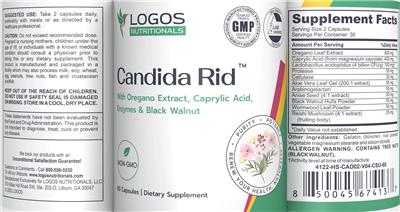
Everything in this section is reproduced from the manufacturer’s own product label — it’s the label speaking, not HelloPharmacist. We show it so you can see exactly what the maker states; we don’t verify or endorse those statements.
Supplement Facts
The label details for Candida Rid by Logos Nutritionals, sourced from the NIH Dietary Supplement Label Database.
Supplement Facts
| Ingredient | Amount | % DV |
|---|---|---|
| Protease | 50 mg | -- |
| Cellulase | 32 mg | -- |
| Lactobacillus acidophilus | 100 mg | -- |
| Caprylic Acid | 400 mg | -- |
| Arabinogalactan | 50 mg | -- |
| Anise Seed Extract | 50 mg | -- |
| Oregano Leaf Extract | 500 mg | -- |
| Black Walnut, Powder | 50 mg | -- |
| Wormwood, Powder | 50 mg | -- |
| Aloe vera leaf gel extract | 50 mg | -- |
| Reishi Mushroom Fruiting Body Extract | 25 mg | -- |
Other ingredients: Bovine Gelatin, Rice, Powder, Magnesium Stearate, Silicon Dioxide
Tap any ingredient to jump to its full detail below.
These statements are the manufacturer’s wording, reproduced from the product label — the label is saying it, not HelloPharmacist. We don’t verify or endorse them.
Suggested/Recommended/Usage/Directions
Suggested use: Take 2 capsules daily, preferably with meals or as directed by a healthcare professional.
Precautions
Caution: Do not exceed recommended dose.
Pregnant or nursing mothers, children under the age of 18, or individuals with a known medical condition should consult a physician prior to taking this or any dietary supplement.
Pregnant or nursing mothers, children under the age of 18, or individuals with a known medical condition should consult a physician prior to taking this or any dietary supplement.
This product is manufactured and packaged in a facility which may also process milk, soy, wheat, egg, peanuts, tree nuts, fish and crustacean shellfish.
Keep out of the reach of children.
Do not use if safety seal is damaged or missing.
Allergen warning: Contains tree nuts (black walnut).
Storage
Store in a cool, dry place.
FDA Disclaimer Statement
These statements have not been evaluated by the Food and Drug Administration. This product is not intended to diagnose, treat, cure or prevent any disease.
Formulation
We back our products with an unconditional satisfaction guarantee!
Non-GMO
General Statements
Questions or Comments - Call 800-556-5530 Or visit our website: www.logosnuritionals.com
Brand IP Statement(s)
Copyright 2022 Logos
Seals/Symbols
Sourced from a GMP Certified Facility Good Manufacturing Practice Quality Assured Lab Verified 3rd Party Tested
Purity Potency Renew your health, naturally
Formula
Candida Rid with oregano extract, caprylic acid, enzymes & black walnut
FDA Statement of Identity
Dietary Supplement
Is this label outdated? Report a formula or label change and our pharmacy team will review it.
Candida Rid by Logos Nutritionals label
The label scan from the NIH Dietary Supplement Label Database. Tap to enlarge.
Label images are published by the NIH Dietary Supplement Label Database for the version of this product on file. Always read your actual product label.
View the full label (PDF)The Ingredients in Candida Rid by Logos Nutritionals
These are the 11 active ingredients this product is made of. Select any to open its full monograph.
Serving size2 Capsule(s) Dosage formCapsule Servings per container30 Amounts shown are per serving.
Most supplement products combine several ingredients, and a medication can interact with the product through any one of them. Each ingredient below shows whether it has known drug interactions.
Protease
No knowninteractions
Proteolytic enzymes are proteins that help break down other proteins, and common examples include bromelain (from pineapple), papain (from papaya), tr...
Protease monograph & interactionsCellulase
Lactobacillus acidophilus
Interacts with182 drugs
Lactobacillus acidophilus is a 'friendly' bacterium used as a probiotic to support gut and vaginal health. It is generally well tolerated in healthy p...
Lactobacillus acidophilus monograph & interactionsCaprylic Acid
Interacts with262 drugs
Caprylic acid is a medium-chain fatty acid found in coconut oil and palm kernel oil that is popularly used for yeast overgrowth and gut health. While...
Caprylic Acid monograph & interactionsArabinogalactan
Interacts with121 drugs
Larch arabinogalactan is a soluble fiber from larch trees that is mainly used as a prebiotic and for immune support. Early research is interesting but...
Arabinogalactan monograph & interactionsAnise Seed Extract
Interacts with245 drugs
Anise is a fragrant, licorice-flavored seed used for centuries to ease digestion and soothe coughs. Most of its health claims are based on tradition a...
Anise Seed Extract monograph & interactionsOregano Leaf Extract
Interacts with208 drugs
Oregano is a common Mediterranean cooking herb that is also sold as a concentrated oil or supplement, often standardized for a compound called carvacr...
Oregano Leaf Extract monograph & interactionsBlack Walnut, Powder
No knowninteractions
Black walnut is a tree whose green hulls are traditionally used as a natural antiparasitic and digestive remedy, but solid human evidence for these us...
Black Walnut, Powder monograph & interactionsWormwood, Powder
Interacts with50 drugs
Wormwood is a very bitter herb traditionally used to stimulate appetite and ease digestion, and it has early research interest in Crohn's disease. It...
Wormwood, Powder monograph & interactionsAloe vera leaf gel extract
Interacts with461 drugs
Aloe vera gel is widely used on the skin for minor burns and irritation, and some research suggests it may help. Aloe latex (the yellow part) is a str...
Aloe vera leaf gel extract monograph & interactionsReishi Mushroom Fruiting Body Extract
Interacts with375 drugs
Reishi is a traditional Asian mushroom widely used to support the immune system and overall wellness. Human evidence for most of its claimed benefits...
Reishi Mushroom Fruiting Body Extract monograph & interactionsOther (inactive) ingredients: Bovine Gelatin, Rice, Powder, Magnesium Stearate, Silicon Dioxide. These complete the product’s ingredient list but are not active constituents.
Candida Rid by Logos Nutritionals Drug Interactions
HelloPharmacist Interaction Report
Candida Rid by Logos Nutritionals contains several ingredients with documented interactions with medications.
The most serious is aloe vera leaf gel extract, which carries a Major-severity interaction with digoxin (Lanoxin), a heart medication. Overuse of aloe can deplete potassium, which combined with digoxin raises the risk of serious toxicity.
Read the full breakdown — every affected drug type, severity by severity
Several ingredients interact with common drug types at Moderate severity. Anise seed extract affects eight drug categories: estrogens and birth control (theoretically reducing their effectiveness), blood sugar medications (raising low blood sugar risk), the antidepressant fluoxetine, caffeine, the pain reliever codeine, the anti-anxiety drug diazepam, and the antidepressant imipramine.
Caprylic acid may increase blood pressure medication effects and raise levels of NSAIDs or warfarin (a blood thinner). Aloe also interacts with blood thinners, blood sugar drugs, water pills (diuretics), stimulant laxatives, and warfarin.
Oregano leaf extract affects blood thinners and blood sugar medications. Lactobacillus acidophilus may be reduced by antibiotics if taken simultaneously.
Arabinogalactan and wormwood powder interact with immunosuppressants and seizure medications, respectively. Reishi mushroom may add to effects of blood pressure drugs, blood thinners (at higher doses), and blood sugar medications.
Black walnut powder and protease showed no interactions in our data. Cellulase we could not check.
Altogether, these interactions span 954 individual medications.
Use the medication checker on this page to verify your exact prescriptions before starting this product.
Check your own medications below · Editorial policy · How we use AI
Want to check YOUR meds against Candida Rid?
Ask about interactions with your drugs in plain English — “Can I take it with lisinopril?” — and we find you the answer in seconds, ingredient by ingredient.
Go to the checkerIngredients driving the most interactions
Individual Drug Interactions
The ingredients in Candida Rid interact with 961 drugs. Click any drug to see the details.
8 of the 11 ingredients in Candida Rid interact with drugs. Each result below shows which ingredient is responsible. Aloe vera leaf gel extract Reishi Mushroom Fruiting Body Extract Caprylic Acid Anise Seed Extract Oregano Leaf Extract Lactobacillus acidophilus Arabinogalactan Wormwood, Powder
DigoxinDigitek, Lanoxicaps, Lanoxin
How Digoxin interacts with Candida Rid — through 1 ingredient. Tap an ingredient for the detail:
Aloe Vera Leaf Gel ExtractDigoxin (lanoxin) Major
Interaction Summary
Theoretically, aloe latex might increase the risk of adverse effects when taken with cardiac glycosides.
Read the full Aloe Vera Leaf Gel Extract + Digoxin interaction6-mercaptopurinePurinethol
How 6-mercaptopurine interacts with Candida Rid — through 1 ingredient. Tap an ingredient for the detail:
ArabinogalactanImmunosuppressants Moderate
Interaction Summary
Theoretically, larch arabinogalactan might interfere with immunosuppression therapy due to immunostimulant effects.
Read the full Arabinogalactan + 6-mercaptopurine interactionAbciximabReoPro
How Abciximab interacts with Candida Rid — through 3 ingredients. Tap an ingredient for the detail:
Reishi Mushroom Fruiting Body ExtractAnticoagulant/antiplatelet Drugs Moderate
Interaction Summary
Theoretically, high doses of reishi mushroom might increase the risk of bleeding.
Read the full Reishi Mushroom Fruiting Body Extract + Abciximab interactionAloe Vera Leaf Gel ExtractAnticoagulant/antiplatelet Drugs Moderate
Interaction Summary
Theoretically, aloe gel might increase the risk of bleeding when taken with anticoagulant or antiplatelet drugs.
Read the full Aloe Vera Leaf Gel Extract + Abciximab interactionOregano Leaf ExtractAnticoagulant/antiplatelet Drugs Moderate
Interaction Summary
Theoretically, oregano might increase the risk of bleeding when taken with anticoagulant or antiplatelet drugs.
Read the full Oregano Leaf Extract + Abciximab interactionAbrocitinibCibinqo
How Abrocitinib interacts with Candida Rid — through 4 ingredients. Tap an ingredient for the detail:
Oregano Leaf ExtractAnticoagulant/antiplatelet Drugs Moderate
Interaction Summary
Theoretically, oregano might increase the risk of bleeding when taken with anticoagulant or antiplatelet drugs.
Read the full Oregano Leaf Extract + Abrocitinib interactionReishi Mushroom Fruiting Body ExtractAnticoagulant/antiplatelet Drugs Moderate
Interaction Summary
Theoretically, high doses of reishi mushroom might increase the risk of bleeding.
Read the full Reishi Mushroom Fruiting Body Extract + Abrocitinib interactionArabinogalactanImmunosuppressants Moderate
Interaction Summary
Theoretically, larch arabinogalactan might interfere with immunosuppression therapy due to immunostimulant effects.
Read the full Arabinogalactan + Abrocitinib interactionAloe Vera Leaf Gel ExtractAnticoagulant/antiplatelet Drugs Moderate
Interaction Summary
Theoretically, aloe gel might increase the risk of bleeding when taken with anticoagulant or antiplatelet drugs.
Read the full Aloe Vera Leaf Gel Extract + Abrocitinib interactionAcarboseGlucobay, Prandase, Precose
How Acarbose interacts with Candida Rid — through 4 ingredients. Tap an ingredient for the detail:
Aloe Vera Leaf Gel ExtractAntidiabetes Drugs Moderate
Interaction Summary
Aloe might increase the risk of hypoglycemia when taken with antidiabetes drugs.
Read the full Aloe Vera Leaf Gel Extract + Acarbose interactionReishi Mushroom Fruiting Body ExtractAntidiabetes Drugs Moderate
Interaction Summary
Theoretically, reishi mushroom might have additive effects with antidiabetes drugs.
Read the full Reishi Mushroom Fruiting Body Extract + Acarbose interactionAnise Seed ExtractAntidiabetes Drugs Moderate
Interaction Summary
Theoretically, anise seed might increase the risk of hypoglycemia when taken with antidiabetes drugs.
Read the full Anise Seed Extract + Acarbose interactionOregano Leaf ExtractAntidiabetes Drugs Moderate
Interaction Summary
Theoretically, oregano might increase the risk for hypoglycemia when taken with antidiabetes drugs.
Read the full Oregano Leaf Extract + Acarbose interactionAcebutololRhotral, Sectral
How Acebutolol interacts with Candida Rid — through 2 ingredients. Tap an ingredient for the detail:
Caprylic AcidAntihypertensive Drugs Moderate
Interaction Summary
Theoretically, caprylic acid might increase the risk of hypotension when used with antihypertensive drugs.
Read the full Caprylic Acid + Acebutolol interactionReishi Mushroom Fruiting Body ExtractAntihypertensive Drugs Moderate
Interaction Summary
Theoretically, concurrent use of reishi mushroom with antihypertensive drugs might increase the risk of hypotension.
Read the full Reishi Mushroom Fruiting Body Extract + Acebutolol interactionAcenocoumarolSintrom
How Acenocoumarol interacts with Candida Rid — through 3 ingredients. Tap an ingredient for the detail:
Aloe Vera Leaf Gel ExtractAnticoagulant/antiplatelet Drugs Moderate
Interaction Summary
Theoretically, aloe gel might increase the risk of bleeding when taken with anticoagulant or antiplatelet drugs.
Read the full Aloe Vera Leaf Gel Extract + Acenocoumarol interactionOregano Leaf ExtractAnticoagulant/antiplatelet Drugs Moderate
Interaction Summary
Theoretically, oregano might increase the risk of bleeding when taken with anticoagulant or antiplatelet drugs.
Read the full Oregano Leaf Extract + Acenocoumarol interactionReishi Mushroom Fruiting Body ExtractAnticoagulant/antiplatelet Drugs Moderate
Interaction Summary
Theoretically, high doses of reishi mushroom might increase the risk of bleeding.
Read the full Reishi Mushroom Fruiting Body Extract + Acenocoumarol interactionAcetaminophen, AspirinGemnisyn
How Acetaminophen, Aspirin interacts with Candida Rid — through 5 ingredients. Tap an ingredient for the detail:
Aloe Vera Leaf Gel ExtractCytochrome P450 1a2 (cyp1a2) Substrates, Anticoagulant/antiplatelet Drugs Moderate
Interaction Summary
Theoretically, aloe might decrease the levels and clinical effects of CYP1A2 substrates.
Read the full Aloe Vera Leaf Gel Extract + Acetaminophen, Aspirin interactionReishi Mushroom Fruiting Body ExtractAnticoagulant/antiplatelet Drugs Moderate
Interaction Summary
Theoretically, high doses of reishi mushroom might increase the risk of bleeding.
Read the full Reishi Mushroom Fruiting Body Extract + Acetaminophen, Aspirin interactionOregano Leaf ExtractAnticoagulant/antiplatelet Drugs Moderate
Interaction Summary
Theoretically, oregano might increase the risk of bleeding when taken with anticoagulant or antiplatelet drugs.
Read the full Oregano Leaf Extract + Acetaminophen, Aspirin interactionCaprylic AcidNonsteroidal Anti-inflammatory Drugs (nsaids) Moderate
Interaction Summary
Theoretically, caprylic acid might increase plasma concentrations of NSAIDs.
Read the full Caprylic Acid + Acetaminophen, Aspirin interactionAnise Seed ExtractAcetaminophen (tylenol, Others) Minor
Interaction Summary
Theoretically, anise oil might decrease the levels and clinical effects of acetaminophen.
Read the full Anise Seed Extract + Acetaminophen, Aspirin interactionAcetaminophen, Aspirin, CaffeineExcedrin, Excedrin Extra Strength, Excedrin Migraine
How Acetaminophen, Aspirin, Caffeine interacts with Candida Rid — through 5 ingredients. Tap an ingredient for the detail:
Anise Seed ExtractAcetaminophen (tylenol, Others), Caffeine Moderate
Interaction Summary
Theoretically, anise oil might decrease the levels and clinical effects of acetaminophen.
Read the full Anise Seed Extract + Acetaminophen, Aspirin, Caffeine interactionCaprylic AcidNonsteroidal Anti-inflammatory Drugs (nsaids) Moderate
Interaction Summary
Theoretically, caprylic acid might increase plasma concentrations of NSAIDs.
Read the full Caprylic Acid + Acetaminophen, Aspirin, Caffeine interactionReishi Mushroom Fruiting Body ExtractAnticoagulant/antiplatelet Drugs Moderate
Interaction Summary
Theoretically, high doses of reishi mushroom might increase the risk of bleeding.
Read the full Reishi Mushroom Fruiting Body Extract + Acetaminophen, Aspirin, Caffeine interactionAloe Vera Leaf Gel ExtractCytochrome P450 1a2 (cyp1a2) Substrates, Anticoagulant/antiplatelet Drugs Moderate
Interaction Summary
Theoretically, aloe might decrease the levels and clinical effects of CYP1A2 substrates.
Read the full Aloe Vera Leaf Gel Extract + Acetaminophen, Aspirin, Caffeine interactionOregano Leaf ExtractAnticoagulant/antiplatelet Drugs Moderate
Interaction Summary
Theoretically, oregano might increase the risk of bleeding when taken with anticoagulant or antiplatelet drugs.
Read the full Oregano Leaf Extract + Acetaminophen, Aspirin, Caffeine interactionAcetaminophen, Butalbital, CaffeineEsgic, Esgic Plus, Fiogesic, Fioricet, Repan, Tecnal +1 more
How Acetaminophen, Butalbital, Caffeine interacts with Candida Rid — through 2 ingredients. Tap an ingredient for the detail:
Anise Seed ExtractAcetaminophen (tylenol, Others), Caffeine Moderate
Interaction Summary
Theoretically, anise oil might decrease the levels and clinical effects of acetaminophen.
Read the full Anise Seed Extract + Acetaminophen, Butalbital, Caffeine interactionAloe Vera Leaf Gel ExtractCytochrome P450 1a2 (cyp1a2) Substrates Minor
Interaction Summary
Theoretically, aloe might decrease the levels and clinical effects of CYP1A2 substrates.
Read the full Aloe Vera Leaf Gel Extract + Acetaminophen, Butalbital, Caffeine interactionAcetaminophen, Butalbital, Caffeine, CodeineEsgic with Codeine, Fioricet w/ Codeine
How Acetaminophen, Butalbital, Caffeine, Codeine interacts with Candida Rid — through 2 ingredients. Tap an ingredient for the detail:
Anise Seed ExtractCaffeine, Codeine +1 Moderate
Interaction Summary
Theoretically, anise oil might decrease the efficacy of caffeine.
Read the full Anise Seed Extract + Acetaminophen, Butalbital, Caffeine, Codeine interactionAloe Vera Leaf Gel ExtractCytochrome P450 1a2 (cyp1a2) Substrates Minor
Interaction Summary
Theoretically, aloe might decrease the levels and clinical effects of CYP1A2 substrates.
Read the full Aloe Vera Leaf Gel Extract + Acetaminophen, Butalbital, Caffeine, Codeine interactionAcetaminophen, Butalbital, CodeineBancap w/ Codeine
How Acetaminophen, Butalbital, Codeine interacts with Candida Rid — through 2 ingredients. Tap an ingredient for the detail:
Anise Seed ExtractAcetaminophen (tylenol, Others), Codeine Moderate
Interaction Summary
Theoretically, anise oil might decrease the levels and clinical effects of acetaminophen.
Read the full Anise Seed Extract + Acetaminophen, Butalbital, Codeine interactionAloe Vera Leaf Gel ExtractCytochrome P450 1a2 (cyp1a2) Substrates Minor
Interaction Summary
Theoretically, aloe might decrease the levels and clinical effects of CYP1A2 substrates.
Read the full Aloe Vera Leaf Gel Extract + Acetaminophen, Butalbital, Codeine interactionAcetaminophen, Butalbital, Codeine PhosphatePhrenilin #3
How Acetaminophen, Butalbital, Codeine Phosphate interacts with Candida Rid — through 2 ingredients. Tap an ingredient for the detail:
Anise Seed ExtractCodeine, Acetaminophen (tylenol, Others) Moderate
Interaction Summary
Theoretically, anise oil might increase the effects and adverse effects of codeine.
Read the full Anise Seed Extract + Acetaminophen, Butalbital, Codeine Phosphate interactionAloe Vera Leaf Gel ExtractCytochrome P450 1a2 (cyp1a2) Substrates Minor
Interaction Summary
Theoretically, aloe might decrease the levels and clinical effects of CYP1A2 substrates.
Read the full Aloe Vera Leaf Gel Extract + Acetaminophen, Butalbital, Codeine Phosphate interactionAcetaminophen, Caffeine, Chlorpheniramine, Hydrocodone, PhenylephrineHycomine Compound
How Acetaminophen, Caffeine, Chlorpheniramine, Hydrocodone, Phenylephrine interacts with Candida Rid — through 2 ingredients. Tap an ingredient for the detail:
Anise Seed ExtractAcetaminophen (tylenol, Others), Caffeine Moderate
Interaction Summary
Theoretically, anise oil might decrease the levels and clinical effects of acetaminophen.
Read the full Anise Seed Extract + Acetaminophen, Caffeine, Chlorpheniramine, Hydrocodone, Phenylephrine interactionAloe Vera Leaf Gel ExtractCytochrome P450 1a2 (cyp1a2) Substrates Minor
Interaction Summary
Theoretically, aloe might decrease the levels and clinical effects of CYP1A2 substrates.
Read the full Aloe Vera Leaf Gel Extract + Acetaminophen, Caffeine, Chlorpheniramine, Hydrocodone, Phenylephrine interactionAcetaminophen, Caffeine, CodeineGesic C15, Gesic C30, Gesic C8, Lenoltec 1, Lenoltec 2, Lenoltec 3 +1 more
How Acetaminophen, Caffeine, Codeine interacts with Candida Rid — through 2 ingredients. Tap an ingredient for the detail:
Anise Seed ExtractCaffeine, Codeine +1 Moderate
Interaction Summary
Theoretically, anise oil might decrease the efficacy of caffeine.
Read the full Anise Seed Extract + Acetaminophen, Caffeine, Codeine interactionAloe Vera Leaf Gel ExtractCytochrome P450 1a2 (cyp1a2) Substrates Minor
Interaction Summary
Theoretically, aloe might decrease the levels and clinical effects of CYP1A2 substrates.
Read the full Aloe Vera Leaf Gel Extract + Acetaminophen, Caffeine, Codeine interactionAcetaminophen, Caffeine, Codeine, SalicylamideCodalan No.1, Codalan No.2, Codalan No.3
How Acetaminophen, Caffeine, Codeine, Salicylamide interacts with Candida Rid — through 2 ingredients. Tap an ingredient for the detail:
Anise Seed ExtractAcetaminophen (tylenol, Others), Caffeine +1 Moderate
Interaction Summary
Theoretically, anise oil might decrease the levels and clinical effects of acetaminophen.
Read the full Anise Seed Extract + Acetaminophen, Caffeine, Codeine, Salicylamide interactionAloe Vera Leaf Gel ExtractCytochrome P450 1a2 (cyp1a2) Substrates Minor
Interaction Summary
Theoretically, aloe might decrease the levels and clinical effects of CYP1A2 substrates.
Read the full Aloe Vera Leaf Gel Extract + Acetaminophen, Caffeine, Codeine, Salicylamide interactionAcetaminophen, Caffeine, DihydrocodeineDHC Plus, Panlor DC, Panlor SS
How Acetaminophen, Caffeine, Dihydrocodeine interacts with Candida Rid — through 2 ingredients. Tap an ingredient for the detail:
Anise Seed ExtractCaffeine, Acetaminophen (tylenol, Others) Moderate
Interaction Summary
Theoretically, anise oil might decrease the efficacy of caffeine.
Read the full Anise Seed Extract + Acetaminophen, Caffeine, Dihydrocodeine interactionAloe Vera Leaf Gel ExtractCytochrome P450 1a2 (cyp1a2) Substrates Minor
Interaction Summary
Theoretically, aloe might decrease the levels and clinical effects of CYP1A2 substrates.
Read the full Aloe Vera Leaf Gel Extract + Acetaminophen, Caffeine, Dihydrocodeine interactionAcetaminophen, Caffeine, IsomethepteneMigralam
How Acetaminophen, Caffeine, Isometheptene interacts with Candida Rid — through 2 ingredients. Tap an ingredient for the detail:
Anise Seed ExtractAcetaminophen (tylenol, Others), Caffeine Moderate
Interaction Summary
Theoretically, anise oil might decrease the levels and clinical effects of acetaminophen.
Read the full Anise Seed Extract + Acetaminophen, Caffeine, Isometheptene interactionAloe Vera Leaf Gel ExtractCytochrome P450 1a2 (cyp1a2) Substrates Minor
Interaction Summary
Theoretically, aloe might decrease the levels and clinical effects of CYP1A2 substrates.
Read the full Aloe Vera Leaf Gel Extract + Acetaminophen, Caffeine, Isometheptene interactionAcetaminophen, Caffeine, PyrilamineMidol Max Strength Menstrual
How Acetaminophen, Caffeine, Pyrilamine interacts with Candida Rid — through 2 ingredients. Tap an ingredient for the detail:
Anise Seed ExtractCaffeine, Acetaminophen (tylenol, Others) Moderate
Interaction Summary
Theoretically, anise oil might decrease the efficacy of caffeine.
Read the full Anise Seed Extract + Acetaminophen, Caffeine, Pyrilamine interactionAloe Vera Leaf Gel ExtractDiuretic Drugs, Cytochrome P450 1a2 (cyp1a2) Substrates Moderate
Interaction Summary
Theoretically, aloe latex might increase the risk of hypokalemia when taken with diuretic drugs.
Read the full Aloe Vera Leaf Gel Extract + Acetaminophen, Caffeine, Pyrilamine interactionAcetaminophen, Chlorpheniramine, Codeine, PhenylephrineColrex
How Acetaminophen, Chlorpheniramine, Codeine, Phenylephrine interacts with Candida Rid — through 2 ingredients. Tap an ingredient for the detail:
Anise Seed ExtractCodeine, Acetaminophen (tylenol, Others) Moderate
Interaction Summary
Theoretically, anise oil might increase the effects and adverse effects of codeine.
Read the full Anise Seed Extract + Acetaminophen, Chlorpheniramine, Codeine, Phenylephrine interactionAloe Vera Leaf Gel ExtractCytochrome P450 1a2 (cyp1a2) Substrates Minor
Interaction Summary
Theoretically, aloe might decrease the levels and clinical effects of CYP1A2 substrates.
Read the full Aloe Vera Leaf Gel Extract + Acetaminophen, Chlorpheniramine, Codeine, Phenylephrine interactionAcetaminophen, Chlorzoxazone, CodeineAcetazone Forte C8, Parafon Forte C8
How Acetaminophen, Chlorzoxazone, Codeine interacts with Candida Rid — through 2 ingredients. Tap an ingredient for the detail:
Anise Seed ExtractAcetaminophen (tylenol, Others), Codeine Moderate
Interaction Summary
Theoretically, anise oil might decrease the levels and clinical effects of acetaminophen.
Read the full Anise Seed Extract + Acetaminophen, Chlorzoxazone, Codeine interactionAloe Vera Leaf Gel ExtractCytochrome P450 1a2 (cyp1a2) Substrates Minor
Interaction Summary
Theoretically, aloe might decrease the levels and clinical effects of CYP1A2 substrates.
Read the full Aloe Vera Leaf Gel Extract + Acetaminophen, Chlorzoxazone, Codeine interactionAcetaminophen, CodeineTylenol No.3, Tylenol w/ Codeine
How Acetaminophen, Codeine interacts with Candida Rid — through 2 ingredients. Tap an ingredient for the detail:
Anise Seed ExtractCodeine, Acetaminophen (tylenol, Others) Moderate
Interaction Summary
Theoretically, anise oil might increase the effects and adverse effects of codeine.
Read the full Anise Seed Extract + Acetaminophen, Codeine interactionAloe Vera Leaf Gel ExtractCytochrome P450 1a2 (cyp1a2) Substrates Minor
Interaction Summary
Theoretically, aloe might decrease the levels and clinical effects of CYP1A2 substrates.
Read the full Aloe Vera Leaf Gel Extract + Acetaminophen, Codeine interactionAcetaminophen, Codeine, DoxylamineMersyndol
How Acetaminophen, Codeine, Doxylamine interacts with Candida Rid — through 2 ingredients. Tap an ingredient for the detail:
Anise Seed ExtractAcetaminophen (tylenol, Others), Codeine Moderate
Interaction Summary
Theoretically, anise oil might decrease the levels and clinical effects of acetaminophen.
Read the full Anise Seed Extract + Acetaminophen, Codeine, Doxylamine interactionAloe Vera Leaf Gel ExtractCytochrome P450 1a2 (cyp1a2) Substrates Minor
Interaction Summary
Theoretically, aloe might decrease the levels and clinical effects of CYP1A2 substrates.
Read the full Aloe Vera Leaf Gel Extract + Acetaminophen, Codeine, Doxylamine interactionAcetaminophen, Codeine, MethocarbamolAcetaminophen, Codeine, Methocarbamol, Robaxacet 8
How Acetaminophen, Codeine, Methocarbamol interacts with Candida Rid — through 2 ingredients. Tap an ingredient for the detail:
Anise Seed ExtractAcetaminophen (tylenol, Others), Codeine Moderate
Interaction Summary
Theoretically, anise oil might decrease the levels and clinical effects of acetaminophen.
Read the full Anise Seed Extract + Acetaminophen, Codeine, Methocarbamol interactionAloe Vera Leaf Gel ExtractCytochrome P450 1a2 (cyp1a2) Substrates Minor
Interaction Summary
Theoretically, aloe might decrease the levels and clinical effects of CYP1A2 substrates.
Read the full Aloe Vera Leaf Gel Extract + Acetaminophen, Codeine, Methocarbamol interactionAcetaminophen, IbuprofenCombogesic
How Acetaminophen, Ibuprofen interacts with Candida Rid — through 5 ingredients. Tap an ingredient for the detail:
Aloe Vera Leaf Gel ExtractCytochrome P450 1a2 (cyp1a2) Substrates, Anticoagulant/antiplatelet Drugs Moderate
Interaction Summary
Theoretically, aloe might decrease the levels and clinical effects of CYP1A2 substrates.
Read the full Aloe Vera Leaf Gel Extract + Acetaminophen, Ibuprofen interactionOregano Leaf ExtractAnticoagulant/antiplatelet Drugs Moderate
Interaction Summary
Theoretically, oregano might increase the risk of bleeding when taken with anticoagulant or antiplatelet drugs.
Read the full Oregano Leaf Extract + Acetaminophen, Ibuprofen interactionCaprylic AcidNonsteroidal Anti-inflammatory Drugs (nsaids) Moderate
Interaction Summary
Theoretically, caprylic acid might increase plasma concentrations of NSAIDs.
Read the full Caprylic Acid + Acetaminophen, Ibuprofen interactionReishi Mushroom Fruiting Body ExtractAnticoagulant/antiplatelet Drugs Moderate
Interaction Summary
Theoretically, high doses of reishi mushroom might increase the risk of bleeding.
Read the full Reishi Mushroom Fruiting Body Extract + Acetaminophen, Ibuprofen interactionAnise Seed ExtractAcetaminophen (tylenol, Others) Minor
Interaction Summary
Theoretically, anise oil might decrease the levels and clinical effects of acetaminophen.
Read the full Anise Seed Extract + Acetaminophen, Ibuprofen interactionAcetaminophen, Pamabrom, PyrilamineMidol Max Strength PMS, Pamprin, Pamprin ES
How Acetaminophen, Pamabrom, Pyrilamine interacts with Candida Rid — through 2 ingredients. Tap an ingredient for the detail:
Aloe Vera Leaf Gel ExtractDiuretic Drugs, Cytochrome P450 1a2 (cyp1a2) Substrates Moderate
Interaction Summary
Theoretically, aloe latex might increase the risk of hypokalemia when taken with diuretic drugs.
Read the full Aloe Vera Leaf Gel Extract + Acetaminophen, Pamabrom, Pyrilamine interactionAnise Seed ExtractAcetaminophen (tylenol, Others) Minor
Interaction Summary
Theoretically, anise oil might decrease the levels and clinical effects of acetaminophen.
Read the full Anise Seed Extract + Acetaminophen, Pamabrom, Pyrilamine interactionAcetazolamideAk-Zol, Diamox
How Acetazolamide interacts with Candida Rid — through 4 ingredients. Tap an ingredient for the detail:
Aloe Vera Leaf Gel ExtractDiuretic Drugs Moderate
Interaction Summary
Theoretically, aloe latex might increase the risk of hypokalemia when taken with diuretic drugs.
Read the full Aloe Vera Leaf Gel Extract + Acetazolamide interactionReishi Mushroom Fruiting Body ExtractAntihypertensive Drugs Moderate
Interaction Summary
Theoretically, concurrent use of reishi mushroom with antihypertensive drugs might increase the risk of hypotension.
Read the full Reishi Mushroom Fruiting Body Extract + Acetazolamide interactionCaprylic AcidAntihypertensive Drugs Moderate
Interaction Summary
Theoretically, caprylic acid might increase the risk of hypotension when used with antihypertensive drugs.
Read the full Caprylic Acid + Acetazolamide interactionWormwood, PowderAnticonvulsants Moderate
Interaction Summary
Theoretically, taking wormwood might interfere with the effects of anticonvulsant drugs.
Read the full Wormwood, Powder + Acetazolamide interactionAcetohexamideDymelor
How Acetohexamide interacts with Candida Rid — through 4 ingredients. Tap an ingredient for the detail:
Oregano Leaf ExtractAntidiabetes Drugs Moderate
Interaction Summary
Theoretically, oregano might increase the risk for hypoglycemia when taken with antidiabetes drugs.
Read the full Oregano Leaf Extract + Acetohexamide interactionAnise Seed ExtractAntidiabetes Drugs Moderate
Interaction Summary
Theoretically, anise seed might increase the risk of hypoglycemia when taken with antidiabetes drugs.
Read the full Anise Seed Extract + Acetohexamide interactionReishi Mushroom Fruiting Body ExtractAntidiabetes Drugs Moderate
Interaction Summary
Theoretically, reishi mushroom might have additive effects with antidiabetes drugs.
Read the full Reishi Mushroom Fruiting Body Extract + Acetohexamide interactionAloe Vera Leaf Gel ExtractAntidiabetes Drugs Moderate
Interaction Summary
Aloe might increase the risk of hypoglycemia when taken with antidiabetes drugs.
Read the full Aloe Vera Leaf Gel Extract + Acetohexamide interactionAcetylsalicylic AcidEntrophen
How Acetylsalicylic Acid interacts with Candida Rid — through 4 ingredients. Tap an ingredient for the detail:
Aloe Vera Leaf Gel ExtractAnticoagulant/antiplatelet Drugs Moderate
Interaction Summary
Theoretically, aloe gel might increase the risk of bleeding when taken with anticoagulant or antiplatelet drugs.
Read the full Aloe Vera Leaf Gel Extract + Acetylsalicylic Acid interactionOregano Leaf ExtractAnticoagulant/antiplatelet Drugs Moderate
Interaction Summary
Theoretically, oregano might increase the risk of bleeding when taken with anticoagulant or antiplatelet drugs.
Read the full Oregano Leaf Extract + Acetylsalicylic Acid interactionCaprylic AcidNonsteroidal Anti-inflammatory Drugs (nsaids) Moderate
Interaction Summary
Theoretically, caprylic acid might increase plasma concentrations of NSAIDs.
Read the full Caprylic Acid + Acetylsalicylic Acid interactionReishi Mushroom Fruiting Body ExtractAnticoagulant/antiplatelet Drugs Moderate
Interaction Summary
Theoretically, high doses of reishi mushroom might increase the risk of bleeding.
Read the full Reishi Mushroom Fruiting Body Extract + Acetylsalicylic Acid interactionAdalimumabHumira
How Adalimumab interacts with Candida Rid — through 1 ingredient. Tap an ingredient for the detail:
ArabinogalactanImmunosuppressants Moderate
Interaction Summary
Theoretically, larch arabinogalactan might interfere with immunosuppression therapy due to immunostimulant effects.
Read the full Arabinogalactan + Adalimumab interactionEach ingredient & the kinds of drugs it affects
For each ingredient in Candida Rid with known interactions, here are the types of medications they can affect. Open any type for the detail — or search your exact drug in the checker above.
Aloe vera leaf gel extract
Digoxin (Lanoxin)
Theoretically, aloe latex might increase the risk of adverse effects when taken with cardiac glycosides.
Overuse of aloe latex can increase the risk of adverse effects from cardiac glycoside drugs, such as digoxin, due to potassium depletion. Overuse of aloe, along with cardiac glycoside drugs, can increase the risk of toxicity.
Anticoagulant/Antiplatelet Drugs
Theoretically, aloe gel might increase the risk of bleeding when taken with anticoagulant or antiplatelet drugs.
In vitro research shows that aloe gel can inhibit platelet aggregation. This inhibition was greater than that seen with celecoxib, but less than that seen with aspirin.
Antidiabetes Drugs
Aloe might increase the risk of hypoglycemia when taken with antidiabetes drugs.
Preliminary clinical research suggests aloe gel might lower blood glucose levels and have additive effects when used with antidiabetes drugs. Monitor blood glucose levels closely.
Diuretic Drugs
Theoretically, aloe latex might increase the risk of hypokalemia when taken with diuretic drugs.
Overuse of aloe latex might compound diuretic-induced potassium loss, increasing the risk of hypokalemia.
Stimulant Laxatives
Theoretically, aloe latex might increase the risk for fluid and electrolyte loss when taken with stimulant laxatives.
Due to cathartic laxative effects of aloe latex, concomitant use with other stimulant laxatives might compound fluid and electrolyte loss.
Warfarin (Coumadin)
Theoretically, aloe latex might increase the risk of bleeding when taken with warfarin.
Aloe latex has stimulant laxative effects. In some people aloe latex can cause diarrhea. Diarrhea can increase the effects of warfarin, increase international normalized ratio (INR), and increase the risk of bleeding. Advise patients who take warfarin not to take excessive amounts of aloe vera.
Cytochrome P450 1A2 (Cyp1A2) Substrates
Theoretically, aloe might decrease the levels and clinical effects of CYP1A2 substrates.
In vitro research shows that aloe extract induces CYP1A2 enzymes.
Reishi Mushroom Fruiting Body Extract
Anticoagulant/Antiplatelet Drugs
Theoretically, high doses of reishi mushroom might increase the risk of bleeding.
A dose of 1.5 grams daily of reishi mushroom does not seem to decrease platelet aggregation, but a higher dose of 3 grams daily does.
Antidiabetes Drugs
Theoretically, reishi mushroom might have additive effects with antidiabetes drugs.
Animal research suggests that reishi mushroom decreases blood sugar. However, in patients with type 2 diabetes, taking reishi mushroom does not reduce fasting glucose levels, and its effects on glycated hemoglobin are inconsistent.
Antihypertensive Drugs
Theoretically, concurrent use of reishi mushroom with antihypertensive drugs might increase the risk of hypotension.
Reishi mushroom has shown hypotensive activity in animal research. Clinical evidence suggests that reishi mushroom reduces blood pressure in some, but not all, patients with hypertension.
Caprylic Acid
Antihypertensive Drugs
Theoretically, caprylic acid might increase the risk of hypotension when used with antihypertensive drugs.
Animal research suggests that caprylic acid might have positive inotropic effects, resulting in reduced arterial pressure and vascular resistance and increased cardiac output.
Nonsteroidal Anti-Inflammatory Drugs (Nsaids)
Theoretically, caprylic acid might increase plasma concentrations of NSAIDs.
In vitro research suggests that caprylic acid might displace NSAIDs from binding sites on albumin. This effect has not been reported in humans.
Warfarin (Coumadin)
Theoretically, caprylic acid might increase plasma concentrations of warfarin.
In vitro research suggests that high doses of caprylic acid might displace warfarin from albumin binding sites. This effect has not been reported in humans.
Anise Seed Extract
Antidiabetes Drugs
Theoretically, anise seed might increase the risk of hypoglycemia when taken with antidiabetes drugs.
A small clinical study shows that anise seed powder decreases fasting blood glucose levels by 36% when compared to baseline.
Caffeine
Theoretically, anise oil might decrease the efficacy of caffeine.
Animal research shows that taking anise oil with caffeine decreases the bioavailability of caffeine. Whether this interaction will occur in humans is unclear.
Codeine
Theoretically, anise oil might increase the effects and adverse effects of codeine.
Animal research shows that anise oil increases the analgesic effects of codeine, possibly by inducing its phase I metabolism and increasing conversion to morphine. Whether this interaction occurs in humans is unclear.
Contraceptive Drugs
Theoretically, anise might interfere with contraceptive drug therapy.
Some in vitro research suggests that anise has estrogenic effects, while other in vitro research suggests that anise has antiestrogenic effects.
Diazepam (Valium)
Theoretically, anise oil might increase the effects and adverse effects of diazepam.
Animal research shows that taking anise oil with diazepam increases the motor impairment associated with diazepam, possibly by inhibiting its breakdown by cytochrome P450 3A4. Whether this interaction occurs in humans is unclear.
Estrogens
Theoretically, anise might interfere with estrogen-based hormone replacement therapy.
Some in vitro research suggests that anise has estrogenic effects, while other in vitro research suggests that anise has antiestrogenic effects.
Fluoxetine (Prozac)
Theoretically, anise oil might decrease the efficacy of fluoxetine.
Animal research shows that taking anise oil with fluoxetine reduces the antidepressant effects of fluoxetine, possibly by promoting its breakdown by cytochrome P450 2D6. Whether this interaction occurs in humans is unclear.
Imipramine (Tofranil)
Theoretically, anise oil might decrease the efficacy of imipramine.
Animal research shows that taking anise oil with imipramine reduces the antidepressant effects of imipramine, possibly by promoting its breakdown by cytochrome P450 2D6. Whether this interaction occurs in humans is unclear.
Midazolam (Versed)
Theoretically, anise oil might increase the effects and adverse effects of midazolam.
Animal research shows that taking anise oil with midazolam increases the motor impairment associated with midazolam, possibly by inhibiting its breakdown by cytochrome P450 3A4. Whether this interaction occurs in humans is unclear.
Tamoxifen (Nolvadex)
Theoretically, anise might interfere with tamoxifen therapy.
Some in vitro research suggests that anise has estrogenic effects, while other in vitro research suggests that anise has antiestrogenic effects.
Acetaminophen (Tylenol, Others)
Theoretically, anise oil might decrease the levels and clinical effects of acetaminophen.
Animal research shows that taking anise oil with acetaminophen decreases peak plasma levels of acetaminophen but does not reduce overall bioavailability. Whether this interaction will occur in humans is unclear.
Oregano Leaf Extract
Anticoagulant/Antiplatelet Drugs
Theoretically, oregano might increase the risk of bleeding when taken with anticoagulant or antiplatelet drugs.
In vitro research shows that aristolochic acid isolated from oregano leaves has antithrombin activity. It has also been reported that oregano oil inhibits arachidonic acid-induced, and ADP-induced, platelet aggregation.
Antidiabetes Drugs
Theoretically, oregano might increase the risk for hypoglycemia when taken with antidiabetes drugs.
In vitro and animal research shows that oregano extracts might lower blood glucose levels.
Lactobacillus acidophilus
Antibiotic Drugs
Theoretically, taking Lactobacillus acidophilus with antibiotic drugs might decrease the effectiveness of L. acidophilus.
L. acidophilus preparations usually contain live and active organisms. Therefore, simultaneously taking antibiotics might kill a significant number of the organisms. Tell patients to separate administration of antibiotics and L. acidophilus preparations by at least two hours.
Arabinogalactan
Immunosuppressants
Theoretically, larch arabinogalactan might interfere with immunosuppression therapy due to immunostimulant effects. Immunosuppressant drugs include azathioprine (Imuran), basiliximab (Simulect), cyclosporine (Neoral, Sandimmune), daclizumab (Zenapax), muromonab-CD3 (OKT3, Orthoclone OKT3), mycophenolate (CellCept), tacrolimus (FK506, Prograf), sirolimus (Rapamune), prednisone (Deltasone, Orasone), corticosteroids (glucocorticoids), and other drugs.
Wormwood, Powder
Anticonvulsants
Theoretically, taking wormwood might interfere with the effects of anticonvulsant drugs.
Thujone, a constituent of wormwood, has convulsant effects.
Brand information
Manufacturer and brand details for Candida Rid, from the product label.
Logos Nutritionals
See all Logos Nutritionals products- Name
- Logos Nutritionals, LLC.
- Street Address
- 912 Killian Hill Road SW, Ste. 202-O
- City
- Lilburn
- State
- GA
- ZipCode
- 30047
- Phone Number
- 800-556-5530
- Web Address
- www.logosnutritionals.com
Candida Rid by Logos Nutritionals: Common Questions
Does Candida Rid by Logos Nutritionals interact with any medications?
How can one product interact with so many drugs?
Where does this information come from?
Can I take Candida Rid if I'm pregnant or breastfeeding?
What does the Lactobacillus acidophilus in this product do?
Does this product work for yeast infections or candida overgrowth?
What's the difference between aloe gel and aloe latex in this product?
Will this product interfere with my antibiotic?
I'm allergic to tree nuts. Is black walnut safe in this product?
Written and reviewed by the HelloPharmacist editorial staff. Our editorial policy
Not sure if Candida Rid is safe with your meds?
Our pharmacists answer your medication & supplement questions — free.
Label information is sourced from the NIH Dietary Supplement Label Database and reflects the product version on file; always read your actual product label. This page is for education only and is not a substitute for professional medical advice. Confirm with your pharmacist or doctor before combining supplements and medications.
The Full Monographs Behind Candida Rid’s Ingredients
Every ingredient we hold a full HelloPharmacist monograph for — uses, evidence, safety, and the complete interaction list.
Proteolytic Enzymes (proteases)
Proteolytic enzymes are proteins that help break down other proteins, and common examples include bromelain (from pineapple), papain (from papaya), trypsin, chymotrypsin, and pancreatin. Peo...
Read the full Proteolytic Enzymes (proteases) monograph → Herb & supplement monographLactobacillus Acidophilus
Interacts with 182 drugsLactobacillus acidophilus is a 'friendly' bacterium used as a probiotic to support gut and vaginal health. It is generally well tolerated in healthy people, and there is reasonable evidence...
Read the full Lactobacillus Acidophilus monograph → Herb & supplement monographCaprylic Acid
Interacts with 262 drugsCaprylic acid is a medium-chain fatty acid found in coconut oil and palm kernel oil that is popularly used for yeast overgrowth and gut health. While laboratory studies show it has antimicro...
Read the full Caprylic Acid monograph → Herb & supplement monographLarch Arabinogalactan
Interacts with 121 drugsLarch arabinogalactan is a soluble fiber from larch trees that is mainly used as a prebiotic and for immune support. Early research is interesting but limited, and most claims are not yet fi...
Read the full Larch Arabinogalactan monograph → Herb & supplement monographAnise
Interacts with 245 drugsAnise is a fragrant, licorice-flavored seed used for centuries to ease digestion and soothe coughs. Most of its health claims are based on tradition and small or laboratory studies rather th...
Read the full Anise monograph → Herb & supplement monographOregano
Interacts with 208 drugsOregano is a common Mediterranean cooking herb that is also sold as a concentrated oil or supplement, often standardized for a compound called carvacrol. While lab studies suggest it may hav...
Read the full Oregano monograph → Herb & supplement monographBlack Walnut
Black walnut is a tree whose green hulls are traditionally used as a natural antiparasitic and digestive remedy, but solid human evidence for these uses is lacking. It contains a compound ca...
Read the full Black Walnut monograph → Herb & supplement monographWormwood
Interacts with 50 drugsWormwood is a very bitter herb traditionally used to stimulate appetite and ease digestion, and it has early research interest in Crohn's disease. It contains thujone, which can be toxic in...
Read the full Wormwood monograph → Herb & supplement monographAloe
Interacts with 461 drugsAloe vera gel is widely used on the skin for minor burns and irritation, and some research suggests it may help. Aloe latex (the yellow part) is a strong laxative that can cause cramping and...
Read the full Aloe monograph → Herb & supplement monographReishi Mushroom
Interacts with 375 drugsReishi is a traditional Asian mushroom widely used to support the immune system and overall wellness. Human evidence for most of its claimed benefits is limited or low-quality, so it should...
Read the full Reishi Mushroom monograph →Sources & How We Checked
Candida Rid's label data comes from the NIH Dietary Supplement Label Database; the ingredient interaction data is from the Natural Medicines database, reviewed by our pharmacists.
- NIH Dietary Supplement Label Database (DSLD) — The official product label on file for this supplement.
- Natural Medicines (Therapeutic Research Center) — Evidence-graded clinical reference behind the ingredient interaction data.
Content is written and reviewed by licensed HelloPharmacist pharmacists. See our data sources and editorial standards for how this information is built and checked.
The 126 references behind this product’s interaction data
Every citation that drives the interaction findings for this product’s ingredients, from the evidence-graded Natural Medicines (TRC Healthcare) database. Open an ingredient to browse its citations — links open the study on PubMed or the publisher’s site.
Proteolytic Enzymes (proteases) 3 references
- Weeks JA, Harper RA, Simon RA, Burdick JD. Assessment of sensitization risk of a laundry pre-spotter containing protease. Cutan Ocul Toxicol. 2011;30(4):272-9. PubMed
- Marquès LI, Lara S, Abós T, Bartolomé B. Occupational rhinitis due to pepsin. J Investig Allergol Clin Immunol. 2006;16(2):136-7. DOI
- Cartier A, Malo JL, Pineau L, Dolovich J. Occupational asthma due to pepsin. J Allergy Clin Immunol. 1984;73(5 Pt 1):574-7. PubMed
See these in context on the Proteolytic Enzymes (proteases) monograph →
Lactobacillus Acidophilus 15 references
- Pierce A. The American Pharmaceutical Association Practical Guide to Natural Medicines. New York: The Stonesong Press, 1999:19.
- Begtrup LM, de Muckadell OB, Kjeldsen J, Christensen RD, Jarbøl DE. Long-term treatment with probiotics in primary care patients with irritable bowel syndrome--a randomised, double-blind, placebo controlled trial. Scand J Gastroenterol 2013;48(10):1127-35 PubMed
- Chatterjee S, Kar P, Das T, Ray S, Gangulyt S, Rajendiran C, Mitra M. Randomised placebo-controlled double blind multicentric trial on efficacy and safety of Lactobacillus acidophilus LA-5 and Bifidobacterium BB-12 for prevention of antibiotic-associated
- Shavakhi A, Tabesh E, Yaghoutkar A, Hashemi H, Tabesh F, Khodadoostan M,Minakari M, Shavakhi S, Gholamrezaei A. The effects of multistrain probiotic compound on bismuth-containing quadruple therapy for Helicobacter pylori infection: a randomized placebo-c
- Karamali M, Dadkhah F, Sadrkhanlou M, et al. Effects of probiotic supplementation on glycaemic control and lipid profiles in gestational diabetes: a randomized, double-blind, placebo-controlled trial. Diabetes Metab 2016;42(4):234-41. PubMed
- Badehnoosh B, Karamali M, Zarrati M, et al. The effects of probiotic supplementation on biomarkers of inflammation, oxidative stress and pregnancy outcomes in gestational diabetes. J Matern Fetal Neonatal Med. 2018 May;31(9):1128-1136.
- Kumar S, Kumar R, Rohilla L, Jacob N, Yadav J, Sachdeva N. A high potency multi-strain probiotic improves glycemic control in children with new-onset type 1 diabetes mellitus: A randomized, double-blind, and placebo-controlled pilot study. Pediatr Diabete
- Shahriari A, Karimi E, Shahriari M, Aslani N, Khooshideh M, Arab A. The effect of probiotic supplementation on the risk of gestational diabetes mellitus among high-risk pregnant women: A parallel double-blind, randomized, placebo-controlled clinical trial PubMed
- Xiao SD, Zhang DZ, Lu H, et al. Multicenter, randomized, controlled trial of heat-killed Lactobacillus acidophilus LB in patients with chronic diarrhea. Adv Ther. 2003;20(5):253-60.
- Rossi F, Amadoro C, Gasperi M, Colavita G. Lactobacilli infection case reports in the last three years and safety implications. Nutrients. 2022;14(6):1178. PubMed
- Ozer M, Goksu SY, Shahverdiani A, Mustafa M. Lactobacillus acidophilus-induced endocarditis and associated splenic abscess. Case Rep Infect Dis 2020;2020:1382709.
- Sadrin S, Sennoune S, Gout B, et al. A 2-strain mixture of Lactobacillus acidophilus in the treatment of irritable bowel syndrome: A placebo-controlled randomized clinical trial. Dig Liver Dis 2020;52(5):534-540. PubMed
- Stoffer JN, Slingsby TJ, Giuliari GP. Lactobacillus acidophilus endophthalmitis after intravitreal bevacizumab injection requiring intraocular lens explantation. Can J Ophthalmol 2022;57(1):e21-e22. PubMed
- Cukovic-Cavka S, Likic R, Francetic I, Rustemovic N, Opacic M, Vucelic B. Lactobacillus acidophilus as a cause of liver abscess in a NOD2/CARD15-positive patient with Crohn's disease. Digestion 2006;73(2-3):107-10.
- Hui J, Ren Y, Wang Y, Han Q. Lactobacillus acidophilus endophthalmitis postcataract operation: A case report with a literature review. Ocul Immunol Inflamm 2023.
See these in context on the Lactobacillus Acidophilus monograph →
Caprylic Acid 5 references
- Massolini G, Aubry AF, McGann A, Wainer IW. Determination of the magnitude and enantioselectivity of ligand binding to rat and rabbit serum albumins using immobilized-protein high performance liquid chromatography stationary phases. Biochem Pharmacol 1993 PubMed
- Kristev A, Mitkov D, Lukanov Y, Chapkynov P. The effect of octanoic fatty acid on the cardiovascular system of the guinea pig. Cor Vasa 1989;31(4):321-7.
- Hayball PF, Holman JW, Nation RL. Influence of octanoic acid on the reversible protein binding of ketorolac enantiomers to human serum albumin (HSA): comparative liquid chromatographic studies using a HSA chiral stationary phase. J Chromatogr B Biomed App PubMed
- Noctor TA, Wainer IW, Hage DS. Allosteric and competitive displacement of drugs from human serum albumin by octanoic acid, as revealed by high-performance liquid affinity chromatography, on a human serum albumin-based stationary phase. J Chromatogr 1992;5 PubMed
- Voller B, Lines E, McCrossin G, et al. Dose-escalation study of octanoic acid in patients with essential tremor. J Clin Invest. 2016;126(4):1451-7. PubMed
Larch Arabinogalactan 8 references
- D'Adamo P. Larch arabinogalactan. J Naturopath Med 1996;6:33-7.
- Kelly GS. Larch arabinogalactan: Clinical relevance of a novel immune-enhancing polysaccharide. Alt Med Rev 1999;4:96-103.
- Marett R, Slavin JL. No long-term benefits of supplementation with arabinogalactan on serum lipids and glucose. J Am Diet Assoc 2004;104:636-9.
- Robinson RR, Feirtag J, Slavin JL. Effects of dietary arabinogalactan on gastrointestinal and blood parameters in healthy human subjects. J Am Coll Nutr 2001;20:279-85. PubMed
- Udani JK, Singh BB, Barrett ML, Singh VJ. Proprietary arabinogalactan extract increases antibody response to the pneumonia vaccine: a randomized, double-blind, placebo-controlled, pilot study in healthy volunteers. Nutr J 2010;9:32. PubMed
- Grube B, Stier H, Riede L, Gruenwald J. Tolerability of a proprietary larch arabinogalactan extract: a randomized, double-blind, placebo-controlled clinical trial in healthy subjects. Food Nutr Sci 2012;3:1533-8. DOI
- Dion C, Chappuis E, Ripoll C. Does larch arabinogalactan enhance immune function? A review of mechanistic and clinical trials. Nutr Metab (Lond) 2016;13:28. PubMed
- Riede L, Grube B, Gruenwald J. Larch arabinogalactan effects on reducing incidence of upper respiratory tract infections. Curr Med Res Opin 2013;29(3):251-8.
See these in context on the Larch Arabinogalactan monograph →
Anise 12 references
- Electronic Code of Federal Regulations. Title 21. Part 182 -- Substances Generally Recognized As Safe. Available at: https://www.accessdata.fda.gov/scripts/cdrh/cfdocs/cfcfr/CFRSearch.cfm?CFRPart=182
- Kassi E, Papoutsi Z, Fokialakis N, et al. Greek plant extracts exhibit selective estrogen receptor modulator (SERM)-like properties. J Agric Food Chem 2004;52:6956-61. PubMed
- Mumcuoglu KY, Miller J, Zamir C, et al. The in vivo pediculicidal efficacy of a natural remedy. Isr Med Assoc J 2002;4:790-3.
- Garcia-Gonzalez JJ, Bartolome-Zavala B, Fernandez-Melendez S, et al. Occupational rhinoconjunctivitis and food allergy because of aniseed sensitization. Ann Allergy Asthma Immunol 2002;88:518-22. . PubMed
- Tabanca N, Khan SI, Bedir E, et al. Estrogenic activity of isolated compounds and essential oils of Pimpinella species from Turkey, evaluated using a recombinant yeast screen. Planta Med 2004;70:728-35.
- Gonzalez-Gutierrez, M. L., Sanchez-Fernandez, C., Esteban-Lopez, M. I., Sempere-Ortells, J. M., and Diaz-Alperi, P. Allergy to anis. Allergy 2000;55(2):195-196.
- Anliker, M. D., Borelli, S., and Wuthrich, B. Occupational protein contact dermatitis from spices in a butcher: a new presentation of the mugwort-spice syndrome. Contact Dermatitis 2002;46(2):72-74. PubMed
- Poon, T. S. and Freeman, S. Cheilitis caused by contact allergy to anethole in spearmint flavoured toothpaste. Australas.J Dermatol. 2006;47(4):300-301. PubMed
- Andersen, K. E. Contact allergy to toothpaste flavors. Contact Dermatitis 1978;4(4):195-198. PubMed
- Samojlik I, Mijatovic V, Petkovic S, et al. The influence of essential oil of aniseed (Pimpinella anisum, L.) on drug effects on the central nervous system. Fitoterapia 2012;83:1466-73. PubMed
- Samojlik I, Petkovic S, Stilinovic N, et al. Pharmacokinetic herb-drug interaction between essential oil of aniseed (Pimpinella anisum L., Apiaceae) and acetaminophen and caffeine: A potential risk for clinical practice. Phytother Res 2016;30:253-9.
- Rajeshwari U, Shobha I, Andallu B. Comparison of aniseeds and coriander seeds for antidiabetic, hypolipidemic and antioxidant activities. Spatula DD-Peer Reviewed Journal on Complementary Medicine and Drug Discovery 2011;1:9-16. DOI
Oregano 12 references
- Brinker F. Herb Contraindications and Drug Interactions. 2nd ed. Sandy, OR: Eclectic Medical Publications, 1998.
- Benito M, Jorro G, Morales C, et al. Labiatae allergy: systemic reactions due to ingestion of oregano and thyme. Ann Allergy Asthma Immunol 1996;76:416-8. PubMed
- Chevallier A. Encyclopedia of Herbal Medicine. 2nd ed. New York, NY: DK Publ, Inc., 2000.
- Ciganda C, and Laborde A. Herbal infusions used for induced abortion. J Toxicol.Clin Toxicol. 2003;41:235-239. PubMed
- Futrell, J. M. and Rietschel, R. L. Spice allergy evaluated by results of patch tests. Cutis 1993;52(5):288-290.
- Tognolini, M., Barocelli, E., Ballabeni, V., Bruni, R., Bianchi, A., Chiavarini, M., and Impicciatore, M. Comparative screening of plant essential oils: phenylpropanoid moiety as basic core for antiplatelet activity. Life Sci. 2-23-2006;78(13):1419-1432. PubMed
- Goun, E., Cunningham, G., Solodnikov, S., Krasnykch, O., and Miles, H. Antithrombin activity of some constituents from Origanum vulgare. Fitoterapia 2002;73(7-8):692-694. PubMed
- Lemhadri, A., Zeggwagh, N. A., Maghrani, M., Jouad, H., and Eddouks, M. Anti-hyperglycaemic activity of the aqueous extract of Origanum vulgare growing wild in Tafilalet region. J Ethnopharmacol. 2004;92(2-3):251-256. PubMed
- McCue, P., Vattem, D., and Shetty, K. Inhibitory effect of clonal oregano extracts against porcine pancreatic amylase in vitro. Asia Pac.J Clin.Nutr. 2004;13(4):401-408.
- Ragi, J., Pappert, A., Rao, B., Havkin-Frenkel, D., and Milgraum, S. Oregano extract ointment for wound healing: a randomized, double-blind, petrolatum-controlled study evaluating efficacy. J.Drugs Dermatol. 2011;10(10):1168-1172.
- Singletary K. Oregano: overview of the literature on health benefits. Nutrition Today 2010;45(3):129-38.
- Silva MLAE, Lucarini R, Dos Santos FF, et al. Hypoglycemic effect of rosmarinic acid-rich infusion (RosCE) from Origanum vulgare in alloxan-induced diabetic rats. Nat Prod Res 2022;36(17):4525-4531.
Black Walnut 3 references
- Blumenthal M, ed. The Complete German Commission E Monographs: Therapeutic Guide to Herbal Medicines. Trans. S. Klein. Boston, MA: American Botanical Council, 1998.
- McGuffin M, Hobbs C, Upton R, Goldberg A, eds. American Herbal Products Association's Botanical Safety Handbook. Boca Raton, FL: CRC Press, LLC 1997.
- Food and Drug Administration. Food Allergen Labeling and Consumer Protection Act of 2004 (FALCPA); Public Law 108-282, Title II. Accessed on May 19, 2021. Available at: https://www.fda.gov/food/food-allergensgluten-free-guidance-documents-regulatory-infor
Wormwood 10 references
- Weisbord SD, Soule JB, Kimmel PL. Poison on line-acute renal failure caused by oil of wormwood purchased through the internet. N Engl J Med 1997;337:825-7. PubMed
- Gambelunghe C, Melai P. Absinthe: enjoying a new popularity among young people? Forensic Sci Int 2002;130:183-6.
- Hold KM, Sirisoma NS, Casida JE. Detoxification of alpha- and beta-Thujones (the active ingredients of absinthe): site specificity and species differences in cytochrome P450 oxidation in vitro and in vivo. Chem Res Toxicol 2001;14:589-95.
- Lachenmeier DW, Walch SG, Padosch SA, Kroner LU. Absinthe--a review. Crit Rev Food Sci Nutr 2006;46:365-77.
- Padosch SA, Lachenmeier DW, Kroner LU. Absinthism: a fictitious 19th century syndrome with present impact. Subst Abuse Treat Prev Policy 2006;1:14. PubMed
- Lachenmeier DW, Emmert J, Kuballa T, Sartor G. Thujone--cause of absinthism? Forensic Sci Int 2006;158:1-8. PubMed
- Dettling, A., Grass, H., Schuff, A., Skopp, G., Strohbeck-Kuehner, P., and Haffner, H. T. Absinthe: attention performance and mood under the influence of thujone. J Stud.Alcohol 2004;65(5):573-581. PubMed
- Benezet-Mazuecos, J. and de la Fuente, A. Electrocardiographic findings after acute absinthe intoxication. Int J Cardiol. 11-10-2006;113(2):e48-e50. PubMed
- El Makrini NI, Hassam B. Artemisia absinthium: burning plant! Pan Afr Med J. 2016 Jan 22;23:10. PubMed
- Kocaoglu C, Ozel A. Persistent metabolic acidosis and severe diarrhoea due to Artemisia absinthium poisoning. J Pak Med Assoc. 2014 Sep;64(9):1081-3.
Aloe 41 references
- Newall CA, Anderson LA, Philpson JD. Herbal Medicine: A Guide for Healthcare Professionals. London, UK: The Pharmaceutical Press, 1996.
- Wichtl MW. Herbal Drugs and Phytopharmaceuticals. Ed. N.M. Bisset. Stuttgart: Medpharm GmbH Scientific Publishers, 1994.
- Brinker F. Herb Contraindications and Drug Interactions. 2nd ed. Sandy, OR: Eclectic Medical Publications, 1998.
- Nusko G, Schneider B, Schneider I, et al. Anthranoid laxative use is not a risk factor for colorectal neoplasia: results of a prospective case control study. Gut 2000;46:651-5. PubMed
- Luyckx VA, Ballantine R, Claeys M, et al. Herbal remedy-associated acute renal failure secondary to Cape aloes. Am J Kidney Dis 2002;39:E13. PubMed
- Rajasekaran S, Sivagnanam K, Ravi K, Subramanian S. Hypoglycemic effect of Aloe vera gel on streptozotocin-induced diabetes in experimental rats. J Med Food 2004;7:61-6.
- Williams MS, Burk M, Loprinzi CL, et al. Phase III double-blind evaluation of an aloe vera gel as a prophylactic agent for radiation-induced skin toxicity. Int J Radiat Oncol Biol Phys 1996;36:345-9. PubMed
- Vogler BK, Ernst E. Aloe vera: a systematic review of its clinical effectiveness. Br J Gen Pract 1999;49:823-8.
- Bottenberg MM, Wall GC, Harvey RL, Habib S. Oral aloe vera-induced hepatitis. Ann Pharmacother 2007;41:1740-3. PubMed
- Rabe C, Musch A, Schirmacher P, et al. Acute hepatitis induced by an Aloe vera preparation: a case report. World J Gastroenterol 2005;11:303-4. PubMed
- Kanat O, Ozet A, Ataergin S. Aloe vera-induced acute toxic hepatitis in a healthy young man. Eur J Int Med 2006;17:589. PubMed
- Mueller SO, Stopper H. Characterization of the genotoxicity of anthraquinones in mammalian cells. Biochim Biophys Acta 1999;1428:406-14. PubMed
- Schorkhuber M, Richter M, Dutter A, et al. Effect of anthraquinone laxatives on the proliferation and urokinase secretion of normal, premalignant and malignant colonic epithelial cells. Eur J Cancer 1998;34:1091-8. PubMed
- Yang HN, Kim DJ, Kim YM, et al. Aloe-induced toxic hepatitis. J Korean Med Sci 2010;25:492-5. PubMed
- Choonhakarn C, Busaracome P, Sripanidkulchai B, et al. A prospective, randomized clinical trial comparing topical aloe vera with 0.1% triamcinolone acetonide in mild to moderate plaque psoriasis. J.Eur.Acad.Dermatol.Venereol. 2010;24:168-72. PubMed
- Ishii Y, Tanizawa H, Takino Y. Studies of aloe. IV. Mechanism of cathartic effect. (3). Biol Pharm Bull. 1994;17:495-7. PubMed
- Ishii Y, Tanizawa H, Takino Y. Studies of aloe. V. Mechanism of cathartic effect. (4). Biol Pharm Bull. 1994;17:651-3. PubMed
- Nelemans FA. Clinical and toxicological aspects of anthraquinone laxatives. Pharmacology. 1976;14 Suppl 1:73-7. PubMed
- Paulsen E, Korsholm L, Brandrup F. A double-blind, placebo-controlled study of a commercial Aloe vera gel in the treatment of slight to moderate psoriasis vulgaris. J Eur Acad Dermatol Venereol. 2005;19:326-31.
- Huseini HF, Kianbakht S, Hajiaghaee R, et al. Anti-hyperglycemic and anti-hypercholesterolemic effects of Aloe vera leaf gel in hyperlipidemic type 2 diabetic patients: a randomized double-blind placebo-controlled clinical trial. Planta Med. 2012;78:311-6
- Ferreira, M., Teixeira, M., Silva, E., and Selores, M. Allergic contact dermatitis to Aloe vera. Contact Dermatitis 2007;57(4):278-279.
- Choonhakarn, C., Busaracome, P., Sripanidkulchai, B., and Sarakarn, P. The efficacy of aloe vera gel in the treatment of oral lichen planus: a randomized controlled trial. Br J Dermatol 2008;158(3):573-577. PubMed
- Baretta, Z., Ghiotto, C., Marino, D., and Jirillo, A. Aloe-induced hypokalemia in a patient with breast cancer during chemotherapy. Ann.Oncol. 2009;20(8):1445-1446. PubMed
- Hunter, D. and Frumkin, A. Adverse reactions to vitamin E and aloe vera preparations after dermabrasion and chemical peel. Cutis 1991;47(3):193-196.
- Alvarez-Perea, A., Garcia, A. P., Hernandez, A. L., de, Barrio M., and Baeza, M. L. Urticaria due to aloe vera: a new sensitizer? Ann.Allergy Asthma Immunol. 2010;105(5):404-405. PubMed
- Hogan, D. J. Widespread dermatitis after topical treatment of chronic leg ulcers and stasis dermatitis. CMAJ. 2-15-1988;138(4):336-338.
- Savchak VI. Acute bullous allergic dermatitis due to local application of aloe leaves. Vestnik Dermatologii i Venerologii 1977;12:44-45.
- Nakamura, T. and Kotajima, S. Contact dermatitis from aloe arborescens. Contact Dermatitis 1984;11(1):51. PubMed
- Shoji, A. Contact dermatitis to Aloe arborescens. Contact Dermatitis 1982;8(3):164-167. PubMed
- Morrow, D. M., Rapaport, M. J., and Strick, R. A. Hypersensitivity to aloe. Arch Dermatol. 1980;116(9):1064-1065. DOI
- Cosmetic Ingredient Review Expert Panel. Final report on the safety assessment of AloeAndongensis Extract, Aloe Andongensis Leaf Juice,aloe Arborescens Leaf Extract, Aloe Arborescens Leaf Juice, Aloe Arborescens Leaf Protoplasts, Aloe Barbadensis Flower E
- Bhalang K, Thunyakitpisal P, Rungsirisatean N. Acemannan, a polysaccharide extracted from Aloe vera, is effective in the treatment of oral aphthous ulceration. J Altern Complement Med 2013;19(5):429-34.
- Hajheydari Z, Saeedi M, Morteza-Semnani K, Soltani A. Effect of Aloe vera topical gel combined with tretinoin in treatment of mild and moderate acne vulgaris: a randomized, double-blind, prospective trial. J Dermatolog Treat 2014;25(2):123-9.
- Jiménez-Encarnación E, Ríos G, Muñoz-Mirabal A, Vilá LM. Euforia-induced acute hepatitis in a patient with scleroderma. BMJ Case Rep 2012;2012. PubMed
- Lee J, Lee MS, Nam KW. Acute toxic hepatitis caused by an aloe vera preparation in a young patient: a case report with a literature review. Korean J Gastroenterol 2014;64(1):54-8. PubMed
- Guo X, Mei N. Aloe Vera - A Review of Toxicity and Adverse Clinical Effects. J Environ Sci Health C Environ Carcinog Ecotoxicol Rev 2016;34(2):77-96.
- Hoogenboom TCH, Patel N, Cook NA, Williams R, Taylor-Robinson SD, Lim AKP. The effect of Aloe vera juice on liver enzymes and hepatic structure in a healthy population. Integr Med (Encinitas) 2020;19(3):30-4.
- Mushtaq S, Mushtaq Z, Sarfraz J, et al. Comparison of effect of aloe vera gel with aspirin and celecoxib on platelet aggregation. Professional Med J. 2020; 27(5):973-978. DOI
- Haron MH, Dale O, Martin K, et al. Evaluation of the Herb-Drug Interaction Potential of Commonly Used Botanicals on the US Market with Regard to PXR- and AhR-Mediated Influences on CYP3A4 and CYP1A2. J Diet Suppl 2022. PubMed
- Sabbaghzadegan S, Soltani MH, Kamalinejad M, Bahrami M, Kabir A, Dadmehr M. The effect of a standardized capsule of Aloe vera gel on the quality of life in patients with systolic heart failure: A randomized double-blind placebo-controlled clinical trial.
- Lewis ED, Crowley DC, Guthrie N, Evans M. Healthy adults supplemented with a nutraceutical formulation containing Aloe vera gel, rosemary and Poria cocos enhances the effect of influenza vaccination in a randomized, triple-blind, placebo-controlled trial. PubMed
Reishi Mushroom 17 references
- McGuffin M, Hobbs C, Upton R, Goldberg A, eds. American Herbal Products Association's Botanical Safety Handbook. Boca Raton, FL: CRC Press, LLC 1997.
- Tao J, Feng KY. Experimental and clinical studies on inhibitory effect of ganoderma lucidum on platelet aggregation. J Tongji Med Univ 1990;10:240-3. PubMed
- Singh AB, Gupta SK, Pereira BM, Prakash D. Sensitization to Ganoderma lucidum in patients with respiratory allergy in India. Clin Exp Allergy 1995;25:440-7.
- Lee SY, Rhee HM. Cardiovascular effects of mycelium extract of Ganoderma lucidum: inhibition of sympathetic outflow as a mechanism of its hypotensive action. Chem Pharm Bull (Tokyo) 1990;38:1359-64. PubMed
- Kwok Y, Ng KFJ, Li, CCF, et al. A prospective, randomized, double-blind, placebo-controlled study of the platelet and global hemostatic effects of Ganoderma lucidum (Ling-Zhi) in healthy volunteers. Anesth Analg 2005;101:423-6. PubMed
- Wanmuang, H., Leopairut, J., Kositchaiwat, C., Wananukul, W., and Bunyaratvej, S. Fatal fulminant hepatitis associated with Ganoderma lucidum (Lingzhi) mushroom powder. J Med Assoc Thai. 2007;90(1):179-181.
- Seto, S. W., Lam, T. Y., Tam, H. L., Au, A. L., Chan, S. W., Wu, J. H., Yu, P. H., Leung, G. P., Ngai, S. M., Yeung, J. H., Leung, P. S., Lee, S. M., and Kwan, Y. W. Novel hypoglycemic effects of Ganoderma lucidum water-extract in obese/diabetic (+db/+db
- Chu, T. T., Benzie, I. F., Lam, C. W., Fok, B. S., Lee, K. K., and Tomlinson, B. Study of potential cardioprotective effects of Ganoderma lucidum (Lingzhi): results of a controlled human intervention trial. Br.J.Nutr. 2012;107(7):1017-1027.
- Jin, X., Ruiz, Beguerie J., Sze, D. M., and Chan, G. C. Ganoderma lucidum (Reishi mushroom) for cancer treatment. Cochrane.Database.Syst.Rev. 2012;6:CD007731.
- Kabir, Y., Kimura, S., and Tamura, T. Dietary effect of Ganoderma lucidum mushroom on blood pressure and lipid levels in spontaneously hypertensive rats (SHR). J Nutr Sci Vitaminol.(Tokyo) 1988;34(4):433-438. PubMed
- Kanmatsuse, K., Kajiwara, N., Hayashi, K., Shimogaichi, S., Fukinbara, I., Ishikawa, H., and Tamura, T. [Studies on Ganoderma lucidum. I. Efficacy against hypertension and side effects]. Yakugaku Zasshi 1985;105(10):942-947. PubMed
- Gao, Y., Lan, J., Dai, X., Ye, J., and Zhou, S. A Phase I/II Study of Ling Zhi Mushroom Ganoderma lucidum(W.Curt: Fr.) Lloyd (Aphyllophoromycetideae) Extract in Patients with Type II Diabetes Mellitus. International Journal of Medicinal Mushrooms 2004;6. DOI
- Jin H, Zhang G, Cao X, and et al. Treatment of hypertension by linzhi combined with hypotensor and its effects on arterial, arteriolar and capillary pressure and microcirculation. In: Niimi H, Xiu RJ, Sawada T, and et al. Microcirculatory Approach to Asi
- Klupp NL, Chang D, Hawke F, Kiat H, Cao H, Grant SJ, Bensoussan A. Ganoderma lucidum mushroom for the treatment of cardiovascular risk factors. Cochrane Database Syst Rev. 2015 Feb 17;2:CD007259. PubMed
- Zhao H, Zhang Q, Zhao L, Huang X, Wang J, Kang X. Spore Powder of Ganoderma lucidum Improves Cancer-Related Fatigue in Breast Cancer Patients Undergoing Endocrine Therapy: A Pilot Clinical Trial. Evid Based Complement Alternat Med. 2012;2012:809614.
- Pazzi F, Adsuar JC, Domínguez-Muñoz FJ, García-Gordillo MA, Gusi N, Collado-Mateo D. Ganoderma lucidum effects on mood and health-related quality of life in women with fibromyalgia. Healthcare (Basel) 2020;8(4):520. PubMed
- Kogure T, Koiwai A, Fukushi D, et al. Hypereosinophilia with hepatic nodule formation caused by Ganoderma lucidum. Intern Med 2021;60(24):3897-3903.
Parts of this content are provided by the Therapeutic Research Center, LLC.
DISCLAIMER: Currently this does not check for drug-drug interactions. This is not an all-inclusive comprehensive list of potential interactions and is for informational purposes only. Not all interactions are known or well-reported in the scientific literature, and new interactions are continually being reported. Input is needed from a qualified healthcare provider including a pharmacist before starting any therapy. Application of clinical judgment is necessary.
© 2021 Therapeutic Research Center, LLC