
Magnifi Cleanse Ingredients & Drug Interactions
What is this page for?
First and foremost: checking Magnifi Cleanse against your medications. The heart of this page is the interaction checker and the full interaction report — how this product’s ingredients may interact with prescription and over-the-counter medicines you may be taking.
Around that, we add a pharmacist’s high-level view of the product as a whole — what’s inside, the evidence for its stated use, how transparent the label is, and what safety data exists — so you can see the full picture in one place. It’s educational information from our licensed clinical databases and the clinical staff at HelloPharmacist — not medical advice — and we don’t sell or endorse products. Our editorial policy
Magnifi Cleanse is a dietary supplement by Logos Nutritionals with 16 active ingredients. Its ingredients are commonly taken for blood sugar control, boosting breast milk supply, high cholesterol.Based on those ingredients, 2,236 medications have a known interaction with it, the most serious rated major. The ingredients most likely to interact are Gum Acacia, Sage, Powder, Goldenseal root extract. Use the checker below to test your specific medication, or read the full HelloPharmacist Interaction Report.
Check Your Meds Against Magnifi Cleanse by Logos Nutritionals
Ask about any prescription or over-the-counter medication and we check it for interactions with Magnifi Cleanse by Logos Nutritionals — and tell you which ingredient is responsible.
AI summaries are generated from our interaction database for education only — always confirm with your pharmacist. How we use AI
Ask the Pharmacist
A licensed pharmacist will answer your question by email — free, usually within 24 hours.
Got it — thank you!
A licensed pharmacist will answer within 24 hours. Keep an eye on your email (worth checking spam, just in case).
HelloPharmacist Scorecard of Magnifi Cleanse by Logos Nutritionals
Our pharmacy team’s full take, with four database checks built into the cards below — a summary of what is known, not a grade of the product itself.
What’s inside
Partial disclosure
Magnifi Cleanse contains 16 active ingredients blended to support digestive health. The formula includes both traditional herbal ingredients and nutrients: Vitamin C, cascara sagrada and senna (stimulant laxatives), fennel and fenugreek seed, goldenseal root extract, cayenne pepper, cape aloe, flaxseed oil, sage, black walnut husk extract, black cohosh root, red clover, and garlic bulb extract, plus gum acacia and psyllium husk (both fiber-type ingredients).
The capsules also contain inactive ingredients like bovine gelatin, microcrystalline cellulose, rice flour, and magnesium stearate.
Does it work?
Strong evidence
The ingredients in this product show mixed evidence for digestive support. Senna is rated Likely Effective for constipation, while cascara sagrada's effectiveness for constipation is rated Insufficient Reliable Evidence.
Most other ingredients in the blend have insufficient evidence for their specific roles in this product, or show effectiveness for conditions unrelated to cleansing (for example, vitamin C is effective for vitamin C deficiency, and garlic is possibly effective for hypertension and diabetes). Overall, the clinical evidence supporting this particular combination for a 'cleanse' product is not established in the data we hold.
How safe is it?
Well-documented data
Most ingredients in Magnifi Cleanse are generally well tolerated in short-term use at typical doses. However, several carry important cautions.
Vitamin C at high doses (above 2 grams daily) can cause abdominal cramps, heartburn, diarrhea, and kidney stones in susceptible people. Cascara sagrada and senna, used long-term, can cause electrolyte imbalances (especially potassium loss), albuminuria, and other serious effects.
Cape aloe latex carries similar risks. Fennel, fenugreek, goldenseal, and black cohosh are generally safe short-term but have limited human safety data for long-term use.
Garlic may cause stomach upset, breath odor, and rarely increases bleeding risk. Several ingredients have estrogenic activity (fennel, fenugreek, red clover, black cohosh, sage) which may affect hormone-sensitive individuals.
Meds to double-check
Major interaction found
Before taking Magnifi Cleanse, check with your pharmacist if you take digoxin or other heart medications (Major risk with cape aloe). Moderate caution applies if you're on blood thinners (warfarin, anticoagulants, or antiplatelet drugs), diabetes medications, diuretics, corticosteroids, birth control or hormone therapy, chemotherapy drugs, thyroid medication (levothyroxine), antihypertensive drugs, or medications metabolized by liver enzymes (CYP3A4, CYP2D6, CYP2C9, or CYP2C19).
This is not an exhaustive list—run your full medication list through the interaction checker on this page.
The bottom line
Scorecard at a glancePartially disclosed formula with clinical evidence supporting its stated purpose. Major medication interactions have been identified, and safety information is well characterized.
Magnifi Cleanse is a multi-ingredient herbal formula with some evidence supporting senna for short-term constipation relief, though most ingredients lack clear clinical proof for a 'cleanse.' If you take any prescription medications—especially heart drugs like digoxin, blood thinners, diabetes medications, birth control, hormone therapy, or drugs metabolized by the liver—you need to check this product against your exact regimen before starting. Talk to your pharmacist or doctor about whether this formula is right for you and safe with your current medications.
Educational only — not medical advice; always confirm with your pharmacist. Our editorial policy · How we use AI
Assessment coverage: 15 of 16 active ingredients matched to our full ingredient reviews (monographs). Based on the product label dated Aug 22, 2025.
This Scorecard evaluates available label information, ingredient evidence, and known medication-safety considerations. It does not independently verify product identity, purity, potency, contamination, or manufacturing quality. How these ratings are computed
General information
Key facts about Magnifi Cleanse, straight from the product label.
| Brand | Logos Nutritionals |
|---|---|
| Barcode (UPC) | 850045673321 |
| Net contents | 21 Packet(s) |
| Market status | On market |
| Date entered into DSLD | Aug 22, 2025 |
| DSLD ID | 335719 |
| Product type | Botanical With Nutrients |
| Supplement form | Capsule |
| Dietary claims / uses | All Other, Structure/Function |
| Intended target group(s) | Adult (18 - 50 Years), Women (not pregnant or lactating) |
Everything in this section is reproduced from the manufacturer’s own product label — it’s the label speaking, not HelloPharmacist. We show it so you can see exactly what the maker states; we don’t verify or endorse those statements.
Supplement Facts
The label details for Magnifi Cleanse by Logos Nutritionals, sourced from the NIH Dietary Supplement Label Database.
Supplement Facts
| Ingredient | Amount | % DV |
|---|---|---|
| Proprietary Blend | 287.5 mg | -- |
| Vitamin C | 60 mg | 67% |
| Cascara Sagrada, Powder | 600 mg | -- |
| Fennel, Powder | 100 mg | -- |
| Fenugreek Seed Extract | 0 NP | -- |
| Gum Acacia | 0 NP | -- |
| Goldenseal root extract | 0 NP | -- |
| Cayenne Pepper, Powder | 0 NP | -- |
| Senna, Powder | 100 mg | -- |
| Psyllium Husk, Powder | 4350 mg | -- |
| Cape Aloe, Powder | 500 mg | -- |
| Flaxseed Oil | 2000 mg | -- |
| Sage, Powder | 0 NP | -- |
| Black Walnut Husk Extract | 187.5 mg | -- |
| Black Cohosh Root Extract | 0 NP | -- |
| Red Clover, Powder | 0 NP | -- |
| Garlic Bulb Extract | 0 NP | -- |
Other ingredients: Bovine Gelatin, Microcrystalline Cellulose, Rice Flour, Glycerin, Magnesium Stearate, Water, Purified, Caramel, Silicon Dioxide
Tap any ingredient to jump to its full detail below.
These statements are the manufacturer’s wording, reproduced from the product label — the label is saying it, not HelloPharmacist. We don’t verify or endorse them.
Seals/Symbols
Sourced from a GMP Certified Facility Good Manufacturing Practice Quality Assured Lab Verified 3rd Party Test Purity Potency Renew your health, naturally
Formulation
7-Day Cleanse formula
We back our products with an Unconditional Satisfaction Guarantee!
FDA Statement of Identity
Dietary Supplement
Suggested/Recommended/Usage/Directions
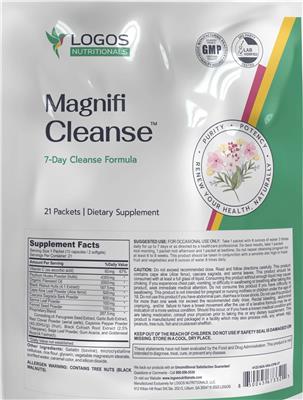
Suggested use: For occasional use only: Take 1 packet with 8 ounces of water 3 times daily for up to 7 days or as directed by a healthcare professional. For best results, take 1 packet mid-morning, 1 packet mid-afternoon and 1 packet at bedtime. Do not repeat cleansing program for at least 6 to 8 weeks. This product should be taken in conjunction with a sensible diet high in fresh fruit and vegetables and 6 ounces of water 8 times daily.
Precautions
CAUTION: Do not exceed recommended dose. Read and follow directions carefully. This product contains cape aloe (Aloe ferox), cascara sagrada, and senna leaves. This product should be consumed with at least a full glass of liquid. Consuming this product without enough liquid may cause choking. If you experience chest pain, vomiting, or difficulty in swallowing or breathing after taking this product, seek immediate medical attention. Do not consume this product if you have difficulty swallowing. Do not use this product if you have abdominal pain, diarrhea or loose stools. Do not use this product for more than one week nor exceed the recommended daily dose. Rectal bleeding, abdominal cramping, and/or failure to have a bowel movement after the use of a laxative formula may be a indication of a more serious condition. Should this occur, or if you have a known medical condition and are taking medication, consult you physician prior to taking this or any dietary supplement. Do not use if safety seal is damaged or missing.
This product is not intended for pregnant or nursing mothers or children under the age of 18.
This product is not intended for pregnant or nursing mothers or children under the age of 18. Keep out of the reach of children.
This product is manufactured and packaged in a facility which may also process milk, soy, wheat, peanuts, tree nuts, fish and crustacean shellfish. Allergen Warning: Contains tree nuts (Black walnuts).
Storage
Store in a cool, dry place.
FDA Disclaimer Statement
These statements have not been evaluated by the Food and Drug Administration. This product is not intended to diagnose, treat, cure, or prevent any disease.
General Statements
Questions or Comments - Call 800-556-5530 Or visit our Website: www.logosnutritionals.com
Brand IP Statement(s)
Copyright 2022 LOGOS
Is this label outdated? Report a formula or label change and our pharmacy team will review it.
Magnifi Cleanse by Logos Nutritionals label
The label scan from the NIH Dietary Supplement Label Database. Tap to enlarge.
Label images are published by the NIH Dietary Supplement Label Database for the version of this product on file. Always read your actual product label.
View the full label (PDF)The Ingredients in Magnifi Cleanse by Logos Nutritionals
These are the 16 active ingredients this product is made of. Select any to open its full monograph.
Serving size1 Packet(s) Dosage formCapsule Servings per container21 Amounts shown are per serving.
Most supplement products combine several ingredients, and a medication can interact with the product through any one of them. Each ingredient below shows whether it has known drug interactions.
Proprietary Blend
Vitamin C
Interacts with207 drugs
Vitamin C (ascorbic acid) is an essential nutrient your body needs but cannot make, so you must get it from food or supplements. It's important for im...
Vitamin C monograph & interactionsCascara Sagrada, Powder
Interacts with747 drugs
Cascara sagrada is a stimulant laxative made from the aged bark of a Pacific Northwest tree, used mainly for short-term relief of constipation. Becaus...
Cascara Sagrada, Powder monograph & interactionsFennel, Powder
Interacts with742 drugs
Fennel is a Mediterranean herb widely used as a food and spice, and traditionally taken for digestive complaints, colic, and menstrual cramps. Some sm...
Fennel, Powder monograph & interactionsSenna, Powder
Interacts with140 drugs
Senna is a plant-based stimulant laxative that is widely used and generally effective for short-term relief of constipation. It is best used occasiona...
Senna, Powder monograph & interactionsPsyllium Husk, Powder
Cape Aloe, Powder
Interacts with461 drugs
Aloe vera gel is widely used on the skin for minor burns and irritation, and some research suggests it may help. Aloe latex (the yellow part) is a str...
Cape Aloe, Powder monograph & interactionsFlaxseed Oil
Interacts with293 drugs
Flaxseed oil is a plant-based source of the omega-3 fatty acid ALA, which the body can partly convert to the omega-3s found in fish oil. It may help s...
Flaxseed Oil monograph & interactionsBlack Walnut Husk Extract
No knowninteractions
Black walnut is a tree whose green hulls are traditionally used as a natural antiparasitic and digestive remedy, but solid human evidence for these us...
Black Walnut Husk Extract monograph & interactionsOther (inactive) ingredients: Bovine Gelatin, Microcrystalline Cellulose, Rice Flour, Glycerin, Magnesium Stearate, Water, Purified, Caramel, Silicon Dioxide. These complete the product’s ingredient list but are not active constituents.
Magnifi Cleanse by Logos Nutritionals Drug Interactions
HelloPharmacist Interaction Report
Magnifi Cleanse by Logos Nutritionals contains 16 ingredients, several of which interact with medications.
The most serious interaction we've found is with digoxin (a heart medication), where cape aloe poses a Major-severity risk: overuse can deplete potassium and increase the danger of digoxin toxicity.
Read the full breakdown — every affected drug type, severity by severity
Moderate interactions are widespread across this product. Vitamin C affects estrogens, blood thinners (warfarin and anticoagulants), chemotherapy drugs, thyroid medication (levothyroxine), and several others.
Cascara sagrada and senna (both stimulant laxatives) interact with corticosteroids, diuretics, blood thinners, and digoxin, largely through potassium depletion. Cape aloe carries similar risks.
Fennel may interfere with birth control and hormone therapy. Fenugreek can interact with blood thinners, diabetes medications, and several others.
Goldenseal inhibits liver enzymes that clear many drugs, potentially raising their levels. Cayenne pepper (capsicum) interacts with blood thinners, diabetes drugs, and others.
Garlic has antiplatelet effects and may lower blood pressure or blood sugar when combined with relevant medications. Flaxseed oil may increase bleeding risk with anticoagulants.
Sage and black cohosh each affect multiple liver enzymes. Black walnut has limited data but carries theoretical concerns.
Red clover's estrogen-like activity may interfere with hormone therapy and tamoxifen.
We could not check gum acacia or psyllium husk — no interaction data is on file for these ingredients.
Altogether, these interactions span 1,576 individual medications. Please use the search tool on this page to check your exact prescriptions before starting.
Check your own medications below · Editorial policy · How we use AI
Want to check YOUR meds against Magnifi Cleanse?
Ask about interactions with your drugs in plain English — “Can I take it with lisinopril?” — and we find you the answer in seconds, ingredient by ingredient.
Go to the checkerIngredients driving the most interactions
Individual Drug Interactions
The ingredients in Magnifi Cleanse interact with 2,236 drugs. Click any drug to see the details.
14 of the 16 ingredients in Magnifi Cleanse interact with drugs. Each result below shows which ingredient is responsible. Gum Acacia Sage, Powder Goldenseal root extract Garlic Bulb Extract Red Clover, Powder Cascara Sagrada, Powder Fennel, Powder Black Cohosh Root Extract Cape Aloe, Powder Fenugreek Seed Extract Flaxseed Oil Cayenne Pepper, Powder Vitamin C Senna, Powder
DigoxinDigitek, Lanoxicaps, Lanoxin
How Digoxin interacts with Magnifi Cleanse — through 6 ingredients. Tap an ingredient for the detail:
Cape Aloe, PowderDigoxin (lanoxin) Major
Interaction Summary
Theoretically, aloe latex might increase the risk of adverse effects when taken with cardiac glycosides.
Read the full Cape Aloe, Powder + Digoxin interactionGum AcaciaOral Drugs Moderate
Interaction Summary
Theoretically, gum arabic can alter the absorption of oral drugs due to its fiber content.
Read the full Gum Acacia + Digoxin interactionCascara Sagrada, PowderDigoxin (lanoxin) Moderate
Interaction Summary
Theoretically, cascara sagrada might cause hypokalemia, potentially increasing the risk of digoxin toxicity.
Read the full Cascara Sagrada, Powder + Digoxin interactionSenna, PowderDigoxin (lanoxin) Moderate
Interaction Summary
Theoretically, senna might increase the risk of adverse effects when taken with digoxin.
Read the full Senna, Powder + Digoxin interactionGoldenseal Root ExtractP-glycoprotein Substrates, Digoxin (lanoxin) Moderate
Interaction Summary
Theoretically, goldenseal might increase or decrease serum levels of P-glycoprotein (P-gp) substrates.
Read the full Goldenseal Root Extract + Digoxin interactionSage, PowderP-glycoprotein Substrates Moderate
Interaction Summary
Theoretically, sage might increase levels of drugs transported by P-glycoprotein.
Read the full Sage, Powder + Digoxin interaction"phentolamineOraVerse, Rogitine, Ryzumvi
How "phentolamine interacts with Magnifi Cleanse — through 1 ingredient. Tap an ingredient for the detail:
Gum AcaciaOral Drugs Moderate
Interaction Summary
Theoretically, gum arabic can alter the absorption of oral drugs due to its fiber content.
Read the full Gum Acacia + "phentolamine interaction6-mercaptopurinePurinethol
How 6-mercaptopurine interacts with Magnifi Cleanse — through 2 ingredients. Tap an ingredient for the detail:
Gum AcaciaOral Drugs Moderate
Interaction Summary
Theoretically, gum arabic can alter the absorption of oral drugs due to its fiber content.
Read the full Gum Acacia + 6-mercaptopurine interactionBlack Cohosh Root ExtractHepatotoxic Drugs Moderate
Interaction Summary
Theoretically, taking black cohosh with hepatotoxic drugs may increase the risk of liver damage.
Read the full Black Cohosh Root Extract + 6-mercaptopurine interactionAdo-trastuzumab EmtansineKadcyla
How Ado-trastuzumab Emtansine interacts with Magnifi Cleanse — through 6 ingredients. Tap an ingredient for the detail:
Garlic Bulb ExtractCytochrome P450 3a4 (cyp3a4) Substrates Moderate
Interaction Summary
Theoretically, garlic products containing allicin might induce intestinal CYP3A4 and inhibit hepatic CYP3A4.
Read the full Garlic Bulb Extract + Ado-trastuzumab Emtansine interactionGoldenseal Root ExtractCytochrome P450 3a4 (cyp3a4) Substrates Moderate
Interaction Summary
Goldenseal might increase serum levels of drugs metabolized by CYP3A4.
Read the full Goldenseal Root Extract + Ado-trastuzumab Emtansine interactionFennel, PowderCytochrome P450 3a4 (cyp3a4) Substrates Moderate
Interaction Summary
Theoretically, fennel might increase levels of drugs metabolized by CYP3A4.
Read the full Fennel, Powder + Ado-trastuzumab Emtansine interactionSage, PowderCytochrome P450 3a4 (cyp3a4) Substrates Moderate
Interaction Summary
Theoretically, sage might increase the levels and clinical effects of drugs metabolized by CYP3A4.
Read the full Sage, Powder + Ado-trastuzumab Emtansine interactionCascara Sagrada, PowderCytochrome P450 3a4 (cyp3a4) Substrates Minor
Interaction Summary
Theoretically, cascara sagrada might decrease the effects of CYP3A4 substrates.
Read the full Cascara Sagrada, Powder + Ado-trastuzumab Emtansine interactionRed Clover, PowderCytochrome P450 3a4 (cyp3a4) Substrates Minor
Interaction Summary
Theoretically, red clover might increase levels of drugs metabolized by CYP3A4; however, a small clinical study found no effect.
Read the full Red Clover, Powder + Ado-trastuzumab Emtansine interactionAbacavirZiagen
How Abacavir interacts with Magnifi Cleanse — through 1 ingredient. Tap an ingredient for the detail:
Gum AcaciaOral Drugs Moderate
Interaction Summary
Theoretically, gum arabic can alter the absorption of oral drugs due to its fiber content.
Read the full Gum Acacia + Abacavir interactionAbacavir Sulfate, Dolutegravir, LamivudineTriumeq
How Abacavir Sulfate, Dolutegravir, Lamivudine interacts with Magnifi Cleanse — through 2 ingredients. Tap an ingredient for the detail:
Gum AcaciaOral Drugs Moderate
Interaction Summary
Theoretically, gum arabic can alter the absorption of oral drugs due to its fiber content.
Read the full Gum Acacia + Abacavir Sulfate, Dolutegravir, Lamivudine interactionBlack Cohosh Root ExtractHepatotoxic Drugs Moderate
Interaction Summary
Theoretically, taking black cohosh with hepatotoxic drugs may increase the risk of liver damage.
Read the full Black Cohosh Root Extract + Abacavir Sulfate, Dolutegravir, Lamivudine interactionAbacavir, LamivudineEpzicom
How Abacavir, Lamivudine interacts with Magnifi Cleanse — through 2 ingredients. Tap an ingredient for the detail:
Black Cohosh Root ExtractHepatotoxic Drugs Moderate
Interaction Summary
Theoretically, taking black cohosh with hepatotoxic drugs may increase the risk of liver damage.
Read the full Black Cohosh Root Extract + Abacavir, Lamivudine interactionGum AcaciaOral Drugs Moderate
Interaction Summary
Theoretically, gum arabic can alter the absorption of oral drugs due to its fiber content.
Read the full Gum Acacia + Abacavir, Lamivudine interactionAbciximabReoPro
How Abciximab interacts with Magnifi Cleanse — through 9 ingredients. Tap an ingredient for the detail:
Gum AcaciaOral Drugs Moderate
Interaction Summary
Theoretically, gum arabic can alter the absorption of oral drugs due to its fiber content.
Read the full Gum Acacia + Abciximab interactionFlaxseed OilAnticoagulant/antiplatelet Drugs Moderate
Interaction Summary
Theoretically, using flaxseed oil in combination with anticoagulant or antiplatelet drugs might have additive effects and increase the risk of bleeding.
Read the full Flaxseed Oil + Abciximab interactionGoldenseal Root ExtractAnticoagulant/antiplatelet Drugs Moderate
Interaction Summary
Theoretically, goldenseal might increase the risk of bleeding when used with anticoagulant or antiplatelet drugs.
Read the full Goldenseal Root Extract + Abciximab interactionCayenne Pepper, PowderAnticoagulant/antiplatelet Drugs Moderate
Interaction Summary
Theoretically, capsicum may increase the risk of bleeding if used with anticoagulant or antiplatelet drugs.
Read the full Cayenne Pepper, Powder + Abciximab interactionFennel, PowderAnticoagulant/antiplatelet Drugs Moderate
Interaction Summary
Theoretically, fennel might increase the risk of bleeding when used with antiplatelet or anticoagulant drugs.
Read the full Fennel, Powder + Abciximab interactionCape Aloe, PowderAnticoagulant/antiplatelet Drugs Moderate
Interaction Summary
Theoretically, aloe gel might increase the risk of bleeding when taken with anticoagulant or antiplatelet drugs.
Read the full Cape Aloe, Powder + Abciximab interactionGarlic Bulb ExtractAnticoagulant/antiplatelet Drugs Moderate
Interaction Summary
Garlic may have antiplatelet effects and may increase the risk of bleeding if used with anticoagulant or antiplatelet drugs.
Read the full Garlic Bulb Extract + Abciximab interactionFenugreek Seed ExtractAnticoagulant/antiplatelet Drugs Moderate
Interaction Summary
Theoretically, fenugreek might have additive effects when used with anticoagulant or antiplatelet drugs.
Read the full Fenugreek Seed Extract + Abciximab interactionRed Clover, PowderAnticoagulant/antiplatelet Drugs Minor
Interaction Summary
Although some laboratory research suggests that red clover may have anticoagulant and antiplatelet activity, clinical research has not shown this effect.
Read the full Red Clover, Powder + Abciximab interactionAbemaciclibVerzenio
How Abemaciclib interacts with Magnifi Cleanse — through 7 ingredients. Tap an ingredient for the detail:
Fennel, PowderCytochrome P450 3a4 (cyp3a4) Substrates Moderate
Interaction Summary
Theoretically, fennel might increase levels of drugs metabolized by CYP3A4.
Read the full Fennel, Powder + Abemaciclib interactionGoldenseal Root ExtractCytochrome P450 3a4 (cyp3a4) Substrates Moderate
Interaction Summary
Goldenseal might increase serum levels of drugs metabolized by CYP3A4.
Read the full Goldenseal Root Extract + Abemaciclib interactionSage, PowderCytochrome P450 3a4 (cyp3a4) Substrates Moderate
Interaction Summary
Theoretically, sage might increase the levels and clinical effects of drugs metabolized by CYP3A4.
Read the full Sage, Powder + Abemaciclib interactionGarlic Bulb ExtractCytochrome P450 3a4 (cyp3a4) Substrates Moderate
Interaction Summary
Theoretically, garlic products containing allicin might induce intestinal CYP3A4 and inhibit hepatic CYP3A4.
Read the full Garlic Bulb Extract + Abemaciclib interactionGum AcaciaOral Drugs Moderate
Interaction Summary
Theoretically, gum arabic can alter the absorption of oral drugs due to its fiber content.
Read the full Gum Acacia + Abemaciclib interactionCascara Sagrada, PowderCytochrome P450 3a4 (cyp3a4) Substrates Minor
Interaction Summary
Theoretically, cascara sagrada might decrease the effects of CYP3A4 substrates.
Read the full Cascara Sagrada, Powder + Abemaciclib interactionRed Clover, PowderCytochrome P450 3a4 (cyp3a4) Substrates Minor
Interaction Summary
Theoretically, red clover might increase levels of drugs metabolized by CYP3A4; however, a small clinical study found no effect.
Read the full Red Clover, Powder + Abemaciclib interactionAbiraterone
How Abiraterone interacts with Magnifi Cleanse — through 8 ingredients. Tap an ingredient for the detail:
Garlic Bulb ExtractCytochrome P450 3a4 (cyp3a4) Substrates Moderate
Interaction Summary
Theoretically, garlic products containing allicin might induce intestinal CYP3A4 and inhibit hepatic CYP3A4.
Read the full Garlic Bulb Extract + Abiraterone interactionFennel, PowderCytochrome P450 3a4 (cyp3a4) Substrates Moderate
Interaction Summary
Theoretically, fennel might increase levels of drugs metabolized by CYP3A4.
Read the full Fennel, Powder + Abiraterone interactionGum AcaciaOral Drugs Moderate
Interaction Summary
Theoretically, gum arabic can alter the absorption of oral drugs due to its fiber content.
Read the full Gum Acacia + Abiraterone interactionBlack Cohosh Root ExtractHepatotoxic Drugs Moderate
Interaction Summary
Theoretically, taking black cohosh with hepatotoxic drugs may increase the risk of liver damage.
Read the full Black Cohosh Root Extract + Abiraterone interactionSage, PowderCytochrome P450 3a4 (cyp3a4) Substrates Moderate
Interaction Summary
Theoretically, sage might increase the levels and clinical effects of drugs metabolized by CYP3A4.
Read the full Sage, Powder + Abiraterone interactionGoldenseal Root ExtractCytochrome P450 3a4 (cyp3a4) Substrates Moderate
Interaction Summary
Goldenseal might increase serum levels of drugs metabolized by CYP3A4.
Read the full Goldenseal Root Extract + Abiraterone interactionCascara Sagrada, PowderCytochrome P450 3a4 (cyp3a4) Substrates Minor
Interaction Summary
Theoretically, cascara sagrada might decrease the effects of CYP3A4 substrates.
Read the full Cascara Sagrada, Powder + Abiraterone interactionRed Clover, PowderCytochrome P450 3a4 (cyp3a4) Substrates Minor
Interaction Summary
Theoretically, red clover might increase levels of drugs metabolized by CYP3A4; however, a small clinical study found no effect.
Read the full Red Clover, Powder + Abiraterone interactionAbiraterone AcetateYonsa, Zytiga
How Abiraterone Acetate interacts with Magnifi Cleanse — through 8 ingredients. Tap an ingredient for the detail:
Black Cohosh Root ExtractHepatotoxic Drugs Moderate
Interaction Summary
Theoretically, taking black cohosh with hepatotoxic drugs may increase the risk of liver damage.
Read the full Black Cohosh Root Extract + Abiraterone Acetate interactionFennel, PowderCytochrome P450 3a4 (cyp3a4) Substrates Moderate
Interaction Summary
Theoretically, fennel might increase levels of drugs metabolized by CYP3A4.
Read the full Fennel, Powder + Abiraterone Acetate interactionGum AcaciaOral Drugs Moderate
Interaction Summary
Theoretically, gum arabic can alter the absorption of oral drugs due to its fiber content.
Read the full Gum Acacia + Abiraterone Acetate interactionGarlic Bulb ExtractCytochrome P450 3a4 (cyp3a4) Substrates Moderate
Interaction Summary
Theoretically, garlic products containing allicin might induce intestinal CYP3A4 and inhibit hepatic CYP3A4.
Read the full Garlic Bulb Extract + Abiraterone Acetate interactionGoldenseal Root ExtractCytochrome P450 3a4 (cyp3a4) Substrates Moderate
Interaction Summary
Goldenseal might increase serum levels of drugs metabolized by CYP3A4.
Read the full Goldenseal Root Extract + Abiraterone Acetate interactionSage, PowderCytochrome P450 3a4 (cyp3a4) Substrates Moderate
Interaction Summary
Theoretically, sage might increase the levels and clinical effects of drugs metabolized by CYP3A4.
Read the full Sage, Powder + Abiraterone Acetate interactionRed Clover, PowderCytochrome P450 3a4 (cyp3a4) Substrates Minor
Interaction Summary
Theoretically, red clover might increase levels of drugs metabolized by CYP3A4; however, a small clinical study found no effect.
Read the full Red Clover, Powder + Abiraterone Acetate interactionCascara Sagrada, PowderCytochrome P450 3a4 (cyp3a4) Substrates Minor
Interaction Summary
Theoretically, cascara sagrada might decrease the effects of CYP3A4 substrates.
Read the full Cascara Sagrada, Powder + Abiraterone Acetate interactionAbrocitinibCibinqo
How Abrocitinib interacts with Magnifi Cleanse — through 10 ingredients. Tap an ingredient for the detail:
Cape Aloe, PowderAnticoagulant/antiplatelet Drugs Moderate
Interaction Summary
Theoretically, aloe gel might increase the risk of bleeding when taken with anticoagulant or antiplatelet drugs.
Read the full Cape Aloe, Powder + Abrocitinib interactionFennel, PowderAnticoagulant/antiplatelet Drugs Moderate
Interaction Summary
Theoretically, fennel might increase the risk of bleeding when used with antiplatelet or anticoagulant drugs.
Read the full Fennel, Powder + Abrocitinib interactionSage, PowderCytochrome P450 2c19 (cyp2c19) Substrates, Cytochrome P450 2c9 (cyp2c9) Substrates Moderate
Interaction Summary
Theoretically, sage might increase the levels and clinical effects of drugs metabolized by CYP2C19.
Read the full Sage, Powder + Abrocitinib interactionGoldenseal Root ExtractCytochrome P450 2c9 (cyp2c9) Substrates, Anticoagulant/antiplatelet Drugs Moderate
Interaction Summary
Theoretically, goldenseal might increase serum levels of drugs metabolized by CYP2C9.
Read the full Goldenseal Root Extract + Abrocitinib interactionFenugreek Seed ExtractAnticoagulant/antiplatelet Drugs Moderate
Interaction Summary
Theoretically, fenugreek might have additive effects when used with anticoagulant or antiplatelet drugs.
Read the full Fenugreek Seed Extract + Abrocitinib interactionGarlic Bulb ExtractAnticoagulant/antiplatelet Drugs Moderate
Interaction Summary
Garlic may have antiplatelet effects and may increase the risk of bleeding if used with anticoagulant or antiplatelet drugs.
Read the full Garlic Bulb Extract + Abrocitinib interactionGum AcaciaOral Drugs Moderate
Interaction Summary
Theoretically, gum arabic can alter the absorption of oral drugs due to its fiber content.
Read the full Gum Acacia + Abrocitinib interactionCayenne Pepper, PowderAnticoagulant/antiplatelet Drugs Moderate
Interaction Summary
Theoretically, capsicum may increase the risk of bleeding if used with anticoagulant or antiplatelet drugs.
Read the full Cayenne Pepper, Powder + Abrocitinib interactionFlaxseed OilAnticoagulant/antiplatelet Drugs Moderate
Interaction Summary
Theoretically, using flaxseed oil in combination with anticoagulant or antiplatelet drugs might have additive effects and increase the risk of bleeding.
Read the full Flaxseed Oil + Abrocitinib interactionRed Clover, PowderCytochrome P450 2c19 (cyp2c19) Substrates, Cytochrome P450 2c9 (cyp2c9) Substrates +1 Minor
Interaction Summary
Theoretically, red clover might increase the levels and clinical effects of drugs metabolized by CYP2C19.
Read the full Red Clover, Powder + Abrocitinib interactionAcalabrutinibCalquence
How Acalabrutinib interacts with Magnifi Cleanse — through 7 ingredients. Tap an ingredient for the detail:
Goldenseal Root ExtractCytochrome P450 3a4 (cyp3a4) Substrates, P-glycoprotein Substrates Moderate
Interaction Summary
Goldenseal might increase serum levels of drugs metabolized by CYP3A4.
Read the full Goldenseal Root Extract + Acalabrutinib interactionFennel, PowderCytochrome P450 3a4 (cyp3a4) Substrates Moderate
Interaction Summary
Theoretically, fennel might increase levels of drugs metabolized by CYP3A4.
Read the full Fennel, Powder + Acalabrutinib interactionSage, PowderP-glycoprotein Substrates, Cytochrome P450 3a4 (cyp3a4) Substrates Moderate
Interaction Summary
Theoretically, sage might increase levels of drugs transported by P-glycoprotein.
Read the full Sage, Powder + Acalabrutinib interactionGarlic Bulb ExtractCytochrome P450 3a4 (cyp3a4) Substrates Moderate
Interaction Summary
Theoretically, garlic products containing allicin might induce intestinal CYP3A4 and inhibit hepatic CYP3A4.
Read the full Garlic Bulb Extract + Acalabrutinib interactionGum AcaciaOral Drugs Moderate
Interaction Summary
Theoretically, gum arabic can alter the absorption of oral drugs due to its fiber content.
Read the full Gum Acacia + Acalabrutinib interactionRed Clover, PowderCytochrome P450 3a4 (cyp3a4) Substrates Minor
Interaction Summary
Theoretically, red clover might increase levels of drugs metabolized by CYP3A4; however, a small clinical study found no effect.
Read the full Red Clover, Powder + Acalabrutinib interactionCascara Sagrada, PowderCytochrome P450 3a4 (cyp3a4) Substrates Minor
Interaction Summary
Theoretically, cascara sagrada might decrease the effects of CYP3A4 substrates.
Read the full Cascara Sagrada, Powder + Acalabrutinib interactionAcamprosateCampral
How Acamprosate interacts with Magnifi Cleanse — through 1 ingredient. Tap an ingredient for the detail:
Gum AcaciaOral Drugs Moderate
Interaction Summary
Theoretically, gum arabic can alter the absorption of oral drugs due to its fiber content.
Read the full Gum Acacia + Acamprosate interactionAcarboseGlucobay, Prandase, Precose
How Acarbose interacts with Magnifi Cleanse — through 8 ingredients. Tap an ingredient for the detail:
Gum AcaciaOral Drugs Moderate
Interaction Summary
Theoretically, gum arabic can alter the absorption of oral drugs due to its fiber content.
Read the full Gum Acacia + Acarbose interactionFenugreek Seed ExtractAntidiabetes Drugs Moderate
Interaction Summary
Theoretically, fenugreek seed might have additive hypoglycemic effects when used with antidiabetes drugs.
Read the full Fenugreek Seed Extract + Acarbose interactionBlack Cohosh Root ExtractHepatotoxic Drugs Moderate
Interaction Summary
Theoretically, taking black cohosh with hepatotoxic drugs may increase the risk of liver damage.
Read the full Black Cohosh Root Extract + Acarbose interactionGoldenseal Root ExtractAntidiabetes Drugs Moderate
Interaction Summary
Theoretically, goldenseal might increase the risk of hypoglycemia when used with antidiabetes drugs.
Read the full Goldenseal Root Extract + Acarbose interactionCayenne Pepper, PowderAntidiabetes Drugs Moderate
Interaction Summary
Theoretically, taking capsicum with antidiabetes drugs might increase the risk of hypoglycemia.
Read the full Cayenne Pepper, Powder + Acarbose interactionCape Aloe, PowderAntidiabetes Drugs Moderate
Interaction Summary
Aloe might increase the risk of hypoglycemia when taken with antidiabetes drugs.
Read the full Cape Aloe, Powder + Acarbose interactionSage, PowderAntidiabetes Drugs Moderate
Interaction Summary
Theoretically, taking sage with antidiabetes drugs might increase the risk of hypoglycemia.
Read the full Sage, Powder + Acarbose interactionGarlic Bulb ExtractAntidiabetes Drugs Moderate
Interaction Summary
Theoretically, taking garlic with antidiabetes drugs might increase the risk of hypoglycemia.
Read the full Garlic Bulb Extract + Acarbose interactionAcebutololRhotral, Sectral
How Acebutolol interacts with Magnifi Cleanse — through 7 ingredients. Tap an ingredient for the detail:
Garlic Bulb ExtractAntihypertensive Drugs Moderate
Interaction Summary
Theoretically, taking garlic with antihypertensive drugs might increase the risk of hypotension.
Read the full Garlic Bulb Extract + Acebutolol interactionBlack Cohosh Root ExtractHepatotoxic Drugs Moderate
Interaction Summary
Theoretically, taking black cohosh with hepatotoxic drugs may increase the risk of liver damage.
Read the full Black Cohosh Root Extract + Acebutolol interactionGum AcaciaOral Drugs Moderate
Interaction Summary
Theoretically, gum arabic can alter the absorption of oral drugs due to its fiber content.
Read the full Gum Acacia + Acebutolol interactionGoldenseal Root ExtractAntihypertensive Drugs Moderate
Interaction Summary
Theoretically, goldenseal might increase the risk of hypotension when taken with antihypertensive drugs.
Read the full Goldenseal Root Extract + Acebutolol interactionSage, PowderAntihypertensive Drugs Moderate
Interaction Summary
Theoretically, sage might increase or decrease the effects of antihypertensive drugs.
Read the full Sage, Powder + Acebutolol interactionFlaxseed OilAntihypertensive Drugs Moderate
Interaction Summary
Theoretically, combining flaxseed oil with other antihypertensive drugs might have additive effects and increase the risk of hypotension.
Read the full Flaxseed Oil + Acebutolol interactionFenugreek Seed ExtractAntihypertensive Drugs Minor
Interaction Summary
Fenugreek may also have an additive effect on blood pressure-lowering medications.
Read the full Fenugreek Seed Extract + Acebutolol interactionAcenocoumarolSintrom
How Acenocoumarol interacts with Magnifi Cleanse — through 9 ingredients. Tap an ingredient for the detail:
Flaxseed OilAnticoagulant/antiplatelet Drugs Moderate
Interaction Summary
Theoretically, using flaxseed oil in combination with anticoagulant or antiplatelet drugs might have additive effects and increase the risk of bleeding.
Read the full Flaxseed Oil + Acenocoumarol interactionGoldenseal Root ExtractAnticoagulant/antiplatelet Drugs Moderate
Interaction Summary
Theoretically, goldenseal might increase the risk of bleeding when used with anticoagulant or antiplatelet drugs.
Read the full Goldenseal Root Extract + Acenocoumarol interactionCayenne Pepper, PowderAnticoagulant/antiplatelet Drugs Moderate
Interaction Summary
Theoretically, capsicum may increase the risk of bleeding if used with anticoagulant or antiplatelet drugs.
Read the full Cayenne Pepper, Powder + Acenocoumarol interactionFenugreek Seed ExtractAnticoagulant/antiplatelet Drugs Moderate
Interaction Summary
Theoretically, fenugreek might have additive effects when used with anticoagulant or antiplatelet drugs.
Read the full Fenugreek Seed Extract + Acenocoumarol interactionGarlic Bulb ExtractAnticoagulant/antiplatelet Drugs Moderate
Interaction Summary
Garlic may have antiplatelet effects and may increase the risk of bleeding if used with anticoagulant or antiplatelet drugs.
Read the full Garlic Bulb Extract + Acenocoumarol interactionGum AcaciaOral Drugs Moderate
Interaction Summary
Theoretically, gum arabic can alter the absorption of oral drugs due to its fiber content.
Read the full Gum Acacia + Acenocoumarol interactionFennel, PowderAnticoagulant/antiplatelet Drugs Moderate
Interaction Summary
Theoretically, fennel might increase the risk of bleeding when used with antiplatelet or anticoagulant drugs.
Read the full Fennel, Powder + Acenocoumarol interactionCape Aloe, PowderAnticoagulant/antiplatelet Drugs Moderate
Interaction Summary
Theoretically, aloe gel might increase the risk of bleeding when taken with anticoagulant or antiplatelet drugs.
Read the full Cape Aloe, Powder + Acenocoumarol interactionRed Clover, PowderAnticoagulant/antiplatelet Drugs Minor
Interaction Summary
Although some laboratory research suggests that red clover may have anticoagulant and antiplatelet activity, clinical research has not shown this effect.
Read the full Red Clover, Powder + Acenocoumarol interactionAcepromazineAtravet
How Acepromazine interacts with Magnifi Cleanse — through 3 ingredients. Tap an ingredient for the detail:
Sage, PowderAnticholinergic Drugs, Cns Depressants Moderate
Interaction Summary
Theoretically, sage might decrease the clinical effects of anticholinergic drugs.
Read the full Sage, Powder + Acepromazine interactionGoldenseal Root ExtractCns Depressants Moderate
Interaction Summary
Theoretically, goldenseal might increase the sedative effects of CNS depressants.
Read the full Goldenseal Root Extract + Acepromazine interactionGum AcaciaOral Drugs Moderate
Interaction Summary
Theoretically, gum arabic can alter the absorption of oral drugs due to its fiber content.
Read the full Gum Acacia + Acepromazine interactionAcetaminophenChildren's Tylenol, Children's Tylenol Meltaways, Tylenol, Tylenol Ex Strength
How Acetaminophen interacts with Magnifi Cleanse — through 8 ingredients. Tap an ingredient for the detail:
Sage, PowderCytochrome P450 2e1 (cyp2e1) Substrates Moderate
Interaction Summary
Theoretically, sage might decrease the levels and clinical effects of drugs metabolized by CYP2E1.
Read the full Sage, Powder + Acetaminophen interactionGarlic Bulb ExtractCytochrome P450 2e1 (cyp2e1) Substrates Moderate
Interaction Summary
Garlic might increase levels of drugs metabolized by CYP2E1.
Read the full Garlic Bulb Extract + Acetaminophen interactionGoldenseal Root ExtractCytochrome P450 2e1 (cyp2e1) Substrates Moderate
Interaction Summary
Theoretically, goldenseal might increase serum levels of drugs metabolized by CYP2E1.
Read the full Goldenseal Root Extract + Acetaminophen interactionBlack Cohosh Root ExtractHepatotoxic Drugs Moderate
Interaction Summary
Theoretically, taking black cohosh with hepatotoxic drugs may increase the risk of liver damage.
Read the full Black Cohosh Root Extract + Acetaminophen interactionGum AcaciaOral Drugs Moderate
Interaction Summary
Theoretically, gum arabic can alter the absorption of oral drugs due to its fiber content.
Read the full Gum Acacia + Acetaminophen interactionCape Aloe, PowderCytochrome P450 1a2 (cyp1a2) Substrates Minor
Interaction Summary
Theoretically, aloe might decrease the levels and clinical effects of CYP1A2 substrates.
Read the full Cape Aloe, Powder + Acetaminophen interactionRed Clover, PowderCytochrome P450 1a2 (cyp1a2) Substrates Minor
Interaction Summary
Theoretically, red clover might increase levels of drugs metabolized by CYP1A2; however, a small clinical study found no effect.
Read the full Red Clover, Powder + Acetaminophen interactionVitamin CAcetaminophen (tylenol, Others) Minor
Interaction Summary
High-dose vitamin C might slightly prolong the clearance of acetaminophen.
Read the full Vitamin C + Acetaminophen interactionAcetaminophen, AspirinGemnisyn
How Acetaminophen, Aspirin interacts with Magnifi Cleanse — through 12 ingredients. Tap an ingredient for the detail:
Gum AcaciaOral Drugs Moderate
Interaction Summary
Theoretically, gum arabic can alter the absorption of oral drugs due to its fiber content.
Read the full Gum Acacia + Acetaminophen, Aspirin interactionGoldenseal Root ExtractCytochrome P450 2e1 (cyp2e1) Substrates, Anticoagulant/antiplatelet Drugs Moderate
Interaction Summary
Theoretically, goldenseal might increase serum levels of drugs metabolized by CYP2E1.
Read the full Goldenseal Root Extract + Acetaminophen, Aspirin interactionCayenne Pepper, PowderAnticoagulant/antiplatelet Drugs, Aspirin Moderate
Interaction Summary
Theoretically, capsicum may increase the risk of bleeding if used with anticoagulant or antiplatelet drugs.
Read the full Cayenne Pepper, Powder + Acetaminophen, Aspirin interactionFlaxseed OilAnticoagulant/antiplatelet Drugs Moderate
Interaction Summary
Theoretically, using flaxseed oil in combination with anticoagulant or antiplatelet drugs might have additive effects and increase the risk of bleeding.
Read the full Flaxseed Oil + Acetaminophen, Aspirin interactionCape Aloe, PowderCytochrome P450 1a2 (cyp1a2) Substrates, Anticoagulant/antiplatelet Drugs Moderate
Interaction Summary
Theoretically, aloe might decrease the levels and clinical effects of CYP1A2 substrates.
Read the full Cape Aloe, Powder + Acetaminophen, Aspirin interactionSage, PowderCytochrome P450 2e1 (cyp2e1) Substrates Moderate
Interaction Summary
Theoretically, sage might decrease the levels and clinical effects of drugs metabolized by CYP2E1.
Read the full Sage, Powder + Acetaminophen, Aspirin interactionFennel, PowderAnticoagulant/antiplatelet Drugs Moderate
Interaction Summary
Theoretically, fennel might increase the risk of bleeding when used with antiplatelet or anticoagulant drugs.
Read the full Fennel, Powder + Acetaminophen, Aspirin interactionGarlic Bulb ExtractCytochrome P450 2e1 (cyp2e1) Substrates, Anticoagulant/antiplatelet Drugs Moderate
Interaction Summary
Garlic might increase levels of drugs metabolized by CYP2E1.
Read the full Garlic Bulb Extract + Acetaminophen, Aspirin interactionBlack Cohosh Root ExtractHepatotoxic Drugs Moderate
Interaction Summary
Theoretically, taking black cohosh with hepatotoxic drugs may increase the risk of liver damage.
Read the full Black Cohosh Root Extract + Acetaminophen, Aspirin interactionFenugreek Seed ExtractAnticoagulant/antiplatelet Drugs Moderate
Interaction Summary
Theoretically, fenugreek might have additive effects when used with anticoagulant or antiplatelet drugs.
Read the full Fenugreek Seed Extract + Acetaminophen, Aspirin interactionVitamin CAcetaminophen (tylenol, Others), Aspirin Minor
Interaction Summary
High-dose vitamin C might slightly prolong the clearance of acetaminophen.
Read the full Vitamin C + Acetaminophen, Aspirin interactionRed Clover, PowderAnticoagulant/antiplatelet Drugs, Cytochrome P450 1a2 (cyp1a2) Substrates Minor
Interaction Summary
Although some laboratory research suggests that red clover may have anticoagulant and antiplatelet activity, clinical research has not shown this effect.
Read the full Red Clover, Powder + Acetaminophen, Aspirin interactionAcetaminophen, Aspirin, CaffeineExcedrin, Excedrin Extra Strength, Excedrin Migraine
How Acetaminophen, Aspirin, Caffeine interacts with Magnifi Cleanse — through 13 ingredients. Tap an ingredient for the detail:
Fennel, PowderCytochrome P450 3a4 (cyp3a4) Substrates, Anticoagulant/antiplatelet Drugs Moderate
Interaction Summary
Theoretically, fennel might increase levels of drugs metabolized by CYP3A4.
Read the full Fennel, Powder + Acetaminophen, Aspirin, Caffeine interactionSage, PowderCytochrome P450 3a4 (cyp3a4) Substrates, Cytochrome P450 2e1 (cyp2e1) Substrates Moderate
Interaction Summary
Theoretically, sage might increase the levels and clinical effects of drugs metabolized by CYP3A4.
Read the full Sage, Powder + Acetaminophen, Aspirin, Caffeine interactionFlaxseed OilAnticoagulant/antiplatelet Drugs Moderate
Interaction Summary
Theoretically, using flaxseed oil in combination with anticoagulant or antiplatelet drugs might have additive effects and increase the risk of bleeding.
Read the full Flaxseed Oil + Acetaminophen, Aspirin, Caffeine interactionGoldenseal Root ExtractCytochrome P450 2e1 (cyp2e1) Substrates, Anticoagulant/antiplatelet Drugs +1 Moderate
Interaction Summary
Theoretically, goldenseal might increase serum levels of drugs metabolized by CYP2E1.
Read the full Goldenseal Root Extract + Acetaminophen, Aspirin, Caffeine interactionCayenne Pepper, PowderAnticoagulant/antiplatelet Drugs, Aspirin Moderate
Interaction Summary
Theoretically, capsicum may increase the risk of bleeding if used with anticoagulant or antiplatelet drugs.
Read the full Cayenne Pepper, Powder + Acetaminophen, Aspirin, Caffeine interactionGum AcaciaOral Drugs Moderate
Interaction Summary
Theoretically, gum arabic can alter the absorption of oral drugs due to its fiber content.
Read the full Gum Acacia + Acetaminophen, Aspirin, Caffeine interactionCape Aloe, PowderAnticoagulant/antiplatelet Drugs, Cytochrome P450 1a2 (cyp1a2) Substrates Moderate
Interaction Summary
Theoretically, aloe gel might increase the risk of bleeding when taken with anticoagulant or antiplatelet drugs.
Read the full Cape Aloe, Powder + Acetaminophen, Aspirin, Caffeine interactionFenugreek Seed ExtractAnticoagulant/antiplatelet Drugs Moderate
Interaction Summary
Theoretically, fenugreek might have additive effects when used with anticoagulant or antiplatelet drugs.
Read the full Fenugreek Seed Extract + Acetaminophen, Aspirin, Caffeine interactionBlack Cohosh Root ExtractHepatotoxic Drugs Moderate
Interaction Summary
Theoretically, taking black cohosh with hepatotoxic drugs may increase the risk of liver damage.
Read the full Black Cohosh Root Extract + Acetaminophen, Aspirin, Caffeine interactionGarlic Bulb ExtractAnticoagulant/antiplatelet Drugs, Cytochrome P450 2e1 (cyp2e1) Substrates +1 Moderate
Interaction Summary
Garlic may have antiplatelet effects and may increase the risk of bleeding if used with anticoagulant or antiplatelet drugs.
Read the full Garlic Bulb Extract + Acetaminophen, Aspirin, Caffeine interactionRed Clover, PowderAnticoagulant/antiplatelet Drugs, Caffeine +2 Minor
Interaction Summary
Although some laboratory research suggests that red clover may have anticoagulant and antiplatelet activity, clinical research has not shown this effect.
Read the full Red Clover, Powder + Acetaminophen, Aspirin, Caffeine interactionVitamin CAcetaminophen (tylenol, Others), Aspirin Minor
Interaction Summary
High-dose vitamin C might slightly prolong the clearance of acetaminophen.
Read the full Vitamin C + Acetaminophen, Aspirin, Caffeine interactionCascara Sagrada, PowderCytochrome P450 3a4 (cyp3a4) Substrates Minor
Interaction Summary
Theoretically, cascara sagrada might decrease the effects of CYP3A4 substrates.
Read the full Cascara Sagrada, Powder + Acetaminophen, Aspirin, Caffeine interactionAcetaminophen, Brompheniramine, PhenylpropanolamineDimetapp Cold and Flu
How Acetaminophen, Brompheniramine, Phenylpropanolamine interacts with Magnifi Cleanse — through 8 ingredients. Tap an ingredient for the detail:
Gum AcaciaOral Drugs Moderate
Interaction Summary
Theoretically, gum arabic can alter the absorption of oral drugs due to its fiber content.
Read the full Gum Acacia + Acetaminophen, Brompheniramine, Phenylpropanolamine interactionGoldenseal Root ExtractCytochrome P450 2e1 (cyp2e1) Substrates Moderate
Interaction Summary
Theoretically, goldenseal might increase serum levels of drugs metabolized by CYP2E1.
Read the full Goldenseal Root Extract + Acetaminophen, Brompheniramine, Phenylpropanolamine interactionGarlic Bulb ExtractCytochrome P450 2e1 (cyp2e1) Substrates Moderate
Interaction Summary
Garlic might increase levels of drugs metabolized by CYP2E1.
Read the full Garlic Bulb Extract + Acetaminophen, Brompheniramine, Phenylpropanolamine interactionSage, PowderCytochrome P450 2e1 (cyp2e1) Substrates Moderate
Interaction Summary
Theoretically, sage might decrease the levels and clinical effects of drugs metabolized by CYP2E1.
Read the full Sage, Powder + Acetaminophen, Brompheniramine, Phenylpropanolamine interactionBlack Cohosh Root ExtractHepatotoxic Drugs Moderate
Interaction Summary
Theoretically, taking black cohosh with hepatotoxic drugs may increase the risk of liver damage.
Read the full Black Cohosh Root Extract + Acetaminophen, Brompheniramine, Phenylpropanolamine interactionRed Clover, PowderCytochrome P450 1a2 (cyp1a2) Substrates Minor
Interaction Summary
Theoretically, red clover might increase levels of drugs metabolized by CYP1A2; however, a small clinical study found no effect.
Read the full Red Clover, Powder + Acetaminophen, Brompheniramine, Phenylpropanolamine interactionVitamin CAcetaminophen (tylenol, Others) Minor
Interaction Summary
High-dose vitamin C might slightly prolong the clearance of acetaminophen.
Read the full Vitamin C + Acetaminophen, Brompheniramine, Phenylpropanolamine interactionCape Aloe, PowderCytochrome P450 1a2 (cyp1a2) Substrates Minor
Interaction Summary
Theoretically, aloe might decrease the levels and clinical effects of CYP1A2 substrates.
Read the full Cape Aloe, Powder + Acetaminophen, Brompheniramine, Phenylpropanolamine interactionAcetaminophen, ButalbitalAxocet, Bancap, Bucet, Butex Forte, Esgic CF, Orbivan CF +5 more
How Acetaminophen, Butalbital interacts with Magnifi Cleanse — through 8 ingredients. Tap an ingredient for the detail:
Black Cohosh Root ExtractHepatotoxic Drugs Moderate
Interaction Summary
Theoretically, taking black cohosh with hepatotoxic drugs may increase the risk of liver damage.
Read the full Black Cohosh Root Extract + Acetaminophen, Butalbital interactionGum AcaciaOral Drugs Moderate
Interaction Summary
Theoretically, gum arabic can alter the absorption of oral drugs due to its fiber content.
Read the full Gum Acacia + Acetaminophen, Butalbital interactionSage, PowderCytochrome P450 2e1 (cyp2e1) Substrates Moderate
Interaction Summary
Theoretically, sage might decrease the levels and clinical effects of drugs metabolized by CYP2E1.
Read the full Sage, Powder + Acetaminophen, Butalbital interactionGoldenseal Root ExtractCytochrome P450 2e1 (cyp2e1) Substrates Moderate
Interaction Summary
Theoretically, goldenseal might increase serum levels of drugs metabolized by CYP2E1.
Read the full Goldenseal Root Extract + Acetaminophen, Butalbital interactionGarlic Bulb ExtractCytochrome P450 2e1 (cyp2e1) Substrates Moderate
Interaction Summary
Garlic might increase levels of drugs metabolized by CYP2E1.
Read the full Garlic Bulb Extract + Acetaminophen, Butalbital interactionCape Aloe, PowderCytochrome P450 1a2 (cyp1a2) Substrates Minor
Interaction Summary
Theoretically, aloe might decrease the levels and clinical effects of CYP1A2 substrates.
Read the full Cape Aloe, Powder + Acetaminophen, Butalbital interactionVitamin CAcetaminophen (tylenol, Others) Minor
Interaction Summary
High-dose vitamin C might slightly prolong the clearance of acetaminophen.
Read the full Vitamin C + Acetaminophen, Butalbital interactionRed Clover, PowderCytochrome P450 1a2 (cyp1a2) Substrates Minor
Interaction Summary
Theoretically, red clover might increase levels of drugs metabolized by CYP1A2; however, a small clinical study found no effect.
Read the full Red Clover, Powder + Acetaminophen, Butalbital interactionAcetaminophen, Butalbital, CaffeineEsgic, Esgic Plus, Fiogesic, Fioricet, Repan, Tecnal +1 more
How Acetaminophen, Butalbital, Caffeine interacts with Magnifi Cleanse — through 10 ingredients. Tap an ingredient for the detail:
Garlic Bulb ExtractCytochrome P450 2e1 (cyp2e1) Substrates, Cytochrome P450 3a4 (cyp3a4) Substrates Moderate
Interaction Summary
Garlic might increase levels of drugs metabolized by CYP2E1.
Read the full Garlic Bulb Extract + Acetaminophen, Butalbital, Caffeine interactionBlack Cohosh Root ExtractHepatotoxic Drugs Moderate
Interaction Summary
Theoretically, taking black cohosh with hepatotoxic drugs may increase the risk of liver damage.
Read the full Black Cohosh Root Extract + Acetaminophen, Butalbital, Caffeine interactionGoldenseal Root ExtractCytochrome P450 3a4 (cyp3a4) Substrates, Cytochrome P450 2e1 (cyp2e1) Substrates Moderate
Interaction Summary
Goldenseal might increase serum levels of drugs metabolized by CYP3A4.
Read the full Goldenseal Root Extract + Acetaminophen, Butalbital, Caffeine interactionSage, PowderCytochrome P450 3a4 (cyp3a4) Substrates, Cytochrome P450 2e1 (cyp2e1) Substrates Moderate
Interaction Summary
Theoretically, sage might increase the levels and clinical effects of drugs metabolized by CYP3A4.
Read the full Sage, Powder + Acetaminophen, Butalbital, Caffeine interactionFennel, PowderCytochrome P450 3a4 (cyp3a4) Substrates Moderate
Interaction Summary
Theoretically, fennel might increase levels of drugs metabolized by CYP3A4.
Read the full Fennel, Powder + Acetaminophen, Butalbital, Caffeine interactionGum AcaciaOral Drugs Moderate
Interaction Summary
Theoretically, gum arabic can alter the absorption of oral drugs due to its fiber content.
Read the full Gum Acacia + Acetaminophen, Butalbital, Caffeine interactionRed Clover, PowderCytochrome P450 1a2 (cyp1a2) Substrates, Cytochrome P450 3a4 (cyp3a4) Substrates +1 Minor
Interaction Summary
Theoretically, red clover might increase levels of drugs metabolized by CYP1A2; however, a small clinical study found no effect.
Read the full Red Clover, Powder + Acetaminophen, Butalbital, Caffeine interactionCascara Sagrada, PowderCytochrome P450 3a4 (cyp3a4) Substrates Minor
Interaction Summary
Theoretically, cascara sagrada might decrease the effects of CYP3A4 substrates.
Read the full Cascara Sagrada, Powder + Acetaminophen, Butalbital, Caffeine interactionVitamin CAcetaminophen (tylenol, Others) Minor
Interaction Summary
High-dose vitamin C might slightly prolong the clearance of acetaminophen.
Read the full Vitamin C + Acetaminophen, Butalbital, Caffeine interactionCape Aloe, PowderCytochrome P450 1a2 (cyp1a2) Substrates Minor
Interaction Summary
Theoretically, aloe might decrease the levels and clinical effects of CYP1A2 substrates.
Read the full Cape Aloe, Powder + Acetaminophen, Butalbital, Caffeine interactionAcetaminophen, Butalbital, Caffeine, CodeineEsgic with Codeine, Fioricet w/ Codeine
How Acetaminophen, Butalbital, Caffeine, Codeine interacts with Magnifi Cleanse — through 10 ingredients. Tap an ingredient for the detail:
Sage, PowderCytochrome P450 2e1 (cyp2e1) Substrates, Cytochrome P450 3a4 (cyp3a4) Substrates +2 Moderate
Interaction Summary
Theoretically, sage might decrease the levels and clinical effects of drugs metabolized by CYP2E1.
Read the full Sage, Powder + Acetaminophen, Butalbital, Caffeine, Codeine interactionBlack Cohosh Root ExtractHepatotoxic Drugs, Cytochrome P450 2d6 (cyp2d6) Substrates Moderate
Interaction Summary
Theoretically, taking black cohosh with hepatotoxic drugs may increase the risk of liver damage.
Read the full Black Cohosh Root Extract + Acetaminophen, Butalbital, Caffeine, Codeine interactionGarlic Bulb ExtractCytochrome P450 3a4 (cyp3a4) Substrates, Cytochrome P450 2e1 (cyp2e1) Substrates Moderate
Interaction Summary
Theoretically, garlic products containing allicin might induce intestinal CYP3A4 and inhibit hepatic CYP3A4.
Read the full Garlic Bulb Extract + Acetaminophen, Butalbital, Caffeine, Codeine interactionGoldenseal Root ExtractCytochrome P450 3a4 (cyp3a4) Substrates, Cns Depressants +2 Moderate
Interaction Summary
Goldenseal might increase serum levels of drugs metabolized by CYP3A4.
Read the full Goldenseal Root Extract + Acetaminophen, Butalbital, Caffeine, Codeine interactionGum AcaciaOral Drugs Moderate
Interaction Summary
Theoretically, gum arabic can alter the absorption of oral drugs due to its fiber content.
Read the full Gum Acacia + Acetaminophen, Butalbital, Caffeine, Codeine interactionFennel, PowderCytochrome P450 3a4 (cyp3a4) Substrates Moderate
Interaction Summary
Theoretically, fennel might increase levels of drugs metabolized by CYP3A4.
Read the full Fennel, Powder + Acetaminophen, Butalbital, Caffeine, Codeine interactionCape Aloe, PowderCytochrome P450 1a2 (cyp1a2) Substrates Minor
Interaction Summary
Theoretically, aloe might decrease the levels and clinical effects of CYP1A2 substrates.
Read the full Cape Aloe, Powder + Acetaminophen, Butalbital, Caffeine, Codeine interactionCascara Sagrada, PowderCytochrome P450 3a4 (cyp3a4) Substrates Minor
Interaction Summary
Theoretically, cascara sagrada might decrease the effects of CYP3A4 substrates.
Read the full Cascara Sagrada, Powder + Acetaminophen, Butalbital, Caffeine, Codeine interactionRed Clover, PowderCaffeine, Cytochrome P450 1a2 (cyp1a2) Substrates +1 Minor
Interaction Summary
Theoretically, soy might reduce the clearance of caffeine; however, a small clinical study found no effect.
Read the full Red Clover, Powder + Acetaminophen, Butalbital, Caffeine, Codeine interactionVitamin CAcetaminophen (tylenol, Others) Minor
Interaction Summary
High-dose vitamin C might slightly prolong the clearance of acetaminophen.
Read the full Vitamin C + Acetaminophen, Butalbital, Caffeine, Codeine interactionAcetaminophen, Butalbital, CodeineBancap w/ Codeine
How Acetaminophen, Butalbital, Codeine interacts with Magnifi Cleanse — through 8 ingredients. Tap an ingredient for the detail:
Goldenseal Root ExtractCytochrome P450 2e1 (cyp2e1) Substrates, Cytochrome P450 2d6 (cyp2d6) Substrates +1 Moderate
Interaction Summary
Theoretically, goldenseal might increase serum levels of drugs metabolized by CYP2E1.
Read the full Goldenseal Root Extract + Acetaminophen, Butalbital, Codeine interactionGarlic Bulb ExtractCytochrome P450 2e1 (cyp2e1) Substrates Moderate
Interaction Summary
Garlic might increase levels of drugs metabolized by CYP2E1.
Read the full Garlic Bulb Extract + Acetaminophen, Butalbital, Codeine interactionSage, PowderCytochrome P450 2d6 (cyp2d6) Substrates, Cns Depressants +1 Moderate
Interaction Summary
Theoretically, sage might increase the levels and clinical effects of drugs metabolized by CYP2D6.
Read the full Sage, Powder + Acetaminophen, Butalbital, Codeine interactionBlack Cohosh Root ExtractCytochrome P450 2d6 (cyp2d6) Substrates, Hepatotoxic Drugs Moderate
Interaction Summary
Some research suggests that black cohosh might inhibit CYP2D6, but there is conflicting evidence.
Read the full Black Cohosh Root Extract + Acetaminophen, Butalbital, Codeine interactionGum AcaciaOral Drugs Moderate
Interaction Summary
Theoretically, gum arabic can alter the absorption of oral drugs due to its fiber content.
Read the full Gum Acacia + Acetaminophen, Butalbital, Codeine interactionVitamin CAcetaminophen (tylenol, Others) Minor
Interaction Summary
High-dose vitamin C might slightly prolong the clearance of acetaminophen.
Read the full Vitamin C + Acetaminophen, Butalbital, Codeine interactionRed Clover, PowderCytochrome P450 1a2 (cyp1a2) Substrates Minor
Interaction Summary
Theoretically, red clover might increase levels of drugs metabolized by CYP1A2; however, a small clinical study found no effect.
Read the full Red Clover, Powder + Acetaminophen, Butalbital, Codeine interactionCape Aloe, PowderCytochrome P450 1a2 (cyp1a2) Substrates Minor
Interaction Summary
Theoretically, aloe might decrease the levels and clinical effects of CYP1A2 substrates.
Read the full Cape Aloe, Powder + Acetaminophen, Butalbital, Codeine interactionAcetaminophen, Butalbital, Codeine PhosphatePhrenilin #3
How Acetaminophen, Butalbital, Codeine Phosphate interacts with Magnifi Cleanse — through 8 ingredients. Tap an ingredient for the detail:
Gum AcaciaOral Drugs Moderate
Interaction Summary
Theoretically, gum arabic can alter the absorption of oral drugs due to its fiber content.
Read the full Gum Acacia + Acetaminophen, Butalbital, Codeine Phosphate interactionSage, PowderCytochrome P450 2e1 (cyp2e1) Substrates, Cns Depressants +1 Moderate
Interaction Summary
Theoretically, sage might decrease the levels and clinical effects of drugs metabolized by CYP2E1.
Read the full Sage, Powder + Acetaminophen, Butalbital, Codeine Phosphate interactionGarlic Bulb ExtractCytochrome P450 2e1 (cyp2e1) Substrates Moderate
Interaction Summary
Garlic might increase levels of drugs metabolized by CYP2E1.
Read the full Garlic Bulb Extract + Acetaminophen, Butalbital, Codeine Phosphate interactionGoldenseal Root ExtractCytochrome P450 2e1 (cyp2e1) Substrates, Cns Depressants +1 Moderate
Interaction Summary
Theoretically, goldenseal might increase serum levels of drugs metabolized by CYP2E1.
Read the full Goldenseal Root Extract + Acetaminophen, Butalbital, Codeine Phosphate interactionBlack Cohosh Root ExtractHepatotoxic Drugs, Cytochrome P450 2d6 (cyp2d6) Substrates Moderate
Interaction Summary
Theoretically, taking black cohosh with hepatotoxic drugs may increase the risk of liver damage.
Read the full Black Cohosh Root Extract + Acetaminophen, Butalbital, Codeine Phosphate interactionCape Aloe, PowderCytochrome P450 1a2 (cyp1a2) Substrates Minor
Interaction Summary
Theoretically, aloe might decrease the levels and clinical effects of CYP1A2 substrates.
Read the full Cape Aloe, Powder + Acetaminophen, Butalbital, Codeine Phosphate interactionVitamin CAcetaminophen (tylenol, Others) Minor
Interaction Summary
High-dose vitamin C might slightly prolong the clearance of acetaminophen.
Read the full Vitamin C + Acetaminophen, Butalbital, Codeine Phosphate interactionRed Clover, PowderCytochrome P450 1a2 (cyp1a2) Substrates Minor
Interaction Summary
Theoretically, red clover might increase levels of drugs metabolized by CYP1A2; however, a small clinical study found no effect.
Read the full Red Clover, Powder + Acetaminophen, Butalbital, Codeine Phosphate interactionAcetaminophen, Caffeine, Chlorpheniramine, Hydrocodone, PhenylephrineHycomine Compound
How Acetaminophen, Caffeine, Chlorpheniramine, Hydrocodone, Phenylephrine interacts with Magnifi Cleanse — through 10 ingredients. Tap an ingredient for the detail:
Black Cohosh Root ExtractCytochrome P450 2d6 (cyp2d6) Substrates, Hepatotoxic Drugs Moderate
Interaction Summary
Some research suggests that black cohosh might inhibit CYP2D6, but there is conflicting evidence.
Read the full Black Cohosh Root Extract + Acetaminophen, Caffeine, Chlorpheniramine, Hydrocodone, Phenylephrine interactionGoldenseal Root ExtractCytochrome P450 2e1 (cyp2e1) Substrates, Cytochrome P450 2d6 (cyp2d6) Substrates +2 Moderate
Interaction Summary
Theoretically, goldenseal might increase serum levels of drugs metabolized by CYP2E1.
Read the full Goldenseal Root Extract + Acetaminophen, Caffeine, Chlorpheniramine, Hydrocodone, Phenylephrine interactionSage, PowderAnticholinergic Drugs, Cytochrome P450 2e1 (cyp2e1) Substrates +3 Moderate
Interaction Summary
Theoretically, sage might decrease the clinical effects of anticholinergic drugs.
Read the full Sage, Powder + Acetaminophen, Caffeine, Chlorpheniramine, Hydrocodone, Phenylephrine interactionGum AcaciaOral Drugs Moderate
Interaction Summary
Theoretically, gum arabic can alter the absorption of oral drugs due to its fiber content.
Read the full Gum Acacia + Acetaminophen, Caffeine, Chlorpheniramine, Hydrocodone, Phenylephrine interactionGarlic Bulb ExtractCytochrome P450 2e1 (cyp2e1) Substrates, Cytochrome P450 3a4 (cyp3a4) Substrates Moderate
Interaction Summary
Garlic might increase levels of drugs metabolized by CYP2E1.
Read the full Garlic Bulb Extract + Acetaminophen, Caffeine, Chlorpheniramine, Hydrocodone, Phenylephrine interactionFennel, PowderCytochrome P450 3a4 (cyp3a4) Substrates Moderate
Interaction Summary
Theoretically, fennel might increase levels of drugs metabolized by CYP3A4.
Read the full Fennel, Powder + Acetaminophen, Caffeine, Chlorpheniramine, Hydrocodone, Phenylephrine interactionCascara Sagrada, PowderCytochrome P450 3a4 (cyp3a4) Substrates Minor
Interaction Summary
Theoretically, cascara sagrada might decrease the effects of CYP3A4 substrates.
Read the full Cascara Sagrada, Powder + Acetaminophen, Caffeine, Chlorpheniramine, Hydrocodone, Phenylephrine interactionVitamin CAcetaminophen (tylenol, Others) Minor
Interaction Summary
High-dose vitamin C might slightly prolong the clearance of acetaminophen.
Read the full Vitamin C + Acetaminophen, Caffeine, Chlorpheniramine, Hydrocodone, Phenylephrine interactionCape Aloe, PowderCytochrome P450 1a2 (cyp1a2) Substrates Minor
Interaction Summary
Theoretically, aloe might decrease the levels and clinical effects of CYP1A2 substrates.
Read the full Cape Aloe, Powder + Acetaminophen, Caffeine, Chlorpheniramine, Hydrocodone, Phenylephrine interactionRed Clover, PowderCytochrome P450 1a2 (cyp1a2) Substrates, Caffeine +1 Minor
Interaction Summary
Theoretically, red clover might increase levels of drugs metabolized by CYP1A2; however, a small clinical study found no effect.
Read the full Red Clover, Powder + Acetaminophen, Caffeine, Chlorpheniramine, Hydrocodone, Phenylephrine interactionAcetaminophen, Caffeine, CodeineGesic C15, Gesic C30, Gesic C8, Lenoltec 1, Lenoltec 2, Lenoltec 3 +1 more
How Acetaminophen, Caffeine, Codeine interacts with Magnifi Cleanse — through 10 ingredients. Tap an ingredient for the detail:
Goldenseal Root ExtractCytochrome P450 3a4 (cyp3a4) Substrates, Cns Depressants +2 Moderate
Interaction Summary
Goldenseal might increase serum levels of drugs metabolized by CYP3A4.
Read the full Goldenseal Root Extract + Acetaminophen, Caffeine, Codeine interactionGum AcaciaOral Drugs Moderate
Interaction Summary
Theoretically, gum arabic can alter the absorption of oral drugs due to its fiber content.
Read the full Gum Acacia + Acetaminophen, Caffeine, Codeine interactionBlack Cohosh Root ExtractHepatotoxic Drugs, Cytochrome P450 2d6 (cyp2d6) Substrates Moderate
Interaction Summary
Theoretically, taking black cohosh with hepatotoxic drugs may increase the risk of liver damage.
Read the full Black Cohosh Root Extract + Acetaminophen, Caffeine, Codeine interactionSage, PowderCytochrome P450 2e1 (cyp2e1) Substrates, Cytochrome P450 3a4 (cyp3a4) Substrates +2 Moderate
Interaction Summary
Theoretically, sage might decrease the levels and clinical effects of drugs metabolized by CYP2E1.
Read the full Sage, Powder + Acetaminophen, Caffeine, Codeine interactionGarlic Bulb ExtractCytochrome P450 3a4 (cyp3a4) Substrates, Cytochrome P450 2e1 (cyp2e1) Substrates Moderate
Interaction Summary
Theoretically, garlic products containing allicin might induce intestinal CYP3A4 and inhibit hepatic CYP3A4.
Read the full Garlic Bulb Extract + Acetaminophen, Caffeine, Codeine interactionFennel, PowderCytochrome P450 3a4 (cyp3a4) Substrates Moderate
Interaction Summary
Theoretically, fennel might increase levels of drugs metabolized by CYP3A4.
Read the full Fennel, Powder + Acetaminophen, Caffeine, Codeine interactionVitamin CAcetaminophen (tylenol, Others) Minor
Interaction Summary
High-dose vitamin C might slightly prolong the clearance of acetaminophen.
Read the full Vitamin C + Acetaminophen, Caffeine, Codeine interactionCascara Sagrada, PowderCytochrome P450 3a4 (cyp3a4) Substrates Minor
Interaction Summary
Theoretically, cascara sagrada might decrease the effects of CYP3A4 substrates.
Read the full Cascara Sagrada, Powder + Acetaminophen, Caffeine, Codeine interactionCape Aloe, PowderCytochrome P450 1a2 (cyp1a2) Substrates Minor
Interaction Summary
Theoretically, aloe might decrease the levels and clinical effects of CYP1A2 substrates.
Read the full Cape Aloe, Powder + Acetaminophen, Caffeine, Codeine interactionRed Clover, PowderCytochrome P450 1a2 (cyp1a2) Substrates, Cytochrome P450 3a4 (cyp3a4) Substrates +1 Minor
Interaction Summary
Theoretically, red clover might increase levels of drugs metabolized by CYP1A2; however, a small clinical study found no effect.
Read the full Red Clover, Powder + Acetaminophen, Caffeine, Codeine interactionAcetaminophen, Caffeine, Codeine, SalicylamideCodalan No.1, Codalan No.2, Codalan No.3
How Acetaminophen, Caffeine, Codeine, Salicylamide interacts with Magnifi Cleanse — through 10 ingredients. Tap an ingredient for the detail:
Fennel, PowderCytochrome P450 3a4 (cyp3a4) Substrates Moderate
Interaction Summary
Theoretically, fennel might increase levels of drugs metabolized by CYP3A4.
Read the full Fennel, Powder + Acetaminophen, Caffeine, Codeine, Salicylamide interactionBlack Cohosh Root ExtractCytochrome P450 2d6 (cyp2d6) Substrates, Hepatotoxic Drugs Moderate
Interaction Summary
Some research suggests that black cohosh might inhibit CYP2D6, but there is conflicting evidence.
Read the full Black Cohosh Root Extract + Acetaminophen, Caffeine, Codeine, Salicylamide interactionGum AcaciaOral Drugs Moderate
Interaction Summary
Theoretically, gum arabic can alter the absorption of oral drugs due to its fiber content.
Read the full Gum Acacia + Acetaminophen, Caffeine, Codeine, Salicylamide interactionGoldenseal Root ExtractCytochrome P450 2d6 (cyp2d6) Substrates, Cns Depressants +2 Moderate
Interaction Summary
Goldenseal might increase serum levels of drugs metabolized by CYP2D6.
Read the full Goldenseal Root Extract + Acetaminophen, Caffeine, Codeine, Salicylamide interactionGarlic Bulb ExtractCytochrome P450 2e1 (cyp2e1) Substrates, Cytochrome P450 3a4 (cyp3a4) Substrates Moderate
Interaction Summary
Garlic might increase levels of drugs metabolized by CYP2E1.
Read the full Garlic Bulb Extract + Acetaminophen, Caffeine, Codeine, Salicylamide interactionSage, PowderCytochrome P450 2e1 (cyp2e1) Substrates, Cns Depressants +2 Moderate
Interaction Summary
Theoretically, sage might decrease the levels and clinical effects of drugs metabolized by CYP2E1.
Read the full Sage, Powder + Acetaminophen, Caffeine, Codeine, Salicylamide interactionRed Clover, PowderCaffeine, Cytochrome P450 1a2 (cyp1a2) Substrates +1 Minor
Interaction Summary
Theoretically, soy might reduce the clearance of caffeine; however, a small clinical study found no effect.
Read the full Red Clover, Powder + Acetaminophen, Caffeine, Codeine, Salicylamide interactionCascara Sagrada, PowderCytochrome P450 3a4 (cyp3a4) Substrates Minor
Interaction Summary
Theoretically, cascara sagrada might decrease the effects of CYP3A4 substrates.
Read the full Cascara Sagrada, Powder + Acetaminophen, Caffeine, Codeine, Salicylamide interactionVitamin CAcetaminophen (tylenol, Others) Minor
Interaction Summary
High-dose vitamin C might slightly prolong the clearance of acetaminophen.
Read the full Vitamin C + Acetaminophen, Caffeine, Codeine, Salicylamide interactionCape Aloe, PowderCytochrome P450 1a2 (cyp1a2) Substrates Minor
Interaction Summary
Theoretically, aloe might decrease the levels and clinical effects of CYP1A2 substrates.
Read the full Cape Aloe, Powder + Acetaminophen, Caffeine, Codeine, Salicylamide interactionEach ingredient & the kinds of drugs it affects
For each ingredient in Magnifi Cleanse with known interactions, here are the types of medications they can affect. Open any type for the detail — or search your exact drug in the checker above.
Gum Acacia
Amoxicillin (Amoxil, Trimox)
Gum arabic can reduce the absorption of amoxicillin.
A small study in healthy volunteers shows that taking amoxicillin and gum arabic concurrently significantly reduces the absorption of amoxicillin. Separate doses of amoxicillin from gum arabic by at least 2 hours.
Oral Drugs
Theoretically, gum arabic can alter the absorption of oral drugs due to its fiber content.
Gum arabic has been used as a suspending osmotic agent in drug formulations. It might improve bioavailability of water-insoluble drugs like naproxen, but reduce absorption of polar drugs like amoxicillin. To avoid changes in absorption, take gum arabic 30-60 minutes after oral medications.
Sage, Powder
Anticholinergic Drugs
Theoretically, sage might decrease the clinical effects of anticholinergic drugs.
In vitro evidence suggests that common sage (Salvia officinalis) and Spanish sage (Salvia lavandulaefolia) can inhibit acetylcholinesterase and might increase acetylcholine levels.
Anticonvulsants
Theoretically, sage might interfere with the clinical effects of anticonvulsant drugs.
Some species of sage can cause convulsions when consumed in large quantities.
Antidiabetes Drugs
Theoretically, taking sage with antidiabetes drugs might increase the risk of hypoglycemia.
In patients with polycystic ovary syndrome (PCOS) or inadequately controlled type 2 diabetes, common sage (Salvia officinalis) has demonstrated hypoglycemic activity. However, other clinical research in patients with inadequately controlled type 2 diabetes shows that common sage extract does not lower fasting blood glucose levels.
Antihypertensive Drugs
Theoretically, sage might increase or decrease the effects of antihypertensive drugs.
Animal research suggests that common sage (Salvia officinalis) can cause prolonged blood pressure reduction. However, clinical research suggests that Spanish sage (Salvia lavandulaefolia) can increase blood pressure in some people with hypertension. Until more is known, use with caution.
Benzodiazepines
Theoretically, taking sage might increase the sedative and adverse effects of benzodiazepines.
In vitro evidence suggests that certain components of common sage (Salvia officinalis) can bind to benzodiazepine receptors. This effect has not been reported in humans.
Cholinergic Drugs
Theoretically, sage might have additive effects when used with cholinergic drugs.
In vitro evidence suggests that common sage (Salvia officinalis) and Spanish sage (Salvia lavandulaefolia) can inhibit acetylcholinesterase and might increase acetylcholine levels.
Cns Depressants
Theoretically, taking sage might increase the sedative and adverse effects of CNS depressants.
Some constituents of sage have CNS depressant activity.
Cytochrome P450 2C19 (Cyp2C19) Substrates
Theoretically, sage might increase the levels and clinical effects of drugs metabolized by CYP2C19.
In vitro evidence suggests that aqueous extracts of sage can inhibit CYP2C19. So far, this interaction has not been reported in humans.
Cytochrome P450 2C9 (Cyp2C9) Substrates
Theoretically, sage might increase the levels and clinical effects of drugs metabolized by CYP2C9.
In vitro evidence suggests that aqueous extracts of sage can inhibit CYP2C9. So far, this interaction has not been reported in humans.
Cytochrome P450 2D6 (Cyp2D6) Substrates
Theoretically, sage might increase the levels and clinical effects of drugs metabolized by CYP2D6.
In vitro evidence suggests that aqueous extracts of sage can inhibit CYP2D6. So far, this interaction has not been reported in humans.
Cytochrome P450 2E1 (Cyp2E1) Substrates
Theoretically, sage might decrease the levels and clinical effects of drugs metabolized by CYP2E1.
Animal research suggests that drinking common sage (Salvia officinalis) tea increases the expression of CYP2E1. So far, this interaction has not been reported in humans.
Cytochrome P450 3A4 (Cyp3A4) Substrates
Theoretically, sage might increase the levels and clinical effects of drugs metabolized by CYP3A4.
In vitro evidence suggests that aqueous extracts of sage can inhibit CYP3A4. So far, this interaction has not been reported in humans.
Estrogens
Theoretically, sage might interfere with hormone therapy.
In vitro evidence suggests that geraniol, a constituent of Spanish sage (Salvia lavandulaefolia), exerts estrogenic activity. The clinical significance of this effect is unclear.
P-Glycoprotein Substrates
Theoretically, sage might increase levels of drugs transported by P-glycoprotein.
In vitro research suggests that common sage (Salvia officinalis) can inhibit the multi-drug transporter protein, P-glycoprotein. This effect has not been reported in humans.
Goldenseal root extract
Anticoagulant/Antiplatelet Drugs
Theoretically, goldenseal might increase the risk of bleeding when used with anticoagulant or antiplatelet drugs.
Goldenseal contains berberine. In vitro and animal research shows that berberine can inhibit platelet aggregation. However, this effect has not been reported in humans.
Antidiabetes Drugs
Theoretically, goldenseal might increase the risk of hypoglycemia when used with antidiabetes drugs.
Goldenseal contains berberine. Clinical research shows that berberine can lower blood glucose levels. However, this effect has not been reported with goldenseal.
Antihypertensive Drugs
Theoretically, goldenseal might increase the risk of hypotension when taken with antihypertensive drugs.
Goldenseal contains berberine. Animal research shows that berberine can have hypotensive effects. Also, an analysis of clinical research shows that taking berberine in combination with amlodipine can lower systolic and diastolic blood pressure when compared with amlodipine alone. However, this effect has not been reported with goldenseal.
Cns Depressants
Theoretically, goldenseal might increase the sedative effects of CNS depressants.
Goldenseal contains berberine. Animal research shows that berberine can have sedative effects. However, this effect has not been reported in humans.
Cytochrome P450 2C9 (Cyp2C9) Substrates
Theoretically, goldenseal might increase serum levels of drugs metabolized by CYP2C9.
In vitro research shows that goldenseal root extract can modestly inhibit CYP2C9. This effect may be due to its alkaloid constituents, hydrastine and berberine. However, this effect has not been reported in humans.
Cytochrome P450 2D6 (Cyp2D6) Substrates
Goldenseal might increase serum levels of drugs metabolized by CYP2D6.
Clinical and in vitro research shows that goldenseal can significantly inhibit CYP2D6 enzymes, potentially increasing levels of drugs metabolized by CYP2D6.
Cytochrome P450 2E1 (Cyp2E1) Substrates
Theoretically, goldenseal might increase serum levels of drugs metabolized by CYP2E1.
In vitro research shows that goldenseal root extract can inhibit the activity of CYP2E1. However, this effect has not been reported in humans.
Cytochrome P450 3A4 (Cyp3A4) Substrates
Goldenseal might increase serum levels of drugs metabolized by CYP3A4.
Most clinical and in vitro research shows that goldenseal inhibits CYP3A4 enzyme activity and increases serum levels of CYP3A4 substrates, such as midazolam. However, in one small clinical study, goldenseal did not affect the levels of indinavir, a CYP3A4 substrate, in healthy volunteers. This is likely due to the fact that indinavir has a high oral bioavailability, making it an inadequate probe for CYP3A4 interactions and/or that it is primarily metabolized by hepatic CYP3A, while goldenseal has more potential to inhibit intestinal CYP3A enzyme activity. Both goldenseal extract and its isolated constituents berberine and hydrastine inhibit CYP3A, with hydrastine possibly having more inhibitory potential than berberine.
Dextromethorphan (Robitussin Dm, Others)
Theoretically, goldenseal might increase serum levels of dextromethorphan.
Goldenseal contains berberine. A small clinical study shows that berberine can inhibit cytochrome P450 2D6 (CYP2D6) activity and reduce the metabolism of dextromethorphan.
Digoxin (Lanoxin)
Goldenseal might increase serum levels of digoxin, although this effect is unlikely to be clinically significant.
Clinical research shows that goldenseal modestly increases digoxin peak levels by about 14% in healthy volunteers. However, goldenseal does not seem to affect other pharmacokinetic parameters such as area under the curve (AUC). This suggests that goldenseal does not cause a clinically significant interaction with digoxin. Digoxin is a P-glycoprotein substrate. Some evidence suggests that goldenseal constituents might affect P-glycoprotein; however, it is unclear whether these constituents inhibit or induce P-glycoprotein.
Losartan (Cozaar)
Theoretically, goldenseal might decrease the conversion of losartan to its active form.
Goldenseal contains berberine. A small clinical study shows that berberine inhibits cytochrome P450 2C9 (CYP2C9) activity and reduces the metabolism of losartan. However, this effect has not been reported with goldenseal.
Metformin (Glucophage)
Theoretically, goldenseal might reduce blood levels of metformin.
In vitro research shows that goldenseal extract decreases the bioavailability of metformin, likely by interfering with transport, intestinal permeability, or other processes involved in metformin absorption. It is unclear which, if any, of metformin's transporters are inhibited by goldenseal. Goldenseal does not appear to alter the clearance or half-life of metformin.
P-Glycoprotein Substrates
Theoretically, goldenseal might increase or decrease serum levels of P-glycoprotein (P-gp) substrates.
There is conflicting evidence about the effect of goldenseal on P-gp. In vitro research suggests that berberine, a constituent of goldenseal, modestly inhibits P-gp efflux. Other evidence suggests that berberine induces P-gp. In healthy volunteers, goldenseal modestly increases peak levels of the P-gp substrate digoxin by about 14%. However, it does not seem to affect other pharmacokinetic parameters such as area under the curve (AUC). This suggests that goldenseal is not a potent inhibitor of P-gp-mediated drug efflux. Until more is known, goldenseal should be used cautiously with P-gp substrates.
Pentobarbital (Nembutal)
Theoretically, goldenseal might increase the sedative effects of pentobarbital.
Animal research shows that berberine, a constituent of goldenseal, can prolong pentobarbital-induced sleeping time. However, this effect has not been reported with goldenseal.
Tacrolimus (Prograf)
Theoretically, goldenseal might increase serum levels of tacrolimus.
Goldenseal contains berberine. In a 16-year-old patient with idiopathic nephrotic syndrome who was being treated with tacrolimus 6.5 mg twice daily, intake of berberine 200 mg three times daily increased the blood concentration of tacrolimus from 8 to 22 ng/mL. Following a reduction of tacrolimus dosing to 3 mg daily, blood levels of tacrolimus decreased to 12 ng/mL.
Oseltamivir (Tamiflu)
Theoretically, goldenseal might reduce the therapeutic effects of oseltamivir by decreasing its conversion to its active form.
In vitro evidence suggests that goldenseal reduces the formation of the active compound from the prodrug oseltamivir. The mechanism of action and clinical relevance is unclear.
Garlic Bulb Extract
Anticoagulant/Antiplatelet Drugs
Garlic may have antiplatelet effects and may increase the risk of bleeding if used with anticoagulant or antiplatelet drugs.
Raw garlic and a variety of garlic extracts have antiplatelet activity and can increase prothrombin time.
Antidiabetes Drugs
Theoretically, taking garlic with antidiabetes drugs might increase the risk of hypoglycemia.
Clinical research suggests that garlic and garlic extract lower blood glucose levels in healthy and diabetic individuals.
Antihypertensive Drugs
Theoretically, taking garlic with antihypertensive drugs might increase the risk of hypotension.
In human research, both garlic and garlic extracts have blood pressure-lowering effects.
Atazanavir (Reyataz)
Theoretically, garlic might decrease levels and effects of atazanavir.
In a case report, a patient consuming six stir-fried garlic cloves three times weekly developed suboptimal atazanavir levels and increases in HIV viral load. While the exact cause of this interaction is unclear, there is speculation that garlic might decrease the intestinal absorption of atazanavir or increase its metabolism by inducing cytochrome P450 3A4 (CYP3A4). Until more is known, advise patients not to consume large amounts of garlic while taking atazanavir.
Cytochrome P450 2E1 (Cyp2E1) Substrates
Garlic might increase levels of drugs metabolized by CYP2E1.
Clinical research suggests garlic oil can inhibit the activity of CYP2E1 by 39%. Use garlic oil cautiously in patients taking drugs metabolized by these enzymes.
Cytochrome P450 3A4 (Cyp3A4) Substrates
Theoretically, garlic products containing allicin might induce intestinal CYP3A4 and inhibit hepatic CYP3A4. This may increase or decrease levels of drugs metabolized by CYP3A4.
Some human research suggests that garlic may induce INTESTINAL CYP3A4, reducing levels of drugs metabolized by this enzyme. This is primarily based on a study showing that taking a specific allicin-containing garlic product (GarliPure Maximum Allicin Formula, Natrol Inc.) twice daily for 3 days reduces saquinavir levels by approximately 50%. It is speculated that the allicin constituent induced CYP3A4 in the gut mucosa. Another study shows that giving docetaxel intravenously, bypassing the CYP3A4 enzymes in the gut mucosa, along with the same specific garlic product for 12 consecutive days, does not affect docetaxel levels. Conversely, there is concern that garlic may inhibit HEPATIC CYP3A4. In a single case report, increased tacrolimus levels and liver injury occurred in a liver transplant patient after taking a specific garlic supplement (Garlicin Cardio, Nature's Way) at up to three times the manufacturer recommended dose for 7 days. Several other studies have evaluated the impact of other garlic formulations on CYP3A4 substrates and have found no effect. Most of the products in these studies provided little or no allicin.
Isoniazid
Theoretically, garlic might decrease levels of isoniazid.
Animal research suggests that an aqueous extract of garlic reduces isoniazid levels by about 65%. Garlic reduced the maximum concentration (Cmax) and area under the curve (AUC), but not the half-life, of isoniazid. This suggests that garlic extract might inhibit isoniazid absorption across the intestinal mucosa; however, the exact mechanism of this potential interaction is not known.
Protease Inhibitors (Pis)
Theoretically, garlic products containing allicin might decrease levels of PIs.
Protease inhibitors are metabolized by cytochrome P450 3A4 (CYP3A4) isoenzymes. There is concern that garlic products containing allicin might induce intestinal CYP3A4, reducing plasma levels of protease inhibitors. This is primarily based on a study showing that taking a specific garlic product (GarliPure Maximum Allicin Formula, Natrol Inc.) twice daily for 3 days reduces levels of saquinavir, a PI, by approximately 50%. It is speculated that the allicin constituent induce CYP3A4 in the gut mucosa. Several studies have evaluated the impact of other garlic formulations on CYP3A4 substrates and have found no effect. Most of the products in these studies provided little or no allicin.
Saquinavir (Fortovase, Invirase)
Theoretically, garlic containing allicin might decrease levels of saquinavir.
Saquinavir is a substrate of cytochrome P450 3A4 (CYP3A4) isoenzymes. There is concern that garlic products containing allicin might induce intestinal CYP3A4 and cause subtherapeutic levels of saquinavir. This is primarily based on a pharmacokinetic study showing that taking a specific garlic product (GarliPure Maximum Allicin Formula, Natrol Inc.) twice daily for 3 days reduces saquinavir levels by approximately 50%. It is speculated that the allicin constituent induces CYP3A4 in the gut mucosa. Several pharmacokinetic studies have evaluated the impact of other garlic formulations on CYP3A4 substrates and have found no effect. Most of the products in these studies provided little or no allicin. Until more is known about this potential interaction, use garlic containing allicin cautiously in patients taking saquinavir.
Sofosbuvir (Sovaldi)
Theoretically, taking garlic with sofosbuvir might decrease its effectiveness.
Animal research in rats shows that giving aged garlic extract 120 mg/kg orally daily for 14 days decreases the area under the concentration time curve (AUC) after a single sofosbuvir dose of 40 mg/kg by 36%, increases the clearance by 63%, and decreases the plasma concentrations at 1 and 8 hours by 35% and 58%, respectively. This interaction is hypothesized to be due to induction of intestinal P-glycoprotein expression by garlic.
Tacrolimus (Prograf)
Theoretically, garlic might increase levels of tacrolimus.
In one case report, a liver transplant patient taking tacrolimus experienced increased tacrolimus levels and liver injury after taking a specific garlic supplement (Garlicin Cardio, Nature's Way) at up to three times the manufacturer recommended dose for 7 days. It is speculated that garlic inhibited hepatic cytochrome P450 3A4 (CYP3A4), which increased plasma levels of tacrolimus.
Warfarin (Coumadin)
Theoretically, garlic might increase the risk of bleeding with warfarin.
Raw garlic and a variety of garlic extracts have antiplatelet activity and can increase prothrombin time. In addition, there is a report of two patients who experienced an increase in a previously stabilized international normalized ratio (INR) with concomitant garlic and warfarin use. However, this report has been subsequently debated due to limited clinical information. Other clinical studies have not identified an effect of garlic on INR, warfarin pharmacokinetics, or bleeding risk. More evidence is needed to determine the safety of using garlic with warfarin.
Red Clover, Powder
Estrogens
Theoretically, concomitant use of large amounts of red clover might interfere with estrogen therapy.
Red clover contains phytoestrogens which might have estrogenic activity in some people. Theoretically, red clover might compete for estrogen receptors and interfere with estrogen-containing drug therapy.
Methotrexate (Trexall, Others)
Theoretically, red clover might increase the risk of methotrexate toxicity.
In a case report, a 52-year-old female receiving weekly methotrexate injections for psoriasis developed symptoms of methotrexate toxicity, including severe vomiting and epigastric pain, after three days of taking red clover 430 mg daily. Toxicity resolved after red clover was discontinued. However, no liver function tests or methotrexate levels were reported.
Tamoxifen (Nolvadex)
Theoretically, the phytoestrogens in red clover might interfere with tamoxifen.
In vitro and animal research suggests that genistein, a constituent of red clover, might antagonize the antitumor effects of tamoxifen. However, there is some evidence from an animal study that red clover does not reduce the efficacy of tamoxifen. Until more is known, tell patients taking tamoxifen to avoid red clover.
Anticoagulant/Antiplatelet Drugs
Although some laboratory research suggests that red clover may have anticoagulant and antiplatelet activity, clinical research has not shown this effect.
In vitro research suggests that genistein in red clover has antiplatelet effects, and historically, red clover was thought to have anticoagulant effects due to its coumarin content. However, some experts state that this is unlikely as most natural coumarins have not been shown to have anticoagulant effects, and their content in red clover is low. Additionally, some clinical research in postmenopausal patients found no effect on coagulation or prothrombin time with the use of red clover flowering tops 378 mg daily for 12 months or red clover isoflavone (Rimostil) 50 mg daily for 2 years.
Caffeine
Theoretically, soy might reduce the clearance of caffeine; however, a small clinical study found no effect.
Red clover contains genistein. Taking genistein 1 gram daily for 14 days seems to inhibit caffeine clearance and metabolism in healthy females. However, this effect does not seem to occur with the lower amounts of genistein found in red clover. A clinical study in healthy postmenopausal individuals shows that taking red clover capsules standardized to contain 60 mg isoflavones twice daily for 14 days does not affect the pharmacokinetics of caffeine.
Cytochrome P450 1A2 (Cyp1A2) Substrates
Theoretically, red clover might increase levels of drugs metabolized by CYP1A2; however, a small clinical study found no effect.
In vitro evidence shows that red clover inhibits CYP1A2. However, a clinical study in healthy postmenopausal individuals shows that taking red clover capsules standardized to contain 60 mg isoflavones twice daily for 14 days does not affect the pharmacokinetics of caffeine, a CYP1A2 probe substrate.
Cytochrome P450 2C19 (Cyp2C19) Substrates
Theoretically, red clover might increase the levels and clinical effects of drugs metabolized by CYP2C19.
In vitro evidence suggests that red clover weakly inhibits CYP2C19. This interaction has not been reported in humans.
Cytochrome P450 2C9 (Cyp2C9) Substrates
Theoretically, red clover might increase levels of drugs metabolized by CYP2C9; however, a small clinical study found no effect.
In vitro evidence suggests that red clover might inhibit CYP2C9. However, a clinical study in healthy postmenopausal individuals shows that taking red clover capsules standardized to contain 60 mg isoflavones twice daily for 14 days does not affect the pharmacokinetics of tolbutamide, a CYP2C9 probe substrate.
Cytochrome P450 3A4 (Cyp3A4) Substrates
Theoretically, red clover might increase levels of drugs metabolized by CYP3A4; however, a small clinical study found no effect.
In vitro evidence shows that red clover might inhibit CYP3A4 isoenzymes. However, a clinical study in healthy postmenopausal individuals shows that taking red clover capsules standardized to contain 60 mg isoflavones twice daily for 14 days does not affect the pharmacokinetics of alprazolam, a CYP3A4 probe substrate.
Cascara Sagrada, Powder
Corticosteroids
Theoretically, cascara sagrada might increase the risk of hypokalemia when taken with corticosteroids.
Cascara sagrada has stimulant laxative effects, and long-term use has been associated with hypokalemia.
Digoxin (Lanoxin)
Theoretically, cascara sagrada might cause hypokalemia, potentially increasing the risk of digoxin toxicity.
Cascara sagrada has stimulant laxative effects, and long-term use has been associated with hypokalemia.
Diuretic Drugs
Theoretically, cascara sagrada might increase the risk of hypokalemia when taken with diuretic drugs.
Cascara sagrada has stimulant laxative effects, and long-term use has been associated with hypokalemia.
Stimulant Laxatives
Theoretically, cascara sagrada might have additive adverse effects when taken with stimulant laxatives.
Cascara sagrada has stimulant laxative effects and might compound fluid and electrolyte losses when taken with stimulant laxatives.
Warfarin (Coumadin)
Theoretically, cascara sagrada might increase the risk of bleeding when taken with warfarin.
Cascara sagrada has stimulant laxative effects. In some people, cascara sagrada can cause diarrhea. Diarrhea can increase the effects of warfarin, increase international normalized ratio (INR), and increase the risk of bleeding.
Cytochrome P450 3A4 (Cyp3A4) Substrates
Theoretically, cascara sagrada might decrease the effects of CYP3A4 substrates.
In vitro research suggests that cascara sagrada can induce CYP3A4 enzymes, albeit to a much lower degree than rifampin, a known CYP3A4 inducer.
Fennel, Powder
Anticoagulant/Antiplatelet Drugs
Theoretically, fennel might increase the risk of bleeding when used with antiplatelet or anticoagulant drugs.
Animal research suggests that fennel oil has antithrombotic and antiplatelet effects.
Ciprofloxacin (Cipro)
Theoretically, fennel might decrease the levels and clinical effects of ciprofloxacin.
Animal research shows that fennel reduces ciprofloxacin bioavailability by nearly 50%, possibly due to the metal cations such as calcium, iron, and magnesium contained in fennel. This study also found that fennel increased tissue distribution and slowed elimination of ciprofloxacin.
Contraceptive Drugs
Theoretically, taking large amounts of fennel might decrease the effects of contraceptive drugs due to competition for estrogen receptors.
Some constituents of fennel have estrogenic activity.
Cytochrome P450 3A4 (Cyp3A4) Substrates
Theoretically, fennel might increase levels of drugs metabolized by CYP3A4.
In vitro research suggests that fennel inhibits CYP3A4 enzyme activity. This effect has not been reported in humans.
Estrogens
Theoretically, taking large amounts of fennel might interfere with hormone replacement therapy due to competition for estrogen receptors.
Some constituents of fennel have estrogenic activity.
Tamoxifen (Nolvadex)
Theoretically, taking large amounts of fennel might decrease the antiestrogenic effect of tamoxifen.
Some constituents of fennel have estrogenic activity, which may interfere with the antiestrogenic activity of tamoxifen.
Black Cohosh Root Extract
Atorvastatin (Lipitor)
Taking black cohosh with atorvastatin might increase the risk for elevated liver function tests.
In one case report, a patient taking atorvastatin (Lipitor) developed significantly elevated liver function enzymes after starting black cohosh 100 mg four times daily. Liver enzymes returned to normal when black cohosh was discontinued. It is unclear whether the elevated liver enzymes were due to black cohosh itself or an interaction between atorvastatin and black cohosh.
Cisplatin (Platinol-Aq)
Theoretically, black cohosh may reduce the clinical effects of cisplatin.
Animal research suggests that black cohosh might decrease the cytotoxic effect of cisplatin on breast cancer cells.
Cytochrome P450 2D6 (Cyp2D6) Substrates
Some research suggests that black cohosh might inhibit CYP2D6, but there is conflicting evidence.
Some clinical research suggests that black cohosh might modestly inhibit CYP2D6 and increase levels of drugs metabolized by this enzyme. However, contradictory clinical research shows a specific black cohosh product (Remifemin, Enzymatic Therapy) 40 mg twice daily does not significantly inhibit metabolism of a CYP2D6 substrate in healthy study volunteers. Until more is known, use black cohosh cautiously in patients taking drugs metabolized by CYP2D6.
Estrogens
Theoretically, black cohosh may alter the effects of estrogen therapy.
Some research suggests that black cohosh has estrogenic effects. This may enhance or inhibit the effects of estrogen therapy.
Hepatotoxic Drugs
Theoretically, taking black cohosh with hepatotoxic drugs may increase the risk of liver damage.
There is concern that black cohosh might be linked to cases of liver failure and autoimmune hepatitis.
Serotonergic Drugs
Combining serotonergic drugs with black cohosh might cause additive serotonergic effects.
Black cohosh might increase the risk of serotonin syndrome when combined with other serotonergic drugs. Black cohosh acts as an agonist at several serotonin receptor subtypes and might interact with other serotonergic medications. In one case, a 55-year-old female who had been on stable treatment with sertraline 50 mg and duloxetine 60 mg daily developed serotonin syndrome after taking black cohosh extract 40 mg daily for 3 days.
Organic Anion-Transporting Polypeptide Substrates (Oatp)
Black cohosh may inhibit one form of OATP, OATP2B1, which could reduce the bioavailability and clinical effects of OATP2B1 substrates.
In vitro research shows that black cohosh modestly inhibits OATP2B1. OATPs are expressed in the small intestine and liver and are responsible for the uptake of drugs and other compounds into the body. Inhibition of OATP may reduce the bioavailability of oral drugs that are substrates of OATP.
Cape Aloe, Powder
Digoxin (Lanoxin)
Theoretically, aloe latex might increase the risk of adverse effects when taken with cardiac glycosides.
Overuse of aloe latex can increase the risk of adverse effects from cardiac glycoside drugs, such as digoxin, due to potassium depletion. Overuse of aloe, along with cardiac glycoside drugs, can increase the risk of toxicity.
Anticoagulant/Antiplatelet Drugs
Theoretically, aloe gel might increase the risk of bleeding when taken with anticoagulant or antiplatelet drugs.
In vitro research shows that aloe gel can inhibit platelet aggregation. This inhibition was greater than that seen with celecoxib, but less than that seen with aspirin.
Antidiabetes Drugs
Aloe might increase the risk of hypoglycemia when taken with antidiabetes drugs.
Preliminary clinical research suggests aloe gel might lower blood glucose levels and have additive effects when used with antidiabetes drugs. Monitor blood glucose levels closely.
Diuretic Drugs
Theoretically, aloe latex might increase the risk of hypokalemia when taken with diuretic drugs.
Overuse of aloe latex might compound diuretic-induced potassium loss, increasing the risk of hypokalemia.
Stimulant Laxatives
Theoretically, aloe latex might increase the risk for fluid and electrolyte loss when taken with stimulant laxatives.
Due to cathartic laxative effects of aloe latex, concomitant use with other stimulant laxatives might compound fluid and electrolyte loss.
Warfarin (Coumadin)
Theoretically, aloe latex might increase the risk of bleeding when taken with warfarin.
Aloe latex has stimulant laxative effects. In some people aloe latex can cause diarrhea. Diarrhea can increase the effects of warfarin, increase international normalized ratio (INR), and increase the risk of bleeding. Advise patients who take warfarin not to take excessive amounts of aloe vera.
Cytochrome P450 1A2 (Cyp1A2) Substrates
Theoretically, aloe might decrease the levels and clinical effects of CYP1A2 substrates.
In vitro research shows that aloe extract induces CYP1A2 enzymes.
Fenugreek Seed Extract
Anticoagulant/Antiplatelet Drugs
Theoretically, fenugreek might have additive effects when used with anticoagulant or antiplatelet drugs.
Some of the constituents in fenugreek have antiplatelet effects in animal and in vitro research. However, common fenugreek products might not contain sufficient concentrations of these constituents for clinical effects. A clinical study in patients with coronary artery disease or diabetes shows that taking fenugreek seed powder 2.5 grams twice daily for 3 months does not affect platelet aggregation, fibrinolytic activity, or fibrinogen levels .
Antidiabetes Drugs
Theoretically, fenugreek seed might have additive hypoglycemic effects when used with antidiabetes drugs.
Clinical research shows that fenugreek seed can reduce fasting blood glucose and 2-hour postprandial glucose levels in adults with type 2 diabetes.
Clopidogrel (Plavix)
Theoretically, fenugreek seed might alter the clinical effects of clopidogrel by inhibiting its conversion to the active form.
Animal research shows that fenugreek seed 200 mg/kg daily for 14 days increases the maximum serum concentration of clopidogrel by 21%. It is unclear how this affects the pharmacokinetics of the active metabolite of clopidogrel; however, this study found that concomitant use of fenugreek seed and clopidogrel prolonged bleeding time by an additional 11%.
Metoprolol (Toprol)
Theoretically, fenugreek seed might have additive hypotensive effects when used with metoprolol.
Animal research shows that fenugreek seed 300 mg/kg daily for 2 weeks decreases systolic and diastolic blood pressure by 9% and 11%, respectively, when administered alone, and by 15% and 22%, respectively, when given with metoprolol 10 mg/kg.
Phenytoin (Dilantin)
Theoretically, fenugreek might decrease plasma levels of phenytoin.
Animal research shows that taking fenugreek seeds for 1 week decreases maximum concentrations and the area under the curve of a single dose of phenytoin by 44% and 72%, respectively. This seems to be related to increased clearance. So far, this interaction has not been reported in humans.
Sildenafil (Viagra)
Theoretically, concurrent use of sildenafil and fenugreek might reduce levels and therapeutic effects of sildenafil.
Animal research shows that taking fenugreek seeds for 1 week reduces maximum concentrations and the area under the curve of a single dose of sildenafil by 27% and 48%, respectively. So far, this interaction has not been reported in humans.
Theophylline
Theoretically, fenugreek may reduce the levels and clinical effects of theophylline.
Animal research shows that fenugreek 50 grams daily for 7 days reduces the maximum serum concentration (Cmax) of theophylline by 28% and the area under the plasma drug concentration-time curve (AUC) by 22%.
Warfarin (Coumadin)
Theoretically, fenugreek might have additive effects with warfarin and increase the international normalized ratio (INR).
Some fenugreek constituents have antiplatelet effects, although these might not be present in concentrations that are clinically significant. In one case report, a patient taking warfarin experienced an increased INR when starting to take fenugreek in combination with boldo.
Antihypertensive Drugs
Fenugreek may also have an additive effect on blood pressure-lowering medications. Studies on animals have shown that fenugreek seed can decrease both systolic and diastolic blood pressure by up to 22% when combined with metoprolol. Therefore, it is essential to monitor your blood pressure regularly if you are taking fenugreek and metoprolol together or any other antihypertensive drugs.
Flaxseed Oil
Anticoagulant/Antiplatelet Drugs
Theoretically, using flaxseed oil in combination with anticoagulant or antiplatelet drugs might have additive effects and increase the risk of bleeding.
Small clinical studies show that consuming flaxseed oil might decrease platelet aggregation and increase bleeding time.
Antihypertensive Drugs
Theoretically, combining flaxseed oil with other antihypertensive drugs might have additive effects and increase the risk of hypotension.
Some clinical evidence suggests that long-term consumption of flaxseed oil can modestly lower systolic and diastolic blood pressure, while other clinical research shows no effect.
Ezetimibe (Zetia)
Concomitant use of flaxseed oil and ezetimibe reduces the absorption of alpha-linolenic acid from flaxseed oil.
In one clinical study, concomitant consumption of ezetimibe 10 mg daily with flaxseed oil 2 grams providing 1 gram of alpha-linolenic acid daily blocked the absorption of alpha-linolenic acid, resulting in an overall reduction in alpha-linolenic plasma levels from baseline.
Cayenne Pepper, Powder
Anticoagulant/Antiplatelet Drugs
Theoretically, capsicum may increase the risk of bleeding if used with anticoagulant or antiplatelet drugs.
In vitro research shows that capsicum might increase the effects of antiplatelet drugs. Also, population research shows that capsicum is associated with an increased risk of self-reported bleeding in patients taking warfarin. However, clinical research shows that taking a single dose of capsaicin (Asian Herbex Ltd.), the active ingredient in capsicum, 400-800 mcg orally in combination with aspirin 500 mg does not decrease platelet aggregation when compared with taking aspirin 500 mg alone. Also, there was no notable effect on measures of platelet aggregation with capsaicin. It is unclear whether capsaicin must be used in more than a single dose to affect platelet aggregation.
Antidiabetes Drugs
Theoretically, taking capsicum with antidiabetes drugs might increase the risk of hypoglycemia.
Preliminary clinical research shows that consuming capsicum 5 grams along with a glucose drink attenuates the rise in plasma glucose after 30 minutes by 21%, decreases the 2-hour postprandial area under the curve of plasma glucose by 11%, and increases the 2-hour postprandial area under the curve of plasma insulin by 58% in healthy individuals when compared with placebo. Other clinical research shows that taking capsicum 5 mg daily for 28 days significantly reduces postprandial blood glucose and insulin levels, but not fasting blood glucose and insulin levels, in patients with gestational diabetes.
Aspirin
Theoretically, taking capsicum with aspirin might reduce the bioavailability of aspirin.
Animal research shows that acute or chronic intake of capsicum pepper reduces oral aspirin bioavailability. This has not been shown in humans.
Theophylline
Theoretically, taking capsicum with theophylline might increase the levels and adverse effects of theophylline.
In animal research, oral administration of capsicum reduced excretion of theophylline. However, capsicum does not seem to affect the pharmacokinetics of theophylline when administered intravenously.
Ace Inhibitors (Aceis)
Theoretically, using topical capsaicin may increase the risk of ACE inhibitor-induced cough.
There is one case report of a topically applied capsaicin cream contributing to the cough reflex in a patient using an ACEI. However, it is unclear if this interaction is clinically significant.
Ciprofloxacin (Cipro)
Theoretically, taking capsicum with ciprofloxacin might increase levels and adverse effects of ciprofloxacin.
Animal research shows that concomitant use of capsaicin, the active constituent of capsicum, and ciprofloxacin increases the bioavailability of ciprofloxacin by up to 70%.
Vitamin C
Alkylating Agents
Theoretically, antioxidant effects of vitamin C might reduce the effectiveness of alkylating agents.
The use of antioxidants like vitamin C during chemotherapy is controversial. There is concern that antioxidants could reduce the activity of chemotherapy drugs that generate free radicals, such as cyclophosphamide, chlorambucil, carmustine, busulfan, and thiotepa. In contrast, some researchers theorize that antioxidants might make chemotherapy more effective by reducing oxidative stress that could interfere with apoptosis (cell death) of cancer cells. More evidence is needed to determine what effect, if any, antioxidants such as vitamin C have on chemotherapy.
Aluminum
Vitamin C can increase the amount of aluminum absorbed from aluminum compounds.
Research in animals and humans shows that vitamin C increases aluminum absorption, theoretically by chelating aluminum and keeping it in solution where it is available for absorption. In people with normal renal function, urinary excretion of aluminum will likely increase, making aluminum retention and toxicity unlikely. Patients with renal failure who take aluminum-containing compounds such as phosphate binders should avoid vitamin C supplements in doses above the recommended dietary allowances.
Antitumor Antibiotics
Theoretically, the antioxidant effects of vitamin C might reduce the effectiveness of antitumor antibiotics.
The use of antioxidants like vitamin C during chemotherapy is controversial. There is concern that antioxidants could reduce the activity of chemotherapy drugs which generate free radicals, such as doxorubicin. In contrast, some researchers theorize that antioxidants might make chemotherapy more effective by reducing oxidative stress that could interfere with apoptosis (cell death) of cancer cells. More evidence is needed to determine what effects, if any, antioxidants such as vitamin C have on chemotherapy.
Estrogens
Vitamin C might increase blood levels of estrogens.
Increases in plasma estrogen levels of up to 55% occur under some circumstances when vitamin C is taken concurrently with oral contraceptives or hormone replacement therapy, including topical products. It is suggested that vitamin C prevents oxidation of estrogen in the tissues, regenerates oxidized estrogen, and reduces sulfate conjugation of estrogen in the gut wall. When tissue levels of vitamin C are high, these processes are already maximized and supplemental vitamin C does not have any effect on estrogen levels. Increases in plasma estrogen levels may occur when patients who are deficient in vitamin C take supplements. Monitor these patients for estrogen-related side effects.
Fluphenazine (Prolixin)
Theoretically, vitamin C might decrease levels of fluphenazine.
In one patient there was a clinically significant decrease in fluphenazine levels when vitamin C (500 mg twice daily) was started. The mechanism is not known, and there is no further data to confirm this interaction.
Indinavir (Crixivan)
Vitamin C can modestly reduce indinavir levels.
One pharmacokinetic study shows that taking vitamin C 1 gram orally once daily along with indinavir 800 mg orally three times daily reduces the area under the concentration-time curve of indinavir by 14%. The mechanism of this interaction is unknown, but it is unlikely to be clinically significant in most patients. The effect of higher doses of vitamin C on indinavir levels is unknown.
Levothyroxine (Synthroid, Others)
Vitamin C can increase levothyroxine absorption.
Two clinical studies in adults with poorly controlled hypothyroidism show that swallowing levothyroxine with a glass of water containing vitamin C 500-1000 mg in solution reduces thyroid stimulating hormone (TSH) levels and increases thyroxine (T4) levels when compared with taking levothyroxine alone. This suggests that vitamin C increases the oral absorption of levothyroxine, possibly due to a reduction in pH.
Warfarin (Coumadin)
High-dose vitamin C might reduce the levels and effectiveness of warfarin.
Vitamin C in high doses may cause diarrhea and possibly reduce warfarin absorption. There are reports of two people who took up to 16 grams daily of vitamin C and had a reduction in prothrombin time. Lower doses of 5-10 grams daily can also reduce warfarin absorption. In many cases, this does not seem to be clinically significant. However, a case of warfarin resistance has been reported for a patient who took vitamin C 500 mg twice daily. Cessation of vitamin C supplementation resulted in a rapid increase in international normalized ratio (INR). Tell patients taking warfarin to avoid taking vitamin C in excessively high doses (greater than 10 grams daily). Lower doses may be safe, but the anticoagulation activity of warfarin should be monitored. Patients who are stabilized on warfarin while taking vitamin C should avoid adjusting vitamin C dosage to prevent the possibility of warfarin resistance.
Acetaminophen (Tylenol, Others)
High-dose vitamin C might slightly prolong the clearance of acetaminophen.
A small pharmacokinetic study in healthy volunteers shows that taking high-dose vitamin C (3 grams) 1.5 hours after taking acetaminophen 1 gram slightly increases the apparent half-life of acetaminophen from around 2.3 hours to 3.1 hours. Ascorbic acid competitively inhibits sulfate conjugation of acetaminophen. However, to compensate, elimination of acetaminophen glucuronide and unconjugated acetaminophen increases. This effect is not likely to be clinically significant.
Aspirin
Acidification of the urine by vitamin C might increase aspirin levels.
It has been suggested that acidification of the urine by vitamin C could increase reabsorption of salicylates by the renal tubules, and increase plasma salicylate levels. However, short-term use of up to 6 grams daily of vitamin C does not seem to affect urinary pH or salicylate excretion, suggesting this interaction is not clinically significant.
Choline Magnesium Trisalicylate (Trilisate)
Acidification of the urine by vitamin C might increase choline magnesium trisalicylate levels.
It has been suggested that acidification of the urine by vitamin C could increase reabsorption of salicylates by the renal tubules, and increase plasma salicylate levels. However, short-term use of up to 6 grams daily of vitamin C does not seem to affect urinary pH or salicylate excretion, suggesting this interaction probably is not clinically significant.
Niacin
Vitamin C might decrease the beneficial effects of niacin on high-density lipoprotein (HDL) cholesterol levels.
A combination of niacin and simvastatin (Zocor) effectively raises HDL cholesterol levels in patients with coronary disease and low HDL levels. Clinical research shows that taking a combination of antioxidants (vitamin C, vitamin E, beta-carotene, and selenium) along with niacin and simvastatin (Zocor) attenuates this rise in HDL, specifically the HDL-2 and apolipoprotein A1 fractions, by more than 50% in patients with coronary disease. It is not known whether this adverse effect is due to a single antioxidant such as vitamin C, or to the combination. It also is not known whether it will occur in other patient populations.
Salsalate (Disalcid)
Acidification of the urine by vitamin C might increase salsalate levels.
It has been suggested that acidification of the urine by vitamin C could increase reabsorption of salicylates by the renal tubules, and increase plasma salicylate levels. However, short-term use of up to 6 grams/day vitamin C does not seem to affect urinary pH or salicylate excretion, suggesting this interaction probably is not clinically significant.
Senna, Powder
Digoxin (Lanoxin)
Theoretically, senna might increase the risk of adverse effects when taken with digoxin.
Overuse/abuse of senna increases the risk of adverse effects from cardiac glycosides, such as digoxin, due to potassium depletion.
Diuretic Drugs
Theoretically, senna might increase the risk of hypokalemia when taken with diuretic drugs.
Overuse of senna might compound diuretic-induced potassium loss and increase the risk for hypokalemia.
Estrogens
Theoretically, taking senna may interfere with the absorption of exogenous estrogens.
Some preliminary clinical evidence suggests that senna reduces the absorption of estradiol and decreases serum concentrations of estrone and estrone sulfate by decreasing intestinal transit time.
Stimulant Laxatives
Theoretically, senna might increase the risk for fluid and electrolyte loss when taken with other stimulant laxatives.
Senna is a stimulant laxative; concomitant use with other stimulant laxatives might compound fluid and electrolyte loss.
Warfarin (Coumadin)
Theoretically, excessive use of senna might increase the effects of warfarin.
Senna has stimulant laxative effects and can cause diarrhea. Diarrhea can increase the effects of warfarin, increase international normalized ratio (INR), and increase the risk of bleeding. In one case report, excessive use of senna for 3 weeks resulted in diarrhea, bloody stools, and an elevated INR of 11.9.
Brand information
Manufacturer and brand details for Magnifi Cleanse, from the product label.
Logos Nutritionals
See all Logos Nutritionals products- Name
- Logos Nutritionals, LLC.
- Street Address
- 912 Killian Hill Road SW, Ste. 202-O
- City
- Lilburn
- State
- GA
- ZipCode
- 30047
- Phone Number
- 800-556-5530
- Web Address
- www.logosnutritionals.com
Magnifi Cleanse by Logos Nutritionals: Common Questions
Does Magnifi Cleanse by Logos Nutritionals interact with any medications?
How can one product interact with so many drugs?
Where does this information come from?
Is Magnifi Cleanse safe to use if I'm on blood thinners?
Can I take this if I'm on digoxin (Lanoxin)?
Is it safe during pregnancy?
What does this product actually do—does it really 'cleanse'?
Can I take this with metformin or other diabetes medications?
What are the most common side effects?
Written and reviewed by the HelloPharmacist editorial staff. Our editorial policy
Not sure if Magnifi Cleanse is safe with your meds?
Our pharmacists answer your medication & supplement questions — free.
Label information is sourced from the NIH Dietary Supplement Label Database and reflects the product version on file; always read your actual product label. This page is for education only and is not a substitute for professional medical advice. Confirm with your pharmacist or doctor before combining supplements and medications.
The Full Monographs Behind Magnifi Cleanse’s Ingredients
Every ingredient we hold a full HelloPharmacist monograph for — uses, evidence, safety, and the complete interaction list.
Fenugreek
Interacts with 389 drugsFenugreek is a common kitchen spice that is also taken as a supplement, mainly for blood sugar, cholesterol, and to support breast milk production. Some early research is encouraging for blo...
Read the full Fenugreek monograph → Herb & supplement monographGum Arabic
Interacts with 2,022 drugsGum arabic is a soluble dietary fiber from the acacia tree that is widely used as a safe food additive and is sometimes taken as a supplement for digestive health and as a prebiotic. Early s...
Read the full Gum Arabic monograph → Herb & supplement monographGoldenseal
Interacts with 1,238 drugsGoldenseal is a popular North American herb that contains berberine, a compound studied for antimicrobial effects. However, strong human evidence for its many traditional uses is largely lac...
Read the full Goldenseal monograph → Herb & supplement monographCapsicum
Interacts with 239 drugsCapsicum (chili pepper) contains capsaicin, which is best known and best studied as a topical treatment for certain types of pain. Topical capsaicin products are supported by reasonable evid...
Read the full Capsicum monograph → Herb & supplement monographSage
Interacts with 1,297 drugsSage is a common kitchen herb that is generally safe in food amounts and is traditionally used for sore throats, digestion, sweating, and memory. Some early research is encouraging for sore...
Read the full Sage monograph → Herb & supplement monographBlack Cohosh
Interacts with 654 drugsBlack cohosh is a North American plant most often used to ease menopause symptoms like hot flashes, but the research is mixed and far from settled. It is generally well tolerated for short-t...
Read the full Black Cohosh monograph → Herb & supplement monographRed Clover
Interacts with 869 drugsRed clover is a plant rich in isoflavones (plant compounds with weak estrogen-like activity) that is most often used for menopause symptoms like hot flashes. The evidence is mixed and genera...
Read the full Red Clover monograph → Herb & supplement monographGarlic
Interacts with 991 drugsGarlic is a common food and supplement that may modestly help with blood pressure and cholesterol, though the evidence is mixed and effects are usually small. It is generally safe in food am...
Read the full Garlic monograph → Herb & supplement monographVitamin C
Interacts with 207 drugsVitamin C (ascorbic acid) is an essential nutrient your body needs but cannot make, so you must get it from food or supplements. It's important for immune function, collagen, and acts as an...
Read the full Vitamin C monograph → Herb & supplement monographCascara Sagrada
Interacts with 747 drugsCascara sagrada is a stimulant laxative made from the aged bark of a Pacific Northwest tree, used mainly for short-term relief of constipation. Because it can cause cramping, dehydration, an...
Read the full Cascara Sagrada monograph → Herb & supplement monographFennel
Interacts with 742 drugsFennel is a Mediterranean herb widely used as a food and spice, and traditionally taken for digestive complaints, colic, and menstrual cramps. Some small studies suggest possible benefit for...
Read the full Fennel monograph → Herb & supplement monographSenna
Interacts with 140 drugsSenna is a plant-based stimulant laxative that is widely used and generally effective for short-term relief of constipation. It is best used occasionally and for only a few days at a time, s...
Read the full Senna monograph → Herb & supplement monographAloe
Interacts with 461 drugsAloe vera gel is widely used on the skin for minor burns and irritation, and some research suggests it may help. Aloe latex (the yellow part) is a strong laxative that can cause cramping and...
Read the full Aloe monograph → Herb & supplement monographFlaxseed Oil
Interacts with 293 drugsFlaxseed oil is a plant-based source of the omega-3 fatty acid ALA, which the body can partly convert to the omega-3s found in fish oil. It may help support heart health and provide healthy...
Read the full Flaxseed Oil monograph → Herb & supplement monographBlack Walnut
Black walnut is a tree whose green hulls are traditionally used as a natural antiparasitic and digestive remedy, but solid human evidence for these uses is lacking. It contains a compound ca...
Read the full Black Walnut monograph →Sources & How We Checked
Magnifi Cleanse's label data comes from the NIH Dietary Supplement Label Database; the ingredient interaction data is from the Natural Medicines database, reviewed by our pharmacists.
- NIH Dietary Supplement Label Database (DSLD) — The official product label on file for this supplement.
- Natural Medicines (Therapeutic Research Center) — Evidence-graded clinical reference behind the ingredient interaction data.
Content is written and reviewed by licensed HelloPharmacist pharmacists. See our data sources and editorial standards for how this information is built and checked.
The 618 references behind this product’s interaction data
Every citation that drives the interaction findings for this product’s ingredients, from the evidence-graded Natural Medicines (TRC Healthcare) database. Open an ingredient to browse its citations — links open the study on PubMed or the publisher’s site.
Vitamin C 51 references
- McEvoy GK, ed. AHFS Drug Information. Bethesda, MD: American Society of Health-System Pharmacists, 1998.
- Back DJ, Breckenridge AM, MacIver M, et al. Interaction of ethinyloestradiol with ascorbic acid in man. Br Med J (Clin Res Ed) 1981;282:1516.
- Morris JC, Beeley L, Ballantine N. Interaction of ethinyloestradiol with ascorbic acid in man [letter]. Br Med J (Clin Res Ed) 1981;283:503.
- Labriola D, Livingston R. Possible interactions between dietary antioxidants and chemotherapy. Oncology 1999;13:1003-8.
- Dwyer JH, Merz NB, Shirocre AM, et al. Progression of early atherosclerosis and intake of vitamin C and vitamin E from supplements and food. The Los Angeles Atherosclerosis Study. 41st Annual Conference on Cardiovascular Disease Epidemiology and Prevent
- Levine M, Rumsey SC, Daruwala R, et al. Criteria and recommendations for vitamin C intake. JAMA 1999;281:1415-23. PubMed
- Hansten PD, Horn JR. Drug Interactions Analysis and Management. Vancouver, WA: Applied Therapeutics Inc., 1997 and updates.
- Segal S, Kaminski S. Drug-nutrient interactions. American Druggist 1996 Jul;42-8.
- Food and Nutrition Board, Institute of Medicine. Dietary Reference Intakes for Vitamin C, Vitamin E, Selenium, and Carotenoids. Washington, DC: National Academy Press, 2000. Available at: http://www.nap.edu/books/0309069351/html/.
- Houston JB, Levy G. Drug biotransformation interactions in man VI: Acetaminophen and ascorbic acid. J Pharm Sci 1976;65:1218-21. PubMed
- Brown BG, Zhao XQ, Chait A, et al. Simvastatin and niacin, antioxidant vitamins, or the combination for the prevention of coronary disease. N Engl J Med 2001;345:1583-93. DOI
- Rosenthal G. Interaction of ascorbic acid and warfarin. JAMA 1971;215:1671. DOI
- Hume R, Johnstone JM, Weyers E. Interaction of ascorbic acid and warfarin. JAMA 1972;219:1479. DOI
- Smith EC, Skalski RJ, Johnson GC, Rossi GV. Interaction of ascorbic acid and warfarin. JAMA 1972;221:1166. DOI
- Traxer O, Huet B, Poindexter J, et al. Effect of ascorbic acid consumption on urinary stone risk factors. J Urol 2003;170:397-401.. PubMed
- Domingo JL, Gomez M, Llobet JM, Richart C. Effect of ascorbic acid on gastrointestinal aluminum absorption (letter). Lancet 1991;338:1467.
- Domingo JL, Gomez M, Llobet JM, Corbella J. Influence of some dietary constituents on aluminum absorption and retention in rats. Kidney Int 1991;39:598-601. PubMed
- Partridge NA, Regnier FE, White JL, Hem SL. Influence of dietary constituents on intestinal absorption of aluminum. Kidney Int 1989;35:1413-7. PubMed
- Mc Leod DC, Nahata MC. Inefficacy of ascorbic acid as a urinary acidifier (letter). N Engl J Med 1977;296:1413. DOI
- Hansten PD, Hayton WL. Effect of antacid and ascorbic acid on serum salicylate concentration. J Clin Pharmacol 1980;20:326-31. PubMed
- Dysken MW, Cumming RJ, Channon RA, Davis JM. Drug interaction between ascorbic acid and fluphenazine. JAMA 1979;241:2008. DOI
- Vihtamaki T, Parantainen J, Koivisto AM, et al. Oral ascorbic acid increases plasma oestradiol during postmenopausal hormone replacement therapy. Maturitas 2002;42:129-35. PubMed
- Slain D, Amsden JR, Khakoo RA, et al. Effect of high-dose vitamin C on the steady-state pharmacokinetics of the protease inhibitor indinavir in healthy volunteers. Pharmacotherapy 2005;25:165-70. PubMed
- Cheung MC, Zhao XQ, Chait A, et al. Antioxidant supplements block the response of HDL to simvastatin-niacin therapy in patients with coronary artery disease and low HDL. Arterioscler Thromb Vasc Biol 2001;21:1320-6. PubMed
- Feetam CL, Leach RH, Meynell MJ. Lack of a clinically important interaction between warfarin and ascorbic acid. Toxicol Appl Pharmacol 1975;31:544-7. PubMed
- Weintraub M, Griner PF. Warfarin and ascorbic acid: lack of evidence for a drug interaction. Toxicol Appl Pharmacol 1974;28:53-6. PubMed
- Lee DH, Folsom AR, Harnack L, et al. Does supplemental vitamin C increase cardiovascular disease risk in women with diabetes? Am J Clin Nutr 2004;80:1194-200. PubMed
- Taylor EN, Stampfer MJ, Curhan GC. Dietary factors and the risk of incident kidney stones in men: new insights after 14 years of follow-up. J Am Soc Nephrol 2004;15:3225-32. PubMed
- Ward NC, Hodgson JM, Croft KD, et al. The combination of vitamin C and grape-seed polyphenols increases blood pressure: a randomized, double-blind, placebo-controlled trial. J Hypertens 2005;23:427-34.. PubMed
- Prasad KN. Rationale for using high-dose multiple dietary antioxidants as an adjunct to radiation therapy and chemotherapy. J Nutr 2004;134:3182S-3S. PubMed
- Conklin KA. Cancer chemotherapy and antioxidants. J Nutr 2004;134:3201S-3204S. PubMed
- Fairweather-Tait S, Hickson K, McGaw B, et al. Orange juice enhances aluminium absorption from antacid preparation. Eur J Clin Nutr. 1994;48(1):71-3.
- Gruenwald, J., Graubaum, H. J., Busch, R., and Bentley, C. Safety and tolerance of ester-C compared with regular ascorbic acid. Adv.Ther. 2006;23(1):171-178.
- Rahimi, R., Nikfar, S., Rezaie, A., and Abdollahi, M. A meta-analysis on the efficacy and safety of combined vitamin C and E supplementation in preeclamptic women. Hypertens.Pregnancy. 2009;28(4):417-434. PubMed
- Einerson, B., Nathorn, C., Kitiyakara, C., Sirada, M., and Thamlikitkul, V. The efficacy of ascorbic acid in suboptimal responsive anemic hemodialysis patients receiving erythropoietin: a meta-analysis. J Med.Assoc.Thai. 2011;94 Suppl 1:S134-S146.
- Li, G., Li, L., Yu, C., and Chen, L. Effect of vitamins C and E supplementation on Helicobacter pylori eradication: a meta-analysis. Br.J Nutr 2011;106(11):1632-1637.
- Chen X, Shen L, Gu X, et al. High-dose supplementation with vitamin C--induced pediatric urolithiasis: the first case report in a child and literature review. Urology. 2014;84(4):922-4. PubMed
- Sattar A, Willman JE, Kolluri R. Possible warfarin resistance due to interaction with ascorbic acid: case report and literature review. Am J Health Syst Pharm. 2013;70(9):782-6. PubMed
- Yaich S, Chaabouni Y, Charfeddine K, et al. Secondary oxalosis due to excess vitamin C intake: a cause of graft loss in a renal transplant recipient. Saudi J Kidney Dis Transpl. 2014;25(1):113-6. PubMed
- Jalloh MA, Gregory PJ, Hein D, et al. Dietary supplement interactions with antiretrovirals: a systematic review. Int J STD AIDS. 2017 Jan;28(1):4-15. PubMed
- Rumbold A, Ota E, Nagata C, Shahrook S, Crowther CA. Vitamin C supplementation in pregnancy. Cochrane Database Syst Rev. 2015;(9):CD004072. PubMed
- Seo MS, Kim JK, Shim JY. High-dose vitamin C promotes regression of multiple pulmonary metastases originating from hepatocellular carcinoma. Yonsei Med J. 2015;56(5):1449-52. PubMed
- Skelin M, Lucijanic T, Amidzic Klaric D, et al. Factors Affecting Gastrointestinal Absorption of Levothyroxine: A Review. Clin Ther. 2017 Feb;39(2):378-403. PubMed
- Jiang K, Tang K, Liu H, Xu H, Ye Z, Chen Z. Ascorbic acid supplements and kidney stones incidence among men and women: a systematic review and meta-analysis. Urol J. 2019;16(2):115-120.
- Thomas S, Patel D, Bittel B, et al. Effect of High-Dose Zinc and Ascorbic Acid Supplementation vs Usual Care on Symptom Length and Reduction Among Ambulatory Patients With SARS-CoV-2 Infection: The COVID A to Z Randomized Clinical Trial. JAMA Netw Open. 2 PubMed
- Giffen MA, McLemore JL. Hyperoxalosis Secondary to Intravenous Vitamin C Administration as a Non-Allopathic Treatment for Cancer. Acad Forensic Pathol 2019;9(1-2):118-126. PubMed
- Maike A, Sturgill D, Gallan A. Oxalate Nephropathy in a Renal Transplant Recipient After Receiving High Dose Ascorbic Acid. Am J Med Sci 2021. PubMed
- Shen ZY, Chen YR, Wang MC, Chang SS. High-dose vitamin C-induced acute oxalate nephropathy in a renal transplant recipient: a case report and literature review. Asian J Surg 2022. PubMed
- Yanase F, Spano S, Maeda A, et al. Mega-dose sodium ascorbate: a pilot, single-dose, physiological effect, double-blind, randomized, controlled trial. Crit Care 2023;27(1):371. PubMed
- Sharma Y, Sumanadasa S, Shahi R, et al. Efficacy and safety of vitamin C supplementation in the treatment of community-acquired pneumonia: a systematic review and meta-analysis with trial sequential analysis. Sci Rep 2024;14(1):11846. PubMed
- Pejcic AV, Petrovic NZ, Djordjic MD, Milosavljevic MN. Vitamin C Levels in Pregnant Women and the Efficacy of Vitamin C Supplements in Preventing Premature Rupture of Membranes: A Systematic Review and Meta-Analysis. Balkan Med J 2024;41(4):248-260. PubMed
Cascara Sagrada 9 references
- Blumenthal M, ed. The Complete German Commission E Monographs: Therapeutic Guide to Herbal Medicines. Trans. S. Klein. Boston, MA: American Botanical Council, 1998.
- Newall CA, Anderson LA, Philpson JD. Herbal Medicine: A Guide for Healthcare Professionals. London, UK: The Pharmaceutical Press, 1996.
- Brinker F. Herb Contraindications and Drug Interactions. 2nd ed. Sandy, OR: Eclectic Medical Publications, 1998.
- Covington TR, et al. Handbook of Nonprescription Drugs. 11th ed. Washington, DC: American Pharmaceutical Association, 1996.
- Nusko G, Schneider B, Schneider I, et al. Anthranoid laxative use is not a risk factor for colorectal neoplasia: results of a prospective case control study. Gut 2000;46:651-5. PubMed
- Nadir A, Reddy D, Van Thiel DH. Cascara-sagrada induced intrahepatic cholestasis causing portal hypertension: case report and review of herbal hepatotoxicity. Am J Gastroenterol 2000;95:3634-7. PubMed
- Nakasone ES, Tokeshi J. A serendipitous find: a case of cholangiocarcinoma identified incidentally after acute liver injury due to cascara sagrada ingestion. Hawaii J Med Public Health 2015;74(6):200-2.
- Cirillo C, Capasso R. Constipation and botanical medicines: an overview. Phytother Res 2015;29(10):1488-93. PubMed
- Mazzari ALDA, Lacerda MG, Milton FA, et al. In vitro effects of European and Latin-American medicinal plants in CYP3A4 gene expression, glutathione levels, and P-glycoprotein activity. Front Pharmacol 2022;13:826395. PubMed
Fennel 17 references
- Leung AY, Foster S. Encyclopedia of Common Natural Ingredients Used in Food, Drugs and Cosmetics. 2nd ed. New York, NY: John Wiley & Sons, 1996.
- Brinker F. Herb Contraindications and Drug Interactions. 2nd ed. Sandy, OR: Eclectic Medical Publications, 1998.
- Zhu M, Wong PY, Li RC. Effect of oral administration of fennel (Foeniculum vulgare) on ciprofloxacin absorption and disposition in the rat. J Pharm Pharmacol 1999;51:1391-6.
- Gral N, Beani JC, Bonnot D, et al. [Plasma levels of psoralens after celery ingestion]. Ann Dermatol Venereol 1993;120:599-603.
- Burkhard PR, Burkhardt K, Haenggeli CA, Landis T. Plant-induced seizures: reappearance of an old problem. J Neurol 1999;246:667-70. PubMed
- Rosti L, Nardini A, Bettinelli ME, Rosti D. Toxic effects of a herbal tea mixture in two newborns. Acta Paediatrica 1994;83:683. PubMed
- Cuzzolin L, Zaffani S, and Benoni G. Safety implications regarding use of phytomedicines. Eur.J Clin Pharmacol. 2006;62:37-42. PubMed
- Tognolini, M., Ballabeni, V., Bertoni, S., Bruni, R., Impicciatore, M., and Barocelli, E. Protective effect of Foeniculum vulgare essential oil and anethole in an experimental model of thrombosis. Pharmacol.Res 2007;56(3):254-260. PubMed
- Subehan, Usia, T., Iwata, H., Kadota, S., and Tezuka, Y. Mechanism-based inhibition of CYP3A4 and CYP2D6 by Indonesian medicinal plants. J Ethnopharmacol. 5-24-2006;105(3):449-455. PubMed
- Tognolini, M., Barocelli, E., Ballabeni, V., Bruni, R., Bianchi, A., Chiavarini, M., and Impicciatore, M. Comparative screening of plant essential oils: phenylpropanoid moiety as basic core for antiplatelet activity. Life Sci. 2-23-2006;78(13):1419-1432. PubMed
- Subehan, Zaidi, S. F., Kadota, S., and Tezuka, Y. Inhibition on human liver cytochrome P450 3A4 by constituents of fennel (Foeniculum vulgare): identification and characterization of a mechanism-based inactivator. J Agric.Food Chem. 12-12-2007;55(25):101 PubMed
- LEVY, S. B. Bronchial asthma due to ingestion of fennel and fennel seed. Ann.Allergy 1948;6(4):415.
- Ottolenghi, A., De Chiara, A., Arrigoni, S., Terracciano, L., and De Amici, M. [Diagnosis of food allergy caused by fruit and vegetables in children with atopic dermatitis]. Pediatr Med Chir 1995;17(6):525-530.
- Trabace L, Tucci P, Ciuffreda L, et al. "Natural" relief of pregnancy-related symptoms and neonatal outcomes: above all do no harm. J Ethnopharmacol. 2015;174:396-402. PubMed
- Denaxa D, Arkwright PD. Fennel as a cause of immediate hypersensitivity to toothpaste. Ann Allergy Asthma Immunol. 2020;125(1):99-100. PubMed
- Lee HW, Ang L, Lee MS, Alimoradi Z, Kim E. Fennel for reducing pain in primary dysmenorrhea: a systematic review and meta-analysis of randomized controlled trials. Nutrients 2020;12(11):3438. PubMed
- Mathew T, John SK, Javali M, Vasireddy M, Nadig R, Sarma GRK. Substance use related cluster headache: A case series. Headache 2022;62(7):908-910. PubMed
Fenugreek 30 references
- Madar Z, Thorne R. Dietary fiber. Prog Food Nutr Sci 1987;11:153-74.
- Sharma RD, Raghuram TC, Rao NS. Effect of fenugreek seeds on blood glucose and serum lipids in type I diabetes. Eur J Clin Nutr 1990;44:301-6.
- Patil SP, Niphadkar PV, Bapat MM. Allergy to fenugreek (Trigonella foenum graecum). Ann Allergy Asthma Immunol 1997;78:297-300. PubMed
- Lambert J, Cormier J. Potential interaction between warfarin and boldo-fenugreek. Pharmacotherapy 2001;21:509-12. PubMed
- Bordia A, Verma SK, Srivastava KC. Effect of ginger (Zingiber officinale Rosc.) and fenugreek (Trigonella foenumgraecum L.) on blood lipids, blood sugar and platelet aggregation in patients with coronary artery disease. Prostaglandins Leukot Essent Fatty PubMed
- Yalcin SS, Tekinalp G, Ozalp I. Peculiar odor of traditional food and maple syrup urine disease. Pediatr Int 1999;41:108-9. PubMed
- Sewell AC, Mosandl A, Bohles H. False diagnosis of maple syrup urine disease owing to ingestion of herbal tea. N Engl J Med 1999;341:769.. PubMed
- Abdo MS, al-Kafawi AA. Experimental studies on the effect of Trigonella foenum-graecum (abstract). Planta Med 1969;17:14-8.
- Gupta A, Gupta R, Lal B. Effect of Trigonella foenum-graecum (fenugreek) seeds on glycaemic control and insulin resistance in type 2 diabetes mellitus: a double blind placebo controlled study. J Assoc Physicians India 2001;49:1057-61.
- Gabay MP. Galactogogues: medications that induce lactation. J Hum Lact 2002;18:274-9. PubMed
- Chevassus H, Gaillard JB, Farret A, et al. A fenugreek seed extract selectively reduces spontaneous fat intake in overweight subjects. Eur J Clin Pharmacol 2010;66(5):449-55. PubMed
- Turkyilmaz C, Onal E, Hirfanoglu IM, et al. The effect of galactagogue herbal tea on breast milk production and short-term catch-up of birth weight in the first week of life. J Altern Complement Med 2011;17(2):139-42. PubMed
- Swafford S, Berens P. Effect of fenugreek on breast milk volume. Abstract presented at: 5th International Meeting of the Academy of Breastfeeding Medicine; September 11-13,2000, Tucson, Arizona.
- Abdel-Barry, J. A., Abdel-Hassan, I. A., Jawad, A. M., and al Hakiem, M. H. Hypoglycaemic effect of aqueous extract of the leaves of Trigonella foenum-graecum in healthy volunteers. East Mediterr.Health J 2000;6(1):83-88. DOI
- Parvizpur, A., Ahmadiani, A., and Kamalinejad, M. Probable role of spinal purinoceptors in the analgesic effect of Trigonella foenum (TFG) leaves extract. J Ethnopharmacol 3-8-2006;104(1-2):108-112. PubMed
- Mora, A., Herrrera, A., Lopez, C., Dahbi, G., Mamani, R., Pita, J. M., Alonso, M. P., Llovo, J., Bernardez, M. I., Blanco, J. E., Blanco, M., and Blanco, J. Characteristics of the Shiga-toxin-producing enteroaggregative Escherichia coli O104:H4 German ou
- Blanco, J. [Stx2a-producing enteroaggregative Escherichia coli O104:H4-ST678. Microbiological diagnostic already, for this and other STEC/VTEC serotypes!]. Enferm.Infecc.Microbiol.Clin. 2012;30(2):84-89.
- Beutin, L. and Martin, A. Outbreak of Shiga toxin-producing Escherichia coli (STEC) O104:H4 infection in Germany causes a paradigm shift with regard to human pathogenicity of STEC strains. J Food Prot. 2012;75(2):408-418. PubMed
- King LA, Nogareda F, Weill FX, Mariani-Kurkdjian P, Loukiadis E, Gault G, Jourdan-DaSilva N, Bingen E, Macé M, Thevenot D, Ong N, Castor C, Noël H, Van Cauteren D, Charron M, Vaillant V, Aldabe B, Goulet V, Delmas G, Couturier E, Le Strat Y, Combe C, Delm
- Reeder C, Legrand A, O'Connor-Von SK. The Effect of Fenugreek on Milk Production and Prolactin Levels in Mothers of Preterm Infants. Clinical Lactation 2013;4(4):159-165. DOI
- Al-Jenoobi FI, Ahad A, Mahrous GM, Al-Mohizea AM, AlKharfy KM, Al-Suwayeh SA. Effects of fenugreek, garden cress, and black seed on theophylline pharmacokinetics in beagle dogs. Pharm Biol 2015;53(2):296-300. PubMed
- Rao A, Steels E, Inder WJ, Abraham S, Vitetta L. Testofen, a specialised Trigonella foenum-graecum seed extract reduces age-related symptoms of androgen decrease, increases testosterone levels and improves sexual function in healthy aging males in a doubl
- Steels E, Rao A, Vitetta L. Physiological aspects of male libido enhanced by standardized Trigonella foenum-graecum extract and mineral formulation. Phytother Res. 2011 Sep;25(9):1294-300.
- Gong J, Fang K, Dong H, Wang D, Hu M, Lu F. Effect of fenugreek on hyperglycaemia and hyperlipidemia in diabetes and prediabetes: A meta-analysis. J Ethnopharmacol. 2016 Dec 24;194:260-268. PubMed
- Ouzir M, El Bairi K, Amzazi S. Toxicological properties of fenugreek (Trigonella foenum graecum). Food Chem Toxicol. 2016 Oct;96:145-54. PubMed
- Khodamoradi K, Khosropanah MH, Ayati Z, et al. The Effects of Fenugreek on Cardiometabolic Risk Factors in Adults: A Systematic Review and Meta-analysis. Complement Ther Med. 2020;52:102416. PubMed
- Alkharfy K, Jan B, Alotaibi K, et al. Clopidogrel-herb Interactions: A Pharmacokinetic and Pharmacodynamic Assessment in a Rat Model. Curr Drug Metab 2021;22(12):969-977. PubMed
- Bin Jardan YA, Ahad A, Raish M, Alam MA, Al-Mohizea AM, Al-Jenoobi FI. Effects of garden cress, fenugreek and black seed on the pharmacodynamics of metoprolol: an herb-drug interaction study in rats with hypertension. Pharm Biol 2021;59(1):1088-1097. PubMed
- Al-Mohizea AM, Ahad A, El-Maghraby GM, et al. Effects of Nigella sativa, Lepidium sativum and Trigonella foenum-graecum on sildenafil disposition in beagle dogs. Eur J Drug Metab Pharmacokinet. 2015;40(2):219-24. PubMed
- Alkharfy KM, Al-Jenoobi FI, Al-Mohizea AM, et al. Effects of Lepidium sativum, Nigella sativa and Trigonella foenum-graceum on phenytoin pharmacokinetics in beagle dogs. Phytother Res. 2013;27(12):1800-4.
Gum Arabic 8 references
- Jensen CD, Spiller GA, Gates JE, et al. The effect of acacia gum and a water-soluble dietary fiber mixture on blood lipids in humans. J Am Coll Nutr 1993;12:147-54. PubMed
- Eltayeb IB, Awad AI, Elderbi MA, Shadad SA. Effect of gum arabic on the absorption of a single oral dose of amoxicillin in healthy Sudanese volunteers. J Antimicrob Chemother 2004;54:577-8. PubMed
- Babiker R, Merghani TH, Elmusharaf K, et al. Effects of gum Arabic ingestion on body mass index and body fat percentage in healthy adult females: two-arm randomized, placebo controlled, double-blind trial. Nutr J 2012;11:111. PubMed
- Babiker R, Elmusharaf K, Keogh MB, Banaga AS, Saeed AM. Metabolic effect of gum Arabic (Acacia senegal) in patients with type 2 diabetes mellitus (T2DM): randomized, placebo controlled double blind trial. Functional Foods in Health and Disease. 2017;7(3): DOI
- Beneke CE, Viljoen AM, Hamman JH. Polymeric plant-derived excipients in drug delivery. Molecules. 2009;14(7):2602-20. PubMed
- Ali NE, Kaddam LA, Alkarib SY, et al. Gum Arabic (Acacia Senegal) Augmented Total Antioxidant Capacity and Reduced C-Reactive Protein among Haemodialysis Patients in Phase II Trial. Int J Nephrol. 2020;2020:7214673.
- Mortensen A, Aguilar F, Crebelli R, et al. Re-evaluation of acacia gum (E 414) as a food additive. EFSA J. 2017;15(4):e04741. PubMed
- Larson R, Nelson C, Korczak R, et al. Acacia Gum Is Well Tolerated While Increasing Satiety and Lowering Peak Blood Glucose Response in Healthy Human Subjects. Nutrients 2021;13(2):618. PubMed
Goldenseal 34 references
- Chan E. Displacement of bilirubin from albumin by berberine. Biol Neonate 1993;63:201-8. PubMed
- Budzinski JW, Foster BC, Vandenhoek S, Arnason JT. An in vitro evaluation of human cytochrome P450 3A4 inhibition by selected commercial herbal extracts and tinctures. Phytomedicine 2000;7:273-82. PubMed
- Sandhu RS, Prescilla RP, Simonelli TM, Edwards DJ. Influence of goldenseal root on the pharmacokinetics of indinavir. J Clin Pharmacol 2003;43:1283-8.. PubMed
- Janbaz KH, Gilani AH. Studies on preventive and curative effects of berberine on chemical-induced hepatotoxicity in rodents. Fitoterapia 2000;71:25-33.. PubMed
- Gurley BJ, Gardner SF, Hubbard MA, et al. In vivo effects of goldenseal, kava kava, black cohosh, and valerian on human cytochrome P450 1A2, 2D6, 2E1, and 3A4/5 phenotypes. Clin Pharmacol Ther 2005;77:415-26. PubMed
- Gurley BJ, Swain A, Barone GW, et al. Effect of goldenseal (Hydrastis canadensis) and kava kava (Piper methysticum) supplementation on digoxin pharmacokinetics in humans. Drug Metab Dispos 2007;35:240-5. PubMed
- Gurley BJ, Swain A, Hubbard MA, et al. Clinical assessement of CYP2D6-mediated herb-drug interactions in humans: Effects of milk-thistle, black cohosh, goldenseal, kava kava, St. John's wort, and Echinacea. Mol Nutr Food Res 2008;52:755-63.
- Zhang Y, Li X, Zou D, et al. Treatment of type 2 diabetes and dyslipidemia with the natural plant alkaloid berberine. J Clin Endocrinol Metab 2008;93:2559-65. PubMed
- Chatterjee P, Franklin MR. Human cytochrome p450 inhibition and metabolic-intermediate complex formation by goldenseal extract and its methylenedioxyphenyl components. Drug Metab Dispos 2003;31:1391-7. PubMed
- Choudhry, V. P., Sabir, M., and Bhide, V. N. Berberine in giardiasis. Indian Pediatr. 1972;9(3):143-146.
- Shanbhag, S. M., Kulkarni, H. J., and Gaitonde, B. B. Pharmacological actions of berberine on the central nervous system. Jpn.J Pharmacol 1970;20(4):482-487. PubMed
- Wu, J. F. and Liu, T. P. [Effects of berberine on platelet aggregation and plasma levels of TXB2 and 6-keto-PGF1 alpha in rats with reversible middle cerebral artery occlusion]. Yao Xue.Xue.Bao. 1995;30(2):98-102.
- Peng, W. H., Hsieh, M. T., and Wu, C. R. Effect of long-term administration of berberine on scopolamine-induced amnesia in rats. Jpn J Pharmacol 1997;74(3):261-266. DOI
- Sharda DC. Berberine in the treatment of diarrhoea of infancy and childhood. J Indian M A 1970;54(1):22-24.
- Sabir M and Bhide NK. Study of some pharmacological actions of berberine. Ind J Physiol & Pharmac 1971;15(3):111-132.
- Tripathi YB and Shukla SD. Berberis artistata inhibits PAF induced aggregation of rabbit platelets. Phytotherapy Research 1996;10:628-630.
- Zhang, Y., Li, X., Zou, D., Liu, W., Yang, J., Zhu, N., Huo, L., Wang, M., Hong, J., Wu, P., Ren, G., and Ning, G. Treatment of type 2 diabetes and dyslipidemia with the natural plant alkaloid berberine. J Clin Endocrinol.Metab 2008;93(7):2559-2565. PubMed
- Yin, J., Xing, H., and Ye, J. Efficacy of berberine in patients with type 2 diabetes mellitus. Metabolism 2008;57(5):712-717. PubMed
- Zhang, H., Wei, J., Xue, R., Wu, J. D., Zhao, W., Wang, Z. Z., Wang, S. K., Zhou, Z. X., Song, D. Q., Wang, Y. M., Pan, H. N., Kong, W. J., and Jiang, J. D. Berberine lowers blood glucose in type 2 diabetes mellitus patients through increasing insulin re
- Guo, Y., Chen, Y., Tan, Z. R., Klaassen, C. D., and Zhou, H. H. Repeated administration of berberine inhibits cytochromes P450 in humans. Eur J Clin Pharmacol 2012;68(2):213-217. PubMed
- Wei, W., Zhao, H., Wang, A., Sui, M., Liang, K., Deng, H., Ma, Y., Zhang, Y., Zhang, H., and Guan, Y. A clinical study on the short-term effect of berberine in comparison to metformin on the metabolic characteristics of women with polycystic ovary syndro
- Meng, S., Wang, L. S., Huang, Z. Q., Zhou, Q., Sun, Y. G., Cao, J. T., Li, Y. G., and Wang, C. Q. Berberine ameliorates inflammation in patients with acute coronary syndrome following percutaneous coronary intervention. Clin Exp.Pharmacol Physiol 2012;39 PubMed
- Chun YT, Yip TT, Lau KL, and et al. A biochemical study on the hypotensive effect of berberine in rats. Gen Pharmac 1979;10:177-182. PubMed
- Sevior, D. K., Hokkanen, J., Tolonen, A., Abass, K., Tursas, L., Pelkonen, O., and Ahokas, J. T. Rapid screening of commercially available herbal products for the inhibition of major human hepatic cytochrome P450 enzymes using the N-in-one cocktail. Xeno PubMed
- Bhowmick, S. K., Hundley, O. T., and Rettig, K. R. Severe hypernatremia and hyperosmolality exacerbated by an herbal preparation in a patient with diabetic ketoacidosis. Clin Pediatr (Phila) 2007;46(9):831-834. PubMed
- Gurley BJ, et al. Supplementation with goldenseal (Hydrastis canadensis), but not kava kava (Piper methysticum), inhibits human CYP3A activitiy In Vivo. Clin Pharmacol Ther. 2008;83(1):61-69.
- Dong H, Zhao Y, Zhao L, Lu F. The effects of berberine on blood lipids: a systemic review and meta-analysis of randomized controlled trials. Planta Med 2013;79(6):437-46. PubMed
- Hou Q, Han W, Fu X. Pharmacokinetic interaction between tacrolimus and berberine in a child with idiopathic nephrotic syndrome. Eur J Clin Pharmacol 2013;69(10):1861-2. PubMed
- Lan J, Zhao Y, Dong F, et al. Meta-analysis of the effect and safety of berberine in the treatment of type 2 diabetes mellitus, hyperlipemia and hypertension. J Ethnopharmacol. 2015;161:69-81. PubMed
- Jalloh MA, Gregory PJ, Hein D, et al. Dietary supplement interactions with antiretrovirals: a systematic review. Int J STD AIDS. 2017 Jan;28(1):4-15. PubMed
- Yamaura K, Shimada M, Nakayama N, Ueno K. Protective effects of goldenseal (Hydrastis canadensis L.) on acetaminophen-induced hepatotoxicity through inhibition of CYP2E1 in rats. Pharmacognosy Res. 2011;3(4):250-5. PubMed
- Nguyen JT, Tian DD, Tanna RS, et al. Assessing transporter-mediated natural product-drug interactions via in vitro-in vivo extrapolation: clinical evaluation with a probe cocktail. Clin Pharmacol Ther 2021;109(5):1342-52.
- Liu R, Tam TW, Mao J, et al. The effect of natural health products and traditional medicines on the activity of human hepatic microsomal-mediated metabolism of oseltamivir. J Pharm Pharm Sci 2010;13(1):43-55. PubMed
- Nguyen JT, Tian DD, Tanna RS, et al. An Integrative Approach to Elucidate Mechanisms Underlying the Pharmacokinetic Goldenseal-Midazolam Interaction: Application of In Vitro Assays and Physiologically Based Pharmacokinetic Models to Understand Clinical Ob
Capsicum 89 references
- Covington TR, et al. Handbook of Nonprescription Drugs. 11th ed. Washington, DC: American Pharmaceutical Association, 1996.
- Cooper RL, Cooper MM. Red pepper-induced dermatitis in breast-fed infants. Dermatol 1996;93:61-2. PubMed
- Millqvist E. Cough provocation with capsaicin is an objective way to test sensory hyperreactivity in patients with asthma-like symptoms. Allergy 2000;55:546-50. DOI
- Locock RA. Capsicum. Can Pharm J 1985;118:517-9.
- Mason L, Moore RA, Derry S, et al. Systematic review of topical capsaicin for the treatment of chronic pain. BMJ 2004;328:991. PubMed
- Schmulson MJ, Valdovinos MA, Milke P. Chili pepper and rectal hyperalgesia in irritable bowel syndrome. Am J Gastroenterol 2003;98:1214-5. PubMed
- Surh YJ, Lee SS. Capsaicin in hot chili pepper: carcinogen, co-carcinogen or anticarcinogen? Food Chem Toxicol 1996;34:313-6. PubMed
- Bouraoui A, Brazier JL, Zouaghi H, Rousseau M. Theophylline pharmacokinetics and metabolism in rabbits following single and repeated administration of Capsicum fruit. Eur J Drug Metab Pharmacokinet 1995;20:173-8.
- Hogaboam CM, Wallace JL. Inhibition of platelet aggregation by capsaicin. An effect unrelated to actions on sensory afferent neurons. Eur J Pharmacol 1991;202:129-31. PubMed
- Wang JP, Hsu MF, Teng CM. Antiplatelet effect of capsaicin. Thromb Res 1984;36:497-507. PubMed
- Williams SR, Clark RF, Dunford JV. Contact dermatitis associated with capsaicin: Hunan hand syndrome. Ann Emerg Med 1995;25:713-5. PubMed
- Zollman TM, Bragg RM, Harrison DA. Clinical effects of oleoresin capsicum (pepper spray) on the human cornea and conjunctiva. Ophthalmology 2000;107:2186-9. PubMed
- Bortolotti M, Coccia G, Grossi G, Miglioli M. The treatment of functional dyspepsia with red pepper. Aliment Pharmacol Ther 2002;16:1075-82. PubMed
- Hakas JF Jr. Topical capsaicin induces cough in patient receiving ACE inhibitor. Ann Allergy 1990;65:322-3.
- Rapoport AM, Bigal ME, Tepper SJ, Sheftell FD. Intranasal medications for the treatment of migraine and cluster headache. CNS Drugs 2004;18:671-85. PubMed
- Stjarne P, Rinder J, Heden-Blomquist E, et al. Capsaicin desensitization of the nasal mucosa reduces symptoms upon allergen challenge in patients with allergic rhinitis. Acta Otolaryngol 1998;118:235-9. PubMed
- Levy RL. Intranasal capsaicin for acute abortive treatment of migraine without aura. Headache 1995;35:277.
- Fusco BM, Marabini S, Maggi CA, et al. Preventative effect of repeated nasal applications of capsaicin in cluster headache. Pain 1994;59:321-5. PubMed
- Sicuteri F, Fusco BM, Marabini S, et al. Beneficial effect of capsaicin application to the nasal mucosa in cluster headache. Clin J Pain 1989;5:49-53. PubMed
- Marabini S, Ciabatti PG, Polli G, et al. Beneficial effects of intranasal applications of capsaicin in patients with vasomotor rhinitis. Eur Arch Otorhinolaryngol 1991;248:191-4. PubMed
- Frerick H, Keitel W, Kuhn U, et al. Topical treatment of chronic low back pain with a capsicum plaster. Pain 2003;106:59-64. PubMed
- Keitel W, Frerick H, Kuhn U, et al. Capsicum pain plaster in chronic non-specific low back pain. Arzneimittelforschung 2001;51:896-903. PubMed
- Shalansky S, Lynd L, Richardson K, et al. Risk of warfarin-related bleeding events and supratherapeutic international normalized ratios associated with complementary and alternative medicine: a longitudinal analysis. Pharmacotherapy. 2007;27:1237-47. PubMed
- Sumano-López H, Gutiérrez-Olvera L, Aguilera-Jiménez R, et al. Administration of ciprofloxacin and capsaicin in rats to achieve higher maximal serum concentrations. Arzneimittelforschung. 2007;57(5):286-90. PubMed
- Wanwimolruk S, Nyika S, Kepple M, et al. Effects of capsaicin on the pharmacokinetics of antipyrine, theophylline and quinine in rats. J Pharm Pharmacol. 1993;45(7):618-21. PubMed
- Cruz L, Castañeda-Hernández G, Navarrete A. Ingestion of chilli pepper (Capsicum annuum) reduces salicylate bioavailability after oral asprin administration in the rat. Can J Physiol Pharmacol.
- Rodriguez-Stanley, S., Collings, K. L., Robinson, M., Owen, W., and Miner, P. B., Jr. The effects of capsaicin on reflux, gastric emptying and dyspepsia. Aliment.Pharmacol.Ther. 2000;14(1):129-134. PubMed
- Brown, L., Takeuchi, D., and Challoner, K. Corneal abrasions associated with pepper spray exposure. Am.J.Emerg.Med. 2000;18(3):271-272. PubMed
- Vesaluoma, M., Muller, L., Gallar, J., Lambiase, A., Moilanen, J., Hack, T., Belmonte, C., and Tervo, T. Effects of oleoresin capsicum pepper spray on human corneal morphology and sensitivity. Invest Ophthalmol.Vis.Sci. 2000;41(8):2138-2147.
- Stam, C., Bonnet, M. S., and van Haselen, R. A. The efficacy and safety of a homeopathic gel in the treatment of acute low back pain: a multi-centre, randomised, double-blind comparative clinical trial. Br Homeopath J 2001;90(1):21-28. PubMed
- Olajos, E. J. and Salem, H. Riot control agents: pharmacology, toxicology, biochemistry and chemistry. J.Appl.Toxicol. 2001;21(5):355-391. PubMed
- Fett, D. D. Botanical briefs: Capsicum peppers. Cutis 2003;72(1):21-23.
- McCarthy, G. M. and McCarty, D. J. Effect of topical capsaicin in the therapy of painful osteoarthritis of the hands. J.Rheumatol. 1992;19(4):604-607.
- Chaiyata, P., Puttadechakum, S., and Komindr, S. Effect of chili pepper (Capsicum frutescens) ingestion on plasma glucose response and metabolic rate in Thai women. J.Med.Assoc.Thai. 2003;86(9):854-860.
- Petruzzi, M., Lauritano, D., De Benedittis, M., Baldoni, M., and Serpico, R. Systemic capsaicin for burning mouth syndrome: short-term results of a pilot study. J.Oral Pathol.Med. 2004;33(2):111-114. PubMed
- Misra, M. N., Pullani, A. J., and Mohamed, Z. U. Prevention of PONV by acustimulation with capsicum plaster is comparable to ondansetron after middle ear surgery: [La prevention des NVPO par acustimulation avec un emplatre de Capsicum est comparable a ce PubMed
- Milke, P., Diaz, A., Valdovinos, M. A., and Moran, S. Gastroesophageal reflux in healthy subjects induced by two different species of chilli (Capsicum annum). Dig.Dis. 2006;24(1-2):184-188.
- de Jong, N. W., van der Steen, J. J., Smeekens, C. C., Blacquiere, T., Mulder, P. G., van Wijk, R. G., and de Groot, H. Honeybee interference as a novel aid to reduce pollen exposure and nasal symptoms among greenhouse workers allergic to sweet bell pepp
- Final report on the safety assessment of capsicum annuum extract, capsicum annuum fruit extract, capsicum annuum resin, capsicum annuum fruit powder, capsicum frutescens fruit, capsicum frutescens fruit extract, capsicum frutescens resin, and capsaicin.
- Tandan, R., Lewis, G. A., Krusinski, P. B., Badger, G. B., and Fries, T. J. Topical capsaicin in painful diabetic neuropathy. Controlled study with long-term follow-up. Diabetes Care 1992;15(1):8-14. PubMed
- Gupta, P. J. Red hot chilli consumption is harmful in patients operated for anal fissure - a randomized, double-blind, controlled study. Dig.Surg. 2007;24(5):354-357. PubMed
- Patane, S., Marte, F., Di Bella, G., Cerrito, M., and Coglitore, S. Capsaicin, arterial hypertensive crisis and acute myocardial infarction associated with high levels of thyroid stimulating hormone. Int.J Cardiol. 5-1-2009;134(1):130-132. PubMed
- Gupta, P. J. Consumption of red-hot chili pepper increases symptoms in patients with acute anal fissures. A prospective, randomized, placebo-controlled, double blind, crossover trial. Arq Gastroenterol. 2008;45(2):124-127. PubMed
- Gupta, P. J. Consumption of red-hot chili pepper increases symptoms in patients with acute anal fissures. Ann.Ital.Chir 2008;79(5):347-351.
- Patane, S., Marte, F., La Rosa, F. C., and La, Rocca R. Capsaicin and arterial hypertensive crisis. Int J Cardiol. 10-8-2010;144(2):e26-e27. PubMed
- Chaiyasit, K., Khovidhunkit, W., and Wittayalertpanya, S. Pharmacokinetic and the effect of capsaicin in Capsicum frutescens on decreasing plasma glucose level. J Med.Assoc.Thai. 2009;92(1):108-113.
- Blanc, P., Liu, D., Juarez, C., and Boushey, H. A. Cough in hot pepper workers. Chest 1991;99(1):27-32. PubMed
- Akcay, A. B., Ozcan, T., Seyis, S., and Acele, A. Coronary vasospasm and acute myocardial infarction induced by a topical capsaicin patch. Turk.Kardiyol.Dern.Ars 2009;37(7):497-500.
- van Boxel, O. S., ter Linde, J. J., Siersema, P. D., and Smout, A. J. Role of chemical stimulation of the duodenum in dyspeptic symptom generation. Am J Gastroenterol. 2010;105(4):803-811. PubMed
- Niemcunowicz-Janica, A., Ptaszynska-Sarosiek, I., and Wardaszka, Z. [Sudden death caused by an oleoresin capsicum spray]. Arch.Med.Sadowej.Kryminol. 2009;59(3):252-254.
- Reuter, J., Merfort, I., and Schempp, C. M. Botanicals in dermatology: an evidence-based review. Am J Clin Dermatol 2010;11(4):247-267. PubMed
- McCormack, P. L. Capsaicin dermal patch: in non-diabetic peripheral neuropathic pain. Drugs 10-1-2010;70(14):1831-1842. PubMed
- Bortolotti, M. and Porta, S. Effect of red pepper on symptoms of irritable bowel syndrome: preliminary study. Dig.Dis.Sci 2011;56(11):3288-3295. PubMed
- Webster, L. R., Peppin, J. F., Murphy, F. T., Lu, B., Tobias, J. K., and Vanhove, G. F. Efficacy, safety, and tolerability of NGX-4010, capsaicin 8% patch, in an open-label study of patients with peripheral neuropathic pain. Diabetes Res Clin Pract. 2011 PubMed
- Gerber, S., Frueh, B. E., and Tappeiner, C. Conjunctival proliferation after a mild pepper spray injury in a young child. Cornea 2011;30(9):1042-1044. PubMed
- Lim, L. G., Tay, H., and Ho, K. Y. Curry induces acid reflux and symptoms in gastroesophageal reflux disease. Dig.Dis.Sci 2011;56(12):3546-3550. PubMed
- Ludy, M. J., Moore, G. E., and Mattes, R. D. The effects of capsaicin and capsiate on energy balance: critical review and meta-analyses of studies in humans. Chem Senses 2012;37(2):103-121. PubMed
- Sayin, M. R., Karabag, T., Dogan, S. M., Akpinar, I., and Aydin, M. A case of acute myocardial infarction due to the use of cayenne pepper pills. Wien.Klin.Wochenschr. 2012;124(7-8):285-287. PubMed
- Bley, K., Boorman, G., Mohammad, B., McKenzie, D., and Babbar, S. A comprehensive review of the carcinogenic and anticarcinogenic potential of capsaicin. Toxicol.Pathol. 2012;40(6):847-873. PubMed
- Derry, S. and Moore, R. A. Topical capsaicin (low concentration) for chronic neuropathic pain in adults. Cochrane.Database.Syst.Rev. 2012;9:CD010111. PubMed
- Tominack, R. L. and Spyker, D. A. Capsicum and capsaicin--a review: case report of the use of hot peppers in child abuse. J.Toxicol.Clin.Toxicol. 1987;25(7):591-601. PubMed
- Schuurs, A. H., Abraham-Inpijn, L., van Straalen, J. P., and Sastrowijoto, S. H. An unusual case of black teeth. Oral Surg.Oral Med.Oral Pathol. 1987;64(4):427-431. PubMed
- Kumar, N., Vij, J. C., Sarin, S. K., and Anand, B. S. Do chillies influence healing of duodenal ulcer? Br.Med.J.(Clin.Res.Ed) 6-16-1984;288(6433):1803-1804. PubMed
- Steffee, C. H., Lantz, P. E., Flannagan, L. M., Thompson, R. L., and Jason, D. R. Oleoresin capsicum (pepper) spray and "in-custody deaths". Am.J.Forensic Med.Pathol. 1995;16(3):185-192. PubMed
- Knight, T. E. and Hayashi, T. Solar (brachioradial) pruritus--response to capsaicin cream. Int.J.Dermatol. 1994;33(3):206-209. DOI
- Watson, W. A., Stremel, K. R., and Westdorp, E. J. Oleoresin capsicum (Cap-Stun) toxicity from aerosol exposure. Ann.Pharmacother. 1996;30(7-8):733-735. PubMed
- Busker, R. W. and van Helden, H. P. Toxicologic evaluation of pepper spray as a possible weapon for the Dutch police force: risk assessment and efficacy. Am.J.Forensic Med.Pathol. 1998;19(4):309-316. PubMed
- Sausenthaler, S., Koletzko, S., Schaaf, B., Lehmann, I., Borte, M., Herbarth, O., von Berg, A., Wichmann, H. E., and Heinrich, J. Maternal diet during pregnancy in relation to eczema and allergic sensitization in the offspring at 2 y of age. Am J Clin Nu PubMed
- Bleuel I, Zinkernagel M, Tschopp M, Tappeiner C. Association of bilateral acute anterior uveitis with a capsaicin patch. Ocul Immunol Inflamm 2013;21(5):394-5. PubMed
- Casanueva B, Rodero B, Quintial C, Llorca J, González-Gay MA. Short-term efficacy of topical capsaicin therapy in severely affected fibromyalgia patients. Rheumatol Int 2013;33(10):2665-70. PubMed
- Copeland S, Nugent K. Persistent respiratory symptoms following prolonged capsaicin exposure. Int J Occup Environ Med. 2013;4(4):211-5.
- García-Menaya JM, Cordobés -Durán C, Bobadilla-González P, et al. Anaphylactic reaction to bell pepper (Capsicum annuum) in a patient with a latex-fruit syndrome. Allergol Immunopathol (Madr). 2014;42(3):263-5. PubMed
- Kim DH, Yoon KB, Park S, et al. Comparison of NSAID patch given as monotherapy and NSAID patch in combination with transcutaneous electric nerve stimulation, a heating pad, or topical capsaicin in the treatment of patients with myofascial pain syndrome o
- Kulkantrakorn K, Lorsuwansiri C, Meesawatsom P. 0.025% capsaicin gel for the treatment of painful diabetic neuropathy: a randomized, double-blind, crossover, placebo-controlled trial. Pain Pract. 2013;13(6):497-503. PubMed
- Pabalan N, Jarjanazi H, Ozcelik H. The impact of capsaicin intake on risk of developing gastric cancers: a meta-analysis. J Gastrointest Cancer. 2014;45(3):334-41. PubMed
- Sandor B, Papp J, Mozsik G, et al. Orally given gastroprotective capsaicin does not modify aspirin-induced platelet aggregation in healthy male volunteers (human phase I examination). Acta Physiol Hung. 2014 Dec;101(4):429-37. PubMed
- Van Nooten F, Treur M, Pantiri K, Stoker M, Charokopou M. Capsaicin 8% patch versus oral neuropathic pain medications for the treatment of painful diabetic peripheral neuropathy: a systematic literature review and network meta-analysis. Clin Ther. 2017 Ap PubMed
- Simpson DM, Robinson-Papp J, Van J, et al. Capsaicin 8% patch in painful diabetic peripheral neuropathy: a randomized, double-blind, placebo-controlled study. J Pain. 2017 Jan;18(1):42-53. PubMed
- Campbell CM, Diamond E, Schmidt WK, et al. A randomized, double-blind, placebo-controlled trial of injected capsaicin for pain in Morton's neuroma. Pain. 2016 Jun;157(6):1297-304. PubMed
- Jorgensen MR, Pedersen AM. Analgesic effect of topical oral capsaicin gel in burning mouth syndrome. Acta Odontol Scand. 2017 Mar;75(2):130-6.
- Yuan LJ, Qin Y, Wang L, et al. Capsaicin-containing chili improved postprandial hyperglycemia, hyperinsulinemia, and fasting lipid disorders in women with gestational diabetes mellitus and lowered the incidence of large-for-gestational-age newborns. Clin PubMed
- Dean DJ, Sabagha N, Rose K, et al. A pilot trial of topical capsaicin cream for treatment of cannabinoid hyperemesis syndrome. Acad Emerg Med. 2020;27(11):1166-1172. PubMed
- Jang HH, Lee J, Lee SH, Lee YM. Effects of Capsicum annuum supplementation on the components of metabolic syndrome: a systematic review and meta-analysis. Sci Rep. 2020;10(1):20912. PubMed
- Joseph MSc A, John PhD F, Thomas MSc JV, Sivadasan SDP, Maliakel PhD B, Mohan PhD R, I M K. Influence of a novel food-grade formulation of red chili extract (Capsicum annum) on overweight subjects: Randomized, double-blinded, placebo-controlled study. J D
- Kocak AO, Dogruyol S, Akbas I, et al. Comparison of topical capsaicin and topical piroxicam in the treatment of acute trauma-induced pain: A randomized double-blind trial. Am J Emerg Med. 2020;38(9):1767-1771. PubMed
- Lassen CL, Meyer K, Bredthauer A, Klier TW. Facial and oral cross-contamination of a 3-year-old child with high concentration capsaicin: A case report. A A Pract. 2020;14(9):e01258. PubMed
- Predel HG, Ebel-Bitoun C, Peil B, Weiser TW, Lange R. Efficacy and safety of diclofenac?+?capsaicin gel in patients with acute back/neck pain: A multicenter randomized controlled study. Pain Ther. 2020;9(1):279-296. PubMed
- Umigai N, Kozai Y, Saito T, Takara T. Effects of paprika carotenoid supplementation on bone turnover in postmenopausal women: a randomized, double-blind, placebo-controlled, parallel-group comparison study. Food Nutr Res. 2020;64. PubMed
- Trin K, Perino J, Allouchery M, Géniaux H, Miremont G, Salvo F. Second-degree burn induced by high-concentration topical capsaicin with mobility sequelae: A case report. Pain Pract 2023;23(2):216-219. PubMed
Senna 42 references
- McGuffin M, Hobbs C, Upton R, Goldberg A, eds. American Herbal Products Association's Botanical Safety Handbook. Boca Raton, FL: CRC Press, LLC 1997.
- Brinker F. Herb Contraindications and Drug Interactions. 2nd ed. Sandy, OR: Eclectic Medical Publications, 1998.
- American Academy of Pediatrics. The transfer of drugs and other chemicals into human milk. Pediatrics 2001;108:776-89. PubMed
- Nusko G, Schneider B, Schneider I, et al. Anthranoid laxative use is not a risk factor for colorectal neoplasia: results of a prospective case control study. Gut 2000;46:651-5. PubMed
- Seybold U, Landauer N, Hillebrand S, Goebel FD. Senna-induced hepatitis in a poor metabolizer. Ann Intern Med 2004;141:650-1. PubMed
- Vanderperren B, Rizzo M, Angenot L, et al. Acute liver failure with renal impairment related to the abuse of senna anthraquinone glycosides. Ann Pharmacother 2005;39:1353-7. PubMed
- Xing JH, Soffer EE. Adverse effects of laxatives. Dis Colon Rectum 2001;44:1201-9. PubMed
- Prior J, White I. Tetany and clubbing in patient who ingested large quantities of senna. Lancet 1978;2:947. PubMed
- Langmead L, Rampton DS. Review article: herbal treatment in gastrointestinal and liver disease--benefits and dangers. Aliment Pharmacol Ther 2001;15:1239-52. PubMed
- Joo JS, Ehrenpreis ED, Gonzalez L, et al. Alterations in colonic anatomy induced by chronic stimulant laxatives: the cathartic colon revisited. J Clin Gastroenterol 1998;26:283-6. PubMed
- Godding EW. Laxatives and the special role of senna. Pharmacology 1988;36:230-6. PubMed
- van Os FH. Anthraquinone derivatives in vegetable laxatives. Pharmacology 1976;14:7-17. PubMed
- Sondheimer JM, Gervaise EP. Lubricant versus laxative in the treatment of chronic functional constipation of children: a comparative study. J Pediatr Gastroenterol Nutr 1982;1:223-6. DOI
- Perkin JM. Constipation in childhood: a controlled comparison between lactulose and standardized senna. Curr Med Res Opin 1977;4:540-3. PubMed
- Shelton MG. Standardized senna in the management of constipation in the puerperium: A clinical trial. S Afr Med J 1980;57:78-80.
- [No authors listed] Senna in the puerperium. Pharmacology 1992;44:23-5. PubMed
- Passmore AP, Davies KW, Flanagan PG, et al. A comparison of Agiolax and lactulose in elderly patients with chronic constipation. Pharmacology 1993;47:249-52. PubMed
- Passmore AP, Wilson-Davies K, Stoker C, Scott ME. Chronic constipation in long stay elderly patients: a comparison of lactulose and a senna-fibre combination. BMJ 1993;307:769-71. PubMed
- MacLennan WJ, Pooler AFWM. A comparison of sodium picosulphate ("Laxoberal") with standardised senna ("Senokot") in geriatric patients. Curr Med Res Opin. 1974;2:641-7. PubMed
- Kittisupamongkol W, Nilaratanakul V, Kulwichit W. Near-fatal bleeding, senna, and the opposite of lettuce. Lancet 2008;371:784. PubMed
- Prather CM. Pregnancy-related constipation. Curr Gastroenterol Rep 2004;6:402-4. PubMed
- Werthmann WM Jr, Krees SV. Quantitative excretion of Senokot in human breast milk. Med Ann Dist Columbia 1973;42:4-5.
- Hagemann TM. Gastrointestinal medications and breastfeeding. J Hum Lact 1998;14:259-62. PubMed
- Faber P, Strenge-Hesse A. Senna-containing laxatives: excretion in the breast milk? Geburtshilfe Frauenheilkd 1989;49:958-62.
- Faber P, Strenge-Hesse A. Relevance of rhein excretion into breast milk. Pharmacology 1988;36 Suppl 1:212-20. PubMed
- Duncan AS. Standardized senna as a laxative in the puerperium; a clinical assessment. Br Med J 1957;1:439-41. PubMed
- Stickel, F. and Schuppan, D. Herbal medicine in the treatment of liver diseases. Dig.Liver Dis. 2007;39(4):293-304. PubMed
- BALDWIN, W. F. CLINICAL STUDY OF SENNA ADMINISTRATION TO NURSING MOTHERS: ASSESSMENT OF EFFECTS ON INFANT BOWEL HABITS. Can.Med Assoc.J 9-14-1963;89:566-568. DOI
- Sonmez, A., Yilmaz, M. I., Mas, R., Ozcan, A., Celasun, B., Dogru, T., Taslipinar, A., and Kocar, I. H. Subacute cholestatic hepatitis likely related to the use of senna for chronic constipation. Acta Gastroenterol.Belg. 2005;68(3):385-387.
- Beuers, U., Spengler, U., and Pape, G. R. Hepatitis after chronic abuse of senna. Lancet 2-9-1991;337(8737):372-373. PubMed
- Lim, A. K., Hooke, D. H., and Kerr, P. G. Anorexia nervosa and senna misuse: nephrocalcinosis, digital clubbing and hypertrophic osteoarthropathy. Med J Aust. 1-21-2008;188(2):121-122. PubMed
- McLaughlin, A. F. Anorexia nervosa and senna misuse: nephrocalcinosis, digital clubbing and hypertrophic osteoarthropathy. Med J Aust. 9-15-2008;189(6):348. PubMed
- Soyuncu, S., Cete, Y., and Nokay, A. E. Portal vein thrombosis related to Cassia angustifolia. Clin.Toxicol.(Phila) 2008;46(8):774-777.
- Levine, D., Goode, A. W., and Wingate, D. L. Purgative abuse associated with reversible cachexia, hypogammaglobulinaemia, and finger clubbing. Lancet 4-25-1981;1(8226):919-920. PubMed
- Malmquist, J., Ericsson, B., Hulten-Nosslin, M. B., Jeppsson, J. O., and Ljungberg, O. Finger clubbing and aspartylglucosamine excretion in a laxative-abusing patient. Postgrad.Med J 1980;56(662):862-864. PubMed
- Lewis, S. J., Heaton, K. W., Oakey, R. E., and McGarrigle, H. H. Lower serum oestrogen concentrations associated with faster intestinal transit. Br.J Cancer 1997;76(3):395-400. PubMed
- Lewis, S. J., Oakey, R. E., and Heaton, K. W. Intestinal absorption of oestrogen: the effect of altering transit-time. Eur.J Gastroenterol.Hepatol. 1998;10(1):33-39. PubMed
- Vilanova-Sanchez A, Gasior AC, Toocheck N, et al. Are Senna based laxatives safe when used as long term treatment for constipation in children? J Pediatr Surg 2018;53(4):722-7. PubMed
- Cogley K, Echevarria A, Correa C, De la Torre-Mondragón L. Contact Burn with Blister Formation in Children Treated with Sennosides. Pediatr Dermatol 2017;34(2):e85-e88. PubMed
- Coskun Y, Yuksel I. Polyethylene glycol versus split high-dose senna for bowel preparation: A comparative prospective randomized study. J Gastroenterol Hepatol 2020;35(11):1923-1929.
- Haoudar A, Chekhlabi N, El Kettani C, Dini N. Acute Hepatitis and Pancytopenia in a Child With Chronic Abuse of Senna. Cureus 2021;13(1):e12436. PubMed
- Irazábal B, Sánchez de Vicente J, Galán C, et al. Anaphylaxis Due to Senna (Cassia angustifolia). J Investig Allergol Clin Immunol 2021;31(1):71-73. PubMed
Aloe 41 references
- Newall CA, Anderson LA, Philpson JD. Herbal Medicine: A Guide for Healthcare Professionals. London, UK: The Pharmaceutical Press, 1996.
- Wichtl MW. Herbal Drugs and Phytopharmaceuticals. Ed. N.M. Bisset. Stuttgart: Medpharm GmbH Scientific Publishers, 1994.
- Brinker F. Herb Contraindications and Drug Interactions. 2nd ed. Sandy, OR: Eclectic Medical Publications, 1998.
- Nusko G, Schneider B, Schneider I, et al. Anthranoid laxative use is not a risk factor for colorectal neoplasia: results of a prospective case control study. Gut 2000;46:651-5. PubMed
- Luyckx VA, Ballantine R, Claeys M, et al. Herbal remedy-associated acute renal failure secondary to Cape aloes. Am J Kidney Dis 2002;39:E13. PubMed
- Rajasekaran S, Sivagnanam K, Ravi K, Subramanian S. Hypoglycemic effect of Aloe vera gel on streptozotocin-induced diabetes in experimental rats. J Med Food 2004;7:61-6.
- Williams MS, Burk M, Loprinzi CL, et al. Phase III double-blind evaluation of an aloe vera gel as a prophylactic agent for radiation-induced skin toxicity. Int J Radiat Oncol Biol Phys 1996;36:345-9. PubMed
- Vogler BK, Ernst E. Aloe vera: a systematic review of its clinical effectiveness. Br J Gen Pract 1999;49:823-8.
- Bottenberg MM, Wall GC, Harvey RL, Habib S. Oral aloe vera-induced hepatitis. Ann Pharmacother 2007;41:1740-3. PubMed
- Rabe C, Musch A, Schirmacher P, et al. Acute hepatitis induced by an Aloe vera preparation: a case report. World J Gastroenterol 2005;11:303-4. PubMed
- Kanat O, Ozet A, Ataergin S. Aloe vera-induced acute toxic hepatitis in a healthy young man. Eur J Int Med 2006;17:589. PubMed
- Mueller SO, Stopper H. Characterization of the genotoxicity of anthraquinones in mammalian cells. Biochim Biophys Acta 1999;1428:406-14. PubMed
- Schorkhuber M, Richter M, Dutter A, et al. Effect of anthraquinone laxatives on the proliferation and urokinase secretion of normal, premalignant and malignant colonic epithelial cells. Eur J Cancer 1998;34:1091-8. PubMed
- Yang HN, Kim DJ, Kim YM, et al. Aloe-induced toxic hepatitis. J Korean Med Sci 2010;25:492-5. PubMed
- Choonhakarn C, Busaracome P, Sripanidkulchai B, et al. A prospective, randomized clinical trial comparing topical aloe vera with 0.1% triamcinolone acetonide in mild to moderate plaque psoriasis. J.Eur.Acad.Dermatol.Venereol. 2010;24:168-72. PubMed
- Ishii Y, Tanizawa H, Takino Y. Studies of aloe. IV. Mechanism of cathartic effect. (3). Biol Pharm Bull. 1994;17:495-7. PubMed
- Ishii Y, Tanizawa H, Takino Y. Studies of aloe. V. Mechanism of cathartic effect. (4). Biol Pharm Bull. 1994;17:651-3. PubMed
- Nelemans FA. Clinical and toxicological aspects of anthraquinone laxatives. Pharmacology. 1976;14 Suppl 1:73-7. PubMed
- Paulsen E, Korsholm L, Brandrup F. A double-blind, placebo-controlled study of a commercial Aloe vera gel in the treatment of slight to moderate psoriasis vulgaris. J Eur Acad Dermatol Venereol. 2005;19:326-31.
- Huseini HF, Kianbakht S, Hajiaghaee R, et al. Anti-hyperglycemic and anti-hypercholesterolemic effects of Aloe vera leaf gel in hyperlipidemic type 2 diabetic patients: a randomized double-blind placebo-controlled clinical trial. Planta Med. 2012;78:311-6
- Ferreira, M., Teixeira, M., Silva, E., and Selores, M. Allergic contact dermatitis to Aloe vera. Contact Dermatitis 2007;57(4):278-279.
- Choonhakarn, C., Busaracome, P., Sripanidkulchai, B., and Sarakarn, P. The efficacy of aloe vera gel in the treatment of oral lichen planus: a randomized controlled trial. Br J Dermatol 2008;158(3):573-577. PubMed
- Baretta, Z., Ghiotto, C., Marino, D., and Jirillo, A. Aloe-induced hypokalemia in a patient with breast cancer during chemotherapy. Ann.Oncol. 2009;20(8):1445-1446. PubMed
- Hunter, D. and Frumkin, A. Adverse reactions to vitamin E and aloe vera preparations after dermabrasion and chemical peel. Cutis 1991;47(3):193-196.
- Alvarez-Perea, A., Garcia, A. P., Hernandez, A. L., de, Barrio M., and Baeza, M. L. Urticaria due to aloe vera: a new sensitizer? Ann.Allergy Asthma Immunol. 2010;105(5):404-405. PubMed
- Hogan, D. J. Widespread dermatitis after topical treatment of chronic leg ulcers and stasis dermatitis. CMAJ. 2-15-1988;138(4):336-338.
- Savchak VI. Acute bullous allergic dermatitis due to local application of aloe leaves. Vestnik Dermatologii i Venerologii 1977;12:44-45.
- Nakamura, T. and Kotajima, S. Contact dermatitis from aloe arborescens. Contact Dermatitis 1984;11(1):51. PubMed
- Shoji, A. Contact dermatitis to Aloe arborescens. Contact Dermatitis 1982;8(3):164-167. PubMed
- Morrow, D. M., Rapaport, M. J., and Strick, R. A. Hypersensitivity to aloe. Arch Dermatol. 1980;116(9):1064-1065. DOI
- Cosmetic Ingredient Review Expert Panel. Final report on the safety assessment of AloeAndongensis Extract, Aloe Andongensis Leaf Juice,aloe Arborescens Leaf Extract, Aloe Arborescens Leaf Juice, Aloe Arborescens Leaf Protoplasts, Aloe Barbadensis Flower E
- Bhalang K, Thunyakitpisal P, Rungsirisatean N. Acemannan, a polysaccharide extracted from Aloe vera, is effective in the treatment of oral aphthous ulceration. J Altern Complement Med 2013;19(5):429-34.
- Hajheydari Z, Saeedi M, Morteza-Semnani K, Soltani A. Effect of Aloe vera topical gel combined with tretinoin in treatment of mild and moderate acne vulgaris: a randomized, double-blind, prospective trial. J Dermatolog Treat 2014;25(2):123-9.
- Jiménez-Encarnación E, Ríos G, Muñoz-Mirabal A, Vilá LM. Euforia-induced acute hepatitis in a patient with scleroderma. BMJ Case Rep 2012;2012. PubMed
- Lee J, Lee MS, Nam KW. Acute toxic hepatitis caused by an aloe vera preparation in a young patient: a case report with a literature review. Korean J Gastroenterol 2014;64(1):54-8. PubMed
- Guo X, Mei N. Aloe Vera - A Review of Toxicity and Adverse Clinical Effects. J Environ Sci Health C Environ Carcinog Ecotoxicol Rev 2016;34(2):77-96.
- Hoogenboom TCH, Patel N, Cook NA, Williams R, Taylor-Robinson SD, Lim AKP. The effect of Aloe vera juice on liver enzymes and hepatic structure in a healthy population. Integr Med (Encinitas) 2020;19(3):30-4.
- Mushtaq S, Mushtaq Z, Sarfraz J, et al. Comparison of effect of aloe vera gel with aspirin and celecoxib on platelet aggregation. Professional Med J. 2020; 27(5):973-978. DOI
- Haron MH, Dale O, Martin K, et al. Evaluation of the Herb-Drug Interaction Potential of Commonly Used Botanicals on the US Market with Regard to PXR- and AhR-Mediated Influences on CYP3A4 and CYP1A2. J Diet Suppl 2022. PubMed
- Sabbaghzadegan S, Soltani MH, Kamalinejad M, Bahrami M, Kabir A, Dadmehr M. The effect of a standardized capsule of Aloe vera gel on the quality of life in patients with systolic heart failure: A randomized double-blind placebo-controlled clinical trial.
- Lewis ED, Crowley DC, Guthrie N, Evans M. Healthy adults supplemented with a nutraceutical formulation containing Aloe vera gel, rosemary and Poria cocos enhances the effect of influenza vaccination in a randomized, triple-blind, placebo-controlled trial. PubMed
Flaxseed Oil 21 references
- Kolonel LN, Nomura AM, Cooney RV. Dietary fat and prostate cancer: current status. J Natl Cancer Inst 1999;91:414-28. PubMed
- Ramon JM, Bou R, Romea S, et al. Dietary fat intake and prostate cancer risk: a case-control study in Spain. Cancer Causes Control 2000;11:679-85. PubMed
- Nordstrom DC, Honkanen VE, Nasu Y, et al. Alpha-linolenic acid in the treatment of rheumatoid arthritis. A double-blind, placebo-controlled and randomized study: flaxseed vs. safflower seed. Rheumatol Int 1995;14:231-4. PubMed
- De Stefani E, Deneo-Pellegrini H, Boffetta P, et al. Alpha-linolenic acid and risk of prostate cancer: a case-control study in Uruguay. Cancer Epidemiol Biomarkers Prev 2000;9:335-8.
- Giovannucci E, Rimm EB, Colditz GA, et al. A prospective study of dietary fat and risk of prostate cancer. J Natl Cancer Inst 1993;85:1571-9. PubMed
- Bloedon LT, Szapary PO. Flaxseed and cardiovascular risk. Nutr Rev 2004;62:18-27. DOI
- Laaksonen DE, Laukkanen JA, Niskanen L, et al. Serum linoleic and total polyunsaturated fatty acids in relation to prostate and other cancers: a population-based cohort study. Int J Cancer 2004;111:444-50.. PubMed
- Brouwer IA, Katan MB, Zock PL. Dietary alpha-linolenic acid is associated with reduced risk of fatal coronary heart disease, but increased prostate cancer risk: a meta-analysis. J Nutr 2004;134:919-22.
- Paschos GK, Magkos F, Panagiotakos DB, et al. Dietary supplementation with flaxseed oil lowers blood pressure in dyslipidaemic patients. Eur J Clin Nutr 2007;61:1201-6. PubMed
- Harper CR, Edwards MC, Jacobson TA. Flaxseed oil supplementation does not affect plasma lipoprotein concentration or particle size in human subjects. J Nutr 2006;136:2844-8. PubMed
- University of Montreal. Pregnant Women Consuming Flaxseed Oil Have High Risk Of Premature Birth.ScienceDaily, October 29, 2008. Available at: www.sciencedaily.com/releases/2008/10/081027140817.htm (Accessed May 14, 2009).
- Allman, M. A., Pena, M. M., and Pang, D. Supplementation with flaxseed oil versus sunflowerseed oil in healthy young men consuming a low fat diet: effects on platelet composition and function. Eur.J Clin.Nutr. 1995;49(3):169-178.
- Ursoniu S, Sahebkar A, Andrica F, Serban C, Banach M; Lipid and Blood Pressure Meta-analysis Collaboration Group. Effects of flaxseed supplements on blood pressure: a systematic review and meta-analysis of controlled clinical trial. Clin Nutr. 2016 Jun;3 PubMed
- Taghizadeh M, Jamilian M, Mazloomi M, Sanami M, Asemi Z. A randomized-controlled clinical trial investigating the effect of omega-3 fatty acids on vitamin E co-supplementation on markers of insulin metabolism and lipid profiles in gestational diabetes. J
- Blackwood DP, LaVallee RK, Al Busaidi A, Jassal DS, Pierce GN. A randomized trial of the effects of ezetimibe on the absorption of omega-3 fatty acids in cardiac disease patients: a pilot study. Clin Nutr ESPEN. 2015 Oct;10(5):e155-e159. PubMed
- Morshedzadeh N, Shahrokh S, Aghdaei HA, et al. Effects of flaxseed and flaxseed oil supplement on serum levels of inflammatory markers, metabolic parameters and severity of disease in patients with ulcerative colitis. Complement Ther Med. 2019;46:36-43. PubMed
- Downie LE, Hom MM, Berdy GJ, et al. An artificial tear containing flaxseed oil for treating dry eye disease: A randomized controlled trial. Ocul Surf. 2020;18(1):148-157. PubMed
- Saleh-Ghadimi S, Kheirouri S, Golmohammadi A, Moludi J, Jafari-Vayghan H, Alizadeh M. Effect of flaxseed oil supplementation on anthropometric and metabolic indices in patients with coronary artery disease: A double-blinded randomized controlled trial. J PubMed
- Jamilian M, Tabassi Z, Reiner Z, et al. The effects of n-3 fatty acids from flaxseed oil on genetic and metabolic profiles in patients with gestational diabetes mellitus: a randomised, double-blind, placebo-controlled trial. Br J Nutr. 2020;123(7):792-799
- Li L, Li H, Gao Y, Vafaei S, Zhang X, Yang M. Effect of flaxseed supplementation on blood pressure: a systematic review, and dose-response meta-analysis of randomized clinical trials. Food Funct 2023;14(2):675-690. PubMed
- Mahmudiono T, Jasim SA, Karim YS, et al. The effect of flaxseed oil consumption on blood pressure among patients with metabolic syndrome and related disorders: A systematic review and meta-analysis of randomized clinical trials. Phytother Res 2022;36(10):
Sage 27 references
- Brinker F. Herb Contraindications and Drug Interactions. 2nd ed. Sandy, OR: Eclectic Medical Publications, 1998.
- Todorov S, Philianos S, Petkov V, et al. Experimental pharmacological study of three species from genus Salvia. Acta Physiol Pharmacol (Bulg) 1984;10:13-20.
- Perry NS, Bollen C, Perry EK, Ballard C. Salvia for dementia therapy: review of pharmacological activity and pilot tolerability clinical trial. Pharmacol Biochem Behav 2003;75:651-9.. PubMed
- Saller R, Buechi S, Meyrat R, Schmidhauser C. Combined herbal preparation for topical treatment of Herpes labialis. Forsch Komplementarmed Klass Naturheilkd 2001;8:373-82. PubMed
- Akhondzadeh S, Noroozian M, Mohammadi M, et al. Salvia officinalis extract in the treatment of patients with mild to moderate Alzheimer's disease: a double blind, randomized and placebo-controlled trial. J Clin Pharm Ther 2003;28:53-9.
- Perry NB, Anderson RE, Brennan NJ, et al. Essential oils from dalmatian sage (Salvia officinalis l.): variations among individuals, plant parts, seasons, and sites. J Agric Food Chem 1999;47:2048-54..
- Foster BC, Vandenhoek S, Hana J, et al. In vitro inhibition of human cytochrome P450-mediated metabolism of marker substrates by natural products. Phytomedicine 2003;10:334-42.. PubMed
- Burkhard PR, Burkhardt K, Haenggeli CA, Landis T. Plant-induced seizures: reappearance of an old problem. J Neurol 1999;246:667-70. PubMed
- Bommer S, Klein P, Suter A. First time proof of sage's tolerability and efficacy in menopausal women with hot flushes. Adv Ther 2011;28:490-500. PubMed
- Hellum BH, Nilsen OG. The in vitro inhibitory potential of trade herbal products on human CYP2D6-mediated metabolism and the influence of ethanol. Basic Clin Pharmacol Toxicol. 2007 Nov;101:350-8.
- Orhan, I., Kartal, M., Kan, Y., and Sener, B. Activity of essential oils and individual components against acetyl- and butyrylcholinesterase. Z.Naturforsch.C. 2008;63(7-8):547-553.
- Perry, N. S., Houghton, P. J., Theobald, A., Jenner, P., and Perry, E. K. In-vitro inhibition of human erythrocyte acetylcholinesterase by salvia lavandulaefolia essential oil and constituent terpenes. J Pharm Pharmacol 2000;52(7):895-902.
- Perry, N. S., Houghton, P. J., Sampson, J., Theobald, A. E., Hart, S., Lis-Balchin, M., Hoult, J. R., Evans, P., Jenner, P., Milligan, S., and Perry, E. K. In-vitro activity of S. lavandulaefolia (Spanish sage) relevant to treatment of Alzheimer's diseas
- Futrell, J. M. and Rietschel, R. L. Spice allergy evaluated by results of patch tests. Cutis 1993;52(5):288-290.
- Kavvadias, D., Monschein, V., Sand, P., Riederer, P., and Schreier, P. Constituents of sage (Salvia officinalis) with in vitro affinity to human brain benzodiazepine receptor. Planta Med. 2003;69(2):113-117.
- Savelev, S. U., Okello, E. J., and Perry, E. K. Butyryl- and acetyl-cholinesterase inhibitory activities in essential oils of Salvia species and their constituents. Phytother Res 2004;18(4):315-324.
- Kennedy, D. O., Pace, S., Haskell, C., Okello, E. J., Milne, A., and Scholey, A. B. Effects of cholinesterase inhibiting sage (Salvia officinalis) on mood, anxiety and performance on a psychological stressor battery. Neuropsychopharmacology 2006;31(4):84 PubMed
- Hubbert, M., Sievers, H., Lehnfeld, R., and Kehrl, W. Efficacy and tolerability of a spray with Salvia officinalis in the treatment of acute pharyngitis - a randomised, double-blind, placebo-controlled study with adaptive design and interim analysis. Eur
- Lima, C. F., Fernandes-Ferreira, M., and Pereira-Wilson, C. Drinking of Salvia officinalis tea increases CCl(4)-induced hepatotoxicity in mice. Food Chem.Toxicol. 2007;45(3):456-464.
- Hellum, B. H. and Nilsen, O. G. In vitro inhibition of CYP3A4 metabolism and P-glycoprotein-mediated transport by trade herbal products. Basic Clin Pharmacol Toxicol. 2008;102(5):466-475.
- Mayer, E., Gescheidt-Shoshany, H., and Weltfriend, S. Allergic contact dermatitis caused by Salvia officinalis extract. Contact Dermatitis 2011;64(4):237-238. PubMed
- Halicioglu, O., Astarcioglu, G., Yaprak, I., and Aydinlioglu, H. Toxicity of Salvia officinalis in a newborn and a child: an alarming report. Pediatr.Neurol. 2011;45(4):259-260. PubMed
- Sertoli, A., Fabbri, P., Campolmi, P., and Panconesi, E. Allergic contact dermatitis to Salvia Officinalis, Inula Viscosa and Conyza Bonariensis. Contact Dermatitis 1978;4(5):314-315.
- Vandecasteele K, Ost P, Oosterlinck W, et al. Evaluation of the efficacy and safety of Salvia officinalis in controlling hot flashes in prostate cancer patients treated with androgen deprivation. Phytother Res. 2012;26(2):208-13.
- Kianbakht S, Dabaghian FH. Improved glycemic control and lipid profile in hyperlipidemic type 2 diabetic patients consuming Salvia officinalis L. leaf extract: a randomized placebo. Controlled clinical trial. Complement Ther Med. 2013;21(5):441-6. PubMed
- Amini L, Mojab F, Jahanfar S, Sepidarkish M, Raoofi Z, Maleki-Hajiagha A. Efficacy of Salvia officinalis extract on the prevention of insulin resistance in euglycemic patients with polycystic ovary syndrome: A double-blinded placebo-controlled clinical tr
- Behradmanesh S, Derees F, Rafieian-Kopaei M. Effect of Salvia officinalis on diabetic patients. J Renal Inj Prev. 2013;2(2):51-4.
Black Walnut 3 references
- Blumenthal M, ed. The Complete German Commission E Monographs: Therapeutic Guide to Herbal Medicines. Trans. S. Klein. Boston, MA: American Botanical Council, 1998.
- McGuffin M, Hobbs C, Upton R, Goldberg A, eds. American Herbal Products Association's Botanical Safety Handbook. Boca Raton, FL: CRC Press, LLC 1997.
- Food and Drug Administration. Food Allergen Labeling and Consumer Protection Act of 2004 (FALCPA); Public Law 108-282, Title II. Accessed on May 19, 2021. Available at: https://www.fda.gov/food/food-allergensgluten-free-guidance-documents-regulatory-infor
Black Cohosh 68 references
- McFarlin BL, Gibson MH, O'Rear J, Harman P. A national survey of herbal preparation use by nurse-midwives for labor stimulation. Review of the literature and recommendations for practice. J Nurse Midwifery 1999;44:205-16. PubMed
- Whiting PW, Clouston A, Kerlin P. Black cohosh and other herbal remedies associated with acute hepatitis. Med J Aust 2002;177:440-3. PubMed
- Pepping J. Black cohosh: Cimicifuga racemosa. Am J Health Syst Pharm 1999;56:1400-2. PubMed
- Liske E. Therapeutic efficacy and safety of Cimicifuga racemosa for gynecologic disorders. Adv Ther 1998;15:45-53.
- Kruse SO, Lohning A, Pauli GF, et al. Fukiic and piscidic acid esters from the rhizome of Cimicifuga racemosa and the in vitro estrogenic activity of fukinolic acid. Planta Med 1999;65:763-4.
- Jacobson JS, Troxel AB, Evans J, et al. Randomized trial of black cohosh for the treatment of hot flashes among women with a history of breast cancer. J Clin Oncol 2001;19:2739-45. PubMed
- Gunn TR, Wright IM. The use of black and blue cohosh in labour. N Z Med J 1996;109:410-1.
- Baillie N, Rasmussen P. Black and blue cohosh in labour. N Z Med J 1997;110:20-1.
- Lontos S, Jones RM, Angus PW, Gow PJ. Acute liver failure associated with the use of herbal preparations containing black cohosh. Med J Aust 2003;179:390-1.. DOI
- Wuttke W, Seidlova-Wuttke D, Gorkow C. The Cimicifuga preparation BNO 1055 vs. conjugated estrogens in a double-blind placebo-controlled study: effects on menopause symptoms and bone markers. Maturitas 2003;44:S67-77. PubMed
- Huntley A, Ernst E. A systematic review of the safety of black cohosh. Menopause 2003;10:58-64.. DOI
- Cohen SM, O'Connor AM, Hart J, et al. Autoimmune hepatitis associated with the use of black cohosh: a case study. Menopause 2004;11:575-7. PubMed
- Vitetta L, Thomsen M, Sali A. Black cohosh and other herbal remedies associated with acute hepatitis. Med J Aust 2003;178:411-2.. PubMed
- Thomsen M, Vitetta L, Schmidt M, Sali A. Acute liver failure associated with the use of herbal preparations containing black cohosh. Med J Aust 2004;180:598-600.. DOI
- Cohen B, Schardt D. Center for Science in the Public Interest. Letter to Food and Drug Administration. Commissioner Mark McClellan, MD, PhD. March 4, 2004.
- Seidlova-Wuttke D, Hesse O, Jarry H, et al. Evidence for selective estrogen receptor modulator activity in a black cohosh (Cimicifuga racemosa) extract: comparison with estradiol-17beta. Eur J Endocrinol 2003;149:351-62. PubMed
- Rockwell S, Liu Y, Higgins SA. Alteration of the effects of cancer therapy agents on breast cancer cells by the herbal medicine black cohosh. Breast Cancer Res Treat 2005;90:233-9. PubMed
- Levitsky J, Alli TA, Wisecarver J, Sorrell MF. Fulminant liver failure associated with the use of black cohosh. Dig Dis Sci 2005;50:538-9. PubMed
- Cheong JL, Bucknall R. Retinal vein thrombosis associated with a herbal phytoestrogen preparation in a susceptible patient. Postgrad Med J 2005;81:266-7.. PubMed
- Nappi RE, Malavasi B, Brundu B, Facchinetti F. Efficacy of Cimicifuga racemosa on climacteric complaints: a randomized study versus low-dose transdermal estradiol. Gynecol Endocrinol 2005;20:30-5.
- Gurley BJ, Gardner SF, Hubbard MA, et al. In vivo effects of goldenseal, kava kava, black cohosh, and valerian on human cytochrome P450 1A2, 2D6, 2E1, and 3A4/5 phenotypes. Clin Pharmacol Ther 2005;77:415-26. PubMed
- Minciullo PL, Saija A, Patafi M, et al. Muscle damage induced by black cohosh (Cimicifuga racemosa). Phytomedicine 2006;13:115-8. PubMed
- Wuttke W, Gorkow C, Seidlova-Wuttke D. Effects of black cohosh (Cimicifuga racemosa) on bone turnover, vaginal mucosa, and various blood parameters in postmenopausal women: a double-blind, placebo-controlled, and conjugated estrogens-controlled study. Men PubMed
- MHRA. Black cohosh (Cimicifuga racemosa) - risk of liver problems. Herbal Safety News July 2006. Available at: http://www.mhra.gov.uk/home/idcplg?IdcService=SS_GET_PAGE&useSecondary= true&ssDocName=CON2024131&ssTargetNodeId=663.
- Dugoua JJ, Seely D, Perri D, et al. Safety and efficacy of black cohosh (cimicifuga racemosa) during pregnancy and lactation. Can J Clin Pharmacol 2006;13:e257-61.
- Raus K, Brucker C, Gorkow C, Wuttke W. First-time proof of endometrial safety of the special black cohosh extract (Actaea or Cimicifuga racemosa extract) CR BNO 1055. Menopause 2006;13:678-91. PubMed
- Lynch CR, Folkers ME, Hutson WR. Fulminant hepatic failure associated with the use of black cohosh: a case report. Liver Transpl 2006;12:989-92. PubMed
- Bai W, Henneicke-von Zepelin HH, Wang S, et al. Efficacy and tolerability of a medicinal product containing an isopropanolic black cohosh extract in Chinese women with menopausal symptoms: A randomized, double blind, parallel-controlled study versus tibol
- Meyer S, Vogt T, Obermann EC, et al. Cutaneous pseudolymphoma induced by Cimicifuga racemosa. Dermatology 2007;214:94-6.
- Gori L, Firenzuoli F. Is black cohosh a hepatotoxic medicinal herb? Forsch Komplementarmed 2007;14:109-10. PubMed
- Assessment of case reports connected to herbal medicinal products containing cimicifugae racemosa rhizoma (black cohosh, root). Doc. Ref. EMEA/269259/2006. Available at: www.emea.eu.int/pdfs/human/hmpc/26925806en.pdf (Accessed 30 November 2007).
- Chung DJ, Kim HY, Park KH, et al. Black cohosh and St. John's wort (GYNO-Plus) for climacteric symptoms. Yonsei Med J 2007;48:289-94. PubMed
- Chow ECY, Teo M, Ring JA, Chen JW. Liver failure associated with the use of black cohosh for menopausal symptoms. Med J Aust 2008;188:420-2. PubMed
- Mahady GB, Low Dog T, Barrett ML, et al. United States Pharmacopeia review of the black cohosh case reports of hepatotoxicity. Menopause 2008;15:628-38. PubMed
- Hepatotoxicity with black cohosh. Australian Adv Drug Reactions Bull 2006;25:6. Available at: www.tga.gov.au/adr/aadrb/aadr0604.htm#a1.
- Dunbar K, Solga SF. Black cohosh, safety, and public awareness. Liver Int 2007;27:1017. PubMed
- Patel NM, Derkits RM. Possible increase in liver enzymes secondary to atorvastatin and black cohosh administration. J Pharm Pract 2007;20:341-6. DOI
- Joy D, Joy J, Duane P. Black cohosh: a cause of abnormal postmenopausal liver function tests. Climacteric 2008;11:84-8. PubMed
- Australian Adverse Drug Reactions Advisory Committee. Black cohosh and liver toxicity - an update. Aust Adv Drug Reactions Bull 2007;26:11.
- Gurley BJ, Swain A, Hubbard MA, et al. Clinical assessement of CYP2D6-mediated herb-drug interactions in humans: Effects of milk-thistle, black cohosh, goldenseal, kava kava, St. John's wort, and Echinacea. Mol Nutr Food Res 2008;52:755-63.
- Spangler L, Newton KM, Grothaus LC, et al. The effects of black cohosh therapies on lipids, fibrinogen, glucose and insulin. Maturitas 2007;57:195-204. PubMed
- Teschke R, Bahre R, Genthner A, et al. Suspected black cohosh hepatotoxicity - challenges and pitfalls of causality assessment. Maturitas 2009;63:302-14. PubMed
- Brasky TM, Lampe JW, Potter JD, et al. Specialty supplements and breast cancer risk in the VITamins And Lifestyle (VITAL) cohort. Cancer Epidemiol Biomarkers Prev 2010;19:1696-708. PubMed
- Fuchikami H, Satoh H, Tsujimoto M, Ohdo S, Ohtani H, Sawada Y. Effects of herbal extracts on the function of human organic anion-transporting polypeptide OATP-B. Drug Metab Dispos 2006;34:577-82. PubMed
- Vermes G, Bánhidy F, Acs N. The effects of remifemin on subjective symptoms of menopause. Adv Ther 2005;22:148-54. PubMed
- Nuntanakorn, P., Jiang, B., Einbond, L. S., Yang, H., Kronenberg, F., Weinstein, I. B., and Kennelly, E. J. Polyphenolic constituents of Actaea racemosa. J Nat Prod 2006;69(3):314-318.
- Oktem M, Eroglu D, Karahan HB, Taskintuna N, Kuscu E, Zeyneloglu HB. Black cohosh and fluoxetine in the treatment of postmenopausal symptoms: a prospective, randomized trial. Adv Ther 2007;24:448-61. PubMed
- Briese V, Stammwitz U, Friede M, Henneicke-von Zepelin HH. Black cohosh with or without St. John's wort for symptom-specific climacteric treatment--results of a large-scale, controlled, observational study. Maturitas 2007;57:405-14. PubMed
- Naser, B. and Liske, E. Liver failure associated with the use of black cohosh for menopausal symptoms. Med J Aust. 1-19-2009;190(2):99. PubMed
- van de Meerendonk, H. W., van Hunsel, F. P., and van der Wiel, H. E. [Autoimmune hepatitis induced by Actaea racemosa. Side affects of an herb extract]. Ned.Tijdschr.Geneeskd. 2-7-2009;153(6):246-249.
- Wong, V. C., Lim, C. E., Luo, X., and Wong, W. S. Current alternative and complementary therapies used in menopause. Gynecol.Endocrinol. 2009;25(3):166-174. PubMed
- Pierard, S., Coche, J. C., Lanthier, P., Dekoninck, X., Lanthier, N., Rahier, J., and Geubel, A. P. Severe hepatitis associated with the use of black cohosh: a report of two cases and an advice for caution. Eur J Gastroenterol Hepatol. 2009;21(8):941-945 PubMed
- Vannacci, A., Lapi, F., Gallo, E., Vietri, M., Toti, M., Menniti-Ippolito, F., Raschetti, R., Firenzuoli, F., and Mugelli, A. A case of hepatitis associated with long-term use of Cimicifuga racemosa. Altern.Ther Health Med 2009;15(3):62-63.
- Zimmermann, R., Witte, A., Voll, R. E., Strobel, J., and Frieser, M. Coagulation activation and fluid retention associated with the use of black cohosh: a case study. Climacteric. 2010;13(2):187-191. PubMed
- Amsterdam JD, Yao Y, Mao JJ, Soeller I, Rockwell K, Shults J. Randomized, double-blind, placebo-controlled trial of Cimicifuga racemosa (black cohosh) in women with anxiety disorder due to menopause. J Clin Psychopharmacol 2009;29:478-83. PubMed
- Bai WP, Wang SY, Liu JL, Geng L, Hu LN, Zhang ZL, Chen SL, Zheng SR. [Efficacy and safety of remifemin compared to tibolone for controlling of perimenopausal symptoms]. Zhonghua Fu Chan Ke Za Zhi 2009;44:597-600.
- McKenzie, S. C. and Rahman, A. Bradycardia in a patient taking black cohosh. Med J Aust. 10-18-2010;193(8):479-481. PubMed
- Stolze H. [An alternative to treat menopausal complaints]. Gynecologie 1982;1:14-16.
- Guzman G, Kallwitz ER, Wojewoda C, et al. Liver Injury with Features Mimicking Autoimmune Hepatitis following the Use of Black Cohosh. Case Rep Med. 2009;2009:918156. PubMed
- Enbom ET, Le MD, Oesterich L, Rutgers J, French SW. Mechanism of hepatotoxicity due to black cohosh (Cimicifuga racemosa): histological, immunohistochemical and electron microscopy analysis of two liver biopsies with clinical correlation. Exp Mol Pathol. PubMed
- Sen A. Orobuccolingual dyskinesia after long-term use of black cohosh and ginseng. J Neuropsychiatry Clin Neurosci 2013 Fall;25(4):E50. PubMed
- Hoban CL, Byard RW, Musgrave IF. Analysis of spontaneous adverse drug reactions to echinacea, valerian, black cohosh and ginkgo in Australia from 2000 to 2015. J Integr Med. 2019;17(5):338-343. PubMed
- Pkhaladze L, Davidova N, Khomasuridze A, Shengelia R, Panossian AG. Actaea racemosa L. is more effective in combination with Rhodiola rosea L. for relief of menopausal symptoms: a randomized, double-blind, placebo-controlled study. Pharmaceuticals (Basel) PubMed
- Yalçin M, Oguz A, Bestepe EE, Saglam NGU, Ergelen M. Black cohosh associated mania in a patient with unipolar depression. Int J Psychiatry Med 2020 Sep 21:91217420961185. doi: 10.1177/0091217420961185. PubMed
- Brar HS, Marathi R. Case of cholestatic drug-induced liver injury (DILI) associated with black cohosh. BMJ Case Rep 2021;14(5):e240408. PubMed
- Castelo-Branco C, Navarro C, Beltrán E, Losa F, Camacho M; on the behalf of the Natural Products Study Group of the Spanish Menopause Society. Black cohosh efficacy and safety for menopausal symptoms. The Spanish Menopause Society statement. Gynecol Endoc PubMed
- Trant AA, Chagpar A, Wei W, et al. The Effect of Black Cohosh on Ki67 expression and Tumor Volume: A Pilot Study of Ductal Carcinoma in Situ Patients. Integr Cancer Ther 2022;21:15347354221137290. PubMed
- Dernbach MR, Carpenter JE, Shah N, Carter GB. Black Cohosh Interactions with Prescription Medications Associated with Serotonin Toxicity and Rhabdomyolysis: A Case Report. J Emerg Med 2024;66(5):e592-e596. PubMed
Red Clover 24 references
- Kurzer MS, Xu X. Dietary phytoestrogens. Annu Rev Nutr 1997;17:353-81. PubMed
- Electronic Code of Federal Regulations. Title 21. Part 182 -- Substances Generally Recognized As Safe. Available at: https://www.accessdata.fda.gov/scripts/cdrh/cfdocs/cfcfr/CFRSearch.cfm?CFRPart=182
- Budzinski JW, Foster BC, Vandenhoek S, Arnason JT. An in vitro evaluation of human cytochrome P450 3A4 inhibition by selected commercial herbal extracts and tinctures. Phytomedicine 2000;7:273-82. PubMed
- This P, De La Rochefordiere A, Clough K, et al. Phytoestrogens after breast cancer. Endocr Relat Cancer 2001;8:129-34. PubMed
- Tice J, Cummings SR, Ettinger B, et al. Few adverse effects of two red clover extracts rich in phytoestrogens: a multicenter, placebo-controlled trial. Alt Ther 2001;7:S33.
- Ingram DM, Hickling C, West L, et al. A double-blind randomized controlled trial of isoflavones in the treatment of cyclical mastalgia. The Breast 2002;11:170-4. PubMed
- Unger M, Frank A. Simultaneous determination of the inhibitory potency of herbal extracts on the activity of six major cytochrome P450 enzymes using liquid chromatography/mass spectrometry and automated online extraction. Rapid Commun Mass Spectrom 2004;1 PubMed
- Cheong JL, Bucknall R. Retinal vein thrombosis associated with a herbal phytoestrogen preparation in a susceptible patient. Postgrad Med J 2005;81:266-7.. PubMed
- Geller SE, Shulman LP, van Breemen RB, et al. Safety and efficacy of black cohosh and red clover for the management of vasomotor symptoms: a randomized controlled trial. Menopause 2009;16:1156-66. PubMed
- Hidalgo LA, Chedraui PA, Morocho N, et al. The effect of red clover isoflavones on menopausal symptoms, lipids and vaginal cytology in menopausal women: a randomized, double-blind, placebo-controlled study. Gynecol Endocrinol 2005;21(5):257-264. PubMed
- Campbell MJ, Woodside JV, Honour JW, et al. Effect of red clover-derived isoflavone supplementation on insulin-like growth factor, lipid and antioxidant status in healthy female volunteers: a pilot study. Eur J Clin Nutr 2004;58(1):173-179. PubMed
- Guerrero JA, Lozano ML, Castillo J, et al. Flavonoids inhibit platelet function through binding to the thromboxane A2 receptor. J Thromb Haemost 2005;3(2):369-376. PubMed
- Kondo K, Suzuki Y, Ikeda Y, Umemura K. Genistein, an isoflavone included in soy, inhibits thrombotic vessel occlusion in the mouse femoral artery and in vitro platelet aggregation. Eur J Pharmacol 2002;455(1):53-57. PubMed
- Polini N, Rauschemberger MB, Mendiberri J, et al. Effect of genistein and raloxifene on vascular dependent platelet aggregation. Mol Cell Endocrinol 2007;267(1-2):55-62. PubMed
- Wuttke W, Jarry H, Seidlova-Wuttke D. Plant-derived alternative treatments for the aging male: facts and myths. Aging Male 2010;13(2):75-81. PubMed
- Villaseca P. Non-estrogen conventional and phytochemical treatments for vasomotor symptoms: what needs to be known for practice. Climacteric 2012;15(2):115-124. PubMed
- Chen, Y., Xiao, C. Q., He, Y. J., Chen, B. L., Wang, G., Zhou, G., Zhang, W., Tan, Z. R., Cao, S., Wang, L. P., and Zhou, H. H. Genistein alters caffeine exposure in healthy female volunteers. Eur.J Clin.Pharmacol. 2011;67(4):347-353. PubMed
- Friedman, J. A., Taylor, S. A., McDermott, W., and Alikhani, P. Multifocal and recurrent subarachnoid hemorrhage due to an herbal supplement containing natural coumarins. Neurocrit.Care 2007;7(1):76-80. PubMed
- Hooper, L., Madhavan, G., Tice, J. A., Leinster, S. J., and Cassidy, A. Effects of isoflavones on breast density in pre- and post-menopausal women: a systematic review and meta-analysis of randomized controlled trials. Hum.Reprod.Update. 2010;16(6):745-7 PubMed
- Orr A and Parker R. Red clover causing symptoms suggestive of methotrexate toxicity in a patient on high-dose methotrexate. Menopause Int. 2013;19(3):133-134. PubMed
- Clifton-Bligh PB, et al. Red cover isoflavones enriched with formononetin lower serum LDL cholesterol- a randomized, double-blind, placebo-controlled trial. Eur J Clin Nutr. 2015;69(1):134-142.
- Risk assessment for peri- and post-menopausal women taking food supplements containing isolated isoflavones. EFSA Panel on Food Additives and Nutrient Sources added to Food (ANS). 2015. DOI
- Ferraris C, Ballestra B, Listorti C, et al. Red clover and lifestyle changes to contrast menopausal symptoms in premenopausal patients with hormone-sensitive breast cancer receiving tamoxifen. Breast Cancer Res Treat 2020;180(1):157-65. doi: 10.1007/s1054 PubMed
- Chen L, Choi J, Leonard SW, et al. No Clinically Relevant Pharmacokinetic Interactions of a Red Clover Dietary Supplement with Cytochrome P450 Enzymes in Women. J Agric Food Chem. 2020;68(47):13929-13939. PubMed
Garlic 154 references
- Silagy CA, Neil HA. A meta-analysis of the effect of garlic on blood pressure. J Hypertens 1994;12:463-8. DOI
- McMahon FG, Vargas R. Can garlic lower blood pressure? A pilot study. Pharmacotherapy 1993;13:406-7. DOI
- Auer W, Eiber A, Hertkorn E, et al. Hypertension and hyperlipidaemia: garlic helps in mild cases. Br J Clin Pract Suppl 1990;69:3-6.
- Garty BZ. Garlic burns. Pediatrics 1993;91:658-9.
- Rose KD, Croissant PD, Parliament CF, Levin MB. Spontaneous spinal epidural hematoma with associated platelet dysfunction from excessive garlic ingestion: a case report. Neurosurg 1990;26:880-2. PubMed
- Burnham BE. Garlic as a possible risk for postoperative bleeding. Plast Reconstr Surg 1995;95:213.
- Sunter WH. Warfarin and garlic. Pharm J 1991;246:722.
- Berthold HK, Sudhop T, von Bergmann K. Effect of a garlic oil preparation on serum lipoproteins and cholesterol metabolism. JAMA 1998;279:1900-2.
- Steiner M, Khan AH, Holbert D, Lin RI. A double-blind crossover study in moderately hypercholesterolemic men that compared the effect of aged garlic extract and placebo administration on blood lipids. Am J Clin Nutr 1996;64:866-70. PubMed
- Steiner M, Lin RS. Changes in platelet function and susceptibility of lipoproteins to oxidation associated with administration of aged garlic extract. J Cardiovasc Pharmacol 1998;31:904-8. PubMed
- Gwilt PR, Lear CL, Tempero MA, et al. The effect of garlic extract on human metabolism of acetaminophen. Cancer Epidemiol Biomarkers Prev 1994;3:155-60.
- Rahman K, Billington D. Dietary supplementation with aged garlic extract inhibits ADP-induced platelet aggregation in humans. J Nutr 2000;130:2662-5. PubMed
- Bloch AS. Pushing the Envelope of Nutrition Support: Complementary Therapies. Nutrition 2000;16:236-9. PubMed
- Steiner M, Li W. Aged garlic extract, a modulator of cardiovascular risk factors: a dose-finding study on the effects of AGE on platelet functions. J Nutr 2001;131:980S-4S. PubMed
- Mader FH. Treatment of hyperlipidaemia with garlic-powder tablets. Evidence from the German Association of General Practitioners' multicentric placebo-controlled double-blind study. Arzneimittelforschung 1990;40:1111-6.
- Vorberg G, Schneider B. Therapy with garlic: results of a placebo-controlled, double-blind study. Br J Clin Pract Symp Suppl 1990;69:7-11.
- Simons LA, Balasubramaniam S, von Konigsmark M, et al. On the effect of garlic on plasma lipids and lipoproteins in mild hypercholesterolaemia. Atherosclerosis 1995;113:219-25. PubMed
- Neil HA, Silagy CA, Lancaster T, et al. Garlic powder in the treatment of moderate hyperlipidaemia: a controlled trial and meta-analysis. J R Coll Physicians Lond 1996;30:329-34. DOI
- Koscielny J, Klussendorf D, Latza R, et al. The antiatherosclerotic effect of Allium sativum. Atherosclerosis 1999;144:237-49. PubMed
- Kiesewetter H, Jung F, Jung EM, et al. Effects of garlic coated tablets in peripheral arterial occlusive disease. Clin Investig 1993;71:383-6. PubMed
- Kiesewetter H, Jung F, Jung EM, et al. Effect of garlic on platelet aggregation in patients with increased risk of juvenile ischaemic attack. Eur J Clin Pharmacol 1993;45:333-6. PubMed
- Legnani C, Frascaro M, Guazzaloca G, et al. Effects of a dried garlic preparation on fibrinolysis and platelet aggregation in healthy subjects. Arzneimittelforschung 1993;43:119-22.
- Mennella JA, Johnson A, Beauchamp GK. Garlic ingestion by pregnant women alters the odor of amniotic fluid. Chem Senses 1995;20:207-9. PubMed
- Mennella JA, Beauchamp GK. Maternal diet alters the sensory qualities of human milk and the nursling's behavior. Pediatrics 1991;88:737-44. DOI
- Mennella JA, Beauchamp GK. The effects of repeated exposure to garlic-flavored milk on the nursling's behavior. Pediatr Res 1993;34:805-8. PubMed
- Cronin E. Dermatitis of the hands in caterers. Contact Dermatitis 1987;17:265-9. PubMed
- Lee TY, Lam TH. Contact dermatitis due to topical treatment with garlic in Hong Kong. Contact Dermatitis 1991;24:193-6. PubMed
- Bruynzeel DP. Bulb dermatitis. Dermatological problems in the flower bulb industries. Contact Dermatitis 1997;37:70-7.
- Stevinson C, Pittler MH, Ernst E. Garlic for treating hypercholesterolemia: a meta-analysis of randomized clinical trials. Ann Intern Med 2000;133:420-9. PubMed
- Ackermann RT, Mulrow CD, Ramirez G, et al. Garlic shows promise for improving some cardiovascular risk factors. Arch Intern Med 2001;161:813-24. PubMed
- Piscitelli SC, Burstein AH, Welden N, et al. The effect of garlic supplements on the pharmacokinetics of saquinavir. Clin Infect Dis 2002;34:234-8. PubMed
- Ziaei S, Hantoshzadeh S, Rezasoltani P, Lamyian M. The effect of garlic tablet on plasma lipids and platelet aggregation in nulliparous pregnants at high risk of preeclampsia. Eur J Obstet Gynecol Reprod Biol 2001;99:201-6.. PubMed
- Markowitz JS, Devane CL, Chavin KD, et al. Effects of garlic (Allium sativum L.) supplementation on cytochrome P450 2D6 and 3A4 activity in healthy volunteers. Clin Pharmacol Ther 2003;74:170-7.. PubMed
- Josling P. Preventing the common cold with a garlic supplement: a double-blind, placebo-controlled survey. Adv Ther 2001;18:189-93. PubMed
- Gurley BJ, Gardner SF, Hubbard MA, et al. Cytochrome P450 phenotypic ratios for predicting herb-drug interactions in humans. Clin Pharmacol Ther 2002;72:276-87.. PubMed
- Farnsworth N, Bingel A, Cordell G, et al. Potential value of plants as sources of new antifertility agents I. J Pharm Sci 1975;64:535-98. DOI
- Carden SM, Good WV, Carden PA, Good RM. Garlic and the strabismus surgeon. Clin Experiment Ophthalmol 2002;30:303-4. PubMed
- Kanerva L, Estlander T, Jolanki R. Occupational allergic contact dermatitis from spices. Contact Dermatitis 1996;35:157-62. PubMed
- Dehghani F, Merat A, Panjehshahin MR, Handjani F. Healing effect of garlic extract on warts and corns. Int J Dermatol 2005;44:612-5. PubMed
- Dhamija P, Malhotra S, Pandhi P. Effect of oral administration of crude aqueous extract of garlic on pharmacokinetic parameters of isoniazid and rifampicin in rabbits. Pharmacology 2006;77:100-4. PubMed
- Macan H, Uykimpang R, Alconcel M, et al. Aged garlic extract may be safe for patients on warfarin therapy. J Nutr 2006;136(3 Suppl):793S-795S. PubMed
- Hubbard VG, Goldsmith P. Garlic-fingered chefs. Contact Dermatitis 2005;52:165-6. PubMed
- Mohammed Abdul MI, Jiang X, Williams KM, et al. Pharmacodynamic interaction of warfarin with cranberry but not with garlic in healthy subjects. Br J Pharmacol 2008;154:1691-700. PubMed
- Ried K, Frank OR, Stocks NP, et al. Effect of garlic on blood pressure: A systematic review and meta-analysis. BMC Cardiovasc Disord 2008;8:13. PubMed
- Cox MC, Low J, Lee J, et al. Influence of garlic (Allium sativum) on the pharmacokinetics of docetaxel. Clin Cancer Res 2006;12:4636-40.
- van der Walt, A., Lopata, A. L., Nieuwenhuizen, N. E., and Jeebhay, M. F. Work-related allergy and asthma in spice mill workers - The impact of processing dried spices on IgE reactivity patterns. Int Arch.Allergy Immunol. 2010;152(3):271-278. PubMed
- Huang, J., Frohlich, J., and Ignaszewski, A. P. The impact of dietary changes and dietary supplements on lipid profile. Can J Cardiol 2011;27(4):488-505. PubMed
- Hasani-Ranjbar, S., Nayebi, N., Moradi, L., Mehri, A., Larijani, B., and Abdollahi, M. The efficacy and safety of herbal medicines used in the treatment of hyperlipidemia; a systematic review. Curr.Pharm.Des 2010;16(26):2935-2947. PubMed
- Eming, S. A., Piontek, J. O., Hunzelmann, N., Rasokat, H., and Scharffetter-Kachanek, K. Severe toxic contact dermatitis caused by garlic. Br J Dermatol. 1999;141(2):391-392. PubMed
- Seuri, M., Taivanen, A., Ruoppi, P., and Tukiainen, H. Three cases of occupational asthma and rhinitis caused by garlic. Clin Exp.Allergy 1993;23(12):1011-1014. PubMed
- Rafaat, M. and Leung, A. K. Garlic burns. Pediatr Dermatol. 2000;17(6):475-476.
- Vaes, L. P. and Chyka, P. A. Interactions of warfarin with garlic, ginger, ginkgo, or ginseng: nature of the evidence. Ann Pharmacother 2000;34(12):1478-1482. PubMed
- Hviid, K. and Alsbjorn, B. ["Burns" caused by local application of garlic]. Ugeskr.Laeger 12-11-2000;162(50):6853-6854.
- Baruchin, A. M., Sagi, A., Yoffe, B., and Ronen, M. Garlic burns. Burns 2001;27(7):781-782.
- Pereira, F., Hatia, M., and Cardoso, J. Systemic contact dermatitis from diallyl disulfide. Contact Dermatitis 2002;46(2):124. PubMed
- Hughes, T. M., Varma, S., and Stone, N. M. Occupational contact dermatitis from a garlic and herb mixture. Contact Dermatitis 2002;47(1):48. PubMed
- Dillon, S. A., Burmi, R. S., Lowe, G. M., Billington, D., and Rahman, K. Antioxidant properties of aged garlic extract: an in vitro study incorporating human low density lipoprotein. Life Sci. 2-21-2003;72(14):1583-1594. PubMed
- Groppo, F. C., Ramacciato, J. C., Simoes, R. P., Florio, F. M., and Sartoratto, A. Antimicrobial activity of garlic, tea tree oil, and chlorhexidine against oral microorganisms. Int.Dent.J. 2002;52(6):433-437. PubMed
- Lachter, J., Babich, J. P., Brookman, J. C., and Factor, A. Y. Garlic: a way out of work. Mil.Med 2003;168(6):499-500. DOI
- Hjorth, N. and Roed-Petersen, J. Occupational protein contact dermatitis in food handlers. Contact Dermatitis 1976;2(1):28-42. PubMed
- van Ketel, W. G. and de Haan, P. Occupational eczema from garlic and onion. Contact Dermatitis 1978;4(1):53-54. PubMed
- McFadden, J. P., White, I. R., and Rycroft, R. J. Allergic contact dermatitis from garlic. Contact Dermatitis 1992;27(5):333-334. PubMed
- Tanamai, J., Veeramanomai, S., and Indrakosas, N. The efficacy of cholesterol-lowering action and side effects of garlic enteric coated tablets in man. J Med Assoc.Thai. 2004;87(10):1156-1161.
- Ashraf, R., Aamir, K., Shaikh, A. R., and Ahmed, T. Effects of garlic on dyslipidemia in patients with type 2 diabetes mellitus. J Ayub.Med Coll.Abbottabad. 2005;17(3):60-64.
- Laing, M. E., Barry, J., Buckley, A. M., and Murphy, G. M. Immediate and delayed hypersensitivity reactions to food and latex in a chef. Contact Dermatitis 2006;55(3):193-194. PubMed
- Friedman, T., Shalom, A., and Westreich, M. Self-inflicted garlic burns: our experience and literature review. Int.J Dermatol. 2006;45(10):1161-1163. PubMed
- van Doorn, M. B., Espirito Santo, S. M., Meijer, P., Kamerling, I. M., Schoemaker, R. C., Dirsch, V., Vollmar, A., Haffner, T., Gebhardt, R., Cohen, A. F., Princen, H. M., and Burggraaf, J. Effect of garlic powder on C-reactive protein and plasma lipids
- Ekeowa-Anderson, A. L., Shergill, B., and Goldsmith, P. Allergic contact cheilitis to garlic. Contact Dermatitis 2007;56(3):174-175. PubMed
- Gadkari JV, Joshi VD. Effect of ingestion of raw garlic on serum cholesterol level, clotting time and fibrinolytic activity in normal subjects. J Postgrad.Med 1991;37:128-131.
- McFadden, J. P., White, J. M., Basketter, D. A., and Kimber, I. Reduced allergy rates in atopic eczema to contact allergens used in both skin products and foods: atopy and the 'hapten-atopy hypothesis'. Contact Dermatitis 2008;58(3):156-158. PubMed
- Lembo, G., Balato, N., Patruno, C., Auricchio, L., and Ayala, F. Allergic contact dermatitis due to garlic (Allium sativum). Contact Dermatitis 1991;25(5):330-331.
- Bordel-Gomez, M. T. and Miranda-Romero, A. Sensitivity to diallyl disulfide in a Spanish population. Contact Dermatitis 2008;59(2):125-126. PubMed
- Reinhart, K. M., Coleman, C. I., Teevan, C., Vachhani, P., and White, C. M. Effects of garlic on blood pressure in patients with and without systolic hypertension: a meta-analysis. Ann.Pharmacother. 2008;42(12):1766-1771. PubMed
- Bagga, S., Thomas, B. S., and Bhat, M. Garlic burn as self-inflicted mucosal injury--a case report and review of the literature. Quintessence.Int. 2008;39(6):491-494.
- Shakeel, M., Trinidade, A., McCluney, N., and Clive, B. Complementary and alternative medicine in epistaxis: a point worth considering during the patient's history. Eur.J.Emerg.Med. 2010;17(1):17-19. PubMed
- Smyth, A. R., Cifelli, P. M., Ortori, C. A., Righetti, K., Lewis, S., Erskine, P., Holland, E. D., Givskov, M., Williams, P., Camara, M., Barrett, D. A., and Knox, A. Garlic as an inhibitor of Pseudomonas aeruginosa quorum sensing in cystic fibrosis--a p
- Russell, J. E. Chinese complementary therapy for stress causing bilateral chemical burns to the feet. Emerg.Med.J. 2010;27(10):787. PubMed
- Adachi, A. [Two cases of eosinophilic gastroenteritis whose causative allergens are usefully diagnosed by patch test]. Arerugi 2010;59(5):545-551.
- Ried, K., Frank, O. R., and Stocks, N. P. Aged garlic extract lowers blood pressure in patients with treated but uncontrolled hypertension: a randomised controlled trial. Maturitas 2010;67(2):144-150. PubMed
- Hansanugrum, A. and Barringer, S. A. Effect of milk on the deodorization of malodorous breath after garlic ingestion. J.Food Sci. 8-1-2010;75(6):C549-C558. PubMed
- Hurley, M. N., Forrester, D. L., and Smyth, A. R. Antibiotic adjuvant therapy for pulmonary infection in cystic fibrosis. Cochrane.Database.Syst.Rev. 2010;(10):CD008037. PubMed
- Nahas, R. and Balla, A. Complementary and alternative medicine for prevention and treatment of the common cold. Can.Fam.Physician 2011;57(1):31-36.
- Takeuchi, S., Matsuzaki, Y., Ikenaga, S., Nishikawa, Y., Kimura, K., Nakano, H., and Sawamura, D. Garlic-induced irritant contact dermatitis mimicking nail psoriasis. J.Dermatol. 2011;38(3):280-282. PubMed
- Davis, L. E., Shen, J. K., and Cai, Y. Antifungal activity in human cerebrospinal fluid and plasma after intravenous administration of Allium sativum. Antimicrob.Agents Chemother. 1990;34(4):651-653. PubMed
- Ashraf, R., Khan, R. A., and Ashraf, I. Garlic (Allium sativum) supplementation with standard antidiabetic agent provides better diabetic control in type 2 diabetes patients. Pak.J.Pharm.Sci. 2011;24(4):565-570.
- Bakhshi, M., Taheri, J. B., Shabestari, S. B., Tanik, A., and Pahlevan, R. Comparison of therapeutic effect of aqueous extract of garlic and nystatin mouthwash in denture stomatitis. Gerodontology. 2012;29(2):e680-e684. PubMed
- Kianoush, S., Balali-Mood, M., Mousavi, S. R., Moradi, V., Sadeghi, M., Dadpour, B., Rajabi, O., and Shakeri, M. T. Comparison of therapeutic effects of garlic and d-Penicillamine in patients with chronic occupational lead poisoning. Basic Clin.Pharmacol
- Filobbos, G., Chapman, T., and Gesakis, K. Iatrogenic burns from garlic. J.Burn Care Res. 2012;33(1):e21. PubMed
- Nantz, M. P., Rowe, C. A., Muller, C. E., Creasy, R. A., Stanilka, J. M., and Percival, S. S. Supplementation with aged garlic extract improves both NK and gammadelta-T cell function and reduces the severity of cold and flu symptoms: a randomized, double
- Fedder, S. L. Spinal epidural hematoma and garlic ingestion. Neurosurgery 1990;27(4):659. DOI
- Lissiman, E., Bhasale, A. L., and Cohen, M. Garlic for the common cold. Cochrane.Database.Syst.Rev. 2012;3:CD006206. PubMed
- Kaplan, B., Schewach-Millet, M., and Yorav, S. Factitial dermatitis induced by application of garlic. Int J Dermatol. 1990;29(1):75-76. PubMed
- Harenberg, J., Giese, C., and Zimmermann, R. Effect of dried garlic on blood coagulation, fibrinolysis, platelet aggregation and serum cholesterol levels in patients with hyperlipoproteinemia. Atherosclerosis 1988;74(3):247-249. PubMed
- Parish, R. A., McIntire, S., and Heimbach, D. M. Garlic burns: a naturopathic remedy gone awry. Pediatr.Emerg.Care 1987;3(4):258-260.
- Bojs, G. and Svensson, A. Contact allergy to garlic used for wound healing. Contact Dermatitis 1988;18(3):179-181. PubMed
- Bleumink, E. and Nater, J. P. Contact dermatitis to garlic; crossreactivity between garlic, onion and tulip. Arch.Dermatol.Forsch 8-15-1973;247(2):117-124. PubMed
- Yoshikawa, K., Hadame, K., Saitoh, K., and Hijikata, T. Patch tests with common vegetables in hand dermatitis patients. Contact Dermatitis 1979;5(4):274-275. PubMed
- Bleumink, E., Doeglas, H. M., Klokke, A. H., and Nater, J. P. Allergic contact dermatitis to garlic. Br.J Dermatol. 1972;87(1):6-9. PubMed
- Papageorgiou, C., Corbet, J. P., Menezes-Brandao, F., Pecegueiro, M., and Benezra, C. Allergic contact dermatitis to garlic (Allium sativum L.). Identification of the allergens: the role of mono-, di-, and trisulfides present in garlic. A comparative stu DOI
- anonymous. Garlic in cryptococcal meningitis: a preliminary report of 21 cases. Chin Med J (Engl.) 1980;93(2):123-126.
- Szybejko, J., Zukowski, A., and Herbec, R. [Unusual cause of obturation of the small intestine]. Wiad.Lek. 4-15-1982;35(2):163-164.
- Mitchell, J. C. Contact sensitivity to garlic (Allium). Contact Dermatitis 1980;6(5):356-357. PubMed
- German, K., Kumar, U., and Blackford, H. N. Garlic and the risk of TURP bleeding. Br J Urol 1995;76(4):518. PubMed
- Petry, J. J. Garlic and postoperative bleeding. Plast.Reconstr.Surg 1995;96(2):483-484. PubMed
- Canduela, V., Mongil, I., Carrascosa, M., Docio, S., and Cagigas, P. Garlic: always good for the health? Br J Dermatol. 1995;132(1):161-162. PubMed
- Farrell, A. M. and Staughton, R. C. Garlic burns mimicking herpes zoster. Lancet 4-27-1996;347(9009):1195. PubMed
- Delaney, T. A. and Donnelly, A. M. Garlic dermatitis. Austr J Dermatol 1996;37(2):109-110.
- Ruocco, V., Brenner, S., and Lombardi, M. L. A case of diet-related pemphigus. Dermatology 1996;192(4):373-374. PubMed
- Jain, R. C. Effect of garlic on serum lipids, coagulability and fibrinolytic activity of blood. Am J Clin Nutr 1977;30(9):1380-1381. PubMed
- Rance, F. and Dutau, G. Labial food challenge in children with food allergy. Pediatr Allergy Immunol. 1997;8(1):41-44. PubMed
- Roberge, R. J., Leckey, R., Spence, R., and Krenzelok, E. J. Garlic burns of the breast. Am J Emerg.Med 1997;15(5):548. PubMed
- Kumar, M. and Berwal, J. S. Sensitivity of food pathogens to garlic (Allium sativum). J Appl.Microbiol. 1998;84(2):213-215. PubMed
- Bimmermann A, Weingart K, and Schwartzkopff W. Allium sativum: Studie zur Wirksamkeit bei Hyperlipoproteinamie. Therapiewoche 1988;38:3885-3890.
- Czerny B and Samochowiec J. Klinische Untersuchungen mit einem Knoblauch-Lezithin-Präparat. Arztezeitschr Naturheilverf 1996;37:126-129.
- Yeh YY, Lin RI, Yeh SM, and et al. Garlic reduces plasma cholesterol in hypercholesterolemic men maintaining habitual diets. In: Ohigashi H, Osawa T, Terao J, and et al. Food Factors for Cancer Prevention. Tokyo, Japan: Springer-Verlag;1997. DOI
- Edelstein AJ and Johnstown PA. Dermatitis caused by garlic. Arch Dermatol 1950;61:111. PubMed
- Fleischer S, Bayerl C, and Jung EG. [Occupational allergic hand dermatitis to garlic in a pizza baker]. Aktuelle Dermatol 1996;22:278-279.
- Gaddoni G, Selvi M, Resta F, and et al. Allergic contact dermatitis to garlic in a cook. Ann Ital Dermatol Clin Sperimentale 1994;48:120-121.
- Ince DI, Sonmez GT, and Ince ML. Effects garlic on aerobic performance. Turkish Journal of Medical Sciences 2000;30(6):557-561.
- Soltani PR. Preecampisia [sic] is an important complication of pregnancy which can result in morbidity and mortality in mother, fetus and the neonate. Journal of Medical Council of Islamic Republic of Iran (J MED COUNC ISLAMIC REPUB IRAN) 2005;23(3):319.
- Gravas S, Tzortzis V Rountas C Melekos MD. Extracorporeal shock-wave lithotripsy and garlic consumption: a lesson to learn. Urol Res. 2010;38(1):61-63. PubMed
- Sunter WH. Warfarin and garlic. Pharm J 1991;246:722.
- Jeyaraj S, Shivaji G, and Jeyaraj SD. Effect of a combined supplementation of fish oil (MEGA-3) with garlic pearls on the serum lipid profile, blood pressure and body mass index of hypercholesterolemic subjects. Heart 2000;83(suppl 2):A4.
- Ashraf R, Khan RA, Ashraf I, Qureshi AA. Effects of Allium sativum (garlic) on systolic and diastolic blood pressure in patients with essential hypertension. Pak J Pharm Sci 2013;26(5):859-63.
- Duncan A, Mills J. An unusual case of HIV virologic failure during treatment with boosted atazanavir. AIDS 2013;27:1361-2. PubMed
- Ergul B, Cakal B. Dysphagia caused by garlic induced esophagitis. Clin Res Hepatol Gastroenterol 2012;36(6):e134. PubMed
- Karabacak E, Aydin E, Kutlu A, Dogan B. An unusual garlic burn occurring on an unexpected area. BMJ Case Rep 2014. PubMed
- Ma S, Yin J. Anaphylaxis induced by ingestion of raw garlic. Foodborne Pathog Dis 2012;9(8):773-5. PubMed
- Mane SK, Jordan PA, Bahna SL. Eosinophilic esophagitis to unsuspected rare food allergen. Ann Allergy Asthma Immunol 2013;111(1):64-5. PubMed
- Ried K, Frank OR, Stocks NP. Aged garlic extract reduces blood pressure in hypertensives: a dose-response trial. Eur J Clin Nutr 2013;67(1):64-70. PubMed
- Roussos AP, Hirsch AR. Alliaceous migraines. Headache 2014;54(2):378-82. PubMed
- Watson CJ, Grando D, Fairley CK, et al. The effects of oral garlic on vaginal candida colony counts: a randomised placebo controlled double-blind trial. BJOG 2014;121(4):498-506. PubMed
- Xu S, Heller M, Wu PA, Nambudri VE. Chemical burn caused by topical application of garlic under occlusion. Dermatol Online J 2014;20(1):21261. DOI
- Jalloh MA, Gregory PJ, Hein D, et al. Dietary supplement interactions with antiretrovirals: a systematic review. Int J STD AIDS. 2017 Jan;28(1):4-15. PubMed
- Gallicano K, Foster B, Choudhri S. Effect of short-term administration of garlic supplements on single-dose ritonavir pharmacokinetics in healthy volunteers. Br J Clin Pharmacol. 2003;55(2):199-202. PubMed
- Hou LQ, Liu YH, Zhang YY. Garlic intake lowers fasting blood glucose: meta-analysis of randomized controlled trials. Asia Pac J Clin Nutr. 2015;24(4):575-82.
- Oberle M, Wachs T, Brisson P. Garlic burn to the face. J Spec Oper Med. Winter 2016;16(4):80-81. PubMed
- Ried K. Garlic lowers blood pressure in hypertensive individuals, regulates serum cholesterol, and stimulates immunity: An updated meta-analysis and review. J Nutr. 2016;146(2):389S-396S. PubMed
- Shaikh SA, Tischer S, Choi EK, Fontana RJ. Good for the lung but bad for the liver? Garlic-induced hepatotoxicity following liver transplantation. J Clin Pharm Ther. 2017;42(5):646-648. PubMed
- Suzuki Y, Saito J, Misa K, Fukuhara N, Fukuhara A, Munakata M. A case of black garlic-induced pneumonia as an adverse reaction. Allergol Int. 2016;65(3):353-5. PubMed
- Treudler R, Reuter A, Engin AM, Simon JC. A case of anaphylaxis after garlic ingestion: Is alliinase the only culprit allergen? J Investig Allergol Clin Immunol. 2015;25(5):374-5.
- Woodbury A, Sniecinski R. Garlic-induced surgical bleeding: How much is too much? A Case Rep. 2016;7(12):266-269. PubMed
- Yagami A, Suzuki K, Sano A, et al. Immediate allergy due to raw garlic (Allium sativum L.). J Dermatol. 2015;42(10):1026-7.
- Gandomkar H, Mahmoodzadeh H, Tavakoli H, Fazeli M, Rezaei J. Garlic-induced esophageal perforation: A case series. Asian J Surg. 2020;43(6):696-697. PubMed
- Dev T, Bharti P, Patel U, Bhari N. Chronic paronychia and nail dystrophy: an atypical presentation of allergic contact dermatitis to garlic. Int J Dermatol 2021 Feb 11. doi: 10.1111/ijd.15430. PubMed
- Jafari F, Tabarrai M, Abbassian A, Jafari F, Ayati MH. Effect of Garlic (Allium sativum) Supplementation on Premenstrual Disorders: A Randomized, Double-Blind, Placebo-Controlled Trial. Evid Based Complement Alternat Med 2021;2021:9965064. PubMed
- Tomo S, Santos IDS, Cruz TMD, Miyahara GI, Simonato LE. Garlic burn trauma of the oral mucosa in a patient with trigeminal neuralgia: A case report. Dent Traumatol 2022. PubMed
- Wasef AK, Wahdan SA, Saeed NM, El-Demerdash E. Effects of aged garlic and ginkgo biloba extracts on the pharmacokinetics of sofosbuvir in rats. Biopharm Drug Dispos. 2022;43(4):152-62. PubMed
- Sangouni AA, Alizadeh M, Jamalzehi A, Hosseinzadeh M, Parastouei K. Garlic supplementation improves intestinal transit time, lipid accumulation product and cardiometabolic indices in subjects with metabolic syndrome: A randomized controlled trial. Phytoth PubMed
- Taghavi MR, Tavanaei Tamanaei T, Oghazian MB, et al. Effectiveness of fortified garlic extract oral capsules as adjuvant therapy in hospitalized patients with coronavirus disease 2019: A triple-blind randomized controlled clinical trial. Curr Ther Res Cli PubMed
- Jamaluddin J, Jamil SN. An unexpected reaction to topical garlic medicament - A case report of irritant contact dermatitis successfully managed in primary care. Cureus 2023;15(1):e33657. PubMed
- Nair A, Abdelqader B, Sureshkumar S, Katmawai-Sabbagh S. Hematuria and dietary supplements - A case report on pronounced bleeding following a minimally invasive urological intervention in a patient on long term garlic supplements. Urol Case Rep 2023;50:10 PubMed
- Zhao X, Cheng T, Xia H, Yang Y, Wang S. Effects of Garlic on Glucose Parameters and Lipid Profile: A Systematic Review and Meta-Analysis on Randomized Controlled Trials. Nutrients 2024;16(11):1692. PubMed
- Bhat GS, Shastry A. Prospective, randomized, placebo-controlled, two-arm study to evaluate the efficacy of coadministration of garlic as a hydrogen sulfide donor and tadalafil in patients with erectile dysfunction not responding to tadalafil alone - A pil
Parts of this content are provided by the Therapeutic Research Center, LLC.
DISCLAIMER: Currently this does not check for drug-drug interactions. This is not an all-inclusive comprehensive list of potential interactions and is for informational purposes only. Not all interactions are known or well-reported in the scientific literature, and new interactions are continually being reported. Input is needed from a qualified healthcare provider including a pharmacist before starting any therapy. Application of clinical judgment is necessary.
© 2021 Therapeutic Research Center, LLC