
FloraBear For Kids Ingredients & Drug Interactions
by Renew Life
What is this page for?
First and foremost: checking FloraBear For Kids against your medications. The heart of this page is the interaction checker and the full interaction report — how this product’s ingredients may interact with prescription and over-the-counter medicines you may be taking.
Around that, we add a pharmacist’s high-level view of the product as a whole — what’s inside, the evidence for its stated use, how transparent the label is, and what safety data exists — so you can see the full picture in one place. It’s educational information from our licensed clinical databases and the clinical staff at HelloPharmacist — not medical advice — and we don’t sell or endorse products. Our editorial policy
FloraBear For Kids is a dietary supplement by Renew Life with 5 active ingredients. Its ingredients are commonly taken for muscle recovery and sports performance, gut health and 'leaky gut', recovery from severe illness or injury.Based on those ingredients, 402 medications have a known interaction with it, the most serious rated major. The ingredients most likely to interact are Probiotic Blend, NAG, L-Glutamine. Use the checker below to test your specific medication, or read the full HelloPharmacist Interaction Report.
Check Your Meds Against FloraBear For Kids by Renew Life
Ask about any prescription or over-the-counter medication and we check it for interactions with FloraBear For Kids by Renew Life — and tell you which ingredient is responsible.
AI summaries are generated from our interaction database for education only — always confirm with your pharmacist. How we use AI
Ask the Pharmacist
A licensed pharmacist will answer your question by email — free, usually within 24 hours.
Got it — thank you!
A licensed pharmacist will answer within 24 hours. Keep an eye on your email (worth checking spam, just in case).
HelloPharmacist Scorecard of FloraBear For Kids by Renew Life
Four independent checks of what is known — a summary of the available information, not a grade of the product itself.
By FDA rules, dietary supplements can’t claim to treat, cure, or prevent disease — so labels speak in careful marketing language. We discern each product’s intended use from its name, label claims, and label statements, then grade the clinical evidence for that use. How these ratings are computed
The stated purpose hasn't been mapped to our evidence data yet.
Why this rating?
- We haven't mapped this product's purpose to our evidence data yet — it'll be graded on the next content refresh.
Most active ingredients list an amount, but at least one is hidden in a blend or missing.
Why this rating?
- The label discloses an exact amount for 3 of its 6 active ingredients.
- “Probiotic Blend” is a proprietary blend — the label gives one combined amount (1,000,000,000 CFU) without saying how much of each component you get.
At least one ingredient has a documented Major-severity interaction. Check your medications for a personalized result.
Why this rating?
- 4 of the 4 matched ingredients can interact with medications — Lactobacillus Acidophilus, Glucosamine, Glutamine, Bifidobacterium Bifidum.
- The most serious interaction on file is rated Major.
- Some involve high-stakes drug classes: anticoagulant / antiplatelet drugs; seizure medications; diabetes medications.
- For scale: 402 individual medications appear in the full list. A big number alone doesn't make a product dangerous — what matters is whether YOUR medication is on it, so run yours through the interaction checker on this page.
Adverse-effect, pregnancy, and general safety data are on file for most of these ingredients.
Why this rating?
- We hold adverse-effect (side-effect) data for 4 of the 4 matched ingredients.
- Pregnancy & breastfeeding safety ratings cover 4 of 4.
- General safety write-ups exist for 4 of 4.
- Remember: this measures how much safety information exists. Thin data is not the same as being safe.
HelloPharmacist summaryPartially disclosed formula with no assessable stated purpose. Major medication interactions have been identified, and safety information is well characterized.
Assessment coverage: 4 of 6 active ingredients matched to our full ingredient reviews (monographs). Based on the product label dated Oct 1, 2012.
This Scorecard evaluates available label information, ingredient evidence, and known medication-safety considerations. It does not independently verify product identity, purity, potency, contamination, or manufacturing quality. How these ratings are computed
General information
Key facts about FloraBear For Kids, straight from the product label.
| Brand | Renew Life |
|---|---|
| Net contents | 60 Tablet(s); 4.33 oz. |
| Market status | Off market |
| Date entered into DSLD | Oct 1, 2012 |
| DSLD ID | 13409 |
| Product type | Other Combinations |
| Supplement form | Tablet Or Pill |
| Dietary claims / uses | All Other, Structure/Function |
| Intended target group(s) | Children 4 or More Years of Age, Children more than 1 but less than 4 |
Everything in this section is reproduced from the manufacturer’s own product label — it’s the label speaking, not HelloPharmacist. We show it so you can see exactly what the maker states; we don’t verify or endorse those statements.
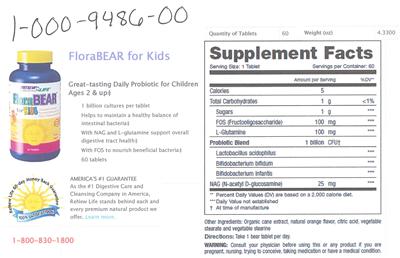
Supplement Facts
The label details for FloraBear For Kids by Renew Life, sourced from the NIH Dietary Supplement Label Database.
Supplement Facts
| Ingredient | Amount | % DV |
|---|---|---|
| Calories | 5 {Calories} | -- |
| Total Carbohydrates | 1 g | 1% |
| L-Glutamine | 100 mg | -- |
| Sugar | 1 g | -- |
| Bifidobacterium infantis | 0 NP | -- |
| Lactobacillus acidophilus | 0 NP | -- |
| Bifidobacterium bifidum | 0 NP | -- |
| FOS | 100 mg | -- |
| NAG | 25 mg | -- |
| Probiotic Blend | 1000000000 CFU | -- |
Other ingredients: Organic cane extract, natural Orange flavor, Citric Acid, Vegetable Stearate, Vegetable Stearine
Tap any ingredient to jump to its full detail below.
These statements are the manufacturer’s wording, reproduced from the product label — the label is saying it, not HelloPharmacist. We don’t verify or endorse them.
Seals/Symbols
ReNew Life 60-day Money Back Guarantee 100% SATISFACTION
Precautions
WARNING: Consult your physician before using this or any product if you are pregnant, nursing, trying to conceive, taking medication or have a medical condition.
Suggested/Recommended/Usage/Directions
Directions: Take 1 bear tablet per day.
Formula
1 billion cultures per tablet
General Statements
Helps to maintain a healthy balance of intestinal bacteria*
Great-tasting Daily Probiotic for Children Ages 2 & up*
With NAG and L-glutamine support overall digestive tract health* With FOS to nourish beneficial bacteria*
AMERICA'S #1 GUARANTEE As the #1 Digestive Care and Cleansing Company in America, ReNew Life stands behind each and every premium natural product we offer.
Is this label outdated? Report a formula or label change and our pharmacy team will review it.
FloraBear For Kids by Renew Life label
The label scan from the NIH Dietary Supplement Label Database. Tap to enlarge.
Label images are published by the NIH Dietary Supplement Label Database for the version of this product on file. Always read your actual product label.
View the full label (PDF)The Ingredients in FloraBear For Kids by Renew Life
These are the 5 active ingredients this product is made of. Select any to open its full monograph.
Serving size1 Tablet(s) Dosage formTablet Or Pill Servings per container60 Amounts shown are per serving.
Most supplement products combine several ingredients, and a medication can interact with the product through any one of them. Each ingredient below shows whether it has known drug interactions.
L-Glutamine
Interacts with50 drugs
Glutamine is the most abundant amino acid in the body and is usually made in your muscles. A prescription form is FDA-approved to help reduce sickle c...
L-Glutamine monograph & interactionsSugar
FOS
NAG
Interacts with170 drugs
Glucosamine is a natural compound found in cartilage and joint fluid, and it is one of the most popular supplements for osteoarthritis, especially of...
NAG monograph & interactionsProbiotic Blend
Interacts with182 drugs
Lactobacillus acidophilus is a 'friendly' bacterium used as a probiotic to support gut and vaginal health. It is generally well tolerated in healthy p...
Probiotic Blend monograph & interactions- › Bifidobacterium infantis
- › Lactobacillus acidophilus
- › Bifidobacterium bifidum
Other (inactive) ingredients: Organic cane extract, Natural Orange flavor, Citric Acid, Vegetable Stearate, Vegetable Stearine. These complete the product’s ingredient list but are not active constituents.
FloraBear For Kids by Renew Life Drug Interactions
FloraBear For Kids contains 5 ingredients, and 3 of them have known drug interactions. Altogether they interact with 402 medications. Here’s the picture, then you can look up your own drug.
Want to check YOUR meds against FloraBear For Kids?
Ask about interactions with your drugs in plain English — “Can I take it with lisinopril?” — and we find you the answer in seconds, ingredient by ingredient.
Go to the checkerIngredients driving the most interactions
Individual Drug Interactions
The ingredients in FloraBear For Kids interact with 402 drugs. Click any drug to see the details.
3 of the 5 ingredients in FloraBear For Kids interact with drugs. Each result below shows which ingredient is responsible. Probiotic Blend NAG L-Glutamine
WarfarinWarfarin
How Warfarin interacts with FloraBear For Kids — through 1 ingredient. Tap an ingredient for the detail:
NagWarfarin (coumadin) Major
Interaction Summary
Glucosamine might increase the anticoagulant effects of warfarin and increase the risk of bruising and bleeding.
Read the full Nag + Warfarin interactionWarfarin SodiumCoumadin, Panwarfin, Sofarin
How Warfarin Sodium interacts with FloraBear For Kids — through 1 ingredient. Tap an ingredient for the detail:
NagWarfarin (coumadin) Major
Interaction Summary
Glucosamine might increase the anticoagulant effects of warfarin and increase the risk of bruising and bleeding.
Read the full Nag + Warfarin Sodium interactionAcetazolamideAk-Zol, Diamox
How Acetazolamide interacts with FloraBear For Kids — through 1 ingredient. Tap an ingredient for the detail:
L-glutamineAnticonvulsants Moderate
Interaction Summary
Theoretically, glutamine might antagonize the effects of anticonvulsant medications.
Read the full L-glutamine + Acetazolamide interactionAmikacinAmikin, Arikayce
How Amikacin interacts with FloraBear For Kids — through 2 ingredients. Tap an ingredient for the detail:
Probiotic BlendAntibiotic Drugs Moderate
Interaction Summary
Theoretically, taking Lactobacillus acidophilus with antibiotic drugs might decrease the effectiveness of L.
Read the full Probiotic Blend + Amikacin interactionBifidobacterium BifidumAntibiotic Drugs Moderate
Interaction Summary
Theoretically, taking Bifidobacterium.
Read the full Bifidobacterium Bifidum + Amikacin interactionAminophylline, Amobarbital, EphedrineAmesec
How Aminophylline, Amobarbital, Ephedrine interacts with FloraBear For Kids — through 1 ingredient. Tap an ingredient for the detail:
L-glutamineAnticonvulsants Moderate
Interaction Summary
Theoretically, glutamine might antagonize the effects of anticonvulsant medications.
Read the full L-glutamine + Aminophylline, Amobarbital, Ephedrine interactionAmobarbitalAmytal
How Amobarbital interacts with FloraBear For Kids — through 1 ingredient. Tap an ingredient for the detail:
L-glutamineAnticonvulsants Moderate
Interaction Summary
Theoretically, glutamine might antagonize the effects of anticonvulsant medications.
Read the full L-glutamine + Amobarbital interactionAmobarbital, Ephedrine SulfateEphedrine & Amytal
How Amobarbital, Ephedrine Sulfate interacts with FloraBear For Kids — through 1 ingredient. Tap an ingredient for the detail:
L-glutamineAnticonvulsants Moderate
Interaction Summary
Theoretically, glutamine might antagonize the effects of anticonvulsant medications.
Read the full L-glutamine + Amobarbital, Ephedrine Sulfate interactionAmobarbital, SecobarbitalTuinal
How Amobarbital, Secobarbital interacts with FloraBear For Kids — through 1 ingredient. Tap an ingredient for the detail:
L-glutamineAnticonvulsants Moderate
Interaction Summary
Theoretically, glutamine might antagonize the effects of anticonvulsant medications.
Read the full L-glutamine + Amobarbital, Secobarbital interactionAmoxicillinAmix, Amoram, Amoxident, Amoxil Capsules, Amoxil Injection, Galenamox +3 more
How Amoxicillin interacts with FloraBear For Kids — through 2 ingredients. Tap an ingredient for the detail:
Bifidobacterium BifidumAntibiotic Drugs Moderate
Interaction Summary
Theoretically, taking Bifidobacterium.
Read the full Bifidobacterium Bifidum + Amoxicillin interactionProbiotic BlendAntibiotic Drugs Moderate
Interaction Summary
Theoretically, taking Lactobacillus acidophilus with antibiotic drugs might decrease the effectiveness of L.
Read the full Probiotic Blend + Amoxicillin interactionAmoxicillin VeterinaryBiomox
How Amoxicillin Veterinary interacts with FloraBear For Kids — through 2 ingredients. Tap an ingredient for the detail:
Probiotic BlendAntibiotic Drugs Moderate
Interaction Summary
Theoretically, taking Lactobacillus acidophilus with antibiotic drugs might decrease the effectiveness of L.
Read the full Probiotic Blend + Amoxicillin Veterinary interactionBifidobacterium BifidumAntibiotic Drugs Moderate
Interaction Summary
Theoretically, taking Bifidobacterium.
Read the full Bifidobacterium Bifidum + Amoxicillin Veterinary interactionAmoxicillin, Clavulanate PotassiumAugmentin, Augmentin '125/31 SF', Augmentin '250/62 SF', Augmentin XR, Augmentin-Duo 400/57, Clavulin
How Amoxicillin, Clavulanate Potassium interacts with FloraBear For Kids — through 2 ingredients. Tap an ingredient for the detail:
Bifidobacterium BifidumAntibiotic Drugs Moderate
Interaction Summary
Theoretically, taking Bifidobacterium.
Read the full Bifidobacterium Bifidum + Amoxicillin, Clavulanate Potassium interactionProbiotic BlendAntibiotic Drugs Moderate
Interaction Summary
Theoretically, taking Lactobacillus acidophilus with antibiotic drugs might decrease the effectiveness of L.
Read the full Probiotic Blend + Amoxicillin, Clavulanate Potassium interactionAmoxicillin, Omeprazole Magnesium, RifabutinTalicia
How Amoxicillin, Omeprazole Magnesium, Rifabutin interacts with FloraBear For Kids — through 2 ingredients. Tap an ingredient for the detail:
Probiotic BlendAntibiotic Drugs Moderate
Interaction Summary
Theoretically, taking Lactobacillus acidophilus with antibiotic drugs might decrease the effectiveness of L.
Read the full Probiotic Blend + Amoxicillin, Omeprazole Magnesium, Rifabutin interactionBifidobacterium BifidumAntibiotic Drugs Moderate
Interaction Summary
Theoretically, taking Bifidobacterium.
Read the full Bifidobacterium Bifidum + Amoxicillin, Omeprazole Magnesium, Rifabutin interactionAmphotericin, TetracyclineMysteclin-F
How Amphotericin, Tetracycline interacts with FloraBear For Kids — through 2 ingredients. Tap an ingredient for the detail:
Bifidobacterium BifidumAntibiotic Drugs Moderate
Interaction Summary
Theoretically, taking Bifidobacterium.
Read the full Bifidobacterium Bifidum + Amphotericin, Tetracycline interactionProbiotic BlendAntibiotic Drugs Moderate
Interaction Summary
Theoretically, taking Lactobacillus acidophilus with antibiotic drugs might decrease the effectiveness of L.
Read the full Probiotic Blend + Amphotericin, Tetracycline interactionAmpicillinOmnipen, Omnipen-N, Penbritin, Principen, Rimacillin
How Ampicillin interacts with FloraBear For Kids — through 2 ingredients. Tap an ingredient for the detail:
Probiotic BlendAntibiotic Drugs Moderate
Interaction Summary
Theoretically, taking Lactobacillus acidophilus with antibiotic drugs might decrease the effectiveness of L.
Read the full Probiotic Blend + Ampicillin interactionBifidobacterium BifidumAntibiotic Drugs Moderate
Interaction Summary
Theoretically, taking Bifidobacterium.
Read the full Bifidobacterium Bifidum + Ampicillin interactionAmpicillin, SulbactamUnasyn
How Ampicillin, Sulbactam interacts with FloraBear For Kids — through 2 ingredients. Tap an ingredient for the detail:
Bifidobacterium BifidumAntibiotic Drugs Moderate
Interaction Summary
Theoretically, taking Bifidobacterium.
Read the full Bifidobacterium Bifidum + Ampicillin, Sulbactam interactionProbiotic BlendAntibiotic Drugs Moderate
Interaction Summary
Theoretically, taking Lactobacillus acidophilus with antibiotic drugs might decrease the effectiveness of L.
Read the full Probiotic Blend + Ampicillin, Sulbactam interactionAprobarbital, Butabarbital, PhenobarbitalTriple Barbital
How Aprobarbital, Butabarbital, Phenobarbital interacts with FloraBear For Kids — through 1 ingredient. Tap an ingredient for the detail:
L-glutamineAnticonvulsants Moderate
Interaction Summary
Theoretically, glutamine might antagonize the effects of anticonvulsant medications.
Read the full L-glutamine + Aprobarbital, Butabarbital, Phenobarbital interactionAvibactam Sodium, CeftazidimeAvycaz
How Avibactam Sodium, Ceftazidime interacts with FloraBear For Kids — through 2 ingredients. Tap an ingredient for the detail:
Probiotic BlendAntibiotic Drugs Moderate
Interaction Summary
Theoretically, taking Lactobacillus acidophilus with antibiotic drugs might decrease the effectiveness of L.
Read the full Probiotic Blend + Avibactam Sodium, Ceftazidime interactionBifidobacterium BifidumAntibiotic Drugs Moderate
Interaction Summary
Theoretically, taking Bifidobacterium.
Read the full Bifidobacterium Bifidum + Avibactam Sodium, Ceftazidime interactionAzithromycinAzasite, Zithromax, Zmax
How Azithromycin interacts with FloraBear For Kids — through 2 ingredients. Tap an ingredient for the detail:
Bifidobacterium BifidumAntibiotic Drugs Moderate
Interaction Summary
Theoretically, taking Bifidobacterium.
Read the full Bifidobacterium Bifidum + Azithromycin interactionProbiotic BlendAntibiotic Drugs Moderate
Interaction Summary
Theoretically, taking Lactobacillus acidophilus with antibiotic drugs might decrease the effectiveness of L.
Read the full Probiotic Blend + Azithromycin interactionAztreonamAzactam
How Aztreonam interacts with FloraBear For Kids — through 2 ingredients. Tap an ingredient for the detail:
Probiotic BlendAntibiotic Drugs Moderate
Interaction Summary
Theoretically, taking Lactobacillus acidophilus with antibiotic drugs might decrease the effectiveness of L.
Read the full Probiotic Blend + Aztreonam interactionBifidobacterium BifidumAntibiotic Drugs Moderate
Interaction Summary
Theoretically, taking Bifidobacterium.
Read the full Bifidobacterium Bifidum + Aztreonam interactionBacampicillinPenglobe
How Bacampicillin interacts with FloraBear For Kids — through 2 ingredients. Tap an ingredient for the detail:
Bifidobacterium BifidumAntibiotic Drugs Moderate
Interaction Summary
Theoretically, taking Bifidobacterium.
Read the full Bifidobacterium Bifidum + Bacampicillin interactionProbiotic BlendAntibiotic Drugs Moderate
Interaction Summary
Theoretically, taking Lactobacillus acidophilus with antibiotic drugs might decrease the effectiveness of L.
Read the full Probiotic Blend + Bacampicillin interactionBacitracinBaci-IM, Baciguent, Bacitracin Ointment
How Bacitracin interacts with FloraBear For Kids — through 2 ingredients. Tap an ingredient for the detail:
Probiotic BlendAntibiotic Drugs Moderate
Interaction Summary
Theoretically, taking Lactobacillus acidophilus with antibiotic drugs might decrease the effectiveness of L.
Read the full Probiotic Blend + Bacitracin interactionBifidobacterium BifidumAntibiotic Drugs Moderate
Interaction Summary
Theoretically, taking Bifidobacterium.
Read the full Bifidobacterium Bifidum + Bacitracin interactionBelladonna, Caffeine, Ergotamine, PentobarbitalMicomp PB
How Belladonna, Caffeine, Ergotamine, Pentobarbital interacts with FloraBear For Kids — through 1 ingredient. Tap an ingredient for the detail:
L-glutamineAnticonvulsants Moderate
Interaction Summary
Theoretically, glutamine might antagonize the effects of anticonvulsant medications.
Read the full L-glutamine + Belladonna, Caffeine, Ergotamine, Pentobarbital interactionBelladonna, PhenobarbitalBellophen, Susano
How Belladonna, Phenobarbital interacts with FloraBear For Kids — through 1 ingredient. Tap an ingredient for the detail:
L-glutamineAnticonvulsants Moderate
Interaction Summary
Theoretically, glutamine might antagonize the effects of anticonvulsant medications.
Read the full L-glutamine + Belladonna, Phenobarbital interactionBellafoline, Caffeine, Ergotamine Tartrate, PentobarbitalCafergot PB
How Bellafoline, Caffeine, Ergotamine Tartrate, Pentobarbital interacts with FloraBear For Kids — through 1 ingredient. Tap an ingredient for the detail:
L-glutamineAnticonvulsants Moderate
Interaction Summary
Theoretically, glutamine might antagonize the effects of anticonvulsant medications.
Read the full L-glutamine + Bellafoline, Caffeine, Ergotamine Tartrate, Pentobarbital interactionBenznidazoleBenznidazole
How Benznidazole interacts with FloraBear For Kids — through 2 ingredients. Tap an ingredient for the detail:
Probiotic BlendAntibiotic Drugs Moderate
Interaction Summary
Theoretically, taking Lactobacillus acidophilus with antibiotic drugs might decrease the effectiveness of L.
Read the full Probiotic Blend + Benznidazole interactionBifidobacterium BifidumAntibiotic Drugs Moderate
Interaction Summary
Theoretically, taking Bifidobacterium.
Read the full Bifidobacterium Bifidum + Benznidazole interactionBismuth Subsalicylate, Metronidazole, TetracyclineHelidac
How Bismuth Subsalicylate, Metronidazole, Tetracycline interacts with FloraBear For Kids — through 2 ingredients. Tap an ingredient for the detail:
Bifidobacterium BifidumAntibiotic Drugs Moderate
Interaction Summary
Theoretically, taking Bifidobacterium.
Read the full Bifidobacterium Bifidum + Bismuth Subsalicylate, Metronidazole, Tetracycline interactionProbiotic BlendAntibiotic Drugs Moderate
Interaction Summary
Theoretically, taking Lactobacillus acidophilus with antibiotic drugs might decrease the effectiveness of L.
Read the full Probiotic Blend + Bismuth Subsalicylate, Metronidazole, Tetracycline interactionButalbital, Phenobarbital, SecobarbitalTribarb
How Butalbital, Phenobarbital, Secobarbital interacts with FloraBear For Kids — through 1 ingredient. Tap an ingredient for the detail:
L-glutamineAnticonvulsants Moderate
Interaction Summary
Theoretically, glutamine might antagonize the effects of anticonvulsant medications.
Read the full L-glutamine + Butalbital, Phenobarbital, Secobarbital interactionCapreomycinCapastat
How Capreomycin interacts with FloraBear For Kids — through 2 ingredients. Tap an ingredient for the detail:
Probiotic BlendAntibiotic Drugs Moderate
Interaction Summary
Theoretically, taking Lactobacillus acidophilus with antibiotic drugs might decrease the effectiveness of L.
Read the full Probiotic Blend + Capreomycin interactionBifidobacterium BifidumAntibiotic Drugs Moderate
Interaction Summary
Theoretically, taking Bifidobacterium.
Read the full Bifidobacterium Bifidum + Capreomycin interactionCarbamazepineCarbatrol, Carnexiv, Equetro, Tegretol, Tegretol XR
How Carbamazepine interacts with FloraBear For Kids — through 1 ingredient. Tap an ingredient for the detail:
L-glutamineAnticonvulsants Moderate
Interaction Summary
Theoretically, glutamine might antagonize the effects of anticonvulsant medications.
Read the full L-glutamine + Carbamazepine interactionCarbenicillin Indanyl SodiumGeocillin
How Carbenicillin Indanyl Sodium interacts with FloraBear For Kids — through 2 ingredients. Tap an ingredient for the detail:
Bifidobacterium BifidumAntibiotic Drugs Moderate
Interaction Summary
Theoretically, taking Bifidobacterium.
Read the full Bifidobacterium Bifidum + Carbenicillin Indanyl Sodium interactionProbiotic BlendAntibiotic Drugs Moderate
Interaction Summary
Theoretically, taking Lactobacillus acidophilus with antibiotic drugs might decrease the effectiveness of L.
Read the full Probiotic Blend + Carbenicillin Indanyl Sodium interactionEach ingredient & the kinds of drugs it affects
For each ingredient in FloraBear For Kids with known interactions, here are the types of medications they can affect. Open any type for the detail — or search your exact drug in the checker above.
Probiotic Blend
Antibiotic Drugs
Theoretically, taking Lactobacillus acidophilus with antibiotic drugs might decrease the effectiveness of L. acidophilus.
L. acidophilus preparations usually contain live and active organisms. Therefore, simultaneously taking antibiotics might kill a significant number of the organisms. Tell patients to separate administration of antibiotics and L. acidophilus preparations by at least two hours.
NAG
Warfarin (Coumadin)
Glucosamine might increase the anticoagulant effects of warfarin and increase the risk of bruising and bleeding.
In two individual case reports, glucosamine/chondroitin combinations were associated with a significant increase in international normalized ratio (INR) in patients previously stabilized on warfarin. In one case, the increase in INR occurred only after tripling the dose of a glucosamine/chondroitin supplement from 500 mg/400 mg daily to 1500/1200 mg daily. Additionally, 20 voluntary case reports to the U.S. Food & Drug Administration (FDA) have linked glucosamine plus chondroitin with increased INR, bruising, and bleeding in patients who were also taking warfarin. There have also been 20 additional case reports to the World Health Organization (WHO) that link glucosamine alone to increased INR in patients taking warfarin. The mechanism of this interaction is unclear. Glucosamine is a small component of heparin, but is not thought to have anticoagulant activity; however, animal research suggests that it might have antiplatelet activity.
Topoisomerase Ii Inhibitors
Theoretically glucosamine may induce resistance to topoisomerase II inhibitors.
In vitro research suggests that glucosamine might induce resistance to etoposide (VP16, VePesid) and doxorubicin (Adriamycin) by reducing inhibition of topoisomerase II, an enzyme required for DNA replication in tumor cells. This effect has not been reported in humans.
Acetaminophen (Tylenol, Others)
Acetaminophen might interfere with the activity of glucosamine sulfate by interacting with the sulfate portion.
Anecdotal reports suggest that adding glucosamine to an acetaminophen regimen might decrease pain control in patients with osteoarthritis. Some research suggests that the sulfate portion of glucosamine sulfate might contribute to its effect in osteoarthritis. Since acetaminophen metabolism requires sulfur and reduces serum sulfate concentrations, acetaminophen could theoretically interfere with the action of glucosamine sulfate. Conversely, the administration of sulfate could theoretically decrease the effectiveness of acetaminophen in sulfate-deficient people by increasing its clearance.
Antidiabetes Drugs
Despite initial concerns, it is unlikely that glucosamine will interfere with the effects of antidiabetes drugs.
In vitro and animal research has suggested that glucosamine might increase insulin resistance or decrease insulin production. This has raised concerns that taking glucosamine might worsen diabetes and decrease the effectiveness of diabetes drugs. However, clinical research suggests that glucosamine does not have adverse effects on blood glucose or glycated hemoglobin (HbA1C) in healthy, obese, or type 2 diabetes patients.
L-Glutamine
Anticonvulsants
Theoretically, glutamine might antagonize the effects of anticonvulsant medications.
Glutamine is metabolized to the excitatory neurotransmitter glutamate. Glutamate might have antagonistic effects with anticonvulsant drugs. However, this interaction has not yet been reported in humans.
Brand information
Manufacturer and brand details for FloraBear For Kids, from the product label.
Renew Life
- Phone Number
- 1-800-830-1800
FloraBear For Kids by Renew Life: Common Questions
Does FloraBear For Kids by Renew Life interact with any medications?
How can one product interact with so many drugs?
Where does this information come from?
Written and reviewed by the HelloPharmacist editorial staff. Our editorial policy
Not sure if FloraBear For Kids is safe with your meds?
Our pharmacists answer your medication & supplement questions — free.
Label information is sourced from the NIH Dietary Supplement Label Database and reflects the product version on file; always read your actual product label. This page is for education only and is not a substitute for professional medical advice. Confirm with your pharmacist or doctor before combining supplements and medications.
The Full Monographs Behind FloraBear For Kids’s Ingredients
Every ingredient we hold a full HelloPharmacist monograph for — uses, evidence, safety, and the complete interaction list.
Glutamine
Interacts with 50 drugsGlutamine is the most abundant amino acid in the body and is usually made in your muscles. A prescription form is FDA-approved to help reduce sickle cell disease complications, but for most...
Read the full Glutamine monograph → Herb & supplement monographGlucosamine
Interacts with 170 drugsGlucosamine is a natural compound found in cartilage and joint fluid, and it is one of the most popular supplements for osteoarthritis, especially of the knee. The evidence is mixed, with so...
Read the full Glucosamine monograph → Herb & supplement monographLactobacillus Acidophilus
Interacts with 182 drugsLactobacillus acidophilus is a 'friendly' bacterium used as a probiotic to support gut and vaginal health. It is generally well tolerated in healthy people, and there is reasonable evidence...
Read the full Lactobacillus Acidophilus monograph → Herb & supplement monographBifidobacterium Bifidum
Interacts with 182 drugsBifidobacterium bifidum is a 'friendly' bacteria (probiotic) that naturally lives in the human gut and is taken to support digestion and gut balance. Some evidence suggests probiotics may he...
Read the full Bifidobacterium Bifidum monograph →Sources & How We Checked
FloraBear For Kids's label data comes from the NIH Dietary Supplement Label Database; the ingredient interaction data is from the Natural Medicines database, reviewed by our pharmacists.
- NIH Dietary Supplement Label Database (DSLD) — The official product label on file for this supplement.
- Natural Medicines (Therapeutic Research Center) — Evidence-graded clinical reference behind the ingredient interaction data.
Content is written and reviewed by licensed HelloPharmacist pharmacists. See our data sources and editorial standards for how this information is built and checked.
The 91 references behind this product’s interaction data
Every citation that drives the interaction findings for this product’s ingredients, from the evidence-graded Natural Medicines (TRC Healthcare) database. Open an ingredient to browse its citations — links open the study on PubMed or the publisher’s site.
Glutamine 11 references
- Miller AL. Therapeutic considerations of L-glutamine: a review of the literature. Altern Med Rev 1999;4:239-48..
- Bozzetti F, Biganzoli L, Gavazzi C, et al. Glutamine supplementation in cancer patients receiving chemotherapy: a double-blind randomized study. Nutrition 1997;13:748-51.. PubMed
- Mebane AH. L-Glutamine and mania. Am J Psychiatry 984;141:1302-3.
- Meldrum BS. Glutamate as a neurotransmitter in the brain: review of physiology and pathology. J Nutr 2000;130:1007S-15S.. PubMed
- Garlick PJ. Assessment of the safety of glutamine and other amino acids. J Nutr 2001;131:2556S-61S.. PubMed
- Chapman AG. Glutamate and epilepsy. J Nutr 2000;130:1043S-5S.. PubMed
- Ziegler TR. Glutamine supplementation in cancer patients receiving bone marrow transplantation and high dose chemotherapy. J Nutr 2001;131:2578S-84S.. PubMed
- Laviano A, Molfino A, Lacaria MT, Canelli A, De Leo S, Preziosa I, Rossi Fanelli F. Glutamine supplementation favors weight loss in nondieting obese female patients. A pilot study. Eur J Clin Nutr. 2014 Nov;68(11):1264-6. PubMed
- Endari (l-glutamine) [package insert]. Torrance, CA: Emmaus Medical,Inc; 2017.
- Niihara Y, Miller ST, Kanter J, et al. A Phase 3 Trial of l-Glutamine in Sickle Cell Disease. N Engl J Med 2018;379(3):226-35. doi: 10.1056/NEJMoa1715971.
- Ogden HB, Child RB, Fallowfield JL, et al. Gastrointestinal Tolerance of Low, Medium and High Dose Acute Oral l-Glutamine Supplementation in Healthy Adults: A Pilot Study. Nutrients. 2020;12(10):2953. PubMed
Lactobacillus Acidophilus 15 references
- Pierce A. The American Pharmaceutical Association Practical Guide to Natural Medicines. New York: The Stonesong Press, 1999:19.
- Begtrup LM, de Muckadell OB, Kjeldsen J, Christensen RD, Jarbøl DE. Long-term treatment with probiotics in primary care patients with irritable bowel syndrome--a randomised, double-blind, placebo controlled trial. Scand J Gastroenterol 2013;48(10):1127-35 PubMed
- Chatterjee S, Kar P, Das T, Ray S, Gangulyt S, Rajendiran C, Mitra M. Randomised placebo-controlled double blind multicentric trial on efficacy and safety of Lactobacillus acidophilus LA-5 and Bifidobacterium BB-12 for prevention of antibiotic-associated
- Shavakhi A, Tabesh E, Yaghoutkar A, Hashemi H, Tabesh F, Khodadoostan M,Minakari M, Shavakhi S, Gholamrezaei A. The effects of multistrain probiotic compound on bismuth-containing quadruple therapy for Helicobacter pylori infection: a randomized placebo-c
- Karamali M, Dadkhah F, Sadrkhanlou M, et al. Effects of probiotic supplementation on glycaemic control and lipid profiles in gestational diabetes: a randomized, double-blind, placebo-controlled trial. Diabetes Metab 2016;42(4):234-41. PubMed
- Badehnoosh B, Karamali M, Zarrati M, et al. The effects of probiotic supplementation on biomarkers of inflammation, oxidative stress and pregnancy outcomes in gestational diabetes. J Matern Fetal Neonatal Med. 2018 May;31(9):1128-1136.
- Kumar S, Kumar R, Rohilla L, Jacob N, Yadav J, Sachdeva N. A high potency multi-strain probiotic improves glycemic control in children with new-onset type 1 diabetes mellitus: A randomized, double-blind, and placebo-controlled pilot study. Pediatr Diabete
- Shahriari A, Karimi E, Shahriari M, Aslani N, Khooshideh M, Arab A. The effect of probiotic supplementation on the risk of gestational diabetes mellitus among high-risk pregnant women: A parallel double-blind, randomized, placebo-controlled clinical trial PubMed
- Xiao SD, Zhang DZ, Lu H, et al. Multicenter, randomized, controlled trial of heat-killed Lactobacillus acidophilus LB in patients with chronic diarrhea. Adv Ther. 2003;20(5):253-60.
- Rossi F, Amadoro C, Gasperi M, Colavita G. Lactobacilli infection case reports in the last three years and safety implications. Nutrients. 2022;14(6):1178. PubMed
- Ozer M, Goksu SY, Shahverdiani A, Mustafa M. Lactobacillus acidophilus-induced endocarditis and associated splenic abscess. Case Rep Infect Dis 2020;2020:1382709.
- Sadrin S, Sennoune S, Gout B, et al. A 2-strain mixture of Lactobacillus acidophilus in the treatment of irritable bowel syndrome: A placebo-controlled randomized clinical trial. Dig Liver Dis 2020;52(5):534-540. PubMed
- Stoffer JN, Slingsby TJ, Giuliari GP. Lactobacillus acidophilus endophthalmitis after intravitreal bevacizumab injection requiring intraocular lens explantation. Can J Ophthalmol 2022;57(1):e21-e22. PubMed
- Cukovic-Cavka S, Likic R, Francetic I, Rustemovic N, Opacic M, Vucelic B. Lactobacillus acidophilus as a cause of liver abscess in a NOD2/CARD15-positive patient with Crohn's disease. Digestion 2006;73(2-3):107-10.
- Hui J, Ren Y, Wang Y, Han Q. Lactobacillus acidophilus endophthalmitis postcataract operation: A case report with a literature review. Ocul Immunol Inflamm 2023.
See these in context on the Lactobacillus Acidophilus monograph →
Bifidobacterium Bifidum 7 references
- Pierce A. The American Pharmaceutical Association Practical Guide to Natural Medicines. New York: The Stonesong Press, 1999:19.
- Xiao JZ, Takahashi S, Odamaki T, et al. Antibiotic susceptibility of bifidobacterial strains distributed in the Japanese market. Biosci Biotechnol Biochem. 2010;74(2):336-42. PubMed
- Rerksuppaphol S, Rerksuppaphol L. Randomized controlled trial of probiotics to reduce common cold in schoolchildren. Pediatr Int. 2012;54(5):682-7. PubMed
- Karamali M, Dadkhah F, Sadrkhanlou M, et al. Effects of probiotic supplementation on glycaemic control and lipid profiles in gestational diabetes: a randomized, double-blind, placebo-controlled trial. Diabetes Metab 2016;42(4):234-41. PubMed
- Badehnoosh B, Karamali M, Zarrati M, et al. The effects of probiotic supplementation on biomarkers of inflammation, oxidative stress and pregnancy outcomes in gestational diabetes. J Matern Fetal Neonatal Med. 2018 May;31(9):1128-1136.
- Pruccoli G, Silvestro E, Pace Napoleone C, Aidala E, Garazzino S, Scolfaro C. Are probiotics safe? Bifidobacterium bacteremia in a child with severe heart failure. Infez Med. 2019;27(2):175-178.
- Esaiassen E, Hjerde E, Cavanagh JP, Simonsen GS, Klingenberg C; Norwegian Study Group on Invasive Bifidobacterial Infections. Bifidobacterium bacteremia: Clinical characteristics and a genomic approach to assess pathogenicity. J Clin Microbiol. 2017;55(7) PubMed
See these in context on the Bifidobacterium Bifidum monograph →
Glucosamine 58 references
- Adams ME. Hype about glucosamine. Lancet 1999;354:353-4. PubMed
- Balkan B, Dunning BE. Glucosamine inhibits glucokinase in vitro and produces a glucose-specific impairment of in vivo insulin secretion in rats. Diabetes 1994;43:1173-9. PubMed
- Giaccari A, Morviducci L, Zorretta D, et al. In vivo effects of glucosamine on insulin secretion and insulin sensitivity in the rat: possible relevance to the maladaptive responses to chronic hyperglycaemia. Diabetologia 1995;38:518-24. PubMed
- Holmang A, Nilsson C, Niklasson M, et al. Induction of insulin resistance by glucosamine reduces blood flow but not interstitial levels of either glucose or insulin. Diabetes 1999;48:106-11. PubMed
- Houpt JB, McMillan R, Wein C, Paget-Dellio SD. Effect of glucosamine hydrochloride in the treatment of pain of osteoarthritis of the knee. J Rheumatol 1999;26:2423-30.
- Barclay TS, Tsourounis C, McCart GM. Glucosamine. Ann Pharmacother 1998;32:574-9.
- Shankar RR, Zhu JS, Baron AD. Glucosamine infusion in rats mimics the beta-cell dysfunction of non-insulin-dependent diabetes mellitus. Metabolism 1998;47:573-7.
- Almada A, Harvey P, Platt K. Effects of chronic oral glucosamine sulfate on fasting insulin resistance index (FIRI) in non-diabetic individuals. FASEB J 2000;14:A750.
- Reginster JY, Deroisy R, Rovati LC, et al. Long-term effects of glucosamine sulfate on osteoarthritis progression: a randomised, placebo-controlled trial. Lancet 2001;357:251-6.
- Does glucosamine increase serum lipid levels and blood pressure? Pharmacist's Letter/Prescriber's Letter 2001;17(11):171115.
- Food and Nutrition Board, Institute of Medicine. Dietary Reference Intakes for Vitamin A, Vitamin K, Arsenic, Boron, Chromium, Copper, Iodine, Iron, Manganese, Molybdenum, Nickel, Silicon, Vanadium, and Zinc. Washington, DC: National Academy Press, 2002.
- Monauni T, Zenti MG, Cretti A, et al. Effects of glucosamine infusion on insulin secretion and insulin action in humans. Diabetes 2000;49:926-35. PubMed
- Pouwels MJ, Jacobs JR, Span PN, et al. Short-term glucosamine infusion does not affect insulin sensitivity in humans. J Clin Endocrinol Metab 2001;86:2099-103. DOI
- Yun J, Tomida A, Nagata K, Tsuruo T. Glucose-regulated stresses confer resistance to VP-16 in human cancer cells through a decreased expression of DNA topoisomerase II. Oncol Res 1995;7:583-90.
- Pavelka K, Gatterova J, Olejarova M, et al. Glucosamine sulfate use and delay of progression of knee osteoarthritis: A 3-year, randomized, placebo-controlled, double-blind study. Arch Intern Med 2002;162:2113-23. PubMed
- Tallia AF, Cardone DA. Asthma exacerbation associated with glucosamine-chondroitin supplement. J Am Board Fam Pract 2002;15:481-4..
- Scroggie DA, Albright A, Harris MD. The effect of glucosamine-chondroitin supplementation on glycosylated hemoglobin levels in patients with type 2 diabetes mellitus: a placebo-controlled, double-blinded, randomized clinical trial. Arch Intern Med 2003; PubMed
- Hoffer LJ, Kaplan LN, Hamadeh MJ, et al. Sulfate could mediate the therapeutic effect of glucosamine sulfate. Metabolism 2001;50:767-70.. PubMed
- Yu JG, Boies SM, Olefsky JM. The effect of oral glucosamine sulfate on insulin sensitivity in human subjects. Diabetes Care 2003;26:1941-2. PubMed
- Danao-Camara T. Potential side effects of treatment with glucosamine and chondroitin. Arthritis Rheum 2000;43:2853. PubMed
- Guillaume MP, Peretz A. Possible association between glucosamine treatment and renal toxicity: comment on the letter by Danao-Camara. Arthritis Rheum 2001;44:2943-4. PubMed
- Rozenfeld V, Crain JL, Callahan AK. Possible augmentation of warfarin effect by glucosamine-chondroitin. Am J Health Syst Pharm 2004;61:306-307. PubMed
- Tannis AJ, Barban J, Conquer JA. Effect of glucosamine supplementation on fasting and non-fasting plasma glucose and serum insulin concentrations in healthy individuals. Osteoarthritis Cartilage 2004;12:506-11. PubMed
- Bush TM, Rayburn KS, Holloway SW, et al. Adverse interactions between herbal and dietary substances and prescription medications: a clinical survey. Altern Ther Health Med 2007;13:30-5.
- Stumpf JL, Lin SW. Effect of glucosamine on glucose control. Ann Pharmacother 2006;40:694-8. PubMed
- Pham T, Cornea A, Blick KE, et al. Oral glucosamine in doses used to treat osteoarthritis worsens insulin resistance. Am J Med Sci 2007;333:333-9. PubMed
- Muniyappa R, Karne RJ, Hall G, et al. Oral glucosamine for 6 weeks at standard doses does not cause or worsen insulin resistance or endothelial dysfunction in lean or obese subjects. Diabetes 2006;55:3142-50. PubMed
- Knudsen J, Sokol GH. Potential glucosamine-warfarin interaction resulting in increased international normalized ratio: Case report and review of the literature and MedWatch database. Pharmacotherapy 2008;28:540-8. PubMed
- Yue QY, Strandell J, Myrberg O. Concomitant use of glucosamine potentiates the effect of warfarin. Jan 2006. Drug Safety 29(10):911-1010. DOI
- Rozendaal RM, Koes BW, van Osch GJVM, et al. Effect of glucosamine sulfate on hip osteoarthritis: A randomized trial. Ann Intern Med 2008;148:268-77. PubMed
- Baron AD, Zhu JS, Zhu JH, et al. Glucosamine induces insulin resistance in vivo by affecting GLUT 4 translocation in skeletal muscle. Implications for glucose toxicity. J Clin Invest 1995;96(6):2792-801. PubMed
- Nelson BA, Robinson KA, Buse MG. High glucose and glucosamine induce insulin resistance via different mechanisms in 3T3-L1 adipocytes. Diabetes 2000;49(6):981-91. PubMed
- Giordano N, Fioravanti A, Papakostas P, et al. The efficacy and tolerability of glucosamine sulfate in the treatment of knee osteoarthritis: a randomized, double-blind, placebo-controlled trial. Curr Ther Res Clin Exp 2009;70(3):185-196. PubMed
- Shaygannejad, V., Janghorbani, M., Savoj, M. R., and Ashtari, F. Effects of adjunct glucosamine sulfate on relapsing-remitting multiple sclerosis progression: preliminary findings of a randomized, placebo-controlled trial. Neurol Res 2010;32(9):981-985. PubMed
- Cahlin, B. J. and Dahlstrom, L. No effect of glucosamine sulfate on osteoarthritis in the temporomandibular joints--a randomized, controlled, short-term study. Oral Surg Oral Med Oral Pathol Oral Radiol Endod 2011;112(6):760-766. PubMed
- Cerda C, Bruguera M, Parés A. Hepatotoxicity associated with glucosamine and chondroitin sulfate in patients with chronic liver disease. World J Gastroenterol 2013;19(32):5381-4. PubMed
- Hochberg MC, Martel-Pelletier J, Monfort J, Möller I, Castillo JR, Arden N,Berenbaum F, Blanco FJ, Conaghan PG, Doménech G, Henrotin Y, Pap T, Richette P, Sawitzke A, du Souich P, Pelletier JP; on behalf of the MOVES Investigation Group. Combined chondroi
- von Felden J, Montani M, Kessebohm K, Stickel F. Drug-induced acute liver injury mimicking autoimmune hepatitis after intake of dietary supplements containing glucosamine and chondroitin sulfate. Int J Clin Pharmacol Ther 2013;51(3):219-23. PubMed
- Provenza JR, Shinjo SK, Silva JM, Peron CR, Rocha FA. Combined glucosamine and chondroitin sulfate, once or three times daily, provides clinically relevant analgesia in knee osteoarthritis. Clin Rheumatol 2015;34:1455-62. PubMed
- Ossendza RA, Grandval P, Chinoune F, Rocher F, Chapel F, Bernardini D. [Acute cholestatic hepatitis due to glucosamine forte]. Gastroenterol Clin Biol. 2007 Apr;31(4):449-50.
- Audimoolam VK, Bhandari S. Acute interstitial nephritis induced by glucosamine. Nephrol Dial Transplant 2006;21(7):2031. PubMed
- Greenlee H, Crew KD, Shao T, Kranwinkel G, Kalinsky K, Maurer M, Brafman L, Insel B, Tsai WY, Hershman DL. Phase II study of glucosamine with chondroitin on aromatase inhibitor-associated joint symptoms in women with breast cancer. Support Care Cancer 201 PubMed
- Wilkens, P., Scheel, I. B., Grundnes, O., Hellum, C., and Storheim, K. Effect of glucosamine on pain-related disability in patients with chronic low back pain and degenerative lumbar osteoarthritis: a randomized controlled trial. JAMA 2010;304(1):45-52. PubMed
- Simon RR, Marks V, Leeds AR, Anderson JW. A comprehensive review of oral glucosamine use and effects on glucose metabolism in normal and diabetic individuals. Diabetes Metab Res Rev 2011;27(1):14-27. PubMed
- Smidt D, Torpet LA, Nauntofte B, Heegaard KM, Pedersen AM. Associations between labial and whole salivary flow rates, systemic diseases and medications in a sample of older people. Community Dent Oral Epidemiol 2010;38(5):422-35. PubMed
- Wangroongsub Y, Tanavalee A, Wilairatana V, Ngarmukos S. Comparable clinical outcomes between glucosamine sulfate-potassium chloride and glucosamine sulfate sodium chloride in patients with mild and moderate knee osteoarthritis: a randomized, double-blind
- Chopra A, Saluja M, Tillu G, Venugopalan A, Sarmukaddam S, Raut AK, Bichile L, Narsimulu G, Handa R, Patwardhan B. A Randomized Controlled Exploratory Evaluation of Standardized Ayurvedic Formulations in Symptomatic Osteoarthritis Knees: A Government of I
- Swinburne LM. Glucosamine sulphate and osteoarthritis. Lancet 2001;357(9268):1617. PubMed
- Murphy RK, Ketzler L, Rice RD, Johnson SM, Doss MS, Jaccoma EH. Oral glucosamine supplements as a possible ocular hypertensive agent. JAMA Ophthalmol 2013;131(7):955-7. PubMed
- Kimball AB, Kaczvinsky JR, Li J, et al. Reduction in the appearance of facial hyperpigmentation after use of moisturizers with a combination of topical niacinamide and N-acetyl glucosamine: results of a randomized, double-blind, vehicle-controlled trial.
- Ma H, Li X, Sun D, et al. Association of habitual glucosamine use with risk of cardiovascular disease: prospective study in UK Biobank. BMJ. 2019 May 14;365:l1628. PubMed
- Hoban C, Byard R, Musgrave I. Hypersensitive adverse drug reactions to glucosamine and chondroitin preparations in Australia between 2000 and 2011. Postgrad Med J. 2019 Oct 9. pii: postgradmedj-2019-136957. PubMed
- Tenti S, Veronese N, Cheleschi S, et al. Prescription-grade crystalline glucosamine sulfate as an add-on therapy to conventional treatments in erosive osteoarthritis of the hand: results from a 6-month observational retrospective study. Aging Clin Exp Res PubMed
- Yu H, Wu J, Chen H, et al. Glucosamine use is associated with a higher risk of cardiovascular diseases in patients with osteoarthritis: results from a large study in 685,778 subjects. Nutrients 2022;14(18):3694. PubMed
- Chu EC, Huang KHK, Cheung G, Ng G, Lin A. Delayed Skin Allergy to Glucosamine Chondroitin Supplement. Cureus 2023;15(3):e36310. PubMed
- Lila AM, Alekseeva LI, Baranov AA, et al. Chondroitin sulfate and glucosamine combination in patients with knee and hip osteoarthritis: A long-term observational study in Russia. World J Orthop 2023;14(6):443-457. PubMed
- Lehrer S, Morello T, Karrasch C, Rheinstein PH, Danias J. Effect of Glucosamine on Intraocular Pressure and Risk of Developing Glaucoma. J Glaucoma 2023. PubMed
- Rabade A, Viswanatha GL, Nandakumar K, Kishore A. Evaluation of efficacy and safety of glucosamine sulfate, chondroitin sulfate, and their combination regimen in the management of knee osteoarthritis: a systematic review and meta-analysis. Inflammopharmac PubMed
Parts of this content are provided by the Therapeutic Research Center, LLC.
DISCLAIMER: Currently this does not check for drug-drug interactions. This is not an all-inclusive comprehensive list of potential interactions and is for informational purposes only. Not all interactions are known or well-reported in the scientific literature, and new interactions are continually being reported. Input is needed from a qualified healthcare provider including a pharmacist before starting any therapy. Application of clinical judgment is necessary.
© 2021 Therapeutic Research Center, LLC