
Gentle Birth Ingredients & Drug Interactions
What is this page for?
First and foremost: checking Gentle Birth against your medications. The heart of this page is the interaction checker and the full interaction report — how this product’s ingredients may interact with prescription and over-the-counter medicines you may be taking.
Around that, we add a pharmacist’s high-level view of the product as a whole — what’s inside, the evidence for its stated use, how transparent the label is, and what safety data exists — so you can see the full picture in one place. It’s educational information from our licensed clinical databases and the clinical staff at HelloPharmacist — not medical advice — and we don’t sell or endorse products. Our editorial policy
Gentle Birth is a dietary supplement by Mountain Meadow Herbs with 10 active ingredients. Its ingredients are commonly taken for inducing labor or starting menstruation, menstrual cramps and irregular periods, symptoms of menopause.Based on those ingredients, 1,276 medications have a known interaction with it, the most serious rated moderate. The ingredients most likely to interact are Ginger, False Unicorn, Blue Cohosh. Use the checker below to test your specific medication, or read the full HelloPharmacist Interaction Report.
Check Your Meds Against Gentle Birth by Mountain Meadow Herbs
Ask about any prescription or over-the-counter medication and we check it for interactions with Gentle Birth by Mountain Meadow Herbs — and tell you which ingredient is responsible.
AI summaries are generated from our interaction database for education only — always confirm with your pharmacist. How we use AI
Ask the Pharmacist
A licensed pharmacist will answer your question by email — free, usually within 24 hours.
Got it — thank you!
A licensed pharmacist will answer within 24 hours. Keep an eye on your email (worth checking spam, just in case).
HelloPharmacist Scorecard of Gentle Birth by Mountain Meadow Herbs
Our pharmacy team’s full take, with four database checks built into the cards below — a summary of what is known, not a grade of the product itself.
What’s inside
Low disclosure
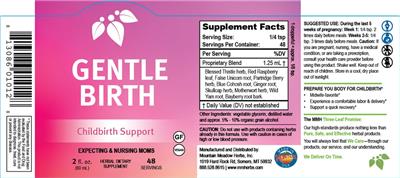
Gentle Birth contains 10 herbal ingredients in a liquid base. The active components include blue cohosh, wild yam, red raspberry leaf, skullcap, motherwort, false unicorn root, partridge berry, blessed thistle, ginger, and bayberry—traditionally used to support pregnancy and labor.
The product is made with glycerin, distilled water, and grain alcohol as inactive ingredients.
Does it work?
Moderate evidence
The evidence for this product's ingredients is limited. Ginger is possibly effective for pregnancy-related nausea and vomiting and for period pain, and possibly ineffective for exercise soreness.
Motherwort is possibly effective for bleeding. The other ingredients—blue cohosh, wild yam, red raspberry leaf, skullcap, false unicorn, partridge berry, blessed thistle, and bayberry—lack sufficient evidence to rate their effectiveness for any condition in our data.
Talk with your healthcare provider about whether this product is right for your situation.
How safe is it?
Well-documented data
Several serious safety concerns apply here. Blue cohosh is likely unsafe in pregnancy—it may stimulate the uterus and has been linked to severe heart problems (heart attack, heart failure, shock) and other complications in newborns whose mothers used it near delivery.
Motherwort and false unicorn are also likely unsafe in pregnancy due to uterine stimulation. Wild yam, blessed thistle, skullcap, and bayberry lack enough safety data; pregnancy safety is not established.
Red raspberry leaf has mixed data (possibly safe to likely unsafe depending on the source), so medical guidance is essential. Breastfeeding safety is insufficient or unknown for all ingredients except ginger (likely safe) and blessed thistle (traditionally used to support milk supply but not well studied).
Common side effects from individual ingredients include stomach upset, diarrhea, heartburn, nausea, sedation, and dizziness. Blue cohosh can cause chest pain, high blood pressure, and high blood sugar.
Large doses of false unicorn and blessed thistle cause nausea and vomiting.
Meds to double-check
Moderate interaction found
Before taking this product, double-check any blood pressure medications (especially ACE inhibitors, ARBs, and calcium channel blockers), blood thinners and antiplatelet drugs (warfarin, aspirin, clopidogrel), diabetes medications, sedatives or central nervous system depressants, nifedipine, acid-reflux medications (H2-blockers, PPIs), and any drug metabolized by your liver enzymes. If you take lithium, be aware false unicorn may affect its levels.
No interactions are documented in our data for partridge berry.
The bottom line
Scorecard at a glanceFormula with limited ingredient disclosure with some supporting evidence for its stated purpose. Moderate medication interactions have been identified, and safety information is well characterized.
Gentle Birth is a traditional pregnancy and labor blend, but several of its ingredients carry serious pregnancy warnings and broad medication interactions. If you're pregnant, planning pregnancy, or breastfeeding, do not use this without explicit approval from your obstetrician or midwife.
If you take any medications—especially blood thinners, diabetes drugs, blood pressure medications, sedatives, or any prescription at all—check each one against our interaction tool before starting. Talk with your pharmacist or doctor first.
Educational only — not medical advice; always confirm with your pharmacist. Our editorial policy · How we use AI
Assessment coverage: 9 of 10 active ingredients matched to our full ingredient reviews (monographs). Based on the product label dated Apr 24, 2025.
This Scorecard evaluates available label information, ingredient evidence, and known medication-safety considerations. It does not independently verify product identity, purity, potency, contamination, or manufacturing quality. How these ratings are computed
General information
Key facts about Gentle Birth, straight from the product label.
| Brand | Mountain Meadow Herbs |
|---|---|
| Barcode (UPC) | 813086010128 |
| Net contents | 2 Fluid Ounce(s); 60 Milliliter(s) |
| Market status | On market |
| Date entered into DSLD | Apr 24, 2025 |
| DSLD ID | 327792 |
| Product type | Botanical |
| Supplement form | Liquid |
| Dietary claims / uses | All Other, Structure/Function |
| Intended target group(s) | Vegan, Vegetarian, Adult (18 - 50 Years), Gluten Free, Dairy Free |
Everything in this section is reproduced from the manufacturer’s own product label — it’s the label speaking, not HelloPharmacist. We show it so you can see exactly what the maker states; we don’t verify or endorse those statements.
Supplement Facts
The label details for Gentle Birth by Mountain Meadow Herbs, sourced from the NIH Dietary Supplement Label Database.
Supplement Facts
| Ingredient | Amount | % DV |
|---|---|---|
| Proprietary Blend | 1.25 mL | -- |
| Blue Cohosh | 0 NP | -- |
| Wild Yam | 0 NP | -- |
| Red Raspberry | 0 NP | -- |
| Skullcap | 0 NP | -- |
| Motherwort | 0 NP | -- |
| False Unicorn | 0 NP | -- |
| Partridge Berry | 0 NP | -- |
| Blessed Thistle | 0 NP | -- |
| Ginger | 0 NP | -- |
| Bayberry | 0 NP | -- |
Other ingredients: Glycerin, Water, Distilled, Grain Alcohol
Tap any ingredient to jump to its full detail below.
These statements are the manufacturer’s wording, reproduced from the product label — the label is saying it, not HelloPharmacist. We don’t verify or endorse them.
FDA Disclaimer Statement
These statements have not been evaluated by the Food and Drug Administration. This product is not intended to diagnose, treat, cure or prevent any disease.
Formulation
Childbirth support
GF (Gluten free)
Vegan
Prepare your body for childbirth Midwife-favorite Experience a comfortable labor & delivery Supports a quick recovery
Formula
Expecting & nursing moms
FDA Statement of Identity
Herbal Dietary Supplement
Precautions
Caution: Do not use with products containing herbs already in this formula. Use with cautious in cases of high or low blood pressure.
Caution: If you are pregnant, nursing, have a medical condition, or are taking a prescription, consult your health care provider before using this product.
Keep out of reach of children.
Seals/Symbols
Montana Made in USA
Suggested/Recommended/Usage/Directions
Suggested use: During the last 5 weeks of pregnancy: Week 1: 1/4 tsp. 2 times daily before meals. Weeks 2-5: 1/4 tsp. 3 times daily before meals. Shake well.
Storage
Store in a cool, dry place out of sunlight.
General Statements
The MMH Three-Leaf Promise: Our high-standards produce nothing less than pure, safe, and effective herbal products. You will always feel that we care - through our products, our service, and our understanding. We deliver on time.
Is this label outdated? Report a formula or label change and our pharmacy team will review it.
Gentle Birth by Mountain Meadow Herbs label
The label scan from the NIH Dietary Supplement Label Database. Tap to enlarge.
Label images are published by the NIH Dietary Supplement Label Database for the version of this product on file. Always read your actual product label.
View the full label (PDF)The Ingredients in Gentle Birth by Mountain Meadow Herbs
These are the 10 active ingredients this product is made of. Select any to open its full monograph.
Serving size0.25 Teaspoon(s) Dosage formLiquid Servings per container48 Amounts shown are per serving.
Most supplement products combine several ingredients, and a medication can interact with the product through any one of them. Each ingredient below shows whether it has known drug interactions.
Proprietary Blend
- › Blue Cohosh
- › Wild Yam
- › Red Raspberry
- › Skullcap
- › Motherwort
- › False Unicorn
- › Partridge Berry
- › Blessed Thistle
- › Ginger
- › Bayberry
Other (inactive) ingredients: Glycerin, Water, Distilled, Grain Alcohol. These complete the product’s ingredient list but are not active constituents.
Gentle Birth by Mountain Meadow Herbs Drug Interactions
HelloPharmacist Interaction Report
Gentle Birth by Mountain Meadow Herbs is a 10-ingredient herbal liquid with documented interactions affecting a broad range of medications.
The most serious concern is blue cohosh, which can increase blood pressure through coronary vasoconstriction—theoretically reducing the effectiveness of blood pressure drugs (ACE inhibitors, ARBs, calcium channel blockers) and medications for angina. Blue cohosh also raises blood sugar and can amplify nicotine's effects, both at Moderate severity.
Read the full breakdown — every affected drug type, severity by severity
Red raspberry leaf, ginger, and false unicorn each carry Moderate-severity interactions with blood thinners and antiplatelet drugs, raising bleeding risk; ginger additionally affects diabetes medications, nifedipine, warfarin, phenprocoumon, and certain enzyme substrates. False unicorn inhibits two liver enzymes (CYP2D6 and CYP3A4) that clear many drugs, and may increase lithium levels.
Skullcap and motherwort both interact Moderately with sedatives and other central nervous system depressants. Wild yam may interfere with estrogen therapy.
Blessed thistle carries Minor interactions with acid-reflux medications (H2-blockers, PPIs, antacids).
Partridge berry could not be checked; we hold no data for it. Bayberry was checked and shows no interactions documented in our data.
Altogether, these interactions span 1,260 individual medications.
Use the medication checker below to verify your exact prescriptions and over-the-counter drugs before starting.
Check your own medications below · Editorial policy · How we use AI
Want to check YOUR meds against Gentle Birth?
Ask about interactions with your drugs in plain English — “Can I take it with lisinopril?” — and we find you the answer in seconds, ingredient by ingredient.
Go to the checkerIngredients driving the most interactions
Individual Drug Interactions
The ingredients in Gentle Birth interact with 1,276 drugs. Click any drug to see the details.
8 of the 10 ingredients in Gentle Birth interact with drugs. Each result below shows which ingredient is responsible. Ginger False Unicorn Blue Cohosh Skullcap Motherwort Red Raspberry Wild Yam Blessed Thistle
Ado-trastuzumab EmtansineKadcyla
How Ado-trastuzumab Emtansine interacts with Gentle Birth — through 2 ingredients. Tap an ingredient for the detail:
False UnicornCytochrome P450 3a4 (cyp3a4) Substrates Moderate
Interaction Summary
In vitro, false unicorn extract inhibits cytochrome P450 3A4 (CYP3A4) activity.
Read the full False Unicorn + Ado-trastuzumab Emtansine interactionGingerCytochrome P450 3a4 (cyp3a4) Substrates Moderate
Interaction Summary
Ginger might increase or decrease the levels of CYP3A4 substrates.
Read the full Ginger + Ado-trastuzumab Emtansine interactionAbciximabReoPro
How Abciximab interacts with Gentle Birth — through 2 ingredients. Tap an ingredient for the detail:
Red RaspberryAnticoagulant/antiplatelet Drugs Moderate
Interaction Summary
Theoretically, taking red raspberry leaf with anticoagulant/antiplatelet drugs might increase the risk of bleeding.
Read the full Red Raspberry + Abciximab interactionGingerAnticoagulant/antiplatelet Drugs Moderate
Interaction Summary
Ginger may have antiplatelet effects and may increase the risk of bleeding if used with anticoagulant or antiplatelet drugs.
Read the full Ginger + Abciximab interactionAbemaciclibVerzenio
How Abemaciclib interacts with Gentle Birth — through 2 ingredients. Tap an ingredient for the detail:
GingerCytochrome P450 3a4 (cyp3a4) Substrates Moderate
Interaction Summary
Ginger might increase or decrease the levels of CYP3A4 substrates.
Read the full Ginger + Abemaciclib interactionFalse UnicornCytochrome P450 3a4 (cyp3a4) Substrates Moderate
Interaction Summary
In vitro, false unicorn extract inhibits cytochrome P450 3A4 (CYP3A4) activity.
Read the full False Unicorn + Abemaciclib interactionAbiraterone
How Abiraterone interacts with Gentle Birth — through 2 ingredients. Tap an ingredient for the detail:
False UnicornCytochrome P450 3a4 (cyp3a4) Substrates Moderate
Interaction Summary
In vitro, false unicorn extract inhibits cytochrome P450 3A4 (CYP3A4) activity.
Read the full False Unicorn + Abiraterone interactionGingerCytochrome P450 3a4 (cyp3a4) Substrates Moderate
Interaction Summary
Ginger might increase or decrease the levels of CYP3A4 substrates.
Read the full Ginger + Abiraterone interactionAbiraterone AcetateYonsa, Zytiga
How Abiraterone Acetate interacts with Gentle Birth — through 2 ingredients. Tap an ingredient for the detail:
GingerCytochrome P450 3a4 (cyp3a4) Substrates Moderate
Interaction Summary
Ginger might increase or decrease the levels of CYP3A4 substrates.
Read the full Ginger + Abiraterone Acetate interactionFalse UnicornCytochrome P450 3a4 (cyp3a4) Substrates Moderate
Interaction Summary
In vitro, false unicorn extract inhibits cytochrome P450 3A4 (CYP3A4) activity.
Read the full False Unicorn + Abiraterone Acetate interactionAbrocitinibCibinqo
How Abrocitinib interacts with Gentle Birth — through 2 ingredients. Tap an ingredient for the detail:
Red RaspberryAnticoagulant/antiplatelet Drugs Moderate
Interaction Summary
Theoretically, taking red raspberry leaf with anticoagulant/antiplatelet drugs might increase the risk of bleeding.
Read the full Red Raspberry + Abrocitinib interactionGingerCytochrome P450 2c9 (cyp2c9) Substrates, Anticoagulant/antiplatelet Drugs Moderate
Interaction Summary
Theoretically, ginger might increase the levels of CYP2C9 substrates.
Read the full Ginger + Abrocitinib interactionAcalabrutinibCalquence
How Acalabrutinib interacts with Gentle Birth — through 2 ingredients. Tap an ingredient for the detail:
False UnicornCytochrome P450 3a4 (cyp3a4) Substrates Moderate
Interaction Summary
In vitro, false unicorn extract inhibits cytochrome P450 3A4 (CYP3A4) activity.
Read the full False Unicorn + Acalabrutinib interactionGingerP-glycoprotein Substrates, Cytochrome P450 3a4 (cyp3a4) Substrates Moderate
Interaction Summary
Ginger might increase the absorption and blood levels of P-glycoprotein (P-gp) substrates.
Read the full Ginger + Acalabrutinib interactionAcarboseGlucobay, Prandase, Precose
How Acarbose interacts with Gentle Birth — through 2 ingredients. Tap an ingredient for the detail:
GingerAntidiabetes Drugs Moderate
Interaction Summary
Theoretically, taking ginger with antidiabetes drugs might increase the risk of hypoglycemia.
Read the full Ginger + Acarbose interactionBlue CohoshAntidiabetes Drugs Moderate
Interaction Summary
There is some concern that blue cohosh might increase blood glucose levels.
Read the full Blue Cohosh + Acarbose interactionAcebutololRhotral, Sectral
How Acebutolol interacts with Gentle Birth — through 1 ingredient. Tap an ingredient for the detail:
Blue CohoshAntihypertensive Drugs Moderate
Interaction Summary
Constituents in blue cohosh might increase blood pressure by causing coronary vasoconstriction.
Read the full Blue Cohosh + Acebutolol interactionAcenocoumarolSintrom
How Acenocoumarol interacts with Gentle Birth — through 2 ingredients. Tap an ingredient for the detail:
Red RaspberryAnticoagulant/antiplatelet Drugs Moderate
Interaction Summary
Theoretically, taking red raspberry leaf with anticoagulant/antiplatelet drugs might increase the risk of bleeding.
Read the full Red Raspberry + Acenocoumarol interactionGingerAnticoagulant/antiplatelet Drugs Moderate
Interaction Summary
Ginger may have antiplatelet effects and may increase the risk of bleeding if used with anticoagulant or antiplatelet drugs.
Read the full Ginger + Acenocoumarol interactionAcepromazineAtravet
How Acepromazine interacts with Gentle Birth — through 2 ingredients. Tap an ingredient for the detail:
MotherwortCns Depressants Moderate
Interaction Summary
Theoretically, taking motherwort concomitantly with other CNS depressants may increase the risk of sedation.
Read the full Motherwort + Acepromazine interactionSkullcapCns Depressants Moderate
Interaction Summary
Theoretically, skullcap can have additive effects when used with other CNS depressants.
Read the full Skullcap + Acepromazine interactionAcetaminophen, AspirinGemnisyn
How Acetaminophen, Aspirin interacts with Gentle Birth — through 2 ingredients. Tap an ingredient for the detail:
GingerCytochrome P450 1a2 (cyp1a2) Substrates, Anticoagulant/antiplatelet Drugs Moderate
Interaction Summary
Theoretically, ginger might increase the levels of CYP1A2 substrates.
Read the full Ginger + Acetaminophen, Aspirin interactionRed RaspberryAnticoagulant/antiplatelet Drugs Moderate
Interaction Summary
Theoretically, taking red raspberry leaf with anticoagulant/antiplatelet drugs might increase the risk of bleeding.
Read the full Red Raspberry + Acetaminophen, Aspirin interactionAcetaminophen, Aspirin, CaffeineExcedrin, Excedrin Extra Strength, Excedrin Migraine
How Acetaminophen, Aspirin, Caffeine interacts with Gentle Birth — through 3 ingredients. Tap an ingredient for the detail:
Red RaspberryAnticoagulant/antiplatelet Drugs Moderate
Interaction Summary
Theoretically, taking red raspberry leaf with anticoagulant/antiplatelet drugs might increase the risk of bleeding.
Read the full Red Raspberry + Acetaminophen, Aspirin, Caffeine interactionGingerAnticoagulant/antiplatelet Drugs, Cytochrome P450 1a2 (cyp1a2) Substrates +1 Moderate
Interaction Summary
Ginger may have antiplatelet effects and may increase the risk of bleeding if used with anticoagulant or antiplatelet drugs.
Read the full Ginger + Acetaminophen, Aspirin, Caffeine interactionFalse UnicornCytochrome P450 3a4 (cyp3a4) Substrates Moderate
Interaction Summary
In vitro, false unicorn extract inhibits cytochrome P450 3A4 (CYP3A4) activity.
Read the full False Unicorn + Acetaminophen, Aspirin, Caffeine interactionAcetaminophen, Butalbital, CaffeineEsgic, Esgic Plus, Fiogesic, Fioricet, Repan, Tecnal +1 more
How Acetaminophen, Butalbital, Caffeine interacts with Gentle Birth — through 2 ingredients. Tap an ingredient for the detail:
GingerCytochrome P450 1a2 (cyp1a2) Substrates, Cytochrome P450 3a4 (cyp3a4) Substrates Moderate
Interaction Summary
Theoretically, ginger might increase the levels of CYP1A2 substrates.
Read the full Ginger + Acetaminophen, Butalbital, Caffeine interactionFalse UnicornCytochrome P450 3a4 (cyp3a4) Substrates Moderate
Interaction Summary
In vitro, false unicorn extract inhibits cytochrome P450 3A4 (CYP3A4) activity.
Read the full False Unicorn + Acetaminophen, Butalbital, Caffeine interactionAcetaminophen, Butalbital, Caffeine, CodeineEsgic with Codeine, Fioricet w/ Codeine
How Acetaminophen, Butalbital, Caffeine, Codeine interacts with Gentle Birth — through 4 ingredients. Tap an ingredient for the detail:
GingerCytochrome P450 3a4 (cyp3a4) Substrates, Cytochrome P450 1a2 (cyp1a2) Substrates Moderate
Interaction Summary
Ginger might increase or decrease the levels of CYP3A4 substrates.
Read the full Ginger + Acetaminophen, Butalbital, Caffeine, Codeine interactionFalse UnicornCytochrome P450 2d6 (cyp2d6) Substrates, Cytochrome P450 3a4 (cyp3a4) Substrates Moderate
Interaction Summary
In vitro, false unicorn extract inhibits cytochrome P450 2D6 (CYP2D6) activity.
Read the full False Unicorn + Acetaminophen, Butalbital, Caffeine, Codeine interactionSkullcapCns Depressants Moderate
Interaction Summary
Theoretically, skullcap can have additive effects when used with other CNS depressants.
Read the full Skullcap + Acetaminophen, Butalbital, Caffeine, Codeine interactionMotherwortCns Depressants Moderate
Interaction Summary
Theoretically, taking motherwort concomitantly with other CNS depressants may increase the risk of sedation.
Read the full Motherwort + Acetaminophen, Butalbital, Caffeine, Codeine interactionAcetaminophen, Butalbital, CodeineBancap w/ Codeine
How Acetaminophen, Butalbital, Codeine interacts with Gentle Birth — through 4 ingredients. Tap an ingredient for the detail:
MotherwortCns Depressants Moderate
Interaction Summary
Theoretically, taking motherwort concomitantly with other CNS depressants may increase the risk of sedation.
Read the full Motherwort + Acetaminophen, Butalbital, Codeine interactionFalse UnicornCytochrome P450 2d6 (cyp2d6) Substrates Moderate
Interaction Summary
In vitro, false unicorn extract inhibits cytochrome P450 2D6 (CYP2D6) activity.
Read the full False Unicorn + Acetaminophen, Butalbital, Codeine interactionSkullcapCns Depressants Moderate
Interaction Summary
Theoretically, skullcap can have additive effects when used with other CNS depressants.
Read the full Skullcap + Acetaminophen, Butalbital, Codeine interactionGingerCytochrome P450 1a2 (cyp1a2) Substrates Minor
Interaction Summary
Theoretically, ginger might increase the levels of CYP1A2 substrates.
Read the full Ginger + Acetaminophen, Butalbital, Codeine interactionAcetaminophen, Butalbital, Codeine PhosphatePhrenilin #3
How Acetaminophen, Butalbital, Codeine Phosphate interacts with Gentle Birth — through 4 ingredients. Tap an ingredient for the detail:
SkullcapCns Depressants Moderate
Interaction Summary
Theoretically, skullcap can have additive effects when used with other CNS depressants.
Read the full Skullcap + Acetaminophen, Butalbital, Codeine Phosphate interactionMotherwortCns Depressants Moderate
Interaction Summary
Theoretically, taking motherwort concomitantly with other CNS depressants may increase the risk of sedation.
Read the full Motherwort + Acetaminophen, Butalbital, Codeine Phosphate interactionFalse UnicornCytochrome P450 2d6 (cyp2d6) Substrates Moderate
Interaction Summary
In vitro, false unicorn extract inhibits cytochrome P450 2D6 (CYP2D6) activity.
Read the full False Unicorn + Acetaminophen, Butalbital, Codeine Phosphate interactionGingerCytochrome P450 1a2 (cyp1a2) Substrates Minor
Interaction Summary
Theoretically, ginger might increase the levels of CYP1A2 substrates.
Read the full Ginger + Acetaminophen, Butalbital, Codeine Phosphate interactionAcetaminophen, Caffeine, Chlorpheniramine, Hydrocodone, PhenylephrineHycomine Compound
How Acetaminophen, Caffeine, Chlorpheniramine, Hydrocodone, Phenylephrine interacts with Gentle Birth — through 4 ingredients. Tap an ingredient for the detail:
SkullcapCns Depressants Moderate
Interaction Summary
Theoretically, skullcap can have additive effects when used with other CNS depressants.
Read the full Skullcap + Acetaminophen, Caffeine, Chlorpheniramine, Hydrocodone, Phenylephrine interactionGingerCytochrome P450 3a4 (cyp3a4) Substrates, Cytochrome P450 1a2 (cyp1a2) Substrates Moderate
Interaction Summary
Ginger might increase or decrease the levels of CYP3A4 substrates.
Read the full Ginger + Acetaminophen, Caffeine, Chlorpheniramine, Hydrocodone, Phenylephrine interactionFalse UnicornCytochrome P450 2d6 (cyp2d6) Substrates, Cytochrome P450 3a4 (cyp3a4) Substrates Moderate
Interaction Summary
In vitro, false unicorn extract inhibits cytochrome P450 2D6 (CYP2D6) activity.
Read the full False Unicorn + Acetaminophen, Caffeine, Chlorpheniramine, Hydrocodone, Phenylephrine interactionMotherwortCns Depressants Moderate
Interaction Summary
Theoretically, taking motherwort concomitantly with other CNS depressants may increase the risk of sedation.
Read the full Motherwort + Acetaminophen, Caffeine, Chlorpheniramine, Hydrocodone, Phenylephrine interactionAcetaminophen, Caffeine, CodeineGesic C15, Gesic C30, Gesic C8, Lenoltec 1, Lenoltec 2, Lenoltec 3 +1 more
How Acetaminophen, Caffeine, Codeine interacts with Gentle Birth — through 4 ingredients. Tap an ingredient for the detail:
GingerCytochrome P450 1a2 (cyp1a2) Substrates, Cytochrome P450 3a4 (cyp3a4) Substrates Moderate
Interaction Summary
Theoretically, ginger might increase the levels of CYP1A2 substrates.
Read the full Ginger + Acetaminophen, Caffeine, Codeine interactionSkullcapCns Depressants Moderate
Interaction Summary
Theoretically, skullcap can have additive effects when used with other CNS depressants.
Read the full Skullcap + Acetaminophen, Caffeine, Codeine interactionFalse UnicornCytochrome P450 3a4 (cyp3a4) Substrates, Cytochrome P450 2d6 (cyp2d6) Substrates Moderate
Interaction Summary
In vitro, false unicorn extract inhibits cytochrome P450 3A4 (CYP3A4) activity.
Read the full False Unicorn + Acetaminophen, Caffeine, Codeine interactionMotherwortCns Depressants Moderate
Interaction Summary
Theoretically, taking motherwort concomitantly with other CNS depressants may increase the risk of sedation.
Read the full Motherwort + Acetaminophen, Caffeine, Codeine interactionAcetaminophen, Caffeine, Codeine, SalicylamideCodalan No.1, Codalan No.2, Codalan No.3
How Acetaminophen, Caffeine, Codeine, Salicylamide interacts with Gentle Birth — through 4 ingredients. Tap an ingredient for the detail:
MotherwortCns Depressants Moderate
Interaction Summary
Theoretically, taking motherwort concomitantly with other CNS depressants may increase the risk of sedation.
Read the full Motherwort + Acetaminophen, Caffeine, Codeine, Salicylamide interactionGingerCytochrome P450 1a2 (cyp1a2) Substrates, Cytochrome P450 3a4 (cyp3a4) Substrates Moderate
Interaction Summary
Theoretically, ginger might increase the levels of CYP1A2 substrates.
Read the full Ginger + Acetaminophen, Caffeine, Codeine, Salicylamide interactionFalse UnicornCytochrome P450 3a4 (cyp3a4) Substrates, Cytochrome P450 2d6 (cyp2d6) Substrates Moderate
Interaction Summary
In vitro, false unicorn extract inhibits cytochrome P450 3A4 (CYP3A4) activity.
Read the full False Unicorn + Acetaminophen, Caffeine, Codeine, Salicylamide interactionSkullcapCns Depressants Moderate
Interaction Summary
Theoretically, skullcap can have additive effects when used with other CNS depressants.
Read the full Skullcap + Acetaminophen, Caffeine, Codeine, Salicylamide interactionAcetaminophen, Caffeine, DihydrocodeineDHC Plus, Panlor DC, Panlor SS
How Acetaminophen, Caffeine, Dihydrocodeine interacts with Gentle Birth — through 4 ingredients. Tap an ingredient for the detail:
False UnicornCytochrome P450 2d6 (cyp2d6) Substrates, Cytochrome P450 3a4 (cyp3a4) Substrates Moderate
Interaction Summary
In vitro, false unicorn extract inhibits cytochrome P450 2D6 (CYP2D6) activity.
Read the full False Unicorn + Acetaminophen, Caffeine, Dihydrocodeine interactionMotherwortCns Depressants Moderate
Interaction Summary
Theoretically, taking motherwort concomitantly with other CNS depressants may increase the risk of sedation.
Read the full Motherwort + Acetaminophen, Caffeine, Dihydrocodeine interactionGingerCytochrome P450 1a2 (cyp1a2) Substrates, Cytochrome P450 3a4 (cyp3a4) Substrates Moderate
Interaction Summary
Theoretically, ginger might increase the levels of CYP1A2 substrates.
Read the full Ginger + Acetaminophen, Caffeine, Dihydrocodeine interactionSkullcapCns Depressants Moderate
Interaction Summary
Theoretically, skullcap can have additive effects when used with other CNS depressants.
Read the full Skullcap + Acetaminophen, Caffeine, Dihydrocodeine interactionAcetaminophen, Caffeine, IsomethepteneMigralam
How Acetaminophen, Caffeine, Isometheptene interacts with Gentle Birth — through 2 ingredients. Tap an ingredient for the detail:
False UnicornCytochrome P450 3a4 (cyp3a4) Substrates Moderate
Interaction Summary
In vitro, false unicorn extract inhibits cytochrome P450 3A4 (CYP3A4) activity.
Read the full False Unicorn + Acetaminophen, Caffeine, Isometheptene interactionGingerCytochrome P450 3a4 (cyp3a4) Substrates, Cytochrome P450 1a2 (cyp1a2) Substrates Moderate
Interaction Summary
Ginger might increase or decrease the levels of CYP3A4 substrates.
Read the full Ginger + Acetaminophen, Caffeine, Isometheptene interactionAcetaminophen, Caffeine, PyrilamineMidol Max Strength Menstrual
How Acetaminophen, Caffeine, Pyrilamine interacts with Gentle Birth — through 2 ingredients. Tap an ingredient for the detail:
GingerCytochrome P450 1a2 (cyp1a2) Substrates, Cytochrome P450 3a4 (cyp3a4) Substrates Moderate
Interaction Summary
Theoretically, ginger might increase the levels of CYP1A2 substrates.
Read the full Ginger + Acetaminophen, Caffeine, Pyrilamine interactionFalse UnicornCytochrome P450 3a4 (cyp3a4) Substrates Moderate
Interaction Summary
In vitro, false unicorn extract inhibits cytochrome P450 3A4 (CYP3A4) activity.
Read the full False Unicorn + Acetaminophen, Caffeine, Pyrilamine interactionAcetaminophen, Chlorpheniramine Maleate, Dextromethorphan HbrVicks Formula 44M Cough, Cold & Flu Relief
How Acetaminophen, Chlorpheniramine Maleate, Dextromethorphan Hbr interacts with Gentle Birth — through 2 ingredients. Tap an ingredient for the detail:
False UnicornCytochrome P450 3a4 (cyp3a4) Substrates, Cytochrome P450 2d6 (cyp2d6) Substrates Moderate
Interaction Summary
In vitro, false unicorn extract inhibits cytochrome P450 3A4 (CYP3A4) activity.
Read the full False Unicorn + Acetaminophen, Chlorpheniramine Maleate, Dextromethorphan Hbr interactionGingerCytochrome P450 3a4 (cyp3a4) Substrates, Cytochrome P450 1a2 (cyp1a2) Substrates Moderate
Interaction Summary
Ginger might increase or decrease the levels of CYP3A4 substrates.
Read the full Ginger + Acetaminophen, Chlorpheniramine Maleate, Dextromethorphan Hbr interactionAcetaminophen, Chlorpheniramine, Codeine, PhenylephrineColrex
How Acetaminophen, Chlorpheniramine, Codeine, Phenylephrine interacts with Gentle Birth — through 4 ingredients. Tap an ingredient for the detail:
False UnicornCytochrome P450 2d6 (cyp2d6) Substrates, Cytochrome P450 3a4 (cyp3a4) Substrates Moderate
Interaction Summary
In vitro, false unicorn extract inhibits cytochrome P450 2D6 (CYP2D6) activity.
Read the full False Unicorn + Acetaminophen, Chlorpheniramine, Codeine, Phenylephrine interactionMotherwortCns Depressants Moderate
Interaction Summary
Theoretically, taking motherwort concomitantly with other CNS depressants may increase the risk of sedation.
Read the full Motherwort + Acetaminophen, Chlorpheniramine, Codeine, Phenylephrine interactionGingerCytochrome P450 3a4 (cyp3a4) Substrates, Cytochrome P450 1a2 (cyp1a2) Substrates Moderate
Interaction Summary
Ginger might increase or decrease the levels of CYP3A4 substrates.
Read the full Ginger + Acetaminophen, Chlorpheniramine, Codeine, Phenylephrine interactionSkullcapCns Depressants Moderate
Interaction Summary
Theoretically, skullcap can have additive effects when used with other CNS depressants.
Read the full Skullcap + Acetaminophen, Chlorpheniramine, Codeine, Phenylephrine interactionAcetaminophen, Chlorpheniramine, DextromethorphanCoricidin II Extra Strength Cold and Flu
How Acetaminophen, Chlorpheniramine, Dextromethorphan interacts with Gentle Birth — through 2 ingredients. Tap an ingredient for the detail:
GingerCytochrome P450 1a2 (cyp1a2) Substrates, Cytochrome P450 3a4 (cyp3a4) Substrates Moderate
Interaction Summary
Theoretically, ginger might increase the levels of CYP1A2 substrates.
Read the full Ginger + Acetaminophen, Chlorpheniramine, Dextromethorphan interactionFalse UnicornCytochrome P450 2d6 (cyp2d6) Substrates, Cytochrome P450 3a4 (cyp3a4) Substrates Moderate
Interaction Summary
In vitro, false unicorn extract inhibits cytochrome P450 2D6 (CYP2D6) activity.
Read the full False Unicorn + Acetaminophen, Chlorpheniramine, Dextromethorphan interactionAcetaminophen, Chlorpheniramine, Dextromethorphan HydrobromideCoricidin HBP Maximum Strength Flu
How Acetaminophen, Chlorpheniramine, Dextromethorphan Hydrobromide interacts with Gentle Birth — through 2 ingredients. Tap an ingredient for the detail:
GingerCytochrome P450 3a4 (cyp3a4) Substrates, Cytochrome P450 1a2 (cyp1a2) Substrates Moderate
Interaction Summary
Ginger might increase or decrease the levels of CYP3A4 substrates.
Read the full Ginger + Acetaminophen, Chlorpheniramine, Dextromethorphan Hydrobromide interactionFalse UnicornCytochrome P450 2d6 (cyp2d6) Substrates, Cytochrome P450 3a4 (cyp3a4) Substrates Moderate
Interaction Summary
In vitro, false unicorn extract inhibits cytochrome P450 2D6 (CYP2D6) activity.
Read the full False Unicorn + Acetaminophen, Chlorpheniramine, Dextromethorphan Hydrobromide interactionAcetaminophen, Chlorpheniramine, Dextromethorphan, PhenylpropanolamineMulti Symptom Cold Relief
How Acetaminophen, Chlorpheniramine, Dextromethorphan, Phenylpropanolamine interacts with Gentle Birth — through 2 ingredients. Tap an ingredient for the detail:
False UnicornCytochrome P450 2d6 (cyp2d6) Substrates, Cytochrome P450 3a4 (cyp3a4) Substrates Moderate
Interaction Summary
In vitro, false unicorn extract inhibits cytochrome P450 2D6 (CYP2D6) activity.
Read the full False Unicorn + Acetaminophen, Chlorpheniramine, Dextromethorphan, Phenylpropanolamine interactionGingerCytochrome P450 1a2 (cyp1a2) Substrates, Cytochrome P450 3a4 (cyp3a4) Substrates Moderate
Interaction Summary
Theoretically, ginger might increase the levels of CYP1A2 substrates.
Read the full Ginger + Acetaminophen, Chlorpheniramine, Dextromethorphan, Phenylpropanolamine interactionAcetaminophen, Chlorpheniramine, Dextromethorphan, PseudoephedrineChildren's Tylenol Cold Plus Cough, Tylenol Cold Ex Strength
How Acetaminophen, Chlorpheniramine, Dextromethorphan, Pseudoephedrine interacts with Gentle Birth — through 2 ingredients. Tap an ingredient for the detail:
GingerCytochrome P450 3a4 (cyp3a4) Substrates, Cytochrome P450 1a2 (cyp1a2) Substrates Moderate
Interaction Summary
Ginger might increase or decrease the levels of CYP3A4 substrates.
Read the full Ginger + Acetaminophen, Chlorpheniramine, Dextromethorphan, Pseudoephedrine interactionFalse UnicornCytochrome P450 3a4 (cyp3a4) Substrates, Cytochrome P450 2d6 (cyp2d6) Substrates Moderate
Interaction Summary
In vitro, false unicorn extract inhibits cytochrome P450 3A4 (CYP3A4) activity.
Read the full False Unicorn + Acetaminophen, Chlorpheniramine, Dextromethorphan, Pseudoephedrine interactionAcetaminophen, Chlorpheniramine, Guaifenesin, Phenylephrine, SalicylamideRhinogesic GG
How Acetaminophen, Chlorpheniramine, Guaifenesin, Phenylephrine, Salicylamide interacts with Gentle Birth — through 2 ingredients. Tap an ingredient for the detail:
False UnicornCytochrome P450 3a4 (cyp3a4) Substrates Moderate
Interaction Summary
In vitro, false unicorn extract inhibits cytochrome P450 3A4 (CYP3A4) activity.
Read the full False Unicorn + Acetaminophen, Chlorpheniramine, Guaifenesin, Phenylephrine, Salicylamide interactionGingerCytochrome P450 3a4 (cyp3a4) Substrates, Cytochrome P450 1a2 (cyp1a2) Substrates Moderate
Interaction Summary
Ginger might increase or decrease the levels of CYP3A4 substrates.
Read the full Ginger + Acetaminophen, Chlorpheniramine, Guaifenesin, Phenylephrine, Salicylamide interactionEach ingredient & the kinds of drugs it affects
For each ingredient in Gentle Birth with known interactions, here are the types of medications they can affect. Open any type for the detail — or search your exact drug in the checker above.
Ginger
Anticoagulant/Antiplatelet Drugs
Ginger may have antiplatelet effects and may increase the risk of bleeding if used with anticoagulant or antiplatelet drugs. However, research is conflicting.
Laboratory research suggests that ginger inhibits thromboxane synthetase and decreases platelet aggregation. However, this has not been demonstrated unequivocally in humans, with mixed results from clinical trials. Theoretically, excessive amounts of ginger might increase the risk of bleeding when used with anticoagulant/antiplatelet drugs.
Antidiabetes Drugs
Theoretically, taking ginger with antidiabetes drugs might increase the risk of hypoglycemia.
Animal and human research suggests that ginger might increase insulin levels and/or decrease blood glucose levels.
Cytochrome P450 3A4 (Cyp3A4) Substrates
Ginger might increase or decrease the levels of CYP3A4 substrates.
In vitro research and some case reports suggest that ginger inhibits CYP3A4 activity. Three case reports from the World Health Organization (WHO) adverse drug reaction database describe increased toxicity in patients taking ginger and cancer medications that are CYP3A4 substrates (imatinib, dabrafenib, and crizotinib). However, the causality of this interaction is unclear due to the presence of multiple interacting drugs and routes of administration.
Conversely, other in vitro research suggests that ginger induces CYP3A4 activity, leading to reduced levels of CYP3A4 substrates. However, this interaction has not been reported in humans.
Losartan (Cozaar)
Theoretically, ginger might increase levels of losartan and the risk of hypotension.
In animal research, ginger increased the levels and hypotensive effects of a single dose of losartan. It is not clear if ginger alters the concentration or effects of losartan when taken continuously. Additionally, this interaction has not been shown in humans.
Nifedipine (Procardia)
Ginger may have antiplatelet effects and increase the risk of bleeding if used with nifedipine.
Clinical research shows that combined treatment with ginger 1 gram plus nifedipine 10 mg significantly inhibits platelet aggregation when compared to nifedipine or ginger alone.
P-Glycoprotein Substrates
Ginger might increase the absorption and blood levels of P-glycoprotein (P-gp) substrates.
In vitro research and case reports suggest that ginger inhibits drug efflux by P-gp, potentially increasing absorption and serum levels of P-gp substrates. Two case reports from the World Health Organization (WHO) adverse drug reaction database describe increased toxicity in patients taking ginger and cancer medications that are P-gp substrates (trametinib, crizotinib). However, the causality of this interaction is unclear due to the presence of multiple interacting drugs and routes of administration.
Phenprocoumon (Marcoumar, Others)
Ginger might increase the risk of bleeding with phenprocoumon.
Phenprocoumon, a warfarin-related anticoagulant, might increase the international normalized ratio (INR) when taken with ginger. There is one case report of a 76-year-old woman with a stable INR on phenprocoumon that increased to greater than 10 when she began consuming dried ginger and ginger tea.
Warfarin (Coumadin)
Ginger might increase the risk of bleeding with warfarin.
Laboratory research suggests that ginger might inhibit thromboxane synthetase and decrease platelet aggregation. In one case report, ginger increased the INR when taken with phenprocoumon, which has similar pharmacological effects as warfarin. In another case report, ginger increased the INR when taken with a combination of warfarin, hydrochlorothiazide, and acetaminophen. A longitudinal analysis suggests that taking ginger increases the risk of bleeding in patients taking warfarin for at least 4 months. However, research in healthy people suggests that ginger has no effect on INR, or the pharmacokinetics or pharmacodynamics of warfarin. Until more is known, monitor INRs closely in patients taking large amounts of ginger.
Calcium Channel Blockers
Theoretically, taking ginger with calcium channel blockers might increase the risk of hypotension.
Some animal and in vitro research suggests that ginger has hypotensive and calcium channel-blocking effects. Another animal study shows that concomitant administration of ginger and the calcium channel blocker amlodipine leads to greater reductions in blood pressure when compared with amlodipine alone.
Cyclosporine (Neoral, Sandimmune)
Theoretically, when taken prior to cyclosporine, ginger might decrease cyclosporine levels.
In an animal model, ginger juice taken 2 hours prior to cyclosporine administration reduced the maximum concentration and area under the curve of cyclosporine by 51% and 40%, respectively. This effect was not observed when ginger juice and cyclosporine were administered at the same time.
Cytochrome P450 1A2 (Cyp1A2) Substrates
Theoretically, ginger might increase the levels of CYP1A2 substrates.
In vitro research shows that ginger inhibits CYP1A2 activity. However, this interaction has not been reported in humans.
Cytochrome P450 2B6 (Cyp2B6) Substrates
Theoretically, ginger might increase the levels of CYP2B6 substrates.
In vitro research shows that ginger inhibits CYP2B6 activity. However, this interaction has not been reported in humans.
Cytochrome P450 2C9 (Cyp2C9) Substrates
Theoretically, ginger might increase the levels of CYP2C9 substrates.
In vitro research shows that ginger inhibits CYP2C9 activity. However, this interaction has not been reported in humans.
Metronidazole (Flagyl)
Theoretically, ginger might increase levels of metronidazole.
In an animal model, ginger increased the absorption and plasma half-life of metronidazole. In addition, the elimination rate and clearance of metronidazole was significantly reduced.
False Unicorn
Cytochrome P450 2D6 (Cyp2D6) Substrates
In vitro, false unicorn extract inhibits cytochrome P450 2D6 (CYP2D6) activity. Theoretically, false unicorn might increase the levels of CYP2D6 substrates. Some of drugs that are CYP2D6 substrates include amitriptyline (Elavil), clozapine (Clozaril), codeine, desipramine (Norpramin), donepezil (Aricept), fentanyl (Duragesic), flecainide (Tambocor), fluoxetine (Prozac), meperidine (Demerol), methadone (Dolophine), metoprolol (Lopressor, Toprol XL), olanzapine (Zyprexa), ondansetron (Zofran), tramadol (Ultram), trazodone (Desyrel), and others.
Cytochrome P450 3A4 (Cyp3A4) Substrates
In vitro, false unicorn extract inhibits cytochrome P450 3A4 (CYP3A4) activity. Theoretically, false unicorn might increase the levels of CYP3A4 substrates. Drugs that might be affected include some calcium channel blockers (diltiazem, nicardipine, verapamil), chemotherapeutic agents (etoposide, paclitaxel, vinblastine, vincristine, vindesine), antifungals (ketoconazole, itraconazole), glucocorticoids, cisapride (Propulsid), alfentanil (Alfenta), fentanyl (Sublimaze), losartan (Cozaar), fluoxetine (Prozac), midazolam (Versed), omeprazole (Prilosec), ondansetron (Zofran), propranolol (Inderal), fexofenadine (Allegra), and numerous others.
Lithium
False unicorn is thought to have diuretic properties. Theoretically, due to these potential diuretic effects, false unicorn might reduce excretion and increase levels of lithium. The dose of lithium might need to be decreased.
Blue Cohosh
Antidiabetes Drugs
There is some concern that blue cohosh might increase blood glucose levels. Theoretically, it might decrease the effectiveness of medicines used for diabetes. Some antidiabetes drugs include glimepiride (Amaryl), glyburide (DiaBeta, Glynase PresTab, Micronase), insulin, pioglitazone (Actos), rosiglitazone (Avandia), chlorpropamide (Diabinese), glipizide (Glucotrol), tolbutamide (Orinase), and others.
Antihypertensive Drugs
Constituents in blue cohosh might increase blood pressure by causing coronary vasoconstriction. Theoretically, concomitant use might decrease the effectiveness of drugs used for angina and high blood pressure; use with caution. Some antihypertensive drugs include captopril (Capoten), enalapril (Vasotec), losartan (Cozaar), valsartan (Diovan), diltiazem (Cardizem), Amlodipine (Norvasc), hydrochlorothiazide (HydroDiuril), furosemide (Lasix), and many others.
Nicotine
Blue cohosh can increase the effects of nicotine.
Skullcap
Cns Depressants
Theoretically, skullcap can have additive effects when used with other CNS depressants.
Animal and clinical research suggests that skullcap can cause sedation and cognitive impairment.
Motherwort
Cns Depressants
Theoretically, taking motherwort concomitantly with other CNS depressants may increase the risk of sedation.
Motherwort has been reported to cause CNS depression and sedation.
Red Raspberry
Anticoagulant/Antiplatelet Drugs
Theoretically, taking red raspberry leaf with anticoagulant/antiplatelet drugs might increase the risk of bleeding.
In vitro research suggests that red raspberry leaf extract has antiplatelet activity and enhances the in vitro effects of the antiplatelet medication cangrelor. This interaction has not been reported in humans.
Insulin
Red raspberry leaf might reduce glucose levels in patients being treated with insulin.
In one case report, a 38-year-old patient with gestational diabetes, whose blood glucose was being controlled with medical nutrition therapy and insulin, developed hypoglycemia after consuming two servings of raspberry leaf tea daily for 3 days beginning at 32 weeks' gestation. The patient required an insulin dose reduction. The hypoglycemia was considered to be probably related to use of red raspberry leaf tea.
Wild Yam
Estrogens
Theoretically, wild yam might increase or decrease the effects of estrogen.
Wild yam root shows estrogenic and anti-estrogenic effects in vitro. Theoretically, wild yam might interfere with hormone therapy.
Blessed Thistle
Antacids
Theoretically, blessed thistle might decrease the effectiveness of antacids.
There are reports that blessed thistle increases stomach acid.
H2-Blockers
Theoretically, blessed thistle might decrease the effectiveness of H2-blockers.
There are reports that blessed thistle increases stomach acid.
Proton Pump Inhibitors (Ppis)
Theoretically, blessed thistle might decrease the effectiveness of PPIs.
There are reports that blessed thistle increases stomach acid.
Brand information
Manufacturer and brand details for Gentle Birth, from the product label.
Mountain Meadow Herbs
See all Mountain Meadow Herbs products- Name
- Mountain Meadow Herbs, Inc.
- Street Address
- 1019 Hard Rock Rd
- City
- Somers
- State
- MT
- ZipCode
- 59932
- Phone Number
- 888.528.8615
- Web Address
- www.mmherbs.com
Gentle Birth by Mountain Meadow Herbs: Common Questions
Does Gentle Birth by Mountain Meadow Herbs interact with any medications?
How can one product interact with so many drugs?
Where does this information come from?
Is this product safe to use during pregnancy?
Is it safe to breastfeed while taking this?
Can ginger in this product cause bleeding?
Will blue cohosh raise my blood pressure?
Does this product interact with diabetes medications?
What is false unicorn supposed to do?
Written and reviewed by the HelloPharmacist editorial staff. Our editorial policy
Not sure if Gentle Birth is safe with your meds?
Our pharmacists answer your medication & supplement questions — free.
Label information is sourced from the NIH Dietary Supplement Label Database and reflects the product version on file; always read your actual product label. This page is for education only and is not a substitute for professional medical advice. Confirm with your pharmacist or doctor before combining supplements and medications.
The Full Monographs Behind Gentle Birth’s Ingredients
Every ingredient we hold a full HelloPharmacist monograph for — uses, evidence, safety, and the complete interaction list.
Blue Cohosh
Interacts with 259 drugsBlue cohosh is a traditional herb historically used by Native Americans and midwives to bring on labor or menstruation, but it carries serious safety concerns, especially for the heart and d...
Read the full Blue Cohosh monograph → Herb & supplement monographWild Yam
Interacts with 41 drugsWild yam is a root traditionally used for menopausal symptoms, cramps, and as a so-called 'natural' hormone supplement, but solid human evidence for these uses is lacking. Despite popular cl...
Read the full Wild Yam monograph → Herb & supplement monographRed Raspberry
Interacts with 135 drugsRed raspberry leaf is a traditional herbal remedy most often used as a tea in late pregnancy and for menstrual discomfort, but solid scientific evidence for these uses is limited. It is gene...
Read the full Red Raspberry monograph → Herb & supplement monographSkullcap
Interacts with 248 drugsAmerican skullcap is an herb traditionally used to calm anxiety and promote relaxation, but solid human evidence is very limited. It is generally considered relatively safe for short-term us...
Read the full Skullcap monograph → Herb & supplement monographMotherwort
Interacts with 248 drugsMotherwort is a traditional herb in the mint family long used for anxiety, heart palpitations, and women's reproductive complaints, but solid human evidence is very limited. It should be avo...
Read the full Motherwort monograph → Herb & supplement monographFalse Unicorn
Interacts with 742 drugsFalse Unicorn is a North American plant whose root has long been used in traditional medicine for women's reproductive and menstrual concerns. There is very little reliable human research to...
Read the full False Unicorn monograph → Herb & supplement monographBlessed Thistle
Interacts with 36 drugsBlessed thistle is a bitter herb traditionally used to stimulate appetite and ease mild digestive complaints. High-quality human studies are lacking, so its benefits are not well proven. It...
Read the full Blessed Thistle monograph → Herb & supplement monographGinger
Interacts with 1,008 drugsGinger is a widely used culinary spice with a long history in traditional medicine, and it has the strongest evidence for helping with nausea and vomiting, including from motion sickness, pr...
Read the full Ginger monograph → Herb & supplement monographBayberry
Bayberry is a traditional herb used mainly as an astringent for diarrhea, sore throats, and minor skin or gum problems, but there is very little modern human research to confirm it works. It...
Read the full Bayberry monograph →Sources & How We Checked
Gentle Birth's label data comes from the NIH Dietary Supplement Label Database; the ingredient interaction data is from the Natural Medicines database, reviewed by our pharmacists.
- NIH Dietary Supplement Label Database (DSLD) — The official product label on file for this supplement.
- Natural Medicines (Therapeutic Research Center) — Evidence-graded clinical reference behind the ingredient interaction data.
Content is written and reviewed by licensed HelloPharmacist pharmacists. See our data sources and editorial standards for how this information is built and checked.
The 113 references behind this product’s interaction data
Every citation that drives the interaction findings for this product’s ingredients, from the evidence-graded Natural Medicines (TRC Healthcare) database. Open an ingredient to browse its citations — links open the study on PubMed or the publisher’s site.
Blue Cohosh 16 references
- Jones TK, Lawson BM. Profound neonatal congestive heart failure caused by maternal consumption of blue cohosh herbal medication. J Pediatr 1998;132:550-2. PubMed
- McFarlin BL, Gibson MH, O'Rear J, Harman P. A national survey of herbal preparation use by nurse-midwives for labor stimulation. Review of the literature and recommendations for practice. J Nurse Midwifery 1999;44:205-16. PubMed
- Wright IM. Neonatal effects of maternal consumption of blue cohosh. J Pediatr 1999;134:384-5. DOI
- Edmunds J. Blue cohosh and newborn myocardial infarction? Midwifery Today Int Midwife 1999;52:34-5.
- Fetrow CW, Avila JR. Professional's Handbook of Complementary & Alternative Medicines. 1st ed. Springhouse, PA: Springhouse Corp., 1999.
- Irikura B, Kennelly E. American Health Consultants. Blue Cohosh: a word of caution. 1999. Available at: http://www.ahcmedia.com/articles/50424-blue-cohosh-a-word-of-caution.
- Gunn TR, Wright IM. The use of black and blue cohosh in labour. N Z Med J 1996;109:410-1.
- Baillie N, Rasmussen P. Black and blue cohosh in labour. N Z Med J 1997;110:20-1.
- Finkel RS, Zarlengo KM. Blue cohosh and perinatal stroke. N Engl J Med 2004;351:302-3. PubMed
- Kennelly, E. J., Flynn, T. J., Mazzola, E. P., Roach, J. A., McCloud, T. G., Danford, D. E., and Betz, J. M. Detecting potential teratogenic alkaloids from blue cohosh rhizomes using an in vitro rat embryo culture. J.Nat.Prod. 1999;62(10):1385-1389. PubMed
- Rao, R. B. and Hoffman, R. S. Nicotinic toxicity from tincture of blue cohosh (Caulophyllum thalictroides) used as an abortifacient. Vet.Hum.Toxicol. 2002;44(4):221-222.
- Gunn, T. R. and Wright, I. M. The use of black and blue cohosh in labour. N.Z Med J 10-25-1996;109(1032):410-411.
- Scott, C. C. and Chen, K. K. The pharmacological action of N-methylcytisine. The Journal of Pharmacology and Experimental Therapuetics 1943;79:334-339. DOI
- Low, D. T. Blue cohosh and neonatal myocardial toxicity. Journal of the American Herbalists Guild 2001;2(2):9-10.
- Dugoua JJ, Perri D, Seely D, et al. Safety and efficacy of blue cohosh (Caulophyllum thalictroides) during pregnancy and lactation. Can J Clin Pharmacol. 2008;15(1):e66-73.
- Sirtori CR, Triolo M, Bosisio R, et al. Hypocholesterolaemic effects of lupin protein and pea protein/fibre combinations in moderately hypercholesterolaemic individuals. Br J Nutr 2012;107:1176-83. PubMed
Wild Yam 7 references
- McGuffin M, Hobbs C, Upton R, Goldberg A, eds. American Herbal Products Association's Botanical Safety Handbook. Boca Raton, FL: CRC Press, LLC 1997.
- Eagon PK, Elm MS, Hunter DS, et al. Medicinal herbs: modulation of estrogen action. Era of Hope Mtg, Dept Defense; Breast Cancer Res Prog, Atlanta, GA 2000;Jun 8-11.
- Cheong JL, Bucknall R. Retinal vein thrombosis associated with a herbal phytoestrogen preparation in a susceptible patient. Postgrad Med J 2005;81:266-7.. PubMed
- Rosenberg Zand, R. S., Jenkins, D. J., and Diamandis, E. P. Effects of natural products and nutraceuticals on steroid hormone-regulated gene expression. Clin Chim.Acta 2001;312(1-2):213-219. PubMed
- Araghiniknam M, Chung S, Nelson-White T, and et al. Antioxidant activity of Dioscorea and dehydroepiandrosterone (DHEA) in older humans. Life Sciences 1996;59:L147-L157.
- Zeng M, Zhang L, Li M, et al. Estrogenic effects of the extracts from the Chinese Yam (Dioscorea opposite Thunb.) and its effective compounds in vitro and in vivo. Molecules. 2018 Jan 23;23(2). Pii: E11. PubMed
- Lu J, Wong RN, Zhang L, et al. Comparative analysis of proteins with stimulating activity on ovarian estradiol biosynthesis from four different Dioscorea species in vitro using both phenotypic and target-based approaches: implication for treating menopaus
Red Raspberry 8 references
- Eagon PK, Elm MS, Hunter DS, et al. Medicinal herbs: modulation of estrogen action. Era of Hope Mtg, Dept Defense; Breast Cancer Res Prog, Atlanta, GA 2000;Jun 8-11.
- Parsons M, Simpson M, Ponton T. Raspberry leaf and its effects on labour: safety and efficacy. Aust Coll Midwives Inc J 1999;12:20-5.
- Simpson M, Parsons M, Greenwood J, Wade K. Raspberry leaf in pregnancy: its safety and efficacy in labor. J Midwifery Womens Health 2001;46:51-9.. PubMed
- Mullen W, McGinn J, Lean ME, et al. Ellagitannins, flavonoids, and other phenolics in red raspberries and their contribution to antioxidant capacity and vasorelaxation properties. J Agric Food Chem 2002;50:5191-6.. PubMed
- Sherson, D., Andersen, B., Hansen, I., and Kjoller, H. Occupational asthma due to freeze-dried raspberry. Ann Allergy Asthma Immunol. 2003;90(6):660-663. PubMed
- Cheang KI, Nguyen TT, Karjane NW, Salley KE. Raspberry Leaf and Hypoglycemia in Gestational Diabetes Mellitus. Obstet Gynecol. 2016;128(6):1421-4. PubMed
- Dudzinska D, Bednarska K, Boncler M, Luzak B, Watala C. The influence of Rubus idaeus and Rubus caesius leaf extracts on platelet aggregation in whole blood. Cross-talk of platelets and neutrophils. Platelets. 2016;27(5):433-9.
- Henrotin Y, Cozannet RL, Fança-Berthon P, et al. Rubus idaeus extract improves symptoms in knee osteoarthritis patients: results from a phase II double-blind randomized controlled trial. BMC Musculoskelet Disord 2022;23(1):650. PubMed
Skullcap 3 references
- Wolfson P, Hoffmann DL. An investigation into the efficacy of Scutellaria lateriflora in healthy volunteers. Altern Ther Health Med 2003;9:74-8.
- Awad, R., Arnason, J. T., Trudeau, V., Bergeron, C., Budzinski, J. W., Foster, B. C., and Merali, Z. Phytochemical and biological analysis of skullcap (Scutellaria lateriflora L.): a medicinal plant with anxiolytic properties. Phytomedicine. 2003;10(8):6 PubMed
- Brock C, Whitehouse J, Tewfik I, Towell T. American skullcap (Scutellaria lateriflora): a randomised, double-blind placebo-controlled crossover study of its effects on mood in healthy volunteers. Phytother Res 2014;28(5):692-8.
Motherwort 6 references
- Newall CA, Anderson LA, Philpson JD. Herbal Medicine: A Guide for Healthcare Professionals. London, UK: The Pharmaceutical Press, 1996.
- McGuffin M, Hobbs C, Upton R, Goldberg A, eds. American Herbal Products Association's Botanical Safety Handbook. Boca Raton, FL: CRC Press, LLC 1997.
- Brinker F. Herb Contraindications and Drug Interactions. 2nd ed. Sandy, OR: Eclectic Medical Publications, 1998.
- Wojtyniak K, Szymanski M, Matlawska I. Leonurus cardiaca L. (motherwort): a review of its phytochemistry and pharmacology. Phytother Res 2013;27(8):1115-20.
- Xia WT, Zhou H, Wang Y, et al. Motherwort injection in preventing post-abortion hemorrhage after induced abortion: A multi-center, prospective, randomized controlled trial. Explore (NY). 2019. pii: S1550-8307(19)30447-1. PubMed
- Cao Shan DOSOGC, Zhang W, Zhao Z, et al. Post-marketing safety surveillance and reevaluation of Motherwort injection: A clinical study of 10 094 cases. J Tradit Chin Med. 2018 Aug;38(4):625-635. DOI
False Unicorn 4 references
- Newall CA, Anderson LA, Philpson JD. Herbal Medicine: A Guide for Healthcare Professionals. London, UK: The Pharmaceutical Press, 1996.
- McGuffin M, Hobbs C, Upton R, Goldberg A, eds. American Herbal Products Association's Botanical Safety Handbook. Boca Raton, FL: CRC Press, LLC 1997.
- Gruenwald J, Brendler T, Jaenicke C. PDR for Herbal Medicines. 1st ed. Montvale, NJ: Medical Economics Company, Inc., 1998.
- Ho SH, Singh M, Holloway AC, Crankshaw DJ. The effects of commercial preparations of herbal supplements commonly used by women on the biotransformation of fluorogenic substrates by human cytochromes P450. Phytother Res. 2011;25(7):983-9. PubMed
Blessed Thistle 2 references
- McGuffin M, Hobbs C, Upton R, Goldberg A, eds. American Herbal Products Association's Botanical Safety Handbook. Boca Raton, FL: CRC Press, LLC 1997.
- Brinker F. Herb Contraindications and Drug Interactions. 2nd ed. Sandy, OR: Eclectic Medical Publications, 1998.
Ginger 64 references
- Fischer-Rasmussen W, Kjaer SK, Dahl C, Asping U. Ginger treatment of hyperemesis gravidarum. Eur J Obstet Gynecol Reprod Biol 1991;38:19-24. PubMed
- Jewell D, Young G. Interventions for nausea and vomiting in early pregnancy. Cochrane Database Syst Rev 2000;(2):CD000145. PubMed
- Vutyavanich T, Kraisarin T, Ruangsri R. Ginger for nausea and vomiting in pregnancy: randomized, double-masked, placebo-controlled trial. Obstet Gynecol 2001;97:577-82. DOI
- Backon J. Ginger in preventing nausea and vomiting of pregnancy; a caveat due to its thromboxane synthetase activity and effect on testosterone binding. Eur J Obstet Gynecol Reprod Biol 1991;42:163-4. PubMed
- Srivastava KC. Effect of onion and ginger consumption on platelet thromboxane production in humans. Prostaglandins Leukot Essent Fatty Acids 1989;35:183-5. PubMed
- Stewart JJ, Wood MJ, Wood CD, Mims ME. Effects of ginger on motion sickness susceptibility and gastric function. Pharmacology 1991;42:111-20. PubMed
- Smith C, Crowther C, Willson K, et al. A randomized controlled trial of ginger to treat nausea and vomiting in pregnancy. Obstet Gynecol 2004;103:639-45. PubMed
- Portnoi G, Chng LA, Karimi-Tabesh L, et al. Prospective comparative study of the safety and effectiveness of ginger for the treatment of nausea and vomiting in pregnancy. Am J Obstet Gynecol 2003;189:1374-7.. PubMed
- Wigler I, Grotto I, Caspi D, Yaron M. The effects of Zintona EC (a ginger extract) on symptomatic gonarthritis. Osteoarthritis Cartilage 2003;11:783-9. PubMed
- Ghayur MN, Gilani AH. Ginger lowers blood pressure through blockade of voltage-dependent calcium channels. J Cardiovasc Pharmacol 2005;45:74-80. PubMed
- Thomson M, Al-Qattan KK, Al-Sawan SM, et al. The use of ginger (Zingiber officinale Rosc.) as a potential anti-inflammatory and antithrombotic agent. Prostaglandins Leukot Essent Fatty Acids 2002;67:475-8. PubMed
- Kanerva L, Estlander T, Jolanki R. Occupational allergic contact dermatitis from spices. Contact Dermatitis 1996;35:157-62. PubMed
- Akhani SP, Vishwakarma SL, Goyal RK. Anti-diabetic activity of Zingiber officinale in streptozotocin-induced type I diabetic rats. J Pharm Pharmacol 2004;56:101-5.
- Kruth P, Brosi E, Fux R, et al. Ginger-associated overanticoagulation by phenprocoumon. Ann Pharmacother 2004;38:257-60. PubMed
- Jiang X, Williams KM, Liauw WS, et al. Effect of ginkgo and ginger on the pharmacokinetics and pharmacodynamics of warfarin in healthy subjects. Br J Clin Pharmacol 2005;59:425-32. PubMed
- Borrelli F, Capasso R, Aviello G, et al. Effectiveness and safety of ginger in the treatment of pregnancy-induced nausea and vomiting. Obstet Gynecol 2005;105:849-56. PubMed
- Smith C, Crowther C, Wilson K et al. A randomized controlled trial of ginger to treat nausea and vomiting in pregnancy. Obstet Gynecol 2004;103:639-45. PubMed
- Jiang X, Blair EY, McLachlan AJ. Investigation of the effects of herbal medicines on warfarin response in healthy subjects: a population pharmacokinetic-pharmacodynamic modeling approach. J Clin Pharmacol 2006;46:1370-8. PubMed
- Chittumma P, Kaewkiattikun K, Wiriyasiriwach B. Comparison of the effectiveness of ginger and vitamin B6 for treatment of nausea and vomiting in early pregnancy: a randomized double-blind controlled trial. J Med Assoc Thai 2007;90:15-20.
- Ozgoli G, Goli M, Moattar F. Comparison of effects of ginger, mefenamic acid, and ibuprofen on pain in women with primary dysmenorrhea. J Altern Complement Med 2009;15:129-32. PubMed
- Black CD, Herring MP, Hurley DJ, O'Connor PJ. Ginger (Zingiber officinale) reduces muscle pain caused by eccentric exercise. J Pain 2010;11:894-903. PubMed
- Heitmann K, Nordeng H, Holst L. Safety of ginger use in pregnancy: results from a large population-based cohort study. Eur J Clin Pharmacol 2012 Jun 17. PubMed
- Ryan JL, Heckler CE, Roscoe JA, et al. Ginger (Zingiber officinale) reduces acute chemotherapy-induced nausea: a URCC CCOP study of 576 patients. Support Care Cancer. 2012;20:1479-89. PubMed
- Backon J. Ginger as an antiemetic: possible side effects due to its thromboxane synthetase activity. Anaesthesia. 1991;46(8):705-6.. PubMed
- Abebe W. Herbal medication: potential for adverse interactions with analgesic drugs. J Clin Pharm Ther. 2002;27:391-401. PubMed
- Argento A, Tiraferri E, Marzaloni M. [Oral anticoagulants and medicinal plants. An emerging interaction]. Ann Ital Med Int. 2000;15:139-43.
- Young HY, Liao JC, Chang YS, et al. Synergistic effect of ginger and nifedipine on human platelet aggregation: a study in hypertensive patients and normal volunteers. Am J Chin Med. 2006;34:545-51. PubMed
- Greenway FL, Liu Z, Martin CK, et al. Safety and efficacy of NT, an herbal supplement, in treating human obesity. Int J Obes (Lond). 2006;30:1737-41. PubMed
- Shalansky S, Lynd L, Richardson K, et al. Risk of warfarin-related bleeding events and supratherapeutic international normalized ratios associated with complementary and alternative medicine: a longitudinal analysis. Pharmacotherapy. 2007;27:1237-47. PubMed
- Lesho EP, Saullo L, Udvari-Nagy S. A 76-year-old woman with erratic anticoagulation. Cleve Clin J Med. 2004;71:651-6. PubMed
- Okonta JM, Uboh M, Obonga WO. Herb-Drug Interaction: A Case Study of Effect of Ginger on the Pharmacokinetic of Metronidazole in Rabbit. Indian Journal of Pharmaceutical Sciences (India) 2008;70(230):232. PubMed
- Chiang HM, Chao PD, Hsiu SL, et al. Ginger significantly decreased the oral bioavailability of cyclosporine in rats. Am J Chin Med. 2006;34:845-55. PubMed
- Bhandari U, Kanojia R, Pillai KK. Effect of ethanolic extract of Zingiber officinale on dyslipidaemia in diabetic rats. J Ethnopharmacol. 2005;97:227-30. PubMed
- Ojewole JA. Analgesic, antiinflammatory and hypoglycaemic effects of ethanol extract of Zingiber officinale (Roscoe) rhizomes (Zingiberaceae) in mice and rats. Phytother Res. 2006;20:764-72.
- Al-Amin ZM, Thomson M, Al-Qattan KK, et al. Anti-diabetic and hypolipidaemic properties of ginger (Zingiber officinale) in streptozotocin-induced diabetic rats. Br J Nutr. 2006;96:660-6.
- Islam MS, Choi H. Comparative effects of dietary ginger (Zingiber officinale) and garlic (Allium sativum) investigated in a type 2 diabetes model of rats. J Med Food. 2008;11:152-9.
- Cady RK, Goldstein J, Nett R, et al. A double-blind placebo-controlled pilot study of sublingual feverfew and ginger (LipiGesic M) in the treatment of migraine. Headache 2011;51:1078-86.
- Futrell, J. M. and Rietschel, R. L. Spice allergy evaluated by results of patch tests. Cutis 1993;52(5):288-290.
- Sripramote, M. and Lekhyananda, N. A randomized comparison of ginger and vitamin B6 in the treatment of nausea and vomiting of pregnancy. J Med Assoc.Thai. 2003;86(9):846-853.
- Lohsiriwat, S., Rukkiat, M., Chaikomin, R., and Leelakusolvong, S. Effect of ginger on lower esophageal sphincter pressure. J.Med.Assoc.Thai. 2010;93(3):366-372.
- Liu, P. H. and Ho, H. L. Ginger and drug bezoar induced small bowel obstruction. J R.Coll.Surg.Edinb. 1983;28(6):397-398.
- Maghbooli M, Golipour F, Moghimi Esfandabadi A, Yousefi M. Comparison between the efficacy of ginger and sumatriptan in the ablative treatment of the common migraine. Phytother Res 2014;28(3):412-5. PubMed
- Mahluji S, Attari VE, Mobasseri M, Payahoo L, Ostadrahimi A, Golzari SE. Effects of ginger (Zingiber officinale) on plasma glucose level, HbA1c and insulin sensitivity in type 2 diabetic patients. Int J Food Sci Nutr 2013;64(6):682-6.
- Mozaffari-Khosravi H, Talaei B, Jalali BA, Najarzadeh A, Mozayan MR. The effect of ginger powder supplementation on insulin resistance and glycemic indices in patients with type 2 diabetes: a randomized, double-blind, placebo-controlled trial. Complement PubMed
- Paramdeep G. Efficacy and tolerability of ginger (Zingiber officinale) in patients of osteoarthritis of knee. Indian J Physiol Pharmacol 2013;57(2):177-83.
- Rahnama P, Montazeri A, Huseini HF, Kianbakht S, Naseri M. Effect of Zingiber officinale R. rhizomes (ginger) on pain relief in primary dysmenorrhea: a placebo randomized trial. BMC Complement Altern Med 2012;12:92. PubMed
- Viljoen E, Visser J, Koen N, Musekiwa A. A systematic review and meta-analysis of the effect and safety of ginger in the treatment of pregnancy-associated nausea and vomiting. Nutr J 2014;13:20. PubMed
- Bartels EM, Folmer VN, Bliddal H, et al. Efficacy and safety of ginger in osteoarthritis patients: a meta-analysis of randomized placebo-controlled trials. Osteoarthritis Cartilage. 2015;23(1):13-21. PubMed
- Choi JS, Han JY, Ahn HK, et al. Assessment of fetal and neonatal outcomes in the offspring of women who had been treated with dried ginger (Zingiberis rhizoma siccus) for a variety of illnesses during pregnancy. J Obstet Gynaecol. 2015;35(2):125-30.
- Marx W, McKavanagh D, McCarthy AL, Bird R, Ried K, Chan A, Isenring L. The effect of ginger (Zingiber officinale) on platelet aggregation: A systematic literature review. PLoS One. 2015;10(10):e0141119. PubMed
- Crichton M, Marshall S, Marx W, McCarthy AL, Isenring E. Efficacy of ginger (Zingiber officinale) in ameliorating chemotherapy-induced nausea and vomiting and chemotherapy-related outcomes: A systematic review update and meta-analysis. J Acad Nutr Diet. 2 PubMed
- Martins LB, Rodrigues AMDS, Monteze NM, et al. Double-blind placebo-controlled randomized clinical trial of ginger (Zingiber officinale Rosc.) in the prophylactic treatment of migraine. Cephalalgia. 2020;40(1):88-95.
- Martins LB, Rodrigues AMDS, Rodrigues DF, Dos Santos LC, Teixeira AL, Ferreira AVM. Double-blind placebo-controlled randomized clinical trial of ginger (Zingiber officinale Rosc.) addition in migraine acute treatment. Cephalalgia. 2019;39(1):68-76.
- Ahad A, Raish M, Bin Jardan YA, Alam MA, Al-Mohizea AM, Al-Jenoobi FI. Effect of Hibiscus sabdariffa and Zingiber officinale on the antihypertensive activity and pharmacokinetic of losartan in hypertensive rats. Xenobiotica. 2020:1-11.
- Okuhira H, Nakatani Y, Furukawa F, Kanazawa N. Anaphylaxis to ginger induced by herbal medicine. Allergol Int. 2020;69(1):159-160. PubMed
- Yamprasert R, Chanvimalueng W, Mukkasombut N, Itharat A. Ginger extract versus Loratadine in the treatment of allergic rhinitis: a randomized controlled trial. BMC Complement Med Ther. 2020;20(1):116. PubMed
- Ebrahimzadeh A, Ebrahimzadeh A, Mirghazanfari SM, Hazrati E, Hadi S, Milajerdi A. The effect of ginger supplementation on metabolic profiles in patients with type 2 diabetes mellitus: a systematic review and meta-analysis of randomized controlled trials. PubMed
- Alam MA, Bin Jardan YA, Alzenaidy B, et al. Effect of Hibiscus sabdariffa and Zingiber officinale on pharmacokinetics and pharmacodynamics of amlodipine. J Pharm Pharmacol 2021;73(9):1151-60.
- Akbarzadeh E, Heydari M, Atarzadeh F, Jaladat AM. Chronic dysuria following ginger (Zingiber officinale) use: a case report. Galen Med J 2018;7:e1086. DOI
- Haron MH, Dale O, Martin K, et al. Evaluation of the Herb-Drug Interaction Potential of Commonly Used Botanicals on the US Market with Regard to PXR- and AhR-Mediated Influences on CYP3A4 and CYP1A2. J Diet Suppl 2022. PubMed
- Rostamkhani H, Veisi P, Niknafs B, Jafarabadi MA, Ghoreishi Z. The effect of zingiber officinale on prooxidant-antioxidant balance and glycemic control in diabetic patients with ESRD undergoing hemodialysis: a double-blind randomized control trial. BMC Co PubMed
- Husain I, Dale OR, Idrisi M, et al. Evaluation of the Herb-Drug Interaction (HDI) Potential of Zingiber officinale and Its Major Phytoconstituents. J Agric Food Chem. 2023;71(19):7521-7534.
- Committee on Practice Bulletins-Obstetrics. ACOG Practice Bulletin No. 189: Nausea And Vomiting Of Pregnancy. Obstet Gynecol. 2018;131(1):e15-e30. PubMed
- Pochet S, Lechon AS, Lescrainier C, et al. Herb-anticancer drug interactions in real life based on VigiBase, the WHO global database. Sci Rep 2022;12(1):14178. PubMed
Bayberry 3 references
- Newall CA, Anderson LA, Philpson JD. Herbal Medicine: A Guide for Healthcare Professionals. London, UK: The Pharmaceutical Press, 1996.
- Foster S, Tyler VE. Tyler's Honest Herbal: A Sensible Guide to the Use of Herbs and Related Remedies. 3rd ed., Binghamton, NY: Haworth Herbal Press, 1993.
- The Review of Natural Products by Facts and Comparisons. St. Louis, MO: Wolters Kluwer Co., 1999.
Parts of this content are provided by the Therapeutic Research Center, LLC.
DISCLAIMER: Currently this does not check for drug-drug interactions. This is not an all-inclusive comprehensive list of potential interactions and is for informational purposes only. Not all interactions are known or well-reported in the scientific literature, and new interactions are continually being reported. Input is needed from a qualified healthcare provider including a pharmacist before starting any therapy. Application of clinical judgment is necessary.
© 2021 Therapeutic Research Center, LLC