
Grey Hair Formula Ingredients & Drug Interactions
by SuperSmart
What is this page for?
First and foremost: checking Grey Hair Formula against your medications. The heart of this page is the interaction checker and the full interaction report — how this product’s ingredients may interact with prescription and over-the-counter medicines you may be taking.
Around that, we add a pharmacist’s high-level view of the product as a whole — what’s inside, the evidence for its stated use, how transparent the label is, and what safety data exists — so you can see the full picture in one place. It’s educational information from our licensed clinical databases and the clinical staff at HelloPharmacist — not medical advice — and we don’t sell or endorse products. Our editorial policy
Grey Hair Formula is a dietary supplement by SuperSmart with 11 active ingredients. Its ingredients are commonly taken for preventing or treating copper deficiency, supporting red blood cell formation, bone and connective tissue health.Based on those ingredients, 1,452 medications have a known interaction with it, the most serious rated major. The ingredients most likely to interact are Polygonum multiforum Extract, Grape Seed Extract, Soy Extract. Use the checker below to test your specific medication, or read the full HelloPharmacist Interaction Report.
Check Your Meds Against Grey Hair Formula by SuperSmart
Ask about any prescription or over-the-counter medication and we check it for interactions with Grey Hair Formula by SuperSmart — and tell you which ingredient is responsible.
AI summaries are generated from our interaction database for education only — always confirm with your pharmacist. How we use AI
Ask the Pharmacist
A licensed pharmacist will answer your question by email — free, usually within 24 hours.
Got it — thank you!
A licensed pharmacist will answer within 24 hours. Keep an eye on your email (worth checking spam, just in case).
HelloPharmacist Scorecard of Grey Hair Formula by SuperSmart
Our pharmacy team’s full take, with four database checks built into the cards below — a summary of what is known, not a grade of the product itself.
What’s inside
Full disclosure
Grey Hair Formula contains 11 ingredients total, including several micronutrients and plant extracts meant to support hair health and pigmentation. The active ingredients include Copper and Zinc (supplied via Copper Glycinate and Zinc Picolinate), Biotin (a B vitamin), amino acids DL-Methionine and L-Cysteine, the enzyme Catalase, Para-Aminobenzoic Acid, and plant extracts from Saw Palmetto Berry, Grape Seed, Polygonum multiforum (Fo-ti), and Soy.
The product also contains two inactive ingredients: Acacia Gum and White Rice Flour, which serve as binders and fillers.
Does it work?
Strong evidence
The evidence for most ingredients in this formula is limited. Biotin is likely effective for biotin deficiency, but appears possibly ineffective for multiple sclerosis and seborrheic dermatitis, with insufficient evidence for alopecia areata.
Zinc is effective for zinc deficiency and likely effective for Wilson disease, and possibly effective for acne and age-related macular degeneration; however, it is possibly effective for diabetes. Copper is likely effective for copper deficiency but appears possibly ineffective for Alzheimer disease, with insufficient evidence for acne.
Grape Seed Extract shows possibly effective evidence for chronic venous insufficiency but possibly ineffective for allergic rhinitis and obesity. Saw Palmetto shows possibly effective evidence only for transurethral resection of the prostate and possibly ineffective for benign prostatic hyperplasia, with insufficient evidence for androgenic alopecia.
Soy Extract is possibly effective for diabetes, high cholesterol, osteoporosis, and high blood pressure, but data on effectiveness for the specific purpose of grey hair or hair pigmentation is not established in the data we hold. L-Cysteine, Fo-ti, and other ingredients lack sufficient evidence for the uses relevant to this product.
How safe is it?
Well-documented data
Most individual ingredients are generally well tolerated in normal amounts. Biotin is generally considered safe even at fairly high doses because excess is removed in urine, though the safety notes advise checking with your doctor before taking high-dose supplements.
Saw Palmetto is well tolerated but the safety data advises against use during pregnancy and breastfeeding. Grape Seed Extract appears well tolerated as food or extract; grapes as food are safe in pregnancy, but concentrated supplements lack sufficient safety data.
Zinc is generally well tolerated below 40 mg daily, though high doses can cause nausea, diarrhea, and a metallic taste, and long-term high doses may increase copper deficiency risk. Copper is safe in food and standard supplement amounts but excess can be toxic; high-dose supplements should be avoided in pregnancy.
L-Cysteine is likely safe in pregnancy and lactation but has limited long-term safety data on supplement-level doses. Polygonum multiforum (Fo-ti) carries a significant caution: it has been linked to cases of liver injury—around 450 cases of hepatitis have been documented in medical literature across a wide range of doses and formulations.
The safety data advises against use in pregnancy and breastfeeding. Soy foods are generally safe, but concentrated isoflavone supplements should be used cautiously, especially without medical guidance.
Pregnancy and lactation safety data are not on file for Copper Glycinate or Zinc Picolinate.
Meds to double-check
Major interaction found
Check these medication types before using Grey Hair Formula: monoamine oxidase inhibitors (MAOIs)—a Major interaction with soy extract; blood thinners (anticoagulants) and antiplatelet drugs—Moderate interactions with Saw Palmetto, Grape Seed Extract, and Fo-ti; estrogens and contraceptive drugs—Moderate interactions with Saw Palmetto and Soy; quinolone and tetracycline antibiotics, cephalexin—Moderate interactions with Zinc; antidiabetes drugs—Moderate interactions with Soy and L-Cysteine; antihypertensive drugs—Moderate interaction with Soy; and HIV medications (ritonavir, integrase inhibitors)—Moderate interactions with Zinc. Additionally, Fo-ti may interact with warfarin, diuretics, stimulant laxatives, and several CYP enzyme substrates.
No interactions are documented for DL-Methionine, Catalase, or Para-Aminobenzoic Acid, as we hold no data for these ingredients.
The bottom line
Scorecard at a glanceFully disclosed formula with clinical evidence supporting its stated purpose. Major medication interactions have been identified, and safety information is well characterized.
This formula combines micronutrients and plant extracts intended to support hair health. However, if you take an MAOI antidepressant, you should not use this product—the soy extract interaction is serious.
Anyone on blood thinners, oral contraceptives, antibiotics, antidiabetes medications, or HIV drugs should talk to their pharmacist before starting, as several ingredients interact with these classes. The liver safety concerns with Fo-ti are also worth discussing with your doctor.
Run your current medications through the interaction checker on this page before use.
Educational only — not medical advice; always confirm with your pharmacist. Our editorial policy · How we use AI
Assessment coverage: 8 of 11 active ingredients matched to our full ingredient reviews (monographs). Based on the product label dated Jun 25, 2025.
This Scorecard evaluates available label information, ingredient evidence, and known medication-safety considerations. It does not independently verify product identity, purity, potency, contamination, or manufacturing quality. How these ratings are computed
General information
Key facts about Grey Hair Formula, straight from the product label.
| Brand | SuperSmart |
|---|---|
| Barcode (UPC) | 5453003826101 |
| Net contents | 90 Vegetarian Capsule(s) |
| Market status | On market |
| Date entered into DSLD | Jun 25, 2025 |
| DSLD ID | 332370 |
| Product type | Other Combinations |
| Supplement form | Capsule |
| Dietary claims / uses | All Other |
| Intended target group(s) | Adult (18 - 50 Years) |
Everything in this section is reproduced from the manufacturer’s own product label — it’s the label speaking, not HelloPharmacist. We show it so you can see exactly what the maker states; we don’t verify or endorse those statements.
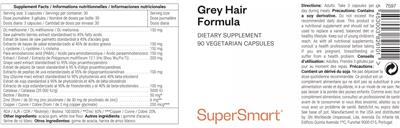
Supplement Facts
The label details for Grey Hair Formula by SuperSmart, sourced from the NIH Dietary Supplement Label Database.
Supplement Facts
| Ingredient | Amount | % DV |
|---|---|---|
| Copper | 200 mcg | 20% |
| Zinc | 6 mg | 60% |
| Biotin | 50 mg | 100000% |
| DL-Methionine | 150 mg | -- |
| Catalase | 5000 IU | -- |
| Para-Aminobenzoic Acid | 150 mg | -- |
| Saw Palmetto Berry Extract | 150 mg | -- |
| Grape Seed Extract | 100 mg | -- |
| Zinc Picolinate | 30 mg | -- |
| Copper Glycinate | 2 mg | -- |
| L-Cysteine | 150 mg | -- |
| Polygonum multiforum Extract | 200 mg | -- |
| Soy Extract | 100 mg | -- |
Other ingredients: Acacia Gum, White Rice Flour
Tap any ingredient to jump to its full detail below.
These statements are the manufacturer’s wording, reproduced from the product label — the label is saying it, not HelloPharmacist. We don’t verify or endorse them.
FDA Statement of Identity
Dietary Supplement
Suggested/Recommended/Usage/Directions
Directions: Adults. Take 3 capsules per day during meals.
Precautions
Precautions: Contains a soy derivative.
Do not exceed the recommended daily dose. This product is a nutritional supplement and should not be used to replace a varied, balanced diet or healthy lifestyle.
Keep out of young children's reach.
As with all nutritional supplements, consult a health professional before taking if you are pregnant, breastfeeding or suffer from a health problem.
Is this label outdated? Report a formula or label change and our pharmacy team will review it.
Grey Hair Formula by SuperSmart label
The label scan from the NIH Dietary Supplement Label Database. Tap to enlarge.
Label images are published by the NIH Dietary Supplement Label Database for the version of this product on file. Always read your actual product label.
View the full label (PDF)The Ingredients in Grey Hair Formula by SuperSmart
These are the 11 active ingredients this product is made of. Select any to open its full monograph.
Serving size3 Capsule(s) Dosage formCapsule Servings per container30 Amounts shown are per serving.
Most supplement products combine several ingredients, and a medication can interact with the product through any one of them. Each ingredient below shows whether it has known drug interactions.
Copper
Interacts with31 drugs
Copper is an essential trace mineral your body needs in small amounts for making red blood cells, supporting nerves and bones, and helping enzymes wor...
Copper monograph & interactionsZinc
Interacts with67 drugs
Zinc is an essential mineral that your body needs for immune function, wound healing, taste, and smell. Most people get enough from food, but suppleme...
Zinc monograph & interactionsBiotin
No knowninteractions
Biotin (vitamin B7) is a water-soluble vitamin your body needs to turn food into energy and to support healthy hair, skin, and nails. Most people get...
Biotin monograph & interactionsDL-Methionine
Catalase
Para-Aminobenzoic Acid
Saw Palmetto Berry Extract
Interacts with174 drugs
Saw palmetto is a plant extract most often used for urinary symptoms linked to an enlarged prostate (BPH). The best research suggests it works no bett...
Saw Palmetto Berry Extract monograph & interactionsGrape Seed Extract
Interacts with912 drugs
Grapes and grape products like grape seed extract contain antioxidant compounds such as resveratrol and proanthocyanidins that may support heart and b...
Grape Seed Extract monograph & interactionsL-Cysteine
Interacts with86 drugs
L-cysteine is a sulfur-containing amino acid your body uses to make proteins and the antioxidant glutathione. Most people get enough from food, and su...
L-Cysteine monograph & interactionsPolygonum multiforum Extract
Interacts with1,259 drugs
Fo-ti (He Shou Wu) is a root used in traditional Chinese medicine, often promoted for healthy aging and hair. High-quality human evidence for these be...
Polygonum multiforum Extract monograph & interactionsSoy Extract
Interacts with612 drugs
Soy is a nutritious bean that is a staple food and a popular source of plant protein and isoflavones. Eating soy foods as part of a balanced diet is g...
Soy Extract monograph & interactionsOther (inactive) ingredients: Acacia Gum, White Rice Flour. These complete the product’s ingredient list but are not active constituents.
Grey Hair Formula by SuperSmart Drug Interactions
HelloPharmacist Interaction Report
Grey Hair Formula by SuperSmart contains several ingredients with documented interactions with medications.
The most serious interaction involves Soy Extract and monoamine oxidase inhibitors (MAOIs)—a Major severity interaction. Taking soy with an MAOI can trigger a dangerous spike in blood pressure (hypertensive crisis) if the soy contains high amounts of tyramine, particularly in fermented soy products.
Read the full breakdown — every affected drug type, severity by severity
Saw Palmetto Berry Extract has Moderate interactions with estrogens and contraceptive drugs, potentially reducing their effectiveness due to its antiestrogenic effects. It also carries a Moderate risk of increased bleeding with blood thinners (anticoagulants) or antiplatelet drugs.
Grape Seed Extract interacts with multiple drug-metabolizing enzyme systems—CYP1A2, CYP2D6, CYP3A4, and CYP2E1 substrates—all Moderate severity, and can increase bleeding risk with anticoagulants or antiplatelet drugs. It may also reduce absorption of the immunosuppressant cyclosporine and theoretically decrease the sedative effects of midazolam with long-term use.
Zinc Picolinate has Moderate interactions with quinolone and tetracycline antibiotics, reducing their absorption; the same applies to cephalexin and penicillamine. It may also reduce levels of HIV medications (ritonavir and integrase inhibitors).
Copper Glycinate carries a Moderate interaction with penicillamine and a Minor one with contraceptive drugs. Polygonum multiforum (Fo-ti) Extract has multiple Moderate interactions: it may increase the effects of blood thinners like warfarin, affect drugs metabolized by CYP2B6 and CYP2C8, and increase the risk of potassium loss with diuretics or stimulant laxatives.
L-Cysteine theoretically increases hypoglycemia risk with antidiabetes drugs. Soy Extract also has Moderate interactions with antihypertensive drugs, estrogens, antidiabetes drugs, diuretics, caffeine, warfarin, and levothyroxine.
We could not check DL-Methionine, Catalase, or Para-Aminobenzoic Acid for interactions; no data is on file for these ingredients. Altogether, these interactions span 1,429 individual medications.
Please use the search tool below to check your exact medications before starting this product.
Check your own medications below · Editorial policy · How we use AI
Want to check YOUR meds against Grey Hair Formula?
Ask about interactions with your drugs in plain English — “Can I take it with lisinopril?” — and we find you the answer in seconds, ingredient by ingredient.
Go to the checkerIngredients driving the most interactions
Individual Drug Interactions
The ingredients in Grey Hair Formula interact with 1,452 drugs. Click any drug to see the details.
7 of the 11 ingredients in Grey Hair Formula interact with drugs. Each result below shows which ingredient is responsible. Polygonum multiforum Extract Grape Seed Extract Soy Extract Saw Palmetto Berry Extract L-Cysteine Zinc Copper
AmphetamineAdensys XR-ODT, Adzenys ER, Dyanavel XR, Mydayis
How Amphetamine interacts with Grey Hair Formula — through 3 ingredients. Tap an ingredient for the detail:
Soy ExtractMonoamine Oxidase Inhibitors (maois) Major
Interaction Summary
Taking soy products containing high amounts of tyramine along with MAOIs can increase the risk of hypertensive crisis.
Read the full Soy Extract + Amphetamine interactionGrape Seed ExtractCytochrome P450 2d6 (cyp2d6) Substrates Moderate
Interaction Summary
Theoretically, grape seed extract may increase the levels of CYP2D6 substrates.
Read the full Grape Seed Extract + Amphetamine interactionPolygonum Multiforum ExtractCytochrome P450 2d6 (cyp2d6) Substrates Moderate
Interaction Summary
Theoretically, fo-ti may increase the levels and clinical effects of drugs metabolized by CYP2D6.
Read the full Polygonum Multiforum Extract + Amphetamine interactionIsocarboxazidMarplan
How Isocarboxazid interacts with Grey Hair Formula — through 1 ingredient. Tap an ingredient for the detail:
Soy ExtractMonoamine Oxidase Inhibitors (maois) Major
Interaction Summary
Taking soy products containing high amounts of tyramine along with MAOIs can increase the risk of hypertensive crisis.
Read the full Soy Extract + Isocarboxazid interactionMoclobemideManerix, Moclobemide
How Moclobemide interacts with Grey Hair Formula — through 2 ingredients. Tap an ingredient for the detail:
Soy ExtractMonoamine Oxidase Inhibitors (maois) Major
Interaction Summary
Taking soy products containing high amounts of tyramine along with MAOIs can increase the risk of hypertensive crisis.
Read the full Soy Extract + Moclobemide interactionPolygonum Multiforum ExtractCytochrome P450 2c19 (cyp2c19) Substrates Moderate
Interaction Summary
Theoretically, fo-ti may increase the levels and clinical effects of drugs metabolized by CYP2C19.
Read the full Polygonum Multiforum Extract + Moclobemide interactionOzanimod HydrochlorideZeposia
How Ozanimod Hydrochloride interacts with Grey Hair Formula — through 2 ingredients. Tap an ingredient for the detail:
Soy ExtractMonoamine Oxidase Inhibitors (maois) Major
Interaction Summary
Taking soy products containing high amounts of tyramine along with MAOIs can increase the risk of hypertensive crisis.
Read the full Soy Extract + Ozanimod Hydrochloride interactionPolygonum Multiforum ExtractCytochrome P450 2c8 (cyp2c8) Substrates, Hepatotoxic Drugs Moderate
Interaction Summary
Theoretically, fo-ti might increase the levels and clinical effects of drugs metabolized by CYP2C8.
Read the full Polygonum Multiforum Extract + Ozanimod Hydrochloride interactionPhenelzine SulfateNardil
How Phenelzine Sulfate interacts with Grey Hair Formula — through 1 ingredient. Tap an ingredient for the detail:
Soy ExtractMonoamine Oxidase Inhibitors (maois) Major
Interaction Summary
Taking soy products containing high amounts of tyramine along with MAOIs can increase the risk of hypertensive crisis.
Read the full Soy Extract + Phenelzine Sulfate interactionRasagilineAzilect
How Rasagiline interacts with Grey Hair Formula — through 3 ingredients. Tap an ingredient for the detail:
Soy ExtractMonoamine Oxidase Inhibitors (maois) Major
Interaction Summary
Taking soy products containing high amounts of tyramine along with MAOIs can increase the risk of hypertensive crisis.
Read the full Soy Extract + Rasagiline interactionGrape Seed ExtractCytochrome P450 1a2 (cyp1a2) Substrates Moderate
Interaction Summary
Theoretically, grape juice might reduce the levels of CYP1A2 substrates.
Read the full Grape Seed Extract + Rasagiline interactionPolygonum Multiforum ExtractCytochrome P450 1a2 (cyp1a2) Substrates Moderate
Interaction Summary
Theoretically, fo-ti might increase or decrease the levels and clinical effects of drugs metabolized by CYP1A2.
Read the full Polygonum Multiforum Extract + Rasagiline interactionSafinamide MesylateXadago
How Safinamide Mesylate interacts with Grey Hair Formula — through 1 ingredient. Tap an ingredient for the detail:
Soy ExtractMonoamine Oxidase Inhibitors (maois) Major
Interaction Summary
Taking soy products containing high amounts of tyramine along with MAOIs can increase the risk of hypertensive crisis.
Read the full Soy Extract + Safinamide Mesylate interactionSelegilineCarbex, Eldepryl, Emsam, Zelapar
How Selegiline interacts with Grey Hair Formula — through 1 ingredient. Tap an ingredient for the detail:
Soy ExtractMonoamine Oxidase Inhibitors (maois) Major
Interaction Summary
Taking soy products containing high amounts of tyramine along with MAOIs can increase the risk of hypertensive crisis.
Read the full Soy Extract + Selegiline interactionTranylcypromineParnate
How Tranylcypromine interacts with Grey Hair Formula — through 1 ingredient. Tap an ingredient for the detail:
Soy ExtractMonoamine Oxidase Inhibitors (maois) Major
Interaction Summary
Taking soy products containing high amounts of tyramine along with MAOIs can increase the risk of hypertensive crisis.
Read the full Soy Extract + Tranylcypromine interaction6-mercaptopurinePurinethol
How 6-mercaptopurine interacts with Grey Hair Formula — through 1 ingredient. Tap an ingredient for the detail:
Polygonum Multiforum ExtractHepatotoxic Drugs Moderate
Interaction Summary
Theoretically, fo-ti might increase the risk of liver damage when taken with hepatotoxic drugs.
Read the full Polygonum Multiforum Extract + 6-mercaptopurine interactionAdo-trastuzumab EmtansineKadcyla
How Ado-trastuzumab Emtansine interacts with Grey Hair Formula — through 2 ingredients. Tap an ingredient for the detail:
Grape Seed ExtractCytochrome P450 3a4 (cyp3a4) Substrates Moderate
Interaction Summary
It is unclear if grape seed extract inhibits or induces CYP3A4; research is conflicting.
Read the full Grape Seed Extract + Ado-trastuzumab Emtansine interactionPolygonum Multiforum ExtractCytochrome P450 3a4 (cyp3a4) Substrates Moderate
Interaction Summary
Theoretically, fo-ti might increase the levels and clinical effects of drugs metabolized by CYP3A4.
Read the full Polygonum Multiforum Extract + Ado-trastuzumab Emtansine interactionAbacavir Sulfate, Dolutegravir, LamivudineTriumeq
How Abacavir Sulfate, Dolutegravir, Lamivudine interacts with Grey Hair Formula — through 1 ingredient. Tap an ingredient for the detail:
Polygonum Multiforum ExtractHepatotoxic Drugs Moderate
Interaction Summary
Theoretically, fo-ti might increase the risk of liver damage when taken with hepatotoxic drugs.
Read the full Polygonum Multiforum Extract + Abacavir Sulfate, Dolutegravir, Lamivudine interactionAbacavir, LamivudineEpzicom
How Abacavir, Lamivudine interacts with Grey Hair Formula — through 1 ingredient. Tap an ingredient for the detail:
Polygonum Multiforum ExtractHepatotoxic Drugs Moderate
Interaction Summary
Theoretically, fo-ti might increase the risk of liver damage when taken with hepatotoxic drugs.
Read the full Polygonum Multiforum Extract + Abacavir, Lamivudine interactionAbciximabReoPro
How Abciximab interacts with Grey Hair Formula — through 3 ingredients. Tap an ingredient for the detail:
Polygonum Multiforum ExtractAnticoagulant/antiplatelet Drugs Moderate
Interaction Summary
Fo-ti has been linked to cases of acute liver failure which can decrease clotting factor production and increase the effects of anticoagulants.
Read the full Polygonum Multiforum Extract + Abciximab interactionGrape Seed ExtractAnticoagulant/antiplatelet Drugs Moderate
Interaction Summary
Theoretically, grape extracts may have antiplatelet effects and may increase the risk of bleeding if used with anticoagulant or antiplatelet drugs.
Read the full Grape Seed Extract + Abciximab interactionSaw Palmetto Berry ExtractAnticoagulant/antiplatelet Drugs Moderate
Interaction Summary
Saw palmetto might increase the risk of bleeding with anticoagulant or antiplatelet drugs.
Read the full Saw Palmetto Berry Extract + Abciximab interactionAbemaciclibVerzenio
How Abemaciclib interacts with Grey Hair Formula — through 2 ingredients. Tap an ingredient for the detail:
Polygonum Multiforum ExtractCytochrome P450 3a4 (cyp3a4) Substrates Moderate
Interaction Summary
Theoretically, fo-ti might increase the levels and clinical effects of drugs metabolized by CYP3A4.
Read the full Polygonum Multiforum Extract + Abemaciclib interactionGrape Seed ExtractCytochrome P450 3a4 (cyp3a4) Substrates Moderate
Interaction Summary
It is unclear if grape seed extract inhibits or induces CYP3A4; research is conflicting.
Read the full Grape Seed Extract + Abemaciclib interactionAbiraterone
How Abiraterone interacts with Grey Hair Formula — through 2 ingredients. Tap an ingredient for the detail:
Grape Seed ExtractCytochrome P450 3a4 (cyp3a4) Substrates Moderate
Interaction Summary
It is unclear if grape seed extract inhibits or induces CYP3A4; research is conflicting.
Read the full Grape Seed Extract + Abiraterone interactionPolygonum Multiforum ExtractCytochrome P450 3a4 (cyp3a4) Substrates, Hepatotoxic Drugs Moderate
Interaction Summary
Theoretically, fo-ti might increase the levels and clinical effects of drugs metabolized by CYP3A4.
Read the full Polygonum Multiforum Extract + Abiraterone interactionAbiraterone AcetateYonsa, Zytiga
How Abiraterone Acetate interacts with Grey Hair Formula — through 2 ingredients. Tap an ingredient for the detail:
Polygonum Multiforum ExtractHepatotoxic Drugs, Cytochrome P450 3a4 (cyp3a4) Substrates Moderate
Interaction Summary
Theoretically, fo-ti might increase the risk of liver damage when taken with hepatotoxic drugs.
Read the full Polygonum Multiforum Extract + Abiraterone Acetate interactionGrape Seed ExtractCytochrome P450 3a4 (cyp3a4) Substrates Moderate
Interaction Summary
It is unclear if grape seed extract inhibits or induces CYP3A4; research is conflicting.
Read the full Grape Seed Extract + Abiraterone Acetate interactionAbrocitinibCibinqo
How Abrocitinib interacts with Grey Hair Formula — through 4 ingredients. Tap an ingredient for the detail:
Grape Seed ExtractCytochrome P450 2c9 (cyp2c9) Substrates, Anticoagulant/antiplatelet Drugs Moderate
Interaction Summary
It is unclear if grape juice or grape seed extract inhibits CYP2C9; research is conflicting.
Read the full Grape Seed Extract + Abrocitinib interactionPolygonum Multiforum ExtractCytochrome P450 2c19 (cyp2c19) Substrates, Cytochrome P450 2c9 (cyp2c9) Substrates +1 Moderate
Interaction Summary
Theoretically, fo-ti may increase the levels and clinical effects of drugs metabolized by CYP2C19.
Read the full Polygonum Multiforum Extract + Abrocitinib interactionSaw Palmetto Berry ExtractAnticoagulant/antiplatelet Drugs Moderate
Interaction Summary
Saw palmetto might increase the risk of bleeding with anticoagulant or antiplatelet drugs.
Read the full Saw Palmetto Berry Extract + Abrocitinib interactionSoy ExtractCytochrome P450 2c9 (cyp2c9) Substrates Minor
Interaction Summary
Soy might modestly induce CYP2C9 enzymes.
Read the full Soy Extract + Abrocitinib interactionAcalabrutinibCalquence
How Acalabrutinib interacts with Grey Hair Formula — through 2 ingredients. Tap an ingredient for the detail:
Polygonum Multiforum ExtractCytochrome P450 3a4 (cyp3a4) Substrates Moderate
Interaction Summary
Theoretically, fo-ti might increase the levels and clinical effects of drugs metabolized by CYP3A4.
Read the full Polygonum Multiforum Extract + Acalabrutinib interactionGrape Seed ExtractCytochrome P450 3a4 (cyp3a4) Substrates Moderate
Interaction Summary
It is unclear if grape seed extract inhibits or induces CYP3A4; research is conflicting.
Read the full Grape Seed Extract + Acalabrutinib interactionAcarboseGlucobay, Prandase, Precose
How Acarbose interacts with Grey Hair Formula — through 3 ingredients. Tap an ingredient for the detail:
Polygonum Multiforum ExtractAntidiabetes Drugs, Hepatotoxic Drugs Moderate
Interaction Summary
Theoretically, fo-ti might increase the risk of hypoglycemia when taken with antidiabetes drugs.
Read the full Polygonum Multiforum Extract + Acarbose interactionSoy ExtractAntidiabetes Drugs Moderate
Interaction Summary
Soy can lower blood glucose and have additive effects with antidiabetes drugs.
Read the full Soy Extract + Acarbose interactionL-cysteineAntidiabetes Drugs Moderate
Interaction Summary
Theoretically, taking L-cysteine supplements with antidiabetes drugs might increase the risk of hypoglycemia.
Read the full L-cysteine + Acarbose interactionAcebutololRhotral, Sectral
How Acebutolol interacts with Grey Hair Formula — through 2 ingredients. Tap an ingredient for the detail:
Soy ExtractAntihypertensive Drugs Moderate
Interaction Summary
Theoretically soy protein may have additive effects with antihypertensive drugs and increase the risk of hypotension.
Read the full Soy Extract + Acebutolol interactionPolygonum Multiforum ExtractHepatotoxic Drugs Moderate
Interaction Summary
Theoretically, fo-ti might increase the risk of liver damage when taken with hepatotoxic drugs.
Read the full Polygonum Multiforum Extract + Acebutolol interactionAcenocoumarolSintrom
How Acenocoumarol interacts with Grey Hair Formula — through 3 ingredients. Tap an ingredient for the detail:
Polygonum Multiforum ExtractAnticoagulant/antiplatelet Drugs Moderate
Interaction Summary
Fo-ti has been linked to cases of acute liver failure which can decrease clotting factor production and increase the effects of anticoagulants.
Read the full Polygonum Multiforum Extract + Acenocoumarol interactionGrape Seed ExtractAnticoagulant/antiplatelet Drugs Moderate
Interaction Summary
Theoretically, grape extracts may have antiplatelet effects and may increase the risk of bleeding if used with anticoagulant or antiplatelet drugs.
Read the full Grape Seed Extract + Acenocoumarol interactionSaw Palmetto Berry ExtractAnticoagulant/antiplatelet Drugs Moderate
Interaction Summary
Saw palmetto might increase the risk of bleeding with anticoagulant or antiplatelet drugs.
Read the full Saw Palmetto Berry Extract + Acenocoumarol interactionAcetaminophenChildren's Tylenol, Children's Tylenol Meltaways, Tylenol, Tylenol Ex Strength
How Acetaminophen interacts with Grey Hair Formula — through 2 ingredients. Tap an ingredient for the detail:
Polygonum Multiforum ExtractHepatotoxic Drugs, Cytochrome P450 1a2 (cyp1a2) Substrates Moderate
Interaction Summary
Theoretically, fo-ti might increase the risk of liver damage when taken with hepatotoxic drugs.
Read the full Polygonum Multiforum Extract + Acetaminophen interactionGrape Seed ExtractCytochrome P450 2e1 (cyp2e1) Substrates, Cytochrome P450 1a2 (cyp1a2) Substrates Moderate
Interaction Summary
Theoretically, grape seed extract might increase the levels of CYP2E1 substrates.
Read the full Grape Seed Extract + Acetaminophen interactionAcetaminophen, AspirinGemnisyn
How Acetaminophen, Aspirin interacts with Grey Hair Formula — through 3 ingredients. Tap an ingredient for the detail:
Grape Seed ExtractCytochrome P450 1a2 (cyp1a2) Substrates, Anticoagulant/antiplatelet Drugs +1 Moderate
Interaction Summary
Theoretically, grape juice might reduce the levels of CYP1A2 substrates.
Read the full Grape Seed Extract + Acetaminophen, Aspirin interactionSaw Palmetto Berry ExtractAnticoagulant/antiplatelet Drugs Moderate
Interaction Summary
Saw palmetto might increase the risk of bleeding with anticoagulant or antiplatelet drugs.
Read the full Saw Palmetto Berry Extract + Acetaminophen, Aspirin interactionPolygonum Multiforum ExtractCytochrome P450 1a2 (cyp1a2) Substrates, Anticoagulant/antiplatelet Drugs +1 Moderate
Interaction Summary
Theoretically, fo-ti might increase or decrease the levels and clinical effects of drugs metabolized by CYP1A2.
Read the full Polygonum Multiforum Extract + Acetaminophen, Aspirin interactionAcetaminophen, Aspirin, CaffeineExcedrin, Excedrin Extra Strength, Excedrin Migraine
How Acetaminophen, Aspirin, Caffeine interacts with Grey Hair Formula — through 4 ingredients. Tap an ingredient for the detail:
Polygonum Multiforum ExtractHepatotoxic Drugs, Cytochrome P450 1a2 (cyp1a2) Substrates +2 Moderate
Interaction Summary
Theoretically, fo-ti might increase the risk of liver damage when taken with hepatotoxic drugs.
Read the full Polygonum Multiforum Extract + Acetaminophen, Aspirin, Caffeine interactionGrape Seed ExtractAnticoagulant/antiplatelet Drugs, Cytochrome P450 2e1 (cyp2e1) Substrates +2 Moderate
Interaction Summary
Theoretically, grape extracts may have antiplatelet effects and may increase the risk of bleeding if used with anticoagulant or antiplatelet drugs.
Read the full Grape Seed Extract + Acetaminophen, Aspirin, Caffeine interactionSaw Palmetto Berry ExtractAnticoagulant/antiplatelet Drugs Moderate
Interaction Summary
Saw palmetto might increase the risk of bleeding with anticoagulant or antiplatelet drugs.
Read the full Saw Palmetto Berry Extract + Acetaminophen, Aspirin, Caffeine interactionSoy ExtractCaffeine Moderate
Interaction Summary
Theoretically, soy might reduce the clearance of caffeine.
Read the full Soy Extract + Acetaminophen, Aspirin, Caffeine interactionAcetaminophen, Brompheniramine, PhenylpropanolamineDimetapp Cold and Flu
How Acetaminophen, Brompheniramine, Phenylpropanolamine interacts with Grey Hair Formula — through 2 ingredients. Tap an ingredient for the detail:
Polygonum Multiforum ExtractHepatotoxic Drugs, Cytochrome P450 1a2 (cyp1a2) Substrates Moderate
Interaction Summary
Theoretically, fo-ti might increase the risk of liver damage when taken with hepatotoxic drugs.
Read the full Polygonum Multiforum Extract + Acetaminophen, Brompheniramine, Phenylpropanolamine interactionGrape Seed ExtractCytochrome P450 1a2 (cyp1a2) Substrates, Cytochrome P450 2e1 (cyp2e1) Substrates Moderate
Interaction Summary
Theoretically, grape juice might reduce the levels of CYP1A2 substrates.
Read the full Grape Seed Extract + Acetaminophen, Brompheniramine, Phenylpropanolamine interactionAcetaminophen, ButalbitalAxocet, Bancap, Bucet, Butex Forte, Esgic CF, Orbivan CF +5 more
How Acetaminophen, Butalbital interacts with Grey Hair Formula — through 2 ingredients. Tap an ingredient for the detail:
Grape Seed ExtractCytochrome P450 2e1 (cyp2e1) Substrates, Cytochrome P450 1a2 (cyp1a2) Substrates Moderate
Interaction Summary
Theoretically, grape seed extract might increase the levels of CYP2E1 substrates.
Read the full Grape Seed Extract + Acetaminophen, Butalbital interactionPolygonum Multiforum ExtractCytochrome P450 1a2 (cyp1a2) Substrates, Hepatotoxic Drugs Moderate
Interaction Summary
Theoretically, fo-ti might increase or decrease the levels and clinical effects of drugs metabolized by CYP1A2.
Read the full Polygonum Multiforum Extract + Acetaminophen, Butalbital interactionAcetaminophen, Butalbital, CaffeineEsgic, Esgic Plus, Fiogesic, Fioricet, Repan, Tecnal +1 more
How Acetaminophen, Butalbital, Caffeine interacts with Grey Hair Formula — through 3 ingredients. Tap an ingredient for the detail:
Polygonum Multiforum ExtractHepatotoxic Drugs, Cytochrome P450 3a4 (cyp3a4) Substrates +1 Moderate
Interaction Summary
Theoretically, fo-ti might increase the risk of liver damage when taken with hepatotoxic drugs.
Read the full Polygonum Multiforum Extract + Acetaminophen, Butalbital, Caffeine interactionSoy ExtractCaffeine Moderate
Interaction Summary
Theoretically, soy might reduce the clearance of caffeine.
Read the full Soy Extract + Acetaminophen, Butalbital, Caffeine interactionGrape Seed ExtractCytochrome P450 1a2 (cyp1a2) Substrates, Cytochrome P450 2e1 (cyp2e1) Substrates +1 Moderate
Interaction Summary
Theoretically, grape juice might reduce the levels of CYP1A2 substrates.
Read the full Grape Seed Extract + Acetaminophen, Butalbital, Caffeine interactionAcetaminophen, Butalbital, Caffeine, CodeineEsgic with Codeine, Fioricet w/ Codeine
How Acetaminophen, Butalbital, Caffeine, Codeine interacts with Grey Hair Formula — through 3 ingredients. Tap an ingredient for the detail:
Grape Seed ExtractCytochrome P450 3a4 (cyp3a4) Substrates, Cytochrome P450 2d6 (cyp2d6) Substrates +2 Moderate
Interaction Summary
It is unclear if grape seed extract inhibits or induces CYP3A4; research is conflicting.
Read the full Grape Seed Extract + Acetaminophen, Butalbital, Caffeine, Codeine interactionPolygonum Multiforum ExtractCytochrome P450 2d6 (cyp2d6) Substrates, Cytochrome P450 1a2 (cyp1a2) Substrates +2 Moderate
Interaction Summary
Theoretically, fo-ti may increase the levels and clinical effects of drugs metabolized by CYP2D6.
Read the full Polygonum Multiforum Extract + Acetaminophen, Butalbital, Caffeine, Codeine interactionSoy ExtractCaffeine Moderate
Interaction Summary
Theoretically, soy might reduce the clearance of caffeine.
Read the full Soy Extract + Acetaminophen, Butalbital, Caffeine, Codeine interactionAcetaminophen, Butalbital, CodeineBancap w/ Codeine
How Acetaminophen, Butalbital, Codeine interacts with Grey Hair Formula — through 2 ingredients. Tap an ingredient for the detail:
Grape Seed ExtractCytochrome P450 1a2 (cyp1a2) Substrates, Cytochrome P450 2d6 (cyp2d6) Substrates +1 Moderate
Interaction Summary
Theoretically, grape juice might reduce the levels of CYP1A2 substrates.
Read the full Grape Seed Extract + Acetaminophen, Butalbital, Codeine interactionPolygonum Multiforum ExtractCytochrome P450 2d6 (cyp2d6) Substrates, Cytochrome P450 1a2 (cyp1a2) Substrates +1 Moderate
Interaction Summary
Theoretically, fo-ti may increase the levels and clinical effects of drugs metabolized by CYP2D6.
Read the full Polygonum Multiforum Extract + Acetaminophen, Butalbital, Codeine interactionEach ingredient & the kinds of drugs it affects
For each ingredient in Grey Hair Formula with known interactions, here are the types of medications they can affect. Open any type for the detail — or search your exact drug in the checker above.
Polygonum multiforum Extract
Anticoagulant/Antiplatelet Drugs
Fo-ti has been linked to cases of acute liver failure which can decrease clotting factor production and increase the effects of anticoagulants. In one case, a patient who had been stable on warfarin presented with acute hepatitis and an INR elevated to 14.98. The patient had been taking fo-ti for 90 days prior to admission. Discontinuation of warfarin and fo-ti lead to a decrease in the INR and full recovery. Theoretically, concomitant use of fo-ti with anticoagulant or antiplatelet drugs may increase the risk of bleeding in some patients. Until more is known, monitor patients taking fo-ti and drugs that affect bleeding.
Some of these drugs include aspirin, clopidogrel (Plavix), dalteparin (Fragmin), dipyridamole (Persantine), enoxaparin (Lovenox), heparin, ticlopidine (Ticlid), warfarin (Coumadin), and others.
Antidiabetes Drugs
Theoretically, fo-ti might increase the risk of hypoglycemia when taken with antidiabetes drugs.
Fo-ti reportedly has hypoglycemic effects.
Contraceptive Drugs
Theoretically, taking large amounts of fo-ti might interfere with contraceptive drugs due to competition for estrogen receptors.
In vitro research suggests that fo-ti extract has estrogenic activity.
Cytochrome P450 1A2 (Cyp1A2) Substrates
Theoretically, fo-ti might increase or decrease the levels and clinical effects of drugs metabolized by CYP1A2.
In vitro research suggests that fo-ti might inhibit CYP1A2. Additionally, in vitro research suggests that the degree of CYP1A2 inhibition depends on the type of fo-ti extract (i.e., the raw plant leads to greater inhibition than extensively processed extracts). However, in an animal study, an aqueous extract of fo-ti inhibited CYP1A2 while an alcoholic extract of fo-ti induced CYP1A2. Induction or inhibition of CYP1A2 by fo-ti has not been reported in humans.
Cytochrome P450 2B6 (Cyp2B6) Substrates
Theoretically, fo-ti might increase the levels and clinical effects of drugs metabolized by CYP2B6.
Animal research suggests that fo-ti might inhibit CYP2B6. One in vitro study suggests that the degree of CYP2B6 inhibition may depend on the type of fo-ti extract (i.e., the raw plant leads to greater inhibition than extensively processed extracts). However, this interaction has not been reported in humans.
Cytochrome P450 2C19 (Cyp2C19) Substrates
Theoretically, fo-ti may increase the levels and clinical effects of drugs metabolized by CYP2C19.
Animal and in vitro research suggests that fo-ti may inhibit CYP2C19. An in vitro study suggests that the degree of CYP2C19 inhibition may depend on the type of fo-ti extract (i.e., the raw plant leads to greater inhibition than extensively processed extracts). However, this interaction has not been reported in humans.
Cytochrome P450 2C8 (Cyp2C8) Substrates
Theoretically, fo-ti might increase the levels and clinical effects of drugs metabolized by CYP2C8.
In vitro research suggests that fo-ti might inhibit CYP2C8. However, this interaction has not been reported in humans.
Cytochrome P450 2C9 (Cyp2C9) Substrates
Theoretically, fo-ti may increase the levels and clinical effects of drugs metabolized by CYP2C9.
Animal and in vitro research suggests that fo-ti may inhibit CYP2C9. However, this interaction has not been reported in humans.
Cytochrome P450 2D6 (Cyp2D6) Substrates
Theoretically, fo-ti may increase the levels and clinical effects of drugs metabolized by CYP2D6.
Animal research suggests that fo-ti might inhibit CYP2D6. Additionally, an in vitro study suggests that the degree of CYP2D6 inhibition may depend on the type of fo-ti extract (i.e., the raw plant leads to greater inhibition than extensively processed extracts). However, this interaction has not been reported in humans.
Cytochrome P450 3A4 (Cyp3A4) Substrates
Theoretically, fo-ti might increase the levels and clinical effects of drugs metabolized by CYP3A4.
In vitro research suggests that fo-ti might inhibit CYP3A4. One in vitro study suggests that the degree of CYP3A4 inhibition may depend on the type of fo-ti extract (i.e., the raw plant leads to greater inhibition than extensively processed extracts). However, this evidence conflicts with animal research suggesting that fo-ti does not inhibit CYP3A4. This interaction has not been reported in humans.
Digoxin (Lanoxin)
Theoretically, fo-ti, particularly raw fo-ti root, might increase the risk of hypokalemia and cardiotoxicity when taken with digoxin.
Raw fo-ti root contains anthraquinone derivatives, which might have stimulant laxative effects. In vitro research shows that fermented and processed fo-ti root have reduced laxative effects compared with raw fo-ti root.
Diuretic Drugs
Theoretically, fo-ti, particularly raw fo-ti root, might increase the risk of hypokalemia when taken with diuretic drugs.
Raw fo-ti root contains anthraquinone derivatives, which might have stimulant laxative effects and compound diuretic-induced potassium loss. In vitro research shows that fermented and processed fo-ti root have reduced laxative effects compared with raw fo-ti root.
Estrogens
Theoretically, taking large amounts of fo-ti might interfere with hormone replacement therapy through competition for estrogen receptors.
In vitro research suggests that fo-ti extract has estrogenic activity.
Hepatotoxic Drugs
Theoretically, fo-ti might increase the risk of liver damage when taken with hepatotoxic drugs.
Fo-ti has been linked to liver damage in many reports.
Stimulant Laxatives
Theoretically, fo-ti, particularly raw fo-ti root, might increase the risk of fluid and electrolyte depletion when taken with stimulant laxatives.
Raw fo-ti root contains anthraquinone derivatives, which might have stimulant laxative effects. However, in vitro research shows that fermented and processed fo-ti root have reduced laxative effects compared with raw fo-ti root.
Sulindac (Clinoril)
Theoretically, fo-ti might increase or decrease the levels and clinical effects of sulindac.
Animal research suggests that the type of fo-ti extract might affect the levels of sulindac differently; the raw plant may increase levels, but processed parts may decrease levels. Induction or inhibition of CYP1A2 by fo-ti has not been reported in humans.
Warfarin (Coumadin)
Theoretically, fo-ti might increase the effects and adverse effects of warfarin.
Fo-ti may have stimulant laxative effects and cause diarrhea, especially when the raw or unprocessed fo-ti root is used. Diarrhea can increase the effects of warfarin, increase international normalized ratio (INR), and increase the risk of bleeding. Also, fo-ti has been linked to cases of acute liver failure which can decrease clotting factor production and increase the effects of warfarin. In one case, a patient who had been stable on warfarin presented with acute hepatitis and an INR elevated to 14.98. The patient had been taking fo-ti for 90 days prior to admission. Discontinuation of warfarin and fo-ti lead to a decrease in the INR and full recovery.
Grape Seed Extract
Anticoagulant/Antiplatelet Drugs
Theoretically, grape extracts may have antiplatelet effects and may increase the risk of bleeding if used with anticoagulant or antiplatelet drugs.
In vitro evidence suggests that grape extracts might decrease platelet aggregation.
Cyclosporine (Neoral, Sandimmune)
Ingesting grape juice with cyclosporine can reduce cyclosporine absorption.
A small pharmacokinetic study in healthy young adults shows that intake of purple grape juice 200 mL along with cyclosporine can decrease the absorption of cyclosporine by up to 30% when compared with water. Separate doses of grape juice and cyclosporine by at least 2 hours to avoid this interaction.
Cytochrome P450 1A2 (Cyp1A2) Substrates
Theoretically, grape juice might reduce the levels of CYP1A2 substrates.
A small pharmacokinetic study in healthy adults shows that ingestion of 200 mL of grape juice decreases phenacetin plasma levels. This is thought to be due to induction of CYP1A2.
Cytochrome P450 2D6 (Cyp2D6) Substrates
Theoretically, grape seed extract may increase the levels of CYP2D6 substrates.
In vitro evidence suggests that grape seed extract might inhibit CYP2D6 enzymes. However, this interaction has not been reported in humans.
Cytochrome P450 2E1 (Cyp2E1) Substrates
Theoretically, grape seed extract might increase the levels of CYP2E1 substrates.
In vitro and animal research suggests that grape seed proanthocyanidin extract inhibits CYP2E1 enzymes. However, this interaction has not been reported in humans.
Cytochrome P450 3A4 (Cyp3A4) Substrates
It is unclear if grape seed extract inhibits or induces CYP3A4; research is conflicting.
In vitro evidence suggests that grape seed extract might inhibit CYP3A4 enzymes. However, evidence from animal research shows that grape seed extract may induce CYP3A4 in the liver. So far, these interactions have not been reported in humans.
Midazolam (Versed)
Theoretically, long-term intake of grape seed extract might decrease the effects of midazolam.
Animal research shows that subchronic ingestions of grape seed extract can increase the elimination of intravenous midazolam by increasing hepatic CYP3A4 activity. Single doses of grape seed extract do not appear to affect midazolam elimination.
Phenacetin
Grape juice might decrease phenacetin absorption.
A small pharmacokinetic study in healthy adults shows that ingestion of 200 mL of grape juice decreases phenacetin plasma levels. This is thought to be due to induction of cytochrome P450 1A2 (CYP1A2).
Cytochrome P450 2C9 (Cyp2C9) Substrates
It is unclear if grape juice or grape seed extract inhibits CYP2C9; research is conflicting.
In vitro evidence shows that grape seed extract or grape juice might inhibit CYP2C9 enzymes. However, a small pharmacokinetic study in healthy adults shows that drinking 8 ounces of grape juice once does not affect the clearance of flurbiprofen, a probe-drug for CYP2C9 metabolism. The effects of continued grape juice consumption are unclear.
Soy Extract
Monoamine Oxidase Inhibitors (Maois)
Taking soy products containing high amounts of tyramine along with MAOIs can increase the risk of hypertensive crisis.
Fermented soy products such as tofu and soy sauce contain tyramine, a naturally occurring chemical that affects blood pressure regulation. The metabolism of tyramine is decreased by MAOIs. Consuming more than 6 mg of tyramine while taking an MAOI can increase the risk of hypertensive crisis. The amount of tyramine in fermented soy products is usually less than 0.6 mg per serving; however, there can be significant variation depending on the specific product used, storage conditions, and length of storage. Storing one brand of tofu for a week can increase tyramine content from 0.23 mg to 4.8 mg per serving. Advise patients taking MAOIs to avoid fermented soy products that contain high amounts of tyramine.
Antidiabetes Drugs
Soy can lower blood glucose and have additive effects with antidiabetes drugs.
Clinical research shows that whole soy diets and soy-based meals reduce fasting glucose levels in diabetic and non-diabetic individuals. Also, individuals following a soy-based meal replacement plan seem to require lower doses of sulfonylureas and metformin to manage blood glucose levels when compared with individuals following a diet plan recommended by the American Diabetes Association.
Antihypertensive Drugs
Theoretically soy protein may have additive effects with antihypertensive drugs and increase the risk of hypotension.
Although some contradictory research exists, most clinical evidence suggests that consuming soy protein modestly reduces systolic and diastolic blood pressure in individuals with prehypertension or hypertension.
Caffeine
Theoretically, soy might reduce the clearance of caffeine.
Soy contains genistein. Taking genistein 1 gram daily for 14 days seems to inhibit caffeine clearance and metabolism in healthy females. This effect has been attributed to inhibition of the cytochrome P450 1A2 (CYP1A2) enzyme, which is involved in caffeine metabolism. It is unclear if this effect occurs with the lower amounts of genistein found in soy.
Diuretic Drugs
Theoretically, soy might have additive effects when used with diuretic drugs.
Animal research suggests that genistein, a soy isoflavone, increases diuresis within 6 hours of subcutaneous administration in rats. The effects seem to be similar to those of furosemide. This effect has not been reported in humans.
Estrogens
Theoretically, soy might competitively inhibit the effects of estrogen replacement therapy.
Soy contains phytoestrogens and has been shown to have estrogenic activity in some patients. Although this has not been demonstrated in humans, theoretically, concomitant use of soy with estrogen replacement therapy might reduce the effects of the estrogen replacement therapy.
Levothyroxine (Synthroid, Others)
Soy products might reduce the absorption of levothyroxine in some patients.
Preliminary clinical research and a case report suggest that soy-based formulas inhibit the absorption of levothyroxine in infants with congenital hypothyroidism. A levothyroxine dosage increase may be needed for infants with congenital hypothyroidism while using soy-based formulas, and the dose may need to be reduced when soy-based formulas are no longer administered. However, in postmenopausal adults, clinical research shows that taking a single dose of soy extract containing isoflavones 60 mg along with levothyroxine does not affect the oral bioavailability of levothyroxine.
Progesterone
Theoretically, combining soy isoflavones with transdermal progesterone may worsen bone density.
Clinical research suggests that significant bone loss may occur in females with osteoporosis who receive a combination of transdermal progesterone with soy milk containing isoflavones when compared with placebo, soy milk alone, or progesterone alone.
Tamoxifen (Nolvadex)
Theoretically, estrogenic soy isoflavones might alter the effects of tamoxifen.
Laboratory research suggests that genistein and daidzen, isoflavones from soy, can antagonize the antitumor effects of tamoxifen under some circumstances; however, soy isoflavones might have different effects when used at different doses. A relatively low in vitro concentration of soy isoflavones such as 1 microM/L seems to interfere with tamoxifen, whereas high in vitro concentrations such as those >10 microM/L might actually enhance tamoxifen effects. People on a high-soy diet have soy isoflavones levels ranging from 0.1-6 microM/L. Until more is known, advise patients taking tamoxifen to avoid therapeutic use of soy products.
Warfarin (Coumadin)
Theoretically, soy might interfere with the effects of warfarin.
Soy milk has been reported to decrease the international normalized ratio (INR) in a patient taking warfarin. The mechanism of this interaction is not known. However, animal and in vitro research suggests that soy may also inhibit platelet aggregation. Dosing adjustments for warfarin may be necessary.
Antibiotic Drugs
Theoretically, antibiotics may decrease the activity of soy isoflavones.
Intestinal bacteria are responsible in part for converting soy isoflavones into their active forms. Antibiotics may decrease the amount of intestinal bacteria and decrease its ability to convert isoflavones.
Cytochrome P450 2C9 (Cyp2C9) Substrates
Soy might modestly induce CYP2C9 enzymes. However, this effect does not seem to be clinically significant.
In vitro research suggests that an unhydrolyzed soy extract might induce CYP2C9. However, the significance of this interaction is likely minimal. In healthy females taking a specific extract of soy (Genistein Soy Complex, Source Naturals), blood levels of losartan, a CYP2C9 substrate, were not significantly affected.
Saw Palmetto Berry Extract
Anticoagulant/Antiplatelet Drugs
Saw palmetto might increase the risk of bleeding with anticoagulant or antiplatelet drugs.
Saw palmetto is reported to prolong bleeding time. Theoretically, it might increase the risk of bleeding when used concomitantly with anticoagulant or antiplatelet drugs.
Contraceptive Drugs
Saw palmetto might reduce the effectiveness of contraceptive drugs.
Saw palmetto might have antiestrogenic effects. Theoretically, it might interfere with contraceptive drugs taken concomitantly.
Estrogens
Saw palmetto might reduce the effectiveness of estrogens.
Saw palmetto might have antiestrogenic effects. Theoretically, it might interfere with estrogens taken concomitantly.
L-Cysteine
Antidiabetes Drugs
Theoretically, taking L-cysteine supplements with antidiabetes drugs might increase the risk of hypoglycemia.
Animal research suggests that L-cysteine can have hypoglycemic effects.
Zinc
Bictegravir/Emtricitabine/Tenofovir Alafenamide (Biktarvy)
Theoretically, zinc might decrease levels of bictegravir/emtricitabine/tenofovir alafenamide by reducing its absorption.
Advise patients that bictegravir/emtricitabine/tenofovir alafenamide should be taken at least 2 hours before or 6 hours after zinc containing products.
Cephalexin (Keflex)
Zinc might decrease cephalexin levels by chelating with cephalexin in the gut and preventing its absorption.
A pharmacokinetic study shows that zinc sulfate 250 mg taken concomitantly with cephalexin 500 mg decreases peak levels of cephalexin by 31% and reduces the exposure to cephalexin by 27%. Also, taking zinc sulfate 3 hours before cephalexin decreases peak levels of cephalexin by 11% and reduces the exposure to cephalexin by 18%. By decreasing cephalexin levels, zinc might increase the risk of treatment failure. This effect does not occur when zinc is taken 3 hours after the cephalexin dose. To avoid an interaction, advise patients take zinc sulfate 3 hours after taking cephalexin.
Cisplatin (Platinol-Aq)
Theoretically, zinc might interfere with the therapeutic effects of cisplatin.
Animal research suggests that zinc stimulates tumor cell production of the protein metallothionein, which binds and inactivates cisplatin. It is not known whether zinc supplements or high dietary zinc intake can cause clinically significant interference with cisplatin therapy. Cisplatin might also increase zinc excretion.
Integrase Inhibitors
Theoretically, taking zinc along with integrase inhibitors might decrease the levels and clinical effects of these drugs.
Zinc is a divalent cation. Pharmacokinetic studies have shown that other divalent cations such as calcium and iron can decrease blood levels of the integrase inhibitor dolutegravir through chelation.
Penicillamine (Cuprimine, Depen)
Zinc might reduce the levels and clinical effects of penicillamine.
By forming an insoluble complex with penicillamine, zinc interferes with penicillamine absorption and activity. Zinc supplements reduce the efficacy of low-dose penicillamine (0.5-1 gram/day), but do not seem to affect higher doses (1-2.75 gram/day), provided dosing times are separated. Advise patients to take zinc and penicillamine at least 2 hours apart.
Quinolone Antibiotics
Zinc can decrease the levels and clinical effects of quinolones antibiotics.
Quinolones form complexes with zinc in the gastrointestinal tract, reducing absorption of both the quinolone and zinc if taken at the same time. Advise patients to take these drugs at least 2 hours before, or 4-6 hours after, zinc supplements.
Ritonavir (Norvir)
Zinc modestly reduces levels of ritonavir.
Clinical research shows that zinc might reduce serum ritonavir levels by chelating with ritonavir in the gut and preventing its absorption. In patients with HIV, ritonavir is taken with atazanavir to prevent the metabolism and increase the effects of atazanavir. A pharmacokinetic study shows that, in patients being treated with atazanavir/ritonavir, co-administration of zinc sulfate (Solvazinc tablets) 125 mg as a single dose or as multiple daily doses for 2 weeks reduces plasma levels of ritonavir by about 16%. However, atazanavir levels still remains high enough to prevent HIV virus replication. Therefore, the decrease in ritonavir levels is not likely to be clinically significant.
Tetracycline Antibiotics
Zinc might reduce levels of tetracycline antibiotics.
Tetracyclines form complexes with zinc in the gastrointestinal tract, which can reduce absorption of both the tetracycline and zinc when taken at the same time. Taking zinc sulfate 200 mg with tetracycline reduces absorption of the antibiotic by 30% to 40%. Demeclocycline and minocycline cause a similar interaction. However, doxycycline does not seem to interact significantly with zinc. Advise patients to take tetracyclines at least 2 hours before, or 4-6 hours after, zinc supplements to avoid any interactions.
Amiloride (Midamor)
Amiloride can modestly reduce zinc excretion and increase zinc levels.
Clinical research shows that amiloride can reduce urinary zinc excretion, especially at doses of 10 mg per day or more. This zinc-sparing effect can help to counteract zinc losses caused by thiazide diuretics, but it is unlikely to cause zinc toxicity at usual amiloride doses. The other potassium-sparing diuretics, spironolactone (Aldactone) and triamterene (Dyrenium), do not seem to have a zinc-sparing effect.
Atazanavir (Reyataz)
Zinc modestly reduces levels of atazanavir, although this effect does not seem to be clinically significant.
Clinical research shows that zinc might decrease serum atazanavir levels by chelating with atazanavir in the gut and preventing its absorption. Although a single dose of zinc sulfate (Solvazinc tablets) 125 mg orally does not affect atazanavir concentrations in patients being treated with atazanavir/ritonavir, co-administration of zinc sulfate 125 mg daily for 2 weeks reduces plasma levels of atazanavir by about 22% in these patients. However, despite this decrease, atazanavir levels still remain at high enough concentrations for the prevention of HIV virus replication.
Copper
Penicillamine (Cuprimine, Depen)
Theoretically, taking copper with penicillamine might decrease the absorption of penicillamine; separate dosing by at least 2 hours.
Copper chelates penicillamine, which decreases its absorption and may reduce its clinical effects.
Contraceptive Drugs
Theoretically, taking copper with contraceptive drugs might increase the levels and toxic effects of copper.
A meta-analysis of clinical studies suggests that chronic use of oral contraceptives increases serum copper levels by a mean of 57 mcg/dL. In most people, this resulted in levels above the normal reference range for copper.
Brand information
Manufacturer and brand details for Grey Hair Formula, from the product label.
SuperSmart
See all SuperSmart products- Name
- SN Worldwide Unipessoal, Lda
- Street Address
- Avenida Do Infante 66, Edificio Quinta Avenida 1 C
- City
- Funchal
- ZipCode
- 9000-015
Grey Hair Formula by SuperSmart: Common Questions
Does Grey Hair Formula by SuperSmart interact with any medications?
How can one product interact with so many drugs?
Where does this information come from?
Does this product contain biotin, and does it work for hair loss?
Is this safe during pregnancy?
Can I take this if I'm breastfeeding?
What are the common side effects of this formula?
Does this product have any fillers or inactive ingredients?
I'm on warfarin (a blood thinner). Can I take this?
Written and reviewed by the HelloPharmacist editorial staff. Our editorial policy
Not sure if Grey Hair Formula is safe with your meds?
Our pharmacists answer your medication & supplement questions — free.
Label information is sourced from the NIH Dietary Supplement Label Database and reflects the product version on file; always read your actual product label. This page is for education only and is not a substitute for professional medical advice. Confirm with your pharmacist or doctor before combining supplements and medications.
The Full Monographs Behind Grey Hair Formula’s Ingredients
Every ingredient we hold a full HelloPharmacist monograph for — uses, evidence, safety, and the complete interaction list.
Copper
Interacts with 31 drugsCopper is an essential trace mineral your body needs in small amounts for making red blood cells, supporting nerves and bones, and helping enzymes work. Most people get enough copper from fo...
Read the full Copper monograph → Herb & supplement monographZinc
Interacts with 67 drugsZinc is an essential mineral that your body needs for immune function, wound healing, taste, and smell. Most people get enough from food, but supplements can help correct or prevent a defici...
Read the full Zinc monograph → Herb & supplement monographBiotin
Biotin (vitamin B7) is a water-soluble vitamin your body needs to turn food into energy and to support healthy hair, skin, and nails. Most people get plenty from a normal diet, and true defi...
Read the full Biotin monograph → Herb & supplement monographSaw Palmetto
Interacts with 174 drugsSaw palmetto is a plant extract most often used for urinary symptoms linked to an enlarged prostate (BPH). The best research suggests it works no better than a placebo for most men, though i...
Read the full Saw Palmetto monograph → Herb & supplement monographGrape
Interacts with 912 drugsGrapes and grape products like grape seed extract contain antioxidant compounds such as resveratrol and proanthocyanidins that may support heart and blood vessel health. While the food is he...
Read the full Grape monograph → Herb & supplement monographL-cysteine
Interacts with 86 drugsL-cysteine is a sulfur-containing amino acid your body uses to make proteins and the antioxidant glutathione. Most people get enough from food, and supplements are usually well tolerated, bu...
Read the full L-cysteine monograph → Herb & supplement monographFo-ti
Interacts with 1,259 drugsFo-ti (He Shou Wu) is a root used in traditional Chinese medicine, often promoted for healthy aging and hair. High-quality human evidence for these benefits is limited, and processed Fo-ti h...
Read the full Fo-ti monograph → Herb & supplement monographSoy
Interacts with 612 drugsSoy is a nutritious bean that is a staple food and a popular source of plant protein and isoflavones. Eating soy foods as part of a balanced diet is generally considered safe for most people...
Read the full Soy monograph →Sources & How We Checked
Grey Hair Formula's label data comes from the NIH Dietary Supplement Label Database; the ingredient interaction data is from the Natural Medicines database, reviewed by our pharmacists.
- NIH Dietary Supplement Label Database (DSLD) — The official product label on file for this supplement.
- Natural Medicines (Therapeutic Research Center) — Evidence-graded clinical reference behind the ingredient interaction data.
Content is written and reviewed by licensed HelloPharmacist pharmacists. See our data sources and editorial standards for how this information is built and checked.
The 276 references behind this product’s interaction data
Every citation that drives the interaction findings for this product’s ingredients, from the evidence-graded Natural Medicines (TRC Healthcare) database. Open an ingredient to browse its citations — links open the study on PubMed or the publisher’s site.
Copper 11 references
- Murry JJ, Healy MD. Drug-mineral interactions: a new responsibility for the hospital dietician. J Am Diet Assoc 1991;91:66-73.
- Campbell IA, Elmes PC. Ethambutol and the eye: zinc and copper (letter). Lancet 1975;2:711. DOI
- Segal S, Kaminski S. Drug-nutrient interactions. American Druggist 1996 Jul;42-8.
- Kozak SF, Inderlied CB, Hsu HY, et al. The role of copper on ethambutol's antimicrobial action and implications for ethambutol-induced optic neuropathy. Diag Microbiol Infect Dis 1998;30:83-7. PubMed
- Food and Nutrition Board, Institute of Medicine. Dietary Reference Intakes for Vitamin A, Vitamin K, Arsenic, Boron, Chromium, Copper, Iodine, Iron, Manganese, Molybdenum, Nickel, Silicon, Vanadium, and Zinc. Washington, DC: National Academy Press, 2002.
- Cantilena LR, Klaassen CD. The effect of chelating agents on the excretion of endogenous metals. Toxicol Appl Pharmacol 1982;63:344-50.
- Babic Z, Tariba B, Kovacic J, Pizent A, Varnai VM, Macan J. Relevance of serum copper elevation induced by oral contraceptives: a meta-analysis. Contraception. 2013 Jun;87(6):790-800. PubMed
- Qui Q, Zhang F, Zhu W, Wu J, Liang M. Copper in diabetes mellitus: a meta-analysis and systematic review of plasma and serum studies. Biol Trace Elem Res 2017;177(1):53-63.
- Walker-Smith PK, Keith DJ, Kennedy CT, Sansom JE. Allergic contact dermatitis caused by copper. Contact Dermatitis 2016;75(3):186-7. PubMed
- Gallentine A. Third-degree burn on the neuropathic lower extremity in a patient with diabetes while wearing a copper-containing compression sock: a case report. Wound Manag Prev 2021;67(12):26-29. DOI
- Chung KJ, Chin YM, Wong MS, Sanmugam A, Singaravel S, Nah SA. Effectiveness of table salt versus copper sulphate in treating umbilical granuloma: A pilot randomized controlled trial. J Pediatr Surg 2022;57(2):261-265. PubMed
Zinc 88 references
- Barceloux DG. Zinc. J Toxicol Clin Toxicol 1999;37:279-92.
- Eby GA, Davis DR, Halcomb WW. Reduction in duration of common colds by zinc gluconate lozenges in a double-blind study. Antimicrob Agents Chemother 1984;25:20-4. DOI
- Smith DS, Helzner EC, Nuttall CE Jr, et al. Failure of zinc gluconate in treatment of acute upper respiratory tract infections. Antimicrob Agents Chemother 1989;33:646-8. PubMed
- Blondeau JM. Expanded activity and utility of the new fluoroquinolones: a review. Clin Ther 1999;21:3-40. PubMed
- Reyes AJ, Olhaberry JV, Leary WP, et al. Urinary zinc excretion, diuretics, zinc deficiency and some side-effects of diuretics. S Afr Med J 1983;64:936-41.
- Kugelmas M. Preliminary observation: oral zinc sulfate replacement is effective in treating muscle cramps in cirrhotic patients. J Am Coll Nutr 2000;19:13-5. PubMed
- Hebel SK, ed. Drug Facts and Comparisons. 52nd ed. St. Louis: Facts and Comparisons, 1998.
- Chan S, Gerson B, Subramaniam S. The role of copper, molybdenum, selenium, and zinc in nutrition and health. Clin Lab Med 1998;18:673-85. DOI
- Brewer GJ, Yuzbasiyan-Gurkan V, Johnson V, et al. Treatment of Wilson's disease with zinc: XI. Interaction with other anticopper agents. J Am Coll Nutr 1993;12:26-30. PubMed
- Fosmire GJ. Zinc toxicity. Am J Clin Nutr 1990;51:225-7.
- Lomaestro BM, Bailie GR. Absorption interactions with fluoroquinolones. 1995 update. Drug Saf 1995;12:314-33. PubMed
- Hansten PD, Horn JR. Drug Interactions Analysis and Management. Vancouver, WA: Applied Therapeutics Inc., 1997 and updates.
- Seelig MS. Auto-immune complications of D-penicillamine - A possible result of zinc and magnesium depletion and of pyridoxine inactivation. J Am Coll Nutr 1982;1:207-14. PubMed
- Neuvonen PJ. Interactions with the absorption of tetracyclines. Drugs 1976;11:45-54.. PubMed
- Hirt M, Nobel S, Barron E. Zinc nasal gel for the treatment of common cold symptoms: A double-blind, placebo-controlled trial. Ear Nose Throat J 2000;79:778-82.. DOI
- Simkin PA. Oral zinc sulphate in rheumatoid arthritis. Lancet 1976;2:539-42. PubMed
- Wray D. A double-blind trial of systemic zinc sulfate in recurrent aphthous stomatitis. Oral Surg Oral Med Oral Pathol 1982;53:469-72. PubMed
- Douglas RM, Miles HB, Moore BW, et al. Failure of effervescent zinc acetate lozenges to alter the course of upper respiratory tract infections in Australian adults. Antimicrob Agents Chemother 1987;31:1263-5. PubMed
- Lagiou P, Wuu J, Trichopoulou A, et al. Diet and benign prostatic hyperplasia: a study in Greece. Urology 1999;54:284-90. PubMed
- Ewing CI, Gibbs AC, Ashcroft C, David TJ. Failure of oral zinc supplementation in atopic eczema. Eur J Clin Nutr 1991;45:507-10.
- Food and Nutrition Board, Institute of Medicine. Dietary Reference Intakes for Vitamin A, Vitamin K, Arsenic, Boron, Chromium, Copper, Iodine, Iron, Manganese, Molybdenum, Nickel, Silicon, Vanadium, and Zinc. Washington, DC: National Academy Press, 2002.
- Age-Related Eye Disease Study Research Group. A randomized, placebo-controlled, clinical trial of high-dose supplementation with vitamins C and E, beta carotene, and zinc for age-related macular degeneration and vision loss. AREDS report no. 8. Arch Oph
- Greenberg JE, Lynn M, Kirsner RS, et al. Mucocutaneous pigmented macule as a result of zinc deposition. J Cutan Pathol 2002;29:613-5. PubMed
- Godfrey HR, Godfrey NJ, Godfrey JC, Riley D. A randomized clinical trial on the treatment of oral herpes with topical zinc oxide/glycine. Altern Ther Health Med 2001;7:49-56.
- Turner RB. Ineffectiveness of intranasal zinc gluconate for prevention of experimental rhinovirus colds. Clin Infect Dis 2001;33:1865-70. PubMed
- Belongia EA, Berg R, Liu K. A randomized trial of zinc nasal spray for the treatment of upper respiratory illness in adults. Am J Med 2001;111:103-8. PubMed
- Mossad SB. Effect of zincum gluconicum nasal gel on the duration and symptom severity of the common cold in otherwise healthy adults. QJM 2003;96:35-43. DOI
- Leitzmann MF, Stampfer MJ, Wu K, et al. Zinc supplement use and risk of prostate cancer. J Natl Cancer Inst 2003;95:1004-7.. PubMed
- Jafek BW, Linschoten M, Murrow BW. Zicam Induced Anosmia. American Rhinologic Society 49th Annual Fall Scientific Meeting abstract. Orlando, Florida. September 20, 2003. http://app.american-rhinologic.org/programs/2003ARSFallProgram071503.pdf (Accessed 24
- Uebayashi H, Hatanaka T, Kanemura F, Tonosaki K. Acute anosmia in the mouse: behavioral discrimination among the four basic taste substances. Physiol Behav 2001;72:291-6.. PubMed
- Barrett S. Zicam Marketers Sued. United States District Court Western District of Michigan Southern Division, Filed October 14, 2003, Case No. 4:03CV0146.
- Bilici M, Yildirim F, Kandil S, et al. Double-blind, placebo-controlled study of zinc sulfate in the treatment of attention deficit hyperactivity disorder. Prog Neuropsychopharmacol Biol Psychiatry 2004;28:181-90.. PubMed
- Polk RE, Healy DP, Sahai J, et al. Effect of ferrous sulfate and multivitamins with zinc on absorption of ciprofloxacin in normal volunteers. Antimicrob Agents Chemother 1989;33:1841-4. PubMed
- Mery C, Delrieu F, Ghozlan R, et al. Controlled trial of D-penicillamine in rheumatoid arthritis. Dose effect and the role of zinc. Scand J Rheumatol 1976;5:241-7. PubMed
- Penttila O, Hurme H, Neuvonen PJ. Effect of zinc sulfate on the absorption of tetracycline and doxycycline in man. Eur J Clin Pharmacol 1975;9:131-4.
- Kondo Y, Yamagata K, Satoh M, et al. Optimal administration schedule of cisplatin for bladder tumor with minimal induction of metallothionein. J Urol 2003;170:2467-70. PubMed
- Doz F, Berens ME, Deschepper CF, et al. Experimental basis for increasing the therapeutic index of cis-diamminedicarboxylatocyclobutaneplatinum(II) in brain tumor therapy by a high-zinc diet. Cancer Chemother Pharmacol 1992;29:219-26.
- Wester PO. Urinary zinc excretion during treatment with different diuretics. Acta Med Scand 1980;208:209-12. PubMed
- Golik A, Modai D, Weissgarten J, et al. Hydrochlorothiazide-amiloride causes excessive urinary zinc excretion. Clin Pharmacol Ther 1987;42:42-4. PubMed
- Leary WP, Reyes AJ, Van der Byl K. Urinary magnesium and zinc excretion after two different single doses of amiloride in healthy adults. Curr Ther Res 1983;34:205-16.
- McBride K, Slotnick B, Margolis FL. Does intranasal application of zinc sulfate produce anosmia in the mouse? An olfactometric and anatomical study. Chem Senses 2003;28:659-70. PubMed
- Burd GD. Morphological study of the effects of intranasal zinc sulfate irrigation on the mouse olfactory epithelium and olfactory bulb. Microsc Res Tech 1993;24:195-213. PubMed
- Ducray A, Bondier JR, Michel G, et al. Recovery following peripheral destruction of olfactory neurons in young and adult mice. Eur J Neurosci 2002;15:1907-17. PubMed
- Mayer AD, Rosenblatt JS. Peripheral olfactory deafferentation of the primary olfactory system in rats using ZnSO4 nasal spray with special reference to maternal behavior. Physiol Behav 1993;53:587-92. PubMed
- DeCook CA, Hirsch AR. Anosmia due to inhalational zinc: a case report (abstract). Chem Senses 2000;25:659.
- Tisdall FF, Brown A, Defries RD. Persistent anosmia following zinc sulfate nasal spraying. JPed 1938;18:60-2. DOI
- Lawson KA, Wright ME, Subar A, et al. Multivitamin use and risk of prostate cancer in the National Institutes of Health-AARP Diet and Health Study. J Natl Cancer Inst 2007;99:754-64. PubMed
- Public Health Advisory. Loss of sense of smell with intranasal cold remedies containing zinc. U.S. Food and Drug Administration, June 16, 2009. Available at: http://www.fda.gov/Drugs/DrugSafety/PublicHealthAdvisories/ucm166059.htm (Accessed 16 June 2009)
- Dooren JC. FDA warns against use of Zicam. The Wall Street Journal, June 16, 2009. Available at: http://online.wsj.com/article/SB124516778692319231.html#mod=djemHL?mg=com-wsj (Accessed 16 June 2009).
- Alexander TH, Davidson TM. Intranasal zinc and anosmia: the zinc-induced anosmia syndrome. Laryngoscope 2006;116:217-20.
- Health Canada / GlaxoSmithKline Consumer Healthcare. Association of long-term, excessive use of zinc-containing Poli-Grip products with myeloneuropathy and blood dyscrasias. February 18, 2010. Available at: http://hc-sc.gc.ca/dhp-mps/alt_formats/pdf/medef
- GlaxoSmithKline Consumer Advisory. GlaxoSmithKline (GSK) warns about a potential health risk associated with long-term, excessive use of GSK's zinc-containing denture adhesives Super Polygrip Original, Ultra Fresh and Extra Care. February 18, 2010. Availa
- Science M, Johnstone J, Roth DE, et al. Zinc for the treatment of the common cold: a systematic review and meta-analysis of randomized controlled trials. CMAJ 2012;184:E551-61. PubMed
- Castilla-Higuero, L., Romero-Gomez, M., Suarez, E., and Castro, M. Acute hepatitis after starting zinc therapy in a patient with presymptomatic Wilson's disease. Hepatology 2000;32(4 Pt 1):877. PubMed
- Sharquie, K. E., Najim, R. A., Farjou, I. B., and Al Timimi, D. J. Oral zinc sulphate in the treatment of acute cutaneous leishmaniasis. Clin.Exp.Dermatol. 2001;26(1):21-26. PubMed
- Dreno, B., Moyse, D., Alirezai, M., Amblard, P., Auffret, N., Beylot, C., Bodokh, I., Chivot, M., Daniel, F., Humbert, P., Meynadier, J., and Poli, F. Multicenter randomized comparative double-blind controlled clinical trial of the safety and efficacy of
- Moore, R. Bleeding gastric erosion after oral zinc sulphate. Br.Med J 3-25-1978;1(6115):754. PubMed
- Jafek, B. W., Linschoten, M. R., and Murrow, B. W. Anosmia after intranasal zinc gluconate use. Am J Rhinol. 2004;18(3):137-141. DOI
- Simonart, T. and de, Maertelaer, V. Systemic treatments for cutaneous warts: a systematic review. J Dermatolog.Treat. 2012;23(1):72-77. PubMed
- Cochran, R. J., Tucker, S. B., and Flannigan, S. A. Topical zinc therapy for acne vulgaris. Int.J Dermatol. 1985;24(3):188-190. DOI
- Morgan, A. A. Bleeding gastric erosion after oral zinc sulphate. Br.Med.J. 5-13-1978;1(6122):1283-1284. PubMed
- Murphy, J. V. Intoxication following ingestion of elemental zinc. JAMA 6-22-1970;212(12):2119-2120.
- Lang, C. J., Rabas-Kolominsky, P., Engelhardt, A., Kobras, G., and Konig, H. J. Fatal deterioration of Wilson's disease after institution of oral zinc therapy. Arch Neurol. 1993;50(10):1007-1008. PubMed
- Fjellner, B. Drug-induced lupus erythematosus aggravated by oral zinc therapy. Acta Derm.Venereol. 1979;59(4):368-370. DOI
- Varas Lorenzo, M. J. Zinc acexamate and ranitidine in the short- and mid-term management of gastroduodenal ulcers. Curr Ther Res 21986;39:19-29.
- Bosch, F. and Jimenez, E. Post-marketing surveillance of zinc acexamate in peptic ulcer treatment. Clin Trials J 1990;27:301-312.
- DeCook, C. A. and Hirsch, A. R. Anosmia due to inhalational zinc: a case report (abstract). Chem Senses 2000;25:659.
- Crown LA, May JA. Zinc toxicity: denture adhesives, bone marrow failure and polyneuropathy. Tenn Med. 2012 Feb;105(2):39-40, 42.
- Dadamio J, Van Tournout M, Teughels W, Dekeyser C, Coucke W, Quirynen M. Efficacy of different mouthrinse formulations in reducing oral malodour: a randomized clinical trial. J Clin Periodontol. 2013 May;40(5):505-13. PubMed
- Moyle G, Else L, Jackson A, Back D, Yapa MH, Seymour N, Ringner-Nackter L, Karolia Z, Gazzard B, Boffito M. Coadministration of atazanavir-ritonavir and zinc sulfate: impact on hyperbilirubinemia and pharmacokinetics. Antimicrob Agents Chemother. 2013 Aug PubMed
- Zittel S, Ufer F, Gerloff C, Münchau A, Rosenkranz M. Severe myelopathy after denture cream use--is copper deficiency or excess zinc the cause? Clin Neurol Neurosurg. 2014 Jun;121:17-8. PubMed
- Jalloh MA, Gregory PJ, Hein D, et al. Dietary supplement interactions with antiretrovirals: a systematic review. Int J STD AIDS. 2017 Jan;28(1):4-15. PubMed
- Guidelines for the Use of Antiretroviral Agents in HIV-1-Infected Adults and Adolescents: Drug Interactions between Integrase Inhibitors and Other Drugs. AIDSinfo. July 14, 2016. Available at: https://aidsinfo.nih.gov/guidelines/html/1/adult-and-adolescen
- Ding Y, Jia YY, Li F, et al. The effect of staggered administration of zinc sulfate on the pharmacokinetics of oral cephalexin. Br J Clin Pharmacol. 2012 Mar;73(3):422-7. PubMed
- Fallah R, Sabbaghzadegan S, Karbasi SA, Binesh F. Efficacy of zinc sulfate supplement on febrile seizure recurrence prevention in children with normal serum zinc level: A randomised clinical trial. Nutrition. 2015;31(11-12):1358-61. PubMed
- Lazzerini M, Wanzira H. Oral zinc for treating diarrhoea in children. Cochrane Database Syst Rev. 2016;12:CD005436. PubMed
- Mahmoud AM, Al-Alem U, Dabbous F, et al. Zinc intake and risk of prostate cancer: Case-control study and meta-analysis. PLoS One. 2016;11(11):e0165956. PubMed
- Nagraj SK, George RP, Shetty N, Levenson D, Ferraiolo DM, Shrestha A. Interventions for managing taste disturbances. Cochrane Database Syst Rev. 2017 Dec 20;12(12):CD010470. PubMed
- Yee BE, Richards P, Sui JY, Marsch AF. Serum zinc levels and efficacy of zinc treatment in acne vulgaris: A systematic review and meta-analysis. Dermatol Ther. 2020:e14252. PubMed
- Janyajirawong R, Vilaichone RK, Sethasine S. Efficacy of zinc supplement in minimal hepatic encephalopathy: A prospective, randomized controlled study (Zinc-MHE Trial). Asian Pac J Cancer Prev 2021;22(9):2879-2887. PubMed
- Nakano M, Nakamura Y, Miyazaki A, Takahashi J. Zinc pharmacotherapy for elderly osteoporotic patients with zinc deficiency in a clinical setting. Nutrients 2021;13(6):1814. PubMed
- Tolino E, Skroza N, Mambrin A, et al. An open-label study comparing oral zinc to lymecycline in the treatment of acne vulgaris. J Clin Aesthet Dermatol 2021;14(5):56-58.
- Hunter J, Arentz S, Goldenberg J, et al. Zinc for the prevention or treatment of acute viral respiratory tract infections in adults: a rapid systematic review and meta-analysis of randomised controlled trials. BMJ Open. 2021;11(11):e047474. PubMed
- Yamazaki K, Kageyama H, Fujiyama T, Ito T, Urano S, Honda T. A case of systemic contact dermatitis due to zinc supplements. Int J Dermatol 2022. PubMed
- Magham K, Han J, Eilbert W, Bunney EB. Severe copper deficiency anemia caused by zinc supplement use. Am J Emerg Med 2023;72:222. PubMed
- Sivakumar RR, Chinnaiah Govindareddy D, Sahoo J, Bobby Z, Chinnakali P. Effect of daily zinc supplementation for 12 weeks on serum thyroid auto-antibody levels in children and adolescents with autoimmune thyroiditis - a randomized controlled trial. J Pedi PubMed
- AlDhasee O, AlMalki H, AlKharashi N, AlJeraisy N, Al Deeb M. Acute zinc sulfate overdose: clinical presentation and management. BMJ Case Rep 2025;18(1):e263899. PubMed
- US Food and Drug Administration (FDA). Biktarvy Prescribing Information. October 2024. Available at: https://www.accessdata.fda.gov/drugsatfda_docs/label/2024/210251Orig1s020lbl.pdf. Accessed July 16, 2025.
Biotin 4 references
- Debourdeau PM, Djezzar S, Estival JL, et al. Life-threatening eosinophilic pleuropericardial effusion related to vitamins B5 and H. Ann Pharmacother 2001;35:424-6. DOI
- Food and Nutrition Board, Institute of Medicine. Dietary Reference Intakes for Thiamin, Riboflavin, Niacin, Vitamin B6, Folate, Vitamin B12, Pantothenic Acid, Biotin, and Choline (2000). Washington, DC: National Academy Press, 2000. Available at: http://b
- Mock DM, Quirk JG, Mock NI. Marginal biotin deficiency during normal pregnancy. Am J Clin Nutr 2002;75:295-9. PubMed
- Sedel F, Papeix C, Bellanger A, Touitou V, Lebrun-Frenay C, Galanaud D, et al. High doses of biotin in chronic progressive multiple sclerosis: a pilot study.Mult Scler Relat Disord. 2015;4(2):159-69. doi: 10.1016/j.msard.2015.01.005. PubMed
Saw Palmetto 22 references
- Wilt TJ, Ishani A, Stark G, et al. Saw palmetto extracts for treatment of benign prostatic hyperplasia: a systematic review. JAMA 1998;280:1604-9. PubMed
- Carraro JC, Raynaud JP, Koch G, et al. Comparison of phytotherapy (Permixon) with finasteride in the treatment of benign prostate hyperplasia: a randomized international study of 1,098 patients. Prostate 1996;29:231-40. DOI
- Di Silverio F, D'Eramo G, Lubrano C, et al. Evidence that Serenoa repens extract displays an antiestrogenic activity in prostatic tissue of benign prostatic hypertrophy patients. Eur Urol 1992;21:309-14. PubMed
- Stepanov VN, Siniakova LA, Sarrazin B, Raynaud JP. Efficacy and tolerability of the lipidosterolic extract of Serenoa repens (Permixon) in benign prostatic hyperplasia: a double-blind comparison of two dosage regimens. Adv Ther 1999;16:231-41.
- Cheema P, El-Mefty O, Jazieh AR. Intraoperative haemorrhage associated with the use of extract of Saw Palmetto herb: a case report and review of literature. J Intern Med 2001;250:167-9. PubMed
- Jibrin I, Erinle A, Saidi A, Aliyu ZY. Saw palmetto-induced pancreatitis. South Med J 2006;99:611-2. PubMed
- Prager N, Bickett K, French N, Marcovici G. A randomized, double-blind, placebo-controlled trial to determine the effectiveness of botanically derived inhibitors of 5-alpha-reductase in the treatment of androgenetic alopecia. J Altern Complement Med 2002
- Avins AL, Bent S, Staccone S, et al. A detailed safety assessment of a saw palmetto extract. Complement Ther Med 2008;16:147-54. PubMed
- Morgia, G., Mucciardi, G., Gali, A., Madonia, M., Marchese, F., Di, Benedetto A., Romano, G., Bonvissuto, G., Castelli, T., Macchione, L., and Magno, C. Treatment of chronic prostatitis/chronic pelvic pain syndrome category IIIA with Serenoa repens plus
- Aliaev, IuG, Vinarov, A. Z., Lokshin, K. L., and Spivak, L. G. [Efficiency and safety of prostamol-Uno in patients with chronic abacterial prostatitis]. Urologiia. 2006;(1):47-50.
- Agbabiaka, T. B., Pittler, M. H., Wider, B., and Ernst, E. Serenoa repens (saw palmetto): a systematic review of adverse events. Drug Saf 2009;32(8):637-647. PubMed
- Wargo, K. A., Allman, E., and Ibrahim, F. A possible case of saw palmetto-induced pancreatitis. South.Med.J. 2010;103(7):683-685. PubMed
- Lapi, F., Gallo, E., Giocaliere, E., Vietri, M., Baronti, R., Pieraccini, G., Tafi, A., Menniti-Ippolito, F., Mugelli, A., Firenzuoli, F., and Vannacci, A. Acute liver damage due to Serenoa repens: a case report. Br.J.Clin.Pharmacol. 2010;69(5):558-560.
- Mantovani, F. Serenoa repens in benign prostatic hypertrophy: analysis of 2 Italian studies. Minerva Urol.Nefrol. 2010;62(4):335-340.
- Hanaka, M., Yoshii, C., Yatera, K., Ito, C., Chojin, Y., Nagata, S., Yamasaki, K., Nishida, C., Kawanami, T., Kawanami, Y., Ishimoto, H., and Mukae, H. [A case of rhabdomyolysis caused by saw palmetto of healthy foods]. J.UOEH. 6-1-2012;34(2):193-199. PubMed
- Miroddi, M., Carni, A., Mannucci, C., Moleti, M., Navarra, M., and Calapai, G. Hot flashes in a young girl: a wake-up call concerning Serenoa repens use in children. Pediatrics 2012;130(5):e1374-e1376.
- Braeckman J. The extract of Serenoa repens in the treatment of benign prostatic hyperplasia: a multicenter open study. Current Therapeutic Research 1994;55(7):776-785. DOI
- Jipescu D, Patel A, Bohra H, Pientka A. Rare case of saw palmetto induced heart block. JACC 2017;69(11) supplement:2310.
- Morabito P, Miroddi M, Giovinazzo S, Spina E, Calapai G. Serenoa repens as an endocrine disruptor in a 10-year-Old young girl: a new case report. Pharmacology. 2015;96(1-2):41-3. doi: 10.1159/000431327.
- Gammoudi R, Ameur K, Ouni B, et al. Fixed drug eruption to Serenoa repens: first case report and consideration of the use of herbal medicine. Dermatol Ther 2020 Aug 29:e14247.
- Paulis G, Paulis A, Perletti G. Serenoa repens and its effects on male sexual function. A systematic review and meta-analysis of clinical trials. Arch Ital Urol Androl 2021;93(4):475-480. PubMed
- Venkateswaran S, Declet-Bauzo R, Shodeinde M, Gilford P. Postoperative Retroperitoneal Hematoma: A Case of Saw Palmetto and the Importance of Primary Care Intervention. HCA Healthc J Med 2020;1(5):279-282. PubMed
Grape 34 references
- Kiesewetter H, Koscielny J, Kalus U, et al. Efficacy of orally administered extract of red vine leaf AS 195 (folia vitis viniferae) in chronic venous insufficiency (stages I-II). A randomized, double-blind, placebo-controlled trial. Arzneimittelforschung
- Xiao Dong S, Zhi Ping Z, Zhong Xiao W, et al. Possible enhancement of the first-pass metabolism of phenacetin by ingestion of grape juice in Chinese subjects. Br J Clin Pharmacol 1999;48:638-40. PubMed
- Vaswani SK, Hamilton RG, Carey RN, et al. Anaphylaxis recurrent urticaria and angioedema from grape hypersensitivity. J Allergy Clin Immunol 1998;101:S31.
- Chevallier A. The Encyclopedia of Medicinal Plants. London, UK: Dorling Kindersley, Ltd., 1996.
- Bernstein DI, Bernstein CK, Deng C, et al. Evaluation of the clinical efficacy and safety of grapeseed extract in the treatment of fall seasonal allergic rhinitis: a pilot study. Ann Allergy Asthma Immunol 2002;88:272-8.. PubMed
- Greenblatt DJ, von Moltke LL, Perloff ES, et al. Interaction of flurbiprofen with cranberry juice, grape juice, tea, and fluconazole: in vitro and clinical studies. Clin Pharmacol Ther 2006;79:125-33. PubMed
- Ward NC, Hodgson JM, Croft KD, et al. The combination of vitamin C and grape-seed polyphenols increases blood pressure: a randomized, double-blind, placebo-controlled trial. J Hypertens 2005;23:427-34.. PubMed
- Ray, S. D., Parikh, H., Hickey, E., Bagchi, M., and Bagchi, D. Differential effects of IH636 grape seed proanthocyanidin extract and a DNA repair modulator 4-aminobenzamide on liver microsomal cytochrome 4502E1-dependent aniline hydroxylation. Mol Cell B PubMed
- O'Byrne, D. J., Devaraj, S., Grundy, S. M., and Jialal, I. Comparison of the antioxidant effects of Concord grape juice flavonoids alpha-tocopherol on markers of oxidative stress in healthy adults. Am J Clin.Nutr. 2002;76(6):1367-1374.
- Schaefer, E., Peil, H., Ambrosetti, L., and Petrini, O. Oedema protective properties of the red vine leaf extract AS 195 (Folia vitis viniferae) in the treatment of chronic venous insufficiency. A 6-week observational clinical trial. Arzneimittelforschun PubMed
- Nishikawa, M., Ariyoshi, N., Kotani, A., Ishii, I., Nakamura, H., Nakasa, H., Ida, M., Nakamura, H., Kimura, N., Kimura, M., Hasegawa, A., Kusu, F., Ohmori, S., Nakazawa, K., and Kitada, M. Effects of continuous ingestion of green tea or grape seed extra
- de Lange, D. W., Scholman, W. L., Kraaijenhagen, R. J., Akkerman, J. W., and van de Wiel, A. Alcohol and polyphenolic grape extract inhibit platelet adhesion in flowing blood. Eur.J Clin.Invest 2004;34(12):818-824. PubMed
- Samet, J. M. and Coultas, D. B. Reduced forced vital capacity in California grape workers. What does it mean? Am Rev.Respir.Dis 1992;145(2 Pt 1):255-256. PubMed
- Gamsky, T. E., McCurdy, S. A., Samuels, S. J., and Schenker, M. B. Reduced FVC among California grape workers. Am Rev.Respir.Dis 1992;145(2 Pt 1):257-262. PubMed
- de Lange, D. W., Verhoef, S., Gorter, G., Kraaijenhagen, R. J., van de Wiel, A., and Akkerman, J. W. Polyphenolic grape extract inhibits platelet activation through PECAM-1: an explanation for the French paradox. Alcohol Clin.Exp.Res 2007;31(8):1308-1314 PubMed
- Etheridge, A. S., Black, S. R., Patel, P. R., So, J., and Mathews, J. M. An in vitro evaluation of cytochrome P450 inhibition and P-glycoprotein interaction with goldenseal, Ginkgo biloba, grape seed, milk thistle, and ginseng extracts and their constitu
- Krikorian, R., Nash, T. A., Shidler, M. D., Shukitt-Hale, B., and Joseph, J. A. Concord grape juice supplementation improves memory function in older adults with mild cognitive impairment. Br J Nutr. 2010;103(5):730-734. PubMed
- Ingersoll, G. L., Wasilewski, A., Haller, M., Pandya, K., Bennett, J., He, H., Hoffmire, C., and Berry, C. Effect of concord grape juice on chemotherapy-induced nausea and vomiting: results of a pilot study. Oncol.Nurs.Forum 2010;37(2):213-221. PubMed
- Oliveira-Freitas, V. L., Dalla, Costa T., Manfro, R. C., Cruz, L. B., and Schwartsmann, G. Influence of purple grape juice in cyclosporine bioavailability. J Ren Nutr. 2010;20(5):309-313. PubMed
- Hollis, J. H., Houchins, J. A., Blumberg, J. B., and Mattes, R. D. Effects of concord grape juice on appetite, diet, body weight, lipid profile, and antioxidant status of adults. J Am Coll.Nutr. 2009;28(5):574-582. PubMed
- Dohadwala, M. M., Hamburg, N. M., Holbrook, M., Kim, B. H., Duess, M. A., Levit, A., Titas, M., Chung, W. B., Vincent, F. B., Caiano, T. L., Frame, A. A., Keaney, J. F., Jr., and Vita, J. A. Effects of Concord grape juice on ambulatory blood pressure in
- Rabe, E., Stucker, M., Esperester, A., Schafer, E., and Ottillinger, B. Efficacy and tolerability of a red-vine-leaf extract in patients suffering from chronic venous insufficiency--results of a double-blind placebo-controlled study. Eur.J Vasc.Endovasc. PubMed
- Trotta, M., Cesaretti, M., Conzi, R., Derchi, L. E., and Borgonovo, G. Elderly male with mesogastric pain. Small bowel obstruction caused by an intact fresh grape. Ann.Emerg.Med 2011;58(4):e1-e2. PubMed
- McCurdy, S. A., Wiggins, P., Schenker, M. B., Munn, S., Shaieb, A. M., Weinbaum, Z., Goldsmith, D., McGillis, S. T., Berman, B., and Samuels, S. Assessing dermatitis in epidemiologic studies: occupational skin disease among California grape and tomato ha
- Winter, C. K. and Kurtz, P. H. Factors influencing grape worker susceptibility to skin rashes. Bull.Environ.Contam Toxicol. 1985;35(3):418-426. PubMed
- Yamasaki, R., Dekio, S., and Jidoi, J. Contact dermatitis from grape bud. Contact Dermatitis 1985;12(4):226-227. PubMed
- Cox, J. and Grigg, M. Small bowel obstruction by an intact grape. J Am Geriatr.Soc 1986;34(7):550. PubMed
- Faircloth, D. E. and Robison, W. J. Obstruction of the sigmoid colon by grape seeds. JAMA 11-27-1981;246(21):2430. PubMed
- Marguerie, C. and Drouet, M. [Occupational eosinophilic lung in a grape grower: role of sulfites]. Allerg.Immunol.(Paris) 1995;27(5):163-167.
- Brito, FF., Martinez, A., Palacios, R., Mur, P., Gomez, E., Galindo, P. A., Borja, J., and Martinez, J. Rhinoconjunctivitis and asthma caused by vine pollen: a case report. J Allergy Clin Immunol 1999;103(2 Pt 1):262-266. PubMed
- Ras RT, Zock PL, Zebregs YE, et al. Effect of polyphenol-rich grape seed extract on ambulatory blood pressure in subjects with pre- and stage I hypertension. Br J Nutr 2013;110(12):2234-41. PubMed
- Berry AC, Nakshabendi R, Abidali H, et al. Adverse effects of grape seed extract supplement: A clinical case and long-term follow-up. J Diet Suppl. 2016;13(2):232-5. PubMed
- Martínez-Maqueda D, Zapatera B, Gallego-Narbón A, Vaquero MP, Saura-Calixto F, Pérez-Jiménez J. A 6-week supplementation with grape pomace to subjects at cardiometabolic risk ameliorates insulin sensitivity, without affecting other metabolic syndrome mark
- Moon SW, Shin YU, Cho H, Bae SH, Kim HK; and for the Mogen Study Group. Effect of grape seed proanthocyanidin extract on hard exudates in patients with non-proliferative diabetic retinopathy. Medicine (Baltimore) 2019;98(21):e15515. PubMed
L-cysteine 2 references
- Dowlati Y, Maheux M, Meyer JH. The effect of oral L-cysteine on breast milk and plasma cysteine concentrations. Neuropsychiatr Dis Treat 2020;16:3163-3172.
- Lee S, Han KH, Nakamura Y, et al. Dietary L-cysteine improves the antioxidative potential and lipid metabolism in rats fed a normal diet. Biosci Biotechnol Biochem 2013;77(7):1430-4.
Fo-ti 28 references
- Foster S, Tyler VE. Tyler's Honest Herbal: A Sensible Guide to the Use of Herbs and Related Remedies. 3rd ed., Binghamton, NY: Haworth Herbal Press, 1993.
- McGuffin M, Hobbs C, Upton R, Goldberg A, eds. American Herbal Products Association's Botanical Safety Handbook. Boca Raton, FL: CRC Press, LLC 1997.
- Brinker F. Herb Contraindications and Drug Interactions. 2nd ed. Sandy, OR: Eclectic Medical Publications, 1998.
- Covington TR, et al. Handbook of Nonprescription Drugs. 11th ed. Washington, DC: American Pharmaceutical Association, 1996.
- Park GJ, Mann SP, Ngu MC. Acute hepatitis induced by Shou-Wu-Pian, a herbal product derived from Polygonum multiflorum. J Gastroenterol Hepatol 2001;16:115-7.
- But PP, Tomlinson B, Lee KL. Hepatitis related to the Chinese medicine Shou-wu-pian manufactured from Polygonum multiflorum. Vet Hum Toxicol 1996;38:280-2.
- Oerter Klein KO, Janfaza M, Wong JA, Chang RJ. Estrogen bioactivity in Fo-Ti and other herbs used for their estrogen-like effects as determined by a recombinant cell bioassay. J Clin Endocrinol Metab 2003;88:4077-9.. PubMed
- Unger M, Frank A. Simultaneous determination of the inhibitory potency of herbal extracts on the activity of six major cytochrome P450 enzymes using liquid chromatography/mass spectrometry and automated online extraction. Rapid Commun Mass Spectrom 2004;1 PubMed
- UK Medicines and Healthcare Products Regulatory Agency. Polygonum multiflorum and liver reactions. April 2006. Available at: www.mhra.gov.uk/home/idcplg?IdcService= SS_GET_PAGE&useSecondary=true&ssDocName= CON2023590&ssTargetNodeId= 833 (Accessed 10 May 2
- Panis B, Wong DR, Hooymans PM, De Smet PA, Rosias PP. Recurrent toxic hepatitis in a Caucasian girl related to the use of Shou-Wu-Pian, a Chinese herbal preparation. J Pediatr Gastroenterol Nutr 2005;41:256-8. PubMed
- Mazzanti G, Battinelli L, Daniele C, et al. New case of acute hepatitis following the consumption of Shou Wu Pian, a Chinese herbal product derived from Polygonum multiflorum. Ann Intern Med 2004;140:E589-90.
- Cardenas A, Restrepo JC, Sierra F, Correa G. Acute hepatitis due to shen-min: a herbal product derived from Polygonum multiflorum. J Clin Gastroenterol 2006;40:629-32. PubMed
- Zhang CZ, Wang SX, Zhang Y, et al. In vitro estrogenic activities of Chinese medicinal plants traditionally used for the management of menopausal symptoms. J Ethnopharmacol 2005;98:295-300. PubMed
- Laird AR, Ramchandani N, deGoma EM, et al. Acute hepatitis associated with the use of an herbal supplement (Polygonum multiflorum) mimicking iron-overload syndrome. J Clin Gastroenterol 2008;42:861-2. PubMed
- Jung KA, Min HJ, Yoo SS, et al. Drug-Induced Liver Injury: Twenty Five Cases of Acute Hepatitis Following Ingestion of Polygonum multiflorum Thunb. Gut Liver 2011;5(4):493-9. PubMed
- Kang, S. C., Lee, C. M., Choi, H., Lee, J. H., Oh, J. S., Kwak, J. H., and Zee, O. P. Evaluation of oriental medicinal herbs for estrogenic and antiproliferative activities. Phytother Res 2006;20(11):1017-1019. PubMed
- Yuen, M. F., Tam, S., Fung, J., Wong, D. K., Wong, B. C., and Lai, C. L. Traditional Chinese medicine causing hepatotoxicity in patients with chronic hepatitis B infection: a 1-year prospective study. Aliment.Pharmacol.Ther 10-15-2006;24(8):1179-1186. PubMed
- Zhang, L., Yang, X., Sun, Z., and Qu, Y. [Retrospective study of adverse events of Polygonum multiflorum and risk control]. Zhongguo Zhong.Yao Za Zhi. 2009;34(13):1724-1729.
- Bae, S. H., Kim, D. H., Bae, Y. S., Lee, K. J., Kim, D. W., Yoon, J. B., Hong, J. H., and Kim, S. H. [Toxic hepatitis associated with Polygoni multiflori]. Korean J.Hepatol. 2010;16(2):182-186. PubMed
- Furukawa, M., Kasajima, S., Nakamura, Y., Shouzushima, M., Nagatani, N., Takinishi, A., Taguchi, A., Fujita, M., Niimi, A., Misaka, R., and Nagahara, H. Toxic hepatitis induced by show-wu-pian, a Chinese herbal preparation. Intern.Med. 2010;49(15):1537-1 PubMed
- McGuffin, M., Hobbs, C., Upton, R., and Goldberg, A. American Herbal Products Association's Botanical Safety Handbook. Boca Raton, FL: CRC Press, LLC;1997.
- Dong H, Slain D, Cheng J, Ma W, Liang W. Eighteen cases of liver injury following ingestion of Polygonum multiflorum. Complement Ther Med 2014;22(1):70-4. PubMed
- Lei X, Chen J, Ren J, et al. Liver damage associated with Polygonum multiflorum Thunb.: a systematic review of case reports and case series. Evid Based Complement Alternat Med 2015;2015:459749.
- Ma KF, Zhang XG, Jia HY. CYP1A2 polymorphism in Chinese patients with acute liver injury induced by Polygonum multiflorum. Genet Mol Res 2014;13(3):5637-43. PubMed
- Zhang Y, Ding T, Diao T, Deng M, Chen S. Effects of Polygonum multiflorum on the activity of cytochrome P450 isoforms in rats. Pharmazie 2015;70(1):47-54. DOI
- Yu J, Xie J, Mao XJ, et al. Comparison of laxative and antioxidant activities of raw, processed and fermented Polygoni multiflori radix. Chin J Nat Med 2012;10(1):63-7. DOI
- Shao YL, Ma CM, Wu JM, Guo FC, Zhang SC. Concurrent severe hepatotoxicity and agranulocytosis induced by Polygonum multiflorum: A case report. World J Clin Cases 2022;10(27):9921-9928.
- Xing Y, Yu Q, Zhou L, et al. Cytochrome P450-mediated herb-drug interaction (HDI) of Polygonum multiflorum Thunb. based on pharmacokinetic studies and in vitro inhibition assays. Phytomedicine 2023;112:154710. PubMed
Soy 87 references
- Franke AA, Custer LJ, Tanaka Y. Isoflavones in human breast milk and other biological fluids. Am J Clin Nutr 1998;68:1466-73. PubMed
- Albertazzi P, Pansini F, Bonaccorsi G, et al. The effect of dietary soy supplementation on hot flushes. Obstet Gynecol 1998;91:6-11. PubMed
- Lu LJ, Anderson KE, Grady JJ, et al. Decreased ovarian hormones during a soya diet: implications for breast cancer prevention. Cancer Res 2000;60:4112-21.
- Pino AM, Valladares LE, Palma MA, et al. Dietary isoflavones affect sex hormone-binding globulin levels in postmenopausal women. J Clin Endocrinol Metab 2000;85:2797-800. DOI
- Nisley N, Klepser T. Phytoestrogens for the prevention and treatment of osteoporosis. Alt Med Alert 1999 Dec;138-42.
- McMichael-Phillips DF, Harding C, Morton M, et al. Effects of soy-protein supplementation on epithelial proliferation in the histologically normal human breast. Am J Clin Nutr 1998;68:1431S-5S. PubMed
- Petrakis NL, Barnes S, King EB, et al. Stimulatory influence of soy protein isolate on breast secretion in pre- and postmenopausal women. Cancer Epidemiol Biomarkers Prev 1996;5:785-94.
- Baird DD, Umbach DM, Lansdell L, et al. Dietary intervention study to assess estrogenicity of dietary soy among postmenopausal women. J Clin Endocrinol Metab 1995;80:1685-90. DOI
- Duncan AM, Underhill KE, Xu X, et al. Modest hormonal effects of soy isoflavones in postmenopausal women. J Clin Endocrinol Metab 1999;84:3479-84. PubMed
- Ginsburg J, Prelevic GM. Lack of significant hormonal effects and controlled trials of phyto-oestrogens. Lancet 2000;355:163-4. PubMed
- Anthony MS. Soy and cardiovascular disease: Cholesterol lowering and beyond. J Nutr 2000;130:662S-3S. PubMed
- Hargreaves DF, Potten CS, Harding C, et al. Two-week dietary soy supplementation has an estrogenic effect on normal premenopausal breast. J Clin Endocrinol Metab 1999;84:4017-24. DOI
- Lamartiniere CA. Protection against breast cancer with genistein: a component of soy. Am J Clin Nutr 2000;71:1705S-7S. PubMed
- Electronic Code of Federal Regulations. Title 21. Part 182 -- Substances Generally Recognized As Safe. Available at: https://www.accessdata.fda.gov/scripts/cdrh/cfdocs/cfcfr/CFRSearch.cfm?CFRPart=182
- Codina R, Ardusso L, Lockey RF, et al. Sensitization to soybean hull allergens in subjects exposed to different levels of soybean dust inhalation in Argentina. J Allergy Clin Immunol 2000;105:570-6. PubMed
- Anto JM, Sunyer J, Rodriguez-Roisin R, et al. Community outbreaks of asthma associated with inhalation of soybean dust. Toxicoepidemiological Committee. N Engl J Med 1989;320:1097-1102. PubMed
- White MC, Etzel RA, Olson DR, Goldstein IF. Re-examination of epidemic asthma in New Orleans, Louisianna, in relation to the presence of soy at the harbor. Am J Epidemiol 1997;145:432-8.
- Murkies A, Dalais FS, Briganti EM, et al. Phytoestrogens and breast cancer in postmenopausal women: a case control study. Menopause 2000;7:289-96. PubMed
- Teixeira SR, Potter SM, Weigel R, et al. Effects of feeding 4 levels of soy protein for 3 and 6 wk on blood lipids and apolipoproteins in moderately hypercholesterolemic men. Am J Clin Nutr 2000;71:1077-84. PubMed
- White LR, Petrovitch H, Ross GW, et al. Brain aging and midlife tofu consumption. J Am Coll Nutr 2000;19:242-55. PubMed
- Grodstein F, Mayeux R, Stampfer MJ. Tofu and cognitive function: food for thought. J Am Coll Nutr 2000;19:207-9. PubMed
- Divi RL, Chang HC, Doerge DR. Anti-thyroid isoflavones from soybean: isolation, characterization, and mechanisms of action. Biochem Pharmacol 1997;54:1087-96. PubMed
- de Lemos ML. Effects of soy phytoestrogens genistein and daidzein on breast cancer growth. Ann Pharmacother 2001;35:1118-21. PubMed
- Strom BL, Schinnar R, Ziegler EE, et al. Exposure to soy-based formula in infancy and endocrinological and reproductive outcomes in young adulthood. JAMA 2001;286:807-14. PubMed
- Goodman MT, Wilkens LR, Hankin JH, et al. Association of soy and fiber consumption with the risk of endometrial cancer. Am J Epidemiol 1997;146:294-306. PubMed
- Wu AH, Yang D, Pike MC. A meta-analysis of soyfoods and risk of stomach cancer: the problem of potential confounders. Cancer Epidemiol Biomarkers Prev 2000;9:1051-8.
- Ji BT, Chow WH, Yang G, et al. Correspondence re: AH Wu et al, A meta-analysis of soyfoods and risk of stomach cancer: the problem of potential confounders. Cancer Epidemiol Biomarkers Prev 2001;10:570.
- Foth D, Cline JM. Effects of mammalian and plant estrogens on mammary glands and uteri of macaques. Am J Clin Nutr 1998;68:1413S-7S. PubMed
- Duncan AM, Merz BE, Xu X, et al. Soy isoflavones exert modest hormonal effects in premenopausal women. J Clin Endocrinol Metab 1999;84:192-7. DOI
- Morito K, Hirose T, Kinjo J, et al. Interaction of phytoestrogens with estrogen receptors alpha and beta. Biol Pharm Bull 2001;24:351-6. PubMed
- Persky VW, Turyk ME, Wang L, et al. Effect of soy protein on endogenous hormones in postmenopausal women. Am J Clin Nutr 2002;75:145-53. PubMed
- Ju YH, Doerge DR, Allred KF, et al. Dietary Genistein Negates the Inhibitory Effect of Tamoxifen on Growth of Estrogen-dependent Human Breast Cancer (MCF-7) Cells Implanted in Athymic Mice. Cancer Res 2002;62:2474-7 .
- Cambria-Kiely JA. Effect of soy milk on warfarin efficacy. Ann Pharmacother 2002;36:1893-6.. PubMed
- Ziegler RG, Hoover RN, Pike MC, et al. Migration patterns and breast cancer risk in Asian-American women. J Natl Cancer Inst 1993;85:1819-27.. PubMed
- Brown BD, Thomas W, Hutchins A, et al. Types of dietary fat and soy minimally affect hormones and biomarkers associated with breast cancer risk in premenopausal women. Nutr Cancer 2002;43:22-30.. PubMed
- Sun CL, Yuan JM, Arakawa K, et al. Dietary soy and increased risk of bladder cancer: the Singapore Chinese Health Study. Cancer Epidemiol Biomarkers Prev 2002;11:1674-7.
- Balk JL, Whiteside DA, Naus G, et al. A pilot study of the effects of phytoestrogen supplementation on postmenopausal endometrium. J Soc Gynecol Investig 2002;9:238-42.. DOI
- Horn-Ross PL, John EM, Canchola AJ, et al. Phytoestrogen intake and endometrial cancer risk. J Natl Cancer Inst 2003;95:1158-64.. PubMed
- Kumar NB, Cantor A, Allen K et al. The specific role of isoflavones in reducing prostate cancer risk. Prostate 2004;59:141-7. PubMed
- Chen A, Rogan WJ. Isoflavones in soy infant formula: a review of evidence for endocrine and other activity in infants. Annu Rev Nutr 2004;24:33-54. PubMed
- Chen YM, Ho SC, Lam SS, et al. Soy isoflavones have a favorable effect on bone loss in Chinese postmenopausal women with lower bone mass: a double-blind, randomized, controlled trial. J Clin Endocrinol Metab 2003;88:4740-7. PubMed
- Unfer V, Casini ML, Costabile L, et al. Endometrial effects of long-term treatment with phytoestrogens: a randomized, double-blind, placebo-controlled study. Fertil Steril 2004;82:145-8. PubMed
- Bruce B, Messina M, Spiller G. Isoflavone supplements do not affect thyroid function in iodine-replete postmemopausal women. J Med Food 2003;6:309-16.
- He J, Gu D, Wu X, et al. Effect of soybean protein on blood pressure: A randomized, controlled trial. Ann Intern Med 2005;143:1-9. PubMed
- Kaari C, Haidar MA, Junior JMS, et al. Randomized clinical trial comparing conjugated equine estrogens and isoflavones in postmenopausal women: a pilot study. Maturitas 2006;53:49-58. PubMed
- Sacks FM, Lichtenstein A, Van Horn L, et al. Soy protein, isoflavones, and cardiovascular health. An American Heart Association Science Advisory for Professionals from the Nutrition Committee. Circulation 2006;113:1034-44. PubMed
- Jones JL, Daley BJ, Enderson BL, et al. Genistein inhibits tamoxifen effects on cell proliferation and cell cycle arrest in T47D breast cancer cells. Am Surg 2002;68:575-7. DOI
- Shulman KI, Walker SE. Refining the MAOI diet: tyramine content of pizzas and soy products. J Clin Psychiatry 1999;60:191-3. DOI
- Gardner DM, Shulman KI, Walker SE, Tailor SA. The making of a user friendly MAOI diet. J Clin Psychiatry 1996;57:99-104.
- Walker SE, Shulman KI, Tailor SA, Gardner D. Tyramine content of previously restricted foods in monoamine oxidase inhibitor diets. J Clin Psychopharmacol 1996;16:383-8. PubMed
- Krebs EE, Ensrud KE, MacDonald R, Wilt TJ. Phytoestrogens for treatment of menopausal symptoms: a systematic review. Obstet Gynecol 2004;104:824-36. PubMed
- Wang G, Xiao CQ, Li Z, et al. Effect of soy extract administration on losartan pharmacokinetics in healthy female volunteers. Ann Pharmacother 2009;43:1045-9. PubMed
- Jabbar MA, Larrea J, Shaw RA. Abnormal thyroid function tests in infants with congenital hypothyroidism: the influence of soy-based formula. J Am Coll Nutr. 1997;16(3):280-2. PubMed
- Conrad SC, Chiu H, Silverman BL. Soy formula complicates management of congenital hypothyroidism. Arch Dis Child. 2004;89(1):37-40. PubMed
- Chen, Y., Xiao, C. Q., He, Y. J., Chen, B. L., Wang, G., Zhou, G., Zhang, W., Tan, Z. R., Cao, S., Wang, L. P., and Zhou, H. H. Genistein alters caffeine exposure in healthy female volunteers. Eur.J Clin.Pharmacol. 2011;67(4):347-353. PubMed
- Whelan, A. M., Jurgens, T. M., and Naylor, H. Herbs, vitamins and minerals in the treatment of premenstrual syndrome: a systematic review. Can.J.Clin.Pharmacol. 2009;16(3):e407-e429.
- Lydeking-Olsen, E., Beck-Jensen, J. E., Setchell, K. D., and Holm-Jensen, T. Soymilk or progesterone for prevention of bone loss--a 2 year randomized, placebo-controlled trial. Eur.J Nutr. 2004;43(4):246-257. PubMed
- Hill, D. J., Heine, R. G., Cameron, D. J., Francis, D. E., and Bines, J. E. The natural history of intolerance to soy and extensively hydrolyzed formula in infants with multiple food protein intolerance. J.Pediatr. 1999;135(1):118-121. PubMed
- Fitzpatrick, M. Soy formulas and the effects of isoflavones on the thyroid. N.Z.Med J 2-11-2000;113(1103):24-26.
- Li, Z., Hong, K., Saltsman, P., DeShields, S., Bellman, M., Thames, G., Liu, Y., Wang, H. J., Elashoff, R., and Heber, D. Long-term efficacy of soy-based meal replacements vs an individualized diet plan in obese type II DM patients: relative effects on w
- Post-Skagegard, M., Vessby, B., and Karlstrom, B. Glucose and insulin responses in healthy women after intake of composite meals containing cod-, milk-, and soy protein. Eur J Clin Nutr 2006;60(8):949-954. PubMed
- Mclachlan, J. A., Simpson, E., and Martin, M. Endocrine disrupters and female reproductive health. Best.Pract Res Clin Endocrinol.Metab 2006;20(1):63-75. PubMed
- Messina, M. and Redmond, G. Effects of soy protein and soybean isoflavones on thyroid function in healthy adults and hypothyroid patients: a review of the relevant literature. Thyroid 2006;16(3):249-258. PubMed
- Rozman, K. K., Bhatia, J., Calafat, A. M., Chambers, C., Culty, M., Etzel, R. A., Flaws, J. A., Hansen, D. K., Hoyer, P. B., Jeffery, E. H., Kesner, J. S., Marty, S., Thomas, J. A., and Umbach, D. NTP-CERHR expert panel report on the reproductive and dev
- Azadbakht, L., Kimiagar, M., Mehrabi, Y., Esmaillzadeh, A., Padyab, M., Hu, F. B., and Willett, W. C. Soy inclusion in the diet improves features of the metabolic syndrome: a randomized crossover study in postmenopausal women. Am J Clin Nutr 2007;85(3):7 PubMed
- Berseth, C. L., Johnston, W. H., Stolz, S. I., Harris, C. L., and Mitmesser, S. H. Clinical response to 2 commonly used switch formulas occurs within 1 day. Clin.Pediatr.(Phila) 2009;48(1):58-65. PubMed
- Altorf-van der Kuil, W., Engberink, M. F., Brink, E. J., van Baak, M. A., Bakker, S. J., Navis, G., van, 't, V, and Geleijnse, J. M. Dietary protein and blood pressure: a systematic review. PLoS.One. 2010;5(8):e12102. PubMed
- Clement, Y. N., Onakpoya, I., Hung, S. K., and Ernst, E. Effects of herbal and dietary supplements on cognition in menopause: a systematic review. Maturitas 2011;68(3):256-263. PubMed
- Liu, Z. M., Chen, Y. M., and Ho, S. C. Effects of soy intake on glycemic control: a meta-analysis of randomized controlled trials. Am.J.Clin.Nutr. 2011;93(5):1092-1101. PubMed
- Iyngkaran, N., Yadav, M., Looi, L. M., Boey, C. G., Lam, K. L., Balabaskaran, S., and Puthucheary, S. D. Effect of soy protein on the small bowel mucosa of young infants recovering from acute gastroenteritis. J Pediatr.Gastroenterol.Nutr 1988;7(1):68-75. DOI
- Freni-Titulaer, L. W., Cordero, J. F., Haddock, L., Lebron, G., Martinez, R., and Mills, J. L. Premature thelarche in Puerto Rico. A search for environmental factors. Am.J Dis.Child 1986;140(12):1263-1267. PubMed
- Halpin, T. C., Byrne, W. J., and Ament, M. E. Colitis, persistent diarrhea, and soy protein intolerance. J Pediatr. 1977;91(3):404-407. PubMed
- Chorazy, P. A., Himelhoch, S., Hopwood, N. J., Greger, N. G., and Postellon, D. C. Persistent hypothyroidism in an infant receiving a soy formula: case report and review of the literature. Pediatrics 1995;96(1 Pt 1):148-150. DOI
- Gimenez, I., Martinez, R. M., Lou, M., Mayoral, J. A., Garay, R. P., and Alda, J. O. Salidiuretic action by genistein in the isolated, perfused rat kidney. Hypertension 1998;31(2):706-711. PubMed
- Van Wyk JJ, Arnold MB, Wynn J, and et al. The effects of a soybean product on thyroid function in humans. Pediatrics 1959;24:752-760. DOI
- Fruzza AG, Demeterco-Berggren C, Jones KL. Unawareness of the effects of soy intake on the management of congenital hypothyroidism. Pediatrics. 2012;130(3):e699-702. PubMed
- EFSA Panel on Food Additives and Nutrient Sources added to Food (ANS). Risk assessment for peri- and post-menopausal women taking food supplements containing isolated isoflavones. EFSA J. 2015;13(10):4246. DOI
- Vitolins MZ, Griffin L, Tomlinson WV, et al. Randomized trial to assess the impact of venlafaxine and soy protein on hot flashes and quality of life in men with prostate cancer. J Clin Oncol. 2013;31(32):4092-8. PubMed
- Persiani S, Sala F, Manzotti C, et al. Evaluation of levothyroxine bioavailability after oral administration of a fixed combination of soy isoflavones in post-menopausal female volunteers. Drug Res (Stuttg). 2016;66(3):136-40. PubMed
- Wu AH, Spicer D, Garcia A, et al. Double-blind randomized 12-month soy intervention had no effects on breast MRI fibroglandular tissue density or mammographic density. Cancer Prev Res (Phila). 2015;8(10):942-51. PubMed
- Yagami A, Suzuki K, Nakamura M, et al. Case of anaphylactic reaction to soy following percutaneous sensitization by soy-based ingredients in cosmetic products. J Dermatol. 2015;42(9):917-8. PubMed
- Zhang XM, Zhang YB, Chi MH. Soy protein supplementation reduces clinical indices in type 2 diabetes and metabolic syndrome. Yonsei Med J. 2016;57(3):681-9. PubMed
- Barni S, Mori F, Pantano S, Novembre E. Adverse reaction to benzathine benzylpenicillin due to soy allergy: a case report. J Med Case Rep. 2015;9:134. PubMed
- Gao M, Wang H. Frequent milk and soybean consumption are high risks for uterine leiomyoma: A prospective cohort study. Medicine (Baltimore). 2018;97(41):e12009. PubMed
- Upson K, Sathyanarayana S, Scholes D, Holt VL. Early-life factors and endometriosis risk. Fertil Steril. 2015;104(4):964-971.e5. PubMed
- Mumford SL, Weck J, Kannan K, Buck Louis GM. Urinary phytoestrogen concentrations are not associated with incident endometriosis in premenopausal women. J Nutr. 2017;147(2):227-234. PubMed
- Yamagiwa Y, Sawada N, Shimazu T, et al. Soy Food Intake and Pancreatic Cancer Risk: The Japan Public Health Center-based Prospective Study. Cancer Epidemiol Biomarkers Prev. 2020;29(6):1214-1221. PubMed
Parts of this content are provided by the Therapeutic Research Center, LLC.
DISCLAIMER: Currently this does not check for drug-drug interactions. This is not an all-inclusive comprehensive list of potential interactions and is for informational purposes only. Not all interactions are known or well-reported in the scientific literature, and new interactions are continually being reported. Input is needed from a qualified healthcare provider including a pharmacist before starting any therapy. Application of clinical judgment is necessary.
© 2021 Therapeutic Research Center, LLC