
Hybrid Creatine Complex Unflavored by GNC Pro Performance Ingredients, Side Effects and Drug Interactions
Dietary Supplement Powder Other Combinations
Hybrid Creatine Complex Unflavored by GNC Pro Performance is a creatine supplement with eight other active ingredients. It is marketed for muscle strength, athletic performance and recovery.
UPC 0 48107 12468 7 Match it to the barcode on your bottle

Medically reviewed by Dr. Brian Staiger, PharmD, BCPS
Also reviewed by the HelloPharmacist Editorial Team
Updated Details about this page
- Label on file from the NIH Dietary Supplement Label Database, dated Nov 25, 2013.
- The interaction, evidence and safety records come from the Natural Medicines database, which we license, read against this label by our own system; the pharmacy team’s sections are written from those records.
- Dr. Brian Staiger, PharmD, BCPS, is a clinical pharmacist and pharmacotherapy specialist.
- Editorial policy Our sources
AI is used only to summarize verified clinical information, never the open internet. Our AI policy
Summary: The HelloPharmacist Team’s Take
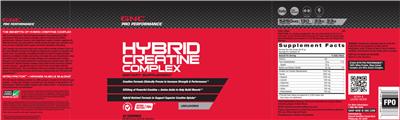
This summary is for Hybrid Creatine Complex Unflavored by GNC Pro Performance
- Form
- Powder
- Serving Size
- 48.64 g
- Servings
- 30 per container
- Container Holds
- 51.47 oz.; 3.22 lb; 1459.26 g; 30 Servings
- What is Hybrid Creatine Complex Unflavored?A creatine supplement from GNC Pro Performance with eight other active ingredients, in powder form.
- Active Ingredients 1 mineral, 6 amino acids and 2 others: Sodium 30 mgCreatine 5250 mgTaurine 2000 mgL-Arginine 1500 mgL-Leucine 500 mgL-Glutamine 500 mgL-Isoleucine 250 mgL-Valine 250 mgL-Phenylalanine 250 mg Nine active ingredients. Each one can interact with drugs or cause side effects on its own, so we check every one. The full Supplement Facts
- Drug Interactions 499 drugs have a documented interaction with this supplement; the most serious is rated major. Of those, 332 are single drugs and 167 are combination products (two or more drugs in one), each listed under its own name. Based on the 6 of its 9 ingredients we could check. Ask your pharmacist first if you take a drug in any of these categories, the most serious of the 19 on record:
- Major · 5 drugs
- Moderate · 172 drugs
- Moderate · 122 drugs
- Moderate · 86 drugs
- Possible Side EffectsNausea 4 ingredientsStomach upset 4 ingredientsBloating 3 ingredientsHeadache 2 ingredientsWater retentionHeartburn +7 moreCombined from five of its nine active ingredients. Not studied in this exact product.
- Well documented Why
Does Hybrid Creatine Complex Unflavored work?
What It Is Marketed For
- Muscle strength
- Athletic performance
- Recovery
From the claims on the product’s label.
The Closest Use the Research Grades
Creatine
Some studies support it, but the evidence isn’t conclusive.
Its ingredients have research behind other uses too:
- Creatine
- Creatine
- L-Arginine
- Phenylalanine
- L-Arginine
These grades are for each ingredient, not this exact product, and never a promise it will work for you.
And 1 more graded use, in what the research says- AllergensThe label says it contains milk, egg, peanuts, wheat or other gluten grains, and soy
- Barcode (UPC)0 48107 12468 7Match it to the barcode on your bottle to be sure this is your product. Not your product? Search for it here
Who Might Consider It
- People looking for muscle strength, athletic performance and recovery, which is what it is marketed for. The closest use the research grades is athletic performance, rated Possibly Effective.
- People who want creatine, its main ingredient, for muscle strength, sarcopenia or another graded use: the uses with research behind it. See each grade
- This blend may suit adults looking for a creatine and amino acid powder, particularly for the muscle-related effects where creatine is rated possibly effective.
Who Should Be Careful
- People with kidney, liver, or heart conditions, low blood pressure, PKU, or anyone taking levodopa, lithium, or blood pressure medicines should be careful.
- Talk it over with your own doctor or pharmacist before starting.
More Before You Take It Show both answersHide Pregnancy and Breastfeeding The Label’s Directions
-
Pregnant or breastfeeding?
- Pregnancy and Breastfeeding Creatine
- Insufficient reliable information available; avoid using.
- Pregnancy Phenylalanine
- ! When L-phenylalanine is consumed in amounts typically found in foods by pregnant patients with high serum phenylalanine concentrations, such as those with phenylketonuria (PKU).
- Breastfeeding Phenylalanine
- When L-phenylalanine is consumed in amounts typically found in foods by breast-feeding patients with normal phenylalanine metabolism.
- Pregnancy and Breastfeeding Sodium
- ! When used orally in higher doses.
-
How does the label say to take it?
“DIRECTIONS: As a dietary supplement, mix one scoop (48.64 g) in 6-8 oz of cold water or your favorite sports beverage. For best results on training days, take immediately post-workout. On non-training days, take first thing in the morning.”
The maker’s words. Your pharmacist or doctor may advise differently.
Everything the label says
From the label dated Nov 25, 2013: 6 of its 9 active ingredients were checked against our records; the other three are not in them yet. A summary of what is known, not a grade or a test of the product. How these ratings are computed
Ask Anything About This Supplement
Name a drug you take, or ask about side effects, ingredients or pregnancy.
There’s a lot of information about this supplement on this page! Ask anything in plain English for a quick answer drawn from it.
AI answers come from this label and our own records, never the open internet. AI can make mistakes, so always check with your doctor or pharmacist. How we use AI
Ask the Pharmacist
A licensed pharmacist will answer your question by email — free, as soon as they can.
Got it — thank you!
A licensed pharmacist will answer as soon as they can. Keep an eye on your email (worth checking spam, just in case).
What’s Inside Hybrid Creatine Complex Unflavored by GNC Pro Performance
Nine Active Ingredients
In the order the label lists them, each with its own card below.
Why this rating?
The label gives an exact amount for every one of its nine active ingredients, so you know how much of each you get in each serving. This rates what the label tells you, not the quality of the product.
Supplement Facts
| Amount Per Serving | % Daily Value | |
|---|---|---|
| Calories | 130 {Calories} | † |
| Total Carbohydrates | 33 g | 11% |
| Sugar | 33 g | † |
| Sodium | 30 mg | 1% |
| Creatine | 5250 mg | † |
| Taurine | 2000 mg | † |
| L-Arginine | 1500 mg | † |
| L-Leucine | 500 mg | † |
| L-Glutamine | 500 mg | † |
| L-Isoleucine | 250 mg | † |
| L-Valine | 250 mg | † |
| L-Phenylalanine | 250 mg | † |
Other ingredients: Dextrose, Citric Acid, Polysorbate 80, Calcium SIlicate, Sodium Citrate
† Daily Value not established.
Daily Values for adults and children 4 or more years of age.
As the label prints it, from the NIH Dietary Supplement Label Database.
Each Ingredient and Its Drug Interactions
Tap one for more about it and its full guide. A drug can interact with this supplement through any one of them.
-
Sodium 30 mg Interacts with 205 drugs
Form on the label: Sodium Citrate
Sodium is an essential mineral and electrolyte your body needs to balance fluids, support nerves, and help muscles work.
- Most people in modern diets get more than enough—often too much—from food, so supplements are rarely needed except for specific medical reasons like dehydration or low blood sodium.
- Talk to your doctor or pharmacist before deliberately adding sodium, especially if you have high blood pressure, heart, or kidney problems.
The full Sodium guide: uses, dosage and safety Every Sodium drug interaction
-
Creatine 5250 mg Creatine is the ingredient with the most studied effects, rated possibly effective for muscle strength and athletic performance. No known drug interactions
Form on the label: Creatine Monohydrate
Creatine is one of the most studied sports supplements, with solid evidence that it can boost strength and performance during short, high-intensity activities like weightlifting and sprinting.
- It is generally well tolerated in healthy adults, though it can cause water retention and minor stomach upset.
- People with kidney problems and those who are pregnant or breastfeeding should check with a doctor before using it.
-
Taurine 2000 mg Interacts with 173 drugs
Taurine is an amino acid your body makes naturally and that you also get from animal foods.
- It is widely used in energy drinks and sports supplements, and short-term use appears generally safe for most adults, though the evidence for many claimed benefits is mixed or limited.
- Talk with your pharmacist or doctor before taking it regularly, especially if you have a health condition or take medications.
The full Taurine guide: uses, dosage and safety Every Taurine drug interaction
-
L-Arginine 1500 mg Interacts with 403 drugs
L-arginine is an amino acid that the body uses to make nitric oxide, a substance that helps blood vessels relax and widen.
- It is popularly used for blood pressure, erectile dysfunction, and exercise, but the evidence is mixed and stronger for some uses than others.
- It is generally well tolerated in healthy adults, but talk with a pharmacist or doctor before using it, especially if you have heart problems or take other medicines.
The full L-Arginine guide: uses, dosage and safety Every L-Arginine drug interaction
-
L-Leucine 500 mg We know this ingredient, but hold no drug interaction record for it yet, so it was not checked
-
L-Glutamine 500 mg Interacts with 50 drugs
Glutamine is the most abundant amino acid in the body and is usually made in your muscles.
- A prescription form is FDA-approved to help reduce sickle cell disease complications, but for most popular uses such as muscle building, gut health, and immunity the evidence is limited or mixed.
- It is generally well tolerated in healthy people, but anyone with serious liver or kidney problems should check with a doctor first.
The full Glutamine guide: uses, dosage and safety Every Glutamine drug interaction
-
L-Isoleucine 250 mg We know this ingredient, but hold no drug interaction record for it yet, so it was not checked
-
L-Valine 250 mg We know this ingredient, but hold no drug interaction record for it yet, so it was not checked
-
L-Phenylalanine 250 mg Interacts with 16 drugs
Phenylalanine is an essential amino acid the body uses to make brain chemicals like dopamine and norepinephrine.
- Some people take it for mood, vitiligo, or pain, but the evidence is mostly limited or mixed.
- People with the genetic condition PKU must strictly avoid it.
The full Phenylalanine guide: uses, dosage and safety Every Phenylalanine drug interaction
Other Ingredients (Inactive)
The capsule or tablet itself, fillers, coatings and flavors. Not part of the drug interaction check; the allergen check below reads them.
- Dextrose
- Citric Acid
- Polysorbate 80
- Calcium SIlicate
- Sodium Citrate
Allergens in Hybrid Creatine Complex Unflavored
The label says it contains milk, egg, peanuts, wheat or other gluten grains, and soy.
Named on this label
- MilkThe label says it contains it
- EggThe label says it contains it
- PeanutsThe label says it contains it
- Wheat or other gluten grainsThe label says it contains it
- SoyThe label says it contains it
Not named in the ingredients
- Fish
- Shellfish
- Tree nuts
- Sesame
- The label’s allergen statement“Product manufactured in a facility that also processes the following allergens: Milk, Soy, Wheat, Egg and Peanut.”
- The label’s allergen statement“Phenylketonurics: Contains Phenylalanine.”
From the label text and ingredient names on file; we do not test products. With a serious allergy, check your bottle and ask the maker or your pharmacist.
What the Label Says
The maker’s own words, from the label. We do not verify or endorse them.
- General statements
-
“THE BENEFITS OF HYBRID CREATINE COMPLEX”
“With this formula you get superior results during and after your workout. Best of all, it mixes instantly with a spoon and tastes absolutely refreshing. Your muscles can only grow when your body retains enough nitrogen. Some of the most effective sources of nitrogen for fueling lean muscle are creatine and amino acids. The specially manufactured Hybrid Creatine Complex formula delivers an anabolic creatine and amino acid spike into your bloodstream when you need it most. This spike provides nitrogen and subsequently creates a nitrogen-rich environment needed for maximizing lean muscle mass.”
8 more from the label
“This scientifically advanced complex has been clinically shown to dramatically increase bench press, vertical jump and 100 yard dash performance!^*”
“The full muscle building potential of a GNC product is based on its total nitrogen content - so the more nitrogen a product has, the stronger it will perform.”
“Products bearing this logo must have been tested for banned substances by HFL Sport Science, a world-class anti-doping lab. Product was tested for over 145 banned substances on the 2012 World Anti-Doping Agency (WADA) Prohibitied List via HFL skip lot testing protocol #ICP0307. See gnc.com for more information.”
“^Eight weeks of supplementation with the creatine and carbohydrate blend in this formula in male collegiate athletes during off-season training produced significant increases in several performance variables compared to those athletes taking 34g carbohydrate formula alone.* Subjects taking the creatine and carbohydrate blend in this formula displayed increased performance in the bench press, vertical jump and 100 yard dash compared to those taking the carbohydrate formula alone.* +When used in conjunction with regular resistance training.”
“Creatine Formula Clinically Proven to Increase Strength & Performance ^* 5250mg of Powerful Creatine + Amino Acids to Help Build Muscle+* Hybrid Nutrient Formula to Support Superior Creatine Uptake*”
“Daily Post-Workout Strength Power”
“NOTICE: Significant product settling may occur.”
“{QR Code} SCAN & LEARN MORE”
- Brand IP Statement(s)
-
“GNC Pro Performance(R) Hybrid Creatine Complex was developed by GNC scientists to help boost muscle strength, improve training and athletic performance, enhance recovery and outperform regular creatine supplements.*”
“GNC Pro Performance(R) Hybrid Creatine Complex helps spike insulin and drive creatine into the muscles - specifically where it needs to be to fuel high-intensity athletic performance.”
3 more from the label
“NITRO-FACTOR(TM) - MAXIMIZE MUSCLE BUILDING”
“Pro Performance(R) Hybrid Creatine Complex with a Nitro-Factor(TM) of 16 grams helps fuel performance and anabolism.*”
“STACK WITH PRO PERFORMANCE(R): 100% Whey Protein, Mass Gainer Complex and Ultra Amino Complex.”
- Seals and symbols
-
“INFORMED-CHOICE{check}.ORG Trusted by sport”
“BANNED SUBSTANCE FREE*”
“NITRO-FACTOR 16G(TM)”
- FDA Statement of Identity
-
“DIETARY SUPPLEMENT”
- General
-
“CODE 370099 LNG”
- Storage
-
“Store in a cool, dry place.”
- Formulation
-
“5250MG CREATINE 130CALORIES 33G SUGAR 33G CARBS”
The Hybrid Creatine Complex Unflavored Label on File
The label scan on file at the NIH Dietary Supplement Label Database, dated November 2013. Always read the label on the bottle you have.
Product Facts
- Brand
- GNC Pro Performance
- Barcode (UPC)
- 048107124687
- Net contents
- 51.47 oz.; 3.22 lb; 1459.26 g; 30 Servings
- Market status
- On market
- Date entered into DSLD
- Nov 25, 2013
- DSLD ID
- 27358
- Product type
- Other Combinations
- Supplement form
- Powder
- Dietary claims / uses
- All Other, Structure/Function
- Intended target group(s)
- Adult (18 - 50 Years)
Is this label outdated? Report a formula or label change and our pharmacy team will review it.
HelloPharmacist Score Hybrid Creatine Complex Unflavored by GNC Pro Performance
Up to 10 points for research, amount, label and outside testing. Not a safety rating. How this one adds up
for muscle strength
Some research suggests creatine may help with muscle strength, which is what it is marketed for.
- Research4 of 5 points
- Amount1 of 2 points
- Label2 of 2 points
- Outside testing1 of 1 point
for athletic performance
Some research suggests creatine may help with athletic performance. It is marketed for muscle strength, athletic performance and recovery, not for this.
- Research4 of 5 points
- Amount1 of 2 points
- Label2 of 2 points
- Outside testing1 of 1 point
for sarcopenia
Some research suggests creatine may help with sarcopenia. It is marketed for muscle strength, athletic performance and recovery, not for this.
- Research4 of 5 points
- Amount1 of 2 points
- Label2 of 2 points
- Outside testing1 of 1 point
for cerebral creatine deficiency syndromes
Some research suggests creatine may help with cerebral creatine deficiency syndromes. It is marketed for muscle strength, athletic performance and recovery, not for this.
- Research4 of 5 points
- Amount1 of 2 points
- Label2 of 2 points
- Outside testing1 of 1 point
for osteopenia
The research suggests creatine does not help with osteopenia. It is marketed for muscle strength, athletic performance and recovery, not for this.
- Research0 of 5 points
- Amount1 of 2 points
- Label2 of 2 points
- Outside testing1 of 1 point
Its parts add up to 4, but when the research suggests it does not help, the score stops at 3.
for amyotrophic lateral sclerosis (ALS, Lou Gehrig's disease)
The research suggests creatine does not help with amyotrophic lateral sclerosis (ALS, Lou Gehrig's disease). It is marketed for muscle strength, athletic performance and recovery, not for this.
- Research0 of 5 points
- Amount1 of 2 points
- Label2 of 2 points
- Outside testing1 of 1 point
Its parts add up to 4, but when the research suggests it does not help, the score stops at 3.
Major drug interactions. The score does not count drug interactions. Check them against any drugs you take. See them
What Are You Taking It For?
Tap a reason and the score changes to match. Each one uses this product’s own amount, label and testing.
There is too little research to score creatine for diabetes, depression, osteoarthritis, rheumatoid arthritis (RA), sleep deprivation, cognitive function, coronavirus disease 2019 (COVID-19) and fibromyalgia, so they are not in the list.
How It Earns Its 8
Score: 8 out of 10. Preliminary for muscle strength.
Some research on creatine for muscle strength.
Graded “Possibly Effective” in the Natural Medicines database, which we license.
4 of 5 points
Amount
Its 5,250 mg is more than 9 in 10 of the 193 creatine products in our database that state an amount, which mostly hold 500 mg to 5,000 mg.
1 of 2 points
Label
It states the amount of all nine of its active ingredients.
2 of 2 points
Outside testing
Its label carries the Informed Choice mark. Programs like this test supplements on their own, and you can look the product up on the program’s website.
1 of 1 point
Some research on creatine for athletic performance.
Graded “Possibly Effective” in the Natural Medicines database, which we license.
4 of 5 points
Amount
Its 5,250 mg is more than 9 in 10 of the 193 creatine products in our database that state an amount, which mostly hold 500 mg to 5,000 mg.
1 of 2 points
Label
It states the amount of all nine of its active ingredients.
2 of 2 points
Outside testing
Its label carries the Informed Choice mark. Programs like this test supplements on their own, and you can look the product up on the program’s website.
1 of 1 point
Some research on creatine for sarcopenia.
Graded “Possibly Effective” in the Natural Medicines database, which we license.
4 of 5 points
Amount
Its 5,250 mg is more than 9 in 10 of the 193 creatine products in our database that state an amount, which mostly hold 500 mg to 5,000 mg.
1 of 2 points
Label
It states the amount of all nine of its active ingredients.
2 of 2 points
Outside testing
Its label carries the Informed Choice mark. Programs like this test supplements on their own, and you can look the product up on the program’s website.
1 of 1 point
Some research on creatine for cerebral creatine deficiency syndromes.
Graded “Possibly Effective” in the Natural Medicines database, which we license.
4 of 5 points
Amount
Its 5,250 mg is more than 9 in 10 of the 193 creatine products in our database that state an amount, which mostly hold 500 mg to 5,000 mg.
1 of 2 points
Label
It states the amount of all nine of its active ingredients.
2 of 2 points
Outside testing
Its label carries the Informed Choice mark. Programs like this test supplements on their own, and you can look the product up on the program’s website.
1 of 1 point
Research leans against it on creatine for osteopenia.
Graded “Possibly Ineffective” in the Natural Medicines database, which we license.
0 of 5 points
Amount
Its 5,250 mg is more than 9 in 10 of the 193 creatine products in our database that state an amount, which mostly hold 500 mg to 5,000 mg.
1 of 2 points
Label
It states the amount of all nine of its active ingredients.
2 of 2 points
Outside testing
Its label carries the Informed Choice mark. Programs like this test supplements on their own, and you can look the product up on the program’s website.
1 of 1 point
Held lower: Its parts add up to 4, but when the research suggests it does not help, the score stops at 3.
Research leans against it on creatine for amyotrophic lateral sclerosis (ALS, Lou Gehrig's disease).
Graded “Possibly Ineffective” in the Natural Medicines database, which we license.
0 of 5 points
Amount
Its 5,250 mg is more than 9 in 10 of the 193 creatine products in our database that state an amount, which mostly hold 500 mg to 5,000 mg.
1 of 2 points
Label
It states the amount of all nine of its active ingredients.
2 of 2 points
Outside testing
Its label carries the Informed Choice mark. Programs like this test supplements on their own, and you can look the product up on the program’s website.
1 of 1 point
Held lower: Its parts add up to 4, but when the research suggests it does not help, the score stops at 3.
Where It Sits on the Creatine Shelf
The 244 creatine products we have scored so far, lined up by their scores. The dark bottle is this one. Each bottle stands for up to 10 products. Tap a score to see the products on it.
168 creatine products score 8 out of 10
- Hybrid Creatine Complex Unflavored by GNC Pro Performance this one
- Create Creatine Monohydrate Gummies by Create
- Creatine Monohydrate by Ryse
- Creatine Monohydrate by Myvitamins
- Creatine HCl + HMB Mango by GEC Genetic Edge Compounds
- Creatine HCl + HMB Cherry Limeade by GEC Genetic Edge Compounds
- Creatine HCl + HMB Blue Lemonade by GEC Genetic Edge Compounds
- Creatine Fruit Punch by FINAFLEX
- Creatine by Thorne
- Animal Creatine Chews Grape Flavor by Animal
- 5% Creatine Wildberry by Rich Piana 5% Nutrition Code Red Series
- Micronized Creatine Monohydrate by NutraBio Performance
And 156 more.
23 creatine products score 9 out of 10
- Creatine Unflavored by Herbalife Nutrition
- Creatine by Thorne
- Micronized Creatine Powder Blueberry Lemonade by ON Optimum Nutrition
- Creatine Monohydrate 5 Grams Unflavored by GNC Pro Performance
- Creatine Monohydrate 5 g Unflavored by Pure Power
- Creatine by ALLMAX ESSENTIALS
- Creatine Unflavored by Gnarly Sports Nutrition
- Creatine Monohydrate by Onnit
- Creatine by ALLMAX ESSENTIALS
- Micronized Creatine Powder Unflavored by ON Optimum Nutrition
- Creatine Monohydrate by GNC Pro Performance
- Creatine HMB Strawberry Lemonade by Transparent Labs
And 11 more.
30 creatine products score 7 out of 10
- Creatine Unflavored by Orgain
- 100% Pure Creatine Monohydrate Capsules by Body Attack
- CreaZ Powder 3000 mg by Body Attack
- Creatine Unflavored by FINAFLEX
- Creatine Unflavored by FINAFLEX
- Creatine Lemonade by FINAFLEX
- Creatine by Purus
- 100% Pure Creatine Capsules 5620 mg by Body Attack Sports Nutrition
- Creatine60 by Biotech Nutritions
- Creatine Monohydrate Gummies by KAOXNU
- Creatine by Purus
- Creatine by Purus
And 18 more.
7 creatine products score 4 out of 10
- Creatine Chews Peach Mango Flavored by ZHOU
- 100% Pure Creatine Monohydrate Powder by Body Attack
- Creatine Monohydrate Unflavored by Anabolic Warfare
- Creatine 500 mg by Kirkman
- The Creatine Strawberry by DY Nutrition
- Naked Creatine by Naked Nutrition
- Micronized Creatine Powder Unflavored by ON Optimum Nutrition
1 creatine product scores 3 out of 10
- 100% Pure Creatine Monohydrate Capsules by Body Attack
7 creatine products score 6 out of 10
- Muscle Creatine Powder 7000 mg by Body Attack Sports Nutrition
- Volu Gro Creatine Glycogen Loader Fruit Punch by Nutrex Research
- Volu Gro Creatine Glucogen Loader Orange by Nutrex Research
- Vaso Pre-Workout Creatine Serum Raspberry by Phytonutritia
- Runner's Creatine by RunFit Nutrition
- Micronized Creatine Monohydrate 5000 mg Unflavored by Muscle Empire
- Micronized Creatine Monohydrate 5000 mg Unflavored by Muscle Empire
8 creatine products score 5 out of 10
- Best Creatine Snow Cone by BPI Sports
- Creatine X3 Fruit Punch by Six Star
- Creatine Monohydrate by NOW Sports
- Creatine Monohydrate by NOW Sports
- Creatine Monohydrate by NOW Sports
- NOS Blast Creatine Nitro Solution Extreme Orange by Precision Engineered
- NOS Blast Creatine Nitro Solution by Precision Engineered
- Her Creatine Made For Women by Shredz
This One Next to Most Creatine Products
| What | This one | Most of the other 243 |
|---|---|---|
| What it is marketed for | Muscle strength | Muscle strength (74 of 113) |
| How much creatine | 5,250 mg a serving | 2,880 mg to 5,000 mg |
| Form | Creatine Monohydrate | Creatine Monohydrate |
| The label | Every amount stated | Every amount stated on 236 of 243 |
| Outside testing seal | Informed Choice | 41 of 243 have one |
| Score | 8, Preliminary | 8 |
Other Creatine Products Marketed for Muscle Strength
Hybrid Creatine Complex Unflavored by GNC Pro Performance Side Effects
Why this rating?
We look for three kinds of safety information on each ingredient: side effects reported in studies, a pregnancy and breastfeeding rating, and a safety write-up from our pharmacy team. All three are on file for each of the six ingredients we could check.
So this rates how much is known, not whether Hybrid Creatine Complex Unflavored is right for you.
Reported with six of its ingredients
- Most often
- Nausea, stomach upset, bloating, headache, water retention and heartburn
- !Rare but serious
- Worsened cardiovascular disease, high blood pressure and hypersensitivity reactions in sensitive individuals See details
HelloPharmacist Team Summary: Hybrid Creatine Complex Unflavored by GNC Pro Performance Side Effects
Hybrid Creatine Complex is generally well tolerated, but with nine ingredients it can be hard to tell which one causes a reaction.
- The effects you are most likely to notice are stomach upset, bloating, and nausea, which can come from several ingredients such as glutamine and arginine, while creatine can cause water retention.
- Allergic reactions are possible but uncommon, so call your doctor right away if you have one.
- If you have kidney, liver, or heart problems, low blood pressure, PKU, a history of seizures, or take regular medications, talk with your own doctor or pharmacist before starting, and ask them about pregnancy or breastfeeding because the data for this blend is mixed or incomplete.
Side Effects, Ingredient by Ingredient
A supplement’s side effects come from its ingredients. Here is what is reported with each one.
Creatine
Most reported
- Water retention
- Bloating
- Stomach upset
Taurine
Most reported
- Stomach upset
- Nausea
- Headache
L-Arginine
Most reported
- Stomach upset
- Bloating
- Nausea
- Diarrhea
Glutamine
Most reported
- Stomach upset
- Nausea
- Bloating
- Gas
Phenylalanine
Most reported
- Nausea
- Heartburn
- Headache
- Anxiety
Sodium has side-effect reports, but no list of the most common ones. Read them in the Sodium guide
Hybrid Creatine Complex Unflavored Warnings: Who Should Be Careful
Hybrid Creatine Complex Unflavored has nine active ingredients, and each can carry warnings of its own. We checked the six in our ingredient guides, and each warning below names the ingredient it comes from. L-Leucine, L-Isoleucine and L-Valine are not in our guides yet, so ask your pharmacist about them. If any of these apply to you, talk to your doctor or pharmacist before you start it.
- Sodium4 warnings below
- Creatine3 warnings below
- Taurine1 warning below
- L-Arginine4 warnings below
- Glutamine4 warnings below
- Phenylalanine4 warnings below
- L-LeucineNot in our guides yet
- L-IsoleucineNot in our guides yet
- L-ValineNot in our guides yet
-
Blood Pressure
- SodiumYou should be especially cautious with added sodium if you have high blood pressure, heart failure, kidney disease, or liver disease, or if your doctor has told you to follow a low-salt diet.
- L-ArginineBecause L-arginine can widen blood vessels and lower blood pressure, use caution if you already have low blood pressure.
- PhenylalanineAnyone with high blood pressure should also use caution.
- SodiumToo much sodium is linked to high blood pressure and heart strain.
- L-ArginineL-arginine can lower blood pressure, so use caution if you already have low blood pressure, and people with heart disease should talk with a doctor first.
-
Liver Disease
- GlutamineUse extra caution if you have kidney disease or liver disease, since these organs are involved in processing amino acids and the byproducts of protein.
- GlutamineL-glutamine is generally well tolerated in healthy adults, but people with kidney or liver disease should use it only under medical supervision.
-
Kidney Disease or Kidney Stones
- CreatinePeople with kidney disease or reduced kidney function should be cautious and talk to a doctor first, since the kidneys process creatine and its by-products.
- TaurinePeople with kidney problems, heart conditions, or other health issues should check with a doctor first, since their bodies may handle taurine differently.
-
Heart Conditions
- L-ArgininePeople with heart disease, especially those who have recently had a heart attack, should avoid using it unless a doctor recommends it, since some research suggested possible harm in that group.
-
Seizure Disorders
- GlutaminePeople with a history of seizures or certain mental health conditions should also talk to a doctor first, because glutamine is related to glutamate, a chemical messenger in the brain.
-
Mental Health Conditions
- PhenylalaninePeople with certain mental health conditions, including schizophrenia or a history of mania, should be cautious because phenylalanine affects brain chemistry.
-
Children
- CreatineIt is also best to be cautious in children and teens, since most studies have been done in adults.
-
If You Take Other Drugs
- CreatineAnyone with a medical condition or who takes regular medications should check with a pharmacist or doctor before starting.
-
Other Cautions
- L-ArgininePeople with herpes (cold sores or genital herpes) sometimes worry that arginine may trigger outbreaks; this is not well proven but worth discussing with your provider.
- GlutaminePeople with these conditions should only take glutamine under the supervision of a healthcare provider.
- PhenylalaninePeople with phenylketonuria (PKU) must avoid phenylalanine.
- PhenylalaninePhenylalanine must be avoided by people with phenylketonuria (PKU).
-
What the Label Warns
- “WARNING: Consult your physician prior to using this product if you are pregnant, nursing, taking medication, under 18 years of age or have a medical condition.”
- “WARNING: Consult your physician prior to using this product if you are pregnant, nursing, taking medication, under 18 years of age or have a medical condition.”
- “Discontinue two weeks prior to surgery.”
- “KEEP OUT OF REACH OF CHILDREN.”
The maker’s wording, from the product label.
-
Pregnant or Breastfeeding
Each ingredient’s rating for pregnancy and for breastfeeding, and what it covers.
Pregnancy and Breastfeeding The record rates both the same
-
Insufficient reliable information available; avoid using.
Pregnancy
-
When L-phenylalanine is consumed in amounts typically found in foods by pregnant patients with normal phenylalanine metabolism.
-
When L-phenylalanine is consumed in amounts typically found in foods by pregnant patients with high serum phenylalanine concentrations, such as those with phenylketonuria (PKU).
Serum levels of phenylalanine greater than 360 micromol/L increase the risk of birth defects.
3 more points on this rating
- Experts recommend that patients with high phenylalanine serum concentrations follow a low phenylalanine diet for at least 20 weeks prior to conception to decrease the risk for birth defects.
- There is insufficient reliable information available about the safety of L-phenylalanine when taken by mouth in large doses during pregnancy; avoid using.
- There is insufficient reliable information available about the safety of oral D-phenylalanine during pregnancy; avoid using.
Breastfeeding
-
When L-phenylalanine is consumed in amounts typically found in foods by breast-feeding patients with normal phenylalanine metabolism.
There is insufficient reliable information available about the safety of L-phenylalanine when taken by mouth in medicinal amounts during lactation; avoid using.
There is insufficient reliable information available about the safety of oral D-phenylalanine during lactation; avoid using.
Show 4 more ingredients
Pregnancy and Breastfeeding The record rates both the same
-
When used orally and appropriately.
Sodium is safe in amounts that do not exceed the CDRR intake level of 2.3 grams daily.
-
When used orally in higher doses.
Higher intake can cause hypertension.
Also, both the highest and the lowest pre-pregnancy sodium quintile intakes are associated with an increased risk of hypertensive disorders of pregnancy, including gestational hypertension and pre-eclampsia, and the delivery of small for gestational age (SGA) infants when compared to the middle intake quintile.
Pregnancy
-
When used orally and appropriately, short-term.
L-arginine 12 grams daily for 2 days has been used with apparent safety in pregnancy during the third trimester.
L-arginine 3 grams daily has been taken safely during the second and/or third trimesters.
1 more rating for L-Arginine used another way
This supplement is taken by mouth. This rating is for L-Arginine given another way.
-
When used intravenously and appropriately, short-term.
Intravenous L-arginine 20-30 grams daily has been used safely in pregnancy for up to 5 days.
Breastfeeding
-
Insufficient reliable information available; avoid using.
Pregnancy and Breastfeeding The record rates both the same
-
When used in amounts found in foods.
There is insufficient reliable information available about the safety of taurine when used in medicinal amounts during pregnancy and lactation; avoid using.
Pregnancy and Breastfeeding The record rates both the same
-
When consumed in amounts commonly found in foods.
There is insufficient reliable information available about the safety of glutamine when used in larger amounts as medicine during pregnancy or lactation.
Our pharmacy team’s notes
- Glutamine is rated likely safe in pregnancy, but our pharmacists advise caution with supplement doses while breastfeeding.
- We have no pregnancy information for L-leucine, L-isoleucine, or L-valine.
Ratings and the words beside them are from the Natural Medicines database, which we license.
-
Rare but Serious Side Effects
-
!
Sodium
Rarely, a sudden large intake of salt—or a rapid change in blood sodium during treatment—can be very serious and even life-threatening.
Orally: Worsened cardiovascular disease, hypertension, kidney disease.
-
!
Creatine
It is one of the most studied supplements, and long-term use in healthy people has not been clearly linked to serious harm.
Orally: Case reports have raised concerns about interstitial nephritis, renal insufficiency, rhabdomyolysis, and venous thrombosis.
-
!
Taurine
Serious side effects are uncommon with taurine alone.
Orally: Hypersensitivity reactions in sensitive individuals. Case reports raise concerns for serious cardiovascular adverse effects, but these reports have involved energy drinks containing taurine and other ingredients. It is unclear if these adverse effects are due to taurine, other ingredients, or the combination.
-
!
L-Arginine
Allergic reactions are possible but uncommon.
-
!
Glutamine
Serious reactions are uncommon.
-
!
Phenylalanine
Buildup can cause serious harm, including brain damage.
When to get help: a serious allergic reaction, with trouble breathing or swelling of the face, lips or throat, needs emergency care: call 911. For any other side effect that worries you, call your doctor or pharmacist.
These reports describe each ingredient, not studies of this exact product. Not medical advice: a side effect you notice after starting a supplement is worth a word with your pharmacist or doctor.
Hybrid Creatine Complex Unflavored by GNC Pro Performance Drug Interactions
We checked all nine active ingredients in this supplement against every drug in our records. A drug can interact with it through any one of them. L-Leucine, L-Isoleucine and L-Valine are not in our interaction records yet.
A major interaction on record
3 of 3, on a scale from Minor or none to Major.Why this rating?
We rate this by the most serious interaction on record, not by how many there are. For Phenylalanine, L-Arginine, Glutamine, Taurine and Sodium, the most serious is rated major, which means the combination is best avoided, or used only under close supervision. Some involve kinds of drugs where a small change can matter, such as blood thinners, seizure drugs and diabetes drugs.
499 drugs are on the full list. What matters is whether one you take is on it, so check yours with the interaction checker on this page.
From the HelloPharmacist Team
What matters most when you look at everything in the bottle at once.
- Hybrid Creatine Complex Unflavored from GNC Pro Performance does interact with some medications.
- Five of its nine ingredients have documented interactions: L-glutamine, L-arginine, taurine, L-phenylalanine, and sodium.
- Glutamine may counteract anticonvulsants (Moderate), and taurine and sodium can both shift lithium levels (Moderate).
Five of its nine active ingredients have drug interactions on record: Sodium, Taurine, L-Arginine, Glutamine and Phenylalanine. We have no interaction records for Creatine, L-Leucine, L-Isoleucine and L-Valine.
- Interacts with
- 205 drugs
- Most serious
- Moderate
- Antihypertensive drugs, ACE inhibitors, ARBs, isoproterenol, and sildenafil may increase the risk of low blood pressure alongside arginine, and sodium may reduce how well antihypertensives work (all Moderate).
- Arginine may add to blood thinner and antidiabetes effects (Moderate), and sodium may raise the risk of high blood sodium with corticosteroids, tolvaptan, didanosine, sodium phosphates, and sodium-containing drugs (Moderate).
- Interacts with
- 16 drugs
- Most serious
- Major
- The most serious is phenylalanine with levodopa (Major), a Parkinson's disease medication, because phenylalanine can make levodopa less effective and may worsen tremor and rigidity.
- Phenylalanine may also reduce absorption of baclofen, a muscle relaxant (Moderate), and may raise the risk of hypertensive crisis with MAOIs, an older antidepressant class (Moderate).
- Interacts with
- 403 drugs
- Most serious
- Moderate
- Most of its records involve Antihypertensive Drugs, Anticoagulant/Antiplatelet Drugs and Antidiabetes Drugs.
Show two more ingredients
Summarized by the HelloPharmacist pharmacy team from the interaction records below. How it is written How we use AI
Why Hybrid Creatine Complex Unflavored Interacts, Ingredient by Ingredient
A product interacts through its ingredients. Each card: how many drugs, the most serious rating, and the kinds of drugs it affects most (tap a kind for what it means).
The ingredients driving the most interactions
-
L-Arginine 403 drugs
Most serious: Moderate9 interaction records on file
The kinds of drugs it affects most
- 172 drugs
- 122 drugs
- 86 drugs
- 23 drugs
Every L-Arginine drug interaction, 9 records The L-Arginine records cite 66 references, listed in the L-Arginine guide.
-
Sodium 205 drugs
Most serious: Moderate7 interaction records on file
The kinds of drugs it affects most
- 172 drugs
- 23 drugs
- Sodium-containing Drugs 7 drugs
- Sodium Phosphates 2 drugs
Every Sodium drug interaction, 7 records The Sodium records cite 43 references, listed in the Sodium guide.
-
Taurine 173 drugs
Most serious: Moderate2 interaction records on file
The kinds of drugs it affects most
- 172 drugs
- 1 drug
Every Taurine drug interaction, 2 records The Taurine records cite 21 references, listed in the Taurine guide.
-
L-Glutamine 50 drugs
Most serious: Moderate1 interaction record on file
The kinds of drugs it affects most
- 50 drugs
Every Glutamine drug interaction, 1 record The Glutamine records cite 11 references, listed in the Glutamine guide.
-
L-Phenylalanine 16 drugs
Most serious: Major3 interaction records on file
The kinds of drugs it affects most
- 9 drugs
- 5 drugs
- Baclofen 2 drugs
Every Phenylalanine drug interaction, 3 records The Phenylalanine records cite 23 references, listed in the Phenylalanine guide.
The Breakdown by Severity
Each drug counted once, at its most serious rating. Tap a tile to list those drugs.
Find Your Drug
Type a drug or brand name to see whether it is on the list.
- Only drugs with a documented interaction are listed, the most serious first.
- A drug with no known interaction is not listed, but searching its name tells you so.
- Open a drug to see which ingredient is responsible. Of those, 332 are single drugs and 167 are combination products (two or more drugs in one), each listed under its own name.
-
PentoxifyllineTrental Moderate
The ingredient responsible:
-
L-Arginine Moderate Pentoxifylline is in the Anticoagulant/Antiplatelet Drugs category.
Theoretically, concomitant use of L-arginine with anticoagulant and antiplatelet drugs might have additive effects and increase the risk of bleeding.
The full L-Arginine + Pentoxifylline interaction
-
-
AmilorideAmilamont, Midamor Moderate
The 3 ingredients responsible:
-
Taurine Moderate Amiloride is in the Antihypertensive Drugs category.
Theoretically, taurine might increase the risk of hypotension when taken with antihypertensive drugs.
The full Taurine + Amiloride interaction -
Sodium Moderate Amiloride is in the Antihypertensive Drugs category.
Theoretically, a high intake of dietary sodium might reduce the effectiveness of antihypertensive drugs.
The full Sodium + Amiloride interaction -
L-Arginine Moderate Amiloride is in these Antihypertensive Drugs, Potassium-sparing Diuretics categories.
Theoretically, concomitant use of L-arginine and antihypertensive drugs may increase the risk of hypotension.
The full L-Arginine + Amiloride interaction
-
-
ArgatrobanArgatroban Moderate
The ingredient responsible:
-
L-Arginine Moderate Argatroban is in the Anticoagulant/Antiplatelet Drugs category.
Theoretically, concomitant use of L-arginine with anticoagulant and antiplatelet drugs might have additive effects and increase the risk of bleeding.
The full L-Arginine + Argatroban interaction
-
-
EplerenoneInspra Moderate
The 3 ingredients responsible:
-
Taurine Moderate Eplerenone is in the Antihypertensive Drugs category.
Theoretically, taurine might increase the risk of hypotension when taken with antihypertensive drugs.
The full Taurine + Eplerenone interaction -
L-Arginine Moderate Eplerenone is in the Antihypertensive Drugs category.
Theoretically, concomitant use of L-arginine and antihypertensive drugs may increase the risk of hypotension.
The full L-Arginine + Eplerenone interaction -
Sodium Moderate Eplerenone is in the Antihypertensive Drugs category.
Theoretically, a high intake of dietary sodium might reduce the effectiveness of antihypertensive drugs.
The full Sodium + Eplerenone interaction
-
-
PhenacemidePhenurone Moderate
The ingredient responsible:
-
L-Glutamine Moderate Phenacemide is in the Anticonvulsants category.
Theoretically, glutamine might antagonize the effects of anticonvulsant medications.
The full L-Glutamine + Phenacemide interaction
-
-
QuinethazoneHydromox Moderate
The 3 ingredients responsible:
-
Taurine Moderate Quinethazone is in the Antihypertensive Drugs category.
Theoretically, taurine might increase the risk of hypotension when taken with antihypertensive drugs.
The full Taurine + Quinethazone interaction -
Sodium Moderate Quinethazone is in the Antihypertensive Drugs category.
Theoretically, a high intake of dietary sodium might reduce the effectiveness of antihypertensive drugs.
The full Sodium + Quinethazone interaction -
L-Arginine Moderate Quinethazone is in the Antihypertensive Drugs category.
Theoretically, concomitant use of L-arginine and antihypertensive drugs may increase the risk of hypotension.
The full L-Arginine + Quinethazone interaction
-
-
ReteplaseRetevase Moderate
The ingredient responsible:
-
L-Arginine Moderate Reteplase is in the Anticoagulant/Antiplatelet Drugs category.
Theoretically, concomitant use of L-arginine with anticoagulant and antiplatelet drugs might have additive effects and increase the risk of bleeding.
The full L-Arginine + Reteplase interaction
-
-
Exenatide SyntheticBydureon BCISE Moderate
The ingredient responsible:
-
L-Arginine Moderate Exenatide Synthetic is in the Antidiabetes Drugs category.
Theoretically, concomitant use of L-arginine might have additive effects with antidiabetes drugs.
The full L-Arginine + Exenatide Synthetic interaction
-
-
TolazamideTolinase Moderate
The ingredient responsible:
-
L-Arginine Moderate Tolazamide is in the Antidiabetes Drugs category.
Theoretically, concomitant use of L-arginine might have additive effects with antidiabetes drugs.
The full L-Arginine + Tolazamide interaction
-
-
Insulin Glargine RecombinantToujeo Solostar Moderate
The ingredient responsible:
-
L-Arginine Moderate Insulin Glargine Recombinant is in the Antidiabetes Drugs category.
Theoretically, concomitant use of L-arginine might have additive effects with antidiabetes drugs.
The full L-Arginine + Insulin Glargine Recombinant interaction
-
-
AcebutololRhotral, Sectral Moderate
The 3 ingredients responsible:
-
Sodium Moderate Acebutolol is in the Antihypertensive Drugs category.
Theoretically, a high intake of dietary sodium might reduce the effectiveness of antihypertensive drugs.
The full Sodium + Acebutolol interaction -
L-Arginine Moderate Acebutolol is in the Antihypertensive Drugs category.
Theoretically, concomitant use of L-arginine and antihypertensive drugs may increase the risk of hypotension.
The full L-Arginine + Acebutolol interaction -
Taurine Moderate Acebutolol is in the Antihypertensive Drugs category.
Theoretically, taurine might increase the risk of hypotension when taken with antihypertensive drugs.
The full Taurine + Acebutolol interaction
-
-
Insulin LisproAdmelog, Admelog Solostar Moderate
The ingredient responsible:
-
L-Arginine Moderate Insulin Lispro is in the Antidiabetes Drugs category.
Theoretically, concomitant use of L-arginine might have additive effects with antidiabetes drugs.
The full L-Arginine + Insulin Lispro interaction
-
-
UrokinaseAbbokinase Moderate
The ingredient responsible:
-
L-Arginine Moderate Urokinase is in the Anticoagulant/Antiplatelet Drugs category.
Theoretically, concomitant use of L-arginine with anticoagulant and antiplatelet drugs might have additive effects and increase the risk of bleeding.
The full L-Arginine + Urokinase interaction
-
-
IloprostAurlumyn, Ventavis Moderate
The 3 ingredients responsible:
-
L-Arginine Moderate Iloprost is in these Anticoagulant/Antiplatelet Drugs, Antihypertensive Drugs categories.
Theoretically, concomitant use of L-arginine with anticoagulant and antiplatelet drugs might have additive effects and increase the risk of bleeding.
The full L-Arginine + Iloprost interaction -
Taurine Moderate Iloprost is in the Antihypertensive Drugs category.
Theoretically, taurine might increase the risk of hypotension when taken with antihypertensive drugs.
The full Taurine + Iloprost interaction -
Sodium Moderate Iloprost is in the Antihypertensive Drugs category.
Theoretically, a high intake of dietary sodium might reduce the effectiveness of antihypertensive drugs.
The full Sodium + Iloprost interaction
-
-
Anacaulase-bcdbNexoBrid Moderate
The ingredient responsible:
-
L-Arginine Moderate Anacaulase-bcdb is in the Anticoagulant/Antiplatelet Drugs category.
Theoretically, concomitant use of L-arginine with anticoagulant and antiplatelet drugs might have additive effects and increase the risk of bleeding.
The full L-Arginine + Anacaulase-bcdb interaction
-
-
StreptokinaseKabikinase, Streptase Moderate
The ingredient responsible:
-
L-Arginine Moderate Streptokinase is in the Anticoagulant/Antiplatelet Drugs category.
Theoretically, concomitant use of L-arginine with anticoagulant and antiplatelet drugs might have additive effects and increase the risk of bleeding.
The full L-Arginine + Streptokinase interaction
-
-
ChlorthalidoneHygroton, Thalitone Moderate
The 3 ingredients responsible:
-
Sodium Moderate Chlorthalidone is in the Antihypertensive Drugs category.
Theoretically, a high intake of dietary sodium might reduce the effectiveness of antihypertensive drugs.
The full Sodium + Chlorthalidone interaction -
Taurine Moderate Chlorthalidone is in the Antihypertensive Drugs category.
Theoretically, taurine might increase the risk of hypotension when taken with antihypertensive drugs.
The full Taurine + Chlorthalidone interaction -
L-Arginine Moderate Chlorthalidone is in the Antihypertensive Drugs category.
Theoretically, concomitant use of L-arginine and antihypertensive drugs may increase the risk of hypotension.
The full L-Arginine + Chlorthalidone interaction
-
-
LevamlodipineConjupri Moderate
The 3 ingredients responsible:
-
L-Arginine Moderate Levamlodipine is in the Antihypertensive Drugs category.
Theoretically, concomitant use of L-arginine and antihypertensive drugs may increase the risk of hypotension.
The full L-Arginine + Levamlodipine interaction -
Taurine Moderate Levamlodipine is in the Antihypertensive Drugs category.
Theoretically, taurine might increase the risk of hypotension when taken with antihypertensive drugs.
The full Taurine + Levamlodipine interaction -
Sodium Moderate Levamlodipine is in the Antihypertensive Drugs category.
Theoretically, a high intake of dietary sodium might reduce the effectiveness of antihypertensive drugs.
The full Sodium + Levamlodipine interaction
-
-
AprocitentanTryvio Moderate
The 3 ingredients responsible:
-
Taurine Moderate Aprocitentan is in the Antihypertensive Drugs category.
Theoretically, taurine might increase the risk of hypotension when taken with antihypertensive drugs.
The full Taurine + Aprocitentan interaction -
Sodium Moderate Aprocitentan is in the Antihypertensive Drugs category.
Theoretically, a high intake of dietary sodium might reduce the effectiveness of antihypertensive drugs.
The full Sodium + Aprocitentan interaction -
L-Arginine Moderate Aprocitentan is in the Antihypertensive Drugs category.
Theoretically, concomitant use of L-arginine and antihypertensive drugs may increase the risk of hypotension.
The full L-Arginine + Aprocitentan interaction
-
-
PindololPindol, Visken Moderate
The 3 ingredients responsible:
-
Taurine Moderate Pindolol is in the Antihypertensive Drugs category.
Theoretically, taurine might increase the risk of hypotension when taken with antihypertensive drugs.
The full Taurine + Pindolol interaction -
L-Arginine Moderate Pindolol is in the Antihypertensive Drugs category.
Theoretically, concomitant use of L-arginine and antihypertensive drugs may increase the risk of hypotension.
The full L-Arginine + Pindolol interaction -
Sodium Moderate Pindolol is in the Antihypertensive Drugs category.
Theoretically, a high intake of dietary sodium might reduce the effectiveness of antihypertensive drugs.
The full Sodium + Pindolol interaction
-
-
GuanfacineTenex Moderate
The 3 ingredients responsible:
-
Taurine Moderate Guanfacine is in the Antihypertensive Drugs category.
Theoretically, taurine might increase the risk of hypotension when taken with antihypertensive drugs.
The full Taurine + Guanfacine interaction -
L-Arginine Moderate Guanfacine is in the Antihypertensive Drugs category.
Theoretically, concomitant use of L-arginine and antihypertensive drugs may increase the risk of hypotension.
The full L-Arginine + Guanfacine interaction -
Sodium Moderate Guanfacine is in the Antihypertensive Drugs category.
Theoretically, a high intake of dietary sodium might reduce the effectiveness of antihypertensive drugs.
The full Sodium + Guanfacine interaction
-
-
FluticasoneFlixotide, Flonase, Flovent, Seretide, Veramyst Moderate
The ingredient responsible:
-
Sodium Moderate Fluticasone is in the Corticosteroids category.
Concomitant use of mineralocorticoids and some glucocorticoids with sodium supplements might increase the risk of hypernatremia.
The full Sodium + Fluticasone interaction
-
-
Insulin Lispro-aabcLyumjev Moderate
The ingredient responsible:
-
L-Arginine Moderate Insulin Lispro-aabc is in the Antidiabetes Drugs category.
Theoretically, concomitant use of L-arginine might have additive effects with antidiabetes drugs.
The full L-Arginine + Insulin Lispro-aabc interaction
-
-
VildagliptinGalvus Moderate
The ingredient responsible:
-
L-Arginine Moderate Vildagliptin is in the Antidiabetes Drugs category.
Theoretically, concomitant use of L-arginine might have additive effects with antidiabetes drugs.
The full L-Arginine + Vildagliptin interaction
-
-
TiclopidineTiclid, Ticlopidine Moderate
The ingredient responsible:
-
L-Arginine Moderate Ticlopidine is in the Anticoagulant/Antiplatelet Drugs category.
Theoretically, concomitant use of L-arginine with anticoagulant and antiplatelet drugs might have additive effects and increase the risk of bleeding.
The full L-Arginine + Ticlopidine interaction
-
-
TalinololTalinolol Moderate
The 3 ingredients responsible:
-
L-Arginine Moderate Talinolol is in the Antihypertensive Drugs category.
Theoretically, concomitant use of L-arginine and antihypertensive drugs may increase the risk of hypotension.
The full L-Arginine + Talinolol interaction -
Taurine Moderate Talinolol is in the Antihypertensive Drugs category.
Theoretically, taurine might increase the risk of hypotension when taken with antihypertensive drugs.
The full Taurine + Talinolol interaction -
Sodium Moderate Talinolol is in the Antihypertensive Drugs category.
Theoretically, a high intake of dietary sodium might reduce the effectiveness of antihypertensive drugs.
The full Sodium + Talinolol interaction
-
-
NadololCorgard, Nadolol Moderate
The 3 ingredients responsible:
-
Sodium Moderate Nadolol is in the Antihypertensive Drugs category.
Theoretically, a high intake of dietary sodium might reduce the effectiveness of antihypertensive drugs.
The full Sodium + Nadolol interaction -
Taurine Moderate Nadolol is in the Antihypertensive Drugs category.
Theoretically, taurine might increase the risk of hypotension when taken with antihypertensive drugs.
The full Taurine + Nadolol interaction -
L-Arginine Moderate Nadolol is in the Antihypertensive Drugs category.
Theoretically, concomitant use of L-arginine and antihypertensive drugs may increase the risk of hypotension.
The full L-Arginine + Nadolol interaction
-
-
QuinaprilAccupril, Accupro Moderate
The 3 ingredients responsible:
-
L-Arginine Moderate Quinapril is in these Antihypertensive Drugs, ACE Inhibitors (ACEIs) categories.
Theoretically, concomitant use of L-arginine and antihypertensive drugs may increase the risk of hypotension.
The full L-Arginine + Quinapril interaction -
Sodium Moderate Quinapril is in the Antihypertensive Drugs category.
Theoretically, a high intake of dietary sodium might reduce the effectiveness of antihypertensive drugs.
The full Sodium + Quinapril interaction -
Taurine Moderate Quinapril is in the Antihypertensive Drugs category.
Theoretically, taurine might increase the risk of hypotension when taken with antihypertensive drugs.
The full Taurine + Quinapril interaction
-
-
OxazepamSerax Moderate
The ingredient responsible:
-
L-Glutamine Moderate Oxazepam is in the Anticonvulsants category.
Theoretically, glutamine might antagonize the effects of anticonvulsant medications.
The full L-Glutamine + Oxazepam interaction
-
-
AlbiglutideTanzeum Moderate
The ingredient responsible:
-
L-Arginine Moderate Albiglutide is in the Antidiabetes Drugs category.
Theoretically, concomitant use of L-arginine might have additive effects with antidiabetes drugs.
The full L-Arginine + Albiglutide interaction
-
Does It Work? Hybrid Creatine Complex Unflavored by GNC Pro Performance
What the research says for what it is marketed for, then its ingredients’ other uses and each ingredient on its own. A grade is the research so far, never an endorsement.
What the Research Supports
First for what it is marketed for, then the other uses its ingredients are graded for, strongest research first.
Marketed for muscle strength, athletic performance and recovery
- Creatine
- Creatine
Other uses its ingredients are graded for
- Creatine
- Cerebral creatine deficiency syndromes Creatine
- L-Arginine
- L-Arginine
- Phenylalanine
HelloPharmacist Team Summary: Does Hybrid Creatine Complex Unflavored by GNC Pro Performance Work?
Creatine is rated possibly effective for sarcopenia, muscle strength, and athletic performance, and possibly ineffective for Huntington disease and osteopenia.
- L-phenylalanine is rated possibly effective for vitiligo and possibly ineffective for ADHD, while the evidence for alcohol use disorder and multiple sclerosis is insufficient to rate.
- We have no effectiveness ratings for L-leucine, L-isoleucine, or L-valine.
The Evidence, Ingredient by Ingredient
The detail behind the list above: our notes on each ingredient and its graded uses.
Creatine
From our Creatine guide
- The strongest evidence supports creatine for improving performance during short, high-intensity exercise such as weightlifting, sprinting, and repeated bursts of effort.
- Many studies suggest it can help increase muscle strength and power, and may support gains in muscle size when paired with resistance training.
Research suggests a benefit for
- Athletic performance (the use on its label), muscle strength, sarcopenia and cerebral creatine deficiency syndromes
Taurine
From our Taurine guide
- Taurine is popular, but the science behind many of its uses is still developing.
Not counted here: two graded uses are for conditions treated by a doctor or in a hospital (congestive heart failure (CHF) and hepatitis).
Every graded use, in the Taurine guideL-Arginine
From our L-Arginine guide
- People take L-arginine for many reasons, but the strength of the evidence varies a lot depending on the use.
Research suggests a benefit for
- Erectile dysfunction (ED) and peripheral arterial disease (PAD)
Not counted here: two graded uses are for L-Arginine injected or put on the skin (pre-eclampsia and pregnancy-induced hypertension), not for a product like this one. Two more are for conditions treated by a doctor or in a hospital (angina and necrotizing enterocolitis (NEC)).
Every graded use, in the L-Arginine guideGlutamine
From our Glutamine guide
- People use glutamine for many reasons, but the strength of the evidence varies a lot depending on the use.
Not counted here: five graded uses are for conditions treated by a doctor or in a hospital (HIV/AIDS-related wasting, sickle cell disease, critical illness (trauma) and others).
Every graded use, in the Glutamine guidePhenylalanine
From our Phenylalanine guide
- For most uses, the scientific evidence is limited, mixed, or preliminary.
- More high-quality research is needed before phenylalanine can be recommended for any specific condition.
Research suggests a benefit for
- Vitiligo
Sodium
From our Sodium guide
- Sodium is genuinely needed for normal body function, so the question is usually about how much, not whether it works.
Not counted here: one graded use is for Sodium injected or put on the skin (cystic fibrosis), not for a product like this one. One more is for a condition treated by a doctor or in a hospital (amphotericin B nephrotoxicity).
Every graded use, in the Sodium guideThe grades are the Natural Medicines database’s, which we license; tap a grade for what it means. They are about each ingredient, not this exact product.
About GNC Pro Performance
Manufacturer and brand details for Hybrid Creatine Complex Unflavored, from the product label.
GNC Pro Performance has 175 products in our supplement database, 174 of them on the market, with labels on file since 2011. Our database is built from the NIH’s Dietary Supplement Label Database and our pharmacy team’s own additions, so it covers the labels filed there, not every product the brand sells.
- Phone Number
- 1-888-462-2548
Hybrid Creatine Complex Unflavored by GNC Pro Performance: Common Questions
Does Hybrid Creatine Complex Unflavored by GNC Pro Performance interact with any drugs?
What are the side effects of Hybrid Creatine Complex Unflavored by GNC Pro Performance?
Who should be careful taking Hybrid Creatine Complex Unflavored by GNC Pro Performance?
Can Hybrid Creatine Complex Unflavored by GNC Pro Performance affect the liver?
Can Hybrid Creatine Complex Unflavored by GNC Pro Performance affect the kidneys?
Does Hybrid Creatine Complex Unflavored by GNC Pro Performance contain any common allergens?
How can Hybrid Creatine Complex Unflavored by GNC Pro Performance interact with so many drugs?
Where does the information about Hybrid Creatine Complex Unflavored by GNC Pro Performance come from?
What is the creatine in Hybrid Creatine Complex Unflavored by GNC Pro Performance supposed to do?
Does L-arginine lower blood pressure?
Can I take Hybrid Creatine Complex Unflavored by GNC Pro Performance while pregnant?
Do you have data on L-leucine, L-isoleucine, and L-valine?
What does the evidence say about taurine?
Written and reviewed by the HelloPharmacist Editorial Team. Our editorial policy
Still Have a Question About Hybrid Creatine Complex Unflavored?
Our pharmacists answer drug and supplement questions, free, by email.
Label information is sourced from the NIH Dietary Supplement Label Database and reflects the product version on file; always read your actual product label. This page is for education only and is not a substitute for professional medical advice. Confirm with your pharmacist or doctor before combining supplements and drugs.
Who Reviews This Page
The pharmacist behind it, and how it is checked.
Dr. Brian Staiger, PharmD, BCPS
Clinical pharmacist and founder of HelloPharmacist
A licensed pharmacist for more than 13 years, he built the system behind this page: it reads the label on file, matches each active ingredient to its record in the Natural Medicines database, checks those records against every drug we cover, and our pharmacy team writes the take and the interaction summary from those records.
- 13+ Years in PharmacyRetail and clinical pharmacy, medication safety and healthcare administration.
- Board Certified (BCPS)A pharmacotherapy specialist, certified by the Board of Pharmacy Specialties.
- Herbalist TrainingCertificates in medical ethnobotany, for the herbs and supplements people take.
Where This Page Comes From
Hybrid Creatine Complex Unflavored’s label data comes from the NIH Dietary Supplement Label Database; the ingredient interaction data is from the Natural Medicines database, reviewed by our pharmacists.
- NIH Dietary Supplement Label Database (DSLD)
- The official product label on file for this supplement.
- Natural Medicines (Therapeutic Research Center)
- The evidence-graded clinical reference behind the ingredient interaction, evidence and safety records, which we license.
- HelloPharmacist Editorial Team
- Content is reviewed by the HelloPharmacist Editorial Team, the pharmacists on our staff and those we contract. See our data sources and editorial standards for how this information is built and checked.
- The Pharmacy Team’s Take and Summaries
- Generated from HelloPharmacist’s pharmacist-curated databases and editorial rules. Clinical methodology reviewed by Dr. Brian Staiger, PharmD, BCPS. Last generated Oct 29, 2026. How we use AI
- The ratings in the Quick Summary
- They summarize available label information, ingredient evidence and known drug-safety records: a summary of what is known, not a grade of the product itself. They do not verify product identity, purity, potency, contamination or manufacturing quality. How these ratings are computed
The References Behind the Interaction Records
Every citation the ingredients’ records rest on is listed in that ingredient’s guide, in context: Sodium, 43 references; Creatine, 83 references; Taurine, 21 references; L-Arginine, 66 references; Glutamine, 11 references; Phenylalanine, 23 references .
Parts of this content are provided by the Therapeutic Research Center, LLC.
DISCLAIMER: Currently this does not check for drug-drug interactions. This is not an all-inclusive comprehensive list of potential interactions and is for informational purposes only. Not all interactions are known or well-reported in the scientific literature, and new interactions are continually being reported. Input is needed from a qualified healthcare provider including a pharmacist before starting any therapy. Application of clinical judgment is necessary.
© 2021 Therapeutic Research Center, LLC
Keep Exploring
- Supplement interaction checkerCheck any supplement or product against your drugs
- Drug–drug interactionsCheck two or more of your drugs against each other
- Browse drugs A to ZEvery drug we have checked against herbs and supplements
- NDC and pricing lookupFind a drug’s NDCs, packaging and costs
- Ask a pharmacistA free, personal answer from our licensed team