
Inflamma Calm Ingredients & Drug Interactions
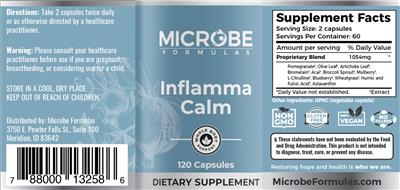
What is this page for?
First and foremost: checking Inflamma Calm against your medications. The heart of this page is the interaction checker and the full interaction report — how this product’s ingredients may interact with prescription and over-the-counter medicines you may be taking.
Around that, we add a pharmacist’s high-level view of the product as a whole — what’s inside, the evidence for its stated use, how transparent the label is, and what safety data exists — so you can see the full picture in one place. It’s educational information from our licensed clinical databases and the clinical staff at HelloPharmacist — not medical advice — and we don’t sell or endorse products. Our editorial policy
Inflamma Calm is a dietary supplement by Microbe Formulas with 13 active ingredients. Its ingredients are commonly taken for antioxidant support, heart health, brain and memory health.Based on those ingredients, 1,251 medications have a known interaction with it, the most serious rated moderate. The ingredients most likely to interact are Pomegranate extract, Astaxanthin, Artichoke extract. Use the checker below to test your specific medication, or read the full HelloPharmacist Interaction Report.
Check Your Meds Against Inflamma Calm by Microbe Formulas
Ask about any prescription or over-the-counter medication and we check it for interactions with Inflamma Calm by Microbe Formulas — and tell you which ingredient is responsible.
AI summaries are generated from our interaction database for education only — always confirm with your pharmacist. How we use AI
Ask the Pharmacist
A licensed pharmacist will answer your question by email — free, usually within 24 hours.
Got it — thank you!
A licensed pharmacist will answer within 24 hours. Keep an eye on your email (worth checking spam, just in case).
HelloPharmacist Scorecard of Inflamma Calm by Microbe Formulas
Our pharmacy team’s full take, with four database checks built into the cards below — a summary of what is known, not a grade of the product itself.
What’s inside
Low disclosure
Inflamma Calm contains 13 active ingredients. The primary components are blueberry extract, acai extract, pomegranate extract, astaxanthin, broccoli extract, olive extract, artichoke extract, bromelain extract, mulberry extract, L-citrulline extract, wheatgrass extract, humic extract, and fulvic acid extract.
These are designed to work together to reduce inflammation and support overall wellness. The product is enclosed in capsules that contain HPMC (a plant-based capsule material) as an inactive ingredient.
Does it work?
Not established
The evidence supporting these ingredients varies widely. Pomegranate is possibly effective for hypertension, and broccoli is possibly effective for colorectal cancer.
L-citrulline is possibly effective for athletic performance. For most other conditions and ingredients—including blueberry for cognitive decline, acai for athletic performance, astaxanthin for age-related macular degeneration, olive for osteoarthritis, artichoke for liver disease, bromelain for burns or cancer, mulberry for diabetes, wheatgrass for cancer, and both humic and fulvic acids for their listed uses—the evidence we hold is insufficient to establish effectiveness.
How safe is it?
Well-documented data
Most of these ingredients are generally well tolerated as foods, though concentrated supplements are less studied. Blueberry extract may cause constipation, diarrhea, nausea, or vomiting; in one trial, 26% of participants taking freeze-dried blueberries dropped out in the first week due to stomach complaints.
Artichoke, pomegranate, and bromelain may cause gastrointestinal upset including diarrhea, nausea, and abdominal pain. Astaxanthin may cause abdominal pain, diarrhea, or red-colored stools.
L-citrulline and fulvic acid may cause headache and gastrointestinal discomfort. Wheatgrass may trigger allergic reactions in people sensitive to wheat.
For pregnancy and breastfeeding, the safety data are limited or absent for most ingredients here. Broccoli is rated likely safe in pregnancy, and pomegranate is rated possibly safe.
For astaxanthin, artichoke, bromelain, L-citrulline, wheatgrass, humic extract, and fulvic acid, the safety information advises against use during pregnancy and breastfeeding. For blueberry, acai, olive, mulberry, and the proprietary blend components, pregnancy and breastfeeding safety data are not on file—discuss with your doctor or pharmacist before use if you are pregnant or nursing.
Meds to double-check
Moderate interaction found
Before taking Inflamma Calm, check with your doctor or pharmacist if you take anticoagulant or antiplatelet drugs (blood thinners like warfarin or aspirin), antihypertensive drugs (blood pressure medications), antidiabetes drugs (diabetes medications), any medications that are metabolized by cytochrome P450 enzymes (liver metabolism), immunosuppressants, thyroid hormone therapy, or benzodiazepines like midazolam. No interactions are documented for olive extract among the ingredients we could check.
The bottom line
Scorecard at a glanceFormula with limited ingredient disclosure with no established evidence rating for its marketed use. Moderate medication interactions have been identified, and safety information is well characterized.
Inflamma Calm is a multi-ingredient supplement designed to reduce inflammation, but its ingredients interact with a large number of medications—especially blood thinners, blood pressure drugs, diabetes medications, and drugs metabolized by liver enzymes. If you take any prescription medications, review them against this product with your own pharmacist or doctor before starting.
Most ingredients are generally well tolerated short-term but may cause mild gastrointestinal side effects. Long-term safety data are limited.
Educational only — not medical advice; always confirm with your pharmacist. Our editorial policy · How we use AI
Assessment coverage: 13 of 13 active ingredients matched to our full ingredient reviews (monographs). Based on the product label dated Dec 26, 2020.
This Scorecard evaluates available label information, ingredient evidence, and known medication-safety considerations. It does not independently verify product identity, purity, potency, contamination, or manufacturing quality. How these ratings are computed
General information
Key facts about Inflamma Calm, straight from the product label.
| Brand | Microbe Formulas |
|---|---|
| Barcode (UPC) | 788000132586 |
| Net contents | 120 Capsule(s) |
| Market status | On market |
| Date entered into DSLD | Dec 26, 2020 |
| DSLD ID | 242192 |
| Product type | Other Combinations |
| Supplement form | Capsule |
| Dietary claims / uses | All Other, Structure/Function |
| Intended target group(s) | Vegan, Vegetarian, Adult (18 - 50 Years), Gluten Free |
Everything in this section is reproduced from the manufacturer’s own product label — it’s the label speaking, not HelloPharmacist. We show it so you can see exactly what the maker states; we don’t verify or endorse those statements.
Supplement Facts
The label details for Inflamma Calm by Microbe Formulas, sourced from the NIH Dietary Supplement Label Database.
Supplement Facts
| Ingredient | Amount | % DV |
|---|---|---|
| Blueberry extract | 0 NP | -- |
| Acai extract | 0 NP | -- |
| Pomegranate extract | 0 NP | -- |
| Proprietary Blend | 1054 mg | -- |
| Astaxanthin | 0 NP | -- |
| Broccoli extract | 0 NP | -- |
| Olive extract | 0 NP | -- |
| Artichoke extract | 0 NP | -- |
| Bromelain Extract | 0 NP | -- |
| Mulberry extract | 0 NP | -- |
| L-Citrulline Extract | 0 NP | -- |
| Wheatgrass extract | 0 NP | -- |
| Humic extract | 0 NP | -- |
| Fulvic Acid extract | 0 NP | -- |
Other ingredients: HPMC
Tap any ingredient to jump to its full detail below.
These statements are the manufacturer’s wording, reproduced from the product label — the label is saying it, not HelloPharmacist. We don’t verify or endorse them.
Suggested/Recommended/Usage/Directions
Directions: Take 2 capsules twice daily or as otherwise directed by a healthcare practitioner.
Precautions
Warning: Please consult your healthcare practitioner before use if you are pregnant, breastfeeding, or considering use for a child.
Warning: Please consult your healthcare practitioner before use if you are pregnant, breastfeeding, or considering use for a child.
Keep out of reach of children.
Storage
Store in a cool, dry place.
Formulation
Whole body support
Non GMO Gluten free No fillers
100% Vegan
FDA Statement of Identity
Dietary Supplement
These statements have not been evaluated by the Food and Drug Administration. This product is not intended to diagnose, treat, cure, or prevent any disease.
General Statements
Restoring hope and health is who we are.
Is this label outdated? Report a formula or label change and our pharmacy team will review it.
Inflamma Calm by Microbe Formulas label
The label scan from the NIH Dietary Supplement Label Database. Tap to enlarge.
Label images are published by the NIH Dietary Supplement Label Database for the version of this product on file. Always read your actual product label.
View the full label (PDF)The Ingredients in Inflamma Calm by Microbe Formulas
These are the 13 active ingredients this product is made of. Select any to open its full monograph.
Serving size2 Capsule(s) Dosage formCapsule Servings per container60 Amounts shown are per serving.
Most supplement products combine several ingredients, and a medication can interact with the product through any one of them. Each ingredient below shows whether it has known drug interactions.
Proprietary Blend
Other (inactive) ingredients: HPMC. These complete the product’s ingredient list but are not active constituents.
Inflamma Calm by Microbe Formulas Drug Interactions
HelloPharmacist Interaction Report
Inflamma Calm by Microbe Formulas contains multiple ingredients with documented interactions with medications.
The most serious interaction involves fulvic acid with anticoagulant or antiplatelet drugs (blood thinners)—fulvic acid may reduce their effectiveness and increase clotting risk. Altogether, these interactions span 1,252 individual medications.
Read the full breakdown — every affected drug type, severity by severity
Several ingredients affect blood sugar control. Blueberry, acai, artichoke, mulberry, and wheatgrass all interact with antidiabetes drugs and may increase the risk of low blood sugar (hypoglycemia).
Pomegranate, artichoke, and L-citrulline interact with blood pressure medications and may lower blood pressure further. Pomegranate also interacts with warfarin (a blood thinner), certain cholesterol drugs, and medications metabolized by liver enzymes.
Additionally, broccoli, astaxanthin, artichoke, mulberry, and wheatgrass affect how your liver breaks down various medications by inducing or inhibiting key enzymes (CYP1A2, CYP2A6, CYP2B6, CYP2C19, CYP3A4), potentially reducing drug effectiveness or increasing side effects. Bromelain and fulvic acid may interfere with blood thinners.
Blueberry, pomegranate, and bromelain interact with specific prescription drugs including buspiron (an anti-anxiety medication), flurbiprofen (an anti-inflammatory), rosuvastatin (a cholesterol drug), midazolam (a sedative), and tetracycline antibiotics. Fulvic acid also may interfere with thyroid hormone therapy and immunosuppressant medications.
Check your exact medications with the search tool on this page before starting this product.
Check your own medications below · Editorial policy · How we use AI
Want to check YOUR meds against Inflamma Calm?
Ask about interactions with your drugs in plain English — “Can I take it with lisinopril?” — and we find you the answer in seconds, ingredient by ingredient.
Go to the checkerIngredients driving the most interactions
Individual Drug Interactions
The ingredients in Inflamma Calm interact with 1,251 drugs. Click any drug to see the details.
11 of the 13 ingredients in Inflamma Calm interact with drugs. Each result below shows which ingredient is responsible. Pomegranate extract Astaxanthin Artichoke extract Wheatgrass extract Fulvic Acid extract Broccoli extract L-Citrulline Extract Bromelain Extract Blueberry extract Mulberry extract Acai extract
6-mercaptopurinePurinethol
How 6-mercaptopurine interacts with Inflamma Calm — through 1 ingredient. Tap an ingredient for the detail:
Fulvic Acid ExtractImmunosuppressants Moderate
Interaction Summary
Theoretically, taking fulvic acid might decrease the effects of immunosuppressive therapy.
Read the full Fulvic Acid Extract + 6-mercaptopurine interactionAdo-trastuzumab EmtansineKadcyla
How Ado-trastuzumab Emtansine interacts with Inflamma Calm — through 2 ingredients. Tap an ingredient for the detail:
AstaxanthinCytochrome P450 3a4 (cyp3a4) Substrates Moderate
Interaction Summary
Theoretically, astaxanthin may decrease levels of drugs metabolized by CYP3A4.
Read the full Astaxanthin + Ado-trastuzumab Emtansine interactionPomegranate ExtractCytochrome P450 3a4 (cyp3a4) Substrates Minor
Interaction Summary
Theoretically, pomegranate might increase levels of drugs metabolized by CYP3A4, but most research suggests this interaction is unlikely to be clinically significant.
Read the full Pomegranate Extract + Ado-trastuzumab Emtansine interactionAbciximabReoPro
How Abciximab interacts with Inflamma Calm — through 2 ingredients. Tap an ingredient for the detail:
Fulvic Acid ExtractAnticoagulant/antiplatelet Drugs Moderate
Interaction Summary
Theoretically, taking fulvic acid may decrease the effectiveness of anticoagulant and antiplatelet drugs.
Read the full Fulvic Acid Extract + Abciximab interactionBromelain ExtractAnticoagulant/antiplatelet Drugs Moderate
Interaction Summary
Bromelain may have antiplatelet effects and may increase the risk of bleeding if used with anticoagulant or antiplatelet drugs.
Read the full Bromelain Extract + Abciximab interactionAbemaciclibVerzenio
How Abemaciclib interacts with Inflamma Calm — through 2 ingredients. Tap an ingredient for the detail:
AstaxanthinCytochrome P450 3a4 (cyp3a4) Substrates Moderate
Interaction Summary
Theoretically, astaxanthin may decrease levels of drugs metabolized by CYP3A4.
Read the full Astaxanthin + Abemaciclib interactionPomegranate ExtractCytochrome P450 3a4 (cyp3a4) Substrates Minor
Interaction Summary
Theoretically, pomegranate might increase levels of drugs metabolized by CYP3A4, but most research suggests this interaction is unlikely to be clinically significant.
Read the full Pomegranate Extract + Abemaciclib interactionAbiraterone
How Abiraterone interacts with Inflamma Calm — through 2 ingredients. Tap an ingredient for the detail:
AstaxanthinCytochrome P450 3a4 (cyp3a4) Substrates Moderate
Interaction Summary
Theoretically, astaxanthin may decrease levels of drugs metabolized by CYP3A4.
Read the full Astaxanthin + Abiraterone interactionPomegranate ExtractCytochrome P450 3a4 (cyp3a4) Substrates Minor
Interaction Summary
Theoretically, pomegranate might increase levels of drugs metabolized by CYP3A4, but most research suggests this interaction is unlikely to be clinically significant.
Read the full Pomegranate Extract + Abiraterone interactionAbiraterone AcetateYonsa, Zytiga
How Abiraterone Acetate interacts with Inflamma Calm — through 2 ingredients. Tap an ingredient for the detail:
AstaxanthinCytochrome P450 3a4 (cyp3a4) Substrates Moderate
Interaction Summary
Theoretically, astaxanthin may decrease levels of drugs metabolized by CYP3A4.
Read the full Astaxanthin + Abiraterone Acetate interactionPomegranate ExtractCytochrome P450 3a4 (cyp3a4) Substrates Minor
Interaction Summary
Theoretically, pomegranate might increase levels of drugs metabolized by CYP3A4, but most research suggests this interaction is unlikely to be clinically significant.
Read the full Pomegranate Extract + Abiraterone Acetate interactionAbrocitinibCibinqo
How Abrocitinib interacts with Inflamma Calm — through 4 ingredients. Tap an ingredient for the detail:
Artichoke ExtractCytochrome P450 2c19 (cyp2c19) Substrates Moderate
Interaction Summary
Theoretically, artichoke might increase serum levels of drugs metabolized by CYP2C19.
Read the full Artichoke Extract + Abrocitinib interactionBromelain ExtractAnticoagulant/antiplatelet Drugs Moderate
Interaction Summary
Bromelain may have antiplatelet effects and may increase the risk of bleeding if used with anticoagulant or antiplatelet drugs.
Read the full Bromelain Extract + Abrocitinib interactionFulvic Acid ExtractAnticoagulant/antiplatelet Drugs, Immunosuppressants Moderate
Interaction Summary
Theoretically, taking fulvic acid may decrease the effectiveness of anticoagulant and antiplatelet drugs.
Read the full Fulvic Acid Extract + Abrocitinib interactionPomegranate ExtractCytochrome P450 2c9 (cyp2c9) Substrates Minor
Interaction Summary
Theoretically, pomegranate might increase levels of drugs metabolized by CYP2C9.
Read the full Pomegranate Extract + Abrocitinib interactionAcalabrutinibCalquence
How Acalabrutinib interacts with Inflamma Calm — through 2 ingredients. Tap an ingredient for the detail:
AstaxanthinCytochrome P450 3a4 (cyp3a4) Substrates Moderate
Interaction Summary
Theoretically, astaxanthin may decrease levels of drugs metabolized by CYP3A4.
Read the full Astaxanthin + Acalabrutinib interactionPomegranate ExtractCytochrome P450 3a4 (cyp3a4) Substrates Minor
Interaction Summary
Theoretically, pomegranate might increase levels of drugs metabolized by CYP3A4, but most research suggests this interaction is unlikely to be clinically significant.
Read the full Pomegranate Extract + Acalabrutinib interactionAcarboseGlucobay, Prandase, Precose
How Acarbose interacts with Inflamma Calm — through 5 ingredients. Tap an ingredient for the detail:
Artichoke ExtractAntidiabetes Drugs Moderate
Interaction Summary
Theoretically, artichoke leaf extract may increase the risk of hypoglycemia when taken with antidiabetes drugs.
Read the full Artichoke Extract + Acarbose interactionMulberry ExtractAntidiabetes Drugs Moderate
Interaction Summary
Theoretically, black mulberry leaf might increase the risk of hypoglycemia when taken with antidiabetes drugs.
Read the full Mulberry Extract + Acarbose interactionWheatgrass ExtractAntidiabetes Drugs Moderate
Interaction Summary
Theoretically, taking wheatgrass with antidiabetes drugs might lower blood glucose levels and increase the risk of hypoglycemia.
Read the full Wheatgrass Extract + Acarbose interactionAcai ExtractAntidiabetes Drugs Moderate
Interaction Summary
Theoretically, taking acai with antidiabetes drugs might interfere with glycemic control.
Read the full Acai Extract + Acarbose interactionBlueberry ExtractAntidiabetes Drugs Minor
Interaction Summary
Theoretically, blueberries or blueberry leaf extracts might increase the risk of hypoglycemia when taken with antidiabetes drugs.
Read the full Blueberry Extract + Acarbose interactionAcebutololRhotral, Sectral
How Acebutolol interacts with Inflamma Calm — through 3 ingredients. Tap an ingredient for the detail:
L-citrulline ExtractAntihypertensive Drugs Moderate
Interaction Summary
Theoretically, concomitant use of L-citrulline with antihypertensive drugs might have additive effects and increase the chance of hypotension.
Read the full L-citrulline Extract + Acebutolol interactionPomegranate ExtractAntihypertensive Drugs Moderate
Interaction Summary
Theoretically, taking pomegranate with antihypertensive drugs might increase the risk of hypotension.
Read the full Pomegranate Extract + Acebutolol interactionArtichoke ExtractAntihypertensive Drugs Moderate
Interaction Summary
Theoretically, artichoke leaf extract may increase the risk of hypotension when taken with antihypertensive drugs.
Read the full Artichoke Extract + Acebutolol interactionAcenocoumarolSintrom
How Acenocoumarol interacts with Inflamma Calm — through 2 ingredients. Tap an ingredient for the detail:
Bromelain ExtractAnticoagulant/antiplatelet Drugs Moderate
Interaction Summary
Bromelain may have antiplatelet effects and may increase the risk of bleeding if used with anticoagulant or antiplatelet drugs.
Read the full Bromelain Extract + Acenocoumarol interactionFulvic Acid ExtractAnticoagulant/antiplatelet Drugs Moderate
Interaction Summary
Theoretically, taking fulvic acid may decrease the effectiveness of anticoagulant and antiplatelet drugs.
Read the full Fulvic Acid Extract + Acenocoumarol interactionAcetaminophenChildren's Tylenol, Children's Tylenol Meltaways, Tylenol, Tylenol Ex Strength
How Acetaminophen interacts with Inflamma Calm — through 2 ingredients. Tap an ingredient for the detail:
Broccoli ExtractCytochrome P450 1a2 (cyp1a2) Substrates Moderate
Interaction Summary
Theoretically, broccoli might reduce the levels and effects of drugs metabolized by CYP1A2.
Read the full Broccoli Extract + Acetaminophen interactionWheatgrass ExtractCytochrome P450 1a2 (cyp1a2) Substrates Moderate
Interaction Summary
Theoretically, wheatgrass might decrease the levels and clinical effects of CYP1A2 substrates.
Read the full Wheatgrass Extract + Acetaminophen interactionAcetaminophen, AspirinGemnisyn
How Acetaminophen, Aspirin interacts with Inflamma Calm — through 4 ingredients. Tap an ingredient for the detail:
Wheatgrass ExtractCytochrome P450 1a2 (cyp1a2) Substrates Moderate
Interaction Summary
Theoretically, wheatgrass might decrease the levels and clinical effects of CYP1A2 substrates.
Read the full Wheatgrass Extract + Acetaminophen, Aspirin interactionBromelain ExtractAnticoagulant/antiplatelet Drugs Moderate
Interaction Summary
Bromelain may have antiplatelet effects and may increase the risk of bleeding if used with anticoagulant or antiplatelet drugs.
Read the full Bromelain Extract + Acetaminophen, Aspirin interactionBroccoli ExtractCytochrome P450 1a2 (cyp1a2) Substrates Moderate
Interaction Summary
Theoretically, broccoli might reduce the levels and effects of drugs metabolized by CYP1A2.
Read the full Broccoli Extract + Acetaminophen, Aspirin interactionFulvic Acid ExtractAnticoagulant/antiplatelet Drugs Moderate
Interaction Summary
Theoretically, taking fulvic acid may decrease the effectiveness of anticoagulant and antiplatelet drugs.
Read the full Fulvic Acid Extract + Acetaminophen, Aspirin interactionAcetaminophen, Aspirin, CaffeineExcedrin, Excedrin Extra Strength, Excedrin Migraine
How Acetaminophen, Aspirin, Caffeine interacts with Inflamma Calm — through 6 ingredients. Tap an ingredient for the detail:
Fulvic Acid ExtractAnticoagulant/antiplatelet Drugs Moderate
Interaction Summary
Theoretically, taking fulvic acid may decrease the effectiveness of anticoagulant and antiplatelet drugs.
Read the full Fulvic Acid Extract + Acetaminophen, Aspirin, Caffeine interactionBromelain ExtractAnticoagulant/antiplatelet Drugs Moderate
Interaction Summary
Bromelain may have antiplatelet effects and may increase the risk of bleeding if used with anticoagulant or antiplatelet drugs.
Read the full Bromelain Extract + Acetaminophen, Aspirin, Caffeine interactionWheatgrass ExtractCytochrome P450 1a2 (cyp1a2) Substrates Moderate
Interaction Summary
Theoretically, wheatgrass might decrease the levels and clinical effects of CYP1A2 substrates.
Read the full Wheatgrass Extract + Acetaminophen, Aspirin, Caffeine interactionAstaxanthinCytochrome P450 3a4 (cyp3a4) Substrates Moderate
Interaction Summary
Theoretically, astaxanthin may decrease levels of drugs metabolized by CYP3A4.
Read the full Astaxanthin + Acetaminophen, Aspirin, Caffeine interactionBroccoli ExtractCytochrome P450 1a2 (cyp1a2) Substrates Moderate
Interaction Summary
Theoretically, broccoli might reduce the levels and effects of drugs metabolized by CYP1A2.
Read the full Broccoli Extract + Acetaminophen, Aspirin, Caffeine interactionPomegranate ExtractCytochrome P450 3a4 (cyp3a4) Substrates Minor
Interaction Summary
Theoretically, pomegranate might increase levels of drugs metabolized by CYP3A4, but most research suggests this interaction is unlikely to be clinically significant.
Read the full Pomegranate Extract + Acetaminophen, Aspirin, Caffeine interactionAcetaminophen, Brompheniramine, PhenylpropanolamineDimetapp Cold and Flu
How Acetaminophen, Brompheniramine, Phenylpropanolamine interacts with Inflamma Calm — through 2 ingredients. Tap an ingredient for the detail:
Wheatgrass ExtractCytochrome P450 1a2 (cyp1a2) Substrates Moderate
Interaction Summary
Theoretically, wheatgrass might decrease the levels and clinical effects of CYP1A2 substrates.
Read the full Wheatgrass Extract + Acetaminophen, Brompheniramine, Phenylpropanolamine interactionBroccoli ExtractCytochrome P450 1a2 (cyp1a2) Substrates Moderate
Interaction Summary
Theoretically, broccoli might reduce the levels and effects of drugs metabolized by CYP1A2.
Read the full Broccoli Extract + Acetaminophen, Brompheniramine, Phenylpropanolamine interactionAcetaminophen, ButalbitalAxocet, Bancap, Bucet, Butex Forte, Esgic CF, Orbivan CF +5 more
How Acetaminophen, Butalbital interacts with Inflamma Calm — through 2 ingredients. Tap an ingredient for the detail:
Broccoli ExtractCytochrome P450 1a2 (cyp1a2) Substrates Moderate
Interaction Summary
Theoretically, broccoli might reduce the levels and effects of drugs metabolized by CYP1A2.
Read the full Broccoli Extract + Acetaminophen, Butalbital interactionWheatgrass ExtractCytochrome P450 1a2 (cyp1a2) Substrates Moderate
Interaction Summary
Theoretically, wheatgrass might decrease the levels and clinical effects of CYP1A2 substrates.
Read the full Wheatgrass Extract + Acetaminophen, Butalbital interactionAcetaminophen, Butalbital, CaffeineEsgic, Esgic Plus, Fiogesic, Fioricet, Repan, Tecnal +1 more
How Acetaminophen, Butalbital, Caffeine interacts with Inflamma Calm — through 4 ingredients. Tap an ingredient for the detail:
Wheatgrass ExtractCytochrome P450 1a2 (cyp1a2) Substrates Moderate
Interaction Summary
Theoretically, wheatgrass might decrease the levels and clinical effects of CYP1A2 substrates.
Read the full Wheatgrass Extract + Acetaminophen, Butalbital, Caffeine interactionBroccoli ExtractCytochrome P450 1a2 (cyp1a2) Substrates Moderate
Interaction Summary
Theoretically, broccoli might reduce the levels and effects of drugs metabolized by CYP1A2.
Read the full Broccoli Extract + Acetaminophen, Butalbital, Caffeine interactionAstaxanthinCytochrome P450 3a4 (cyp3a4) Substrates Moderate
Interaction Summary
Theoretically, astaxanthin may decrease levels of drugs metabolized by CYP3A4.
Read the full Astaxanthin + Acetaminophen, Butalbital, Caffeine interactionPomegranate ExtractCytochrome P450 3a4 (cyp3a4) Substrates Minor
Interaction Summary
Theoretically, pomegranate might increase levels of drugs metabolized by CYP3A4, but most research suggests this interaction is unlikely to be clinically significant.
Read the full Pomegranate Extract + Acetaminophen, Butalbital, Caffeine interactionAcetaminophen, Butalbital, Caffeine, CodeineEsgic with Codeine, Fioricet w/ Codeine
How Acetaminophen, Butalbital, Caffeine, Codeine interacts with Inflamma Calm — through 4 ingredients. Tap an ingredient for the detail:
Pomegranate ExtractCytochrome P450 3a4 (cyp3a4) Substrates, Cytochrome P450 2d6 (cyp2d6) Substrates Moderate
Interaction Summary
Theoretically, pomegranate might increase levels of drugs metabolized by CYP3A4, but most research suggests this interaction is unlikely to be clinically significant.
Read the full Pomegranate Extract + Acetaminophen, Butalbital, Caffeine, Codeine interactionAstaxanthinCytochrome P450 3a4 (cyp3a4) Substrates Moderate
Interaction Summary
Theoretically, astaxanthin may decrease levels of drugs metabolized by CYP3A4.
Read the full Astaxanthin + Acetaminophen, Butalbital, Caffeine, Codeine interactionWheatgrass ExtractCytochrome P450 1a2 (cyp1a2) Substrates Moderate
Interaction Summary
Theoretically, wheatgrass might decrease the levels and clinical effects of CYP1A2 substrates.
Read the full Wheatgrass Extract + Acetaminophen, Butalbital, Caffeine, Codeine interactionBroccoli ExtractCytochrome P450 1a2 (cyp1a2) Substrates Moderate
Interaction Summary
Theoretically, broccoli might reduce the levels and effects of drugs metabolized by CYP1A2.
Read the full Broccoli Extract + Acetaminophen, Butalbital, Caffeine, Codeine interactionAcetaminophen, Butalbital, CodeineBancap w/ Codeine
How Acetaminophen, Butalbital, Codeine interacts with Inflamma Calm — through 3 ingredients. Tap an ingredient for the detail:
Wheatgrass ExtractCytochrome P450 1a2 (cyp1a2) Substrates Moderate
Interaction Summary
Theoretically, wheatgrass might decrease the levels and clinical effects of CYP1A2 substrates.
Read the full Wheatgrass Extract + Acetaminophen, Butalbital, Codeine interactionBroccoli ExtractCytochrome P450 1a2 (cyp1a2) Substrates Moderate
Interaction Summary
Theoretically, broccoli might reduce the levels and effects of drugs metabolized by CYP1A2.
Read the full Broccoli Extract + Acetaminophen, Butalbital, Codeine interactionPomegranate ExtractCytochrome P450 2d6 (cyp2d6) Substrates Moderate
Interaction Summary
Theoretically, pomegranate might increase levels of drugs metabolized by CYP2D6.
Read the full Pomegranate Extract + Acetaminophen, Butalbital, Codeine interactionAcetaminophen, Butalbital, Codeine PhosphatePhrenilin #3
How Acetaminophen, Butalbital, Codeine Phosphate interacts with Inflamma Calm — through 3 ingredients. Tap an ingredient for the detail:
Pomegranate ExtractCytochrome P450 2d6 (cyp2d6) Substrates Moderate
Interaction Summary
Theoretically, pomegranate might increase levels of drugs metabolized by CYP2D6.
Read the full Pomegranate Extract + Acetaminophen, Butalbital, Codeine Phosphate interactionWheatgrass ExtractCytochrome P450 1a2 (cyp1a2) Substrates Moderate
Interaction Summary
Theoretically, wheatgrass might decrease the levels and clinical effects of CYP1A2 substrates.
Read the full Wheatgrass Extract + Acetaminophen, Butalbital, Codeine Phosphate interactionBroccoli ExtractCytochrome P450 1a2 (cyp1a2) Substrates Moderate
Interaction Summary
Theoretically, broccoli might reduce the levels and effects of drugs metabolized by CYP1A2.
Read the full Broccoli Extract + Acetaminophen, Butalbital, Codeine Phosphate interactionAcetaminophen, Caffeine, Chlorpheniramine, Hydrocodone, PhenylephrineHycomine Compound
How Acetaminophen, Caffeine, Chlorpheniramine, Hydrocodone, Phenylephrine interacts with Inflamma Calm — through 4 ingredients. Tap an ingredient for the detail:
AstaxanthinCytochrome P450 3a4 (cyp3a4) Substrates Moderate
Interaction Summary
Theoretically, astaxanthin may decrease levels of drugs metabolized by CYP3A4.
Read the full Astaxanthin + Acetaminophen, Caffeine, Chlorpheniramine, Hydrocodone, Phenylephrine interactionWheatgrass ExtractCytochrome P450 1a2 (cyp1a2) Substrates Moderate
Interaction Summary
Theoretically, wheatgrass might decrease the levels and clinical effects of CYP1A2 substrates.
Read the full Wheatgrass Extract + Acetaminophen, Caffeine, Chlorpheniramine, Hydrocodone, Phenylephrine interactionBroccoli ExtractCytochrome P450 1a2 (cyp1a2) Substrates Moderate
Interaction Summary
Theoretically, broccoli might reduce the levels and effects of drugs metabolized by CYP1A2.
Read the full Broccoli Extract + Acetaminophen, Caffeine, Chlorpheniramine, Hydrocodone, Phenylephrine interactionPomegranate ExtractCytochrome P450 2d6 (cyp2d6) Substrates, Cytochrome P450 3a4 (cyp3a4) Substrates Moderate
Interaction Summary
Theoretically, pomegranate might increase levels of drugs metabolized by CYP2D6.
Read the full Pomegranate Extract + Acetaminophen, Caffeine, Chlorpheniramine, Hydrocodone, Phenylephrine interactionAcetaminophen, Caffeine, CodeineGesic C15, Gesic C30, Gesic C8, Lenoltec 1, Lenoltec 2, Lenoltec 3 +1 more
How Acetaminophen, Caffeine, Codeine interacts with Inflamma Calm — through 4 ingredients. Tap an ingredient for the detail:
Pomegranate ExtractCytochrome P450 3a4 (cyp3a4) Substrates, Cytochrome P450 2d6 (cyp2d6) Substrates Moderate
Interaction Summary
Theoretically, pomegranate might increase levels of drugs metabolized by CYP3A4, but most research suggests this interaction is unlikely to be clinically significant.
Read the full Pomegranate Extract + Acetaminophen, Caffeine, Codeine interactionBroccoli ExtractCytochrome P450 1a2 (cyp1a2) Substrates Moderate
Interaction Summary
Theoretically, broccoli might reduce the levels and effects of drugs metabolized by CYP1A2.
Read the full Broccoli Extract + Acetaminophen, Caffeine, Codeine interactionWheatgrass ExtractCytochrome P450 1a2 (cyp1a2) Substrates Moderate
Interaction Summary
Theoretically, wheatgrass might decrease the levels and clinical effects of CYP1A2 substrates.
Read the full Wheatgrass Extract + Acetaminophen, Caffeine, Codeine interactionAstaxanthinCytochrome P450 3a4 (cyp3a4) Substrates Moderate
Interaction Summary
Theoretically, astaxanthin may decrease levels of drugs metabolized by CYP3A4.
Read the full Astaxanthin + Acetaminophen, Caffeine, Codeine interactionAcetaminophen, Caffeine, Codeine, SalicylamideCodalan No.1, Codalan No.2, Codalan No.3
How Acetaminophen, Caffeine, Codeine, Salicylamide interacts with Inflamma Calm — through 4 ingredients. Tap an ingredient for the detail:
AstaxanthinCytochrome P450 3a4 (cyp3a4) Substrates Moderate
Interaction Summary
Theoretically, astaxanthin may decrease levels of drugs metabolized by CYP3A4.
Read the full Astaxanthin + Acetaminophen, Caffeine, Codeine, Salicylamide interactionBroccoli ExtractCytochrome P450 1a2 (cyp1a2) Substrates Moderate
Interaction Summary
Theoretically, broccoli might reduce the levels and effects of drugs metabolized by CYP1A2.
Read the full Broccoli Extract + Acetaminophen, Caffeine, Codeine, Salicylamide interactionWheatgrass ExtractCytochrome P450 1a2 (cyp1a2) Substrates Moderate
Interaction Summary
Theoretically, wheatgrass might decrease the levels and clinical effects of CYP1A2 substrates.
Read the full Wheatgrass Extract + Acetaminophen, Caffeine, Codeine, Salicylamide interactionPomegranate ExtractCytochrome P450 2d6 (cyp2d6) Substrates, Cytochrome P450 3a4 (cyp3a4) Substrates Moderate
Interaction Summary
Theoretically, pomegranate might increase levels of drugs metabolized by CYP2D6.
Read the full Pomegranate Extract + Acetaminophen, Caffeine, Codeine, Salicylamide interactionAcetaminophen, Caffeine, DihydrocodeineDHC Plus, Panlor DC, Panlor SS
How Acetaminophen, Caffeine, Dihydrocodeine interacts with Inflamma Calm — through 4 ingredients. Tap an ingredient for the detail:
Pomegranate ExtractCytochrome P450 2d6 (cyp2d6) Substrates, Cytochrome P450 3a4 (cyp3a4) Substrates Moderate
Interaction Summary
Theoretically, pomegranate might increase levels of drugs metabolized by CYP2D6.
Read the full Pomegranate Extract + Acetaminophen, Caffeine, Dihydrocodeine interactionWheatgrass ExtractCytochrome P450 1a2 (cyp1a2) Substrates Moderate
Interaction Summary
Theoretically, wheatgrass might decrease the levels and clinical effects of CYP1A2 substrates.
Read the full Wheatgrass Extract + Acetaminophen, Caffeine, Dihydrocodeine interactionAstaxanthinCytochrome P450 3a4 (cyp3a4) Substrates Moderate
Interaction Summary
Theoretically, astaxanthin may decrease levels of drugs metabolized by CYP3A4.
Read the full Astaxanthin + Acetaminophen, Caffeine, Dihydrocodeine interactionBroccoli ExtractCytochrome P450 1a2 (cyp1a2) Substrates Moderate
Interaction Summary
Theoretically, broccoli might reduce the levels and effects of drugs metabolized by CYP1A2.
Read the full Broccoli Extract + Acetaminophen, Caffeine, Dihydrocodeine interactionAcetaminophen, Caffeine, IsomethepteneMigralam
How Acetaminophen, Caffeine, Isometheptene interacts with Inflamma Calm — through 4 ingredients. Tap an ingredient for the detail:
Wheatgrass ExtractCytochrome P450 1a2 (cyp1a2) Substrates Moderate
Interaction Summary
Theoretically, wheatgrass might decrease the levels and clinical effects of CYP1A2 substrates.
Read the full Wheatgrass Extract + Acetaminophen, Caffeine, Isometheptene interactionAstaxanthinCytochrome P450 3a4 (cyp3a4) Substrates Moderate
Interaction Summary
Theoretically, astaxanthin may decrease levels of drugs metabolized by CYP3A4.
Read the full Astaxanthin + Acetaminophen, Caffeine, Isometheptene interactionBroccoli ExtractCytochrome P450 1a2 (cyp1a2) Substrates Moderate
Interaction Summary
Theoretically, broccoli might reduce the levels and effects of drugs metabolized by CYP1A2.
Read the full Broccoli Extract + Acetaminophen, Caffeine, Isometheptene interactionPomegranate ExtractCytochrome P450 3a4 (cyp3a4) Substrates Minor
Interaction Summary
Theoretically, pomegranate might increase levels of drugs metabolized by CYP3A4, but most research suggests this interaction is unlikely to be clinically significant.
Read the full Pomegranate Extract + Acetaminophen, Caffeine, Isometheptene interactionAcetaminophen, Caffeine, PyrilamineMidol Max Strength Menstrual
How Acetaminophen, Caffeine, Pyrilamine interacts with Inflamma Calm — through 4 ingredients. Tap an ingredient for the detail:
Broccoli ExtractCytochrome P450 1a2 (cyp1a2) Substrates Moderate
Interaction Summary
Theoretically, broccoli might reduce the levels and effects of drugs metabolized by CYP1A2.
Read the full Broccoli Extract + Acetaminophen, Caffeine, Pyrilamine interactionAstaxanthinCytochrome P450 3a4 (cyp3a4) Substrates Moderate
Interaction Summary
Theoretically, astaxanthin may decrease levels of drugs metabolized by CYP3A4.
Read the full Astaxanthin + Acetaminophen, Caffeine, Pyrilamine interactionWheatgrass ExtractCytochrome P450 1a2 (cyp1a2) Substrates Moderate
Interaction Summary
Theoretically, wheatgrass might decrease the levels and clinical effects of CYP1A2 substrates.
Read the full Wheatgrass Extract + Acetaminophen, Caffeine, Pyrilamine interactionPomegranate ExtractCytochrome P450 3a4 (cyp3a4) Substrates Minor
Interaction Summary
Theoretically, pomegranate might increase levels of drugs metabolized by CYP3A4, but most research suggests this interaction is unlikely to be clinically significant.
Read the full Pomegranate Extract + Acetaminophen, Caffeine, Pyrilamine interactionAcetaminophen, Chlorpheniramine Maleate, Dextromethorphan HbrVicks Formula 44M Cough, Cold & Flu Relief
How Acetaminophen, Chlorpheniramine Maleate, Dextromethorphan Hbr interacts with Inflamma Calm — through 4 ingredients. Tap an ingredient for the detail:
Wheatgrass ExtractCytochrome P450 1a2 (cyp1a2) Substrates Moderate
Interaction Summary
Theoretically, wheatgrass might decrease the levels and clinical effects of CYP1A2 substrates.
Read the full Wheatgrass Extract + Acetaminophen, Chlorpheniramine Maleate, Dextromethorphan Hbr interactionAstaxanthinCytochrome P450 3a4 (cyp3a4) Substrates Moderate
Interaction Summary
Theoretically, astaxanthin may decrease levels of drugs metabolized by CYP3A4.
Read the full Astaxanthin + Acetaminophen, Chlorpheniramine Maleate, Dextromethorphan Hbr interactionBroccoli ExtractCytochrome P450 1a2 (cyp1a2) Substrates Moderate
Interaction Summary
Theoretically, broccoli might reduce the levels and effects of drugs metabolized by CYP1A2.
Read the full Broccoli Extract + Acetaminophen, Chlorpheniramine Maleate, Dextromethorphan Hbr interactionPomegranate ExtractCytochrome P450 2d6 (cyp2d6) Substrates, Cytochrome P450 3a4 (cyp3a4) Substrates Moderate
Interaction Summary
Theoretically, pomegranate might increase levels of drugs metabolized by CYP2D6.
Read the full Pomegranate Extract + Acetaminophen, Chlorpheniramine Maleate, Dextromethorphan Hbr interactionAcetaminophen, Chlorpheniramine, Codeine, PhenylephrineColrex
How Acetaminophen, Chlorpheniramine, Codeine, Phenylephrine interacts with Inflamma Calm — through 4 ingredients. Tap an ingredient for the detail:
Pomegranate ExtractCytochrome P450 2d6 (cyp2d6) Substrates, Cytochrome P450 3a4 (cyp3a4) Substrates Moderate
Interaction Summary
Theoretically, pomegranate might increase levels of drugs metabolized by CYP2D6.
Read the full Pomegranate Extract + Acetaminophen, Chlorpheniramine, Codeine, Phenylephrine interactionWheatgrass ExtractCytochrome P450 1a2 (cyp1a2) Substrates Moderate
Interaction Summary
Theoretically, wheatgrass might decrease the levels and clinical effects of CYP1A2 substrates.
Read the full Wheatgrass Extract + Acetaminophen, Chlorpheniramine, Codeine, Phenylephrine interactionAstaxanthinCytochrome P450 3a4 (cyp3a4) Substrates Moderate
Interaction Summary
Theoretically, astaxanthin may decrease levels of drugs metabolized by CYP3A4.
Read the full Astaxanthin + Acetaminophen, Chlorpheniramine, Codeine, Phenylephrine interactionBroccoli ExtractCytochrome P450 1a2 (cyp1a2) Substrates Moderate
Interaction Summary
Theoretically, broccoli might reduce the levels and effects of drugs metabolized by CYP1A2.
Read the full Broccoli Extract + Acetaminophen, Chlorpheniramine, Codeine, Phenylephrine interactionAcetaminophen, Chlorpheniramine, DextromethorphanCoricidin II Extra Strength Cold and Flu
How Acetaminophen, Chlorpheniramine, Dextromethorphan interacts with Inflamma Calm — through 4 ingredients. Tap an ingredient for the detail:
Wheatgrass ExtractCytochrome P450 1a2 (cyp1a2) Substrates Moderate
Interaction Summary
Theoretically, wheatgrass might decrease the levels and clinical effects of CYP1A2 substrates.
Read the full Wheatgrass Extract + Acetaminophen, Chlorpheniramine, Dextromethorphan interactionBroccoli ExtractCytochrome P450 1a2 (cyp1a2) Substrates Moderate
Interaction Summary
Theoretically, broccoli might reduce the levels and effects of drugs metabolized by CYP1A2.
Read the full Broccoli Extract + Acetaminophen, Chlorpheniramine, Dextromethorphan interactionAstaxanthinCytochrome P450 3a4 (cyp3a4) Substrates Moderate
Interaction Summary
Theoretically, astaxanthin may decrease levels of drugs metabolized by CYP3A4.
Read the full Astaxanthin + Acetaminophen, Chlorpheniramine, Dextromethorphan interactionPomegranate ExtractCytochrome P450 2d6 (cyp2d6) Substrates, Cytochrome P450 3a4 (cyp3a4) Substrates Moderate
Interaction Summary
Theoretically, pomegranate might increase levels of drugs metabolized by CYP2D6.
Read the full Pomegranate Extract + Acetaminophen, Chlorpheniramine, Dextromethorphan interactionAcetaminophen, Chlorpheniramine, Dextromethorphan HydrobromideCoricidin HBP Maximum Strength Flu
How Acetaminophen, Chlorpheniramine, Dextromethorphan Hydrobromide interacts with Inflamma Calm — through 4 ingredients. Tap an ingredient for the detail:
Pomegranate ExtractCytochrome P450 3a4 (cyp3a4) Substrates, Cytochrome P450 2d6 (cyp2d6) Substrates Moderate
Interaction Summary
Theoretically, pomegranate might increase levels of drugs metabolized by CYP3A4, but most research suggests this interaction is unlikely to be clinically significant.
Read the full Pomegranate Extract + Acetaminophen, Chlorpheniramine, Dextromethorphan Hydrobromide interactionAstaxanthinCytochrome P450 3a4 (cyp3a4) Substrates Moderate
Interaction Summary
Theoretically, astaxanthin may decrease levels of drugs metabolized by CYP3A4.
Read the full Astaxanthin + Acetaminophen, Chlorpheniramine, Dextromethorphan Hydrobromide interactionWheatgrass ExtractCytochrome P450 1a2 (cyp1a2) Substrates Moderate
Interaction Summary
Theoretically, wheatgrass might decrease the levels and clinical effects of CYP1A2 substrates.
Read the full Wheatgrass Extract + Acetaminophen, Chlorpheniramine, Dextromethorphan Hydrobromide interactionBroccoli ExtractCytochrome P450 1a2 (cyp1a2) Substrates Moderate
Interaction Summary
Theoretically, broccoli might reduce the levels and effects of drugs metabolized by CYP1A2.
Read the full Broccoli Extract + Acetaminophen, Chlorpheniramine, Dextromethorphan Hydrobromide interactionEach ingredient & the kinds of drugs it affects
For each ingredient in Inflamma Calm with known interactions, here are the types of medications they can affect. Open any type for the detail — or search your exact drug in the checker above.
Pomegranate extract
Ace Inhibitors (Aceis)
Theoretically, taking pomegranate with ACEIs might increase the risk of adverse effects.
Pomegranate juice is thought to have ACE inhibitor-like effects.
Antihypertensive Drugs
Theoretically, taking pomegranate with antihypertensive drugs might increase the risk of hypotension.
Consuming pomegranate juice can modestly lower blood pressure.
Cytochrome P450 2D6 (Cyp2D6) Substrates
Theoretically, pomegranate might increase levels of drugs metabolized by CYP2D6.
In vitro, pomegranate juice inhibits CYP2D6. However, the clinical significance of this potential interaction in humans is not known.
Rosuvastatin (Crestor)
Theoretically, taking pomegranate with rosuvastatin might increase the risk of adverse effects.
In one case, a patient taking rosuvastatin 5 mg every other day in combination with ezetimibe 10 mg daily developed rhabdomyolysis after drinking pomegranate juice 200 mL twice weekly for 3 weeks. This patient had a history of elevated creatine kinase levels while not receiving any statin treatment. This suggests a possible underlying myopathy and predisposition to rhabdomyolysis.
Warfarin (Coumadin)
Theoretically, pomegranate might increase warfarin levels and increase the risk of bleeding. Also, discontinuing regular consumption of pomegranate juice might decrease warfarin levels.
In one case report, a patient had a stable, therapeutic bleeding time, as measured by international normalized ratio (INR), while taking warfarin in combination with pomegranate juice 2-3 times per week. The patient became subtherapeutic within about 10 days after discontinuing pomegranate juice, which required a warfarin dose increase. In another case report, a patient with a stable INR for over one year presented with an INR of 14. The patient noted no changes to medications or diet but did report consuming around 3 liters of pomegranate juice over the previous week. The patient's INR stabilized upon moderation of pomegranate juice consumption. The mechanism of this potential interaction is unclear.
Carbamazepine (Tegretol)
Theoretically, taking pomegranate with carbamazepine might increase the risk of adverse effects, although research suggests this interaction is unlikely to be clinically significant.
Animal research shows that pomegranate juice may inhibit cytochrome P450 3A4 (CYP3A4) metabolism of carbamazepine and increase levels of carbamazepine by 1.5 times without prolonging the elimination half-life. This suggests that pomegranate juice inhibits intestinal CYP3A4, but might not inhibit hepatic CYP3A4. However, some human research suggests that pomegranate does not significantly inhibit CYP3A4 drug metabolism in humans.
Cytochrome P450 2C9 (Cyp2C9) Substrates
Theoretically, pomegranate might increase levels of drugs metabolized by CYP2C9.
Some animal and in vitro research shows that pomegranate juice inhibits intestinal, but not hepatic, CYP2C9 isoenzyme activity. However, clinical research shows that neither pomegranate juice nor pomegranate extract have a significant effect on CYP2C9 activity in humans.
Cytochrome P450 3A4 (Cyp3A4) Substrates
Theoretically, pomegranate might increase levels of drugs metabolized by CYP3A4, but most research suggests this interaction is unlikely to be clinically significant.
Pomegranate contains several polyphenols that have individually been shown to inhibit CYP3A4. However, there is contradictory evidence about the effect of whole pomegranate juice on CYP3A4 activity. In vitro, pomegranate juice significantly inhibits the CYP3A4 enzyme, with comparable inhibition to grapefruit juice. In an animal model, pomegranate juice inhibits CYP3A4 metabolism of carbamazepine and increases levels of carbamazepine by 1.5 times; however, in human volunteers, drinking a single glass of pomegranate juice 240 mL or taking 200 mL daily for 2 weeks does not significantly affect levels of the CYP3A4 substrate midazolam after oral or intravenous administration. Another study in healthy volunteers shows that consuming pomegranate juice 300 mL three times daily for three days also does not significantly affect levels of simvastatin, a CYP3A4 substrate This suggests that pomegranate is unlikely to significantly affect levels of CYP3A4 substrates in humans.
Tolbutamide (Orinase)
Theoretically, pomegranate might increase levels of tolbutamide, although research suggests this interaction is unlikely to be clinically significant.
Animal research shows that pomegranate juice inhibits the cytochrome P450 2C9 (CYP2C9) metabolism of tolbutamide. Pomegranate juice increased tolbutamide levels by 1.2 times without prolonging the elimination half-life. This suggests that pomegranate juice inhibits intestinal CYP2C9, but might not inhibit hepatic CYP2C9. Despite this evidence, clinical research shows that neither pomegranate juice nor pomegranate extract have a significant effect on CYP2C9 activity in humans. This interaction does not appear to be clinically significant in humans.
Astaxanthin
Cytochrome P450 2B6 (Cyp2B6) Substrates
Theoretically, astaxanthin may decrease levels of drugs metabolized by CYP2B6.
In vitro research shows that astaxanthin induces cytochrome CYP2B6 enzyme activity in human hepatocytes. This effect has not been reported in humans.
Cytochrome P450 3A4 (Cyp3A4) Substrates
Theoretically, astaxanthin may decrease levels of drugs metabolized by CYP3A4.
In vitro research shows that astaxanthin induces CYP3A4 enzyme activity in human hepatocytes. This effect has not been reported in humans.
Artichoke extract
Antidiabetes Drugs
Theoretically, artichoke leaf extract may increase the risk of hypoglycemia when taken with antidiabetes drugs.
A meta-analysis of small clinical studies shows that taking artichoke leaf extract for 8-12 weeks can modestly reduce fasting plasma glucose when compared with placebo.
Antihypertensive Drugs
Theoretically, artichoke leaf extract may increase the risk of hypotension when taken with antihypertensive drugs.
A meta-analysis of small clinical studies in patients with hypertension shows that taking artichoke can reduce systolic blood pressure by around 3 mmHg and diastolic blood pressure by around 2 mmHg when compared with placebo.
Cytochrome P450 2B6 (Cyp2B6) Substrates
Theoretically, artichoke might increase serum levels of drugs metabolized by CYP2B6.
In vitro research shows that artichoke leaf extract inhibits CYP2B6 activity. However, this interaction has not been reported in humans.
Cytochrome P450 2C19 (Cyp2C19) Substrates
Theoretically, artichoke might increase serum levels of drugs metabolized by CYP2C19.
In vitro research shows that artichoke leaf extract inhibits CYP2C19 activity. However, this interaction has not been reported in humans.
Wheatgrass extract
Antidiabetes Drugs
Theoretically, taking wheatgrass with antidiabetes drugs might lower blood glucose levels and increase the risk of hypoglycemia.
Animal research shows that taking wheatgrass stimulates the release of insulin from beta-cells and lowers blood glucose.
Cytochrome P450 1A2 (Cyp1A2) Substrates
Theoretically, wheatgrass might decrease the levels and clinical effects of CYP1A2 substrates.
In vitro research shows that wheatgrass induces CYP1A2 enzymes.
Fulvic Acid extract
Anticoagulant/Antiplatelet Drugs
Theoretically, taking fulvic acid may decrease the effectiveness of anticoagulant and antiplatelet drugs.
In vitro evidence shows that fulvic acid, formed from the oxidation and polymerization of protocatechuic acid, can shorten prothrombin time in human plasma, increasing the risk of clot formation.
Immunosuppressants
Theoretically, taking fulvic acid might decrease the effects of immunosuppressive therapy.
Animal research shows that fulvic acid stimulates immune function.
Thyroid Hormone
Theoretically, taking fulvic acid with thyroid hormone therapy might interfere with the ability to normalize thyroid function.
Animal research shows that fulvic acid increases the plasma level of thyroid-stimulating hormone (TSH) and decreases the thyroxine (T4):triiodothyronine (T3) ratio.
Broccoli extract
Cytochrome P450 1A2 (Cyp1A2) Substrates
Theoretically, broccoli might reduce the levels and effects of drugs metabolized by CYP1A2.
Pharmacokinetic research in humans shows that eating 500 grams of fresh broccoli daily for 6-12 days can increase CYP1A2 activity by 10% to 200%. Induction of CYP1A2 activity by broccoli is attributed to its glucosinolate constituents.
Cytochrome P450 2A6 (Cyp2A6) Substrates
Theoretically, broccoli might reduce the levels and effects of drugs metabolized by CYP2A6.
Pharmacokinetic research in humans shows that eating 500 grams of broccoli daily for 6 days increases CYP2A6 activity by 135% to 550%. Induction of CYP2A6 activity is attributed to its glucosinolate constituents.
L-Citrulline Extract
Antihypertensive Drugs
Theoretically, concomitant use of L-citrulline with antihypertensive drugs might have additive effects and increase the chance of hypotension.
L-citrulline is converted to L-arginine, which can increase nitric oxide and cause vasodilation. However, a meta-analysis of 5 small clinical studies suggests that taking L-citrulline 3-6 grams daily for 1-8 weeks does not lower blood pressure when compared with control.
Phosphodiesterase-5 Inhibitors
Theoretically, concurrent use of phosphodiesterase-5 (PDE-5) inhibitors and L-citrulline might result in additive vasodilation.
L-citrulline is converted to L-arginine, which can increase nitric oxide and cause vasodilation. Theoretically, taking L-arginine with PDE-5 inhibitors might have additive vasodilatory and hypotensive effects. However, in studies evaluating the combined use of L-arginine and sildenafil for erectile dysfunction, hypotension was not reported.
Bromelain Extract
Anticoagulant/Antiplatelet Drugs
Bromelain may have antiplatelet effects and may increase the risk of bleeding if used with anticoagulant or antiplatelet drugs.
There is one case report of a patient experiencing minor bruising while taking bromelain with naproxen. Bromelain is thought to have antiplatelet activity. Whether this interaction is of concern with topical bromelain is unclear. Interference with coagulation of burn wounds has been reported in a patient receiving bromelain-based enzymatic debridement. However, observational research has found that topical bromelain debridement is not associated with increases or decreases in laboratory markers of coagulation when compared with surgical debridement.
Tetracycline Antibiotics
Theoretically, bromelain might increase levels of tetracycline antibiotics.
Laboratory research suggests that bromelain might increase the absorption of tetracycline antibiotics. However, a study in healthy adults reported no difference in tetracycline plasma levels when a 500 mg dose was taken with or without bromelain 80 mg.
Blueberry extract
Antidiabetes Drugs
Theoretically, blueberries or blueberry leaf extracts might increase the risk of hypoglycemia when taken with antidiabetes drugs.
Animal and in vitro research suggests that blueberry and/or blueberry leaf extracts can lower blood glucose levels.
Buspirone (Buspar)
Theoretically, blueberry juice might increase blood levels of buspirone.
In vitro research shows that blueberry juice can inhibit the metabolism of buspirone, possibly by inhibiting cytochrome P450 3A (CYP3A) enzymes. However, pharmacokinetic research in humans shows that drinking 300 mL of blueberry juice 30 minutes before taking buspirone hydrochloride 10 mg does not significantly affect the concentration or clearance of buspirone.
Flurbiprofen (Ansaid, Others)
Theoretically, blueberry juice might increase blood levels of flurbiprofen.
In vitro research shows that blueberry juice can inhibit the metabolism of flurbiprofen, possibly by inhibiting cytochrome P450 2C9 (CYP2C9) enzymes. However, pharmacokinetic research in humans shows that drinking 300 mL of blueberry juice 30 minutes before taking flurbiprofen 100 mg does not significantly affect the concentration or clearance of flurbiprofen.
Mulberry extract
Antidiabetes Drugs
Theoretically, black mulberry leaf might increase the risk of hypoglycemia when taken with antidiabetes drugs.
One small clinical study shows that black mulberry leaf extract has hypoglycemic effects. This is supported by in vitro research which also suggests that constituents in black mulberry twigs and leaves might have hypoglycemic effects.
Midazolam (Versed)
Theoretically, black mulberry might inhibit the metabolism of midazolam.
In vitro research shows that black mulberry juice can inhibit midazolam 1'-hydroxylation, a reaction that is catalyzed by cytochrome P450 3A4. This effect has not been reported in humans.
Acai extract
Antidiabetes Drugs
Theoretically, taking acai with antidiabetes drugs might interfere with glycemic control.
Preliminary clinical research in healthy adults has shown that taking acai may increase or decrease levels of fasting blood glucose.
Brand information
Manufacturer and brand details for Inflamma Calm, from the product label.
Microbe Formulas
See all Microbe Formulas products- Name
- Microbe Formulas
- Street Address
- 3750 E. Pewter Falls St., Suite 100
- City
- Meridian
- State
- ID
- ZipCode
- 83642
- Web Address
- MicrobeFormulas.com
Inflamma Calm by Microbe Formulas: Common Questions
Does Inflamma Calm by Microbe Formulas interact with any medications?
How can one product interact with so many drugs?
Where does this information come from?
Can I take this if I'm on blood pressure medication?
Will this help with inflammation?
What are the most common side effects?
Is this safe to take during pregnancy?
What is L-citrulline and why is it in here?
Can I take this with my diabetes medication?
Written and reviewed by the HelloPharmacist editorial staff. Our editorial policy
Not sure if Inflamma Calm is safe with your meds?
Our pharmacists answer your medication & supplement questions — free.
Label information is sourced from the NIH Dietary Supplement Label Database and reflects the product version on file; always read your actual product label. This page is for education only and is not a substitute for professional medical advice. Confirm with your pharmacist or doctor before combining supplements and medications.
The Full Monographs Behind Inflamma Calm’s Ingredients
Every ingredient we hold a full HelloPharmacist monograph for — uses, evidence, safety, and the complete interaction list.
Blueberry
Interacts with 88 drugsBlueberries are a nutritious fruit rich in antioxidants called anthocyanins, and eating them as part of a balanced diet is healthy and safe for most people. Concentrated supplements are mark...
Read the full Blueberry monograph → Herb & supplement monographAcai
Interacts with 86 drugsAcai is a nutritious Amazonian berry rich in antioxidants and healthy fats, and it is fine to enjoy as a food. However, strong human evidence is lacking for the bold health claims often atta...
Read the full Acai monograph → Herb & supplement monographPomegranate
Interacts with 922 drugsPomegranate is a nutrient-rich fruit that is high in antioxidants and is widely enjoyed as food and juice. Early research suggests it may support heart health and blood pressure, but the evi...
Read the full Pomegranate monograph → Herb & supplement monographAstaxanthin
Interacts with 671 drugsAstaxanthin is a reddish carotenoid pigment with strong antioxidant activity in the lab, and it is widely promoted for skin, eye, heart, and exercise benefits. Early human studies are promis...
Read the full Astaxanthin monograph → Herb & supplement monographBroccoli
Interacts with 187 drugsBroccoli is a nutritious cruciferous vegetable rich in fiber, vitamins, and plant compounds like sulforaphane that have drawn scientific interest for health benefits. Eating broccoli as food...
Read the full Broccoli monograph → Herb & supplement monographOlive
Olive comes from the same tree that gives us olives and olive oil, and its leaf and fruit contain antioxidant compounds like oleuropein and hydroxytyrosol. Olive oil as part of a Mediterrane...
Read the full Olive monograph → Herb & supplement monographArtichoke
Interacts with 363 drugsArtichoke leaf extract is a generally well-tolerated supplement that may have a mild cholesterol-lowering effect and is often used for indigestion, though the evidence is modest. It is not a...
Read the full Artichoke monograph → Herb & supplement monographBromelain
Interacts with 141 drugsBromelain is a group of protein-digesting enzymes from pineapple that people take mainly for inflammation, swelling, and sinus problems. Some early studies are promising, but the overall evi...
Read the full Bromelain monograph → Herb & supplement monographBlack Mulberry
Interacts with 87 drugsBlack mulberry is a nutritious fruit rich in antioxidants and vitamins, and it is generally safe to enjoy as a food. Some early research on its leaf and fruit extracts hints at benefits for...
Read the full Black Mulberry monograph → Herb & supplement monographL-citrulline
Interacts with 178 drugsL-citrulline is an amino acid that the body turns into L-arginine to help make nitric oxide, which relaxes blood vessels and may improve blood flow. It is popular for exercise performance an...
Read the full L-citrulline monograph → Herb & supplement monographWheatgrass
Interacts with 272 drugsWheatgrass is the young grass of the wheat plant, taken as a juice or powder, and is mainly used as a concentrated source of vitamins and plant nutrients. Solid scientific evidence for most...
Read the full Wheatgrass monograph → Herb & supplement monographHumic Acid
Humic acid is a natural substance formed when plant and animal matter break down in soil, peat, and coal-like deposits, and it is sold as a supplement marketed for immune, gut, and 'detox' s...
Read the full Humic Acid monograph → Herb & supplement monographFulvic Acid
Interacts with 257 drugsFulvic acid is a natural compound formed when plants and microbes break down in soil, and it is sold as a supplement for energy, gut, and overall wellness. Human research is very limited, so...
Read the full Fulvic Acid monograph →Sources & How We Checked
Inflamma Calm's label data comes from the NIH Dietary Supplement Label Database; the ingredient interaction data is from the Natural Medicines database, reviewed by our pharmacists.
- NIH Dietary Supplement Label Database (DSLD) — The official product label on file for this supplement.
- Natural Medicines (Therapeutic Research Center) — Evidence-graded clinical reference behind the ingredient interaction data.
Content is written and reviewed by licensed HelloPharmacist pharmacists. See our data sources and editorial standards for how this information is built and checked.
The 105 references behind this product’s interaction data
Every citation that drives the interaction findings for this product’s ingredients, from the evidence-graded Natural Medicines (TRC Healthcare) database. Open an ingredient to browse its citations — links open the study on PubMed or the publisher’s site.
Blueberry 7 references
- Cignarella A, Nastasi M, Cavalli E, Puglisi L. Novel lipid-lowering properties of Vaccinium myrtillus L. leaves, a traditional antidiabetic treatment, in several models of rat dyslipidaemia: a comparison with ciprofibrate. Thromb Res 1996;84:311-22. PubMed
- Wang SY, Lin HS. Antioxidant activity in fruits and leaves of blackberry, raspberry, and strawberry varies with cultivar and developmental stage. J Agric Food Chem 2000;48:140-6.. PubMed
- Martineau, L. C., Couture, A., Spoor, D., Benhaddou-Andaloussi, A., Harris, C., Meddah, B., Leduc, C., Burt, A., Vuong, T., Mai, Le P., Prentki, M., Bennett, S. A., Arnason, J. T., and Haddad, P. S. Anti-diabetic properties of the Canadian lowbush bluebe
- Vuong, T., Martineau, L. C., Ramassamy, C., Matar, C., and Haddad, P. S. Fermented Canadian lowbush blueberry juice stimulates glucose uptake and AMP-activated protein kinase in insulin-sensitive cultured muscle cells and adipocytes. Can J Physiol Pharma
- Hanley MJ, Masse G, Harmatz JS, Cancalon PF, Dolnikowski GG, Court MH, Greenblatt DJ. Effect of blueberry juice on clearance of buspirone and flurbiprofen in human volunteers. Br J Clin Pharmacol. 2013 Apr;75(4):1041-52. PubMed
- Basu A, Du M, Leyva MJ, et al. Blueberries decrease cardiovascular risk factors in obese men and women with metabolic syndrome. J Nutr 2010;140(9):1582-7. PubMed
- Basu A, Feng D, Planinic P, Ebersole JL, Lyons TJ, Alexander JM. Dietary blueberry and soluble fiber supplementation reduces risk of gestational diabetes in women with obesity in a randomized controlled trial. J Nutr 2021;151(5):1128-38. PubMed
Acai 2 references
- Udani JK, Singh BB, Singh VJ, Barrett ML. Effects of acai (Euterpe oleracea Mart.) berry preparation on metabolic parameters in a healthy overweight population: a pilot study. Nutr J 2011;10:45.
- de Liz S, Cardoso AL, Copetti CLK, et al. Açaí (Euterpe oleracea Mart.) and juçara (Euterpe edulis Mart.) juices improved HDL-c levels and antioxidant defense of healthy adults in a 4-week randomized cross-over study. Clin Nutr. 2020;39(12):3629-3636. PubMed
Pomegranate 27 references
- Igea JM, Cuesta J, Cuevas M, et al. Adverse reaction to pomegranate ingestion. Allergy 1991;46:472-4. DOI
- Gaig P, Bartolome B, Lleonart R, et al. Allergy to pomegranate (Punica granatum). Allergy 1999;54:287-8.
- Aviram M, Dornfeld L. Pomegranate juice consumption inhibits serum angiotensin converting enzyme activity and reduces systolic blood pressure. Atherosclerosis 2001;158:195-8. PubMed
- Valsecchi R, Reseghetti A, Leghissa P, et al. Immediate contact hypersensitivity to pomegranate. Contact Dermatitis 1998;38:44-5. PubMed
- Esmaillzadeh A, Tahbaz F, Gaieni I, et al. Concentrated pomegranate juice improves lipid profiles in diabetic patients with hyperlipidemia. J Med Food 2004;7:305-8. PubMed
- Aviram M, Rosenblat M, Gaitini D, et al. Pomegranate juice consumption for 3 years by patients with carotid artery stenosis reduces common carotid intima-media thickness, blood pressure and LDL oxidation. Clin Nutr 2004;23:423-33. DOI
- Hidaka M, Okumura M, Fujita K, et al. Effects of pomegranate juice on human cytochrome p450 3A (CYP3A) and carbamazepine pharmacokinetics in rats. Drug Metab Dispos 2005;33:644-8. PubMed
- Loren DJ, Seeram NP, Schulman RN, Holtzman DM. Maternal dietary supplementation with pomegranate juice is neuroprotective in an animal model of neonatal hypoxic-ischemic brain injury. Pediatr Res 2005;57:858-64. PubMed
- Kim ND, Mehta R, Yu W, et al. Chemopreventive and adjuvant therapeutic potential of pomegranate (Punica granatum) for human breast cancer. Breast Cancer Res Treat 2002;71:203-17. PubMed
- Sorokin AV, Duncan B, Panetta R, Thompson PD. Rhabdomyolysis associated with pomegranate juice consumption. Am J Cardiol 2006;98:705-6. PubMed
- Farkas D, Oleson LE, Zhao Y, et al. Pomegranate juice does not impair clearance of oral or intravenous midazolam, a probe for cytochrome P450-3A activity: comparison with grapefruit juice. J Clin Pharmacol 2007;47:286-94. PubMed
- Yeo C, Shon J, Liu K, et al. The effects of pomegranate juice on the pharmacokinetics of simvastatin in healthy Korean subjects (PI-63). Clin Pharmacol Ther 2006;79:23.
- Farkas D, Greenblatt DJ. Influence of fruit juices on drug disposition: discrepancies between in vitro and clinical studies. Expert Opin Drug Metab Toxicol 2008;4:381-93.
- Nagata M, Hidaka M, Sekiya H, et al. Effects of pomegranate juice on human cytochrome P450 2C9 and tolbutamide pharmacokinetics in rats. Drug Metab Dispos 2007;35:302-5. PubMed
- Komperda KE. Potential interaction between pomegranate juice and warfarin. Pharmacotherapy 2009;29:1002-6. PubMed
- Gangemi S, Mistrello G, Roncarolo D, et al. Pomegranate-dependent exercise-induced anaphylaxis. J Investig Allergol Clin Immunol 2008;18:491-2.
- Misaka S, Nakamura R, Uchida S, et al. Effect of 2 weeks' consumption of pomegranate juice on the pharmacokinetics of a single dose of midazolam: an open-label, randomized, single-center, 2-period crossover study in healthy Japanese volunteers. Clin Ther PubMed
- Jarvis S, Li C, Bogle RG. Possible interaction between pomegranate juice and warfarin. Emerg Med J 2010;27:74-5. PubMed
- Esmaillzadeh, A., Tahbaz, F., Gaieni, I., Alavi-Majd, H., and Azadbakht, L. Cholesterol-lowering effect of concentrated pomegranate juice consumption in type II diabetic patients with hyperlipidemia. Int J Vitam.Nutr Res 2006;76(3):147-151. PubMed
- Forest, C. P., Padma-Nathan, H., and Liker, H. R. Efficacy and safety of pomegranate juice on improvement of erectile dysfunction in male patients with mild to moderate erectile dysfunction: a randomized, placebo-controlled, double-blind, crossover study PubMed
- Wright, H. and Pipkin F. B. Pomegranates (Punica granatum), kiwifruit (Actinidia deliciosa) and blood pressure: a pilot study. Proceedings of the Nutrition Society 2008;67(8):1.
- Sohrab G, Sotoodeh G, Siasi F, et al. Effect of pomegranate juice consumption on blood pressure in type 2 diabetic patients. Iranian Journal of Endocrinology and Metabolism 2008;9:399-405, 470.
- Enrique E, Utz M, De Mateo JA, et al. Allergy to lipid transfer proteins: cross-reactivity among pomegranate, hazelnut, and peanut. Ann Allergy Asthma Immunol 2006;96(1):122-3. PubMed
- Hanley MJ, Masse G, Harmatz JS, et al. Pomegranate juice and pomegranate extract do not impair oral clearance of flurbiprofen in human volunteers: divergence from in vitro results. Clin Pharmacol Ther 2012;92(5):651-7. PubMed
- Paller CJ, Ye X, Wozniak PJ, et al. A randomized phase II study of pomegranate extract for men with rising PSA following initial therapy for localized prostate cancer. Prostate Cancer Prostatic Dis 2013;16(1):50-5. PubMed
- Park SJ, Yeo CW, Shim EJ, et al. Pomegranate juice does not affect the disposition of simvastatin in healthy subjects. Eur J Drug Metab Pharmacokinet 2016;41(4):339-44. PubMed
- Ross MM, Cherkerzian S, Mikulis ND, et al. A randomized controlled trial investigating the impact of maternal dietary supplementation with pomegranate juice on brain injury in infants with IUGR. Sci Rep. 2021;11(1):3569. PubMed
Astaxanthin 3 references
- Kupcinskas L, Lafolie P, Lignell A, et al. Efficacy of the natural antioxidant astaxanthin in the treatment of functional dyspepsia in patients with or without Helicobacter pylori infection: A prospective, randomized, double blind, and placebo-controlled
- Kistler, A., Liechti, H., Pichard, L., Wolz, E., Oesterhelt, G., Hayes, A., and Maurel, P. Metabolism and CYP-inducer properties of astaxanthin in man and primary human hepatocytes. Arch.Toxicol. 2002;75(11-12):665-675. PubMed
- Choi HD, Youn YK, Shin WG. Positive effects of astaxanthin on lipid profiles and oxidative stress in overweight subjects. Plant Foods Hum Nutr. 2011;66:363-369. PubMed
Broccoli 5 references
- Kristal AR, Lampe JW. Brassica vegetables and prostate cancer risk: a review of the epidemiological evidence. Nutr Cancer 2002;42:1-9. PubMed
- Chakrabarti A, Prais L, Foulds IS. Allergic contact dermatitis to broccoli. Br J Dermatol 2003;148:172-3. PubMed
- Hakooz, N. and Hamdan, I. Effects of dietary broccoli on human in vivo caffeine metabolism: a pilot study on a group of Jordanian volunteers. Curr Drug Metab 2007;8(1):9-15. PubMed
- Kall MA, Vang O, Clausen J. Effects of dietary broccoli on human drug metabolising activity. Cancer Lett. 1997;114(1-2):169-70. PubMed
- Bauman JE, Hsu CH, Centuori S, et al. Randomized Crossover Trial Evaluating Detoxification of Tobacco Carcinogens by Broccoli Seed and Sprout Extract in Current Smokers. Cancers (Basel). 2022;14(9):2129. Published 2022 Apr 24. PubMed
Olive 2 references
- Liccardi G, D'Amato M, D'Amato G. Oleaceae pollinosis: a review. Int Arch Allergy Immunol 1996;111:210-7. PubMed
- Somerville V, Moore R, Braakhuis A. The effect of olive leaf extract on upper respiratory illness in high school athletes: A randomised control trial. Nutrients. 2019;11(2). pii: E358. PubMed
Artichoke 16 references
- Leung AY, Foster S. Encyclopedia of Common Natural Ingredients Used in Food, Drugs and Cosmetics. 2nd ed. New York, NY: John Wiley & Sons, 1996.
- Walker AF, Middleton RW, Petrowicz O. Artichoke leaf extract reduces symptoms of irritable bowel syndrome in a post-marketing surveillance study. Phytother Res 2001;15:58-61. PubMed
- Pittler MH, White AR, Stevinson C, Ernst E. Effectiveness of artichoke extract in preventing alcohol-induced hangovers: a randomized controlled trial. CMAJ 2003;169:1269-73.
- Romano, C., Ferrara, A., and Falagiani, P. A case of allergy to globe artichoke and other clinical cases of rare food allergy. J Investig.Allergol.Clin Immunol. 2000;10(2):102-104.
- Miralles, J. C., Garcia-Sells, J., Bartolome, B., and Negro, J. M. Occupational rhinitis and bronchial asthma due to artichoke (Cynara scolymus). Ann Allergy Asthma Immunol. 2003;91(1):92-95. PubMed
- Franck, P., Moneret-Vautrin, D. A., Morisset, M., Kanny, G., Megret-Gabeaux, M. L., and Olivier, J. L. Anaphylactic reaction to inulin: first identification of specific IgEs to an inulin protein compound. Int Arch Allergy Immunol 2005;136(2):155-158. PubMed
- Meding, B. Allergic contact dermatitis from artichoke, Cynara scolymus. Contact Dermatitis 1983;9(4):314.
- Quirce, S., Tabar, A. I., Olaguibel, J. M., and Cuevas, M. Occupational contact urticaria syndrome caused by globe artichoke (Cynara scolymus). J Allergy Clin Immunol. 1996;97(2):710-711. PubMed
- Held C. Von der 1. Deutsche-Ungarischen Phytopharmakon-Konferenz, Budapest, 20. November 1991. Z Klin Med 1992;47:92-93.
- Barrat E, Zaïr Y, Ogier N, et al. A combined natural supplement lowers LDL cholesterol in subjects with moderate untreated hypercholesterolemia: a randomized placebo-controlled trial. Int J Food Sci Nutr. 2013;64(7):882-9. PubMed
- Huber R, Müller M, Naumann J, Schenk T, Lüdtke R. Artichoke leave extract for chronic hepatitis C - a pilot study. Phytomedicine. 2009 Sep;16(9):801-4. PubMed
- Caputo F, Barranco R, Bonsignore A, Fraternali Orcioni G, Ventura F. A rare case of fatal bowel obstruction secondary to a colonic bezoar. Am J Forensic Med Pathol. 2018;39(1):38-40. PubMed
- Elsebai MF, Abass K, Hakkola J, Atawia AR, Farag MA. The wild Egyptian artichoke as a promising functional food for the treatment of hepatitis C virus as revealed via UPLC-MS and clinical trials. Food Funct. 2016;7(7):3006-16. PubMed
- Moradi M, Sohrabi G, Golbidi M, et al. Effects of artichoke on blood pressure: a systematic review and meta-analysis. Complement Ther Med 2021;57:102668. PubMed
- Jalili C, Moradi S, Babaei A, et al. Effects of Cynara scolymus L. on glycemic indices: a systematic review and meta-analysis of randomized clinical trials. Complement Ther Med 2020;52:102496. PubMed
- Gallo R, Oddenino G, Trave I, Gasparini G, Guadagno A, Parodi A. Contact sensitivity to sesquiterpene lactone mix and artichoke in a patient with severe recurrent dermatitis: A puzzling case. Contact Dermatitis 2023;88(2):156-158. PubMed
Bromelain 19 references
- Nettis E, Napoli G, Ferrannini A, Tursi A. IgE-mediated allergy to bromelain. Allergy 2001;56:257-8. PubMed
- Taussig SJ, Batkin S. Bromelain, the enzyme complex of pineapple (Ananas comosus) and its clinical application. An update. J Ethnopharmacol 1988;22:191-203.. PubMed
- Bradbrook ID, Morrison PJ, Rogers HJ. The effect of bromelain on the absorption of orally administered tetracycline. Br J Clin Pharmacol 1978;6:552-4. PubMed
- Bush TM, Rayburn KS, Holloway SW, et al. Adverse interactions between herbal and dietary substances and prescription medications: a clinical survey. Altern Ther Health Med 2007;13:30-5.
- Brien S, Lewith G, Walker AF, et al. Bromelain as an adjunctive treatment for moderate-to-severe osteoarthritis of the knee: a randomized placebo-controlled pilot study. QJM 2006;99:841-50. PubMed
- Mori S, Ojima Y, Hirose T, et al. The clinical effect of proteolytic enzyme containing bromelain and trypsin on urinary tract infection evaluated by double blind method. Acta Obstet Gynaecol Jpn 1972;19:147-53.
- Glaser D, Hilberg T. The influence of bromelain on platelet count and platelet activity in vitro. Platelets 2006;17:37-41. PubMed
- Heinicke R M, van der Wal L, Yokoyama M. Effect of bromelain (Ananase) on human platelet aggregation. Experientia 1972;28:844-5. PubMed
- Gailhofer, G., Wilders-Truschnig, M., Smolle, J., and Ludvan, M. Asthma caused by bromelain: an occupational allergy. Clin Allergy 1988;18(5):445-450. PubMed
- Mattei, O., Fabri, G., and Farina, G. [Occupational health experience regarding four cases of asthma due to bromelain (author's transl)]. Medicina del Lavoro 1979;70(5):404-409.
- Galleguillos, F. and Rodriguez, J. C. Asthma caused by bromelin inhalation. Clin Allergy 1978;8(1):21-24. PubMed
- Perez-Camo I, Quirce S, Duran MA, and et al. Latex allergy: evidence of cross-reactivity with papain and bromelain [abstract]. Allergy 1996;51(suppl 31):48.
- Martin GJ, Ehrenreich J, and Asbell N. Bromelain: pineapple proteases with anti-edema activity. Exp Med Surg 1962;20:227-247.
- Kasemsuk T, Saengpetch N, Sibmooh N, Unchern S. Improved WOMAC score following 16-week treatment with bromelain for knee osteoarthritis. Clin Rheumatol. 2016 Oct;35(10):2531-40. PubMed
- Kutlu Ö, DemirbaS A, Elmas ÖF, Güvenç U, Metin A. Fixed drug eruption: a new side effect of bromelain. Contact Dermatitis 2020. Online ahead of print. PubMed
- Shoham Y, Shapira E, Haik J, et al. Bromelain-based enzymatic debridement of chronic wounds: Results of a multicentre randomized controlled trial. Wound Repair Regen 2021;29(6):899-907. PubMed
- Pfister P, Garcia Wendel PD, Kim BS, et al. Coagulation side effects of enzymatic debridement in burned patients. Burns 2022. PubMed
- Hasham S, Riyat H, Fletcher A, O'Boyle CP, Alexander S. To bleed or not to bleed? Case series and discussion of haemorrhage risk with enzymatic debridement in burn injuries. Scars Burn Heal 2023;9:20595131231168333. PubMed
- Leelakanok N, Petchsomrit A, Janurai T, Saechan C, Sunsandee N. Efficacy and safety of bromelain: A systematic review and meta-analysis. Nutr Health 2023. PubMed
Black Mulberry 5 references
- Brinker F. Herb Contraindications and Drug Interactions. 2nd ed. Sandy, OR: Eclectic Medical Publications, 1998.
- Kim, H., Yoon, Y. J., Shon, J. H., Cha, I. J., Shin, J. G., and Liu, K. H. Inhibitory effects of fruit juices on CYP3A activity. Drug Metab Dispos. 2006;34(4):521-523. PubMed
- Xu LJ, Yu MH, Huang CY, et al. Isoprenylated flavonoids from Morus nigra and their PPAR ? agonistic activities. Fitoterapia 2018;127:109-14. PubMed
- Momeni H, Salehi A, Absalan A, Akbari M. Hydro-alcoholic extract of Morus nigra reduces fasting blood glucose and HbA1c% in diabetic patients, probably via competitive and allosteric interaction with alpha-glucosidase enzyme; a clinical trial and in silic
- Navarro-Triviño FJ, Jadczak P, Llamas-Molina JM, Ruiz-Villaverde R. Lichenoid contact dermatitis caused by Morus nigra L. Contact Dermatitis 2021;84(6):484-486.
L-citrulline 8 references
- Cheng JW, Balwin SN. L-arginine in the management of cardiovascular diseases. Ann Pharmacother 2001;35:755-64. PubMed
- Schwedhelm E, Maas R, Freese R, et al. Pharmacokinetic and pharmacodynamic properties of oral L-citrulline and L-arginine: impact on nitric oxide metabolism. Br J Clin Pharmacol 2008;65:51-9. PubMed
- Romero MJ, Platt DH, Caldwell RB, Caldwell RW. Therapeutic use of citrulline in cardiovascular disease. Cardiovasc Drug Rev 2006;24:275-90. PubMed
- Balderas-Munoz K, Castillo-Martínez L, Orea-Tejeda A, et al. Improvement of ventricular function in systolic heart failure patients with oral L-citrulline supplementation. Cardiol J 2012;19:612-7. PubMed
- Sharif Kashani B, Tahmaseb Pour P, Malekmohammad M, et al. Oral l-citrulline malate in patients with idiopathic pulmonary arterial hypertension and Eisenmenger Syndrome: a clinical trial. J Cardiol 2014;64:231-5. PubMed
- Pérez-Guisado J, Jakeman PM. Citrulline malate enhances athletic anaerobic performance and relieves muscle soreness. J Strength Cond Res 2010;24:1215-22. PubMed
- Mirenayat MS, Moradi S, Mohammadi H, Rouhani MH. Effect of L-citrulline supplementation on blood pressure: a systematic review and meta-analysis of clinical trials. Curr Hypertens Rep. 2018;20(11):98. PubMed
- Xu Z, Liu C, Liu S, Zhou Z. Comparison of efficacy and safety of daily oral L-arginine and PDE5Is alone or combination in treating erectile dysfunction: A systematic review and meta-analysis of randomised controlled trials. Andrologia. 2021:e14007. PubMed
Wheatgrass 5 references
- Ben-Arye E, Golden E, Wengrower D, et al. Wheat grass juice in the treatment of active distal ulcerative colitis a randomized double-blind placebo-controlled trial. Scand J Gastroenterol 2002;4:444-9.. PubMed
- Mohan Y, Jesuthankaraj GN1, Ramasamy Thangavelu N. Antidiabetic and antioxidant properties of Triticum aestivum in streptozotocin-induced diabetic rats. Adv Pharmacol Sci 2013;2013:716073.
- Shakya G, Randhi PK, Pajaniradje S, Mohankumar K, Rajagopalan R. Hypoglycaemic role of wheatgrass and its effect on carbohydrate metabolic enzymes in type II diabetic rats. Toxicol Ind Health 2016;32(6):1026-32. PubMed
- Food and Drug Administration. Food Allergen Labeling and Consumer Protection Act of 2004 (FALCPA); Public Law 108-282, Title II. Accessed on May 19, 2021. Available at: https://www.fda.gov/food/food-allergensgluten-free-guidance-documents-regulatory-infor
- Haron MH, Dale O, Martin K, et al. Evaluation of the Herb-Drug Interaction Potential of Commonly Used Botanicals on the US Market with Regard to PXR- and AhR-Mediated Influences on CYP3A4 and CYP1A2. J Diet Suppl 2022. PubMed
Humic Acid 3 references
Fulvic Acid 3 references
- Lu, FJ. Arsenic as a promoter in the effect of humic substances on plasma prothrombin time in vitro. Thromb Res 6-15-1990;58(6):537-541. PubMed
- Vucskits, AV, Hullar, I, Bersenyi, A, Andrasofszky, E, Kulcsar, M, Szabo, J. Effect of fulvic and humic acids on performance, immune response and thyroid function in rats. J Anim Physiol Anim Nutr (Berl) 2010;94(6):721-728. PubMed
- Gandy JJ, Meeding JP, Snyman JR, et al. Phase 1 clinical study of the acute and subacute safety and proof-of-concept efficacy of carbohydrate-derived fulvic acid. Clin Pharmacol. 2012;4:7-11. PubMed
Parts of this content are provided by the Therapeutic Research Center, LLC.
DISCLAIMER: Currently this does not check for drug-drug interactions. This is not an all-inclusive comprehensive list of potential interactions and is for informational purposes only. Not all interactions are known or well-reported in the scientific literature, and new interactions are continually being reported. Input is needed from a qualified healthcare provider including a pharmacist before starting any therapy. Application of clinical judgment is necessary.
© 2021 Therapeutic Research Center, LLC