
Kids Appetite Booster Ingredients & Drug Interactions
by TruHeight
What is this page for?
First and foremost: checking Kids Appetite Booster against your medications. The heart of this page is the interaction checker and the full interaction report — how this product’s ingredients may interact with prescription and over-the-counter medicines you may be taking.
Around that, we add a pharmacist’s high-level view of the product as a whole — what’s inside, the evidence for its stated use, how transparent the label is, and what safety data exists — so you can see the full picture in one place. It’s educational information from our licensed clinical databases and the clinical staff at HelloPharmacist — not medical advice — and we don’t sell or endorse products. Our editorial policy
Kids Appetite Booster is a dietary supplement by TruHeight with 7 active ingredients. Its ingredients are commonly taken for preventing or treating thiamine deficiency, beriberi, wernicke-korsakoff syndrome (alcohol-related).Based on those ingredients, 415 medications have a known interaction with it, the most serious rated moderate. The ingredients most likely to interact are Sodium, Bromelain, Zinc. Use the checker below to test your specific medication, or read the full HelloPharmacist Interaction Report.
Check Your Meds Against Kids Appetite Booster by TruHeight
Ask about any prescription or over-the-counter medication and we check it for interactions with Kids Appetite Booster by TruHeight — and tell you which ingredient is responsible.
AI summaries are generated from our interaction database for education only — always confirm with your pharmacist. How we use AI
Ask the Pharmacist
A licensed pharmacist will answer your question by email — free, usually within 24 hours.
Got it — thank you!
A licensed pharmacist will answer within 24 hours. Keep an eye on your email (worth checking spam, just in case).
HelloPharmacist Scorecard of Kids Appetite Booster by TruHeight
Our pharmacy team’s full take, with four database checks built into the cards below — a summary of what is known, not a grade of the product itself.
What’s inside
Full disclosure
Kids Appetite Booster contains 7 active ingredients. Thiamine (vitamin B1) supports energy and nerve health.
Sodium is an essential mineral for fluid balance, though this product contains it as an ingredient rather than as a therapeutic dose. Vitamin B12 helps with energy, nerve function, and red blood cell formation.
Zinc supports immune function and growth—especially important in children. Iodine is needed for thyroid and brain development.
Bromelain is an enzyme from pineapple that some use for digestion. Carrot root extract supplies vitamins and antioxidants, particularly beta-carotene (vitamin A precursor).
The product also contains inactive ingredients—glucose syrup, sugar, apple juice concentrate, pectin, citric acid, sodium citrate, natural orange flavor, palm oil, carnauba wax, beta-carotene, purple carrot juice concentrate, and steviol glycosides—which are fillers, binders, flavor, and coating materials.
Does it work?
Moderate evidence
The evidence for this product's ingredients is mixed. Thiamine is effective for thiamine deficiency and Wernicke-Korsakoff syndrome (a serious brain condition from thiamine lack), and possibly effective for menstrual cramps.
Vitamin B12 is effective for B12 deficiency and certain rare conditions, and possibly effective for canker sores and nerve pain after shingles. Zinc is effective for zinc deficiency and Wilson disease (a copper storage disorder), and possibly effective for acne, a rare skin condition, age-related eye disease, and diabetes control.
Iodine is likely effective for iodine deficiency and radiation exposure, and possibly effective for mouth sores and gum disease. Sodium, bromelain, and carrot root extract don't have established effectiveness ratings for appetite boost in the data we hold.
Bromelain's effectiveness for allergies, burns, cancer, nerve damage, blood vessel issues, and diabetes is not yet established. Carrot extract is possibly effective for vitamin A deficiency but insufficient evidence exists for cancer prevention or fibromyalgia.
How safe is it?
Well-documented data
Overall, the individual ingredients are generally well tolerated at normal amounts. Thiamine, vitamin B12, and carrot root extract are considered likely safe in pregnancy and breastfeeding at recommended doses.
Sodium is likely safe in normal dietary amounts during pregnancy and breastfeeding, though one rating notes it's possibly unsafe—talk with your pediatrician or OB about whether this product is right for your child or during pregnancy or nursing. Zinc, iodine, and bromelain have pregnancy and breastfeeding data that advises caution or avoidance; high-dose iodine and bromelain are best avoided during pregnancy and lactation.
Possible side effects from these ingredients are generally mild—nausea, diarrhea, metallic taste, and headache—though zinc at very high doses and iodine in excess can cause more serious problems. Allergic reactions to bromelain or carrot are rare but possible.
Meds to double-check
Moderate interaction found
If your child takes any of these, check with your pharmacist or pediatrician first: blood pressure medications (antihypertensives), blood thinners or antiplatelet drugs, antibiotics (especially quinolones, tetracyclines, cephalexin), corticosteroids, lithium, antithyroid drugs, HIV medications (ritonavir, integrase inhibitors, bictegravir/emtricitabine/tenofovir alafenamide), metformin, amiodarone, trimethoprim, or didanosine. These are the medication types most likely to be affected by ingredients in this product.
The bottom line
Scorecard at a glanceFully disclosed formula with some supporting evidence for its stated purpose. Moderate medication interactions have been identified, and safety information is well characterized.
This is a children's gummy with vitamins and minerals that may support appetite and growth in kids with deficiencies. Before giving it to your child, check with your pediatrician if your child takes any medications—especially blood pressure drugs, antibiotics, lithium, HIV medicines, or blood thinners.
Also talk to your doctor if your child has thyroid problems or takes thyroid medication. A pharmacist can help you verify safety with your child's specific prescriptions.
Educational only — not medical advice; always confirm with your pharmacist. Our editorial policy · How we use AI
Assessment coverage: 7 of 7 active ingredients matched to our full ingredient reviews (monographs). Based on the product label dated Jan 23, 2025.
This Scorecard evaluates available label information, ingredient evidence, and known medication-safety considerations. It does not independently verify product identity, purity, potency, contamination, or manufacturing quality. How these ratings are computed
General information
Key facts about Kids Appetite Booster, straight from the product label.
| Brand | TruHeight |
|---|---|
| Barcode (UPC) | 860011791881 |
| Net contents | 60 Gummy(ies) |
| Market status | On market |
| Date entered into DSLD | Jan 23, 2025 |
| DSLD ID | 322967 |
| Product type | Other Combinations |
| Supplement form | Gummy Or Jelly |
| Dietary claims / uses | Nutrient, All Other, Structure/Function |
| Intended target group(s) | Children 4 or More Years of Age, Vegetarian, Gluten Free, Children more than 1 but less than 4 |
Everything in this section is reproduced from the manufacturer’s own product label — it’s the label speaking, not HelloPharmacist. We show it so you can see exactly what the maker states; we don’t verify or endorse those statements.
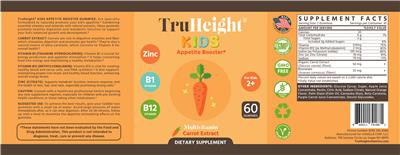
Supplement Facts
The label details for Kids Appetite Booster by TruHeight, sourced from the NIH Dietary Supplement Label Database.
Supplement Facts
| Ingredient | Amount | % DV |
|---|---|---|
| Calories | 20 Calorie(s) | -- |
| Total Carbohydrates | 4 Gram(s) | 1% |
| Thiamine | 0.9 mg | 75% |
| Sodium | 10 mg | 1% |
| Added Sugars | 3 Gram(s) | 6% |
| Total Sugars | 3 Gram(s) | -- |
| Vitamin B12 | 2 mcg | 83% |
| Zinc | 10 mg | 91% |
| Iodine | 120 mcg | 80% |
| Bromelain | 25 mg | -- |
| Carrot Root Extract | 50 mg | -- |
Other ingredients: Glucose Syrup, Sugar, Apple juice concentrate, Pectin, Citric Acid, Sodium Citrate, Orange Flavor, Natural, Palm Oil, Carnauba Wax, Beta-Carotene, Purple Carrot juice concentrate, Steviol Glycosides
Tap any ingredient to jump to its full detail below.
These statements are the manufacturer’s wording, reproduced from the product label — the label is saying it, not HelloPharmacist. We don’t verify or endorse them.
Formulation
TruHeight Kids Appetite Booster Gummies: are specially formulated to naturally promote your kid's appetite. Combining essential vitamins and minerals with natural extracts, these gummies promote healthy digestion and metabolic function to support your kid's balanced growth and development.
Multivitamin
Vegetarian
GMO free Gluten free
Formula
Carrot Extract: Carrots are rich in digestive enzymes and fiber which stimulates digestion and promotes gut health. They're also a natural source of beta-carotene, which converts to Vitamin A for overall health. Vitamin B1 (Thiamine Hydrochloride): Vitamin B1 is crucial for energy production and appetite stimulation. It helps converting food into energy and maintaining a healthy metabolism. Vitamin B12 (Methylcobalamin): Vitamin B12 is vital for creating healthy blood and nerve cells, and DNA synthesis. It also supports maintaining proper iron levels and healthy blood function, enhancing overall energy levels. Zinc (Citrate): Supports metabolic function, immune response, and the health of skin, hair, and nails, especially promoting strong nails.
Zinc B1 Vitamin B12 Vitamin Carrot Extract
For kids 2+
Precautions
Caution: Consult with a healthcare professional before beginning any new supplement regimen, especially for children with pre-existing health conditions or those taking other medications.
Caution: Consult with a healthcare professional before beginning any new supplement regimen, especially for children with pre-existing health conditions or those taking other medications.
Suggested/Recommended/Usage/Directions
Suggested use: To achieve the best results, give your toddler two gummies with a small sip of water. Avoid large amounts of water immediately after, as it can slow digestion. After 20-30 minutes, follow up with a meal to maximize the appetite-stimulating effects of the gummies.
FDA Disclaimer Statement
These statements have not been evaluated by the Food and Drug Administration. This product is not intended to diagnose, treat, cure or prevent any disease.
FDA Statement of Identity
Dietary Supplement
Seals/Symbols
Made in USA with imported ingredients GMP Good Manufacturing Practice Consistent Quality Vegetarian
Is this label outdated? Report a formula or label change and our pharmacy team will review it.
Kids Appetite Booster by TruHeight label
The label scan from the NIH Dietary Supplement Label Database. Tap to enlarge.
Label images are published by the NIH Dietary Supplement Label Database for the version of this product on file. Always read your actual product label.
View the full label (PDF)The Ingredients in Kids Appetite Booster by TruHeight
These are the 7 active ingredients this product is made of. Select any to open its full monograph.
Serving size2 Gummy(ies) Dosage formGummy Or Jelly Servings per container30 Amounts shown are per serving.
Most supplement products combine several ingredients, and a medication can interact with the product through any one of them. Each ingredient below shows whether it has known drug interactions.
Thiamine
Interacts with3 drugs
Thiamine (vitamin B1) is an essential nutrient your body needs to turn food into energy and to keep your nerves and heart healthy. Most people get eno...
Thiamine monograph & interactionsSodium
Interacts with205 drugs
Sodium is an essential mineral and electrolyte your body needs to balance fluids, support nerves, and help muscles work. Most people in modern diets g...
Sodium monograph & interactionsVitamin B12
Interacts with20 drugs
Vitamin B12 (cobalamin) is an essential nutrient your body needs to make red blood cells, keep nerves healthy, and support DNA. Supplements are very h...
Vitamin B12 monograph & interactionsZinc
Interacts with67 drugs
Zinc is an essential mineral that your body needs for immune function, wound healing, taste, and smell. Most people get enough from food, but suppleme...
Zinc monograph & interactionsIodine
Interacts with7 drugs
Iodine is an essential mineral your body needs to make thyroid hormones, and most people get enough from iodized salt, dairy, and seafood. Supplements...
Iodine monograph & interactionsBromelain
Interacts with141 drugs
Bromelain is a group of protein-digesting enzymes from pineapple that people take mainly for inflammation, swelling, and sinus problems. Some early st...
Bromelain monograph & interactionsCarrot Root Extract
No knowninteractions
Carrot is a common food vegetable that is a rich source of beta-carotene (which the body turns into vitamin A) and other nutrients. Eating carrots is...
Carrot Root Extract monograph & interactionsOther (inactive) ingredients: Glucose Syrup, Sugar, Apple juice concentrate, Pectin, Citric Acid, Sodium Citrate, Orange Flavor, Natural, Palm Oil, Carnauba Wax, Beta-Carotene, Purple Carrot juice concentrate, Steviol Glycosides. These complete the product’s ingredient list but are not active constituents.
Kids Appetite Booster by TruHeight Drug Interactions
HelloPharmacist Interaction Report
Kids Appetite Booster by TruHeight contains seven active ingredients, several of which interact with medications.
The most serious interactions involve sodium, which can interfere with blood pressure control and other conditions at Moderate severity.
Read the full breakdown — every affected drug type, severity by severity
Sodium in this product may reduce how well blood pressure medications (antihypertensives) work, and it can increase sodium levels dangerously if your child takes corticosteroids, lithium, didanosine, sodium phosphate bowel prep, tolvaptan, or other sodium-containing drugs. Zinc can reduce absorption and effectiveness of several antibiotics—quinolones, cephalexin, tetracyclines, and penicillamine—and may lower levels of some HIV medications (ritonavir, integrase inhibitors, and bictegravir/emtricitabine/tenofovir alafenamide).
Iodine may worsen thyroid suppression if combined with lithium or antithyroid drugs, and may increase iodine to unsafe levels with amiodarone.
Bromelain may increase bleeding risk with blood thinners (anticoagulants) or antiplatelet drugs. Thiamine can raise blood levels if your child takes trimethoprim, and vitamin B12 may be reduced by metformin.
Carrot root extract has no documented interactions in our data.
Altogether, these interactions span 410 individual medications. Run your child's exact medications through the checker on this page before starting.
Check your own medications below · Editorial policy · How we use AI
Want to check YOUR meds against Kids Appetite Booster?
Ask about interactions with your drugs in plain English — “Can I take it with lisinopril?” — and we find you the answer in seconds, ingredient by ingredient.
Go to the checkerIngredients driving the most interactions
Individual Drug Interactions
The ingredients in Kids Appetite Booster interact with 415 drugs. Click any drug to see the details.
6 of the 7 ingredients in Kids Appetite Booster interact with drugs. Each result below shows which ingredient is responsible. Sodium Bromelain Zinc Vitamin B12 Iodine Thiamine
AbciximabReoPro
How Abciximab interacts with Kids Appetite Booster — through 1 ingredient. Tap an ingredient for the detail:
BromelainAnticoagulant/antiplatelet Drugs Moderate
Interaction Summary
Bromelain may have antiplatelet effects and may increase the risk of bleeding if used with anticoagulant or antiplatelet drugs.
Read the full Bromelain + Abciximab interactionAbrocitinibCibinqo
How Abrocitinib interacts with Kids Appetite Booster — through 1 ingredient. Tap an ingredient for the detail:
BromelainAnticoagulant/antiplatelet Drugs Moderate
Interaction Summary
Bromelain may have antiplatelet effects and may increase the risk of bleeding if used with anticoagulant or antiplatelet drugs.
Read the full Bromelain + Abrocitinib interactionAcebutololRhotral, Sectral
How Acebutolol interacts with Kids Appetite Booster — through 1 ingredient. Tap an ingredient for the detail:
SodiumAntihypertensive Drugs Moderate
Interaction Summary
Theoretically, a high intake of dietary sodium might reduce the effectiveness of antihypertensive drugs.
Read the full Sodium + Acebutolol interactionAcenocoumarolSintrom
How Acenocoumarol interacts with Kids Appetite Booster — through 1 ingredient. Tap an ingredient for the detail:
BromelainAnticoagulant/antiplatelet Drugs Moderate
Interaction Summary
Bromelain may have antiplatelet effects and may increase the risk of bleeding if used with anticoagulant or antiplatelet drugs.
Read the full Bromelain + Acenocoumarol interactionAcetaminophen, AspirinGemnisyn
How Acetaminophen, Aspirin interacts with Kids Appetite Booster — through 1 ingredient. Tap an ingredient for the detail:
BromelainAnticoagulant/antiplatelet Drugs Moderate
Interaction Summary
Bromelain may have antiplatelet effects and may increase the risk of bleeding if used with anticoagulant or antiplatelet drugs.
Read the full Bromelain + Acetaminophen, Aspirin interactionAcetaminophen, Aspirin, CaffeineExcedrin, Excedrin Extra Strength, Excedrin Migraine
How Acetaminophen, Aspirin, Caffeine interacts with Kids Appetite Booster — through 1 ingredient. Tap an ingredient for the detail:
BromelainAnticoagulant/antiplatelet Drugs Moderate
Interaction Summary
Bromelain may have antiplatelet effects and may increase the risk of bleeding if used with anticoagulant or antiplatelet drugs.
Read the full Bromelain + Acetaminophen, Aspirin, Caffeine interactionAcetaminophen, IbuprofenCombogesic
How Acetaminophen, Ibuprofen interacts with Kids Appetite Booster — through 1 ingredient. Tap an ingredient for the detail:
BromelainAnticoagulant/antiplatelet Drugs Moderate
Interaction Summary
Bromelain may have antiplatelet effects and may increase the risk of bleeding if used with anticoagulant or antiplatelet drugs.
Read the full Bromelain + Acetaminophen, Ibuprofen interactionAcetazolamideAk-Zol, Diamox
How Acetazolamide interacts with Kids Appetite Booster — through 1 ingredient. Tap an ingredient for the detail:
SodiumAntihypertensive Drugs Moderate
Interaction Summary
Theoretically, a high intake of dietary sodium might reduce the effectiveness of antihypertensive drugs.
Read the full Sodium + Acetazolamide interactionAcetylsalicylic AcidEntrophen
How Acetylsalicylic Acid interacts with Kids Appetite Booster — through 1 ingredient. Tap an ingredient for the detail:
BromelainAnticoagulant/antiplatelet Drugs Moderate
Interaction Summary
Bromelain may have antiplatelet effects and may increase the risk of bleeding if used with anticoagulant or antiplatelet drugs.
Read the full Bromelain + Acetylsalicylic Acid interactionAliskirenTekturna
How Aliskiren interacts with Kids Appetite Booster — through 1 ingredient. Tap an ingredient for the detail:
SodiumAntihypertensive Drugs Moderate
Interaction Summary
Theoretically, a high intake of dietary sodium might reduce the effectiveness of antihypertensive drugs.
Read the full Sodium + Aliskiren interactionAlteplase, TpaActilyse, Activase
How Alteplase, Tpa interacts with Kids Appetite Booster — through 1 ingredient. Tap an ingredient for the detail:
BromelainAnticoagulant/antiplatelet Drugs Moderate
Interaction Summary
Bromelain may have antiplatelet effects and may increase the risk of bleeding if used with anticoagulant or antiplatelet drugs.
Read the full Bromelain + Alteplase, Tpa interactionAluminum Hydroxide, Aspirin, Codeine Phosphate, Magnesium HydroxideAscriptin Codeine #2
How Aluminum Hydroxide, Aspirin, Codeine Phosphate, Magnesium Hydroxide interacts with Kids Appetite Booster — through 1 ingredient. Tap an ingredient for the detail:
BromelainAnticoagulant/antiplatelet Drugs Moderate
Interaction Summary
Bromelain may have antiplatelet effects and may increase the risk of bleeding if used with anticoagulant or antiplatelet drugs.
Read the full Bromelain + Aluminum Hydroxide, Aspirin, Codeine Phosphate, Magnesium Hydroxide interactionAluminum Hydroxide, Aspirin, Magnesium HydroxideAscriptin
How Aluminum Hydroxide, Aspirin, Magnesium Hydroxide interacts with Kids Appetite Booster — through 1 ingredient. Tap an ingredient for the detail:
BromelainAnticoagulant/antiplatelet Drugs Moderate
Interaction Summary
Bromelain may have antiplatelet effects and may increase the risk of bleeding if used with anticoagulant or antiplatelet drugs.
Read the full Bromelain + Aluminum Hydroxide, Aspirin, Magnesium Hydroxide interactionAmbrisentanLetairis, Volibris
How Ambrisentan interacts with Kids Appetite Booster — through 1 ingredient. Tap an ingredient for the detail:
SodiumAntihypertensive Drugs Moderate
Interaction Summary
Theoretically, a high intake of dietary sodium might reduce the effectiveness of antihypertensive drugs.
Read the full Sodium + Ambrisentan interactionAmilorideAmilamont, Midamor
How Amiloride interacts with Kids Appetite Booster — through 2 ingredients. Tap an ingredient for the detail:
SodiumAntihypertensive Drugs Moderate
Interaction Summary
Theoretically, a high intake of dietary sodium might reduce the effectiveness of antihypertensive drugs.
Read the full Sodium + Amiloride interactionZincAmiloride (midamor) Minor
Interaction Summary
Amiloride can modestly reduce zinc excretion and increase zinc levels.
Read the full Zinc + Amiloride interactionAmiloride, HydrochlorothiazideAmil-Co, Amilzide, Moduret 25, Moduretic
How Amiloride, Hydrochlorothiazide interacts with Kids Appetite Booster — through 2 ingredients. Tap an ingredient for the detail:
SodiumAntihypertensive Drugs Moderate
Interaction Summary
Theoretically, a high intake of dietary sodium might reduce the effectiveness of antihypertensive drugs.
Read the full Sodium + Amiloride, Hydrochlorothiazide interactionZincAmiloride (midamor) Minor
Interaction Summary
Amiloride can modestly reduce zinc excretion and increase zinc levels.
Read the full Zinc + Amiloride, Hydrochlorothiazide interactionAmiodaroneCordarone, Pacerone
How Amiodarone interacts with Kids Appetite Booster — through 1 ingredient. Tap an ingredient for the detail:
IodineAmiodarone (cordarone) Moderate
Interaction Summary
Combining iodine with amiodarone might cause excessively high iodine levels.
Read the full Iodine + Amiodarone interactionAmlodipineNorliqva
How Amlodipine interacts with Kids Appetite Booster — through 1 ingredient. Tap an ingredient for the detail:
SodiumAntihypertensive Drugs Moderate
Interaction Summary
Theoretically, a high intake of dietary sodium might reduce the effectiveness of antihypertensive drugs.
Read the full Sodium + Amlodipine interactionAmlodipine BenzoateKaterzia
How Amlodipine Benzoate interacts with Kids Appetite Booster — through 1 ingredient. Tap an ingredient for the detail:
SodiumAntihypertensive Drugs Moderate
Interaction Summary
Theoretically, a high intake of dietary sodium might reduce the effectiveness of antihypertensive drugs.
Read the full Sodium + Amlodipine Benzoate interactionAmlodipine BesilateIstin
How Amlodipine Besilate interacts with Kids Appetite Booster — through 1 ingredient. Tap an ingredient for the detail:
SodiumAntihypertensive Drugs Moderate
Interaction Summary
Theoretically, a high intake of dietary sodium might reduce the effectiveness of antihypertensive drugs.
Read the full Sodium + Amlodipine Besilate interactionAmlodipine BesylateNorvasc
How Amlodipine Besylate interacts with Kids Appetite Booster — through 1 ingredient. Tap an ingredient for the detail:
SodiumAntihypertensive Drugs Moderate
Interaction Summary
Theoretically, a high intake of dietary sodium might reduce the effectiveness of antihypertensive drugs.
Read the full Sodium + Amlodipine Besylate interactionAmlodipine Besylate, BenazeprilLotrel
How Amlodipine Besylate, Benazepril interacts with Kids Appetite Booster — through 1 ingredient. Tap an ingredient for the detail:
SodiumAntihypertensive Drugs Moderate
Interaction Summary
Theoretically, a high intake of dietary sodium might reduce the effectiveness of antihypertensive drugs.
Read the full Sodium + Amlodipine Besylate, Benazepril interactionAmlodipine, CelecoxibConsensi
How Amlodipine, Celecoxib interacts with Kids Appetite Booster — through 1 ingredient. Tap an ingredient for the detail:
SodiumAntihypertensive Drugs Moderate
Interaction Summary
Theoretically, a high intake of dietary sodium might reduce the effectiveness of antihypertensive drugs.
Read the full Sodium + Amlodipine, Celecoxib interactionAmmonium ChlorideAmmonium Chloride
How Ammonium Chloride interacts with Kids Appetite Booster — through 1 ingredient. Tap an ingredient for the detail:
SodiumAntihypertensive Drugs Moderate
Interaction Summary
Theoretically, a high intake of dietary sodium might reduce the effectiveness of antihypertensive drugs.
Read the full Sodium + Ammonium Chloride interactionAmphotericin, TetracyclineMysteclin-F
How Amphotericin, Tetracycline interacts with Kids Appetite Booster — through 2 ingredients. Tap an ingredient for the detail:
ZincTetracycline Antibiotics Moderate
Interaction Summary
Zinc might reduce levels of tetracycline antibiotics.
Read the full Zinc + Amphotericin, Tetracycline interactionBromelainTetracycline Antibiotics Minor
Interaction Summary
Theoretically, bromelain might increase levels of tetracycline antibiotics.
Read the full Bromelain + Amphotericin, Tetracycline interactionAnacaulase-bcdbNexoBrid
How Anacaulase-bcdb interacts with Kids Appetite Booster — through 1 ingredient. Tap an ingredient for the detail:
BromelainAnticoagulant/antiplatelet Drugs Moderate
Interaction Summary
Bromelain may have antiplatelet effects and may increase the risk of bleeding if used with anticoagulant or antiplatelet drugs.
Read the full Bromelain + Anacaulase-bcdb interactionAnagrelideAgrylin
How Anagrelide interacts with Kids Appetite Booster — through 1 ingredient. Tap an ingredient for the detail:
BromelainAnticoagulant/antiplatelet Drugs Moderate
Interaction Summary
Bromelain may have antiplatelet effects and may increase the risk of bleeding if used with anticoagulant or antiplatelet drugs.
Read the full Bromelain + Anagrelide interactionAnisindioneMiradon
How Anisindione interacts with Kids Appetite Booster — through 1 ingredient. Tap an ingredient for the detail:
BromelainAnticoagulant/antiplatelet Drugs Moderate
Interaction Summary
Bromelain may have antiplatelet effects and may increase the risk of bleeding if used with anticoagulant or antiplatelet drugs.
Read the full Bromelain + Anisindione interactionAntithrombin IiiThrombate III
How Antithrombin Iii interacts with Kids Appetite Booster — through 1 ingredient. Tap an ingredient for the detail:
BromelainAnticoagulant/antiplatelet Drugs Moderate
Interaction Summary
Bromelain may have antiplatelet effects and may increase the risk of bleeding if used with anticoagulant or antiplatelet drugs.
Read the full Bromelain + Antithrombin Iii interactionApixabanEliquis
How Apixaban interacts with Kids Appetite Booster — through 1 ingredient. Tap an ingredient for the detail:
BromelainAnticoagulant/antiplatelet Drugs Moderate
Interaction Summary
Bromelain may have antiplatelet effects and may increase the risk of bleeding if used with anticoagulant or antiplatelet drugs.
Read the full Bromelain + Apixaban interactionEach ingredient & the kinds of drugs it affects
For each ingredient in Kids Appetite Booster with known interactions, here are the types of medications they can affect. Open any type for the detail — or search your exact drug in the checker above.
Sodium
Antihypertensive Drugs
Theoretically, a high intake of dietary sodium might reduce the effectiveness of antihypertensive drugs.
High intake of dietary sodium can increase systolic and diastolic blood pressure. Also, high intake of sodium may necessitate increased use of antihypertensive medications to achieve blood pressure control in some patients, such as those with chronic kidney disease.
Corticosteroids
Concomitant use of mineralocorticoids and some glucocorticoids with sodium supplements might increase the risk of hypernatremia.
Mineralocorticoids and some glucocorticoids (corticosteroids) cause sodium retention. This effect is dose-related and depends on mineralocorticoid potency. It is most common with hydrocortisone, cortisone, and fludrocortisone, followed by prednisone and prednisolone.
Didanosine (Videx)
Concomitant use of didanosine with additional sodium from dietary or supplemental sources may increase the risk of hypernatremia.
Didanosine formulations contain a significant amount of sodium.
Lithium
Altering dietary intake of sodium might alter the levels and clinical effects of lithium.
High sodium intake can reduce plasma concentrations of lithium by increasing lithium excretion. Reducing sodium intake can significantly increase plasma concentrations of lithium and cause lithium toxicity in patients being treated with lithium carbonate. Stabilizing sodium intake is shown to reduce the percentage of patients with lithium level fluctuations above 0.8 mEq/L. Patients taking lithium should avoid significant alterations in their dietary intake of sodium.
Sodium Phosphates
Theoretically, concomitant use of sodium phosphate with sodium supplements might increase the risk of hypernatremia.
Use of high doses (> 45 mL in 24 hours) of sodium phosphate, such as those used for bowel cleansing before surgery, can lead to serious electrolyte disturbances, including hypernatremia. The risk of hypernatremia is highest in the elderly and people with other risk factors for electrolyte disturbances.
Sodium-Containing Drugs
Concomitant use of sodium-containing drugs with additional sodium from dietary or supplemental sources may increase the risk of hypernatremia and long-term sodium-related complications.
The Chronic Disease Risk Reduction (CDRR) intake level of 2.3 grams of sodium daily indicates the intake at which it is believed that chronic disease risk increases for the apparently healthy population. Some medications contain high quantities of sodium. When used in conjunction with sodium supplements or high-sodium diets, the CDRR may be exceeded. Additionally, concomitant use may increase the risk for hypernatremia; this risk is highest in the elderly and people with other risk factors for electrolyte disturbances.
Tolvaptan (Samsca)
Theoretically, concomitant use of tolvaptan with sodium might increase the risk of hypernatremia.
Tolvaptan is a vasopressin receptor 2 antagonist that is used to increase sodium levels in patients with hyponatremia. Patients taking tolvaptan should use caution with the use of sodium salts such as sodium chloride.
Bromelain
Anticoagulant/Antiplatelet Drugs
Bromelain may have antiplatelet effects and may increase the risk of bleeding if used with anticoagulant or antiplatelet drugs.
There is one case report of a patient experiencing minor bruising while taking bromelain with naproxen. Bromelain is thought to have antiplatelet activity. Whether this interaction is of concern with topical bromelain is unclear. Interference with coagulation of burn wounds has been reported in a patient receiving bromelain-based enzymatic debridement. However, observational research has found that topical bromelain debridement is not associated with increases or decreases in laboratory markers of coagulation when compared with surgical debridement.
Tetracycline Antibiotics
Theoretically, bromelain might increase levels of tetracycline antibiotics.
Laboratory research suggests that bromelain might increase the absorption of tetracycline antibiotics. However, a study in healthy adults reported no difference in tetracycline plasma levels when a 500 mg dose was taken with or without bromelain 80 mg.
Zinc
Bictegravir/Emtricitabine/Tenofovir Alafenamide (Biktarvy)
Theoretically, zinc might decrease levels of bictegravir/emtricitabine/tenofovir alafenamide by reducing its absorption.
Advise patients that bictegravir/emtricitabine/tenofovir alafenamide should be taken at least 2 hours before or 6 hours after zinc containing products.
Cephalexin (Keflex)
Zinc might decrease cephalexin levels by chelating with cephalexin in the gut and preventing its absorption.
A pharmacokinetic study shows that zinc sulfate 250 mg taken concomitantly with cephalexin 500 mg decreases peak levels of cephalexin by 31% and reduces the exposure to cephalexin by 27%. Also, taking zinc sulfate 3 hours before cephalexin decreases peak levels of cephalexin by 11% and reduces the exposure to cephalexin by 18%. By decreasing cephalexin levels, zinc might increase the risk of treatment failure. This effect does not occur when zinc is taken 3 hours after the cephalexin dose. To avoid an interaction, advise patients take zinc sulfate 3 hours after taking cephalexin.
Cisplatin (Platinol-Aq)
Theoretically, zinc might interfere with the therapeutic effects of cisplatin.
Animal research suggests that zinc stimulates tumor cell production of the protein metallothionein, which binds and inactivates cisplatin. It is not known whether zinc supplements or high dietary zinc intake can cause clinically significant interference with cisplatin therapy. Cisplatin might also increase zinc excretion.
Integrase Inhibitors
Theoretically, taking zinc along with integrase inhibitors might decrease the levels and clinical effects of these drugs.
Zinc is a divalent cation. Pharmacokinetic studies have shown that other divalent cations such as calcium and iron can decrease blood levels of the integrase inhibitor dolutegravir through chelation.
Penicillamine (Cuprimine, Depen)
Zinc might reduce the levels and clinical effects of penicillamine.
By forming an insoluble complex with penicillamine, zinc interferes with penicillamine absorption and activity. Zinc supplements reduce the efficacy of low-dose penicillamine (0.5-1 gram/day), but do not seem to affect higher doses (1-2.75 gram/day), provided dosing times are separated. Advise patients to take zinc and penicillamine at least 2 hours apart.
Quinolone Antibiotics
Zinc can decrease the levels and clinical effects of quinolones antibiotics.
Quinolones form complexes with zinc in the gastrointestinal tract, reducing absorption of both the quinolone and zinc if taken at the same time. Advise patients to take these drugs at least 2 hours before, or 4-6 hours after, zinc supplements.
Ritonavir (Norvir)
Zinc modestly reduces levels of ritonavir.
Clinical research shows that zinc might reduce serum ritonavir levels by chelating with ritonavir in the gut and preventing its absorption. In patients with HIV, ritonavir is taken with atazanavir to prevent the metabolism and increase the effects of atazanavir. A pharmacokinetic study shows that, in patients being treated with atazanavir/ritonavir, co-administration of zinc sulfate (Solvazinc tablets) 125 mg as a single dose or as multiple daily doses for 2 weeks reduces plasma levels of ritonavir by about 16%. However, atazanavir levels still remains high enough to prevent HIV virus replication. Therefore, the decrease in ritonavir levels is not likely to be clinically significant.
Tetracycline Antibiotics
Zinc might reduce levels of tetracycline antibiotics.
Tetracyclines form complexes with zinc in the gastrointestinal tract, which can reduce absorption of both the tetracycline and zinc when taken at the same time. Taking zinc sulfate 200 mg with tetracycline reduces absorption of the antibiotic by 30% to 40%. Demeclocycline and minocycline cause a similar interaction. However, doxycycline does not seem to interact significantly with zinc. Advise patients to take tetracyclines at least 2 hours before, or 4-6 hours after, zinc supplements to avoid any interactions.
Amiloride (Midamor)
Amiloride can modestly reduce zinc excretion and increase zinc levels.
Clinical research shows that amiloride can reduce urinary zinc excretion, especially at doses of 10 mg per day or more. This zinc-sparing effect can help to counteract zinc losses caused by thiazide diuretics, but it is unlikely to cause zinc toxicity at usual amiloride doses. The other potassium-sparing diuretics, spironolactone (Aldactone) and triamterene (Dyrenium), do not seem to have a zinc-sparing effect.
Atazanavir (Reyataz)
Zinc modestly reduces levels of atazanavir, although this effect does not seem to be clinically significant.
Clinical research shows that zinc might decrease serum atazanavir levels by chelating with atazanavir in the gut and preventing its absorption. Although a single dose of zinc sulfate (Solvazinc tablets) 125 mg orally does not affect atazanavir concentrations in patients being treated with atazanavir/ritonavir, co-administration of zinc sulfate 125 mg daily for 2 weeks reduces plasma levels of atazanavir by about 22% in these patients. However, despite this decrease, atazanavir levels still remain at high enough concentrations for the prevention of HIV virus replication.
Vitamin B12
Metformin (Glucophage)
Metformin, a common medication used to manage type 2 diabetes, has been associated with lower vitamin B12 levels in some individuals. Prolonged use of metformin can interfere with the absorption of B12 in the digestive system, potentially leading to a deficiency in this essential vitamin.
Iodine
Amiodarone (Cordarone)
Combining iodine with amiodarone might cause excessively high iodine levels.
Amiodarone contains 37.3% iodine and can increase iodine levels. Concomitant use with iodine might increase the risk of having excessive iodine levels and adversely affecting thyroid function. Monitor thyroid function.
Antithyroid Drugs
Iodine might alter the effects of antithyroid drugs.
Iodine in high doses has been reported to cause both hyperthyroidism and hypothyroidism, depending on the individual's past medical history. Taking iodine while using antithyroid drugs could alter the effects of the antithyroid drugs.
Lithium
Combining iodine with lithium might have additive hypothyroid effects.
Lithium can inhibit thyroid function. Several case reports suggest that concomitant use of lithium and potassium iodide can reduce thyroid function in otherwise healthy adults. Monitor thyroid function.
Thiamine
Trimethoprim (Proloprim)
Trimethoprim might increase blood levels of thiamine.
In vitro, animal, and clinical research suggest that trimethoprim inhibits intestinal thiamine transporter ThTR-2, hepatic transporter OCT1, and renal transporters OCT2, MATE1, and MATE2, resulting in paradoxically increased thiamine plasma concentrations.
Brand information
Manufacturer and brand details for Kids Appetite Booster, from the product label.
TruHeight
See all TruHeight products- Name
- Vanilla Chip, LLC
- Street Address
- 740 Santree Circle
- City
- Las Vegas
- State
- NV
- ZipCode
- 89110
- Phone Number
- (619) 292-8360
- Web Address
- TruHeightVitamins.com
Kids Appetite Booster by TruHeight: Common Questions
Does Kids Appetite Booster by TruHeight interact with any medications?
How can one product interact with so many drugs?
Where does this information come from?
Is this safe for my child if they don't have an appetite problem?
Can I give this to my child if they're on antibiotics?
Does this product have any artificial sweeteners?
What is bromelain and why is it in an appetite booster?
Is iodine safe for kids? My child has a thyroid condition.
Can I use this if my child takes lithium?
Written and reviewed by the HelloPharmacist editorial staff. Our editorial policy
Not sure if Kids Appetite Booster is safe with your meds?
Our pharmacists answer your medication & supplement questions — free.
Label information is sourced from the NIH Dietary Supplement Label Database and reflects the product version on file; always read your actual product label. This page is for education only and is not a substitute for professional medical advice. Confirm with your pharmacist or doctor before combining supplements and medications.
The Full Monographs Behind Kids Appetite Booster’s Ingredients
Every ingredient we hold a full HelloPharmacist monograph for — uses, evidence, safety, and the complete interaction list.
Thiamine
Interacts with 3 drugsThiamine (vitamin B1) is an essential nutrient your body needs to turn food into energy and to keep your nerves and heart healthy. Most people get enough from food, but supplements are clear...
Read the full Thiamine monograph → Herb & supplement monographSodium
Interacts with 205 drugsSodium is an essential mineral and electrolyte your body needs to balance fluids, support nerves, and help muscles work. Most people in modern diets get more than enough—often too much—from...
Read the full Sodium monograph → Herb & supplement monographVitamin B12
Interacts with 20 drugsVitamin B12 (cobalamin) is an essential nutrient your body needs to make red blood cells, keep nerves healthy, and support DNA. Supplements are very helpful for people who are deficient — su...
Read the full Vitamin B12 monograph → Herb & supplement monographZinc
Interacts with 67 drugsZinc is an essential mineral that your body needs for immune function, wound healing, taste, and smell. Most people get enough from food, but supplements can help correct or prevent a defici...
Read the full Zinc monograph → Herb & supplement monographIodine
Interacts with 7 drugsIodine is an essential mineral your body needs to make thyroid hormones, and most people get enough from iodized salt, dairy, and seafood. Supplements help when you are truly deficient, but...
Read the full Iodine monograph → Herb & supplement monographBromelain
Interacts with 141 drugsBromelain is a group of protein-digesting enzymes from pineapple that people take mainly for inflammation, swelling, and sinus problems. Some early studies are promising, but the overall evi...
Read the full Bromelain monograph → Herb & supplement monographCarrot
Carrot is a common food vegetable that is a rich source of beta-carotene (which the body turns into vitamin A) and other nutrients. Eating carrots is safe and nutritious for most people, but...
Read the full Carrot monograph →Sources & How We Checked
Kids Appetite Booster's label data comes from the NIH Dietary Supplement Label Database; the ingredient interaction data is from the Natural Medicines database, reviewed by our pharmacists.
- NIH Dietary Supplement Label Database (DSLD) — The official product label on file for this supplement.
- Natural Medicines (Therapeutic Research Center) — Evidence-graded clinical reference behind the ingredient interaction data.
Content is written and reviewed by licensed HelloPharmacist pharmacists. See our data sources and editorial standards for how this information is built and checked.
The 226 references behind this product’s interaction data
Every citation that drives the interaction findings for this product’s ingredients, from the evidence-graded Natural Medicines (TRC Healthcare) database. Open an ingredient to browse its citations — links open the study on PubMed or the publisher’s site.
Thiamine 7 references
- McEvoy GK, ed. AHFS Drug Information. Bethesda, MD: American Society of Health-System Pharmacists, 1998.
- Yates AA, Schlicker SA, Suitor CW. Dietary reference intakes: The new basis for recommendations for calcium and related nutrients, B vitamins, and choline. J Am Diet Assoc 1998;98:699-706. PubMed
- Food and Nutrition Board, Institute of Medicine. Dietary Reference Intakes for Thiamin, Riboflavin, Niacin, Vitamin B6, Folate, Vitamin B12, Pantothenic Acid, Biotin, and Choline (2000). Washington, DC: National Academy Press, 2000. Available at: http://b
- Rogovik, A. L., Vohra, S., and Goldman, R. D. Safety considerations and potential interactions of vitamins: should vitamins be considered drugs? Ann.Pharmacother. 2010;44(2):311-324. PubMed
- Arruti N, Bernedo N, Audicana MT, Villarreal O, Uriel O, Muñoz D. Systemic allergic dermatitis caused by thiamine after iontophoresis. Contact Dermatitis. 2013 Dec;69(6):375-6. PubMed
- Thiamine hydrochloride injection package insert. Lake Zurich, IL: Fresenius Kabi, LLC; September 2019.
- Vora B, Wen A, Yee SW, et al. The Effect of Trimethoprim on Thiamine Absorption: A Transporter-Mediated Drug-Nutrient Interaction. Clin Pharmacol Ther 2023;114(2):381-392.
Sodium 40 references
- Garabedian-Ruffalo SM, Ruffalo RL. Drug and nutrient interactions. Am Fam Physician 1986;33:165-74.
- Food and Drug Administration Science Background: Safety of Sodium Phosphates Oral Solution. September 17, 2001. Available at: http://www.fda.gov/cder/drug/safety/sodiumphospate.htm
- Coton T, Mallaret C, Coilliot C, Carre D, Guisset M. Severe acute ulcerated gastritis induced by salt. Presse Med 2009;38(3):499-500. PubMed
- Frings-Meuthen P, Buehlmeier J, Baecker N, et al. High sodium chloride intake exacerbates immobilization-induced bone resorption and protein losses. J Appl Physiol 2011;111(2):537-542. PubMed
- Frings-Meuthen P, Baecker N, Heer M. Low-grade metabolic acidosis may be the cause of sodium chloride-induced exaggerated bone resorption. J Bone Miner Res 2008;23(4):517-524. PubMed
- Alam S, Johnson AG. A meta-analysis of randomised controlled trials (RCT) among healthy normotensive and essential hypertensive elderly patients to determine the effect of high salt (NaCl) diet of blood pressure. J Hum Hypertens 1999;13(6):367-74.
- Boudville N, Ward S, Benaroia M, House AA. Increased sodium intake correlates with greater use of antihypertensive agents by subjects with chronic kidney disease. Am J Hypertens 2005;18(10):1300-5. PubMed
- Bennett WM. Drug interactions and consequences of sodium restriction. Am J Clin Nutr 1997;65(2 Suppl):678S-681S. PubMed
- Okusa MD, Crystal LJ. Clinical manifestations and management of acute lithium intoxication. Am J Med 1994;97(4):383-9. PubMed
- Food and Nutrition Board, Institute of Medicine. Dietary reference intakes for water, potassium, sodium, chloride, and sulfate. Washington, DC: National Academy Press, 2005. Available at: http://www.nap.edu/openbook.php?record_id=10925. DOI
- D'Elia L, Rossi G, Ippolito R, Cappuccio FP, Strazzullo P. Habitual salt intake and risk of gastric cancer: a meta-analysis of prospective studies. Clin Nutr 2012;31(4):489-98. PubMed
- Goldsmith SR. Hyponatremia in heart failure: time for a trial. J Card Fail 2013;19(6):398-400. PubMed
- Willocks L, Brettle R, Keen J, Valentine C, Pinching AJ. Formulations of didanosine (ddI) and salt overload. Lancet 1992;339(8786):190.
- Chen L, Zhang Z, Chen W, Whelton PK, Appel LJ. Lower Sodium Intake and Risk of Headaches: Results From the Trial of Nonpharmacologic Interventions in the Elderly. Am J Public Health. 2016;106(7):1270-5. PubMed
- Cook NR, Appel LJ, Whelton PK. Lower levels of sodium intake and reduced cardiovascular risk. Circulation. 2014;129(9):981-9. PubMed
- Cook NR, Appel LJ, Whelton PK. Sodium Intake and All-Cause Mortality Over 20 Years in the Trials of Hypertension Prevention. J Am Coll Cardiol. 2016;68(15):1609-1617. PubMed
- Mente A, O'Donnell M, Rangarajan S, et al. Associations of urinary sodium excretion with cardiovascular events in individuals with and without hypertension: a pooled analysis of data from four studies. Lancet. 2016;388(10043):465-75. PubMed
- Moosavian SP, Haghighatdoost F, Surkan PJ, Azadbakht L. Salt and obesity: a systematic review and meta-analysis of observational studies. Int J Food Sci Nutr. 2017;68(3):265-277. PubMed
- O'Donnell M, Mente A, Rangarajan S, et al. Urinary sodium and potassium excretion, mortality, and cardiovascular events. N Engl J Med. 2014;371(7):612-23. DOI
- Poggio R, Gutierrez L, Matta MG, Elorriaga N, Irazola V, Rubinstein A. Daily sodium consumption and CVD mortality in the general population: systematic review and meta-analysis of prospective studies. Public Health Nutr. 2015;18(4):695-704. PubMed
- Stallings VA, Harrison M, Oria M; Committee to Review the Dietary Reference Intakes for Sodium and Potassium, Food and Nutrition Board, Health and Medicine Division, National Academies of Sciences, Engineering, and Medicine. Washington (DC): National Acad
- Mahtani KR, Heneghan C, Onakpoya I, et al. Reduced Salt Intake for Heart Failure: A Systematic Review. JAMA Intern Med. 2018 Dec 1;178(12):1693-1700. PubMed
- Yancy CW. Sodium Restriction in Heart Failure: Too Much Uncertainty-Do the Trials. JAMA Intern Med. 2018 Dec 1;178(12):1700-1701. PubMed
- He FJ, Campbell NRC, Ma Y, MacGregor GA, Cogswell ME, Cook NR. Errors in estimating usual sodium intake by the Kawasaki formula alter its relationship with mortality: implications for public health. Int J Epidemiol. 2018;47(6):1784-1795. PubMed
- Murthy K, Ondrey GJ, Malkani N, et al. THE EFFECTS OF HYPONATREMIA ON BONE DENSITY AND FRACTURES: A SYSTEMATIC REVIEW AND META-ANALYSIS. Endocr Pract. 2019;25(4):366-378. PubMed
- Messerli FH, Hofstetter L, Syrogiannouli L, et al. Sodium intake, life expectancy, and all-cause mortality. Eur Heart J 2021;42(21):2103-2112. PubMed
- Graudal NA, Hubeck-Graudal T, Jurgens G. Effects of low sodium diet versus high sodium diet on blood pressure, renin, aldosterone, catecholamines, cholesterol, and triglyceride. Cochrane Database Syst Rev 2020;12(12):CD004022. PubMed
- Giatti S, Santos RB, Aielo AN, et al. Association of sodium with obstructive sleep apnea. The ELSA-Brasil study. Ann Am Thorac Soc 2021;18(3):502-510. PubMed
- Nan X, Lu H, Wu J, et al. The interactive association between sodium intake, alcohol consumption and hypertension among elderly in northern China: a cross-sectional study. BMC Geriatr 2021;21(1):135. PubMed
- Kyozuka H, Fukusda T, Murata T, et al. Impact of preconception sodium intake on hypertensive disorders of pregnancy: The Japan Environment and Children's study. Pregnancy Hypertens 2021;23:66-72. PubMed
- Zhao L, Ogden CL, Yang Q, et al. Association of usual sodium intake with obesity among US children and adolescents, NHANES 2009-2016. Obesity (Silver Spring) 2021;29(3):587-594. PubMed
- Ma Y, He FJ, Sun Q, et al. 24-Hour urinary sodium and potassium excretion and cardiovascular risk. N Engl J Med 2022;386(3):252-263. PubMed
- Liu J, Yang X, Zhang P, et al. Association of urinary sodium excretion and left ventricular hypertrophy in people with type 2 diabetes mellitus: A cross-sectional study. Front Endocrinol (Lausanne) 2021;12:728493. PubMed
- Filippini T, Malavolti M, Whelton PK, Vinceti M. Sodium intake and risk of hypertension: A systematic review and dose-response meta-analysis of observational cohort studies. Curr Hypertens Rep 2022;24(5):133-144. PubMed
- Wang DD, Li Y, Nguyen XT, et al. Dietary sodium and potassium intake and risk of non-fatal cardiovascular diseases: The million veteran program. Nutrients 2022;14(5):1121. PubMed
- Kwak JH, Park CH, Eun CS, et al. The associations of dietary intake of high sodium and low zinc with gastric cancer mortality: A prospective cohort study in Korea. Nutr Cancer 2022;74(10):3501-3508. PubMed
- George S, Maiti R, Mishra BR, Jena M, Mohapatra D. Effect of regulated add-on sodium chloride intake on stabilization of serum lithium concentration in bipolar disorder: A randomized controlled trial. Bipolar Disord 2023;25(1):66-75. PubMed
- Zhou TL, Schütten MTJ, Kroon AA, et al. Urinary Sodium Excretion and Salt Intake Are Not Associated With Blood Pressure Variability in a White General Population. J Am Heart Assoc 2023;12(1):e026578. PubMed
- Gan L, Zhao B, Inoue-Choi M, et al. Sex-specific associations between sodium and potassium intake and overall and cause-specific mortality: a large prospective U.S. cohort study, systematic review, and updated meta-analysis of cohort studies. BMC Med 2024 PubMed
- Liu D, Tian Y, Wang R, et al. Sodium, potassium intake, and all-cause mortality: confusion and new findings. BMC Public Health 2024;24(1):180. PubMed
Vitamin B12 30 references
- Food and Nutrition Board, Institute of Medicine. Dietary Reference Intakes for Thiamin, Riboflavin, Niacin, Vitamin B6, Folate, Vitamin B12, Pantothenic Acid, Biotin, and Choline (2000). Washington, DC: National Academy Press, 2000. Available at: http://b
- Hartman TJ, Woodson K, Stolzenberg-Solomon R, et al. Association of the B-vitamins pyridoxal 5'-phosphate (B6), B12, and folate with lung cancer risk in older men. Am J Epidemiol 2001;153:688-94.. DOI
- Jansen T, Romiti R, Kreuter A, Altmeyer P. Rosacea fulminans triggered by high-dose vitamins B6 and B12. J Eur Acad Dermatol Venereol 2001;15:484-5..
- Lange H, Suryapranata H, De Luca G, et al. Folate therapy and in-stent restenosis after coronary stenting. N Engl J Med 2004;350:2673-81. PubMed
- Collin, S. M., Metcalfe, C., Refsum, H., Lewis, S. J., Zuccolo, L., Smith, G. D., Chen, L., Harris, R., Davis, M., Marsden, G., Johnston, C., Lane, J. A., Ebbing, M., Bonaa, K. H., Nygard, O., Ueland, P. M., Grau, M. V., Baron, J. A., Donovan, J. L., Nea
- Geissbuhler, P., Mermillod, B., and Rapin, C. H. Elevated serum vitamin B12 levels associated with CRP as a predictive factor of mortality in palliative care cancer patients: a prospective study over five years. J.Pain Symptom.Manage. 2000;20(2):93-103. PubMed
- Salles, N., Herrmann, F., Sakbani, K., Rapin, C. H., and Sieber, C. High vitamin B12 level: a strong predictor of mortality in elderly inpatients. J Am Geriatr.Soc 2005;53(5):917-918.
- Looker, H. C., Fagot-Campagna, A., Gunter, E. W., Pfeiffer, C. M., Sievers, M. L., Bennett, P. H., Nelson, R. G., Hanson, R. L., and Knowler, W. C. Homocysteine and vitamin B(12) concentrations and mortality rates in type 2 diabetes. Diabetes Metab Res R
- Uhl, W., Nolting, A., Golor, G., Rost, K. L., and Kovar, A. Safety of hydroxocobalamin in healthy volunteers in a randomized, placebo-controlled study. Clin Toxicol (Phila) 2006;44 Suppl 1:17-28. PubMed
- Borron, S. W., Baud, F. J., Barriot, P., Imbert, M., and Bismuth, C. Prospective study of hydroxocobalamin for acute cyanide poisoning in smoke inhalation. Ann Emerg.Med 2007;49(6):794-801, 801. PubMed
- Borron, S. W., Baud, F. J., Megarbane, B., and Bismuth, C. Hydroxocobalamin for severe acute cyanide poisoning by ingestion or inhalation. Am J Emerg.Med 2007;25(5):551-558. PubMed
- Lewis, J. G. Gout, Steatorrhoea, and Megaloblastic Anaemia. Ann Rheum.Dis 1962;21(3):284-286. PubMed
- Tal, S., Shavit, Y., Stern, F., and Malnick, S. Association between vitamin B12 levels and mortality in hospitalized older adults. J Am Geriatr.Soc 2010;58(3):523-526. PubMed
- Baztan, J. J., Gavidia, J. J., Gomez-Pavon, J., Esteve, A., and Ruiperez, I. High vitamin B12 levels and in-hospital mortality. J Am Geriatr.Soc 2010;58(11):2237-2238. PubMed
- Omboni, E., Checchini, M., and Longoni, F. [Hypopotassemia and megaloblastic anemia. Presentation of a case]. Minerva Med 8-31-1987;78(16):1255-1257.
- Aalfs As, Scholvinck LH, Horvath B. Acneiform eruption in a 5-year old due to vitamin B12 supplementation. Eur J Dermatol 2013;23(5):726-7. PubMed
- Balta I, Ozuguz P. Vitamin B12-induced acneiform eruption. Cutan Ocul Toxicol 2014;33(2):94-5. PubMed
- Carman KB, Belgemen T, Yis U. Involuntary movements misdiagnosed as seizure during vitamin B12 treatment. Pediatr Emerg Care 2013;29(11):1223-4. PubMed
- Djuric V, Bogic M, Popadic AP, et al. Anaphylactic reaction to hydroxycobalamin with tolerance to cyanocobalamin. Ann Allergy Asthma Immunol 2012;108(3):207-8. PubMed
- Kartel O, Gulec M, Demirel F, et al. Vitamin B12 allergy and successful desensitization with cyanocobalamin: A case report. Allergol Immunopath (Madr) 2012;40(5):324-5.
- Patiroglu T, Unal E, Yildirim S. Infantile tremor syndrome associated with cobalamin therapy: A case report. Clin Neurol Neurosurg 2013;115(9):1903-5. PubMed
- Schulte S, Barkema LW, Kardaun SH. Long-lasting atypical acneiform eruption with prominent comedones induced by hydroxocobalamin (vitamin B12). J Dtsch Dermatol Ges 2014;12(6):502-3.
- Zanus C, Alberini E, Costa P, et al. Involuntary movements after correction of vitamin B12 deficiency: A video-case report. Epileptic Disord 2012;14(2):174-80. PubMed
- Fanidi A, Carreras-Torres R, Larose TL, et al. Is high vitamin B12 status a cause of lung cancer? Int J Cancer. 2019 Sep 15;145(6):1499-1503. PubMed
- Fujita Y, Mizukami T, Maya Y, et al. Vitamin B12 allergy manifesting as lymphomatoid contact dermatitis. Eur J Dermatol. 2020;30(3):304-305. PubMed
- Dépret F, Hoffmann C, Daoud L, et al. Association between hydroxocobalamin administration and acute kidney injury after smoke inhalation: a multicenter retrospective study. Crit Care. 2019;23(1):421. PubMed
- Khairan P, Sobue T, Eshak ES, et al. Association of dietary intakes of vitamin B12, vitamin B6, folate, and methionine with the risk of esophageal cancer: the Japan Public Health Center-based (JPHC) prospective study. BMC Cancer 2021;21(1):982. PubMed
- Evans J, Pandya A, Ding Y, Qunibi WY. Hydroxocobalamin-Induced Oxalate Nephropathy in a Patient With Smoke Inhalation. Kidney Int Rep 2021;6(8):2228-2231. PubMed
- Lacombe V, Chabrun F, Lacout C, et al. Persistent elevation of plasma vitamin B12 is strongly associated with solid cancer. Sci Rep 2021;11(1):13361. PubMed
- Pegalajar-García MD, Cebolla-Verdugo M, Prados-Carmona Á, Llamas-Segura C, Navarro-Triviño FJ. Systemic allergic dermatitis to cobalt present in cyanocobalamin supplementation. Contact Dermatitis 2023;89(3):203-205. PubMed
Zinc 88 references
- Barceloux DG. Zinc. J Toxicol Clin Toxicol 1999;37:279-92.
- Eby GA, Davis DR, Halcomb WW. Reduction in duration of common colds by zinc gluconate lozenges in a double-blind study. Antimicrob Agents Chemother 1984;25:20-4. DOI
- Smith DS, Helzner EC, Nuttall CE Jr, et al. Failure of zinc gluconate in treatment of acute upper respiratory tract infections. Antimicrob Agents Chemother 1989;33:646-8. PubMed
- Blondeau JM. Expanded activity and utility of the new fluoroquinolones: a review. Clin Ther 1999;21:3-40. PubMed
- Reyes AJ, Olhaberry JV, Leary WP, et al. Urinary zinc excretion, diuretics, zinc deficiency and some side-effects of diuretics. S Afr Med J 1983;64:936-41.
- Kugelmas M. Preliminary observation: oral zinc sulfate replacement is effective in treating muscle cramps in cirrhotic patients. J Am Coll Nutr 2000;19:13-5. PubMed
- Hebel SK, ed. Drug Facts and Comparisons. 52nd ed. St. Louis: Facts and Comparisons, 1998.
- Chan S, Gerson B, Subramaniam S. The role of copper, molybdenum, selenium, and zinc in nutrition and health. Clin Lab Med 1998;18:673-85. DOI
- Brewer GJ, Yuzbasiyan-Gurkan V, Johnson V, et al. Treatment of Wilson's disease with zinc: XI. Interaction with other anticopper agents. J Am Coll Nutr 1993;12:26-30. PubMed
- Fosmire GJ. Zinc toxicity. Am J Clin Nutr 1990;51:225-7.
- Lomaestro BM, Bailie GR. Absorption interactions with fluoroquinolones. 1995 update. Drug Saf 1995;12:314-33. PubMed
- Hansten PD, Horn JR. Drug Interactions Analysis and Management. Vancouver, WA: Applied Therapeutics Inc., 1997 and updates.
- Seelig MS. Auto-immune complications of D-penicillamine - A possible result of zinc and magnesium depletion and of pyridoxine inactivation. J Am Coll Nutr 1982;1:207-14. PubMed
- Neuvonen PJ. Interactions with the absorption of tetracyclines. Drugs 1976;11:45-54.. PubMed
- Hirt M, Nobel S, Barron E. Zinc nasal gel for the treatment of common cold symptoms: A double-blind, placebo-controlled trial. Ear Nose Throat J 2000;79:778-82.. DOI
- Simkin PA. Oral zinc sulphate in rheumatoid arthritis. Lancet 1976;2:539-42. PubMed
- Wray D. A double-blind trial of systemic zinc sulfate in recurrent aphthous stomatitis. Oral Surg Oral Med Oral Pathol 1982;53:469-72. PubMed
- Douglas RM, Miles HB, Moore BW, et al. Failure of effervescent zinc acetate lozenges to alter the course of upper respiratory tract infections in Australian adults. Antimicrob Agents Chemother 1987;31:1263-5. PubMed
- Lagiou P, Wuu J, Trichopoulou A, et al. Diet and benign prostatic hyperplasia: a study in Greece. Urology 1999;54:284-90. PubMed
- Ewing CI, Gibbs AC, Ashcroft C, David TJ. Failure of oral zinc supplementation in atopic eczema. Eur J Clin Nutr 1991;45:507-10.
- Food and Nutrition Board, Institute of Medicine. Dietary Reference Intakes for Vitamin A, Vitamin K, Arsenic, Boron, Chromium, Copper, Iodine, Iron, Manganese, Molybdenum, Nickel, Silicon, Vanadium, and Zinc. Washington, DC: National Academy Press, 2002.
- Age-Related Eye Disease Study Research Group. A randomized, placebo-controlled, clinical trial of high-dose supplementation with vitamins C and E, beta carotene, and zinc for age-related macular degeneration and vision loss. AREDS report no. 8. Arch Oph
- Greenberg JE, Lynn M, Kirsner RS, et al. Mucocutaneous pigmented macule as a result of zinc deposition. J Cutan Pathol 2002;29:613-5. PubMed
- Godfrey HR, Godfrey NJ, Godfrey JC, Riley D. A randomized clinical trial on the treatment of oral herpes with topical zinc oxide/glycine. Altern Ther Health Med 2001;7:49-56.
- Turner RB. Ineffectiveness of intranasal zinc gluconate for prevention of experimental rhinovirus colds. Clin Infect Dis 2001;33:1865-70. PubMed
- Belongia EA, Berg R, Liu K. A randomized trial of zinc nasal spray for the treatment of upper respiratory illness in adults. Am J Med 2001;111:103-8. PubMed
- Mossad SB. Effect of zincum gluconicum nasal gel on the duration and symptom severity of the common cold in otherwise healthy adults. QJM 2003;96:35-43. DOI
- Leitzmann MF, Stampfer MJ, Wu K, et al. Zinc supplement use and risk of prostate cancer. J Natl Cancer Inst 2003;95:1004-7.. PubMed
- Jafek BW, Linschoten M, Murrow BW. Zicam Induced Anosmia. American Rhinologic Society 49th Annual Fall Scientific Meeting abstract. Orlando, Florida. September 20, 2003. http://app.american-rhinologic.org/programs/2003ARSFallProgram071503.pdf (Accessed 24
- Uebayashi H, Hatanaka T, Kanemura F, Tonosaki K. Acute anosmia in the mouse: behavioral discrimination among the four basic taste substances. Physiol Behav 2001;72:291-6.. PubMed
- Barrett S. Zicam Marketers Sued. United States District Court Western District of Michigan Southern Division, Filed October 14, 2003, Case No. 4:03CV0146.
- Bilici M, Yildirim F, Kandil S, et al. Double-blind, placebo-controlled study of zinc sulfate in the treatment of attention deficit hyperactivity disorder. Prog Neuropsychopharmacol Biol Psychiatry 2004;28:181-90.. PubMed
- Polk RE, Healy DP, Sahai J, et al. Effect of ferrous sulfate and multivitamins with zinc on absorption of ciprofloxacin in normal volunteers. Antimicrob Agents Chemother 1989;33:1841-4. PubMed
- Mery C, Delrieu F, Ghozlan R, et al. Controlled trial of D-penicillamine in rheumatoid arthritis. Dose effect and the role of zinc. Scand J Rheumatol 1976;5:241-7. PubMed
- Penttila O, Hurme H, Neuvonen PJ. Effect of zinc sulfate on the absorption of tetracycline and doxycycline in man. Eur J Clin Pharmacol 1975;9:131-4.
- Kondo Y, Yamagata K, Satoh M, et al. Optimal administration schedule of cisplatin for bladder tumor with minimal induction of metallothionein. J Urol 2003;170:2467-70. PubMed
- Doz F, Berens ME, Deschepper CF, et al. Experimental basis for increasing the therapeutic index of cis-diamminedicarboxylatocyclobutaneplatinum(II) in brain tumor therapy by a high-zinc diet. Cancer Chemother Pharmacol 1992;29:219-26.
- Wester PO. Urinary zinc excretion during treatment with different diuretics. Acta Med Scand 1980;208:209-12. PubMed
- Golik A, Modai D, Weissgarten J, et al. Hydrochlorothiazide-amiloride causes excessive urinary zinc excretion. Clin Pharmacol Ther 1987;42:42-4. PubMed
- Leary WP, Reyes AJ, Van der Byl K. Urinary magnesium and zinc excretion after two different single doses of amiloride in healthy adults. Curr Ther Res 1983;34:205-16.
- McBride K, Slotnick B, Margolis FL. Does intranasal application of zinc sulfate produce anosmia in the mouse? An olfactometric and anatomical study. Chem Senses 2003;28:659-70. PubMed
- Burd GD. Morphological study of the effects of intranasal zinc sulfate irrigation on the mouse olfactory epithelium and olfactory bulb. Microsc Res Tech 1993;24:195-213. PubMed
- Ducray A, Bondier JR, Michel G, et al. Recovery following peripheral destruction of olfactory neurons in young and adult mice. Eur J Neurosci 2002;15:1907-17. PubMed
- Mayer AD, Rosenblatt JS. Peripheral olfactory deafferentation of the primary olfactory system in rats using ZnSO4 nasal spray with special reference to maternal behavior. Physiol Behav 1993;53:587-92. PubMed
- DeCook CA, Hirsch AR. Anosmia due to inhalational zinc: a case report (abstract). Chem Senses 2000;25:659.
- Tisdall FF, Brown A, Defries RD. Persistent anosmia following zinc sulfate nasal spraying. JPed 1938;18:60-2. DOI
- Lawson KA, Wright ME, Subar A, et al. Multivitamin use and risk of prostate cancer in the National Institutes of Health-AARP Diet and Health Study. J Natl Cancer Inst 2007;99:754-64. PubMed
- Public Health Advisory. Loss of sense of smell with intranasal cold remedies containing zinc. U.S. Food and Drug Administration, June 16, 2009. Available at: http://www.fda.gov/Drugs/DrugSafety/PublicHealthAdvisories/ucm166059.htm (Accessed 16 June 2009)
- Dooren JC. FDA warns against use of Zicam. The Wall Street Journal, June 16, 2009. Available at: http://online.wsj.com/article/SB124516778692319231.html#mod=djemHL?mg=com-wsj (Accessed 16 June 2009).
- Alexander TH, Davidson TM. Intranasal zinc and anosmia: the zinc-induced anosmia syndrome. Laryngoscope 2006;116:217-20.
- Health Canada / GlaxoSmithKline Consumer Healthcare. Association of long-term, excessive use of zinc-containing Poli-Grip products with myeloneuropathy and blood dyscrasias. February 18, 2010. Available at: http://hc-sc.gc.ca/dhp-mps/alt_formats/pdf/medef
- GlaxoSmithKline Consumer Advisory. GlaxoSmithKline (GSK) warns about a potential health risk associated with long-term, excessive use of GSK's zinc-containing denture adhesives Super Polygrip Original, Ultra Fresh and Extra Care. February 18, 2010. Availa
- Science M, Johnstone J, Roth DE, et al. Zinc for the treatment of the common cold: a systematic review and meta-analysis of randomized controlled trials. CMAJ 2012;184:E551-61. PubMed
- Castilla-Higuero, L., Romero-Gomez, M., Suarez, E., and Castro, M. Acute hepatitis after starting zinc therapy in a patient with presymptomatic Wilson's disease. Hepatology 2000;32(4 Pt 1):877. PubMed
- Sharquie, K. E., Najim, R. A., Farjou, I. B., and Al Timimi, D. J. Oral zinc sulphate in the treatment of acute cutaneous leishmaniasis. Clin.Exp.Dermatol. 2001;26(1):21-26. PubMed
- Dreno, B., Moyse, D., Alirezai, M., Amblard, P., Auffret, N., Beylot, C., Bodokh, I., Chivot, M., Daniel, F., Humbert, P., Meynadier, J., and Poli, F. Multicenter randomized comparative double-blind controlled clinical trial of the safety and efficacy of
- Moore, R. Bleeding gastric erosion after oral zinc sulphate. Br.Med J 3-25-1978;1(6115):754. PubMed
- Jafek, B. W., Linschoten, M. R., and Murrow, B. W. Anosmia after intranasal zinc gluconate use. Am J Rhinol. 2004;18(3):137-141. DOI
- Simonart, T. and de, Maertelaer, V. Systemic treatments for cutaneous warts: a systematic review. J Dermatolog.Treat. 2012;23(1):72-77. PubMed
- Cochran, R. J., Tucker, S. B., and Flannigan, S. A. Topical zinc therapy for acne vulgaris. Int.J Dermatol. 1985;24(3):188-190. DOI
- Morgan, A. A. Bleeding gastric erosion after oral zinc sulphate. Br.Med.J. 5-13-1978;1(6122):1283-1284. PubMed
- Murphy, J. V. Intoxication following ingestion of elemental zinc. JAMA 6-22-1970;212(12):2119-2120.
- Lang, C. J., Rabas-Kolominsky, P., Engelhardt, A., Kobras, G., and Konig, H. J. Fatal deterioration of Wilson's disease after institution of oral zinc therapy. Arch Neurol. 1993;50(10):1007-1008. PubMed
- Fjellner, B. Drug-induced lupus erythematosus aggravated by oral zinc therapy. Acta Derm.Venereol. 1979;59(4):368-370. DOI
- Varas Lorenzo, M. J. Zinc acexamate and ranitidine in the short- and mid-term management of gastroduodenal ulcers. Curr Ther Res 21986;39:19-29.
- Bosch, F. and Jimenez, E. Post-marketing surveillance of zinc acexamate in peptic ulcer treatment. Clin Trials J 1990;27:301-312.
- DeCook, C. A. and Hirsch, A. R. Anosmia due to inhalational zinc: a case report (abstract). Chem Senses 2000;25:659.
- Crown LA, May JA. Zinc toxicity: denture adhesives, bone marrow failure and polyneuropathy. Tenn Med. 2012 Feb;105(2):39-40, 42.
- Dadamio J, Van Tournout M, Teughels W, Dekeyser C, Coucke W, Quirynen M. Efficacy of different mouthrinse formulations in reducing oral malodour: a randomized clinical trial. J Clin Periodontol. 2013 May;40(5):505-13. PubMed
- Moyle G, Else L, Jackson A, Back D, Yapa MH, Seymour N, Ringner-Nackter L, Karolia Z, Gazzard B, Boffito M. Coadministration of atazanavir-ritonavir and zinc sulfate: impact on hyperbilirubinemia and pharmacokinetics. Antimicrob Agents Chemother. 2013 Aug PubMed
- Zittel S, Ufer F, Gerloff C, Münchau A, Rosenkranz M. Severe myelopathy after denture cream use--is copper deficiency or excess zinc the cause? Clin Neurol Neurosurg. 2014 Jun;121:17-8. PubMed
- Jalloh MA, Gregory PJ, Hein D, et al. Dietary supplement interactions with antiretrovirals: a systematic review. Int J STD AIDS. 2017 Jan;28(1):4-15. PubMed
- Guidelines for the Use of Antiretroviral Agents in HIV-1-Infected Adults and Adolescents: Drug Interactions between Integrase Inhibitors and Other Drugs. AIDSinfo. July 14, 2016. Available at: https://aidsinfo.nih.gov/guidelines/html/1/adult-and-adolescen
- Ding Y, Jia YY, Li F, et al. The effect of staggered administration of zinc sulfate on the pharmacokinetics of oral cephalexin. Br J Clin Pharmacol. 2012 Mar;73(3):422-7. PubMed
- Fallah R, Sabbaghzadegan S, Karbasi SA, Binesh F. Efficacy of zinc sulfate supplement on febrile seizure recurrence prevention in children with normal serum zinc level: A randomised clinical trial. Nutrition. 2015;31(11-12):1358-61. PubMed
- Lazzerini M, Wanzira H. Oral zinc for treating diarrhoea in children. Cochrane Database Syst Rev. 2016;12:CD005436. PubMed
- Mahmoud AM, Al-Alem U, Dabbous F, et al. Zinc intake and risk of prostate cancer: Case-control study and meta-analysis. PLoS One. 2016;11(11):e0165956. PubMed
- Nagraj SK, George RP, Shetty N, Levenson D, Ferraiolo DM, Shrestha A. Interventions for managing taste disturbances. Cochrane Database Syst Rev. 2017 Dec 20;12(12):CD010470. PubMed
- Yee BE, Richards P, Sui JY, Marsch AF. Serum zinc levels and efficacy of zinc treatment in acne vulgaris: A systematic review and meta-analysis. Dermatol Ther. 2020:e14252. PubMed
- Janyajirawong R, Vilaichone RK, Sethasine S. Efficacy of zinc supplement in minimal hepatic encephalopathy: A prospective, randomized controlled study (Zinc-MHE Trial). Asian Pac J Cancer Prev 2021;22(9):2879-2887. PubMed
- Nakano M, Nakamura Y, Miyazaki A, Takahashi J. Zinc pharmacotherapy for elderly osteoporotic patients with zinc deficiency in a clinical setting. Nutrients 2021;13(6):1814. PubMed
- Tolino E, Skroza N, Mambrin A, et al. An open-label study comparing oral zinc to lymecycline in the treatment of acne vulgaris. J Clin Aesthet Dermatol 2021;14(5):56-58.
- Hunter J, Arentz S, Goldenberg J, et al. Zinc for the prevention or treatment of acute viral respiratory tract infections in adults: a rapid systematic review and meta-analysis of randomised controlled trials. BMJ Open. 2021;11(11):e047474. PubMed
- Yamazaki K, Kageyama H, Fujiyama T, Ito T, Urano S, Honda T. A case of systemic contact dermatitis due to zinc supplements. Int J Dermatol 2022. PubMed
- Magham K, Han J, Eilbert W, Bunney EB. Severe copper deficiency anemia caused by zinc supplement use. Am J Emerg Med 2023;72:222. PubMed
- Sivakumar RR, Chinnaiah Govindareddy D, Sahoo J, Bobby Z, Chinnakali P. Effect of daily zinc supplementation for 12 weeks on serum thyroid auto-antibody levels in children and adolescents with autoimmune thyroiditis - a randomized controlled trial. J Pedi PubMed
- AlDhasee O, AlMalki H, AlKharashi N, AlJeraisy N, Al Deeb M. Acute zinc sulfate overdose: clinical presentation and management. BMJ Case Rep 2025;18(1):e263899. PubMed
- US Food and Drug Administration (FDA). Biktarvy Prescribing Information. October 2024. Available at: https://www.accessdata.fda.gov/drugsatfda_docs/label/2024/210251Orig1s020lbl.pdf. Accessed July 16, 2025.
Iodine 28 references
- McEvoy GK, ed. AHFS Drug Information. Bethesda, MD: American Society of Health-System Pharmacists, 1998.
- Goodman GA, Rall TW, Nies AS, Taylor P. The Pharmacological Basis of Therapeutics, 9th ed.
- Ghent WR, Eskin BA, Low DA, Hill LP. Iodine replacement in fibrocystic disease of the breast. Can J Surg 1993;36:453-60.
- Potassium iodide for nuclear exposure. Pharmacist's Letter/Prescriber's Letter 2001;17(12):171214.
- Food and Nutrition Board, Institute of Medicine. Dietary Reference Intakes for Vitamin A, Vitamin K, Arsenic, Boron, Chromium, Copper, Iodine, Iron, Manganese, Molybdenum, Nickel, Silicon, Vanadium, and Zinc. Washington, DC: National Academy Press, 2002.
- Cabezas C, Bustamante B, Holgado W, Begue RE. Treatment of cutaneous sporotrichosis with one daily dose of potassium iodide. Pediatr Infect Dis J 1996;15:352-4. PubMed
- Sterling JB, Heymann WR. Potassium iodide in dermatology: a 19th century drug for the 21st century-uses, pharmacology, adverse effects, and contraindications. J Am Acad Dermatol 2000;43:691-7. PubMed
- Yarrington CD, Pearce EN. Dietary iodine in pregnancy and postpartum. Clin Obstet Gynecol 2011;54:459-70. PubMed
- Teng, W., Shan, Z., Teng, X., Guan, H., Li, Y., Teng, D., Jin, Y., Yu, X., Fan, C., Chong, W., Yang, F., Dai, H., Yu, Y., Li, J., Chen, Y., Zhao, D., Shi, X., Hu, F., Mao, J., Gu, X., Yang, R., Tong, Y., Wang, W., Gao, T., and Li, C. Effect of iodine int
- Crawford, B. A., Cowell, C. T., Emder, P. J., Learoyd, D. L., Chua, E. L., Sinn, J., and Jack, M. M. Iodine toxicity from soy milk and seaweed ingestion is associated with serious thyroid dysfunction. Med J Aust. 10-4-2010;193(7):413-415. PubMed
- Ohkuma, M. Molluscum contagiosum treated with iodine solution and salicylic acid plaster. Int J Dermatol. 1990;29(6):443-445. PubMed
- Connelly KJ, Boston BA, Pearce EN, Sesser D, Snyder D, Braverman LE, Pino S, LaFranchi SH. Congenital hypothyroidism caused by excess prenatal maternal iodine ingestion. J Pediatr. 2012 Oct;161(4):760-2. PubMed
- Hoang TD, Mai VQ, Clyde PW, Shakir MK. Over-the-counter-drug-induced thyroid disorders. Endocr Pract. 2013 Mar-Apr;19(2):268-74. PubMed
- Kasahara T, Narumi S, Okasora K, Takaya R, Tamai H, Hasegawa T. Delayed onset congenital hypothyroidism in a patient with DUOX2 mutations and maternal iodine excess. Am J Med Genet A. 2013 Jan;161A(1):214-7.
- Murcia M, Rebagliato M, Iñiguez C, Lopez-Espinosa MJ, Estarlich M, Plaza B, Barona-Vilar C, Espada M, Vioque J, Ballester F. Effect of iodine supplementation during pregnancy on infant neurodevelopment at 1 year of age. Am J Epidemiol. 2011 Apr 1;173(7):8 PubMed
- Sang Z, Wang PP, Yao Z, Shen J, Halfyard B, Tan L, Zhao N, Wu Y, Gao S, Tan J, Liu J, Chen Z, Zhang W. Exploration of the safe upper level of iodine intake in euthyroid Chinese adults: a randomized double-blind trial. Am J Clin Nutr. 2012 Feb;95(2):367-73 PubMed
- Speeckaert MM, Speeckaert R, Wierckx K, Delanghe JR, Kaufman JM. Value and pitfalls in iodine fortification and supplementation in the 21st century. Br J Nutr. 2011 Oct;106(7):964-73. PubMed
- Yun SE, Kang Y, Bae EJ, Hwang K, Jang HN, Cho HS, Chang SH, Park DJ. Iodine-induced thyrotoxic hypokalemic paralysis after ingestion of Salicornia herbace. Ren Fail. 2014 Apr;36(3):461-3.
- Iodine Hypersensitivity. Pharmacist's Letter/Prescriber's Letter 2011; 27(5):270504.
- Hammel JA, Selby JC. Pustular eruption in a patient with cancer treated with complementary and alternative medicine. JAMA Dermatology 2017 October; E1. doi: 10.1001/jamadermatol.2017.3749. [Epub ahead of print] PubMed
- Gil GS, Smith BW, Guerra JR, Williams WT. Acute Delirium in a Hypothyroid Patient Precipitated by Iodine Supplements Use. Am J Ther. 2018;25(6):e717-e718. PubMed
- Hamby T, Kunnel N, Dallas JS, Wilson DP. Maternal iodine excess: an uncommon cause of acquired neonatal hypothyroidism. J Pediatr Endocrinol Metab. 2018;31(9):1061-1064. PubMed
- Censi S, Watutantrige-Fernando S, Groccia G, et al. The Effects of Iodine Supplementation in Pregnancy on Iodine Status, Thyroglobulin Levels and Thyroid Function Parameters: Results from a Randomized Controlled Clinical Trial in a Mild-to-Moderate Iodine
- Rovner MS, Wolf BJ, Rubin M, et al. Instillation of 5% Povidone-Iodine Ophthalmic Drops Decreases the Respiratory Rate in Children Undergoing Strabismus Surgery: A Randomized Controlled Trial. J Pediatr Ophthalmol Strabismus. 2019;56(6):378-382. PubMed
- Guenezan J, Garcia M, Strasters D, et al. Povidone Iodine Mouthwash, Gargle, and Nasal Spray to Reduce Nasopharyngeal Viral Load in Patients With COVID-19: A Randomized Clinical Trial. JAMA Otolaryngol Head Neck Surg. 2021;147(4):400-401. PubMed
- Fan L, Tian Q, Xiu C, et al. High Iodine Nutrition May Be a Risk Factor for Cervical Lymph Node Metastasis in Papillary Thyroid Cancer Patients. Ann Nutr Metab 2021;77(2):90-99. PubMed
- Li F, Wan S, Zhang L, et al. A Meta-Analysis of the Effect of Iodine Excess on the Intellectual Development of Children in Areas with High Iodine Levels in their Drinking Water. Biol Trace Elem Res 2022;200(4):1580-1590. PubMed
- Mou Y, Qu T, Wang R, Zhang Y, He Z, Gu S. The association of high-fluoride and high-iodine combined exposure with dental fluorosis and goiter: a meta-analysis. Environ Geochem Health 2023;45(6):3143-3153. PubMed
Bromelain 19 references
- Nettis E, Napoli G, Ferrannini A, Tursi A. IgE-mediated allergy to bromelain. Allergy 2001;56:257-8. PubMed
- Taussig SJ, Batkin S. Bromelain, the enzyme complex of pineapple (Ananas comosus) and its clinical application. An update. J Ethnopharmacol 1988;22:191-203.. PubMed
- Bradbrook ID, Morrison PJ, Rogers HJ. The effect of bromelain on the absorption of orally administered tetracycline. Br J Clin Pharmacol 1978;6:552-4. PubMed
- Bush TM, Rayburn KS, Holloway SW, et al. Adverse interactions between herbal and dietary substances and prescription medications: a clinical survey. Altern Ther Health Med 2007;13:30-5.
- Brien S, Lewith G, Walker AF, et al. Bromelain as an adjunctive treatment for moderate-to-severe osteoarthritis of the knee: a randomized placebo-controlled pilot study. QJM 2006;99:841-50. PubMed
- Mori S, Ojima Y, Hirose T, et al. The clinical effect of proteolytic enzyme containing bromelain and trypsin on urinary tract infection evaluated by double blind method. Acta Obstet Gynaecol Jpn 1972;19:147-53.
- Glaser D, Hilberg T. The influence of bromelain on platelet count and platelet activity in vitro. Platelets 2006;17:37-41. PubMed
- Heinicke R M, van der Wal L, Yokoyama M. Effect of bromelain (Ananase) on human platelet aggregation. Experientia 1972;28:844-5. PubMed
- Gailhofer, G., Wilders-Truschnig, M., Smolle, J., and Ludvan, M. Asthma caused by bromelain: an occupational allergy. Clin Allergy 1988;18(5):445-450. PubMed
- Mattei, O., Fabri, G., and Farina, G. [Occupational health experience regarding four cases of asthma due to bromelain (author's transl)]. Medicina del Lavoro 1979;70(5):404-409.
- Galleguillos, F. and Rodriguez, J. C. Asthma caused by bromelin inhalation. Clin Allergy 1978;8(1):21-24. PubMed
- Perez-Camo I, Quirce S, Duran MA, and et al. Latex allergy: evidence of cross-reactivity with papain and bromelain [abstract]. Allergy 1996;51(suppl 31):48.
- Martin GJ, Ehrenreich J, and Asbell N. Bromelain: pineapple proteases with anti-edema activity. Exp Med Surg 1962;20:227-247.
- Kasemsuk T, Saengpetch N, Sibmooh N, Unchern S. Improved WOMAC score following 16-week treatment with bromelain for knee osteoarthritis. Clin Rheumatol. 2016 Oct;35(10):2531-40. PubMed
- Kutlu Ö, DemirbaS A, Elmas ÖF, Güvenç U, Metin A. Fixed drug eruption: a new side effect of bromelain. Contact Dermatitis 2020. Online ahead of print. PubMed
- Shoham Y, Shapira E, Haik J, et al. Bromelain-based enzymatic debridement of chronic wounds: Results of a multicentre randomized controlled trial. Wound Repair Regen 2021;29(6):899-907. PubMed
- Pfister P, Garcia Wendel PD, Kim BS, et al. Coagulation side effects of enzymatic debridement in burned patients. Burns 2022. PubMed
- Hasham S, Riyat H, Fletcher A, O'Boyle CP, Alexander S. To bleed or not to bleed? Case series and discussion of haemorrhage risk with enzymatic debridement in burn injuries. Scars Burn Heal 2023;9:20595131231168333. PubMed
- Leelakanok N, Petchsomrit A, Janurai T, Saechan C, Sunsandee N. Efficacy and safety of bromelain: A systematic review and meta-analysis. Nutr Health 2023. PubMed
Carrot 14 references
- Electronic Code of Federal Regulations. Title 21. Part 182 -- Substances Generally Recognized As Safe. Available at: https://www.accessdata.fda.gov/scripts/cdrh/cfdocs/cfcfr/CFRSearch.cfm?CFRPart=182
- Wetzel WE, Lehn W, Grieb A. [Carotene jaundice in infants with "sugar nursing bottle syndrome"]. Monatsschr Kinderheilkd 1989;137(10):659-61.
- el-Arab AE, Khalil F, Hussein L. Vitamin A deficiency among preschool children in a rural area of Egypt: the results of dietary assessment and biochemical assay. Int J Food Sci Nutr 2002;53(6):465-74. PubMed
- Helbling A. [Food allergy]. Ther Umsch 1994;51(1):31-7.
- Kaplan R. Carrot addiction. Aust N Z J Psychiatry 1996;30(5):698-700.
- Ncube, T. N., Greiner, T., Malaba, L. C., and Gebre-Medhin, M. Supplementing lactating women with puréed papaya and grated carrots improved vitamin A status in a placebo-controlled trial. J Nutr 2001;131(5):1497-1502. PubMed
- Mullins M, Froelke BR, Rivera MR. Effect of delayed activated charcoal on acetaminophen concentration after simulated overdose of oxycodone and acetaminophen. Clin Toxicol (Phila) 2009;47(2):112-5. PubMed
- Kawai M, Tamagawa-Mineoka R, Hagura A, Masuda K, Katoh N. Allergic contact dermatitis due to carrots. J Dermatol 2014;41(8):753-4. PubMed
- Xu X, Cheng Y, Li S, et al. Dietary carrot consumption and the risk of prostate cancer. Eur J Nutr 2014;53(8):1615-23. PubMed
- Donaldson MS, Speight N, Loomis S. Fibromyalgia syndrome improved using a mostly raw vegetarian diet: an observational study. BMC Complement Altern Med. 2001;1:7. PubMed
- Chen H, Shao F, Zhang F, Miao Q. Association between dietary carrot intake and breast cancer: A meta-analysis. Medicine (Baltimore). 2018;97(37):e12164. PubMed
- Bosanac SS, Clark AK, Sivamani RK. Phytophotodermatitis related to carrot extract-containing sunscreen. Dermatol Online J. 2018;24(1). pii: 13030/qt2nv2d1n0. DOI
- Deding U, Baatrup G, Christensen LP, Kobaek-Larsen M. Carrot Intake and Risk of Colorectal Cancer: A Prospective Cohort Study of 57,053 Danes. Nutrients 2020;12(2):332. PubMed
- Sánchez-Guerrero IM, Nieto A, Meseguer J, et al. Occupational Rhinoconjunctivitis Induced by Unusual Allergens of Carrot. J Investig Allergol Clin Immunol 2020;30(3):204-206. PubMed
Parts of this content are provided by the Therapeutic Research Center, LLC.
DISCLAIMER: Currently this does not check for drug-drug interactions. This is not an all-inclusive comprehensive list of potential interactions and is for informational purposes only. Not all interactions are known or well-reported in the scientific literature, and new interactions are continually being reported. Input is needed from a qualified healthcare provider including a pharmacist before starting any therapy. Application of clinical judgment is necessary.
© 2021 Therapeutic Research Center, LLC