
Melatonin Mint Flavor Ingredients & Drug Interactions
by Emerald
What is this page for?
First and foremost: checking Melatonin Mint Flavor against your medications. The heart of this page is the interaction checker and the full interaction report — how this product’s ingredients may interact with prescription and over-the-counter medicines you may be taking.
Around that, we add a pharmacist’s high-level view of the product as a whole — what’s inside, the evidence for its stated use, how transparent the label is, and what safety data exists — so you can see the full picture in one place. It’s educational information from our licensed clinical databases and the clinical staff at HelloPharmacist — not medical advice — and we don’t sell or endorse products. Our editorial policy
Melatonin Mint Flavor is a dietary supplement by Emerald with 7 active ingredients. Its ingredients are commonly taken for trouble falling asleep (insomnia), jet lag, delayed sleep phase syndrome.Based on those ingredients, 1,572 medications have a known interaction with it, the most serious rated major. The ingredients most likely to interact are Melatonin, Grapefruit Seed Extract, Peppermint extract. Use the checker below to test your specific medication, or read the full HelloPharmacist Interaction Report.
Check Your Meds Against Melatonin Mint Flavor by Emerald
Ask about any prescription or over-the-counter medication and we check it for interactions with Melatonin Mint Flavor by Emerald — and tell you which ingredient is responsible.
AI summaries are generated from our interaction database for education only — always confirm with your pharmacist. How we use AI
Ask the Pharmacist
A licensed pharmacist will answer your question by email — free, usually within 24 hours.
Got it — thank you!
A licensed pharmacist will answer within 24 hours. Keep an eye on your email (worth checking spam, just in case).
HelloPharmacist Scorecard of Melatonin Mint Flavor by Emerald
Our pharmacy team’s full take, with four database checks built into the cards below — a summary of what is known, not a grade of the product itself.
What’s inside
Low disclosure
Emerald Melatonin Mint Flavor is a liquid supplement with 7 ingredients. The active components are melatonin (for sleep regulation), stevia extract (a sweetener derived from the stevia plant), peppermint extract (which has digestive benefits), and grapefruit seed extract.
Glycerin and citric acid are included for texture and preservation. The product also contains natural mint flavor and a natural sweetener as inactive ingredients.
Does it work?
Strong evidence
Melatonin in this product is likely effective for non-24-hour sleep-wake disorder and delayed sleep phase syndrome (DSPS), and possibly effective for pre-procedural anxiety and sunburn. It's also possibly effective for high blood pressure.
Peppermint extract is likely effective for irritable bowel syndrome (IBS) and possibly effective for indigestion, chemotherapy-related nausea, and other digestive discomfort. Stevia's effectiveness for diabetes control, high blood pressure, and weight management remains insufficiently studied.
We have no effectiveness data for glycerin, citric acid, or grapefruit seed extract at the doses in this product.
How safe is it?
Well-documented data
Melatonin is generally well tolerated for short-term use, though long-term safety is less certain and product quality varies. Common side effects include dizziness, drowsiness, headache, and nausea.
Rare serious effects include increased seizure risk and mood changes. Melatonin is rated possibly unsafe in pregnancy.
Peppermint extract and stevia are likely safe during pregnancy and breastfeeding. Peppermint is generally well tolerated orally, though concentrated oil should be used carefully; oral side effects may include abdominal pain, heartburn, and nausea.
Stevia in food amounts is generally safe, but whole-leaf or high-dose supplement forms lack thorough safety data. Glycerin in normal amounts is well tolerated but can cause stomach upset and dehydration in larger doses.
Citric acid is likely safe in pregnancy and generally well tolerated at food levels.
Meds to double-check
Major interaction found
Before taking this product, double-check with your doctor or pharmacist if you take: cyclosporine or other immunosuppressants (Major interaction with grapefruit seed extract); blood thinners or antiplatelet drugs like warfarin (Moderate with melatonin); heart rhythm or blood pressure medications, especially nifedipine (Moderate with melatonin); diabetes drugs (Moderate with melatonin and stevia); seizure medications (Moderate with melatonin); lithium for mood disorders (Moderate with stevia); or medications metabolized by liver enzymes CYP2C19, CYP2C9, CYP3A4, or CYP1A2 (Moderate with peppermint). No interactions are documented for glycerin or citric acid, and we could not check ethanol.
The bottom line
Scorecard at a glanceFormula with limited ingredient disclosure with clinical evidence supporting its stated purpose. Major medication interactions have been identified, and safety information is well characterized.
This product may help with sleep onset, especially for delayed sleep phase syndrome or non-24-hour sleep-wake disorder, and its peppermint extract may ease digestive discomfort. However, its multiple ingredients interact with a substantial number of medications — most critically cyclosporine and other immunosuppressants, blood thinners, heart drugs, diabetes medications, and seizure medications.
If you take any prescription medication, especially for immune, heart, blood clotting, or seizure management, check your exact drugs with the tool on this page before starting. Talk with your own doctor or pharmacist before combining this product with any of your current medicines.
Educational only — not medical advice; always confirm with your pharmacist. Our editorial policy · How we use AI
Assessment coverage: 6 of 7 active ingredients matched to our full ingredient reviews (monographs). Based on the product label dated Jun 20, 2024.
This Scorecard evaluates available label information, ingredient evidence, and known medication-safety considerations. It does not independently verify product identity, purity, potency, contamination, or manufacturing quality. How these ratings are computed
General information
Key facts about Melatonin Mint Flavor, straight from the product label.
| Brand | Emerald |
|---|---|
| Barcode (UPC) | 743650000050 |
| Net contents | 2 Fluid Ounce(s) |
| Market status | On market |
| Date entered into DSLD | Jun 20, 2024 |
| DSLD ID | 302624 |
| Product type | Other Combinations |
| Supplement form | Liquid |
| Dietary claims / uses | All Other, Structure/Function |
| Intended target group(s) | Vegan, Vegetarian, Adult (18 - 50 Years), Gluten Free, Dairy Free |
Everything in this section is reproduced from the manufacturer’s own product label — it’s the label speaking, not HelloPharmacist. We show it so you can see exactly what the maker states; we don’t verify or endorse those statements.
Supplement Facts
The label details for Melatonin Mint Flavor by Emerald, sourced from the NIH Dietary Supplement Label Database.
Supplement Facts
| Ingredient | Amount | % DV |
|---|---|---|
| Glycerin | 0 NP | -- |
| Stevia Extract | 0 NP | -- |
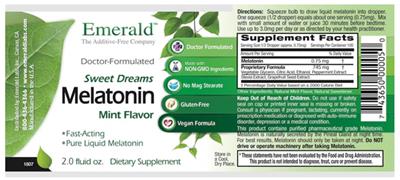
| Melatonin | 0.75 mg | -- |
| Citric Acid | 0 NP | -- |
| Peppermint extract | 0 NP | -- |
| Proprietary Formula | 745 mg | -- |
| Grapefruit Seed Extract | 0 NP | -- |
| Ethanol | 0 NP | -- |
Other ingredients: natural Mint flavor, Natural Sweetener
Tap any ingredient to jump to its full detail below.
These statements are the manufacturer’s wording, reproduced from the product label — the label is saying it, not HelloPharmacist. We don’t verify or endorse them.
Formulation
Manufactured in the U.S.A.
Sweet dreams Fast-acting
Made with non-GMO ingredients No mag stearate Gluten-free
Vegan formula
Do not use if safety seal on cap or printed inner seal is missing or broken.
Brand IP Statement(s)
Emerald The Additive-Free Company
General Statements
Doctor-formulated
Melatonin is naturally secreted by the Pineal Gland at night time.
Formula
Pure liquid melatonin
This product contains purified pharmaceutical grade Melatonin.
Suggested/Recommended/Usage/Directions
Directions: Squeeze bulb to draw liquid melatonin into dropper. One squeeze (1/2 dropper) equals about one serving (0.75 mg). Mix with small amount of water or juice 30 minutes before bedtime. Use up to 3.0mg per day or as directed by your health practitioner.
For best results, melatonin should only be taken at night.
Do not drive or operate machinery after taking melatonin.
Precautions
Keep out of reach of children.
Consult a physician if pregnant, lactating, currently on prescription medication or diagnosed with auto-immune disorder, depression or a medical condition.
Storage
Store in a cool, dry place.
FDA Disclaimer Statement
These statements have not been evaluated by the Food and Drug Administration. This product is not intended to diagnose, treat, cure or prevent disease.
Is this label outdated? Report a formula or label change and our pharmacy team will review it.
Melatonin Mint Flavor by Emerald label
The label scan from the NIH Dietary Supplement Label Database. Tap to enlarge.
Label images are published by the NIH Dietary Supplement Label Database for the version of this product on file. Always read your actual product label.
View the full label (PDF)The Ingredients in Melatonin Mint Flavor by Emerald
These are the 7 active ingredients this product is made of. Select any to open its full monograph.
Serving size0.75 mg Dosage formLiquid Servings per container100 Amounts shown are per serving.
Most supplement products combine several ingredients, and a medication can interact with the product through any one of them. Each ingredient below shows whether it has known drug interactions.
Melatonin
Interacts with1,461 drugs
Melatonin is a hormone your body makes naturally to help control your sleep-wake cycle, and the supplement form is widely used to help with sleep timi...
Melatonin monograph & interactionsProprietary Formula
- › Glycerin
- › Stevia Extract
- › Citric Acid
- › Peppermint extract
- › Grapefruit Seed Extract
- › Ethanol
Other (inactive) ingredients: Natural Mint flavor, Natural Sweetener. These complete the product’s ingredient list but are not active constituents.
Melatonin Mint Flavor by Emerald Drug Interactions
HelloPharmacist Interaction Report
Emerald Melatonin Mint Flavor has documented interactions through its melatonin, stevia extract, peppermint extract, and grapefruit seed extract content.
The most serious concern is grapefruit seed extract's Major-severity interaction with cyclosporine (Neoral, Sandimmune), an immunosuppressant — grapefruit can significantly increase cyclosporine blood levels and its adverse effects.
Read the full breakdown — every affected drug type, severity by severity
Melatonin carries Moderate interactions with several drug types: blood thinners and antiplatelet drugs (including warfarin), heart and blood pressure medications (nifedipine and other antihypertensives), diabetes drugs, seizure medications, immunosuppressants, and methamphetamine. Peppermint extract may theoretically increase levels of certain medications metabolized by liver enzymes (CYP2C19, CYP2C9, CYP3A4, and CYP1A2), and can raise cyclosporine levels.
Stevia carries Moderate-severity concern with lithium (a mood stabilizer) and Minor concerns with blood pressure and diabetes drugs.
Grapefruit seed extract also presents Major-severity interactions with scopolamine, amiodarone (a heart rhythm drug), terfenadine, buspirone (an anxiety medication), and dextromethorphan (a cough suppressant), as well as with celiprolol and etoposide (a chemotherapy drug), where it may decrease their effectiveness. Altogether, these interactions span 1,573 individual medications.
Glycerol and citric acid show no interactions in our data. We could not check ethanol.
Use the medication search tool below to verify your exact prescriptions before starting this product.
Check your own medications below · Editorial policy · How we use AI
Want to check YOUR meds against Melatonin Mint Flavor?
Ask about interactions with your drugs in plain English — “Can I take it with lisinopril?” — and we find you the answer in seconds, ingredient by ingredient.
Go to the checkerIngredients driving the most interactions
Individual Drug Interactions
The ingredients in Melatonin Mint Flavor interact with 1,572 drugs. Click any drug to see the details.
4 of the 7 ingredients in Melatonin Mint Flavor interact with drugs. Each result below shows which ingredient is responsible. Melatonin Grapefruit Seed Extract Peppermint extract Stevia Extract
Ado-trastuzumab EmtansineKadcyla
How Ado-trastuzumab Emtansine interacts with Melatonin Mint Flavor — through 3 ingredients. Tap an ingredient for the detail:
Grapefruit Seed ExtractCytochrome P450 3a4 (cyp3a4) Substrates Major
Interaction Summary
Grapefruit juice can increase levels of drugs metabolized by CYP3A4.
Read the full Grapefruit Seed Extract + Ado-trastuzumab Emtansine interactionPeppermint ExtractCytochrome P450 3a4 (cyp3a4) Substrates Moderate
Interaction Summary
Theoretically, peppermint might increase the levels of CYP3A4 substrates.
Read the full Peppermint Extract + Ado-trastuzumab Emtansine interactionMelatoninCytochrome P450 3a4 (cyp3a4) Substrates Minor
Interaction Summary
Theoretically, melatonin might increase levels of drugs metabolized by CYP3A4.
Read the full Melatonin + Ado-trastuzumab Emtansine interactionAbemaciclibVerzenio
How Abemaciclib interacts with Melatonin Mint Flavor — through 3 ingredients. Tap an ingredient for the detail:
Grapefruit Seed ExtractCytochrome P450 3a4 (cyp3a4) Substrates Major
Interaction Summary
Grapefruit juice can increase levels of drugs metabolized by CYP3A4.
Read the full Grapefruit Seed Extract + Abemaciclib interactionPeppermint ExtractCytochrome P450 3a4 (cyp3a4) Substrates Moderate
Interaction Summary
Theoretically, peppermint might increase the levels of CYP3A4 substrates.
Read the full Peppermint Extract + Abemaciclib interactionMelatoninCytochrome P450 3a4 (cyp3a4) Substrates Minor
Interaction Summary
Theoretically, melatonin might increase levels of drugs metabolized by CYP3A4.
Read the full Melatonin + Abemaciclib interactionAbiraterone
How Abiraterone interacts with Melatonin Mint Flavor — through 3 ingredients. Tap an ingredient for the detail:
Grapefruit Seed ExtractCytochrome P450 3a4 (cyp3a4) Substrates Major
Interaction Summary
Grapefruit juice can increase levels of drugs metabolized by CYP3A4.
Read the full Grapefruit Seed Extract + Abiraterone interactionPeppermint ExtractCytochrome P450 3a4 (cyp3a4) Substrates Moderate
Interaction Summary
Theoretically, peppermint might increase the levels of CYP3A4 substrates.
Read the full Peppermint Extract + Abiraterone interactionMelatoninCytochrome P450 3a4 (cyp3a4) Substrates Minor
Interaction Summary
Theoretically, melatonin might increase levels of drugs metabolized by CYP3A4.
Read the full Melatonin + Abiraterone interactionAbiraterone AcetateYonsa, Zytiga
How Abiraterone Acetate interacts with Melatonin Mint Flavor — through 3 ingredients. Tap an ingredient for the detail:
Grapefruit Seed ExtractCytochrome P450 3a4 (cyp3a4) Substrates Major
Interaction Summary
Grapefruit juice can increase levels of drugs metabolized by CYP3A4.
Read the full Grapefruit Seed Extract + Abiraterone Acetate interactionPeppermint ExtractCytochrome P450 3a4 (cyp3a4) Substrates Moderate
Interaction Summary
Theoretically, peppermint might increase the levels of CYP3A4 substrates.
Read the full Peppermint Extract + Abiraterone Acetate interactionMelatoninCytochrome P450 3a4 (cyp3a4) Substrates Minor
Interaction Summary
Theoretically, melatonin might increase levels of drugs metabolized by CYP3A4.
Read the full Melatonin + Abiraterone Acetate interactionAcalabrutinibCalquence
How Acalabrutinib interacts with Melatonin Mint Flavor — through 3 ingredients. Tap an ingredient for the detail:
Grapefruit Seed ExtractCytochrome P450 3a4 (cyp3a4) Substrates, P-glycoprotein Substrates Major
Interaction Summary
Grapefruit juice can increase levels of drugs metabolized by CYP3A4.
Read the full Grapefruit Seed Extract + Acalabrutinib interactionPeppermint ExtractCytochrome P450 3a4 (cyp3a4) Substrates Moderate
Interaction Summary
Theoretically, peppermint might increase the levels of CYP3A4 substrates.
Read the full Peppermint Extract + Acalabrutinib interactionMelatoninCytochrome P450 3a4 (cyp3a4) Substrates Minor
Interaction Summary
Theoretically, melatonin might increase levels of drugs metabolized by CYP3A4.
Read the full Melatonin + Acalabrutinib interactionAcetaminophen, Aspirin, CaffeineExcedrin, Excedrin Extra Strength, Excedrin Migraine
How Acetaminophen, Aspirin, Caffeine interacts with Melatonin Mint Flavor — through 3 ingredients. Tap an ingredient for the detail:
Grapefruit Seed ExtractCytochrome P450 3a4 (cyp3a4) Substrates, Caffeine +1 Major
Interaction Summary
Grapefruit juice can increase levels of drugs metabolized by CYP3A4.
Read the full Grapefruit Seed Extract + Acetaminophen, Aspirin, Caffeine interactionMelatoninCytochrome P450 1a2 (cyp1a2) Substrates, Cytochrome P450 3a4 (cyp3a4) Substrates +2 Moderate
Interaction Summary
Theoretically, melatonin might increase levels of drugs metabolized by CYP1A2.
Read the full Melatonin + Acetaminophen, Aspirin, Caffeine interactionPeppermint ExtractCytochrome P450 1a2 (cyp1a2) Substrates, Cytochrome P450 3a4 (cyp3a4) Substrates Moderate
Interaction Summary
Theoretically, peppermint might increase the levels of CYP1A2 substrates.
Read the full Peppermint Extract + Acetaminophen, Aspirin, Caffeine interactionAcetaminophen, Butalbital, CaffeineEsgic, Esgic Plus, Fiogesic, Fioricet, Repan, Tecnal +1 more
How Acetaminophen, Butalbital, Caffeine interacts with Melatonin Mint Flavor — through 3 ingredients. Tap an ingredient for the detail:
Grapefruit Seed ExtractCytochrome P450 1a2 (cyp1a2) Substrates, Cytochrome P450 3a4 (cyp3a4) Substrates +1 Major
Interaction Summary
Theoretically, grapefruit juice might increase levels of drugs metabolized by CYP1A2.
Read the full Grapefruit Seed Extract + Acetaminophen, Butalbital, Caffeine interactionMelatoninCytochrome P450 1a2 (cyp1a2) Substrates, Cytochrome P450 3a4 (cyp3a4) Substrates +1 Moderate
Interaction Summary
Theoretically, melatonin might increase levels of drugs metabolized by CYP1A2.
Read the full Melatonin + Acetaminophen, Butalbital, Caffeine interactionPeppermint ExtractCytochrome P450 1a2 (cyp1a2) Substrates, Cytochrome P450 3a4 (cyp3a4) Substrates Moderate
Interaction Summary
Theoretically, peppermint might increase the levels of CYP1A2 substrates.
Read the full Peppermint Extract + Acetaminophen, Butalbital, Caffeine interactionAcetaminophen, Butalbital, Caffeine, CodeineEsgic with Codeine, Fioricet w/ Codeine
How Acetaminophen, Butalbital, Caffeine, Codeine interacts with Melatonin Mint Flavor — through 3 ingredients. Tap an ingredient for the detail:
Grapefruit Seed ExtractCaffeine, Cytochrome P450 1a2 (cyp1a2) Substrates +1 Major
Interaction Summary
Grapefruit juice can decrease the clearance of caffeine, potentially increasing the effects and adverse effects of caffeine.
Read the full Grapefruit Seed Extract + Acetaminophen, Butalbital, Caffeine, Codeine interactionMelatoninCns Depressants, Cytochrome P450 3a4 (cyp3a4) Substrates +4 Moderate
Interaction Summary
Theoretically, taking melatonin might increase the sedative effects of CNS depressants.
Read the full Melatonin + Acetaminophen, Butalbital, Caffeine, Codeine interactionPeppermint ExtractCytochrome P450 3a4 (cyp3a4) Substrates, Cytochrome P450 1a2 (cyp1a2) Substrates Moderate
Interaction Summary
Theoretically, peppermint might increase the levels of CYP3A4 substrates.
Read the full Peppermint Extract + Acetaminophen, Butalbital, Caffeine, Codeine interactionAcetaminophen, Caffeine, Chlorpheniramine, Hydrocodone, PhenylephrineHycomine Compound
How Acetaminophen, Caffeine, Chlorpheniramine, Hydrocodone, Phenylephrine interacts with Melatonin Mint Flavor — through 3 ingredients. Tap an ingredient for the detail:
Grapefruit Seed ExtractCytochrome P450 1a2 (cyp1a2) Substrates, Caffeine +1 Major
Interaction Summary
Theoretically, grapefruit juice might increase levels of drugs metabolized by CYP1A2.
Read the full Grapefruit Seed Extract + Acetaminophen, Caffeine, Chlorpheniramine, Hydrocodone, Phenylephrine interactionPeppermint ExtractCytochrome P450 1a2 (cyp1a2) Substrates, Cytochrome P450 3a4 (cyp3a4) Substrates Moderate
Interaction Summary
Theoretically, peppermint might increase the levels of CYP1A2 substrates.
Read the full Peppermint Extract + Acetaminophen, Caffeine, Chlorpheniramine, Hydrocodone, Phenylephrine interactionMelatoninCns Depressants, Cytochrome P450 2d6 (cyp2d6) Substrates +4 Moderate
Interaction Summary
Theoretically, taking melatonin might increase the sedative effects of CNS depressants.
Read the full Melatonin + Acetaminophen, Caffeine, Chlorpheniramine, Hydrocodone, Phenylephrine interactionAcetaminophen, Caffeine, CodeineGesic C15, Gesic C30, Gesic C8, Lenoltec 1, Lenoltec 2, Lenoltec 3 +1 more
How Acetaminophen, Caffeine, Codeine interacts with Melatonin Mint Flavor — through 3 ingredients. Tap an ingredient for the detail:
Grapefruit Seed ExtractCytochrome P450 3a4 (cyp3a4) Substrates, Cytochrome P450 1a2 (cyp1a2) Substrates +1 Major
Interaction Summary
Grapefruit juice can increase levels of drugs metabolized by CYP3A4.
Read the full Grapefruit Seed Extract + Acetaminophen, Caffeine, Codeine interactionMelatoninCaffeine, Cns Depressants +4 Moderate
Interaction Summary
Theoretically, taking caffeine with melatonin might increase levels of melatonin.
Read the full Melatonin + Acetaminophen, Caffeine, Codeine interactionPeppermint ExtractCytochrome P450 3a4 (cyp3a4) Substrates, Cytochrome P450 1a2 (cyp1a2) Substrates Moderate
Interaction Summary
Theoretically, peppermint might increase the levels of CYP3A4 substrates.
Read the full Peppermint Extract + Acetaminophen, Caffeine, Codeine interactionAcetaminophen, Caffeine, Codeine, SalicylamideCodalan No.1, Codalan No.2, Codalan No.3
How Acetaminophen, Caffeine, Codeine, Salicylamide interacts with Melatonin Mint Flavor — through 3 ingredients. Tap an ingredient for the detail:
Grapefruit Seed ExtractCaffeine, Cytochrome P450 1a2 (cyp1a2) Substrates +1 Major
Interaction Summary
Grapefruit juice can decrease the clearance of caffeine, potentially increasing the effects and adverse effects of caffeine.
Read the full Grapefruit Seed Extract + Acetaminophen, Caffeine, Codeine, Salicylamide interactionMelatoninCytochrome P450 1a2 (cyp1a2) Substrates, Seizure Threshold Lowering Drugs +4 Moderate
Interaction Summary
Theoretically, melatonin might increase levels of drugs metabolized by CYP1A2.
Read the full Melatonin + Acetaminophen, Caffeine, Codeine, Salicylamide interactionPeppermint ExtractCytochrome P450 1a2 (cyp1a2) Substrates, Cytochrome P450 3a4 (cyp3a4) Substrates Moderate
Interaction Summary
Theoretically, peppermint might increase the levels of CYP1A2 substrates.
Read the full Peppermint Extract + Acetaminophen, Caffeine, Codeine, Salicylamide interactionAcetaminophen, Caffeine, DihydrocodeineDHC Plus, Panlor DC, Panlor SS
How Acetaminophen, Caffeine, Dihydrocodeine interacts with Melatonin Mint Flavor — through 3 ingredients. Tap an ingredient for the detail:
Grapefruit Seed ExtractCytochrome P450 3a4 (cyp3a4) Substrates, Cytochrome P450 1a2 (cyp1a2) Substrates +1 Major
Interaction Summary
Grapefruit juice can increase levels of drugs metabolized by CYP3A4.
Read the full Grapefruit Seed Extract + Acetaminophen, Caffeine, Dihydrocodeine interactionPeppermint ExtractCytochrome P450 1a2 (cyp1a2) Substrates, Cytochrome P450 3a4 (cyp3a4) Substrates Moderate
Interaction Summary
Theoretically, peppermint might increase the levels of CYP1A2 substrates.
Read the full Peppermint Extract + Acetaminophen, Caffeine, Dihydrocodeine interactionMelatoninCns Depressants, Cytochrome P450 2d6 (cyp2d6) Substrates +4 Moderate
Interaction Summary
Theoretically, taking melatonin might increase the sedative effects of CNS depressants.
Read the full Melatonin + Acetaminophen, Caffeine, Dihydrocodeine interactionAcetaminophen, Caffeine, IsomethepteneMigralam
How Acetaminophen, Caffeine, Isometheptene interacts with Melatonin Mint Flavor — through 3 ingredients. Tap an ingredient for the detail:
Grapefruit Seed ExtractCaffeine, Cytochrome P450 1a2 (cyp1a2) Substrates +1 Major
Interaction Summary
Grapefruit juice can decrease the clearance of caffeine, potentially increasing the effects and adverse effects of caffeine.
Read the full Grapefruit Seed Extract + Acetaminophen, Caffeine, Isometheptene interactionMelatoninCaffeine, Cytochrome P450 1a2 (cyp1a2) Substrates +1 Moderate
Interaction Summary
Theoretically, taking caffeine with melatonin might increase levels of melatonin.
Read the full Melatonin + Acetaminophen, Caffeine, Isometheptene interactionPeppermint ExtractCytochrome P450 1a2 (cyp1a2) Substrates, Cytochrome P450 3a4 (cyp3a4) Substrates Moderate
Interaction Summary
Theoretically, peppermint might increase the levels of CYP1A2 substrates.
Read the full Peppermint Extract + Acetaminophen, Caffeine, Isometheptene interactionAcetaminophen, Caffeine, PyrilamineMidol Max Strength Menstrual
How Acetaminophen, Caffeine, Pyrilamine interacts with Melatonin Mint Flavor — through 3 ingredients. Tap an ingredient for the detail:
Grapefruit Seed ExtractCytochrome P450 3a4 (cyp3a4) Substrates, Cytochrome P450 1a2 (cyp1a2) Substrates +1 Major
Interaction Summary
Grapefruit juice can increase levels of drugs metabolized by CYP3A4.
Read the full Grapefruit Seed Extract + Acetaminophen, Caffeine, Pyrilamine interactionMelatoninCytochrome P450 3a4 (cyp3a4) Substrates, Cytochrome P450 1a2 (cyp1a2) Substrates +1 Moderate
Interaction Summary
Theoretically, melatonin might increase levels of drugs metabolized by CYP3A4.
Read the full Melatonin + Acetaminophen, Caffeine, Pyrilamine interactionPeppermint ExtractCytochrome P450 3a4 (cyp3a4) Substrates, Cytochrome P450 1a2 (cyp1a2) Substrates Moderate
Interaction Summary
Theoretically, peppermint might increase the levels of CYP3A4 substrates.
Read the full Peppermint Extract + Acetaminophen, Caffeine, Pyrilamine interactionAcetaminophen, Chlorpheniramine Maleate, Dextromethorphan HbrVicks Formula 44M Cough, Cold & Flu Relief
How Acetaminophen, Chlorpheniramine Maleate, Dextromethorphan Hbr interacts with Melatonin Mint Flavor — through 3 ingredients. Tap an ingredient for the detail:
Grapefruit Seed ExtractDextromethorphan (robitussin Dm, Others), Cytochrome P450 3a4 (cyp3a4) Substrates +1 Major
Interaction Summary
Grapefruit juice can increase blood levels of dextromethorphan, potentially increasing the effects and adverse effects of dextromethorphan.
Read the full Grapefruit Seed Extract + Acetaminophen, Chlorpheniramine Maleate, Dextromethorphan Hbr interactionPeppermint ExtractCytochrome P450 3a4 (cyp3a4) Substrates, Cytochrome P450 1a2 (cyp1a2) Substrates Moderate
Interaction Summary
Theoretically, peppermint might increase the levels of CYP3A4 substrates.
Read the full Peppermint Extract + Acetaminophen, Chlorpheniramine Maleate, Dextromethorphan Hbr interactionMelatoninSeizure Threshold Lowering Drugs, Cytochrome P450 1a2 (cyp1a2) Substrates +2 Moderate
Interaction Summary
Theoretically, taking melatonin with drugs that lower the seizure threshold might increase the risk of seizure activity.
Read the full Melatonin + Acetaminophen, Chlorpheniramine Maleate, Dextromethorphan Hbr interactionAcetaminophen, Chlorpheniramine, Codeine, PhenylephrineColrex
How Acetaminophen, Chlorpheniramine, Codeine, Phenylephrine interacts with Melatonin Mint Flavor — through 3 ingredients. Tap an ingredient for the detail:
Grapefruit Seed ExtractCytochrome P450 1a2 (cyp1a2) Substrates, Cytochrome P450 3a4 (cyp3a4) Substrates Major
Interaction Summary
Theoretically, grapefruit juice might increase levels of drugs metabolized by CYP1A2.
Read the full Grapefruit Seed Extract + Acetaminophen, Chlorpheniramine, Codeine, Phenylephrine interactionPeppermint ExtractCytochrome P450 3a4 (cyp3a4) Substrates, Cytochrome P450 1a2 (cyp1a2) Substrates Moderate
Interaction Summary
Theoretically, peppermint might increase the levels of CYP3A4 substrates.
Read the full Peppermint Extract + Acetaminophen, Chlorpheniramine, Codeine, Phenylephrine interactionMelatoninCns Depressants, Cytochrome P450 1a2 (cyp1a2) Substrates +3 Moderate
Interaction Summary
Theoretically, taking melatonin might increase the sedative effects of CNS depressants.
Read the full Melatonin + Acetaminophen, Chlorpheniramine, Codeine, Phenylephrine interactionAcetaminophen, Chlorpheniramine, DextromethorphanCoricidin II Extra Strength Cold and Flu
How Acetaminophen, Chlorpheniramine, Dextromethorphan interacts with Melatonin Mint Flavor — through 3 ingredients. Tap an ingredient for the detail:
Grapefruit Seed ExtractCytochrome P450 1a2 (cyp1a2) Substrates, Dextromethorphan (robitussin Dm, Others) +1 Major
Interaction Summary
Theoretically, grapefruit juice might increase levels of drugs metabolized by CYP1A2.
Read the full Grapefruit Seed Extract + Acetaminophen, Chlorpheniramine, Dextromethorphan interactionMelatoninCytochrome P450 1a2 (cyp1a2) Substrates, Seizure Threshold Lowering Drugs +2 Moderate
Interaction Summary
Theoretically, melatonin might increase levels of drugs metabolized by CYP1A2.
Read the full Melatonin + Acetaminophen, Chlorpheniramine, Dextromethorphan interactionPeppermint ExtractCytochrome P450 1a2 (cyp1a2) Substrates, Cytochrome P450 3a4 (cyp3a4) Substrates Moderate
Interaction Summary
Theoretically, peppermint might increase the levels of CYP1A2 substrates.
Read the full Peppermint Extract + Acetaminophen, Chlorpheniramine, Dextromethorphan interactionAcetaminophen, Chlorpheniramine, Dextromethorphan HydrobromideCoricidin HBP Maximum Strength Flu
How Acetaminophen, Chlorpheniramine, Dextromethorphan Hydrobromide interacts with Melatonin Mint Flavor — through 3 ingredients. Tap an ingredient for the detail:
Grapefruit Seed ExtractCytochrome P450 3a4 (cyp3a4) Substrates, Cytochrome P450 1a2 (cyp1a2) Substrates +1 Major
Interaction Summary
Grapefruit juice can increase levels of drugs metabolized by CYP3A4.
Read the full Grapefruit Seed Extract + Acetaminophen, Chlorpheniramine, Dextromethorphan Hydrobromide interactionPeppermint ExtractCytochrome P450 3a4 (cyp3a4) Substrates, Cytochrome P450 1a2 (cyp1a2) Substrates Moderate
Interaction Summary
Theoretically, peppermint might increase the levels of CYP3A4 substrates.
Read the full Peppermint Extract + Acetaminophen, Chlorpheniramine, Dextromethorphan Hydrobromide interactionMelatoninCytochrome P450 2d6 (cyp2d6) Substrates, Seizure Threshold Lowering Drugs +2 Moderate
Interaction Summary
Theoretically, melatonin might increase levels of drugs metabolized by CYP2D6.
Read the full Melatonin + Acetaminophen, Chlorpheniramine, Dextromethorphan Hydrobromide interactionAcetaminophen, Chlorpheniramine, Dextromethorphan, PhenylpropanolamineMulti Symptom Cold Relief
How Acetaminophen, Chlorpheniramine, Dextromethorphan, Phenylpropanolamine interacts with Melatonin Mint Flavor — through 3 ingredients. Tap an ingredient for the detail:
Grapefruit Seed ExtractDextromethorphan (robitussin Dm, Others), Cytochrome P450 3a4 (cyp3a4) Substrates +1 Major
Interaction Summary
Grapefruit juice can increase blood levels of dextromethorphan, potentially increasing the effects and adverse effects of dextromethorphan.
Read the full Grapefruit Seed Extract + Acetaminophen, Chlorpheniramine, Dextromethorphan, Phenylpropanolamine interactionPeppermint ExtractCytochrome P450 3a4 (cyp3a4) Substrates, Cytochrome P450 1a2 (cyp1a2) Substrates Moderate
Interaction Summary
Theoretically, peppermint might increase the levels of CYP3A4 substrates.
Read the full Peppermint Extract + Acetaminophen, Chlorpheniramine, Dextromethorphan, Phenylpropanolamine interactionMelatoninCytochrome P450 1a2 (cyp1a2) Substrates, Cytochrome P450 3a4 (cyp3a4) Substrates +2 Moderate
Interaction Summary
Theoretically, melatonin might increase levels of drugs metabolized by CYP1A2.
Read the full Melatonin + Acetaminophen, Chlorpheniramine, Dextromethorphan, Phenylpropanolamine interactionAcetaminophen, Chlorpheniramine, Dextromethorphan, PseudoephedrineChildren's Tylenol Cold Plus Cough, Tylenol Cold Ex Strength
How Acetaminophen, Chlorpheniramine, Dextromethorphan, Pseudoephedrine interacts with Melatonin Mint Flavor — through 3 ingredients. Tap an ingredient for the detail:
Grapefruit Seed ExtractCytochrome P450 1a2 (cyp1a2) Substrates, Dextromethorphan (robitussin Dm, Others) +1 Major
Interaction Summary
Theoretically, grapefruit juice might increase levels of drugs metabolized by CYP1A2.
Read the full Grapefruit Seed Extract + Acetaminophen, Chlorpheniramine, Dextromethorphan, Pseudoephedrine interactionMelatoninSeizure Threshold Lowering Drugs, Cytochrome P450 1a2 (cyp1a2) Substrates +2 Moderate
Interaction Summary
Theoretically, taking melatonin with drugs that lower the seizure threshold might increase the risk of seizure activity.
Read the full Melatonin + Acetaminophen, Chlorpheniramine, Dextromethorphan, Pseudoephedrine interactionPeppermint ExtractCytochrome P450 1a2 (cyp1a2) Substrates, Cytochrome P450 3a4 (cyp3a4) Substrates Moderate
Interaction Summary
Theoretically, peppermint might increase the levels of CYP1A2 substrates.
Read the full Peppermint Extract + Acetaminophen, Chlorpheniramine, Dextromethorphan, Pseudoephedrine interactionAcetaminophen, Chlorpheniramine, Guaifenesin, Phenylephrine, SalicylamideRhinogesic GG
How Acetaminophen, Chlorpheniramine, Guaifenesin, Phenylephrine, Salicylamide interacts with Melatonin Mint Flavor — through 3 ingredients. Tap an ingredient for the detail:
Grapefruit Seed ExtractCytochrome P450 3a4 (cyp3a4) Substrates, Cytochrome P450 1a2 (cyp1a2) Substrates Major
Interaction Summary
Grapefruit juice can increase levels of drugs metabolized by CYP3A4.
Read the full Grapefruit Seed Extract + Acetaminophen, Chlorpheniramine, Guaifenesin, Phenylephrine, Salicylamide interactionPeppermint ExtractCytochrome P450 3a4 (cyp3a4) Substrates, Cytochrome P450 1a2 (cyp1a2) Substrates Moderate
Interaction Summary
Theoretically, peppermint might increase the levels of CYP3A4 substrates.
Read the full Peppermint Extract + Acetaminophen, Chlorpheniramine, Guaifenesin, Phenylephrine, Salicylamide interactionMelatoninCytochrome P450 3a4 (cyp3a4) Substrates, Cytochrome P450 1a2 (cyp1a2) Substrates +1 Moderate
Interaction Summary
Theoretically, melatonin might increase levels of drugs metabolized by CYP3A4.
Read the full Melatonin + Acetaminophen, Chlorpheniramine, Guaifenesin, Phenylephrine, Salicylamide interactionAcetaminophen, Chlorpheniramine, PhenylephrineAlka-Seltzer PLUS, Histex SR, Protid
How Acetaminophen, Chlorpheniramine, Phenylephrine interacts with Melatonin Mint Flavor — through 3 ingredients. Tap an ingredient for the detail:
Grapefruit Seed ExtractCytochrome P450 1a2 (cyp1a2) Substrates, Cytochrome P450 3a4 (cyp3a4) Substrates Major
Interaction Summary
Theoretically, grapefruit juice might increase levels of drugs metabolized by CYP1A2.
Read the full Grapefruit Seed Extract + Acetaminophen, Chlorpheniramine, Phenylephrine interactionPeppermint ExtractCytochrome P450 1a2 (cyp1a2) Substrates, Cytochrome P450 3a4 (cyp3a4) Substrates Moderate
Interaction Summary
Theoretically, peppermint might increase the levels of CYP1A2 substrates.
Read the full Peppermint Extract + Acetaminophen, Chlorpheniramine, Phenylephrine interactionMelatoninCytochrome P450 3a4 (cyp3a4) Substrates, Seizure Threshold Lowering Drugs +1 Moderate
Interaction Summary
Theoretically, melatonin might increase levels of drugs metabolized by CYP3A4.
Read the full Melatonin + Acetaminophen, Chlorpheniramine, Phenylephrine interactionAcetaminophen, Chlorpheniramine, Phenylephrine, SalicylamideRhinogesic, Rhinogesic JR
How Acetaminophen, Chlorpheniramine, Phenylephrine, Salicylamide interacts with Melatonin Mint Flavor — through 3 ingredients. Tap an ingredient for the detail:
Grapefruit Seed ExtractCytochrome P450 3a4 (cyp3a4) Substrates, Cytochrome P450 1a2 (cyp1a2) Substrates Major
Interaction Summary
Grapefruit juice can increase levels of drugs metabolized by CYP3A4.
Read the full Grapefruit Seed Extract + Acetaminophen, Chlorpheniramine, Phenylephrine, Salicylamide interactionMelatoninCytochrome P450 1a2 (cyp1a2) Substrates, Seizure Threshold Lowering Drugs +1 Moderate
Interaction Summary
Theoretically, melatonin might increase levels of drugs metabolized by CYP1A2.
Read the full Melatonin + Acetaminophen, Chlorpheniramine, Phenylephrine, Salicylamide interactionPeppermint ExtractCytochrome P450 3a4 (cyp3a4) Substrates, Cytochrome P450 1a2 (cyp1a2) Substrates Moderate
Interaction Summary
Theoretically, peppermint might increase the levels of CYP3A4 substrates.
Read the full Peppermint Extract + Acetaminophen, Chlorpheniramine, Phenylephrine, Salicylamide interactionAcetaminophen, Chlorpheniramine, PhenylpropanolamineAlumadrine, Conex, Sinadrin Max Strength, Sinulin
How Acetaminophen, Chlorpheniramine, Phenylpropanolamine interacts with Melatonin Mint Flavor — through 3 ingredients. Tap an ingredient for the detail:
Grapefruit Seed ExtractCytochrome P450 1a2 (cyp1a2) Substrates, Cytochrome P450 3a4 (cyp3a4) Substrates Major
Interaction Summary
Theoretically, grapefruit juice might increase levels of drugs metabolized by CYP1A2.
Read the full Grapefruit Seed Extract + Acetaminophen, Chlorpheniramine, Phenylpropanolamine interactionPeppermint ExtractCytochrome P450 1a2 (cyp1a2) Substrates, Cytochrome P450 3a4 (cyp3a4) Substrates Moderate
Interaction Summary
Theoretically, peppermint might increase the levels of CYP1A2 substrates.
Read the full Peppermint Extract + Acetaminophen, Chlorpheniramine, Phenylpropanolamine interactionMelatoninCytochrome P450 1a2 (cyp1a2) Substrates, Cytochrome P450 3a4 (cyp3a4) Substrates +1 Moderate
Interaction Summary
Theoretically, melatonin might increase levels of drugs metabolized by CYP1A2.
Read the full Melatonin + Acetaminophen, Chlorpheniramine, Phenylpropanolamine interactionAcetaminophen, Chlorpheniramine, Phenylpropanolamine, OpiumHista-Derfule
How Acetaminophen, Chlorpheniramine, Phenylpropanolamine, Opium interacts with Melatonin Mint Flavor — through 3 ingredients. Tap an ingredient for the detail:
Grapefruit Seed ExtractCytochrome P450 3a4 (cyp3a4) Substrates, Cytochrome P450 1a2 (cyp1a2) Substrates Major
Interaction Summary
Grapefruit juice can increase levels of drugs metabolized by CYP3A4.
Read the full Grapefruit Seed Extract + Acetaminophen, Chlorpheniramine, Phenylpropanolamine, Opium interactionPeppermint ExtractCytochrome P450 1a2 (cyp1a2) Substrates, Cytochrome P450 3a4 (cyp3a4) Substrates Moderate
Interaction Summary
Theoretically, peppermint might increase the levels of CYP1A2 substrates.
Read the full Peppermint Extract + Acetaminophen, Chlorpheniramine, Phenylpropanolamine, Opium interactionMelatoninCns Depressants, Cytochrome P450 1a2 (cyp1a2) Substrates +2 Moderate
Interaction Summary
Theoretically, taking melatonin might increase the sedative effects of CNS depressants.
Read the full Melatonin + Acetaminophen, Chlorpheniramine, Phenylpropanolamine, Opium interactionAcetaminophen, Chlorpheniramine, Phenylpropanolamine, PhenyltoloxamineNorel Plus
How Acetaminophen, Chlorpheniramine, Phenylpropanolamine, Phenyltoloxamine interacts with Melatonin Mint Flavor — through 3 ingredients. Tap an ingredient for the detail:
Grapefruit Seed ExtractCytochrome P450 1a2 (cyp1a2) Substrates, Cytochrome P450 3a4 (cyp3a4) Substrates Major
Interaction Summary
Theoretically, grapefruit juice might increase levels of drugs metabolized by CYP1A2.
Read the full Grapefruit Seed Extract + Acetaminophen, Chlorpheniramine, Phenylpropanolamine, Phenyltoloxamine interactionMelatoninSeizure Threshold Lowering Drugs, Cytochrome P450 3a4 (cyp3a4) Substrates +1 Moderate
Interaction Summary
Theoretically, taking melatonin with drugs that lower the seizure threshold might increase the risk of seizure activity.
Read the full Melatonin + Acetaminophen, Chlorpheniramine, Phenylpropanolamine, Phenyltoloxamine interactionPeppermint ExtractCytochrome P450 3a4 (cyp3a4) Substrates, Cytochrome P450 1a2 (cyp1a2) Substrates Moderate
Interaction Summary
Theoretically, peppermint might increase the levels of CYP3A4 substrates.
Read the full Peppermint Extract + Acetaminophen, Chlorpheniramine, Phenylpropanolamine, Phenyltoloxamine interactionAcetaminophen, Chlorpheniramine, PseudoephedrineAlka-Seltzer PLUS Liquid Gels, Children's Tylenol Cold, Codimal, Comtrex, Extra Strength Tylenol Allergy Sinus, Lorsin +3 more
How Acetaminophen, Chlorpheniramine, Pseudoephedrine interacts with Melatonin Mint Flavor — through 3 ingredients. Tap an ingredient for the detail:
Grapefruit Seed ExtractCytochrome P450 3a4 (cyp3a4) Substrates, Cytochrome P450 1a2 (cyp1a2) Substrates Major
Interaction Summary
Grapefruit juice can increase levels of drugs metabolized by CYP3A4.
Read the full Grapefruit Seed Extract + Acetaminophen, Chlorpheniramine, Pseudoephedrine interactionPeppermint ExtractCytochrome P450 1a2 (cyp1a2) Substrates, Cytochrome P450 3a4 (cyp3a4) Substrates Moderate
Interaction Summary
Theoretically, peppermint might increase the levels of CYP1A2 substrates.
Read the full Peppermint Extract + Acetaminophen, Chlorpheniramine, Pseudoephedrine interactionMelatoninCytochrome P450 1a2 (cyp1a2) Substrates, Cytochrome P450 3a4 (cyp3a4) Substrates +1 Moderate
Interaction Summary
Theoretically, melatonin might increase levels of drugs metabolized by CYP1A2.
Read the full Melatonin + Acetaminophen, Chlorpheniramine, Pseudoephedrine interactionAcetaminophen, DextromethorphanTylenol Cough Ex Strength
How Acetaminophen, Dextromethorphan interacts with Melatonin Mint Flavor — through 3 ingredients. Tap an ingredient for the detail:
Grapefruit Seed ExtractCytochrome P450 1a2 (cyp1a2) Substrates, Cytochrome P450 3a4 (cyp3a4) Substrates +1 Major
Interaction Summary
Theoretically, grapefruit juice might increase levels of drugs metabolized by CYP1A2.
Read the full Grapefruit Seed Extract + Acetaminophen, Dextromethorphan interactionPeppermint ExtractCytochrome P450 1a2 (cyp1a2) Substrates, Cytochrome P450 3a4 (cyp3a4) Substrates Moderate
Interaction Summary
Theoretically, peppermint might increase the levels of CYP1A2 substrates.
Read the full Peppermint Extract + Acetaminophen, Dextromethorphan interactionMelatoninCytochrome P450 1a2 (cyp1a2) Substrates, Cytochrome P450 2d6 (cyp2d6) Substrates +1 Moderate
Interaction Summary
Theoretically, melatonin might increase levels of drugs metabolized by CYP1A2.
Read the full Melatonin + Acetaminophen, Dextromethorphan interactionAcetaminophen, Dextromethorphan, Doxylamine, PseudoephedrineVicks NyQuil
How Acetaminophen, Dextromethorphan, Doxylamine, Pseudoephedrine interacts with Melatonin Mint Flavor — through 3 ingredients. Tap an ingredient for the detail:
Grapefruit Seed ExtractDextromethorphan (robitussin Dm, Others), Cytochrome P450 3a4 (cyp3a4) Substrates +1 Major
Interaction Summary
Grapefruit juice can increase blood levels of dextromethorphan, potentially increasing the effects and adverse effects of dextromethorphan.
Read the full Grapefruit Seed Extract + Acetaminophen, Dextromethorphan, Doxylamine, Pseudoephedrine interactionPeppermint ExtractCytochrome P450 1a2 (cyp1a2) Substrates, Cytochrome P450 3a4 (cyp3a4) Substrates Moderate
Interaction Summary
Theoretically, peppermint might increase the levels of CYP1A2 substrates.
Read the full Peppermint Extract + Acetaminophen, Dextromethorphan, Doxylamine, Pseudoephedrine interactionMelatoninCytochrome P450 2d6 (cyp2d6) Substrates, Seizure Threshold Lowering Drugs +2 Moderate
Interaction Summary
Theoretically, melatonin might increase levels of drugs metabolized by CYP2D6.
Read the full Melatonin + Acetaminophen, Dextromethorphan, Doxylamine, Pseudoephedrine interactionAcetaminophen, Dextromethorphan, Guaifenesin, PhenylephrineConar-A
How Acetaminophen, Dextromethorphan, Guaifenesin, Phenylephrine interacts with Melatonin Mint Flavor — through 3 ingredients. Tap an ingredient for the detail:
Grapefruit Seed ExtractCytochrome P450 1a2 (cyp1a2) Substrates, Cytochrome P450 3a4 (cyp3a4) Substrates +1 Major
Interaction Summary
Theoretically, grapefruit juice might increase levels of drugs metabolized by CYP1A2.
Read the full Grapefruit Seed Extract + Acetaminophen, Dextromethorphan, Guaifenesin, Phenylephrine interactionPeppermint ExtractCytochrome P450 3a4 (cyp3a4) Substrates, Cytochrome P450 1a2 (cyp1a2) Substrates Moderate
Interaction Summary
Theoretically, peppermint might increase the levels of CYP3A4 substrates.
Read the full Peppermint Extract + Acetaminophen, Dextromethorphan, Guaifenesin, Phenylephrine interactionMelatoninCytochrome P450 1a2 (cyp1a2) Substrates, Cytochrome P450 2d6 (cyp2d6) Substrates +1 Moderate
Interaction Summary
Theoretically, melatonin might increase levels of drugs metabolized by CYP1A2.
Read the full Melatonin + Acetaminophen, Dextromethorphan, Guaifenesin, Phenylephrine interactionEach ingredient & the kinds of drugs it affects
For each ingredient in Melatonin Mint Flavor with known interactions, here are the types of medications they can affect. Open any type for the detail — or search your exact drug in the checker above.
Melatonin
Anticoagulant/Antiplatelet Drugs
Theoretically, melatonin may have anticoagulant effects and may increase the risk of bleeding if used with anticoagulant or antiplatelet drugs.
There are isolated case reports of minor bleeding and decreased prothrombin activity in people taking melatonin with warfarin (Coumadin). The mechanism, if any, of this interaction is unknown. Taking melatonin orally seems to decrease coagulation activity within one hour of dosing in healthy men.
Anticonvulsants
Theoretically, melatonin may reduce the effects of anticonvulsants. Some clinical research suggests that melatonin may increase the frequency of seizures in certain patients, particularly children with neurological impairment.
Antidiabetes Drugs
Theoretically, taking melatonin with antidiabetes drugs might increase the risk of hypoglycemia.
Some clinical research shows that melatonin reduces levels of fasting blood glucose and improves glycemic control. However, other research suggests that melatonin might impair glucose utilization and increase insulin resistance, while other research has found no effect on glucose levels. Until more is known, use melatonin cautiously in combination with antidiabetes drugs.
Antihypertensive Drugs
Theoretically, taking melatonin with antihypertensive drugs might increase the risk of hypotension or hypertension.
Some clinical research suggests that taking melatonin decreases blood pressure in healthy adults. Also, melatonin seems to lower systolic and diastolic blood pressure in individuals with high blood pressure at nighttime or untreated essential hypertension. However, melatonin seems to worsen blood pressure in patients who are taking antihypertensive medications. Immediate-release melatonin 5 mg at night in combination with nifedipine GITS (Procardia XL) increases systolic blood pressure an average of 6.5 mmHg, diastolic blood pressure by an average of 4.9 mmHg, and heart rate by 3.9 bpm. Also, results from animal research suggest that melatonin reduces the effectiveness of certain antihypertensive drugs, including methoxamine and clonidine.
Caffeine
Theoretically, taking caffeine with melatonin might increase levels of melatonin.
Some evidence suggests that caffeine consumption can decrease endogenous melatonin levels, while other evidence suggests that caffeine increases endogenous melatonin levels. When administered in combination with melatonin supplements, caffeine seems to increase melatonin effects and levels. The reason for this discrepancy is not completely clear. Part of the discrepancy may result from the fact that caffeine can inhibit melatonin synthesis as well as inhibit melatonin metabolism. By functioning as an adenosine receptor antagonist, caffeine may indirectly inhibit the synthesis of melatonin. Conversely, because melatonin and caffeine are both metabolized by cytochrome P450 1A2 (CYP1A2) enzyme, concomitant use of melatonin and caffeine may reduce the metabolism of melatonin, resulting in higher serum levels.
Cns Depressants
Theoretically, taking melatonin might increase the sedative effects of CNS depressants.
Melatonin has sedative effects. Theoretically, concomitant use of melatonin with alcohol, benzodiazepines, or other sedative drugs might cause additive sedation.
Contraceptive Drugs
Theoretically, taking contraceptive drugs with melatonin might increase the effects and adverse effects of melatonin.
Contraceptive drugs can increase the levels of endogenous melatonin. Theoretically, these drugs may increase the effects and adverse effects of oral melatonin.
Cytochrome P450 1A2 (Cyp1A2) Substrates
Theoretically, melatonin might increase levels of drugs metabolized by CYP1A2. Also, other CYP1A2 substrates might decrease the metabolism of melatonin, increasing melatonin levels.
Melatonin is metabolized in the liver primarily by the CYP2C19 and CYP1A2 enzymes. Theoretically, combined administration of melatonin with drugs metabolized by the CYP1A2 enzyme might reduce the metabolism of these drugs, resulting in increased serum levels. Conversely, some drugs metabolized by CYP1A2 may inhibit the metabolism of melatonin, resulting in increased serum levels of melatonin. Until more is known, use melatonin cautiously in patients taking drugs metabolized by these enzymes.
Cytochrome P450 2C19 (Cyp2C19) Substrates
Theoretically, melatonin might increase levels of drugs metabolized by CYP2C19. Also, other CYP2C19 substrates might decrease the metabolism of melatonin, increasing melatonin levels.
Melatonin is metabolized in the liver primarily by the CYP2C19 and CYP1A2 enzymes. Theoretically, combined administration of melatonin with certain drugs metabolized by the CYP2C19 enzyme may reduce the metabolism of these drugs, resulting in increased serum levels. Conversely, some drugs metabolized by CYP2C19 may inhibit the metabolism of melatonin, resulting in increased serum levels of melatonin. Until more is known, use melatonin cautiously in patients taking drugs metabolized by these enzymes.
Fluvoxamine (Luvox)
Theoretically, taking fluvoxamine with melatonin might increase levels of melatonin.
Fluvoxamine can significantly increase melatonin levels. In some cases, fluvoxamine might increase bioavailability of exogenously administered melatonin by up to 20 times. Some researchers think this might be a beneficial interaction and be potentially useful for cases of refractory insomnia. However, this interaction might also cause unwanted excessive drowsiness and possibly other adverse effects. Fluvoxamine is known to increase endogenous melatonin secretion. It seems to increase serum levels of exogenously administered melatonin possibly by decreasing melatonin metabolism by inhibiting cytochrome P450 (CYP450) 1A2 and 2C19 or by inhibiting melatonin elimination. This effect has been found in healthy people taking fluvoxamine 50-75 mg and melatonin 5 mg.
Immunosuppressants
Theoretically, melatonin might interfere with immunosuppressive therapy.
Melatonin can stimulate immune function. Theoretically, melatonin might interfere with immunosuppressive therapy.
Methamphetamine (Desoxyn)
Theoretically, taking melatonin with methamphetamine may increase the adverse effects of methamphetamine.
Animal research suggests that melatonin exacerbates the adverse effects of methamphetamine, resulting in greater depression of tryptophan hydroxylase (TPH) and tyrosine hydroxylase (TH) activity, as well as a significant reduction in dopamine levels. This has not been shown in humans.
Nifedipine Gits (Procardia Xl)
Theoretically, taking melatonin with extended release nifedipine reduces the effects of nifedipine.
Melatonin can decrease the effectiveness of extended release nifedipine (GITS). Immediate-release melatonin 5 mg at night in combination with nifedipine GITS 30-60 mg daily increases systolic and blood pressure by an average of 6.5 mmHg and 4.9 mmHg, respectively. Concomitant use with melatonin also increases heart rate by 3.9 bpm. The mechanism of this interaction is not known.
Seizure Threshold Lowering Drugs
Theoretically, taking melatonin with drugs that lower the seizure threshold might increase the risk of seizure activity.
Some clinical evidence suggests that melatonin may increase the frequency of seizures in certain patients, particularly children with neurological disabilities.
Warfarin (Coumadin)
Theoretically, melatonin may have antiplatelet effects and may increase the risk of bleeding with warfarin.
Three cases of increased prothrombin time have been reported for patients aged 48-72 years who took melatonin orally in combination with warfarin. However, three cases of decreased prothrombin time have also been reported for patients aged 51-84 years who took melatonin orally in combination with warfarin. Until more is known, use melatonin cautiously in patients taking warfarin.
Cytochrome P450 2D6 (Cyp2D6) Substrates
Theoretically, melatonin might increase levels of drugs metabolized by CYP2D6.
Laboratory research suggests that certain lots of melatonin inhibit CYP2D6. Theoretically, combined administration of melatonin with certain drugs metabolized by the CYP2D6 enzyme may reduce the metabolism of these drugs, resulting in increased serum levels. Until more is known, use melatonin cautiously in patients taking drugs metabolized by these enzymes.
Cytochrome P450 3A4 (Cyp3A4) Substrates
Theoretically, melatonin might increase levels of drugs metabolized by CYP3A4.
Laboratory research shows that certain lots of melatonin inhibit CYP3A4. Theoretically, combined administration of melatonin with certain drugs metabolized by CYP3A4 may reduce the metabolism of these drugs, resulting in increased serum levels. Until more is known, use melatonin cautiously in patients taking drugs metabolized by these enzymes.
Flumazenil (Romazicon)
Theoretically, taking flumazenil with melatonin might reduce the effects of melatonin.
Animal research shows that flumazenil may inhibit the effect of melatonin.
Grapefruit Seed Extract
Amiodarone (Cordarone)
Grapefruit juice can increase blood levels of amiodarone, potentially increasing the effects and adverse effects of amiodarone.
Clinical research shows that grapefruit juice inhibits metabolism and increases absorption of amiodarone. Grapefruit juice increases amiodarone plasma levels by 50% and peak concentration by 84%.
Artemether (Artenam, Paluther)
Grapefruit juice can increase blood levels of oral artemether, potentially increasing the effects and adverse effects of artemether.
Clinical research shows that grapefruit juice increases the levels of oral artemether by 90% to 250% in healthy males.
Benzodiazepines
Grapefruit juice might increase blood levels of some oral benzodiazepines, potentially increasing the effects and adverse effects of these drugs.
Clinical research shows that grapefruit juice can increase plasma triazolam concentrations. Repeated consumption of grapefruit juice greatly increases triazolam concentrations and prolongs the half-life, probably due to inhibition of cytochrome P450 3A4 (CYP3A4). Some studies show that grapefruit juice, particularly when taken in large quantities, reduces the clearance and increases the maximum blood levels, area under the plasma concentration curve (AUC), and duration of effect of midazolam. However, there is no effect on intravenous midazolam. Grapefruit juice has also been shown to increase the maximum blood levels and duration of effect of diazepam, but the clinical significance of this is not known. This interaction does not appear to occur with alprazolam.
Buspirone (Buspar)
Grapefruit juice can increase blood levels of buspirone, potentially increasing the effects and adverse effects of buspirone.
Clinical research shows that grapefruit juice increases absorption and plasma concentrations of buspirone.
Calcium Channel Blockers
Grapefruit juice can increase blood levels of oral calcium channel blockers, potentially increasing the effects and adverse effects of these drugs.
Clinical research shows that grapefruit juice increases absorption and plasma concentrations of amlodipine, nifedipine, nisoldipine, verapamil, felodipine, nimodipine, nicardipine, diltiazem, pranidipine, nitrendipine, and manidipine,
This interaction is likely the result of the inhibition of intestinal metabolism of these drugs by CYP3A4, although some research suggests grapefruit may alter plasma drug levels by reducing the rate of gastric emptying. Consuming grapefruit juice 1 liter daily increases steady state concentrations of verapamil by as much as 50%. However, some references dispute the clinical relevance of the interactions with amlodipine, diltiazem, and verapamil. Other research in healthy individuals suggests plasma levels of felodipine and nifedipine are not affected when given intravenously. There is considerable interindividual variability in the effect of grapefruit juice on drug metabolism, which might account for inconsistent study results. In healthy older adults, the hemodynamic response to felodipine plus grapefruit juice might be influenced by altered autonomic regulation. In older healthy adults, a single dose of grapefruit juice and felodipine enhanced the blood pressure-lowering effects of felodipine. However, after a week of grapefruit juice and felodipine (steady state), the hypotensive activity was reduced, possibly due to compensatory tachycardia. Research indicates it is necessary to withhold grapefruit juice for as long as 3 days to avoid interactions with felodipine and nisoldipine.
Carbamazepine (Tegretol)
Grapefruit juice can increase blood levels of carbamazepine, potentially increasing the effects and adverse effects of carbamazepine.
Clinical research shows that grapefruit juice increases absorption and plasma concentrations of carbamazepine.
Carvedilol (Coreg)
Grapefruit juice can increase blood levels of carvedilol, potentially increasing the effects and adverse effects of carvedilol.
Clinical research shows that grapefruit juice increases the bioavailability of a single dose of carvedilol by 16%.
Celiprolol (Celicard)
Grapefruit juice can decrease blood levels of celiprolol, potentially decreasing the clinical effects of celiprolol.
In human research, taking grapefruit juice within two hours of celiprolol appears to decrease absorption and blood levels of celiprolol by approximately 85%. This interaction is due to grapefruit-induced inhibition of organic anion transporting polypeptide (OATP). Grapefruit juice is thought to affect OATP for only a short time. Therefore, separating drug administration and consumption of grapefruit by at least 4 hours is likely to prevent this interaction.
Cisapride (Propulsid)
Grapefruit juice can increase blood levels of cisapride, potentially increasing the effects and adverse effects of cisapride.
Clinical research shows that grapefruit juice increases the absorption and plasma concentrations of cisapride. According to the cisapride prescribing information, grapefruit juice is contraindicated in patients taking cisapride.
Clomipramine (Anafranil)
Theoretically, grapefruit juice might increase blood levels of clomipramine, potentially increasing the effects and adverse effects of clomipramine.
Case reports have shown that clomipramine trough levels increase significantly after the addition of grapefruit juice to the therapeutic regimen.
Clopidogrel (Plavix)
Grapefruit juice can decrease blood levels of the active metabolite of clopidogrel, thereby decreasing the antiplatelet effect of clopidogrel.
Clopidogrel is an antiplatelet prodrug that is metabolized primarily by cytochrome P450 2C19 (CYP2C19) to form the active metabolite. A small clinical study shows that taking grapefruit juice with clopidogrel decreases plasma levels of the active metabolite by more than 80% and impairs the antiplatelet effect of clopidogrel. This effect is possibly due to grapefruit-induced inhibition of CYP2C19.
Cyclosporine (Neoral, Sandimmune)
Grapefruit juice can increase blood levels of oral cyclosporine, potentially increasing the effects and adverse effects of cyclosporine.
Clinical research shows that grapefruit juice increases the absorption and plasma concentrations of cyclosporine. The mechanism of action is unclear. However, there is no effect on intravenous cyclosporine.
Cytochrome P450 3A4 (Cyp3A4) Substrates
Grapefruit juice can increase levels of drugs metabolized by CYP3A4.
Clinical research shows that grapefruit juice can inhibit CYP3A4 metabolism of drugs, causing increased drug levels and potentially increasing the risk of adverse effects. When taken orally, effects of grapefruit juice on CYP3A4 levels appear to last at least 48 hours. Grapefruit's ability to inhibit CYP3A4 has even been harnessed to intentionally increase levels of venetoclax, which is metabolized by CYP3A4, in an elderly patient with acute myeloid leukemia who could not afford full dose venetoclax. The lower dose of venetoclax in combination with grapefruit juice resulted in serum levels of venetoclax in the therapeutic reference range of full dose venetoclax and positive treatment outcomes for the patient.
Professional consensus recommends the consideration of patient age, existing medical conditions, additional medications, and the potential for additive adverse effects when evaluating the risks of concomitant use of grapefruit juice with any medication metabolized by CYP3A4. While all patients are at risk for interactions with grapefruit juice consumption, patients older than 70 years of age and those taking multiple medications are at the greatest risk for a serious or fatal interaction with grapefruit juice.
Dextromethorphan (Robitussin Dm, Others)
Grapefruit juice can increase blood levels of dextromethorphan, potentially increasing the effects and adverse effects of dextromethorphan.
Clinical research shows that grapefruit juice can inhibit cytochrome P450 3A4 (CYP3A4) metabolism, causing increased dextromethorphan levels.
Estrogens
Grapefruit juice can increase blood levels of estrogens, potentially increasing the effects and adverse effects of estrogens.
Clinical research shows that grapefruit increases the levels of endogenous and exogenous estrogens by inhibiting cytochrome P450 3A4 (CYP3A4) enzymes. Grapefruit juice increases exogenously administered 17-beta-estradiol by about 20% in females without ovaries and ethinyl-estradiol in healthy females.
Etoposide (Vepesid)
Grapefruit juice can decrease blood levels of etoposide, potentially decreasing the clinical effects of etoposide.
Clinical research shows that grapefruit juice decreases the absorption and plasma concentrations of etoposide. There is some evidence that grapefruit juice co-administered with oral etoposide can reduce levels of etoposide by about 26%. Grapefruit juice seems to inhibit organic anion transporting polypeptide (OATP), which is a drug transporter in the gut, liver, and kidney. Grapefruit juice is thought to affect OATP for only a short time. Therefore, separating drug administration and consumption of grapefruit by at least 4 hours is likely to prevent this interaction.
Halofantrine
Grapefruit juice can increase blood levels of halofantrine, potentially increasing the effects and adverse effects of halofantrine.
Clinical research shows that grapefruit juice inhibits cytochrome P450 3A4 (CYP3A4) metabolism, which increases halofantrine levels and peak concentration, as well as a marker of ventricular tachyarrhythmia potential.
Hmg-Coa Reductase Inhibitors ("Statins")
Grapefruit juice can increase blood levels of statins that are metabolized by cytochrome P450 3A4 (CYP3A4), potentially increasing the effects and adverse effects of these statins. Additionally, grapefruit juice might interfere with the bioavailability of statins that are substrates of organic anion transporting polypeptides (OATP).
Clinical research shows that grapefruit juice inhibits metabolism and increases absorption and plasma concentrations of statins that are metabolized by CYP3A4. These include lovastatin, simvastatin, and atorvastatin. Keep in mind that there is considerable variability in the effect of grapefruit juice on drug metabolism, so individual patient response is difficult to predict.
Some statins, including pravastatin, fluvastatin, pitavastatin, and rosuvastatin, are not metabolized by CYP3A4. However, grapefruit juice might still affect the bioavailability of these statins. These statins are substrates of OATP. Grapefruit juice can inhibit OATP. Therefore, grapefruit juice may reduce the bioavailability or increase drug levels of these statins depending on the type of OATP. However, grapefruit juice affects OATP for only a short time. Therefore, separating drug administration by at least 4 hours is likely to avoid this interaction.
Methadone (Dolophine)
Grapefruit juice can increase blood levels of methadone, potentially increasing the effects and adverse effects of methadone.
Clinical research shows that grapefruit juice inhibits the metabolism of methadone, increasing methadone levels and peak concentrations. In one case, a 51-year-old male taking methadone 90 mg daily and no other medications was found unresponsive. The patient reported drinking grapefruit juice 500 mL daily for 3 days prior to the event. Methadone is a substrate of cytochrome P450 3A4 (CYP3A4), and grapefruit juice-induced inhibition of CYP3A4 is the likely cause of this interaction.
Methylprednisolone
Grapefruit juice can increase blood levels of methylprednisolone, potentially increasing the effects and adverse effects of methylprednisolone.
Clinical research shows that grapefruit juice can increase the plasma concentration of orally administered methylprednisolone. Grapefruit juice 200 mL three times daily given with methylprednisolone 16 mg increased methylprednisolone half-life by 35%, peak plasma concentration by 27%, and total area under the curve by 75%.
Organic Anion-Transporting Polypeptide Substrates (Oatp)
Grapefruit juice can decrease levels of drugs that are substrates of OATP.
In vitro and clinical research show that consuming grapefruit juice inhibits OATP, which reduces the bioavailability of oral drugs that are substrates of OATP. Various clinical studies have shown reduced absorption of OATP substrates when taken with grapefruit, including fexofenadine, acebutolol, aliskiren, celiprolol, levothyroxine, nadolol, and pitavastatin. Grapefruit juice is thought to affect OATP for only a short time. Therefore, separating drug administration and consumption of grapefruit by at least 4 hours is likely to prevent this interaction.
Praziquantel (Biltricide)
Grapefruit juice can increase blood levels of praziquantel, potentially increasing the effects and adverse effects of praziquantel.
Clinical research shows that grapefruit juice can inhibit cytochrome P450 3A4 (CYP3A4) metabolism of praziquantel. Plasma concentrations of praziquantel can increase by as much as 160% when administered with 250 mL of commercially available grapefruit juice.
Qt Interval-Prolonging Drugs
Grapefruit or grapefruit juice, especially if consumed in large amounts, can cause additive QT interval prolongation when taken with QT interval-prolonging drugs, potentially increasing the risk of ventricular arrhythmias.
Clinical research in healthy volunteers shows that drinking 6 liters of grapefruit juice over 6 hours prolonged the QTc by a peak amount of 14 milliseconds (ms). This prolongation was similar to the QT prolongation caused by the drug moxifloxacin. In individuals with long QT syndrome, a smaller dose of grapefruit juice, 1.5 liters, resulted in a greater peak QTc prolongation of about 30 ms. The effect of smaller quantities of grapefruit juice on the QT interval is unclear.
Quetiapine (Seroquel)
Grapefruit juice may increase blood levels of quetiapine, increasing the effects and adverse effects of quetiapine.
Quetiapine is metabolized by cytochrome P450 3A4 (CYP3A4). Grapefruit can inhibit CYP3A4. In one case report, a healthy 28-year-old female with bipolar disorder stabilized on quetiapine 800 mg daily presented with quetiapine toxicity considered to be related to consuming a gallon of grapefruit juice over the past 24 hours.
Quinidine
Grapefruit juice can alter blood levels of quinidine, potentially increasing or decreasing the clinical effects of quinidine.
Clinical research shows that grapefruit juice decreases quinidine absorption, clearance, and metabolism, and prolongs the half-life by about 20%.
Peppermint extract
Cyclosporine (Neoral, Sandimmune)
Theoretically, peppermint oil might increase the levels and adverse effects of cyclosporine.
In animal research, peppermint oil inhibits cyclosporine metabolism and increases cyclosporine levels. Inhibition of cytochrome P450 3A4 (CYP3A4) may be partially responsible for this interaction. An interaction between peppermint oil and cyclosporine has not been reported in humans.
Cytochrome P450 2C19 (Cyp2C19) Substrates
Theoretically, peppermint might increase the levels of CYP2C19 substrates.
In vitro research shows that peppermint oil inhibits CYP2C19. So far, this interaction has not been reported in humans.
Cytochrome P450 2C9 (Cyp2C9) Substrates
Theoretically, peppermint might increase the levels of CYP2C9 substrates.
In vitro research shows that peppermint oil inhibits CYP2C9. So far, this interaction has not been reported in humans.
Cytochrome P450 3A4 (Cyp3A4) Substrates
Theoretically, peppermint might increase the levels of CYP3A4 substrates.
Clinical research in healthy volunteers shows that a single dose of peppermint oil 600 mg inhibits CYP3A4 enzymes and increases the AUC of felodipine, a CYP3A4 substrate. However, in vitro research suggests that peppermint oil only inhibits CYP3A4 at very high concentrations.
Cytochrome P450 1A2 (Cyp1A2) Substrates
Theoretically, peppermint might increase the levels of CYP1A2 substrates.
In vitro and animal research shows that peppermint oil and peppermint leaf inhibit CYP1A2. However, in clinical research, peppermint tea did not significantly affect the metabolism of caffeine, a CYP1A2 substrate. It is possible that the 6-day duration of treatment may have been too short to identify a difference.
Stevia Extract
Lithium
Theoretically, stevia might decrease clearance and increase levels of lithium.
Animal research suggests that stevia extracts might have diuretic activity. Theoretically, increased reabsorption of lithium along with sodium might reduce excretion and increase levels of lithium.
Antidiabetes Drugs
Theoretically, stevia might increase the risk for hypoglycemia when combined with antidiabetes drugs.
Preliminary clinical research in patients with type 2 diabetes suggests that taking a single dose of stevia extract 1000 mg reduces postprandial blood glucose levels when taken with a meal. However, other clinical research in patients with type 1 or type 2 diabetes suggests that taking stevioside 250 mg three times daily does not significantly affect blood glucose levels or glycated hemoglobin (HbA1C) after three months of treatment.
Antihypertensive Drugs
Theoretically, combining stevia or stevia constituents with antihypertensive agents might increase the risk of hypotension.
Stevia extract and stevioside might lower blood pressure in patients with hypertension. However, other clinical research suggests that stevioside does not significantly lower blood pressure in patients with hypertension.
Brand information
Manufacturer and brand details for Melatonin Mint Flavor, from the product label.
Emerald
See all Emerald products- Name
- Emerald Labs
- City
- Carson
- State
- CA
- Phone Number
- 800-436-4366
- Web Address
- www.emeraldlabs.com
Melatonin Mint Flavor by Emerald: Common Questions
Does Melatonin Mint Flavor by Emerald interact with any medications?
How can one product interact with so many drugs?
Where does this information come from?
Is melatonin safe to take long-term?
Can I take this while pregnant?
What are the most common side effects?
Will this help my IBS symptoms?
Can I take this with my blood pressure medication?
Does this contain any fillers or additives?
Written and reviewed by the HelloPharmacist editorial staff. Our editorial policy
Not sure if Melatonin Mint Flavor is safe with your meds?
Our pharmacists answer your medication & supplement questions — free.
Label information is sourced from the NIH Dietary Supplement Label Database and reflects the product version on file; always read your actual product label. This page is for education only and is not a substitute for professional medical advice. Confirm with your pharmacist or doctor before combining supplements and medications.
The Full Monographs Behind Melatonin Mint Flavor’s Ingredients
Every ingredient we hold a full HelloPharmacist monograph for — uses, evidence, safety, and the complete interaction list.
Melatonin
Interacts with 1,461 drugsMelatonin is a hormone your body makes naturally to help control your sleep-wake cycle, and the supplement form is widely used to help with sleep timing problems and jet lag. The evidence is...
Read the full Melatonin monograph → Herb & supplement monographGlycerol
Glycerol (glycerin) is a sweet, syrupy compound made naturally in the body and widely used in foods, skin products, and medicines. It is well established as a laxative and a skin and eye moi...
Read the full Glycerol monograph → Herb & supplement monographStevia
Interacts with 259 drugsStevia is a plant-based, calorie-free sweetener that is widely used as a sugar alternative and is considered safe in normal food amounts by major regulators. Purified stevia extracts have a...
Read the full Stevia monograph → Herb & supplement monographCitric Acid
Citric acid is a natural acid found in citrus fruits and is widely used as a safe food additive, flavoring, and preservative. In medicine, citrate forms (like potassium or sodium citrate) ar...
Read the full Citric Acid monograph → Herb & supplement monographPeppermint
Interacts with 796 drugsPeppermint is a popular herb with the best evidence supporting enteric-coated peppermint oil for easing IBS symptoms. It is generally well tolerated for most adults, but it can cause heartbu...
Read the full Peppermint monograph → Herb & supplement monographGrapefruit
Interacts with 990 drugsGrapefruit is a nutritious citrus fruit rich in vitamin C and other nutrients, and it is generally safe to eat. However, grapefruit is famous for serious interactions with many prescription...
Read the full Grapefruit monograph →Sources & How We Checked
Melatonin Mint Flavor's label data comes from the NIH Dietary Supplement Label Database; the ingredient interaction data is from the Natural Medicines database, reviewed by our pharmacists.
- NIH Dietary Supplement Label Database (DSLD) — The official product label on file for this supplement.
- Natural Medicines (Therapeutic Research Center) — Evidence-graded clinical reference behind the ingredient interaction data.
Content is written and reviewed by licensed HelloPharmacist pharmacists. See our data sources and editorial standards for how this information is built and checked.
The 344 references behind this product’s interaction data
Every citation that drives the interaction findings for this product’s ingredients, from the evidence-graded Natural Medicines (TRC Healthcare) database. Open an ingredient to browse its citations — links open the study on PubMed or the publisher’s site.
Glycerol 8 references
- McEvoy GK, ed. AHFS Drug Information. Bethesda, MD: American Society of Health-System Pharmacists, 1998.
- Wagner DR. Hyperhydrating with glycerol: implications for athletic performance. J Am Diet Assoc 1999;99:207-12. PubMed
- Yu YL, Kumana CR, Lauder IJ, et al. Treatment of acute cortical infarct with intravenous glycerol. A double-blind, placebo-controlled randomized trial. Stroke 1993;24:1119-24. PubMed
- Frei A, Cottier C, Wunderlich P, Ludin E. Glycerol and dextran combined in the therapy of acute stroke. A placebo-controlled, double-blind trial with a planned interim analysis. Stroke 1987;18:373-9. PubMed
- Balaskas E, Szepietowski JC, Bessis D, Ioannides D, Ponticelli C, Ghienne C, Taberly A, Dupuy P. Randomized, double-blind study with glycerol and paraffin in uremic xerosis. Clin J Am Soc Nephrol. 2011 Apr;6(4):748-52. PubMed
- Blanchet-Bardon C, Tadini G, Machado Matos M, Delarue A. Association of glycerol and paraffin in the treatment of ichthyosis in children: an international, multicentric, randomized, controlled, double-blind study. J Eur Acad Dermatol Venereol. 2012 Aug;26 PubMed
- Kajita N, Kanamori K, Yamamoto S, Yoshida K. Generalized Urticaria Caused by a Glycerin Enema in an Infant. J Investig Allergol Clin Immunol 2022;32(4):318-319. PubMed
- Suzuki R, Fukuyama K, Miyazaki Y, Namiki T. Contact urticaria syndrome and protein contact dermatitis caused by glycerin enema. JAAD Case Reports. 2016;2:108-10. PubMed
Stevia 10 references
- Chan P, Xu DY, Liu JC, et al. The effect of stevioside on blood pressure and plasma catecholamines in spontaneously hypertensive rats. Life Sci 1998;63:1679-84. PubMed
- Melis MS. A crude extract of Stevia rebaudiana increases the renal plasma flow of normal and hypertensive rats. Braz J Med Biol Res 1996;29:669-75.
- Melis MS. Chronic administration of aqueous extract of Stevia rebaudiana in rats: renal effects. J Ethnopharmacol 1995;47:129-34. PubMed
- Melis MS, Sainati AR. Effect of calcium and verapamil on renal function of rats during treatment with stevioside. J Ethnopharmacol 1991;33:257-622. PubMed
- Hsieh MH, Chan P, Sue YM, et al. Efficacy and tolerability of oral stevioside in patients with mild essential hypertension: a two-year, randomized, placebo-controlled study. Clin Ther 2003;25:2797-808. PubMed
- Chan P, Tomlinson B, Chen YJ, et al. A double-blind placebo-controlled study of the effectiveness and tolerability of oral stevioside in human hypertension. Br J Clin Pharmacol 2000;50:215-20. PubMed
- Gregersen S, Jeppesen PB, Holst JJ, Hermansen K. Antihyperglycemic effects of stevioside in type 2 diabetic subjects. Metabolism 2004;53:73-6. PubMed
- Barriocanal LA, Palacios M, Benitez G, et al. Apparent lack of pharmacological effect of steviol glycosides used as sweeteners in humans. A pilot study of repeated exposures in some normotensive and hypotensive individuals and in Type 1 and Type 2 diabeti
- Ferri LA, Alves-Do-Prado W, Yamada SS, et al. Investigation of the antihypertensive effect of oral crude stevioside in patients with mild essential hypertension. Phytother Res 2006;20:732-6. PubMed
- Almiron-Roig E, Navas-Carretero S, Castelnuovo G, et al. Impact of acute consumption of beverages containing plant-based or alternative sweetener blends on postprandial appetite, food intake, metabolism, and gastro-intestinal symptoms: Results of the SWEE
Melatonin 118 references
- Voordouw BC, Euser R, Verdonk RE, et al. Melatonin and melatonin-progestin combinations alter pituitary-ovarian function in women and can inhibit ovulation. J Clin Endocrinol Metab 1992;74:108-17. DOI
- Ellis CM, Lemmens G, Parkes JD. Melatonin and insomnia. J Sleep Res 1996;5:61-5. PubMed
- Petrie K, Dawson AG, Thompson L, Brook R. A double-blind trial of melatonin as a treatment for jet lag in international cabin crew. Biol Psychiatr 1993;33:526-30. PubMed
- Claustrat B, Brun J, David M, et al. Melatonin and jet lag: confirmatory result using a simplified protocol. Biol Psychiatr 1992;32:705-11.
- Fauteck J, Schmidt H, Lerchl A, et al. Melatonin in epilepsy: first results of replacement therapy and first clinical results. Biol Signals Recept 1999;8:105-10. PubMed
- Arangino S, Cagnacci A, Angiolucci M, et al. Effects of melatonin on vascular reactivity, catecholamine levels, and blood pressure in healthy men. Am J Cardiol 1999;83:1417-9. PubMed
- Pierce A. The American Pharmaceutical Association Practical Guide to Natural Medicines. New York: The Stonesong Press, 1999:19.
- Lancioni GE, O'Reilly MF, Basili G. Review of strategies for treating sleep problems in persons with severe or profound mental retardation or multiple handicaps. Am J Ment Retard 1999;104:170-86. PubMed
- Carman JS, Post RM, Buswell R, et al. Negative effects of melatonin on depression. Am J Psychiatry 1976;133:1181-1186. PubMed
- Hartter S, Grozinger M, Weigmann H, et al. Increased bioavailability of oral melatonin after fluvoxamine coadministration. Clin Pharmacol Ther 2000;67:1-6.
- Fetrow CW, Avila JR. Professional's Handbook of Complementary & Alternative Medicines. 1st ed. Springhouse, PA: Springhouse Corp., 1999.
- Lusardi P, et al. Cardiovascular effects of melatonin in hypertensive patients well controlled by nifedipine: a 24-hour study. Br J Clin Pharmacol 2000;49:423-7. PubMed
- von Bahr C, Ursing C, Yasui N, et al. Fluvoxamine but not citalopram increases serum melatonin in healthy subjects – an indication that cytochrome P450 CYP1A2 and CYP2C19 hydroxylate melatonin. Eur J Clin Pharmacol 2000;56:123-7.
- Grozinger M, Hartter S, Wang X, et al. Fluvoxamine strongly inhibits melatonin metabolism in a patient with low-amplitude melatonin profile. Arch Gen Psychiatry 2000 Aug;57:812-3. PubMed
- Lissoni P, Barni S, Mandala M, et al. Decreased toxicity and increased efficacy of cancer chemotherapy using the pineal hormone melatonin in metastatic solic tumor patients with poor clinical status. Eur J Cancer 1999;35:1688-92.
- Sheldon SH. Pro-convulsant effects of oral melatonin in neurologically disabled children. Lancet 1998;351:1254. PubMed
- Hartter S, Grozinger M, Weigmann H, et al. Increased bioavailability of oral melatonin after fluvoxamine coadministration. Clin Pharmacol Ther 2000;67:1-6.
- Wright KP Jr, Myers BL, Plenzler SC, et al. Acute effects of bright light and caffeine on nighttime melatonin and temperature levels in women taking and not taking oral contraceptives. Brain Res 2000;873:310-7.
- Herxheimer A, Petrie KJ. Melatonin for preventing and treating jet lag. Cochrane Database Syst Rev 2001;(1):CD001520.
- Briggs, Freeman, Yafee. Update Drugs in Pregnancy and Lactation. Lippincott Williams & Wilkins, 2001.
- Suhner A, Schlagenhauf P, Johnson R, et al. Comparative study to determine the optimal melatonin dosage form for the alleviation of jet lag. Chronobiol Int 1998;15:655-66. PubMed
- Herxheimer A, Petrie KJ. Melatonin for the prevention and treatment of jet lag. Cochrane Database Syst Rev 2002;2:CD001520. PubMed
- Munoz-Hoyos A, Sanchez-Forte M, Molina-Carballo A, et al. Melatonin's role as an anticonvulsant and neuronal protector: experimental and clinical evidence. J Child Neurol 1998;13:501-9.. PubMed
- Sandyk R, Tsagas N, Anninos PA. Melatonin as a proconvulsive hormone in humans. Int J Neurosci 1992;63:125-35.. PubMed
- Golombek DA, Escolar E, Burin LJ, et al. Chronopharmacology of melatonin: inhibition by benzodiazepine antagonism. Chronobiol Int 1992;9:124-31.. PubMed
- Smits MG, Nagtegaal EE, van der Heijden J, et al. Melatonin for chronic sleep onset insomnia in children: a randomized placebo-controlled trial. J Child Neurol 2001;16:86-92.. PubMed
- Cagnacci A, Arangino S, Renzi A, et al. Influence of melatonin administration on glucose tolerance and insulin sensitivity of postmenopausal women. Clin Endocrinol (Oxf) 2001;54:339-46.. PubMed
- Williamson BL, Tomlinson AJ, Naylor S, Gleich GJ. Contaminants in commercial preparations of melatonin. Mayo Clin Proc 1997;72:1094-5. PubMed
- Williamson BL, Tomlinson AJ, Mishra PK, et al. Structural characterization of contaminants found in commercial preparations of melatonin: similarities to case-related compounds from L-tryptophan associated with eosinophilia-myalgia syndrome. Chem Res To
- Stewart LS. Endogenous melatonin and epileptogenesis: facts and hypothesis. Int J Neurosci 2001;107:77-85.. PubMed
- Molina-Carballo A, Munoz-Hoyos A, Reiter RJ, et al. Utility of high doses of melatonin as adjunctive anticonvulsant therapy in a child with severe myoclonic epilepsy: two years' experience. J Pineal Res 1997;23:97-105.. PubMed
- Tjon Pian Gi CV, Broeren JP, Starreveld JS, A Versteegh FG. Melatonin for treatment of sleeping disorders in children with attention deficit/hyperactivity disorder: a preliminary open label study. Eur J Pediatr 2003;162:554-5. PubMed
- Secreto G, Chiechi LM, Amadori A, et al. Soy isoflavones and melatonin for the relief of climacteric symptoms: a multicenter, double-blind, randomized study. Maturitas 2004;47:11-20. PubMed
- Weiss MD, Wasdell MB, Bomben MM, et al. Sleep hygiene and melatonin treatment for children and adolescents with ADHD and initial insomnia. J Am Acad Child Adolesc Psychiatry 2006;45:512-9. DOI
- Saha L, Malhotra S, Rana S, et al. A preliminary study of melatonin in irritable bowel syndrome. J Clin Gastroenterol 2007;41:29-32. PubMed
- Hussain, SA, Khadim, HM, Khalaf, BH, et al. Effects of melatonin and zinc on glycemic control in type 2 diabetic patients poorly controlled with metformin. Saudi Med J 2006;27:1483-8. DOI
- Kadhim, HM, Ismail, SH, Hussein, KI, et al. Effects of melatonin and zinc on lipid profile and renal function in type 2 diabetic patients poorly controlled with metformin. J Pineal Res 2006;41:189-93. PubMed
- Mutluay R. Elbeg S. Karakus R. et al. The Impact of Melatonin on Glucose Homeostasis. Turkish Journal of Endocrinology and Metabolism 2009;13:52-55.
- Wright KP Jr, Badia P, Myers BL, et al. Caffeine and light effects on nighttime melatonin and temperature levels in sleep-deprived humans. Brain Res. 1997;747(1):78-84. PubMed
- Peuhkuri K, Sihvola N, Korpela R. Dietary factors and fluctuating levels of melatonin. Food Nutr Res. 2012;56. doi: 10.3402/fnr.v56i0.17252. Epub 2012 Jul 20. PubMed
- Gibb JW, Bush L, Hanson GR. Exacerbation of methamphetamine-induced neurochemical deficits by melatonin. J Pharmacol Exp Ther. 1997;283(2):630-5. DOI
- Sunami E, Usuda K, Nishiyama Y, et al. A preliminary study of fluvoxamine maleate on depressive state and serum melatonin levels in patients after cerebral infarction. Intern Med. 2012;51(10):1187-93. PubMed
- Babkoff, H., French, J., Whitmore, J., and Sutherlin, R. Single-dose bright light and/or caffeine effect on nocturnal performance. Aviat.Space Environ.Med. 2002;73(4):341-350.
- Rossignol, D. A. Novel and emerging treatments for autism spectrum disorders: a systematic review. Ann.Clin Psychiatry 2009;21(4):213-236. DOI
- Yeleswaram, K., Vachharajani, N., and Santone, K. Involvement of cytochrome P-450 isozymes in melatonin metabolism and clinical implications. J Pineal Res 1999;26(3):190-191. PubMed
- Jan, J. E., Connolly, M. B., Hamilton, D., Freeman, R. D., and Laudon, M. Melatonin treatment of non-epileptic myoclonus in children. Dev.Med Child Neurol. 1999;41(4):255-259. PubMed
- Edwards, B. J., Atkinson, G., Waterhouse, J., Reilly, T., Godfrey, R., and Budgett, R. Use of melatonin in recovery from jet-lag following an eastward flight across 10 time-zones. Ergonomics 2000;43(10):1501-1513. PubMed
- Cagnacci, A., Arangino, S., Angiolucci, M., Melis, G. B., Facchinetti, F., Malmusi, S., and Volpe, A. Effect of exogenous melatonin on vascular reactivity and nitric oxide in postmenopausal women: role of hormone replacement therapy. Clin Endocrinol (Oxf PubMed
- Wakatsuki, A., Okatani, Y., Ikenoue, N., Kaneda, C., and Fukaya, T. Effects of short-term melatonin administration on lipoprotein metabolism in normolipidemic postmenopausal women. Maturitas 4-20-2001;38(2):171-177. PubMed
- Kitajima, T., Kanbayashi, T., Saitoh, Y., Ogawa, Y., Sugiyama, T., Kaneko, Y., Sasaki, Y., Aizawa, R., and Shimisu, T. The effects of oral melatonin on the autonomic function in healthy subjects. Psychiatry Clin Neurosci. 2001;55(3):299-300. PubMed
- Calvo, J. R., Guerrero, J. M., Osuna, C., Molinero, P., and Carrillo-Vico, A. Melatonin triggers Crohn's disease symptoms. J Pineal Res 2002;32(4):277-278. PubMed
- Luboshitzky, R., Shen-Orr, Z., Nave, R., Lavi, S., and Lavie, P. Melatonin administration alters semen quality in healthy men. J Androl 2002;23(4):572-578. DOI
- Rufo-Campos, M. [Melatonin and epilepsy]. Rev Neurol. 2002;35 Suppl 1:S51-S58.
- Ursing, C., Wikner, J., Brismar, K., and Rojdmark, S. Caffeine raises the serum melatonin level in healthy subjects: an indication of melatonin metabolism by cytochrome P450(CYP)1A2. J.Endocrinol.Invest 2003;26(5):403-406. PubMed
- Smits, M. G., van Stel, H. F., van der, Heijden K., Meijer, A. M., Coenen, A. M., and Kerkhof, G. A. Melatonin improves health status and sleep in children with idiopathic chronic sleep-onset insomnia: a randomized placebo-controlled trial. J Am Acad.Chi PubMed
- Boeve, B. F., Silber, M. H., and Ferman, T. J. Melatonin for treatment of REM sleep behavior disorder in neurologic disorders: results in 14 patients. Sleep Med. 2003;4(4):281-284. PubMed
- Hartter, S., Nordmark, A., Rose, D. M., Bertilsson, L., Tybring, G., and Laine, K. Effects of caffeine intake on the pharmacokinetics of melatonin, a probe drug for CYP1A2 activity. Br.J.Clin.Pharmacol. 2003;56(6):679-682. PubMed
- Scheer, F. A., Van Montfrans, G. A., van Someren, E. J., Mairuhu, G., and Buijs, R. M. Daily nighttime melatonin reduces blood pressure in male patients with essential hypertension. Hypertension 2004;43(2):192-197. PubMed
- Buscemi, N., Vandermeer, B., Pandya, R., Hooton, N., Tjosvold, L., Hartling, L., Baker, G., Vohra, S., and Klassen, T. Melatonin for treatment of sleep disorders. Evid.Rep.Technol.Assess.(Summ.) 2004;(108):1-7.
- Cavallo, A., Ris, M. D., Succop, P., and Jaskiewicz, J. Melatonin treatment of pediatric residents for adaptation to night shift work. Ambul.Pediatr. 2005;5(3):172-177. PubMed
- Faber, M. S., Jetter, A., and Fuhr, U. Assessment of CYP1A2 activity in clinical practice: why, how, and when? Basic Clin Pharmacol Toxicol. 2005;97(3):125-134. PubMed
- Cagnacci, A., Cannoletta, M., Renzi, A., Baldassari, F., Arangino, S., and Volpe, A. Prolonged melatonin administration decreases nocturnal blood pressure in women. Am J Hypertens. 2005;18(12 Pt 1):1614-1618. PubMed
- Weekley, L. B. Melatonin-induced relaxation of rat aorta: interaction with adrenergic agonists. J Pineal Res 1991;11(1):28-34. PubMed
- Grossman, E., Laudon, M., Yalcin, R., Zengil, H., Peleg, E., Sharabi, Y., Kamari, Y., Shen-Orr, Z., and Zisapel, N. Melatonin reduces night blood pressure in patients with nocturnal hypertension. Am J Med 2006;119(10):898-902. PubMed
- van der Heijden, K. B., Smits, M. G., van Someren, E. J., Ridderinkhof, K. R., and Gunning, W. B. Effect of melatonin on sleep, behavior, and cognition in ADHD and chronic sleep-onset insomnia. J Am Acad.Child Adolesc.Psychiatry 2007;46(2):233-241. PubMed
- Klupinska, G., Poplawski, T., Drzewoski, J., Harasiuk, A., Reiter, R. J., Blasiak, J., and Chojnacki, J. Therapeutic effect of melatonin in patients with functional dyspepsia. J.Clin.Gastroenterol. 2007;41(3):270-274. PubMed
- Bjorvatn, B., Stangenes, K., Oyane, N., Forberg, K., Lowden, A., Holsten, F., and Akerstedt, T. Randomized placebo-controlled field study of the effects of bright light and melatonin in adaptation to night work. Scand.J Work Environ.Health 2007;33(3):204 PubMed
- Wirtz, P. H., Spillmann, M., Bartschi, C., Ehlert, U., and von Kanel, R. Oral melatonin reduces blood coagulation activity: a placebo-controlled study in healthy young men. J Pineal Res 2008;44(2):127-133. PubMed
- Bendz, L. M. and Scates, A. C. Melatonin treatment for insomnia in pediatric patients with attention-deficit/hyperactivity disorder. Ann.Pharmacother. 2010;44(1):185-191. PubMed
- Elkhayat, H. A., Hassanein, S. M., Tomoum, H. Y., Abd-Elhamid, I. A., Asaad, T., and Elwakkad, A. S. Melatonin and sleep-related problems in children with intractable epilepsy. Pediatr.Neurol. 2010;42(4):249-254. PubMed
- van Geijlswijk, I. M., van der Heijden, K. B., Egberts, A. C., Korzilius, H. P., and Smits, M. G. Dose finding of melatonin for chronic idiopathic childhood sleep onset insomnia: an RCT. Psychopharmacology (Berl) 2010;212(3):379-391. PubMed
- Wade AG, Ford I, Crawford G, et al. Nightly treatment of primary insomnia with prolonged release melatonin for 6 months: a randomized placebo controlled trial on age and endogenous melatonin as predictors of efficacy and safety. BMC Med 2010;8:51. PubMed
- Al-Aama, T., Brymer, C., Gutmanis, I., Woolmore-Goodwin, S. M., Esbaugh, J., and Dasgupta, M. Melatonin decreases delirium in elderly patients: a randomized, placebo-controlled trial. Int.J.Geriatr.Psychiatry 2011;26(7):687-694. PubMed
- Alstadhaug, K. B., Odeh, F., Salvesen, R., and Bekkelund, S. I. Prophylaxis of migraine with melatonin: a randomized controlled trial. Neurology 10-26-2010;75(17):1527-1532. PubMed
- Wade, A. G., Crawford, G., Ford, I., McConnachie, A., Nir, T., Laudon, M., and Zisapel, N. Prolonged release melatonin in the treatment of primary insomnia: evaluation of the age cut-off for short- and long-term response. Curr.Med.Res.Opin. 2011;27(1):87 PubMed
- van Geijlswijk, I. M., Korzilius, H. P., and Smits, M. G. The use of exogenous melatonin in delayed sleep phase disorder: a meta-analysis. Sleep 2010;33(12):1605-1614. PubMed
- Guenole, F., Godbout, R., Nicolas, A., Franco, P., Claustrat, B., and Baleyte, J. M. Melatonin for disordered sleep in individuals with autism spectrum disorders: systematic review and discussion. Sleep Med.Rev. 2011;15(6):379-387. PubMed
- Rossignol, D. A. and Frye, R. E. Melatonin in autism spectrum disorders: a systematic review and meta-analysis. Dev.Med.Child Neurol. 2011;53(9):783-792. PubMed
- Eryilmaz, O. G., Devran, A., Sarikaya, E., Aksakal, F. N., Mollamahmutoglu, L., and Cicek, N. Melatonin improves the oocyte and the embryo in IVF patients with sleep disturbances, but does not improve the sleeping problems. J.Assist.Reprod.Genet. 2011;28 PubMed
- Batioglu, A. S., Sahin, U., Gurlek, B., Ozturk, N., and Unsal, E. The efficacy of melatonin administration on oocyte quality. Gynecol.Endocrinol. 2012;28(2):91-93.
- Grossman, E., Laudon, M., and Zisapel, N. Effect of melatonin on nocturnal blood pressure: meta-analysis of randomized controlled trials. Vasc.Health Risk Manag. 2011;7:577-584. PubMed
- Nickelsen, T., Demisch, L., Demisch, K., Radermacher, B., and Schoffling, K. Influence of subchronic intake of melatonin at various times of the day on fatigue and hormonal levels: a placebo-controlled, double-blind trial. J Pineal Res 1989;6(4):325-334. PubMed
- Wright, J., Aldhous, M., Franey, C., English, J., and Arendt, J. The effects of exogenous melatonin on endocrine function in man. Clin Endocrinol (Oxf) 1986;24(4):375-382. PubMed
- Papavasiliou, P. S., Cotzias, G. C., Duby, S. E., Steck, A. J., Bell, M., and Lawrence, W. H. Melatonin and parkinsonism. JAMA 7-3-1972;221(1):88-89. DOI
- Middleton, B. A., Stone, B. M., and Arendt, J. Melatonin and fragmented sleep patterns. Lancet 8-24-1996;348(9026):551-552. PubMed
- Holliman, B. J. and Chyka, P. A. Problems in assessment of acute melatonin overdose. South.Med J 1997;90(4):451-453. PubMed
- Hong, Y. G. and Riegler, J. L. Is melatonin associated with the development of autoimmune hepatitis? J Clin Gastroenterol 1997;25(1):376-378. PubMed
- Cagnacci, A., Arangino, S., Angiolucci, M., Maschio, E., and Melis, G. B. Influences of melatonin administration on the circulation of women. Am J Physiol 1998;274(2 Pt 2):R335-R338. PubMed
- U.S.Food and Drug Administration. Special Nutritionals Adverse Events Monitoring System: registered case reports.
- Brueske V, Allen J, Kepic T, and et al. Melatonin inhibition of seizure activity in man [abstract]. Electroencephalog Clin Neurophysiol 1981;51:20P.
- Siddiqui MA, Nazmi AS, Karim S, and et al. Effect of melatonin and valproate in epilepsy and depression. Indian J Pharmacol 2001;33:378-381.
- Appleton RE, Jones AP, Gamble C, et al. The use of MElatonin in children with neurodevelopmental disorders and impaired sleep: a randomised, double-blind, placebo-controlled, parallel study (MENDS). Health Technol Assess. 2012;16(40):i-239. PubMed
- Bardazzi F, Placucci F, Neri I, D'Antuono A, Patrizi A. Fixed drug eruption due to melatonin. Acta Derm Venereol. 1998 Jan;78(1):69-70. PubMed
- Eckerberg B, Lowden A, Nagai R, Akerstedt T. Melatonin treatment effects on adolescent students' sleep timing and sleepiness in a placebo-controlled crossover study. Chronobiol Int. 2012;29(9):1239-48.
- Khezri MB, Merate H. The effects of melatonin on anxiety and pain scores of patients, intraocular pressure, and operating conditions during cataract surgery under topical anesthesia. Indian J Ophthalmol. 2013;61(7):319-24. PubMed
- Khezri MB, Oladi MR, Atlasbaf A. Effect of melatonin and gabapentin on anxiety and pain associated with retrobulbar eye block for cataract surgery: a randomized double-blind study. Indian J Pharmacol. 2013;45(6):581-6. PubMed
- Nishihara T, Hashimoto S, Ito K, et al. Oral melatonin supplementation improves oocyte and embryo quality in women undergoing in vitro fertilization-embryo transfer. Gynecol Endocrinol. 2014;30(5):359-62.
- De Bleecker JL, Lamont BH, Verstraete AG, Schelfhout VJ. Melatonin and painful gynecomastia. Neurology. 1999 Jul 22;53(2):435-6. PubMed
- Waldron DL, Bramble D, Gringras P. Melatonin: prescribing practices and adverse events. Arch Dis Child. 2005 Nov;90(11):1206-7. PubMed
- Chojnacki C, Walecka-Kapica E, Lokiec K, et al. Influence of melatonin on symptoms of irritable bowel syndrome in postmenopausal women. Endokrynol Pol. 2013;64(2):114-20.
- Kim MK, Park EA, Kim HJ, et al. Does supplementation of in-vitro culture medium with melatonin improve IVF outcome in PCOS? Reprod Biomed Online. 2013;26(1):22-9. PubMed
- Silman RE. Melatonin: a contraceptive for the nineties. Eur J Obstet Gynecol Reprod Biol. 1993;49(1-2):3-9. PubMed
- Briggs GG, Freeman RK, Forinash AB, Towers CV. Drugs in Pregnancy and Lactation. 11th ed. Philadelphia, PA: Wolters Kluwer, 2017.
- Onseng K, Johns NP, Khuayjarernpanishk T, et al. Beneficial Effects of Adjuvant Melatonin in Minimizing Oral Mucositis Complications in Head and Neck Cancer Patients Receiving Concurrent Chemoradiation. J Altern Complement Med 2017;23(12):957-63. PubMed
- Foster BC, Cvijovic K, Boon HS, et al. Melatonin Interaction Resulting in Severe Sedation. J Pharm Pharm Sci 2015;18(2):124-31. PubMed
- Gonçalves AL, Martini Ferreira A, Ribeiro RT, Zukerman E, Cipolla-Neto J, Peres MF. Randomised clinical trial comparing melatonin 3 mg, amitriptyline 25 mg and placebo for migraine prevention. J Neurol Neurosurg Psychiatry 2016;87(10):1127-32. PubMed
- Gringras P, Nir T, Breddy J, Frydman-Marom A, Findling RL. Efficacy and Safety of Pediatric Prolonged-Release Melatonin for Insomnia in Children With Autism Spectrum Disorder. J Am Acad Child Adolesc Psychiatry 2017;56(11):948-57.e4. PubMed
- Baandrup L, Lindschou J, Winkel P, Gluud C, Glenthoj BY. Prolonged-release melatonin versus placebo for benzodiazepine discontinuation in patients with schizophrenia or bipolar disorder: A randomised, placebo-controlled, blinded trial. World J Biol Psychi PubMed
- Lui MFG, Chow HKD, Wong WMK, Tsang WNW. Melatonin affects postural control in community-dwelling older adults while dual-tasking: a randomized observation study. J Aging Phys Act. 2018 May 29:1-24. PubMed
- Fallah R, Shoroki FF, Ferdosian F. Safety and efficacy of melatonin in pediatric migraine prophylaxis. Curr Drug Saf. 2015;10(2):132-5. PubMed
- Scheuer C, Pommergaard HC, Rosenberg J, Gogenur I. Effect of topical application of melatonin cream 12.5% on cognitive parameters: a randomized, placebo-controlled, double-blind crossover study in healthy volunteers. J Dermatolog Treat. 2016 Nov;27(6):488 PubMed
- Doosti-Irani A, Ostadmohammadi V, Mirhosseini N et al. The effects of melatonin supplementation on glycemic control: A systematic review and meta-analysis of randomized controlled trials. Horm Metab Res. 2018;50(11):783-790. PubMed
- Farrokhian A, Tohidi M, Ahanchi NS, et al. Effect of bedtime melatonin administration in patients with type 2 diabetes: A triple-blind, placebo-controlled, randomized trial. Iran J Pharm Res. 2019;18(Suppl1):258-268.
- Hayashi M, Mishima K, Fukumizu M, et al. Melatonin treatment and adequate sleep hygiene interventions in children with autism spectrum disorder: A randomized controlled trial. J Autism Dev Disord 2021. PubMed
- Esmaeili A, Nassiri Toosi M, Taher M, et al. A pilot randomized, clinical trial of the anti-pruritus effect of melatonin in patients with chronic liver disease. Iran J Pharm Res 2021;20(2):462-472.
- Yan W, Li C, Song X, Zhou W, Chen Z. Prophylactic melatonin for delirium in critically ill patients: A systematic review and meta-analysis with trial sequential analysis. Medicine (Baltimore) 2022;101(43):e31411. PubMed
- Ameri A, Frouz Asadi M, Ziaei A, et al. Efficacy and safety of oral melatonin in patients with severe COVID-19: a randomized controlled trial. Inflammopharmacology 2023;31(1):265-274. PubMed
- Ha M, Yoon D, Lee CY, et al. Investigating the safety profiles of exogenous melatonin and associated adverse events: A pharmacovigilance study using WHO-VigiBase. J Pineal Res 2024;76(2):e12949. PubMed
Citric Acid 10 references
- Kurtzweil P. Alpha-hydroxy acids for skin care: Smooth sailing or rough seas? FDA 1999. Available at: /www.fda.gov/fdac/features/1998/298_ahas.html (Accessed 18 August 2000). DOI
- Erbagci Z, Akcali C. Biweekly serial glycolic acid peels vs. long-term daily use of topical low-strength glycolic acid in the treatment of atrophic acne scars. Int J Dermatol 2000;39:789-94.. PubMed
- Ghadishah D, Gorchynski J. Airway compromise after routine alpha-hydroxy facial peel administration. J Emerg Med 2002;22:353-5.. PubMed
- Baumann LS, Oresajo C, Yatskayer M, Dahl A, Figueras K. Comparison of clindamycin 1% and benzoyl peroxide 5% gel to a novel composition containing salicylic acid, capryloyl salicylic acid, HEPES, glycolic acid, citric acid, and dioic acid in the treatment
- Emtestam L, Svensson Å, Rensfeldt K. Treatment of seborrhoeic dermatitis of the scalp with a topical solution of urea, lactic acid, and propylene glycol (K301): results of two double-blind, randomised, placebo-controlled studies. Mycoses. 2012 Sep;55(5):3 PubMed
- Kaminaka C, Uede M, Matsunaka H, Furukawa F, Yamomoto Y. Clinical evaluation of glycolic acid chemical peeling in patients with acne vulgaris: a randomized, double-blind, placebo-controlled, split-face comparative study. Dermatol Surg. 2014 Mar;40(3):314- PubMed
- Köse O, Özmen I, Arca E. An open, comparative study of 10% potassium hydroxide solution versus salicylic and lactic acid combination in the treatment of molluscum contagiosum in children. J Dermatolog Treat. 2013 Aug;24(4):300-4. PubMed
- Vachiramon V, Sahawatwong S, Sirithanabadeekul P. Treatment of melasma in men with low-fluence Q-switched neodymium-doped yttrium-aluminum-garnet laser versus combined laser and glycolic acid peeling. Dermatol Surg. 2015 Apr;41(4):457-65. PubMed
- US Food and Drug Administration (FDA). Cosmetic Ingredients: Alpha Hydroxy Acids. August 2020. Available at: https://www.fda.gov/cosmetics/cosmetic-ingredients/alpha-hydroxy-acids. Accessed on October 19, 2021.
- Ormerod AD, van Voorst Vader PC, Majewski S, Vanscheidt W, Benjamin N, van der Meijden W. Evaluation of the efficacy, safety, and tolerability of 3 dose regimens of topical sodium nitrite with citric acid in patients with anogenital warts: A randomized cl DOI
Peppermint 41 references
- Liu JH, Chen GH, Yeh HZ, et al. Enteric-coated peppermint-oil capsules in the treatment of irritable bowel syndrome: a prospective, randomized trial. J Gastroenterol 1997;32:765-8. PubMed
- Pittler MH, Ernst E. Peppermint oil for irritable bowel syndrome: a critical review and metaanalysis. Am J Gastroenterol 1998;93:1131-5. PubMed
- Kline RM, Kline JJ, Di Palma J, Barbero GJ. Enteric-coated, pH-dependent peppermint oil capsules for the treatment of irritable bowel syndrome in children. J Pediatr 2001;138:125-8. PubMed
- Madisch A, Heydenreich CJ, Wieland V, et al. Treatment of functional dyspepsia with a fixed peppermint oil and caraway oil combination preparation as compared to cisapride. A multicenter, reference-controlled, double-blind equivalence study. Arzneimittel
- May B, Kuntz HD, Kieser M, Kohler S. Efficacy of a fixed peppermint oil/caraway oil combination in non-ulcer dyspepsia. Arzneimittelforschung 1996;46:1149-53.
- Micklefield GH, Greving I, May B. Effects of peppermint oil and caraway oil on gastroduodenal motility. Phytother Res 2000;14:20-3. DOI
- Morton CA, Garioch J, Todd P, et al. Contact sensitivity to menthol and peppermint in patients with intra-oral symptoms. Contact Dermatitis 1995;32:281-4. PubMed
- May B, Kohler S, Schneider B. Efficacy and tolerability of a fixed combination of peppermint oil and caraway oil in patients suffering from functional dyspepsia. Aliment Pharmacol Ther 2000;14:1671-7. PubMed
- Nash P, Gould SR, Bernardo DE. Peppermint oil does not relieve the pain of irritable bowel syndrome. Br J Clin Pract 1986;40:292-3. DOI
- Rees WD, Evans BK, Rhodes J. Treating irritable bowel syndrome with peppermint oil. Br Med J 1979;2:835-6. PubMed
- Davies SJ, Harding LM, Baranowski AP. A novel treatment of postherpetic neuralgia using peppermint oil. Clin J Pain 2002;18:200-2. PubMed
- Weston CF. Anal burning and peppermint oil. Postgrad Med J 1987;63:717. PubMed
- Dresser GK, Wacher V, Wong S, et al. Evaluation of peppermint oil and ascorbyl palmitate as inhibitors of cytochrome P4503A4 activity in vitro and in vivo. Clin Pharmacol Ther 2002;72:247-55. PubMed
- Wacher VJ, Wong S, Wong HT. Peppermint oil enhances cyclosporine oral bioavailability in rats: comparison with D-alpha-tocopheryl poly(ethylene glycol 1000) succinate (TPGS) and ketoconazole. J Pharm Sci 2002;91:77-90.
- Lawson MJ, Knight RE, Tran K, et al. Failure of enteric-coated peppermint oil in the irritable bowel syndrome: a randomized double-blind crossover study. J Gastroenterol Hepatol 1988;3:235-8. DOI
- Unger M, Frank A. Simultaneous determination of the inhibitory potency of herbal extracts on the activity of six major cytochrome P450 enzymes using liquid chromatography/mass spectrometry and automated online extraction. Rapid Commun Mass Spectrom 2004;1 PubMed
- Maliakal PP, Wanwimolruk S. Effect of herbal teas on hepatic drug metabolizing enzymes in rats. J Pharm Pharmacol 2001;53:1323-9. PubMed
- Rogers SN, Pahor AL. A form of stomatitis induced by excessive peppermint consumption. Dent Update 1995;22:36-7.
- Cappello G, Spezzaferro M, Grossi L, et al. Peppermint oil (Mintoil) in the treatment of irritable bowel syndrome: a prospective double blind placebo-controlled randomized trial. Dig Liver Dis 2007;39:530-6. PubMed
- Moghadam BK, Gier R, and Thurlow T. Extensive oral mucosal ulcerations caused by misuse of a commercial mouthwash. Cutis 1999;64:131-134.
- Andersen, K. E. Contact allergy to toothpaste flavors. Contact Dermatitis 1978;4(4):195-198. PubMed
- Barnard, D. R. Repellency of essential oils to mosquitoes (Diptera: Culicidae). J Med Entomol. 1999;36(5):625-629. PubMed
- Tamir, S., Davidovich, Z., Attal, P., and Eliashar, R. Peppermint oil chemical burn. Otolaryngol.Head Neck Surg. 2005;133(5):801-802. PubMed
- Kalavala, M., Hughes, T. M., Goodwin, R. G., Anstey, A. V., and Stone, N. M. Allergic contact dermatitis to peppermint foot spray. Contact Dermatitis 2007;57(1):57-58. PubMed
- Vermaat, H., van Meurs, T., Rustemeyer, T., Bruynzeel, D. P., and Kirtschig, G. Vulval allergic contact dermatitis due to peppermint oil in herbal tea. Contact Dermatitis 2008;58(6):364-365. PubMed
- Merat, S., Khalili, S., Mostajabi, P., Ghorbani, A., Ansari, R., and Malekzadeh, R. The effect of enteric-coated, delayed-release peppermint oil on irritable bowel syndrome. Dig.Dis.Sci. 2010;55(5):1385-1390. PubMed
- Tran, A., Pratt, M., and DeKoven, J. Acute allergic contact dermatitis of the lips from peppermint oil in a lip balm. Dermatitis 2010;21(2):111-115. DOI
- Hitz, Lindenmuller, I and Lambrecht, J. T. Oral care. Curr Probl.Dermatol 2011;40:107-115.
- Shavakhi, A., Ardestani, S. K., Taki, M., Goli, M., and Keshteli, A. H. Premedication with peppermint oil capsules in colonoscopy: a double blind placebo-controlled randomized trial study. Acta Gastroenterol Belg 2012;75(3):349-353.
- Lech, Y., Olesen, K. M., Hey, H., Rask-Pedersen, E., Vilien, M., and Ostergaard, O. [Treatment of irritable bowel syndrome with peppermint oil. A double- blind study with a placebo]. Ugeskr.Laeger 10-3-1988;150(40):2388-2389.
- Parys, B. T. Chemical burns resulting from contact with peppermint oil mar: a case report. Burns Incl.Therm.Inj. 1983;9(5):374-375. PubMed
- Bayat R, Borici-Mazi R. A case of anaphylaxis to peppermint. Allergy Asthma Clin Immunol. 2014;10(1):6. PubMed
- Rich G, Shah A, Koloski N, et al. A randomized placebo-controlled trial on the effects of Menthacarin, a proprietary peppermint- and caraway-oil-preparation, on symptoms and quality of life in patients with functional dyspepsia. Neurogastroenterol Motil 2 PubMed
- Douros A, Bronder E, Andersohn F, et al. Herb-Induced Liver Injury in the Berlin Case-Control Surveillance Study. Int J Mol Sci 2016;17(1). PubMed
- Begas E, Tsioutsiouliti A, Kouvaras E, et al. Effects of peppermint tea consumption on the activities of CYP1A2, CYP2A6, Xanthine Oxidase, N-acetyltranferase-2 and UDP-glucuronosyltransferases-1A1/1A6 in healthy volunteers. Food Chem Toxicol 2017;100:80-9 PubMed
- Cash BD, Epstein MS, Shah SM. A Novel Delivery System of Peppermint Oil Is an Effective Therapy for Irritable Bowel Syndrome Symptoms. Dig Dis Sci 2016;61(2):560-71. PubMed
- Elsaie LT, El Mohsen AM, Ibrahim IM, Mohey-Eddin MH, Elsaie ML. Effectiveness of topical peppermint oil on symptomatic treatment of chronic pruritus. Clin Cosmet Investig Dermatol 2016;9:333-8. PubMed
- Wu J, Xu R, Zhan R, et al. Effective symptomatic treatment for severe and intractable pruritus associated with severe burn-induced hypertrophic scars: A prospective, multicenter, controlled trial. Burns 2016;42(5):1059-66. PubMed
- Weerts ZZRM, Masclee AAM, Witteman BJM, et al. Efficacy and safety of peppermint oil in a randomized, double-blind trial of patients with irritable bowel syndrome. Gastroenterology. 2020;158(1):123-136. PubMed
- Nee J, Ballou S, Kelley JM, et al. Peppermint Oil Treatment for Irritable Bowel Syndrome: A Randomized Placebo-Controlled Trial. Am J Gastroenterol 2021;116(11):2279-2285. PubMed
- Ingrosso MR, Ianiro G, Nee J, et al. Systematic review and meta-analysis: efficacy of peppermint oil in irritable bowel syndrome. Aliment Pharmacol Ther 2022;56(6):932-41. PubMed
Grapefruit 157 references
- Penzak SR, Gubbins PO, Gurley BJ, et al. Grapefruit juice decreases the systemic availability of itraconazole capsules in healthy volunteers. Ther Drug Monit 1999;21:304-9. PubMed
- Ioannides-Demos LL, Christophidis N, et al. Dosing implications of a clinical interaction between grapefruit juice and cyclosporine and metabolite concentrations in patients with autoimmune diseases. J Rheumatol 1997;24:49-54.
- Josefsson M, Zackrisson AL, Ahlner J. Effect of grapefruit juice on the pharmacokinetics of amlodipine in healthy volunteers. Eur J Clin Pharmacol 1996;51:189-93. PubMed
- Garg SK, Kumar N, Bhargava VK, Prabhakar SK. Effect of grapefruit juice on carbamazepine bioavailability in patients with epilepsy. Clin Pharmacol Ther 1998;64:286-8. PubMed
- Weber A, Jager R, Borner A, et al. Can grapefruit juice influence ethinylestradiol bioavailability? Contraception 1996;53:41-7.
- Schubert W, Cullberg G, Edgar B, Hedner T. Inhibition of 17 beta-estradiol metabolism by grapefruit juice in ovariectomized women. Maturitas 1994;20:155-63.
- Kantola T, Kivisto KT, Neuvonen PJ, et al. Grapefruit juice greatly increases serum concentrations of lovastatin and lovastatin acid. Clin Pharmacol Ther 1998 63:397-402. PubMed
- Bailey DG, Spence JD, Munoz C, Arnold JM. Interaction of citrus juices with felodipine and nifedipine. Lancet 1991;337:268-9. PubMed
- Bailey DG, Arnold JM, Strong HA, et al. Effect of grapefruit juice and naringin on nisoldipine pharmacokinetics. Clin Pharmacol Ther 1993;54:589-94. PubMed
- Rau SE, Bend JR, Arnold MO, et al. Grapefruit juice-terfenadine single-dose interaction: magnitude, mechanism, and relevance. Clin Pharmacol Ther 1997 61:401-9. PubMed
- Offman EM, Freeman DJ, Dresser GK, et al. Cisapride interaction with grapefruit juice and red wine. Clin Pharmacol Ther 2000;67:110 (abstract PI-83).
- Bailey DG, Dresser GK, Kreeft JH, et al. Grapefruit juice-felodipine interaction: Effect of segments and an extract from unprocessed fruit. Clin Pharmacol Ther 2000;67:107 (abstract PI-71).
- Soldner A, Christians U, Susanto M, et al. Grapefruit juice activates P-glycoprotein-mediated drug transport. Pharm Res 1999;16:478-85. PubMed
- Zaidenstein R, Avni B, Dishi V, et al. Effect of grapefruit juice on the pharmacokinetics of losartan in healthy volunteers. Clin Pharmacol Ther 1998;65:(abstract PI-60). DOI
- Dresser GK, Bailey DG, Carruthers SG. Grapefruit juice-felodipine interaction in healthy seniors. Clin Pharmacol Ther 1998;65:(abstract PIII-63).
- Varis T, Kivisto KT, Neuvonen PJ. Grapefruit juice can increase the plasma concentration of methylprednisolone. Eur J Clin Pharmacol 2000;56:489-93.
- Gross AS, Goh YD, Addison RS, et al. Influence of grapefruit juice on cisapride pharmacokinetics. Clin Pharmacol Ther 1999;65:395-401. PubMed
- Lilja JJ, Kivisto KT, Neuvonen PJ. Grapefruit juice increases serum concentrations of atorvastatin and has no effect on pravastatin. Clin Pharmacol Ther 1999;66:118-27. DOI
- Ozdemir M, Aktan Y, Boydag BS. Interaction between grapefruit juice and diazepam in humans. Eur J Drug Metab Pharmacokinet 1998;23:55-9. PubMed
- Zaidenstein R, Dishi V, Gips M, et al. The effect of grapefruit juice on the pharmacokinetics of orally administered verapamil. Eur J Clin Pharmacol 1998;54:337-40. PubMed
- Lilja JJ, Kivisto KT, Backman JT, et al. Grapefruit juice substantially increases plasma concentrations of buspirone. Clin Pharmacol Ther 1998;64:655-60. PubMed
- Kupferschmidt HH, Fattinger KE, Ha HR, et al. Grapefruit juice enhances the bioavailability of the HIV protease inhibitor saquinavir in man. Br J Clin Pharmacol 1998;45:355-9. DOI
- Lilja JJ, Kivisto KT, Neuvonen PJ. Grapefruit juice-simvastatin interaction: effect on serum concentrations of simvastatin, simvastatin acid, and HMG-CoA reductase inhibitors. Clin Pharmacol Ther 1998;64:477-83. PubMed
- Curhan GC, Willett WC, Speizer FE, Stamfer MJ. Beverage use and risk of kidney stones in women. Ann Intern Med 1998;128:534-40.
- Fuhr U. Drug Interactions with Grapefruit Juice. Drug Saf 1998;18:251-72. DOI
- Oesterheld J, Kallepalli BR. Grapefruit juice and clomipramine: shifting metabolitic ratios. J Clin Psychopharmacol 1997;17:62-3. PubMed
- van Agtmael MA, Gupta V, van der Wosten TH, et al. Grapefruit juice increases the bioavailability of artemether. Eur J Clin Pharmacol 1999;55:405-10. PubMed
- van Agtmael MA, Gupta V, van der Graaf CA, van Boxtel CJ. The effect of grapefruit juice on the time-dependent decline of artemether plasma levels in healthy subjects. Clin Pharmacol Ther 1999;66:408-14.
- Damkier P, Hansen LL, Brosen K. Effect of diclofenac, disulfiram, itraconazole, grapefruit juice and erythromycin on the pharmacokinetics of quinidine. Br J Clin Pharmacol 1999;48:829-38. PubMed
- Takanaga H, Ohnishi A, Murakami H, et al. Relationship between time after intake of grapefruit juice and the effect on pharmacokinetics and pharmacodynamics of nisoldipine in healthy subjects. Clin Pharmacol Ther 2000:67:201-14. PubMed
- Takanaga H, Ohnishi A, Matsuo H, et al. Pharmacokinetic analysis of felodipine-grapefruit juice interaction based on an irreversible enzyme inhibition model. Br J Clin Pharmacol 2000;49:49-58. PubMed
- Coreg monograph. In: Gillis MC, Ed. Compendium of Pharmaceuticals and Specialities (CPS). 34th ed. Ottawa, Ontario, CAN:Canadian Pharmacists Assn, 1999:395.
- Dresser GK, Bailey DG, Carruthers SG. Grapefruit juice-felodipine interaction in the elderly. Clin Pharmacol Ther 2000;68:28-34. PubMed
- Bailey DG, Dresser GK, Munoz C, et al. Reduction of fexofenadine bioavailability by fruit juices. Clin Pharmacol Ther 2001;69:P21.
- Lilja JJ, Kivisto KT, Backman JT, Neuvonen PJ. Effect of grapefruit juice dose on grapefruit juice-triazolam interaction: repeated consumption prolongs triazolam half-life. Eur J Clin Pharmacol 2000;56:411-5. PubMed
- Erlund I, Meririnne E, Alfthan G, Aro A. Plasma kinetics and urinary excretion of the flavanones naringenin and hesperetin in humans after ingestion of orange juice and grapefruit juice. J Nutr 2001;131:235-41. PubMed
- Ho PC, Ghose K, Saville D, Wanwimolruk S. Effect of grapefruit juice on pharmacokinetics and pharmacodynamics of verapamil enantiomers in healthy volunteers. Eur J Clin Pharmacol 2000;56:693-8. PubMed
- Uno T, Ohkubo T, Sugawara K, et al. Effects of grapefruit juice on the stereoselective disposition of nicardipine in humans: evidence for dominant presystemic elimination at the gut site. Eur J Clin Pharmacol 2000;56:643-9. PubMed
- Bailey DG, Dresser GK. Grapefruit juice-lovastatin interaction. Clin Pharmacol Ther 2000;67:690.
- Lilja JJ, Kivisto KT, Neuvonen PJ. Duration of effect of grapefruit juice on the pharmacokinetics of the CYP3A4 substrate simvastatin. Clin Pharmacol Ther 2000;68:384-90. PubMed
- Castro N, Jung H, Medina R, et al. Interaction between grapefruit juice and praziquantel in humans. Antimicrob Agents Chemother 2002;46:1614-6. PubMed
- Jetter A, Kinzig-Schippers M, Walchner-Bonjean M, et al. Effects of grapefruit juice on the pharmacokinetics of sildenafil. Clin Pharmacol Ther 2002;71:21-9. PubMed
- Ebert U, Oertel R, Kirch W. Influence of grapefruit juice on scopolamine pharmacokinetics and pharmacodynamics in healthy male and female subjects. Int J Clin Pharmacol Ther 2000;38:523-31. PubMed
- Fuhr U, Muller-Peltzer H, Kern R, et al. Effects of grapefruit juice and smoking on verapamil concentrations in steady state. Eur J Clin Pharmacol 2002;58:45-53. PubMed
- Kanazawa S, Ohkubo T, Sugawara K. The effects of grapefruit juice on the pharmacokinetics of erythromycin. Eur J Clin Pharmacol 2001;56:799-803. PubMed
- Reif S, Nicolson M, Bisset D, et al. Effect of grapefruit juice intake on etoposide bioavailability. Eur J Clin Pharmacol 2002;58:491-4.. PubMed
- Greenblatt DJ, von Moltke LL, Harmatz JS. Time course of recovery of cytochrome P450 3A function after single doses of grapefruit juice. Clin Pharmacol Ther 2003;74:121-29 . PubMed
- Gupta MC, Garg SK, Badyal D, et al. Effect of grapefruit juice on the pharmacokinetics of theophylline in healthy male volunteers. Methods Find Exp Clin Pharmacol 1999;21:679-82. PubMed
- Edwards DJ, Fitzsimmons ME, Schuetz EG, et al. 6',7'-Dihydroxybergamottin in grapefruit juice and Seville orange juice: effects on cyclosporine disposition, enterocyte CYP3A4, and P-glycoprotein. Clin Pharmacol Ther 1999;65:237-44. PubMed
- Rogers JD, Zhao J, Liu L, et al. Grapefruit juice has minimal effects on plasma concentrations of lovastatin-derived 3-hydroxy-3-methylglutaryl coenzyme A reductase inhibitors. Clin Pharmacol Ther 1999;66:358-66. PubMed
- Veronese ML, Gillen LP, Burke JP, et al. Exposure-dependent inhibition of intestinal and hepatic CYP3A4 in vivo by grapefruit juice. J Clin Pharmacol 2003;43:831-9. . PubMed
- Bailey DG, Dresser GK, Bend JR. Bergamottin, lime juice, and red wine as inhibitors of cytochrome P450 3A4 activity: comparison with grapefruit juice. Clin Pharmacol Ther 2003;73:529-37 . PubMed
- Becquemont L, Verstuyft C, Kerb R, et al. Effect of grapefruit juice on digoxin pharmacokinetics in humans. Clin Pharmacol Ther 2001;70:311-6. DOI
- Dresser GK, Bailey DG, Leake BF, et al. Fruit juices inhibit organic anion transporting polypeptide-mediated drug uptake to decrease the oral availability of fexofenadine. Clin Pharmacol Ther 2002;71:11-20. PubMed
- Parker RB, Yates CR, Soberman JE, Laizure SC. Effects of grapefruit juice on intestinal P-glycoprotein: evaluation using digoxin in humans. Pharmacotherapy 2003;23:979-87. PubMed
- Di Marco MP, Edwards DJ, Wainer IW, Ducharme MP. The effect of grapefruit juice and seville orange juice on the pharmacokinetics of dextromethorphan: the role of gut CYP3A and P-glycoprotein. Life Sci 2002;71:1149-60. PubMed
- Gaudineau C, Beckerman R, Welbourn S, Auclair K. Inhibition of human P450 enzymes by multiple constituents of the Ginkgo biloba extract. Biochem Biophys Res Comm 2004;318:1072–8. PubMed
- Sullivan DM, Ford MA, Boyden TW. Grapefruit juice and the response to warfarin. Am J Health-Syst Pharm 1998;55:1581-3. PubMed
- Fukazawa I, Uchida N, Uchida E, Yasuhara H. Effects of grapefruit juice on the pharmacokinetics of atorvastatin and pravastatin in Japanese. Br J Clin Pharmacol 2003;57:448-55.
- Unger M, Frank A. Simultaneous determination of the inhibitory potency of herbal extracts on the activity of six major cytochrome P450 enzymes using liquid chromatography/mass spectrometry and automated online extraction. Rapid Commun Mass Spectrom 2004;1 PubMed
- Zitron E, Scholz E, Owen RW, et al. QTc prolongation by grapefruit juice and its potential pharmacological basis: HERG channel blockade by flavonoids. Circulation 2005;835:835-8. PubMed
- Monroe KR, Murphy SP, Kolonel LN, Pike MC. Prospective study of grapefruit intake and risk of breast cancer in postmenopausal women: the Mutliethnic Cohort Study. Br J Cancer 2007;97:440-5.
- Farkas D, Oleson LE, Zhao Y, et al. Pomegranate juice does not impair clearance of oral or intravenous midazolam, a probe for cytochrome P450-3A activity: comparison with grapefruit juice. J Clin Pharmacol 2007;47:286-94. PubMed
- Potential drug interactions with grapefruit. Pharmacist's Letter / Prescriber's Letter 2007;23(2):230204.
- Dresser GK, Kim RB, Bailey DG. Effect of grapefruit juice volume on the reduction of fexofenadine bioavailability: possible role of organic anion transporting polypeptides. Clin Pharmacol Ther 2005;77:170-7. PubMed
- Greenblatt DJ. Analysis of drug interactions involving fruit beverages and organic anion-transporting polypeptides. J Clin Pharmacol 2009;49:1403-7. PubMed
- Bailey DG. Fruit juice inhibition of uptake transport: a new type of food-drug interaction. Br J Clin Pharmacol 2010;70:645-55. PubMed
- Product information for Cordarone. Wyeth Pharmaceuticals, Inc. Philadelphia, PA 19101. September 2006.
- Demarles D, Gillotin C, Bonaventure-Paci S, et al. Single-dose pharmacokinetics of amprenavir coadministered with grapefruit juice. Antimicrob Agents Chemother 2002;46:1589-90. PubMed
- Yasui N, Kondo T, Furukori H, et al. Effects of repeated ingestion of grapefruit juice on the single and multiple oral-dose pharmacokinetics and pharmacodynamics of alprazolam. Psychopharmacology (Berl) 2000;150:185-90. PubMed
- Hori H, Yoshimura R, Ueda N, et al. Grapefruit juice-fluvoxamine interaction -- is it risky or not? J Clin Psychopharmacol 2003;23:422-4. PubMed
- Benmebarek M, Devaud C, Gex-Fabry M, et al. Effects of grapefruit juice on the pharmacokinetics of the enantiomers of methadone. Clin Pharmacol Ther 2004;76:55-63.
- Yin OQ, Gallagher N, Li A, et al. Effect of grapefruit juice on the pharmacokinetics of nilotinib in healthy participants. J Clin Pharmacol 2010;50:188-94. PubMed
- Lilja JJ, Raaska K, Neuvonen PJ. Effects of grapefruit juice on the pharmacokinetics of acebutolol. Br J Clin Pharmacol 2005;60:659-63. PubMed
- Hollander, A. A., van Rooij, J., Lentjes, G. W., Arbouw, F., van Bree, J. B., Schoemaker, R. C., van Es, L. A., van der Woude, F. J., and Cohen, A. F. The effect of grapefruit juice on cyclosporine and prednisone metabolism in transplant patients. Clin Ph PubMed
- Sigusch, H., Hippius, M., Henschel, L., Kaufmann, K., and Hoffmann, A. Influence of grapefruit juice on the pharmacokinetics of a slow release nifedipine formulation. Pharmazie 1994;49(7):522-524.
- Andersen, V., Pedersen, N., Larsen, N. E., Sonne, J., and Larsen, S. Intestinal first pass metabolism of midazolam in liver cirrhosis --effect of grapefruit juice. Br J Clin Pharmacol 2002;54(2):120-124. PubMed
- Hukkinen, S. K., Varhe, A., Olkkola, K. T., and Neuvonen, P. J. Plasma concentrations of triazolam are increased by concomitant ingestion of grapefruit juice. Clin Pharmacol Ther 1995;58(2):127-131. PubMed
- Kupferschmidt, H. H., Ha, H. R., Ziegler, W. H., Meier, P. J., and Krahenbuhl, S. Interaction between grapefruit juice and midazolam in humans. Clin Pharmacol Ther 1995;58(1):20-28. PubMed
- Libersa, C. C., Brique, S. A., Motte, K. B., Caron, J. F., Guedon-Moreau, L. M., Humbert, L., Vincent, A., Devos, P., and Lhermitte, M. A. Dramatic inhibition of amiodarone metabolism induced by grapefruit juice. Br J Clin Pharmacol 2000;49(4):373-378. PubMed
- Min, D. I., Ku, Y. M., Geraets, D. R., and Lee, H. Effect of grapefruit juice on the pharmacokinetics and pharmacodynamics of quinidine in healthy volunteers. J Clin Pharmacol 1996;36(5):469-476. PubMed
- Lee, A. J., Chan, W. K., Harralson, A. F., Buffum, J., and Bui, B. C. The effects of grapefruit juice on sertraline metabolism: an in vitro and in vivo study. Clin Ther 1999;21(11):1890-1899. PubMed
- Kawakami, M., Suzuki, K., Ishizuka, T., Hidaka, T., Matsuki, Y., and Nakamura, H. Effect of grapefruit juice on pharmacokinetics of itraconazole in healthy subjects. Int J Clin Pharmacol Ther 1998;36(6):306-308.
- Benton, R. E., Honig, P. K., Zamani, K., Cantilena, L. R., and Woosley, R. L. Grapefruit juice alters terfenadine pharmacokinetics, resulting in prolongation of repolarization on the electrocardiogram. Clin Pharmacol Ther 1996;59(4):383-388. PubMed
- Clifford, C. P., Adams, D. A., Murray, S., Taylor, G. W., Wilkins, M. R., Boobis, A. R., and Davies, D. S. The cardiac effects of terfenadine after inhibition of its metabolism by grapefruit juice. Eur J Clin Pharmacol 1997;52(4):311-315. PubMed
- Ando, H., Tsuruoka, S., Yanagihara, H., Sugimoto, K., Miyata, M., Yamazoe, Y., Takamura, T., Kaneko, S., and Fujimura, A. Effects of grapefruit juice on the pharmacokinetics of pitavastatin and atorvastatin. Br J Clin Pharmacol 2005;60(5):494-497. DOI
- Lilja, J. J., Neuvonen, M., and Neuvonen, P. J. Effects of regular consumption of grapefruit juice on the pharmacokinetics of simvastatin. Br J Clin Pharmacol 2004;58(1):56-60. PubMed
- Charbit, B., Becquemont, L., Lepere, B., Peytavin, G., and Funck-Brentano, C. Pharmacokinetic and pharmacodynamic interaction between grapefruit juice and halofantrine. Clin Pharmacol Ther 2002;72(5):514-523. PubMed
- Cuong, B. T., Binh, V. Q., Dai, B., Duy, D. N., Lovell, C. M., Rieckmann, K. H., and Edstein, M. D. Does gender, food or grapefruit juice alter the pharmacokinetics of primaquine in healthy subjects? Br J Clin Pharmacol 2006;61(6):682-689. PubMed
- Culm-Merdek, K. E., von Moltke, L. L., Gan, L., Horan, K. A., Reynolds, R., Harmatz, J. S., Court MH, and Greenblatt, D. J. Effect of extended exposure to grapefruit juice on cytochrome P450 3A activity in humans: comparison with ritonavir. Clin Pharmacol
- Hugen, P. W., Burger, D. M., Koopmans, P. P., Stuart, J. W., Kroon, F. P., van Leusen, R., and Hekster, Y. A. Saquinavir soft-gel capsules (Fortovase) give lower exposure than expected, even after a high-fat breakfast. Pharm World Sci 2002;24(3):83-86.
- Sugimoto, K., Araki, N., Ohmori, M., Harada, K., Cui, Y., Tsuruoka, S., Kawaguchi, A., and Fujimura, A. Interaction between grapefruit juice and hypnotic drugs: comparison of triazolam and quazepam. Eur J Clin Pharmacol 2006;62(3):209-215. PubMed
- Lilja, J. J., Backman, J. T., Laitila, J., Luurila, H., and Neuvonen, P. J. Itraconazole increases but grapefruit juice greatly decreases plasma concentrations of celiprolol. Clin Pharmacol Ther 2003;73(3):192-198. PubMed
- Schwarz, U. I., Seemann, D., Oertel, R., Miehlke, S., Kuhlisch, E., Fromm, M. F., Kim, R. B., Bailey, D. G., and Kirch, W. Grapefruit juice ingestion significantly reduces talinolol bioavailability. Clin Pharmacol Ther 2005;77(4):291-301. PubMed
- Bailey, D. G., Arnold, J. M., Munoz, C., and Spence, J. D. Grapefruit juice--felodipine interaction: mechanism, predictability, and effect of naringin. Clin Pharmacol Ther 1993;53(6):637-642. PubMed
- Bailey, D. G., Arnold, J. M., Bend, J. R., Tran, L. T., and Spence, J. D. Grapefruit juice-felodipine interaction: reproducibility and characterization with the extended release drug formulation. Br J Clin Pharmacol 1995;40(2):135-140.
- Christensen, H., Asberg, A., Holmboe, A. B., and Berg, K. J. Coadministration of grapefruit juice increases systemic exposure of diltiazem in healthy volunteers. Eur J Clin Pharmacol 2002;58(8):515-520. PubMed
- Edgar, B., Bailey, D., Bergstrand, R., Johnsson, G., and Regardh, C. G. Acute effects of drinking grapefruit juice on the pharmacokinetics and dynamics of felodipine--and its potential clinical relevance. Eur J Clin Pharmacol 1992;42(3):313-317.
- Goosen, T. C., Cillie, D., Bailey, D. G., Yu, C., He, K., Hollenberg, P. F., Woster, P. M., Cohen, L., Williams, J. A., Rheeders, M., and Dijkstra, H. P. Bergamottin contribution to the grapefruit juice-felodipine interaction and disposition in humans. Cl PubMed
- Fuhr, U., Maier-Bruggemann, A., Blume, H., Muck, W., Unger, S., Kuhlmann, J., Huschka, C., Zaigler, M., Rietbrock, S., and Staib, A. H. Grapefruit juice increases oral nimodipine bioavailability. Int J Clin Pharmacol Ther 1998;36(3):126-132.
- Hashimoto, K., Shirafuji, T., Sekino, H., Matsuoka, O., Sekino, H., Onnagawa, O., Okamoto, T., Kudo, S., and Azuma, J. Interaction of citrus juices with pranidipine, a new 1,4-dihydropyridine calcium antagonist, in healthy subjects. Eur J Clin Pharmacol 1 PubMed
- Lundahl, J., Regardh, C. G., Edgar, B., and Johnsson, G. Effects of grapefruit juice ingestion--pharmacokinetics and haemodynamics of intravenously and orally administered felodipine in healthy men. Eur J Clin Pharmacol 1997;52(2):139-145. PubMed
- Lundahl, J., Regardh, C. G., Edgar, B., and Johnsson, G. Relationship between time of intake of grapefruit juice and its effect on pharmacokinetics and pharmacodynamics of felodipine in healthy subjects. Eur J Clin Pharmacol 1995;49(1-2):61-67. PubMed
- Rashid, T. J., Martin, U., Clarke, H., Waller, D. G., Renwick, A. G., and George, C. F. Factors affecting the absolute bioavailability of nifedipine. Br J Clin Pharmacol 1995;40(1):51-58. PubMed
- Soons, P. A., Vogels, B. A., Roosemalen, M. C., Schoemaker, H. C., Uchida, E., Edgar, B., Lundahl, J., Cohen, A. F., and Breimer, D. D. Grapefruit juice and cimetidine inhibit stereoselective metabolism of nitrendipine in humans. Clin Pharmacol Ther 1991; PubMed
- Rashid, J., McKinstry, C., Renwick, A. G., Dirnhuber, M., Waller, D. G., and George, C. F. Quercetin, an in vitro inhibitor of CYP3A, does not contribute to the interaction between nifedipine and grapefruit juice. Br J Clin Pharmacol 1993;36(5):460-463.
- Uno, T., Ohkubo, T., Motomura, S., and Sugawara, K. Effect of grapefruit juice on the disposition of manidipine enantiomers in healthy subjects. Br J Clin Pharmacol 2006;61(5):533-537. DOI
- Bistrup, C., Nielsen, F. T., Jeppesen, U. E., and Dieperink, H. Effect of grapefruit juice on Sandimmun Neoral absorption among stable renal allograft recipients. Nephrol Dial.Transplant. 2001;16(2):373-377. PubMed
- Ducharme, M. P., Warbasse, L. H., and Edwards, D. J. Disposition of intravenous and oral cyclosporine after administration with grapefruit juice. Clin Pharmacol Ther 1995;57(5):485-491. PubMed
- Ku, Y. M., Min, D. I., and Flanigan, M. Effect of grapefruit juice on the pharmacokinetics of microemulsion cyclosporine and its metabolite in healthy volunteers: does the formulation difference matter? J Clin Pharmacol 1998;38(10):959-965. PubMed
- Lee, M., Min, D. I., Ku, Y. M., and Flanigan, M. Effect of grapefruit juice on pharmacokinetics of microemulsion cyclosporine in African American subjects compared with Caucasian subjects: does ethnic difference matter? J Clin Pharmacol 2001;41(3):317-323 PubMed
- Schwarz, U. I., Johnston, P. E., Bailey, D. G., Kim, R. B., Mayo, G., and Milstone, A. Impact of citrus soft drinks relative to grapefruit juice on ciclosporin disposition. Br J Clin Pharmacol 2006;62(4):485-491. PubMed
- Yee, G. C., Stanley, D. L., Pessa, L. J., Dalla, Costa T., Beltz, S. E., Ruiz, J., and Lowenthal, D. T. Effect of grapefruit juice on blood cyclosporin concentration. Lancet 4-15-1995;345(8955):955-956. PubMed
- Paine, M. F., Widmer, W. W., Hart, H. L., Pusek, S. N., Beavers, K. L., Criss, A. B., Brown, S. S., Thomas, B. F., and Watkins, P. B. A furanocoumarin-free grapefruit juice establishes furanocoumarins as the mediators of the grapefruit juice-felodipine in
- Sigusch, H., Henschel, L., Kraul, H., Merkel, U., and Hoffmann, A. Lack of effect of grapefruit juice on diltiazem bioavailability in normal subjects. Pharmazie 1994;49(9):675-679.
- Fingerova, H., Oborna, I., Petrova, P., Budikova, M., and Jezdinsky, J. [Does grapefruit juice increase the bioavailability of orally administered sex steroids?]. Ceska.Gynekol. 2003;68(2):117-121.
- Glaeser, H., Bailey, D. G., Dresser, G. K., Gregor, J. C., Schwarz, U. I., McGrath, J. S., Jolicoeur, E., Lee, W., Leake, B. F., Tirona, R. G., and Kim, R. B. Intestinal drug transporter expression and the impact of grapefruit juice in humans. Clin Pharma PubMed
- Lilja, J. J., Laitinen, K., and Neuvonen, P. J. Effects of grapefruit juice on the absorption of levothyroxine. Br J Clin Pharmacol 2005;60(3):337-341. PubMed
- Kivisto, K. T., Lilja, J. J., Backman, J. T., and Neuvonen, P. J. Repeated consumption of grapefruit juice considerably increases plasma concentrations of cisapride. Clin Pharmacol Ther 1999;66(5):448-453. PubMed
- Desta, Z., Kivisto, K. T., Lilja, J. J., Backman, J. T., Soukhova, N., Neuvonen, P. J., and Flockhart, D. A. Stereoselective pharmacokinetics of cisapride in healthy volunteers and the effect of repeated administration of grapefruit juice. Br J Clin Pharm PubMed
- Odou, P., Ferrari, N., Barthelemy, C., Brique, S., Lhermitte, M., Vincent, A., Libersa, C., and Robert, H. Grapefruit juice-nifedipine interaction: possible involvement of several mechanisms. J Clin Pharm Ther 2005;30(2):153-158. PubMed
- Wason, S., DiGiacinto, J. L., and Davis, M. W. Effects of grapefruit and Seville orange juices on the pharmacokinetic properties of colchicine in healthy subjects. Clin Ther 2012;34(10):2161-2173. PubMed
- Bailey, D. G., Dresser, G. K., Kreeft, J. H., Munoz, C., Freeman, D. J., and Bend, J. R. Grapefruit-felodipine interaction: effect of unprocessed fruit and probable active ingredients. Clin Pharmacol Ther 2000;68(5):468-477. PubMed
- Kumar, A., Teuber, S. S., Naguwa, S., Prindiville, T., and Gershwin, M. E. Eosinophilic gastroenteritis and citrus-induced urticaria. Clin Rev Allergy Immunol 2006;30(1):61-70. PubMed
- Ferdman, R. M., Ong, P. Y., and Church, J. A. Pectin anaphylaxis and possible association with cashew allergy. Ann.Allergy Asthma Immunol. 2006;97(6):759-760. PubMed
- Guo, L. Q., Chen, Q. Y., Wang, X., Liu, Y. X., Chu, X. M., Cao, X. M., Li, J. H., and Yamazoe, Y. Different roles of pummelo furanocoumarin and cytochrome P450 3A5*3 polymorphism in the fate and action of felodipine. Curr Drug Metab 2007;8(6):623-630. PubMed
- Curhan, G. C., Willett, W. C., Rimm, E. B., Spiegelman, D., and Stampfer, M. J. Prospective study of beverage use and the risk of kidney stones. Am J Epidemiol. 2-1-1996;143(3):240-247. PubMed
- Holmberg MT, Tornio A, Joutsi-Korhonen L, Neuvonen M, Neuvonen PJ, Lassila R, Niemi M, Backman JT. Grapefruit juice markedly increases the plasma concentrations and antiplatelet effects of ticagrelor in healthy subjects. Br J Clin Pharmacol. 2013 Jun;75(6 PubMed
- Holmberg MT, Tornio A, Neuvonen M, Neuvonen PJ, Backman JT, Niemi M. Grapefruit juice inhibits the metabolic activation of clopidogrel. Clin Pharmacol Ther. 2014 Mar;95(3):307-13. PubMed
- Hu M, Mak VW, Yin OQ, Chu TT, Tomlinson B. Effects of grapefruit juice and SLCO1B1 388A>G polymorphism on the pharmacokinetics of pitavastatin. Drug Metab Pharmacokinet. 2013;28(2):104-8.
- Ieiri I, Doi Y, Maeda K, Sasaki T, Kimura M, Hirota T, Chiyoda T, Miyagawa M, Irie S, Iwasaki K, Sugiyama Y. Microdosing clinical study: pharmacokinetic, pharmacogenomic (SLCO2B1), and interaction (grapefruit juice) profiles of celiprolol following the or
- Misaka S, Miyazaki N, Yatabe MS, Ono T, Shikama Y, Fukushima T, Kimura J. Pharmacokinetic and pharmacodynamic interaction of nadolol with itraconazole, rifampicin and grapefruit juice in healthy volunteers. J Clin Pharmacol. 2013 Jul;53(7):738-45. PubMed
- Nieminen TH, Hagelberg NM, Saari TI, Neuvonen M, Neuvonen PJ, Laine K, Olkkola KT. Grapefruit juice enhances the exposure to oral oxycodone. Basic Clin Pharmacol Toxicol. 2010 Oct;107(4):782-8. PubMed
- Piccirillo G, Magrì D, Matera S, Magnanti M, Pasquazzi E, Schifano E, Velitti S, Mitra M, Marigliano V, Paroli M, Ghiselli A. Effects of pink grapefruit juice on QT variability in patients with dilated or hypertensive cardiomyopathy and in healthy subject
- Seidegård J, Randvall G, Nyberg L, Borgå O. Grapefruit juice interaction with oral budesonide: equal effect on immediate-release and delayed-release formulations. Pharmazie. 2009 Jul;64(7):461-5. DOI
- Shoaf SE, Mallikaarjun S, Bricmont P. Effect of grapefruit juice on the pharmacokinetics of tolvaptan, a non-peptide arginine vasopressin antagonist, in healthy subjects. Eur J Clin Pharmacol. 2012 Feb;68(2):207-11. PubMed
- Tanaka S, Uchida S, Miyakawa S, Inui N, Takeuchi K, Watanabe H, Namiki N. Comparison of inhibitory duration of grapefruit juice on organic anion-transporting polypeptide and cytochrome P450 3A4. Biol Pharm Bull. 2013;36(12):1936-41. PubMed
- Tapaninen T, Neuvonen PJ, Niemi M. Grapefruit juice greatly reduces the plasma concentrations of the OATP2B1 and CYP3A4 substrate aliskiren. Clin Pharmacol Ther. 2010 Sep;88(3):339-42. PubMed
- van Erp NP, Baker SD, Zandvliet AS, Ploeger BA, den Hollander M, Chen Z, den Hartigh J, König-Quartel JM, Guchelaar HJ, Gelderblom H. Marginal increase of sunitinib exposure by grapefruit juice. Cancer Chemother Pharmacol. 2011 Mar;67(3):695-703. PubMed
- Goldbart A, Press J, Sofer S, Kapelushnik J. Near fatal acute colchicine intoxication in a child. A case report. Eur J Pediatr. 2000;159(12):895-7. PubMed
- Dahan A, Amidon GL. Grapefruit juice and its constituents augment colchicine intestinal absorption: potential hazardous interaction and the role of p-glycoprotein. Pharm Res. 2009 Apr;26(4):883-92. PubMed
- Bailey DG. Predicting clinical relevance of grapefruit-drug interactions: a complicated process. J Clin Pharm Ther. 2017 Apr;42(2):125-27. PubMed
- Mouly S, Lloret-Linares C, Sellire PO, Sene D, Bergmann JF. Is the clinical relevance of drug-food and drug-herb interactions limited to grapefruit juice and Saint-John's Wort? Pharmacol Res. 2017 Apr;118:82-92. PubMed
- Tsuji H, Ohmura K, Nakashima R, et al. Efficacy and safety of grapefruit juice intake accompanying tacrolimus treatment in connective tissues disease patients. Intern Med. 2016;55(12):1547-52.
- Jia Y, Liu J, Xu J. Influence of grapefruit juice on pharmacokinetics of triptolide in rats grapefruit juice on the effects of triptolide. Xenobiotica. 2017 Apr 16:1-5. PubMed
- Kawaguchi-Suzuki M, Nasiri-Kenari N, Shuster J, et al. Effect of low-furanocoumarin hybrid grapefruit juice consumption on midazolam pharmacokinetics. J Clin Pharmacol. 2017 Mar;57(3):305-11. PubMed
- Chorin E, Hochstadt A, Granot Y, et al. Grapefruit juice prolongs the QT interval of healthy volunteers and patients with long QT syndrome. Heart Rhythm. 2019. pii: S1547-5271(19)30368-6. PubMed
- Ershad M, Cruz MD, Mostafa A, Mckeever R, Vearrier D, Greenberg MI. Opioid toxidrome following grapefruit juice consumption in the setting of methadone maintenance. J Addict Med 2019;[Epub ahead of print]. PubMed
- Shen X, Chen F, Wang F, Huang P, Luo W. The effect of grapefruit juice on the pharmacokinetics of tadalafil in rats. Biomed Res Int 2020;2020:1631735. PubMed
- Loretz C, Ho MD, Alam N, Mitchell W, Li AP. Application of cryopreserved human intestinal mucosa and cryopreserved human enterocytes in the evaluation of herb-drug interactions: evaluation of CYP3A inhibitory potential of grapefruit juice and commercial f
- Holmberg MT, Tornio A, Hyvärinen H, et al. Effect of grapefruit juice on the bioactivation of prasugrel. Br J Clin Pharmacol. 2015;80(1):139-45. PubMed
- Guideline on the investigation of drug interactions. CPMP/EWP/560/95/Rev. 1 Corr. 2. European Medicines Agency, 2015. Available at: https://www.ema.europa.eu/en/documents/scientific-guideline/guideline-investigation-drug-interactions-revision-1_en.pdf (As
- Cinderella MA, Morell B, Munjal S. Grapefruit Juice Cleanse Mimicking Quetiapine Overdose: Case Report and Review of Literature. J Clin Psychopharmacol 2021;41(6):690-692. PubMed
- Long Z, Ruan M, Wu W, Zeng Q, Li Q, Huang Z. The successful combination of grapefruit juice and venetoclax in an unfit acute myeloid leukemia patient with adverse risk: A case report. Front Oncol 2022;12:912696. PubMed
- Piscitelli J, Nikanjam M, Capparelli EV, et al. Fexofenadine Plasma Concentrations to Estimate Systemic Exposure in Healthy Adults Using a Limited Sampling Strategy with a Population Pharmacokinetic Approach. Ther Drug Monit 2023;45(4):539-545. PubMed
- Abu Dayyih W, Zakaraya Z, Hailat M, et al. The Validation and Determination of Empagliflozin Concentration in the Presence of Grapefruit Juice Using HPLC for Pharmacokinetic Applications. Molecules 2024;29(6):1236. PubMed
- Moffid MA, Mostafa EA, Mahmoud ST, Sayed RM. An eco-friendly ultra-performance liquid chromatography-mass spectrometry method for quantification of rivaroxaban and ticagrelor in rat plasma: grapefruit interactions. Bioanalysis 2023;15(22):1327-1341. PubMed
Parts of this content are provided by the Therapeutic Research Center, LLC.
DISCLAIMER: Currently this does not check for drug-drug interactions. This is not an all-inclusive comprehensive list of potential interactions and is for informational purposes only. Not all interactions are known or well-reported in the scientific literature, and new interactions are continually being reported. Input is needed from a qualified healthcare provider including a pharmacist before starting any therapy. Application of clinical judgment is necessary.
© 2021 Therapeutic Research Center, LLC