
NR6 Ingredients & Drug Interactions
by Xtendlife
What is this page for?
First and foremost: checking NR6 against your medications. The heart of this page is the interaction checker and the full interaction report — how this product’s ingredients may interact with prescription and over-the-counter medicines you may be taking.
Around that, we add a pharmacist’s high-level view of the product as a whole — what’s inside, the evidence for its stated use, how transparent the label is, and what safety data exists — so you can see the full picture in one place. It’s educational information from our licensed clinical databases and the clinical staff at HelloPharmacist — not medical advice — and we don’t sell or endorse products. Our editorial policy
NR6 is a dietary supplement by Xtendlife with 6 active ingredients. Its ingredients are commonly taken for heart and blood vessel health, antioxidant support, anti-aging.Based on those ingredients, 1,155 medications have a known interaction with it, the most serious rated moderate. The ingredients most likely to interact are Piperine, Trans-Resveratrol, Nicotinamide Riboside Chloride. Use the checker below to test your specific medication, or read the full HelloPharmacist Interaction Report.
Check Your Meds Against NR6 by Xtendlife
Ask about any prescription or over-the-counter medication and we check it for interactions with NR6 by Xtendlife — and tell you which ingredient is responsible.
AI summaries are generated from our interaction database for education only — always confirm with your pharmacist. How we use AI
Ask the Pharmacist
A licensed pharmacist will answer your question by email — free, usually within 24 hours.
Got it — thank you!
A licensed pharmacist will answer within 24 hours. Keep an eye on your email (worth checking spam, just in case).
HelloPharmacist Scorecard of NR6 by Xtendlife
Our pharmacy team’s full take, with four database checks built into the cards below — a summary of what is known, not a grade of the product itself.
What’s inside
Full disclosure
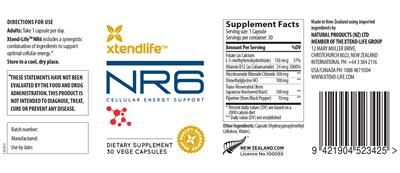
NR6 contains 6 active ingredients: folate, dimethylglycine HCl, trans-resveratrol, piperine (from black pepper), vitamin B12, and nicotinamide riboside chloride. These work together as a cellular energy and antioxidant blend.
The product also contains two inactive ingredients—hydroxypropylmethyl cellulose and water—which serve as the capsule and binding materials.
Does it work?
Not established
Evidence for NR6's ingredients is mixed. Trans-resveratrol is possibly effective for obesity and allergic rhinitis (hay fever), but possibly ineffective for cardiovascular disease and high cholesterol.
Piperine has insufficient evidence to rate it for hay fever, asthma, athletic performance, headache, depression, or diarrhea. Vitamin B12 is effective for B12 deficiency itself and possibly effective for canker sores and nerve pain, but the other conditions NR6 targets don't have established ratings in our data.
Nicotinamide riboside has insufficient evidence for all the conditions we hold data on—including age-related macular degeneration, Alzheimer's disease, athletic performance, fatty liver disease, and heart failure. For folate and dimethylglycine HCl, we have no effectiveness ratings on file.
How safe is it?
Well-documented data
Trans-resveratrol is generally well tolerated at typical supplement doses, but higher doses may cause diarrhea, digestive discomfort, and loose stools. Resveratrol isn't recommended in concentrated supplement form during pregnancy or breastfeeding due to insufficient safety data, though food sources are fine.
Piperine (black pepper) is safe as a food spice; concentrated supplements should be used cautiously and avoided in pregnancy or breastfeeding without medical advice. Common side effects from higher doses include burning aftertaste and indigestion.
Vitamin B12 is very safe—the body removes excess through urine and there's no established upper limit—and is actually needed in pregnancy and breastfeeding at recommended amounts. Nicotinamide riboside appears well tolerated short-term, but long-term safety isn't fully known; avoid it in pregnancy and breastfeeding due to limited safety data.
Reported side effects include bloating, muscle pain, nausea, itching, and temporary stool changes.
Meds to double-check
Moderate interaction found
Before taking NR6, check with your doctor or pharmacist if you take blood thinners or antiplatelet drugs (like warfarin, clopidogrel, or aspirin)—trans-resveratrol may increase bleeding risk. Also double-check if you're on propranolol, nevirapine, rifampin, phenytoin, cyclosporine, theophylline, atorvastatin, or pentobarbital, as piperine may raise their blood levels.
If you take blood pressure medications, nicotinamide riboside might add a lowering effect. If you're on metformin for diabetes, the vitamin B12 in this product may help—but still confirm the timing and dose with your pharmacist.
The bottom line
Scorecard at a glanceFully disclosed formula with no established evidence rating for its marketed use. Moderate medication interactions have been identified, and safety information is well characterized.
NR6 is designed as a cellular energy and antioxidant supplement, and some of its ingredients have modest evidence for obesity and allergies. However, it carries multiple Moderate-severity interactions—especially with blood thinners, heart medications, and certain antiretrovirals—and you should check your exact medications before starting.
Vitamin B12 supplementation may help if you're on metformin and have low B12. Talk with your own doctor or pharmacist about whether this product fits your health needs and medications.
Educational only — not medical advice; always confirm with your pharmacist. Our editorial policy · How we use AI
Assessment coverage: 4 of 6 active ingredients matched to our full ingredient reviews (monographs). Based on the product label dated Sep 25, 2024.
This Scorecard evaluates available label information, ingredient evidence, and known medication-safety considerations. It does not independently verify product identity, purity, potency, contamination, or manufacturing quality. How these ratings are computed
General information
Key facts about NR6, straight from the product label.
| Brand | Xtendlife |
|---|---|
| Barcode (UPC) | 9421904523425 |
| Net contents | 30 Vege Capsule(s) |
| Market status | On market |
| Date entered into DSLD | Sep 25, 2024 |
| DSLD ID | 318037 |
| Product type | Other Combinations |
| Supplement form | Capsule |
| Dietary claims / uses | All Other, Structure/Function |
| Intended target group(s) | Adult (18 - 50 Years) |
Everything in this section is reproduced from the manufacturer’s own product label — it’s the label speaking, not HelloPharmacist. We show it so you can see exactly what the maker states; we don’t verify or endorse those statements.
Supplement Facts
The label details for NR6 by Xtendlife, sourced from the NIH Dietary Supplement Label Database.
Supplement Facts
| Ingredient | Amount | % DV |
|---|---|---|
| Folate | 150 mcg | 37% |
| Dimethylglycine HCl | 100 mg | -- |
| Trans-Resveratrol | 100 mg | -- |
| Piperine | 10 mg | -- |
| Vitamin B12 | 24 mcg | 1000% |
| Nicotinamide Riboside Chloride | 300 mg | -- |
Other ingredients: Hydroxypropylmethyl Cellulose, Water
Tap any ingredient to jump to its full detail below.
These statements are the manufacturer’s wording, reproduced from the product label — the label is saying it, not HelloPharmacist. We don’t verify or endorse them.
Suggested/Recommended/Usage/Directions
Directions For Use Adults: Take 1 capsule per day.
Formula
Xtend-Life NR6 includes a synergistic combination of ingredients to support optimal cellular energy.
Storage
Store in a cool, dry place.
FDA Disclaimer Statement
These statements have not been evaluated by the Food and Drug Administration. This product is not intended to diagnose, treat, cure or prevent any disease.
Formulation
Cellular Energy Support
FDA Statement of Identity
Dietary Supplement
Seals/Symbols
Best Quality Guarantee
NewZealand.com Licence No.100055
General Statements
USA/Canada Ph: 1888 487 9304
Is this label outdated? Report a formula or label change and our pharmacy team will review it.
NR6 by Xtendlife label
The label scan from the NIH Dietary Supplement Label Database. Tap to enlarge.
Label images are published by the NIH Dietary Supplement Label Database for the version of this product on file. Always read your actual product label.
View the full label (PDF)The Ingredients in NR6 by Xtendlife
These are the 6 active ingredients this product is made of. Select any to open its full monograph.
Serving size1 Capsule(s) Dosage formCapsule Servings per container30 Amounts shown are per serving.
Most supplement products combine several ingredients, and a medication can interact with the product through any one of them. Each ingredient below shows whether it has known drug interactions.
Folate
Dimethylglycine HCl
Trans-Resveratrol
Interacts with822 drugs
Resveratrol is a plant compound found in red grapes, berries, and peanuts that is popular for heart health, anti-aging, and antioxidant support. While...
Trans-Resveratrol monograph & interactionsPiperine
Interacts with1,019 drugs
Black pepper is a common kitchen spice that is generally safe in the amounts used in food. Its extract, piperine, is mostly added to supplements to he...
Piperine monograph & interactionsVitamin B12
Interacts with20 drugs
Vitamin B12 (cobalamin) is an essential nutrient your body needs to make red blood cells, keep nerves healthy, and support DNA. Supplements are very h...
Vitamin B12 monograph & interactionsNicotinamide Riboside Chloride
Interacts with172 drugs
Nicotinamide riboside (NR) is a form of vitamin B3 that the body converts into NAD+, a molecule involved in cellular energy and repair. Early human st...
Nicotinamide Riboside Chloride monograph & interactionsOther (inactive) ingredients: Hydroxypropylmethyl Cellulose, Water. These complete the product’s ingredient list but are not active constituents.
NR6 by Xtendlife Drug Interactions
HelloPharmacist Interaction Report
Xtendlife NR6 has documented interactions through its trans-resveratrol, piperine, and vitamin B12 content.
The most serious finding is Moderate severity: trans-resveratrol may increase bleeding risk if combined with blood thinners or antiplatelet drugs (like warfarin or aspirin) because it has antiplatelet effects. Altogether, these interactions span 1,156 individual medications.
Read the full breakdown — every affected drug type, severity by severity
Trans-resveratrol also theoretically increases blood levels of several drug categories metabolized by liver enzymes (CYP2C19, CYP1A2, CYP3A4, and CYP2E1 substrates), though human studies at typical supplement doses haven't confirmed this. Clinical research at high doses (3000 mg daily) showed no dose adjustments were needed for CYP3A4 drugs, and a 500 mg dose increased one CYP2E1 substrate by about 54%.
Piperine (from black pepper) carries Moderate-severity interactions with specific medications: it may raise blood levels of propranolol, nevirapine, rifampin, phenytoin (potentially doubling levels), cyclosporine, theophylline, and atorvastatin. It may also increase sedative effects of pentobarbital.
Vitamin B12 has a Minor interaction: metformin can lower B12 levels over time, which this supplement may help offset. Folate and dimethylglycine HCl could not be checked — we hold no data for them.
Check your exact medications with the search tool on this page before starting.
Check your own medications below · Editorial policy · How we use AI
Want to check YOUR meds against NR6?
Ask about interactions with your drugs in plain English — “Can I take it with lisinopril?” — and we find you the answer in seconds, ingredient by ingredient.
Go to the checkerIngredients driving the most interactions
Individual Drug Interactions
The ingredients in NR6 interact with 1,155 drugs. Click any drug to see the details.
4 of the 6 ingredients in NR6 interact with drugs. Each result below shows which ingredient is responsible. Piperine Trans-Resveratrol Nicotinamide Riboside Chloride Vitamin B12
BumetanideBurinex
How Bumetanide interacts with NR6 — through 1 ingredient. Tap an ingredient for the detail:
Nicotinamide Riboside ChlorideAntihypertensive Drugs Minor
Interaction Summary
Theoretically, nicotinamide riboside may have additive effects with antihypertensive drugs, potentially increasing the risk for hypotension.
Read the full Nicotinamide Riboside Chloride + Bumetanide interactionBumetanide (iv)Bumex
How Bumetanide (iv) interacts with NR6 — through 1 ingredient. Tap an ingredient for the detail:
Nicotinamide Riboside ChlorideAntihypertensive Drugs Minor
Interaction Summary
Theoretically, nicotinamide riboside may have additive effects with antihypertensive drugs, potentially increasing the risk for hypotension.
Read the full Nicotinamide Riboside Chloride + Bumetanide (iv) interactionBumetanide (oral)Bumex
How Bumetanide (oral) interacts with NR6 — through 1 ingredient. Tap an ingredient for the detail:
Nicotinamide Riboside ChlorideAntihypertensive Drugs Minor
Interaction Summary
Theoretically, nicotinamide riboside may have additive effects with antihypertensive drugs, potentially increasing the risk for hypotension.
Read the full Nicotinamide Riboside Chloride + Bumetanide (oral) interactionCandesartan CilexetilAmias, Atacand
How Candesartan Cilexetil interacts with NR6 — through 1 ingredient. Tap an ingredient for the detail:
Nicotinamide Riboside ChlorideAntihypertensive Drugs Minor
Interaction Summary
Theoretically, nicotinamide riboside may have additive effects with antihypertensive drugs, potentially increasing the risk for hypotension.
Read the full Nicotinamide Riboside Chloride + Candesartan Cilexetil interactionCandesartan Cilexetil, HydrochlorothiazideAtacand HCT
How Candesartan Cilexetil, Hydrochlorothiazide interacts with NR6 — through 1 ingredient. Tap an ingredient for the detail:
Nicotinamide Riboside ChlorideAntihypertensive Drugs Minor
Interaction Summary
Theoretically, nicotinamide riboside may have additive effects with antihypertensive drugs, potentially increasing the risk for hypotension.
Read the full Nicotinamide Riboside Chloride + Candesartan Cilexetil, Hydrochlorothiazide interactionCaptoprilAcepril, Capoten
How Captopril interacts with NR6 — through 1 ingredient. Tap an ingredient for the detail:
Nicotinamide Riboside ChlorideAntihypertensive Drugs Minor
Interaction Summary
Theoretically, nicotinamide riboside may have additive effects with antihypertensive drugs, potentially increasing the risk for hypotension.
Read the full Nicotinamide Riboside Chloride + Captopril interactionCaptopril, HydrochlorothiazideAcezide, Capozide
How Captopril, Hydrochlorothiazide interacts with NR6 — through 1 ingredient. Tap an ingredient for the detail:
Nicotinamide Riboside ChlorideAntihypertensive Drugs Minor
Interaction Summary
Theoretically, nicotinamide riboside may have additive effects with antihypertensive drugs, potentially increasing the risk for hypotension.
Read the full Nicotinamide Riboside Chloride + Captopril, Hydrochlorothiazide interactionCarteololCartrol, Ocupress
How Carteolol interacts with NR6 — through 1 ingredient. Tap an ingredient for the detail:
Nicotinamide Riboside ChlorideAntihypertensive Drugs Minor
Interaction Summary
Theoretically, nicotinamide riboside may have additive effects with antihypertensive drugs, potentially increasing the risk for hypotension.
Read the full Nicotinamide Riboside Chloride + Carteolol interactionChlorothiazideDiuril
How Chlorothiazide interacts with NR6 — through 1 ingredient. Tap an ingredient for the detail:
Nicotinamide Riboside ChlorideAntihypertensive Drugs Minor
Interaction Summary
Theoretically, nicotinamide riboside may have additive effects with antihypertensive drugs, potentially increasing the risk for hypotension.
Read the full Nicotinamide Riboside Chloride + Chlorothiazide interactionChlorothiazide, MethyldopaAldochlor, Aldoclor 150, Aldoclor 250
How Chlorothiazide, Methyldopa interacts with NR6 — through 1 ingredient. Tap an ingredient for the detail:
Nicotinamide Riboside ChlorideAntihypertensive Drugs Minor
Interaction Summary
Theoretically, nicotinamide riboside may have additive effects with antihypertensive drugs, potentially increasing the risk for hypotension.
Read the full Nicotinamide Riboside Chloride + Chlorothiazide, Methyldopa interactionChlorothiazide, ReserpineDiupres
How Chlorothiazide, Reserpine interacts with NR6 — through 1 ingredient. Tap an ingredient for the detail:
Nicotinamide Riboside ChlorideAntihypertensive Drugs Minor
Interaction Summary
Theoretically, nicotinamide riboside may have additive effects with antihypertensive drugs, potentially increasing the risk for hypotension.
Read the full Nicotinamide Riboside Chloride + Chlorothiazide, Reserpine interactionChlorthalidoneHygroton, Thalitone
How Chlorthalidone interacts with NR6 — through 1 ingredient. Tap an ingredient for the detail:
Nicotinamide Riboside ChlorideAntihypertensive Drugs Minor
Interaction Summary
Theoretically, nicotinamide riboside may have additive effects with antihypertensive drugs, potentially increasing the risk for hypotension.
Read the full Nicotinamide Riboside Chloride + Chlorthalidone interactionChlorthalidone, ClonidineClorpres, Combipres
How Chlorthalidone, Clonidine interacts with NR6 — through 1 ingredient. Tap an ingredient for the detail:
Nicotinamide Riboside ChlorideAntihypertensive Drugs Minor
Interaction Summary
Theoretically, nicotinamide riboside may have additive effects with antihypertensive drugs, potentially increasing the risk for hypotension.
Read the full Nicotinamide Riboside Chloride + Chlorthalidone, Clonidine interactionCilazaprilInhibace
How Cilazapril interacts with NR6 — through 1 ingredient. Tap an ingredient for the detail:
Nicotinamide Riboside ChlorideAntihypertensive Drugs Minor
Interaction Summary
Theoretically, nicotinamide riboside may have additive effects with antihypertensive drugs, potentially increasing the risk for hypotension.
Read the full Nicotinamide Riboside Chloride + Cilazapril interactionClevidipineCleviprex
How Clevidipine interacts with NR6 — through 1 ingredient. Tap an ingredient for the detail:
Nicotinamide Riboside ChlorideAntihypertensive Drugs Minor
Interaction Summary
Theoretically, nicotinamide riboside may have additive effects with antihypertensive drugs, potentially increasing the risk for hypotension.
Read the full Nicotinamide Riboside Chloride + Clevidipine interactionClonidineCatapres
How Clonidine interacts with NR6 — through 1 ingredient. Tap an ingredient for the detail:
Nicotinamide Riboside ChlorideAntihypertensive Drugs Minor
Interaction Summary
Theoretically, nicotinamide riboside may have additive effects with antihypertensive drugs, potentially increasing the risk for hypotension.
Read the full Nicotinamide Riboside Chloride + Clonidine interactionCryptenamine, MethyclothiazideDiutensen
How Cryptenamine, Methyclothiazide interacts with NR6 — through 1 ingredient. Tap an ingredient for the detail:
Nicotinamide Riboside ChlorideAntihypertensive Drugs Minor
Interaction Summary
Theoretically, nicotinamide riboside may have additive effects with antihypertensive drugs, potentially increasing the risk for hypotension.
Read the full Nicotinamide Riboside Chloride + Cryptenamine, Methyclothiazide interactionCyclothiazideAnhydron, Fluidil
How Cyclothiazide interacts with NR6 — through 1 ingredient. Tap an ingredient for the detail:
Nicotinamide Riboside ChlorideAntihypertensive Drugs Minor
Interaction Summary
Theoretically, nicotinamide riboside may have additive effects with antihypertensive drugs, potentially increasing the risk for hypotension.
Read the full Nicotinamide Riboside Chloride + Cyclothiazide interactionDeserpidineHarmonyl
How Deserpidine interacts with NR6 — through 1 ingredient. Tap an ingredient for the detail:
Nicotinamide Riboside ChlorideAntihypertensive Drugs Minor
Interaction Summary
Theoretically, nicotinamide riboside may have additive effects with antihypertensive drugs, potentially increasing the risk for hypotension.
Read the full Nicotinamide Riboside Chloride + Deserpidine interactionDeserpidine, HydrochlorothiazideOreticyl, Oreticyl Forte
How Deserpidine, Hydrochlorothiazide interacts with NR6 — through 1 ingredient. Tap an ingredient for the detail:
Nicotinamide Riboside ChlorideAntihypertensive Drugs Minor
Interaction Summary
Theoretically, nicotinamide riboside may have additive effects with antihypertensive drugs, potentially increasing the risk for hypotension.
Read the full Nicotinamide Riboside Chloride + Deserpidine, Hydrochlorothiazide interactionDeserpidine, MethyclothiazideEnduronyl, Enduronyl Forte
How Deserpidine, Methyclothiazide interacts with NR6 — through 1 ingredient. Tap an ingredient for the detail:
Nicotinamide Riboside ChlorideAntihypertensive Drugs Minor
Interaction Summary
Theoretically, nicotinamide riboside may have additive effects with antihypertensive drugs, potentially increasing the risk for hypotension.
Read the full Nicotinamide Riboside Chloride + Deserpidine, Methyclothiazide interactionDoxazosin MesylateCardura
How Doxazosin Mesylate interacts with NR6 — through 1 ingredient. Tap an ingredient for the detail:
Nicotinamide Riboside ChlorideAntihypertensive Drugs Minor
Interaction Summary
Theoretically, nicotinamide riboside may have additive effects with antihypertensive drugs, potentially increasing the risk for hypotension.
Read the full Nicotinamide Riboside Chloride + Doxazosin Mesylate interactionEnalapril MaleateEpaned, Vasotec
How Enalapril Maleate interacts with NR6 — through 1 ingredient. Tap an ingredient for the detail:
Nicotinamide Riboside ChlorideAntihypertensive Drugs Minor
Interaction Summary
Theoretically, nicotinamide riboside may have additive effects with antihypertensive drugs, potentially increasing the risk for hypotension.
Read the full Nicotinamide Riboside Chloride + Enalapril Maleate interactionEnalapril Maleate, HydrochlorothiazideVaseretic
How Enalapril Maleate, Hydrochlorothiazide interacts with NR6 — through 1 ingredient. Tap an ingredient for the detail:
Nicotinamide Riboside ChlorideAntihypertensive Drugs Minor
Interaction Summary
Theoretically, nicotinamide riboside may have additive effects with antihypertensive drugs, potentially increasing the risk for hypotension.
Read the full Nicotinamide Riboside Chloride + Enalapril Maleate, Hydrochlorothiazide interactionEplerenoneInspra
How Eplerenone interacts with NR6 — through 1 ingredient. Tap an ingredient for the detail:
Nicotinamide Riboside ChlorideAntihypertensive Drugs Minor
Interaction Summary
Theoretically, nicotinamide riboside may have additive effects with antihypertensive drugs, potentially increasing the risk for hypotension.
Read the full Nicotinamide Riboside Chloride + Eplerenone interactionEpoprostenolFlolan
How Epoprostenol interacts with NR6 — through 1 ingredient. Tap an ingredient for the detail:
Nicotinamide Riboside ChlorideAntihypertensive Drugs Minor
Interaction Summary
Theoretically, nicotinamide riboside may have additive effects with antihypertensive drugs, potentially increasing the risk for hypotension.
Read the full Nicotinamide Riboside Chloride + Epoprostenol interactionEprosartanTeveten
How Eprosartan interacts with NR6 — through 1 ingredient. Tap an ingredient for the detail:
Nicotinamide Riboside ChlorideAntihypertensive Drugs Minor
Interaction Summary
Theoretically, nicotinamide riboside may have additive effects with antihypertensive drugs, potentially increasing the risk for hypotension.
Read the full Nicotinamide Riboside Chloride + Eprosartan interactionEsmololBrevibloc
How Esmolol interacts with NR6 — through 1 ingredient. Tap an ingredient for the detail:
Nicotinamide Riboside ChlorideAntihypertensive Drugs Minor
Interaction Summary
Theoretically, nicotinamide riboside may have additive effects with antihypertensive drugs, potentially increasing the risk for hypotension.
Read the full Nicotinamide Riboside Chloride + Esmolol interactionEthacrynic AcidEdecrin
How Ethacrynic Acid interacts with NR6 — through 1 ingredient. Tap an ingredient for the detail:
Nicotinamide Riboside ChlorideAntihypertensive Drugs Minor
Interaction Summary
Theoretically, nicotinamide riboside may have additive effects with antihypertensive drugs, potentially increasing the risk for hypotension.
Read the full Nicotinamide Riboside Chloride + Ethacrynic Acid interactionFenoldopamCorlopam
How Fenoldopam interacts with NR6 — through 1 ingredient. Tap an ingredient for the detail:
Nicotinamide Riboside ChlorideAntihypertensive Drugs Minor
Interaction Summary
Theoretically, nicotinamide riboside may have additive effects with antihypertensive drugs, potentially increasing the risk for hypotension.
Read the full Nicotinamide Riboside Chloride + Fenoldopam interactionEach ingredient & the kinds of drugs it affects
For each ingredient in NR6 with known interactions, here are the types of medications they can affect. Open any type for the detail — or search your exact drug in the checker above.
Piperine
Anticoagulant/Antiplatelet Drugs
Theoretically, black pepper might increase the risk of bleeding when taken with antiplatelet or anticoagulant drugs.
In vitro research shows that piperine, a constituent of black pepper, seems to inhibit platelet aggregation. This has not been reported in humans.
Antidiabetes Drugs
Theoretically, black pepper might increase the risk of hypoglycemia when taken with antidiabetes drugs.
Animal research shows that piperine, a constituent of black pepper, can reduce blood glucose levels. Monitor blood glucose levels closely. Dose adjustments might be necessary.
Atorvastatin (Lipitor)
Theoretically, black pepper might increase blood levels of atorvastatin.
Animal research shows that taking piperine, a constituent of black pepper, 35 mg/kg can increase the maximum serum concentration of atorvastatin three-fold. This has not been reported in humans.
Cyclosporine (Neoral, Sandimmune)
Theoretically, black pepper might increase the effects and side effects of cyclosporine.
In vitro research shows that piperine, a constituent of black pepper, increases the bioavailability of cyclosporine. This has not been reported in humans.
Cytochrome P450 2D6 (Cyp2D6) Substrates
Theoretically, black pepper might increase levels of drugs metabolized by CYP2D6.
In vitro research suggests that some constituents of black pepper inhibit CYP2D6. This has not been reported in humans.
Cytochrome P450 3A4 (Cyp3A4) Substrates
Theoretically, black pepper might increase levels of drugs metabolized by CYP3A4.
In vitro research and pharmacokinetic simulation data suggest that piperine, a constituent of black pepper, as well as the pepper fruit seem to inhibit CYP3A4. This has not been reported in humans.
Lithium
Theoretically, black pepper might increase blood levels of lithium due to its diuretic effects. The dose of lithium might need to be reduced.
Black pepper is thought to have diuretic properties.
Nevirapine (Viramune)
Black pepper might increase blood levels of nevirapine.
Clinical research shows that piperine, a constituent of black pepper, increases the plasma concentration of nevirapine. However, no adverse effects were observed in this study.
P-Glycoprotein Substrates
Theoretically, black pepper might increase levels of P-glycoprotein substrates.
In vitro research shows that piperine, a constituent of black pepper, seems to inhibit P-glycoprotein.
Pentobarbital (Nembutal)
Theoretically, black pepper might increase the sedative effects of pentobarbital.
Animal research shows that piperine, a constituent of black pepper, increases pentobarbital-induced sleeping time.
Phenytoin (Dilantin)
Black pepper might increase blood levels of phenytoin.
Clinical research shows that piperine, a constituent of black pepper, seems to increase absorption, slow elimination, and increase levels of phenytoin. Taking a single dose of black pepper 1 gram along with phenytoin seems to double the serum concentration of phenytoin. Consuming a soup with black pepper providing piperine 44 mg/200 mL of soup along with phenytoin also seems to increase phenytoin levels when compared with consuming the same soup without black pepper.
Propranolol (Inderal)
Black pepper might increase blood levels of propranolol.
Clinical research shows that piperine, a constituent of black pepper, seems to increase absorption and slow elimination of propranolol.
Rifampin (Rifadin)
Black pepper might increase blood levels of rifampin.
Clinical research shows that piperine, a constituent of black pepper, seems to increase absorption and serum levels of rifampin.
Theophylline
Black pepper might increase blood levels of theophylline.
Clinical research shows that piperine, a constituent of black pepper, seems to increase absorption and slow elimination of theophylline.
Amoxicillin (Amoxil, Trimox)
Theoretically, black pepper might increase the effects and side effects of amoxicillin.
Animal research shows that taking piperine, a constituent of black pepper, with amoxicillin increases plasma levels of amoxicillin. This has not been reported in humans.
Carbamazepine (Tegretol)
Theoretically, black pepper might increase blood levels of carbamazepine, potentially increasing the effects and side effects of carbamazepine.
One clinical study in patients taking carbamazepine 300 mg or 500 mg twice daily shows that taking a single 20 mg dose of purified piperine, a constituent of black pepper, increases carbamazepine levels. Piperine may increase carbamazepine absorption by increasing blood flow to the GI tract, increasing the surface area of the small intestine, or inhibiting cytochrome P450 3A4 (CYP3A4) in the gut wall. Absorption was significantly increased by 7-10 mcg/mL/hour. The time to eliminate carbamazepine was also increased by 4-8 hours. Although carbamazepine levels were increased, this did not appear to increase side effects. In vitro research also shows that piperine can increase carbamazepine levels by 11% in a time-dependent manner.
Cytochrome P450 1A2 (Cyp1A2) Substrates
Theoretically, black pepper might decrease levels and clinical effects of drugs metabolized by CYP1A2.
In vitro research suggests that black pepper induces CYP1A2. This has not been reported in humans.
Trans-Resveratrol
Anticoagulant/Antiplatelet Drugs
Resveratrol may have antiplatelet effects and may increase the risk of bleeding if used with anticoagulant or antiplatelet drugs.
Resveratrol seems to have antiplatelet effects.
Cytochrome P450 1A2 (Cyp1A2) Substrates
Theoretically, resveratrol might increase levels of drugs metabolized by CYP1A2.
In vitro research shows that resveratrol can inhibit CYP1A2 enzymes. However, this interaction has not been reported in humans.
Cytochrome P450 2C19 (Cyp2C19) Substrates
Theoretically, resveratrol might increase levels of drugs metabolized by CYP2C19.
In vitro research shows that resveratrol can inhibit CYP2C19 enzymes. However, this interaction has not been reported in humans.
Cytochrome P450 2E1 (Cyp2E1) Substrates
Resveratrol might increase levels of drugs metabolized by CYP2E1.
In vitro research suggests that resveratrol inhibits CYP2E1 isoenzyme. Also, a pharmacokinetic study shows that taking resveratrol 500 mg daily for 10 days prior to taking a single dose of chlorzoxazone 250 mg increases the maximum concentration of chlorzoxazone by about 54%, the area under the curve of chlorzoxazone by about 72%, and the half-life of chlorzoxazone by about 35%. Chlorzoxazone is used as a probe drug for CYP2E1.
Cytochrome P450 3A4 (Cyp3A4) Substrates
Theoretically, resveratrol might increase levels of drugs metabolized by CYP3A4.
In vitro research shows that resveratrol can inhibit the CYP3A4 enzyme. However, clinical research shows that taking resveratrol 3000 mg daily for 8 weeks does not necessitate dose adjustments to medications metabolized by CYP3A4.
Nicotinamide Riboside Chloride
Antihypertensive Drugs
Theoretically, nicotinamide riboside may have additive effects with antihypertensive drugs, potentially increasing the risk for hypotension.
One small clinical study suggests that nicotinamide riboside can modestly reduce blood pressure in hypertensive patients. However, other clinical research did not find a reduction in blood pressure when compared with control.
Vitamin B12
Metformin (Glucophage)
Metformin, a common medication used to manage type 2 diabetes, has been associated with lower vitamin B12 levels in some individuals. Prolonged use of metformin can interfere with the absorption of B12 in the digestive system, potentially leading to a deficiency in this essential vitamin.
Brand information
Manufacturer and brand details for NR6, from the product label.
Xtendlife
See all Xtendlife products- Name
- Natural Products (NZ) LTD Member of the Xtend-Life Group
- Street Address
- 12 Mary Muller Drive
- City
- Christchurch
- ZipCode
- 8022
- Phone Number
- +64 3 384 2116
- Web Address
- www.XTEND-LIFE.COM
NR6 by Xtendlife: Common Questions
Does NR6 by Xtendlife interact with any medications?
How can one product interact with so many drugs?
Where does this information come from?
Can I take NR6 if I'm pregnant or breastfeeding?
What does each ingredient in NR6 do?
Does NR6 actually work for weight loss or anti-aging?
What side effects might I get from NR6?
Is NR6 safe to take long-term?
Will NR6 affect my diabetes or blood pressure medication?
Written and reviewed by the HelloPharmacist editorial staff. Our editorial policy
Not sure if NR6 is safe with your meds?
Our pharmacists answer your medication & supplement questions — free.
Label information is sourced from the NIH Dietary Supplement Label Database and reflects the product version on file; always read your actual product label. This page is for education only and is not a substitute for professional medical advice. Confirm with your pharmacist or doctor before combining supplements and medications.
The Full Monographs Behind NR6’s Ingredients
Every ingredient we hold a full HelloPharmacist monograph for — uses, evidence, safety, and the complete interaction list.
Resveratrol
Interacts with 822 drugsResveratrol is a plant compound found in red grapes, berries, and peanuts that is popular for heart health, anti-aging, and antioxidant support. While lab and animal studies are promising, s...
Read the full Resveratrol monograph → Herb & supplement monographBlack Pepper
Interacts with 1,019 drugsBlack pepper is a common kitchen spice that is generally safe in the amounts used in food. Its extract, piperine, is mostly added to supplements to help the body absorb other ingredients (li...
Read the full Black Pepper monograph → Herb & supplement monographVitamin B12
Interacts with 20 drugsVitamin B12 (cobalamin) is an essential nutrient your body needs to make red blood cells, keep nerves healthy, and support DNA. Supplements are very helpful for people who are deficient — su...
Read the full Vitamin B12 monograph → Herb & supplement monographNicotinamide Riboside
Interacts with 172 drugsNicotinamide riboside (NR) is a form of vitamin B3 that the body converts into NAD+, a molecule involved in cellular energy and repair. Early human studies show it can reliably raise NAD+ le...
Read the full Nicotinamide Riboside monograph →Sources & How We Checked
NR6's label data comes from the NIH Dietary Supplement Label Database; the ingredient interaction data is from the Natural Medicines database, reviewed by our pharmacists.
- NIH Dietary Supplement Label Database (DSLD) — The official product label on file for this supplement.
- Natural Medicines (Therapeutic Research Center) — Evidence-graded clinical reference behind the ingredient interaction data.
Content is written and reviewed by licensed HelloPharmacist pharmacists. See our data sources and editorial standards for how this information is built and checked.
The 90 references behind this product’s interaction data
Every citation that drives the interaction findings for this product’s ingredients, from the evidence-graded Natural Medicines (TRC Healthcare) database. Open an ingredient to browse its citations — links open the study on PubMed or the publisher’s site.
Resveratrol 24 references
- Soleas GJ, Diamandis EP, Goldberg DM. Resveratrol: a molecule whose time has come? And gone? Clin Biochem 1997;30:91-113.
- Pace-Asciak CR, Rounova O, Hahn SE, et al. Wines and grape juices as modulators of platelet aggregation in healthy human subjects. Clin Chim Acta 1996;246:163-82. PubMed
- Bertelli AA, Giovannini L, Bernini W, et al. Antiplatelet activity of cis-resveratrol. Drugs Exp Clin Res 1996;22:61-3.
- Pace-Asciak CR, Hahn S, Diamandis EP, et al. The red wine phenolics trans-resveratrol and quercetin block human platelet aggregation and eicosanoid synthesis: implications for protection against coronary heart disease. Clin Chim Acta 1995;235:207-19.
- Bertelli A, Bertelli AA, Gozzini A, Giovannini L. Plasma and tissue resveratrol concentrations and pharmacological activity. Drugs Exp Clin Res 1998;24:133-8.
- Bertelli AA, Giovannini L, Giannessi D, et al. Antiplatelet activity of synthetic and natural resveratrol in red wine. Int J Tissue React 1995;17:1-3.
- Piver B, Berthou F, Dreano Y, Lucas D. Inhibition of CYP3A, CYP1A and CYP2E1 activities by resveratrol and other non volatile red wine components. Toxicol Lett 2001;125:83-91. PubMed
- Chang, T. K., Chen, J., and Lee, W. B. Differential inhibition and inactivation of human CYP1 enzymes by trans-resveratrol: evidence for mechanism-based inactivation of CYP1A2. J.Pharmacol.Exp.Ther. 2001;299(3):874-882.
- Dobrydneva, Y., Williams, R. L., and Blackmore, P. F. trans-Resveratrol inhibits calcium influx in thrombin-stimulated human platelets. Br.J.Pharmacol. 1999;128(1):149-157.
- Kirk, R. I., Deitch, J. A., Wu, J. M., and Lerea, K. M. Resveratrol decreases early signaling events in washed platelets but has little effect on platalet in whole food. Blood Cells Mol.Dis. 2000;26(2):144-150.
- Zbikowska, H. M. and Olas, B. Antioxidants with carcinostatic activity (resveratrol, vitamin E and selenium) in modulation of blood platelet adhesion. J Physiol Pharmacol. 2000;51(3):513-520.
- Olas, B., Wachowicz, B., Saluk-Juszczak, J., and Zielinski, T. Effect of resveratrol, a natural polyphenolic compound, on platelet activation induced by endotoxin or thrombin. Thromb.Res 8-15-2002;107(3-4):141-145. PubMed
- Yu, C., Shin, Y. G., Kosmeder, J. W., Pezzuto, J. M., and van Breemen, R. B. Liquid chromatography/tandem mass spectrometric determination of inhibition of human cytochrome P450 isozymes by resveratrol and resveratrol-3-sulfate. Rapid Commun.Mass Spectro PubMed
- Ma, Z. H. and Ma, Q. Y. Resveratrol: a medical drug for acute pancreatitis. World J Gastroenterol. 6-7-2005;11(21):3171-3174. PubMed
- la, Porte C., Voduc, N., Zhang, G., Seguin, I., Tardiff, D., Singhal, N., and Cameron, D. W. Steady-State pharmacokinetics and tolerability of trans-resveratrol 2000 mg twice daily with food, quercetin and alcohol (ethanol) in healthy human subjects. Cli PubMed
- Brown, V. A., Patel, K. R., Viskaduraki, M., Crowell, J. A., Perloff, M., Booth, T. D., Vasilinin, G., Sen, A., Schinas, A. M., Piccirilli, G., Brown, K., Steward, W. P., Gescher, A. J., and Brenner, D. E. Repeat dose study of the cancer chemopreventive
- Pendurthi, U. R., Williams, J. T., and Rao, L. V. Resveratrol, a polyphenolic compound found in wine, inhibits tissue factor expression in vascular cells : A possible mechanism for the cardiovascular benefits associated with moderate consumption of wine. PubMed
- Chachay VS, Macdonald GA, Martin JH, Whitehead JP, O'Moore-Sullivan TM, Lee P, Franklin M, Klein K, Taylor PJ, Ferguson M, Coombes JS, Thomas GP, Cowin GJ, Kirkpatrick CM, Prins JB, Hickman IJ. Resveratrol does not benefit patients with nonalcoholic fatty
- Bedada SK, Neerati P. Resveratrol Pretreatment Affects CYP2E1 Activity of Chlorzoxazone in Healthy Human Volunteers. Phytother Res. 2016;30(3):463-8. PubMed
- Lin CT, Sun XY, Lin AX. Supplementation with high-dose trans-resveratrol improves ultrafiltration in peritoneal dialysis patients: a prospective, randomized, double-blind study. Ren Fail. 2016;38(2):214-21. PubMed
- Li Q, Yang G, Xu H, Tang S, Lee WY. Effects of resveratrol supplementation on bone quality: a systematic review and meta-analysis of randomized controlled trials. BMC Complement Med Ther 2021;21(1):214. PubMed
- McCreary MR, Schnell PM, Rhoda DA. Randomized double-blind placebo-controlled proof-of-concept trial of resveratrol for outpatient treatment of mild coronavirus disease (COVID-19). Sci Rep 2022;12(1):10978. PubMed
- Abdelhaleem IA, Brakat AM, Adayel HM, Asla MM, Rizk MA, Aboalfetoh AY. The effects of resveratrol on glycemic control and cardiometabolic parameters in patients with T2DM: A systematic review and meta-analysis. Med Clin (Barc) 2022;158(12):576-585. PubMed
- Badaoui A. Allergic contact dermatitis to resveratrol and Scutellaria baicalensis root extract in a cosmetic product. Contact Dermatitis 2022.
Black Pepper 29 references
- Leung AY, Foster S. Encyclopedia of Common Natural Ingredients Used in Food, Drugs and Cosmetics. 2nd ed. New York, NY: John Wiley & Sons, 1996.
- Brinker F. Herb Contraindications and Drug Interactions. 2nd ed. Sandy, OR: Eclectic Medical Publications, 1998.
- Bano G, Amla V, Raina RK, et al. The effect of piperine on pharmacokinetics of phenytoin in healthy volunteers. Planta Med 1987;53:568-9. PubMed
- Bano G, et al. Effect of piperine on bioavailability and pharmacokinetics of propranolol and theophylline in healthy volunteers. Eur J Clin Pharmacol 1991;41;615-7. PubMed
- Cohle SD, Trestrail JD III, Graham MA, et al. Fatal pepper aspiration. Am J Dis Child 1988;142:633-6. PubMed
- Bhardwaj RK, Glaeser H, Becquemont L, et al. Piperine, a major constituent of black pepper, inhibits human P-glycoprotein and CYP3A4. J Pharmacol Exp Ther 2002;302:645-50. PubMed
- Velpandian T, Jasuja R, Bhardwaj RK, et al. Piperine in food: interference in the pharmacokinetics of phenytoin. Eur J Drug Metab Pharmacokinet 2001;26:241-7. PubMed
- Pattanaik S, Hota D, Prabhakar S, et al. Pharmacokinetic interaction of a single dose of piperine with steady-state carbamazepine in epilepsy patients. Phytother Res 2009;23:1281-6.
- Munakata, M., Kobayashi, K., Niisato-Nezu, J., Tanaka, S., Kakisaka, Y., Ebihara, T., Ebihara, S., Haginoya, K., Tsuchiya, S., and Onuma, A. Olfactory stimulation using black pepper oil facilitates oral feeding in pediatric patients receiving long-term en
- Myers, B. M., Smith, J. L., and Graham, D. Y. Effect of red pepper and black pepper on the stomach. Am J Gastroenterol 1987;82(3):211-214.
- Raghavendra, R. H. and Naidu, K. A. Spice active principles as the inhibitors of human platelet aggregation and thromboxane biosynthesis. Prostaglandins Leukot.Essent.Fatty Acids 2009;81(1):73-78. PubMed
- Subehan, Usia, T., Kadota, S., and Tezuka, Y. Mechanism-based inhibition of human liver microsomal cytochrome P450 2D6 (CYP2D6) by alkamides of Piper nigrum. Planta Med 2006;72(6):527-532.
- Kasibhatta, R. and Naidu, M. U. Influence of piperine on the pharmacokinetics of nevirapine under fasting conditions: a randomised, crossover, placebo-controlled study. Drugs R.D. 2007;8(6):383-391. PubMed
- Usia, T., Iwata, H., Hiratsuka, A., Watabe, T., Kadota, S., and Tezuka, Y. CYP3A4 and CYP2D6 inhibitory activities of Indonesian medicinal plants. Phytomedicine. 2006;13(1-2):67-73. PubMed
- Mujumdar, A. M., Dhuley, J. N., Deshmukh, V. K., Raman, P. H., Thorat, S. L., and Naik, S. R. Effect of piperine on pentobarbitone induced hypnosis in rats. Indian J Exp.Biol. 1990;28(5):486-487.
- Panda, S. and Kar, A. Piperine lowers the serum concentrations of thyroid hormones, glucose and hepatic 5'D activity in adult male mice. Horm.Metab Res. 2003;35(9):523-526. PubMed
- Lawless, H. and Stevens, D. A. Effects of oral chemical irritation on taste. Physiol Behav. 1984;32(6):995-998. PubMed
- Hiwale, A. R., Dhuley, J. N., and Naik, S. R. Effect of co-administration of piperine on pharmacokinetics of beta-lactam antibiotics in rats. Indian J Exp.Biol. 2002;40(3):277-281.
- Han, Y., Chin Tan, T. M., and Lim, L. Y. In vitro and in vivo evaluation of the effects of piperine on P-gp function and expression. Toxicol.Appl.Pharmacol. 8-1-2008;230(3):283-289. PubMed
- Sharma, P., Varma, M. V., Chawla, H. P., and Panchagnula, R. In situ and in vivo efficacy of peroral absorption enhancers in rats and correlation to in vitro mechanistic studies. Farmaco 2005;60(11-12):874-883. PubMed
- Aher, S., Biradar, S., Gopu, C. L., and Paradkar, A. Novel pepper extract for enhanced P-glycoprotein inhibition. J Pharm.Pharmacol. 2009;61(9):1179-1186. PubMed
- Zutshi, R. K., Singh, R., Zutshi, U., Johri, R. K., and Atal, C. K. Influence of piperine on rifampicin blood levels in patients of pulmonary tuberculosis. J Assoc.Physicians India 1985;33(3):223-224.
- Marotta, R. B. and Floch, M. H. Diet and nutrition in ulcer disease. Med Clin North Am 1991;75(4):967-979. PubMed
- Subehan, Usia, T., Iwata, H., Kadota, S., and Tezuka, Y. Mechanism-based inhibition of CYP3A4 and CYP2D6 by Indonesian medicinal plants. J Ethnopharmacol. 5-24-2006;105(3):449-455. PubMed
- Gimenez L, Zacharisen M. Severe pepper allergy in a young child. WMJ. 2011 Jun;110(3):138-9.
- Ren T, Yang M, Xiao M, Zhu J, Xie W, Zuo Z. Time-dependent inhibition of carbamazepine metabolism by piperine in anti-epileptic treatment. Life Sci. 2019;218:314-323. PubMed
- Thomas AB, Choudhary DC, Raje A, Nagrik SS. Pharmacokinetics and pharmacodynamic herb-drug interaction of piperine with atorvastatin in rats. J Chromatogr Sci 2021;59(4):371-80. PubMed
- Haron MH, Dale O, Martin K, et al. Evaluation of the Herb-Drug Interaction Potential of Commonly Used Botanicals on the US Market with Regard to PXR- and AhR-Mediated Influences on CYP3A4 and CYP1A2. J Diet Suppl 2022. PubMed
- Lin F, Hu Y, Zhang Y, Zhao L, Zhong D, Liu J. Predicting Food-Drug Interactions between Piperine and CYP3A4 Substrate Drugs Using PBPK Modeling. Int J Mol Sci 2024;25(20):10955. PubMed
Vitamin B12 30 references
- Food and Nutrition Board, Institute of Medicine. Dietary Reference Intakes for Thiamin, Riboflavin, Niacin, Vitamin B6, Folate, Vitamin B12, Pantothenic Acid, Biotin, and Choline (2000). Washington, DC: National Academy Press, 2000. Available at: http://b
- Hartman TJ, Woodson K, Stolzenberg-Solomon R, et al. Association of the B-vitamins pyridoxal 5'-phosphate (B6), B12, and folate with lung cancer risk in older men. Am J Epidemiol 2001;153:688-94.. DOI
- Jansen T, Romiti R, Kreuter A, Altmeyer P. Rosacea fulminans triggered by high-dose vitamins B6 and B12. J Eur Acad Dermatol Venereol 2001;15:484-5..
- Lange H, Suryapranata H, De Luca G, et al. Folate therapy and in-stent restenosis after coronary stenting. N Engl J Med 2004;350:2673-81. PubMed
- Collin, S. M., Metcalfe, C., Refsum, H., Lewis, S. J., Zuccolo, L., Smith, G. D., Chen, L., Harris, R., Davis, M., Marsden, G., Johnston, C., Lane, J. A., Ebbing, M., Bonaa, K. H., Nygard, O., Ueland, P. M., Grau, M. V., Baron, J. A., Donovan, J. L., Nea
- Geissbuhler, P., Mermillod, B., and Rapin, C. H. Elevated serum vitamin B12 levels associated with CRP as a predictive factor of mortality in palliative care cancer patients: a prospective study over five years. J.Pain Symptom.Manage. 2000;20(2):93-103. PubMed
- Salles, N., Herrmann, F., Sakbani, K., Rapin, C. H., and Sieber, C. High vitamin B12 level: a strong predictor of mortality in elderly inpatients. J Am Geriatr.Soc 2005;53(5):917-918.
- Looker, H. C., Fagot-Campagna, A., Gunter, E. W., Pfeiffer, C. M., Sievers, M. L., Bennett, P. H., Nelson, R. G., Hanson, R. L., and Knowler, W. C. Homocysteine and vitamin B(12) concentrations and mortality rates in type 2 diabetes. Diabetes Metab Res R
- Uhl, W., Nolting, A., Golor, G., Rost, K. L., and Kovar, A. Safety of hydroxocobalamin in healthy volunteers in a randomized, placebo-controlled study. Clin Toxicol (Phila) 2006;44 Suppl 1:17-28. PubMed
- Borron, S. W., Baud, F. J., Barriot, P., Imbert, M., and Bismuth, C. Prospective study of hydroxocobalamin for acute cyanide poisoning in smoke inhalation. Ann Emerg.Med 2007;49(6):794-801, 801. PubMed
- Borron, S. W., Baud, F. J., Megarbane, B., and Bismuth, C. Hydroxocobalamin for severe acute cyanide poisoning by ingestion or inhalation. Am J Emerg.Med 2007;25(5):551-558. PubMed
- Lewis, J. G. Gout, Steatorrhoea, and Megaloblastic Anaemia. Ann Rheum.Dis 1962;21(3):284-286. PubMed
- Tal, S., Shavit, Y., Stern, F., and Malnick, S. Association between vitamin B12 levels and mortality in hospitalized older adults. J Am Geriatr.Soc 2010;58(3):523-526. PubMed
- Baztan, J. J., Gavidia, J. J., Gomez-Pavon, J., Esteve, A., and Ruiperez, I. High vitamin B12 levels and in-hospital mortality. J Am Geriatr.Soc 2010;58(11):2237-2238. PubMed
- Omboni, E., Checchini, M., and Longoni, F. [Hypopotassemia and megaloblastic anemia. Presentation of a case]. Minerva Med 8-31-1987;78(16):1255-1257.
- Aalfs As, Scholvinck LH, Horvath B. Acneiform eruption in a 5-year old due to vitamin B12 supplementation. Eur J Dermatol 2013;23(5):726-7. PubMed
- Balta I, Ozuguz P. Vitamin B12-induced acneiform eruption. Cutan Ocul Toxicol 2014;33(2):94-5. PubMed
- Carman KB, Belgemen T, Yis U. Involuntary movements misdiagnosed as seizure during vitamin B12 treatment. Pediatr Emerg Care 2013;29(11):1223-4. PubMed
- Djuric V, Bogic M, Popadic AP, et al. Anaphylactic reaction to hydroxycobalamin with tolerance to cyanocobalamin. Ann Allergy Asthma Immunol 2012;108(3):207-8. PubMed
- Kartel O, Gulec M, Demirel F, et al. Vitamin B12 allergy and successful desensitization with cyanocobalamin: A case report. Allergol Immunopath (Madr) 2012;40(5):324-5.
- Patiroglu T, Unal E, Yildirim S. Infantile tremor syndrome associated with cobalamin therapy: A case report. Clin Neurol Neurosurg 2013;115(9):1903-5. PubMed
- Schulte S, Barkema LW, Kardaun SH. Long-lasting atypical acneiform eruption with prominent comedones induced by hydroxocobalamin (vitamin B12). J Dtsch Dermatol Ges 2014;12(6):502-3.
- Zanus C, Alberini E, Costa P, et al. Involuntary movements after correction of vitamin B12 deficiency: A video-case report. Epileptic Disord 2012;14(2):174-80. PubMed
- Fanidi A, Carreras-Torres R, Larose TL, et al. Is high vitamin B12 status a cause of lung cancer? Int J Cancer. 2019 Sep 15;145(6):1499-1503. PubMed
- Fujita Y, Mizukami T, Maya Y, et al. Vitamin B12 allergy manifesting as lymphomatoid contact dermatitis. Eur J Dermatol. 2020;30(3):304-305. PubMed
- Dépret F, Hoffmann C, Daoud L, et al. Association between hydroxocobalamin administration and acute kidney injury after smoke inhalation: a multicenter retrospective study. Crit Care. 2019;23(1):421. PubMed
- Khairan P, Sobue T, Eshak ES, et al. Association of dietary intakes of vitamin B12, vitamin B6, folate, and methionine with the risk of esophageal cancer: the Japan Public Health Center-based (JPHC) prospective study. BMC Cancer 2021;21(1):982. PubMed
- Evans J, Pandya A, Ding Y, Qunibi WY. Hydroxocobalamin-Induced Oxalate Nephropathy in a Patient With Smoke Inhalation. Kidney Int Rep 2021;6(8):2228-2231. PubMed
- Lacombe V, Chabrun F, Lacout C, et al. Persistent elevation of plasma vitamin B12 is strongly associated with solid cancer. Sci Rep 2021;11(1):13361. PubMed
- Pegalajar-García MD, Cebolla-Verdugo M, Prados-Carmona Á, Llamas-Segura C, Navarro-Triviño FJ. Systemic allergic dermatitis to cobalt present in cyanocobalamin supplementation. Contact Dermatitis 2023;89(3):203-205. PubMed
Nicotinamide Riboside 7 references
- Martens CR, Denman BA, Mazzo MR, et al. Chronic nicotinamide riboside supplementation is well-tolerated and elevates NAD+ in healthy middle-aged and older adults. Nat Commun 2018;9(1):1286. PubMed
- Dollerup OL, Christensen B, Svart M, et al. A randomized placebo-controlled clinical trial of nicotinamide riboside in obese men: safety, insulin-sensitivity, and lipid-mobilizing effects. Am J Clin Nutr 2018;108(2):343-53. PubMed
- Dellinger RW, Santos SR, Morris M, et al. Repeat dose NRPT (nicotinamide riboside and pterostilbene) increases NAD+ levels in humans safety and sustainably: a randomized, double-blind, placebo-controlled study. NPJ J Aging Mech Dis 2017;3:17.
- Conze D, Brenner C, Kruger CL. Safety and metabolism of long-term administration of NIAGEN (nicotinamide riboside chloride) in a randomized, double-blind, placebo-controlled clinical trial of healthy overweight adults. Sci Rep 2019;9(1):9772. PubMed
- Remie CME, Roumans KHM, Moonen MPB, et al. Nicotinamide riboside supplementation alters body composition and skeletal muscle acetylcarnitine concentrations in healthy obese humans. Am J Clin Nutr. 2020;112(2):413-426. PubMed
- Turck D, Castenmiller J, de Henauw S, et al. Safety of nicotinamide riboside chloride as a novel food pursuant to Regulation (EU) 2015/2283 and bioavailability of nicotinamide from this source, in the context of Directive 2002/46/EC. EFSA J. 2019;17(8):e0
- EFSA Panel on Nutrition, Novel Foods and Food Allergens (NDA), Turck D, et al. Extension of use of nicotinamide riboside chloride as a novel food pursuant to Regulation (EU) 2015/2283. EFSA J 2021;19(11):e06843.
See these in context on the Nicotinamide Riboside monograph →
Parts of this content are provided by the Therapeutic Research Center, LLC.
DISCLAIMER: Currently this does not check for drug-drug interactions. This is not an all-inclusive comprehensive list of potential interactions and is for informational purposes only. Not all interactions are known or well-reported in the scientific literature, and new interactions are continually being reported. Input is needed from a qualified healthcare provider including a pharmacist before starting any therapy. Application of clinical judgment is necessary.
© 2021 Therapeutic Research Center, LLC