
Phena-Lean T2 Ingredients & Drug Interactions
What is this page for?
First and foremost: checking Phena-Lean T2 against your medications. The heart of this page is the interaction checker and the full interaction report — how this product’s ingredients may interact with prescription and over-the-counter medicines you may be taking.
Around that, we add a pharmacist’s high-level view of the product as a whole — what’s inside, the evidence for its stated use, how transparent the label is, and what safety data exists — so you can see the full picture in one place. It’s educational information from our licensed clinical databases and the clinical staff at HelloPharmacist — not medical advice — and we don’t sell or endorse products. Our editorial policy
Phena-Lean T2 is a dietary supplement by Anabolic Warfare with 10 active ingredients. Its ingredients are commonly taken for exercise performance and recovery, heart health, weight management.Based on those ingredients, 1,242 medications have a known interaction with it, the most serious rated moderate. The ingredients most likely to interact are Evodiamine, Garcinia cambogia Fruit Rind Extract, Capsimax. Use the checker below to test your specific medication, or read the full HelloPharmacist Interaction Report.
Check Your Meds Against Phena-Lean T2 by Anabolic Warfare
Ask about any prescription or over-the-counter medication and we check it for interactions with Phena-Lean T2 by Anabolic Warfare — and tell you which ingredient is responsible.
AI summaries are generated from our interaction database for education only — always confirm with your pharmacist. How we use AI
Ask the Pharmacist
A licensed pharmacist will answer your question by email — free, usually within 24 hours.
Got it — thank you!
A licensed pharmacist will answer within 24 hours. Keep an eye on your email (worth checking spam, just in case).
HelloPharmacist Scorecard of Phena-Lean T2 by Anabolic Warfare
Our pharmacy team’s full take, with four database checks built into the cards below — a summary of what is known, not a grade of the product itself.
What’s inside
Full disclosure
Phena-Lean T2 contains 10 active ingredients. L-carnitine is an amino acid that supports energy production and may help with carnitine deficiency.
Garcinia cambogia Fruit Rind Extract is included for its hydroxycitric acid content. Capsimax is a capsicum (red pepper) extract.
The product also contains MitoBurn, T2 3,5-Diiodo-L-Thyronine (a thyroid-active compound), Paradoxine (grains of paradise), Emodin, Brown Seaweed Extract, Lean GBB, and Evodiamine (from evodia fruit). The capsules also contain inactive ingredients: gelatin, titanium dioxide, FD&C Blue #1, silicon dioxide, and magnesium stearate.
Does it work?
Moderate evidence
L-carnitine is effective for treating carnitine deficiency and possibly effective for high cholesterol and congestive heart failure. Garcinia, capsicum, T2 diiodothyronine, and evodia have insufficient reliable evidence to rate their effectiveness for the conditions listed.
We hold no effectiveness data for MitoBurn, Paradoxine, Emodin, Brown Seaweed Extract, or Lean GBB in our system.
How safe is it?
Well-documented data
L-carnitine is generally well tolerated at typical doses but can cause abdominal discomfort, diarrhea, nausea, heartburn, and a fishy body odor at higher doses. Garcinia is generally tolerated short-term but rare reports of liver injury warrant caution — it's not safe in pregnancy or while breastfeeding.
Capsicum is generally well tolerated in food amounts or at low supplement doses and is likely safe in pregnancy and while breastfeeding, though concentrated supplements are less well studied. T2 diiodothyronine is a thyroid-active compound with limited human safety data and should be avoided in pregnancy and while breastfeeding.
Paradoxine is likely safe in food amounts but lacks supplement safety data and should be avoided in pregnancy and breastfeeding. Evodiamine has limited human safety data, should be avoided in pregnancy, and lacks enough information for breastfeeding.
Meds to double-check
Moderate interaction found
Before taking Phena-Lean T2, check with your pharmacist if you're on blood thinners (warfarin, acenocoumarol, or other anticoagulants and antiplatelet drugs) — moderate risk of increased bleeding. Also double-check thyroid hormone replacement, serotonergic antidepressants, antidiabetes medications, theophylline, QT-prolonging heart drugs, and any medications metabolized by liver enzymes — all carry documented moderate interactions with ingredients here.
The bottom line
Scorecard at a glanceFully disclosed formula with some supporting evidence for its stated purpose. Moderate medication interactions have been identified, and safety information is well characterized.
This is a multi-ingredient supplement with significant interaction potential, especially if you take blood thinners, thyroid hormone, antidepressants, diabetes or heart medications, or theophylline. Several ingredients have limited human safety data.
Talk with your pharmacist or doctor before starting, and run your full medication list through the interaction checker on this page.
Educational only — not medical advice; always confirm with your pharmacist. Our editorial policy · How we use AI
Assessment coverage: 7 of 10 active ingredients matched to our full ingredient reviews (monographs). Based on the product label dated Jul 25, 2024.
This Scorecard evaluates available label information, ingredient evidence, and known medication-safety considerations. It does not independently verify product identity, purity, potency, contamination, or manufacturing quality. How these ratings are computed
General information
Key facts about Phena-Lean T2, straight from the product label.
| Brand | Anabolic Warfare |
|---|---|
| Barcode (UPC) | 812575035949 |
| Net contents | 60 Capsule(s) |
| Market status | On market |
| Date entered into DSLD | Jul 25, 2024 |
| DSLD ID | 316126 |
| Product type | Other Combinations |
| Supplement form | Capsule |
| Dietary claims / uses | All Other, Structure/Function |
| Intended target group(s) | Adult (18 - 50 Years) |
Everything in this section is reproduced from the manufacturer’s own product label — it’s the label speaking, not HelloPharmacist. We show it so you can see exactly what the maker states; we don’t verify or endorse those statements.
Supplement Facts
The label details for Phena-Lean T2 by Anabolic Warfare, sourced from the NIH Dietary Supplement Label Database.
Supplement Facts
| Ingredient | Amount | % DV |
|---|---|---|
| L-Carnitine | 300 mg | -- |
| MitoBurn | 300 mg | -- |
| Garcinia cambogia Fruit Rind Extract | 150 mg | -- |
| Capsimax | 100 mg | -- |
| T2 3,5-Diiodo-L-Thyronine | 300 mcg | -- |
| Paradoxine | 10 mg | -- |
| Emodin | 200 mg | -- |
| Brown Seaweed Extract, Powder | 35 mg | -- |
| Lean GBB | 7.5 mg | -- |
| Evodiamine | 5 mg | -- |
Other ingredients: Gelatin, Titanium Dioxide, FD&C Blue #1, Silicon Dioxide, Magnesium Stearate
Tap any ingredient to jump to its full detail below.
These statements are the manufacturer’s wording, reproduced from the product label — the label is saying it, not HelloPharmacist. We don’t verify or endorse them.
Suggested/Recommended/Usage/Directions
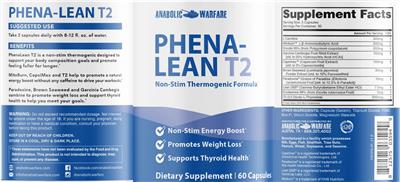
Suggested use Take 2 capsules daily with 8-12 fl. oz. of water.
Formula
Benefits PhenaLean T2 is a non-stim thermogenic designed to support your body composition goals and promote feeling fuller for longer. MitoBurn, CapsiMax and T2 help to promote a natural energy boost without any caffeine to drive your workouts. Paradoxine, Brown Seaweed and Garcinia Cambogia combine to promote weight loss and support thyroid health to help you meet your goals.
Precautions
Warning: Do not exceed recommended dosage.
Not intended for anyone under the age of 18.
If you are nursing, pregnant, taking medication or have a medical condition, consult your physician before taking this product.
Keep out of reach of children.
Manufactured in a facility which processes milk, egg, fish, shellfish, tree nuts, peanuts, wheat, soybeans, and sesame.
Storage
Store in a cool, dry & dark place.
FDA Disclaimer Statement
These statements have not been evaluated by the Food and Drug Administration. This product is not intended to diagnose, treat, cure, or prevent any disease.
Dietary Supplement
General Statements
Facebook.com/anabolicwarfare Instagram @anabolicwarfare
Formulation
Non-Stim Thermogenic Formula Non-Stim Energy Boost Promotes Weight Loss Supports Thyroid Health
Seals/Symbols
cGMP Inspected Facility Good Manufacturing Practice
Brand IP Statement(s)
Capsimax is a registered trademark of OmniActive Health Technologies, Ltd. Paradoxine is a registered trademark of Win Health International Co., Ltd. Lean GBB is a registered trademark of NutraCap Labs, LLC. Mitoburn is a trademark of NNB Nutrition.
Is this label outdated? Report a formula or label change and our pharmacy team will review it.
Phena-Lean T2 by Anabolic Warfare label
The label scan from the NIH Dietary Supplement Label Database. Tap to enlarge.
Label images are published by the NIH Dietary Supplement Label Database for the version of this product on file. Always read your actual product label.
View the full label (PDF)The Ingredients in Phena-Lean T2 by Anabolic Warfare
These are the 10 active ingredients this product is made of. Select any to open its full monograph.
Serving size2 Capsule(s) Dosage formCapsule Servings per container30 Amounts shown are per serving.
Most supplement products combine several ingredients, and a medication can interact with the product through any one of them. Each ingredient below shows whether it has known drug interactions.
L-Carnitine
Interacts with19 drugs
L-carnitine is a compound your body makes naturally and also gets from foods like meat. It helps cells turn fat into energy, and supplements are most...
L-Carnitine monograph & interactionsMitoBurn
Garcinia cambogia Fruit Rind Extract
Interacts with704 drugs
Garcinia is a tropical fruit whose rind contains hydroxycitric acid (HCA), widely marketed for weight loss and appetite control. The scientific eviden...
Garcinia cambogia Fruit Rind Extract monograph & interactionsCapsimax
Interacts with239 drugs
Capsicum (chili pepper) contains capsaicin, which is best known and best studied as a topical treatment for certain types of pain. Topical capsaicin p...
Capsimax monograph & interactionsT2 3,5-Diiodo-L-Thyronine
No knowninteractions
Diiodothyronine (T2) is a thyroid hormone metabolite sold as a fat-loss and metabolism supplement, mostly in the bodybuilding world. Human evidence fo...
T2 3,5-Diiodo-L-Thyronine monograph & interactionsParadoxine
No knowninteractions
Grains of paradise is a West African spice in the ginger family that people use for digestion, as a spice, and more recently in supplements aimed at m...
Paradoxine monograph & interactionsEmodin
Brown Seaweed Extract, Powder
Interacts with22 drugs
Ascophyllum nodosum (often sold as bladderwrack or brown seaweed) is a nutrient-rich algae that people use for weight, blood sugar, and thyroid suppor...
Brown Seaweed Extract, Powder monograph & interactionsLean GBB
Evodiamine
Interacts with950 drugs
Evodia is a fruit used in traditional Chinese medicine, most often for digestive complaints, headaches, and menstrual pain. Human evidence for these u...
Evodiamine monograph & interactionsOther (inactive) ingredients: Gelatin, Titanium Dioxide, FD&C Blue #1, Silicon Dioxide, Magnesium Stearate. These complete the product’s ingredient list but are not active constituents.
Phena-Lean T2 by Anabolic Warfare Drug Interactions
HelloPharmacist Interaction Report
Phena-Lean T2 by Anabolic Warfare contains multiple ingredients with documented interactions with medications.
The most serious concern is L-carnitine's moderate interaction with blood thinners (anticoagulants) like warfarin and acenocoumarol — it may increase their anticoagulant effects, raising your bleeding risk.
Read the full breakdown — every affected drug type, severity by severity
The product also interacts with thyroid hormone replacement (L-carnitine may reduce its effectiveness), serotonergic drugs like certain antidepressants (garcinia, moderate risk of serotonin syndrome), anticoagulant and antiplatelet drugs (garcinia and capsicum, moderate bleeding risk), antidiabetes medications (garcinia and capsicum, moderate risk of low blood sugar), and theophylline (capsicum and evodia, moderate risk of elevated drug levels and side effects). Evodia raises additional moderate concerns with QT-prolonging heart drugs, CYP450-metabolized medications, and several enzyme-related interactions — this ingredient induces and inhibits liver pathways that affect how your body processes many common drugs.
We could not check MitoBurn, Emodin, Brown Seaweed Extract, or Lean GBB — we hold no interaction data for these. Altogether, these interactions span 1,220 individual medications.
Use the medication checker below with your exact prescriptions before you start.
Check your own medications below · Editorial policy · How we use AI
Want to check YOUR meds against Phena-Lean T2?
Ask about interactions with your drugs in plain English — “Can I take it with lisinopril?” — and we find you the answer in seconds, ingredient by ingredient.
Go to the checkerIngredients driving the most interactions
Individual Drug Interactions
The ingredients in Phena-Lean T2 interact with 1,242 drugs. Click any drug to see the details.
5 of the 10 ingredients in Phena-Lean T2 interact with drugs. Each result below shows which ingredient is responsible. Evodiamine Garcinia cambogia Fruit Rind Extract Capsimax Brown Seaweed Extract, Powder L-Carnitine
6-mercaptopurinePurinethol
How 6-mercaptopurine interacts with Phena-Lean T2 — through 1 ingredient. Tap an ingredient for the detail:
Garcinia Cambogia Fruit Rind ExtractHepatotoxic Drugs Moderate
Interaction Summary
Theoretically, concomitant use with other potentially hepatotoxic drugs might increase the risk of developing liver damage.
Read the full Garcinia Cambogia Fruit Rind Extract + 6-mercaptopurine interactionAdo-trastuzumab EmtansineKadcyla
How Ado-trastuzumab Emtansine interacts with Phena-Lean T2 — through 1 ingredient. Tap an ingredient for the detail:
EvodiamineCytochrome P450 3a4 (cyp3a4) Substrates Moderate
Interaction Summary
Theoretically, evodia might increase the levels and clinical effects of CYP3A4 substrates.
Read the full Evodiamine + Ado-trastuzumab Emtansine interactionAbacavir Sulfate, Dolutegravir, LamivudineTriumeq
How Abacavir Sulfate, Dolutegravir, Lamivudine interacts with Phena-Lean T2 — through 1 ingredient. Tap an ingredient for the detail:
Garcinia Cambogia Fruit Rind ExtractHepatotoxic Drugs Moderate
Interaction Summary
Theoretically, concomitant use with other potentially hepatotoxic drugs might increase the risk of developing liver damage.
Read the full Garcinia Cambogia Fruit Rind Extract + Abacavir Sulfate, Dolutegravir, Lamivudine interactionAbacavir, LamivudineEpzicom
How Abacavir, Lamivudine interacts with Phena-Lean T2 — through 1 ingredient. Tap an ingredient for the detail:
Garcinia Cambogia Fruit Rind ExtractHepatotoxic Drugs Moderate
Interaction Summary
Theoretically, concomitant use with other potentially hepatotoxic drugs might increase the risk of developing liver damage.
Read the full Garcinia Cambogia Fruit Rind Extract + Abacavir, Lamivudine interactionAbametapirXeglyze
How Abametapir interacts with Phena-Lean T2 — through 1 ingredient. Tap an ingredient for the detail:
EvodiamineCytochrome P450 3a4 (cyp3a4) Inhibitors, Cytochrome P450 1a2 (cyp1a2) Inhibitors Moderate
Interaction Summary
Theoretically, CYP3A4 inhibitors might increase the levels and clinical effects of evodia.
Read the full Evodiamine + Abametapir interactionAbciximabReoPro
How Abciximab interacts with Phena-Lean T2 — through 3 ingredients. Tap an ingredient for the detail:
EvodiamineAnticoagulant/antiplatelet Drugs Moderate
Interaction Summary
Theoretically, taking evodia with antiplatelet or anticoagulant drugs might increase the risk of bruising and bleeding.
Read the full Evodiamine + Abciximab interactionCapsimaxAnticoagulant/antiplatelet Drugs Moderate
Interaction Summary
Theoretically, capsicum may increase the risk of bleeding if used with anticoagulant or antiplatelet drugs.
Read the full Capsimax + Abciximab interactionGarcinia Cambogia Fruit Rind ExtractAnticoagulant/antiplatelet Drugs Moderate
Interaction Summary
Theoretically, hydroxycitric acid (HCA), the main active ingredient in garcinia, might increase the risk of bleeding when used with antiplatelet or anticoagulant drugs.
Read the full Garcinia Cambogia Fruit Rind Extract + Abciximab interactionAbemaciclibVerzenio
How Abemaciclib interacts with Phena-Lean T2 — through 1 ingredient. Tap an ingredient for the detail:
EvodiamineCytochrome P450 3a4 (cyp3a4) Substrates Moderate
Interaction Summary
Theoretically, evodia might increase the levels and clinical effects of CYP3A4 substrates.
Read the full Evodiamine + Abemaciclib interactionAbiraterone
How Abiraterone interacts with Phena-Lean T2 — through 2 ingredients. Tap an ingredient for the detail:
Garcinia Cambogia Fruit Rind ExtractHepatotoxic Drugs Moderate
Interaction Summary
Theoretically, concomitant use with other potentially hepatotoxic drugs might increase the risk of developing liver damage.
Read the full Garcinia Cambogia Fruit Rind Extract + Abiraterone interactionEvodiamineCytochrome P450 3a4 (cyp3a4) Substrates, Cytochrome P450 1a2 (cyp1a2) Inhibitors +1 Moderate
Interaction Summary
Theoretically, evodia might increase the levels and clinical effects of CYP3A4 substrates.
Read the full Evodiamine + Abiraterone interactionAbiraterone AcetateYonsa, Zytiga
How Abiraterone Acetate interacts with Phena-Lean T2 — through 2 ingredients. Tap an ingredient for the detail:
Garcinia Cambogia Fruit Rind ExtractHepatotoxic Drugs Moderate
Interaction Summary
Theoretically, concomitant use with other potentially hepatotoxic drugs might increase the risk of developing liver damage.
Read the full Garcinia Cambogia Fruit Rind Extract + Abiraterone Acetate interactionEvodiamineCytochrome P450 3a4 (cyp3a4) Substrates Moderate
Interaction Summary
Theoretically, evodia might increase the levels and clinical effects of CYP3A4 substrates.
Read the full Evodiamine + Abiraterone Acetate interactionAbrocitinibCibinqo
How Abrocitinib interacts with Phena-Lean T2 — through 3 ingredients. Tap an ingredient for the detail:
Garcinia Cambogia Fruit Rind ExtractAnticoagulant/antiplatelet Drugs Moderate
Interaction Summary
Theoretically, hydroxycitric acid (HCA), the main active ingredient in garcinia, might increase the risk of bleeding when used with antiplatelet or anticoagulant drugs.
Read the full Garcinia Cambogia Fruit Rind Extract + Abrocitinib interactionEvodiamineAnticoagulant/antiplatelet Drugs Moderate
Interaction Summary
Theoretically, taking evodia with antiplatelet or anticoagulant drugs might increase the risk of bruising and bleeding.
Read the full Evodiamine + Abrocitinib interactionCapsimaxAnticoagulant/antiplatelet Drugs Moderate
Interaction Summary
Theoretically, capsicum may increase the risk of bleeding if used with anticoagulant or antiplatelet drugs.
Read the full Capsimax + Abrocitinib interactionAcalabrutinibCalquence
How Acalabrutinib interacts with Phena-Lean T2 — through 1 ingredient. Tap an ingredient for the detail:
EvodiamineCytochrome P450 3a4 (cyp3a4) Substrates Moderate
Interaction Summary
Theoretically, evodia might increase the levels and clinical effects of CYP3A4 substrates.
Read the full Evodiamine + Acalabrutinib interactionAcarboseGlucobay, Prandase, Precose
How Acarbose interacts with Phena-Lean T2 — through 2 ingredients. Tap an ingredient for the detail:
CapsimaxAntidiabetes Drugs Moderate
Interaction Summary
Theoretically, taking capsicum with antidiabetes drugs might increase the risk of hypoglycemia.
Read the full Capsimax + Acarbose interactionGarcinia Cambogia Fruit Rind ExtractHepatotoxic Drugs, Antidiabetes Drugs Moderate
Interaction Summary
Theoretically, concomitant use with other potentially hepatotoxic drugs might increase the risk of developing liver damage.
Read the full Garcinia Cambogia Fruit Rind Extract + Acarbose interactionAcebutololRhotral, Sectral
How Acebutolol interacts with Phena-Lean T2 — through 1 ingredient. Tap an ingredient for the detail:
Garcinia Cambogia Fruit Rind ExtractHepatotoxic Drugs Moderate
Interaction Summary
Theoretically, concomitant use with other potentially hepatotoxic drugs might increase the risk of developing liver damage.
Read the full Garcinia Cambogia Fruit Rind Extract + Acebutolol interactionAcenocoumarolSintrom
How Acenocoumarol interacts with Phena-Lean T2 — through 4 ingredients. Tap an ingredient for the detail:
Garcinia Cambogia Fruit Rind ExtractAnticoagulant/antiplatelet Drugs Moderate
Interaction Summary
Theoretically, hydroxycitric acid (HCA), the main active ingredient in garcinia, might increase the risk of bleeding when used with antiplatelet or anticoagulant drugs.
Read the full Garcinia Cambogia Fruit Rind Extract + Acenocoumarol interactionCapsimaxAnticoagulant/antiplatelet Drugs Moderate
Interaction Summary
Theoretically, capsicum may increase the risk of bleeding if used with anticoagulant or antiplatelet drugs.
Read the full Capsimax + Acenocoumarol interactionL-carnitineAcenocoumarol (sintrom) Moderate
Interaction Summary
Theoretically, L-carnitine might increase the anticoagulant effects of acenocoumarol.
Read the full L-carnitine + Acenocoumarol interactionEvodiamineAnticoagulant/antiplatelet Drugs Moderate
Interaction Summary
Theoretically, taking evodia with antiplatelet or anticoagulant drugs might increase the risk of bruising and bleeding.
Read the full Evodiamine + Acenocoumarol interactionAcetaminophenChildren's Tylenol, Children's Tylenol Meltaways, Tylenol, Tylenol Ex Strength
How Acetaminophen interacts with Phena-Lean T2 — through 2 ingredients. Tap an ingredient for the detail:
EvodiamineCytochrome P450 2e1 (cyp2e1) Substrates, Cytochrome P450 1a2 (cyp1a2) Substrates Moderate
Interaction Summary
Theoretically, evodia might reduce the levels and clinical effects of CYP2E1 substrates through induction of CYP2E1.
Read the full Evodiamine + Acetaminophen interactionGarcinia Cambogia Fruit Rind ExtractHepatotoxic Drugs Moderate
Interaction Summary
Theoretically, concomitant use with other potentially hepatotoxic drugs might increase the risk of developing liver damage.
Read the full Garcinia Cambogia Fruit Rind Extract + Acetaminophen interactionAcetaminophen, AspirinGemnisyn
How Acetaminophen, Aspirin interacts with Phena-Lean T2 — through 3 ingredients. Tap an ingredient for the detail:
CapsimaxAspirin, Anticoagulant/antiplatelet Drugs Moderate
Interaction Summary
Theoretically, taking capsicum with aspirin might reduce the bioavailability of aspirin.
Read the full Capsimax + Acetaminophen, Aspirin interactionEvodiamineCytochrome P450 1a2 (cyp1a2) Substrates, Anticoagulant/antiplatelet Drugs +1 Moderate
Interaction Summary
Evodia might reduce the levels and clinical effects of CYP1A2 substrates through induction of CYP1A2.
Read the full Evodiamine + Acetaminophen, Aspirin interactionGarcinia Cambogia Fruit Rind ExtractAnticoagulant/antiplatelet Drugs, Hepatotoxic Drugs Moderate
Interaction Summary
Theoretically, hydroxycitric acid (HCA), the main active ingredient in garcinia, might increase the risk of bleeding when used with antiplatelet or anticoagulant drugs.
Read the full Garcinia Cambogia Fruit Rind Extract + Acetaminophen, Aspirin interactionAcetaminophen, Aspirin, CaffeineExcedrin, Excedrin Extra Strength, Excedrin Migraine
How Acetaminophen, Aspirin, Caffeine interacts with Phena-Lean T2 — through 3 ingredients. Tap an ingredient for the detail:
CapsimaxAnticoagulant/antiplatelet Drugs, Aspirin Moderate
Interaction Summary
Theoretically, capsicum may increase the risk of bleeding if used with anticoagulant or antiplatelet drugs.
Read the full Capsimax + Acetaminophen, Aspirin, Caffeine interactionEvodiamineCytochrome P450 3a4 (cyp3a4) Substrates, Anticoagulant/antiplatelet Drugs +3 Moderate
Interaction Summary
Theoretically, evodia might increase the levels and clinical effects of CYP3A4 substrates.
Read the full Evodiamine + Acetaminophen, Aspirin, Caffeine interactionGarcinia Cambogia Fruit Rind ExtractAnticoagulant/antiplatelet Drugs, Hepatotoxic Drugs Moderate
Interaction Summary
Theoretically, hydroxycitric acid (HCA), the main active ingredient in garcinia, might increase the risk of bleeding when used with antiplatelet or anticoagulant drugs.
Read the full Garcinia Cambogia Fruit Rind Extract + Acetaminophen, Aspirin, Caffeine interactionAcetaminophen, Brompheniramine, PhenylpropanolamineDimetapp Cold and Flu
How Acetaminophen, Brompheniramine, Phenylpropanolamine interacts with Phena-Lean T2 — through 2 ingredients. Tap an ingredient for the detail:
EvodiamineCytochrome P450 2e1 (cyp2e1) Substrates, Cytochrome P450 1a2 (cyp1a2) Substrates Moderate
Interaction Summary
Theoretically, evodia might reduce the levels and clinical effects of CYP2E1 substrates through induction of CYP2E1.
Read the full Evodiamine + Acetaminophen, Brompheniramine, Phenylpropanolamine interactionGarcinia Cambogia Fruit Rind ExtractHepatotoxic Drugs Moderate
Interaction Summary
Theoretically, concomitant use with other potentially hepatotoxic drugs might increase the risk of developing liver damage.
Read the full Garcinia Cambogia Fruit Rind Extract + Acetaminophen, Brompheniramine, Phenylpropanolamine interactionAcetaminophen, ButalbitalAxocet, Bancap, Bucet, Butex Forte, Esgic CF, Orbivan CF +5 more
How Acetaminophen, Butalbital interacts with Phena-Lean T2 — through 2 ingredients. Tap an ingredient for the detail:
EvodiamineCytochrome P450 1a2 (cyp1a2) Substrates, Cytochrome P450 2e1 (cyp2e1) Substrates Moderate
Interaction Summary
Evodia might reduce the levels and clinical effects of CYP1A2 substrates through induction of CYP1A2.
Read the full Evodiamine + Acetaminophen, Butalbital interactionGarcinia Cambogia Fruit Rind ExtractHepatotoxic Drugs Moderate
Interaction Summary
Theoretically, concomitant use with other potentially hepatotoxic drugs might increase the risk of developing liver damage.
Read the full Garcinia Cambogia Fruit Rind Extract + Acetaminophen, Butalbital interactionAcetaminophen, Butalbital, CaffeineEsgic, Esgic Plus, Fiogesic, Fioricet, Repan, Tecnal +1 more
How Acetaminophen, Butalbital, Caffeine interacts with Phena-Lean T2 — through 2 ingredients. Tap an ingredient for the detail:
EvodiamineCytochrome P450 2e1 (cyp2e1) Substrates, Cytochrome P450 1a2 (cyp1a2) Substrates +2 Moderate
Interaction Summary
Theoretically, evodia might reduce the levels and clinical effects of CYP2E1 substrates through induction of CYP2E1.
Read the full Evodiamine + Acetaminophen, Butalbital, Caffeine interactionGarcinia Cambogia Fruit Rind ExtractHepatotoxic Drugs Moderate
Interaction Summary
Theoretically, concomitant use with other potentially hepatotoxic drugs might increase the risk of developing liver damage.
Read the full Garcinia Cambogia Fruit Rind Extract + Acetaminophen, Butalbital, Caffeine interactionAcetaminophen, Butalbital, Caffeine, CodeineEsgic with Codeine, Fioricet w/ Codeine
How Acetaminophen, Butalbital, Caffeine, Codeine interacts with Phena-Lean T2 — through 2 ingredients. Tap an ingredient for the detail:
EvodiamineCaffeine, Cytochrome P450 1a2 (cyp1a2) Substrates +2 Moderate
Interaction Summary
Theoretically, evodia might decrease the levels and clinical effects of caffeine.
Read the full Evodiamine + Acetaminophen, Butalbital, Caffeine, Codeine interactionGarcinia Cambogia Fruit Rind ExtractHepatotoxic Drugs Moderate
Interaction Summary
Theoretically, concomitant use with other potentially hepatotoxic drugs might increase the risk of developing liver damage.
Read the full Garcinia Cambogia Fruit Rind Extract + Acetaminophen, Butalbital, Caffeine, Codeine interactionAcetaminophen, Butalbital, CodeineBancap w/ Codeine
How Acetaminophen, Butalbital, Codeine interacts with Phena-Lean T2 — through 2 ingredients. Tap an ingredient for the detail:
EvodiamineCytochrome P450 1a2 (cyp1a2) Substrates, Cytochrome P450 2e1 (cyp2e1) Substrates Moderate
Interaction Summary
Evodia might reduce the levels and clinical effects of CYP1A2 substrates through induction of CYP1A2.
Read the full Evodiamine + Acetaminophen, Butalbital, Codeine interactionGarcinia Cambogia Fruit Rind ExtractHepatotoxic Drugs Moderate
Interaction Summary
Theoretically, concomitant use with other potentially hepatotoxic drugs might increase the risk of developing liver damage.
Read the full Garcinia Cambogia Fruit Rind Extract + Acetaminophen, Butalbital, Codeine interactionAcetaminophen, Butalbital, Codeine PhosphatePhrenilin #3
How Acetaminophen, Butalbital, Codeine Phosphate interacts with Phena-Lean T2 — through 2 ingredients. Tap an ingredient for the detail:
EvodiamineCytochrome P450 2e1 (cyp2e1) Substrates, Cytochrome P450 1a2 (cyp1a2) Substrates Moderate
Interaction Summary
Theoretically, evodia might reduce the levels and clinical effects of CYP2E1 substrates through induction of CYP2E1.
Read the full Evodiamine + Acetaminophen, Butalbital, Codeine Phosphate interactionGarcinia Cambogia Fruit Rind ExtractHepatotoxic Drugs Moderate
Interaction Summary
Theoretically, concomitant use with other potentially hepatotoxic drugs might increase the risk of developing liver damage.
Read the full Garcinia Cambogia Fruit Rind Extract + Acetaminophen, Butalbital, Codeine Phosphate interactionAcetaminophen, Caffeine, Chlorpheniramine, Hydrocodone, PhenylephrineHycomine Compound
How Acetaminophen, Caffeine, Chlorpheniramine, Hydrocodone, Phenylephrine interacts with Phena-Lean T2 — through 2 ingredients. Tap an ingredient for the detail:
EvodiamineCytochrome P450 2e1 (cyp2e1) Substrates, Cytochrome P450 3a4 (cyp3a4) Substrates +2 Moderate
Interaction Summary
Theoretically, evodia might reduce the levels and clinical effects of CYP2E1 substrates through induction of CYP2E1.
Read the full Evodiamine + Acetaminophen, Caffeine, Chlorpheniramine, Hydrocodone, Phenylephrine interactionGarcinia Cambogia Fruit Rind ExtractHepatotoxic Drugs Moderate
Interaction Summary
Theoretically, concomitant use with other potentially hepatotoxic drugs might increase the risk of developing liver damage.
Read the full Garcinia Cambogia Fruit Rind Extract + Acetaminophen, Caffeine, Chlorpheniramine, Hydrocodone, Phenylephrine interactionAcetaminophen, Caffeine, CodeineGesic C15, Gesic C30, Gesic C8, Lenoltec 1, Lenoltec 2, Lenoltec 3 +1 more
How Acetaminophen, Caffeine, Codeine interacts with Phena-Lean T2 — through 2 ingredients. Tap an ingredient for the detail:
Garcinia Cambogia Fruit Rind ExtractHepatotoxic Drugs Moderate
Interaction Summary
Theoretically, concomitant use with other potentially hepatotoxic drugs might increase the risk of developing liver damage.
Read the full Garcinia Cambogia Fruit Rind Extract + Acetaminophen, Caffeine, Codeine interactionEvodiamineCytochrome P450 3a4 (cyp3a4) Substrates, Cytochrome P450 2e1 (cyp2e1) Substrates +2 Moderate
Interaction Summary
Theoretically, evodia might increase the levels and clinical effects of CYP3A4 substrates.
Read the full Evodiamine + Acetaminophen, Caffeine, Codeine interactionAcetaminophen, Caffeine, Codeine, SalicylamideCodalan No.1, Codalan No.2, Codalan No.3
How Acetaminophen, Caffeine, Codeine, Salicylamide interacts with Phena-Lean T2 — through 2 ingredients. Tap an ingredient for the detail:
EvodiamineCaffeine, Cytochrome P450 3a4 (cyp3a4) Substrates +2 Moderate
Interaction Summary
Theoretically, evodia might decrease the levels and clinical effects of caffeine.
Read the full Evodiamine + Acetaminophen, Caffeine, Codeine, Salicylamide interactionGarcinia Cambogia Fruit Rind ExtractHepatotoxic Drugs Moderate
Interaction Summary
Theoretically, concomitant use with other potentially hepatotoxic drugs might increase the risk of developing liver damage.
Read the full Garcinia Cambogia Fruit Rind Extract + Acetaminophen, Caffeine, Codeine, Salicylamide interactionAcetaminophen, Caffeine, DihydrocodeineDHC Plus, Panlor DC, Panlor SS
How Acetaminophen, Caffeine, Dihydrocodeine interacts with Phena-Lean T2 — through 2 ingredients. Tap an ingredient for the detail:
EvodiamineCytochrome P450 2e1 (cyp2e1) Substrates, Caffeine +2 Moderate
Interaction Summary
Theoretically, evodia might reduce the levels and clinical effects of CYP2E1 substrates through induction of CYP2E1.
Read the full Evodiamine + Acetaminophen, Caffeine, Dihydrocodeine interactionGarcinia Cambogia Fruit Rind ExtractHepatotoxic Drugs Moderate
Interaction Summary
Theoretically, concomitant use with other potentially hepatotoxic drugs might increase the risk of developing liver damage.
Read the full Garcinia Cambogia Fruit Rind Extract + Acetaminophen, Caffeine, Dihydrocodeine interactionAcetaminophen, Caffeine, IsomethepteneMigralam
How Acetaminophen, Caffeine, Isometheptene interacts with Phena-Lean T2 — through 2 ingredients. Tap an ingredient for the detail:
EvodiamineCytochrome P450 1a2 (cyp1a2) Substrates, Caffeine +2 Moderate
Interaction Summary
Evodia might reduce the levels and clinical effects of CYP1A2 substrates through induction of CYP1A2.
Read the full Evodiamine + Acetaminophen, Caffeine, Isometheptene interactionGarcinia Cambogia Fruit Rind ExtractHepatotoxic Drugs Moderate
Interaction Summary
Theoretically, concomitant use with other potentially hepatotoxic drugs might increase the risk of developing liver damage.
Read the full Garcinia Cambogia Fruit Rind Extract + Acetaminophen, Caffeine, Isometheptene interactionAcetaminophen, Caffeine, PyrilamineMidol Max Strength Menstrual
How Acetaminophen, Caffeine, Pyrilamine interacts with Phena-Lean T2 — through 2 ingredients. Tap an ingredient for the detail:
EvodiamineCytochrome P450 3a4 (cyp3a4) Substrates, Cytochrome P450 2e1 (cyp2e1) Substrates +2 Moderate
Interaction Summary
Theoretically, evodia might increase the levels and clinical effects of CYP3A4 substrates.
Read the full Evodiamine + Acetaminophen, Caffeine, Pyrilamine interactionGarcinia Cambogia Fruit Rind ExtractHepatotoxic Drugs Moderate
Interaction Summary
Theoretically, concomitant use with other potentially hepatotoxic drugs might increase the risk of developing liver damage.
Read the full Garcinia Cambogia Fruit Rind Extract + Acetaminophen, Caffeine, Pyrilamine interactionAcetaminophen, Chlorpheniramine Maleate, Dextromethorphan HbrVicks Formula 44M Cough, Cold & Flu Relief
How Acetaminophen, Chlorpheniramine Maleate, Dextromethorphan Hbr interacts with Phena-Lean T2 — through 2 ingredients. Tap an ingredient for the detail:
Garcinia Cambogia Fruit Rind ExtractHepatotoxic Drugs, Serotonergic Drugs Moderate
Interaction Summary
Theoretically, concomitant use with other potentially hepatotoxic drugs might increase the risk of developing liver damage.
Read the full Garcinia Cambogia Fruit Rind Extract + Acetaminophen, Chlorpheniramine Maleate, Dextromethorphan Hbr interactionEvodiamineCytochrome P450 2e1 (cyp2e1) Substrates, Cytochrome P450 3a4 (cyp3a4) Substrates +1 Moderate
Interaction Summary
Theoretically, evodia might reduce the levels and clinical effects of CYP2E1 substrates through induction of CYP2E1.
Read the full Evodiamine + Acetaminophen, Chlorpheniramine Maleate, Dextromethorphan Hbr interactionEach ingredient & the kinds of drugs it affects
For each ingredient in Phena-Lean T2 with known interactions, here are the types of medications they can affect. Open any type for the detail — or search your exact drug in the checker above.
Evodiamine
Anticoagulant/Antiplatelet Drugs
Theoretically, taking evodia with antiplatelet or anticoagulant drugs might increase the risk of bruising and bleeding.
In vitro and animal studies show that rutaecarpine, a constituent of evodia, inhibits platelet aggregation.
Caffeine
Theoretically, evodia might decrease the levels and clinical effects of caffeine.
In animal models, evodia extract decreases caffeine levels by up to 71%. Evodia extract induces hepatic cytochrome P450 1A2 (CYP1A2) enzyme, of which caffeine is a substrate.
Chlorzoxazone (Parafon Forte, Paraflex)
Theoretically, evodia might decrease the levels and clinical effects of chlorzoxazone.
Animal research shows that administration of rutaecarpine, a constituent of evodia, with chlorzoxazone reduces the area under the curve (AUC) of chlorzoxazone by 84% and increases its clearance by 646%. This interaction is likely due to induction of cytochrome P450 2E1 (CYP2E1) by rutaecarpine .
Cytochrome P450 1A2 (Cyp1A2) Inhibitors
Theoretically, drugs that inhibit CYP1A2 might increase the levels and clinical effects of evodia.
The evodia constituent rutaecarpine is metabolized by CYP1A2.
Cytochrome P450 1A2 (Cyp1A2) Substrates
Evodia might reduce the levels and clinical effects of CYP1A2 substrates through induction of CYP1A2.
Evodia extract and the evodia constituent rutaecarpine induce hepatic CYP1A2 enzyme activity. Evodia decreases levels of theophylline and caffeine, CYP1A2 substrates, by about 70% in animal models.
Cytochrome P450 2E1 (Cyp2E1) Substrates
Theoretically, evodia might reduce the levels and clinical effects of CYP2E1 substrates through induction of CYP2E1.
Animal research suggests that rutaecarpine, a constituent of evodia, induces CYP2E1 activity. In rats, rutaecarpine increases markers of CYP2E1 activity, and administration of rutaecarpine with chlorzoxazone, a known CYP2E1 substrate, reduces the area under the curve (AUC) of chlorzoxazone by 84% and increases its clearance by 646%.
Cytochrome P450 3A4 (Cyp3A4) Inducers
Theoretically, taking CYP3A4 inducers might decrease the levels and clinical effects of evodia.
Animal research shows that concomitant administration of dexamethasone, a known CYP3A4 inducer, with the alkaloid constituents of evodia significantly reduces the area under the curve (AUC), maximum concentration (Cmax), and half-life of these constituents.
Cytochrome P450 3A4 (Cyp3A4) Inhibitors
Theoretically, CYP3A4 inhibitors might increase the levels and clinical effects of evodia.
Animal research shows that concomitant administration of ketoconazole, a known CYP3A4 inhibitor, with the alkaloid constituents of evodia significantly increases the area under the curve (AUC), maximum concentration (Cmax), and half-life of these constituents.
Cytochrome P450 3A4 (Cyp3A4) Substrates
Theoretically, evodia might increase the levels and clinical effects of CYP3A4 substrates.
In vitro research shows that evodia extract inhibits hepatic CYP3A4. This effect has not been reported in humans.
Qt Interval-Prolonging Drugs
Theoretically, evodia might have an additive effect with drugs that prolong the QT interval, potentially increasing the risk of ventricular arrhythmias.
Evodia has demonstrated dose-dependent activity as a proarrhythmic agent in animal and in vitro studies. Evodia infusion in animals extends the action duration potential and induces prolongation of the QT interval and Torsade de pointes.
Theophylline
Theoretically, evodia might decrease the levels and clinical effects of theophylline.
The evodia constituent rutaecarpine decreases theophylline levels and half-life by about 70% in animal models. This constituent appears to induce hepatic cytochrome P450 1A2 (CYP1A2) enzyme activity, of which theophylline is a substrate. Rutaecarpine is the primary active constituent of evodia; however, it is not known if the whole crude extract of evodia also causes this interaction.
Garcinia cambogia Fruit Rind Extract
Anticoagulant/Antiplatelet Drugs
Theoretically, hydroxycitric acid (HCA), the main active ingredient in garcinia, might increase the risk of bleeding when used with antiplatelet or anticoagulant drugs.
HCA inhibits platelet aggregation in vitro. The inhibitory effect seems to be greater in platelets extracted from diabetic subjects than non-diabetic subjects.
Antidiabetes Drugs
Theoretically, hydroxycitric acid (HCA), the main active ingredient in garcinia, might have additive effects with antidiabetes drugs and increase the risk of hypoglycemia.
HCA reduces fasting and postprandial blood glucose levels in animal models, theoretically by delaying glucose absorption. This effect has not been reported in humans.
Hepatotoxic Drugs
Theoretically, concomitant use with other potentially hepatotoxic drugs might increase the risk of developing liver damage.
There have been reports of acute hepatitis with elevated liver enzymes associated with garcinia, when taken alone or in combination with other ingredients. Case reports collected from the Drug Induced Liver Injury Network suggest this risk may be greater in people who carry the HLA B*35:01 allele.
Serotonergic Drugs
Theoretically, combining garcinia with other serotonergic drugs might increase the risk of serotonergic side effects, including serotonin syndrome.
In one report, a patient experienced serotonin syndrome after taking garcinia extract (60% hydroxycitric acid) 1000 mg daily in combination with escitalopram 20 mg, which had been taken for a year. The patient was switched to sertraline 50 mg daily and again experienced serotonin syndrome.
Capsimax
Anticoagulant/Antiplatelet Drugs
Theoretically, capsicum may increase the risk of bleeding if used with anticoagulant or antiplatelet drugs.
In vitro research shows that capsicum might increase the effects of antiplatelet drugs. Also, population research shows that capsicum is associated with an increased risk of self-reported bleeding in patients taking warfarin. However, clinical research shows that taking a single dose of capsaicin (Asian Herbex Ltd.), the active ingredient in capsicum, 400-800 mcg orally in combination with aspirin 500 mg does not decrease platelet aggregation when compared with taking aspirin 500 mg alone. Also, there was no notable effect on measures of platelet aggregation with capsaicin. It is unclear whether capsaicin must be used in more than a single dose to affect platelet aggregation.
Antidiabetes Drugs
Theoretically, taking capsicum with antidiabetes drugs might increase the risk of hypoglycemia.
Preliminary clinical research shows that consuming capsicum 5 grams along with a glucose drink attenuates the rise in plasma glucose after 30 minutes by 21%, decreases the 2-hour postprandial area under the curve of plasma glucose by 11%, and increases the 2-hour postprandial area under the curve of plasma insulin by 58% in healthy individuals when compared with placebo. Other clinical research shows that taking capsicum 5 mg daily for 28 days significantly reduces postprandial blood glucose and insulin levels, but not fasting blood glucose and insulin levels, in patients with gestational diabetes.
Aspirin
Theoretically, taking capsicum with aspirin might reduce the bioavailability of aspirin.
Animal research shows that acute or chronic intake of capsicum pepper reduces oral aspirin bioavailability. This has not been shown in humans.
Theophylline
Theoretically, taking capsicum with theophylline might increase the levels and adverse effects of theophylline.
In animal research, oral administration of capsicum reduced excretion of theophylline. However, capsicum does not seem to affect the pharmacokinetics of theophylline when administered intravenously.
Ace Inhibitors (Aceis)
Theoretically, using topical capsaicin may increase the risk of ACE inhibitor-induced cough.
There is one case report of a topically applied capsaicin cream contributing to the cough reflex in a patient using an ACEI. However, it is unclear if this interaction is clinically significant.
Ciprofloxacin (Cipro)
Theoretically, taking capsicum with ciprofloxacin might increase levels and adverse effects of ciprofloxacin.
Animal research shows that concomitant use of capsaicin, the active constituent of capsicum, and ciprofloxacin increases the bioavailability of ciprofloxacin by up to 70%.
Brown Seaweed Extract, Powder
Amiodarone (Cordarone)
Theoretically, combining Ascophyllum nodosum with amiodarone might cause excessively high iodine levels.
Ascophyllum nodosum contains iodine, although the bioavailability of iodine from Ascophyllum nodosum is lower than that of potassium iodide. Amiodarone contains 37.3% iodine and can increase iodine levels. Concomitant use might increase the risk of having excessive iodine levels and adversely affecting thyroid function. Monitor thyroid function.
Antithyroid Drugs
Due to its iodine content, Ascophyllum nodosum might alter the effects of antithyroid drugs.
Ascophyllum nodosum contains iodine, although the bioavailability of iodine from Ascophyllum nodosum is lower than that of potassium iodide. Iodine in high doses has been reported to cause both hyperthyroidism and hypothyroidism, depending on the individual's past medical history. Taking Ascophyllum nodosum while using antithyroid drugs could alter the effects of the antithyroid drugs.
Thyroid Hormone
Due to its iodine content, Ascophyllum nodosum might alter the effects of thyroid hormone.
Ascophyllum nodosum contains iodine, although the bioavailability of iodine from Ascophyllum nodosum is lower than that of potassium iodide. Iodine in high doses has been reported to cause both hyperthyroidism and hypothyroidism, depending on the individual's past medical history. Taking Ascophyllum nodosum while using thyroid hormone could alter the effects of thyroid hormone.
L-Carnitine
Acenocoumarol (Sintrom)
Theoretically, L-carnitine might increase the anticoagulant effects of acenocoumarol.
L-carnitine might enhance the anticoagulant effects of acenocoumarol, an oral anticoagulant similar to warfarin, but shorter-acting. There are at least two case reports of INR elevation with concomitant use. In one case, a 33-year-old male with a previously stable INR had an elevated INR of 4.65 after L-carnitine was started and continued for 10 weeks. INR normalized after discontinuation of the L-carnitine-containing product.
Thyroid Hormone
Theoretically, L-carnitine might decrease the effectiveness of thyroid hormone replacement.
L-carnitine appears to act as a peripheral thyroid hormone antagonist by inhibiting entry of thyroid hormone into the nucleus of cells. Taking L-carnitine also seems to diminish some of the symptoms of hyperthyroidism.
Warfarin (Coumadin)
Theoretically, L-carnitine might increase the anticoagulant effects of warfarin.
L-carnitine might increase the anticoagulant effects of acenocoumarol, a shorter-acting oral anticoagulant similar to warfarin. There is not enough information to know whether this interaction occurs with L-carnitine and warfarin.
Brand information
Manufacturer and brand details for Phena-Lean T2, from the product label.
Anabolic Warfare
See all Anabolic Warfare products- Name
- Anabolic Warfare
- City
- Austin
- State
- TX
- Phone Number
- 888-301-4002
- Web Address
- anabolicwarfare.com
Phena-Lean T2 by Anabolic Warfare: Common Questions
Does Phena-Lean T2 by Anabolic Warfare interact with any medications?
How can one product interact with so many drugs?
Where does this information come from?
Can I take this if I'm on warfarin or another blood thinner?
What does L-carnitine do in this supplement?
Is it safe to take while pregnant or breastfeeding?
What side effects might I experience?
Does this product have any fillers?
Why can't you check MitoBurn, Emodin, and some of the other ingredients?
Written and reviewed by the HelloPharmacist editorial staff. Our editorial policy
Not sure if Phena-Lean T2 is safe with your meds?
Our pharmacists answer your medication & supplement questions — free.
Label information is sourced from the NIH Dietary Supplement Label Database and reflects the product version on file; always read your actual product label. This page is for education only and is not a substitute for professional medical advice. Confirm with your pharmacist or doctor before combining supplements and medications.
The Full Monographs Behind Phena-Lean T2’s Ingredients
Every ingredient we hold a full HelloPharmacist monograph for — uses, evidence, safety, and the complete interaction list.
L-carnitine
Interacts with 19 drugsL-carnitine is a compound your body makes naturally and also gets from foods like meat. It helps cells turn fat into energy, and supplements are most clearly useful for people with a true ca...
Read the full L-carnitine monograph → Herb & supplement monographGarcinia
Interacts with 704 drugsGarcinia is a tropical fruit whose rind contains hydroxycitric acid (HCA), widely marketed for weight loss and appetite control. The scientific evidence is weak and mixed, with most studies...
Read the full Garcinia monograph → Herb & supplement monographCapsicum
Interacts with 239 drugsCapsicum (chili pepper) contains capsaicin, which is best known and best studied as a topical treatment for certain types of pain. Topical capsaicin products are supported by reasonable evid...
Read the full Capsicum monograph → Herb & supplement monographDiiodothyronine
Diiodothyronine (T2) is a thyroid hormone metabolite sold as a fat-loss and metabolism supplement, mostly in the bodybuilding world. Human evidence for its safety and effectiveness is very l...
Read the full Diiodothyronine monograph → Herb & supplement monographGrains Of Paradise
Grains of paradise is a West African spice in the ginger family that people use for digestion, as a spice, and more recently in supplements aimed at metabolism. Early human research suggests...
Read the full Grains Of Paradise monograph → Herb & supplement monographAscophyllum Nodosum
Interacts with 22 drugsAscophyllum nodosum (often sold as bladderwrack or brown seaweed) is a nutrient-rich algae that people use for weight, blood sugar, and thyroid support, but solid human evidence is limited f...
Read the full Ascophyllum Nodosum monograph → Herb & supplement monographEvodia
Interacts with 950 drugsEvodia is a fruit used in traditional Chinese medicine, most often for digestive complaints, headaches, and menstrual pain. Human evidence for these uses is very limited, and it is mostly st...
Read the full Evodia monograph →Sources & How We Checked
Phena-Lean T2's label data comes from the NIH Dietary Supplement Label Database; the ingredient interaction data is from the Natural Medicines database, reviewed by our pharmacists.
- NIH Dietary Supplement Label Database (DSLD) — The official product label on file for this supplement.
- Natural Medicines (Therapeutic Research Center) — Evidence-graded clinical reference behind the ingredient interaction data.
Content is written and reviewed by licensed HelloPharmacist pharmacists. See our data sources and editorial standards for how this information is built and checked.
The 197 references behind this product’s interaction data
Every citation that drives the interaction findings for this product’s ingredients, from the evidence-graded Natural Medicines (TRC Healthcare) database. Open an ingredient to browse its citations — links open the study on PubMed or the publisher’s site.
L-carnitine 41 references
- Ellaway CM, Williams K, Leonard H, et al. Rett syndrome: randomized controlled trial of L-carnitine. J Child Neurol 1999;14:162-7. PubMed
- Anon. Carnitor (levocarnitine) package insert. Sigma-Tau Pharmaceuticals Inc, Gaithersburg, MD. December 1999.
- Cherchi A, Lai C, Angelino F, et al. Effects of L-carnitine on exercise tolerance in chronic stable angina: a multicenter, double-blind, randomized, placebo-controlled, crossover study. Int J Clin Pharmacol Ther Toxicol 1985;23:569-72.
- Plioplys AV, Plioplys S. Amantadine and L-carnitine treatment of Chronic Fatigue Syndrome. Neuropsychobiology 1997;35:16-23. PubMed
- Benvenga S, Ruggeri RM, Russo A, et al. Usefulness of L-carnitine, a naturally occurring peripheral antagonist of thyroid hormone action, in iatrogenic hyperthyroidism: a randomized, double-blind, placebo-controlled clinical trial. J Clin Endocrinol Meta
- Martinez E, Domingo P, Roca-Cusachs A. Potentiation of acenocoumarol action by L-carnitine. J Intern Med 1993;233:94.
- Bachmann HU, Hoffmann A. Interaction of food supplement L-carnitine with oral anticoagulant acenocoumarol. Swiss Med Wkly 2004;134:385. PubMed
- Evans AM, Fornasini G. Pharmacokinetics of L-carnitine. Clin Pharmacokinet 2003;42:941-67. PubMed
- 12761 Benvenga S, Amato A, Calvani M, Trimarchi F. Effects of carnitine on thyroid hormone action. Ann N Y Acad Sci 2004;1033:158-67. PubMed
- Ciacci C, Peluso G, Iannoni E, et al. L-Carnitine in the treatment of fatigue in adult celiac disease patients: a pilot study. Dig Liver Dis 2007;39:922-8. PubMed
- Cruciani RA, Dvorkin E, Homel P, et al. Safety, tolerability and symptom outcomes associated with L-carnitine supplementation in patients with cancer, fatigue, and carnitine deficiency: a phase I/II study. J Pain Symptom Manage 2006;32:551-9. PubMed
- Lebrun C, Alchaar H, Candito M, et al. Levocarnitine administration in multiple sclerosis patients with immunosuppressive therapy-induced fatigue. Mult Scler 2006;12:321-4. PubMed
- Malaguarnera M, Cammalleri L, Gargante MP, et al. L-Carnitine treatment reduces severity of physical and mental fatigue and increases cognitive functions in centenarians: a randomized and controlled clinical trial. Am J Clin Nutr 2007;86:1738-44. PubMed
- Mantovani G, Maccio A, Madeddu C, et al. Randomized phase III clinical trial of five different arms of treatment in 322 patients with cancer cachexia. Oncologist 2010;15:200-11.
- Angelova-Fischer I, Rippke F, Fischer TW, Neufang G, Zillikens D. A double-blind, randomized, vehicle-controlled efficacy assessment study of a skin care formulation for improvement of mild to moderately severe acne. J Eur Acad Dermatol Venereol. 2013 Jul PubMed
- Hatamkhani S, Khalili H, Karimzadeh I, Dashti-Khavidaki S, Abdollahi A, Jafari S. Carnitine for prevention of antituberculosis drug-induced hepatotoxicity: a randomized, clinical trial. J Gastroenterol. Hepatol. 2014 May;29(5):997-1004. PubMed
- Boehm G, Stahl B. Oligosaccharides from milk. J Nutr 2007;137(3 Suppl 2):847S-849S.
- Van Oudheusden, L. J. and Scholte, H. R. Efficacy of carnitine in the treatment of children with attention-deficit hyperactivity disorder. Prostaglandins Leukot.Essent.Fatty Acids 2002;67(1):33-38. PubMed
- Derosa, G., Cicero, A. F., Gaddi, A., Mugellini, A., Ciccarelli, L., and Fogari, R. The effect of L-carnitine on plasma lipoprotein(a) levels in hypercholesterolemic patients with type 2 diabetes mellitus. Clin Ther 2003;25(5):1429-1439. PubMed
- Foitzik, K., Hoting, E., Heinrich, U., Tronnier, H., and Paus, R. Indications that topical L-carnitin-L-tartrate promotes human hair growth in vivo. J Dermatol.Sci 2007;48(2):141-144. PubMed
- Kumar, A., Singh, R. B., Saxena, M., Niaz, M. A., Josh, S. R., Chattopadhyay, P., Mechirova, V., Pella, D., and Fedacko, J. Effect of carni Q-gel (ubiquinol and carnitine) on cytokines in patients with heart failure in the Tishcon study. Acta Cardiol. 20
- Cruciani, R. A., Dvorkin, E., Homel, P., Culliney, B., Malamud, S., Lapin, J., Portenoy, R. K., and Esteban-Cruciani, N. L-carnitine supplementation in patients with advanced cancer and carnitine deficiency: a double-blind, placebo-controlled study. J Pa PubMed
- Malaguarnera, M., Vacante, M., Avitabile, T., Malaguarnera, M., Cammalleri, L., and Motta, M. L-Carnitine supplementation reduces oxidized LDL cholesterol in patients with diabetes. Am J Clin.Nutr 2009;89(1):71-76. PubMed
- Alvarez, T. M., Guardiola, P. D., Roldan, J. O., Elviro, R., Wevers, R., and Guijarro, G. [Primary trimethylaminuria: the fish odor syndrome]. Endocrinol.Nutr. 2009;56(6):337-340.
- Wu, Z. M., Lu, X., Wang, Y. W., Sun, J., Tao, J. W., Yin, F. H., and Cheng, H. J. [Short-term medication of L-carnitine before intracytoplasmic sperm injection for infertile men with oligoasthenozoospermia]. Zhonghua Nan.Ke.Xue 2012;18(3):253-256.
- Tarighat, Esfanjani A., Mahdavi, R., Ebrahimi, Mameghani M., Talebi, M., Nikniaz, Z., and Safaiyan, A. The effects of magnesium, L-carnitine, and concurrent magnesium-L-carnitine supplementation in migraine prophylaxis. Biol.Trace Elem.Res 2012;150(1-3): PubMed
- DiNicolantonio, J. J., Lavie, C. J., Fares, H., Menezes, A. R., and O'Keefe, J. H. L-carnitine in the secondary prevention of cardiovascular disease: systematic review and meta-analysis. Mayo Clin Proc. 2013;88(6):544-551. PubMed
- Huang, W. W., Wang, M. Y., Shi, H. M., Peng, Y., Peng, C. S., Zhang, M., Li, Y., Lu, J., and Li, X. B. Comparative study of bioactive constituents in crude and processed Glycyrrhizae radix and their respective metabolic profiles in gastrointestinal tract
- Madsen KL, Preisler N, Orngreen MC, Andersen SP, Olesen JH, Lund AM, Vissing J. Patients with medium-chain acyl-coenzyme a dehydrogenase deficiency have impaired oxidation of fat during exercise but no effect of L-carnitine supplementation. J Clin Endocri
- Prohaska ES, Muzyk AJ, Rivelli SK. Levocarnitine-induced hypophosphatemia in a hemodialysis patient with acute valproic acid toxicity. J Neuropsychiatry Clin Neurosci. 2012 Winter;24(1):E18-9. PubMed
- Shang R, Sun Z, Li H. Effective dosing of L-carnitine in the secondary prevention of cardiovascular disease: a systematic review and meta-analysis. BMC Cardiovasc Disord. 2014 Jul 21;14:88. PubMed
- Zhang JJ, Wu ZB, Cai YJ, Ke B, Huang YJ, Qiu CP, Yang YB, Shi LY, Qin J. L-carnitine ameliorated fasting-induced fatigue, hunger, and metabolic abnormalities in patients with metabolic syndrome: a randomized controlled study. Nutr J. 2014 Nov 26;13:110. PubMed
- Koeth RA, Wang Z, Levison BS, Buffa JA, Org E, Sheehy BT, Britt EB, Fu X, Wu Y, Li L, Smith JD, DiDonato JA, Chen J, Li H, Wu GD, Lewis JD, Warrier M, Brown JM, Krauss RM, Tang WH, Bushman FD, Lusis AJ, Hazen SL. Intestinal microbiota metabolism of L-carn
- Jun DW, Kim BI, Cho YK, Kim HJ, Kwon YO, Park SY, Han SY, Baek YH, Jung YJ, Kim HY, Kim W, Heo J, Woo HY, Hwang SG, Rim KS, Choi JY, Bae SH, Lee YS, Lim YS,Cheong JY, Cho SW, Lee BS, Kim SH, Sohn JH, Kim TY, Paik YH, Kim JK, Lee KS. Efficacy and safety of
- An JH, Kim YJ, Kim KJ, et al. L-carnitine supplementation for the management of fatigue in patients with hypothyroidism on levothyroxine treatment: a randomized, double-blind, placebo-controlled trial. Endocr J. 2016;63(10):885-95. PubMed
- Chen N, Yang M, Zhou M, Xiao J, Guo J, He L. L-carnitine for cognitive enhancement in people without cognitive impairment. Cochrane Database Syst Rev. 2017;3:CD009374. PubMed
- Khajeh B, Dashti-Khavidaki S, Nasiri-Toosi M, Mohammadi K, Jafari A. Effects of pre-transplant L-carnitine supplementation on primary graft dysfunction in liver transplant recipients: a pilot, randomized, placebo-controlled clinical trial. Res Pharm Sci. PubMed
- Kubota K, Uojima H, Shao X, et al. Additional L-carnitine Reduced the Risk of Hospitalization in Patients with Overt Hepatic Encephalopathy on Rifaximin. Dig Dis 2021. PubMed
- Amini L, Yaghini O, Ghazavi M, Aslani N. L-carnitine versus propranolol for pediatric migraine prophylaxis. Iran J Child Neurol 2021;15(2):77-86.
- Shakibaei F, Jelvani D. Effect of adding l -carnitine to risperidone on behavioral, cognitive, social, and physical symptoms in children and adolescents with autism: A randomized double-blinded placebo-controlled clinical trial. Clin Neuropharmacol 2023;4 PubMed
- Moustafa I, Connolly C, Anis M, Mustafa H, Oosthuizen F, Viljoen M. A prospective study to evaluate the efficacy and safety of vitamin E and levocarnitine prophylaxis against doxorubicin-induced cardiotoxicity in adult breast cancer patients. J Oncol Phar PubMed
Garcinia 44 references
- Heymsfield SB, Allison DB, Vasselli JR, et al. Garcinia cambogia (hydroxycitric acid) as a potential antiobesity agent: a randomized controlled trial. JAMA 1998;280:1596-600. PubMed
- Soni MG, Burdock GA, Preuss HG, et al. Safety assessment of (-)-hydroxycitric acid and Super CitriMax, a novel calcium/potassium salt. Food Chem Toxicol 2004;42:1513-29. PubMed
- Stevens T, Qadri A, Zein NN. Two patients with acute liver injury associated with use of the herbal weight-loss supplement hydroxycut. Ann Intern Med 2005;142:477-8. PubMed
- Willis SL, Moawad FJ, Hartzell JD, et al. Hypertensive retinopathy associated with use of the ephedra-free weight-loss herbal supplement Hydroxycut. MedGenMed 2006;8:82.
- Preuss HG, Bagchi D, Bagchi M, et al. Effects of a natural extract of (-)-hydroxycitric acid (HCA-SX) and a combination of HCA-SX plus niacin-bound chromium and Gymnema sylvestre extract on weight loss. Diabetes Obes Metab 2004;6:171-180.
- Mansi IA, Huang J. Rhabdomyolysis in response to weight-loss herbal medicine. Am J Med Sci 2004;327:356-357. PubMed
- Lopez AM, Kornegay J, Hendrickson RG. Serotonin Toxicity Associated with Garcinia cambogia Over-the-counter Supplement. J Med Toxicol. 2014 Apr 4. [Epub ahead of print]. PubMed
- Michno A, Skibowska A, Raszeja-Specht A, Cwikowska J, Szutowicz A. The role of adenosine triphosphate citrate lyase in the metabolism of acetyl coenzyme a and function of blood platelets in diabetes mellitus. Metabolism 2004;53(1):66-72. PubMed
- Asghar M, Monjok E, Kouamou G, et al. Super CitriMax (HCA-SX) attenuates increases in oxidative stress, inflammation, insulin resistance, and body weight in developing obese Zucker rats. Mol Cell Biochem 2007;304(1-2):93-99. PubMed
- Wielinga PY, Wachters-Hagedoorn RE, Bouter B, et al. Hydroxycitric acid delays intestinal glucose absorption in rats. Am J Physiol Gastrointest Liver Physiol 2005;288(6):G1144-G1149. PubMed
- Leonhardt M, Balkan B, Langhans W. Effect of hydroxycitrate on respiratory quotient, energy expenditure, and glucose tolerance in male rats after a period of restrictive feeding. Nutrition 2004;20(10):911-915. PubMed
- Bunchorntavakul, C. and Reddy, K. R. Review article: herbal and dietary supplement hepatotoxicity. Aliment.Pharmacol.Ther 2013;37(1):3-17. PubMed
- Vasques CA, Schneider R, Klein-Júnior LC, et al. Hypolipemic effect of Garcinia Cambogia in obese women. Phytother Res 2014;28(6):887-91.
- Marquez F, Babio N, Bullo M, Salas-Salvado J. Evaluation of the safety and efficacy of hydroxycitric acid or Garcinia cambogia extracts in humans. Crit Rev Food Sci Nutr 2012;52:585-94.
- Allen SF, Godley RW, Evron JM, et al. Acute necrotizing eosinophilic myocarditis in a patient taking Garcinia cambogia extract successfully treated with high-dose corticosteroids. Can J Cardiol 2014;30(12):1732 e13-1732 e15. PubMed
- Dara L, Hewett J, Lim JK. Hydroxycut hepatotoxicity: a case series and review of liver toxicity from herbal weight loss supplements. World J Gastroenterol. 2008 Dec 7;14(45):6999-7004. PubMed
- Sharma T, Wong L, Tsai N, Wong RD. Hydroxycut(®) (herbal weight loss supplement) induced hepatotoxicity: a case report and review of literature. Hawaii Med J. 2010 Aug;69(8):188-90.
- Rashid NN, Grant J. Hydroxycut hepatotoxicity. Med J Aust. 2010 Feb 1;192(3):173-4. PubMed
- Actis GC, Bugianesi E, Ottobrelli A, Rizzetto M. Fatal liver failure following food supplements during chronic treatment with montelukast. Dig Liver Dis. 2007 Oct;39(10):953-5. PubMed
- Corey R, Werner KT, Singer A, Moss A, Smith M, Noelting J, Rakela J. Acute liver failure associated with Garcinia cambogia use. Ann Hepatol. 2016 Jan-Feb;15(1):123-6. PubMed
- Melendez-Rosado J, Snipelisky D, Matcha G, Stancampiano F. Acute hepatitis induced by pure Garcinia cambogia. J Clin Gastroenterol. 2015 May-Jun;49(5):449-50. PubMed
- García-Cortés M, Robles-Díaz M, Ortega-Alonso A, Medina-Caliz I, Andrade RJ. Hepatotoxicity by Dietary Supplements: A Tabular Listing and Clinical Characteristics. Int J Mol Sci. 2016 Apr 9;17(4):537. PubMed
- Dehoney S, Wellein M. Rhabdomyolysis associated with the nutritional supplement Hydroxycut. Am J Health Syst Pharm. 2009;66(2):142-8. PubMed
- Fong TL, Klontz KC, Canas-Coto A, et al. Hepatotoxicity due to hydroxycut: a case series. Am J Gastroenterol. 2010;105(7):1561-6. PubMed
- Hendrickson BP, Shaikh N, Occhiogrosso M, Penzner JB. Mania Induced by Garcinia cambogia: A Case Series. Prim Care Companion CNS Disord. 2016;18(2).
- Kaswala D, Shah S, Patel N, Raisoni S, Swaminathan S. Hydroxycut-induced Liver Toxicity. Ann Med Health Sci Res. 2014; 4(1):143-5. PubMed
- Lobb A. Hepatoxicity associated with weight-loss supplements: a case for better post-marketing surveillance. World J Gastroenterol. 2009;15(14):1786-7. PubMed
- Lunsford KE, Bodzin AS, Reino DC, Wang HL, Busuttil RW. Dangerous dietary supplements: Garcinia cambogia -associated hepatic failure requiring transplantation. World J Gastroenterol. 2016;22(45):10071-10076.
- Narasimha A, Shetty PH, Nanjundaswamy MH, Viswanath B, Bada Math S. Hydroxycut - Dietary supplements for weight loss: Can they induce mania? Aust N Z J Psychiatry. 2013;47(12):1205-6. PubMed
- Shim M, Saab S. Severe hepatotoxicity due to Hydroxycut: a case report. Dig Dis Sci. 2009;54(2):406-8. PubMed
- Stohs SJ, Preuss HG, Ohia SE, et al. No evidence demonstrating hepatotoxicity associated with hydroxycitric acid. World J Gastroenterol. 2009;15(32):4087-9. PubMed
- Gavril A, Ribnikar M, Smid L, Luzar B, Stabuc B. Fat burner-induced acute liver injury: case series of four patients. Nutrition. 2018;47:110-114. doi: 10.1016/j.nut.2017.10.002. PubMed
- Bystrak T, Cervera-Hernandez ME, Reddy N, King Z, Bratberg J. Garcinia cambogia, diabetic ketoacidosis, and pancreatitis. R I Med J (2013). 2017 Oct 2;100(10):48-50. NO DOI
- Smith RJ, Bertilone C, Robertson AG. Fulminant liver failure and transplantation after use of dietary supplements. Med J Aust. 2016;204(1):30-2. PubMed
- Nguyen DC, Timmer TK, Davison BC, McGrane IR. Possible Garcinia cambogia-induced mania with psychosis: a case report. J Pharm Pract 2019;32(1):99-102. doi: 10.1177/0897190017734728.
- Yousaf MN, Chaudhary FS, Hodanazari SM, Sittambalam CD. Hepatotoxicity associated with Garcinia cambogia: a case report. World J Hepatol 2019;11(11):735-42.
- Mas Ordeig A, Bordón García N. Hepatotoxicity caused by Garcinia cambogia. Gastroenterol Hepatol 2020;43(3):134-5. DOI
- Cho HK, Han YS, Park JM. Ocular complications of Garcinia cambogia extract diet pills: case report. Eur J Ophthalmol 2019:1120672119872364. PubMed
- Ferreira V, Mathieu A, Soucy G, Giard JM, Erard-Poinsot D. Acute severe liver injury related to long-term Garcinia cambogia intake. ACG Case Rep J. 2020;7(8):e00429. PubMed
- Iqbal U, Anwar H, Siddiqui HU, Mehmood A. Acute Pancreatitis Secondary to Use of Appetite Suppressant: Garcinia cambogia. Cureus. 2019;11(5):e4676. PubMed
- Grigos A, Benmoussa J, Sandhu J, Chaucer B, Clarke M, SH Patel. Acute pancreatitis secondary to Garcinia cambogia; the unknown cost of herbal supplements. JOP. J Pancreas (Online) 2016; 17(3):316-317.
- Sidhu RLS, Labana S, Khehra L. Garcinia cambogia: a link between the "miracle" weight loss pill and acute pancreatitis. Am J Gastroenterol. 2016. 111:S560-S561. DOI
- Vuppalanchi R, Bonkovsky HL, Ahmad J, et al. Garcinia cambogia, Either Alone or in Combination With Green Tea, Causes Moderate to Severe Liver Injury. Clin Gastroenterol Hepatol 2021. PubMed
- Calaquian LL, Yau I. Garcinia cambogia-A Supplement-Related Liver Injury. Cureus 2022;14(2):e22225. PubMed
Capsicum 89 references
- Covington TR, et al. Handbook of Nonprescription Drugs. 11th ed. Washington, DC: American Pharmaceutical Association, 1996.
- Cooper RL, Cooper MM. Red pepper-induced dermatitis in breast-fed infants. Dermatol 1996;93:61-2. PubMed
- Millqvist E. Cough provocation with capsaicin is an objective way to test sensory hyperreactivity in patients with asthma-like symptoms. Allergy 2000;55:546-50. DOI
- Locock RA. Capsicum. Can Pharm J 1985;118:517-9.
- Mason L, Moore RA, Derry S, et al. Systematic review of topical capsaicin for the treatment of chronic pain. BMJ 2004;328:991. PubMed
- Schmulson MJ, Valdovinos MA, Milke P. Chili pepper and rectal hyperalgesia in irritable bowel syndrome. Am J Gastroenterol 2003;98:1214-5. PubMed
- Surh YJ, Lee SS. Capsaicin in hot chili pepper: carcinogen, co-carcinogen or anticarcinogen? Food Chem Toxicol 1996;34:313-6. PubMed
- Bouraoui A, Brazier JL, Zouaghi H, Rousseau M. Theophylline pharmacokinetics and metabolism in rabbits following single and repeated administration of Capsicum fruit. Eur J Drug Metab Pharmacokinet 1995;20:173-8.
- Hogaboam CM, Wallace JL. Inhibition of platelet aggregation by capsaicin. An effect unrelated to actions on sensory afferent neurons. Eur J Pharmacol 1991;202:129-31. PubMed
- Wang JP, Hsu MF, Teng CM. Antiplatelet effect of capsaicin. Thromb Res 1984;36:497-507. PubMed
- Williams SR, Clark RF, Dunford JV. Contact dermatitis associated with capsaicin: Hunan hand syndrome. Ann Emerg Med 1995;25:713-5. PubMed
- Zollman TM, Bragg RM, Harrison DA. Clinical effects of oleoresin capsicum (pepper spray) on the human cornea and conjunctiva. Ophthalmology 2000;107:2186-9. PubMed
- Bortolotti M, Coccia G, Grossi G, Miglioli M. The treatment of functional dyspepsia with red pepper. Aliment Pharmacol Ther 2002;16:1075-82. PubMed
- Hakas JF Jr. Topical capsaicin induces cough in patient receiving ACE inhibitor. Ann Allergy 1990;65:322-3.
- Rapoport AM, Bigal ME, Tepper SJ, Sheftell FD. Intranasal medications for the treatment of migraine and cluster headache. CNS Drugs 2004;18:671-85. PubMed
- Stjarne P, Rinder J, Heden-Blomquist E, et al. Capsaicin desensitization of the nasal mucosa reduces symptoms upon allergen challenge in patients with allergic rhinitis. Acta Otolaryngol 1998;118:235-9. PubMed
- Levy RL. Intranasal capsaicin for acute abortive treatment of migraine without aura. Headache 1995;35:277.
- Fusco BM, Marabini S, Maggi CA, et al. Preventative effect of repeated nasal applications of capsaicin in cluster headache. Pain 1994;59:321-5. PubMed
- Sicuteri F, Fusco BM, Marabini S, et al. Beneficial effect of capsaicin application to the nasal mucosa in cluster headache. Clin J Pain 1989;5:49-53. PubMed
- Marabini S, Ciabatti PG, Polli G, et al. Beneficial effects of intranasal applications of capsaicin in patients with vasomotor rhinitis. Eur Arch Otorhinolaryngol 1991;248:191-4. PubMed
- Frerick H, Keitel W, Kuhn U, et al. Topical treatment of chronic low back pain with a capsicum plaster. Pain 2003;106:59-64. PubMed
- Keitel W, Frerick H, Kuhn U, et al. Capsicum pain plaster in chronic non-specific low back pain. Arzneimittelforschung 2001;51:896-903. PubMed
- Shalansky S, Lynd L, Richardson K, et al. Risk of warfarin-related bleeding events and supratherapeutic international normalized ratios associated with complementary and alternative medicine: a longitudinal analysis. Pharmacotherapy. 2007;27:1237-47. PubMed
- Sumano-López H, Gutiérrez-Olvera L, Aguilera-Jiménez R, et al. Administration of ciprofloxacin and capsaicin in rats to achieve higher maximal serum concentrations. Arzneimittelforschung. 2007;57(5):286-90. PubMed
- Wanwimolruk S, Nyika S, Kepple M, et al. Effects of capsaicin on the pharmacokinetics of antipyrine, theophylline and quinine in rats. J Pharm Pharmacol. 1993;45(7):618-21. PubMed
- Cruz L, Castañeda-Hernández G, Navarrete A. Ingestion of chilli pepper (Capsicum annuum) reduces salicylate bioavailability after oral asprin administration in the rat. Can J Physiol Pharmacol.
- Rodriguez-Stanley, S., Collings, K. L., Robinson, M., Owen, W., and Miner, P. B., Jr. The effects of capsaicin on reflux, gastric emptying and dyspepsia. Aliment.Pharmacol.Ther. 2000;14(1):129-134. PubMed
- Brown, L., Takeuchi, D., and Challoner, K. Corneal abrasions associated with pepper spray exposure. Am.J.Emerg.Med. 2000;18(3):271-272. PubMed
- Vesaluoma, M., Muller, L., Gallar, J., Lambiase, A., Moilanen, J., Hack, T., Belmonte, C., and Tervo, T. Effects of oleoresin capsicum pepper spray on human corneal morphology and sensitivity. Invest Ophthalmol.Vis.Sci. 2000;41(8):2138-2147.
- Stam, C., Bonnet, M. S., and van Haselen, R. A. The efficacy and safety of a homeopathic gel in the treatment of acute low back pain: a multi-centre, randomised, double-blind comparative clinical trial. Br Homeopath J 2001;90(1):21-28. PubMed
- Olajos, E. J. and Salem, H. Riot control agents: pharmacology, toxicology, biochemistry and chemistry. J.Appl.Toxicol. 2001;21(5):355-391. PubMed
- Fett, D. D. Botanical briefs: Capsicum peppers. Cutis 2003;72(1):21-23.
- McCarthy, G. M. and McCarty, D. J. Effect of topical capsaicin in the therapy of painful osteoarthritis of the hands. J.Rheumatol. 1992;19(4):604-607.
- Chaiyata, P., Puttadechakum, S., and Komindr, S. Effect of chili pepper (Capsicum frutescens) ingestion on plasma glucose response and metabolic rate in Thai women. J.Med.Assoc.Thai. 2003;86(9):854-860.
- Petruzzi, M., Lauritano, D., De Benedittis, M., Baldoni, M., and Serpico, R. Systemic capsaicin for burning mouth syndrome: short-term results of a pilot study. J.Oral Pathol.Med. 2004;33(2):111-114. PubMed
- Misra, M. N., Pullani, A. J., and Mohamed, Z. U. Prevention of PONV by acustimulation with capsicum plaster is comparable to ondansetron after middle ear surgery: [La prevention des NVPO par acustimulation avec un emplatre de Capsicum est comparable a ce PubMed
- Milke, P., Diaz, A., Valdovinos, M. A., and Moran, S. Gastroesophageal reflux in healthy subjects induced by two different species of chilli (Capsicum annum). Dig.Dis. 2006;24(1-2):184-188.
- de Jong, N. W., van der Steen, J. J., Smeekens, C. C., Blacquiere, T., Mulder, P. G., van Wijk, R. G., and de Groot, H. Honeybee interference as a novel aid to reduce pollen exposure and nasal symptoms among greenhouse workers allergic to sweet bell pepp
- Final report on the safety assessment of capsicum annuum extract, capsicum annuum fruit extract, capsicum annuum resin, capsicum annuum fruit powder, capsicum frutescens fruit, capsicum frutescens fruit extract, capsicum frutescens resin, and capsaicin.
- Tandan, R., Lewis, G. A., Krusinski, P. B., Badger, G. B., and Fries, T. J. Topical capsaicin in painful diabetic neuropathy. Controlled study with long-term follow-up. Diabetes Care 1992;15(1):8-14. PubMed
- Gupta, P. J. Red hot chilli consumption is harmful in patients operated for anal fissure - a randomized, double-blind, controlled study. Dig.Surg. 2007;24(5):354-357. PubMed
- Patane, S., Marte, F., Di Bella, G., Cerrito, M., and Coglitore, S. Capsaicin, arterial hypertensive crisis and acute myocardial infarction associated with high levels of thyroid stimulating hormone. Int.J Cardiol. 5-1-2009;134(1):130-132. PubMed
- Gupta, P. J. Consumption of red-hot chili pepper increases symptoms in patients with acute anal fissures. A prospective, randomized, placebo-controlled, double blind, crossover trial. Arq Gastroenterol. 2008;45(2):124-127. PubMed
- Gupta, P. J. Consumption of red-hot chili pepper increases symptoms in patients with acute anal fissures. Ann.Ital.Chir 2008;79(5):347-351.
- Patane, S., Marte, F., La Rosa, F. C., and La, Rocca R. Capsaicin and arterial hypertensive crisis. Int J Cardiol. 10-8-2010;144(2):e26-e27. PubMed
- Chaiyasit, K., Khovidhunkit, W., and Wittayalertpanya, S. Pharmacokinetic and the effect of capsaicin in Capsicum frutescens on decreasing plasma glucose level. J Med.Assoc.Thai. 2009;92(1):108-113.
- Blanc, P., Liu, D., Juarez, C., and Boushey, H. A. Cough in hot pepper workers. Chest 1991;99(1):27-32. PubMed
- Akcay, A. B., Ozcan, T., Seyis, S., and Acele, A. Coronary vasospasm and acute myocardial infarction induced by a topical capsaicin patch. Turk.Kardiyol.Dern.Ars 2009;37(7):497-500.
- van Boxel, O. S., ter Linde, J. J., Siersema, P. D., and Smout, A. J. Role of chemical stimulation of the duodenum in dyspeptic symptom generation. Am J Gastroenterol. 2010;105(4):803-811. PubMed
- Niemcunowicz-Janica, A., Ptaszynska-Sarosiek, I., and Wardaszka, Z. [Sudden death caused by an oleoresin capsicum spray]. Arch.Med.Sadowej.Kryminol. 2009;59(3):252-254.
- Reuter, J., Merfort, I., and Schempp, C. M. Botanicals in dermatology: an evidence-based review. Am J Clin Dermatol 2010;11(4):247-267. PubMed
- McCormack, P. L. Capsaicin dermal patch: in non-diabetic peripheral neuropathic pain. Drugs 10-1-2010;70(14):1831-1842. PubMed
- Bortolotti, M. and Porta, S. Effect of red pepper on symptoms of irritable bowel syndrome: preliminary study. Dig.Dis.Sci 2011;56(11):3288-3295. PubMed
- Webster, L. R., Peppin, J. F., Murphy, F. T., Lu, B., Tobias, J. K., and Vanhove, G. F. Efficacy, safety, and tolerability of NGX-4010, capsaicin 8% patch, in an open-label study of patients with peripheral neuropathic pain. Diabetes Res Clin Pract. 2011 PubMed
- Gerber, S., Frueh, B. E., and Tappeiner, C. Conjunctival proliferation after a mild pepper spray injury in a young child. Cornea 2011;30(9):1042-1044. PubMed
- Lim, L. G., Tay, H., and Ho, K. Y. Curry induces acid reflux and symptoms in gastroesophageal reflux disease. Dig.Dis.Sci 2011;56(12):3546-3550. PubMed
- Ludy, M. J., Moore, G. E., and Mattes, R. D. The effects of capsaicin and capsiate on energy balance: critical review and meta-analyses of studies in humans. Chem Senses 2012;37(2):103-121. PubMed
- Sayin, M. R., Karabag, T., Dogan, S. M., Akpinar, I., and Aydin, M. A case of acute myocardial infarction due to the use of cayenne pepper pills. Wien.Klin.Wochenschr. 2012;124(7-8):285-287. PubMed
- Bley, K., Boorman, G., Mohammad, B., McKenzie, D., and Babbar, S. A comprehensive review of the carcinogenic and anticarcinogenic potential of capsaicin. Toxicol.Pathol. 2012;40(6):847-873. PubMed
- Derry, S. and Moore, R. A. Topical capsaicin (low concentration) for chronic neuropathic pain in adults. Cochrane.Database.Syst.Rev. 2012;9:CD010111. PubMed
- Tominack, R. L. and Spyker, D. A. Capsicum and capsaicin--a review: case report of the use of hot peppers in child abuse. J.Toxicol.Clin.Toxicol. 1987;25(7):591-601. PubMed
- Schuurs, A. H., Abraham-Inpijn, L., van Straalen, J. P., and Sastrowijoto, S. H. An unusual case of black teeth. Oral Surg.Oral Med.Oral Pathol. 1987;64(4):427-431. PubMed
- Kumar, N., Vij, J. C., Sarin, S. K., and Anand, B. S. Do chillies influence healing of duodenal ulcer? Br.Med.J.(Clin.Res.Ed) 6-16-1984;288(6433):1803-1804. PubMed
- Steffee, C. H., Lantz, P. E., Flannagan, L. M., Thompson, R. L., and Jason, D. R. Oleoresin capsicum (pepper) spray and "in-custody deaths". Am.J.Forensic Med.Pathol. 1995;16(3):185-192. PubMed
- Knight, T. E. and Hayashi, T. Solar (brachioradial) pruritus--response to capsaicin cream. Int.J.Dermatol. 1994;33(3):206-209. DOI
- Watson, W. A., Stremel, K. R., and Westdorp, E. J. Oleoresin capsicum (Cap-Stun) toxicity from aerosol exposure. Ann.Pharmacother. 1996;30(7-8):733-735. PubMed
- Busker, R. W. and van Helden, H. P. Toxicologic evaluation of pepper spray as a possible weapon for the Dutch police force: risk assessment and efficacy. Am.J.Forensic Med.Pathol. 1998;19(4):309-316. PubMed
- Sausenthaler, S., Koletzko, S., Schaaf, B., Lehmann, I., Borte, M., Herbarth, O., von Berg, A., Wichmann, H. E., and Heinrich, J. Maternal diet during pregnancy in relation to eczema and allergic sensitization in the offspring at 2 y of age. Am J Clin Nu PubMed
- Bleuel I, Zinkernagel M, Tschopp M, Tappeiner C. Association of bilateral acute anterior uveitis with a capsaicin patch. Ocul Immunol Inflamm 2013;21(5):394-5. PubMed
- Casanueva B, Rodero B, Quintial C, Llorca J, González-Gay MA. Short-term efficacy of topical capsaicin therapy in severely affected fibromyalgia patients. Rheumatol Int 2013;33(10):2665-70. PubMed
- Copeland S, Nugent K. Persistent respiratory symptoms following prolonged capsaicin exposure. Int J Occup Environ Med. 2013;4(4):211-5.
- García-Menaya JM, Cordobés -Durán C, Bobadilla-González P, et al. Anaphylactic reaction to bell pepper (Capsicum annuum) in a patient with a latex-fruit syndrome. Allergol Immunopathol (Madr). 2014;42(3):263-5. PubMed
- Kim DH, Yoon KB, Park S, et al. Comparison of NSAID patch given as monotherapy and NSAID patch in combination with transcutaneous electric nerve stimulation, a heating pad, or topical capsaicin in the treatment of patients with myofascial pain syndrome o
- Kulkantrakorn K, Lorsuwansiri C, Meesawatsom P. 0.025% capsaicin gel for the treatment of painful diabetic neuropathy: a randomized, double-blind, crossover, placebo-controlled trial. Pain Pract. 2013;13(6):497-503. PubMed
- Pabalan N, Jarjanazi H, Ozcelik H. The impact of capsaicin intake on risk of developing gastric cancers: a meta-analysis. J Gastrointest Cancer. 2014;45(3):334-41. PubMed
- Sandor B, Papp J, Mozsik G, et al. Orally given gastroprotective capsaicin does not modify aspirin-induced platelet aggregation in healthy male volunteers (human phase I examination). Acta Physiol Hung. 2014 Dec;101(4):429-37. PubMed
- Van Nooten F, Treur M, Pantiri K, Stoker M, Charokopou M. Capsaicin 8% patch versus oral neuropathic pain medications for the treatment of painful diabetic peripheral neuropathy: a systematic literature review and network meta-analysis. Clin Ther. 2017 Ap PubMed
- Simpson DM, Robinson-Papp J, Van J, et al. Capsaicin 8% patch in painful diabetic peripheral neuropathy: a randomized, double-blind, placebo-controlled study. J Pain. 2017 Jan;18(1):42-53. PubMed
- Campbell CM, Diamond E, Schmidt WK, et al. A randomized, double-blind, placebo-controlled trial of injected capsaicin for pain in Morton's neuroma. Pain. 2016 Jun;157(6):1297-304. PubMed
- Jorgensen MR, Pedersen AM. Analgesic effect of topical oral capsaicin gel in burning mouth syndrome. Acta Odontol Scand. 2017 Mar;75(2):130-6.
- Yuan LJ, Qin Y, Wang L, et al. Capsaicin-containing chili improved postprandial hyperglycemia, hyperinsulinemia, and fasting lipid disorders in women with gestational diabetes mellitus and lowered the incidence of large-for-gestational-age newborns. Clin PubMed
- Dean DJ, Sabagha N, Rose K, et al. A pilot trial of topical capsaicin cream for treatment of cannabinoid hyperemesis syndrome. Acad Emerg Med. 2020;27(11):1166-1172. PubMed
- Jang HH, Lee J, Lee SH, Lee YM. Effects of Capsicum annuum supplementation on the components of metabolic syndrome: a systematic review and meta-analysis. Sci Rep. 2020;10(1):20912. PubMed
- Joseph MSc A, John PhD F, Thomas MSc JV, Sivadasan SDP, Maliakel PhD B, Mohan PhD R, I M K. Influence of a novel food-grade formulation of red chili extract (Capsicum annum) on overweight subjects: Randomized, double-blinded, placebo-controlled study. J D
- Kocak AO, Dogruyol S, Akbas I, et al. Comparison of topical capsaicin and topical piroxicam in the treatment of acute trauma-induced pain: A randomized double-blind trial. Am J Emerg Med. 2020;38(9):1767-1771. PubMed
- Lassen CL, Meyer K, Bredthauer A, Klier TW. Facial and oral cross-contamination of a 3-year-old child with high concentration capsaicin: A case report. A A Pract. 2020;14(9):e01258. PubMed
- Predel HG, Ebel-Bitoun C, Peil B, Weiser TW, Lange R. Efficacy and safety of diclofenac?+?capsaicin gel in patients with acute back/neck pain: A multicenter randomized controlled study. Pain Ther. 2020;9(1):279-296. PubMed
- Umigai N, Kozai Y, Saito T, Takara T. Effects of paprika carotenoid supplementation on bone turnover in postmenopausal women: a randomized, double-blind, placebo-controlled, parallel-group comparison study. Food Nutr Res. 2020;64. PubMed
- Trin K, Perino J, Allouchery M, Géniaux H, Miremont G, Salvo F. Second-degree burn induced by high-concentration topical capsaicin with mobility sequelae: A case report. Pain Pract 2023;23(2):216-219. PubMed
Diiodothyronine 3 references
Grains Of Paradise 2 references
Ascophyllum Nodosum 5 references
- Food and Nutrition Board, Institute of Medicine. Dietary Reference Intakes for Vitamin A, Vitamin K, Arsenic, Boron, Chromium, Copper, Iodine, Iron, Manganese, Molybdenum, Nickel, Silicon, Vanadium, and Zinc. Washington, DC: National Academy Press, 2002.
- Sterling JB, Heymann WR. Potassium iodide in dermatology: a 19th century drug for the 21st century-uses, pharmacology, adverse effects, and contraindications. J Am Acad Dermatol 2000;43:691-7. PubMed
- Combet E, Ma ZF, Cousins F, et al. Low-level seaweed supplementation improves iodine status in iodine-insufficient women. Br J Nutr 2014;112:753-61. PubMed
- Simmons-Boyce JL, Purcell SL, Nelson CM, MacKinnon SL. Dietary Ascophyllum nodosum increases urinary excretion of tricarboxylic acid cycle intermediates in male Sprague-dawley rats. J Nutr 2009;139:1487-94. PubMed
- Sorge US, Henriksen M, Bastan A, et al. Short communication: Iodine concentrations in serum, milk, and tears after feeding Ascophyllum nodosum to dairy cows-A pilot study. J Dairy Sci 2016;99:8472-6. PubMed
Evodia 13 references
- Sheu JR, Kan YC, Hung WC, et al. The antiplatelet activity of rutaecarpine, an alkaloid isolated from Evodia rutaecarpa, is mediated through inhibition of phospholipase C. Thromb Res 1998;92:53-64. PubMed
- Sheu JR, Hung WC, Lee YM, Yen MH. Mechanism of inhibition of platelet aggregation by rutaecarpine, an alkaloid isolated from Evodia rutaecarpa. Eur J Pharmacol 1996;318:469-75. PubMed
- Ueng YF, Tsai TH, Don MJ, et al. Alteration of the pharmacokinetics of theophylline by rutaecarpine, an alkaloid of the medicinal herb Evodia rutaecarpa, in rats. J Pharm Pharmacol 2005;57:227-32.
- King CL, Kong YC, Wong NS, et al. Uterotonic effect of Evodia rutaecarpa alkaloids. J Nat Prod 1980;43:577-82. PubMed
- Ueng YF, Jan WC, Lin LC, et al. The alkaloid rutaecarpine is a selective inhibitor of cytochrome P450 1A in mouse and human liver microsomes. Drug Metab Dispos 2002;30:349-53. PubMed
- Iwata H, Tezuka Y, Kadota S, et al. Mechanism-based inactivation of human liver microsomal CYP3A4 by rutaecarpine and limonin from Evodia fruit extract. Drug Metab Pharmacokinet 2005;20:34-45. PubMed
- Sheu JR, Hung WC, Wu CH, et al. Antithrombotic effect of rutaecarpine, an alkaloid isolated from Evodia rutaecarpa, on platelet plug formation in in vivo experiments. Br J Haematol 2000;110:110-5.
- Tsai TH, Chang CH, Lin LC. Effects of Evodia rutaecarpa and rutaecarpine on the pharmacokinetics of caffeine in rats. Planta Med 2005;71:640-5.
- Lee SK, Kim NH, Lee J, et al. Induction of cytochrome P450s by rutaecarpine and metabolism of rutaecarpine by cytochrome P450s. Planta Med 2004;70:753-7. PubMed
- Baburin I, Varkvisser R, Schramm A, et al. Dehydroevodiamine and hortiamine, alkaloids from the traditional Chinese herbal drug Evodia rutaecarpa, are IKr blockers with proarrhythmic effects in vitro and in vivo. Pharmacol Res. 2018 May;131:150-163. DOI
- Zhang W, Guo J, Wang D, et al. Effect of CYP3A inducer/inhibitor on pharmacokinetics of five alkaloids in Evodiae Fructus. Chem Biol Interact 2020;327:109146. PubMed
- Huang CJ, Huang WC, Lin WT, et al. Rutaecarpine, an alkaloid from Evodia rutaecarpa, can prevent platelet activation in humans and reduce microvascular thrombosis in mice: crucial role of the PI3K/Akt/GSK3ß signal axis through a cyclic nucleotides/VASP-in
- Bista SR, Lee SK, Thapa D, et al. Effects of oral rutaecarpine on the pharmacokinetics of intravenous chlorzoxazone in rats. Toxicol Res 2008;24(3):195-9. PubMed
Parts of this content are provided by the Therapeutic Research Center, LLC.
DISCLAIMER: Currently this does not check for drug-drug interactions. This is not an all-inclusive comprehensive list of potential interactions and is for informational purposes only. Not all interactions are known or well-reported in the scientific literature, and new interactions are continually being reported. Input is needed from a qualified healthcare provider including a pharmacist before starting any therapy. Application of clinical judgment is necessary.
© 2021 Therapeutic Research Center, LLC