
Quantum Bromelain Plus Ingredients & Drug Interactions
What is this page for?
First and foremost: checking Quantum Bromelain Plus against your medications. The heart of this page is the interaction checker and the full interaction report — how this product’s ingredients may interact with prescription and over-the-counter medicines you may be taking.
Around that, we add a pharmacist’s high-level view of the product as a whole — what’s inside, the evidence for its stated use, how transparent the label is, and what safety data exists — so you can see the full picture in one place. It’s educational information from our licensed clinical databases and the clinical staff at HelloPharmacist — not medical advice — and we don’t sell or endorse products. Our editorial policy
Quantum Bromelain Plus is a dietary supplement by Quantum Nutrition Labs with 6 active ingredients. Its ingredients are commonly taken for inflammation and swelling, sinus and nasal congestion, digestion support.Based on those ingredients, 1,155 medications have a known interaction with it, the most serious rated moderate. The ingredients most likely to interact are Ginger, Peppermint, Fennel. Use the checker below to test your specific medication, or read the full HelloPharmacist Interaction Report.
Check Your Meds Against Quantum Bromelain Plus by Quantum Nutrition Labs
Ask about any prescription or over-the-counter medication and we check it for interactions with Quantum Bromelain Plus by Quantum Nutrition Labs — and tell you which ingredient is responsible.
AI summaries are generated from our interaction database for education only — always confirm with your pharmacist. How we use AI
Ask the Pharmacist
A licensed pharmacist will answer your question by email — free, usually within 24 hours.
Got it — thank you!
A licensed pharmacist will answer within 24 hours. Keep an eye on your email (worth checking spam, just in case).
HelloPharmacist Scorecard of Quantum Bromelain Plus by Quantum Nutrition Labs
Our pharmacy team’s full take, with four database checks built into the cards below — a summary of what is known, not a grade of the product itself.
What’s inside
Partial disclosure
Quantum Bromelain Plus contains six active ingredients. Bromelain is a protein-digesting enzyme from pineapple; ginger is a rhizome used for nausea and inflammation; fennel and peppermint are traditional digestive herbs; papain is another protein enzyme from papaya; and kiwi is included as a fruit concentrate.
The product also contains two inactive ingredients: cellulose (a binder) and water.
Does it work?
Strong evidence
The evidence for most of these ingredients is limited. Peppermint shows the strongest support — it's rated Likely Effective for irritable bowel syndrome and Possibly Effective for indigestion, nausea from chemotherapy, and a few other digestive concerns.
Ginger is Possibly Effective for pregnancy-related nausea, period pain (dysmenorrhea), and osteoarthritis. Fennel is Possibly Effective for dysmenorrhea.
Bromelain, papain, and kiwi all have Insufficient Reliable Evidence to rate for the conditions listed in our data — meaning we don't have enough solid research to know whether they work for those uses.
How safe is it?
Well-documented data
The five ingredients we hold safety data for are generally well tolerated when used short-term. Bromelain and papain may cause digestive upset (diarrhea, nausea, gas) or allergic reactions in sensitive people; bromelain poses a particular concern if inhaled, which can trigger asthma-like symptoms.
Ginger at higher doses (above 5 grams daily) increases side effects and may cause heartburn, diarrhea, or a burning mouth sensation. Fennel is safe as a food but concentrated supplements need caution; it may trigger gastrointestinal discomfort, photosensitivity, or allergic reactions.
Peppermint oil is generally well tolerated but can cause abdominal pain or burning in the mouth at high doses. Kiwi may cause mouth and throat swelling or allergic reactions in sensitive individuals.
Pregnancy and breastfeeding: Only peppermint carries a clear rating (Likely Safe). Bromelain, fennel, and papain advise against use during pregnancy due to limited safety data; papain and fennel also lack reliable breastfeeding data.
Ginger is often used for morning sickness but should be kept moderate and checked with your doctor first. Kiwi and peppermint lack pregnancy-and-breastfeeding data on file.
Meds to double-check
Moderate interaction found
Before taking Quantum Bromelain Plus, check your medications against these types (listed by most serious risk first): blood thinners or antiplatelet drugs (warfarin, aspirin, clopidogrel, etc.), diabetes medications, blood pressure drugs, birth control or hormone replacement, tetracycline antibiotics, nifedipine, losartan, warfarin or phenprocoumon, ciprofloxacin, tamoxifen, cyclosporine, and drugs metabolized by your liver (CYP3A4, CYP2C19, CYP2C9 substrates). Use the medication search tool on this page with your exact prescriptions.
The bottom line
Scorecard at a glancePartially disclosed formula with clinical evidence supporting its stated purpose. Moderate medication interactions have been identified, and safety information is well characterized.
This product is a multi-ingredient digestive enzyme blend with modest evidence mainly for peppermint's role in IBS and indigestion. If you take blood thinners, diabetes drugs, blood pressure medications, birth control, or drugs metabolized by your liver, talk to your pharmacist or doctor before starting — the ingredient interactions are real.
Otherwise, for occasional digestive support in otherwise healthy adults, it's generally well tolerated, though side effects like gas and loose stools are common.
Educational only — not medical advice; always confirm with your pharmacist. Our editorial policy · How we use AI
Assessment coverage: 6 of 6 active ingredients matched to our full ingredient reviews (monographs). Based on the product label dated May 21, 2025.
This Scorecard evaluates available label information, ingredient evidence, and known medication-safety considerations. It does not independently verify product identity, purity, potency, contamination, or manufacturing quality. How these ratings are computed
General information
Key facts about Quantum Bromelain Plus, straight from the product label.
| Brand | Quantum Nutrition Labs |
|---|---|
| Barcode (UPC) | 807735129507 |
| Net contents | 90 Plant-Source Capsule(s) |
| Market status | On market |
| Date entered into DSLD | May 21, 2025 |
| DSLD ID | 329111 |
| Product type | Other Combinations |
| Supplement form | Capsule |
| Dietary claims / uses | All Other, Structure/Function |
| Intended target group(s) | Adult (18 - 50 Years) |
Everything in this section is reproduced from the manufacturer’s own product label — it’s the label speaking, not HelloPharmacist. We show it so you can see exactly what the maker states; we don’t verify or endorse those statements.
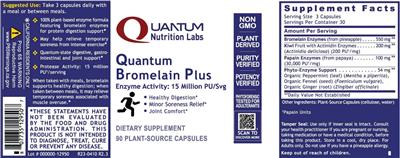
Supplement Facts
The label details for Quantum Bromelain Plus by Quantum Nutrition Labs, sourced from the NIH Dietary Supplement Label Database.
Supplement Facts
| Ingredient | Amount | % DV |
|---|---|---|
| Bromelain | 550 mg | -- |
| Ginger | 0 NP | -- |
| Fennel | 0 NP | -- |
| Papain | 100 mg | -- |
| Peppermint | 0 NP | -- |
| Kiwi | 200 mg | -- |
| Phyto-Enzyme Support | 54 mg | -- |
Other ingredients: Cellulose, Water
Tap any ingredient to jump to its full detail below.
These statements are the manufacturer’s wording, reproduced from the product label — the label is saying it, not HelloPharmacist. We don’t verify or endorse them.
Precautions
California Residents Only Prop 65 Warning Reproductive Harm www.P65Warnings.ca.gov
Tamper seal: Use only if inner seal is intact.
Consult your health practitioner if you are pregnant or nursing, taking medication or have a medical condition, before taking this product.
For adults only. Keep out of reach of children.
Do not use if you have a pineapple allergy.
Suggested/Recommended/Usage/Directions
Suggested use: Take 3 capsules daily with a meal or between meals.
Formula
100% plant-based enzyme formula featuring bromelain enzymes for protein digestion support Protease activity: 15 million PU/ serving Papain Units
Enzyme Activity: 15 million PU/Svg
Formulation
May help relieve temporary soreness from intense exercise Quantum-state digestive, gastro-intestinal and joint support
When taken with meals, bromelain supports healthy digestion; when taking between meals, it may relieve temporary soreness associated with muscle overuse.
Healthy digestion Minor soreness relief Joint comfort
Non GMO Purity verified Phytoforensic tested for adulterants
Plant derived Potency verified
FDA Disclaimer Statement
These statements have not been evaluated by the Food and Drug Administration. This product is not intended to diagnose, treat, cure or prevent any disease.
FDA Statement of Identity
Dietary Supplement
General Statements
Scan to discover more
Storage
Store in a cool, dry place.
Is this label outdated? Report a formula or label change and our pharmacy team will review it.
Quantum Bromelain Plus by Quantum Nutrition Labs label
The label scan from the NIH Dietary Supplement Label Database. Tap to enlarge.
Label images are published by the NIH Dietary Supplement Label Database for the version of this product on file. Always read your actual product label.
View the full label (PDF)The Ingredients in Quantum Bromelain Plus by Quantum Nutrition Labs
These are the 6 active ingredients this product is made of. Select any to open its full monograph.
Serving size3 Capsule(s) Dosage formCapsule Servings per container30 Amounts shown are per serving.
Most supplement products combine several ingredients, and a medication can interact with the product through any one of them. Each ingredient below shows whether it has known drug interactions.
Bromelain
Interacts with141 drugs
Bromelain is a group of protein-digesting enzymes from pineapple that people take mainly for inflammation, swelling, and sinus problems. Some early st...
Bromelain monograph & interactionsPapain
Interacts with2 drugs
Papain is a protein-digesting enzyme from the papaya plant that is used in digestive supplements and some topical products. While it has clear food an...
Papain monograph & interactionsKiwi
Interacts with289 drugs
Kiwi is a nutritious fruit that is rich in vitamin C, fiber, and antioxidants, and it is generally safe to eat as a food. The strongest evidence is fo...
Kiwi monograph & interactionsPhyto-Enzyme Support
- › Ginger
- › Fennel
- › Peppermint
Other (inactive) ingredients: Cellulose, Water. These complete the product’s ingredient list but are not active constituents.
Quantum Bromelain Plus by Quantum Nutrition Labs Drug Interactions
HelloPharmacist Interaction Report
Quantum Bromelain Plus by Quantum Nutrition Labs contains six active ingredients, five of which have documented interactions with medications.
Altogether, these interactions span 1,140 individual medications.
Read the full breakdown — every affected drug type, severity by severity
Bromelain and ginger both carry Moderate-severity risks with blood thinners (anticoagulants and antiplatelet drugs) — they may increase bleeding risk. Bromelain may also theoretically raise tetracycline antibiotic levels (Minor).
Ginger's concerns extend further: it may increase bleeding risk with warfarin and phenprocoumon specifically, raise low blood sugar (hypoglycemia) risk with diabetes medications, and interact with nifedipine, losartan, and several drug-metabolizing enzymes (CYP3A4 and P-glycoprotein substrates) — all Moderate severity.
Fennel poses Moderate-severity risks with birth control pills, hormone replacement therapy, ciprofloxacin, tamoxifen, and blood thinners; it may also affect CYP3A4 substrates. Papain carries a Moderate-severity interaction with warfarin.
Peppermint interacts Moderately with several enzyme systems (CYP2C19, CYP2C9, CYP3A4 substrates, and cyclosporine) and Minor with CYP1A2 substrates. Kiwi poses Moderate-severity risks with blood pressure medications and blood thinners.
Peppermint also carries a pregnancy-and-lactation rating (Likely Safe), while the others lack pregnancy or breastfeeding data on file. Use the medication checker below with your exact prescriptions before starting this product.
Check your own medications below · Editorial policy · How we use AI
Want to check YOUR meds against Quantum Bromelain Plus?
Ask about interactions with your drugs in plain English — “Can I take it with lisinopril?” — and we find you the answer in seconds, ingredient by ingredient.
Go to the checkerIngredients driving the most interactions
Individual Drug Interactions
The ingredients in Quantum Bromelain Plus interact with 1,155 drugs. Click any drug to see the details.
6 of the 6 ingredients in Quantum Bromelain Plus interact with drugs. Each result below shows which ingredient is responsible. Ginger Peppermint Fennel Kiwi Bromelain Papain
Alteplase, TpaActilyse, Activase
How Alteplase, Tpa interacts with Quantum Bromelain Plus — through 4 ingredients. Tap an ingredient for the detail:
FennelAnticoagulant/antiplatelet Drugs Moderate
Interaction Summary
Theoretically, fennel might increase the risk of bleeding when used with antiplatelet or anticoagulant drugs.
Read the full Fennel + Alteplase, Tpa interactionGingerAnticoagulant/antiplatelet Drugs Moderate
Interaction Summary
Ginger may have antiplatelet effects and may increase the risk of bleeding if used with anticoagulant or antiplatelet drugs.
Read the full Ginger + Alteplase, Tpa interactionBromelainAnticoagulant/antiplatelet Drugs Moderate
Interaction Summary
Bromelain may have antiplatelet effects and may increase the risk of bleeding if used with anticoagulant or antiplatelet drugs.
Read the full Bromelain + Alteplase, Tpa interactionKiwiAnticoagulant/antiplatelet Drugs Moderate
Interaction Summary
Clinical research suggests that kiwi inhibits platelet aggregation.
Read the full Kiwi + Alteplase, Tpa interactionAluminum Hydroxide, Aspirin, Codeine Phosphate, Magnesium HydroxideAscriptin Codeine #2
How Aluminum Hydroxide, Aspirin, Codeine Phosphate, Magnesium Hydroxide interacts with Quantum Bromelain Plus — through 4 ingredients. Tap an ingredient for the detail:
KiwiAnticoagulant/antiplatelet Drugs Moderate
Interaction Summary
Clinical research suggests that kiwi inhibits platelet aggregation.
Read the full Kiwi + Aluminum Hydroxide, Aspirin, Codeine Phosphate, Magnesium Hydroxide interactionGingerAnticoagulant/antiplatelet Drugs Moderate
Interaction Summary
Ginger may have antiplatelet effects and may increase the risk of bleeding if used with anticoagulant or antiplatelet drugs.
Read the full Ginger + Aluminum Hydroxide, Aspirin, Codeine Phosphate, Magnesium Hydroxide interactionBromelainAnticoagulant/antiplatelet Drugs Moderate
Interaction Summary
Bromelain may have antiplatelet effects and may increase the risk of bleeding if used with anticoagulant or antiplatelet drugs.
Read the full Bromelain + Aluminum Hydroxide, Aspirin, Codeine Phosphate, Magnesium Hydroxide interactionFennelAnticoagulant/antiplatelet Drugs Moderate
Interaction Summary
Theoretically, fennel might increase the risk of bleeding when used with antiplatelet or anticoagulant drugs.
Read the full Fennel + Aluminum Hydroxide, Aspirin, Codeine Phosphate, Magnesium Hydroxide interactionAluminum Hydroxide, Aspirin, Magnesium HydroxideAscriptin
How Aluminum Hydroxide, Aspirin, Magnesium Hydroxide interacts with Quantum Bromelain Plus — through 4 ingredients. Tap an ingredient for the detail:
FennelAnticoagulant/antiplatelet Drugs Moderate
Interaction Summary
Theoretically, fennel might increase the risk of bleeding when used with antiplatelet or anticoagulant drugs.
Read the full Fennel + Aluminum Hydroxide, Aspirin, Magnesium Hydroxide interactionBromelainAnticoagulant/antiplatelet Drugs Moderate
Interaction Summary
Bromelain may have antiplatelet effects and may increase the risk of bleeding if used with anticoagulant or antiplatelet drugs.
Read the full Bromelain + Aluminum Hydroxide, Aspirin, Magnesium Hydroxide interactionKiwiAnticoagulant/antiplatelet Drugs Moderate
Interaction Summary
Clinical research suggests that kiwi inhibits platelet aggregation.
Read the full Kiwi + Aluminum Hydroxide, Aspirin, Magnesium Hydroxide interactionGingerAnticoagulant/antiplatelet Drugs Moderate
Interaction Summary
Ginger may have antiplatelet effects and may increase the risk of bleeding if used with anticoagulant or antiplatelet drugs.
Read the full Ginger + Aluminum Hydroxide, Aspirin, Magnesium Hydroxide interactionAlvimopanEntereg
How Alvimopan interacts with Quantum Bromelain Plus — through 1 ingredient. Tap an ingredient for the detail:
GingerP-glycoprotein Substrates Moderate
Interaction Summary
Ginger might increase the absorption and blood levels of P-glycoprotein (P-gp) substrates.
Read the full Ginger + Alvimopan interactionAmbrisentanLetairis, Volibris
How Ambrisentan interacts with Quantum Bromelain Plus — through 4 ingredients. Tap an ingredient for the detail:
GingerP-glycoprotein Substrates, Cytochrome P450 3a4 (cyp3a4) Substrates Moderate
Interaction Summary
Ginger might increase the absorption and blood levels of P-glycoprotein (P-gp) substrates.
Read the full Ginger + Ambrisentan interactionKiwiAntihypertensive Drugs Moderate
Interaction Summary
Clinical research suggests that consuming kiwi reduces systolic and diastolic blood pressure in hypertensive individuals.
Read the full Kiwi + Ambrisentan interactionFennelCytochrome P450 3a4 (cyp3a4) Substrates Moderate
Interaction Summary
Theoretically, fennel might increase levels of drugs metabolized by CYP3A4.
Read the full Fennel + Ambrisentan interactionPeppermintCytochrome P450 3a4 (cyp3a4) Substrates Moderate
Interaction Summary
Theoretically, peppermint might increase the levels of CYP3A4 substrates.
Read the full Peppermint + Ambrisentan interactionAmilorideAmilamont, Midamor
How Amiloride interacts with Quantum Bromelain Plus — through 1 ingredient. Tap an ingredient for the detail:
KiwiAntihypertensive Drugs Moderate
Interaction Summary
Clinical research suggests that consuming kiwi reduces systolic and diastolic blood pressure in hypertensive individuals.
Read the full Kiwi + Amiloride interactionAmiloride, HydrochlorothiazideAmil-Co, Amilzide, Moduret 25, Moduretic
How Amiloride, Hydrochlorothiazide interacts with Quantum Bromelain Plus — through 1 ingredient. Tap an ingredient for the detail:
KiwiAntihypertensive Drugs Moderate
Interaction Summary
Clinical research suggests that consuming kiwi reduces systolic and diastolic blood pressure in hypertensive individuals.
Read the full Kiwi + Amiloride, Hydrochlorothiazide interactionAmiodaroneCordarone, Pacerone
How Amiodarone interacts with Quantum Bromelain Plus — through 3 ingredients. Tap an ingredient for the detail:
GingerCytochrome P450 3a4 (cyp3a4) Substrates Moderate
Interaction Summary
Ginger might increase or decrease the levels of CYP3A4 substrates.
Read the full Ginger + Amiodarone interactionFennelCytochrome P450 3a4 (cyp3a4) Substrates Moderate
Interaction Summary
Theoretically, fennel might increase levels of drugs metabolized by CYP3A4.
Read the full Fennel + Amiodarone interactionPeppermintCytochrome P450 3a4 (cyp3a4) Substrates Moderate
Interaction Summary
Theoretically, peppermint might increase the levels of CYP3A4 substrates.
Read the full Peppermint + Amiodarone interactionAmitriptylineElavil
How Amitriptyline interacts with Quantum Bromelain Plus — through 3 ingredients. Tap an ingredient for the detail:
PeppermintCytochrome P450 3a4 (cyp3a4) Substrates, Cytochrome P450 2c19 (cyp2c19) Substrates +2 Moderate
Interaction Summary
Theoretically, peppermint might increase the levels of CYP3A4 substrates.
Read the full Peppermint + Amitriptyline interactionFennelCytochrome P450 3a4 (cyp3a4) Substrates Moderate
Interaction Summary
Theoretically, fennel might increase levels of drugs metabolized by CYP3A4.
Read the full Fennel + Amitriptyline interactionGingerCytochrome P450 2c9 (cyp2c9) Substrates, Cytochrome P450 3a4 (cyp3a4) Substrates +1 Moderate
Interaction Summary
Theoretically, ginger might increase the levels of CYP2C9 substrates.
Read the full Ginger + Amitriptyline interactionAmitriptyline, ChlordiazepoxideLimbitrol DS
How Amitriptyline, Chlordiazepoxide interacts with Quantum Bromelain Plus — through 3 ingredients. Tap an ingredient for the detail:
GingerCytochrome P450 1a2 (cyp1a2) Substrates, Cytochrome P450 2c9 (cyp2c9) Substrates +1 Moderate
Interaction Summary
Theoretically, ginger might increase the levels of CYP1A2 substrates.
Read the full Ginger + Amitriptyline, Chlordiazepoxide interactionFennelCytochrome P450 3a4 (cyp3a4) Substrates Moderate
Interaction Summary
Theoretically, fennel might increase levels of drugs metabolized by CYP3A4.
Read the full Fennel + Amitriptyline, Chlordiazepoxide interactionPeppermintCytochrome P450 2c19 (cyp2c19) Substrates, Cytochrome P450 3a4 (cyp3a4) Substrates +2 Moderate
Interaction Summary
Theoretically, peppermint might increase the levels of CYP2C19 substrates.
Read the full Peppermint + Amitriptyline, Chlordiazepoxide interactionAmitriptyline, PerphenazineEtrafon, Etrafon-A, Etrafon-Forte, Triavil
How Amitriptyline, Perphenazine interacts with Quantum Bromelain Plus — through 3 ingredients. Tap an ingredient for the detail:
PeppermintCytochrome P450 1a2 (cyp1a2) Substrates, Cytochrome P450 2c19 (cyp2c19) Substrates +2 Moderate
Interaction Summary
Theoretically, peppermint might increase the levels of CYP1A2 substrates.
Read the full Peppermint + Amitriptyline, Perphenazine interactionFennelCytochrome P450 3a4 (cyp3a4) Substrates Moderate
Interaction Summary
Theoretically, fennel might increase levels of drugs metabolized by CYP3A4.
Read the full Fennel + Amitriptyline, Perphenazine interactionGingerCytochrome P450 2c9 (cyp2c9) Substrates, Cytochrome P450 1a2 (cyp1a2) Substrates +1 Moderate
Interaction Summary
Theoretically, ginger might increase the levels of CYP2C9 substrates.
Read the full Ginger + Amitriptyline, Perphenazine interactionAmlodipineNorliqva
How Amlodipine interacts with Quantum Bromelain Plus — through 4 ingredients. Tap an ingredient for the detail:
GingerCalcium Channel Blockers, Cytochrome P450 3a4 (cyp3a4) Substrates Moderate
Interaction Summary
Theoretically, taking ginger with calcium channel blockers might increase the risk of hypotension.
Read the full Ginger + Amlodipine interactionKiwiAntihypertensive Drugs Moderate
Interaction Summary
Clinical research suggests that consuming kiwi reduces systolic and diastolic blood pressure in hypertensive individuals.
Read the full Kiwi + Amlodipine interactionPeppermintCytochrome P450 3a4 (cyp3a4) Substrates Moderate
Interaction Summary
Theoretically, peppermint might increase the levels of CYP3A4 substrates.
Read the full Peppermint + Amlodipine interactionFennelCytochrome P450 3a4 (cyp3a4) Substrates Moderate
Interaction Summary
Theoretically, fennel might increase levels of drugs metabolized by CYP3A4.
Read the full Fennel + Amlodipine interactionAmlodipine BenzoateKaterzia
How Amlodipine Benzoate interacts with Quantum Bromelain Plus — through 4 ingredients. Tap an ingredient for the detail:
FennelCytochrome P450 3a4 (cyp3a4) Substrates Moderate
Interaction Summary
Theoretically, fennel might increase levels of drugs metabolized by CYP3A4.
Read the full Fennel + Amlodipine Benzoate interactionGingerCytochrome P450 3a4 (cyp3a4) Substrates, Calcium Channel Blockers Moderate
Interaction Summary
Ginger might increase or decrease the levels of CYP3A4 substrates.
Read the full Ginger + Amlodipine Benzoate interactionPeppermintCytochrome P450 3a4 (cyp3a4) Substrates Moderate
Interaction Summary
Theoretically, peppermint might increase the levels of CYP3A4 substrates.
Read the full Peppermint + Amlodipine Benzoate interactionKiwiAntihypertensive Drugs Moderate
Interaction Summary
Clinical research suggests that consuming kiwi reduces systolic and diastolic blood pressure in hypertensive individuals.
Read the full Kiwi + Amlodipine Benzoate interactionAmlodipine BesilateIstin
How Amlodipine Besilate interacts with Quantum Bromelain Plus — through 4 ingredients. Tap an ingredient for the detail:
KiwiAntihypertensive Drugs Moderate
Interaction Summary
Clinical research suggests that consuming kiwi reduces systolic and diastolic blood pressure in hypertensive individuals.
Read the full Kiwi + Amlodipine Besilate interactionGingerCytochrome P450 3a4 (cyp3a4) Substrates, Calcium Channel Blockers Moderate
Interaction Summary
Ginger might increase or decrease the levels of CYP3A4 substrates.
Read the full Ginger + Amlodipine Besilate interactionPeppermintCytochrome P450 3a4 (cyp3a4) Substrates Moderate
Interaction Summary
Theoretically, peppermint might increase the levels of CYP3A4 substrates.
Read the full Peppermint + Amlodipine Besilate interactionFennelCytochrome P450 3a4 (cyp3a4) Substrates Moderate
Interaction Summary
Theoretically, fennel might increase levels of drugs metabolized by CYP3A4.
Read the full Fennel + Amlodipine Besilate interactionAmlodipine BesylateNorvasc
How Amlodipine Besylate interacts with Quantum Bromelain Plus — through 4 ingredients. Tap an ingredient for the detail:
FennelCytochrome P450 3a4 (cyp3a4) Substrates Moderate
Interaction Summary
Theoretically, fennel might increase levels of drugs metabolized by CYP3A4.
Read the full Fennel + Amlodipine Besylate interactionPeppermintCytochrome P450 3a4 (cyp3a4) Substrates Moderate
Interaction Summary
Theoretically, peppermint might increase the levels of CYP3A4 substrates.
Read the full Peppermint + Amlodipine Besylate interactionGingerCalcium Channel Blockers, Cytochrome P450 3a4 (cyp3a4) Substrates Moderate
Interaction Summary
Theoretically, taking ginger with calcium channel blockers might increase the risk of hypotension.
Read the full Ginger + Amlodipine Besylate interactionKiwiAntihypertensive Drugs Moderate
Interaction Summary
Clinical research suggests that consuming kiwi reduces systolic and diastolic blood pressure in hypertensive individuals.
Read the full Kiwi + Amlodipine Besylate interactionAmlodipine Besylate, BenazeprilLotrel
How Amlodipine Besylate, Benazepril interacts with Quantum Bromelain Plus — through 4 ingredients. Tap an ingredient for the detail:
GingerCytochrome P450 3a4 (cyp3a4) Substrates, Calcium Channel Blockers Moderate
Interaction Summary
Ginger might increase or decrease the levels of CYP3A4 substrates.
Read the full Ginger + Amlodipine Besylate, Benazepril interactionKiwiAntihypertensive Drugs Moderate
Interaction Summary
Clinical research suggests that consuming kiwi reduces systolic and diastolic blood pressure in hypertensive individuals.
Read the full Kiwi + Amlodipine Besylate, Benazepril interactionPeppermintCytochrome P450 3a4 (cyp3a4) Substrates Moderate
Interaction Summary
Theoretically, peppermint might increase the levels of CYP3A4 substrates.
Read the full Peppermint + Amlodipine Besylate, Benazepril interactionFennelCytochrome P450 3a4 (cyp3a4) Substrates Moderate
Interaction Summary
Theoretically, fennel might increase levels of drugs metabolized by CYP3A4.
Read the full Fennel + Amlodipine Besylate, Benazepril interactionAmlodipine, CelecoxibConsensi
How Amlodipine, Celecoxib interacts with Quantum Bromelain Plus — through 4 ingredients. Tap an ingredient for the detail:
PeppermintCytochrome P450 2c9 (cyp2c9) Substrates, Cytochrome P450 3a4 (cyp3a4) Substrates Moderate
Interaction Summary
Theoretically, peppermint might increase the levels of CYP2C9 substrates.
Read the full Peppermint + Amlodipine, Celecoxib interactionFennelCytochrome P450 3a4 (cyp3a4) Substrates Moderate
Interaction Summary
Theoretically, fennel might increase levels of drugs metabolized by CYP3A4.
Read the full Fennel + Amlodipine, Celecoxib interactionGingerCalcium Channel Blockers, Cytochrome P450 2c9 (cyp2c9) Substrates +1 Moderate
Interaction Summary
Theoretically, taking ginger with calcium channel blockers might increase the risk of hypotension.
Read the full Ginger + Amlodipine, Celecoxib interactionKiwiAntihypertensive Drugs Moderate
Interaction Summary
Clinical research suggests that consuming kiwi reduces systolic and diastolic blood pressure in hypertensive individuals.
Read the full Kiwi + Amlodipine, Celecoxib interactionAmmonium ChlorideAmmonium Chloride
How Ammonium Chloride interacts with Quantum Bromelain Plus — through 1 ingredient. Tap an ingredient for the detail:
KiwiAntihypertensive Drugs Moderate
Interaction Summary
Clinical research suggests that consuming kiwi reduces systolic and diastolic blood pressure in hypertensive individuals.
Read the full Kiwi + Ammonium Chloride interactionAmoxicillin, Omeprazole Magnesium, RifabutinTalicia
How Amoxicillin, Omeprazole Magnesium, Rifabutin interacts with Quantum Bromelain Plus — through 3 ingredients. Tap an ingredient for the detail:
PeppermintCytochrome P450 3a4 (cyp3a4) Substrates, Cytochrome P450 2c19 (cyp2c19) Substrates +1 Moderate
Interaction Summary
Theoretically, peppermint might increase the levels of CYP3A4 substrates.
Read the full Peppermint + Amoxicillin, Omeprazole Magnesium, Rifabutin interactionGingerCytochrome P450 3a4 (cyp3a4) Substrates, Cytochrome P450 2c9 (cyp2c9) Substrates Moderate
Interaction Summary
Ginger might increase or decrease the levels of CYP3A4 substrates.
Read the full Ginger + Amoxicillin, Omeprazole Magnesium, Rifabutin interactionFennelCytochrome P450 3a4 (cyp3a4) Substrates Moderate
Interaction Summary
Theoretically, fennel might increase levels of drugs metabolized by CYP3A4.
Read the full Fennel + Amoxicillin, Omeprazole Magnesium, Rifabutin interactionAmphotericin, TetracyclineMysteclin-F
How Amphotericin, Tetracycline interacts with Quantum Bromelain Plus — through 2 ingredients. Tap an ingredient for the detail:
GingerP-glycoprotein Substrates Moderate
Interaction Summary
Ginger might increase the absorption and blood levels of P-glycoprotein (P-gp) substrates.
Read the full Ginger + Amphotericin, Tetracycline interactionBromelainTetracycline Antibiotics Minor
Interaction Summary
Theoretically, bromelain might increase levels of tetracycline antibiotics.
Read the full Bromelain + Amphotericin, Tetracycline interactionAmprenavirAgenerase
How Amprenavir interacts with Quantum Bromelain Plus — through 3 ingredients. Tap an ingredient for the detail:
GingerP-glycoprotein Substrates, Cytochrome P450 3a4 (cyp3a4) Substrates Moderate
Interaction Summary
Ginger might increase the absorption and blood levels of P-glycoprotein (P-gp) substrates.
Read the full Ginger + Amprenavir interactionPeppermintCytochrome P450 3a4 (cyp3a4) Substrates Moderate
Interaction Summary
Theoretically, peppermint might increase the levels of CYP3A4 substrates.
Read the full Peppermint + Amprenavir interactionFennelCytochrome P450 3a4 (cyp3a4) Substrates Moderate
Interaction Summary
Theoretically, fennel might increase levels of drugs metabolized by CYP3A4.
Read the full Fennel + Amprenavir interactionAnacaulase-bcdbNexoBrid
How Anacaulase-bcdb interacts with Quantum Bromelain Plus — through 4 ingredients. Tap an ingredient for the detail:
FennelAnticoagulant/antiplatelet Drugs Moderate
Interaction Summary
Theoretically, fennel might increase the risk of bleeding when used with antiplatelet or anticoagulant drugs.
Read the full Fennel + Anacaulase-bcdb interactionBromelainAnticoagulant/antiplatelet Drugs Moderate
Interaction Summary
Bromelain may have antiplatelet effects and may increase the risk of bleeding if used with anticoagulant or antiplatelet drugs.
Read the full Bromelain + Anacaulase-bcdb interactionKiwiAnticoagulant/antiplatelet Drugs Moderate
Interaction Summary
Clinical research suggests that kiwi inhibits platelet aggregation.
Read the full Kiwi + Anacaulase-bcdb interactionGingerAnticoagulant/antiplatelet Drugs Moderate
Interaction Summary
Ginger may have antiplatelet effects and may increase the risk of bleeding if used with anticoagulant or antiplatelet drugs.
Read the full Ginger + Anacaulase-bcdb interactionAnagrelideAgrylin
How Anagrelide interacts with Quantum Bromelain Plus — through 5 ingredients. Tap an ingredient for the detail:
GingerAnticoagulant/antiplatelet Drugs, Cytochrome P450 1a2 (cyp1a2) Substrates Moderate
Interaction Summary
Ginger may have antiplatelet effects and may increase the risk of bleeding if used with anticoagulant or antiplatelet drugs.
Read the full Ginger + Anagrelide interactionBromelainAnticoagulant/antiplatelet Drugs Moderate
Interaction Summary
Bromelain may have antiplatelet effects and may increase the risk of bleeding if used with anticoagulant or antiplatelet drugs.
Read the full Bromelain + Anagrelide interactionKiwiAnticoagulant/antiplatelet Drugs Moderate
Interaction Summary
Clinical research suggests that kiwi inhibits platelet aggregation.
Read the full Kiwi + Anagrelide interactionFennelAnticoagulant/antiplatelet Drugs Moderate
Interaction Summary
Theoretically, fennel might increase the risk of bleeding when used with antiplatelet or anticoagulant drugs.
Read the full Fennel + Anagrelide interactionPeppermintCytochrome P450 1a2 (cyp1a2) Substrates Minor
Interaction Summary
Theoretically, peppermint might increase the levels of CYP1A2 substrates.
Read the full Peppermint + Anagrelide interactionAnisindioneMiradon
How Anisindione interacts with Quantum Bromelain Plus — through 4 ingredients. Tap an ingredient for the detail:
FennelAnticoagulant/antiplatelet Drugs Moderate
Interaction Summary
Theoretically, fennel might increase the risk of bleeding when used with antiplatelet or anticoagulant drugs.
Read the full Fennel + Anisindione interactionKiwiAnticoagulant/antiplatelet Drugs Moderate
Interaction Summary
Clinical research suggests that kiwi inhibits platelet aggregation.
Read the full Kiwi + Anisindione interactionBromelainAnticoagulant/antiplatelet Drugs Moderate
Interaction Summary
Bromelain may have antiplatelet effects and may increase the risk of bleeding if used with anticoagulant or antiplatelet drugs.
Read the full Bromelain + Anisindione interactionGingerAnticoagulant/antiplatelet Drugs Moderate
Interaction Summary
Ginger may have antiplatelet effects and may increase the risk of bleeding if used with anticoagulant or antiplatelet drugs.
Read the full Ginger + Anisindione interactionAntidiabetes, Dipeptidyl Peptidase-4 (dpp-iv) InhibitorGlyxambi
How Antidiabetes, Dipeptidyl Peptidase-4 (dpp-iv) Inhibitor interacts with Quantum Bromelain Plus — through 1 ingredient. Tap an ingredient for the detail:
GingerP-glycoprotein Substrates, Antidiabetes Drugs Moderate
Interaction Summary
Ginger might increase the absorption and blood levels of P-glycoprotein (P-gp) substrates.
Read the full Ginger + Antidiabetes, Dipeptidyl Peptidase-4 (dpp-iv) Inhibitor interactionAntithrombin IiiThrombate III
How Antithrombin Iii interacts with Quantum Bromelain Plus — through 4 ingredients. Tap an ingredient for the detail:
GingerAnticoagulant/antiplatelet Drugs Moderate
Interaction Summary
Ginger may have antiplatelet effects and may increase the risk of bleeding if used with anticoagulant or antiplatelet drugs.
Read the full Ginger + Antithrombin Iii interactionBromelainAnticoagulant/antiplatelet Drugs Moderate
Interaction Summary
Bromelain may have antiplatelet effects and may increase the risk of bleeding if used with anticoagulant or antiplatelet drugs.
Read the full Bromelain + Antithrombin Iii interactionKiwiAnticoagulant/antiplatelet Drugs Moderate
Interaction Summary
Clinical research suggests that kiwi inhibits platelet aggregation.
Read the full Kiwi + Antithrombin Iii interactionFennelAnticoagulant/antiplatelet Drugs Moderate
Interaction Summary
Theoretically, fennel might increase the risk of bleeding when used with antiplatelet or anticoagulant drugs.
Read the full Fennel + Antithrombin Iii interactionApalutamideErleada
How Apalutamide interacts with Quantum Bromelain Plus — through 3 ingredients. Tap an ingredient for the detail:
FennelCytochrome P450 3a4 (cyp3a4) Substrates Moderate
Interaction Summary
Theoretically, fennel might increase levels of drugs metabolized by CYP3A4.
Read the full Fennel + Apalutamide interactionGingerCytochrome P450 3a4 (cyp3a4) Substrates Moderate
Interaction Summary
Ginger might increase or decrease the levels of CYP3A4 substrates.
Read the full Ginger + Apalutamide interactionPeppermintCytochrome P450 3a4 (cyp3a4) Substrates Moderate
Interaction Summary
Theoretically, peppermint might increase the levels of CYP3A4 substrates.
Read the full Peppermint + Apalutamide interactionApixabanEliquis
How Apixaban interacts with Quantum Bromelain Plus — through 5 ingredients. Tap an ingredient for the detail:
PeppermintCytochrome P450 3a4 (cyp3a4) Substrates Moderate
Interaction Summary
Theoretically, peppermint might increase the levels of CYP3A4 substrates.
Read the full Peppermint + Apixaban interactionBromelainAnticoagulant/antiplatelet Drugs Moderate
Interaction Summary
Bromelain may have antiplatelet effects and may increase the risk of bleeding if used with anticoagulant or antiplatelet drugs.
Read the full Bromelain + Apixaban interactionGingerP-glycoprotein Substrates, Anticoagulant/antiplatelet Drugs +1 Moderate
Interaction Summary
Ginger might increase the absorption and blood levels of P-glycoprotein (P-gp) substrates.
Read the full Ginger + Apixaban interactionKiwiAnticoagulant/antiplatelet Drugs Moderate
Interaction Summary
Clinical research suggests that kiwi inhibits platelet aggregation.
Read the full Kiwi + Apixaban interactionFennelAnticoagulant/antiplatelet Drugs, Cytochrome P450 3a4 (cyp3a4) Substrates Moderate
Interaction Summary
Theoretically, fennel might increase the risk of bleeding when used with antiplatelet or anticoagulant drugs.
Read the full Fennel + Apixaban interactionApomorphineAPO-go, APO-go Pen, APO-go PFS, Apokyn, Uprima
How Apomorphine interacts with Quantum Bromelain Plus — through 1 ingredient. Tap an ingredient for the detail:
GingerP-glycoprotein Substrates Moderate
Interaction Summary
Ginger might increase the absorption and blood levels of P-glycoprotein (P-gp) substrates.
Read the full Ginger + Apomorphine interactionApomorphine HydrochlorideKynmobi
How Apomorphine Hydrochloride interacts with Quantum Bromelain Plus — through 1 ingredient. Tap an ingredient for the detail:
GingerP-glycoprotein Substrates Moderate
Interaction Summary
Ginger might increase the absorption and blood levels of P-glycoprotein (P-gp) substrates.
Read the full Ginger + Apomorphine Hydrochloride interactionEach ingredient & the kinds of drugs it affects
For each ingredient in Quantum Bromelain Plus with known interactions, here are the types of medications they can affect. Open any type for the detail — or search your exact drug in the checker above.
Ginger
Anticoagulant/Antiplatelet Drugs
Ginger may have antiplatelet effects and may increase the risk of bleeding if used with anticoagulant or antiplatelet drugs. However, research is conflicting.
Laboratory research suggests that ginger inhibits thromboxane synthetase and decreases platelet aggregation. However, this has not been demonstrated unequivocally in humans, with mixed results from clinical trials. Theoretically, excessive amounts of ginger might increase the risk of bleeding when used with anticoagulant/antiplatelet drugs.
Antidiabetes Drugs
Theoretically, taking ginger with antidiabetes drugs might increase the risk of hypoglycemia.
Animal and human research suggests that ginger might increase insulin levels and/or decrease blood glucose levels.
Cytochrome P450 3A4 (Cyp3A4) Substrates
Ginger might increase or decrease the levels of CYP3A4 substrates.
In vitro research and some case reports suggest that ginger inhibits CYP3A4 activity. Three case reports from the World Health Organization (WHO) adverse drug reaction database describe increased toxicity in patients taking ginger and cancer medications that are CYP3A4 substrates (imatinib, dabrafenib, and crizotinib). However, the causality of this interaction is unclear due to the presence of multiple interacting drugs and routes of administration.
Conversely, other in vitro research suggests that ginger induces CYP3A4 activity, leading to reduced levels of CYP3A4 substrates. However, this interaction has not been reported in humans.
Losartan (Cozaar)
Theoretically, ginger might increase levels of losartan and the risk of hypotension.
In animal research, ginger increased the levels and hypotensive effects of a single dose of losartan. It is not clear if ginger alters the concentration or effects of losartan when taken continuously. Additionally, this interaction has not been shown in humans.
Nifedipine (Procardia)
Ginger may have antiplatelet effects and increase the risk of bleeding if used with nifedipine.
Clinical research shows that combined treatment with ginger 1 gram plus nifedipine 10 mg significantly inhibits platelet aggregation when compared to nifedipine or ginger alone.
P-Glycoprotein Substrates
Ginger might increase the absorption and blood levels of P-glycoprotein (P-gp) substrates.
In vitro research and case reports suggest that ginger inhibits drug efflux by P-gp, potentially increasing absorption and serum levels of P-gp substrates. Two case reports from the World Health Organization (WHO) adverse drug reaction database describe increased toxicity in patients taking ginger and cancer medications that are P-gp substrates (trametinib, crizotinib). However, the causality of this interaction is unclear due to the presence of multiple interacting drugs and routes of administration.
Phenprocoumon (Marcoumar, Others)
Ginger might increase the risk of bleeding with phenprocoumon.
Phenprocoumon, a warfarin-related anticoagulant, might increase the international normalized ratio (INR) when taken with ginger. There is one case report of a 76-year-old woman with a stable INR on phenprocoumon that increased to greater than 10 when she began consuming dried ginger and ginger tea.
Warfarin (Coumadin)
Ginger might increase the risk of bleeding with warfarin.
Laboratory research suggests that ginger might inhibit thromboxane synthetase and decrease platelet aggregation. In one case report, ginger increased the INR when taken with phenprocoumon, which has similar pharmacological effects as warfarin. In another case report, ginger increased the INR when taken with a combination of warfarin, hydrochlorothiazide, and acetaminophen. A longitudinal analysis suggests that taking ginger increases the risk of bleeding in patients taking warfarin for at least 4 months. However, research in healthy people suggests that ginger has no effect on INR, or the pharmacokinetics or pharmacodynamics of warfarin. Until more is known, monitor INRs closely in patients taking large amounts of ginger.
Calcium Channel Blockers
Theoretically, taking ginger with calcium channel blockers might increase the risk of hypotension.
Some animal and in vitro research suggests that ginger has hypotensive and calcium channel-blocking effects. Another animal study shows that concomitant administration of ginger and the calcium channel blocker amlodipine leads to greater reductions in blood pressure when compared with amlodipine alone.
Cyclosporine (Neoral, Sandimmune)
Theoretically, when taken prior to cyclosporine, ginger might decrease cyclosporine levels.
In an animal model, ginger juice taken 2 hours prior to cyclosporine administration reduced the maximum concentration and area under the curve of cyclosporine by 51% and 40%, respectively. This effect was not observed when ginger juice and cyclosporine were administered at the same time.
Cytochrome P450 1A2 (Cyp1A2) Substrates
Theoretically, ginger might increase the levels of CYP1A2 substrates.
In vitro research shows that ginger inhibits CYP1A2 activity. However, this interaction has not been reported in humans.
Cytochrome P450 2B6 (Cyp2B6) Substrates
Theoretically, ginger might increase the levels of CYP2B6 substrates.
In vitro research shows that ginger inhibits CYP2B6 activity. However, this interaction has not been reported in humans.
Cytochrome P450 2C9 (Cyp2C9) Substrates
Theoretically, ginger might increase the levels of CYP2C9 substrates.
In vitro research shows that ginger inhibits CYP2C9 activity. However, this interaction has not been reported in humans.
Metronidazole (Flagyl)
Theoretically, ginger might increase levels of metronidazole.
In an animal model, ginger increased the absorption and plasma half-life of metronidazole. In addition, the elimination rate and clearance of metronidazole was significantly reduced.
Peppermint
Cyclosporine (Neoral, Sandimmune)
Theoretically, peppermint oil might increase the levels and adverse effects of cyclosporine.
In animal research, peppermint oil inhibits cyclosporine metabolism and increases cyclosporine levels. Inhibition of cytochrome P450 3A4 (CYP3A4) may be partially responsible for this interaction. An interaction between peppermint oil and cyclosporine has not been reported in humans.
Cytochrome P450 2C19 (Cyp2C19) Substrates
Theoretically, peppermint might increase the levels of CYP2C19 substrates.
In vitro research shows that peppermint oil inhibits CYP2C19. So far, this interaction has not been reported in humans.
Cytochrome P450 2C9 (Cyp2C9) Substrates
Theoretically, peppermint might increase the levels of CYP2C9 substrates.
In vitro research shows that peppermint oil inhibits CYP2C9. So far, this interaction has not been reported in humans.
Cytochrome P450 3A4 (Cyp3A4) Substrates
Theoretically, peppermint might increase the levels of CYP3A4 substrates.
Clinical research in healthy volunteers shows that a single dose of peppermint oil 600 mg inhibits CYP3A4 enzymes and increases the AUC of felodipine, a CYP3A4 substrate. However, in vitro research suggests that peppermint oil only inhibits CYP3A4 at very high concentrations.
Cytochrome P450 1A2 (Cyp1A2) Substrates
Theoretically, peppermint might increase the levels of CYP1A2 substrates.
In vitro and animal research shows that peppermint oil and peppermint leaf inhibit CYP1A2. However, in clinical research, peppermint tea did not significantly affect the metabolism of caffeine, a CYP1A2 substrate. It is possible that the 6-day duration of treatment may have been too short to identify a difference.
Fennel
Anticoagulant/Antiplatelet Drugs
Theoretically, fennel might increase the risk of bleeding when used with antiplatelet or anticoagulant drugs.
Animal research suggests that fennel oil has antithrombotic and antiplatelet effects.
Ciprofloxacin (Cipro)
Theoretically, fennel might decrease the levels and clinical effects of ciprofloxacin.
Animal research shows that fennel reduces ciprofloxacin bioavailability by nearly 50%, possibly due to the metal cations such as calcium, iron, and magnesium contained in fennel. This study also found that fennel increased tissue distribution and slowed elimination of ciprofloxacin.
Contraceptive Drugs
Theoretically, taking large amounts of fennel might decrease the effects of contraceptive drugs due to competition for estrogen receptors.
Some constituents of fennel have estrogenic activity.
Cytochrome P450 3A4 (Cyp3A4) Substrates
Theoretically, fennel might increase levels of drugs metabolized by CYP3A4.
In vitro research suggests that fennel inhibits CYP3A4 enzyme activity. This effect has not been reported in humans.
Estrogens
Theoretically, taking large amounts of fennel might interfere with hormone replacement therapy due to competition for estrogen receptors.
Some constituents of fennel have estrogenic activity.
Tamoxifen (Nolvadex)
Theoretically, taking large amounts of fennel might decrease the antiestrogenic effect of tamoxifen.
Some constituents of fennel have estrogenic activity, which may interfere with the antiestrogenic activity of tamoxifen.
Kiwi
Anticoagulant/Antiplatelet Drugs
Clinical research suggests that kiwi inhibits platelet aggregation. Theoretically, kiwi might increase the risk of bleeding when used with antiplatelet or anticoagulant drugs. Some anticoagulant or antiplatelet drugs include aspirin, clopidogrel (Plavix), dalteparin (Fragmin), enoxaparin (Lovenox), heparin, ticlopidine (Ticlid), warfarin (Coumadin), and others.
Antihypertensive Drugs
Clinical research suggests that consuming kiwi reduces systolic and diastolic blood pressure in hypertensive individuals. Theoretically, concomitant use of kiwi and antihypertensive drugs may increase the risk of hypotension when used in combination with drugs that lower blood pressure. These include captopril (Capoten), enalapril (Vasotec), losartan (Cozaar), valsartan (Diovan), diltiazem (Cardizem), amlodipine (Norvasc), hydrochlorothiazide (HydroDiuril), furosemide (Lasix), and many others.
Bromelain
Anticoagulant/Antiplatelet Drugs
Bromelain may have antiplatelet effects and may increase the risk of bleeding if used with anticoagulant or antiplatelet drugs.
There is one case report of a patient experiencing minor bruising while taking bromelain with naproxen. Bromelain is thought to have antiplatelet activity. Whether this interaction is of concern with topical bromelain is unclear. Interference with coagulation of burn wounds has been reported in a patient receiving bromelain-based enzymatic debridement. However, observational research has found that topical bromelain debridement is not associated with increases or decreases in laboratory markers of coagulation when compared with surgical debridement.
Tetracycline Antibiotics
Theoretically, bromelain might increase levels of tetracycline antibiotics.
Laboratory research suggests that bromelain might increase the absorption of tetracycline antibiotics. However, a study in healthy adults reported no difference in tetracycline plasma levels when a 500 mg dose was taken with or without bromelain 80 mg.
Papain
Warfarin (Coumadin)
Theoretically, papain might increase the effects and side effects of warfarin.
In one case report, a patient previously stable on warfarin was found to have an international normalization ratio (INR) of 7.4, which was attributed to ingestion of a supplement containing papain from papaya extract.
Brand information
Manufacturer and brand details for Quantum Bromelain Plus, from the product label.
Quantum Bromelain Plus by Quantum Nutrition Labs: Common Questions
Does Quantum Bromelain Plus by Quantum Nutrition Labs interact with any medications?
How can one product interact with so many drugs?
Where does this information come from?
Is peppermint safe during pregnancy and breastfeeding?
What are the most common side effects of bromelain?
Does ginger work for nausea?
Can I use this if I'm on blood thinners?
What does papain do in this product?
Is there any data on long-term use of bromelain?
Written and reviewed by the HelloPharmacist editorial staff. Our editorial policy
Not sure if Quantum Bromelain Plus is safe with your meds?
Our pharmacists answer your medication & supplement questions — free.
Label information is sourced from the NIH Dietary Supplement Label Database and reflects the product version on file; always read your actual product label. This page is for education only and is not a substitute for professional medical advice. Confirm with your pharmacist or doctor before combining supplements and medications.
The Full Monographs Behind Quantum Bromelain Plus’s Ingredients
Every ingredient we hold a full HelloPharmacist monograph for — uses, evidence, safety, and the complete interaction list.
Bromelain
Interacts with 141 drugsBromelain is a group of protein-digesting enzymes from pineapple that people take mainly for inflammation, swelling, and sinus problems. Some early studies are promising, but the overall evi...
Read the full Bromelain monograph → Herb & supplement monographPapain
Interacts with 2 drugsPapain is a protein-digesting enzyme from the papaya plant that is used in digestive supplements and some topical products. While it has clear food and laboratory uses, strong human evidence...
Read the full Papain monograph → Herb & supplement monographKiwi
Interacts with 289 drugsKiwi is a nutritious fruit that is rich in vitamin C, fiber, and antioxidants, and it is generally safe to eat as a food. The strongest evidence is for helping with constipation and overall...
Read the full Kiwi monograph → Herb & supplement monographGinger
Interacts with 1,007 drugsGinger is a widely used culinary spice with a long history in traditional medicine, and it has the strongest evidence for helping with nausea and vomiting, including from motion sickness, pr...
Read the full Ginger monograph → Herb & supplement monographFennel
Interacts with 740 drugsFennel is a Mediterranean herb widely used as a food and spice, and traditionally taken for digestive complaints, colic, and menstrual cramps. Some small studies suggest possible benefit for...
Read the full Fennel monograph → Herb & supplement monographPeppermint
Interacts with 796 drugsPeppermint is a popular herb with the best evidence supporting enteric-coated peppermint oil for easing IBS symptoms. It is generally well tolerated for most adults, but it can cause heartbu...
Read the full Peppermint monograph →Sources & How We Checked
Quantum Bromelain Plus's label data comes from the NIH Dietary Supplement Label Database; the ingredient interaction data is from the Natural Medicines database, reviewed by our pharmacists.
- NIH Dietary Supplement Label Database (DSLD) — The official product label on file for this supplement.
- Natural Medicines (Therapeutic Research Center) — Evidence-graded clinical reference behind the ingredient interaction data.
Content is written and reviewed by licensed HelloPharmacist pharmacists. See our data sources and editorial standards for how this information is built and checked.
The 184 references behind this product’s interaction data
Every citation that drives the interaction findings for this product’s ingredients, from the evidence-graded Natural Medicines (TRC Healthcare) database. Open an ingredient to browse its citations — links open the study on PubMed or the publisher’s site.
Bromelain 19 references
- Nettis E, Napoli G, Ferrannini A, Tursi A. IgE-mediated allergy to bromelain. Allergy 2001;56:257-8. PubMed
- Taussig SJ, Batkin S. Bromelain, the enzyme complex of pineapple (Ananas comosus) and its clinical application. An update. J Ethnopharmacol 1988;22:191-203.. PubMed
- Bradbrook ID, Morrison PJ, Rogers HJ. The effect of bromelain on the absorption of orally administered tetracycline. Br J Clin Pharmacol 1978;6:552-4. PubMed
- Bush TM, Rayburn KS, Holloway SW, et al. Adverse interactions between herbal and dietary substances and prescription medications: a clinical survey. Altern Ther Health Med 2007;13:30-5.
- Brien S, Lewith G, Walker AF, et al. Bromelain as an adjunctive treatment for moderate-to-severe osteoarthritis of the knee: a randomized placebo-controlled pilot study. QJM 2006;99:841-50. PubMed
- Mori S, Ojima Y, Hirose T, et al. The clinical effect of proteolytic enzyme containing bromelain and trypsin on urinary tract infection evaluated by double blind method. Acta Obstet Gynaecol Jpn 1972;19:147-53.
- Glaser D, Hilberg T. The influence of bromelain on platelet count and platelet activity in vitro. Platelets 2006;17:37-41. PubMed
- Heinicke R M, van der Wal L, Yokoyama M. Effect of bromelain (Ananase) on human platelet aggregation. Experientia 1972;28:844-5. PubMed
- Gailhofer, G., Wilders-Truschnig, M., Smolle, J., and Ludvan, M. Asthma caused by bromelain: an occupational allergy. Clin Allergy 1988;18(5):445-450. PubMed
- Mattei, O., Fabri, G., and Farina, G. [Occupational health experience regarding four cases of asthma due to bromelain (author's transl)]. Medicina del Lavoro 1979;70(5):404-409.
- Galleguillos, F. and Rodriguez, J. C. Asthma caused by bromelin inhalation. Clin Allergy 1978;8(1):21-24. PubMed
- Perez-Camo I, Quirce S, Duran MA, and et al. Latex allergy: evidence of cross-reactivity with papain and bromelain [abstract]. Allergy 1996;51(suppl 31):48.
- Martin GJ, Ehrenreich J, and Asbell N. Bromelain: pineapple proteases with anti-edema activity. Exp Med Surg 1962;20:227-247.
- Kasemsuk T, Saengpetch N, Sibmooh N, Unchern S. Improved WOMAC score following 16-week treatment with bromelain for knee osteoarthritis. Clin Rheumatol. 2016 Oct;35(10):2531-40. PubMed
- Kutlu Ö, DemirbaS A, Elmas ÖF, Güvenç U, Metin A. Fixed drug eruption: a new side effect of bromelain. Contact Dermatitis 2020. Online ahead of print. PubMed
- Shoham Y, Shapira E, Haik J, et al. Bromelain-based enzymatic debridement of chronic wounds: Results of a multicentre randomized controlled trial. Wound Repair Regen 2021;29(6):899-907. PubMed
- Pfister P, Garcia Wendel PD, Kim BS, et al. Coagulation side effects of enzymatic debridement in burned patients. Burns 2022. PubMed
- Hasham S, Riyat H, Fletcher A, O'Boyle CP, Alexander S. To bleed or not to bleed? Case series and discussion of haemorrhage risk with enzymatic debridement in burn injuries. Scars Burn Heal 2023;9:20595131231168333. PubMed
- Leelakanok N, Petchsomrit A, Janurai T, Saechan C, Sunsandee N. Efficacy and safety of bromelain: A systematic review and meta-analysis. Nutr Health 2023. PubMed
Ginger 64 references
- Fischer-Rasmussen W, Kjaer SK, Dahl C, Asping U. Ginger treatment of hyperemesis gravidarum. Eur J Obstet Gynecol Reprod Biol 1991;38:19-24. PubMed
- Jewell D, Young G. Interventions for nausea and vomiting in early pregnancy. Cochrane Database Syst Rev 2000;(2):CD000145. PubMed
- Vutyavanich T, Kraisarin T, Ruangsri R. Ginger for nausea and vomiting in pregnancy: randomized, double-masked, placebo-controlled trial. Obstet Gynecol 2001;97:577-82. DOI
- Backon J. Ginger in preventing nausea and vomiting of pregnancy; a caveat due to its thromboxane synthetase activity and effect on testosterone binding. Eur J Obstet Gynecol Reprod Biol 1991;42:163-4. PubMed
- Srivastava KC. Effect of onion and ginger consumption on platelet thromboxane production in humans. Prostaglandins Leukot Essent Fatty Acids 1989;35:183-5. PubMed
- Stewart JJ, Wood MJ, Wood CD, Mims ME. Effects of ginger on motion sickness susceptibility and gastric function. Pharmacology 1991;42:111-20. PubMed
- Smith C, Crowther C, Willson K, et al. A randomized controlled trial of ginger to treat nausea and vomiting in pregnancy. Obstet Gynecol 2004;103:639-45. PubMed
- Portnoi G, Chng LA, Karimi-Tabesh L, et al. Prospective comparative study of the safety and effectiveness of ginger for the treatment of nausea and vomiting in pregnancy. Am J Obstet Gynecol 2003;189:1374-7.. PubMed
- Wigler I, Grotto I, Caspi D, Yaron M. The effects of Zintona EC (a ginger extract) on symptomatic gonarthritis. Osteoarthritis Cartilage 2003;11:783-9. PubMed
- Ghayur MN, Gilani AH. Ginger lowers blood pressure through blockade of voltage-dependent calcium channels. J Cardiovasc Pharmacol 2005;45:74-80. PubMed
- Thomson M, Al-Qattan KK, Al-Sawan SM, et al. The use of ginger (Zingiber officinale Rosc.) as a potential anti-inflammatory and antithrombotic agent. Prostaglandins Leukot Essent Fatty Acids 2002;67:475-8. PubMed
- Kanerva L, Estlander T, Jolanki R. Occupational allergic contact dermatitis from spices. Contact Dermatitis 1996;35:157-62. PubMed
- Akhani SP, Vishwakarma SL, Goyal RK. Anti-diabetic activity of Zingiber officinale in streptozotocin-induced type I diabetic rats. J Pharm Pharmacol 2004;56:101-5.
- Kruth P, Brosi E, Fux R, et al. Ginger-associated overanticoagulation by phenprocoumon. Ann Pharmacother 2004;38:257-60. PubMed
- Jiang X, Williams KM, Liauw WS, et al. Effect of ginkgo and ginger on the pharmacokinetics and pharmacodynamics of warfarin in healthy subjects. Br J Clin Pharmacol 2005;59:425-32. PubMed
- Borrelli F, Capasso R, Aviello G, et al. Effectiveness and safety of ginger in the treatment of pregnancy-induced nausea and vomiting. Obstet Gynecol 2005;105:849-56. PubMed
- Smith C, Crowther C, Wilson K et al. A randomized controlled trial of ginger to treat nausea and vomiting in pregnancy. Obstet Gynecol 2004;103:639-45. PubMed
- Jiang X, Blair EY, McLachlan AJ. Investigation of the effects of herbal medicines on warfarin response in healthy subjects: a population pharmacokinetic-pharmacodynamic modeling approach. J Clin Pharmacol 2006;46:1370-8. PubMed
- Chittumma P, Kaewkiattikun K, Wiriyasiriwach B. Comparison of the effectiveness of ginger and vitamin B6 for treatment of nausea and vomiting in early pregnancy: a randomized double-blind controlled trial. J Med Assoc Thai 2007;90:15-20.
- Ozgoli G, Goli M, Moattar F. Comparison of effects of ginger, mefenamic acid, and ibuprofen on pain in women with primary dysmenorrhea. J Altern Complement Med 2009;15:129-32. PubMed
- Black CD, Herring MP, Hurley DJ, O'Connor PJ. Ginger (Zingiber officinale) reduces muscle pain caused by eccentric exercise. J Pain 2010;11:894-903. PubMed
- Heitmann K, Nordeng H, Holst L. Safety of ginger use in pregnancy: results from a large population-based cohort study. Eur J Clin Pharmacol 2012 Jun 17. PubMed
- Ryan JL, Heckler CE, Roscoe JA, et al. Ginger (Zingiber officinale) reduces acute chemotherapy-induced nausea: a URCC CCOP study of 576 patients. Support Care Cancer. 2012;20:1479-89. PubMed
- Backon J. Ginger as an antiemetic: possible side effects due to its thromboxane synthetase activity. Anaesthesia. 1991;46(8):705-6.. PubMed
- Abebe W. Herbal medication: potential for adverse interactions with analgesic drugs. J Clin Pharm Ther. 2002;27:391-401. PubMed
- Argento A, Tiraferri E, Marzaloni M. [Oral anticoagulants and medicinal plants. An emerging interaction]. Ann Ital Med Int. 2000;15:139-43.
- Young HY, Liao JC, Chang YS, et al. Synergistic effect of ginger and nifedipine on human platelet aggregation: a study in hypertensive patients and normal volunteers. Am J Chin Med. 2006;34:545-51. PubMed
- Greenway FL, Liu Z, Martin CK, et al. Safety and efficacy of NT, an herbal supplement, in treating human obesity. Int J Obes (Lond). 2006;30:1737-41. PubMed
- Shalansky S, Lynd L, Richardson K, et al. Risk of warfarin-related bleeding events and supratherapeutic international normalized ratios associated with complementary and alternative medicine: a longitudinal analysis. Pharmacotherapy. 2007;27:1237-47. PubMed
- Lesho EP, Saullo L, Udvari-Nagy S. A 76-year-old woman with erratic anticoagulation. Cleve Clin J Med. 2004;71:651-6. PubMed
- Okonta JM, Uboh M, Obonga WO. Herb-Drug Interaction: A Case Study of Effect of Ginger on the Pharmacokinetic of Metronidazole in Rabbit. Indian Journal of Pharmaceutical Sciences (India) 2008;70(230):232. PubMed
- Chiang HM, Chao PD, Hsiu SL, et al. Ginger significantly decreased the oral bioavailability of cyclosporine in rats. Am J Chin Med. 2006;34:845-55. PubMed
- Bhandari U, Kanojia R, Pillai KK. Effect of ethanolic extract of Zingiber officinale on dyslipidaemia in diabetic rats. J Ethnopharmacol. 2005;97:227-30. PubMed
- Ojewole JA. Analgesic, antiinflammatory and hypoglycaemic effects of ethanol extract of Zingiber officinale (Roscoe) rhizomes (Zingiberaceae) in mice and rats. Phytother Res. 2006;20:764-72.
- Al-Amin ZM, Thomson M, Al-Qattan KK, et al. Anti-diabetic and hypolipidaemic properties of ginger (Zingiber officinale) in streptozotocin-induced diabetic rats. Br J Nutr. 2006;96:660-6.
- Islam MS, Choi H. Comparative effects of dietary ginger (Zingiber officinale) and garlic (Allium sativum) investigated in a type 2 diabetes model of rats. J Med Food. 2008;11:152-9.
- Cady RK, Goldstein J, Nett R, et al. A double-blind placebo-controlled pilot study of sublingual feverfew and ginger (LipiGesic M) in the treatment of migraine. Headache 2011;51:1078-86.
- Futrell, J. M. and Rietschel, R. L. Spice allergy evaluated by results of patch tests. Cutis 1993;52(5):288-290.
- Sripramote, M. and Lekhyananda, N. A randomized comparison of ginger and vitamin B6 in the treatment of nausea and vomiting of pregnancy. J Med Assoc.Thai. 2003;86(9):846-853.
- Lohsiriwat, S., Rukkiat, M., Chaikomin, R., and Leelakusolvong, S. Effect of ginger on lower esophageal sphincter pressure. J.Med.Assoc.Thai. 2010;93(3):366-372.
- Liu, P. H. and Ho, H. L. Ginger and drug bezoar induced small bowel obstruction. J R.Coll.Surg.Edinb. 1983;28(6):397-398.
- Maghbooli M, Golipour F, Moghimi Esfandabadi A, Yousefi M. Comparison between the efficacy of ginger and sumatriptan in the ablative treatment of the common migraine. Phytother Res 2014;28(3):412-5. PubMed
- Mahluji S, Attari VE, Mobasseri M, Payahoo L, Ostadrahimi A, Golzari SE. Effects of ginger (Zingiber officinale) on plasma glucose level, HbA1c and insulin sensitivity in type 2 diabetic patients. Int J Food Sci Nutr 2013;64(6):682-6.
- Mozaffari-Khosravi H, Talaei B, Jalali BA, Najarzadeh A, Mozayan MR. The effect of ginger powder supplementation on insulin resistance and glycemic indices in patients with type 2 diabetes: a randomized, double-blind, placebo-controlled trial. Complement PubMed
- Paramdeep G. Efficacy and tolerability of ginger (Zingiber officinale) in patients of osteoarthritis of knee. Indian J Physiol Pharmacol 2013;57(2):177-83.
- Rahnama P, Montazeri A, Huseini HF, Kianbakht S, Naseri M. Effect of Zingiber officinale R. rhizomes (ginger) on pain relief in primary dysmenorrhea: a placebo randomized trial. BMC Complement Altern Med 2012;12:92. PubMed
- Viljoen E, Visser J, Koen N, Musekiwa A. A systematic review and meta-analysis of the effect and safety of ginger in the treatment of pregnancy-associated nausea and vomiting. Nutr J 2014;13:20. PubMed
- Bartels EM, Folmer VN, Bliddal H, et al. Efficacy and safety of ginger in osteoarthritis patients: a meta-analysis of randomized placebo-controlled trials. Osteoarthritis Cartilage. 2015;23(1):13-21. PubMed
- Choi JS, Han JY, Ahn HK, et al. Assessment of fetal and neonatal outcomes in the offspring of women who had been treated with dried ginger (Zingiberis rhizoma siccus) for a variety of illnesses during pregnancy. J Obstet Gynaecol. 2015;35(2):125-30.
- Marx W, McKavanagh D, McCarthy AL, Bird R, Ried K, Chan A, Isenring L. The effect of ginger (Zingiber officinale) on platelet aggregation: A systematic literature review. PLoS One. 2015;10(10):e0141119. PubMed
- Crichton M, Marshall S, Marx W, McCarthy AL, Isenring E. Efficacy of ginger (Zingiber officinale) in ameliorating chemotherapy-induced nausea and vomiting and chemotherapy-related outcomes: A systematic review update and meta-analysis. J Acad Nutr Diet. 2 PubMed
- Martins LB, Rodrigues AMDS, Monteze NM, et al. Double-blind placebo-controlled randomized clinical trial of ginger (Zingiber officinale Rosc.) in the prophylactic treatment of migraine. Cephalalgia. 2020;40(1):88-95.
- Martins LB, Rodrigues AMDS, Rodrigues DF, Dos Santos LC, Teixeira AL, Ferreira AVM. Double-blind placebo-controlled randomized clinical trial of ginger (Zingiber officinale Rosc.) addition in migraine acute treatment. Cephalalgia. 2019;39(1):68-76.
- Ahad A, Raish M, Bin Jardan YA, Alam MA, Al-Mohizea AM, Al-Jenoobi FI. Effect of Hibiscus sabdariffa and Zingiber officinale on the antihypertensive activity and pharmacokinetic of losartan in hypertensive rats. Xenobiotica. 2020:1-11.
- Okuhira H, Nakatani Y, Furukawa F, Kanazawa N. Anaphylaxis to ginger induced by herbal medicine. Allergol Int. 2020;69(1):159-160. PubMed
- Yamprasert R, Chanvimalueng W, Mukkasombut N, Itharat A. Ginger extract versus Loratadine in the treatment of allergic rhinitis: a randomized controlled trial. BMC Complement Med Ther. 2020;20(1):116. PubMed
- Ebrahimzadeh A, Ebrahimzadeh A, Mirghazanfari SM, Hazrati E, Hadi S, Milajerdi A. The effect of ginger supplementation on metabolic profiles in patients with type 2 diabetes mellitus: a systematic review and meta-analysis of randomized controlled trials. PubMed
- Alam MA, Bin Jardan YA, Alzenaidy B, et al. Effect of Hibiscus sabdariffa and Zingiber officinale on pharmacokinetics and pharmacodynamics of amlodipine. J Pharm Pharmacol 2021;73(9):1151-60.
- Akbarzadeh E, Heydari M, Atarzadeh F, Jaladat AM. Chronic dysuria following ginger (Zingiber officinale) use: a case report. Galen Med J 2018;7:e1086. DOI
- Haron MH, Dale O, Martin K, et al. Evaluation of the Herb-Drug Interaction Potential of Commonly Used Botanicals on the US Market with Regard to PXR- and AhR-Mediated Influences on CYP3A4 and CYP1A2. J Diet Suppl 2022. PubMed
- Rostamkhani H, Veisi P, Niknafs B, Jafarabadi MA, Ghoreishi Z. The effect of zingiber officinale on prooxidant-antioxidant balance and glycemic control in diabetic patients with ESRD undergoing hemodialysis: a double-blind randomized control trial. BMC Co PubMed
- Husain I, Dale OR, Idrisi M, et al. Evaluation of the Herb-Drug Interaction (HDI) Potential of Zingiber officinale and Its Major Phytoconstituents. J Agric Food Chem. 2023;71(19):7521-7534.
- Committee on Practice Bulletins-Obstetrics. ACOG Practice Bulletin No. 189: Nausea And Vomiting Of Pregnancy. Obstet Gynecol. 2018;131(1):e15-e30. PubMed
- Pochet S, Lechon AS, Lescrainier C, et al. Herb-anticancer drug interactions in real life based on VigiBase, the WHO global database. Sci Rep 2022;12(1):14178. PubMed
Fennel 17 references
- Leung AY, Foster S. Encyclopedia of Common Natural Ingredients Used in Food, Drugs and Cosmetics. 2nd ed. New York, NY: John Wiley & Sons, 1996.
- Brinker F. Herb Contraindications and Drug Interactions. 2nd ed. Sandy, OR: Eclectic Medical Publications, 1998.
- Zhu M, Wong PY, Li RC. Effect of oral administration of fennel (Foeniculum vulgare) on ciprofloxacin absorption and disposition in the rat. J Pharm Pharmacol 1999;51:1391-6.
- Gral N, Beani JC, Bonnot D, et al. [Plasma levels of psoralens after celery ingestion]. Ann Dermatol Venereol 1993;120:599-603.
- Burkhard PR, Burkhardt K, Haenggeli CA, Landis T. Plant-induced seizures: reappearance of an old problem. J Neurol 1999;246:667-70. PubMed
- Rosti L, Nardini A, Bettinelli ME, Rosti D. Toxic effects of a herbal tea mixture in two newborns. Acta Paediatrica 1994;83:683. PubMed
- Cuzzolin L, Zaffani S, and Benoni G. Safety implications regarding use of phytomedicines. Eur.J Clin Pharmacol. 2006;62:37-42. PubMed
- Tognolini, M., Ballabeni, V., Bertoni, S., Bruni, R., Impicciatore, M., and Barocelli, E. Protective effect of Foeniculum vulgare essential oil and anethole in an experimental model of thrombosis. Pharmacol.Res 2007;56(3):254-260. PubMed
- Subehan, Usia, T., Iwata, H., Kadota, S., and Tezuka, Y. Mechanism-based inhibition of CYP3A4 and CYP2D6 by Indonesian medicinal plants. J Ethnopharmacol. 5-24-2006;105(3):449-455. PubMed
- Tognolini, M., Barocelli, E., Ballabeni, V., Bruni, R., Bianchi, A., Chiavarini, M., and Impicciatore, M. Comparative screening of plant essential oils: phenylpropanoid moiety as basic core for antiplatelet activity. Life Sci. 2-23-2006;78(13):1419-1432. PubMed
- Subehan, Zaidi, S. F., Kadota, S., and Tezuka, Y. Inhibition on human liver cytochrome P450 3A4 by constituents of fennel (Foeniculum vulgare): identification and characterization of a mechanism-based inactivator. J Agric.Food Chem. 12-12-2007;55(25):101 PubMed
- LEVY, S. B. Bronchial asthma due to ingestion of fennel and fennel seed. Ann.Allergy 1948;6(4):415.
- Ottolenghi, A., De Chiara, A., Arrigoni, S., Terracciano, L., and De Amici, M. [Diagnosis of food allergy caused by fruit and vegetables in children with atopic dermatitis]. Pediatr Med Chir 1995;17(6):525-530.
- Trabace L, Tucci P, Ciuffreda L, et al. "Natural" relief of pregnancy-related symptoms and neonatal outcomes: above all do no harm. J Ethnopharmacol. 2015;174:396-402. PubMed
- Denaxa D, Arkwright PD. Fennel as a cause of immediate hypersensitivity to toothpaste. Ann Allergy Asthma Immunol. 2020;125(1):99-100. PubMed
- Lee HW, Ang L, Lee MS, Alimoradi Z, Kim E. Fennel for reducing pain in primary dysmenorrhea: a systematic review and meta-analysis of randomized controlled trials. Nutrients 2020;12(11):3438. PubMed
- Mathew T, John SK, Javali M, Vasireddy M, Nadig R, Sarma GRK. Substance use related cluster headache: A case series. Headache 2022;62(7):908-910. PubMed
Papain 11 references
- The Review of Natural Products by Facts and Comparisons. St. Louis, MO: Wolters Kluwer Co., 1999.
- Shaw D, Leon C, Kolev S, Murray V. Traditional remedies and food supplements: a 5-year toxicological study (1991-1995). Drug Saf 1997;17:342-56.
- Shuttleworth D, Hill S, Marks R, Connelly DM. Relief of experimentally induced pruritus with a novel eutectic mixture of local anaesthetic agents. Br J Dermatol 1988;119:535-40.
- Mansfield LE, Ting S, Haverly RW, Yoo TJ. The incidence and clinical implications of hypersensitivity to papain in an allergic population, confirmed by blinded oral challenge. Ann Allergy 1985;55:541-3.
- Martin, T., Uhder, K., Kurek, R., Roeddiger, S., Schneider, L., Vogt, H. G., Heyd, R., and Zamboglou, N. Does prophylactic treatment with proteolytic enzymes reduce acute toxicity of adjuvant pelvic irradiation? Results of a double-blind randomized trial PubMed
- Walker-Renard, P. Update on the medicinal management of phytobezoars. Am J Gastroenterol. 1993;88(10):1663-1666.
- Tymoszuk D, Wiszniewska M, Walusiak-Skorupa J. Papain-induced occupational rhinoconjunctivitis and asthma - A case report. Med Pr 2016;67(1):109-12. PubMed
- Soto-Mera MT, López-Rico MR, Filgueira JF, et al. Occupational allergy to papain. Allergy 2000;55(10):983-4. PubMed
- Tarlo SM, Shaikh W, Bell B, et al. Papain-induced allergic reactions. Clin Allergy 1978;8(3):207-15. PubMed
- Baur X, König G, Bencze K, Fruhmann G. Clinical symptoms and results of skin test, RAST and bronchial provocation test in thirty-three papain workers: Evidence for strong immunogenic potency and clinically relevant proteolytic e?ects of airborne papain. C
- Novey HS, Keenan WJ, Fairshter RD, Wells ID, Wilson AF, Culver BD. Pulmonary disease in workers exposed to papain: clinico-physiological and immunological studies. Clin Allergy 1980;10(6):721-31. PubMed
Peppermint 41 references
- Liu JH, Chen GH, Yeh HZ, et al. Enteric-coated peppermint-oil capsules in the treatment of irritable bowel syndrome: a prospective, randomized trial. J Gastroenterol 1997;32:765-8. PubMed
- Pittler MH, Ernst E. Peppermint oil for irritable bowel syndrome: a critical review and metaanalysis. Am J Gastroenterol 1998;93:1131-5. PubMed
- Kline RM, Kline JJ, Di Palma J, Barbero GJ. Enteric-coated, pH-dependent peppermint oil capsules for the treatment of irritable bowel syndrome in children. J Pediatr 2001;138:125-8. PubMed
- Madisch A, Heydenreich CJ, Wieland V, et al. Treatment of functional dyspepsia with a fixed peppermint oil and caraway oil combination preparation as compared to cisapride. A multicenter, reference-controlled, double-blind equivalence study. Arzneimittel
- May B, Kuntz HD, Kieser M, Kohler S. Efficacy of a fixed peppermint oil/caraway oil combination in non-ulcer dyspepsia. Arzneimittelforschung 1996;46:1149-53.
- Micklefield GH, Greving I, May B. Effects of peppermint oil and caraway oil on gastroduodenal motility. Phytother Res 2000;14:20-3. DOI
- Morton CA, Garioch J, Todd P, et al. Contact sensitivity to menthol and peppermint in patients with intra-oral symptoms. Contact Dermatitis 1995;32:281-4. PubMed
- May B, Kohler S, Schneider B. Efficacy and tolerability of a fixed combination of peppermint oil and caraway oil in patients suffering from functional dyspepsia. Aliment Pharmacol Ther 2000;14:1671-7. PubMed
- Nash P, Gould SR, Bernardo DE. Peppermint oil does not relieve the pain of irritable bowel syndrome. Br J Clin Pract 1986;40:292-3. DOI
- Rees WD, Evans BK, Rhodes J. Treating irritable bowel syndrome with peppermint oil. Br Med J 1979;2:835-6. PubMed
- Davies SJ, Harding LM, Baranowski AP. A novel treatment of postherpetic neuralgia using peppermint oil. Clin J Pain 2002;18:200-2. PubMed
- Weston CF. Anal burning and peppermint oil. Postgrad Med J 1987;63:717. PubMed
- Dresser GK, Wacher V, Wong S, et al. Evaluation of peppermint oil and ascorbyl palmitate as inhibitors of cytochrome P4503A4 activity in vitro and in vivo. Clin Pharmacol Ther 2002;72:247-55. PubMed
- Wacher VJ, Wong S, Wong HT. Peppermint oil enhances cyclosporine oral bioavailability in rats: comparison with D-alpha-tocopheryl poly(ethylene glycol 1000) succinate (TPGS) and ketoconazole. J Pharm Sci 2002;91:77-90.
- Lawson MJ, Knight RE, Tran K, et al. Failure of enteric-coated peppermint oil in the irritable bowel syndrome: a randomized double-blind crossover study. J Gastroenterol Hepatol 1988;3:235-8. DOI
- Unger M, Frank A. Simultaneous determination of the inhibitory potency of herbal extracts on the activity of six major cytochrome P450 enzymes using liquid chromatography/mass spectrometry and automated online extraction. Rapid Commun Mass Spectrom 2004;1 PubMed
- Maliakal PP, Wanwimolruk S. Effect of herbal teas on hepatic drug metabolizing enzymes in rats. J Pharm Pharmacol 2001;53:1323-9. PubMed
- Rogers SN, Pahor AL. A form of stomatitis induced by excessive peppermint consumption. Dent Update 1995;22:36-7.
- Cappello G, Spezzaferro M, Grossi L, et al. Peppermint oil (Mintoil) in the treatment of irritable bowel syndrome: a prospective double blind placebo-controlled randomized trial. Dig Liver Dis 2007;39:530-6. PubMed
- Moghadam BK, Gier R, and Thurlow T. Extensive oral mucosal ulcerations caused by misuse of a commercial mouthwash. Cutis 1999;64:131-134.
- Andersen, K. E. Contact allergy to toothpaste flavors. Contact Dermatitis 1978;4(4):195-198. PubMed
- Barnard, D. R. Repellency of essential oils to mosquitoes (Diptera: Culicidae). J Med Entomol. 1999;36(5):625-629. PubMed
- Tamir, S., Davidovich, Z., Attal, P., and Eliashar, R. Peppermint oil chemical burn. Otolaryngol.Head Neck Surg. 2005;133(5):801-802. PubMed
- Kalavala, M., Hughes, T. M., Goodwin, R. G., Anstey, A. V., and Stone, N. M. Allergic contact dermatitis to peppermint foot spray. Contact Dermatitis 2007;57(1):57-58. PubMed
- Vermaat, H., van Meurs, T., Rustemeyer, T., Bruynzeel, D. P., and Kirtschig, G. Vulval allergic contact dermatitis due to peppermint oil in herbal tea. Contact Dermatitis 2008;58(6):364-365. PubMed
- Merat, S., Khalili, S., Mostajabi, P., Ghorbani, A., Ansari, R., and Malekzadeh, R. The effect of enteric-coated, delayed-release peppermint oil on irritable bowel syndrome. Dig.Dis.Sci. 2010;55(5):1385-1390. PubMed
- Tran, A., Pratt, M., and DeKoven, J. Acute allergic contact dermatitis of the lips from peppermint oil in a lip balm. Dermatitis 2010;21(2):111-115. DOI
- Hitz, Lindenmuller, I and Lambrecht, J. T. Oral care. Curr Probl.Dermatol 2011;40:107-115.
- Shavakhi, A., Ardestani, S. K., Taki, M., Goli, M., and Keshteli, A. H. Premedication with peppermint oil capsules in colonoscopy: a double blind placebo-controlled randomized trial study. Acta Gastroenterol Belg 2012;75(3):349-353.
- Lech, Y., Olesen, K. M., Hey, H., Rask-Pedersen, E., Vilien, M., and Ostergaard, O. [Treatment of irritable bowel syndrome with peppermint oil. A double- blind study with a placebo]. Ugeskr.Laeger 10-3-1988;150(40):2388-2389.
- Parys, B. T. Chemical burns resulting from contact with peppermint oil mar: a case report. Burns Incl.Therm.Inj. 1983;9(5):374-375. PubMed
- Bayat R, Borici-Mazi R. A case of anaphylaxis to peppermint. Allergy Asthma Clin Immunol. 2014;10(1):6. PubMed
- Rich G, Shah A, Koloski N, et al. A randomized placebo-controlled trial on the effects of Menthacarin, a proprietary peppermint- and caraway-oil-preparation, on symptoms and quality of life in patients with functional dyspepsia. Neurogastroenterol Motil 2 PubMed
- Douros A, Bronder E, Andersohn F, et al. Herb-Induced Liver Injury in the Berlin Case-Control Surveillance Study. Int J Mol Sci 2016;17(1). PubMed
- Begas E, Tsioutsiouliti A, Kouvaras E, et al. Effects of peppermint tea consumption on the activities of CYP1A2, CYP2A6, Xanthine Oxidase, N-acetyltranferase-2 and UDP-glucuronosyltransferases-1A1/1A6 in healthy volunteers. Food Chem Toxicol 2017;100:80-9 PubMed
- Cash BD, Epstein MS, Shah SM. A Novel Delivery System of Peppermint Oil Is an Effective Therapy for Irritable Bowel Syndrome Symptoms. Dig Dis Sci 2016;61(2):560-71. PubMed
- Elsaie LT, El Mohsen AM, Ibrahim IM, Mohey-Eddin MH, Elsaie ML. Effectiveness of topical peppermint oil on symptomatic treatment of chronic pruritus. Clin Cosmet Investig Dermatol 2016;9:333-8. PubMed
- Wu J, Xu R, Zhan R, et al. Effective symptomatic treatment for severe and intractable pruritus associated with severe burn-induced hypertrophic scars: A prospective, multicenter, controlled trial. Burns 2016;42(5):1059-66. PubMed
- Weerts ZZRM, Masclee AAM, Witteman BJM, et al. Efficacy and safety of peppermint oil in a randomized, double-blind trial of patients with irritable bowel syndrome. Gastroenterology. 2020;158(1):123-136. PubMed
- Nee J, Ballou S, Kelley JM, et al. Peppermint Oil Treatment for Irritable Bowel Syndrome: A Randomized Placebo-Controlled Trial. Am J Gastroenterol 2021;116(11):2279-2285. PubMed
- Ingrosso MR, Ianiro G, Nee J, et al. Systematic review and meta-analysis: efficacy of peppermint oil in irritable bowel syndrome. Aliment Pharmacol Ther 2022;56(6):932-41. PubMed
Kiwi 32 references
- The Review of Natural Products by Facts and Comparisons. St. Louis, MO: Wolters Kluwer Co., 1999.
- Diez-Gomez ML, Quirce S, Aragoneses E, Cuevas M. Asthma caused by Ficus benjamina latex: evidence of cross-reactivity with fig fruit and papain. Ann Allergy Asthma Immunol 1998;80:24-30.
- Forastiere F, Pistelli R, Sestini P, et al. Consumption of fresh fruit rich in vitamin C and wheezing symptoms in children. Thorax 2000;55:283-8. DOI
- Carey IM, Strachan DP, Cook DG. Effects of changes in fresh fruit consumption on ventilatory function in healthy British adults. Am J Respir Crit Care Med 1998;158:728-33. PubMed
- Schwartz J, Weiss ST. Relationship between dietary vitamin C intake and pulmonary function in the First National Health and Nutrition Examination Survey (NHANES I). Am J Clin Nutr 1994;59:110-4. PubMed
- Butland BK, Fehily AM, Elwood PC. Diet, lung function, and lung function decline in a cohort of 2512 middle aged men. Thorax 2000;55:102-8. PubMed
- Troisi RJ, Willett WC, Weiss ST, et al. A prospective study of diet and adult-onset asthma. Am J Respir Crit Care Med 1995;151:1401-8. PubMed
- Blanco C, Diaz-Perales A, Collada C, et al. Class I chitinases as potential panallergens involved in the latex-fruit syndrome. J Allergy Clin Immunol 1999;103(3 Pt 1):507-13. PubMed
- Diaz-Perales A, Collada C, Blanco C, et al. Cross-reactions in the latex-fruit syndrome: A relevant role of chitinases but not of complex asparagine-linked glycans. J Allergy Clin Immunol 1999;104:681-7. PubMed
- Rance, F. and Dutau, G. Labial food challenge in children with food allergy. Pediatr Allergy Immunol. 1997;8(1):41-44. PubMed
- Kim, K. T. and Hussain, H. Prevalence of food allergy in 137 latex-allergic patients. Allergy Asthma Proc 1999;20(2):95-97. PubMed
- Ishida, T., Murai, K., Yasuda, T., Satou, T., Sejima, T., and Kitamura, K. [Oral allergy syndrome in patients with Japanese cedar pollinosis]. Nippon Jibiinkoka Gakkai Kaiho 2000;103(3):199-205. PubMed
- Lucas, J. S., Lewis, S. A., and Hourihane, J. O. Kiwi fruit allergy: a review. Pediatr.Allergy Immunol. 2003;14(6):420-428. PubMed
- Eriksson, N. E., Moller, C., Werner, S., Magnusson, J., Bengtsson, U., and Zolubas, M. Self-reported food hypersensitivity in Sweden, Denmark, Estonia, Lithuania, and Russia. J Investig.Allergol.Clin Immunol. 2004;14(1):70-79.
- Lucas, J. S., Grimshaw, K. E., Collins, K., Warner, J. O., and Hourihane, J. O. Kiwi fruit is a significant allergen and is associated with differing patterns of reactivity in children and adults. Clin.Exp.Allergy 2004;34(7):1115-1121. PubMed
- Hemmer, W., Focke, M., Gotz, M., and Jarisch, R. Sensitization to Ficus benjamina: relationship to natural rubber latex allergy and identification of foods implicated in the Ficus-fruit syndrome. Clin.Exp.Allergy 2004;34(8):1251-1258.
- Duttaroy, A. K. and Jorgensen, A. Effects of kiwi fruit consumption on platelet aggregation and plasma lipids in healthy human volunteers. Platelets. 2004;15(5):287-292. PubMed
- Chan, A. O., Leung, G., Tong, T., and Wong, N. Y. Increasing dietary fiber intake in terms of kiwifruit improves constipation in Chinese patients. World J Gastroenterol. 9-21-2007;13(35):4771-4775. PubMed
- Chang, C. C., Lin, Y. T., Lu, Y. T., Liu, Y. S., and Liu, J. F. Kiwifruit improves bowel function in patients with irritable bowel syndrome with constipation. Asia Pac.J Clin.Nutr. 2010;19(4):451-457.
- Brevik, A., Gaivao, I., Medin, T., Jorgenesen, A., Piasek, A., Elilasson, J., Karlsen, A., Blomhoff, R., Veggan, T., Duttaroy, A. K., and Collins, A. R. Supplementation of a western diet with golden kiwifruits (Actinidia chinensis var.'Hort 16A':) effect
- Veraldi, S. and Schianchi-Veraldi, R. Contact urticaria from kiwi fruit. Contact Dermatitis 1990;22(4):244. PubMed
- Garcia, B. E., de la Cuesta, C. G., Santos, F., Feliu, X., and Cordoba, H. A rare case of food allergy: monosensitivity to kiwi (Actinidia chinensis). Allergol.Immunopathol.(Madr.) 1989;17(4):217-218.
- Falliers, C. J. Anaphylaxis to Kiwi fruit and related "exoti"" items. J.Asthma 1983;20(3):193-196.
- Shimizu, T. and Morikawa, A. Anaphylaxis to kiwi fruit in a 12-year-old boy. J.Asthma 1995;32(2):159-160. PubMed
- Novembre, E., Bernardini, R., Bertini, G., Massai, G., and Vierucci, A. Skin-prick-test-induced anaphylaxis. Allergy 1995;50(6):511-513. PubMed
- Castillo, R., Delgado, J., Quiralte, J., Blanco, C., and Carrillo, T. Food hypersensitivity among adult patients: epidemiological and clinical aspects. Allergol.Immunopathol.(Madr.) 1996;24(3):93-97.
- Rademaker, M. Allergic contact dermatitis from kiwi fruit vine (actinidia chinensis). Contact Dermatitis 1996;34(3):221-222. PubMed
- Gastaminza, G., Bernaola, G., and Camino, M. E. Acute pancreatitis caused by allergy to kiwi fruit. Allergy 1998;53(11):1104-1105. PubMed
- Svendsen, M., Klemsdal, T. O., Heggen, E., Holme, I., Pedersen, T. R., Seljeflot, I., Blomhoff, R., and Tonstad, S. Effect of Dietary Intake of Kiwi Fruit on 24-Hour Ambulatory Blood Pressure (Abstract 16175). Circulation 2011;
- Eady SL, Wallace AJ, Hedderley DI, Bentley-Hewitt KL, Butts CA. The effects on immune function and digestive health of consuming the skin and flesh of Zespri SunGold Kiwifruit (Actinidia Chinensis var. Chinensis 'Zesy002') in healthy and IBS-constipated i
- Gabrielli S, Clarke AE, Morris J, et al. Fruit-induced anaphylaxis: clinical presentation and management. J Allergy Clin Immunol Pract 2021;9(7):2825-30. PubMed
- Ukleja-Sokolowska N, Zacniewski R, Lis K, Zbikowska-Gotz M, Kuzminski A, Bartuzi Z. Exercise induced anaphylaxis in kiwi allergic patient: case report. Allergy Asthma Clin Immunol 2021;17(1):91. PubMed
Parts of this content are provided by the Therapeutic Research Center, LLC.
DISCLAIMER: Currently this does not check for drug-drug interactions. This is not an all-inclusive comprehensive list of potential interactions and is for informational purposes only. Not all interactions are known or well-reported in the scientific literature, and new interactions are continually being reported. Input is needed from a qualified healthcare provider including a pharmacist before starting any therapy. Application of clinical judgment is necessary.
© 2021 Therapeutic Research Center, LLC