
Sambucus Sleep & Immune Ingredients & Drug Interactions
by Nature's Way
What is this page for?
First and foremost: checking Sambucus Sleep & Immune against your medications. The heart of this page is the interaction checker and the full interaction report — how this product’s ingredients may interact with prescription and over-the-counter medicines you may be taking.
Around that, we add a pharmacist’s high-level view of the product as a whole — what’s inside, the evidence for its stated use, how transparent the label is, and what safety data exists — so you can see the full picture in one place. It’s educational information from our licensed clinical databases and the clinical staff at HelloPharmacist — not medical advice — and we don’t sell or endorse products. Our editorial policy
Sambucus Sleep & Immune is a dietary supplement by Nature's Way with 8 active ingredients. Its ingredients are commonly taken for replacing fluids and electrolytes, preventing dehydration during exercise or illness, treating low blood sodium (under medical care).Based on those ingredients, 1,589 medications have a known interaction with it, the most serious rated moderate. The ingredients most likely to interact are Melatonin, Passionflower Flower, Leaf Extract, L-Theanine. Use the checker below to test your specific medication, or read the full HelloPharmacist Interaction Report.
Check Your Meds Against Sambucus Sleep & Immune by Nature's Way
Ask about any prescription or over-the-counter medication and we check it for interactions with Sambucus Sleep & Immune by Nature's Way — and tell you which ingredient is responsible.
AI summaries are generated from our interaction database for education only — always confirm with your pharmacist. How we use AI
Ask the Pharmacist
A licensed pharmacist will answer your question by email — free, usually within 24 hours.
Got it — thank you!
A licensed pharmacist will answer within 24 hours. Keep an eye on your email (worth checking spam, just in case).
HelloPharmacist Scorecard of Sambucus Sleep & Immune by Nature's Way
Our pharmacy team’s full take, with four database checks built into the cards below — a summary of what is known, not a grade of the product itself.
What’s inside
Full disclosure
Sambucus Sleep & Immune contains eight active ingredients: sodium, vitamin C, zinc, melatonin, L-theanine, lemon balm leaf extract, black elderberry extract, and passionflower flower and leaf extract. Sodium is an electrolyte; vitamin C and zinc support immune function; melatonin promotes sleep; L-theanine and lemon balm are calming herbs; elderberry and passionflower are traditional sleep and immune supporters.
The product also contains inactive ingredients—tapioca syrup, cane sugar, water, natural flavors, pectin, citric acid, and sodium citrate—to form the gummy.
Does it work?
Moderate evidence
The evidence for this product's ingredients is mixed. Vitamin C is effective for vitamin C deficiency and possibly effective for anemia, cataracts, and exercise-related respiratory infections.
Zinc is effective for zinc deficiency and possibly effective for acne, age-related macular degeneration, and diabetes. Melatonin is likely effective for non-24-hour sleep-wake disorder and delayed sleep phase syndrome, and possibly effective for pre-procedural anxiety.
L-theanine is possibly effective for cognitive function but has insufficient evidence for dementia or anxiety disorders. Lemon balm is possibly effective for cold sores, stress, and depression.
Elderberry and passionflower have insufficient or no established evidence in our data for respiratory infections, sleep, or immune support. Sodium's effectiveness ratings relate to cystic fibrosis and other medical conditions, not sleep or immunity.
How safe is it?
Well-documented data
Most ingredients are generally well tolerated at normal doses. Vitamin C and zinc are well tolerated at moderate intakes but can cause gastrointestinal side effects like nausea, diarrhea, and abdominal cramps at high doses.
Melatonin is generally well tolerated short-term but long-term safety is less certain; common side effects include drowsiness, headache, and nausea. L-theanine may cause headaches or drowsiness.
Lemon balm and passionflower can cause sedation and dizziness. Elderberry extracts from ripe fruit are well tolerated, but raw or unripe berries and other plant parts contain toxins that can cause severe gastrointestinal upset.
Sodium at high levels can worsen heart and kidney disease and increase blood pressure. Regarding pregnancy and lactation, vitamin C and sodium data show conflicting ratings; there is not enough reliable safety data for L-theanine, lemon balm, passionflower, or melatonin during pregnancy or breastfeeding—talk to your doctor before use if you're pregnant or nursing.
Meds to double-check
Moderate interaction found
Before taking this, double-check with your pharmacist if you use blood pressure medications, blood thinners (especially warfarin), lithium, corticosteroids, antibiotics (quinolones, tetracyclines, cephalexin), antidiabetes drugs, seizure medications, chemotherapy, levothyroxine, immunosuppressants, or HIV medications. The interactions are Moderate severity and can reduce drug effectiveness or increase the risk of adverse effects.
The bottom line
Scorecard at a glanceFully disclosed formula with some supporting evidence for its stated purpose. Moderate medication interactions have been identified, and safety information is well characterized.
This product combines sleep and immune-support ingredients but carries meaningful medication interactions—especially if you take blood pressure drugs, blood thinners, antibiotics, or seizure medications. The evidence for immune benefit is weak or absent in our data.
If you're on any regular medications, check them against the tool below before starting. Talk to your pharmacist about whether this product fits your situation.
Educational only — not medical advice; always confirm with your pharmacist. Our editorial policy · How we use AI
Assessment coverage: 8 of 8 active ingredients matched to our full ingredient reviews (monographs). Based on the product label dated Jul 24, 2025.
This Scorecard evaluates available label information, ingredient evidence, and known medication-safety considerations. It does not independently verify product identity, purity, potency, contamination, or manufacturing quality. How these ratings are computed
General information
Key facts about Sambucus Sleep & Immune, straight from the product label.
| Brand | Nature's Way |
|---|---|
| Barcode (UPC) | 033674134962 |
| Net contents | 50 Gummy(ies) |
| Market status | On market |
| Date entered into DSLD | Jul 24, 2025 |
| DSLD ID | 333941 |
| Product type | Other Combinations |
| Supplement form | Gummy Or Jelly |
| Dietary claims / uses | Nutrient, All Other, Structure/Function |
| Intended target group(s) | Vegan, Vegetarian, Adult (18 - 50 Years), Women (not pregnant or lactating), Gluten Free, Dairy Free |
Everything in this section is reproduced from the manufacturer’s own product label — it’s the label speaking, not HelloPharmacist. We show it so you can see exactly what the maker states; we don’t verify or endorse those statements.
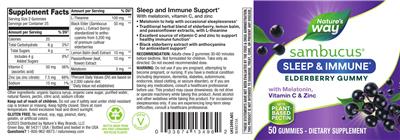
Supplement Facts
The label details for Sambucus Sleep & Immune by Nature's Way, sourced from the NIH Dietary Supplement Label Database.
Supplement Facts
| Ingredient | Amount | % DV |
|---|---|---|
| Calories | 25 Calorie(s) | -- |
| Total Carbohydrates | 6 Gram(s) | 2% |
| Sodium | 15 mg | 1% |
| Vitamin C | 50 mg | 56% |
| Added Sugars | 4 Gram(s) | 8% |
| Total Sugars | 4 Gram(s) | -- |
| Zinc | 7.5 mg | 68% |
| Melatonin | 3 mg | -- |
| L-Theanine | 100 mg | -- |
| Lemon Balm leaf extract | 10 mg | -- |
| Black Elderberry Extract | 50 mg | -- |
| Passionflower Flower, Leaf Extract | 10 mg | -- |
Other ingredients: Tapioca Syrup, Cane Sugar, Water, Purified, Natural Flavors, Pectin, Citric Acid, Sodium Citrate
Tap any ingredient to jump to its full detail below.
These statements are the manufacturer’s wording, reproduced from the product label — the label is saying it, not HelloPharmacist. We don’t verify or endorse them.
Precautions
Keep out of reach of children.
Do not use if safety seal under child-resistant cap is broken or missing.
Not formulated for children.
Take only as directed. Do not exceed recommended dose.
Warning: Do not use if you are pregnant, attempting to become pregnant or nursing. If you have a medical condition (including depression, dementia, diabetes, autoimmune, endocrine, blood clotting, or seizure disorder), or if you are taking any medications, consult a healthcare professional before use. Avoid alcohol and other sedatives while taking this product.
This product may cause drowsiness; do not drive, or operate machinery while taking this product. For occasional sleeplessness only, if you are experiencing long-term sleep difficulties, consult a healthcare professional.
Storage
Keep tightly closed. Store at room temperature. Avoid excessive heat and direct sunlight.
Formulation
Gluten free. No wheat, soy, egg, peanut, dairy, gelatin, or artificial colors.
Vegan Gelatin Free
Vegan Gelatin Free
Sleep and immune support
Brand IP Statement(s)
Copyright 2023 Nature's Way Brands, LLC
General Statements
Questions? 1-800-962-8873 / naturesway.com Bottle made from 50% post-consumer recycled plastic
Seals/Symbols
Vegan Gelatin Free
Formula
Sambucus Sleep & Immune With melatonin, vitamin C, and zinc Melatonin to help with occasional sleeplessness Traditional herbal blend of elderberry, lemon balm, and passionflower extracts, with L-theanine Excellent source of vitamin C and zinc to support healthy immune function Black elderberry extract with anthocyanins for antioxidant support
Elderberry Gummy with Melatonin, Vitamin C & Zinc With plant-based pectin
Suggested/Recommended/Usage/Directions
Recommendation: Adults chew 2 gummies 30-60 minutes before bedtime.
FDA Disclaimer Statement
These statements have not been evaluated by the Food & Drug Administration. This product is not intended to diagnose, treat, cure, or prevent any disease.
FDA Statement of Identity
Dietary Supplement
Is this label outdated? Report a formula or label change and our pharmacy team will review it.
Sambucus Sleep & Immune by Nature's Way label
The label scan from the NIH Dietary Supplement Label Database. Tap to enlarge.
Label images are published by the NIH Dietary Supplement Label Database for the version of this product on file. Always read your actual product label.
View the full label (PDF)The Ingredients in Sambucus Sleep & Immune by Nature's Way
These are the 8 active ingredients this product is made of. Select any to open its full monograph.
Serving size2 Gummy(ies) Dosage formGummy Or Jelly Servings per container25 Amounts shown are per serving.
Most supplement products combine several ingredients, and a medication can interact with the product through any one of them. Each ingredient below shows whether it has known drug interactions.
Sodium
Interacts with205 drugs
Sodium is an essential mineral and electrolyte your body needs to balance fluids, support nerves, and help muscles work. Most people in modern diets g...
Sodium monograph & interactionsVitamin C
Interacts with207 drugs
Vitamin C (ascorbic acid) is an essential nutrient your body needs but cannot make, so you must get it from food or supplements. It's important for im...
Vitamin C monograph & interactionsZinc
Interacts with67 drugs
Zinc is an essential mineral that your body needs for immune function, wound healing, taste, and smell. Most people get enough from food, but suppleme...
Zinc monograph & interactionsMelatonin
Interacts with1,463 drugs
Melatonin is a hormone your body makes naturally to help control your sleep-wake cycle, and the supplement form is widely used to help with sleep timi...
Melatonin monograph & interactionsL-Theanine
Interacts with565 drugs
Theanine (usually L-theanine) is an amino acid found naturally in tea leaves that many people take to feel calmer and less stressed without strong dro...
L-Theanine monograph & interactionsLemon Balm leaf extract
Interacts with264 drugs
Lemon balm is a gentle, lemon-scented mint-family herb traditionally used to ease stress, support sleep, and calm digestion, and topically for cold so...
Lemon Balm leaf extract monograph & interactionsBlack Elderberry Extract
Interacts with121 drugs
Elderberry is a popular herbal supplement, mainly taken to help with colds and flu. Some small studies suggest it may modestly shorten cold or flu sym...
Black Elderberry Extract monograph & interactionsPassionflower Flower, Leaf Extract
Interacts with838 drugs
Passion flower is a traditional calming herb that many people use for anxiety and sleep. Early studies hint it may help with mild anxiety and restless...
Passionflower Flower, Leaf Extract monograph & interactionsOther (inactive) ingredients: Tapioca Syrup, Cane Sugar, Water, Purified, Natural Flavors, Pectin, Citric Acid, Sodium Citrate. These complete the product’s ingredient list but are not active constituents.
Sambucus Sleep & Immune by Nature's Way Drug Interactions
HelloPharmacist Interaction Report
Sambucus Sleep & Immune by Nature's Way contains eight ingredients, several of which interact with medications.
The most serious interactions come from sodium, which can affect how your body handles blood pressure medications and certain other drugs at a Moderate severity level.
Read the full breakdown — every affected drug type, severity by severity
Sodium in this product may reduce the effectiveness of blood pressure medications (antihypertensives) and can increase the risk of dangerously high sodium levels in your blood if you're also taking corticosteroids, lithium, didanosine, sodium phosphate laxatives, tolvaptan, or other sodium-containing drugs. If you take any of these, even modest sodium intake from supplements matters—your doctor or pharmacist should weigh the risk.
Vitamin C can increase estrogen levels if you're on birth control or hormone therapy, may interfere with certain chemotherapy drugs, and can reduce the effectiveness of warfarin (a blood thinner). It may also affect how your body absorbs aluminum from aluminum-containing compounds and can interact with several other medications including levothyroxine, antitumor antibiotics, and a few antiretrovirals.
Zinc interacts with multiple antibiotic classes—quinolones, tetracyclines, and cephalexin—as well as penicillamine, ritonavir, integrase inhibitors, cisplatin, and the combination drug biktarvy/emtricitabine/tenofovir. Melatonin may affect blood pressure control, increase bleeding risk with anticoagulants like warfarin, interfere with seizure control, and interact with antidiabetes drugs and immunosuppressants.
L-theanine may lower blood pressure and add to the effects of sedating drugs. Lemon balm extract and passionflower can both increase sedation with CNS depressants and have other theoretical interactions.
Elderberry may interfere with immunosuppressant therapy and one cancer drug. Altogether, these interactions span 1,571 individual medications.
Check your exact medications below before starting this product.
Check your own medications below · Editorial policy · How we use AI
Want to check YOUR meds against Sambucus Sleep & Immune?
Ask about interactions with your drugs in plain English — “Can I take it with lisinopril?” — and we find you the answer in seconds, ingredient by ingredient.
Go to the checkerIngredients driving the most interactions
Individual Drug Interactions
The ingredients in Sambucus Sleep & Immune interact with 1,589 drugs. Click any drug to see the details.
8 of the 8 ingredients in Sambucus Sleep & Immune interact with drugs. Each result below shows which ingredient is responsible. Melatonin Passionflower Flower, Leaf Extract L-Theanine Lemon Balm leaf extract Vitamin C Sodium Black Elderberry Extract Zinc
6-mercaptopurinePurinethol
How 6-mercaptopurine interacts with Sambucus Sleep & Immune — through 2 ingredients. Tap an ingredient for the detail:
MelatoninImmunosuppressants Moderate
Interaction Summary
Theoretically, melatonin might interfere with immunosuppressive therapy.
Read the full Melatonin + 6-mercaptopurine interactionBlack Elderberry ExtractImmunosuppressants Moderate
Interaction Summary
Theoretically, elderberry might interfere with immunosuppressant therapy due to its immunostimulant activity.
Read the full Black Elderberry Extract + 6-mercaptopurine interactionAbciximabReoPro
How Abciximab interacts with Sambucus Sleep & Immune — through 1 ingredient. Tap an ingredient for the detail:
MelatoninAnticoagulant/antiplatelet Drugs Moderate
Interaction Summary
Theoretically, melatonin may have anticoagulant effects and may increase the risk of bleeding if used with anticoagulant or antiplatelet drugs.
Read the full Melatonin + Abciximab interactionAbrocitinibCibinqo
How Abrocitinib interacts with Sambucus Sleep & Immune — through 2 ingredients. Tap an ingredient for the detail:
MelatoninCytochrome P450 2c19 (cyp2c19) Substrates, Anticoagulant/antiplatelet Drugs +1 Moderate
Interaction Summary
Theoretically, melatonin might increase levels of drugs metabolized by CYP2C19.
Read the full Melatonin + Abrocitinib interactionBlack Elderberry ExtractImmunosuppressants Moderate
Interaction Summary
Theoretically, elderberry might interfere with immunosuppressant therapy due to its immunostimulant activity.
Read the full Black Elderberry Extract + Abrocitinib interactionAcarboseGlucobay, Prandase, Precose
How Acarbose interacts with Sambucus Sleep & Immune — through 1 ingredient. Tap an ingredient for the detail:
MelatoninAntidiabetes Drugs Moderate
Interaction Summary
Theoretically, taking melatonin with antidiabetes drugs might increase the risk of hypoglycemia.
Read the full Melatonin + Acarbose interactionAcebutololRhotral, Sectral
How Acebutolol interacts with Sambucus Sleep & Immune — through 3 ingredients. Tap an ingredient for the detail:
L-theanineAntihypertensive Drugs Moderate
Interaction Summary
Theanine might lower blood pressure, potentiating the effects of antihypertensive drugs.
Read the full L-theanine + Acebutolol interactionSodiumAntihypertensive Drugs Moderate
Interaction Summary
Theoretically, a high intake of dietary sodium might reduce the effectiveness of antihypertensive drugs.
Read the full Sodium + Acebutolol interactionMelatoninAntihypertensive Drugs Moderate
Interaction Summary
Theoretically, taking melatonin with antihypertensive drugs might increase the risk of hypotension or hypertension.
Read the full Melatonin + Acebutolol interactionAcenocoumarolSintrom
How Acenocoumarol interacts with Sambucus Sleep & Immune — through 1 ingredient. Tap an ingredient for the detail:
MelatoninAnticoagulant/antiplatelet Drugs Moderate
Interaction Summary
Theoretically, melatonin may have anticoagulant effects and may increase the risk of bleeding if used with anticoagulant or antiplatelet drugs.
Read the full Melatonin + Acenocoumarol interactionAcepromazineAtravet
How Acepromazine interacts with Sambucus Sleep & Immune — through 4 ingredients. Tap an ingredient for the detail:
MelatoninCns Depressants Moderate
Interaction Summary
Theoretically, taking melatonin might increase the sedative effects of CNS depressants.
Read the full Melatonin + Acepromazine interactionPassionflower Flower, Leaf ExtractCns Depressants Moderate
Interaction Summary
Concomitant use of passion flower with sedative drugs might cause additive effects and side effects.
Read the full Passionflower Flower, Leaf Extract + Acepromazine interactionLemon Balm Leaf ExtractCns Depressants Moderate
Interaction Summary
Theoretically, concomitant use of lemon balm might have additive effects with CNS depressant drugs.
Read the full Lemon Balm Leaf Extract + Acepromazine interactionL-theanineCns Depressants Minor
Interaction Summary
Theoretically, theanine might have additive sedative effects when used in conjunction with CNS depressants.
Read the full L-theanine + Acepromazine interactionAcetaminophenChildren's Tylenol, Children's Tylenol Meltaways, Tylenol, Tylenol Ex Strength
How Acetaminophen interacts with Sambucus Sleep & Immune — through 2 ingredients. Tap an ingredient for the detail:
MelatoninCytochrome P450 1a2 (cyp1a2) Substrates Moderate
Interaction Summary
Theoretically, melatonin might increase levels of drugs metabolized by CYP1A2.
Read the full Melatonin + Acetaminophen interactionVitamin CAcetaminophen (tylenol, Others) Minor
Interaction Summary
High-dose vitamin C might slightly prolong the clearance of acetaminophen.
Read the full Vitamin C + Acetaminophen interactionAcetaminophen, AspirinGemnisyn
How Acetaminophen, Aspirin interacts with Sambucus Sleep & Immune — through 2 ingredients. Tap an ingredient for the detail:
MelatoninCytochrome P450 1a2 (cyp1a2) Substrates, Anticoagulant/antiplatelet Drugs Moderate
Interaction Summary
Theoretically, melatonin might increase levels of drugs metabolized by CYP1A2.
Read the full Melatonin + Acetaminophen, Aspirin interactionVitamin CAcetaminophen (tylenol, Others), Aspirin Minor
Interaction Summary
High-dose vitamin C might slightly prolong the clearance of acetaminophen.
Read the full Vitamin C + Acetaminophen, Aspirin interactionAcetaminophen, Aspirin, CaffeineExcedrin, Excedrin Extra Strength, Excedrin Migraine
How Acetaminophen, Aspirin, Caffeine interacts with Sambucus Sleep & Immune — through 3 ingredients. Tap an ingredient for the detail:
MelatoninCaffeine, Anticoagulant/antiplatelet Drugs +2 Moderate
Interaction Summary
Theoretically, taking caffeine with melatonin might increase levels of melatonin.
Read the full Melatonin + Acetaminophen, Aspirin, Caffeine interactionVitamin CAcetaminophen (tylenol, Others), Aspirin Minor
Interaction Summary
High-dose vitamin C might slightly prolong the clearance of acetaminophen.
Read the full Vitamin C + Acetaminophen, Aspirin, Caffeine interactionPassionflower Flower, Leaf ExtractCytochrome P450 3a4 (cyp3a4) Substrates Minor
Interaction Summary
Theoretically, passion flower might decrease the effects of CYP3A4 substrates.
Read the full Passionflower Flower, Leaf Extract + Acetaminophen, Aspirin, Caffeine interactionAcetaminophen, Brompheniramine, PhenylpropanolamineDimetapp Cold and Flu
How Acetaminophen, Brompheniramine, Phenylpropanolamine interacts with Sambucus Sleep & Immune — through 2 ingredients. Tap an ingredient for the detail:
MelatoninCytochrome P450 1a2 (cyp1a2) Substrates, Seizure Threshold Lowering Drugs Moderate
Interaction Summary
Theoretically, melatonin might increase levels of drugs metabolized by CYP1A2.
Read the full Melatonin + Acetaminophen, Brompheniramine, Phenylpropanolamine interactionVitamin CAcetaminophen (tylenol, Others) Minor
Interaction Summary
High-dose vitamin C might slightly prolong the clearance of acetaminophen.
Read the full Vitamin C + Acetaminophen, Brompheniramine, Phenylpropanolamine interactionAcetaminophen, ButalbitalAxocet, Bancap, Bucet, Butex Forte, Esgic CF, Orbivan CF +5 more
How Acetaminophen, Butalbital interacts with Sambucus Sleep & Immune — through 2 ingredients. Tap an ingredient for the detail:
MelatoninCytochrome P450 1a2 (cyp1a2) Substrates Moderate
Interaction Summary
Theoretically, melatonin might increase levels of drugs metabolized by CYP1A2.
Read the full Melatonin + Acetaminophen, Butalbital interactionVitamin CAcetaminophen (tylenol, Others) Minor
Interaction Summary
High-dose vitamin C might slightly prolong the clearance of acetaminophen.
Read the full Vitamin C + Acetaminophen, Butalbital interactionAcetaminophen, Butalbital, CaffeineEsgic, Esgic Plus, Fiogesic, Fioricet, Repan, Tecnal +1 more
How Acetaminophen, Butalbital, Caffeine interacts with Sambucus Sleep & Immune — through 3 ingredients. Tap an ingredient for the detail:
MelatoninCytochrome P450 1a2 (cyp1a2) Substrates, Cytochrome P450 3a4 (cyp3a4) Substrates +1 Moderate
Interaction Summary
Theoretically, melatonin might increase levels of drugs metabolized by CYP1A2.
Read the full Melatonin + Acetaminophen, Butalbital, Caffeine interactionVitamin CAcetaminophen (tylenol, Others) Minor
Interaction Summary
High-dose vitamin C might slightly prolong the clearance of acetaminophen.
Read the full Vitamin C + Acetaminophen, Butalbital, Caffeine interactionPassionflower Flower, Leaf ExtractCytochrome P450 3a4 (cyp3a4) Substrates Minor
Interaction Summary
Theoretically, passion flower might decrease the effects of CYP3A4 substrates.
Read the full Passionflower Flower, Leaf Extract + Acetaminophen, Butalbital, Caffeine interactionAcetaminophen, Butalbital, Caffeine, CodeineEsgic with Codeine, Fioricet w/ Codeine
How Acetaminophen, Butalbital, Caffeine, Codeine interacts with Sambucus Sleep & Immune — through 5 ingredients. Tap an ingredient for the detail:
Passionflower Flower, Leaf ExtractCytochrome P450 3a4 (cyp3a4) Substrates, Cns Depressants Moderate
Interaction Summary
Theoretically, passion flower might decrease the effects of CYP3A4 substrates.
Read the full Passionflower Flower, Leaf Extract + Acetaminophen, Butalbital, Caffeine, Codeine interactionLemon Balm Leaf ExtractCns Depressants Moderate
Interaction Summary
Theoretically, concomitant use of lemon balm might have additive effects with CNS depressant drugs.
Read the full Lemon Balm Leaf Extract + Acetaminophen, Butalbital, Caffeine, Codeine interactionMelatoninCns Depressants, Cytochrome P450 2d6 (cyp2d6) Substrates +4 Moderate
Interaction Summary
Theoretically, taking melatonin might increase the sedative effects of CNS depressants.
Read the full Melatonin + Acetaminophen, Butalbital, Caffeine, Codeine interactionVitamin CAcetaminophen (tylenol, Others) Minor
Interaction Summary
High-dose vitamin C might slightly prolong the clearance of acetaminophen.
Read the full Vitamin C + Acetaminophen, Butalbital, Caffeine, Codeine interactionL-theanineCns Depressants Minor
Interaction Summary
Theoretically, theanine might have additive sedative effects when used in conjunction with CNS depressants.
Read the full L-theanine + Acetaminophen, Butalbital, Caffeine, Codeine interactionAcetaminophen, Butalbital, CodeineBancap w/ Codeine
How Acetaminophen, Butalbital, Codeine interacts with Sambucus Sleep & Immune — through 5 ingredients. Tap an ingredient for the detail:
MelatoninCns Depressants, Cytochrome P450 1a2 (cyp1a2) Substrates +2 Moderate
Interaction Summary
Theoretically, taking melatonin might increase the sedative effects of CNS depressants.
Read the full Melatonin + Acetaminophen, Butalbital, Codeine interactionPassionflower Flower, Leaf ExtractCns Depressants Moderate
Interaction Summary
Concomitant use of passion flower with sedative drugs might cause additive effects and side effects.
Read the full Passionflower Flower, Leaf Extract + Acetaminophen, Butalbital, Codeine interactionLemon Balm Leaf ExtractCns Depressants Moderate
Interaction Summary
Theoretically, concomitant use of lemon balm might have additive effects with CNS depressant drugs.
Read the full Lemon Balm Leaf Extract + Acetaminophen, Butalbital, Codeine interactionVitamin CAcetaminophen (tylenol, Others) Minor
Interaction Summary
High-dose vitamin C might slightly prolong the clearance of acetaminophen.
Read the full Vitamin C + Acetaminophen, Butalbital, Codeine interactionL-theanineCns Depressants Minor
Interaction Summary
Theoretically, theanine might have additive sedative effects when used in conjunction with CNS depressants.
Read the full L-theanine + Acetaminophen, Butalbital, Codeine interactionAcetaminophen, Butalbital, Codeine PhosphatePhrenilin #3
How Acetaminophen, Butalbital, Codeine Phosphate interacts with Sambucus Sleep & Immune — through 5 ingredients. Tap an ingredient for the detail:
MelatoninCytochrome P450 2d6 (cyp2d6) Substrates, Seizure Threshold Lowering Drugs +2 Moderate
Interaction Summary
Theoretically, melatonin might increase levels of drugs metabolized by CYP2D6.
Read the full Melatonin + Acetaminophen, Butalbital, Codeine Phosphate interactionLemon Balm Leaf ExtractCns Depressants Moderate
Interaction Summary
Theoretically, concomitant use of lemon balm might have additive effects with CNS depressant drugs.
Read the full Lemon Balm Leaf Extract + Acetaminophen, Butalbital, Codeine Phosphate interactionPassionflower Flower, Leaf ExtractCns Depressants Moderate
Interaction Summary
Concomitant use of passion flower with sedative drugs might cause additive effects and side effects.
Read the full Passionflower Flower, Leaf Extract + Acetaminophen, Butalbital, Codeine Phosphate interactionVitamin CAcetaminophen (tylenol, Others) Minor
Interaction Summary
High-dose vitamin C might slightly prolong the clearance of acetaminophen.
Read the full Vitamin C + Acetaminophen, Butalbital, Codeine Phosphate interactionL-theanineCns Depressants Minor
Interaction Summary
Theoretically, theanine might have additive sedative effects when used in conjunction with CNS depressants.
Read the full L-theanine + Acetaminophen, Butalbital, Codeine Phosphate interactionAcetaminophen, Caffeine, Chlorpheniramine, Hydrocodone, PhenylephrineHycomine Compound
How Acetaminophen, Caffeine, Chlorpheniramine, Hydrocodone, Phenylephrine interacts with Sambucus Sleep & Immune — through 5 ingredients. Tap an ingredient for the detail:
Passionflower Flower, Leaf ExtractCytochrome P450 3a4 (cyp3a4) Substrates, Cns Depressants Moderate
Interaction Summary
Theoretically, passion flower might decrease the effects of CYP3A4 substrates.
Read the full Passionflower Flower, Leaf Extract + Acetaminophen, Caffeine, Chlorpheniramine, Hydrocodone, Phenylephrine interactionMelatoninCns Depressants, Cytochrome P450 1a2 (cyp1a2) Substrates +4 Moderate
Interaction Summary
Theoretically, taking melatonin might increase the sedative effects of CNS depressants.
Read the full Melatonin + Acetaminophen, Caffeine, Chlorpheniramine, Hydrocodone, Phenylephrine interactionLemon Balm Leaf ExtractCns Depressants Moderate
Interaction Summary
Theoretically, concomitant use of lemon balm might have additive effects with CNS depressant drugs.
Read the full Lemon Balm Leaf Extract + Acetaminophen, Caffeine, Chlorpheniramine, Hydrocodone, Phenylephrine interactionVitamin CAcetaminophen (tylenol, Others) Minor
Interaction Summary
High-dose vitamin C might slightly prolong the clearance of acetaminophen.
Read the full Vitamin C + Acetaminophen, Caffeine, Chlorpheniramine, Hydrocodone, Phenylephrine interactionL-theanineCns Depressants Minor
Interaction Summary
Theoretically, theanine might have additive sedative effects when used in conjunction with CNS depressants.
Read the full L-theanine + Acetaminophen, Caffeine, Chlorpheniramine, Hydrocodone, Phenylephrine interactionAcetaminophen, Caffeine, CodeineGesic C15, Gesic C30, Gesic C8, Lenoltec 1, Lenoltec 2, Lenoltec 3 +1 more
How Acetaminophen, Caffeine, Codeine interacts with Sambucus Sleep & Immune — through 5 ingredients. Tap an ingredient for the detail:
MelatoninCaffeine, Cns Depressants +4 Moderate
Interaction Summary
Theoretically, taking caffeine with melatonin might increase levels of melatonin.
Read the full Melatonin + Acetaminophen, Caffeine, Codeine interactionLemon Balm Leaf ExtractCns Depressants Moderate
Interaction Summary
Theoretically, concomitant use of lemon balm might have additive effects with CNS depressant drugs.
Read the full Lemon Balm Leaf Extract + Acetaminophen, Caffeine, Codeine interactionPassionflower Flower, Leaf ExtractCytochrome P450 3a4 (cyp3a4) Substrates, Cns Depressants Moderate
Interaction Summary
Theoretically, passion flower might decrease the effects of CYP3A4 substrates.
Read the full Passionflower Flower, Leaf Extract + Acetaminophen, Caffeine, Codeine interactionVitamin CAcetaminophen (tylenol, Others) Minor
Interaction Summary
High-dose vitamin C might slightly prolong the clearance of acetaminophen.
Read the full Vitamin C + Acetaminophen, Caffeine, Codeine interactionL-theanineCns Depressants Minor
Interaction Summary
Theoretically, theanine might have additive sedative effects when used in conjunction with CNS depressants.
Read the full L-theanine + Acetaminophen, Caffeine, Codeine interactionAcetaminophen, Caffeine, Codeine, SalicylamideCodalan No.1, Codalan No.2, Codalan No.3
How Acetaminophen, Caffeine, Codeine, Salicylamide interacts with Sambucus Sleep & Immune — through 5 ingredients. Tap an ingredient for the detail:
MelatoninCytochrome P450 2d6 (cyp2d6) Substrates, Cytochrome P450 3a4 (cyp3a4) Substrates +4 Moderate
Interaction Summary
Theoretically, melatonin might increase levels of drugs metabolized by CYP2D6.
Read the full Melatonin + Acetaminophen, Caffeine, Codeine, Salicylamide interactionLemon Balm Leaf ExtractCns Depressants Moderate
Interaction Summary
Theoretically, concomitant use of lemon balm might have additive effects with CNS depressant drugs.
Read the full Lemon Balm Leaf Extract + Acetaminophen, Caffeine, Codeine, Salicylamide interactionPassionflower Flower, Leaf ExtractCns Depressants, Cytochrome P450 3a4 (cyp3a4) Substrates Moderate
Interaction Summary
Concomitant use of passion flower with sedative drugs might cause additive effects and side effects.
Read the full Passionflower Flower, Leaf Extract + Acetaminophen, Caffeine, Codeine, Salicylamide interactionVitamin CAcetaminophen (tylenol, Others) Minor
Interaction Summary
High-dose vitamin C might slightly prolong the clearance of acetaminophen.
Read the full Vitamin C + Acetaminophen, Caffeine, Codeine, Salicylamide interactionL-theanineCns Depressants Minor
Interaction Summary
Theoretically, theanine might have additive sedative effects when used in conjunction with CNS depressants.
Read the full L-theanine + Acetaminophen, Caffeine, Codeine, Salicylamide interactionAcetaminophen, Caffeine, DihydrocodeineDHC Plus, Panlor DC, Panlor SS
How Acetaminophen, Caffeine, Dihydrocodeine interacts with Sambucus Sleep & Immune — through 5 ingredients. Tap an ingredient for the detail:
Passionflower Flower, Leaf ExtractCytochrome P450 3a4 (cyp3a4) Substrates, Cns Depressants Moderate
Interaction Summary
Theoretically, passion flower might decrease the effects of CYP3A4 substrates.
Read the full Passionflower Flower, Leaf Extract + Acetaminophen, Caffeine, Dihydrocodeine interactionLemon Balm Leaf ExtractCns Depressants Moderate
Interaction Summary
Theoretically, concomitant use of lemon balm might have additive effects with CNS depressant drugs.
Read the full Lemon Balm Leaf Extract + Acetaminophen, Caffeine, Dihydrocodeine interactionMelatoninCns Depressants, Cytochrome P450 1a2 (cyp1a2) Substrates +4 Moderate
Interaction Summary
Theoretically, taking melatonin might increase the sedative effects of CNS depressants.
Read the full Melatonin + Acetaminophen, Caffeine, Dihydrocodeine interactionVitamin CAcetaminophen (tylenol, Others) Minor
Interaction Summary
High-dose vitamin C might slightly prolong the clearance of acetaminophen.
Read the full Vitamin C + Acetaminophen, Caffeine, Dihydrocodeine interactionL-theanineCns Depressants Minor
Interaction Summary
Theoretically, theanine might have additive sedative effects when used in conjunction with CNS depressants.
Read the full L-theanine + Acetaminophen, Caffeine, Dihydrocodeine interactionAcetaminophen, Caffeine, IsomethepteneMigralam
How Acetaminophen, Caffeine, Isometheptene interacts with Sambucus Sleep & Immune — through 3 ingredients. Tap an ingredient for the detail:
MelatoninCaffeine, Cytochrome P450 3a4 (cyp3a4) Substrates +1 Moderate
Interaction Summary
Theoretically, taking caffeine with melatonin might increase levels of melatonin.
Read the full Melatonin + Acetaminophen, Caffeine, Isometheptene interactionVitamin CAcetaminophen (tylenol, Others) Minor
Interaction Summary
High-dose vitamin C might slightly prolong the clearance of acetaminophen.
Read the full Vitamin C + Acetaminophen, Caffeine, Isometheptene interactionPassionflower Flower, Leaf ExtractCytochrome P450 3a4 (cyp3a4) Substrates Minor
Interaction Summary
Theoretically, passion flower might decrease the effects of CYP3A4 substrates.
Read the full Passionflower Flower, Leaf Extract + Acetaminophen, Caffeine, Isometheptene interactionAcetaminophen, Caffeine, PyrilamineMidol Max Strength Menstrual
How Acetaminophen, Caffeine, Pyrilamine interacts with Sambucus Sleep & Immune — through 3 ingredients. Tap an ingredient for the detail:
MelatoninCytochrome P450 1a2 (cyp1a2) Substrates, Cytochrome P450 3a4 (cyp3a4) Substrates +1 Moderate
Interaction Summary
Theoretically, melatonin might increase levels of drugs metabolized by CYP1A2.
Read the full Melatonin + Acetaminophen, Caffeine, Pyrilamine interactionVitamin CAcetaminophen (tylenol, Others) Minor
Interaction Summary
High-dose vitamin C might slightly prolong the clearance of acetaminophen.
Read the full Vitamin C + Acetaminophen, Caffeine, Pyrilamine interactionPassionflower Flower, Leaf ExtractCytochrome P450 3a4 (cyp3a4) Substrates Minor
Interaction Summary
Theoretically, passion flower might decrease the effects of CYP3A4 substrates.
Read the full Passionflower Flower, Leaf Extract + Acetaminophen, Caffeine, Pyrilamine interactionAcetaminophen, Chlorpheniramine Maleate, Dextromethorphan HbrVicks Formula 44M Cough, Cold & Flu Relief
How Acetaminophen, Chlorpheniramine Maleate, Dextromethorphan Hbr interacts with Sambucus Sleep & Immune — through 4 ingredients. Tap an ingredient for the detail:
MelatoninCytochrome P450 2d6 (cyp2d6) Substrates, Cytochrome P450 3a4 (cyp3a4) Substrates +2 Moderate
Interaction Summary
Theoretically, melatonin might increase levels of drugs metabolized by CYP2D6.
Read the full Melatonin + Acetaminophen, Chlorpheniramine Maleate, Dextromethorphan Hbr interactionPassionflower Flower, Leaf ExtractCytochrome P450 3a4 (cyp3a4) Substrates Minor
Interaction Summary
Theoretically, passion flower might decrease the effects of CYP3A4 substrates.
Read the full Passionflower Flower, Leaf Extract + Acetaminophen, Chlorpheniramine Maleate, Dextromethorphan Hbr interactionVitamin CAcetaminophen (tylenol, Others) Minor
Interaction Summary
High-dose vitamin C might slightly prolong the clearance of acetaminophen.
Read the full Vitamin C + Acetaminophen, Chlorpheniramine Maleate, Dextromethorphan Hbr interactionL-theanineSerotonergic Drugs Minor
Interaction Summary
Clinical studies regarding the effects of L-theanine on serotonin levels are conflicting.
Read the full L-theanine + Acetaminophen, Chlorpheniramine Maleate, Dextromethorphan Hbr interactionAcetaminophen, Chlorpheniramine, Codeine, PhenylephrineColrex
How Acetaminophen, Chlorpheniramine, Codeine, Phenylephrine interacts with Sambucus Sleep & Immune — through 5 ingredients. Tap an ingredient for the detail:
Passionflower Flower, Leaf ExtractCytochrome P450 3a4 (cyp3a4) Substrates, Cns Depressants Moderate
Interaction Summary
Theoretically, passion flower might decrease the effects of CYP3A4 substrates.
Read the full Passionflower Flower, Leaf Extract + Acetaminophen, Chlorpheniramine, Codeine, Phenylephrine interactionMelatoninCns Depressants, Cytochrome P450 2d6 (cyp2d6) Substrates +3 Moderate
Interaction Summary
Theoretically, taking melatonin might increase the sedative effects of CNS depressants.
Read the full Melatonin + Acetaminophen, Chlorpheniramine, Codeine, Phenylephrine interactionLemon Balm Leaf ExtractCns Depressants Moderate
Interaction Summary
Theoretically, concomitant use of lemon balm might have additive effects with CNS depressant drugs.
Read the full Lemon Balm Leaf Extract + Acetaminophen, Chlorpheniramine, Codeine, Phenylephrine interactionVitamin CAcetaminophen (tylenol, Others) Minor
Interaction Summary
High-dose vitamin C might slightly prolong the clearance of acetaminophen.
Read the full Vitamin C + Acetaminophen, Chlorpheniramine, Codeine, Phenylephrine interactionL-theanineCns Depressants, Serotonergic Drugs Minor
Interaction Summary
Theoretically, theanine might have additive sedative effects when used in conjunction with CNS depressants.
Read the full L-theanine + Acetaminophen, Chlorpheniramine, Codeine, Phenylephrine interactionAcetaminophen, Chlorpheniramine, DextromethorphanCoricidin II Extra Strength Cold and Flu
How Acetaminophen, Chlorpheniramine, Dextromethorphan interacts with Sambucus Sleep & Immune — through 4 ingredients. Tap an ingredient for the detail:
MelatoninSeizure Threshold Lowering Drugs, Cytochrome P450 2d6 (cyp2d6) Substrates +2 Moderate
Interaction Summary
Theoretically, taking melatonin with drugs that lower the seizure threshold might increase the risk of seizure activity.
Read the full Melatonin + Acetaminophen, Chlorpheniramine, Dextromethorphan interactionL-theanineSerotonergic Drugs Minor
Interaction Summary
Clinical studies regarding the effects of L-theanine on serotonin levels are conflicting.
Read the full L-theanine + Acetaminophen, Chlorpheniramine, Dextromethorphan interactionVitamin CAcetaminophen (tylenol, Others) Minor
Interaction Summary
High-dose vitamin C might slightly prolong the clearance of acetaminophen.
Read the full Vitamin C + Acetaminophen, Chlorpheniramine, Dextromethorphan interactionPassionflower Flower, Leaf ExtractCytochrome P450 3a4 (cyp3a4) Substrates Minor
Interaction Summary
Theoretically, passion flower might decrease the effects of CYP3A4 substrates.
Read the full Passionflower Flower, Leaf Extract + Acetaminophen, Chlorpheniramine, Dextromethorphan interactionAcetaminophen, Chlorpheniramine, Dextromethorphan HydrobromideCoricidin HBP Maximum Strength Flu
How Acetaminophen, Chlorpheniramine, Dextromethorphan Hydrobromide interacts with Sambucus Sleep & Immune — through 4 ingredients. Tap an ingredient for the detail:
MelatoninCytochrome P450 3a4 (cyp3a4) Substrates, Cytochrome P450 2d6 (cyp2d6) Substrates +2 Moderate
Interaction Summary
Theoretically, melatonin might increase levels of drugs metabolized by CYP3A4.
Read the full Melatonin + Acetaminophen, Chlorpheniramine, Dextromethorphan Hydrobromide interactionPassionflower Flower, Leaf ExtractCytochrome P450 3a4 (cyp3a4) Substrates Minor
Interaction Summary
Theoretically, passion flower might decrease the effects of CYP3A4 substrates.
Read the full Passionflower Flower, Leaf Extract + Acetaminophen, Chlorpheniramine, Dextromethorphan Hydrobromide interactionVitamin CAcetaminophen (tylenol, Others) Minor
Interaction Summary
High-dose vitamin C might slightly prolong the clearance of acetaminophen.
Read the full Vitamin C + Acetaminophen, Chlorpheniramine, Dextromethorphan Hydrobromide interactionL-theanineSerotonergic Drugs Minor
Interaction Summary
Clinical studies regarding the effects of L-theanine on serotonin levels are conflicting.
Read the full L-theanine + Acetaminophen, Chlorpheniramine, Dextromethorphan Hydrobromide interactionAcetaminophen, Chlorpheniramine, Dextromethorphan, PhenylpropanolamineMulti Symptom Cold Relief
How Acetaminophen, Chlorpheniramine, Dextromethorphan, Phenylpropanolamine interacts with Sambucus Sleep & Immune — through 4 ingredients. Tap an ingredient for the detail:
MelatoninCytochrome P450 2d6 (cyp2d6) Substrates, Cytochrome P450 3a4 (cyp3a4) Substrates +2 Moderate
Interaction Summary
Theoretically, melatonin might increase levels of drugs metabolized by CYP2D6.
Read the full Melatonin + Acetaminophen, Chlorpheniramine, Dextromethorphan, Phenylpropanolamine interactionL-theanineSerotonergic Drugs Minor
Interaction Summary
Clinical studies regarding the effects of L-theanine on serotonin levels are conflicting.
Read the full L-theanine + Acetaminophen, Chlorpheniramine, Dextromethorphan, Phenylpropanolamine interactionVitamin CAcetaminophen (tylenol, Others) Minor
Interaction Summary
High-dose vitamin C might slightly prolong the clearance of acetaminophen.
Read the full Vitamin C + Acetaminophen, Chlorpheniramine, Dextromethorphan, Phenylpropanolamine interactionPassionflower Flower, Leaf ExtractCytochrome P450 3a4 (cyp3a4) Substrates Minor
Interaction Summary
Theoretically, passion flower might decrease the effects of CYP3A4 substrates.
Read the full Passionflower Flower, Leaf Extract + Acetaminophen, Chlorpheniramine, Dextromethorphan, Phenylpropanolamine interactionAcetaminophen, Chlorpheniramine, Dextromethorphan, PseudoephedrineChildren's Tylenol Cold Plus Cough, Tylenol Cold Ex Strength
How Acetaminophen, Chlorpheniramine, Dextromethorphan, Pseudoephedrine interacts with Sambucus Sleep & Immune — through 4 ingredients. Tap an ingredient for the detail:
MelatoninSeizure Threshold Lowering Drugs, Cytochrome P450 2d6 (cyp2d6) Substrates +2 Moderate
Interaction Summary
Theoretically, taking melatonin with drugs that lower the seizure threshold might increase the risk of seizure activity.
Read the full Melatonin + Acetaminophen, Chlorpheniramine, Dextromethorphan, Pseudoephedrine interactionVitamin CAcetaminophen (tylenol, Others) Minor
Interaction Summary
High-dose vitamin C might slightly prolong the clearance of acetaminophen.
Read the full Vitamin C + Acetaminophen, Chlorpheniramine, Dextromethorphan, Pseudoephedrine interactionL-theanineSerotonergic Drugs Minor
Interaction Summary
Clinical studies regarding the effects of L-theanine on serotonin levels are conflicting.
Read the full L-theanine + Acetaminophen, Chlorpheniramine, Dextromethorphan, Pseudoephedrine interactionPassionflower Flower, Leaf ExtractCytochrome P450 3a4 (cyp3a4) Substrates Minor
Interaction Summary
Theoretically, passion flower might decrease the effects of CYP3A4 substrates.
Read the full Passionflower Flower, Leaf Extract + Acetaminophen, Chlorpheniramine, Dextromethorphan, Pseudoephedrine interactionAcetaminophen, Chlorpheniramine, Guaifenesin, Phenylephrine, SalicylamideRhinogesic GG
How Acetaminophen, Chlorpheniramine, Guaifenesin, Phenylephrine, Salicylamide interacts with Sambucus Sleep & Immune — through 4 ingredients. Tap an ingredient for the detail:
MelatoninCytochrome P450 1a2 (cyp1a2) Substrates, Cytochrome P450 3a4 (cyp3a4) Substrates +1 Moderate
Interaction Summary
Theoretically, melatonin might increase levels of drugs metabolized by CYP1A2.
Read the full Melatonin + Acetaminophen, Chlorpheniramine, Guaifenesin, Phenylephrine, Salicylamide interactionPassionflower Flower, Leaf ExtractCytochrome P450 3a4 (cyp3a4) Substrates Minor
Interaction Summary
Theoretically, passion flower might decrease the effects of CYP3A4 substrates.
Read the full Passionflower Flower, Leaf Extract + Acetaminophen, Chlorpheniramine, Guaifenesin, Phenylephrine, Salicylamide interactionL-theanineSerotonergic Drugs Minor
Interaction Summary
Clinical studies regarding the effects of L-theanine on serotonin levels are conflicting.
Read the full L-theanine + Acetaminophen, Chlorpheniramine, Guaifenesin, Phenylephrine, Salicylamide interactionVitamin CAcetaminophen (tylenol, Others) Minor
Interaction Summary
High-dose vitamin C might slightly prolong the clearance of acetaminophen.
Read the full Vitamin C + Acetaminophen, Chlorpheniramine, Guaifenesin, Phenylephrine, Salicylamide interactionAcetaminophen, Chlorpheniramine, PhenylephrineAlka-Seltzer PLUS, Histex SR, Protid
How Acetaminophen, Chlorpheniramine, Phenylephrine interacts with Sambucus Sleep & Immune — through 4 ingredients. Tap an ingredient for the detail:
MelatoninCytochrome P450 1a2 (cyp1a2) Substrates, Seizure Threshold Lowering Drugs +1 Moderate
Interaction Summary
Theoretically, melatonin might increase levels of drugs metabolized by CYP1A2.
Read the full Melatonin + Acetaminophen, Chlorpheniramine, Phenylephrine interactionVitamin CAcetaminophen (tylenol, Others) Minor
Interaction Summary
High-dose vitamin C might slightly prolong the clearance of acetaminophen.
Read the full Vitamin C + Acetaminophen, Chlorpheniramine, Phenylephrine interactionL-theanineSerotonergic Drugs Minor
Interaction Summary
Clinical studies regarding the effects of L-theanine on serotonin levels are conflicting.
Read the full L-theanine + Acetaminophen, Chlorpheniramine, Phenylephrine interactionPassionflower Flower, Leaf ExtractCytochrome P450 3a4 (cyp3a4) Substrates Minor
Interaction Summary
Theoretically, passion flower might decrease the effects of CYP3A4 substrates.
Read the full Passionflower Flower, Leaf Extract + Acetaminophen, Chlorpheniramine, Phenylephrine interactionEach ingredient & the kinds of drugs it affects
For each ingredient in Sambucus Sleep & Immune with known interactions, here are the types of medications they can affect. Open any type for the detail — or search your exact drug in the checker above.
Melatonin
Anticoagulant/Antiplatelet Drugs
Theoretically, melatonin may have anticoagulant effects and may increase the risk of bleeding if used with anticoagulant or antiplatelet drugs.
There are isolated case reports of minor bleeding and decreased prothrombin activity in people taking melatonin with warfarin (Coumadin). The mechanism, if any, of this interaction is unknown. Taking melatonin orally seems to decrease coagulation activity within one hour of dosing in healthy men.
Anticonvulsants
Theoretically, melatonin may reduce the effects of anticonvulsants. Some clinical research suggests that melatonin may increase the frequency of seizures in certain patients, particularly children with neurological impairment.
Antidiabetes Drugs
Theoretically, taking melatonin with antidiabetes drugs might increase the risk of hypoglycemia.
Some clinical research shows that melatonin reduces levels of fasting blood glucose and improves glycemic control. However, other research suggests that melatonin might impair glucose utilization and increase insulin resistance, while other research has found no effect on glucose levels. Until more is known, use melatonin cautiously in combination with antidiabetes drugs.
Antihypertensive Drugs
Theoretically, taking melatonin with antihypertensive drugs might increase the risk of hypotension or hypertension.
Some clinical research suggests that taking melatonin decreases blood pressure in healthy adults. Also, melatonin seems to lower systolic and diastolic blood pressure in individuals with high blood pressure at nighttime or untreated essential hypertension. However, melatonin seems to worsen blood pressure in patients who are taking antihypertensive medications. Immediate-release melatonin 5 mg at night in combination with nifedipine GITS (Procardia XL) increases systolic blood pressure an average of 6.5 mmHg, diastolic blood pressure by an average of 4.9 mmHg, and heart rate by 3.9 bpm. Also, results from animal research suggest that melatonin reduces the effectiveness of certain antihypertensive drugs, including methoxamine and clonidine.
Caffeine
Theoretically, taking caffeine with melatonin might increase levels of melatonin.
Some evidence suggests that caffeine consumption can decrease endogenous melatonin levels, while other evidence suggests that caffeine increases endogenous melatonin levels. When administered in combination with melatonin supplements, caffeine seems to increase melatonin effects and levels. The reason for this discrepancy is not completely clear. Part of the discrepancy may result from the fact that caffeine can inhibit melatonin synthesis as well as inhibit melatonin metabolism. By functioning as an adenosine receptor antagonist, caffeine may indirectly inhibit the synthesis of melatonin. Conversely, because melatonin and caffeine are both metabolized by cytochrome P450 1A2 (CYP1A2) enzyme, concomitant use of melatonin and caffeine may reduce the metabolism of melatonin, resulting in higher serum levels.
Cns Depressants
Theoretically, taking melatonin might increase the sedative effects of CNS depressants.
Melatonin has sedative effects. Theoretically, concomitant use of melatonin with alcohol, benzodiazepines, or other sedative drugs might cause additive sedation.
Contraceptive Drugs
Theoretically, taking contraceptive drugs with melatonin might increase the effects and adverse effects of melatonin.
Contraceptive drugs can increase the levels of endogenous melatonin. Theoretically, these drugs may increase the effects and adverse effects of oral melatonin.
Cytochrome P450 1A2 (Cyp1A2) Substrates
Theoretically, melatonin might increase levels of drugs metabolized by CYP1A2. Also, other CYP1A2 substrates might decrease the metabolism of melatonin, increasing melatonin levels.
Melatonin is metabolized in the liver primarily by the CYP2C19 and CYP1A2 enzymes. Theoretically, combined administration of melatonin with drugs metabolized by the CYP1A2 enzyme might reduce the metabolism of these drugs, resulting in increased serum levels. Conversely, some drugs metabolized by CYP1A2 may inhibit the metabolism of melatonin, resulting in increased serum levels of melatonin. Until more is known, use melatonin cautiously in patients taking drugs metabolized by these enzymes.
Cytochrome P450 2C19 (Cyp2C19) Substrates
Theoretically, melatonin might increase levels of drugs metabolized by CYP2C19. Also, other CYP2C19 substrates might decrease the metabolism of melatonin, increasing melatonin levels.
Melatonin is metabolized in the liver primarily by the CYP2C19 and CYP1A2 enzymes. Theoretically, combined administration of melatonin with certain drugs metabolized by the CYP2C19 enzyme may reduce the metabolism of these drugs, resulting in increased serum levels. Conversely, some drugs metabolized by CYP2C19 may inhibit the metabolism of melatonin, resulting in increased serum levels of melatonin. Until more is known, use melatonin cautiously in patients taking drugs metabolized by these enzymes.
Fluvoxamine (Luvox)
Theoretically, taking fluvoxamine with melatonin might increase levels of melatonin.
Fluvoxamine can significantly increase melatonin levels. In some cases, fluvoxamine might increase bioavailability of exogenously administered melatonin by up to 20 times. Some researchers think this might be a beneficial interaction and be potentially useful for cases of refractory insomnia. However, this interaction might also cause unwanted excessive drowsiness and possibly other adverse effects. Fluvoxamine is known to increase endogenous melatonin secretion. It seems to increase serum levels of exogenously administered melatonin possibly by decreasing melatonin metabolism by inhibiting cytochrome P450 (CYP450) 1A2 and 2C19 or by inhibiting melatonin elimination. This effect has been found in healthy people taking fluvoxamine 50-75 mg and melatonin 5 mg.
Immunosuppressants
Theoretically, melatonin might interfere with immunosuppressive therapy.
Melatonin can stimulate immune function. Theoretically, melatonin might interfere with immunosuppressive therapy.
Methamphetamine (Desoxyn)
Theoretically, taking melatonin with methamphetamine may increase the adverse effects of methamphetamine.
Animal research suggests that melatonin exacerbates the adverse effects of methamphetamine, resulting in greater depression of tryptophan hydroxylase (TPH) and tyrosine hydroxylase (TH) activity, as well as a significant reduction in dopamine levels. This has not been shown in humans.
Nifedipine Gits (Procardia Xl)
Theoretically, taking melatonin with extended release nifedipine reduces the effects of nifedipine.
Melatonin can decrease the effectiveness of extended release nifedipine (GITS). Immediate-release melatonin 5 mg at night in combination with nifedipine GITS 30-60 mg daily increases systolic and blood pressure by an average of 6.5 mmHg and 4.9 mmHg, respectively. Concomitant use with melatonin also increases heart rate by 3.9 bpm. The mechanism of this interaction is not known.
Seizure Threshold Lowering Drugs
Theoretically, taking melatonin with drugs that lower the seizure threshold might increase the risk of seizure activity.
Some clinical evidence suggests that melatonin may increase the frequency of seizures in certain patients, particularly children with neurological disabilities.
Warfarin (Coumadin)
Theoretically, melatonin may have antiplatelet effects and may increase the risk of bleeding with warfarin.
Three cases of increased prothrombin time have been reported for patients aged 48-72 years who took melatonin orally in combination with warfarin. However, three cases of decreased prothrombin time have also been reported for patients aged 51-84 years who took melatonin orally in combination with warfarin. Until more is known, use melatonin cautiously in patients taking warfarin.
Cytochrome P450 2D6 (Cyp2D6) Substrates
Theoretically, melatonin might increase levels of drugs metabolized by CYP2D6.
Laboratory research suggests that certain lots of melatonin inhibit CYP2D6. Theoretically, combined administration of melatonin with certain drugs metabolized by the CYP2D6 enzyme may reduce the metabolism of these drugs, resulting in increased serum levels. Until more is known, use melatonin cautiously in patients taking drugs metabolized by these enzymes.
Cytochrome P450 3A4 (Cyp3A4) Substrates
Theoretically, melatonin might increase levels of drugs metabolized by CYP3A4.
Laboratory research shows that certain lots of melatonin inhibit CYP3A4. Theoretically, combined administration of melatonin with certain drugs metabolized by CYP3A4 may reduce the metabolism of these drugs, resulting in increased serum levels. Until more is known, use melatonin cautiously in patients taking drugs metabolized by these enzymes.
Flumazenil (Romazicon)
Theoretically, taking flumazenil with melatonin might reduce the effects of melatonin.
Animal research shows that flumazenil may inhibit the effect of melatonin.
Passionflower Flower, Leaf Extract
Cns Depressants
Concomitant use of passion flower with sedative drugs might cause additive effects and side effects.
Research in animals and humans shows that passion flower has sedative effects which can be additive when used with sedative medications like lorazepam.
Cytochrome P450 3A4 (Cyp3A4) Substrates
Theoretically, passion flower might decrease the effects of CYP3A4 substrates.
In vitro research suggests that passion flower can induce CYP3A4 enzymes, albeit to a much lower degree than rifampin, a known CYP3A4 inducer.
Organic Anion-Transporting Polypeptide Substrates (Oatp)
Theoretically, passion flower might reduce the bioavailability of OATP2B1 and OATP1A2 substrates.
In vitro research shows that the passion flower constituents apigenin and vitexin inhibit OATP2B1 and OATP1A2. This inhibition may be dose-dependent. One specific high-flavonoid passion flower extract (Valverde) seems to inhibit OATP2B1 and OATP1A2, while another extract with a lower flavonoid concentration (Arkocaps) shows less potent inhibition. OATPs are responsible for the uptake of drugs and other compounds into the body; however, the specific activities of OATP2B1 and OATP1A2 are not well characterized.
L-Theanine
Antihypertensive Drugs
Theanine might lower blood pressure, potentiating the effects of antihypertensive drugs.
Animal research shows that theanine can lower blood pressure in spontaneously hypertensive animals. Theoretically, concomitant use of theanine and antihypertensive drugs might potentiate the antihypertensive activity.
Cns Depressants
Theoretically, theanine might have additive sedative effects when used in conjunction with CNS depressants. However, it is unclear if this concern is clinically relevant.
Theoretically, theanine may compete with glutamate and/or increase plasma gamma-aminobutyric acid (GABA) levels, which could cause CNS depression. In one clinical study, some subjects taking oral theanine reported drowsiness.
Serotonergic Drugs
Clinical studies regarding the effects of L-theanine on serotonin levels are conflicting. Some studies suggest it can increase serotonin levels in the brain while others report that it may decrease them. Nevertheless, there have been no reports of l-theanine being a causative agent in serotonergic-related side effects or serotonin syndrome.
Lemon Balm leaf extract
Cns Depressants
Theoretically, concomitant use of lemon balm might have additive effects with CNS depressant drugs.
Lemon balm seems to have CNS depressant activity in animals and in humans.
Thyroid Hormone
Theoretically, lemon balm might interfere with thyroid hormone replacement therapy.
In vitro, constituents of lemon balm extract bind to thyroid stimulating hormone (TSH), preventing TSH receptor-binding and leading to the inhibition of TSH-stimulated adenylate cyclase activity. In animals, lemon balm extract has been shown to decrease levels of circulating TSH and inhibit thyroid secretion.
Vitamin C
Alkylating Agents
Theoretically, antioxidant effects of vitamin C might reduce the effectiveness of alkylating agents.
The use of antioxidants like vitamin C during chemotherapy is controversial. There is concern that antioxidants could reduce the activity of chemotherapy drugs that generate free radicals, such as cyclophosphamide, chlorambucil, carmustine, busulfan, and thiotepa. In contrast, some researchers theorize that antioxidants might make chemotherapy more effective by reducing oxidative stress that could interfere with apoptosis (cell death) of cancer cells. More evidence is needed to determine what effect, if any, antioxidants such as vitamin C have on chemotherapy.
Aluminum
Vitamin C can increase the amount of aluminum absorbed from aluminum compounds.
Research in animals and humans shows that vitamin C increases aluminum absorption, theoretically by chelating aluminum and keeping it in solution where it is available for absorption. In people with normal renal function, urinary excretion of aluminum will likely increase, making aluminum retention and toxicity unlikely. Patients with renal failure who take aluminum-containing compounds such as phosphate binders should avoid vitamin C supplements in doses above the recommended dietary allowances.
Antitumor Antibiotics
Theoretically, the antioxidant effects of vitamin C might reduce the effectiveness of antitumor antibiotics.
The use of antioxidants like vitamin C during chemotherapy is controversial. There is concern that antioxidants could reduce the activity of chemotherapy drugs which generate free radicals, such as doxorubicin. In contrast, some researchers theorize that antioxidants might make chemotherapy more effective by reducing oxidative stress that could interfere with apoptosis (cell death) of cancer cells. More evidence is needed to determine what effects, if any, antioxidants such as vitamin C have on chemotherapy.
Estrogens
Vitamin C might increase blood levels of estrogens.
Increases in plasma estrogen levels of up to 55% occur under some circumstances when vitamin C is taken concurrently with oral contraceptives or hormone replacement therapy, including topical products. It is suggested that vitamin C prevents oxidation of estrogen in the tissues, regenerates oxidized estrogen, and reduces sulfate conjugation of estrogen in the gut wall. When tissue levels of vitamin C are high, these processes are already maximized and supplemental vitamin C does not have any effect on estrogen levels. Increases in plasma estrogen levels may occur when patients who are deficient in vitamin C take supplements. Monitor these patients for estrogen-related side effects.
Fluphenazine (Prolixin)
Theoretically, vitamin C might decrease levels of fluphenazine.
In one patient there was a clinically significant decrease in fluphenazine levels when vitamin C (500 mg twice daily) was started. The mechanism is not known, and there is no further data to confirm this interaction.
Indinavir (Crixivan)
Vitamin C can modestly reduce indinavir levels.
One pharmacokinetic study shows that taking vitamin C 1 gram orally once daily along with indinavir 800 mg orally three times daily reduces the area under the concentration-time curve of indinavir by 14%. The mechanism of this interaction is unknown, but it is unlikely to be clinically significant in most patients. The effect of higher doses of vitamin C on indinavir levels is unknown.
Levothyroxine (Synthroid, Others)
Vitamin C can increase levothyroxine absorption.
Two clinical studies in adults with poorly controlled hypothyroidism show that swallowing levothyroxine with a glass of water containing vitamin C 500-1000 mg in solution reduces thyroid stimulating hormone (TSH) levels and increases thyroxine (T4) levels when compared with taking levothyroxine alone. This suggests that vitamin C increases the oral absorption of levothyroxine, possibly due to a reduction in pH.
Warfarin (Coumadin)
High-dose vitamin C might reduce the levels and effectiveness of warfarin.
Vitamin C in high doses may cause diarrhea and possibly reduce warfarin absorption. There are reports of two people who took up to 16 grams daily of vitamin C and had a reduction in prothrombin time. Lower doses of 5-10 grams daily can also reduce warfarin absorption. In many cases, this does not seem to be clinically significant. However, a case of warfarin resistance has been reported for a patient who took vitamin C 500 mg twice daily. Cessation of vitamin C supplementation resulted in a rapid increase in international normalized ratio (INR). Tell patients taking warfarin to avoid taking vitamin C in excessively high doses (greater than 10 grams daily). Lower doses may be safe, but the anticoagulation activity of warfarin should be monitored. Patients who are stabilized on warfarin while taking vitamin C should avoid adjusting vitamin C dosage to prevent the possibility of warfarin resistance.
Acetaminophen (Tylenol, Others)
High-dose vitamin C might slightly prolong the clearance of acetaminophen.
A small pharmacokinetic study in healthy volunteers shows that taking high-dose vitamin C (3 grams) 1.5 hours after taking acetaminophen 1 gram slightly increases the apparent half-life of acetaminophen from around 2.3 hours to 3.1 hours. Ascorbic acid competitively inhibits sulfate conjugation of acetaminophen. However, to compensate, elimination of acetaminophen glucuronide and unconjugated acetaminophen increases. This effect is not likely to be clinically significant.
Aspirin
Acidification of the urine by vitamin C might increase aspirin levels.
It has been suggested that acidification of the urine by vitamin C could increase reabsorption of salicylates by the renal tubules, and increase plasma salicylate levels. However, short-term use of up to 6 grams daily of vitamin C does not seem to affect urinary pH or salicylate excretion, suggesting this interaction is not clinically significant.
Choline Magnesium Trisalicylate (Trilisate)
Acidification of the urine by vitamin C might increase choline magnesium trisalicylate levels.
It has been suggested that acidification of the urine by vitamin C could increase reabsorption of salicylates by the renal tubules, and increase plasma salicylate levels. However, short-term use of up to 6 grams daily of vitamin C does not seem to affect urinary pH or salicylate excretion, suggesting this interaction probably is not clinically significant.
Niacin
Vitamin C might decrease the beneficial effects of niacin on high-density lipoprotein (HDL) cholesterol levels.
A combination of niacin and simvastatin (Zocor) effectively raises HDL cholesterol levels in patients with coronary disease and low HDL levels. Clinical research shows that taking a combination of antioxidants (vitamin C, vitamin E, beta-carotene, and selenium) along with niacin and simvastatin (Zocor) attenuates this rise in HDL, specifically the HDL-2 and apolipoprotein A1 fractions, by more than 50% in patients with coronary disease. It is not known whether this adverse effect is due to a single antioxidant such as vitamin C, or to the combination. It also is not known whether it will occur in other patient populations.
Salsalate (Disalcid)
Acidification of the urine by vitamin C might increase salsalate levels.
It has been suggested that acidification of the urine by vitamin C could increase reabsorption of salicylates by the renal tubules, and increase plasma salicylate levels. However, short-term use of up to 6 grams/day vitamin C does not seem to affect urinary pH or salicylate excretion, suggesting this interaction probably is not clinically significant.
Sodium
Antihypertensive Drugs
Theoretically, a high intake of dietary sodium might reduce the effectiveness of antihypertensive drugs.
High intake of dietary sodium can increase systolic and diastolic blood pressure. Also, high intake of sodium may necessitate increased use of antihypertensive medications to achieve blood pressure control in some patients, such as those with chronic kidney disease.
Corticosteroids
Concomitant use of mineralocorticoids and some glucocorticoids with sodium supplements might increase the risk of hypernatremia.
Mineralocorticoids and some glucocorticoids (corticosteroids) cause sodium retention. This effect is dose-related and depends on mineralocorticoid potency. It is most common with hydrocortisone, cortisone, and fludrocortisone, followed by prednisone and prednisolone.
Didanosine (Videx)
Concomitant use of didanosine with additional sodium from dietary or supplemental sources may increase the risk of hypernatremia.
Didanosine formulations contain a significant amount of sodium.
Lithium
Altering dietary intake of sodium might alter the levels and clinical effects of lithium.
High sodium intake can reduce plasma concentrations of lithium by increasing lithium excretion. Reducing sodium intake can significantly increase plasma concentrations of lithium and cause lithium toxicity in patients being treated with lithium carbonate. Stabilizing sodium intake is shown to reduce the percentage of patients with lithium level fluctuations above 0.8 mEq/L. Patients taking lithium should avoid significant alterations in their dietary intake of sodium.
Sodium Phosphates
Theoretically, concomitant use of sodium phosphate with sodium supplements might increase the risk of hypernatremia.
Use of high doses (> 45 mL in 24 hours) of sodium phosphate, such as those used for bowel cleansing before surgery, can lead to serious electrolyte disturbances, including hypernatremia. The risk of hypernatremia is highest in the elderly and people with other risk factors for electrolyte disturbances.
Sodium-Containing Drugs
Concomitant use of sodium-containing drugs with additional sodium from dietary or supplemental sources may increase the risk of hypernatremia and long-term sodium-related complications.
The Chronic Disease Risk Reduction (CDRR) intake level of 2.3 grams of sodium daily indicates the intake at which it is believed that chronic disease risk increases for the apparently healthy population. Some medications contain high quantities of sodium. When used in conjunction with sodium supplements or high-sodium diets, the CDRR may be exceeded. Additionally, concomitant use may increase the risk for hypernatremia; this risk is highest in the elderly and people with other risk factors for electrolyte disturbances.
Tolvaptan (Samsca)
Theoretically, concomitant use of tolvaptan with sodium might increase the risk of hypernatremia.
Tolvaptan is a vasopressin receptor 2 antagonist that is used to increase sodium levels in patients with hyponatremia. Patients taking tolvaptan should use caution with the use of sodium salts such as sodium chloride.
Black Elderberry Extract
Immunosuppressants
Theoretically, elderberry might interfere with immunosuppressant therapy due to its immunostimulant activity.
Elderberry has immunostimulant activity, increasing the production of cytokines, including interleukin and tumor necrosis factor.
Pazopanib (Votrient)
Theoretically, elderberry might interact with pazopanib, potentially increasing the risk of adverse effects.
Zinc
Bictegravir/Emtricitabine/Tenofovir Alafenamide (Biktarvy)
Theoretically, zinc might decrease levels of bictegravir/emtricitabine/tenofovir alafenamide by reducing its absorption.
Advise patients that bictegravir/emtricitabine/tenofovir alafenamide should be taken at least 2 hours before or 6 hours after zinc containing products.
Cephalexin (Keflex)
Zinc might decrease cephalexin levels by chelating with cephalexin in the gut and preventing its absorption.
A pharmacokinetic study shows that zinc sulfate 250 mg taken concomitantly with cephalexin 500 mg decreases peak levels of cephalexin by 31% and reduces the exposure to cephalexin by 27%. Also, taking zinc sulfate 3 hours before cephalexin decreases peak levels of cephalexin by 11% and reduces the exposure to cephalexin by 18%. By decreasing cephalexin levels, zinc might increase the risk of treatment failure. This effect does not occur when zinc is taken 3 hours after the cephalexin dose. To avoid an interaction, advise patients take zinc sulfate 3 hours after taking cephalexin.
Cisplatin (Platinol-Aq)
Theoretically, zinc might interfere with the therapeutic effects of cisplatin.
Animal research suggests that zinc stimulates tumor cell production of the protein metallothionein, which binds and inactivates cisplatin. It is not known whether zinc supplements or high dietary zinc intake can cause clinically significant interference with cisplatin therapy. Cisplatin might also increase zinc excretion.
Integrase Inhibitors
Theoretically, taking zinc along with integrase inhibitors might decrease the levels and clinical effects of these drugs.
Zinc is a divalent cation. Pharmacokinetic studies have shown that other divalent cations such as calcium and iron can decrease blood levels of the integrase inhibitor dolutegravir through chelation.
Penicillamine (Cuprimine, Depen)
Zinc might reduce the levels and clinical effects of penicillamine.
By forming an insoluble complex with penicillamine, zinc interferes with penicillamine absorption and activity. Zinc supplements reduce the efficacy of low-dose penicillamine (0.5-1 gram/day), but do not seem to affect higher doses (1-2.75 gram/day), provided dosing times are separated. Advise patients to take zinc and penicillamine at least 2 hours apart.
Quinolone Antibiotics
Zinc can decrease the levels and clinical effects of quinolones antibiotics.
Quinolones form complexes with zinc in the gastrointestinal tract, reducing absorption of both the quinolone and zinc if taken at the same time. Advise patients to take these drugs at least 2 hours before, or 4-6 hours after, zinc supplements.
Ritonavir (Norvir)
Zinc modestly reduces levels of ritonavir.
Clinical research shows that zinc might reduce serum ritonavir levels by chelating with ritonavir in the gut and preventing its absorption. In patients with HIV, ritonavir is taken with atazanavir to prevent the metabolism and increase the effects of atazanavir. A pharmacokinetic study shows that, in patients being treated with atazanavir/ritonavir, co-administration of zinc sulfate (Solvazinc tablets) 125 mg as a single dose or as multiple daily doses for 2 weeks reduces plasma levels of ritonavir by about 16%. However, atazanavir levels still remains high enough to prevent HIV virus replication. Therefore, the decrease in ritonavir levels is not likely to be clinically significant.
Tetracycline Antibiotics
Zinc might reduce levels of tetracycline antibiotics.
Tetracyclines form complexes with zinc in the gastrointestinal tract, which can reduce absorption of both the tetracycline and zinc when taken at the same time. Taking zinc sulfate 200 mg with tetracycline reduces absorption of the antibiotic by 30% to 40%. Demeclocycline and minocycline cause a similar interaction. However, doxycycline does not seem to interact significantly with zinc. Advise patients to take tetracyclines at least 2 hours before, or 4-6 hours after, zinc supplements to avoid any interactions.
Amiloride (Midamor)
Amiloride can modestly reduce zinc excretion and increase zinc levels.
Clinical research shows that amiloride can reduce urinary zinc excretion, especially at doses of 10 mg per day or more. This zinc-sparing effect can help to counteract zinc losses caused by thiazide diuretics, but it is unlikely to cause zinc toxicity at usual amiloride doses. The other potassium-sparing diuretics, spironolactone (Aldactone) and triamterene (Dyrenium), do not seem to have a zinc-sparing effect.
Atazanavir (Reyataz)
Zinc modestly reduces levels of atazanavir, although this effect does not seem to be clinically significant.
Clinical research shows that zinc might decrease serum atazanavir levels by chelating with atazanavir in the gut and preventing its absorption. Although a single dose of zinc sulfate (Solvazinc tablets) 125 mg orally does not affect atazanavir concentrations in patients being treated with atazanavir/ritonavir, co-administration of zinc sulfate 125 mg daily for 2 weeks reduces plasma levels of atazanavir by about 22% in these patients. However, despite this decrease, atazanavir levels still remain at high enough concentrations for the prevention of HIV virus replication.
Brand information
Manufacturer and brand details for Sambucus Sleep & Immune, from the product label.
Nature's Way
See all Nature's Way products- Name
- Nature's Way Brands, LLC
- City
- Green Bay
- State
- WI
- ZipCode
- 54311
- Phone Number
- 1-800-962-8873
- Web Address
- naturesway.com
Sambucus Sleep & Immune by Nature's Way: Common Questions
Does Sambucus Sleep & Immune by Nature's Way interact with any medications?
How can one product interact with so many drugs?
Where does this information come from?
Will this help my immune system?
Is this safe to take every night for sleep?
Can I take this if I'm on a blood thinner?
What are the most common side effects?
Is this safe during pregnancy?
What if I'm on an antibiotic?
Written and reviewed by the HelloPharmacist editorial staff. Our editorial policy
Not sure if Sambucus Sleep & Immune is safe with your meds?
Our pharmacists answer your medication & supplement questions — free.
Label information is sourced from the NIH Dietary Supplement Label Database and reflects the product version on file; always read your actual product label. This page is for education only and is not a substitute for professional medical advice. Confirm with your pharmacist or doctor before combining supplements and medications.
The Full Monographs Behind Sambucus Sleep & Immune’s Ingredients
Every ingredient we hold a full HelloPharmacist monograph for — uses, evidence, safety, and the complete interaction list.
Sodium
Interacts with 205 drugsSodium is an essential mineral and electrolyte your body needs to balance fluids, support nerves, and help muscles work. Most people in modern diets get more than enough—often too much—from...
Read the full Sodium monograph → Herb & supplement monographVitamin C
Interacts with 207 drugsVitamin C (ascorbic acid) is an essential nutrient your body needs but cannot make, so you must get it from food or supplements. It's important for immune function, collagen, and acts as an...
Read the full Vitamin C monograph → Herb & supplement monographZinc
Interacts with 67 drugsZinc is an essential mineral that your body needs for immune function, wound healing, taste, and smell. Most people get enough from food, but supplements can help correct or prevent a defici...
Read the full Zinc monograph → Herb & supplement monographMelatonin
Interacts with 1,463 drugsMelatonin is a hormone your body makes naturally to help control your sleep-wake cycle, and the supplement form is widely used to help with sleep timing problems and jet lag. The evidence is...
Read the full Melatonin monograph → Herb & supplement monographTheanine
Interacts with 565 drugsTheanine (usually L-theanine) is an amino acid found naturally in tea leaves that many people take to feel calmer and less stressed without strong drowsiness. Early research suggests it may...
Read the full Theanine monograph → Herb & supplement monographLemon Balm
Interacts with 264 drugsLemon balm is a gentle, lemon-scented mint-family herb traditionally used to ease stress, support sleep, and calm digestion, and topically for cold sores. Early studies are promising but gen...
Read the full Lemon Balm monograph → Herb & supplement monographElderberry
Interacts with 121 drugsElderberry is a popular herbal supplement, mainly taken to help with colds and flu. Some small studies suggest it may modestly shorten cold or flu symptoms, but the evidence is limited and n...
Read the full Elderberry monograph → Herb & supplement monographPassion Flower
Interacts with 838 drugsPassion flower is a traditional calming herb that many people use for anxiety and sleep. Early studies hint it may help with mild anxiety and restlessness, but the evidence is limited and mo...
Read the full Passion Flower monograph →Sources & How We Checked
Sambucus Sleep & Immune's label data comes from the NIH Dietary Supplement Label Database; the ingredient interaction data is from the Natural Medicines database, reviewed by our pharmacists.
- NIH Dietary Supplement Label Database (DSLD) — The official product label on file for this supplement.
- Natural Medicines (Therapeutic Research Center) — Evidence-graded clinical reference behind the ingredient interaction data.
Content is written and reviewed by licensed HelloPharmacist pharmacists. See our data sources and editorial standards for how this information is built and checked.
The 340 references behind this product’s interaction data
Every citation that drives the interaction findings for this product’s ingredients, from the evidence-graded Natural Medicines (TRC Healthcare) database. Open an ingredient to browse its citations — links open the study on PubMed or the publisher’s site.
Sodium 40 references
- Garabedian-Ruffalo SM, Ruffalo RL. Drug and nutrient interactions. Am Fam Physician 1986;33:165-74.
- Food and Drug Administration Science Background: Safety of Sodium Phosphates Oral Solution. September 17, 2001. Available at: http://www.fda.gov/cder/drug/safety/sodiumphospate.htm
- Coton T, Mallaret C, Coilliot C, Carre D, Guisset M. Severe acute ulcerated gastritis induced by salt. Presse Med 2009;38(3):499-500. PubMed
- Frings-Meuthen P, Buehlmeier J, Baecker N, et al. High sodium chloride intake exacerbates immobilization-induced bone resorption and protein losses. J Appl Physiol 2011;111(2):537-542. PubMed
- Frings-Meuthen P, Baecker N, Heer M. Low-grade metabolic acidosis may be the cause of sodium chloride-induced exaggerated bone resorption. J Bone Miner Res 2008;23(4):517-524. PubMed
- Alam S, Johnson AG. A meta-analysis of randomised controlled trials (RCT) among healthy normotensive and essential hypertensive elderly patients to determine the effect of high salt (NaCl) diet of blood pressure. J Hum Hypertens 1999;13(6):367-74.
- Boudville N, Ward S, Benaroia M, House AA. Increased sodium intake correlates with greater use of antihypertensive agents by subjects with chronic kidney disease. Am J Hypertens 2005;18(10):1300-5. PubMed
- Bennett WM. Drug interactions and consequences of sodium restriction. Am J Clin Nutr 1997;65(2 Suppl):678S-681S. PubMed
- Okusa MD, Crystal LJ. Clinical manifestations and management of acute lithium intoxication. Am J Med 1994;97(4):383-9. PubMed
- Food and Nutrition Board, Institute of Medicine. Dietary reference intakes for water, potassium, sodium, chloride, and sulfate. Washington, DC: National Academy Press, 2005. Available at: http://www.nap.edu/openbook.php?record_id=10925. DOI
- D'Elia L, Rossi G, Ippolito R, Cappuccio FP, Strazzullo P. Habitual salt intake and risk of gastric cancer: a meta-analysis of prospective studies. Clin Nutr 2012;31(4):489-98. PubMed
- Goldsmith SR. Hyponatremia in heart failure: time for a trial. J Card Fail 2013;19(6):398-400. PubMed
- Willocks L, Brettle R, Keen J, Valentine C, Pinching AJ. Formulations of didanosine (ddI) and salt overload. Lancet 1992;339(8786):190.
- Chen L, Zhang Z, Chen W, Whelton PK, Appel LJ. Lower Sodium Intake and Risk of Headaches: Results From the Trial of Nonpharmacologic Interventions in the Elderly. Am J Public Health. 2016;106(7):1270-5. PubMed
- Cook NR, Appel LJ, Whelton PK. Lower levels of sodium intake and reduced cardiovascular risk. Circulation. 2014;129(9):981-9. PubMed
- Cook NR, Appel LJ, Whelton PK. Sodium Intake and All-Cause Mortality Over 20 Years in the Trials of Hypertension Prevention. J Am Coll Cardiol. 2016;68(15):1609-1617. PubMed
- Mente A, O'Donnell M, Rangarajan S, et al. Associations of urinary sodium excretion with cardiovascular events in individuals with and without hypertension: a pooled analysis of data from four studies. Lancet. 2016;388(10043):465-75. PubMed
- Moosavian SP, Haghighatdoost F, Surkan PJ, Azadbakht L. Salt and obesity: a systematic review and meta-analysis of observational studies. Int J Food Sci Nutr. 2017;68(3):265-277. PubMed
- O'Donnell M, Mente A, Rangarajan S, et al. Urinary sodium and potassium excretion, mortality, and cardiovascular events. N Engl J Med. 2014;371(7):612-23. DOI
- Poggio R, Gutierrez L, Matta MG, Elorriaga N, Irazola V, Rubinstein A. Daily sodium consumption and CVD mortality in the general population: systematic review and meta-analysis of prospective studies. Public Health Nutr. 2015;18(4):695-704. PubMed
- Stallings VA, Harrison M, Oria M; Committee to Review the Dietary Reference Intakes for Sodium and Potassium, Food and Nutrition Board, Health and Medicine Division, National Academies of Sciences, Engineering, and Medicine. Washington (DC): National Acad
- Mahtani KR, Heneghan C, Onakpoya I, et al. Reduced Salt Intake for Heart Failure: A Systematic Review. JAMA Intern Med. 2018 Dec 1;178(12):1693-1700. PubMed
- Yancy CW. Sodium Restriction in Heart Failure: Too Much Uncertainty-Do the Trials. JAMA Intern Med. 2018 Dec 1;178(12):1700-1701. PubMed
- He FJ, Campbell NRC, Ma Y, MacGregor GA, Cogswell ME, Cook NR. Errors in estimating usual sodium intake by the Kawasaki formula alter its relationship with mortality: implications for public health. Int J Epidemiol. 2018;47(6):1784-1795. PubMed
- Murthy K, Ondrey GJ, Malkani N, et al. THE EFFECTS OF HYPONATREMIA ON BONE DENSITY AND FRACTURES: A SYSTEMATIC REVIEW AND META-ANALYSIS. Endocr Pract. 2019;25(4):366-378. PubMed
- Messerli FH, Hofstetter L, Syrogiannouli L, et al. Sodium intake, life expectancy, and all-cause mortality. Eur Heart J 2021;42(21):2103-2112. PubMed
- Graudal NA, Hubeck-Graudal T, Jurgens G. Effects of low sodium diet versus high sodium diet on blood pressure, renin, aldosterone, catecholamines, cholesterol, and triglyceride. Cochrane Database Syst Rev 2020;12(12):CD004022. PubMed
- Giatti S, Santos RB, Aielo AN, et al. Association of sodium with obstructive sleep apnea. The ELSA-Brasil study. Ann Am Thorac Soc 2021;18(3):502-510. PubMed
- Nan X, Lu H, Wu J, et al. The interactive association between sodium intake, alcohol consumption and hypertension among elderly in northern China: a cross-sectional study. BMC Geriatr 2021;21(1):135. PubMed
- Kyozuka H, Fukusda T, Murata T, et al. Impact of preconception sodium intake on hypertensive disorders of pregnancy: The Japan Environment and Children's study. Pregnancy Hypertens 2021;23:66-72. PubMed
- Zhao L, Ogden CL, Yang Q, et al. Association of usual sodium intake with obesity among US children and adolescents, NHANES 2009-2016. Obesity (Silver Spring) 2021;29(3):587-594. PubMed
- Ma Y, He FJ, Sun Q, et al. 24-Hour urinary sodium and potassium excretion and cardiovascular risk. N Engl J Med 2022;386(3):252-263. PubMed
- Liu J, Yang X, Zhang P, et al. Association of urinary sodium excretion and left ventricular hypertrophy in people with type 2 diabetes mellitus: A cross-sectional study. Front Endocrinol (Lausanne) 2021;12:728493. PubMed
- Filippini T, Malavolti M, Whelton PK, Vinceti M. Sodium intake and risk of hypertension: A systematic review and dose-response meta-analysis of observational cohort studies. Curr Hypertens Rep 2022;24(5):133-144. PubMed
- Wang DD, Li Y, Nguyen XT, et al. Dietary sodium and potassium intake and risk of non-fatal cardiovascular diseases: The million veteran program. Nutrients 2022;14(5):1121. PubMed
- Kwak JH, Park CH, Eun CS, et al. The associations of dietary intake of high sodium and low zinc with gastric cancer mortality: A prospective cohort study in Korea. Nutr Cancer 2022;74(10):3501-3508. PubMed
- George S, Maiti R, Mishra BR, Jena M, Mohapatra D. Effect of regulated add-on sodium chloride intake on stabilization of serum lithium concentration in bipolar disorder: A randomized controlled trial. Bipolar Disord 2023;25(1):66-75. PubMed
- Zhou TL, Schütten MTJ, Kroon AA, et al. Urinary Sodium Excretion and Salt Intake Are Not Associated With Blood Pressure Variability in a White General Population. J Am Heart Assoc 2023;12(1):e026578. PubMed
- Gan L, Zhao B, Inoue-Choi M, et al. Sex-specific associations between sodium and potassium intake and overall and cause-specific mortality: a large prospective U.S. cohort study, systematic review, and updated meta-analysis of cohort studies. BMC Med 2024 PubMed
- Liu D, Tian Y, Wang R, et al. Sodium, potassium intake, and all-cause mortality: confusion and new findings. BMC Public Health 2024;24(1):180. PubMed
Vitamin C 51 references
- McEvoy GK, ed. AHFS Drug Information. Bethesda, MD: American Society of Health-System Pharmacists, 1998.
- Back DJ, Breckenridge AM, MacIver M, et al. Interaction of ethinyloestradiol with ascorbic acid in man. Br Med J (Clin Res Ed) 1981;282:1516.
- Morris JC, Beeley L, Ballantine N. Interaction of ethinyloestradiol with ascorbic acid in man [letter]. Br Med J (Clin Res Ed) 1981;283:503.
- Labriola D, Livingston R. Possible interactions between dietary antioxidants and chemotherapy. Oncology 1999;13:1003-8.
- Dwyer JH, Merz NB, Shirocre AM, et al. Progression of early atherosclerosis and intake of vitamin C and vitamin E from supplements and food. The Los Angeles Atherosclerosis Study. 41st Annual Conference on Cardiovascular Disease Epidemiology and Prevent
- Levine M, Rumsey SC, Daruwala R, et al. Criteria and recommendations for vitamin C intake. JAMA 1999;281:1415-23. PubMed
- Hansten PD, Horn JR. Drug Interactions Analysis and Management. Vancouver, WA: Applied Therapeutics Inc., 1997 and updates.
- Segal S, Kaminski S. Drug-nutrient interactions. American Druggist 1996 Jul;42-8.
- Food and Nutrition Board, Institute of Medicine. Dietary Reference Intakes for Vitamin C, Vitamin E, Selenium, and Carotenoids. Washington, DC: National Academy Press, 2000. Available at: http://www.nap.edu/books/0309069351/html/.
- Houston JB, Levy G. Drug biotransformation interactions in man VI: Acetaminophen and ascorbic acid. J Pharm Sci 1976;65:1218-21. PubMed
- Brown BG, Zhao XQ, Chait A, et al. Simvastatin and niacin, antioxidant vitamins, or the combination for the prevention of coronary disease. N Engl J Med 2001;345:1583-93. DOI
- Rosenthal G. Interaction of ascorbic acid and warfarin. JAMA 1971;215:1671. DOI
- Hume R, Johnstone JM, Weyers E. Interaction of ascorbic acid and warfarin. JAMA 1972;219:1479. DOI
- Smith EC, Skalski RJ, Johnson GC, Rossi GV. Interaction of ascorbic acid and warfarin. JAMA 1972;221:1166. DOI
- Traxer O, Huet B, Poindexter J, et al. Effect of ascorbic acid consumption on urinary stone risk factors. J Urol 2003;170:397-401.. PubMed
- Domingo JL, Gomez M, Llobet JM, Richart C. Effect of ascorbic acid on gastrointestinal aluminum absorption (letter). Lancet 1991;338:1467.
- Domingo JL, Gomez M, Llobet JM, Corbella J. Influence of some dietary constituents on aluminum absorption and retention in rats. Kidney Int 1991;39:598-601. PubMed
- Partridge NA, Regnier FE, White JL, Hem SL. Influence of dietary constituents on intestinal absorption of aluminum. Kidney Int 1989;35:1413-7. PubMed
- Mc Leod DC, Nahata MC. Inefficacy of ascorbic acid as a urinary acidifier (letter). N Engl J Med 1977;296:1413. DOI
- Hansten PD, Hayton WL. Effect of antacid and ascorbic acid on serum salicylate concentration. J Clin Pharmacol 1980;20:326-31. PubMed
- Dysken MW, Cumming RJ, Channon RA, Davis JM. Drug interaction between ascorbic acid and fluphenazine. JAMA 1979;241:2008. DOI
- Vihtamaki T, Parantainen J, Koivisto AM, et al. Oral ascorbic acid increases plasma oestradiol during postmenopausal hormone replacement therapy. Maturitas 2002;42:129-35. PubMed
- Slain D, Amsden JR, Khakoo RA, et al. Effect of high-dose vitamin C on the steady-state pharmacokinetics of the protease inhibitor indinavir in healthy volunteers. Pharmacotherapy 2005;25:165-70. PubMed
- Cheung MC, Zhao XQ, Chait A, et al. Antioxidant supplements block the response of HDL to simvastatin-niacin therapy in patients with coronary artery disease and low HDL. Arterioscler Thromb Vasc Biol 2001;21:1320-6. PubMed
- Feetam CL, Leach RH, Meynell MJ. Lack of a clinically important interaction between warfarin and ascorbic acid. Toxicol Appl Pharmacol 1975;31:544-7. PubMed
- Weintraub M, Griner PF. Warfarin and ascorbic acid: lack of evidence for a drug interaction. Toxicol Appl Pharmacol 1974;28:53-6. PubMed
- Lee DH, Folsom AR, Harnack L, et al. Does supplemental vitamin C increase cardiovascular disease risk in women with diabetes? Am J Clin Nutr 2004;80:1194-200. PubMed
- Taylor EN, Stampfer MJ, Curhan GC. Dietary factors and the risk of incident kidney stones in men: new insights after 14 years of follow-up. J Am Soc Nephrol 2004;15:3225-32. PubMed
- Ward NC, Hodgson JM, Croft KD, et al. The combination of vitamin C and grape-seed polyphenols increases blood pressure: a randomized, double-blind, placebo-controlled trial. J Hypertens 2005;23:427-34.. PubMed
- Prasad KN. Rationale for using high-dose multiple dietary antioxidants as an adjunct to radiation therapy and chemotherapy. J Nutr 2004;134:3182S-3S. PubMed
- Conklin KA. Cancer chemotherapy and antioxidants. J Nutr 2004;134:3201S-3204S. PubMed
- Fairweather-Tait S, Hickson K, McGaw B, et al. Orange juice enhances aluminium absorption from antacid preparation. Eur J Clin Nutr. 1994;48(1):71-3.
- Gruenwald, J., Graubaum, H. J., Busch, R., and Bentley, C. Safety and tolerance of ester-C compared with regular ascorbic acid. Adv.Ther. 2006;23(1):171-178.
- Rahimi, R., Nikfar, S., Rezaie, A., and Abdollahi, M. A meta-analysis on the efficacy and safety of combined vitamin C and E supplementation in preeclamptic women. Hypertens.Pregnancy. 2009;28(4):417-434. PubMed
- Einerson, B., Nathorn, C., Kitiyakara, C., Sirada, M., and Thamlikitkul, V. The efficacy of ascorbic acid in suboptimal responsive anemic hemodialysis patients receiving erythropoietin: a meta-analysis. J Med.Assoc.Thai. 2011;94 Suppl 1:S134-S146.
- Li, G., Li, L., Yu, C., and Chen, L. Effect of vitamins C and E supplementation on Helicobacter pylori eradication: a meta-analysis. Br.J Nutr 2011;106(11):1632-1637.
- Chen X, Shen L, Gu X, et al. High-dose supplementation with vitamin C--induced pediatric urolithiasis: the first case report in a child and literature review. Urology. 2014;84(4):922-4. PubMed
- Sattar A, Willman JE, Kolluri R. Possible warfarin resistance due to interaction with ascorbic acid: case report and literature review. Am J Health Syst Pharm. 2013;70(9):782-6. PubMed
- Yaich S, Chaabouni Y, Charfeddine K, et al. Secondary oxalosis due to excess vitamin C intake: a cause of graft loss in a renal transplant recipient. Saudi J Kidney Dis Transpl. 2014;25(1):113-6. PubMed
- Jalloh MA, Gregory PJ, Hein D, et al. Dietary supplement interactions with antiretrovirals: a systematic review. Int J STD AIDS. 2017 Jan;28(1):4-15. PubMed
- Rumbold A, Ota E, Nagata C, Shahrook S, Crowther CA. Vitamin C supplementation in pregnancy. Cochrane Database Syst Rev. 2015;(9):CD004072. PubMed
- Seo MS, Kim JK, Shim JY. High-dose vitamin C promotes regression of multiple pulmonary metastases originating from hepatocellular carcinoma. Yonsei Med J. 2015;56(5):1449-52. PubMed
- Skelin M, Lucijanic T, Amidzic Klaric D, et al. Factors Affecting Gastrointestinal Absorption of Levothyroxine: A Review. Clin Ther. 2017 Feb;39(2):378-403. PubMed
- Jiang K, Tang K, Liu H, Xu H, Ye Z, Chen Z. Ascorbic acid supplements and kidney stones incidence among men and women: a systematic review and meta-analysis. Urol J. 2019;16(2):115-120.
- Thomas S, Patel D, Bittel B, et al. Effect of High-Dose Zinc and Ascorbic Acid Supplementation vs Usual Care on Symptom Length and Reduction Among Ambulatory Patients With SARS-CoV-2 Infection: The COVID A to Z Randomized Clinical Trial. JAMA Netw Open. 2 PubMed
- Giffen MA, McLemore JL. Hyperoxalosis Secondary to Intravenous Vitamin C Administration as a Non-Allopathic Treatment for Cancer. Acad Forensic Pathol 2019;9(1-2):118-126. PubMed
- Maike A, Sturgill D, Gallan A. Oxalate Nephropathy in a Renal Transplant Recipient After Receiving High Dose Ascorbic Acid. Am J Med Sci 2021. PubMed
- Shen ZY, Chen YR, Wang MC, Chang SS. High-dose vitamin C-induced acute oxalate nephropathy in a renal transplant recipient: a case report and literature review. Asian J Surg 2022. PubMed
- Yanase F, Spano S, Maeda A, et al. Mega-dose sodium ascorbate: a pilot, single-dose, physiological effect, double-blind, randomized, controlled trial. Crit Care 2023;27(1):371. PubMed
- Sharma Y, Sumanadasa S, Shahi R, et al. Efficacy and safety of vitamin C supplementation in the treatment of community-acquired pneumonia: a systematic review and meta-analysis with trial sequential analysis. Sci Rep 2024;14(1):11846. PubMed
- Pejcic AV, Petrovic NZ, Djordjic MD, Milosavljevic MN. Vitamin C Levels in Pregnant Women and the Efficacy of Vitamin C Supplements in Preventing Premature Rupture of Membranes: A Systematic Review and Meta-Analysis. Balkan Med J 2024;41(4):248-260. PubMed
Zinc 88 references
- Barceloux DG. Zinc. J Toxicol Clin Toxicol 1999;37:279-92.
- Eby GA, Davis DR, Halcomb WW. Reduction in duration of common colds by zinc gluconate lozenges in a double-blind study. Antimicrob Agents Chemother 1984;25:20-4. DOI
- Smith DS, Helzner EC, Nuttall CE Jr, et al. Failure of zinc gluconate in treatment of acute upper respiratory tract infections. Antimicrob Agents Chemother 1989;33:646-8. PubMed
- Blondeau JM. Expanded activity and utility of the new fluoroquinolones: a review. Clin Ther 1999;21:3-40. PubMed
- Reyes AJ, Olhaberry JV, Leary WP, et al. Urinary zinc excretion, diuretics, zinc deficiency and some side-effects of diuretics. S Afr Med J 1983;64:936-41.
- Kugelmas M. Preliminary observation: oral zinc sulfate replacement is effective in treating muscle cramps in cirrhotic patients. J Am Coll Nutr 2000;19:13-5. PubMed
- Hebel SK, ed. Drug Facts and Comparisons. 52nd ed. St. Louis: Facts and Comparisons, 1998.
- Chan S, Gerson B, Subramaniam S. The role of copper, molybdenum, selenium, and zinc in nutrition and health. Clin Lab Med 1998;18:673-85. DOI
- Brewer GJ, Yuzbasiyan-Gurkan V, Johnson V, et al. Treatment of Wilson's disease with zinc: XI. Interaction with other anticopper agents. J Am Coll Nutr 1993;12:26-30. PubMed
- Fosmire GJ. Zinc toxicity. Am J Clin Nutr 1990;51:225-7.
- Lomaestro BM, Bailie GR. Absorption interactions with fluoroquinolones. 1995 update. Drug Saf 1995;12:314-33. PubMed
- Hansten PD, Horn JR. Drug Interactions Analysis and Management. Vancouver, WA: Applied Therapeutics Inc., 1997 and updates.
- Seelig MS. Auto-immune complications of D-penicillamine - A possible result of zinc and magnesium depletion and of pyridoxine inactivation. J Am Coll Nutr 1982;1:207-14. PubMed
- Neuvonen PJ. Interactions with the absorption of tetracyclines. Drugs 1976;11:45-54.. PubMed
- Hirt M, Nobel S, Barron E. Zinc nasal gel for the treatment of common cold symptoms: A double-blind, placebo-controlled trial. Ear Nose Throat J 2000;79:778-82.. DOI
- Simkin PA. Oral zinc sulphate in rheumatoid arthritis. Lancet 1976;2:539-42. PubMed
- Wray D. A double-blind trial of systemic zinc sulfate in recurrent aphthous stomatitis. Oral Surg Oral Med Oral Pathol 1982;53:469-72. PubMed
- Douglas RM, Miles HB, Moore BW, et al. Failure of effervescent zinc acetate lozenges to alter the course of upper respiratory tract infections in Australian adults. Antimicrob Agents Chemother 1987;31:1263-5. PubMed
- Lagiou P, Wuu J, Trichopoulou A, et al. Diet and benign prostatic hyperplasia: a study in Greece. Urology 1999;54:284-90. PubMed
- Ewing CI, Gibbs AC, Ashcroft C, David TJ. Failure of oral zinc supplementation in atopic eczema. Eur J Clin Nutr 1991;45:507-10.
- Food and Nutrition Board, Institute of Medicine. Dietary Reference Intakes for Vitamin A, Vitamin K, Arsenic, Boron, Chromium, Copper, Iodine, Iron, Manganese, Molybdenum, Nickel, Silicon, Vanadium, and Zinc. Washington, DC: National Academy Press, 2002.
- Age-Related Eye Disease Study Research Group. A randomized, placebo-controlled, clinical trial of high-dose supplementation with vitamins C and E, beta carotene, and zinc for age-related macular degeneration and vision loss. AREDS report no. 8. Arch Oph
- Greenberg JE, Lynn M, Kirsner RS, et al. Mucocutaneous pigmented macule as a result of zinc deposition. J Cutan Pathol 2002;29:613-5. PubMed
- Godfrey HR, Godfrey NJ, Godfrey JC, Riley D. A randomized clinical trial on the treatment of oral herpes with topical zinc oxide/glycine. Altern Ther Health Med 2001;7:49-56.
- Turner RB. Ineffectiveness of intranasal zinc gluconate for prevention of experimental rhinovirus colds. Clin Infect Dis 2001;33:1865-70. PubMed
- Belongia EA, Berg R, Liu K. A randomized trial of zinc nasal spray for the treatment of upper respiratory illness in adults. Am J Med 2001;111:103-8. PubMed
- Mossad SB. Effect of zincum gluconicum nasal gel on the duration and symptom severity of the common cold in otherwise healthy adults. QJM 2003;96:35-43. DOI
- Leitzmann MF, Stampfer MJ, Wu K, et al. Zinc supplement use and risk of prostate cancer. J Natl Cancer Inst 2003;95:1004-7.. PubMed
- Jafek BW, Linschoten M, Murrow BW. Zicam Induced Anosmia. American Rhinologic Society 49th Annual Fall Scientific Meeting abstract. Orlando, Florida. September 20, 2003. http://app.american-rhinologic.org/programs/2003ARSFallProgram071503.pdf (Accessed 24
- Uebayashi H, Hatanaka T, Kanemura F, Tonosaki K. Acute anosmia in the mouse: behavioral discrimination among the four basic taste substances. Physiol Behav 2001;72:291-6.. PubMed
- Barrett S. Zicam Marketers Sued. United States District Court Western District of Michigan Southern Division, Filed October 14, 2003, Case No. 4:03CV0146.
- Bilici M, Yildirim F, Kandil S, et al. Double-blind, placebo-controlled study of zinc sulfate in the treatment of attention deficit hyperactivity disorder. Prog Neuropsychopharmacol Biol Psychiatry 2004;28:181-90.. PubMed
- Polk RE, Healy DP, Sahai J, et al. Effect of ferrous sulfate and multivitamins with zinc on absorption of ciprofloxacin in normal volunteers. Antimicrob Agents Chemother 1989;33:1841-4. PubMed
- Mery C, Delrieu F, Ghozlan R, et al. Controlled trial of D-penicillamine in rheumatoid arthritis. Dose effect and the role of zinc. Scand J Rheumatol 1976;5:241-7. PubMed
- Penttila O, Hurme H, Neuvonen PJ. Effect of zinc sulfate on the absorption of tetracycline and doxycycline in man. Eur J Clin Pharmacol 1975;9:131-4.
- Kondo Y, Yamagata K, Satoh M, et al. Optimal administration schedule of cisplatin for bladder tumor with minimal induction of metallothionein. J Urol 2003;170:2467-70. PubMed
- Doz F, Berens ME, Deschepper CF, et al. Experimental basis for increasing the therapeutic index of cis-diamminedicarboxylatocyclobutaneplatinum(II) in brain tumor therapy by a high-zinc diet. Cancer Chemother Pharmacol 1992;29:219-26.
- Wester PO. Urinary zinc excretion during treatment with different diuretics. Acta Med Scand 1980;208:209-12. PubMed
- Golik A, Modai D, Weissgarten J, et al. Hydrochlorothiazide-amiloride causes excessive urinary zinc excretion. Clin Pharmacol Ther 1987;42:42-4. PubMed
- Leary WP, Reyes AJ, Van der Byl K. Urinary magnesium and zinc excretion after two different single doses of amiloride in healthy adults. Curr Ther Res 1983;34:205-16.
- McBride K, Slotnick B, Margolis FL. Does intranasal application of zinc sulfate produce anosmia in the mouse? An olfactometric and anatomical study. Chem Senses 2003;28:659-70. PubMed
- Burd GD. Morphological study of the effects of intranasal zinc sulfate irrigation on the mouse olfactory epithelium and olfactory bulb. Microsc Res Tech 1993;24:195-213. PubMed
- Ducray A, Bondier JR, Michel G, et al. Recovery following peripheral destruction of olfactory neurons in young and adult mice. Eur J Neurosci 2002;15:1907-17. PubMed
- Mayer AD, Rosenblatt JS. Peripheral olfactory deafferentation of the primary olfactory system in rats using ZnSO4 nasal spray with special reference to maternal behavior. Physiol Behav 1993;53:587-92. PubMed
- DeCook CA, Hirsch AR. Anosmia due to inhalational zinc: a case report (abstract). Chem Senses 2000;25:659.
- Tisdall FF, Brown A, Defries RD. Persistent anosmia following zinc sulfate nasal spraying. JPed 1938;18:60-2. DOI
- Lawson KA, Wright ME, Subar A, et al. Multivitamin use and risk of prostate cancer in the National Institutes of Health-AARP Diet and Health Study. J Natl Cancer Inst 2007;99:754-64. PubMed
- Public Health Advisory. Loss of sense of smell with intranasal cold remedies containing zinc. U.S. Food and Drug Administration, June 16, 2009. Available at: http://www.fda.gov/Drugs/DrugSafety/PublicHealthAdvisories/ucm166059.htm (Accessed 16 June 2009)
- Dooren JC. FDA warns against use of Zicam. The Wall Street Journal, June 16, 2009. Available at: http://online.wsj.com/article/SB124516778692319231.html#mod=djemHL?mg=com-wsj (Accessed 16 June 2009).
- Alexander TH, Davidson TM. Intranasal zinc and anosmia: the zinc-induced anosmia syndrome. Laryngoscope 2006;116:217-20.
- Health Canada / GlaxoSmithKline Consumer Healthcare. Association of long-term, excessive use of zinc-containing Poli-Grip products with myeloneuropathy and blood dyscrasias. February 18, 2010. Available at: http://hc-sc.gc.ca/dhp-mps/alt_formats/pdf/medef
- GlaxoSmithKline Consumer Advisory. GlaxoSmithKline (GSK) warns about a potential health risk associated with long-term, excessive use of GSK's zinc-containing denture adhesives Super Polygrip Original, Ultra Fresh and Extra Care. February 18, 2010. Availa
- Science M, Johnstone J, Roth DE, et al. Zinc for the treatment of the common cold: a systematic review and meta-analysis of randomized controlled trials. CMAJ 2012;184:E551-61. PubMed
- Castilla-Higuero, L., Romero-Gomez, M., Suarez, E., and Castro, M. Acute hepatitis after starting zinc therapy in a patient with presymptomatic Wilson's disease. Hepatology 2000;32(4 Pt 1):877. PubMed
- Sharquie, K. E., Najim, R. A., Farjou, I. B., and Al Timimi, D. J. Oral zinc sulphate in the treatment of acute cutaneous leishmaniasis. Clin.Exp.Dermatol. 2001;26(1):21-26. PubMed
- Dreno, B., Moyse, D., Alirezai, M., Amblard, P., Auffret, N., Beylot, C., Bodokh, I., Chivot, M., Daniel, F., Humbert, P., Meynadier, J., and Poli, F. Multicenter randomized comparative double-blind controlled clinical trial of the safety and efficacy of
- Moore, R. Bleeding gastric erosion after oral zinc sulphate. Br.Med J 3-25-1978;1(6115):754. PubMed
- Jafek, B. W., Linschoten, M. R., and Murrow, B. W. Anosmia after intranasal zinc gluconate use. Am J Rhinol. 2004;18(3):137-141. DOI
- Simonart, T. and de, Maertelaer, V. Systemic treatments for cutaneous warts: a systematic review. J Dermatolog.Treat. 2012;23(1):72-77. PubMed
- Cochran, R. J., Tucker, S. B., and Flannigan, S. A. Topical zinc therapy for acne vulgaris. Int.J Dermatol. 1985;24(3):188-190. DOI
- Morgan, A. A. Bleeding gastric erosion after oral zinc sulphate. Br.Med.J. 5-13-1978;1(6122):1283-1284. PubMed
- Murphy, J. V. Intoxication following ingestion of elemental zinc. JAMA 6-22-1970;212(12):2119-2120.
- Lang, C. J., Rabas-Kolominsky, P., Engelhardt, A., Kobras, G., and Konig, H. J. Fatal deterioration of Wilson's disease after institution of oral zinc therapy. Arch Neurol. 1993;50(10):1007-1008. PubMed
- Fjellner, B. Drug-induced lupus erythematosus aggravated by oral zinc therapy. Acta Derm.Venereol. 1979;59(4):368-370. DOI
- Varas Lorenzo, M. J. Zinc acexamate and ranitidine in the short- and mid-term management of gastroduodenal ulcers. Curr Ther Res 21986;39:19-29.
- Bosch, F. and Jimenez, E. Post-marketing surveillance of zinc acexamate in peptic ulcer treatment. Clin Trials J 1990;27:301-312.
- DeCook, C. A. and Hirsch, A. R. Anosmia due to inhalational zinc: a case report (abstract). Chem Senses 2000;25:659.
- Crown LA, May JA. Zinc toxicity: denture adhesives, bone marrow failure and polyneuropathy. Tenn Med. 2012 Feb;105(2):39-40, 42.
- Dadamio J, Van Tournout M, Teughels W, Dekeyser C, Coucke W, Quirynen M. Efficacy of different mouthrinse formulations in reducing oral malodour: a randomized clinical trial. J Clin Periodontol. 2013 May;40(5):505-13. PubMed
- Moyle G, Else L, Jackson A, Back D, Yapa MH, Seymour N, Ringner-Nackter L, Karolia Z, Gazzard B, Boffito M. Coadministration of atazanavir-ritonavir and zinc sulfate: impact on hyperbilirubinemia and pharmacokinetics. Antimicrob Agents Chemother. 2013 Aug PubMed
- Zittel S, Ufer F, Gerloff C, Münchau A, Rosenkranz M. Severe myelopathy after denture cream use--is copper deficiency or excess zinc the cause? Clin Neurol Neurosurg. 2014 Jun;121:17-8. PubMed
- Jalloh MA, Gregory PJ, Hein D, et al. Dietary supplement interactions with antiretrovirals: a systematic review. Int J STD AIDS. 2017 Jan;28(1):4-15. PubMed
- Guidelines for the Use of Antiretroviral Agents in HIV-1-Infected Adults and Adolescents: Drug Interactions between Integrase Inhibitors and Other Drugs. AIDSinfo. July 14, 2016. Available at: https://aidsinfo.nih.gov/guidelines/html/1/adult-and-adolescen
- Ding Y, Jia YY, Li F, et al. The effect of staggered administration of zinc sulfate on the pharmacokinetics of oral cephalexin. Br J Clin Pharmacol. 2012 Mar;73(3):422-7. PubMed
- Fallah R, Sabbaghzadegan S, Karbasi SA, Binesh F. Efficacy of zinc sulfate supplement on febrile seizure recurrence prevention in children with normal serum zinc level: A randomised clinical trial. Nutrition. 2015;31(11-12):1358-61. PubMed
- Lazzerini M, Wanzira H. Oral zinc for treating diarrhoea in children. Cochrane Database Syst Rev. 2016;12:CD005436. PubMed
- Mahmoud AM, Al-Alem U, Dabbous F, et al. Zinc intake and risk of prostate cancer: Case-control study and meta-analysis. PLoS One. 2016;11(11):e0165956. PubMed
- Nagraj SK, George RP, Shetty N, Levenson D, Ferraiolo DM, Shrestha A. Interventions for managing taste disturbances. Cochrane Database Syst Rev. 2017 Dec 20;12(12):CD010470. PubMed
- Yee BE, Richards P, Sui JY, Marsch AF. Serum zinc levels and efficacy of zinc treatment in acne vulgaris: A systematic review and meta-analysis. Dermatol Ther. 2020:e14252. PubMed
- Janyajirawong R, Vilaichone RK, Sethasine S. Efficacy of zinc supplement in minimal hepatic encephalopathy: A prospective, randomized controlled study (Zinc-MHE Trial). Asian Pac J Cancer Prev 2021;22(9):2879-2887. PubMed
- Nakano M, Nakamura Y, Miyazaki A, Takahashi J. Zinc pharmacotherapy for elderly osteoporotic patients with zinc deficiency in a clinical setting. Nutrients 2021;13(6):1814. PubMed
- Tolino E, Skroza N, Mambrin A, et al. An open-label study comparing oral zinc to lymecycline in the treatment of acne vulgaris. J Clin Aesthet Dermatol 2021;14(5):56-58.
- Hunter J, Arentz S, Goldenberg J, et al. Zinc for the prevention or treatment of acute viral respiratory tract infections in adults: a rapid systematic review and meta-analysis of randomised controlled trials. BMJ Open. 2021;11(11):e047474. PubMed
- Yamazaki K, Kageyama H, Fujiyama T, Ito T, Urano S, Honda T. A case of systemic contact dermatitis due to zinc supplements. Int J Dermatol 2022. PubMed
- Magham K, Han J, Eilbert W, Bunney EB. Severe copper deficiency anemia caused by zinc supplement use. Am J Emerg Med 2023;72:222. PubMed
- Sivakumar RR, Chinnaiah Govindareddy D, Sahoo J, Bobby Z, Chinnakali P. Effect of daily zinc supplementation for 12 weeks on serum thyroid auto-antibody levels in children and adolescents with autoimmune thyroiditis - a randomized controlled trial. J Pedi PubMed
- AlDhasee O, AlMalki H, AlKharashi N, AlJeraisy N, Al Deeb M. Acute zinc sulfate overdose: clinical presentation and management. BMJ Case Rep 2025;18(1):e263899. PubMed
- US Food and Drug Administration (FDA). Biktarvy Prescribing Information. October 2024. Available at: https://www.accessdata.fda.gov/drugsatfda_docs/label/2024/210251Orig1s020lbl.pdf. Accessed July 16, 2025.
Melatonin 118 references
- Voordouw BC, Euser R, Verdonk RE, et al. Melatonin and melatonin-progestin combinations alter pituitary-ovarian function in women and can inhibit ovulation. J Clin Endocrinol Metab 1992;74:108-17. DOI
- Ellis CM, Lemmens G, Parkes JD. Melatonin and insomnia. J Sleep Res 1996;5:61-5. PubMed
- Petrie K, Dawson AG, Thompson L, Brook R. A double-blind trial of melatonin as a treatment for jet lag in international cabin crew. Biol Psychiatr 1993;33:526-30. PubMed
- Claustrat B, Brun J, David M, et al. Melatonin and jet lag: confirmatory result using a simplified protocol. Biol Psychiatr 1992;32:705-11.
- Fauteck J, Schmidt H, Lerchl A, et al. Melatonin in epilepsy: first results of replacement therapy and first clinical results. Biol Signals Recept 1999;8:105-10. PubMed
- Arangino S, Cagnacci A, Angiolucci M, et al. Effects of melatonin on vascular reactivity, catecholamine levels, and blood pressure in healthy men. Am J Cardiol 1999;83:1417-9. PubMed
- Pierce A. The American Pharmaceutical Association Practical Guide to Natural Medicines. New York: The Stonesong Press, 1999:19.
- Lancioni GE, O'Reilly MF, Basili G. Review of strategies for treating sleep problems in persons with severe or profound mental retardation or multiple handicaps. Am J Ment Retard 1999;104:170-86. PubMed
- Carman JS, Post RM, Buswell R, et al. Negative effects of melatonin on depression. Am J Psychiatry 1976;133:1181-1186. PubMed
- Hartter S, Grozinger M, Weigmann H, et al. Increased bioavailability of oral melatonin after fluvoxamine coadministration. Clin Pharmacol Ther 2000;67:1-6.
- Fetrow CW, Avila JR. Professional's Handbook of Complementary & Alternative Medicines. 1st ed. Springhouse, PA: Springhouse Corp., 1999.
- Lusardi P, et al. Cardiovascular effects of melatonin in hypertensive patients well controlled by nifedipine: a 24-hour study. Br J Clin Pharmacol 2000;49:423-7. PubMed
- von Bahr C, Ursing C, Yasui N, et al. Fluvoxamine but not citalopram increases serum melatonin in healthy subjects – an indication that cytochrome P450 CYP1A2 and CYP2C19 hydroxylate melatonin. Eur J Clin Pharmacol 2000;56:123-7.
- Grozinger M, Hartter S, Wang X, et al. Fluvoxamine strongly inhibits melatonin metabolism in a patient with low-amplitude melatonin profile. Arch Gen Psychiatry 2000 Aug;57:812-3. PubMed
- Lissoni P, Barni S, Mandala M, et al. Decreased toxicity and increased efficacy of cancer chemotherapy using the pineal hormone melatonin in metastatic solic tumor patients with poor clinical status. Eur J Cancer 1999;35:1688-92.
- Sheldon SH. Pro-convulsant effects of oral melatonin in neurologically disabled children. Lancet 1998;351:1254. PubMed
- Hartter S, Grozinger M, Weigmann H, et al. Increased bioavailability of oral melatonin after fluvoxamine coadministration. Clin Pharmacol Ther 2000;67:1-6.
- Wright KP Jr, Myers BL, Plenzler SC, et al. Acute effects of bright light and caffeine on nighttime melatonin and temperature levels in women taking and not taking oral contraceptives. Brain Res 2000;873:310-7.
- Herxheimer A, Petrie KJ. Melatonin for preventing and treating jet lag. Cochrane Database Syst Rev 2001;(1):CD001520.
- Briggs, Freeman, Yafee. Update Drugs in Pregnancy and Lactation. Lippincott Williams & Wilkins, 2001.
- Suhner A, Schlagenhauf P, Johnson R, et al. Comparative study to determine the optimal melatonin dosage form for the alleviation of jet lag. Chronobiol Int 1998;15:655-66. PubMed
- Herxheimer A, Petrie KJ. Melatonin for the prevention and treatment of jet lag. Cochrane Database Syst Rev 2002;2:CD001520. PubMed
- Munoz-Hoyos A, Sanchez-Forte M, Molina-Carballo A, et al. Melatonin's role as an anticonvulsant and neuronal protector: experimental and clinical evidence. J Child Neurol 1998;13:501-9.. PubMed
- Sandyk R, Tsagas N, Anninos PA. Melatonin as a proconvulsive hormone in humans. Int J Neurosci 1992;63:125-35.. PubMed
- Golombek DA, Escolar E, Burin LJ, et al. Chronopharmacology of melatonin: inhibition by benzodiazepine antagonism. Chronobiol Int 1992;9:124-31.. PubMed
- Smits MG, Nagtegaal EE, van der Heijden J, et al. Melatonin for chronic sleep onset insomnia in children: a randomized placebo-controlled trial. J Child Neurol 2001;16:86-92.. PubMed
- Cagnacci A, Arangino S, Renzi A, et al. Influence of melatonin administration on glucose tolerance and insulin sensitivity of postmenopausal women. Clin Endocrinol (Oxf) 2001;54:339-46.. PubMed
- Williamson BL, Tomlinson AJ, Naylor S, Gleich GJ. Contaminants in commercial preparations of melatonin. Mayo Clin Proc 1997;72:1094-5. PubMed
- Williamson BL, Tomlinson AJ, Mishra PK, et al. Structural characterization of contaminants found in commercial preparations of melatonin: similarities to case-related compounds from L-tryptophan associated with eosinophilia-myalgia syndrome. Chem Res To
- Stewart LS. Endogenous melatonin and epileptogenesis: facts and hypothesis. Int J Neurosci 2001;107:77-85.. PubMed
- Molina-Carballo A, Munoz-Hoyos A, Reiter RJ, et al. Utility of high doses of melatonin as adjunctive anticonvulsant therapy in a child with severe myoclonic epilepsy: two years' experience. J Pineal Res 1997;23:97-105.. PubMed
- Tjon Pian Gi CV, Broeren JP, Starreveld JS, A Versteegh FG. Melatonin for treatment of sleeping disorders in children with attention deficit/hyperactivity disorder: a preliminary open label study. Eur J Pediatr 2003;162:554-5. PubMed
- Secreto G, Chiechi LM, Amadori A, et al. Soy isoflavones and melatonin for the relief of climacteric symptoms: a multicenter, double-blind, randomized study. Maturitas 2004;47:11-20. PubMed
- Weiss MD, Wasdell MB, Bomben MM, et al. Sleep hygiene and melatonin treatment for children and adolescents with ADHD and initial insomnia. J Am Acad Child Adolesc Psychiatry 2006;45:512-9. DOI
- Saha L, Malhotra S, Rana S, et al. A preliminary study of melatonin in irritable bowel syndrome. J Clin Gastroenterol 2007;41:29-32. PubMed
- Hussain, SA, Khadim, HM, Khalaf, BH, et al. Effects of melatonin and zinc on glycemic control in type 2 diabetic patients poorly controlled with metformin. Saudi Med J 2006;27:1483-8. DOI
- Kadhim, HM, Ismail, SH, Hussein, KI, et al. Effects of melatonin and zinc on lipid profile and renal function in type 2 diabetic patients poorly controlled with metformin. J Pineal Res 2006;41:189-93. PubMed
- Mutluay R. Elbeg S. Karakus R. et al. The Impact of Melatonin on Glucose Homeostasis. Turkish Journal of Endocrinology and Metabolism 2009;13:52-55.
- Wright KP Jr, Badia P, Myers BL, et al. Caffeine and light effects on nighttime melatonin and temperature levels in sleep-deprived humans. Brain Res. 1997;747(1):78-84. PubMed
- Peuhkuri K, Sihvola N, Korpela R. Dietary factors and fluctuating levels of melatonin. Food Nutr Res. 2012;56. doi: 10.3402/fnr.v56i0.17252. Epub 2012 Jul 20. PubMed
- Gibb JW, Bush L, Hanson GR. Exacerbation of methamphetamine-induced neurochemical deficits by melatonin. J Pharmacol Exp Ther. 1997;283(2):630-5. DOI
- Sunami E, Usuda K, Nishiyama Y, et al. A preliminary study of fluvoxamine maleate on depressive state and serum melatonin levels in patients after cerebral infarction. Intern Med. 2012;51(10):1187-93. PubMed
- Babkoff, H., French, J., Whitmore, J., and Sutherlin, R. Single-dose bright light and/or caffeine effect on nocturnal performance. Aviat.Space Environ.Med. 2002;73(4):341-350.
- Rossignol, D. A. Novel and emerging treatments for autism spectrum disorders: a systematic review. Ann.Clin Psychiatry 2009;21(4):213-236. DOI
- Yeleswaram, K., Vachharajani, N., and Santone, K. Involvement of cytochrome P-450 isozymes in melatonin metabolism and clinical implications. J Pineal Res 1999;26(3):190-191. PubMed
- Jan, J. E., Connolly, M. B., Hamilton, D., Freeman, R. D., and Laudon, M. Melatonin treatment of non-epileptic myoclonus in children. Dev.Med Child Neurol. 1999;41(4):255-259. PubMed
- Edwards, B. J., Atkinson, G., Waterhouse, J., Reilly, T., Godfrey, R., and Budgett, R. Use of melatonin in recovery from jet-lag following an eastward flight across 10 time-zones. Ergonomics 2000;43(10):1501-1513. PubMed
- Cagnacci, A., Arangino, S., Angiolucci, M., Melis, G. B., Facchinetti, F., Malmusi, S., and Volpe, A. Effect of exogenous melatonin on vascular reactivity and nitric oxide in postmenopausal women: role of hormone replacement therapy. Clin Endocrinol (Oxf PubMed
- Wakatsuki, A., Okatani, Y., Ikenoue, N., Kaneda, C., and Fukaya, T. Effects of short-term melatonin administration on lipoprotein metabolism in normolipidemic postmenopausal women. Maturitas 4-20-2001;38(2):171-177. PubMed
- Kitajima, T., Kanbayashi, T., Saitoh, Y., Ogawa, Y., Sugiyama, T., Kaneko, Y., Sasaki, Y., Aizawa, R., and Shimisu, T. The effects of oral melatonin on the autonomic function in healthy subjects. Psychiatry Clin Neurosci. 2001;55(3):299-300. PubMed
- Calvo, J. R., Guerrero, J. M., Osuna, C., Molinero, P., and Carrillo-Vico, A. Melatonin triggers Crohn's disease symptoms. J Pineal Res 2002;32(4):277-278. PubMed
- Luboshitzky, R., Shen-Orr, Z., Nave, R., Lavi, S., and Lavie, P. Melatonin administration alters semen quality in healthy men. J Androl 2002;23(4):572-578. DOI
- Rufo-Campos, M. [Melatonin and epilepsy]. Rev Neurol. 2002;35 Suppl 1:S51-S58.
- Ursing, C., Wikner, J., Brismar, K., and Rojdmark, S. Caffeine raises the serum melatonin level in healthy subjects: an indication of melatonin metabolism by cytochrome P450(CYP)1A2. J.Endocrinol.Invest 2003;26(5):403-406. PubMed
- Smits, M. G., van Stel, H. F., van der, Heijden K., Meijer, A. M., Coenen, A. M., and Kerkhof, G. A. Melatonin improves health status and sleep in children with idiopathic chronic sleep-onset insomnia: a randomized placebo-controlled trial. J Am Acad.Chi PubMed
- Boeve, B. F., Silber, M. H., and Ferman, T. J. Melatonin for treatment of REM sleep behavior disorder in neurologic disorders: results in 14 patients. Sleep Med. 2003;4(4):281-284. PubMed
- Hartter, S., Nordmark, A., Rose, D. M., Bertilsson, L., Tybring, G., and Laine, K. Effects of caffeine intake on the pharmacokinetics of melatonin, a probe drug for CYP1A2 activity. Br.J.Clin.Pharmacol. 2003;56(6):679-682. PubMed
- Scheer, F. A., Van Montfrans, G. A., van Someren, E. J., Mairuhu, G., and Buijs, R. M. Daily nighttime melatonin reduces blood pressure in male patients with essential hypertension. Hypertension 2004;43(2):192-197. PubMed
- Buscemi, N., Vandermeer, B., Pandya, R., Hooton, N., Tjosvold, L., Hartling, L., Baker, G., Vohra, S., and Klassen, T. Melatonin for treatment of sleep disorders. Evid.Rep.Technol.Assess.(Summ.) 2004;(108):1-7.
- Cavallo, A., Ris, M. D., Succop, P., and Jaskiewicz, J. Melatonin treatment of pediatric residents for adaptation to night shift work. Ambul.Pediatr. 2005;5(3):172-177. PubMed
- Faber, M. S., Jetter, A., and Fuhr, U. Assessment of CYP1A2 activity in clinical practice: why, how, and when? Basic Clin Pharmacol Toxicol. 2005;97(3):125-134. PubMed
- Cagnacci, A., Cannoletta, M., Renzi, A., Baldassari, F., Arangino, S., and Volpe, A. Prolonged melatonin administration decreases nocturnal blood pressure in women. Am J Hypertens. 2005;18(12 Pt 1):1614-1618. PubMed
- Weekley, L. B. Melatonin-induced relaxation of rat aorta: interaction with adrenergic agonists. J Pineal Res 1991;11(1):28-34. PubMed
- Grossman, E., Laudon, M., Yalcin, R., Zengil, H., Peleg, E., Sharabi, Y., Kamari, Y., Shen-Orr, Z., and Zisapel, N. Melatonin reduces night blood pressure in patients with nocturnal hypertension. Am J Med 2006;119(10):898-902. PubMed
- van der Heijden, K. B., Smits, M. G., van Someren, E. J., Ridderinkhof, K. R., and Gunning, W. B. Effect of melatonin on sleep, behavior, and cognition in ADHD and chronic sleep-onset insomnia. J Am Acad.Child Adolesc.Psychiatry 2007;46(2):233-241. PubMed
- Klupinska, G., Poplawski, T., Drzewoski, J., Harasiuk, A., Reiter, R. J., Blasiak, J., and Chojnacki, J. Therapeutic effect of melatonin in patients with functional dyspepsia. J.Clin.Gastroenterol. 2007;41(3):270-274. PubMed
- Bjorvatn, B., Stangenes, K., Oyane, N., Forberg, K., Lowden, A., Holsten, F., and Akerstedt, T. Randomized placebo-controlled field study of the effects of bright light and melatonin in adaptation to night work. Scand.J Work Environ.Health 2007;33(3):204 PubMed
- Wirtz, P. H., Spillmann, M., Bartschi, C., Ehlert, U., and von Kanel, R. Oral melatonin reduces blood coagulation activity: a placebo-controlled study in healthy young men. J Pineal Res 2008;44(2):127-133. PubMed
- Bendz, L. M. and Scates, A. C. Melatonin treatment for insomnia in pediatric patients with attention-deficit/hyperactivity disorder. Ann.Pharmacother. 2010;44(1):185-191. PubMed
- Elkhayat, H. A., Hassanein, S. M., Tomoum, H. Y., Abd-Elhamid, I. A., Asaad, T., and Elwakkad, A. S. Melatonin and sleep-related problems in children with intractable epilepsy. Pediatr.Neurol. 2010;42(4):249-254. PubMed
- van Geijlswijk, I. M., van der Heijden, K. B., Egberts, A. C., Korzilius, H. P., and Smits, M. G. Dose finding of melatonin for chronic idiopathic childhood sleep onset insomnia: an RCT. Psychopharmacology (Berl) 2010;212(3):379-391. PubMed
- Wade AG, Ford I, Crawford G, et al. Nightly treatment of primary insomnia with prolonged release melatonin for 6 months: a randomized placebo controlled trial on age and endogenous melatonin as predictors of efficacy and safety. BMC Med 2010;8:51. PubMed
- Al-Aama, T., Brymer, C., Gutmanis, I., Woolmore-Goodwin, S. M., Esbaugh, J., and Dasgupta, M. Melatonin decreases delirium in elderly patients: a randomized, placebo-controlled trial. Int.J.Geriatr.Psychiatry 2011;26(7):687-694. PubMed
- Alstadhaug, K. B., Odeh, F., Salvesen, R., and Bekkelund, S. I. Prophylaxis of migraine with melatonin: a randomized controlled trial. Neurology 10-26-2010;75(17):1527-1532. PubMed
- Wade, A. G., Crawford, G., Ford, I., McConnachie, A., Nir, T., Laudon, M., and Zisapel, N. Prolonged release melatonin in the treatment of primary insomnia: evaluation of the age cut-off for short- and long-term response. Curr.Med.Res.Opin. 2011;27(1):87 PubMed
- van Geijlswijk, I. M., Korzilius, H. P., and Smits, M. G. The use of exogenous melatonin in delayed sleep phase disorder: a meta-analysis. Sleep 2010;33(12):1605-1614. PubMed
- Guenole, F., Godbout, R., Nicolas, A., Franco, P., Claustrat, B., and Baleyte, J. M. Melatonin for disordered sleep in individuals with autism spectrum disorders: systematic review and discussion. Sleep Med.Rev. 2011;15(6):379-387. PubMed
- Rossignol, D. A. and Frye, R. E. Melatonin in autism spectrum disorders: a systematic review and meta-analysis. Dev.Med.Child Neurol. 2011;53(9):783-792. PubMed
- Eryilmaz, O. G., Devran, A., Sarikaya, E., Aksakal, F. N., Mollamahmutoglu, L., and Cicek, N. Melatonin improves the oocyte and the embryo in IVF patients with sleep disturbances, but does not improve the sleeping problems. J.Assist.Reprod.Genet. 2011;28 PubMed
- Batioglu, A. S., Sahin, U., Gurlek, B., Ozturk, N., and Unsal, E. The efficacy of melatonin administration on oocyte quality. Gynecol.Endocrinol. 2012;28(2):91-93.
- Grossman, E., Laudon, M., and Zisapel, N. Effect of melatonin on nocturnal blood pressure: meta-analysis of randomized controlled trials. Vasc.Health Risk Manag. 2011;7:577-584. PubMed
- Nickelsen, T., Demisch, L., Demisch, K., Radermacher, B., and Schoffling, K. Influence of subchronic intake of melatonin at various times of the day on fatigue and hormonal levels: a placebo-controlled, double-blind trial. J Pineal Res 1989;6(4):325-334. PubMed
- Wright, J., Aldhous, M., Franey, C., English, J., and Arendt, J. The effects of exogenous melatonin on endocrine function in man. Clin Endocrinol (Oxf) 1986;24(4):375-382. PubMed
- Papavasiliou, P. S., Cotzias, G. C., Duby, S. E., Steck, A. J., Bell, M., and Lawrence, W. H. Melatonin and parkinsonism. JAMA 7-3-1972;221(1):88-89. DOI
- Middleton, B. A., Stone, B. M., and Arendt, J. Melatonin and fragmented sleep patterns. Lancet 8-24-1996;348(9026):551-552. PubMed
- Holliman, B. J. and Chyka, P. A. Problems in assessment of acute melatonin overdose. South.Med J 1997;90(4):451-453. PubMed
- Hong, Y. G. and Riegler, J. L. Is melatonin associated with the development of autoimmune hepatitis? J Clin Gastroenterol 1997;25(1):376-378. PubMed
- Cagnacci, A., Arangino, S., Angiolucci, M., Maschio, E., and Melis, G. B. Influences of melatonin administration on the circulation of women. Am J Physiol 1998;274(2 Pt 2):R335-R338. PubMed
- U.S.Food and Drug Administration. Special Nutritionals Adverse Events Monitoring System: registered case reports.
- Brueske V, Allen J, Kepic T, and et al. Melatonin inhibition of seizure activity in man [abstract]. Electroencephalog Clin Neurophysiol 1981;51:20P.
- Siddiqui MA, Nazmi AS, Karim S, and et al. Effect of melatonin and valproate in epilepsy and depression. Indian J Pharmacol 2001;33:378-381.
- Appleton RE, Jones AP, Gamble C, et al. The use of MElatonin in children with neurodevelopmental disorders and impaired sleep: a randomised, double-blind, placebo-controlled, parallel study (MENDS). Health Technol Assess. 2012;16(40):i-239. PubMed
- Bardazzi F, Placucci F, Neri I, D'Antuono A, Patrizi A. Fixed drug eruption due to melatonin. Acta Derm Venereol. 1998 Jan;78(1):69-70. PubMed
- Eckerberg B, Lowden A, Nagai R, Akerstedt T. Melatonin treatment effects on adolescent students' sleep timing and sleepiness in a placebo-controlled crossover study. Chronobiol Int. 2012;29(9):1239-48.
- Khezri MB, Merate H. The effects of melatonin on anxiety and pain scores of patients, intraocular pressure, and operating conditions during cataract surgery under topical anesthesia. Indian J Ophthalmol. 2013;61(7):319-24. PubMed
- Khezri MB, Oladi MR, Atlasbaf A. Effect of melatonin and gabapentin on anxiety and pain associated with retrobulbar eye block for cataract surgery: a randomized double-blind study. Indian J Pharmacol. 2013;45(6):581-6. PubMed
- Nishihara T, Hashimoto S, Ito K, et al. Oral melatonin supplementation improves oocyte and embryo quality in women undergoing in vitro fertilization-embryo transfer. Gynecol Endocrinol. 2014;30(5):359-62.
- De Bleecker JL, Lamont BH, Verstraete AG, Schelfhout VJ. Melatonin and painful gynecomastia. Neurology. 1999 Jul 22;53(2):435-6. PubMed
- Waldron DL, Bramble D, Gringras P. Melatonin: prescribing practices and adverse events. Arch Dis Child. 2005 Nov;90(11):1206-7. PubMed
- Chojnacki C, Walecka-Kapica E, Lokiec K, et al. Influence of melatonin on symptoms of irritable bowel syndrome in postmenopausal women. Endokrynol Pol. 2013;64(2):114-20.
- Kim MK, Park EA, Kim HJ, et al. Does supplementation of in-vitro culture medium with melatonin improve IVF outcome in PCOS? Reprod Biomed Online. 2013;26(1):22-9. PubMed
- Silman RE. Melatonin: a contraceptive for the nineties. Eur J Obstet Gynecol Reprod Biol. 1993;49(1-2):3-9. PubMed
- Briggs GG, Freeman RK, Forinash AB, Towers CV. Drugs in Pregnancy and Lactation. 11th ed. Philadelphia, PA: Wolters Kluwer, 2017.
- Onseng K, Johns NP, Khuayjarernpanishk T, et al. Beneficial Effects of Adjuvant Melatonin in Minimizing Oral Mucositis Complications in Head and Neck Cancer Patients Receiving Concurrent Chemoradiation. J Altern Complement Med 2017;23(12):957-63. PubMed
- Foster BC, Cvijovic K, Boon HS, et al. Melatonin Interaction Resulting in Severe Sedation. J Pharm Pharm Sci 2015;18(2):124-31. PubMed
- Gonçalves AL, Martini Ferreira A, Ribeiro RT, Zukerman E, Cipolla-Neto J, Peres MF. Randomised clinical trial comparing melatonin 3 mg, amitriptyline 25 mg and placebo for migraine prevention. J Neurol Neurosurg Psychiatry 2016;87(10):1127-32. PubMed
- Gringras P, Nir T, Breddy J, Frydman-Marom A, Findling RL. Efficacy and Safety of Pediatric Prolonged-Release Melatonin for Insomnia in Children With Autism Spectrum Disorder. J Am Acad Child Adolesc Psychiatry 2017;56(11):948-57.e4. PubMed
- Baandrup L, Lindschou J, Winkel P, Gluud C, Glenthoj BY. Prolonged-release melatonin versus placebo for benzodiazepine discontinuation in patients with schizophrenia or bipolar disorder: A randomised, placebo-controlled, blinded trial. World J Biol Psychi PubMed
- Lui MFG, Chow HKD, Wong WMK, Tsang WNW. Melatonin affects postural control in community-dwelling older adults while dual-tasking: a randomized observation study. J Aging Phys Act. 2018 May 29:1-24. PubMed
- Fallah R, Shoroki FF, Ferdosian F. Safety and efficacy of melatonin in pediatric migraine prophylaxis. Curr Drug Saf. 2015;10(2):132-5. PubMed
- Scheuer C, Pommergaard HC, Rosenberg J, Gogenur I. Effect of topical application of melatonin cream 12.5% on cognitive parameters: a randomized, placebo-controlled, double-blind crossover study in healthy volunteers. J Dermatolog Treat. 2016 Nov;27(6):488 PubMed
- Doosti-Irani A, Ostadmohammadi V, Mirhosseini N et al. The effects of melatonin supplementation on glycemic control: A systematic review and meta-analysis of randomized controlled trials. Horm Metab Res. 2018;50(11):783-790. PubMed
- Farrokhian A, Tohidi M, Ahanchi NS, et al. Effect of bedtime melatonin administration in patients with type 2 diabetes: A triple-blind, placebo-controlled, randomized trial. Iran J Pharm Res. 2019;18(Suppl1):258-268.
- Hayashi M, Mishima K, Fukumizu M, et al. Melatonin treatment and adequate sleep hygiene interventions in children with autism spectrum disorder: A randomized controlled trial. J Autism Dev Disord 2021. PubMed
- Esmaeili A, Nassiri Toosi M, Taher M, et al. A pilot randomized, clinical trial of the anti-pruritus effect of melatonin in patients with chronic liver disease. Iran J Pharm Res 2021;20(2):462-472.
- Yan W, Li C, Song X, Zhou W, Chen Z. Prophylactic melatonin for delirium in critically ill patients: A systematic review and meta-analysis with trial sequential analysis. Medicine (Baltimore) 2022;101(43):e31411. PubMed
- Ameri A, Frouz Asadi M, Ziaei A, et al. Efficacy and safety of oral melatonin in patients with severe COVID-19: a randomized controlled trial. Inflammopharmacology 2023;31(1):265-274. PubMed
- Ha M, Yoon D, Lee CY, et al. Investigating the safety profiles of exogenous melatonin and associated adverse events: A pharmacovigilance study using WHO-VigiBase. J Pineal Res 2024;76(2):e12949. PubMed
Theanine 6 references
- Yokogoshi H, Kobayashi M. Hypotensive effect of gamma-glutamylethylamide in spontaneously hypertensive rats. Life Sci 1998;62:1065-8.
- Haskell, C. F., Kennedy, D. O., Milne, A. L., Wesnes, K. A., and Scholey, A. B. The effects of L-theanine, caffeine and their combination on cognition and mood. Biol.Psychol. 2008;77(2):113-122. PubMed
- Yokogoshi, H., Kato, Y., Sagesaka, Y. M., Takihara-Matsuura, T., Kakuda, T., and Takeuchi, N. Reduction effect of theanine on blood pressure and brain 5-hydroxyindoles in spontaneously hypertensive rats. Biosci.Biotechnol.Biochem. 1995;59(4):615-618. PubMed
- Lyon MR, Kapoor MP, Juneja LR. The effects of L-theanine (Suntheanine®) on objective sleep quality in boys with attention deficit hyperactivity disorder (ADHD): a randomized, double-blind, placebo-controlled clinical trial. Altern Med Rev. 2011;16(4):348-
- Hidese S, Ota M, Wakabayashi C, et al. Effects of chronic l-theanine administration in patients with major depressive disorder: an open-label study. Acta Neuropsychiatr 2017;29(2):72-9.
- Tsuchiya T, Honda H, Oikawa M, et al. Oral administration of the amino acids cystine and theanine attenuates the adverse events of S-1 adjuvant chemotherapy in gastrointestinal cancer patients. Int J Clin Oncol 2016;21(6):1085-90. PubMed
Lemon Balm 12 references
- Wolbling RH, Leonhardt K. Local therapy of herpes simplex with dried extract from Melissa officinalis. Phytomedicine 1994;1:25-31.
- Akhondzadeh S, Noroozian M, Mohammadi M, et al. Melissa officinalis extract in the treatment of patients with mild to moderate Alzheimer's disease: a double blind, randomised, placebo controlled trial. J Neurol Neurosurg Psychiatry 2003;74:863-6. PubMed
- Kennedy DO, Scholey AB, Tildesley NT, et al. Modulation of mood and cognitive performance following acute administration of Melissa officinalis (lemon balm). Pharmacol Biochem Behav 2002;72:953-64. PubMed
- Albrecht M, Berger W, Laux P, Schmidt U, et al. Psychopharmaka und Verkehrssicherheit. Der Einfluß von Euvegal® - Dragees forte auf die Fahrtüchtigkeit und Kombinationswirkungen mit Alkohol Z Allg Med 1995;71:1215-25.
- Herberg, KW. Nebenwirkungen pflanzlicher Beruhigungsmittel/ Leistung und Befinden nach Einnahme einer Baldrian-Hopfen-Kombination. Z.Allg Med 1996;72:234-240.
- Soulimani R, Fleurentin J, Mortier F, et al. Neurotropic action of the hydroalcoholic extract of Melissa officinalis in the mouse. Planta Med. 1991 Apr;57:105-9.
- Sourgens H, Winterhoff H, Gumbinger HG, et al. Antihormonal effects of plant extracts. TSH- and prolactin-suppressing properties of Lithospermum officinale and other plants. Planta Med. 1982 Jun;45:78-86. DOI
- Auf'mkolk M, Ingbar JC, Amir SM, et al. Inhibition by certain plant extracts of the binding and adenylate cyclase stimulatory effect of bovine thyrotropin in human thyroid membranes. Endocrinology. 1984 Aug;115:527-34. PubMed
- Santini F, Vitti P, Ceccarini G, et al. In vitro assay of thyroid disruptors affecting TSH-stimulated adenylate cyclase activity. J Endocrinol Invest. 2003 Oct;26:950-5. PubMed
- Alijaniha F, et al. Heart palpitation relief with Melissa officinalis leaf extract: double blind, randomized, placebo controlled trial of efficacy and safety. J Ethnopharmacol. 2015;164:378-384. doi: 10.1016/j.jep.2015.02.007. Epub 2015 Feb 11. PubMed
- Araj-Khodaei M, Noorbala AA, Yarani R, et al. A double-blind, randomized pilot study for comparison of Melissa officinalis L. and Lavandula angustifolia Mill. with Fluoxetine for the treatment of depression. BMC Complement Med Ther. 2020;20(1):207. PubMed
- Kucuk U, Pham M, Raza Raja MH, Saad Shaukat MH, Clark R. Transient complete atrioventricular block associated with herbal supplement use. S D Med 2023;76(7):311-313.
Elderberry 6 references
- Barak V, Halperin T, Kalickman I. The effect of Sambucol, a black elderberry-based, natural product, on the production of human cytokines: I. Inflammatory cytokines. Eur Cytokine Netw 2001;12:290-6..
- Elderberry (Sambucus species). The Poison Plant Patch, Novia Scotia Museum, 2007. Available at: http://museum.gov.ns.ca/poison/?section=species&id=117 (Accessed 16 October 2009).
- European elder. Canadian Poisonous Plants Information System. Available at: http://www.cbif.gc.ca/pls/pp/ppack.jump?p_null=all&p_psn=121&p_type=all&p_sci=comm&p_x=px (Accessed 16 October 2009).
- Raus K, Pleschka S, Klein P, Schoop R, Fisher P. Effect of an echinacea-based hot drink versus oseltamivir in Influenza treatment: a randomized, double-blind, double-dummy, multicenter, noninferiority clinical trial. . Curr Ther Res Clin Exp. 2015;20;77:6 PubMed
- Ramachandran A, Antala D, Pudasainee P, Panginikkod S, Gupta H. A Plausible Association Between the Use of Elderberry and Autoimmune Hepatitis. Cureus 2022;14(4):e24250. PubMed
- Agarwal N, Mangla A. Elderberry interaction with pazopanib in a patient with soft-tissue sarcoma: A case report and literature review. Mol Clin Oncol 2024;20(5):36. PubMed
Passion Flower 19 references
- Newall CA, Anderson LA, Philpson JD. Herbal Medicine: A Guide for Healthcare Professionals. London, UK: The Pharmaceutical Press, 1996.
- The Review of Natural Products by Facts and Comparisons. St. Louis, MO: Wolters Kluwer Co., 1999.
- Fisher AA, Purcell P, Le Couteur DG. Toxicity of Passiflora incarnata L. J Toxicol Clin Toxicol 2000;38:63-6.
- Akhondzadeh S, Naghavi HR, Shayeganpour A, et al. Passionflower in the treatment of generalized anxiety: a pilot double-blind randomized controlled trial with oxazepam. J Clin Pharm Ther 2001;26:363-7. PubMed
- Farnsworth N, Bingel A, Cordell G, et al. Potential value of plants as sources of new antifertility agents I. J Pharm Sci 1975;64:535-98. DOI
- Mori A, Hasegawa K, Murasaki M, et al. Clinical evaluation of Passiflamin (passiflora extract) on neurosis - multicenter double blind study in comparison with mexazolam. Rinsho Hyoka (Clinical Evaluation) 1993;21:383-440.
- Miyasaka LS, Atallah AN, Soares BG. Passiflora for anxiety disorder. Cochrane Database Syst Rev 2007;(1):CD004518. DOI
- Speroni E., Minghetti A. Neuropharmacological activity of extracts from Passiflora incarnata. Planta Med. 1988;54:488-91.
- Capasso A., Sorrentino L. Pharmacological studies on the sedative and hypnotic effect of Kava kava and Passiflora extracts combination. Phytomedicine. 2005;12:39-45. PubMed
- Carrasco MC, Vallejo JR, Pardo-de-Santayana M, et al. Interactions of Valeriana officinalis L. and Passiflora incarnata L. in a patient treated with lorazepam. Phytother Res. 2009 Dec;23:1795-6.
- Smith, G. W., Chalmers, T. M., and Nuki, G. Vasculitis associated with herbal preparation containing Passiflora extract. Br J Rheumatol. 1993;32(1):87-88.
- Soulimani, R., Younos, C., Jarmouni, S., Bousta, D., Misslin, R., and Mortier, F. Behavioural effects of Passiflora incarnata L. and its indole alkaloid and flavonoid derivatives and maltol in the mouse. J Ethnopharmacol. 1997;57(1):11-20. PubMed
- Nojoumi M, Ghaeli P, Salimi S, Sharifi A, Raisi F. Effects of Passion Flower Extract, as an Add-On Treatment to Sertraline, on Reaction Time in Patients ?with Generalized Anxiety Disorder: A Double-Blind Placebo-Controlled Study. Iran J Psychiatry. 2016;1
- Rokhtabnak F, Ghodraty MR, Kholdebarin A, et al. Comparing the Effect of Preoperative Administration of Melatonin and Passiflora incarnata on Postoperative Cognitive Disorders in Adult Patients Undergoing Elective Surgery. Anesth Pain Med. 2016;7(1):e4123 PubMed
- Dantas LP, de Oliveira-Ribeiro A, de Almeida-Souza LM, Groppo FC. Effects of passiflora incarnata and midazolam for control of anxiety in patients undergoing dental extraction. Med Oral Patol Oral Cir Bucal. 2017;22(1):e95-e101. PubMed
- Ozturk Z, Kalayci CC. Pregnancy outcomes in psychiatric patients treated with passiflora incarnata. Complement Ther Med. 2018 Feb;36:30-32. PubMed
- da Cunha RS, Amorim KS, Gercina AC, et al. Herbal medicines as anxiolytics prior to third molar surgical extraction. A randomized controlled clinical trial. Clin Oral Investig. 2020. PubMed
- Schäfer AM, Gilgen PM, Spirgi C, et al. Constituents of Passiflora incarnata, but Not of Valeriana officinalis, Interact with the Organic Anion Transporting Polypeptides (OATP)2B1 and OATP1A2. Planta Med. 2021. PubMed
- Mazzari ALDA, Lacerda MG, Milton FA, et al. In vitro effects of European and Latin-American medicinal plants in CYP3A4 gene expression, glutathione levels, and P-glycoprotein activity. Front Pharmacol 2022;13:826395. PubMed
Parts of this content are provided by the Therapeutic Research Center, LLC.
DISCLAIMER: Currently this does not check for drug-drug interactions. This is not an all-inclusive comprehensive list of potential interactions and is for informational purposes only. Not all interactions are known or well-reported in the scientific literature, and new interactions are continually being reported. Input is needed from a qualified healthcare provider including a pharmacist before starting any therapy. Application of clinical judgment is necessary.
© 2021 Therapeutic Research Center, LLC