
Wellstra Advanced Ingredients & Drug Interactions
What is this page for?
First and foremost: checking Wellstra Advanced against your medications. The heart of this page is the interaction checker and the full interaction report — how this product’s ingredients may interact with prescription and over-the-counter medicines you may be taking.
Around that, we add a pharmacist’s high-level view of the product as a whole — what’s inside, the evidence for its stated use, how transparent the label is, and what safety data exists — so you can see the full picture in one place. It’s educational information from our licensed clinical databases and the clinical staff at HelloPharmacist — not medical advice — and we don’t sell or endorse products. Our editorial policy
Wellstra Advanced is a dietary supplement by NewtonEverett with 6 active ingredients. Its ingredients are commonly taken for morning sickness in pregnancy, premenstrual syndrome (pms), preventing or treating b6 deficiency.Based on those ingredients, 504 medications have a known interaction with it, the most serious rated major. The ingredients most likely to interact are Borage Oil, Powder, Vitamin B6, Dong Quai, Powder. Use the checker below to test your specific medication, or read the full HelloPharmacist Interaction Report.
Check Your Meds Against Wellstra Advanced by NewtonEverett
Ask about any prescription or over-the-counter medication and we check it for interactions with Wellstra Advanced by NewtonEverett — and tell you which ingredient is responsible.
AI summaries are generated from our interaction database for education only — always confirm with your pharmacist. How we use AI
Ask the Pharmacist
A licensed pharmacist will answer your question by email — free, usually within 24 hours.
Got it — thank you!
A licensed pharmacist will answer within 24 hours. Keep an eye on your email (worth checking spam, just in case).
HelloPharmacist Scorecard of Wellstra Advanced by NewtonEverett
Our pharmacy team’s full take, with four database checks built into the cards below — a summary of what is known, not a grade of the product itself.
What’s inside
Full disclosure
Wellstra Advanced contains six active ingredients. Vitamin B6 is a B vitamin that helps your body use amino acids and supports nerve and brain function.
Folic acid (along with folate, which is a related form) is another B vitamin important for cell division and DNA synthesis. Dong quai is a traditional Chinese herb sometimes used for women's health.
Wild yam extract comes from the yam root and has been traditionally used for hormonal support. Chaste berry extract comes from the berries of the chaste tree, traditionally used to support hormonal balance.
Borage oil, derived from borage seeds, contains omega-6 fatty acids and is sometimes used for skin and joint health. The capsule also contains inactive ingredients—hydroxypropyl methylcellulose, rice flour, magnesium stearate, and silicon dioxide—which serve as fillers and binders.
Does it work?
Strong evidence
The evidence for this product's ingredients is mixed. Vitamin B6 is effective for sideroblastic anemia (a blood disorder) and B6 deficiency, and likely effective for high homocysteine levels; it's possibly effective for pregnancy-related nausea and vomiting.
Folic acid is effective for folate deficiency and likely effective for preventing neural tube birth defects and reducing methotrexate side effects; it's possibly effective for depression and cognitive problems. For the other ingredients, the evidence is weaker: dong quai, wild yam, and borage oil all have insufficient evidence or possibly ineffective ratings for their traditional uses—meaning we don't have solid proof they work for conditions like menopausal symptoms, eczema, or hormone support.
Chaste berry's effectiveness data isn't on file here.
How safe is it?
Well-documented data
Vitamin B6 is well tolerated at doses under 100 mg daily, but high doses over time can damage nerves (a condition called sensory neuropathy); doses over 1,000 mg daily carry the most risk. Common side effects at normal doses include headache, nausea, and heartburn.
Folic acid is generally safe at recommended doses, though high doses (15 mg daily or more) can cause confusion, sleep problems, and irritability. Dong quai is generally well tolerated orally but may increase bleeding risk and cause sun sensitivity; the data advises against use in pregnancy and breastfeeding.
Wild yam is likely fine for short-term use in healthy adults, but long-term safety isn't well studied, and the data advises against it during pregnancy and breastfeeding due to insufficient safety data. Borage seed oil (if certified free of pyrrolizidine alkaloids, or PAs) is generally well tolerated, though it can cause soft stools, diarrhea, and bloating; other borage plant parts contain liver-toxic alkaloids and should be avoided.
Borage is advised against in pregnancy and breastfeeding.
Meds to double-check
Major interaction found
Check with your pharmacist or doctor before taking Wellstra Advanced if you use warfarin or any blood thinners, antihypertensive (blood pressure) drugs, seizure medications like phenobarbital or phenytoin, amiodarone for heart rhythm, methotrexate or other cancer drugs, estrogen therapy or oral contraceptives, phenothiazine antipsychotics, or enzyme-inducing drugs like rifampin. These are the main drug types with documented interactions across the product's ingredients.
The bottom line
Scorecard at a glanceFully disclosed formula with clinical evidence supporting its stated purpose. Major medication interactions have been identified, and safety information is well characterized.
If you take warfarin or other blood thinners, don't start this product without talking to your pharmacist or doctor first. If you take seizure medications, antihypertensive drugs, or any cancer treatments, check your exact medications with the tool on this page before you use it.
The vitamin B vitamins here have good evidence for deficiency and some other uses, but many of the herbal ingredients lack strong proof of benefit. Talk to your pharmacist about whether this product makes sense for what you're hoping to address.
Educational only — not medical advice; always confirm with your pharmacist. Our editorial policy · How we use AI
Assessment coverage: 6 of 6 active ingredients matched to our full ingredient reviews (monographs). Based on the product label dated Oct 24, 2024.
This Scorecard evaluates available label information, ingredient evidence, and known medication-safety considerations. It does not independently verify product identity, purity, potency, contamination, or manufacturing quality. How these ratings are computed
General information
Key facts about Wellstra Advanced, straight from the product label.
| Brand | NewtonEverett |
|---|---|
| Barcode (UPC) | 818423029634 |
| Net contents | 60 Vegetarian Capsule(s) |
| Market status | On market |
| Date entered into DSLD | Oct 24, 2024 |
| DSLD ID | 319122 |
| Product type | Botanical With Nutrients |
| Supplement form | Capsule |
| Dietary claims / uses | Nutrient, All Other, Structure/Function |
| Intended target group(s) | Vegan, Vegetarian, Women (not pregnant or lactating), Adult Female (18 - 50 Years), Gluten Free, Dairy Free |
Everything in this section is reproduced from the manufacturer’s own product label — it’s the label speaking, not HelloPharmacist. We show it so you can see exactly what the maker states; we don’t verify or endorse those statements.
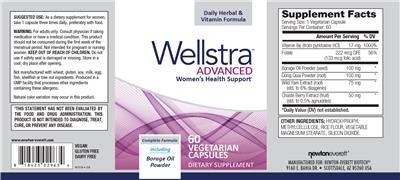
Supplement Facts
The label details for Wellstra Advanced by NewtonEverett, sourced from the NIH Dietary Supplement Label Database.
Supplement Facts
| Ingredient | Amount | % DV |
|---|---|---|
| Vitamin B6 | 17 mg | 1000% |
| Folic Acid | 133 mcg | -- |
| Folate | 222 mcg DFE | 56% |
| Dong Quai, Powder | 100 mg | -- |
| Wild Yam extract | 75 mg | -- |
| Chaste Berry extract | 50 mg | -- |
| Borage Oil, Powder | 100 mg | -- |
Other ingredients: Hydroxypropyl Methylcellulose, Rice Flour, Magnesium Stearate, Silicon Dioxide
Tap any ingredient to jump to its full detail below.
These statements are the manufacturer’s wording, reproduced from the product label — the label is saying it, not HelloPharmacist. We don’t verify or endorse them.
Suggested/Recommended/Usage/Directions
Suggested Use: As a dietary supplement for women, take 1 capsule three times daily, preferably with food.
Precautions
Warning: For adults only. This product should not be consumed during the first week of the menstrual period.
Consult a physician if taking medication or have a medical condition. Not intended for pregnant or nursing women.
Keep out of reach of children.
Do not use if safety seal is damaged or missing.
Not manufactured with wheat, gluten, soy, milk, egg, fish, shellfish or tree nut ingredients. Produced in a GMP facility that processes other ingredients containing these allergens.
Storage
Store in a cool, dry place after opening.
Formulation
Not manufactured with wheat, gluten, soy, milk, egg, fish, shellfish or tree nut ingredients.
Natural color variation may occur in this product.
Vegan
Gluten free Dairy free
Daily herbal & vitamin formula Advanced
FDA Disclaimer Statement
This statement has not been evaluated by the Food and Drug Administration. This product is not intended to diagnose, treat, cure, or prevent any disease.
Formula
Women's health support
Complete formula including Borage Oil powder
FDA Statement of Identity
Dietary Supplement
Is this label outdated? Report a formula or label change and our pharmacy team will review it.
Wellstra Advanced by NewtonEverett label
The label scan from the NIH Dietary Supplement Label Database. Tap to enlarge.
Label images are published by the NIH Dietary Supplement Label Database for the version of this product on file. Always read your actual product label.
View the full label (PDF)The Ingredients in Wellstra Advanced by NewtonEverett
These are the 6 active ingredients this product is made of. Select any to open its full monograph.
Serving size1 Vegetarian Capsule(s) Dosage formCapsule Servings per container60 Amounts shown are per serving.
Most supplement products combine several ingredients, and a medication can interact with the product through any one of them. Each ingredient below shows whether it has known drug interactions.
Vitamin B6
Interacts with210 drugs
Vitamin B6 (pyridoxine) is an essential water-soluble vitamin that your body needs for metabolism, brain function, and making red blood cells. It is b...
Vitamin B6 monograph & interactionsFolate
Dong Quai, Powder
Interacts with163 drugs
Dong Quai is a traditional Chinese herb often called "female ginseng" and is mostly used for menstrual and menopausal complaints. High-quality scienti...
Dong Quai, Powder monograph & interactionsWild Yam extract
Interacts with41 drugs
Wild yam is a root traditionally used for menopausal symptoms, cramps, and as a so-called 'natural' hormone supplement, but solid human evidence for t...
Wild Yam extract monograph & interactionsChaste Berry extract
Interacts with121 drugs
Vitex (chasteberry) is an herbal remedy most often used for PMS and menstrual cycle problems, and the strongest evidence is for easing some PMS sympto...
Chaste Berry extract monograph & interactionsBorage Oil, Powder
Interacts with226 drugs
Borage is a Mediterranean herb whose seed oil is rich in gamma-linolenic acid (GLA), an omega-6 fatty acid studied mostly for skin conditions and arth...
Borage Oil, Powder monograph & interactionsOther (inactive) ingredients: Hydroxypropyl Methylcellulose, Rice Flour, Magnesium Stearate, Silicon Dioxide. These complete the product’s ingredient list but are not active constituents.
Wellstra Advanced by NewtonEverett Drug Interactions
HelloPharmacist Interaction Report
Wellstra Advanced by NewtonEverett contains six ingredients, and several of them interact with medications.
The most serious interaction we've identified is with warfarin (a blood thinner): dong quai, one of the active ingredients, may increase the risk of bleeding when used together—a Major-severity interaction. This means you'll want to flag this product with your doctor or pharmacist right away if you take warfarin.
Read the full breakdown — every affected drug type, severity by severity
The product also carries Moderate-severity interactions with a number of other drug types. Vitamin B6 can theoretically lower blood pressure additively with antihypertensive drugs, and at high doses may reduce the levels of the seizure medications phenobarbital and phenytoin, or worsen photosensitivity from amiodarone.
Folic acid may antagonize seizure control with phenobarbital or primidone, reduce phenytoin levels, interfere with methotrexate (a cancer drug), or increase toxicity from capecitabine or 5-fluorouracil. Both dong quai and borage oil may increase bleeding risk with other anticoagulants or antiplatelet drugs.
Dong quai and wild yam may theoretically interfere with estrogen therapy. Borage oil also carries a theoretical seizure risk with phenothiazine antipsychotics and may raise toxic metabolites when combined with certain enzyme-inducing drugs.
Vitamin B6 has a Minor interaction with levodopa (used for Parkinson's disease) when levodopa is taken alone—though the interaction doesn't occur if carbidopa is also used. We could not check Chaste Berry extract; no interaction data is on file for it.
Altogether, these interactions span 443 individual medications. Use the medication checker on this page to search your exact prescriptions before you start.
Check your own medications below · Editorial policy · How we use AI
Want to check YOUR meds against Wellstra Advanced?
Ask about interactions with your drugs in plain English — “Can I take it with lisinopril?” — and we find you the answer in seconds, ingredient by ingredient.
Go to the checkerIngredients driving the most interactions
Individual Drug Interactions
The ingredients in Wellstra Advanced interact with 504 drugs. Click any drug to see the details.
6 of the 6 ingredients in Wellstra Advanced interact with drugs. Each result below shows which ingredient is responsible. Borage Oil, Powder Vitamin B6 Dong Quai, Powder Chaste Berry extract Wild Yam extract Folic Acid
Belladonna Alkaloids, PhenobarbitalBarbidonna, Donnatal
How Belladonna Alkaloids, Phenobarbital interacts with Wellstra Advanced — through 3 ingredients. Tap an ingredient for the detail:
Folic AcidPhenobarbital (luminal) Moderate
Interaction Summary
Folic acid might have antagonistic effects on phenobarbital and increase the risk for seizures.
Read the full Folic Acid + Belladonna Alkaloids, Phenobarbital interactionVitamin B6Phenobarbital (luminal) Moderate
Interaction Summary
High doses of vitamin B6 may reduce the levels and clinical effects of phenobarbital.
Read the full Vitamin B6 + Belladonna Alkaloids, Phenobarbital interactionBorage Oil, PowderCytochrome P450 3a4 (cyp3a4) Inducers Moderate
Interaction Summary
Theoretically, taking borage with drugs that induce CYP3A4 might increase levels of pyrrolizidine alkaloid (PA) toxic metabolites.
Read the full Borage Oil, Powder + Belladonna Alkaloids, Phenobarbital interactionBelladonna Extract, PhenobarbitalBelap
How Belladonna Extract, Phenobarbital interacts with Wellstra Advanced — through 3 ingredients. Tap an ingredient for the detail:
Borage Oil, PowderCytochrome P450 3a4 (cyp3a4) Inducers Moderate
Interaction Summary
Theoretically, taking borage with drugs that induce CYP3A4 might increase levels of pyrrolizidine alkaloid (PA) toxic metabolites.
Read the full Borage Oil, Powder + Belladonna Extract, Phenobarbital interactionVitamin B6Phenobarbital (luminal) Moderate
Interaction Summary
High doses of vitamin B6 may reduce the levels and clinical effects of phenobarbital.
Read the full Vitamin B6 + Belladonna Extract, Phenobarbital interactionFolic AcidPhenobarbital (luminal) Moderate
Interaction Summary
Folic acid might have antagonistic effects on phenobarbital and increase the risk for seizures.
Read the full Folic Acid + Belladonna Extract, Phenobarbital interactionBelladonna, Ergotamine Tartrate, Phenobarbital
How Belladonna, Ergotamine Tartrate, Phenobarbital interacts with Wellstra Advanced — through 3 ingredients. Tap an ingredient for the detail:
Folic AcidPhenobarbital (luminal) Moderate
Interaction Summary
Folic acid might have antagonistic effects on phenobarbital and increase the risk for seizures.
Read the full Folic Acid + Belladonna, Ergotamine Tartrate, Phenobarbital interactionVitamin B6Phenobarbital (luminal) Moderate
Interaction Summary
High doses of vitamin B6 may reduce the levels and clinical effects of phenobarbital.
Read the full Vitamin B6 + Belladonna, Ergotamine Tartrate, Phenobarbital interactionBorage Oil, PowderCytochrome P450 3a4 (cyp3a4) Inducers Moderate
Interaction Summary
Theoretically, taking borage with drugs that induce CYP3A4 might increase levels of pyrrolizidine alkaloid (PA) toxic metabolites.
Read the full Borage Oil, Powder + Belladonna, Ergotamine Tartrate, Phenobarbital interactionBelladonna, Ergotamine, PhenobarbitalBellergal-S
How Belladonna, Ergotamine, Phenobarbital interacts with Wellstra Advanced — through 3 ingredients. Tap an ingredient for the detail:
Borage Oil, PowderCytochrome P450 3a4 (cyp3a4) Inducers Moderate
Interaction Summary
Theoretically, taking borage with drugs that induce CYP3A4 might increase levels of pyrrolizidine alkaloid (PA) toxic metabolites.
Read the full Borage Oil, Powder + Belladonna, Ergotamine, Phenobarbital interactionVitamin B6Phenobarbital (luminal) Moderate
Interaction Summary
High doses of vitamin B6 may reduce the levels and clinical effects of phenobarbital.
Read the full Vitamin B6 + Belladonna, Ergotamine, Phenobarbital interactionFolic AcidPhenobarbital (luminal) Moderate
Interaction Summary
Folic acid might have antagonistic effects on phenobarbital and increase the risk for seizures.
Read the full Folic Acid + Belladonna, Ergotamine, Phenobarbital interactionBelladonna, PhenobarbitalBellophen, Susano
How Belladonna, Phenobarbital interacts with Wellstra Advanced — through 3 ingredients. Tap an ingredient for the detail:
Folic AcidPhenobarbital (luminal) Moderate
Interaction Summary
Folic acid might have antagonistic effects on phenobarbital and increase the risk for seizures.
Read the full Folic Acid + Belladonna, Phenobarbital interactionVitamin B6Phenobarbital (luminal) Moderate
Interaction Summary
High doses of vitamin B6 may reduce the levels and clinical effects of phenobarbital.
Read the full Vitamin B6 + Belladonna, Phenobarbital interactionBorage Oil, PowderCytochrome P450 3a4 (cyp3a4) Inducers Moderate
Interaction Summary
Theoretically, taking borage with drugs that induce CYP3A4 might increase levels of pyrrolizidine alkaloid (PA) toxic metabolites.
Read the full Borage Oil, Powder + Belladonna, Phenobarbital interactionBellafoline, PhenobarbitalBelladenal, Belladenal-S
How Bellafoline, Phenobarbital interacts with Wellstra Advanced — through 3 ingredients. Tap an ingredient for the detail:
Borage Oil, PowderCytochrome P450 3a4 (cyp3a4) Inducers Moderate
Interaction Summary
Theoretically, taking borage with drugs that induce CYP3A4 might increase levels of pyrrolizidine alkaloid (PA) toxic metabolites.
Read the full Borage Oil, Powder + Bellafoline, Phenobarbital interactionVitamin B6Phenobarbital (luminal) Moderate
Interaction Summary
High doses of vitamin B6 may reduce the levels and clinical effects of phenobarbital.
Read the full Vitamin B6 + Bellafoline, Phenobarbital interactionFolic AcidPhenobarbital (luminal) Moderate
Interaction Summary
Folic acid might have antagonistic effects on phenobarbital and increase the risk for seizures.
Read the full Folic Acid + Bellafoline, Phenobarbital interactionBenazeprilLotensin
How Benazepril interacts with Wellstra Advanced — through 1 ingredient. Tap an ingredient for the detail:
Vitamin B6Antihypertensive Drugs Moderate
Interaction Summary
Theoretically, vitamin B6 may have additive effects when used with antihypertensive drugs.
Read the full Vitamin B6 + Benazepril interactionBenazepril, HydrochlorothiazideLotensin HCT
How Benazepril, Hydrochlorothiazide interacts with Wellstra Advanced — through 1 ingredient. Tap an ingredient for the detail:
Vitamin B6Antihypertensive Drugs Moderate
Interaction Summary
Theoretically, vitamin B6 may have additive effects when used with antihypertensive drugs.
Read the full Vitamin B6 + Benazepril, Hydrochlorothiazide interactionBendroflumethiazideAprinox, Naturetin, Neo-NaClex
How Bendroflumethiazide interacts with Wellstra Advanced — through 1 ingredient. Tap an ingredient for the detail:
Vitamin B6Antihypertensive Drugs Moderate
Interaction Summary
Theoretically, vitamin B6 may have additive effects when used with antihypertensive drugs.
Read the full Vitamin B6 + Bendroflumethiazide interactionBendroflumethiazide, NadololCorzide
How Bendroflumethiazide, Nadolol interacts with Wellstra Advanced — through 1 ingredient. Tap an ingredient for the detail:
Vitamin B6Antihypertensive Drugs Moderate
Interaction Summary
Theoretically, vitamin B6 may have additive effects when used with antihypertensive drugs.
Read the full Vitamin B6 + Bendroflumethiazide, Nadolol interactionBendroflumethiazide, Rauwolfia SerpentinaRauzide
How Bendroflumethiazide, Rauwolfia Serpentina interacts with Wellstra Advanced — through 1 ingredient. Tap an ingredient for the detail:
Vitamin B6Antihypertensive Drugs Moderate
Interaction Summary
Theoretically, vitamin B6 may have additive effects when used with antihypertensive drugs.
Read the full Vitamin B6 + Bendroflumethiazide, Rauwolfia Serpentina interactionBenserazide, LevodopaMadopar, Prolopa
How Benserazide, Levodopa interacts with Wellstra Advanced — through 2 ingredients. Tap an ingredient for the detail:
Chaste Berry ExtractDopamine Agonists Moderate
Interaction Summary
Theoretically, vitex agnus-castus could interfere with dopamine agonists.
Read the full Chaste Berry Extract + Benserazide, Levodopa interactionVitamin B6Levodopa Minor
Interaction Summary
Vitamin B6 may increase the metabolism of levodopa when taken alone, but not when taken in conjunction with carbidopa.
Read the full Vitamin B6 + Benserazide, Levodopa interactionBenzthiazideExna
How Benzthiazide interacts with Wellstra Advanced — through 1 ingredient. Tap an ingredient for the detail:
Vitamin B6Antihypertensive Drugs Moderate
Interaction Summary
Theoretically, vitamin B6 may have additive effects when used with antihypertensive drugs.
Read the full Vitamin B6 + Benzthiazide interactionBetaxololBetoptic, Kerlone
How Betaxolol interacts with Wellstra Advanced — through 1 ingredient. Tap an ingredient for the detail:
Vitamin B6Antihypertensive Drugs Moderate
Interaction Summary
Theoretically, vitamin B6 may have additive effects when used with antihypertensive drugs.
Read the full Vitamin B6 + Betaxolol interactionBetrixabanBevyxxa
How Betrixaban interacts with Wellstra Advanced — through 2 ingredients. Tap an ingredient for the detail:
Borage Oil, PowderAnticoagulant/antiplatelet Drugs Moderate
Interaction Summary
Theoretically, borage seed oil may increase the risk of bleeding if used with anticoagulant or antiplatelet drugs.
Read the full Borage Oil, Powder + Betrixaban interactionDong Quai, PowderAnticoagulant/antiplatelet Drugs Moderate
Interaction Summary
Theoretically, dong quai may increase the risk of bleeding when used with anticoagulant or antiplatelet drugs; however, research is conflicting.
Read the full Dong Quai, Powder + Betrixaban interactionBirth Control PillsBirth control pills
How Birth Control Pills interacts with Wellstra Advanced — through 1 ingredient. Tap an ingredient for the detail:
Chaste Berry ExtractContraceptive Drugs Moderate
Interaction Summary
Theoretically, vitex agnus-castus could interfere with oral contraceptives.
Read the full Chaste Berry Extract + Birth Control Pills interactionBisoprololZebeta
How Bisoprolol interacts with Wellstra Advanced — through 1 ingredient. Tap an ingredient for the detail:
Vitamin B6Antihypertensive Drugs Moderate
Interaction Summary
Theoretically, vitamin B6 may have additive effects when used with antihypertensive drugs.
Read the full Vitamin B6 + Bisoprolol interactionBisoprolol, HydrochlorothiazideZiac
How Bisoprolol, Hydrochlorothiazide interacts with Wellstra Advanced — through 1 ingredient. Tap an ingredient for the detail:
Vitamin B6Antihypertensive Drugs Moderate
Interaction Summary
Theoretically, vitamin B6 may have additive effects when used with antihypertensive drugs.
Read the full Vitamin B6 + Bisoprolol, Hydrochlorothiazide interactionBivalirudinAngiomax, Angiomax Rtu, Angiox
How Bivalirudin interacts with Wellstra Advanced — through 2 ingredients. Tap an ingredient for the detail:
Dong Quai, PowderAnticoagulant/antiplatelet Drugs Moderate
Interaction Summary
Theoretically, dong quai may increase the risk of bleeding when used with anticoagulant or antiplatelet drugs; however, research is conflicting.
Read the full Dong Quai, Powder + Bivalirudin interactionBorage Oil, PowderAnticoagulant/antiplatelet Drugs Moderate
Interaction Summary
Theoretically, borage seed oil may increase the risk of bleeding if used with anticoagulant or antiplatelet drugs.
Read the full Borage Oil, Powder + Bivalirudin interactionBosentanTracleer
How Bosentan interacts with Wellstra Advanced — through 1 ingredient. Tap an ingredient for the detail:
Vitamin B6Antihypertensive Drugs Moderate
Interaction Summary
Theoretically, vitamin B6 may have additive effects when used with antihypertensive drugs.
Read the full Vitamin B6 + Bosentan interactionBrexpiprazoleRexulti
How Brexpiprazole interacts with Wellstra Advanced — through 1 ingredient. Tap an ingredient for the detail:
Chaste Berry ExtractAntipsychotic Drugs, Dopamine Agonists Moderate
Interaction Summary
Theoretically, vitex agnus-castus could interfere with the activity of antipsychotic drugs.
Read the full Chaste Berry Extract + Brexpiprazole interactionBromfenac SodiumBromsite, Prolensa
How Bromfenac Sodium interacts with Wellstra Advanced — through 2 ingredients. Tap an ingredient for the detail:
Borage Oil, PowderAnticoagulant/antiplatelet Drugs Moderate
Interaction Summary
Theoretically, borage seed oil may increase the risk of bleeding if used with anticoagulant or antiplatelet drugs.
Read the full Borage Oil, Powder + Bromfenac Sodium interactionDong Quai, PowderAnticoagulant/antiplatelet Drugs Moderate
Interaction Summary
Theoretically, dong quai may increase the risk of bleeding when used with anticoagulant or antiplatelet drugs; however, research is conflicting.
Read the full Dong Quai, Powder + Bromfenac Sodium interactionBromocriptineParlodel
How Bromocriptine interacts with Wellstra Advanced — through 1 ingredient. Tap an ingredient for the detail:
Chaste Berry ExtractDopamine Agonists Moderate
Interaction Summary
Theoretically, vitex agnus-castus could interfere with dopamine agonists.
Read the full Chaste Berry Extract + Bromocriptine interactionBumetanideBurinex
How Bumetanide interacts with Wellstra Advanced — through 1 ingredient. Tap an ingredient for the detail:
Vitamin B6Antihypertensive Drugs Moderate
Interaction Summary
Theoretically, vitamin B6 may have additive effects when used with antihypertensive drugs.
Read the full Vitamin B6 + Bumetanide interactionBumetanide (iv)Bumex
How Bumetanide (iv) interacts with Wellstra Advanced — through 1 ingredient. Tap an ingredient for the detail:
Vitamin B6Antihypertensive Drugs Moderate
Interaction Summary
Theoretically, vitamin B6 may have additive effects when used with antihypertensive drugs.
Read the full Vitamin B6 + Bumetanide (iv) interactionBumetanide (oral)Bumex
How Bumetanide (oral) interacts with Wellstra Advanced — through 1 ingredient. Tap an ingredient for the detail:
Vitamin B6Antihypertensive Drugs Moderate
Interaction Summary
Theoretically, vitamin B6 may have additive effects when used with antihypertensive drugs.
Read the full Vitamin B6 + Bumetanide (oral) interactionButabarbital, Phenobarbital, SecobarbitalS.B.P.
How Butabarbital, Phenobarbital, Secobarbital interacts with Wellstra Advanced — through 3 ingredients. Tap an ingredient for the detail:
Vitamin B6Phenobarbital (luminal) Moderate
Interaction Summary
High doses of vitamin B6 may reduce the levels and clinical effects of phenobarbital.
Read the full Vitamin B6 + Butabarbital, Phenobarbital, Secobarbital interactionFolic AcidPhenobarbital (luminal) Moderate
Interaction Summary
Folic acid might have antagonistic effects on phenobarbital and increase the risk for seizures.
Read the full Folic Acid + Butabarbital, Phenobarbital, Secobarbital interactionBorage Oil, PowderCytochrome P450 3a4 (cyp3a4) Inducers Moderate
Interaction Summary
Theoretically, taking borage with drugs that induce CYP3A4 might increase levels of pyrrolizidine alkaloid (PA) toxic metabolites.
Read the full Borage Oil, Powder + Butabarbital, Phenobarbital, Secobarbital interactionButalbital, Phenobarbital, SecobarbitalTribarb
How Butalbital, Phenobarbital, Secobarbital interacts with Wellstra Advanced — through 3 ingredients. Tap an ingredient for the detail:
Borage Oil, PowderCytochrome P450 3a4 (cyp3a4) Inducers Moderate
Interaction Summary
Theoretically, taking borage with drugs that induce CYP3A4 might increase levels of pyrrolizidine alkaloid (PA) toxic metabolites.
Read the full Borage Oil, Powder + Butalbital, Phenobarbital, Secobarbital interactionVitamin B6Phenobarbital (luminal) Moderate
Interaction Summary
High doses of vitamin B6 may reduce the levels and clinical effects of phenobarbital.
Read the full Vitamin B6 + Butalbital, Phenobarbital, Secobarbital interactionFolic AcidPhenobarbital (luminal) Moderate
Interaction Summary
Folic acid might have antagonistic effects on phenobarbital and increase the risk for seizures.
Read the full Folic Acid + Butalbital, Phenobarbital, Secobarbital interactionButaperazineRepoise
How Butaperazine interacts with Wellstra Advanced — through 1 ingredient. Tap an ingredient for the detail:
Chaste Berry ExtractAntipsychotic Drugs Moderate
Interaction Summary
Theoretically, vitex agnus-castus could interfere with the activity of antipsychotic drugs.
Read the full Chaste Berry Extract + Butaperazine interactionCabliviCablivi
How Cablivi interacts with Wellstra Advanced — through 2 ingredients. Tap an ingredient for the detail:
Borage Oil, PowderAnticoagulant/antiplatelet Drugs Moderate
Interaction Summary
Theoretically, borage seed oil may increase the risk of bleeding if used with anticoagulant or antiplatelet drugs.
Read the full Borage Oil, Powder + Cablivi interactionDong Quai, PowderAnticoagulant/antiplatelet Drugs Moderate
Interaction Summary
Theoretically, dong quai may increase the risk of bleeding when used with anticoagulant or antiplatelet drugs; however, research is conflicting.
Read the full Dong Quai, Powder + Cablivi interactionEach ingredient & the kinds of drugs it affects
For each ingredient in Wellstra Advanced with known interactions, here are the types of medications they can affect. Open any type for the detail — or search your exact drug in the checker above.
Borage Oil, Powder
Anticoagulant/Antiplatelet Drugs
Theoretically, borage seed oil may increase the risk of bleeding if used with anticoagulant or antiplatelet drugs.
In healthy individuals, borage seed oil supplementation does not seem to affect platelet aggregation. However, gamma-linolenic acid, a constituent of borage seed oil, seems to decrease platelet aggregation by 45% and increase the risk of bleeding by 40% in animal and clinical research.
Cytochrome P450 3A4 (Cyp3A4) Inducers
Theoretically, taking borage with drugs that induce CYP3A4 might increase levels of pyrrolizidine alkaloid (PA) toxic metabolites.
Although borage seed oil contains little to no PAs, some borage plant parts, such as the leaf, flower, and seed, can contain hepatotoxic PAs. Hepatotoxic PAs are substrates of CYP3A4, which converts these chemicals into toxic metabolites. Tell patients to avoid borage preparations that are not certified and labeled as hepatotoxic PA-free.
Phenothiazines
Theoretically, taking borage sed oil with phenothiazines might increase the risk of seizures.
Borage seed oil contains gamma-linolenic acid (GLA). There is concern that taking supplements containing GLA might cause seizures, or lower the seizure threshold, when taken with phenothiazines. This is based on limited data from two reports published in the 1980s. In one report, three patients with schizophrenia who had received phenothiazines developed EEG changes suggestive of temporal lobe epilepsy after starting treatment with evening primrose, another source of GLA. However, none experienced an actual seizure. In the other report, two patients with schizophrenia who were stabilized on phenothiazines developed seizures when evening primrose 4 grams daily was added. One of these patients had a prior history of seizures. It is unclear whether evening primrose had any additive epileptogenic effects with the phenothiazines, but there is no evidence that taking GLA-containing supplements alone can cause seizures.
Vitamin B6
Amiodarone (Cordarone)
Theoretically, vitamin B6 might increase the photosensitivity caused by amiodarone.
Despite initial case reports suggesting that pyridoxine may have a protective effect against amiodarone-induced photosensitivity, preliminary clinical research suggests that pyridoxine may actually exacerbate this adverse effect.
Antihypertensive Drugs
Theoretically, vitamin B6 may have additive effects when used with antihypertensive drugs.
Research in hypertensive rats shows that vitamin B6 can decrease systolic blood pressure. Similarly, clinical research in patients with hypertension shows that taking high doses of vitamin B6 may reduce systolic and diastolic blood pressure, possibly by reducing plasma levels of epinephrine and norepinephrine.
Phenobarbital (Luminal)
High doses of vitamin B6 may reduce the levels and clinical effects of phenobarbital.
Preliminary clinical evidence suggests that vitamin B6 200 mg daily can reduce plasma levels of phenobarbital, possibly by increasing metabolism. It is not known whether lower doses have any effect. Advise people taking phenobarbital to avoid high doses of vitamin B6.
Phenytoin (Dilantin)
High doses of vitamin B6 may reduce the levels and clinical effects of phenytoin.
Preliminary clinical evidence suggests that vitamin B6 200 mg daily can reduce plasma levels of phenytoin, possibly by increasing metabolism. It is not known whether lower doses have any effect. Advise people taking phenytoin to avoid high doses of vitamin B6.
Levodopa
Vitamin B6 may increase the metabolism of levodopa when taken alone, but not when taken in conjunction with carbidopa.
Vitamin B6 (pyridoxine) enhances the metabolism of levodopa, reducing its clinical effects. However, this interaction does not occur when carbidopa is used concurrently with levodopa (Sinemet). Therefore, it is not likely to be a problem in most people.
Dong Quai, Powder
Warfarin (Coumadin)
Dong quai may increase the risk of bleeding when used with warfarin.
Case reports suggest that concomitant use of dong quai with warfarin can increase the anticoagulant effects of warfarin and increase the risk of bleeding. In one case, after 4 weeks of taking dong quai 565 mg once or twice daily, the international normalized ratio (INR) increased to 4.9. The INR normalized 4 weeks after discontinuation of dong quai.
Anticoagulant/Antiplatelet Drugs
Theoretically, dong quai may increase the risk of bleeding when used with anticoagulant or antiplatelet drugs; however, research is conflicting.
Animal studies suggest that dong quai has antithrombin activity and inhibits platelet aggregation due to its coumarin components. Additionally, some case reports in humans suggest that dong quai can increase the anticoagulant effects of warfarin. However, clinical research in healthy adults shows that taking 1 gram of dong quai root daily for 3 weeks does not significantly inhibit platelet aggregation or cause bleeding. Until more is known, use dong quai with caution in patients taking antiplatelet/anticoagulant drugs.
Estrogens
Theoretically, dong quai may reduce the effects of estrogens.
Dong quai has estrogenic effects. Theoretically, concomitant use of large amounts of dong quai might interfere with hormone replacement therapy due to competition for estrogen receptors.
Chaste Berry extract
Antipsychotic Drugs
Theoretically, vitex agnus-castus could interfere with the activity of antipsychotic drugs.
Vitex agnus-castus might interfere with the action of dopamine antagonists such as antipsychotic drugs due to its dopamine agonist effects.
Contraceptive Drugs
Theoretically, vitex agnus-castus could interfere with oral contraceptives.
Vitex agnus-castus might interfere with the efficacy of oral contraceptives due to possible hormone modulating activity.
Dopamine Agonists
Theoretically, vitex agnus-castus could interfere with dopamine agonists.
Vitex agnus-castus might potentiate the actions of dopaminergic agonists due to possible dopaminergic effects.
Estrogens
Theoretically, vitex agnus-castus could interfere with the activity of estrogens.
Vitex agnus-castus has hormone modulating activity that can interfere with the efficacy of hormone replacement therapy.
Metoclopramide (Reglan)
Theoretically, dopaminergic effects of vitex agnus-castus could interfere with metoclopramide.
Vitex agnus-castus might interfere with the action of dopamine antagonists such as metoclopramide due to its possible dopaminergic effects.
Wild Yam extract
Estrogens
Theoretically, wild yam might increase or decrease the effects of estrogen.
Wild yam root shows estrogenic and anti-estrogenic effects in vitro. Theoretically, wild yam might interfere with hormone therapy.
Folic Acid
5-Fluorouracil
Theoretically, high doses of folic acid might increase the toxicity of 5-fluorouracil.
Increases in gastrointestinal side effects of 5-fluorouracil, such as stomatitis and diarrhea, have been described in two clinical studies when leucovorin, a form of folic acid, was administered with 5-fluorouracil.
Capecitabine (Xeloda)
Use of high-dose folic acid might contribute to capecitabine toxicity.
Clinical research suggests that higher serum folate levels are associated with an increased risk for moderate or severe toxicity during capecitabine-based treatment for colorectal cancer. Additionally, in one case report, taking folic acid 15 mg daily might have contributed to increased toxicity, including severe diarrhea, vomiting, edema, hand-foot syndrome, and eventually death, in a patient prescribed capecitabine.
Methotrexate (Trexall, Others)
Folic acid might reduce the efficacy of methotrexate as a cancer treatment when given concurrently.
Methotrexate exerts its cytotoxic effects by preventing conversion of folic acid to the active form needed by cells. There is some evidence that folic acid supplements reduce the efficacy of methotrexate in the treatment of acute lymphoblastic leukemia, and theoretically they could reduce its efficacy in the treatment of other cancers. Advise cancer patients to consult their oncologist before using folic acid supplements. In patients treated with long-term, low-dose methotrexate for rheumatoid arthritis (RA) or psoriasis, folic acid supplements can reduce the incidence of side effects, without reducing efficacy.
Phenobarbital (Luminal)
Folic acid might have antagonistic effects on phenobarbital and increase the risk for seizures.
Folic acid can have direct convulsant activity in some people, reversing the effects of phenobarbital and worsening seizure control. Monitor closely for increased seizure activity.
Phenytoin (Dilantin)
Folic acid might reduce serum levels of phenytoin in some patients.
Folic acid may be a cofactor in phenytoin metabolism. Folic acid, in doses of 1 mg daily or more, can reduce serum levels of phenytoin in some patients. Increases in seizure frequency have been reported. If folic acid supplements are added to established phenytoin therapy, monitor serum phenytoin levels closely. If phenytoin and folic acid are started at the same time and continued together, adverse changes in phenytoin pharmacokinetics are avoided. Note that phenytoin also reduces serum folate levels.
Primidone (Mysoline)
Folic acid might have antagonistic effects on primidone and increase the risk for seizures.
Folic acid can have direct convulsant activity in some people, reversing the effects of primidone and worsening seizure control. Monitor closely for increased seizure activity. Note that primidone also reduces serum folate levels.
Pyrimethamine (Daraprim)
Folic acid might antagonize the effects of pyrimethamine.
Folic acid can antagonize the antiparasitic effects of pyrimethamine against toxoplasmosis and Pneumocystis carinii pneumonia. Folic acid doesn't antagonize the effects of pyrimethamine in the treatment of malaria, because malarial parasites cannot use exogenous folic acid. Use folinic acid as an alternative to folic acid when indicated.
Brand information
Manufacturer and brand details for Wellstra Advanced, from the product label.
NewtonEverett
See all NewtonEverett products- Name
- Newton-Everett Biotech
- Street Address
- 9160 E. Bahia Dr.
- City
- Scottsdale
- State
- AZ
- ZipCode
- 85260
Wellstra Advanced by NewtonEverett: Common Questions
Does Wellstra Advanced by NewtonEverett interact with any medications?
How can one product interact with so many drugs?
Where does this information come from?
Can I take Wellstra Advanced if I'm pregnant?
Is Wellstra Advanced safe while breastfeeding?
What does the vitamin B6 in this product do?
Is folic acid in this product safe to take long-term?
Can I take this product if I have bleeding problems or take blood thinners?
What are the most common side effects?
Written and reviewed by the HelloPharmacist editorial staff. Our editorial policy
Not sure if Wellstra Advanced is safe with your meds?
Our pharmacists answer your medication & supplement questions — free.
Label information is sourced from the NIH Dietary Supplement Label Database and reflects the product version on file; always read your actual product label. This page is for education only and is not a substitute for professional medical advice. Confirm with your pharmacist or doctor before combining supplements and medications.
The Full Monographs Behind Wellstra Advanced’s Ingredients
Every ingredient we hold a full HelloPharmacist monograph for — uses, evidence, safety, and the complete interaction list.
Vitamin B6
Interacts with 210 drugsVitamin B6 (pyridoxine) is an essential water-soluble vitamin that your body needs for metabolism, brain function, and making red blood cells. It is best known for helping with pregnancy-rel...
Read the full Vitamin B6 monograph → Herb & supplement monographFolic Acid
Interacts with 40 drugsFolic acid is the man-made form of vitamin B9 and is one of the most well-studied supplements, especially for preventing serious birth defects when taken before and during early pregnancy. I...
Read the full Folic Acid monograph → Herb & supplement monographDong Quai
Interacts with 163 drugsDong Quai is a traditional Chinese herb often called "female ginseng" and is mostly used for menstrual and menopausal complaints. High-quality scientific evidence that it works for these use...
Read the full Dong Quai monograph → Herb & supplement monographWild Yam
Interacts with 41 drugsWild yam is a root traditionally used for menopausal symptoms, cramps, and as a so-called 'natural' hormone supplement, but solid human evidence for these uses is lacking. Despite popular cl...
Read the full Wild Yam monograph → Herb & supplement monographVitex Agnus-castus
Interacts with 121 drugsVitex (chasteberry) is an herbal remedy most often used for PMS and menstrual cycle problems, and the strongest evidence is for easing some PMS symptoms. It is generally well tolerated by ma...
Read the full Vitex Agnus-castus monograph → Herb & supplement monographBorage
Interacts with 226 drugsBorage is a Mediterranean herb whose seed oil is rich in gamma-linolenic acid (GLA), an omega-6 fatty acid studied mostly for skin conditions and arthritis with mixed results. The plant's le...
Read the full Borage monograph →Sources & How We Checked
Wellstra Advanced's label data comes from the NIH Dietary Supplement Label Database; the ingredient interaction data is from the Natural Medicines database, reviewed by our pharmacists.
- NIH Dietary Supplement Label Database (DSLD) — The official product label on file for this supplement.
- Natural Medicines (Therapeutic Research Center) — Evidence-graded clinical reference behind the ingredient interaction data.
Content is written and reviewed by licensed HelloPharmacist pharmacists. See our data sources and editorial standards for how this information is built and checked.
The 148 references behind this product’s interaction data
Every citation that drives the interaction findings for this product’s ingredients, from the evidence-graded Natural Medicines (TRC Healthcare) database. Open an ingredient to browse its citations — links open the study on PubMed or the publisher’s site.
Vitamin B6 32 references
- Hansten PD, Horn JR. Drug Interactions Analysis and Management. Vancouver, WA: Applied Therapeutics Inc., 1997 and updates.
- Yates AA, Schlicker SA, Suitor CW. Dietary reference intakes: The new basis for recommendations for calcium and related nutrients, B vitamins, and choline. J Am Diet Assoc 1998;98:699-706. PubMed
- Geerling BJ, Dagnelie PC, Badart-Smook A, et al. Diet as a risk factor for the development of ulcerative colitis. Am J Gastroenterol 2000;95:1008-13. PubMed
- South M. Neonatal seizures after pyridoxine use -- reply. Lancet 1999;354:2083. PubMed
- Food and Nutrition Board, Institute of Medicine. Dietary Reference Intakes for Thiamin, Riboflavin, Niacin, Vitamin B6, Folate, Vitamin B12, Pantothenic Acid, Biotin, and Choline (2000). Washington, DC: National Academy Press, 2000. Available at: http://b
- Baxter P, Aicardi J. Neonatal seizures after pyridoxine use. Lancet 1999;354:2082-3. PubMed
- Bendich A, Cohen M. Vitamin B6 safety issues. Ann N Y Acad Sci 1990;585:321-30.
- Schaumburg H, Kaplan J, Windebank A. Sensory neuropathy from pyridoxine abuse. A new megavitamin syndrome. N Engl J Med 1983;309:445-8. PubMed
- Gordon N. Pyridoxine dependency: an update. Dev Med Child Neurol 1997;39:63-5. PubMed
- Lewis PJ. Pain in the hand and wrist. Pyridoxine supplements may help patients with carpal tunnel syndrome. BMJ 1995;310:1534. PubMed
- Kaufman G. Pyridoxine against amiodarone-induced photosensitivity (letter). Lancet 1984;1:51-2. PubMed
- Mulrow JP, Mulrow CD, McKenna WJ. Pyridoxine and amiodarone-induced photosensitivity. Ann Intern Med 1985;103:68-9. PubMed
- Kawada A, Kashima A, Shiraishi H, et al. Pyridoxine-induced photosensitivity and hypophosphatasia. Dermatology 2000;201:356-60.. PubMed
- Vasile A, Goldberg R, Kornberg B. Pyridoxine toxicity: report of a case. J Am Osteopath Assoc 1984;83:790-1. DOI
- Hansson O, Sillanpaa M. Pyridoxine and serum concentration of phenytoin and phenobarbitone. Lancet 1976;1:256. DOI
- Jansen T, Romiti R, Kreuter A, Altmeyer P. Rosacea fulminans triggered by high-dose vitamins B6 and B12. J Eur Acad Dermatol Venereol 2001;15:484-5..
- Chittumma P, Kaewkiattikun K, Wiriyasiriwach B. Comparison of the effectiveness of ginger and vitamin B6 for treatment of nausea and vomiting in early pregnancy: a randomized double-blind controlled trial. J Med Assoc Thai 2007;90:15-20.
- Hatzitolios, A., Iliadis, F., Katsiki, N., and Baltatzi, M. Is the anti-hypertensive effect of dietary supplements via aldehydes reduction evidence based? A systematic review. Clin Exp.Hypertens. 2008;30(7):628-639. PubMed
- Vasdev, S., Ford, C. A., Parai, S., Longerich, L., and Gadag, V. Dietary vitamin B6 supplementation attenuates hypertension in spontaneously hypertensive rats. Mol.Cell Biochem. 1999;200(1-2):155-162.
- de, Vogel S., Dindore, V., van, Engeland M., Goldbohm, R. A., van den Brandt, P. A., and Weijenberg, M. P. Dietary folate, methionine, riboflavin, and vitamin B-6 and risk of sporadic colorectal cancer. J Nutr 2008;138(12):2372-2378. PubMed
- Hagen, I., Nesheim, B. I., and Tuntland, T. No effect of vitamin B-6 against premenstrual tension. A controlled clinical study. Acta Obstet.Gynecol.Scand. 1985;64(8):667-670. PubMed
- Aybak, M., Sermet, A., Ayyildiz, M. O., and Karakilcik, A. Z. Effect of oral pyridoxine hydrochloride supplementation on arterial blood pressure in patients with essential hypertension. Arzneimittelforschung. 1995;45(12):1271-1273.
- Lal, K. J., Dakshinamurti, K., and Thliveris, J. The effect of vitamin B6 on the systolic blood pressure of rats in various animal models of hypertension. J Hypertens. 1996;14(3):355-363. PubMed
- Lauritzen CH, Reuter HD, Repges R, Bohnert K, and Schmidt U. Treatment of premenstrual tension syndrome with Vitex agnus castus. Controlled, double-blind study versus pyridoxine. Phytomed 1997;4(3):183-189. PubMed
- Fonseca VA, Lavery LA, Thethi TK, et al. Metanx in type 2 diabetes with peripheral neuropathy: A randomized trial. Am J Med 2013;126(2):141-9. PubMed
- Hankey GJ, Eikelboom JW, Yi Q, et al. Treatment with B vitamins and incidence of cancer in patients with previous stroke or transient ischemic attack: Results of a randomized placebo-controlled trial. Stroke 2012;43(6):1572-7. PubMed
- Hoyer-Kuhn H, Kohbrok S, Volland R, Franklin J, Hero B, Beck BB, Hoppe B. Vitamin B6 in primary hyperoxaluria I: first prospective trial after 40 years of practice. Clin J Am Soc Nephrol. 2014 Mar;9(3):468-77. PubMed
- Mahmoud A, Tabassum S, Al Enazi S, et al. Amelioration of levetiracetam-induced behavioral side effects by pyridoxine. A randomized double blind controlled study. Pediatr Neurol 2021;119:15-21. PubMed
- Gupta M, Gallante B, Bamberger JN, et al. Prospective randomized evaluation of idiopathic hyperoxaluria treatments. J Endourol 2021;35(12):1844-1851. PubMed
- Li H, Chen M, Liang S, et al. Excessive vitamin B6 during treatment is related to poor prognosis of patients with nasopharyngeal carcinoma: A U-shaped distribution suggests low dose supplement. Clin Nutr 2021;40(4):2293-2300. PubMed
- Tanigawa J, Nabatame S, Tominaga K, et al. High-dose pyridoxine treatment for inherited glycosylphosphatidylinositol deficiency. Brain Dev 2021;43(6):680-687. PubMed
- Committee on Practice Bulletins-Obstetrics. ACOG Practice Bulletin No. 189: Nausea And Vomiting Of Pregnancy. Obstet Gynecol. 2018;131(1):e15-e30. PubMed
Folic Acid 56 references
- McEvoy GK, ed. AHFS Drug Information. Bethesda, MD: American Society of Health-System Pharmacists, 1998.
- Duhra P. Treatment of gastrointestinal symptoms associated with methotrexate therapy for psoriasis. J Am Acad Dermatol 1993;28:466-9. PubMed
- Morgan SL, Baggott JE, Vaughn WH, et al. Supplementation with folic acid during methotrexate therapy for rheumatoid arthritis. A double-blind, placebo-controlled trial. Ann Intern Med 1994;121:833-41. PubMed
- Froscher W, Maier V, Laage M, et al. Folate deficiency, anticonvulsant drugs, and psychiatric morbidity. Clin Neuropharmacol 1995;18:165-82. PubMed
- Lewis DP, Van Dyke DC, Willhite LA, et al. Phenytoin-folic acid interaction. Ann Pharmacother 1995;29:726-35. PubMed
- Berg MJ, Stumbo PJ, Chenard CA, et al. Folic acid improves phenytoin pharmacokinetics. J Am Diet Assoc 1995;95:352-6. PubMed
- Berg MJ, Fincham RW, Ebert BE, et al. Phenytoin pharmacokinetics: Before and after folic acid administration. Epilepsia 1992;33:712-20. PubMed
- Shafer RB, Nuttall FQ. Calcium and folic acid absorption in patients taking anticonvulsant drugs. J Clin Endocrinol Metab 1975;41:1125-9. PubMed
- Leeb BF, Witzmann G, Ogris E, et al. Folic acid and cyanocobalamin levels in serum and erythrocytes during low-dose methotrexate therapy of rheumatoid arthritis and psoriatic arthritis patients. Clin Exp Rheumatol 1995;13:459-63.
- Morgan SL, Baggott JE, Lee JY, Alarcón GS. Folic acid supplementation prevents deficient blood folate levels and hyperhomocysteinemia during longterm, low dose methotrexate therapy for rheumatoid arthritis: implications for cardiovascular disease preventi
- Dijkmans BA. Folate supplementation and methotrexate. Br J Rheumatol 1995;34:1172-4. PubMed
- Segal S, Kaminski S. Drug-nutrient interactions. American Druggist 1996 Jul;42-8.
- Lambie DG, Johnson RH. Drugs and folate metabolism. Drugs 1985;30:145-55. PubMed
- Amer College of Rheumatology ad hoc committee on clinical guidelines. Guidelines for monitoring drug therapy in rheumatoid arthritis. Arthritis Rheum 1996;39:723-31. DOI
- Suitor CW, Bailey LB. Dietary folate equivalents: interpretation and application. J Am Diet Assoc 2000;100:88-94. PubMed
- Food and Nutrition Board, Institute of Medicine. Dietary Reference Intakes for Thiamin, Riboflavin, Niacin, Vitamin B6, Folate, Vitamin B12, Pantothenic Acid, Biotin, and Choline (2000). Washington, DC: National Academy Press, 2000. Available at: http://b
- Sandoval M, Charbonnet RM, Okuhama NN, et al. Cat's claw inhibits TNFalpha production and scavenges free radicals: role in cytoprotection. Free Radic Biol Med 2000;29:71-78.
- Antony AC. Megaloblastic Anemias. In: Hoffman R, Benz Jr EJ, Shattil SJ, et al. Hematology: Basic Principles and Practice. 3rd ed. New York, NY: Churchill Livingstone 2000: 451-79.
- Reynolds EH. Neurological aspects of folate and vitamin B12 metabolism. Clin Haematol 1976;5:661-96. DOI
- Reynolds EH. Folate metabolism and anticonvulsant therapy. Proc R Soc Med 1974;67:68.
- Ortiz Z, Shea B, Suarez Almazor M, et al. Folic acid and folinic acid for reducing side effects in patients receiving methotrexate for rheumatoid arthritis (Cochrane Review). Cochrane Database Syst Rev 2000;2:CD000951. PubMed
- Van Delden C, Hirschel B. Folinic acid supplements to pyrimethamine-sulfadiazine for Toxoplasma encephalitis are associated with better outcome (letter). J Infect Dis 1996;173:1294-5. PubMed
- Schroder H, Clausen N, Ostergard E, Pressler T. Folic acid supplements in vitamin tablets: a determinant of hematological drug tolerance in maintenance therapy of childhood acute lymphoblastic leukemia. Ped Hematol Oncol 1986;3:241-7. PubMed
- Lange H, Suryapranata H, De Luca G, et al. Folate therapy and in-stent restenosis after coronary stenting. N Engl J Med 2004;350:2673-81. PubMed
- Morris MC, Evans DA, Bienias JL, et al. Dietary folate and vitamin B12 intake and cognitive decline among community-dwelling older persons. Arch Neurol 2005;62:641-5. PubMed
- Bonaa KH, Njolstad I, Ueland PM, et al. NORVIT: Homocysteine lowering and cardiovascular events after acute myocardial infarction. N Enlg J Med 2006;354:1578-88. PubMed
- Lawson KA, Wright ME, Subar A, et al. Multivitamin use and risk of prostate cancer in the National Institutes of Health-AARP Diet and Health Study. J Natl Cancer Inst 2007;99:754-64. PubMed
- Figueiredo JC, Grau MV, Haile RW, et al. Folic acid and risk of prostate cancer: Results from a randomized clinical trial. J Natl Cancer Inst 2009;101:432-5. PubMed
- Clippe C, Freyer G, Milano G, Trillet-Lenoir V. Lethal toxicity of capecitabine due to abusive folic acid prescription. Clin Oncol (R Coll Radiol) 2003;15:299-300. PubMed
- Bedford Laboratories. Leucovorin calcium [package insert]. Bedford, OH. September 2008. Available at: http://www.bedfordlabs.com/BedfordLabsWeb/products/inserts/LCV-P02.pdf.
- Ebbing M, Bonaa KH, Nygard O, et al. Cancer incidence and mortality after treatment with folic acid and vitamin B12. JAMA 2009;302:2119-26.
- Haberg, S. E., London, S. J., Stigum, H., Nafstad, P., and Nystad, W. Folic acid supplements in pregnancy and early childhood respiratory health. Arch Dis.Child 2009;94(3):180-184. PubMed
- Whitrow, M. J., Moore, V. M., Rumbold, A. R., and Davies, M. J. Effect of supplemental folic acid in pregnancy on childhood asthma: a prospective birth cohort study. Am J Epidemiol. 12-15-2009;170(12):1486-1493. PubMed
- Collin, S. M., Metcalfe, C., Refsum, H., Lewis, S. J., Zuccolo, L., Smith, G. D., Chen, L., Harris, R., Davis, M., Marsden, G., Johnston, C., Lane, J. A., Ebbing, M., Bonaa, K. H., Nygard, O., Ueland, P. M., Grau, M. V., Baron, J. A., Donovan, J. L., Nea
- Baggott, J. E., Oster, R. A., and Tamura, T. Meta-analysis of cancer risk in folic acid supplementation trials. Cancer Epidemiol. 2012;36(1):78-81. PubMed
- Fonseca VA, Lavery LA, Thethi TK, et al. Metanx in type 2 diabetes with peripheral neuropathy: A randomized trial. Am J Med 2013;126(2):141-9. PubMed
- Hankey GJ, Eikelboom JW, Yi Q, et al. Treatment with B vitamins and incidence of cancer in patients with previous stroke or transient ischemic attack: Results of a randomized placebo-controlled trial. Stroke 2012;43(6):1572-7. PubMed
- Taneja S, Strand TA, Kumar T, et al. Folic acid and vitamin B-12 supplementation and common infections in 6-30-mo-old children in India: a randomized placebo-controlled trial. Am J Clin Nutr 2013;98(3):731-7. PubMed
- van Wijngaarden JP, Swart KM, Enneman AW, et al. Effect of daily vitamin B-12 and folic acid supplementation on fracture incidence in elderly individuals with an elevated plasma homocysteine concentration: B-PROOF, a randomized controlled trial. Am J Clin
- Qin X, Fan F, Cui Y, Chen F, Chen Y, Cheng X, Li Y, Wang B, Xu X, Xu X, Huo Y, Wang X. Folic acid supplementation with and without vitamin B6 and revascularization risk: a meta-analysis of randomized controlled trials. Clin Nutr. 2014;33(4):603-12. PubMed
- Crider KS, Cordero AM, Qi YP, Mulinare J, Dowling NF, Berry RJ. Prenatal folic acid and risk of asthma in children: a systematic review and meta-analysis. Am J Clin Nutr. 2013;98(5):1272-81. PubMed
- Matsubara S, Imai K, Murayama K, Higashizawa T. Severe liver dysfunction during nausea and vomiting of pregnancy: folic acid supplement as a suggested culprit. J Obstet Gynaecol. 2012;32(7):701-2. PubMed
- Qin X, Cui Y, Shen L, Sun N, Zhang Y, Li J, Xu X, Wang B, Xu X, Huo Y, Wang X. Folic acid supplementation and cancer risk: a meta-analysis of randomized controlled trials. Int J Cancer. 2013 1;133(5):1033-41. PubMed
- Tio M, Andrici J, Cox MR, Eslick GD. Folate intake and the risk of prostate cancer: a systematic review and meta-analysis. Prostate Cancer Prostatic Dis. 2014;17(3):213-9. PubMed
- Tomaszewski JJ, Richman EL, Sadetsky N, O'Keefe DS, Carroll PR, Davies BJ, Chan JM. Impact of folate intake on prostate cancer recurrence following definitive therapy: data from CaPSURE. J Urol. 2014;191(4):971-6. PubMed
- Valera-Gran D, García de la Hera M, Navarrete-Muñoz EM, Fernandez-Somoano A, Tardón A, Julvez J, Forns J, Lertxundi N, Ibarluzea JM, Murcia M, Rebagliato M, Vioque J; Infancia y Medio Ambiente (INMA) Project. Folic acid supplements during pregnancy and ch
- Van Der Woude DA, De Vries J, Van Wijk EM, Verzijl JM, Pijnenborg JM. A randomized controlled trial examining the addition of folic acid to iron supplementation in the treatment of postpartum anemia. Int J Gynaecol Obstet. 2014;126(2):101-5. PubMed
- Vila-Nova C, Wehby GL, Queirós FC, Chakraborty H, Félix TM, Goco N, Moore J, Gewehr EV, Lins L, Affonso CM, Murray JC. Periconceptional use of folic acid and risk of miscarriage - findings of the Oral Cleft Prevention Program in Brazil. J Perinat Med. 201 PubMed
- Vollset SE, Clarke R, Lewington S, Ebbing M, Halsey J, Lonn E, Armitage J, Manson JE, Hankey GJ, Spence JD, Galan P, Bønaa KH, Jamison R, Gaziano JM, Guarino P, Baron JA, Logan RF, Giovannucci EL, den Heijer M, Ueland PM, Bennett D, Collins R, Peto R; B-V
- Wehby GL, Félix TM, Goco N, Richieri-Costa A, Chakraborty H, Souza J, Pereira R, Padovani C, Moretti-Ferreira D, Murray JC. High dosage folic acid supplementation, oral cleft recurrence and fetal growth. Int J Environ Res Public Health. 2013 4;10(2):590-6 PubMed
- Fanidi A, Carreras-Torres R, Larose TL, et al. Is high vitamin B12 status a cause of lung cancer? Int J Cancer. 2019 Sep 15;145(6):1499-1503. PubMed
- Liu J, Li Z, Ye R, Liu J, Ren A. Periconceptional folic acid supplementation and risk of parent-reported asthma in children at 4-6 years of age. ERJ Open Res. 2020;6(1):00250-2019. PubMed
- Houghton LA, Sherwood KL, Pawlosky R, Ito S, O'Connor DL. [6S]-5-Methyltetrahydrofolate is at least as effective as folic acid in preventing a decline in blood folate concentrations during lactation. Am J Clin Nutr. 2006 Apr;83(4):842-50. PubMed
- Houghton LA, Yang J, O'Connor DL. Unmetabolized folic acid and total folate concentrations in breast milk are unaffected by low-dose folate supplements. Am J Clin Nutr. 2009 Jan;89(1):216-20. PubMed
- Chan SL, Chan AWH, Mo F, et al. Association Between Serum Folate Level and Toxicity of Capecitabine During Treatment for Colorectal Cancer. Oncologist. 2018 Dec;23(12):1436-1445. PubMed
- Sarris J, Ravindran A, Yatham LN, et al. Clinician guidelines for the treatment of psychiatric disorders with nutraceuticals and phytoceuticals: The World Federation of Societies of Biological Psychiatry (WFSBP) and Canadian Network for Mood and Anxiety T
Dong Quai 19 references
- Hirata JD, Swiersz LM, Zell B, et al. Does dong quai have estrogenic effects in postmenopausal women? A double-blind, placebo-controlled trial. Fertil Steril 1997;68:981-6. PubMed
- Page RL II, Lawrence JD. Potentiation of warfarin by dong quai. Pharmacotherapy 1999;19:870-6. PubMed
- Heck AM, DeWitt BA, Lukes AL. Potential interactions between alternative therapies and warfarin. Am J Health Syst Pharm 2000;57:1221-7. DOI
- Eagon PK, Elm MS, Hunter DS, et al. Medicinal herbs: modulation of estrogen action. Era of Hope Mtg, Dept Defense; Breast Cancer Res Prog, Atlanta, GA 2000;Jun 8-11.
- Dr. Duke's Phytochemical and Ethnobotanical Databases. Available at: http://www.ars-grin.gov/duke/.
- Amato P, Christophe S, Mellon PL. Estrogenic activity of herbs commonly used as remedies for menopausal symptoms. Menopause 2002;9:145-50. PubMed
- Shi M, Chang L, He G. [Stimulating action of Carthamus tinctorius L., Angelica sinensis (Oliv.) Diels and Leonurus sibiricus L. on the uterus]. Zhongguo Zhong Yao Za Zhi 1995;20:173-5, 192.
- Hoult JR, Paya M. Pharmacological and biochemical actions of simple coumarins: natural products with therapeutic potential. Gen Pharmacol 1996;27:713-22.. PubMed
- Cheong JL, Bucknall R. Retinal vein thrombosis associated with a herbal phytoestrogen preparation in a susceptible patient. Postgrad Med J 2005;81:266-7.. PubMed
- Chang CJ, Chiu JH, Tseng LM, et al. Modulation of HER2 expression by ferulic acid on human breast cancer MCF7 cells. Eur J Clin Invest 2006;36:588-96. PubMed
- Chuang CH, Doyle P, Wang JD, et al. Herbal medicines used during the first trimester and major congenital malformations: an analysis of data from a pregnancy cohort study. Drug Saf 2006;29:537-48. PubMed
- Lau CBS, Ho TCY, Chan TWL, Kim SCF. Use of dong quai (Angelica sinensis) to treat peri- and postmenopausal symptoms in women with breast cancer: is it appropriate? Menopause 2005;12:734-40.
- Ellis GR, Stephens MR. Untitled (photograph and a brief case report). BMJ 1999;319:650.
- Nambiar, S., Schwartz, R. H., and Constantino, A. Hypertension in mother and baby linked to ingestion of Chinese herbal medicine. West J Med 1999;171(3):152.
- Lee, S. K., Cho, H. K., Cho, S. H., Kim, S. S., Nahm, D. H., and Park, H. S. Occupational asthma and rhinitis caused by multiple herbal agents in a pharmacist. Ann.Allergy Asthma Immunol. 2001;86(4):469-474. PubMed
- Xu, J. and Li, G. [Observation on short-term effects of Angelica injection on chronic obstructive pulmonary disease patients with pulmonary hypertension]. Zhongguo Zhong Xi Yi Jie He Za Zhi 2000;20(3):187-189.
- Scott, G. N. and Elmer, G. W. Update on natural product--drug interactions. Am J Health Syst.Pharm 2-15-2002;59(4):339-347. PubMed
- Circosta, C., Pasquale, R. D., Palumbo, D. R., Samperi, S., and Occhiuto, F. Estrogenic activity of standardized extract of Angelica sinensis. Phytother.Res. 2006;20(8):665-669.
- Fung FY, Wong WH, Ang SK, et al. A randomized, double-blind, placebo- controlled study on the anti-haemostatic effects of Curcuma longa, Angelica sinensis and Panax ginseng. Phytomedicine. 2017;32:88-96. PubMed
Wild Yam 7 references
- McGuffin M, Hobbs C, Upton R, Goldberg A, eds. American Herbal Products Association's Botanical Safety Handbook. Boca Raton, FL: CRC Press, LLC 1997.
- Eagon PK, Elm MS, Hunter DS, et al. Medicinal herbs: modulation of estrogen action. Era of Hope Mtg, Dept Defense; Breast Cancer Res Prog, Atlanta, GA 2000;Jun 8-11.
- Cheong JL, Bucknall R. Retinal vein thrombosis associated with a herbal phytoestrogen preparation in a susceptible patient. Postgrad Med J 2005;81:266-7.. PubMed
- Rosenberg Zand, R. S., Jenkins, D. J., and Diamandis, E. P. Effects of natural products and nutraceuticals on steroid hormone-regulated gene expression. Clin Chim.Acta 2001;312(1-2):213-219. PubMed
- Araghiniknam M, Chung S, Nelson-White T, and et al. Antioxidant activity of Dioscorea and dehydroepiandrosterone (DHEA) in older humans. Life Sciences 1996;59:L147-L157.
- Zeng M, Zhang L, Li M, et al. Estrogenic effects of the extracts from the Chinese Yam (Dioscorea opposite Thunb.) and its effective compounds in vitro and in vivo. Molecules. 2018 Jan 23;23(2). Pii: E11. PubMed
- Lu J, Wong RN, Zhang L, et al. Comparative analysis of proteins with stimulating activity on ovarian estradiol biosynthesis from four different Dioscorea species in vitro using both phenotypic and target-based approaches: implication for treating menopaus
Vitex Agnus-castus 23 references
- Wuttke W. Dopaminergic action of extracts of Agnus Castus. Forschende Komplementarmedizen 1996;3:329-30.
- Jarry H, Leonhardt S., Gorkow C, Wuttke W. In vitro prolactin but not LH and FSH release is inhibited by compounds in extracts of Agnus Castus: direct evidence for a dopaminergic principle by the dopamine receptor assay. Exp Clin Endocrinol 1994;102:448- PubMed
- Schellenberg R. Treatment for the premenstrual syndrome with agnus castus fruit extract: prospective, randomised, placebo-controlled study. BMJ 2001;322:134-7. PubMed
- Lauritzen CH, Reuter HD, Repges R, et al. Treatment of premenstrual tension syndrome with Vitex agnus castus: Controlled-double blind versus pyridoxine. Phytomedicine 1997;4:183-9.
- Berger D, Schaffner W, Schrader E, et al. Efficacy of Vitex agnus castus L. extract Ze 440 in patients with premenstrual syndrome (PMS). Arch Gynecol Obstet 2000;264:150-3.
- Loch EG, Selle H, Boblitz N. Treatment of premenstrual syndrome with a phytopharmaceutical formulation containing Vitex agnus castus. J Womens Health Gend Based Med 2000;9:315-20. PubMed
- Meier B, Berger D, Hoberg E, et al. Pharmacological activities of Vitex agnus-castus extracts in vitro. Phytomedicine 2000;7:373-81. PubMed
- Liu J, Burdette JE, Xu H, et al. Evaluation of estrogenic activity of plant extracts for the potential treatment of menopausal symptoms. J Agric Food Chem 2001;49:2472-9.. PubMed
- Wuttke W, Jarry H, Christoffel V, et al. Chaste tree (Vitex agnus-castus)--pharmacology and clinical indications. Phytomedicine 2003;10:348-57. PubMed
- Atmaca M, Kumru S, Tezcan E. Fluoxetine versus Vitex agnus castus extract in the treatment of premenstrual dysphoric disorder. Hum Psychopharmacol 2003;18:191-5..
- Daniele C, Thompson Coon J, Pittler MH, Ernst E. Vitex agnus castus: a systematic review of adverse events. Drug Saf 2005;28:319-32..
- Halaska M, Beles P, Gorkow C, Sieder C. Treatment of cyclical mastalgia with a solution containing a Vitex agnus castus extract: results of a placebo-controlled double-blind study. Breast 1999;8:175-81. PubMed
- Prilepskaya VN, Ledina AV, Tagiyeva AV, Revazova FS. Vitex agnus castus: Successful treatment of moderate to severe premenstrual syndrome. Maturitas 2006;55 Suppl 1:S55-63. DOI
- Ma, L., Lin, S., Chen, R., and Wang, X. Treatment of moderate to severe premenstrual syndrome with Vitex agnus castus (BNO 1095) in Chinese women. Gynecol.Endocrinol. 2010;26(8):612-616. PubMed
- Ma, L., Lin, S., Chen, R., Zhang, Y., Chen, F., and Wang, X. Evaluating therapeutic effect in symptoms of moderate-to-severe premenstrual syndrome with Vitex agnus castus (BNO 1095) in Chinese women. Aust.N.Z.J Obstet.Gynaecol. 2010;50(2):189-193. PubMed
- Dinç T, Coskun F. Comparison of fructus agni casti and flurbiprofen in the treatment of cyclic mastalgia in premenopausal women. Ulus Cerrahi Derg. 2014 Mar 1;30(1):34-8 PubMed
- Momoeda M, Sasaki H, Tagashira E, Ogishima M, Takano Y, Ochiai K. Efficacy and safety of Vitex agnus-castus extract for treatment of premenstrual syndrome in Japanese patients: a prospective, open-label study. Adv Ther. 2014 Mar;31(3):362-73. PubMed
- Yavarikia P, Shahnazi M, Hadavand Mirzaie S, Javadzadeh Y, Lutfi R. Comparing the effect of mefenamic Acid and vitex agnus on intrauterine device induced bleeding. J Caring Sci. 2013 Aug 31;2(3):245-54.
- Van Die MD, Burger HC, Teede HG, Bone KM. Vitex agnus castus extracts for female reproductive disorders: a systematic review of clinical trials. Planta Med 2013:79:562-575. PubMed
- Ooi SL, Watts S, McClean R, Pak SC. Vitex agnus-castus for the treatment of cyclic mastalgia: A systematic review and meta-analysis. J Womens Health (Larchmt). 2020;29(2):262-278. PubMed
- Mollazadeh S, Mirghafourvand M, Abdollahi NG. The effects of Vitex agnus-castus on menstrual bleeding: A systematic review and meta-analysis. J Complement Integr Med. 2019;17(1). pii: /j/jcim.2019.17.issue-1/jcim-2018-0053/jcim-2018-0053.xml.
- Najib FS, Poordast T, Mahmudi MS, Shiravani Z, Namazi N, Omrani GR. Does Vitex Agnus-Castus L. Have Deleterious Effect on Fertility and Pregnancy Outcome? An Experimental Study on Rats for Prediction of Its Safety. J Pharmacopuncture 2022;25(2):106-113. PubMed
- Somuncu E, Solak IHA. Colonic Obstruction Secondary to Phytobezoar Caused by Vitex Agnus-Castus Seeds: A Case Report. J Coll Physicians Surg Pak 2022;32(8):S115-S117. PubMed
Borage 11 references
- Guivernau M, Meza N, Barja P, Roman O. Clinical and experimental study on the long-term effect of dietary gamma-linolenic acid on plasma lipids, platelet aggregation, thromboxane formation, and prostacyclin production. Prostaglandins Leukot Essent Fatty A PubMed
- WHO working group. Pyrrolizidine alkaloids. Environmental Health Criteria, 80. WHO: Geneva, 1988.
- Fan YY, Chapkin RS. Importance of dietary gamma-linolenic acid in human health and nutrition. J Nutr 1998;128:1411-4.
- Takwale A, Tan E, Agarwal S, et al. Efficacy and tolerability of borage oil in adults and children with atopic eczema: randomised, double blind, placebo controlled, parallel group trial. BMJ 2003;327:1385. PubMed
- Chojkier M. Hepatic sinusoidal-obstruction syndrome: toxicity of pyrrolizidine alkaloids. J Hepatol 2003;39:437-46. PubMed
- Roeder E. Medicinal plants in Europe containing pyrrolizidine alkaloids. Pharmazie 1995;50:83-98.
- Wang YP, Yan J, Fu PP, Chou MW. Human liver microsomal reduction of pyrrolizidine alkaloid N-oxides to form the corresponding carcinogenic parent alkaloid. Toxicol Lett 2005;155:411-20. PubMed
- Holman CP and Bell AF. A trial of evening primrose oil in the treatment of chronic schizophrenia. J Orhtomolecular Psych 1983;12:302-304.
- Vaddadi KS. The use of gamma-linolenic acid and linoleic acid to differentiate between temporal lobe epilepsy and schizophrenia. Prostaglandins Med 1981;6(4):375-379. PubMed
- Bard, J. M., Luc, G., Jude, B., Bordet, J. C., Lacroix, B., Bonte, J. P., Parra, H. J., and Duriez, P. A therapeutic dosage (3 g/day) of borage oil supplementation has no effect on platelet aggregation in healthy volunteers. Fundam.Clin.Pharmacol. 1997;1
- Puri BK. The safety of evening primrose oil in epilepsy. Prostaglandins Leukotrienes Essential Fatty Acids 2007;77:101-3. PubMed
Parts of this content are provided by the Therapeutic Research Center, LLC.
DISCLAIMER: Currently this does not check for drug-drug interactions. This is not an all-inclusive comprehensive list of potential interactions and is for informational purposes only. Not all interactions are known or well-reported in the scientific literature, and new interactions are continually being reported. Input is needed from a qualified healthcare provider including a pharmacist before starting any therapy. Application of clinical judgment is necessary.
© 2021 Therapeutic Research Center, LLC