
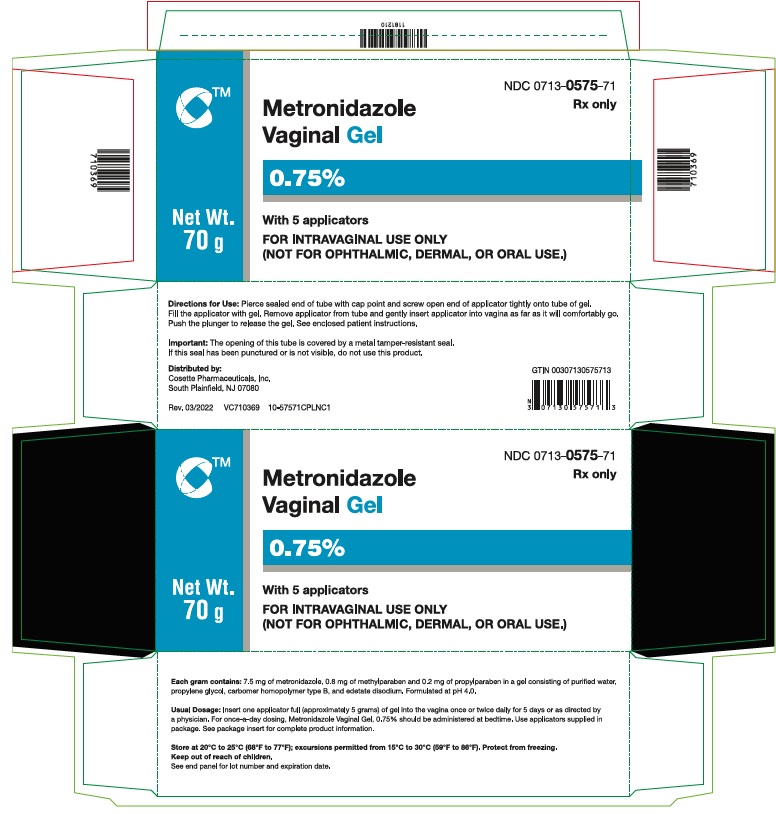
Metronidazole 7.5 mg/g Gel — NDC 0713-0575-71 (Billing 00713-0575-71)
This is a package of Metronidazole 7.5 mg/g Gel from Cosette Pharmaceuticals, Inc., marketed since Jul 2023 and currently FDA-listed; retail pharmacies pay about $0.1406 per g (NADAC). It is this product's only package size.
NDC database record
One package, one record: these facts belong to NDC 0713-0575-71 alone.
- Record
- FDA NDC Directory package listing · Human prescription drug
- Code segments
- 0713 labeler · 0575 product · 71 package
- Package marketed since
- Jul 12, 2023
- Sample package
- No — commercial package
- Listing certified through
- Dec 31, 2026
- Barcode (UPC-A, from the NDC)
- 3 0713057571 3
- Medicaid fills, this package
- 106,457 prescriptions in the last four reported quarters
- FDA record last changed
- Jul 24, 2026
Identity & classification
Regulatory identifiers FDA, NLM and CMS codes for this package
Drug-database identifiers Medi-Span GPI and First Databank GCN / HICL / AHFS classification
- GSN (GCN sequence number): 016939
- GCN: 49261
- GPI-14 (Medi-Span): 55100035004020
- HICL (First Databank): 004157
- AHFS class code: 08:30.04.00
- RxCUI (RxNorm): 142046
Where does this data come from?
- FDA openFDA NDC Directory · synced Oct 8, 2026
- FDA label on DailyMed · label index refreshed Oct 6, 2026
- RxNorm (NLM RxNav) · catalog refreshed Oct 1, 2026
- Medi-Span GPI (licensed)
- First Databank (licensed) · refreshed Oct 8, 2026
RxNorm drug class
This medicine belongs to the Nitroimidazole Antimicrobial class.
Where does this data come from?
- RxClass (NLM) · catalog refreshed Oct 1, 2026
Clinical
Metronidazole is used to treat vaginal infections such as bacterial vaginosis (an infection caused from too much harmful bacteria in the vagina). Metronidazole is in a class of medications called nitroimidazole antimicrobials. It works by stopping the growth of bacteria.
Read the full MedlinePlus article ↗- It depends on the product. Oral forms treat trichomoniasis, and some also treat amebiasis and anaerobic infections. Vaginal gels treat bacterial vaginosis, and topical cream or lot...
- No. Alcohol with oral metronidazole can cause cramps, nausea, vomiting, headache and flushing. Avoid alcohol and products with propylene glycol during treatment and for at least th...
- The most common are nausea, headache, loss of appetite, vomiting, diarrhea and stomach cramps. A metallic taste is also common. Call your doctor if you notice numbness or tingling,...
- Yes. Metronidazole can interact with warfarin, lithium, busulfan, disulfiram and drugs that affect heart rhythm. Some of these combinations need blood tests or should be avoided, s...
Patient education
Supplement & herbal interactions
Some supplements/herbs that may interact with Metronidazole — tap one for details:
Metronidazole may be associated with lower levels of 7 nutrients — worth a chat with your pharmacist, not a cause for alarm.
Where does this data come from?
- MedlinePlus (NLM) · refreshed Oct 1, 2026
- FDA label on DailyMed · label index refreshed Oct 6, 2026
Ask a licensed pharmacist directly — free, answered by our team.
Pricing
A drug doesn't have one price. Each row is a different public payment system, and none is what you'd pay at the counter — that depends on your insurance. The ⓘ on each row explains what it measures.
| Price system | Per g | Per package |
|---|---|---|
| Retail pharmacies payNADAC · weekly | $0.141 | $9.84 / 70 g |
| Medicaid paysCMS SDUD · 12 mo | $0.3411 | $23.88 / 70 g |
| Medicare drug plans payPart D · quarterly | No Part D plan price is available for this NDC in our data. | |
Where does this data come from?
- CMS NADAC weekly file · file of Sep 30, 2026
- CMS ASP pricing files · refreshed Sep 20, 2026
- CMS Medicaid State Drug Utilization Data · through Q1 2026
- CMS Part D plan pricing files · refreshed Sep 24, 2026
- VA National Acquisition Center price file
Packaging — all sizes for this product
| Package NDC | Description | Marketing start | Marketing end | Status |
|---|---|---|---|---|
| 00713-0575-71 You're viewing this Main listing | 1 TUBE, WITH APPLICATOR in 1 CARTON / 70 g in 1 TUBE, WITH APPLICATOR | 2023-07-12 | — | Active |
Therapeutic equivalents
| Product | Labeler | Pack | NADAC/unit | TE | Status | Price vs. this |
|---|---|---|---|---|---|---|
| Metronidazole 7.5 mg/gthis 00713-0575-71 | Cosette | 1 tube | $0.141 | AB | Availability likely | — |
| Metronidazole 7.5 mg/g 16714-0557-01 | Northstar | 1 tube | $0.141 | AB | Availability likely | — |
| Metronidazole Vaginal Gel, 0.75% 7.5 mg/g 21922-0039-23 | Encube | 1 tube | $0.141 | AB | Availability likely | — |
| metronidazole vaginal 7.5 mg/g 45802-0139-70 | Padagis | 1 tube | $0.141 | AB | Availability likely | — |
| Metronidazole 7.5 mg/g 68462-0184-49 | GLENMARK | 1 tube | $0.141 | AB | Availability likely | — |
| metronidazole vaginal 7.5 mg/g 71656-0067-70 | Saptalis | 1 tube | $0.141 | AB | Availability likely | — |
| Metronidazole 7.5 mg/g 73473-0303-70 | Solaris | 1 tube | $0.141 | AB | Availability likely | — |
| Vandazole 7.5 mg/g 00245-0860-70 | Upsher-smith | 1 tube | $0.334 | BX | Availability likely | +138% |
| Metronidazole 7.5 mg/g 68682-0455-70 | Oceanside | 1 tube | $0.354 | — | Discontinued | +152% |
| Metronidazole 7.5 mg/g 50090-2126-00 | A-S | 70 g | — | — | FDA listed | — |
| metronidazole vaginal 7.5 mg/g 50090-4809-00 | A-S | 1 tube | — | AB | FDA listed | — |
| Metronidazole 7.5 mg/g 50090-7345-00 | A-S | 1 tube | — | AB | FDA listed | — |
| metronidazole vaginal 7.5 mg/g 70518-2814-00 | REMEDYREPACK | 1 tube | — | AB | FDA listed | — |
| Metronidazole 7.5 mg/g 70518-4495-00 | REMEDYREPACK | 1 tube | — | AB | FDA listed | — |
| metronidazole vaginal 7.5 mg/g 70518-4572-00 | REMEDYREPACK | 1 tube | — | AB | FDA listed | — |
| Metronidazole 7.5 mg/g 50090-7160-00 | A-S | 1 tube | — | AB | FDA listed | — |
| Metronidazole 7.5 mg/g 87687-0001-70 | iNutrition | 1 tube | — | AB | Discontinued | — |
| Vagizole 7.5 mg/g 87687-0002-70 | iNutrition | 1 tube | — | AB | FDA listed | — |
Where does this data come from?
- FDA openFDA NDC Directory · synced Oct 8, 2026
- FDA Orange Book · refreshed Oct 3, 2026
- CMS NADAC weekly file · file of Sep 30, 2026
Availability & generic status
This product is an FDA-approved generic. Other versions of the same drug are listed under Therapeutic equivalents, least expensive first.
Where does this data come from?
- FDA Orange Book · refreshed Oct 3, 2026
Inactive Ingredients / Excipients
Inactive ingredients, also called excipients, are components of the drug product other than the active ingredient. They may include fillers, dyes, coatings, preservatives, flavors, or other formulation ingredients.
🧪 Avoiding an ingredient? See Metronidazole inactive ingredients by manufacturer: every current product's list side by side, so you can ask your pharmacy for the version that does not list it.
💡 Tap an ingredient (hover on desktop) to see what it is and why it’s used.
-
UNII HHT01ZNK31
Carbomer Homopolymer Type B is a synthetic polymer made from acrylic acid. It absorbs water and forms a gel, so it's used in medicines as a thickener, suspending agent, and to help create a smooth texture in creams, gels, and lotions.
-
UNII 7FLD91C86K
Edetate disodium is a chemical compound that binds and removes certain metal ions. In medicines, it acts as a preservative and stabilizer by preventing metals like calcium from interfering with the product's shelf life and consistency.
-
UNII A2I8C7HI9T
Methylparaben is a preservative derived from benzoic acid that prevents growth of bacteria, fungi, and mold in medicines. It extends the product's shelf life and maintains safety during storage.
-
UNII 6DC9Q167V3
Propylene glycol is a clear liquid derived from petroleum or vegetable sources. It acts as a solvent, humectant, and preservative in medicines, helping dissolve active ingredients and maintain product stability.
-
UNII Z8IX2SC1OH
Propylparaben is a chemical preservative used to prevent bacterial and fungal growth in medicines and personal care products. It helps extend shelf life and maintain product safety during storage.
-
UNII 55X04QC32I
A strong alkaline chemical used to adjust and maintain the pH balance of liquid medicines. It helps keep the medicine stable and ensures it stays effective during storage.
6 inactive ingredients listed in the exact product block matched to this NDC.
Where does this data come from?
ingredient classCode="IACT" elements from the exact product block matched by this NDC. Label-section narrative from DailyMed / the openFDA label index is shown separately when available.- FDA label on DailyMed · label index refreshed Oct 6, 2026
- FDA openFDA NDC Directory · synced Oct 8, 2026
Inactive ingredient FAQ
Are inactive ingredients the same for every manufacturer?
Why might an inactive ingredient be missing?
Can inactive ingredients matter?
Manufacturer & labeler
More NDCs from Cosette Pharmaceuticals, Inc. labeler code 00713
- PROMETHEGAN Promethazine Hydrochloride 25 mg Suppository NDC 0713-0526-10
- Promethegan promethazine hydrochloride 12.5 mg Suppository NDC 0713-0536-10
- Terconazole 80 mg Suppository NDC 0713-0552-73
- Hydrocortisone Valerate 2 mg/g Ointment NDC 0713-0560-15
- Nitroglycerin 4 mg/g Ointment NDC 0713-0564-31
- Metronidazole 10 mg/g Gel NDC 0713-0574-60
- Ketoconazole 20 mg/mL Shampoo, Suspension NDC 0713-0592-04
- Miconazole 3 Combination Pack (miconazole nitrate) kit Kit NDC 0713-0593-77
- Triple Antibiotic Plus Polymyxin B Sulfate, Bacitracin Zinc, Neomycin Sulfate, Pramoxine HCl 10000 [USP'U]/g; 500 [USP'U]/g; 3.5 mg/g; 10 mg/g Ointment NDC 0713-0622-31
- Fluticasone Propionate .5 mg/g Cream NDC 0713-0631-15
- Fluticasone Propionate .05 mg/g Ointment NDC 0713-0632-15
- Metronidazole 7.5 mg/g Cream NDC 0713-0633-37
Where does this data come from?
- FDA openFDA NDC Directory · synced Oct 8, 2026
- Drugs@FDA
Full prescribing information FDA SPL
🎯 Indications and Usage ▾
INDICATIONS AND USAGE Metronidazole vaginal gel is indicated in the treatment of bacterial vaginosis (formerly referred to as Haemophilus vaginitis, Gardnerella vaginitis, nonspecific vaginitis, Corynebacterium vaginitis, or anaerobic vaginosis). NOTE For purposes of this indication, a clinical diagnosis of bacterial vaginosis is usually defined by the presence of a homogeneous vaginaldischarge that (a) has a pH of greater than 4.5, (b) emits a “fishy” amine odor when mixed with a 10% KOH solution, and (c) contains cluecells on microscopic examination.
Gram’s stain results consistent with a diagnosis of bacterial vaginosis include (a) markedly reduced or absent Lactobacillus morphology, (b) predominance of Gardnerella morphotype, and (c) absent or few white blood cells. Other pathogens commonly associated with vulvovaginitis, e.g., Trichomonas vaginalis, Chlamydia trachomatis, N. gonorrhoeae, Candida albicans , and Herpes simplex virus should be ruled out.
⏱️ Dosage and Administration ▾
DOSAGE AND ADMINISTRATION The recommended dose is one applicator full of metronidazole vaginal gel (approximately 5 grams containing approximately 37.5 mg of metronidazole) intravaginally once or twice a day for 5 days. For once-a-day dosing, metronidazole vaginal gel should be administered at bedtime.
⛔ Contraindications ▾
CONTRAINDICATIONS Metronidazole vaginal gel is contraindicated in patients with a prior history of hypersensitivity to metronidazole, parabens, other ingredients of the formulation, or other nitroimidazole derivatives.
⚠️ Warnings ▾
WARNINGS Convulsive Seizures and Peripheral Neuropathy Convulsive seizures and peripheral neuropathy, the latter characterized mainly by numbness or paresthesia of an extremity, have been reported in patients treated with oral or intravenous metronidazole. The appearance of abnormal neurologic signs demands the prompt discontinuation of metronidazole vaginal gel therapy. Metronidazole vaginal gel should be administered with caution to patients with central nervous system diseases.
Psychotic Reactions Psychotic reactions have been reported in alcoholic patients who were using oral metronidazole and disulfiram concurrently. Metronidazole vaginal gel should not be administered to patients who have taken disulfiram within the last 2 weeks.
🤒 Adverse Reactions ▾
ADVERSE EVENTS Clinical Trials There were no deaths or serious adverse events related to drug therapy in clinical trials involving 800 non-pregnant women who received metronidazole vaginal gel. In a randomized, single-blind clinical trial of 505 non-pregnant women who received metronidazole vaginal gel once or twice a day, 2 patients (one from each regimen) discontinued therapy early due to drug-related adverse events. One patient discontinued drug because of moderate abdominal cramping and loose stools, while the other patient discontinued drug because of mild vaginal burning.
These symptoms resolved after discontinuation of drug. Medical events judged to be related, probably related, or possibly related to administration of metronidazole vaginal gel once or twice a day were reported for 195/505 (39%) patients. The incidence of individual adverse reactions were not significantly different between the two regimens.
Unless percentages are otherwise stipulated, the incidence of individual adverse reactions listed below was less than 1%: Reproductive: Vaginal discharge (12%), Symptomatic Candida cervicitis/vaginitis (10%), Vulva/vaginal irritative symptoms (9%), Pelvic discomfort (3%). Gastrointestinal: Gastrointestinal discomfort (7%), Nausea and/or vomiting (4%), Unusual taste (2%), Diarrhea/loose stools (1%), Decreased appetite (1%), Abdominal bloating/gas; thirsty, dry mouth. Neurologic: Headache (5%), Dizziness (2%), Depression.
Dermatologic: Generalized itching or rash. Other: Unspecified cramping (1%), Fatigue, Darkened urine. In previous clinical trials submitted for approved labeling of metronidazole vaginal gel the following was also reported: Laboratory: Increased/decreased white blood cell counts (1.7%).
Other Metronidazole Formulations Other effects that have been reported in association with the use of topical (dermal) formulations of metronidazole include skin irritation, transient skin erythema, and mild skin dryness and burning. None of these adverse events exceeded an incidence of 2% of patients. Metronidazole vaginal gel affords minimal peak serum levels and systemic exposure (AUC) of metronidazole compared to 500 mg oral metronidazole dosing.
Although these lower levels of exposure are less likely to produce the common reactions seen with oral metronidazole, the possibility of these and other reactions cannot be excluded presently. The following adverse reactions and altered laboratory tests have been reported with the oral or parenteral use of metronidazole: Cardiovascular: Flattening of the T-wave may be seen in electrocardiographic tracings. Central Nervous System: (See WARNINGS .) Headache, dizziness, syncope, ataxia, confusion, convulsive seizures, peripheral neuropathy, vertigo, incoordination, irritability, depression, weakness, insomnia.
Gastrointestinal: Abdominal discomfort, nausea, vomiting, diarrhea, an unpleasant metallic taste, anorexia, epigastric distress, abdominal cramping, constipation, “furry” tongue, glossitis, stomatitis, pancreatitis, and modification of taste of alcoholic beverages. Genitourinary: Overgrowth of Candida in the vagina, dyspareunia, decreased libido, proctitis. Hematopoietic: Reversible neutropenia, reversible thrombocytopenia.
Hypersensitivity Reactions: Urticaria; erythematous rash; flushing; nasal congestion; dryness of the mouth, vagina, or vulva; fever; pruritus; fleeting joint pains. Renal: Dysuria, cystitis, polyuria, incontinence, a sense of pelvic pressure, darkened urine. To report SUSPECTED ADVERSE REACTIONS, contact Cosette Pharmaceuticals, Inc. at 1-800-922-1038 or FDA at 1-800-FDA-1088 or www.fda.gov/medwatch.
🆘 Overdosage ▾
OVERDOSAGE There is no human experience with overdosage of metronidazole vaginal gel. Vaginally applied metronidazole gel, 0.75% could be absorbed in sufficient amounts to produce systemic effects. (See WARNINGS .)
🧬 Clinical Pharmacology ▾
CLINICAL PHARMACOLOGY Normal Subjects Following a single, intravaginal 5 grams dose of metronidazole vaginal gel (equivalent to 37.5 mg of metronidazole) to 12 normal subjects, a mean maximum serum metronidazole concentration of 237 ng/mL was reported (range: 152 to 368 ng/mL). This is approximately 2% of the mean maximum serum metronidazole concentration reported in the same subjects administered a single, oral 500 mg dose of metronidazole (mean C max = 12,785 ng/mL, range: 10,013 to 17,400 ng/mL). These peak concentrations were obtained in 6 to 12 hours after dosing with metronidazole vaginal gel and 1 to 3 hours after dosing with oral metronidazole.
The extent of exposure [area under the curve (AUC)] of metronidazole, when administered as a single intravaginal 5 grams dose of metronidazole vaginal gel (equivalent to 37.5 mg of metronidazole), was approximately 4% of the AUC of a single oral 500 mg dose of metronidazole (4977 ng-hr/mL and approximately 125,000 ng-hr/mL, respectively). Dose-adjusted comparisons of AUCs demonstrated that, on a mg to mg comparison basis, the absorption of metronidazole, when administered vaginally, was approximately half that of an equivalent oral dosage.
Patients with Bacterial Vaginosis Following single and multiple 5 grams doses of metronidazole vaginal gel to 4 patients with bacterial vaginosis, a mean maximum serum metronidazole concentration of 214 ng/mL on day 1 and 294 ng/mL (range: 228 to 349 ng/mL) on day five were reported. Steady-state metronidazole serum concentrations following oral dosages of 400 to 500 mg BID have been reported to range from 6,000 to 20,000 ng/mL. Microbiology The intracellular targets of action of metronidazole on anaerobes are largely unknown.
The 5-nitro group of metronidazole is reduced by metabolically active anaerobes, and studies have demonstrated that the reduced form of the drug interacts with bacterial DNA. However, it is not clear whether interaction with DNA alone is an important component in the bactericidal action of metronidazole on anaerobic organisms. Culture and sensitivity testing of bacteria are not routinely performed to establish the diagnosis of bacterial vaginosis.
(See INDICATIONS AND USAGE .) Standard methodology for the susceptibility testing of the potential bacterial vaginosis pathogens, Gardnerella vaginalis, Mobiluncus spp . , and Mycoplasma hominis , has not been defined. Nonetheless, metronidazole is an antimicrobial agent active in vitro against most strains of the following organisms that have been reported to be associated with bacterial vaginosis: Bacteroides spp . Gardnerella vaginalis Mobiluncus spp .
Peptostreptococcus spp .
📦 How Supplied / Storage and Handling ▾
HOW SUPPLIED Metronidazole vaginal gel, 0.75% is supplied in a 70 gram tube and packaged with 5 vaginal applicators. The NDC number for the 70 gram tube is 0713-0575-71. Storage: Store at 20°C to 25°C (68°F to 77°F).
Excursions permitted from 15°C to 30°C (59°F to 86°F). Protect from freezing. Clinical Studies In a randomized, single-blind clinical trial of non-pregnant women with bacterial vaginosis who received metronidazole vaginal gel daily for 5 days, the clinical cure rates for evaluable patients determined at 4 weeks after completion of therapy for the QD and BID regimens were 98/185 (53%) and 109/190 (57%), respectively.
Distributed by: Cosette Pharmaceuticals, Inc. South Plainfield, NJ 07080 Rev. 03/2022 8-0575CPLNC1 VC7601 Metronidazole Vaginal Gel, 0.75% DIRECTIONS FOR USE 1.
Filling the applicator Remove cap and puncture metal seal on tube with the pointed tip of cap. (See Figure 1) Screw end of applicator onto tube. (See Figure 2) Gently squeeze the tube from the bottom to fill applicator.
Plunger will stop when the applicator is full. (See Figure 3) Unscrew applicator and replace cap on tube. 2.
Inserting the applicator The applicator may be inserted while lying on your back with your knees bent or in any comfortable position. Hold filled applicator by barrel, and gently insert into vagina as far as it will comfortably go. (See Figure 4) Slowly press the plunger until it stops to deposit gel into vagina and then withdraw the applicator.
3. Care of the applicator If physician prescribes twice-a-day dosing: After use, pull the plunger out of the barrel. (See Figure 5) Wash both plunger and barrel in warm soapy water and rinse thoroughly.
To reassemble applicator, gently push plunger back into barrel. IMPORTANT For once-a-day dosing, apply one applicator full at bedtime. For twice-a-day dosing, apply one applicator full each morning and evening for 5 days, or as directed by physician.
WARNINGS If significant irritation develops from the use of this medication, discontinue use and consult your physician. Do not use during pregnancy except under the supervision of a physician. Keep this and all medications out of reach of children.
For vaginal use only. Not for use in the eyes, on the skin or in the mouth. Store at room temperature.
Avoid exposure to extreme heat or cold. See end of carton and bottom of tube for lot number and expiration date. Distributed by: Cosette Pharmaceuticals, Inc.
South Plainfield, NJ 07080 Rev. 03/2022 8-0575CPLNC1 VC7601 Figure 1 Figure 2 Figure 3 Figure 4 Figure 5
📋 Description ▾
DESCRIPTION Metronidazole vaginal gel is the intravaginal dosage form of the synthetic antibacterial agent, metronidazole, USP at a concentration of 0.75%. Metronidazole is a member of the imidazole class of antibacterial agents and is classified therapeutically as an antiprotozoal and antibacterial agent. Chemically, metronidazole is a 2-methyl-5-nitroimidazole-1-ethanol.
It has a chemical formula of C 6 H 9 N 3 O 3 , a molecular weight of 171.16, and has the following structure: Metronidazole vaginal gel is a gelled, purified water solution, containing metronidazole at a concentration of 7.5 mg/g (0.75%). The gel is formulated at pH 4.0. The gel also contains carbomer homopolymer type B, edetate disodium, methylparaben, propylparaben, propylene glycol, and sodium hydroxide.
Each applicator full of 5 grams of vaginal gel contains approximately 37.5 mg of metronidazole. Chemical Structure
⚠️ Precautions ▾
PRECAUTIONS Metronidazole vaginal gel affords minimal peak serum levels and systemic exposure (AUCs) of metronidazole compared to 500 mg oral metronidazole dosing. Although these lower levels of exposure are less likely to produce the common reactions seen with oral metronidazole, the possibility of these and other reactions cannot be excluded presently. Data from well-controlled trials directly comparing metronidazole administered orally to metronidazole administered vaginally are not available.
General Patients with severe hepatic disease metabolize metronidazole slowly. This results in the accumulation of metronidazole and its metabolites in the plasma. Accordingly, for such patients, metronidazole vaginal gel should be administered cautiously.
Known or previously unrecognized vaginal candidiasis may present more prominent symptoms during therapy with metronidazole vaginal gel. Approximately 6-10% of patients treated with metronidazole vaginal gel developed symptomatic Candida vaginitis during or immediately after therapy. Disulfiram-like reaction to alcohol has been reported with oral metronidazole, thus the possibility of such a reaction occurring while on metronidazole vaginal gel therapy cannot be excluded.
Metronidazole vaginal gel contains ingredients that may cause burning and irritation of the eye. In the event of accidental contact with the eye, rinse the eye with copious amounts of cool tap water. Information for the Patient The patient should be cautioned about drinking alcohol while being treated with metronidazole vaginal gel.
While blood levels are significantly lower with metronidazole vaginal gel than with usual doses of oral metronidazole, a possible interaction with alcohol cannot be excluded. The patient should be instructed not to engage in vaginal intercourse during treatment with this product. Drug Interactions Oral metronidazole has been reported to potentiate the anticoagulant effect of warfarin and other coumarin anticoagulants, resulting in a prolongation of prothrombin time.
This possible drug interaction should be considered when metronidazole vaginal gel is prescribed for patients on this type of anticoagulant therapy. In patients stabilized on relatively high doses of lithium, short-term oral metronidazole therapy has been associated with elevation of serum lithium levels and, in a few cases, signs of lithium toxicity. Use of cimetidine with oral metronidazole may prolong the half-life and decrease plasma clearance of metronidazole.
Drug/Laboratory Test Interactions Metronidazole may interfere with certain types of determinations of serum chemistry values, such as aspartate aminotransferase (AST, SGOT), alanine aminotransferase (ALT, SGPT), lactate dehydrogenase (LDH), triglycerides, and glucose hexokinase. Values of zero may be observed. All of the assays in which interference has been reported involve enzymatic coupling of the assay to oxidation-reduction of nicotinamide-adenine dinucleotides (NAD + NADH).
Interference is due to the similarity in absorbance peaks of NADH (340 nm) and metronidazole (322 nm) at pH 7. Carcinogenesis, Mutagenesis, Impairment of Fertility Metronidazole has shown evidence of carcinogenic activity in a number of studies involving chronic oral administration in mice and rats. Prominent among the effects in the mouse was the promotion of pulmonary tumorigenesis.
This has been observed in all six reported studies in that species, including one study in which the animals were dosed on an intermittent schedule (administration during every fourth week only). At very high dose levels (approximately 500 mg/kg/day), there was a statistically significant increase in the incidence of malignant liver tumors in males. Also, the published results of one of the mouse studies indicate an increase in the incidence of malignant lymphomas as well as pulmonary neoplasms associated with lifetime feeding of the drug.
All these effects are statistically significant. Several long-term oral… [Excerpted — this section continues on DailyMed.]
📄 Package Label / Principal Display Panel ▾
PACKAGE LABEL.PRINCIPAL DISPLAY PANEL NDC 0713- 0575 -71 Rx only METRONIDAZOLE VAGINAL GEL, 0.75% with 5 applicators FOR INTRAVAGINAL USE ONLY (NOT FOR OPHTHALMIC, DERMAL, OR ORAL USE.) Net Wt. 70 g Cosette Pharmaceuticals, Inc. NDC 0713- 0575 -71 Rx only METRONIDAZOLE VAGINAL GEL, 0.75% FOR INTRAVAGINAL USE ONLY (NOT FOR OPHTHALMIC, DERMAL, OR ORAL USE.) Net Wt. 70 g Cosette Pharmaceuticals, Inc. metronidazole-carton metronidazole-tube