
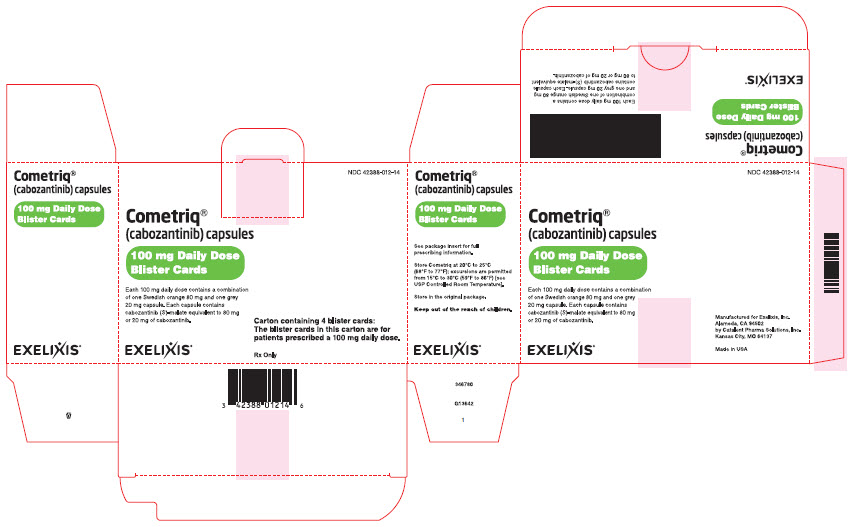
COMETRIQ cabozantinib Kit
🆔 Identity & classification
Where does this data come from?
🏷️ RxNorm drug class
This medicine belongs to the Kinase Inhibitor class.
Where does this data come from?
🏭 Manufacturer & labeler
Where does this data come from?
🩺 Clinical
Cabozantinib is used to treat certain types of renal cell carcinoma (RCC; a type of kidney cancer), hepatocellular carcinoma (HCC; a type of liver cancer), thyroid cancer, pancreatic neuroendocrine tumors (a type of tumor that begins in certain cells in the pancreas), and other neuroendocrine tumors (tumors that form from certain cells in the body). Cabozantinib is in a class of medications called kinase inhibitors. It works by blocking the action of an abnormal protein that signals cancer cells to multiply. This helps slow or stop the spread of cancer cells.
Read the full MedlinePlus article ↗- Cabozantinib is a targeted therapy that blocks signals cancer cells use to grow and spread. Depending on which product you have, it's approved for kidney cancer, liver cancer, thyr...
- What exactly does cabozantinib do, and why was I prescribed it?
- Yes — this one really matters. Both Cabometyx and Cometriq must be taken without food, because eating (especially a fatty meal) can increase how much the drug gets into your bloods...
- Does it matter if I eat before taking my dose?
Patient education
Supplement & herbal interactions
Some supplements/herbs that may interact with Cabozantinib — tap one for details:
Where does this data come from?
Ask a licensed pharmacist directly — free, answered by our team.
💊 What it looks like
Where does this data come from?
🧪 Inactive Ingredients / Excipients
Inactive ingredients, also called excipients, are components of the drug product other than the active ingredient. They may include fillers, dyes, coatings, preservatives, flavors, or other formulation ingredients.
Where does this data come from?
IACT rows and label-wide narrative are kept separate; availability and product-level specificity depend on the submitted label.Inactive ingredient FAQ
Are inactive ingredients the same for every manufacturer?
Why might an inactive ingredient be missing?
Can inactive ingredients matter?
💲 Pricing
A drug doesn't have one price. Each row is a different public payment system, and none is what you'd pay at the counter — that depends on your insurance. The ⓘ on each row explains what it measures.
| Price system | Per each | Per package |
|---|---|---|
| Retail pharmacies payNADAC · weekly | Not in the retail survey — common for institutional, discontinued, or low-volume packs. | |
| Medicaid paysCMS SDUD · 12 mo | $346.79 | $1,387.15 / 4 kit |
| Medicare drug plans payPart D · Q2 2026 | $360.18 | $1,440.73 / 4 kit |
Where does this data come from?
🔁 Therapeutic equivalents
| Product | Labeler | Pack | NADAC/unit | TE | Status | Price vs. this |
|---|---|---|---|---|---|---|
| Cometriq 42388-0011-14 | Exelixis, | 1 kit | — | — | FDA listed | — |
| Cometriqthis 42388-0012-14 | Exelixis, | 1 kit | — | — | FDA listed | — |
Where does this data come from?
⏳ Availability & generic status
We did not find an FDA-approved generic match for this exact strength, form and route. Patent/protection dates below may affect future generic timing.
Why the date isn’t exact: Generic timing can change because patents may be challenged, settled, licensed, added, removed, or worked around with a narrower label — and FDA approval does not always mean a pharmacy can get the generic today.
🛈 What do these terms mean?
- Patent
- Legal protection listed in the Orange Book that may delay generic approval or launch. Issued by the U.S. Patent & Trademark Office.
- Substance patent
- Covers the active drug molecule itself — the hardest to design around. A generic generally can’t launch until it expires.
- Formulation (product) patent
- Covers a specific formulation or dosage form. A generic can sometimes work around it with a different formulation.
- Method-of-use patent
- A patent covering one specific approved use of the drug — not necessarily the whole molecule. A generic can sometimes launch with a “skinny label” that carves out the protected use and keeps the others.
- Skinny label
- A generic label that omits a still-patented use when the FDA allows it — letting a generic reach the market for the unprotected uses.
- Exclusivity
- FDA-granted marketing protection, separate from patents — e.g. 5-yr new chemical entity, 7-yr orphan drug, or a +6-month pediatric extension.
- Paragraph IV
- A generic applicant’s formal challenge to a listed patent. It can potentially lead to earlier generic entry, but often involves litigation or a settlement.
- RLD / RS
- Reference Listed Drug — the brand product the FDA uses as the reference for generic applications. Reference Standard — the product the FDA expects generics to compare against in bioequivalence testing.
- TE / AB rating
- FDA therapeutic-equivalence rating. An AB rating generally means the FDA considers a generic therapeutically equivalent to — and substitutable for — the brand.
- LOE (loss of exclusivity)
- The latest patent or exclusivity currently listed — the loss-of-exclusivity / latest-listed-protection date shown on this page. Paragraph-IV challenges and settlements can move the real date earlier; FDA approval and a manufacturer’s decision to market can move it later.
Built from the FDA Orange Book. The bars above are scaled to each protection’s expiry; the red LOE marker is the last one to lapse.
| Patent | Type | Use code | Expires |
|---|---|---|---|
| US 8877776 ↗ | Drug substance | U-1617 | Oct 8, 2030 |
| US 8877776 ↗ | Drug substance | U-1617 | Oct 8, 2030 |
| US 12128039 ↗ | Method of use | U-1617 | Feb 10, 2032 |
| US 12128039 ↗ | Method of use | U-1617 | Feb 10, 2032 |
| US 11098015 ↗ | Method of use | U-1617 | Jan 15, 2030 |
| US 11098015 ↗ | Method of use | U-1617 | Jan 15, 2030 |
| US 11091440 ↗ | Drug product | — | Jan 15, 2030 |
| US 11091440 ↗ | Drug product | — | Jan 15, 2030 |
| US 11298349 ↗ | Drug product | — | Feb 10, 2032 |
| US 11298349 ↗ | Drug product | — | Feb 10, 2032 |
| US 9717720 ↗ | Drug product | — | Feb 10, 2032 |
| US 11091439 ↗ | Drug substance | — | Jan 15, 2030 |
| US 7579473 ↗ | Drug substance | — | Aug 14, 2026 |
| US 9717720 ↗ | Drug product | — | Feb 10, 2032 |
| US 11091439 ↗ | Drug substance | — | Jan 15, 2030 |
| US 7579473 ↗ | Drug substance | — | Aug 14, 2026 |
Is there a generic version of COMETRIQ 100 MG DAILY-DOSE PK?
The FDA approved a generic — why can’t I get it at my pharmacy yet?
Why do different websites show different generic release dates?
What does “FDA listed” mean?
What does a patent or protection date mean here?
What does “current Orange Book estimate” mean?
Can a generic come out before the last patent expires?
Can a generic come out after the listed dates?
What is the difference between patents and exclusivity?
Why are there multiple patent dates?
Where does this data come from?
🗺️ Medicaid utilization & spend
📊 Medicare Part D spend CMS · PART D · 2026 (Q1)
🔬 Reported adverse events (FAERS)
Top reported reactions
Age at onset
Reporter sex
Serious outcomes
Where does this data come from?
📦 Packaging — all sizes for this product
| Package NDC | Description | Marketing start | Status |
|---|---|---|---|
| 42388-0012-14 You're viewing this | 4 BLISTER PACK in 1 CARTON (42388-012-14) / 1 KIT in 1 BLISTER PACK | 2012-11-29 | Active |
🧭 About this NDC listing & data coverage
Kit / multi-component package
This NDC identifies a kit — a package containing more than one component. Structured data (pricing, ingredients, equivalents) is often reported per component rather than for the kit NDC itself, which can make this page look thinner than the components' own pages.
What data is (and isn’t) available for this NDC — tap to expand
| NDC identity (package / product / labeler codes) | ✓ Available |
| Labeler | ✓ Available |
| Product & package description | ✓ Available |
| Marketing category & status | ✓ Available |
| Active ingredient / dosage form / route | ✓ Available |
| FDA label (SPL via DailyMed) | ✓ Available |
| Package photos | ✓ Available |
| Inactive ingredients (structured) | — Not published for this NDC The labeler did not submit a structured excipient list, or no SPL is available. |
| NADAC pharmacy acquisition price (CMS) | — Not published for this NDC CMS publishes NADAC only for NDCs reported in its retail-pharmacy survey. |
| Orange Book / therapeutic-equivalence data | ✓ Available |
| HCPCS J-code billing crosswalk | — Not published for this NDC Most self-administered / retail products have no J-code — that is normal. |
| Medicaid utilization (CMS SDUD) | ✓ Available |
Questions about this listing
Why is there no price listed?
Is the NDC printed on the package the same as the 11-digit billing NDC?
What do the three segments of this NDC mean?
Is this package still being marketed?
Who lists this product with the FDA?
Do I need a prescription for this product?
Where does this data come from?
📄 Full prescribing information FDA SPL
🎯 Indications and Usage ▾
1 INDICATIONS AND USAGE COMETRIQ is indicated for the treatment of patients with progressive, metastatic medullary thyroid cancer (MTC). COMETRIQ is a kinase inhibitor indicated for the treatment of patients with progressive, metastatic medullary thyroid cancer (MTC). ( 1 )
⏱️ Dosage and Administration ▾
2 DOSAGE AND ADMINISTRATION Recommended Dose: 140 mg orally, once daily. ( 2.1 ) Instruct patients not to eat for at least 2 hours before and at least 1 hour after taking COMETRIQ. ( 2.1 ) Do NOT substitute COMETRIQ capsules with cabozantinib tablets. ( 2.1 ) Hepatic Impairment: The recommended starting dose of COMETRIQ is 80 mg in patients with mild or moderate hepatic impairment. ( 2.1 )
2.1Recommended Dosage Do NOT substitute COMETRIQ capsules with cabozantinib tablets. The recommended daily dose of COMETRIQ is 140 mg once daily without food until disease progression or unacceptable toxicity. Instruct patients not to eat for at least 2 hours before and at least 1 hour after taking COMETRIQ.
Swallow COMETRIQ capsules whole. Do not open COMETRIQ capsules. Do not take a missed dose within 12 hours of the next dose.
Do not ingest foods (e.g., grapefruit, grapefruit juice) or nutritional supplements that are known to inhibit cytochrome P450 while taking COMETRIQ.
2.2Dosage Modifications for Adverse Reactions Withhold COMETRIQ for NCI CTCAE Grade 4 hematologic adverse reactions, Grade 3 or greater non-hematologic adverse reactions, intolerable Grade 2 adverse reactions, or osteonecrosis of the jaw. Upon resolution/improvement of the adverse reaction (i.e., return to baseline or resolution to Grade 1), reduce the dose as follows: If previously receiving 140 mg daily dose, resume treatment at 100 mg daily If previously receiving 100 mg daily dose, resume treatment at 60 mg daily If previously receiving 60 mg daily dose, resume at 60 mg if tolerated, otherwise, discontinue COMETRIQ Permanently discontinue COMETRIQ for any of the following: development of gastrointestinal (GI) perforation or Grade 4 fistula severe hemorrhage acute myocardial infarction or arterial or venous thromboembolic events that require medical intervention nephrotic syndrome severe hypertension that cannot be controlled with anti-hypertensive therapy or Grade 4 hypertension reversible posterior leukoencephalopathy syndrome cardiac failure, depending on severity
2.3Dosage Modifications for Coadministration with Strong CYP3A4 Inhibitors Reduce the daily COMETRIQ dose by 40 mg (for example, from 140 mg to 100 mg daily or from 100 mg to 60 mg daily). Resume the dose that was used prior to initiating the CYP3A4 inhibitor 2 to 3 days after discontinuation of the strong inhibitor [see Drug Interactions (7.1) , Clinical Pharmacology (12.3) ].
2.4Dosage Modifications for Coadministration with Strong CYP3A4 Inducers Increase the daily COMETRIQ dose by 40 mg (for example, from 140 mg to 180 mg daily or from 100 mg to 140 mg daily) as tolerated. Resume the dose that was used prior to initiating the CYP3A4 inducer 2 to 3 days after discontinuation of the strong inducer. The daily dose of COMETRIQ should not exceed 180 mg [see Drug Interactions (7.2) , Clinical Pharmacology (12.3) ].
2.5Dosage Modifications for Patients with Hepatic Impairment The recommended starting dose of COMETRIQ for patients with mild to moderate hepatic impairment is 80 mg [see Use in Specific Populations (8.6) , Clinical Pharmacology (12.3) ] .
💊 Dosage Forms and Strengths ▾
3 DOSAGE FORMS AND STRENGTHS Capsules: 20-mg gelatin capsules, grey with "XL184 20mg" printed in black on the body of the capsule. 80-mg gelatin capsules, Swedish orange with "XL184 80mg" printed in black on the body of the capsule. Capsules: 20 mg and 80 mg. ( 3 )
⛔ Contraindications ▾
4 CONTRAINDICATIONS None None. ( 4 )
⚠️ Warnings and Cautions ▾
5 WARNINGS AND PRECAUTIONS Perforations and Fistulas: Monitor for symptoms. Discontinue COMETRIQ for Grade 4 fistula or perforation. ( 5.1 ) Hemorrhage: Do not administer COMETRIQ if recent history of hemorrhage.
( 5.2 ) Thrombotic Events: Discontinue COMETRIQ for myocardial infarction or serious arterial or venous thromboembolic events. ( 5.3 ) Impaired Wound Healing: Withhold COMETRIQ for at least 3 weeks before elective surgery. Do not administer for at least 2 weeks following major surgery and until adequate wound healing.
The safety of resumption of COMETRIQ after resolution of wound healing complications has not been established. ( 5.4 ) Hypertension and hypertensive crisis: Monitor blood pressure regularly. Interrupt for hypertension that is not adequately controlled with anti- hypertensive therapy.
Discontinue COMETRIQ for hypertensive crisis or severe hypertension that cannot be controlled with anti-hypertensive therapy. ( 5.5 ) Cardiac Failure: Monitor patients for signs and symptoms of cardiac failure throughout treatment. ( 5.6 ) Osteonecrosis of the Jaw (ONJ): Withhold COMETRIQ for at least 3 weeks prior to invasive dental procedure and for development of ONJ.
( 5.7 ) Diarrhea: May be severe. Interrupt COMETRIQ immediately until diarrhea resolves or decreases to Grade 1. Recommend standard antidiarrheal treatments.
( 5.8 ) Palmar-Plantar Erythrodysesthesia (PPE): Interrupt COMETRIQ until PPE resolves or decreases to Grade 1. ( 5.9 ) Proteinuria: Monitor urine protein. Discontinue for nephrotic syndrome.
( 5.10 ) Reversible Posterior Leukoencephalopathy Syndrome (RPLS): Discontinue COMETRIQ. ( 5.11 ) Embryo-Fetal Toxicity: Can cause fetal harm. Advise females of reproductive potential of the potential risk to a fetus and to use effective contraception.
( 5.12 , 8.1 , 8.3 ) Hypocalcemia: Monitor blood calcium levels and replace calcium as necessary during treatment. Withhold COMETRIQ and resume at reduced dose upon recovery or permanently discontinue COMETRIQ depending on severity. ( 5.13 )
5.1Perforations and Fistulas Gastrointestinal (GI) perforations and fistulas, including fatal cases, were reported in 3% and 1% of COMETRIQ-treated patients (N=214), respectively. Non-GI fistulas including tracheal/esophageal, including fatal cases, were reported in 4% of COMETRIQ-treated patients. Monitor patients for symptoms of perforations and fistulas, including abscess and sepsis.
Discontinue COMETRIQ in patients who experience a Grade 4 fistula or a GI perforation [see Dosage and Administration (2.2) ] .
5.2Hemorrhage Severe and fatal hemorrhage occurred with COMETRIQ. The incidence of Grade ≥ 3 hemorrhagic events was higher in COMETRIQ-treated patients compared with placebo (3% vs. 1%). Discontinue COMETRIQ for Grade 3 or 4 hemorrhage [see Dosage and Administration (2.2) ] . Do not administer COMETRIQ to patients with a recent history of hemorrhage, including hemoptysis, hematemesis, or melena.
5.3Thromboembolic Events COMETRIQ increased the incidence of thrombotic events (venous thromboembolism: 6% vs. 3% and arterial thromboembolism: 2% vs. 0% in COMETRIQ-treated and placebo-treated patients, respectively). Discontinue COMETRIQ in patients who develop an acute myocardial infarction or arterial or venous thromboembolic events that require medical intervention [see Dosage and Administration (2.2) ] .
5.4Impaired Wound Healing Wound complications have been reported with COMETRIQ. Withhold COMETRIQ for at least 3 weeks prior to elective surgery. Do not administer COMETRIQ for at least 2 weeks after major surgery and until adequate wound healing. The safety of resumption of COMETRIQ after resolution of wound healing complications has not been established.
5.5Hypertension and Hypertensive Crisis COMETRIQ can cause hypertension, including hypertensive crisis. Joint National Committee on Prevention, Detection, Evaluation, and Treatment of High Blood Pressure (modified JNC criteria) stage 1 or 2 hypertension was identified…
🤒 Adverse Reactions ▾
6 ADVERSE REACTIONS The following clinically significant adverse reactions are discussed elsewhere in the labeling: Perforations and Fistula [see Warnings and Precautions (5.1) ] Hemorrhage [see Warnings and Precautions (5.2) ] Thromboembolic Events [see Warnings and Precautions (5.3) ] Impaired Wound Healing [see Warnings and Precautions (5.4) ] Hypertension and Hypertensive Crisis [see Warnings and Precautions (5.5) ] Cardiac Failure [see Warnings and Precautions (5.6) ] Osteonecrosis of the Jaw [see Warnings and Precautions (5.7) ] Diarrhea [see Warnings and Precautions (5.8) ] Palmar-Plantar Erythrodysesthesia [see Warnings and Precautions (5.9) ] Proteinuria [see Warnings and Precautions (5.10) ] Reversible Posterior Leukoencephalopathy Syndrome [see Warnings and Precautions (5.11) ] Hypocalcemia [see Warnings and Precautions (5.13) ] The most common adverse reactions (≥ 25%) are diarrhea, stomatitis, palmar-plantar erythrodysesthesia (PPE), decreased weight, decreased appetite, nausea, fatigue, oral pain, hair color changes, dysgeusia, hypertension, abdominal pain, and constipation.
The most common laboratory abnormalities (≥ 25%) are increased AST, increased ALT, lymphopenia, increased alkaline phosphatase, hypocalcemia, neutropenia, thrombocytopenia, hypophosphatemia, and hyperbilirubinemia. ( 6.1 ) To report SUSPECTED ADVERSE REACTIONS, contact Exelixis, Inc. at 1-855-500-3935 or FDA at 1-800-FDA-1088 or www.fda.gov/medwatch.
6.1Clinical Trial Experience Because clinical trials are conducted under widely varying conditions, adverse reaction rates observed in the clinical trials of a drug cannot be directly compared to rates in the clinical trials of another drug and may not reflect the rates observed in practice. The safety of COMETRIQ was evaluated in 330 patients with progressive metastatic medullary thyroid cancer randomized to receive 140 mg COMETRIQ (n = 214) or placebo (n = 109) administered daily until disease progression or intolerable toxicity in a randomized, doubleblind, controlled trial (Study 1) [see Clinical Studies ( 14 )] .
The data described below reflect a median exposure to COMETRIQ for 204 days. The population exposed to COMETRIQ was 70% male, 90% white, and had a median age of 55 years. Fatal adverse reactions occurred in 6% of patients receiving COMETRIQ and resulted from hemorrhage, pneumonia, septicemia, fistulas, cardiac arrest, respiratory failure, and unspecified death.
Fatal adverse reactions occurred in 5% of patients receiving placebo and resulted from septicemia, pneumonia, and general deterioration. The COMETRIQ dose was reduced in 79% of patients receiving COMETRIQ and in 9% of patients receiving placebo. The median number of dosing delays was one in patients receiving COMETRIQ and in no patients receiving placebo.
Adverse reactions led to study treatment discontinuation in 16% of patients receiving COMETRIQ. The most frequent adverse reactions leading to permanent discontinuation of COMETRIQ were: hypocalcemia, increased lipase, PPE, diarrhea, fatigue, hypertension, nausea, pancreatitis, tracheal fistula formation and vomiting. Increased levels of thyroid stimulating hormone (TSH) were observed in 57% of patients receiving COMETRIQ after the first dose compared to 19% of patients receiving placebo (regardless of baseline value).
Ninety-two percent (92%) of patients on the COMETRIQ arm had a prior thyroidectomy, and 89% were taking thyroid hormone replacement prior to the first dose. Adverse reactions which occurred in ≥ 25% of COMETRIQ-treated patients occurring more frequently in the COMETRIQ arm with a between-arm difference of ≥ 5% included, in order of decreasing frequency: diarrhea, stomatitis, palmar-plantar erythrodysesthesia (PPE), decreased weight, decreased appetite, nausea, fatigue, oral pain, hair color changes, dysgeusia, hypertension, abdominal pain, and constipation.
The most common laboratory abnormalities (≥25%) were increased AST, increased ALT, lymphopenia, increas…
🔄 Drug Interactions ▾
7 DRUG INTERACTIONS Strong CYP3A4 Inhibitors: Reduce the COMETRIQ dosage. ( 2.2 , 7.1 ) Strong CYP3A4 Inducers: Increase the COMETRIQ dosage. ( 2.2 , 7.2 )
7.1Effect of CYP3A4 Inhibitors Administration of a strong CYP3A4 inhibitor, ketoconazole to healthy subjects increased single-dose plasma cabozantinib exposure by 38%. Avoid taking a strong CYP3A4 inhibitor (e.g., ketoconazole, itraconazole, clarithromycin, atazanavir, indinavir, nefazodone, nelfinavir, ritonavir, saquinavir, telithromycin, voriconazole) while taking COMETRIQ or reduce the dosage of COMETRIQ if concomitant use with strong CYP3A4 inhibitors cannot be avoided [see Dosage and Administration ( 2.2 ), Clinical Pharmacology ( 12.3 )] .
Avoid ingestion of foods (e.g., grapefruit, grapefruit juice) or nutritional supplements that are known to inhibit cytochrome P450 while taking COMETRIQ.
7.2Effect of CYP3A4 Inducers Administration of a strong CYP3A4 inducer, rifampin to healthy subjects decreased single-dose plasma cabozantinib exposure by 77%. Avoid chronic co-administration of strong CYP3A4 inducers (e.g., phenytoin, carbamazepine, rifampin, rifabutin, rifapentine, phenobarbital, St. John’s Wort) with COMETRIQ or increase the dosage of COMETRIQ if concomitant use with strong CYP3A4 inducers cannot be avoided [see Dosage and Administration ( 2.2 ), Clinical Pharmacology ( 12.3 )].
7.3Effect of MRP2 Inhibitors Concomitant administration of MRP2 inhibitors may increase the exposure to cabozantinib. Monitor patients for increased toxicity when MRP2 inhibitors (e.g., abacavir, adefovir, cidofovir, furosemide, lamivudine, nevirapine, ritonavir, probenecid, saquinavir, and tenofovir) are co-administered with COMETRIQ [see Clinical Pharmacology ( 12.3 )] .
👥 Use in Specific Populations ▾
8 USE IN SPECIFIC POPULATIONS Lactation: Advise not to breastfeed. ( 8.2 )
8.1Pregnancy Risk Summary Based on findings from animal studies and its mechanism of action, COMETRIQ can cause fetal harm when administered to a pregnant woman [see Clinical Pharmacology ( 12.1 )] . There are no available data in pregnant women to inform the drug-associated risk. In animal developmental and reproductive toxicology studies administration of cabozantinib to pregnant rats and rabbits during organogenesis resulted in embryofetal lethality and structural anomalies at exposures that were below those occurring clinically at the recommended dose (see Data ) .
Advise pregnant women or women of childbearing potential of the potential hazard to a fetus. The estimated background risk of major birth defects and miscarriage for the indicated population is unknown. In the U.S. general population, the estimated background risk of major birth defects and miscarriage in clinically recognized pregnancies is 2-4% and 15-20%, respectively.
Data Animal Data In an embryo-fetal development study in pregnant rats, daily oral administration of cabozantinib throughout organogenesis caused increased embryo-fetal lethality compared to controls at a dose of 0.03 mg/kg (less than 1% of the human exposure by AUC at the 140 mg dose). Findings included delayed ossifications and skeletal variations at a dose of 0.01 mg/kg/day (approximately 0.03% of the human exposure by AUC at the 140 mg dose). In pregnant rabbits, daily oral administration of cabozantinib throughout organogenesis resulted in findings of visceral malformations and variations including reduced spleen size and missing lung lobe at 3 mg/kg (approximately 11% of the human exposure by AUC at the 140 mg dose).
In a pre- and postnatal study in rats, cabozantinib was administered orally from gestation day 10 through postnatal day 20. Cabozantinib did not produce adverse maternal toxicity or affect pregnancy, parturition or lactation of female rats, and did not affect the survival, growth or postnatal development of the offspring at doses up to 0.3 mg/kg/day (approximately 0.02 times the recommended clinical dose of 140 mg based on body surface area).
8.2Lactation Risk Summary There is no information regarding the presence of cabozantinib or its metabolites in human milk, or their effects on the breastfed infant, or milk production. Because of the potential for serious adverse reactions in a breastfed infant from COMETRIQ, advise a lactating woman not to breastfeed during treatment with COMETRIQ and for 4 months after the final dose.
8.3Females and Males of Reproductive Potential Pregnancy Testing Verify the pregnancy status of females of reproductive potential prior to initiating COMETRIQ [see Use in Specific Populations (8.1) ] . Contraception COMETRIQ can cause fetal harm when administered to a pregnant woman [see Use in Specific Populations (8.1) ] . Females Advise females of reproductive potential to use effective contraception during treatment with COMETRIQ and for 4 months after the final dose.
Infertility Females and Males Based on findings in animals, COMETRIQ may impair fertility in females and males of reproductive potential [see Nonclinical Toxicology ( 13.1 )] .
8.4Pediatric Use The safety and effectiveness of COMETRIQ in pediatric patients have not been studied. Juvenile Animal Toxicity Data Juvenile rats were administered cabozantinib daily at doses of 1 or 2 mg/kg/day from Postnatal Day 12 (comparable to less than 2 years in humans) through Postnatal Day 35 or 70. Mortalities occurred at doses equal and greater than 1 mg/kg/day (approximately 0.07 times the clinical dose of 140 mg/day based on body surface area).
Hypoactivity was observed at both doses tested on Postnatal Day 22. Targets were generally similar to those seen in adult animals, occurred at both doses, and included the kidney (nephropathy, glomerulonephritis), reproductive organs, gastrointestinal tract (cystic dilatation and hy…
🤰 Pregnancy ▾
8.1Pregnancy Risk Summary Based on findings from animal studies and its mechanism of action, COMETRIQ can cause fetal harm when administered to a pregnant woman [see Clinical Pharmacology ( 12.1 )] . There are no available data in pregnant women to inform the drug-associated risk. In animal developmental and reproductive toxicology studies administration of cabozantinib to pregnant rats and rabbits during organogenesis resulted in embryofetal lethality and structural anomalies at exposures that were below those occurring clinically at the recommended dose (see Data ) .
Advise pregnant women or women of childbearing potential of the potential hazard to a fetus. The estimated background risk of major birth defects and miscarriage for the indicated population is unknown. In the U.S. general population, the estimated background risk of major birth defects and miscarriage in clinically recognized pregnancies is 2-4% and 15-20%, respectively.
Data Animal Data In an embryo-fetal development study in pregnant rats, daily oral administration of cabozantinib throughout organogenesis caused increased embryo-fetal lethality compared to controls at a dose of 0.03 mg/kg (less than 1% of the human exposure by AUC at the 140 mg dose). Findings included delayed ossifications and skeletal variations at a dose of 0.01 mg/kg/day (approximately 0.03% of the human exposure by AUC at the 140 mg dose). In pregnant rabbits, daily oral administration of cabozantinib throughout organogenesis resulted in findings of visceral malformations and variations including reduced spleen size and missing lung lobe at 3 mg/kg (approximately 11% of the human exposure by AUC at the 140 mg dose).
In a pre- and postnatal study in rats, cabozantinib was administered orally from gestation day 10 through postnatal day 20. Cabozantinib did not produce adverse maternal toxicity or affect pregnancy, parturition or lactation of female rats, and did not affect the survival, growth or postnatal development of the offspring at doses up to 0.3 mg/kg/day (approximately 0.02 times the recommended clinical dose of 140 mg based on body surface area).
🧒 Pediatric Use ▾
8.4Pediatric Use The safety and effectiveness of COMETRIQ in pediatric patients have not been studied. Juvenile Animal Toxicity Data Juvenile rats were administered cabozantinib daily at doses of 1 or 2 mg/kg/day from Postnatal Day 12 (comparable to less than 2 years in humans) through Postnatal Day 35 or 70. Mortalities occurred at doses equal and greater than 1 mg/kg/day (approximately 0.07 times the clinical dose of 140 mg/day based on body surface area).
Hypoactivity was observed at both doses tested on Postnatal Day 22. Targets were generally similar to those seen in adult animals, occurred at both doses, and included the kidney (nephropathy, glomerulonephritis), reproductive organs, gastrointestinal tract (cystic dilatation and hyperplasia in Brunner’s gland and inflammation of duodenum; and epithelial hyperplasia of colon and cecum), bone marrow (hypocellularity and lymphoid depletion), and liver. Tooth abnormalities and whitening as well as effects on bones including reduced bone mineral content and density, physeal hypertrophy, and decreased cortical bone also occurred at all dose levels.
Recovery was not assessed at the 2 mg/kg dose level (approximately 0.14 times the clinical dose of 140 mg based on body surface area) due to high levels of mortality. At the low dose level, effects on bone parameters were partially resolved but effects on the kidney and epididymis/testis persisted after treatment ceased.
🧓 Geriatric Use ▾
8.5Geriatric Use Clinical studies of COMETRIQ did not include sufficient numbers of patients aged 65 years and over to determine whether they respond differently from younger patients.
🆘 Overdosage ▾
10 OVERDOSAGE One case of overdosage was reported in a patient who inadvertently took twice the intended dose (200 mg daily) for nine days. The patient suffered Grade 3 memory impairment, Grade 3 mental status changes, Grade 3 cognitive disturbance, Grade 2 weight loss, and Grade 1 increase in BUN. The extent of recovery was not documented.
🧬 Clinical Pharmacology ▾
12 CLINICAL PHARMACOLOGY
12.1Mechanism of Action In vitro biochemical and/or cellular assays have shown that cabozantinib inhibits the tyrosine kinase activity of RET, MET, VEGFR-1, -2 and -3, KIT, TRKB, FLT-3, AXL, ROS1, TYRO3, MER, and TIE-2. These receptor tyrosine kinases are involved in both normal cellular function and pathologic processes such as oncogenesis, metastasis, tumor angiogenesis, drug resistance, and maintenance of the tumor microenvironment.
12.2Pharmacodynamics Cardiac Electrophysiology The effect of orally administered COMETRIQ 140 mg on QTc interval was evaluated in a randomized, double-blinded, placebo-controlled study in patients with MTC. A mean increase in QTcF of 10 - 15 ms was observed at 4 weeks after initiating COMETRIQ. A concentration-QTc relationship could not be definitively established.
Changes in cardiac wave form morphology or new rhythms were not observed. No COMETRIQ-treated patients had a QTcF > 500 ms [see Clinical Studies (14) ] .
12.3Pharmacokinetics A population pharmacokinetic analysis of cabozantinib was performed using data collected from 289 patients with solid tumors including MTC following oral administration of 140 mg daily doses. Repeat daily dosing of COMETRIQ at 140 mg for 19 days resulted in 4- to 5-fold mean cabozantinib accumulation (based on AUC) compared to a single dose administration; steady state was achieved by Day 15. Absorption Following oral administration of COMETRIQ, median time to peak cabozantinib plasma concentrations (T max ) ranged from 2 to 5 hours post-dose.
A 19% increase in the C max of the tablet formulation (CABOMETYX ™ ) compared to the capsule formulation (COMETRIQ) was observed following a single 140 mg dose. A less than 10% difference in the AUC was observed between cabozantinib tablet (CABOMETYX) and capsule (COMETRIQ) formulations [see Dosage and Administration ( 2.1 )] . Cabozantinib C max and AUC values increased by 41% and 57%, respectively, following a high-fat meal relative to fasted conditions in healthy subjects administered a single 140 mg oral COMETRIQ dose.
Distribution The oral volume of distribution (V/F) of cabozantinib is approximately 349 L. Cabozantinib is highly protein bound in human plasma (≥ 99.7%). Elimination The predicted effective half-life is approximately 55 hours and the clearance (CL/F) at steady-state is estimated to be
4.4L/hr. Metabolism Cabozantinib is a substrate of CYP3A4 in vitro . Excretion Approximately 81% of the total administered radioactivity was recovered within a 48-day collection period following a single 140 mg dose of an investigational 14 C-cabozantinib formulation in healthy subjects.
Approximately 54% was recovered in feces and 27% in urine. Unchanged cabozantinib accounted for 43% of the total radioactivity in feces and was not detectable in urine following a 72 hour collection. Specific Populations The following patient characteristics did not result in a clinically relevant difference in the pharmacokinetics of cabozantinib: age (20-86 years), sex, race (Whites and non-Whites), or mild to moderate renal impairment (eGFR greater than or equal to 30 mL/min/1.73 m 2 as estimated by MDRD (modification of diet in renal disease equation)).
The pharmacokinetics of cabozantinib is unknown in patients with worse than moderate renal impairment (eGFR less than 29 mL/min/1.73m 2 ) as estimated by MDRD equation or renal impairment requiring dialysis. Patients with Hepatic Impairment Following a single oral 60 mg COMETRIQ, mean AUC 0-inf for cabozantinib increased by 81% in subjects with mild (Child-Pugh A) hepatic impairment and 63% in subjects with moderate (Child-Pugh B) hepatic impairment compared to subjects with normal hepatic function [see Dosage and Administration (2.5) , Use in Specific Populations (8.6) ] .
The pharmacokinetics of cabozantinib has not been studied in patients with severe (Child-Pugh C) hepatic impairment [see Use in Specific Populations (8.6) ] . Drug Interaction Studies CYP3…
🧬 Mechanism of Action ▾
12.1Mechanism of Action In vitro biochemical and/or cellular assays have shown that cabozantinib inhibits the tyrosine kinase activity of RET, MET, VEGFR-1, -2 and -3, KIT, TRKB, FLT-3, AXL, ROS1, TYRO3, MER, and TIE-2. These receptor tyrosine kinases are involved in both normal cellular function and pathologic processes such as oncogenesis, metastasis, tumor angiogenesis, drug resistance, and maintenance of the tumor microenvironment.
📦 How Supplied / Storage and Handling ▾
16 HOW SUPPLIED/STORAGE AND HANDLING COMETRIQ 20 mg capsules are supplied as hard gelatin capsules with grey cap and grey body, printed with "XL184 20mg" in black ink and containing cabozantinib ( S )-malate salt equivalent to 20 mg cabozantinib. COMETRIQ 80 mg capsules are supplied as hard gelatin capsules with Swedish orange cap and Swedish orange body, printed with "XL184 80mg" in black ink and containing cabozantinib ( S )- malate salt equivalent to 80 mg cabozantinib. COMETRIQ capsules are supplied as follows: Cartons 140 mg daily-dose carton NDC#42388-011-14 Containing four 140 mg daily-dose blister cards (each blister card contains seven 80-mg and twenty-one 20-mg capsules) 100 mg daily-dose carton NDC#42388-012-14 Containing four 100 mg daily-dose blister cards (each blister card contains seven 80-mg and seven 20-mg capsules) 60 mg daily-dose carton NDC#42388-013-14 Containing four 60 mg daily-dose blister cards (each blister card contains twenty-one 20-mg capsules) Store COMETRIQ at 20°C to 25°C (68°F to 77°F); excursions are permitted from 15°C to 30°C (59°F to 86°F) [see USP Controlled Room Temperature].
📋 Description ▾
11 DESCRIPTION COMETRIQ is the ( S )-malate salt of cabozantinib, a kinase inhibitor. Cabozantinib ( S )-malate is described chemically as N -(4-(6,7-dimethoxyquinolin-4-yloxy)phenyl)- N' -(4-fluorophenyl)cyclopropane- 1,1-dicarboxamide, (2 S )-hydroxybutanedioate. The molecular formula is C 28 H 24 FN 3 O 5 •C 4 H 6 O 5 and the molecular weight is 635.6 Daltons as malate salt.
The chemical structure of cabozantinib ( S )-malate salt is: Cabozantinib ( S )-malate salt is a white to off-white solid that is practically insoluble in aqueous media. COMETRIQ (cabozantinib) capsules for oral use are supplied as printed hard gelatin capsules containing cabozantinib ( S )-malate equivalent to 20 mg or 80 mg cabozantinib and the following inactive ingredients: silicified microcrystalline cellulose, croscarmellose sodium, sodium starch glycolate, fumed silica, and stearic acid. The grey gelatin capsule shells contain black iron oxide and titanium dioxide and the Swedish orange gelatin capsule shells contain red iron oxide, and titanium dioxide.
The printing ink contains shellac glaze, black iron oxide, N -butyl alcohol, isopropyl alcohol, propylene glycol, and ammonium hydroxide.
💬 Information for Patients ▾
17 PATIENT COUNSELING INFORMATION Advise patients to read the FDA-approved patient labeling ( Patient Information ). Perforations and fistulas : Advise patients that gastrointestinal disorders such as diarrhea, nausea, vomiting, and constipation may develop during COMETRIQ treatment and to seek immediate medical attention if they experience persistent or severe abdominal pain because cases of gastrointestinal perforation and fistula have been reported in patients taking COMETRIQ [see Warnings and Precautions (5.1) ] .
Hemorrhage : Instruct patients to contact their healthcare provider to seek immediate medical attention for signs or symptoms of unusual severe bleeding or hemorrhage [see Warnings and Precautions (5.2) ] . Thromboembolic events : Venous and arterial thrombotic events have been reported. Advise patients to report signs or symptoms of an arterial thrombosis.
Venous thromboembolic events including pulmonary embolus have been reported. Advise patients to contact their health care provider if new onset of dyspnea, chest pain, or localized limb edema occurs [see Warnings and Precautions (5.3) ] . Impaired wound healing : Advise patients that COMETRIQ may impair wound healing.
Advise patients to inform their healthcare provider of any planned surgical procedure [see Warnings and Precautions (5.4) ] . Hypertension and hypertensive crisis : Inform patients of the signs and symptoms of hypertension. Advise patients to undergo routine blood pressure monitoring and to contact their health care provider if blood pressure is elevated or if they experience signs or symptoms of hypertension [see Warnings and Precautions (5.5) ] .
Cardiac failure : Advise patients that COMETRIQ can cause cardiac failure. Advise patients to immediately contact their healthcare provider for signs and symptoms of cardiac failure [see Warnings and Precautions (5.6) ] . Osteonecrosis of the jaw : Advise patients regarding good oral hygiene practices.
Advise patients to immediately contact their healthcare provider for signs or symptoms associated with osteonecrosis of the jaw [see Warnings and Precautions (5.7) ] . Diarrhea : Advise patients to notify their healthcare provider at the first signs of poorly formed or loose stool or an increased frequency of bowel movements [see Warnings and Precautions (5.8) ] . Palmar-plantar erythrodysesthesia : Advise patients to contact their healthcare provider for progressive or intolerable rash [see Warnings and Precautions (5.9) ] .
Reversible posterior leukoencephalopathy syndrome : Advise patients to immediately contact their health care provider for new onset or worsening neurological function [see Warnings and Precautions (5.11) ] . Embryo-fetal toxicity : Advise females of reproductive potential of the potential risk to a fetus. Advise females of reproductive potential to inform their healthcare provider of a known or suspected pregnancy [see Warnings and Precautions (5.12) , Use in Specific Populations (8.1) ] .
Advise patients of reproductive potential to use effective contraception during treatment with COMETRIQ and for at least 4 months after the final dose [see Use in Specific Populations (8.3) ] . Lactation : Advise women not to breastfeed during treatment with COMETRIQ and for 4 months following the last dose [see Use in Specific Populations (8.2) ] . Drug interactions : Advise patients to inform their healthcare provider of all prescription or nonprescription medications, vitamins or herbal products.
Inform patients to avoid grapefruit, grapefruit juice, and St. John’s wort [see Drug Interactions (7.1) , (7.2) ] . Hypocalcemia : Advise patients that COMETRIQ can cause low calcium levels and that their serum calcium levels should be monitored regularly during treatment.
Advise patients to immediately contact their healthcare provider for signs or symptoms of hypocalcemia [see Warnings and Precautions (5.13) ] . Important administration information Instruct patients not to eat for at least 2 hours be…