
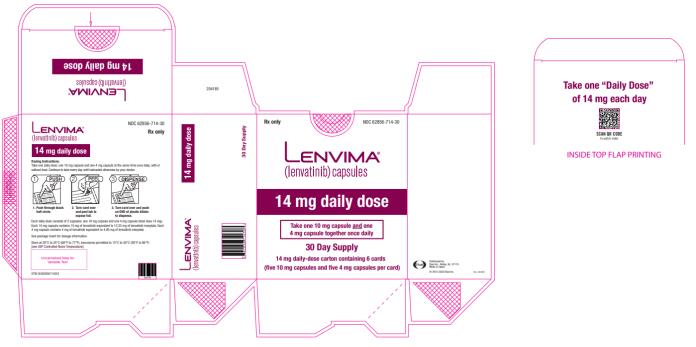
Lenvima Lenvatinib Kit — NDC 62856-714-30 (Billing 62856-0714-30)
This is a package of Lenvima Lenvatinib Kit from Eisai Inc., marketed since Feb 2015 and currently FDA-listed. It is this product's only package size.
NDC database record
One package, one record: these facts belong to NDC 62856-714-30 alone.
- Record
- FDA NDC Directory package listing · Human prescription drug
- Code segments
- 62856 labeler · 714 product · 30 package
- Package marketed since
- Feb 13, 2015
- Sample package
- No — commercial package
- Listing certified through
- Dec 31, 2027
- Barcode (UPC-A, from the NDC)
- 3 6285671430 3
- Medicaid fills, this package
- 786 prescriptions in the last four reported quarters
- FDA record last changed
- Jul 24, 2026
Identity & classification
Regulatory identifiers FDA, NLM and CMS codes for this package
Drug-database identifiers Medi-Span GPI and First Databank GCN / HICL / AHFS classification
- GSN (GCN sequence number): 073485
- GCN: 37887
- GPI-14 (Medi-Span): 2133505420B240
- HICL (First Databank): 041756
- AHFS class code: 10:00.00.00
- RxCUI (RxNorm): 1604345
Where does this data come from?
- FDA openFDA NDC Directory · synced Oct 1, 2026
- FDA label on DailyMed · label index refreshed Oct 6, 2026
- RxNorm (NLM RxNav) · catalog refreshed Oct 1, 2026
- Medi-Span GPI (licensed)
- First Databank (licensed) · refreshed Oct 1, 2026
RxNorm drug class
This medicine belongs to the Kinase Inhibitor class.
Where does this data come from?
- RxClass (NLM) · catalog refreshed Oct 1, 2026
Clinical
- Lenvima is approved for four types of cancer in adults. It treats differentiated thyroid cancer that no longer responds to radioactive iodine, unresectable liver cancer (hepatocell...
- What cancers does Lenvima actually treat?
- The most important thing is consistency — pick a time that works for you and stick to it every day. You can take Lenvima with or without food, so that's flexible. If you do eat a h...
- Does it matter what time of day I take it, or whether I take it with food?
Patient education
Supplement & herbal interactions
Some supplements/herbs that may interact with Lenvatinib — tap one for details:
Where does this data come from?
- MedlinePlus (NLM) · refreshed Oct 1, 2026
- FDA label on DailyMed · label index refreshed Oct 6, 2026
Ask a licensed pharmacist directly — free, answered by our team.
Pricing
A drug doesn't have one price. Each row is a different public payment system, and none is what you'd pay at the counter — that depends on your insurance. The ⓘ on each row explains what it measures.
| Price system | Per each | Per package |
|---|---|---|
| Retail pharmacies payNADAC · weekly | Not in the retail survey — common for institutional, discontinued, or low-volume packs. | |
| Medicaid paysCMS SDUD · 12 mo | $3,919.83 | $23,518.96 / 6 kit |
| Medicare drug plans payPart D · Q2 2026 | $408.11 | $2,448.66 / 6 kit |
Where does this data come from?
- CMS NADAC weekly file
- CMS ASP pricing files · refreshed Sep 20, 2026
- CMS Medicaid State Drug Utilization Data · through Q1 2026
- CMS Part D plan pricing files · refreshed Sep 24, 2026
- VA National Acquisition Center price file
Packaging — all sizes for this product
| Package NDC | Description | Marketing start | Marketing end | Status |
|---|---|---|---|---|
| 62856-0714-30 You're viewing this Main listing | 6 BLISTER PACK in 1 BOX / 1 KIT in 1 BLISTER PACK | 2015-02-13 | — | Active |
Therapeutic equivalents
| Product | Labeler | Pack | NADAC/unit | TE | Status | Price vs. this |
|---|---|---|---|---|---|---|
| Lenvima 62856-0718-30 | Eisai | 1 kit | — | — | FDA listed | — |
| Lenvimathis 62856-0714-30 | Eisai | 1 kit | — | — | FDA listed | — |
| Lenvima 62856-0724-30 | Eisai | 1 kit | — | — | FDA listed | — |
Where does this data come from?
- FDA openFDA NDC Directory · synced Oct 1, 2026
- FDA Orange Book · refreshed Oct 3, 2026
- CMS NADAC weekly file
Availability & generic status
We did not find an FDA-approved generic match for this exact strength, form and route. Patent/protection dates below may affect future generic timing.
Why the date isn’t exact: Generic timing can change because patents may be challenged, settled, licensed, added, removed, or worked around with a narrower label — and FDA approval does not always mean a pharmacy can get the generic today.
🛈 What do these terms mean?
- Patent
- Legal protection listed in the Orange Book that may delay generic approval or launch. Issued by the U.S. Patent & Trademark Office.
- Substance patent
- Covers the active drug molecule itself — the hardest to design around. A generic generally can’t launch until it expires.
- Formulation (product) patent
- Covers a specific formulation or dosage form. A generic can sometimes work around it with a different formulation.
- Method-of-use patent
- A patent covering one specific approved use of the drug — not necessarily the whole molecule. A generic can sometimes launch with a “skinny label” that carves out the protected use and keeps the others.
- Skinny label
- A generic label that omits a still-patented use when the FDA allows it — letting a generic reach the market for the unprotected uses.
- Exclusivity
- FDA-granted marketing protection, separate from patents — e.g. 5-yr new chemical entity, 7-yr orphan drug, or a +6-month pediatric extension.
- Paragraph IV
- A generic applicant’s formal challenge to a listed patent. It can potentially lead to earlier generic entry, but often involves litigation or a settlement.
- RLD / RS
- Reference Listed Drug — the brand product the FDA uses as the reference for generic applications. Reference Standard — the product the FDA expects generics to compare against in bioequivalence testing.
- TE / AB rating
- FDA therapeutic-equivalence rating. An AB rating generally means the FDA considers a generic therapeutically equivalent to — and substitutable for — the brand.
- LOE (loss of exclusivity)
- The latest patent or exclusivity currently listed — the loss-of-exclusivity / latest-listed-protection date shown on this page. Paragraph-IV challenges and settlements can move the real date earlier; FDA approval and a manufacturer’s decision to market can move it later.
Built from the FDA Orange Book. The bars above are scaled to each protection’s expiry; the red LOE marker is the last one to lapse.
| Patent | Type | Use code | Expires |
|---|---|---|---|
| US 9006256 ↗ | Method of use | U-1695 | Jul 27, 2027 |
| US 12083112 ↗ | Method of use | U-3996 | Mar 3, 2036 |
| US 12083112 ↗ | Method of use | U-3996 | Mar 3, 2036 |
| US 12083112 ↗ | Method of use | U-3997 | Mar 3, 2036 |
| US 12083112 ↗ | Method of use | U-3997 | Mar 3, 2036 |
| US 11090386 ↗ | Method of use | U-3519 | Feb 23, 2036 |
| US 11090386 ↗ | Method of use | U-3519 | Feb 23, 2036 |
| US 12226409 ↗ | Method of use | U-4146 | May 15, 2038 |
| US 12226409 ↗ | Method of use | U-4146 | May 15, 2038 |
| US 9006256 ↗ | Method of use | U-1695 | Jul 27, 2027 |
| US 12508313 ↗ | Drug product | — | Oct 4, 2030 |
| US 7253286 ↗ | Drug substance | — | Oct 24, 2025 |
| US 7612208 ↗ | Drug substance | — | Sep 19, 2026 |
| US 11186547 ↗ | Drug substance | — | Aug 26, 2035 |
| US 12508313 ↗ | Drug product | — | Oct 4, 2030 |
| US 11186547 ↗ | Drug substance | — | Aug 26, 2035 |
| US 7612208 ↗ | Drug substance | — | Sep 19, 2026 |
| US 10407393 ↗ | Drug substance | — | Aug 26, 2035 |
| US 10259791 ↗ | Drug substance | — | Aug 26, 2035 |
| US 10407393 ↗ | Drug substance | — | Aug 26, 2035 |
| US 10259791 ↗ | Drug substance | — | Aug 26, 2035 |
| US 7253286 ↗ | Drug substance | — | Oct 24, 2025 |
| US 7612208*PED ↗ | Drug product | — | Mar 19, 2027 |
| US 7612208*PED ↗ | Drug product | — | Mar 19, 2027 |
| US 7253286*PED ↗ | Drug product | — | Apr 24, 2026 |
| US 7253286*PED ↗ | Drug product | — | Apr 24, 2026 |
| US 9006256*PED ↗ | Drug product | — | Jan 27, 2028 |
| US 9006256*PED ↗ | Drug product | — | Jan 27, 2028 |
| US 11090386*PED ↗ | Drug product | — | Aug 23, 2036 |
| US 11090386*PED ↗ | Drug product | — | Aug 23, 2036 |
| US 11186547*PED ↗ | Drug product | — | Feb 26, 2036 |
| US 11186547*PED ↗ | Drug product | — | Feb 26, 2036 |
| US 10407393*PED ↗ | Drug product | — | Feb 26, 2036 |
| US 10407393*PED ↗ | Drug product | — | Feb 26, 2036 |
| US 12226409*PED ↗ | Drug product | — | Nov 15, 2038 |
| US 12226409*PED ↗ | Drug product | — | Nov 15, 2038 |
| US 10259791*PED ↗ | Drug product | — | Feb 26, 2036 |
| US 10259791*PED ↗ | Drug product | — | Feb 26, 2036 |
| US 12508313*PED ↗ | Drug product | — | Apr 4, 2031 |
| US 12508313*PED ↗ | Drug product | — | Apr 4, 2031 |
| US 12083112*PED ↗ | Drug product | — | Sep 3, 2036 |
| US 12083112*PED ↗ | Drug product | — | Sep 3, 2036 |
| Code | What it grants | Expires |
|---|---|---|
| M-14 | New indication / labeling change (3-year) | Apr 3, 2027 |
| ODE-196 | Orphan Drug Exclusivity (7-year) | Aug 15, 2025 |
| M-14 | New indication / labeling change (3-year) | Apr 3, 2027 |
| ODE-196 | Orphan Drug Exclusivity (7-year) | Aug 15, 2025 |
| PED | Pediatric Exclusivity (+6 months) | Feb 15, 2026 |
| PED | Pediatric Exclusivity (+6 months) | Feb 15, 2026 |
| PED | Pediatric Exclusivity (+6 months) | Oct 3, 2027 |
| PED | Pediatric Exclusivity (+6 months) | Oct 3, 2027 |
Is there a generic version of LENVIMA 14 MG DAILY DOSE?
The FDA approved a generic — why can’t I get it at my pharmacy yet?
Why do different websites show different generic release dates?
What does “FDA listed” mean?
What does a patent or protection date mean here?
What does “current Orange Book estimate” mean?
Can a generic come out before the last patent expires?
Can a generic come out after the listed dates?
What is the difference between patents and exclusivity?
Why are there multiple patent dates?
Where does this data come from?
- FDA Orange Book · refreshed Oct 3, 2026
What it looks like
Where does this data come from?
- FDA label on DailyMed · label index refreshed Oct 6, 2026
Inactive Ingredients / Excipients
Inactive ingredients, also called excipients, are components of the drug product other than the active ingredient. They may include fillers, dyes, coatings, preservatives, flavors, or other formulation ingredients.
🧪 Avoiding an ingredient? See Lenvatinib inactive ingredients by manufacturer: every current product's list side by side, so you can ask your pharmacy for the version that does not list it.
Where does this data come from?
IACT rows and label-wide narrative are kept separate; availability and product-level specificity depend on the submitted label.- FDA label on DailyMed · label index refreshed Oct 6, 2026
- FDA openFDA NDC Directory · synced Oct 1, 2026
Inactive ingredient FAQ
Are inactive ingredients the same for every manufacturer?
Why might an inactive ingredient be missing?
Can inactive ingredients matter?
Manufacturer & labeler
More NDCs from Eisai Inc. labeler code 62856
- Banzel rufinamide 400 mg Tablet, Film Coated NDC 62856-583-14
- Banzel rufinamide 40 mg/mL Suspension NDC 62856-584-46
- Lenvima Lenvatinib 4 mg Capsule NDC 62856-704-30
- Lenvima Lenvatinib 4 mg Capsule NDC 62856-708-30
- Lenvima Lenvatinib 10 mg Capsule NDC 62856-710-30
- Lenvima Lenvatinib 4 mg Capsule NDC 62856-712-30
- Lenvima Lenvatinib Kit NDC 62856-718-30
- Lenvima Lenvatinib 10 mg Capsule NDC 62856-720-30
- Lenvima Lenvatinib Kit NDC 62856-724-30
Where does this data come from?
- FDA openFDA NDC Directory · synced Oct 1, 2026
- Drugs@FDA
Full prescribing information FDA SPL
🎯 Indications and Usage ▾
1 INDICATIONS AND USAGE LENVIMA is a kinase inhibitor that is indicated: Differentiated Thyroid Cancer (DTC) For the treatment of adult patients with locally recurrent or metastatic, progressive, radioactive iodine-refractory differentiated thyroid cancer (DTC). ( 1.1 ) Renal Cell Carcinoma (RCC) In combination with pembrolizumab, for the first line treatment of adult patients with advanced renal cell carcinoma (RCC). ( 1.2 ) In combination with everolimus, for the treatment of adult patients with advanced renal cell carcinoma (RCC) following one prior anti-angiogenic therapy.
( 1.2 ) Hepatocellular Carcinoma (HCC) For the first-line treatment of patients with unresectable hepatocellular carcinoma (HCC). ( 1.3 ) Endometrial Carcinoma (EC) In combination with pembrolizumab, for the treatment of patients with advanced endometrial carcinoma (EC) that is mismatch repair proficient (pMMR) or not microsatellite instability-high (MSI-H), as determined by an FDA-approved test, who have disease progression following prior systemic therapy in any setting and are not candidates for curative surgery or radiation.
( 1.4 , 2.1 )
1.1Differentiated Thyroid Cancer LENVIMA is indicated for the treatment of adult patients with locally recurrent or metastatic, progressive, radioactive iodine-refractory differentiated thyroid cancer (DTC).
1.2Renal Cell Carcinoma LENVIMA, in combination with pembrolizumab, is indicated for the first-line treatment of adult patients with advanced renal cell carcinoma (RCC). LENVIMA, in combination with everolimus, is indicated for the treatment of adult patients with advanced RCC following one prior anti-angiogenic therapy.
1.3Hepatocellular Carcinoma LENVIMA is indicated for the first-line treatment of patients with unresectable hepatocellular carcinoma (HCC).
1.4Endometrial Carcinoma LENVIMA, in combination with pembrolizumab, is indicated for the treatment of patients with advanced endometrial carcinoma (EC) that is mismatch repair proficient (pMMR) or not microsatellite instability-high (MSI-H), as determined by an FDA-approved test, who have disease progression following prior systemic therapy in any setting and are not candidates for curative surgery or radiation [see Dosage and Administration ( 2.1 )] .
⏱️ Dosage and Administration ▾
2 DOSAGE AND ADMINISTRATION Single Agent Therapy: DTC: The recommended dosage is 24 mg orally once daily. ( 2.3 ) HCC: The recommended dosage is based on actual body weight: 12 mg orally once daily for patients greater than or equal to 60 kg or 8 mg orally once daily for patients less than 60 kg. ( 2.5 ) Combination Therapy: EC: The recommended dosage is 20 mg orally once daily in combination with pembrolizumab 200 mg administered as an intravenous infusion over 30 minutes every 3 weeks.
( 2.6 ) RCC: The recommended dosage is: 20 mg orally once daily with pembrolizumab 200 mg administered as an intravenous infusion over 30 minutes every 3 weeks. ( 2.4 ) 18 mg orally once daily with everolimus 5 mg orally once daily. ( 2.4 ) Modify the recommended daily dose for certain patients with renal or hepatic impairment.
( 2.8 , 2.9 )
2.1Patient Selection For the pMMR/not MSI-H advanced endometrial carcinoma indication, select patients for treatment with LENVIMA in combination with pembrolizumab based on MMR or MSI status in tumor specimens [see Clinical Studies ( 14.4 )]. Information on FDA-approved tests for patient selection is available at: http://www.fda.gov/CompanionDiagnostics . 2.
2 Important Dosage Information Reduce the dose for certain patients with renal or hepatic impairment [see Dosage and Administration ( 2.8 , 2.9 )] . Take LENVIMA once daily, with or without food, at the same time each day [see Clinical Pharmacology ( 12.3 )] . If a dose is missed and cannot be taken within 12 hours, skip that dose and take the next dose at the usual time of administration.
2. 3 Recommended Dos ag e for Differentiated Thyroid Cancer (DTC) The recommended dosage of LENVIMA is 24 mg orally once daily until disease progression or until unacceptable toxicity. 2.
4 Recommended Dosage for Renal Cell Carcinoma (RCC) F irst- L ine Treatment of Patients with Advanced RCC The recommended dosage of LENVIMA is 20 mg orally once daily in combination with pembrolizumab 200 mg administered as an intravenous infusion over 30 minutes every 3 weeks until disease progression or until unacceptable toxicity or up to 2 years. After completing 2 years of combination therapy, LENVIMA may be administered as a single agent until disease progression or until unacceptable toxicity. Refer to the pembrolizumab prescribing information for other pembrolizumab dosing information.
Previously Treated RCC The recommended dosage of LENVIMA is 18 mg in combination with 5 mg everolimus orally once daily until disease progression or until unacceptable toxicity. Refer to the everolimus prescribing information for recommended everolimus dosing information. 2.
5 Recommended Dosage for Hepatocellular Carcinoma (HCC) The recommended dosage of LENVIMA is based on actual body weight: 12 mg for patients greater than or equal to 60 kg or 8 mg for patients less than 60 kg. Take LENVIMA orally once daily until disease progression or until unacceptable toxicity. 2.
6 Recommended Dosage for Endometrial Carcinoma (EC) The recommended dosage of LENVIMA is 20 mg orally once daily, in combination with pembrolizumab 200 mg administered as an intravenous infusion over 30 minutes every 3 weeks, until unacceptable toxicity or disease progression. Refer to the pembrolizumab prescribing information for other pembrolizumab dosing information. 2.
7 Dos age Modifications for Adverse Reactions Recommendations for LENVIMA dose interruption, reduction and discontinuation for adverse reactions are listed in Table 1. Table 2 lists the recommended dosage reductions of LENVIMA for adverse reactions. Table 1 : Recommended Dos ag e Modifications for LENVIMA for Adverse Reactions Adverse Reaction Severity a Dos ag e Modifications for LENVIMA Hypertension [see Warnings and Precautions ( 5.1 )] Grade 3 Withhold for Grade 3 that persists despite optimal antihypertensive therapy.
Resume at reduced dose when hypertension is controlled at less than or equal to Grade 2. Grade 4 Permanently discontinue. Cardiac Dysfun… [Excerpted — this section continues on DailyMed.]
💊 Dosage Forms and Strengths ▾
3 DOSAGE FORMS AND STRENGTHS Capsules: 4 mg: yellowish-red body and yellowish-red cap, marked in black ink with “Є” on cap and “LENV 4 mg” on body. 10 mg: yellow body and yellowish-red cap, marked in black ink with “Є” on cap and “LENV 10 mg” on body. Capsules: 4 mg and 10 mg. ( 3 )
⛔ Contraindications ▾
4 CONTRAINDICATIONS None. None. ( 4 )
⚠️ Warnings and Cautions ▾
5 WARNINGS AND PRECAUTIONS Hypertension : Control blood pressure prior to treatment and monitor during treatment. Withhold for Grade 3 hypertension despite optimal antihypertensive therapy. Discontinue for Grade 4 hypertension.
( 2.7 , 5.1 ) Cardiac Dysfunction : Monitor for clinical symptoms or signs of cardiac dysfunction. Withhold or discontinue for Grade 3 cardiac dysfunction. Discontinue for Grade 4 cardiac dysfunction.
( 2.7 , 5.2 ) Arterial Thromboembolic Events : Discontinue following an arterial thromboembolic event. ( 2.7 , 5.3 ) Hepatotoxicity : Monitor liver function prior to treatment and periodically during treatment. Withhold or discontinue for Grade 3 or 4 hepatotoxicity.
Discontinue for hepatic failure. ( 2.7 , 5.4 ) Renal Failure or Impairment : Withhold or discontinue for Grade 3 or 4 renal failure or impairment. ( 2.7 , 5.5 ) Proteinuria : Monitor for proteinuria prior to treatment and periodically during treatment.
Withhold for 2 or more grams of proteinuria per 24 hours. Discontinue for nephrotic syndrome. ( 2.7 , 5.6 ) Diarrhea : May be severe and recurrent.
Promptly initiate management for severe diarrhea. Withhold or discontinue based on severity. ( 2.7 , 5.7 ) Fistula Formation and Gastrointestinal Perforation : Discontinue in patients who develop Grade 3 or 4 fistula or any Grade gastrointestinal perforation.
( 2.7 , 5.8 ) QT Interval Prolongation : Monitor and correct electrolyte abnormalities. Withhold for QT interval greater than 500 ms or for 60 ms or greater increase in baseline QT interval. ( 2.7 , 5.9 ) Hypocalcemia : Monitor blood calcium levels at least monthly and replace calcium as necessary.
Withhold or discontinue based on severity. ( 2.7 , 5.10 ) Reversible Posterior Leukoencephalopathy Syndrome (RPLS) : Withhold for RPLS until fully resolved or discontinue. ( 2.7 , 5.11 ) Hemorrha gic Events : Withhold or discontinue based on severity.
( 2.7 , 5.12 ) Impairment of Thyroid Stimulating Hormone Suppression /Thyroid Dysfunction : Monitor thyroid function prior to treatment and monthly during treatment. ( 5.13 ) Impaired Wound Healing : Withhold LENVIMA for at least 1 week before elective surgery. Do not administer for at least 2 weeks following major surgery and until adequate wound healing.
The safety of resumption of LENVIMA after resolution of wound healing complications has not been established. ( 5.14 ) Osteonecrosis of the Jaw : Consider preventive dentistry prior to treatment with LENVIMA. Avoid invasive dental procedures, if possible, particularly in patients at higher risk.
( 5.15 ) Embryo -F etal T oxicity : Can cause fetal harm. Advise females of reproductive potential of the potential risk to a fetus and to use effective contraception. ( 5.16 , 8.1 , 8.3 )
5.1Hypertension Hypertension occurred in 73% of patients in SELECT (DTC) receiving LENVIMA 24 mg orally once daily and in 45% of patients in REFLECT (HCC) receiving LENVIMA 8 mg or 12 mg orally once daily. The median time to onset of new or worsening hypertension was 16 days in SELECT and 26 days in REFLECT. Grade 3 hypertension occurred in 44% of patients in SELECT and in 24% in REFLECT.
Grade 4 hypertension occurred <1% in SELECT and Grade 4 hypertension was not reported in REFLECT. In patients receiving LENVIMA 18 mg orally once daily with everolimus in Study 205 (RCC), hypertension was reported in 42% of patients and the median time to onset of new or worsening hypertension was 35 days. Grade 3 hypertension occurred in 13% of patients.
Systolic blood pressure ≥160 mmHg occurred in 29% of patients and diastolic blood pressure ≥100 mmHg occurred in 21% [see Adverse Reactions ( 6.1 )] . Serious complications of poorly controlled hypertension have been reported. Control blood pressure prior to initiating LENVIMA.
Monitor blood pressure after 1 week, then every 2 weeks for the first 2 months, and then at least monthly thereafter during treatment. Withhold and resume at a reduced dose when hypertension is controlled or permane… [Excerpted — this section continues on DailyMed.]
🤒 Adverse Reactions ▾
6 ADVERSE REACTIONS The following adverse reactions are discussed elsewhere in the labeling: Hypertension [see Warnings and Precautions ( 5.1 )] Cardiac Dysfunction [see Warnings and Precautions ( 5.2 )] Arterial Thromboembolic Events [see Warnings and Precautions ( 5.3 )] Hepatotoxicity [see Warnings and Precautions ( 5.4 )] Renal Failure and Impairment [see Warnings and Precautions ( 5.5 )] Proteinuria [see Warnings and Precautions ( 5.6 )] Diarrhea [see Warnings and Precautions ( 5.7 )] Fistula Formation and Gastrointestinal Perforation [see Warnings and Precautions ( 5.8 )] QT Interval Prolongation [see Warnings and Precautions ( 5.9 )] Hypocalcemia [see Warnings and Precautions ( 5.10 )] Reversible Posterior Leukoencephalopathy Syndrome [see Warnings and Precautions ( 5.11 )] Hemorrhagic Events [see Warnings and Precautions ( 5.12 )] Impairment of Thyroid Stimulating Hormone Suppression/Thyroid Dysfunction [see Warnings and Precautions ( 5.13 )] Impaired Wound Healing [see Warnings and Precautions ( 5.14 )] Osteonecrosis of the Jaw (ONJ) [see Warnings and Precautions ( 5.15 )] In DTC, the most common adverse reactions (incidence ≥30%) for LENVIMA are hypertension, fatigue, diarrhea, arthralgia/myalgia, decreased appetite, decreased weight, nausea, stomatitis, headache, vomiting, proteinuria, palmar-plantar erythrodysesthesia syndrome, abdominal pain, and dysphonia.
( 6.1 ) In RCC: The most common adverse reactions (incidence ≥20%) for LENVIMA and pembrolizumab are fatigue, diarrhea, musculoskeletal pain, hypothyroidism, hypertension, stomatitis, decreased appetite, rash, nausea, decreased weight, dysphonia, proteinuria, palmar-plantar erythrodysesthesia syndrome, abdominal pain, hemorrhagic events, vomiting, constipation, hepatotoxicity, headache, and acute kidney injury. ( 6.1 ) The most common adverse reactions (incidence ≥30%) for LENVIMA and everolimus are diarrhea, fatigue, arthralgia/myalgia, decreased appetite, vomiting, nausea, stomatitis/oral inflammation, hypertension, peripheral edema, cough, abdominal pain, dyspnea, rash, decreased weight, hemorrhagic events, and proteinuria.
( 6.1 ) In HCC, the most common adverse reactions (incidence ≥20%) for LENVIMA are hypertension, fatigue, diarrhea, decreased appetite, arthralgia/myalgia, decreased weight, abdominal pain, palmar-plantar erythrodysesthesia syndrome, proteinuria, dysphonia, hemorrhagic events, hypothyroidism, and nausea. ( 6.1 ) In EC, the most common adverse reactions (incidence ≥20%) for LENVIMA and pembrolizumab are hypothyroidism, hypertension, fatigue, diarrhea, musculoskeletal disorders, nausea, decreased appetite, vomiting, stomatitis, decreased weight, abdominal pain, urinary tract infection, proteinuria, constipation, headache, hemorrhagic events, palmar-plantar erythrodysesthesia, dysphonia, and rash.
( 6.1 ) To report SUSPECTED ADVERSE REACTIONS, contact Eisai Inc. at 1-877-873-4724 or FDA at 1-800-FDA-1088 or www.fda.gov/medwatch.
6.1Clinical Trials Experience Because clinical trials are conducted under widely varying conditions, adverse reaction rates observed in the clinical trials of a drug cannot be directly compared to rates in the clinical trials of another drug and may not reflect the rates observed in practice. The data in the Warnings and Precautions reflect exposure to LENVIMA as a single agent in 261 patients with DTC (SELECT) and 476 patients with HCC (REFLECT), LENVIMA with pembrolizumab in 406 patients with endometrial carcinoma (Study 309), LENVIMA with everolimus in 62 patients with RCC (Study 205), and LENVIMA with pembrolizumab in 352 patients with RCC (CLEAR).
Safety data obtained in 1823 patients with advanced solid tumors who received LENVIMA as a single agent across multiple clinical studies was used to further characterize the risks of serious adverse reactions. Among the 1823 patients who received LENVIMA as a single agent, the median age was 61 years (20 to 89 years), the dose range was 0.2 mg to 32 mg daily, and the… [Excerpted — this section continues on DailyMed.]
🔄 Drug Interactions ▾
7 DRUG INTERACTIONS
7.1Drugs That Prolong the QT Interval LENVIMA has been reported to prolong the QT/QTc interval. Avoid coadministration of LENVIMA with medicinal products with a known potential to prolong the QT/QTc interval [ see Warnings and Precaution s ( 5.9 ) ] .
👥 Use in Specific Populations ▾
8 USE IN SPECIFIC POPULATIONS Lactation: Advise not to breastfeed. ( 8.2 )
8.1Pregnancy Risk Summary Based on findings from animal studies and its mechanism of action, LENVIMA can cause fetal harm when administered to a pregnant woman [see Clinical Pharmacology ( 12.1 )] . In animal reproduction studies, oral administration of lenvatinib during organogenesis at doses below the recommended human doses resulted in embryotoxicity, fetotoxicity, and teratogenicity in rats and rabbits ( see Data ) . There are no available human data informing the drug-associated risk.
Advise pregnant women of the potential risk to a fetus. In the U.S. general population, the estimated background risk of major birth defects and miscarriage in clinically recognized pregnancies is 2% to 4% and 15% to 20%, respectively. Data Animal Data In an embryofetal development study, daily oral administration of lenvatinib mesylate at doses ≥0.3 mg/kg [approximately 0.14 times the recommended clinical dose of 24 mg based on body surface area (BSA)] to pregnant rats during organogenesis resulted in dose-related decreases in mean fetal body weight, delayed fetal ossifications, and dose-related increases in fetal external (parietal edema and tail abnormalities), visceral, and skeletal anomalies.
Greater than 80% post-implantation loss was observed at 1.0 mg/kg/day (approximately 0.5 times the recommended clinical dose of 24 mg based on BSA). Daily oral administration of lenvatinib mesylate to pregnant rabbits during organogenesis resulted in fetal external (short tail), visceral (retroesophageal subclavian artery), and skeletal anomalies at doses greater than or equal to 0.03 mg/kg (approximately 0.03 times the recommended clinical dose of 24 mg based on BSA). At the 0.03 mg/kg dose, increased post-implantation loss, including 1 fetal death, was also observed.
Lenvatinib was abortifacient in rabbits, resulting in late abortions in approximately one-third of the rabbits treated at a dose level of 0.5 mg/kg/day (approximately 0.5 times the recommended clinical dose of 24 mg based on BSA).
8.2Lactation Risk Summary It is not known whether LENVIMA is present in human milk; however, lenvatinib and its metabolites are excreted in rat milk at concentrations higher than those in maternal plasma ( see Data ) . Because of the potential for serious adverse reactions in breastfed children, advise women to discontinue breastfeeding during treatment with LENVIMA and for 1 week after the last dose. Data Animal Data Following administration of radiolabeled lenvatinib to lactating Sprague Dawley rats, lenvatinib-related radioactivity was approximately 2 times higher [based on area under the curve (AUC)] in milk compared to maternal plasma.
8.3Females and Males of Reproductive Potential Based on animal data and its mechanism of action, LENVIMA can cause fetal harm when administered to a pregnant woman [see Use in Specific Populations ( 8.1 )] . Pregnancy Testing Verify the pregnancy status of females of reproductive potential prior to initiating LENVIMA [see Use in Specific Populations ( 8.1 )]. Contraception Females Advise females of reproductive potential of the potential risk to a fetus and to use effective contraception during treatment with LENVIMA and for 30 days after the last dose.
Infertility LENVIMA may impair fertility in males and females of reproductive potential [ see Nonclinical Toxicology ( 13.1 )].
8.4Pediatric Use The safety and effectiveness of LENVIMA in pediatric patients have not been established. The safety and efficacy of LENVIMA alone and in combination were investigated but not established in four open label studies (NCT02432274, NCT04154189, NCT04447755, NCT03245151) in 232 patients aged 2 to <17 years with relapsed or refractory solid tumors, including osteosarcoma, Ewing sarcoma, rhabdomyosarcoma, and high-grade glioma. Hypothyroidism and pneumothorax were observed at a higher rate in pediatric patients compared to that of adult patients.
The pharmaco… [Excerpted — this section continues on DailyMed.]
🤰 Pregnancy ▾
8.1Pregnancy Risk Summary Based on findings from animal studies and its mechanism of action, LENVIMA can cause fetal harm when administered to a pregnant woman [see Clinical Pharmacology ( 12.1 )] . In animal reproduction studies, oral administration of lenvatinib during organogenesis at doses below the recommended human doses resulted in embryotoxicity, fetotoxicity, and teratogenicity in rats and rabbits ( see Data ) . There are no available human data informing the drug-associated risk.
Advise pregnant women of the potential risk to a fetus. In the U.S. general population, the estimated background risk of major birth defects and miscarriage in clinically recognized pregnancies is 2% to 4% and 15% to 20%, respectively. Data Animal Data In an embryofetal development study, daily oral administration of lenvatinib mesylate at doses ≥0.3 mg/kg [approximately 0.14 times the recommended clinical dose of 24 mg based on body surface area (BSA)] to pregnant rats during organogenesis resulted in dose-related decreases in mean fetal body weight, delayed fetal ossifications, and dose-related increases in fetal external (parietal edema and tail abnormalities), visceral, and skeletal anomalies.
Greater than 80% post-implantation loss was observed at 1.0 mg/kg/day (approximately 0.5 times the recommended clinical dose of 24 mg based on BSA). Daily oral administration of lenvatinib mesylate to pregnant rabbits during organogenesis resulted in fetal external (short tail), visceral (retroesophageal subclavian artery), and skeletal anomalies at doses greater than or equal to 0.03 mg/kg (approximately 0.03 times the recommended clinical dose of 24 mg based on BSA). At the 0.03 mg/kg dose, increased post-implantation loss, including 1 fetal death, was also observed.
Lenvatinib was abortifacient in rabbits, resulting in late abortions in approximately one-third of the rabbits treated at a dose level of 0.5 mg/kg/day (approximately 0.5 times the recommended clinical dose of 24 mg based on BSA).
🧒 Pediatric Use ▾
8.4Pediatric Use The safety and effectiveness of LENVIMA in pediatric patients have not been established. The safety and efficacy of LENVIMA alone and in combination were investigated but not established in four open label studies (NCT02432274, NCT04154189, NCT04447755, NCT03245151) in 232 patients aged 2 to <17 years with relapsed or refractory solid tumors, including osteosarcoma, Ewing sarcoma, rhabdomyosarcoma, and high-grade glioma. Hypothyroidism and pneumothorax were observed at a higher rate in pediatric patients compared to that of adult patients.
The pharmacokinetics (PK) of lenvatinib in pediatric patients were within range of values previously observed in adults at the approved recommended dose of 24 mg. Juvenile Animal Data Daily oral administration of lenvatinib mesylate to juvenile rats for 8 weeks starting on postnatal day 21 (approximately equal to a human pediatric age of 2 years) resulted in growth retardation (decreased body weight gain, decreased food consumption, and decreases in the width and/or length of the femur and tibia) and secondary delays in physical development and reproductive organ immaturity at doses greater than or equal to 2 mg/kg (approximately 1.2 to 5 times the human exposure based on AUC at the recommended clinical dose of 24 mg).
Decreased length of the femur and tibia persisted following 4 weeks of recovery. In general, the toxicologic profile of lenvatinib was similar between juvenile and adult rats, though toxicities including broken teeth at all dose levels and mortality at the 10 mg/kg/day dose level (attributed to primary duodenal lesions) occurred at earlier treatment time-points in juvenile rats.
🧓 Geriatric Use ▾
8.5Geriatric Use Of the 261 patients with differentiated thyroid cancer (DTC) who received LENVIMA in SELECT, 45% were ≥65 years of age and 11% were ≥75 years of age. No overall differences in safety or effectiveness were observed between these subjects and younger subjects. Of the 352 patients with renal cell carcinoma (RCC) who received LENVIMA with pembrolizumab in CLEAR, 45% were ≥65 years of age and 13% were ≥75 years of age.
No overall differences in safety or effectiveness were observed between these elderly patients and younger patients. Of the 62 patients with RCC who received LENVIMA with everolimus in Study 205, 36% were ≥65 years of age. Conclusions are limited due to the small sample size, but there appeared to be no overall differences in safety or effectiveness between these subjects and younger subjects.
Of the 476 patients with hepatocellular carcinoma (HCC) who received LENVIMA in REFLECT, 44% were ≥65 years of age and 12% were ≥75 years of age. No overall differences in safety or effectiveness were observed between patients ≥65 and younger subjects. Patients ≥75 years of age showed reduced tolerability to LENVIMA.
Of 406 adult patients with endometrial carcinoma (EC) who were treated with LENVIMA in combination with pembrolizumab in Study 309, 201 (50%) were 65 years and over. No overall differences in safety or effectiveness were observed between elderly patients and younger patients.
🆘 Overdosage ▾
10 OVERDOSAGE Due to the high plasma protein binding, lenvatinib is not expected to be dialyzable [see Clinical Pharmacology ( 12.3 )] . Death due to multiorgan dysfunction occurred in a patient who received a single dose of LENVIMA 120 mg orally.
🧬 Clinical Pharmacology ▾
12 CLINICAL PHARMACOLOGY
12.1Mechanism of Action Lenvatinib is a kinase inhibitor that inhibits the kinase activities of vascular endothelial growth factor (VEGF) receptors VEGFR1 (FLT1), VEGFR2 (KDR), and VEGFR3 (FLT4). Lenvatinib inhibits other kinases that have been implicated in pathogenic angiogenesis, tumor growth, and cancer progression in addition to their normal cellular functions, including fibroblast growth factor (FGF) receptors FGFR1, 2, 3, and 4; platelet derived growth factor receptor alpha (PDGFRA), KIT, and RET. Lenvatinib also exhibited antiproliferative activity in hepatocellular carcinoma cell lines dependent on activated FGFR signaling with a concurrent inhibition of FGF-receptor substrate 2 alpha (FRS2) phosphorylation.
In syngeneic mouse tumor models, lenvatinib decreased tumor-associated macrophages, increased activated cytotoxic T cells, and demonstrated greater antitumor activity in combination with an anti-PD-1 monoclonal antibody compared to either treatment alone. The combination of lenvatinib and everolimus showed increased antiangiogenic and antitumor activity as demonstrated by decreases in human endothelial cell proliferation, tube formation, and VEGF signaling in vitro, and by decreases in tumor volume in mouse xenograft models of human renal cell cancer that were greater than those with either drug alone.
12.2Pharmacodynamics Exposure-Response Relationships In a multicenter randomized (1:1) double blind trial of 152 patients with radioactive iodine (RAI)-refractory DTC, a dose-response relationship for overall response rate (ORR) was observed over the dose range of 18 mg (0.75 times the recommended dose of 24 mg) and 24 mg. A higher ORR was observed at the recommended lenvatinib dose. No dose-response relationships for adverse reactions, serious adverse reactions, adverse reactions leading to study drug discontinuation, and adverse reactions leading to study drug interruption were observed over the same dose range.
12. 3 Pharmacokinetics In patients with solid tumors administered single and multiple doses of LENVIMA once daily, the maximum lenvatinib plasma concentration (C max ) and the area under the concentration-time curve (AUC) increased proportionally over the dose range of 3.2 mg (0.1 times the recommended clinical dose of 24 mg) to 32 mg (1.33 times the recommended clinical dose of 24 mg) with a median accumulation index of 0.96 (20 mg) to 1.54 (6.4 mg). Geometric mean C max and AUC values at steady state for RCC, DTC and HCC are summarized in the Table 13.
Table 13: Lenvatinib C max and AUC in Patients with Solid Tumors a Tumor Type Dose Parameter N Geometric Mean %CV RCC 18 mg C max (ng/mL) 350 267
36.7AUC (ng∙h/mL) 350 3148 42.5 20 mg C max (ng/mL) 346 275
32.6 AUC (ng∙h/mL) 346 3135
41.3 DTC 24 mg C max (ng/mL) 251 323
33.3 AUC (ng∙h/mL) 251 3483
34.7 HCC (body weight < 60 kg) 8 mg C max (ng/mL) 150 154
25.4 AUC (ng∙h/mL) 150 1835
34.0 HCC (body weight ≥ 60 kg) 12 mg C max (ng/mL) 318 172
23.1AUC (ng∙h/mL) 318 2013 29.3 a Model-predicted steady-state pharmacokinetic parameters are presented. Absorption The time to peak plasma concentration (T max ) typically occurred from 1 to 4 hours post-dose. Food Effect Administration with a high fat meal (approximately 900 calories of which approximately 55% were from fat, 15% from protein, and 30% from carbohydrates) did not affect the extent of absorption, but decreased the rate of absorption and delayed the median T max from 2 hours to 4 hours.
Distribution Model-predicted geometric mean steady state volume of distribution is 97 L (%CV, 30.2%). Protein binding of lenvatinib is 97% to 99%, which is independent of concentration, and is not impacted by hepatic or renal function. The blood-to-plasma concentration ratio ranged from 0.59 to 0.61 at concentrations of 0.1 to 10 μg/mL in vitro.
Elimination The terminal elimination half-life of lenvatinib was approximately 28 hours. Metabolism The main metabolic pathways for lenvatinib in humans… [Excerpted — this section continues on DailyMed.]
🧬 Mechanism of Action ▾
12.1Mechanism of Action Lenvatinib is a kinase inhibitor that inhibits the kinase activities of vascular endothelial growth factor (VEGF) receptors VEGFR1 (FLT1), VEGFR2 (KDR), and VEGFR3 (FLT4). Lenvatinib inhibits other kinases that have been implicated in pathogenic angiogenesis, tumor growth, and cancer progression in addition to their normal cellular functions, including fibroblast growth factor (FGF) receptors FGFR1, 2, 3, and 4; platelet derived growth factor receptor alpha (PDGFRA), KIT, and RET. Lenvatinib also exhibited antiproliferative activity in hepatocellular carcinoma cell lines dependent on activated FGFR signaling with a concurrent inhibition of FGF-receptor substrate 2 alpha (FRS2) phosphorylation.
In syngeneic mouse tumor models, lenvatinib decreased tumor-associated macrophages, increased activated cytotoxic T cells, and demonstrated greater antitumor activity in combination with an anti-PD-1 monoclonal antibody compared to either treatment alone. The combination of lenvatinib and everolimus showed increased antiangiogenic and antitumor activity as demonstrated by decreases in human endothelial cell proliferation, tube formation, and VEGF signaling in vitro, and by decreases in tumor volume in mouse xenograft models of human renal cell cancer that were greater than those with either drug alone.
📦 How Supplied / Storage and Handling ▾
16 HOW SUPPLIED/STORAGE AND HANDLING LENVIMA 4 mg capsules are supplied as hard hypromellose capsules with yellowish-red body and yellowish-red cap, marked in black ink with “Є” on the cap and “LENV 4 mg” on the body. LENVIMA 10 mg capsules are supplied as hard hypromellose capsules with yellow body and yellowish-red cap, marked in black ink with “Є” on the cap and “LENV 10 mg” on the body. LENVIMA capsules are supplied in cartons of 6 cards.
Each card is a 5-day blister card as follows: NDC 62856-724-30: 24 mg, carton with 6 cards NDC 62856-724-05 (ten 10 mg capsules and five 4 mg capsules per card). NDC 62856-720-30: 20 mg, carton with 6 cards NDC 62856-720-05 (ten 10 mg capsules per card). NDC 62856-718-30: 18 mg, carton with 6 cards NDC 62856-718-05 (five 10 mg capsules and ten 4 mg capsules per card).
NDC 62856-714-30: 14 mg, carton with 6 cards NDC 62856-714-05 (five 10 mg capsules and five 4 mg capsules per card). NDC 62856-712-30: 12 mg, carton with 6 cards NDC 62856-712-05 (fifteen 4 mg capsules per card). NDC 62856-710-30: 10 mg, carton with 6 cards NDC 62856-710-05 (five 10 mg capsules per card).
NDC 62856-708-30: 8 mg, carton with 6 cards NDC 62856-708-05 (ten 4 mg capsules per card). NDC 62856-704-30: 4 mg, carton with 6 cards NDC 62856-704-05 (five 4 mg capsules per card). Store at 20°C to 25°C (68°F to 77°F); excursions permitted to 15°C to 30°C (59°F to 86°F) [see USP Controlled Room Temperature].
📋 Description ▾
11 DESCRIPTION LENVIMA, a kinase inhibitor, is the mesylate salt of lenvatinib. Its chemical name is 4-[3-chloro-4-( N ’-cyclopropylureido)phenoxy]-7-methoxyquinoline-6-carboxamide methanesulfonate. The molecular formula is C 21 H 19 ClN 4 O 4 • CH 4 O 3 S, and the molecular weight of the mesylate salt is 522.96.
The chemical structure of lenvatinib mesylate is: Lenvatinib mesylate is a white to pale reddish yellow powder. It is slightly soluble in water and practically insoluble in ethanol (dehydrated). The dissociation constant (pKa value) of lenvatinib mesylate is 5.05 at 25°C.
The partition coefficient (log P value) is 3.3. LENVIMA capsules for oral administration contain 4 mg or 10 mg of lenvatinib, equivalent to 4.90 mg or 12.25 mg of lenvatinib mesylate, respectively. The inactive ingredients are: calcium carbonate, hydroxypropyl cellulose, low-substituted hydroxypropyl cellulose, mannitol, microcrystalline cellulose, and talc.
In addition, the capsule shell contains ferric oxide red, ferric oxide yellow, hypromellose, and titanium dioxide. The printing ink contains black iron oxide, potassium hydroxide, propylene glycol, and shellac. The chemical structure of lenvatinib mesylate is LENVIMA, a kinase inhibitor, is the mesylate salt of lenvatinib.
Its chemical name is 4-[3-chloro-4-(N’-cyclopropylureido)phenoxy]-7-methoxyquinoline-6 carboxamide methanesulfonate. The molecular formula is C21H19ClN4O4 • CH4O3S, and the molecular weight of the mesylate salt is 522.96.
💬 Information for Patients ▾
17 PATIENT COUNSELING INFORMATION Advise the patient to read the FDA-approved patient labeling ( Patient Information ). Hypertension Advise patients to undergo regular blood pressure monitoring and to contact their health care provider if blood pressure is elevated [see Warnings and Precautions ( 5.1 )] . Cardiac Dysfunction Advise patients that LENVIMA can cause cardiac dysfunction and to immediately contact their healthcare provider if they experience any clinical symptoms of cardiac dysfunction [see Warnings and Precautions ( 5.2 )].
Arterial Thrombotic Events Advise patients to seek immediate medical attention for new onset chest pain or acute neurologic symptoms consistent with myocardial infarction or stroke [see Warnings and Precautions ( 5.3 )]. Hepatotoxicity Advise patients that they will need to undergo laboratory tests to monitor liver function and to report any new symptoms indicating hepatic toxicity or failure [see Warnings and Precautions ( 5.4 )]. Proteinuria and Renal Failure/Impairment Advise patients that they will need to undergo regular laboratory tests to monitor kidney function and protein in the urine [see Warnings and Precautions ( 5.5 , 5.6 )].
Diarrhea Advise patients when to start standard anti-diarrheal therapy and to maintain adequate hydration. Advise patients to contact their healthcare provider if they are unable to maintain adequate hydration [see Warnings and Precautions ( 5.7 )]. F istula F ormation and Gastrointestinal Perforation Advise patients that LENVIMA can increase the risk of fistula formation or gastrointestinal perforation and to seek immediate medical attention for severe abdominal pain [see Warnings and Precautions ( 5.8 )].
QT c Interval Prolongation Advise patients who are at risk for QTc prolongation that they will need to undergo regular ECGs. Advise all patients that they will need to undergo laboratory tests to monitor electrolytes [see Warnings and Precautions ( 5.9 )]. Hypocalcemia Advise patients of the risks of hypocalcemia, that they will need to undergo laboratory tests to monitor calcium levels, and the potential requirement for calcium supplementation [see Warnings and Precautions ( 5.10 )] .
Reversible P osterior L eukoencephalopathy S yndrome (RPLS) Advise patients of the signs and symptoms of RPLS and to contact their healthcare provider for new onset or worsening neurological function [see Warnings and Precautions ( 5.11 )] . Hemorrhagic Events Advise patients that LENVIMA can increase the risk for bleeding and to contact their healthcare provider for bleeding or symptoms of severe bleeding [see Warnings and Precautions ( 5.12 )] . Impairment of Thyroid Stimulating Hormone Suppression/Thyroid Dysfunction Advise patients that LENVIMA can cause hypothyroidism and that their thyroid function should be monitored regularly during treatment [see Warnings and Precautions ( 5.13 )].
Impaired Wound Healing Advise patients that LENVIMA may impair wound healing. Advise patients to inform their healthcare provider of any planned surgical procedure [see Warnings and Precautions ( 5.14 )]. Osteonecrosis of the Jaw (ONJ) Advise patients regarding good oral hygiene practices and to have preventive dentistry performed prior to treatment with LENVIMA and throughout treatment with LENVIMA.
Inform patients being treated with LENVIMA, particularly those who are at high risk for ONJ, to avoid invasive dental procedures, if possible, and to inform their healthcare provider of any planned dental procedures [see Warnings and Precautions ( 5.15 )]. Advise patients to immediately contact their healthcare provider for signs or symptoms associated with ONJ. Embryo - F etal Toxicity Advise females of reproductive potential of the potential risk to a fetus and to inform their healthcare provider of a known or suspected pregnancy [see Warnings and Precautions ( 5.16 ), Use in Specific Populations ( 8.1 )] .
Advise females of reproductive potential to use effective contraception during treatm… [Excerpted — this section continues on DailyMed.]
🧬 Pharmacokinetics ▾
12. 3 Pharmacokinetics In patients with solid tumors administered single and multiple doses of LENVIMA once daily, the maximum lenvatinib plasma concentration (C max ) and the area under the concentration-time curve (AUC) increased proportionally over the dose range of 3.2 mg (0.1 times the recommended clinical dose of 24 mg) to 32 mg (1.33 times the recommended clinical dose of 24 mg) with a median accumulation index of 0.96 (20 mg) to 1.54 (6.4 mg). Geometric mean C max and AUC values at steady state for RCC, DTC and HCC are summarized in the Table 13.
Table 13: Lenvatinib C max and AUC in Patients with Solid Tumors a Tumor Type Dose Parameter N Geometric Mean %CV RCC 18 mg C max (ng/mL) 350 267
36.7AUC (ng∙h/mL) 350 3148 42.5 20 mg C max (ng/mL) 346 275
32.6 AUC (ng∙h/mL) 346 3135
41.3 DTC 24 mg C max (ng/mL) 251 323
33.3 AUC (ng∙h/mL) 251 3483
34.7 HCC (body weight < 60 kg) 8 mg C max (ng/mL) 150 154
25.4 AUC (ng∙h/mL) 150 1835
34.0 HCC (body weight ≥ 60 kg) 12 mg C max (ng/mL) 318 172
23.1AUC (ng∙h/mL) 318 2013 29.3 a Model-predicted steady-state pharmacokinetic parameters are presented. Absorption The time to peak plasma concentration (T max ) typically occurred from 1 to 4 hours post-dose. Food Effect Administration with a high fat meal (approximately 900 calories of which approximately 55% were from fat, 15% from protein, and 30% from carbohydrates) did not affect the extent of absorption, but decreased the rate of absorption and delayed the median T max from 2 hours to 4 hours.
Distribution Model-predicted geometric mean steady state volume of distribution is 97 L (%CV, 30.2%). Protein binding of lenvatinib is 97% to 99%, which is independent of concentration, and is not impacted by hepatic or renal function. The blood-to-plasma concentration ratio ranged from 0.59 to 0.61 at concentrations of 0.1 to 10 μg/mL in vitro.
Elimination The terminal elimination half-life of lenvatinib was approximately 28 hours. Metabolism The main metabolic pathways for lenvatinib in humans were identified as enzymatic (CYP3A and aldehyde oxidase) and non-enzymatic processes. Excretion Ten days after a single administration of radiolabeled lenvatinib, approximately 64% and 25% of the radiolabel were eliminated in the feces and urine, respectively.
Specific Populations Age (18 to 92 years), sex, race/ethnicity (White, Black and Asian), tumor types (DTC, RCC, HCC and other tumor types) and renal impairment (creatinine clearance: 15-89 mL/min) did not have a significant effect on apparent oral clearance (CL/F). Subjects with end stage renal disease were not studied. Patients with Hepatic Impairment The pharmacokinetics of lenvatinib following a single 10 mg dose were evaluated in subjects with mild (Child-Pugh A) or moderate (Child-Pugh B) hepatic impairment.
The pharmacokinetics of a single 5 mg dose were evaluated in subjects with severe (Child-Pugh C) hepatic impairment. Compared to subjects with normal hepatic function, the dose-adjusted AUC 0-inf of lenvatinib for subjects with mild, moderate, and severe hepatic impairment were 119%, 107%, and 180%, respectively. Apparent oral clearance of lenvatinib in patients with HCC and mild hepatic impairment was similar to patients with HCC and moderate hepatic impairment.
Body Weight Lenvatinib exposures in patients with HCC in REFLECT were comparable between those weighing <60 kg who received a starting dose of 8 mg and those ≥60 kg who received a starting dose of 12 mg. Drug Interaction Studies Effect of Other D rugs on L envatinib CYP3A, P-gp, and BCRP Inhibitor s : Ketoconazole (400 mg daily for 18 days) increased lenvatinib (administered as a single 5 mg dose on Day 5) AUC by 15% and C max by 19%. P-gp Inhibitor : Rifampicin (600 mg as a single dose) increased lenvatinib (24 mg as a single dose) AUC by 31% and C max by 33%.
CYP3A and P-gp Inducers : Rifampicin (600 mg daily for 21 days) decreased lenvatinib (24 mg as a single dose on Day 15) AUC by 18%. The C max was unchanged. Population… [Excerpted — this section continues on DailyMed.]
🧬 Pharmacodynamics ▾
12.2Pharmacodynamics Exposure-Response Relationships In a multicenter randomized (1:1) double blind trial of 152 patients with radioactive iodine (RAI)-refractory DTC, a dose-response relationship for overall response rate (ORR) was observed over the dose range of 18 mg (0.75 times the recommended dose of 24 mg) and 24 mg. A higher ORR was observed at the recommended lenvatinib dose. No dose-response relationships for adverse reactions, serious adverse reactions, adverse reactions leading to study drug discontinuation, and adverse reactions leading to study drug interruption were observed over the same dose range.
🔬 Clinical Studies ▾
14 CLINICAL STUDIES Figure 1 Figure 2 Figure 3 Figure 4: Kaplan-Meier Curves for Progression-Free Survival in Study 205 Figure 5: Kaplan-Meier Curves for Overall Survival in Study 205 Figure 6: Kaplan-Meier Curves for Overall Survival in REFLECT Figure 7: Kaplan-Meier Curves for Overall Survival in Study 309 (pMMR or not MSI-H) Figure 8: Kaplan-Meier Curves for Progression-Free Survival in Study 309 (pMMR or not MSI-H)
14.1Differentiated Thyroid C ancer A multicenter, randomized (2:1), double-blind, placebo-controlled study (SELECT; NCT01321554) was conducted in 392 patients with locally recurrent or metastatic radioactive iodine-refractory differentiated thyroid cancer and radiographic evidence of disease progression within 12 months prior to randomization, confirmed by independent radiologic review. Radioactive iodine (RAI)-refractory was defined as 1 or more measurable lesions with no iodine uptake on RAI scan, iodine uptake with progression within 12 months of RAI therapy, or having received cumulative RAI activity >600 mCi (22 GBq) with the last dose administered at least 6 months prior to study entry.
Patients were randomized to receive LENVIMA 24 mg once daily (n=261) or placebo (n=131) until disease progression. Randomization was stratified by geographic region, prior VEGF/VEGFR-targeted therapy, and age. The major efficacy outcome measure was progression-free survival (PFS) as determined by blinded independent radiologic review using Response Evaluation Criteria in Solid Tumors (RECIST) 1.1.
Independent review confirmation of disease progression was required prior to discontinuing patients from the randomization phase of the study. Other efficacy outcome measures included objective response rate (ORR) and overall survival (OS). Patients in the placebo arm could receive LENVIMA following independent review confirmation of disease progression.
Of the 392 patients randomized, 51% were male, the median age was 63 years, 40% were 65 years or older, 79% were White, 54% had an Eastern Cooperative Oncology Group (ECOG) performance status (PS) of 0, and 24% had received 1 prior VEGF/VEGFR-targeted therapy. Metastases were present in 99% of the patients: lungs in 89%, lymph nodes in 52%, bone in 39%, liver in 18%, and brain in 4%. The histological diagnoses were papillary thyroid cancer (66%) and follicular thyroid cancer (34%); of those with follicular histology, 44% had Hürthle cell and 11% had clear cell subtypes.
In the LENVIMA arm, 67% of patients did not demonstrate iodine uptake on any RAI scan compared to 77% in the placebo arm. Additionally, 59% of patients on the LENVIMA arm and 61% of patients on placebo arm progressed, according to RECIST 1.1, within 12 months of prior I 131 therapy; 19.2% of patients on the LENVIMA arm and 17.6% of patients on placebo arm received prior cumulative activity of >600 mCi or 22 GBq I 131, with the last dose administered at least 6 months prior to study entry. The median cumulative RAI activity administered prior to study entry was 350 mCi (12.95 GBq).
A statistically significant prolongation in PFS was demonstrated in LENVIMA-treated patients compared to those receiving placebo (Table 14 and Figure 1). Upon confirmation of progression, 83% of patients that were randomly assigned to placebo crossed over to receive open-label LENVIMA. Table 14 : Efficacy R esults in Differentiated Thyroid Cancer in SELECT LENVIMA N=261 Placebo N=131 Progression- F ree Survival (PFS) a Number of events (%) 107 (41) 113 (86) Progressive disease 93 (36) 109 (83) Death 14 (5) 4 (3) Median PFS in months (95% CI) 18.3 (15.1, NE) 3.6 (2.2, 3.7) Hazard ratio (95% CI) b 0.21 (0.16, 0.28) p-value c <0.001 Objective Response Rate a Objective response rate 65% 2% (95% CI) (59%, 71%) (0%, 4%) Complete response 2% 0% Partial response 63% 2% p-value d <0.001 Overall Survival (OS) e Number of deaths (%) 71 (27) 47 (36) Median OS in months (95% CI) NE (22.1, NE) NE (20.3, NE) Hazard ratio (95% CI) b 0.73 (0.50, 1.07) p-… [Excerpted — this section continues on DailyMed.]
🧪 Nonclinical Toxicology ▾
13 NONCLINICAL TOXICOLOGY
13.1Carcinogenesis, Mutagenesis, Impairment of F ertility Carcinogenicity studies have not been conducted with lenvatinib. Lenvatinib mesylate was not mutagenic in the in vitro bacterial reverse mutation (Ames) assay. Lenvatinib was not clastogenic in the in vitro mouse lymphoma thymidine kinase assay or the in vivo rat micronucleus assay.
No specific studies with lenvatinib have been conducted in animals to evaluate the effect on fertility; however, results from general toxicology studies in rats, monkeys, and dogs suggest there is a potential for lenvatinib to impair fertility. Male dogs exhibited testicular hypocellularity of the seminiferous epithelium and desquamated seminiferous epithelial cells in the epididymides at lenvatinib exposures approximately 0.02 to 0.09 times the AUC at the recommended clinical dose of 24 mg once daily. Follicular atresia of the ovaries was observed in monkeys and rats at exposures 0.2 to 0.8 times and 10 to 44 times the AUC at the recommended clinical dose of 24 mg once daily, respectively.
In addition, in monkeys, a decreased incidence of menstruation was reported at lenvatinib exposures lower than those observed in humans at the recommended clinical dose of 24 mg once daily.
📄 Carcinogenesis, Mutagenesis, Impairment of Fertility ▾
13.1Carcinogenesis, Mutagenesis, Impairment of F ertility Carcinogenicity studies have not been conducted with lenvatinib. Lenvatinib mesylate was not mutagenic in the in vitro bacterial reverse mutation (Ames) assay. Lenvatinib was not clastogenic in the in vitro mouse lymphoma thymidine kinase assay or the in vivo rat micronucleus assay.
No specific studies with lenvatinib have been conducted in animals to evaluate the effect on fertility; however, results from general toxicology studies in rats, monkeys, and dogs suggest there is a potential for lenvatinib to impair fertility. Male dogs exhibited testicular hypocellularity of the seminiferous epithelium and desquamated seminiferous epithelial cells in the epididymides at lenvatinib exposures approximately 0.02 to 0.09 times the AUC at the recommended clinical dose of 24 mg once daily. Follicular atresia of the ovaries was observed in monkeys and rats at exposures 0.2 to 0.8 times and 10 to 44 times the AUC at the recommended clinical dose of 24 mg once daily, respectively.
In addition, in monkeys, a decreased incidence of menstruation was reported at lenvatinib exposures lower than those observed in humans at the recommended clinical dose of 24 mg once daily.
📄 Patient Package Insert ▾
PATIENT INFORMATION LENVIMA ® (lehn-veema) (lenvatinib) capsules What is LENVIMA? LENVIMA is a prescription medicine that is used to treat people with certain kinds of cancer. LENVIMA is used by itself to treat differentiated thyroid cancer (DTC), a type of thyroid cancer that can no longer be treated with radioactive iodine and is progressing.
LENVIMA is used to treat adults with a type of kidney cancer called advanced renal cell carcinoma (RCC): ○ along with the medicine pembrolizumab as your first treatment when your kidney cancer has spread or cannot be removed by surgery. ○ along with the medicine everolimus after one course of treatment with another anti-cancer medicine (anti-angiogenic therapy). LENVIMA is used by itself as the first treatment for a type of liver cancer called hepatocellular carcinoma (HCC) when it cannot be removed by surgery. LENVIMA is used along with another medicine called pembrolizumab to treat advanced endometrial carcinoma (EC), a type of uterine cancer: ○ when a laboratory test shows that your tumor is mismatch repair proficient (pMMR) or not microsatellite instability-high (MSI-H), and ○ you have received anti-cancer treatment, and it is no longer working, and ○ your cancer cannot be cured by surgery or radiation.
The safety and efficacy of LENVIMA have not been established in children. Before you take LENVIMA, tell your healthcare provider about all of your medical conditions, including if you: have high blood pressure have heart problems have a history of blood clots in your arteries (type of blood vessel), including stroke, heart attack, or change in vision have or have had liver or kidney problems have a history of a tear (perforation) in your stomach or intestine, or an abnormal connection between two or more body parts (fistula) have headaches, seizures, or vision problems have any bleeding problems plan to have surgery, a dental procedure, or have had a recent surgery.
You should stop taking LENVIMA at least 1 week before planned surgery. See “What are the possible side effects of LENVIMA?” are pregnant or plan to become pregnant. LENVIMA can harm your unborn baby.
Females who are able to become pregnant : ○ Your healthcare provider should do a pregnancy test before you start treatment with LENVIMA. ○ You should use an effective method of birth control (contraception) during treatment with LENVIMA and for 30 days after the last dose of LENVIMA. Talk with your healthcare provider about birth control methods you can use during this time. Tell your healthcare provider right away if you become pregnant or think you are pregnant during treatment with LENVIMA. are breastfeeding or plan to breastfeed.
It is not known if LENVIMA passes into your breast milk. Do not breastfeed during treatment with LENVIMA and for 1 week after the last dose. Tell your healthcare provider about all the medicines you take , including prescription and over-the-counter medicines, vitamins, and herbal supplements.
Especially tell your healthcare provider if you are taking, or have taken, an osteoporosis medicine. Know the medicines you take. Keep a list of your medicines to show to your healthcare provider and pharmacist when you get a new medicine.
How should I take LENVIMA? Take LENVIMA exactly as your healthcare provider tells you to take it. Your healthcare provider will tell you how much LENVIMA to take and when to take it.
Your healthcare provider may change your dose during treatment, stop treatment for some time, or completely stop treatment with LENVIMA if you have side effects. Take LENVIMA 1 time each day at the same time, with or without food. If you miss a dose of LENVIMA, take it as soon as you remember.
If your next dose is due within 12 hours, skip the missed dose and take the next dose at your regular time. Swallow LENVIMA capsules whole. Do not crush or chew the LENVIMA capsules.
If you cannot swallow LENVIMA capsules whole, LENVIMA capsules can be mixed with water or apple juice,then taken by mouth… [Excerpted — this section continues on DailyMed.]
📄 Recent Major Changes ▾
Indications and Usage ( 1.4 ) 01/2025 Dosage and Administration ( 2.1 ) 01/2025
📄 Package Label / Principal Display Panel ▾
PRINCIPAL DISPLAY PANEL NDC 62856-704-30 Lenvima (lenvatinib) capsules 4 mg daily dose NDC 62856-704-30 Lenvima (lenvatinib) capsules 4 mg daily dose
PRINCIPAL DISPLAY PANEL NDC 62856-708-30 Lenvima (lenvatinib) capsules 8 mg daily dose NDC 62856-708-30 Lenvima (lenvatinib) capsules 8 mg daily dose
PRINCIPAL DISPLAY PANEL NDC 62856-710-30 Lenvima (lenvatinib) capsules 10 mg daily dose 30 day supply 10 mg daily-dose carton containing 6 cards NDC 62856-710-30 Lenvima (lenvatinib) capsules 10 mg daily dose 30 day supply 10 mg daily-dose carton containing 6 cards
PRINCIPAL DISPLAY PANEL NDC 62856-712-30 Lenvima (lenvatinib) capsules 12 mg daily dose NDC 62856-712-30 Lenvima (lenvatinib) capsules 12 mg daily dose
PRINCIPAL DISPLAY PANEL NDC 62856-714-30 Lenvima (lenvatinib) capsules 14 mg daily dose 30 day supply 14 mg daily-dose carton containing 6 cards NDC 62856-714-30 Lenvima (lenvatinib) capsules 14 mg daily dose 30 day supply 14 mg daily-dose carton containing 6 cards
PRINCIPAL DISPLAY PANEL NDC 62856-718-30 Lenvima (lenvatinib) capsules 18 mg daily dose 30 day supply 18 mg daily-dose carton containing 6 cards NDC 62856-718-30 Lenvima (lenvatinib) capsules 18 mg daily dose 30 day supply 18 mg daily-dose carton containing 6 cards
PRINCIPAL DISPLAY PANEL NDC 62856-720-30 Lenvima (lenvatinib) capsules 20 mg daily dose 30 day supply 20 mg daily-dose carton containing 6 cards NDC 62856-720-30 Lenvima (lenvatinib) capsules 20 mg daily dose 30 day supply 20 mg daily-dose carton containing 6 cards
PRINCIPAL DISPLAY PANEL NDC 62856-724-30 Lenvima (lenvatinib) capsules 24 mg daily dose 30 day supply 24 mg daily- dose carton containing 6 cards NDC 62856-724-30 Lenvima (lenvatinib) capsules 24 mg daily dose 30 day supply 24 mg daily- dose carton containing 6 cards
PRINCIPAL DISPLAY PANEL NDC 62856-704-05 Lenvima (lenvatinib) capsules 4 mg daily dose NDC 62856-704-05 Lenvima (lenvatinib) capsules 4 mg daily dose
PRINCIPAL DISPLAY PANEL NDC 62856-708-05 Lenvima (lenvatinib) capsules 8 mg daily dose NDC 62856-708-05 Lenvima (lenvatinib) capsules 8 mg daily dose
PRINCIPAL DISPLAY PANEL NDC 62856-710-05 Lenvima (lenvatinib) capsules 10 mg daily dose NDC 62856-710-05 Lenvima (lenvatinib) capsules 10 mg daily dose
PRINCIPAL DISPLAY PANEL NDC 62856-712-05 Lenvima (lenvatinib) capsules 12 mg daily dose NDC 62856-712-05 Lenvima (lenvatinib) capsules 12 mg daily dose
PRINCIPAL DISPLAY PANEL NDC 62856-714-05 Lenvima (lenvatinib) capsules 14 mg daily dose NDC 62856-714-05 Lenvima (lenvatinib) capsules 14 mg daily dose
PRINCIPAL DISPLAY PANEL NDC 62856-718-05 Lenvima (lenvatinib) capsules 18 mg daily dose NDC 62856-718-05 Lenvima (lenvatinib) capsules 18 mg daily dose
PRINCIPAL DISPLAY PANEL NDC 62856-720-05 Lenvima (lenvatinib) capsules 20 mg daily dose NDC 62856-720-05 Lenvima (lenvatinib) capsules 20 mg daily dose
PRINCIPAL DISPLAY PANEL NDC 62856-724-05 Lenvima (lenvatinib) capsules 24 mg daily dose NDC 62856-724-05 Lenvima (lenvatinib) capsules 24 mg daily dose
Medicaid utilization & spend
Medicare Part D spend CMS · PART D · 2026 (Q1)
About this NDC listing & data coverage
Kit / multi-component package
This NDC identifies a kit — a package containing more than one component. Structured data (pricing, ingredients, equivalents) is often reported per component rather than for the kit NDC itself, which can make this page look thinner than the components' own pages.
What data is (and isn’t) available for this NDC — tap to expand
| NDC identity (package / product / labeler codes) | ✓ Available |
| Labeler | ✓ Available |
| Product & package description | ✓ Available |
| Marketing category & status | ✓ Available |
| Active ingredient / dosage form / route | ✓ Available |
| FDA label (SPL via DailyMed) | ✓ Available |
| Package photos | ✓ Available |
| Inactive ingredients (structured) | — Not published for this NDC The labeler did not submit a structured excipient list, or no SPL is available. |
| NADAC pharmacy acquisition price (CMS) | — Not published for this NDC CMS publishes NADAC only for NDCs reported in its retail-pharmacy survey. |
| Orange Book / therapeutic-equivalence data | ✓ Available |
| HCPCS J-code billing crosswalk | — Not published for this NDC Most self-administered / retail products have no J-code — that is normal. |
| Medicaid utilization (CMS SDUD) | ✓ Available |