
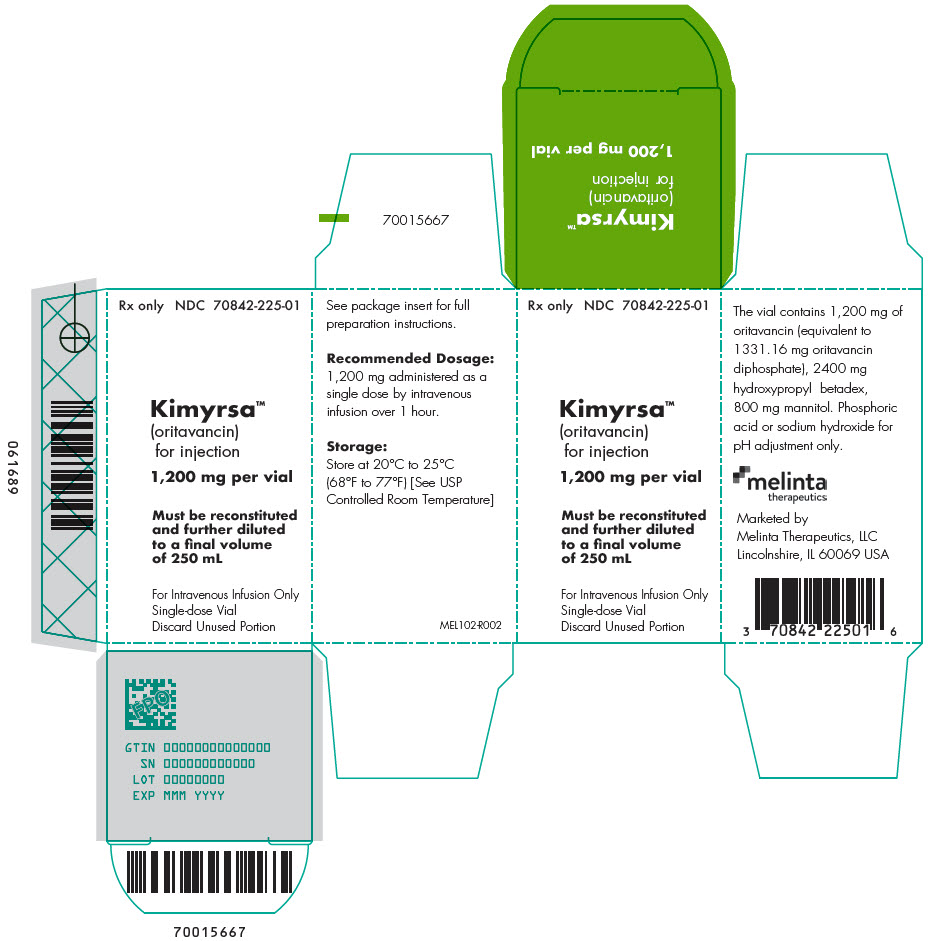
Kimyrsa oritavancin diphosphate 1200 mg/40mL Injection, Powder, Lyophilized, For Solution
🆔 Identity & classification
Where does this data come from?
🏷️ RxNorm drug class
This medicine belongs to the Lipoglycopeptide Antibacterial class.
Where does this data come from?
🏭 Manufacturer & labeler
Where does this data come from?
🩺 Clinical
Oritavancin injection is used to treat skin infections caused by certain types of bacteria. Oritavancin is in a class of medications called lipoglycopeptide antibiotics. It works by killing bacteria. Antibiotics such as oritavancin will not work for colds, flu, and other viral infections. Using antibiotics when they are not needed increases your risk of getting an infection later that resists antibiotic treatment.
Read the full MedlinePlus article ↗- Yes, for most people one infusion is the full course of treatment. Oritavancin stays in your body for a very long time — it has a half-life of about 10 days — so a single dose main...
- Why is this just one IV infusion — is that really enough to treat my infection?
- The most common ones are nausea, headache, vomiting, and diarrhea — generally manageable. During the infusion itself, you might notice flushing, itching, or rash. More seriously, w...
- What side effects should I watch out for after the infusion?
Patient education
Supplement & herbal interactions
Some supplements/herbs that may interact with Oritavancin Diphosphate — tap one for details:
Oritavancin Diphosphate may be associated with lower levels of 7 nutrients — worth a chat with your pharmacist, not a cause for alarm.
Where does this data come from?
Ask a licensed pharmacist directly — free, answered by our team.
💊 What it looks like
Where does this data come from?
🧪 Inactive Ingredients / Excipients
Inactive ingredients, also called excipients, are components of the drug product other than the active ingredient. They may include fillers, dyes, coatings, preservatives, flavors, or other formulation ingredients.
💡 Tap an ingredient (hover on desktop) to see what it is and why it’s used.
-
UNII 1I96OHX6EK
A cyclic carbohydrate derived from plant starch that acts as a solubilizer and stabilizer. It helps dissolve poorly water-soluble drugs and protects active ingredients from degradation in the formulation.
-
UNII 3OWL53L36A
A natural sugar alcohol derived from seaweed or synthesized in the lab. It's used as a filler to add bulk, a sweetener in sugar-free formulas, and a disintegrant to help tablets break apart in the stomach.
-
UNII E4GA8884NN
Phosphoric acid is a weak mineral acid used in medicines as a buffer and pH adjuster. It helps stabilize the product and control its acidity level.
-
UNII 55X04QC32I
A strong alkaline chemical used to adjust and maintain the pH balance of liquid medicines. It helps keep the medicine stable and ensures it stays effective during storage.
4 inactive ingredients listed in the exact product block matched to this NDC.
Where does this data come from?
ingredient classCode="IACT" elements from the exact product block matched by this NDC. Label-section narrative from DailyMed / the openFDA label index is shown separately when available.Inactive ingredient FAQ
Are inactive ingredients the same for every manufacturer?
Why might an inactive ingredient be missing?
Can inactive ingredients matter?
💲 Pricing
A drug doesn't have one price. Each row is a different public payment system, and none is what you'd pay at the counter — that depends on your insurance. The ⓘ on each row explains what it measures.
| Price system | Per mL | Per package |
|---|---|---|
| Retail pharmacies payNADAC · weekly | Not in the retail survey — common for institutional, discontinued, or low-volume packs. | |
| Medicaid paysCMS SDUD · 12 mo | $5,086.52 | $203,460.86 / 40 ml |
| Medicare drug plans payPart D · quarterly | No Part D plan price is available for this NDC in our data. | |
| Medicare Part B allowsASP · J2406 | $47.409 / J2406 unit | — |
Where does this data come from?
🧾 Billing & reimbursement
Where does this data come from?
🔁 Therapeutic equivalents
| Product | Labeler | Pack | NADAC/unit | TE | Status | Price vs. this |
|---|---|---|---|---|---|---|
| Kimyrsa 1200 mg/40mLthis 70842-0225-01 | Melinta | 1 vial | — | — | FDA listed | — |
Where does this data come from?
⏳ Availability & generic status
We did not find an FDA-approved generic match for this exact strength, form and route. Patent/protection dates below may affect future generic timing.
Why the date isn’t exact: Generic timing can change because patents may be challenged, settled, licensed, added, removed, or worked around with a narrower label — and FDA approval does not always mean a pharmacy can get the generic today.
🛈 What do these terms mean?
- Patent
- Legal protection listed in the Orange Book that may delay generic approval or launch. Issued by the U.S. Patent & Trademark Office.
- Substance patent
- Covers the active drug molecule itself — the hardest to design around. A generic generally can’t launch until it expires.
- Formulation (product) patent
- Covers a specific formulation or dosage form. A generic can sometimes work around it with a different formulation.
- Method-of-use patent
- A patent covering one specific approved use of the drug — not necessarily the whole molecule. A generic can sometimes launch with a “skinny label” that carves out the protected use and keeps the others.
- Skinny label
- A generic label that omits a still-patented use when the FDA allows it — letting a generic reach the market for the unprotected uses.
- Exclusivity
- FDA-granted marketing protection, separate from patents — e.g. 5-yr new chemical entity, 7-yr orphan drug, or a +6-month pediatric extension.
- Paragraph IV
- A generic applicant’s formal challenge to a listed patent. It can potentially lead to earlier generic entry, but often involves litigation or a settlement.
- RLD / RS
- Reference Listed Drug — the brand product the FDA uses as the reference for generic applications. Reference Standard — the product the FDA expects generics to compare against in bioequivalence testing.
- TE / AB rating
- FDA therapeutic-equivalence rating. An AB rating generally means the FDA considers a generic therapeutically equivalent to — and substitutable for — the brand.
- LOE (loss of exclusivity)
- The latest patent or exclusivity currently listed — the loss-of-exclusivity / latest-listed-protection date shown on this page. Paragraph-IV challenges and settlements can move the real date earlier; FDA approval and a manufacturer’s decision to market can move it later.
Built from the FDA Orange Book. The bars above are scaled to each protection’s expiry; the red LOE marker is the last one to lapse.
| Patent | Type | Use code | Expires |
|---|---|---|---|
| US 12514899 ↗ | Method of use | U-4398 | Aug 29, 2029 |
| US 9682061 ↗ | Method of use | U-3101 | Apr 26, 2030 |
| US 8420592 ↗ | Method of use | U-3101 | Aug 29, 2029 |
| US 9649352 ↗ | Drug substance | — | Jul 16, 2035 |
Is there a generic version of KIMYRSA 1,200 MG VIAL?
The FDA approved a generic — why can’t I get it at my pharmacy yet?
Why do different websites show different generic release dates?
What does “FDA listed” mean?
What does a patent or protection date mean here?
What does “current Orange Book estimate” mean?
Can a generic come out before the last patent expires?
Can a generic come out after the listed dates?
What is the difference between patents and exclusivity?
Why are there multiple patent dates?
Where does this data come from?
🗺️ Medicaid utilization & spend
📊 Medicare Part D spend CMS · PART D · 2025 (Q1-Q4)
🔬 Reported adverse events (FAERS)
Top reported reactions
Reporter sex
Where does this data come from?
📦 Packaging — all sizes for this product
| Package NDC | Description | Marketing start | Status |
|---|---|---|---|
| 70842-0225-01 You're viewing this | 1 VIAL in 1 CARTON (70842-225-01) / 40 mL in 1 VIAL | 2021-03-23 | Active |
🧭 About this NDC listing & data coverage
What data is (and isn’t) available for this NDC — tap to expand
| NDC identity (package / product / labeler codes) | ✓ Available |
| Labeler | ✓ Available |
| Product & package description | ✓ Available |
| Marketing category & status | ✓ Available |
| Active ingredient / dosage form / route | ✓ Available |
| FDA label (SPL via DailyMed) | ✓ Available |
| Package photos | ✓ Available |
| Inactive ingredients (structured) | ✓ Available |
| NADAC pharmacy acquisition price (CMS) | — Not published for this NDC CMS publishes NADAC only for NDCs reported in its retail-pharmacy survey. |
| Orange Book / therapeutic-equivalence data | ✓ Available |
| HCPCS J-code billing crosswalk | ✓ Available |
| Medicaid utilization (CMS SDUD) | ✓ Available |
Questions about this listing
Why is there no price listed?
Is the NDC printed on the package the same as the 11-digit billing NDC?
What do the three segments of this NDC mean?
Is this package still being marketed?
Who lists this product with the FDA?
Do I need a prescription for this product?
Does this product have a billing J-code?
Where does this data come from?
📄 Full prescribing information FDA SPL
🎯 Indications and Usage ▾
1 INDICATIONS AND USAGE KIMYRSA is a lipoglycopeptide antibacterial drug indicated for the treatment of adult patients with acute bacterial skin and skin structure infections caused or suspected to be caused by susceptible isolates of designated Gram-positive microorganisms. ( 1.1 ) To reduce the development of drug-resistant bacteria and maintain the effectiveness of KIMYRSA and other antibacterial drugs, KIMYRSA should be used only to treat or prevent infections that are proven or strongly suspected to be caused by bacteria.
( 1.2 )
1.1Acute Bacterial Skin and Skin Structure Infections KIMYRSA ® is indicated for the treatment of adult patients with acute bacterial skin and skin structure infections (ABSSSI) caused by susceptible isolates of the following Gram-positive microorganisms: Staphylococcus aureus (including methicillin-susceptible and methicillin-resistant isolates), Streptococcus pyogenes , Streptococcus agalactiae , Streptococcus dysgalactiae , Streptococcus anginosus group (includes S. anginosus , S. intermedius , and S. constellatus ), and Enterococcus faecalis (vancomycin-susceptible isolates only).
1.2Usage To reduce the development of drug-resistant bacteria and maintain the effectiveness of KIMYRSA and other antibacterial drugs, KIMYRSA should be used only to treat or prevent infections that are proven or strongly suspected to be caused by susceptible bacteria. When culture and susceptibility information are available, they should be considered in selecting or modifying antibacterial therapy. In the absence of such data, local epidemiology and susceptibility patterns may contribute to the empiric selection of therapy.
⏱️ Dosage and Administration ▾
2 DOSAGE AND ADMINISTRATION There are two oritavancin products (KIMYRSA and ORBACTIV ® , another oritavancin product) that have differences in dose strength, duration of infusion and preparation instructions, including reconstitution and dilution instructions and compatible diluents ( 2.1 , 2.2 , 2.3 , 2.4 ) Administer 1,200 mg of KIMYRSA as a single dose by intravenous infusion over 1 hour. ( 2.1 , 5.3 ) Carefully follow the recommended dosage and dose preparation instructions for KIMYRSA in the full prescribing information.
( 2.1 , 2.2 , 2.3 )
2.1Dosage and Administration Overview There are two oritavancin products (KIMYRSA and ORBACTIV ® , another oritavancin product) that: Are supplied in different dose strengths of oritavancin [see Dosage Forms and Strengths (3) ] . Have different recommended durations of infusion [see Dosage and Administration (2.2) ]. Have different preparation instructions, including differences in reconstitution, dilution, and compatible diluents [see Dosage and Administration (2.3 , 2.4) ] .
Carefully follow the recommended dosage and dose preparation instructions for KIMYRSA in this prescribing information (PI) [see Dosage and Administration (2.1 , 2.2 , 2.3 , 2.4) ]. Refer to the ORBACTIV prescribing information for relevant information of the other oritavancin product.
2.2Recommended Dosage The recommended dosage of KIMYRSA is 1,200 mg administered as a single dose by intravenous infusion over 1 hour in patients 18 years and older [see Warnings and Precautions (5.3) ] .
2.3Preparation of KIMYRSA for Intravenous Infusion There are two oritavancin products (KIMYRSA and ORBACTIV, another oritavancin product) that have differences in dose strengths, duration of infusion, reconstitution and dilution instructions, and compatible diluents. Carefully follow the reconstitution, and dilution instructions with the appropriate compatible diluent for KIMYRSA specified in this prescribing information. Refer to the ORBACTIV prescribing information for relevant information of the other oritavancin product.
KIMYRSA is intended for intravenous infusion, only after reconstitution and dilution. One KIMYRSA 1,200 mg single-dose vial needs to be reconstituted and diluted to prepare a single 1,200 mg intravenous dose. Reconstitution : Aseptic technique should be used to reconstitute one KIMYRSA 1,200 mg vial.
Add 40 mL of sterile water for injection (SWFI) to reconstitute the vial to provide a 30 mg/mL solution. Gently swirl the contents to avoid foaming and ensure that all KIMYRSA powder is completely dissolved to form a reconstituted solution. Parenteral drug products should be inspected visually for particulate matter and discoloration prior to administration, whenever solution and container permit.
The reconstituted vial should appear to be a clear, colorless to pink solution, free of visible particles. Dilution : Use 0.9% sodium chloride injection or 5% dextrose in sterile water (D5W) for dilution to prepare the final intravenous solution for infusion. Since no preservative or bacteriostatic agent is present in KIMYRSA, aseptic technique must be used in preparing the final intravenous solution as follows: Withdraw and discard 40 mL from a 250 mL intravenous bag of 0.9% sodium chloride injection or D5W.
Withdraw 40 mL of the reconstituted vial of KIMYRSA and add to the intravenous bag of 0.9% sodium chloride injection or D5W to bring the bag volume to 250 mL. This yields a concentration of 4.8 mg/mL. Discard any unused portion of the reconstituted solution remaining in the vial.
Storage and Use of Intravenous Solution : Diluted intravenous solution in an infusion bag should be used within 4 hours when stored at room temperature, or used within 12 hours when refrigerated at 2 to 8°C (36 to 46°F). The combined storage time (reconstituted solution in the vial and diluted solution in the bag) and 1 hour infusion time should not exceed 4 hours at room temperature or 12 hours if refrigerated.
2.4 Compatibilities KIMYRS…
💊 Dosage Forms and Strengths ▾
3 DOSAGE FORMS AND STRENGTHS KIMYRSA is supplied as sterile, white to off-white or pink lyophilized powder containing 1,200 mg of oritavancin (as oritavancin diphosphate) in a single-dose clear glass vial, which must be reconstituted and further diluted prior to intravenous administration. For injection: 1,200 mg of lyophilized powder in a single-dose vial for reconstitution. ( 3 )
⛔ Contraindications ▾
4 CONTRAINDICATIONS Use of intravenous unfractionated heparin sodium is contraindicated for 120 hours (5 days) after KIMYRSA administration. ( 4.1 , 5.1 ) Known hypersensitivity to oritavancin products. ( 4.2 , 5.2 )
4.1Intravenous Unfractionated Heparin Sodium Use of intravenous unfractionated heparin sodium is contraindicated for 120 hours (5 days) after KIMYRSA administration because the activated partial thromboplastin time (aPTT) test results may remain falsely elevated for up to 120 hours (5 days) after KIMYRSA administration [see Warnings and Precautions (5.1) and Drug Interactions (7.2) ].
4.2Hypersensitivity KIMYRSA is contraindicated in patients with known hypersensitivity to oritavancin products.
⚠️ Warnings and Cautions ▾
5 WARNINGS AND PRECAUTIONS Coagulation test interference: Oritavancin has been shown to artificially prolong aPTT for up to 120 hours, and may prolong PT and INR for up to 12 hours and ACT for up to 24 hours. For patients who require aPTT monitoring within 120 hours of KIMYRSA dosing, consider a non-phospholipid dependent coagulation test such as a Factor Xa (chromogenic) assay or an alternative anticoagulant not requiring aPTT. ( 5.1 , 7.2 ) Serious hypersensitivity reactions, including anaphylaxis, have been reported with the use of oritavancin products, including KIMYRSA.
Discontinue infusion if signs of acute hypersensitivity occur. Carefully monitor patients with known hypersensitivity to glycopeptides. ( 5.2 ) Infusion Related Reactions: Infusion related reactions have been reported with the glycopeptide class of antimicrobial agents, including oritavancin products (e.g.
KIMYRSA). Stopping or slowing the infusion may result in cessation of these reactions. ( 5.3 ) Clostridioides difficile -Associated Diarrhea: Evaluate patients if diarrhea occurs.
( 5.4 ) Concomitant warfarin use: Oritavancin has been shown to artificially prolong PT/INR for up to 12 hours ( 5.1 ). Patients should be monitored for bleeding if concomitantly receiving KIMYRSA and warfarin. ( 5.5 ) Osteomyelitis: Institute appropriate alternate antibacterial therapy in patients with confirmed or suspected osteomyelitis.
( 5.6 )
5.1Coagulation Test Interference Oritavancin has been shown to artificially prolong aPTT for up to 120 hours, PT and INR for up to 12 hours, and activated clotting time (ACT) for up to 24 hours following administration of a single 1,200 mg dose by binding to and preventing action of the phospholipid reagents commonly used in laboratory coagulation tests. Oritavancin has also been shown to elevate D-dimer concentrations up to 72 hours after oritavancin administration. For patients who require aPTT monitoring within 120 hours of KIMYRSA dosing, a non-phospholipid dependent coagulation test such as a Factor Xa (chromogenic) assay or an alternative anticoagulant not requiring aPTT monitoring may be considered [see Contraindications (4.1) and Drug Interactions (7.2) ] .
Oritavancin has no effect on the coagulation system in vivo.
5.2Hypersensitivity Serious hypersensitivity reactions, including anaphylaxis, have been reported with the use of oritavancin products, including KIMYRSA. If an acute hypersensitivity reaction occurs during KIMYRSA infusion, discontinue KIMYRSA immediately and institute appropriate supportive care. Before using KIMYRSA, inquire carefully about previous hypersensitivity reactions to glycopeptides.
Due to the possibility of cross-sensitivity, carefully monitor for signs of hypersensitivity during KIMYRSA infusion in patients with a history of glycopeptide allergy. In the Phase 3 ABSSSI clinical trials, the median onset of hypersensitivity reactions in oritavancin-treated patients was 1.2 days and the median duration of these reactions was 2.4 days [see Adverse Reactions (6.1) ] .
5.3Infusion Related Reactions Infusion related reactions have been reported with the glycopeptide class of antimicrobial agents, including oritavancin products (e.g. KIMYRSA), including flushing of the upper body, urticaria, pruritus and/or rash [see Adverse Reactions (6.1) ] . Infusion reactions characterized by chest pain, back pain, chills and tremor have been observed with the use of oritavancin, including after the administration of more than one dose of oritavancin during a single course of therapy.
Stopping or slowing the infusion may result in cessation of these reactions. The safety and effectiveness of more than one dose of KIMYRSA during a single course of therapy have not been established [see Dosage and Administration (2.2) ].
5.4Clostridioides difficile -Associated Diarrhea Clostridioides difficile -associated diarrhea (CDAD) has been reported for nearly all systemic antibacterial drugs, including oritavancin products (e.…
🤒 Adverse Reactions ▾
6 ADVERSE REACTIONS The following adverse reactions are also discussed in the Warnings and Precautions section of labeling: Hypersensitivity Reactions [see Warnings and Precautions (5.2) ] Infusion Related Reactions [see Warnings and Precautions (5.3) ] Clostridioides difficile -Associated Diarrhea [see Warnings and Precautions (5.4) ] Osteomyelitis [see Warnings and Precautions (5.6) ] The most common adverse reactions (≥3%) in patients treated with oritavancin products were headache, nausea, vomiting, limb and subcutaneous abscesses, and diarrhea.
The adverse reactions occurring in ≥2 patients receiving KIMYRSA were hypersensitivity, pruritus, chills and pyrexia. ( 6.1 ) To report SUSPECTED ADVERSE REACTIONS, contact Melinta Therapeutics at 1-844-633-6568 or FDA at 1-800-FDA-1088 or www.fda.gov/medwatch.
6.1Clinical Trials Experience Because clinical trials are conducted under widely varying conditions, adverse reaction rates observed in the clinical trials of oritavancin products cannot be directly compared to rates in the clinical trials of another drug and may not reflect the rates observed in practice. The safety of KIMYRSA has been established from adequate and well-controlled trials of another oritavancin product, ORBACTIV (hereinafter referred to as oritavancin), in patients with ABSSSI, and a study of KIMYRSA in patients with ABSSSI.
Oritavancin has been evaluated in two, double-blind, controlled ABSSSI clinical trials, which included 976 adult patients treated with a single 1,200 mg intravenous dose of oritavancin and 983 patients treated with intravenous vancomycin for 7 to 10 days. The median age of patients treated with oritavancin was 45.6 years, ranging between 18 and 89 years of age with 8.8% ≥65 years of age. Patients treated with oritavancin were predominantly male (65.4%), 64.4% were Caucasian, 5.8% were African American, and 28.1% were Asian.
Safety was evaluated for up to 60 days after dosing. In the pooled ABSSSI clinical trials, serious adverse reactions were reported in 57/976 (5.8%) patients treated with oritavancin and 58/983 (5.9%) treated with vancomycin. The most commonly reported serious adverse reaction was cellulitis in both treatment groups: 11/976 (1.1%) in oritavancin and 12/983 (1.2%) in the vancomycin arms, respectively.
The most commonly reported adverse reactions (≥3%) in patients receiving a single 1,200 mg dose of oritavancin in the pooled ABSSSI clinical trials were: headache, nausea, vomiting, limb and subcutaneous abscesses, and diarrhea. In the pooled ABSSSI clinical trials, oritavancin was discontinued due to adverse reactions in 36/976 (3.7%) of patients; the most common reported reactions leading to discontinuation were cellulitis (4/976, 0.4%) and osteomyelitis (3/976, 0.3%). Table 1 provides selected adverse reactions occurring in ≥1.5% of patients receiving oritavancin in the pooled ABSSSI clinical trials.
There were 540 (55.3%) patients in the oritavancin arm and 559 (56.9%) patients in the vancomycin arm, who reported ≥1 adverse reaction. Table 1: Incidence of Selected Adverse Reactions Occurring in ≥1.5% of Patients Receiving Oritavancin in the Pooled ABSSSI Clinical Trials Adverse Reactions Oritavancin N=976 (%) Vancomycin N=983 (%) Gastrointestinal disorders Diarrhea 36 (3.7) 32 (3.4) Nausea 97 (9.9) 103 (10.5) Vomiting 45 (4.6) 46 (4.7) Nervous system disorders Dizziness 26 (2.7) 26 (2.6) Headache 69 (7.1) 66 (6.7) General disorders and administration Infusion site phlebitis 24 (2.5) 15 (1.5) Infusion site reaction 19 (1.9) 34 (3.5) Infections and infestations Abscess (limb and subcutaneous) 37 (3.8) 23 (2.3) Investigations Alanine aminotransferase increased 27 (2.8) 15 (1.5) Aspartate aminotransferase increased 18 (1.8) 15 (1.5) Cardiac disorders Tachycardia 24 (2.5) 11 (1.1) The following selected adverse reactions were reported in oritavancin-treated patients at a rate of less than 1.5%: Blood and lymphatic system disorders : anemia, eosinophilia General disorders a…
🔄 Drug Interactions ▾
7 DRUG INTERACTIONS
7.1Effect of KIMYRSA on CYP Substrates A screening drug-drug interaction study indicated that oritavancin is a nonspecific, weak inhibitor (CYP2C9 and CYP2C19) or inducer (CYP3A4 and CYP2D6) of several CYP isoforms [see Clinical Pharmacology (12.3) ] . A drug-drug interaction study that assessed the interaction potential of a single 1,200 mg dose of oritavancin on the pharmacokinetics of S-warfarin (CYP2C9 probe substrate) showed no effect of oritavancin on S-warfarin C max or AUC. Avoid administering KIMYRSA concomitantly with drugs that are predominantly metabolized by one of the affected CYP450 enzymes, as co-administration may increase or decrease concentrations of those drugs.
Patients should be closely monitored for signs of toxicity or lack of efficacy if they have been given KIMYRSA while on a potentially affected compound (e.g., patients should be monitored for bleeding if concomitantly receiving KIMYRSA and warfarin).
7.2Drug-Laboratory Test Interactions Prolongation of Certain Laboratory Coagulation Tests KIMYRSA may artificially prolong certain laboratory coagulation tests (see Table 2 ) by binding to and preventing the action of the phospholipid reagents which activate coagulation in commonly used laboratory coagulation tests [see Contraindications (4.1) and Warnings and Precautions (5.1 , 5.5) ] . For patients who require monitoring of anticoagulation effect within the indicated time after KIMYRSA dosing, a non-phospholipid dependent coagulation test such as a Factor Xa (chromogenic) assay or an alternative anticoagulant not requiring aPTT monitoring may be considered.
Oritavancin does not interfere with coagulation in vivo. In addition, oritavancin does not affect tests that are used for diagnosis of Heparin Induced Thrombocytopenia (HIT). Table 2: Coagulation Tests Affected and Unaffected by Oritavancin Elevated by Oritavancin Unaffected by Oritavancin Prothrombin time (PT) up to 12 hours Chromogenic Factor Xa Assay International normalized ratio (INR) up to 12 hours Thrombin Time (TT) Activated partial thromboplastin time (aPTT) up to 120 hours Activated clotting time (ACT) up to 24 hours Silica clot time (SCT) up to 18 hours Dilute Russell's viper venom time (DRVVT) up to 72 hours D-dimer up to 72 hours Positive Indirect and Direct Antiglobulin Tests (IAT/DAT) Positive IAT/DAT were noted with administration of oritavancin products, including KIMYRSA, in studies with healthy volunteers and patients with ABSSSI.
Positive IAT may interfere with cross-matching before blood transfusion [see Clinical Pharmacology (12.6) ] .
👥 Use in Specific Populations ▾
8 USE IN SPECIFIC POPULATIONS
8.1Pregnancy Risk Summary There are no available data on KIMYRSA use in pregnant women to evaluate for a drug- associated risk of major birth defects, miscarriage or adverse maternal or fetal outcomes. In animal reproduction studies, no effects on embryo-fetal development or survival were observed in pregnant rats or rabbits treated at the highest doses throughout organogenesis with intravenous oritavancin, at doses equivalent to 25% of the single clinical dose of 1,200 mg (see Data ) . The estimated background risk of major birth defects and miscarriage for the indicated population is unknown.
All pregnancies have a background risk of birth defect, loss, or other adverse outcomes. In the U.S. general population, the estimated background risk of major birth defects and miscarriage in clinically recognized pregnancies is 2% to 4% and 15% to 20%, respectively. Data Animal Data Reproduction studies performed in rats and rabbits have revealed no evidence of harm to the fetus due to oritavancin at the highest doses administered throughout organogenesis, 30 mg/kg/day (gestation days 6-17) and 15 mg/kg/day (gestation days 7-19), respectively.
Those doses would be equivalent to a human dose of 300 mg, or 25% of the single clinical dose of 1,200 mg. Higher doses were not evaluated in nonclinical developmental and reproductive toxicology studies.
8.2Lactation Risk Summary There are no data on the presence of oritavancin in human milk, the effects on the breastfed- child, or the effects on milk production. Oritavancin is present in the breast milk of rats (see Data ) . When a drug is present in animal milk, it is likely that the drug will be present in human milk.
The developmental and health benefits of breastfeeding should be considered along with the mother's clinical need for KIMYRSA and any potential adverse effects on the breast-fed child from KIMYRSA or from the underlying maternal condition. Data Following a single intravenous infusion in lactating rats, radio-labeled [ 14 C]-oritavancin was excreted in milk and absorbed by nursing pups.
8.4Pediatric Use Safety and effectiveness of KIMYRSA in pediatric patients (younger than 18 years of age) have not been established.
8.5Geriatric Use The pooled Phase 3 ABSSSI clinical trials of oritavancin did not include sufficient numbers of subjects aged 65 and older to determine whether they respond differently from younger subjects. Other reported clinical experience has not identified differences in responses between the elderly and younger patients, but greater sensitivity of some older individuals cannot be ruled out.
8.6Renal Impairment No dosage adjustment of KIMYRSA is needed in patients with mild or moderate renal impairment [see Clinical Pharmacology (12.3) ] . The pharmacokinetics of KIMYRSA in severe renal impairment have not been evaluated. Oritavancin is not removed from blood by hemodialysis.
8.7Hepatic Impairment No dosage adjustment of KIMYRSA is needed in patients with mild or moderate hepatic impairment. The pharmacokinetics of KIMYRSA in patients with severe hepatic insufficiency has not been studied [see Dosage and Administration (2.2) , Clinical Pharmacology (12.3) ] .
🤰 Pregnancy ▾
8.1Pregnancy Risk Summary There are no available data on KIMYRSA use in pregnant women to evaluate for a drug- associated risk of major birth defects, miscarriage or adverse maternal or fetal outcomes. In animal reproduction studies, no effects on embryo-fetal development or survival were observed in pregnant rats or rabbits treated at the highest doses throughout organogenesis with intravenous oritavancin, at doses equivalent to 25% of the single clinical dose of 1,200 mg (see Data ) . The estimated background risk of major birth defects and miscarriage for the indicated population is unknown.
All pregnancies have a background risk of birth defect, loss, or other adverse outcomes. In the U.S. general population, the estimated background risk of major birth defects and miscarriage in clinically recognized pregnancies is 2% to 4% and 15% to 20%, respectively. Data Animal Data Reproduction studies performed in rats and rabbits have revealed no evidence of harm to the fetus due to oritavancin at the highest doses administered throughout organogenesis, 30 mg/kg/day (gestation days 6-17) and 15 mg/kg/day (gestation days 7-19), respectively.
Those doses would be equivalent to a human dose of 300 mg, or 25% of the single clinical dose of 1,200 mg. Higher doses were not evaluated in nonclinical developmental and reproductive toxicology studies.
🧒 Pediatric Use ▾
8.4Pediatric Use Safety and effectiveness of KIMYRSA in pediatric patients (younger than 18 years of age) have not been established.
🧓 Geriatric Use ▾
8.5Geriatric Use The pooled Phase 3 ABSSSI clinical trials of oritavancin did not include sufficient numbers of subjects aged 65 and older to determine whether they respond differently from younger subjects. Other reported clinical experience has not identified differences in responses between the elderly and younger patients, but greater sensitivity of some older individuals cannot be ruled out.
🆘 Overdosage ▾
10 OVERDOSAGE Based on an in vitro hemodialysis study, KIMYRSA is unlikely to be removed from blood by hemodialysis. In the event of overdose, supportive measures should be taken.
🧬 Clinical Pharmacology ▾
12 CLINICAL PHARMACOLOGY
12.1Mechanism of Action Oritavancin is an antibacterial drug [see Microbiology (12.4) ] .
12.2Pharmacodynamics The antimicrobial activity of oritavancin appears to correlate with the ratio of area under the concentration-time curve to minimal inhibitory concentration (AUC/MIC) based on animal models of infection. The AUC from time zero to 72 hours correlates with antimicrobial activity in both preclinical and clinical studies. Exposure-response analyses from both preclinical and clinical studies support the treatment of clinically relevant gram-positive microorganisms (e.g.
S. aureus and S. pyogenes ) causative of ABSSSI with a single 1,200 mg dose of oritavancin. Cardiac Electrophysiology In a thorough QTc study of 135 healthy subjects at a dose 1.3 times the 1,200 mg recommended dose, oritavancin did not prolong the QTc interval to any clinically relevant extent.
12.3Pharmacokinetics The mean (±SD) pharmacokinetic parameters of oritavancin products (KIMYRSA and oritavancin) in patients with ABSSSI are presented in Table 3. Table 3: Mean (±SD) Pharmacokinetic Parameters following a single 1,200 mg dose of KIMYRSA by intravenous infusion over 1 hour (N= 50) and Oritavancin by intravenous infusion over 3 hours (N=50) in Patients with ABSSSI Pharmacokinetic Parameter KIMYRSA (1 hour) Mean (± SD) Oritavancin (3 hour) Mean (± SD) C max , Maximum plasma concentration; AUC 0-72 , Area under the plasma concentration-time curve from time zero to 72 hours; SD, Standard deviation.
C max (µg/mL) 148 (±43.0) 112 (±34.5) AUC 0-72 (h∙µg /mL) 1460 (±511) 1470 (±582) Oritavancin exhibits linear pharmacokinetics at a dose up to 1,200 mg. The mean, population-predicted oritavancin concentration-time profile displays a multi-exponential decline with a long terminal plasma half-life. Distribution Oritavancin is approximately 85% bound to human plasma proteins.
Based on population pharmacokinetic (PK) analysis, the population mean total volume of distribution is estimated to be approximately
87.6L, indicating that oritavancin is extensively distributed into the tissues. Exposures of oritavancin in skin blister fluid were approximately 20% of those in plasma (AUC 0-24 ) after single 800 mg dose in healthy subjects. Metabolism/Excretion Non-clinical studies, including in vitro human liver microsome studies, indicated that oritavancin is not metabolized.
No mass balance study has been conducted in humans. In humans, oritavancin is slowly excreted unchanged in feces and urine, with less than 1% and 5% of the dose recovered in feces and urine, respectively, after 2 weeks of collection. Oritavancin has a terminal half-life of approximately 245 hours and a clearance of 0.445 L/h, based on population PK analyses.
Specific Populations No dosage adjustments of KIMYRSA are required for patients with mild-to-moderate renal or mild-to-moderate hepatic impairment or other subpopulations, including age, gender, race, and weight. Renal Impairment The PK of oritavancin was examined in the Phase 3 ABSSSI trials in patients with normal renal function, CrCL ≥80 mL/min (n=238), mild renal impairment, CrCL 50-79 mL/min (n=48), and moderate renal impairment, CrCL 30-49 mL/min (n=11). Population PK analysis indicated that mild-to-moderate renal impairment had no clinically relevant effect on the exposure of oritavancin.
No dedicated studies in dialysis patients have been conducted. The solubilizer HPβCD is excreted in urine. Clearance of HPβCD may be reduced in patients with renal impairment.
The clinical significance of this finding is unknown. Dosage adjustment of KIMYRSA is not needed in patients with mild or moderate renal impairment. The PK of oritavancin in patients with severe renal impairment have not been evaluated.
Hepatic Impairment The PK of oritavancin was evaluated in study of subjects with moderate hepatic impairment (Child-Pugh Class B) (n=20) and compared with healthy subjects (n=20) matched for gender, age, and weight. There…
🧬 Mechanism of Action ▾
12.1Mechanism of Action Oritavancin is an antibacterial drug [see Microbiology (12.4) ] .
📦 How Supplied / Storage and Handling ▾
16 HOW SUPPLIED/STORAGE AND HANDLING
16.1How Supplied/Storage KIMYRSA is supplied as a sterile white to off-white or pink lyophilized powder in single-dose clear glass vials containing 1,200 mg of oritavancin. One vial is packaged in a carton to supply a single 1,200 mg dose treatment (NDC 70842-225-01). KIMYRSA vials should be stored at 20ºC to 25ºC (68ºF to 77ºF); excursions permitted to 15ºC to 30ºC (59ºF to 86ºF) [see USP, Controlled Room Temperature (CRT)].
📦 Storage and Handling ▾
16.1How Supplied/Storage KIMYRSA is supplied as a sterile white to off-white or pink lyophilized powder in single-dose clear glass vials containing 1,200 mg of oritavancin. One vial is packaged in a carton to supply a single 1,200 mg dose treatment (NDC 70842-225-01). KIMYRSA vials should be stored at 20ºC to 25ºC (68ºF to 77ºF); excursions permitted to 15ºC to 30ºC (59ºF to 86ºF) [see USP, Controlled Room Temperature (CRT)].
📋 Description ▾
11 DESCRIPTION KIMYRSA (oritavancin) for injection contains oritavancin diphosphate, a semisynthetic lipoglycopeptide antibacterial drug for intravenous infusion. The chemical name for oritavancin is [4"R]-22- O -(3-amino-2,3,6-trideoxy-3- C -methyl-α-L- arabino -hexopyranosyl)- N 3''-[(4'-chloro[1,1'-biphenyl]-4-yl)methyl] vancomycin phosphate [1:2] [salt]. The empirical formula of oritavancin diphosphate is C 86 H 97 N 10 O 26 Cl 3 •2H 3 PO 4 and the molecular weight is 1989.09.
The chemical structure is represented below: ∙2H 3 PO 4 KIMYRSA for injection is supplied as a sterile white to off-white or pink lyophilized powder in a single-dose clear glass vial that contains 1,200 mg of oritavancin (equivalent to 1331.16 mg oritavancin diphosphate) and the following inactive ingredients: hydroxypropyl-β-cyclodextrin (HPβCD) (2400 mg), mannitol (800 mg) and phosphoric acid or sodium hydroxide (to adjust pH 4.0 to 6.0). The vial is reconstituted with sterile water for injection and further diluted with 0.9% sodium chloride injection or 5% dextrose in sterile water (D5W) for intravenous infusion.
Both the reconstituted solution and the diluted solution for infusion should be a clear, colorless to pink solution, free of visible particles [see Dosage and Administration (2.3) ] . Chemical Structure
💬 Information for Patients ▾
17 PATIENT COUNSELING INFORMATION Allergic Reactions Patients should be advised that allergic reactions, including serious allergic reactions, could occur and that serious reactions require immediate treatment. They should inform their healthcare provider about any previous hypersensitivity reactions to oritavancin products, other glycopeptides (vancomycin, telavancin, or dalbavancin) or other allergens. Diarrhea Patients should be advised that diarrhea is a common problem caused by antibacterial drugs including KIMYRSA, which usually resolves when the drug is discontinued.
Sometimes, frequent watery or bloody diarrhea may occur and may be a sign of a more serious intestinal infection. If severe watery or bloody diarrhea develops, patients should contact their healthcare provider. Development of Antibacterial Resistance Patients should be counseled that antibacterial drugs including KIMYRSA should only be used to treat bacterial infections.
They do not treat viral infections (e.g. the common cold). When KIMYRSA is prescribed to treat a bacterial infection, patients should be told that although it is common to feel better early in the course of therapy, the medication should be taken exactly as directed. Skipping doses or not completing the full course of therapy may (1) decrease the effectiveness of the immediate treatment and (2) increase the likelihood that bacteria will develop resistance and will not be treatable by KIMYRSA or other antibacterial drugs in the future.