
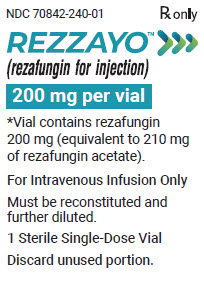
Rezzayo rezafungin 200 mg Injection, Powder, Lyophilized, For Solution, 1 vial — NDC 70842-240-01 (Billing 70842-0240-01)
This is a package of 1 vial of Rezzayo rezafungin 200 mg Injection, Powder, Lyophilized, For Solution from Melinta Therapeutics, LLC, marketed since Jun 2023 and currently FDA-listed. It is this product's only package size.
NDC database record
One package, one record: these facts belong to NDC 70842-240-01 alone.
- Record
- FDA NDC Directory package listing · Human prescription drug
- Code segments
- 70842 labeler · 240 product · 01 package
- Package marketed since
- Jun 9, 2023
- Sample package
- No — commercial package
- Listing certified through
- Dec 31, 2027
- Billing quantity
- 1 EA per package
- Barcode (UPC-A, from the NDC)
- 3 7084224001 9
- Medicaid fills, this package
- 198 prescriptions in the last four reported quarters
- FDA record last changed
- Aug 13, 2026
Identity & classification
Regulatory identifiers FDA, NLM and CMS codes for this package
Drug-database identifiers Medi-Span GPI and First Databank GCN / HICL / AHFS classification
- GSN (GCN sequence number): 084634
- GCN: 53983
- HICL (First Databank): 048846
- AHFS class code: 08:14.16.00
- RxCUI (RxNorm): 2639160
Where does this data come from?
- FDA openFDA NDC Directory · synced Oct 1, 2026
- FDA label on DailyMed · label index refreshed Oct 6, 2026
- RxNorm (NLM RxNav) · catalog refreshed Oct 1, 2026
- Medi-Span GPI (licensed)
- First Databank (licensed) · refreshed Oct 1, 2026
RxNorm drug class
This medicine belongs to the Echinocandin Antifungal class.
Where does this data come from?
- RxClass (NLM) · catalog refreshed Oct 1, 2026
Clinical
Rezafungin is used in adults to treat yeast infections in the blood that cannot be treated successfully with other medications. Rezafungin is in a class of antifungal medications called echinocandins. It works by slowing the growth of fungi that cause infection.
Read the full MedlinePlus article ↗- Rezzayo is used to treat two serious Candida fungal infections: candidemia, which is a Candida infection in your bloodstream, and invasive candidiasis, where the fungus has spread...
- No, Rezzayo is not a pill. It's given as an IV infusion — a slow drip through a needle into your vein — over about one hour. You'll receive it in a hospital or clinical setting, no...
- How is this medication given — do I take a pill at home?
- The most common ones include low potassium or magnesium levels (which your care team will monitor with blood tests), fever, nausea, vomiting, diarrhea, and anemia. During the infus...
Patient education
Supplement & herbal interactions
Some supplements/herbs that may interact with Rezafungin — tap one for details:
Where does this data come from?
- MedlinePlus (NLM) · refreshed Oct 1, 2026
- FDA label on DailyMed · label index refreshed Oct 6, 2026
Ask a licensed pharmacist directly — free, answered by our team.
Pricing
A drug doesn't have one price. Each row is a different public payment system, and none is what you'd pay at the counter — that depends on your insurance. The ⓘ on each row explains what it measures.
| Price system | Per mL | Per package |
|---|---|---|
| Retail pharmacies payNADAC · weekly | Not in the retail survey — common for institutional, discontinued, or low-volume packs. | |
| Medicaid paysCMS SDUD · 12 mo | $1,836.35 | — |
| Medicare drug plans payPart D · quarterly | No Part D plan price is available for this NDC in our data. | |
| Medicare Part B allowsASP · J0349 | $10.998 / J0349 unit | — |
Where does this data come from?
- CMS NADAC weekly file
- CMS ASP pricing files · refreshed Sep 20, 2026
- CMS Medicaid State Drug Utilization Data · through Q1 2026
- CMS Part D plan pricing files · refreshed Sep 24, 2026
- VA National Acquisition Center price file
Billing & reimbursement
Where does this data come from?
- CMS ASP NDC-HCPCS crosswalk · refreshed Sep 22, 2026
- DMEPDAC NDC-HCPCS crosswalk
- openFDA NSDE billing units · refreshed Sep 7, 2026
Packaging — all sizes for this product
| Package NDC | Description | Marketing start | Marketing end | Status |
|---|---|---|---|---|
| 70842-0240-01 You're viewing this Main listing | 1 VIAL in 1 CARTON / 1 INJECTION, POWDER, LYOPHILIZED, FOR SOLUTION in 1 VIAL | 2023-06-09 | — | Active |
Therapeutic equivalents
| Product | Labeler | Pack | NADAC/unit | TE | Status | Price vs. this |
|---|---|---|---|---|---|---|
| Rezzayo 200 mgthis 70842-0240-01 | Melinta | 1 vial | — | — | FDA listed | — |
Where does this data come from?
- FDA openFDA NDC Directory · synced Oct 1, 2026
- FDA Orange Book · refreshed Oct 3, 2026
- CMS NADAC weekly file
Availability & generic status
We did not find an FDA-approved generic match for this exact strength, form and route. Patent/protection dates below may affect future generic timing.
Why the date isn’t exact: Generic timing can change because patents may be challenged, settled, licensed, added, removed, or worked around with a narrower label — and FDA approval does not always mean a pharmacy can get the generic today.
🛈 What do these terms mean?
- Patent
- Legal protection listed in the Orange Book that may delay generic approval or launch. Issued by the U.S. Patent & Trademark Office.
- Substance patent
- Covers the active drug molecule itself — the hardest to design around. A generic generally can’t launch until it expires.
- Formulation (product) patent
- Covers a specific formulation or dosage form. A generic can sometimes work around it with a different formulation.
- Method-of-use patent
- A patent covering one specific approved use of the drug — not necessarily the whole molecule. A generic can sometimes launch with a “skinny label” that carves out the protected use and keeps the others.
- Skinny label
- A generic label that omits a still-patented use when the FDA allows it — letting a generic reach the market for the unprotected uses.
- Exclusivity
- FDA-granted marketing protection, separate from patents — e.g. 5-yr new chemical entity, 7-yr orphan drug, or a +6-month pediatric extension.
- Paragraph IV
- A generic applicant’s formal challenge to a listed patent. It can potentially lead to earlier generic entry, but often involves litigation or a settlement.
- RLD / RS
- Reference Listed Drug — the brand product the FDA uses as the reference for generic applications. Reference Standard — the product the FDA expects generics to compare against in bioequivalence testing.
- TE / AB rating
- FDA therapeutic-equivalence rating. An AB rating generally means the FDA considers a generic therapeutically equivalent to — and substitutable for — the brand.
- LOE (loss of exclusivity)
- The latest patent or exclusivity currently listed — the loss-of-exclusivity / latest-listed-protection date shown on this page. Paragraph-IV challenges and settlements can move the real date earlier; FDA approval and a manufacturer’s decision to market can move it later.
Built from the FDA Orange Book. The bars above are scaled to each protection’s expiry; the red LOE marker is the last one to lapse.
| Patent | Type | Use code | Expires |
|---|---|---|---|
| US 10702573 ↗ | Drug substance | U-3566 | Mar 14, 2033 |
| US 9526835 ↗ | Drug substance | U-3566 | Mar 14, 2033 |
| US 8722619 ↗ | Drug substance | U-3566 | May 9, 2036 |
| US 11197909 ↗ | Drug substance | U-3566 | Jul 14, 2038 |
| US 11654196 ↗ | Drug substance | U-3566 | Mar 2, 2032 |
| US 11712459 ↗ | Method of use | U-3566 | Mar 15, 2037 |
| US 11819533 ↗ | Drug substance | U-3566 | Jul 11, 2038 |
| Code | What it grants | Expires |
|---|---|---|
| NCE | New Chemical Entity (5-year) | Mar 22, 2028 |
| ODE-426 | Orphan Drug Exclusivity (7-year) | Mar 22, 2030 |
| GAIN | Qualified Infectious Disease Product (+5-year) | Mar 22, 2035 |
| GAIN | Qualified Infectious Disease Product (+5-year) | Mar 22, 2033 |
Is there a generic version of REZZAYO 200 MG VIAL?
The FDA approved a generic — why can’t I get it at my pharmacy yet?
Why do different websites show different generic release dates?
What does “FDA listed” mean?
What does a patent or protection date mean here?
What does “current Orange Book estimate” mean?
Can a generic come out before the last patent expires?
Can a generic come out after the listed dates?
What is the difference between patents and exclusivity?
Why are there multiple patent dates?
Where does this data come from?
- FDA Orange Book · refreshed Oct 3, 2026
Inactive Ingredients / Excipients
Inactive ingredients, also called excipients, are components of the drug product other than the active ingredient. They may include fillers, dyes, coatings, preservatives, flavors, or other formulation ingredients.
🧪 Avoiding an ingredient? See Rezafungin Injection inactive ingredients by manufacturer: every current product's list side by side, so you can ask your pharmacy for the version that does not list it.
💡 Tap an ingredient (hover on desktop) to see what it is and why it’s used.
-
UNII 4QD397987E
An amino acid used as a buffer and stabilizer in medications. It helps maintain the pH balance and protects the active drug from breaking down during storage and use.
-
UNII QTT17582CB
A strong acid used to adjust and maintain the proper pH level in liquid medicines, ensuring stability and preventing breakdown of active ingredients.
-
UNII 3OWL53L36A
A natural sugar alcohol derived from seaweed or synthesized in the lab. It's used as a filler to add bulk, a sweetener in sugar-free formulas, and a disintegrant to help tablets break apart in the stomach.
-
UNII 6OZP39ZG8H
Polysorbate 80 is a synthetic emulsifier derived from sorbitol and oleic acid. It helps mix oil and water-based ingredients together in medications and improves how the product disperses in the body.
-
UNII 451W47IQ8X
Sodium chloride is common table salt. It's used in medicines as a buffer to maintain proper pH, as a filler to add bulk, or to adjust the osmotic balance in liquid formulations.
5 inactive ingredients listed in the exact product block matched to this NDC.
Where does this data come from?
ingredient classCode="IACT" elements from the exact product block matched by this NDC. Label-section narrative from DailyMed / the openFDA label index is shown separately when available.- FDA label on DailyMed · label index refreshed Oct 6, 2026
- FDA openFDA NDC Directory · synced Oct 1, 2026
Inactive ingredient FAQ
Are inactive ingredients the same for every manufacturer?
Why might an inactive ingredient be missing?
Can inactive ingredients matter?
Manufacturer & labeler
More NDCs from Melinta Therapeutics, LLC labeler code 70842
- TOPROL XL Metoprolol Succinate 100 mg Tablet, Extended Release NDC 70842-112-02
- TOPROL XL Metoprolol Succinate 200 mg Tablet, Extended Release NDC 70842-113-02
- VABOMERE Meropenem-Vaborbactam 1 g/2g; 1 g/2g Injection, Powder, For Solution NDC 70842-120-06
- Orbactiv oritavancin 400 mg Injection, Powder, Lyophilized, For Solution NDC 70842-140-03
- Minocin minocycline hydrochloride 100 mg Injection NDC 70842-160-10
- Kimyrsa oritavancin diphosphate 1200 mg/40mL Injection, Powder, Lyophilized, For Solution NDC 70842-225-01
Where does this data come from?
- FDA openFDA NDC Directory · synced Oct 1, 2026
- Drugs@FDA
Full prescribing information FDA SPL
🎯 Indications and Usage ▾
1 INDICATIONS AND USAGE REZZAYO is an echinocandin antifungal indicated in adults and pediatric patients 12 years of age or older who have limited or no alternative options for the treatment of candidemia and invasive candidiasis. Approval of this indication is based on limited clinical safety and efficacy data for REZZAYO. ( 1 , 12.4 , 14 ) Limitations of Use REZZAYO has not been studied in patients with endocarditis, osteomyelitis, and meningitis due to Candida.
( 1 )
1.1Treatment of Candidemia and Invasive Candidiasis REZZAYO is indicated in adults and pediatric patients 12 years of age or older who have limited or no alternative options for the treatment of candidemia and invasive candidiasis [see Microbiology ( 12.4 )] . Approval of this indication is based on limited clinical safety and efficacy data for REZZAYO [see Clinical Studies ( 14 )] . Limitations of Use REZZAYO has not been studied in patients with endocarditis, osteomyelitis, and meningitis due to Candida .
1.2Usage Specimens for culture and other laboratory data (e.g., histopathology, non-culture diagnostics) should be obtained prior to initiating antifungal therapy. Therapy may be initiated before the results of the cultures and other laboratory tests are known. However, once these results become available, antifungal therapy should be adjusted accordingly.
⏱️ Dosage and Administration ▾
2 DOSAGE AND ADMINISTRATION Administer the recommended dosage of REZZAYO once weekly by intravenous (IV) infusion, with an initial 400 mg loading dose, followed by a 200 mg dose once weekly thereafter. The safety of REZZAYO has not been established beyond 4 weekly doses. ( 2.1 ) See full prescribing information for reconstitution, dilution, and administration instructions. ( 2.2 , 2.3 , 2.4 )
2.1Recommended Dosage for Adults and Pediatric Patients 12 Years of Age or Older Administer the recommended dosage of REZZAYO once weekly by intravenous (IV) infusion, with an initial 400 mg loading dose, followed by a 200 mg dose once weekly thereafter. The safety of REZZAYO has not been established beyond 4 weekly doses [see Adverse Reactions ( 6.1 )] . REZZAYO is for intravenous infusion only [see Dosage and Administration ( 2.4 )] .
2.2Missed Doses If a scheduled dose is missed (not taken on the assigned day), administer the missed dose as soon as possible. If the missed dose is administered within 3 days of the assigned day, the next weekly dose may be given on schedule. If the missed dose is administered more than 3 days after the assigned day, revise the dosing schedule to ensure there are at least 4 days before the next dose.
If restarting after at least 2 weeks of missed dosing, the dosing should be started again at the 400 mg loading dose.
2.3Preparation and Administration of REZZAYO Reconstitution REZZAYO is supplied as a single-dose vial containing 200 mg of rezafungin. For the 400 mg dose, aseptically reconstitute two vials each with 9.5 mL of sterile Water for Injection, to provide a concentration of 20 mg/mL in each vial. For the 200 mg dose, aseptically reconstitute one vial with 9.5 mL of sterile Water for Injection, to provide a concentration of 20 mg/mL.
Swirl gently to dissolve the white to pale yellow cake or powder. Avoid shaking to minimize foaming. The solution should be clear to pale yellow after dissolution.
Parenteral drug products should be inspected visually for particulate matter and discoloration prior to administration, whenever solution and container permit. Do not use if the reconstituted solution is cloudy or has precipitated. The reconstituted solution is not for direct injection and must be diluted before intravenous infusion.
Storage of the Reconstituted Solution REZZAYO reconstituted solution can be stored between 5°C to 25°C (41°F to 77°F). Stability of the reconstituted solution has been demonstrated for 24 hours when stored at 5°C to 25°C (41°F to 77°F). Preparation of Intravenous Infusion Solution See Table 1 for the dilution requirements for infusion solution.
First, aseptically withdraw and discard the appropriate volume of diluent from the intravenous bag containing 250 mL of 0.9% Sodium Chloride Injection, 0.45% Sodium Chloride Injection, or 5% Dextrose Injection. Next, aseptically transfer the indicated volume of reconstituted solution (10 mL per vial) into the intravenous bag. REZZAYO vials are single-dose vials.
Discard any unused portion. Table 1: Dilution Requirements for REZZAYO Prior to Administration Dose Number of 200 mg Vials Required Total Reconstituted Volume Required Infusion Diluent Volume Discarded Infusion Diluent Volume Used Total Infusion Volume 400 mg 2 20 mL 20 mL 230 mL 250 mL Infusion solution concentration for the 400 mg dose = 1.6 mg/mL 200 mg 1 10 mL 10 mL 240 mL 250 mL Infusion solution concentration for the 200 mg dose = 0.8 mg/mL Storage of the Intravenous Infusion Solution Store REZZAYO infusion solution between 5°C to 25°C (41°F to 77°F).
Stability of the infusion solution has been demonstrated for 48 hours at 5°C to 25°C (41°F to 77°F). The infusion solution must not be frozen.
2.4Administration of Intravenous Infusion Solution Administer REZZAYO by intravenous infusion over approximately one hour (~250 mL/h). If infusion-related reactions occur, the infusion may be slowed, or paused and restarted at a lower rate [see Warnings and Precautions ( 5.1 )] .
💊 Dosage Forms and Strengths ▾
3 DOSAGE FORMS AND STRENGTHS For injection: 200 mg of rezafungin as a sterile white to pale yellow solid (cake or powder) for reconstitution in a single-dose glass vial. For injection : 200 mg as a solid (cake or powder) in a single-dose vial for reconstitution. ( 3 )
⛔ Contraindications ▾
4 CONTRAINDICATIONS REZZAYO is contraindicated in patients with known hypersensitivity to rezafungin or other echinocandins. Known hypersensitivity to rezafungin or other echinocandins. ( 4 )
⚠️ Warnings and Cautions ▾
5 WARNINGS AND PRECAUTIONS Hypersensitivity Reactions, including Anaphylaxis: Cases of serious hypersensitivity reactions, including anaphylaxis, have been reported in patients receiving REZZAYO. If these reactions occur, discontinue REZZAYO and administer appropriate treatment ( 5.1 ). Infusion-related Reactions: REZZAYO may cause infusion-related reactions, including flushing, sensation of warmth, urticaria, nausea, or chest tightness.
If these reactions occur, slow or pause the infusion. ( 5.2 ) Photosensitivity: REZZAYO may cause photosensitivity. Advise patients to use protection from sun exposure and other sources of UV radiation.
( 5.3 ) Hepatic Adverse Reactions: Abnormalities in liver tests have been seen in clinical trial patients treated with REZZAYO. Monitor patients who develop abnormal liver tests and evaluate patients for their risk/benefit of continuing REZZAYO therapy. ( 5.4 )
5.1Hypersensitivity Reactions, including Anaphylaxis Cases of serious hypersensitivity reactions, including anaphylaxis, have been reported in patients receiving REZZAYO. If these reactions occur, discontinue REZZAYO and administer appropriate treatment [see Adverse Reactions ( 6.2 )] .
5.2Infusion-Related Reactions Infusion-related reactions, including flushing, sensation of warmth, urticaria, nausea, and chest tightness have been observed in clinical trials with REZZAYO [see Adverse Reactions ( 6.1 )] . If these reactions occur, slow or pause the infusion and restart at a lower rate [see Dosage and Administration ( 2.4 )] .
5.3Photosensitivity REZZAYO may cause photosensitivity. Patients should be advised to use protection from sun exposure and other sources of UV radiation during REZZAYO treatment.
5.4Hepatic Adverse Reactions Abnormalities in liver tests have been seen in clinical trial patients treated with REZZAYO [see Adverse Reactions ( 6.1 )] . In some patients with serious underlying medical conditions who were receiving multiple concomitant medications along with REZZAYO, clinically significant hepatic abnormalities have occurred. Monitor patients who develop abnormal liver tests during REZZAYO therapy and evaluate patients for their risk/benefit of continuing REZZAYO therapy.
🤒 Adverse Reactions ▾
6 ADVERSE REACTIONS The following clinically significant adverse reactions are described elsewhere in the labeling: Hypersensitivity Reactions, including Anaphylaxis [see Warnings and Precautions ( 5.1 )] Infusion-related Reactions [see Warnings and Precautions ( 5.2 )] Hepatic Adverse Reactions [see Warnings and Precautions ( 5.4 )] Most common adverse reactions (incidence ≥ 5%) are hypokalemia, pyrexia, diarrhea, anemia, vomiting, nausea, hypomagnesemia, abdominal pain, constipation, and hypophosphatemia. ( 6 ) To report SUSPECTED ADVERSE REACTIONS, contact Melinta Therapeutics at 1-844-633-6568 or FDA at 1-800-FDA-1088 or www.fda.gov/medwatch .
6.1Clinical Trials Experience Because clinical trials are conducted under widely varying conditions, adverse reaction rates observed in the clinical trials of REZZAYO cannot be directly compared to rates in the clinical trials of another drug and may not reflect the rates observed in practice. The safety of REZZAYO was assessed in 76 subjects in phase 1 studies and 232 patients with candidemia and invasive candidiasis in Trials 1 and 2, who received a 400 mg loading dose followed by a 200 mg dose once weekly or higher (please note that after the loading dose of 400 mg, weekly doses higher than 200 mg are not approved).
A total of 151 patients received an initial 400 mg loading dose followed by a 200 mg dose once weekly thereafter (400 mg/200 mg dose); the maximum duration of dosing was 4 weekly doses (including the loading dose). In the pooled Trial 1 and 2 safety database of REZZAYO patients treated with the 400 mg/200 mg dose, the age range was 19-91 years, the gender distribution was 64.9% male and 35.1% females, and the race distribution was 66.2% White, 7.9% Black, 17.9% Asian, 2.7% other, and 5.3% not reported. Adverse Reactions Leading to Discontinuation in Patients with Candidemia and Invasive Candidiasis The number of patients with an adverse reaction leading to discontinuation of study medication was 9.3% in the REZZAYO arm and 9.0% in the caspofungin arm.
In Trial 2, patients with a history (or presenting with significant symptoms) of severe ataxia, tremor, or neuropathy or a diagnosis of multiple sclerosis or a movement disorder (including Parkinson's Disease or Huntington's Disease) or currently taking a known neurotoxic medication were excluded from the trial. Most Common Adverse Reactions in Patients with Candidemia and Invasive Candidiasis Selected adverse reactions occurring in 5% or more of the patients, who received a 400 mg loading dose followed by a 200 mg dose of REZZAYO once weekly are shown in Table 2 .
Table 2: Adverse Reactions Reported in ≥5% of Adult Patients Receiving REZZAYO Therapy for Candidemia/Invasive Candidiasis Adverse Reaction REZZAYO N = 151 n (%) Caspofungin N = 166 n (%) Gastrointestinal disorders Diarrhea 17 (11%) 17 (10%) Vomiting 14 (9%) 7 (4%) Nausea 13 (9%) 8 (5%) Abdominal pain 11 (7%) 9 (5%) Constipation 8 (5%) 8 (5%) Metabolism and nutrition disorders Hypokalemia 22 (15%) 17 (10%) Hypomagnesemia 12 (8%) 5 (3%) Hypophosphatemia 8 (5%) 5 (3%) General disorders Pyrexia 18 (12%) 11 (7%) Blood and lymphatic system disorders Anemia 15 (10%) 13 (8%) Less Common Adverse Reactions in Patients with Candidemia and Invasive Candidiasis The following selected adverse reactions occurred in <5% of patients receiving REZZAYO: infusion-related reactions, tremor, disseminated intravascular coagulation, dysphagia, gastrointestinal hemorrhage, fluid overload, insomnia, erythema, headache, dizziness, acute kidney injury, abnormal liver tests (including hypertransaminasemia and increased gamma-glutamyltransferase), peripheral neuropathy (includes neuropathy peripheral, polyneuropathy, and peroneal nerve palsy).
Tremors Tremors were reported in 4/151 (2.6%) of REZZAYO-treated patients and none of the caspofungin-treated patients in Trials 1 and 2. All tremors developed in the second or third week after initiation of REZZAYO treatment and resolved within a m… [Excerpted — this section continues on DailyMed.]
👥 Use in Specific Populations ▾
8 USE IN SPECIFIC POPULATIONS
8.1Pregnancy Risk Summary There are no data on the use of REZZAYO during pregnancy to evaluate for a drug-associated risk of major birth defects, miscarriage, or other adverse maternal or fetal outcomes. No adverse embryofetal outcomes were observed when rezafungin was dosed intravenously to pregnant rats or rabbits during the period of organogenesis up to approximately 5 or 3 times the clinical exposure based on AUC comparison (see Data ) . In a pre- and post- natal study, there were no adverse effects on offspring growth, maturation, or measures of neurobehavioral or reproductive function in rats at doses up to about 5 times the recommended human dose based on AUC comparisons.
The background risk of major birth defects and miscarriage for the indicated population is unknown. All pregnancies have a background risk of birth defect, loss, or other adverse outcomes. In the U.S. general population, the estimated background risk of major birth defects and miscarriage in clinically recognized pregnancies is 2% to 4% and 15% to 20%, respectively.
Data Animal Data In an embryofetal development study, intravenous rezafungin was administered at doses up to 45 mg/kg, once every 3 days to female rats one week prior to pairing with untreated males, and dosing was continued through mating to gestation day 17. Maternal toxicity included a transient histamine-release response (hypoactivity, ataxia, flushed extremities, dilated pupils and/or swollen facial area) at rezafungin doses of 15 mg/kg and above. No adverse embryofetal outcomes were observed in rat pups at rezafungin doses of 45 mg/kg, equivalent to 5 times the clinical exposure based on AUC comparisons.
No adverse outcomes were observed when rezafungin was dosed intravenously once every 3 days to pregnant rabbits during the period of organogenesis (GD 7 to 19) at doses up to 35 mg/kg (approximately 3 times the clinical exposure) despite maternal toxicity (reduced bodyweight gain). In a pre- and post-natal study, there were no adverse effects on offspring growth, maturation, or measures of neurobehavioral or reproductive function in rats administered rezafungin intravenously once every 3 days from 1 week prior to mating through weaning (LD20), at doses up to 45 mg/kg/day (about 5 times the recommended human dose based on AUC comparisons).
8.2Lactation Risk Summary There are no data on the presence of rezafungin or its metabolite in human milk, the effects on the breastfed infant, or the effects on milk production. Rezafungin was present in rat milk. When a drug is present in animal milk, it is likely that the drug will be present in human milk.
The developmental and health benefits of breastfeeding should be considered along with the mother's clinical need for REZZAYO and any potential adverse effects on the breastfed infant from REZZAYO or from the underlying maternal condition.
8.3Females and Males of Reproductive Potential Infertility Males Based on rat studies, rezafungin could lead to decreased sperm motility, decreased sperm numbers, and increased incidence of sperm with abnormal morphology. The effect of REZZAYO on human fertility is unknown [see Nonclinical Toxicology ( 13.1 )] .
8.4Pediatric Use The safety and effectiveness of REZZAYO have been established in pediatric patients 12 years of age or older who have limited or no alternative options for the treatment of candidemia and invasive candidiasis. Use of REZZAYO in this age group, for this indication, is supported by evidence from adequate and well-controlled studies of REZZAYO in adults [weight range: 34 to 154.5 kg], along with additional population pharmacokinetic analyses demonstrating that age or body weight had no clinically meaningful effect on rezafungin exposures.
There have been no clinical studies conducted with REZZAYO in pediatric patients [see Dosage and Administration ( 2.1 ), Clinical Pharmacology ( 12.3 ), and Clinical Studies ( 14 )] . The safety and effectiveness of REZ… [Excerpted — this section continues on DailyMed.]
🤰 Pregnancy ▾
8.1Pregnancy Risk Summary There are no data on the use of REZZAYO during pregnancy to evaluate for a drug-associated risk of major birth defects, miscarriage, or other adverse maternal or fetal outcomes. No adverse embryofetal outcomes were observed when rezafungin was dosed intravenously to pregnant rats or rabbits during the period of organogenesis up to approximately 5 or 3 times the clinical exposure based on AUC comparison (see Data ) . In a pre- and post- natal study, there were no adverse effects on offspring growth, maturation, or measures of neurobehavioral or reproductive function in rats at doses up to about 5 times the recommended human dose based on AUC comparisons.
The background risk of major birth defects and miscarriage for the indicated population is unknown. All pregnancies have a background risk of birth defect, loss, or other adverse outcomes. In the U.S. general population, the estimated background risk of major birth defects and miscarriage in clinically recognized pregnancies is 2% to 4% and 15% to 20%, respectively.
Data Animal Data In an embryofetal development study, intravenous rezafungin was administered at doses up to 45 mg/kg, once every 3 days to female rats one week prior to pairing with untreated males, and dosing was continued through mating to gestation day 17. Maternal toxicity included a transient histamine-release response (hypoactivity, ataxia, flushed extremities, dilated pupils and/or swollen facial area) at rezafungin doses of 15 mg/kg and above. No adverse embryofetal outcomes were observed in rat pups at rezafungin doses of 45 mg/kg, equivalent to 5 times the clinical exposure based on AUC comparisons.
No adverse outcomes were observed when rezafungin was dosed intravenously once every 3 days to pregnant rabbits during the period of organogenesis (GD 7 to 19) at doses up to 35 mg/kg (approximately 3 times the clinical exposure) despite maternal toxicity (reduced bodyweight gain). In a pre- and post-natal study, there were no adverse effects on offspring growth, maturation, or measures of neurobehavioral or reproductive function in rats administered rezafungin intravenously once every 3 days from 1 week prior to mating through weaning (LD20), at doses up to 45 mg/kg/day (about 5 times the recommended human dose based on AUC comparisons).
🧒 Pediatric Use ▾
8.4Pediatric Use The safety and effectiveness of REZZAYO have been established in pediatric patients 12 years of age or older who have limited or no alternative options for the treatment of candidemia and invasive candidiasis. Use of REZZAYO in this age group, for this indication, is supported by evidence from adequate and well-controlled studies of REZZAYO in adults [weight range: 34 to 154.5 kg], along with additional population pharmacokinetic analyses demonstrating that age or body weight had no clinically meaningful effect on rezafungin exposures.
There have been no clinical studies conducted with REZZAYO in pediatric patients [see Dosage and Administration ( 2.1 ), Clinical Pharmacology ( 12.3 ), and Clinical Studies ( 14 )] . The safety and effectiveness of REZZAYO have not been established in pediatric patients younger than 12 years old.
🧓 Geriatric Use ▾
8.5Geriatric Use Of the 151 rezafungin-treated patients at the proposed dose in Trials 1 and 2, 64 patients (42%) were 65 years of age and older, while 26 patients (17%) were 75 years of age and older. Clinical studies of REZZAYO did not include sufficient numbers of older adult patients to determine if patients 65 years and older respond differently than younger adult patients.
🆘 Overdosage ▾
10 OVERDOSAGE No cases of overdose were reported during the clinical studies. Rezafungin is highly protein bound and not anticipated to be dialyzable.
🧬 Clinical Pharmacology ▾
12 CLINICAL PHARMACOLOGY
12.1Mechanism of Action Rezafungin is an echinocandin antifungal drug [see Microbiology ( 12.4 )] .
12.2Pharmacodynamics Rezafungin exposures achieved with the recommended dosage regimen appear to be on the plateau of the observed flat exposure-efficacy response curve in clinical studies. Cardiac Electrophysiology Rezafungin does not prolong the QTc interval to any clinically relevant extent at a dose 3.5 times the maximum approved recommended loading dose.
12.3Pharmacokinetics Following single and multiple dosing, the C max and AUC of rezafungin increase in a dose-proportional manner over a dose range of 50 mg (0.125 times the approved maximum recommended loading dose) to 400 mg. Rezafungin population PK model derived pharmacokinetics (in patients with candidemia and invasive candidiasis (IC)) following administration of REZZAYO are provided in Table 3 and presented as mean ± standard deviation (SD). The mean rezafungin AUC 0-168h decreased approximately 30% and C max decreased approximately 19% in patients with candidemia and IC compared to healthy participants.
Table 3: Population Pharmacokinetic (PK) Parameters of Rezafungin in Patients with Candidemia or IC Following REZZAYO (initial 400 mg loading dose, followed by a 200 mg dose once weekly). Parameter Value Mean ± SD Exposure Day 1 Day 15 C max (mcg/mL) Time to C max is 1hr post-start of infusion (i.e., end of infusion) 19.2 ± 5.9 11.8 ±
3.5AUC 0-168 (mcg∙h/mL) 827 ± 252 667 ± 224 C min (mcg/mL) 2.4 ± 0.9 2.2 ±
0.9Distribution % Bound to human plasma proteins Mean estimates varied from 87.5% to 93.6% in patients Mean estimates varied from 95.6% to >98.6% in healthy adults Volume of distribution (V) 67±28L Elimination Clearance (CL) 0.35 ±
0.13L/hr terminal half-life (t1/2) 152 ± 29 hours Metabolism Metabolic pathways Hepatic metabolism of rezafungin has not been observed. It is unlikely that rezafungin is a clinically relevant substrate of CYP450 enzymes Excretion Excretion studied in healthy subjects Major route of elimination Fecal excretion % feces 74.3% of recovered radioactivity, primarily as rezafungin % urine 25.7% of recovered radioactivity, primarily as inactive metabolites C max = maximum plasma concentration; C min = trough plasma concentration; AUC 0–168h = area under the plasma concentration-time curve from time zero to 168 hours post dose Specific Populations No clinically relevant effects on the pharmacokinetics of rezafungin were observed based on age (range: 20 to 89 years), sex (60.6% male), race (~10% Asian, 10% Black, 77% White), weight (range: 34 to 154.5 kg), or hepatic impairment (Child Pugh Class B or C).
No clinically relevant effect on the pharmacokinetics of rezafungin were observed based on renal impairment (creatinine clearance: 9.3 mL/min to above 120 mL/min) and no effect is expected in patients undergoing hemodialysis. Pediatric Patients No pharmacokinetic studies were conducted with REZZAYO in pediatric patients. At the recommended dosage for pediatric patients 12 years of age and older, population pharmacokinetic modeling and simulation analyses demonstrate that rezafungin exposures are expected to be higher than mean adult exposures across the evaluated age (17 to 81 years) and weight (27.6 to 254.3 kg) ranges.
The highest exposures were predicted for 12-year-old patients (median weight 50.6 kg; range 27.6 to 126.8 kg), with mean C max 46.8% higher and AUC 0 -168h 41.9% higher than adult means. The 95 th percentiles of all projected exposures did not exceed the respective maximum values observed in adults and therefore age and weight had no clinically meaningful effect on rezafungin exposures. The recommended dose in pediatric patients 12 years of age or greater is the same as that in adults [see Dosage and Administration ( 2.1 ), Use in Specific Populations ( 8.4 )] .
Drug Interaction Studies Clinical Studies Drug-drug interaction studies' findings in healthy subjects show that at the recommended rezafun… [Excerpted — this section continues on DailyMed.]
🧬 Mechanism of Action ▾
12.1Mechanism of Action Rezafungin is an echinocandin antifungal drug [see Microbiology ( 12.4 )] .
📦 How Supplied / Storage and Handling ▾
16 HOW SUPPLIED/STORAGE AND HANDLING
16.1How Supplied REZZAYO (rezafungin for injection) is supplied as sterile white to pale yellow solid (cake or powder) in a single-dose 20 mL Type I glass vial with a stopper, an aluminum seal, and blue polypropylene flip-off cap. The vial stopper is not made with natural rubber latex. REZZAYO is available in the following packaging configuration: One single-dose vial of REZZAYO 200 mg (NDC 70842-240-01)
16.2Storage and Handling REZZAYO Vials REZZAYO vials should be stored at 20°C to 25°C (68°F to 77°F). Brief exposure to 15°C to 30°C (59°F to 86°F) permitted [see USP Controlled Room Temperature]. Reconstituted Solution REZZAYO reconstituted solution can be stored between 5°C (41°F) and 25°C (77°F) for up to 24 hours [see Dosage and Administration ( 2.3 )] .
IV Infusion Solution REZZAYO infusion solution can be stored between 5°C (41°F) and 25°C (77°F) for up to 48 hours. Do not freeze [see Dosage and Administration ( 2.3 )] .
16.1How Supplied REZZAYO (rezafungin for injection) is supplied as sterile white to pale yellow solid (cake or powder) in a single-dose 20 mL Type I glass vial with a stopper, an aluminum seal, and blue polypropylene flip-off cap. The vial stopper is not made with natural rubber latex. REZZAYO is available in the following packaging configuration: One single-dose vial of REZZAYO 200 mg (NDC 70842-240-01)
📦 Storage and Handling ▾
16.2Storage and Handling REZZAYO Vials REZZAYO vials should be stored at 20°C to 25°C (68°F to 77°F). Brief exposure to 15°C to 30°C (59°F to 86°F) permitted [see USP Controlled Room Temperature]. Reconstituted Solution REZZAYO reconstituted solution can be stored between 5°C (41°F) and 25°C (77°F) for up to 24 hours [see Dosage and Administration ( 2.3 )] .
IV Infusion Solution REZZAYO infusion solution can be stored between 5°C (41°F) and 25°C (77°F) for up to 48 hours. Do not freeze [see Dosage and Administration ( 2.3 )] .
📋 Description ▾
11 DESCRIPTION REZZAYO (rezafungin for injection), for intravenous use is a sterile solid (cake or powder) that contains rezafungin acetate. Rezafungin acetate is a semisynthetic lipopeptide synthesized from a fermentation product of Aspergillus nidulans . REZZAYO is an echinocandin, a class of antifungal drugs that inhibits the synthesis of 1,3-β-D-glucan, an essential component of fungal cell walls.
REZZAYO contains 210 mg of rezafungin acetate, equivalent to 200 mg of rezafungin. REZZAYO also contains 47 mg histidine, 500 mg mannitol, 450 mg polysorbate 80, and hydrochloric acid and/or sodium hydroxide for pH adjustment. Rezafungin acetate is a hygroscopic, white to off-white powder.
It is freely soluble in water, soluble in methanol, and sparingly soluble in ethanol. Rezafungin acetate is chemically designated as Echinocandin B, 1-[(4 R ,5 R )-4-hydroxy- N 2 -[[4"- (pentyloxy)[1,1':4',1"-terphenyl]-4-yl]carbonyl]-5-[2-(trimethylammonio)ethoxy]-L-ornithine]-4-[(4 S )-4- hydroxy-4-(4-hydroxyphenyl)-L-allothreonine]-, acetate (1:1). The empirical formula of rezafungin acetate is C 63 H 85 N 8 O 17 • C 2 H 3 O 2 , and the formula weight is 1285.46 g/mol.
The chemical structure of rezafungin acetate is: chemicalstructure
💬 Information for Patients ▾
17 PATIENT COUNSELING INFORMATION Serious Allergic Reactions Advise patients that serious allergic reactions could occur with REZZAYO and that serious reactions require immediate treatment [see Warnings and Precautions ( 5.1 )]. Photosensitivity Advise patients to use protection against sun exposure and other sources of UV radiation during treatment because REZZAYO may cause photosensitivity [see Warnings and Precautions ( 5.2 )] . Distributed by: Melinta Therapeutics LLC Parsippany, NJ 07054 USA Manufactured by: Patheon Italia S.p.A., a Thermo Fisher Scientific company Viale Gian Battista Stucchi 110 20900 Monza (MB) Italy MEL150-R0002
🧬 Pharmacokinetics ▾
12.3Pharmacokinetics Following single and multiple dosing, the C max and AUC of rezafungin increase in a dose-proportional manner over a dose range of 50 mg (0.125 times the approved maximum recommended loading dose) to 400 mg. Rezafungin population PK model derived pharmacokinetics (in patients with candidemia and invasive candidiasis (IC)) following administration of REZZAYO are provided in Table 3 and presented as mean ± standard deviation (SD). The mean rezafungin AUC 0-168h decreased approximately 30% and C max decreased approximately 19% in patients with candidemia and IC compared to healthy participants.
Table 3: Population Pharmacokinetic (PK) Parameters of Rezafungin in Patients with Candidemia or IC Following REZZAYO (initial 400 mg loading dose, followed by a 200 mg dose once weekly). Parameter Value Mean ± SD Exposure Day 1 Day 15 C max (mcg/mL) Time to C max is 1hr post-start of infusion (i.e., end of infusion) 19.2 ± 5.9 11.8 ±
3.5AUC 0-168 (mcg∙h/mL) 827 ± 252 667 ± 224 C min (mcg/mL) 2.4 ± 0.9 2.2 ±
0.9Distribution % Bound to human plasma proteins Mean estimates varied from 87.5% to 93.6% in patients Mean estimates varied from 95.6% to >98.6% in healthy adults Volume of distribution (V) 67±28L Elimination Clearance (CL) 0.35 ±
0.13L/hr terminal half-life (t1/2) 152 ± 29 hours Metabolism Metabolic pathways Hepatic metabolism of rezafungin has not been observed. It is unlikely that rezafungin is a clinically relevant substrate of CYP450 enzymes Excretion Excretion studied in healthy subjects Major route of elimination Fecal excretion % feces 74.3% of recovered radioactivity, primarily as rezafungin % urine 25.7% of recovered radioactivity, primarily as inactive metabolites C max = maximum plasma concentration; C min = trough plasma concentration; AUC 0–168h = area under the plasma concentration-time curve from time zero to 168 hours post dose Specific Populations No clinically relevant effects on the pharmacokinetics of rezafungin were observed based on age (range: 20 to 89 years), sex (60.6% male), race (~10% Asian, 10% Black, 77% White), weight (range: 34 to 154.5 kg), or hepatic impairment (Child Pugh Class B or C).
No clinically relevant effect on the pharmacokinetics of rezafungin were observed based on renal impairment (creatinine clearance: 9.3 mL/min to above 120 mL/min) and no effect is expected in patients undergoing hemodialysis. Pediatric Patients No pharmacokinetic studies were conducted with REZZAYO in pediatric patients. At the recommended dosage for pediatric patients 12 years of age and older, population pharmacokinetic modeling and simulation analyses demonstrate that rezafungin exposures are expected to be higher than mean adult exposures across the evaluated age (17 to 81 years) and weight (27.6 to 254.3 kg) ranges.
The highest exposures were predicted for 12-year-old patients (median weight 50.6 kg; range 27.6 to 126.8 kg), with mean C max 46.8% higher and AUC 0 -168h 41.9% higher than adult means. The 95 th percentiles of all projected exposures did not exceed the respective maximum values observed in adults and therefore age and weight had no clinically meaningful effect on rezafungin exposures. The recommended dose in pediatric patients 12 years of age or greater is the same as that in adults [see Dosage and Administration ( 2.1 ), Use in Specific Populations ( 8.4 )] .
Drug Interaction Studies Clinical Studies Drug-drug interaction studies' findings in healthy subjects show that at the recommended rezafungin dosing regimen, no clinically significant effect is expected of rezafungin treatment on the pharmacokinetics of substrates of cytochrome P450 (CYP) enzymes and/or drug transporters (repaglinide [CYP2C8], cyclosporine [CYP3A and P-gp], tacrolimus [CYP3A and P-gp], caffeine [CYP1A2], midazolam [CYP3A]), metformin [OCT-1 and OCT-2 and MATE-1 and MATE-2], pitavastatin [OATP], rosuvastatin [BCRP and OATP], digoxin [P-gp]).
These studies also show no clinically significant effect expect… [Excerpted — this section continues on DailyMed.]
🧬 Pharmacodynamics ▾
12.2Pharmacodynamics Rezafungin exposures achieved with the recommended dosage regimen appear to be on the plateau of the observed flat exposure-efficacy response curve in clinical studies. Cardiac Electrophysiology Rezafungin does not prolong the QTc interval to any clinically relevant extent at a dose 3.5 times the maximum approved recommended loading dose.
🔬 Clinical Studies ▾
14 CLINICAL STUDIES The safety and efficacy of REZZAYO in the treatment of patients with candidemia and/or invasive candidiasis (IC) were evaluated in a multicenter, randomized, double-blind study (Trial 1; NCT03667690). Patients were randomized in a 1:1 ratio to receive REZZAYO or caspofungin. Randomization was stratified based on diagnosis (candidemia only; IC) and by Acute Physiology and Chronic Health Evaluation II score (APACHE II)/absolute neutrophil count (ANC) at screening.
Patients with septic arthritis in a prosthetic joint, osteomyelitis, endocarditis or myocarditis, meningitis, endophthalmitis, chorioretinitis, or any central nervous system infection, chronic disseminated candidiasis, or urinary tract candidiasis due to ascending Candida infection secondary to obstruction or surgical instrumentation of the urinary tract were excluded. Patients in the REZZAYO arm were to receive a single 400 mg loading dose on Day 1 of Week 1, followed by 200 mg once weekly, for a total of two to four doses.
Patients in the caspofungin arm were to receive a single 70 mg IV loading dose, followed by caspofungin 50 mg IV once daily treatment for a total of 2 to 4 weeks. After ≥3 days of IV therapy, patients in the caspofungin group could be switched to oral step-down therapy (fluconazole), if the patient met the criteria for cure and was preparing to be discharged. One hundred and ninety-nine patients in the intent-to-treat (ITT) population were randomized.
The age range was 19-91 years, the gender distribution was 62% male and 38% female, and the race distribution was 61% White, 5% Black, 29% Asian, and 5% other races or not reported. The median duration of therapy was 14 days in the two treatment arms. The modified ITT (mITT) population included 187 patients with a culture positive for Candida species within 4 days before randomization and who received at least one dose of study drug.
The most frequent species isolated at baseline was C. albicans (42%), followed by C. glabrata (26%), C. tropicalis (20%), and C. parapsilosis (13%). The majority (70%) of patients had a diagnosis of candidemia only. The majority (93%) of patients were not neutropenic (ANC ≥500) and 84% had APACHE II scores less than 20.
Risk factors for candidemia were: receipt of broad-spectrum antibacterial drugs (71%), presence of a central venous catheter (60%), major surgery (35%), diabetes mellitus (29%), active malignancy (25%), and total parenteral nutrition (20%). Mechanically ventilated patients were 24% (17% and 30% in the REZZAYO and caspofungin group, respectively). Efficacy was assessed by all-cause mortality at Day 30.
The number and percentage of patients in each treatment group who were alive and deceased/unknown survival status at Day 30 was determined in the mITT population. Additional efficacy outcomes were global cure (mycological eradication/presumed eradication, clinical cure, and radiological cure [for patients with documented IC by radiologic or other imaging findings at baseline]), mycological eradication/presumed eradication, and investigator's assessment of clinical cure. Results of the efficacy endpoints are shown in Table 4 .
Table 4: Summary of Efficacy Results from Trial 1 (mITT Population) REZZAYO 400 mg/200 mg N = 93 n (%) Caspofungin 70 mg/50 mg N = 94 n (%) Difference (95% CI) Two-sided 95% confidence intervals (CIs) for the observed differences in cure rates (REZZAYO minus caspofungin) is calculated using the unadjusted methodology of Miettinen and Nurminen. All-Cause Mortality (Day 30) Patients who died on or before Day 30, or with unknown survival status. 22 (23.7) 20 (21.3) 2.4 (-9.7, 14.4) Global Cure Patients with a mycological eradication/presumed eradication, clinical cure and radiologic cure (for patients with IC documented by radiologic or other imaging findings at baseline), as adjudicated by the Data Review Committee.
Day 5 52 (55.9) 49 (52.1) 3.8 (-10.5, 17.9) Day 14 55 (59.1) 57 (60.6) -1.5 (-15.4, 12.5) Clinical Cure I… [Excerpted — this section continues on DailyMed.]
🧪 Nonclinical Toxicology ▾
13 NONCLINICAL TOXICOLOGY
13.1Carcinogenesis, Mutagenesis, Impairment of Fertility Carcinogenesis Carcinogenicity studies with rezafungin have not been conducted. Mutagenesis Rezafungin was negative in a standard battery of assays, including an in vitro bacterial reverse mutation assay, an in vitro mammalian clastogenicity assay, and an in vivo rat bone marrow micronucleus assay. Impairment of Fertility Rezafungin did not affect mating or fertility in male and female rats following IV administration once every 3 days at doses up to 45 mg/kg (6 times the clinical exposure, based on AUC determined in a separate rat study).
Decreased sperm motility was noted at ≥30 mg/kg and most males at 45 mg/kg showed mild/moderate hypospermia and had no detectable motile sperm. At rezafungin doses ≥30 mg/kg there was an increased incidence of sperm with abnormal morphology as well as mild to moderate degeneration of the seminiferous tubules. In a 3-month study of every 3 day IV rezafungin in rats, males dosed at 45 mg/kg showed minimal tubular degeneration/atrophy in the testes and cellular debris in the epididymides at the end of 3 months.
The incidence of this finding reduced by the end of a 4-week reversibility period. In contrast, sperm concentration, production rate, morphology and motility were unaffected in adult monkeys dosed weekly with rezafungin, up to 30 mg/kg (about 6 times the clinical dose based on AUC comparisons) for 11 or 22 weeks or after a 52-week recovery period.
13.2Animal Toxicology and/or Pharmacology In one 3-month study in monkeys using every-3-day dosing, tremors were observed, beginning 35 to 43 days after the beginning of dosing at and above 30 mg/kg (9 times the clinical exposure based on AUC comparison). Increased cellularity/hyperplasia of Schwann cells and nerve fiber degeneration (affecting axons and/or myelin) were observed at 30 mg/kg (9 times the clinical exposure based on AUC comparison) and above. Tremors and demyelination persisted in the fourth week of a 4-week reversibility period.
A subsequent 26-week monkey study using weekly rezafungin dosing up to 30 mg/kg (6 times the clinical exposure based on AUC comparison) showed a non-dose dependent increase in tremors, axonal degeneration, or demyelination compared to controls beginning at doses similar to human exposures (5 mg/kg). In one animal in the 15 mg/kg cohort (3 times the clinical exposure based on AUC comparison), tremors persisted to the end of the 52-week reversibility period. In rats dosed weekly for 26 weeks, intravenous rezafungin was associated with an increased incidence of axonal/nerve fiber degeneration at 25 and 45 mg/kg (2- and 4-times the clinical dose based on AUC comparison) at the end of the 26-week reversibility period.
Rezafungin induced an acute transient histamine-release response in rats. In monkeys, both the vehicle and rezafungin induced a mild transient histamine-like response in some studies.
📄 Carcinogenesis, Mutagenesis, Impairment of Fertility ▾
13.1Carcinogenesis, Mutagenesis, Impairment of Fertility Carcinogenesis Carcinogenicity studies with rezafungin have not been conducted. Mutagenesis Rezafungin was negative in a standard battery of assays, including an in vitro bacterial reverse mutation assay, an in vitro mammalian clastogenicity assay, and an in vivo rat bone marrow micronucleus assay. Impairment of Fertility Rezafungin did not affect mating or fertility in male and female rats following IV administration once every 3 days at doses up to 45 mg/kg (6 times the clinical exposure, based on AUC determined in a separate rat study).
Decreased sperm motility was noted at ≥30 mg/kg and most males at 45 mg/kg showed mild/moderate hypospermia and had no detectable motile sperm. At rezafungin doses ≥30 mg/kg there was an increased incidence of sperm with abnormal morphology as well as mild to moderate degeneration of the seminiferous tubules. In a 3-month study of every 3 day IV rezafungin in rats, males dosed at 45 mg/kg showed minimal tubular degeneration/atrophy in the testes and cellular debris in the epididymides at the end of 3 months.
The incidence of this finding reduced by the end of a 4-week reversibility period. In contrast, sperm concentration, production rate, morphology and motility were unaffected in adult monkeys dosed weekly with rezafungin, up to 30 mg/kg (about 6 times the clinical dose based on AUC comparisons) for 11 or 22 weeks or after a 52-week recovery period.
📄 Recent Major Changes ▾
Indications and Usage ( 1 ) 7/2026 Warnings and Precautions, Hypersensitivity Reactions, including Anaphylaxis ( 5.1 ) 12/2025
📄 Package Label / Principal Display Panel ▾
Carton Label - One 200 mg Sterile Single-dose Vial - REZZAYO PRINCIPAL DISPLAY PANEL NDC 70842-240-01 Rx only REZZAYO ® (rezafungin for injection) 200 mg per vial *Vial contains rezafungin 200 mg (equivalent to 210 mg of rezafungin acetate). For intravenous Infusion Only Must be reconstituted and further diluted. 1 Sterile Single-Dose Vial Discard unused portion. carton-packaging principal panel
Medicaid utilization & spend
Medicare Part D spend CMS · PART D · 2026 (Q1)
Reported adverse events (FAERS)
Top reported reactions
Age at onset
Reporter sex
Serious outcomes
Where does this data come from?
About this NDC listing & data coverage
What data is (and isn’t) available for this NDC — tap to expand
| NDC identity (package / product / labeler codes) | ✓ Available |
| Labeler | ✓ Available |
| Product & package description | ✓ Available |
| Marketing category & status | ✓ Available |
| Active ingredient / dosage form / route | ✓ Available |
| FDA label (SPL via DailyMed) | ✓ Available |
| Package photos | ✓ Available |
| Inactive ingredients (structured) | ✓ Available |
| NADAC pharmacy acquisition price (CMS) | — Not published for this NDC CMS publishes NADAC only for NDCs reported in its retail-pharmacy survey. |
| Orange Book / therapeutic-equivalence data | ✓ Available |
| HCPCS J-code billing crosswalk | ✓ Available |
| Medicaid utilization (CMS SDUD) | ✓ Available |