
Caprylic Acid + Citalopram
Citalopram brand name: Celexa.
We found no known interaction between Caprylic Acid and Citalopram in our sources. Absence of a documented interaction is not the same as proven safety, and does not guarantee one does not exist. Do not start, stop, or change a medication or supplement based on this page; confirm with your pharmacist or doctor first. Additionally, although there is no interaction, the two are separately associated with some of the same side effects, which would make a new symptom harder to attribute to one or the other.
Caprylic Acid and Citalopram
We checked these two against our interaction database. Here is what we found.
No Known Interaction Found
We did not find a documented interaction between Citalopram and Caprylic Acid in our sources. This does not guarantee that the combination is completely free of risk — there is often limited research on supplements and herbal products, especially around drug interactions.
If you decide to take both, the practical routine is simple: add one new thing at a time and note the date you started it. If the combination is going to disagree with you, it usually shows in the first days to a couple of weeks — and a start date turns “I’ve been feeling off” into something a pharmacist can actually work with. Do not stop a prescribed medicine on your own.
Always talk with your pharmacist or doctor before making changes to your medications or supplements, particularly if you take several medications or have an ongoing health condition.
Caprylic Acid safety at a glance
Safety guidance is general; always confirm with your pharmacist or doctor for your situation.
Why No Interaction Is Listed for Citalopram
Interactions in our licensed database are recorded against drug classes, not just single drug names. Citalopram is filed under 11 classifications — including antidepressant drugs, cytochrome p450 2c19 (cyp2c19) inhibitors, cytochrome p450 2c19 (cyp2c19) substrates. Caprylic Acid has documented interactions with 3 drug classes — the most serious being antihypertensive drugs (moderate), nonsteroidal anti-inflammatory drugs (nsaids) (moderate) and warfarin (coumadin) (moderate) — and none of Citalopram’s classifications are among them.
Classification data comes from our licensed Natural Medicines dataset. A medication can belong to classes beyond those recorded there, so this describes how the check was run — it is not a safety guarantee.
Caprylic Acid Does Interact With Other Medications
Caprylic Acid has 262 moderate known drug interactions in our database — Citalopram isn’t one of them. If you take anything else, check it against the full list below.
Check Another of Your Medications Against Caprylic Acid
We haven’t checked that one against Caprylic Acid yet — ask our pharmacists directly.
Covers the 2,830 medications we’ve checked against Caprylic Acid. Pick one to open its full report.
Questions About Caprylic Acid or Citalopram
These are real questions from readers, answered by the pharmacists at HelloPharmacist — written by a person, not generated from a database. Each one covers Caprylic Acid or Citalopram, not necessarily both, but if one is close to what you were about to ask it will usually go further than a database entry can:
- Supplements for Leg Circulation Safe With Citalopram and Lisinopril ›
- Provitalize With Levothyroxine, Valacyclovir, and Citalopram ›
- Interaction Between Propranolol And Citalopram ›
Not quite your question? Ask our pharmacists directly — it is free, there is no account required, and answers usually come back within 24 hours.
See Every Supplement That Interacts With Citalopram
This page covers Caprylic Acid only. If you take other supplements — a multivitamin, a sleep aid, something for joints — the Citalopram page lists 191 supplements it has a documented interaction with, worst first, each one explained.
The most serious there right now: Activated Charcoal (major), Grapefruit (major), Lithium (major), St. John's Wort (major) and 5-htp (moderate).
By severity: 4 major · 144 moderate · 43 minor.
Taking Caprylic Acid as Part of a Dietary Supplement Product? Check It for Interactions
We hold 514 real supplement products containing Caprylic Acid, each one broken down to its full ingredient list — and combination products often carry several ingredients besides Caprylic Acid. Even though Caprylic Acid itself has no known interaction with Citalopram, another ingredient on your label might. Find your product and we’ll check every ingredient on its label:
Where Caprylic Acid and Citalopram Sit Against Everything Else
Out of every supplement and medication people look up on HelloPharmacist, here is where these two land this week — and which way each has been moving.
#319 of 1,452 supplements looked up here in the last 7 days
#53 of 2,830 medications looked up here in the last 7 days
Position among everything looked up on this site, not a measure of how commonly either one is used or how important it is. A supplement can climb this list because of a news story. It counts every request to the page, automated ones included, and nothing here identifies anyone.
Where does our data come from?
- Source: the Natural Medicines (TRC Healthcare) clinical database — the evidence-graded professional reference for herb & supplement interactions.
- Citation library: 103,510 references behind our interaction content, 65,311 of them resolved to verified PubMed/DOI sources. See every Caprylic Acid reference on this page ↓
- Freshness: we automatically re-check this combination every week — this pair was last verified September 13, 2026. The Caprylic Acid and Citalopram records this page draws on were last updated July 10, 2026.
- What “no known interaction” means: no documented interaction in the sources above — not a guarantee of safety. Supplements are studied far less than prescription drugs, so we say exactly what the evidence supports, and nothing more.
About Caprylic Acid
What is Caprylic Acid?
- Candida and yeast overgrowth
- Gut health support
- Antimicrobial
- Digestive health
- Part of ketogenic diets
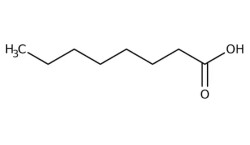
Caprylic acid is a medium-chain fatty acid found in coconut oil and palm kernel oil that is popularly used for yeast overgrowth and gut health. While laboratory studies show it has antimicrobial activity, strong human evidence for most supplement claims is limited. It is generally considered safe in food amounts, but talk with your pharmacist or doctor before using concentrated supplements.
Fatty acid derived from coconut and palm kernel oil; also found in milk fat · Capsules, softgels, liquid oil, part of MCT oil blends
An interaction check asks whether these two react with each other — it does not ask whether Caprylic Acid is a good idea for someone in your situation. Here is what our Caprylic Acid record says about it on its own.
Caprylic Acid: dosing
There is no official, well-established dose for caprylic acid as a supplement. Products vary widely in strength and form, so the right amount depends on the specific product.The safest approach is to follow the directions on the product label and start with a lower amount to see how your body responds.
From our Caprylic Acid monograph — the full record covers uses, side effects and every documented interaction.
About Citalopram
What Is Citalopram Used For?
Brand name: Celexa
Citalopram — available as tablets (including brand Celexa), oral solution, and capsules — is used to treat major depressive disorder (MDD) in adults. This includes depression that causes persistent low mood, loss of interest in everyday activities, changes in sleep or appetite, fatigue, and difficulty concentrating.
Citalopram capsules are specifically indicated for adults with MDD but are not intended for starting or stopping treatment — another citalopram product must be used for dose titration. All forms are indicated for adults only; citalopram tablets are not approved for use in children.
Most-Reported Side Effects for Citalopram
From FAERS, the FDA’s public side-effect reporting system (106,559 reports, all brands). Reports are voluntary and are not proof the drug caused the effect.
Other Drugs & Caprylic Acid
Browse every other medication we’ve checked against Caprylic Acid — both the ones with a known interaction and the ones without. Select any drug for the full detail.
No drugs match “”.
262 interactions
- Diclofenac Sodium ›
- Diltiazem ›
- Nifedipine ›
- Ibuprofen ›
- Aspirin ›
- Naproxen ›
- Propranolol ›
- Hydrochlorothiazide ›
- Verapamil ›
- Flurbiprofen ›
- Diclofenac Potassium ›
- Hydralazine ›
- Indomethacin ›
- Salsalate ›
- Etodolac ›
- Ketoprofen ›
- Meloxicam ›
- Trichlormethiazide ›
- Bendroflumethiazide ›
- Lisinopril ›
- Metolazone ›
- Minoxidil ›
- Nicardipine ›
- Prazosin ›
- Spironolactone ›
- Sulindac ›
- Timolol ›
- Tolmetin Sodium ›
- Warfarin Sodium ›
- Acebutolol ›
- Acetazolamide ›
- Ambrisentan ›
- Amiloride ›
- Atenolol ›
- Betaxolol ›
- Bromfenac Sodium ›
- Candesartan Cilexetil ›
- Captopril ›
- Carteolol ›
- Carvedilol ›
- Celecoxib ›
- Chlorthalidone ›
- Cyclothiazide ›
- Diclofenac Epolamine ›
- Enalapril Maleate ›
- Felodipine ›
- Guanethidine Monosulfate ›
- Iloprost ›
- Indapamide ›
- Irbesartan ›
- Ketorolac Tromethamine ›
- Labetalol ›
- Mannitol ›
- Methyclothiazide ›
- Methyldopa ›
- Metoprolol ›
- Nabumetone ›
- Nadolol ›
- Nebivolol ›
- Nepafenac ›
Showing 60 of 262 moderate interactions — see all 262 on the Caprylic Acid page.
No interaction 2,567 drugs checked — show the list
We also checked Caprylic Acid against these medications and found no known interaction in our sources. Open any page to confirm.
- Apixaban ›
- Levothyroxine ›
- Methylphenidate ›
- Sertraline ›
- Testosterone ›
- Ivermectin ›
- Rivaroxaban ›
- Rosuvastatin ›
- Escitalopram ›
- Acetaminophen ›
- Tadalafil ›
- Clopidogrel ›
- Atorvastatin ›
- Docusate ›
- Valacyclovir ›
- Abemaciclib ›
- Hydroxyurea ›
- Methamphetamine ›
- Sumatriptan ›
- Semaglutide ›
- Tirzepatide ›
- Prednisone ›
- Bupropion ›
- Lisdexamfetamine ›
- Metformin ›
- Amoxicillin ›
- Acyclovir ›
- Bendamustine ›
- Amitriptyline ›
- Doxycycline ›
- Methotrexate ›
- Lamotrigine ›
- Fluoxetine ›
- Acetaminophen, Codeine ›
- Amphetamine ›
- Gabapentin ›
- Pregabalin ›
- Dextroamphetamine ›
- Azithromycin ›
- Isotretinoin ›
- Clonazepam ›
- Omeprazole ›
- Methylene Blue ›
- Quetiapine ›
- Duloxetine ›
- Letrozole ›
- Buspirone ›
- Ciprofloxacin ›
- Levothyroxine, Liothyronine ›
- Acetaminophen, Oxycodone ›
- Dapsone ›
- Diazepam ›
- Cyclopentolate ›
- Cephalexin ›
- Roxithromycin ›
- Acetaminophen, Dextromethorphan, Doxylamine ›
- Atorvastatin Calcium ›
- Pegunigalsidase Alfa-iwxj ›
- Acetaminophen, Caffeine, Codeine ›
- Daptomycin ›
Showing the 60 most looked-up of 2,567 medications checked with no known interaction — see the full Caprylic Acid list.
Caprylic Acid References
The 5 references that drive our Caprylic Acid monograph and interaction data, from the evidence-graded Natural Medicines (TRC Healthcare) database. Citations with a link open the study on PubMed or the publisher’s site.
- Massolini G, Aubry AF, McGann A, Wainer IW. Determination of the magnitude and enantioselectivity of ligand binding to rat and rabbit serum albumins using immobilized-protein high performance liquid chromatography stationary phases. Biochem Pharmacol 1993 PubMed
- Kristev A, Mitkov D, Lukanov Y, Chapkynov P. The effect of octanoic fatty acid on the cardiovascular system of the guinea pig. Cor Vasa 1989;31(4):321-7.
- Hayball PF, Holman JW, Nation RL. Influence of octanoic acid on the reversible protein binding of ketorolac enantiomers to human serum albumin (HSA): comparative liquid chromatographic studies using a HSA chiral stationary phase. J Chromatogr B Biomed App PubMed
- Noctor TA, Wainer IW, Hage DS. Allosteric and competitive displacement of drugs from human serum albumin by octanoic acid, as revealed by high-performance liquid affinity chromatography, on a human serum albumin-based stationary phase. J Chromatogr 1992;5 PubMed
- Voller B, Lines E, McCrossin G, et al. Dose-escalation study of octanoic acid in patients with essential tremor. J Clin Invest. 2016;126(4):1451-7. PubMed
Medication overviews come from MedlinePlus (NIH); supplement label data from the NIH Dietary Supplement Label Database. Content is written and reviewed by licensed HelloPharmacist pharmacists — see our data sources and editorial standards.
Citalopram Is Linked to Lower Levels of One Nutrient
Natural Medicines records Citalopram as a medicine that can lower these. This is not an interaction with Caprylic Acid — it is a separate effect of the medicine, and it is a reason some people are advised to supplement rather than to avoid one:
Read the full Citalopram nutrient depletion report ›
Depletion records come from the licensed Natural Medicines database. Do not start a supplement on the strength of this page — ask your pharmacist or doctor whether it applies to you.
Taking Caprylic Acid and Citalopram Together: Common Questions
Is it safe to take Caprylic Acid with Citalopram?
Do Caprylic Acid and Citalopram have any of the same side effects?
How was the Caprylic Acid and Citalopram combination checked?
Does Caprylic Acid interact with any other medications?
Does Citalopram interact with any supplements?
Written and reviewed by the HelloPharmacist editorial staff. Our editorial policy
Keep Exploring
Still Have a Question About Citalopram and Caprylic Acid?
Our pharmacists answer your medication & supplement questions — free.
This information is for education only and is not a substitute for professional medical advice. Always check with your pharmacist or doctor before starting, stopping, or combining supplements and medications.