
Chenopodium Oil + Riluzole
Riluzole brand names: Rilutek, Tiglutik, Exservan.
We found no known interaction between Chenopodium Oil and Riluzole in our sources. Absence of a documented interaction is not the same as proven safety, and does not guarantee one does not exist. Do not start, stop, or change a medication or supplement based on this page; confirm with your pharmacist or doctor first. Additionally, although there is no interaction, the two are separately associated with some of the same side effects, which would make a new symptom harder to attribute to one or the other.
Chenopodium Oil and Riluzole
We checked these two against our interaction database. Here is what we found.
No Known Interaction Found
We did not find a documented interaction between Riluzole and Chenopodium Oil in our sources. This does not guarantee that the combination is completely free of risk — there is often limited research on supplements and herbal products, especially around drug interactions.
If you decide to take both, the practical routine is simple: add one new thing at a time and note the date you started it. If the combination is going to disagree with you, it usually shows in the first days to a couple of weeks — and a start date turns “I’ve been feeling off” into something a pharmacist can actually work with. Do not stop a prescribed medicine on your own.
Always talk with your pharmacist or doctor before making changes to your medications or supplements, particularly if you take several medications or have an ongoing health condition.
Chenopodium Oil safety at a glance
Pregnancy & breastfeeding ratings are from Natural Medicines (Therapeutic Research Center) — the full detail is in the Special populations card below. Safety guidance is general; always confirm with your pharmacist or doctor for your situation.
Why No Interaction Is Listed for Riluzole
Interactions in our licensed database are recorded against drug classes, not just single drug names. Riluzole is filed under 5 classifications — including cytochrome p450 1a2 (cyp1a2) substrates, cytochrome p450 1a2 (cyp1a2) substrates, hepatotoxic drugs. Chenopodium Oil has documented interactions with 1 drug class — the most serious being photosensitizing drugs (moderate) — and none of Riluzole’s classifications are among them.
Classification data comes from our licensed Natural Medicines dataset. A medication can belong to classes beyond those recorded there, so this describes how the check was run — it is not a safety guarantee.
Chenopodium Oil Does Interact With Other Medications
Chenopodium Oil has 335 moderate known drug interactions in our database — Riluzole isn’t one of them. If you take anything else, check it against the full list below.
Check Another of Your Medications Against Chenopodium Oil
We haven’t checked that one against Chenopodium Oil yet — ask our pharmacists directly.
Covers the 2,830 medications we’ve checked against Chenopodium Oil. Pick one to open its full report.
Chenopodium Oil in Pregnancy & Breastfeeding
When used orally due to toxicity.
DISCLAIMER: This tool is intended for informational purposes only, and should not be interpreted as specific medical advice. Patients should consult with a qualified healthcare provider before making decisions about therapies and/or health conditions.© 2026 Therapeutic Research Center
See Every Supplement That Interacts With Riluzole
This page covers Chenopodium Oil only. If you take other supplements — a multivitamin, a sleep aid, something for joints — the Riluzole page lists 141 supplements it has a documented interaction with, worst first, each one explained.
The most serious there right now: Activated Charcoal (major), Beer (major), Siberian Cocklebur (major), Wine (major) and Adrafinil (moderate).
By severity: 4 major · 106 moderate · 31 minor.
From our pharmacist’s overview on the Riluzole page
“Riluzole (Rilutek, Tiglutik, Exservan) slows the progression of ALS, and it already works the liver hard, which is where this list turns genuinely serious. The four major-rated entries among 141 documented interactions cluster around two hazards: extra liver strain (Siberian cocklebur has caused liver failure, and heavy alcohol from be…”
Reviewed by 2 · Jul 18, 2026
Taking Chenopodium Oil as Part of a Dietary Supplement Product? Check It for Interactions
We hold 1 real supplement products containing Chenopodium Oil, each one broken down to its full ingredient list — and combination products often carry several ingredients besides Chenopodium Oil. Even though Chenopodium Oil itself has no known interaction with Riluzole, another ingredient on your label might. Find your product and we’ll check every ingredient on its label:
Where Chenopodium Oil and Riluzole Sit Against Everything Else
Out of every supplement and medication people look up on HelloPharmacist, here is where these two land this week — and which way each has been moving.
#1,021 of 1,452 supplements looked up here in the last 7 days
#1,592 of 2,830 medications looked up here in the last 7 days
Position among everything looked up on this site, not a measure of how commonly either one is used or how important it is. A supplement can climb this list because of a news story. It counts every request to the page, automated ones included, and nothing here identifies anyone.
Where does our data come from?
- Source: the Natural Medicines (TRC Healthcare) clinical database — the evidence-graded professional reference for herb & supplement interactions.
- Citation library: 103,510 references behind our interaction content, 65,311 of them resolved to verified PubMed/DOI sources. See every Chenopodium Oil reference on this page ↓
- Freshness: we automatically re-check this combination every week — this pair was last verified September 20, 2026. The Chenopodium Oil and Riluzole records this page draws on were last updated July 11, 2026.
- What “no known interaction” means: no documented interaction in the sources above — not a guarantee of safety. Supplements are studied far less than prescription drugs, so we say exactly what the evidence supports, and nothing more.
About Chenopodium Oil
What is Chenopodium Oil?
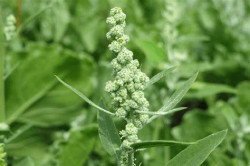
- Intestinal worms (roundworm, hookworm)
- Digestive upset and gas
- Respiratory complaints
- Skin conditions
- As a culinary seasoning (epazote leaf)
Chenopodium oil is a strong-smelling essential oil from the epazote plant that was historically used to treat intestinal worms. It contains ascaridole, a compound that is quite toxic, and overdoses have caused serious harm, so it is no longer recommended for internal use. Safer modern deworming medicines exist, so talk with a pharmacist or doctor before using this oil.
Dysphania ambrosioides · Amaranthaceae · Essential oil from the leaves and seeds · Essential oil; sometimes the leaf is used as a tea or culinary herb (epazote)
An interaction check asks whether these two react with each other — it does not ask whether Chenopodium Oil is a good idea for someone in your situation. Here is what our Chenopodium Oil record says about it on its own.
Chenopodium Oil: dosing
There is no safe, established dose of chenopodium oil for any condition, and it is not recommended for self-treatment. For intestinal worms, safer and more effective prescription and over-the-counter medicines are available.
From our Chenopodium Oil monograph — the full record covers uses, side effects and every documented interaction.
About Riluzole
What Is Riluzole Used For?
Brand names: Rilutek, Tiglutik, Exservan
Riluzole is approved to treat amyotrophic lateral sclerosis (ALS) — the progressive neurological disease also known as Lou Gehrig's disease. This indication is shared across all available riluzole products, including tablets (Rilutek, riluzole), the dissolving oral film (Exservan), and the oral suspension (Tiglutik).
Tiglutik oral suspension is notable in that it can also be given through a PEG-tube (percutaneous endoscopic gastrostomy tube) for patients who have difficulty swallowing.
Other Drugs & Chenopodium Oil
Browse every other medication we’ve checked against Chenopodium Oil — both the ones with a known interaction and the ones without. Select any drug for the full detail.
No drugs match “”.
335 interactions
- Diclofenac Sodium ›
- Diltiazem ›
- Nifedipine ›
- Ibuprofen ›
- Diphenhydramine ›
- Naproxen ›
- Doxycycline ›
- Minocycline ›
- Tetracycline ›
- Hydrochlorothiazide ›
- Quinidine ›
- Glyburide ›
- Ciprofloxacin ›
- Flurbiprofen ›
- Isotretinoin ›
- Carbamazepine ›
- Diclofenac Potassium ›
- Tazarotene ›
- Trimipramine ›
- Etodolac ›
- Griseofulvin ›
- Ketoprofen ›
- Lofepramine ›
- Meloxicam ›
- Nortriptyline ›
- Ofloxacin ›
- Selegiline ›
- Topiramate ›
- Tretinoin ›
- Trichlormethiazide ›
- Aripiprazole ›
- Azithromycin ›
- Bendroflumethiazide ›
- Dapsone ›
- Desipramine ›
- Doxepin ›
- Doxycycline Hyclate ›
- Fluphenazine ›
- Hydroxyzine ›
- Interferon Alfa-2b ›
- Interferon Beta-1b ›
- Levofloxacin ›
- Lisinopril ›
- Metolazone ›
- Paroxetine ›
- Sulfasalazine ›
- Valproic Acid ›
- Acetazolamide ›
- Aminolevulinic Acid Hydrochloride ›
- Amiodarone ›
- Aripiprazole Lauroxil ›
- Brompheniramine ›
- Captopril ›
- Celecoxib ›
- Chlorpheniramine ›
- Chlorpromazine ›
- Chlorpropamide ›
- Chlorthalidone ›
- Clomipramine ›
- Clozapine ›
Showing 60 of 335 moderate interactions — see all 335 on the Chenopodium Oil page.
No interaction 2,494 drugs checked — show the list
We also checked Chenopodium Oil against these medications and found no known interaction in our sources. Open any page to confirm.
- Apixaban ›
- Levothyroxine ›
- Amlodipine ›
- Methylphenidate ›
- Warfarin ›
- Testosterone ›
- Ivermectin ›
- Aspirin ›
- Abemaciclib ›
- Acetaminophen ›
- Metoprolol ›
- Rosuvastatin ›
- Rivaroxaban ›
- Escitalopram ›
- Clopidogrel ›
- Atorvastatin ›
- Docusate ›
- Tadalafil ›
- Tirzepatide ›
- Methamphetamine ›
- Valacyclovir ›
- Warfarin Sodium ›
- Hydroxyurea ›
- Sumatriptan ›
- Semaglutide ›
- Prednisone ›
- Lisdexamfetamine ›
- Propranolol ›
- Metformin ›
- Amoxicillin ›
- Amlodipine Besylate ›
- Methotrexate ›
- Bendamustine ›
- Bupropion ›
- Amphetamine ›
- Acyclovir ›
- Pregabalin ›
- Lamotrigine ›
- Dextroamphetamine ›
- Gabapentin ›
- Acetaminophen, Codeine ›
- Levothyroxine, Liothyronine ›
- Clonazepam ›
- Omeprazole ›
- Letrozole ›
- Duloxetine ›
- Methylene Blue ›
- Buspirone ›
- Bisoprolol ›
- Candesartan Cilexetil ›
- Acetaminophen, Aspirin, Caffeine ›
- Acetaminophen, Oxycodone ›
- Amoxicillin, Clavulanate Potassium ›
- Diazepam ›
- Acetaminophen, Dextromethorphan, Doxylamine ›
- Cephalexin ›
- Cyclopentolate ›
- Acetaminophen, Caffeine, Codeine ›
- Atorvastatin Calcium ›
- Acetaminophen, Aspirin ›
Showing the 60 most looked-up of 2,494 medications checked with no known interaction — see the full Chenopodium Oil list.
Chenopodium Oil References
The 2 references that drive our Chenopodium Oil monograph and interaction data, from the evidence-graded Natural Medicines (TRC Healthcare) database. Citations with a link open the study on PubMed or the publisher’s site.
- Leung AY, Foster S. Encyclopedia of Common Natural Ingredients Used in Food, Drugs and Cosmetics. 2nd ed. New York, NY: John Wiley & Sons, 1996.
- Brinker F. Herb Contraindications and Drug Interactions. 2nd ed. Sandy, OR: Eclectic Medical Publications, 1998.
Medication overviews come from MedlinePlus (NIH); supplement label data from the NIH Dietary Supplement Label Database. Content is written and reviewed by licensed HelloPharmacist pharmacists — see our data sources and editorial standards.
Taking Chenopodium Oil and Riluzole Together: Common Questions
Is it safe to take Chenopodium Oil with Riluzole?
Do Chenopodium Oil and Riluzole have any of the same side effects?
How was the Chenopodium Oil and Riluzole combination checked?
Does Chenopodium Oil interact with any other medications?
Does Riluzole interact with any supplements?
Written and reviewed by the HelloPharmacist editorial staff. Our editorial policy
Keep Exploring
Still Have a Question About Riluzole and Chenopodium Oil?
Our pharmacists answer your medication & supplement questions — free.
This information is for education only and is not a substitute for professional medical advice. Always check with your pharmacist or doctor before starting, stopping, or combining supplements and medications.