
DAA Test-5 Ingredients & Drug Interactions
What is this page for?
First and foremost: checking DAA Test-5 against your medications. The heart of this page is the interaction checker and the full interaction report — how this product’s ingredients may interact with prescription and over-the-counter medicines you may be taking.
Around that, we add a pharmacist’s high-level view of the product as a whole — what’s inside, the evidence for its stated use, how transparent the label is, and what safety data exists — so you can see the full picture in one place. It’s educational information from our licensed clinical databases and the clinical staff at HelloPharmacist — not medical advice — and we don’t sell or endorse products. Our editorial policy
DAA Test-5 is a dietary supplement by Advanced Nutrition Systems with 2 active ingredients. Its ingredients are commonly taken for replacing fluids and electrolytes, preventing dehydration during exercise or illness, treating low blood sodium (under medical care).Based on those ingredients, 692 medications have a known interaction with it, the most serious rated moderate. The ingredients most likely to interact are Sodium D-Aspartic Acid. Use the checker below to test your specific medication, or read the full HelloPharmacist Interaction Report.
Check Your Meds Against DAA Test-5 by Advanced Nutrition Systems
Ask about any prescription or over-the-counter medication and we check it for interactions with DAA Test-5 by Advanced Nutrition Systems — and tell you which ingredient is responsible.
AI summaries are generated from our interaction database for education only — always confirm with your pharmacist. How we use AI
Ask the Pharmacist
A licensed pharmacist will answer your question by email — free, usually within 24 hours.
Got it — thank you!
A licensed pharmacist will answer within 24 hours. Keep an eye on your email (worth checking spam, just in case).
HelloPharmacist Scorecard of DAA Test-5 by Advanced Nutrition Systems
Our pharmacy team’s full take, with four database checks built into the cards below — a summary of what is known, not a grade of the product itself.
What’s inside
Low disclosure
DAA Test-5 contains five active ingredients: diindolylmethane (a compound from cruciferous vegetables), chrysin (a plant flavonoid), sodium D-aspartic acid (an amino acid salt), fenugreek extract, and eurycoma longifolia extract (also called tongkat ali). The product also includes inactive ingredients — microcrystalline cellulose, gelatin, magnesium stearate, titanium dioxide, and silicon dioxide — which serve as binders, fillers, and capsule material.
Diindolylmethane and chrysin are studied for hormone-related effects. Sodium D-aspartic acid is the salt form of an amino acid.
Fenugreek and eurycoma longifolia are herbal extracts traditionally used for sexual function and metabolic support. The exact amounts of each active ingredient and the strength of the herbal extracts are not listed here.
Does it work?
Moderate evidence
The evidence for what this product does is sparse. Diindolylmethane has insufficient evidence for prostate, breast, colorectal, and cervical health.
Chrysin shows insufficient evidence for anxiety, athletic performance, cancer, HIV, muscle strength, and gout. Fenugreek has possibly effective evidence for sexual function, arousal, period pain, and blood sugar control in type 2 diabetes — these are the strongest claims in the product.
Eurycoma longifolia is possibly effective for sexual desire but possibly ineffective for athletic performance; evidence for bone health and back pain is insufficient. For the sodium D-aspartic acid component specifically, it is likely effective for cystic fibrosis and possibly effective for a specific type of kidney damage from amphotericin B, but these are not typical reasons someone would take this testosterone-support product.
The blend ingredients (DAA Test 5 Complex and Testosterone Support Complex) have no effectiveness data on file.
How safe is it?
Well-documented data
Diindolylmethane is generally well tolerated short-term but long-term safety is not established. Common side effects include diarrhea, gas, headache, nausea, rash, and vomiting.
A rare serious side effect (drug rash with eosinophilia and systemic symptoms) has been reported; one unconfirmed case of stroke occurred in a patient using diindolylmethane among several other supplements, though the contribution was unclear. Pregnancy and lactation data rate it as likely safe — however, the product also contains ingredients with different pregnancy ratings (see below).
Chrysins and fenugreek show different safety profiles across pregnancy and lactation. Chrysin lacks adequate safety data for both pregnancy and breastfeeding, so both should be avoided.
Fenugreek is likely unsafe in pregnancy (particularly near delivery, when it may cause unusual body odor in newborns) but possibly safe while breastfeeding. Eurycoma longifolia has insufficient data for both — avoid during pregnancy, and breastfeeding safety is unclear.
Sodium is well tolerated at normal dietary levels but excessive intake is tied to high blood pressure and kidney issues. Fenugreek commonly causes bloating, diarrhea, nausea, and abdominal pain; severe allergic reactions are rare.
Eurycoma longifolia is generally tolerated short-term, but if it raises testosterone beyond normal range, acne and liver stress are possible.
Meds to double-check
Moderate interaction found
Check before taking if you use estrogens or hormonal contraceptives (diindolylmethane and chrysin may reduce their effects), blood thinners or antiplatelet drugs like warfarin or clopidogrel (chrysin and fenugreek add bleeding risk), blood pressure medications including metoprolol (sodium and fenugreek lower blood pressure), lithium (sodium alters lithium levels and toxicity risk), corticosteroids (sodium can cause dangerous sodium overload), antidiabetes drugs (fenugreek can lower blood sugar), theophylline or phenytoin (fenugreek may reduce their levels), or seizure drugs including mephenytoin (chrysin may interfere). Eurycoma longifolia may also reduce propranolol effectiveness.
The bottom line
Scorecard at a glanceFormula with limited ingredient disclosure with some supporting evidence for its stated purpose. Moderate medication interactions have been identified, and safety information is well characterized.
This product is marketed for testosterone support and sexual function, with the strongest evidence behind its fenugreek and eurycoma longifolia content. It's not right for anyone on hormonal contraceptives, hormone replacement therapy, blood thinners, blood pressure medications, lithium, or certain seizure and diabetes drugs without checking first.
Pregnancy and breastfeeding are not advised given the mixed safety data across ingredients. If you take any prescription medications, talk with your doctor or pharmacist before adding this supplement.
Educational only — not medical advice; always confirm with your pharmacist. Our editorial policy · How we use AI
Assessment coverage: 5 of 5 active ingredients matched to our full ingredient reviews (monographs). Based on the product label dated Sep 21, 2018.
This Scorecard evaluates available label information, ingredient evidence, and known medication-safety considerations. It does not independently verify product identity, purity, potency, contamination, or manufacturing quality. How these ratings are computed
General information
Key facts about DAA Test-5, straight from the product label.
| Brand | Advanced Nutrition Systems |
|---|---|
| Net contents | 96 Capsule(s) |
| Market status | On market |
| Date entered into DSLD | Sep 21, 2018 |
| DSLD ID | 180473 |
| Product type | Other Combinations |
| Supplement form | Capsule |
| Dietary claims / uses | All Other, Structure/Function |
| Intended target group(s) | Adult (18 - 50 Years) |
Everything in this section is reproduced from the manufacturer’s own product label — it’s the label speaking, not HelloPharmacist. We show it so you can see exactly what the maker states; we don’t verify or endorse those statements.
Supplement Facts
The label details for DAA Test-5 by Advanced Nutrition Systems, sourced from the NIH Dietary Supplement Label Database.
Supplement Facts
| Ingredient | Amount | % DV |
|---|---|---|
| Diindolylmethane | 0 NP | -- |
| Chrysin | 0 NP | -- |
| Sodium D-Aspartic Acid | 3120 mg | -- |
| DAA Test 5 Complex | 3296 mg | -- |
| Testosterone Support Complex | 176 mg | -- |
| Fenugreek (Trigonella foenum-graecum) extract | 0 NP | -- |
| Eurycoma longifolia extract | 0 NP | -- |
Other ingredients: Microcrystalline Cellulose, Gelatin, Magnesium Stearate, Titanium Dioxide, Silicon Dioxide
Tap any ingredient to jump to its full detail below.
These statements are the manufacturer’s wording, reproduced from the product label — the label is saying it, not HelloPharmacist. We don’t verify or endorse them.
General Statements
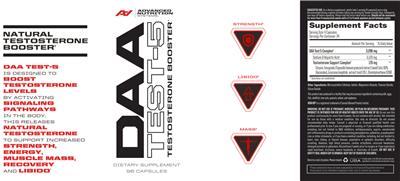
Natural Testosterone Booster
DAA Test-5 is designed to boost testosterone levels by activating signaling pathways in the body. This releases natural testosterone to support increased strength, energy, muscle mass, recovery and libido
Testosterone Booster
Strength Libido Mass
Please recycle.
Made in the USA Proudly made in the USA with carefully selected ingredients of international and domestic origin.
FDA Statement of Identity
Dietary Supplement
Suggested/Recommended/Usage/Directions
Suggested Use: As a dietary supplement, adults take 1 serving (4 capsules) once a day. Recommended dosing regimen includes taking one serving for twelve straight days, followed by two days off before repeating. Please read the entire label before use. Should not be consumed for more than 4 consecutive weeks with a 2 to 4 week washout period between cycles.
Precautions
Please read the entire label before use. Should not be consumed for more than 4 consecutive weeks with a 2 to 4 week washout period between cycles.
This product was produced in a facility that may also process ingredients containing milk, eggs, fish, shellfish, tree nuts, peanuts, wheat, and soybeans.
Warning: Do not use if pregnant, nursing, or plan on becoming pregnant.
This product is intended for use by healthy adults over the age of 18. Do not use this product continuously for more than 8 weeks. Do not combine with alcohol. Not intended for use by those with a medical condition. Use only as directed. Do not exceed recommended daily intake.
Consult a physician or licensed qualified health care professional prior to use if you are pregnant or nursing, or if you are taking medication, including, but not limited to MAO inhibitors, antidepressants, aspirin, nonsteroidal anti-inflammatory drugs or products containing phenylephrine, ephedrine, pseudoephedrine, or other stimulants, or if you have a medical condition, including, but not limited to, heart, liver, kidney, or thyroid disease, psychiatric or epileptic disorders, difficulty urinating, diabetes, high blood pressure, cardiac arrhythmia, recurrent headaches, enlarged prostate or glaucoma.
Discontinue 2 weeks prior to surgery or if you experience rapid heartbeat, dizziness, severe headache or shortness of breath. Do not use if safety seal under cap is broken.
Keep out of reach of children.
Brand IP Statement(s)
KSM-66 is a registered trademark of Ixoreal Biomed Private Limited.
Storage
Store in a cool, dry place.
FDA Disclaimer Statement
These statements have not been evaluated by the Food and Drug Administration. This product is not intended to diagnose, treat, cure, or prevent any disease.
Is this label outdated? Report a formula or label change and our pharmacy team will review it.
DAA Test-5 by Advanced Nutrition Systems label
The label scan from the NIH Dietary Supplement Label Database. Tap to enlarge.
Label images are published by the NIH Dietary Supplement Label Database for the version of this product on file. Always read your actual product label.
View the full label (PDF)The Ingredients in DAA Test-5 by Advanced Nutrition Systems
These are the 2 active ingredients this product is made of. Select any to open its full monograph.
Serving size4 Capsule(s) Dosage formCapsule Servings per container24 Amounts shown are per serving.
Most supplement products combine several ingredients, and a medication can interact with the product through any one of them. Each ingredient below shows whether it has known drug interactions.
DAA Test 5 Complex
- › Sodium D-Aspartic Acid
- › Testosterone Support Complex
Other (inactive) ingredients: Microcrystalline Cellulose, Gelatin, Magnesium Stearate, Titanium Dioxide, Silicon Dioxide. These complete the product’s ingredient list but are not active constituents.
DAA Test-5 by Advanced Nutrition Systems Drug Interactions
HelloPharmacist Interaction Report
DAA Test-5 by Advanced Nutrition Systems interacts with medications through its diindolylmethane, chrysin, sodium D-aspartic acid, fenugreek, and eurycoma longifolia content.
The most serious interaction is a Moderate-severity effect on estrogens and contraceptive drugs — diindolylmethane and chrysin may both interfere with how your body uses these hormones, potentially reducing birth control effectiveness or altering hormone replacement therapy.
Read the full breakdown — every affected drug type, severity by severity
Beyond hormones, the product affects blood thinners and antiplatelet drugs (through chrysin and fenugreek), blood pressure medications (sodium and fenugreek), diabetes drugs (fenugreek), and several others metabolized by your liver. Chrysin may increase levels of certain seizure medications and some cancer drugs.
Fenugreek can lower levels of theophylline (a breathing medication) and phenytoin (an older seizure drug). Eurycoma longifolia may reduce propranolol effectiveness.
Sodium D-aspartic acid carries its own concerns: high sodium can blunt blood pressure medications, interact dangerously with lithium, and combine harmfully with corticosteroids. Altogether, these interactions span 692 individual medications.
Several ingredients we could not check fully — fenugreek and eurycoma's effects on liver enzyme systems are theoretical in humans. Before you start this product, run your exact medications through the interaction checker on this page, and discuss the results with your doctor or pharmacist.
Check your own medications below · Editorial policy · How we use AI
Want to check YOUR meds against DAA Test-5?
Ask about interactions with your drugs in plain English — “Can I take it with lisinopril?” — and we find you the answer in seconds, ingredient by ingredient.
Go to the checkerIngredients driving the most interactions
Individual Drug Interactions
The ingredients in DAA Test-5 interact with 692 drugs. Click any drug to see the details.
1 of the 2 ingredients in DAA Test-5 interact with drugs. Each result below shows which ingredient is responsible. Sodium D-Aspartic Acid
AbciximabReoPro
How Abciximab interacts with DAA Test-5 — through 2 ingredients. Tap an ingredient for the detail:
ChrysinAnticoagulant/antiplatelet Drugs Moderate
Interaction Summary
Theoretically, chrysin might increase the risk of bleeding when taken with anticoagulant or antiplatelet drugs.
Read the full Chrysin + Abciximab interactionFenugreek (trigonella Foenum-graecum) ExtractAnticoagulant/antiplatelet Drugs Moderate
Interaction Summary
Theoretically, fenugreek might have additive effects when used with anticoagulant or antiplatelet drugs.
Read the full Fenugreek (trigonella Foenum-graecum) Extract + Abciximab interactionAbrocitinibCibinqo
How Abrocitinib interacts with DAA Test-5 — through 3 ingredients. Tap an ingredient for the detail:
Fenugreek (trigonella Foenum-graecum) ExtractAnticoagulant/antiplatelet Drugs Moderate
Interaction Summary
Theoretically, fenugreek might have additive effects when used with anticoagulant or antiplatelet drugs.
Read the full Fenugreek (trigonella Foenum-graecum) Extract + Abrocitinib interactionChrysinAnticoagulant/antiplatelet Drugs Moderate
Interaction Summary
Theoretically, chrysin might increase the risk of bleeding when taken with anticoagulant or antiplatelet drugs.
Read the full Chrysin + Abrocitinib interactionEurycoma Longifolia ExtractCytochrome P450 2c19 (cyp2c19) Substrates Minor
Interaction Summary
Theoretically, Eurycoma longifolia might increase levels of CYP2C19 substrates.
Read the full Eurycoma Longifolia Extract + Abrocitinib interactionAcarboseGlucobay, Prandase, Precose
How Acarbose interacts with DAA Test-5 — through 1 ingredient. Tap an ingredient for the detail:
Fenugreek (trigonella Foenum-graecum) ExtractAntidiabetes Drugs Moderate
Interaction Summary
Theoretically, fenugreek seed might have additive hypoglycemic effects when used with antidiabetes drugs.
Read the full Fenugreek (trigonella Foenum-graecum) Extract + Acarbose interactionAcebutololRhotral, Sectral
How Acebutolol interacts with DAA Test-5 — through 2 ingredients. Tap an ingredient for the detail:
Sodium D-aspartic AcidAntihypertensive Drugs Moderate
Interaction Summary
Theoretically, a high intake of dietary sodium might reduce the effectiveness of antihypertensive drugs.
Read the full Sodium D-aspartic Acid + Acebutolol interactionFenugreek (trigonella Foenum-graecum) ExtractAntihypertensive Drugs Minor
Interaction Summary
Fenugreek may also have an additive effect on blood pressure-lowering medications.
Read the full Fenugreek (trigonella Foenum-graecum) Extract + Acebutolol interactionAcenocoumarolSintrom
How Acenocoumarol interacts with DAA Test-5 — through 2 ingredients. Tap an ingredient for the detail:
Fenugreek (trigonella Foenum-graecum) ExtractAnticoagulant/antiplatelet Drugs Moderate
Interaction Summary
Theoretically, fenugreek might have additive effects when used with anticoagulant or antiplatelet drugs.
Read the full Fenugreek (trigonella Foenum-graecum) Extract + Acenocoumarol interactionChrysinAnticoagulant/antiplatelet Drugs Moderate
Interaction Summary
Theoretically, chrysin might increase the risk of bleeding when taken with anticoagulant or antiplatelet drugs.
Read the full Chrysin + Acenocoumarol interactionAcetaminophen, AspirinGemnisyn
How Acetaminophen, Aspirin interacts with DAA Test-5 — through 4 ingredients. Tap an ingredient for the detail:
ChrysinGlucuronidated Drugs, Cytochrome P450 1a2 (cyp1a2) Substrates +1 Moderate
Interaction Summary
Theoretically, chrysin might increase the clearance of drugs that are UGT1A1 substrates, thereby reducing their effectiveness.
Read the full Chrysin + Acetaminophen, Aspirin interactionFenugreek (trigonella Foenum-graecum) ExtractAnticoagulant/antiplatelet Drugs Moderate
Interaction Summary
Theoretically, fenugreek might have additive effects when used with anticoagulant or antiplatelet drugs.
Read the full Fenugreek (trigonella Foenum-graecum) Extract + Acetaminophen, Aspirin interactionEurycoma Longifolia ExtractCytochrome P450 1a2 (cyp1a2) Substrates Minor
Interaction Summary
Theoretically, Eurycoma longifolia might increase levels CYP1A2 substrates.
Read the full Eurycoma Longifolia Extract + Acetaminophen, Aspirin interactionDiindolylmethaneCytochrome P450 1a2 (cyp1a2) Substrates Minor
Interaction Summary
Theoretically, diindolylmethane might lower serum levels of CYP1A2 substrates.
Read the full Diindolylmethane + Acetaminophen, Aspirin interactionAcetaminophen, Aspirin, CaffeineExcedrin, Excedrin Extra Strength, Excedrin Migraine
How Acetaminophen, Aspirin, Caffeine interacts with DAA Test-5 — through 4 ingredients. Tap an ingredient for the detail:
Fenugreek (trigonella Foenum-graecum) ExtractAnticoagulant/antiplatelet Drugs Moderate
Interaction Summary
Theoretically, fenugreek might have additive effects when used with anticoagulant or antiplatelet drugs.
Read the full Fenugreek (trigonella Foenum-graecum) Extract + Acetaminophen, Aspirin, Caffeine interactionChrysinCytochrome P450 1a2 (cyp1a2) Substrates, Anticoagulant/antiplatelet Drugs +1 Moderate
Interaction Summary
Theoretically, chrysin might increase levels of drugs metabolized by CYP1A2.
Read the full Chrysin + Acetaminophen, Aspirin, Caffeine interactionEurycoma Longifolia ExtractCytochrome P450 1a2 (cyp1a2) Substrates Minor
Interaction Summary
Theoretically, Eurycoma longifolia might increase levels CYP1A2 substrates.
Read the full Eurycoma Longifolia Extract + Acetaminophen, Aspirin, Caffeine interactionDiindolylmethaneCytochrome P450 1a2 (cyp1a2) Substrates Minor
Interaction Summary
Theoretically, diindolylmethane might lower serum levels of CYP1A2 substrates.
Read the full Diindolylmethane + Acetaminophen, Aspirin, Caffeine interactionAcetaminophen, Caffeine, PyrilamineMidol Max Strength Menstrual
How Acetaminophen, Caffeine, Pyrilamine interacts with DAA Test-5 — through 3 ingredients. Tap an ingredient for the detail:
DiindolylmethaneCytochrome P450 1a2 (cyp1a2) Substrates, Diuretic Drugs Moderate
Interaction Summary
Theoretically, diindolylmethane might lower serum levels of CYP1A2 substrates.
Read the full Diindolylmethane + Acetaminophen, Caffeine, Pyrilamine interactionChrysinGlucuronidated Drugs, Cytochrome P450 1a2 (cyp1a2) Substrates Minor
Interaction Summary
Theoretically, chrysin might increase the clearance of drugs that are UGT1A1 substrates, thereby reducing their effectiveness.
Read the full Chrysin + Acetaminophen, Caffeine, Pyrilamine interactionEurycoma Longifolia ExtractCytochrome P450 1a2 (cyp1a2) Substrates Minor
Interaction Summary
Theoretically, Eurycoma longifolia might increase levels CYP1A2 substrates.
Read the full Eurycoma Longifolia Extract + Acetaminophen, Caffeine, Pyrilamine interactionAcetaminophen, IbuprofenCombogesic
How Acetaminophen, Ibuprofen interacts with DAA Test-5 — through 4 ingredients. Tap an ingredient for the detail:
ChrysinGlucuronidated Drugs, Anticoagulant/antiplatelet Drugs +1 Moderate
Interaction Summary
Theoretically, chrysin might increase the clearance of drugs that are UGT1A1 substrates, thereby reducing their effectiveness.
Read the full Chrysin + Acetaminophen, Ibuprofen interactionFenugreek (trigonella Foenum-graecum) ExtractAnticoagulant/antiplatelet Drugs Moderate
Interaction Summary
Theoretically, fenugreek might have additive effects when used with anticoagulant or antiplatelet drugs.
Read the full Fenugreek (trigonella Foenum-graecum) Extract + Acetaminophen, Ibuprofen interactionDiindolylmethaneCytochrome P450 1a2 (cyp1a2) Substrates Minor
Interaction Summary
Theoretically, diindolylmethane might lower serum levels of CYP1A2 substrates.
Read the full Diindolylmethane + Acetaminophen, Ibuprofen interactionEurycoma Longifolia ExtractCytochrome P450 1a2 (cyp1a2) Substrates Minor
Interaction Summary
Theoretically, Eurycoma longifolia might increase levels CYP1A2 substrates.
Read the full Eurycoma Longifolia Extract + Acetaminophen, Ibuprofen interactionAcetaminophen, Pamabrom, PyrilamineMidol Max Strength PMS, Pamprin, Pamprin ES
How Acetaminophen, Pamabrom, Pyrilamine interacts with DAA Test-5 — through 3 ingredients. Tap an ingredient for the detail:
DiindolylmethaneCytochrome P450 1a2 (cyp1a2) Substrates, Diuretic Drugs Moderate
Interaction Summary
Theoretically, diindolylmethane might lower serum levels of CYP1A2 substrates.
Read the full Diindolylmethane + Acetaminophen, Pamabrom, Pyrilamine interactionChrysinCytochrome P450 1a2 (cyp1a2) Substrates, Glucuronidated Drugs Minor
Interaction Summary
Theoretically, chrysin might increase levels of drugs metabolized by CYP1A2.
Read the full Chrysin + Acetaminophen, Pamabrom, Pyrilamine interactionEurycoma Longifolia ExtractCytochrome P450 1a2 (cyp1a2) Substrates Minor
Interaction Summary
Theoretically, Eurycoma longifolia might increase levels CYP1A2 substrates.
Read the full Eurycoma Longifolia Extract + Acetaminophen, Pamabrom, Pyrilamine interactionAcetazolamideAk-Zol, Diamox
How Acetazolamide interacts with DAA Test-5 — through 3 ingredients. Tap an ingredient for the detail:
Sodium D-aspartic AcidAntihypertensive Drugs Moderate
Interaction Summary
Theoretically, a high intake of dietary sodium might reduce the effectiveness of antihypertensive drugs.
Read the full Sodium D-aspartic Acid + Acetazolamide interactionDiindolylmethaneDiuretic Drugs Moderate
Interaction Summary
Theoretically, diindolylmethane might increase the risk of hyponatremia if used with sodium-depleting diuretics.
Read the full Diindolylmethane + Acetazolamide interactionFenugreek (trigonella Foenum-graecum) ExtractAntihypertensive Drugs Minor
Interaction Summary
Fenugreek may also have an additive effect on blood pressure-lowering medications.
Read the full Fenugreek (trigonella Foenum-graecum) Extract + Acetazolamide interactionAcetohexamideDymelor
How Acetohexamide interacts with DAA Test-5 — through 1 ingredient. Tap an ingredient for the detail:
Fenugreek (trigonella Foenum-graecum) ExtractAntidiabetes Drugs Moderate
Interaction Summary
Theoretically, fenugreek seed might have additive hypoglycemic effects when used with antidiabetes drugs.
Read the full Fenugreek (trigonella Foenum-graecum) Extract + Acetohexamide interactionAcetylsalicylic AcidEntrophen
How Acetylsalicylic Acid interacts with DAA Test-5 — through 2 ingredients. Tap an ingredient for the detail:
Fenugreek (trigonella Foenum-graecum) ExtractAnticoagulant/antiplatelet Drugs Moderate
Interaction Summary
Theoretically, fenugreek might have additive effects when used with anticoagulant or antiplatelet drugs.
Read the full Fenugreek (trigonella Foenum-graecum) Extract + Acetylsalicylic Acid interactionChrysinAnticoagulant/antiplatelet Drugs Moderate
Interaction Summary
Theoretically, chrysin might increase the risk of bleeding when taken with anticoagulant or antiplatelet drugs.
Read the full Chrysin + Acetylsalicylic Acid interactionAlbiglutideTanzeum
How Albiglutide interacts with DAA Test-5 — through 1 ingredient. Tap an ingredient for the detail:
Fenugreek (trigonella Foenum-graecum) ExtractAntidiabetes Drugs Moderate
Interaction Summary
Theoretically, fenugreek seed might have additive hypoglycemic effects when used with antidiabetes drugs.
Read the full Fenugreek (trigonella Foenum-graecum) Extract + Albiglutide interactionAliskirenTekturna
How Aliskiren interacts with DAA Test-5 — through 2 ingredients. Tap an ingredient for the detail:
Sodium D-aspartic AcidAntihypertensive Drugs Moderate
Interaction Summary
Theoretically, a high intake of dietary sodium might reduce the effectiveness of antihypertensive drugs.
Read the full Sodium D-aspartic Acid + Aliskiren interactionFenugreek (trigonella Foenum-graecum) ExtractAntihypertensive Drugs Minor
Interaction Summary
Fenugreek may also have an additive effect on blood pressure-lowering medications.
Read the full Fenugreek (trigonella Foenum-graecum) Extract + Aliskiren interactionAlogliptinNesina
How Alogliptin interacts with DAA Test-5 — through 1 ingredient. Tap an ingredient for the detail:
Fenugreek (trigonella Foenum-graecum) ExtractAntidiabetes Drugs Moderate
Interaction Summary
Theoretically, fenugreek seed might have additive hypoglycemic effects when used with antidiabetes drugs.
Read the full Fenugreek (trigonella Foenum-graecum) Extract + Alogliptin interactionAlogliptin, MetforminKazano
How Alogliptin, Metformin interacts with DAA Test-5 — through 1 ingredient. Tap an ingredient for the detail:
Fenugreek (trigonella Foenum-graecum) ExtractAntidiabetes Drugs Moderate
Interaction Summary
Theoretically, fenugreek seed might have additive hypoglycemic effects when used with antidiabetes drugs.
Read the full Fenugreek (trigonella Foenum-graecum) Extract + Alogliptin, Metformin interactionAlogliptin, PioglitazoneOseni
How Alogliptin, Pioglitazone interacts with DAA Test-5 — through 1 ingredient. Tap an ingredient for the detail:
Fenugreek (trigonella Foenum-graecum) ExtractAntidiabetes Drugs Moderate
Interaction Summary
Theoretically, fenugreek seed might have additive hypoglycemic effects when used with antidiabetes drugs.
Read the full Fenugreek (trigonella Foenum-graecum) Extract + Alogliptin, Pioglitazone interactionAlteplase, TpaActilyse, Activase
How Alteplase, Tpa interacts with DAA Test-5 — through 2 ingredients. Tap an ingredient for the detail:
Fenugreek (trigonella Foenum-graecum) ExtractAnticoagulant/antiplatelet Drugs Moderate
Interaction Summary
Theoretically, fenugreek might have additive effects when used with anticoagulant or antiplatelet drugs.
Read the full Fenugreek (trigonella Foenum-graecum) Extract + Alteplase, Tpa interactionChrysinAnticoagulant/antiplatelet Drugs Moderate
Interaction Summary
Theoretically, chrysin might increase the risk of bleeding when taken with anticoagulant or antiplatelet drugs.
Read the full Chrysin + Alteplase, Tpa interactionAluminum Hydroxide, Aspirin, Codeine Phosphate, Magnesium HydroxideAscriptin Codeine #2
How Aluminum Hydroxide, Aspirin, Codeine Phosphate, Magnesium Hydroxide interacts with DAA Test-5 — through 2 ingredients. Tap an ingredient for the detail:
ChrysinAnticoagulant/antiplatelet Drugs Moderate
Interaction Summary
Theoretically, chrysin might increase the risk of bleeding when taken with anticoagulant or antiplatelet drugs.
Read the full Chrysin + Aluminum Hydroxide, Aspirin, Codeine Phosphate, Magnesium Hydroxide interactionFenugreek (trigonella Foenum-graecum) ExtractAnticoagulant/antiplatelet Drugs Moderate
Interaction Summary
Theoretically, fenugreek might have additive effects when used with anticoagulant or antiplatelet drugs.
Read the full Fenugreek (trigonella Foenum-graecum) Extract + Aluminum Hydroxide, Aspirin, Codeine Phosphate, Magnesium Hydroxide interactionAluminum Hydroxide, Aspirin, Magnesium HydroxideAscriptin
How Aluminum Hydroxide, Aspirin, Magnesium Hydroxide interacts with DAA Test-5 — through 2 ingredients. Tap an ingredient for the detail:
Fenugreek (trigonella Foenum-graecum) ExtractAnticoagulant/antiplatelet Drugs Moderate
Interaction Summary
Theoretically, fenugreek might have additive effects when used with anticoagulant or antiplatelet drugs.
Read the full Fenugreek (trigonella Foenum-graecum) Extract + Aluminum Hydroxide, Aspirin, Magnesium Hydroxide interactionChrysinAnticoagulant/antiplatelet Drugs Moderate
Interaction Summary
Theoretically, chrysin might increase the risk of bleeding when taken with anticoagulant or antiplatelet drugs.
Read the full Chrysin + Aluminum Hydroxide, Aspirin, Magnesium Hydroxide interactionAmbrisentanLetairis, Volibris
How Ambrisentan interacts with DAA Test-5 — through 2 ingredients. Tap an ingredient for the detail:
Sodium D-aspartic AcidAntihypertensive Drugs Moderate
Interaction Summary
Theoretically, a high intake of dietary sodium might reduce the effectiveness of antihypertensive drugs.
Read the full Sodium D-aspartic Acid + Ambrisentan interactionFenugreek (trigonella Foenum-graecum) ExtractAntihypertensive Drugs Minor
Interaction Summary
Fenugreek may also have an additive effect on blood pressure-lowering medications.
Read the full Fenugreek (trigonella Foenum-graecum) Extract + Ambrisentan interactionAmilorideAmilamont, Midamor
How Amiloride interacts with DAA Test-5 — through 2 ingredients. Tap an ingredient for the detail:
Sodium D-aspartic AcidAntihypertensive Drugs Moderate
Interaction Summary
Theoretically, a high intake of dietary sodium might reduce the effectiveness of antihypertensive drugs.
Read the full Sodium D-aspartic Acid + Amiloride interactionFenugreek (trigonella Foenum-graecum) ExtractAntihypertensive Drugs Minor
Interaction Summary
Fenugreek may also have an additive effect on blood pressure-lowering medications.
Read the full Fenugreek (trigonella Foenum-graecum) Extract + Amiloride interactionAmiloride, HydrochlorothiazideAmil-Co, Amilzide, Moduret 25, Moduretic
How Amiloride, Hydrochlorothiazide interacts with DAA Test-5 — through 3 ingredients. Tap an ingredient for the detail:
Sodium D-aspartic AcidAntihypertensive Drugs Moderate
Interaction Summary
Theoretically, a high intake of dietary sodium might reduce the effectiveness of antihypertensive drugs.
Read the full Sodium D-aspartic Acid + Amiloride, Hydrochlorothiazide interactionDiindolylmethaneDiuretic Drugs Moderate
Interaction Summary
Theoretically, diindolylmethane might increase the risk of hyponatremia if used with sodium-depleting diuretics.
Read the full Diindolylmethane + Amiloride, Hydrochlorothiazide interactionFenugreek (trigonella Foenum-graecum) ExtractAntihypertensive Drugs Minor
Interaction Summary
Fenugreek may also have an additive effect on blood pressure-lowering medications.
Read the full Fenugreek (trigonella Foenum-graecum) Extract + Amiloride, Hydrochlorothiazide interactionAmlodipineNorliqva
How Amlodipine interacts with DAA Test-5 — through 2 ingredients. Tap an ingredient for the detail:
Sodium D-aspartic AcidAntihypertensive Drugs Moderate
Interaction Summary
Theoretically, a high intake of dietary sodium might reduce the effectiveness of antihypertensive drugs.
Read the full Sodium D-aspartic Acid + Amlodipine interactionFenugreek (trigonella Foenum-graecum) ExtractAntihypertensive Drugs Minor
Interaction Summary
Fenugreek may also have an additive effect on blood pressure-lowering medications.
Read the full Fenugreek (trigonella Foenum-graecum) Extract + Amlodipine interactionAmlodipine BenzoateKaterzia
How Amlodipine Benzoate interacts with DAA Test-5 — through 2 ingredients. Tap an ingredient for the detail:
Sodium D-aspartic AcidAntihypertensive Drugs Moderate
Interaction Summary
Theoretically, a high intake of dietary sodium might reduce the effectiveness of antihypertensive drugs.
Read the full Sodium D-aspartic Acid + Amlodipine Benzoate interactionFenugreek (trigonella Foenum-graecum) ExtractAntihypertensive Drugs Minor
Interaction Summary
Fenugreek may also have an additive effect on blood pressure-lowering medications.
Read the full Fenugreek (trigonella Foenum-graecum) Extract + Amlodipine Benzoate interactionAmlodipine BesilateIstin
How Amlodipine Besilate interacts with DAA Test-5 — through 2 ingredients. Tap an ingredient for the detail:
Sodium D-aspartic AcidAntihypertensive Drugs Moderate
Interaction Summary
Theoretically, a high intake of dietary sodium might reduce the effectiveness of antihypertensive drugs.
Read the full Sodium D-aspartic Acid + Amlodipine Besilate interactionFenugreek (trigonella Foenum-graecum) ExtractAntihypertensive Drugs Minor
Interaction Summary
Fenugreek may also have an additive effect on blood pressure-lowering medications.
Read the full Fenugreek (trigonella Foenum-graecum) Extract + Amlodipine Besilate interactionAmlodipine BesylateNorvasc
How Amlodipine Besylate interacts with DAA Test-5 — through 2 ingredients. Tap an ingredient for the detail:
Sodium D-aspartic AcidAntihypertensive Drugs Moderate
Interaction Summary
Theoretically, a high intake of dietary sodium might reduce the effectiveness of antihypertensive drugs.
Read the full Sodium D-aspartic Acid + Amlodipine Besylate interactionFenugreek (trigonella Foenum-graecum) ExtractAntihypertensive Drugs Minor
Interaction Summary
Fenugreek may also have an additive effect on blood pressure-lowering medications.
Read the full Fenugreek (trigonella Foenum-graecum) Extract + Amlodipine Besylate interactionAmlodipine Besylate, BenazeprilLotrel
How Amlodipine Besylate, Benazepril interacts with DAA Test-5 — through 2 ingredients. Tap an ingredient for the detail:
Sodium D-aspartic AcidAntihypertensive Drugs Moderate
Interaction Summary
Theoretically, a high intake of dietary sodium might reduce the effectiveness of antihypertensive drugs.
Read the full Sodium D-aspartic Acid + Amlodipine Besylate, Benazepril interactionFenugreek (trigonella Foenum-graecum) ExtractAntihypertensive Drugs Minor
Interaction Summary
Fenugreek may also have an additive effect on blood pressure-lowering medications.
Read the full Fenugreek (trigonella Foenum-graecum) Extract + Amlodipine Besylate, Benazepril interactionAmlodipine, CelecoxibConsensi
How Amlodipine, Celecoxib interacts with DAA Test-5 — through 2 ingredients. Tap an ingredient for the detail:
Sodium D-aspartic AcidAntihypertensive Drugs Moderate
Interaction Summary
Theoretically, a high intake of dietary sodium might reduce the effectiveness of antihypertensive drugs.
Read the full Sodium D-aspartic Acid + Amlodipine, Celecoxib interactionFenugreek (trigonella Foenum-graecum) ExtractAntihypertensive Drugs Minor
Interaction Summary
Fenugreek may also have an additive effect on blood pressure-lowering medications.
Read the full Fenugreek (trigonella Foenum-graecum) Extract + Amlodipine, Celecoxib interactionEach ingredient & the kinds of drugs it affects
For each ingredient in DAA Test-5 with known interactions, here are the types of medications it can affect. Open any type for the detail — or search your exact drug in the checker above.
Sodium D-Aspartic Acid
Antihypertensive Drugs
Theoretically, a high intake of dietary sodium might reduce the effectiveness of antihypertensive drugs.
High intake of dietary sodium can increase systolic and diastolic blood pressure. Also, high intake of sodium may necessitate increased use of antihypertensive medications to achieve blood pressure control in some patients, such as those with chronic kidney disease.
Corticosteroids
Concomitant use of mineralocorticoids and some glucocorticoids with sodium supplements might increase the risk of hypernatremia.
Mineralocorticoids and some glucocorticoids (corticosteroids) cause sodium retention. This effect is dose-related and depends on mineralocorticoid potency. It is most common with hydrocortisone, cortisone, and fludrocortisone, followed by prednisone and prednisolone.
Didanosine (Videx)
Concomitant use of didanosine with additional sodium from dietary or supplemental sources may increase the risk of hypernatremia.
Didanosine formulations contain a significant amount of sodium.
Lithium
Altering dietary intake of sodium might alter the levels and clinical effects of lithium.
High sodium intake can reduce plasma concentrations of lithium by increasing lithium excretion. Reducing sodium intake can significantly increase plasma concentrations of lithium and cause lithium toxicity in patients being treated with lithium carbonate. Stabilizing sodium intake is shown to reduce the percentage of patients with lithium level fluctuations above 0.8 mEq/L. Patients taking lithium should avoid significant alterations in their dietary intake of sodium.
Sodium Phosphates
Theoretically, concomitant use of sodium phosphate with sodium supplements might increase the risk of hypernatremia.
Use of high doses (> 45 mL in 24 hours) of sodium phosphate, such as those used for bowel cleansing before surgery, can lead to serious electrolyte disturbances, including hypernatremia. The risk of hypernatremia is highest in the elderly and people with other risk factors for electrolyte disturbances.
Sodium-Containing Drugs
Concomitant use of sodium-containing drugs with additional sodium from dietary or supplemental sources may increase the risk of hypernatremia and long-term sodium-related complications.
The Chronic Disease Risk Reduction (CDRR) intake level of 2.3 grams of sodium daily indicates the intake at which it is believed that chronic disease risk increases for the apparently healthy population. Some medications contain high quantities of sodium. When used in conjunction with sodium supplements or high-sodium diets, the CDRR may be exceeded. Additionally, concomitant use may increase the risk for hypernatremia; this risk is highest in the elderly and people with other risk factors for electrolyte disturbances.
Tolvaptan (Samsca)
Theoretically, concomitant use of tolvaptan with sodium might increase the risk of hypernatremia.
Tolvaptan is a vasopressin receptor 2 antagonist that is used to increase sodium levels in patients with hyponatremia. Patients taking tolvaptan should use caution with the use of sodium salts such as sodium chloride.
Brand information
Manufacturer and brand details for DAA Test-5, from the product label.
Advanced Nutrition Systems
See all Advanced Nutrition Systems products- Name
- Advanced Nutrition Systems
DAA Test-5 by Advanced Nutrition Systems: Common Questions
Does DAA Test-5 by Advanced Nutrition Systems interact with any medications?
How can one product interact with so many drugs?
Where does this information come from?
Is this safe to take if I'm pregnant or breastfeeding?
What is fenugreek in this product for?
What does eurycoma longifolia do?
Can I take this with my blood pressure medication?
Will this help with testosterone levels?
What are the most common side effects?
Written and reviewed by the HelloPharmacist editorial staff. Our editorial policy
Not sure if DAA Test-5 is safe with your meds?
Our pharmacists answer your medication & supplement questions — free.
Label information is sourced from the NIH Dietary Supplement Label Database and reflects the product version on file; always read your actual product label. This page is for education only and is not a substitute for professional medical advice. Confirm with your pharmacist or doctor before combining supplements and medications.
The Full Monographs Behind DAA Test-5’s Ingredients
Every ingredient we hold a full HelloPharmacist monograph for — uses, evidence, safety, and the complete interaction list.
Sources & How We Checked
DAA Test-5's label data comes from the NIH Dietary Supplement Label Database; the ingredient interaction data is from the Natural Medicines database, reviewed by our pharmacists.
- NIH Dietary Supplement Label Database (DSLD) — The official product label on file for this supplement.
- Natural Medicines (Therapeutic Research Center) — Evidence-graded clinical reference behind the ingredient interaction data.
Content is written and reviewed by licensed HelloPharmacist pharmacists. See our data sources and editorial standards for how this information is built and checked.
The 109 references behind this product’s interaction data
Every citation that drives the interaction findings for this product’s ingredients, from the evidence-graded Natural Medicines (TRC Healthcare) database. Open an ingredient to browse its citations — links open the study on PubMed or the publisher’s site.
Diindolylmethane 14 references
- Natl Inst Health, Natl Inst Environmental Health Sci. Indole-3-carbinol. Available at: http://ntp-server.niehs.nih.gov.
- Balk JL. Indole-3-carbinol for cancer prevention. Altern Med Alert 2000; 3:105-7.
- Riby JE, Chang GHF, Firestone GL, Bjeldanes LF. Ligand-independent activation of estrogen receptor function by 3,3'-diindolylmethane in human breast cancer cells. Biochem Pharmacol 2000;60:167-77. PubMed
- Lake BG, Tredger JM, Renwick AB, et al. 3'3-diindolylmethane induces CYP1A2 in cultured precision-cut human liver slices. Xenobiotica 1998;28:803-11. PubMed
- Dalessandri, K. M., Firestone, G. L., Fitch, M. D., Bradlow, H. L., and Bjeldanes, L. F. Pilot study: effect of 3,3'-diindolylmethane supplements on urinary hormone metabolites in postmenopausal women with a history of early-stage breast cancer. Nutr Canc PubMed
- Reed, G. A., Arneson, D. W., Putnam, W. C., Smith, H. J., Gray, J. C., Sullivan, D. K., Mayo, M. S., Crowell, J. A., and Hurwitz, A. Single-dose and multiple-dose administration of indole-3-carbinol to women: pharmacokinetics based on 3,3'-diindolylmetha
- Reed, G. A., Sunega, J. M., Sullivan, D. K., Gray, J. C., Mayo, M. S., Crowell, J. A., and Hurwitz, A. Single-dose pharmacokinetics and tolerability of absorption-enhanced 3,3'-diindolylmethane in healthy subjects. Cancer Epidemiol.Biomarkers Prev. 2008; PubMed
- Del Priore G., Gudipudi, D. K., Montemarano, N., Restivo, A. M., Malanowska-Stega, J., and Arslan, A. A. Oral diindolylmethane (DIM): pilot evaluation of a nonsurgical treatment for cervical dysplasia. Gynecol.Oncol. 2010;116(3):464-467. PubMed
- Heath, E. I., Heilbrun, L. K., Li, J., Vaishampayan, U., Harper, F., Pemberton, P., and Sarkar, F. H. A phase I dose-escalation study of oral BR-DIM (BioResponse 3,3'- Diindolylmethane) in castrate-resistant, non-metastatic prostate cancer. Am.J.Transl.R
- Jellinck, P. H., Forkert, P. G., Riddick, D. S., Okey, A. B., Michnovicz, J. J., and Bradlow, H. L. Ah receptor binding properties of indole carbinols and induction of hepatic estradiol hydroxylation. Biochem.Pharmacol. 3-9-1993;45(5):1129-1136. PubMed
- Bui PV, Moualla M, Upson DJ. A Possible Association of Diindolylmethane with Pulmonary Embolism and Deep Venous Thrombosis. Case Rep Med. 2016;2016:7527098. PubMed
- Castañon A, Tristram A, Mesher D, Powell N, Beer H, Ashman S, Rieck G, Fielder H, Fiander A, Sasieni P. Effect of diindolylmethane supplementation on low-grade cervical cytological abnormalities: double-blind, randomised, controlled trial. Br J Cancer. 20 PubMed
- Le TM, Sanders CJ, van de Corput L, van Erpecum KJ, Röckmann H. Drug rash with eosinophilia and systemic symptoms caused by the dietary supplement diindolylmethane. J Allergy Clin Immunol Pract. 2016 Jan-Feb;4(1):175-6. PubMed
- Pence ST, Mehta K, Crum-Bailey J. The Serious Side of Supplements: An Ischemic Stroke in a Healthy 38-year-old Female. Mil Med 2022. PubMed
Chrysin 23 references
- Galijatovic A, Otake Y, Walle UK, Walle T. Extensive metabolism of the flavonoid chrysin by human Caco-2 and Hep G2 cells. Xenobiotica 1999;29:1241-56. PubMed
- Lee H, Yeom H, Kim YG, et al. Structure-related inhibition of human hepatic caffeine N3-demethylation by naturally occurring flavonoids. Biochem Pharmacol 1998;55:1369-75. PubMed
- Galijatovic A, Walle UK, Walle T. Induction of UDP-glucuronosyltransferase by the flavonoids chrysin and quercetin in Caco-2 cells. Pharm Res 2000;17:21-6.
- Walle UK, Galijatovic A, Walle T. Transport of the flavonoid chrysin and its conjugated metabolites by the human intestinal cell line Caco-2. Biochem Pharmacol 1999;58:431-8. PubMed
- Kao YC, Zhou C, Sherman M, et al. Molecular basis of the inhibition of human aromatase (estrogen synthetase) by flavone and isoflavone phytoestrogens: A site-directed mutagenesis study. Environ Health Perspect 1998;106:85-92. PubMed
- Jeong HJ, Shin YG, Kim IH, Pezzuto JM. Inhibition of aromatase activity by flavonoids. Arch Pharm Res 1999;22:309-12. PubMed
- Walle T, Otake Y, Galijatovic A, et al. Induction of UDP-glucuronosyltransferase UGT1A1 by the flavonoid chrysin in the human hepatoma cell line hep G2. Drug Metab Dispos 2000;28:1077-82. DOI
- Walle T, Otake Y, Brubaker JA, et al. Disposition and metabolism of the flavonoid chrysin in normal volunteers. Br J Clin Pharmacol 2001;51:143-6. DOI
- Galijatovic A, Otake Y, Walle UK, Walle T. Induction of UDP-glucuronosyltransferase UGT1A1 by the flavonoid chrysin in Caco-2 cells--potential role in carcinogen bioinactivation. Pharm Res 2001;18:374-9. PubMed
- Lautraite S, Musonda AC, Doehmer J, et al. Flavonoids inhibit genetic toxicity produced by carcinogens in cells expressing CYP1A2 and CYP1A1. Mutagenesis 2002;17:45-53. PubMed
- Han, D. H., Denison, M. S., Tachibana, H., and Yamada, K. Relationship between estrogen receptor-binding and estrogenic activities of environmental estrogens and suppression by flavonoids. Biosci.Biotechnol.Biochem 2002;66(7):1479-1487. PubMed
- O'Leary, K. A., de Pascual-Tereasa, S., Needs, P. W., Bao, Y. P., O'Brien, N. M., and Williamson, G. Effect of flavonoids and vitamin E on cyclooxygenase-2 (COX-2) transcription. Mutat.Res 7-13-2004;551(1-2):245-254. PubMed
- Woodman, O. L. and Chan, E. C. Vascular and anti-oxidant actions of flavonols and flavones. Clin Exp Pharmacol Physiol 2004;31(11):786-790. PubMed
- Simons, A. L., Renouf, M., Hendrich, S., and Murphy, P. A. Human gut microbial degradation of flavonoids: structure-function relationships. J Agric.Food Chem 5-18-2005;53(10):4258-4263. PubMed
- Kim, H. J., Lee, S. B., Park, S. K., Kim, H. M., Park, Y. I., and Dong, M. S. Effects of hydroxyl group numbers on the B-ring of 5,7-dihydroxyflavones on the differential inhibition of human CYP 1A and CYP1B1 enzymes. Arch Pharm Res 2005;28(10):1114-1121 PubMed
- Moon, Y. J., Wang, X., and Morris, M. E. Dietary flavonoids: effects on xenobiotic and carcinogen metabolism. Toxicol In Vitro 2006;20(2):187-210. PubMed
- Landolfi, R., Mower, R. L., and Steiner, M. Modification of platelet function and arachidonic acid metabolism by bioflavonoids. Structure-activity relations. Biochem Pharmacol 5-1-1984;33(9):1525-1530. PubMed
- Tsyrlov, I. B., Mikhailenko, V. M., and Gelboin, H. V. Isozyme- and species-specific susceptibility of cDNA-expressed CYP1A P-450s to different flavonoids. Biochim.Biophys Acta 4-13-1994;1205(2):325-335. PubMed
- Collins, B. M., McLachlan, J. A., and Arnold, S. F. The estrogenic and antiestrogenic activities of phytochemicals with the human estrogen receptor expressed in yeast. Steroids 1997;62(4):365-372. PubMed
- Kuiper, G. G., Lemmen, J. G., Carlsson, B., Corton, J. C., Safe, S. H., van der Saag, P. T., van der Burg, B., and Gustafsson, J. A. Interaction of estrogenic chemicals and phytoestrogens with estrogen receptor beta. Endocrinology 1998;139(10):4252-4263. PubMed
- Liu G, Xie W, He AD, et al. Antiplatelet activity of chrysin via inhibiting platelet aIIbß3-mediated signaling pathway. Mol Nutr Food Res 2016;60(9):1984-93.
- Noh K, Oh do G, Nepal MR, et al. Pharmacokinetic interaction of chrysin with caffeine in rats. Biomol Ther (Seoul) 2016;24(4):446-52. PubMed
- Mohos V, Fliszár-Nyúl E, Ungvári O, et al. Effects of Chrysin and Its Major Conjugated Metabolites Chrysin-7-Sulfate and Chrysin-7-Glucuronide on Cytochrome P450 Enzymes and on OATP, P-gp, BCRP, and MRP2 Transporters. Drug Metab Dispos 2020;48(10):1064-10 PubMed
Sodium 38 references
- Garabedian-Ruffalo SM, Ruffalo RL. Drug and nutrient interactions. Am Fam Physician 1986;33:165-74.
- Food and Drug Administration Science Background: Safety of Sodium Phosphates Oral Solution. September 17, 2001. Available at: http://www.fda.gov/cder/drug/safety/sodiumphospate.htm
- Coton T, Mallaret C, Coilliot C, Carre D, Guisset M. Severe acute ulcerated gastritis induced by salt. Presse Med 2009;38(3):499-500. PubMed
- Frings-Meuthen P, Buehlmeier J, Baecker N, et al. High sodium chloride intake exacerbates immobilization-induced bone resorption and protein losses. J Appl Physiol 2011;111(2):537-542. PubMed
- Frings-Meuthen P, Baecker N, Heer M. Low-grade metabolic acidosis may be the cause of sodium chloride-induced exaggerated bone resorption. J Bone Miner Res 2008;23(4):517-524. PubMed
- Alam S, Johnson AG. A meta-analysis of randomised controlled trials (RCT) among healthy normotensive and essential hypertensive elderly patients to determine the effect of high salt (NaCl) diet of blood pressure. J Hum Hypertens 1999;13(6):367-74.
- Boudville N, Ward S, Benaroia M, House AA. Increased sodium intake correlates with greater use of antihypertensive agents by subjects with chronic kidney disease. Am J Hypertens 2005;18(10):1300-5. PubMed
- Bennett WM. Drug interactions and consequences of sodium restriction. Am J Clin Nutr 1997;65(2 Suppl):678S-681S. PubMed
- Okusa MD, Crystal LJ. Clinical manifestations and management of acute lithium intoxication. Am J Med 1994;97(4):383-9. PubMed
- Food and Nutrition Board, Institute of Medicine. Dietary reference intakes for water, potassium, sodium, chloride, and sulfate. Washington, DC: National Academy Press, 2005. Available at: http://www.nap.edu/openbook.php?record_id=10925. DOI
- D'Elia L, Rossi G, Ippolito R, Cappuccio FP, Strazzullo P. Habitual salt intake and risk of gastric cancer: a meta-analysis of prospective studies. Clin Nutr 2012;31(4):489-98. PubMed
- Goldsmith SR. Hyponatremia in heart failure: time for a trial. J Card Fail 2013;19(6):398-400. PubMed
- Willocks L, Brettle R, Keen J, Valentine C, Pinching AJ. Formulations of didanosine (ddI) and salt overload. Lancet 1992;339(8786):190.
- Chen L, Zhang Z, Chen W, Whelton PK, Appel LJ. Lower Sodium Intake and Risk of Headaches: Results From the Trial of Nonpharmacologic Interventions in the Elderly. Am J Public Health. 2016;106(7):1270-5. PubMed
- Cook NR, Appel LJ, Whelton PK. Lower levels of sodium intake and reduced cardiovascular risk. Circulation. 2014;129(9):981-9. PubMed
- Cook NR, Appel LJ, Whelton PK. Sodium Intake and All-Cause Mortality Over 20 Years in the Trials of Hypertension Prevention. J Am Coll Cardiol. 2016;68(15):1609-1617. PubMed
- Mente A, O'Donnell M, Rangarajan S, et al. Associations of urinary sodium excretion with cardiovascular events in individuals with and without hypertension: a pooled analysis of data from four studies. Lancet. 2016;388(10043):465-75. PubMed
- Moosavian SP, Haghighatdoost F, Surkan PJ, Azadbakht L. Salt and obesity: a systematic review and meta-analysis of observational studies. Int J Food Sci Nutr. 2017;68(3):265-277. PubMed
- O'Donnell M, Mente A, Rangarajan S, et al. Urinary sodium and potassium excretion, mortality, and cardiovascular events. N Engl J Med. 2014;371(7):612-23. DOI
- Poggio R, Gutierrez L, Matta MG, Elorriaga N, Irazola V, Rubinstein A. Daily sodium consumption and CVD mortality in the general population: systematic review and meta-analysis of prospective studies. Public Health Nutr. 2015;18(4):695-704. PubMed
- Stallings VA, Harrison M, Oria M; Committee to Review the Dietary Reference Intakes for Sodium and Potassium, Food and Nutrition Board, Health and Medicine Division, National Academies of Sciences, Engineering, and Medicine. Washington (DC): National Acad
- Mahtani KR, Heneghan C, Onakpoya I, et al. Reduced Salt Intake for Heart Failure: A Systematic Review. JAMA Intern Med. 2018 Dec 1;178(12):1693-1700. PubMed
- Yancy CW. Sodium Restriction in Heart Failure: Too Much Uncertainty-Do the Trials. JAMA Intern Med. 2018 Dec 1;178(12):1700-1701. PubMed
- He FJ, Campbell NRC, Ma Y, MacGregor GA, Cogswell ME, Cook NR. Errors in estimating usual sodium intake by the Kawasaki formula alter its relationship with mortality: implications for public health. Int J Epidemiol. 2018;47(6):1784-1795. PubMed
- Murthy K, Ondrey GJ, Malkani N, et al. THE EFFECTS OF HYPONATREMIA ON BONE DENSITY AND FRACTURES: A SYSTEMATIC REVIEW AND META-ANALYSIS. Endocr Pract. 2019;25(4):366-378. PubMed
- Messerli FH, Hofstetter L, Syrogiannouli L, et al. Sodium intake, life expectancy, and all-cause mortality. Eur Heart J 2021;42(21):2103-2112. PubMed
- Graudal NA, Hubeck-Graudal T, Jurgens G. Effects of low sodium diet versus high sodium diet on blood pressure, renin, aldosterone, catecholamines, cholesterol, and triglyceride. Cochrane Database Syst Rev 2020;12(12):CD004022. PubMed
- Giatti S, Santos RB, Aielo AN, et al. Association of sodium with obstructive sleep apnea. The ELSA-Brasil study. Ann Am Thorac Soc 2021;18(3):502-510. PubMed
- Nan X, Lu H, Wu J, et al. The interactive association between sodium intake, alcohol consumption and hypertension among elderly in northern China: a cross-sectional study. BMC Geriatr 2021;21(1):135. PubMed
- Kyozuka H, Fukusda T, Murata T, et al. Impact of preconception sodium intake on hypertensive disorders of pregnancy: The Japan Environment and Children's study. Pregnancy Hypertens 2021;23:66-72. PubMed
- Zhao L, Ogden CL, Yang Q, et al. Association of usual sodium intake with obesity among US children and adolescents, NHANES 2009-2016. Obesity (Silver Spring) 2021;29(3):587-594. PubMed
- Ma Y, He FJ, Sun Q, et al. 24-Hour urinary sodium and potassium excretion and cardiovascular risk. N Engl J Med 2022;386(3):252-263. PubMed
- Liu J, Yang X, Zhang P, et al. Association of urinary sodium excretion and left ventricular hypertrophy in people with type 2 diabetes mellitus: A cross-sectional study. Front Endocrinol (Lausanne) 2021;12:728493. PubMed
- Filippini T, Malavolti M, Whelton PK, Vinceti M. Sodium intake and risk of hypertension: A systematic review and dose-response meta-analysis of observational cohort studies. Curr Hypertens Rep 2022;24(5):133-144. PubMed
- Wang DD, Li Y, Nguyen XT, et al. Dietary sodium and potassium intake and risk of non-fatal cardiovascular diseases: The million veteran program. Nutrients 2022;14(5):1121. PubMed
- Kwak JH, Park CH, Eun CS, et al. The associations of dietary intake of high sodium and low zinc with gastric cancer mortality: A prospective cohort study in Korea. Nutr Cancer 2022;74(10):3501-3508. PubMed
- George S, Maiti R, Mishra BR, Jena M, Mohapatra D. Effect of regulated add-on sodium chloride intake on stabilization of serum lithium concentration in bipolar disorder: A randomized controlled trial. Bipolar Disord 2023;25(1):66-75. PubMed
- Zhou TL, Schütten MTJ, Kroon AA, et al. Urinary Sodium Excretion and Salt Intake Are Not Associated With Blood Pressure Variability in a White General Population. J Am Heart Assoc 2023;12(1):e026578. PubMed
Fenugreek 30 references
- Madar Z, Thorne R. Dietary fiber. Prog Food Nutr Sci 1987;11:153-74.
- Sharma RD, Raghuram TC, Rao NS. Effect of fenugreek seeds on blood glucose and serum lipids in type I diabetes. Eur J Clin Nutr 1990;44:301-6.
- Patil SP, Niphadkar PV, Bapat MM. Allergy to fenugreek (Trigonella foenum graecum). Ann Allergy Asthma Immunol 1997;78:297-300. PubMed
- Lambert J, Cormier J. Potential interaction between warfarin and boldo-fenugreek. Pharmacotherapy 2001;21:509-12. PubMed
- Bordia A, Verma SK, Srivastava KC. Effect of ginger (Zingiber officinale Rosc.) and fenugreek (Trigonella foenumgraecum L.) on blood lipids, blood sugar and platelet aggregation in patients with coronary artery disease. Prostaglandins Leukot Essent Fatty PubMed
- Yalcin SS, Tekinalp G, Ozalp I. Peculiar odor of traditional food and maple syrup urine disease. Pediatr Int 1999;41:108-9. PubMed
- Sewell AC, Mosandl A, Bohles H. False diagnosis of maple syrup urine disease owing to ingestion of herbal tea. N Engl J Med 1999;341:769.. PubMed
- Abdo MS, al-Kafawi AA. Experimental studies on the effect of Trigonella foenum-graecum (abstract). Planta Med 1969;17:14-8.
- Gupta A, Gupta R, Lal B. Effect of Trigonella foenum-graecum (fenugreek) seeds on glycaemic control and insulin resistance in type 2 diabetes mellitus: a double blind placebo controlled study. J Assoc Physicians India 2001;49:1057-61.
- Gabay MP. Galactogogues: medications that induce lactation. J Hum Lact 2002;18:274-9. PubMed
- Chevassus H, Gaillard JB, Farret A, et al. A fenugreek seed extract selectively reduces spontaneous fat intake in overweight subjects. Eur J Clin Pharmacol 2010;66(5):449-55. PubMed
- Turkyilmaz C, Onal E, Hirfanoglu IM, et al. The effect of galactagogue herbal tea on breast milk production and short-term catch-up of birth weight in the first week of life. J Altern Complement Med 2011;17(2):139-42. PubMed
- Swafford S, Berens P. Effect of fenugreek on breast milk volume. Abstract presented at: 5th International Meeting of the Academy of Breastfeeding Medicine; September 11-13,2000, Tucson, Arizona.
- Abdel-Barry, J. A., Abdel-Hassan, I. A., Jawad, A. M., and al Hakiem, M. H. Hypoglycaemic effect of aqueous extract of the leaves of Trigonella foenum-graecum in healthy volunteers. East Mediterr.Health J 2000;6(1):83-88. DOI
- Parvizpur, A., Ahmadiani, A., and Kamalinejad, M. Probable role of spinal purinoceptors in the analgesic effect of Trigonella foenum (TFG) leaves extract. J Ethnopharmacol 3-8-2006;104(1-2):108-112. PubMed
- Mora, A., Herrrera, A., Lopez, C., Dahbi, G., Mamani, R., Pita, J. M., Alonso, M. P., Llovo, J., Bernardez, M. I., Blanco, J. E., Blanco, M., and Blanco, J. Characteristics of the Shiga-toxin-producing enteroaggregative Escherichia coli O104:H4 German ou
- Blanco, J. [Stx2a-producing enteroaggregative Escherichia coli O104:H4-ST678. Microbiological diagnostic already, for this and other STEC/VTEC serotypes!]. Enferm.Infecc.Microbiol.Clin. 2012;30(2):84-89.
- Beutin, L. and Martin, A. Outbreak of Shiga toxin-producing Escherichia coli (STEC) O104:H4 infection in Germany causes a paradigm shift with regard to human pathogenicity of STEC strains. J Food Prot. 2012;75(2):408-418. PubMed
- King LA, Nogareda F, Weill FX, Mariani-Kurkdjian P, Loukiadis E, Gault G, Jourdan-DaSilva N, Bingen E, Macé M, Thevenot D, Ong N, Castor C, Noël H, Van Cauteren D, Charron M, Vaillant V, Aldabe B, Goulet V, Delmas G, Couturier E, Le Strat Y, Combe C, Delm
- Reeder C, Legrand A, O'Connor-Von SK. The Effect of Fenugreek on Milk Production and Prolactin Levels in Mothers of Preterm Infants. Clinical Lactation 2013;4(4):159-165. DOI
- Al-Jenoobi FI, Ahad A, Mahrous GM, Al-Mohizea AM, AlKharfy KM, Al-Suwayeh SA. Effects of fenugreek, garden cress, and black seed on theophylline pharmacokinetics in beagle dogs. Pharm Biol 2015;53(2):296-300. PubMed
- Rao A, Steels E, Inder WJ, Abraham S, Vitetta L. Testofen, a specialised Trigonella foenum-graecum seed extract reduces age-related symptoms of androgen decrease, increases testosterone levels and improves sexual function in healthy aging males in a doubl
- Steels E, Rao A, Vitetta L. Physiological aspects of male libido enhanced by standardized Trigonella foenum-graecum extract and mineral formulation. Phytother Res. 2011 Sep;25(9):1294-300.
- Gong J, Fang K, Dong H, Wang D, Hu M, Lu F. Effect of fenugreek on hyperglycaemia and hyperlipidemia in diabetes and prediabetes: A meta-analysis. J Ethnopharmacol. 2016 Dec 24;194:260-268. PubMed
- Ouzir M, El Bairi K, Amzazi S. Toxicological properties of fenugreek (Trigonella foenum graecum). Food Chem Toxicol. 2016 Oct;96:145-54. PubMed
- Khodamoradi K, Khosropanah MH, Ayati Z, et al. The Effects of Fenugreek on Cardiometabolic Risk Factors in Adults: A Systematic Review and Meta-analysis. Complement Ther Med. 2020;52:102416. PubMed
- Alkharfy K, Jan B, Alotaibi K, et al. Clopidogrel-herb Interactions: A Pharmacokinetic and Pharmacodynamic Assessment in a Rat Model. Curr Drug Metab 2021;22(12):969-977. PubMed
- Bin Jardan YA, Ahad A, Raish M, Alam MA, Al-Mohizea AM, Al-Jenoobi FI. Effects of garden cress, fenugreek and black seed on the pharmacodynamics of metoprolol: an herb-drug interaction study in rats with hypertension. Pharm Biol 2021;59(1):1088-1097. PubMed
- Al-Mohizea AM, Ahad A, El-Maghraby GM, et al. Effects of Nigella sativa, Lepidium sativum and Trigonella foenum-graecum on sildenafil disposition in beagle dogs. Eur J Drug Metab Pharmacokinet. 2015;40(2):219-24. PubMed
- Alkharfy KM, Al-Jenoobi FI, Al-Mohizea AM, et al. Effects of Lepidium sativum, Nigella sativa and Trigonella foenum-graceum on phenytoin pharmacokinetics in beagle dogs. Phytother Res. 2013;27(12):1800-4.
Eurycoma Longifolia 4 references
- Salman SA, Amrah S, Wahab MS, et al. Modification of propranolol's bioavailability by Eurycoma longifolia water-based extract. J Clin Pharm Ther 2010;35:691-6. PubMed
- Tambi MI, Imran MK, Henkel RR. Standardised water-soluble extract of Eurycoma longifolia, Tongkat ali, as testosterone booster for managing men with late-onset hypogonadism? Andrologia 2011 Jun 15. doi: 10.1111/j.1439-0272.2011.01168.x. [Epub ahead of pri PubMed
- Han YM, Kim IS, Rehman SU, Choe K, Yoo HH. In vitro evaluation of the effects of Eurycoma longifolia extract on CYP-mediated drug metabolism. Evid Based Complement Alternat Med 2015;2015:631329.
- Chinnappan SM, George A, Pandey P, Narke G, Choudhary YK. Effect of Eurycoma longifolia standardised aqueous root extract-Physta ® on testosterone levels and quality of life in ageing male subjects: a randomised, double-blind, placebo-controlled multicent
Parts of this content are provided by the Therapeutic Research Center, LLC.
DISCLAIMER: Currently this does not check for drug-drug interactions. This is not an all-inclusive comprehensive list of potential interactions and is for informational purposes only. Not all interactions are known or well-reported in the scientific literature, and new interactions are continually being reported. Input is needed from a qualified healthcare provider including a pharmacist before starting any therapy. Application of clinical judgment is necessary.
© 2021 Therapeutic Research Center, LLC