
Digestive Power 500 mg Ingredients & Drug Interactions
What is this page for?
First and foremost: checking Digestive Power 500 mg against your medications. The heart of this page is the interaction checker and the full interaction report — how this product’s ingredients may interact with prescription and over-the-counter medicines you may be taking.
Around that, we add a pharmacist’s high-level view of the product as a whole — what’s inside, the evidence for its stated use, how transparent the label is, and what safety data exists — so you can see the full picture in one place. It’s educational information from our licensed clinical databases and the clinical staff at HelloPharmacist — not medical advice — and we don’t sell or endorse products. Our editorial policy
Digestive Power 500 mg is a dietary supplement by Harmony Nutraceuticals with 9 active ingredients. Its ingredients are commonly taken for flavoring and culinary use, digestive complaints like bloating and indigestion, boosting absorption of other supplements.Based on those ingredients, 1,468 medications have a known interaction with it, the most serious rated moderate. The ingredients most likely to interact are Black Pepper, Ginger, Dried, Ajwain. Use the checker below to test your specific medication, or read the full HelloPharmacist Interaction Report.
Check Your Meds Against Digestive Power 500 mg by Harmony Nutraceuticals
Ask about any prescription or over-the-counter medication and we check it for interactions with Digestive Power 500 mg by Harmony Nutraceuticals — and tell you which ingredient is responsible.
AI summaries are generated from our interaction database for education only — always confirm with your pharmacist. How we use AI
Ask the Pharmacist
A licensed pharmacist will answer your question by email — free, usually within 24 hours.
Got it — thank you!
A licensed pharmacist will answer within 24 hours. Keep an eye on your email (worth checking spam, just in case).
HelloPharmacist Scorecard of Digestive Power 500 mg by Harmony Nutraceuticals
Our pharmacy team’s full take, with four database checks built into the cards below — a summary of what is known, not a grade of the product itself.
What’s inside
Full disclosure
Digestive Power 500 mg contains 9 ingredients, of which seven are active: black pepper, ajwain (bishop's weed), black cumin (black seed), dried ginger, long pepper (Indian long pepper), white cumin, and asafoetida (purified). Rock salt and clarified pure ghee could not be fully assessed for interactions, though both are used in traditional digestive preparations.
The product comes in a vegetarian capsule.
Does it work?
Moderate evidence
The evidence we hold shows mixed results. Black cumin is possibly effective for acne, allergies, asthma, and diabetes.
Dried ginger is possibly effective for pregnancy-related nausea, period pain, and osteoarthritis, but possibly ineffective for exercise-related muscle soreness. Black pepper, ajwain, long pepper, white cumin, and asafoetida all lack established effectiveness ratings in our data—meaning we don't have evidence to confirm they work for their intended purposes.
None of the ingredients carry a rating of "effective" based on the facts on file.
How safe is it?
Well-documented data
Black pepper is generally well tolerated in food and single-dose supplement amounts; common mild side effects include a burning aftertaste, indigestion, and reduced taste perception. Rare allergic reactions are possible.
Dried ginger is generally well tolerated; doses above 5 grams per day increase side effects like indigestion, heartburn, and diarrhea. Black cumin and other ingredients appear well tolerated at typical doses, though higher amounts carry more risk.
Gastrointestinal upset (nausea, constipation, burning sensation) is reported with some ingredients. Asafoetida in large amounts may cause headache, flatulence, or diarrhea.
Long pepper, white cumin, and ajwain lack detailed adverse-effect data on file.
Meds to double-check
Moderate interaction found
Before taking Digestive Power 500 mg, check with your pharmacist if you take seizure medications (like phenytoin), blood thinners or antiplatelet drugs (like warfarin, clopidogrel, or aspirin), blood pressure medications, diabetes medications, antibiotics (like rifampin), HIV drugs, heart rhythm or cardiac medications, immune-suppressing drugs, or any medication processed by your liver's CYP3A4 pathway. Moderate-severity interactions are documented for all of these drug types.
No interactions are documented for rock salt or clarified ghee, as we hold no data for them.
The bottom line
Scorecard at a glanceFully disclosed formula with some supporting evidence for its stated purpose. Moderate medication interactions have been identified, and safety information is well characterized.
Digestive Power 500 mg may be worth considering if you're looking for herbal digestive support and you take no prescription medications. However, this product carries a high interaction burden: it affects over 1,400 individual medications across blood thinners, seizure drugs, diabetes medications, blood pressure drugs, and many others.
If you take any regular prescription, check with your pharmacist before starting. Pregnant or breastfeeding people should talk to their doctor or pharmacist first.
Educational only — not medical advice; always confirm with your pharmacist. Our editorial policy · How we use AI
Assessment coverage: 7 of 9 active ingredients matched to our full ingredient reviews (monographs). Based on the product label dated May 21, 2025.
This Scorecard evaluates available label information, ingredient evidence, and known medication-safety considerations. It does not independently verify product identity, purity, potency, contamination, or manufacturing quality. How these ratings are computed
General information
Key facts about Digestive Power 500 mg, straight from the product label.
| Brand | Harmony Nutraceuticals |
|---|---|
| Barcode (UPC) | 051183504953 |
| Net contents | 120 Veggie Capsule(s) |
| Market status | On market |
| Date entered into DSLD | May 21, 2025 |
| DSLD ID | 333353 |
| Product type | Other Combinations |
| Supplement form | Capsule |
| Dietary claims / uses | All Other, Structure/Function |
| Intended target group(s) | Adult (18 - 50 Years), Dairy Free, Sugar Free |
Everything in this section is reproduced from the manufacturer’s own product label — it’s the label speaking, not HelloPharmacist. We show it so you can see exactly what the maker states; we don’t verify or endorse those statements.
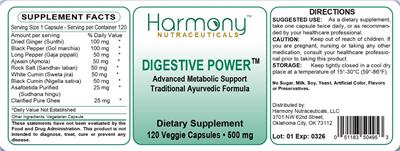
Supplement Facts
The label details for Digestive Power 500 mg by Harmony Nutraceuticals, sourced from the NIH Dietary Supplement Label Database.
Supplement Facts
| Ingredient | Amount | % DV |
|---|---|---|
| Black Pepper | 100 mg | -- |
| Rock Salt | 50 mg | -- |
| Ajwain | 50 mg | -- |
| Black Cumin | 50 mg | -- |
| Ginger, Dried | 100 mg | -- |
| Long Pepper | 50 mg | -- |
| White Cumin | 50 mg | -- |
| Asafoetida, Purified | 25 mg | -- |
| Ghee, Clarified, Pure | 25 mg | -- |
Other ingredients: Vegetarian Capsule
Tap any ingredient to jump to its full detail below.
These statements are the manufacturer’s wording, reproduced from the product label — the label is saying it, not HelloPharmacist. We don’t verify or endorse them.
FDA Disclaimer Statement
These statements have not been evaluated by the Food and Drug Administration. This product is not intended to diagnose, treat, cure or prevent any disease.
Formulation
Advanced metabolic support Traditional ayurvedic formula
No sugar, milk, soy, yeast, artificial color, flavors or preservatives.
FDA Statement of Identity
Dietary Supplement
Suggested/Recommended/Usage/Directions
Directions Suggested use: As a dietary supplement, take one capsule twice daily, or as recommended by your healthcare professional.
Precautions
Caution: Keep out of reach of children.
If you are pregnant, nursing or taking any other medication, consult your healthcare professional prior to taking this product.
Storage
Storage: Keep tightly closed in a cool dry place at a temperature of 15 degrees - 30 degrees C (59 degrees - 86 degrees F).
Is this label outdated? Report a formula or label change and our pharmacy team will review it.
Digestive Power 500 mg by Harmony Nutraceuticals label
The label scan from the NIH Dietary Supplement Label Database. Tap to enlarge.
Label images are published by the NIH Dietary Supplement Label Database for the version of this product on file. Always read your actual product label.
View the full label (PDF)The Ingredients in Digestive Power 500 mg by Harmony Nutraceuticals
These are the 9 active ingredients this product is made of. Select any to open its full monograph.
Serving size1 Capsule(s) Dosage formCapsule Servings per container120 Amounts shown are per serving.
Most supplement products combine several ingredients, and a medication can interact with the product through any one of them. Each ingredient below shows whether it has known drug interactions.
Black Pepper
Interacts with1,020 drugs
Black pepper is a common kitchen spice that is generally safe in the amounts used in food. Its extract, piperine, is mostly added to supplements to he...
Black Pepper monograph & interactionsRock Salt
Ajwain
Interacts with956 drugs
Bishop's Weed (Ammi majus) is a flowering plant whose seeds contain natural light-sensitizing compounds called psoralens, which have been studied main...
Ajwain monograph & interactionsBlack Cumin
Interacts with913 drugs
Black seed (Nigella sativa) is a traditional spice and remedy that has been studied for asthma, blood sugar, cholesterol, and blood pressure, with ear...
Black Cumin monograph & interactionsGinger, Dried
Interacts with1,008 drugs
Ginger is a widely used culinary spice with a long history in traditional medicine, and it has the strongest evidence for helping with nausea and vomi...
Ginger, Dried monograph & interactionsLong Pepper
Interacts with897 drugs
Indian long pepper (pippali) is a spice long used in Ayurvedic medicine and is best known for its piperine content, which may increase how well the bo...
Long Pepper monograph & interactionsWhite Cumin
Interacts with211 drugs
Cumin is a common cooking spice that has a long history in traditional medicine for digestion and other complaints. Food amounts are generally safe fo...
White Cumin monograph & interactionsAsafoetida, Purified
Interacts with289 drugs
Asafoetida is a strong-smelling plant resin used widely as a spice and in traditional medicine, mainly for digestive complaints. Solid human evidence...
Asafoetida, Purified monograph & interactionsGhee, Clarified, Pure
Other (inactive) ingredients: Vegetarian Capsule. These complete the product’s ingredient list but are not active constituents.
Digestive Power 500 mg by Harmony Nutraceuticals Drug Interactions
HelloPharmacist Interaction Report
Digestive Power 500 mg by Harmony Nutraceuticals contains several ingredients with documented interactions with medications.
The most serious concern is with black pepper and its constituent piperine, which can significantly raise blood levels of seizure medications like phenytoin (Dilantin)—a Moderate-severity interaction that research shows can double serum concentrations with even a single 1-gram dose.
Read the full breakdown — every affected drug type, severity by severity
Black pepper also interacts with blood pressure medications (propranolol), HIV drugs (nevirapine), antibiotics (rifampin), heart rhythm drugs (theophylline), immune-suppressing drugs (cyclosporine), sleep aids (pentobarbital), and cholesterol medications (atorvastatin)—all Moderate severity, all potentially raising drug levels or effects in your blood.
Ajwain (bishop's weed) adds Moderate-severity concerns with blood thinners (anticoagulants and antiplatelet drugs), sun-sensitizing medications (photosensitizing drugs), and drugs processed by your liver's CYP3A4 pathway—a large group including some anxiety and heart medications. Black cumin layers on Moderate interactions with blood thinners, blood pressure drugs, diabetes medications, immunosuppressants, and sedatives.
Ginger, dried ginger, long pepper, white cumin, and asafoetida each carry Moderate interactions with blood thinners, diabetes drugs, and other medications.
Rock salt and purified ghee could not be checked for interactions; we hold no data for them. Altogether, these interactions span 1,450 individual medications.
Run your exact prescriptions through the interaction checker on this page before you start.
Check your own medications below · Editorial policy · How we use AI
Want to check YOUR meds against Digestive Power 500 mg?
Ask about interactions with your drugs in plain English — “Can I take it with lisinopril?” — and we find you the answer in seconds, ingredient by ingredient.
Go to the checkerIngredients driving the most interactions
Individual Drug Interactions
The ingredients in Digestive Power 500 mg interact with 1,468 drugs. Click any drug to see the details.
7 of the 9 ingredients in Digestive Power 500 mg interact with drugs. Each result below shows which ingredient is responsible. Black Pepper Ginger, Dried Ajwain Black Cumin Long Pepper Asafoetida, Purified White Cumin
6-mercaptopurinePurinethol
How 6-mercaptopurine interacts with Digestive Power 500 mg — through 1 ingredient. Tap an ingredient for the detail:
Black CuminImmunosuppressants Moderate
Interaction Summary
Theoretically, black seed might interfere with immunosuppressive therapy.
Read the full Black Cumin + 6-mercaptopurine interactionAdo-trastuzumab EmtansineKadcyla
How Ado-trastuzumab Emtansine interacts with Digestive Power 500 mg — through 4 ingredients. Tap an ingredient for the detail:
Ginger, DriedCytochrome P450 3a4 (cyp3a4) Substrates Moderate
Interaction Summary
Ginger might increase or decrease the levels of CYP3A4 substrates.
Read the full Ginger, Dried + Ado-trastuzumab Emtansine interactionBlack PepperCytochrome P450 3a4 (cyp3a4) Substrates Moderate
Interaction Summary
Theoretically, black pepper might increase levels of drugs metabolized by CYP3A4.
Read the full Black Pepper + Ado-trastuzumab Emtansine interactionAjwainCytochrome P450 3a4 (cyp3a4) Substrates Moderate
Interaction Summary
Bergapten, a constituent of bishop's weed, has been shown to inhibit cytochrome P450 3A4 (CYP3A4) in vitro.
Read the full Ajwain + Ado-trastuzumab Emtansine interactionLong PepperCytochrome P450 3a4 (cyp3a4) Substrates Moderate
Interaction Summary
Theoretically, Indian long pepper might increase the effects and adverse effects of CYP3A4 substrates.
Read the full Long Pepper + Ado-trastuzumab Emtansine interactionAbciximabReoPro
How Abciximab interacts with Digestive Power 500 mg — through 7 ingredients. Tap an ingredient for the detail:
Black CuminAnticoagulant/antiplatelet Drugs Moderate
Interaction Summary
Theoretically, black seed may increase the risk of bleeding if used with anticoagulant or antiplatelet drugs.
Read the full Black Cumin + Abciximab interactionGinger, DriedAnticoagulant/antiplatelet Drugs Moderate
Interaction Summary
Ginger may have antiplatelet effects and may increase the risk of bleeding if used with anticoagulant or antiplatelet drugs.
Read the full Ginger, Dried + Abciximab interactionBlack PepperAnticoagulant/antiplatelet Drugs Moderate
Interaction Summary
Theoretically, black pepper might increase the risk of bleeding when taken with antiplatelet or anticoagulant drugs.
Read the full Black Pepper + Abciximab interactionAjwainAnticoagulant/antiplatelet Drugs Moderate
Interaction Summary
Bergapten, a constituent of bishop's weed, has antiplatelet activity.
Read the full Ajwain + Abciximab interactionAsafoetida, PurifiedAnticoagulant/antiplatelet Drugs Moderate
Interaction Summary
Theoretically, asafoetida might increase the risk of bleeding when used concomitantly with anticoagulant/antiplatelet drugs.
Read the full Asafoetida, Purified + Abciximab interactionWhite CuminAnticoagulant/antiplatelet Drugs Moderate
Interaction Summary
Theoretically, cumin might increase the risk of bleeding when used with antiplatelet or anticoagulant drugs.
Read the full White Cumin + Abciximab interactionLong PepperAnticoagulant/antiplatelet Drugs Moderate
Interaction Summary
Theoretically, Indian long pepper might increase the risk of bleeding when taken with anticoagulant/antiplatelet drugs.
Read the full Long Pepper + Abciximab interactionAbemaciclibVerzenio
How Abemaciclib interacts with Digestive Power 500 mg — through 4 ingredients. Tap an ingredient for the detail:
Long PepperCytochrome P450 3a4 (cyp3a4) Substrates Moderate
Interaction Summary
Theoretically, Indian long pepper might increase the effects and adverse effects of CYP3A4 substrates.
Read the full Long Pepper + Abemaciclib interactionBlack PepperCytochrome P450 3a4 (cyp3a4) Substrates Moderate
Interaction Summary
Theoretically, black pepper might increase levels of drugs metabolized by CYP3A4.
Read the full Black Pepper + Abemaciclib interactionGinger, DriedCytochrome P450 3a4 (cyp3a4) Substrates Moderate
Interaction Summary
Ginger might increase or decrease the levels of CYP3A4 substrates.
Read the full Ginger, Dried + Abemaciclib interactionAjwainCytochrome P450 3a4 (cyp3a4) Substrates Moderate
Interaction Summary
Bergapten, a constituent of bishop's weed, has been shown to inhibit cytochrome P450 3A4 (CYP3A4) in vitro.
Read the full Ajwain + Abemaciclib interactionAbiraterone
How Abiraterone interacts with Digestive Power 500 mg — through 4 ingredients. Tap an ingredient for the detail:
AjwainCytochrome P450 3a4 (cyp3a4) Substrates Moderate
Interaction Summary
Bergapten, a constituent of bishop's weed, has been shown to inhibit cytochrome P450 3A4 (CYP3A4) in vitro.
Read the full Ajwain + Abiraterone interactionBlack PepperCytochrome P450 3a4 (cyp3a4) Substrates Moderate
Interaction Summary
Theoretically, black pepper might increase levels of drugs metabolized by CYP3A4.
Read the full Black Pepper + Abiraterone interactionLong PepperCytochrome P450 3a4 (cyp3a4) Substrates Moderate
Interaction Summary
Theoretically, Indian long pepper might increase the effects and adverse effects of CYP3A4 substrates.
Read the full Long Pepper + Abiraterone interactionGinger, DriedCytochrome P450 3a4 (cyp3a4) Substrates Moderate
Interaction Summary
Ginger might increase or decrease the levels of CYP3A4 substrates.
Read the full Ginger, Dried + Abiraterone interactionAbiraterone AcetateYonsa, Zytiga
How Abiraterone Acetate interacts with Digestive Power 500 mg — through 4 ingredients. Tap an ingredient for the detail:
Ginger, DriedCytochrome P450 3a4 (cyp3a4) Substrates Moderate
Interaction Summary
Ginger might increase or decrease the levels of CYP3A4 substrates.
Read the full Ginger, Dried + Abiraterone Acetate interactionBlack PepperCytochrome P450 3a4 (cyp3a4) Substrates Moderate
Interaction Summary
Theoretically, black pepper might increase levels of drugs metabolized by CYP3A4.
Read the full Black Pepper + Abiraterone Acetate interactionAjwainCytochrome P450 3a4 (cyp3a4) Substrates Moderate
Interaction Summary
Bergapten, a constituent of bishop's weed, has been shown to inhibit cytochrome P450 3A4 (CYP3A4) in vitro.
Read the full Ajwain + Abiraterone Acetate interactionLong PepperCytochrome P450 3a4 (cyp3a4) Substrates Moderate
Interaction Summary
Theoretically, Indian long pepper might increase the effects and adverse effects of CYP3A4 substrates.
Read the full Long Pepper + Abiraterone Acetate interactionAbrocitinibCibinqo
How Abrocitinib interacts with Digestive Power 500 mg — through 7 ingredients. Tap an ingredient for the detail:
Long PepperAnticoagulant/antiplatelet Drugs Moderate
Interaction Summary
Theoretically, Indian long pepper might increase the risk of bleeding when taken with anticoagulant/antiplatelet drugs.
Read the full Long Pepper + Abrocitinib interactionWhite CuminAnticoagulant/antiplatelet Drugs Moderate
Interaction Summary
Theoretically, cumin might increase the risk of bleeding when used with antiplatelet or anticoagulant drugs.
Read the full White Cumin + Abrocitinib interactionBlack PepperAnticoagulant/antiplatelet Drugs Moderate
Interaction Summary
Theoretically, black pepper might increase the risk of bleeding when taken with antiplatelet or anticoagulant drugs.
Read the full Black Pepper + Abrocitinib interactionBlack CuminCytochrome P450 2c9 (cyp2c9) Substrates, Immunosuppressants +1 Moderate
Interaction Summary
Theoretically, black seed might increase levels of drugs metabolized by CYP2C9.
Read the full Black Cumin + Abrocitinib interactionGinger, DriedAnticoagulant/antiplatelet Drugs, Cytochrome P450 2c9 (cyp2c9) Substrates Moderate
Interaction Summary
Ginger may have antiplatelet effects and may increase the risk of bleeding if used with anticoagulant or antiplatelet drugs.
Read the full Ginger, Dried + Abrocitinib interactionAsafoetida, PurifiedAnticoagulant/antiplatelet Drugs Moderate
Interaction Summary
Theoretically, asafoetida might increase the risk of bleeding when used concomitantly with anticoagulant/antiplatelet drugs.
Read the full Asafoetida, Purified + Abrocitinib interactionAjwainAnticoagulant/antiplatelet Drugs Moderate
Interaction Summary
Bergapten, a constituent of bishop's weed, has antiplatelet activity.
Read the full Ajwain + Abrocitinib interactionAcalabrutinibCalquence
How Acalabrutinib interacts with Digestive Power 500 mg — through 4 ingredients. Tap an ingredient for the detail:
AjwainCytochrome P450 3a4 (cyp3a4) Substrates Moderate
Interaction Summary
Bergapten, a constituent of bishop's weed, has been shown to inhibit cytochrome P450 3A4 (CYP3A4) in vitro.
Read the full Ajwain + Acalabrutinib interactionBlack PepperCytochrome P450 3a4 (cyp3a4) Substrates, P-glycoprotein Substrates Moderate
Interaction Summary
Theoretically, black pepper might increase levels of drugs metabolized by CYP3A4.
Read the full Black Pepper + Acalabrutinib interactionLong PepperCytochrome P450 3a4 (cyp3a4) Substrates, P-glycoprotein Substrates Moderate
Interaction Summary
Theoretically, Indian long pepper might increase the effects and adverse effects of CYP3A4 substrates.
Read the full Long Pepper + Acalabrutinib interactionGinger, DriedCytochrome P450 3a4 (cyp3a4) Substrates, P-glycoprotein Substrates Moderate
Interaction Summary
Ginger might increase or decrease the levels of CYP3A4 substrates.
Read the full Ginger, Dried + Acalabrutinib interactionAcarboseGlucobay, Prandase, Precose
How Acarbose interacts with Digestive Power 500 mg — through 5 ingredients. Tap an ingredient for the detail:
Black CuminAntidiabetes Drugs Moderate
Interaction Summary
Theoretically, taking black seed with antidiabetes drugs might increase the risk of hypoglycemia.
Read the full Black Cumin + Acarbose interactionGinger, DriedAntidiabetes Drugs Moderate
Interaction Summary
Theoretically, taking ginger with antidiabetes drugs might increase the risk of hypoglycemia.
Read the full Ginger, Dried + Acarbose interactionBlack PepperAntidiabetes Drugs Moderate
Interaction Summary
Theoretically, black pepper might increase the risk of hypoglycemia when taken with antidiabetes drugs.
Read the full Black Pepper + Acarbose interactionWhite CuminAntidiabetes Drugs Moderate
Interaction Summary
Theoretically, cumin might increase the risk of hypoglycemia when taken with antidiabetes drugs.
Read the full White Cumin + Acarbose interactionLong PepperAntidiabetes Drugs Moderate
Interaction Summary
Theoretically, Indian long pepper might increase the risk of hypoglycemia when taken with antidiabetes drugs.
Read the full Long Pepper + Acarbose interactionAcebutololRhotral, Sectral
How Acebutolol interacts with Digestive Power 500 mg — through 2 ingredients. Tap an ingredient for the detail:
Asafoetida, PurifiedAntihypertensive Drugs Moderate
Interaction Summary
Evidence from animal research suggests that asafoetida has hypotensive effects.
Read the full Asafoetida, Purified + Acebutolol interactionBlack CuminAntihypertensive Drugs Moderate
Interaction Summary
Theoretically, taking black seed with antihypertensive drugs might increase the risk of hypotension.
Read the full Black Cumin + Acebutolol interactionAcenocoumarolSintrom
How Acenocoumarol interacts with Digestive Power 500 mg — through 7 ingredients. Tap an ingredient for the detail:
Black PepperAnticoagulant/antiplatelet Drugs Moderate
Interaction Summary
Theoretically, black pepper might increase the risk of bleeding when taken with antiplatelet or anticoagulant drugs.
Read the full Black Pepper + Acenocoumarol interactionLong PepperAnticoagulant/antiplatelet Drugs Moderate
Interaction Summary
Theoretically, Indian long pepper might increase the risk of bleeding when taken with anticoagulant/antiplatelet drugs.
Read the full Long Pepper + Acenocoumarol interactionWhite CuminAnticoagulant/antiplatelet Drugs Moderate
Interaction Summary
Theoretically, cumin might increase the risk of bleeding when used with antiplatelet or anticoagulant drugs.
Read the full White Cumin + Acenocoumarol interactionGinger, DriedAnticoagulant/antiplatelet Drugs Moderate
Interaction Summary
Ginger may have antiplatelet effects and may increase the risk of bleeding if used with anticoagulant or antiplatelet drugs.
Read the full Ginger, Dried + Acenocoumarol interactionBlack CuminAnticoagulant/antiplatelet Drugs Moderate
Interaction Summary
Theoretically, black seed may increase the risk of bleeding if used with anticoagulant or antiplatelet drugs.
Read the full Black Cumin + Acenocoumarol interactionAjwainAnticoagulant/antiplatelet Drugs Moderate
Interaction Summary
Bergapten, a constituent of bishop's weed, has antiplatelet activity.
Read the full Ajwain + Acenocoumarol interactionAsafoetida, PurifiedAnticoagulant/antiplatelet Drugs Moderate
Interaction Summary
Theoretically, asafoetida might increase the risk of bleeding when used concomitantly with anticoagulant/antiplatelet drugs.
Read the full Asafoetida, Purified + Acenocoumarol interactionAcepromazineAtravet
How Acepromazine interacts with Digestive Power 500 mg — through 2 ingredients. Tap an ingredient for the detail:
AjwainPhotosensitizing Drugs Moderate
Interaction Summary
Bishop's weed constituents seem to cause photosensitivity.
Read the full Ajwain + Acepromazine interactionBlack CuminCns Depressants Moderate
Interaction Summary
Theoretically, concomitant use with drugs that have sedative properties may cause additive effects.
Read the full Black Cumin + Acepromazine interactionAcetaminophen, AspirinGemnisyn
How Acetaminophen, Aspirin interacts with Digestive Power 500 mg — through 7 ingredients. Tap an ingredient for the detail:
Ginger, DriedCytochrome P450 1a2 (cyp1a2) Substrates, Anticoagulant/antiplatelet Drugs Moderate
Interaction Summary
Theoretically, ginger might increase the levels of CYP1A2 substrates.
Read the full Ginger, Dried + Acetaminophen, Aspirin interactionBlack CuminAnticoagulant/antiplatelet Drugs Moderate
Interaction Summary
Theoretically, black seed may increase the risk of bleeding if used with anticoagulant or antiplatelet drugs.
Read the full Black Cumin + Acetaminophen, Aspirin interactionAsafoetida, PurifiedAnticoagulant/antiplatelet Drugs Moderate
Interaction Summary
Theoretically, asafoetida might increase the risk of bleeding when used concomitantly with anticoagulant/antiplatelet drugs.
Read the full Asafoetida, Purified + Acetaminophen, Aspirin interactionAjwainAnticoagulant/antiplatelet Drugs Moderate
Interaction Summary
Bergapten, a constituent of bishop's weed, has antiplatelet activity.
Read the full Ajwain + Acetaminophen, Aspirin interactionWhite CuminAnticoagulant/antiplatelet Drugs Moderate
Interaction Summary
Theoretically, cumin might increase the risk of bleeding when used with antiplatelet or anticoagulant drugs.
Read the full White Cumin + Acetaminophen, Aspirin interactionLong PepperAnticoagulant/antiplatelet Drugs Moderate
Interaction Summary
Theoretically, Indian long pepper might increase the risk of bleeding when taken with anticoagulant/antiplatelet drugs.
Read the full Long Pepper + Acetaminophen, Aspirin interactionBlack PepperCytochrome P450 1a2 (cyp1a2) Substrates, Anticoagulant/antiplatelet Drugs Moderate
Interaction Summary
Theoretically, black pepper might decrease levels and clinical effects of drugs metabolized by CYP1A2.
Read the full Black Pepper + Acetaminophen, Aspirin interactionAcetaminophen, Aspirin, CaffeineExcedrin, Excedrin Extra Strength, Excedrin Migraine
How Acetaminophen, Aspirin, Caffeine interacts with Digestive Power 500 mg — through 7 ingredients. Tap an ingredient for the detail:
Black PepperAnticoagulant/antiplatelet Drugs, Cytochrome P450 1a2 (cyp1a2) Substrates +1 Moderate
Interaction Summary
Theoretically, black pepper might increase the risk of bleeding when taken with antiplatelet or anticoagulant drugs.
Read the full Black Pepper + Acetaminophen, Aspirin, Caffeine interactionAjwainAnticoagulant/antiplatelet Drugs, Cytochrome P450 3a4 (cyp3a4) Substrates Moderate
Interaction Summary
Bergapten, a constituent of bishop's weed, has antiplatelet activity.
Read the full Ajwain + Acetaminophen, Aspirin, Caffeine interactionAsafoetida, PurifiedAnticoagulant/antiplatelet Drugs Moderate
Interaction Summary
Theoretically, asafoetida might increase the risk of bleeding when used concomitantly with anticoagulant/antiplatelet drugs.
Read the full Asafoetida, Purified + Acetaminophen, Aspirin, Caffeine interactionLong PepperCytochrome P450 3a4 (cyp3a4) Substrates, Anticoagulant/antiplatelet Drugs Moderate
Interaction Summary
Theoretically, Indian long pepper might increase the effects and adverse effects of CYP3A4 substrates.
Read the full Long Pepper + Acetaminophen, Aspirin, Caffeine interactionGinger, DriedAnticoagulant/antiplatelet Drugs, Cytochrome P450 1a2 (cyp1a2) Substrates +1 Moderate
Interaction Summary
Ginger may have antiplatelet effects and may increase the risk of bleeding if used with anticoagulant or antiplatelet drugs.
Read the full Ginger, Dried + Acetaminophen, Aspirin, Caffeine interactionBlack CuminAnticoagulant/antiplatelet Drugs Moderate
Interaction Summary
Theoretically, black seed may increase the risk of bleeding if used with anticoagulant or antiplatelet drugs.
Read the full Black Cumin + Acetaminophen, Aspirin, Caffeine interactionWhite CuminAnticoagulant/antiplatelet Drugs Moderate
Interaction Summary
Theoretically, cumin might increase the risk of bleeding when used with antiplatelet or anticoagulant drugs.
Read the full White Cumin + Acetaminophen, Aspirin, Caffeine interactionAcetaminophen, Brompheniramine, PhenylpropanolamineDimetapp Cold and Flu
How Acetaminophen, Brompheniramine, Phenylpropanolamine interacts with Digestive Power 500 mg — through 3 ingredients. Tap an ingredient for the detail:
AjwainPhotosensitizing Drugs Moderate
Interaction Summary
Bishop's weed constituents seem to cause photosensitivity.
Read the full Ajwain + Acetaminophen, Brompheniramine, Phenylpropanolamine interactionBlack PepperCytochrome P450 1a2 (cyp1a2) Substrates Minor
Interaction Summary
Theoretically, black pepper might decrease levels and clinical effects of drugs metabolized by CYP1A2.
Read the full Black Pepper + Acetaminophen, Brompheniramine, Phenylpropanolamine interactionGinger, DriedCytochrome P450 1a2 (cyp1a2) Substrates Minor
Interaction Summary
Theoretically, ginger might increase the levels of CYP1A2 substrates.
Read the full Ginger, Dried + Acetaminophen, Brompheniramine, Phenylpropanolamine interactionAcetaminophen, Butalbital, CaffeineEsgic, Esgic Plus, Fiogesic, Fioricet, Repan, Tecnal +1 more
How Acetaminophen, Butalbital, Caffeine interacts with Digestive Power 500 mg — through 4 ingredients. Tap an ingredient for the detail:
Black PepperCytochrome P450 1a2 (cyp1a2) Substrates, Cytochrome P450 3a4 (cyp3a4) Substrates Moderate
Interaction Summary
Theoretically, black pepper might decrease levels and clinical effects of drugs metabolized by CYP1A2.
Read the full Black Pepper + Acetaminophen, Butalbital, Caffeine interactionLong PepperCytochrome P450 3a4 (cyp3a4) Substrates Moderate
Interaction Summary
Theoretically, Indian long pepper might increase the effects and adverse effects of CYP3A4 substrates.
Read the full Long Pepper + Acetaminophen, Butalbital, Caffeine interactionAjwainCytochrome P450 3a4 (cyp3a4) Substrates Moderate
Interaction Summary
Bergapten, a constituent of bishop's weed, has been shown to inhibit cytochrome P450 3A4 (CYP3A4) in vitro.
Read the full Ajwain + Acetaminophen, Butalbital, Caffeine interactionGinger, DriedCytochrome P450 1a2 (cyp1a2) Substrates, Cytochrome P450 3a4 (cyp3a4) Substrates Moderate
Interaction Summary
Theoretically, ginger might increase the levels of CYP1A2 substrates.
Read the full Ginger, Dried + Acetaminophen, Butalbital, Caffeine interactionAcetaminophen, Butalbital, Caffeine, CodeineEsgic with Codeine, Fioricet w/ Codeine
How Acetaminophen, Butalbital, Caffeine, Codeine interacts with Digestive Power 500 mg — through 5 ingredients. Tap an ingredient for the detail:
Ginger, DriedCytochrome P450 3a4 (cyp3a4) Substrates, Cytochrome P450 1a2 (cyp1a2) Substrates Moderate
Interaction Summary
Ginger might increase or decrease the levels of CYP3A4 substrates.
Read the full Ginger, Dried + Acetaminophen, Butalbital, Caffeine, Codeine interactionBlack PepperCytochrome P450 3a4 (cyp3a4) Substrates, Cytochrome P450 1a2 (cyp1a2) Substrates +1 Moderate
Interaction Summary
Theoretically, black pepper might increase levels of drugs metabolized by CYP3A4.
Read the full Black Pepper + Acetaminophen, Butalbital, Caffeine, Codeine interactionBlack CuminCns Depressants Moderate
Interaction Summary
Theoretically, concomitant use with drugs that have sedative properties may cause additive effects.
Read the full Black Cumin + Acetaminophen, Butalbital, Caffeine, Codeine interactionAjwainCytochrome P450 3a4 (cyp3a4) Substrates Moderate
Interaction Summary
Bergapten, a constituent of bishop's weed, has been shown to inhibit cytochrome P450 3A4 (CYP3A4) in vitro.
Read the full Ajwain + Acetaminophen, Butalbital, Caffeine, Codeine interactionLong PepperCytochrome P450 3a4 (cyp3a4) Substrates Moderate
Interaction Summary
Theoretically, Indian long pepper might increase the effects and adverse effects of CYP3A4 substrates.
Read the full Long Pepper + Acetaminophen, Butalbital, Caffeine, Codeine interactionAcetaminophen, Butalbital, CodeineBancap w/ Codeine
How Acetaminophen, Butalbital, Codeine interacts with Digestive Power 500 mg — through 3 ingredients. Tap an ingredient for the detail:
Black CuminCns Depressants Moderate
Interaction Summary
Theoretically, concomitant use with drugs that have sedative properties may cause additive effects.
Read the full Black Cumin + Acetaminophen, Butalbital, Codeine interactionBlack PepperCytochrome P450 1a2 (cyp1a2) Substrates, Cytochrome P450 2d6 (cyp2d6) Substrates Moderate
Interaction Summary
Theoretically, black pepper might decrease levels and clinical effects of drugs metabolized by CYP1A2.
Read the full Black Pepper + Acetaminophen, Butalbital, Codeine interactionGinger, DriedCytochrome P450 1a2 (cyp1a2) Substrates Minor
Interaction Summary
Theoretically, ginger might increase the levels of CYP1A2 substrates.
Read the full Ginger, Dried + Acetaminophen, Butalbital, Codeine interactionAcetaminophen, Butalbital, Codeine PhosphatePhrenilin #3
How Acetaminophen, Butalbital, Codeine Phosphate interacts with Digestive Power 500 mg — through 3 ingredients. Tap an ingredient for the detail:
Black PepperCytochrome P450 2d6 (cyp2d6) Substrates, Cytochrome P450 1a2 (cyp1a2) Substrates Moderate
Interaction Summary
Theoretically, black pepper might increase levels of drugs metabolized by CYP2D6.
Read the full Black Pepper + Acetaminophen, Butalbital, Codeine Phosphate interactionBlack CuminCns Depressants Moderate
Interaction Summary
Theoretically, concomitant use with drugs that have sedative properties may cause additive effects.
Read the full Black Cumin + Acetaminophen, Butalbital, Codeine Phosphate interactionGinger, DriedCytochrome P450 1a2 (cyp1a2) Substrates Minor
Interaction Summary
Theoretically, ginger might increase the levels of CYP1A2 substrates.
Read the full Ginger, Dried + Acetaminophen, Butalbital, Codeine Phosphate interactionAcetaminophen, Caffeine, Chlorpheniramine, Hydrocodone, PhenylephrineHycomine Compound
How Acetaminophen, Caffeine, Chlorpheniramine, Hydrocodone, Phenylephrine interacts with Digestive Power 500 mg — through 5 ingredients. Tap an ingredient for the detail:
Ginger, DriedCytochrome P450 3a4 (cyp3a4) Substrates, Cytochrome P450 1a2 (cyp1a2) Substrates Moderate
Interaction Summary
Ginger might increase or decrease the levels of CYP3A4 substrates.
Read the full Ginger, Dried + Acetaminophen, Caffeine, Chlorpheniramine, Hydrocodone, Phenylephrine interactionBlack PepperCytochrome P450 2d6 (cyp2d6) Substrates, Cytochrome P450 3a4 (cyp3a4) Substrates +1 Moderate
Interaction Summary
Theoretically, black pepper might increase levels of drugs metabolized by CYP2D6.
Read the full Black Pepper + Acetaminophen, Caffeine, Chlorpheniramine, Hydrocodone, Phenylephrine interactionLong PepperCytochrome P450 3a4 (cyp3a4) Substrates Moderate
Interaction Summary
Theoretically, Indian long pepper might increase the effects and adverse effects of CYP3A4 substrates.
Read the full Long Pepper + Acetaminophen, Caffeine, Chlorpheniramine, Hydrocodone, Phenylephrine interactionAjwainCytochrome P450 3a4 (cyp3a4) Substrates, Photosensitizing Drugs Moderate
Interaction Summary
Bergapten, a constituent of bishop's weed, has been shown to inhibit cytochrome P450 3A4 (CYP3A4) in vitro.
Read the full Ajwain + Acetaminophen, Caffeine, Chlorpheniramine, Hydrocodone, Phenylephrine interactionBlack CuminCns Depressants Moderate
Interaction Summary
Theoretically, concomitant use with drugs that have sedative properties may cause additive effects.
Read the full Black Cumin + Acetaminophen, Caffeine, Chlorpheniramine, Hydrocodone, Phenylephrine interactionAcetaminophen, Caffeine, CodeineGesic C15, Gesic C30, Gesic C8, Lenoltec 1, Lenoltec 2, Lenoltec 3 +1 more
How Acetaminophen, Caffeine, Codeine interacts with Digestive Power 500 mg — through 5 ingredients. Tap an ingredient for the detail:
Black PepperCytochrome P450 1a2 (cyp1a2) Substrates, Cytochrome P450 3a4 (cyp3a4) Substrates +1 Moderate
Interaction Summary
Theoretically, black pepper might decrease levels and clinical effects of drugs metabolized by CYP1A2.
Read the full Black Pepper + Acetaminophen, Caffeine, Codeine interactionBlack CuminCns Depressants Moderate
Interaction Summary
Theoretically, concomitant use with drugs that have sedative properties may cause additive effects.
Read the full Black Cumin + Acetaminophen, Caffeine, Codeine interactionGinger, DriedCytochrome P450 1a2 (cyp1a2) Substrates, Cytochrome P450 3a4 (cyp3a4) Substrates Moderate
Interaction Summary
Theoretically, ginger might increase the levels of CYP1A2 substrates.
Read the full Ginger, Dried + Acetaminophen, Caffeine, Codeine interactionAjwainCytochrome P450 3a4 (cyp3a4) Substrates Moderate
Interaction Summary
Bergapten, a constituent of bishop's weed, has been shown to inhibit cytochrome P450 3A4 (CYP3A4) in vitro.
Read the full Ajwain + Acetaminophen, Caffeine, Codeine interactionLong PepperCytochrome P450 3a4 (cyp3a4) Substrates Moderate
Interaction Summary
Theoretically, Indian long pepper might increase the effects and adverse effects of CYP3A4 substrates.
Read the full Long Pepper + Acetaminophen, Caffeine, Codeine interactionAcetaminophen, Caffeine, Codeine, SalicylamideCodalan No.1, Codalan No.2, Codalan No.3
How Acetaminophen, Caffeine, Codeine, Salicylamide interacts with Digestive Power 500 mg — through 5 ingredients. Tap an ingredient for the detail:
Long PepperCytochrome P450 3a4 (cyp3a4) Substrates Moderate
Interaction Summary
Theoretically, Indian long pepper might increase the effects and adverse effects of CYP3A4 substrates.
Read the full Long Pepper + Acetaminophen, Caffeine, Codeine, Salicylamide interactionAjwainCytochrome P450 3a4 (cyp3a4) Substrates Moderate
Interaction Summary
Bergapten, a constituent of bishop's weed, has been shown to inhibit cytochrome P450 3A4 (CYP3A4) in vitro.
Read the full Ajwain + Acetaminophen, Caffeine, Codeine, Salicylamide interactionBlack PepperCytochrome P450 2d6 (cyp2d6) Substrates, Cytochrome P450 3a4 (cyp3a4) Substrates +1 Moderate
Interaction Summary
Theoretically, black pepper might increase levels of drugs metabolized by CYP2D6.
Read the full Black Pepper + Acetaminophen, Caffeine, Codeine, Salicylamide interactionBlack CuminCns Depressants Moderate
Interaction Summary
Theoretically, concomitant use with drugs that have sedative properties may cause additive effects.
Read the full Black Cumin + Acetaminophen, Caffeine, Codeine, Salicylamide interactionGinger, DriedCytochrome P450 3a4 (cyp3a4) Substrates, Cytochrome P450 1a2 (cyp1a2) Substrates Moderate
Interaction Summary
Ginger might increase or decrease the levels of CYP3A4 substrates.
Read the full Ginger, Dried + Acetaminophen, Caffeine, Codeine, Salicylamide interactionAcetaminophen, Caffeine, DihydrocodeineDHC Plus, Panlor DC, Panlor SS
How Acetaminophen, Caffeine, Dihydrocodeine interacts with Digestive Power 500 mg — through 5 ingredients. Tap an ingredient for the detail:
Ginger, DriedCytochrome P450 3a4 (cyp3a4) Substrates, Cytochrome P450 1a2 (cyp1a2) Substrates Moderate
Interaction Summary
Ginger might increase or decrease the levels of CYP3A4 substrates.
Read the full Ginger, Dried + Acetaminophen, Caffeine, Dihydrocodeine interactionBlack PepperCytochrome P450 2d6 (cyp2d6) Substrates, Cytochrome P450 3a4 (cyp3a4) Substrates +1 Moderate
Interaction Summary
Theoretically, black pepper might increase levels of drugs metabolized by CYP2D6.
Read the full Black Pepper + Acetaminophen, Caffeine, Dihydrocodeine interactionAjwainCytochrome P450 3a4 (cyp3a4) Substrates Moderate
Interaction Summary
Bergapten, a constituent of bishop's weed, has been shown to inhibit cytochrome P450 3A4 (CYP3A4) in vitro.
Read the full Ajwain + Acetaminophen, Caffeine, Dihydrocodeine interactionLong PepperCytochrome P450 3a4 (cyp3a4) Substrates Moderate
Interaction Summary
Theoretically, Indian long pepper might increase the effects and adverse effects of CYP3A4 substrates.
Read the full Long Pepper + Acetaminophen, Caffeine, Dihydrocodeine interactionBlack CuminCns Depressants Moderate
Interaction Summary
Theoretically, concomitant use with drugs that have sedative properties may cause additive effects.
Read the full Black Cumin + Acetaminophen, Caffeine, Dihydrocodeine interactionAcetaminophen, Caffeine, IsomethepteneMigralam
How Acetaminophen, Caffeine, Isometheptene interacts with Digestive Power 500 mg — through 4 ingredients. Tap an ingredient for the detail:
Black PepperCytochrome P450 1a2 (cyp1a2) Substrates, Cytochrome P450 3a4 (cyp3a4) Substrates Moderate
Interaction Summary
Theoretically, black pepper might decrease levels and clinical effects of drugs metabolized by CYP1A2.
Read the full Black Pepper + Acetaminophen, Caffeine, Isometheptene interactionGinger, DriedCytochrome P450 1a2 (cyp1a2) Substrates, Cytochrome P450 3a4 (cyp3a4) Substrates Moderate
Interaction Summary
Theoretically, ginger might increase the levels of CYP1A2 substrates.
Read the full Ginger, Dried + Acetaminophen, Caffeine, Isometheptene interactionLong PepperCytochrome P450 3a4 (cyp3a4) Substrates Moderate
Interaction Summary
Theoretically, Indian long pepper might increase the effects and adverse effects of CYP3A4 substrates.
Read the full Long Pepper + Acetaminophen, Caffeine, Isometheptene interactionAjwainCytochrome P450 3a4 (cyp3a4) Substrates Moderate
Interaction Summary
Bergapten, a constituent of bishop's weed, has been shown to inhibit cytochrome P450 3A4 (CYP3A4) in vitro.
Read the full Ajwain + Acetaminophen, Caffeine, Isometheptene interactionAcetaminophen, Caffeine, PyrilamineMidol Max Strength Menstrual
How Acetaminophen, Caffeine, Pyrilamine interacts with Digestive Power 500 mg — through 5 ingredients. Tap an ingredient for the detail:
Long PepperCytochrome P450 3a4 (cyp3a4) Substrates Moderate
Interaction Summary
Theoretically, Indian long pepper might increase the effects and adverse effects of CYP3A4 substrates.
Read the full Long Pepper + Acetaminophen, Caffeine, Pyrilamine interactionAjwainCytochrome P450 3a4 (cyp3a4) Substrates Moderate
Interaction Summary
Bergapten, a constituent of bishop's weed, has been shown to inhibit cytochrome P450 3A4 (CYP3A4) in vitro.
Read the full Ajwain + Acetaminophen, Caffeine, Pyrilamine interactionBlack PepperCytochrome P450 3a4 (cyp3a4) Substrates, Cytochrome P450 1a2 (cyp1a2) Substrates Moderate
Interaction Summary
Theoretically, black pepper might increase levels of drugs metabolized by CYP3A4.
Read the full Black Pepper + Acetaminophen, Caffeine, Pyrilamine interactionGinger, DriedCytochrome P450 3a4 (cyp3a4) Substrates, Cytochrome P450 1a2 (cyp1a2) Substrates Moderate
Interaction Summary
Ginger might increase or decrease the levels of CYP3A4 substrates.
Read the full Ginger, Dried + Acetaminophen, Caffeine, Pyrilamine interactionBlack CuminDiuretic Drugs Moderate
Interaction Summary
Theoretically, taking black seed with diuretic drugs might increase potassium loss and the risk of hypokalemia.
Read the full Black Cumin + Acetaminophen, Caffeine, Pyrilamine interactionAcetaminophen, Chlorpheniramine Maleate, Dextromethorphan HbrVicks Formula 44M Cough, Cold & Flu Relief
How Acetaminophen, Chlorpheniramine Maleate, Dextromethorphan Hbr interacts with Digestive Power 500 mg — through 5 ingredients. Tap an ingredient for the detail:
Ginger, DriedCytochrome P450 1a2 (cyp1a2) Substrates, Cytochrome P450 3a4 (cyp3a4) Substrates Moderate
Interaction Summary
Theoretically, ginger might increase the levels of CYP1A2 substrates.
Read the full Ginger, Dried + Acetaminophen, Chlorpheniramine Maleate, Dextromethorphan Hbr interactionAjwainPhotosensitizing Drugs, Cytochrome P450 3a4 (cyp3a4) Substrates Moderate
Interaction Summary
Bishop's weed constituents seem to cause photosensitivity.
Read the full Ajwain + Acetaminophen, Chlorpheniramine Maleate, Dextromethorphan Hbr interactionBlack PepperCytochrome P450 2d6 (cyp2d6) Substrates, Cytochrome P450 1a2 (cyp1a2) Substrates +1 Moderate
Interaction Summary
Theoretically, black pepper might increase levels of drugs metabolized by CYP2D6.
Read the full Black Pepper + Acetaminophen, Chlorpheniramine Maleate, Dextromethorphan Hbr interactionLong PepperCytochrome P450 3a4 (cyp3a4) Substrates Moderate
Interaction Summary
Theoretically, Indian long pepper might increase the effects and adverse effects of CYP3A4 substrates.
Read the full Long Pepper + Acetaminophen, Chlorpheniramine Maleate, Dextromethorphan Hbr interactionBlack CuminSerotonergic Drugs Moderate
Interaction Summary
Theoretically, combining serotonergic drugs with black seed might increase the risk of serotonergic side effects, including serotonin syndrome and cerebral vasoconstrictive disorders.
Read the full Black Cumin + Acetaminophen, Chlorpheniramine Maleate, Dextromethorphan Hbr interactionAcetaminophen, Chlorpheniramine, Codeine, PhenylephrineColrex
How Acetaminophen, Chlorpheniramine, Codeine, Phenylephrine interacts with Digestive Power 500 mg — through 5 ingredients. Tap an ingredient for the detail:
Black PepperCytochrome P450 1a2 (cyp1a2) Substrates, Cytochrome P450 3a4 (cyp3a4) Substrates +1 Moderate
Interaction Summary
Theoretically, black pepper might decrease levels and clinical effects of drugs metabolized by CYP1A2.
Read the full Black Pepper + Acetaminophen, Chlorpheniramine, Codeine, Phenylephrine interactionBlack CuminSerotonergic Drugs, Cns Depressants Moderate
Interaction Summary
Theoretically, combining serotonergic drugs with black seed might increase the risk of serotonergic side effects, including serotonin syndrome and cerebral vasoconstrictive disorders.
Read the full Black Cumin + Acetaminophen, Chlorpheniramine, Codeine, Phenylephrine interactionAjwainCytochrome P450 3a4 (cyp3a4) Substrates, Photosensitizing Drugs Moderate
Interaction Summary
Bergapten, a constituent of bishop's weed, has been shown to inhibit cytochrome P450 3A4 (CYP3A4) in vitro.
Read the full Ajwain + Acetaminophen, Chlorpheniramine, Codeine, Phenylephrine interactionLong PepperCytochrome P450 3a4 (cyp3a4) Substrates Moderate
Interaction Summary
Theoretically, Indian long pepper might increase the effects and adverse effects of CYP3A4 substrates.
Read the full Long Pepper + Acetaminophen, Chlorpheniramine, Codeine, Phenylephrine interactionGinger, DriedCytochrome P450 3a4 (cyp3a4) Substrates, Cytochrome P450 1a2 (cyp1a2) Substrates Moderate
Interaction Summary
Ginger might increase or decrease the levels of CYP3A4 substrates.
Read the full Ginger, Dried + Acetaminophen, Chlorpheniramine, Codeine, Phenylephrine interactionAcetaminophen, Chlorpheniramine, DextromethorphanCoricidin II Extra Strength Cold and Flu
How Acetaminophen, Chlorpheniramine, Dextromethorphan interacts with Digestive Power 500 mg — through 5 ingredients. Tap an ingredient for the detail:
Black PepperCytochrome P450 2d6 (cyp2d6) Substrates, Cytochrome P450 1a2 (cyp1a2) Substrates +1 Moderate
Interaction Summary
Theoretically, black pepper might increase levels of drugs metabolized by CYP2D6.
Read the full Black Pepper + Acetaminophen, Chlorpheniramine, Dextromethorphan interactionLong PepperCytochrome P450 3a4 (cyp3a4) Substrates Moderate
Interaction Summary
Theoretically, Indian long pepper might increase the effects and adverse effects of CYP3A4 substrates.
Read the full Long Pepper + Acetaminophen, Chlorpheniramine, Dextromethorphan interactionAjwainPhotosensitizing Drugs, Cytochrome P450 3a4 (cyp3a4) Substrates Moderate
Interaction Summary
Bishop's weed constituents seem to cause photosensitivity.
Read the full Ajwain + Acetaminophen, Chlorpheniramine, Dextromethorphan interactionBlack CuminSerotonergic Drugs Moderate
Interaction Summary
Theoretically, combining serotonergic drugs with black seed might increase the risk of serotonergic side effects, including serotonin syndrome and cerebral vasoconstrictive disorders.
Read the full Black Cumin + Acetaminophen, Chlorpheniramine, Dextromethorphan interactionGinger, DriedCytochrome P450 1a2 (cyp1a2) Substrates, Cytochrome P450 3a4 (cyp3a4) Substrates Moderate
Interaction Summary
Theoretically, ginger might increase the levels of CYP1A2 substrates.
Read the full Ginger, Dried + Acetaminophen, Chlorpheniramine, Dextromethorphan interactionAcetaminophen, Chlorpheniramine, Dextromethorphan HydrobromideCoricidin HBP Maximum Strength Flu
How Acetaminophen, Chlorpheniramine, Dextromethorphan Hydrobromide interacts with Digestive Power 500 mg — through 5 ingredients. Tap an ingredient for the detail:
Ginger, DriedCytochrome P450 3a4 (cyp3a4) Substrates, Cytochrome P450 1a2 (cyp1a2) Substrates Moderate
Interaction Summary
Ginger might increase or decrease the levels of CYP3A4 substrates.
Read the full Ginger, Dried + Acetaminophen, Chlorpheniramine, Dextromethorphan Hydrobromide interactionAjwainCytochrome P450 3a4 (cyp3a4) Substrates, Photosensitizing Drugs Moderate
Interaction Summary
Bergapten, a constituent of bishop's weed, has been shown to inhibit cytochrome P450 3A4 (CYP3A4) in vitro.
Read the full Ajwain + Acetaminophen, Chlorpheniramine, Dextromethorphan Hydrobromide interactionLong PepperCytochrome P450 3a4 (cyp3a4) Substrates Moderate
Interaction Summary
Theoretically, Indian long pepper might increase the effects and adverse effects of CYP3A4 substrates.
Read the full Long Pepper + Acetaminophen, Chlorpheniramine, Dextromethorphan Hydrobromide interactionBlack PepperCytochrome P450 2d6 (cyp2d6) Substrates, Cytochrome P450 1a2 (cyp1a2) Substrates +1 Moderate
Interaction Summary
Theoretically, black pepper might increase levels of drugs metabolized by CYP2D6.
Read the full Black Pepper + Acetaminophen, Chlorpheniramine, Dextromethorphan Hydrobromide interactionBlack CuminSerotonergic Drugs Moderate
Interaction Summary
Theoretically, combining serotonergic drugs with black seed might increase the risk of serotonergic side effects, including serotonin syndrome and cerebral vasoconstrictive disorders.
Read the full Black Cumin + Acetaminophen, Chlorpheniramine, Dextromethorphan Hydrobromide interactionAcetaminophen, Chlorpheniramine, Dextromethorphan, PhenylpropanolamineMulti Symptom Cold Relief
How Acetaminophen, Chlorpheniramine, Dextromethorphan, Phenylpropanolamine interacts with Digestive Power 500 mg — through 5 ingredients. Tap an ingredient for the detail:
Black PepperCytochrome P450 1a2 (cyp1a2) Substrates, Cytochrome P450 3a4 (cyp3a4) Substrates +1 Moderate
Interaction Summary
Theoretically, black pepper might decrease levels and clinical effects of drugs metabolized by CYP1A2.
Read the full Black Pepper + Acetaminophen, Chlorpheniramine, Dextromethorphan, Phenylpropanolamine interactionBlack CuminSerotonergic Drugs Moderate
Interaction Summary
Theoretically, combining serotonergic drugs with black seed might increase the risk of serotonergic side effects, including serotonin syndrome and cerebral vasoconstrictive disorders.
Read the full Black Cumin + Acetaminophen, Chlorpheniramine, Dextromethorphan, Phenylpropanolamine interactionAjwainCytochrome P450 3a4 (cyp3a4) Substrates, Photosensitizing Drugs Moderate
Interaction Summary
Bergapten, a constituent of bishop's weed, has been shown to inhibit cytochrome P450 3A4 (CYP3A4) in vitro.
Read the full Ajwain + Acetaminophen, Chlorpheniramine, Dextromethorphan, Phenylpropanolamine interactionLong PepperCytochrome P450 3a4 (cyp3a4) Substrates Moderate
Interaction Summary
Theoretically, Indian long pepper might increase the effects and adverse effects of CYP3A4 substrates.
Read the full Long Pepper + Acetaminophen, Chlorpheniramine, Dextromethorphan, Phenylpropanolamine interactionGinger, DriedCytochrome P450 3a4 (cyp3a4) Substrates, Cytochrome P450 1a2 (cyp1a2) Substrates Moderate
Interaction Summary
Ginger might increase or decrease the levels of CYP3A4 substrates.
Read the full Ginger, Dried + Acetaminophen, Chlorpheniramine, Dextromethorphan, Phenylpropanolamine interactionEach ingredient & the kinds of drugs it affects
For each ingredient in Digestive Power 500 mg with known interactions, here are the types of medications they can affect. Open any type for the detail — or search your exact drug in the checker above.
Black Pepper
Anticoagulant/Antiplatelet Drugs
Theoretically, black pepper might increase the risk of bleeding when taken with antiplatelet or anticoagulant drugs.
In vitro research shows that piperine, a constituent of black pepper, seems to inhibit platelet aggregation. This has not been reported in humans.
Antidiabetes Drugs
Theoretically, black pepper might increase the risk of hypoglycemia when taken with antidiabetes drugs.
Animal research shows that piperine, a constituent of black pepper, can reduce blood glucose levels. Monitor blood glucose levels closely. Dose adjustments might be necessary.
Atorvastatin (Lipitor)
Theoretically, black pepper might increase blood levels of atorvastatin.
Animal research shows that taking piperine, a constituent of black pepper, 35 mg/kg can increase the maximum serum concentration of atorvastatin three-fold. This has not been reported in humans.
Cyclosporine (Neoral, Sandimmune)
Theoretically, black pepper might increase the effects and side effects of cyclosporine.
In vitro research shows that piperine, a constituent of black pepper, increases the bioavailability of cyclosporine. This has not been reported in humans.
Cytochrome P450 2D6 (Cyp2D6) Substrates
Theoretically, black pepper might increase levels of drugs metabolized by CYP2D6.
In vitro research suggests that some constituents of black pepper inhibit CYP2D6. This has not been reported in humans.
Cytochrome P450 3A4 (Cyp3A4) Substrates
Theoretically, black pepper might increase levels of drugs metabolized by CYP3A4.
In vitro research and pharmacokinetic simulation data suggest that piperine, a constituent of black pepper, as well as the pepper fruit seem to inhibit CYP3A4. This has not been reported in humans.
Lithium
Theoretically, black pepper might increase blood levels of lithium due to its diuretic effects. The dose of lithium might need to be reduced.
Black pepper is thought to have diuretic properties.
Nevirapine (Viramune)
Black pepper might increase blood levels of nevirapine.
Clinical research shows that piperine, a constituent of black pepper, increases the plasma concentration of nevirapine. However, no adverse effects were observed in this study.
P-Glycoprotein Substrates
Theoretically, black pepper might increase levels of P-glycoprotein substrates.
In vitro research shows that piperine, a constituent of black pepper, seems to inhibit P-glycoprotein.
Pentobarbital (Nembutal)
Theoretically, black pepper might increase the sedative effects of pentobarbital.
Animal research shows that piperine, a constituent of black pepper, increases pentobarbital-induced sleeping time.
Phenytoin (Dilantin)
Black pepper might increase blood levels of phenytoin.
Clinical research shows that piperine, a constituent of black pepper, seems to increase absorption, slow elimination, and increase levels of phenytoin. Taking a single dose of black pepper 1 gram along with phenytoin seems to double the serum concentration of phenytoin. Consuming a soup with black pepper providing piperine 44 mg/200 mL of soup along with phenytoin also seems to increase phenytoin levels when compared with consuming the same soup without black pepper.
Propranolol (Inderal)
Black pepper might increase blood levels of propranolol.
Clinical research shows that piperine, a constituent of black pepper, seems to increase absorption and slow elimination of propranolol.
Rifampin (Rifadin)
Black pepper might increase blood levels of rifampin.
Clinical research shows that piperine, a constituent of black pepper, seems to increase absorption and serum levels of rifampin.
Theophylline
Black pepper might increase blood levels of theophylline.
Clinical research shows that piperine, a constituent of black pepper, seems to increase absorption and slow elimination of theophylline.
Amoxicillin (Amoxil, Trimox)
Theoretically, black pepper might increase the effects and side effects of amoxicillin.
Animal research shows that taking piperine, a constituent of black pepper, with amoxicillin increases plasma levels of amoxicillin. This has not been reported in humans.
Carbamazepine (Tegretol)
Theoretically, black pepper might increase blood levels of carbamazepine, potentially increasing the effects and side effects of carbamazepine.
One clinical study in patients taking carbamazepine 300 mg or 500 mg twice daily shows that taking a single 20 mg dose of purified piperine, a constituent of black pepper, increases carbamazepine levels. Piperine may increase carbamazepine absorption by increasing blood flow to the GI tract, increasing the surface area of the small intestine, or inhibiting cytochrome P450 3A4 (CYP3A4) in the gut wall. Absorption was significantly increased by 7-10 mcg/mL/hour. The time to eliminate carbamazepine was also increased by 4-8 hours. Although carbamazepine levels were increased, this did not appear to increase side effects. In vitro research also shows that piperine can increase carbamazepine levels by 11% in a time-dependent manner.
Cytochrome P450 1A2 (Cyp1A2) Substrates
Theoretically, black pepper might decrease levels and clinical effects of drugs metabolized by CYP1A2.
In vitro research suggests that black pepper induces CYP1A2. This has not been reported in humans.
Ginger, Dried
Anticoagulant/Antiplatelet Drugs
Ginger may have antiplatelet effects and may increase the risk of bleeding if used with anticoagulant or antiplatelet drugs. However, research is conflicting.
Laboratory research suggests that ginger inhibits thromboxane synthetase and decreases platelet aggregation. However, this has not been demonstrated unequivocally in humans, with mixed results from clinical trials. Theoretically, excessive amounts of ginger might increase the risk of bleeding when used with anticoagulant/antiplatelet drugs.
Antidiabetes Drugs
Theoretically, taking ginger with antidiabetes drugs might increase the risk of hypoglycemia.
Animal and human research suggests that ginger might increase insulin levels and/or decrease blood glucose levels.
Cytochrome P450 3A4 (Cyp3A4) Substrates
Ginger might increase or decrease the levels of CYP3A4 substrates.
In vitro research and some case reports suggest that ginger inhibits CYP3A4 activity. Three case reports from the World Health Organization (WHO) adverse drug reaction database describe increased toxicity in patients taking ginger and cancer medications that are CYP3A4 substrates (imatinib, dabrafenib, and crizotinib). However, the causality of this interaction is unclear due to the presence of multiple interacting drugs and routes of administration.
Conversely, other in vitro research suggests that ginger induces CYP3A4 activity, leading to reduced levels of CYP3A4 substrates. However, this interaction has not been reported in humans.
Losartan (Cozaar)
Theoretically, ginger might increase levels of losartan and the risk of hypotension.
In animal research, ginger increased the levels and hypotensive effects of a single dose of losartan. It is not clear if ginger alters the concentration or effects of losartan when taken continuously. Additionally, this interaction has not been shown in humans.
Nifedipine (Procardia)
Ginger may have antiplatelet effects and increase the risk of bleeding if used with nifedipine.
Clinical research shows that combined treatment with ginger 1 gram plus nifedipine 10 mg significantly inhibits platelet aggregation when compared to nifedipine or ginger alone.
P-Glycoprotein Substrates
Ginger might increase the absorption and blood levels of P-glycoprotein (P-gp) substrates.
In vitro research and case reports suggest that ginger inhibits drug efflux by P-gp, potentially increasing absorption and serum levels of P-gp substrates. Two case reports from the World Health Organization (WHO) adverse drug reaction database describe increased toxicity in patients taking ginger and cancer medications that are P-gp substrates (trametinib, crizotinib). However, the causality of this interaction is unclear due to the presence of multiple interacting drugs and routes of administration.
Phenprocoumon (Marcoumar, Others)
Ginger might increase the risk of bleeding with phenprocoumon.
Phenprocoumon, a warfarin-related anticoagulant, might increase the international normalized ratio (INR) when taken with ginger. There is one case report of a 76-year-old woman with a stable INR on phenprocoumon that increased to greater than 10 when she began consuming dried ginger and ginger tea.
Warfarin (Coumadin)
Ginger might increase the risk of bleeding with warfarin.
Laboratory research suggests that ginger might inhibit thromboxane synthetase and decrease platelet aggregation. In one case report, ginger increased the INR when taken with phenprocoumon, which has similar pharmacological effects as warfarin. In another case report, ginger increased the INR when taken with a combination of warfarin, hydrochlorothiazide, and acetaminophen. A longitudinal analysis suggests that taking ginger increases the risk of bleeding in patients taking warfarin for at least 4 months. However, research in healthy people suggests that ginger has no effect on INR, or the pharmacokinetics or pharmacodynamics of warfarin. Until more is known, monitor INRs closely in patients taking large amounts of ginger.
Calcium Channel Blockers
Theoretically, taking ginger with calcium channel blockers might increase the risk of hypotension.
Some animal and in vitro research suggests that ginger has hypotensive and calcium channel-blocking effects. Another animal study shows that concomitant administration of ginger and the calcium channel blocker amlodipine leads to greater reductions in blood pressure when compared with amlodipine alone.
Cyclosporine (Neoral, Sandimmune)
Theoretically, when taken prior to cyclosporine, ginger might decrease cyclosporine levels.
In an animal model, ginger juice taken 2 hours prior to cyclosporine administration reduced the maximum concentration and area under the curve of cyclosporine by 51% and 40%, respectively. This effect was not observed when ginger juice and cyclosporine were administered at the same time.
Cytochrome P450 1A2 (Cyp1A2) Substrates
Theoretically, ginger might increase the levels of CYP1A2 substrates.
In vitro research shows that ginger inhibits CYP1A2 activity. However, this interaction has not been reported in humans.
Cytochrome P450 2B6 (Cyp2B6) Substrates
Theoretically, ginger might increase the levels of CYP2B6 substrates.
In vitro research shows that ginger inhibits CYP2B6 activity. However, this interaction has not been reported in humans.
Cytochrome P450 2C9 (Cyp2C9) Substrates
Theoretically, ginger might increase the levels of CYP2C9 substrates.
In vitro research shows that ginger inhibits CYP2C9 activity. However, this interaction has not been reported in humans.
Metronidazole (Flagyl)
Theoretically, ginger might increase levels of metronidazole.
In an animal model, ginger increased the absorption and plasma half-life of metronidazole. In addition, the elimination rate and clearance of metronidazole was significantly reduced.
Ajwain
Anticoagulant/Antiplatelet Drugs
Bergapten, a constituent of bishop's weed, has antiplatelet activity. Theoretically, bishop's weed might have additive effects with anticoagulant or antiplatelet drugs and possibly increase the risk of bleeding.
Some anticoagulant or antiplatelet drugs include aspirin, clopidogrel (Plavix), dalteparin (Fragmin), enoxaparin (Lovenox), heparin, ticlopidine (Ticlid), warfarin (Coumadin), and others.
Cytochrome P450 3A4 (Cyp3A4) Substrates
Bergapten, a constituent of bishop's weed, has been shown to inhibit cytochrome P450 3A4 (CYP3A4) in vitro. Theoretically, bishop's weed might inhibit elimination and increase blood levels of drugs metabolized by CYP3A4.
Some drugs metabolized by CYP3A4 include alprazolam (Xanax), amitriptyline (Elavil), amiodarone (Cordarone), buspirone (Buspar), cerivastatin (Baycol), citalopram (Celexa), felodipine (Plendil), fexofenadine (Allegra), itraconazole (Sporanox), ketoconazole (Nizoral), lansoprazole (Prevacid), losartan (Cozaar), lovastatin (Mevacor), ondansetron (Zofran), prednisone (Deltasone, Orasone), sertraline (Zoloft), sibutramine (Meridia), sildenafil (Viagra), simvastatin (Zocor), verapamil (Calan, Covera-HS, Isoptin), and many others.
Photosensitizing Drugs
Bishop's weed constituents seem to cause photosensitivity. Theoretically, concomitant use of bishop's weed with photosensitizing drugs might result in increased photosensitivity.
Some drugs that cause photosensitivity include amitriptyline (Elavil), quinolones (Ciprofloxacin, others), sulfa drugs (Septra, Bactrim, others), and tetracycline.
Black Cumin
Anticoagulant/Antiplatelet Drugs
Theoretically, black seed may increase the risk of bleeding if used with anticoagulant or antiplatelet drugs.
In vitro and animal research suggests that black seed extract can inhibit platelet aggregation and clotting, and increase bleeding time. In addition, decreased platelet counts have occurred in a human case report and in animal research.
Antidiabetes Drugs
Theoretically, taking black seed with antidiabetes drugs might increase the risk of hypoglycemia.
Some clinical research and numerous animal studies suggest that black seed, especially its constituent thymoquinone, can have hypoglycemic effects.
Antihypertensive Drugs
Theoretically, taking black seed with antihypertensive drugs might increase the risk of hypotension.
Clinical research suggests that black seed powder and oil might reduce blood pressure by 2-3 mmHg. In animal research, black seed modestly reduces blood pressure and concomitant use of black seed and amlodipine (Norvasc) or metoprolol (Lopressor) increased the blood pressure lowering effects of these drugs.
Clopidogrel (Plavix)
Theoretically, black seed may increase the risk of bleeding if used with clopidogrel.
Animal research shows that taking black seed extract daily for 2 weeks prior to a single dose of clopidogrel increases maximum concentrations of clopidogrel by approximately 31% and modestly decreases oral clearance. Furthermore, bleeding time was increased by 12%. This has not been shown in humans.
Cns Depressants
Theoretically, concomitant use with drugs that have sedative properties may cause additive effects.
Animal research suggests that black seed may have CNS depressant effects.
Cyclosporine (Neoral, Sandimmune)
Theoretically taking black seed might reduce the levels and clinical effects of cyclosporine.
In animal research, black seed extract decreased the maximal levels of cyclosporine in the blood by 35.5%. This has not been shown in humans.
Cytochrome P450 2C9 (Cyp2C9) Substrates
Theoretically, black seed might increase levels of drugs metabolized by CYP2C9.
In vitro research suggests that thymoquinone, a constituent of black seed, can decrease the metabolism of phenytoin by a mechanism possibly related to the inhibition of CYP2C9. The effect of black seed on CYP2C9 is unclear. This has not been shown in humans.
Diuretic Drugs
Theoretically, taking black seed with diuretic drugs might increase potassium loss and the risk of hypokalemia.
Black seed extract has shown diuretic effects in animals, which could theoretically increase potassium loss. This has not been shown in humans.
Immunosuppressants
Theoretically, black seed might interfere with immunosuppressive therapy.
Animal and in vitro studies suggest that black seed might stimulate immune function. However, other animal studies suggest that black seed may suppress immune function.
Phenytoin (Dilantin)
Theoretically, black seed might increase or decrease levels and effects of phenytoin.
In vitro research suggests that thymoquinone, a constituent of black seed, can decrease the metabolism of phenytoin. This effect may be due to inhibition of cytochrome P450 2C9 (CYP2C9). However, animal research shows that black seed decreases the maximum concentration of and total systemic exposure to phenytoin by 57% and 87%, respectively. This seems to be related to increased clearance and steady state volume of distribution. This interaction has not been shown in humans.
Serotonergic Drugs
Theoretically, combining serotonergic drugs with black seed might increase the risk of serotonergic side effects, including serotonin syndrome and cerebral vasoconstrictive disorders.
Animal research suggests that black seed can increase brain serotonin levels. In one case report, a 35-year-old man undergoing endoscopic surgery experienced immediate postoperative serotonin syndrome that was likely associated with the use of black seed oil 600 mg daily starting 4 days before surgery, and precipitated by the use of serotonergic pain medications, including fentanyl and oxycodone. Monitor patients for signs of serotonin syndrome and other serotonergic side effects if using black seed with serotonergic drugs.
Sildenafil (Viagra)
Theoretically, black seed might reduce plasma levels and the therapeutic effects of sildenafil.
Animal research shows that black seed reduces the total systemic exposure to sildenafil by 43%. So far, this interaction has not been reported in humans.
Warfarin (Coumadin)
Theoretically, black seed might increase levels of warfarin and increase the risk of bleeding.
In vitro research suggests that thymoquinone, a constituent of black seed, can decrease the metabolism of warfarin. This effect may be due to inhibition of cytochrome P450 2C9 (CYP2C9). The effect of black seed on warfarin metabolism is unclear. This has not been shown in humans.
Prednisolone
Theoretically black seed might reduce plasma levels and therapeutic effects of prednisolone.
In animal research, oral administration of a single dose of black seed oil 15 minutes prior to oral prednisolone decreases the prednisolone maximum plasma concentration by 65% and area under the curve by 25%. This has not been shown in humans.
Long Pepper
Anticoagulant/Antiplatelet Drugs
Theoretically, Indian long pepper might increase the risk of bleeding when taken with anticoagulant/antiplatelet drugs.
In vitro research shows that Indian long pepper extract inhibits platelet aggregation.
Antidiabetes Drugs
Theoretically, Indian long pepper might increase the risk of hypoglycemia when taken with antidiabetes drugs.
Animal research shows that piperine, a constituent of Indian long pepper, can reduce blood glucose levels. Monitor blood glucose levels closely. Dose adjustments might be necessary.
Cyclosporine (Neoral, Sandimmune)
Theoretically, Indian long pepper might increase the effects and adverse effects of cyclosporine.
In vitro research shows that piperine, a constituent of Indian long pepper, increases the bioavailability of cyclosporine.
Cytochrome P450 3A4 (Cyp3A4) Substrates
Theoretically, Indian long pepper might increase the effects and adverse effects of CYP3A4 substrates.
In vitro research shows that piperine, a constituent of Indian long pepper, inhibits CYP3A4.
Nevirapine (Viramune)
Theoretically, Indian long pepper might increase blood levels of nevirapine.
A small pharmacokinetic study shows that piperine, a constituent of Indian long pepper, increases the plasma concentration and systemic exposure of nevirapine. However, no adverse effects were associated with the elevated plasma levels of nevirapine.
P-Glycoprotein Substrates
Theoretically, Indian long pepper might increase levels of P-glycoprotein substrates.
In vitro research shows that piperine, a constituent of Indian long pepper, can inhibit P-glycoprotein.
Pentobarbital (Nembutal)
Theoretically, Indian long pepper might increase the sedative effects of pentobarbital.
Animal research shows that piperine, a constituent of Indian long pepper, can increase pentobarbitone-induced sleeping time.
Phenytoin (Dilantin)
Theoretically, Indian long pepper might increase blood levels of phenytoin.
A small pharmacokinetic study shows that piperine, a constituent of Indian long pepper, increases phenytoin serum levels and slows its elimination.
Propranolol (Inderal)
Theoretically, Indian long pepper might increase blood levels of propranolol.
A small pharmacokinetic study shows that piperine, a constituent of Indian long pepper, accelerates absorption and increases serum concentrations of propranolol.
Rifampin (Rifadin)
Theoretically, Indian long pepper might increase blood levels of rifampin.
Piperine, a constituent of Indian long pepper, seems to increase absorption and serum levels of rifampin.
Theophylline
Indian long pepper might increase blood levels of theophylline.
A small pharmacokinetic study shows that piperine, a constituent of Indian long pepper, increases serum concentrations and slows elimination of theophylline.
Amoxicillin (Amoxil, Trimox)
Theoretically, Indian long pepper might increase the effects and adverse effects of amoxicillin.
Evidence from animal research shows that piperine, a constituent of Indian long pepper, increases the plasma levels of amoxicillin when taken concomitantly.
Carbamazepine (Tegretol)
Theoretically, Indian long pepper might increase blood levels of carbamazepine.
A small pharmacokinetic study in patients taking carbamazepine 300 mg or 500 mg twice daily shows that a single 20 mg dose of purified piperine, which is a constituent of Indian long pepper, increases carbamazepine levels. Piperine may increase absorption by increasing blood flow to the GI tract, increasing the surface area of the small intestine, or by cytochrome P450 3A4 (CYP3A4) inhibition in the gut wall. Absorption was significantly increased by 7-10 mcg/mL/hour. The time to eliminate carbamazepine was also increased by 4-8 hours. Although carbamazepine levels were increased, this did not appear to increase side effects.
Cefotaxime (Claforan)
Theoretically, Indian long pepper might increase the effects and adverse effects of cefotaxime.
Animal research shows that piperine, a constituent of Indian long pepper, increases the plasma levels of cefotaxime when taken concomitantly.
Asafoetida, Purified
Anticoagulant/Antiplatelet Drugs
Theoretically, asafoetida might increase the risk of bleeding when used concomitantly with anticoagulant/antiplatelet drugs. Some anticoagulant/antiplatelet drugs include aspirin, clopidogrel (Plavix), diclofenac (Voltaren, Cataflam, others), ibuprofen (Advil, Motrin, others), naproxen (Anaprox, Naprosyn, others), dalteparin (Fragmin), enoxaparin (Lovenox), heparin, warfarin (Coumadin), and others.
Antihypertensive Drugs
Evidence from animal research suggests that asafoetida has hypotensive effects. Theoretically, concomitant use may increase therapeutic effects of antihypertensive therapy due to hypotensive activity of asafoetida. Some antihypertensive drugs include captopril (Capoten), enalapril (Vasotec), losartan (Cozaar), valsartan (Diovan), diltiazem (Cardizem), Amlodipine (Norvasc), hydrochlorothiazide (HydroDiuril), furosemide (Lasix), and many others.
White Cumin
Anticoagulant/Antiplatelet Drugs
Theoretically, cumin might increase the risk of bleeding when used with antiplatelet or anticoagulant drugs.
In vitro evidence suggests that cumin can inhibit platelet aggregation. Theoretically, cumin might increase the risk of bleeding when used with antiplatelet or anticoagulant drugs.
Antidiabetes Drugs
Theoretically, cumin might increase the risk of hypoglycemia when taken with antidiabetes drugs.
Animal research suggests that cumin can lower blood sugar in diabetic animals. However, research in humans with and without diabetes has found conflicting results.
Rifampin (Rifadin)
Theoretically, cumin might increase the effects and adverse effects of rifampin.
Animal research suggests that an aqueous extract of cumin containing a specific flavonoid glycoside can increase the bioavailability and plasma levels of rifampin.
Brand information
Manufacturer and brand details for Digestive Power 500 mg, from the product label.
Harmony Nutraceuticals
See all Harmony Nutraceuticals products- Name
- Harmony Nutraceuticals, LLC
- Street Address
- 3701 NW 62nd Street
- City
- Oklahoma City
- State
- OK
- ZipCode
- 73112
Digestive Power 500 mg by Harmony Nutraceuticals: Common Questions
Does Digestive Power 500 mg by Harmony Nutraceuticals interact with any medications?
How can one product interact with so many drugs?
Where does this information come from?
What are the active ingredients in this product?
Does this product actually work for digestion?
Is this safe to take while pregnant?
What are the most common side effects?
Can I take this if I'm on blood thinners?
Is this product free of fillers?
Written and reviewed by the HelloPharmacist editorial staff. Our editorial policy
Not sure if Digestive Power 500 mg is safe with your meds?
Our pharmacists answer your medication & supplement questions — free.
Label information is sourced from the NIH Dietary Supplement Label Database and reflects the product version on file; always read your actual product label. This page is for education only and is not a substitute for professional medical advice. Confirm with your pharmacist or doctor before combining supplements and medications.
The Full Monographs Behind Digestive Power 500 mg’s Ingredients
Every ingredient we hold a full HelloPharmacist monograph for — uses, evidence, safety, and the complete interaction list.
Black Pepper
Interacts with 1,020 drugsBlack pepper is a common kitchen spice that is generally safe in the amounts used in food. Its extract, piperine, is mostly added to supplements to help the body absorb other ingredients (li...
Read the full Black Pepper monograph → Herb & supplement monographBishop's Weed
Interacts with 956 drugsBishop's Weed (Ammi majus) is a flowering plant whose seeds contain natural light-sensitizing compounds called psoralens, which have been studied mainly for skin conditions like vitiligo and...
Read the full Bishop's Weed monograph → Herb & supplement monographBlack Seed
Interacts with 913 drugsBlack seed (Nigella sativa) is a traditional spice and remedy that has been studied for asthma, blood sugar, cholesterol, and blood pressure, with early research showing some promise but no...
Read the full Black Seed monograph → Herb & supplement monographGinger
Interacts with 1,008 drugsGinger is a widely used culinary spice with a long history in traditional medicine, and it has the strongest evidence for helping with nausea and vomiting, including from motion sickness, pr...
Read the full Ginger monograph → Herb & supplement monographIndian Long Pepper
Interacts with 897 drugsIndian long pepper (pippali) is a spice long used in Ayurvedic medicine and is best known for its piperine content, which may increase how well the body absorbs certain other substances. Mod...
Read the full Indian Long Pepper monograph → Herb & supplement monographCumin
Interacts with 211 drugsCumin is a common cooking spice that has a long history in traditional medicine for digestion and other complaints. Food amounts are generally safe for most people, but the evidence for medi...
Read the full Cumin monograph → Herb & supplement monographAsafoetida
Interacts with 289 drugsAsafoetida is a strong-smelling plant resin used widely as a spice and in traditional medicine, mainly for digestive complaints. Solid human evidence for its medicinal benefits is limited, t...
Read the full Asafoetida monograph →Sources & How We Checked
Digestive Power 500 mg's label data comes from the NIH Dietary Supplement Label Database; the ingredient interaction data is from the Natural Medicines database, reviewed by our pharmacists.
- NIH Dietary Supplement Label Database (DSLD) — The official product label on file for this supplement.
- Natural Medicines (Therapeutic Research Center) — Evidence-graded clinical reference behind the ingredient interaction data.
Content is written and reviewed by licensed HelloPharmacist pharmacists. See our data sources and editorial standards for how this information is built and checked.
The 187 references behind this product’s interaction data
Every citation that drives the interaction findings for this product’s ingredients, from the evidence-graded Natural Medicines (TRC Healthcare) database. Open an ingredient to browse its citations — links open the study on PubMed or the publisher’s site.
Black Pepper 29 references
- Leung AY, Foster S. Encyclopedia of Common Natural Ingredients Used in Food, Drugs and Cosmetics. 2nd ed. New York, NY: John Wiley & Sons, 1996.
- Brinker F. Herb Contraindications and Drug Interactions. 2nd ed. Sandy, OR: Eclectic Medical Publications, 1998.
- Bano G, Amla V, Raina RK, et al. The effect of piperine on pharmacokinetics of phenytoin in healthy volunteers. Planta Med 1987;53:568-9. PubMed
- Bano G, et al. Effect of piperine on bioavailability and pharmacokinetics of propranolol and theophylline in healthy volunteers. Eur J Clin Pharmacol 1991;41;615-7. PubMed
- Cohle SD, Trestrail JD III, Graham MA, et al. Fatal pepper aspiration. Am J Dis Child 1988;142:633-6. PubMed
- Bhardwaj RK, Glaeser H, Becquemont L, et al. Piperine, a major constituent of black pepper, inhibits human P-glycoprotein and CYP3A4. J Pharmacol Exp Ther 2002;302:645-50. PubMed
- Velpandian T, Jasuja R, Bhardwaj RK, et al. Piperine in food: interference in the pharmacokinetics of phenytoin. Eur J Drug Metab Pharmacokinet 2001;26:241-7. PubMed
- Pattanaik S, Hota D, Prabhakar S, et al. Pharmacokinetic interaction of a single dose of piperine with steady-state carbamazepine in epilepsy patients. Phytother Res 2009;23:1281-6.
- Munakata, M., Kobayashi, K., Niisato-Nezu, J., Tanaka, S., Kakisaka, Y., Ebihara, T., Ebihara, S., Haginoya, K., Tsuchiya, S., and Onuma, A. Olfactory stimulation using black pepper oil facilitates oral feeding in pediatric patients receiving long-term en
- Myers, B. M., Smith, J. L., and Graham, D. Y. Effect of red pepper and black pepper on the stomach. Am J Gastroenterol 1987;82(3):211-214.
- Raghavendra, R. H. and Naidu, K. A. Spice active principles as the inhibitors of human platelet aggregation and thromboxane biosynthesis. Prostaglandins Leukot.Essent.Fatty Acids 2009;81(1):73-78. PubMed
- Subehan, Usia, T., Kadota, S., and Tezuka, Y. Mechanism-based inhibition of human liver microsomal cytochrome P450 2D6 (CYP2D6) by alkamides of Piper nigrum. Planta Med 2006;72(6):527-532.
- Kasibhatta, R. and Naidu, M. U. Influence of piperine on the pharmacokinetics of nevirapine under fasting conditions: a randomised, crossover, placebo-controlled study. Drugs R.D. 2007;8(6):383-391. PubMed
- Usia, T., Iwata, H., Hiratsuka, A., Watabe, T., Kadota, S., and Tezuka, Y. CYP3A4 and CYP2D6 inhibitory activities of Indonesian medicinal plants. Phytomedicine. 2006;13(1-2):67-73. PubMed
- Mujumdar, A. M., Dhuley, J. N., Deshmukh, V. K., Raman, P. H., Thorat, S. L., and Naik, S. R. Effect of piperine on pentobarbitone induced hypnosis in rats. Indian J Exp.Biol. 1990;28(5):486-487.
- Panda, S. and Kar, A. Piperine lowers the serum concentrations of thyroid hormones, glucose and hepatic 5'D activity in adult male mice. Horm.Metab Res. 2003;35(9):523-526. PubMed
- Lawless, H. and Stevens, D. A. Effects of oral chemical irritation on taste. Physiol Behav. 1984;32(6):995-998. PubMed
- Hiwale, A. R., Dhuley, J. N., and Naik, S. R. Effect of co-administration of piperine on pharmacokinetics of beta-lactam antibiotics in rats. Indian J Exp.Biol. 2002;40(3):277-281.
- Han, Y., Chin Tan, T. M., and Lim, L. Y. In vitro and in vivo evaluation of the effects of piperine on P-gp function and expression. Toxicol.Appl.Pharmacol. 8-1-2008;230(3):283-289. PubMed
- Sharma, P., Varma, M. V., Chawla, H. P., and Panchagnula, R. In situ and in vivo efficacy of peroral absorption enhancers in rats and correlation to in vitro mechanistic studies. Farmaco 2005;60(11-12):874-883. PubMed
- Aher, S., Biradar, S., Gopu, C. L., and Paradkar, A. Novel pepper extract for enhanced P-glycoprotein inhibition. J Pharm.Pharmacol. 2009;61(9):1179-1186. PubMed
- Zutshi, R. K., Singh, R., Zutshi, U., Johri, R. K., and Atal, C. K. Influence of piperine on rifampicin blood levels in patients of pulmonary tuberculosis. J Assoc.Physicians India 1985;33(3):223-224.
- Marotta, R. B. and Floch, M. H. Diet and nutrition in ulcer disease. Med Clin North Am 1991;75(4):967-979. PubMed
- Subehan, Usia, T., Iwata, H., Kadota, S., and Tezuka, Y. Mechanism-based inhibition of CYP3A4 and CYP2D6 by Indonesian medicinal plants. J Ethnopharmacol. 5-24-2006;105(3):449-455. PubMed
- Gimenez L, Zacharisen M. Severe pepper allergy in a young child. WMJ. 2011 Jun;110(3):138-9.
- Ren T, Yang M, Xiao M, Zhu J, Xie W, Zuo Z. Time-dependent inhibition of carbamazepine metabolism by piperine in anti-epileptic treatment. Life Sci. 2019;218:314-323. PubMed
- Thomas AB, Choudhary DC, Raje A, Nagrik SS. Pharmacokinetics and pharmacodynamic herb-drug interaction of piperine with atorvastatin in rats. J Chromatogr Sci 2021;59(4):371-80. PubMed
- Haron MH, Dale O, Martin K, et al. Evaluation of the Herb-Drug Interaction Potential of Commonly Used Botanicals on the US Market with Regard to PXR- and AhR-Mediated Influences on CYP3A4 and CYP1A2. J Diet Suppl 2022. PubMed
- Lin F, Hu Y, Zhang Y, Zhao L, Zhong D, Liu J. Predicting Food-Drug Interactions between Piperine and CYP3A4 Substrate Drugs Using PBPK Modeling. Int J Mol Sci 2024;25(20):10955. PubMed
Bishop's Weed 8 references
- Brinker F. Herb Contraindications and Drug Interactions. 2nd ed. Sandy, OR: Eclectic Medical Publications, 1998.
- Kiistala R, Makinen-Kiljunen S, Heikkinen K, et al. Occupational allergic rhinitis and contact urticaria caused by bishop's weed (Ammi majus). Allergy 1999;54:635-9.
- Ossenkoppele PM, van der Sluis WG, van Vloten WA. [Phototoxic dermatitis following the use of Ammi majus fruit for vitiligo]. Ned Tijdschr Geneeskd 1991;135:478-80.
- Malhotra S, Bailey DG, Paine MF, Watkins PB. Seville orange juice-felodipine interaction: comparison with dilute grapefruit juice and involvement of furocoumarins. Clin Pharmacol Ther 2001;69:14-23. PubMed
- Chevallier A. Encyclopedia of Herbal Medicine. 2nd ed. New York, NY: DK Publ, Inc., 2000.
- Dr. Duke's Phytochemical and Ethnobotanical Databases. Available at: http://www.ars-grin.gov/duke/.
- Dollahite, J. W., Younger, R. L., and Hoffman, G. O. Photosensitization in cattle and sheep caused by feeding Ammi majus (greater Ammi; Bishop's-Weed). Am J Vet.Res 1978;39(1):193-197. DOI
- Kavli, G. and Volden, G. Phytophotodermatitis. Photodermatol. 1984;1(2):65-75.
Black Seed 60 references
- The Review of Natural Products by Facts and Comparisons. St. Louis, MO: Wolters Kluwer Co., 1999.
- Aqel M, Shaheen R. Effects of the volatile oil of black seed seeds on the uterine smooth muscle of rat and guinea pig. J Ethnopharmacol 1996;52:23-6.
- Keshri G, Singh MM, Lakshmi V, Kamboj VP. Post-coital contraceptive efficacy of the seeds of Black seed in rats. Indian J Physiol Pharmacol 1995;39:59-62.
- Tennekoon KH, Jeevathayaparan S, Kurukulasooriya AP, Karunanayake EH. Possible hepatotoxicity of Nigella sativa seeds and Dregea volubilis leaves. J Ethnopharmacol 1991;31:283-9. PubMed
- Dehkordi FR, Kamkhah AF. Antihypertensive effect of Nigella sativa seed extract in patients with mild hypertension. Fundam Clin Pharmacol 2008;22:447-52.
- Zaoui, A., Cherrah, Y., Lacaille-Dubois, M. A., Settaf, A., Amarouch, H., and Hassar, M. [Diuretic and hypotensive effects of Nigella sativa in the spontaneously hypertensive rat]. Therapie 2000;55(3):379-382.
- Enomoto, S., Asano, R., Iwahori, Y., Narui, T., Okada, Y., Singab, A. N., and Okuyama, T. Hematological studies on black cumin oil from the seeds of Nigella sativa L. Biol.Pharm.Bull 2001;24(3):307-310. PubMed
- Meral, I., Yener, Z., Kahraman, T., and Mert, N. Effect of Nigella sativa on glucose concentration, lipid peroxidation, anti-oxidant defence system and liver damage in experimentally-induced diabetic rabbits. J Vet.Med A Physiol Pathol.Clin Med 2001;48(1
- Al Jishi, S. A. and Abuo, Hozaifa B. Effect of Nigella sativa on blood hemostatic function in rats. J Ethnopharmacol. 2003;85(1):7-14. PubMed
- Ali, B. H. and Blunden, G. Pharmacological and toxicological properties of Nigella sativa. Phytother.Res. 2003;17(4):299-305.
- Al Naggar, T. B., Gomez-Serranillos, M. P., Carretero, M. E., and Villar, A. M. Neuropharmacological activity of Nigella sativa L. extracts. J Ethnopharmacol. 2003;88(1):63-68. PubMed
- Kalus, U., Pruss, A., Bystron, J., Jurecka, M., Smekalova, A., Lichius, J. J., and Kiesewetter, H. Effect of Nigella sativa (black seed) on subjective feeling in patients with allergic diseases. Phytother.Res. 2003;17(10):1209-1214.
- Islam, S. N., Begum, P., Ahsan, T., Huque, S., and Ahsan, M. Immunosuppressive and cytotoxic properties of Nigella sativa. Phytother.Res. 2004;18(5):395-398.
- Fararh, K. M., Atoji, Y., Shimizu, Y., Shiina, T., Nikami, H., and Takewaki, T. Mechanisms of the hypoglycaemic and immunopotentiating effects of Nigella sativa L. oil in streptozotocin-induced diabetic hamsters. Res Vet.Sci 2004;77(2):123-129. PubMed
- Awad, E. M. and Binder, B. R. In vitro induction of endothelial cell fibrinolytic alterations by Nigella sativa. Phytomedicine 2005;12(3):194-202. PubMed
- El Obeid, A., Al Harbi, S., Al Jomah, N., and Hassib, A. Herbal melanin modulates tumor necrosis factor alpha (TNF-alpha), interleukin 6 (IL-6) and vascular endothelial growth factor (VEGF) production. Phytomedicine. 2006;13(5):324-333.
- Abbas, A. T., Abdel-Aziz, M. M., Zalata, K. R., and Tel, Abd Al-Galel. Effect of dexamethasone and Nigella sativa on peripheral blood eosinophil count, IgG1 and IgG2a, cytokine profiles and lung inflammation in murine model of allergic asthma. Egypt J Im
- Kaleem, M., Kirmani, D., Asif, M., Ahmed, Q., and Bano, B. Biochemical effects of Nigella sativa L seeds in diabetic rats. Indian J Exp.Biol. 2006;44(9):745-748.
- Hawsawi, Z. A., Ali, B. A., and Bamosa, A. O. Effect of Nigella sativa (Black Seed) and thymoquinone on blood glucose in albino rats. Ann.Saudi Med 2001;21(3-4):242-244.
- Massadeh, A. M., Al Safi, S. A., Momani, I. F., Al Mahmoud, M., and Alkofahi, A. S. Analysis of cadmium and lead in mice organs: effect of Nigella sativa L. (Black Cumin) on the distribution and immunosuppressive effect of cadmium-lead mixture in mice. B PubMed
- Akhondian, J., Parsa, A., and Rakhshande, H. The effect of Nigella sativa L. (black cumin seed) on intractable pediatric seizures. Med Sci Monit. 2007;13(12):CR555-CR559.
- Meddah, B., Ducroc, R., El Abbes, Faouzi M., Eto, B., Mahraoui, L., Benhaddou-Andaloussi, A., Martineau, L. C., Cherrah, Y., and Haddad, P. S. Nigella sativa inhibits intestinal glucose absorption and improves glucose tolerance in rats. J Ethnopharmacol. PubMed
- Najmi, A., Nasiruddin, M., Khan, R. A., and Haque, S. F. Effect of Nigella sativa oil on various clinical and biochemical parameters of insulin resistance syndrome. Int J Diabetes Dev.Ctries. 2008;28(1):11-14.
- al Sheikh, O. A. and Gad el-Rab, M. O. Allergic contact dermatitis: clinical features and profile of sensitizing allergens in Riyadh, Saudi Arabia. Int J Dermatol. 1996;35(7):493-497.
- Steinmann, A., Schatzle, M., Agathos, M., and Breit, R. Allergic contact dermatitis from black cumin (Nigella sativa) oil after topical use. Contact Dermatitis 1997;36(5):268-269.
- Al-Jenoobi FI, Al-Suwayeh SA, Muzaffar I, et al. Effects of Nigella sativa and Lepidium sativum on cyclosporine pharmacokinetics. Biomed Res Int 2013;2013:953520.
- Arslan E, Sayin S, Demirbas S, et al. A case study report of acute renal failure associated with Nigella sativa in a diabetic patient. J Integr Med 2013;11:64-6. PubMed
- Bamosa AO, Kaatabi H, Lebdaa FM, et al. Effect of Nigella sativa seeds on the glycemic control of patients with type 2 diabetes mellitus. Indian J Physiol Pharmacol 2010;54:344-54.
- Bonhomme A, Poreaux C, Jouen F, et al. Bullous drug eruption to Nigella sativa oil: Consideration of the use of a herbal medicine - clinical report and review of the literature. J Eur Acad Dermatol Venereol 2017;31:e217-e219.
- Farhangi MA, Dehghan P, Tajmiri S, Abbasi MM. The effects of Nigella sativa on thyroid function, serum Vascular Endothelial Growth Factor (VEGF) - 1, Nesfatin-1 and anthropometric features in patients with Hashimoto's thyroiditis: a randomized controlled
- Kaatabi H, Bamosa AO, Badar A, et al. Nigella sativa improves glycemic control and ameliorates oxidative stress in patients with type 2 diabetes mellitus: placebo controlled participant blinded clinical trial. PLoS One 2015;10:e0113486. PubMed
- Mohtashami R, Huseini HF, Heydari M, et al. Efficacy and safety of honey based formulation of Nigella sativa seed oil in functional dyspepsia: A double blind randomized controlled clinical trial. J Ethnopharmacol 2015;175:147-52. PubMed
- Perveen T, Haider S, Zuberi NA, et al. Increased 5-HT levels following repeated administration of Nigella sativa L. (Black Seed) oil produce antidepressant effects in rats. Sci Pharm 2013;82:161-70. PubMed
- Sahebkar A, Soranna D, Liu X, et al. A systematic review and meta-analysis of randomized controlled trials investigating the effects of supplementation with Nigella sativa (black seed) on blood pressure. J Hypertens 2016;34:2127-35. PubMed
- Shawki M, El Wakeel L, Shatla R, et al. The clinical outcome of adjuvant therapy with black seed oil on intractable paediatric seizures: a pilot study. Epileptic Disord 2013;15:295-301. PubMed
- Muneera KE, Majeed A, Naveed AK. Comparative evaluation of nigella sativa (Kalonji) and simvastatin for the treatment of hyperlipidemia and in the induction of hepatotoxicity. Pak J Pharm Sci. 2015 Mar;28(2):493-8.
- Mahdavi R, Namazi N, Alizadeh M, Farajnia S. Effects of Nigella sativa oil with a low-calorie diet on cardiometabolic risk factors in obese women: a randomized controlled clinical trial. Food Funct. 2015;6(6):2041-8. PubMed
- Fallah Huseini H, Amini M, Mohtashami R, et al. Blood pressure lowering effect of Nigella sativa L. seed oil in healthy volunteers: a randomized, double-blind, placebo-controlled clinical trial. Phytother Res. 2013;27(12):1849-53.
- Dehavay F, Kolivras A, Scheers C. Local and systemic adverse skin reactions following the use of herbal products believed to contain Nigella sativa seeds and oil. Contact Dermatitis. 2019 Mar;80(3):176-177.
- Kooshki A, Tofighiyan T, Rastgoo N, Rakhshani MH, Miri M. Effect of Nigella sativa oil supplement on risk factors for cardiovascular diseases in patients with type 2 diabetes mellitus. Phytother Res. 2020.
- Warner ME, Warner PA, Sprung J, Warner MA. Black seed oil and perioperative serotonin syndrome: A case report. A A Pract. 2019;13(11):420-422. PubMed
- Alam MA, Bin Jardan YA, Raish M, Al-Mohizea AM, Ahad A, Al-Jenoobi FBI. Effect of Nigella sativa and fenugreek on the pharmacokinetics and pharmacodynamics of amlodipine in hypertensive rats. Curr Drug Metab. 2020;21(4):318-325. PubMed
- Moustafa HAM, El Wakeel LM, Halawa MR, Sabri NA, El-Bahy AZ, Singab AN. Effect of Nigella sativa oil versus metformin on glycemic control and biochemical parameters of newly diagnosed type 2 diabetes mellitus patients. Endocrine 2019;65(2):286-94. PubMed
- Safi S, Razmpoosh E, Fallahzadeh H, et al. The effect of Nigella sativa on appetite, anthropometric and body composition indices among overweight and obese women: A crossover, double-blind, placebo-controlled, randomized clinical trial. Complement Ther Me PubMed
- Wang X, Jiang A, Batra V. Severe thrombocytopenia associated with black seed oil and evening primrose oil. Cureus. 2020;12(6):e8390. PubMed
- Alkharfy K, Jan B, Alotaibi K, et al. Clopidogrel-herb Interactions: A Pharmacokinetic and Pharmacodynamic Assessment in a Rat Model. Curr Drug Metab 2021;22(12):969-977. PubMed
- Bin Jardan YA, Ahad A, Raish M, Alam MA, Al-Mohizea AM, Al-Jenoobi FI. Effects of garden cress, fenugreek and black seed on the pharmacodynamics of metoprolol: an herb-drug interaction study in rats with hypertension. Pharm Biol 2021;59(1):1088-1097. PubMed
- Thomas JV, Mohan ME, Prabhakaran P, Das S S, Maliakel B, I M K. A phase I clinical trial to evaluate the safety of thymoquinone-rich black cumin oil (BlaQmax®) on healthy subjects: Randomized, double-blinded, placebo-controlled prospective study. Toxicol PubMed
- Assier H, Kouby F, Ingen-Housz-Oro S, Roux C. Severe allergic contact connubial dermatitis to Nigella Sativa Seed Oil due to repeated contacts to beard cosmetics. Contact Dermatitis 2022. PubMed
- Koshak AE, Koshak EA, Mobeireek AF, et al. Nigella sativa for the treatment of COVID-19: An open-label randomized controlled clinical trial. Complement Ther Med 2021;61:102769. PubMed
- Hadi S, Daryabeygi-Khotbehsara R, Mirmiran P, et al. Effect of Nigella sativa oil extract on cardiometabolic risk factors in type 2 diabetes: A randomized, double-blind, placebo-controlled clinical trial. Phytother Res 2021;35(7):3747-3755.
- Ali SM, Chen P, Sheikh S, et al. Thymoquinone with metformin decreases fasting, post prandial glucose, and HbA1c in type 2 diabetic patients. Drug Res (Stuttg) 2021;71(6):302-306. PubMed
- Tavakoli-Rouzbehani OM, Abbasnezhad M, Kheirouri S, Alizadeh M. Effects of Nigella sativa oil supplementation on selected metabolic parameters and anthropometric indices in patients with coronary artery disease: A randomized, double-blind, placebo-control
- Fargeas M, Calugareanu A, Ben-Said B. Drug reaction with eosinophilia and systemic symptoms (DRESS) syndrome after topical use of Nigella sativa (black cumin) oil. Contact Dermatitis 2022;87(2):203-204.
- Wang Z, Wang Z, Wang X, et al. Potential food-drug interaction risk of thymoquinone with warfarin. Chem Biol Interact. 2022;365:110070. PubMed
- Wang Z, Wang X, Wang Z, et al. Potential herb-drug interaction risk of thymoquinone and phenytoin. Chem Biol Interact. 2022;353:109801. PubMed
- Al-Mohizea AM, Ahad A, El-Maghraby GM, et al. Effects of Nigella sativa, Lepidium sativum and Trigonella foenum-graecum on sildenafil disposition in beagle dogs. Eur J Drug Metab Pharmacokinet. 2015;40(2):219-24. PubMed
- Alkharfy KM, Al-Jenoobi FI, Al-Mohizea AM, et al. Effects of Lepidium sativum, Nigella sativa and Trigonella foenum-graceum on phenytoin pharmacokinetics in beagle dogs. Phytother Res. 2013;27(12):1800-4.
- Abutaima R, Al-Ebini Y, Alkofahi A, et al. In vivo assessment of black seed oil single dose on prednisolone pharmacokinetics. J Pharm Pharmacol 2024;76(1):57-63.
- Sener K, Cakir A, Yesiloglu O, Altug E, Guven R, Korkut S. Rhabdomyolysis and acute kidney injury after consumption of black seed oil. Toxicon 2024;245:107787. PubMed
Ginger 64 references
- Fischer-Rasmussen W, Kjaer SK, Dahl C, Asping U. Ginger treatment of hyperemesis gravidarum. Eur J Obstet Gynecol Reprod Biol 1991;38:19-24. PubMed
- Jewell D, Young G. Interventions for nausea and vomiting in early pregnancy. Cochrane Database Syst Rev 2000;(2):CD000145. PubMed
- Vutyavanich T, Kraisarin T, Ruangsri R. Ginger for nausea and vomiting in pregnancy: randomized, double-masked, placebo-controlled trial. Obstet Gynecol 2001;97:577-82. DOI
- Backon J. Ginger in preventing nausea and vomiting of pregnancy; a caveat due to its thromboxane synthetase activity and effect on testosterone binding. Eur J Obstet Gynecol Reprod Biol 1991;42:163-4. PubMed
- Srivastava KC. Effect of onion and ginger consumption on platelet thromboxane production in humans. Prostaglandins Leukot Essent Fatty Acids 1989;35:183-5. PubMed
- Stewart JJ, Wood MJ, Wood CD, Mims ME. Effects of ginger on motion sickness susceptibility and gastric function. Pharmacology 1991;42:111-20. PubMed
- Smith C, Crowther C, Willson K, et al. A randomized controlled trial of ginger to treat nausea and vomiting in pregnancy. Obstet Gynecol 2004;103:639-45. PubMed
- Portnoi G, Chng LA, Karimi-Tabesh L, et al. Prospective comparative study of the safety and effectiveness of ginger for the treatment of nausea and vomiting in pregnancy. Am J Obstet Gynecol 2003;189:1374-7.. PubMed
- Wigler I, Grotto I, Caspi D, Yaron M. The effects of Zintona EC (a ginger extract) on symptomatic gonarthritis. Osteoarthritis Cartilage 2003;11:783-9. PubMed
- Ghayur MN, Gilani AH. Ginger lowers blood pressure through blockade of voltage-dependent calcium channels. J Cardiovasc Pharmacol 2005;45:74-80. PubMed
- Thomson M, Al-Qattan KK, Al-Sawan SM, et al. The use of ginger (Zingiber officinale Rosc.) as a potential anti-inflammatory and antithrombotic agent. Prostaglandins Leukot Essent Fatty Acids 2002;67:475-8. PubMed
- Kanerva L, Estlander T, Jolanki R. Occupational allergic contact dermatitis from spices. Contact Dermatitis 1996;35:157-62. PubMed
- Akhani SP, Vishwakarma SL, Goyal RK. Anti-diabetic activity of Zingiber officinale in streptozotocin-induced type I diabetic rats. J Pharm Pharmacol 2004;56:101-5.
- Kruth P, Brosi E, Fux R, et al. Ginger-associated overanticoagulation by phenprocoumon. Ann Pharmacother 2004;38:257-60. PubMed
- Jiang X, Williams KM, Liauw WS, et al. Effect of ginkgo and ginger on the pharmacokinetics and pharmacodynamics of warfarin in healthy subjects. Br J Clin Pharmacol 2005;59:425-32. PubMed
- Borrelli F, Capasso R, Aviello G, et al. Effectiveness and safety of ginger in the treatment of pregnancy-induced nausea and vomiting. Obstet Gynecol 2005;105:849-56. PubMed
- Smith C, Crowther C, Wilson K et al. A randomized controlled trial of ginger to treat nausea and vomiting in pregnancy. Obstet Gynecol 2004;103:639-45. PubMed
- Jiang X, Blair EY, McLachlan AJ. Investigation of the effects of herbal medicines on warfarin response in healthy subjects: a population pharmacokinetic-pharmacodynamic modeling approach. J Clin Pharmacol 2006;46:1370-8. PubMed
- Chittumma P, Kaewkiattikun K, Wiriyasiriwach B. Comparison of the effectiveness of ginger and vitamin B6 for treatment of nausea and vomiting in early pregnancy: a randomized double-blind controlled trial. J Med Assoc Thai 2007;90:15-20.
- Ozgoli G, Goli M, Moattar F. Comparison of effects of ginger, mefenamic acid, and ibuprofen on pain in women with primary dysmenorrhea. J Altern Complement Med 2009;15:129-32. PubMed
- Black CD, Herring MP, Hurley DJ, O'Connor PJ. Ginger (Zingiber officinale) reduces muscle pain caused by eccentric exercise. J Pain 2010;11:894-903. PubMed
- Heitmann K, Nordeng H, Holst L. Safety of ginger use in pregnancy: results from a large population-based cohort study. Eur J Clin Pharmacol 2012 Jun 17. PubMed
- Ryan JL, Heckler CE, Roscoe JA, et al. Ginger (Zingiber officinale) reduces acute chemotherapy-induced nausea: a URCC CCOP study of 576 patients. Support Care Cancer. 2012;20:1479-89. PubMed
- Backon J. Ginger as an antiemetic: possible side effects due to its thromboxane synthetase activity. Anaesthesia. 1991;46(8):705-6.. PubMed
- Abebe W. Herbal medication: potential for adverse interactions with analgesic drugs. J Clin Pharm Ther. 2002;27:391-401. PubMed
- Argento A, Tiraferri E, Marzaloni M. [Oral anticoagulants and medicinal plants. An emerging interaction]. Ann Ital Med Int. 2000;15:139-43.
- Young HY, Liao JC, Chang YS, et al. Synergistic effect of ginger and nifedipine on human platelet aggregation: a study in hypertensive patients and normal volunteers. Am J Chin Med. 2006;34:545-51. PubMed
- Greenway FL, Liu Z, Martin CK, et al. Safety and efficacy of NT, an herbal supplement, in treating human obesity. Int J Obes (Lond). 2006;30:1737-41. PubMed
- Shalansky S, Lynd L, Richardson K, et al. Risk of warfarin-related bleeding events and supratherapeutic international normalized ratios associated with complementary and alternative medicine: a longitudinal analysis. Pharmacotherapy. 2007;27:1237-47. PubMed
- Lesho EP, Saullo L, Udvari-Nagy S. A 76-year-old woman with erratic anticoagulation. Cleve Clin J Med. 2004;71:651-6. PubMed
- Okonta JM, Uboh M, Obonga WO. Herb-Drug Interaction: A Case Study of Effect of Ginger on the Pharmacokinetic of Metronidazole in Rabbit. Indian Journal of Pharmaceutical Sciences (India) 2008;70(230):232. PubMed
- Chiang HM, Chao PD, Hsiu SL, et al. Ginger significantly decreased the oral bioavailability of cyclosporine in rats. Am J Chin Med. 2006;34:845-55. PubMed
- Bhandari U, Kanojia R, Pillai KK. Effect of ethanolic extract of Zingiber officinale on dyslipidaemia in diabetic rats. J Ethnopharmacol. 2005;97:227-30. PubMed
- Ojewole JA. Analgesic, antiinflammatory and hypoglycaemic effects of ethanol extract of Zingiber officinale (Roscoe) rhizomes (Zingiberaceae) in mice and rats. Phytother Res. 2006;20:764-72.
- Al-Amin ZM, Thomson M, Al-Qattan KK, et al. Anti-diabetic and hypolipidaemic properties of ginger (Zingiber officinale) in streptozotocin-induced diabetic rats. Br J Nutr. 2006;96:660-6.
- Islam MS, Choi H. Comparative effects of dietary ginger (Zingiber officinale) and garlic (Allium sativum) investigated in a type 2 diabetes model of rats. J Med Food. 2008;11:152-9.
- Cady RK, Goldstein J, Nett R, et al. A double-blind placebo-controlled pilot study of sublingual feverfew and ginger (LipiGesic M) in the treatment of migraine. Headache 2011;51:1078-86.
- Futrell, J. M. and Rietschel, R. L. Spice allergy evaluated by results of patch tests. Cutis 1993;52(5):288-290.
- Sripramote, M. and Lekhyananda, N. A randomized comparison of ginger and vitamin B6 in the treatment of nausea and vomiting of pregnancy. J Med Assoc.Thai. 2003;86(9):846-853.
- Lohsiriwat, S., Rukkiat, M., Chaikomin, R., and Leelakusolvong, S. Effect of ginger on lower esophageal sphincter pressure. J.Med.Assoc.Thai. 2010;93(3):366-372.
- Liu, P. H. and Ho, H. L. Ginger and drug bezoar induced small bowel obstruction. J R.Coll.Surg.Edinb. 1983;28(6):397-398.
- Maghbooli M, Golipour F, Moghimi Esfandabadi A, Yousefi M. Comparison between the efficacy of ginger and sumatriptan in the ablative treatment of the common migraine. Phytother Res 2014;28(3):412-5. PubMed
- Mahluji S, Attari VE, Mobasseri M, Payahoo L, Ostadrahimi A, Golzari SE. Effects of ginger (Zingiber officinale) on plasma glucose level, HbA1c and insulin sensitivity in type 2 diabetic patients. Int J Food Sci Nutr 2013;64(6):682-6.
- Mozaffari-Khosravi H, Talaei B, Jalali BA, Najarzadeh A, Mozayan MR. The effect of ginger powder supplementation on insulin resistance and glycemic indices in patients with type 2 diabetes: a randomized, double-blind, placebo-controlled trial. Complement PubMed
- Paramdeep G. Efficacy and tolerability of ginger (Zingiber officinale) in patients of osteoarthritis of knee. Indian J Physiol Pharmacol 2013;57(2):177-83.
- Rahnama P, Montazeri A, Huseini HF, Kianbakht S, Naseri M. Effect of Zingiber officinale R. rhizomes (ginger) on pain relief in primary dysmenorrhea: a placebo randomized trial. BMC Complement Altern Med 2012;12:92. PubMed
- Viljoen E, Visser J, Koen N, Musekiwa A. A systematic review and meta-analysis of the effect and safety of ginger in the treatment of pregnancy-associated nausea and vomiting. Nutr J 2014;13:20. PubMed
- Bartels EM, Folmer VN, Bliddal H, et al. Efficacy and safety of ginger in osteoarthritis patients: a meta-analysis of randomized placebo-controlled trials. Osteoarthritis Cartilage. 2015;23(1):13-21. PubMed
- Choi JS, Han JY, Ahn HK, et al. Assessment of fetal and neonatal outcomes in the offspring of women who had been treated with dried ginger (Zingiberis rhizoma siccus) for a variety of illnesses during pregnancy. J Obstet Gynaecol. 2015;35(2):125-30.
- Marx W, McKavanagh D, McCarthy AL, Bird R, Ried K, Chan A, Isenring L. The effect of ginger (Zingiber officinale) on platelet aggregation: A systematic literature review. PLoS One. 2015;10(10):e0141119. PubMed
- Crichton M, Marshall S, Marx W, McCarthy AL, Isenring E. Efficacy of ginger (Zingiber officinale) in ameliorating chemotherapy-induced nausea and vomiting and chemotherapy-related outcomes: A systematic review update and meta-analysis. J Acad Nutr Diet. 2 PubMed
- Martins LB, Rodrigues AMDS, Monteze NM, et al. Double-blind placebo-controlled randomized clinical trial of ginger (Zingiber officinale Rosc.) in the prophylactic treatment of migraine. Cephalalgia. 2020;40(1):88-95.
- Martins LB, Rodrigues AMDS, Rodrigues DF, Dos Santos LC, Teixeira AL, Ferreira AVM. Double-blind placebo-controlled randomized clinical trial of ginger (Zingiber officinale Rosc.) addition in migraine acute treatment. Cephalalgia. 2019;39(1):68-76.
- Ahad A, Raish M, Bin Jardan YA, Alam MA, Al-Mohizea AM, Al-Jenoobi FI. Effect of Hibiscus sabdariffa and Zingiber officinale on the antihypertensive activity and pharmacokinetic of losartan in hypertensive rats. Xenobiotica. 2020:1-11.
- Okuhira H, Nakatani Y, Furukawa F, Kanazawa N. Anaphylaxis to ginger induced by herbal medicine. Allergol Int. 2020;69(1):159-160. PubMed
- Yamprasert R, Chanvimalueng W, Mukkasombut N, Itharat A. Ginger extract versus Loratadine in the treatment of allergic rhinitis: a randomized controlled trial. BMC Complement Med Ther. 2020;20(1):116. PubMed
- Ebrahimzadeh A, Ebrahimzadeh A, Mirghazanfari SM, Hazrati E, Hadi S, Milajerdi A. The effect of ginger supplementation on metabolic profiles in patients with type 2 diabetes mellitus: a systematic review and meta-analysis of randomized controlled trials. PubMed
- Alam MA, Bin Jardan YA, Alzenaidy B, et al. Effect of Hibiscus sabdariffa and Zingiber officinale on pharmacokinetics and pharmacodynamics of amlodipine. J Pharm Pharmacol 2021;73(9):1151-60.
- Akbarzadeh E, Heydari M, Atarzadeh F, Jaladat AM. Chronic dysuria following ginger (Zingiber officinale) use: a case report. Galen Med J 2018;7:e1086. DOI
- Haron MH, Dale O, Martin K, et al. Evaluation of the Herb-Drug Interaction Potential of Commonly Used Botanicals on the US Market with Regard to PXR- and AhR-Mediated Influences on CYP3A4 and CYP1A2. J Diet Suppl 2022. PubMed
- Rostamkhani H, Veisi P, Niknafs B, Jafarabadi MA, Ghoreishi Z. The effect of zingiber officinale on prooxidant-antioxidant balance and glycemic control in diabetic patients with ESRD undergoing hemodialysis: a double-blind randomized control trial. BMC Co PubMed
- Husain I, Dale OR, Idrisi M, et al. Evaluation of the Herb-Drug Interaction (HDI) Potential of Zingiber officinale and Its Major Phytoconstituents. J Agric Food Chem. 2023;71(19):7521-7534.
- Committee on Practice Bulletins-Obstetrics. ACOG Practice Bulletin No. 189: Nausea And Vomiting Of Pregnancy. Obstet Gynecol. 2018;131(1):e15-e30. PubMed
- Pochet S, Lechon AS, Lescrainier C, et al. Herb-anticancer drug interactions in real life based on VigiBase, the WHO global database. Sci Rep 2022;12(1):14178. PubMed
Indian Long Pepper 12 references
- Bano G, Amla V, Raina RK, et al. The effect of piperine on pharmacokinetics of phenytoin in healthy volunteers. Planta Med 1987;53:568-9. PubMed
- Bano G, et al. Effect of piperine on bioavailability and pharmacokinetics of propranolol and theophylline in healthy volunteers. Eur J Clin Pharmacol 1991;41;615-7. PubMed
- Bhardwaj RK, Glaeser H, Becquemont L, et al. Piperine, a major constituent of black pepper, inhibits human P-glycoprotein and CYP3A4. J Pharmacol Exp Ther 2002;302:645-50. PubMed
- Pattanaik S, Hota D, Prabhakar S, et al. Pharmacokinetic interaction of a single dose of piperine with steady-state carbamazepine in epilepsy patients. Phytother Res 2009;23:1281-6.
- Kasibhatta, R. and Naidu, M. U. Influence of piperine on the pharmacokinetics of nevirapine under fasting conditions: a randomised, crossover, placebo-controlled study. Drugs R.D. 2007;8(6):383-391. PubMed
- Mujumdar, A. M., Dhuley, J. N., Deshmukh, V. K., Raman, P. H., Thorat, S. L., and Naik, S. R. Effect of piperine on pentobarbitone induced hypnosis in rats. Indian J Exp.Biol. 1990;28(5):486-487.
- Panda, S. and Kar, A. Piperine lowers the serum concentrations of thyroid hormones, glucose and hepatic 5'D activity in adult male mice. Horm.Metab Res. 2003;35(9):523-526. PubMed
- Hiwale, A. R., Dhuley, J. N., and Naik, S. R. Effect of co-administration of piperine on pharmacokinetics of beta-lactam antibiotics in rats. Indian J Exp.Biol. 2002;40(3):277-281.
- Han, Y., Chin Tan, T. M., and Lim, L. Y. In vitro and in vivo evaluation of the effects of piperine on P-gp function and expression. Toxicol.Appl.Pharmacol. 8-1-2008;230(3):283-289. PubMed
- Sharma, P., Varma, M. V., Chawla, H. P., and Panchagnula, R. In situ and in vivo efficacy of peroral absorption enhancers in rats and correlation to in vitro mechanistic studies. Farmaco 2005;60(11-12):874-883. PubMed
- Zutshi, R. K., Singh, R., Zutshi, U., Johri, R. K., and Atal, C. K. Influence of piperine on rifampicin blood levels in patients of pulmonary tuberculosis. J Assoc.Physicians India 1985;33(3):223-224.
- Yadav V, Krishnan A, Vohora D. A systematic review on Piper longum L.: Bridging traditional knowledge and pharmacological evidence for future translational research. J Ethnopharmacol. 2020;247:112255. PubMed
Cumin 10 references
- Brinker F. Herb Contraindications and Drug Interactions. 2nd ed. Sandy, OR: Eclectic Medical Publications, 1998.
- Anliker, M. D., Borelli, S., and Wuthrich, B. Occupational protein contact dermatitis from spices in a butcher: a new presentation of the mugwort-spice syndrome. Contact Dermatitis 2002;46(2):72-74. PubMed
- Dhandapani, S., Subramanian, V. R., Rajagopal, S., and Namasivayam, N. Hypolipidemic effect of Cuminum cyminum L. on alloxan-induced diabetic rats. Pharmacol.Res 2002;46(3):251-255. PubMed
- Sachin, B. S., Sharma, S. C., Sethi, S., Tasduq, S. A., Tikoo, M. K., Tikoo, A. K., Satti, N. K., Gupta, B. D., Suri, K. A., Johri, R. K., and Qazi, G. N. Herbal modulation of drug bioavailability: enhancement of rifampicin levels in plasma by herbal pro
- Jagtap, A. G. and Patil, P. B. Antihyperglycemic activity and inhibition of advanced glycation end product formation by Cuminum cyminum in streptozotocin induced diabetic rats. Food Chem.Toxicol. 5-6-2010; PubMed
- Srivastava, K. C. Extracts from two frequently consumed spices--cumin (Cuminum cyminum) and turmeric (Curcuma longa)--inhibit platelet aggregation and alter eicosanoid biosynthesis in human blood platelets. Prostaglandins Leukot.Essent.Fatty Acids 1989;3 PubMed
- Futrell, J. M. and Rietschel, R. L. Spice allergy evaluated by results of patch tests. Cutis 1993;52(5):288-290.
- Boxer, M., Roberts, M., and Grammer, L. Cumin anaphylaxis: a case report. J.Allergy Clin.Immunol. 1997;99(5):722-723. PubMed
- Karimian J, Farrokhzad A, Jalili C. The effect of cumin (Cuminum cyminum L.) supplementation on glycemic indices: A systematic review and meta-analysis of randomized controlled trials. Phytother Res 2021;35(8):4127-4135.
- Tavakoli-Rouzbehani OM, Faghfouri AH, Anbari M, et al. The effects of Cuminum cyminum on glycemic parameters: a systematic review and meta-analysis of controlled clinical trials. J Ethnopharmacol 2021;281:114510. PubMed
Asafoetida 4 references
- Newall CA, Anderson LA, Philpson JD. Herbal Medicine: A Guide for Healthcare Professionals. London, UK: The Pharmaceutical Press, 1996.
- Gruenwald J, Brendler T, Jaenicke C. PDR for Herbal Medicines. 1st ed. Montvale, NJ: Medical Economics Company, Inc., 1998.
- Fatehi, M., Farifteh, F., and Fatehi-Hassanabad, Z. Antispasmodic and hypotensive effects of Ferula asafoetida gum extract. J Ethnopharmacol 2004;91(2-3):321-324. PubMed
- Al-Qahtani S, Abusham S, Alhelali I. Severe methemoglobinemia secondary to Ferula asafoetida ingestion in an infant: a case report. Saudi J Med Med Sci 2020;8(1):56-9. PubMed
Parts of this content are provided by the Therapeutic Research Center, LLC.
DISCLAIMER: Currently this does not check for drug-drug interactions. This is not an all-inclusive comprehensive list of potential interactions and is for informational purposes only. Not all interactions are known or well-reported in the scientific literature, and new interactions are continually being reported. Input is needed from a qualified healthcare provider including a pharmacist before starting any therapy. Application of clinical judgment is necessary.
© 2021 Therapeutic Research Center, LLC