
Lung Health Ingredients & Drug Interactions
What is this page for?
First and foremost: checking Lung Health against your medications. The heart of this page is the interaction checker and the full interaction report — how this product’s ingredients may interact with prescription and over-the-counter medicines you may be taking.
Around that, we add a pharmacist’s high-level view of the product as a whole — what’s inside, the evidence for its stated use, how transparent the label is, and what safety data exists — so you can see the full picture in one place. It’s educational information from our licensed clinical databases and the clinical staff at HelloPharmacist — not medical advice — and we don’t sell or endorse products. Our editorial policy
Lung Health is a dietary supplement by Global Healing with 10 active ingredients. Its ingredients are commonly taken for anxiety and stress, sleep problems, digestive upset.Based on those ingredients, 1,309 medications have a known interaction with it, the most serious rated major. The ingredients most likely to interact are Eucalyptus, Peppermint, Lemon Balm. Use the checker below to test your specific medication, or read the full HelloPharmacist Interaction Report.
Check Your Meds Against Lung Health by Global Healing
Ask about any prescription or over-the-counter medication and we check it for interactions with Lung Health by Global Healing — and tell you which ingredient is responsible.
AI summaries are generated from our interaction database for education only — always confirm with your pharmacist. How we use AI
Ask the Pharmacist
A licensed pharmacist will answer your question by email — free, usually within 24 hours.
Got it — thank you!
A licensed pharmacist will answer within 24 hours. Keep an eye on your email (worth checking spam, just in case).
HelloPharmacist Scorecard of Lung Health by Global Healing
Our pharmacy team’s full take, with four database checks built into the cards below — a summary of what is known, not a grade of the product itself.
What’s inside
Low disclosure
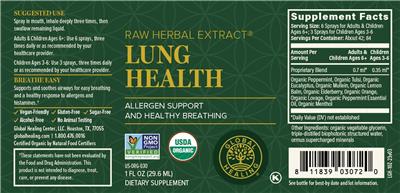
Lung Health is a liquid containing a proprietary blend of ten active ingredients: Lemon Balm, Orange, Elderberry, Peppermint, Lovage, Peppermint Essential Oil, Eucalyptus, Menthol, Tulsi (Holy Basil), and Mullein. The product also contains three inactive ingredients—glycerin, distilled water, and Ormus Supercharged Minerals—which serve as a liquid base and excipients.
Does it work?
Not established
The evidence for most ingredients in this formula is limited. Peppermint is Likely Effective for irritable bowel syndrome and Possibly Effective for indigestion and chemotherapy-related nausea.
Lemon Balm is Possibly Effective for cold sores, stress, and depression. Elderberry, Eucalyptus, Tulsi, Mullein, Lovage, and Orange all have Insufficient Reliable Evidence To Rate for their proposed uses in this product.
The data we hold does not establish effectiveness for lung health specifically across any of these ingredients.
How safe is it?
Well-documented data
Most ingredients are generally well tolerated for short-term use in healthy adults, though long-term safety data are often limited. Peppermint and Peppermint Essential Oil are Likely Safe in pregnancy and lactation at food amounts, but concentrated supplements should be avoided without provider approval.
Lemon Balm should be avoided in pregnancy unless a doctor advises otherwise and used with caution while breastfeeding. Elderberry should be avoided in both pregnancy and breastfeeding due to insufficient safety data.
Lovage is Likely Unsafe in pregnancy (it may stimulate the uterus) and should be avoided while breastfeeding. Tulsi (Holy Basil) is Possibly Unsafe in pregnancy and should be avoided while breastfeeding.
Eucalyptus and Mullein have insufficient pregnancy and lactation data on file. Adverse effects reported for individual ingredients include dizziness and sedation with Lemon Balm, abdominal discomfort and rare allergic reactions with Peppermint, photosensitivity risk with Lovage, and seizures (rare, mainly with undiluted Eucalyptus oil taken orally).
Meds to double-check
Major interaction found
Check your exact medications against this product if you take blood thinners or anticoagulants (Moderate interaction with Tulsi and Minor with Mullein), CNS depressants like sedatives or opioids (Moderate with Lemon Balm), thyroid hormone (Moderate with Lemon Balm), immunosuppressants (Moderate with Elderberry), diabetes medications (Moderate with Eucalyptus and Tulsi), or drugs metabolized by liver enzymes CYP3A4, CYP2C9, CYP2C19, and CYP1A2 (Moderate with Peppermint, Peppermint Essential Oil, and Eucalyptus; Minor with Peppermint for CYP1A2). Orange and Menthol could not be checked—no interaction data are on file.
The bottom line
Scorecard at a glanceFormula with limited ingredient disclosure with no established evidence rating for its marketed use. Major medication interactions have been identified, and safety information is well characterized.
This product may help with stress, digestion, or cough, though evidence for most ingredients is weak or absent. It's not for you if you take blood thinners, diabetic medications, sedatives, thyroid medication, immunosuppressants, or certain heart drugs—all have documented interactions with ingredients here.
Talk to your pharmacist before adding it, especially if you're pregnant, breastfeeding, or on any regular medication.
Educational only — not medical advice; always confirm with your pharmacist. Our editorial policy · How we use AI
Assessment coverage: 9 of 10 active ingredients matched to our full ingredient reviews (monographs). Based on the product label dated Jun 25, 2025.
This Scorecard evaluates available label information, ingredient evidence, and known medication-safety considerations. It does not independently verify product identity, purity, potency, contamination, or manufacturing quality. How these ratings are computed
General information
Key facts about Lung Health, straight from the product label.
| Brand | Global Healing |
|---|---|
| Barcode (UPC) | 811839030720 |
| Net contents | 1 Fluid Ounce(s); 29.6 mL |
| Market status | On market |
| Date entered into DSLD | Jun 25, 2025 |
| DSLD ID | 330756 |
| Product type | Other Combinations |
| Supplement form | Liquid |
| Dietary claims / uses | All Other, Structure/Function |
| Intended target group(s) | Children 4 or More Years of Age, Vegan, Vegetarian, Adult (18 - 50 Years), Kosher, Organic |
Everything in this section is reproduced from the manufacturer’s own product label — it’s the label speaking, not HelloPharmacist. We show it so you can see exactly what the maker states; we don’t verify or endorse those statements.
Supplement Facts
The label details for Lung Health by Global Healing, sourced from the NIH Dietary Supplement Label Database.
Supplement Facts
| Ingredient | Amount | % DV |
|---|---|---|
| Proprietary Blend | 0.7 mL, 0.35 mL | -- |
| Lemon Balm | 0 NP, 0 NP | -- |
| Orange | 0 NP, 0 NP | -- |
| Elderberry | 0 NP, 0 NP | -- |
| Peppermint | 0 NP, 0 NP | -- |
| Lovage | 0 NP, 0 NP | -- |
| Peppermint Essential Oil | 0 NP, 0 NP | -- |
| Eucalyptus | 0 NP, 0 NP | -- |
| Menthol | 0 NP, 0 NP | -- |
| Tulsi | 0 NP, 0 NP | -- |
| Mullein | 0 NP, 0 NP | -- |
Other ingredients: Glycerin, Water, Distilled, Ormus Supercharged Minerals
Tap any ingredient to jump to its full detail below.
These statements are the manufacturer’s wording, reproduced from the product label — the label is saying it, not HelloPharmacist. We don’t verify or endorse them.
Suggested/Recommended/Usage/Directions
Suggested use Spray in mouth, inhale deeply three times, then swallow remaining liquid. Adults & children ages 6+: use 6 sprays, three times daily or as recommended by your healthcare provider. Children ages 3-6: use 3 sprays, three times daily or as recommended by your healthcare provider.
Formulation
Breathe easy Supports and soothes airways for easy breathing and a healthy response to allergens and histamines.
Vegan-Friendly
Alcohol-free Gluten-free Sugar-free
No animal testing
Certified Organic by Natural Food Certifiers USDA Organic US-ORG-030
Raw Herbal Extract
Allergen support and healthy breathing
Non GMO Project Verified nongmoproject.org
FDA Disclaimer Statement
These statements have not been evaluated by the Food and Drug Administration. This product is not intended to diagnose, treat, cure, or prevent any disease.
Seals/Symbols
Non GMO project Verified nongmoproject.org USDA Organic OK (Kosher)
Formula
OK (Kosher)
FDA Statement of Identity
Dietary Supplement
Is this label outdated? Report a formula or label change and our pharmacy team will review it.
Lung Health by Global Healing label
The label scan from the NIH Dietary Supplement Label Database. Tap to enlarge.
Label images are published by the NIH Dietary Supplement Label Database for the version of this product on file. Always read your actual product label.
View the full label (PDF)The Ingredients in Lung Health by Global Healing
These are the 10 active ingredients this product is made of. Select any to open its full monograph.
Serving size6 Spray(s) Dosage formLiquid Servings per container42 Amounts shown are per serving.
Most supplement products combine several ingredients, and a medication can interact with the product through any one of them. Each ingredient below shows whether it has known drug interactions.
Proprietary Blend
- › Lemon Balm
- › Orange
- › Elderberry
- › Peppermint
- › Lovage
- › Peppermint Essential Oil
- › Eucalyptus
- › Menthol
- › Tulsi
- › Mullein
Other (inactive) ingredients: Glycerin, Water, Distilled, Ormus Supercharged Minerals. These complete the product’s ingredient list but are not active constituents.
Lung Health by Global Healing Drug Interactions
HelloPharmacist Interaction Report
Lung Health by Global Healing contains ten ingredients, several of which interact with medications.
The most serious interaction we've documented is Lemon Balm's Moderate-severity effect on CNS depressants (sedatives, sleep aids, anxiety medications, and opioids). Lemon Balm has CNS depressant activity itself, so taking it alongside these drugs could cause extra drowsiness or sedation.
Read the full breakdown — every affected drug type, severity by severity
Peppermint and Peppermint Essential Oil (which are the same ingredient, listed twice) both interact with multiple drug-metabolizing enzymes. They theoretically increase levels of several medication types: CYP3A4 substrates (including certain blood pressure and heart medications), CYP2C9 substrates (including some blood thinners), CYP2C19 substrates, and CYP1A2 substrates.
All are Moderate severity except CYP1A2 (Minor). Peppermint oil also has a specific Moderate interaction with cyclosporine, an immunosuppressant.
Lemon Balm additionally has a Moderate interaction with thyroid hormone replacement, potentially interfering with its effectiveness. Elderberry carries Moderate interactions with immunosuppressants (it stimulates immune activity) and with the cancer drug pazopanib.
Lovage has a Moderate interaction with diuretics. Eucalyptus interacts with CYP1A2, CYP2C19, CYP2C9, and CYP3A4 substrates (all Moderate), plus antidiabetes drugs, amphetamines, and pentobarbital.
Tulsi (Holy Basil) has Moderate interactions with anticoagulants and antiplatelet drugs (blood thinners), antidiabetes drugs, and pentobarbital. Mullein has a Minor interaction with blood thinners.
We could not check Orange or Menthol—no interaction data are on file for these ingredients. Altogether, these interactions span 1,216 individual medications.
Use the medication search tool below to check your exact drugs against this product before you start.
Check your own medications below · Editorial policy · How we use AI
Want to check YOUR meds against Lung Health?
Ask about interactions with your drugs in plain English — “Can I take it with lisinopril?” — and we find you the answer in seconds, ingredient by ingredient.
Go to the checkerIngredients driving the most interactions
Individual Drug Interactions
The ingredients in Lung Health interact with 1,309 drugs. Click any drug to see the details.
8 of the 10 ingredients in Lung Health interact with drugs. Each result below shows which ingredient is responsible. Eucalyptus Peppermint Lemon Balm Orange Tulsi Mullein Elderberry Lovage
AtorvastatinAtorvaliq
How Atorvastatin interacts with Lung Health — through 3 ingredients. Tap an ingredient for the detail:
OrangeOrganic Anion-transporting Polypeptide Substrates (oatp) Major
Interaction Summary
Consuming sweet orange juice can decrease oral absorption of OATP substrates.
Read the full Orange + Atorvastatin interactionEucalyptusCytochrome P450 3a4 (cyp3a4) Substrates Moderate
Interaction Summary
Theoretically, eucalyptus might increase the levels of CYP3A4 substrates.
Read the full Eucalyptus + Atorvastatin interactionPeppermint Essential OilCytochrome P450 3a4 (cyp3a4) Substrates Moderate
Interaction Summary
Theoretically, peppermint might increase the levels of CYP3A4 substrates.
Read the full Peppermint Essential Oil + Atorvastatin interactionAtorvastatin CalciumLipitor
How Atorvastatin Calcium interacts with Lung Health — through 3 ingredients. Tap an ingredient for the detail:
OrangeOrganic Anion-transporting Polypeptide Substrates (oatp) Major
Interaction Summary
Consuming sweet orange juice can decrease oral absorption of OATP substrates.
Read the full Orange + Atorvastatin Calcium interactionEucalyptusCytochrome P450 3a4 (cyp3a4) Substrates Moderate
Interaction Summary
Theoretically, eucalyptus might increase the levels of CYP3A4 substrates.
Read the full Eucalyptus + Atorvastatin Calcium interactionPeppermint Essential OilCytochrome P450 3a4 (cyp3a4) Substrates Moderate
Interaction Summary
Theoretically, peppermint might increase the levels of CYP3A4 substrates.
Read the full Peppermint Essential Oil + Atorvastatin Calcium interactionBosentanTracleer
How Bosentan interacts with Lung Health — through 3 ingredients. Tap an ingredient for the detail:
OrangeOrganic Anion-transporting Polypeptide Substrates (oatp) Major
Interaction Summary
Consuming sweet orange juice can decrease oral absorption of OATP substrates.
Read the full Orange + Bosentan interactionPeppermint Essential OilCytochrome P450 2c9 (cyp2c9) Substrates, Cytochrome P450 3a4 (cyp3a4) Substrates Moderate
Interaction Summary
Theoretically, peppermint might increase the levels of CYP2C9 substrates.
Read the full Peppermint Essential Oil + Bosentan interactionEucalyptusCytochrome P450 3a4 (cyp3a4) Substrates, Cytochrome P450 2c9 (cyp2c9) Substrates Moderate
Interaction Summary
Theoretically, eucalyptus might increase the levels of CYP3A4 substrates.
Read the full Eucalyptus + Bosentan interactionBrincidofovirTembexa
How Brincidofovir interacts with Lung Health — through 1 ingredient. Tap an ingredient for the detail:
OrangeOrganic Anion-transporting Polypeptide Substrates (oatp) Major
Interaction Summary
Consuming sweet orange juice can decrease oral absorption of OATP substrates.
Read the full Orange + Brincidofovir interactionCeliprololCelicard
How Celiprolol interacts with Lung Health — through 1 ingredient. Tap an ingredient for the detail:
OrangeP-glycoprotein Substrates, Organic Anion-transporting Polypeptide Substrates (oatp) +1 Major
Interaction Summary
Sweet orange juice seems to modulate P-glycoprotein (P-gp), which might affect the blood levels of P-gp substrates.
Read the full Orange + Celiprolol interactionCerivastatin SodiumBaycol
How Cerivastatin Sodium interacts with Lung Health — through 1 ingredient. Tap an ingredient for the detail:
OrangeOrganic Anion-transporting Polypeptide Substrates (oatp) Major
Interaction Summary
Consuming sweet orange juice can decrease oral absorption of OATP substrates.
Read the full Orange + Cerivastatin Sodium interactionCinoxacinCinobac
How Cinoxacin interacts with Lung Health — through 1 ingredient. Tap an ingredient for the detail:
OrangeOrganic Anion-transporting Polypeptide Substrates (oatp), Quinolone Antibiotics Major
Interaction Summary
Consuming sweet orange juice can decrease oral absorption of OATP substrates.
Read the full Orange + Cinoxacin interactionCiprofloxacinCiloxan, Cipro, Cipro IV, Cipro XR, Ciprobay, Otiprio
How Ciprofloxacin interacts with Lung Health — through 1 ingredient. Tap an ingredient for the detail:
OrangeOrganic Anion-transporting Polypeptide Substrates (oatp), Quinolone Antibiotics Major
Interaction Summary
Consuming sweet orange juice can decrease oral absorption of OATP substrates.
Read the full Orange + Ciprofloxacin interactionCiprofloxacin, HydrocortisoneCipro HC Otic
How Ciprofloxacin, Hydrocortisone interacts with Lung Health — through 1 ingredient. Tap an ingredient for the detail:
OrangeOrganic Anion-transporting Polypeptide Substrates (oatp) Major
Interaction Summary
Consuming sweet orange juice can decrease oral absorption of OATP substrates.
Read the full Orange + Ciprofloxacin, Hydrocortisone interactionClinafloxacinClinafloxacin
How Clinafloxacin interacts with Lung Health — through 1 ingredient. Tap an ingredient for the detail:
OrangeOrganic Anion-transporting Polypeptide Substrates (oatp), Quinolone Antibiotics Major
Interaction Summary
Consuming sweet orange juice can decrease oral absorption of OATP substrates.
Read the full Orange + Clinafloxacin interactionEnoxacinPenetrex
How Enoxacin interacts with Lung Health — through 1 ingredient. Tap an ingredient for the detail:
OrangeOrganic Anion-transporting Polypeptide Substrates (oatp), Quinolone Antibiotics Major
Interaction Summary
Consuming sweet orange juice can decrease oral absorption of OATP substrates.
Read the full Orange + Enoxacin interactionEtoposideEtopophos, VePesid, VP16
How Etoposide interacts with Lung Health — through 3 ingredients. Tap an ingredient for the detail:
OrangeP-glycoprotein Substrates, Organic Anion-transporting Polypeptide Substrates (oatp) Major
Interaction Summary
Sweet orange juice seems to modulate P-glycoprotein (P-gp), which might affect the blood levels of P-gp substrates.
Read the full Orange + Etoposide interactionEucalyptusCytochrome P450 3a4 (cyp3a4) Substrates Moderate
Interaction Summary
Theoretically, eucalyptus might increase the levels of CYP3A4 substrates.
Read the full Eucalyptus + Etoposide interactionPeppermint Essential OilCytochrome P450 3a4 (cyp3a4) Substrates Moderate
Interaction Summary
Theoretically, peppermint might increase the levels of CYP3A4 substrates.
Read the full Peppermint Essential Oil + Etoposide interactionEzetimibe, AtorvastatinLiptruzet
How Ezetimibe, Atorvastatin interacts with Lung Health — through 3 ingredients. Tap an ingredient for the detail:
OrangeOrganic Anion-transporting Polypeptide Substrates (oatp) Major
Interaction Summary
Consuming sweet orange juice can decrease oral absorption of OATP substrates.
Read the full Orange + Ezetimibe, Atorvastatin interactionPeppermint Essential OilCytochrome P450 3a4 (cyp3a4) Substrates Moderate
Interaction Summary
Theoretically, peppermint might increase the levels of CYP3A4 substrates.
Read the full Peppermint Essential Oil + Ezetimibe, Atorvastatin interactionEucalyptusCytochrome P450 3a4 (cyp3a4) Substrates Moderate
Interaction Summary
Theoretically, eucalyptus might increase the levels of CYP3A4 substrates.
Read the full Eucalyptus + Ezetimibe, Atorvastatin interactionFexofenadineAllegra
How Fexofenadine interacts with Lung Health — through 3 ingredients. Tap an ingredient for the detail:
OrangeOrganic Anion-transporting Polypeptide Substrates (oatp), Fexofenadine (allegra) +1 Major
Interaction Summary
Consuming sweet orange juice can decrease oral absorption of OATP substrates.
Read the full Orange + Fexofenadine interactionPeppermint Essential OilCytochrome P450 3a4 (cyp3a4) Substrates Moderate
Interaction Summary
Theoretically, peppermint might increase the levels of CYP3A4 substrates.
Read the full Peppermint Essential Oil + Fexofenadine interactionEucalyptusCytochrome P450 3a4 (cyp3a4) Substrates Moderate
Interaction Summary
Theoretically, eucalyptus might increase the levels of CYP3A4 substrates.
Read the full Eucalyptus + Fexofenadine interactionFexofenadine, PseudoephedrineAllegra D
How Fexofenadine, Pseudoephedrine interacts with Lung Health — through 3 ingredients. Tap an ingredient for the detail:
OrangeP-glycoprotein Substrates, Organic Anion-transporting Polypeptide Substrates (oatp) +1 Major
Interaction Summary
Sweet orange juice seems to modulate P-glycoprotein (P-gp), which might affect the blood levels of P-gp substrates.
Read the full Orange + Fexofenadine, Pseudoephedrine interactionEucalyptusCytochrome P450 3a4 (cyp3a4) Substrates Moderate
Interaction Summary
Theoretically, eucalyptus might increase the levels of CYP3A4 substrates.
Read the full Eucalyptus + Fexofenadine, Pseudoephedrine interactionPeppermint Essential OilCytochrome P450 3a4 (cyp3a4) Substrates Moderate
Interaction Summary
Theoretically, peppermint might increase the levels of CYP3A4 substrates.
Read the full Peppermint Essential Oil + Fexofenadine, Pseudoephedrine interactionFluvastatinLescol, Lescol XL
How Fluvastatin interacts with Lung Health — through 3 ingredients. Tap an ingredient for the detail:
OrangeOrganic Anion-transporting Polypeptide Substrates (oatp) Major
Interaction Summary
Consuming sweet orange juice can decrease oral absorption of OATP substrates.
Read the full Orange + Fluvastatin interactionPeppermint Essential OilCytochrome P450 2c9 (cyp2c9) Substrates Moderate
Interaction Summary
Theoretically, peppermint might increase the levels of CYP2C9 substrates.
Read the full Peppermint Essential Oil + Fluvastatin interactionEucalyptusCytochrome P450 2c9 (cyp2c9) Substrates Moderate
Interaction Summary
Theoretically, eucalyptus might increase the levels of CYP2C9 substrates.
Read the full Eucalyptus + Fluvastatin interactionGatifloxacinTequin, Tequin Injection
How Gatifloxacin interacts with Lung Health — through 1 ingredient. Tap an ingredient for the detail:
OrangeOrganic Anion-transporting Polypeptide Substrates (oatp), Quinolone Antibiotics Major
Interaction Summary
Consuming sweet orange juice can decrease oral absorption of OATP substrates.
Read the full Orange + Gatifloxacin interactionGemifloxacinFactive
How Gemifloxacin interacts with Lung Health — through 1 ingredient. Tap an ingredient for the detail:
OrangeOrganic Anion-transporting Polypeptide Substrates (oatp), Quinolone Antibiotics Major
Interaction Summary
Consuming sweet orange juice can decrease oral absorption of OATP substrates.
Read the full Orange + Gemifloxacin interactionGlyburideAlbert Glyburide, Diabeta, Glycron, Glynase, Glynase PresTab, Micronase +1 more
How Glyburide interacts with Lung Health — through 4 ingredients. Tap an ingredient for the detail:
OrangeOrganic Anion-transporting Polypeptide Substrates (oatp) Major
Interaction Summary
Consuming sweet orange juice can decrease oral absorption of OATP substrates.
Read the full Orange + Glyburide interactionTulsiAntidiabetes Drugs Moderate
Interaction Summary
Theoretically, holy basil might increase the risk of hypoglycemia when taken with antidiabetes drugs.
Read the full Tulsi + Glyburide interactionEucalyptusAntidiabetes Drugs, Cytochrome P450 2c9 (cyp2c9) Substrates Moderate
Interaction Summary
Theoretically, eucalyptus leaf might increase the risk of hypoglycemia.
Read the full Eucalyptus + Glyburide interactionPeppermint Essential OilCytochrome P450 2c9 (cyp2c9) Substrates Moderate
Interaction Summary
Theoretically, peppermint might increase the levels of CYP2C9 substrates.
Read the full Peppermint Essential Oil + Glyburide interactionGlyburide, MetforminGlucovance
How Glyburide, Metformin interacts with Lung Health — through 4 ingredients. Tap an ingredient for the detail:
OrangeOrganic Anion-transporting Polypeptide Substrates (oatp) Major
Interaction Summary
Consuming sweet orange juice can decrease oral absorption of OATP substrates.
Read the full Orange + Glyburide, Metformin interactionPeppermint Essential OilCytochrome P450 2c9 (cyp2c9) Substrates Moderate
Interaction Summary
Theoretically, peppermint might increase the levels of CYP2C9 substrates.
Read the full Peppermint Essential Oil + Glyburide, Metformin interactionEucalyptusCytochrome P450 2c9 (cyp2c9) Substrates, Antidiabetes Drugs Moderate
Interaction Summary
Theoretically, eucalyptus might increase the levels of CYP2C9 substrates.
Read the full Eucalyptus + Glyburide, Metformin interactionTulsiAntidiabetes Drugs Moderate
Interaction Summary
Theoretically, holy basil might increase the risk of hypoglycemia when taken with antidiabetes drugs.
Read the full Tulsi + Glyburide, Metformin interactionGrepafloxacinRaxar
How Grepafloxacin interacts with Lung Health — through 3 ingredients. Tap an ingredient for the detail:
OrangeOrganic Anion-transporting Polypeptide Substrates (oatp), Quinolone Antibiotics Major
Interaction Summary
Consuming sweet orange juice can decrease oral absorption of OATP substrates.
Read the full Orange + Grepafloxacin interactionEucalyptusCytochrome P450 1a2 (cyp1a2) Substrates Moderate
Interaction Summary
Theoretically, eucalyptus might increase the levels of CYP1A2 substrates.
Read the full Eucalyptus + Grepafloxacin interactionPeppermint Essential OilCytochrome P450 1a2 (cyp1a2) Substrates Minor
Interaction Summary
Theoretically, peppermint might increase the levels of CYP1A2 substrates.
Read the full Peppermint Essential Oil + Grepafloxacin interactionIrinotecanCamptosar, Onivyde
How Irinotecan interacts with Lung Health — through 3 ingredients. Tap an ingredient for the detail:
OrangeOrganic Anion-transporting Polypeptide Substrates (oatp) Major
Interaction Summary
Consuming sweet orange juice can decrease oral absorption of OATP substrates.
Read the full Orange + Irinotecan interactionEucalyptusCytochrome P450 3a4 (cyp3a4) Substrates Moderate
Interaction Summary
Theoretically, eucalyptus might increase the levels of CYP3A4 substrates.
Read the full Eucalyptus + Irinotecan interactionPeppermint Essential OilCytochrome P450 3a4 (cyp3a4) Substrates Moderate
Interaction Summary
Theoretically, peppermint might increase the levels of CYP3A4 substrates.
Read the full Peppermint Essential Oil + Irinotecan interactionIrinotecan Hydrochloride
How Irinotecan Hydrochloride interacts with Lung Health — through 3 ingredients. Tap an ingredient for the detail:
OrangeOrganic Anion-transporting Polypeptide Substrates (oatp) Major
Interaction Summary
Consuming sweet orange juice can decrease oral absorption of OATP substrates.
Read the full Orange + Irinotecan Hydrochloride interactionPeppermint Essential OilCytochrome P450 3a4 (cyp3a4) Substrates Moderate
Interaction Summary
Theoretically, peppermint might increase the levels of CYP3A4 substrates.
Read the full Peppermint Essential Oil + Irinotecan Hydrochloride interactionEucalyptusCytochrome P450 3a4 (cyp3a4) Substrates Moderate
Interaction Summary
Theoretically, eucalyptus might increase the levels of CYP3A4 substrates.
Read the full Eucalyptus + Irinotecan Hydrochloride interactionIsoniazid, Pyrazinamide, RifampinRifater
How Isoniazid, Pyrazinamide, Rifampin interacts with Lung Health — through 1 ingredient. Tap an ingredient for the detail:
OrangeOrganic Anion-transporting Polypeptide Substrates (oatp) Major
Interaction Summary
Consuming sweet orange juice can decrease oral absorption of OATP substrates.
Read the full Orange + Isoniazid, Pyrazinamide, Rifampin interactionIsoniazid, RifampinRifamate
How Isoniazid, Rifampin interacts with Lung Health — through 1 ingredient. Tap an ingredient for the detail:
OrangeOrganic Anion-transporting Polypeptide Substrates (oatp) Major
Interaction Summary
Consuming sweet orange juice can decrease oral absorption of OATP substrates.
Read the full Orange + Isoniazid, Rifampin interactionIvermectinMectizan, Sklice, Soolantra, Stromectol
How Ivermectin interacts with Lung Health — through 1 ingredient. Tap an ingredient for the detail:
OrangeIvermectin (stromectol, Others), P-glycoprotein Substrates Major
Interaction Summary
Consuming sweet orange juice with ivermectin can decrease the oral absorption of ivermectin.
Read the full Orange + Ivermectin interactionLevofloxacinLeva-pak, Levaquin, Levaquin Injection
How Levofloxacin interacts with Lung Health — through 1 ingredient. Tap an ingredient for the detail:
OrangeOrganic Anion-transporting Polypeptide Substrates (oatp), Quinolone Antibiotics Major
Interaction Summary
Consuming sweet orange juice can decrease oral absorption of OATP substrates.
Read the full Orange + Levofloxacin interactionLevofloxacin (ophthalmic)Levofloxacin
How Levofloxacin (ophthalmic) interacts with Lung Health — through 1 ingredient. Tap an ingredient for the detail:
OrangeOrganic Anion-transporting Polypeptide Substrates (oatp), Quinolone Antibiotics Major
Interaction Summary
Consuming sweet orange juice can decrease oral absorption of OATP substrates.
Read the full Orange + Levofloxacin (ophthalmic) interactionLomefloxacinMaxaquin
How Lomefloxacin interacts with Lung Health — through 1 ingredient. Tap an ingredient for the detail:
OrangeOrganic Anion-transporting Polypeptide Substrates (oatp), Quinolone Antibiotics Major
Interaction Summary
Consuming sweet orange juice can decrease oral absorption of OATP substrates.
Read the full Orange + Lomefloxacin interactionLovastatinAltocor, Mevacor
How Lovastatin interacts with Lung Health — through 3 ingredients. Tap an ingredient for the detail:
OrangeOrganic Anion-transporting Polypeptide Substrates (oatp) Major
Interaction Summary
Consuming sweet orange juice can decrease oral absorption of OATP substrates.
Read the full Orange + Lovastatin interactionEucalyptusCytochrome P450 3a4 (cyp3a4) Substrates Moderate
Interaction Summary
Theoretically, eucalyptus might increase the levels of CYP3A4 substrates.
Read the full Eucalyptus + Lovastatin interactionPeppermint Essential OilCytochrome P450 3a4 (cyp3a4) Substrates Moderate
Interaction Summary
Theoretically, peppermint might increase the levels of CYP3A4 substrates.
Read the full Peppermint Essential Oil + Lovastatin interactionEach ingredient & the kinds of drugs it affects
For each ingredient in Lung Health with known interactions, here are the types of medications they can affect. Open any type for the detail — or search your exact drug in the checker above.
Eucalyptus
Amphetamines
Theoretically, inhaling eucalyptol may reduce the effectiveness of amphetamines.
Animal research suggests that inhaling eucalyptol may reduce the levels of amphetamines in the blood.
Antidiabetes Drugs
Theoretically, eucalyptus leaf might increase the risk of hypoglycemia.
Animal research suggests that eucalyptus leaf might have hypoglycemic activity, and might have additive effects when used with antidiabetes drugs.
Cytochrome P450 1A2 (Cyp1A2) Substrates
Theoretically, eucalyptus might increase the levels of CYP1A2 substrates.
In vitro research suggests that eucalyptus oil might inhibit CYP1A2, although this has not been reported in humans.
Cytochrome P450 2C19 (Cyp2C19) Substrates
Theoretically, eucalyptus might increase the levels of CYP2C19 substrates.
In vitro research suggests that eucalyptus oil might inhibit CYP2C19, although this has not been reported in humans.
Cytochrome P450 2C9 (Cyp2C9) Substrates
Theoretically, eucalyptus might increase the levels of CYP2C9 substrates.
In vitro research suggests that eucalyptus oil might inhibit CYP2C9, although this has not been reported in humans.
Cytochrome P450 3A4 (Cyp3A4) Substrates
Theoretically, eucalyptus might increase the levels of CYP3A4 substrates.
In vitro research suggests that eucalyptus oil might inhibit CYP3A4, although this has not been reported in humans.
Pentobarbital (Nembutal)
Theoretically, inhaling eucalyptol might reduce the effectiveness of pentobarbital.
Animal research suggests that inhaling eucalyptol reduces the level of pentobarbital that reaches the brain.
Peppermint
Cyclosporine (Neoral, Sandimmune)
Theoretically, peppermint oil might increase the levels and adverse effects of cyclosporine.
In animal research, peppermint oil inhibits cyclosporine metabolism and increases cyclosporine levels. Inhibition of cytochrome P450 3A4 (CYP3A4) may be partially responsible for this interaction. An interaction between peppermint oil and cyclosporine has not been reported in humans.
Cytochrome P450 2C19 (Cyp2C19) Substrates
Theoretically, peppermint might increase the levels of CYP2C19 substrates.
In vitro research shows that peppermint oil inhibits CYP2C19. So far, this interaction has not been reported in humans.
Cytochrome P450 2C9 (Cyp2C9) Substrates
Theoretically, peppermint might increase the levels of CYP2C9 substrates.
In vitro research shows that peppermint oil inhibits CYP2C9. So far, this interaction has not been reported in humans.
Cytochrome P450 3A4 (Cyp3A4) Substrates
Theoretically, peppermint might increase the levels of CYP3A4 substrates.
Clinical research in healthy volunteers shows that a single dose of peppermint oil 600 mg inhibits CYP3A4 enzymes and increases the AUC of felodipine, a CYP3A4 substrate. However, in vitro research suggests that peppermint oil only inhibits CYP3A4 at very high concentrations.
Cytochrome P450 1A2 (Cyp1A2) Substrates
Theoretically, peppermint might increase the levels of CYP1A2 substrates.
In vitro and animal research shows that peppermint oil and peppermint leaf inhibit CYP1A2. However, in clinical research, peppermint tea did not significantly affect the metabolism of caffeine, a CYP1A2 substrate. It is possible that the 6-day duration of treatment may have been too short to identify a difference.
Lemon Balm
Cns Depressants
Theoretically, concomitant use of lemon balm might have additive effects with CNS depressant drugs.
Lemon balm seems to have CNS depressant activity in animals and in humans.
Thyroid Hormone
Theoretically, lemon balm might interfere with thyroid hormone replacement therapy.
In vitro, constituents of lemon balm extract bind to thyroid stimulating hormone (TSH), preventing TSH receptor-binding and leading to the inhibition of TSH-stimulated adenylate cyclase activity. In animals, lemon balm extract has been shown to decrease levels of circulating TSH and inhibit thyroid secretion.
Orange
Celiprolol (Celicard)
Consuming sweet orange with celiprolol can decrease oral absorption of celiprolol.
A pharmacokinetic study in healthy volunteers shows that celiprolol levels, after a single dose of 100 mg, are decreased by up to 90% in people who drink sweet orange juice 200 mL three times daily. It's not known if lower consumption of sweet orange juice will have the same effect. Theoretically, this occurs due to short-term inhibition of organic anion transporting polypeptide (OATP). Recommend separating drug administration and consumption of sweet orange by at least 4 hours.
Ivermectin (Stromectol, Others)
Consuming sweet orange juice with ivermectin can decrease the oral absorption of ivermectin.
A pharmacokinetic study in healthy volunteers shows that taking ivermectin orally with sweet orange juice 750 mL over 4 hours reduces the bioavailability of ivermectin. This effect does not seem to be related to effects on P-glycoprotein. The effect on ivermectin is more pronounced in males compared to females.
Organic Anion-Transporting Polypeptide Substrates (Oatp)
Consuming sweet orange juice can decrease oral absorption of OATP substrates. Separate administration by at least 4 hours.
Clinical research shows that consuming sweet orange juice inhibits OATP, which reduces bioavailability of oral drugs that are substrates of OATP. For example, sweet orange juice decreases bioavailability of fexofenadine, a substrate of OATP, by about 72% and of celiprolol, another OATP substrate, by up to 90%. Since sweet orange juice seems to affect OATP for a short time, recommend separating drug administration and consumption of sweet orange juice by at least 4 hours.
Pravastatin (Pravachol)
Consuming sweet orange juice with pravastatin can increase the absorption of pravastatin.
A small pharmacokinetic study in healthy volunteers shows that consuming sweet orange juice 800 mL over 3 hours, including before, during, and after taking pravastatin 10 mg, increases pravastatin levels by about 149%, without affecting pravastatin elimination. Theoretically this effect might be due to modulation of organic anion transporting polypeptides (OATPs) by sweet orange juice. Sweet orange juice does not seem to affect simvastatin levels, but it is not known if sweet orange affects any of the other statins.
Fexofenadine (Allegra)
Consuming sweet orange juice with fexofenadine can decrease oral absorption of fexofenadine.
Clinical research shows that coadministration of sweet orange juice 1200 mL decreases bioavailability of fexofenadine by about 72%. In an animal model, sweet orange juice decreased bioavailability of fexofenadine by 31%. Fexofenadine manufacturer data indicates that concomitant administration of sweet orange juice and fexofenadine results in larger wheal and flare sizes in research models. This suggests that sweet orange reduces the clinical response to fexofenadine. Theoretically, this occurs due to short-term inhibition of organic anion transporting polypeptide (OATP). Recommend separating drug administration and consumption of sweet orange by at least 4 hours.
P-Glycoprotein Substrates
Sweet orange juice seems to modulate P-glycoprotein (P-gp), which might affect the blood levels of P-gp substrates.
Animal and in vitro research suggest that orange juice extract inhibits drug efflux by P-gp, increasing absorption and levels of P-gp substrates. In contrast, pharmacokinetic research in humans shows that drinking large amounts of sweet orange juice decreases absorption and levels of the P-gp substrate celiprolol. This suggests that orange juice actually induces drug efflux by P-gp or affects drug levels by another mechanism such as inhibiting the gut drug transporter called organic anion transporting polypeptide (OATP). Until more is known, sweet orange juice should be used cautiously in people taking P-gp substrates.
Quinolone Antibiotics
Calcium-fortified sweet orange juice might reduce quinolone absorption.
Calcium binds to quinolones in the gut. Theoretically, the calcium in certain fortified orange juices can also bind to quinolone antibiotics and reduce their absorption and levels.
Tulsi
Anticoagulant/Antiplatelet Drugs
Theoretically, holy basil seed oil might increase the risk of bleeding when used with anticoagulant or antiplatelet drugs.
Animal research shows that holy basil seed oil can prolong bleeding time, possibly due to inhibition of platelet aggregation. However, it is not known if this occurs in humans.
Antidiabetes Drugs
Theoretically, holy basil might increase the risk of hypoglycemia when taken with antidiabetes drugs.
Small clinical studies show that taking holy basil can decrease fasting blood glucose and other measures of glycemic control in patients with type 2 diabetes.
Pentobarbital (Nembutal)
Theoretically, holy basil seed oil might increase the sedative effects of pentobarbital.
Animal research shows that holy basil seed oil increases pentobarbitone-induced sleeping time. However, it is not known if this occurs in humans or if this applies to other barbiturates or sedatives.
Mullein
Anticoagulant/Antiplatelet Drugs
Lab tests on extracts from different parts of common and dense-flowered mullein plants show that they do have some blood-thinning effects, as they increase the time it takes for blood to clot. This is likely due to at least one of the known constituents of muellein, triterpenoid saponins. However, the effects appear to be mild and results have been inconsistent. Extracts from different plant parts have been show to have varying anticoagulant strengths, with water-based ones being more potent than alcohol-based extracts.
Elderberry
Immunosuppressants
Theoretically, elderberry might interfere with immunosuppressant therapy due to its immunostimulant activity.
Elderberry has immunostimulant activity, increasing the production of cytokines, including interleukin and tumor necrosis factor.
Pazopanib (Votrient)
Theoretically, elderberry might interact with pazopanib, potentially increasing the risk of adverse effects.
Lovage
Diuretic Drugs
Theoretically, lovage root might interfere with diuretic therapy due to its aquaretic effects.
Some diuretics include chlorothiazide (Diuril), chlorthalidone (Thalitone), furosemide (Lasix), hydrochlorothiazide (HCTZ, Hydrodiuril, Microzide), and others.
Brand information
Manufacturer and brand details for Lung Health, from the product label.
Global Healing
See all Global Healing products- Name
- Global Healing Center, LLC.
- City
- Houston
- State
- TX
- ZipCode
- 77055
- Phone Number
- 1.800.476.0016
- Web Address
- globalhealing.com
Lung Health by Global Healing: Common Questions
Does Lung Health by Global Healing interact with any medications?
How can one product interact with so many drugs?
Where does this information come from?
Is this safe to take while I'm pregnant?
Can I take this while breastfeeding?
What is Lemon Balm supposed to do in this formula?
Does Peppermint really help with digestion?
What's the difference between Peppermint and Peppermint Essential Oil listed separately?
Should I worry about photosensitivity with this product?
Written and reviewed by the HelloPharmacist editorial staff. Our editorial policy
Not sure if Lung Health is safe with your meds?
Our pharmacists answer your medication & supplement questions — free.
Label information is sourced from the NIH Dietary Supplement Label Database and reflects the product version on file; always read your actual product label. This page is for education only and is not a substitute for professional medical advice. Confirm with your pharmacist or doctor before combining supplements and medications.
The Full Monographs Behind Lung Health’s Ingredients
Every ingredient we hold a full HelloPharmacist monograph for — uses, evidence, safety, and the complete interaction list.
Lemon Balm
Interacts with 264 drugsLemon balm is a gentle, lemon-scented mint-family herb traditionally used to ease stress, support sleep, and calm digestion, and topically for cold sores. Early studies are promising but gen...
Read the full Lemon Balm monograph → Herb & supplement monographSweet Orange
Interacts with 247 drugsSweet orange is a common citrus fruit that is a good source of vitamin C, fiber, and antioxidants, and is enjoyed as a food worldwide. Its peel and essential oil are used in aromatherapy and...
Read the full Sweet Orange monograph → Herb & supplement monographElderberry
Interacts with 121 drugsElderberry is a popular herbal supplement, mainly taken to help with colds and flu. Some small studies suggest it may modestly shorten cold or flu symptoms, but the evidence is limited and n...
Read the full Elderberry monograph → Herb & supplement monographPeppermint
Interacts with 798 drugsPeppermint is a popular herb with the best evidence supporting enteric-coated peppermint oil for easing IBS symptoms. It is generally well tolerated for most adults, but it can cause heartbu...
Read the full Peppermint monograph → Herb & supplement monographLovage
Interacts with 75 drugsLovage is a celery-like herb traditionally used for digestion, bloating, and as a mild diuretic to flush the urinary tract. Human evidence for these uses is very limited, and while culinary...
Read the full Lovage monograph → Herb & supplement monographEucalyptus
Interacts with 880 drugsEucalyptus is best known for its strong-smelling oil used in vapor rubs, inhalants, and lozenges to ease coughs and congestion. It may provide mild, short-term relief of cold symptoms, but t...
Read the full Eucalyptus monograph → Herb & supplement monographHoly Basil
Interacts with 212 drugsHoly basil (tulsi) is a traditional Ayurvedic herb most often used today for stress and general wellness, but the human evidence is mostly small and preliminary. It is generally well tolerat...
Read the full Holy Basil monograph → Herb & supplement monographMullein
Interacts with 122 drugsMullein is a traditional herbal remedy most often used as a tea or syrup to soothe coughs, sore throats, and respiratory irritation. High-quality human studies are lacking, so its benefits a...
Read the full Mullein monograph →Sources & How We Checked
Lung Health's label data comes from the NIH Dietary Supplement Label Database; the ingredient interaction data is from the Natural Medicines database, reviewed by our pharmacists.
- NIH Dietary Supplement Label Database (DSLD) — The official product label on file for this supplement.
- Natural Medicines (Therapeutic Research Center) — Evidence-graded clinical reference behind the ingredient interaction data.
Content is written and reviewed by licensed HelloPharmacist pharmacists. See our data sources and editorial standards for how this information is built and checked.
The 118 references behind this product’s interaction data
Every citation that drives the interaction findings for this product’s ingredients, from the evidence-graded Natural Medicines (TRC Healthcare) database. Open an ingredient to browse its citations — links open the study on PubMed or the publisher’s site.
Lemon Balm 12 references
- Wolbling RH, Leonhardt K. Local therapy of herpes simplex with dried extract from Melissa officinalis. Phytomedicine 1994;1:25-31.
- Akhondzadeh S, Noroozian M, Mohammadi M, et al. Melissa officinalis extract in the treatment of patients with mild to moderate Alzheimer's disease: a double blind, randomised, placebo controlled trial. J Neurol Neurosurg Psychiatry 2003;74:863-6. PubMed
- Kennedy DO, Scholey AB, Tildesley NT, et al. Modulation of mood and cognitive performance following acute administration of Melissa officinalis (lemon balm). Pharmacol Biochem Behav 2002;72:953-64. PubMed
- Albrecht M, Berger W, Laux P, Schmidt U, et al. Psychopharmaka und Verkehrssicherheit. Der Einfluß von Euvegal® - Dragees forte auf die Fahrtüchtigkeit und Kombinationswirkungen mit Alkohol Z Allg Med 1995;71:1215-25.
- Herberg, KW. Nebenwirkungen pflanzlicher Beruhigungsmittel/ Leistung und Befinden nach Einnahme einer Baldrian-Hopfen-Kombination. Z.Allg Med 1996;72:234-240.
- Soulimani R, Fleurentin J, Mortier F, et al. Neurotropic action of the hydroalcoholic extract of Melissa officinalis in the mouse. Planta Med. 1991 Apr;57:105-9.
- Sourgens H, Winterhoff H, Gumbinger HG, et al. Antihormonal effects of plant extracts. TSH- and prolactin-suppressing properties of Lithospermum officinale and other plants. Planta Med. 1982 Jun;45:78-86. DOI
- Auf'mkolk M, Ingbar JC, Amir SM, et al. Inhibition by certain plant extracts of the binding and adenylate cyclase stimulatory effect of bovine thyrotropin in human thyroid membranes. Endocrinology. 1984 Aug;115:527-34. PubMed
- Santini F, Vitti P, Ceccarini G, et al. In vitro assay of thyroid disruptors affecting TSH-stimulated adenylate cyclase activity. J Endocrinol Invest. 2003 Oct;26:950-5. PubMed
- Alijaniha F, et al. Heart palpitation relief with Melissa officinalis leaf extract: double blind, randomized, placebo controlled trial of efficacy and safety. J Ethnopharmacol. 2015;164:378-384. doi: 10.1016/j.jep.2015.02.007. Epub 2015 Feb 11. PubMed
- Araj-Khodaei M, Noorbala AA, Yarani R, et al. A double-blind, randomized pilot study for comparison of Melissa officinalis L. and Lavandula angustifolia Mill. with Fluoxetine for the treatment of depression. BMC Complement Med Ther. 2020;20(1):207. PubMed
- Kucuk U, Pham M, Raza Raja MH, Saad Shaukat MH, Clark R. Transient complete atrioventricular block associated with herbal supplement use. S D Med 2023;76(7):311-313.
Sweet Orange 17 references
- Leung AY, Foster S. Encyclopedia of Common Natural Ingredients Used in Food, Drugs and Cosmetics. 2nd ed. New York, NY: John Wiley & Sons, 1996.
- FDA, CFSAN. FDA-approved potassium health claim notification for potassium containing foods. 2000. Available at: www.cfsan.fda.gov/~dms/hclm-k.html.
- Kurowska EM, Spence JD, Jordan J, et al. HDL-cholesterol-raising effect of orange juice in subjects with hypercholesterolemia. Am J Clin Nutr 2000;72:1095-100. PubMed
- Murry JJ, Healy MD. Drug-mineral interactions: a new responsibility for the hospital dietician. J Am Diet Assoc 1991;91:66-73.
- Bailey DG, Dresser GK, Munoz C, et al. Reduction of fexofenadine bioavailability by fruit juices. Clin Pharmacol Ther 2001;69:P21.
- Pletz MW, Petzold P, Allen A, et al. Effect of calcium carbonate on bioavailability of orally administered gemifloxacin. Antimicrob Agents Chemother 2003;47:2158-60.. PubMed
- Lilja JJ, Juntti-Patinen L, Neuvonen PJ. Orange juice substantially reduces the bioavailability of the beta-adrenergic-blocking agent celiprolol. Clin Pharmacol Ther 2004;75:184-90.
- Tian R, Koyabu N, Takanaga H, et al. Effects of grapefruit juice and orange juice on the intestinal efflux of P-glycoprotein substrates. Pharm Res 2002;19:802-9. PubMed
- Vanapalli SR, Chen Y, Ellingrod VL, et al. Orange juice decreases the oral bioavailability of ivermectin in health volunteers. Clin Pharmacol Ther 2003;73 (Abstract PDII-A-10):P94.
- Huang SM, Lesko LJ. Drug-drug, drug-dietary supplement, and drug-citrus fruit and other food interactions: what have we learned? J Clin Pharmacol 2004;44:559-69. PubMed
- Koitabashi Y, Kumai T, Matsumoto N, et al. Orange juice increased the bioavailability of pravastatin, 3-hydroxy-3-methylglutaryl CoA reductase inhibitor, in rats and healthy human subjects. Life Sci 2006;78:2852-9. PubMed
- Takanaga H, Ohnishi A, Yamada S, et al. Polymethoxylated flavones in orange juice are inhibitors of P-glycoprotein but not cytochrome P450 3A4. J Pharmacol Exp Ther 2000;293:230-6. DOI
- Greenblatt DJ. Analysis of drug interactions involving fruit beverages and organic anion-transporting polypeptides. J Clin Pharmacol 2009;49:1403-7. PubMed
- Bailey DG. Fruit juice inhibition of uptake transport: a new type of food-drug interaction. Br J Clin Pharmacol 2010;70:645-55. PubMed
- Kamath AV, Yao M, Zhang Y, Chong S. Effect of fruit juices on the oral bioavailability of fexofenadine in rats. J Pharm Sci 2005;94:233-9. PubMed
- Kays MB, Overholser BR, Mueller BA, et al. Effects of sevelamer hydrochloride and calcium acetate on the oral bioavailability of ciprofloxacin. Am J Kidney Dis. 2003;42(6):1253-9. PubMed
- Neuhofel, A. L., Wilton, J. H., Victory, J. M., Hejmanowsk, L. G., and Amsden, G. W. Lack of bioequivalence of ciprofloxacin when administered with calcium-fortified orange juice: a new twist on an old interaction. J Clin Pharmacol. 2002;42(4):461-466. DOI
Elderberry 6 references
- Barak V, Halperin T, Kalickman I. The effect of Sambucol, a black elderberry-based, natural product, on the production of human cytokines: I. Inflammatory cytokines. Eur Cytokine Netw 2001;12:290-6..
- Elderberry (Sambucus species). The Poison Plant Patch, Novia Scotia Museum, 2007. Available at: http://museum.gov.ns.ca/poison/?section=species&id=117 (Accessed 16 October 2009).
- European elder. Canadian Poisonous Plants Information System. Available at: http://www.cbif.gc.ca/pls/pp/ppack.jump?p_null=all&p_psn=121&p_type=all&p_sci=comm&p_x=px (Accessed 16 October 2009).
- Raus K, Pleschka S, Klein P, Schoop R, Fisher P. Effect of an echinacea-based hot drink versus oseltamivir in Influenza treatment: a randomized, double-blind, double-dummy, multicenter, noninferiority clinical trial. . Curr Ther Res Clin Exp. 2015;20;77:6 PubMed
- Ramachandran A, Antala D, Pudasainee P, Panginikkod S, Gupta H. A Plausible Association Between the Use of Elderberry and Autoimmune Hepatitis. Cureus 2022;14(4):e24250. PubMed
- Agarwal N, Mangla A. Elderberry interaction with pazopanib in a patient with soft-tissue sarcoma: A case report and literature review. Mol Clin Oncol 2024;20(5):36. PubMed
Peppermint 41 references
- Liu JH, Chen GH, Yeh HZ, et al. Enteric-coated peppermint-oil capsules in the treatment of irritable bowel syndrome: a prospective, randomized trial. J Gastroenterol 1997;32:765-8. PubMed
- Pittler MH, Ernst E. Peppermint oil for irritable bowel syndrome: a critical review and metaanalysis. Am J Gastroenterol 1998;93:1131-5. PubMed
- Kline RM, Kline JJ, Di Palma J, Barbero GJ. Enteric-coated, pH-dependent peppermint oil capsules for the treatment of irritable bowel syndrome in children. J Pediatr 2001;138:125-8. PubMed
- Madisch A, Heydenreich CJ, Wieland V, et al. Treatment of functional dyspepsia with a fixed peppermint oil and caraway oil combination preparation as compared to cisapride. A multicenter, reference-controlled, double-blind equivalence study. Arzneimittel
- May B, Kuntz HD, Kieser M, Kohler S. Efficacy of a fixed peppermint oil/caraway oil combination in non-ulcer dyspepsia. Arzneimittelforschung 1996;46:1149-53.
- Micklefield GH, Greving I, May B. Effects of peppermint oil and caraway oil on gastroduodenal motility. Phytother Res 2000;14:20-3. DOI
- Morton CA, Garioch J, Todd P, et al. Contact sensitivity to menthol and peppermint in patients with intra-oral symptoms. Contact Dermatitis 1995;32:281-4. PubMed
- May B, Kohler S, Schneider B. Efficacy and tolerability of a fixed combination of peppermint oil and caraway oil in patients suffering from functional dyspepsia. Aliment Pharmacol Ther 2000;14:1671-7. PubMed
- Nash P, Gould SR, Bernardo DE. Peppermint oil does not relieve the pain of irritable bowel syndrome. Br J Clin Pract 1986;40:292-3. DOI
- Rees WD, Evans BK, Rhodes J. Treating irritable bowel syndrome with peppermint oil. Br Med J 1979;2:835-6. PubMed
- Davies SJ, Harding LM, Baranowski AP. A novel treatment of postherpetic neuralgia using peppermint oil. Clin J Pain 2002;18:200-2. PubMed
- Weston CF. Anal burning and peppermint oil. Postgrad Med J 1987;63:717. PubMed
- Dresser GK, Wacher V, Wong S, et al. Evaluation of peppermint oil and ascorbyl palmitate as inhibitors of cytochrome P4503A4 activity in vitro and in vivo. Clin Pharmacol Ther 2002;72:247-55. PubMed
- Wacher VJ, Wong S, Wong HT. Peppermint oil enhances cyclosporine oral bioavailability in rats: comparison with D-alpha-tocopheryl poly(ethylene glycol 1000) succinate (TPGS) and ketoconazole. J Pharm Sci 2002;91:77-90.
- Lawson MJ, Knight RE, Tran K, et al. Failure of enteric-coated peppermint oil in the irritable bowel syndrome: a randomized double-blind crossover study. J Gastroenterol Hepatol 1988;3:235-8. DOI
- Unger M, Frank A. Simultaneous determination of the inhibitory potency of herbal extracts on the activity of six major cytochrome P450 enzymes using liquid chromatography/mass spectrometry and automated online extraction. Rapid Commun Mass Spectrom 2004;1 PubMed
- Maliakal PP, Wanwimolruk S. Effect of herbal teas on hepatic drug metabolizing enzymes in rats. J Pharm Pharmacol 2001;53:1323-9. PubMed
- Rogers SN, Pahor AL. A form of stomatitis induced by excessive peppermint consumption. Dent Update 1995;22:36-7.
- Cappello G, Spezzaferro M, Grossi L, et al. Peppermint oil (Mintoil) in the treatment of irritable bowel syndrome: a prospective double blind placebo-controlled randomized trial. Dig Liver Dis 2007;39:530-6. PubMed
- Moghadam BK, Gier R, and Thurlow T. Extensive oral mucosal ulcerations caused by misuse of a commercial mouthwash. Cutis 1999;64:131-134.
- Andersen, K. E. Contact allergy to toothpaste flavors. Contact Dermatitis 1978;4(4):195-198. PubMed
- Barnard, D. R. Repellency of essential oils to mosquitoes (Diptera: Culicidae). J Med Entomol. 1999;36(5):625-629. PubMed
- Tamir, S., Davidovich, Z., Attal, P., and Eliashar, R. Peppermint oil chemical burn. Otolaryngol.Head Neck Surg. 2005;133(5):801-802. PubMed
- Kalavala, M., Hughes, T. M., Goodwin, R. G., Anstey, A. V., and Stone, N. M. Allergic contact dermatitis to peppermint foot spray. Contact Dermatitis 2007;57(1):57-58. PubMed
- Vermaat, H., van Meurs, T., Rustemeyer, T., Bruynzeel, D. P., and Kirtschig, G. Vulval allergic contact dermatitis due to peppermint oil in herbal tea. Contact Dermatitis 2008;58(6):364-365. PubMed
- Merat, S., Khalili, S., Mostajabi, P., Ghorbani, A., Ansari, R., and Malekzadeh, R. The effect of enteric-coated, delayed-release peppermint oil on irritable bowel syndrome. Dig.Dis.Sci. 2010;55(5):1385-1390. PubMed
- Tran, A., Pratt, M., and DeKoven, J. Acute allergic contact dermatitis of the lips from peppermint oil in a lip balm. Dermatitis 2010;21(2):111-115. DOI
- Hitz, Lindenmuller, I and Lambrecht, J. T. Oral care. Curr Probl.Dermatol 2011;40:107-115.
- Shavakhi, A., Ardestani, S. K., Taki, M., Goli, M., and Keshteli, A. H. Premedication with peppermint oil capsules in colonoscopy: a double blind placebo-controlled randomized trial study. Acta Gastroenterol Belg 2012;75(3):349-353.
- Lech, Y., Olesen, K. M., Hey, H., Rask-Pedersen, E., Vilien, M., and Ostergaard, O. [Treatment of irritable bowel syndrome with peppermint oil. A double- blind study with a placebo]. Ugeskr.Laeger 10-3-1988;150(40):2388-2389.
- Parys, B. T. Chemical burns resulting from contact with peppermint oil mar: a case report. Burns Incl.Therm.Inj. 1983;9(5):374-375. PubMed
- Bayat R, Borici-Mazi R. A case of anaphylaxis to peppermint. Allergy Asthma Clin Immunol. 2014;10(1):6. PubMed
- Rich G, Shah A, Koloski N, et al. A randomized placebo-controlled trial on the effects of Menthacarin, a proprietary peppermint- and caraway-oil-preparation, on symptoms and quality of life in patients with functional dyspepsia. Neurogastroenterol Motil 2 PubMed
- Douros A, Bronder E, Andersohn F, et al. Herb-Induced Liver Injury in the Berlin Case-Control Surveillance Study. Int J Mol Sci 2016;17(1). PubMed
- Begas E, Tsioutsiouliti A, Kouvaras E, et al. Effects of peppermint tea consumption on the activities of CYP1A2, CYP2A6, Xanthine Oxidase, N-acetyltranferase-2 and UDP-glucuronosyltransferases-1A1/1A6 in healthy volunteers. Food Chem Toxicol 2017;100:80-9 PubMed
- Cash BD, Epstein MS, Shah SM. A Novel Delivery System of Peppermint Oil Is an Effective Therapy for Irritable Bowel Syndrome Symptoms. Dig Dis Sci 2016;61(2):560-71. PubMed
- Elsaie LT, El Mohsen AM, Ibrahim IM, Mohey-Eddin MH, Elsaie ML. Effectiveness of topical peppermint oil on symptomatic treatment of chronic pruritus. Clin Cosmet Investig Dermatol 2016;9:333-8. PubMed
- Wu J, Xu R, Zhan R, et al. Effective symptomatic treatment for severe and intractable pruritus associated with severe burn-induced hypertrophic scars: A prospective, multicenter, controlled trial. Burns 2016;42(5):1059-66. PubMed
- Weerts ZZRM, Masclee AAM, Witteman BJM, et al. Efficacy and safety of peppermint oil in a randomized, double-blind trial of patients with irritable bowel syndrome. Gastroenterology. 2020;158(1):123-136. PubMed
- Nee J, Ballou S, Kelley JM, et al. Peppermint Oil Treatment for Irritable Bowel Syndrome: A Randomized Placebo-Controlled Trial. Am J Gastroenterol 2021;116(11):2279-2285. PubMed
- Ingrosso MR, Ianiro G, Nee J, et al. Systematic review and meta-analysis: efficacy of peppermint oil in irritable bowel syndrome. Aliment Pharmacol Ther 2022;56(6):932-41. PubMed
Lovage 9 references
- Blumenthal M, ed. The Complete German Commission E Monographs: Therapeutic Guide to Herbal Medicines. Trans. S. Klein. Boston, MA: American Botanical Council, 1998.
- Foster S, Tyler VE. Tyler's Honest Herbal: A Sensible Guide to the Use of Herbs and Related Remedies. 3rd ed., Binghamton, NY: Haworth Herbal Press, 1993.
- The Review of Natural Products by Facts and Comparisons. St. Louis, MO: Wolters Kluwer Co., 1999.
- Wichtl MW. Herbal Drugs and Phytopharmaceuticals. Ed. N.M. Bisset. Stuttgart: Medpharm GmbH Scientific Publishers, 1994.
- Leung AY, Foster S. Encyclopedia of Common Natural Ingredients Used in Food, Drugs and Cosmetics. 2nd ed. New York, NY: John Wiley & Sons, 1996.
- McGuffin M, Hobbs C, Upton R, Goldberg A, eds. American Herbal Products Association's Botanical Safety Handbook. Boca Raton, FL: CRC Press, LLC 1997.
- Robbers JE, Tyler VE. Tyler's Herbs of Choice: The Therapeutic Use of Phytomedicinals. New York, NY: The Haworth Herbal Press, 1999.
- Ashwood-Smith MJ, Ceska O, Yeoman A, et al. Photosensitivity from harvesting lovage (Levisticum officinale). Contact Dermatitis 1992;26(5):356-357.
- Lapeere H, Boone B, Verhaeghe E, Ongenae K, Lambert J. Contact dermatitis caused by lovage (Levisticum officinalis) essential oil. Contact Dermatitis 2013;69(3):181-2.
Eucalyptus 23 references
- Electronic Code of Federal Regulations. Title 21. Part 182 -- Substances Generally Recognized As Safe. Available at: https://www.accessdata.fda.gov/scripts/cdrh/cfdocs/cfcfr/CFRSearch.cfm?CFRPart=182
- Unger M, Frank A. Simultaneous determination of the inhibitory potency of herbal extracts on the activity of six major cytochrome P450 enzymes using liquid chromatography/mass spectrometry and automated online extraction. Rapid Commun Mass Spectrom 2004;1 PubMed
- De Vincenzi M, Silano M, De Vincenzi A, et al. Constituents of aromatic plants: eucalyptol. Fitoterapia 2002;73:269-75. PubMed
- Gray AM, Flatt PR. Antihyperglycemic actions of Eucalyptus globulus (Eucalyptus) are associated with pancreatic and extra-pancreatic effects in mice. J Nutr 1998;128:2319-23. PubMed
- Whitman BW, Ghazizadeh H. Eucalyptus oil: therapeutic and toxic aspects of pharmacology in humans and animals. J Paediatr Child Health 1994;30:190-1. PubMed
- Barker SC and Altman PM. An ex vivo, assessor blind, randomised, parallel group, comparative efficacy trial of the ovicidal activity of three pediculicides after a single application--melaleuca oil and lavender oil, eucalyptus oil and lemon tea tree oil,
- Vilaplana, J. and Romaguera, C. Allergic contact dermatitis due to eucalyptol in an anti-inflammatory cream. Contact Dermatitis 2000;43(2):118.
- Juergens, U. R. [Reducing the need for cortisone. Does eucalyptus oil work in asthma? (interview by Brigitte Moreano]. MMW.Fortschr Med 3-29-2001;143(13):14.
- Tascini, C., Ferranti, S., Gemignani, G., Messina, F., and Menichetti, F. Clinical microbiological case: fever and headache in a heavy consumer of eucalyptus extract. Clin Microbiol.Infect. 2002;8(7):437, 445-437, 446. PubMed
- Galdi, E., Perfetti, L., Calcagno, G., Marcotulli, M. C., and Moscato, G. Exacerbation of asthma related to Eucalyptus pollens and to herb infusion containing Eucalyptus. Monaldi Arch.Chest Dis. 2003;59(3):220-221.
- Spoerke, D. G., Vandenberg, S. A., Smolinske, S. C., Kulig, K., and Rumack, B. H. Eucalyptus oil: 14 cases of exposure. Vet Hum.Toxicol 1989;31(2):166-168.
- Jori, A., Bianchetti, A., Prestini, P. E., and Gerattini, S. Effect of eucalyptol (1,8-cineole) on the metabolism of other drugs in rats and in man. Eur.J Pharmacol 1970;9(3):362-366. PubMed
- Tibballs, J. Clinical effects and management of eucalyptus oil ingestion in infants and young children. Med J Aust 8-21-1995;163(4):177-180. PubMed
- Webb, N. J. and Pitt, W. R. Eucalyptus oil poisoning in childhood: 41 cases in south-east Queensland. J Paediatr.Child Health 1993;29(5):368-371. PubMed
- Gyldenløve M, Menné T, Thyssen JP. Eucalyptus contact allergy. Contact Dermatitis. 2014;71(5):303-304. PubMed
- Higgins C, Palmer A, Nixon R. Eucalyptus oil: contact allergy and safety. Contact Dermatitis. 2015;72(5):344-346. PubMed
- de Groot AC, Schmidt E. Eucalyptus oil and tea tree oil. Contact Dermatitis. 2015;73(6):381-386. PubMed
- Greive KA, Barnes TM. The efficacy of Australian essential oils for the treatment of head lice infestation in children: A randomised controlled trial. Australas J Dermatol. 2018;59(2):e99-e105. PubMed
- Paulsen E, Thormann H, Vestergaard L. Eucalyptus species as a cause of airborne allergic contact dermatitis. Contact Dermatitis. 2018;78(4):301-303.
- Mathew T, John SK, Kamath V, et al. Essential oil related seizures (EORS): A multi-center prospective study on essential oils and seizures in adults. Epilepsy Res. 2021;173:106626. PubMed
- Dudipala SC, Mandapuram P, Ch LK. Eucalyptus Oil-Induced Seizures in Children: Case Reports and Review of the Literature. J Neurosci Rural Pract 2021;12(1):112-115. PubMed
- Panda PK, Sharawat IK, Panda P, Dawman L, Kasinathan A. Clinico-laboratory characteristics and outcome of patients with eucalyptus oil-induced/provoked seizures: A case series and systematic review of the published patients. Trop Doct 2021;51(4):518-522. PubMed
- Sai Chandar D, Prashanthi M, Laxman Kumar C, Amith Kumar C. Eucalyptus Oil-Induced Seizures in Children: A Single-Center Prospective Study. Cureus 2021;13(3):e14109. PubMed
Holy Basil 8 references
- Agrawal P, Rai V, Singh RB. Randomized placebo-controlled, single blind trial of holy basil leaves in patients with noninsulin-dependent diabetes mellitus. Int J Clin Pharmacol Ther 1996;34:406-9.
- Sakina MR, Dandiya PC, Hamdard ME, Hameed A. Preliminary psychopharmacological evaluation of Ocimum sanctum leaf extract. J Ethnopharmacol 1990;28:143-50. PubMed
- Singh S, Rehan HM, Majumdar DK. Effect of Ocimum sanctum fixed oil on blood pressure, blood clotting time and pentobarbitone-induced sleeping time. J Ethnopharmacol 2001;78:139-43. PubMed
- Mondal, S., Varma, S., Bamola, V. D., Naik, S. N., Mirdha, B. R., Padhi, M. M., Mehta, N., and Mahapatra, S. C. Double-blinded randomized controlled trial for immunomodulatory effects of Tulsi (Ocimum sanctum Linn.) leaf extract on healthy volunteers. J PubMed
- Agarwal, P. and Nagesh, L. Comparative evaluation of efficacy of 0.2% Chlorhexidine, Listerine and Tulsi extract mouth rinses on salivary Streptococcus mutans count of high school children--RCT. Contemp.Clin Trials 2011;32(6):802-808. PubMed
- Vohora, S. B., Garg, S. K., and Chaudhury, R. R. Antifertility screening of plants. 3. Effect of six indigenous plants on early pregnancy in albino rats. Indian J Med Res 1969;57(5):893-899.
- Khanna S, Gupta SR, Grover JK. Effect of long term feeding of tulsi (Ocimum sanctum Linn) on reproductive performance of adult albino rats. Indian J Exp Biol 1986;24(5):302-4.
- Somasundaram G, Manimekalai K, Salwe KJ, Pandiamunian J. Evaluation of the antidiabetic effect of Ocimum sanctum in type 2 diabetes patients. Int J Life Sci Pharma Res 2012;2(3):75-81.
Mullein 2 references
- Castro AI, Carmona JB, Gonzales FG, Nestar OB. Occupational airborne dermatitis from gordolobo (Verbascum densiflorum). Contact Dermatitis 2006;55(5):301.
- Flores Echaiz C, Al Ali A, Cao AQ, Sasseville D. Simultaneous contact dermatitis caused by Asteraceae and Verbascum thapsus. Contact Dermatitis 2017;76(5):316-8.
Parts of this content are provided by the Therapeutic Research Center, LLC.
DISCLAIMER: Currently this does not check for drug-drug interactions. This is not an all-inclusive comprehensive list of potential interactions and is for informational purposes only. Not all interactions are known or well-reported in the scientific literature, and new interactions are continually being reported. Input is needed from a qualified healthcare provider including a pharmacist before starting any therapy. Application of clinical judgment is necessary.
© 2021 Therapeutic Research Center, LLC