
Clean Vegan Plant Head Protein Banana Ingredients & Drug Interactions
by Nature's Answer Genceutic Naturals
What is this page for?
First and foremost: checking Clean Vegan Plant Head Protein Banana against your medications. The heart of this page is the interaction checker and the full interaction report — how this product’s ingredients may interact with prescription and over-the-counter medicines you may be taking.
Around that, we add a pharmacist’s high-level view of the product as a whole — what’s inside, the evidence for its stated use, how transparent the label is, and what safety data exists — so you can see the full picture in one place. It’s educational information from our licensed clinical databases and the clinical staff at HelloPharmacist — not medical advice — and we don’t sell or endorse products. Our editorial policy
Clean Vegan Plant Head Protein Banana is a dietary supplement by Nature's Answer Genceutic Naturals with 19 active ingredients. Its ingredients are commonly taken for constipation, diarrhea, high cholesterol.Based on those ingredients, 2,203 medications have a known interaction with it, the most serious rated moderate. The ingredients most likely to interact are Dietary Fiber, Acacia Gum, Hemp Protein. Use the checker below to test your specific medication, or read the full HelloPharmacist Interaction Report.
Check Your Meds Against Clean Vegan Plant Head Protein Banana by Nature's Answer Genceutic Naturals
Ask about any prescription or over-the-counter medication and we check it for interactions with Clean Vegan Plant Head Protein Banana by Nature's Answer Genceutic Naturals — and tell you which ingredient is responsible.
AI summaries are generated from our interaction database for education only — always confirm with your pharmacist. How we use AI
Ask the Pharmacist
A licensed pharmacist will answer your question by email — free, usually within 24 hours.
Got it — thank you!
A licensed pharmacist will answer within 24 hours. Keep an eye on your email (worth checking spam, just in case).
HelloPharmacist Scorecard of Clean Vegan Plant Head Protein Banana by Nature's Answer Genceutic Naturals
Our pharmacy team’s full take, with four database checks built into the cards below — a summary of what is known, not a grade of the product itself.
What’s inside
Low disclosure
This powder contains 17 ingredients, including several plant-based proteins and digestive enzymes. The active components are pea protein, rice protein, hemp protein, algae protein (spirulina), and cranberry protein — together making up the plant head protein matrix.
You also get digestive enzymes (lactase, lipase, protease, and amylase) to help break down food, plus stevia leaf extract as a sweetener, acacia gum as a fiber and thickener, and natural vanilla flavor. Sodium is present in small amounts.
We hold no interaction data for medium chain triglycerides, cellulase, raw cane sugar, or the exact ingredients in the digestive enzyme blend and flavor blend—these are listed on the label but we couldn't cross-check them against medications.
Does it work?
Not established
The evidence on how well this product works for its intended purpose isn't established in our data. The individual protein sources (pea, rice, hemp, algae, and cranberry) have insufficient reliable evidence for most health claims in our files.
The digestive enzymes similarly lack robust evidence for improving digestion or nutrient absorption. Cranberry protein does show possibly effective evidence for urinary tract infections, though concentrated supplements are not as well studied as the food itself.
How safe is it?
Well-documented data
Most ingredients in this product are generally well tolerated. Vanilla is safe in food amounts but supplement-strength doses are not well studied—watch for rare allergic reactions like contact dermatitis.
The digestive enzymes (lactase, lipase, protease) are generally tolerated but may occasionally cause allergic responses; lipase has rare reports of serious gastrointestinal effects in premature infants. Stevia commonly causes minor side effects like bloating, dizziness, headache, nausea, and numbness—these often resolve within a week.
Acacia gum can cause abdominal bloating, gas, and diarrhea in some people. Algae protein carries a contamination risk depending on quality and has caused rare cases of anaphylaxis.
Sodium is necessary in small amounts but too much can strain your heart and blood pressure; this product is not a sodium supplement, but the amount is present. Pea, rice, and hemp proteins are food-derived and generally well tolerated, though rare allergic reactions including anaphylaxis have been reported in people with other food allergies.
Meds to double-check
Moderate interaction found
Before taking this product, double-check your medications if you take statins or other CYP3A4 substrates (due to cranberry), lithium, blood pressure drugs, blood thinners, antidiabetes medications, corticosteroids, ACE inhibitors, estrogen therapy, or amoxicillin. Cranberry protein and several other ingredients here interact with these drug types—some major, some minor—so a quick verification with your pharmacist is wise.
The bottom line
Scorecard at a glanceFormula with limited ingredient disclosure with no established evidence rating for its marketed use. Moderate medication interactions have been identified, and safety information is well characterized.
This is a plant-based protein powder with added digestive enzymes and stevia sweetening. It works best for people looking for a vegan protein option without major dietary restrictions.
If you take lithium, blood pressure medications, blood thinners, statins, diabetes drugs, or corticosteroids—or if you're taking any prescription medication—check your specific drugs with the interaction tool before starting. Talk to your pharmacist if you have a history of food allergies or are pregnant or breastfeeding.
Educational only — not medical advice; always confirm with your pharmacist. Our editorial policy · How we use AI
Assessment coverage: 13 of 18 active ingredients matched to our full ingredient reviews (monographs). Based on the product label dated Aug 23, 2023.
This Scorecard evaluates available label information, ingredient evidence, and known medication-safety considerations. It does not independently verify product identity, purity, potency, contamination, or manufacturing quality. How these ratings are computed
General information
Key facts about Clean Vegan Plant Head Protein Banana, straight from the product label.
| Brand | Nature's Answer Genceutic Naturals |
|---|---|
| Barcode (UPC) | 896245268899 |
| Net contents | 1.8 Pound(s); 810 Gram(s) |
| Market status | On market |
| Date entered into DSLD | Aug 23, 2023 |
| DSLD ID | 295424 |
| Product type | Other Combinations |
| Supplement form | Powder |
| Dietary claims / uses | Nutrient, All Other |
| Intended target group(s) | Vegan, Vegetarian, Adult (18 - 50 Years), No Allergies, Gluten Free, Dairy Free |
Everything in this section is reproduced from the manufacturer’s own product label — it’s the label speaking, not HelloPharmacist. We show it so you can see exactly what the maker states; we don’t verify or endorse those statements.
Supplement Facts
The label details for Clean Vegan Plant Head Protein Banana by Nature's Answer Genceutic Naturals, sourced from the NIH Dietary Supplement Label Database.
Supplement Facts
| Ingredient | Amount | % DV |
|---|---|---|
| Dietary Fiber | 1 Gram(s) | 4% |
| Protein | 15 Gram(s) | 30% |
| Total Fat | 2 Gram(s) | 3% |
| natural Vanilla flavor | 0 NP | -- |
| Medium Chain Triglycerides | 0 NP | -- |
| Calories | 100 Calorie(s) | -- |
| Lactase | 0 NP | -- |
| Total Carbohydrate | 6 Gram(s) | 2% |
| Total Sugars | 2 Gram(s) | -- |
| added Sugars | 2 Gram(s) | 4% |
| Lipase | 0 NP | -- |
| Protease | 0 NP | -- |
| Cellulase | 0 NP | -- |
| Stevia leaf extract | 0 NP | -- |
| Acacia Gum | 0 NP | -- |
| Amylase | 0 NP | -- |
| Digestive Enzyme Blend | 0 NP | -- |
| Sodium | 200 mg | 9% |
| Pea Protein | 0 NP | -- |
| Rice Protein | 0 NP | -- |
| Cane Sugar, Raw | 0 NP | -- |
| Hemp Protein | 0 NP | -- |
| Plant Head Protein Matrix | 0 NP | -- |
| Algae Protein | 0 NP | -- |
| Cranberry Protein | 0 NP | -- |
| Flavor Blend | 0 NP | -- |
| Natural flavor | 0 NP | -- |
Tap any ingredient to jump to its full detail below.
These statements are the manufacturer’s wording, reproduced from the product label — the label is saying it, not HelloPharmacist. We don’t verify or endorse them.
Formulation
Soy free Gluten free Non-GMO Dairy free
Improved formula
The environmental advantage More sustainable and lower impact to the environment than animal-based proteins Animal welfare friendly Delicious, nutritious and totally satisfying!
Non-GMO (Non-Genetically Modified) less usage of environmental resources than animal-based proteins
The lifestyle advantage Vegetarian/vegan
Soy free/dairy free Non-GMO/lactose-free/free of common allergens Zero preservatives
Not a significant source of saturated fat, trans fat, cholesterol, vitamin D, calcium, iron and potassium.
General Statements
New look!
Typical Amino Acid Profile per 15 g of Protein Alanine 457 mg Aspartic acid 1338 mg Cysteine 102 mg Glutamic acid 1792 mg Glycine 456 mg Histidine 363 mg Isoleucine 496 mg L-arginine 918 mg Leucine 879 mg Lysine 840 mg Methionine 840 mg Phenylalanine 598 mg Proline 519 mg Serine 570 mg Threonine 450 mg Tryptophan 90 mg Tyrosine 391 mg Valine 546 mg
For more information and recipes, visit PlantHeadNation.com
A Nature's Answer company
For product information, call (800) 872-0370
Formula
The nutritional advantage Excellent source of protein supplying all essential amino acids
Best tasting plant protein
Digestive enzymes 15 g protein per serving
Protein/servings per scoop 15 g protein = 1 scoop 22 g protein = 1.5 scoops 30 g protein = 2 scoops
Seals/Symbols
Non GMO Project Verified nongmoproject.org
Suggested/Recommended/Usage/Directions
Shake it! Shake one serving of Plant Head Protein in 1 1/2 cups (12 fl. oz.) ice-cold water, or a non-dairy beverage after your workout. Blend it! Blend one serving of Plant Head Protein into your favorite smoothie. Bake it! Mix in with your favorite whole grain muffin or pancake mix for a delicious and healthy post workout protein boost. Directions: For adults, mix one (1) scoop with 10-12 fl. oz. of cold water, coconut milk, almond milk, or your favorite beverage. Additional servings may be used to meet your daily protein requirements.
Precautions
Notice: Use this product as a food supplement only. Do not use for weight reduction.
Warning: Plastic scoop and desiccant included
Warning: Keep out of reach of children.
Do not use if safety seal is damaged or missing.
If you are pregnant/nursing, taking any medications, planning any medical procedure or have a medical condition, consult with your healthcare practitioner before use.
Prop 65 Warning for California Residents Warning: Consuming this product can expose you to chemicals including lead, which is known to the State of California to cause cancer and birth defects or other reproductive harm. For more information go to www.P65Warnings.ca.gov/food.
Storage
Protect from heat, light and moisture. Store at 15-30 degrees C (59-86 degrees F)
Brand IP Statement(s)
Copyright 2019 Nature's Answer
Is this label outdated? Report a formula or label change and our pharmacy team will review it.
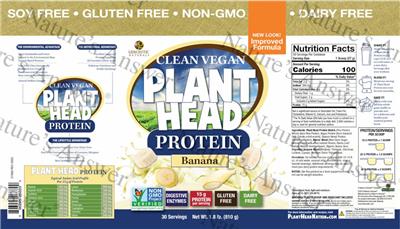
Clean Vegan Plant Head Protein Banana by Nature's Answer Genceutic Naturals label
The label scan from the NIH Dietary Supplement Label Database. Tap to enlarge.
Label images are published by the NIH Dietary Supplement Label Database for the version of this product on file. Always read your actual product label.
View the full label (PDF)The Ingredients in Clean Vegan Plant Head Protein Banana by Nature's Answer Genceutic Naturals
These are the 19 active ingredients this product is made of. Select any to open its full monograph.
Serving size27 Gram(s) Dosage formPowder Servings per container30 Amounts shown are per serving.
Most supplement products combine several ingredients, and a medication can interact with the product through any one of them. Each ingredient below shows whether it has known drug interactions.
Dietary Fiber
Interacts with2,025 drugs
Black psyllium is a soluble-fiber supplement made from the seeds of a Plantago plant, used mostly to ease constipation and support digestive health. I...
Dietary Fiber monograph & interactionsProtein
Medium Chain Triglycerides
Sodium
Interacts with205 drugs
Sodium is an essential mineral and electrolyte your body needs to balance fluids, support nerves, and help muscles work. Most people in modern diets g...
Sodium monograph & interactionsPlant Head Protein Matrix
Flavor Blend
- › Natural Vanilla flavor
- › Stevia leaf extract
- › Acacia Gum
- › Cane Sugar, Raw
- › Natural flavor
Clean Vegan Plant Head Protein Banana by Nature's Answer Genceutic Naturals Drug Interactions
HelloPharmacist Interaction Report
Clean Vegan Plant Head Protein Banana by Nature's Answer Genceutic Naturals does interact with medications.
The most serious interaction involves cranberry protein and CYP3A4 substrates — a major category affecting many drugs. Cranberry can inhibit the enzyme that breaks down these medications, potentially raising their blood levels and causing side effects.
A documented case involved a statin (atorvastatin) combined with cranberry juice, which led to muscle breakdown and liver problems.
Read the full breakdown — every affected drug type, severity by severity
Stevia leaf extract carries moderate interactions with lithium (may increase lithium levels) and minor ones with blood pressure and diabetes medications. Acacia gum can reduce absorption of some antibiotics (amoxicillin in particular) and theoretically affects absorption of oral drugs generally.
Sodium interacts moderately with blood pressure drugs, corticosteroids, lithium, and some other medications by altering electrolyte balance. Rice protein shows a moderate interaction with ACE inhibitors (blood pressure drugs), and hemp protein has moderate interactions with estrogens and minor ones with blood thinners, blood pressure drugs, and certain enzyme-metabolized medications.
Algae protein (spirulina) carries moderate interactions with blood thinners, immune-suppressing drugs, and diabetes medications.
Vanilla, lactase, lipase, protease, pea protein, and natural flavor were checked against our data and no interactions are documented for them. We could not check medium chain triglycerides, cellulase, cane sugar, or the specific components within the digestive enzyme and flavor blends.
Altogether, these interactions span 2,204 individual medications. Use the medication checker on this page to see if any of your prescriptions are affected before you start.
Check your own medications below · Editorial policy · How we use AI
Want to check YOUR meds against Clean Vegan Plant Head Protein Banana?
Ask about interactions with your drugs in plain English — “Can I take it with lisinopril?” — and we find you the answer in seconds, ingredient by ingredient.
Go to the checkerIngredients driving the most interactions
Individual Drug Interactions
The ingredients in Clean Vegan Plant Head Protein Banana interact with 2,203 drugs. Click any drug to see the details.
8 of the 19 ingredients in Clean Vegan Plant Head Protein Banana interact with drugs. Each result below shows which ingredient is responsible. Dietary Fiber Acacia Gum Hemp Protein Cranberry Protein Algae Protein Stevia leaf extract Sodium Rice Protein
"phentolamineOraVerse, Rogitine, Ryzumvi
How "phentolamine interacts with Clean Vegan Plant Head Protein Banana — through 2 ingredients. Tap an ingredient for the detail:
Acacia GumOral Drugs Moderate
Interaction Summary
Theoretically, gum arabic can alter the absorption of oral drugs due to its fiber content.
Read the full Acacia Gum + "phentolamine interactionDietary FiberOral Drugs Minor
Interaction Summary
Theoretically, psyllium might increase, decrease, or have no effect on the absorption of oral drugs.
Read the full Dietary Fiber + "phentolamine interaction6-mercaptopurinePurinethol
How 6-mercaptopurine interacts with Clean Vegan Plant Head Protein Banana — through 3 ingredients. Tap an ingredient for the detail:
Acacia GumOral Drugs Moderate
Interaction Summary
Theoretically, gum arabic can alter the absorption of oral drugs due to its fiber content.
Read the full Acacia Gum + 6-mercaptopurine interactionAlgae ProteinImmunosuppressants Moderate
Interaction Summary
Theoretically, concurrent use of blue-green algae might interfere with immunosuppressive therapy.
Read the full Algae Protein + 6-mercaptopurine interactionDietary FiberOral Drugs Minor
Interaction Summary
Theoretically, psyllium might increase, decrease, or have no effect on the absorption of oral drugs.
Read the full Dietary Fiber + 6-mercaptopurine interactionAdo-trastuzumab EmtansineKadcyla
How Ado-trastuzumab Emtansine interacts with Clean Vegan Plant Head Protein Banana — through 2 ingredients. Tap an ingredient for the detail:
Cranberry ProteinCytochrome P450 3a4 (cyp3a4) Substrates Moderate
Interaction Summary
Theoretically, cranberry might increase the levels and adverse effects of CYP3A4 substrates.
Read the full Cranberry Protein + Ado-trastuzumab Emtansine interactionHemp ProteinCytochrome P450 3a4 (cyp3a4) Substrates Minor
Interaction Summary
Theoretically, hemp might decrease the levels and clinical effects of CYP3A4 substrates.
Read the full Hemp Protein + Ado-trastuzumab Emtansine interactionAbacavirZiagen
How Abacavir interacts with Clean Vegan Plant Head Protein Banana — through 2 ingredients. Tap an ingredient for the detail:
Acacia GumOral Drugs Moderate
Interaction Summary
Theoretically, gum arabic can alter the absorption of oral drugs due to its fiber content.
Read the full Acacia Gum + Abacavir interactionDietary FiberOral Drugs Minor
Interaction Summary
Theoretically, psyllium might increase, decrease, or have no effect on the absorption of oral drugs.
Read the full Dietary Fiber + Abacavir interactionAbacavir Sulfate, Dolutegravir, LamivudineTriumeq
How Abacavir Sulfate, Dolutegravir, Lamivudine interacts with Clean Vegan Plant Head Protein Banana — through 2 ingredients. Tap an ingredient for the detail:
Acacia GumOral Drugs Moderate
Interaction Summary
Theoretically, gum arabic can alter the absorption of oral drugs due to its fiber content.
Read the full Acacia Gum + Abacavir Sulfate, Dolutegravir, Lamivudine interactionDietary FiberOral Drugs Minor
Interaction Summary
Theoretically, psyllium might increase, decrease, or have no effect on the absorption of oral drugs.
Read the full Dietary Fiber + Abacavir Sulfate, Dolutegravir, Lamivudine interactionAbacavir, LamivudineEpzicom
How Abacavir, Lamivudine interacts with Clean Vegan Plant Head Protein Banana — through 2 ingredients. Tap an ingredient for the detail:
Acacia GumOral Drugs Moderate
Interaction Summary
Theoretically, gum arabic can alter the absorption of oral drugs due to its fiber content.
Read the full Acacia Gum + Abacavir, Lamivudine interactionDietary FiberOral Drugs Minor
Interaction Summary
Theoretically, psyllium might increase, decrease, or have no effect on the absorption of oral drugs.
Read the full Dietary Fiber + Abacavir, Lamivudine interactionAbciximabReoPro
How Abciximab interacts with Clean Vegan Plant Head Protein Banana — through 4 ingredients. Tap an ingredient for the detail:
Algae ProteinAnticoagulant/antiplatelet Drugs Moderate
Interaction Summary
Theoretically, spirulina blue-green algae might increase the risk of bleeding if used with other anticoagulant or antiplatelet drugs.
Read the full Algae Protein + Abciximab interactionAcacia GumOral Drugs Moderate
Interaction Summary
Theoretically, gum arabic can alter the absorption of oral drugs due to its fiber content.
Read the full Acacia Gum + Abciximab interactionHemp ProteinAnticoagulant/antiplatelet Drugs Minor
Interaction Summary
Theoretically, hemp seed might increase the risk of bleeding when used concomitantly with anticoagulant/antiplatelet drugs.
Read the full Hemp Protein + Abciximab interactionDietary FiberOral Drugs Minor
Interaction Summary
Theoretically, psyllium might increase, decrease, or have no effect on the absorption of oral drugs.
Read the full Dietary Fiber + Abciximab interactionAbemaciclibVerzenio
How Abemaciclib interacts with Clean Vegan Plant Head Protein Banana — through 4 ingredients. Tap an ingredient for the detail:
Acacia GumOral Drugs Moderate
Interaction Summary
Theoretically, gum arabic can alter the absorption of oral drugs due to its fiber content.
Read the full Acacia Gum + Abemaciclib interactionCranberry ProteinCytochrome P450 3a4 (cyp3a4) Substrates Moderate
Interaction Summary
Theoretically, cranberry might increase the levels and adverse effects of CYP3A4 substrates.
Read the full Cranberry Protein + Abemaciclib interactionDietary FiberOral Drugs Minor
Interaction Summary
Theoretically, psyllium might increase, decrease, or have no effect on the absorption of oral drugs.
Read the full Dietary Fiber + Abemaciclib interactionHemp ProteinCytochrome P450 3a4 (cyp3a4) Substrates Minor
Interaction Summary
Theoretically, hemp might decrease the levels and clinical effects of CYP3A4 substrates.
Read the full Hemp Protein + Abemaciclib interactionAbiraterone
How Abiraterone interacts with Clean Vegan Plant Head Protein Banana — through 4 ingredients. Tap an ingredient for the detail:
Cranberry ProteinCytochrome P450 3a4 (cyp3a4) Substrates Moderate
Interaction Summary
Theoretically, cranberry might increase the levels and adverse effects of CYP3A4 substrates.
Read the full Cranberry Protein + Abiraterone interactionAcacia GumOral Drugs Moderate
Interaction Summary
Theoretically, gum arabic can alter the absorption of oral drugs due to its fiber content.
Read the full Acacia Gum + Abiraterone interactionHemp ProteinCytochrome P450 3a4 (cyp3a4) Substrates Minor
Interaction Summary
Theoretically, hemp might decrease the levels and clinical effects of CYP3A4 substrates.
Read the full Hemp Protein + Abiraterone interactionDietary FiberOral Drugs Minor
Interaction Summary
Theoretically, psyllium might increase, decrease, or have no effect on the absorption of oral drugs.
Read the full Dietary Fiber + Abiraterone interactionAbiraterone AcetateYonsa, Zytiga
How Abiraterone Acetate interacts with Clean Vegan Plant Head Protein Banana — through 4 ingredients. Tap an ingredient for the detail:
Acacia GumOral Drugs Moderate
Interaction Summary
Theoretically, gum arabic can alter the absorption of oral drugs due to its fiber content.
Read the full Acacia Gum + Abiraterone Acetate interactionCranberry ProteinCytochrome P450 3a4 (cyp3a4) Substrates Moderate
Interaction Summary
Theoretically, cranberry might increase the levels and adverse effects of CYP3A4 substrates.
Read the full Cranberry Protein + Abiraterone Acetate interactionHemp ProteinCytochrome P450 3a4 (cyp3a4) Substrates Minor
Interaction Summary
Theoretically, hemp might decrease the levels and clinical effects of CYP3A4 substrates.
Read the full Hemp Protein + Abiraterone Acetate interactionDietary FiberOral Drugs Minor
Interaction Summary
Theoretically, psyllium might increase, decrease, or have no effect on the absorption of oral drugs.
Read the full Dietary Fiber + Abiraterone Acetate interactionAbrocitinibCibinqo
How Abrocitinib interacts with Clean Vegan Plant Head Protein Banana — through 5 ingredients. Tap an ingredient for the detail:
Acacia GumOral Drugs Moderate
Interaction Summary
Theoretically, gum arabic can alter the absorption of oral drugs due to its fiber content.
Read the full Acacia Gum + Abrocitinib interactionAlgae ProteinAnticoagulant/antiplatelet Drugs, Immunosuppressants Moderate
Interaction Summary
Theoretically, spirulina blue-green algae might increase the risk of bleeding if used with other anticoagulant or antiplatelet drugs.
Read the full Algae Protein + Abrocitinib interactionDietary FiberOral Drugs Minor
Interaction Summary
Theoretically, psyllium might increase, decrease, or have no effect on the absorption of oral drugs.
Read the full Dietary Fiber + Abrocitinib interactionCranberry ProteinCytochrome P450 2c9 (cyp2c9) Substrates Minor
Interaction Summary
Theoretically, cranberry might increase the levels and adverse effects of CYP2C9 substrates.
Read the full Cranberry Protein + Abrocitinib interactionHemp ProteinAnticoagulant/antiplatelet Drugs Minor
Interaction Summary
Theoretically, hemp seed might increase the risk of bleeding when used concomitantly with anticoagulant/antiplatelet drugs.
Read the full Hemp Protein + Abrocitinib interactionAcalabrutinibCalquence
How Acalabrutinib interacts with Clean Vegan Plant Head Protein Banana — through 4 ingredients. Tap an ingredient for the detail:
Cranberry ProteinCytochrome P450 3a4 (cyp3a4) Substrates Moderate
Interaction Summary
Theoretically, cranberry might increase the levels and adverse effects of CYP3A4 substrates.
Read the full Cranberry Protein + Acalabrutinib interactionAcacia GumOral Drugs Moderate
Interaction Summary
Theoretically, gum arabic can alter the absorption of oral drugs due to its fiber content.
Read the full Acacia Gum + Acalabrutinib interactionHemp ProteinCytochrome P450 3a4 (cyp3a4) Substrates Minor
Interaction Summary
Theoretically, hemp might decrease the levels and clinical effects of CYP3A4 substrates.
Read the full Hemp Protein + Acalabrutinib interactionDietary FiberOral Drugs Minor
Interaction Summary
Theoretically, psyllium might increase, decrease, or have no effect on the absorption of oral drugs.
Read the full Dietary Fiber + Acalabrutinib interactionAcamprosateCampral
How Acamprosate interacts with Clean Vegan Plant Head Protein Banana — through 2 ingredients. Tap an ingredient for the detail:
Acacia GumOral Drugs Moderate
Interaction Summary
Theoretically, gum arabic can alter the absorption of oral drugs due to its fiber content.
Read the full Acacia Gum + Acamprosate interactionDietary FiberOral Drugs Minor
Interaction Summary
Theoretically, psyllium might increase, decrease, or have no effect on the absorption of oral drugs.
Read the full Dietary Fiber + Acamprosate interactionAcarboseGlucobay, Prandase, Precose
How Acarbose interacts with Clean Vegan Plant Head Protein Banana — through 4 ingredients. Tap an ingredient for the detail:
Algae ProteinAntidiabetes Drugs Moderate
Interaction Summary
Theoretically, taking blue-green algae with antidiabetes drugs might increase the risk of hypoglycemia.
Read the full Algae Protein + Acarbose interactionAcacia GumOral Drugs Moderate
Interaction Summary
Theoretically, gum arabic can alter the absorption of oral drugs due to its fiber content.
Read the full Acacia Gum + Acarbose interactionDietary FiberOral Drugs Minor
Interaction Summary
Theoretically, psyllium might increase, decrease, or have no effect on the absorption of oral drugs.
Read the full Dietary Fiber + Acarbose interactionStevia Leaf ExtractAntidiabetes Drugs Minor
Interaction Summary
Theoretically, stevia might increase the risk for hypoglycemia when combined with antidiabetes drugs.
Read the full Stevia Leaf Extract + Acarbose interactionAcebutololRhotral, Sectral
How Acebutolol interacts with Clean Vegan Plant Head Protein Banana — through 5 ingredients. Tap an ingredient for the detail:
Acacia GumOral Drugs Moderate
Interaction Summary
Theoretically, gum arabic can alter the absorption of oral drugs due to its fiber content.
Read the full Acacia Gum + Acebutolol interactionSodiumAntihypertensive Drugs Moderate
Interaction Summary
Theoretically, a high intake of dietary sodium might reduce the effectiveness of antihypertensive drugs.
Read the full Sodium + Acebutolol interactionDietary FiberOral Drugs Minor
Interaction Summary
Theoretically, psyllium might increase, decrease, or have no effect on the absorption of oral drugs.
Read the full Dietary Fiber + Acebutolol interactionHemp ProteinAntihypertensive Drugs Minor
Interaction Summary
Theoretically, hemp seed protein may have additive effects with antihypertensive drugs.
Read the full Hemp Protein + Acebutolol interactionStevia Leaf ExtractAntihypertensive Drugs Minor
Interaction Summary
Theoretically, combining stevia or stevia constituents with antihypertensive agents might increase the risk of hypotension.
Read the full Stevia Leaf Extract + Acebutolol interactionAcenocoumarolSintrom
How Acenocoumarol interacts with Clean Vegan Plant Head Protein Banana — through 4 ingredients. Tap an ingredient for the detail:
Acacia GumOral Drugs Moderate
Interaction Summary
Theoretically, gum arabic can alter the absorption of oral drugs due to its fiber content.
Read the full Acacia Gum + Acenocoumarol interactionAlgae ProteinAnticoagulant/antiplatelet Drugs Moderate
Interaction Summary
Theoretically, spirulina blue-green algae might increase the risk of bleeding if used with other anticoagulant or antiplatelet drugs.
Read the full Algae Protein + Acenocoumarol interactionDietary FiberOral Drugs Minor
Interaction Summary
Theoretically, psyllium might increase, decrease, or have no effect on the absorption of oral drugs.
Read the full Dietary Fiber + Acenocoumarol interactionHemp ProteinAnticoagulant/antiplatelet Drugs Minor
Interaction Summary
Theoretically, hemp seed might increase the risk of bleeding when used concomitantly with anticoagulant/antiplatelet drugs.
Read the full Hemp Protein + Acenocoumarol interactionAcepromazineAtravet
How Acepromazine interacts with Clean Vegan Plant Head Protein Banana — through 2 ingredients. Tap an ingredient for the detail:
Acacia GumOral Drugs Moderate
Interaction Summary
Theoretically, gum arabic can alter the absorption of oral drugs due to its fiber content.
Read the full Acacia Gum + Acepromazine interactionDietary FiberOral Drugs Minor
Interaction Summary
Theoretically, psyllium might increase, decrease, or have no effect on the absorption of oral drugs.
Read the full Dietary Fiber + Acepromazine interactionAcetaminophenChildren's Tylenol, Children's Tylenol Meltaways, Tylenol, Tylenol Ex Strength
How Acetaminophen interacts with Clean Vegan Plant Head Protein Banana — through 3 ingredients. Tap an ingredient for the detail:
Acacia GumOral Drugs Moderate
Interaction Summary
Theoretically, gum arabic can alter the absorption of oral drugs due to its fiber content.
Read the full Acacia Gum + Acetaminophen interactionDietary FiberOral Drugs Minor
Interaction Summary
Theoretically, psyllium might increase, decrease, or have no effect on the absorption of oral drugs.
Read the full Dietary Fiber + Acetaminophen interactionHemp ProteinCytochrome P450 1a2 (cyp1a2) Substrates Minor
Interaction Summary
Theoretically, hemp might decrease the levels and clinical effects of CYP1A2 substrates.
Read the full Hemp Protein + Acetaminophen interactionAcetaminophen, AspirinGemnisyn
How Acetaminophen, Aspirin interacts with Clean Vegan Plant Head Protein Banana — through 4 ingredients. Tap an ingredient for the detail:
Acacia GumOral Drugs Moderate
Interaction Summary
Theoretically, gum arabic can alter the absorption of oral drugs due to its fiber content.
Read the full Acacia Gum + Acetaminophen, Aspirin interactionAlgae ProteinAnticoagulant/antiplatelet Drugs Moderate
Interaction Summary
Theoretically, spirulina blue-green algae might increase the risk of bleeding if used with other anticoagulant or antiplatelet drugs.
Read the full Algae Protein + Acetaminophen, Aspirin interactionDietary FiberOral Drugs Minor
Interaction Summary
Theoretically, psyllium might increase, decrease, or have no effect on the absorption of oral drugs.
Read the full Dietary Fiber + Acetaminophen, Aspirin interactionHemp ProteinCytochrome P450 1a2 (cyp1a2) Substrates, Anticoagulant/antiplatelet Drugs Minor
Interaction Summary
Theoretically, hemp might decrease the levels and clinical effects of CYP1A2 substrates.
Read the full Hemp Protein + Acetaminophen, Aspirin interactionAcetaminophen, Aspirin, CaffeineExcedrin, Excedrin Extra Strength, Excedrin Migraine
How Acetaminophen, Aspirin, Caffeine interacts with Clean Vegan Plant Head Protein Banana — through 5 ingredients. Tap an ingredient for the detail:
Cranberry ProteinCytochrome P450 3a4 (cyp3a4) Substrates Moderate
Interaction Summary
Theoretically, cranberry might increase the levels and adverse effects of CYP3A4 substrates.
Read the full Cranberry Protein + Acetaminophen, Aspirin, Caffeine interactionAcacia GumOral Drugs Moderate
Interaction Summary
Theoretically, gum arabic can alter the absorption of oral drugs due to its fiber content.
Read the full Acacia Gum + Acetaminophen, Aspirin, Caffeine interactionAlgae ProteinAnticoagulant/antiplatelet Drugs Moderate
Interaction Summary
Theoretically, spirulina blue-green algae might increase the risk of bleeding if used with other anticoagulant or antiplatelet drugs.
Read the full Algae Protein + Acetaminophen, Aspirin, Caffeine interactionHemp ProteinAnticoagulant/antiplatelet Drugs, Cytochrome P450 1a2 (cyp1a2) Substrates +1 Minor
Interaction Summary
Theoretically, hemp seed might increase the risk of bleeding when used concomitantly with anticoagulant/antiplatelet drugs.
Read the full Hemp Protein + Acetaminophen, Aspirin, Caffeine interactionDietary FiberOral Drugs Minor
Interaction Summary
Theoretically, psyllium might increase, decrease, or have no effect on the absorption of oral drugs.
Read the full Dietary Fiber + Acetaminophen, Aspirin, Caffeine interactionAcetaminophen, Brompheniramine, PhenylpropanolamineDimetapp Cold and Flu
How Acetaminophen, Brompheniramine, Phenylpropanolamine interacts with Clean Vegan Plant Head Protein Banana — through 3 ingredients. Tap an ingredient for the detail:
Acacia GumOral Drugs Moderate
Interaction Summary
Theoretically, gum arabic can alter the absorption of oral drugs due to its fiber content.
Read the full Acacia Gum + Acetaminophen, Brompheniramine, Phenylpropanolamine interactionDietary FiberOral Drugs Minor
Interaction Summary
Theoretically, psyllium might increase, decrease, or have no effect on the absorption of oral drugs.
Read the full Dietary Fiber + Acetaminophen, Brompheniramine, Phenylpropanolamine interactionHemp ProteinCytochrome P450 1a2 (cyp1a2) Substrates Minor
Interaction Summary
Theoretically, hemp might decrease the levels and clinical effects of CYP1A2 substrates.
Read the full Hemp Protein + Acetaminophen, Brompheniramine, Phenylpropanolamine interactionAcetaminophen, ButalbitalAxocet, Bancap, Bucet, Butex Forte, Esgic CF, Orbivan CF +5 more
How Acetaminophen, Butalbital interacts with Clean Vegan Plant Head Protein Banana — through 3 ingredients. Tap an ingredient for the detail:
Acacia GumOral Drugs Moderate
Interaction Summary
Theoretically, gum arabic can alter the absorption of oral drugs due to its fiber content.
Read the full Acacia Gum + Acetaminophen, Butalbital interactionDietary FiberOral Drugs Minor
Interaction Summary
Theoretically, psyllium might increase, decrease, or have no effect on the absorption of oral drugs.
Read the full Dietary Fiber + Acetaminophen, Butalbital interactionHemp ProteinCytochrome P450 1a2 (cyp1a2) Substrates Minor
Interaction Summary
Theoretically, hemp might decrease the levels and clinical effects of CYP1A2 substrates.
Read the full Hemp Protein + Acetaminophen, Butalbital interactionAcetaminophen, Butalbital, CaffeineEsgic, Esgic Plus, Fiogesic, Fioricet, Repan, Tecnal +1 more
How Acetaminophen, Butalbital, Caffeine interacts with Clean Vegan Plant Head Protein Banana — through 4 ingredients. Tap an ingredient for the detail:
Cranberry ProteinCytochrome P450 3a4 (cyp3a4) Substrates Moderate
Interaction Summary
Theoretically, cranberry might increase the levels and adverse effects of CYP3A4 substrates.
Read the full Cranberry Protein + Acetaminophen, Butalbital, Caffeine interactionAcacia GumOral Drugs Moderate
Interaction Summary
Theoretically, gum arabic can alter the absorption of oral drugs due to its fiber content.
Read the full Acacia Gum + Acetaminophen, Butalbital, Caffeine interactionHemp ProteinCytochrome P450 1a2 (cyp1a2) Substrates, Cytochrome P450 3a4 (cyp3a4) Substrates Minor
Interaction Summary
Theoretically, hemp might decrease the levels and clinical effects of CYP1A2 substrates.
Read the full Hemp Protein + Acetaminophen, Butalbital, Caffeine interactionDietary FiberOral Drugs Minor
Interaction Summary
Theoretically, psyllium might increase, decrease, or have no effect on the absorption of oral drugs.
Read the full Dietary Fiber + Acetaminophen, Butalbital, Caffeine interactionAcetaminophen, Butalbital, Caffeine, CodeineEsgic with Codeine, Fioricet w/ Codeine
How Acetaminophen, Butalbital, Caffeine, Codeine interacts with Clean Vegan Plant Head Protein Banana — through 4 ingredients. Tap an ingredient for the detail:
Cranberry ProteinCytochrome P450 3a4 (cyp3a4) Substrates Moderate
Interaction Summary
Theoretically, cranberry might increase the levels and adverse effects of CYP3A4 substrates.
Read the full Cranberry Protein + Acetaminophen, Butalbital, Caffeine, Codeine interactionAcacia GumOral Drugs Moderate
Interaction Summary
Theoretically, gum arabic can alter the absorption of oral drugs due to its fiber content.
Read the full Acacia Gum + Acetaminophen, Butalbital, Caffeine, Codeine interactionDietary FiberOral Drugs Minor
Interaction Summary
Theoretically, psyllium might increase, decrease, or have no effect on the absorption of oral drugs.
Read the full Dietary Fiber + Acetaminophen, Butalbital, Caffeine, Codeine interactionHemp ProteinCytochrome P450 3a4 (cyp3a4) Substrates, Cytochrome P450 1a2 (cyp1a2) Substrates Minor
Interaction Summary
Theoretically, hemp might decrease the levels and clinical effects of CYP3A4 substrates.
Read the full Hemp Protein + Acetaminophen, Butalbital, Caffeine, Codeine interactionAcetaminophen, Butalbital, CodeineBancap w/ Codeine
How Acetaminophen, Butalbital, Codeine interacts with Clean Vegan Plant Head Protein Banana — through 3 ingredients. Tap an ingredient for the detail:
Acacia GumOral Drugs Moderate
Interaction Summary
Theoretically, gum arabic can alter the absorption of oral drugs due to its fiber content.
Read the full Acacia Gum + Acetaminophen, Butalbital, Codeine interactionDietary FiberOral Drugs Minor
Interaction Summary
Theoretically, psyllium might increase, decrease, or have no effect on the absorption of oral drugs.
Read the full Dietary Fiber + Acetaminophen, Butalbital, Codeine interactionHemp ProteinCytochrome P450 1a2 (cyp1a2) Substrates Minor
Interaction Summary
Theoretically, hemp might decrease the levels and clinical effects of CYP1A2 substrates.
Read the full Hemp Protein + Acetaminophen, Butalbital, Codeine interactionAcetaminophen, Butalbital, Codeine PhosphatePhrenilin #3
How Acetaminophen, Butalbital, Codeine Phosphate interacts with Clean Vegan Plant Head Protein Banana — through 3 ingredients. Tap an ingredient for the detail:
Acacia GumOral Drugs Moderate
Interaction Summary
Theoretically, gum arabic can alter the absorption of oral drugs due to its fiber content.
Read the full Acacia Gum + Acetaminophen, Butalbital, Codeine Phosphate interactionHemp ProteinCytochrome P450 1a2 (cyp1a2) Substrates Minor
Interaction Summary
Theoretically, hemp might decrease the levels and clinical effects of CYP1A2 substrates.
Read the full Hemp Protein + Acetaminophen, Butalbital, Codeine Phosphate interactionDietary FiberOral Drugs Minor
Interaction Summary
Theoretically, psyllium might increase, decrease, or have no effect on the absorption of oral drugs.
Read the full Dietary Fiber + Acetaminophen, Butalbital, Codeine Phosphate interactionAcetaminophen, Caffeine, Chlorpheniramine, Hydrocodone, PhenylephrineHycomine Compound
How Acetaminophen, Caffeine, Chlorpheniramine, Hydrocodone, Phenylephrine interacts with Clean Vegan Plant Head Protein Banana — through 4 ingredients. Tap an ingredient for the detail:
Cranberry ProteinCytochrome P450 3a4 (cyp3a4) Substrates Moderate
Interaction Summary
Theoretically, cranberry might increase the levels and adverse effects of CYP3A4 substrates.
Read the full Cranberry Protein + Acetaminophen, Caffeine, Chlorpheniramine, Hydrocodone, Phenylephrine interactionAcacia GumOral Drugs Moderate
Interaction Summary
Theoretically, gum arabic can alter the absorption of oral drugs due to its fiber content.
Read the full Acacia Gum + Acetaminophen, Caffeine, Chlorpheniramine, Hydrocodone, Phenylephrine interactionDietary FiberOral Drugs Minor
Interaction Summary
Theoretically, psyllium might increase, decrease, or have no effect on the absorption of oral drugs.
Read the full Dietary Fiber + Acetaminophen, Caffeine, Chlorpheniramine, Hydrocodone, Phenylephrine interactionHemp ProteinCytochrome P450 1a2 (cyp1a2) Substrates, Cytochrome P450 3a4 (cyp3a4) Substrates Minor
Interaction Summary
Theoretically, hemp might decrease the levels and clinical effects of CYP1A2 substrates.
Read the full Hemp Protein + Acetaminophen, Caffeine, Chlorpheniramine, Hydrocodone, Phenylephrine interactionAcetaminophen, Caffeine, CodeineGesic C15, Gesic C30, Gesic C8, Lenoltec 1, Lenoltec 2, Lenoltec 3 +1 more
How Acetaminophen, Caffeine, Codeine interacts with Clean Vegan Plant Head Protein Banana — through 4 ingredients. Tap an ingredient for the detail:
Acacia GumOral Drugs Moderate
Interaction Summary
Theoretically, gum arabic can alter the absorption of oral drugs due to its fiber content.
Read the full Acacia Gum + Acetaminophen, Caffeine, Codeine interactionCranberry ProteinCytochrome P450 3a4 (cyp3a4) Substrates Moderate
Interaction Summary
Theoretically, cranberry might increase the levels and adverse effects of CYP3A4 substrates.
Read the full Cranberry Protein + Acetaminophen, Caffeine, Codeine interactionDietary FiberOral Drugs Minor
Interaction Summary
Theoretically, psyllium might increase, decrease, or have no effect on the absorption of oral drugs.
Read the full Dietary Fiber + Acetaminophen, Caffeine, Codeine interactionHemp ProteinCytochrome P450 3a4 (cyp3a4) Substrates, Cytochrome P450 1a2 (cyp1a2) Substrates Minor
Interaction Summary
Theoretically, hemp might decrease the levels and clinical effects of CYP3A4 substrates.
Read the full Hemp Protein + Acetaminophen, Caffeine, Codeine interactionAcetaminophen, Caffeine, Codeine, SalicylamideCodalan No.1, Codalan No.2, Codalan No.3
How Acetaminophen, Caffeine, Codeine, Salicylamide interacts with Clean Vegan Plant Head Protein Banana — through 4 ingredients. Tap an ingredient for the detail:
Cranberry ProteinCytochrome P450 3a4 (cyp3a4) Substrates Moderate
Interaction Summary
Theoretically, cranberry might increase the levels and adverse effects of CYP3A4 substrates.
Read the full Cranberry Protein + Acetaminophen, Caffeine, Codeine, Salicylamide interactionAcacia GumOral Drugs Moderate
Interaction Summary
Theoretically, gum arabic can alter the absorption of oral drugs due to its fiber content.
Read the full Acacia Gum + Acetaminophen, Caffeine, Codeine, Salicylamide interactionHemp ProteinCytochrome P450 1a2 (cyp1a2) Substrates, Cytochrome P450 3a4 (cyp3a4) Substrates Minor
Interaction Summary
Theoretically, hemp might decrease the levels and clinical effects of CYP1A2 substrates.
Read the full Hemp Protein + Acetaminophen, Caffeine, Codeine, Salicylamide interactionDietary FiberOral Drugs Minor
Interaction Summary
Theoretically, psyllium might increase, decrease, or have no effect on the absorption of oral drugs.
Read the full Dietary Fiber + Acetaminophen, Caffeine, Codeine, Salicylamide interactionAcetaminophen, Caffeine, DihydrocodeineDHC Plus, Panlor DC, Panlor SS
How Acetaminophen, Caffeine, Dihydrocodeine interacts with Clean Vegan Plant Head Protein Banana — through 4 ingredients. Tap an ingredient for the detail:
Cranberry ProteinCytochrome P450 3a4 (cyp3a4) Substrates Moderate
Interaction Summary
Theoretically, cranberry might increase the levels and adverse effects of CYP3A4 substrates.
Read the full Cranberry Protein + Acetaminophen, Caffeine, Dihydrocodeine interactionAcacia GumOral Drugs Moderate
Interaction Summary
Theoretically, gum arabic can alter the absorption of oral drugs due to its fiber content.
Read the full Acacia Gum + Acetaminophen, Caffeine, Dihydrocodeine interactionDietary FiberOral Drugs Minor
Interaction Summary
Theoretically, psyllium might increase, decrease, or have no effect on the absorption of oral drugs.
Read the full Dietary Fiber + Acetaminophen, Caffeine, Dihydrocodeine interactionHemp ProteinCytochrome P450 3a4 (cyp3a4) Substrates, Cytochrome P450 1a2 (cyp1a2) Substrates Minor
Interaction Summary
Theoretically, hemp might decrease the levels and clinical effects of CYP3A4 substrates.
Read the full Hemp Protein + Acetaminophen, Caffeine, Dihydrocodeine interactionEach ingredient & the kinds of drugs it affects
For each ingredient in Clean Vegan Plant Head Protein Banana with known interactions, here are the types of medications they can affect. Open any type for the detail — or search your exact drug in the checker above.
Dietary Fiber
Carbamazepine (Tegretol)
Theoretically, black psyllium might reduce the effects of carbamazepine and increase the risk for convulsions.
Theoretically, black psyllium might reduce carbamazepine absorption. A preliminary study using blond psyllium reported decreased carbamazepine bioavailability due to binding of the drug to psyllium, as well as reduction of available fluid in the gut for dissolution of the drug. This interaction may also occur with black psyllium.
Lithium
Theoretically, taking black psyllium at the same time as lithium might reduce lithium absorption.
The fiber in black psyllium might reduce lithium absorption and plasma levels. Some case reports describe a reduction in plasma lithium levels with concomitant administration of blond psyllium. This was reversed when psyllium was stopped. This interaction may also occur with black psyllium.
Metformin (Glucophage)
Theoretically, black psyllium might increase the therapeutic and adverse effects of metformin.
Animal research shows that concurrent consumption of blond psyllium with metformin slows and increases the absorption of metformin. This interaction may also occur with black psyllium. To avoid changes in absorption, take psyllium 30-60 minutes after metformin.
Olanzapine (Zyprexa)
Theoretically, taking black psyllium at the same time as olanzapine might reduce olanzapine absorption.
The fiber in black psyllium might decrease the absorption of olanzapine. A single case report describes a reduction in the effectiveness of olanzapine when it was concomitantly administered with an unspecified type of psyllium 3 grams orally twice daily. This effect was reversed when psyllium was stopped.
Digoxin (Lanoxin)
Theoretically, taking black psyllium at the same time as digoxin might reduce digoxin absorption and decrease digoxin levels.
Psyllium might bind digoxin in the gut. However, some clinical evidence suggests that psyllium does not impact digoxin absorption.
Ethinyl Estradiol
Theoretically, taking black psyllium at the same time as ethinyl estradiol might alter levels of estradiol.
Concurrent use of blond psyllium with ethinyl estradiol results in a slight increase in the extent of ethinyl estradiol absorption and a slower rate of absorption. This is unlikely to be clinically significant.
Oral Drugs
Theoretically, psyllium might increase, decrease, or have no effect on the absorption of oral drugs.
Psyllium seems to have variable effects on drug absorption. To avoid changes in absorption, take psyllium 30-60 minutes after oral medications. Animal research shows that blond psyllium delays and increases the absorption of metformin and ethinyl estradiol. Case reports and animal research suggest that blond psyllium might reduce absorption of lithium, digoxin, olanzapine, and carbamazepine. Finally, some pharmacokinetic studies show that psyllium does not affect the absorption of levothyroxine or warfarin. Although many of these studies evaluated blond psyllium, the fiber content in black psyllium may have similar effects.
Acacia Gum
Amoxicillin (Amoxil, Trimox)
Gum arabic can reduce the absorption of amoxicillin.
A small study in healthy volunteers shows that taking amoxicillin and gum arabic concurrently significantly reduces the absorption of amoxicillin. Separate doses of amoxicillin from gum arabic by at least 2 hours.
Oral Drugs
Theoretically, gum arabic can alter the absorption of oral drugs due to its fiber content.
Gum arabic has been used as a suspending osmotic agent in drug formulations. It might improve bioavailability of water-insoluble drugs like naproxen, but reduce absorption of polar drugs like amoxicillin. To avoid changes in absorption, take gum arabic 30-60 minutes after oral medications.
Hemp Protein
Estrogens
Theoretically, hemp might interfere with hormone therapy due to its estrogenic effects.
In an ovariectomized animal model, a diet containing hemp seed 1%, 2%, or 10% resulted in normalized plasma levels of 17-beta-estradiol. The mechanism of action for this effect is unclear.
Ace Inhibitors (Aceis)
Theoretically, consuming hemp seed protein isolate with ACE inhibitors might have additive effects and increase the risk of hypotension.
Hemp seed protein hydrolysate has shown ACE inhibitor-like effects in a hypertensive animal model. However, hempseed oil consumption does not seem to reduce blood pressure in humans. Until more is known, monitor blood pressure and potassium levels.
Anticoagulant/Antiplatelet Drugs
Theoretically, hemp seed might increase the risk of bleeding when used concomitantly with anticoagulant/antiplatelet drugs.
In animal research, hemp seed at 5% of the diet inhibits platelet aggregation in vitro. However, in human research, taking hemp seed oil 2 grams daily for 12 weeks does not inhibit the aggregation of platelets in vitro.
Antihypertensive Drugs
Theoretically, hemp seed protein may have additive effects with antihypertensive drugs.
In a hypertensive animal model, hemp seed protein hydrolysate reduced systolic blood pressure by a mechanism possibly involving the inhibition of renin and angiotensin converting enzyme (ACE) activities. However, there was no effect of hemp seed protein on blood pressure in normotensive animals. Furthermore, hempseed oil consumption does not seem to reduce blood pressure in humans.
Cytochrome P450 1A2 (Cyp1A2) Substrates
Theoretically, hemp might decrease the levels and clinical effects of CYP1A2 substrates.
In vitro research shows that hemp induces CYP1A2 enzymes.
Cytochrome P450 3A4 (Cyp3A4) Substrates
Theoretically, hemp might decrease the levels and clinical effects of CYP3A4 substrates.
In vitro research shows that hemp induces CYP3A4 enzymes.
Cranberry Protein
Atorvastatin (Lipitor)
Theoretically, cranberry might increase levels and adverse effects of atorvastatin.
In one case report, a patient taking atorvastatin experienced upper back pain, rhabdomyolysis, and abnormal liver function after drinking cranberry juice 16 ounces daily for 2 weeks. Theoretically, this may have been caused by inhibition of cytochrome P450 3A4 (CYP3A4) enzymes by cranberry juice, as atorvastatin is a CYP3A4 substrate. Creatinine kinase and liver enzymes normalized within 2 weeks of stopping cranberry juice. Patients taking atorvastatin should avoid large quantities of cranberry juice.
Cytochrome P450 3A4 (Cyp3A4) Substrates
Theoretically, cranberry might increase the levels and adverse effects of CYP3A4 substrates.
A case of upper back pain, rhabdomyolysis, and abnormal liver function has been reported for a patient taking atorvastatin, a CYP3A4 substrate, in combination with cranberry juice 16 ounces daily for 2 weeks. Creatinine kinase and liver enzymes normalized within 2 weeks of stopping cranberry juice. Also, animal research suggests that cranberry juice, administered intraduodenally 30 minutes prior to nifedipine, a CYP3A4 substrate, inhibits nifedipine metabolism and increases the area under the concentration-time curve by 1.6-fold compared to control.
Nifedipine (Procardia)
Theoretically, cranberry might increase the levels and adverse effects of nifedipine.
Animal research suggests that cranberry juice, administered intraduodenally 30 minutes prior to nifedipine treatment, inhibits nifedipine metabolism and increases the area under the concentration-time curve by 1.6-fold compared to control. This interaction has not been reported in humans.
Warfarin (Coumadin)
Theoretically, cranberry might increase the levels and adverse effects of warfarin. However, research is conflicting.
There is contradictory evidence about the effect of cranberry juice on warfarin. Case reports have linked cranberry juice consumption to increases in the international normalized ratio (INR) in patients taking warfarin, resulting in severe spontaneous bleeding and excessive postoperative bleeding. Daily consumption of cranberry sauce for one week has also been linked to an increase in INR in one case report. In a small study in healthy young males, taking a high dose of 3 grams of cranberry juice concentrate capsules, equivalent to 57 grams of fruit daily, for 2 weeks produced a 30% increase in the area under the INR-time curve after a single 25-mg dose of warfarin. However, 3 very small clinical studies in patients stabilized on warfarin reported that cranberry juice 250 mL once or twice daily for 7 days (27% cranberry juice or pure cranberry juice) or 240 mL once daily for 14 days does not significantly increase INR or affect plasma warfarin levels. The reasons for these discrepant findings are unclear. It is possible that the form and dose of cranberry may play a role, as cranberry extracts and juices contain different constituents. Additionally, an in vitro study evaluating 5 different cranberry juices found varying effects, with only a cranberry concentrate, and not diluted cranberry juices, inhibiting CYP2C9. However, this concentrate did not inhibit CYP2C9 activity in humans.
Cytochrome P450 2C9 (Cyp2C9) Substrates
Theoretically, cranberry might increase the levels and adverse effects of CYP2C9 substrates. However, research is conflicting.
There is contradictory evidence about the effect of cranberry on CYP2C9 enzymes. In vitro evidence suggests that flavonoids in cranberry inhibit CYP2C9 enzymes. However, clinical research shows that cranberry juice does not significantly affect the levels, metabolism, or elimination of the CYP2C9 substrates flurbiprofen or diclofenac. Also, in patients stabilized on warfarin, drinking cranberry juice 250 mL daily for 7 days does not significantly increase the anticoagulant activity of warfarin, a CYP2C9 substrate. Additional pharmacokinetic research shows that cranberry juice does not increase peak plasma concentrations or area under the concentration-time curve of warfarin.
Diclofenac (Voltaren, Others)
Theoretically, cranberry might modestly increase the levels and adverse effects of diclofenac.
In vitro evidence suggests that cranberry juice inhibits diclofenac metabolism by human liver microsomes. However, drinking cranberry juice does not seem to affect diclofenac metabolism in humans.
Algae Protein
Anticoagulant/Antiplatelet Drugs
Theoretically, spirulina blue-green algae might increase the risk of bleeding if used with other anticoagulant or antiplatelet drugs. However, this is unlikely.
Spirulina blue-green algae have shown antiplatelet and anticoagulant effects in vitro. However, one preliminary study in 24 patients receiving spirulina blue-green algae 2.3 grams daily for 2 weeks showed no effect on platelet activation or measures of clotting time.
Antidiabetes Drugs
Theoretically, taking blue-green algae with antidiabetes drugs might increase the risk of hypoglycemia.
Human research shows that spirulina blue-green algae can have hypoglycemic effects in patients with diabetes, at least some of whom were using antidiabetes drugs. However, blue-green algae does not seem to improve glycated hemoglobin (HbA1c) levels in patients with diabetes. A meta-analysis of animal studies also suggests that spirulina blue-green algae have hypoglycemic effects.
Immunosuppressants
Theoretically, concurrent use of blue-green algae might interfere with immunosuppressive therapy.
Blue-green algae have been shown to stimulate the immune system.
Stevia leaf extract
Lithium
Theoretically, stevia might decrease clearance and increase levels of lithium.
Animal research suggests that stevia extracts might have diuretic activity. Theoretically, increased reabsorption of lithium along with sodium might reduce excretion and increase levels of lithium.
Antidiabetes Drugs
Theoretically, stevia might increase the risk for hypoglycemia when combined with antidiabetes drugs.
Preliminary clinical research in patients with type 2 diabetes suggests that taking a single dose of stevia extract 1000 mg reduces postprandial blood glucose levels when taken with a meal. However, other clinical research in patients with type 1 or type 2 diabetes suggests that taking stevioside 250 mg three times daily does not significantly affect blood glucose levels or glycated hemoglobin (HbA1C) after three months of treatment.
Antihypertensive Drugs
Theoretically, combining stevia or stevia constituents with antihypertensive agents might increase the risk of hypotension.
Stevia extract and stevioside might lower blood pressure in patients with hypertension. However, other clinical research suggests that stevioside does not significantly lower blood pressure in patients with hypertension.
Sodium
Antihypertensive Drugs
Theoretically, a high intake of dietary sodium might reduce the effectiveness of antihypertensive drugs.
High intake of dietary sodium can increase systolic and diastolic blood pressure. Also, high intake of sodium may necessitate increased use of antihypertensive medications to achieve blood pressure control in some patients, such as those with chronic kidney disease.
Corticosteroids
Concomitant use of mineralocorticoids and some glucocorticoids with sodium supplements might increase the risk of hypernatremia.
Mineralocorticoids and some glucocorticoids (corticosteroids) cause sodium retention. This effect is dose-related and depends on mineralocorticoid potency. It is most common with hydrocortisone, cortisone, and fludrocortisone, followed by prednisone and prednisolone.
Didanosine (Videx)
Concomitant use of didanosine with additional sodium from dietary or supplemental sources may increase the risk of hypernatremia.
Didanosine formulations contain a significant amount of sodium.
Lithium
Altering dietary intake of sodium might alter the levels and clinical effects of lithium.
High sodium intake can reduce plasma concentrations of lithium by increasing lithium excretion. Reducing sodium intake can significantly increase plasma concentrations of lithium and cause lithium toxicity in patients being treated with lithium carbonate. Stabilizing sodium intake is shown to reduce the percentage of patients with lithium level fluctuations above 0.8 mEq/L. Patients taking lithium should avoid significant alterations in their dietary intake of sodium.
Sodium Phosphates
Theoretically, concomitant use of sodium phosphate with sodium supplements might increase the risk of hypernatremia.
Use of high doses (> 45 mL in 24 hours) of sodium phosphate, such as those used for bowel cleansing before surgery, can lead to serious electrolyte disturbances, including hypernatremia. The risk of hypernatremia is highest in the elderly and people with other risk factors for electrolyte disturbances.
Sodium-Containing Drugs
Concomitant use of sodium-containing drugs with additional sodium from dietary or supplemental sources may increase the risk of hypernatremia and long-term sodium-related complications.
The Chronic Disease Risk Reduction (CDRR) intake level of 2.3 grams of sodium daily indicates the intake at which it is believed that chronic disease risk increases for the apparently healthy population. Some medications contain high quantities of sodium. When used in conjunction with sodium supplements or high-sodium diets, the CDRR may be exceeded. Additionally, concomitant use may increase the risk for hypernatremia; this risk is highest in the elderly and people with other risk factors for electrolyte disturbances.
Tolvaptan (Samsca)
Theoretically, concomitant use of tolvaptan with sodium might increase the risk of hypernatremia.
Tolvaptan is a vasopressin receptor 2 antagonist that is used to increase sodium levels in patients with hyponatremia. Patients taking tolvaptan should use caution with the use of sodium salts such as sodium chloride.
Rice Protein
Ace Inhibitors (Aceis)
In laboratory research, hydrolyzed rice protein inhibits angiotensin-converting enzyme (ACE). In animal research, the inhibition of ACE is correlated with a reduction in systolic blood pressure. So far, this effect has not been shown in humans. Theoretically, concomitant use of rice protein and ACE inhibitors may increase the risk of blood pressure becoming too low. Use with caution. ACE inhibitors include benazepril (Lotensin), captopril (Capoten), enalapril (Vasotec), fosinopril (Monopril), lisinopril (Prinivil, Zestril), moexipril (Univasc), perindopril (Aceon), quinapril (Accupril), ramipril (Altace), and trandolapril (Mavik).
Brand information
Manufacturer and brand details for Clean Vegan Plant Head Protein Banana, from the product label.
Nature's Answer Genceutic Naturals
See all Nature's Answer Genceutic Naturals products- Name
- Genceutic Naturals
- Phone Number
- (800) 872.0370
- Web Address
- www.Genceutic.com
Clean Vegan Plant Head Protein Banana by Nature's Answer Genceutic Naturals: Common Questions
Does Clean Vegan Plant Head Protein Banana by Nature's Answer Genceutic Naturals interact with any medications?
How can one product interact with so many drugs?
Where does this information come from?
Does this powder have any fillers or ingredients besides the protein and enzymes?
Can I use this if I have a peanut allergy?
Will this help with digestion?
Is this safe during pregnancy?
Can I take this if I'm breastfeeding?
What should I do if I get bloating or gas from this powder?
Written and reviewed by the HelloPharmacist editorial staff. Our editorial policy
Not sure if Clean Vegan Plant Head Protein Banana is safe with your meds?
Our pharmacists answer your medication & supplement questions — free.
Label information is sourced from the NIH Dietary Supplement Label Database and reflects the product version on file; always read your actual product label. This page is for education only and is not a substitute for professional medical advice. Confirm with your pharmacist or doctor before combining supplements and medications.
The Full Monographs Behind Clean Vegan Plant Head Protein Banana’s Ingredients
Every ingredient we hold a full HelloPharmacist monograph for — uses, evidence, safety, and the complete interaction list.
Black Psyllium
Interacts with 2,025 drugsBlack psyllium is a soluble-fiber supplement made from the seeds of a Plantago plant, used mostly to ease constipation and support digestive health. It is best known and most studied for rel...
Read the full Black Psyllium monograph → Herb & supplement monographLactase
Lactase is a digestive enzyme supplement that helps people who lack enough natural lactase break down lactose, the sugar in milk and dairy. It can reduce gas, bloating, cramping, and diarrhe...
Read the full Lactase monograph → Herb & supplement monographLipase
Lipase is a digestive enzyme that helps your body break down dietary fats. It is well established as part of prescription pancreatic enzyme therapy for people who cannot make enough of their...
Read the full Lipase monograph → Herb & supplement monographProteolytic Enzymes (proteases)
Proteolytic enzymes are proteins that help break down other proteins, and common examples include bromelain (from pineapple), papain (from papaya), trypsin, chymotrypsin, and pancreatin. Peo...
Read the full Proteolytic Enzymes (proteases) monograph → Herb & supplement monographSodium
Interacts with 205 drugsSodium is an essential mineral and electrolyte your body needs to balance fluids, support nerves, and help muscles work. Most people in modern diets get more than enough—often too much—from...
Read the full Sodium monograph → Herb & supplement monographPea Protein
Pea protein is a plant-based protein powder made from yellow split peas, commonly used by people who want a dairy-free or vegan source of protein to support muscle and overall protein intake...
Read the full Pea Protein monograph → Herb & supplement monographRice Protein
Interacts with 23 drugsRice protein is a plant-based protein powder made from rice that offers an easy way to add protein to your diet, especially if you avoid dairy or animal products. It is generally considered...
Read the full Rice Protein monograph → Herb & supplement monographHemp
Interacts with 938 drugsHemp seeds and hemp seed oil are nutritious foods rich in protein, fiber, and healthy omega-3 and omega-6 fatty acids, and they are generally safe for most people as part of the diet. While...
Read the full Hemp monograph → Herb & supplement monographBlue-green Algae
Interacts with 327 drugsBlue-green algae are nutrient-rich aquatic microorganisms (such as spirulina and Klamath Lake algae) taken as a supplement for energy, nutrition, and general wellness. Evidence for most heal...
Read the full Blue-green Algae monograph → Herb & supplement monographCranberry
Interacts with 712 drugsCranberry is best known for helping to prevent repeated urinary tract infections (UTIs) in some people, and the evidence here is moderate but mixed. It is not a reliable treatment for an act...
Read the full Cranberry monograph → Herb & supplement monographVanilla
Vanilla is best known and very safe as a food flavoring, and small amounts used in cooking are not a concern for most people. As a health supplement, evidence for any specific medical benefi...
Read the full Vanilla monograph → Herb & supplement monographStevia
Interacts with 259 drugsStevia is a plant-based, calorie-free sweetener that is widely used as a sugar alternative and is considered safe in normal food amounts by major regulators. Purified stevia extracts have a...
Read the full Stevia monograph → Herb & supplement monographGum Arabic
Interacts with 2,022 drugsGum arabic is a soluble dietary fiber from the acacia tree that is widely used as a safe food additive and is sometimes taken as a supplement for digestive health and as a prebiotic. Early s...
Read the full Gum Arabic monograph →Sources & How We Checked
Clean Vegan Plant Head Protein Banana's label data comes from the NIH Dietary Supplement Label Database; the ingredient interaction data is from the Natural Medicines database, reviewed by our pharmacists.
- NIH Dietary Supplement Label Database (DSLD) — The official product label on file for this supplement.
- Natural Medicines (Therapeutic Research Center) — Evidence-graded clinical reference behind the ingredient interaction data.
Content is written and reviewed by licensed HelloPharmacist pharmacists. See our data sources and editorial standards for how this information is built and checked.
The 158 references behind this product’s interaction data
Every citation that drives the interaction findings for this product’s ingredients, from the evidence-graded Natural Medicines (TRC Healthcare) database. Open an ingredient to browse its citations — links open the study on PubMed or the publisher’s site.
Black Psyllium 18 references
- McGuffin M, Hobbs C, Upton R, Goldberg A, eds. American Herbal Products Association's Botanical Safety Handbook. Boca Raton, FL: CRC Press, LLC 1997.
- Gruenwald J, Brendler T, Jaenicke C. PDR for Herbal Medicines. 1st ed. Montvale, NJ: Medical Economics Company, Inc., 1998.
- Covington TR, et al. Handbook of Nonprescription Drugs. 11th ed. Washington, DC: American Pharmaceutical Association, 1996.
- Etman M. Effect of a bulk forming laxative on the bioavailablility of carbamazepine in man. Drug Dev Ind Pharm 1995;21:1901-6.
- Perlman BB. Interaction between lithium salts and ispaghula husk. Lancet 1990;335:416.
- Vaswani SK, Hamilton RG, Valentine MD, Adkinson NF. Psyllium laxative-induced anaphylaxis, asthma, and rhinitis. Allergy 1996;51:266-8. PubMed
- Lantner RR, Espiritu BR, Zumerchik P, Tobin MC. Anaphylaxis following ingestion of a psyllium-containing cereal. JAMA 1990;264:2534-6. DOI
- Kaplan MJ. Anaphylactic reaction to "Heartwise." N Engl J Med 1990;323:1072-3. DOI
- Nordstrom M, Melander A, Robertsson E, Steen B. Influence of wheat bran and of a bulk-forming ispaghula cathartic on the bioavailability of digoxin in geriatric in-patients. Drug Nutr Interact 1987;5:67-9..
- Robinson DS, Benjamin DM, McCormack JJ. Interaction of warfarin and nonsystemic gastrointestinal drugs. Clin Pharmacol Ther 1971;12:491-5. PubMed
- Garcia JJ, Fernandez N, Diez MJ, et al. Influence of two dietary fibers in the oral bioavailability and other pharmacokinetic parameters of ethinyloestradiol. Contraception 2000;62:253-7. PubMed
- Fernandez N, Lopez C, Díez R, et al. Drug interactions with the dietary fiber Plantago ovata husk. Expert Opin Drug Metab Toxicol 2012;8(11):1377-86.
- Semen plantaginis in: WHO Monographs on Selected Medicinal Plants, volume 1. World Health Organization, Geneva, 1999. Available at http://apps.who.int/medicinedocs/en/d/Js2200e/. Accessed November 26, 1026.
- Code of Federal Regulations, Title 21 (21CFR 101.17). Food labeling warning, notice, and safe handling statements. Available at www.ecfr.gov/cgi-bin/text-idx?SID=20f647d3b74161501f46564b915b4048&mc=true&node=se21.2.101_117&rgn=div8. Accessed December 3, 2
- Code of Federal Regulations, Title 21 (21CFR 201.319). Specific labeling requirements - water-soluble gums, hydrophilic gums, and hydrophilic mucilloids. Available at www.accessdata.fda.gov/scripts/cdrh/cfdocs/cfcfr/CFRSearch.cfm?fr=201.319. Accessed Dece
- Diez R, Garcia JJ, Diez MJ, Sierra M, Sahagun AM, Fernandez N. Influence of Plantago ovata husk (dietary fiber) on the bioavailability and other pharmacokinetic parameters of metformin in diabetic rabbits. BMC Complement Altern Med. 2017 Jun 7;17(1):298. PubMed
- Chiu AC, Sherman SI. Effects of pharmacological fiber supplements on levothyroxine absorption. Thyroid. 1998;8(8):667-71. PubMed
- Merrick C, Madden CA, Capurso NA. A Case of Blunted Orally Disintegrating Olanzapine Effect Due to Coadministered Psyllium. J Clin Psychiatry 2021;82(2):20cr13633. PubMed
Vanilla 5 references
- Electronic Code of Federal Regulations. Title 21. Part 182 -- Substances Generally Recognized As Safe. Available at: https://www.accessdata.fda.gov/scripts/cdrh/cfdocs/cfcfr/CFRSearch.cfm?CFRPart=182
- Kanny, G., Hatahet, R., Moneret-Vautrin, D. A., Kohler, C., and Bellut, A. Allergy and intolerance to flavouring agents in atopic dermatitis in young children. Allerg.Immunol (Paris) 1994;26(6):204-210.
- Ferguson, J. E. and Beck, M. H. Contact sensitivity to vanilla in a lip salve. Contact Dermatitis 1995;33(5):352. PubMed
- The National Institute for Occupational Safety and Health (NIOSH). Registry of Toxic Effects of Chemical Substances (RTECS): Vanillin (CAS #121-33-5). Available at: https://www.cdc.gov/niosh-rtecs/YW581E98.html. Updated November 16,2018. Accessed October
- Bacqueville D, Maret A, Noizet M, et al. Efficacy of a dermocosmetic serum combining bakuchiol and vanilla tahitensis extract to prevent skin photoaging in vitro and to improve clinical outcomes for naturally aged skin. Clin Cosmet Investig Dermatol. 2020
Lactase 1 reference
- Laukkanen A, Ruoppi P, Remes S, Koistinen T, Mäkinen-Kiljunen S. Lactase-induced occupational protein contact dermatitis and allergic rhinoconjunctivitis. Contact Dermatitis. 2007;57(2):89-93. PubMed
Lipase 1 reference
- Casper C, Hascoet JM, Ertl T, et al. Recombinant bile salt-stimulated lipase in preterm infant feeding: A randomized phase 3 study. PLoS One. 2016;11(5):e0156071. PubMed
Proteolytic Enzymes (proteases) 3 references
- Weeks JA, Harper RA, Simon RA, Burdick JD. Assessment of sensitization risk of a laundry pre-spotter containing protease. Cutan Ocul Toxicol. 2011;30(4):272-9. PubMed
- Marquès LI, Lara S, Abós T, Bartolomé B. Occupational rhinitis due to pepsin. J Investig Allergol Clin Immunol. 2006;16(2):136-7. DOI
- Cartier A, Malo JL, Pineau L, Dolovich J. Occupational asthma due to pepsin. J Allergy Clin Immunol. 1984;73(5 Pt 1):574-7. PubMed
See these in context on the Proteolytic Enzymes (proteases) monograph →
Stevia 10 references
- Chan P, Xu DY, Liu JC, et al. The effect of stevioside on blood pressure and plasma catecholamines in spontaneously hypertensive rats. Life Sci 1998;63:1679-84. PubMed
- Melis MS. A crude extract of Stevia rebaudiana increases the renal plasma flow of normal and hypertensive rats. Braz J Med Biol Res 1996;29:669-75.
- Melis MS. Chronic administration of aqueous extract of Stevia rebaudiana in rats: renal effects. J Ethnopharmacol 1995;47:129-34. PubMed
- Melis MS, Sainati AR. Effect of calcium and verapamil on renal function of rats during treatment with stevioside. J Ethnopharmacol 1991;33:257-622. PubMed
- Hsieh MH, Chan P, Sue YM, et al. Efficacy and tolerability of oral stevioside in patients with mild essential hypertension: a two-year, randomized, placebo-controlled study. Clin Ther 2003;25:2797-808. PubMed
- Chan P, Tomlinson B, Chen YJ, et al. A double-blind placebo-controlled study of the effectiveness and tolerability of oral stevioside in human hypertension. Br J Clin Pharmacol 2000;50:215-20. PubMed
- Gregersen S, Jeppesen PB, Holst JJ, Hermansen K. Antihyperglycemic effects of stevioside in type 2 diabetic subjects. Metabolism 2004;53:73-6. PubMed
- Barriocanal LA, Palacios M, Benitez G, et al. Apparent lack of pharmacological effect of steviol glycosides used as sweeteners in humans. A pilot study of repeated exposures in some normotensive and hypotensive individuals and in Type 1 and Type 2 diabeti
- Ferri LA, Alves-Do-Prado W, Yamada SS, et al. Investigation of the antihypertensive effect of oral crude stevioside in patients with mild essential hypertension. Phytother Res 2006;20:732-6. PubMed
- Almiron-Roig E, Navas-Carretero S, Castelnuovo G, et al. Impact of acute consumption of beverages containing plant-based or alternative sweetener blends on postprandial appetite, food intake, metabolism, and gastro-intestinal symptoms: Results of the SWEE
Gum Arabic 8 references
- Jensen CD, Spiller GA, Gates JE, et al. The effect of acacia gum and a water-soluble dietary fiber mixture on blood lipids in humans. J Am Coll Nutr 1993;12:147-54. PubMed
- Eltayeb IB, Awad AI, Elderbi MA, Shadad SA. Effect of gum arabic on the absorption of a single oral dose of amoxicillin in healthy Sudanese volunteers. J Antimicrob Chemother 2004;54:577-8. PubMed
- Babiker R, Merghani TH, Elmusharaf K, et al. Effects of gum Arabic ingestion on body mass index and body fat percentage in healthy adult females: two-arm randomized, placebo controlled, double-blind trial. Nutr J 2012;11:111. PubMed
- Babiker R, Elmusharaf K, Keogh MB, Banaga AS, Saeed AM. Metabolic effect of gum Arabic (Acacia senegal) in patients with type 2 diabetes mellitus (T2DM): randomized, placebo controlled double blind trial. Functional Foods in Health and Disease. 2017;7(3): DOI
- Beneke CE, Viljoen AM, Hamman JH. Polymeric plant-derived excipients in drug delivery. Molecules. 2009;14(7):2602-20. PubMed
- Ali NE, Kaddam LA, Alkarib SY, et al. Gum Arabic (Acacia Senegal) Augmented Total Antioxidant Capacity and Reduced C-Reactive Protein among Haemodialysis Patients in Phase II Trial. Int J Nephrol. 2020;2020:7214673.
- Mortensen A, Aguilar F, Crebelli R, et al. Re-evaluation of acacia gum (E 414) as a food additive. EFSA J. 2017;15(4):e04741. PubMed
- Larson R, Nelson C, Korczak R, et al. Acacia Gum Is Well Tolerated While Increasing Satiety and Lowering Peak Blood Glucose Response in Healthy Human Subjects. Nutrients 2021;13(2):618. PubMed
Sodium 38 references
- Garabedian-Ruffalo SM, Ruffalo RL. Drug and nutrient interactions. Am Fam Physician 1986;33:165-74.
- Food and Drug Administration Science Background: Safety of Sodium Phosphates Oral Solution. September 17, 2001. Available at: http://www.fda.gov/cder/drug/safety/sodiumphospate.htm
- Coton T, Mallaret C, Coilliot C, Carre D, Guisset M. Severe acute ulcerated gastritis induced by salt. Presse Med 2009;38(3):499-500. PubMed
- Frings-Meuthen P, Buehlmeier J, Baecker N, et al. High sodium chloride intake exacerbates immobilization-induced bone resorption and protein losses. J Appl Physiol 2011;111(2):537-542. PubMed
- Frings-Meuthen P, Baecker N, Heer M. Low-grade metabolic acidosis may be the cause of sodium chloride-induced exaggerated bone resorption. J Bone Miner Res 2008;23(4):517-524. PubMed
- Alam S, Johnson AG. A meta-analysis of randomised controlled trials (RCT) among healthy normotensive and essential hypertensive elderly patients to determine the effect of high salt (NaCl) diet of blood pressure. J Hum Hypertens 1999;13(6):367-74.
- Boudville N, Ward S, Benaroia M, House AA. Increased sodium intake correlates with greater use of antihypertensive agents by subjects with chronic kidney disease. Am J Hypertens 2005;18(10):1300-5. PubMed
- Bennett WM. Drug interactions and consequences of sodium restriction. Am J Clin Nutr 1997;65(2 Suppl):678S-681S. PubMed
- Okusa MD, Crystal LJ. Clinical manifestations and management of acute lithium intoxication. Am J Med 1994;97(4):383-9. PubMed
- Food and Nutrition Board, Institute of Medicine. Dietary reference intakes for water, potassium, sodium, chloride, and sulfate. Washington, DC: National Academy Press, 2005. Available at: http://www.nap.edu/openbook.php?record_id=10925. DOI
- D'Elia L, Rossi G, Ippolito R, Cappuccio FP, Strazzullo P. Habitual salt intake and risk of gastric cancer: a meta-analysis of prospective studies. Clin Nutr 2012;31(4):489-98. PubMed
- Goldsmith SR. Hyponatremia in heart failure: time for a trial. J Card Fail 2013;19(6):398-400. PubMed
- Willocks L, Brettle R, Keen J, Valentine C, Pinching AJ. Formulations of didanosine (ddI) and salt overload. Lancet 1992;339(8786):190.
- Chen L, Zhang Z, Chen W, Whelton PK, Appel LJ. Lower Sodium Intake and Risk of Headaches: Results From the Trial of Nonpharmacologic Interventions in the Elderly. Am J Public Health. 2016;106(7):1270-5. PubMed
- Cook NR, Appel LJ, Whelton PK. Lower levels of sodium intake and reduced cardiovascular risk. Circulation. 2014;129(9):981-9. PubMed
- Cook NR, Appel LJ, Whelton PK. Sodium Intake and All-Cause Mortality Over 20 Years in the Trials of Hypertension Prevention. J Am Coll Cardiol. 2016;68(15):1609-1617. PubMed
- Mente A, O'Donnell M, Rangarajan S, et al. Associations of urinary sodium excretion with cardiovascular events in individuals with and without hypertension: a pooled analysis of data from four studies. Lancet. 2016;388(10043):465-75. PubMed
- Moosavian SP, Haghighatdoost F, Surkan PJ, Azadbakht L. Salt and obesity: a systematic review and meta-analysis of observational studies. Int J Food Sci Nutr. 2017;68(3):265-277. PubMed
- O'Donnell M, Mente A, Rangarajan S, et al. Urinary sodium and potassium excretion, mortality, and cardiovascular events. N Engl J Med. 2014;371(7):612-23. DOI
- Poggio R, Gutierrez L, Matta MG, Elorriaga N, Irazola V, Rubinstein A. Daily sodium consumption and CVD mortality in the general population: systematic review and meta-analysis of prospective studies. Public Health Nutr. 2015;18(4):695-704. PubMed
- Stallings VA, Harrison M, Oria M; Committee to Review the Dietary Reference Intakes for Sodium and Potassium, Food and Nutrition Board, Health and Medicine Division, National Academies of Sciences, Engineering, and Medicine. Washington (DC): National Acad
- Mahtani KR, Heneghan C, Onakpoya I, et al. Reduced Salt Intake for Heart Failure: A Systematic Review. JAMA Intern Med. 2018 Dec 1;178(12):1693-1700. PubMed
- Yancy CW. Sodium Restriction in Heart Failure: Too Much Uncertainty-Do the Trials. JAMA Intern Med. 2018 Dec 1;178(12):1700-1701. PubMed
- He FJ, Campbell NRC, Ma Y, MacGregor GA, Cogswell ME, Cook NR. Errors in estimating usual sodium intake by the Kawasaki formula alter its relationship with mortality: implications for public health. Int J Epidemiol. 2018;47(6):1784-1795. PubMed
- Murthy K, Ondrey GJ, Malkani N, et al. THE EFFECTS OF HYPONATREMIA ON BONE DENSITY AND FRACTURES: A SYSTEMATIC REVIEW AND META-ANALYSIS. Endocr Pract. 2019;25(4):366-378. PubMed
- Messerli FH, Hofstetter L, Syrogiannouli L, et al. Sodium intake, life expectancy, and all-cause mortality. Eur Heart J 2021;42(21):2103-2112. PubMed
- Graudal NA, Hubeck-Graudal T, Jurgens G. Effects of low sodium diet versus high sodium diet on blood pressure, renin, aldosterone, catecholamines, cholesterol, and triglyceride. Cochrane Database Syst Rev 2020;12(12):CD004022. PubMed
- Giatti S, Santos RB, Aielo AN, et al. Association of sodium with obstructive sleep apnea. The ELSA-Brasil study. Ann Am Thorac Soc 2021;18(3):502-510. PubMed
- Nan X, Lu H, Wu J, et al. The interactive association between sodium intake, alcohol consumption and hypertension among elderly in northern China: a cross-sectional study. BMC Geriatr 2021;21(1):135. PubMed
- Kyozuka H, Fukusda T, Murata T, et al. Impact of preconception sodium intake on hypertensive disorders of pregnancy: The Japan Environment and Children's study. Pregnancy Hypertens 2021;23:66-72. PubMed
- Zhao L, Ogden CL, Yang Q, et al. Association of usual sodium intake with obesity among US children and adolescents, NHANES 2009-2016. Obesity (Silver Spring) 2021;29(3):587-594. PubMed
- Ma Y, He FJ, Sun Q, et al. 24-Hour urinary sodium and potassium excretion and cardiovascular risk. N Engl J Med 2022;386(3):252-263. PubMed
- Liu J, Yang X, Zhang P, et al. Association of urinary sodium excretion and left ventricular hypertrophy in people with type 2 diabetes mellitus: A cross-sectional study. Front Endocrinol (Lausanne) 2021;12:728493. PubMed
- Filippini T, Malavolti M, Whelton PK, Vinceti M. Sodium intake and risk of hypertension: A systematic review and dose-response meta-analysis of observational cohort studies. Curr Hypertens Rep 2022;24(5):133-144. PubMed
- Wang DD, Li Y, Nguyen XT, et al. Dietary sodium and potassium intake and risk of non-fatal cardiovascular diseases: The million veteran program. Nutrients 2022;14(5):1121. PubMed
- Kwak JH, Park CH, Eun CS, et al. The associations of dietary intake of high sodium and low zinc with gastric cancer mortality: A prospective cohort study in Korea. Nutr Cancer 2022;74(10):3501-3508. PubMed
- George S, Maiti R, Mishra BR, Jena M, Mohapatra D. Effect of regulated add-on sodium chloride intake on stabilization of serum lithium concentration in bipolar disorder: A randomized controlled trial. Bipolar Disord 2023;25(1):66-75. PubMed
- Zhou TL, Schütten MTJ, Kroon AA, et al. Urinary Sodium Excretion and Salt Intake Are Not Associated With Blood Pressure Variability in a White General Population. J Am Heart Assoc 2023;12(1):e026578. PubMed
Pea Protein 1 reference
- Lavine E, Ben-Shoshan M. Anaphylaxis to hidden pea protein: A Canadian pediatric case series. J Allergy Clin Immunol Pract 2019;7(6):2070-1. doi: 10.1016/j.jaip.2019.02.010. PubMed
Rice Protein 6 references
- Joy JM, Lowery RP, Wilson JM, et al. The effects of 8 weeks of whey or rice protein supplementation on body composition and exercise performance. Nutr J 2013;12:86. PubMed
- Li GH, Qu MR, Wan JZ, You JM. Antihypertensive effect of rice protein hydrolysate with in vitro angiotensin I-converting enzyme inhibitory activity in spontaneously hypertensive rats. Asia Pac J Clin Nutr. 2007;16 Suppl 1:275-80.
- Reche M, Pascual C, Fiandor A, et al. The effect of a partially hydrolysed formula based on rice protein in the treatment of infants with cow's milk protein allergy. Pediatr Allergy Immunol. 2010;21(4 Pt 1):577-85. PubMed
- Amended final report on the safety assessment of Oryza sativa (rice) bran oil, Oryza sativa (rice) germ oil, rice bran acid, Oryza sativa (rice) bran wax, hydrogenated rice bran wax, Oryza sativa (rice) bran extract, Oryza sativa (rice) extract, Oryza sat
- Yasutomi M, Kosaka T, Kawakita A, et al. Rice protein-induced enterocolitis syndrome with transient specific IgE to boiled rice but not to retort-processed rice. Pediatr Int. 2014;56(1):110-2.
- Hojsak I, Kljaic-Turkalj M, Misak Z, Kolacek S. Rice protein-induced enterocolitis syndrome. Clin Nutr. 2006;25(3):533-6. PubMed
Hemp 12 references
- Kaul N, Kreml R, Austria JA, et al. A comparison of fish oil, flaxseed oil and hempseed oil supplementation on selected parameters of cardiovascular health in healthy volunteers. J Am Coll Nutr 2008;27:51-8. PubMed
- Saberivand A, Karimi I, Becker LA, et al. The effects of Cannabis sativa L. seed (hempseed) in the ovariectomized rat model of menopause. Methods Find Exp Clin Pharmacol. 2010;32(7):467-73. PubMed
- Girgih AT, Alashi A, He R, Malomo S, Aluko RE. Preventive and treatment effects of a hemp seed (Cannabis sativa L.) meal protein hydrolysate against high blood pressure in spontaneously hypertensive rats. Eur J Nutr. 2014;53(5):1237-46. PubMed
- Richard MN, Ganguly R, Steigerwald SN, Al-Khalifa A, Pierce GN. Dietary hempseed reduces platelet aggregation. J Thromb Haemost. 2007;5(2):424-5. PubMed
- Stadtmauer G, Beyer K, Bardina L, Sicherer SH. Anaphylaxis to ingestion of hempseed (Cannabis sativa). J Allergy Clin Immunol. 2003;112(1):216-7. PubMed
- Del Bo' C, Deon V, Abello F, et al. Eight-week hempseed oil intervention improves the fatty acid composition of erythrocyte phospholipids and the omega-3 index, but does not affect the lipid profile in children and adolescents with primary hyperlipidemia. PubMed
- Alkhammash S, Tsui H, Thomson DMP. Cannabis and hemp seed allergy. J Allergy Clin Immunol Pract. 2019;7(7):2429-2430.e1. PubMed
- Stokes JR, Hartel R, Ford LB, Casale TB. Cannabis (hemp) positive skin tests and respiratory symptoms. Ann Allergy Asthma Immunol. 2000;85(3):238-40. PubMed
- Déléaval M, Burri H, Bakelants E. Harmless herbs? A case report of acquired long QT syndrome and torsades de pointes in a patient taking herbal supplements. HeartRhythm Case Rep 2022;8(5):309-12. PubMed
- Singh M, Sehgal M, Yacoub M, et al. Severe liver dysfunction in a toddler receiving nonprescription phytocannabinoid. J Am Pharm Assoc (2003) 2022;62(4):1438-1440. PubMed
- Clark E, Nilsson U, Samaran Q, Raison-Peyron N. Allergic contact dermatitis from Cannabis sativa (hemp) seed oil. Contact Dermatitis 2022;87(3):292-293.
- Haron MH, Dale O, Martin K, et al. Evaluation of the Herb-Drug Interaction Potential of Commonly Used Botanicals on the US Market with Regard to PXR- and AhR-Mediated Influences on CYP3A4 and CYP1A2. J Diet Suppl 2022. PubMed
Blue-green Algae 22 references
- Jensen GS, Ginsberg DJ, Huerta P, et al. Consumption of Aphanizomenon flos-aquae has rapid effects on the circulation and function of immune cells in humans. A novel approach to nutritional mobilization of the immune system. JANA 2000;2:50-6.
- Iwasa M, Yamamoto M, Tanaka Y, et al. Spirulina-associated hepatotoxicity. Am J Gastroenterol 2002;97:3212-13. PubMed
- Hayashi O, Katoh T, Okuwaki Y. Enhancement of antibody production in mice by dietary Spirulina platensis. J Nutr Sci Vitaminol (Tokyo) 1994;40:431-41.. PubMed
- Vitale S, Miller NR, Mejico LJ, et al. A randomized, placebo-controlled, crossover clinical trial of super blue-green algae in patients with essential blepharospasm or Meige syndrome. Am J Ophthalmol 2004;138:18-32. PubMed
- Mani UV, Desai S, Iyer U. Studies on the long-term effect of spirulina supplementation on serum lipid profile and glycated proteins in NIDDM patients. J Nutraceut 2000;2(3):25-32. DOI
- Chiu HF, Yang SP, Kuo YL, et al. Mechanisms involved in the antiplatelet effect of C-phycocyanin. Br J Nutr 2006;95:435-40. PubMed
- Hsiao G, Chou PH, Shen MY, et al. C-phycocyanin, a very potent and novel platelet aggregation inhibitor from Spirulina platensis. J Agric Food Chem 2005;53:7734-40.
- Katz M, Levine AA, Kol-Degani H, Kav-Venaki L. A compound herbal preparation (CHP) in the treatment of children with ADHD: a randomized controlled trial. J Atten Disord 2010;14:281-91. PubMed
- Madhyastha, H. K., Radha, K. S., Sugiki, M., Omura, S., and Maruyama, M. Purification of c-phycocyanin from Spirulina fusiformis and its effect on the induction of urokinase-type plasminogen activator from calf pulmonary endothelial cells. Phytomedicine PubMed
- Mazokopakis, E. E., Karefilakis, C. M., Tsartsalis, A. N., Milkas, A. N., and Ganotakis, E. S. Acute rhabdomyolysis caused by Spirulina (Arthrospira platensis). Phytomedicine. 2008;15(6-7):525-527. PubMed
- Halidou, Doudou M., Degbey, H., Daouda, H., Leveque, A., Donnen, P., Hennart, P., and Dramaix-Wilmet, M. [The effect of spiruline during nutritional rehabilitation: systematic review]. Rev.Epidemiol.Sante Publique 2008;56(6):425-431.
- Konno, T., Umeda, Y., Umeda, M., Kawachi, I., Oyake, M., and Fujita, N. [A case of inflammatory myopathy with widely skin rash following use of supplements containing Spirulina]. Rinsho Shinkeigaku 2011;51(5):330-333. PubMed
- Le TM, Knulst AC, Röckmann H. Anaphylaxis to Spirulina confirmed by skin prick test with ingredients of Spirulina tablets. Food Chem Toxicol 2014;74:309-10. PubMed
- Rzymski P, Niedzielski P, Kaczmarek N, Jurczak T, Klimaszyk P. The multidisciplinary approach to safety and toxicity assessment of microalgae-based food supplements following clinical cases of poisoning. Harmful Algae 2015;46:34-42. DOI
- Petrus M, Culerrier R, Campistron M, et al. First case report of anaphylaxis to spirulin: identification of phycocyanin as responsible allergen. Allergy 2010;65(7):924-5. PubMed
- Marles RJ, Barrett ML, Barnes J, et al. United States Pharmacopeia safety evaluation of spirulina. Crit Rev Food Sci Nutr 2011;51(7):593-604. PubMed
- Majdoub H, Ben Mansour M, Chaubet F, et al. Anticoagulant activity of a sulfated polysaccharide from the green alga Arthrospira platensis. Biochim Biophys Acta 2009;1790(10):1377-81. PubMed
- Cha BG, Kwak HW, Park AR, et al. Structural characteristics and biological performance of silk fibroin nanofiber containing microalgae spirulina extract. Biopolymers 2014;101(4):307-18. PubMed
- Jensen GS, Drapeau C, Lenninger M, Benson KF. Clinical safety of a high dose of phycocyanin-enriched aqueous extract from Arthrospira (Spirulina) platensis: results from a randomized, double-Blind, placebo-controlled study with a focus on anticoagulant ac
- Hamedifard Z, Milajerdi A, Reiner Z, Taghizadeh M, Kolahdooz F, Asemi Z. The effects of spirulina on glycemic control and serum lipoproteins in patients with metabolic syndrome and related disorders: A systematic review and meta-analysis of randomized con
- Moradi S, Zobeiri M, Feizi A, Clark CCT, Entezari MH. The effects of spirulina (Arthrospira platensis) supplementation on anthropometric indices, blood pressure, sleep quality, mental health, fatigue status and quality of life in patients with ulcerative
- Ghanbari F, Amerizadeh A, Behshood P, Moradi S, Asgary S. Effect of microalgae arthrospira on biomarkers of glycemic control and glucose metabolism: a systematic Review and meta-analysis. Curr Probl Cardiol 2022;47(10):100942. PubMed
Cranberry 33 references
- Anon. Possible interaction between warfarin and cranberry juice. Current Problems in Pharmacovigilance 2003;29:8. PubMed
- Greenblatt DJ, von Moltke LL, Perloff ES, et al. Interaction of flurbiprofen with cranberry juice, grape juice, tea, and fluconazole: in vitro and clinical studies. Clin Pharmacol Ther 2006;79:125-33. PubMed
- Hodek P, Trefil P, Stiborova M. Flavonoids-potent and versatile biologically active compounds interacting with cytochromes P450. Chem Biol Interact 2002;139:1-21.. PubMed
- Grant P. Warfarin and cranberry juice: An interaction? J Heart Valve Dis 2004;13:25-6.
- Suvarna R, Pirmohamed M, Henderson L. Possible interaction between warfarin and cranberry juice. BMJ 2003;327:1454. PubMed
- Li Z, Seeram NP, Carpenter CL, et al. Cranberry does not affect prothrombin time in male subjects on warfarin. J Am Diet Assoc 2006;106:2057-61. PubMed
- Lilja JJ, Backman JT, Neuvonen PJ. Effects of daily ingestion of cranberry juice on the pharmacokinetics of warfarin, tizanidine, and midazolam - probes of CYP2C9, CYP1A2 and CYP3A4. Clin Pharmacol The 2007:81:833-9. PubMed
- Wing DA, Rumney PJ, Preslicka CW, Chung JH. Daily cranberry juice for the prevention of asymptomatic bacteriuria in pregnancy: a randomized, controlled pilot study. J Urol 2008;180:1367-72. PubMed
- Mohammed Abdul MI, Jiang X, Williams KM, et al. Pharmacodynamic interaction of warfarin with cranberry but not with garlic in healthy subjects. Br J Pharmacol 2008;154:1691-700. PubMed
- McMurdo MET, Argo I, Phillips G, et al. Cranberry or trimethoprim for the prevention of recurrently urinary tract infections? A randomized controlled trial in older women. J Antimicrob Chemother 2009;63:389-95.
- Mergenhagen KA, Sherman O. Elevated International Normalized Ratio after concurrent ingestion of cranberry sauce and warfarin. Am J Health-Syst Pharm 2008;65:2113-6. PubMed
- Ansell J, McDonough M, Zhao Y, et al. The absence of an interaction between warfarin and cranberry juice: a randomized, double-blind trial. J Clin Pharmacol 2009;49:824-30. PubMed
- Haber SL, Cauthon KA, Raney EC. Cranberry and warfarin interaction: a case report and review of the literature. Consult Pharm 2012;27:58-65. PubMed
- Hamann GL, Campbell JD, George CM. Warfarin-cranberry juice interaction. Ann Pharmacother 2011;45:e17. PubMed
- Roberts D, Flanagan P. Case report: Cranberry juice and warfarin. Home Healthc Nurse 2011;29:92-7.
- Garcia-Calatayud, S., Larreina Cordoba, J. J., and Lozano De La Torre MJ. [Severe cranberry juice poisoning]. An.Esp.Pediatr. 2002;56(1):72-73.
- Patel, D. A., Gillespie, B., Sobel, J. D., Leaman, D., Nyirjesy, P., Weitz, M. V., and Foxman, B. Risk factors for recurrent vulvovaginal candidiasis in women receiving maintenance antifungal therapy: results of a prospective cohort study. Am J Obstet.Gy PubMed
- Isele, H. [Fatal bleeding under warfarin plus cranberry juice. Is it due to salicylic acid?]. MMW.Fortschr.Med 3-11-2004;146(11):13.
- Linsenmeyer, T. A., Harrison, B., Oakley, A., Kirshblum, S., Stock, J. A., and Millis, S. R. Evaluation of cranberry supplement for reduction of urinary tract infections in individuals with neurogenic bladders secondary to spinal cord injury. A prospecti
- McMurdo, M. E., Bissett, L. Y., Price, R. J., Phillips, G., and Crombie, I. K. Does ingestion of cranberry juice reduce symptomatic urinary tract infections in older people in hospital? A double-blind, placebo-controlled trial. Age Ageing 2005;34(3):256- PubMed
- Sylvan, L. and Justice, N. P. Possible interaction between warfarin and cranberry juice. Am Fam.Physician 9-15-2005;72(6):1000.
- Niklasson, A. and Andren, L. [Interaction between Waran and cranberry juice]. Lakartidningen 3-15-2006;103(11):853-854.
- Rindone, J. P. and Murphy, T. W. Warfarin-cranberry juice interaction resulting in profound hypoprothrombinemia and bleeding. Am J Ther 2006;13(3):283-284. PubMed
- Uesawa, Y. and Mohri, K. Effects of cranberry juice on nifedipine pharmacokinetics in rats. J Pharm Pharmacol 2006;58(8):1067-1072. PubMed
- Valentova, K., Stejskal, D., Bednar, P., Vostalova, J., Cihalik, C., Vecerova, R., Koukalova, D., Kolar, M., Reichenbach, R., Sknouril, L., Ulrichova, J., and Simanek, V. Biosafety, antioxidant status, and metabolites in urine after consumption of dried
- Royer, D. J., George, J. N., and Terrell, D. R. Thrombocytopenia as an adverse effect of complementary and alternative medicines, herbal remedies, nutritional supplements, foods, and beverages. Eur J Haematol 2010;84(5):421-429. PubMed
- Stapleton, A. E., Dziura, J., Hooton, T. M., Cox, M. E., Yarova-Yarovaya, Y., Chen, S., and Gupta, K. Recurrent urinary tract infection and urinary Escherichia coli in women ingesting cranberry juice daily: a randomized controlled trial. Mayo.Clin.Proc. PubMed
- Doad GJ, Kabange W. Cranberry juice, atorvastatin and back pain. J Med Assoc Ga 2014;103(1):14.
- Griffiths AP, Beddall A, Pegler S. Fatal haemopericardium and gastrointestinal haemorrhage due to possible interaction of cranberry juice with warfarin. J R Soc Promot Health 2008;128(6):324-6. PubMed
- Mellen CK, Ford M, Rindone JP. Effect of high-dose cranberry juice on the pharmacodynamics of warfarin in patients. Br J Clin Pharmacol 2010;70(1):139-42. PubMed
- Ushijima K, Tsuruoka S, Tsuda H, Hasegawa G, Obi Y, Kaneda T, Takahashi M, Maekawa T, Sasaki T, Koshimizu TA, Fujimura A. Cranberry juice suppressed the diclofenac metabolism by human liver microsomes, but not in healthy human subjects. Br J Clin Pharmaco PubMed
- Ngo N, Brantley SJ, Carrizosa DR, et al. The warfarin-cranberry juice interaction revisited: A systematic in vitro-in vivo evaluation. J Exp Pharmacol. 2010;2010(2):83-91.
- Williams G, Stothart CI, Hahn D, Stephens JH, Craig JC, Hodson EM. Cranberries for preventing urinary tract infections. Cochrane Database Syst Rev 2023;11(11):CD001321. PubMed
Parts of this content are provided by the Therapeutic Research Center, LLC.
DISCLAIMER: Currently this does not check for drug-drug interactions. This is not an all-inclusive comprehensive list of potential interactions and is for informational purposes only. Not all interactions are known or well-reported in the scientific literature, and new interactions are continually being reported. Input is needed from a qualified healthcare provider including a pharmacist before starting any therapy. Application of clinical judgment is necessary.
© 2021 Therapeutic Research Center, LLC