
ProstateMD Ingredients & Drug Interactions
What is this page for?
First and foremost: checking ProstateMD against your medications. The heart of this page is the interaction checker and the full interaction report — how this product’s ingredients may interact with prescription and over-the-counter medicines you may be taking.
Around that, we add a pharmacist’s high-level view of the product as a whole — what’s inside, the evidence for its stated use, how transparent the label is, and what safety data exists — so you can see the full picture in one place. It’s educational information from our licensed clinical databases and the clinical staff at HelloPharmacist — not medical advice — and we don’t sell or endorse products. Our editorial policy
ProstateMD is a dietary supplement by 1MD Nutrition with 11 active ingredients. Its ingredients are commonly taken for eye health, age-related macular degeneration, cataract prevention.Based on those ingredients, 337 medications have a known interaction with it, the most serious rated moderate. The ingredients most likely to interact are Safflower Seed Oil, USPLUS, Stinging Nettle. Use the checker below to test your specific medication, or read the full HelloPharmacist Interaction Report.
Check Your Meds Against ProstateMD by 1MD Nutrition
Ask about any prescription or over-the-counter medication and we check it for interactions with ProstateMD by 1MD Nutrition — and tell you which ingredient is responsible.
AI summaries are generated from our interaction database for education only — always confirm with your pharmacist. How we use AI
Ask the Pharmacist
A licensed pharmacist will answer your question by email — free, usually within 24 hours.
Got it — thank you!
A licensed pharmacist will answer within 24 hours. Keep an eye on your email (worth checking spam, just in case).
HelloPharmacist Scorecard of ProstateMD by 1MD Nutrition
Our pharmacy team’s full take, with four database checks built into the cards below — a summary of what is known, not a grade of the product itself.
What’s inside
Full disclosure
ProstateMD contains 11 active ingredients, several targeted at prostate health. Pygeum and saw palmetto (USPLUS) are the primary botanicals—pygeum is used traditionally for benign prostatic hyperplasia (enlarged prostate), and saw palmetto is included for urinary symptoms.
Pumpkin seed oil, which also shows promise for prostate concerns, is paired with lycopene, a carotenoid from tomatoes often studied for prostate health. Lutein and Monterey pine bark extract add antioxidant support; stinging nettle root and boron round out the formula.
Sunflower seed lecithin aids absorption, and copper is a trace mineral. The product uses gelatin capsules and includes inactive ingredients such as water, glycerin, and oils.
Does it work?
Strong evidence
Evidence for most of ProstateMD's ingredients in prostate health specifically is limited in the data we hold. Pygeum is rated Likely Effective for benign prostatic hyperplasia (enlarged prostate), making it one of the stronger claims in the formula.
Pumpkin seed oil is rated Possibly Effective for benign prostatic hyperplasia as well. Lycopene shows Possibly Effective evidence for prostate cancer prevention, though the rating for general prostate health isn't specified here.
For the other ingredients—lutein, boron, stinging nettle, lecithin, safflower, saw palmetto, copper, and Monterey pine bark—either the evidence for prostate health is insufficient or the data we hold rates them for other conditions. If prostate support is your main goal, talk to your pharmacist about whether the ingredient strength and evidence match what you're looking for.
How safe is it?
Well-documented data
Most ingredients in ProstateMD are generally well tolerated at typical doses. Lutein, lecithin, and pumpkin seed oil have good short-term safety profiles; boron is safe in amounts below 20 mg daily but can be toxic at high doses.
Stinging nettle and saw palmetto may cause mild gastrointestinal side effects (diarrhea, constipation, nausea, abdominal pain), and these are generally reversible. Safflower oil carries a serious rare caution: there are at least 7 case reports of acute liver failure probably linked to very high-dose safflower use, though typical supplement amounts appear safer.
Pygeum has limited long-term safety data. Monterey pine bark extract has little human safety data available.
Copper in standard amounts is safe, but excess copper is toxic; contact dermatitis from copper is rare but documented.
Meds to double-check
Moderate interaction found
Before you start ProstateMD, check whether you take any of the following: blood thinners or antiplatelet drugs (warfarin, aspirin, clopidogrel)—saw palmetto, lycopene, and safflower oil may increase bleeding risk. Hormonal contraceptives or estrogen therapy—saw palmetto and copper may reduce their effectiveness.
Diabetes medications—stinging nettle and safflower oil may add to their blood-sugar-lowering effects. Lithium—stinging nettle and pumpkin seed oil may increase lithium levels.
Diuretic medications—stinging nettle may add to their effects. Penicillamine—copper may reduce its absorption.
If you take any of these, run them through the checker on this page or talk to your pharmacist.
The bottom line
Scorecard at a glanceFully disclosed formula with clinical evidence supporting its stated purpose. Moderate medication interactions have been identified, and safety information is well characterized.
ProstateMD is designed for men concerned about prostate health, with some ingredients (pygeum, pumpkin seed oil) showing modest evidence for benign prostatic hyperplasia. If you take a blood thinner, hormonal contraceptive, diabetes medication, diuretic, or lithium, check your specific drugs with the tool below before starting—several ingredients here may interact.
Talk to your pharmacist or doctor about whether this product is right for your situation and current medications.
Educational only — not medical advice; always confirm with your pharmacist. Our editorial policy · How we use AI
Assessment coverage: 11 of 11 active ingredients matched to our full ingredient reviews (monographs). Based on the product label dated Jun 20, 2024.
This Scorecard evaluates available label information, ingredient evidence, and known medication-safety considerations. It does not independently verify product identity, purity, potency, contamination, or manufacturing quality. How these ratings are computed
General information
Key facts about ProstateMD, straight from the product label.
| Brand | 1MD Nutrition |
|---|---|
| Barcode (UPC) | X002YS3G5D |
| Net contents | 30 Softgel(s) |
| Market status | On market |
| Date entered into DSLD | Jun 20, 2024 |
| DSLD ID | 309825 |
| Product type | Other Combinations |
| Supplement form | Softgel Capsule |
| Dietary claims / uses | All Other, Structure/Function |
| Intended target group(s) | Adult Male (18-50 Years), Seniors/Mature (>50 Years) - Men ONLY, Dairy Free |
Everything in this section is reproduced from the manufacturer’s own product label — it’s the label speaking, not HelloPharmacist. We show it so you can see exactly what the maker states; we don’t verify or endorse those statements.
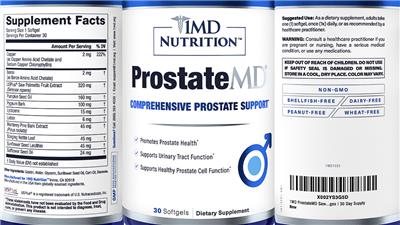
Supplement Facts
The label details for ProstateMD by 1MD Nutrition, sourced from the NIH Dietary Supplement Label Database.
Supplement Facts
| Ingredient | Amount | % DV |
|---|---|---|
| Lutein | 6 mg | -- |
| Lycopene | 15 mg | -- |
| Boron | 2 mg | -- |
| Stinging Nettle | 45 mg | -- |
| Sunflower Seed Lecithin | 45 mg | -- |
| Safflower Seed Oil | 24 mg | -- |
| Pumpkin Seed Oil | 160 mg | -- |
| Pygeum | 100 mg | -- |
| USPLUS | 320 mg | -- |
| Copper | 2 mg | 222% |
| Monterey Pine Bark Extract | 45 mg | -- |
Other ingredients: Gelatin, Water, Glycerin, Sunflower Seed Oil, Corn Oil, Beeswax
Tap any ingredient to jump to its full detail below.
These statements are the manufacturer’s wording, reproduced from the product label — the label is saying it, not HelloPharmacist. We don’t verify or endorse them.
Formulation
Manufactured in the USA from globally-sourced ingredients.
Comprehensive Prostate Support Promotes Prostate Health Supports Urinary Tract Function Supports Healthy Prostate Cell Function
Color may vary.
Non-GMO Shellfish-free Dairy-Free Peanut-Free Wheat-Free
Brand IP Statement(s)
US Plus US Plus is a registered trademark of U.S. Nutraceuticals, Inc.
FDA Disclaimer Statement
These statements have not been evaluated by the Food and Drug Administration. This product is not intended to diagnose, treat, cure, or prevent any disease.
Seals/Symbols
GMP Good Manufacturing Practice
FDA Statement of Identity
Dietary Supplement
Suggested/Recommended/Usage/Directions
Suggested Use: As a dietary supplement, adults take one (1) softgel, once (1x) daily, or as recommended by a healthcare practitioner.
Precautions
Warning: Consult a healthcare practitioner if you are pregnant or nursing, have a serious medical condition, or use any medications.
Keep out of reach of children.
Do not use if safety seal is damaged or missing.
Storage
Store in a cool, dry place.
General Statements
30 day supply New
Is this label outdated? Report a formula or label change and our pharmacy team will review it.
ProstateMD by 1MD Nutrition label
The label scan from the NIH Dietary Supplement Label Database. Tap to enlarge.
Label images are published by the NIH Dietary Supplement Label Database for the version of this product on file. Always read your actual product label.
View the full label (PDF)The Ingredients in ProstateMD by 1MD Nutrition
These are the 11 active ingredients this product is made of. Select any to open its full monograph.
Serving size1 Softgel(s) Dosage formSoftgel Capsule Servings per container30 Amounts shown are per serving.
Most supplement products combine several ingredients, and a medication can interact with the product through any one of them. Each ingredient below shows whether it has known drug interactions.
Lutein
No knowninteractions
Lutein is a plant-based antioxidant pigment that concentrates in the eye, and the best evidence suggests it (often combined with zeaxanthin) may help...
Lutein monograph & interactionsLycopene
Interacts with122 drugs
Lycopene is a red plant pigment and antioxidant found mainly in tomatoes and other red fruits. Eating lycopene-rich foods is linked with possible hear...
Lycopene monograph & interactionsBoron
No knowninteractions
Boron is a trace mineral found in many plant foods and sold as a supplement, mainly promoted for bone, joint, and hormone health. The human evidence f...
Boron monograph & interactionsStinging Nettle
Interacts with164 drugs
Stinging nettle is a common plant used as food and in traditional medicine, most often for prostate symptoms, allergies, and joint pain. The evidence...
Stinging Nettle monograph & interactionsSunflower Seed Lecithin
No knowninteractions
Lecithin is a natural fatty substance found in foods and made by the body that is widely used as a supplement and food emulsifier. Evidence supporting...
Sunflower Seed Lecithin monograph & interactionsSafflower Seed Oil
Interacts with208 drugs
Safflower is a thistle-like plant used mainly for its seed oil (a common cooking oil) and its colorful flowers. Safflower oil is a reasonable source o...
Safflower Seed Oil monograph & interactionsPumpkin Seed Oil
Interacts with1 drug
Pumpkin is a nutritious squash, and its seeds and seed oil are the parts most often used as supplements, mainly for urinary and prostate symptoms. The...
Pumpkin Seed Oil monograph & interactionsPygeum
No knowninteractions
Pygeum is an extract from the bark of the African cherry tree that is most often used to ease urinary symptoms linked to an enlarged prostate. Some st...
Pygeum monograph & interactionsUSPLUS
Interacts with174 drugs
Saw palmetto is a plant extract most often used for urinary symptoms linked to an enlarged prostate (BPH). The best research suggests it works no bett...
USPLUS monograph & interactionsCopper
Interacts with31 drugs
Copper is an essential trace mineral your body needs in small amounts for making red blood cells, supporting nerves and bones, and helping enzymes wor...
Copper monograph & interactionsMonterey Pine Bark Extract
No knowninteractions
Monterey Pine is mainly a timber tree, and human evidence for its use as a supplement is very limited. Some pine bark extracts are studied for antioxi...
Monterey Pine Bark Extract monograph & interactionsOther (inactive) ingredients: Gelatin, Water, Glycerin, Sunflower Seed Oil, Corn Oil, Beeswax. These complete the product’s ingredient list but are not active constituents.
ProstateMD by 1MD Nutrition Drug Interactions
HelloPharmacist Interaction Report
ProstateMD by 1MD Nutrition contains several ingredients with documented interactions with medications.
The most serious concern involves saw palmetto (listed as USPLUS), which may reduce the effectiveness of estrogen-based contraceptives and hormone therapies. Saw palmetto may also increase bleeding risk when combined with blood thinners (anticoagulants) or antiplatelet drugs like aspirin and clopidogrel.
Read the full breakdown — every affected drug type, severity by severity
Lycopene and safflower seed oil both carry Moderate-severity interactions with blood thinners and antiplatelet medications, potentially raising bleeding risk. Stinging nettle interacts with several drug types: it may add to the blood-sugar-lowering effects of diabetes medications, may interact with diuretics and lithium (a mood-stabilizing medication), and contains vitamin K, which can reduce warfarin's effectiveness.
Pumpkin seed oil may increase lithium levels if you're taking that medication. Copper—included in this product—has a Moderate interaction with penicillamine (an older arthritis and copper-chelating drug) and a Minor interaction with hormonal contraceptives.
Additionally, lutein, boron, sunflower seed lecithin, and Monterey pine bark extract have no interactions documented in our data. We could not check stinging nettle or saw palmetto for additional interactions beyond those listed.
Additionally, use the medication checker below to look up any prescriptions, over-the-counter drugs, or other supplements you take. Altogether, these interactions span 336 individual medications.
Check your own medications below · Editorial policy · How we use AI
Want to check YOUR meds against ProstateMD?
Ask about interactions with your drugs in plain English — “Can I take it with lisinopril?” — and we find you the answer in seconds, ingredient by ingredient.
Go to the checkerIngredients driving the most interactions
Individual Drug Interactions
The ingredients in ProstateMD interact with 337 drugs. Click any drug to see the details.
6 of the 11 ingredients in ProstateMD interact with drugs. Each result below shows which ingredient is responsible. Safflower Seed Oil USPLUS Stinging Nettle Lycopene Copper Pumpkin Seed Oil
AbciximabReoPro
How Abciximab interacts with ProstateMD — through 3 ingredients. Tap an ingredient for the detail:
UsplusAnticoagulant/antiplatelet Drugs Moderate
Interaction Summary
Saw palmetto might increase the risk of bleeding with anticoagulant or antiplatelet drugs.
Read the full Usplus + Abciximab interactionSafflower Seed OilAnticoagulant/antiplatelet Drugs Moderate
Interaction Summary
High doses of safflower oil might increase the risk of bleeding when taken with anticoagulant or antiplatelet drugs.
Read the full Safflower Seed Oil + Abciximab interactionLycopeneAnticoagulant/antiplatelet Drugs Moderate
Interaction Summary
Theoretically, taking lycopene with anticoagulant or antiplatelet drugs might increase the risk of bleeding.
Read the full Lycopene + Abciximab interactionAbrocitinibCibinqo
How Abrocitinib interacts with ProstateMD — through 3 ingredients. Tap an ingredient for the detail:
LycopeneAnticoagulant/antiplatelet Drugs Moderate
Interaction Summary
Theoretically, taking lycopene with anticoagulant or antiplatelet drugs might increase the risk of bleeding.
Read the full Lycopene + Abrocitinib interactionUsplusAnticoagulant/antiplatelet Drugs Moderate
Interaction Summary
Saw palmetto might increase the risk of bleeding with anticoagulant or antiplatelet drugs.
Read the full Usplus + Abrocitinib interactionSafflower Seed OilAnticoagulant/antiplatelet Drugs Moderate
Interaction Summary
High doses of safflower oil might increase the risk of bleeding when taken with anticoagulant or antiplatelet drugs.
Read the full Safflower Seed Oil + Abrocitinib interactionAcarboseGlucobay, Prandase, Precose
How Acarbose interacts with ProstateMD — through 2 ingredients. Tap an ingredient for the detail:
Safflower Seed OilAntidiabetes Drugs Moderate
Interaction Summary
Theoretically, safflower oil might alter the effects of antidiabetes drugs.
Read the full Safflower Seed Oil + Acarbose interactionStinging NettleAntidiabetes Drugs Moderate
Interaction Summary
Theoretically, stinging nettle might have additive effects with antidiabetes drugs.
Read the full Stinging Nettle + Acarbose interactionAcenocoumarolSintrom
How Acenocoumarol interacts with ProstateMD — through 3 ingredients. Tap an ingredient for the detail:
LycopeneAnticoagulant/antiplatelet Drugs Moderate
Interaction Summary
Theoretically, taking lycopene with anticoagulant or antiplatelet drugs might increase the risk of bleeding.
Read the full Lycopene + Acenocoumarol interactionSafflower Seed OilAnticoagulant/antiplatelet Drugs Moderate
Interaction Summary
High doses of safflower oil might increase the risk of bleeding when taken with anticoagulant or antiplatelet drugs.
Read the full Safflower Seed Oil + Acenocoumarol interactionUsplusAnticoagulant/antiplatelet Drugs Moderate
Interaction Summary
Saw palmetto might increase the risk of bleeding with anticoagulant or antiplatelet drugs.
Read the full Usplus + Acenocoumarol interactionAcetaminophen, AspirinGemnisyn
How Acetaminophen, Aspirin interacts with ProstateMD — through 3 ingredients. Tap an ingredient for the detail:
UsplusAnticoagulant/antiplatelet Drugs Moderate
Interaction Summary
Saw palmetto might increase the risk of bleeding with anticoagulant or antiplatelet drugs.
Read the full Usplus + Acetaminophen, Aspirin interactionSafflower Seed OilAnticoagulant/antiplatelet Drugs Moderate
Interaction Summary
High doses of safflower oil might increase the risk of bleeding when taken with anticoagulant or antiplatelet drugs.
Read the full Safflower Seed Oil + Acetaminophen, Aspirin interactionLycopeneAnticoagulant/antiplatelet Drugs Moderate
Interaction Summary
Theoretically, taking lycopene with anticoagulant or antiplatelet drugs might increase the risk of bleeding.
Read the full Lycopene + Acetaminophen, Aspirin interactionAcetaminophen, Aspirin, CaffeineExcedrin, Excedrin Extra Strength, Excedrin Migraine
How Acetaminophen, Aspirin, Caffeine interacts with ProstateMD — through 3 ingredients. Tap an ingredient for the detail:
Safflower Seed OilAnticoagulant/antiplatelet Drugs Moderate
Interaction Summary
High doses of safflower oil might increase the risk of bleeding when taken with anticoagulant or antiplatelet drugs.
Read the full Safflower Seed Oil + Acetaminophen, Aspirin, Caffeine interactionLycopeneAnticoagulant/antiplatelet Drugs Moderate
Interaction Summary
Theoretically, taking lycopene with anticoagulant or antiplatelet drugs might increase the risk of bleeding.
Read the full Lycopene + Acetaminophen, Aspirin, Caffeine interactionUsplusAnticoagulant/antiplatelet Drugs Moderate
Interaction Summary
Saw palmetto might increase the risk of bleeding with anticoagulant or antiplatelet drugs.
Read the full Usplus + Acetaminophen, Aspirin, Caffeine interactionAcetaminophen, Caffeine, PyrilamineMidol Max Strength Menstrual
How Acetaminophen, Caffeine, Pyrilamine interacts with ProstateMD — through 1 ingredient. Tap an ingredient for the detail:
Stinging NettleDiuretic Drugs Moderate
Interaction Summary
Theoretically, combining stinging nettle with diuretic drugs may have additive effects.
Read the full Stinging Nettle + Acetaminophen, Caffeine, Pyrilamine interactionAcetaminophen, IbuprofenCombogesic
How Acetaminophen, Ibuprofen interacts with ProstateMD — through 3 ingredients. Tap an ingredient for the detail:
LycopeneAnticoagulant/antiplatelet Drugs Moderate
Interaction Summary
Theoretically, taking lycopene with anticoagulant or antiplatelet drugs might increase the risk of bleeding.
Read the full Lycopene + Acetaminophen, Ibuprofen interactionSafflower Seed OilAnticoagulant/antiplatelet Drugs Moderate
Interaction Summary
High doses of safflower oil might increase the risk of bleeding when taken with anticoagulant or antiplatelet drugs.
Read the full Safflower Seed Oil + Acetaminophen, Ibuprofen interactionUsplusAnticoagulant/antiplatelet Drugs Moderate
Interaction Summary
Saw palmetto might increase the risk of bleeding with anticoagulant or antiplatelet drugs.
Read the full Usplus + Acetaminophen, Ibuprofen interactionAcetaminophen, Pamabrom, PyrilamineMidol Max Strength PMS, Pamprin, Pamprin ES
How Acetaminophen, Pamabrom, Pyrilamine interacts with ProstateMD — through 1 ingredient. Tap an ingredient for the detail:
Stinging NettleDiuretic Drugs Moderate
Interaction Summary
Theoretically, combining stinging nettle with diuretic drugs may have additive effects.
Read the full Stinging Nettle + Acetaminophen, Pamabrom, Pyrilamine interactionAcetazolamideAk-Zol, Diamox
How Acetazolamide interacts with ProstateMD — through 1 ingredient. Tap an ingredient for the detail:
Stinging NettleDiuretic Drugs Moderate
Interaction Summary
Theoretically, combining stinging nettle with diuretic drugs may have additive effects.
Read the full Stinging Nettle + Acetazolamide interactionAcetohexamideDymelor
How Acetohexamide interacts with ProstateMD — through 2 ingredients. Tap an ingredient for the detail:
Stinging NettleAntidiabetes Drugs Moderate
Interaction Summary
Theoretically, stinging nettle might have additive effects with antidiabetes drugs.
Read the full Stinging Nettle + Acetohexamide interactionSafflower Seed OilAntidiabetes Drugs Moderate
Interaction Summary
Theoretically, safflower oil might alter the effects of antidiabetes drugs.
Read the full Safflower Seed Oil + Acetohexamide interactionAcetylsalicylic AcidEntrophen
How Acetylsalicylic Acid interacts with ProstateMD — through 3 ingredients. Tap an ingredient for the detail:
Safflower Seed OilAnticoagulant/antiplatelet Drugs Moderate
Interaction Summary
High doses of safflower oil might increase the risk of bleeding when taken with anticoagulant or antiplatelet drugs.
Read the full Safflower Seed Oil + Acetylsalicylic Acid interactionLycopeneAnticoagulant/antiplatelet Drugs Moderate
Interaction Summary
Theoretically, taking lycopene with anticoagulant or antiplatelet drugs might increase the risk of bleeding.
Read the full Lycopene + Acetylsalicylic Acid interactionUsplusAnticoagulant/antiplatelet Drugs Moderate
Interaction Summary
Saw palmetto might increase the risk of bleeding with anticoagulant or antiplatelet drugs.
Read the full Usplus + Acetylsalicylic Acid interactionAlbiglutideTanzeum
How Albiglutide interacts with ProstateMD — through 2 ingredients. Tap an ingredient for the detail:
Safflower Seed OilAntidiabetes Drugs Moderate
Interaction Summary
Theoretically, safflower oil might alter the effects of antidiabetes drugs.
Read the full Safflower Seed Oil + Albiglutide interactionStinging NettleAntidiabetes Drugs Moderate
Interaction Summary
Theoretically, stinging nettle might have additive effects with antidiabetes drugs.
Read the full Stinging Nettle + Albiglutide interactionAlogliptinNesina
How Alogliptin interacts with ProstateMD — through 2 ingredients. Tap an ingredient for the detail:
Stinging NettleAntidiabetes Drugs Moderate
Interaction Summary
Theoretically, stinging nettle might have additive effects with antidiabetes drugs.
Read the full Stinging Nettle + Alogliptin interactionSafflower Seed OilAntidiabetes Drugs Moderate
Interaction Summary
Theoretically, safflower oil might alter the effects of antidiabetes drugs.
Read the full Safflower Seed Oil + Alogliptin interactionAlogliptin, MetforminKazano
How Alogliptin, Metformin interacts with ProstateMD — through 2 ingredients. Tap an ingredient for the detail:
Safflower Seed OilAntidiabetes Drugs Moderate
Interaction Summary
Theoretically, safflower oil might alter the effects of antidiabetes drugs.
Read the full Safflower Seed Oil + Alogliptin, Metformin interactionStinging NettleAntidiabetes Drugs Moderate
Interaction Summary
Theoretically, stinging nettle might have additive effects with antidiabetes drugs.
Read the full Stinging Nettle + Alogliptin, Metformin interactionAlogliptin, PioglitazoneOseni
How Alogliptin, Pioglitazone interacts with ProstateMD — through 2 ingredients. Tap an ingredient for the detail:
Stinging NettleAntidiabetes Drugs Moderate
Interaction Summary
Theoretically, stinging nettle might have additive effects with antidiabetes drugs.
Read the full Stinging Nettle + Alogliptin, Pioglitazone interactionSafflower Seed OilAntidiabetes Drugs Moderate
Interaction Summary
Theoretically, safflower oil might alter the effects of antidiabetes drugs.
Read the full Safflower Seed Oil + Alogliptin, Pioglitazone interactionAlteplase, TpaActilyse, Activase
How Alteplase, Tpa interacts with ProstateMD — through 3 ingredients. Tap an ingredient for the detail:
Safflower Seed OilAnticoagulant/antiplatelet Drugs Moderate
Interaction Summary
High doses of safflower oil might increase the risk of bleeding when taken with anticoagulant or antiplatelet drugs.
Read the full Safflower Seed Oil + Alteplase, Tpa interactionUsplusAnticoagulant/antiplatelet Drugs Moderate
Interaction Summary
Saw palmetto might increase the risk of bleeding with anticoagulant or antiplatelet drugs.
Read the full Usplus + Alteplase, Tpa interactionLycopeneAnticoagulant/antiplatelet Drugs Moderate
Interaction Summary
Theoretically, taking lycopene with anticoagulant or antiplatelet drugs might increase the risk of bleeding.
Read the full Lycopene + Alteplase, Tpa interactionAluminum Hydroxide, Aspirin, Codeine Phosphate, Magnesium HydroxideAscriptin Codeine #2
How Aluminum Hydroxide, Aspirin, Codeine Phosphate, Magnesium Hydroxide interacts with ProstateMD — through 3 ingredients. Tap an ingredient for the detail:
LycopeneAnticoagulant/antiplatelet Drugs Moderate
Interaction Summary
Theoretically, taking lycopene with anticoagulant or antiplatelet drugs might increase the risk of bleeding.
Read the full Lycopene + Aluminum Hydroxide, Aspirin, Codeine Phosphate, Magnesium Hydroxide interactionSafflower Seed OilAnticoagulant/antiplatelet Drugs Moderate
Interaction Summary
High doses of safflower oil might increase the risk of bleeding when taken with anticoagulant or antiplatelet drugs.
Read the full Safflower Seed Oil + Aluminum Hydroxide, Aspirin, Codeine Phosphate, Magnesium Hydroxide interactionUsplusAnticoagulant/antiplatelet Drugs Moderate
Interaction Summary
Saw palmetto might increase the risk of bleeding with anticoagulant or antiplatelet drugs.
Read the full Usplus + Aluminum Hydroxide, Aspirin, Codeine Phosphate, Magnesium Hydroxide interactionAluminum Hydroxide, Aspirin, Magnesium HydroxideAscriptin
How Aluminum Hydroxide, Aspirin, Magnesium Hydroxide interacts with ProstateMD — through 3 ingredients. Tap an ingredient for the detail:
UsplusAnticoagulant/antiplatelet Drugs Moderate
Interaction Summary
Saw palmetto might increase the risk of bleeding with anticoagulant or antiplatelet drugs.
Read the full Usplus + Aluminum Hydroxide, Aspirin, Magnesium Hydroxide interactionLycopeneAnticoagulant/antiplatelet Drugs Moderate
Interaction Summary
Theoretically, taking lycopene with anticoagulant or antiplatelet drugs might increase the risk of bleeding.
Read the full Lycopene + Aluminum Hydroxide, Aspirin, Magnesium Hydroxide interactionSafflower Seed OilAnticoagulant/antiplatelet Drugs Moderate
Interaction Summary
High doses of safflower oil might increase the risk of bleeding when taken with anticoagulant or antiplatelet drugs.
Read the full Safflower Seed Oil + Aluminum Hydroxide, Aspirin, Magnesium Hydroxide interactionAmiloride, HydrochlorothiazideAmil-Co, Amilzide, Moduret 25, Moduretic
How Amiloride, Hydrochlorothiazide interacts with ProstateMD — through 1 ingredient. Tap an ingredient for the detail:
Stinging NettleDiuretic Drugs Moderate
Interaction Summary
Theoretically, combining stinging nettle with diuretic drugs may have additive effects.
Read the full Stinging Nettle + Amiloride, Hydrochlorothiazide interactionAmmonium ChlorideAmmonium Chloride
How Ammonium Chloride interacts with ProstateMD — through 1 ingredient. Tap an ingredient for the detail:
Stinging NettleDiuretic Drugs Moderate
Interaction Summary
Theoretically, combining stinging nettle with diuretic drugs may have additive effects.
Read the full Stinging Nettle + Ammonium Chloride interactionAnacaulase-bcdbNexoBrid
How Anacaulase-bcdb interacts with ProstateMD — through 3 ingredients. Tap an ingredient for the detail:
LycopeneAnticoagulant/antiplatelet Drugs Moderate
Interaction Summary
Theoretically, taking lycopene with anticoagulant or antiplatelet drugs might increase the risk of bleeding.
Read the full Lycopene + Anacaulase-bcdb interactionUsplusAnticoagulant/antiplatelet Drugs Moderate
Interaction Summary
Saw palmetto might increase the risk of bleeding with anticoagulant or antiplatelet drugs.
Read the full Usplus + Anacaulase-bcdb interactionSafflower Seed OilAnticoagulant/antiplatelet Drugs Moderate
Interaction Summary
High doses of safflower oil might increase the risk of bleeding when taken with anticoagulant or antiplatelet drugs.
Read the full Safflower Seed Oil + Anacaulase-bcdb interactionAnagrelideAgrylin
How Anagrelide interacts with ProstateMD — through 3 ingredients. Tap an ingredient for the detail:
Safflower Seed OilAnticoagulant/antiplatelet Drugs Moderate
Interaction Summary
High doses of safflower oil might increase the risk of bleeding when taken with anticoagulant or antiplatelet drugs.
Read the full Safflower Seed Oil + Anagrelide interactionLycopeneAnticoagulant/antiplatelet Drugs Moderate
Interaction Summary
Theoretically, taking lycopene with anticoagulant or antiplatelet drugs might increase the risk of bleeding.
Read the full Lycopene + Anagrelide interactionUsplusAnticoagulant/antiplatelet Drugs Moderate
Interaction Summary
Saw palmetto might increase the risk of bleeding with anticoagulant or antiplatelet drugs.
Read the full Usplus + Anagrelide interactionAnisindioneMiradon
How Anisindione interacts with ProstateMD — through 3 ingredients. Tap an ingredient for the detail:
UsplusAnticoagulant/antiplatelet Drugs Moderate
Interaction Summary
Saw palmetto might increase the risk of bleeding with anticoagulant or antiplatelet drugs.
Read the full Usplus + Anisindione interactionSafflower Seed OilAnticoagulant/antiplatelet Drugs Moderate
Interaction Summary
High doses of safflower oil might increase the risk of bleeding when taken with anticoagulant or antiplatelet drugs.
Read the full Safflower Seed Oil + Anisindione interactionLycopeneAnticoagulant/antiplatelet Drugs Moderate
Interaction Summary
Theoretically, taking lycopene with anticoagulant or antiplatelet drugs might increase the risk of bleeding.
Read the full Lycopene + Anisindione interactionAntidiabetes, Dipeptidyl Peptidase-4 (dpp-iv) InhibitorGlyxambi
How Antidiabetes, Dipeptidyl Peptidase-4 (dpp-iv) Inhibitor interacts with ProstateMD — through 2 ingredients. Tap an ingredient for the detail:
Stinging NettleAntidiabetes Drugs Moderate
Interaction Summary
Theoretically, stinging nettle might have additive effects with antidiabetes drugs.
Read the full Stinging Nettle + Antidiabetes, Dipeptidyl Peptidase-4 (dpp-iv) Inhibitor interactionSafflower Seed OilAntidiabetes Drugs Moderate
Interaction Summary
Theoretically, safflower oil might alter the effects of antidiabetes drugs.
Read the full Safflower Seed Oil + Antidiabetes, Dipeptidyl Peptidase-4 (dpp-iv) Inhibitor interactionAntithrombin IiiThrombate III
How Antithrombin Iii interacts with ProstateMD — through 3 ingredients. Tap an ingredient for the detail:
Safflower Seed OilAnticoagulant/antiplatelet Drugs Moderate
Interaction Summary
High doses of safflower oil might increase the risk of bleeding when taken with anticoagulant or antiplatelet drugs.
Read the full Safflower Seed Oil + Antithrombin Iii interactionLycopeneAnticoagulant/antiplatelet Drugs Moderate
Interaction Summary
Theoretically, taking lycopene with anticoagulant or antiplatelet drugs might increase the risk of bleeding.
Read the full Lycopene + Antithrombin Iii interactionUsplusAnticoagulant/antiplatelet Drugs Moderate
Interaction Summary
Saw palmetto might increase the risk of bleeding with anticoagulant or antiplatelet drugs.
Read the full Usplus + Antithrombin Iii interactionApixabanEliquis
How Apixaban interacts with ProstateMD — through 3 ingredients. Tap an ingredient for the detail:
LycopeneAnticoagulant/antiplatelet Drugs Moderate
Interaction Summary
Theoretically, taking lycopene with anticoagulant or antiplatelet drugs might increase the risk of bleeding.
Read the full Lycopene + Apixaban interactionSafflower Seed OilAnticoagulant/antiplatelet Drugs Moderate
Interaction Summary
High doses of safflower oil might increase the risk of bleeding when taken with anticoagulant or antiplatelet drugs.
Read the full Safflower Seed Oil + Apixaban interactionUsplusAnticoagulant/antiplatelet Drugs Moderate
Interaction Summary
Saw palmetto might increase the risk of bleeding with anticoagulant or antiplatelet drugs.
Read the full Usplus + Apixaban interactionArgatrobanArgatroban
How Argatroban interacts with ProstateMD — through 3 ingredients. Tap an ingredient for the detail:
LycopeneAnticoagulant/antiplatelet Drugs Moderate
Interaction Summary
Theoretically, taking lycopene with anticoagulant or antiplatelet drugs might increase the risk of bleeding.
Read the full Lycopene + Argatroban interactionUsplusAnticoagulant/antiplatelet Drugs Moderate
Interaction Summary
Saw palmetto might increase the risk of bleeding with anticoagulant or antiplatelet drugs.
Read the full Usplus + Argatroban interactionSafflower Seed OilAnticoagulant/antiplatelet Drugs Moderate
Interaction Summary
High doses of safflower oil might increase the risk of bleeding when taken with anticoagulant or antiplatelet drugs.
Read the full Safflower Seed Oil + Argatroban interactionAspirinAngettes 75, ASA, Asaphen, Aspirin, Caprin, Cartia +8 more
How Aspirin interacts with ProstateMD — through 3 ingredients. Tap an ingredient for the detail:
Safflower Seed OilAnticoagulant/antiplatelet Drugs Moderate
Interaction Summary
High doses of safflower oil might increase the risk of bleeding when taken with anticoagulant or antiplatelet drugs.
Read the full Safflower Seed Oil + Aspirin interactionLycopeneAnticoagulant/antiplatelet Drugs Moderate
Interaction Summary
Theoretically, taking lycopene with anticoagulant or antiplatelet drugs might increase the risk of bleeding.
Read the full Lycopene + Aspirin interactionUsplusAnticoagulant/antiplatelet Drugs Moderate
Interaction Summary
Saw palmetto might increase the risk of bleeding with anticoagulant or antiplatelet drugs.
Read the full Usplus + Aspirin interactionAspirin, Aluminum Hydroxide, Codeine Phosphate, Magnesium HydroxideAscriptin Codeine #3
How Aspirin, Aluminum Hydroxide, Codeine Phosphate, Magnesium Hydroxide interacts with ProstateMD — through 3 ingredients. Tap an ingredient for the detail:
UsplusAnticoagulant/antiplatelet Drugs Moderate
Interaction Summary
Saw palmetto might increase the risk of bleeding with anticoagulant or antiplatelet drugs.
Read the full Usplus + Aspirin, Aluminum Hydroxide, Codeine Phosphate, Magnesium Hydroxide interactionSafflower Seed OilAnticoagulant/antiplatelet Drugs Moderate
Interaction Summary
High doses of safflower oil might increase the risk of bleeding when taken with anticoagulant or antiplatelet drugs.
Read the full Safflower Seed Oil + Aspirin, Aluminum Hydroxide, Codeine Phosphate, Magnesium Hydroxide interactionLycopeneAnticoagulant/antiplatelet Drugs Moderate
Interaction Summary
Theoretically, taking lycopene with anticoagulant or antiplatelet drugs might increase the risk of bleeding.
Read the full Lycopene + Aspirin, Aluminum Hydroxide, Codeine Phosphate, Magnesium Hydroxide interactionEach ingredient & the kinds of drugs it affects
For each ingredient in ProstateMD with known interactions, here are the types of medications they can affect. Open any type for the detail — or search your exact drug in the checker above.
Safflower Seed Oil
Anticoagulant/Antiplatelet Drugs
High doses of safflower oil might increase the risk of bleeding when taken with anticoagulant or antiplatelet drugs.
Small clinical studies show that taking safflower oil, approximately 55 grams daily for 2-3 weeks, decreases platelet aggregation. However, taking lower doses of safflower oil, such as 5 grams daily for 4 weeks, does not seem to affect platelet function. In one case report, a 74-year-old male stabilized on warfarin developed urinary tract bleeding and an elevated INR after taking a safflower extract 20 grams daily for 14 days.
Antidiabetes Drugs
Theoretically, safflower oil might alter the effects of antidiabetes drugs.
Some clinical research shows that taking safflower oil 10 grams daily for 3 weeks can increase fasting blood glucose in patients with type 2 diabetes. However, clinical research in patients with metabolic syndrome with or without impaired glucose tolerance shows that taking safflower oil 8 grams daily for 12 weeks reduces fasting glucose levels by around 8 mg/dL. Some clinical research also shows that taking safflower oil 8 grams daily for 16 weeks does not affect fasting glucose levels in patients with type 2 diabetes.
Warfarin
Theoretically, safflower oil might increase the risk of bleeding when taken with warfarin.
In one case report, a 74-year-old male stabilized on warfarin developed urinary tract bleeding and an elevated INR after taking a safflower extract 20 grams daily for 14 days.
USPLUS
Anticoagulant/Antiplatelet Drugs
Saw palmetto might increase the risk of bleeding with anticoagulant or antiplatelet drugs.
Saw palmetto is reported to prolong bleeding time. Theoretically, it might increase the risk of bleeding when used concomitantly with anticoagulant or antiplatelet drugs.
Contraceptive Drugs
Saw palmetto might reduce the effectiveness of contraceptive drugs.
Saw palmetto might have antiestrogenic effects. Theoretically, it might interfere with contraceptive drugs taken concomitantly.
Estrogens
Saw palmetto might reduce the effectiveness of estrogens.
Saw palmetto might have antiestrogenic effects. Theoretically, it might interfere with estrogens taken concomitantly.
Stinging Nettle
Antidiabetes Drugs
Theoretically, stinging nettle might have additive effects with antidiabetes drugs.
Clinical research shows that stinging nettle might decrease blood glucose levels in patients with diabetes.
Diuretic Drugs
Theoretically, combining stinging nettle with diuretic drugs may have additive effects.
Animal research suggests that the above ground parts and roots of stinging nettle may have a diuretic effect.
Lithium
Theoretically, stinging nettle might reduce excretion and increase levels of lithium.
Animal research suggests that stinging nettle has diuretic and natriuretic properties, which could alter the excretion of lithium. The dose of lithium might need to be decreased.
Warfarin (Coumadin)
There is some concern that stinging nettle might decrease the effects of anticoagulant drugs such as warfarin.
Stinging nettle contains a significant amount of vitamin K. When taken in large quantities, this might interfere with the activity of warfarin.
Lycopene
Anticoagulant/Antiplatelet Drugs
Theoretically, taking lycopene with anticoagulant or antiplatelet drugs might increase the risk of bleeding.
In vitro research shows that lycopene has antiplatelet effects.
Copper
Penicillamine (Cuprimine, Depen)
Theoretically, taking copper with penicillamine might decrease the absorption of penicillamine; separate dosing by at least 2 hours.
Copper chelates penicillamine, which decreases its absorption and may reduce its clinical effects.
Contraceptive Drugs
Theoretically, taking copper with contraceptive drugs might increase the levels and toxic effects of copper.
A meta-analysis of clinical studies suggests that chronic use of oral contraceptives increases serum copper levels by a mean of 57 mcg/dL. In most people, this resulted in levels above the normal reference range for copper.
Pumpkin Seed Oil
Lithium
Pumpkin might reduce excretion and increase levels of lithium.
Pumpkin is thought to have diuretic properties. Theoretically, this might reduce excretion and increase levels of lithium. The dose of lithium might need to be decreased.
Brand information
Manufacturer and brand details for ProstateMD, from the product label.
1MD Nutrition
See all 1MD Nutrition products- Name
- 1MD Nutrition
- City
- Irvine
- State
- CA
- ZipCode
- 92618
- Phone Number
- (888) 393-4030
- Web Address
- www.1md.org
ProstateMD by 1MD Nutrition: Common Questions
Does ProstateMD by 1MD Nutrition interact with any medications?
How can one product interact with so many drugs?
Where does this information come from?
Is ProstateMD safe to take if I'm on a blood thinner like warfarin?
Does this product work for an enlarged prostate?
Can I take ProstateMD if I'm on birth control?
What side effects might I get from ProstateMD?
Is ProstateMD safe in pregnancy or while breastfeeding?
Can I take ProstateMD with my diabetes medication?
Written and reviewed by the HelloPharmacist editorial staff. Our editorial policy
Not sure if ProstateMD is safe with your meds?
Our pharmacists answer your medication & supplement questions — free.
Label information is sourced from the NIH Dietary Supplement Label Database and reflects the product version on file; always read your actual product label. This page is for education only and is not a substitute for professional medical advice. Confirm with your pharmacist or doctor before combining supplements and medications.
The Full Monographs Behind ProstateMD’s Ingredients
Every ingredient we hold a full HelloPharmacist monograph for — uses, evidence, safety, and the complete interaction list.
Lutein
Lutein is a plant-based antioxidant pigment that concentrates in the eye, and the best evidence suggests it (often combined with zeaxanthin) may help slow progression of age-related macular...
Read the full Lutein monograph → Herb & supplement monographLycopene
Interacts with 122 drugsLycopene is a red plant pigment and antioxidant found mainly in tomatoes and other red fruits. Eating lycopene-rich foods is linked with possible heart and prostate benefits, but evidence fr...
Read the full Lycopene monograph → Herb & supplement monographBoron
Boron is a trace mineral found in many plant foods and sold as a supplement, mainly promoted for bone, joint, and hormone health. The human evidence for most of these uses is limited or prel...
Read the full Boron monograph → Herb & supplement monographStinging Nettle
Interacts with 164 drugsStinging nettle is a common plant used as food and in traditional medicine, most often for prostate symptoms, allergies, and joint pain. The evidence is mixed and mostly preliminary, so it i...
Read the full Stinging Nettle monograph → Herb & supplement monographLecithin
Lecithin is a natural fatty substance found in foods and made by the body that is widely used as a supplement and food emulsifier. Evidence supporting most of its health claims is limited, t...
Read the full Lecithin monograph → Herb & supplement monographSafflower
Interacts with 208 drugsSafflower is a thistle-like plant used mainly for its seed oil (a common cooking oil) and its colorful flowers. Safflower oil is a reasonable source of unsaturated fats, but strong proof tha...
Read the full Safflower monograph → Herb & supplement monographPumpkin
Interacts with 1 drugPumpkin is a nutritious squash, and its seeds and seed oil are the parts most often used as supplements, mainly for urinary and prostate symptoms. The evidence for these uses is limited and...
Read the full Pumpkin monograph → Herb & supplement monographPygeum
Pygeum is an extract from the bark of the African cherry tree that is most often used to ease urinary symptoms linked to an enlarged prostate. Some studies suggest modest benefit for these s...
Read the full Pygeum monograph → Herb & supplement monographSaw Palmetto
Interacts with 174 drugsSaw palmetto is a plant extract most often used for urinary symptoms linked to an enlarged prostate (BPH). The best research suggests it works no better than a placebo for most men, though i...
Read the full Saw Palmetto monograph → Herb & supplement monographCopper
Interacts with 31 drugsCopper is an essential trace mineral your body needs in small amounts for making red blood cells, supporting nerves and bones, and helping enzymes work. Most people get enough copper from fo...
Read the full Copper monograph → Herb & supplement monographMonterey Pine
Monterey Pine is mainly a timber tree, and human evidence for its use as a supplement is very limited. Some pine bark extracts are studied for antioxidant effects, but most claims specific t...
Read the full Monterey Pine monograph →Sources & How We Checked
ProstateMD's label data comes from the NIH Dietary Supplement Label Database; the ingredient interaction data is from the Natural Medicines database, reviewed by our pharmacists.
- NIH Dietary Supplement Label Database (DSLD) — The official product label on file for this supplement.
- Natural Medicines (Therapeutic Research Center) — Evidence-graded clinical reference behind the ingredient interaction data.
Content is written and reviewed by licensed HelloPharmacist pharmacists. See our data sources and editorial standards for how this information is built and checked.
The 106 references behind this product’s interaction data
Every citation that drives the interaction findings for this product’s ingredients, from the evidence-graded Natural Medicines (TRC Healthcare) database. Open an ingredient to browse its citations — links open the study on PubMed or the publisher’s site.
Lutein 2 references
- Brown L, Rimm EB, Seddon JM, et al. A prospective study of carotenoid intake and risk of cataract extraction in US men. Am J Clin Nutr 1999;70:517-24. PubMed
- Chasan-Taber L, Willett WC, Seddon JM, et al. A prospective study of carotenoid and vitamin A intakes and risk of cataract extraction in US women. Am J Clin Nutr 1999;70:509-16. PubMed
Lycopene 10 references
- Sharma, J. B., Kumar, A., Kumar, A., Malhotra, M., Arora, R., Prasad, S., and Batra, S. Effect of lycopene on pre-eclampsia and intra-uterine growth retardation in primigravidas. Int J Gynaecol.Obstet. 2003;81(3):257-262. PubMed
- Hsiao, G., Wang, Y., Tzu, N. H., Fong, T. H., Shen, M. Y., Lin, K. H., Chou, D. S., and Sheu, J. R. Inhibitory effects of lycopene on in vitro platelet activation and in vivo prevention of thrombus formation. J Lab Clin Med 2005;146(4):216-226. PubMed
- Clark, P. E., Hall, M. C., Borden, L. S., Jr., Miller, A. A., Hu, J. J., Lee, W. R., Stindt, D., D'Agostino, R., Jr., Lovato, J., Harmon, M., and Torti, F. M. Phase I-II prospective dose-escalating trial of lycopene in patients with biochemical relapse o
- O'Kennedy, N., Crosbie, L., Whelan, S., Luther, V., Horgan, G., Broom, J. I., Webb, D. J., and Duttaroy, A. K. Effects of tomato extract on platelet function: a double-blinded crossover study in healthy humans. Am.J.Clin.Nutr. 2006;84(3):561-569. PubMed
- Jatoi, A., Burch, P., Hillman, D., Vanyo, J. M., Dakhil, S., Nikcevich, D., Rowland, K., Morton, R., Flynn, P. J., Young, C., and Tan, W. A tomato-based, lycopene-containing intervention for androgen-independent prostate cancer: results of a Phase II stu
- Schwenke, C., Ubrig, B., Thurmann, P., Eggersmann, C., and Roth, S. Lycopene for advanced hormone refractory prostate cancer: a prospective, open phase II pilot study. J.Urol. 2009;181(3):1098-1103. PubMed
- Banerjee, S., Jeyaseelan, S., and Guleria, R. Trial of lycopene to prevent pre-eclampsia in healthy primigravidas: results show some adverse effects. J.Obstet.Gynaecol.Res. 2009;35(3):477-482. PubMed
- Haseen, F., Cantwell, M. M., O'Sullivan, J. M., and Murray, L. J. Is there a benefit from lycopene supplementation in men with prostate cancer? A systematic review. Prostate Cancer Prostatic.Dis. 2009;12(4):325-332. PubMed
- Ilic, D., Forbes, K. M., and Hassed, C. Lycopene for the prevention of prostate cancer. Cochrane.Database.Syst.Rev. 2011;(11):CD008007. PubMed
- Sawardekar SB, Patel TC, Uchil D. Comparative evaluation of antiplatelet effect of lycopene with aspirin and the effect of their combination on platelet aggregation: an in vitro study. Indian J Pharmacol 2016;48:26-31. PubMed
Boron 6 references
- Ellenhorn MJ, et al. Ellenhorn's Medical Toxicology: Diagnoses and Treatment of Human Poisoning. 2nd ed. Baltimore, MD: Williams & Wilkins, 1997.
- Food and Nutrition Board, Institute of Medicine. Dietary Reference Intakes for Vitamin A, Vitamin K, Arsenic, Boron, Chromium, Copper, Iodine, Iron, Manganese, Molybdenum, Nickel, Silicon, Vanadium, and Zinc. Washington, DC: National Academy Press, 2002.
- Thai L, Hart LL. Boric acid vaginal suppositories. Ann Pharmacother 1993;27:1355-7.
- Acs N, Banhidy F, Puho E, Czeizel AE. Teratogenic effects of vaginal boric acid treatment during pregnancy. Int J Gynaecol Obstet 2006;93:55-6. PubMed
- Garabrant, D. H., Bernstein, L., Peters, J. M., and Smith, T. J. Respiratory and eye irritation from boron oxide and boric acid dusts. J Occup Med 1984;26(8):584-586. PubMed
- Hjelm C, Harari F, Vahter M. Pre- and postnatal environmental boron exposure and infant growth: results from a mother-child cohort in northern Argentina. Environ Res 2019;171:60-8. PubMed
Stinging Nettle 23 references
- Monographs on the medicinal uses of plant drugs. Exeter, UK: European Scientific Co-op Phytother, 1997.
- Newall CA, Anderson LA, Philpson JD. Herbal Medicine: A Guide for Healthcare Professionals. London, UK: The Pharmaceutical Press, 1996.
- The Review of Natural Products by Facts and Comparisons. St. Louis, MO: Wolters Kluwer Co., 1999.
- Schulz V, Hansel R, Tyler VE. Rational Phytotherapy: A Physician's Guide to Herbal Medicine. Terry C. Telger, transl. 3rd ed. Berlin, GER: Springer, 1998.
- Leung AY, Foster S. Encyclopedia of Common Natural Ingredients Used in Food, Drugs and Cosmetics. 2nd ed. New York, NY: John Wiley & Sons, 1996.
- Brinker F. Herb Contraindications and Drug Interactions. 2nd ed. Sandy, OR: Eclectic Medical Publications, 1998.
- Mittman P. Randomized, double-blind study of freeze-dried Urtica dioica in the treatment of allergic rhinitis. Planta Med 1990;56:44-7.
- Vontobel HP, Herzog R, Rutishauser G, Kres H. [Results of a double-blind study on the effectiveness of ERU (extractum radicis Urticae) capsules in conservative treatment of benign prostatic hyperplasia]. (Abstract). Urologe A 1985;24:49-51.
- Randall C, Randall H, Dobbs F, et al. Randomized controlled trial of nettle sting for treatment of base-of-thumb pain. J R Soc Med 2000;93:305-9. PubMed
- Caliskaner Z, Karaayvaz M, Ozturk S. Misuse of a herb: stinging nettle (Urtica urens) induced severe tongue oedema. Complement Ther Med 2004;12:57-8. PubMed
- Krzeski, T., Kazon, M., Borkowski, A., Witeska, A., and Kuczera, J. Combined extracts of Urtica dioica and Pygeum africanum in the treatment of benign prostatic hyperplasia: double-blind comparison of two doses. Clin Ther 1993;15(6):1011-1020.
- Randall, C., Meethan, K., Randall, H., and Dobbs, F. Nettle sting of Urtica dioica for joint pain--an exploratory study of this complementary therapy. Complement Ther Med 1999;7(3):126-131. PubMed
- Tahri, A., Yamani, S., Legssyer, A., Aziz, M., Mekhfi, H., Bnouham, M., and Ziyyat, A. Acute diuretic, natriuretic and hypotensive effects of a continuous perfusion of aqueous extract of Urtica dioica in the rat. J Ethnopharmacol 2000;73(1-2):95-100. PubMed
- Sahin, M., Yilmaz, H., Gursoy, A., Demirel, A. N., Tutuncu, N. B., and Guvener, N. D. Gynaecomastia in a man and hyperoestrogenism in a woman due to ingestion of nettle (Urtica dioica). N.Z.Med.J. 2007;120(1265):U2803.
- Randall, C., Dickens, A., White, A., Sanders, H., Fox, M., and Campbell, J. Nettle sting for chronic knee pain: a randomised controlled pilot study. Complement Ther.Med. 2008;16(2):66-72. PubMed
- Rayburn, K., Fleischbein, E., Song, J., Allen, B., Kundert, M., Leiter, C., and Bush, T. Stinging nettle cream for osteoarthritis. Altern.Ther.Health Med. 2009;15(4):60-61.
- Oliver, F., Amon, E. U., Breathnach, A., Francis, D. M., Sarathchandra, P., Black, A. K., and Greaves, M. W. Contact urticaria due to the common stinging nettle (Urtica dioica)-- histological, ultrastructural and pharmacological studies. Clin Exp Dermato PubMed
- Kulze, A. and Greaves, M. Contact urticaria caused by stinging nettles. Br.J Dermatol. 1988;119(2):269-270. PubMed
- Patten G. Medicinal plant review: Urtica. Aust J Med Herbalism 1993;5(1):5-13.
- Maor D, Little M. Skin contact with a stinging tree requiring intensive care unit admission. Contact Dermatitis. 2017 Nov;77(5):335-37. PubMed
- Easton L, Vaid S, Nagel AK, Venci JV, Fortuna RJ. Stinging Nettle (Urtica dioica): An Unusual Case of Galactorrhea. Am J Case Rep 2021;22:e933999. PubMed
- Niazi B, Ahmed K, Ahmed M, Ali S, Song K, Elias S. Drug-Induced Liver Injury from Herbal Liver Detoxification Tea. Case Rep Gastroenterol 2022;16(3):612-617. PubMed
- Nnamani I, Tolu-Akinnawo O, Dufera RR, Akintunde A, Maliakkal B. Tinospora cordifolia (Guduchi/Giloy)-Induced Liver Injury: A Case Review. Cureus 2023;15(5):e39793. PubMed
Lecithin 9 references
- Buchman AL, Dubin M, Jenden D, et al. Lecithin increases plasma free choline and decreases hepatic steatosis in long-term total parenteral nutrition patients. Gastroenterology 1992;102:1363-70.
- Food and Nutrition Board, Institute of Medicine. Dietary Reference Intakes for Thiamin, Riboflavin, Niacin, Vitamin B6, Folate, Vitamin B12, Pantothenic Acid, Biotin, and Choline (2000). Washington, DC: National Academy Press, 2000. Available at: http://b
- Chatellier G, Lacomblez L. Tacrine (tetrahydroaminoacridine; THA) and lecithin in senile dementia of the Alzheimer type: a multicentre trial. Groupe Francais d'Etude de la Tetrahydroaminoacridine. BMJ 1990;300:495-9.
- Gelenberg AJ, Dorer DJ, Wojcik JD, et al. A crossover study of lecithin treatment of tardive dyskinesia. J Clin Psychiatry 1990;51:149-53.
- Little A, Levy R, Chuaqui-Kidd P, Hand D. A double-blind, placebo controlled trial of high-dose lecithin in Alzheimer's disease. J Neurol Neurosurg Psychiatry 1985;48:736-42. PubMed
- Palm M, Moneret-Vautrin DA, Kanny G, et al. Food allergy to egg and soy lecithins. Allergy 1999;54:1116-7. PubMed
- Drachman DA, Glosser G, Fleming P, et al. Memory decline in the aged: treatment with lecithin and physostigmine. Neurology 1982;32:944-50. PubMed
- Gelenberg, A. J., Doller-Wojcik, J. C., and Growdon, J. H. Choline and lecithin in the treatment of tardive dyskinesia: preliminary results from a pilot study. Am J Psychiatry 1979;136(6):772-776. PubMed
- Electronic Code of Federal Regulations. Title 21, Chapter 1, Subchapter B, Part 184: Direct food substances affirmed as Generally Recognized as Safe. Subpart B - listing of specific substances affirmed as GRAS. Sec. 184.1400 Lecithin. Available at: https:
Safflower 14 references
- The Review of Natural Products by Facts and Comparisons. St. Louis, MO: Wolters Kluwer Co., 1999.
- Leung AY, Foster S. Encyclopedia of Common Natural Ingredients Used in Food, Drugs and Cosmetics. 2nd ed. New York, NY: John Wiley & Sons, 1996.
- McGuffin M, Hobbs C, Upton R, Goldberg A, eds. American Herbal Products Association's Botanical Safety Handbook. Boca Raton, FL: CRC Press, LLC 1997.
- Borkman M, Chisholm DJ, Furler SM, et al. Effects of fish oil supplementation on glucose and lipid metabolism in NIDDM. Diabetes 1989;38:1314-9.. PubMed
- Amato, P. and Quercia, R. A. A historical perspective and review of the safety of lipid emulsion in pregnancy. Nutr Clin Pract. 1991;6(5):189-192. PubMed
- Demke, D. M., Peters, G. R., Linet, O. I., Metzler, C. M., and Klott, K. A. Effects of a fish oil concentrate in patients with hypercholesterolemia. Atherosclerosis 1988;70(1-2):73-80. PubMed
- Kaji, K., Yoshida, S., Nagata, N., Yamashita, T., Mizukoshi, E., Honda, M., Kojima, Y., and Kaneko, S. An open-label study of administration of EH0202, a health-food additive, to patients with chronic hepatitis C. J Gastroenterol. 2004;39(9):873-878. PubMed
- Kwon, J. S., Snook, J. T., Wardlaw, G. M., and Hwang, D. H. Effects of diets high in saturated fatty acids, canola oil, or safflower oil on platelet function, thromboxane B2 formation, and fatty acid composition of platelet phospholipids. Am.J.Clin.Nutr. PubMed
- Lloyd-Still, J. D., Simon, S. H., Wessel, H. U., and Gibson, L. E. Negative effects of oral fatty acid supplementation on sweat chloride in cystic fibrosis. Pediatrics 1979;64(1):50-52. DOI
- Challen, A. D., Branch, W. J., and Cummings, J. H. The effect of aspirin and linoleic acid on platelet aggregation, platelet fatty acid composition and haemostasis in man. Hum Nutr Clin Nutr 1983;37(3):197-208.
- Asp ML, Collene AL, Norris LE, Cole RM, Stout MB, Tang SY, Hsu JC, Belury MA. Time-dependent effects of safflower oil to improve glycemia, inflammation and blood lipids in obese, post-menopausal women with type 2 diabetes: a randomized, double-masked, cro
- Liu Y, Liu S, Shi Y, et al. Effects of safflower injection on the pharmacodynamics and pharmacokinetics of warfarin in rats. Xenobiotica. 2017 Oct 25:1-6. [Epub ahead of print] PubMed
- de Ataide EC, Reges Perales S, de Oliveira Peres MA, et al. Acute liver failure induced by Carthamus tinctorius oil: Case reports and literature review. Transplant Proc. 2018;50(2):476-477. PubMed
- Ruyvaran M, Zamani A, Mohamadian A, et al. Safflower (Carthamus tinctorius L.) oil could improve abdominal obesity, blood pressure, and insulin resistance in patients with metabolic syndrome: a randomized, double-blind, placebo-controlled clinical trial. PubMed
Pumpkin 5 references
- Marks L, Partin AW, Epstein JI, et al. Effects of a saw palmetto herbal blend in men with symptomatic benign prostatic hyperplasia. J Urol 2000;163:1451-6. DOI
- Cho YH, Lee SY, Jeong DW, et al. Effect of pumpkin seed oil on hair growth in men with androgenetic alopecia: a randomized, double-blind, placebo-controlled trial. Evid Based Complement Alternat Med 2014;2014:549721. PubMed
- Vahlensieck W, Theurer C, Pfitzer E, Patz B, Banik N, Engelmann U. Effects of pumpkin seed in men with lower urinary tract symptoms due to benign prostatic hyperplasia in the one-year, randomized, placebo-controlled GRANU study. Urol Int 2015;94(3):286-95 PubMed
- Assouly P. Hair loss associated with cucurbit poisoning. JAMA Dermatol. 2018 May 1;154(5):617-618. PubMed
- Gawryjolek J, Ludwig H, Zbikowska-Götz M, Bartuzi Z, Krogulska A. Anaphylaxis after consumption of pumpkin seeds in a 2-y-old child tolerant to its pulp: A case study. Nutrition 2021;89:111272. PubMed
Pygeum 3 references
- Ishani A, MacDonald R, Nelson D, et al. Pygeum africanum for the treatment of patients with benign prostatic hyperplasia: a systematic review and quantitative meta-analysis. Am J Med 2000;109:654-64.. PubMed
- Wilt T, Ishani A, Mac Donald R, et al. Pygeum africanum for benign prostatic hyperplasia. Cochrane Database Syst Rev 2002;CD001044.. PubMed
- Andro M and Riffaud J. Pygeum africanum extract for the treatment of patients with benign prostatic hyperplasia: a review of 25 years of published experience. Curr Ther Res 1995;56(8):796-817. DOI
Saw Palmetto 22 references
- Wilt TJ, Ishani A, Stark G, et al. Saw palmetto extracts for treatment of benign prostatic hyperplasia: a systematic review. JAMA 1998;280:1604-9. PubMed
- Carraro JC, Raynaud JP, Koch G, et al. Comparison of phytotherapy (Permixon) with finasteride in the treatment of benign prostate hyperplasia: a randomized international study of 1,098 patients. Prostate 1996;29:231-40. DOI
- Di Silverio F, D'Eramo G, Lubrano C, et al. Evidence that Serenoa repens extract displays an antiestrogenic activity in prostatic tissue of benign prostatic hypertrophy patients. Eur Urol 1992;21:309-14. PubMed
- Stepanov VN, Siniakova LA, Sarrazin B, Raynaud JP. Efficacy and tolerability of the lipidosterolic extract of Serenoa repens (Permixon) in benign prostatic hyperplasia: a double-blind comparison of two dosage regimens. Adv Ther 1999;16:231-41.
- Cheema P, El-Mefty O, Jazieh AR. Intraoperative haemorrhage associated with the use of extract of Saw Palmetto herb: a case report and review of literature. J Intern Med 2001;250:167-9. PubMed
- Jibrin I, Erinle A, Saidi A, Aliyu ZY. Saw palmetto-induced pancreatitis. South Med J 2006;99:611-2. PubMed
- Prager N, Bickett K, French N, Marcovici G. A randomized, double-blind, placebo-controlled trial to determine the effectiveness of botanically derived inhibitors of 5-alpha-reductase in the treatment of androgenetic alopecia. J Altern Complement Med 2002
- Avins AL, Bent S, Staccone S, et al. A detailed safety assessment of a saw palmetto extract. Complement Ther Med 2008;16:147-54. PubMed
- Morgia, G., Mucciardi, G., Gali, A., Madonia, M., Marchese, F., Di, Benedetto A., Romano, G., Bonvissuto, G., Castelli, T., Macchione, L., and Magno, C. Treatment of chronic prostatitis/chronic pelvic pain syndrome category IIIA with Serenoa repens plus
- Aliaev, IuG, Vinarov, A. Z., Lokshin, K. L., and Spivak, L. G. [Efficiency and safety of prostamol-Uno in patients with chronic abacterial prostatitis]. Urologiia. 2006;(1):47-50.
- Agbabiaka, T. B., Pittler, M. H., Wider, B., and Ernst, E. Serenoa repens (saw palmetto): a systematic review of adverse events. Drug Saf 2009;32(8):637-647. PubMed
- Wargo, K. A., Allman, E., and Ibrahim, F. A possible case of saw palmetto-induced pancreatitis. South.Med.J. 2010;103(7):683-685. PubMed
- Lapi, F., Gallo, E., Giocaliere, E., Vietri, M., Baronti, R., Pieraccini, G., Tafi, A., Menniti-Ippolito, F., Mugelli, A., Firenzuoli, F., and Vannacci, A. Acute liver damage due to Serenoa repens: a case report. Br.J.Clin.Pharmacol. 2010;69(5):558-560.
- Mantovani, F. Serenoa repens in benign prostatic hypertrophy: analysis of 2 Italian studies. Minerva Urol.Nefrol. 2010;62(4):335-340.
- Hanaka, M., Yoshii, C., Yatera, K., Ito, C., Chojin, Y., Nagata, S., Yamasaki, K., Nishida, C., Kawanami, T., Kawanami, Y., Ishimoto, H., and Mukae, H. [A case of rhabdomyolysis caused by saw palmetto of healthy foods]. J.UOEH. 6-1-2012;34(2):193-199. PubMed
- Miroddi, M., Carni, A., Mannucci, C., Moleti, M., Navarra, M., and Calapai, G. Hot flashes in a young girl: a wake-up call concerning Serenoa repens use in children. Pediatrics 2012;130(5):e1374-e1376.
- Braeckman J. The extract of Serenoa repens in the treatment of benign prostatic hyperplasia: a multicenter open study. Current Therapeutic Research 1994;55(7):776-785. DOI
- Jipescu D, Patel A, Bohra H, Pientka A. Rare case of saw palmetto induced heart block. JACC 2017;69(11) supplement:2310.
- Morabito P, Miroddi M, Giovinazzo S, Spina E, Calapai G. Serenoa repens as an endocrine disruptor in a 10-year-Old young girl: a new case report. Pharmacology. 2015;96(1-2):41-3. doi: 10.1159/000431327.
- Gammoudi R, Ameur K, Ouni B, et al. Fixed drug eruption to Serenoa repens: first case report and consideration of the use of herbal medicine. Dermatol Ther 2020 Aug 29:e14247.
- Paulis G, Paulis A, Perletti G. Serenoa repens and its effects on male sexual function. A systematic review and meta-analysis of clinical trials. Arch Ital Urol Androl 2021;93(4):475-480. PubMed
- Venkateswaran S, Declet-Bauzo R, Shodeinde M, Gilford P. Postoperative Retroperitoneal Hematoma: A Case of Saw Palmetto and the Importance of Primary Care Intervention. HCA Healthc J Med 2020;1(5):279-282. PubMed
Copper 11 references
- Murry JJ, Healy MD. Drug-mineral interactions: a new responsibility for the hospital dietician. J Am Diet Assoc 1991;91:66-73.
- Campbell IA, Elmes PC. Ethambutol and the eye: zinc and copper (letter). Lancet 1975;2:711. DOI
- Segal S, Kaminski S. Drug-nutrient interactions. American Druggist 1996 Jul;42-8.
- Kozak SF, Inderlied CB, Hsu HY, et al. The role of copper on ethambutol's antimicrobial action and implications for ethambutol-induced optic neuropathy. Diag Microbiol Infect Dis 1998;30:83-7. PubMed
- Food and Nutrition Board, Institute of Medicine. Dietary Reference Intakes for Vitamin A, Vitamin K, Arsenic, Boron, Chromium, Copper, Iodine, Iron, Manganese, Molybdenum, Nickel, Silicon, Vanadium, and Zinc. Washington, DC: National Academy Press, 2002.
- Cantilena LR, Klaassen CD. The effect of chelating agents on the excretion of endogenous metals. Toxicol Appl Pharmacol 1982;63:344-50.
- Babic Z, Tariba B, Kovacic J, Pizent A, Varnai VM, Macan J. Relevance of serum copper elevation induced by oral contraceptives: a meta-analysis. Contraception. 2013 Jun;87(6):790-800. PubMed
- Qui Q, Zhang F, Zhu W, Wu J, Liang M. Copper in diabetes mellitus: a meta-analysis and systematic review of plasma and serum studies. Biol Trace Elem Res 2017;177(1):53-63.
- Walker-Smith PK, Keith DJ, Kennedy CT, Sansom JE. Allergic contact dermatitis caused by copper. Contact Dermatitis 2016;75(3):186-7. PubMed
- Gallentine A. Third-degree burn on the neuropathic lower extremity in a patient with diabetes while wearing a copper-containing compression sock: a case report. Wound Manag Prev 2021;67(12):26-29. DOI
- Chung KJ, Chin YM, Wong MS, Sanmugam A, Singaravel S, Nah SA. Effectiveness of table salt versus copper sulphate in treating umbilical granuloma: A pilot randomized controlled trial. J Pediatr Surg 2022;57(2):261-265. PubMed
Monterey Pine 1 reference
- Burry, J. N. Environmental dermatitis: contact dermatitis from Pinus radiata. Med J Aust. 7-2-1977;2(1):13-14. DOI
Parts of this content are provided by the Therapeutic Research Center, LLC.
DISCLAIMER: Currently this does not check for drug-drug interactions. This is not an all-inclusive comprehensive list of potential interactions and is for informational purposes only. Not all interactions are known or well-reported in the scientific literature, and new interactions are continually being reported. Input is needed from a qualified healthcare provider including a pharmacist before starting any therapy. Application of clinical judgment is necessary.
© 2021 Therapeutic Research Center, LLC