
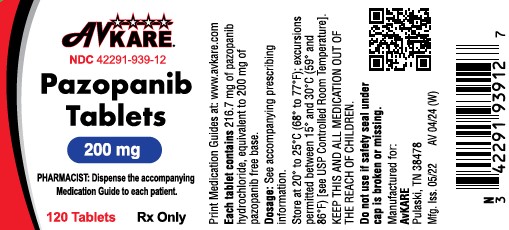
Pazopanib 200 mg Tablet, Film Coated, 120-count — NDC 42291-939-12 (Billing 42291-0939-12)
This is a package of 120 tablets of Pazopanib 200 mg Tablet, Film Coated from AvKARE, marketed since Apr 2024 and currently FDA-listed. It is this product's only package size.
NDC database record
One package, one record: these facts belong to NDC 42291-939-12 alone.
- Record
- FDA NDC Directory package listing · Human prescription drug
- Code segments
- 42291 labeler · 939 product · 12 package
- Package marketed since
- Apr 23, 2024
- Sample package
- No — commercial package
- Listing certified through
- Dec 31, 2027
- Billing quantity
- 120 EA per package
- Barcode (UPC-A, from the NDC)
- 3 4229193912 7
- FDA record last changed
- Jul 24, 2026
Identity & classification
Regulatory identifiers FDA, NLM and CMS codes for this package
Drug-database identifiers Medi-Span GPI and First Databank GCN / HICL / AHFS classification
- GSN (GCN sequence number): 065777
- GCN: 27829
- HICL (First Databank): 036709
- AHFS class code: 10:00.00.00
- RxCUI (RxNorm): 867502
Where does this data come from?
- FDA openFDA NDC Directory · synced Oct 1, 2026
- FDA label on DailyMed · label index refreshed Oct 5, 2026
- RxNorm (NLM RxNav) · catalog refreshed Oct 1, 2026
- Medi-Span GPI (licensed)
- First Databank (licensed) · refreshed Oct 1, 2026
RxNorm drug class
This medicine belongs to the Kinase Inhibitor class.
Where does this data come from?
- RxClass (NLM) · catalog refreshed Oct 1, 2026
Clinical
Pazopanib is used to treat advanced renal cell carcinoma (RCC, a type of cancer that begins in the cells of the kidneys) in adults. Pazopanib is in a class of medications called kinase inhibitors. It works by slowing or stopping the spread of cancer cells.
Read the full MedlinePlus article ↗- It treats advanced kidney cancer (renal cell carcinoma). It also treats advanced soft tissue sarcoma in adults who have already had chemotherapy. It has not been shown to work for...
- Take it once a day on an empty stomach, at least 1 hour before or 2 hours after eating. Swallow the tablets whole and don't crush them. If your next dose is less than 12 hours away...
- Diarrhea, nausea, vomiting, tiredness, loss of appetite, and high blood pressure are common. Your hair may also lighten in color. Tell your care team if these become hard to manage...
- Pazopanib can cause serious, even fatal, liver damage, so we check your liver regularly. Most liver changes happen in the first few months. Call us if you notice yellow skin or eye...
Patient education
Supplement & herbal interactions
Some supplements/herbs that may interact with Pazopanib — tap one for details:
Where does this data come from?
- MedlinePlus (NLM) · refreshed Oct 1, 2026
- FDA label on DailyMed · label index refreshed Oct 5, 2026
Ask a licensed pharmacist directly — free, answered by our team.
Pricing
A drug doesn't have one price. Each row is a different public payment system, and none is what you'd pay at the counter — that depends on your insurance. The ⓘ on each row explains what it measures.
| Price system | Per each | Per package |
|---|---|---|
| Retail pharmacies payNADAC · weekly | Not in the retail survey — common for institutional, discontinued, or low-volume packs. | |
| Medicaid paysCMS SDUD · 12 mo | No recent Medicaid claims on file for this NDC — rare and low-volume NDCs are suppressed in the public data. | |
| Medicare drug plans payPart D · Q2 2026 | $72.19 | $8,662.78 / 120 tablets |
Where does this data come from?
- CMS NADAC weekly file
- CMS ASP pricing files · refreshed Sep 20, 2026
- CMS Medicaid State Drug Utilization Data · refreshed Oct 5, 2026
- CMS Part D plan pricing files · refreshed Sep 24, 2026
- VA National Acquisition Center price file
Packaging — all sizes for this product
| Package NDC | Description | Marketing start | Marketing end | Status |
|---|---|---|---|---|
| 42291-0939-12 You're viewing this Main listing | 120 TABLET, FILM COATED in 1 BOTTLE | 2024-04-23 | — | Active |
Therapeutic equivalents
| Product | Labeler | Pack | NADAC/unit | TE | Status | Price vs. this |
|---|---|---|---|---|---|---|
| Votrient 200 mg 00078-1077-66 | Novartis | 120 tablets | — | AB | FDA listed | — |
| Pazopanib 200 mg 00480-4184-89 | Teva | 120 tablets | — | AB | FDA listed | — |
| Pazopanib 200 mgthis 42291-0939-12 | AvKARE | 120 tablets | — | AB | FDA listed | — |
| Pazopanib 200 mg 51407-0872-12 | Golden | 120 tablets | — | AB | FDA listed | — |
| Pazopanib 200 mg 59651-0582-08 | Aurobindo | 120 tablets | — | AB | FDA listed | — |
| Pazopanib 200 mg 60505-4779-05 | Apotex | 500 tablets | — | AB | FDA listed | — |
| Pazopanib 200 mg 63304-0116-13 | SUN | 120 tablets | — | AB | FDA listed | — |
| pazopanib 200 mg 82293-0022-10 | Novugen | 120 tablets | — | AB | FDA listed | — |
Where does this data come from?
- FDA openFDA NDC Directory · synced Oct 1, 2026
- FDA Orange Book · refreshed Oct 3, 2026
- CMS NADAC weekly file
Availability & generic status
This product is an FDA-approved generic. Other versions of the same drug are listed under Therapeutic equivalents, least expensive first.
Where does this data come from?
- FDA Orange Book · refreshed Oct 3, 2026
What it looks like
Where does this data come from?
- FDA label on DailyMed · label index refreshed Oct 5, 2026
Inactive Ingredients / Excipients
Inactive ingredients, also called excipients, are components of the drug product other than the active ingredient. They may include fillers, dyes, coatings, preservatives, flavors, or other formulation ingredients.
🧪 Avoiding an ingredient? See Pazopanib inactive ingredients by manufacturer: every current product's list side by side, so you can ask your pharmacy for the version that does not list it.
💡 Tap an ingredient (hover on desktop) to see what it is and why it’s used.
-
UNII XM0M87F357
A dark iron oxide compound that gives medicines their black or dark color. It's used as a colorant in tablets and capsules to help identify the product and make it visually distinctive.
-
UNII 0VUT3PMY82
Hypromellose 2910 is a plant-derived thickening agent made from cellulose. In medicines, it forms protective coatings on tablets or capsules, controls how fast the drug releases, and thickens liquid formulations.
-
UNII 0WZ8WG20P6
Hypromellose 2910 is a plant-based cellulose derivative that acts as a thickener, binder, and film-coating agent. It helps control how quickly the medicine dissolves and protects the tablet or capsule from moisture and light.
-
UNII 70097M6I30
Magnesium stearate is a salt made from magnesium and stearic acid, a fatty substance. It's used in tablets and capsules as a lubricant and glidant to help ingredients flow smoothly during manufacturing and prevent sticking.
-
UNII OP1R32D61U
Microcrystalline cellulose is a purified form of cellulose, a natural fiber from plant sources. It acts as a binder and filler in tablets and capsules, helping hold ingredients together and give the medicine its shape and size.
-
UNII B697894SGQ
Polyethylene glycol 400 is a clear, thick liquid made from petroleum-derived polymers. It acts as a solvent and humectant in medicines, helping dissolve active ingredients and retain moisture in the formulation.
-
UNII 6OZP39ZG8H
Polysorbate 80 is a synthetic emulsifier derived from sorbitol and oleic acid. It helps mix oil and water-based ingredients together in medications and improves how the product disperses in the body.
-
UNII U725QWY32X
Povidone K30 is a synthetic polymer made from petroleum. It acts as a binder to hold tablet ingredients together and as a disintegrant to help the tablet break apart in the stomach so the medicine can be absorbed.
-
UNII H8AV0SQX4D
A modified starch derived from potato or corn starch. It absorbs water quickly and helps tablets or capsules break apart and dissolve in the stomach, acting as a disintegrant to ensure the medicine releases its active ingredients properly.
-
UNII 15FIX9V2JP
Titanium dioxide is a bright white mineral powder commonly used as a colorant and opacifying agent. It makes pills and tablets white or lighter in color and helps make coatings non-transparent.
10 inactive ingredients listed in the exact product block matched to this NDC.
Where does this data come from?
ingredient classCode="IACT" elements from the exact product block matched by this NDC. Label-section narrative from DailyMed / the openFDA label index is shown separately when available.- FDA label on DailyMed · label index refreshed Oct 5, 2026
- FDA openFDA NDC Directory · synced Oct 1, 2026
Inactive ingredient FAQ
Are inactive ingredients the same for every manufacturer?
Why might an inactive ingredient be missing?
Can inactive ingredients matter?
Manufacturer & labeler
More NDCs from AvKARE labeler code 42291
- Eltrombopag Olamine 25 mg Tablet, Film Coated NDC 42291-933-30
- Eltrombopag Olamine 50 mg Tablet, Film Coated NDC 42291-934-30
- Eltrombopag Olamine 75 mg Tablet, Film Coated NDC 42291-935-30
- Sucralfate 1 g Tablet NDC 42291-936-90
- Sildenafil 20 mg Tablet NDC 42291-937-90
- Miconazole Nitrate 2 g/100g Powder NDC 42291-938-85
- Irbesartan 75 mg Tablet NDC 42291-940-90
- Irbesartan 150 mg Tablet NDC 42291-941-90
- Irbesartan 300 mg Tablet NDC 42291-942-90
- Mirtazapine 30 mg Tablet, Film Coated NDC 42291-952-50
- Piroxicam 10 mg Capsule NDC 42291-953-01
- Piroxicam 20 mg Capsule NDC 42291-954-01
Where does this data come from?
- FDA openFDA NDC Directory · synced Oct 1, 2026
- Drugs@FDA
Full prescribing information FDA SPL
🚨 Boxed Warning ▾
WARNING: HEPATOTOXICITY Severe and fatal hepatotoxicity has been observed in clinical trials. Monitor hepatic function and interrupt, reduce, or discontinue dosing as recommended [see Warnings and Precautions ( 5.1 )] . WARNING: HEPATOTOXICITY See full prescribing information for complete boxed warning.
Severe and fatal hepatotoxicity has been observed in clinical trials. Monitor hepatic function and interrupt, reduce, or discontinue dosing as recommended. (5.1)
🎯 Indications and Usage ▾
1 INDICATIONS AND USAGE Pazopanib tablets are a kinase inhibitor indicated for the treatment of adults with: advanced renal cell carcinoma (RCC). ( 1.1 ) advanced soft tissue sarcoma (STS) who have received prior chemotherapy. ( 1.2 ) Limitations of Use : The efficacy of pazopanib tablets for the treatment of patients with adipocytic soft tissue sarcoma or gastrointestinal stromal tumors has not been demonstrated.
1.1Renal Cell Carcinoma Pazopanib tablets are indicated for the treatment of adults with advanced renal cell carcinoma (RCC).
1.2Soft Tissue Sarcoma Pazopanib tablets are indicated for the treatment of adults with advanced soft tissue sarcoma (STS) who have received prior chemotherapy. Limitations of Use : The efficacy of pazopanib tablets for the treatment of patients with adipocytic STS or gastrointestinal stromal tumors has not been demonstrated.
⏱️ Dosage and Administration ▾
2 DOSAGE AND ADMINISTRATION Recommended Dosage : 800 mg orally once daily without food (at least 1 hour before or 2 hours after a meal). ( 2.1 ) Moderate Hepatic Impairment : 200 mg orally once daily. ( 2.2 )
2.1Recommended Dosage The recommended dosage of pazopanib tablets is 800 mg (four 200 mg tablets) orally once daily without food (at least 1 hour before or 2 hours after a meal) until disease progression or unacceptable toxicity [see Clinical Pharmacology ( 12.3 )] . The dosage should be modified for hepatic impairment and in patients taking certain concomitant drugs [see Dosage and Administration ( 2.3 , 2.4 )] . Swallow tablets whole.
Do not crush tablets due to the potential for increased rate of absorption, which may affect systemic exposure [see Clinical Pharmacology ( 12.3 )] . If a dose is missed, it should not be taken if it is < 12 hours until the next dose.
2.2Dosage Modifications for Adverse Reactions Table 1 summarizes the recommended dose reductions. Table 1. Recommended Dose Reductions of Pazopanib Tablets for Adverse Reactions Dose Reduction For Renal Cell Carcinoma For Soft Tissue Sarcoma First 400 mg orally once daily 600 mg orally once daily Second 200 mg orally once daily 400 mg orally once daily Permanently discontinue pazopanib tablets in patients unable to tolerate the second dose reduction.
Table 2 summarizes the recommended dosage modifications for adverse reactions. Table 2. Recommended Dosage Modifications of Pazopanib Tablets for Adverse Reactions Adverse Reaction Severity a Dosage Modification Hepatic Toxicity [see Warnings and Precautions ( 5.1 )] Isolated ALT elevations between 3 × ULN and 8 × ULN Continue and monitor liver function weekly until ALT returns to Grade 1 or baseline.
Isolated ALT elevations of > 8 × ULN Withhold until improvement to Grade 1 or baseline. If the potential benefit for resuming treatment with pazopanib tablets is considered to outweigh the risk for hepatotoxicity, then resume at a reduced dose of no more than 400 mg once daily and measure serum liver tests weekly for 8 weeks. Permanently discontinue if ALT elevations > 3 × ULN recur despite dose reduction(s).
ALT elevations > 3 × ULN occur concurrently with bilirubin elevations > 2 × ULN Permanently discontinue and continue to monitor until resolution. Patients with only a mild, indirect (unconjugated) hyperbilirubinemia, known as Gilbert’s syndrome, and ALT elevations > 3 × ULN should be managed per the recommendations outlined for isolated ALT elevations. Left Ventricular Systolic Dysfunction [see Warnings and Precautions ( 5.3 )] Symptomatic or Grade 3 Withhold until improvement to Grade < 3.
Resume treatment based on medical judgement. Grade 4 Permanently discontinue. Hemorrhagic Events [see Warnings and Precautions ( 5.4 )] Grade 2 Withhold until improvement to Grade ≤ 1.
Resume at reduced dose (see Table 1). Permanently discontinue if Grade 2 recurs after dose interruption and reduction. Grade 3 or 4 Permanently discontinue.
Arterial Thromboembolic Events [see Warnings and Precautions ( 5.5 )] Any grade Permanently discontinue. Venous Thromboembolic Events [see Warnings and Precautions ( 5.6 )] Grade 3 Withhold pazopanib tablets and resume at same dose if managed with appropriate therapy for at least one week. Grade 4 Permanently discontinue.
Thrombotic Microangiopathy [see Warnings and Precautions ( 5.7 )] Any grade Permanently discontinue. Gastrointestinal Perforation [see Warnings and Precautions ( 5.8 )] Any grade Permanently discontinue. Gastrointestinal Fistula [see Warnings and Precautions ( 5.8 )] Grade 2 or 3 Withhold and resume based on medical judgement.
Grade 4 Permanently discontinue. Interstitial Lung Disease / Pneumonitis [see Warnings and Precautions ( 5.9 )] Any grade Permanently discontinue. Posterior Reversible Encephalopathy Syndrome [see Warnings and Precautions ( 5.10 )] Any grade Permanently discontinue.
Hypertension [see Warnings and Precautions ( 5.11 )] Grade 2 or 3 Reduce dose (see… [Excerpted — this section continues on DailyMed.]
💊 Dosage Forms and Strengths ▾
3 DOSAGE FORMS AND STRENGTHS Tablets: 200 mg, grey, biconvex, capsule shaped, film-coated tablet, marked with “T” on one side and “4184” on the other side. Tablets: 200 mg ( 3 )
⛔ Contraindications ▾
4 CONTRAINDICATIONS None. None. ( 4 )
⚠️ Warnings and Cautions ▾
5 WARNINGS AND PRECAUTIONS Hepatic Toxicity : Severe and fatal hepatotoxicity has occurred. Monitor liver tests at baseline, regularly during treatment and as clinically indicated. Withhold pazopanib and resume at reduced dose with continued weekly monitoring for 8 weeks, or permanently discontinue with weekly monitoring until resolution based on severity of hepatotoxicity.
( 2.2 , 5.1 ) QT Prolongation and Torsades de Pointes : Monitor patients who are at significant risk of developing QT interval prolongation. Monitor electrocardiograms (ECGs) and electrolytes at baseline and as clinically indicated. Correct hypokalemia, hypomagnesemia, and hypocalcemia prior to initiating pazopanib and during treatment.
( 5.2 , 12.2 ) Cardiac Dysfunction : Cardiac dysfunction, including decreased left ventricular ejection fraction (LVEF) and congestive heart failure, have occurred. Monitor blood pressure and manage as appropriate. Monitor for clinical signs or symptoms of congestive heart failure.
Conduct baseline and periodic evaluation of LVEF in patients at risk of cardiac dysfunction. Withhold or permanently discontinue pazopanib based on severity of cardiac dysfunction. ( 2.2 , 5.3 ) Hemorrhagic Events : Fatal hemorrhagic events have occurred.
Pazopanib has not been studied in patients who have a history of hemoptysis, cerebral hemorrhage, or clinically significant gastrointestinal hemorrhage in the past 6 months. Withhold pazopanib tablets and resume at reduced dose or permanently discontinue based on severity of hemorrhagic events. ( 2.2 , 5.4 ) Arterial Thromboembolic Events : Arterial thromboembolic events have been observed and can be fatal.
Pazopanib has not been studied in patients who have had an arterial thromboembolic event within the previous 6 months. Permanently discontinue pazopanib in case of an arterial thromboembolic event. ( 2.2 , 5.5 ) Venous Thromboembolic Events : Venous thromboembolic events (VTEs) have been observed, including fatal pulmonary emboli (PE).
Monitor for signs and symptoms of VTE and PE. Withhold pazopanib and then resume at same dose or permanently discontinue based on severity of VTE. ( 2.2 , 5.6 ) Thrombotic Microangiopathy : Thrombotic microangiopathy (TMA), including thrombotic thrombocytopenic purpura (TTP) and hemolytic uremic syndrome (HUS), has been observed.
Permanently discontinue pazopanib tablets if TMA occurs. ( 2.2 , 5.7 ) Gastrointestinal Perforation and Fistula : Fatal perforation events have occurred. Monitor for signs and symptoms of gastrointestinal perforation or fistula.
Withhold pazopanib in case of Grade 2 or 3 gastrointestinal fistula and resume based on medical judgement. Permanently discontinue pazopanib in case of gastrointestinal perforation or Grade 4 gastrointestinal fistula. ( 2.2 , 5.8 ) Interstitial Lung Disease/Pneumonitis : Can be fatal.
Monitor patients for pulmonary symptoms. Permanently discontinue pazopanib in patients who develop interstitial lung disease (ILD) or pneumonitis. ( 2.2 , 5.9 ) Posterior Reversible Encephalopathy Syndrome : Can be fatal.
Permanently discontinue pazopanib in patients who develop posterior reversible encephalopathy syndrome (PRES). ( 2. 2, 5.10 ) Hypertension : Hypertension, including hypertensive crisis, has been observed.
Do not initiate pazopanib in patients with uncontrolled hypertension. Optimize blood pressure prior to initiating pazopanib. Monitor blood pressure as clinically indicated and initiate and adjust antihypertensive therapy as appropriate.
Withhold and then dose reduce pazopanib or permanently discontinue based on severity of hypertension. ( 2.2 , 5.11 ) Risk of Impaired Wound Healing : Withhold pazopanib for at least 1 week prior to elective surgery. Do not administer for at least 2 weeks following major surgery and until adequate wound healing.
The safety of resumption of pazopanib after resolution of wound healing complications has not been established. ( 5.12 ) Hypothyroidism : Monitor thyroid tests at baseline,… [Excerpted — this section continues on DailyMed.]
🤒 Adverse Reactions ▾
6 ADVERSE REACTIONS The following clinically significant adverse reactions are elsewhere in the labeling: Hepatic Toxicity [see Warnings and Precautions ( 5.1 )] QT Prolongation and Torsades de Pointes [see Warnings and Precautions ( 5.2 )] Cardiac Dysfunction [see Warnings and Precautions ( 5.3 )] Hemorrhagic Events [see Warnings and Precautions ( 5.4 )] Arterial Thromboembolic Events [see Warnings and Precautions ( 5.5 )] Venous Thromboembolic Events [see Warnings and Precautions ( 5.6 )] Thrombotic Microangiopathy (TMA) [see Warnings and Precautions ( 5.7 )] Gastrointestinal Perforation and Fistula [see Warnings and Precautions ( 5.8 )] Interstitial Lung Disease (ILD)/Pneumonitis [see Warnings and Precautions ( 5.9 )] Posterior Reversible Encephalopathy Syndrome (PRES) [see Warnings and Precautions ( 5.10 )] Hypertension [see Warnings and Precautions ( 5.11 )] Hypothyroidism [see Warnings and Precautions ( 5.13 )] Proteinuria [see Warnings and Precautions ( 5.14 )] Tumor Lysis Syndrome [see Warnings and Precautions ( 5.15 )] Infection [see Warnings and Precautions ( 5.16 )] The most common adverse reactions in patients with RCC (≥ 20%) are diarrhea, hypertension, hair color changes (depigmentation), nausea, anorexia, and vomiting.
( 6.1 ) The most common adverse reactions in patients with STS (≥ 20%) are fatigue, diarrhea, nausea, decreased weight, hypertension, decreased appetite, vomiting, tumor pain, hair color changes, musculoskeletal pain, headache, dysgeusia, dyspnea, and skin hypopigmentation. ( 6.1 ) To report SUSPECTED ADVERSE REACTIONS, contact AvKARE at 1-855-361-3993 or FDA at 1-800-FDA-1088 or www.fda.gov/medwatch.
6.1Clinical Trials Experience Because clinical trials are conducted under widely varying conditions, adverse reaction rates observed in the clinical trials of a drug cannot be directly compared with rates in the clinical trials of another drug and may not reflect the rates observed in practice. The data described in the WARNINGS AND PRECAUTIONS section reflect exposure of 977 patients who received pazopanib as a single agent, including 586 pazopanib-treated patients with RCC. With a median duration of treatment of 7.4 months (range, 0.1 to 27.6) in these 977 patients, the most common adverse reactions (≥ 20%) in these 586 patients were diarrhea, hypertension, hair color change, nausea, fatigue, anorexia, and vomiting.
The data described in the WARNINGS AND PRECAUTIONS also reflects exposure of 382 patients with advanced soft tissue sarcoma who received pazopanib as a single agent, with a median duration of treatment of 3.6 months (range, 0 to 53). The most common adverse reactions (≥ 20%) in these 382 patients were fatigue, diarrhea, nausea, decreased weight, hypertension, decreased appetite, vomiting, tumor pain, hair color changes, musculoskeletal pain, headache, dysgeusia, dyspnea, and skin hypopigmentation. Renal Cell Carcinoma The safety of pazopanib was evaluated in 290 patients with RCC who participated in VEG105192, a randomized, double-blind, placebo-controlled trial [see Clinical Studies ( 14.1 )] .
The median duration of treatment was 7.4 months (range, 0 to 23) for patients who received pazopanib. Forty-two percent of patients on pazopanib required a dose interruption and 36% required a dose reduction. Table 3 presents adverse reactions in VEG105192.
Table 3. Adverse Reactions (≥ 10%) in Patients with RCC Who Received Pazopanib in VEG105192 Adverse Reactions Pazopanib (N = 290) Placebo (N = 145) All Grades a Grade 3 Grade 4 All Grades a Grade 3 Grade 4 % % % % % % Diarrhea 52 3 < 1 9 < 1 0 Hypertension 40 4 0 10 < 1 0 Hair color changes 38 < 1 0 3 0 0 Nausea 26 < 1 0 9 0 0 Anorexia 22 2 0 10 < 1 0 Vomiting 21 2 < 1 8 2 0 Fatigue 19 2 0 8 1 1 Asthenia 14 3 0 8 0 0 Abdominal pain 11 2 0 1 0 0 Headache 10 0 0 5 0 0 Abbreviation: RCC, renal cell carcinoma. a National Cancer Institute Common Terminology Criteria for Adverse Events, version 3.
Other adverse reactions observed more commonly in… [Excerpted — this section continues on DailyMed.]
🔄 Drug Interactions ▾
7 DRUG INTERACTIONS Strong CYP3A4 Inhibitors : Avoid coadministration of pazopanib with strong CYP3A4 inhibitors. If coadministration cannot be avoided, reduce the dose of pazopanib. ( 2.4 , 7.1 ) Strong CYP3A4 Inducers : Consider an alternate concomitant medication with no or minimal enzyme induction potential.
Pazopanib is not recommended if chronic use of strong CYP3A4 inducers cannot be avoided. ( 2.4 , 7.1 ) CYP Substrates : Coadministration of pazopanib with agents with narrow therapeutic windows that are metabolized by CYP3A4, CYP2D6, or CYP2C8 is not recommended. ( 7.2 ) Concomitant Use with Simvastatin : Concomitant use of pazopanib with simvastatin increases the risk of alanine aminotransferase (ALT) elevations.
Increase to weekly monitoring of liver function as recommended. Withhold pazopanib and resume at reduced dose, or permanently discontinue based on severity of hepatotoxicity. ( 7.3 ) Concomitant Use With Gastric Acid-Reducing Agents : Avoid concomitant use of pazopanib with gastric acid-reducing agents.
Consider short-acting antacids in place of proton pump inhibitors (PPIs) and H2-receptor antagonists. Separate antacid and pazopanib dosing by several hours. ( 2.4 , 7.4 )
7.1Effect of Other Drugs on Pazopanib Strong CYP3A4 Inhibitors Coadministration of pazopanib with strong inhibitors of CYP3A4 increases pazopanib concentrations [see Clinical Pharmacology ( 12.3 )] . Avoid coadministration of pazopanib with strong CYP3A4 inhibitors and consider an alternate concomitant medication with no or minimal enzyme inhibition potential. If coadministration of a strong CYP3A4 inhibitor cannot be avoided, reduce the dose of pazopanib [see Dosage and Administration ( 2.4 )] .
Strong CYP3A4 Inducers Coadministration of strong CYP3A4 inducers may decrease plasma pazopanib concentrations. Consider an alternate concomitant medication with no or minimal enzyme induction potential. Pazopanib is not recommended if chronic use of strong CYP3A4 inducers cannot be avoided [see Dosage and Administration ( 2.4 )] .
Transporters Coadministration of strong inhibitors of P-gp or BCRP may increase pazopanib concentrations. Avoid concomitant use of pazopanib with strong inhibitors of P-gp or BCRP. Consider selection of alternative concomitant medicinal products with no or minimal potential to inhibit P-gp or BCRP.
7.2Effects of Pazopanib on Other Drugs CYP Substrates Coadministration of pazopanib with agents with narrow therapeutic windows that are metabolized by CYP3A4, CYP2D6, or CYP2C8 may result in inhibition of the metabolism of these products and create the potential for serious adverse reactions. The concomitant use of pazopanib with agents with narrow therapeutic windows that are metabolized by CYP3A4, CYP2D6, or CYP2C8 is not recommended [see Clinical Pharmacology ( 12.3 )] .
7.3Concomitant Use with Simvastatin Concomitant use of pazopanib with simvastatin increases the incidence of ALT elevations. Across clinical trials of pazopanib as a single agent, ALT > 3 × ULN was reported in 126/895 (14%) of patients who did not use statins compared with 11/41 (27%) of patients who had concomitant use of simvastatin. If a patient receiving concomitant simvastatin develops ALT elevations, increase to weekly monitoring of liver function as recommended.
Withhold pazopanib and resume at reduced dose, or permanently discontinue based on severity of hepatotoxicity [see Dosage and Administration ( 2.2 ), Warnings and Precautions ( 5.1 )] . Insufficient data are available to assess the risk of concomitant administration of alternative statins and pazopanib.
7.4Concomitant Use with Gastric Acid-Reducing Agents Concomitant use of pazopanib with esomeprazole, a PPI, decreased the exposure of pazopanib. Avoid concomitant use of pazopanib with gastric acid-reducing agents. If concomitant administration with a gastric acid-reducing agent cannot be avoided, consider short-acting antacids in place of PPIs and H2-receptor antagonists. Separate short-a… [Excerpted — this section continues on DailyMed.]
👥 Use in Specific Populations ▾
8 USE IN SPECIFIC POPULATIONS Lactation : Advise not to breastfeed. ( 8.2 )
8.1Pregnancy Risk Summary Based on animal reproduction studies and its mechanism of action [see Clinical Pharmacology ( 12.1 )] , pazopanib can cause fetal harm when administered to a pregnant woman. There are no available data on pazopanib use in pregnant women to evaluate for a drug-associated risk. In animal developmental and reproductive toxicology studies, oral administration of pazopanib to pregnant rats and rabbits throughout organogenesis resulted in teratogenicity, and abortion at systemic exposures lower than that observed at the MRHD of 800 mg/day (based on AUC) (see Data) .
Advise pregnant women of the potential risk to a fetus. The estimated background risk of major birth defects and miscarriage for the indicated population is unknown. All pregnancies have a background risk of birth defect, loss or other adverse outcomes.
In the U.S. general population, the estimated background risk of major birth defects in clinically recognized pregnancies and miscarriage is 2% to 4% and 15% to 20%, respectively. Data Animal Data In a female fertility and early embryonic development study, female rats were administered oral pazopanib at least 15 days prior to mating and for 6 days after mating, which resulted in increased pre-implantation loss and early resorptions at dosages greater than or equal to 30 mg/kg/day (approximately 0.4-fold the AUC at the MRHD of 800 mg/day).
Total litter resorption was seen at 300 mg/kg/day (approximately 0.8-fold the AUC at the MRHD of 800 mg/day). Postimplantation loss, embryolethality, and decreased fetal body weights were noted in females administered doses greater than or equal to 10 mg/kg/day (approximately 0.3-fold the AUC at the MRHD of 800 mg/day). In embryo-fetal developmental toxicity studies in rats and rabbits, oral pazopanib was administered to pregnant animals during organogenesis.
In rats, dose levels of greater than or equal to 3 mg/kg/day (approximately 0.1-fold the AUC at the MRHD of 800 mg/day) resulted in teratogenic effects, including cardiovascular malformations (retroesophageal subclavian artery, missing innominate artery, changes in the aortic arch), incomplete or absent ossification, increases in postimplantation loss, embryolethality and reduced fetal body weight. In rabbits, maternal toxicity, increased postimplantation loss and abortion were observed at doses greater than or equal to 30 mg/kg/day (approximately 0.007-fold the AUC at the MRHD of 800 mg/day).
In addition, severe maternal body weight loss and 100% litter loss were observed at doses greater than or equal to 100 mg/kg/day (0.02-fold the AUC at the MRHD of 800 mg/day), while fetal weight was reduced at doses greater than or equal to 3 mg/kg/day (AUC not calculated).
8.2Lactation Risk Summary There is no data on the presence of pazopanib or its metabolites in human milk or their effects on the breastfed infant or milk production. Because of the potential for serious adverse reactions in breastfed infants, advise women not to breastfeed during treatment with pazopanib and for 2 weeks after the final dose.
8.3Females and Males of Reproductive Potential Pazopanib can cause fetal harm when administered to a pregnant woman [see Use in Specific Populations ( 8.1 )] . Pregnancy Testing Verify pregnancy status of females of reproductive potential prior to starting treatment with pazopanib. Contraception Females Advise females of reproductive potential to use effective contraception during treatment with pazopanib and for at least 2 weeks after the last dose.
Males Advise males (including those who have had vasectomies) with female partners of reproductive potential to use condoms during treatment with pazopanib and for at least 2 weeks after the last dose. Infertility Based on findings from animal studies, pazopanib may impair fertility in females and males of reproductive potential while receiving treatment [see Nonclinical Toxicology ( 13… [Excerpted — this section continues on DailyMed.]
🤰 Pregnancy ▾
8.1Pregnancy Risk Summary Based on animal reproduction studies and its mechanism of action [see Clinical Pharmacology ( 12.1 )] , pazopanib can cause fetal harm when administered to a pregnant woman. There are no available data on pazopanib use in pregnant women to evaluate for a drug-associated risk. In animal developmental and reproductive toxicology studies, oral administration of pazopanib to pregnant rats and rabbits throughout organogenesis resulted in teratogenicity, and abortion at systemic exposures lower than that observed at the MRHD of 800 mg/day (based on AUC) (see Data) .
Advise pregnant women of the potential risk to a fetus. The estimated background risk of major birth defects and miscarriage for the indicated population is unknown. All pregnancies have a background risk of birth defect, loss or other adverse outcomes.
In the U.S. general population, the estimated background risk of major birth defects in clinically recognized pregnancies and miscarriage is 2% to 4% and 15% to 20%, respectively. Data Animal Data In a female fertility and early embryonic development study, female rats were administered oral pazopanib at least 15 days prior to mating and for 6 days after mating, which resulted in increased pre-implantation loss and early resorptions at dosages greater than or equal to 30 mg/kg/day (approximately 0.4-fold the AUC at the MRHD of 800 mg/day).
Total litter resorption was seen at 300 mg/kg/day (approximately 0.8-fold the AUC at the MRHD of 800 mg/day). Postimplantation loss, embryolethality, and decreased fetal body weights were noted in females administered doses greater than or equal to 10 mg/kg/day (approximately 0.3-fold the AUC at the MRHD of 800 mg/day). In embryo-fetal developmental toxicity studies in rats and rabbits, oral pazopanib was administered to pregnant animals during organogenesis.
In rats, dose levels of greater than or equal to 3 mg/kg/day (approximately 0.1-fold the AUC at the MRHD of 800 mg/day) resulted in teratogenic effects, including cardiovascular malformations (retroesophageal subclavian artery, missing innominate artery, changes in the aortic arch), incomplete or absent ossification, increases in postimplantation loss, embryolethality and reduced fetal body weight. In rabbits, maternal toxicity, increased postimplantation loss and abortion were observed at doses greater than or equal to 30 mg/kg/day (approximately 0.007-fold the AUC at the MRHD of 800 mg/day).
In addition, severe maternal body weight loss and 100% litter loss were observed at doses greater than or equal to 100 mg/kg/day (0.02-fold the AUC at the MRHD of 800 mg/day), while fetal weight was reduced at doses greater than or equal to 3 mg/kg/day (AUC not calculated).
🧒 Pediatric Use ▾
8.4Pediatric Use The safety and effectiveness of pazopanib in pediatric patients have not been established. Juvenile Animal Toxicity Data In rats, weaning occurs at Day 21 postpartum which approximately equates to a human pediatric age of 2 years. In a juvenile animal toxicology study performed in rats, when animals were dosed from Day 9 through Day 14 postpartum (pre-weaning), pazopanib caused abnormal organ growth/maturation in the kidney, lung, liver, and heart at approximately 0.1-fold the AUC in adults at the MRHD of 800 mg/day of pazopanib.
At approximately 0.4-fold the AUC in adults at the MRHD of 800 mg/day, pazopanib administration resulted in mortality. In repeat-dose toxicology studies in rats, including 4-week, 13-week, and 26-week administration, toxicities in bone, teeth, and nail beds were observed at doses greater than or equal to 3 mg/kg/day (approximately 0.07-fold the AUC at the MRHD of 800 mg/day). Doses of 300 mg/kg/day (approximately 0.8-fold the AUC at the MRHD of 800 mg/day) were not tolerated in 13- and 26-week studies and animals required dose reductions due to body weight loss and morbidity.
Hypertrophy of epiphyseal growth plates, nail abnormalities (including broken, overgrown, or absent nails) and tooth abnormalities in growing incisor teeth (including excessively long, brittle, broken, and missing teeth, and dentine and enamel degeneration and thinning) were observed in rats at doses greater than or equal to 30 mg/kg/day (approximately 0.35-fold the AUC at the MRHD of 800 mg/day) at 26 weeks, with the onset of tooth and nail bed alterations noted clinically after 4 to 6 weeks. Similar findings were noted in repeat-dose studies in juvenile rats dosed with pazopanib beginning Day 21 postpartum (post-weaning).
In the post-weaning animals, the occurrence of changes in teeth and bones occurred earlier and with greater severity than in older animals. There was evidence of tooth degeneration and decreased bone growth at doses greater than or equal to 30 mg/kg (approximately 0.1- to 0.2-fold the AUC at the MRHD of 800 mg/day). Pazopanib exposure in juvenile rats was lower than that seen at the same dose levels in adult animals, based on comparative AUC values.
At pazopanib doses approximately 0.5- to 0.7-fold the AUC at the MRHD of 800 mg/day, decreased bone growth in juvenile rats persisted even after the end of the dosing period. Finally, despite lower pazopanib exposures than those reported in adult animals or adult humans, juvenile animals administered 300 mg/kg/dose pazopanib required dose reduction within 4 weeks of dosing initiation due to significant toxicity, although adult animals could tolerate this same dose for at least 3 times as long [see Warnings and Precautions ( 5.18 )] .
🧓 Geriatric Use ▾
8.5Geriatric Use In pooled clinical trials with pazopanib, 30% of 2080 patients were aged ≥ 65 years. More patients ≥ 65 years had ALT elevations > 3 × ULN compared to patients < 65 years (23% versus 18%) [see Warnings and Precautions ( 5.1 )] . In the RCC trials, 33% of 586 patients were aged ≥ 65 years.
No overall differences in safety or effectiveness of pazopanib were observed between these patients and younger patients. In the STS trials, 24% of 382 patients were aged ≥ 65 years. Patients aged ≥ 65 years had a higher incidence of Grade 3 or 4 fatigue (19% versus 12% for patients aged < 65 years), hypertension (10% versus 6%), decreased appetite (11% versus 2%), ALT elevations (3% versus 2%) and AST elevations (4% versus 1%).
In the randomized STS trial (VEG110727), no overall differences in effectiveness of pazopanib were observed between patients aged ≥ 65 years and younger patients.
🆘 Overdosage ▾
10 OVERDOSAGE Dose-limiting toxicity (Grade 3 fatigue) and Grade 3 hypertension were each observed in 1 of 3 patients dosed at 2,000 mg daily (2.5 times the recommended dose) and 1,000 mg daily (1.25 times the recommended dose), respectively. Provide general supportive measures to manage an overdose. Hemodialysis is not expected to enhance the elimination of pazopanib because pazopanib is not significantly renally excreted and is highly bound to plasma proteins.
🧬 Clinical Pharmacology ▾
12 CLINICAL PHARMACOLOGY
12.1Mechanism of Action Pazopanib is a multi-tyrosine kinase inhibitor of vascular endothelial growth factor receptor (VEGFR)-1, VEGFR-2, VEGFR-3, platelet-derived growth factor receptor (PDGFR)-α and -β, fibroblast growth factor receptor (FGFR)-1 and -3, cytokine receptor (Kit), interleukin-2 receptor-inducible T-cell kinase (Itk), lymphocyte-specific protein tyrosine kinase (Lck), and transmembrane glycoprotein receptor tyrosine kinase (c-Fms). In vitro , pazopanib inhibited ligand-induced autophosphorylation of VEGFR-2, Kit, and PDGFR-β receptors.
In vivo , pazopanib inhibited VEGF-induced VEGFR-2 phosphorylation in mouse lungs, angiogenesis in a mouse model, and the growth of some human tumor xenografts in mice.
12.2Pharmacodynamics Increases in blood pressure have been observed and are related to steady-state trough plasma pazopanib concentrations. Cardiac Electrophysiology The QT prolongation potential of pazopanib was assessed in a randomized, blinded, parallel trial (N = 96) using moxifloxacin as a positive control. Pazopanib 800 mg orally under fasting conditions was administered on Days 2 to 8 and 1,600 mg was administered on Day 9 after a meal in order to increase exposure to pazopanib and its metabolites.
No large changes (i.e., > 20 msec) in QTc interval following exposure to pazopanib were detected in this QT trial. The trial was not able to exclude small changes (< 10 msec) in QTc interval, because assay sensitivity below this threshold (< 10 msec) was not established in this trial [see Warnings and Precautions ( 5.2 )] .
12.3Pharmacokinetics The recommended dosage of 800 mg once daily results in mean AUC of 1,037 mcg•h/mL and C max of 58.1 mcg/mL. There was no consistent increase in AUC or C max at pazopanib doses above 800 mg. Administration of a single 400-mg crushed tablet increased AUC 0-72h by 46% and C max by approximately 2-fold and decreased T max by approximately 2 hours compared with administration of the whole tablet [see Dosage and Administration ( 2.1 )] .
Absorption The median time to achieve peak concentrations was 2 to 4 hours after a dose. Effect of Food Systemic exposure to pazopanib is increased when administered with food. Administration of pazopanib with a high-fat (approximately 50% fat) or low-fat (approximately 5% fat) meal results in an approximately 2-fold increase in AUC and C max .
Distribution Binding of pazopanib to human plasma protein in vivo was > 99% with no concentration dependence over the range of 10 to 100 mcg/mL. In vitro studies suggest that pazopanib is a substrate for P-gp and BCRP. Elimination Pazopanib has a mean half-life of 31 hours after administration of the recommended dose of 800 mg.
Metabolism In vitro studies demonstrated that pazopanib is metabolized by CYP3A4 with a minor contribution from CYP1A2 and CYP2C8. Excretion Elimination is primarily via feces with renal elimination accounting for < 4% of the administered dose. Specific Populations Patients with Hepatic Impairment Table 7 presents a comparison of the median steady-state C max and the median AUC 0-24h values for patients with normal, mild, moderate and severe hepatic impairment.
The median steady-state of pazopanib C max and AUC 0-24h after a once-daily dose of 800 mg in patients with mild impairment were in a similar range as the median steady-state C max and median AUC 0-24h in patients with no hepatic impairment. The maximum tolerated pazopanib dose in patients with moderate hepatic impairment was 200 mg once daily. The median steady-state C max and the median AUC 0-24h were approximately 43% and 29%, respectively, of the corresponding median values after administration of 800 mg once daily in patients with no hepatic impairment.
The median steady-state C max and the median AUC 0-24h were approximately 18% and 15%, respectively, of the corresponding median values after administration of 800 mg once daily in patients with no hepatic impairment. Table 7. Pharmacokinetic P… [Excerpted — this section continues on DailyMed.]
🧬 Mechanism of Action ▾
12.1Mechanism of Action Pazopanib is a multi-tyrosine kinase inhibitor of vascular endothelial growth factor receptor (VEGFR)-1, VEGFR-2, VEGFR-3, platelet-derived growth factor receptor (PDGFR)-α and -β, fibroblast growth factor receptor (FGFR)-1 and -3, cytokine receptor (Kit), interleukin-2 receptor-inducible T-cell kinase (Itk), lymphocyte-specific protein tyrosine kinase (Lck), and transmembrane glycoprotein receptor tyrosine kinase (c-Fms). In vitro , pazopanib inhibited ligand-induced autophosphorylation of VEGFR-2, Kit, and PDGFR-β receptors.
In vivo , pazopanib inhibited VEGF-induced VEGFR-2 phosphorylation in mouse lungs, angiogenesis in a mouse model, and the growth of some human tumor xenografts in mice.
📦 How Supplied / Storage and Handling ▾
16 HOW SUPPLIED/STORAGE AND HANDLING Pazopanib 200 mg tablets are supplied as grey, biconvex, capsule shaped, film-coated tablets, marked with “T” on one side and “4184” on the other side and are available in: Bottles of 120 tablets (NDC 42291-939-12) Store at 20º to 25ºC (68º to 77ºF), excursions permitted between 15º and 30ºC (59º and 86ºF) [see USP Controlled Room Temperature].
📋 Description ▾
11 DESCRIPTION Pazopanib is a kinase inhibitor. Pazopanib is presented as the hydrochloride salt, with the chemical name 5-[[4-[(2,3-dimethyl-2H-indazol-6-yl)methylamino]-2-pyrimidinyl]amino]-2-methylbenzenesulfonamide hydrochloride. It has the molecular formula C 21 H 23 N 7 O 2 S•HCl and a molecular weight of 473.99 g/mol.
Pazopanib hydrochloride has the following chemical structure: Pazopanib hydrochloride is a white to slightly yellow solid. It is very slightly soluble at pH 1 and practically insoluble above pH 4 in aqueous media. Pazopanib tablets are for oral use.
Each 200 mg tablet of pazopanib contains 200 mg of pazopanib equivalent to 216.7 mg of pazopanib hydrochloride. The inactive ingredients of pazopanib tablets are: Tablet Core: Magnesium stearate, microcrystalline cellulose, povidone, and sodium starch glycolate. Coating: Grey film-coat: hypromellose 2910, iron oxide black, polyethylene glycol 400, polysorbate 80, and titanium dioxide. new
💬 Information for Patients ▾
17 PATIENT COUNSELING INFORMATION Advise the patient to read the FDA-approved patient labeling (Medication Guide). Hepatic Toxicity : Inform patients that periodic laboratory testing will be performed. Advise patients to report signs and symptoms of liver dysfunction to their healthcare provider right away [see Warnings and Precautions ( 5.1 )] .
QT Prolongation and Torsades de Pointes : Inform patients that ECG monitoring may be performed. Advise patients to inform their physicians of concomitant medications [see Warnings and Precautions ( 5.2 )] . Interstitial Lung Disease/Pneumonitis : Advise patients to report pulmonary signs or symptoms indicative of interstitial lung disease (ILD) or pneumonitis [see Warnings and Precautions ( 5.9 )] .
Cardiac Dysfunction : Advise patients to report hypertension or signs and symptoms of congestive heart failure [see Warnings and Precautions ( 5.3 )] . Hemorrhagic Events : Advise patients to report unusual bleeding [see Warnings and Precautions ( 5.4 )] . Arterial Thromboembolic Events : Advise patients to report signs or symptoms of an arterial thrombosis [see Warnings and Precautions ( 5.5 )] .
Pneumothorax and Venous Thromboembolic Events : Advise patients to report new onset of dyspnea, chest pain, or localized limb edema [see Warnings and Precautions (5.6), Adverse Reactions ( 6.1 )] . Posterior Reversible Encephalopathy Syndrome : Advise patients to inform their doctor if they have worsening of neurological function consistent with PRES (headache, seizure, lethargy, confusion, blindness, and other visual and neurologic disturbances) [see Warnings and Precautions ( 5.10 )] . Hypertension : Advise patients to monitor blood pressure early in the course of therapy and frequently thereafter and report increases of blood pressure or symptoms, such as blurred vision, confusion, severe headache, or nausea and vomiting [see Warnings and Precautions ( 5.11 )] .
Gastrointestinal Perforation and Fistula : Advise patients to report signs and symptoms of a GI perforation or fistula [see Warnings and Precautions ( 5.8 )] . Risk of Impaired Wound Healing : Advise patients that pazopanib tablets may impair wound healing. Advise patients to inform their healthcare provider of any scheduled surgical procedure [see Warnings and Precautions ( 5.12 )] .
Hypothyroidism and Proteinuria : Inform patients that thyroid function testing and urinalysis will be performed during treatment [see Warnings and Precautions ( 5.13 , 5.14 )] . Tumor Lysis Syndrome : Advise patients to contact their healthcare provider promptly to report any signs and symptoms of TLS, such as abnormal heart rhythm, seizure, confusion, muscle cramps or spasms, or a decrease in urine output [see Warnings and Precautions ( 5.15 )] . Infection : Advise patients to promptly report any signs or symptoms of infection [see Warnings and Precautions ( 5.16 )] .
Embryo-Fetal Toxicity : Advise female patients to inform their healthcare provider of a known or suspected pregnancy during treatment with pazopanib tablets. Inform female patients of the risk to a fetus and the potential loss of the pregnancy [see Warnings and Precautions ( 5.19 ), Use in Specific Populations ( 8.1 )] . Advise females of reproductive potential to use effective contraception during treatment and for at least 2 weeks after the last dose of pazopanib tablets.
Advise male patients with female partners of reproductive potential to use condoms during treatment with pazopanib tablets and for at least 2 weeks after the last dose [see Warnings and Precautions (5.19), Use in Specific Populations ( 8.3 )] . Lactation : Advise women not to breastfeed during treatment with pazopanib tablets and for 2 weeks after the last dose [see Use in Specific Populations ( 8.2 )] . Infertility : Advise males and females of reproductive potential that pazopanib tablets may impair fertility [see Use in Specific Populations ( 8.3 )] .
Gastrointestinal Adverse Reactions : Advise patients on how to mana… [Excerpted — this section continues on DailyMed.]
💬 Medication Guide ▾
MEDICATION GUIDE Dispense with Medication Guide MEDICATION GUIDE Pazopanib (paz oh' pa nib) Tablets What is the most important information I should know about pazopanib tablets? Pazopanib tablets can cause severe liver problems, including death. Your healthcare provider will do blood tests to check your liver before you start and while you take pazopanib tablets.
Tell your healthcare provider right away if you get any of these signs of liver problems during treatment with pazopanib tablets: yellowing of your skin or the whites of your eyes (jaundice) dark urine tiredness nausea or vomiting loss of appetite pain on the right side of your stomach area (abdomen) bruise easily Your healthcare provider may need to prescribe a lower dose of pazopanib tablets for you or tell you to stop taking pazopanib tablets if you develop liver problems during treatment. What are pazopanib tablets?
Pazopanib tablets are a prescription medicine used to treat adults with: advanced renal cell cancer (RCC) advanced soft tissue sarcoma (STS) who have received chemotherapy in the past It is not known if pazopanib tablets are effective in treating certain soft tissue sarcomas or certain gastrointestinal tumors. It is not known if pazopanib tablets are safe and effective in children under 18 years of age. What should I tell my healthcare provider before taking pazopanib tablets?
Before taking pazopanib tablets, tell your healthcare provider about all of your medical conditions, including if you: have or had liver problems. You may need a lower dose of pazopanib tablets, or your healthcare provider may prescribe a different medicine to treat your advanced renal cell cancer or advanced soft tissue sarcoma. have high blood pressure have heart problems or an irregular heartbeat, including QT prolongation have a history of a stroke have headaches, seizures, or vision problems have coughed up blood in the last 6 months had bleeding of your stomach or intestines in the last 6 months have a history of a tear (perforation) in your stomach or intestine, or an abnormal connection between two parts of your gastrointestinal tract (fistula) have had blood clots in a vein or in the lung have thyroid problems had recent surgery or are going to have surgery.
You should stop taking pazopanib tablets at least 1 week before scheduled surgery because pazopanib tablets may affect healing after surgery. Do not take pazopanib tablets for at least 2 weeks following major surgery and until your wound heals adequately. Your healthcare provider should tell you when you may start taking pazopanib tablets again after surgery. have problems with your kidney function are pregnant or plan to become pregnant.
Pazopanib tablets can harm your unborn baby. Your healthcare provider should check to see if you are pregnant before you start taking pazopanib tablets. You should not become pregnant while you are taking pazopanib tablets.
You should use effective birth control during treatment with pazopanib tablets and for at least 2 weeks after your final dose of pazopanib tablets. Talk to your healthcare provider about types of birth control that may be right for you during this time. are a male (including one who has had a vasectomy) with a sexual partner who is pregnant, think that they may be pregnant, or who could become pregnant (including those who use other forms of birth control). You should use condoms during sexual intercourse during treatment with pazopanib tablets and for at least 2 weeks after the last dose of pazopanib tablets. are breastfeeding or plan to breastfeed.
It is not known if pazopanib passes into your breast milk. Do not breastfeed during treatment with pazopanib tablets and for 2 weeks after the final dose. Tell your healthcare provider about all the medicines you take, including prescription and over-the-counter medicines, vitamins, and herbal supplements.
Pazopanib tablets may affect the way other medicines work and other medicines may affect how pazopanib tablets w… [Excerpted — this section continues on DailyMed.]
🍼 Nursing Mothers ▾
8.3Females and Males of Reproductive Potential Pazopanib can cause fetal harm when administered to a pregnant woman [see Use in Specific Populations ( 8.1 )] . Pregnancy Testing Verify pregnancy status of females of reproductive potential prior to starting treatment with pazopanib. Contraception Females Advise females of reproductive potential to use effective contraception during treatment with pazopanib and for at least 2 weeks after the last dose.
Males Advise males (including those who have had vasectomies) with female partners of reproductive potential to use condoms during treatment with pazopanib and for at least 2 weeks after the last dose. Infertility Based on findings from animal studies, pazopanib may impair fertility in females and males of reproductive potential while receiving treatment [see Nonclinical Toxicology ( 13.1 )] .
🧬 Pharmacokinetics ▾
12.3Pharmacokinetics The recommended dosage of 800 mg once daily results in mean AUC of 1,037 mcg•h/mL and C max of 58.1 mcg/mL. There was no consistent increase in AUC or C max at pazopanib doses above 800 mg. Administration of a single 400-mg crushed tablet increased AUC 0-72h by 46% and C max by approximately 2-fold and decreased T max by approximately 2 hours compared with administration of the whole tablet [see Dosage and Administration ( 2.1 )] .
Absorption The median time to achieve peak concentrations was 2 to 4 hours after a dose. Effect of Food Systemic exposure to pazopanib is increased when administered with food. Administration of pazopanib with a high-fat (approximately 50% fat) or low-fat (approximately 5% fat) meal results in an approximately 2-fold increase in AUC and C max .
Distribution Binding of pazopanib to human plasma protein in vivo was > 99% with no concentration dependence over the range of 10 to 100 mcg/mL. In vitro studies suggest that pazopanib is a substrate for P-gp and BCRP. Elimination Pazopanib has a mean half-life of 31 hours after administration of the recommended dose of 800 mg.
Metabolism In vitro studies demonstrated that pazopanib is metabolized by CYP3A4 with a minor contribution from CYP1A2 and CYP2C8. Excretion Elimination is primarily via feces with renal elimination accounting for < 4% of the administered dose. Specific Populations Patients with Hepatic Impairment Table 7 presents a comparison of the median steady-state C max and the median AUC 0-24h values for patients with normal, mild, moderate and severe hepatic impairment.
The median steady-state of pazopanib C max and AUC 0-24h after a once-daily dose of 800 mg in patients with mild impairment were in a similar range as the median steady-state C max and median AUC 0-24h in patients with no hepatic impairment. The maximum tolerated pazopanib dose in patients with moderate hepatic impairment was 200 mg once daily. The median steady-state C max and the median AUC 0-24h were approximately 43% and 29%, respectively, of the corresponding median values after administration of 800 mg once daily in patients with no hepatic impairment.
The median steady-state C max and the median AUC 0-24h were approximately 18% and 15%, respectively, of the corresponding median values after administration of 800 mg once daily in patients with no hepatic impairment. Table 7. Pharmacokinetic Parameters of Pazopanib in Patients with Hepatic Impairment No Hepatic Impairment Mild Hepatic Impairment (total bilirubin ≤ ULN and ALT > ULN or total bilirubin > 1 to 1.5 × ULN and any ALT value) Moderate Hepatic Impairment (total bilirubin > 1.5 to 3 × ULN and any ALT value) Severe Hepatic Impairment (total bilirubin > 3 × ULN and any ALT value) Dose 800 mg once daily 800 mg once daily 200 mg once daily 200 mg once daily Median steady- state C max (range) mcg/mL 52 (17 to 86) 34 (11 to 104) 22 (4.2 to 33) 9.4 (2.4 to 24) Median 888 774 257 131 AUC 0-24h (range) (346 to 1482) (215 to 2034) (66 to 488) (47 to 473) mcg • h/mL Abbreviations: ALT, alanine aminotransferase; AUC, area under the curve; C max , maximum concentration; ULN, upper limit of normal.
Drug Interactions Studies Clinical Studies Strong CYP3A4 Inhibitor: Coadministration of multiple doses of oral pazopanib 400 mg with multiple doses of oral ketoconazole 400 mg (strong CYP3A4/P-gp inhibitor) resulted in a 1.7-fold increase in the AUC 0-24h and a 1.5-fold increase in the C max of pazopanib [see Dosage and Administration ( 2.4 ), Drug Interactions ( 7. 1)] . Weak CYP3A4 Inhibitor: Coadministration of 1,500 mg lapatinib, a substrate and weak inhibitor of CYP3A4, P-gp, and BCRP, with pazopanib 800 mg resulted in an approximately 50% to 60% increase in mean pazopanib AUC 0-24h and C max .
CYP1A2, CYP2C9 and CYP2C19 Substrates: Clinical studies, using pazopanib 800 mg once daily, have demonstrated that pazopanib does not have a clinically relevant effect on the pharmacokinetics of caffeine (CYP1A2 probe… [Excerpted — this section continues on DailyMed.]
🧬 Pharmacodynamics ▾
12.2Pharmacodynamics Increases in blood pressure have been observed and are related to steady-state trough plasma pazopanib concentrations. Cardiac Electrophysiology The QT prolongation potential of pazopanib was assessed in a randomized, blinded, parallel trial (N = 96) using moxifloxacin as a positive control. Pazopanib 800 mg orally under fasting conditions was administered on Days 2 to 8 and 1,600 mg was administered on Day 9 after a meal in order to increase exposure to pazopanib and its metabolites.
No large changes (i.e., > 20 msec) in QTc interval following exposure to pazopanib were detected in this QT trial. The trial was not able to exclude small changes (< 10 msec) in QTc interval, because assay sensitivity below this threshold (< 10 msec) was not established in this trial [see Warnings and Precautions ( 5.2 )] .
🔬 Clinical Studies ▾
14 CLINICAL STUDIES
14.1Renal Cell Carcinoma The efficacy of pazopanib was evaluated in VEG105192, a randomized, double-blind, placebo-controlled, multicenter trial (NCT00387764). Patients with locally advanced and/or metastatic RCC who had received either no prior therapy or one prior cytokine-based systemic therapy were randomized (2:1) to receive pazopanib 800 mg once daily or placebo once daily. Eligible subjects were stratified according to the following 3 stratification factors: baseline ECOG performance status 0 versus 1; prior nephrectomy yes versus no; and prior systemic therapy for advanced RCC: treatment-naïve versus one prior cytokine-based therapy.
The major efficacy outcome measure was progression-free survival (PFS). Additional outcome measures were overall survival (OS), overall response rate (ORR), and duration of response. Of the total of 435 patients enrolled in this trial, 233 patients had no prior systemic therapy (treatment-naïve subgroup) and 202 patients received one prior IL-2 or INFα-based therapy (cytokine-pretreated subgroup).
The baseline demographic and disease characteristics were balanced between the arms receiving pazopanib and placebo. The majority of patients were male (71%) with a median age of 59 years. Eighty-six percent of patients were white, 14% were Asian, and < 1% were other.
Forty-two percent were ECOG performance status 0 and 58% were ECOG performance status 1. All patients had clear cell histology (90%) or predominantly clear cell histology (10%). Approximately 50% of all patients had 3 or more organs involved with metastatic disease.
The most common metastatic sites at baseline were lung (74%), lymph nodes (56%), bone (27%), and liver (25%). A similar proportion of patients in each arm were treatment-naïve and cytokine-pretreated (see Table 8). In the cytokine-pretreated subgroup, the majority (75%) had received interferon-based treatment.
Similar proportions of patients in each arm had prior nephrectomy (89% and 88% for pazopanib and placebo, respectively). The analysis of the primary endpoint PFS was based on disease assessment by independent radiological review in the entire trial population. Efficacy results are presented in Table 8 and Figure 1.
Table 8. Efficacy Results in RCC Patients by Independent Assessment in VEG105192 Endpoint/Trial Population Pazopanib Placebo HR (95% CI) PFS N = 290 N = 145 0.46 a Overall ITT Median (months) 9.2 4.2 (0.34, 0.62) Treatment-naïve subgroup N = 155 (53%) N = 78 (54%) Median (months) 11.1 2.8 0.40 (0.27, 0.60) Cytokine pre-treated subgroup N = 135 (47%) N = 67 (46%) Median (months) 7.4 4.2 0.54 (0.35, 0.84) Response Rate (CR + PR) N = 290 N = 145 – % (95% CI) 30 (25.1, 35.6) 3 (0.5, 6.4) Duration of response Median (weeks) (95% CI) 58.7 (52.1, 68.1) – b Abbreviations: CI, confidence interval; CR, complete response; HR, hazard ratio; ITT, intent-to-treat; PFS, progression-free survival; PR, partial response; RCC, renal cell carcinoma. a P value < 0.001. b There were only 5 objective responses.
Figure 1. Kaplan-Meier Curve for Progression-free Survival in RCC by Independent Assessment for the Overall Population (Treatment-naïve and Cytokine Pre-treated Populations) in VEG105192 At the protocol-specified final analysis of OS, the median OS was 22.9 months for patients randomized to pazopanib and 20.5 months for the placebo arm [HR = 0.91 (95% CI: 0.71, 1.16)]. The median OS for the placebo arm includes 79 patients (54%) who discontinued placebo treatment because of disease progression and crossed over to treatment with pazopanib.
In the placebo arm, 95 (66%) patients received at least one systemic anticancer treatment after progression compared with 88 (30%) patients randomized to pazopanib. 1
14.2Soft Tissue Sarcoma The efficacy of pazopanib was evaluated in VEG110727, a randomized, double-blind, placebo-controlled, multicenter trial (NCT00753688). Patients with metastatic STS who had received prior chemotherapy, including anthracycline t… [Excerpted — this section continues on DailyMed.]
🧪 Nonclinical Toxicology ▾
13 NONCLINICAL TOXICOLOGY
13.1Carcinogenesis, Mutagenesis, Impairment of Fertility The carcinogenic potential of pazopanib was evaluated in CD-1 mice, and Sprague-Dawley rats. Administration of pazopanib to mice for 2 years did not result in increased incidence of neoplasms at doses up to 100 mg/kg/day (approximately 1.4-fold the AUC at the MRHD of 800 mg/day). Administration of pazopanib to rats for 2 years resulted in findings of duodenal adenocarcinoma in males at 30 mg/kg/day (approximately 0.3-fold the AUC at the MRHD of 800 mg/day) and in females at greater than or equal to 10 mg/kg/day (approximately 0.3-fold the AUC at the MRHD of 800 mg/day).
The human relevance of these neoplastic findings is unclear. Pazopanib did not induce mutations in the microbial mutagenesis (Ames) assay and was not clastogenic in both the in vitro cytogenetic assay using primary human lymphocytes and in the in vivo rat micronucleus assay. In an oral female fertility and early embryonic development study, female rats were administered pazopanib at least 15 days prior to mating, and for 6 days after mating.
Pazopanib did affect fertility in female rats. Reduced fertility, including increased pre-implantation loss and early resorptions, were noted at dosages greater than or equal to 30 mg/kg/day (approximately 0.4-fold the AUC at the MRHD of 800 mg/day). Decreased corpora lutea and increased cysts were noted in mice given greater than or equal to 100 mg/kg/day for 13 weeks and ovarian atrophy was noted in rats given greater than or equal to 300 mg/kg/day for 26 weeks (approximately 1.3 and 0.85-fold the AUC at the MRHD of 800 mg/day).
Decreased corpora lutea was also noted in monkeys given 500 mg/kg/day for up to 34 weeks (approximately 0.4-fold the AUC at the MRHD of 800 mg/day). Pazopanib did not affect mating or fertility in male rats. However, there were reductions in sperm production rates and testicular sperm concentrations at doses greater than or equal to 3 mg/kg/day, epididymal sperm concentrations at doses greater than or equal to 30 mg/kg/day, and sperm motility at greater than or equal to 100 mg/kg/day following 15 weeks of dosing.
Following 15 and 26 weeks of dosing, there were decreased testicular and epididymal weights at doses of greater than or equal to 30 mg/kg/day (approximately 0.35-fold the AUC at the MRHD of 800 mg/day); atrophy and degeneration of the testes with aspermia, hypospermia, and cribiform change in the epididymis was also observed at this dose in the 6-month toxicity studies in male rats.
📄 Carcinogenesis, Mutagenesis, Impairment of Fertility ▾
13.1Carcinogenesis, Mutagenesis, Impairment of Fertility The carcinogenic potential of pazopanib was evaluated in CD-1 mice, and Sprague-Dawley rats. Administration of pazopanib to mice for 2 years did not result in increased incidence of neoplasms at doses up to 100 mg/kg/day (approximately 1.4-fold the AUC at the MRHD of 800 mg/day). Administration of pazopanib to rats for 2 years resulted in findings of duodenal adenocarcinoma in males at 30 mg/kg/day (approximately 0.3-fold the AUC at the MRHD of 800 mg/day) and in females at greater than or equal to 10 mg/kg/day (approximately 0.3-fold the AUC at the MRHD of 800 mg/day).
The human relevance of these neoplastic findings is unclear. Pazopanib did not induce mutations in the microbial mutagenesis (Ames) assay and was not clastogenic in both the in vitro cytogenetic assay using primary human lymphocytes and in the in vivo rat micronucleus assay. In an oral female fertility and early embryonic development study, female rats were administered pazopanib at least 15 days prior to mating, and for 6 days after mating.
Pazopanib did affect fertility in female rats. Reduced fertility, including increased pre-implantation loss and early resorptions, were noted at dosages greater than or equal to 30 mg/kg/day (approximately 0.4-fold the AUC at the MRHD of 800 mg/day). Decreased corpora lutea and increased cysts were noted in mice given greater than or equal to 100 mg/kg/day for 13 weeks and ovarian atrophy was noted in rats given greater than or equal to 300 mg/kg/day for 26 weeks (approximately 1.3 and 0.85-fold the AUC at the MRHD of 800 mg/day).
Decreased corpora lutea was also noted in monkeys given 500 mg/kg/day for up to 34 weeks (approximately 0.4-fold the AUC at the MRHD of 800 mg/day). Pazopanib did not affect mating or fertility in male rats. However, there were reductions in sperm production rates and testicular sperm concentrations at doses greater than or equal to 3 mg/kg/day, epididymal sperm concentrations at doses greater than or equal to 30 mg/kg/day, and sperm motility at greater than or equal to 100 mg/kg/day following 15 weeks of dosing.
Following 15 and 26 weeks of dosing, there were decreased testicular and epididymal weights at doses of greater than or equal to 30 mg/kg/day (approximately 0.35-fold the AUC at the MRHD of 800 mg/day); atrophy and degeneration of the testes with aspermia, hypospermia, and cribiform change in the epididymis was also observed at this dose in the 6-month toxicity studies in male rats.
📄 Package Label / Principal Display Panel ▾
PACKAGE LABEL PRINCIPAL DISPLAY PANEL 120
About this NDC listing & data coverage
What data is (and isn’t) available for this NDC — tap to expand
| NDC identity (package / product / labeler codes) | ✓ Available |
| Labeler | ✓ Available |
| Product & package description | ✓ Available |
| Marketing category & status | ✓ Available |
| Active ingredient / dosage form / route | ✓ Available |
| FDA label (SPL via DailyMed) | ✓ Available |
| Package photos | ✓ Available |
| Inactive ingredients (structured) | ✓ Available |
| NADAC pharmacy acquisition price (CMS) | — Not published for this NDC CMS publishes NADAC only for NDCs reported in its retail-pharmacy survey. |
| Orange Book / therapeutic-equivalence data | ✓ Available |
| HCPCS J-code billing crosswalk | — Not published for this NDC Most self-administered / retail products have no J-code — that is normal. |
| Medicaid utilization (CMS SDUD) | — Not published for this NDC CMS reports utilization only for NDCs with Medicaid claims above its privacy threshold. |