
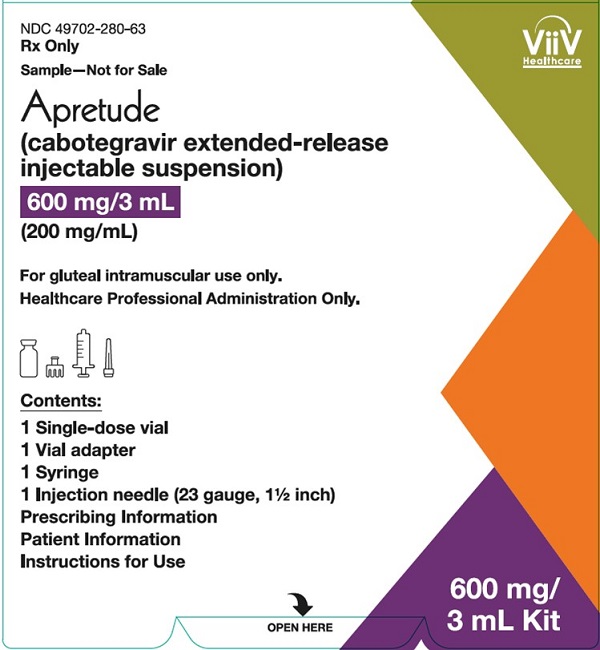
Apretude Cabotegravir Kit — NDC 49702-280-63 (Billing 49702-0280-63)
This is a package of Apretude Cabotegravir Kit from ViiV Healthcare Company, marketed since Mar 2024 and currently FDA-listed. It is this product's only package size.
NDC database record
One package, one record: these facts belong to NDC 49702-280-63 alone.
- Record
- FDA NDC Directory package listing · Human prescription drug
- Code segments
- 49702 labeler · 280 product · 63 package
- Package marketed since
- Mar 31, 2024
- Sample package
- Yes — professional sample, not for sale
- Listing certified through
- Dec 31, 2026
- Barcode (UPC-A, from the NDC)
- 3 4970228063 2
- Medicaid fills, this package
- 12 prescriptions in the last four reported quarters
- FDA record last changed
- Jul 24, 2026
Identity & classification
Regulatory identifiers FDA, NLM and CMS codes for this package
Drug-database identifiers Medi-Span GPI and First Databank GCN / HICL / AHFS classification
- GSN (GCN sequence number): 082153
- GCN: 49487
- HICL (First Databank): 047270
- AHFS class code: 08:18.08.12
- RxCUI (RxNorm): 2588077
Where does this data come from?
- FDA openFDA NDC Directory · synced Oct 8, 2026
- FDA label on DailyMed · label index refreshed Oct 6, 2026
- RxNorm (NLM RxNav) · catalog refreshed Oct 1, 2026
- Medi-Span GPI (licensed)
- First Databank (licensed) · refreshed Oct 8, 2026
RxNorm drug class
This medicine belongs to the Human Immunodeficiency Virus Integrase Strand Transfer Inhibitor class.
Where does this data come from?
- RxClass (NLM) · catalog refreshed Oct 1, 2026
Clinical
- It depends on the product. Vocabria tablets are used with rilpivirine to treat HIV-1 in people whose virus is already suppressed, and as an oral lead-in before injections. Apretude...
- Take one tablet by mouth once a day at about the same time. When it is used for HIV-1 treatment, take it with Edurant and a meal. Follow the schedule your prescriber gives you.
- With Apretude, the most common ones are injection site reactions, diarrhea, headache, fever, tiredness, nausea, dizziness and sleep problems. Call your provider if you get a rash,...
- If you already have HIV-1 and take Apretude alone, the virus can become resistant to treatment. That is why you must test negative before starting and before each injection. If you...
Patient education
Supplement & herbal interactions
Some supplements/herbs that may interact with Cabotegravir — tap one for details:
Where does this data come from?
- MedlinePlus (NLM) · refreshed Oct 1, 2026
- FDA label on DailyMed · label index refreshed Oct 6, 2026
Ask a licensed pharmacist directly — free, answered by our team.
Pricing
A drug doesn't have one price. Each row is a different public payment system, and none is what you'd pay at the counter — that depends on your insurance. The ⓘ on each row explains what it measures.
| Price system | Per each | Per package |
|---|---|---|
| Retail pharmacies payNADAC · weekly | Not in the retail survey — common for institutional, discontinued, or low-volume packs. | |
| Medicaid paysCMS SDUD · 12 mo | $7.32 | — |
| Medicare drug plans payPart D · quarterly | No Part D plan price is available for this NDC in our data. | |
Where does this data come from?
- CMS NADAC weekly file
- CMS ASP pricing files · refreshed Sep 20, 2026
- CMS Medicaid State Drug Utilization Data · through Q1 2026
- CMS Part D plan pricing files · refreshed Sep 24, 2026
- VA National Acquisition Center price file
Packaging — all sizes for this product
| Package NDC | Description | Marketing start | Marketing end | Status |
|---|---|---|---|---|
| 49702-0280-63 You're viewing this Main listing | 1 KIT in 1 CARTON * 3 mL in 1 VIAL Sample | 2024-03-31 | — | Active |
Therapeutic equivalents
| Product | Labeler | Pack | NADAC/unit | TE | Status | Price vs. this |
|---|---|---|---|---|---|---|
| Apretude 49702-0264-23 | ViiV | 1 kit | — | — | FDA listed | — |
| Apretudethis 49702-0280-63 | ViiV | 1 kit | — | — | FDA listed | — |
Where does this data come from?
- FDA openFDA NDC Directory · synced Oct 8, 2026
- FDA Orange Book · refreshed Oct 3, 2026
- CMS NADAC weekly file
Availability & generic status
We did not find an FDA-approved generic match for this exact strength, form and route. Patent/protection dates below may affect future generic timing.
Why the date isn’t exact: Generic timing can change because patents may be challenged, settled, licensed, added, removed, or worked around with a narrower label — and FDA approval does not always mean a pharmacy can get the generic today.
🛈 What do these terms mean?
- Patent
- Legal protection listed in the Orange Book that may delay generic approval or launch. Issued by the U.S. Patent & Trademark Office.
- Substance patent
- Covers the active drug molecule itself — the hardest to design around. A generic generally can’t launch until it expires.
- Formulation (product) patent
- Covers a specific formulation or dosage form. A generic can sometimes work around it with a different formulation.
- Method-of-use patent
- A patent covering one specific approved use of the drug — not necessarily the whole molecule. A generic can sometimes launch with a “skinny label” that carves out the protected use and keeps the others.
- Skinny label
- A generic label that omits a still-patented use when the FDA allows it — letting a generic reach the market for the unprotected uses.
- Exclusivity
- FDA-granted marketing protection, separate from patents — e.g. 5-yr new chemical entity, 7-yr orphan drug, or a +6-month pediatric extension.
- Paragraph IV
- A generic applicant’s formal challenge to a listed patent. It can potentially lead to earlier generic entry, but often involves litigation or a settlement.
- RLD / RS
- Reference Listed Drug — the brand product the FDA uses as the reference for generic applications. Reference Standard — the product the FDA expects generics to compare against in bioequivalence testing.
- TE / AB rating
- FDA therapeutic-equivalence rating. An AB rating generally means the FDA considers a generic therapeutically equivalent to — and substitutable for — the brand.
- LOE (loss of exclusivity)
- The latest patent or exclusivity currently listed — the loss-of-exclusivity / latest-listed-protection date shown on this page. Paragraph-IV challenges and settlements can move the real date earlier; FDA approval and a manufacturer’s decision to market can move it later.
Built from the FDA Orange Book. The bars above are scaled to each protection’s expiry; the red LOE marker is the last one to lapse.
| Patent | Type | Use code | Expires |
|---|---|---|---|
| US 12138264 ↗ | Drug product | — | Sep 15, 2031 |
| US 10927129 ↗ | Drug substance | — | Apr 28, 2026 |
| US 8410103 ↗ | Drug substance | — | Feb 4, 2031 |
| US 11224597 ↗ | Drug product | — | Sep 15, 2031 |
| Code | What it grants | Expires |
|---|---|---|
| NCE | New Chemical Entity (5-year) | Jan 21, 2026 |
Is there a generic version of APRETUDE ER 600 MG/3 ML VIAL?
The FDA approved a generic — why can’t I get it at my pharmacy yet?
Why do different websites show different generic release dates?
What does “FDA listed” mean?
What does a patent or protection date mean here?
What does “current Orange Book estimate” mean?
Can a generic come out before the last patent expires?
Can a generic come out after the listed dates?
What is the difference between patents and exclusivity?
Why are there multiple patent dates?
Where does this data come from?
- FDA Orange Book · refreshed Oct 3, 2026
What it looks like
Where does this data come from?
- FDA label on DailyMed · label index refreshed Oct 6, 2026
Inactive Ingredients / Excipients
Inactive ingredients, also called excipients, are components of the drug product other than the active ingredient. They may include fillers, dyes, coatings, preservatives, flavors, or other formulation ingredients.
🧪 Avoiding an ingredient? See Cabotegravir inactive ingredients by manufacturer: every current product's list side by side, so you can ask your pharmacy for the version that does not list it.
Where does this data come from?
IACT rows and label-wide narrative are kept separate; availability and product-level specificity depend on the submitted label.- FDA label on DailyMed · label index refreshed Oct 6, 2026
- FDA openFDA NDC Directory · synced Oct 8, 2026
Inactive ingredient FAQ
Are inactive ingredients the same for every manufacturer?
Why might an inactive ingredient be missing?
Can inactive ingredients matter?
Manufacturer & labeler
More NDCs from ViiV Healthcare Company labeler code 49702
- Cabenuva cabotegravir and rilpivirine Kit NDC 49702-253-15
- Tivicay PD dolutegravir sodium 5 mg Tablet, For Suspension NDC 49702-255-37
- Triumeq PD abacavir sulfate, dolutegravir sodium, lamivudine Kit NDC 49702-258-37
- SELZENTRY maraviroc Kit NDC 49702-260-55
- Apretude Cabotegravir Kit NDC 49702-264-23
- Cabenuva cabotegravir and rilpivirine Kit NDC 49702-266-63
Where does this data come from?
- FDA openFDA NDC Directory · synced Oct 8, 2026
- Drugs@FDA
Full prescribing information FDA SPL
🚨 Boxed Warning ▾
WARNING: RISK OF DRUG RESISTANCE WITH USE OF APRETUDE FOR HIV-1 PRE‑EXPOSURE PROPHYLAXIS (PrEP) IN UNDIAGNOSED HIV-1 INFECTION Individuals must be tested for HIV-1 infection prior to initiating APRETUDE or oral cabotegravir, and with each subsequent injection of APRETUDE, using a test approved or cleared by the FDA for the diagnosis of acute or primary HIV-1 infection. Drug-resistant HIV-1 variants have been identified with use of APRETUDE by individuals with undiagnosed HIV-1 infection. Do not initiate APRETUDE for HIV-1 PrEP unless negative infection status is confirmed.
Individuals who acquire HIV-1 while receiving APRETUDE for PrEP must transition to a complete HIV-1 treatment regimen [see Dosage and Administration ( 2.2 ), Contraindications ( 4 ), Warnings and Precautions ( 5.1 )] . WARNING: RISK OF DRUG RESISTANCE WITH USE OF APRETUDE FOR HIV-1 PRE-EXPOSURE PROPHYLAXIS (PrEP) IN UNDIAGNOSED HIV-1 INFECTION See full prescribing information for complete boxed warning. Individuals must be tested for HIV-1 infection prior to initiating APRETUDE or oral cabotegravir, and with each subsequent injection of APRETUDE, using a test approved or cleared by the FDA for the diagnosis of acute or primary HIV-1 infection.
Drug-resistant HIV-1 variants have been identified with use of APRETUDE for HIV-1 PrEP by individuals with undiagnosed HIV-1 infection. Do not initiate APRETUDE for HIV-1 PrEP unless negative infection status is confirmed. Individuals who acquire HIV-1 while receiving APRETUDE for PrEP must transition to a complete HIV-1 treatment regimen.
( 2.2 , 4 , 5.1 )
🎯 Indications and Usage ▾
1 INDICATIONS AND USAGE APRETUDE is indicated for pre‑exposure prophylaxis (PrEP) to reduce the risk of sexually acquired HIV-1 infection in adults and adolescents weighing at least 35 kg who are at risk for HIV-1 acquisition. Individuals must have a negative HIV-1 test prior to initiating APRETUDE (with or without an oral lead-in with oral cabotegravir) for HIV-1 PrEP [see Dosage and Administration ( 2.2 , 2.4 ), Contraindications ( 4 ), Warnings and Precautions ( 5.1 )] . APRETUDE is an HIV-1 integrase strand transfer inhibitor (INSTI) indicated for PrEP to reduce the risk of sexually acquired HIV-1 infection in adults and adolescents weighing at least 35 kg who are at risk for HIV-1 acquisition.
Individuals must have a negative HIV-1 test prior to initiating APRETUDE (with or without an oral lead-in with oral cabotegravir) for HIV-1 PrEP. ( 1 )
⏱️ Dosage and Administration ▾
2 DOSAGE AND ADMINISTRATION • HIV-1 Screening: Screen all individuals for HIV-1 infection immediately prior to initiating APRETUDE for HIV-1 PrEP and prior to each injection while taking APRETUDE. ( 2.2 ) • Prior to initiating APRETUDE, an oral lead-in dosing may be used for approximately 1 month with the recommended dosage to assess the tolerability of APRETUDE. ( 2.4 ) • For gluteal intramuscular injection only.
( 2.5 , 2.7 ) • Recommended Dosing Schedule: Initiate APRETUDE with a single 600-mg (3-mL) injection given 1 month apart for 2 consecutive months on the last day of an oral lead-in if used or within 3 days and continue with the injections every 2 months thereafter. ( 2.5 )
2.1Dosage and Administration Overview • APRETUDE contains cabotegravir extended-release injectable suspension in a single-dose vial [see Dosage Forms and Strengths ( 3 )] . • APRETUDE must be administered by a healthcare provider by gluteal intramuscular injection [see Dosage and Administration ( 2.7 )] . • APRETUDE may be initiated with oral cabotegravir prior to the intramuscular injections or the patient may proceed directly to injection of APRETUDE without an oral lead-in [see Dosage and Administration ( 2.4 )] .
2.2HIV-1 Screening for Individuals Receiving APRETUDE for HIV-1 Pre-Exposure Prophylaxis Individuals must be tested for HIV-1 infection prior to initiating APRETUDE or oral cabotegravir, and with each subsequent injection of APRETUDE, using a test approved or cleared by the FDA for the diagnosis of acute or primary HIV-1 infection. If an antigen/antibody-specific test is used and provides negative results, then such negative results should be confirmed using an RNA-specific assay, even if the results of the RNA-assay are available after APRETUDE or oral cabotegravir administration [see Contraindications ( 4 ), Warnings and Precautions ( 5.1 )] .
2.3Adherence to APRETUDE Prior to starting APRETUDE, healthcare providers should carefully select individuals who agree to the required injection dosing and testing schedule and counsel individuals about the importance of adherence to scheduled dosing visits to help reduce the risk of acquiring HIV-1 infection and development of resistance [see Dosage and Administration ( 2.1 ), Warnings and Precautions ( 5.1 , 5.3 ), Microbiology ( 12.4 )] .
2.4Optional Oral Lead-In Dosing to Assess Tolerability of APRETUDE The healthcare provider and individual may decide to use an oral lead-in with oral cabotegravir prior to the initiation of APRETUDE to assess the tolerability of cabotegravir or the healthcare provider and individual may proceed directly to injection of APRETUDE without the use of an oral lead-in [see Dosage and Administration ( 2.5 )] . No safety and efficacy data are available for use of APRETUDE without an oral lead-in [see Warnings and Precautions ( 5.3 ), Adverse Reactions ( 6.1 )].
However, in HIV-1 treatment clinical trials, data show that an oral lead-in is not needed to ensure adequate plasma cabotegravir exposure upon initiation of injections and that the safety and efficacy results of CABENUVA (cabotegravir extended-release injectable suspension; rilpivirine extended-release injectable suspension) were similar when administered with and without an oral lead-in.
2.5Gluteal Intramuscular Injection Dosing with APRETUDE Initiation Injections If an oral lead-in is used, initiation injections should be administered on the last day of oral lead‑in or within 3 days thereafter. The recommended initiation injection doses of APRETUDE in individuals is a single 600‑mg (3-mL) intramuscular injection of APRETUDE given 1 month apart for 2 consecutive months ( Table 1 and Table 2 ). Individuals may be given the second APRETUDE initiation injection up to 7 days before or after the date the individual is scheduled to receive the injections.
Continuation Injections After the 2 initiation injection doses given consecutively 1 month apart, the recommended continuation injection dose of APRETUDE… [Excerpted — this section continues on DailyMed.]
💊 Dosage Forms and Strengths ▾
3 DOSAGE FORMS AND STRENGTHS Injection: Single-dose vial containing 600 mg/3 mL (200 mg/mL) of cabotegravir extended‑release injectable suspension. Injection: Single-dose vial of 600 mg/3 mL (200 mg/mL) of cabotegravir extended-release injectable suspension. ( 3 )
⛔ Contraindications ▾
4 CONTRAINDICATIONS APRETUDE is contraindicated in individuals: • with unknown or positive HIV-1 status [see Warnings and Precautions ( 5.1 , 5.2 )] . • with previous hypersensitivity reaction to cabotegravir [see Warnings and Precautions ( 5.4 )] . • receiving the following coadministered drugs for which significant decreases in cabotegravir plasma concentrations may occur due to uridine diphosphate glucuronosyltransferase (UGT)1A1 enzyme induction, which may result in reduced effectiveness [see Drug Interactions ( 7.2 , 7.3 ), Clinical Pharmacology ( 12.3 )] : o Anticonvulsants: Carbamazepine, oxcarbazepine, phenobarbital, phenytoin o Antimycobacterials: Rifampin, rifapentine • Unknown or positive HIV-1 status.
( 4 ) • Previous hypersensitivity reaction to cabotegravir. ( 4 ) • Coadministration with drugs where significant decreases in cabotegravir plasma concentrations may occur. ( 4 )
⚠️ Warnings and Cautions ▾
5 WARNINGS AND PRECAUTIONS • Comprehensive management to reduce the risk of HIV-1 acquisition. ( 5.1 ) • Potential risk of developing resistance to APRETUDE if an individual acquires HIV-1 either before or while taking APRETUDE or following discontinuation of APRETUDE. Reassess risk of HIV-1 acquisition and test before each injection to confirm HIV-1 negative status.
( 5.2 ) • Residual concentrations of cabotegravir may remain in the systemic circulation of individuals up to 12 months or longer. ( 5.3 ) • Serious or severe hypersensitivity reactions have been reported with cabotegravir and include Stevens-Johnson syndrome (SJS)/toxic epidermal necrolysis (TEN). Discontinue APRETUDE immediately if signs or symptoms of hypersensitivity reactions develop.
( 5.4 ) • Hepatotoxicity has been reported in individuals receiving cabotegravir. Clinical and laboratory monitoring should be considered. Discontinue APRETUDE if hepatotoxicity is suspected.
( 5.5 ) • Depressive disorders have been reported with APRETUDE. Prompt evaluation is recommended for depressive symptoms. ( 5.6 )
5.1Comprehensive Management to Reduce the Risk of HIV-1 Infection Use APRETUDE for HIV-1 PrEP to reduce the risk of HIV-1 infection as part of a comprehensive prevention strategy including adherence to the administration schedule and safer sex practices, including condoms, to reduce the risk of sexually transmitted infections (STIs). APRETUDE is not always effective in preventing HIV-1 acquisition [see Clinical Studies ( 14.1 )] . The time from initiation of APRETUDE for HIV-1 PrEP to maximal protection against HIV-1 infection is unknown.
Risk for HIV-1 acquisition includes behavioral, biological, or epidemiologic factors including, but not limited to, condomless sex, past or current STIs, self-identified HIV risk, having sexual partners of unknown HIV-1 viremic status, or sexual activity in a high prevalence area or network. Counsel individuals on the use of other prevention measures (e.g., consistent and correct condom use; knowledge of partner(s)’ HIV-1 status, including viral suppression status; regular testing for STIs that can facilitate HIV-1 transmission).
Inform individuals about and support their efforts in reducing sexual risk behavior. Use APRETUDE to reduce the risk of acquiring HIV-1 only in individuals confirmed to be HIV‑1 negative [see Contraindications ( 4 )] . HIV-1 resistance substitutions may emerge in individuals with undiagnosed HIV‑1 infection who are taking only APRETUDE, because APRETUDE alone does not constitute a complete regimen for HIV-1 treatment [see Microbiology ( 12.4 )] ; therefore, care should be taken to minimize the risk of initiating or continuing APRETUDE before confirming the individual is HIV-1 negative. • Prior to initiating APRETUDE for HIV-1 PrEP, ask seronegative individuals about recent (in past month) potential exposure events (e.g., condomless sex or condom breaking during sex with a partner of unknown HIV-1 status or unknown viremic status, a recent STI), and evaluate for current or recent signs or symptoms consistent with acute HIV-1 infection (e.g., fever, fatigue, myalgia, skin rash). • If recent (<1 month) exposures to HIV-1 are suspected or clinical symptoms consistent with acute HIV-1 infection are present, use a test approved or cleared by the FDA as an aid in the diagnosis of acute or primary HIV-1 infection.
When using APRETUDE for HIV-1 PrEP, HIV-1 testing should be repeated prior to each injection and upon diagnosis of any other STIs [see Dosage and Administration ( 2.2 , 2.5 )] . • If an HIV-1 test indicates possible HIV-1 infection, or if symptoms consistent with acute HIV-1 infection develop following an exposure event, additional HIV testing to determine HIV status is needed. If an individual has confirmed HIV-1 infection, then the individual must be transitioned to a complete HIV-1 treatment regimen. Counsel individuals without HIV-1 to strictly adhere to the recommended dosing and testing schedu… [Excerpted — this section continues on DailyMed.]
🤒 Adverse Reactions ▾
6 ADVERSE REACTIONS The following adverse reactions are described below and in other sections of the labeling: • Hypersensitivity reactions [see Warnings and Precautions ( 5.4 )] • Hepatotoxicity [see Warnings and Precautions ( 5.5 )] • Depressive disorders [see Warnings and Precautions ( 5.6 )] The most common adverse reactions (all grades) observed in at least 1% of participants receiving APRETUDE were injection site reactions, diarrhea, headache, pyrexia, fatigue, sleep disorders, nausea, dizziness, flatulence, abdominal pain, vomiting, myalgia, rash, decreased appetite, somnolence, back pain, and upper respiratory tract infection.
( 6.1 ) To report SUSPECTED ADVERSE REACTIONS, contact ViiV Healthcare at 1-877-844-8872 or FDA at 1-800-FDA-1088 or www.fda.gov/medwatch.
6.1Clinical Trials Experience Because clinical trials are conducted under widely varying conditions, adverse reaction rates observed in the clinical trials of a drug cannot be directly compared with rates in the clinical trials of another drug and may not reflect rates observed in practice. Clinical Trials Experience in Adults The safety assessment of APRETUDE is based on the analysis of data from 2 international, multicenter, double-blind trials, HPTN 083 and HPTN 084 [see Clinical Studies ( 14.1 )] . Adverse reactions were reported while on blinded study product following exposure to APRETUDE extended-release injectable suspension and oral cabotegravir tablets as oral lead-in.
The median time on blinded study product in HPTN 083 was 65 weeks and 2 days (range: 1 day to 156 weeks and 1 day), with a total exposure on cabotegravir of 3,231 person‑years. The median time on blinded study product in HPTN 084 was 64 weeks and 1 day (range: 1 day to 153 weeks and 1 day), with a total exposure on cabotegravir of 2,009 person‑years. The most common adverse reactions regardless of severity reported in at least 1% of participants in HPTN 083 or HPTN 084 are presented in Table 4 .
In HPTN 083, 6% of participants in the group receiving APRETUDE intramuscular injection every 2 months and 4% of participants receiving oral TRUVADA [emtricitabine (FTC) and tenofovir disoproxil fumarate (TDF)] once daily discontinued due to adverse events (all causality). Non-injection-site–associated adverse events leading to discontinuation and occurring in ≥1% of participants were increased alanine aminotransferase with APRETUDE and TRUVADA. In HPTN 084, 1% of participants receiving APRETUDE and 1% of participants receiving TRUVADA discontinued due to adverse events.
The most commonly reported adverse event (all causality) leading to discontinuation was increased alanine aminotransferase (<1%) with APRETUDE and TRUVADA. The side-by-side tabulation is to simplify presentation; direct comparison across trials should not be made due to differing trials. Table 4.
Adverse Drug Reactions a (All Grades) Reported in at Least 1% of Participants Receiving APRETUDE in Either HPTN 083 or HPTN 084 a Adverse reactions defined as “treatment-related” as assessed by the investigator, with exception of injection site reactions, where all injection site reactions were reported regardless of causality. b Participants who received injection: HPTN 083, APRETUDE (n = 2,117) and TRUVADA (n = 2,081); HPTN 084, APRETUDE (n = 1,519) and TRUVADA (n = 1,516). c Pyrexia includes pyrexia, feeling hot, chills, influenza-like illness. d Fatigue includes fatigue, malaise. e Sleep disorders includes insomnia, abnormal dreams. f Abdominal pain includes abdominal pain, upper abdominal pain. g Rash includes rash, erythema, pruritis, macular, papular, maculopapular.
Adverse Reactions HPTN 083 HPTN 084 APRETUDE Every 2 Months (n = 2,281) TRUVADA Once Daily (n = 2,285) APRETUDE Every 2 Months (n = 1,614) TRUVADA Once Daily (n = 1,610) Injection site reactions b 82% 35% 38% 11% Diarrhea 4% 5% 4% 4% Headache 4% 3% 12% 13% Pyrexia c 4% <1% <1% <1% Fatigue d 4% 2% 3% 3% Sleep disorders e 3% 3% 1% 1% Nausea 3% 5% 4% 8% Dizziness 2% 3%… [Excerpted — this section continues on DailyMed.]
🔄 Drug Interactions ▾
7 DRUG INTERACTIONS • Refer to the full prescribing information for important drug interactions with APRETUDE. ( 4 , 5.7 , 7 ) • Drugs that induce uridine diphosphate glucuronosyltransferase (UGT)1A1 may significantly decrease plasma concentrations of cabotegravir. ( 4 , 7.2 , 7.3 )
7.1Use of Other Antiretroviral Drugs after Discontinuation of APRETUDE Residual concentrations of cabotegravir may remain in the systemic circulation of individuals for prolonged periods (up to 12 months or longer). These residual concentrations are not expected to affect the exposures of antiretroviral drugs that are initiated after discontinuation of APRETUDE [see Warnings and Precautions ( 5.3 ), Drug Interactions ( 7.4 ), Clinical Pharmacology ( 12.3 )] .
7.2Potential for Other Drugs to Affect APRETUDE Cabotegravir is primarily metabolized by UGT1A1 with some contribution from UGT1A9. Drugs that are strong inducers of UGT1A1 or 1A9 are expected to decrease cabotegravir plasma concentrations; therefore, coadministration of APRETUDE with these drugs is contraindicated [see Contraindications ( 4 )] .
7.3Established and Other Potentially Significant Drug Interactions Information regarding potential drug interactions with cabotegravir is provided in Table 8 . These recommendations are based on either drug interaction trials following oral administration of cabotegravir or predicted interactions due to the expected magnitude of the interaction [see Contraindications ( 4 ), Warnings and Precautions ( 5.7 ), Clinical Pharmacology ( 12.3 )] . Table 8 includes potentially significant interactions but is not all inclusive.
Table 8. Drug Interactions with APRETUDE ↑ = Increase, ↓ = Decrease, ↔ = No change. Concomitant Drug Class: Drug Name Effect on Concentration Clinical Comment Anticonvulsants: Carbamazepine Oxcarbazepine Phenobarbital Phenytoin ↓Cabotegravir Coadministration is contraindicated with APRETUDE due to potential for significant decreases in plasma concentration of APRETUDE.
Antimycobacterials: Rifampin Rifapentine ↓Cabotegravir Antimycobacterial: Rifabutin ↓Cabotegravir When rifabutin is started before or concomitantly with the first initiation injection of APRETUDE, the recommended dosing of APRETUDE is one 600-mg (3-mL) injection, followed 2 weeks later by a second 600‑mg (3-mL) initiation injection and monthly thereafter while on rifabutin. When rifabutin is started at the time of the second initiation injection or later, the recommended dosing schedule of APRETUDE is 600‑mg (3 mL) monthly while on rifabutin.
After stopping rifabutin, the recommended dosing schedule of APRETUDE is 600-mg (3 mL) every 2 months.
7.4Drugs without Clinically Significant Interactions with Cabotegravir Based on drug interaction study results, the following drugs can be coadministered with cabotegravir (non-antiretrovirals) or given after discontinuation of cabotegravir (antiretrovirals and non-antiretrovirals) without a dose adjustment: etravirine, midazolam, oral contraceptives containing levonorgestrel and ethinyl estradiol, and rilpivirine [see Clinical Pharmacology ( 12.3 )] .
👥 Use in Specific Populations ▾
8 USE IN SPECIFIC POPULATIONS • Lactation: Assess the benefit-risk of using APRETUDE to the infant while breastfeeding due to the potential for adverse reactions and residual concentrations in the systemic circulation for up to 12 months or longer after discontinuation. ( 8.2 ) • Pediatrics: Not recommended in individuals weighing <35 kg. ( 8.4 )
8.1Pregnancy Pregnancy Exposure Registry There is a pregnancy exposure registry that monitors pregnancy outcomes in individuals exposed to APRETUDE during pregnancy. Healthcare providers are encouraged to register individuals by calling the Antiretroviral Pregnancy Registry (APR) at 1-800-258-4263. Risk Summary There are insufficient human data on the use of APRETUDE during pregnancy to adequately assess a drug-associated risk of birth defects and miscarriage.
Discuss the benefit-risk of using APRETUDE with individuals of childbearing potential or during pregnancy. Cabotegravir use in pregnant individuals has not been evaluated. APRETUDE should be used during pregnancy only if the expected benefit justifies the potential risk to the fetus.
The APR has been established to monitor for birth defects following prenatal exposure to antiretrovirals. The rate of miscarriage is not reported in the APR. The background rate for major birth defects in a U.S. reference population of the Metropolitan Atlanta Congenital Defects Program (MACDP) is 2.7%.
The estimated background rate of miscarriage in clinically recognized pregnancies in the U.S. general population is 15% to 20%. The APR uses the MACDP as the U.S. reference population for birth defects in the general population. The MACDP evaluates mothers and infants from a limited geographic area and does not include outcomes for births that occurred at <20 weeks’ gestation.
In animal reproduction studies with oral cabotegravir, a delay in the onset of parturition and increased stillbirths and neonatal deaths were observed in a rat pre- and postnatal development study at >28 times the exposure at the recommended human dose (RHD). No evidence of adverse developmental outcomes was observed with oral cabotegravir in rats or rabbits (>28 times or similar to the exposure at the RHD, respectively) given during organogenesis (see Data) . Clinical Considerations Cabotegravir is detected in systemic circulation for up to 12 months or longer after discontinuing injections of APRETUDE; therefore, consideration should be given to the potential for fetal exposure during pregnancy [see Warnings and Precautions ( 5.3 )] .
Data Animal Data: Cabotegravir was administered orally to pregnant rats at 0, 0.5, 5, or 1,000 mg/kg/day from 15 days before cohabitation, during cohabitation, and from Gestation Days 0 to 17. There were no effects on fetal viability when fetuses were delivered by caesarean, although a minor decrease in fetal body weight was observed at 1,000 mg/kg/day (>28 times the exposure in humans at the RHD). No drug-related fetal toxicities were observed at 5 mg/kg/day (approximately 13 times the exposure in humans at the RHD), and no drug-related fetal malformations were observed at any dose.
Cabotegravir was administered orally to pregnant rabbits at 0, 30, 500, or 2,000 mg/kg/day from Gestation Days 7 to 19. No drug-related fetal toxicities were observed at 2,000 mg/kg/day (approximately 0.7 times the exposure in humans at the RHD). In a rat pre- and postnatal development study, cabotegravir was administered orally to pregnant rats at 0, 0.5, 5, or 1,000 mg/kg/day from Gestation Day 6 to Lactation Day 21.
A delay in the onset of parturition and increases in the number of stillbirths and neonatal deaths by Lactation Day 4 were observed at 1,000 mg/kg/day (>28 times the exposure in humans at the RHD); there were no alterations to growth and development of surviving offspring. In a cross-fostering study, similar incidences of stillbirths and early postnatal deaths were observed when rat pups born to cabotegravir-treated mothers were nursed from birth by… [Excerpted — this section continues on DailyMed.]
🤰 Pregnancy ▾
8.1Pregnancy Pregnancy Exposure Registry There is a pregnancy exposure registry that monitors pregnancy outcomes in individuals exposed to APRETUDE during pregnancy. Healthcare providers are encouraged to register individuals by calling the Antiretroviral Pregnancy Registry (APR) at 1-800-258-4263. Risk Summary There are insufficient human data on the use of APRETUDE during pregnancy to adequately assess a drug-associated risk of birth defects and miscarriage.
Discuss the benefit-risk of using APRETUDE with individuals of childbearing potential or during pregnancy. Cabotegravir use in pregnant individuals has not been evaluated. APRETUDE should be used during pregnancy only if the expected benefit justifies the potential risk to the fetus.
The APR has been established to monitor for birth defects following prenatal exposure to antiretrovirals. The rate of miscarriage is not reported in the APR. The background rate for major birth defects in a U.S. reference population of the Metropolitan Atlanta Congenital Defects Program (MACDP) is 2.7%.
The estimated background rate of miscarriage in clinically recognized pregnancies in the U.S. general population is 15% to 20%. The APR uses the MACDP as the U.S. reference population for birth defects in the general population. The MACDP evaluates mothers and infants from a limited geographic area and does not include outcomes for births that occurred at <20 weeks’ gestation.
In animal reproduction studies with oral cabotegravir, a delay in the onset of parturition and increased stillbirths and neonatal deaths were observed in a rat pre- and postnatal development study at >28 times the exposure at the recommended human dose (RHD). No evidence of adverse developmental outcomes was observed with oral cabotegravir in rats or rabbits (>28 times or similar to the exposure at the RHD, respectively) given during organogenesis (see Data) . Clinical Considerations Cabotegravir is detected in systemic circulation for up to 12 months or longer after discontinuing injections of APRETUDE; therefore, consideration should be given to the potential for fetal exposure during pregnancy [see Warnings and Precautions ( 5.3 )] .
Data Animal Data: Cabotegravir was administered orally to pregnant rats at 0, 0.5, 5, or 1,000 mg/kg/day from 15 days before cohabitation, during cohabitation, and from Gestation Days 0 to 17. There were no effects on fetal viability when fetuses were delivered by caesarean, although a minor decrease in fetal body weight was observed at 1,000 mg/kg/day (>28 times the exposure in humans at the RHD). No drug-related fetal toxicities were observed at 5 mg/kg/day (approximately 13 times the exposure in humans at the RHD), and no drug-related fetal malformations were observed at any dose.
Cabotegravir was administered orally to pregnant rabbits at 0, 30, 500, or 2,000 mg/kg/day from Gestation Days 7 to 19. No drug-related fetal toxicities were observed at 2,000 mg/kg/day (approximately 0.7 times the exposure in humans at the RHD). In a rat pre- and postnatal development study, cabotegravir was administered orally to pregnant rats at 0, 0.5, 5, or 1,000 mg/kg/day from Gestation Day 6 to Lactation Day 21.
A delay in the onset of parturition and increases in the number of stillbirths and neonatal deaths by Lactation Day 4 were observed at 1,000 mg/kg/day (>28 times the exposure in humans at the RHD); there were no alterations to growth and development of surviving offspring. In a cross-fostering study, similar incidences of stillbirths and early postnatal deaths were observed when rat pups born to cabotegravir-treated mothers were nursed from birth by control mothers. There was no effect on neonatal survival of control pups nursed from birth by cabotegravir-treated mothers.
A lower dose of 5 mg/kg/day (13 times the exposure at the RHD) was not associated with delayed parturition or neonatal mortality in rats. Studies in pregnant rats showed that cabotegravir crosses the placenta and can be dete… [Excerpted — this section continues on DailyMed.]
🧒 Pediatric Use ▾
8.4Pediatric Use The safety and effectiveness of APRETUDE for HIV-1 PrEP in adolescents weighing at least 35 kg who are at risk for HIV-1 acquisition is supported by data from 2 adequate and well-controlled trials of APRETUDE for HIV-1 PrEP in adults with additional safety and pharmacokinetic data from studies in adults with HIV-1 who were administered CABENUVA, and in adolescent participants with HIV-1 who were administered separate components of CABENUVA in addition to their current antiretroviral therapy [see Dosage and Administration ( 2.5 ), Adverse Reactions ( 6.1 ), Clinical Pharmacology ( 12.3 ), Clinical Studies ( 14.1 )] .
APRETUDE for HIV-1 PrEP was evaluated in 2 open-label multicenter clinical trials, HPTN 083-01 and HPTN 084-01, in adolescent individuals 12 to less than 18 years of age weighing at least 35 kg who are at risk for HIV-1 acquisition. Sixty-four adolescents were enrolled. Of these, 62 adolescent participants received one or more injections.
In adolescents receiving APRETUDE for HIV-1 PrEP, the safety data were comparable to the safety data reported in adults receiving APRETUDE for HIV-1 PrEP. While using APRETUDE, HIV-1 testing should be conducted prior to initiating APRETUDE (with or without an oral lead-in with oral cabotegravir) and prior to each injection of APRETUDE. Adolescents may benefit from more frequent visits and counseling to support adherence to the dosing and testing schedule [see Dosage and Administration ( 2.2 ), Warnings and Precautions ( 5.1 )].
The safety, efficacy, and pharmacokinetics of APRETUDE in pediatric participants younger than 12 years of age or weighing <35 kg have not been established.
🧓 Geriatric Use ▾
8.5Geriatric Use No dose adjustment is required in elderly individuals. There are limited data available on the use of APRETUDE in individuals aged 65 years and older. In general, caution should be exercised in administration of APRETUDE in elderly individuals, reflecting greater frequency of decreased hepatic, renal, or cardiac function and of concomitant disease or other drug therapy [see Clinical Pharmacology ( 12.3 )] .
🆘 Overdosage ▾
10 OVERDOSAGE There is no known specific treatment for overdose with APRETUDE. If overdose occurs, monitor the individual and apply standard supportive treatment as required as well as observation of the clinical status of the individual. As APRETUDE is highly bound to plasma proteins, it is unlikely that it will be significantly removed by dialysis.
Consider the prolonged exposure to APRETUDE following an injection when assessing treatment needs and recovery [see Warnings and Precautions ( 5.5 )] .
🧬 Clinical Pharmacology ▾
12 CLINICAL PHARMACOLOGY
12.1Mechanism of Action Cabotegravir is an HIV-1 antiretroviral drug [see Microbiology ( 12.4 )] in a long-acting formulation.
12.2Pharmacodynamics Cardiac Electrophysiology At a dose of cabotegravir 150 mg orally every 12 hours (10 times the recommended total daily oral lead‑in dosage of APRETUDE), the QT interval is not prolonged to any clinically relevant extent. Administration of 3 doses of cabotegravir 150 mg orally every 12 hours resulted in a geometric mean C max approximately 2.8- and 5.6-fold above the geometric mean steady-state C max associated with the recommended 30-mg dose of oral cabotegravir and the recommended 600-mg dose given every 2 months of cabotegravir extended-release injectable suspension, respectively.
12.3Pharmacokinetics Absorption, Distribution, and Elimination The pharmacokinetic properties of cabotegravir are provided in Table 9 . The multiple-dose pharmacokinetic parameters are provided in Table 10 . For the pharmacokinetic properties of oral cabotegravir, refer to the full prescribing information for VOCABRIA (cabotegravir).
Table 9. Pharmacokinetic Properties of Cabotegravir CSF = Cerebrospinal fluid. a When taken orally with a high-fat meal versus fasted, the AUC (0-inf) (geometric mean ratio [90% CI] of cabotegravir are 1.14 [1.02, 1.28]). b The clinical relevance of CSF-to-plasma concentration ratios is unknown. Concentrations were measured at steady-state 1 week after intramuscular administration of cabotegravir extended-release injectable suspensions given monthly or every 2 months. c Elimination half-life driven by slow absorption rate from the intramuscular injection site. d Dosing in mass balance studies: single-dose oral administration of [ 14 C] cabotegravir.
Absorption a T max (days), median 7 Distribution % Bound to human plasma proteins >99.8 Blood-to-plasma ratio
0.52CSF-to-plasma concentration ratio (median [range]) b 0.003 (0.002 to 0.004) Elimination t 1/2 (weeks), mean c 5.6 to
11.5Metabolism Metabolic pathways UGT1A1 UGT1A9 (minor) Excretion Major route of elimination Metabolism % of dose excreted as total 14 C (unchanged drug) in urine d 27 (0) % of dose excreted as total 14 C (unchanged drug) in feces d 59 (47) Table 10. Pharmacokinetic Parameters following Once-Daily Oral Cabotegravir and following Initiation and Every-2-Month Continuation Intramuscular Injections of APRETUDE IM = Intramuscular. a Pharmacokinetic parameter values were based on individual post-hoc estimates from cabotegravir population pharmacokinetic models for patients in Phase 3 treatment studies of HIV treatment. b tau is dosing interval: 24 hours for oral administration, 1 month for the initial injection, and 2 months for every 2 months for intramuscular injections of extended-release injectable suspension. c Oral lead-in pharmacokinetic parameter values represent steady state. d Initial injection C max values primarily reflect oral dosing because the initial injection was administered on the same day as the last oral dose; however, AUC (0-tau) and the C tau values reflect the initial injection.
When administered without oral lead-in to recipients with HIV-1 (n = 110), the observed cabotegravir geometric mean (5th, 95th percentile) C max (1-week post‑initial injection) was 1.89 mcg/mL (0.438, 5.69) and C tau was 1.43 mcg/mL (0.403, 3.90). e Pharmacokinetic parameter values represent steady state. Dosing Phase Dosage Regimen Geometric Mean (5 th , 95 th Percentile) a AUC (0-tau) b (mcg•h/mL) C max (mcg/mL) C tau b (mcg/mL) Oral lead-in c 30 mg 145 8.0 4.6 once daily (93.5, 224) (5.3, 11.9) (2.8, 7.5) Initial injection d 600 mg IM 1,591 8.0 1.5 initial dose (714; 3,245) (5.3, 11.9) (0.65, 2.9) Every-2-month injection e 600 mg IM 3,764 4.0 1.6 every 2 months (2,431; 5,857) (2.3, 6.8) (0.8, 3.0) Specific Populations No clinically significant differences in the pharmacokinetics of cabotegravir were observed based on age, sex, race/ethnicity, BMI, or UGT1A1 polymorphisms.
There… [Excerpted — this section continues on DailyMed.]
🧬 Mechanism of Action ▾
12.1Mechanism of Action Cabotegravir is an HIV-1 antiretroviral drug [see Microbiology ( 12.4 )] in a long-acting formulation.
📦 How Supplied / Storage and Handling ▾
16 HOW SUPPLIED/STORAGE AND HANDLING How Supplied APRETUDE is supplied in a kit containing one 600-mg/3-mL single-dose (200-mg/mL) vial of cabotegravir extended-release injectable suspension, 1 syringe, 1 vial adapter, and 1 needle for intramuscular injection (23 gauge, 1½ inch) (NDC 49702-264-23). The vial stopper is not made with natural rubber latex. Storage and Handling Store APRETUDE at 2°C to 25°C (36°F to 77°F) in the original carton until ready to use.
Exposure up to 30°C permitted. Do not freeze. Do not mix with any other product or diluent.
If the pack has been stored in the refrigerator, the vial should be brought to room temperature prior to administration (not to exceed 30°C [86°F]). Once the suspension has been drawn into the syringe, the injection should be administered as soon as possible, but may remain in the syringe for up to 2 hours. The filled syringes should not be placed in the refrigerator.
If the medicine remains in the syringe for more than 2 hours, the filled syringe and needle must be discarded [see Dosage and Administration ( 2.7 )] .
📋 Description ▾
11 DESCRIPTION APRETUDE contains cabotegravir extended-release injectable suspension, an HIV INSTI. The chemical name of cabotegravir is ( 3S,11aR )-N-[(2,4-difluorophenyl)methyl]-6-hydroxy-3-methyl-5,7-dioxo-2,3,5,7,11,11a-hexahydro[1,3]oxazolo[3,2-a]pyrido[1,2-d]pyrazine-8-carboxamide. The empirical formula is C 19 H 17 F 2 N 3 O 5 and the molecular weight is 405.35 g/mol.
It has the following structural formula: Cabotegravir extended-release injectable suspension is a white to light pink free-flowing suspension for intramuscular injection in a sterile single-dose vial. Each vial contains 3 mL of the following: cabotegravir 200 mg/mL and the inactive ingredients mannitol (35 mg/mL), polyethylene glycol (PEG) 3350 (20 mg/mL), polysorbate 20 (20 mg/mL), and Water for Injection. The vial stoppers are not made with natural rubber latex.
Cabotegravir chemical structure
💬 Information for Patients ▾
17 PATIENT COUNSELING INFORMATION Advise the individual to read the FDA-approved patient labeling (Patient Information). Important Information for Individuals without HIV-1 Taking APRETUDE for HIV-1 Pre ‑ Exposure Prophylaxis Advise individuals without HIV-1 about the following [see Warnings and Precautions ( 5.1 )] : • APRETUDE should be used for PrEP as part of an overall HIV-1 infection prevention strategy, including adherence to the administration schedule and safer sex practices, including condoms, to reduce the risk of STIs. • APRETUDE is not always effective in preventing HIV-1 acquisition [see Clinical Studies ( 14.1 )] .
The time from initiation of APRETUDE for HIV-1 PrEP to maximal protection against HIV-1 infection is unknown. • Counsel individuals on the use of other prevention measures (e.g., knowledge of partner HIV-1 status, testing for STIs condom use). Inform individuals about and support their efforts in reducing sexual risk behavior. • APRETUDE should be used to reduce the risk of acquiring HIV-1 only in individuals confirmed to be HIV-1 negative [see Contraindications ( 4 ), Warnings and Precautions ( 5.1 )] . HIV-1 resistance substitutions may emerge in individuals with undiagnosed HIV-1 infection who are taking only APRETUDE, because APRETUDE alone does not constitute a complete regimen for HIV-1 treatment; therefore, care should be taken to minimize the risk of initiating or continuing APRETUDE before confirming the individual is HIV-1 negative. • If recent (<1 month) exposures to HIV-1 are suspected or clinical symptoms consistent with acute HIV-1 infection are present, use a test approved or cleared by the FDA as an aid in the diagnosis of acute or primary HIV-1 infection. • When using APRETUDE for HIV-1 PrEP, HIV-1 testing should be repeated prior to each injection of APRETUDE, and upon diagnosis of any other STIs. • If an HIV-1 test indicates possible HIV-1 infection, or if symptoms consistent with acute HIV-1 infection develop following an exposure event, additional HIV testing to determine HIV status is needed.
If an individual has confirmed HIV-1 infection, then the individual must be transitioned to a complete HIV-1 treatment regimen. • Some individuals, such as adolescents, may benefit from frequent visits and counseling to support adherence. Potential Risk of Resistance with APRETUDE Advise individuals there is a potential risk of developing resistance to APRETUDE if HIV-1 is acquired either before or while taking APRETUDE or following discontinuation of APRETUDE [see Warnings and Precautions ( 5.2 )] . To minimize this, it is essential that individuals are clinically reassessed for risk of HIV-1 acquisition and tested frequently to confirm HIV-1 negative status.
Advise individuals who are confirmed to have with HIV-1 infection to consult with their healthcare professional, as HIV-1 treatment must be initiated [see Warnings and Precautions ( 5.2 )] . Inform individuals that alternative forms of PrEP should be considered following discontinuation of APRETUDE for those at continuing risk of HIV-1 acquisition and initiated within 2 months of the final injection of APRETUDE [see Warnings and Precautions ( 5.2 )] . Long-Acting Properties of APRETUDE Advise individuals that APRETUDE is an extended-release injectable that may be systemically present for 12 months or longer and consideration should be taken regarding the prolonged release characteristics when APRETUDE is discontinued [see Warnings and Precautions ( 5.3 ), Drug Interactions ( 7 )] .
Adherence to APRETUDE Counsel individuals about the importance of continued medication adherence and scheduled visits to help reduce the risk of acquiring HIV-1 infection and development of resistance [see Dosage and Administration ( 2.3 ), Warnings and Precautions ( 5.1 )] . Hypersensitivity Reactions Advise individuals to immediately contact their healthcare provider if they develop a rash. Instruct individuals to immediately stop taking APRETUDE and seek… [Excerpted — this section continues on DailyMed.]
🧬 Pharmacokinetics ▾
12.3Pharmacokinetics Absorption, Distribution, and Elimination The pharmacokinetic properties of cabotegravir are provided in Table 9 . The multiple-dose pharmacokinetic parameters are provided in Table 10 . For the pharmacokinetic properties of oral cabotegravir, refer to the full prescribing information for VOCABRIA (cabotegravir).
Table 9. Pharmacokinetic Properties of Cabotegravir CSF = Cerebrospinal fluid. a When taken orally with a high-fat meal versus fasted, the AUC (0-inf) (geometric mean ratio [90% CI] of cabotegravir are 1.14 [1.02, 1.28]). b The clinical relevance of CSF-to-plasma concentration ratios is unknown. Concentrations were measured at steady-state 1 week after intramuscular administration of cabotegravir extended-release injectable suspensions given monthly or every 2 months. c Elimination half-life driven by slow absorption rate from the intramuscular injection site. d Dosing in mass balance studies: single-dose oral administration of [ 14 C] cabotegravir.
Absorption a T max (days), median 7 Distribution % Bound to human plasma proteins >99.8 Blood-to-plasma ratio
0.52CSF-to-plasma concentration ratio (median [range]) b 0.003 (0.002 to 0.004) Elimination t 1/2 (weeks), mean c 5.6 to
11.5Metabolism Metabolic pathways UGT1A1 UGT1A9 (minor) Excretion Major route of elimination Metabolism % of dose excreted as total 14 C (unchanged drug) in urine d 27 (0) % of dose excreted as total 14 C (unchanged drug) in feces d 59 (47) Table 10. Pharmacokinetic Parameters following Once-Daily Oral Cabotegravir and following Initiation and Every-2-Month Continuation Intramuscular Injections of APRETUDE IM = Intramuscular. a Pharmacokinetic parameter values were based on individual post-hoc estimates from cabotegravir population pharmacokinetic models for patients in Phase 3 treatment studies of HIV treatment. b tau is dosing interval: 24 hours for oral administration, 1 month for the initial injection, and 2 months for every 2 months for intramuscular injections of extended-release injectable suspension. c Oral lead-in pharmacokinetic parameter values represent steady state. d Initial injection C max values primarily reflect oral dosing because the initial injection was administered on the same day as the last oral dose; however, AUC (0-tau) and the C tau values reflect the initial injection.
When administered without oral lead-in to recipients with HIV-1 (n = 110), the observed cabotegravir geometric mean (5th, 95th percentile) C max (1-week post‑initial injection) was 1.89 mcg/mL (0.438, 5.69) and C tau was 1.43 mcg/mL (0.403, 3.90). e Pharmacokinetic parameter values represent steady state. Dosing Phase Dosage Regimen Geometric Mean (5 th , 95 th Percentile) a AUC (0-tau) b (mcg•h/mL) C max (mcg/mL) C tau b (mcg/mL) Oral lead-in c 30 mg 145 8.0 4.6 once daily (93.5, 224) (5.3, 11.9) (2.8, 7.5) Initial injection d 600 mg IM 1,591 8.0 1.5 initial dose (714; 3,245) (5.3, 11.9) (0.65, 2.9) Every-2-month injection e 600 mg IM 3,764 4.0 1.6 every 2 months (2,431; 5,857) (2.3, 6.8) (0.8, 3.0) Specific Populations No clinically significant differences in the pharmacokinetics of cabotegravir were observed based on age, sex, race/ethnicity, BMI, or UGT1A1 polymorphisms.
There are no data available for the use of cabotegravir in participants with hepatitis B virus and hepatitis C virus co-infection in PrEP studies. Renal Impairment: With oral cabotegravir, no clinically significant differences in the pharmacokinetics of cabotegravir are expected in individuals with mild, moderate, or severe renal impairment. Cabotegravir has not been studied in participants with end-stage renal disease not on dialysis.
As cabotegravir is >99% protein bound, dialysis is not expected to alter exposures of cabotegravir [see Use in Specific Populations ( 8.6 )] . Hepatic Impairment: No clinically significant differences in the pharmacokinetics of cabotegravir are expected in mild to moderate (Child-Pugh A or B) hepatic impairment. The effect of se… [Excerpted — this section continues on DailyMed.]
🧬 Pharmacodynamics ▾
12.2Pharmacodynamics Cardiac Electrophysiology At a dose of cabotegravir 150 mg orally every 12 hours (10 times the recommended total daily oral lead‑in dosage of APRETUDE), the QT interval is not prolonged to any clinically relevant extent. Administration of 3 doses of cabotegravir 150 mg orally every 12 hours resulted in a geometric mean C max approximately 2.8- and 5.6-fold above the geometric mean steady-state C max associated with the recommended 30-mg dose of oral cabotegravir and the recommended 600-mg dose given every 2 months of cabotegravir extended-release injectable suspension, respectively.
🔬 Clinical Studies ▾
14 CLINICAL STUDIES
14.1Clinical Trials in Adults for HIV-1 Pre-Exposure Prophylaxis The safety and efficacy of APRETUDE to reduce the risk of acquiring HIV-1 infection were evaluated in 2 randomized, double-blind, controlled, multinational trials, HPTN 083 in men and transgender women without HIV-1 who have sex with men and have evidence of high-risk behavior for HIV-1 infection and HPTN 084 in cisgender women without HIV-1 at risk of acquiring HIV-1. Participants randomized to receive APRETUDE initiated oral lead-in dosing with 1 oral cabotegravir 30-mg tablet and a placebo daily for up to 5 weeks, followed by APRETUDE 600‑mg (3-mL) intramuscular injection at months 1 and 2 and every 2 months thereafter and a daily placebo tablet.
Participants randomized to receive TRUVADA initiated oral TRUVADA (TDF 300 mg/FTC 200 mg) and placebo daily for up to 5 weeks, followed by oral TRUVADA daily and placebo intramuscular injection at months 1 and 2 and every 2 months thereafter. Trial 201738 (HPTN 083 [NCT02720094]) In HPTN 083, a non-inferiority study, 4,566 cisgender men and transgender women who have sex with men were randomized 1:1 and received either APRETUDE (n = 2,281) or TRUVADA (n = 2,285) as blinded study medication up to Week 153. At baseline, the median age of participants was 26 years, 12% were transgender women, 72% were non-White, and 67% were younger than 30 years.
The primary endpoint was the rate of incident HIV-1 infections among participants randomized to daily oral cabotegravir and intramuscular injections of APRETUDE every 2 months compared with daily oral TRUVADA (corrected for early stopping). The primary analysis demonstrated the superiority of APRETUDE compared with TRUVADA with a 66% reduction in the risk of acquiring HIV-1 infection, hazard ratio (95% CI) 0.34 (0.18, 0.62); further testing revealed 1 of the infections on APRETUDE to be prevalent then yielding a 69% reduction in the risk of HIV-1 incident infection relative to TRUVADA ( Table 14 ).
Table 14. HIV-1 Infection Results During Randomized Phase in HPTN 083: Extended Retrospective Virologic Testing with Readjudicated Endpoints a a mITT from Supplemental Virology Report. b Following the primary analysis, extended retrospective virologic testing was performed to better characterize the timing of HIV-1 infections. As a result, 1 of the 13 HIV-1 incident infections in participants receiving APRETUDE was determined to be a prevalent infection.
The original hazard ratio (95% CI) from the primary analysis is 0.34 (0.18, 0.62). APRETUDE (N = 2,278) TRUVADA (N = 2,281) Superiority P Value Person-years 3,211 3,193 HIV-1 infections (incidence rate per 100 person-years) 12 b (0.37) 39 (1.22) Hazard ratio (95% CI) 0.31 (0.16, 0.58) 0.0003 Figure 1. Cumulative Incidence of HIV-1 Infections in HPTN 083 Results from all subgroup analyses were consistent with the overall protective effect.
A lower rate of incident HIV‑1 infections was observed for participants randomized to APRETUDE compared with participants randomized to TRUVADA ( Table 15 ). Table 15. Incident of HIV-1 Infections by Subgroup in HPTN 083: Extended Retrospective Virologic Testing with Readjudicated Endpoints a a mITT from Supplemental Virology Report. b Cisgender men who have sex with men. c Transgender women who have sex with men.
Subgroup APRETUDE Incidence per 100 Person-Years APRETUDE Person-Years TRUVADA Incidence per 100 Person-Years TRUVADA Person-Years Hazard Ratio (95% CI) Age <30 years 0.47 2,110 1.66 1,987 0.29 (0.15, 0.59) ≥30 years 0.18 1,101 0.50 1,206 0.39 (0.08, 1.84) Gender MSM b 0.35 2,836 1.14 2,803 0.32 (0.16, 0.64) TGW c 0.54 371 1.80 389 0.34 (0.08, 1.56) Race (US) Black 0.58 691 2.28 703 0.26 (0.09, 0.76) Non-Black 0.00 836 0.50 801 0.11 (0.00, 2.80) Region US 0.26 1,528 1.33 1,504 0.21 (0.07, 0.60) Latin America 0.49 1,020 1.09 1,011 0.47 (0.17, 1.35) Asia 0.35 570 1.03 581 0.39 (0.08, 1.82) Africa 1.08 93 2.07 97 0.63 (0.06, 6.50) Trial 201739 (HPTN 084 [NCT03164564]) In… [Excerpted — this section continues on DailyMed.]
🧪 Nonclinical Toxicology ▾
13 NONCLINICAL TOXICOLOGY
13.1Carcinogenesis, Mutagenesis, Impairment of Fertility Carcinogenesis Two-year carcinogenicity studies in mice and rats were conducted with cabotegravir. In mice, no drug-related increases in tumor incidence were observed at cabotegravir exposures (AUC) up to approximately 8 times (males) and 7 times (females) higher than those in humans at the RHD. In rats, no drug-related increases in tumor incidence were observed at cabotegravir exposures up to approximately 26 times higher than those in humans at the RHD.
Mutagenesis Cabotegravir was not genotoxic in the bacterial reverse mutation assay, mouse lymphoma assay, or in the in vivo rodent micronucleus assay. Impairment of Fertility In rats, no effects on fertility were observed at cabotegravir exposures (AUC) >20 times (male) and 28 times (female) the exposure in humans at the RHD.
📄 Carcinogenesis, Mutagenesis, Impairment of Fertility ▾
13.1Carcinogenesis, Mutagenesis, Impairment of Fertility Carcinogenesis Two-year carcinogenicity studies in mice and rats were conducted with cabotegravir. In mice, no drug-related increases in tumor incidence were observed at cabotegravir exposures (AUC) up to approximately 8 times (males) and 7 times (females) higher than those in humans at the RHD. In rats, no drug-related increases in tumor incidence were observed at cabotegravir exposures up to approximately 26 times higher than those in humans at the RHD.
Mutagenesis Cabotegravir was not genotoxic in the bacterial reverse mutation assay, mouse lymphoma assay, or in the in vivo rodent micronucleus assay. Impairment of Fertility In rats, no effects on fertility were observed at cabotegravir exposures (AUC) >20 times (male) and 28 times (female) the exposure in humans at the RHD.
📄 Patient Package Insert ▾
PATIENT INFORMATION APRETUDE [AP-reh-tood] (cabotegravir extended-release injectable suspension) for intramuscular use What is the most important information I should know about APRETUDE? Important information for people who receive APRETUDE to help reduce their risk of getting human immunodeficiency virus-1 (HIV-1) infection, also called pre-exposure prophylaxis or “PrEP”: Before receiving APRETUDE to reduce your risk of getting HIV-1: • You must be HIV-1 negative to start APRETUDE. You must get tested to make sure that you do not already have HIV-1 infection. • Do not receive APRETUDE for HIV-1 PrEP unless you are confirmed to be HIV-1 negative. • Some HIV-1 tests can miss HIV-1 infection in a person who has recently become infected.
If you have flu-like symptoms, you could have recently become infected with HIV-1. Tell your healthcare provider if you had a flu-like illness within the last month before starting APRETUDE or at any time while receiving APRETUDE. Symptoms of new HIV-1 infection include: ○ tiredness ○ joint or muscle aches ○ sore throat ○ rash ○ enlarged lymph nodes in the neck or groin ○ fever ○ headache ○ vomiting or diarrhea ○ night sweats While you are receiving APRETUDE for HIV-1 PrEP: • APRETUDE does not prevent other sexually transmitted infections.
Practice safer sex by using a latex or polyurethane condom to reduce the risk of getting sexually transmitted infections. • You must stay HIV-1 negative to keep receiving APRETUDE for HIV-1 PrEP. o Know your HIV-1 status and the HIV-1 status of your partners. o Ask your partners with HIV-1 if they are taking anti-HIV-1 medicines and have an undetectable viral load. An undetectable viral load is when the amount of virus in the blood is too low to be measured in a lab test. To maintain an undetectable viral load, your partners must keep taking HIV-1 medicine as prescribed.
Your risk of getting HIV-1 is lower if your partners with HIV-1 are taking effective treatment. o Get tested for HIV-1 with each APRETUDE injection or when your healthcare provider tells you. You should not miss any HIV-1 tests. If you become HIV-1–infected and continue receiving APRETUDE because you do not know you are HIV-1–infected, the HIV-1 infection may become harder to treat. o Get tested for other sexually transmitted infections such as syphilis, chlamydia, and gonorrhea.
These infections make it easier for HIV-1 to infect you. o If you think you were exposed to HIV-1, tell your healthcare provider right away. They may want to do more tests to be sure you are still HIV-1 negative. o Get information and support to help reduce sexual risk behaviors. o Do not miss any injections of APRETUDE. Missing injections increases your risk of getting HIV-1 infection. o If you do become HIV-1 positive, you will need to take other medicines to treat HIV-1.
APRETUDE is not approved for treatment of HIV-1. If you have HIV-1 and receive only APRETUDE, over time your HIV-1 may become harder to treat. What is APRETUDE?
APRETUDE is a prescription medicine used for HIV-1 PrEP to reduce the risk of getting HIV-1 infection in adults and adolescents who weigh at least 77 pounds (at least 35 kg). HIV-1 is the virus that causes acquired immune deficiency syndrome (AIDS). It is not known if APRETUDE is safe and effective in children younger than 12 years of age or weighing less than 77 pounds (less than 35 kg).
Do not receive APRETUDE if you: • already have HIV-1 infection. If you are HIV-1 positive, you will need to take other medicines to treat HIV-1. APRETUDE is not approved for treatment of HIV-1. • do not know your HIV-1 infection status.
You may already be HIV-1 positive. You need to take other medicines to treat HIV-1. APRETUDE can only help reduce your risk of getting HIV-1 infection before you are infected. • have ever had an allergic reaction to cabotegravir • are taking any of the following medicines: ○ carbamazepine ○ oxcarbazepine ○ phenobarbital ○ phenytoin ○ rifampin ○ rifapentine Before receiving… [Excerpted — this section continues on DailyMed.]
📖 Instructions for Use ▾
Overview: A complete dose of APRETUDE requires 1 injection: 600-mg (3 mL) of cabotegravir. APRETUDE is a suspension that does not need further dilution or reconstitution. Carefully follow these instructions when preparing the suspension for injection to avoid leakage.
APRETUDE is for gluteal intramuscular use only. Note: The ventrogluteal site is recommended. Storage information Store at 2°C to 25°C (36°F to 77°F).
Exposure up to 30°C (86°F) permitted. Do not freeze. Prior to administration: • If the pack has been stored in the refrigerator, the vial should be brought to room temperature prior to administration (not to exceed 30°C [86°F]). • Once APRETUDE has been drawn into the syringe, the medicine can remain in the syringe for up to 2 hours before injection.
The filled syringe should not be placed in the refrigerator. If the medicine remains in the syringe for more than 2 hours, the filled syringe and needle must be discarded. Your pack contains: • 1 vial of APRETUDE • 1 vial adapter • 1 syringe • 1 injection needle (23 gauge, 1½ inch) Consider the individual’s build and use medical judgment to select an appropriate injection needle length.
You will also need: • Non-sterile gloves • 2 alcohol wipes • 2 gauze pads • A suitable sharps container Preparation: 1. Inspect the vial. Figure A • Check that the expiration date has not passed.
See Figure A. • Inspect the vial immediately. If you can see foreign matter, do not use the product. Note: The vial has a brown tint to the glass.
Do not use if the expiration date has passed. • If the pack has been stored in the refrigerator, allow the medication to come to room temperature. 2. Shake the vial vigorously.
Figure B • Hold the vial firmly, and vigorously shake for a full 10 seconds. See Figure B. 3.
Inspect suspension. Figure C • Invert the vial and confirm the suspension is uniform. It should look uniform.
See Figure C. • If the suspension is not uniform, shake the vial again. • It is also normal to see small air bubbles. 4. Remove the vial cap.
Figure D • Remove the cap from the vial. See Figure D. • Wipe the rubber stopper with an alcohol wipe. Do not allow anything to touch the rubber stopper after wiping it.
5. Peel open the vial adapter. Figure E • Peel off the paper backing from the vial adapter packaging.
See Figure E. Note: Do not remove the adapter from its packaging for the next step. The adapter will not fall out when its packaging is turned upside down.
6. Place vial on flat surface and attach the vial adapter. Figure F • Ensure the vial is upright and on a flat surface.
See Figure F. • Press the vial adapter straight down onto the vial, as shown. • The vial adapter should click securely into place. 7. Lift off the packaging.
Figure G • Lift off the vial adapter packaging, as shown. See Figure G. 8.
Prepare the syringe. Figure H • Remove the syringe from its packaging. • Draw 1 mL of air into the syringe. This will make it easier to draw up the medicine later.
See Figure H. 9. Attach the syringe.
Figure I • Hold the vial adapter and vial firmly, as shown. • Screw the syringe firmly onto the vial adapter. See Figure I. 10.
Press the plunger. Figure J • Press the plunger all the way down to push the air into the vial. See Figure J.
11. Slowly draw up the dose. Figure K • Invert the syringe and vial and slowly withdraw as much of the medicine as possible into the syringe.
There may be more medicine than the dose amount. See Figure K. Note: Keep the syringe upright to avoid leakage.
12. Unscrew the syringe. Figure L • Hold the syringe plunger firmly in place as shown to prevent leakage.
It is normal to feel some back pressure. • Unscrew the syringe from the vial adapter, holding the vial adapter as shown. See Figure L. Note: Check that the suspension looks uniform and milky white.
13. Attach the needle. Figure M • Peel open the needle packaging part way to expose the needle base. • Keeping the syringe upright, firmly twist the syringe onto the needle. • Remove the needle… [Excerpted — this section continues on DailyMed.]
📄 Recent Major Changes ▾
Warnings and Precautions, Hypersensitivity Reactions ( 5.4 ) 4/2025
📄 Package Label / Principal Display Panel ▾
Principal Display Panel NDC 49702-264-23 Apretude (cabotegravir extended-release injectable suspension) 600 mg/3 mL (200 mg/mL) Rx Only For gluteal intramuscular use only. Healthcare Professional Administration Only. Contents: 1 Single-dose vial 1 Vial adapter 1 Syringe 1 Injection needle (23 gauge, 1 ½ inch) Prescribing Information Patient Information Instructions for Use Ensure vial adapter is used correctly.
ViiV Healthcare 600 mg/ 3 mL Kit Made in Singapore and Belgium Rev. 2/24 ©2024 ViiV Healthcare group of companies or its licensor. 62000000092471 Apretude 3 mL kit carton
Principal Display Panel NDC 49702-280-63 Apretude (cabotegravir extended-release injectable suspension) 600 mg/3 mL (200 mg/mL) Rx Only Sample-Not for Sale For gluteal intramuscular use only. Healthcare Professional Administration Only. Contents: 1 Single-dose vial 1 Vial adapter 1 Syringe 1 Injection needle (23 gauge, 1 ½ inch) Prescribing Information Patient Information Instructions for Use Ensure vial adapter is used correctly.
ViiV Healthcare 600 mg/ 3 mL Kit Made in Singapore and Belgium Rev. 5/24 ©2024 ViiV Healthcare group of companies or its licensor. 62000000094179 Apretude 3 mL kit carton sample
Medicaid utilization & spend
Reported adverse events (FAERS)
Top reported reactions
Age at onset
Reporter sex
Serious outcomes
Where does this data come from?
About this NDC listing & data coverage
Kit / multi-component package
This NDC identifies a kit — a package containing more than one component. Structured data (pricing, ingredients, equivalents) is often reported per component rather than for the kit NDC itself, which can make this page look thinner than the components' own pages.
What data is (and isn’t) available for this NDC — tap to expand
| NDC identity (package / product / labeler codes) | ✓ Available |
| Labeler | ✓ Available |
| Product & package description | ✓ Available |
| Marketing category & status | ✓ Available |
| Active ingredient / dosage form / route | ✓ Available |
| FDA label (SPL via DailyMed) | ✓ Available |
| Package photos | ✓ Available |
| Inactive ingredients (structured) | — Not published for this NDC The labeler did not submit a structured excipient list, or no SPL is available. |
| NADAC pharmacy acquisition price (CMS) | — Not published for this NDC CMS publishes NADAC only for NDCs reported in its retail-pharmacy survey. |
| Orange Book / therapeutic-equivalence data | ✓ Available |
| HCPCS J-code billing crosswalk | — Not published for this NDC Most self-administered / retail products have no J-code — that is normal. |
| Medicaid utilization (CMS SDUD) | ✓ Available |