
Tretinoin 10 mg Capsule, 30-count — NDC 72162-1220-3 (Billing 72162-1220-03)
This is a package of 30 capsules of Tretinoin 10 mg Capsule from Bryant Ranch Prepack, marketed since Oct 2012 and currently FDA-listed.
NDC database record
One package, one record: these facts belong to NDC 72162-1220-3 alone.
- Record
- FDA NDC Directory package listing · Human prescription drug
- Code segments
- 72162 labeler · 1220 product · 3 package
- Package marketed since
- Feb 9, 2024
- Sample package
- No — commercial package
- Listing certified through
- Dec 31, 2026
- Billing quantity
- 30 EA per package
- Barcode (UPC-A, from the NDC)
- 3 7216212203 7
- FDA record last changed
- Jul 24, 2026
Identity & classification
Regulatory identifiers FDA, NLM and CMS codes for this package
Drug-database identifiers Medi-Span GPI and First Databank GCN / HICL / AHFS classification
- GSN (GCN sequence number): 024466
- GCN: 48590
- HICL (First Databank): 002468
- AHFS class code: 10:00.00.00
- RxCUI (RxNorm): 199159
Where does this data come from?
- FDA openFDA NDC Directory · synced Oct 8, 2026
- FDA label on DailyMed · label index refreshed Oct 8, 2026
- RxNorm (NLM RxNav) · catalog refreshed Oct 1, 2026
- Medi-Span GPI (licensed)
- First Databank (licensed) · refreshed Oct 8, 2026
RxNorm drug class
This medicine belongs to the Retinoid class.
Where does this data come from?
- RxClass (NLM) · catalog refreshed Oct 1, 2026
Clinical
Tretinoin is used to treat acute promyelocytic leukemia (APL; a type of cancer in which there are too many immature blood cells in the blood and bone marrow) in people who have not been helped by other types of chemotherapy or whose condition has improved but then worsened following treatment with other types of chemotherapy. Tretinoin is used to produce remission (a decrease or disappearance of signs and symptoms of cancer) of APL, but other medications must be used after treatment with tretinoin to prevent the cancer from returning. Tretinoin is in a class of medications called retinoids. It...
Read the full MedlinePlus article ↗- It depends on the form. Creams, gels and lotions treat acne, and Renova eases fine facial wrinkles. The capsules treat a blood cancer called acute promyelocytic leukemia.
- Wash the area, pat dry, and apply a thin layer once daily, usually in the evening. Keep it away from your eyes, mouth, nose creases and mucous membranes. More does not work faster...
- Mild warmth or stinging, redness and peeling are common. If it becomes severe, call your prescriber, who may have you use less or pause. Acne can seem to flare early on, which is n...
- What side effects should I expect on the skin?
Patient education
Supplement & herbal interactions
Some supplements/herbs that may interact with Tretinoin — tap one for details:
Tretinoin may be associated with lower levels of 1 nutrient — worth a chat with your pharmacist, not a cause for alarm.
Where does this data come from?
- MedlinePlus (NLM) · refreshed Oct 8, 2026
- FDA label on DailyMed · label index refreshed Oct 8, 2026
Ask a licensed pharmacist directly — free, answered by our team.
Pricing
A drug doesn't have one price. Each row is a different public payment system, and none is what you'd pay at the counter — that depends on your insurance. The ⓘ on each row explains what it measures.
| Price system | Per each | Per package |
|---|---|---|
| Retail pharmacies payNADAC · weekly | Not in the retail survey — common for institutional, discontinued, or low-volume packs. | |
| Medicaid paysCMS SDUD · 12 mo | No recent Medicaid claims on file for this NDC — rare and low-volume NDCs are suppressed in the public data. | |
| Medicare drug plans payPart D · Q2 2026 | $13.99 | $419.58 / 30 capsules |
Where does this data come from?
- CMS NADAC weekly file
- CMS ASP pricing files · refreshed Sep 20, 2026
- CMS Medicaid State Drug Utilization Data · refreshed Oct 8, 2026
- CMS Part D plan pricing files · refreshed Sep 24, 2026
- VA National Acquisition Center price file
Packaging — all sizes for this product
| Package NDC | Description | Marketing start | Marketing end | Status |
|---|---|---|---|---|
| 72162-1220-01 72162-1220-1 Main listing | 100 CAPSULE in 1 BOTTLE | 2024-02-09 | — | Active |
| 72162-1220-03 You're viewing this | 30 CAPSULE in 1 BOTTLE | 2024-02-09 | — | Active |
You're viewing the smallest of 2 pack sizes for this product.
Pack size FAQ
What quantity is in this package?
How does this package differ from NDC 72162-1220-01?
What NDC number is used to bill for this package of Tretinoin 10 mg Capsule?
Therapeutic equivalents
| Product | Labeler | Pack | NADAC/unit | TE | Status | Price vs. this |
|---|---|---|---|---|---|---|
| Tretinoin 10 mg 00904-6867-04 | Major | 30 capsules | $8.531 | AB | Availability likely | — |
| Tretinoin 10 mg 10370-0268-01 | Par | 100 capsules | $8.531 | AB | Availability likely | — |
| Tretinoin 10 mg 68084-0075-21 | American | 30 capsules | $8.531 | AB | Availability likely | — |
| Tretinoin 10 mg 68462-0792-01 | Glenmark | 100 capsules | $8.531 | AB | Availability likely | — |
| Tretinoin 10 mgthis 72162-1220-03 | Bryant | 30 capsules | — | AB | FDA listed | — |
Where does this data come from?
- FDA openFDA NDC Directory · synced Oct 8, 2026
- FDA Orange Book · refreshed Oct 3, 2026
- CMS NADAC weekly file
Availability & generic status
This product is an FDA-approved generic. Other versions of the same drug are listed under Therapeutic equivalents, least expensive first.
Where does this data come from?
- FDA Orange Book · refreshed Oct 3, 2026
Inactive Ingredients / Excipients
Inactive ingredients, also called excipients, are components of the drug product other than the active ingredient. They may include fillers, dyes, coatings, preservatives, flavors, or other formulation ingredients.
🧪 Avoiding an ingredient? See Tretinoin inactive ingredients by manufacturer: every current product's list side by side, so you can ask your pharmacy for the version that does not list it.
💡 Tap an ingredient (hover on desktop) to see what it is and why it’s used.
-
UNII 3K9958V90M
A liquid solvent derived from fermentation or chemical synthesis. In medicines, alcohol dissolves active ingredients, helps preserve the product, and improves how the body absorbs certain drugs.
-
UNII REK4960K2U
Butylated hydroxyanisole is a synthetic preservative that prevents oils and fats in medicines from spoiling or becoming rancid. It keeps the medicine stable and extends its shelf life.
-
UNII 7FLD91C86K
Edetate disodium is a chemical compound that binds and removes certain metal ions. In medicines, it acts as a preservative and stabilizer by preventing metals like calcium from interfering with the product's shelf life and consistency.
-
UNII 1K09F3G675
Ferric oxide red is an inorganic iron compound used as a colorant in medicines. It gives tablets, capsules, or other dosage forms a red or reddish tint for identification and appearance.
-
UNII EX438O2MRT
Ferric oxide yellow is a naturally occurring iron compound used as a colorant in medications. It gives tablets, capsules, and other forms a yellow or golden hue for identification and appearance.
-
UNII 2G86QN327L
Gelatin is a protein derived from animal collagen, commonly used in medicines as a gelling agent and capsule material. It helps create soft or hard capsule shells that hold and release medication, and can also thicken liquid formulations.
-
UNII PDC6A3C0OX
Glycerin is a clear, thick liquid derived from plant oils or fats. It acts as a humectant to retain moisture, a sweetener, and a solvent in medications.
-
UNII 1DI56QDM62
A natural fatty substance from soybeans that helps mix oil and water-based ingredients together. It acts as an emulsifier and lubricant in medicines to improve texture and help the product break down properly in your body.
-
UNII C9H2L21V7U
A fat derived from coconut or palm oil containing shorter fatty acid chains. It serves as a solvent and carrier to help dissolve or suspend active ingredients, improving absorption and stability in liquid formulations.
-
UNII N762921K75
A colorless, odorless gas that makes up most of the air we breathe. In medicines, it's used as a packaging gas or propellant to protect products from oxidation and maintain freshness.
-
UNII 241ATL177A
Soybean oil is a natural plant oil derived from soybean seeds. It's used in medicines as a solvent and carrier to help dissolve or suspend active ingredients and improve how the body absorbs them.
-
UNII 15FIX9V2JP
Titanium dioxide is a bright white mineral powder commonly used as a colorant and opacifying agent. It makes pills and tablets white or lighter in color and helps make coatings non-transparent.
-
UNII 2ZA36H0S2V
Beeswax is a natural wax produced by honeybees. In medicines, it works as a coating agent and thickener to control how fast the drug dissolves and improve the product's texture and appearance.
13 inactive ingredients listed in the exact product block matched to this NDC.
Where does this data come from?
ingredient classCode="IACT" elements from the exact product block matched by this NDC. Label-section narrative from DailyMed / the openFDA label index is shown separately when available.- FDA label on DailyMed · label index refreshed Oct 8, 2026
- FDA openFDA NDC Directory · synced Oct 8, 2026
Inactive ingredient FAQ
Are inactive ingredients the same for every manufacturer?
Why might an inactive ingredient be missing?
Can inactive ingredients matter?
Manufacturer & labeler
More NDCs from Bryant Ranch Prepack labeler code 72162
- Propranolol Hydrochloride 10 mg Tablet NDC 72162-1175-0
- Propranolol Hydrochloride 20 mg Tablet NDC 72162-1176-0
- Propranolol Hydrochloride 40 mg Tablet NDC 72162-1177-0
- Propranolol Hydrochloride 60 mg Tablet NDC 72162-1178-1
- Propranolol Hydrochloride 80 mg Tablet NDC 72162-1179-1
- voriconazole 200 mg Tablet, Film Coated NDC 72162-1198-3
- Phentermine Hydrochloride 15 mg Capsule NDC 72162-1227-0
- Phentermine hydrochloride 37.5 mg Capsule NDC 72162-1228-0
- Phentermine hydrochloride 37.5 mg Tablet NDC 72162-1229-0
- Sodium Polystyrene Sulfonate 4.1 meq/g Powder, For Suspension NDC 72162-1230-2
- Phentermine Hydrochloride 30 mg Capsule NDC 72162-1231-0
- Butalbital, Acetaminophen and Caffeine 300 mg; 40 mg; 50 mg Capsule NDC 72162-1232-1
Where does this data come from?
- FDA openFDA NDC Directory · synced Oct 8, 2026
- Drugs@FDA
Full prescribing information FDA SPL
🚨 Boxed Warning ▾
WARNING: EMBRYO-FETAL TOXICITY and DIFFERENTIATION SYNDROME Tretinoin capsules can cause embryo-fetal loss and malformations when administered to a pregnant woman. Advise pregnant women of the potential risk to a fetus. Females of reproductive potential must have a negative pregnancy test before initiating tretinoin capsules.
Advise females of reproductive potential to use two effective methods of contraception during treatment with tretinoin capsules and for 1 month after the last dose. Advise males with female partners of reproductive potential to use effective contraception during treatment with tretinoin capsules and for 1 week after the last dose [see Warnings and Precautions (5.1), Use in Specific Populations (8.1, 8.3)] . Differentiation Syndrome, which can be life-threatening or fatal, occurred in about 26% of patients with APL who received tretinoin capsules.
At first signs or symptoms of this syndrome, immediately initiate high-dose corticosteroid therapy and hemodynamic monitoring until resolution of signs and symptoms. Consider withholding tretinoin capsules for moderate and severe Differentiation Syndrome until resolution [see Warnings and Precautions (5.2)] . WARNING: EMBRYO-FETAL TOXICITY and DIFFERENTIATION SYNDROME See full prescribing information for complete boxed warning.
Embryo-Fetal Toxicity: tretinoin capsules can cause embryo-fetal loss and malformations when administered to a pregnant woman. Advise pregnant women of the potential risk to a fetus. Females of reproductive potential must have a negative pregnancy test before initiating tretinoin capsules.
Advise females of reproductive potential to use two effective methods of contraception during treatment with tretinoin capsules and for 1 month after the last dose. Advise males with female partners of reproductive potential to use effective contraception during treatment with tretinoin capsules and for 1 week after the last dose. (5.1, 8.1, 8.3) Differentiation Syndrome, which can be life-threatening or fatal, occurred in about 26% of patients with APL who received tretinoin capsules.
At first signs or symptoms of this syndrome, immediately initiate high-dose corticosteroid therapy and hemodynamic monitoring until resolution of signs and symptoms. Consider withholding tretinoin capsules for moderate and severe Differentiation Syndrome until resolution. (5.2)
🎯 Indications and Usage ▾
1 INDICATIONS AND USAGE Tretinoin capsules are indicated for the induction of remission in adults and pediatric patients 1 year of age and older with acute promyelocytic leukemia (APL) characterized by the presence of the t(15;17) translocation or PML/RARα gene expression, and who are refractory to or who have relapsed from anthracycline chemotherapy or for whom anthracycline-based chemotherapy is contraindicated. Tretinoin capsules are a retinoid indicated for induction of remission in adults and pediatric patients 1 year of age and older with acute promyelocytic leukemia (APL), characterized by presence of t(15;17) translocation or presence of PML/RARα gene expression, and who are refractory to or who have relapsed from anthracycline chemotherapy or for whom anthracycline-based chemotherapy is contraindicated.(1)
⏱️ Dosage and Administration ▾
2 DOSAGE AND ADMINISTRATION The recommended dosage of tretinoin capsules is 22.5 mg/m 2 orally twice daily until complete remission. ( 2.2 ) Discontinue 30 days after achievement of complete remission or after 90 days of treatment, whichever occurs first. ( 2.2 )
2.1Important Safety Information Verify pregnancy status in females of reproductive potential prior to initiating tretinoin capsules. Females of reproductive potential must have a negative pregnancy test before initiating tretinoin capsules [see Use in Specific Populations (8.3)] .
2.2Recommended Dosage The recommended dosage of tretinoin capsules is 22.5 mg/m 2 orally twice daily until complete remission is documented. Discontinue tretinoin capsules 30 days after achievement of complete remission or after 90 days of treatment, whichever occurs first. Discontinue tretinoin capsules if the t(15;17) translocation or PML/RARα fusion has not been identified [see Warnings and Precautions (5.3)] .
Take tretinoin capsules with a meal. Swallow tretinoin capsules whole with water. Do not chew, dissolve, or open capsule.
Do not take a missed dose of tretinoin capsules unless it is more than 10 hours until the next scheduled dose. If vomiting occurs after tretinoin capsules administration, do not take an additional dose, but continue with the next scheduled dose.
2.1Important Safety Information Verify pregnancy status in females of reproductive potential prior to initiating tretinoin capsules. Females of reproductive potential must have a negative pregnancy test before initiating tretinoin capsules [see Use in Specific Populations (8.3)] .
2.2Recommended Dosage The recommended dosage of tretinoin capsules is 22.5 mg/m 2 orally twice daily until complete remission is documented. Discontinue tretinoin capsules 30 days after achievement of complete remission or after 90 days of treatment, whichever occurs first. Discontinue tretinoin capsules if the t(15;17) translocation or PML/RARα fusion has not been identified [see Warnings and Precautions (5.3)] .
Take tretinoin capsules with a meal. Swallow tretinoin capsules whole with water. Do not chew, dissolve, or open capsule.
Do not take a missed dose of tretinoin capsules unless it is more than 10 hours until the next scheduled dose. If vomiting occurs after tretinoin capsules administration, do not take an additional dose, but continue with the next scheduled dose.
💊 Dosage Forms and Strengths ▾
3 DOSAGE FORMS AND STRENGTHS Capsules: 10 mg, two-tone (lengthwise) with reddish-brown opaque and yellow gelatin shell, imprinted with “TR” with black ink on the yellow side. Capsules: 10 mg
⛔ Contraindications ▾
4 CONTRAINDICATIONS Tretinoin capsules are contraindicated in patients with a known hypersensitivity to tretinoin capsules, any of its components, or other retinoids. Reactions have included rash, pruritus, face edema, and dyspnea. [see Adverse Reactions ( 6.1 )]. Hypersensitivity to tretinoin capsules, any of its components, or other retinoids (4)
⚠️ Warnings and Cautions ▾
5 WARNINGS AND PRECAUTIONS Patients Without t(15;17) Translocation or PML/RARα Fusion: tretinoin capsules may be initiated based on morphological diagnosis of APL. Confirm diagnosis by detection of the t(15;17) translocation or PML/RARα fusion. ( 5.3 ) Leukocytosis: Consider administering cytoreductive chemotherapy (including an anthracycline if not contraindicated or hydroxyurea) with tretinoin capsules in the setting of leukocytosis, as clinically indicated.
( 5.4 ) Intracranial Hypertension: Tretinoin capsules has been associated with benign intracranial hypertension, especially in pediatric patients. Consider interruption, dose reduction, or discontinuation of tretinoin capsules as appropriate. ( 5.5 ) Lipid Abnormalities: Patients experienced hypercholesterolemia and/or hypertriglyceridemia, which may be reversible upon completion of treatment.
Monitor fasting triglycerides and cholesterol at baseline and periodically during treatment. ( 5.6 ) Hepatotoxicity: Monitor liver function test results at baseline and during treatment as clinically indicated. ( 5.7 ) Thromboembolic Events: Venous and arterial events have been reported; these events may occur during the first month of treatment with tretinoin capsules.
( 5.8 , 7.4 )
5.1Embryo-Fetal Toxicity Tretinoin capsules can cause embryo-fetal loss and malformations when administered to a pregnant woman. Tretinoin capsules are a retinoid and there is an increased risk of major congenital malformations, spontaneous abortions and premature births following exposure to retinoids during pregnancy in humans. Tretinoin has teratogenic and embryotoxic effects in mice, rats, hamsters, rabbits and pigtail monkeys at doses less than the human dose on a mg/m 2 basis.
Advise pregnant women of the potential risk to a fetus. Advise females of reproductive potential to use 2 effective methods of contraception during treatment with tretinoin capsules and for 1 month following the last dose. Advise males with female partners of reproductive potential to use effective contraception during treatment with tretinoin capsules and for 1 week following the last dose [see Use in Specific Populations ( 8.1 , 8.3 )] .
5.2Differentiation Syndrome Differentiation Syndrome, which may be life-threatening or fatal, occurred in about 26% of patients with APL who received tretinoin capsules [see Adverse Reactions (6.1)] . Symptoms include fever, dyspnea, acute respiratory distress, weight gain, radiographic pulmonary infiltrates, pleural and pericardial effusions, edema, and hepatic, renal, and multi-organ failure. This syndrome has been accompanied by impaired myocardial contractility and episodic hypotension and it has been observed with or without concomitant leukocytosis.
This syndrome generally occurs during the first month of treatment, as early as following the first dose. Endotracheal intubation and mechanical ventilation were required in some cases due to progressive hypoxemia and several patients have died with multi-organ failure. At the first signs or symptoms of this syndrome, immediately administer dexamethasone 10 mg intravenously every 12 hours until signs and symptoms have abated for at least 3 days and initiate hemodynamic monitoring until resolution of signs and symptoms.
Consider withholding tretinoin capsules for moderate and severe differentiation syndrome until resolution [see Adverse Reactions ( 6.1 )] .
5.3Patients Without t(15;17) Translocation or PML/RARα Fusion Tretinoin capsules may be initiated based on the morphological diagnosis of acute promyelocytic leukemia (APL). Confirm the diagnosis of APL by detection of the t(15;17) translocation using cytogenetic studies or PML/RARα fusion using molecular diagnostic techniques. Tretinoin capsules not recommended for use in patients without these genetic markers [see Indications and Usage ( 1 )] .
5.4Leukocytosis Rapidly evolving leukocytosis, which can be life-threatening, occurred in about 40% of patients with APL who received tre… [Excerpted — this section continues on DailyMed.]
🤒 Adverse Reactions ▾
6 ADVERSE REACTIONS The following clinically significant adverse reactions are described elsewhere in the labeling: Differentiation Syndrome [see Warnings and Precautions ( 5.2 )] Leukocytosis [see Warnings and Precautions ( 5.4 )] Intracranial hypertension [see Warnings and Precautions (5.5)] Lipid abnormalities [see Warnings and Precautions ( 5.6 )] Hepatotoxicity [see Warnings and Precautions ( 5.7 )] Thromboembolic events [see Warnings and Precautions (5 .8 )] The most common adverse reactions (≥30%) are headache, fever, skin/mucous membrane dryness, bone pain, malaise, shivering, upper respiratory tract disorders, dyspnea, hemorrhage, infections, nausea/vomiting, rash, peripheral edema, leukocytosis, pain, gastrointestinal hemorrhage, chest discomfort, abdominal pain ( 6.1 ).
To report SUSPECTED ADVERSE REACTIONS, contact Par Pharmaceutical at 1-800-828-9393 or FDA at 1-800-FDA-1088 or www.fda.gov/medwatch .
6.1Clinical Trials Experience Because clinical trials are conducted under widely varying conditions, adverse reaction rates observed in the clinical trials of a drug cannot be directly compared to rates in the clinical trials of another drug and may not reflect the rates observed in practice. Acute Promyelocytic Leukemia The safety of tretinoin capsules was evaluated in patients with APL who received tretinoin capsules at a dose of 22.5 mg/m 2 orally twice daily [see Clinical Studies ( 14 )] . The most common adverse reactions (≥30%) were headache, fever, skin/mucous membrane dryness, bone pain, malaise, shivering, upper respiratory tract disorders, dyspnea, hemorrhage, infections, nausea/vomiting, rash, peripheral edema, leukocytosis, pain, gastrointestinal hemorrhage, chest discomfort, abdominal pain.
Table 1 summarizes the adverse reactions for patients with APL. Table 1. Adverse Reactions (≥ 10%) Occurring in Patients with APL Who Received Tretinoin Capsules Adverse Reaction Tretinoin Capsules All Grades (%) N ervous system disorders Headache 86 Dizziness 20 Paresthesias 17 Anxiety 17 Insomnia 14 Depression 14 Confusion 11 General disorders Fever 83 Skin/mucous membrane dryness 77 Malaise 66 Shivering 63 Peripheral edema 52 Pain 37 Chest discomfort 32 Edema 29 Mucositis 26 Weight increase 23 Anorexia 17 Weight decrease 17 Musculoskeletal and connective tissue disorders Bone pain 77 Myalgia 14 Respiratory, thoracic and mediastinal disorders Upper respiratory tract disorders 63 Dyspnea 60 Respiratory insufficiency 26 Pleural effusion 20 Rales 14 Expiratory wheezing 14 Pneumonia 14 Vascular disorders Hemorrhage 60 Gastrointestinal hemorrhage 34 Flushing 23 Hypotension 14 Hypertension 11 Phlebitis 11 Infections and infestations Infections 58 Gastrointestinal disorders Nausea/vomiting 57 Abdominal pain 31 Other gastrointestinal disorders 26 Diarrhea 23 Constipation 17 Dyspepsia 14 Abdominal distention 11 Skin and subcutaneous tissue disorders Rash 54 Pruritus 20 Increased sweating 20 Alopecia 14 Skin changes 14 Blood and lymphatic system disorders Leukocytosis 49 Differentiation syndrome 1 26 Disseminated intravascular coagulation 26 Ear and labyrinth disorders Earache or feeling of fullness in the ears 23 Cardiac disorders Arrhythmias 23 Eye disorders Visual disturbances 17 Ocular disorders 17 Renal and urinary disorders Renal insufficiency 11 1 Differentiation syndrome can be associated with other commonly reported events such as fever, leukocytosis, dyspnea, pneumonia, pleural effusion, pericardial effusion, hypotension, edema, weight gain, and renal failure.
Adverse reactions that occurred in <10% of patients who received tretinoin capsules include: Hepatobiliary disorders: Hepatosplenomegaly (9%), hepatitis (3%), unspecified liver disorder (3%). Musculoskeletal and connective tissue disorders: Flank pain (9%), bone inflammation (3%). Nervous system disorders: Agitation (9%), cerebral hemorrhage (9%), intracranial hypertension (9%), hallucination (6%), abnormal gait, agnosia, aphasia, asterixis, cerebellar edema,… [Excerpted — this section continues on DailyMed.]
🔄 Drug Interactions ▾
7 DRUG INTERACTIONS Strong CYP3A Inhibitors and Inducers: Avoid coadministration with strong CYP3A inhibitors and inducers. ( 7.1 ) Concomitant Use of Products Known to Cause Intracranial Hypertension : Avoid concomitant use with other products that can cause intracranial hypertension. ( 7.2 ) Vitamin A : Avoid concomitant use with vitamin A. ( 7.3 ) Anti-fibrinolytic Agents : Avoid concomitant use with anti-fibrinolytic agents. ( 7.4 )
7.1Effects of Other Drugs on Tretinoin Capsules Strong CYP3A Inhibitors The coadministration of tretinoin capsules with ketoconazole, a strong CYP3A4 inhibitor, increased tretinoin plasma concentration, which may increase the risk of adverse reactions [see Clinical Pharmacology ( 12.3 )] . Avoid coadministration of tretinoin capsules with strong CYP3A inhibitors if possible. Monitor patients taking a strong CYP3A inhibitor with tretinoin capsules more frequently for adverse reactions.
Strong CYP3A Inducers The coadministration of tretinoin capsules with strong CYP3A4 inducers may decrease tretinoin plasma concentrations, which may reduce its efficacy. Avoid coadministration with strong CYP3A inducers if possible.
7.2Concomitant Use of Products Known to Cause Intracranial Hypertension Intracranial hypertension has been reported in patients who received tretinoin capsules and concomitant use of other products that can cause intracranial hypertension, such as tetracyclines, may increase the risk. Avoid concomitant use of tretinoin capsules with other products agents that can cause intracranial hypertension [see Warnings and Precautions ( 5.5 )] .
7.3Vitamin A The concomitant use of vitamin A with tretinoin capsules may lead to vitamin A related adverse reactions. Avoid concomitant use of tretinoin capsules with vitamin A.
7.4Anti-fibrinolytic Agents Fatal thrombotic complications have been reported in patients who have received tretinoin capsules and concomitant use of anti-fibrinolytic agents may increase the risk. Avoid concomitant use of tretinoin capsules with anti-fibrinolytic agents [see Warnings and Precautions ( 5.8 )].
7.1Effects of Other Drugs on Tretinoin Capsules Strong CYP3A Inhibitors The coadministration of tretinoin capsules with ketoconazole, a strong CYP3A4 inhibitor, increased tretinoin plasma concentration, which may increase the risk of adverse reactions [see Clinical Pharmacology ( 12.3 )] . Avoid coadministration of tretinoin capsules with strong CYP3A inhibitors if possible. Monitor patients taking a strong CYP3A inhibitor with tretinoin capsules more frequently for adverse reactions.
Strong CYP3A Inducers The coadministration of tretinoin capsules with strong CYP3A4 inducers may decrease tretinoin plasma concentrations, which may reduce its efficacy. Avoid coadministration with strong CYP3A inducers if possible.
7.2Concomitant Use of Products Known to Cause Intracranial Hypertension Intracranial hypertension has been reported in patients who received tretinoin capsules and concomitant use of other products that can cause intracranial hypertension, such as tetracyclines, may increase the risk. Avoid concomitant use of tretinoin capsules with other products agents that can cause intracranial hypertension [see Warnings and Precautions ( 5.5 )] .
7.3Vitamin A The concomitant use of vitamin A with tretinoin capsules may lead to vitamin A related adverse reactions. Avoid concomitant use of tretinoin capsules with vitamin A.
7.4Anti-fibrinolytic Agents Fatal thrombotic complications have been reported in patients who have received tretinoin capsules and concomitant use of anti-fibrinolytic agents may increase the risk. Avoid concomitant use of tretinoin capsules with anti-fibrinolytic agents [see Warnings and Precautions ( 5.8 )].
👥 Use in Specific Populations ▾
8 USE IN SPECIFIC POPULATIONS Lactation : Advise not to breastfeed. ( 8.2 )
8.1Pregnancy Risk Summary Based on findings in animals and its mechanism of action [see Clinical Pharmacology ( 12.1 )], tretinoin capsules can cause embryo-fetal loss and malformations when administered to a pregnant woman. Tretinoin capsules are a retinoid and there is an increased risk of major congenital malformations, spontaneous abortions and premature births following exposure to retinoids during pregnancy in humans. Tretinoin was teratogenic and embryotoxic in mice, rats, hamsters, rabbits and pigtail monkeys at doses less than the human dose on a mg/m 2 basis (see Data) .
Advise pregnant women of the potential risk to a fetus. The estimated background risk of major birth defects and miscarriage for the indicated population(s) is unknown. All pregnancies have a background risk of birth defect, loss, or other adverse outcomes.
In the U.S. general population, the estimated background risk of major birth defects and miscarriage in clinically recognized pregnancies is 2% to 4% and 15% to 20%, respectively. Data Human Data Trentoin capsules are a retinoid and increased spontaneous abortions and major fetal abnormalities related to the use of retinoids have been documented in humans. Reported malformations include abnormalities of the central nervous system, musculoskeletal system, external ear, eye, thymus and great vessels; and facial dysmorphia, cleft palate, and parathyroid hormone deficiency.
Some of these abnormalities were fatal. IQ scores less than 85, with or without obvious CNS abnormalities, have been reported in pediatrics exposed to retinoids in utero . Animal Data Tretinoin causes fetal resorptions and a decrease in live fetuses in all animals studied.
Gross external, soft tissue and skeletal alterations occurred at doses higher than 0.7 mg/kg/day in mice, 2 mg/kg/day in rats, 7 mg/kg/day in hamsters, and at a dose of 10 mg/kg/day, the only dose tested, in pigtail monkeys (about 1/20, 1/4, and 1/2 and 4 times the human dose, respectively, on a mg/m 2 basis).
8.2Lactation There are no data on the presence of tretinoin in human milk, the effects on the breastfeed child or the effects on milk production. Because of the potential for serious adverse reactions from tretinoin capsules in breastfed infants, advise women not to breastfed during treatment with tretinoin capsules and for 1 week after the last dose.
8.3Use in Females and Males of Reproductive Potential Tretinoin capsules can cause embryo-fetal loss and malformations when administered to a pregnant woman [see Use in Specific Populations ( 8.1 ) ] . Pregnancy Testing Verify pregnancy status in females of reproductive potential prior to initiating tretinoin capsules. Females of reproductive potential must have a negative pregnancy test within 1 week prior to initiating tretinoin capsules with a sensitivity of at least 50 mIU/mL.
Contraception Females Advise females of reproductive potential to abstain continuously from sexual intercourse or to use two effective methods of contraception. Counsel patients to use two effective methods of contraception during treatment with tretinoin capsules and for 1 month after the last dose. Two methods of effective contraception is indicated even where there has been a history of infertility, unless due to hysterectomy.
Refer females of reproductive potential to a qualified provider of contraceptive methods, if needed. Males Advise males with female partners of reproductive potential to use effective contraception during and after treatment with tretinoin capsules and for 1 week after the last dose. Infertility Males Based on testicular toxicities observed in dogs, tretinoin capsules may impair male fertility [see Nonclinical Toxicology ( 13.1 )] .
The reversibility of effect on fertility is unknown.
8.4Pediatric Use Safety and effectiveness of tretinoin capsules have been established in pediatric patients 1 year of age and older and the informa… [Excerpted — this section continues on DailyMed.]
🤰 Pregnancy ▾
8.1Pregnancy Risk Summary Based on findings in animals and its mechanism of action [see Clinical Pharmacology ( 12.1 )], tretinoin capsules can cause embryo-fetal loss and malformations when administered to a pregnant woman. Tretinoin capsules are a retinoid and there is an increased risk of major congenital malformations, spontaneous abortions and premature births following exposure to retinoids during pregnancy in humans. Tretinoin was teratogenic and embryotoxic in mice, rats, hamsters, rabbits and pigtail monkeys at doses less than the human dose on a mg/m 2 basis (see Data) .
Advise pregnant women of the potential risk to a fetus. The estimated background risk of major birth defects and miscarriage for the indicated population(s) is unknown. All pregnancies have a background risk of birth defect, loss, or other adverse outcomes.
In the U.S. general population, the estimated background risk of major birth defects and miscarriage in clinically recognized pregnancies is 2% to 4% and 15% to 20%, respectively. Data Human Data Trentoin capsules are a retinoid and increased spontaneous abortions and major fetal abnormalities related to the use of retinoids have been documented in humans. Reported malformations include abnormalities of the central nervous system, musculoskeletal system, external ear, eye, thymus and great vessels; and facial dysmorphia, cleft palate, and parathyroid hormone deficiency.
Some of these abnormalities were fatal. IQ scores less than 85, with or without obvious CNS abnormalities, have been reported in pediatrics exposed to retinoids in utero . Animal Data Tretinoin causes fetal resorptions and a decrease in live fetuses in all animals studied.
Gross external, soft tissue and skeletal alterations occurred at doses higher than 0.7 mg/kg/day in mice, 2 mg/kg/day in rats, 7 mg/kg/day in hamsters, and at a dose of 10 mg/kg/day, the only dose tested, in pigtail monkeys (about 1/20, 1/4, and 1/2 and 4 times the human dose, respectively, on a mg/m 2 basis).
🧒 Pediatric Use ▾
8.4Pediatric Use Safety and effectiveness of tretinoin capsules have been established in pediatric patients 1 year of age and older and the information on this use is discussed throughout the labeling. The maximum tolerated dose is lower in pediatric patients compared to adults. Some pediatric patients experience severe headache and intracranial hypertension, which required management with an analgesic and a lumbar puncture.
Dose reduction may be considered for pediatric patients experiencing serious and/or intolerable adverse reactions. Safety and effectiveness in pediatric patients less than 1 year of age have not been established.
🧓 Geriatric Use ▾
8.5Geriatric Use Across clinical studies of tretinoin capsules, 21% were 60 years and older. No overall differences in safety or effectiveness were observed between these patients and younger patients.
🆘 Overdosage ▾
10 OVERDOSAGE In case of overdose with tretinoin capsules, reversible signs of hypervitaminosis A (headache, nausea, vomiting, mucocutaneous symptoms) can appear. Overdosage with other retinoids has been associated with transient headache, facial flushing, cheilosis, abdominal pain, dizziness and ataxia. These symptoms have quickly resolved without apparent residual effects.
There is no specific treatment in the case of an overdose; however, it is important that the patient be treated in a special hematological unit.
🧬 Clinical Pharmacology ▾
12 CLINICAL PHARMACOLOGY
12.1Mechanism of Action Tretinoin induces cytodifferentiation and decreased proliferation of APL cells in culture and in vivo . In APL patients, tretinoin treatment produces an initial maturation of the primitive promyelocytes derived from the leukemic clone, followed by a repopulation of the bone marrow and peripheral blood by normal, polyclonal hematopoietic cells in patients achieving complete remission (CR). The exact mechanism of action of tretinoin in APL is unknown.
12.2Pharmacodynamics The exposure-response relationship and time course of pharmacodynamic response for the safety and effectiveness of tretinoin capsules have not been characterized.
12.3Pharmacokinetics Following the administration of tretinoin capsules 22.5 mg/m 2 orally twice daily, the mean ± SD peak tretinoin concentrations after the first dose was 394 ± 89 and after 1 week of continuous treatment was 138 ± 139 ng/mL, while area under the curve (AUC) after the first dose was 537 ± 191 ng·h/mL and after 1 week of continuous treatment was 249 ± 185 ng·h/mL. Absorption Time to reach peak concentration was between 1 and 2 hours. The absolute bioavailability of tretinoin capsules was approximately 50%.
Effect of Food The effect of food on the absorption of tretinoin capsules has not been characterized. Food increases the absorption of retinoids, as a class. Distribution The apparent volume of distribution of tretinoin has not been determined.
Protein binding is greater than 95%, predominately to albumin. Plasma protein binding remains constant over the concentration range of 10 to 500 ng/mL. Elimination The terminal elimination half-life of tretinoin following initial dosing is 0.5 to 2 hours in patients with APL.
Metabolism Tretinoin induced its own metabolism with plasma concentrations after 1 week of continuous therapy decreased to one-third of their day 1 values. Tretinoin is metabolized by cytochrome P450 enzymes, CYP3A4, 2C8, and 2E and undergoes glucuronidation by UGT2B7. Metabolites include 9- cis retinoic acid, 13- cis retinoic acid, 4-oxo trans retinoic acid, 4-oxo cis retinoic acid, and 4-oxo trans retinoic acid glucuronide.
The metabolites 4-oxo retinoic acid and 4-oxo trans retinoic acid glucuronide have one-third of the pharmacological activity of the parent compound. Excretion Following administration of radiolabeled tretinoin 2.75 mg and 50 mg (0.53 to 9.6 times the approved recommended dosage based on 1.7 m 2 ), approximately 63% of radioactivity was recovered in the urine within 72 hours and 31% appeared in the feces within 6 days. Specific Populations The effect of age, sex, race, renal impairment, and hepatic impairment on the pharmacokinetics of tretinoin is unknown.
Drug Interaction Studies Clinical Studies Coadministration of ketoconazole (strong CYP3A inhibitor) increased tretinoin AUC by 72%. In Vitro Studies Effect of Tretinoin on Transporters: Tretinoin does not inhibit P-gp and BCRP in vitro .
🧬 Mechanism of Action ▾
12.1Mechanism of Action Tretinoin induces cytodifferentiation and decreased proliferation of APL cells in culture and in vivo . In APL patients, tretinoin treatment produces an initial maturation of the primitive promyelocytes derived from the leukemic clone, followed by a repopulation of the bone marrow and peripheral blood by normal, polyclonal hematopoietic cells in patients achieving complete remission (CR). The exact mechanism of action of tretinoin in APL is unknown.
📦 How Supplied / Storage and Handling ▾
16 HOW SUPPLIED/STORAGE AND HANDLING Tretinoin capsules are supplied as 10 mg capsules, two-tone (lengthwise) with reddish-brown opaque and yellow gelatin shell, imprinted with “TR” with black ink on the yellow side. NDC: 72162-1220-1: 100 Capsules in a BOTTLE NDC: 72162-1220-3: 30 Capsules in a BOTTLE Store at 20ºC to 25ºC (68ºF to 77ºF); [see USP Controlled Room Temperature]. Keep bottle tightly closed.
Protect from light. Repackaged/Relabeled by: Bryant Ranch Prepack, Inc. Burbank, CA 91504
📋 Description ▾
11 DESCRIPTION Tretinoin is a retinoid. The chemical name is all-trans retinoic acid. The molecular formula is C 20 H 28 O 2 and the molecular weight is 300.44 g/mol.
The structural formula is: Tretinoin Structural Formula It is a yellow to light orange, crystalline powder with melting point at about 182°C (with decomposition). Tretinoin is practically insoluble in water, sparingly soluble in methylene chloride, and slightly soluble in ethanol (96%). Tretinoin capsules are available as capsules containing 10 mg tretinoin for oral use.
Each capsule also contains butylated hydroxyanisole, edetate disodium, soybean oil, hydrogenated vegetable oils, medium chain triglycerides, soya lecithin, and yellow beeswax. The gelatin capsule shell contains gelatin, glycerin, yellow iron oxide, red iron oxide and titanium dioxide. Capsules are printed with edible black ink, which consist of propylene glycol, iron oxide black, polyvinyl acetate phthalate and polyethylene glycol 400.
💬 Information for Patients ▾
17 PATIENT COUNSELING INFORMATION Embryo-Fetal Toxicity Advise female patients of the potential risk to a fetus. Advise females of reproductive potential to inform their healthcare provider of a known or suspected pregnancy [see Warnings and Precautions ( 5.1 ) and Use in Specific Populations ( 8.1 , 8.3 )] . Advise females of reproductive potential to use 2 methods of effective contraception during treatment with tretinoin capsules and for 1 month after the last dose [see Use in Specific Populations ( 8.3 )] .
Advise males with female partners of reproductive potential to use effective contraception during treatment with tretinoin capsules and for 1 week after the last dose [see Use in Specific Populations ( 8.3 )] . Differentiation Syndrome Advise patients that tretinoin capsules can cause differentiation syndrome. Ask patients to immediately report any symptoms suggestive of differentiation syndrome, such as fever, cough or difficulty breathing, decreased urinary output, low blood pressure, rapid weight gain, or swelling of their arms or legs, to their healthcare provider for further evaluation [see Warnings and Precautions ( 5.2 )] .
Patients Without t(15;17) Translocation or PML/RARα Fusion Advise patients that tretinoin capsules are not recommended for use in patients without t(15;17) translocation or PML/RARα fusion [see Warnings and Precautions ( 5.3 )] . Leukocytosis Inform patients that rapidly evolving leukocytosis, which can be life-threatening, can occur during treatment with tretinoin capsules [see Warnings and Precautions ( 5.4 )] . Intracranial Hypertension Advise patients that tretinoin capsules can cause intracranial hypertension, especially in pediatric patients.
Ask patients to immediately report any symptoms suggestive of intracranial hypertension, such as headache, nausea, vomiting, and visual disturbances [see Warnings and Precautions ( 5.5 )] . Lipid Abnormalities Inform patients that hypercholesterolemia and/or hypertriglyceridemia can occur during treatment with tretinoin capsules. Advise patients on the need for monitoring fasting triglycerides and cholesterol [see Warnings and Precautions ( 5.6 )] .
Hepatotoxicity Advise patients that tretinoin capsules can cause elevated liver function tests. Advise patients on the need for monitoring of liver function tests [see Warnings and Precautions ( 5.7 )] . Thromboembolic Events Inform patients that venous and arterial thromboembolic events, including cerebrovascular accident, myocardial infarction and renal infarct can occur during treatment with tretinoin capsules [see Warnings and Precautions ( 5.8 )] .
Lactation Advise women not to breastfeed during treatment with tretinoin capsules and for 1 week after the last dose [see Use in Specific Populations ( 8.2 )]. Administration Instructions Advise patients to swallow tretinoin capsules whole with water. Advise patients not to chew, dissolve, or open capsules.
Advise patients not to take a missed dose of tretinoin capsules unless it is more than 10 hours until the next scheduled dose. Advise patients that if vomiting occurs after tretinoin capsules administration, that they should not take an additional dose, but continue with the next scheduled dose [see Dosage and Administration ( 2.2 )] . Effects on Ability to Drive and Use Machines Advise patients that the ability to drive or operate machinery might be impaired when treated with tretinoin capsules, particularly if patients are experiencing dizziness or severe headache.
Manufactured for: Par Pharmaceutical Chestnut Ridge, NY 10977 Made in France Revised: 03/2023
🧬 Pharmacokinetics ▾
12.3Pharmacokinetics Following the administration of tretinoin capsules 22.5 mg/m 2 orally twice daily, the mean ± SD peak tretinoin concentrations after the first dose was 394 ± 89 and after 1 week of continuous treatment was 138 ± 139 ng/mL, while area under the curve (AUC) after the first dose was 537 ± 191 ng·h/mL and after 1 week of continuous treatment was 249 ± 185 ng·h/mL. Absorption Time to reach peak concentration was between 1 and 2 hours. The absolute bioavailability of tretinoin capsules was approximately 50%.
Effect of Food The effect of food on the absorption of tretinoin capsules has not been characterized. Food increases the absorption of retinoids, as a class. Distribution The apparent volume of distribution of tretinoin has not been determined.
Protein binding is greater than 95%, predominately to albumin. Plasma protein binding remains constant over the concentration range of 10 to 500 ng/mL. Elimination The terminal elimination half-life of tretinoin following initial dosing is 0.5 to 2 hours in patients with APL.
Metabolism Tretinoin induced its own metabolism with plasma concentrations after 1 week of continuous therapy decreased to one-third of their day 1 values. Tretinoin is metabolized by cytochrome P450 enzymes, CYP3A4, 2C8, and 2E and undergoes glucuronidation by UGT2B7. Metabolites include 9- cis retinoic acid, 13- cis retinoic acid, 4-oxo trans retinoic acid, 4-oxo cis retinoic acid, and 4-oxo trans retinoic acid glucuronide.
The metabolites 4-oxo retinoic acid and 4-oxo trans retinoic acid glucuronide have one-third of the pharmacological activity of the parent compound. Excretion Following administration of radiolabeled tretinoin 2.75 mg and 50 mg (0.53 to 9.6 times the approved recommended dosage based on 1.7 m 2 ), approximately 63% of radioactivity was recovered in the urine within 72 hours and 31% appeared in the feces within 6 days. Specific Populations The effect of age, sex, race, renal impairment, and hepatic impairment on the pharmacokinetics of tretinoin is unknown.
Drug Interaction Studies Clinical Studies Coadministration of ketoconazole (strong CYP3A inhibitor) increased tretinoin AUC by 72%. In Vitro Studies Effect of Tretinoin on Transporters: Tretinoin does not inhibit P-gp and BCRP in vitro .
🧬 Pharmacodynamics ▾
12.2Pharmacodynamics The exposure-response relationship and time course of pharmacodynamic response for the safety and effectiveness of tretinoin capsules have not been characterized.
🔬 Clinical Studies ▾
14 CLINICAL STUDIES The efficacy of tretinoin capsules have been evaluated in 114 previously treated patients and in 67 previously untreated (“de novo”) patients with APL in one open-label, uncontrolled single investigator clinical study (Memorial Sloan-Kettering Cancer Center [MSKCC]) and in two cohorts of compassionate cases treated by multiple investigators under the auspices of the National Cancer Institute (NCI). Patients received tretinoin capsules 22.5 mg/m 2 orally twice daily for up to 90 days following the first dose or 30 days following achievement of complete remission.
Efficacy results are shown Table 2. Table 2. Efficacy Results in a Controlled Clinical Trial (MSKCC) and Compassionate Use MSK CC NCI Cohort 1 NCI Cohort 2 Relapsed N = 20 De Novo n = 15 Relapsed* N = 48 De Novo n = 14 Relapsed n = 46 De Novo † n = 38 Complete Remission 16 (80%) 11 (73%) 24 (50%) 5 (36%) 24 (52%) 26 (68%) Median Survival (months)
10.8NR 5.8 0.5
8.8NR Median Follow-up (months) 9.9 42.9 5.6 1.2 8.0
13.1NR = Not Reached NA = Not Available * Including 9 chemorefractory patients † Including 8 patients who received chemotherapy but failed to enter remission The median time to complete remission was between 40 and 50 days (range: 2 to 120 days). Most patients received cytotoxic chemotherapy during the remission phase. Ten of 15 pediatric cases achieved complete remission (8 of 10 males and 2 of 5 females).
🧪 Nonclinical Toxicology ▾
13 NONCLINICAL TOXICOLOGY
13.1Carcinogenesis, Mutagenesis, Impairment of Fertility No 2-year carcinogenicity studies in rodents have been conducted with tretinoin. In a carcinogenicity study, female B5D2F1 mice pretreated with a carcinogen diethylnitrosamine (DEN, intraperitoneal 50 mg/kg and 100 mg/kg) received dietary supplement of all-trans-retinoic acid (tretinoin) for 12 months. Tretinoin at a dose of 30 mg/kg/day in the diet (about 2 times the human dose on a mg/m 2 basis) was shown to increase the rate of DEN-induced mouse hepatocellular carcinomas.
Tretinoin in combination with 50 mg/kg of DEN also increased the incidence of hemangiomas and hemangiosarcomas. Tretinoin was negative when tested in the Ames and Chinese hamster V79 cell HGPRT assays for mutagenicity. A 2-fold increase in the sister chromatid exchange (SCE) has been demonstrated in human diploid fibroblasts, but other chromosome aberration assays, including an in vitro assay in human peripheral lymphocytes and an in vivo mouse micronucleus assay, did not show a clastogenic or aneuploidogenic effect.
Adverse effects on fertility and reproductive performance were not observed in studies conducted in rats at doses up to 5 mg/kg/day (about 2/3 the human dose on a mg/m 2 basis). In a 6-week toxicology study in dogs, testicular degeneration, with increased numbers of immature spermatozoa, were observed at 10 mg/kg/day (about 4 times the equivalent human dose in mg/m 2 ).
📄 Carcinogenesis, Mutagenesis, Impairment of Fertility ▾
13.1Carcinogenesis, Mutagenesis, Impairment of Fertility No 2-year carcinogenicity studies in rodents have been conducted with tretinoin. In a carcinogenicity study, female B5D2F1 mice pretreated with a carcinogen diethylnitrosamine (DEN, intraperitoneal 50 mg/kg and 100 mg/kg) received dietary supplement of all-trans-retinoic acid (tretinoin) for 12 months. Tretinoin at a dose of 30 mg/kg/day in the diet (about 2 times the human dose on a mg/m 2 basis) was shown to increase the rate of DEN-induced mouse hepatocellular carcinomas.
Tretinoin in combination with 50 mg/kg of DEN also increased the incidence of hemangiomas and hemangiosarcomas. Tretinoin was negative when tested in the Ames and Chinese hamster V79 cell HGPRT assays for mutagenicity. A 2-fold increase in the sister chromatid exchange (SCE) has been demonstrated in human diploid fibroblasts, but other chromosome aberration assays, including an in vitro assay in human peripheral lymphocytes and an in vivo mouse micronucleus assay, did not show a clastogenic or aneuploidogenic effect.
Adverse effects on fertility and reproductive performance were not observed in studies conducted in rats at doses up to 5 mg/kg/day (about 2/3 the human dose on a mg/m 2 basis). In a 6-week toxicology study in dogs, testicular degeneration, with increased numbers of immature spermatozoa, were observed at 10 mg/kg/day (about 4 times the equivalent human dose in mg/m 2 ).
📄 Package Label / Principal Display Panel ▾
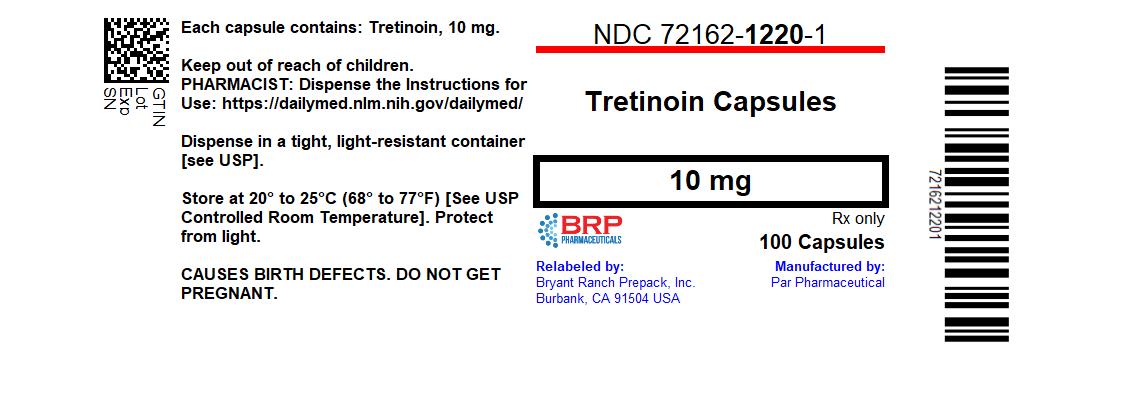
Tretinoin 10 mg Capsule, #100 Label
Medicare Part D spend CMS · PART D · 2026 (Q1)
About this NDC listing & data coverage
What data is (and isn’t) available for this NDC — tap to expand
| NDC identity (package / product / labeler codes) | ✓ Available |
| Labeler | ✓ Available |
| Product & package description | ✓ Available |
| Marketing category & status | ✓ Available |
| Active ingredient / dosage form / route | ✓ Available |
| FDA label (SPL via DailyMed) | ✓ Available |
| Package photos | ✓ Available |
| Inactive ingredients (structured) | ✓ Available |
| NADAC pharmacy acquisition price (CMS) | — Not published for this NDC CMS publishes NADAC only for NDCs reported in its retail-pharmacy survey. |
| Orange Book / therapeutic-equivalence data | ✓ Available |
| HCPCS J-code billing crosswalk | — Not published for this NDC Most self-administered / retail products have no J-code — that is normal. |
| Medicaid utilization (CMS SDUD) | — Not published for this NDC CMS reports utilization only for NDCs with Medicaid claims above its privacy threshold. |