
Inositol Drug Interactions, Uses, Effectiveness, Safety & More
What is this page for?
First and foremost: how Inositol interacts with medications. The heart of this page is the interaction list — every drug Inositol is known to interact with, and how serious each one is.
But these pages have grown well beyond that into a full monograph — what Inositol is, what people use it for and how strong the evidence is, its safety and side effects, and answers to the questions we’re asked most — written and reviewed by the clinical staff at HelloPharmacist. It’s educational information from our licensed clinical databases, not medical advice, and we don’t sell or endorse products. Our editorial policy
Check Inositol against your medication
Add one medicationInositol Drug Interactions: The Bottom Line
From the HelloPharmacist Editorial Team · Updated July 2026Based on the available evidence, the overall risk of a clinically significant Inositol drug interaction appears low for most people, unless you take medication for diabetes. None of the listed interactions are rated major, and every one of them traces back to a single concern: inositol's effect on blood sugar.
The medications that deserve real attention here are diabetes medications. Clinical research in people shows inositol can lower blood glucose and HbA1c levels, so adding it to insulin or other glucose-lowering drugs could, in theory, push blood sugar too low. That additive low-blood-sugar effect has not been proven in studies, but because blood sugar is closely monitored and the stakes of going too low are real, this combination is worth taking seriously. Nothing else in the profile stands out.
The number of interacting medications may look long, but it is misleading on its own. Every entry is a diabetes medicine flagged for the same reason, not dozens of separate problems. The concern is a predicted additive effect on blood sugar rather than a harmful reaction documented in people taking the combination.
Based on HelloPharmacist’s Inositol interaction data and reviewed under our editorial standards.
Drugs that interact with Inositol
86 medications have a known interaction with Inositol, graded by severity. Select any drug for the full evidence-based detail.
Don’t want to scroll the list? Just ask.
Tell us the medications you take and we’ll check each one against Inositol using our pharmacist-reviewed interaction data.
AI summaries are generated from our Inositol interaction data for education only — always confirm with your pharmacist. How we use AI
No drugs match “”.
What Severity, Likelihood & Evidence Mean
Severity — How Serious It Can Be
- Major. Clinically significant; generally best avoided, or used only under direct professional supervision.
- Moderate. May need monitoring, a dose adjustment, or separating the times you take each one.
- Minor. Generally not clinically significant, but still worth noting and mentioning to your pharmacist.
- No known interaction. Checked against our sources with nothing documented — not the same as proven safety.
Likelihood — How Well It’s Documented
- Likely. Well-controlled human studies have demonstrated the likely existence of this interaction
- Probable. Interaction has not been documented in well-controlled studies, however, the interaction has been demonstrated in some small human studies or in controlled animal studies in conjunction with multiple case reports.
- Possible. Interaction has been documented in animal or in lab research, or the interaction has been documented in humans but is limited to case reports or conflicting clinical research exists
- Unlikely. Interaction has been demonstrated in animal or in lab research but has been shown not to occur in humans.
Where This Data Comes From
- Interaction records are evidence-graded and sourced from the Natural Medicines database (TRC Healthcare), the same reference used by pharmacists and hospitals.
- Each drug listed above links to the full report for that exact Inositol combination — clinical detail, likelihood, evidence level, and citations.
- Content is reviewed by licensed HelloPharmacist pharmacists — see our data sources and editorial standards.
The kinds of drugs Inositol affects
Every type of medication (drug category) Inositol is known to interact with. Open any category for the detail — or search your exact drug in the checker above.
Antidiabetes Drugs
Theoretically, taking inositol with antidiabetes drugs might increase the risk of hypoglycemia.
Clinical research shows that inositol lowers blood glucose levels and glycated hemoglobin (HbA1c) levels in patients with diabetes.
Inositol: Uses, Safety & Side Effects
Inositol is a sugar alcohol made naturally in the body and found in many foods, and it is sold as a supplement (often myo-inositol) mainly for PCOS, mood, and metabolic concerns. The strongest evidence is for PCOS-related symptoms, while support for other uses is more limited. It is generally well tolerated, but talk with your pharmacist or doctor before starting it, especially if you are pregnant or have a health condition.
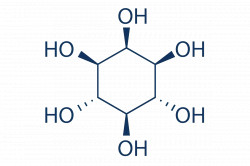
- Part used
- Not applicable (a sugar alcohol found in foods and made by the body)
- Common forms
- Capsules, tablets, powder (often as myo-inositol or D-chiro-inositol)
- Polycystic ovary syndrome (PCOS)
- Anxiety and panic
- Depression and mood
- Insulin and blood sugar support
- Fertility support
- Metabolic syndrome
Popular and traditional uses — not proof it works. See “Uses & effectiveness” below for the evidence.
Generally well tolerated at common doses, with mostly mild digestive side effects.
When used orally and appropriately, short-term. Myo-inositol has been used with apparent safety in amounts up to 4000 mg daily during pregnancy.
Read the full pregnancy detailInsufficient reliable information available; avoid using. Breast milk is rich in endogenous inositol; however, the effects of exogenously administered...
Read the full breastfeeding detailPregnancy & breastfeeding ratings are from Natural Medicines (Therapeutic Research Center). Safety guidance is general; always confirm with your pharmacist or doctor for your situation.
Overview
Inositol is a type of carbohydrate often called a sugar alcohol. It is sometimes nicknamed "vitamin B8," but it is not a true essential vitamin because your body can make it on its own. It is also found naturally in foods like fruits, beans, grains, and nuts.
There are several forms of inositol. The two most common in supplements are myo-inositol and D-chiro-inositol. Some products combine the two in a specific ratio.
People take inositol supplements for a range of reasons, most commonly for polycystic ovary syndrome (PCOS), mood and anxiety concerns, and blood sugar or metabolic support.
How it works
Inositol acts as a building block for "second messengers" — molecules inside cells that help carry signals from hormones like insulin. By supporting these signaling pathways, inositol is thought to influence how the body responds to insulin and how certain brain chemicals work.
This is one reason it has been studied for both blood sugar and mood. Much of the detailed mechanism comes from laboratory and animal research, so exactly how it produces effects in people is still being studied.
Does Inositol work?
How to read these evidence grades
Natural Medicines’ 7-point scale. We show each rating’s label word-for-word.
Possibly Effective Metabolic syndrome
Oral inositol seems to modestly improve lipid parameters, blood pressure, and insulin resistance in patients with metabolic syndrome.
Possibly Effective Polycystic ovary syndrome (PCOS)
Oral inositol, often in combination with folic acid, seems to improve some glycemic, lipid, metabolic, hormonal, and reproductive parameters in patients with PCOS. However, research is conflicting.
Possibly Effective Preterm labor
Oral inositol in combination with folic acid seems to prevent preterm labor in individuals at risk for gestational diabetes.
Possibly Ineffective Acute respiratory distress syndrome (ARDS)
Oral or intravenous inositol does not seem to prevent ARDS in preterm infants and may be associated with worsened outcomes.
Possibly Ineffective Anxiety
Oral inositol does not seem to be beneficial for patients with anxiety.
Possibly Ineffective Depression
Oral inositol does not seem to be beneficial for patients with depression.
Possibly Ineffective Diabetic neuropathy
Oral inositol does not seem to be beneficial for patients with diabetic neuropathy.
Possibly Ineffective Retinopathy of prematurity
Oral or intravenous inositol does not seem to prevent retinopathy of prematurity (ROP) in preterm infants.
Also studied for 22 conditions — evidence insufficient to rate
Insufficient Reliable Evidence To Rate Age-related testosterone deficiency
It is unclear if oral D-chiro-inositol is beneficial in patients with age-related testosterone deficiency.
Insufficient Reliable Evidence To Rate Bipolar disorder
It is unclear if oral inositol is beneficial in patients with bipolar disorder.
Insufficient Reliable Evidence To Rate Chemotherapy-induced leukopenia
Oral inositol has only been evaluated in combination with other ingredients; its effect when used alone is unclear.
Insufficient Reliable Evidence To Rate Child growth
Oral inositol has only been evaluated in combination with other ingredients; its effect when used alone is unclear.
Insufficient Reliable Evidence To Rate Diabetes
It is unclear if oral inositol is beneficial for the treatment of type 1 diabetes or the prevention of gestational diabetes.
Insufficient Reliable Evidence To Rate Dyslipidemia
Although there has been interest in using oral inositol for hypercholesterolemia and hypertriglyceridemia, there is insufficient reliable information about the clinical effects of inositol for these conditions.
Insufficient Reliable Evidence To Rate Erectile dysfunction (ED)
Oral inositol has only been evaluated in combination with other ingredients; its effect when used alone is unclear.
Insufficient Reliable Evidence To Rate Hypothyroidism
Inositol has only been evaluated in combination with other ingredients; its effect when used alone is unclear.
Insufficient Reliable Evidence To Rate Infertility
It is unclear if oral inositol is beneficial in adults undergoing intracytoplasmic sperm injection (ICSI) or in vitro fertilization (IVF).
Insufficient Reliable Evidence To Rate Insomnia
It is unclear if oral inositol is beneficial for improving sleep during pregnancy.
Insufficient Reliable Evidence To Rate Lithium-induced side effects
It is unclear if oral inositol is beneficial for reducing lithium-induced side effects.
Insufficient Reliable Evidence To Rate Lung cancer
It is unclear if oral inositol is beneficial for slowing the rate of bronchial dysplasia.
Insufficient Reliable Evidence To Rate Mastalgia
Inositol has only been evaluated in combination with other ingredients for cyclic mastalgia; its effect when used alone is unclear.
Insufficient Reliable Evidence To Rate Nonalcoholic fatty liver disease (NAFLD)
It is unclear if oral inositol is beneficial for NAFLD.
Insufficient Reliable Evidence To Rate Obesity
It is unclear if oral inositol is beneficial in patients with overweight or obesity.
Insufficient Reliable Evidence To Rate Obsessive-compulsive disorder (OCD)
It is unclear if oral inositol is beneficial in patients with OCD.
Insufficient Reliable Evidence To Rate Panic disorder
Oral inositol seems to improve symptoms of panic disorder.
Insufficient Reliable Evidence To Rate Post-traumatic stress disorder (PTSD)
It is unclear if oral inositol is beneficial in patients with PTSD.
Insufficient Reliable Evidence To Rate Postpartum complications
Inositol has only been evaluated in combination with other ingredients; its effect when used alone is unclear.
Insufficient Reliable Evidence To Rate Pregnancy-induced hypertension
It is unclear if oral inositol is beneficial for preventing hypertension during pregnancy.
Insufficient Reliable Evidence To Rate Psoriasis
It is unclear if oral or topical inositol is beneficial for improving symptoms of psoriasis.
Insufficient Reliable Evidence To Rate Trichotillomania
It is unclear if oral inositol is beneficial for reducing hair pulling.
Source & disclaimer. Effectiveness ratings and evidence summaries are provided by Natural Medicines (Therapeutic Research Center) and shown as licensed. Where Natural Medicines hasn’t rated a use, HelloPharmacist’s pharmacists may add their own reviewed rating and evidence (each such entry is labeled). This is educational information, not medical advice — talk with your pharmacist or doctor before starting, stopping, or changing a supplement.
Safety & precautions
Inositol is generally considered safe and well tolerated for most adults at commonly used doses. Because it can affect insulin and blood sugar signaling, people with diabetes or blood sugar problems should monitor closely and talk with their healthcare provider.
Pregnancy: Inositol has sometimes been studied during pregnancy, but its safety is not fully established. Use it only if your doctor recommends it.
Breastfeeding: There is not enough reliable information about using inositol supplements while breastfeeding, so caution is advised.
As with any supplement, choose reputable brands, and let your pharmacist or doctor know what you are taking, especially if you have an existing health condition.
Side effects
Inositol is usually well tolerated. When side effects occur, they are typically mild and most often involve the digestive system, such as nausea, gas, bloating, stomach upset, or diarrhea. These are more likely at higher doses.
Some people report tiredness, headache, or dizziness. Serious side effects are uncommon, but stop using it and seek care if you have a severe or allergic reaction.
Inositol: Reported Adverse Effects
Documented safety reports on Inositol from the evidence-graded Natural Medicines (TRC Healthcare) database, shown word-for-word from the licensed record.
Orally and intravenously, inositol seems to be well tolerated. Topically, no adverse effects have been reported, although a thorough evaluation of safety outcomes has not been conducted.
Most Common Adverse Effects:
Orally: Diarrhea, gas, and nausea.
Allergic rhinitis (hay fever) Immunologic
Orally, inositol in combination with omega-3 fatty acids has been associated with reports of cold and allergy symptoms in children in clinical research.
Bipolar disorder Psychiatric
In one case report, a 36-year-old male with adequately controlled bipolar disorder was hospitalized with symptoms of mania after consuming several cans of an energy drink containing inositol, caffeine, taurine, and other ingredients (Red Bull Energy Drink) over a period of 4 days. It is not known if this is related to inositol, caffeine, taurine, a different ingredient, or a combination of the ingredients.
Cluster headache Neurologic/CNS
Orally, inositol may cause dizziness, tiredness, insomnia, agitation, and headache. In combination with omega-3 fatty acids, inositol has been associated with reports of feelings of thirst in children in clinical research.
- Palatnik A, Frolov K, Fux M, Benjamin J. Double-blind, controlled, crossover trial of inositol versus fluvoxamine for the treatment of panic disorder. J Clin Psychopharmacol 2001;21:335-9..
- Allan SJ, Kavanagh GM, Herd RM, Savin JA. The effect of inositol supplements on the psoriasis of patients taking lithium: a randomized, placebo-controlled trial. Br J Dermatol 2004;150:966-9.
- Leppink EW, Redden SA, Grant JE. A double-blind, placebo-controlled study of inositol in trichotillomania. Int Clin Psychopharmacol. 2017;32(2):107-14.
- Wozniak J, Faraone SV, Chan J, et al. A randomized clinical trial of high eicosapentaenoic acid omega-3 fatty acids and inositol as monotherapy and in combination in the treatment of pediatric bipolar spectrum disorders: a pilot study. J Clin Psychiatry.
Diarrhea Gastrointestinal
Orally, inositol may cause nausea, diarrhea, gas, and gastrointestinal discomfort.
- Palatnik A, Frolov K, Fux M, Benjamin J. Double-blind, controlled, crossover trial of inositol versus fluvoxamine for the treatment of panic disorder. J Clin Psychopharmacol 2001;21:335-9..
- Allan SJ, Kavanagh GM, Herd RM, Savin JA. The effect of inositol supplements on the psoriasis of patients taking lithium: a randomized, placebo-controlled trial. Br J Dermatol 2004;150:966-9.
- Kamenov Z, Kolarov G, Gateva A, Carlomagno G, Genazzani AD. Ovulation induction with myo-inositol alone and in combination with clomiphene citrate in polycystic ovarian syndrome patients with insulin resistance. Gynecol Endocrinol 2015;31(2):131-5.
- Mukai T, Kishi T, Matsuda Y, Iwata N. A meta-analysis of inositol for depression and anxiety disorders. Hum Psychopharmacol 2014;29(1):55-63.
- Leppink EW, Redden SA, Grant JE. A double-blind, placebo-controlled study of inositol in trichotillomania. Int Clin Psychopharmacol. 2017;32(2):107-14.
- Lam S, Mandrekar SJ, Gesthalter Y. A Randomized Phase IIb Trial of myo-Inositol in Smokers with Bronchial Dysplasia. Cancer Prev Res (Phila). 2016;9(12):906-14.
- Wozniak J, Faraone SV, Chan J, et al. A randomized clinical trial of high eicosapentaenoic acid omega-3 fatty acids and inositol as monotherapy and in combination in the treatment of pediatric bipolar spectrum disorders: a pilot study. J Clin Psychiatry.
Adverse-effects data: Natural Medicines, Therapeutic Research Center
Dosing
There is no single official or standardized dose of inositol for general health. Studies have used a range of amounts depending on the form (myo-inositol versus D-chiro-inositol) and the reason for use.
Because the right amount can vary, it is best to follow the directions on your product label and check with a pharmacist or doctor before starting. Do not assume that higher doses are better or safer.
Inositol & Pregnancy
Inositol & Breastfeeding
© 2026 Therapeutic Research Center
Pregnancy & lactation ratings: Natural Medicines, Therapeutic Research Center
References & further reading
The 14 references that drive our Inositol monograph and interaction data, from the evidence-graded Natural Medicines (TRC Healthcare) database. Citations with a link open the study on PubMed or the publisher’s site.
- Palatnik A, Frolov K, Fux M, Benjamin J. Double-blind, controlled, crossover trial of inositol versus fluvoxamine for the treatment of panic disorder. J Clin Psychopharmacol 2001;21:335-9.. PubMed
- Allan SJ, Kavanagh GM, Herd RM, Savin JA. The effect of inositol supplements on the psoriasis of patients taking lithium: a randomized, placebo-controlled trial. Br J Dermatol 2004;150:966-9. PubMed
- Machado-Vieira R, Viale CI, Kapczinski F. Mania associated with an energy drink: the possible role of caffeine, taurine, and inositol. Can J Psychiatry 2001;46:454-5. PubMed
- Kamenov Z, Kolarov G, Gateva A, Carlomagno G, Genazzani AD. Ovulation induction with myo-inositol alone and in combination with clomiphene citrate in polycystic ovarian syndrome patients with insulin resistance. Gynecol Endocrinol 2015;31(2):131-5. PubMed
- Matarrelli B, Vitacolonna E, D'Angelo M, et al. Effect of dietary myo-inositol supplementation in pregnancy on the incidence of maternal gestational diabetes mellitus and fetal outcomes: a randomized controlled trial. J Matern Fetal Neonatal Med 2013;26(1 PubMed
- Mukai T, Kishi T, Matsuda Y, Iwata N. A meta-analysis of inositol for depression and anxiety disorders. Hum Psychopharmacol 2014;29(1):55-63. PubMed
- Farren M, Daly N, McKeating A, Kinsley B, Turner MJ, Daly S. The Prevention of Gestational Diabetes Mellitus With Antenatal Oral Inositol Supplementation: A Randomized Controlled Trial. Diabetes Care. 2017;40(6):759-63. PubMed
- Zheng X, Liu Z, Zhang Y, et al. Relationship Between Myo-Inositol Supplementary and Gestational Diabetes Mellitus: A Meta-Analysis. Medicine (Baltimore). 2015;94(42):e1604. PubMed
- Crawford TJ, Crowther CA, Alsweiler J, Brown J. Antenatal dietary supplementation with myo-inositol in women during pregnancy for preventing gestational diabetes. Cochrane Database Syst Rev. 2015;(12):CD011507. PubMed
- Maurizi AR, Menduni M, Del Toro R, et al. A pilot study of D-chiro-inositol plus folic acid in overweight patients with type 1 diabetes. Acta Diabetol. 2017;54(4):361-65. PubMed
- Leppink EW, Redden SA, Grant JE. A double-blind, placebo-controlled study of inositol in trichotillomania. Int Clin Psychopharmacol. 2017;32(2):107-14. PubMed
- Lam S, Mandrekar SJ, Gesthalter Y. A Randomized Phase IIb Trial of myo-Inositol in Smokers with Bronchial Dysplasia. Cancer Prev Res (Phila). 2016;9(12):906-14.
- Wozniak J, Faraone SV, Chan J, et al. A randomized clinical trial of high eicosapentaenoic acid omega-3 fatty acids and inositol as monotherapy and in combination in the treatment of pediatric bipolar spectrum disorders: a pilot study. J Clin Psychiatry. PubMed
- Vitale SG, Corrado F, Caruso S, et al. Myo-inositol supplementation to prevent gestational diabetes in overweight non-obese women: bioelectrical impedance analysis, metabolic aspects, obstetric and neonatal outcomes - a randomized and open-label, placebo-
This information is for education only and is not a substitute for professional medical advice. Always check with your pharmacist or doctor before starting, stopping, or combining supplements and medications.
Parts of this content are provided by the Therapeutic Research Center, LLC.
DISCLAIMER: Currently this does not check for drug-drug interactions. This is not an all-inclusive comprehensive list of potential interactions and is for informational purposes only. Not all interactions are known or well-reported in the scientific literature, and new interactions are continually being reported. Input is needed from a qualified healthcare provider including a pharmacist before starting any therapy. Application of clinical judgment is necessary.
© 2021 Therapeutic Research Center, LLC
Brands that make products with Inositol
1,025 brands in our database make a supplement containing Inositol.
Supplement products with Inositol
10,343 products in our database contain Inositol. Open any to see its full ingredient list and every drug interaction we check.
Medications associated with Inositol depletion
4 medications in our licensed clinical database have been associated with lower Inositol levels. An association is not a guarantee — it is a talking point for your pharmacist.
Inositol: Common Questions
What is Inositol used for, and does it work?
Does Inositol interact with prescription medications?
How are Inositol interactions rated?
Is it safe to take Inositol with my medications?
Where does this Inositol interaction information come from?
What is Inositol most commonly used for?
Is Inositol a vitamin?
Is Inositol safe to take?
What is the difference between myo-Inositol and D-chiro-Inositol?
Written and reviewed by the HelloPharmacist editorial staff. Our editorial policy
Products that contain Inositol
A rotating sample of real supplements in our database that list Inositol — open any to see its full ingredients and every drug interaction we check.
- Aller-B by Progressive Professional from Progressive Laboratories
- Children's Chewable Multi Cherry Flavor by Ron Teeguarden Nutraceuticals
- Mega B-100 Timed Release by Puritan's Pride
- Maxi Two by Bluebonnet
- Vita-Chel Plus by Douglas Laboratories
- Just Relax Watermelon by Pure TheraPro Rx
- Special Two by NOW
- Premier Niacin by Premier Research Labs
- Cell Detox Formula by Beyond Health
- O.N.E. Multivitamin by Pure Encapsulations
Have a question about Inositol?
Our pharmacists answer your medication & supplement questions — free.