
Amla by Banyan Botanicals Ingredients, Side Effects and Drug Interactions
Dietary Supplement Tablet or Pill Botanical
UPC 6 18192 01031 0 Match it to the barcode on your bottle

Medically reviewed by Dr. Brian Staiger, PharmD, BCPS
Also reviewed by the HelloPharmacist Editorial Team
Updated Details about this page
- Label on file from the NIH Dietary Supplement Label Database, dated Jul 24, 2025.
- The interaction, evidence and safety records come from the Natural Medicines database, which we license, read against this label by our own system; the pharmacy team’s sections are written from those records.
- Dr. Brian Staiger, PharmD, BCPS, is a clinical pharmacist and pharmacotherapy specialist.
- Editorial policy Our sources
AI is used only to summarize verified clinical information, never the open internet. Our AI policy
Summary: The HelloPharmacist Team’s Take
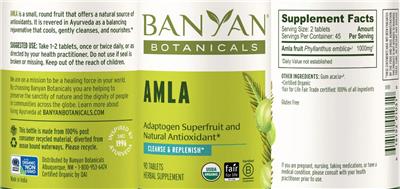
- Form
- Tablet or Pill
- Serving Size
- 1 Tablet
- Servings
- 45 per container
- Container Holds
- 90 Tablets
What’s in it, whether it interacts with your drugs, its side effects, whether it works, and what our pharmacists would want you to know before you start it.
- What is Amla?A single-ingredient supplement from Banyan Botanicals, in tablet form.
- Active Ingredients Amla 1000 mg One active ingredient. We check it for drug interactions and side effects. The full Supplement Facts
- Drug Interactions 208 drugs have a documented interaction with this supplement; the most serious is rated moderate. Of those, 133 are single drugs and 75 are combination products (two or more drugs in one), each listed under its own name. Ask your pharmacist first if you take a drug in any of these categories:
- Moderate · 122 drugs
- Moderate · 86 drugs
- Moderate · 35 drugs
- Moderate · 1 drug
- Possible Side EffectsUpset stomachDiarrheaAcid reflux because of its sourAcidic nature Reported for its one active ingredient, Indian Gooseberry. Not studied in this exact product.
- Well documented Why
Does Amla work?
No graded research for the use on its labelWhat It Is Marketed For
Natural antioxidant source and cleanse and replenish
From the claims on the product’s label.
There is no graded research for that use. What it does grade for Indian Gooseberry, strongest first:
- Dyslipidemia
These grades are for the ingredient, not this exact product, and never a promise it will work for you.
What the research says- Full Why
- AllergensNone of its ingredient names point to a major food allergen
- Barcode (UPC)6 18192 01031 0Match it to the barcode on your bottle to be sure this is your product. Not your product? Search for it here
Who Might Consider It
- People looking for natural antioxidant source and cleanse and replenish, which is what it is marketed for. There is no graded research for that use.
- People who want it for dyslipidemia or gastroesophageal reflux disease (GERD): the uses with research behind them. See each grade
- Amla may be of interest to people looking into its possibly effective uses for blood fats or acid reflux.
Who Should Be Careful
- People taking blood thinners, aspirin, clopidogrel, or antidiabetes drugs, and people with a bleeding disorder or planned surgery, should be careful.
- Pregnant or breastfeeding people should talk it over with their own doctor or pharmacist before deciding.
More Before You Take It Show all three answersHide Its Amla Amount vs. Other Supplements Pregnancy and Breastfeeding The Label’s Directions
-
How does its Amla amount compare with other supplements?
- Amla1000 mgMore than 9 in 10 of the 145 recent Indian Gooseberry products in our database that state an amount; 25 mg is the most common.
A label’s amount is what the product holds, not a recommended dose.
See the Amla comparison -
Pregnant or breastfeeding?
- Pregnancy and Breastfeeding
- Insufficient reliable information is available; avoid using.
-
How does the label say to take it?
“Suggested use: Take 1-2 tablets, once or twice daily, or as directed by your health practitioner.”
The maker’s words. Your pharmacist or doctor may advise differently.
Everything the label says
From the label dated Jul 24, 2025: its one active ingredient was checked against our records. A summary of what is known, not a grade or a test of the product. How these ratings are computed
Ask Anything About This Supplement
Name a drug you take, or ask about side effects, ingredients or pregnancy.
AI answers come from this label and our own records, never the open internet. AI can make mistakes, so always check with your doctor or pharmacist. How we use AI
Ask the Pharmacist
A licensed pharmacist will answer your question by email — free, usually within 24 hours.
Got it — thank you!
A licensed pharmacist will answer within 24 hours. Keep an eye on your email (worth checking spam, just in case).
What’s Inside Amla by Banyan Botanicals
One Active Ingredient: Amla
Everything this page says about drug interactions and side effects comes from what is known about Amla.
Why this rating?
The label gives the exact amount of its one active ingredient, so you know how much you get in each serving. This rates what the label tells you, not the quality of the product.
Supplement Facts
| Amount Per Serving | % Daily Value | |
|---|---|---|
| Amla | 1000 mg | † |
Other ingredients: Gum Acacia
† Daily Value not established.
Daily Values for adults and children 4 or more years of age.
As the label prints it, from the NIH Dietary Supplement Label Database.
Each Ingredient and Its Drug Interactions
Tap one for more about it and its full guide.
-
Amla 1000 mg It comes from Indian gooseberry, the plant whose fruit is the subject of the research summarized on this page. Interacts with 208 drugs
Form on the label: Phyllanthus emblica
Indian gooseberry (amla) is a vitamin C-rich fruit used in Ayurvedic medicine for many purposes, from antioxidant support to cholesterol and digestion.
- Early research is promising for some uses like cholesterol, but most claims are not yet proven by strong human studies.
- It is generally well tolerated as a food, but talk to your pharmacist or doctor before taking concentrated supplements.
The full Indian Gooseberry guide: uses, dosage and safety Every Indian Gooseberry drug interaction
How Much Indian Gooseberry Is in It, Compared With Other Supplements
Each bar is an amount that other recent supplements list for the same ingredient. The taller the bar, the more of them state it.
-
1,000 mg in a serving of this product
More than 9 in 10 products
- Most common amount
- 25 mg (about 11 in 100 products)
- Most products state
- 25 mg to 800 mg
- Compared with
- 145 recent products
Other Ingredients (Inactive)
The capsule or tablet itself, fillers, coatings and flavors. Not part of the drug interaction check; the allergen check below reads them.
- Gum Acacia
Allergens in Amla
None of its ingredient names point to a major food allergen.
Not named in the ingredients
- Milk
- Egg
- Fish
- Shellfish
- Tree nuts
- Peanuts
- Wheat or other gluten grains
- Soy
- Sesame
- Made without, the label says“Gluten free”
From the label text and ingredient names on file; we do not test products. With a serious allergy, check your bottle and ask the maker or your pharmacist.
What the Label Says
The maker’s own words, from the label. We do not verify or endorse them.
- Formulation
-
“AMLA is a small, round fruit that offers a natural source of antioxidants. It is revered in Ayurveda as a balancing rejuvenative that cools, gently cleanses, and nourishes.”
“Certified Organic If it's Organic it's Non GMO Certified Organic by QAI”
2 more from the label
“Adaptogen Superfruit and Natural Antioxidant Cleanse & Replenish”
“USDA Organic”
- General statements
-
“We are on a mission to be a healing force in your world. By choosing Banyan Botanicals you are helping to preserve the sanctity of nature and the dignity of people in communities across the globe. Learn more about living Ayurveda at BANYANBOTANICALS.COM This bottle is made from 100% post consumer recycled material, diverted from ocean bound waterways. Please recycle. Inspired by Ayurveda Since 1996”
- Seals and symbols
-
“Certified Organic If it's Organic it's Non GMO”
“USDA Organic Certified B Corporation Fair for Life - Fair Trade Certified: 100% of all ingredients”
- FDA Statement of Identity
-
“Herbal Supplement”
The Amla Label on File
The label scan on file at the NIH Dietary Supplement Label Database, dated July 2025. Always read the label on the bottle you have.
Product Facts
- Brand
- Banyan Botanicals
- Barcode (UPC)
- 618192010310
- Net contents
- 90 Tablets
- Market status
- On market
- Date entered into DSLD
- Jul 24, 2025
- DSLD ID
- 335643
- Product type
- Botanical
- Supplement form
- Tablet or Pill
- Dietary claims / uses
- All Other, Structure/Function
- Intended target group(s)
- Adult (18 - 50 Years), Organic, Gluten Free
Is this label outdated? Report a formula or label change and our pharmacy team will review it.
Amla by Banyan Botanicals Side Effects
Why this rating?
We look for three kinds of safety information on each ingredient: side effects reported in studies, a pregnancy and breastfeeding rating, and a safety write-up from our pharmacy team. All three are on file for Indian Gooseberry.
So this rates how much is known, not whether Amla is right for you.
Reported with Indian Gooseberry, its active ingredient
- Most often
- Upset stomach, diarrhea, acid reflux because of its sour and acidic nature
- !Rare but serious
- Reported with Indian Gooseberry See details
HelloPharmacist Team Summary of Side Effects
Amla by Banyan Botanicals is generally well tolerated as a food, though the supplement form is less studied.
- The side effects you are most likely to notice are upset stomach, diarrhea, and acid reflux, which are reported in relation to amla's sour, acidic nature.
- Allergic reactions are uncommon but possible, so if you notice a rash or facial swelling, call your doctor right away.
- If you have diabetes, take blood thinners or aspirin, have a bleeding disorder, or have surgery planned, talk with your own doctor or pharmacist before starting.
Side Effects Reported With Indian Gooseberry
Amla Warnings: Who Should Be Careful
These warnings are for Indian Gooseberry, its one active ingredient. If any of these apply to you, talk to your doctor or pharmacist before you start it.
-
Bleeding Problems or Surgery
- It may also have mild blood-thinning effects, so people with bleeding disorders or those scheduled for surgery should use caution and check with their healthcare provider.
-
Diabetes or Low Blood Sugar
- Because amla may lower blood sugar, people with diabetes should monitor their levels closely.
-
Other Cautions
- Concentrated supplements and extracts are less studied, so caution is reasonable.
- Our pharmacists advise avoiding it because there is not enough safety data for supplement doses, so talk with your own doctor or pharmacist about your situation.
-
What the Label Warns
- “Do not use if seal is broken or missing.”
- “Keep out of the reach of children.”
- “If you are pregnant, nursing, taking medications, or have a medical condition, please consult with your health practitioner prior to use.”
The maker’s wording, from the product label.
-
Pregnant or Breastfeeding
The rating for pregnancy and for breastfeeding, and what it covers.
Pregnancy and Breastfeeding The record rates both the same
-
Insufficient reliable information is available; avoid using.
Ratings and the words beside them are from the Natural Medicines database, which we license.
The full record, with its sources, in the Indian Gooseberry guide -
Rare but Serious Side Effects
-
!
Indian Gooseberry
Allergic reactions are uncommon but possible.
When to get help: a serious allergic reaction, with trouble breathing or swelling of the face, lips or throat, needs emergency care: call 911. For any other side effect that worries you, call your doctor or pharmacist.
These reports describe each ingredient, not studies of this exact product. Not medical advice: a side effect you notice after starting a supplement is worth a word with your pharmacist or doctor.
Amla by Banyan Botanicals Drug Interactions
This supplement has one active ingredient, Amla, and we checked it against every drug in our records.
A moderate interaction on record
2 of 3, on a scale from Minor or none to Major.Why this rating?
We rate this by the most serious interaction on record, not by how many there are. For Indian Gooseberry, the most serious is rated moderate, which means it calls for caution, and sometimes monitoring or a change in timing or dose. Some involve kinds of drugs where a small change can matter, such as blood thinners and diabetes drugs.
208 drugs are on the full list. What matters is whether one you take is on it, so check yours with the interaction checker on this page.
Its one active ingredient has drug interactions on record: Indian Gooseberry.
Indian Gooseberry
- Interacts with
- 208 drugs
- Most serious
- Moderate
- The most serious interaction we list is with blood thinners (anticoagulants) and antiplatelet drugs, rated Moderate, where amla may increase bleeding risk, though research on this point is conflicting.
- The remaining drug types are antidiabetes drugs, aspirin, and clopidogrel (Plavix), each rated Moderate.
- With antidiabetes drugs, amla may increase the risk of low blood sugar (hypoglycemia), since clinical research shows it can lower blood glucose, and dose adjustments to diabetes medications might be necessary.
- With aspirin and clopidogrel, amla may increase bleeding risk in theory, though research is conflicting, and clinical research shows it reduces platelet aggregation (the clumping of platelets that helps blood clot).
Show two more points
- To see the details for your exact medication, use the search tool on this page.
- Then talk with your own doctor or pharmacist before combining this product with anything you take.
The kinds of drugs it affects most
- 122 drugs
- 86 drugs
- 35 drugs
- 1 drug
Every Indian Gooseberry drug interaction, 4 records The Indian Gooseberry records cite 8 references, listed in the Indian Gooseberry guide.
Summarized by the HelloPharmacist pharmacy team from the interaction records below. How it is written How we use AI
The Breakdown by Severity
Each drug counted once, at its most serious rating. Tap a tile to list those drugs.
- 0 Major None found
- 208
- 0 Minor None found
Find Your Drug
Type a drug or brand name to see whether it is on the list.
- Only drugs with a documented interaction are listed, the most serious first.
- A drug with no known interaction is not listed, but searching its name tells you so.
- Open a drug to see which ingredient is responsible. Of those, 133 are single drugs and 75 are combination products (two or more drugs in one), each listed under its own name.
-
ApixabanEliquis Moderate
The ingredient responsible:
-
Amla Moderate Apixaban is in the Anticoagulant/Antiplatelet Drugs category.
Theoretically, Indian gooseberry may increase the risk of bleeding if used with anticoagulant or antiplatelet drugs; however, research is conflicting.
The full Amla + Apixaban interaction
-
-
WarfarinWarfarin Moderate
The ingredient responsible:
-
Amla Moderate Warfarin is in the Anticoagulant/Antiplatelet Drugs category.
Theoretically, Indian gooseberry may increase the risk of bleeding if used with anticoagulant or antiplatelet drugs; however, research is conflicting.
The full Amla + Warfarin interaction
-
-
ClopidogrelPlavix Moderate
The ingredient responsible:
-
Amla Moderate Clopidogrel is in the Anticoagulant/Antiplatelet Drugs category.
Theoretically, Indian gooseberry may increase the risk of bleeding if used with anticoagulant or antiplatelet drugs; however, research is conflicting.
The full Amla + Clopidogrel interaction
-
-
AspirinAngettes 75, ASA, Asaphen, Aspirin, Caprin and 9 more Moderate
The ingredient responsible:
-
Amla Moderate Aspirin is in the Anticoagulant/Antiplatelet Drugs category.
Theoretically, Indian gooseberry may increase the risk of bleeding if used with anticoagulant or antiplatelet drugs; however, research is conflicting.
The full Amla + Aspirin interaction
-
-
RivaroxabanXarelto Moderate
The ingredient responsible:
-
Amla Moderate Rivaroxaban is in the Anticoagulant/Antiplatelet Drugs category.
Theoretically, Indian gooseberry may increase the risk of bleeding if used with anticoagulant or antiplatelet drugs; however, research is conflicting.
The full Amla + Rivaroxaban interaction
-
-
TirzepatideMounjaro, Zepbound Moderate
The ingredient responsible:
-
Amla Moderate Tirzepatide is in the Antidiabetes Drugs category.
Taking Indian gooseberry with antidiabetes drugs might increase the risk of hypoglycemia.
The full Amla + Tirzepatide interaction
-
-
MetforminGlucophage, Metformin Moderate
The ingredient responsible:
-
Amla Moderate Metformin is in the Antidiabetes Drugs category.
Taking Indian gooseberry with antidiabetes drugs might increase the risk of hypoglycemia.
The full Amla + Metformin interaction
-
-
Warfarin SodiumCoumadin, Panwarfin, Sofarin Moderate
The ingredient responsible:
-
Amla Moderate Warfarin Sodium is in the Anticoagulant/Antiplatelet Drugs category.
Theoretically, Indian gooseberry may increase the risk of bleeding if used with anticoagulant or antiplatelet drugs; however, research is conflicting.
The full Amla + Warfarin Sodium interaction
-
-
IbuprofenAdvil, Arthrofen, Brufen, Brufen Retard, Calodor and 15 more Moderate
The ingredient responsible:
-
Amla Moderate Ibuprofen is in the Anticoagulant/Antiplatelet Drugs category.
Theoretically, Indian gooseberry may increase the risk of bleeding if used with anticoagulant or antiplatelet drugs; however, research is conflicting.
The full Amla + Ibuprofen interaction
-
-
SemaglutideOzempic, Rybelsus, Wegovy Moderate
The ingredient responsible:
-
Amla Moderate Semaglutide is in the Antidiabetes Drugs category.
Taking Indian gooseberry with antidiabetes drugs might increase the risk of hypoglycemia.
The full Amla + Semaglutide interaction
-
-
NaproxenAleve, Anaprox, Anaprox DS, Arthroxen, EC-Naprosyn and 8 more Moderate
The ingredient responsible:
-
Amla Moderate Naproxen is in the Anticoagulant/Antiplatelet Drugs category.
Theoretically, Indian gooseberry may increase the risk of bleeding if used with anticoagulant or antiplatelet drugs; however, research is conflicting.
The full Amla + Naproxen interaction
-
-
Metformin HydrochlorideRiomet ER Moderate
The ingredient responsible:
-
Amla Moderate Metformin Hydrochloride is in the Antidiabetes Drugs category.
Taking Indian gooseberry with antidiabetes drugs might increase the risk of hypoglycemia.
The full Amla + Metformin Hydrochloride interaction
-
-
Omega-3 Fatty Acids (prescription Drug)Lovaza Moderate
The ingredient responsible:
-
Amla Moderate Omega-3 Fatty Acids (prescription Drug) is in the Anticoagulant/Antiplatelet Drugs category.
Theoretically, Indian gooseberry may increase the risk of bleeding if used with anticoagulant or antiplatelet drugs; however, research is conflicting.
The full Amla + Omega-3 Fatty Acids (prescription Drug) interaction
-
-
Acetylsalicylic AcidEntrophen Moderate
The ingredient responsible:
-
Amla Moderate Acetylsalicylic Acid is in these Anticoagulant/Antiplatelet Drugs, Aspirin categories.
Theoretically, Indian gooseberry may increase the risk of bleeding if used with anticoagulant or antiplatelet drugs; however, research is conflicting.
The full Amla + Acetylsalicylic Acid interaction
-
-
EffientPrasugrel Moderate
The ingredient responsible:
-
Amla Moderate Effient is in the Anticoagulant/Antiplatelet Drugs category.
Theoretically, Indian gooseberry may increase the risk of bleeding if used with anticoagulant or antiplatelet drugs; however, research is conflicting.
The full Amla + Effient interaction
-
-
DabigatranPradax, Pradaxa Moderate
The ingredient responsible:
-
Amla Moderate Dabigatran is in the Anticoagulant/Antiplatelet Drugs category.
Theoretically, Indian gooseberry may increase the risk of bleeding if used with anticoagulant or antiplatelet drugs; however, research is conflicting.
The full Amla + Dabigatran interaction
-
-
Insulin (human)Afrezza, Novolin 70/30, Novolin L, Novolin N, Novolin R Moderate
The ingredient responsible:
-
Amla Moderate Insulin (human) is in the Antidiabetes Drugs category.
Taking Indian gooseberry with antidiabetes drugs might increase the risk of hypoglycemia.
The full Amla + Insulin (human) interaction
-
-
Diclofenac PotassiumCambia, Cataflam, Cataflam IR, Voltaren Rapide, Voltarol Rapid Moderate
The ingredient responsible:
-
Amla Moderate Diclofenac Potassium is in the Anticoagulant/Antiplatelet Drugs category.
Theoretically, Indian gooseberry may increase the risk of bleeding if used with anticoagulant or antiplatelet drugs; however, research is conflicting.
The full Amla + Diclofenac Potassium interaction
-
-
Naproxen SodiumMidol Extended Relief Moderate
The ingredient responsible:
-
Amla Moderate Naproxen Sodium is in the Anticoagulant/Antiplatelet Drugs category.
Theoretically, Indian gooseberry may increase the risk of bleeding if used with anticoagulant or antiplatelet drugs; however, research is conflicting.
The full Amla + Naproxen Sodium interaction
-
-
Metformin XrGlucophage XR Moderate
The ingredient responsible:
-
Amla Moderate Metformin Xr is in the Antidiabetes Drugs category.
Taking Indian gooseberry with antidiabetes drugs might increase the risk of hypoglycemia.
The full Amla + Metformin Xr interaction
-
-
TicagrelorBrilinta Moderate
The ingredient responsible:
-
Amla Moderate Ticagrelor is in the Anticoagulant/Antiplatelet Drugs category.
Theoretically, Indian gooseberry may increase the risk of bleeding if used with anticoagulant or antiplatelet drugs; however, research is conflicting.
The full Amla + Ticagrelor interaction
-
-
HeparinHeparin Moderate
The ingredient responsible:
-
Amla Moderate Heparin is in the Anticoagulant/Antiplatelet Drugs category.
Theoretically, Indian gooseberry may increase the risk of bleeding if used with anticoagulant or antiplatelet drugs; however, research is conflicting.
The full Amla + Heparin interaction
-
-
Diclofenac SodiumAcoflam, Acoflam 75 SR, Acoflam Retard, Defenac, Defenac Retard and 41 more Moderate
The ingredient responsible:
-
Amla Moderate Diclofenac Sodium is in the Anticoagulant/Antiplatelet Drugs category.
Theoretically, Indian gooseberry may increase the risk of bleeding if used with anticoagulant or antiplatelet drugs; however, research is conflicting.
The full Amla + Diclofenac Sodium interaction
-
-
AcarboseGlucobay, Prandase, Precose Moderate
The ingredient responsible:
-
Amla Moderate Acarbose is in the Antidiabetes Drugs category.
Taking Indian gooseberry with antidiabetes drugs might increase the risk of hypoglycemia.
The full Amla + Acarbose interaction
-
-
RepaglinideGlucoNorm, Prandin Moderate
The ingredient responsible:
-
Amla Moderate Repaglinide is in the Antidiabetes Drugs category.
Taking Indian gooseberry with antidiabetes drugs might increase the risk of hypoglycemia.
The full Amla + Repaglinide interaction
-
-
InsulinNovoRapid Insulin Moderate
The ingredient responsible:
-
Amla Moderate Insulin is in the Antidiabetes Drugs category.
Taking Indian gooseberry with antidiabetes drugs might increase the risk of hypoglycemia.
The full Amla + Insulin interaction
-
-
AcenocoumarolSintrom Moderate
The ingredient responsible:
-
Amla Moderate Acenocoumarol is in the Anticoagulant/Antiplatelet Drugs category.
Theoretically, Indian gooseberry may increase the risk of bleeding if used with anticoagulant or antiplatelet drugs; however, research is conflicting.
The full Amla + Acenocoumarol interaction
-
-
GlucoseIV Glucose Moderate
The ingredient responsible:
-
Amla Moderate Glucose is in the Antidiabetes Drugs category.
Taking Indian gooseberry with antidiabetes drugs might increase the risk of hypoglycemia.
The full Amla + Glucose interaction
-
-
GlipizideGlucotrol, Glucotrol XL Moderate
The ingredient responsible:
-
Amla Moderate Glipizide is in the Antidiabetes Drugs category.
Taking Indian gooseberry with antidiabetes drugs might increase the risk of hypoglycemia.
The full Amla + Glipizide interaction
-
-
AbrocitinibCibinqo Moderate
The ingredient responsible:
-
Amla Moderate Abrocitinib is in the Anticoagulant/Antiplatelet Drugs category.
Theoretically, Indian gooseberry may increase the risk of bleeding if used with anticoagulant or antiplatelet drugs; however, research is conflicting.
The full Amla + Abrocitinib interaction
-
Does It Work? Amla by Banyan Botanicals
What the research says so far. A grade is the research so far, never an endorsement.
What It Is Marketed For
Natural antioxidant source and cleanse and replenish
From the claims on the product’s label.
Why this rating?
We hold no graded evidence on that for its ingredients.
Our pharmacy team’s notes on this supplement
- Amla is rated possibly effective for dyslipidemia (abnormal blood fats) and for gastroesophageal reflux disease (GERD, acid reflux that flows back up the esophagus).
- Possibly effective is a cautious rating.
- It means the evidence is suggestive but not firm, so it is not proof of benefit.
What the Research Says About Indian Gooseberry
Its uses graded effective, likely effective or possibly effective:
Research suggests a benefit for
- Dyslipidemia and gastroesophageal reflux disease (GERD)
The grades are the Natural Medicines database’s, which we license; tap a grade for what it means. They are about each ingredient, not this exact product.
About Banyan Botanicals
Manufacturer and brand details for Amla, from the product label.
Banyan Botanicals has 349 products in our supplement database, 289 of them on the market, with labels on file since 2014. Our database is built from the NIH’s Dietary Supplement Label Database and our pharmacy team’s own additions, so it covers the labels filed there, not every product the brand sells.
- Name
- Banyan Botanicals
- City
- Albuquerque
- State
- NM
- Phone Number
- 1-800-953-6424
- Web Address
- BanyanBotanicals.com
Amla by Banyan Botanicals: Common Questions
Does Amla by Banyan Botanicals interact with any drugs?
What are the side effects of Amla by Banyan Botanicals?
Who should be careful taking Amla by Banyan Botanicals?
Does Amla by Banyan Botanicals contain any common allergens?
Is Amla by Banyan Botanicals gluten free?
How can Amla by Banyan Botanicals interact with so many drugs?
Where does the information about Amla by Banyan Botanicals come from?
Can I take Amla by Banyan Botanicals while pregnant?
Does Amla by Banyan Botanicals work for cholesterol?
Is Amla by Banyan Botanicals okay while breastfeeding?
What is gum acacia in Amla by Banyan Botanicals?
Written and reviewed by the HelloPharmacist Editorial Team. Our editorial policy
Still Have a Question About Amla?
Our pharmacists answer drug and supplement questions, free, by email.
Label information is sourced from the NIH Dietary Supplement Label Database and reflects the product version on file; always read your actual product label. This page is for education only and is not a substitute for professional medical advice. Confirm with your pharmacist or doctor before combining supplements and drugs.
Who Reviews This Page
The pharmacist behind it, and how it is checked.
Dr. Brian Staiger, PharmD, BCPS
Clinical pharmacist and founder of HelloPharmacist
A licensed pharmacist for more than 13 years, he built the system behind this page: it reads the label on file, matches each active ingredient to its record in the Natural Medicines database, checks those records against every drug we cover, and our pharmacy team writes the take and the interaction summary from those records.
- 13+ Years in PharmacyRetail and clinical pharmacy, medication safety and healthcare administration.
- Board Certified (BCPS)A pharmacotherapy specialist, certified by the Board of Pharmacy Specialties.
- Herbalist TrainingCertificates in medical ethnobotany, for the herbs and supplements people take.
Where This Page Comes From
Amla’s label data comes from the NIH Dietary Supplement Label Database; the ingredient interaction data is from the Natural Medicines database, reviewed by our pharmacists.
- NIH Dietary Supplement Label Database (DSLD)
- The official product label on file for this supplement.
- Natural Medicines (Therapeutic Research Center)
- The evidence-graded clinical reference behind the ingredient interaction, evidence and safety records, which we license.
- HelloPharmacist Editorial Team
- Content is reviewed by the HelloPharmacist Editorial Team, the pharmacists on our staff and those we contract. See our data sources and editorial standards for how this information is built and checked.
- The Pharmacy Team’s Take and Summaries
- Generated from HelloPharmacist’s pharmacist-curated databases and editorial rules. Clinical methodology reviewed by Dr. Brian Staiger, PharmD, BCPS. Last generated Oct 30, 2026. How we use AI
- The ratings in the Quick Summary
- They summarize available label information, ingredient evidence and known drug-safety records: a summary of what is known, not a grade of the product itself. They do not verify product identity, purity, potency, contamination or manufacturing quality. How these ratings are computed
The References Behind the Interaction Records
Every citation the ingredients’ records rest on is listed in that ingredient’s guide, in context: Indian Gooseberry, 8 references .
Parts of this content are provided by the Therapeutic Research Center, LLC.
DISCLAIMER: Currently this does not check for drug-drug interactions. This is not an all-inclusive comprehensive list of potential interactions and is for informational purposes only. Not all interactions are known or well-reported in the scientific literature, and new interactions are continually being reported. Input is needed from a qualified healthcare provider including a pharmacist before starting any therapy. Application of clinical judgment is necessary.
© 2021 Therapeutic Research Center, LLC
Keep Exploring
- Supplement interaction checkerCheck any supplement or product against your drugs
- Drug–drug interactionsCheck two or more of your drugs against each other
- Browse drugs A to ZEvery drug we have checked against herbs and supplements
- NDC and pricing lookupFind a drug’s NDCs, packaging and costs
- Ask a pharmacistA free, personal answer from our licensed team