
Relaxing Moment Ingredients & Drug Interactions
What is this page for?
First and foremost: checking Relaxing Moment against your medications. The heart of this page is the interaction checker and the full interaction report — how this product’s ingredients may interact with prescription and over-the-counter medicines you may be taking.
Around that, we add a pharmacist’s high-level view of the product as a whole — what’s inside, the evidence for its stated use, how transparent the label is, and what safety data exists — so you can see the full picture in one place. It’s educational information from our licensed clinical databases and the clinical staff at HelloPharmacist — not medical advice — and we don’t sell or endorse products. Our editorial policy
Relaxing Moment is a dietary supplement by Herb Pharm Herbs on the Go with 6 active ingredients. Its ingredients are commonly taken for heart and blood vessel health, high blood pressure, high cholesterol.Based on those ingredients, 1,514 medications have a known interaction with it, the most serious rated major. The ingredients most likely to interact are Kava extract, Licorice Root, Stolon Extract, Ginger extract. Use the checker below to test your specific medication, or read the full HelloPharmacist Interaction Report.
Check Your Meds Against Relaxing Moment by Herb Pharm Herbs on the Go
Ask about any prescription or over-the-counter medication and we check it for interactions with Relaxing Moment by Herb Pharm Herbs on the Go — and tell you which ingredient is responsible.
AI summaries are generated from our interaction database for education only — always confirm with your pharmacist. How we use AI
Ask the Pharmacist
A licensed pharmacist will answer your question by email — free, usually within 24 hours.
Got it — thank you!
A licensed pharmacist will answer within 24 hours. Keep an eye on your email (worth checking spam, just in case).
HelloPharmacist Scorecard of Relaxing Moment by Herb Pharm Herbs on the Go
Our pharmacy team’s full take, with four database checks built into the cards below — a summary of what is known, not a grade of the product itself.
What’s inside
Low disclosure
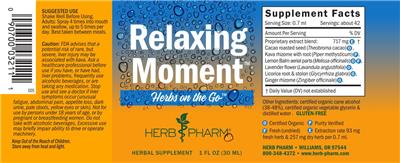
Relaxing Moment contains six active ingredients in a liquid extract. The main components are a proprietary blend (whose exact formula is not fully listed), cacao extract, kava extract, lavender extract, ginger extract, lemon balm aerial parts (the leafy above-ground portions), and licorice root extract.
The inactive ingredients are cane alcohol, glycerin, and distilled water. Each of these herbal extracts is included to support relaxation and calm—kava and lemon balm are traditionally used for anxiety and stress, lavender for relaxation, ginger for digestion and comfort, licorice for soothing effects, and cacao for mild mood support.
The liquid form allows for flexible dosing.
Does it work?
Moderate evidence
The evidence for these ingredients is mixed. Lemon balm is possibly effective for cold sores, stress, and depression.
Lavender is possibly effective for period pain (dysmenorrhea). Ginger is possibly effective for pregnancy-related nausea, period pain, and osteoarthritis.
Cacao is possibly effective for cardiovascular health. Kava's effectiveness for anxiety is rated possibly ineffective, and most other uses we have data for (like insomnia and sexual function) lack enough reliable evidence to rate.
Licorice is possibly effective for eczema and canker sores. Because this product combines multiple herbs with varying evidence levels and in undisclosed proportions, we don't have specific effectiveness data for the formulation as a whole.
How safe is it?
Well-documented data
Most of these ingredients are generally well tolerated at typical doses. Common side effects from the individual herbs include gastrointestinal upset (heartburn, nausea, diarrhea, constipation), headache, dizziness, and drowsiness.
Lavender oil is toxic if swallowed in concentrated form, though this liquid extract should be safer. The biggest safety concern is kava: it has been linked to over 100 cases of liver injury, especially with prolonged use, and symptoms can appear within 3–4 weeks.
Kava is not safe in pregnancy or while breastfeeding. Licorice at high doses or long-term can cause serious effects from its glycyrrhizin content (a compound that mimics hormones); it should be avoided in pregnancy and during breastfeeding.
Lavender, lemon balm, and ginger lack adequate safety data in pregnancy and breastfeeding, so discuss use with your doctor or pharmacist. Cacao is generally fine in food amounts but contains caffeine; if you're pregnant or nursing, keep intake modest and watch for fussiness in your baby.
Meds to double-check
Major interaction found
Before taking Relaxing Moment, double-check with your pharmacist if you take CNS depressants (sedatives, sleep aids, painkillers, anxiety drugs)—this product can dangerously increase drowsiness. Also verify use if you're on blood thinners (warfarin, phenprocoumon, antiplatelet drugs), heart medications (digoxin, nifedipine, beta-agonists, antihypertensives, losartan, dipyridamole), diabetes drugs, thyroid hormone replacement, liver-toxic drugs, cancer drugs (cisplatin, paclitaxel), quinolone antibiotics, or drugs metabolized by liver enzymes.
If you take disulfiram (Antabuse) or midazolam (Versed), check too.
The bottom line
Scorecard at a glanceFormula with limited ingredient disclosure with some supporting evidence for its stated purpose. Major medication interactions have been identified, and safety information is well characterized.
If you're looking for herbal relaxation support and have no medications, this product may be worth a try—but check every medication you take against the tool on this page first. If you take any sedatives, blood thinners, heart drugs, diabetes medications, or liver-toxic drugs, talk to your pharmacist before using it.
Because kava carries a rare but serious risk of liver injury, avoid this product if you use it long-term or if you have liver disease.
Educational only — not medical advice; always confirm with your pharmacist. Our editorial policy · How we use AI
Assessment coverage: 6 of 6 active ingredients matched to our full ingredient reviews (monographs). Based on the product label dated Jun 25, 2025.
This Scorecard evaluates available label information, ingredient evidence, and known medication-safety considerations. It does not independently verify product identity, purity, potency, contamination, or manufacturing quality. How these ratings are computed
General information
Key facts about Relaxing Moment, straight from the product label.
| Brand | Herb Pharm Herbs on the Go |
|---|---|
| Barcode (UPC) | 090700032111 |
| Net contents | 1 Fluid Ounce(s); 30 mL |
| Market status | On market |
| Date entered into DSLD | Jun 25, 2025 |
| DSLD ID | 334563 |
| Product type | Botanical |
| Supplement form | Liquid |
| Dietary claims / uses | All Other |
| Intended target group(s) | Adult (18 - 50 Years), Women (not pregnant or lactating), Gluten Free |
Everything in this section is reproduced from the manufacturer’s own product label — it’s the label speaking, not HelloPharmacist. We show it so you can see exactly what the maker states; we don’t verify or endorse those statements.
Supplement Facts
The label details for Relaxing Moment by Herb Pharm Herbs on the Go, sourced from the NIH Dietary Supplement Label Database.
Supplement Facts
| Ingredient | Amount | % DV |
|---|---|---|
| Proprietary Extract Blend | 717 mg | -- |
| Cacao extract | 0 NP | -- |
| Kava extract | 0 NP | -- |
| Lavender extract | 0 NP | -- |
| Ginger extract | 0 NP | -- |
| Lemon Balm Aerial Parts Extract, Fresh, Undried | 0 NP | -- |
| Licorice Root, Stolon Extract | 0 NP | -- |
Other ingredients: Cane Alcohol, Glycerin, Water, Distilled
Tap any ingredient to jump to its full detail below.
These statements are the manufacturer’s wording, reproduced from the product label — the label is saying it, not HelloPharmacist. We don’t verify or endorse them.
Suggested/Recommended/Usage/Directions
Suggested use Shake well before using. Adults: Spray 4 times into mouth and swallow, up to 5 times per day. Best taken between meals.
Precautions
Caution: FDA advises that a potential risk of rare, but severe, liver injury may be associated with kava. Stop use and see a doctor if liver symptoms occur (unusual fatigue, abdominal pain, appetite loss, dark urine, pale stools, yellow eyes or skin). Do not take with alcoholic beverages. Excessive use may briefly impair ability to drive or operate machinery.
Ask a healthcare professional before use if you have, or have had, liver problems, frequently use alcoholic beverages, or are taking any medication. Not for use by persons under 18 years of age, or by pregnant or breastfeeding women.
Not for use by persons under 18 years of age, or by pregnant or breastfeeding women. Keep out of the reach of children.
Storage
Store away from heat and light.
FDA Statement of Identity
Herbal Supplement
Formulation
Gluten-free
Is this label outdated? Report a formula or label change and our pharmacy team will review it.
Relaxing Moment by Herb Pharm Herbs on the Go label
The label scan from the NIH Dietary Supplement Label Database. Tap to enlarge.
Label images are published by the NIH Dietary Supplement Label Database for the version of this product on file. Always read your actual product label.
View the full label (PDF)The Ingredients in Relaxing Moment by Herb Pharm Herbs on the Go
These are the 6 active ingredients this product is made of. Select any to open its full monograph.
Serving size0.7 mL Dosage formLiquid Servings per container42 Amounts shown are per serving.
Most supplement products combine several ingredients, and a medication can interact with the product through any one of them. Each ingredient below shows whether it has known drug interactions.
Proprietary Extract Blend
Other (inactive) ingredients: Cane Alcohol, Glycerin, Water, Distilled. These complete the product’s ingredient list but are not active constituents.
Relaxing Moment by Herb Pharm Herbs on the Go Drug Interactions
HelloPharmacist Interaction Report
Relaxing Moment by Herb Pharm Herbs on the Go contains six active ingredients, and several of them interact with medications.
The most serious interaction is with kava extract and CNS depressants (drugs that slow brain activity, like sedatives and painkillers); combining them can cause major additive sedation and impaired motor reflexes.
Read the full breakdown — every affected drug type, severity by severity
Cacao extract interacts with a number of medications because it contains caffeine. It affects ephedrine, antibiotics called quinolones, blood pressure drugs, beta-agonists (used for asthma and COPD), drugs for prostate cancer, disulfiram (used for alcohol dependence), and dipyridamole (a blood thinner used in stress testing), all at moderate severity.
It may also reduce the sedating effects of barbiturate sleep aids.
Kava extract carries additional moderate-severity interactions with liver-toxic drugs, drugs metabolized by several liver enzymes (CYP2C19, CYP2C9, CYP2E1, and possibly P-glycoprotein transporters), haloperidol (an antipsychotic), and ropinirole (a Parkinson's drug). Lavender extract, lemon balm, ginger, and licorice root each interact with CNS depressants at moderate severity.
Ginger also affects blood thinners (warfarin and phenprocoumon), antiplatelet drugs, diabetes medications, nifedipine (a heart drug), losartan (a blood pressure drug), and drugs metabolized by CYP3A4 and P-glycoprotein. Lemon balm may interfere with thyroid hormone replacement.
Licorice root affects digoxin (a heart drug), warfarin, loop diuretics, cisplatin and paclitaxel (cancer drugs), midazolam (a sedative), and drugs metabolized by CYP2B6 and CYP2C19.
We could not check the proprietary extract blend itself because its specific composition is not fully disclosed. Altogether, these interactions span 1,492 individual medications.
Please use the medication checker on this page to verify your exact prescriptions before starting this product.
Check your own medications below · Editorial policy · How we use AI
Want to check YOUR meds against Relaxing Moment?
Ask about interactions with your drugs in plain English — “Can I take it with lisinopril?” — and we find you the answer in seconds, ingredient by ingredient.
Go to the checkerIngredients driving the most interactions
Individual Drug Interactions
The ingredients in Relaxing Moment interact with 1,514 drugs. Click any drug to see the details.
6 of the 6 ingredients in Relaxing Moment interact with drugs. Each result below shows which ingredient is responsible. Kava extract Licorice Root, Stolon Extract Ginger extract Cacao extract Lemon Balm Aerial Parts Extract, Fresh, Undried Lavender extract
AcepromazineAtravet
How Acepromazine interacts with Relaxing Moment — through 4 ingredients. Tap an ingredient for the detail:
Kava ExtractCns Depressants Major
Interaction Summary
Combining kava with CNS depressants can have additive sedative effects.
Read the full Kava Extract + Acepromazine interactionLemon Balm Aerial Parts Extract, Fresh, UndriedCns Depressants Moderate
Interaction Summary
Theoretically, concomitant use of lemon balm might have additive effects with CNS depressant drugs.
Read the full Lemon Balm Aerial Parts Extract, Fresh, Undried + Acepromazine interactionLavender ExtractCns Depressants Moderate
Interaction Summary
Theoretically, lavender might potentiate the therapeutic effects and adverse effects of CNS depressants.
Read the full Lavender Extract + Acepromazine interactionCacao ExtractPhenothiazines Minor
Interaction Summary
Theoretically, phenothiazines might increase the levels and adverse effects of caffeine.
Read the full Cacao Extract + Acepromazine interactionAcetaminophen, Butalbital, Caffeine, CodeineEsgic with Codeine, Fioricet w/ Codeine
How Acetaminophen, Butalbital, Caffeine, Codeine interacts with Relaxing Moment — through 6 ingredients. Tap an ingredient for the detail:
Kava ExtractCytochrome P450 2e1 (cyp2e1) Substrates, Cytochrome P450 3a4 (cyp3a4) Substrates +4 Major
Interaction Summary
Kava might increase levels of CYP2E1 substrates.
Read the full Kava Extract + Acetaminophen, Butalbital, Caffeine, Codeine interactionLicorice Root, Stolon ExtractCytochrome P450 1a2 (cyp1a2) Substrates, Cytochrome P450 3a4 (cyp3a4) Substrates Moderate
Interaction Summary
Theoretically, licorice might decrease the levels and clinical effects of CYP1A2 substrates.
Read the full Licorice Root, Stolon Extract + Acetaminophen, Butalbital, Caffeine, Codeine interactionGinger ExtractCytochrome P450 3a4 (cyp3a4) Substrates, Cytochrome P450 1a2 (cyp1a2) Substrates Moderate
Interaction Summary
Ginger might increase or decrease the levels of CYP3A4 substrates.
Read the full Ginger Extract + Acetaminophen, Butalbital, Caffeine, Codeine interactionCacao ExtractStimulant Drugs Moderate
Interaction Summary
Theoretically, concomitant use might increase stimulant adverse effects.
Read the full Cacao Extract + Acetaminophen, Butalbital, Caffeine, Codeine interactionLemon Balm Aerial Parts Extract, Fresh, UndriedCns Depressants Moderate
Interaction Summary
Theoretically, concomitant use of lemon balm might have additive effects with CNS depressant drugs.
Read the full Lemon Balm Aerial Parts Extract, Fresh, Undried + Acetaminophen, Butalbital, Caffeine, Codeine interactionLavender ExtractCns Depressants Moderate
Interaction Summary
Theoretically, lavender might potentiate the therapeutic effects and adverse effects of CNS depressants.
Read the full Lavender Extract + Acetaminophen, Butalbital, Caffeine, Codeine interactionAcetaminophen, Butalbital, CodeineBancap w/ Codeine
How Acetaminophen, Butalbital, Codeine interacts with Relaxing Moment — through 5 ingredients. Tap an ingredient for the detail:
Kava ExtractCns Depressants, Cytochrome P450 2e1 (cyp2e1) Substrates +3 Major
Interaction Summary
Combining kava with CNS depressants can have additive sedative effects.
Read the full Kava Extract + Acetaminophen, Butalbital, Codeine interactionLavender ExtractCns Depressants Moderate
Interaction Summary
Theoretically, lavender might potentiate the therapeutic effects and adverse effects of CNS depressants.
Read the full Lavender Extract + Acetaminophen, Butalbital, Codeine interactionLemon Balm Aerial Parts Extract, Fresh, UndriedCns Depressants Moderate
Interaction Summary
Theoretically, concomitant use of lemon balm might have additive effects with CNS depressant drugs.
Read the full Lemon Balm Aerial Parts Extract, Fresh, Undried + Acetaminophen, Butalbital, Codeine interactionGinger ExtractCytochrome P450 1a2 (cyp1a2) Substrates Minor
Interaction Summary
Theoretically, ginger might increase the levels of CYP1A2 substrates.
Read the full Ginger Extract + Acetaminophen, Butalbital, Codeine interactionLicorice Root, Stolon ExtractCytochrome P450 1a2 (cyp1a2) Substrates Minor
Interaction Summary
Theoretically, licorice might decrease the levels and clinical effects of CYP1A2 substrates.
Read the full Licorice Root, Stolon Extract + Acetaminophen, Butalbital, Codeine interactionAcetaminophen, Butalbital, Codeine PhosphatePhrenilin #3
How Acetaminophen, Butalbital, Codeine Phosphate interacts with Relaxing Moment — through 5 ingredients. Tap an ingredient for the detail:
Kava ExtractCytochrome P450 2d6 (cyp2d6) Substrates, Hepatotoxic Drugs +3 Major
Interaction Summary
It is unclear if kava inhibits CYP1A2; research is conflicting.
Read the full Kava Extract + Acetaminophen, Butalbital, Codeine Phosphate interactionLemon Balm Aerial Parts Extract, Fresh, UndriedCns Depressants Moderate
Interaction Summary
Theoretically, concomitant use of lemon balm might have additive effects with CNS depressant drugs.
Read the full Lemon Balm Aerial Parts Extract, Fresh, Undried + Acetaminophen, Butalbital, Codeine Phosphate interactionLavender ExtractCns Depressants Moderate
Interaction Summary
Theoretically, lavender might potentiate the therapeutic effects and adverse effects of CNS depressants.
Read the full Lavender Extract + Acetaminophen, Butalbital, Codeine Phosphate interactionLicorice Root, Stolon ExtractCytochrome P450 1a2 (cyp1a2) Substrates Minor
Interaction Summary
Theoretically, licorice might decrease the levels and clinical effects of CYP1A2 substrates.
Read the full Licorice Root, Stolon Extract + Acetaminophen, Butalbital, Codeine Phosphate interactionGinger ExtractCytochrome P450 1a2 (cyp1a2) Substrates Minor
Interaction Summary
Theoretically, ginger might increase the levels of CYP1A2 substrates.
Read the full Ginger Extract + Acetaminophen, Butalbital, Codeine Phosphate interactionAcetaminophen, Caffeine, Chlorpheniramine, Hydrocodone, PhenylephrineHycomine Compound
How Acetaminophen, Caffeine, Chlorpheniramine, Hydrocodone, Phenylephrine interacts with Relaxing Moment — through 6 ingredients. Tap an ingredient for the detail:
Kava ExtractCytochrome P450 2e1 (cyp2e1) Substrates, Cytochrome P450 1a2 (cyp1a2) Substrates +4 Major
Interaction Summary
Kava might increase levels of CYP2E1 substrates.
Read the full Kava Extract + Acetaminophen, Caffeine, Chlorpheniramine, Hydrocodone, Phenylephrine interactionLicorice Root, Stolon ExtractCytochrome P450 1a2 (cyp1a2) Substrates, Cytochrome P450 3a4 (cyp3a4) Substrates Moderate
Interaction Summary
Theoretically, licorice might decrease the levels and clinical effects of CYP1A2 substrates.
Read the full Licorice Root, Stolon Extract + Acetaminophen, Caffeine, Chlorpheniramine, Hydrocodone, Phenylephrine interactionGinger ExtractCytochrome P450 1a2 (cyp1a2) Substrates, Cytochrome P450 3a4 (cyp3a4) Substrates Moderate
Interaction Summary
Theoretically, ginger might increase the levels of CYP1A2 substrates.
Read the full Ginger Extract + Acetaminophen, Caffeine, Chlorpheniramine, Hydrocodone, Phenylephrine interactionLemon Balm Aerial Parts Extract, Fresh, UndriedCns Depressants Moderate
Interaction Summary
Theoretically, concomitant use of lemon balm might have additive effects with CNS depressant drugs.
Read the full Lemon Balm Aerial Parts Extract, Fresh, Undried + Acetaminophen, Caffeine, Chlorpheniramine, Hydrocodone, Phenylephrine interactionCacao ExtractStimulant Drugs Moderate
Interaction Summary
Theoretically, concomitant use might increase stimulant adverse effects.
Read the full Cacao Extract + Acetaminophen, Caffeine, Chlorpheniramine, Hydrocodone, Phenylephrine interactionLavender ExtractCns Depressants Moderate
Interaction Summary
Theoretically, lavender might potentiate the therapeutic effects and adverse effects of CNS depressants.
Read the full Lavender Extract + Acetaminophen, Caffeine, Chlorpheniramine, Hydrocodone, Phenylephrine interactionAcetaminophen, Caffeine, CodeineGesic C15, Gesic C30, Gesic C8, Lenoltec 1, Lenoltec 2, Lenoltec 3 +1 more
How Acetaminophen, Caffeine, Codeine interacts with Relaxing Moment — through 6 ingredients. Tap an ingredient for the detail:
Kava ExtractCns Depressants, Cytochrome P450 2e1 (cyp2e1) Substrates +4 Major
Interaction Summary
Combining kava with CNS depressants can have additive sedative effects.
Read the full Kava Extract + Acetaminophen, Caffeine, Codeine interactionLavender ExtractCns Depressants Moderate
Interaction Summary
Theoretically, lavender might potentiate the therapeutic effects and adverse effects of CNS depressants.
Read the full Lavender Extract + Acetaminophen, Caffeine, Codeine interactionLemon Balm Aerial Parts Extract, Fresh, UndriedCns Depressants Moderate
Interaction Summary
Theoretically, concomitant use of lemon balm might have additive effects with CNS depressant drugs.
Read the full Lemon Balm Aerial Parts Extract, Fresh, Undried + Acetaminophen, Caffeine, Codeine interactionCacao ExtractStimulant Drugs Moderate
Interaction Summary
Theoretically, concomitant use might increase stimulant adverse effects.
Read the full Cacao Extract + Acetaminophen, Caffeine, Codeine interactionLicorice Root, Stolon ExtractCytochrome P450 3a4 (cyp3a4) Substrates, Cytochrome P450 1a2 (cyp1a2) Substrates Moderate
Interaction Summary
Theoretically, licorice might increase or decrease levels of drugs metabolized by CYP3A4.
Read the full Licorice Root, Stolon Extract + Acetaminophen, Caffeine, Codeine interactionGinger ExtractCytochrome P450 3a4 (cyp3a4) Substrates, Cytochrome P450 1a2 (cyp1a2) Substrates Moderate
Interaction Summary
Ginger might increase or decrease the levels of CYP3A4 substrates.
Read the full Ginger Extract + Acetaminophen, Caffeine, Codeine interactionAcetaminophen, Caffeine, Codeine, SalicylamideCodalan No.1, Codalan No.2, Codalan No.3
How Acetaminophen, Caffeine, Codeine, Salicylamide interacts with Relaxing Moment — through 6 ingredients. Tap an ingredient for the detail:
Kava ExtractCytochrome P450 3a4 (cyp3a4) Substrates, Cytochrome P450 2d6 (cyp2d6) Substrates +4 Major
Interaction Summary
It is unclear if kava inhibits CYP3AA; research is conflicting.
Read the full Kava Extract + Acetaminophen, Caffeine, Codeine, Salicylamide interactionLicorice Root, Stolon ExtractCytochrome P450 3a4 (cyp3a4) Substrates, Cytochrome P450 1a2 (cyp1a2) Substrates Moderate
Interaction Summary
Theoretically, licorice might increase or decrease levels of drugs metabolized by CYP3A4.
Read the full Licorice Root, Stolon Extract + Acetaminophen, Caffeine, Codeine, Salicylamide interactionCacao ExtractStimulant Drugs Moderate
Interaction Summary
Theoretically, concomitant use might increase stimulant adverse effects.
Read the full Cacao Extract + Acetaminophen, Caffeine, Codeine, Salicylamide interactionLemon Balm Aerial Parts Extract, Fresh, UndriedCns Depressants Moderate
Interaction Summary
Theoretically, concomitant use of lemon balm might have additive effects with CNS depressant drugs.
Read the full Lemon Balm Aerial Parts Extract, Fresh, Undried + Acetaminophen, Caffeine, Codeine, Salicylamide interactionLavender ExtractCns Depressants Moderate
Interaction Summary
Theoretically, lavender might potentiate the therapeutic effects and adverse effects of CNS depressants.
Read the full Lavender Extract + Acetaminophen, Caffeine, Codeine, Salicylamide interactionGinger ExtractCytochrome P450 1a2 (cyp1a2) Substrates, Cytochrome P450 3a4 (cyp3a4) Substrates Moderate
Interaction Summary
Theoretically, ginger might increase the levels of CYP1A2 substrates.
Read the full Ginger Extract + Acetaminophen, Caffeine, Codeine, Salicylamide interactionAcetaminophen, Caffeine, DihydrocodeineDHC Plus, Panlor DC, Panlor SS
How Acetaminophen, Caffeine, Dihydrocodeine interacts with Relaxing Moment — through 6 ingredients. Tap an ingredient for the detail:
Kava ExtractCytochrome P450 2e1 (cyp2e1) Substrates, Cytochrome P450 1a2 (cyp1a2) Substrates +4 Major
Interaction Summary
Kava might increase levels of CYP2E1 substrates.
Read the full Kava Extract + Acetaminophen, Caffeine, Dihydrocodeine interactionGinger ExtractCytochrome P450 3a4 (cyp3a4) Substrates, Cytochrome P450 1a2 (cyp1a2) Substrates Moderate
Interaction Summary
Ginger might increase or decrease the levels of CYP3A4 substrates.
Read the full Ginger Extract + Acetaminophen, Caffeine, Dihydrocodeine interactionLicorice Root, Stolon ExtractCytochrome P450 1a2 (cyp1a2) Substrates, Cytochrome P450 3a4 (cyp3a4) Substrates Moderate
Interaction Summary
Theoretically, licorice might decrease the levels and clinical effects of CYP1A2 substrates.
Read the full Licorice Root, Stolon Extract + Acetaminophen, Caffeine, Dihydrocodeine interactionLemon Balm Aerial Parts Extract, Fresh, UndriedCns Depressants Moderate
Interaction Summary
Theoretically, concomitant use of lemon balm might have additive effects with CNS depressant drugs.
Read the full Lemon Balm Aerial Parts Extract, Fresh, Undried + Acetaminophen, Caffeine, Dihydrocodeine interactionCacao ExtractStimulant Drugs Moderate
Interaction Summary
Theoretically, concomitant use might increase stimulant adverse effects.
Read the full Cacao Extract + Acetaminophen, Caffeine, Dihydrocodeine interactionLavender ExtractCns Depressants Moderate
Interaction Summary
Theoretically, lavender might potentiate the therapeutic effects and adverse effects of CNS depressants.
Read the full Lavender Extract + Acetaminophen, Caffeine, Dihydrocodeine interactionAcetaminophen, Chlorpheniramine, Codeine, PhenylephrineColrex
How Acetaminophen, Chlorpheniramine, Codeine, Phenylephrine interacts with Relaxing Moment — through 6 ingredients. Tap an ingredient for the detail:
Kava ExtractCytochrome P450 2d6 (cyp2d6) Substrates, Cytochrome P450 3a4 (cyp3a4) Substrates +4 Major
Interaction Summary
It is unclear if kava inhibits CYP1A2; research is conflicting.
Read the full Kava Extract + Acetaminophen, Chlorpheniramine, Codeine, Phenylephrine interactionLicorice Root, Stolon ExtractCytochrome P450 3a4 (cyp3a4) Substrates, Cytochrome P450 1a2 (cyp1a2) Substrates Moderate
Interaction Summary
Theoretically, licorice might increase or decrease levels of drugs metabolized by CYP3A4.
Read the full Licorice Root, Stolon Extract + Acetaminophen, Chlorpheniramine, Codeine, Phenylephrine interactionGinger ExtractCytochrome P450 1a2 (cyp1a2) Substrates, Cytochrome P450 3a4 (cyp3a4) Substrates Moderate
Interaction Summary
Theoretically, ginger might increase the levels of CYP1A2 substrates.
Read the full Ginger Extract + Acetaminophen, Chlorpheniramine, Codeine, Phenylephrine interactionCacao ExtractStimulant Drugs Moderate
Interaction Summary
Theoretically, concomitant use might increase stimulant adverse effects.
Read the full Cacao Extract + Acetaminophen, Chlorpheniramine, Codeine, Phenylephrine interactionLemon Balm Aerial Parts Extract, Fresh, UndriedCns Depressants Moderate
Interaction Summary
Theoretically, concomitant use of lemon balm might have additive effects with CNS depressant drugs.
Read the full Lemon Balm Aerial Parts Extract, Fresh, Undried + Acetaminophen, Chlorpheniramine, Codeine, Phenylephrine interactionLavender ExtractCns Depressants Moderate
Interaction Summary
Theoretically, lavender might potentiate the therapeutic effects and adverse effects of CNS depressants.
Read the full Lavender Extract + Acetaminophen, Chlorpheniramine, Codeine, Phenylephrine interactionAcetaminophen, Chlorpheniramine, Phenylpropanolamine, OpiumHista-Derfule
How Acetaminophen, Chlorpheniramine, Phenylpropanolamine, Opium interacts with Relaxing Moment — through 6 ingredients. Tap an ingredient for the detail:
Kava ExtractCytochrome P450 1a2 (cyp1a2) Substrates, Hepatotoxic Drugs +3 Major
Interaction Summary
It is unclear if kava inhibits CYP1A2; research is conflicting.
Read the full Kava Extract + Acetaminophen, Chlorpheniramine, Phenylpropanolamine, Opium interactionLicorice Root, Stolon ExtractCytochrome P450 1a2 (cyp1a2) Substrates, Cytochrome P450 3a4 (cyp3a4) Substrates Moderate
Interaction Summary
Theoretically, licorice might decrease the levels and clinical effects of CYP1A2 substrates.
Read the full Licorice Root, Stolon Extract + Acetaminophen, Chlorpheniramine, Phenylpropanolamine, Opium interactionGinger ExtractCytochrome P450 1a2 (cyp1a2) Substrates, Cytochrome P450 3a4 (cyp3a4) Substrates Moderate
Interaction Summary
Theoretically, ginger might increase the levels of CYP1A2 substrates.
Read the full Ginger Extract + Acetaminophen, Chlorpheniramine, Phenylpropanolamine, Opium interactionCacao ExtractStimulant Drugs, Phenylpropanolamine Moderate
Interaction Summary
Theoretically, concomitant use might increase stimulant adverse effects.
Read the full Cacao Extract + Acetaminophen, Chlorpheniramine, Phenylpropanolamine, Opium interactionLavender ExtractCns Depressants Moderate
Interaction Summary
Theoretically, lavender might potentiate the therapeutic effects and adverse effects of CNS depressants.
Read the full Lavender Extract + Acetaminophen, Chlorpheniramine, Phenylpropanolamine, Opium interactionLemon Balm Aerial Parts Extract, Fresh, UndriedCns Depressants Moderate
Interaction Summary
Theoretically, concomitant use of lemon balm might have additive effects with CNS depressant drugs.
Read the full Lemon Balm Aerial Parts Extract, Fresh, Undried + Acetaminophen, Chlorpheniramine, Phenylpropanolamine, Opium interactionAcetaminophen, Chlorzoxazone, CodeineAcetazone Forte C8, Parafon Forte C8
How Acetaminophen, Chlorzoxazone, Codeine interacts with Relaxing Moment — through 5 ingredients. Tap an ingredient for the detail:
Kava ExtractCytochrome P450 2e1 (cyp2e1) Substrates, Hepatotoxic Drugs +3 Major
Interaction Summary
Kava might increase levels of CYP2E1 substrates.
Read the full Kava Extract + Acetaminophen, Chlorzoxazone, Codeine interactionLavender ExtractCns Depressants Moderate
Interaction Summary
Theoretically, lavender might potentiate the therapeutic effects and adverse effects of CNS depressants.
Read the full Lavender Extract + Acetaminophen, Chlorzoxazone, Codeine interactionLemon Balm Aerial Parts Extract, Fresh, UndriedCns Depressants Moderate
Interaction Summary
Theoretically, concomitant use of lemon balm might have additive effects with CNS depressant drugs.
Read the full Lemon Balm Aerial Parts Extract, Fresh, Undried + Acetaminophen, Chlorzoxazone, Codeine interactionLicorice Root, Stolon ExtractCytochrome P450 1a2 (cyp1a2) Substrates Minor
Interaction Summary
Theoretically, licorice might decrease the levels and clinical effects of CYP1A2 substrates.
Read the full Licorice Root, Stolon Extract + Acetaminophen, Chlorzoxazone, Codeine interactionGinger ExtractCytochrome P450 1a2 (cyp1a2) Substrates Minor
Interaction Summary
Theoretically, ginger might increase the levels of CYP1A2 substrates.
Read the full Ginger Extract + Acetaminophen, Chlorzoxazone, Codeine interactionAcetaminophen, CodeineTylenol No.3, Tylenol w/ Codeine
How Acetaminophen, Codeine interacts with Relaxing Moment — through 5 ingredients. Tap an ingredient for the detail:
Kava ExtractCytochrome P450 2d6 (cyp2d6) Substrates, Hepatotoxic Drugs +3 Major
Interaction Summary
It is unclear if kava inhibits CYP1A2; research is conflicting.
Read the full Kava Extract + Acetaminophen, Codeine interactionLemon Balm Aerial Parts Extract, Fresh, UndriedCns Depressants Moderate
Interaction Summary
Theoretically, concomitant use of lemon balm might have additive effects with CNS depressant drugs.
Read the full Lemon Balm Aerial Parts Extract, Fresh, Undried + Acetaminophen, Codeine interactionLavender ExtractCns Depressants Moderate
Interaction Summary
Theoretically, lavender might potentiate the therapeutic effects and adverse effects of CNS depressants.
Read the full Lavender Extract + Acetaminophen, Codeine interactionGinger ExtractCytochrome P450 1a2 (cyp1a2) Substrates Minor
Interaction Summary
Theoretically, ginger might increase the levels of CYP1A2 substrates.
Read the full Ginger Extract + Acetaminophen, Codeine interactionLicorice Root, Stolon ExtractCytochrome P450 1a2 (cyp1a2) Substrates Minor
Interaction Summary
Theoretically, licorice might decrease the levels and clinical effects of CYP1A2 substrates.
Read the full Licorice Root, Stolon Extract + Acetaminophen, Codeine interactionAcetaminophen, Codeine, DoxylamineMersyndol
How Acetaminophen, Codeine, Doxylamine interacts with Relaxing Moment — through 5 ingredients. Tap an ingredient for the detail:
Kava ExtractCns Depressants, Cytochrome P450 1a2 (cyp1a2) Substrates +3 Major
Interaction Summary
Combining kava with CNS depressants can have additive sedative effects.
Read the full Kava Extract + Acetaminophen, Codeine, Doxylamine interactionLavender ExtractCns Depressants Moderate
Interaction Summary
Theoretically, lavender might potentiate the therapeutic effects and adverse effects of CNS depressants.
Read the full Lavender Extract + Acetaminophen, Codeine, Doxylamine interactionLemon Balm Aerial Parts Extract, Fresh, UndriedCns Depressants Moderate
Interaction Summary
Theoretically, concomitant use of lemon balm might have additive effects with CNS depressant drugs.
Read the full Lemon Balm Aerial Parts Extract, Fresh, Undried + Acetaminophen, Codeine, Doxylamine interactionGinger ExtractCytochrome P450 1a2 (cyp1a2) Substrates Minor
Interaction Summary
Theoretically, ginger might increase the levels of CYP1A2 substrates.
Read the full Ginger Extract + Acetaminophen, Codeine, Doxylamine interactionLicorice Root, Stolon ExtractCytochrome P450 1a2 (cyp1a2) Substrates Minor
Interaction Summary
Theoretically, licorice might decrease the levels and clinical effects of CYP1A2 substrates.
Read the full Licorice Root, Stolon Extract + Acetaminophen, Codeine, Doxylamine interactionAcetaminophen, Codeine, MethocarbamolAcetaminophen, Codeine, Methocarbamol, Robaxacet 8
How Acetaminophen, Codeine, Methocarbamol interacts with Relaxing Moment — through 5 ingredients. Tap an ingredient for the detail:
Kava ExtractCytochrome P450 2e1 (cyp2e1) Substrates, Hepatotoxic Drugs +3 Major
Interaction Summary
Kava might increase levels of CYP2E1 substrates.
Read the full Kava Extract + Acetaminophen, Codeine, Methocarbamol interactionLavender ExtractCns Depressants Moderate
Interaction Summary
Theoretically, lavender might potentiate the therapeutic effects and adverse effects of CNS depressants.
Read the full Lavender Extract + Acetaminophen, Codeine, Methocarbamol interactionLemon Balm Aerial Parts Extract, Fresh, UndriedCns Depressants Moderate
Interaction Summary
Theoretically, concomitant use of lemon balm might have additive effects with CNS depressant drugs.
Read the full Lemon Balm Aerial Parts Extract, Fresh, Undried + Acetaminophen, Codeine, Methocarbamol interactionLicorice Root, Stolon ExtractCytochrome P450 1a2 (cyp1a2) Substrates Minor
Interaction Summary
Theoretically, licorice might decrease the levels and clinical effects of CYP1A2 substrates.
Read the full Licorice Root, Stolon Extract + Acetaminophen, Codeine, Methocarbamol interactionGinger ExtractCytochrome P450 1a2 (cyp1a2) Substrates Minor
Interaction Summary
Theoretically, ginger might increase the levels of CYP1A2 substrates.
Read the full Ginger Extract + Acetaminophen, Codeine, Methocarbamol interactionAcetaminophen, Dichloralantipyrine, IsomethepteneAmidrine, Midchlor, Migquin, Migratine
How Acetaminophen, Dichloralantipyrine, Isometheptene interacts with Relaxing Moment — through 6 ingredients. Tap an ingredient for the detail:
Kava ExtractCns Depressants, Cytochrome P450 1a2 (cyp1a2) Substrates +2 Major
Interaction Summary
Combining kava with CNS depressants can have additive sedative effects.
Read the full Kava Extract + Acetaminophen, Dichloralantipyrine, Isometheptene interactionCacao ExtractStimulant Drugs Moderate
Interaction Summary
Theoretically, concomitant use might increase stimulant adverse effects.
Read the full Cacao Extract + Acetaminophen, Dichloralantipyrine, Isometheptene interactionLemon Balm Aerial Parts Extract, Fresh, UndriedCns Depressants Moderate
Interaction Summary
Theoretically, concomitant use of lemon balm might have additive effects with CNS depressant drugs.
Read the full Lemon Balm Aerial Parts Extract, Fresh, Undried + Acetaminophen, Dichloralantipyrine, Isometheptene interactionLavender ExtractCns Depressants Moderate
Interaction Summary
Theoretically, lavender might potentiate the therapeutic effects and adverse effects of CNS depressants.
Read the full Lavender Extract + Acetaminophen, Dichloralantipyrine, Isometheptene interactionGinger ExtractCytochrome P450 1a2 (cyp1a2) Substrates Minor
Interaction Summary
Theoretically, ginger might increase the levels of CYP1A2 substrates.
Read the full Ginger Extract + Acetaminophen, Dichloralantipyrine, Isometheptene interactionLicorice Root, Stolon ExtractCytochrome P450 1a2 (cyp1a2) Substrates Minor
Interaction Summary
Theoretically, licorice might decrease the levels and clinical effects of CYP1A2 substrates.
Read the full Licorice Root, Stolon Extract + Acetaminophen, Dichloralantipyrine, Isometheptene interactionAcetaminophen, Dichloralphenazone, IsomethepteneMidrin
How Acetaminophen, Dichloralphenazone, Isometheptene interacts with Relaxing Moment — through 6 ingredients. Tap an ingredient for the detail:
Kava ExtractHepatotoxic Drugs, Cytochrome P450 1a2 (cyp1a2) Substrates +2 Major
Interaction Summary
Theoretically, using kava with hepatotoxic drugs might increase the risk of liver damage.
Read the full Kava Extract + Acetaminophen, Dichloralphenazone, Isometheptene interactionLavender ExtractCns Depressants Moderate
Interaction Summary
Theoretically, lavender might potentiate the therapeutic effects and adverse effects of CNS depressants.
Read the full Lavender Extract + Acetaminophen, Dichloralphenazone, Isometheptene interactionCacao ExtractStimulant Drugs Moderate
Interaction Summary
Theoretically, concomitant use might increase stimulant adverse effects.
Read the full Cacao Extract + Acetaminophen, Dichloralphenazone, Isometheptene interactionLemon Balm Aerial Parts Extract, Fresh, UndriedCns Depressants Moderate
Interaction Summary
Theoretically, concomitant use of lemon balm might have additive effects with CNS depressant drugs.
Read the full Lemon Balm Aerial Parts Extract, Fresh, Undried + Acetaminophen, Dichloralphenazone, Isometheptene interactionLicorice Root, Stolon ExtractCytochrome P450 1a2 (cyp1a2) Substrates Minor
Interaction Summary
Theoretically, licorice might decrease the levels and clinical effects of CYP1A2 substrates.
Read the full Licorice Root, Stolon Extract + Acetaminophen, Dichloralphenazone, Isometheptene interactionGinger ExtractCytochrome P450 1a2 (cyp1a2) Substrates Minor
Interaction Summary
Theoretically, ginger might increase the levels of CYP1A2 substrates.
Read the full Ginger Extract + Acetaminophen, Dichloralphenazone, Isometheptene interactionAcetaminophen, Dichlorophenazone, IsometheptaneIsocom
How Acetaminophen, Dichlorophenazone, Isometheptane interacts with Relaxing Moment — through 6 ingredients. Tap an ingredient for the detail:
Kava ExtractCytochrome P450 2e1 (cyp2e1) Substrates, Cytochrome P450 1a2 (cyp1a2) Substrates +2 Major
Interaction Summary
Kava might increase levels of CYP2E1 substrates.
Read the full Kava Extract + Acetaminophen, Dichlorophenazone, Isometheptane interactionLemon Balm Aerial Parts Extract, Fresh, UndriedCns Depressants Moderate
Interaction Summary
Theoretically, concomitant use of lemon balm might have additive effects with CNS depressant drugs.
Read the full Lemon Balm Aerial Parts Extract, Fresh, Undried + Acetaminophen, Dichlorophenazone, Isometheptane interactionLavender ExtractCns Depressants Moderate
Interaction Summary
Theoretically, lavender might potentiate the therapeutic effects and adverse effects of CNS depressants.
Read the full Lavender Extract + Acetaminophen, Dichlorophenazone, Isometheptane interactionCacao ExtractStimulant Drugs Moderate
Interaction Summary
Theoretically, concomitant use might increase stimulant adverse effects.
Read the full Cacao Extract + Acetaminophen, Dichlorophenazone, Isometheptane interactionGinger ExtractCytochrome P450 1a2 (cyp1a2) Substrates Minor
Interaction Summary
Theoretically, ginger might increase the levels of CYP1A2 substrates.
Read the full Ginger Extract + Acetaminophen, Dichlorophenazone, Isometheptane interactionLicorice Root, Stolon ExtractCytochrome P450 1a2 (cyp1a2) Substrates Minor
Interaction Summary
Theoretically, licorice might decrease the levels and clinical effects of CYP1A2 substrates.
Read the full Licorice Root, Stolon Extract + Acetaminophen, Dichlorophenazone, Isometheptane interactionAcetaminophen, DiphenhydramineTylenol PM, Tylenol PM Ex Strength
How Acetaminophen, Diphenhydramine interacts with Relaxing Moment — through 5 ingredients. Tap an ingredient for the detail:
Kava ExtractCns Depressants, Hepatotoxic Drugs +2 Major
Interaction Summary
Combining kava with CNS depressants can have additive sedative effects.
Read the full Kava Extract + Acetaminophen, Diphenhydramine interactionLemon Balm Aerial Parts Extract, Fresh, UndriedCns Depressants Moderate
Interaction Summary
Theoretically, concomitant use of lemon balm might have additive effects with CNS depressant drugs.
Read the full Lemon Balm Aerial Parts Extract, Fresh, Undried + Acetaminophen, Diphenhydramine interactionLavender ExtractCns Depressants Moderate
Interaction Summary
Theoretically, lavender might potentiate the therapeutic effects and adverse effects of CNS depressants.
Read the full Lavender Extract + Acetaminophen, Diphenhydramine interactionGinger ExtractCytochrome P450 1a2 (cyp1a2) Substrates Minor
Interaction Summary
Theoretically, ginger might increase the levels of CYP1A2 substrates.
Read the full Ginger Extract + Acetaminophen, Diphenhydramine interactionLicorice Root, Stolon ExtractCytochrome P450 1a2 (cyp1a2) Substrates Minor
Interaction Summary
Theoretically, licorice might decrease the levels and clinical effects of CYP1A2 substrates.
Read the full Licorice Root, Stolon Extract + Acetaminophen, Diphenhydramine interactionAcetaminophen, Diphenhydramine, PseudoephedrineChildren's Tylenol Allergy, Cold Control, Contac Night Allergy Relief
How Acetaminophen, Diphenhydramine, Pseudoephedrine interacts with Relaxing Moment — through 6 ingredients. Tap an ingredient for the detail:
Kava ExtractCytochrome P450 1a2 (cyp1a2) Substrates, Hepatotoxic Drugs +2 Major
Interaction Summary
It is unclear if kava inhibits CYP1A2; research is conflicting.
Read the full Kava Extract + Acetaminophen, Diphenhydramine, Pseudoephedrine interactionLavender ExtractCns Depressants Moderate
Interaction Summary
Theoretically, lavender might potentiate the therapeutic effects and adverse effects of CNS depressants.
Read the full Lavender Extract + Acetaminophen, Diphenhydramine, Pseudoephedrine interactionCacao ExtractStimulant Drugs Moderate
Interaction Summary
Theoretically, concomitant use might increase stimulant adverse effects.
Read the full Cacao Extract + Acetaminophen, Diphenhydramine, Pseudoephedrine interactionLemon Balm Aerial Parts Extract, Fresh, UndriedCns Depressants Moderate
Interaction Summary
Theoretically, concomitant use of lemon balm might have additive effects with CNS depressant drugs.
Read the full Lemon Balm Aerial Parts Extract, Fresh, Undried + Acetaminophen, Diphenhydramine, Pseudoephedrine interactionLicorice Root, Stolon ExtractCytochrome P450 1a2 (cyp1a2) Substrates Minor
Interaction Summary
Theoretically, licorice might decrease the levels and clinical effects of CYP1A2 substrates.
Read the full Licorice Root, Stolon Extract + Acetaminophen, Diphenhydramine, Pseudoephedrine interactionGinger ExtractCytochrome P450 1a2 (cyp1a2) Substrates Minor
Interaction Summary
Theoretically, ginger might increase the levels of CYP1A2 substrates.
Read the full Ginger Extract + Acetaminophen, Diphenhydramine, Pseudoephedrine interactionAcetaminophen, HydrocodoneAnexsia, Anodynos DHC, Azdone, Co-Gesic, Doucet, Lorcet +9 more
How Acetaminophen, Hydrocodone interacts with Relaxing Moment — through 5 ingredients. Tap an ingredient for the detail:
Kava ExtractCns Depressants, Cytochrome P450 1a2 (cyp1a2) Substrates +4 Major
Interaction Summary
Combining kava with CNS depressants can have additive sedative effects.
Read the full Kava Extract + Acetaminophen, Hydrocodone interactionLavender ExtractCns Depressants Moderate
Interaction Summary
Theoretically, lavender might potentiate the therapeutic effects and adverse effects of CNS depressants.
Read the full Lavender Extract + Acetaminophen, Hydrocodone interactionLemon Balm Aerial Parts Extract, Fresh, UndriedCns Depressants Moderate
Interaction Summary
Theoretically, concomitant use of lemon balm might have additive effects with CNS depressant drugs.
Read the full Lemon Balm Aerial Parts Extract, Fresh, Undried + Acetaminophen, Hydrocodone interactionLicorice Root, Stolon ExtractCytochrome P450 3a4 (cyp3a4) Substrates, Cytochrome P450 1a2 (cyp1a2) Substrates Moderate
Interaction Summary
Theoretically, licorice might increase or decrease levels of drugs metabolized by CYP3A4.
Read the full Licorice Root, Stolon Extract + Acetaminophen, Hydrocodone interactionGinger ExtractCytochrome P450 1a2 (cyp1a2) Substrates, Cytochrome P450 3a4 (cyp3a4) Substrates Moderate
Interaction Summary
Theoretically, ginger might increase the levels of CYP1A2 substrates.
Read the full Ginger Extract + Acetaminophen, Hydrocodone interactionAcetaminophen, MeperidineDemerol APAP
How Acetaminophen, Meperidine interacts with Relaxing Moment — through 5 ingredients. Tap an ingredient for the detail:
Kava ExtractCytochrome P450 2e1 (cyp2e1) Substrates, Cytochrome P450 1a2 (cyp1a2) Substrates +3 Major
Interaction Summary
Kava might increase levels of CYP2E1 substrates.
Read the full Kava Extract + Acetaminophen, Meperidine interactionLemon Balm Aerial Parts Extract, Fresh, UndriedCns Depressants Moderate
Interaction Summary
Theoretically, concomitant use of lemon balm might have additive effects with CNS depressant drugs.
Read the full Lemon Balm Aerial Parts Extract, Fresh, Undried + Acetaminophen, Meperidine interactionLavender ExtractCns Depressants Moderate
Interaction Summary
Theoretically, lavender might potentiate the therapeutic effects and adverse effects of CNS depressants.
Read the full Lavender Extract + Acetaminophen, Meperidine interactionLicorice Root, Stolon ExtractCytochrome P450 1a2 (cyp1a2) Substrates Minor
Interaction Summary
Theoretically, licorice might decrease the levels and clinical effects of CYP1A2 substrates.
Read the full Licorice Root, Stolon Extract + Acetaminophen, Meperidine interactionGinger ExtractCytochrome P450 1a2 (cyp1a2) Substrates Minor
Interaction Summary
Theoretically, ginger might increase the levels of CYP1A2 substrates.
Read the full Ginger Extract + Acetaminophen, Meperidine interactionAcetaminophen, OxycodonePercocet, Roxicet, Tylox, Xartemis XR
How Acetaminophen, Oxycodone interacts with Relaxing Moment — through 5 ingredients. Tap an ingredient for the detail:
Kava ExtractCytochrome P450 2e1 (cyp2e1) Substrates, Cns Depressants +3 Major
Interaction Summary
Kava might increase levels of CYP2E1 substrates.
Read the full Kava Extract + Acetaminophen, Oxycodone interactionLavender ExtractCns Depressants Moderate
Interaction Summary
Theoretically, lavender might potentiate the therapeutic effects and adverse effects of CNS depressants.
Read the full Lavender Extract + Acetaminophen, Oxycodone interactionLemon Balm Aerial Parts Extract, Fresh, UndriedCns Depressants Moderate
Interaction Summary
Theoretically, concomitant use of lemon balm might have additive effects with CNS depressant drugs.
Read the full Lemon Balm Aerial Parts Extract, Fresh, Undried + Acetaminophen, Oxycodone interactionGinger ExtractCytochrome P450 1a2 (cyp1a2) Substrates Minor
Interaction Summary
Theoretically, ginger might increase the levels of CYP1A2 substrates.
Read the full Ginger Extract + Acetaminophen, Oxycodone interactionLicorice Root, Stolon ExtractCytochrome P450 1a2 (cyp1a2) Substrates Minor
Interaction Summary
Theoretically, licorice might decrease the levels and clinical effects of CYP1A2 substrates.
Read the full Licorice Root, Stolon Extract + Acetaminophen, Oxycodone interactionAcetaminophen, PentazocineTalacen
How Acetaminophen, Pentazocine interacts with Relaxing Moment — through 5 ingredients. Tap an ingredient for the detail:
Kava ExtractCns Depressants, Cytochrome P450 1a2 (cyp1a2) Substrates +2 Major
Interaction Summary
Combining kava with CNS depressants can have additive sedative effects.
Read the full Kava Extract + Acetaminophen, Pentazocine interactionLemon Balm Aerial Parts Extract, Fresh, UndriedCns Depressants Moderate
Interaction Summary
Theoretically, concomitant use of lemon balm might have additive effects with CNS depressant drugs.
Read the full Lemon Balm Aerial Parts Extract, Fresh, Undried + Acetaminophen, Pentazocine interactionLavender ExtractCns Depressants Moderate
Interaction Summary
Theoretically, lavender might potentiate the therapeutic effects and adverse effects of CNS depressants.
Read the full Lavender Extract + Acetaminophen, Pentazocine interactionGinger ExtractCytochrome P450 1a2 (cyp1a2) Substrates Minor
Interaction Summary
Theoretically, ginger might increase the levels of CYP1A2 substrates.
Read the full Ginger Extract + Acetaminophen, Pentazocine interactionLicorice Root, Stolon ExtractCytochrome P450 1a2 (cyp1a2) Substrates Minor
Interaction Summary
Theoretically, licorice might decrease the levels and clinical effects of CYP1A2 substrates.
Read the full Licorice Root, Stolon Extract + Acetaminophen, Pentazocine interactionAcetaminophen, PropoxypheneDarvocet-N 100, Darvocet-N 50, E-Lor, Wygesic
How Acetaminophen, Propoxyphene interacts with Relaxing Moment — through 5 ingredients. Tap an ingredient for the detail:
Kava ExtractHepatotoxic Drugs, Cytochrome P450 1a2 (cyp1a2) Substrates +3 Major
Interaction Summary
Theoretically, using kava with hepatotoxic drugs might increase the risk of liver damage.
Read the full Kava Extract + Acetaminophen, Propoxyphene interactionLavender ExtractCns Depressants Moderate
Interaction Summary
Theoretically, lavender might potentiate the therapeutic effects and adverse effects of CNS depressants.
Read the full Lavender Extract + Acetaminophen, Propoxyphene interactionLemon Balm Aerial Parts Extract, Fresh, UndriedCns Depressants Moderate
Interaction Summary
Theoretically, concomitant use of lemon balm might have additive effects with CNS depressant drugs.
Read the full Lemon Balm Aerial Parts Extract, Fresh, Undried + Acetaminophen, Propoxyphene interactionGinger ExtractCytochrome P450 1a2 (cyp1a2) Substrates Minor
Interaction Summary
Theoretically, ginger might increase the levels of CYP1A2 substrates.
Read the full Ginger Extract + Acetaminophen, Propoxyphene interactionLicorice Root, Stolon ExtractCytochrome P450 1a2 (cyp1a2) Substrates Minor
Interaction Summary
Theoretically, licorice might decrease the levels and clinical effects of CYP1A2 substrates.
Read the full Licorice Root, Stolon Extract + Acetaminophen, Propoxyphene interactionAcetazolamideAk-Zol, Diamox
How Acetazolamide interacts with Relaxing Moment — through 5 ingredients. Tap an ingredient for the detail:
Kava ExtractCns Depressants Major
Interaction Summary
Combining kava with CNS depressants can have additive sedative effects.
Read the full Kava Extract + Acetazolamide interactionLicorice Root, Stolon ExtractDiuretic Drugs, Antihypertensive Drugs Moderate
Interaction Summary
Theoretically, concomitant use of licorice with diuretic drugs might increase the risk of hypokalemia.
Read the full Licorice Root, Stolon Extract + Acetazolamide interactionCacao ExtractDiuretic Drugs, Antihypertensive Drugs Moderate
Interaction Summary
Theoretically, using cocoa with diuretic drugs might increase the risk of hypokalemia.
Read the full Cacao Extract + Acetazolamide interactionLemon Balm Aerial Parts Extract, Fresh, UndriedCns Depressants Moderate
Interaction Summary
Theoretically, concomitant use of lemon balm might have additive effects with CNS depressant drugs.
Read the full Lemon Balm Aerial Parts Extract, Fresh, Undried + Acetazolamide interactionLavender ExtractCns Depressants Moderate
Interaction Summary
Theoretically, lavender might potentiate the therapeutic effects and adverse effects of CNS depressants.
Read the full Lavender Extract + Acetazolamide interactionAlfentanilAlfenta
How Alfentanil interacts with Relaxing Moment — through 5 ingredients. Tap an ingredient for the detail:
Kava ExtractCytochrome P450 3a4 (cyp3a4) Substrates, Cns Depressants Major
Interaction Summary
It is unclear if kava inhibits CYP3AA; research is conflicting.
Read the full Kava Extract + Alfentanil interactionLavender ExtractCns Depressants Moderate
Interaction Summary
Theoretically, lavender might potentiate the therapeutic effects and adverse effects of CNS depressants.
Read the full Lavender Extract + Alfentanil interactionLemon Balm Aerial Parts Extract, Fresh, UndriedCns Depressants Moderate
Interaction Summary
Theoretically, concomitant use of lemon balm might have additive effects with CNS depressant drugs.
Read the full Lemon Balm Aerial Parts Extract, Fresh, Undried + Alfentanil interactionGinger ExtractCytochrome P450 3a4 (cyp3a4) Substrates Moderate
Interaction Summary
Ginger might increase or decrease the levels of CYP3A4 substrates.
Read the full Ginger Extract + Alfentanil interactionLicorice Root, Stolon ExtractCytochrome P450 3a4 (cyp3a4) Substrates Moderate
Interaction Summary
Theoretically, licorice might increase or decrease levels of drugs metabolized by CYP3A4.
Read the full Licorice Root, Stolon Extract + Alfentanil interactionAlprazolamNiravam, Xanax
How Alprazolam interacts with Relaxing Moment — through 5 ingredients. Tap an ingredient for the detail:
Kava ExtractCytochrome P450 3a4 (cyp3a4) Substrates, Cns Depressants Major
Interaction Summary
It is unclear if kava inhibits CYP3AA; research is conflicting.
Read the full Kava Extract + Alprazolam interactionGinger ExtractCytochrome P450 3a4 (cyp3a4) Substrates Moderate
Interaction Summary
Ginger might increase or decrease the levels of CYP3A4 substrates.
Read the full Ginger Extract + Alprazolam interactionLicorice Root, Stolon ExtractCytochrome P450 3a4 (cyp3a4) Substrates Moderate
Interaction Summary
Theoretically, licorice might increase or decrease levels of drugs metabolized by CYP3A4.
Read the full Licorice Root, Stolon Extract + Alprazolam interactionLavender ExtractCns Depressants Moderate
Interaction Summary
Theoretically, lavender might potentiate the therapeutic effects and adverse effects of CNS depressants.
Read the full Lavender Extract + Alprazolam interactionLemon Balm Aerial Parts Extract, Fresh, UndriedCns Depressants Moderate
Interaction Summary
Theoretically, concomitant use of lemon balm might have additive effects with CNS depressant drugs.
Read the full Lemon Balm Aerial Parts Extract, Fresh, Undried + Alprazolam interactionAluminum Hydroxide, Aspirin, Codeine Phosphate, Magnesium HydroxideAscriptin Codeine #2
How Aluminum Hydroxide, Aspirin, Codeine Phosphate, Magnesium Hydroxide interacts with Relaxing Moment — through 5 ingredients. Tap an ingredient for the detail:
Kava ExtractCns Depressants, Cytochrome P450 2d6 (cyp2d6) Substrates Major
Interaction Summary
Combining kava with CNS depressants can have additive sedative effects.
Read the full Kava Extract + Aluminum Hydroxide, Aspirin, Codeine Phosphate, Magnesium Hydroxide interactionGinger ExtractAnticoagulant/antiplatelet Drugs Moderate
Interaction Summary
Ginger may have antiplatelet effects and may increase the risk of bleeding if used with anticoagulant or antiplatelet drugs.
Read the full Ginger Extract + Aluminum Hydroxide, Aspirin, Codeine Phosphate, Magnesium Hydroxide interactionCacao ExtractAnticoagulant/antiplatelet Drugs Moderate
Interaction Summary
Theoretically, cocoa may increase the risk of bleeding if used with anticoagulant or antiplatelet drugs.
Read the full Cacao Extract + Aluminum Hydroxide, Aspirin, Codeine Phosphate, Magnesium Hydroxide interactionLemon Balm Aerial Parts Extract, Fresh, UndriedCns Depressants Moderate
Interaction Summary
Theoretically, concomitant use of lemon balm might have additive effects with CNS depressant drugs.
Read the full Lemon Balm Aerial Parts Extract, Fresh, Undried + Aluminum Hydroxide, Aspirin, Codeine Phosphate, Magnesium Hydroxide interactionLavender ExtractCns Depressants Moderate
Interaction Summary
Theoretically, lavender might potentiate the therapeutic effects and adverse effects of CNS depressants.
Read the full Lavender Extract + Aluminum Hydroxide, Aspirin, Codeine Phosphate, Magnesium Hydroxide interactionAminoglutethimideCytadren
How Aminoglutethimide interacts with Relaxing Moment — through 3 ingredients. Tap an ingredient for the detail:
Kava ExtractCns Depressants Major
Interaction Summary
Combining kava with CNS depressants can have additive sedative effects.
Read the full Kava Extract + Aminoglutethimide interactionLavender ExtractCns Depressants Moderate
Interaction Summary
Theoretically, lavender might potentiate the therapeutic effects and adverse effects of CNS depressants.
Read the full Lavender Extract + Aminoglutethimide interactionLemon Balm Aerial Parts Extract, Fresh, UndriedCns Depressants Moderate
Interaction Summary
Theoretically, concomitant use of lemon balm might have additive effects with CNS depressant drugs.
Read the full Lemon Balm Aerial Parts Extract, Fresh, Undried + Aminoglutethimide interactionAminophylline, Amobarbital, EphedrineAmesec
How Aminophylline, Amobarbital, Ephedrine interacts with Relaxing Moment — through 4 ingredients. Tap an ingredient for the detail:
Kava ExtractCns Depressants Major
Interaction Summary
Combining kava with CNS depressants can have additive sedative effects.
Read the full Kava Extract + Aminophylline, Amobarbital, Ephedrine interactionLemon Balm Aerial Parts Extract, Fresh, UndriedCns Depressants Moderate
Interaction Summary
Theoretically, concomitant use of lemon balm might have additive effects with CNS depressant drugs.
Read the full Lemon Balm Aerial Parts Extract, Fresh, Undried + Aminophylline, Amobarbital, Ephedrine interactionCacao ExtractStimulant Drugs, Ephedrine Moderate
Interaction Summary
Theoretically, concomitant use might increase stimulant adverse effects.
Read the full Cacao Extract + Aminophylline, Amobarbital, Ephedrine interactionLavender ExtractCns Depressants Moderate
Interaction Summary
Theoretically, lavender might potentiate the therapeutic effects and adverse effects of CNS depressants.
Read the full Lavender Extract + Aminophylline, Amobarbital, Ephedrine interactionEach ingredient & the kinds of drugs it affects
For each ingredient in Relaxing Moment with known interactions, here are the types of medications they can affect. Open any type for the detail — or search your exact drug in the checker above.
Kava extract
Cns Depressants
Combining kava with CNS depressants can have additive sedative effects.
Kava has CNS depressant effects. Concomitant use of kava with other CNS depressants can increase the risk of drowsiness and motor reflex depression. Clinical practice guidelines from a joint taskforce of the World Federation of Societies of Biological Psychiatry (WFSBP) and the Canadian Network for Mood and Anxiety Treatments (CANMAT) recommend that CNS depressants, including alcohol and benzodiazepines, not be used with kava.
Alcohol (Ethanol)
Combining kava with alcohol may increase the risk of sedation and/or hepatotoxicity.
Kava has CNS depressant effects. Concomitant use of kava with other CNS depressants can increase the risk of drowsiness and motor reflex depression. Additionally, kava has been associated with over 100 cases of hepatotoxicity. There is some concern that kava can adversely affect the liver, especially when used in combination with hepatotoxic drugs. Clinical practice guidelines from a joint taskforce of the World Federation of Societies of Biological Psychiatry (WFSBP) and the Canadian Network for Mood and Anxiety Treatments (CANMAT) recommend that alcohol not be used with kava.
Cytochrome P450 2C19 (Cyp2C19) Substrates
Theoretically, kava might increase levels of CYP2C19 substrates.
In vitro research shows that kava significantly inhibits CYP2C19 enzymes. This effect has not yet been reported in humans.
Cytochrome P450 2C9 (Cyp2C9) Substrates
Theoretically, kava might increase levels of CYP2C9 substrates.
In vitro research shows that kava significantly inhibits CYP2C9 enzymes. This effect has not yet been reported in humans.
Cytochrome P450 2E1 (Cyp2E1) Substrates
Kava might increase levels of CYP2E1 substrates.
In a clinical study in healthy volunteers, taking kava 1000 mg twice daily (containing a daily dose of 138 mg kavalactones) for 28 days inhibited the metabolism of CYP2E1 substrates.
Haloperidol (Haldol)
Combining kava and haloperidol might increase the risk of cardiovascular adverse effects and hypoxia.
Atrial flutter and hypoxia has been reported for a patient who received intramuscular injections of haloperidol and lorazepam after using kava orally. The side effects were attributed to kava-induced inhibition of CYP2D6, but might also have been related to additive adverse effects with the concomitant use of haloperidol, lorazepam, and kava.
Hepatotoxic Drugs
Theoretically, using kava with hepatotoxic drugs might increase the risk of liver damage.
Kava has been linked with over 100 cases of hepatotoxicity. Most cases occur with excessive and prolonged use. There is some concern that kava can adversely affect the liver, especially when used in combination with hepatotoxic drugs.
P-Glycoprotein Substrates
It is unclear if kava inhibits P-glycoprotein (P-gp); research is conflicting.
In vitro research shows that kava can inhibit P-gp efflux. However, a clinical study in healthy volunteers shows that taking kava standardized to provide 225 mg kavalactones daily for 14 days does not affect the pharmacokinetics of digoxin, a P-gp substrate. It is possible that the use of other P-gp substrates or higher doses of kava might still inhibit P-gp.
Ropinirole (Requip)
Taking kava with ropinirole might increase the risk for dopaminergic toxicity.
A case of visual hallucinations and paranoid delusions has been reported for a patient who used kava in combination with ropinirole. The adverse effects were attributed to kava-induced inhibition of CYP1A2, which may have reduced the metabolism of ropinirole, resulting in excessive dopaminergic stimulation.
Cytochrome P450 1A2 (Cyp1A2) Substrates
It is unclear if kava inhibits CYP1A2; research is conflicting.
Although in vitro research and a case report suggest that kava inhibits CYP1A2, more robust clinical evidence shows that kava has no effect on CYP1A2. In a clinical study in healthy volunteers, taking kava 1000 mg twice daily (containing a daily dose of 138 mg kavalactones) for 28 days had no effect on CYP1A2 activity.
Cytochrome P450 2D6 (Cyp2D6) Substrates
It is unclear if kava inhibits CYP1A2; research is conflicting.
In vitro research shows that kava extract significantly inhibits CYP2D6. However, clinical research shows that kava does not affect the metabolism of CYP2D6 substrates in humans.
Cytochrome P450 3A4 (Cyp3A4) Substrates
It is unclear if kava inhibits CYP3AA; research is conflicting.
Although in vitro research suggests that kava inhibits CYP3A4, more robust clinical evidence shows that kava has no effect on CYP3A4. In a clinical study in healthy volunteers, taking kava 1000 mg twice daily (containing a daily dose of 138 mg kavalactones) for 28 days had no effect on CYP3A4 activity.
Licorice Root, Stolon Extract
Antihypertensive Drugs
Theoretically, licorice might reduce the effects of antihypertensive drugs.
In human research, licorice increases blood pressure in a dose-dependent manner.
Cisplatin (Platinol-Aq)
Theoretically, licorice might reduce the effects of cisplatin.
In animal research, licorice diminished the therapeutic efficacy of cisplatin.
Corticosteroids
Theoretically, concomitant use of licorice and corticosteroids might increase the side effects of corticosteroids.
Case reports suggest that concomitant use of licorice and oral corticosteroids, such as hydrocortisone, can potentiate the duration of activity and increase blood levels of corticosteroids. Additionally, in one case report, a patient with neurogenic orthostatic hypertension stabilized on fludrocortisone 0.1 mg twice daily developed pseudohyperaldosteronism after recent consumption of large amounts of black licorice.
Cytochrome P450 2B6 (Cyp2B6) Substrates
Theoretically, licorice might increase levels of drugs metabolized by CYP2B6.
In vitro research shows that licorice extract and glabridin, a licorice constituent, inhibit CYP2B6 isoenzymes. Licorice extract from the species G. uralensis seems to inhibit CYP2B6 isoenzymes to a greater degree than G. glabra extract in vitro. Theoretically, these species of licorice might increase levels of drugs metabolized by CYP2B6; however, these interactions have not yet been reported in humans.
Cytochrome P450 2C19 (Cyp2C19) Substrates
Theoretically, licorice might increase levels of drugs metabolized by CYP2C19.
In vitro, licorice extracts from the species G. glabra and G. uralensis inhibit CYP2C19 isoenzymes in vitro. Theoretically, these species of licorice might increase levels of drugs metabolized by CYP2C19; however, this interaction has not yet been reported in humans.
Cytochrome P450 2C8 (Cyp2C8) Substrates
Theoretically, licorice might increase levels of drugs metabolized by CYP2C8.
In vitro, licorice extract from the species G. glabra and G. uralensis inhibits CYP2C8 isoenzymes. Theoretically, these species of licorice might increase levels of drugs metabolized by CYP2C8; however, this interaction has not yet been reported in humans.
Cytochrome P450 2C9 (Cyp2C9) Substrates
Theoretically, licorice might increase or decrease levels of drugs metabolized by CYP2C9.
There is conflicting evidence about the effect of licorice on CYP2C9 enzyme activity. In vitro research shows that extracts from the licorice species G. glabra and G. uralensis moderately inhibit CYP2C9 isoenzymes. However, evidence from an animal model shows that licorice extract from the species G. uralensis can induce hepatic CYP2C9 activity. Until more is known, licorice should be used cautiously in people taking CYP2C9 substrates.
Cytochrome P450 3A4 (Cyp3A4) Substrates
Theoretically, licorice might increase or decrease levels of drugs metabolized by CYP3A4.
Pharmacokinetic research shows that the licorice constituent glycyrrhizin, taken in a dosage of 150 mg orally twice daily for 14 days, modestly decreases the area under the concentration-time curve of midazolam by about 20%. Midazolam is a substrate of CYP3A4, suggesting that glycyrrhizin modestly induces CYP3A4 activity. Animal research also shows that licorice extract from the species G. uralensis induces CYP3A4 activity. However, licorice extract from G. glabra species appear to inhibit CYP3A4-induced metabolism of testosterone in vitro. It is thought that the G. glabra inhibits CYP3A4 due to its constituent glabridin, which is a moderate CYP3A4 inhibitor in vitro and not present in other licorice species. Until more is known, licorice should be used cautiously in people taking CYP3A4 substrates.
Digoxin (Lanoxin)
Theoretically, concomitant use of licorice with digoxin might increase the risk of cardiac toxicity.
Overuse or misuse of licorice with cardiac glycoside therapy might increase the risk of cardiac toxicity due to potassium loss.
Diuretic Drugs
Theoretically, concomitant use of licorice with diuretic drugs might increase the risk of hypokalemia.
Overuse of licorice might compound diuretic-induced potassium loss. In one case report, a 72-year-old male with a past medical history of hypertension, type 2 diabetes, hyperlipidemia, arrhythmia, stroke, and hepatic dysfunction was hospitalized with severe hypokalemia and uncontrolled hypertension due to pseudohyperaldosteronism. This was thought to be provoked by concomitant daily consumption of a product containing 225 mg of glycyrrhizin, a constituent of licorice, and hydrochlorothiazide 12.5 mg for 1 month.
Estrogens
Theoretically, licorice might increase or decrease the effects of estrogen therapy.
Theoretically, licorice might interfere with estrogen therapy due to estrogenic and anti-estrogenic effects.
Loop Diuretics
Theoretically, loop diuretics might increase the mineralocorticoid effects of licorice.
Theoretically, loop diuretics might enhance the mineralocorticoid effects of licorice by inhibiting the enzyme that converts cortisol to cortisone; however, bumetanide (Bumex) does not appear to have this effect.
Midazolam (Versed)
Theoretically, licorice might decrease levels of midazolam.
In humans, the licorice constituent glycyrrhizin appears to moderately induce the metabolism of midazolam. This is likely due to induction of cytochrome P450 3A4 by licorice. Until more is known, licorice should be used cautiously in people taking midazolam.
P-Glycoprotein Substrates
Theoretically, licorice might decrease the absorption of P-glycoprotein substrates.
In vitro research shows that licorice can increase P-glycoprotein activity.
Paclitaxel (Abraxane, Onxol)
Theoretically, licorice might decrease plasma levels and clinical effects of paclitaxel.
Multiple doses of licorice taken concomitantly with paclitaxel might reduce the effectiveness of paclitaxel. Animal research shows that licorice 3 grams/kg given orally for 14 days before intravenous administration of paclitaxel decreases the exposure to paclitaxel and increases its clearance. Theoretically, this occurs because licorice induces cytochrome P450 3A4 enzymes, which metabolize paclitaxel. Notably, a single dose of licorice did not affect exposure or clearance of paclitaxel.
Warfarin (Coumadin)
Theoretically, licorice might decrease plasma levels and clinical effects of warfarin.
Licorice seems to increase metabolism and decrease levels of warfarin in animal models. This is likely due to induction of cytochrome P450 2C9 (CYP2C9) metabolism by licorice. Advise patients taking warfarin to avoid taking licorice.
Cytochrome P450 1A2 (Cyp1A2) Substrates
Theoretically, licorice might decrease the levels and clinical effects of CYP1A2 substrates.
In vitro research shows that licorice induces CYP1A2 enzymes.
Methotrexate (Trexall, Others)
Theoretically, licorice might increase levels of methotrexate.
Animal research suggests that intravenous administration of glycyrrhizin, a licorice constituent, and high-dose methotrexate may delay methotrexate excretion and increase systemic exposure, leading to transient elevations in liver enzymes and total bilirubin. This interaction has not yet been reported in humans.
Ginger extract
Anticoagulant/Antiplatelet Drugs
Ginger may have antiplatelet effects and may increase the risk of bleeding if used with anticoagulant or antiplatelet drugs. However, research is conflicting.
Laboratory research suggests that ginger inhibits thromboxane synthetase and decreases platelet aggregation. However, this has not been demonstrated unequivocally in humans, with mixed results from clinical trials. Theoretically, excessive amounts of ginger might increase the risk of bleeding when used with anticoagulant/antiplatelet drugs.
Antidiabetes Drugs
Theoretically, taking ginger with antidiabetes drugs might increase the risk of hypoglycemia.
Animal and human research suggests that ginger might increase insulin levels and/or decrease blood glucose levels.
Cytochrome P450 3A4 (Cyp3A4) Substrates
Ginger might increase or decrease the levels of CYP3A4 substrates.
In vitro research and some case reports suggest that ginger inhibits CYP3A4 activity. Three case reports from the World Health Organization (WHO) adverse drug reaction database describe increased toxicity in patients taking ginger and cancer medications that are CYP3A4 substrates (imatinib, dabrafenib, and crizotinib). However, the causality of this interaction is unclear due to the presence of multiple interacting drugs and routes of administration.
Conversely, other in vitro research suggests that ginger induces CYP3A4 activity, leading to reduced levels of CYP3A4 substrates. However, this interaction has not been reported in humans.
Losartan (Cozaar)
Theoretically, ginger might increase levels of losartan and the risk of hypotension.
In animal research, ginger increased the levels and hypotensive effects of a single dose of losartan. It is not clear if ginger alters the concentration or effects of losartan when taken continuously. Additionally, this interaction has not been shown in humans.
Nifedipine (Procardia)
Ginger may have antiplatelet effects and increase the risk of bleeding if used with nifedipine.
Clinical research shows that combined treatment with ginger 1 gram plus nifedipine 10 mg significantly inhibits platelet aggregation when compared to nifedipine or ginger alone.
P-Glycoprotein Substrates
Ginger might increase the absorption and blood levels of P-glycoprotein (P-gp) substrates.
In vitro research and case reports suggest that ginger inhibits drug efflux by P-gp, potentially increasing absorption and serum levels of P-gp substrates. Two case reports from the World Health Organization (WHO) adverse drug reaction database describe increased toxicity in patients taking ginger and cancer medications that are P-gp substrates (trametinib, crizotinib). However, the causality of this interaction is unclear due to the presence of multiple interacting drugs and routes of administration.
Phenprocoumon (Marcoumar, Others)
Ginger might increase the risk of bleeding with phenprocoumon.
Phenprocoumon, a warfarin-related anticoagulant, might increase the international normalized ratio (INR) when taken with ginger. There is one case report of a 76-year-old woman with a stable INR on phenprocoumon that increased to greater than 10 when she began consuming dried ginger and ginger tea.
Warfarin (Coumadin)
Ginger might increase the risk of bleeding with warfarin.
Laboratory research suggests that ginger might inhibit thromboxane synthetase and decrease platelet aggregation. In one case report, ginger increased the INR when taken with phenprocoumon, which has similar pharmacological effects as warfarin. In another case report, ginger increased the INR when taken with a combination of warfarin, hydrochlorothiazide, and acetaminophen. A longitudinal analysis suggests that taking ginger increases the risk of bleeding in patients taking warfarin for at least 4 months. However, research in healthy people suggests that ginger has no effect on INR, or the pharmacokinetics or pharmacodynamics of warfarin. Until more is known, monitor INRs closely in patients taking large amounts of ginger.
Calcium Channel Blockers
Theoretically, taking ginger with calcium channel blockers might increase the risk of hypotension.
Some animal and in vitro research suggests that ginger has hypotensive and calcium channel-blocking effects. Another animal study shows that concomitant administration of ginger and the calcium channel blocker amlodipine leads to greater reductions in blood pressure when compared with amlodipine alone.
Cyclosporine (Neoral, Sandimmune)
Theoretically, when taken prior to cyclosporine, ginger might decrease cyclosporine levels.
In an animal model, ginger juice taken 2 hours prior to cyclosporine administration reduced the maximum concentration and area under the curve of cyclosporine by 51% and 40%, respectively. This effect was not observed when ginger juice and cyclosporine were administered at the same time.
Cytochrome P450 1A2 (Cyp1A2) Substrates
Theoretically, ginger might increase the levels of CYP1A2 substrates.
In vitro research shows that ginger inhibits CYP1A2 activity. However, this interaction has not been reported in humans.
Cytochrome P450 2B6 (Cyp2B6) Substrates
Theoretically, ginger might increase the levels of CYP2B6 substrates.
In vitro research shows that ginger inhibits CYP2B6 activity. However, this interaction has not been reported in humans.
Cytochrome P450 2C9 (Cyp2C9) Substrates
Theoretically, ginger might increase the levels of CYP2C9 substrates.
In vitro research shows that ginger inhibits CYP2C9 activity. However, this interaction has not been reported in humans.
Metronidazole (Flagyl)
Theoretically, ginger might increase levels of metronidazole.
In an animal model, ginger increased the absorption and plasma half-life of metronidazole. In addition, the elimination rate and clearance of metronidazole was significantly reduced.
Cacao extract
Ace Inhibitors (Aceis)
Theoretically, taking cocoa with ACEIs might increase the risk of adverse effects.
Human research shows that dark chocolate can inhibit ACE. Additionally, prolonged angioedema in an elderly patient on an ACE inhibitor was precipitated with intake of diabetic chocolate.
Adenosine (Adenocard)
Theoretically, cocoa might decrease the vasodilatory effects of adenosine and interfere with its use prior to stress testing.
Cocoa contains caffeine. Caffeine is a competitive inhibitor of adenosine at the cellular level. However, caffeine does not seem to affect supplemental adenosine because high interstitial levels of adenosine overcome the antagonistic effects of caffeine. It is recommended that methylxanthines and methylxanthine-containing products be stopped 24 hours prior to pharmacological stress tests. However, methylxanthines appear more likely to interfere with dipyridamole than adenosine-induced stress testing.
Alcohol (Ethanol)
Theoretically, concomitant use might increase levels and adverse effects of caffeine.
Cocoa contains caffeine. Alcohol reduces caffeine metabolism. Concomitant use of alcohol can increase caffeine serum concentrations and the risk of caffeine adverse effects.
Anticoagulant/Antiplatelet Drugs
Theoretically, cocoa may increase the risk of bleeding if used with anticoagulant or antiplatelet drugs.
Clinical research shows that intake of cocoa can inhibit platelet adhesion, aggregation, and activity and increase aspirin-induced bleeding time. For patients on dual antiplatelet therapy, cocoa may enhance the inhibitory effect of clopidogrel, but not aspirin, on platelet aggregation.
Antihypertensive Drugs
Theoretically, taking cocoa with antihypertensive drugs might increase the risk of hypotension.
Clinical research shows that cocoa can modestly decrease blood pressure in hypertensive and normotensive patients.
Beta-Adrenergic Agonists
Theoretically, large amounts of cocoa might increase the cardiac inotropic effects of beta-agonists.
Cocoa contains caffeine. Theoretically, large amounts of caffeine might increase cardiac inotropic effects of beta-agonists. A case of atrial fibrillation associated with consumption of large quantities of chocolate in a patient with chronic albuterol inhalation abuse has also been reported.
Cytochrome P450 1A2 (Cyp1A2) Inhibitors
Theoretically, concomitant use might increase the levels and adverse effects of caffeine.
Cocoa contains caffeine. Caffeine is metabolized by cytochrome P450 1A2 (CYP1A2),. Theoretically, drugs that inhibit CYP1A2 may decrease the clearance rate of caffeine from cocoa and increase caffeine levels.
Dipyridamole (Persantine)
Theoretically, cocoa might decrease the vasodilatory effects of dipyridamole and interfere with its use prior to stress testing.
Cocoa contains caffeine. Caffeine may inhibit dipyridamole-induced vasodilation. It is recommended that methylxanthines and methylxanthine-containing products be stopped 24 hours prior to pharmacological stress tests. Methylxanthines appear more likely to interfere with dipyridamole than adenosine-induced stress testing.
Disulfiram (Antabuse)
Theoretically, disulfiram might increase the risk of adverse effects from caffeine.
Cocoa contains caffeine. In human research, disulfiram decreases the rate of caffeine clearance.
Diuretic Drugs
Theoretically, using cocoa with diuretic drugs might increase the risk of hypokalemia.
Cocoa contains caffeine. In excessive amounts, caffeine can reduce potassium levels due to stimulation of the sodium-potassium pump. Diuretics can also cause lower potassium levels.
Ephedrine
Theoretically, concomitant use might increase the risk for stimulant adverse effects.
Cocoa contains caffeine. There is evidence that using ephedrine with caffeine might increase the risk of serious life-threatening or debilitating adverse effects such as hypertension, myocardial infarction, stroke, seizures, and death.
Estrogens
Theoretically, estrogens might increase the levels and adverse effects of caffeine.
Cocoa contains caffeine. Estrogen inhibits caffeine metabolism.
Flutamide (Eulexin)
Theoretically, cocoa might increase the levels and adverse effects of flutamide.
Cocoa contains caffeine. In vitro evidence suggests that caffeine can inhibit the metabolism of flutamide.
Fluvoxamine (Luvox)
Theoretically, fluvoxamine might increase the levels and adverse effects of caffeine.
Cocoa contains caffeine. Fluvoxamine reduces caffeine metabolism.
Lithium
Theoretically, abrupt cocoa withdrawal might increase the levels and adverse effects of lithium.
Cocoa contains caffeine. There are two case reports of lithium tremor that worsened upon abrupt coffee withdrawal.
Monoamine Oxidase Inhibitors (Maois)
Theoretically, concomitant use might increase the risk of a hypertensive crisis.
Cocoa contains caffeine. Large amounts of caffeine with MAOIs might precipitate a hypertensive crisis.
Nicotine
Theoretically, concomitant use might increase the risk of hypertension.
Cocoa contains caffeine. Concomitant use of caffeine and nicotine has been shown to have additive cardiovascular effects, including increased heart rate and blood pressure. Blood pressure was increased by 10.8/12.4 mmHg when the agents were used concomitantly.
Pentobarbital (Nembutal)
Theoretically, cocoa might decrease the effects of pentobarbital.
Cocoa contains caffeine. Caffeine might negate the hypnotic effects of pentobarbital.
Phenobarbital (Luminal)
Theoretically, cocoa might reduce the effects of phenobarbital and increase the risk for convulsions.
Cocoa contains caffeine. Animal research suggests that caffeine can decrease the anticonvulsant activity of phenobarbital. The exact mechanism of this interaction is unclear.
Phenylpropanolamine
Theoretically, phenylpropanolamine might increase the risk of hypertension, as well as the levels and adverse effects of caffeine.
Cocoa contains caffeine. Concomitant use of phenylpropanolamine and caffeine might cause an additive increase in blood pressure. Phenylpropanolamine also seems to increase caffeine serum levels.
Phenytoin (Dilantin)
Theoretically, cocoa might reduce the effects of phenytoin and increase the risk for convulsions.
Cocoa contains caffeine. Animal research suggests that caffeine can decrease the anticonvulsant activity of phenytoin. The effect does not seem to be related to the seizure threshold-lowering effects of caffeine. However, the exact mechanism of this interaction is unclear.
Quinolone Antibiotics
Theoretically, quinolone antibiotics might increase the levels and adverse effects of caffeine.
Cocoa contains caffeine. Quinolones (also referred to as fluoroquinolones) decrease caffeine clearance.
Riluzole (Rilutek)
Theoretically, concomitant use might increase the levels and adverse effects of both caffeine and riluzole.
Cocoa contains caffeine. Caffeine and riluzole are both metabolized by cytochrome P450 1A2, and concomitant use might reduce metabolism of one or both agents.
Stimulant Drugs
Theoretically, concomitant use might increase stimulant adverse effects.
Cocoa contains caffeine. Concomitant use might increase the risk of stimulant adverse effects.
Theophylline
Theoretically, cocoa might increase the levels and adverse effects of theophylline.
Cocoa contains caffeine. Large amounts of caffeine might inhibit theophylline metabolism. Caffeine decreases theophylline clearance 23% to 29%.
Lemon Balm Aerial Parts Extract, Fresh, Undried
Cns Depressants
Theoretically, concomitant use of lemon balm might have additive effects with CNS depressant drugs.
Lemon balm seems to have CNS depressant activity in animals and in humans.
Thyroid Hormone
Theoretically, lemon balm might interfere with thyroid hormone replacement therapy.
In vitro, constituents of lemon balm extract bind to thyroid stimulating hormone (TSH), preventing TSH receptor-binding and leading to the inhibition of TSH-stimulated adenylate cyclase activity. In animals, lemon balm extract has been shown to decrease levels of circulating TSH and inhibit thyroid secretion.
Lavender extract
Cns Depressants
Theoretically, lavender might potentiate the therapeutic effects and adverse effects of CNS depressants.
Laboratory research suggests that lavender has sedative effects. However, clinical studies in patients taking oral lavender oil (Silexan) 160 mg for 10 weeks or taking lavender flower powder 1 gram daily for 2 months have not reported side effects of drowsiness, sedation, or sleepiness. There is still some concern that higher doses or different preparations of lavender might have additive effects with CNS depressant medications.
Brand information
Manufacturer and brand details for Relaxing Moment, from the product label.
Herb Pharm Herbs on the Go
See all Herb Pharm Herbs on the Go products- Name
- Herb Pharm
- City
- Williams
- State
- OR
- ZipCode
- 97544
- Phone Number
- 800-348-4372
- Web Address
- www.herb-pharm.com
Relaxing Moment by Herb Pharm Herbs on the Go: Common Questions
Does Relaxing Moment by Herb Pharm Herbs on the Go interact with any medications?
How can one product interact with so many drugs?
Where does this information come from?
Is it safe to take this while pregnant?
Can I breastfeed while taking this?
What are the most common side effects?
Does this work for anxiety?
Why is there so much alcohol in this?
Is kava safe to use long-term?
Written and reviewed by the HelloPharmacist editorial staff. Our editorial policy
Not sure if Relaxing Moment is safe with your meds?
Our pharmacists answer your medication & supplement questions — free.
Label information is sourced from the NIH Dietary Supplement Label Database and reflects the product version on file; always read your actual product label. This page is for education only and is not a substitute for professional medical advice. Confirm with your pharmacist or doctor before combining supplements and medications.
The Full Monographs Behind Relaxing Moment’s Ingredients
Every ingredient we hold a full HelloPharmacist monograph for — uses, evidence, safety, and the complete interaction list.
Cocoa
Interacts with 661 drugsCocoa is rich in plant compounds called flavanols that may modestly support blood vessel function and blood pressure, but most chocolate products are high in sugar, fat, and calories, which...
Read the full Cocoa monograph → Herb & supplement monographKava
Interacts with 1,167 drugsKava is a Pacific Island plant traditionally used to promote relaxation and ease anxiety, and some studies suggest it may help mild anxiety. However, kava has been linked to rare but serious...
Read the full Kava monograph → Herb & supplement monographLavender
Interacts with 248 drugsLavender is a fragrant herb most popular for promoting relaxation, easing anxiety, and supporting sleep, with some encouraging evidence for a standardized oral lavender oil product for anxie...
Read the full Lavender monograph → Herb & supplement monographGinger
Interacts with 1,008 drugsGinger is a widely used culinary spice with a long history in traditional medicine, and it has the strongest evidence for helping with nausea and vomiting, including from motion sickness, pr...
Read the full Ginger monograph → Herb & supplement monographLemon Balm
Interacts with 264 drugsLemon balm is a gentle, lemon-scented mint-family herb traditionally used to ease stress, support sleep, and calm digestion, and topically for cold sores. Early studies are promising but gen...
Read the full Lemon Balm monograph → Herb & supplement monographLicorice
Interacts with 1,041 drugsLicorice root is a traditional remedy used for sore throats, coughs, and digestive complaints, but solid human evidence is limited for most uses. Regular licorice contains glycyrrhizin, whic...
Read the full Licorice monograph →Sources & How We Checked
Relaxing Moment's label data comes from the NIH Dietary Supplement Label Database; the ingredient interaction data is from the Natural Medicines database, reviewed by our pharmacists.
- NIH Dietary Supplement Label Database (DSLD) — The official product label on file for this supplement.
- Natural Medicines (Therapeutic Research Center) — Evidence-graded clinical reference behind the ingredient interaction data.
Content is written and reviewed by licensed HelloPharmacist pharmacists. See our data sources and editorial standards for how this information is built and checked.
The 378 references behind this product’s interaction data
Every citation that drives the interaction findings for this product’s ingredients, from the evidence-graded Natural Medicines (TRC Healthcare) database. Open an ingredient to browse its citations — links open the study on PubMed or the publisher’s site.
Cocoa 119 references
- The Review of Natural Products by Facts and Comparisons. St. Louis, MO: Wolters Kluwer Co., 1999.
- Leung AY, Foster S. Encyclopedia of Common Natural Ingredients Used in Food, Drugs and Cosmetics. 2nd ed. New York, NY: John Wiley & Sons, 1996.
- McEvoy GK, ed. AHFS Drug Information. Bethesda, MD: American Society of Health-System Pharmacists, 1998.
- Burnham TH, ed. Drug Facts and Comparisons, Updated Monthly. Facts and Comparisons, St. Louis, MO.
- Harder S, Fuhr U, Staib AH, Wolff T. Ciprofloxacin-caffeine: a drug interaction established using in vivo and in vitro investigations. Am J Med 1989;87:89S-91S. PubMed
- Carbo M, Segura J, De la Torre R, et al. Effect of quinolones on caffeine disposition. Clin Pharmacol Ther 1989;45:234-40. PubMed
- Healy DP, Polk RE, Kanawati L, et al. Interaction between oral ciprofloxacin and caffeine in normal volunteers. Antimicrob Agents Chemother 1989;33:474-8. PubMed
- Mester R, Toren P, Mizrachi I, et al. Caffeine withdrawal increases lithium blood levels. Biol Psychiatry 1995;37:348-50. PubMed
- Jefferson JW. Lithium tremor and caffeine intake: two cases of drinking less and shaking more. J Clin Psychiatry 1988;49:72-3.
- Joeres R, Klinker H, Heusler H, et al. Influence of mexiletine on caffeine elimination. Pharmacol Ther 1987;33:163-9. PubMed
- Vahedi K, Domingo V, Amarenco P, Bousser MG. Ischemic stroke in a sportsman who consumed MaHuang extract and creatine monohydrate for bodybuilding. J Neurol Neurosurg Psychiatr 2000;68:112-3.
- Baron AM, Donnerstein RL, Samson RA, et al. Hemodynamic and electrophysiologic effects of acute chocolate ingestion in young adults. Am J Cardiol 1999;84:370-3. PubMed
- Friedman G. Diet and the irritable bowel syndrome. Gastroenterol Clin North Am 1991;20:313-24. DOI
- The National Toxicology Program (NTP). Caffeine. Center for the Evaluation of Risks to Human Reproduction (CERHR). Available at: http://cerhr.niehs.nih.gov/common/caffeine.html.
- Pollock BG, Wylie M, Stack JA, et al. Inhibition of caffeine metabolism by estrogen replacement therapy in postmenopausal women. J Clin Pharmacol 1999;39:936-40. PubMed
- Peirce A. The American Pharmaceutical Association Practical Guide to Natural Medicines. New York, NY: William Morrow and Co., 1999.
- Weisburger JH. Tea and health: the underlying mechanisms. Proc Soc Exp Biol Med 1999;220:271-5. PubMed
- Briggs GB, Freeman RK, Yaffe SJ. Drugs in Pregnancy and Lactation. 5th ed. Philadelphia, PA: Lippincott Williams & Wilkins; 1998.
- Hagg S, Spigset O, Mjorndal T, Dahlqvist R. Effect of caffeine on clozapine pharmacokinetics in healthy volunteers. Br J Clin Pharmacol 2000;49:59-63. PubMed
- American Academy of Pediatrics. The transfer of drugs and other chemicals into human milk. Pediatrics 2001;108:776-89. PubMed
- Dietrich R, Paglieroni TG, Wun T, et al. Cocoa inhibits platelet activation and function. Am J Clin Nutr 2000;72:30-5. PubMed
- Sinclair CJ, Geiger JD. Caffeine use in sports. A pharmacological review. J Sports Med Phys Fitness 2000;40:71-9.
- Haller CA, Benowitz NL. Adverse cardiovascular and central nervous system events associated with dietary supplements containing ephedra alkaloids. N Engl J Med 2000;343:1833-8. PubMed
- Kockler DR, McCarthy MW, Lawson CL. Seizure activity and unresponsiveness after hydroxycut ingestion. Pharmacotherapy 2001;21:647-51.. PubMed
- Nix D, Zelenitsky S, Symonds W, et al. The effect of fluconazole on the pharmacokinetics of caffeine in young and elderly subjects. Clin Pharmacol Ther 1992;51:183. DOI
- Nawrot P, Jordan S, Eastwood J, et al. Effects of caffeine on human health. Food Addit Contam 2003;20:1-30. PubMed
- Abernethy DR, Todd EL. Impairment of caffeine clearance by chronic use of low-dose oestrogen-containing oral contraceptives. Eur J Clin Pharmacol 1985;28:425-8. PubMed
- Brown NJ, Ryder D, Branch RA. A pharmacodynamic interaction between caffeine and phenylpropanolamine. Clin Pharmacol Ther 1991;50:363-71. PubMed
- Sanderink GJ, Bournique B, Stevens J, et al. Involvement of human CYP1A isoenzymes in the metabolism and drug interactions of riluzole in vitro. Pharmacol Exp Ther 1997;282:1465-72. DOI
- Wahllander A, Paumgartner G. Effect of ketoconazole and terbinafine on the pharmacokinetics of caffeine in healthy volunteers. Eur J Clin Pharmacol 1989;37:279-83. PubMed
- Carrillo JA, Benitez J. Clinically significant pharmacokinetic interactions between dietary caffeine and medications. Clin Pharmacokinet 2000;39:127-53. PubMed
- Underwood DA. Which medications should be held before a pharmacologic or exercise stress test? Cleve Clin J Med 2002;69:449-50. PubMed
- Aqel RA, Zoghbi GJ, Trimm JR, et al. Effect of caffeine administered intravenously on intracoronary-administered adenosine-induced coronary hemodynamics in patients with coronary artery disease. Am J Cardiol 2004;93:343-6. PubMed
- Zheng XM, Williams RC. Serum caffeine levels after 24-hour abstention: clinical implications on dipyridamole (201)Tl myocardial perfusion imaging. J Nucl Med Technol 2002;30:123-7.
- Institute of Medicine. Caffeine for the Sustainment of Mental Task Performance: Formulations for Military Operations. Washington, DC: National Academy Press, 2001. Available at: http://books.nap.edu/books/0309082587/html/index.html. DOI
- Beach CA, Mays DC, Guiler RC, et al. Inhibition of elimination of caffeine by disulfiram in normal subjects and recovering alcoholics. Clin Pharmacol Ther 1986;39:265-70. PubMed
- Vlachopoulos C, Aznaouridis K, Alexopoulos N, et al. Effect of dark chocolate on arterial function in healthy individuals. Am J Hypertens 2005;18:785-91.. PubMed
- Taubert D, Berkels R, Roesen R, Klaus W. Chocolate and blood pressure in elderly individuals with isolated systolic hypertension. JAMA 2003;290:1029-30.. PubMed
- Forrest WH Jr, Bellville JW, Brown BW Jr. The interaction of caffeine with pentobarbital as a nighttime hypnotic. Anesthesiology 1972;36:37-41. PubMed
- Lake CR, Rosenberg DB, Gallant S, et al. Phenylpropanolamine increases plasma caffeine levels. Clin Pharmacol Ther 1990;47:675-85. PubMed
- Grassi D, Necozione S, Lippi C, et al. Cocoa reduces blood pressure and insulin resistance and improves endothelium-dependent vasodilation in hypertensives. Hypertension 2005;46:398-405. PubMed
- Taubert D, Roesen R, Schomig E. Effect of cocoa and tea intake on blood pressure: a meta-analysis. Arch Intern Med 2007;167:626-34. PubMed
- Taubert D, Roesen R, Lehmann C, et al. Effects of low habitual cocoa intake on blood pressure and bioactive nitric oxide: a randomized controlled trial. JAMA 2007;298:49-60. PubMed
- Weng X, Odouli R, Li DK. Maternal caffeine consumption during pregnancy and the risk of miscarriage: a prospective cohort study. Am J Obstet Gynecol 2008;198:279.e1-8. PubMed
- Flammer AJ, Hermann F, Sudano I, et al. Dark chocolate improves coronary vasomotion and reduces platelet reactivity. Circulation 2007;116:2376-82. PubMed
- Hooper L, Kay C, Abdelhamid A, et al. Effects of chocolate, cocoa, and flavan-3-ols on cardiovascular health: a systematic review and meta-analysis of randomized trials. Am J Clin Nutr 2012;95:740-51. PubMed
- Desideri G, Kwik-Uribe C, Grassi D, et al. Benefits in cognitive function, blood pressure, and insulin resistance through cocoa flavanol consumption in elderly subjects with mild cognitive impairment: the Cocoa, Cognition, and Aging (CoCoA) study. Hyperte PubMed
- Shet, M. S., McPhaul, M., Fisher, C. W., Stallings, N. R., and Estabrook, R. W. Metabolism of the antiandrogenic drug (Flutamide) by human CYP1A2. Drug Metab Dispos. 1997;25(11):1298-1303.
- Kot, M. and Daniel, W. A. Effect of diethyldithiocarbamate (DDC) and ticlopidine on CYP1A2 activity and caffeine metabolism: an in vitro comparative study with human cDNA-expressed CYP1A2 and liver microsomes. Pharmacol Rep. 2009;61(6):1216-1220. PubMed
- Gasior, M., Borowicz, K., Buszewicz, G., Kleinrok, Z., and Czuczwar, S. J. Anticonvulsant activity of phenobarbital and valproate against maximal electroshock in mice during chronic treatment with caffeine and caffeine discontinuation. Epilepsia 1996;37(3 PubMed
- Jankiewicz, K., Chroscinska-Krawczyk, M., Blaszczyk, B., and Czuczwar, S. J. [Caffeine and antiepileptic drugs: experimental and clinical data]. Przegl.Lek. 2007;64(11):965-967.
- Chroscinska-Krawczyk, M., Jargiello-Baszak, M., Walek, M., Tylus, B., and Czuczwar, S. J. Caffeine and the anticonvulsant potency of antiepileptic drugs: experimental and clinical data. Pharmacol.Rep. 2011;63(1):12-18. PubMed
- Mohiuddin, M., Azam, A. T., Amran, M. S., and Hossain, M. A. In vive effects of gliclazide and metformin on the plasma concentration of caffeine in healthy rats. Pak.J Biol Sci 5-1-2009;12(9):734-737.
- Mays, D. C., Camisa, C., Cheney, P., Pacula, C. M., Nawoot, S., and Gerber, N. Methoxsalen is a potent inhibitor of the metabolism of caffeine in humans. Clin.Pharmacol.Ther. 1987;42(6):621-626. PubMed
- Wojcikowski, J. and Daniel, W. A. Perazine at therapeutic drug concentrations inhibits human cytochrome P450 isoenzyme 1A2 (CYP1A2) and caffeine metabolism--an in vitro study. Pharmacol Rep. 2009;61(5):851-858. PubMed
- Daniel, W. A., Syrek, M., Rylko, Z., and Kot, M. Effects of phenothiazine neuroleptics on the rate of caffeine demethylation and hydroxylation in the rat liver. Pol.J Pharmacol 2001;53(6):615-621.
- Norager, C. B., Jensen, M. B., Weimann, A., and Madsen, M. R. Metabolic effects of caffeine ingestion and physical work in 75-year old citizens. A randomized, double-blind, placebo-controlled, cross-over study. Clin Endocrinol (Oxf) 2006;65(2):223-228. PubMed
- Wang, X. and Yeung, J. H. Effects of the aqueous extract from Salvia miltiorrhiza Bunge on caffeine pharmacokinetics and liver microsomal CYP1A2 activity in humans and rats. J Pharm Pharmacol 2010;62(8):1077-1083.
- Zubair, M. H., Zubair, M. H., Zubair, M. N., Zubair, M. M., Aftab, T., and Asad, F. Augmentation of anti-platelet effects of aspirin. J Pak Med.Assoc. 2011;61(3):304-307.
- Kot M, Daniel WA. Caffeine as a marker substrate for testing cytochrome P450 activity in human and rat. Pharmacol Rep 2008;60:789-97.
- Kjaerstad MB, Nielsen F, Nohr-Jensen L, et al. Systemic uptake of miconazole during vaginal suppository use and effect on CYP1A2 and CYP3A4 associated enzyme activities in women. Eur J Clin Pharmacol 2010;66:1189-97. PubMed
- Goh BC, Reddy NJ, Dandamudi UB, et al. An evaluation of the drug interaction potential of pazopanib, an oral vascular endothelial growth factor receptor tyrosine kinase inhibitor, using a modified Cooperstown 5+1 cocktail in patients with advanced solid t
- Chen Y, Kang Z, Yan J, et al. Liu wei di huang wan, a well-known traditional Chinese medicine induces CYP1A2 while suppressing CYP2A6 and N-acetyltransferase 2 acivities in man. J Ethnopharmacol 2010;132:213-8.
- Suzuki S, Murayama Y, Sugiyama E, et al. Estimating pediatric doses of drugs metabolized by cytochrome P450 (CYP) isozymes, based on physiological liver development and serum protein levels. Yakugaku Zasshi 2010;130:613-20. PubMed
- Chien CF, Wu YT, Lee WC, et al. Herb-drug interaction of Andrographis paniculata extract and andrographolide on the pharmacokinetics of theophylline in rats. Chem Biol Interact 2010;184:458-65. PubMed
- Mills BM, Zaya MJ, Walters RR, et al. Current cytochrome P450 phenotyping methods applied to metabolic drug -drug interaction prediction in dogs. Drug Metab Dispos 2010;38:396-404. PubMed
- Turpault S, Brian W, Van Horn R, et al. Pharmacokinetic assessment of a five-probe cocktail for CYPs 1A2, 2C9, 2C19, 2D6, and 3A. Br J Clin Pharmacol 2009;68:928-35. PubMed
- Filimonova AA, Ziganshina LE, Ziganshin AU, Chichirov AA. On the possibility of patient phenotyping on the basis of cytochrome p-450 1A2 isoenzyme activity using caffeine as the test substrate. Eksp Klin Farmakol 2009;72:61-5.
- Jenkins J, Williams D, Deng Y, et al. Eltrombopag, an oral thrombopoietin receptor agonist, has no impact on the pharmacokinetic profile of probe drugs for cytochrome P450 isoenzymes CYP3A4, CYP1A2, CYP2C9 and CYP2C19 in healthy men: a cocktail analysis.
- Smits, P., Temme, L., and Thien, T. The cardiovascular interaction between caffeine and nicotine in humans. Clin Pharmacol Ther 1993;54(2):194-204. PubMed
- Chroscinska-Krawczyk, M., Ratnaraj, N., Patsalos, P. N., and Czuczwar, S. J. Effect of caffeine on the anticonvulsant effects of oxcarbazepine, lamotrigine and tiagabine in a mouse model of generalized tonic-clonic seizures. Pharmacol Rep. 2009;61(5):819 PubMed
- Simmonds, M. J., Minahan, C. L., and Sabapathy, S. Caffeine improves supramaximal cycling but not the rate of anaerobic energy release. Eur.J Appl Physiol 2010;109(2):287-295. PubMed
- Rigato, I., Blarasin, L., and Kette, F. Severe hypokalemia in 2 young bicycle riders due to massive caffeine intake. Clin J Sport Med. 2010;20(2):128-130. PubMed
- Ernest, D., Chia, M., and Corallo, C. E. Profound hypokalaemia due to Nurofen Plus and Red Bull misuse. Crit Care Resusc. 2010;12(2):109-110. DOI
- Clausen, T. Hormonal and pharmacological modification of plasma potassium homeostasis. Fundam.Clin Pharmacol 2010;24(5):595-605. PubMed
- Perera, V., Gross, A. S., and McLachlan, A. J. Caffeine and paraxanthine HPLC assay for CYP1A2 phenotype assessment using saliva and plasma. Biomed.Chromatogr. 2010;24(10):1136-1144. PubMed
- Lee, A. and Storey, D. M. Comparative gastrointestinal tolerance of sucrose, lactitol, or D-tagatose in chocolate. Regul.Toxicol.Pharmacol. 1999;29(2 Pt 2):S78-S82.
- Rein, D., Paglieroni, T. G., Wun, T., Pearson, D. A., Schmitz, H. H., Gosselin, R., and Keen, C. L. Cocoa inhibits platelet activation and function. Am J Clin Nutr 2000;72(1):30-35. PubMed
- Todd, S., Corsnitz, D., Ray, S., and Nassar, J. Outpatient laparoscopic Nissen fundoplication. AORN J 2002;75(5):956, 959-4. PubMed
- Pearson, D. A., Paglieroni, T. G., Rein, D., Wun, T., Schramm, D. D., Wang, J. F., Holt, R. R., Gosselin, R., Schmitz, H. H., and Keen, C. L. The effects of flavanol-rich cocoa and aspirin on ex vivo platelet function. Thromb.Res 5-15-2002;106(4-5):191-1 PubMed
- Murphy, K. J., Chronopoulos, A. K., Singh, I., Francis, M. A., Moriarty, H., Pike, M. J., Turner, A. H., Mann, N. J., and Sinclair, A. J. Dietary flavanols and procyanidin oligomers from cocoa (Theobroma cacao) inhibit platelet function. Am J Clin Nutr 2 PubMed
- Innes, A. J., Kennedy, G., McLaren, M., Bancroft, A. J., and Belch, J. J. Dark chocolate inhibits platelet aggregation in healthy volunteers. Platelets. 2003;14(5):325-327. PubMed
- Castell, D. O., Murray, J. A., Tutuian, R., Orlando, R. C., and Arnold, R. Review article: the pathophysiology of gastro-oesophageal reflux disease - oesophageal manifestations. Aliment.Pharmacol.Ther. 2004;20 Suppl 9:14-25. PubMed
- Zumbe, A. and Brinkworth, R. A. Comparative studies of gastrointestinal tolerance and acceptability of milk chocolate containing either sucrose, isomalt or sorbitol in healthy consumers and type II diabetics. Z.Ernahrungswiss. 1992;31(1):40-48. PubMed
- Hermann, F., Spieker, L. E., Ruschitzka, F., Sudano, I., Hermann, M., Binggeli, C., Luscher, T. F., Riesen, W., Noll, G., and Corti, R. Dark chocolate improves endothelial and platelet function. Heart 2006;92(1):119-120.
- Kaltenbach, T., Crockett, S., and Gerson, L. B. Are lifestyle measures effective in patients with gastroesophageal reflux disease? An evidence-based approach. Arch.Intern.Med 5-8-2006;166(9):965-971. PubMed
- Heptinstall, S., May, J., Fox, S., Kwik-Uribe, C., and Zhao, L. Cocoa flavanols and platelet and leukocyte function: recent in vitro and ex vivo studies in healthy adults. J Cardiovasc.Pharmacol. 2006;47 Suppl 2:S197-S205. PubMed
- Feldens, C. A., Vitolo, M. R., and Drachler, Mde L. A randomized trial of the effectiveness of home visits in preventing early childhood caries. Community Dent Oral Epidemiol 2007;35(3):215-223. PubMed
- Kannayiram, A., Rezaie, A., and Hadi, S. Chocolate-induced prolonged angiooedema in an elderly patient. Age Ageing 2008;37(4):479-480. PubMed
- Hooper, L., Kroon, P. A., Rimm, E. B., Cohn, J. S., Harvey, I., Le Cornu, K. A., Ryder, J. J., Hall, W. L., and Cassidy, A. Flavonoids, flavonoid-rich foods, and cardiovascular risk: a meta-analysis of randomized controlled trials. Am J Clin Nutr 2008;88 PubMed
- Hamed, M. S., Gambert, S., Bliden, K. P., Bailon, O., Singla, A., Antonino, M. J., Hamed, F., Tantry, U. S., and Gurbel, P. A. Dark chocolate effect on platelet activity, C-reactive protein and lipid profile: a pilot study. South.Med J 2008;101(12):1203- PubMed
- Patane, S., Marte, F., La Rosa, F. C., and Rocca, R. L. Atrial fibrillation associated with chocolate intake abuse and chronic salbutamol inhalation abuse. Int J Cardiol. 1-24-2009; PubMed
- Ried, K., Frank, O. R., and Stocks, N. P. Dark chocolate or tomato extract for prehypertension: a randomised controlled trial. BMC.Complement Altern.Med. 2009;9:22. PubMed
- Desch, S., Schmidt, J., Kobler, D., Sonnabend, M., Eitel, I., Sareban, M., Rahimi, K., Schuler, G., and Thiele, H. Effect of cocoa products on blood pressure: systematic review and meta-analysis. Am J Hypertens. 2010;23(1):97-103. PubMed
- Davison, K., Berry, N. M., Misan, G., Coates, A. M., Buckley, J. D., and Howe, P. R. Dose-related effects of flavanol-rich cocoa on blood pressure. J Hum Hypertens. 2010;24(9):568-576. PubMed
- Desch, S., Kobler, D., Schmidt, J., Sonnabend, M., Adams, V., Sareban, M., Eitel, I., Bluher, M., Schuler, G., and Thiele, H. Low vs. higher-dose dark chocolate and blood pressure in cardiovascular high-risk patients. Am J Hypertens. 2010;23(6):694-700. PubMed
- Ried, K., Sullivan, T., Fakler, P., Frank, O. R., and Stocks, N. P. Does chocolate reduce blood pressure? A meta-analysis. BMC.Med 2010;8:39. PubMed
- van den Bogaard, B., Draijer, R., Westerhof, B. E., van den Meiracker, A. H., van Montfrans, G. A., and van den Born, B. J. Effects on Peripheral and Central Blood Pressure of Cocoa With Natural or High-Dose Theobromine. A Randomized, Double-Blind Crosso DOI
- Persson, I. A., Persson, K., Hagg, S., and Andersson, R. G. Effects of cocoa extract and dark chocolate on angiotensin-converting enzyme and nitric oxide in human endothelial cells and healthy volunteers--a nutrigenomics perspective. J Cardiovasc.Pharmac PubMed
- Khan, N., Monagas, M., Andres-Lacueva, C., Casas, R., Urpi-Sarda, M., Lamuela-Raventos, R. M., and Estruch, R. Regular consumption of cocoa powder with milk increases HDL cholesterol and reduces oxidized LDL levels in subjects at high-risk of cardiovascu
- Listl, S. Family composition and children's dental health behavior: evidence from Germany. J Public Health Dent. 2011;71(2):91-101. PubMed
- Shrime, M. G., Bauer, S. R., McDonald, A. C., Chowdhury, N. H., Coltart, C. E., and Ding, E. L. Flavonoid-rich cocoa consumption affects multiple cardiovascular risk factors in a meta-analysis of short-term studies. J Nutr 2011;141(11):1982-1988. PubMed
- Sudarma, V., Sukmaniah, S., and Siregar, P. Effect of dark chocolate on nitric oxide serum levels and blood pressure in prehypertension subjects. Acta Med.Indones. 2011;43(4):224-228.
- Flammer, A. J., Sudano, I., Wolfrum, M., Thomas, R., Enseleit, F., Periat, D., Kaiser, P., Hirt, A., Hermann, M., Serafini, M., Leveques, A., Luscher, T. F., Ruschitzka, F., Noll, G., and Corti, R. Cardiovascular effects of flavanol-rich chocolate in pat
- Wolz, M., Schleiffer, C., Klingelhofer, L., Schneider, C., Proft, F., Schwanebeck, U., Reichmann, H., Riederer, P., and Storch, A. Comparison of chocolate to cacao-free white chocolate in Parkinson's disease: a single-dose, investigator-blinded, placebo-
- Ried, K., Sullivan, T. R., Fakler, P., Frank, O. R., and Stocks, N. P. Effect of cocoa on blood pressure. Cochrane.Database.Syst.Rev. 2012;8:CD008893. PubMed
- Rossner, S. Chocolate--divine food, fattening junk or nutritious supplementation? Eur.J Clin.Nutr. 1997;51(6):341-345. PubMed
- Storey, D. M., Koutsou, G. A., Lee, A., Zumbe, A., Olivier, P., Le Bot, Y., and Flourie, B. Tolerance and breath hydrogen excretion following ingestion of maltitol incorporated at two levels into milk chocolate consumed by healthy young adults with and w
- Izzo, A. A. and Ernst, E. Interactions between herbal medicines and prescribed drugs: an updated systematic review. Drugs 2009;69(13):1777-1798. PubMed
- Ottaviani JI, Balz M, Kimball J, et al. Safety and efficacy of cocoa fl avanol intake in healthy adults: a randomized, controlled, double-masked trial. Am J Clin Nutr 2015;102(6):1425-35.
- Wikoff D, Welsh BT, Henderson R, et al. Systematic review of the potential adverse effects of caffeine consumption in healthy adults, pregnant women, adolescents, and children. Food Chem Toxicol 2017;109:585-648. PubMed
- United States Department of Agriculture Research Service. National Nutrient Database for Standard Reference. Basic Report: 19165, Cocoa, dry powder, unsweetened. https://ndb.nal.usda.gov/ndb/foods/show/19165. Updated April 2018. Accessed September 16, 20
- Jafarnejad S, Salek M, Clark CCT. Cocoa consumption and blood pressure in middle-aged and elderly subjects: a meta-analysis. Curr Hypertens Rep. 2020;22(1):1. PubMed
- Balayssac-Siransy E, Ouattara S, Boka KJM, et al. Dose-effect relation between regular consumption of 100% cocoa powder and blood pressure in young, healthy black Africans. Physiol Rep 2021;9(20):e15070. PubMed
- Gleason JL, Sundaram R, Mitro SD, et al. Association of maternal caffeine consumption during pregnancy with child growth. JAMA Netw Open. 2022;5(10):e2239609. PubMed
- Devi P, Bajala V, Garg VK, Mor S, Ravindra K. Heavy metal content in various types of candies and their daily dietary intake by children. Environ Monit Assess. 2016;188(2):86. PubMed
- Abt E, Robin LP. Perspective on cadmium and lead in cocoa and chocolate. J Agric Food Chem. 2020;68(46):13008-13015. PubMed
- Consumer Reports. Lead and cadmium could be in your dark chocolate. December 2022. Available at: https://www.consumerreports.org/health/food-safety/lead-and-cadmium-in-dark-chocolate-a8480295550/. Accessed February 1, 2023.
- Seecheran NA, Sukha D, Grimaldos K, et al. Effect of cocoa (Theobroma cacao L.) on platelet function testing profiles in patients with coronary artery disease: ECLAIR pilot study. Open Heart 2022;9(2):e002066.
Kava 71 references
- Brinker F. Herb Contraindications and Drug Interactions. 2nd ed. Sandy, OR: Eclectic Medical Publications, 1998.
- Strahl S, Ehret V, Dahm HH, Maier KP. [Necrotizing hepatitis after taking herbal medication]. Dtsch Med Wochenschr 1998;123:1410-4.
- Spillane PK, et al. Neurological manifestations of kava intoxication. Med J Aust 1997;167:172-3. PubMed
- Swensen JN. Man convicted of driving under the influence of kava. Salt Lake City, UT: Deseret News, 1996.
- Pittler MH, Ernst E. Efficacy of kava extract for treating anxiety: systematic review and meta-analysis. J Clin Psychopharmacol 2000;20:84-9. PubMed
- Volz HP, Kieser M. Kava-kava extract WS 1490 versus placebo in anxiety disorders--a randomized placebo-controlled 25-week outpatient trial. Pharmacopsychiatry 1997;30:1-5. PubMed
- Heinze HJ, Munthe TF, Steitz J, Matzke M. Pharmacopsychological effects of oxazepam and kava-extract in a visual search paradigm assessed with event-related potentials. Pharmacopsychiatry 1994;27:224-30. PubMed
- Munte TF, Heinze HJ, Matzke M, Steitz J. Effects of oxazepam and an extract of kava roots (Piper methysticum) on event-related potentials in a word recognition task. Neuropsychobiology 1993;27:46-53.
- Wheatley D. Stress-induced insomnia treated with kava and valerian: singly and in combination. Hum Psychopharmacol 2001;16:353-6. PubMed
- Schelosky L, Raffaup C, Jendroska K, Poewe W. Kava and dopamine antagonism. J Neurol Neurosurg Psychiatry 1995;58:639-40. PubMed
- Norton SA, Ruze P. Kava dermopathy. J Am Acad Dermatol 1994;31:89-97.
- Pizzorno JE, Murray MT, eds. Textbook of Natural Medicine. 2nd ed. Edinburgh:Churchill Livingstone, 1999.
- Mathews JD, Riley MD, Fejo L, et al. Effects of heavy usage of kava on physical health: Summary of a pilot survey in an aboriginal community. Med J Aust 1988;148:548-55.
- Escher M, Desmeules J, Giostra E, Mentha G. Hepatitis associated with Kava, a herbal remedy for anxiety. BMJ 2001;322:139.
- Russmann S, Lauterburg BH, Helbling A. Kava hepatotoxicity [letter]. Ann Intern Med 2001;135:68-9.
- Liver Toxicity With Kava. Pharmacist's Letter/Prescriber's Letter. January 2001.
- Consultation letter MLX 286: Proposals to prohibit the herbal ingredient Kava-Kava (Piper methysticum) in unlicensed medicines. Medicines Control Agency, United Kingdom, July 19, 2002.
- Meseguer E, Taboada R, Sanchez V, et al. Life-threatening parkinsonism induced by kava-kava. Mov Disord 2002;17:195-6. PubMed
- Ruze P. Kava-induced dermopathy: a niacin deficiency? Lancet 1990;335:1442-5. PubMed
- Singh YN. Kava: an overview. J Ethnopharmacol 1992;37:13-45.
- Bilia AR, Gallori S, Vincieri FF. Kava-kava and anxiety: growing knowledge about the efficacy and safety. Life Sci 2002;70:2581-97. PubMed
- Wooltorton E. Herbal kava: reports of liver toxicity. CMAJ 2002;166:777.
- Mathews JM, Etheridge AS, Black SR. Inhibition of human cytochrome P450 activities by kava extract and kavalactones. Drug Metab Dispos 2002;30:1153-7. PubMed
- Logan JL, Ahmed J. Critical hypokalemic renal tubular acidosis due to Sjogren's syndrome: association with the purported immune stimulant echinacea. Clin Rheumatol 2003;22:158-9.
- Teschke R, Gaus W, Loew D. Kava extracts: safety and risks including rare hepatotoxicity. Phytomedicine 2003;10:440-6. PubMed
- Schmidt P, Boehncke WH. Delayed-type hypersensitivity reaction to kava-kava extract. Contact Dermatitis 2000;42:363-4.
- Schulze J, Raasch W, Siegers CP. Toxicity of kava pyrones, drug safety and precautions--a case study. Phytomedicine 2003;10:68-73.. PubMed
- Pittler MH, Ernst E. Kava extract for treating anxiety. Cochrane Database Syst Rev 2003;(1):CD003383.
- Cairney S, Maruff P, Clough AR, et al. Saccade and cognitive impairment associated with kava intoxication. Hum Psychopharmacol 2003;18:525-33. PubMed
- Moulds RF, Malani J. Kava: herbal panacea or liver poison? Med J Aust 2003;178:451-3. PubMed
- Gow PJ, Connelly NJ, Hill RL, et al. Fatal fulminant hepatic failure induced by a natural therapy containing kava. Med J Aust 2003;178:442-3. PubMed
- Unger M, Frank A. Simultaneous determination of the inhibitory potency of herbal extracts on the activity of six major cytochrome P450 enzymes using liquid chromatography/mass spectrometry and automated online extraction. Rapid Commun Mass Spectrom 2004;1 PubMed
- Gurley BJ, Gardner SF, Hubbard MA, et al. In vivo effects of goldenseal, kava kava, black cohosh, and valerian on human cytochrome P450 1A2, 2D6, 2E1, and 3A4/5 phenotypes. Clin Pharmacol Ther 2005;77:415-26. PubMed
- Weiss J, Sauer A, Frank A, Unger M. Extracts and kavalactones of Piper methysticum G. Forst (kava-kava) inhibit P-glycoprotein in vitro. Drug Metab Dispos 2005;33:1580-3. PubMed
- Gurley BJ, Swain A, Barone GW, et al. Effect of goldenseal (Hydrastis canadensis) and kava kava (Piper methysticum) supplementation on digoxin pharmacokinetics in humans. Drug Metab Dispos 2007;35:240-5. PubMed
- Gurley BJ, Swain A, Hubbard MA, et al. Clinical assessement of CYP2D6-mediated herb-drug interactions in humans: Effects of milk-thistle, black cohosh, goldenseal, kava kava, St. John's wort, and Echinacea. Mol Nutr Food Res 2008;52:755-63.
- Li XZ, Ramzan I. Role of ethanol in kava hepatotoxicity. Phytother Res 2010;24:475-80. PubMed
- Bodkin R, Schneider S, Rekkerth D, et al. Rhabdomyolysis associated with kava ingestion. Am J Emerg Med 2012;30:635.el-3. PubMed
- Donadio V, Bonsi P, Zele I, et al. Myoglobinuria after ingestion of extracts of guarana, Ginkgo biloba and kava. Ginkgo biloba and kava. Neurol Sci 2000;21:124. PubMed
- Sarris J, Kavanagh DJ, Byrne G, et al. The Kava Anxiety Depression Spectrum Study (KADSS): a randomized, placebo-controlled crossover trial using an aqueous extract of Piper methysticum. Psychopharmacology 2009;205:399-407. PubMed
- Hannam S, Murray M, Romani L, Tuicakau M, J Whitfeld M. Kava dermopathy in Fiji: an acquired ichthyosis? Int J Dermatol 2014;53(12):1490-4. PubMed
- Huynh JC, Asgari MM, Moore MM. Sebotropic eruption associated with use of oral kava kava supplement. Clin Exp Dermatol 2014;39(7):816-8. PubMed
- Teschke R, Sarris J, Schweitzer I. Kava hepatotoxicity in traditional and modern use: the presumed Pacific kava paradox hypothesis revisited. Br J Clin Pharmacol 2012;73(2):170-4. PubMed
- Scherer, J. Kava-kava extract in anxiety disorders: an outpatient observational study. Adv.Ther. 1998;15(4):261-269.
- Humberston, C. L., Akhtar, J., and Krenzelok, E. P. Acute hepatitis induced by kava kava. J Toxicol.Clin Toxicol. 2003;41(2):109-113. PubMed
- Schmidt, M. Are kavalactones the hepatotoxic principle of kava extracts? The pitfalls of the glutathione theory. J Altern Complement Med 2003;9(2):183-187. PubMed
- Stickel, F., Baumuller, H. M., Seitz, K., Vasilakis, D., Seitz, G., Seitz, H. K., and Schuppan, D. Hepatitis induced by Kava (Piper methysticum rhizoma). J Hepatol. 2003;39(1):62-67. PubMed
- Grace, R. Kava-induced urticaria. J Am Acad Dermatol 2005;53(5):906. PubMed
- Christl, S. U., Seifert, A., and Seeler, D. Toxic hepatitis after consumption of traditional kava preparation. J.Travel.Med. 2009;16(1):55-56. PubMed
- Teschke, R., Genthner, A., and Wolff, A. Kava hepatotoxicity: comparison of aqueous, ethanolic, acetonic kava extracts and kava-herbs mixtures. J.Ethnopharmacol. 6-25-2009;123(3):378-384. PubMed
- Jappe, U., Franke, I., Reinhold, D., and Gollnick, H. P. Sebotropic drug reaction resulting from kava-kava extract therapy: a new entity? J Am Acad Dermatol. 1998;38(1):104-106. PubMed
- Gessner B and Cnota P. Extract of the kava-kava rhizome in comparison with diazepam and placebo. Z Phytother 1994;15(1):30-37.
- Johnson D, Frauendorf A, Stecker K, and et al. Neurophysiological active profile and tolerance of kava extract WS 1490, A pilot study with randomized evaluation. TW Neurolgie Psychiatrie 1991;5(6):349-354.
- Keller F and Klohs M. A review of the chemistry and pharmacology of the constituents of Piper methysticum. Lloydia 1963;26:1-15.
- Siegers CP, Honold E, Krall B, and et al. Results of the drug monitoring L 1090 with Laitan capsules. Arztl Forsch 1992;39:7-11.
- Chanwai, L. G. Kava toxicity. Emergency Medicine 2002;12:142-145.
- Leung, N. Acute urinary retention secondary to kava ingestion. Emerg Med Australas 2004;16(1):94. PubMed
- Teschke R. Kava hepatotoxicity: pathogenetic aspects and prospective considerations. Liver Int 2010;30(9):1270-9. PubMed
- Toohey TP, Lu BY, Wada C. Toxic effects of psychotropics related to possible p450 enzyme inhibition by kava:report of 2 cases. Prim Care Companion CNS Disord 2013;15(5). PubMed
- Ostermayer D. News: Kava, Popular as Alcohol Alternative, May Cause Toxicity. Emerg Med News. 2016;38(1B).
- Kuchta K, Schmidt M, Nahrstedt A. German Kava Ban Lifted by Court: The Alleged Hepatotoxicity of Kava (Piper methysticum) as a Case of Ill-Defined Herbal Drug Identity, Lacking Quality Control, and Misguided Regulatory Politics. Planta Med. 2015;81(18):16 PubMed
- Schmidt M. German Court Ruling Reverses Kava Ban; German Regulatory Authority Appeals Decision. HerbalEGram. 2014;11(7).
- Wainiqolo I, Kool B, Nosa V, Ameratunga S. Is driving under the influence of kava associated with motor vehicle crashes? A systematic review of the epidemiological literature. Aust N Z J Public Health 2015;39(5):495-9. PubMed
- Wainiqolo I, Kafoa B, Kool B, et al. Driving following kava use and road traffic injuries: a population-based case-control study in Fiji (TRIP 14). PLoS One 2016;11(3):e0149719. PubMed
- Asher GN, Corbett AH, Hawke RL. Common Herbal Dietary Supplement-Drug Interactions. Am Fam Physician. 2017;96(2):101-107.
- Sarris J, Byrne GJ, Bousman CA, et al. Kava for generalised anxiety disorder: A 16-week double-blind, randomised, placebo-controlled study. Aust N Z J Psychiatry. 2020 Mar;54(3):288-297. PubMed
- Aporosa AS, Atkins M, Brunton R. Kava drinking in traditional settings: towards understanding effects on cognitive function. Hum Psychopharmacol. 2020;35(2):e2725. PubMed
- Sarris J, Ravindran A, Yatham LN, et al. Clinician guidelines for the treatment of psychiatric disorders with nutraceuticals and phytoceuticals: The World Federation of Societies of Biological Psychiatry (WFSBP) and Canadian Network for Mood and Anxiety T
- Aporosa S', Ballard H, Pandey R, McCarthy MJ. The impact of traditional kava (Piper methysticum) use on cognition: Implications for driver fitness. J Ethnopharmacol 2022;291:115080. PubMed
- Savage K, Sarris J, Hughes M, et al. Neuroimaging insights: Kava's (Piper methysticum) effect on dorsal anterior cingulate cortex GABA in generalized anxiety disorder. Nutrients 2023;15(21):4586. PubMed
- du Plessis Nisbet J, Xie D, Thompson R, Wark K, Lamrock E, Scurry J. Kava-induced dermatitis: A detailed histopathological analysis. Australas J Dermatol 2024. PubMed
Lavender 20 references
- The Review of Natural Products by Facts and Comparisons. St. Louis, MO: Wolters Kluwer Co., 1999.
- Schulz V, Hansel R, Tyler VE. Rational Phytotherapy: A Physician's Guide to Herbal Medicine. Terry C. Telger, transl. 3rd ed. Berlin, GER: Springer, 1998.
- Akhondzadeh S, Kashani L, Fotouhi A, et al. Comparison of Lavandula angustifolia Mill. tincture and imipramine in the treatment of mild to moderate depression: a double-blind, randomized trial. Prog Neuropsychopharmacol Biol Psychiatry 2003;27:123-7. PubMed
- Varma S, Blackford S, Statham BN, Blackwell A. Combined contact allergy to tea tree oil and lavender oil complicating chronic vulvovaginitis. Contact Dermatitis 2000;42:309-10.
- Coulson IH and Khan AS. Facial 'pillow' dermatitis due to lavender oil allergy. Contact Dermatitis 1999;41(2):111. PubMed
- Woelk, H. and Schlafke, S. A multi-center, double-blind, randomised study of the Lavender oil preparation Silexan in comparison to Lorazepam for generalized anxiety disorder. Phytomedicine. 2010;17(2):94-99. PubMed
- Kasper, S., Gastpar, M., Muller, W. E., Volz, H. P., Moller, H. J., Dienel, A., and Schlafke, S. Silexan, an orally administered Lavandula oil preparation, is effective in the treatment of 'subsyndromal' anxiety disorder: a randomized, double-blind, plac
- Uehleke, B., Schaper, S., Dienel, A., Schlaefke, S., and Stange, R. Phase II trial on the effects of Silexan in patients with neurasthenia, post-traumatic stress disorder or somatization disorder. Phytomedicine. 6-15-2012;19(8-9):665-671. PubMed
- Brandao FM. Occupational allergy to lavender oil. Contact Dermatitis 1986;15(4):249-250. PubMed
- Rademaker M. Allergic contact dermatitis from lavender fragrance in Difflam gel. Contact Dermatitis 1994;31(1):58-59. PubMed
- Kasper S, Gastpar M, Müller WE, et al. Lavender oil preparation Silexan is effective in generalized anxiety disorder--a randomized, double-blind comparison to placebo and paroxetine. Int J Neuropsychopharmacol. 2014 Jun;17(6):859-69. PubMed
- Farshbaf-Khalili A, Kamalifard M, Namadian M. Comparison of the effect of lavender and bitter orange on anxiety in postmenopausal women: A triple-blind, randomized, controlled clinical trial. Complement Ther Clin Pract 2018;31:132-8. PubMed
- Bingham LJ, Tam MM, Palmer AM, Cahill JL, Nixon RL. Contact allergy and allergic contact dermatitis caused by lavender: A retrospective study from an Australian clinic. Contact Dermatitis. 2019;81(1):37-42. PubMed
- Donelli D, Antonelli M, Bellinazzi C, Gensini GF, Firenzuoli F. Effects of lavender on anxiety: A systematic review and meta-analysis. Phytomedicine. 2019;65:153099. PubMed
- Firoozeei TS, Feizi A, Rezaeizadeh H, Zargaran A, Roohafza HR, Karimi M. The antidepressant effects of lavender (Lavandula angustifolia Mill.): A systematic review and meta-analysis of randomized controlled clinical trials. Complement Ther Med 2021;59:102 PubMed
- Kodama T, Watanabe T, Mataki N, Kanoh S, Kichikawa Y. Acute eosinophilic pneumonia following aromatherapy with essential oil. Respir Med Case Rep 2022;37:101657. PubMed
- Barbaud A, Kurihara F, Raison-Peyron N, et al. Allergic contact dermatitis from essential oil in consumer products: Mode of uses and value of patch-tests with an essential oil series. Results of a French study of the DAG (dermato-allergy group of the Fren
- Ozer H, Sayan ZA, Baloglu I, Ozturk Y, Yonet F, Turkmen K. Unknown criminals for kidney: Acute interstitial nephritis due to lavender tea. Explore (NY) 2023. PubMed
- Kasper S, Volz HP, Möller HJ, et al. Lavender oil preparation Silexan is effective in mild-to-moderate major depression: a randomized, placebo- and reference-controlled trial. Eur Arch Psychiatry Clin Neurosci 2024. PubMed
- Simaei SR, Askari VR, Rostami M, et al. Lavender and metformin effectively propagate progesterone levels in patients with polycystic ovary syndrome: A randomized, double-blind clinical trial. Fitoterapia 2023;172:105720. PubMed
Ginger 64 references
- Fischer-Rasmussen W, Kjaer SK, Dahl C, Asping U. Ginger treatment of hyperemesis gravidarum. Eur J Obstet Gynecol Reprod Biol 1991;38:19-24. PubMed
- Jewell D, Young G. Interventions for nausea and vomiting in early pregnancy. Cochrane Database Syst Rev 2000;(2):CD000145. PubMed
- Vutyavanich T, Kraisarin T, Ruangsri R. Ginger for nausea and vomiting in pregnancy: randomized, double-masked, placebo-controlled trial. Obstet Gynecol 2001;97:577-82. DOI
- Backon J. Ginger in preventing nausea and vomiting of pregnancy; a caveat due to its thromboxane synthetase activity and effect on testosterone binding. Eur J Obstet Gynecol Reprod Biol 1991;42:163-4. PubMed
- Srivastava KC. Effect of onion and ginger consumption on platelet thromboxane production in humans. Prostaglandins Leukot Essent Fatty Acids 1989;35:183-5. PubMed
- Stewart JJ, Wood MJ, Wood CD, Mims ME. Effects of ginger on motion sickness susceptibility and gastric function. Pharmacology 1991;42:111-20. PubMed
- Smith C, Crowther C, Willson K, et al. A randomized controlled trial of ginger to treat nausea and vomiting in pregnancy. Obstet Gynecol 2004;103:639-45. PubMed
- Portnoi G, Chng LA, Karimi-Tabesh L, et al. Prospective comparative study of the safety and effectiveness of ginger for the treatment of nausea and vomiting in pregnancy. Am J Obstet Gynecol 2003;189:1374-7.. PubMed
- Wigler I, Grotto I, Caspi D, Yaron M. The effects of Zintona EC (a ginger extract) on symptomatic gonarthritis. Osteoarthritis Cartilage 2003;11:783-9. PubMed
- Ghayur MN, Gilani AH. Ginger lowers blood pressure through blockade of voltage-dependent calcium channels. J Cardiovasc Pharmacol 2005;45:74-80. PubMed
- Thomson M, Al-Qattan KK, Al-Sawan SM, et al. The use of ginger (Zingiber officinale Rosc.) as a potential anti-inflammatory and antithrombotic agent. Prostaglandins Leukot Essent Fatty Acids 2002;67:475-8. PubMed
- Kanerva L, Estlander T, Jolanki R. Occupational allergic contact dermatitis from spices. Contact Dermatitis 1996;35:157-62. PubMed
- Akhani SP, Vishwakarma SL, Goyal RK. Anti-diabetic activity of Zingiber officinale in streptozotocin-induced type I diabetic rats. J Pharm Pharmacol 2004;56:101-5.
- Kruth P, Brosi E, Fux R, et al. Ginger-associated overanticoagulation by phenprocoumon. Ann Pharmacother 2004;38:257-60. PubMed
- Jiang X, Williams KM, Liauw WS, et al. Effect of ginkgo and ginger on the pharmacokinetics and pharmacodynamics of warfarin in healthy subjects. Br J Clin Pharmacol 2005;59:425-32. PubMed
- Borrelli F, Capasso R, Aviello G, et al. Effectiveness and safety of ginger in the treatment of pregnancy-induced nausea and vomiting. Obstet Gynecol 2005;105:849-56. PubMed
- Smith C, Crowther C, Wilson K et al. A randomized controlled trial of ginger to treat nausea and vomiting in pregnancy. Obstet Gynecol 2004;103:639-45. PubMed
- Jiang X, Blair EY, McLachlan AJ. Investigation of the effects of herbal medicines on warfarin response in healthy subjects: a population pharmacokinetic-pharmacodynamic modeling approach. J Clin Pharmacol 2006;46:1370-8. PubMed
- Chittumma P, Kaewkiattikun K, Wiriyasiriwach B. Comparison of the effectiveness of ginger and vitamin B6 for treatment of nausea and vomiting in early pregnancy: a randomized double-blind controlled trial. J Med Assoc Thai 2007;90:15-20.
- Ozgoli G, Goli M, Moattar F. Comparison of effects of ginger, mefenamic acid, and ibuprofen on pain in women with primary dysmenorrhea. J Altern Complement Med 2009;15:129-32. PubMed
- Black CD, Herring MP, Hurley DJ, O'Connor PJ. Ginger (Zingiber officinale) reduces muscle pain caused by eccentric exercise. J Pain 2010;11:894-903. PubMed
- Heitmann K, Nordeng H, Holst L. Safety of ginger use in pregnancy: results from a large population-based cohort study. Eur J Clin Pharmacol 2012 Jun 17. PubMed
- Ryan JL, Heckler CE, Roscoe JA, et al. Ginger (Zingiber officinale) reduces acute chemotherapy-induced nausea: a URCC CCOP study of 576 patients. Support Care Cancer. 2012;20:1479-89. PubMed
- Backon J. Ginger as an antiemetic: possible side effects due to its thromboxane synthetase activity. Anaesthesia. 1991;46(8):705-6.. PubMed
- Abebe W. Herbal medication: potential for adverse interactions with analgesic drugs. J Clin Pharm Ther. 2002;27:391-401. PubMed
- Argento A, Tiraferri E, Marzaloni M. [Oral anticoagulants and medicinal plants. An emerging interaction]. Ann Ital Med Int. 2000;15:139-43.
- Young HY, Liao JC, Chang YS, et al. Synergistic effect of ginger and nifedipine on human platelet aggregation: a study in hypertensive patients and normal volunteers. Am J Chin Med. 2006;34:545-51. PubMed
- Greenway FL, Liu Z, Martin CK, et al. Safety and efficacy of NT, an herbal supplement, in treating human obesity. Int J Obes (Lond). 2006;30:1737-41. PubMed
- Shalansky S, Lynd L, Richardson K, et al. Risk of warfarin-related bleeding events and supratherapeutic international normalized ratios associated with complementary and alternative medicine: a longitudinal analysis. Pharmacotherapy. 2007;27:1237-47. PubMed
- Lesho EP, Saullo L, Udvari-Nagy S. A 76-year-old woman with erratic anticoagulation. Cleve Clin J Med. 2004;71:651-6. PubMed
- Okonta JM, Uboh M, Obonga WO. Herb-Drug Interaction: A Case Study of Effect of Ginger on the Pharmacokinetic of Metronidazole in Rabbit. Indian Journal of Pharmaceutical Sciences (India) 2008;70(230):232. PubMed
- Chiang HM, Chao PD, Hsiu SL, et al. Ginger significantly decreased the oral bioavailability of cyclosporine in rats. Am J Chin Med. 2006;34:845-55. PubMed
- Bhandari U, Kanojia R, Pillai KK. Effect of ethanolic extract of Zingiber officinale on dyslipidaemia in diabetic rats. J Ethnopharmacol. 2005;97:227-30. PubMed
- Ojewole JA. Analgesic, antiinflammatory and hypoglycaemic effects of ethanol extract of Zingiber officinale (Roscoe) rhizomes (Zingiberaceae) in mice and rats. Phytother Res. 2006;20:764-72.
- Al-Amin ZM, Thomson M, Al-Qattan KK, et al. Anti-diabetic and hypolipidaemic properties of ginger (Zingiber officinale) in streptozotocin-induced diabetic rats. Br J Nutr. 2006;96:660-6.
- Islam MS, Choi H. Comparative effects of dietary ginger (Zingiber officinale) and garlic (Allium sativum) investigated in a type 2 diabetes model of rats. J Med Food. 2008;11:152-9.
- Cady RK, Goldstein J, Nett R, et al. A double-blind placebo-controlled pilot study of sublingual feverfew and ginger (LipiGesic M) in the treatment of migraine. Headache 2011;51:1078-86.
- Futrell, J. M. and Rietschel, R. L. Spice allergy evaluated by results of patch tests. Cutis 1993;52(5):288-290.
- Sripramote, M. and Lekhyananda, N. A randomized comparison of ginger and vitamin B6 in the treatment of nausea and vomiting of pregnancy. J Med Assoc.Thai. 2003;86(9):846-853.
- Lohsiriwat, S., Rukkiat, M., Chaikomin, R., and Leelakusolvong, S. Effect of ginger on lower esophageal sphincter pressure. J.Med.Assoc.Thai. 2010;93(3):366-372.
- Liu, P. H. and Ho, H. L. Ginger and drug bezoar induced small bowel obstruction. J R.Coll.Surg.Edinb. 1983;28(6):397-398.
- Maghbooli M, Golipour F, Moghimi Esfandabadi A, Yousefi M. Comparison between the efficacy of ginger and sumatriptan in the ablative treatment of the common migraine. Phytother Res 2014;28(3):412-5. PubMed
- Mahluji S, Attari VE, Mobasseri M, Payahoo L, Ostadrahimi A, Golzari SE. Effects of ginger (Zingiber officinale) on plasma glucose level, HbA1c and insulin sensitivity in type 2 diabetic patients. Int J Food Sci Nutr 2013;64(6):682-6.
- Mozaffari-Khosravi H, Talaei B, Jalali BA, Najarzadeh A, Mozayan MR. The effect of ginger powder supplementation on insulin resistance and glycemic indices in patients with type 2 diabetes: a randomized, double-blind, placebo-controlled trial. Complement PubMed
- Paramdeep G. Efficacy and tolerability of ginger (Zingiber officinale) in patients of osteoarthritis of knee. Indian J Physiol Pharmacol 2013;57(2):177-83.
- Rahnama P, Montazeri A, Huseini HF, Kianbakht S, Naseri M. Effect of Zingiber officinale R. rhizomes (ginger) on pain relief in primary dysmenorrhea: a placebo randomized trial. BMC Complement Altern Med 2012;12:92. PubMed
- Viljoen E, Visser J, Koen N, Musekiwa A. A systematic review and meta-analysis of the effect and safety of ginger in the treatment of pregnancy-associated nausea and vomiting. Nutr J 2014;13:20. PubMed
- Bartels EM, Folmer VN, Bliddal H, et al. Efficacy and safety of ginger in osteoarthritis patients: a meta-analysis of randomized placebo-controlled trials. Osteoarthritis Cartilage. 2015;23(1):13-21. PubMed
- Choi JS, Han JY, Ahn HK, et al. Assessment of fetal and neonatal outcomes in the offspring of women who had been treated with dried ginger (Zingiberis rhizoma siccus) for a variety of illnesses during pregnancy. J Obstet Gynaecol. 2015;35(2):125-30.
- Marx W, McKavanagh D, McCarthy AL, Bird R, Ried K, Chan A, Isenring L. The effect of ginger (Zingiber officinale) on platelet aggregation: A systematic literature review. PLoS One. 2015;10(10):e0141119. PubMed
- Crichton M, Marshall S, Marx W, McCarthy AL, Isenring E. Efficacy of ginger (Zingiber officinale) in ameliorating chemotherapy-induced nausea and vomiting and chemotherapy-related outcomes: A systematic review update and meta-analysis. J Acad Nutr Diet. 2 PubMed
- Martins LB, Rodrigues AMDS, Monteze NM, et al. Double-blind placebo-controlled randomized clinical trial of ginger (Zingiber officinale Rosc.) in the prophylactic treatment of migraine. Cephalalgia. 2020;40(1):88-95.
- Martins LB, Rodrigues AMDS, Rodrigues DF, Dos Santos LC, Teixeira AL, Ferreira AVM. Double-blind placebo-controlled randomized clinical trial of ginger (Zingiber officinale Rosc.) addition in migraine acute treatment. Cephalalgia. 2019;39(1):68-76.
- Ahad A, Raish M, Bin Jardan YA, Alam MA, Al-Mohizea AM, Al-Jenoobi FI. Effect of Hibiscus sabdariffa and Zingiber officinale on the antihypertensive activity and pharmacokinetic of losartan in hypertensive rats. Xenobiotica. 2020:1-11.
- Okuhira H, Nakatani Y, Furukawa F, Kanazawa N. Anaphylaxis to ginger induced by herbal medicine. Allergol Int. 2020;69(1):159-160. PubMed
- Yamprasert R, Chanvimalueng W, Mukkasombut N, Itharat A. Ginger extract versus Loratadine in the treatment of allergic rhinitis: a randomized controlled trial. BMC Complement Med Ther. 2020;20(1):116. PubMed
- Ebrahimzadeh A, Ebrahimzadeh A, Mirghazanfari SM, Hazrati E, Hadi S, Milajerdi A. The effect of ginger supplementation on metabolic profiles in patients with type 2 diabetes mellitus: a systematic review and meta-analysis of randomized controlled trials. PubMed
- Alam MA, Bin Jardan YA, Alzenaidy B, et al. Effect of Hibiscus sabdariffa and Zingiber officinale on pharmacokinetics and pharmacodynamics of amlodipine. J Pharm Pharmacol 2021;73(9):1151-60.
- Akbarzadeh E, Heydari M, Atarzadeh F, Jaladat AM. Chronic dysuria following ginger (Zingiber officinale) use: a case report. Galen Med J 2018;7:e1086. DOI
- Haron MH, Dale O, Martin K, et al. Evaluation of the Herb-Drug Interaction Potential of Commonly Used Botanicals on the US Market with Regard to PXR- and AhR-Mediated Influences on CYP3A4 and CYP1A2. J Diet Suppl 2022. PubMed
- Rostamkhani H, Veisi P, Niknafs B, Jafarabadi MA, Ghoreishi Z. The effect of zingiber officinale on prooxidant-antioxidant balance and glycemic control in diabetic patients with ESRD undergoing hemodialysis: a double-blind randomized control trial. BMC Co PubMed
- Husain I, Dale OR, Idrisi M, et al. Evaluation of the Herb-Drug Interaction (HDI) Potential of Zingiber officinale and Its Major Phytoconstituents. J Agric Food Chem. 2023;71(19):7521-7534.
- Committee on Practice Bulletins-Obstetrics. ACOG Practice Bulletin No. 189: Nausea And Vomiting Of Pregnancy. Obstet Gynecol. 2018;131(1):e15-e30. PubMed
- Pochet S, Lechon AS, Lescrainier C, et al. Herb-anticancer drug interactions in real life based on VigiBase, the WHO global database. Sci Rep 2022;12(1):14178. PubMed
Lemon Balm 12 references
- Wolbling RH, Leonhardt K. Local therapy of herpes simplex with dried extract from Melissa officinalis. Phytomedicine 1994;1:25-31.
- Akhondzadeh S, Noroozian M, Mohammadi M, et al. Melissa officinalis extract in the treatment of patients with mild to moderate Alzheimer's disease: a double blind, randomised, placebo controlled trial. J Neurol Neurosurg Psychiatry 2003;74:863-6. PubMed
- Kennedy DO, Scholey AB, Tildesley NT, et al. Modulation of mood and cognitive performance following acute administration of Melissa officinalis (lemon balm). Pharmacol Biochem Behav 2002;72:953-64. PubMed
- Albrecht M, Berger W, Laux P, Schmidt U, et al. Psychopharmaka und Verkehrssicherheit. Der Einfluß von Euvegal® - Dragees forte auf die Fahrtüchtigkeit und Kombinationswirkungen mit Alkohol Z Allg Med 1995;71:1215-25.
- Herberg, KW. Nebenwirkungen pflanzlicher Beruhigungsmittel/ Leistung und Befinden nach Einnahme einer Baldrian-Hopfen-Kombination. Z.Allg Med 1996;72:234-240.
- Soulimani R, Fleurentin J, Mortier F, et al. Neurotropic action of the hydroalcoholic extract of Melissa officinalis in the mouse. Planta Med. 1991 Apr;57:105-9.
- Sourgens H, Winterhoff H, Gumbinger HG, et al. Antihormonal effects of plant extracts. TSH- and prolactin-suppressing properties of Lithospermum officinale and other plants. Planta Med. 1982 Jun;45:78-86. DOI
- Auf'mkolk M, Ingbar JC, Amir SM, et al. Inhibition by certain plant extracts of the binding and adenylate cyclase stimulatory effect of bovine thyrotropin in human thyroid membranes. Endocrinology. 1984 Aug;115:527-34. PubMed
- Santini F, Vitti P, Ceccarini G, et al. In vitro assay of thyroid disruptors affecting TSH-stimulated adenylate cyclase activity. J Endocrinol Invest. 2003 Oct;26:950-5. PubMed
- Alijaniha F, et al. Heart palpitation relief with Melissa officinalis leaf extract: double blind, randomized, placebo controlled trial of efficacy and safety. J Ethnopharmacol. 2015;164:378-384. doi: 10.1016/j.jep.2015.02.007. Epub 2015 Feb 11. PubMed
- Araj-Khodaei M, Noorbala AA, Yarani R, et al. A double-blind, randomized pilot study for comparison of Melissa officinalis L. and Lavandula angustifolia Mill. with Fluoxetine for the treatment of depression. BMC Complement Med Ther. 2020;20(1):207. PubMed
- Kucuk U, Pham M, Raza Raja MH, Saad Shaukat MH, Clark R. Transient complete atrioventricular block associated with herbal supplement use. S D Med 2023;76(7):311-313.
Licorice 92 references
- Farese RV Jr, Biglieri EG, Shackleton CH, et al. Licorice-induced hypermineralocorticoidism. N Engl J Med 1991;325:1223-7. PubMed
- Sigurjonsdottir HA, Ragnarsson J, Franzson L, Sigurdsson G. Is blood pressure commonly raised by moderate consumption of liquorice? J Hum Hypertens 1995;9:345-8.
- Armanini D, Lewicka S, Pratesi C, et al. Further studies on the mechanism of the mineralocorticoid action of licorice in humans. J Endocrinol Invest 1996;19:624-9. PubMed
- Zhang YD, Lorenzo B, Reidenberg MM. Inhibition of 11 beta hydroxysteroid dehydrogenase obtained from guinea pig kidney by furosemide, naringenin and some other compounds. J Steroid Biochem Mol Biol 1994;49:81-5.
- Strandberg TE, Jarvenpaa AL, Vanhanen H, McKeigue PM. Birth outcome in relation to licorice consumption during pregnancy. Am J Epidemiol 2001;153:1085-8. PubMed
- Sigurjonsdottir HA, Franzson L, Manhem K, et al. Liquorice-induced rise in blood pressure: a linear dose-response relationship. J Hum Hypertens 2001;15:549-52. PubMed
- Amato P, Christophe S, Mellon PL. Estrogenic activity of herbs commonly used as remedies for menopausal symptoms. Menopause 2002;9:145-50. PubMed
- Kent UM, Aviram M, Rosenblat M, Hollenberg PF. The licorice root derived isoflavan glabridin inhibits the activities of human cytochrome P450S 3A4, 2B6, and 2C9. Drug Metab Dispos 2002;30:709-15.. PubMed
- Yoshida S, Takayama Y. Licorice-induced hypokalemia as a treatable cause of dropped head syndrome. Clin Neurol Neurosurg 2003;105:286-7.. PubMed
- Strandberg TE, Andersson S, Jarvenpaa AL, et al. Preterm birth and licorice consumption during pregnancy. Am J Epidemiol 2002;156:803-5.. PubMed
- Hussain RM. The sweet cake that reaches parts other cakes can't! Postgrad Med J 2003;79:115-6.. PubMed
- Morris DJ, Davis E, Latif SA. Licorice, tobacco chewing, and hypertension. N Engl J Med 1990;322:849-50. PubMed
- Quinkler M, Stewart PM. Hypertension and the cortisol-cortisone shuttle. J Clin Endocrinol Metab 2003;88:2384-92. PubMed
- Westman EC, Guthrie GP. Licorice, tobacco chewing, and hypertension. N Engl J Med 1990;322:850. PubMed
- Mu Y, Zhang J, Zhang S, et al. Traditional Chinese medicines Wu Wei Zi (Schisandra chinensis Baill) and Gan Cao (Glycyrrhiza uralensis Fisch) activate pregnane X receptor and increase warfarin clearance in rats. J Pharmacol Exp Ther 2006;316:1369-77. PubMed
- Yasue H, Itoh T, Mizuno Y, Harada E. Severe hypokalemia, rhabdomyolysis, muscle paralysis, and respiratory impairment in a hypertensive patient taking herbal medicines containing licorice. Intern Med 2007;46:575-8. PubMed
- Brayley J, Jones J. Life-threatening hypokalemia associated with excessive licorice ingestion (letter). Am J Psychiatry 1994;151:617-8. PubMed
- de Klerk GJ, Nieuwenhuis G, Beutler JJ. Hypokalaemia and hypertension associated with use of liquorice flavoured chewing gum. BMJ 1997;314:731-2.
- Dellow EL, Unwin RJ, Honour JW. Pontefract cakes can be bad for you: refractory hypertension and liquorice excess. Nephol Dial Transplant 1999;14:218-20. PubMed
- Elinav E, Chajek-Shaul T. Licorice consumption causing severe hypokalemic paralysis. Mayo Clin Proc 2003;78:767-8. PubMed
- Eriksson JW, Carlberg B, Hillom V. Life-threatening ventricular tachycardia due to liquorice-induced hypokalemia. J Intern Med 1999;245:307-10.
- Janse A, van Iersel M, Hoefnagels WH, Olde Rikker MG. The old lady who liked liquorice: hypertension due to chronic intoxication in a memory-impaired patient. Neth J Med 2005;63:149-50.
- Lin SH, Yang SS, Chau T, Halperin ML. An unusual cause of hypokalemic paralysis: chronic licorice ingestion. Am J Med Sci 2003;325:153-6. PubMed
- van den Bosch AE, van der Klooster JM, Zuidgeest DM, et al. Severe hypokalemic paralysis and rhabdomyolysis due to ingestion of liquorice. Neth J Med 2005;63:146-8.
- van Uum SH. Liquorice and hypertension. Neth J Med 2005;63:119-20.
- Russo S, Mastropasqua M, Mosetti MA, et al. Low doses of liquorice can induce hypertension encephalopathy. Am J Nephrol 2000;20:145-8. PubMed
- Stormer FC, Reistad R, Alexander J. Glycyrrhizic acid in liquorice - evaluation of health hazard. Food Chem Toxicol 1993;31:303-12. PubMed
- Sontia B, Mooney J, Gaudet L, Touyz RM. Pseudohyperaldosteronism, liquorice, and hypertension. J Clin Hypertens (Greenwich) 2008;10:153-7. PubMed
- Francini-Pesenti F, Puato M, Piccoli A, Brocadello F. Liquorice-induced hypokalaemia and water retention in the absence of hypertension. Phytother Res 2008;22:563-5. PubMed
- Lapi F, Gallo E, Bernasconi S, et al. Myopathies associated with red yeast rice and liquorice: spontaneous reports from the Italian Surveillance System of Natural Health Products. Br J Clin Pharmacol 2008;66:572-4. PubMed
- Chen MF, Shimada F, Kato H, Yano S, Kanaoka M. Effect of glycyrrhizin on the pharmacokinetics of prednisolone following low dosage of prednisolone hemisuccinate. Endocrinol Jpn 1990;37:331-41. PubMed
- Teelucksingh S, Mackie AD, Burt D, McIntyre MA, Brett L, Edwards CR. Potentiation of hydrocortisone activity in skin by glycyrrhetinic acid. Lancet 1990;335(8697):1060-3. PubMed
- Heidemann HT, Kreuzfelder E. Hypokalemic rhabdomyolysis with myoglobinuria due to licorice ingestion and diuretic treatment. Klin Wochenschr 1983;61:303-5. PubMed
- Hukkanen J, Ukkola O, Savolainen MJ. Effects of low-dose liquorice alone or in combination with hydrochlorothiazide on the plasma potassium in healthy volunteers. Blood Press 2009;18:192-5. PubMed
- Bisogni V, Rossi GP, Calò LA. Apparent mineralcorticoid excess syndrome, an often forgotten or unrecognized cause of hypokalemia and hypertension: case report and appraisal of the pathophysiology. Blood Press. 2014 Jun;23(3):189-92. PubMed
- Dehours E, Vallé B, Rougé-Bugat ME, Florent B, Bounes V, Franchitto N. Suspected hypokalaemia following liquorice ingestion on board ship. J Telemed Telecare. 2013 Jun;19(4):227-8. PubMed
- Kormann R, Languille E, Amiot HM, Hertig A. Dying for a cup of tea. BMJ Case Rep. 2012 Oct 19;2012. PubMed
- Panduranga P, Al-Rawahi N. Licorice-induced severe hypokalemia with recurrent torsade de pointes. Ann Noninvasive Electrocardiol. 2013 Nov;18(6):593-6. PubMed
- Räikkönen K, Seckl JR, Heinonen K, Pyhälä R, Feldt K, Jones A, Pesonen AK, Phillips DI, Lahti J, Järvenpää AL, Eriksson JG, Matthews KA, Strandberg TE, Kajantie E. Maternal prenatal licorice consumption alters hypothalamic-pituitary-adrenocortical axis fu
- Robles BJ, Sandoval AR, Dardon JD, Blas CA. Lethal liquorice lollies (liquorice abuse causing pseudohyperaldosteronism). BMJ Case Rep. 2013 Sep 19;2013. PubMed
- Chamberlain, J. J. and Abolnik, I. Z. Pulmonary edema following a licorice binge. West J Med 1997;167(3):184-185.
- Barrella, M., Lauria, G., Quatrale, R., and Paolino, E. Hypokaliemic rhabdomyolysis associated with liquorice ingestion: report of an atypical case. Ital.J Neurol.Sci 1997;18(4):217-220. PubMed
- Fugh-Berman, A. Herb-drug interactions. Lancet 2000;355(9198):134-138. PubMed
- Hasegawa, J., Suyama, Y., Kinugawa, T., Morisawa, T., and Kishimoto, Y. Echocardiographic findings of the heart resembling dilated cardiomyopathy during hypokalemic myopathy due to licorice-induced pseudoaldosteronism. Cardiovasc.Drugs Ther 1998;12(6):59 PubMed
- van Rossum, T. G., Vulto, A. G., Hop, W. C., Brouwer, J. T., Niesters, H. G., and Schalm, S. W. Intravenous glycyrrhizin for the treatment of chronic hepatitis C: a double-blind, randomized, placebo-controlled phase I/II trial. J Gastroenterol Hepatol 199 PubMed
- Lozano, P., Flores, D., Martinez, S., Artigues, I., Rimbau, E. M., and Gomez, F. Upper limb ischemia induced by chronic licorice ingestion. J Cardiovasc.Surg (Torino) 2000;41(4):631-632.
- Brouwers, A. J. and van der, Meulen J. ['Licorice hypertension' also caused by licorice tea]. Ned.Tijdschr Geneeskd. 4-14-2001;145(15):744-747.
- van Rossum, T. G., Vulto, A. G., Hop, W. C., and Schalm, S. W. Glycyrrhizin-induced reduction of ALT in European patients with chronic hepatitis C. Am J Gastroenterol 2001;96(8):2432-2437. PubMed
- Sigurjonsdottir, H. A., Manhem, K., Axelson, M., and Wallerstedt, S. Subjects with essential hypertension are more sensitive to the inhibition of 11 beta-HSD by liquorice. J Hum Hypertens 2003;17(2):125-131.
- Shintani, S., Murase, H., Tsukagoshi, H., and Shiigai, T. Glycyrrhizin (licorice)-induced hypokalemic myopathy. Report of 2 cases and review of the literature. Eur Neurol 1992;32(1):44-51. PubMed
- Chen, M. F., Shimada, F., Kato, H., Yano, S., and Kanaoka, M. Effect of oral administration of glycyrrhizin on the pharmacokinetics of prednisolone. Endocrinol Jpn 1991;38(2):167-174. PubMed
- Lee, C. K., Park, K. K., Lim, S. S., Park, J. H., and Chung, W. Y. Effects of the licorice extract against tumor growth and cisplatin-induced toxicity in a mouse xenograft model of colon cancer. Biol Pharm Bull 2007;30(11):2191-2195. PubMed
- Isaia, G. C., Pellissetto, C., Ravazzoli, M., and Tamone, C. Acute adrenal crisis and hypercalcemia in a patient assuming high liquorice doses. Minerva Med 2008;99(1):91-94.
- Bocker, D. and Breithardt, G. [Induction of arrhythmia by licorice abuse]. Z Kardiol 1991;80(6):389-391.
- Tacconi, P., Paribello, A., Cannas, A., and Marrosu, M. G. Carpal tunnel syndrome triggered by excessive licorice consumption. J Peripher.Nerv.Syst. 2009;14(1):64-65. PubMed
- Tu, J. H., He, Y. J., Chen, Y., Fan, L., Zhang, W., Tan, Z. R., Huang, Y. F., Guo, D., Hu, D. L., Wang, D., and Hong-Hao Zhou. Effect of glycyrrhizin on the activity of CYP3A enzyme in humans. Eur J Clin Pharmacol 2010;66(8):805-810. PubMed
- Goultschin, J., Palmon, S., Shapira, L., Brayer, L., and Gedalia, I. Effect of glycyrrhizin-containing toothpaste on dental plaque reduction and gingival health in humans. A pilot study. J Clin Periodontol 1991;18(3):210-212. PubMed
- Scali, M., Pratesi, C., Zennaro, M. C., Zampollo, V., and Armanini, D. Pseudohyperaldosteronism from liquorice-containing laxatives. J Endocrinol Invest 1990;13(10):847-848. PubMed
- Chatterjee, N., Domoto-Reilly, K., Fecci, P. E., Schwamm, L. H., and Singhal, A. B. Licorice-associated reversible cerebral vasoconstriction with PRES. Neurology 2010;75(21):1939-1941. PubMed
- Imtiaz, K. E. Sweet root, bitter pill: liquorice-induced hyperaldosteronism. QJM 2011;104(12):1093-1095. PubMed
- van Beers, E. J., Stam, J., and van den Bergh, W. M. Licorice consumption as a cause of posterior reversible encephalopathy syndrome: a case report. Crit Care 2011;15(1):R64. PubMed
- MacKenzie, M. A., Hoefnagels, W. H., Jansen, R. W., Benraad, T. J., and Kloppenborg, P. W. The influence of glycyrrhetinic acid on plasma cortisol and cortisone in healthy young volunteers. J Clin Endocrinol Metab 1990;70(6):1637-1643. PubMed
- Bardhan, K. D., Cumberland, D. C., Dixon, R. A., and Holdsworth, C. D. Clinical trial of deglycyrrhizinised liquorice in gastric ulcer. Gut 1978;19(9):779-782. PubMed
- Koster, M. and David, G. K. Reversible severe hypertension due to licorice ingestion. N Engl J Med 1968;278(25):1381-1383. PubMed
- Corse, F. M., Galgani, S., Gasparini, C., Giacanelli, M., and Piazza, G. Acute hypokalemic myopathy due to chronic licorice ingestion: report of a case. Ital J Neurol Sci 1983;4(4):493-497. PubMed
- Berlango Jimenez A., Jimenez Murillo L., Montero Perez F. J., Munoz Avila J. A., Torres Murillo J., and Calderon de la Barca Gazquez J. M. [Acute rhabdomyolysis and tetraparesis secondary to hypokalemia due to ingested licorice]. An Med Interna 1995;12(1)
- Bernardi, M., D'Intino, P. E., Trevisani, F., Cantelli-Forti, G., Raggi, M. A., Turchetto, E., and Gasbarrini, G. Effects of prolonged ingestion of graded doses of licorice by healthy volunteers. Life Sci 1994;55(11):863-872. PubMed
- van der Zwan A. Hypertension encephalopathy after liquorice ingestion. Clin Neurol Neurosurg 1993;95(1):35-37. PubMed
- Werner, S., Brismar, K., and Olsson, S. Hyperprolactinaemia and liquorice. Lancet 2-10-1979;1(8111):319.
- Nishioka, K. and Seguchi, T. Contact allergy due to oil-soluble licorice extracts in cosmetic products. Contact Dermatitis 1999;40(1):56. PubMed
- Yoshino T, Yanagawa T, Watanabe K. Risk factors for pseudoaldosteronism with rhabdomyolysis caused by consumption of drugs containing licorice and differences between incidence of these conditions in Japan and other countries: case report and literature r
- Li G, Simmler C, Chen L, et al. Cytochrome P450 inhibition by three licorice species and fourteen licorice constituents. Eur J Pharm Sci. 2017;109:182-190. PubMed
- Li J, Fan X, Wang Q. Hypertensive crisis with 2 target organ impairment induced by glycyrrhizin: a case report. Medicine (Baltimore) 2018;97(11):e0073. PubMed
- Foster CA, Church KS, Poddar M, Van Uum SH, Spaic T. Licorice-induced hypertension: a case of pseudohyperaldosteronism due to jelly bean ingestion. Postgrad Med 2017;129(3):329-31. PubMed
- Gallacher SD, Tsokolas G, Dimitropoulos I. Liquorice-induced apparent mineralocorticoid excess presenting in the emergency department. Clin Med (Lond) 2017;17(1):43-5. PubMed
- Dai DW, Singh I, Hershman JM. Lozenge-induced hypermineralcorticoid state--a unique case of licorice lozenges resulting in hypertension and hypokalemia. J Clin Hypertens (Greenwich) 2016;18(2):159-60.
- O'Connell K, Kinsella J, McMahon C, Holian J, O'Riordan S. Posterior reversible encephalopathy syndrome (PRES) associated with liquorice consumption. Ir J Med Sci 2016;185(4):945-7. PubMed
- Hataya Y, Oba A, Yamashita T, Komatsu Y. Hyponatremia in an elderly patient due to isolated hypoaldosteronism occurring after licorice withdrawal. Intern Med 2017;56(2):175-9. PubMed
- Ha Y, Wang T, Li J, et al. Herb-Drug Interaction Potential of Licorice Extract and Paclitaxel: A Pharmacokinetic Study in Rats. Eur J Drug Metab Pharmacokinet. 2020;45(2):257-264. PubMed
- Edelman ER, Butala NM, Avery LL, Lundquist AL, Dighe AS. Case 30-2020: A 54-Year-Old Man with Sudden Cardiac Arrest. N Engl J Med. 2020;383(13):1263-1275. PubMed
- Wang H, Dong L, Qu F, et al. Effects of glycyrrhizin on the pharmacokinetics of nobiletin in rats and its potential mechanism. Pharm Biol. 2020 Dec;58(1):352-356. PubMed
- Attou R, Redant S, Honore PM, Preseau T, Hantson P, De Bels D. Liquorice intoxication can lead to cardiac arrest! Case Rep Emerg Med. 2020;2020:3727682. PubMed
- Benge E, Shah P, Yamaguchi L, Josef V. Trick or Treat? Licorice-Induced Hypokalemia: A Case Report. Cureus 2020;12(11):e11656. PubMed
- Abe K, Higurashi T, Takahashi M, et al. Concomitant Use of High-dose Methotrexate and Glycyrrhizin Affects Pharmacokinetics of Methotrexate, Resulting in Hepatic Toxicity. In Vivo 2021;35(4):2163-2169. PubMed
- Awad N, Makar G, Burroughs V, Ravi P, Burroughs SR. Licorice-induced apparent mineralocorticoid excess causing persistent hypertension and hypokalemia. Acta Endocrinol (Buchar) 2020;16(4):508-510. PubMed
- Patel P, Aknouk M, Dawson A, et al. How Much Is Too Much? Exploring Pseudohyperaldosteronism in Glycyrrhizic Acid Toxicity From Chronic Licorice Root Consumption. Cureus 2021;13(7):e16454. PubMed
- Fan ZJ, Liu JM, Li XX, et al. Glycyrrhizin-Induced Pseudohyperaldosteronism: A Case Report. Chin J Integr Med 2022. PubMed
- Gatica-Ortega ME, Pastor-Nieto MA. Allergic contact dermatitis to Glycyrrhiza inflata root extract in an anti-acne cosmetic product. Contact Dermatitis 2021;85(4):454-455.
- Wang JB, Huang A, Wang Y, et al. Corticosteroid plus glycyrrhizin therapy for chronic drug- or herb-induced liver injury achieves biochemical and histological improvements: a randomised open-label trial. Aliment Pharmacol Ther 2022;55(10):1297-1310. PubMed
- Puaratanaarunkon T, Washrawirul C, Chuenboonngarm N, Noppakun N, Asawanonda P, Kumtornrut C. Efficacy and safety of a facial serum containing snail secretion filtrate, Calendula officinalis, and Glycyrrhiza glaba root extract in the treatment of maskne: A
- Haron MH, Dale O, Martin K, et al. Evaluation of the Herb-Drug Interaction Potential of Commonly Used Botanicals on the US Market with Regard to PXR- and AhR-Mediated Influences on CYP3A4 and CYP1A2. J Diet Suppl 2022. PubMed
- Han EJ, Park JS. Lethal Arrhythmia Induced by Licorice. J Korean Med Sci 2023;38(12):e107. PubMed
Parts of this content are provided by the Therapeutic Research Center, LLC.
DISCLAIMER: Currently this does not check for drug-drug interactions. This is not an all-inclusive comprehensive list of potential interactions and is for informational purposes only. Not all interactions are known or well-reported in the scientific literature, and new interactions are continually being reported. Input is needed from a qualified healthcare provider including a pharmacist before starting any therapy. Application of clinical judgment is necessary.
© 2021 Therapeutic Research Center, LLC