
Biome-xym Ingredients & Drug Interactions
by U.S. Enzymes
What is this page for?
First and foremost: checking Biome-xym against your medications. The heart of this page is the interaction checker and the full interaction report — how this product’s ingredients may interact with prescription and over-the-counter medicines you may be taking.
Around that, we add a pharmacist’s high-level view of the product as a whole — what’s inside, the evidence for its stated use, how transparent the label is, and what safety data exists — so you can see the full picture in one place. It’s educational information from our licensed clinical databases and the clinical staff at HelloPharmacist — not medical advice — and we don’t sell or endorse products. Our editorial policy
Biome-xym is a dietary supplement by U.S. Enzymes with 6 active ingredients. Its ingredients are commonly taken for digestive health and balance, diarrhea (including antibiotic-related), vaginal yeast and bacterial infections.Based on those ingredients, 627 medications have a known interaction with it, the most serious rated major. The ingredients most likely to interact are Ginseng Root Extract, Astragalus Root Extract, Sodium Calcium Aluminosilicate. Use the checker below to test your specific medication, or read the full HelloPharmacist Interaction Report.
Check Your Meds Against Biome-xym by U.S. Enzymes
Ask about any prescription or over-the-counter medication and we check it for interactions with Biome-xym by U.S. Enzymes — and tell you which ingredient is responsible.
AI summaries are generated from our interaction database for education only — always confirm with your pharmacist. How we use AI
Ask the Pharmacist
A licensed pharmacist will answer your question by email — free, usually within 24 hours.
Got it — thank you!
A licensed pharmacist will answer within 24 hours. Keep an eye on your email (worth checking spam, just in case).
HelloPharmacist Scorecard of Biome-xym by U.S. Enzymes
Our pharmacy team’s full take, with four database checks built into the cards below — a summary of what is known, not a grade of the product itself.
What’s inside
Low disclosure
Biome-xym contains 17 active ingredients: probiotic bacteria (live beneficial microorganisms including Lactobacillus and Bifidobacterium species, Bacillus subtilis, Saccharomyces boulardii yeast, and Lactococcus lactis), two proteolytic enzymes (Protease I and II, which break down proteins), Astragalus Root Extract, and Ginseng Root Extract. The product also includes inactive excipients—inulin, rice extract, LactoStim, hydroxypropyl methylcellulose, gellan gum, and water—which serve as fillers and capsule material.
Does it work?
Strong evidence
Evidence exists for several of the probiotic strains here. Lactobacillus acidophilus is possibly effective for irritable bowel syndrome, Helicobacter pylori infection, antibiotic-associated diarrhea, and bacterial vaginosis.
Bifidobacterium bifidum is possibly effective for irritable bowel syndrome and respiratory tract infections. Bacillus subtilis is possibly effective for antibiotic-associated diarrhea.
Saccharomyces boulardii is possibly effective for rotaviral diarrhea, travelers' diarrhea, antibiotic-associated diarrhea, necrotizing enterocolitis, Clostridioides difficile infection, and Helicobacter pylori. For most other conditions listed (hay fever, anxiety, cognitive decline, asthma, and athletic performance), the evidence is insufficient to rate these strains.
We hold no effectiveness ratings for the proteolytic enzymes, Astragalus, or Ginseng in the data on file.
How safe is it?
Well-documented data
The probiotic bacteria are generally well tolerated in healthy people, though those with weakened immune systems should be cautious—rare cases of bacterial infection (bacteremia or sepsis) have occurred in critically ill patients. Gastrointestinal side effects like bloating, flatulence, and abdominal discomfort are uncommon but possible with probiotic use.
Saccharomyces boulardii should be avoided by critically ill or immunocompromised people, as fungemia (a yeast infection in the bloodstream) has been rarely reported. The proteolytic enzymes may cause digestive upset or allergic reactions; occupational exposure to airborne protease has caused allergic rhinitis and asthma in rare cases.
Astragalus is generally well tolerated short-term in healthy adults but has limited human safety data; it should be avoided during pregnancy and breastfeeding. Sodium Calcium Aluminosilicate contributes dietary sodium—too much sodium is linked to high blood pressure and heart strain, so avoid sodium supplements or very high intake without medical advice.
Pregnancy and breastfeeding safety data are not on file for most of these ingredients; consult your doctor or pharmacist for personalized guidance.
Meds to double-check
Major interaction found
Before taking Biome-xym, check with your pharmacist if you use antibiotics (space them apart), immunosuppressants, lithium, cyclophosphamide, antidiabetes drugs, antifungals, antihypertensive drugs, corticosteroids, didanosine, sodium phosphates, tolvaptan, or other sodium-containing medications. These are the drug types most affected by ingredients in this product.
The bottom line
Scorecard at a glanceFormula with limited ingredient disclosure with clinical evidence supporting its stated purpose. Major medication interactions have been identified, and safety information is well characterized.
Biome-xym is a multi-strain probiotic with enzymes and herbal extracts, possibly effective for IBS, travelers' diarrhea, and some infections—but it interacts with antibiotics, immune-suppressing drugs, lithium, blood pressure medications, and sodium-containing products. If you take any prescription medication, especially antibiotics, immunosuppressants, or mood stabilizers, check with your pharmacist before starting.
Those with compromised immune systems should avoid it.
Educational only — not medical advice; always confirm with your pharmacist. Our editorial policy · How we use AI
Assessment coverage: 11 of 17 active ingredients matched to our full ingredient reviews (monographs). Based on the product label dated Aug 22, 2025.
This Scorecard evaluates available label information, ingredient evidence, and known medication-safety considerations. It does not independently verify product identity, purity, potency, contamination, or manufacturing quality. How these ratings are computed
General information
Key facts about Biome-xym, straight from the product label.
| Brand | U.S. Enzymes |
|---|---|
| Barcode (UPC) | 819242002709 |
| Net contents | 62 Delayed Release Capsule(s) |
| Market status | On market |
| Date entered into DSLD | Aug 22, 2025 |
| DSLD ID | 336285 |
| Product type | Other Combinations |
| Supplement form | Capsule |
| Dietary claims / uses | All Other, Structure/Function |
| Intended target group(s) | Adult (18 - 50 Years), Dairy Free |
Everything in this section is reproduced from the manufacturer’s own product label — it’s the label speaking, not HelloPharmacist. We show it so you can see exactly what the maker states; we don’t verify or endorse those statements.
Supplement Facts
The label details for Biome-xym by U.S. Enzymes, sourced from the NIH Dietary Supplement Label Database.
Supplement Facts
| Ingredient | Amount | % DV |
|---|---|---|
| Lactobacillus salivarius | 0 NP | -- |
| Bifidobacterium bifidum | 0 NP | -- |
| Lactobacillus acidophilus | 0 NP | -- |
| Bifidobacterium animalis lactis | 0 NP | -- |
| Lactobacillus casei | 0 NP | -- |
| Lactobacillus rhamnosus | 0 NP | -- |
| {Bifidobacterium} infantis | 0 NP | -- |
| Bifidobacterium longum | 0 NP | -- |
| Bacillus subtilis | 0 NP | -- |
| Lactobacillus gasseri | 0 NP | -- |
| Protease I | 0 NP | -- |
| Protease II | 0 NP | -- |
| Astragalus Root Extract | 0 NP | -- |
| Lactococcus lactis | 0 NP | -- |
| Probiotic Bacteria Blend | 273.48 mg | -- |
| Saccharomyces boulardii | 0 NP | -- |
| Ginseng Root Extract | 0 NP | -- |
| Proprietary AstraZyme Blend | 150 mg | -- |
| Sodium Calcium Aluminosilicate | 0 NP | -- |
Other ingredients: Inulin, Rice extract, LactoStim, Hydroxypropyl Methylcellulose, Gellan Gum, Water
Tap any ingredient to jump to its full detail below.
These statements are the manufacturer’s wording, reproduced from the product label — the label is saying it, not HelloPharmacist. We don’t verify or endorse them.
General Statements
Available only through Healthcare practitioners
Formula
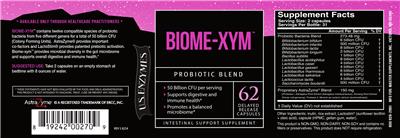
BIOME-XYM contains twelve compatible species of probiotic bacteria from five different genera for a total of 50 billion CFU (Colony Forming Units). AstraZyme provides important co-factors and LactoStim provides patented prebiotic activation.
50 Billion CFU per serving
Formulation
Biome-xym provides microbial diversity in the gut microbiome and supports overall digestive and immune health.
Probiotic Blend Supports digestive and immune health Promotes a balanced microbiome
This product is NON-GMO, NON-Dairy, Non-Soy and contains no fillers or preservatives.
Suggested/Recommended/Usage/Directions
Suggested use: Take 2 capsules on an empty stomach at bedtime with 8 ounces of water.
FDA Disclaimer Statement
These statements have not been evaluated by the Food and Drug Administration. This product is not intended to diagnose, treat, cure or prevent any disease.
Brand IP Statement(s)
AstraZyme is a registered trademark of ERCC, INC.
FDA Statement of Identity
Intestinal Support Supplement
Storage
This product does not require refrigeration.
Is this label outdated? Report a formula or label change and our pharmacy team will review it.
Biome-xym by U.S. Enzymes label
The label scan from the NIH Dietary Supplement Label Database. Tap to enlarge.
Label images are published by the NIH Dietary Supplement Label Database for the version of this product on file. Always read your actual product label.
View the full label (PDF)The Ingredients in Biome-xym by U.S. Enzymes
These are the 6 active ingredients this product is made of. Select any to open its full monograph.
Serving size2 Capsule(s) Dosage formCapsule Servings per container31 Amounts shown are per serving.
Most supplement products combine several ingredients, and a medication can interact with the product through any one of them. Each ingredient below shows whether it has known drug interactions.
Probiotic Bacteria Blend
Interacts with182 drugs
Lactobacillus acidophilus is a 'friendly' bacterium used as a probiotic to support gut and vaginal health. It is generally well tolerated in healthy p...
Probiotic Bacteria Blend monograph & interactions- › Lactobacillus salivarius
- › Bifidobacterium bifidum
- › Lactobacillus acidophilus
- › Bifidobacterium animalis lactis
- › Lactobacillus casei
- › Lactobacillus rhamnosus
- › {Bifidobacterium} infantis
- › Bifidobacterium longum
- › Bacillus subtilis
- › Lactobacillus gasseri
- › Lactococcus lactis
- › Saccharomyces boulardii
Proprietary AstraZyme Blend
Other (inactive) ingredients: Inulin, Rice extract, LactoStim, Hydroxypropyl Methylcellulose, Gellan Gum, Water. These complete the product’s ingredient list but are not active constituents.
Biome-xym by U.S. Enzymes Drug Interactions
HelloPharmacist Interaction Report
Biome-xym by U.S.
Enzymes contains multiple live bacterial and yeast strains plus plant extracts that do interact with medications. The most serious concern is with antibiotics: several probiotic ingredients—Bifidobacterium bifidum, Lactobacillus acidophilus, Bifidobacterium longum, Bacillus subtilis, and Lactobacillus gasseri—can be killed by antibiotics, reducing their own effectiveness.
If you're on an antibiotic, space it out from this product by a few hours.
Read the full breakdown — every affected drug type, severity by severity
Astragalus Root Extract carries Moderate interactions with immunosuppressants (which suppress your immune system intentionally), lithium (a mood stabilizer), cyclophosphamide (a chemotherapy drug), and antidiabetes medications—meaning it could theoretically interfere with these drugs' effects or raise the risk of low blood sugar. Saccharomyces boulardii (a beneficial yeast) has a Minor interaction with antifungals, which might reduce its activity.
Sodium Calcium Aluminosilicate, an inactive ingredient listed here, interacts with antihypertensive drugs (blood pressure meds), corticosteroids (steroid medications), lithium, didanosine (an HIV drug), sodium phosphates, tolvaptan (a sodium-regulating drug), and any sodium-containing medications—mainly because excess sodium can worsen blood pressure, interfere with lithium levels, or raise sodium to unsafe highs. We could not check Lactobacillus salivarius, Bifidobacterium animalis lactis, Lactobacillus casei, Lactobacillus rhamnosus, Bifidobacterium infantis, Lactococcus lactis, or Ginseng Root Extract—no interaction data is held for these.
Altogether, these interactions span 610 individual medications. Please use the interaction checker below with your exact medications before starting this product.
Check your own medications below · Editorial policy · How we use AI
Want to check YOUR meds against Biome-xym?
Ask about interactions with your drugs in plain English — “Can I take it with lisinopril?” — and we find you the answer in seconds, ingredient by ingredient.
Go to the checkerIngredients driving the most interactions
Individual Drug Interactions
The ingredients in Biome-xym interact with 627 drugs. Click any drug to see the details.
4 of the 6 ingredients in Biome-xym interact with drugs. Each result below shows which ingredient is responsible. Ginseng Root Extract Astragalus Root Extract Sodium Calcium Aluminosilicate Probiotic Bacteria Blend
WarfarinWarfarin
How Warfarin interacts with Biome-xym — through 1 ingredient. Tap an ingredient for the detail:
Ginseng Root ExtractWarfarin (coumadin) Major
Interaction Summary
American ginseng seems to decrease the effectiveness of warfarin therapy.
Read the full Ginseng Root Extract + Warfarin interactionWarfarin SodiumCoumadin, Panwarfin, Sofarin
How Warfarin Sodium interacts with Biome-xym — through 1 ingredient. Tap an ingredient for the detail:
Ginseng Root ExtractWarfarin (coumadin) Major
Interaction Summary
American ginseng seems to decrease the effectiveness of warfarin therapy.
Read the full Ginseng Root Extract + Warfarin Sodium interaction6-mercaptopurinePurinethol
How 6-mercaptopurine interacts with Biome-xym — through 2 ingredients. Tap an ingredient for the detail:
Astragalus Root ExtractImmunosuppressants Moderate
Interaction Summary
Theoretically, astragalus might interfere with immunosuppressive therapy.
Read the full Astragalus Root Extract + 6-mercaptopurine interactionGinseng Root ExtractImmunosuppressants Moderate
Interaction Summary
Theoretically, American ginseng use might interfere with immunosuppressive therapy.
Read the full Ginseng Root Extract + 6-mercaptopurine interactionAbrocitinibCibinqo
How Abrocitinib interacts with Biome-xym — through 2 ingredients. Tap an ingredient for the detail:
Ginseng Root ExtractImmunosuppressants Moderate
Interaction Summary
Theoretically, American ginseng use might interfere with immunosuppressive therapy.
Read the full Ginseng Root Extract + Abrocitinib interactionAstragalus Root ExtractImmunosuppressants Moderate
Interaction Summary
Theoretically, astragalus might interfere with immunosuppressive therapy.
Read the full Astragalus Root Extract + Abrocitinib interactionAcarboseGlucobay, Prandase, Precose
How Acarbose interacts with Biome-xym — through 2 ingredients. Tap an ingredient for the detail:
Astragalus Root ExtractAntidiabetes Drugs Moderate
Interaction Summary
Theoretically, taking astragalus with antidiabetes drugs might increase the risk of hypoglycemia.
Read the full Astragalus Root Extract + Acarbose interactionGinseng Root ExtractAntidiabetes Drugs Moderate
Interaction Summary
Theoretically, taking American ginseng with antidiabetes drugs might increase the risk of hypoglycemia.
Read the full Ginseng Root Extract + Acarbose interactionAcebutololRhotral, Sectral
How Acebutolol interacts with Biome-xym — through 1 ingredient. Tap an ingredient for the detail:
Sodium Calcium AluminosilicateAntihypertensive Drugs Moderate
Interaction Summary
Theoretically, a high intake of dietary sodium might reduce the effectiveness of antihypertensive drugs.
Read the full Sodium Calcium Aluminosilicate + Acebutolol interactionAcetazolamideAk-Zol, Diamox
How Acetazolamide interacts with Biome-xym — through 1 ingredient. Tap an ingredient for the detail:
Sodium Calcium AluminosilicateAntihypertensive Drugs Moderate
Interaction Summary
Theoretically, a high intake of dietary sodium might reduce the effectiveness of antihypertensive drugs.
Read the full Sodium Calcium Aluminosilicate + Acetazolamide interactionAcetohexamideDymelor
How Acetohexamide interacts with Biome-xym — through 2 ingredients. Tap an ingredient for the detail:
Ginseng Root ExtractAntidiabetes Drugs Moderate
Interaction Summary
Theoretically, taking American ginseng with antidiabetes drugs might increase the risk of hypoglycemia.
Read the full Ginseng Root Extract + Acetohexamide interactionAstragalus Root ExtractAntidiabetes Drugs Moderate
Interaction Summary
Theoretically, taking astragalus with antidiabetes drugs might increase the risk of hypoglycemia.
Read the full Astragalus Root Extract + Acetohexamide interactionAdalimumabHumira
How Adalimumab interacts with Biome-xym — through 2 ingredients. Tap an ingredient for the detail:
Astragalus Root ExtractImmunosuppressants Moderate
Interaction Summary
Theoretically, astragalus might interfere with immunosuppressive therapy.
Read the full Astragalus Root Extract + Adalimumab interactionGinseng Root ExtractImmunosuppressants Moderate
Interaction Summary
Theoretically, American ginseng use might interfere with immunosuppressive therapy.
Read the full Ginseng Root Extract + Adalimumab interactionAdalimumab-adazHyrimoz
How Adalimumab-adaz interacts with Biome-xym — through 2 ingredients. Tap an ingredient for the detail:
Ginseng Root ExtractImmunosuppressants Moderate
Interaction Summary
Theoretically, American ginseng use might interfere with immunosuppressive therapy.
Read the full Ginseng Root Extract + Adalimumab-adaz interactionAstragalus Root ExtractImmunosuppressants Moderate
Interaction Summary
Theoretically, astragalus might interfere with immunosuppressive therapy.
Read the full Astragalus Root Extract + Adalimumab-adaz interactionAdalimumab-adbmCyltezo
How Adalimumab-adbm interacts with Biome-xym — through 2 ingredients. Tap an ingredient for the detail:
Astragalus Root ExtractImmunosuppressants Moderate
Interaction Summary
Theoretically, astragalus might interfere with immunosuppressive therapy.
Read the full Astragalus Root Extract + Adalimumab-adbm interactionGinseng Root ExtractImmunosuppressants Moderate
Interaction Summary
Theoretically, American ginseng use might interfere with immunosuppressive therapy.
Read the full Ginseng Root Extract + Adalimumab-adbm interactionAdalimumab-afzbAbrilada
How Adalimumab-afzb interacts with Biome-xym — through 2 ingredients. Tap an ingredient for the detail:
Ginseng Root ExtractImmunosuppressants Moderate
Interaction Summary
Theoretically, American ginseng use might interfere with immunosuppressive therapy.
Read the full Ginseng Root Extract + Adalimumab-afzb interactionAstragalus Root ExtractImmunosuppressants Moderate
Interaction Summary
Theoretically, astragalus might interfere with immunosuppressive therapy.
Read the full Astragalus Root Extract + Adalimumab-afzb interactionAdalimumab-attoAmjevita
How Adalimumab-atto interacts with Biome-xym — through 2 ingredients. Tap an ingredient for the detail:
Astragalus Root ExtractImmunosuppressants Moderate
Interaction Summary
Theoretically, astragalus might interfere with immunosuppressive therapy.
Read the full Astragalus Root Extract + Adalimumab-atto interactionGinseng Root ExtractImmunosuppressants Moderate
Interaction Summary
Theoretically, American ginseng use might interfere with immunosuppressive therapy.
Read the full Ginseng Root Extract + Adalimumab-atto interactionAdalimumab-bwwdHadlima
How Adalimumab-bwwd interacts with Biome-xym — through 2 ingredients. Tap an ingredient for the detail:
Ginseng Root ExtractImmunosuppressants Moderate
Interaction Summary
Theoretically, American ginseng use might interfere with immunosuppressive therapy.
Read the full Ginseng Root Extract + Adalimumab-bwwd interactionAstragalus Root ExtractImmunosuppressants Moderate
Interaction Summary
Theoretically, astragalus might interfere with immunosuppressive therapy.
Read the full Astragalus Root Extract + Adalimumab-bwwd interactionAdalimumab-fkjpHulio
How Adalimumab-fkjp interacts with Biome-xym — through 2 ingredients. Tap an ingredient for the detail:
Astragalus Root ExtractImmunosuppressants Moderate
Interaction Summary
Theoretically, astragalus might interfere with immunosuppressive therapy.
Read the full Astragalus Root Extract + Adalimumab-fkjp interactionGinseng Root ExtractImmunosuppressants Moderate
Interaction Summary
Theoretically, American ginseng use might interfere with immunosuppressive therapy.
Read the full Ginseng Root Extract + Adalimumab-fkjp interactionAlbiglutideTanzeum
How Albiglutide interacts with Biome-xym — through 2 ingredients. Tap an ingredient for the detail:
Ginseng Root ExtractAntidiabetes Drugs Moderate
Interaction Summary
Theoretically, taking American ginseng with antidiabetes drugs might increase the risk of hypoglycemia.
Read the full Ginseng Root Extract + Albiglutide interactionAstragalus Root ExtractAntidiabetes Drugs Moderate
Interaction Summary
Theoretically, taking astragalus with antidiabetes drugs might increase the risk of hypoglycemia.
Read the full Astragalus Root Extract + Albiglutide interactionAlefaceptAmevive
How Alefacept interacts with Biome-xym — through 2 ingredients. Tap an ingredient for the detail:
Astragalus Root ExtractImmunosuppressants Moderate
Interaction Summary
Theoretically, astragalus might interfere with immunosuppressive therapy.
Read the full Astragalus Root Extract + Alefacept interactionGinseng Root ExtractImmunosuppressants Moderate
Interaction Summary
Theoretically, American ginseng use might interfere with immunosuppressive therapy.
Read the full Ginseng Root Extract + Alefacept interactionAlemtuzumabCampath
How Alemtuzumab interacts with Biome-xym — through 2 ingredients. Tap an ingredient for the detail:
Astragalus Root ExtractImmunosuppressants Moderate
Interaction Summary
Theoretically, astragalus might interfere with immunosuppressive therapy.
Read the full Astragalus Root Extract + Alemtuzumab interactionGinseng Root ExtractImmunosuppressants Moderate
Interaction Summary
Theoretically, American ginseng use might interfere with immunosuppressive therapy.
Read the full Ginseng Root Extract + Alemtuzumab interactionAliskirenTekturna
How Aliskiren interacts with Biome-xym — through 1 ingredient. Tap an ingredient for the detail:
Sodium Calcium AluminosilicateAntihypertensive Drugs Moderate
Interaction Summary
Theoretically, a high intake of dietary sodium might reduce the effectiveness of antihypertensive drugs.
Read the full Sodium Calcium Aluminosilicate + Aliskiren interactionAlogliptinNesina
How Alogliptin interacts with Biome-xym — through 2 ingredients. Tap an ingredient for the detail:
Astragalus Root ExtractAntidiabetes Drugs Moderate
Interaction Summary
Theoretically, taking astragalus with antidiabetes drugs might increase the risk of hypoglycemia.
Read the full Astragalus Root Extract + Alogliptin interactionGinseng Root ExtractAntidiabetes Drugs Moderate
Interaction Summary
Theoretically, taking American ginseng with antidiabetes drugs might increase the risk of hypoglycemia.
Read the full Ginseng Root Extract + Alogliptin interactionAlogliptin, MetforminKazano
How Alogliptin, Metformin interacts with Biome-xym — through 2 ingredients. Tap an ingredient for the detail:
Ginseng Root ExtractAntidiabetes Drugs Moderate
Interaction Summary
Theoretically, taking American ginseng with antidiabetes drugs might increase the risk of hypoglycemia.
Read the full Ginseng Root Extract + Alogliptin, Metformin interactionAstragalus Root ExtractAntidiabetes Drugs Moderate
Interaction Summary
Theoretically, taking astragalus with antidiabetes drugs might increase the risk of hypoglycemia.
Read the full Astragalus Root Extract + Alogliptin, Metformin interactionAlogliptin, PioglitazoneOseni
How Alogliptin, Pioglitazone interacts with Biome-xym — through 2 ingredients. Tap an ingredient for the detail:
Astragalus Root ExtractAntidiabetes Drugs Moderate
Interaction Summary
Theoretically, taking astragalus with antidiabetes drugs might increase the risk of hypoglycemia.
Read the full Astragalus Root Extract + Alogliptin, Pioglitazone interactionGinseng Root ExtractAntidiabetes Drugs Moderate
Interaction Summary
Theoretically, taking American ginseng with antidiabetes drugs might increase the risk of hypoglycemia.
Read the full Ginseng Root Extract + Alogliptin, Pioglitazone interactionAmbrisentanLetairis, Volibris
How Ambrisentan interacts with Biome-xym — through 1 ingredient. Tap an ingredient for the detail:
Sodium Calcium AluminosilicateAntihypertensive Drugs Moderate
Interaction Summary
Theoretically, a high intake of dietary sodium might reduce the effectiveness of antihypertensive drugs.
Read the full Sodium Calcium Aluminosilicate + Ambrisentan interactionAmikacinAmikin, Arikayce
How Amikacin interacts with Biome-xym — through 5 ingredients. Tap an ingredient for the detail:
Probiotic Bacteria BlendAntibiotic Drugs Moderate
Interaction Summary
Theoretically, taking Lactobacillus acidophilus with antibiotic drugs might decrease the effectiveness of L.
Read the full Probiotic Bacteria Blend + Amikacin interactionBifidobacterium BifidumAntibiotic Drugs Moderate
Interaction Summary
Theoretically, taking Bifidobacterium.
Read the full Bifidobacterium Bifidum + Amikacin interactionBifidobacterium LongumAntibiotic Drugs Moderate
Interaction Summary
Theoretically, taking Bifidobacterium longum with antibiotic drugs might decrease the effectiveness of B.
Read the full Bifidobacterium Longum + Amikacin interactionLactobacillus GasseriAntibiotic Drugs Moderate
Interaction Summary
Theoretically, taking Lactobacillus gasseri with antibiotic drugs might decrease the effectiveness of L.
Read the full Lactobacillus Gasseri + Amikacin interactionBacillus SubtilisAntibiotic Drugs Moderate
Interaction Summary
Theoretically, taking Bacillus subtilis with antibiotic drugs might decrease the effectiveness of B.
Read the full Bacillus Subtilis + Amikacin interactionAmilorideAmilamont, Midamor
How Amiloride interacts with Biome-xym — through 1 ingredient. Tap an ingredient for the detail:
Sodium Calcium AluminosilicateAntihypertensive Drugs Moderate
Interaction Summary
Theoretically, a high intake of dietary sodium might reduce the effectiveness of antihypertensive drugs.
Read the full Sodium Calcium Aluminosilicate + Amiloride interactionAmiloride, HydrochlorothiazideAmil-Co, Amilzide, Moduret 25, Moduretic
How Amiloride, Hydrochlorothiazide interacts with Biome-xym — through 1 ingredient. Tap an ingredient for the detail:
Sodium Calcium AluminosilicateAntihypertensive Drugs Moderate
Interaction Summary
Theoretically, a high intake of dietary sodium might reduce the effectiveness of antihypertensive drugs.
Read the full Sodium Calcium Aluminosilicate + Amiloride, Hydrochlorothiazide interactionAmlodipineNorliqva
How Amlodipine interacts with Biome-xym — through 1 ingredient. Tap an ingredient for the detail:
Sodium Calcium AluminosilicateAntihypertensive Drugs Moderate
Interaction Summary
Theoretically, a high intake of dietary sodium might reduce the effectiveness of antihypertensive drugs.
Read the full Sodium Calcium Aluminosilicate + Amlodipine interactionAmlodipine BenzoateKaterzia
How Amlodipine Benzoate interacts with Biome-xym — through 1 ingredient. Tap an ingredient for the detail:
Sodium Calcium AluminosilicateAntihypertensive Drugs Moderate
Interaction Summary
Theoretically, a high intake of dietary sodium might reduce the effectiveness of antihypertensive drugs.
Read the full Sodium Calcium Aluminosilicate + Amlodipine Benzoate interactionAmlodipine BesilateIstin
How Amlodipine Besilate interacts with Biome-xym — through 1 ingredient. Tap an ingredient for the detail:
Sodium Calcium AluminosilicateAntihypertensive Drugs Moderate
Interaction Summary
Theoretically, a high intake of dietary sodium might reduce the effectiveness of antihypertensive drugs.
Read the full Sodium Calcium Aluminosilicate + Amlodipine Besilate interactionAmlodipine BesylateNorvasc
How Amlodipine Besylate interacts with Biome-xym — through 1 ingredient. Tap an ingredient for the detail:
Sodium Calcium AluminosilicateAntihypertensive Drugs Moderate
Interaction Summary
Theoretically, a high intake of dietary sodium might reduce the effectiveness of antihypertensive drugs.
Read the full Sodium Calcium Aluminosilicate + Amlodipine Besylate interactionEach ingredient & the kinds of drugs it affects
For each ingredient in Biome-xym with known interactions, here are the types of medications they can affect. Open any type for the detail — or search your exact drug in the checker above.
Ginseng Root Extract
Warfarin (Coumadin)
American ginseng seems to decrease the effectiveness of warfarin therapy.
Healthy patients receiving warfarin 5 mg daily, who also take American ginseng 1 gram twice daily, seem to have a significantly reduced international normalized ratio (INR).
Antidiabetes Drugs
Theoretically, taking American ginseng with antidiabetes drugs might increase the risk of hypoglycemia.
American ginseng seems to lower postprandial blood glucose. Theoretically, concomitant use with antidiabetes drugs might enhance blood glucose lowering effects and possibly cause hypoglycemia.
Immunosuppressants
Theoretically, American ginseng use might interfere with immunosuppressive therapy.
American ginseng seems to stimulate immune function. Theoretically, American ginseng might decrease the effectiveness of immunosuppressant drugs.
Monoamine Oxidase Inhibitors (Maois)
Theoretically, American ginseng can interfere with MAOI therapy.
There is one case report of insomnia, headache, and tremors when an unspecified ginseng product was used with phenelzine (Nardil), an MAOI. There is also one case report of hypomania when an unspecified ginseng product was used with phenelzine. Theoretically, American ginseng may interfere with MAOI therapy.
Astragalus Root Extract
Antidiabetes Drugs
Theoretically, taking astragalus with antidiabetes drugs might increase the risk of hypoglycemia.
Clinical research in humans shows that astragalus might have hypoglycemic effects. Theoretically, taking astragalus, especially in combination with other hypoglycemic agents, might increase the risk of hypoglycemia.
Cyclophosphamide
Theoretically, astragalus might interfere with cyclophosphamide therapy.
Evidence regarding the effect of astragalus on immunosuppression caused by cyclophosphamide is conflicting. Some animal research suggests that astragalus reverses cyclophosphamide-induced immunosuppression. However, other animal research shows no effect.
Immunosuppressants
Theoretically, astragalus might interfere with immunosuppressive therapy.
Astragalus seems to stimulate immune function. Theoretically, taking astragalus might decrease the effects of immunosuppressive therapy.
Lithium
Theoretically, astragalus might increase levels and adverse effects of lithium.
Animal research suggests that astragalus has diuretic properties. Theoretically, due to this diuretic effect, astragalus might reduce excretion and increase levels of lithium.
Sodium Calcium Aluminosilicate
Antihypertensive Drugs
Theoretically, a high intake of dietary sodium might reduce the effectiveness of antihypertensive drugs.
High intake of dietary sodium can increase systolic and diastolic blood pressure. Also, high intake of sodium may necessitate increased use of antihypertensive medications to achieve blood pressure control in some patients, such as those with chronic kidney disease.
Corticosteroids
Concomitant use of mineralocorticoids and some glucocorticoids with sodium supplements might increase the risk of hypernatremia.
Mineralocorticoids and some glucocorticoids (corticosteroids) cause sodium retention. This effect is dose-related and depends on mineralocorticoid potency. It is most common with hydrocortisone, cortisone, and fludrocortisone, followed by prednisone and prednisolone.
Didanosine (Videx)
Concomitant use of didanosine with additional sodium from dietary or supplemental sources may increase the risk of hypernatremia.
Didanosine formulations contain a significant amount of sodium.
Lithium
Altering dietary intake of sodium might alter the levels and clinical effects of lithium.
High sodium intake can reduce plasma concentrations of lithium by increasing lithium excretion. Reducing sodium intake can significantly increase plasma concentrations of lithium and cause lithium toxicity in patients being treated with lithium carbonate. Stabilizing sodium intake is shown to reduce the percentage of patients with lithium level fluctuations above 0.8 mEq/L. Patients taking lithium should avoid significant alterations in their dietary intake of sodium.
Sodium Phosphates
Theoretically, concomitant use of sodium phosphate with sodium supplements might increase the risk of hypernatremia.
Use of high doses (> 45 mL in 24 hours) of sodium phosphate, such as those used for bowel cleansing before surgery, can lead to serious electrolyte disturbances, including hypernatremia. The risk of hypernatremia is highest in the elderly and people with other risk factors for electrolyte disturbances.
Sodium-Containing Drugs
Concomitant use of sodium-containing drugs with additional sodium from dietary or supplemental sources may increase the risk of hypernatremia and long-term sodium-related complications.
The Chronic Disease Risk Reduction (CDRR) intake level of 2.3 grams of sodium daily indicates the intake at which it is believed that chronic disease risk increases for the apparently healthy population. Some medications contain high quantities of sodium. When used in conjunction with sodium supplements or high-sodium diets, the CDRR may be exceeded. Additionally, concomitant use may increase the risk for hypernatremia; this risk is highest in the elderly and people with other risk factors for electrolyte disturbances.
Tolvaptan (Samsca)
Theoretically, concomitant use of tolvaptan with sodium might increase the risk of hypernatremia.
Tolvaptan is a vasopressin receptor 2 antagonist that is used to increase sodium levels in patients with hyponatremia. Patients taking tolvaptan should use caution with the use of sodium salts such as sodium chloride.
Probiotic Bacteria Blend
Antibiotic Drugs
Theoretically, taking Lactobacillus acidophilus with antibiotic drugs might decrease the effectiveness of L. acidophilus.
L. acidophilus preparations usually contain live and active organisms. Therefore, simultaneously taking antibiotics might kill a significant number of the organisms. Tell patients to separate administration of antibiotics and L. acidophilus preparations by at least two hours.
Brand information
Manufacturer and brand details for Biome-xym, from the product label.
U.S. Enzymes
See all U.S. Enzymes products- Name
- Master Supplements, Inc.
- City
- Victoria
- State
- MN
- ZipCode
- 55386
- Phone Number
- 800 926-2961
Biome-xym by U.S. Enzymes: Common Questions
Does Biome-xym by U.S. Enzymes interact with any medications?
How can one product interact with so many drugs?
Where does this information come from?
Will this product help with my irritable bowel syndrome?
Can I take this while on antibiotics?
What are the enzymes in here for?
Does this product have any fillers?
Is it safe to take this while pregnant or breastfeeding?
Can I take this if I have a weakened immune system?
Written and reviewed by the HelloPharmacist editorial staff. Our editorial policy
Not sure if Biome-xym is safe with your meds?
Our pharmacists answer your medication & supplement questions — free.
Label information is sourced from the NIH Dietary Supplement Label Database and reflects the product version on file; always read your actual product label. This page is for education only and is not a substitute for professional medical advice. Confirm with your pharmacist or doctor before combining supplements and medications.
The Full Monographs Behind Biome-xym’s Ingredients
Every ingredient we hold a full HelloPharmacist monograph for — uses, evidence, safety, and the complete interaction list.
Lactobacillus Acidophilus
Interacts with 182 drugsLactobacillus acidophilus is a 'friendly' bacterium used as a probiotic to support gut and vaginal health. It is generally well tolerated in healthy people, and there is reasonable evidence...
Read the full Lactobacillus Acidophilus monograph → Herb & supplement monographBifidobacterium Bifidum
Interacts with 182 drugsBifidobacterium bifidum is a 'friendly' bacteria (probiotic) that naturally lives in the human gut and is taken to support digestion and gut balance. Some evidence suggests probiotics may he...
Read the full Bifidobacterium Bifidum monograph → Herb & supplement monographBifidobacterium Longum
Interacts with 182 drugsBifidobacterium longum is a 'friendly' bacterium found naturally in the human gut and used as a probiotic. It is generally well tolerated and is most studied for digestive issues, though evi...
Read the full Bifidobacterium Longum monograph → Herb & supplement monographBacillus Subtilis
Interacts with 182 drugsBacillus subtilis is a spore-forming probiotic bacterium found in soil and some fermented foods, and it is used mainly to support gut health and digestion. Early research is promising for ce...
Read the full Bacillus Subtilis monograph → Herb & supplement monographLactobacillus Gasseri
Interacts with 182 drugsLactobacillus gasseri is a 'friendly' probiotic bacterium found naturally in the human gut, mouth, and vaginal tract, and in some fermented foods. Early research suggests it may help with di...
Read the full Lactobacillus Gasseri monograph → Herb & supplement monographSaccharomyces Boulardii
Interacts with 40 drugsSaccharomyces boulardii is a beneficial yeast used as a probiotic, with the strongest evidence for preventing and treating certain types of diarrhea, including antibiotic-associated diarrhea...
Read the full Saccharomyces Boulardii monograph → Herb & supplement monographProteolytic Enzymes (proteases)
Proteolytic enzymes are proteins that help break down other proteins, and common examples include bromelain (from pineapple), papain (from papaya), trypsin, chymotrypsin, and pancreatin. Peo...
Read the full Proteolytic Enzymes (proteases) monograph → Herb & supplement monographAstragalus
Interacts with 208 drugsAstragalus is a root used for centuries in traditional Chinese medicine, mainly to support the immune system and help the body cope with stress. While early studies are interesting, strong h...
Read the full Astragalus monograph → Herb & supplement monographAmerican Ginseng
Interacts with 217 drugsAmerican ginseng is an herbal root used as an 'adaptogen' to support energy, stress, immune function, and blood sugar. Some uses—such as reducing the chance or length of colds and modestly l...
Read the full American Ginseng monograph → Herb & supplement monographSodium
Interacts with 205 drugsSodium is an essential mineral and electrolyte your body needs to balance fluids, support nerves, and help muscles work. Most people in modern diets get more than enough—often too much—from...
Read the full Sodium monograph →Sources & How We Checked
Biome-xym's label data comes from the NIH Dietary Supplement Label Database; the ingredient interaction data is from the Natural Medicines database, reviewed by our pharmacists.
- NIH Dietary Supplement Label Database (DSLD) — The official product label on file for this supplement.
- Natural Medicines (Therapeutic Research Center) — Evidence-graded clinical reference behind the ingredient interaction data.
Content is written and reviewed by licensed HelloPharmacist pharmacists. See our data sources and editorial standards for how this information is built and checked.
The 157 references behind this product’s interaction data
Every citation that drives the interaction findings for this product’s ingredients, from the evidence-graded Natural Medicines (TRC Healthcare) database. Open an ingredient to browse its citations — links open the study on PubMed or the publisher’s site.
Bifidobacterium Bifidum 7 references
- Pierce A. The American Pharmaceutical Association Practical Guide to Natural Medicines. New York: The Stonesong Press, 1999:19.
- Xiao JZ, Takahashi S, Odamaki T, et al. Antibiotic susceptibility of bifidobacterial strains distributed in the Japanese market. Biosci Biotechnol Biochem. 2010;74(2):336-42. PubMed
- Rerksuppaphol S, Rerksuppaphol L. Randomized controlled trial of probiotics to reduce common cold in schoolchildren. Pediatr Int. 2012;54(5):682-7. PubMed
- Karamali M, Dadkhah F, Sadrkhanlou M, et al. Effects of probiotic supplementation on glycaemic control and lipid profiles in gestational diabetes: a randomized, double-blind, placebo-controlled trial. Diabetes Metab 2016;42(4):234-41. PubMed
- Badehnoosh B, Karamali M, Zarrati M, et al. The effects of probiotic supplementation on biomarkers of inflammation, oxidative stress and pregnancy outcomes in gestational diabetes. J Matern Fetal Neonatal Med. 2018 May;31(9):1128-1136.
- Pruccoli G, Silvestro E, Pace Napoleone C, Aidala E, Garazzino S, Scolfaro C. Are probiotics safe? Bifidobacterium bacteremia in a child with severe heart failure. Infez Med. 2019;27(2):175-178.
- Esaiassen E, Hjerde E, Cavanagh JP, Simonsen GS, Klingenberg C; Norwegian Study Group on Invasive Bifidobacterial Infections. Bifidobacterium bacteremia: Clinical characteristics and a genomic approach to assess pathogenicity. J Clin Microbiol. 2017;55(7) PubMed
See these in context on the Bifidobacterium Bifidum monograph →
Lactobacillus Acidophilus 15 references
- Pierce A. The American Pharmaceutical Association Practical Guide to Natural Medicines. New York: The Stonesong Press, 1999:19.
- Begtrup LM, de Muckadell OB, Kjeldsen J, Christensen RD, Jarbøl DE. Long-term treatment with probiotics in primary care patients with irritable bowel syndrome--a randomised, double-blind, placebo controlled trial. Scand J Gastroenterol 2013;48(10):1127-35 PubMed
- Chatterjee S, Kar P, Das T, Ray S, Gangulyt S, Rajendiran C, Mitra M. Randomised placebo-controlled double blind multicentric trial on efficacy and safety of Lactobacillus acidophilus LA-5 and Bifidobacterium BB-12 for prevention of antibiotic-associated
- Shavakhi A, Tabesh E, Yaghoutkar A, Hashemi H, Tabesh F, Khodadoostan M,Minakari M, Shavakhi S, Gholamrezaei A. The effects of multistrain probiotic compound on bismuth-containing quadruple therapy for Helicobacter pylori infection: a randomized placebo-c
- Karamali M, Dadkhah F, Sadrkhanlou M, et al. Effects of probiotic supplementation on glycaemic control and lipid profiles in gestational diabetes: a randomized, double-blind, placebo-controlled trial. Diabetes Metab 2016;42(4):234-41. PubMed
- Badehnoosh B, Karamali M, Zarrati M, et al. The effects of probiotic supplementation on biomarkers of inflammation, oxidative stress and pregnancy outcomes in gestational diabetes. J Matern Fetal Neonatal Med. 2018 May;31(9):1128-1136.
- Kumar S, Kumar R, Rohilla L, Jacob N, Yadav J, Sachdeva N. A high potency multi-strain probiotic improves glycemic control in children with new-onset type 1 diabetes mellitus: A randomized, double-blind, and placebo-controlled pilot study. Pediatr Diabete
- Shahriari A, Karimi E, Shahriari M, Aslani N, Khooshideh M, Arab A. The effect of probiotic supplementation on the risk of gestational diabetes mellitus among high-risk pregnant women: A parallel double-blind, randomized, placebo-controlled clinical trial PubMed
- Xiao SD, Zhang DZ, Lu H, et al. Multicenter, randomized, controlled trial of heat-killed Lactobacillus acidophilus LB in patients with chronic diarrhea. Adv Ther. 2003;20(5):253-60.
- Rossi F, Amadoro C, Gasperi M, Colavita G. Lactobacilli infection case reports in the last three years and safety implications. Nutrients. 2022;14(6):1178. PubMed
- Ozer M, Goksu SY, Shahverdiani A, Mustafa M. Lactobacillus acidophilus-induced endocarditis and associated splenic abscess. Case Rep Infect Dis 2020;2020:1382709.
- Sadrin S, Sennoune S, Gout B, et al. A 2-strain mixture of Lactobacillus acidophilus in the treatment of irritable bowel syndrome: A placebo-controlled randomized clinical trial. Dig Liver Dis 2020;52(5):534-540. PubMed
- Stoffer JN, Slingsby TJ, Giuliari GP. Lactobacillus acidophilus endophthalmitis after intravitreal bevacizumab injection requiring intraocular lens explantation. Can J Ophthalmol 2022;57(1):e21-e22. PubMed
- Cukovic-Cavka S, Likic R, Francetic I, Rustemovic N, Opacic M, Vucelic B. Lactobacillus acidophilus as a cause of liver abscess in a NOD2/CARD15-positive patient with Crohn's disease. Digestion 2006;73(2-3):107-10.
- Hui J, Ren Y, Wang Y, Han Q. Lactobacillus acidophilus endophthalmitis postcataract operation: A case report with a literature review. Ocul Immunol Inflamm 2023.
See these in context on the Lactobacillus Acidophilus monograph →
Bifidobacterium Longum 21 references
- Ha GY, Yang CH, Kim H, Chong Y. Case of sepsis caused by Bifidobacterium longum. J Clin Microbiol 1999;37:1227-8.
- Pierce A. The American Pharmaceutical Association Practical Guide to Natural Medicines. New York: The Stonesong Press, 1999:19.
- Xiao JZ, Takahashi S, Odamaki T, et al. Antibiotic susceptibility of bifidobacterial strains distributed in the Japanese market. Biosci Biotechnol Biochem. 2010;74(2):336-42. PubMed
- Rautava S, Kainonen E, Salminen S, Isolauri E. Maternal probiotic supplementation during pregnancy and breast-feeding reduces the risk of eczema in the infant. J Allergy Clin Immunol. 2012;130(6):1355-60. PubMed
- Pruccoli G, Silvestro E, Pace Napoleone C, Aidala E, Garazzino S, Scolfaro C. Are probiotics safe? Bifidobacterium bacteremia in a child with severe heart failure. Infez Med. 2019;27(2):175-178.
- Pellonperä O, Vahlberg T, Mokkala K, et al. Weight gain and body composition during pregnancy: a randomised pilot trial with probiotics and/or fish oil. Br J Nutr. 2020 Nov 4:1-11. PubMed
- Pellonperä O, Mokkala K, Houttu N, et al. Efficacy of fish oil and/or probiotic intervention on the incidence of gestational diabetes mellitus in an at-risk group of overweight and obese women: A randomized, placebo-controlled, double-blind clinical trial PubMed
- Shahriari A, Karimi E, Shahriari M, Aslani N, Khooshideh M, Arab A. The effect of probiotic supplementation on the risk of gestational diabetes mellitus among high-risk pregnant women: A parallel double-blind, randomized, placebo-controlled clinical trial PubMed
- Esaiassen E, Hjerde E, Cavanagh JP, Simonsen GS, Klingenberg C; Norwegian Study Group on Invasive Bifidobacterial Infections. Bifidobacterium bacteremia: Clinical characteristics and a genomic approach to assess pathogenicity. J Clin Microbiol. 2017;55(7) PubMed
- Enomoto T, Sowa M, Nishimori K, et al. Effects of bifidobacterial supplementation to pregnant women and infants in the prevention of allergy development in infants and on fecal microbiota. Allergol Int 2014;63(4):575-85. PubMed
- US Food and Drug Administration (FDA). Dear Healthcare Provider Letter: Warning Regarding Use of Probiotics in Preterm Infants. September 2023. Available at: https://www.fda.gov/media/172606/download?attachment. Accessed November 1, 2023.
- Pillai A, Tan J, Paquette V, Panczuk J. Does probiotic bacteremia in premature infants impact clinically relevant outcomes? A case report and updated review of literature. Clin Nutr ESPEN. 2020;39:255-259. PubMed
- Sabaté JM, Iglicki F. Effect of Bifidobacterium longum 35624 on disease severity and quality of life in patients with irritable bowel syndrome. World J Gastroenterol 2022;28(7):732-744.
- Malaguarnera M, Greco F, Barone G, Gargante MP, Malaguarnera M, Toscano MA. Bifidobacterium longum with fructo-oligosaccharide (FOS) treatment in minimal hepatic encephalopathy: a randomized, double-blind, placebo-controlled study. Dig Dis Sci 2007;52(11) PubMed
- Zbinden A, Zbinden R, Berger C, Arlettaz R. Case series of Bifidobacterium longum bacteremia in three preterm infants on probiotic therapy. Neonatology 2015;107(1):56-9.
- Tamaki H, Nakase H, Inoue S, et al. Efficacy of probiotic treatment with Bifidobacterium longum 536 for induction of remission in active ulcerative colitis: A randomized, double-blinded, placebo-controlled multicenter trial. Dig Endosc 2016;28(1):67-74.
- Bertelli C, Pillonel T, Torregrossa A, et al. Bifidobacterium longum bacteremia in preterm infants receiving probiotics. Clin Infect Dis 2015;60(6):924-7. PubMed
- Esaiassen E, Cavanagh P, Hjerde E, Simonsen GS, Støen R, Klingenberg C. Bifidobacterium longum subspecies infantis bacteremia in 3 extremely preterm infants receiving probiotics. Emerg Infect Dis 2016;22(9):1664-6.
- Tena D, Losa C, Medina MJ, Sáez-Nieto JA. Peritonitis caused by Bifidobacterium longum: case report and literature review. Anaerobe 2014;27:27-30. PubMed
- Sangkanjanavanich S, Pradubpongsa P, Mitthamsiri W, Sangasapaviliya A, Boonpiyathad T. Bifidobacterium infantis 35624 efficacy in patients with uncontrolled asthma: A randomized placebo-controlled trial. Ann Allergy Asthma Immunol 2022;129(6):790-792. PubMed
- Wilson HL, Ong CW. Bifidobacterium longum vertebrodiscitis in a patient with cirrhosis and prostate cancer. Anaerobe 2017;47:47-50. PubMed
See these in context on the Bifidobacterium Longum monograph →
Bacillus Subtilis 10 references
- Pierce A. The American Pharmaceutical Association Practical Guide to Natural Medicines. New York: The Stonesong Press, 1999:19.
- Lampropoulos PK, Gkentzi D, Tzifas S, Dimitriou G. Neonatal sepsis due to Bacillus subtilis. Cureus 2021;13(9):e17692. PubMed
- La Jeon Y, Yang JJ, Kim MJ, et al. Combined Bacillus licheniformis and Bacillus subtilis infection in a patient with oesophageal perforation. J Med Microbiol 2012;61(Pt 12):1766-1769. PubMed
- Wallet F, Crunelle V, Roussel-Delvallez M, Fruchart A, Saunier P, Courcol RJ. Bacillus subtilis as a cause of cholangitis in polycystic kidney and liver disease. Am J Gastroenterol 1996;91(7):1477-8.
- Velasco E, Martins CA, Tabak D, Bouzas LF. "Bacillus subtilis" infection in a patient submitted to a bone marrow transplantation. Rev Paul Med 1992;110(3):116-7.
- Kato A, Yoshifuji A, Komori K, et al. A case of Bacillus subtilis var. natto bacteremia caused by ingestion of natto during COVID-19 treatment in a maintenance hemodialysis patient with multiple myeloma. J Infect Chemother 2022;28(8):1212-1215. PubMed
- Freedman KE, Hill JL, Wei Y, et al. Examining the gastrointestinal and immunomodulatory effects of the novel probiotic Bacillus subtilis DE111. Int J Mol Sci 2021;22(5):2453. PubMed
- Lefevre M, Racedo SM, Denayrolles M, et al. Safety assessment of Bacillus subtilis CU1 for use as a probiotic in humans. Regul Toxicol Pharmacol 2017;83:54-65. PubMed
- Hanifi A, Culpepper T, Mai V, et al. Evaluation of Bacillus subtilis R0179 on gastrointestinal viability and general wellness: a randomised, double-blind, placebo-controlled trial in healthy adults. Benef Microbes 2015;6(1):19-27. PubMed
- Tokano M, Tarumoto N, Imai K, et al. A case of bacterial meningitis caused by Bacillus subtilis var. natto. Intern Med. 2022. Epub ahead of print.
Lactobacillus Gasseri 12 references
- Pierce A. The American Pharmaceutical Association Practical Guide to Natural Medicines. New York: The Stonesong Press, 1999:19.
- Ramachandran L, Dontaraju VS, Patel K. Lactobacillus-associated spontaneous bacterial peritonitis in a liver cirrhosis patient on probiotics. Cureus. 2020;12(12):e11896. PubMed
- Rossi F, Amadoro C, Gasperi M, Colavita G. Lactobacilli infection case reports in the last three years and safety implications. Nutrients. 2022;14(6):1178. PubMed
- Ranchal P, Gupta R, Goldberg R, A Lobo S, Pascual A, El Khoury MY. Penicillin-sensitive Lactobacillus jensenii bacteremia. Am J Ther 2021;28(2):e250-e252. PubMed
- Grazioli-Gauthier L, Rigamonti E, Leo LA, Martinetti Lucchini G, Lo Priore E, Bernasconi E. Lactobacillus jensenii mitral valve endocarditis: Case report, literature review and new perspectives. IDCases 2022;27:e01401. PubMed
- Toprak NU, Bozan T, Yilmaz S, Buyukbayrak EE, Tigen ET. Polymicrobial bacteremia due to Lactobacillus jensenii and Veillonella montpellierensis in a pregnant patient; case report and review of literature. Anaerobe 2022;75:102576. PubMed
- Chazan B, Raz R, Shental Y, Sprecher H, Colodner R. Bacteremia and pyelonephritis caused by Lactobacillus jensenii in a patient with urolithiasis. Isr Med Assoc J 2008;10(2):164-5.
- Ramos-Coria D, Canto-Losa J, Carrillo-Vázquez D, Carbajal-Morelos L, Estrada-León R, Corona-Rodarte E. Lactobacillus gasseri liver abscess and bacteremia: a case report. BMC Infect Dis 2021;21(1):518. PubMed
- Elikowski W, Malek-Elikowska M, Lisiecka M, Bodora A, Wisniewska K, Oko-Sarnowska Z. Lactobacillus gasseri endocarditis on the aortic valve bioprosthesis - a case report. Pol Merkur Lekarski 2017;43(257):220-223.
- Esquibel A, Dababneh AS, Palraj BR. Lactobacillus gasseri causing bilateral empyema. Case Rep Infect Dis 2017;2017:4895619.
- Tleyjeh IM, Routh J, Qutub MO, Lischer G, Liang KV, Baddour LM. Lactobacillus gasseri causing Fournier's gangrene. Scand J Infect Dis 2004;36(6-7):501-3. PubMed
- Dickgiesser U, Weiss N, Fritsche D. Lactobacillus gasseri as the cause of septic urinary infection. Infection 1984;12(1):14-6. PubMed
See these in context on the Lactobacillus Gasseri monograph →
Proteolytic Enzymes (proteases) 3 references
- Weeks JA, Harper RA, Simon RA, Burdick JD. Assessment of sensitization risk of a laundry pre-spotter containing protease. Cutan Ocul Toxicol. 2011;30(4):272-9. PubMed
- Marquès LI, Lara S, Abós T, Bartolomé B. Occupational rhinitis due to pepsin. J Investig Allergol Clin Immunol. 2006;16(2):136-7. DOI
- Cartier A, Malo JL, Pineau L, Dolovich J. Occupational asthma due to pepsin. J Allergy Clin Immunol. 1984;73(5 Pt 1):574-7. PubMed
See these in context on the Proteolytic Enzymes (proteases) monograph →
Astragalus 13 references
- Upton R, ed. Astragalus Root: Analytical, quality control, and therapeutic monograph. Santa Cruz, CA: American Herbal Pharmacopoeia. 1999:1-25.
- Khoo KS, Ang PT. Extract of astragalus membranaceus and ligustrum lucidum does not prevent cyclophosphamide-induced myelosuppression. Singapore Med J 1995;36:387-90.
- Chu DT, Wong WL, Mavligit GM. Immunotherapy with Chinese medicinal herbs. II. Reversal of cyclophosphamide-induced immune suppression by administration of fractionated Astragalus membranaceus in vivo. J Clin Lab Immunol 1988;25:125-9.
- Sun Y, Hersh EM, Lee SL, et al. Preliminary observations on the effects of the Chinese medicinal herbs Astragalus membranaceus and Ligustrum lucidum on lymphocyte blastogenic responses. J Biol Response Mod 1983;2:227-37..
- Ma J, Peng A, Lin S. Mechanisms of the therapeutic effect of astragalus membranaceus on sodium and water retention in experimental heart failure. Chin Med J (Engl) 1998;111:17-23.
- Matkovic Z, Zivkovic V, Korica M, et al. Efficacy and safety of Astragalus membranaceus in the treatment of patients with seasonal allergic rhinitis. Phytother Res 2010;24:175-81.
- Zhang, J. G., Yang, N., He, H., Wei, G. H., Gao, D. S., Wang, X. L., Wang, X. Z., and Song, G. Y. [Effect of Astragalus injection on plasma levels of apoptosis-related factors in aged patients with chronic heart failure.]. Chin J Integr.Med 2005;11(3):18 PubMed
- Chen, H. W., Lin, I. H., Chen, Y. J., Chang, K. H., Wu, M. H., Su, W. H., Huang, G. C., and Lai, Y. L. A novel infusible botanically-derived drug, PG2, for cancer-related fatigue: a phase II double-blind, randomized placebo-controlled study. Clin Invest PubMed
- Tian H, Lu J, He H, et al.The effect of Astragalus as an adjuvant treatment in type 2 diabetes mellitus: A (preliminary) meta-analysis. J Ethnopharmacol. 2016;191:206-215. doi: 10.1016/j.jep.2016.05.062. PubMed
- Hong KF, Liu PY, Zhang W, Gui DK, Xu YH. The Efficacy and Safety of Astragalus as an Adjuvant Treatment for Type 2 Diabetes Mellitus: A Systematic Review and Meta-Analysis. J Integr Complement Med 2023. PubMed
- Chan KW, Kwong ASK, Tsui PN, et al. Add-on astragalus in type 2 diabetes and chronic kidney disease: A multi-center, assessor-blind, randomized controlled trial. Phytomedicine 2024;130:155457. PubMed
- Han X, Yu T, Chen X, Du Z, Yu M, Xiong J. Effect of Astragalus membranaceus on left ventricular remodeling in HFrEF: a systematic review and meta-analysis. Front Pharmacol 2024;15:1345797. PubMed
- Jing P, Hongzheng H, Zhenqi WU, Meijuan Z, Zuojing LI, Gang C. Long-term efficacy and safety of Huangqi ()-based Traditional Chinese Medicine in diabetic peripheral neuropathy: a Meta-analysis of randomized controlled trials. J Tradit Chin Med 2024;44(2):
Saccharomyces Boulardii 26 references
- Niault M, Thomas F, Prost J, et al. Fungemia due to Saccharomyces species in a patient treated with enteral Saccharomyces boulardii. Clin Infect Dis 1999;28:930.
- Pletinex M, Legein J, Vandenplas Y. Fungemia with Saccharomyces boulardii in a 1-year-old girl with protracted diarrhea. J Pediatr Gastroenterol Nutr 1995;21:113-5. DOI
- Fredenucci I, Chomarat M, Boucaud C, et al. Saccharomyces boulardii fungemia in a patient receiving ultra-levure therapy. Clin Infect Dis 1998;27:222-3.
- Elmer GW, McFarland LV, Surawicz CM, et al. Behaviour of Saccharomyces boulardii in recurrent Clostridium difficile disease patients. Aliment Pharmacol Ther 1999;13:1663-8.
- Lewis SJ, Freedman AR. Review article: the use of biotherapeutic agents in the prevention and treatment of gastrointestinal disease. Aliment Pharmacol Ther 1998;12:807-22. PubMed
- Cesaro S, Chinello P, Rossi L, Zanesco L. Saccharomyces cerevisiae fungemia in a neutropenic patient treated with Saccharomyces boulardii. Support Care Cancer 2000;8:504-5. PubMed
- Hennequin C, Thierry A, Richard GF, et al. Microsatellite typing as a new tool for identification of Saccharomyces cerevisiae strains. J Clin Microbiol 2001;39:551-9.
- Plein K, Hotz J. Therapeutic effects of Saccharomyces boulardii on mild residual symptoms in a stable phase of Crohn's disease with special respect to chronic diarrhea - a pilot study. Z Gastroenterol 1993;31:129-34.
- Borriello SP, Hammes WP, Holzapfel W, et al. Safety of probiotics that contain lactobacilli or bifidobacteria. Clin Infect Dis 2003;36:775-80. PubMed
- Marteau P, Seksik P. Tolerance of probiotics and prebiotics. J Clin Gastroenterol 2004;38:S67-9. PubMed
- Munoz P, Bouza E, Cuenca-Estrella M, et al. Saccharomyces cerevisiae fungemia: an emerging infectious disease. Clin Infect Dis 2005;40:1625-34. PubMed
- Lherm, T., Monet, C., Nougiere, B., Soulier, M., Larbi, D., Le Gall, C., Caen, D., and Malbrunot, C. Seven cases of fungemia with Saccharomyces boulardii in critically ill patients. Intensive Care Med 2002;28(6):797-801. PubMed
- Riquelme, A. J., Calvo, M. A., Guzman, A. M., Depix, M. S., Garcia, P., Perez, C., Arrese, M., and Labarca, J. A. Saccharomyces cerevisiae fungemia after Saccharomyces boulardii treatment in immunocompromised patients. J Clin.Gastroenterol. 2003;36(1):41- PubMed
- Cherifi, S., Robberecht, J., and Miendje, Y. Saccharomyces cerevisiae fungemia in an elderly patient with Clostridium difficile colitis. Acta Clin Belg. 2004;59(4):223-224. PubMed
- Ellouze O, Berthoud V, Mervant M, Parthiot JP, Girard C. Septic shock due to Sacccaromyces boulardii. Med Mal Infect. 2016;46(2):104-105.
- Appel-da-Silva MC, Narvaez GA, Perez LRR, Drehmer L, Lewgoy J. Saccharomyces cerevisiae var. boulardii fungemia following probiotic treatment. Med Mycol Case Rep. 2017;18:15-7. PubMed
- Atici S, Soysal A, Karadeniz Cerit K, et al. Catheter-related Saccharomyces cerevisiae Fungemia Following Saccharomyces boulardii Probiotic Treatment: In a child in intensive care unit and review of the literature. Med Mycol Case Rep. 2017;15:33-35. PubMed
- Martin IW, Tonner R, Trivedi J, et al. Saccharomyces boulardii probiotic-associated fungemia: questioning the safety of this preventive probiotic's use. Diagn Microbiol Infect Dis. 2017;87(3):286-8. PubMed
- Romanio MR, Coraine LA, Maielo VP, Abramczyc ML, Souza RL, Oliveira NF. Saccharomyces cerevisiae fungemia in a pediatric patient after treatment with probiotics. Rev Paul Pediatr 2017;35(3):361-4.
- Roy U, Jessani LG, Rudramurthy SM, et al. Seven cases of Saccharomyces fungaemia related to use of probiotics. Mycoses 2017;60(6):375-380.
- Romanio MR, Coraine LA, Maielo VP, Abramczyc ML, Souza RL, Oliveira NF. Saccharomyces cerevisiae fungemia in a pediatric patient after treatment with probiotics. Rev Paul Pediatr. 2017 Jul-Sep;35(3):361-364. doi: 10.1590/1984-0462/;2017;35;3;00014.
- Flatley EA, Wilde AM, Nailor MD. Saccharomyces boulardii for the prevention of hospital onset Clostridium difficile infection. J Gastrointestin Liver Dis. 2015;24(1):21-4. PubMed
- Ventoulis I, Sarmourli T, Amoiridou P, et al. Bloodstream infection by Saccharomyces cerevisiae in two COVID-19 patients after receiving supplementation of Saccharomyces in the ICU. J Fungi (Basel). 2020;6(3):98. PubMed
- Wombwell E, Bransteitter B, Gillen LR. Incidence of Saccharomyces cerevisiae fungemia in hospitalised patients administered Saccharomyces boulardii probiotic. Mycoses 2021;64(12):1521-1526.
- Rannikko J, Holmberg V, Karppelin M, et al. Fungemia and Other Fungal Infections Associated with Use of Saccharomyces boulardii Probiotic Supplements. Emerg Infect Dis 2021;27(8):2090-6.
- Awoyemi A, Mayerhofer C, Felix AS, et al. Rifaximin or Saccharomyces boulardii in heart failure with reduced ejection fraction: Results from the randomized GutHeart trial. EBioMedicine 2021;70:103511. PubMed
See these in context on the Saccharomyces Boulardii monograph →
American Ginseng 12 references
- Shader RI, Greenblatt DJ. Phenelzine and the dream machine-ramblings and reflections. J Clin Psychopharmacol 1985;5:65. PubMed
- Jones BD, Runikis AM. Interaction of ginseng with phenelzine. J Clin Psychopharmacol 1987;7:201-2. PubMed
- Janetzky K, Morreale AP. Probable interaction between warfarin and ginseng. Am J Health Syst Pharm 1997;54:692-3. PubMed
- Vuksan V, Sievenpiper JL, Koo VY, et al. American ginseng (Panax quinquefolius L) reduces postprandial glycemia in nondiabetic subjects and subjects with type 2 diabetes mellitus. Arch Intern Med 2000;160:1009-13. PubMed
- Vuksan V, Stavro MP, Sievenpiper JL, et al. Similar postprandial glycemic reductions with escalation of dose and administration time of American ginseng in type 2 diabetes. Diabetes Care 2000;23:1221-6. PubMed
- Chan LY, Chiu PY, Lau TK. An in-vitro study of ginsenoside Rb(1)-induced teratogenicity using a whole rat embryo culture model. Hum Reprod 2003;18:2166-8..
- McElhaney JE, Gravenstein S, Cole SK, et al. A Placebo-Controlled Trial of a Proprietary Extract of North American Ginseng (CVT-E002) to Prevent Acute Respiratory Illness in Institutionalized Older Adults. J Am Geriatr Soc 2004;52:13-9. PubMed
- Yuan CS, Wei G, Dey L, et al. American ginseng reduces warfarin's effect in healthy patients: a randomized, controlled trial. Ann Intern Med 2004;141:23-7.
- Predy GN, Goel V, Lovlin R, et al. Efficacy of an extract of North American ginseng containing poly-furanosyl-pyranosyl-saccharides for preventing upper respiratory tract infections: a randomized controlled trial. CMAJ 2005;173:1043-8.. PubMed
- McElhaney JE, Goel V, Toane B, et al. Efficacy of COLD-fX in the prevention of respiratory symptoms in community-dwelling adults: a randomized, double-blinded, placebo controlled trial. J Altern Complement Med 2006;12:153-7. PubMed
- Predy GN, Goel V, Lovlin RE, et al. Immune modulating effects of daily supplementation of COLD-fX (a proprietary extract of North American ginseng) in healthy adults. J Clin Biochem Nutr 2006;39:162-167. DOI
- Stavro PM, Woo M, Leiter LA, et al. Long-term intake of North American ginseng has no effect on 24-hour blood pressure and renal function. Hypertension 2006;47(4):791-6. PubMed
Sodium 38 references
- Garabedian-Ruffalo SM, Ruffalo RL. Drug and nutrient interactions. Am Fam Physician 1986;33:165-74.
- Food and Drug Administration Science Background: Safety of Sodium Phosphates Oral Solution. September 17, 2001. Available at: http://www.fda.gov/cder/drug/safety/sodiumphospate.htm
- Coton T, Mallaret C, Coilliot C, Carre D, Guisset M. Severe acute ulcerated gastritis induced by salt. Presse Med 2009;38(3):499-500. PubMed
- Frings-Meuthen P, Buehlmeier J, Baecker N, et al. High sodium chloride intake exacerbates immobilization-induced bone resorption and protein losses. J Appl Physiol 2011;111(2):537-542. PubMed
- Frings-Meuthen P, Baecker N, Heer M. Low-grade metabolic acidosis may be the cause of sodium chloride-induced exaggerated bone resorption. J Bone Miner Res 2008;23(4):517-524. PubMed
- Alam S, Johnson AG. A meta-analysis of randomised controlled trials (RCT) among healthy normotensive and essential hypertensive elderly patients to determine the effect of high salt (NaCl) diet of blood pressure. J Hum Hypertens 1999;13(6):367-74.
- Boudville N, Ward S, Benaroia M, House AA. Increased sodium intake correlates with greater use of antihypertensive agents by subjects with chronic kidney disease. Am J Hypertens 2005;18(10):1300-5. PubMed
- Bennett WM. Drug interactions and consequences of sodium restriction. Am J Clin Nutr 1997;65(2 Suppl):678S-681S. PubMed
- Okusa MD, Crystal LJ. Clinical manifestations and management of acute lithium intoxication. Am J Med 1994;97(4):383-9. PubMed
- Food and Nutrition Board, Institute of Medicine. Dietary reference intakes for water, potassium, sodium, chloride, and sulfate. Washington, DC: National Academy Press, 2005. Available at: http://www.nap.edu/openbook.php?record_id=10925. DOI
- D'Elia L, Rossi G, Ippolito R, Cappuccio FP, Strazzullo P. Habitual salt intake and risk of gastric cancer: a meta-analysis of prospective studies. Clin Nutr 2012;31(4):489-98. PubMed
- Goldsmith SR. Hyponatremia in heart failure: time for a trial. J Card Fail 2013;19(6):398-400. PubMed
- Willocks L, Brettle R, Keen J, Valentine C, Pinching AJ. Formulations of didanosine (ddI) and salt overload. Lancet 1992;339(8786):190.
- Chen L, Zhang Z, Chen W, Whelton PK, Appel LJ. Lower Sodium Intake and Risk of Headaches: Results From the Trial of Nonpharmacologic Interventions in the Elderly. Am J Public Health. 2016;106(7):1270-5. PubMed
- Cook NR, Appel LJ, Whelton PK. Lower levels of sodium intake and reduced cardiovascular risk. Circulation. 2014;129(9):981-9. PubMed
- Cook NR, Appel LJ, Whelton PK. Sodium Intake and All-Cause Mortality Over 20 Years in the Trials of Hypertension Prevention. J Am Coll Cardiol. 2016;68(15):1609-1617. PubMed
- Mente A, O'Donnell M, Rangarajan S, et al. Associations of urinary sodium excretion with cardiovascular events in individuals with and without hypertension: a pooled analysis of data from four studies. Lancet. 2016;388(10043):465-75. PubMed
- Moosavian SP, Haghighatdoost F, Surkan PJ, Azadbakht L. Salt and obesity: a systematic review and meta-analysis of observational studies. Int J Food Sci Nutr. 2017;68(3):265-277. PubMed
- O'Donnell M, Mente A, Rangarajan S, et al. Urinary sodium and potassium excretion, mortality, and cardiovascular events. N Engl J Med. 2014;371(7):612-23. DOI
- Poggio R, Gutierrez L, Matta MG, Elorriaga N, Irazola V, Rubinstein A. Daily sodium consumption and CVD mortality in the general population: systematic review and meta-analysis of prospective studies. Public Health Nutr. 2015;18(4):695-704. PubMed
- Stallings VA, Harrison M, Oria M; Committee to Review the Dietary Reference Intakes for Sodium and Potassium, Food and Nutrition Board, Health and Medicine Division, National Academies of Sciences, Engineering, and Medicine. Washington (DC): National Acad
- Mahtani KR, Heneghan C, Onakpoya I, et al. Reduced Salt Intake for Heart Failure: A Systematic Review. JAMA Intern Med. 2018 Dec 1;178(12):1693-1700. PubMed
- Yancy CW. Sodium Restriction in Heart Failure: Too Much Uncertainty-Do the Trials. JAMA Intern Med. 2018 Dec 1;178(12):1700-1701. PubMed
- He FJ, Campbell NRC, Ma Y, MacGregor GA, Cogswell ME, Cook NR. Errors in estimating usual sodium intake by the Kawasaki formula alter its relationship with mortality: implications for public health. Int J Epidemiol. 2018;47(6):1784-1795. PubMed
- Murthy K, Ondrey GJ, Malkani N, et al. THE EFFECTS OF HYPONATREMIA ON BONE DENSITY AND FRACTURES: A SYSTEMATIC REVIEW AND META-ANALYSIS. Endocr Pract. 2019;25(4):366-378. PubMed
- Messerli FH, Hofstetter L, Syrogiannouli L, et al. Sodium intake, life expectancy, and all-cause mortality. Eur Heart J 2021;42(21):2103-2112. PubMed
- Graudal NA, Hubeck-Graudal T, Jurgens G. Effects of low sodium diet versus high sodium diet on blood pressure, renin, aldosterone, catecholamines, cholesterol, and triglyceride. Cochrane Database Syst Rev 2020;12(12):CD004022. PubMed
- Giatti S, Santos RB, Aielo AN, et al. Association of sodium with obstructive sleep apnea. The ELSA-Brasil study. Ann Am Thorac Soc 2021;18(3):502-510. PubMed
- Nan X, Lu H, Wu J, et al. The interactive association between sodium intake, alcohol consumption and hypertension among elderly in northern China: a cross-sectional study. BMC Geriatr 2021;21(1):135. PubMed
- Kyozuka H, Fukusda T, Murata T, et al. Impact of preconception sodium intake on hypertensive disorders of pregnancy: The Japan Environment and Children's study. Pregnancy Hypertens 2021;23:66-72. PubMed
- Zhao L, Ogden CL, Yang Q, et al. Association of usual sodium intake with obesity among US children and adolescents, NHANES 2009-2016. Obesity (Silver Spring) 2021;29(3):587-594. PubMed
- Ma Y, He FJ, Sun Q, et al. 24-Hour urinary sodium and potassium excretion and cardiovascular risk. N Engl J Med 2022;386(3):252-263. PubMed
- Liu J, Yang X, Zhang P, et al. Association of urinary sodium excretion and left ventricular hypertrophy in people with type 2 diabetes mellitus: A cross-sectional study. Front Endocrinol (Lausanne) 2021;12:728493. PubMed
- Filippini T, Malavolti M, Whelton PK, Vinceti M. Sodium intake and risk of hypertension: A systematic review and dose-response meta-analysis of observational cohort studies. Curr Hypertens Rep 2022;24(5):133-144. PubMed
- Wang DD, Li Y, Nguyen XT, et al. Dietary sodium and potassium intake and risk of non-fatal cardiovascular diseases: The million veteran program. Nutrients 2022;14(5):1121. PubMed
- Kwak JH, Park CH, Eun CS, et al. The associations of dietary intake of high sodium and low zinc with gastric cancer mortality: A prospective cohort study in Korea. Nutr Cancer 2022;74(10):3501-3508. PubMed
- George S, Maiti R, Mishra BR, Jena M, Mohapatra D. Effect of regulated add-on sodium chloride intake on stabilization of serum lithium concentration in bipolar disorder: A randomized controlled trial. Bipolar Disord 2023;25(1):66-75. PubMed
- Zhou TL, Schütten MTJ, Kroon AA, et al. Urinary Sodium Excretion and Salt Intake Are Not Associated With Blood Pressure Variability in a White General Population. J Am Heart Assoc 2023;12(1):e026578. PubMed
Parts of this content are provided by the Therapeutic Research Center, LLC.
DISCLAIMER: Currently this does not check for drug-drug interactions. This is not an all-inclusive comprehensive list of potential interactions and is for informational purposes only. Not all interactions are known or well-reported in the scientific literature, and new interactions are continually being reported. Input is needed from a qualified healthcare provider including a pharmacist before starting any therapy. Application of clinical judgment is necessary.
© 2021 Therapeutic Research Center, LLC