
Chloroplex Ingredients & Drug Interactions
by Nutri-West
What is this page for?
First and foremost: checking Chloroplex against your medications. The heart of this page is the interaction checker and the full interaction report — how this product’s ingredients may interact with prescription and over-the-counter medicines you may be taking.
Around that, we add a pharmacist’s high-level view of the product as a whole — what’s inside, the evidence for its stated use, how transparent the label is, and what safety data exists — so you can see the full picture in one place. It’s educational information from our licensed clinical databases and the clinical staff at HelloPharmacist — not medical advice — and we don’t sell or endorse products. Our editorial policy
Chloroplex is a dietary supplement by Nutri-West with 15 active ingredients. Its ingredients are commonly taken for minor burns and skin irritation, wound healing, constipation.Based on those ingredients, 1,538 medications have a known interaction with it, the most serious rated major. The ingredients most likely to interact are Deglycyrrhized Licorice, Vitamin E, Alfalfa. Use the checker below to test your specific medication, or read the full HelloPharmacist Interaction Report.
Check Your Meds Against Chloroplex by Nutri-West
Ask about any prescription or over-the-counter medication and we check it for interactions with Chloroplex by Nutri-West — and tell you which ingredient is responsible.
AI summaries are generated from our interaction database for education only — always confirm with your pharmacist. How we use AI
Ask the Pharmacist
A licensed pharmacist will answer your question by email — free, usually within 24 hours.
Got it — thank you!
A licensed pharmacist will answer within 24 hours. Keep an eye on your email (worth checking spam, just in case).
HelloPharmacist Scorecard of Chloroplex by Nutri-West
Our pharmacy team’s full take, with four database checks built into the cards below — a summary of what is known, not a grade of the product itself.
What’s inside
Full disclosure
Chloroplex contains 15 ingredients total. The active botanical and probiotic components include aloe vera, chlorella, lemon bioflavonoids, apple pectin, parsley, cabbage, alfalfa, water-soluble chlorophyll, wheat grass juice powder, and two Lactobacillus species (acidophilus and bulgaricus).
It also contains vitamin E and deglycyrrhized licorice, yogurt powder, and Lactobacillus bifidus. The product has one inactive ingredient: natural orange flavor.
Does it work?
Strong evidence
The evidence for these ingredients is mixed. Aloe vera is possibly effective for acne, obesity, diabetes, psoriasis, burns, and constipation.
Chlorella is possibly effective for pregnancy-related iron deficiency, though evidence for brain tumors, liver disease, depression, and fatigue is insufficient. Lemon bioflavonoids lack sufficient evidence for hay fever, anxiety, respiratory infections, high blood pressure, and kidney stones.
Apple pectin is possibly effective for high cholesterol but has insufficient evidence for prediabetes and radiation exposure. Parsley, cabbage, and alfalfa all have insufficient evidence for their traditional uses.
Vitamin E is effective for vitamin E deficiency and possibly effective for Alzheimer disease and certain blood disorders. Yogurt is possibly effective for high cholesterol and constipation.
Licorice (in deglycyrrhized form) is possibly effective for eczema and canker sores. Lactobacillus acidophilus is possibly effective for irritable bowel syndrome, H. pylori, antibiotic-associated diarrhea, and bacterial vaginosis, though it was rated possibly ineffective for atopic disease.
Lactobacillus bulgaricus and water-soluble chlorophyll lack sufficient evidence to rate their effectiveness.
How safe is it?
Well-documented data
Most ingredients are generally well tolerated at typical dietary doses. However, oral aloe latex can cause serious side effects, especially with long-term or high-dose use—abdominal pain, cramps, diarrhea, and rarely muscle weakness or heart rhythm problems from potassium loss.
Chlorella may cause allergic reactions including anaphylaxis, photosensitivity, and gastrointestinal upset during the first two weeks. Lemon in concentrated medicinal amounts or essential oils hasn't been well studied; food amounts cause heartburn and stomach discomfort in a small number of people.
Parsley at very high doses carries rare risks of hallucinations, hemolytic anemia, and blood disorders; normal food amounts are safe. Vitamin E at high doses raises the risk of bleeding.
Licorice (even in deglycyrrhizinated form) can cause headache, nausea, and contact dermatitis; glycyrrhizin-containing licorice poses greater risks. Yogurt is safe for most people but may trigger reactions in those with milk allergy.
Probiotic species are generally safe in healthy adults but carry theoretical risk of infection in severely ill or immunocompromised patients. Wheat grass juice powder and chlorophyll have limited human safety data.
Meds to double-check
Major interaction found
Before taking Chloroplex, double-check any heart medications (digoxin), blood thinners (warfarin or other anticoagulants), antiplatelet drugs (aspirin, clopidogrel), diabetes medications, water pills (diuretics), and antibiotics. The product also interacts with cancer and immunosuppressant drugs, sedatives, and several over-the-counter and prescription medications.
The interaction list is long—use the medication checker on this page with your exact drug names and doses.
The bottom line
Scorecard at a glanceFully disclosed formula with strong clinical evidence behind its ingredients' uses. Major medication interactions have been identified, and safety information is well characterized.
This is a multi-ingredient detox-style product. If you take any heart medication (especially digoxin), blood thinner, diabetes drug, or antibiotic, check your exact medications with the tool on this page before starting.
Pregnant or breastfeeding women should talk to their pharmacist first—several ingredients carry cautions. People who are immunocompromised or severely ill should ask their doctor about the probiotic components.
Educational only — not medical advice; always confirm with your pharmacist. Our editorial policy · How we use AI
Assessment coverage: 14 of 15 active ingredients matched to our full ingredient reviews (monographs). Based on the product label dated Dec 24, 2013.
This Scorecard evaluates available label information, ingredient evidence, and known medication-safety considerations. It does not independently verify product identity, purity, potency, contamination, or manufacturing quality. How these ratings are computed
General information
Key facts about Chloroplex, straight from the product label.
| Brand | Nutri-West |
|---|---|
| Net contents | 60 Tablet(s) |
| Market status | Off market |
| Date entered into DSLD | Dec 24, 2013 |
| DSLD ID | 27593 |
| Product type | Other Combinations |
| Supplement form | Tablet Or Pill |
| Dietary claims / uses | All Other |
| Intended target group(s) | Adult (18 - 50 Years), Sugar Free |
Everything in this section is reproduced from the manufacturer’s own product label — it’s the label speaking, not HelloPharmacist. We show it so you can see exactly what the maker states; we don’t verify or endorse those statements.
Supplement Facts
The label details for Chloroplex by Nutri-West, sourced from the NIH Dietary Supplement Label Database.
Supplement Facts
| Ingredient | Amount | % DV |
|---|---|---|
| Aloe vera | 5 mg | -- |
| Chlorella | 100 mg | -- |
| Lemon Bioflavonoids | 20 mg | -- |
| Apple Pectin | 50 mg | -- |
| Parsley | 100 mg | -- |
| Cabbage | 10 mg | -- |
| Vitamin E | 3 IU | 10% |
| Alfalfa | 100 mg | -- |
| Water Soluble Chlorophyll | 10 mg | -- |
| Yogurt Powder | 50 mg | -- |
| Deglycyrrhized Licorice | 50 mg | -- |
| Wheat Grass Juice Powder | 50 mg | -- |
| Lacto Bacillus Acidopholus | 1000000000 Unit(s) | -- |
| Lacto Bacillus Bifidus | 1000000000 Unit(s) | -- |
| Lacto Bacillus Bulgaricus | 1000000000 Unit(s) | -- |
Other ingredients: natural Orange flavor
Tap any ingredient to jump to its full detail below.
These statements are the manufacturer’s wording, reproduced from the product label — the label is saying it, not HelloPharmacist. We don’t verify or endorse them.
Formulation
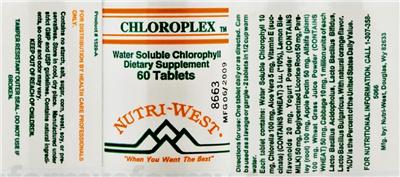
Contains no starch, salt, sugar, corn, yeast, soy, or preservatives.
Storage
Store in a cool, dry place.
General Statements
Manufactured under strict GMP and USP guidelines.
FOR DISTRIBUTION BY HEALTH CARE PROFESSIONALS ONLY.
Water Soluble Chlorophyll
8663 MFG06/2009
"When You Want The Best"
Contains natural ingredients, so color and odor may vary.
Suggested/Recommended/Usage/Directions
Directions for use: One tablet daily or as directed. Can be used as a lavage or gargle - 2 tablets in 1/2 cup warm water.
General
Product # 1520-A
Precautions
KEEP OUT OF REACH OF CHILDREN.
TAMPER RESISTANT OUTER SEAL - DO NOT USE IF BROKEN.
FDA Statement of Identity
Dietary Supplement
Is this label outdated? Report a formula or label change and our pharmacy team will review it.
Chloroplex by Nutri-West label
The label scan from the NIH Dietary Supplement Label Database. Tap to enlarge.
Label images are published by the NIH Dietary Supplement Label Database for the version of this product on file. Always read your actual product label.
View the full label (PDF)The Ingredients in Chloroplex by Nutri-West
These are the 15 active ingredients this product is made of. Select any to open its full monograph.
Serving size1 Tablet(s) Dosage formTablet Or Pill Amounts shown are per serving.
Most supplement products combine several ingredients, and a medication can interact with the product through any one of them. Each ingredient below shows whether it has known drug interactions.
Aloe vera
Interacts with461 drugs
Aloe vera gel is widely used on the skin for minor burns and irritation, and some research suggests it may help. Aloe latex (the yellow part) is a str...
Aloe vera monograph & interactionsChlorella
Interacts with337 drugs
Chlorella is a nutrient-rich freshwater green algae taken as a supplement for general wellness, immune support, and 'detox.' Some small studies sugges...
Chlorella monograph & interactionsLemon Bioflavonoids
Interacts with1 drug
Lemon is a common citrus fruit that is a good source of vitamin C and citric acid, and it is widely used in food, drinks, and home remedies. While it...
Lemon Bioflavonoids monograph & interactionsApple Pectin
Interacts with23 drugs
Pectin is a natural soluble fiber found in fruits like apples and citrus, and it is widely used in foods and as a fiber supplement. It may modestly he...
Apple Pectin monograph & interactionsParsley
Interacts with443 drugs
Parsley is a popular culinary herb that is safe to eat in normal food amounts and is a good source of vitamins K and C. It is traditionally used as a...
Parsley monograph & interactionsCabbage
Interacts with325 drugs
Cabbage is a nutritious, low-calorie vegetable that is safe to eat as food and is sometimes applied to the skin as a leaf wrap for breast engorgement...
Cabbage monograph & interactionsVitamin E
Interacts with764 drugs
Vitamin E is an essential fat-soluble vitamin and antioxidant that most people get in adequate amounts from a normal diet. Supplements can help correc...
Vitamin E monograph & interactionsAlfalfa
Interacts with583 drugs
Alfalfa is a nutrient-rich legume that people use for high cholesterol, menopause symptoms, and general wellness, but solid human evidence for most of...
Alfalfa monograph & interactionsWater Soluble Chlorophyll
Interacts with337 drugs
Chlorophyll is the green pigment found in plants and algae, and supplements often use a stable form called chlorophyllin. It is most studied for reduc...
Water Soluble Chlorophyll monograph & interactionsYogurt Powder
Interacts with22 drugs
Yogurt is a fermented dairy food that often contains live bacteria (probiotics) and provides protein, calcium, and other nutrients. For most healthy p...
Yogurt Powder monograph & interactionsDeglycyrrhized Licorice
Interacts with1,040 drugs
Licorice root is a traditional remedy used for sore throats, coughs, and digestive complaints, but solid human evidence is limited for most uses. Regu...
Deglycyrrhized Licorice monograph & interactionsWheat Grass Juice Powder
No knowninteractions
Couch grass is a common lawn weed whose rhizome has long been used in traditional European herbal medicine, mainly for urinary and bladder complaints....
Wheat Grass Juice Powder monograph & interactionsLacto Bacillus Acidopholus
Interacts with182 drugs
Lactobacillus acidophilus is a 'friendly' bacterium used as a probiotic to support gut and vaginal health. It is generally well tolerated in healthy p...
Lacto Bacillus Acidopholus monograph & interactionsLacto Bacillus Bifidus
Lacto Bacillus Bulgaricus
Interacts with182 drugs
Lactobacillus delbrueckii is a 'friendly' bacterium used in food fermentation and sold as a probiotic, often as part of multi-strain products. It is g...
Lacto Bacillus Bulgaricus monograph & interactionsOther (inactive) ingredients: Natural Orange flavor. These complete the product’s ingredient list but are not active constituents.
Chloroplex by Nutri-West Drug Interactions
HelloPharmacist Interaction Report
Chloroplex by Nutri-West contains 15 ingredients, several of which interact with medications.
The most serious concern is aloe vera, which carries a Major-severity interaction with digoxin (a heart medication). Overuse of aloe can deplete potassium, raising the risk of digoxin toxicity.
Read the full breakdown — every affected drug type, severity by severity
Aloe and alfalfa both interact with warfarin (a blood thinner) at Moderate severity—aloe's laxative effects can increase bleeding risk, while alfalfa's high vitamin K content can reduce warfarin's effectiveness. Several ingredients—aloe, chlorella, parsley, cabbage, and vitamin E—interact with blood thinners or antiplatelet drugs at Moderate severity, all raising bleeding risk.
Aloe, parsley, cabbage, and alfalfa may also lower blood sugar (hypoglycemia) when taken with diabetes medications at Moderate severity; monitor glucose closely if you take those drugs.
Other Moderate interactions include aloe with water-pill (diuretic) drugs and stimulant laxatives; parsley with sedatives like pentobarbital and the immunosuppressant sirolimus; cabbage with acetaminophen and the anxiety medication oxazepam; vitamin E with certain chemotherapy drugs; yogurt with antibiotics like ciprofloxacin and tetracyclines; licorice with heart and cancer medications; and Lactobacillus acidophilus with antibiotics. Chlorella, lemon bioflavonoids, apple pectin, water-soluble chlorophyll, and deglycyrrhized licorice carry additional Moderate interactions with specific drug types.
Minor interactions exist with vitamin E and niacin, lemon bioflavonoids and itraconazole, and yogurt and nilotinib.
Although these interactions span 1,518 individual medications, we could not check several ingredients—Lacto Bacillus Bifidus and wheat grass juice powder—for interaction data. Use the medication checker below to search your exact drugs before starting this product.
Check your own medications below · Editorial policy · How we use AI
Want to check YOUR meds against Chloroplex?
Ask about interactions with your drugs in plain English — “Can I take it with lisinopril?” — and we find you the answer in seconds, ingredient by ingredient.
Go to the checkerIngredients driving the most interactions
Individual Drug Interactions
The ingredients in Chloroplex interact with 1,538 drugs. Click any drug to see the details.
13 of the 15 ingredients in Chloroplex interact with drugs. Each result below shows which ingredient is responsible. Deglycyrrhized Licorice Vitamin E Alfalfa Aloe vera Parsley Chlorella Water Soluble Chlorophyll Cabbage Lacto Bacillus Acidopholus Lacto Bacillus Bulgaricus Apple Pectin Yogurt Powder Lemon Bioflavonoids
DigoxinDigitek, Lanoxicaps, Lanoxin
How Digoxin interacts with Chloroplex — through 4 ingredients. Tap an ingredient for the detail:
Aloe VeraDigoxin (lanoxin) Major
Interaction Summary
Theoretically, aloe latex might increase the risk of adverse effects when taken with cardiac glycosides.
Read the full Aloe Vera + Digoxin interactionDeglycyrrhized LicoriceDigoxin (lanoxin), P-glycoprotein Substrates Moderate
Interaction Summary
Theoretically, concomitant use of licorice with digoxin might increase the risk of cardiac toxicity.
Read the full Deglycyrrhized Licorice + Digoxin interactionCabbageGlucuronidated Drugs Moderate
Interaction Summary
Theoretically, cabbage might increase clearance and decrease the effects of drugs metabolized through glucuronide conjugation.
Read the full Cabbage + Digoxin interactionApple PectinDigoxin (lanoxin) Moderate
Interaction Summary
Theoretically, pectin might reduce the absorption of digoxin, potentially decreasing its effectiveness.
Read the full Apple Pectin + Digoxin interactionWarfarinWarfarin
How Warfarin interacts with Chloroplex — through 7 ingredients. Tap an ingredient for the detail:
AlfalfaWarfarin (coumadin) Major
Interaction Summary
Theoretically, alfalfa might reduce the anticoagulant activity of warfarin.
Read the full Alfalfa + Warfarin interactionVitamin EAnticoagulant/antiplatelet Drugs, Warfarin (coumadin) +1 Moderate
Interaction Summary
Concomitant use of vitamin E and anticoagulant or antiplatelet agents might increase the risk of bleeding.
Read the full Vitamin E + Warfarin interactionChlorellaWarfarin (coumadin) Moderate
Interaction Summary
Theoretically, chlorella might reduce the clinical effects of warfarin.
Read the full Chlorella + Warfarin interactionDeglycyrrhized LicoriceCytochrome P450 3a4 (cyp3a4) Substrates, Warfarin (coumadin) +4 Moderate
Interaction Summary
Theoretically, licorice might increase or decrease levels of drugs metabolized by CYP3A4.
Read the full Deglycyrrhized Licorice + Warfarin interactionAloe VeraAnticoagulant/antiplatelet Drugs, Warfarin (coumadin) +1 Moderate
Interaction Summary
Theoretically, aloe gel might increase the risk of bleeding when taken with anticoagulant or antiplatelet drugs.
Read the full Aloe Vera + Warfarin interactionCabbageWarfarin (coumadin), Cytochrome P450 1a2 (cyp1a2) Substrates Moderate
Interaction Summary
Theoretically, cabbage might decrease the anticoagulant effects of warfarin.
Read the full Cabbage + Warfarin interactionParsleyCytochrome P450 1a2 (cyp1a2) Substrates, Anticoagulant/antiplatelet Drugs +1 Moderate
Interaction Summary
Theoretically, parsley might increase serum levels of CYP1A2 substrates.
Read the full Parsley + Warfarin interactionWarfarin SodiumCoumadin, Panwarfin, Sofarin
How Warfarin Sodium interacts with Chloroplex — through 7 ingredients. Tap an ingredient for the detail:
AlfalfaWarfarin (coumadin) Major
Interaction Summary
Theoretically, alfalfa might reduce the anticoagulant activity of warfarin.
Read the full Alfalfa + Warfarin Sodium interactionParsleyWarfarin (coumadin), Cytochrome P450 1a2 (cyp1a2) Substrates +1 Moderate
Interaction Summary
Theoretically, large amounts of parsley leaf and root might decrease the effects of warfarin.
Read the full Parsley + Warfarin Sodium interactionDeglycyrrhized LicoriceCytochrome P450 3a4 (cyp3a4) Substrates, Cytochrome P450 2c19 (cyp2c19) Substrates +4 Moderate
Interaction Summary
Theoretically, licorice might increase or decrease levels of drugs metabolized by CYP3A4.
Read the full Deglycyrrhized Licorice + Warfarin Sodium interactionChlorellaWarfarin (coumadin) Moderate
Interaction Summary
Theoretically, chlorella might reduce the clinical effects of warfarin.
Read the full Chlorella + Warfarin Sodium interactionVitamin ECytochrome P450 3a4 (cyp3a4) Substrates, Anticoagulant/antiplatelet Drugs +1 Moderate
Interaction Summary
Theoretically, vitamin E might induce metabolism of CYP3A4, possibly reducing the levels CYP3A4 substrates.
Read the full Vitamin E + Warfarin Sodium interactionAloe VeraWarfarin (coumadin), Cytochrome P450 1a2 (cyp1a2) Substrates +1 Moderate
Interaction Summary
Theoretically, aloe latex might increase the risk of bleeding when taken with warfarin.
Read the full Aloe Vera + Warfarin Sodium interactionCabbageWarfarin (coumadin), Cytochrome P450 1a2 (cyp1a2) Substrates Moderate
Interaction Summary
Theoretically, cabbage might decrease the anticoagulant effects of warfarin.
Read the full Cabbage + Warfarin Sodium interaction6-mercaptopurinePurinethol
How 6-mercaptopurine interacts with Chloroplex — through 1 ingredient. Tap an ingredient for the detail:
AlfalfaImmunosuppressants Moderate
Interaction Summary
Theoretically, alfalfa might decrease the efficacy of immunosuppressive therapy.
Read the full Alfalfa + 6-mercaptopurine interactionAdo-trastuzumab EmtansineKadcyla
How Ado-trastuzumab Emtansine interacts with Chloroplex — through 2 ingredients. Tap an ingredient for the detail:
Vitamin ECytochrome P450 3a4 (cyp3a4) Substrates Moderate
Interaction Summary
Theoretically, vitamin E might induce metabolism of CYP3A4, possibly reducing the levels CYP3A4 substrates.
Read the full Vitamin E + Ado-trastuzumab Emtansine interactionDeglycyrrhized LicoriceCytochrome P450 3a4 (cyp3a4) Substrates Moderate
Interaction Summary
Theoretically, licorice might increase or decrease levels of drugs metabolized by CYP3A4.
Read the full Deglycyrrhized Licorice + Ado-trastuzumab Emtansine interactionAbciximabReoPro
How Abciximab interacts with Chloroplex — through 3 ingredients. Tap an ingredient for the detail:
Aloe VeraAnticoagulant/antiplatelet Drugs Moderate
Interaction Summary
Theoretically, aloe gel might increase the risk of bleeding when taken with anticoagulant or antiplatelet drugs.
Read the full Aloe Vera + Abciximab interactionVitamin EAnticoagulant/antiplatelet Drugs Moderate
Interaction Summary
Concomitant use of vitamin E and anticoagulant or antiplatelet agents might increase the risk of bleeding.
Read the full Vitamin E + Abciximab interactionParsleyAnticoagulant/antiplatelet Drugs Moderate
Interaction Summary
Theoretically, parsley might increase the risk of bleeding when taken with anticoagulant or antiplatelet drugs.
Read the full Parsley + Abciximab interactionAbemaciclibVerzenio
How Abemaciclib interacts with Chloroplex — through 2 ingredients. Tap an ingredient for the detail:
Vitamin ECytochrome P450 3a4 (cyp3a4) Substrates Moderate
Interaction Summary
Theoretically, vitamin E might induce metabolism of CYP3A4, possibly reducing the levels CYP3A4 substrates.
Read the full Vitamin E + Abemaciclib interactionDeglycyrrhized LicoriceCytochrome P450 3a4 (cyp3a4) Substrates Moderate
Interaction Summary
Theoretically, licorice might increase or decrease levels of drugs metabolized by CYP3A4.
Read the full Deglycyrrhized Licorice + Abemaciclib interactionAbiraterone
How Abiraterone interacts with Chloroplex — through 2 ingredients. Tap an ingredient for the detail:
Deglycyrrhized LicoriceCytochrome P450 3a4 (cyp3a4) Substrates Moderate
Interaction Summary
Theoretically, licorice might increase or decrease levels of drugs metabolized by CYP3A4.
Read the full Deglycyrrhized Licorice + Abiraterone interactionVitamin ECytochrome P450 3a4 (cyp3a4) Substrates Moderate
Interaction Summary
Theoretically, vitamin E might induce metabolism of CYP3A4, possibly reducing the levels CYP3A4 substrates.
Read the full Vitamin E + Abiraterone interactionAbiraterone AcetateYonsa, Zytiga
How Abiraterone Acetate interacts with Chloroplex — through 2 ingredients. Tap an ingredient for the detail:
Vitamin ECytochrome P450 3a4 (cyp3a4) Substrates Moderate
Interaction Summary
Theoretically, vitamin E might induce metabolism of CYP3A4, possibly reducing the levels CYP3A4 substrates.
Read the full Vitamin E + Abiraterone Acetate interactionDeglycyrrhized LicoriceCytochrome P450 3a4 (cyp3a4) Substrates Moderate
Interaction Summary
Theoretically, licorice might increase or decrease levels of drugs metabolized by CYP3A4.
Read the full Deglycyrrhized Licorice + Abiraterone Acetate interactionAbrocitinibCibinqo
How Abrocitinib interacts with Chloroplex — through 5 ingredients. Tap an ingredient for the detail:
ParsleyAnticoagulant/antiplatelet Drugs Moderate
Interaction Summary
Theoretically, parsley might increase the risk of bleeding when taken with anticoagulant or antiplatelet drugs.
Read the full Parsley + Abrocitinib interactionDeglycyrrhized LicoriceCytochrome P450 2c9 (cyp2c9) Substrates, Cytochrome P450 2c19 (cyp2c19) Substrates Moderate
Interaction Summary
Theoretically, licorice might increase or decrease levels of drugs metabolized by CYP2C9.
Read the full Deglycyrrhized Licorice + Abrocitinib interactionAloe VeraAnticoagulant/antiplatelet Drugs Moderate
Interaction Summary
Theoretically, aloe gel might increase the risk of bleeding when taken with anticoagulant or antiplatelet drugs.
Read the full Aloe Vera + Abrocitinib interactionAlfalfaImmunosuppressants Moderate
Interaction Summary
Theoretically, alfalfa might decrease the efficacy of immunosuppressive therapy.
Read the full Alfalfa + Abrocitinib interactionVitamin EAnticoagulant/antiplatelet Drugs Moderate
Interaction Summary
Concomitant use of vitamin E and anticoagulant or antiplatelet agents might increase the risk of bleeding.
Read the full Vitamin E + Abrocitinib interactionAcalabrutinibCalquence
How Acalabrutinib interacts with Chloroplex — through 2 ingredients. Tap an ingredient for the detail:
Vitamin ECytochrome P450 3a4 (cyp3a4) Substrates Moderate
Interaction Summary
Theoretically, vitamin E might induce metabolism of CYP3A4, possibly reducing the levels CYP3A4 substrates.
Read the full Vitamin E + Acalabrutinib interactionDeglycyrrhized LicoriceCytochrome P450 3a4 (cyp3a4) Substrates, P-glycoprotein Substrates Moderate
Interaction Summary
Theoretically, licorice might increase or decrease levels of drugs metabolized by CYP3A4.
Read the full Deglycyrrhized Licorice + Acalabrutinib interactionAcarboseGlucobay, Prandase, Precose
How Acarbose interacts with Chloroplex — through 4 ingredients. Tap an ingredient for the detail:
ParsleyAntidiabetes Drugs Moderate
Interaction Summary
Theoretically, parsley might increase the risk of hypoglycemia when taken with antidiabetes drugs.
Read the full Parsley + Acarbose interactionAlfalfaAntidiabetes Drugs Moderate
Interaction Summary
Theoretically, alfalfa might increase the risk of hypoglycemia when taken with antidiabetes drugs.
Read the full Alfalfa + Acarbose interactionCabbageAntidiabetes Drugs Moderate
Interaction Summary
Theoretically, cabbage might increase the risk of hypoglycemia when taken with antidiabetes drugs.
Read the full Cabbage + Acarbose interactionAloe VeraAntidiabetes Drugs Moderate
Interaction Summary
Aloe might increase the risk of hypoglycemia when taken with antidiabetes drugs.
Read the full Aloe Vera + Acarbose interactionAcebutololRhotral, Sectral
How Acebutolol interacts with Chloroplex — through 1 ingredient. Tap an ingredient for the detail:
Deglycyrrhized LicoriceAntihypertensive Drugs Moderate
Interaction Summary
Theoretically, licorice might reduce the effects of antihypertensive drugs.
Read the full Deglycyrrhized Licorice + Acebutolol interactionAcenocoumarolSintrom
How Acenocoumarol interacts with Chloroplex — through 3 ingredients. Tap an ingredient for the detail:
ParsleyAnticoagulant/antiplatelet Drugs Moderate
Interaction Summary
Theoretically, parsley might increase the risk of bleeding when taken with anticoagulant or antiplatelet drugs.
Read the full Parsley + Acenocoumarol interactionVitamin EAnticoagulant/antiplatelet Drugs Moderate
Interaction Summary
Concomitant use of vitamin E and anticoagulant or antiplatelet agents might increase the risk of bleeding.
Read the full Vitamin E + Acenocoumarol interactionAloe VeraAnticoagulant/antiplatelet Drugs Moderate
Interaction Summary
Theoretically, aloe gel might increase the risk of bleeding when taken with anticoagulant or antiplatelet drugs.
Read the full Aloe Vera + Acenocoumarol interactionAcepromazineAtravet
How Acepromazine interacts with Chloroplex — through 3 ingredients. Tap an ingredient for the detail:
AlfalfaPhotosensitizing Drugs Moderate
Interaction Summary
Theoretically, concomitant use of alfalfa with photosensitizing drugs might have additive effects.
Read the full Alfalfa + Acepromazine interactionWater Soluble ChlorophyllPhotosensitizing Drugs Moderate
Interaction Summary
Theoretically, concomitant use of chlorophyll with photosensitizing drugs may have additive effects.
Read the full Water Soluble Chlorophyll + Acepromazine interactionChlorellaPhotosensitizing Drugs Moderate
Interaction Summary
Theoretically, chlorella might have additive effects with photosensitizing drugs.
Read the full Chlorella + Acepromazine interactionAcetaminophenChildren's Tylenol, Children's Tylenol Meltaways, Tylenol, Tylenol Ex Strength
How Acetaminophen interacts with Chloroplex — through 4 ingredients. Tap an ingredient for the detail:
ParsleyCytochrome P450 1a2 (cyp1a2) Substrates Moderate
Interaction Summary
Theoretically, parsley might increase serum levels of CYP1A2 substrates.
Read the full Parsley + Acetaminophen interactionCabbageCytochrome P450 1a2 (cyp1a2) Substrates, Acetaminophen (tylenol, Others) +1 Moderate
Interaction Summary
Theoretically, cabbage might decrease levels of drugs metabolized by CYP1A2.
Read the full Cabbage + Acetaminophen interactionDeglycyrrhized LicoriceCytochrome P450 1a2 (cyp1a2) Substrates Minor
Interaction Summary
Theoretically, licorice might decrease the levels and clinical effects of CYP1A2 substrates.
Read the full Deglycyrrhized Licorice + Acetaminophen interactionAloe VeraCytochrome P450 1a2 (cyp1a2) Substrates Minor
Interaction Summary
Theoretically, aloe might decrease the levels and clinical effects of CYP1A2 substrates.
Read the full Aloe Vera + Acetaminophen interactionAcetaminophen, AspirinGemnisyn
How Acetaminophen, Aspirin interacts with Chloroplex — through 5 ingredients. Tap an ingredient for the detail:
Aloe VeraCytochrome P450 1a2 (cyp1a2) Substrates, Anticoagulant/antiplatelet Drugs Moderate
Interaction Summary
Theoretically, aloe might decrease the levels and clinical effects of CYP1A2 substrates.
Read the full Aloe Vera + Acetaminophen, Aspirin interactionCabbageCytochrome P450 1a2 (cyp1a2) Substrates, Glucuronidated Drugs +1 Moderate
Interaction Summary
Theoretically, cabbage might decrease levels of drugs metabolized by CYP1A2.
Read the full Cabbage + Acetaminophen, Aspirin interactionParsleyCytochrome P450 1a2 (cyp1a2) Substrates, Anticoagulant/antiplatelet Drugs +1 Moderate
Interaction Summary
Theoretically, parsley might increase serum levels of CYP1A2 substrates.
Read the full Parsley + Acetaminophen, Aspirin interactionVitamin EAnticoagulant/antiplatelet Drugs Moderate
Interaction Summary
Concomitant use of vitamin E and anticoagulant or antiplatelet agents might increase the risk of bleeding.
Read the full Vitamin E + Acetaminophen, Aspirin interactionDeglycyrrhized LicoriceCytochrome P450 1a2 (cyp1a2) Substrates Minor
Interaction Summary
Theoretically, licorice might decrease the levels and clinical effects of CYP1A2 substrates.
Read the full Deglycyrrhized Licorice + Acetaminophen, Aspirin interactionAcetaminophen, Aspirin, CaffeineExcedrin, Excedrin Extra Strength, Excedrin Migraine
How Acetaminophen, Aspirin, Caffeine interacts with Chloroplex — through 5 ingredients. Tap an ingredient for the detail:
Vitamin EAnticoagulant/antiplatelet Drugs, Cytochrome P450 3a4 (cyp3a4) Substrates Moderate
Interaction Summary
Concomitant use of vitamin E and anticoagulant or antiplatelet agents might increase the risk of bleeding.
Read the full Vitamin E + Acetaminophen, Aspirin, Caffeine interactionParsleyAspirin, Anticoagulant/antiplatelet Drugs +1 Moderate
Interaction Summary
Theoretically, aspirin might increase the severity of allergic reactions to parsley.
Read the full Parsley + Acetaminophen, Aspirin, Caffeine interactionDeglycyrrhized LicoriceCytochrome P450 3a4 (cyp3a4) Substrates, Cytochrome P450 1a2 (cyp1a2) Substrates Moderate
Interaction Summary
Theoretically, licorice might increase or decrease levels of drugs metabolized by CYP3A4.
Read the full Deglycyrrhized Licorice + Acetaminophen, Aspirin, Caffeine interactionCabbageAcetaminophen (tylenol, Others), Cytochrome P450 1a2 (cyp1a2) Substrates +1 Moderate
Interaction Summary
Cabbage might increase clearance and reduce the effects of acetaminophen.
Read the full Cabbage + Acetaminophen, Aspirin, Caffeine interactionAloe VeraAnticoagulant/antiplatelet Drugs, Cytochrome P450 1a2 (cyp1a2) Substrates Moderate
Interaction Summary
Theoretically, aloe gel might increase the risk of bleeding when taken with anticoagulant or antiplatelet drugs.
Read the full Aloe Vera + Acetaminophen, Aspirin, Caffeine interactionAcetaminophen, Brompheniramine, PhenylpropanolamineDimetapp Cold and Flu
How Acetaminophen, Brompheniramine, Phenylpropanolamine interacts with Chloroplex — through 7 ingredients. Tap an ingredient for the detail:
ChlorellaPhotosensitizing Drugs Moderate
Interaction Summary
Theoretically, chlorella might have additive effects with photosensitizing drugs.
Read the full Chlorella + Acetaminophen, Brompheniramine, Phenylpropanolamine interactionParsleyCytochrome P450 1a2 (cyp1a2) Substrates Moderate
Interaction Summary
Theoretically, parsley might increase serum levels of CYP1A2 substrates.
Read the full Parsley + Acetaminophen, Brompheniramine, Phenylpropanolamine interactionWater Soluble ChlorophyllPhotosensitizing Drugs Moderate
Interaction Summary
Theoretically, concomitant use of chlorophyll with photosensitizing drugs may have additive effects.
Read the full Water Soluble Chlorophyll + Acetaminophen, Brompheniramine, Phenylpropanolamine interactionCabbageGlucuronidated Drugs, Acetaminophen (tylenol, Others) +1 Moderate
Interaction Summary
Theoretically, cabbage might increase clearance and decrease the effects of drugs metabolized through glucuronide conjugation.
Read the full Cabbage + Acetaminophen, Brompheniramine, Phenylpropanolamine interactionAlfalfaPhotosensitizing Drugs Moderate
Interaction Summary
Theoretically, concomitant use of alfalfa with photosensitizing drugs might have additive effects.
Read the full Alfalfa + Acetaminophen, Brompheniramine, Phenylpropanolamine interactionDeglycyrrhized LicoriceCytochrome P450 1a2 (cyp1a2) Substrates Minor
Interaction Summary
Theoretically, licorice might decrease the levels and clinical effects of CYP1A2 substrates.
Read the full Deglycyrrhized Licorice + Acetaminophen, Brompheniramine, Phenylpropanolamine interactionAloe VeraCytochrome P450 1a2 (cyp1a2) Substrates Minor
Interaction Summary
Theoretically, aloe might decrease the levels and clinical effects of CYP1A2 substrates.
Read the full Aloe Vera + Acetaminophen, Brompheniramine, Phenylpropanolamine interactionAcetaminophen, ButalbitalAxocet, Bancap, Bucet, Butex Forte, Esgic CF, Orbivan CF +5 more
How Acetaminophen, Butalbital interacts with Chloroplex — through 4 ingredients. Tap an ingredient for the detail:
CabbageAcetaminophen (tylenol, Others), Glucuronidated Drugs +1 Moderate
Interaction Summary
Cabbage might increase clearance and reduce the effects of acetaminophen.
Read the full Cabbage + Acetaminophen, Butalbital interactionParsleyCytochrome P450 1a2 (cyp1a2) Substrates Moderate
Interaction Summary
Theoretically, parsley might increase serum levels of CYP1A2 substrates.
Read the full Parsley + Acetaminophen, Butalbital interactionAloe VeraCytochrome P450 1a2 (cyp1a2) Substrates Minor
Interaction Summary
Theoretically, aloe might decrease the levels and clinical effects of CYP1A2 substrates.
Read the full Aloe Vera + Acetaminophen, Butalbital interactionDeglycyrrhized LicoriceCytochrome P450 1a2 (cyp1a2) Substrates Minor
Interaction Summary
Theoretically, licorice might decrease the levels and clinical effects of CYP1A2 substrates.
Read the full Deglycyrrhized Licorice + Acetaminophen, Butalbital interactionAcetaminophen, Butalbital, CaffeineEsgic, Esgic Plus, Fiogesic, Fioricet, Repan, Tecnal +1 more
How Acetaminophen, Butalbital, Caffeine interacts with Chloroplex — through 5 ingredients. Tap an ingredient for the detail:
ParsleyCytochrome P450 1a2 (cyp1a2) Substrates Moderate
Interaction Summary
Theoretically, parsley might increase serum levels of CYP1A2 substrates.
Read the full Parsley + Acetaminophen, Butalbital, Caffeine interactionDeglycyrrhized LicoriceCytochrome P450 3a4 (cyp3a4) Substrates, Cytochrome P450 1a2 (cyp1a2) Substrates Moderate
Interaction Summary
Theoretically, licorice might increase or decrease levels of drugs metabolized by CYP3A4.
Read the full Deglycyrrhized Licorice + Acetaminophen, Butalbital, Caffeine interactionCabbageCytochrome P450 1a2 (cyp1a2) Substrates, Glucuronidated Drugs +1 Moderate
Interaction Summary
Theoretically, cabbage might decrease levels of drugs metabolized by CYP1A2.
Read the full Cabbage + Acetaminophen, Butalbital, Caffeine interactionVitamin ECytochrome P450 3a4 (cyp3a4) Substrates Moderate
Interaction Summary
Theoretically, vitamin E might induce metabolism of CYP3A4, possibly reducing the levels CYP3A4 substrates.
Read the full Vitamin E + Acetaminophen, Butalbital, Caffeine interactionAloe VeraCytochrome P450 1a2 (cyp1a2) Substrates Minor
Interaction Summary
Theoretically, aloe might decrease the levels and clinical effects of CYP1A2 substrates.
Read the full Aloe Vera + Acetaminophen, Butalbital, Caffeine interactionAcetaminophen, Butalbital, Caffeine, CodeineEsgic with Codeine, Fioricet w/ Codeine
How Acetaminophen, Butalbital, Caffeine, Codeine interacts with Chloroplex — through 5 ingredients. Tap an ingredient for the detail:
Vitamin ECytochrome P450 3a4 (cyp3a4) Substrates Moderate
Interaction Summary
Theoretically, vitamin E might induce metabolism of CYP3A4, possibly reducing the levels CYP3A4 substrates.
Read the full Vitamin E + Acetaminophen, Butalbital, Caffeine, Codeine interactionDeglycyrrhized LicoriceCytochrome P450 1a2 (cyp1a2) Substrates, Cytochrome P450 3a4 (cyp3a4) Substrates Moderate
Interaction Summary
Theoretically, licorice might decrease the levels and clinical effects of CYP1A2 substrates.
Read the full Deglycyrrhized Licorice + Acetaminophen, Butalbital, Caffeine, Codeine interactionParsleyCytochrome P450 1a2 (cyp1a2) Substrates Moderate
Interaction Summary
Theoretically, parsley might increase serum levels of CYP1A2 substrates.
Read the full Parsley + Acetaminophen, Butalbital, Caffeine, Codeine interactionCabbageGlucuronidated Drugs, Acetaminophen (tylenol, Others) +1 Moderate
Interaction Summary
Theoretically, cabbage might increase clearance and decrease the effects of drugs metabolized through glucuronide conjugation.
Read the full Cabbage + Acetaminophen, Butalbital, Caffeine, Codeine interactionAloe VeraCytochrome P450 1a2 (cyp1a2) Substrates Minor
Interaction Summary
Theoretically, aloe might decrease the levels and clinical effects of CYP1A2 substrates.
Read the full Aloe Vera + Acetaminophen, Butalbital, Caffeine, Codeine interactionAcetaminophen, Butalbital, CodeineBancap w/ Codeine
How Acetaminophen, Butalbital, Codeine interacts with Chloroplex — through 4 ingredients. Tap an ingredient for the detail:
CabbageCytochrome P450 1a2 (cyp1a2) Substrates, Glucuronidated Drugs +1 Moderate
Interaction Summary
Theoretically, cabbage might decrease levels of drugs metabolized by CYP1A2.
Read the full Cabbage + Acetaminophen, Butalbital, Codeine interactionParsleyCytochrome P450 1a2 (cyp1a2) Substrates Moderate
Interaction Summary
Theoretically, parsley might increase serum levels of CYP1A2 substrates.
Read the full Parsley + Acetaminophen, Butalbital, Codeine interactionAloe VeraCytochrome P450 1a2 (cyp1a2) Substrates Minor
Interaction Summary
Theoretically, aloe might decrease the levels and clinical effects of CYP1A2 substrates.
Read the full Aloe Vera + Acetaminophen, Butalbital, Codeine interactionDeglycyrrhized LicoriceCytochrome P450 1a2 (cyp1a2) Substrates Minor
Interaction Summary
Theoretically, licorice might decrease the levels and clinical effects of CYP1A2 substrates.
Read the full Deglycyrrhized Licorice + Acetaminophen, Butalbital, Codeine interactionAcetaminophen, Butalbital, Codeine PhosphatePhrenilin #3
How Acetaminophen, Butalbital, Codeine Phosphate interacts with Chloroplex — through 4 ingredients. Tap an ingredient for the detail:
ParsleyCytochrome P450 1a2 (cyp1a2) Substrates Moderate
Interaction Summary
Theoretically, parsley might increase serum levels of CYP1A2 substrates.
Read the full Parsley + Acetaminophen, Butalbital, Codeine Phosphate interactionCabbageGlucuronidated Drugs, Acetaminophen (tylenol, Others) +1 Moderate
Interaction Summary
Theoretically, cabbage might increase clearance and decrease the effects of drugs metabolized through glucuronide conjugation.
Read the full Cabbage + Acetaminophen, Butalbital, Codeine Phosphate interactionAloe VeraCytochrome P450 1a2 (cyp1a2) Substrates Minor
Interaction Summary
Theoretically, aloe might decrease the levels and clinical effects of CYP1A2 substrates.
Read the full Aloe Vera + Acetaminophen, Butalbital, Codeine Phosphate interactionDeglycyrrhized LicoriceCytochrome P450 1a2 (cyp1a2) Substrates Minor
Interaction Summary
Theoretically, licorice might decrease the levels and clinical effects of CYP1A2 substrates.
Read the full Deglycyrrhized Licorice + Acetaminophen, Butalbital, Codeine Phosphate interactionAcetaminophen, Caffeine, Chlorpheniramine, Hydrocodone, PhenylephrineHycomine Compound
How Acetaminophen, Caffeine, Chlorpheniramine, Hydrocodone, Phenylephrine interacts with Chloroplex — through 8 ingredients. Tap an ingredient for the detail:
Deglycyrrhized LicoriceCytochrome P450 1a2 (cyp1a2) Substrates, Cytochrome P450 3a4 (cyp3a4) Substrates Moderate
Interaction Summary
Theoretically, licorice might decrease the levels and clinical effects of CYP1A2 substrates.
Read the full Deglycyrrhized Licorice + Acetaminophen, Caffeine, Chlorpheniramine, Hydrocodone, Phenylephrine interactionVitamin ECytochrome P450 3a4 (cyp3a4) Substrates Moderate
Interaction Summary
Theoretically, vitamin E might induce metabolism of CYP3A4, possibly reducing the levels CYP3A4 substrates.
Read the full Vitamin E + Acetaminophen, Caffeine, Chlorpheniramine, Hydrocodone, Phenylephrine interactionChlorellaPhotosensitizing Drugs Moderate
Interaction Summary
Theoretically, chlorella might have additive effects with photosensitizing drugs.
Read the full Chlorella + Acetaminophen, Caffeine, Chlorpheniramine, Hydrocodone, Phenylephrine interactionParsleyCytochrome P450 1a2 (cyp1a2) Substrates Moderate
Interaction Summary
Theoretically, parsley might increase serum levels of CYP1A2 substrates.
Read the full Parsley + Acetaminophen, Caffeine, Chlorpheniramine, Hydrocodone, Phenylephrine interactionWater Soluble ChlorophyllPhotosensitizing Drugs Moderate
Interaction Summary
Theoretically, concomitant use of chlorophyll with photosensitizing drugs may have additive effects.
Read the full Water Soluble Chlorophyll + Acetaminophen, Caffeine, Chlorpheniramine, Hydrocodone, Phenylephrine interactionCabbageGlucuronidated Drugs, Acetaminophen (tylenol, Others) +1 Moderate
Interaction Summary
Theoretically, cabbage might increase clearance and decrease the effects of drugs metabolized through glucuronide conjugation.
Read the full Cabbage + Acetaminophen, Caffeine, Chlorpheniramine, Hydrocodone, Phenylephrine interactionAlfalfaPhotosensitizing Drugs Moderate
Interaction Summary
Theoretically, concomitant use of alfalfa with photosensitizing drugs might have additive effects.
Read the full Alfalfa + Acetaminophen, Caffeine, Chlorpheniramine, Hydrocodone, Phenylephrine interactionAloe VeraCytochrome P450 1a2 (cyp1a2) Substrates Minor
Interaction Summary
Theoretically, aloe might decrease the levels and clinical effects of CYP1A2 substrates.
Read the full Aloe Vera + Acetaminophen, Caffeine, Chlorpheniramine, Hydrocodone, Phenylephrine interactionAcetaminophen, Caffeine, CodeineGesic C15, Gesic C30, Gesic C8, Lenoltec 1, Lenoltec 2, Lenoltec 3 +1 more
How Acetaminophen, Caffeine, Codeine interacts with Chloroplex — through 5 ingredients. Tap an ingredient for the detail:
CabbageGlucuronidated Drugs, Cytochrome P450 1a2 (cyp1a2) Substrates +1 Moderate
Interaction Summary
Theoretically, cabbage might increase clearance and decrease the effects of drugs metabolized through glucuronide conjugation.
Read the full Cabbage + Acetaminophen, Caffeine, Codeine interactionDeglycyrrhized LicoriceCytochrome P450 1a2 (cyp1a2) Substrates, Cytochrome P450 3a4 (cyp3a4) Substrates Moderate
Interaction Summary
Theoretically, licorice might decrease the levels and clinical effects of CYP1A2 substrates.
Read the full Deglycyrrhized Licorice + Acetaminophen, Caffeine, Codeine interactionVitamin ECytochrome P450 3a4 (cyp3a4) Substrates Moderate
Interaction Summary
Theoretically, vitamin E might induce metabolism of CYP3A4, possibly reducing the levels CYP3A4 substrates.
Read the full Vitamin E + Acetaminophen, Caffeine, Codeine interactionParsleyCytochrome P450 1a2 (cyp1a2) Substrates Moderate
Interaction Summary
Theoretically, parsley might increase serum levels of CYP1A2 substrates.
Read the full Parsley + Acetaminophen, Caffeine, Codeine interactionAloe VeraCytochrome P450 1a2 (cyp1a2) Substrates Minor
Interaction Summary
Theoretically, aloe might decrease the levels and clinical effects of CYP1A2 substrates.
Read the full Aloe Vera + Acetaminophen, Caffeine, Codeine interactionAcetaminophen, Caffeine, Codeine, SalicylamideCodalan No.1, Codalan No.2, Codalan No.3
How Acetaminophen, Caffeine, Codeine, Salicylamide interacts with Chloroplex — through 5 ingredients. Tap an ingredient for the detail:
ParsleyCytochrome P450 1a2 (cyp1a2) Substrates Moderate
Interaction Summary
Theoretically, parsley might increase serum levels of CYP1A2 substrates.
Read the full Parsley + Acetaminophen, Caffeine, Codeine, Salicylamide interactionDeglycyrrhized LicoriceCytochrome P450 3a4 (cyp3a4) Substrates, Cytochrome P450 1a2 (cyp1a2) Substrates Moderate
Interaction Summary
Theoretically, licorice might increase or decrease levels of drugs metabolized by CYP3A4.
Read the full Deglycyrrhized Licorice + Acetaminophen, Caffeine, Codeine, Salicylamide interactionCabbageGlucuronidated Drugs, Acetaminophen (tylenol, Others) +1 Moderate
Interaction Summary
Theoretically, cabbage might increase clearance and decrease the effects of drugs metabolized through glucuronide conjugation.
Read the full Cabbage + Acetaminophen, Caffeine, Codeine, Salicylamide interactionVitamin ECytochrome P450 3a4 (cyp3a4) Substrates Moderate
Interaction Summary
Theoretically, vitamin E might induce metabolism of CYP3A4, possibly reducing the levels CYP3A4 substrates.
Read the full Vitamin E + Acetaminophen, Caffeine, Codeine, Salicylamide interactionAloe VeraCytochrome P450 1a2 (cyp1a2) Substrates Minor
Interaction Summary
Theoretically, aloe might decrease the levels and clinical effects of CYP1A2 substrates.
Read the full Aloe Vera + Acetaminophen, Caffeine, Codeine, Salicylamide interactionAcetaminophen, Caffeine, DihydrocodeineDHC Plus, Panlor DC, Panlor SS
How Acetaminophen, Caffeine, Dihydrocodeine interacts with Chloroplex — through 5 ingredients. Tap an ingredient for the detail:
Deglycyrrhized LicoriceCytochrome P450 1a2 (cyp1a2) Substrates, Cytochrome P450 3a4 (cyp3a4) Substrates Moderate
Interaction Summary
Theoretically, licorice might decrease the levels and clinical effects of CYP1A2 substrates.
Read the full Deglycyrrhized Licorice + Acetaminophen, Caffeine, Dihydrocodeine interactionVitamin ECytochrome P450 3a4 (cyp3a4) Substrates Moderate
Interaction Summary
Theoretically, vitamin E might induce metabolism of CYP3A4, possibly reducing the levels CYP3A4 substrates.
Read the full Vitamin E + Acetaminophen, Caffeine, Dihydrocodeine interactionParsleyCytochrome P450 1a2 (cyp1a2) Substrates Moderate
Interaction Summary
Theoretically, parsley might increase serum levels of CYP1A2 substrates.
Read the full Parsley + Acetaminophen, Caffeine, Dihydrocodeine interactionCabbageGlucuronidated Drugs, Acetaminophen (tylenol, Others) +1 Moderate
Interaction Summary
Theoretically, cabbage might increase clearance and decrease the effects of drugs metabolized through glucuronide conjugation.
Read the full Cabbage + Acetaminophen, Caffeine, Dihydrocodeine interactionAloe VeraCytochrome P450 1a2 (cyp1a2) Substrates Minor
Interaction Summary
Theoretically, aloe might decrease the levels and clinical effects of CYP1A2 substrates.
Read the full Aloe Vera + Acetaminophen, Caffeine, Dihydrocodeine interactionAcetaminophen, Caffeine, IsomethepteneMigralam
How Acetaminophen, Caffeine, Isometheptene interacts with Chloroplex — through 5 ingredients. Tap an ingredient for the detail:
CabbageCytochrome P450 1a2 (cyp1a2) Substrates, Glucuronidated Drugs +1 Moderate
Interaction Summary
Theoretically, cabbage might decrease levels of drugs metabolized by CYP1A2.
Read the full Cabbage + Acetaminophen, Caffeine, Isometheptene interactionVitamin ECytochrome P450 3a4 (cyp3a4) Substrates Moderate
Interaction Summary
Theoretically, vitamin E might induce metabolism of CYP3A4, possibly reducing the levels CYP3A4 substrates.
Read the full Vitamin E + Acetaminophen, Caffeine, Isometheptene interactionDeglycyrrhized LicoriceCytochrome P450 1a2 (cyp1a2) Substrates, Cytochrome P450 3a4 (cyp3a4) Substrates Moderate
Interaction Summary
Theoretically, licorice might decrease the levels and clinical effects of CYP1A2 substrates.
Read the full Deglycyrrhized Licorice + Acetaminophen, Caffeine, Isometheptene interactionParsleyCytochrome P450 1a2 (cyp1a2) Substrates Moderate
Interaction Summary
Theoretically, parsley might increase serum levels of CYP1A2 substrates.
Read the full Parsley + Acetaminophen, Caffeine, Isometheptene interactionAloe VeraCytochrome P450 1a2 (cyp1a2) Substrates Minor
Interaction Summary
Theoretically, aloe might decrease the levels and clinical effects of CYP1A2 substrates.
Read the full Aloe Vera + Acetaminophen, Caffeine, Isometheptene interactionAcetaminophen, Caffeine, PyrilamineMidol Max Strength Menstrual
How Acetaminophen, Caffeine, Pyrilamine interacts with Chloroplex — through 5 ingredients. Tap an ingredient for the detail:
Deglycyrrhized LicoriceCytochrome P450 3a4 (cyp3a4) Substrates, Cytochrome P450 1a2 (cyp1a2) Substrates +1 Moderate
Interaction Summary
Theoretically, licorice might increase or decrease levels of drugs metabolized by CYP3A4.
Read the full Deglycyrrhized Licorice + Acetaminophen, Caffeine, Pyrilamine interactionParsleyDiuretic Drugs, Cytochrome P450 1a2 (cyp1a2) Substrates Moderate
Interaction Summary
Theoretically, parsley might enhance or interfere with the effects of diuretic drugs.
Read the full Parsley + Acetaminophen, Caffeine, Pyrilamine interactionCabbageGlucuronidated Drugs, Acetaminophen (tylenol, Others) +1 Moderate
Interaction Summary
Theoretically, cabbage might increase clearance and decrease the effects of drugs metabolized through glucuronide conjugation.
Read the full Cabbage + Acetaminophen, Caffeine, Pyrilamine interactionAloe VeraDiuretic Drugs, Cytochrome P450 1a2 (cyp1a2) Substrates Moderate
Interaction Summary
Theoretically, aloe latex might increase the risk of hypokalemia when taken with diuretic drugs.
Read the full Aloe Vera + Acetaminophen, Caffeine, Pyrilamine interactionVitamin ECytochrome P450 3a4 (cyp3a4) Substrates Moderate
Interaction Summary
Theoretically, vitamin E might induce metabolism of CYP3A4, possibly reducing the levels CYP3A4 substrates.
Read the full Vitamin E + Acetaminophen, Caffeine, Pyrilamine interactionEach ingredient & the kinds of drugs it affects
For each ingredient in Chloroplex with known interactions, here are the types of medications they can affect. Open any type for the detail — or search your exact drug in the checker above.
Deglycyrrhized Licorice
Antihypertensive Drugs
Theoretically, licorice might reduce the effects of antihypertensive drugs.
In human research, licorice increases blood pressure in a dose-dependent manner.
Cisplatin (Platinol-Aq)
Theoretically, licorice might reduce the effects of cisplatin.
In animal research, licorice diminished the therapeutic efficacy of cisplatin.
Corticosteroids
Theoretically, concomitant use of licorice and corticosteroids might increase the side effects of corticosteroids.
Case reports suggest that concomitant use of licorice and oral corticosteroids, such as hydrocortisone, can potentiate the duration of activity and increase blood levels of corticosteroids. Additionally, in one case report, a patient with neurogenic orthostatic hypertension stabilized on fludrocortisone 0.1 mg twice daily developed pseudohyperaldosteronism after recent consumption of large amounts of black licorice.
Cytochrome P450 2B6 (Cyp2B6) Substrates
Theoretically, licorice might increase levels of drugs metabolized by CYP2B6.
In vitro research shows that licorice extract and glabridin, a licorice constituent, inhibit CYP2B6 isoenzymes. Licorice extract from the species G. uralensis seems to inhibit CYP2B6 isoenzymes to a greater degree than G. glabra extract in vitro. Theoretically, these species of licorice might increase levels of drugs metabolized by CYP2B6; however, these interactions have not yet been reported in humans.
Cytochrome P450 2C19 (Cyp2C19) Substrates
Theoretically, licorice might increase levels of drugs metabolized by CYP2C19.
In vitro, licorice extracts from the species G. glabra and G. uralensis inhibit CYP2C19 isoenzymes in vitro. Theoretically, these species of licorice might increase levels of drugs metabolized by CYP2C19; however, this interaction has not yet been reported in humans.
Cytochrome P450 2C8 (Cyp2C8) Substrates
Theoretically, licorice might increase levels of drugs metabolized by CYP2C8.
In vitro, licorice extract from the species G. glabra and G. uralensis inhibits CYP2C8 isoenzymes. Theoretically, these species of licorice might increase levels of drugs metabolized by CYP2C8; however, this interaction has not yet been reported in humans.
Cytochrome P450 2C9 (Cyp2C9) Substrates
Theoretically, licorice might increase or decrease levels of drugs metabolized by CYP2C9.
There is conflicting evidence about the effect of licorice on CYP2C9 enzyme activity. In vitro research shows that extracts from the licorice species G. glabra and G. uralensis moderately inhibit CYP2C9 isoenzymes. However, evidence from an animal model shows that licorice extract from the species G. uralensis can induce hepatic CYP2C9 activity. Until more is known, licorice should be used cautiously in people taking CYP2C9 substrates.
Cytochrome P450 3A4 (Cyp3A4) Substrates
Theoretically, licorice might increase or decrease levels of drugs metabolized by CYP3A4.
Pharmacokinetic research shows that the licorice constituent glycyrrhizin, taken in a dosage of 150 mg orally twice daily for 14 days, modestly decreases the area under the concentration-time curve of midazolam by about 20%. Midazolam is a substrate of CYP3A4, suggesting that glycyrrhizin modestly induces CYP3A4 activity. Animal research also shows that licorice extract from the species G. uralensis induces CYP3A4 activity. However, licorice extract from G. glabra species appear to inhibit CYP3A4-induced metabolism of testosterone in vitro. It is thought that the G. glabra inhibits CYP3A4 due to its constituent glabridin, which is a moderate CYP3A4 inhibitor in vitro and not present in other licorice species. Until more is known, licorice should be used cautiously in people taking CYP3A4 substrates.
Digoxin (Lanoxin)
Theoretically, concomitant use of licorice with digoxin might increase the risk of cardiac toxicity.
Overuse or misuse of licorice with cardiac glycoside therapy might increase the risk of cardiac toxicity due to potassium loss.
Diuretic Drugs
Theoretically, concomitant use of licorice with diuretic drugs might increase the risk of hypokalemia.
Overuse of licorice might compound diuretic-induced potassium loss. In one case report, a 72-year-old male with a past medical history of hypertension, type 2 diabetes, hyperlipidemia, arrhythmia, stroke, and hepatic dysfunction was hospitalized with severe hypokalemia and uncontrolled hypertension due to pseudohyperaldosteronism. This was thought to be provoked by concomitant daily consumption of a product containing 225 mg of glycyrrhizin, a constituent of licorice, and hydrochlorothiazide 12.5 mg for 1 month.
Estrogens
Theoretically, licorice might increase or decrease the effects of estrogen therapy.
Theoretically, licorice might interfere with estrogen therapy due to estrogenic and anti-estrogenic effects.
Loop Diuretics
Theoretically, loop diuretics might increase the mineralocorticoid effects of licorice.
Theoretically, loop diuretics might enhance the mineralocorticoid effects of licorice by inhibiting the enzyme that converts cortisol to cortisone; however, bumetanide (Bumex) does not appear to have this effect.
Midazolam (Versed)
Theoretically, licorice might decrease levels of midazolam.
In humans, the licorice constituent glycyrrhizin appears to moderately induce the metabolism of midazolam. This is likely due to induction of cytochrome P450 3A4 by licorice. Until more is known, licorice should be used cautiously in people taking midazolam.
P-Glycoprotein Substrates
Theoretically, licorice might decrease the absorption of P-glycoprotein substrates.
In vitro research shows that licorice can increase P-glycoprotein activity.
Paclitaxel (Abraxane, Onxol)
Theoretically, licorice might decrease plasma levels and clinical effects of paclitaxel.
Multiple doses of licorice taken concomitantly with paclitaxel might reduce the effectiveness of paclitaxel. Animal research shows that licorice 3 grams/kg given orally for 14 days before intravenous administration of paclitaxel decreases the exposure to paclitaxel and increases its clearance. Theoretically, this occurs because licorice induces cytochrome P450 3A4 enzymes, which metabolize paclitaxel. Notably, a single dose of licorice did not affect exposure or clearance of paclitaxel.
Warfarin (Coumadin)
Theoretically, licorice might decrease plasma levels and clinical effects of warfarin.
Licorice seems to increase metabolism and decrease levels of warfarin in animal models. This is likely due to induction of cytochrome P450 2C9 (CYP2C9) metabolism by licorice. Advise patients taking warfarin to avoid taking licorice.
Cytochrome P450 1A2 (Cyp1A2) Substrates
Theoretically, licorice might decrease the levels and clinical effects of CYP1A2 substrates.
In vitro research shows that licorice induces CYP1A2 enzymes.
Methotrexate (Trexall, Others)
Theoretically, licorice might increase levels of methotrexate.
Animal research suggests that intravenous administration of glycyrrhizin, a licorice constituent, and high-dose methotrexate may delay methotrexate excretion and increase systemic exposure, leading to transient elevations in liver enzymes and total bilirubin. This interaction has not yet been reported in humans.
Vitamin E
Alkylating Agents
Theoretically, antioxidant effects of vitamin E might reduce the effectiveness of alkylating agents.
There's concern that antioxidants could reduce the activity of chemotherapy drugs which generate free radicals, such as cyclophosphamide, chlorambucil, carmustine, busulfan, and thiotepa. However, some researchers theorize that antioxidants might make chemotherapy more effective by reducing oxidative stress that might interfere with apoptosis (cell death) of cancer cells. More evidence is needed to determine what effect, if any, antioxidants such as vitamin E have on chemotherapy. Advise patients to consult their oncologist before using vitamin E supplements, especially in high doses.
Anticoagulant/Antiplatelet Drugs
Concomitant use of vitamin E and anticoagulant or antiplatelet agents might increase the risk of bleeding.
Vitamin E seems to inhibit of platelet aggregation and antagonize the effects of vitamin K-dependent clotting factors. These effects appear to be dose-dependent, and are probably only likely to be clinically significant with doses of at least 800 units daily. Mixed tocopherols, such as those found in food, might have a greater antiplatelet effect than alpha-tocopherol. RRR alpha-tocopherol (natural vitamin E) 1000 IU daily antagonizes vitamin K-dependent clotting factors. Advise patients to avoid high doses of vitamin E, especially in people with low vitamin K intake or other risk factors for bleeding.
Antitumor Antibiotics
Theoretically, antioxidant effects of vitamin E might reduce the effectiveness of antitumor antibiotics.
There's concern that antioxidants could reduce the activity of antitumor antibiotic drugs such as doxorubicin, which generate free radicals. However, some researchers theorize that antioxidants might make chemotherapy more effective by reducing oxidative stress that might interfere with apoptosis (cell death) of cancer cells. More evidence is needed to determine what effect, if any, antioxidants such as vitamin E have on chemotherapy involving antitumor antibiotics. Advise patients to consult their oncologist before using vitamin E supplements, especially in high doses.
Cyclosporine (Neoral, Sandimmune)
A specific form of vitamin E might increase absorption and levels of cyclosporine.
There is some evidence that one specific formulation of vitamin E (D-alpha-tocopheryl-polyethylene glycol-1000 succinate, TPGS, tocophersolan, Liqui-E) might increase absorption of cyclosporine. This vitamin E formulation forms micelles which seems to increase absorption of cyclosporine by 40% to 72% in some patients. However, this interaction is unlikely to occur with the usual forms of vitamin E.
Cytochrome P450 3A4 (Cyp3A4) Substrates
Theoretically, vitamin E might induce metabolism of CYP3A4, possibly reducing the levels CYP3A4 substrates.
Vitamin E appears to bind with the nuclear receptor, pregnane X receptor (PXR), which results in increased expression of CYP3A4. Although the clinical significance of this is not known, use caution when considering concomitant use of vitamin E and other drugs affected by these enzymes.
Selumetinib (Koselugo)
Taking selumetinib with vitamin E can result in a total daily dose of vitamin E that exceeds safe limits and therefore might increase the risk of bleeding.
Selumetinib contains 48-54 IU vitamin E per capsule. The increased risk of bleeding with vitamin E appears to be dose-dependent. Be cautious when using selumetinib in combination with supplemental vitamin E, especially in patients at higher risk of bleed, such as those with chronic conditions and those taking antiplatelet drugs.
Warfarin (Coumadin)
Using vitamin E with warfarin might increase the risk of bleeding.
Due to interference with production of vitamin K-dependent clotting factors, use of more than 400 IU of vitamin E daily with warfarin might increase prothrombin time (PT), INR, and the risk of bleeding,. At a dose of 1000 IU per day, vitamin E can antagonize vitamin K-dependent clotting factors even in people not taking warfarin. Limited clinical evidence suggests that doses up to 1200 IU daily may be used safely by patients taking warfarin, but this may not be applicable in all patient populations.
Niacin
Vitamin E might decrease the beneficial effects of niacin on high-density lipoprotein (HDL) cholesterol levels.
A combination of niacin and simvastatin (Zocor) effectively raises high-density lipoprotein (HDL) cholesterol levels in people with coronary disease and low HDL levels. Clinical research shows that taking a combination of antioxidants (vitamin C, vitamin E, beta-carotene, and selenium) along with niacin and simvastatin (Zocor) attenuates this rise in HDL, specifically the HDL-2 and apolipoprotein A1 fractions, by more than 50%. Vitamin E alone combined with a statin does not seem to decrease HDL levels. It is not known whether the adverse effect on HDL is due to one of the other antioxidants or to the combination. It also is not known whether it will occur in other patient populations.
Alfalfa
Warfarin (Coumadin)
Theoretically, alfalfa might reduce the anticoagulant activity of warfarin.
Alfalfa contains a large amount of vitamin K. This could theoretically interfere with the activity of warfarin.
Antidiabetes Drugs
Theoretically, alfalfa might increase the risk of hypoglycemia when taken with antidiabetes drugs.
Animal research suggests that alfalfa decreases blood sugar in diabetic mice. Also, in one case report, a diabetic patient experienced hypoglycemia after consuming alfalfa extract. Monitor blood glucose levels closely. Dose adjustments might be necessary.
Contraceptive Drugs
Theoretically, alfalfa might interfere with the activity of contraceptive drugs.
Alfalfa contains coumestrol, a phytoestrogen, and isoflavonoids, which have estrogenic effects.
Estrogens
Theoretically, alfalfa might interfere with hormone therapy.
Alfalfa contains coumestrol, a phytoestrogen, and isoflavonoids, which have estrogenic effects.
Immunosuppressants
Theoretically, alfalfa might decrease the efficacy of immunosuppressive therapy.
In vitro research and human case reports suggest that alfalfa may have immunostimulant effects.
Photosensitizing Drugs
Theoretically, concomitant use of alfalfa with photosensitizing drugs might have additive effects.
Animal research suggests that excessive doses of alfalfa may increase photosensitivity, possibly due to its chlorophyll content. It is unclear if this effect would be clinically relevant in humans.
Aloe vera
Digoxin (Lanoxin)
Theoretically, aloe latex might increase the risk of adverse effects when taken with cardiac glycosides.
Overuse of aloe latex can increase the risk of adverse effects from cardiac glycoside drugs, such as digoxin, due to potassium depletion. Overuse of aloe, along with cardiac glycoside drugs, can increase the risk of toxicity.
Anticoagulant/Antiplatelet Drugs
Theoretically, aloe gel might increase the risk of bleeding when taken with anticoagulant or antiplatelet drugs.
In vitro research shows that aloe gel can inhibit platelet aggregation. This inhibition was greater than that seen with celecoxib, but less than that seen with aspirin.
Antidiabetes Drugs
Aloe might increase the risk of hypoglycemia when taken with antidiabetes drugs.
Preliminary clinical research suggests aloe gel might lower blood glucose levels and have additive effects when used with antidiabetes drugs. Monitor blood glucose levels closely.
Diuretic Drugs
Theoretically, aloe latex might increase the risk of hypokalemia when taken with diuretic drugs.
Overuse of aloe latex might compound diuretic-induced potassium loss, increasing the risk of hypokalemia.
Stimulant Laxatives
Theoretically, aloe latex might increase the risk for fluid and electrolyte loss when taken with stimulant laxatives.
Due to cathartic laxative effects of aloe latex, concomitant use with other stimulant laxatives might compound fluid and electrolyte loss.
Warfarin (Coumadin)
Theoretically, aloe latex might increase the risk of bleeding when taken with warfarin.
Aloe latex has stimulant laxative effects. In some people aloe latex can cause diarrhea. Diarrhea can increase the effects of warfarin, increase international normalized ratio (INR), and increase the risk of bleeding. Advise patients who take warfarin not to take excessive amounts of aloe vera.
Cytochrome P450 1A2 (Cyp1A2) Substrates
Theoretically, aloe might decrease the levels and clinical effects of CYP1A2 substrates.
In vitro research shows that aloe extract induces CYP1A2 enzymes.
Parsley
Anticoagulant/Antiplatelet Drugs
Theoretically, parsley might increase the risk of bleeding when taken with anticoagulant or antiplatelet drugs.
Animal research suggests that parsley has antiplatelet effects.
Antidiabetes Drugs
Theoretically, parsley might increase the risk of hypoglycemia when taken with antidiabetes drugs.
Animal research suggests that parsley might decrease blood glucose. Monitor blood glucose levels closely. Dose adjustments might be necessary.
Cytochrome P450 1A2 (Cyp1A2) Substrates
Theoretically, parsley might increase serum levels of CYP1A2 substrates.
Laboratory research suggests that parsley can inhibit CYP1A2.
Diuretic Drugs
Theoretically, parsley might enhance or interfere with the effects of diuretic drugs.
Animal research suggests that parsley seed extract increases urine elimination. Parsley leaf and root might also interfere with diuretic therapy due their purported aquaretic effects.
Pentobarbital (Nembutal)
Theoretically, parsley might increase the duration of pentobarbital effects.
Animal research suggests that parsley juice prolongs the action of pentobarbital, perhaps by decreasing cytochrome P450 levels. It is not known if this occurs in humans or if this applies to other barbiturates or sedatives.
Sirolimus (Rapamune)
Theoretically, large quantities of parsley might increase sirolimus levels.
In one case report, an adult female with a history of kidney transplant presented with elevated blood sirolimus levels, approximately 4-7 times greater than previous measures, after daily consumption of a juice containing approximately 30 grams of parsley for 7 days. Sirolimus levels returned to normal a week after the parsley juice was discontinued.
Warfarin (Coumadin)
Theoretically, large amounts of parsley leaf and root might decrease the effects of warfarin.
Parlsey contains vitamin K.
Aspirin
Theoretically, aspirin might increase the severity of allergic reactions to parsley.
In one case, severe urticaria and swelling were reported after taking aspirin with parsley in an individual with a known mild parsley allergy.
Chlorella
Photosensitizing Drugs
Theoretically, chlorella might have additive effects with photosensitizing drugs.
Chlorella has been reported to cause photosensitization. In five case reports, patients who had ingested chlorella exhibited swelling followed by erythematopurpuric lesions on sun-exposed areas of the body. Theoretically, concomitant use with photosensitizing drugs may exacerbate effects.
Warfarin (Coumadin)
Theoretically, chlorella might reduce the clinical effects of warfarin.
Chlorella contains significant amounts of vitamin K. There is at least one case report of warfarin therapy becoming sub-therapeutic after initiation of chlorella supplements.
Water Soluble Chlorophyll
Methotrexate (Trexall, Others)
Theoretically, chlorophyll may reduce the clearance of methotrexate.
In one case report, a 54-year-old male developed delayed clearance of intravenous high-dose methotrexate with concomitant use of chlorophyll. When chlorophyll was stopped 2 days prior to methotrexate treatment, methotrexate clearance was unaffected.
Photosensitizing Drugs
Theoretically, concomitant use of chlorophyll with photosensitizing drugs may have additive effects.
Chlorophyll has been reported to cause photosensitization. In two case reports, pseudoporphyria developed after oral intake of chlorophyll. Theoretically, concomitant use with other photosensitizing drugs may exacerbate this effect.
Cabbage
Acetaminophen (Tylenol, Others)
Cabbage might increase clearance and reduce the effects of acetaminophen.
A small clinical study shows that daily consumption of cabbage and Brussels sprout decreases acetaminophen levels by as much as 16%, with some evidence suggesting that this effect is due to increased elimination through glucuronide conjugation.
Antidiabetes Drugs
Theoretically, cabbage might increase the risk of hypoglycemia when taken with antidiabetes drugs.
Animal and in vivo research suggests that cabbage might have hypoglycemic effects.
Cytochrome P450 1A2 (Cyp1A2) Substrates
Theoretically, cabbage might decrease levels of drugs metabolized by CYP1A2.
Some animal research suggests that cabbage or its constituent indole-3-carbinol might increase drug metabolism and elimination by stimulating CYP1A2 activity.
Glucuronidated Drugs
Theoretically, cabbage might increase clearance and decrease the effects of drugs metabolized through glucuronide conjugation.
A small clinical study shows that daily consumption of cabbage and Brussels sprout decreases levels of some drugs metabolized through glucuronide conjugation.
Oxazepam (Serax)
Cabbage might increase clearance and reduce the effects of oxazepam.
A small clinical study shows that daily consumption of cabbage and brussels sprout decreases oxazepam levels by as much as 17%, with some evidence suggesting that this effect is due to increased elimination through glucuronide conjugation.
Warfarin (Coumadin)
Theoretically, cabbage might decrease the anticoagulant effects of warfarin.
Cabbage contains vitamin K. If consumed in large quantities, cabbage might decrease the anticoagulant effects of warfarin.
Lacto Bacillus Acidopholus
Antibiotic Drugs
Theoretically, taking Lactobacillus acidophilus with antibiotic drugs might decrease the effectiveness of L. acidophilus.
L. acidophilus preparations usually contain live and active organisms. Therefore, simultaneously taking antibiotics might kill a significant number of the organisms. Tell patients to separate administration of antibiotics and L. acidophilus preparations by at least two hours.
Lacto Bacillus Bulgaricus
Antibiotic Drugs
Theoretically, taking Lactobacillus delbrueckii with antibiotic drugs might decrease the effectiveness of L. delbrueckii.
Lactobacillus delbrueckii preparations usually contain live and active organisms. Therefore, simultaneously taking antibiotics might kill a significant number of the organisms. Tell patients to separate administration of antibiotics and L. delbrueckii preparations by at least two hours.
Apple Pectin
Digoxin (Lanoxin)
Theoretically, pectin might reduce the absorption of digoxin, potentially decreasing its effectiveness.
A small clinical study shows that taking digoxin with a kaolin-pectin suspension reduces the absorption of digoxin by about 62%. It is unclear if these effects are due to pectin, kaolin, or the combination.
Lovastatin (Mevacor)
Theoretically, pectin might reduce the absorption of lovastatin, potentially decreasing its effectiveness.
Case reports suggest that concomitant use of pectin and lovastatin might reduce the cholesterol-lowering effect of lovastatin, possibly due to reduced intestinal absorption of lovastatin.
Tetracycline Antibiotics
Theoretically, pectin might reduce the absorption of tetracycline antibiotics, potentially decreasing their effectiveness.
A small clinical study shows that taking tetracycline with bismuth subsalicylate in a kaolin-pectin suspension reduces the absorption of tetracycline by about 34%. It is unclear if these effects are due to pectin, kaolin, bismuth subsalicylate, or the combination.
Yogurt Powder
Ciprofloxacin (Cipro)
Taking yogurt with ciprofloxacin might reduce the levels and clinical effects of ciprofloxacin.
A small study in humans shows that concomitant administration of yogurt and ciprofloxacin can significantly reduce absorption of ciprofloxacin.
Tetracycline Antibiotics
Taking yogurt with tetracycline antibiotics seems to reduce the levels and clinical effects of tetracycline antibiotics.
Concomitant administration with yogurt can reduce the absorption of tetracycline antibiotics, likely due to its calcium content.
Nilotinib (Tasigna)
Yogurt might increase the absorption of nilotinib; however, it is unlikely to alter its clinical effects.
Pharmacokinetic research in humans shows that taking nilotinib 400 mg dispersed in 1 teaspoon of yogurt increases absorption of nilotinib by about 31%. However, yogurt does not appear to modify the metabolism of nilotinib or increase the risk of adverse effects.
Lemon Bioflavonoids
Itraconazole (Sporanox)
Theoretically, taking itraconazole capsules or tablets with a beverage containing lemon might increase the levels and clinical effects of itraconazole.
In one case report, dissolving itraconazole tablets in a small amount of specific beverages containing lemon prior to administration increased the level of itraconazole in a lung transplant patient. In this case, the increased bioavailability was desirable and was likely due to improved tablet dissolution in the acidic beverage.
Brand information
Manufacturer and brand details for Chloroplex, from the product label.
Chloroplex by Nutri-West: Common Questions
Does Chloroplex by Nutri-West interact with any medications?
How can one product interact with so many drugs?
Where does this information come from?
Can I take this if I'm pregnant or breastfeeding?
Will this help me detoxify or cleanse?
What if I take antibiotics—will this product interfere?
Are there any common side effects I should know about?
Is this product safe for people with a milk allergy?
Should I avoid this if I take a heart or blood-thinning medication?
Written and reviewed by the HelloPharmacist editorial staff. Our editorial policy
Not sure if Chloroplex is safe with your meds?
Our pharmacists answer your medication & supplement questions — free.
Label information is sourced from the NIH Dietary Supplement Label Database and reflects the product version on file; always read your actual product label. This page is for education only and is not a substitute for professional medical advice. Confirm with your pharmacist or doctor before combining supplements and medications.
The Full Monographs Behind Chloroplex’s Ingredients
Every ingredient we hold a full HelloPharmacist monograph for — uses, evidence, safety, and the complete interaction list.
Aloe
Interacts with 461 drugsAloe vera gel is widely used on the skin for minor burns and irritation, and some research suggests it may help. Aloe latex (the yellow part) is a strong laxative that can cause cramping and...
Read the full Aloe monograph → Herb & supplement monographChlorella
Interacts with 337 drugsChlorella is a nutrient-rich freshwater green algae taken as a supplement for general wellness, immune support, and 'detox.' Some small studies suggest possible benefits for cholesterol, blo...
Read the full Chlorella monograph → Herb & supplement monographLemon
Interacts with 1 drugLemon is a common citrus fruit that is a good source of vitamin C and citric acid, and it is widely used in food, drinks, and home remedies. While it can support hydration and a healthy diet...
Read the full Lemon monograph → Herb & supplement monographPectin
Interacts with 23 drugsPectin is a natural soluble fiber found in fruits like apples and citrus, and it is widely used in foods and as a fiber supplement. It may modestly help with cholesterol, blood sugar, and di...
Read the full Pectin monograph → Herb & supplement monographParsley
Interacts with 443 drugsParsley is a popular culinary herb that is safe to eat in normal food amounts and is a good source of vitamins K and C. It is traditionally used as a diuretic and for digestion, but solid hu...
Read the full Parsley monograph → Herb & supplement monographCabbage
Interacts with 325 drugsCabbage is a nutritious, low-calorie vegetable that is safe to eat as food and is sometimes applied to the skin as a leaf wrap for breast engorgement or sore joints. Most medicinal claims ar...
Read the full Cabbage monograph → Herb & supplement monographVitamin E
Interacts with 764 drugsVitamin E is an essential fat-soluble vitamin and antioxidant that most people get in adequate amounts from a normal diet. Supplements can help correct a true deficiency, but high-dose vitam...
Read the full Vitamin E monograph → Herb & supplement monographAlfalfa
Interacts with 583 drugsAlfalfa is a nutrient-rich legume that people use for high cholesterol, menopause symptoms, and general wellness, but solid human evidence for most of these uses is limited. It is best avoid...
Read the full Alfalfa monograph → Herb & supplement monographChlorophyll
Interacts with 337 drugsChlorophyll is the green pigment found in plants and algae, and supplements often use a stable form called chlorophyllin. It is most studied for reducing body and fecal odor and as a topical...
Read the full Chlorophyll monograph → Herb & supplement monographYogurt
Interacts with 22 drugsYogurt is a fermented dairy food that often contains live bacteria (probiotics) and provides protein, calcium, and other nutrients. For most healthy people it is a safe, nutritious food, and...
Read the full Yogurt monograph → Herb & supplement monographLicorice
Interacts with 1,040 drugsLicorice root is a traditional remedy used for sore throats, coughs, and digestive complaints, but solid human evidence is limited for most uses. Regular licorice contains glycyrrhizin, whic...
Read the full Licorice monograph → Herb & supplement monographCouch Grass
Couch grass is a common lawn weed whose rhizome has long been used in traditional European herbal medicine, mainly for urinary and bladder complaints. High-quality human studies are lacking,...
Read the full Couch Grass monograph → Herb & supplement monographLactobacillus Acidophilus
Interacts with 182 drugsLactobacillus acidophilus is a 'friendly' bacterium used as a probiotic to support gut and vaginal health. It is generally well tolerated in healthy people, and there is reasonable evidence...
Read the full Lactobacillus Acidophilus monograph → Herb & supplement monographLactobacillus Delbrueckii
Interacts with 182 drugsLactobacillus delbrueckii is a 'friendly' bacterium used in food fermentation and sold as a probiotic, often as part of multi-strain products. It is generally considered safe for healthy peo...
Read the full Lactobacillus Delbrueckii monograph →Sources & How We Checked
Chloroplex's label data comes from the NIH Dietary Supplement Label Database; the ingredient interaction data is from the Natural Medicines database, reviewed by our pharmacists.
- NIH Dietary Supplement Label Database (DSLD) — The official product label on file for this supplement.
- Natural Medicines (Therapeutic Research Center) — Evidence-graded clinical reference behind the ingredient interaction data.
Content is written and reviewed by licensed HelloPharmacist pharmacists. See our data sources and editorial standards for how this information is built and checked.
The 329 references behind this product’s interaction data
Every citation that drives the interaction findings for this product’s ingredients, from the evidence-graded Natural Medicines (TRC Healthcare) database. Open an ingredient to browse its citations — links open the study on PubMed or the publisher’s site.
Aloe 41 references
- Newall CA, Anderson LA, Philpson JD. Herbal Medicine: A Guide for Healthcare Professionals. London, UK: The Pharmaceutical Press, 1996.
- Wichtl MW. Herbal Drugs and Phytopharmaceuticals. Ed. N.M. Bisset. Stuttgart: Medpharm GmbH Scientific Publishers, 1994.
- Brinker F. Herb Contraindications and Drug Interactions. 2nd ed. Sandy, OR: Eclectic Medical Publications, 1998.
- Nusko G, Schneider B, Schneider I, et al. Anthranoid laxative use is not a risk factor for colorectal neoplasia: results of a prospective case control study. Gut 2000;46:651-5. PubMed
- Luyckx VA, Ballantine R, Claeys M, et al. Herbal remedy-associated acute renal failure secondary to Cape aloes. Am J Kidney Dis 2002;39:E13. PubMed
- Rajasekaran S, Sivagnanam K, Ravi K, Subramanian S. Hypoglycemic effect of Aloe vera gel on streptozotocin-induced diabetes in experimental rats. J Med Food 2004;7:61-6.
- Williams MS, Burk M, Loprinzi CL, et al. Phase III double-blind evaluation of an aloe vera gel as a prophylactic agent for radiation-induced skin toxicity. Int J Radiat Oncol Biol Phys 1996;36:345-9. PubMed
- Vogler BK, Ernst E. Aloe vera: a systematic review of its clinical effectiveness. Br J Gen Pract 1999;49:823-8.
- Bottenberg MM, Wall GC, Harvey RL, Habib S. Oral aloe vera-induced hepatitis. Ann Pharmacother 2007;41:1740-3. PubMed
- Rabe C, Musch A, Schirmacher P, et al. Acute hepatitis induced by an Aloe vera preparation: a case report. World J Gastroenterol 2005;11:303-4. PubMed
- Kanat O, Ozet A, Ataergin S. Aloe vera-induced acute toxic hepatitis in a healthy young man. Eur J Int Med 2006;17:589. PubMed
- Mueller SO, Stopper H. Characterization of the genotoxicity of anthraquinones in mammalian cells. Biochim Biophys Acta 1999;1428:406-14. PubMed
- Schorkhuber M, Richter M, Dutter A, et al. Effect of anthraquinone laxatives on the proliferation and urokinase secretion of normal, premalignant and malignant colonic epithelial cells. Eur J Cancer 1998;34:1091-8. PubMed
- Yang HN, Kim DJ, Kim YM, et al. Aloe-induced toxic hepatitis. J Korean Med Sci 2010;25:492-5. PubMed
- Choonhakarn C, Busaracome P, Sripanidkulchai B, et al. A prospective, randomized clinical trial comparing topical aloe vera with 0.1% triamcinolone acetonide in mild to moderate plaque psoriasis. J.Eur.Acad.Dermatol.Venereol. 2010;24:168-72. PubMed
- Ishii Y, Tanizawa H, Takino Y. Studies of aloe. IV. Mechanism of cathartic effect. (3). Biol Pharm Bull. 1994;17:495-7. PubMed
- Ishii Y, Tanizawa H, Takino Y. Studies of aloe. V. Mechanism of cathartic effect. (4). Biol Pharm Bull. 1994;17:651-3. PubMed
- Nelemans FA. Clinical and toxicological aspects of anthraquinone laxatives. Pharmacology. 1976;14 Suppl 1:73-7. PubMed
- Paulsen E, Korsholm L, Brandrup F. A double-blind, placebo-controlled study of a commercial Aloe vera gel in the treatment of slight to moderate psoriasis vulgaris. J Eur Acad Dermatol Venereol. 2005;19:326-31.
- Huseini HF, Kianbakht S, Hajiaghaee R, et al. Anti-hyperglycemic and anti-hypercholesterolemic effects of Aloe vera leaf gel in hyperlipidemic type 2 diabetic patients: a randomized double-blind placebo-controlled clinical trial. Planta Med. 2012;78:311-6
- Ferreira, M., Teixeira, M., Silva, E., and Selores, M. Allergic contact dermatitis to Aloe vera. Contact Dermatitis 2007;57(4):278-279.
- Choonhakarn, C., Busaracome, P., Sripanidkulchai, B., and Sarakarn, P. The efficacy of aloe vera gel in the treatment of oral lichen planus: a randomized controlled trial. Br J Dermatol 2008;158(3):573-577. PubMed
- Baretta, Z., Ghiotto, C., Marino, D., and Jirillo, A. Aloe-induced hypokalemia in a patient with breast cancer during chemotherapy. Ann.Oncol. 2009;20(8):1445-1446. PubMed
- Hunter, D. and Frumkin, A. Adverse reactions to vitamin E and aloe vera preparations after dermabrasion and chemical peel. Cutis 1991;47(3):193-196.
- Alvarez-Perea, A., Garcia, A. P., Hernandez, A. L., de, Barrio M., and Baeza, M. L. Urticaria due to aloe vera: a new sensitizer? Ann.Allergy Asthma Immunol. 2010;105(5):404-405. PubMed
- Hogan, D. J. Widespread dermatitis after topical treatment of chronic leg ulcers and stasis dermatitis. CMAJ. 2-15-1988;138(4):336-338.
- Savchak VI. Acute bullous allergic dermatitis due to local application of aloe leaves. Vestnik Dermatologii i Venerologii 1977;12:44-45.
- Nakamura, T. and Kotajima, S. Contact dermatitis from aloe arborescens. Contact Dermatitis 1984;11(1):51. PubMed
- Shoji, A. Contact dermatitis to Aloe arborescens. Contact Dermatitis 1982;8(3):164-167. PubMed
- Morrow, D. M., Rapaport, M. J., and Strick, R. A. Hypersensitivity to aloe. Arch Dermatol. 1980;116(9):1064-1065. DOI
- Cosmetic Ingredient Review Expert Panel. Final report on the safety assessment of AloeAndongensis Extract, Aloe Andongensis Leaf Juice,aloe Arborescens Leaf Extract, Aloe Arborescens Leaf Juice, Aloe Arborescens Leaf Protoplasts, Aloe Barbadensis Flower E
- Bhalang K, Thunyakitpisal P, Rungsirisatean N. Acemannan, a polysaccharide extracted from Aloe vera, is effective in the treatment of oral aphthous ulceration. J Altern Complement Med 2013;19(5):429-34.
- Hajheydari Z, Saeedi M, Morteza-Semnani K, Soltani A. Effect of Aloe vera topical gel combined with tretinoin in treatment of mild and moderate acne vulgaris: a randomized, double-blind, prospective trial. J Dermatolog Treat 2014;25(2):123-9.
- Jiménez-Encarnación E, Ríos G, Muñoz-Mirabal A, Vilá LM. Euforia-induced acute hepatitis in a patient with scleroderma. BMJ Case Rep 2012;2012. PubMed
- Lee J, Lee MS, Nam KW. Acute toxic hepatitis caused by an aloe vera preparation in a young patient: a case report with a literature review. Korean J Gastroenterol 2014;64(1):54-8. PubMed
- Guo X, Mei N. Aloe Vera - A Review of Toxicity and Adverse Clinical Effects. J Environ Sci Health C Environ Carcinog Ecotoxicol Rev 2016;34(2):77-96.
- Hoogenboom TCH, Patel N, Cook NA, Williams R, Taylor-Robinson SD, Lim AKP. The effect of Aloe vera juice on liver enzymes and hepatic structure in a healthy population. Integr Med (Encinitas) 2020;19(3):30-4.
- Mushtaq S, Mushtaq Z, Sarfraz J, et al. Comparison of effect of aloe vera gel with aspirin and celecoxib on platelet aggregation. Professional Med J. 2020; 27(5):973-978. DOI
- Haron MH, Dale O, Martin K, et al. Evaluation of the Herb-Drug Interaction Potential of Commonly Used Botanicals on the US Market with Regard to PXR- and AhR-Mediated Influences on CYP3A4 and CYP1A2. J Diet Suppl 2022. PubMed
- Sabbaghzadegan S, Soltani MH, Kamalinejad M, Bahrami M, Kabir A, Dadmehr M. The effect of a standardized capsule of Aloe vera gel on the quality of life in patients with systolic heart failure: A randomized double-blind placebo-controlled clinical trial.
- Lewis ED, Crowley DC, Guthrie N, Evans M. Healthy adults supplemented with a nutraceutical formulation containing Aloe vera gel, rosemary and Poria cocos enhances the effect of influenza vaccination in a randomized, triple-blind, placebo-controlled trial. PubMed
Chlorella 13 references
- Peirce A. The American Pharmaceutical Association Practical Guide to Natural Medicines. New York, NY: William Morrow and Co., 1999.
- Ng TP, Tan WC, Lee YK. Occupational asthma in a pharmacist induced by chlorella, a unicellular algae preparation. Resp Med 1994;88:555-7. PubMed
- Jitsukawa K, Suizu R, Hidano A. Chlorella photosensitization. New phytophotodermatosis. Int J Dermatol 1984;23:263-8. PubMed
- Merchant RE, Carmack CA, Wise CM. Nutritional supplementation with Chlorella pyrenoidosa for patients with fibromyalgia syndrome: a pilot study. Phytother Res 2000;14:167-73.
- Merchant RE, Rice CD, Young HF. Dietary Chlorella pyrenoidosa for patients with malignant glioma: effects on immunocompetence, quality of life, and survival. Phytother Res 1990;4:220-31.
- Halperin SA, Smith B, Nolan C, et al. Safety and immunoenhancing effect of a Chlorella-derived dietary supplement in healthy adults undergoing influenza vaccination: randomized, double-blind, placebo-controlled trial. CMAJ 2003;169:111-7..
- Ohtake, T., Negishi, K., Okamoto, K., Oka, M., Maesato, K., Moriya, H., and Kobayashi, S. Manganese-induced Parkinsonism in a patient undergoing maintenance hemodialysis. Am J Kidney Dis 2005;46(4):749-753. PubMed
- Ng, T. P., Tan, W. C., and Lee, Y. K. Occupational asthma in a pharmacist induced by Chlorella, a unicellular algae preparation. Respir.Med. 1994;88(7):555-557. PubMed
- Ohkawa, S., Yoneda, Y., Ohsumi, Y., and Tabuchi, M. [Warfarin therapy and chlorella]. Rinsho Shinkeigaku 1995;35(7):806-807.
- Azocar J, Diaz A. Efficacy and safety of chlorella supplementation in adults with chronic hepatitis C virus infection. World J Gastroenterol 2013;19(7):1085-90. PubMed
- Panahi Y, Badeli R, Karami GR, Badeli Z, Sahebkar A. A randomized controlled trial of 6-week Chlorella vulgaris supplementation in patients with major depressive disorder. Complement Ther Med 2015;23(4):598-602. PubMed
- Nakano S, Takekoshi H, Nakano M. Chlorella pyrenoidosa supplementation reduces the risk of anemia, proteinuria and edema in pregnant women. Plant Foods Hum Nutr 2010;65(1):25-30. PubMed
- Yavasoglu I, Turgutkaya A, Bolaman Z. Chlorella-induced thrombocytopenia. Sao Paulo Med J 2018;136(6):602-3. PubMed
Lemon 2 references
- Ruggenenti P, Caruso MR, Cortinovis M, et al. Fresh lemon juice supplementation for the prevention of recurrent stones in calcium oxalate nephrolithiasis: A pragmatic, prospective, randomised, open, blinded endpoint (PROBE) trial. EClinicalMedicine 2021;4 PubMed
- Umemura K, Katada Y, Nakagawa S, et al. Improved absorption of itraconazole tablet by co-administration with lemon beverages in a lung transplant recipient: A case report. J Infect Chemother 2022;28(8):1203-1207. PubMed
Pectin 11 references
- Jaakkola MS, et al. Asthma caused by occupational exposure to pectin. J Allergy Clin Immunol 1997;100:575-6. PubMed
- Westphal W, et al. [Exogenous allergic asthma following pectin exposure-a new occupational allergen]. Pneumologie 1990;44(Suppl 1):337-8.
- Baldwin JL, et al. Pectin-induced occupational asthma. Chest 1993;104:1936-7. PubMed
- Cohen AJ, Forse MS, Tarlo SM. Occupational asthma caused by pectin inhalation during the manufacture of jam. Chest 1993;103:309-11.
- Kraut A, et al. Christmas candy maker's asthma. IgG4-mediated pectin allergy. Chest 1992;102:1605-7. PubMed
- Richter WO, Jacob BG, Schwandt P. Interaction between fibre and lovastatin. Lancet 1991;338:706.
- Albert KS, Ayres JW, DiSanto AR, et al. Influence of kaolin-pectin suspension on digoxin bioavailability. J Pharm Sci 1978;67:1582-6. PubMed
- Albert KS, Welch RD, DeSante KA, et al. Decreased tetracycline bioavailability caused by a bismuth subsalicylate antidiarrheal mixture. J Pharm Sci 1979;68:586-8. PubMed
- Electronic Code of Federal Regulations. Title 21. Part 182 -- Substances Generally Recognized As Safe. Available at: https://www.accessdata.fda.gov/scripts/cdrh/cfdocs/cfcfr/CFRSearch.cfm?CFRPart=182
- Federal Register April 17,2003. Anti-Diarrheal Products for over-the-counter human use; final monograph. Available at: http://www.fda.gov/OHRMS/DOCKETS/98fr/03-9380.pdf (Accessed 27 December 2004).
- Washio K, Nakamura M, Sato N, et al. Anaphylaxis in a pectin- and cashew nut-allergic child caused by a citrus bath. Allergol Int 2022;71(1):155-157. PubMed
Parsley 21 references
- Newall CA, Anderson LA, Philpson JD. Herbal Medicine: A Guide for Healthcare Professionals. London, UK: The Pharmaceutical Press, 1996.
- Leung AY, Foster S. Encyclopedia of Common Natural Ingredients Used in Food, Drugs and Cosmetics. 2nd ed. New York, NY: John Wiley & Sons, 1996.
- McGuffin M, Hobbs C, Upton R, Goldberg A, eds. American Herbal Products Association's Botanical Safety Handbook. Boca Raton, FL: CRC Press, LLC 1997.
- Brinker F. Herb Contraindications and Drug Interactions. 2nd ed. Sandy, OR: Eclectic Medical Publications, 1998.
- Robbers JE, Tyler VE. Tyler's Herbs of Choice: The Therapeutic Use of Phytomedicinals. New York, NY: The Haworth Herbal Press, 1999.
- Foster S, Tyler VE. Tyler's Honest Herbal, 4th ed., Binghamton, NY: Haworth Herbal Press, 1999. DOI
- Eberhard P, Gall HM, Muller I, Moller R. Dramatic augmentation of a food allergy by acetylsalicylic acid. J Allergy Clin Immunol 2000;105:844 PubMed
- Tunali T, Yarat A, Yanardag R, et al. Effect of parsley (Petroselinum crispum) on the skin of STZ induced diabetic rats. Phytother Res 1999;13:138-41.. DOI
- Chuang CH, Doyle P, Wang JD, et al. Herbal medicines used during the first trimester and major congenital malformations: an analysis of data from a pregnancy cohort study. Drug Saf 2006;29:537-48. PubMed
- Ciganda C, and Laborde A. Herbal infusions used for induced abortion. J Toxicol.Clin Toxicol. 2003;41:235-239. PubMed
- Jakovljevic, V., Raskovic, A., Popovic, M., and Sabo, J. The effect of celery and parsley juices on pharmacodynamic activity of drugs involving cytochrome P450 in their metabolism. Eur.J Drug Metab Pharmacokinet. 2002;27(3):153-156. PubMed
- Kreydiyyeh, S. I. and Usta, J. Diuretic effect and mechanism of action of parsley. J Ethnopharmacol 2002;79(3):353-357. PubMed
- Yanardag, R., Bolkent, S., Tabakoglu-Oguz, A., and Ozsoy-Sacan, O. Effects of Petroselinum crispum extract on pancreatic B cells and blood glucose of streptozotocin-induced diabetic rats. Biol Pharm Bull. 2003;26(8):1206-1210. PubMed
- Bolkent, S., Yanardag, R., Ozsoy-Sacan, O., and Karabulut-Bulan, O. Effects of parsley (Petroselinum crispum) on the liver of diabetic rats: a morphological and biochemical study. Phytother.Res 2004;18(12):996-999.
- Ozsoy-Sacan, O., Yanardag, R., Orak, H., Ozgey, Y., Yarat, A., and Tunali, T. Effects of parsley (Petroselinum crispum) extract versus glibornuride on the liver of streptozotocin-induced diabetic rats. J Ethnopharmacol 3-8-2006;104(1-2):175-181. PubMed
- Peterson, S., Lampe, J. W., Bammler, T. K., Gross-Steinmeyer, K., and Eaton, D. L. Apiaceous vegetable constituents inhibit human cytochrome P-450 1A2 (hCYP1A2) activity and hCYP1A2-mediated mutagenicity of aflatoxin B1. Food Chem.Toxicol. 2006;44(9):147 PubMed
- Gadi, D., Bnouham, M., Aziz, M., Ziyyat, A., Legssyer, A., Legrand, C., Lafeve, F. F., and Mekhfi, H. Parsley extract inhibits in vitro and ex vivo platelet aggregation and prolongs bleeding time in rats. J Ethnopharmacol 8-17-2009;125(1):170-174. PubMed
- Arslan S, Ucar R, Caliskaner AZ. A Cases of Near-fatal Anaphylaxis: Parsley "Over-use" as an Herbal Remedy. Med Arch. 2014;68(6):426-7.
- Foti C, Cassano N, Mistrello G, Amato S, Romita P, Vena GA. Contact urticaria to raw arugula and parsley. Ann Allergy Asthma Immunol. 2011 May;106(5):447-8. PubMed
- Farzaei MH, Abbasabadi Z, Ardekani MR, Rahimi R, Farzaei F. Parsley: a review of ethnopharmacology, phytochemistry and biological activities. J Tradit Chin Med. 2013;33(6):815-26. PubMed
- Kurtaran M, Koc NS, Aksun MS, Yildirim T, Yilmaz SR, Erdem Y. Petroselinum crispum, a commonly consumed food, affects sirolimus level in a renal transplant recipient: a case report. Ther Adv Drug Saf 2021;12:20420986211009358.
Cabbage 15 references
- Brinker F. Herb Contraindications and Drug Interactions. 2nd ed. Sandy, OR: Eclectic Medical Publications, 1998.
- Pantuck EJ, Pantuck CB, Anderson KE, et al. Effect of brussels sprouts and cabbage on drug conjugation. Clin Pharmacol Ther 1984;35:161-9. PubMed
- Roberts KL. A comparison of chilled cabbage leaves and chilled gelpaks in reducing breast engorgement. J Hum Lact 1995;11:17-20. PubMed
- Roberts KL, Reiter M, Schuster D. A comparison of chilled and room temperature cabbage leaves in treating breast engorgement. J Hum Lact 1995;11:191-4. PubMed
- Roberts KL, Reiter M, Schuster D. Effects of cabbage leaf extract on breast engorgement. J Hum Lact 1998;14:231-6. PubMed
- Nikodem VC, Danziger D, Gebka N, et al. Do cabbage leaves prevent breast engorgement? A randomized, controlled study. Birth 1993;20:61-4. PubMed
- Balk JL. Indole-3-carbinol for cancer prevention. Altern Med Alert 2000; 3:105-7.
- He YH, Friesen MD, Ruch RJ, Schut HA. Indole-3-carbinol as a chemopreventive agent in 2-amino-1-methyl-6-phenylimidazo[4,5-b]pyridine (PhIP) carcinogenesis: inhibition of PhIP-DNA adduct formation, acceleration of PhIP metabolism, and induction of cytoch
- Platel, K. and Srinivasan, K. Plant foods in the management of diabetes mellitus: vegetables as potential hypoglycaemic agents. Nahrung 1997;41(2):68-74. PubMed
- Steinkellner, H., Rabot, S., Freywald, C., Nobis, E., Scharf, G., Chabicovsky, M., Knasmuller, S., and Kassie, F. Effects of cruciferous vegetables and their constituents on drug metabolizing enzymes involved in the bioactivation of DNA-reactive dietary c
- Dolle S, Hompes S, Lange L, Worm M. Cabbage allergy: a rare cause of food-induced anaphylaxis. Acta Derm Venereol 2013;93(4):485-6. PubMed
- Lauche R, Graf N, Cramer H, Al-Abtah J, Dobos G, Saha FJ. Efficacy of cabbage leaf wraps in the treatment of symptomatic osteoarthritis of the knee: a randomized controlled trial. Clin J Pain 2016;32(11):961-71. PubMed
- Lim AR, Song JA, Hur MH, Lee MK, Lee MS. Cabbage compression early breast care on breast engorgement in primiparous women after cesarean birth: a controlled trial. Int J Clin Exp Med 2015;8(11):21335-42.
- Milanesi N, Gola M. Irritant contact dermatitis caused by Savoy cabbage. Contact Dermatitis 2016;74(1):60-1. PubMed
- Saini P, Saini R. Cabbage leaves and breast engorgement. Indian J Public Health 2014;58(4):291-2. PubMed
Vitamin E 64 references
- Kim JM, White RH. Effect of vitamin E on the anticoagulant response to warfarin. Am J Cardiol 1996;77:545-6. PubMed
- Corrigan JJ Jr. The effect of vitamin E on warfarin-induced vitamin K deficiency. Ann N Y Acad Sci 1982;393:361-8. PubMed
- Corrigan JJ Jr. Coagulation problems relating to vitamin E. Am J Pediatr Hematol Oncol 1979;1:169-73.
- Corrigan JJ Jr, Marcus FI. Coagulopathy associated with vitamin E ingestion. JAMA 1974;230:1300-1. DOI
- Labriola D, Livingston R. Possible interactions between dietary antioxidants and chemotherapy. Oncology 1999;13:1003-8.
- Chang T, Benet LZ, Hebert MF. The effect of water-soluble vitamin E on cyclosporine pharmacokinetics in healthy volunteers. Clin Pharmacol Ther 1996;59:297-303. PubMed
- Pan SH, Lopez RR Jr, Sher LS, et al. Enhanced oral cyclosporine absorption with water-soluble vitamin E early after liver transplantation. Pharmacother 1996;16:59-65. DOI
- Anon. Dietary supplementation with n-3 polyunsaturated fatty acids and vitamin E after myocardial infarction: results of the GISSI-Prevenzione trial. Gruppo Italiano per lo Studio della Soprawivenza nell'Infarto miocardico. Lancet 1999;354:447-55. DOI
- Chappell LC, Seed PT, Briley AL, et al. Effect of antioxidants on the occurrence of pre-eclampsia in women at increased risk: a randomised trial. Lancet 1999;354:810-6. DOI
- Yusuf S, Dagenais G, Pogue J, et al. Vitamin E supplementation and cardiovascular events in high-risk patients. The heart outcomes prevention evaluation study investigators. N Engl J Med 2000;342:154-60. PubMed
- Stephens NG, Parsons A, Schofield PM, et al. Randomised controlled trial of vitamin E in patients with coronary disease: Cambridge Heart Antioxidant Study. Lancet 1996;347:781-6.
- The Alpha-Tocopherol, Beta Carotene Cancer Prevention Study Group. The effect of vitamin E and beta carotene on the incidence of lung cancer and other cancers in male smokers. N Engl J Med 1994;330:1029-35. PubMed
- Takahashi O. Haemorrhagic toxicity of a large dose of alpha-, beta-, gamma- and delta-tocopherols, ubiquinone, beta-carotene, retinol acetate and L-ascorbic acid in the rat. Food Chem Toxicol 1995;33:121-8.
- Briggs GB, Freeman RK, Yaffe SJ. Drugs in Pregnancy and Lactation. 5th ed. Philadelphia, PA: Lippincott Williams & Wilkins; 1998.
- Sano M, Ernesto C, Thomas RG, et al. A controlled trial of selegiline, alpha-tocopherol, or both as treatment for Alzheimer's disease. The Alzheimer's Disease Cooperative Study. N Engl J Med 1997;336:1216-22. PubMed
- Liede KE, Haukka JK, Saxen LM, Heinonen OP. Increased tendency towards gingival bleeding caused by joint effect of alpha-tocopherol supplementation and acetylsalicylic acid. Ann Med 1998;30:542-6.
- Food and Nutrition Board, Institute of Medicine. Dietary Reference Intakes for Vitamin C, Vitamin E, Selenium, and Carotenoids. Washington, DC: National Academy Press, 2000. Available at: http://www.nap.edu/books/0309069351/html/.
- Brown BG, Zhao XQ, Chait A, et al. Simvastatin and niacin, antioxidant vitamins, or the combination for the prevention of coronary disease. N Engl J Med 2001;345:1583-93. DOI
- Liu M, Wallmon A, Olsson-Mortlock C, et al. Mixed tocopherols inhibit platelet aggregation in humans: potential mechanisms. Am J Clin Nutr 2003;77:700-6. PubMed
- Sokol RJ, Johnson KE, Karrer FM, et al. Improvement of cyclosporin absorption in children after liver transplantation by means of water-soluble vitamin E. Lancet 1991;338:212-4.. PubMed
- Stein JH, Carlsson CM, Papcke-Benson K, et al. The effects of lipid-lowering and antioxidant vitamin therapies on flow-mediated vasodilation of the brachial artery in older adults with hypercholesterolemia. J Am Coll Cardiol 2001;38:1806-13.. PubMed
- Carlsson CM, Papcke-Benson K, Carnes M, et al. Health-related quality of life and long-term therapy with pravastatin and tocopherol (vitamin E) in older adults. Drugs Aging 2002;19:793-805. . PubMed
- Cheung MC, Zhao XQ, Chait A, et al. Antioxidant supplements block the response of HDL to simvastatin-niacin therapy in patients with coronary artery disease and low HDL. Arterioscler Thromb Vasc Biol 2001;21:1320-6. PubMed
- Schrogie JJ. Coagulopathy and fat-soluble vitamins (letter). JAMA 1975;232:19. DOI
- Celestini A, Pulcinelli FM, Pignatelli P, et al. Vitamin E potentiates the antiplatelet activity of aspirin in collagen-stimulated platelets. Haematologica 2002;87:420-6.
- Stampfer MJ, Jakubowski JA, Faigel D, et al. Vitamin E supplementation effect on human platelet function, arachidonic acid metabolism, and plasma prostacyclin levels. Am J Clin Nutr 1988;47:700-6. PubMed
- Jandak J, Steiner M, Richardson PD. Alpha-tocopherol, an effective inhibitor of platelet adhesion. Blood 1989;73:141-9. DOI
- Freedman JE, Farhat JH, Loscalzo J, Keaney JF. Alpha-tocopherol inhibits aggregation of human platelets by a protein kinase C-dependent mechanism. Circulation 1996;94:2434-40. PubMed
- Steiner M. Vitamin E, a modifier of platelet function: rationale and use in cardiovascular and cerebrovascular disease. Nutr Rev 1999;57:306-9. PubMed
- Brodkin RH, Bleiberg J. Sensitivity to topically applied vitamin E. Arch Dermatol 1965;92:76-7. DOI
- Booth SL, Golly I, Sacheck JM, et al. Effect of vitamin E supplementation on vitamin K status in adults with normal coagulation status. Am J Clin Nutr 2004;80:143-8. PubMed
- Miller ER 3rd, Pastor-Barriuso R, Dalal D, et al. Meta-analysis: High-dosage vitamin E supplementation may increase all-cause mortality. Ann Intern Med 2005;142:60520-53. PubMed
- Lonn E, Bosch J, Yusuf S, et al. HOPE and HOPE-TOO Trial Investigators. Effects of long-term vitamin E supplementation on cardiovascular events and cancer: a randomized controlled trial. JAMA 2005;293:1338-47. PubMed
- Landes N, Pfluger P, Kluth D, et al. Vitamin E activates gene expression via the pregnane X receptor. Biochem Pharmacol 2003;65:269-73. . PubMed
- Brigelius-Flohe R. Vitamin E and drug metabolism. Biochem Biophys Res Commun 2003;305:737-40. PubMed
- Prasad KN. Rationale for using high-dose multiple dietary antioxidants as an adjunct to radiation therapy and chemotherapy. J Nutr 2004;134:3182S-3S. PubMed
- Conklin KA. Cancer chemotherapy and antioxidants. J Nutr 2004;134:3201S-3204S. PubMed
- Schurks M, Glynn RJ, Rist PM, et al. Effects of vitamin E on stroke subtypes: meta-analysis of randomized controlled trials. BMJ 2010;341: c5702. doi: 10.1136/bmj.c5702.
- Lawson KA, Wright ME, Subar A, et al. Multivitamin use and risk of prostate cancer in the National Institutes of Health-AARP Diet and Health Study. J Natl Cancer Inst 2007;99:754-64. PubMed
- Gaziano JM, Glynn RJ, Christen WG, et al. Vitamins E and C in the prevention of prostate total cancer in men: the physicians' health study II randomised controlled trial. JAMA 2009;301:52-62.
- Hayden KM, Welsh-Bohmer KA, Wengreen HJ, et al; Cache County Investigators. Risk of mortality with vitamin E supplements: the Cache County study. Am L Med 2007;120:180-4. PubMed
- Smedts HP, de Vries JH, Rakhshandehroo M, et al. High maternal vitamin E intake by diet or supplements is associated with congenital heart defects in the offspring. BJOG 2009;116:416-23. PubMed
- Klein EA, Thompson IM Jr, Tangen CM, et al. Vitamin E and the risk of prostate cancer: the Selenium and Vitamin E Cancer Prevention Trial (SELECT). JAMA 2011;306:1549-56. PubMed
- Huang, H. Y., Caballero, B., Chang, S., Alberg, A. J., Semba, R. D., Schneyer, C. R., Wilson, R. F., Cheng, T. Y., Vassy, J., Prokopowicz, G., Barnes, G. J., and Bass, E. B. The efficacy and safety of multivitamin and mineral supplement use to prevent ca
- Sesso, H. D., Buring, J. E., Christen, W. G., Kurth, T., Belanger, C., MacFadyen, J., Bubes, V., Manson, J. E., Glynn, R. J., and Gaziano, J. M. Vitamins E and C in the prevention of cardiovascular disease in men: the Physicians' Health Study II randomiz
- Papaioannou, D., Cooper, K. L., Carroll, C., Hind, D., Squires, H., Tappenden, P., and Logan, R. F. Antioxidants in the chemoprevention of colorectal cancer and colorectal adenomas in the general population: a systematic review and meta-analysis. Colorec PubMed
- Cooper, K., Squires, H., Carroll, C., Papaioannou, D., Booth, A., Logan, R. F., Maguire, C., Hind, D., and Tappenden, P. Chemoprevention of colorectal cancer: systematic review and economic evaluation. Health Technol.Assess. 2010;14(32):1-206. PubMed
- Mathew, M. C., Ervin, A. M., Tao, J., and Davis, R. M. Antioxidant vitamin supplementation for preventing and slowing the progression of age-related cataract. Cochrane.Database.Syst.Rev. 2012;6:CD004567. PubMed
- Rahimi, R., Nikfar, S., Rezaie, A., and Abdollahi, M. A meta-analysis on the efficacy and safety of combined vitamin C and E supplementation in preeclamptic women. Hypertens.Pregnancy. 2009;28(4):417-434. PubMed
- Soares, K. V. and McGrath, J. J. Vitamin E for neuroleptic-induced tardive dyskinesia. Cochrane.Database.Syst.Rev. 2001;(4):CD000209. DOI
- Roed-Petersen, J. and Hjorth, N. Contact dermatitis from antioxidants. Br.J.Dermatol. 1976;94(3):233-241. PubMed
- Brion, L. P., Bell, E. F., Raghuveer, T. S., and Soghier, L. What is the appropriate intravenous dose of vitamin E for very-low-birth-weight infants? J.Perinatol. 2004;24(4):205-207. PubMed
- Manny, T., Pettus, J., Hemal, A., Marks, M., and Mirzazadeh, M. Penile sclerosing lipogranulomas and disfigurement from use of "1Super Extenze" among Laotian immigrants. J.Sex Med. 2011;8(12):3505-3510. PubMed
- Musso, G., Cassader, M., Rosina, F., and Gambino, R. Impact of current treatments on liver disease, glucose metabolism and cardiovascular risk in non-alcoholic fatty liver disease (NAFLD): a systematic review and meta-analysis of randomised trials. Diabe PubMed
- Bell, E. F. Upper limit of vitamin E in infant formulas. J.Nutr. 1989;119(12 Suppl):1829-1831. PubMed
- Manzano, D., Aguirre, A., Gardeazabal, J., Eizaguirre, X., and Diaz Perez, J. L. Allergic contact dermatitis from tocopheryl acetate (vitamin E) and retinol palmitate (vitamin A) in a moisturizing cream. Contact Dermatitis 1994;31(5):324.
- Barak, Y., Swartz, M., Shamir, E., Stein, D., and Weizman, A. Vitamin E (alpha-tocopherol) in the treatment of tardive dyskinesia: a statistical meta-analysis. Ann.Clin.Psychiatry 1998;10(3):101-105.
- Chae CU, Albert CM, Moorthy MV, et al. Vitamin E supplementation and the risk of heart failure in women. Circ Heart Fail. 2012;5(2):176-82. PubMed
- Rumbold A, Ota E, Hori H, Miyazaki C, Crowther CA. Vitamin E supplementation in pregnancy. Cochrane Database Syst Rev. 2015;(9):CD004069. PubMed
- Prescribing information: KOSELUGO (selumetinib) capsules. U.S. Food and Drug Administration. Available at: https://www.accessdata.fda.gov/drugsatfda_docs/label/2020/213756s000lbl.pdf.
- Warshaw EM, Ruggiero JL, DeKoven JG, et al. Patch testing with tocopherol and tocopherol acetate: the North American Contact Dermatitis Group experience, 2001 to 2016. Dermatitis. 2021;32(5):308-18. PubMed
- US Preventive Services Task Force, Mangione CM, Barry MJ, et al. Vitamin, Mineral, and Multivitamin Supplementation to Prevent Cardiovascular Disease and Cancer: US Preventive Services Task Force Recommendation Statement. JAMA 2022;327(23):2326-2333. PubMed
- Abrol R, Kaushik R, Goel D, Sama S, Kaushik RM, Kala M. Vitamin E-induced coagulopathy in a young patient: a case report. J Med Case Rep 2023;17(1):107. PubMed
- Abtahi-Naeini B, Rastegarnasab F, Saffaei A. Liquid vitamin E injection for cosmetic facial rejuvenation: A disaster report of lipogranuloma. J Cosmet Dermatol 2022;21(11):5549-5554. PubMed
Alfalfa 32 references
- Newall CA, Anderson LA, Philpson JD. Herbal Medicine: A Guide for Healthcare Professionals. London, UK: The Pharmaceutical Press, 1996.
- The Review of Natural Products by Facts and Comparisons. St. Louis, MO: Wolters Kluwer Co., 1999.
- Leung AY, Foster S. Encyclopedia of Common Natural Ingredients Used in Food, Drugs and Cosmetics. 2nd ed. New York, NY: John Wiley & Sons, 1996.
- Kurzer MS, Xu X. Dietary phytoestrogens. Annu Rev Nutr 1997;17:353-81. PubMed
- Farber JM, Carter AO, Varughese PV, et al. Listeriosis traced to the consumption of alfalfa tablets and soft cheese [Letter to the Editor]. N Engl J Med 1990;322:338. PubMed
- Molgaard J, von Schenck H, Olsson AG. Alfalfa seeds lower low density lipoprotein cholesterol and apolipoprotein B concentrations in patients with type II hyperlipoproteinemia. Atherosclerosis 1987;65:173-9. PubMed
- Light TD, Light JA. Acute renal transplant rejection possibly related to herbal medications. Am J Transplant 2003;3:1608-9. PubMed
- Prete PE. The mechanism of action of L-canavanine in inducing autoimmune phenomena. Arthritis Rheum 1985;28:1198-200. PubMed
- Alcocer-Varela J, Iglesias A, Llorente L, Alarcon-Segovia D. Effects of L-canavanine on T cells may explain the induction of systemic lupus erythematosus by alfalfa. Arthritis Rheum 1985;28:52-7. PubMed
- Roberts JL, Hayashi JA. Exacerbation of SLE associated with alfalfa ingestion. N Engl J Med 1983;308:1361. DOI
- Feingold, R. M. Should we fear "health foods"? Arch Intern Med 7-12-1999;159(13):1502. PubMed
- Taormina, P. J., Beuchat, L. R., and Slutsker, L. Infections associated with eating seed sprouts: an international concern. Emerg.Infect.Dis 1999;5(5):626-634. PubMed
- Backer, H. D., Mohle-Boetani, J. C., Werner, S. B., Abbott, S. L., Farrar, J., and Vugia, D. J. High incidence of extra-intestinal infections in a Salmonella Havana outbreak associated with alfalfa sprouts. Public Health Rep. 2000;115(4):339-345. PubMed
- Mohle-Boetani J, Werner B, Polumbo M, and et al. From the Centers for Disease Control and Prevention. Alfalfa sprouts-- Arizona, California, Colorado, and New Mexico, February-April, 2001. JAMA 2-6-2002;287(5):581-582.
- Howard, M. B. and Hutcheson, S. W. Growth dynamics of Salmonella enterica strains on alfalfa sprouts and in waste seed irrigation water. Appl.Environ.Microbiol. 2003;69(1):548-553.
- Winthrop, K. L., Palumbo, M. S., Farrar, J. A., Mohle-Boetani, J. C., Abbott, S., Beatty, M. E., Inami, G., and Werner, S. B. Alfalfa sprouts and Salmonella Kottbus infection: a multistate outbreak following inadequate seed disinfection with heat and chl
- Strapp, C. M., Shearer, A. E., and Joerger, R. D. Survey of retail alfalfa sprouts and mushrooms for the presence of Escherichia coil O157:H7, Salmonella, and Listeria with BAX, and evaluation of this polymerase chain reaction-based system with experimen
- Akaogi, J., Barker, T., Kuroda, Y., Nacionales, D. C., Yamasaki, Y., Stevens, B. R., Reeves, W. H., and Satoh, M. Role of non-protein amino acid L-canavanine in autoimmunity. Autoimmun.Rev 2006;5(6):429-435. PubMed
- Burden and causes of foodborne disease in Australia: Annual report of the OzFoodNet network, 2005. Commun.Dis Intell. 2006;30(3):278-300.
- Shemesh, M., Lindner, H. R., and Ayalon, N. Affinity of rabbit uterine oestradiol receptor for phyto-oestrogens and its use in a competitive protein-binding radioassay for plasma coumestrol. J Reprod.Fertil. 1972;29(1):1-9. PubMed
- Elakovich, S. D. and Hampton, J. M. Analysis of coumestrol, a phytoestrogen, in alfalfa tablets sold for human consumption. J Agric.Food Chem. 1984;32(1):173-175. PubMed
- Malinow, M. R., Bardana, E. J., Jr., Pirofsky, B., Craig, S., and McLaughlin, P. Systemic lupus erythematosus-like syndrome in monkeys fed alfalfa sprouts: role of a nonprotein amino acid. Science 4-23-1982;216(4544):415-417. PubMed
- Malinow, M. R., McLaughlin, P., and Stafford, C. Alfalfa seeds: effects on cholesterol metabolism. Experientia 5-15-1980;36(5):562-564. PubMed
- Farnsworth, N. R. Alfalfa pills and autoimmune diseases. Am J Clin Nutr. 1995;62(5):1026-1028. DOI
- Herbert, V. and Kasdan, T. S. Alfalfa, vitamin E, and autoimmune disorders. Am J Clin Nutr 1994;60(4):639-640.
- Mahon, B. E., Ponka, A., Hall, W. N., Komatsu, K., Dietrich, S. E., Siitonen, A., Cage, G., Hayes, P. S., Lambert-Fair, M. A., Bean, N. H., Griffin, P. M., and Slutsker, L. An international outbreak of Salmonella infections caused by alfalfa sprouts grow
- Gray, A. M. and Flatt, P. R. Pancreatic and extra-pancreatic effects of the traditional anti- diabetic plant, Medicago sativa (lucerne). Br J Nutr. 1997;78(2):325-334.
- Van Beneden, C. A., Keene, W. E., Strang, R. A., Werker, D. H., King, A. S., Mahon, B., Hedberg, K., Bell, A., Kelly, M. T., Balan, V. K., Mac Kenzie, W. R., and Fleming, D. Multinational outbreak of Salmonella enterica serotype Newport infections due to
- Rubenstein AH, Levin NW, and Elliott GA. Manganese-induced hypoglycemia. Lancet 1962;1348-1351.
- Kaufman W. Alfalfa seed dermatitis. JAMA 1954;155(12):1058-1059. PubMed
- Ponka A, Andersson Y, Siitonen A, and et al. Salmonella in alfalfa sprouts. Lancet 1995;345:462-463. PubMed
- Puschner B, Chen X, Read D, Affolter VK. Alfalfa hay induced primary photosensitization in horses. Vet J. 2016 May;211:32-8. PubMed
Chlorophyll 5 references
- Mathews-Roth MM. Carotenoids in erythropoietic protoporphyria and other photosensitivity diseases. Ann N Y Acad Sci, 1993; 691:127-38. PubMed
- Belen'kii, G. B. and Krikun, B. L. [Treatment of herpes simplex and herpes zoster by chlorophyll preparations]. Sov.Med. 1971;34(1):151-152.
- Brooks SL, Sanders J, Seymour JF, Mellor JD. A case of delayed methotrexate clearance following administration of a complementary medication containing chlorophyll. J Oncol Pharm Pract. 2014 Jun;20(3):225-8. PubMed
- Rossi E, Borchard K, Cole JM. Pseudoporphyria following self-medication with chlorophyll. Australas J Dermatol. 2015 Feb;56(1):47-8. PubMed
- Zhao CY, Frew JW, Muhaidat J, et al. Chlorophyll-induced pseudoporphyria with ongoing photosensitivity after cessation - a case series of four patients. J Eur Acad Dermatol Venereol 2016;30(7):1239-42. PubMed
Yogurt 9 references
- McEvoy GK, ed. AHFS Drug Information. Bethesda, MD: American Society of Health-System Pharmacists, 1998.
- Neri A, Sabah G, Samra Z. Bacterial vaginosis in pregnancy treated with yogurt. Acta Obstet Gynecol Scand 1993;72:17-9.
- Neuvonen PJ, Kivisto KT, Lehto P. Interference of dairy products with the absorption of ciprofloxacin. Clin Pharmacol Ther 1991;50:498-502. PubMed
- MacGregor G, Smith AJ, Thakker B, Kinsella J. Yoghurt biotherapy: contraindicated in immunosuppressed patients? Postgrad Med J 2002;78:366-7. PubMed
- Liu J, Tang W, Sang L, Dai X, Wei D, Luo Y, Zhang J. Milk, yogurt, and lactose intake and ovarian cancer risk: a meta-analysis. Nutr Cancer. 2015;67(1):68-72. PubMed
- Merenstein DJ, Smith KH, Scriven M, Roberts RF, Sanders ME, Petterson S. The study to investigate the potential benefits of probiotics in yogurt, a patient-oriented, double-blind, cluster-randomised, placebo-controlled, clinical trial. Eur J Clin Nutr. 20 PubMed
- Yin OQ, Rudoltz M, Galetic I, Filian J, Krishna A, Zhou W, Custodio J, Golor G, Schran H. Effects of yogurt and applesauce on the oral bioavailability of nilotinib in healthy volunteers. J Clin Pharmacol. 2011 Nov;51(11):1580-6. PubMed
- Küçükosmanoglu E, Özen E, Eltan SB, Özkars MY, Keskin Ö. Most children who are allergic to cow's milk tolerate yogurt. J Int Med Res. 2018;46(12):5099-5106. PubMed
- Zhang K, Dai H, Liang W, Zhang L, Deng Z. Fermented dairy foods intake and risk of cancer. Int J Cancer. 2019;144(9):2099-2108. PubMed
Licorice 92 references
- Farese RV Jr, Biglieri EG, Shackleton CH, et al. Licorice-induced hypermineralocorticoidism. N Engl J Med 1991;325:1223-7. PubMed
- Sigurjonsdottir HA, Ragnarsson J, Franzson L, Sigurdsson G. Is blood pressure commonly raised by moderate consumption of liquorice? J Hum Hypertens 1995;9:345-8.
- Armanini D, Lewicka S, Pratesi C, et al. Further studies on the mechanism of the mineralocorticoid action of licorice in humans. J Endocrinol Invest 1996;19:624-9. PubMed
- Zhang YD, Lorenzo B, Reidenberg MM. Inhibition of 11 beta hydroxysteroid dehydrogenase obtained from guinea pig kidney by furosemide, naringenin and some other compounds. J Steroid Biochem Mol Biol 1994;49:81-5.
- Strandberg TE, Jarvenpaa AL, Vanhanen H, McKeigue PM. Birth outcome in relation to licorice consumption during pregnancy. Am J Epidemiol 2001;153:1085-8. PubMed
- Sigurjonsdottir HA, Franzson L, Manhem K, et al. Liquorice-induced rise in blood pressure: a linear dose-response relationship. J Hum Hypertens 2001;15:549-52. PubMed
- Amato P, Christophe S, Mellon PL. Estrogenic activity of herbs commonly used as remedies for menopausal symptoms. Menopause 2002;9:145-50. PubMed
- Kent UM, Aviram M, Rosenblat M, Hollenberg PF. The licorice root derived isoflavan glabridin inhibits the activities of human cytochrome P450S 3A4, 2B6, and 2C9. Drug Metab Dispos 2002;30:709-15.. PubMed
- Yoshida S, Takayama Y. Licorice-induced hypokalemia as a treatable cause of dropped head syndrome. Clin Neurol Neurosurg 2003;105:286-7.. PubMed
- Strandberg TE, Andersson S, Jarvenpaa AL, et al. Preterm birth and licorice consumption during pregnancy. Am J Epidemiol 2002;156:803-5.. PubMed
- Hussain RM. The sweet cake that reaches parts other cakes can't! Postgrad Med J 2003;79:115-6.. PubMed
- Morris DJ, Davis E, Latif SA. Licorice, tobacco chewing, and hypertension. N Engl J Med 1990;322:849-50. PubMed
- Quinkler M, Stewart PM. Hypertension and the cortisol-cortisone shuttle. J Clin Endocrinol Metab 2003;88:2384-92. PubMed
- Westman EC, Guthrie GP. Licorice, tobacco chewing, and hypertension. N Engl J Med 1990;322:850. PubMed
- Mu Y, Zhang J, Zhang S, et al. Traditional Chinese medicines Wu Wei Zi (Schisandra chinensis Baill) and Gan Cao (Glycyrrhiza uralensis Fisch) activate pregnane X receptor and increase warfarin clearance in rats. J Pharmacol Exp Ther 2006;316:1369-77. PubMed
- Yasue H, Itoh T, Mizuno Y, Harada E. Severe hypokalemia, rhabdomyolysis, muscle paralysis, and respiratory impairment in a hypertensive patient taking herbal medicines containing licorice. Intern Med 2007;46:575-8. PubMed
- Brayley J, Jones J. Life-threatening hypokalemia associated with excessive licorice ingestion (letter). Am J Psychiatry 1994;151:617-8. PubMed
- de Klerk GJ, Nieuwenhuis G, Beutler JJ. Hypokalaemia and hypertension associated with use of liquorice flavoured chewing gum. BMJ 1997;314:731-2.
- Dellow EL, Unwin RJ, Honour JW. Pontefract cakes can be bad for you: refractory hypertension and liquorice excess. Nephol Dial Transplant 1999;14:218-20. PubMed
- Elinav E, Chajek-Shaul T. Licorice consumption causing severe hypokalemic paralysis. Mayo Clin Proc 2003;78:767-8. PubMed
- Eriksson JW, Carlberg B, Hillom V. Life-threatening ventricular tachycardia due to liquorice-induced hypokalemia. J Intern Med 1999;245:307-10.
- Janse A, van Iersel M, Hoefnagels WH, Olde Rikker MG. The old lady who liked liquorice: hypertension due to chronic intoxication in a memory-impaired patient. Neth J Med 2005;63:149-50.
- Lin SH, Yang SS, Chau T, Halperin ML. An unusual cause of hypokalemic paralysis: chronic licorice ingestion. Am J Med Sci 2003;325:153-6. PubMed
- van den Bosch AE, van der Klooster JM, Zuidgeest DM, et al. Severe hypokalemic paralysis and rhabdomyolysis due to ingestion of liquorice. Neth J Med 2005;63:146-8.
- van Uum SH. Liquorice and hypertension. Neth J Med 2005;63:119-20.
- Russo S, Mastropasqua M, Mosetti MA, et al. Low doses of liquorice can induce hypertension encephalopathy. Am J Nephrol 2000;20:145-8. PubMed
- Stormer FC, Reistad R, Alexander J. Glycyrrhizic acid in liquorice - evaluation of health hazard. Food Chem Toxicol 1993;31:303-12. PubMed
- Sontia B, Mooney J, Gaudet L, Touyz RM. Pseudohyperaldosteronism, liquorice, and hypertension. J Clin Hypertens (Greenwich) 2008;10:153-7. PubMed
- Francini-Pesenti F, Puato M, Piccoli A, Brocadello F. Liquorice-induced hypokalaemia and water retention in the absence of hypertension. Phytother Res 2008;22:563-5. PubMed
- Lapi F, Gallo E, Bernasconi S, et al. Myopathies associated with red yeast rice and liquorice: spontaneous reports from the Italian Surveillance System of Natural Health Products. Br J Clin Pharmacol 2008;66:572-4. PubMed
- Chen MF, Shimada F, Kato H, Yano S, Kanaoka M. Effect of glycyrrhizin on the pharmacokinetics of prednisolone following low dosage of prednisolone hemisuccinate. Endocrinol Jpn 1990;37:331-41. PubMed
- Teelucksingh S, Mackie AD, Burt D, McIntyre MA, Brett L, Edwards CR. Potentiation of hydrocortisone activity in skin by glycyrrhetinic acid. Lancet 1990;335(8697):1060-3. PubMed
- Heidemann HT, Kreuzfelder E. Hypokalemic rhabdomyolysis with myoglobinuria due to licorice ingestion and diuretic treatment. Klin Wochenschr 1983;61:303-5. PubMed
- Hukkanen J, Ukkola O, Savolainen MJ. Effects of low-dose liquorice alone or in combination with hydrochlorothiazide on the plasma potassium in healthy volunteers. Blood Press 2009;18:192-5. PubMed
- Bisogni V, Rossi GP, Calò LA. Apparent mineralcorticoid excess syndrome, an often forgotten or unrecognized cause of hypokalemia and hypertension: case report and appraisal of the pathophysiology. Blood Press. 2014 Jun;23(3):189-92. PubMed
- Dehours E, Vallé B, Rougé-Bugat ME, Florent B, Bounes V, Franchitto N. Suspected hypokalaemia following liquorice ingestion on board ship. J Telemed Telecare. 2013 Jun;19(4):227-8. PubMed
- Kormann R, Languille E, Amiot HM, Hertig A. Dying for a cup of tea. BMJ Case Rep. 2012 Oct 19;2012. PubMed
- Panduranga P, Al-Rawahi N. Licorice-induced severe hypokalemia with recurrent torsade de pointes. Ann Noninvasive Electrocardiol. 2013 Nov;18(6):593-6. PubMed
- Räikkönen K, Seckl JR, Heinonen K, Pyhälä R, Feldt K, Jones A, Pesonen AK, Phillips DI, Lahti J, Järvenpää AL, Eriksson JG, Matthews KA, Strandberg TE, Kajantie E. Maternal prenatal licorice consumption alters hypothalamic-pituitary-adrenocortical axis fu
- Robles BJ, Sandoval AR, Dardon JD, Blas CA. Lethal liquorice lollies (liquorice abuse causing pseudohyperaldosteronism). BMJ Case Rep. 2013 Sep 19;2013. PubMed
- Chamberlain, J. J. and Abolnik, I. Z. Pulmonary edema following a licorice binge. West J Med 1997;167(3):184-185.
- Barrella, M., Lauria, G., Quatrale, R., and Paolino, E. Hypokaliemic rhabdomyolysis associated with liquorice ingestion: report of an atypical case. Ital.J Neurol.Sci 1997;18(4):217-220. PubMed
- Fugh-Berman, A. Herb-drug interactions. Lancet 2000;355(9198):134-138. PubMed
- Hasegawa, J., Suyama, Y., Kinugawa, T., Morisawa, T., and Kishimoto, Y. Echocardiographic findings of the heart resembling dilated cardiomyopathy during hypokalemic myopathy due to licorice-induced pseudoaldosteronism. Cardiovasc.Drugs Ther 1998;12(6):59 PubMed
- van Rossum, T. G., Vulto, A. G., Hop, W. C., Brouwer, J. T., Niesters, H. G., and Schalm, S. W. Intravenous glycyrrhizin for the treatment of chronic hepatitis C: a double-blind, randomized, placebo-controlled phase I/II trial. J Gastroenterol Hepatol 199 PubMed
- Lozano, P., Flores, D., Martinez, S., Artigues, I., Rimbau, E. M., and Gomez, F. Upper limb ischemia induced by chronic licorice ingestion. J Cardiovasc.Surg (Torino) 2000;41(4):631-632.
- Brouwers, A. J. and van der, Meulen J. ['Licorice hypertension' also caused by licorice tea]. Ned.Tijdschr Geneeskd. 4-14-2001;145(15):744-747.
- van Rossum, T. G., Vulto, A. G., Hop, W. C., and Schalm, S. W. Glycyrrhizin-induced reduction of ALT in European patients with chronic hepatitis C. Am J Gastroenterol 2001;96(8):2432-2437. PubMed
- Sigurjonsdottir, H. A., Manhem, K., Axelson, M., and Wallerstedt, S. Subjects with essential hypertension are more sensitive to the inhibition of 11 beta-HSD by liquorice. J Hum Hypertens 2003;17(2):125-131.
- Shintani, S., Murase, H., Tsukagoshi, H., and Shiigai, T. Glycyrrhizin (licorice)-induced hypokalemic myopathy. Report of 2 cases and review of the literature. Eur Neurol 1992;32(1):44-51. PubMed
- Chen, M. F., Shimada, F., Kato, H., Yano, S., and Kanaoka, M. Effect of oral administration of glycyrrhizin on the pharmacokinetics of prednisolone. Endocrinol Jpn 1991;38(2):167-174. PubMed
- Lee, C. K., Park, K. K., Lim, S. S., Park, J. H., and Chung, W. Y. Effects of the licorice extract against tumor growth and cisplatin-induced toxicity in a mouse xenograft model of colon cancer. Biol Pharm Bull 2007;30(11):2191-2195. PubMed
- Isaia, G. C., Pellissetto, C., Ravazzoli, M., and Tamone, C. Acute adrenal crisis and hypercalcemia in a patient assuming high liquorice doses. Minerva Med 2008;99(1):91-94.
- Bocker, D. and Breithardt, G. [Induction of arrhythmia by licorice abuse]. Z Kardiol 1991;80(6):389-391.
- Tacconi, P., Paribello, A., Cannas, A., and Marrosu, M. G. Carpal tunnel syndrome triggered by excessive licorice consumption. J Peripher.Nerv.Syst. 2009;14(1):64-65. PubMed
- Tu, J. H., He, Y. J., Chen, Y., Fan, L., Zhang, W., Tan, Z. R., Huang, Y. F., Guo, D., Hu, D. L., Wang, D., and Hong-Hao Zhou. Effect of glycyrrhizin on the activity of CYP3A enzyme in humans. Eur J Clin Pharmacol 2010;66(8):805-810. PubMed
- Goultschin, J., Palmon, S., Shapira, L., Brayer, L., and Gedalia, I. Effect of glycyrrhizin-containing toothpaste on dental plaque reduction and gingival health in humans. A pilot study. J Clin Periodontol 1991;18(3):210-212. PubMed
- Scali, M., Pratesi, C., Zennaro, M. C., Zampollo, V., and Armanini, D. Pseudohyperaldosteronism from liquorice-containing laxatives. J Endocrinol Invest 1990;13(10):847-848. PubMed
- Chatterjee, N., Domoto-Reilly, K., Fecci, P. E., Schwamm, L. H., and Singhal, A. B. Licorice-associated reversible cerebral vasoconstriction with PRES. Neurology 2010;75(21):1939-1941. PubMed
- Imtiaz, K. E. Sweet root, bitter pill: liquorice-induced hyperaldosteronism. QJM 2011;104(12):1093-1095. PubMed
- van Beers, E. J., Stam, J., and van den Bergh, W. M. Licorice consumption as a cause of posterior reversible encephalopathy syndrome: a case report. Crit Care 2011;15(1):R64. PubMed
- MacKenzie, M. A., Hoefnagels, W. H., Jansen, R. W., Benraad, T. J., and Kloppenborg, P. W. The influence of glycyrrhetinic acid on plasma cortisol and cortisone in healthy young volunteers. J Clin Endocrinol Metab 1990;70(6):1637-1643. PubMed
- Bardhan, K. D., Cumberland, D. C., Dixon, R. A., and Holdsworth, C. D. Clinical trial of deglycyrrhizinised liquorice in gastric ulcer. Gut 1978;19(9):779-782. PubMed
- Koster, M. and David, G. K. Reversible severe hypertension due to licorice ingestion. N Engl J Med 1968;278(25):1381-1383. PubMed
- Corse, F. M., Galgani, S., Gasparini, C., Giacanelli, M., and Piazza, G. Acute hypokalemic myopathy due to chronic licorice ingestion: report of a case. Ital J Neurol Sci 1983;4(4):493-497. PubMed
- Berlango Jimenez A., Jimenez Murillo L., Montero Perez F. J., Munoz Avila J. A., Torres Murillo J., and Calderon de la Barca Gazquez J. M. [Acute rhabdomyolysis and tetraparesis secondary to hypokalemia due to ingested licorice]. An Med Interna 1995;12(1)
- Bernardi, M., D'Intino, P. E., Trevisani, F., Cantelli-Forti, G., Raggi, M. A., Turchetto, E., and Gasbarrini, G. Effects of prolonged ingestion of graded doses of licorice by healthy volunteers. Life Sci 1994;55(11):863-872. PubMed
- van der Zwan A. Hypertension encephalopathy after liquorice ingestion. Clin Neurol Neurosurg 1993;95(1):35-37. PubMed
- Werner, S., Brismar, K., and Olsson, S. Hyperprolactinaemia and liquorice. Lancet 2-10-1979;1(8111):319.
- Nishioka, K. and Seguchi, T. Contact allergy due to oil-soluble licorice extracts in cosmetic products. Contact Dermatitis 1999;40(1):56. PubMed
- Yoshino T, Yanagawa T, Watanabe K. Risk factors for pseudoaldosteronism with rhabdomyolysis caused by consumption of drugs containing licorice and differences between incidence of these conditions in Japan and other countries: case report and literature r
- Li G, Simmler C, Chen L, et al. Cytochrome P450 inhibition by three licorice species and fourteen licorice constituents. Eur J Pharm Sci. 2017;109:182-190. PubMed
- Li J, Fan X, Wang Q. Hypertensive crisis with 2 target organ impairment induced by glycyrrhizin: a case report. Medicine (Baltimore) 2018;97(11):e0073. PubMed
- Foster CA, Church KS, Poddar M, Van Uum SH, Spaic T. Licorice-induced hypertension: a case of pseudohyperaldosteronism due to jelly bean ingestion. Postgrad Med 2017;129(3):329-31. PubMed
- Gallacher SD, Tsokolas G, Dimitropoulos I. Liquorice-induced apparent mineralocorticoid excess presenting in the emergency department. Clin Med (Lond) 2017;17(1):43-5. PubMed
- Dai DW, Singh I, Hershman JM. Lozenge-induced hypermineralcorticoid state--a unique case of licorice lozenges resulting in hypertension and hypokalemia. J Clin Hypertens (Greenwich) 2016;18(2):159-60.
- O'Connell K, Kinsella J, McMahon C, Holian J, O'Riordan S. Posterior reversible encephalopathy syndrome (PRES) associated with liquorice consumption. Ir J Med Sci 2016;185(4):945-7. PubMed
- Hataya Y, Oba A, Yamashita T, Komatsu Y. Hyponatremia in an elderly patient due to isolated hypoaldosteronism occurring after licorice withdrawal. Intern Med 2017;56(2):175-9. PubMed
- Ha Y, Wang T, Li J, et al. Herb-Drug Interaction Potential of Licorice Extract and Paclitaxel: A Pharmacokinetic Study in Rats. Eur J Drug Metab Pharmacokinet. 2020;45(2):257-264. PubMed
- Edelman ER, Butala NM, Avery LL, Lundquist AL, Dighe AS. Case 30-2020: A 54-Year-Old Man with Sudden Cardiac Arrest. N Engl J Med. 2020;383(13):1263-1275. PubMed
- Wang H, Dong L, Qu F, et al. Effects of glycyrrhizin on the pharmacokinetics of nobiletin in rats and its potential mechanism. Pharm Biol. 2020 Dec;58(1):352-356. PubMed
- Attou R, Redant S, Honore PM, Preseau T, Hantson P, De Bels D. Liquorice intoxication can lead to cardiac arrest! Case Rep Emerg Med. 2020;2020:3727682. PubMed
- Benge E, Shah P, Yamaguchi L, Josef V. Trick or Treat? Licorice-Induced Hypokalemia: A Case Report. Cureus 2020;12(11):e11656. PubMed
- Abe K, Higurashi T, Takahashi M, et al. Concomitant Use of High-dose Methotrexate and Glycyrrhizin Affects Pharmacokinetics of Methotrexate, Resulting in Hepatic Toxicity. In Vivo 2021;35(4):2163-2169. PubMed
- Awad N, Makar G, Burroughs V, Ravi P, Burroughs SR. Licorice-induced apparent mineralocorticoid excess causing persistent hypertension and hypokalemia. Acta Endocrinol (Buchar) 2020;16(4):508-510. PubMed
- Patel P, Aknouk M, Dawson A, et al. How Much Is Too Much? Exploring Pseudohyperaldosteronism in Glycyrrhizic Acid Toxicity From Chronic Licorice Root Consumption. Cureus 2021;13(7):e16454. PubMed
- Fan ZJ, Liu JM, Li XX, et al. Glycyrrhizin-Induced Pseudohyperaldosteronism: A Case Report. Chin J Integr Med 2022. PubMed
- Gatica-Ortega ME, Pastor-Nieto MA. Allergic contact dermatitis to Glycyrrhiza inflata root extract in an anti-acne cosmetic product. Contact Dermatitis 2021;85(4):454-455.
- Wang JB, Huang A, Wang Y, et al. Corticosteroid plus glycyrrhizin therapy for chronic drug- or herb-induced liver injury achieves biochemical and histological improvements: a randomised open-label trial. Aliment Pharmacol Ther 2022;55(10):1297-1310. PubMed
- Puaratanaarunkon T, Washrawirul C, Chuenboonngarm N, Noppakun N, Asawanonda P, Kumtornrut C. Efficacy and safety of a facial serum containing snail secretion filtrate, Calendula officinalis, and Glycyrrhiza glaba root extract in the treatment of maskne: A
- Haron MH, Dale O, Martin K, et al. Evaluation of the Herb-Drug Interaction Potential of Commonly Used Botanicals on the US Market with Regard to PXR- and AhR-Mediated Influences on CYP3A4 and CYP1A2. J Diet Suppl 2022. PubMed
- Han EJ, Park JS. Lethal Arrhythmia Induced by Licorice. J Korean Med Sci 2023;38(12):e107. PubMed
Lactobacillus Acidophilus 15 references
- Pierce A. The American Pharmaceutical Association Practical Guide to Natural Medicines. New York: The Stonesong Press, 1999:19.
- Begtrup LM, de Muckadell OB, Kjeldsen J, Christensen RD, Jarbøl DE. Long-term treatment with probiotics in primary care patients with irritable bowel syndrome--a randomised, double-blind, placebo controlled trial. Scand J Gastroenterol 2013;48(10):1127-35 PubMed
- Chatterjee S, Kar P, Das T, Ray S, Gangulyt S, Rajendiran C, Mitra M. Randomised placebo-controlled double blind multicentric trial on efficacy and safety of Lactobacillus acidophilus LA-5 and Bifidobacterium BB-12 for prevention of antibiotic-associated
- Shavakhi A, Tabesh E, Yaghoutkar A, Hashemi H, Tabesh F, Khodadoostan M,Minakari M, Shavakhi S, Gholamrezaei A. The effects of multistrain probiotic compound on bismuth-containing quadruple therapy for Helicobacter pylori infection: a randomized placebo-c
- Karamali M, Dadkhah F, Sadrkhanlou M, et al. Effects of probiotic supplementation on glycaemic control and lipid profiles in gestational diabetes: a randomized, double-blind, placebo-controlled trial. Diabetes Metab 2016;42(4):234-41. PubMed
- Badehnoosh B, Karamali M, Zarrati M, et al. The effects of probiotic supplementation on biomarkers of inflammation, oxidative stress and pregnancy outcomes in gestational diabetes. J Matern Fetal Neonatal Med. 2018 May;31(9):1128-1136.
- Kumar S, Kumar R, Rohilla L, Jacob N, Yadav J, Sachdeva N. A high potency multi-strain probiotic improves glycemic control in children with new-onset type 1 diabetes mellitus: A randomized, double-blind, and placebo-controlled pilot study. Pediatr Diabete
- Shahriari A, Karimi E, Shahriari M, Aslani N, Khooshideh M, Arab A. The effect of probiotic supplementation on the risk of gestational diabetes mellitus among high-risk pregnant women: A parallel double-blind, randomized, placebo-controlled clinical trial PubMed
- Xiao SD, Zhang DZ, Lu H, et al. Multicenter, randomized, controlled trial of heat-killed Lactobacillus acidophilus LB in patients with chronic diarrhea. Adv Ther. 2003;20(5):253-60.
- Rossi F, Amadoro C, Gasperi M, Colavita G. Lactobacilli infection case reports in the last three years and safety implications. Nutrients. 2022;14(6):1178. PubMed
- Ozer M, Goksu SY, Shahverdiani A, Mustafa M. Lactobacillus acidophilus-induced endocarditis and associated splenic abscess. Case Rep Infect Dis 2020;2020:1382709.
- Sadrin S, Sennoune S, Gout B, et al. A 2-strain mixture of Lactobacillus acidophilus in the treatment of irritable bowel syndrome: A placebo-controlled randomized clinical trial. Dig Liver Dis 2020;52(5):534-540. PubMed
- Stoffer JN, Slingsby TJ, Giuliari GP. Lactobacillus acidophilus endophthalmitis after intravitreal bevacizumab injection requiring intraocular lens explantation. Can J Ophthalmol 2022;57(1):e21-e22. PubMed
- Cukovic-Cavka S, Likic R, Francetic I, Rustemovic N, Opacic M, Vucelic B. Lactobacillus acidophilus as a cause of liver abscess in a NOD2/CARD15-positive patient with Crohn's disease. Digestion 2006;73(2-3):107-10.
- Hui J, Ren Y, Wang Y, Han Q. Lactobacillus acidophilus endophthalmitis postcataract operation: A case report with a literature review. Ocul Immunol Inflamm 2023.
See these in context on the Lactobacillus Acidophilus monograph →
Lactobacillus Delbrueckii 9 references
- Pierce A. The American Pharmaceutical Association Practical Guide to Natural Medicines. New York: The Stonesong Press, 1999:19.
- Rossi F, Amadoro C, Gasperi M, Colavita G. Lactobacilli infection case reports in the last three years and safety implications. Nutrients. 2022;14(6):1178. PubMed
- Ranchal P, Gupta R, Goldberg R, A Lobo S, Pascual A, El Khoury MY. Penicillin-sensitive Lactobacillus jensenii bacteremia. Am J Ther 2021;28(2):e250-e252. PubMed
- Grazioli-Gauthier L, Rigamonti E, Leo LA, Martinetti Lucchini G, Lo Priore E, Bernasconi E. Lactobacillus jensenii mitral valve endocarditis: Case report, literature review and new perspectives. IDCases 2022;27:e01401. PubMed
- Toprak NU, Bozan T, Yilmaz S, Buyukbayrak EE, Tigen ET. Polymicrobial bacteremia due to Lactobacillus jensenii and Veillonella montpellierensis in a pregnant patient; case report and review of literature. Anaerobe 2022;75:102576. PubMed
- Chazan B, Raz R, Shental Y, Sprecher H, Colodner R. Bacteremia and pyelonephritis caused by Lactobacillus jensenii in a patient with urolithiasis. Isr Med Assoc J 2008;10(2):164-5.
- Neonakis IK, Skamagkas I, Stafylaki D, Maraki S. Lactobacillus delbrueckii urinary tract infection in a male patient: a case report. Germs 2022;12(2):304-307. PubMed
- Maillet F, Passeron A, Podglajen I, Ranque B, Pouchot J. Lactobacillus delbrueckii urinary tract infection in a male patient. Med Mal Infect 2019;49(3):226-228. PubMed
- Darbro BW, Petroelje BK, Doern GV. Lactobacillus delbrueckii as the cause of urinary tract infection. J Clin Microbiol 2009;47(1):275-7.
See these in context on the Lactobacillus Delbrueckii monograph →
Parts of this content are provided by the Therapeutic Research Center, LLC.
DISCLAIMER: Currently this does not check for drug-drug interactions. This is not an all-inclusive comprehensive list of potential interactions and is for informational purposes only. Not all interactions are known or well-reported in the scientific literature, and new interactions are continually being reported. Input is needed from a qualified healthcare provider including a pharmacist before starting any therapy. Application of clinical judgment is necessary.
© 2021 Therapeutic Research Center, LLC