
Herbal Colon Cleanser Ingredients & Drug Interactions
What is this page for?
First and foremost: checking Herbal Colon Cleanser against your medications. The heart of this page is the interaction checker and the full interaction report — how this product’s ingredients may interact with prescription and over-the-counter medicines you may be taking.
Around that, we add a pharmacist’s high-level view of the product as a whole — what’s inside, the evidence for its stated use, how transparent the label is, and what safety data exists — so you can see the full picture in one place. It’s educational information from our licensed clinical databases and the clinical staff at HelloPharmacist — not medical advice — and we don’t sell or endorse products. Our editorial policy
Herbal Colon Cleanser is a dietary supplement by Mason Natural with 12 active ingredients. Its ingredients are commonly taken for digestive upset and bloating, infant colic, menstrual cramps.Based on those ingredients, 1,443 medications have a known interaction with it, the most serious rated major. The ingredients most likely to interact are Cascara Sagrada, Fennel, Rhubarb. Use the checker below to test your specific medication, or read the full HelloPharmacist Interaction Report.
Check Your Meds Against Herbal Colon Cleanser by Mason Natural
Ask about any prescription or over-the-counter medication and we check it for interactions with Herbal Colon Cleanser by Mason Natural — and tell you which ingredient is responsible.
AI summaries are generated from our interaction database for education only — always confirm with your pharmacist. How we use AI
Ask the Pharmacist
A licensed pharmacist will answer your question by email — free, usually within 24 hours.
Got it — thank you!
A licensed pharmacist will answer within 24 hours. Keep an eye on your email (worth checking spam, just in case).
HelloPharmacist Scorecard of Herbal Colon Cleanser by Mason Natural
Our pharmacy team’s full take, with four database checks built into the cards below — a summary of what is known, not a grade of the product itself.
What’s inside
Low disclosure
This 12-ingredient product contains a proprietary blend plus several named herbs and botanicals. The active ingredients include fennel, which has been used for digestive and hormonal support; alfalfa, traditionally taken for general wellness; cascara sagrada and rhubarb, both stimulant laxatives; aloe vera, used for bowel regularity; and wheat grass, listed for its nutritional profile.
The product also contains psyllium, a soluble fiber, and others like oat bran, citrus pectin cellulose, and buckthorn. Inactive ingredients include bovine gelatin (capsule), magnesium stearate, silicon dioxide, and maltodextrin.
Does it work?
Moderate evidence
Aloe vera shows the strongest evidence in our data — it's rated possibly effective for constipation, acne, burns, psoriasis, obesity, and diabetes. Rhubarb is possibly effective for pancreatitis and menopausal symptoms, and possibly ineffective for bowel preparation.
Fennel is possibly effective for dysmenorrhea (painful periods), but evidence is insufficient for its use in bronchitis, anxiety, nocturnal enuresis (bedwetting), and cholera. For alfalfa, cascara sagrada, and wheat grass, the evidence we hold is insufficient to rate their effectiveness for the conditions studied.
The data doesn't establish whether this blend as a whole works for colon cleansing specifically.
How safe is it?
Well-documented data
Most ingredients are generally well tolerated in typical doses. Fennel, alfalfa, and aloe are usually handled well orally, though some users report gastrointestinal discomfort, gas, diarrhea, or allergic reactions.
Cascara sagrada and rhubarb may cause cramping and should not be used long-term — cascara can rarely cause liver damage and rhubarb's long-term use has linked to electrolyte loss and kidney stress. Rhubarb is possibly unsafe in pregnancy and aloe latex should be avoided during pregnancy because of uterine stimulation and strong laxative effects.
Alfalfa is also marked possibly unsafe in pregnancy due to its hormone-like activity. For breastfeeding, fennel, alfalfa, cascara sagrada, rhubarb, and aloe lack sufficient safety data — concentrated amounts are best avoided while nursing.
Wheat grass has limited human safety data overall and should be avoided in pregnancy and while breastfeeding.
Meds to double-check
Major interaction found
Check this product with your pharmacist if you take warfarin (Coumadin) or other blood thinners (anticoagulants or antiplatelets), digoxin (Lanoxin) or other heart medications, diabetes drugs, contraceptives, hormone replacement therapy, ciprofloxacin (Cipro), or corticosteroids or diuretics. The Major interactions involve warfarin and digoxin specifically.
The bottom line
Scorecard at a glanceFormula with limited ingredient disclosure with some supporting evidence for its stated purpose. Major medication interactions have been identified, and safety information is well characterized.
If you take a blood thinner, heart medication, diabetes drug, contraceptive, hormone therapy, or corticosteroid, run this product through our medication checker before using it — several ingredients can interfere with these drugs. If you're pregnant or breastfeeding, talk to your pharmacist or doctor first.
This product is a stimulant laxative blend and shouldn't be used long-term.
Educational only — not medical advice; always confirm with your pharmacist. Our editorial policy · How we use AI
Assessment coverage: 7 of 12 active ingredients matched to our full ingredient reviews (monographs). Based on the product label dated Sep 25, 2024.
This Scorecard evaluates available label information, ingredient evidence, and known medication-safety considerations. It does not independently verify product identity, purity, potency, contamination, or manufacturing quality. How these ratings are computed
General information
Key facts about Herbal Colon Cleanser, straight from the product label.
| Brand | Mason Natural |
|---|---|
| Barcode (UPC) | 311845122216 |
| Net contents | 100 Capsule(s) |
| Market status | On market |
| Date entered into DSLD | Sep 25, 2024 |
| DSLD ID | 318744 |
| Product type | Other Combinations |
| Supplement form | Capsule |
| Dietary claims / uses | All Other, Structure/Function |
| Intended target group(s) | Adult (18 - 50 Years), Gluten Free |
Everything in this section is reproduced from the manufacturer’s own product label — it’s the label speaking, not HelloPharmacist. We show it so you can see exactly what the maker states; we don’t verify or endorse those statements.
Supplement Facts
The label details for Herbal Colon Cleanser by Mason Natural, sourced from the NIH Dietary Supplement Label Database.
Supplement Facts
| Ingredient | Amount | % DV |
|---|---|---|
| Proprietary Blend | 2000 mg | -- |
| Oat Bran, Powder | 0 NP | -- |
| Fennel | 0 NP | -- |
| Citrus Pectin Cellulose | 0 NP | -- |
| Buckthorn | 0 NP | -- |
| Alfalfa | 0 NP | -- |
| Cascara Sagrada | 0 NP | -- |
| Psyllium | 0 NP | -- |
| Wheat Grass | 0 NP | -- |
| Rhubarb | 0 NP | -- |
| bentonite | 0 NP | -- |
| Aloe Vera | 0 NP | -- |
| Leprino Whey | 0 NP | -- |
Other ingredients: Bovine Gelatin, Magnesium Stearate, Silicon Dioxide, Maltodextrin
Tap any ingredient to jump to its full detail below.
These statements are the manufacturer’s wording, reproduced from the product label — the label is saying it, not HelloPharmacist. We don’t verify or endorse them.
Seals/Symbols
Laboratory Tested Mason Guarantee cGMP Certified Good Manufacturing Practice 5 Star Certified
General Statements
N
Please Recycle
Brand IP Statement(s)
Mason Natural Est. 1967
Mason Natural is a registered trademark and does not refer to any product or ingredient claim.
Formulation
Healthy colon function
Color variation is possible.
Guaranteed no added: Sugar, yeast, soy, fish, tree nuts, peanuts, egg, fragrance, artificial colors or flavors, preservatives, crustacean shellfish. Sodium free.
Gluten free Soy free
FDA Statement of Identity
Dietary Supplement
Suggested/Recommended/Usage/Directions
Directions: Adults - Take four capsules daily with 10-12 oz of water as needed, as a dietary supplement.
Formula
Contains naturally harvested herbal products.
FDA Disclaimer Statement
This statement has not been evaluated by the Food and Drug Administration. This product is not intended to diagnose, treat, cure, or prevent any disease.
Precautions
Allergen Certification - This product contains milk derivatives (whey).
Caution: Do not use this product if abdominal pain or vomiting are present, unless directed by a physician.
If you are pregnant, nursing, taking any medications or have any medical condition, consult your physician before use.
Discontinue use and consult your physician if any adverse reactions occur. Warning: This product contains a chemical known to the State of California to cause cancer and birth defects or other reproductive harm. For more information go to www.P65Warnings.ca.gov. Tamper-Evident Seal: Do not use product if seal appears tampered with.
Keep out of reach of children.
Storage
Store in a dry place under controlled room temperature: 20 degrees - 25 degrees C (68 degrees -77 degrees F).
Is this label outdated? Report a formula or label change and our pharmacy team will review it.
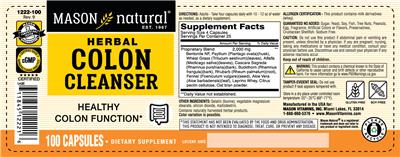
Herbal Colon Cleanser by Mason Natural label
The label scan from the NIH Dietary Supplement Label Database. Tap to enlarge.
Label images are published by the NIH Dietary Supplement Label Database for the version of this product on file. Always read your actual product label.
View the full label (PDF)The Ingredients in Herbal Colon Cleanser by Mason Natural
These are the 12 active ingredients this product is made of. Select any to open its full monograph.
Serving size4 Capsule(s) Dosage formCapsule Servings per container25 Amounts shown are per serving.
Most supplement products combine several ingredients, and a medication can interact with the product through any one of them. Each ingredient below shows whether it has known drug interactions.
Proprietary Blend
- › Oat Bran, Powder
- › Fennel
- › Citrus Pectin Cellulose
- › Buckthorn
- › Alfalfa
- › Cascara Sagrada
- › Psyllium
- › Wheat Grass
- › Rhubarb
- › Bentonite
- › Aloe Vera
- › Leprino Whey
Other (inactive) ingredients: Bovine Gelatin, Magnesium Stearate, Silicon Dioxide, Maltodextrin. These complete the product’s ingredient list but are not active constituents.
Herbal Colon Cleanser by Mason Natural Drug Interactions
HelloPharmacist Interaction Report
Mason Natural's Herbal Colon Cleanser contains several ingredients with documented interactions, and the most serious involves aloe vera and digoxin (Lanoxin), a heart medication.
Overuse of aloe can deplete potassium and increase the risk of digoxin toxicity — a Major severity concern. Alfalfa also carries a Major interaction with warfarin (Coumadin), a blood thinner, because alfalfa's high vitamin K content can reduce warfarin's effectiveness.
Read the full breakdown — every affected drug type, severity by severity
Moderate interactions span several drug categories. Fennel may decrease the effectiveness of contraceptive drugs and tamoxifen, interfere with hormone replacement therapy, increase bleeding risk with blood thinners (anticoagulants and antiplatelets), and reduce levels of the antibiotic ciprofloxacin.
Alfalfa similarly affects contraceptives and hormone therapy, and may increase low blood sugar (hypoglycemia) risk with diabetes medications. Aloe and rhubarb both carry potassium-depletion risks with diuretics and corticosteroids, and may worsen bleeding with warfarin.
Cascara sagrada poses similar potassium and warfarin concerns, plus a Minor interaction with drugs metabolized by CYP3A4 enzymes.
We could not check oat bran, citrus pectin cellulose, buckthorn, psyllium, bentonite, or leprino whey for interactions — we hold no data for these ingredients. Altogether, these interactions span 1,372 individual medications.
Check your exact medications with the search tool on this page before starting.
Check your own medications below · Editorial policy · How we use AI
Want to check YOUR meds against Herbal Colon Cleanser?
Ask about interactions with your drugs in plain English — “Can I take it with lisinopril?” — and we find you the answer in seconds, ingredient by ingredient.
Go to the checkerIngredients driving the most interactions
Individual Drug Interactions
The ingredients in Herbal Colon Cleanser interact with 1,443 drugs. Click any drug to see the details.
6 of the 12 ingredients in Herbal Colon Cleanser interact with drugs. Each result below shows which ingredient is responsible. Cascara Sagrada Fennel Rhubarb Alfalfa Aloe Vera Buckthorn
DigoxinDigitek, Lanoxicaps, Lanoxin
How Digoxin interacts with Herbal Colon Cleanser — through 3 ingredients. Tap an ingredient for the detail:
Aloe VeraDigoxin (lanoxin) Major
Interaction Summary
Theoretically, aloe latex might increase the risk of adverse effects when taken with cardiac glycosides.
Read the full Aloe Vera + Digoxin interactionRhubarbDigoxin (lanoxin) Moderate
Interaction Summary
Theoretically, overuse of rhubarb might increase the risk of adverse effects when taken with digoxin.
Read the full Rhubarb + Digoxin interactionCascara SagradaDigoxin (lanoxin) Moderate
Interaction Summary
Theoretically, cascara sagrada might cause hypokalemia, potentially increasing the risk of digoxin toxicity.
Read the full Cascara Sagrada + Digoxin interactionWarfarinWarfarin
How Warfarin interacts with Herbal Colon Cleanser — through 6 ingredients. Tap an ingredient for the detail:
AlfalfaWarfarin (coumadin) Major
Interaction Summary
Theoretically, alfalfa might reduce the anticoagulant activity of warfarin.
Read the full Alfalfa + Warfarin interactionFennelAnticoagulant/antiplatelet Drugs, Cytochrome P450 3a4 (cyp3a4) Substrates Moderate
Interaction Summary
Theoretically, fennel might increase the risk of bleeding when used with antiplatelet or anticoagulant drugs.
Read the full Fennel + Warfarin interactionAloe VeraAnticoagulant/antiplatelet Drugs, Cytochrome P450 1a2 (cyp1a2) Substrates +1 Moderate
Interaction Summary
Theoretically, aloe gel might increase the risk of bleeding when taken with anticoagulant or antiplatelet drugs.
Read the full Aloe Vera + Warfarin interactionBuckthornAnticoagulant/antiplatelet Drugs Moderate
Interaction Summary
Theoretically, sea buckthorn may increase the risk of bleeding if used with anticoagulant or antiplatelet drugs.
Read the full Buckthorn + Warfarin interactionCascara SagradaCytochrome P450 3a4 (cyp3a4) Substrates, Warfarin (coumadin) Moderate
Interaction Summary
Theoretically, cascara sagrada might decrease the effects of CYP3A4 substrates.
Read the full Cascara Sagrada + Warfarin interactionRhubarbWarfarin (coumadin) Moderate
Interaction Summary
Theoretically, excessive use of rhubarb might increase the risk of bleeding when taken with warfarin.
Read the full Rhubarb + Warfarin interactionWarfarin SodiumCoumadin, Panwarfin, Sofarin
How Warfarin Sodium interacts with Herbal Colon Cleanser — through 6 ingredients. Tap an ingredient for the detail:
AlfalfaWarfarin (coumadin) Major
Interaction Summary
Theoretically, alfalfa might reduce the anticoagulant activity of warfarin.
Read the full Alfalfa + Warfarin Sodium interactionRhubarbWarfarin (coumadin) Moderate
Interaction Summary
Theoretically, excessive use of rhubarb might increase the risk of bleeding when taken with warfarin.
Read the full Rhubarb + Warfarin Sodium interactionFennelCytochrome P450 3a4 (cyp3a4) Substrates, Anticoagulant/antiplatelet Drugs Moderate
Interaction Summary
Theoretically, fennel might increase levels of drugs metabolized by CYP3A4.
Read the full Fennel + Warfarin Sodium interactionAloe VeraWarfarin (coumadin), Cytochrome P450 1a2 (cyp1a2) Substrates +1 Moderate
Interaction Summary
Theoretically, aloe latex might increase the risk of bleeding when taken with warfarin.
Read the full Aloe Vera + Warfarin Sodium interactionBuckthornAnticoagulant/antiplatelet Drugs Moderate
Interaction Summary
Theoretically, sea buckthorn may increase the risk of bleeding if used with anticoagulant or antiplatelet drugs.
Read the full Buckthorn + Warfarin Sodium interactionCascara SagradaWarfarin (coumadin), Cytochrome P450 3a4 (cyp3a4) Substrates Moderate
Interaction Summary
Theoretically, cascara sagrada might increase the risk of bleeding when taken with warfarin.
Read the full Cascara Sagrada + Warfarin Sodium interaction6-mercaptopurinePurinethol
How 6-mercaptopurine interacts with Herbal Colon Cleanser — through 2 ingredients. Tap an ingredient for the detail:
RhubarbHepatotoxic Drugs Moderate
Interaction Summary
Theoretically, concomitant use of rhubarb with potentially hepatotoxic drugs might increase the risk of developing liver damage.
Read the full Rhubarb + 6-mercaptopurine interactionAlfalfaImmunosuppressants Moderate
Interaction Summary
Theoretically, alfalfa might decrease the efficacy of immunosuppressive therapy.
Read the full Alfalfa + 6-mercaptopurine interactionAdo-trastuzumab EmtansineKadcyla
How Ado-trastuzumab Emtansine interacts with Herbal Colon Cleanser — through 2 ingredients. Tap an ingredient for the detail:
FennelCytochrome P450 3a4 (cyp3a4) Substrates Moderate
Interaction Summary
Theoretically, fennel might increase levels of drugs metabolized by CYP3A4.
Read the full Fennel + Ado-trastuzumab Emtansine interactionCascara SagradaCytochrome P450 3a4 (cyp3a4) Substrates Minor
Interaction Summary
Theoretically, cascara sagrada might decrease the effects of CYP3A4 substrates.
Read the full Cascara Sagrada + Ado-trastuzumab Emtansine interactionAbacavir Sulfate, Dolutegravir, LamivudineTriumeq
How Abacavir Sulfate, Dolutegravir, Lamivudine interacts with Herbal Colon Cleanser — through 1 ingredient. Tap an ingredient for the detail:
RhubarbHepatotoxic Drugs Moderate
Interaction Summary
Theoretically, concomitant use of rhubarb with potentially hepatotoxic drugs might increase the risk of developing liver damage.
Read the full Rhubarb + Abacavir Sulfate, Dolutegravir, Lamivudine interactionAbacavir, LamivudineEpzicom
How Abacavir, Lamivudine interacts with Herbal Colon Cleanser — through 1 ingredient. Tap an ingredient for the detail:
RhubarbHepatotoxic Drugs Moderate
Interaction Summary
Theoretically, concomitant use of rhubarb with potentially hepatotoxic drugs might increase the risk of developing liver damage.
Read the full Rhubarb + Abacavir, Lamivudine interactionAbciximabReoPro
How Abciximab interacts with Herbal Colon Cleanser — through 3 ingredients. Tap an ingredient for the detail:
BuckthornAnticoagulant/antiplatelet Drugs Moderate
Interaction Summary
Theoretically, sea buckthorn may increase the risk of bleeding if used with anticoagulant or antiplatelet drugs.
Read the full Buckthorn + Abciximab interactionFennelAnticoagulant/antiplatelet Drugs Moderate
Interaction Summary
Theoretically, fennel might increase the risk of bleeding when used with antiplatelet or anticoagulant drugs.
Read the full Fennel + Abciximab interactionAloe VeraAnticoagulant/antiplatelet Drugs Moderate
Interaction Summary
Theoretically, aloe gel might increase the risk of bleeding when taken with anticoagulant or antiplatelet drugs.
Read the full Aloe Vera + Abciximab interactionAbemaciclibVerzenio
How Abemaciclib interacts with Herbal Colon Cleanser — through 2 ingredients. Tap an ingredient for the detail:
FennelCytochrome P450 3a4 (cyp3a4) Substrates Moderate
Interaction Summary
Theoretically, fennel might increase levels of drugs metabolized by CYP3A4.
Read the full Fennel + Abemaciclib interactionCascara SagradaCytochrome P450 3a4 (cyp3a4) Substrates Minor
Interaction Summary
Theoretically, cascara sagrada might decrease the effects of CYP3A4 substrates.
Read the full Cascara Sagrada + Abemaciclib interactionAbiraterone
How Abiraterone interacts with Herbal Colon Cleanser — through 3 ingredients. Tap an ingredient for the detail:
RhubarbHepatotoxic Drugs Moderate
Interaction Summary
Theoretically, concomitant use of rhubarb with potentially hepatotoxic drugs might increase the risk of developing liver damage.
Read the full Rhubarb + Abiraterone interactionFennelCytochrome P450 3a4 (cyp3a4) Substrates Moderate
Interaction Summary
Theoretically, fennel might increase levels of drugs metabolized by CYP3A4.
Read the full Fennel + Abiraterone interactionCascara SagradaCytochrome P450 3a4 (cyp3a4) Substrates Minor
Interaction Summary
Theoretically, cascara sagrada might decrease the effects of CYP3A4 substrates.
Read the full Cascara Sagrada + Abiraterone interactionAbiraterone AcetateYonsa, Zytiga
How Abiraterone Acetate interacts with Herbal Colon Cleanser — through 3 ingredients. Tap an ingredient for the detail:
FennelCytochrome P450 3a4 (cyp3a4) Substrates Moderate
Interaction Summary
Theoretically, fennel might increase levels of drugs metabolized by CYP3A4.
Read the full Fennel + Abiraterone Acetate interactionRhubarbHepatotoxic Drugs Moderate
Interaction Summary
Theoretically, concomitant use of rhubarb with potentially hepatotoxic drugs might increase the risk of developing liver damage.
Read the full Rhubarb + Abiraterone Acetate interactionCascara SagradaCytochrome P450 3a4 (cyp3a4) Substrates Minor
Interaction Summary
Theoretically, cascara sagrada might decrease the effects of CYP3A4 substrates.
Read the full Cascara Sagrada + Abiraterone Acetate interactionAbrocitinibCibinqo
How Abrocitinib interacts with Herbal Colon Cleanser — through 4 ingredients. Tap an ingredient for the detail:
AlfalfaImmunosuppressants Moderate
Interaction Summary
Theoretically, alfalfa might decrease the efficacy of immunosuppressive therapy.
Read the full Alfalfa + Abrocitinib interactionBuckthornAnticoagulant/antiplatelet Drugs Moderate
Interaction Summary
Theoretically, sea buckthorn may increase the risk of bleeding if used with anticoagulant or antiplatelet drugs.
Read the full Buckthorn + Abrocitinib interactionFennelAnticoagulant/antiplatelet Drugs Moderate
Interaction Summary
Theoretically, fennel might increase the risk of bleeding when used with antiplatelet or anticoagulant drugs.
Read the full Fennel + Abrocitinib interactionAloe VeraAnticoagulant/antiplatelet Drugs Moderate
Interaction Summary
Theoretically, aloe gel might increase the risk of bleeding when taken with anticoagulant or antiplatelet drugs.
Read the full Aloe Vera + Abrocitinib interactionAcalabrutinibCalquence
How Acalabrutinib interacts with Herbal Colon Cleanser — through 2 ingredients. Tap an ingredient for the detail:
FennelCytochrome P450 3a4 (cyp3a4) Substrates Moderate
Interaction Summary
Theoretically, fennel might increase levels of drugs metabolized by CYP3A4.
Read the full Fennel + Acalabrutinib interactionCascara SagradaCytochrome P450 3a4 (cyp3a4) Substrates Minor
Interaction Summary
Theoretically, cascara sagrada might decrease the effects of CYP3A4 substrates.
Read the full Cascara Sagrada + Acalabrutinib interactionAcarboseGlucobay, Prandase, Precose
How Acarbose interacts with Herbal Colon Cleanser — through 3 ingredients. Tap an ingredient for the detail:
AlfalfaAntidiabetes Drugs Moderate
Interaction Summary
Theoretically, alfalfa might increase the risk of hypoglycemia when taken with antidiabetes drugs.
Read the full Alfalfa + Acarbose interactionRhubarbHepatotoxic Drugs Moderate
Interaction Summary
Theoretically, concomitant use of rhubarb with potentially hepatotoxic drugs might increase the risk of developing liver damage.
Read the full Rhubarb + Acarbose interactionAloe VeraAntidiabetes Drugs Moderate
Interaction Summary
Aloe might increase the risk of hypoglycemia when taken with antidiabetes drugs.
Read the full Aloe Vera + Acarbose interactionAcebutololRhotral, Sectral
How Acebutolol interacts with Herbal Colon Cleanser — through 2 ingredients. Tap an ingredient for the detail:
BuckthornAntihypertensive Drugs Moderate
Interaction Summary
Theoretically, taking sea buckthorn with antihypertensive drugs might increase the risk of hypotension.
Read the full Buckthorn + Acebutolol interactionRhubarbHepatotoxic Drugs Moderate
Interaction Summary
Theoretically, concomitant use of rhubarb with potentially hepatotoxic drugs might increase the risk of developing liver damage.
Read the full Rhubarb + Acebutolol interactionAcenocoumarolSintrom
How Acenocoumarol interacts with Herbal Colon Cleanser — through 3 ingredients. Tap an ingredient for the detail:
Aloe VeraAnticoagulant/antiplatelet Drugs Moderate
Interaction Summary
Theoretically, aloe gel might increase the risk of bleeding when taken with anticoagulant or antiplatelet drugs.
Read the full Aloe Vera + Acenocoumarol interactionBuckthornAnticoagulant/antiplatelet Drugs Moderate
Interaction Summary
Theoretically, sea buckthorn may increase the risk of bleeding if used with anticoagulant or antiplatelet drugs.
Read the full Buckthorn + Acenocoumarol interactionFennelAnticoagulant/antiplatelet Drugs Moderate
Interaction Summary
Theoretically, fennel might increase the risk of bleeding when used with antiplatelet or anticoagulant drugs.
Read the full Fennel + Acenocoumarol interactionAcepromazineAtravet
How Acepromazine interacts with Herbal Colon Cleanser — through 1 ingredient. Tap an ingredient for the detail:
AlfalfaPhotosensitizing Drugs Moderate
Interaction Summary
Theoretically, concomitant use of alfalfa with photosensitizing drugs might have additive effects.
Read the full Alfalfa + Acepromazine interactionAcetaminophenChildren's Tylenol, Children's Tylenol Meltaways, Tylenol, Tylenol Ex Strength
How Acetaminophen interacts with Herbal Colon Cleanser — through 2 ingredients. Tap an ingredient for the detail:
RhubarbHepatotoxic Drugs, Nephrotoxic Drugs Moderate
Interaction Summary
Theoretically, concomitant use of rhubarb with potentially hepatotoxic drugs might increase the risk of developing liver damage.
Read the full Rhubarb + Acetaminophen interactionAloe VeraCytochrome P450 1a2 (cyp1a2) Substrates Minor
Interaction Summary
Theoretically, aloe might decrease the levels and clinical effects of CYP1A2 substrates.
Read the full Aloe Vera + Acetaminophen interactionAcetaminophen, AspirinGemnisyn
How Acetaminophen, Aspirin interacts with Herbal Colon Cleanser — through 4 ingredients. Tap an ingredient for the detail:
Aloe VeraCytochrome P450 1a2 (cyp1a2) Substrates, Anticoagulant/antiplatelet Drugs Moderate
Interaction Summary
Theoretically, aloe might decrease the levels and clinical effects of CYP1A2 substrates.
Read the full Aloe Vera + Acetaminophen, Aspirin interactionFennelAnticoagulant/antiplatelet Drugs Moderate
Interaction Summary
Theoretically, fennel might increase the risk of bleeding when used with antiplatelet or anticoagulant drugs.
Read the full Fennel + Acetaminophen, Aspirin interactionBuckthornAnticoagulant/antiplatelet Drugs Moderate
Interaction Summary
Theoretically, sea buckthorn may increase the risk of bleeding if used with anticoagulant or antiplatelet drugs.
Read the full Buckthorn + Acetaminophen, Aspirin interactionRhubarbHepatotoxic Drugs, Nephrotoxic Drugs Moderate
Interaction Summary
Theoretically, concomitant use of rhubarb with potentially hepatotoxic drugs might increase the risk of developing liver damage.
Read the full Rhubarb + Acetaminophen, Aspirin interactionAcetaminophen, Aspirin, CaffeineExcedrin, Excedrin Extra Strength, Excedrin Migraine
How Acetaminophen, Aspirin, Caffeine interacts with Herbal Colon Cleanser — through 5 ingredients. Tap an ingredient for the detail:
RhubarbHepatotoxic Drugs, Nephrotoxic Drugs Moderate
Interaction Summary
Theoretically, concomitant use of rhubarb with potentially hepatotoxic drugs might increase the risk of developing liver damage.
Read the full Rhubarb + Acetaminophen, Aspirin, Caffeine interactionFennelCytochrome P450 3a4 (cyp3a4) Substrates, Anticoagulant/antiplatelet Drugs Moderate
Interaction Summary
Theoretically, fennel might increase levels of drugs metabolized by CYP3A4.
Read the full Fennel + Acetaminophen, Aspirin, Caffeine interactionAloe VeraAnticoagulant/antiplatelet Drugs, Cytochrome P450 1a2 (cyp1a2) Substrates Moderate
Interaction Summary
Theoretically, aloe gel might increase the risk of bleeding when taken with anticoagulant or antiplatelet drugs.
Read the full Aloe Vera + Acetaminophen, Aspirin, Caffeine interactionBuckthornAnticoagulant/antiplatelet Drugs Moderate
Interaction Summary
Theoretically, sea buckthorn may increase the risk of bleeding if used with anticoagulant or antiplatelet drugs.
Read the full Buckthorn + Acetaminophen, Aspirin, Caffeine interactionCascara SagradaCytochrome P450 3a4 (cyp3a4) Substrates Minor
Interaction Summary
Theoretically, cascara sagrada might decrease the effects of CYP3A4 substrates.
Read the full Cascara Sagrada + Acetaminophen, Aspirin, Caffeine interactionAcetaminophen, Brompheniramine, PhenylpropanolamineDimetapp Cold and Flu
How Acetaminophen, Brompheniramine, Phenylpropanolamine interacts with Herbal Colon Cleanser — through 3 ingredients. Tap an ingredient for the detail:
RhubarbHepatotoxic Drugs, Nephrotoxic Drugs Moderate
Interaction Summary
Theoretically, concomitant use of rhubarb with potentially hepatotoxic drugs might increase the risk of developing liver damage.
Read the full Rhubarb + Acetaminophen, Brompheniramine, Phenylpropanolamine interactionAlfalfaPhotosensitizing Drugs Moderate
Interaction Summary
Theoretically, concomitant use of alfalfa with photosensitizing drugs might have additive effects.
Read the full Alfalfa + Acetaminophen, Brompheniramine, Phenylpropanolamine interactionAloe VeraCytochrome P450 1a2 (cyp1a2) Substrates Minor
Interaction Summary
Theoretically, aloe might decrease the levels and clinical effects of CYP1A2 substrates.
Read the full Aloe Vera + Acetaminophen, Brompheniramine, Phenylpropanolamine interactionAcetaminophen, ButalbitalAxocet, Bancap, Bucet, Butex Forte, Esgic CF, Orbivan CF +5 more
How Acetaminophen, Butalbital interacts with Herbal Colon Cleanser — through 2 ingredients. Tap an ingredient for the detail:
RhubarbNephrotoxic Drugs, Hepatotoxic Drugs Moderate
Interaction Summary
Theoretically, long-term use of anthraquinones from rhubarb might increase the risk of nephrotoxicity when used with nephrotoxic drugs.
Read the full Rhubarb + Acetaminophen, Butalbital interactionAloe VeraCytochrome P450 1a2 (cyp1a2) Substrates Minor
Interaction Summary
Theoretically, aloe might decrease the levels and clinical effects of CYP1A2 substrates.
Read the full Aloe Vera + Acetaminophen, Butalbital interactionAcetaminophen, Butalbital, CaffeineEsgic, Esgic Plus, Fiogesic, Fioricet, Repan, Tecnal +1 more
How Acetaminophen, Butalbital, Caffeine interacts with Herbal Colon Cleanser — through 4 ingredients. Tap an ingredient for the detail:
RhubarbHepatotoxic Drugs, Nephrotoxic Drugs Moderate
Interaction Summary
Theoretically, concomitant use of rhubarb with potentially hepatotoxic drugs might increase the risk of developing liver damage.
Read the full Rhubarb + Acetaminophen, Butalbital, Caffeine interactionFennelCytochrome P450 3a4 (cyp3a4) Substrates Moderate
Interaction Summary
Theoretically, fennel might increase levels of drugs metabolized by CYP3A4.
Read the full Fennel + Acetaminophen, Butalbital, Caffeine interactionAloe VeraCytochrome P450 1a2 (cyp1a2) Substrates Minor
Interaction Summary
Theoretically, aloe might decrease the levels and clinical effects of CYP1A2 substrates.
Read the full Aloe Vera + Acetaminophen, Butalbital, Caffeine interactionCascara SagradaCytochrome P450 3a4 (cyp3a4) Substrates Minor
Interaction Summary
Theoretically, cascara sagrada might decrease the effects of CYP3A4 substrates.
Read the full Cascara Sagrada + Acetaminophen, Butalbital, Caffeine interactionAcetaminophen, Butalbital, Caffeine, CodeineEsgic with Codeine, Fioricet w/ Codeine
How Acetaminophen, Butalbital, Caffeine, Codeine interacts with Herbal Colon Cleanser — through 4 ingredients. Tap an ingredient for the detail:
FennelCytochrome P450 3a4 (cyp3a4) Substrates Moderate
Interaction Summary
Theoretically, fennel might increase levels of drugs metabolized by CYP3A4.
Read the full Fennel + Acetaminophen, Butalbital, Caffeine, Codeine interactionRhubarbNephrotoxic Drugs, Hepatotoxic Drugs Moderate
Interaction Summary
Theoretically, long-term use of anthraquinones from rhubarb might increase the risk of nephrotoxicity when used with nephrotoxic drugs.
Read the full Rhubarb + Acetaminophen, Butalbital, Caffeine, Codeine interactionCascara SagradaCytochrome P450 3a4 (cyp3a4) Substrates Minor
Interaction Summary
Theoretically, cascara sagrada might decrease the effects of CYP3A4 substrates.
Read the full Cascara Sagrada + Acetaminophen, Butalbital, Caffeine, Codeine interactionAloe VeraCytochrome P450 1a2 (cyp1a2) Substrates Minor
Interaction Summary
Theoretically, aloe might decrease the levels and clinical effects of CYP1A2 substrates.
Read the full Aloe Vera + Acetaminophen, Butalbital, Caffeine, Codeine interactionAcetaminophen, Butalbital, CodeineBancap w/ Codeine
How Acetaminophen, Butalbital, Codeine interacts with Herbal Colon Cleanser — through 2 ingredients. Tap an ingredient for the detail:
RhubarbHepatotoxic Drugs, Nephrotoxic Drugs Moderate
Interaction Summary
Theoretically, concomitant use of rhubarb with potentially hepatotoxic drugs might increase the risk of developing liver damage.
Read the full Rhubarb + Acetaminophen, Butalbital, Codeine interactionAloe VeraCytochrome P450 1a2 (cyp1a2) Substrates Minor
Interaction Summary
Theoretically, aloe might decrease the levels and clinical effects of CYP1A2 substrates.
Read the full Aloe Vera + Acetaminophen, Butalbital, Codeine interactionAcetaminophen, Butalbital, Codeine PhosphatePhrenilin #3
How Acetaminophen, Butalbital, Codeine Phosphate interacts with Herbal Colon Cleanser — through 2 ingredients. Tap an ingredient for the detail:
RhubarbHepatotoxic Drugs, Nephrotoxic Drugs Moderate
Interaction Summary
Theoretically, concomitant use of rhubarb with potentially hepatotoxic drugs might increase the risk of developing liver damage.
Read the full Rhubarb + Acetaminophen, Butalbital, Codeine Phosphate interactionAloe VeraCytochrome P450 1a2 (cyp1a2) Substrates Minor
Interaction Summary
Theoretically, aloe might decrease the levels and clinical effects of CYP1A2 substrates.
Read the full Aloe Vera + Acetaminophen, Butalbital, Codeine Phosphate interactionAcetaminophen, Caffeine, Chlorpheniramine, Hydrocodone, PhenylephrineHycomine Compound
How Acetaminophen, Caffeine, Chlorpheniramine, Hydrocodone, Phenylephrine interacts with Herbal Colon Cleanser — through 5 ingredients. Tap an ingredient for the detail:
RhubarbHepatotoxic Drugs, Nephrotoxic Drugs Moderate
Interaction Summary
Theoretically, concomitant use of rhubarb with potentially hepatotoxic drugs might increase the risk of developing liver damage.
Read the full Rhubarb + Acetaminophen, Caffeine, Chlorpheniramine, Hydrocodone, Phenylephrine interactionFennelCytochrome P450 3a4 (cyp3a4) Substrates Moderate
Interaction Summary
Theoretically, fennel might increase levels of drugs metabolized by CYP3A4.
Read the full Fennel + Acetaminophen, Caffeine, Chlorpheniramine, Hydrocodone, Phenylephrine interactionAlfalfaPhotosensitizing Drugs Moderate
Interaction Summary
Theoretically, concomitant use of alfalfa with photosensitizing drugs might have additive effects.
Read the full Alfalfa + Acetaminophen, Caffeine, Chlorpheniramine, Hydrocodone, Phenylephrine interactionCascara SagradaCytochrome P450 3a4 (cyp3a4) Substrates Minor
Interaction Summary
Theoretically, cascara sagrada might decrease the effects of CYP3A4 substrates.
Read the full Cascara Sagrada + Acetaminophen, Caffeine, Chlorpheniramine, Hydrocodone, Phenylephrine interactionAloe VeraCytochrome P450 1a2 (cyp1a2) Substrates Minor
Interaction Summary
Theoretically, aloe might decrease the levels and clinical effects of CYP1A2 substrates.
Read the full Aloe Vera + Acetaminophen, Caffeine, Chlorpheniramine, Hydrocodone, Phenylephrine interactionAcetaminophen, Caffeine, CodeineGesic C15, Gesic C30, Gesic C8, Lenoltec 1, Lenoltec 2, Lenoltec 3 +1 more
How Acetaminophen, Caffeine, Codeine interacts with Herbal Colon Cleanser — through 4 ingredients. Tap an ingredient for the detail:
RhubarbNephrotoxic Drugs, Hepatotoxic Drugs Moderate
Interaction Summary
Theoretically, long-term use of anthraquinones from rhubarb might increase the risk of nephrotoxicity when used with nephrotoxic drugs.
Read the full Rhubarb + Acetaminophen, Caffeine, Codeine interactionFennelCytochrome P450 3a4 (cyp3a4) Substrates Moderate
Interaction Summary
Theoretically, fennel might increase levels of drugs metabolized by CYP3A4.
Read the full Fennel + Acetaminophen, Caffeine, Codeine interactionAloe VeraCytochrome P450 1a2 (cyp1a2) Substrates Minor
Interaction Summary
Theoretically, aloe might decrease the levels and clinical effects of CYP1A2 substrates.
Read the full Aloe Vera + Acetaminophen, Caffeine, Codeine interactionCascara SagradaCytochrome P450 3a4 (cyp3a4) Substrates Minor
Interaction Summary
Theoretically, cascara sagrada might decrease the effects of CYP3A4 substrates.
Read the full Cascara Sagrada + Acetaminophen, Caffeine, Codeine interactionAcetaminophen, Caffeine, Codeine, SalicylamideCodalan No.1, Codalan No.2, Codalan No.3
How Acetaminophen, Caffeine, Codeine, Salicylamide interacts with Herbal Colon Cleanser — through 4 ingredients. Tap an ingredient for the detail:
FennelCytochrome P450 3a4 (cyp3a4) Substrates Moderate
Interaction Summary
Theoretically, fennel might increase levels of drugs metabolized by CYP3A4.
Read the full Fennel + Acetaminophen, Caffeine, Codeine, Salicylamide interactionRhubarbNephrotoxic Drugs, Hepatotoxic Drugs Moderate
Interaction Summary
Theoretically, long-term use of anthraquinones from rhubarb might increase the risk of nephrotoxicity when used with nephrotoxic drugs.
Read the full Rhubarb + Acetaminophen, Caffeine, Codeine, Salicylamide interactionCascara SagradaCytochrome P450 3a4 (cyp3a4) Substrates Minor
Interaction Summary
Theoretically, cascara sagrada might decrease the effects of CYP3A4 substrates.
Read the full Cascara Sagrada + Acetaminophen, Caffeine, Codeine, Salicylamide interactionAloe VeraCytochrome P450 1a2 (cyp1a2) Substrates Minor
Interaction Summary
Theoretically, aloe might decrease the levels and clinical effects of CYP1A2 substrates.
Read the full Aloe Vera + Acetaminophen, Caffeine, Codeine, Salicylamide interactionAcetaminophen, Caffeine, DihydrocodeineDHC Plus, Panlor DC, Panlor SS
How Acetaminophen, Caffeine, Dihydrocodeine interacts with Herbal Colon Cleanser — through 4 ingredients. Tap an ingredient for the detail:
RhubarbHepatotoxic Drugs, Nephrotoxic Drugs Moderate
Interaction Summary
Theoretically, concomitant use of rhubarb with potentially hepatotoxic drugs might increase the risk of developing liver damage.
Read the full Rhubarb + Acetaminophen, Caffeine, Dihydrocodeine interactionFennelCytochrome P450 3a4 (cyp3a4) Substrates Moderate
Interaction Summary
Theoretically, fennel might increase levels of drugs metabolized by CYP3A4.
Read the full Fennel + Acetaminophen, Caffeine, Dihydrocodeine interactionCascara SagradaCytochrome P450 3a4 (cyp3a4) Substrates Minor
Interaction Summary
Theoretically, cascara sagrada might decrease the effects of CYP3A4 substrates.
Read the full Cascara Sagrada + Acetaminophen, Caffeine, Dihydrocodeine interactionAloe VeraCytochrome P450 1a2 (cyp1a2) Substrates Minor
Interaction Summary
Theoretically, aloe might decrease the levels and clinical effects of CYP1A2 substrates.
Read the full Aloe Vera + Acetaminophen, Caffeine, Dihydrocodeine interactionEach ingredient & the kinds of drugs it affects
For each ingredient in Herbal Colon Cleanser with known interactions, here are the types of medications they can affect. Open any type for the detail — or search your exact drug in the checker above.
Cascara Sagrada
Corticosteroids
Theoretically, cascara sagrada might increase the risk of hypokalemia when taken with corticosteroids.
Cascara sagrada has stimulant laxative effects, and long-term use has been associated with hypokalemia.
Digoxin (Lanoxin)
Theoretically, cascara sagrada might cause hypokalemia, potentially increasing the risk of digoxin toxicity.
Cascara sagrada has stimulant laxative effects, and long-term use has been associated with hypokalemia.
Diuretic Drugs
Theoretically, cascara sagrada might increase the risk of hypokalemia when taken with diuretic drugs.
Cascara sagrada has stimulant laxative effects, and long-term use has been associated with hypokalemia.
Stimulant Laxatives
Theoretically, cascara sagrada might have additive adverse effects when taken with stimulant laxatives.
Cascara sagrada has stimulant laxative effects and might compound fluid and electrolyte losses when taken with stimulant laxatives.
Warfarin (Coumadin)
Theoretically, cascara sagrada might increase the risk of bleeding when taken with warfarin.
Cascara sagrada has stimulant laxative effects. In some people, cascara sagrada can cause diarrhea. Diarrhea can increase the effects of warfarin, increase international normalized ratio (INR), and increase the risk of bleeding.
Cytochrome P450 3A4 (Cyp3A4) Substrates
Theoretically, cascara sagrada might decrease the effects of CYP3A4 substrates.
In vitro research suggests that cascara sagrada can induce CYP3A4 enzymes, albeit to a much lower degree than rifampin, a known CYP3A4 inducer.
Fennel
Anticoagulant/Antiplatelet Drugs
Theoretically, fennel might increase the risk of bleeding when used with antiplatelet or anticoagulant drugs.
Animal research suggests that fennel oil has antithrombotic and antiplatelet effects.
Ciprofloxacin (Cipro)
Theoretically, fennel might decrease the levels and clinical effects of ciprofloxacin.
Animal research shows that fennel reduces ciprofloxacin bioavailability by nearly 50%, possibly due to the metal cations such as calcium, iron, and magnesium contained in fennel. This study also found that fennel increased tissue distribution and slowed elimination of ciprofloxacin.
Contraceptive Drugs
Theoretically, taking large amounts of fennel might decrease the effects of contraceptive drugs due to competition for estrogen receptors.
Some constituents of fennel have estrogenic activity.
Cytochrome P450 3A4 (Cyp3A4) Substrates
Theoretically, fennel might increase levels of drugs metabolized by CYP3A4.
In vitro research suggests that fennel inhibits CYP3A4 enzyme activity. This effect has not been reported in humans.
Estrogens
Theoretically, taking large amounts of fennel might interfere with hormone replacement therapy due to competition for estrogen receptors.
Some constituents of fennel have estrogenic activity.
Tamoxifen (Nolvadex)
Theoretically, taking large amounts of fennel might decrease the antiestrogenic effect of tamoxifen.
Some constituents of fennel have estrogenic activity, which may interfere with the antiestrogenic activity of tamoxifen.
Rhubarb
Corticosteroids
Theoretically, frequent and high doses of rhubarb might increase the risk of hypokalemia when taken with corticosteroids.
Rhubarb has stimulant laxative effects. Overuse of rhubarb might compound corticosteroid-induced potassium loss.
Cyclosporine (Neoral, Sandimmune)
Theoretically, taking rhubarb with cyclosporine might reduce cyclosporine levels.
Animal research shows that co-administration of rhubarb decoction 0.25 or 1 gram/kg with cyclosporine 2.5 mg/kg, decreases cyclosporine maximum plasma concentration and overall exposure levels when compared with taking cyclosporine alone. The authors theorize that rhubarb might reduce cyclosporine bioavailability by inducing of P-glycoprotein and/or cytochrome P450 3A4. However, since rhubarb was administered as a single oral dose and enzyme induction usually occurs after multiple doses, it is possible that cyclosporine absorption was actually reduced via rhubarb's stimulant laxative effects. Also, the composition of the rhubarb decoction was not described.
Digoxin (Lanoxin)
Theoretically, overuse of rhubarb might increase the risk of adverse effects when taken with digoxin.
Rhubarb has stimulant laxative effects. Overuse of rhubarb might cause potassium depletion, increasing the risk of digoxin toxicity.
Diuretic Drugs
Theoretically, frequent and high doses of rhubarb might increase the risk of hypokalemia.
Rhubarb has stimulant laxative effects. Overuse of rhubarb might cause potassium depletion and compound diuretic-induced potassium loss.
Hepatotoxic Drugs
Theoretically, concomitant use of rhubarb with potentially hepatotoxic drugs might increase the risk of developing liver damage.
Some animal research suggests that anthraquinones in rhubarb might have hepatotoxic effects. Also, rhubarb use has been linked to at least 24 cases of liver injury, although details on the dose of rhubarb and duration of use in these cases is unclear.
Nephrotoxic Drugs
Theoretically, long-term use of anthraquinones from rhubarb might increase the risk of nephrotoxicity when used with nephrotoxic drugs.
The anthraquinone constituents of rhubarb have been shown to induce nephrotoxicity in animal research. Additionally, in a case report, a 23-year old female presented with kidney failure after taking 6 tablets of a proprietary slimming agent (found to contain the anthraquinones emodin and aloe-emodin from rhubarb) daily for 6 weeks and then adding diclofenac 25 mg 4 times daily for 2 days. The authors postulate that the anthraquinone constituents of rhubarb contributed to the renal dysfunction, and the addition of diclofenac, a nephrotoxic drug, led to renal failure. Until more is known, advise patients to avoid taking rhubarb if they are taking other potentially nephrotoxic drugs.
Stimulant Laxatives
Theoretically, rhubarb might increase the risk for fluid and electrolyte loss when taken with other stimulant laxatives.
Rhubarb has stimulant laxative effects. Concomitant use with stimulant laxatives might compound fluid and electrolyte loss.
Warfarin (Coumadin)
Theoretically, excessive use of rhubarb might increase the risk of bleeding when taken with warfarin.
Rhubarb has stimulant laxative effects and can cause diarrhea. Diarrhea can increase the effects of warfarin, increase international normalized ratio (INR), and increase the risk of bleeding. Advise patients who take warfarin not to take excessive amounts of rhubarb.
Alfalfa
Warfarin (Coumadin)
Theoretically, alfalfa might reduce the anticoagulant activity of warfarin.
Alfalfa contains a large amount of vitamin K. This could theoretically interfere with the activity of warfarin.
Antidiabetes Drugs
Theoretically, alfalfa might increase the risk of hypoglycemia when taken with antidiabetes drugs.
Animal research suggests that alfalfa decreases blood sugar in diabetic mice. Also, in one case report, a diabetic patient experienced hypoglycemia after consuming alfalfa extract. Monitor blood glucose levels closely. Dose adjustments might be necessary.
Contraceptive Drugs
Theoretically, alfalfa might interfere with the activity of contraceptive drugs.
Alfalfa contains coumestrol, a phytoestrogen, and isoflavonoids, which have estrogenic effects.
Estrogens
Theoretically, alfalfa might interfere with hormone therapy.
Alfalfa contains coumestrol, a phytoestrogen, and isoflavonoids, which have estrogenic effects.
Immunosuppressants
Theoretically, alfalfa might decrease the efficacy of immunosuppressive therapy.
In vitro research and human case reports suggest that alfalfa may have immunostimulant effects.
Photosensitizing Drugs
Theoretically, concomitant use of alfalfa with photosensitizing drugs might have additive effects.
Animal research suggests that excessive doses of alfalfa may increase photosensitivity, possibly due to its chlorophyll content. It is unclear if this effect would be clinically relevant in humans.
Aloe Vera
Digoxin (Lanoxin)
Theoretically, aloe latex might increase the risk of adverse effects when taken with cardiac glycosides.
Overuse of aloe latex can increase the risk of adverse effects from cardiac glycoside drugs, such as digoxin, due to potassium depletion. Overuse of aloe, along with cardiac glycoside drugs, can increase the risk of toxicity.
Anticoagulant/Antiplatelet Drugs
Theoretically, aloe gel might increase the risk of bleeding when taken with anticoagulant or antiplatelet drugs.
In vitro research shows that aloe gel can inhibit platelet aggregation. This inhibition was greater than that seen with celecoxib, but less than that seen with aspirin.
Antidiabetes Drugs
Aloe might increase the risk of hypoglycemia when taken with antidiabetes drugs.
Preliminary clinical research suggests aloe gel might lower blood glucose levels and have additive effects when used with antidiabetes drugs. Monitor blood glucose levels closely.
Diuretic Drugs
Theoretically, aloe latex might increase the risk of hypokalemia when taken with diuretic drugs.
Overuse of aloe latex might compound diuretic-induced potassium loss, increasing the risk of hypokalemia.
Stimulant Laxatives
Theoretically, aloe latex might increase the risk for fluid and electrolyte loss when taken with stimulant laxatives.
Due to cathartic laxative effects of aloe latex, concomitant use with other stimulant laxatives might compound fluid and electrolyte loss.
Warfarin (Coumadin)
Theoretically, aloe latex might increase the risk of bleeding when taken with warfarin.
Aloe latex has stimulant laxative effects. In some people aloe latex can cause diarrhea. Diarrhea can increase the effects of warfarin, increase international normalized ratio (INR), and increase the risk of bleeding. Advise patients who take warfarin not to take excessive amounts of aloe vera.
Cytochrome P450 1A2 (Cyp1A2) Substrates
Theoretically, aloe might decrease the levels and clinical effects of CYP1A2 substrates.
In vitro research shows that aloe extract induces CYP1A2 enzymes.
Buckthorn
Anticoagulant/Antiplatelet Drugs
Theoretically, sea buckthorn may increase the risk of bleeding if used with anticoagulant or antiplatelet drugs.
Clinical research suggests that sea buckthorn fruit extracts can inhibit platelet aggregation and adhesion to collagen and fibrinogen.
Antihypertensive Drugs
Theoretically, taking sea buckthorn with antihypertensive drugs might increase the risk of hypotension.
Taking sea buckthorn appears to reduce blood pressure in some patients.
Brand information
Manufacturer and brand details for Herbal Colon Cleanser, from the product label.
Mason Natural
See all Mason Natural products- Name
- Mason Vitamins, Inc.
- City
- Miami Lakes
- State
- FL
- ZipCode
- 33014
- Phone Number
- 1-888-860-5376
- Web Address
- www.MasonVitamins.com
Herbal Colon Cleanser by Mason Natural: Common Questions
Does Herbal Colon Cleanser by Mason Natural interact with any medications?
How can one product interact with so many drugs?
Where does this information come from?
Is aloe vera safe to take by mouth?
Can I take this if I'm on blood thinners like warfarin?
What does fennel do in this blend?
Is this safe to use long-term?
Can I take this while pregnant?
What's the proprietary blend and why aren't all ingredients listed individually?
Written and reviewed by the HelloPharmacist editorial staff. Our editorial policy
Not sure if Herbal Colon Cleanser is safe with your meds?
Our pharmacists answer your medication & supplement questions — free.
Label information is sourced from the NIH Dietary Supplement Label Database and reflects the product version on file; always read your actual product label. This page is for education only and is not a substitute for professional medical advice. Confirm with your pharmacist or doctor before combining supplements and medications.
The Full Monographs Behind Herbal Colon Cleanser’s Ingredients
Every ingredient we hold a full HelloPharmacist monograph for — uses, evidence, safety, and the complete interaction list.
Fennel
Interacts with 740 drugsFennel is a Mediterranean herb widely used as a food and spice, and traditionally taken for digestive complaints, colic, and menstrual cramps. Some small studies suggest possible benefit for...
Read the full Fennel monograph → Herb & supplement monographSea Buckthorn
Interacts with 289 drugsSea buckthorn is a berry-bearing shrub rich in vitamins, carotenoids, and fatty acids that people use for skin, eye, digestive, and heart health. Early research is promising for a few uses l...
Read the full Sea Buckthorn monograph → Herb & supplement monographAlfalfa
Interacts with 583 drugsAlfalfa is a nutrient-rich legume that people use for high cholesterol, menopause symptoms, and general wellness, but solid human evidence for most of these uses is limited. It is best avoid...
Read the full Alfalfa monograph → Herb & supplement monographCascara Sagrada
Interacts with 745 drugsCascara sagrada is a stimulant laxative made from the aged bark of a Pacific Northwest tree, used mainly for short-term relief of constipation. Because it can cause cramping, dehydration, an...
Read the full Cascara Sagrada monograph → Herb & supplement monographCouch Grass
Couch grass is a common lawn weed whose rhizome has long been used in traditional European herbal medicine, mainly for urinary and bladder complaints. High-quality human studies are lacking,...
Read the full Couch Grass monograph → Herb & supplement monographRhubarb
Interacts with 658 drugsRhubarb root has a long history of use as a laxative and in traditional Chinese medicine, and its edible stalks are a common food. Most medicinal claims are backed by limited or low-quality...
Read the full Rhubarb monograph → Herb & supplement monographAloe
Interacts with 461 drugsAloe vera gel is widely used on the skin for minor burns and irritation, and some research suggests it may help. Aloe latex (the yellow part) is a strong laxative that can cause cramping and...
Read the full Aloe monograph →Sources & How We Checked
Herbal Colon Cleanser's label data comes from the NIH Dietary Supplement Label Database; the ingredient interaction data is from the Natural Medicines database, reviewed by our pharmacists.
- NIH Dietary Supplement Label Database (DSLD) — The official product label on file for this supplement.
- Natural Medicines (Therapeutic Research Center) — Evidence-graded clinical reference behind the ingredient interaction data.
Content is written and reviewed by licensed HelloPharmacist pharmacists. See our data sources and editorial standards for how this information is built and checked.
The 126 references behind this product’s interaction data
Every citation that drives the interaction findings for this product’s ingredients, from the evidence-graded Natural Medicines (TRC Healthcare) database. Open an ingredient to browse its citations — links open the study on PubMed or the publisher’s site.
Fennel 17 references
- Leung AY, Foster S. Encyclopedia of Common Natural Ingredients Used in Food, Drugs and Cosmetics. 2nd ed. New York, NY: John Wiley & Sons, 1996.
- Brinker F. Herb Contraindications and Drug Interactions. 2nd ed. Sandy, OR: Eclectic Medical Publications, 1998.
- Zhu M, Wong PY, Li RC. Effect of oral administration of fennel (Foeniculum vulgare) on ciprofloxacin absorption and disposition in the rat. J Pharm Pharmacol 1999;51:1391-6.
- Gral N, Beani JC, Bonnot D, et al. [Plasma levels of psoralens after celery ingestion]. Ann Dermatol Venereol 1993;120:599-603.
- Burkhard PR, Burkhardt K, Haenggeli CA, Landis T. Plant-induced seizures: reappearance of an old problem. J Neurol 1999;246:667-70. PubMed
- Rosti L, Nardini A, Bettinelli ME, Rosti D. Toxic effects of a herbal tea mixture in two newborns. Acta Paediatrica 1994;83:683. PubMed
- Cuzzolin L, Zaffani S, and Benoni G. Safety implications regarding use of phytomedicines. Eur.J Clin Pharmacol. 2006;62:37-42. PubMed
- Tognolini, M., Ballabeni, V., Bertoni, S., Bruni, R., Impicciatore, M., and Barocelli, E. Protective effect of Foeniculum vulgare essential oil and anethole in an experimental model of thrombosis. Pharmacol.Res 2007;56(3):254-260. PubMed
- Subehan, Usia, T., Iwata, H., Kadota, S., and Tezuka, Y. Mechanism-based inhibition of CYP3A4 and CYP2D6 by Indonesian medicinal plants. J Ethnopharmacol. 5-24-2006;105(3):449-455. PubMed
- Tognolini, M., Barocelli, E., Ballabeni, V., Bruni, R., Bianchi, A., Chiavarini, M., and Impicciatore, M. Comparative screening of plant essential oils: phenylpropanoid moiety as basic core for antiplatelet activity. Life Sci. 2-23-2006;78(13):1419-1432. PubMed
- Subehan, Zaidi, S. F., Kadota, S., and Tezuka, Y. Inhibition on human liver cytochrome P450 3A4 by constituents of fennel (Foeniculum vulgare): identification and characterization of a mechanism-based inactivator. J Agric.Food Chem. 12-12-2007;55(25):101 PubMed
- LEVY, S. B. Bronchial asthma due to ingestion of fennel and fennel seed. Ann.Allergy 1948;6(4):415.
- Ottolenghi, A., De Chiara, A., Arrigoni, S., Terracciano, L., and De Amici, M. [Diagnosis of food allergy caused by fruit and vegetables in children with atopic dermatitis]. Pediatr Med Chir 1995;17(6):525-530.
- Trabace L, Tucci P, Ciuffreda L, et al. "Natural" relief of pregnancy-related symptoms and neonatal outcomes: above all do no harm. J Ethnopharmacol. 2015;174:396-402. PubMed
- Denaxa D, Arkwright PD. Fennel as a cause of immediate hypersensitivity to toothpaste. Ann Allergy Asthma Immunol. 2020;125(1):99-100. PubMed
- Lee HW, Ang L, Lee MS, Alimoradi Z, Kim E. Fennel for reducing pain in primary dysmenorrhea: a systematic review and meta-analysis of randomized controlled trials. Nutrients 2020;12(11):3438. PubMed
- Mathew T, John SK, Javali M, Vasireddy M, Nadig R, Sarma GRK. Substance use related cluster headache: A case series. Headache 2022;62(7):908-910. PubMed
Sea Buckthorn 7 references
- Johansson AK, Korte H, Yang B, et al. Sea buckthorn berry oil inhibits platelet aggregation. J Nutr Biochem 2000;11:491-5.. PubMed
- Grad, S. C., Muresan, I., and Dumitrascu, D. L. Generalized yellow skin caused by high intake of sea buckthorn. Forsch.Komplementmed. 2012;19(3):153-156. PubMed
- Vlasov, V. V. [Hippophae oil in the treatment of superficial skin burns]. Vestn.Dermatol Venerol. 1970;44(6):69-72.
- Chang BB, Wang F Xu TY Zhang QQ He J Zhang XJ Li J. Total flavones of Hippophae rhamnoides L. for essential hypertension: a systematic review of randomized controlled trials. Chinese Journal of Evidence-Based Medicine. 2009;9(11):1207-1213. DOI
- Olas B, Kontek B, Szczesna M, et al. Inhibition of blood platelet adhesion by phenolics rich fraction of Hippophae rhamnoides L. fruits. J Physiol Pharmacol. 2017;68(2):223-9.
- Larmo P, Järvinen R, Laihia J, et al. Effects of a sea buckthorn oil spray emulsion on dry eye. Cont Lens Anterior Eye. 2019;42(4):428-433. PubMed
- De Seta F, Caruso S, Di Lorenzo G, Romano F, Mirandola M, Nappi RE. Efficacy and safety of a new vaginal gel for the treatment of symptoms associated with vulvovaginal atrophy in postmenopausal women: A double-blind randomized placebo-controlled study. Ma PubMed
Alfalfa 32 references
- Newall CA, Anderson LA, Philpson JD. Herbal Medicine: A Guide for Healthcare Professionals. London, UK: The Pharmaceutical Press, 1996.
- The Review of Natural Products by Facts and Comparisons. St. Louis, MO: Wolters Kluwer Co., 1999.
- Leung AY, Foster S. Encyclopedia of Common Natural Ingredients Used in Food, Drugs and Cosmetics. 2nd ed. New York, NY: John Wiley & Sons, 1996.
- Kurzer MS, Xu X. Dietary phytoestrogens. Annu Rev Nutr 1997;17:353-81. PubMed
- Farber JM, Carter AO, Varughese PV, et al. Listeriosis traced to the consumption of alfalfa tablets and soft cheese [Letter to the Editor]. N Engl J Med 1990;322:338. PubMed
- Molgaard J, von Schenck H, Olsson AG. Alfalfa seeds lower low density lipoprotein cholesterol and apolipoprotein B concentrations in patients with type II hyperlipoproteinemia. Atherosclerosis 1987;65:173-9. PubMed
- Light TD, Light JA. Acute renal transplant rejection possibly related to herbal medications. Am J Transplant 2003;3:1608-9. PubMed
- Prete PE. The mechanism of action of L-canavanine in inducing autoimmune phenomena. Arthritis Rheum 1985;28:1198-200. PubMed
- Alcocer-Varela J, Iglesias A, Llorente L, Alarcon-Segovia D. Effects of L-canavanine on T cells may explain the induction of systemic lupus erythematosus by alfalfa. Arthritis Rheum 1985;28:52-7. PubMed
- Roberts JL, Hayashi JA. Exacerbation of SLE associated with alfalfa ingestion. N Engl J Med 1983;308:1361. DOI
- Feingold, R. M. Should we fear "health foods"? Arch Intern Med 7-12-1999;159(13):1502. PubMed
- Taormina, P. J., Beuchat, L. R., and Slutsker, L. Infections associated with eating seed sprouts: an international concern. Emerg.Infect.Dis 1999;5(5):626-634. PubMed
- Backer, H. D., Mohle-Boetani, J. C., Werner, S. B., Abbott, S. L., Farrar, J., and Vugia, D. J. High incidence of extra-intestinal infections in a Salmonella Havana outbreak associated with alfalfa sprouts. Public Health Rep. 2000;115(4):339-345. PubMed
- Mohle-Boetani J, Werner B, Polumbo M, and et al. From the Centers for Disease Control and Prevention. Alfalfa sprouts-- Arizona, California, Colorado, and New Mexico, February-April, 2001. JAMA 2-6-2002;287(5):581-582.
- Howard, M. B. and Hutcheson, S. W. Growth dynamics of Salmonella enterica strains on alfalfa sprouts and in waste seed irrigation water. Appl.Environ.Microbiol. 2003;69(1):548-553.
- Winthrop, K. L., Palumbo, M. S., Farrar, J. A., Mohle-Boetani, J. C., Abbott, S., Beatty, M. E., Inami, G., and Werner, S. B. Alfalfa sprouts and Salmonella Kottbus infection: a multistate outbreak following inadequate seed disinfection with heat and chl
- Strapp, C. M., Shearer, A. E., and Joerger, R. D. Survey of retail alfalfa sprouts and mushrooms for the presence of Escherichia coil O157:H7, Salmonella, and Listeria with BAX, and evaluation of this polymerase chain reaction-based system with experimen
- Akaogi, J., Barker, T., Kuroda, Y., Nacionales, D. C., Yamasaki, Y., Stevens, B. R., Reeves, W. H., and Satoh, M. Role of non-protein amino acid L-canavanine in autoimmunity. Autoimmun.Rev 2006;5(6):429-435. PubMed
- Burden and causes of foodborne disease in Australia: Annual report of the OzFoodNet network, 2005. Commun.Dis Intell. 2006;30(3):278-300.
- Shemesh, M., Lindner, H. R., and Ayalon, N. Affinity of rabbit uterine oestradiol receptor for phyto-oestrogens and its use in a competitive protein-binding radioassay for plasma coumestrol. J Reprod.Fertil. 1972;29(1):1-9. PubMed
- Elakovich, S. D. and Hampton, J. M. Analysis of coumestrol, a phytoestrogen, in alfalfa tablets sold for human consumption. J Agric.Food Chem. 1984;32(1):173-175. PubMed
- Malinow, M. R., Bardana, E. J., Jr., Pirofsky, B., Craig, S., and McLaughlin, P. Systemic lupus erythematosus-like syndrome in monkeys fed alfalfa sprouts: role of a nonprotein amino acid. Science 4-23-1982;216(4544):415-417. PubMed
- Malinow, M. R., McLaughlin, P., and Stafford, C. Alfalfa seeds: effects on cholesterol metabolism. Experientia 5-15-1980;36(5):562-564. PubMed
- Farnsworth, N. R. Alfalfa pills and autoimmune diseases. Am J Clin Nutr. 1995;62(5):1026-1028. DOI
- Herbert, V. and Kasdan, T. S. Alfalfa, vitamin E, and autoimmune disorders. Am J Clin Nutr 1994;60(4):639-640.
- Mahon, B. E., Ponka, A., Hall, W. N., Komatsu, K., Dietrich, S. E., Siitonen, A., Cage, G., Hayes, P. S., Lambert-Fair, M. A., Bean, N. H., Griffin, P. M., and Slutsker, L. An international outbreak of Salmonella infections caused by alfalfa sprouts grow
- Gray, A. M. and Flatt, P. R. Pancreatic and extra-pancreatic effects of the traditional anti- diabetic plant, Medicago sativa (lucerne). Br J Nutr. 1997;78(2):325-334.
- Van Beneden, C. A., Keene, W. E., Strang, R. A., Werker, D. H., King, A. S., Mahon, B., Hedberg, K., Bell, A., Kelly, M. T., Balan, V. K., Mac Kenzie, W. R., and Fleming, D. Multinational outbreak of Salmonella enterica serotype Newport infections due to
- Rubenstein AH, Levin NW, and Elliott GA. Manganese-induced hypoglycemia. Lancet 1962;1348-1351.
- Kaufman W. Alfalfa seed dermatitis. JAMA 1954;155(12):1058-1059. PubMed
- Ponka A, Andersson Y, Siitonen A, and et al. Salmonella in alfalfa sprouts. Lancet 1995;345:462-463. PubMed
- Puschner B, Chen X, Read D, Affolter VK. Alfalfa hay induced primary photosensitization in horses. Vet J. 2016 May;211:32-8. PubMed
Cascara Sagrada 9 references
- Blumenthal M, ed. The Complete German Commission E Monographs: Therapeutic Guide to Herbal Medicines. Trans. S. Klein. Boston, MA: American Botanical Council, 1998.
- Newall CA, Anderson LA, Philpson JD. Herbal Medicine: A Guide for Healthcare Professionals. London, UK: The Pharmaceutical Press, 1996.
- Brinker F. Herb Contraindications and Drug Interactions. 2nd ed. Sandy, OR: Eclectic Medical Publications, 1998.
- Covington TR, et al. Handbook of Nonprescription Drugs. 11th ed. Washington, DC: American Pharmaceutical Association, 1996.
- Nusko G, Schneider B, Schneider I, et al. Anthranoid laxative use is not a risk factor for colorectal neoplasia: results of a prospective case control study. Gut 2000;46:651-5. PubMed
- Nadir A, Reddy D, Van Thiel DH. Cascara-sagrada induced intrahepatic cholestasis causing portal hypertension: case report and review of herbal hepatotoxicity. Am J Gastroenterol 2000;95:3634-7. PubMed
- Nakasone ES, Tokeshi J. A serendipitous find: a case of cholangiocarcinoma identified incidentally after acute liver injury due to cascara sagrada ingestion. Hawaii J Med Public Health 2015;74(6):200-2.
- Cirillo C, Capasso R. Constipation and botanical medicines: an overview. Phytother Res 2015;29(10):1488-93. PubMed
- Mazzari ALDA, Lacerda MG, Milton FA, et al. In vitro effects of European and Latin-American medicinal plants in CYP3A4 gene expression, glutathione levels, and P-glycoprotein activity. Front Pharmacol 2022;13:826395. PubMed
Rhubarb 20 references
- Blumenthal M, ed. The Complete German Commission E Monographs: Therapeutic Guide to Herbal Medicines. Trans. S. Klein. Boston, MA: American Botanical Council, 1998.
- McGuffin M, Hobbs C, Upton R, Goldberg A, eds. American Herbal Products Association's Botanical Safety Handbook. Boca Raton, FL: CRC Press, LLC 1997.
- Gruenwald J, Brendler T, Jaenicke C. PDR for Herbal Medicines. 1st ed. Montvale, NJ: Medical Economics Company, Inc., 1998.
- Brinker F. Herb Contraindications and Drug Interactions. 2nd ed. Sandy, OR: Eclectic Medical Publications, 1998.
- Nusko G, Schneider B, Schneider I, et al. Anthranoid laxative use is not a risk factor for colorectal neoplasia: results of a prospective case control study. Gut 2000;46:651-5. PubMed
- Kwan TH, Tong MK, Leung KT, et al. Acute renal failure associated with prolonged intake of slimming pills containing anthraquinones. Hong Kong Med J 2006;12:394-7.
- Fairbairn JW. The anthraquinone laxatives. Biological assay and its relation to chemical structure. Pharmacology 1976;14:48-61. PubMed
- Siegers, C. P., Hertzberg-Lottin, E., Otte, M., and Schneider, B. Anthranoid laxative abuse--a risk for colorectal cancer? Gut 1993;34(8):1099-1101. PubMed
- Fan, J. G. Evaluating the efficacy and safety of Danning Pian in the short-term treatment of patients with non-alcoholic fatty liver disease: a multicenter clinical trial. Hepatobiliary.Pancreat.Dis.Int 2004;3(3):375-380.
- Yan, M., Zhang, L. Y., Sun, L. X., Jiang, Z. Z., and Xiao, X. H. Nephrotoxicity study of total rhubarb anthraquinones on Sprague Dawley rats using DNA microarrays. J Ethnopharmacol. 4-15-2006; PubMed
- Zhang, J. H., Li, L. S., and Zhang, M. Clinical effects of rheum and captopril on preventing progression of chronic renal failure. Chin Med J (Engl.) 1990;103(10):788-793.
- Mitsuma, T., Yokozawa, T., Oura, H., and Terasawa, K. [Rhubarb therapy in patients with chronic renal failure (Part 2)]. Nippon Jinzo Gakkai Shi 1987;29(2):195-207.
- Wu, C. X. [A preliminary study on the effect of a single Rheum officinale in heavy doses in the treatment of acute icteric hepatitis]. Zhong.Xi.Yi.Jie.He.Za Zhi.(Chinese Journal of Modern Developments in Traditional Medicine) 1984;4(2):88-89.
- Jiao, D. H. [Clinical research on the hemostatic effect of rhubarb on peptic ulcer with acute bleeding]. Zhong.Xi.Yi.Jie.He.Za Zhi.(Chinese Journal of Modern Developments in Traditional Medicine) 1984;4(10):597-600, 579.
- Jiao, D. H., Ma, Y. H., Chen, S. J., Liu, C. T., Shu, H. N., and Chu, C. M. Resume of 400 cases of acute upper digestive tract bleeding treated by rhubarb alone. Pharmacology 1980;20 Suppl 1:128-130.
- Zhang, JH, Yao, XD, Song, Y, and et al. [Long-term treating effects of rhubarb and captopril in delaying the progression of renal failure]. Chinese Kidney Disease Journal 1993;9(4):197-201.
- Rehman H, Begum W, Anjum F, Tabasum H, Zahid S. Effect of rhubarb (Rheum emodi) in primary dysmenorrhoea: a single-blind randomized controlled trial. J Complement Integr Med. 2015 Mar;12(1):61-9.
- Yu CP, Lin HJ, Lin SP, Shia CS, Chang PH, Hou YC, Hsieh YW. Rhubarb decreased the systemic exposure of cyclosporine, a probe substrate of P-glycoprotein and CYP 3A. Xenobiotica. 2016 Aug;46(8):677-82. PubMed
- Byeon JH, Kil JH, Ahn YC, Son CG. Systematic review of published data on herb induced liver injury. J Ethnopharmacol 2019;233:190-6. PubMed
- Zhao D, Feng SX, Zhang HJ, et al. Pharmacokinetics, tissue distribution and excretion of five rhubarb anthraquinones in rats after oral administration of effective fraction of anthraquinones from rheum officinale. Xenobiotica. 2021;51(8):916-925. PubMed
Aloe 41 references
- Newall CA, Anderson LA, Philpson JD. Herbal Medicine: A Guide for Healthcare Professionals. London, UK: The Pharmaceutical Press, 1996.
- Wichtl MW. Herbal Drugs and Phytopharmaceuticals. Ed. N.M. Bisset. Stuttgart: Medpharm GmbH Scientific Publishers, 1994.
- Brinker F. Herb Contraindications and Drug Interactions. 2nd ed. Sandy, OR: Eclectic Medical Publications, 1998.
- Nusko G, Schneider B, Schneider I, et al. Anthranoid laxative use is not a risk factor for colorectal neoplasia: results of a prospective case control study. Gut 2000;46:651-5. PubMed
- Luyckx VA, Ballantine R, Claeys M, et al. Herbal remedy-associated acute renal failure secondary to Cape aloes. Am J Kidney Dis 2002;39:E13. PubMed
- Rajasekaran S, Sivagnanam K, Ravi K, Subramanian S. Hypoglycemic effect of Aloe vera gel on streptozotocin-induced diabetes in experimental rats. J Med Food 2004;7:61-6.
- Williams MS, Burk M, Loprinzi CL, et al. Phase III double-blind evaluation of an aloe vera gel as a prophylactic agent for radiation-induced skin toxicity. Int J Radiat Oncol Biol Phys 1996;36:345-9. PubMed
- Vogler BK, Ernst E. Aloe vera: a systematic review of its clinical effectiveness. Br J Gen Pract 1999;49:823-8.
- Bottenberg MM, Wall GC, Harvey RL, Habib S. Oral aloe vera-induced hepatitis. Ann Pharmacother 2007;41:1740-3. PubMed
- Rabe C, Musch A, Schirmacher P, et al. Acute hepatitis induced by an Aloe vera preparation: a case report. World J Gastroenterol 2005;11:303-4. PubMed
- Kanat O, Ozet A, Ataergin S. Aloe vera-induced acute toxic hepatitis in a healthy young man. Eur J Int Med 2006;17:589. PubMed
- Mueller SO, Stopper H. Characterization of the genotoxicity of anthraquinones in mammalian cells. Biochim Biophys Acta 1999;1428:406-14. PubMed
- Schorkhuber M, Richter M, Dutter A, et al. Effect of anthraquinone laxatives on the proliferation and urokinase secretion of normal, premalignant and malignant colonic epithelial cells. Eur J Cancer 1998;34:1091-8. PubMed
- Yang HN, Kim DJ, Kim YM, et al. Aloe-induced toxic hepatitis. J Korean Med Sci 2010;25:492-5. PubMed
- Choonhakarn C, Busaracome P, Sripanidkulchai B, et al. A prospective, randomized clinical trial comparing topical aloe vera with 0.1% triamcinolone acetonide in mild to moderate plaque psoriasis. J.Eur.Acad.Dermatol.Venereol. 2010;24:168-72. PubMed
- Ishii Y, Tanizawa H, Takino Y. Studies of aloe. IV. Mechanism of cathartic effect. (3). Biol Pharm Bull. 1994;17:495-7. PubMed
- Ishii Y, Tanizawa H, Takino Y. Studies of aloe. V. Mechanism of cathartic effect. (4). Biol Pharm Bull. 1994;17:651-3. PubMed
- Nelemans FA. Clinical and toxicological aspects of anthraquinone laxatives. Pharmacology. 1976;14 Suppl 1:73-7. PubMed
- Paulsen E, Korsholm L, Brandrup F. A double-blind, placebo-controlled study of a commercial Aloe vera gel in the treatment of slight to moderate psoriasis vulgaris. J Eur Acad Dermatol Venereol. 2005;19:326-31.
- Huseini HF, Kianbakht S, Hajiaghaee R, et al. Anti-hyperglycemic and anti-hypercholesterolemic effects of Aloe vera leaf gel in hyperlipidemic type 2 diabetic patients: a randomized double-blind placebo-controlled clinical trial. Planta Med. 2012;78:311-6
- Ferreira, M., Teixeira, M., Silva, E., and Selores, M. Allergic contact dermatitis to Aloe vera. Contact Dermatitis 2007;57(4):278-279.
- Choonhakarn, C., Busaracome, P., Sripanidkulchai, B., and Sarakarn, P. The efficacy of aloe vera gel in the treatment of oral lichen planus: a randomized controlled trial. Br J Dermatol 2008;158(3):573-577. PubMed
- Baretta, Z., Ghiotto, C., Marino, D., and Jirillo, A. Aloe-induced hypokalemia in a patient with breast cancer during chemotherapy. Ann.Oncol. 2009;20(8):1445-1446. PubMed
- Hunter, D. and Frumkin, A. Adverse reactions to vitamin E and aloe vera preparations after dermabrasion and chemical peel. Cutis 1991;47(3):193-196.
- Alvarez-Perea, A., Garcia, A. P., Hernandez, A. L., de, Barrio M., and Baeza, M. L. Urticaria due to aloe vera: a new sensitizer? Ann.Allergy Asthma Immunol. 2010;105(5):404-405. PubMed
- Hogan, D. J. Widespread dermatitis after topical treatment of chronic leg ulcers and stasis dermatitis. CMAJ. 2-15-1988;138(4):336-338.
- Savchak VI. Acute bullous allergic dermatitis due to local application of aloe leaves. Vestnik Dermatologii i Venerologii 1977;12:44-45.
- Nakamura, T. and Kotajima, S. Contact dermatitis from aloe arborescens. Contact Dermatitis 1984;11(1):51. PubMed
- Shoji, A. Contact dermatitis to Aloe arborescens. Contact Dermatitis 1982;8(3):164-167. PubMed
- Morrow, D. M., Rapaport, M. J., and Strick, R. A. Hypersensitivity to aloe. Arch Dermatol. 1980;116(9):1064-1065. DOI
- Cosmetic Ingredient Review Expert Panel. Final report on the safety assessment of AloeAndongensis Extract, Aloe Andongensis Leaf Juice,aloe Arborescens Leaf Extract, Aloe Arborescens Leaf Juice, Aloe Arborescens Leaf Protoplasts, Aloe Barbadensis Flower E
- Bhalang K, Thunyakitpisal P, Rungsirisatean N. Acemannan, a polysaccharide extracted from Aloe vera, is effective in the treatment of oral aphthous ulceration. J Altern Complement Med 2013;19(5):429-34.
- Hajheydari Z, Saeedi M, Morteza-Semnani K, Soltani A. Effect of Aloe vera topical gel combined with tretinoin in treatment of mild and moderate acne vulgaris: a randomized, double-blind, prospective trial. J Dermatolog Treat 2014;25(2):123-9.
- Jiménez-Encarnación E, Ríos G, Muñoz-Mirabal A, Vilá LM. Euforia-induced acute hepatitis in a patient with scleroderma. BMJ Case Rep 2012;2012. PubMed
- Lee J, Lee MS, Nam KW. Acute toxic hepatitis caused by an aloe vera preparation in a young patient: a case report with a literature review. Korean J Gastroenterol 2014;64(1):54-8. PubMed
- Guo X, Mei N. Aloe Vera - A Review of Toxicity and Adverse Clinical Effects. J Environ Sci Health C Environ Carcinog Ecotoxicol Rev 2016;34(2):77-96.
- Hoogenboom TCH, Patel N, Cook NA, Williams R, Taylor-Robinson SD, Lim AKP. The effect of Aloe vera juice on liver enzymes and hepatic structure in a healthy population. Integr Med (Encinitas) 2020;19(3):30-4.
- Mushtaq S, Mushtaq Z, Sarfraz J, et al. Comparison of effect of aloe vera gel with aspirin and celecoxib on platelet aggregation. Professional Med J. 2020; 27(5):973-978. DOI
- Haron MH, Dale O, Martin K, et al. Evaluation of the Herb-Drug Interaction Potential of Commonly Used Botanicals on the US Market with Regard to PXR- and AhR-Mediated Influences on CYP3A4 and CYP1A2. J Diet Suppl 2022. PubMed
- Sabbaghzadegan S, Soltani MH, Kamalinejad M, Bahrami M, Kabir A, Dadmehr M. The effect of a standardized capsule of Aloe vera gel on the quality of life in patients with systolic heart failure: A randomized double-blind placebo-controlled clinical trial.
- Lewis ED, Crowley DC, Guthrie N, Evans M. Healthy adults supplemented with a nutraceutical formulation containing Aloe vera gel, rosemary and Poria cocos enhances the effect of influenza vaccination in a randomized, triple-blind, placebo-controlled trial. PubMed
Parts of this content are provided by the Therapeutic Research Center, LLC.
DISCLAIMER: Currently this does not check for drug-drug interactions. This is not an all-inclusive comprehensive list of potential interactions and is for informational purposes only. Not all interactions are known or well-reported in the scientific literature, and new interactions are continually being reported. Input is needed from a qualified healthcare provider including a pharmacist before starting any therapy. Application of clinical judgment is necessary.
© 2021 Therapeutic Research Center, LLC