
Core Red Clover Blend Ingredients & Drug Interactions
by Energetix
What is this page for?
First and foremost: checking Core Red Clover Blend against your medications. The heart of this page is the interaction checker and the full interaction report — how this product’s ingredients may interact with prescription and over-the-counter medicines you may be taking.
Around that, we add a pharmacist’s high-level view of the product as a whole — what’s inside, the evidence for its stated use, how transparent the label is, and what safety data exists — so you can see the full picture in one place. It’s educational information from our licensed clinical databases and the clinical staff at HelloPharmacist — not medical advice — and we don’t sell or endorse products. Our editorial policy
Core Red Clover Blend is a dietary supplement by Energetix with 9 active ingredients. Its ingredients are commonly taken for common cold, flu and respiratory infections, immune support.Based on those ingredients, 1,456 medications have a known interaction with it, the most serious rated major. The ingredients most likely to interact are Cat's Claw Bark Extract, Red Clover flower extract, Echinacea purpurea Aerial Parts Extract. Use the checker below to test your specific medication, or read the full HelloPharmacist Interaction Report.
Check Your Meds Against Core Red Clover Blend by Energetix
Ask about any prescription or over-the-counter medication and we check it for interactions with Core Red Clover Blend by Energetix — and tell you which ingredient is responsible.
AI summaries are generated from our interaction database for education only — always confirm with your pharmacist. How we use AI
Ask the Pharmacist
A licensed pharmacist will answer your question by email — free, usually within 24 hours.
Got it — thank you!
A licensed pharmacist will answer within 24 hours. Keep an eye on your email (worth checking spam, just in case).
HelloPharmacist Scorecard of Core Red Clover Blend by Energetix
Our pharmacy team’s full take, with four database checks built into the cards below — a summary of what is known, not a grade of the product itself.
What’s inside
Low disclosure
Core Red Clover Blend is a liquid combining nine ingredients. The active components are extracts and plant aerial parts — Echinacea purpurea, Dandelion Root, Calendula Flower, Cat's Claw Bark, Celandine, Red Clover flower, Poke Root, and Figwort — plus a "Botanical Extract Blend" that contains additional botanicals listed as part of the same group.
The product also contains inactive ingredients: purified water and ethyl alcohol (the solvent used in liquid extracts).
Does it work?
Moderate evidence
The product facts we hold do not establish effectiveness for any condition. Both Echinacea and Dandelion are rated as having insufficient reliable evidence for the conditions listed (anxiety, athletic performance, ADHD, burns, chronic fatigue, migraine for Echinacea; joint pain and postoperative swelling and pain for Dandelion).
Red Clover, Cat's Claw, Calendula, Yellow Dock, and Figwort likewise show insufficient evidence or no established ratings for their traditional uses. If you're considering this blend for a specific health goal, talk to your pharmacist or doctor about whether the evidence supports that use.
How safe is it?
Well-documented data
Echinacea and Dandelion are generally well tolerated by mouth, though both can cause stomach upset (abdominal pain, diarrhea, nausea, heartburn) and allergic reactions — especially in people sensitive to ragweed and related plants (chrysanthemums, marigolds, daisies). Rare cases of echinacea-induced hepatitis (liver inflammation) have been reported.
Red Clover is also generally well tolerated short-term but may cause nausea, muscle pain, or vaginal spotting. Yellow Dock acts as a laxative and contains oxalates; it should be used short-term and with care, and raw leaves or rhizomes should be avoided.
Cat's Claw is well tolerated short-term in healthy adults, but long-term safety isn't well studied. Figwort has limited safety data and should be used short-term.
Calendula is generally safe on skin but can cause allergic reactions in sensitive individuals. Because several ingredients have estrogen-like or immunostimulating effects and limited long-term data, discuss this product with your doctor or pharmacist before regular use.
Meds to double-check
Major interaction found
Check before taking this product if you use diuretics (water pills) or digoxin — Yellow Dock raises the risk of low potassium and digoxin toxicity. Blood thinners (anticoagulants) like warfarin, clopidogrel, and apixaban may be affected by Echinacea, Dandelion, and Cat's Claw.
Immune-suppressing medications (used after transplant or for autoimmune disease) may be opposed by Echinacea and Cat's Claw. Diabetes drugs, antihypertensive drugs (blood pressure medications), calcium channel blockers, lithium, methotrexate, tamoxifen, Paxlovid, and any drug metabolized by CYP1A2, CYP2C9, CYP2C19, or CYP3A4 enzymes may all be affected.
Ask your pharmacist to check your specific medications against the full interaction data.
The bottom line
Scorecard at a glanceFormula with limited ingredient disclosure with some supporting evidence behind its ingredients' uses. Major medication interactions have been identified, and safety information is well characterized.
This blend brings together herbs with multiple documented interactions — especially with diuretics, blood thinners, immune suppressants, and heart and diabetes drugs. It's not for people taking those medications without pharmacist review.
Even if you're not on prescriptions, the estrogen-like activity of Red Clover and the stimulating effects of Echinacea and Cat's Claw mean you should talk to your pharmacist or doctor before taking it regularly, especially if you have a history of hormone-sensitive conditions or take immune-affecting drugs.
Educational only — not medical advice; always confirm with your pharmacist. Our editorial policy · How we use AI
Assessment coverage: 8 of 9 active ingredients matched to our full ingredient reviews (monographs). Based on the product label dated Aug 22, 2025.
This Scorecard evaluates available label information, ingredient evidence, and known medication-safety considerations. It does not independently verify product identity, purity, potency, contamination, or manufacturing quality. How these ratings are computed
General information
Key facts about Core Red Clover Blend, straight from the product label.
Everything in this section is reproduced from the manufacturer’s own product label — it’s the label speaking, not HelloPharmacist. We show it so you can see exactly what the maker states; we don’t verify or endorse those statements.
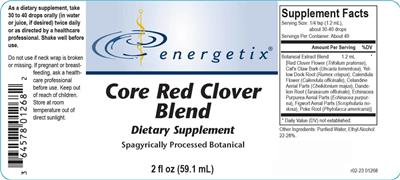
Supplement Facts
The label details for Core Red Clover Blend by Energetix, sourced from the NIH Dietary Supplement Label Database.
Supplement Facts
| Ingredient | Amount | % DV |
|---|---|---|
| Echinacea purpurea Aerial Parts Extract | 0 NP | -- |
| Dandelion Root Extract | 0 NP | -- |
| Calendula Flower Extract | 0 NP | -- |
| Cat's Claw Bark Extract | 0 NP | -- |
| Celandine aerial parts extract | 0 NP | -- |
| Botanical Extract Blend | 1.2 mL | -- |
| Yellow Dock Root Extract | 0 NP | -- |
| Red Clover flower extract | 0 NP | -- |
| Poke Root Extract | 0 NP | -- |
| Figwort Aerial Parts Extract | 0 NP | -- |
Other ingredients: Water, Purified, Ethyl Alcohol
Tap any ingredient to jump to its full detail below.
These statements are the manufacturer’s wording, reproduced from the product label — the label is saying it, not HelloPharmacist. We don’t verify or endorse them.
Suggested/Recommended/Usage/Directions
As a dietary supplement, take 30 to 40 drops orally (in water or juice, if desired) twice daily or as directed by a healthcare professional. Shake well before use.
Precautions
Do not use if neck wrap is broken or missing.
If pregnant or breast-feeding, ask a healthcare professional before use.
Keep out of reach of children.
Storage
Store at room temperature out of direct sunlight.
FDA Statement of Identity
Dietary Supplement
Formulation
Spagyrically processed botanical
Is this label outdated? Report a formula or label change and our pharmacy team will review it.
Core Red Clover Blend by Energetix label
The label scan from the NIH Dietary Supplement Label Database. Tap to enlarge.
Label images are published by the NIH Dietary Supplement Label Database for the version of this product on file. Always read your actual product label.
View the full label (PDF)The Ingredients in Core Red Clover Blend by Energetix
These are the 9 active ingredients this product is made of. Select any to open its full monograph.
Serving size1.2 mL Dosage formLiquid Servings per container49 Amounts shown are per serving.
Most supplement products combine several ingredients, and a medication can interact with the product through any one of them. Each ingredient below shows whether it has known drug interactions.
Botanical Extract Blend
Other (inactive) ingredients: Water, Purified, Ethyl Alcohol. These complete the product’s ingredient list but are not active constituents.
Core Red Clover Blend by Energetix Drug Interactions
HelloPharmacist Interaction Report
Core Red Clover Blend by Energetix contains nine ingredients, of which six have documented interactions with medications.
The most serious concern involves Yellow Dock Root Extract and diuretic drugs (like furosemide or hydrochlorothiazide) — Yellow Dock can worsen the potassium loss these drugs cause, raising the risk of dangerously low potassium levels (hypokalemia). It also carries a Major-severity risk with digoxin (a heart medication), where low potassium from Yellow Dock could trigger digoxin toxicity.
Read the full breakdown — every affected drug type, severity by severity
Echinacea purpurea, Dandelion Root, and Cat's Claw each interact with multiple drug categories. Echinacea raises levels of drugs broken down by CYP1A2 enzymes (including caffeine), may affect CYP3A4 substrates, and theoretically interferes with immune-suppressing medications and blood thinners (anticoagulants).
Dandelion root interacts similarly with CYP1A2 substrates and blood thinners, and also affects potassium-sparing diuretics (drugs that retain potassium), diabetes medications, and lithium. Cat's Claw raises the risk of low blood pressure with antihypertensive drugs and calcium channel blockers, interferes with blood thinners and immune suppressants, and may reduce levels of nirmatrelvir (in Paxlovid).
Red Clover flower extract has Moderate-severity interactions with hormone therapies (estrogens) and the cancer drug methotrexate, and with the breast cancer drug tamoxifen; it also theoretically affects several CYP enzymes, though clinical studies have not confirmed this. Calendula Flower Extract has only a Minor-level interaction with sedating drugs (CNS depressants), and is generally well tolerated.
We could not check Celandine aerial parts extract or Poke Root Extract — no data are on file for them.
Altogether, these interactions span 1,304 individual medications. Before starting this product, check your exact prescriptions with the tool on this page.
Check your own medications below · Editorial policy · How we use AI
Want to check YOUR meds against Core Red Clover Blend?
Ask about interactions with your drugs in plain English — “Can I take it with lisinopril?” — and we find you the answer in seconds, ingredient by ingredient.
Go to the checkerIngredients driving the most interactions
Individual Drug Interactions
The ingredients in Core Red Clover Blend interact with 1,456 drugs. Click any drug to see the details.
8 of the 9 ingredients in Core Red Clover Blend interact with drugs. Each result below shows which ingredient is responsible. Cat's Claw Bark Extract Red Clover flower extract Echinacea purpurea Aerial Parts Extract Celandine aerial parts extract Dandelion Root Extract Calendula Flower Extract Yellow Dock Root Extract Figwort Aerial Parts Extract
Acetaminophen, Caffeine, PyrilamineMidol Max Strength Menstrual
How Acetaminophen, Caffeine, Pyrilamine interacts with Core Red Clover Blend — through 7 ingredients. Tap an ingredient for the detail:
Yellow Dock Root ExtractDiuretic Drugs Major
Interaction Summary
Theoretically, yellow dock might increase the risk of hypokalemia when taken with diuretics.
Read the full Yellow Dock Root Extract + Acetaminophen, Caffeine, Pyrilamine interactionEchinacea Purpurea Aerial Parts ExtractCytochrome P450 3a4 (cyp3a4) Substrates, Caffeine +1 Moderate
Interaction Summary
Echinacea may induce hepatic CYP3A4 and inhibit intestinal CYP3A4.
Read the full Echinacea Purpurea Aerial Parts Extract + Acetaminophen, Caffeine, Pyrilamine interactionDandelion Root ExtractCytochrome P450 1a2 (cyp1a2) Substrates, Glucuronidated Drugs Moderate
Interaction Summary
Theoretically, dandelion might increase levels of drugs metabolized by CYP1A2.
Read the full Dandelion Root Extract + Acetaminophen, Caffeine, Pyrilamine interactionCat's Claw Bark ExtractCytochrome P450 3a4 (cyp3a4) Substrates Moderate
Interaction Summary
Theoretically, cat's claw might increase or decrease the levels and effects of drugs metabolized by CYP3A4.
Read the full Cat's Claw Bark Extract + Acetaminophen, Caffeine, Pyrilamine interactionFigwort Aerial Parts ExtractDiuretic Drugs Moderate
Interaction Summary
Theoretically, overuse of figwort might compound diuretic-induced potassium loss.
Read the full Figwort Aerial Parts Extract + Acetaminophen, Caffeine, Pyrilamine interactionCelandine Aerial Parts ExtractHepatotoxic Drugs Moderate
Interaction Summary
There is some concern that greater celandine can adversely affect the liver.
Read the full Celandine Aerial Parts Extract + Acetaminophen, Caffeine, Pyrilamine interactionRed Clover Flower ExtractCytochrome P450 3a4 (cyp3a4) Substrates, Caffeine +1 Minor
Interaction Summary
Theoretically, red clover might increase levels of drugs metabolized by CYP3A4; however, a small clinical study found no effect.
Read the full Red Clover Flower Extract + Acetaminophen, Caffeine, Pyrilamine interactionAcetaminophen, Pamabrom, PyrilamineMidol Max Strength PMS, Pamprin, Pamprin ES
How Acetaminophen, Pamabrom, Pyrilamine interacts with Core Red Clover Blend — through 6 ingredients. Tap an ingredient for the detail:
Yellow Dock Root ExtractDiuretic Drugs Major
Interaction Summary
Theoretically, yellow dock might increase the risk of hypokalemia when taken with diuretics.
Read the full Yellow Dock Root Extract + Acetaminophen, Pamabrom, Pyrilamine interactionCelandine Aerial Parts ExtractHepatotoxic Drugs Moderate
Interaction Summary
There is some concern that greater celandine can adversely affect the liver.
Read the full Celandine Aerial Parts Extract + Acetaminophen, Pamabrom, Pyrilamine interactionFigwort Aerial Parts ExtractDiuretic Drugs Moderate
Interaction Summary
Theoretically, overuse of figwort might compound diuretic-induced potassium loss.
Read the full Figwort Aerial Parts Extract + Acetaminophen, Pamabrom, Pyrilamine interactionDandelion Root ExtractGlucuronidated Drugs, Cytochrome P450 1a2 (cyp1a2) Substrates Moderate
Interaction Summary
Theoretically, dandelion might increase the clearance of drugs that are UDP-glucuronosyltransferase substrates.
Read the full Dandelion Root Extract + Acetaminophen, Pamabrom, Pyrilamine interactionEchinacea Purpurea Aerial Parts ExtractCytochrome P450 1a2 (cyp1a2) Substrates Moderate
Interaction Summary
Echinacea might inhibit the metabolism of CYP1A2 and increase plasma levels of some drugs.
Read the full Echinacea Purpurea Aerial Parts Extract + Acetaminophen, Pamabrom, Pyrilamine interactionRed Clover Flower ExtractCytochrome P450 1a2 (cyp1a2) Substrates Minor
Interaction Summary
Theoretically, red clover might increase levels of drugs metabolized by CYP1A2; however, a small clinical study found no effect.
Read the full Red Clover Flower Extract + Acetaminophen, Pamabrom, Pyrilamine interactionAcetazolamideAk-Zol, Diamox
How Acetazolamide interacts with Core Red Clover Blend — through 4 ingredients. Tap an ingredient for the detail:
Yellow Dock Root ExtractDiuretic Drugs Major
Interaction Summary
Theoretically, yellow dock might increase the risk of hypokalemia when taken with diuretics.
Read the full Yellow Dock Root Extract + Acetazolamide interactionFigwort Aerial Parts ExtractDiuretic Drugs Moderate
Interaction Summary
Theoretically, overuse of figwort might compound diuretic-induced potassium loss.
Read the full Figwort Aerial Parts Extract + Acetazolamide interactionCat's Claw Bark ExtractAntihypertensive Drugs Moderate
Interaction Summary
Theoretically, taking cat's claw with antihypertensive drugs might increase the risk of hypotension.
Read the full Cat's Claw Bark Extract + Acetazolamide interactionCalendula Flower ExtractCns Depressants Minor
Interaction Summary
Theoretically, calendula might have additive effects when used with CNS depressants, although this appears to be unlikely.
Read the full Calendula Flower Extract + Acetazolamide interactionAmiloride, HydrochlorothiazideAmil-Co, Amilzide, Moduret 25, Moduretic
How Amiloride, Hydrochlorothiazide interacts with Core Red Clover Blend — through 4 ingredients. Tap an ingredient for the detail:
Yellow Dock Root ExtractDiuretic Drugs Major
Interaction Summary
Theoretically, yellow dock might increase the risk of hypokalemia when taken with diuretics.
Read the full Yellow Dock Root Extract + Amiloride, Hydrochlorothiazide interactionCat's Claw Bark ExtractAntihypertensive Drugs Moderate
Interaction Summary
Theoretically, taking cat's claw with antihypertensive drugs might increase the risk of hypotension.
Read the full Cat's Claw Bark Extract + Amiloride, Hydrochlorothiazide interactionFigwort Aerial Parts ExtractDiuretic Drugs Moderate
Interaction Summary
Theoretically, overuse of figwort might compound diuretic-induced potassium loss.
Read the full Figwort Aerial Parts Extract + Amiloride, Hydrochlorothiazide interactionDandelion Root ExtractPotassium-sparing Diuretics Moderate
Interaction Summary
Theoretically, dandelion might increase the risk of hyperkalemia when taken with potassium-sparing diuretics.
Read the full Dandelion Root Extract + Amiloride, Hydrochlorothiazide interactionAmmonium ChlorideAmmonium Chloride
How Ammonium Chloride interacts with Core Red Clover Blend — through 3 ingredients. Tap an ingredient for the detail:
Yellow Dock Root ExtractDiuretic Drugs Major
Interaction Summary
Theoretically, yellow dock might increase the risk of hypokalemia when taken with diuretics.
Read the full Yellow Dock Root Extract + Ammonium Chloride interactionCat's Claw Bark ExtractAntihypertensive Drugs Moderate
Interaction Summary
Theoretically, taking cat's claw with antihypertensive drugs might increase the risk of hypotension.
Read the full Cat's Claw Bark Extract + Ammonium Chloride interactionFigwort Aerial Parts ExtractDiuretic Drugs Moderate
Interaction Summary
Theoretically, overuse of figwort might compound diuretic-induced potassium loss.
Read the full Figwort Aerial Parts Extract + Ammonium Chloride interactionAtenolol, ChlortalidoneAtenixCo, Tenoret 50, Totaretic
How Atenolol, Chlortalidone interacts with Core Red Clover Blend — through 3 ingredients. Tap an ingredient for the detail:
Yellow Dock Root ExtractDiuretic Drugs Major
Interaction Summary
Theoretically, yellow dock might increase the risk of hypokalemia when taken with diuretics.
Read the full Yellow Dock Root Extract + Atenolol, Chlortalidone interactionCat's Claw Bark ExtractAntihypertensive Drugs Moderate
Interaction Summary
Theoretically, taking cat's claw with antihypertensive drugs might increase the risk of hypotension.
Read the full Cat's Claw Bark Extract + Atenolol, Chlortalidone interactionFigwort Aerial Parts ExtractDiuretic Drugs Moderate
Interaction Summary
Theoretically, overuse of figwort might compound diuretic-induced potassium loss.
Read the full Figwort Aerial Parts Extract + Atenolol, Chlortalidone interactionAtenolol, ChlorthalidoneTenoretic
How Atenolol, Chlorthalidone interacts with Core Red Clover Blend — through 3 ingredients. Tap an ingredient for the detail:
Yellow Dock Root ExtractDiuretic Drugs Major
Interaction Summary
Theoretically, yellow dock might increase the risk of hypokalemia when taken with diuretics.
Read the full Yellow Dock Root Extract + Atenolol, Chlorthalidone interactionFigwort Aerial Parts ExtractDiuretic Drugs Moderate
Interaction Summary
Theoretically, overuse of figwort might compound diuretic-induced potassium loss.
Read the full Figwort Aerial Parts Extract + Atenolol, Chlorthalidone interactionCat's Claw Bark ExtractAntihypertensive Drugs Moderate
Interaction Summary
Theoretically, taking cat's claw with antihypertensive drugs might increase the risk of hypotension.
Read the full Cat's Claw Bark Extract + Atenolol, Chlorthalidone interactionAzilsartan, ChlorthalidoneEdarbyclor
How Azilsartan, Chlorthalidone interacts with Core Red Clover Blend — through 4 ingredients. Tap an ingredient for the detail:
Yellow Dock Root ExtractDiuretic Drugs Major
Interaction Summary
Theoretically, yellow dock might increase the risk of hypokalemia when taken with diuretics.
Read the full Yellow Dock Root Extract + Azilsartan, Chlorthalidone interactionCat's Claw Bark ExtractAntihypertensive Drugs Moderate
Interaction Summary
Theoretically, taking cat's claw with antihypertensive drugs might increase the risk of hypotension.
Read the full Cat's Claw Bark Extract + Azilsartan, Chlorthalidone interactionFigwort Aerial Parts ExtractDiuretic Drugs Moderate
Interaction Summary
Theoretically, overuse of figwort might compound diuretic-induced potassium loss.
Read the full Figwort Aerial Parts Extract + Azilsartan, Chlorthalidone interactionRed Clover Flower ExtractCytochrome P450 2c9 (cyp2c9) Substrates Minor
Interaction Summary
Theoretically, red clover might increase levels of drugs metabolized by CYP2C9; however, a small clinical study found no effect.
Read the full Red Clover Flower Extract + Azilsartan, Chlorthalidone interactionBenazepril, HydrochlorothiazideLotensin HCT
How Benazepril, Hydrochlorothiazide interacts with Core Red Clover Blend — through 3 ingredients. Tap an ingredient for the detail:
Yellow Dock Root ExtractDiuretic Drugs Major
Interaction Summary
Theoretically, yellow dock might increase the risk of hypokalemia when taken with diuretics.
Read the full Yellow Dock Root Extract + Benazepril, Hydrochlorothiazide interactionCat's Claw Bark ExtractAntihypertensive Drugs Moderate
Interaction Summary
Theoretically, taking cat's claw with antihypertensive drugs might increase the risk of hypotension.
Read the full Cat's Claw Bark Extract + Benazepril, Hydrochlorothiazide interactionFigwort Aerial Parts ExtractDiuretic Drugs Moderate
Interaction Summary
Theoretically, overuse of figwort might compound diuretic-induced potassium loss.
Read the full Figwort Aerial Parts Extract + Benazepril, Hydrochlorothiazide interactionBendroflumethiazideAprinox, Naturetin, Neo-NaClex
How Bendroflumethiazide interacts with Core Red Clover Blend — through 3 ingredients. Tap an ingredient for the detail:
Yellow Dock Root ExtractDiuretic Drugs Major
Interaction Summary
Theoretically, yellow dock might increase the risk of hypokalemia when taken with diuretics.
Read the full Yellow Dock Root Extract + Bendroflumethiazide interactionCat's Claw Bark ExtractAntihypertensive Drugs Moderate
Interaction Summary
Theoretically, taking cat's claw with antihypertensive drugs might increase the risk of hypotension.
Read the full Cat's Claw Bark Extract + Bendroflumethiazide interactionFigwort Aerial Parts ExtractDiuretic Drugs Moderate
Interaction Summary
Theoretically, overuse of figwort might compound diuretic-induced potassium loss.
Read the full Figwort Aerial Parts Extract + Bendroflumethiazide interactionBendroflumethiazide, NadololCorzide
How Bendroflumethiazide, Nadolol interacts with Core Red Clover Blend — through 3 ingredients. Tap an ingredient for the detail:
Yellow Dock Root ExtractDiuretic Drugs Major
Interaction Summary
Theoretically, yellow dock might increase the risk of hypokalemia when taken with diuretics.
Read the full Yellow Dock Root Extract + Bendroflumethiazide, Nadolol interactionFigwort Aerial Parts ExtractDiuretic Drugs Moderate
Interaction Summary
Theoretically, overuse of figwort might compound diuretic-induced potassium loss.
Read the full Figwort Aerial Parts Extract + Bendroflumethiazide, Nadolol interactionCat's Claw Bark ExtractAntihypertensive Drugs Moderate
Interaction Summary
Theoretically, taking cat's claw with antihypertensive drugs might increase the risk of hypotension.
Read the full Cat's Claw Bark Extract + Bendroflumethiazide, Nadolol interactionBendroflumethiazide, PotassiumCentyl K, Neo-NaClex-K
How Bendroflumethiazide, Potassium interacts with Core Red Clover Blend — through 3 ingredients. Tap an ingredient for the detail:
Yellow Dock Root ExtractDiuretic Drugs Major
Interaction Summary
Theoretically, yellow dock might increase the risk of hypokalemia when taken with diuretics.
Read the full Yellow Dock Root Extract + Bendroflumethiazide, Potassium interactionFigwort Aerial Parts ExtractDiuretic Drugs Moderate
Interaction Summary
Theoretically, overuse of figwort might compound diuretic-induced potassium loss.
Read the full Figwort Aerial Parts Extract + Bendroflumethiazide, Potassium interactionDandelion Root ExtractPotassium-sparing Diuretics Moderate
Interaction Summary
Theoretically, dandelion might increase the risk of hyperkalemia when taken with potassium-sparing diuretics.
Read the full Dandelion Root Extract + Bendroflumethiazide, Potassium interactionBendroflumethiazide, Rauwolfia SerpentinaRauzide
How Bendroflumethiazide, Rauwolfia Serpentina interacts with Core Red Clover Blend — through 3 ingredients. Tap an ingredient for the detail:
Yellow Dock Root ExtractDiuretic Drugs Major
Interaction Summary
Theoretically, yellow dock might increase the risk of hypokalemia when taken with diuretics.
Read the full Yellow Dock Root Extract + Bendroflumethiazide, Rauwolfia Serpentina interactionCat's Claw Bark ExtractAntihypertensive Drugs Moderate
Interaction Summary
Theoretically, taking cat's claw with antihypertensive drugs might increase the risk of hypotension.
Read the full Cat's Claw Bark Extract + Bendroflumethiazide, Rauwolfia Serpentina interactionFigwort Aerial Parts ExtractDiuretic Drugs Moderate
Interaction Summary
Theoretically, overuse of figwort might compound diuretic-induced potassium loss.
Read the full Figwort Aerial Parts Extract + Bendroflumethiazide, Rauwolfia Serpentina interactionBenzthiazideExna
How Benzthiazide interacts with Core Red Clover Blend — through 3 ingredients. Tap an ingredient for the detail:
Yellow Dock Root ExtractDiuretic Drugs Major
Interaction Summary
Theoretically, yellow dock might increase the risk of hypokalemia when taken with diuretics.
Read the full Yellow Dock Root Extract + Benzthiazide interactionCat's Claw Bark ExtractAntihypertensive Drugs Moderate
Interaction Summary
Theoretically, taking cat's claw with antihypertensive drugs might increase the risk of hypotension.
Read the full Cat's Claw Bark Extract + Benzthiazide interactionFigwort Aerial Parts ExtractDiuretic Drugs Moderate
Interaction Summary
Theoretically, overuse of figwort might compound diuretic-induced potassium loss.
Read the full Figwort Aerial Parts Extract + Benzthiazide interactionBisoprolol, HydrochlorothiazideZiac
How Bisoprolol, Hydrochlorothiazide interacts with Core Red Clover Blend — through 4 ingredients. Tap an ingredient for the detail:
Yellow Dock Root ExtractDiuretic Drugs Major
Interaction Summary
Theoretically, yellow dock might increase the risk of hypokalemia when taken with diuretics.
Read the full Yellow Dock Root Extract + Bisoprolol, Hydrochlorothiazide interactionCelandine Aerial Parts ExtractCytochrome P450 2d6 (cyp2d6) Substrates Moderate
Interaction Summary
Research in vitro shows that chelidonine, a constituent of greater celandine, inhibits cytochrome P450 2D6 (CYP2D6) enzyme activity.
Read the full Celandine Aerial Parts Extract + Bisoprolol, Hydrochlorothiazide interactionCat's Claw Bark ExtractAntihypertensive Drugs Moderate
Interaction Summary
Theoretically, taking cat's claw with antihypertensive drugs might increase the risk of hypotension.
Read the full Cat's Claw Bark Extract + Bisoprolol, Hydrochlorothiazide interactionFigwort Aerial Parts ExtractDiuretic Drugs Moderate
Interaction Summary
Theoretically, overuse of figwort might compound diuretic-induced potassium loss.
Read the full Figwort Aerial Parts Extract + Bisoprolol, Hydrochlorothiazide interactionBumetanideBurinex
How Bumetanide interacts with Core Red Clover Blend — through 3 ingredients. Tap an ingredient for the detail:
Yellow Dock Root ExtractDiuretic Drugs Major
Interaction Summary
Theoretically, yellow dock might increase the risk of hypokalemia when taken with diuretics.
Read the full Yellow Dock Root Extract + Bumetanide interactionFigwort Aerial Parts ExtractDiuretic Drugs Moderate
Interaction Summary
Theoretically, overuse of figwort might compound diuretic-induced potassium loss.
Read the full Figwort Aerial Parts Extract + Bumetanide interactionCat's Claw Bark ExtractAntihypertensive Drugs Moderate
Interaction Summary
Theoretically, taking cat's claw with antihypertensive drugs might increase the risk of hypotension.
Read the full Cat's Claw Bark Extract + Bumetanide interactionBumetanide, PotassiumBurinex K
How Bumetanide, Potassium interacts with Core Red Clover Blend — through 3 ingredients. Tap an ingredient for the detail:
Yellow Dock Root ExtractDiuretic Drugs Major
Interaction Summary
Theoretically, yellow dock might increase the risk of hypokalemia when taken with diuretics.
Read the full Yellow Dock Root Extract + Bumetanide, Potassium interactionFigwort Aerial Parts ExtractDiuretic Drugs Moderate
Interaction Summary
Theoretically, overuse of figwort might compound diuretic-induced potassium loss.
Read the full Figwort Aerial Parts Extract + Bumetanide, Potassium interactionDandelion Root ExtractPotassium-sparing Diuretics Moderate
Interaction Summary
Theoretically, dandelion might increase the risk of hyperkalemia when taken with potassium-sparing diuretics.
Read the full Dandelion Root Extract + Bumetanide, Potassium interactionCaffeine, Potassium Salicylate, SalicylamideTrim-Elim
How Caffeine, Potassium Salicylate, Salicylamide interacts with Core Red Clover Blend — through 6 ingredients. Tap an ingredient for the detail:
Yellow Dock Root ExtractDiuretic Drugs Major
Interaction Summary
Theoretically, yellow dock might increase the risk of hypokalemia when taken with diuretics.
Read the full Yellow Dock Root Extract + Caffeine, Potassium Salicylate, Salicylamide interactionDandelion Root ExtractCytochrome P450 1a2 (cyp1a2) Substrates Moderate
Interaction Summary
Theoretically, dandelion might increase levels of drugs metabolized by CYP1A2.
Read the full Dandelion Root Extract + Caffeine, Potassium Salicylate, Salicylamide interactionEchinacea Purpurea Aerial Parts ExtractCaffeine, Cytochrome P450 3a4 (cyp3a4) Substrates +1 Moderate
Interaction Summary
Echinacea can increase plasma levels of caffeine by inhibiting its metabolism.
Read the full Echinacea Purpurea Aerial Parts Extract + Caffeine, Potassium Salicylate, Salicylamide interactionCat's Claw Bark ExtractCytochrome P450 3a4 (cyp3a4) Substrates Moderate
Interaction Summary
Theoretically, cat's claw might increase or decrease the levels and effects of drugs metabolized by CYP3A4.
Read the full Cat's Claw Bark Extract + Caffeine, Potassium Salicylate, Salicylamide interactionFigwort Aerial Parts ExtractDiuretic Drugs Moderate
Interaction Summary
Theoretically, overuse of figwort might compound diuretic-induced potassium loss.
Read the full Figwort Aerial Parts Extract + Caffeine, Potassium Salicylate, Salicylamide interactionRed Clover Flower ExtractCytochrome P450 3a4 (cyp3a4) Substrates, Caffeine +1 Minor
Interaction Summary
Theoretically, red clover might increase levels of drugs metabolized by CYP3A4; however, a small clinical study found no effect.
Read the full Red Clover Flower Extract + Caffeine, Potassium Salicylate, Salicylamide interactionCandesartan Cilexetil, HydrochlorothiazideAtacand HCT
How Candesartan Cilexetil, Hydrochlorothiazide interacts with Core Red Clover Blend — through 3 ingredients. Tap an ingredient for the detail:
Yellow Dock Root ExtractDiuretic Drugs Major
Interaction Summary
Theoretically, yellow dock might increase the risk of hypokalemia when taken with diuretics.
Read the full Yellow Dock Root Extract + Candesartan Cilexetil, Hydrochlorothiazide interactionCat's Claw Bark ExtractAntihypertensive Drugs Moderate
Interaction Summary
Theoretically, taking cat's claw with antihypertensive drugs might increase the risk of hypotension.
Read the full Cat's Claw Bark Extract + Candesartan Cilexetil, Hydrochlorothiazide interactionFigwort Aerial Parts ExtractDiuretic Drugs Moderate
Interaction Summary
Theoretically, overuse of figwort might compound diuretic-induced potassium loss.
Read the full Figwort Aerial Parts Extract + Candesartan Cilexetil, Hydrochlorothiazide interactionCaptopril, HydrochlorothiazideAcezide, Capozide
How Captopril, Hydrochlorothiazide interacts with Core Red Clover Blend — through 3 ingredients. Tap an ingredient for the detail:
Yellow Dock Root ExtractDiuretic Drugs Major
Interaction Summary
Theoretically, yellow dock might increase the risk of hypokalemia when taken with diuretics.
Read the full Yellow Dock Root Extract + Captopril, Hydrochlorothiazide interactionCat's Claw Bark ExtractAntihypertensive Drugs Moderate
Interaction Summary
Theoretically, taking cat's claw with antihypertensive drugs might increase the risk of hypotension.
Read the full Cat's Claw Bark Extract + Captopril, Hydrochlorothiazide interactionFigwort Aerial Parts ExtractDiuretic Drugs Moderate
Interaction Summary
Theoretically, overuse of figwort might compound diuretic-induced potassium loss.
Read the full Figwort Aerial Parts Extract + Captopril, Hydrochlorothiazide interactionChlorothiazideDiuril
How Chlorothiazide interacts with Core Red Clover Blend — through 3 ingredients. Tap an ingredient for the detail:
Yellow Dock Root ExtractDiuretic Drugs Major
Interaction Summary
Theoretically, yellow dock might increase the risk of hypokalemia when taken with diuretics.
Read the full Yellow Dock Root Extract + Chlorothiazide interactionCat's Claw Bark ExtractAntihypertensive Drugs Moderate
Interaction Summary
Theoretically, taking cat's claw with antihypertensive drugs might increase the risk of hypotension.
Read the full Cat's Claw Bark Extract + Chlorothiazide interactionFigwort Aerial Parts ExtractDiuretic Drugs Moderate
Interaction Summary
Theoretically, overuse of figwort might compound diuretic-induced potassium loss.
Read the full Figwort Aerial Parts Extract + Chlorothiazide interactionChlorothiazide, MethyldopaAldochlor, Aldoclor 150, Aldoclor 250
How Chlorothiazide, Methyldopa interacts with Core Red Clover Blend — through 4 ingredients. Tap an ingredient for the detail:
Yellow Dock Root ExtractDiuretic Drugs Major
Interaction Summary
Theoretically, yellow dock might increase the risk of hypokalemia when taken with diuretics.
Read the full Yellow Dock Root Extract + Chlorothiazide, Methyldopa interactionFigwort Aerial Parts ExtractDiuretic Drugs Moderate
Interaction Summary
Theoretically, overuse of figwort might compound diuretic-induced potassium loss.
Read the full Figwort Aerial Parts Extract + Chlorothiazide, Methyldopa interactionCelandine Aerial Parts ExtractHepatotoxic Drugs Moderate
Interaction Summary
There is some concern that greater celandine can adversely affect the liver.
Read the full Celandine Aerial Parts Extract + Chlorothiazide, Methyldopa interactionCat's Claw Bark ExtractAntihypertensive Drugs Moderate
Interaction Summary
Theoretically, taking cat's claw with antihypertensive drugs might increase the risk of hypotension.
Read the full Cat's Claw Bark Extract + Chlorothiazide, Methyldopa interactionChlorothiazide, ReserpineDiupres
How Chlorothiazide, Reserpine interacts with Core Red Clover Blend — through 3 ingredients. Tap an ingredient for the detail:
Yellow Dock Root ExtractDiuretic Drugs Major
Interaction Summary
Theoretically, yellow dock might increase the risk of hypokalemia when taken with diuretics.
Read the full Yellow Dock Root Extract + Chlorothiazide, Reserpine interactionCat's Claw Bark ExtractAntihypertensive Drugs Moderate
Interaction Summary
Theoretically, taking cat's claw with antihypertensive drugs might increase the risk of hypotension.
Read the full Cat's Claw Bark Extract + Chlorothiazide, Reserpine interactionFigwort Aerial Parts ExtractDiuretic Drugs Moderate
Interaction Summary
Theoretically, overuse of figwort might compound diuretic-induced potassium loss.
Read the full Figwort Aerial Parts Extract + Chlorothiazide, Reserpine interactionChlorthalidoneHygroton, Thalitone
How Chlorthalidone interacts with Core Red Clover Blend — through 3 ingredients. Tap an ingredient for the detail:
Yellow Dock Root ExtractDiuretic Drugs Major
Interaction Summary
Theoretically, yellow dock might increase the risk of hypokalemia when taken with diuretics.
Read the full Yellow Dock Root Extract + Chlorthalidone interactionFigwort Aerial Parts ExtractDiuretic Drugs Moderate
Interaction Summary
Theoretically, overuse of figwort might compound diuretic-induced potassium loss.
Read the full Figwort Aerial Parts Extract + Chlorthalidone interactionCat's Claw Bark ExtractAntihypertensive Drugs Moderate
Interaction Summary
Theoretically, taking cat's claw with antihypertensive drugs might increase the risk of hypotension.
Read the full Cat's Claw Bark Extract + Chlorthalidone interactionChlorthalidone, ClonidineClorpres, Combipres
How Chlorthalidone, Clonidine interacts with Core Red Clover Blend — through 3 ingredients. Tap an ingredient for the detail:
Yellow Dock Root ExtractDiuretic Drugs Major
Interaction Summary
Theoretically, yellow dock might increase the risk of hypokalemia when taken with diuretics.
Read the full Yellow Dock Root Extract + Chlorthalidone, Clonidine interactionCat's Claw Bark ExtractAntihypertensive Drugs Moderate
Interaction Summary
Theoretically, taking cat's claw with antihypertensive drugs might increase the risk of hypotension.
Read the full Cat's Claw Bark Extract + Chlorthalidone, Clonidine interactionFigwort Aerial Parts ExtractDiuretic Drugs Moderate
Interaction Summary
Theoretically, overuse of figwort might compound diuretic-induced potassium loss.
Read the full Figwort Aerial Parts Extract + Chlorthalidone, Clonidine interactionCryptenamine, MethyclothiazideDiutensen
How Cryptenamine, Methyclothiazide interacts with Core Red Clover Blend — through 3 ingredients. Tap an ingredient for the detail:
Yellow Dock Root ExtractDiuretic Drugs Major
Interaction Summary
Theoretically, yellow dock might increase the risk of hypokalemia when taken with diuretics.
Read the full Yellow Dock Root Extract + Cryptenamine, Methyclothiazide interactionCat's Claw Bark ExtractAntihypertensive Drugs Moderate
Interaction Summary
Theoretically, taking cat's claw with antihypertensive drugs might increase the risk of hypotension.
Read the full Cat's Claw Bark Extract + Cryptenamine, Methyclothiazide interactionFigwort Aerial Parts ExtractDiuretic Drugs Moderate
Interaction Summary
Theoretically, overuse of figwort might compound diuretic-induced potassium loss.
Read the full Figwort Aerial Parts Extract + Cryptenamine, Methyclothiazide interactionCyclothiazideAnhydron, Fluidil
How Cyclothiazide interacts with Core Red Clover Blend — through 3 ingredients. Tap an ingredient for the detail:
Yellow Dock Root ExtractDiuretic Drugs Major
Interaction Summary
Theoretically, yellow dock might increase the risk of hypokalemia when taken with diuretics.
Read the full Yellow Dock Root Extract + Cyclothiazide interactionCat's Claw Bark ExtractAntihypertensive Drugs Moderate
Interaction Summary
Theoretically, taking cat's claw with antihypertensive drugs might increase the risk of hypotension.
Read the full Cat's Claw Bark Extract + Cyclothiazide interactionFigwort Aerial Parts ExtractDiuretic Drugs Moderate
Interaction Summary
Theoretically, overuse of figwort might compound diuretic-induced potassium loss.
Read the full Figwort Aerial Parts Extract + Cyclothiazide interactionDeserpidine, HydrochlorothiazideOreticyl, Oreticyl Forte
How Deserpidine, Hydrochlorothiazide interacts with Core Red Clover Blend — through 3 ingredients. Tap an ingredient for the detail:
Yellow Dock Root ExtractDiuretic Drugs Major
Interaction Summary
Theoretically, yellow dock might increase the risk of hypokalemia when taken with diuretics.
Read the full Yellow Dock Root Extract + Deserpidine, Hydrochlorothiazide interactionCat's Claw Bark ExtractAntihypertensive Drugs Moderate
Interaction Summary
Theoretically, taking cat's claw with antihypertensive drugs might increase the risk of hypotension.
Read the full Cat's Claw Bark Extract + Deserpidine, Hydrochlorothiazide interactionFigwort Aerial Parts ExtractDiuretic Drugs Moderate
Interaction Summary
Theoretically, overuse of figwort might compound diuretic-induced potassium loss.
Read the full Figwort Aerial Parts Extract + Deserpidine, Hydrochlorothiazide interactionDeserpidine, MethyclothiazideEnduronyl, Enduronyl Forte
How Deserpidine, Methyclothiazide interacts with Core Red Clover Blend — through 3 ingredients. Tap an ingredient for the detail:
Yellow Dock Root ExtractDiuretic Drugs Major
Interaction Summary
Theoretically, yellow dock might increase the risk of hypokalemia when taken with diuretics.
Read the full Yellow Dock Root Extract + Deserpidine, Methyclothiazide interactionFigwort Aerial Parts ExtractDiuretic Drugs Moderate
Interaction Summary
Theoretically, overuse of figwort might compound diuretic-induced potassium loss.
Read the full Figwort Aerial Parts Extract + Deserpidine, Methyclothiazide interactionCat's Claw Bark ExtractAntihypertensive Drugs Moderate
Interaction Summary
Theoretically, taking cat's claw with antihypertensive drugs might increase the risk of hypotension.
Read the full Cat's Claw Bark Extract + Deserpidine, Methyclothiazide interactionDigoxinDigitek, Lanoxicaps, Lanoxin
How Digoxin interacts with Core Red Clover Blend — through 2 ingredients. Tap an ingredient for the detail:
Yellow Dock Root ExtractDigoxin (lanoxin) Major
Interaction Summary
Theoretically, yellow dock might increase the risk of digoxin toxicity when used long-term or in large amount.
Read the full Yellow Dock Root Extract + Digoxin interactionDandelion Root ExtractGlucuronidated Drugs Moderate
Interaction Summary
Theoretically, dandelion might increase the clearance of drugs that are UDP-glucuronosyltransferase substrates.
Read the full Dandelion Root Extract + Digoxin interactionEach ingredient & the kinds of drugs it affects
For each ingredient in Core Red Clover Blend with known interactions, here are the types of medications they can affect. Open any type for the detail — or search your exact drug in the checker above.
Cat's Claw Bark Extract
Anticoagulant/Antiplatelet Drugs
Theoretically, cat's claw may increase the risk of bleeding if used with anticoagulant or antiplatelet drugs.
Cat's claw contains rhynchophylline and isorhynchophylline. Animal research suggests that these alkaloids can inhibit platelet aggregation. This interaction has not been reported in humans.
Antihypertensive Drugs
Theoretically, taking cat's claw with antihypertensive drugs might increase the risk of hypotension.
Cat's claw contains rhynchophylline. In vitro and animal research suggests that rhynchophylline can lower blood pressure. This interaction has not been reported in humans.
Calcium Channel Blockers
Theoretically, taking cat's claw with calcium channel blockers might increase the risk of hypotension.
Cat's claw contains various alkaloids, including rhynchophylline, isorhynchophylline, corynoxeine, and isocorynoxiene. Animal research suggests that these alkaloids can lower blood pressure by acting as calcium channel blockers. This interaction has not been reported in humans.
Cytochrome P450 3A4 (Cyp3A4) Substrates
Theoretically, cat's claw might increase or decrease the levels and effects of drugs metabolized by CYP3A4.
Cat's claw may affect the clearance of drugs metabolized by CYP3A4. In vitro research shows that cat's claw can inhibit CYP3A4 enzymes. In one case report, a patient taking cat's claw (at an unspecified dose) experienced increased serum levels of atazanavir, ritonavir, and saquinavir, all of which are CYP3A4 substrates. Levels returned to normal 15 days after discontinuation of the cat's claw supplement, suggesting inhibition of CYP3A4 by cat's claw. In contrast, animal research suggests that rhynchophylline, an alkaloid contained in cat's claw, induces CYP3A expression and accelerates the metabolism of nirmatrelvir, the active component in the nirmatrelvir/ritonavir combination product.
Immunosuppressants
Theoretically, cat's claw might interfere with immunosuppressive therapy.
In human and laboratory research, cat's claw has been shown to have immunostimulating activity. It stimulates phagocytosis and increases respiratory cellular activity and the mobility of leukocytes. Theoretically, this could interfere with the activity of immunosuppressant medications.
Nirmatrelvir/Ritonavir (Paxlovid)
Theoretically, cat's claw may decrease the levels of nirmatrelvir.
Cat's claw contains rhynchophylline. Animal research suggests that this alkaloid induces CYP3A expression, thereby accelerating the metabolism of nirmatrelvir, the active component in the nirmatrelvir/ritonavir combination product. This interaction has not been reported in humans.
Red Clover flower extract
Estrogens
Theoretically, concomitant use of large amounts of red clover might interfere with estrogen therapy.
Red clover contains phytoestrogens which might have estrogenic activity in some people. Theoretically, red clover might compete for estrogen receptors and interfere with estrogen-containing drug therapy.
Methotrexate (Trexall, Others)
Theoretically, red clover might increase the risk of methotrexate toxicity.
In a case report, a 52-year-old female receiving weekly methotrexate injections for psoriasis developed symptoms of methotrexate toxicity, including severe vomiting and epigastric pain, after three days of taking red clover 430 mg daily. Toxicity resolved after red clover was discontinued. However, no liver function tests or methotrexate levels were reported.
Tamoxifen (Nolvadex)
Theoretically, the phytoestrogens in red clover might interfere with tamoxifen.
In vitro and animal research suggests that genistein, a constituent of red clover, might antagonize the antitumor effects of tamoxifen. However, there is some evidence from an animal study that red clover does not reduce the efficacy of tamoxifen. Until more is known, tell patients taking tamoxifen to avoid red clover.
Anticoagulant/Antiplatelet Drugs
Although some laboratory research suggests that red clover may have anticoagulant and antiplatelet activity, clinical research has not shown this effect.
In vitro research suggests that genistein in red clover has antiplatelet effects, and historically, red clover was thought to have anticoagulant effects due to its coumarin content. However, some experts state that this is unlikely as most natural coumarins have not been shown to have anticoagulant effects, and their content in red clover is low. Additionally, some clinical research in postmenopausal patients found no effect on coagulation or prothrombin time with the use of red clover flowering tops 378 mg daily for 12 months or red clover isoflavone (Rimostil) 50 mg daily for 2 years.
Caffeine
Theoretically, soy might reduce the clearance of caffeine; however, a small clinical study found no effect.
Red clover contains genistein. Taking genistein 1 gram daily for 14 days seems to inhibit caffeine clearance and metabolism in healthy females. However, this effect does not seem to occur with the lower amounts of genistein found in red clover. A clinical study in healthy postmenopausal individuals shows that taking red clover capsules standardized to contain 60 mg isoflavones twice daily for 14 days does not affect the pharmacokinetics of caffeine.
Cytochrome P450 1A2 (Cyp1A2) Substrates
Theoretically, red clover might increase levels of drugs metabolized by CYP1A2; however, a small clinical study found no effect.
In vitro evidence shows that red clover inhibits CYP1A2. However, a clinical study in healthy postmenopausal individuals shows that taking red clover capsules standardized to contain 60 mg isoflavones twice daily for 14 days does not affect the pharmacokinetics of caffeine, a CYP1A2 probe substrate.
Cytochrome P450 2C19 (Cyp2C19) Substrates
Theoretically, red clover might increase the levels and clinical effects of drugs metabolized by CYP2C19.
In vitro evidence suggests that red clover weakly inhibits CYP2C19. This interaction has not been reported in humans.
Cytochrome P450 2C9 (Cyp2C9) Substrates
Theoretically, red clover might increase levels of drugs metabolized by CYP2C9; however, a small clinical study found no effect.
In vitro evidence suggests that red clover might inhibit CYP2C9. However, a clinical study in healthy postmenopausal individuals shows that taking red clover capsules standardized to contain 60 mg isoflavones twice daily for 14 days does not affect the pharmacokinetics of tolbutamide, a CYP2C9 probe substrate.
Cytochrome P450 3A4 (Cyp3A4) Substrates
Theoretically, red clover might increase levels of drugs metabolized by CYP3A4; however, a small clinical study found no effect.
In vitro evidence shows that red clover might inhibit CYP3A4 isoenzymes. However, a clinical study in healthy postmenopausal individuals shows that taking red clover capsules standardized to contain 60 mg isoflavones twice daily for 14 days does not affect the pharmacokinetics of alprazolam, a CYP3A4 probe substrate.
Echinacea purpurea Aerial Parts Extract
Caffeine
Echinacea can increase plasma levels of caffeine by inhibiting its metabolism.
Echinacea seems to increase plasma concentrations of caffeine by around 30%. This is likely due to inhibition of cytochrome P450 1A2 (CYP1A2) by echinacea.
Cytochrome P450 1A2 (Cyp1A2) Substrates
Echinacea might inhibit the metabolism of CYP1A2 and increase plasma levels of some drugs.
Echinacea appears to inhibit CYP1A2 enzymes in humans. Additionally, echinacea seems to increase plasma concentrations of caffeine, a CYP1A2 substrate, by around 30%. Theoretically, echinacea might increase levels of other drugs metabolized by CYP1A2.
Cytochrome P450 3A4 (Cyp3A4) Substrates
Echinacea may induce hepatic CYP3A4 and inhibit intestinal CYP3A4. This may increase or decrease levels of drugs metabolized by CYP3A4.
Several clinical trials have shown that taking echinacea for up to one month does not significantly affect the metabolism of various CYP3A4 substrates, including midazolam, docetaxel, etravirine, lopinavir-ritonavir, and darunavir-ritonavir. However, other clinical research shows that echinacea may increase the clearance of midazolam, suggesting that echinacea might induce CYP3A4. The discrepancy is thought to be due to differing effects of echinacea on intestinal versus hepatic CYP3A4 enzymes. Echinacea appears to induce hepatic CYP3A4 but inhibit intestinal CYP3A4. In some cases, these effects might cancel each other out, but in others, drug levels may be increased or decreased depending on the level of effect at hepatic and intestinal sites. The effect of echinacea on CYP3A4 activity may differ depending on the CYP3A4 substrate.
Etoposide (Vepesid)
Echinacea may increase levels of etoposide.
In one report, concomitant use of etoposide and echinacea was associated with more severe thrombocytopenia than the use of etoposide alone, suggesting inhibition of etoposide metabolism. Etoposide is a cytochrome P450 3A4 (CYP3A4) substrate. Echinacea has variable effects on CYP3A4, but some studies have reported inhibition of the enzyme.
Immunosuppressants
Echinacea has immunostimulant activity which may interfere with immunosuppressant therapy.
Theoretically, echinacea may interfere with immunosuppressant therapy because of its immunostimulant activity.
Darunavir (Prezista)
Theoretically, echinacea may interfere with the metabolism of darunavir; however, a small clinical study found no effect.
Darunavir is metabolized by cytochrome P450 3A4 (CYP3A4) and is administered with the CYP3A4 inhibitor ritonavir to increase its plasma concentrations. Echinacea has variable effects on CYP3A4, but administration of an E. purpurea root extract (Arkocapsulas Echinacea, Arkopharma) 500 mg four times daily for 14 days did not affect darunavir/ritonavir pharmacokinetics in 15 HIV-infected patients.
Dayquil Severe
Echinacea is reported to have varying effects on a number of Cytochrome P450 metabolizing enzymes in the liver, including CYP1A2 and CYP3A4, which play a role in acetaminophen and dextromethorphan metabolism (both contained in DayQuil Severe), respectively. Studies have reported both enzyme inhibition and induction, making it difficult to predict clinically significant drug interactions with reliability. Specific drug interaction studies reporting definitive results are rare, and potential drug interactions involving echinacea should likely be taken on a case-by-case basis. Based on what we know about how acetaminophen and dextromethorphan are metabolized, the risk of a clinically significant interaction between echinacea and DayQuil Severe is low.
Docetaxel (Taxotere)
Theoretically, echinacea may interfere with the metabolism of docetaxel; however, a small clinical study found no effect.
Docetaxel is metabolized by cytochrome P450 3A4 (CYP3A4). Echinacea has variable effects on CYP3A4, but taking E. purpurea whole plant extract (Echinaforce, A. Vogel Biopharma AG) 20 drops three times daily for 2 weeks did not alter the pharmacokinetics of docetaxel in one clinical study.
Etravirine (Intelence)
Theoretically, echinacea may interfere with the metabolism of etravirine; however, a small clinical study found no effect.
Etravirine is metabolized by cytochrome P450 3A4 (CYP3A4). Echinacea has variable effects on CYP3A4, but taking E. purpurea root extract (Arkocapsulas Echinacea, Arkopharma) 500 mg three times daily for 14 days did not alter the pharmacokinetics of etravirine in HIV-infected patients.
Lopinavir/Ritonavir (Kaletra)
Theoretically, echinacea may interfere with the metabolism of lopinavir; however, a small clinical study found no effect.
Lopinavir is metabolized by cytochrome P450 3A4 (CYP3A4) and is administered with the CYP3A4 inhibitor ritonavir to increase its plasma concentrations. Echinacea has variable effects on CYP3A4, but taking E. purpurea (Echinamide, Natural Factors Nutritional Products, Inc.) 500 mg three times daily for 14 days did not alter the pharmacokinetics of lopinavir/ritonavir in healthy volunteers.
Midazolam (Versed)
Theoretically, echinacea may increase the metabolism of intravenous midazolam.
Echinacea induces hepatic CYP3A4 and might decrease plasma levels of midazolam by about 20%, reducing the effectiveness of intravenous midazolam. Echinacea also appears to inhibit intestinal CYP3A4, which could theoretically increase the bioavailability of oral midazolam. This may cancel out the decrease in availability caused by induction of hepatic CYP3A4, such that overall plasma levels after oral administration of midazolam are not affected by echinacea.
Warfarin (Coumadin)
Echinacea seems to increase the clearance of warfarin, although the effect may not be clinically significant.
Preliminary clinical research in healthy male volunteers suggests that taking echinacea increases the clearance of the active S-isomer of warfarin after a single dose of warfarin, but there was not a clinically significant effect on the INR.
Celandine aerial parts extract
Cytochrome P450 2D6 (Cyp2D6) Substrates
Research in vitro shows that chelidonine, a constituent of greater celandine, inhibits cytochrome P450 2D6 (CYP2D6) enzyme activity. Theoretically, greater celandine might increase levels of drugs metabolized by CYP2D6.
Some drugs metabolized by CYP2D6 include amitriptyline (Elavil), clozapine (Clozaril), codeine, desipramine (Norpramin), donepezil (Aricept), fentanyl (Duragesic), flecainide (Tambocor), fluoxetine (Prozac), meperidine (Demerol), methadone (Dolophine), metoprolol (Lopressor, Toprol XL), olanzapine (Zyprexa), ondansetron (Zofran), tramadol (Ultram), trazodone (Desyrel), and many others.
Hepatotoxic Drugs
There is some concern that greater celandine can adversely affect the liver. Greater celandine has been linked to many cases of hepatotoxicity. Theoretically, concomitant use with other potentially hepatotoxic drugs might increase the risk of developing liver damage. Some of these drugs include acarbose (Precose, Prandase), amiodarone (Cordarone), atorvastatin (Lipitor), azathioprine (Imuran), carbamazepine (Tegretol), cerivastatin (Baycol), diclofenac (Voltaren), felbamate (Felbatol), fenofibrate (TriCor), fluvastatin (Lescol), gemfibrozil (Lopid), isoniazid, itraconazole, (Sporanox), ketoconazole (Nizoral), leflunomide (Arava), lovastatin (Mevacor), methotrexate (Rheumatrex), nevirapine (Viramune), niacin, nitrofurantoin (Macrodantin), pioglitazone (Actos), pravastatin (Pravachol), pyrazinamide, rifampin (Rifadin), ritonavir (Norvir), rosiglitazone (Avandia), simvastatin (Zocor), tacrine (Cognex), tamoxifen, terbinafine (Lamisil), valproic acid, and zileuton (Zyflo).
Immunosuppressants
Preliminary clinical research suggests that taking a specific semi-synthetic derivative of the greater celandine constituent chelidonine (Ukrain; not available in North America) might stimulate immune responses in cancer patients. Theoretically, taking greater celandine might decrease the effects of immunosuppressive therapy. Immunosuppressant drugs include azathioprine (Imuran), basiliximab (Simulect), cyclosporine (Neoral, Sandimmune), daclizumab (Zenapax), muromonab-CD3 (OKT3, Orthoclone OKT3), mycophenolate (CellCept), tacrolimus (FK506, Prograf), sirolimus (Rapamune), prednisone (Deltasone, Orasone), and other corticosteroids (glucocorticoids).
Monoamine Oxidase Inhibitors (Maois)
Theoretically taking monoamine oxidase inhibitors (MAOIs) with greater celandine might increase the risk of serotonergic side effects including serotonin syndrome. In vitro research shows that chelerythrine, an isoquinoline alkaloid in greater celandine, strongly, selectively, and reversibly inhibits an isoform of recombinant human monoamine oxidase-A (MAO-A). It was also a weak but selective inhibitor of monoamine oxidase-B (MAO-B). Some MAOIs include phenelzine (Nardil), tranylcypromine (Parnate), and others.
Dandelion Root Extract
Anticoagulant/Antiplatelet Drugs
Theoretically, taking dandelion root along with anticoagulant or antiplatelet drugs might increase the risk of bruising and bleeding.
In vitro research suggests that dandelion root inhibits platelet aggregation.
Antidiabetes Drugs
Theoretically, dandelion might increase the risk for hypoglycemia when used with antidiabetes drugs.
Laboratory research suggests that dandelion extract may have moderate alpha-glucosidase inhibitor activity and might also increase insulin secretion. Also, in a case report, a 58-year-old woman with type 2 diabetes who was being treated with insulin developed hypoglycemia 2 weeks after beginning to eat salads containing dandelion.
Cytochrome P450 1A2 (Cyp1A2) Substrates
Theoretically, dandelion might increase levels of drugs metabolized by CYP1A2.
Laboratory research suggests that dandelion might inhibit CYP1A2. So far, this interaction has not been reported in humans. However, until more is known, watch for an increase in the levels of drugs metabolized by CYP1A2 in patients taking dandelion.
Glucuronidated Drugs
Theoretically, dandelion might increase the clearance of drugs that are UDP-glucuronosyltransferase substrates.
There is some preliminary evidence that dandelion might induce UDP-glucuronosyltransferase, a phase II enzyme.
Lithium
Theoretically, through diuretic effects, dandelion might reduce excretion and increase levels of lithium.
Animal research suggests that dandelion has diuretic properties. As diuretics can increase serum lithium levels, the dose of lithium might need to be decreased when taken with dandelion.
Potassium-Sparing Diuretics
Theoretically, dandelion might increase the risk of hyperkalemia when taken with potassium-sparing diuretics.
Dandelion contains significant amounts of potassium.
Quinolone Antibiotics
Theoretically, dandelion might lower fluoroquinolone levels.
Animal research shows that dandelion reduces absorption of ciprofloxacin and can lower levels by 73%. However, this effect has not been reported in humans.
Calendula Flower Extract
Cns Depressants
Theoretically, calendula might have additive effects when used with CNS depressants, although this appears to be unlikely.
Although some animal research has suggested that a saponoside constituent in calendula may have sedative effects, calendula has been used for over 30 years without reports of sedation in humans.
Yellow Dock Root Extract
Digoxin (Lanoxin)
Theoretically, yellow dock might increase the risk of digoxin toxicity when used long-term or in large amount.
When yellow dock is used chronically or in large amounts, hypokalemia may occur. This might increase the toxic effects of digoxin.
Diuretic Drugs
Theoretically, yellow dock might increase the risk of hypokalemia when taken with diuretics.
When yellow dock is used chronically or in large amounts, hypokalemia may occur, and overuse of yellow dock might compound diuretic-induced potassium loss.
Warfarin (Coumadin)
Theoretically, the laxative effects of yellow dock might increase the effects of warfarin, including the risk of bleeding.
The anthraquinones in yellow dock have a mild stimulant laxative effect. Consuming excessive amounts can cause diarrhea. Diarrhea can increase the effects of warfarin, increase international normalized ratio (INR), and increase the risk of bleeding.
Figwort Aerial Parts Extract
Diuretic Drugs
Theoretically, overuse of figwort might compound diuretic-induced potassium loss. There is some concern that people taking figwort along with potassium depleting diuretics might have an increased risk for hypokalemia. Initiation of potassium supplementation or an increase in potassium supplement dose may be necessary for some patients. Some diuretics that can deplete potassium include chlorothiazide (Diuril), chlorthalidone (Thalitone), furosemide (Lasix), hydrochlorothiazide (HCTZ, Hydrodiuril, Microzide), and others.
Lithium
Figwort is thought to have diuretic properties. Theoretically, due to these potential diuretic effects, figwort might reduce excretion and increase levels of lithium. The dose of lithium might need to be decreased.
Brand information
Manufacturer and brand details for Core Red Clover Blend, from the product label.
Core Red Clover Blend by Energetix: Common Questions
Does Core Red Clover Blend by Energetix interact with any medications?
How can one product interact with so many drugs?
Where does this information come from?
Can I take this if I'm on a blood thinner like warfarin?
What's echinacea doing in a red clover blend?
Is red clover safe if I'm taking hormone replacement therapy?
Will this cause stomach upset?
What if I'm allergic to ragweed?
Is it safe during pregnancy?
Written and reviewed by the HelloPharmacist editorial staff. Our editorial policy
Not sure if Core Red Clover Blend is safe with your meds?
Our pharmacists answer your medication & supplement questions — free.
Label information is sourced from the NIH Dietary Supplement Label Database and reflects the product version on file; always read your actual product label. This page is for education only and is not a substitute for professional medical advice. Confirm with your pharmacist or doctor before combining supplements and medications.
The Full Monographs Behind Core Red Clover Blend’s Ingredients
Every ingredient we hold a full HelloPharmacist monograph for — uses, evidence, safety, and the complete interaction list.
Echinacea
Interacts with 816 drugsEchinacea is a popular herb taken to help prevent or shorten the common cold, but study results are mixed and the overall benefit appears small at best. It is generally well tolerated for sh...
Read the full Echinacea monograph → Herb & supplement monographDandelion
Interacts with 457 drugsDandelion is a common plant used in food and traditional medicine, often promoted as a natural 'water pill' and digestive aid. Human evidence for these uses is very limited, so its benefits...
Read the full Dandelion monograph → Herb & supplement monographCalendula
Interacts with 248 drugsCalendula is a flowering plant whose petals are used mainly in skin creams, oils, and ointments to soothe minor irritation and support wound healing. Some early research is promising for ski...
Read the full Calendula monograph → Herb & supplement monographCat's Claw
Interacts with 962 drugsCat's claw is a South American vine traditionally used for inflammation, joint pain, and immune support. Some small studies hint it may help with arthritis symptoms, but the overall evidence...
Read the full Cat's Claw monograph → Herb & supplement monographGreater Celandine
Interacts with 625 drugsGreater celandine is a traditional herb most often promoted for digestive and gallbladder complaints, but solid human evidence for any use is lacking. More importantly, it has been linked to...
Read the full Greater Celandine monograph → Herb & supplement monographYellow Dock
Interacts with 78 drugsYellow dock is a traditional herb used mostly as a mild laxative and a digestive and skin tonic. Good-quality human studies are lacking, so its benefits are largely unproven, and its natural...
Read the full Yellow Dock monograph → Herb & supplement monographRed Clover
Interacts with 867 drugsRed clover is a plant rich in isoflavones (plant compounds with weak estrogen-like activity) that is most often used for menopause symptoms like hot flashes. The evidence is mixed and genera...
Read the full Red Clover monograph → Herb & supplement monographFigwort
Interacts with 76 drugsFigwort is a traditional herb used mainly for skin problems and minor swelling, but solid human studies are lacking, so its benefits remain unproven. It is generally used short-term and topi...
Read the full Figwort monograph →Sources & How We Checked
Core Red Clover Blend's label data comes from the NIH Dietary Supplement Label Database; the ingredient interaction data is from the Natural Medicines database, reviewed by our pharmacists.
- NIH Dietary Supplement Label Database (DSLD) — The official product label on file for this supplement.
- Natural Medicines (Therapeutic Research Center) — Evidence-graded clinical reference behind the ingredient interaction data.
Content is written and reviewed by licensed HelloPharmacist pharmacists. See our data sources and editorial standards for how this information is built and checked.
The 161 references behind this product’s interaction data
Every citation that drives the interaction findings for this product’s ingredients, from the evidence-graded Natural Medicines (TRC Healthcare) database. Open an ingredient to browse its citations — links open the study on PubMed or the publisher’s site.
Echinacea 51 references
- Mullins RJ. Echinacea-associated anaphylaxis. Med J Aust 1998;168:170-1. PubMed
- Mullins RJ. Allergic reactions to Echinacea. J Allergy Clin Immunol 2000;104:S340-341 (Abstract 1003).
- Chavez ML, Chavez PI. Echinacea. Hosp Pharm 1998;33:180-8.
- Grimm W, Muller HH. A randomized controlled trial of the effect of fluid extract of Echinacea purpurea on the incidence and severity of colds and respiratory infections. Am J Med 1999;106:138-43. PubMed
- Taylor JA, Weber W, Standish L, et al. Efficacy and safety of echinacea in treating upper respiratory tract infections in children: a randomized controlled trial. JAMA 2003;290:2824-30.. PubMed
- Luettig B, Steinmuller C, Gifford GE, et al. Macrophage activation by the polysaccharide arabinogalactan isolated from plant cell cultures of Echinacea purpurea. J Natl Cancer Inst 1989;81:669-75. PubMed
- Stimpel M, Proksch A, Wagner H, et al. Macrophage activation and induction of macrophage cytotoxicity by purified polysaccharide fractions from the plant Echinacea purpurea. Infect Immun 1984;46:845-9. PubMed
- Budzinski JW, Foster BC, Vandenhoek S, Arnason JT. An in vitro evaluation of human cytochrome P450 3A4 inhibition by selected commercial herbal extracts and tinctures. Phytomedicine 2000;7:273-82. PubMed
- Gallo M, Sarkar M, Au W, et al. Pregnancy outcome following gestational exposure to echinacea: A prospective controlled study. Arch Intern Med 2000;160:3141-3. PubMed
- Soon SL, Crawford RI. Recurrent erythema nodosum associated with echinacea herbal therapy. J Am Acad Dermatol 2001;44:298-9. PubMed
- Mullins RJ, Heddle R. Adverse reactions associated with echinacea: the Australian experience. Ann Allergy Asthma Immunol 2002;88:42-51. PubMed
- Logan JL, Ahmed J. Critical hypokalemic renal tubular acidosis due to Sjogren's syndrome: association with the purported immune stimulant echinacea. Clin Rheumatol 2003;22:158-9.
- Schulten B, Bulitta M, Ballering-Bruhl B, et al. Efficacy of Echinacea purpurea in patients with a common cold. A placebo-controlled, randomised, double-blind clinical trial. Arzneimittelforschung 2001;51:563-8.. PubMed
- Yale SH, Glurich I. Analysis of the inhibitory potential of Ginkgo biloba, Echinacea purpurea, and Serenoa repens on the metabolic activity of cytochrome P450 3A4, 2D6, and 2C9. J Altern Complement Med 2005;11:433-9.
- Yale SH, Liu K. Echinacea purpurea therapy for the treatment of the common cold: a randomized, double-blind, placebo-controlled clinical trial. Arch Intern Med 2004;164:1237-41. PubMed
- Gorski JC, Huang S, Zaheer NA, et al. The effect of echinacea (Echinacea purpurea root) on cytochrome P450 activity in vivo.Clin Pharmacol Ther 2003;73 (Abstract PDII-A-8):P94. PubMed
- Lee AN, Werth VP. Activation of autoimmunity following use of immunostimulatory herbal supplements. Arch Dermatol 2004;140:723-7. PubMed
- Goel V, Lovlin R, Barton R, et al. Efficacy of a standardized echinacea preparation (Echinilin) for the treatment of the common cold: a randomized, double-blind, placebo-controlled trial. J Clin Pharm Ther 2004;29:75-83.
- Barrett B. Medicinal properties of Echinacea: a critical review. Phytomedicine 2003;10:66-86. PubMed
- Huntley AL, Thompson Coon J, Ernst E. The safety of herbal medicinal products derived from Echinacea species: a systematic review. Drug Saf 2005;28:387-400. PubMed
- Turner RB, Bauer R, Woelkart K, et al. An evaluation of Echinacea angustifolia in experimental rhinovirus infections. N Engl J Med 2005;353:341-8.
- Gurley BJ, Gardner SF, Hubbard MA, et al. In vivo assessment of botanical supplementation on human cytochrome P450 phenotypes: Citrus aurantium, Echinacea purpurea, milk thistle, and saw palmetto. Clin Pharmacol Ther 2004;76:428-40. .
- Perri D, Dugoua JJ, Mills E, Koren G. Safety and efficacy of echinacea (Echinacea augustafolia, e. purpurea and e. pallida) during pregnancy and lactation. Can J Clin Pharmacol 2006;13:e262-7.
- Kocaman O, Hulagu S, Senturk O. Echinacea-induced severe acute hepatitis with features of cholestatic autoimmune hepatitis. Eur J Intern Med 2008;19:148. PubMed
- Barrett B, Brown R, Rakel D. et al. Echinacea for treating the common cold: a randomized trial. Ann Intern Med 2010;153:769-77. PubMed
- Press Release: Echinacea herbal products should not be used in children under 12 years old. Medicines and Healthcare Products Regulatory Agency (UK). August 20, 2012. Available at: www.mhra.gov.uk/NewsCentre/Pressreleases/CON180627. (Accessed 21 October
- Barrett B, Brown R, Rakel D, Rabago D, et al. Placebo effects and the common cold: a randomized controlled trial. Ann.Fam.Med 2011;9:312-22. PubMed
- Haller J, Freund, TF, Pelczer, KG, et al. The anxiolytic potential and psychotropic side effects of an echinacea preparation in laboratory animals and healthy volunteers. Phytother.Res. 2013;27:54-61.
- Grbic J, Wexler I, Celenti R, et al. A phase II trial of a transmucosal herbal patch for the treatment of gingivitis. J Am Dent.Assoc. 2011;142:1168-75. PubMed
- Schapowal A, Berger D, Klein P, et al. Echinacea/sage or chlorhexidine/lidocaine for treating acute sore throats: a randomized double-blind trial. Eur.J Med Res 9-1-2009;14:406-12. PubMed
- Bossaer JB and Odle BL. Probable etoposide interaction with Echinacea. J.Diet.Suppl 2012;9:90-5.
- Abdul MI, Jiang X, Williams KM, et al. Pharmacokinetic and pharmacodynamic interactions of echinacea and policosanol with warfarin in healthy subjects. Br J Clin.Pharmacol. 2010;69:508-15. PubMed
- Kemp, D. E. and Franco, K. N. Possible leukopenia associated with long-term use of echinacea. J Am Board Fam.Pract. 2002;15(5):417-419.
- Liatsos, G., Elefsiniotis, I., Todorova, R., and Moulakakis, A. Severe thrombotic thrombocytopenic purpura (TTP) induced or exacerbated by the immunostimulatory herb Echinacea. Am J Hematol. 2006;81(3):224.
- Penzak, S. R., Robertson, S. M., Hunt, J. D., Chairez, C., Malati, C. Y., Alfaro, R. M., Stevenson, J. M., and Kovacs, J. A. Echinacea purpurea significantly induces cytochrome P450 3A activity but does not alter lopinavir-ritonavir exposure in healthy s
- Maskatia, Z. K. and Baker, K. Hypereosinophilia associated with echinacea use. South.Med J 2010;103(11):1173-1174. PubMed
- Parnham MJ. Benefit-risk assessment of the squeezed sap of the purple coneflower (Echinacea purpurea) for long-term oral immunostimulation. Phytomed 1996;3:95-102. PubMed
- Schroder-Aasen T, Molden G, Nilsen OG. In vitro inhibition of CYP3A4 by the multiherbal commercial product Sambucus Force and its main constituents Echinacea purpurea and Sambucus nigra. Phytother Res 2012;26(11):1606-13.
- Moltó J, Valle M, Miranda C, et al. Herb-drug interaction between Echinacea purpurea and darunavir-ritonavir in HIV-infected patients. Antimicrob Agents Chemother 2011;55(1):326-30.
- Goey AK, Meijerman I, Rosing H, et al. The effect of Echinacea purpurea on the pharmacokinetics of docetaxel. Br J Clin Pharmacol 2013;76(3):467-74.
- Moltó J, Valle M, Miranda C, et al. Herb-drug interaction between Echinacea purpurea and etravirine in HIV-infected patients. Antimicrob Agents Chemother 2012;56(10):5328-31. PubMed
- Lawrenson JA, Walls T, Day AS. Echinacea-induced acute liver failure in a child. J Paediatr Child Health 2014;50(10):841.
- Hansen TS, Nilsen OG. In vitro CYP3A4 metabolism: inhibition by Echinacea purpurea and choice of substrate for the evaluation of herbal inhibition. Basic Clin Pharmacol Toxicol 2008;103:445-9.
- Gabranis I, Koufakis T1, Papakrivos I, Batala S. Echinacea-associated acute cholestatic hepatitis. J Postgrad Med. 2015;61(3):211-2. PubMed
- Jalloh MA, Gregory PJ, Hein D, et al. Dietary supplement interactions with antiretrovirals: a systematic review. Int J STD AIDS. 2017 Jan;28(1):4-15. PubMed
- Karsch-Völk M, Barrett B, Kiefer D, Bauer R, Ardjomand-Woelkart K, Linde K. Echinacea for preventing and treating the common cold. Cochrane Database Syst Rev.2014;(2):CD000530. doi: 10.1002/14651858.CD000530.pub3. PubMed
- Hoban CL, Byard RW, Musgrave IF. Analysis of spontaneous adverse drug reactions to echinacea, valerian, black cohosh and ginkgo in Australia from 2000 to 2015. J Integr Med. 2019;17(5):338-343. PubMed
- Ogal M, Johnston SL, Klein P, Schoop R. Echinacea reduces antibiotic usage in children through respiratory tract infection prevention: a randomized, blinded, controlled clinical trial. Eur J Med Res. 2021 Apr 8;26(1):33. PubMed
- Lopresti AL, Smith SJ. An investigation into the anxiety-relieving and mood-enhancing effects of Echinacea angustifolia (EP107 ™): A randomised, double-blind, placebo-controlled study. J Affect Disord 2021;293:229-237.
- Weishaupt R, Buchkov A, Kolev E, Klein P, Schoop R. Reduction of viral load in patients with acute sore throats: Results from an observational clinical trial with Echinacea / Salvia lozenges [published online ahead of print, 2023 Mar 8]. Complement Med Re
- Sumer J, Keckeis K, Scanferla G, et al. Novel Echinacea formulations for the treatment of acute respiratory tract infections in adults-A randomized blinded controlled trial. Front Med (Lausanne) 2023;10:948787. PubMed
Dandelion 27 references
- Maliakal PP, Wanwimolruk S. Effect of herbal teas on hepatic drug metabolizing enzymes in rats. J Pharm Pharmacol 2001;53:1323-9. PubMed
- Williams CA, Goldstone F, Greenham J. Flavonoids, cinnamic acids and coumarins from the different tissues and medicinal preparations of Taraxacum officinale. Phytochemistry 1996;42:121-7. PubMed
- Hussain Z, Waheed A, Qureshi RA, et al. The effect of medicinal plants of Islamabad and Murree region of Pakistan on insulin secretion from INS-1 cells. Phytother Res 2004;18:73-7. PubMed
- Racz-Kotilla E, Racz G, Solomon A. The action of Taraxacum officinale extracts on the body weight and diuresis of laboratory animals. Planta Med 1974;26:212-7. PubMed
- Zhu M, Wong PY, Li RC. Effects of taraxacum mongolicum on the bioavailability and disposition of ciprofloxacin in rats. J Pharm Sci 1999;88:632-4. PubMed
- Jovanovic M, Mimica-Dukic N, Poljacki M, Boza P. Erythema multiforme due to contact with weeds: a recurrence after patch testing. Contact Dermatitis 2003;48:17-25. PubMed
- Chivato T, Juan F, Montoro A, Laguna R. Anaphylaxis induced by ingestion of a pollen compound. J Investig Allergol Clin Immunol 1996;6:208-9.
- Cohen SH, Yunginger JW, Rosenberg N, Fink JN. Acute allergic reaction after composite pollen ingestion. J Allergy Clin Immunol 1979;64:270-4. PubMed
- Lovell CR, Rowan M. Dandelion dermatitis. Contact Dermatitis 1991;25:185-8. PubMed
- Agarwal SC, Crook JR, Pepper CB. Herbal remedies -- how safe are they? A case report of polymorphic ventricular tachycardia/ventricular fibrillation induced by herbal medication used for obesity. Int J Cardiol 2006;106:260-1. PubMed
- Martín-Muñoz MF, Bartolome B, Caminoa M, et al. Bee pollen: a dangerous food for allergic children. Identification of responsible allergens. Allergol Immunopathol (Madr) 2010;38:263-5. PubMed
- Neef H, Cilli F, Declerck PJ, et al. Platelet anti-aggregating activity of Taraxacum officinale Weber. Phytotherapy Research 1996;10:s138-s140.
- Cuzzolin L, Zaffani S, and Benoni G. Safety implications regarding use of phytomedicines. Eur.J Clin Pharmacol. 2006;62:37-42. PubMed
- Posadzki, P., Watson, L. K., and Ernst, E. Adverse effects of herbal medicines: an overview of systematic reviews. Clin Med 2013;13(1):7-12. PubMed
- Wakelin, S. H., Marren, P., Young, E., and Shaw, S. Compositae sensitivity and chronic hand dermatitis in a seven-year-old boy. Br J Dermatol 1997;137(2):289-291. PubMed
- Ingber, A. Seasonal allergic contact dermatitis from Taraxacum officinale (dandelion) in an Israeli florist. Contact Dermatitis 2000;43(1):49.
- Rodriguez, B., Rodriguez, A., de Barrio, M., Tornero, P., and Baeza, M. L. Asthma induced by canary food mix. Allergy Asthma Proc. 2003;24(4):265-268.
- Syhaieva, I. A. [Efficiency of specific immunotherapy in treatment of patients with seasonal allergic rhinitis]. Lik.Sprava. 2006;(1-2):51-53.
- Catania, M. A., Oteri, A., Caiello, P., Russo, A., Salvo, F., Giustini, E. S., Caputi, A. P., and Polimeni, G. Hemorrhagic cystitis induced by an herbal mixture. South.Med.J. 2010;103(1):90-92. PubMed
- Goksu, E., Eken, C., Karadeniz, O., and Kucukyilmaz, O. First report of hypoglycemia secondary to dandelion (Taraxacum officinale) ingestion. Am J Emerg.Med 2010;28(1):111-112. PubMed
- Fernandez-Gonzalez, D., Gonzalez-Parrado, Z., Vega-Maray, A. M., Valencia-Barrera, R. M., Camazon-Izquierdo, B., De, Nuntiis P., and Mandrioli, P. Platanus pollen allergen, Pla a 1: quantification in the atmosphere and influence on a sensitizing populati
- Liang, K. L., Su, M. C., Shiao, J. Y., Wu, S. H., Li, Y. H., and Jiang, R. S. Role of pollen allergy in Taiwanese patients with allergic rhinitis. J Formos.Med Assoc. 2010;109(12):879-885. PubMed
- Yang, Y., Zhao, Y., Wang, C. S., Wang, X. D., and Zhang, L. [Prevalence of sensitization to aeroallergens in 10 030 patients with allergic rhinitis]. Zhonghua Er.Bi Yan.Hou Tou.Jing.Wai Ke Za Zhi 2011;46(11):914-920.
- Davies, M. G. and Kersey, P. J. Contact allergy to yarrow and dandelion. Contact Dermatitis 1986;14(4):256-257. PubMed
- Collins JM and Miller DR. Dandelion green bezoar following antrectomy and vagotomy - case report. J Kansas Med Soc 1966;67(6):303-304.
- Moriarty B, Pinney JH, Owen-Casey MP, Rustin MH, Deroide F, Laing C, Davenport A. Digital necrosis from dandelion tea. Br J Dermatol. 2013 Jul;169(1):227-30. PubMed
- Onal S, Timur S, Okutucu B, Zihnioglu F. Inhibition of alphaglucosidase by aqueous extracts of some potent antidiabetic medicinal herbs. Prep Biochem Biotechnol 2005;35:29-36.
Calendula 9 references
- Newall CA, Anderson LA, Philpson JD. Herbal Medicine: A Guide for Healthcare Professionals. London, UK: The Pharmaceutical Press, 1996.
- Reider N, Komericki P, Hausen BM, et al. The seamy side of natural medicines: contact sensitization to arnica (Arnica montana L.) and marigold (Calendula officinalis L.). Contact Dermatitis 2001;45:269-72..
- Gol'dman II. [Anaphylactic shock after gargling with an infusion of Calendula]. Klin Med (Mosk) 1974;52:142-3.
- Paulsen E. Contact sensitization from Compositae-containing herbal remedies and cosmetics. Contact Dermatitis 2002;47:189-98. PubMed
- Bojadjiev C. On the sedative and hypotensive effect of preparations from the plant Calendula officinalis. Nauch Trud Visshi Med Inst Sof 1964;43:15-20.
- Samochowiec L. Pharmacological study of saponosides from Aralia mandshurica Rupr. et Maxim and Calendula officinalis L. Herba Pol. 1983;29:151-155.
- Madisetti M, Kelechi TJ, Mueller M, Amella EJ, Prentice MA. Feasibility, acceptability, and tolerability of RGN107 in the palliative wound care management of chronic wound symptoms. J Wound Care. 2017;26(Sup1):S25-S34. PubMed
- Final Assessment report on Calendula officinalis L., flos. European Medicines Agency: Committee on Herbal Medicinal Products (HMPC). 2018. EMA/HMPC/603409/2017. Available at: https://www.ema.europa.eu/en/documents/herbal-report/final-assessment-report-cal
- Puaratanaarunkon T, Washrawirul C, Chuenboonngarm N, Noppakun N, Asawanonda P, Kumtornrut C. Efficacy and safety of a facial serum containing snail secretion filtrate, Calendula officinalis, and Glycyrrhiza glaba root extract in the treatment of maskne: A
Cat's Claw 16 references
- McGuffin M, Hobbs C, Upton R, Goldberg A, eds. American Herbal Products Association's Botanical Safety Handbook. Boca Raton, FL: CRC Press, LLC 1997.
- Budzinski JW, Foster BC, Vandenhoek S, Arnason JT. An in vitro evaluation of human cytochrome P450 3A4 inhibition by selected commercial herbal extracts and tinctures. Phytomedicine 2000;7:273-82. PubMed
- Sandoval M, Charbonnet RM, Okuhama NN, et al. Cat's claw inhibits TNFalpha production and scavenges free radicals: role in cytoprotection. Free Radic Biol Med 2000;29:71-78.
- Müller AC, Kanfer I. Potential pharmacokinetic interactions between antiretrovirals and medicinal plants used as complementary and African traditional medicines. Biopharm Drug Dispos. 2011;32(8):458-70. PubMed
- Sheng, Y., Bryngelsson, C., and Pero, R. W. Enhanced DNA repair, immune function and reduced toxicity of C-MED-100, a novel aqueous extract from Uncaria tomentosa. J Ethnopharmacol. 2000;69(2):115-126. PubMed
- Lamm, S., Sheng, Y., and Pero, R. W. Persistent response to pneumococcal vaccine in individuals supplemented with a novel water soluble extract of Uncaria tomentosa, C-Med-100. Phytomedicine 2001;8(4):267-274.
- Sheng, Y., Li, L., Holmgren, K., and Pero, R. W. DNA repair enhancement of aqueous extracts of Uncaria tomentosa in a human volunteer study. Phytomedicine 2001;8(4):275-282.
- Chen, C. X., Jin, R. M., Li, Y. K., Zhong, J., Yue, L., Chen, S. C., and Zhou, J. Y. Inhibitory effect of rhynchophylline on platelet aggregation and thrombosis. Zhongguo Yao Li Xue.Bao. 1992;13(2):126-130.
- Flythe, J. E., Rueda, J. F., Riscoe, M. K., and Watnick, S. Silicate nephrolithiasis after ingestion of supplements containing silica dioxide. Am.J.Kidney Dis. 2009;54(1):127-130. PubMed
- Zhou, J. and Zhou, S. Antihypertensive and neuroprotective activities of rhynchophylline: the role of rhynchophylline in neurotransmission and ion channel activity. J.Ethnopharmacol. 10-28-2010;132(1):15-27. PubMed
- Zhou, J. Y. and Zhou, S. W. Isorhynchophylline: A plant alkaloid with therapeutic potential for cardiovascular and central nervous system diseases. Fitoterapia 2012;83(4):617-626. PubMed
- Hemingway, S. R. and Phillipson, J. D. Proceedings: Alkaloids from S. American species of Uncaria (Rubiaceae). J.Pharm.Pharmacol. 1974;26 Suppl:113P.
- Hilepo, J. N., Bellucci, A. G., and Mossey, R. T. Acute renal failure caused by 'cat's claw' herbal remedy in a patient with systemic lupus erythematosus. Nephron 1997;77(3):361. PubMed
- De Paula LCL, Fonseca F, Perazzo F, et al. Uncaria tomentosa (cat's claw) improves quality of life in patients with advanced solid tumors. J Altern Complement Med. 2015;21(1):22-30.
- Portalatin G, Shettigar S, Carrion-Rodriguez A, et al. Ketogenic-Diet Shake Containing Uncaria tomentosa-Associated Acute Interstitial Nephritis. Case Rep Nephrol Dial 2022;12(3):219-225.
- Lei S, Guo A, Lu J, et al. Activation of PXR causes drug interactions with Paxlovid in transgenic mice. Acta Pharm Sin B 2023;13(11):4502-4510. PubMed
Greater Celandine 25 references
- Benninger J, Schneider HT, Schuppan D, et al. Acute hepatitis induced by greater celandine (Chelidonium majus). Gastroenterology 1999;117:1234-7. PubMed
- Holtmann G, Madisch A, Juergen H, et al. A double-blind, randomized, placebo-controlled trial on the effects of an herbal preparation in patients with functional dyspepsia [Abstract]. Ann Mtg Digestive Disease Week 1999 May.
- Madisch A, Holtmann G, Mayr G, et al. Treatment of functional dyspepsia with a herbal preparation. A double-blind, randomized, placebo-controlled, multicenter trial. Digestion 2004;69:45-52. PubMed
- Melzer J, Rosch W, Reichling J, et al. Meta-analysis: phytotherapy of functional dyspepsia with the herbal drug preparation STW 5 (Iberogast). Aliment Pharmacol Ther 2004;20:1279-87. PubMed
- Ernst E, Schmidt K. Ukrain - a new cancer cure? A systematic review of randomised clinical trials. BMC Cancer 2005;5:69. PubMed
- Stickel F, Poschl G, Seitz HK, et al. Acute hepatitis induced by Greater Celandine (Chelidonium majus). Scand J Gastroenterol 2003;38:565-8.
- Etxenagusia MA, Anda M, Gonzalez-Mahave I, et al. Contact dermatitis from Chelidonium majus (greater celandine). Contact Dermatitis 2000;43:47.
- Panzer A, Joubert AM, Bianchi PC, Seegers JC. The antimitotic effects of Ukrain, a Chelidonium majus alkaloid derivative, are reversible in vitro. Cancer Lett 2000;150:85-92. PubMed
- Moro PA, Cassetti F, Giugliano G, et al. Hepatitis from greater celandine (Chelidonium majus L.): Review of literature and report of a new case. J Ethnopharmacol 2009;124:328-32. PubMed
- Stickel, F., Seitz, H. K., Hahn, E. G., and Schuppan, D. [Liver toxicity of drugs of plant origin]. Z.Gastroenterol. 2001;39(3):225-227.
- Gansauge, F., Ramadani, M., Pressmar, J., Gansauge, S., Muehling, B., Stecker, K., Cammerer, G., Leder, G., and Beger, H. G. NSC-631570 (Ukrain) in the palliative treatment of pancreatic cancer. Results of a phase II trial. Langenbecks Arch.Surg. 2002;38 PubMed
- Nowicky, J. W., Manolakis, G., Meijer, D., Vatanasapt, V., and Brzosko, W. J. Ukrain both as an anti cancer and immunoregulatory agent. Drugs Exp.Clin Res 1992;18 Suppl:51-54.
- Staniszewski, A., Slesak, B., Kolodziej, J., Harlozinska-Szmyrka, A., and Nowicky, J. W. Lymphocyte subsets in patients with lung cancer treated with thiophosphoric acid alkaloid derivatives from Chelidonium majus L. (Ukrain). Drugs Exp.Clin Res 1992;18
- Nowicky, J. W., Staniszewski, A., Zbroja-Sontag, W., Slesak, B., Nowicky, W., and Hiesmayr, W. Evaluation of thiophosphoric acid alkaloid derivatives from Chelidonium majus L. ("Ukrain") as an immunostimulant in patients with various carcinomas. Drugs Ex
- Gansauge, F., Ramadani, M., Schwarz, M., Beger, H. G., Lotspeich, E., and Poch, B. The clinical efficacy of adjuvant systemic chemotherapy with gemcitabine and NSC-631570 in advanced pancreatic cancer. Hepatogastroenterology 2007;54(75):917-920.
- Hardeman, E., Van, Overbeke L., Ilegems, S., and Ferrante, M. Acute hepatitis induced by greater celandine (Chelidonium majus). Acta Gastroenterol.Belg. 2008;71(2):281-282.
- Gilca, M., Gaman, L., Panait, E., Stoian, I., and Atanasiu, V. Chelidonium majus--an integrative review: traditional knowledge versus modern findings. Forsch.Komplementmed. 2010;17(5):241-248. PubMed
- Teschke, R., Glass, X., and Schulze, J. Herbal hepatotoxicity by Greater Celandine (Chelidonium majus): causality assessment of 22 spontaneous reports. Regul.Toxicol.Pharmacol. 2011;61(3):282-291. PubMed
- Teschke, R., Glass, X., Schulze, J., and Eickhoff, A. Suspected Greater Celandine hepatotoxicity: liver-specific causality evaluation of published case reports from Europe. Eur.J Gastroenterol.Hepatol. 2012;24(3):270-280. PubMed
- Pinto, Garcia, V, Vicente, P. R., Barez, A., Soto, I., Candas, M. A., and Coma, A. [Hemolytic anemia induced by Chelidonium majus. Clinical case]. Sangre (Barc.) 1990;35(5):401-403.
- Teschke, R., Frenzel, C., Glass, X., Schulze, J., and Eickhoff, A. Greater Celandine hepatotoxicity: a clinical review. Ann.Hepatol. 2012;11(6):838-848. DOI
- Xian, M. S., Hayashi, K., Lu, J. P., and Awai, M. Efficacy of traditional Chinese herbs on squamous cell carcinoma of the esophagus: histopathologic analysis of 240 cases. Acta Med.Okayama 1989;43(6):345-351.
- Pantano F, Mannocchi G, Marinelli E, Gentili S, Graziano S, Busardò FP, di Luca NM. Hepatotoxicity induced by greater celandine (Chelidonium majus L.): a review of the literature. Eur Rev Med Pharmacol Sci. 2017 Mar;21(1 Suppl):46-52.
- Baek SC, Ryu HW, Kang MG, et al. Selective inhibition of monoamine oxidase A by chelerythrine, an isoquinoline alkaloid. Bioorg Med Chem Lett. 2018;28(14):2403-2407. PubMed
- Liu Y, Cui T, Peng Y, Ji M, Zheng J. Mechanism-based inactivation of cytochrome P450 2D6 by chelidonine. J Biochem Mol Toxicol. 2019;33(2):e22251. PubMed
Yellow Dock 8 references
- Newall CA, Anderson LA, Philpson JD. Herbal Medicine: A Guide for Healthcare Professionals. London, UK: The Pharmaceutical Press, 1996.
- Foster S, Tyler VE. Tyler's Honest Herbal: A Sensible Guide to the Use of Herbs and Related Remedies. 3rd ed., Binghamton, NY: Haworth Herbal Press, 1993.
- The Review of Natural Products by Facts and Comparisons. St. Louis, MO: Wolters Kluwer Co., 1999.
- McGuffin M, Hobbs C, Upton R, Goldberg A, eds. American Herbal Products Association's Botanical Safety Handbook. Boca Raton, FL: CRC Press, LLC 1997.
- Ellenhorn MJ, et al. Ellenhorn's Medical Toxicology: Diagnoses and Treatment of Human Poisoning. 2nd ed. Baltimore, MD: Williams & Wilkins, 1997.
- Gruenwald J, Brendler T, Jaenicke C. PDR for Herbal Medicines. 1st ed. Montvale, NJ: Medical Economics Company, Inc., 1998.
- Brinker F. Herb Contraindications and Drug Interactions. 2nd ed. Sandy, OR: Eclectic Medical Publications, 1998.
- Latif A, Fichadiya H, Abid F, Capo G. Herbal Teas and Thrombocytopenia: A Curious Case of Yellow Dock and Burdock-Induced Thrombocytopenia. Eur J Case Rep Intern Med 2022;9(3):003247. PubMed
Red Clover 24 references
- Kurzer MS, Xu X. Dietary phytoestrogens. Annu Rev Nutr 1997;17:353-81. PubMed
- Electronic Code of Federal Regulations. Title 21. Part 182 -- Substances Generally Recognized As Safe. Available at: https://www.accessdata.fda.gov/scripts/cdrh/cfdocs/cfcfr/CFRSearch.cfm?CFRPart=182
- Budzinski JW, Foster BC, Vandenhoek S, Arnason JT. An in vitro evaluation of human cytochrome P450 3A4 inhibition by selected commercial herbal extracts and tinctures. Phytomedicine 2000;7:273-82. PubMed
- This P, De La Rochefordiere A, Clough K, et al. Phytoestrogens after breast cancer. Endocr Relat Cancer 2001;8:129-34. PubMed
- Tice J, Cummings SR, Ettinger B, et al. Few adverse effects of two red clover extracts rich in phytoestrogens: a multicenter, placebo-controlled trial. Alt Ther 2001;7:S33.
- Ingram DM, Hickling C, West L, et al. A double-blind randomized controlled trial of isoflavones in the treatment of cyclical mastalgia. The Breast 2002;11:170-4. PubMed
- Unger M, Frank A. Simultaneous determination of the inhibitory potency of herbal extracts on the activity of six major cytochrome P450 enzymes using liquid chromatography/mass spectrometry and automated online extraction. Rapid Commun Mass Spectrom 2004;1 PubMed
- Cheong JL, Bucknall R. Retinal vein thrombosis associated with a herbal phytoestrogen preparation in a susceptible patient. Postgrad Med J 2005;81:266-7.. PubMed
- Geller SE, Shulman LP, van Breemen RB, et al. Safety and efficacy of black cohosh and red clover for the management of vasomotor symptoms: a randomized controlled trial. Menopause 2009;16:1156-66. PubMed
- Hidalgo LA, Chedraui PA, Morocho N, et al. The effect of red clover isoflavones on menopausal symptoms, lipids and vaginal cytology in menopausal women: a randomized, double-blind, placebo-controlled study. Gynecol Endocrinol 2005;21(5):257-264. PubMed
- Campbell MJ, Woodside JV, Honour JW, et al. Effect of red clover-derived isoflavone supplementation on insulin-like growth factor, lipid and antioxidant status in healthy female volunteers: a pilot study. Eur J Clin Nutr 2004;58(1):173-179. PubMed
- Guerrero JA, Lozano ML, Castillo J, et al. Flavonoids inhibit platelet function through binding to the thromboxane A2 receptor. J Thromb Haemost 2005;3(2):369-376. PubMed
- Kondo K, Suzuki Y, Ikeda Y, Umemura K. Genistein, an isoflavone included in soy, inhibits thrombotic vessel occlusion in the mouse femoral artery and in vitro platelet aggregation. Eur J Pharmacol 2002;455(1):53-57. PubMed
- Polini N, Rauschemberger MB, Mendiberri J, et al. Effect of genistein and raloxifene on vascular dependent platelet aggregation. Mol Cell Endocrinol 2007;267(1-2):55-62. PubMed
- Wuttke W, Jarry H, Seidlova-Wuttke D. Plant-derived alternative treatments for the aging male: facts and myths. Aging Male 2010;13(2):75-81. PubMed
- Villaseca P. Non-estrogen conventional and phytochemical treatments for vasomotor symptoms: what needs to be known for practice. Climacteric 2012;15(2):115-124. PubMed
- Chen, Y., Xiao, C. Q., He, Y. J., Chen, B. L., Wang, G., Zhou, G., Zhang, W., Tan, Z. R., Cao, S., Wang, L. P., and Zhou, H. H. Genistein alters caffeine exposure in healthy female volunteers. Eur.J Clin.Pharmacol. 2011;67(4):347-353. PubMed
- Friedman, J. A., Taylor, S. A., McDermott, W., and Alikhani, P. Multifocal and recurrent subarachnoid hemorrhage due to an herbal supplement containing natural coumarins. Neurocrit.Care 2007;7(1):76-80. PubMed
- Hooper, L., Madhavan, G., Tice, J. A., Leinster, S. J., and Cassidy, A. Effects of isoflavones on breast density in pre- and post-menopausal women: a systematic review and meta-analysis of randomized controlled trials. Hum.Reprod.Update. 2010;16(6):745-7 PubMed
- Orr A and Parker R. Red clover causing symptoms suggestive of methotrexate toxicity in a patient on high-dose methotrexate. Menopause Int. 2013;19(3):133-134. PubMed
- Clifton-Bligh PB, et al. Red cover isoflavones enriched with formononetin lower serum LDL cholesterol- a randomized, double-blind, placebo-controlled trial. Eur J Clin Nutr. 2015;69(1):134-142.
- Risk assessment for peri- and post-menopausal women taking food supplements containing isolated isoflavones. EFSA Panel on Food Additives and Nutrient Sources added to Food (ANS). 2015. DOI
- Ferraris C, Ballestra B, Listorti C, et al. Red clover and lifestyle changes to contrast menopausal symptoms in premenopausal patients with hormone-sensitive breast cancer receiving tamoxifen. Breast Cancer Res Treat 2020;180(1):157-65. doi: 10.1007/s1054 PubMed
- Chen L, Choi J, Leonard SW, et al. No Clinically Relevant Pharmacokinetic Interactions of a Red Clover Dietary Supplement with Cytochrome P450 Enzymes in Women. J Agric Food Chem. 2020;68(47):13929-13939. PubMed
Figwort 1 reference
- Gruenwald J, Brendler T, Jaenicke C. PDR for Herbal Medicines. 1st ed. Montvale, NJ: Medical Economics Company, Inc., 1998.
Parts of this content are provided by the Therapeutic Research Center, LLC.
DISCLAIMER: Currently this does not check for drug-drug interactions. This is not an all-inclusive comprehensive list of potential interactions and is for informational purposes only. Not all interactions are known or well-reported in the scientific literature, and new interactions are continually being reported. Input is needed from a qualified healthcare provider including a pharmacist before starting any therapy. Application of clinical judgment is necessary.
© 2021 Therapeutic Research Center, LLC