
Mass Amino Acid Ingredients & Drug Interactions
What is this page for?
First and foremost: checking Mass Amino Acid against your medications. The heart of this page is the interaction checker and the full interaction report — how this product’s ingredients may interact with prescription and over-the-counter medicines you may be taking.
Around that, we add a pharmacist’s high-level view of the product as a whole — what’s inside, the evidence for its stated use, how transparent the label is, and what safety data exists — so you can see the full picture in one place. It’s educational information from our licensed clinical databases and the clinical staff at HelloPharmacist — not medical advice — and we don’t sell or endorse products. Our editorial policy
Mass Amino Acid is a dietary supplement by Beverly International with 6 active ingredients. Its ingredients are commonly taken for replacing fluids and electrolytes, preventing dehydration during exercise or illness, treating low blood sodium (under medical care).Based on those ingredients, 259 medications have a known interaction with it, the most serious rated major. The ingredients most likely to interact are Sodium, Whey Protein, Lysine Hydrochloride. Use the checker below to test your specific medication, or read the full HelloPharmacist Interaction Report.
Check Your Meds Against Mass Amino Acid by Beverly International
Ask about any prescription or over-the-counter medication and we check it for interactions with Mass Amino Acid by Beverly International — and tell you which ingredient is responsible.
AI summaries are generated from our interaction database for education only — always confirm with your pharmacist. How we use AI
Ask the Pharmacist
A licensed pharmacist will answer your question by email — free, usually within 24 hours.
Got it — thank you!
A licensed pharmacist will answer within 24 hours. Keep an eye on your email (worth checking spam, just in case).
HelloPharmacist Scorecard of Mass Amino Acid by Beverly International
Our pharmacy team’s full take, with four database checks built into the cards below — a summary of what is known, not a grade of the product itself.
What’s inside
Low disclosure
Mass Amino Acid contains five active ingredients: sodium, whey protein, lysine hydrochloride, a hydrolysate amino acid blend, and casein protein. These are meant to support muscle amino acid intake and protein intake overall.
The tablet also contains inactive ingredients — microcrystalline cellulose, croscarmellose sodium, silicon dioxide, magnesium stearate, stearic acid, and a few film-coating agents — which are standard binding and coating materials.
Does it work?
Moderate evidence
Sodium is likely effective for cystic fibrosis and possibly effective for amphotericin B–related kidney damage, though you wouldn't be supplementing sodium for those reasons without medical guidance. Whey protein is possibly effective for athletic performance but possibly ineffective for osteoporosis.
Lysine is possibly effective for cold sores. Evidence for casein in athletic performance, bone health, lung disease, and blood sugar control is not yet established in our data.
Effectiveness for growth and wound healing across the amino acids is insufficient to rate.
How safe is it?
Well-documented data
Sodium is generally well tolerated at normal dietary amounts, but excess intake is linked to high blood pressure and heart strain — avoid sodium supplements or very high intake without your doctor's advice. Rare serious effects from too much sodium include worsened heart disease, high blood pressure, and kidney disease.
Whey protein is generally well tolerated by healthy adults, though it's been reported to trigger or worsen acne in some users, and common dose-related side effects include bloating, cramps, diarrhea, nausea, and reflux. Lysine is generally well tolerated at typical doses but may cause stomach upset, diarrhea, and abdominal pain, especially at high amounts; one rare case of kidney inflammation linked to high-dose lysine has been reported.
Casein protein is well tolerated but rarely can cause allergic reaction (skin reactions, breathing trouble, stomach distress, or anaphylaxis); it may also cause constipation or delayed digestion. We hold no pregnancy or breastfeeding data for whey protein, lysine, or casein in this context; sodium's data shows it is likely safe in pregnancy but possibly unsafe while breastfeeding — talk with your doctor or pharmacist.
Meds to double-check
Major interaction found
Check with your pharmacist before starting if you take levodopa for Parkinson's disease (Major interaction with whey protein). Also double-check if you take antihypertensive (blood pressure) drugs, corticosteroids, lithium, quinolone or tetracycline antibiotics, bisphosphonates, or any sodium-containing or sodium-regulating medications — all are affected by sodium or whey protein in this product.
The bottom line
Scorecard at a glanceFormula with limited ingredient disclosure with some supporting evidence for its stated purpose. Major medication interactions have been identified, and safety information is well characterized.
This is an amino acid supplement aimed at muscle support. If you take blood pressure pills, lithium, certain antibiotics, bone medications, or Parkinson's drugs, you need to check your specific medications before starting — several have Moderate to Major interactions with ingredients here.
Talk to your pharmacist or doctor first, especially if you have high blood pressure, heart disease, kidney disease, or a milk allergy.
Educational only — not medical advice; always confirm with your pharmacist. Our editorial policy · How we use AI
Assessment coverage: 4 of 5 active ingredients matched to our full ingredient reviews (monographs). Based on the product label dated Jun 25, 2025.
This Scorecard evaluates available label information, ingredient evidence, and known medication-safety considerations. It does not independently verify product identity, purity, potency, contamination, or manufacturing quality. How these ratings are computed
General information
Key facts about Mass Amino Acid, straight from the product label.
| Brand | Beverly International |
|---|---|
| Barcode (UPC) | 857254000603 |
| Net contents | 500 Tablet(s) |
| Market status | On market |
| Date entered into DSLD | Jun 25, 2025 |
| DSLD ID | 332835 |
| Product type | Other Combinations |
| Supplement form | Tablet Or Pill |
| Dietary claims / uses | Nutrient, All Other, Structure/Function |
| Intended target group(s) | Adult (18 - 50 Years), Seniors/Mature (>50 Years) |
Everything in this section is reproduced from the manufacturer’s own product label — it’s the label speaking, not HelloPharmacist. We show it so you can see exactly what the maker states; we don’t verify or endorse those statements.
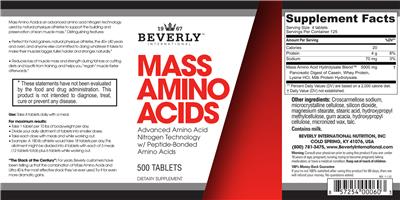
Supplement Facts
The label details for Mass Amino Acid by Beverly International, sourced from the NIH Dietary Supplement Label Database.
Supplement Facts
| Ingredient | Amount | % DV |
|---|---|---|
| Protein | 4 Gram(s) | 8% |
| Sodium | 70 mg | 3% |
| Whey Protein | 0 NP | -- |
| Lysine Hydrochloride | 0 NP | -- |
| Calories | 20 Calorie(s) | -- |
| Mass Amino Acid Hydrolysate Blend | 5000 mg | -- |
| Casein | 0 NP | -- |
| Milk Protein, Hydrolysate | 0 NP | -- |
Other ingredients: Croscarmellose Sodium, Microcrystalline Cellulose, Silicon Dioxide, Magnesium Stearate, Stearic Acid, Hydroxypropyl Methylcellulose, Gum Acacia, Hydroxypropyl Cellulose, micronized Wax, Talc
Tap any ingredient to jump to its full detail below.
These statements are the manufacturer’s wording, reproduced from the product label — the label is saying it, not HelloPharmacist. We don’t verify or endorse them.
Formula
Mass Amino Acids is an advanced amino acid nitrogen technology used by natural physique athletes to support the building and preservation of lean muscle mass.
Advanced amino acid Nitrogen Technology w/ peptide-bonded amino acids
Formulation
Distinguishing features: Perfect for hard gainers, natural physique athletes, the 40+ (40 years and over), and anyone else committed to doing whatever it takes to make their muscles bigger, fuller, harder and stronger, naturally. Reduces loss of muscle mass and strength during fat-loss or cutting diets and layoff from training, and helps you "regain" muscle faster afterwards.
100% money-back guarantee If you are not 100% satisfied after using this product for 60 days, then we will refund your money. No questions asked.
FDA Disclaimer Statement
These statements have not been evaluated by the Food and Drug Administration. This product is not intended to diagnose, treat, cure or prevent any disease.
Suggested/Recommended/Usage/Directions
Use: Take 4 tablets daily with a meal. For maximum results: Take 1 tablet per 10 lbs of bodyweight per day. Divide your daily allotment of tablets into smaller doses. Take each dose with meals and while working out. Example: A 180-lb athlete would take 18 tablets per day. This allotment might be divided into 4 tablets with each of 3 meals (12 tablets total) plus 6 tablets while working out.
General Statements
"The Stack of the Century": For years, Beverly customers have been telling us that the combination of Mass Amino Acids and Ultra 40 is the most effective stack they've ever used. Try it for even more dramatic gains.
Brand IP Statement(s)
Beverly International 1967
FDA Statement of Identity
Dietary Supplement
Precautions
Contains milk.
Warning: Consult your physician prior to using this product if you are: under 18 years of age; pregnant; nursing; trying to become pregnant; taking medication; or have a medical condition.
Warning: Consult your physician prior to using this product if you are: under 18 years of age; pregnant; nursing; trying to become pregnant; taking medication; or have a medical condition. Keep out of reach of children.
Is this label outdated? Report a formula or label change and our pharmacy team will review it.
Mass Amino Acid by Beverly International label
The label scan from the NIH Dietary Supplement Label Database. Tap to enlarge.
Label images are published by the NIH Dietary Supplement Label Database for the version of this product on file. Always read your actual product label.
View the full label (PDF)The Ingredients in Mass Amino Acid by Beverly International
These are the 6 active ingredients this product is made of. Select any to open its full monograph.
Serving size4 Tablet(s) Dosage formTablet Or Pill Servings per container125 Amounts shown are per serving.
Most supplement products combine several ingredients, and a medication can interact with the product through any one of them. Each ingredient below shows whether it has known drug interactions.
Protein
Sodium
Interacts with205 drugs
Sodium is an essential mineral and electrolyte your body needs to balance fluids, support nerves, and help muscles work. Most people in modern diets g...
Sodium monograph & interactionsMass Amino Acid Hydrolysate Blend
- › Whey Protein
- › Lysine Hydrochloride
- › Casein
- › Milk Protein, Hydrolysate
Other (inactive) ingredients: Croscarmellose Sodium, Microcrystalline Cellulose, Silicon Dioxide, Magnesium Stearate, Stearic Acid, Hydroxypropyl Methylcellulose, Gum Acacia, Hydroxypropyl Cellulose, Micronized Wax, Talc. These complete the product’s ingredient list but are not active constituents.
Mass Amino Acid by Beverly International Drug Interactions
HelloPharmacist Interaction Report
Mass Amino Acid by Beverly International contains sodium and whey protein, both of which interact with medications.
Sodium is the main concern — it can reduce how well blood pressure drugs work and may dangerously raise sodium levels if you're taking corticosteroids, lithium, didanosine, sodium phosphate bowel prep, tolvaptan, or other sodium-containing medications. The interaction is Moderate severity across all of these.
Read the full breakdown — every affected drug type, severity by severity
Whey protein interacts with several antibiotics and bone medications. It contains minerals like calcium that bind to quinolone and tetracycline antibiotics in your gut, reducing how much your body absorbs — take these antibiotics at least 2 hours before or 4–6 hours after the supplement.
Whey protein also binds bisphosphonates (osteoporosis drugs); take those at least 30 minutes before the supplement, ideally at a different time of day. Most serious is levodopa (Parkinson's medication) — whey protein's amino acids may worsen tremor and rigidity, a Major-severity interaction.
Lysine hydrochloride has one documented Minor interaction with 5-HT4 agonist drugs (gut motility agents). Casein protein, which is also in this product, shows no known interactions in our data.
We could not check milk protein hydrolysate. Altogether, these interactions span 257 individual medications.
Please check your exact medications with the search tool on this page before you start.
Check your own medications below · Editorial policy · How we use AI
Want to check YOUR meds against Mass Amino Acid?
Ask about interactions with your drugs in plain English — “Can I take it with lisinopril?” — and we find you the answer in seconds, ingredient by ingredient.
Go to the checkerIngredients driving the most interactions
Individual Drug Interactions
The ingredients in Mass Amino Acid interact with 259 drugs. Click any drug to see the details.
3 of the 6 ingredients in Mass Amino Acid interact with drugs. Each result below shows which ingredient is responsible. Sodium Whey Protein Lysine Hydrochloride
Benserazide, LevodopaMadopar, Prolopa
How Benserazide, Levodopa interacts with Mass Amino Acid — through 1 ingredient. Tap an ingredient for the detail:
Whey ProteinLevodopa Major
Interaction Summary
Theoretically, whey protein might decrease levodopa absorption.
Read the full Whey Protein + Benserazide, Levodopa interactionCarbidopa, LevodopaDhivy, Rytary, Sinemet, Sinemet CR
How Carbidopa, Levodopa interacts with Mass Amino Acid — through 1 ingredient. Tap an ingredient for the detail:
Whey ProteinLevodopa Major
Interaction Summary
Theoretically, whey protein might decrease levodopa absorption.
Read the full Whey Protein + Carbidopa, Levodopa interactionCarbidopa, Levodopa, EntacaponeStalevo
How Carbidopa, Levodopa, Entacapone interacts with Mass Amino Acid — through 1 ingredient. Tap an ingredient for the detail:
Whey ProteinLevodopa Major
Interaction Summary
Theoretically, whey protein might decrease levodopa absorption.
Read the full Whey Protein + Carbidopa, Levodopa, Entacapone interactionLevodopaInbrija, Larodopa
How Levodopa interacts with Mass Amino Acid — through 1 ingredient. Tap an ingredient for the detail:
Whey ProteinLevodopa Major
Interaction Summary
Theoretically, whey protein might decrease levodopa absorption.
Read the full Whey Protein + Levodopa interactionLevodopa, CarbidopaDuodopa
How Levodopa, Carbidopa interacts with Mass Amino Acid — through 1 ingredient. Tap an ingredient for the detail:
Whey ProteinLevodopa Major
Interaction Summary
Theoretically, whey protein might decrease levodopa absorption.
Read the full Whey Protein + Levodopa, Carbidopa interactionAcebutololRhotral, Sectral
How Acebutolol interacts with Mass Amino Acid — through 1 ingredient. Tap an ingredient for the detail:
SodiumAntihypertensive Drugs Moderate
Interaction Summary
Theoretically, a high intake of dietary sodium might reduce the effectiveness of antihypertensive drugs.
Read the full Sodium + Acebutolol interactionAcetazolamideAk-Zol, Diamox
How Acetazolamide interacts with Mass Amino Acid — through 1 ingredient. Tap an ingredient for the detail:
SodiumAntihypertensive Drugs Moderate
Interaction Summary
Theoretically, a high intake of dietary sodium might reduce the effectiveness of antihypertensive drugs.
Read the full Sodium + Acetazolamide interactionAlendronateBinosto, Fosamax
How Alendronate interacts with Mass Amino Acid — through 1 ingredient. Tap an ingredient for the detail:
Whey ProteinBisphosphonates Moderate
Interaction Summary
Theoretically, whey protein might reduce the absorption of bisphosphonates.
Read the full Whey Protein + Alendronate interactionAlendronate Sodium
How Alendronate Sodium interacts with Mass Amino Acid — through 1 ingredient. Tap an ingredient for the detail:
Whey ProteinBisphosphonates Moderate
Interaction Summary
Theoretically, whey protein might reduce the absorption of bisphosphonates.
Read the full Whey Protein + Alendronate Sodium interactionAlendronate Sodium, CholecalciferolFosamax Plus D
How Alendronate Sodium, Cholecalciferol interacts with Mass Amino Acid — through 1 ingredient. Tap an ingredient for the detail:
Whey ProteinBisphosphonates Moderate
Interaction Summary
Theoretically, whey protein might reduce the absorption of bisphosphonates.
Read the full Whey Protein + Alendronate Sodium, Cholecalciferol interactionAliskirenTekturna
How Aliskiren interacts with Mass Amino Acid — through 1 ingredient. Tap an ingredient for the detail:
SodiumAntihypertensive Drugs Moderate
Interaction Summary
Theoretically, a high intake of dietary sodium might reduce the effectiveness of antihypertensive drugs.
Read the full Sodium + Aliskiren interactionAmbrisentanLetairis, Volibris
How Ambrisentan interacts with Mass Amino Acid — through 1 ingredient. Tap an ingredient for the detail:
SodiumAntihypertensive Drugs Moderate
Interaction Summary
Theoretically, a high intake of dietary sodium might reduce the effectiveness of antihypertensive drugs.
Read the full Sodium + Ambrisentan interactionAmilorideAmilamont, Midamor
How Amiloride interacts with Mass Amino Acid — through 1 ingredient. Tap an ingredient for the detail:
SodiumAntihypertensive Drugs Moderate
Interaction Summary
Theoretically, a high intake of dietary sodium might reduce the effectiveness of antihypertensive drugs.
Read the full Sodium + Amiloride interactionAmiloride, HydrochlorothiazideAmil-Co, Amilzide, Moduret 25, Moduretic
How Amiloride, Hydrochlorothiazide interacts with Mass Amino Acid — through 1 ingredient. Tap an ingredient for the detail:
SodiumAntihypertensive Drugs Moderate
Interaction Summary
Theoretically, a high intake of dietary sodium might reduce the effectiveness of antihypertensive drugs.
Read the full Sodium + Amiloride, Hydrochlorothiazide interactionAmlodipineNorliqva
How Amlodipine interacts with Mass Amino Acid — through 1 ingredient. Tap an ingredient for the detail:
SodiumAntihypertensive Drugs Moderate
Interaction Summary
Theoretically, a high intake of dietary sodium might reduce the effectiveness of antihypertensive drugs.
Read the full Sodium + Amlodipine interactionAmlodipine BenzoateKaterzia
How Amlodipine Benzoate interacts with Mass Amino Acid — through 1 ingredient. Tap an ingredient for the detail:
SodiumAntihypertensive Drugs Moderate
Interaction Summary
Theoretically, a high intake of dietary sodium might reduce the effectiveness of antihypertensive drugs.
Read the full Sodium + Amlodipine Benzoate interactionAmlodipine BesilateIstin
How Amlodipine Besilate interacts with Mass Amino Acid — through 1 ingredient. Tap an ingredient for the detail:
SodiumAntihypertensive Drugs Moderate
Interaction Summary
Theoretically, a high intake of dietary sodium might reduce the effectiveness of antihypertensive drugs.
Read the full Sodium + Amlodipine Besilate interactionAmlodipine BesylateNorvasc
How Amlodipine Besylate interacts with Mass Amino Acid — through 1 ingredient. Tap an ingredient for the detail:
SodiumAntihypertensive Drugs Moderate
Interaction Summary
Theoretically, a high intake of dietary sodium might reduce the effectiveness of antihypertensive drugs.
Read the full Sodium + Amlodipine Besylate interactionAmlodipine Besylate, BenazeprilLotrel
How Amlodipine Besylate, Benazepril interacts with Mass Amino Acid — through 1 ingredient. Tap an ingredient for the detail:
SodiumAntihypertensive Drugs Moderate
Interaction Summary
Theoretically, a high intake of dietary sodium might reduce the effectiveness of antihypertensive drugs.
Read the full Sodium + Amlodipine Besylate, Benazepril interactionAmlodipine, CelecoxibConsensi
How Amlodipine, Celecoxib interacts with Mass Amino Acid — through 1 ingredient. Tap an ingredient for the detail:
SodiumAntihypertensive Drugs Moderate
Interaction Summary
Theoretically, a high intake of dietary sodium might reduce the effectiveness of antihypertensive drugs.
Read the full Sodium + Amlodipine, Celecoxib interactionAmmonium ChlorideAmmonium Chloride
How Ammonium Chloride interacts with Mass Amino Acid — through 1 ingredient. Tap an ingredient for the detail:
SodiumAntihypertensive Drugs Moderate
Interaction Summary
Theoretically, a high intake of dietary sodium might reduce the effectiveness of antihypertensive drugs.
Read the full Sodium + Ammonium Chloride interactionAmphotericin, TetracyclineMysteclin-F
How Amphotericin, Tetracycline interacts with Mass Amino Acid — through 1 ingredient. Tap an ingredient for the detail:
Whey ProteinTetracycline Antibiotics Moderate
Interaction Summary
Theoretically, whey protein might decrease tetracycline absorption.
Read the full Whey Protein + Amphotericin, Tetracycline interactionAprocitentanTryvio
How Aprocitentan interacts with Mass Amino Acid — through 1 ingredient. Tap an ingredient for the detail:
SodiumAntihypertensive Drugs Moderate
Interaction Summary
Theoretically, a high intake of dietary sodium might reduce the effectiveness of antihypertensive drugs.
Read the full Sodium + Aprocitentan interactionAtenololAtenix, Tenormin
How Atenolol interacts with Mass Amino Acid — through 1 ingredient. Tap an ingredient for the detail:
SodiumAntihypertensive Drugs Moderate
Interaction Summary
Theoretically, a high intake of dietary sodium might reduce the effectiveness of antihypertensive drugs.
Read the full Sodium + Atenolol interactionAtenolol, ChlortalidoneAtenixCo, Tenoret 50, Totaretic
How Atenolol, Chlortalidone interacts with Mass Amino Acid — through 1 ingredient. Tap an ingredient for the detail:
SodiumAntihypertensive Drugs Moderate
Interaction Summary
Theoretically, a high intake of dietary sodium might reduce the effectiveness of antihypertensive drugs.
Read the full Sodium + Atenolol, Chlortalidone interactionAtenolol, ChlorthalidoneTenoretic
How Atenolol, Chlorthalidone interacts with Mass Amino Acid — through 1 ingredient. Tap an ingredient for the detail:
SodiumAntihypertensive Drugs Moderate
Interaction Summary
Theoretically, a high intake of dietary sodium might reduce the effectiveness of antihypertensive drugs.
Read the full Sodium + Atenolol, Chlorthalidone interactionAzelastine Hydrochloride, Fluticasone PropionateDymista
How Azelastine Hydrochloride, Fluticasone Propionate interacts with Mass Amino Acid — through 1 ingredient. Tap an ingredient for the detail:
SodiumCorticosteroids Moderate
Interaction Summary
Concomitant use of mineralocorticoids and some glucocorticoids with sodium supplements might increase the risk of hypernatremia.
Read the full Sodium + Azelastine Hydrochloride, Fluticasone Propionate interactionAzilsartanEdarbi
How Azilsartan interacts with Mass Amino Acid — through 1 ingredient. Tap an ingredient for the detail:
SodiumAntihypertensive Drugs Moderate
Interaction Summary
Theoretically, a high intake of dietary sodium might reduce the effectiveness of antihypertensive drugs.
Read the full Sodium + Azilsartan interactionAzilsartan, ChlorthalidoneEdarbyclor
How Azilsartan, Chlorthalidone interacts with Mass Amino Acid — through 1 ingredient. Tap an ingredient for the detail:
SodiumAntihypertensive Drugs Moderate
Interaction Summary
Theoretically, a high intake of dietary sodium might reduce the effectiveness of antihypertensive drugs.
Read the full Sodium + Azilsartan, Chlorthalidone interactionBeclometasone DipropionateBecotide
How Beclometasone Dipropionate interacts with Mass Amino Acid — through 1 ingredient. Tap an ingredient for the detail:
SodiumCorticosteroids Moderate
Interaction Summary
Concomitant use of mineralocorticoids and some glucocorticoids with sodium supplements might increase the risk of hypernatremia.
Read the full Sodium + Beclometasone Dipropionate interactionEach ingredient & the kinds of drugs it affects
For each ingredient in Mass Amino Acid with known interactions, here are the types of medications they can affect. Open any type for the detail — or search your exact drug in the checker above.
Sodium
Antihypertensive Drugs
Theoretically, a high intake of dietary sodium might reduce the effectiveness of antihypertensive drugs.
High intake of dietary sodium can increase systolic and diastolic blood pressure. Also, high intake of sodium may necessitate increased use of antihypertensive medications to achieve blood pressure control in some patients, such as those with chronic kidney disease.
Corticosteroids
Concomitant use of mineralocorticoids and some glucocorticoids with sodium supplements might increase the risk of hypernatremia.
Mineralocorticoids and some glucocorticoids (corticosteroids) cause sodium retention. This effect is dose-related and depends on mineralocorticoid potency. It is most common with hydrocortisone, cortisone, and fludrocortisone, followed by prednisone and prednisolone.
Didanosine (Videx)
Concomitant use of didanosine with additional sodium from dietary or supplemental sources may increase the risk of hypernatremia.
Didanosine formulations contain a significant amount of sodium.
Lithium
Altering dietary intake of sodium might alter the levels and clinical effects of lithium.
High sodium intake can reduce plasma concentrations of lithium by increasing lithium excretion. Reducing sodium intake can significantly increase plasma concentrations of lithium and cause lithium toxicity in patients being treated with lithium carbonate. Stabilizing sodium intake is shown to reduce the percentage of patients with lithium level fluctuations above 0.8 mEq/L. Patients taking lithium should avoid significant alterations in their dietary intake of sodium.
Sodium Phosphates
Theoretically, concomitant use of sodium phosphate with sodium supplements might increase the risk of hypernatremia.
Use of high doses (> 45 mL in 24 hours) of sodium phosphate, such as those used for bowel cleansing before surgery, can lead to serious electrolyte disturbances, including hypernatremia. The risk of hypernatremia is highest in the elderly and people with other risk factors for electrolyte disturbances.
Sodium-Containing Drugs
Concomitant use of sodium-containing drugs with additional sodium from dietary or supplemental sources may increase the risk of hypernatremia and long-term sodium-related complications.
The Chronic Disease Risk Reduction (CDRR) intake level of 2.3 grams of sodium daily indicates the intake at which it is believed that chronic disease risk increases for the apparently healthy population. Some medications contain high quantities of sodium. When used in conjunction with sodium supplements or high-sodium diets, the CDRR may be exceeded. Additionally, concomitant use may increase the risk for hypernatremia; this risk is highest in the elderly and people with other risk factors for electrolyte disturbances.
Tolvaptan (Samsca)
Theoretically, concomitant use of tolvaptan with sodium might increase the risk of hypernatremia.
Tolvaptan is a vasopressin receptor 2 antagonist that is used to increase sodium levels in patients with hyponatremia. Patients taking tolvaptan should use caution with the use of sodium salts such as sodium chloride.
Whey Protein
Levodopa
Theoretically, whey protein might decrease levodopa absorption.
Small clinical studies show that concomitant ingestion of protein or high doses of leucine or isoleucine (100 mg/kg) and levodopa can exacerbate tremor, rigidity, and the "on-off" syndrome in patients with Parkinson disease.
Bisphosphonates
Theoretically, whey protein might reduce the absorption of bisphosphonates.
Whey protein contains minerals such as calcium that bind bisphosphonates in the gut. Advise patients to take bisphosphonates at least 30 minutes before whey protein, but preferably at a different time of day.
Quinolone Antibiotics
Theoretically, whey protein might decrease quinolone absorption.
Whey protein contains minerals, such as calcium, that can bind to quinolones in the gut. To avoid this interaction, advise patients to take oral quinolones at least 2 hours before or 4-6 hours after whey protein.
Tetracycline Antibiotics
Theoretically, whey protein might decrease tetracycline absorption.
Whey protein contains minerals, such as calcium, that bind to tetracyclines in the gut. To avoid this interaction, advise patients to take oral tetracyclines at least 2 hours before or 4-6 hours after whey protein.
Lysine Hydrochloride
5-Ht4 Agonists
Theoretically, lysine may reduce the effects of 5-HT4 agonists.
Animal research suggests that L-lysine is a partial serotonin receptor 4 (5-HT4) antagonist and inhibits diarrhea induced by the 5-HT4 agonist, 5-hydroxytryptophane.
Brand information
Manufacturer and brand details for Mass Amino Acid, from the product label.
Beverly International
See all Beverly International products- Name
- Beverly International Nutrition, Inc
- City
- Cold Spring
- State
- KY
- ZipCode
- 41076
- Phone Number
- (800) 781-3475
- Web Address
- www.BeverlyInternational.com
Mass Amino Acid by Beverly International: Common Questions
Does Mass Amino Acid by Beverly International interact with any medications?
How can one product interact with so many drugs?
Where does this information come from?
Can I take this if I have high blood pressure?
Will this help me build muscle or improve my athletic performance?
What are the most common side effects?
Is this safe during pregnancy or breastfeeding?
What is lysine used for?
I'm allergic to milk. Can I take this?
Written and reviewed by the HelloPharmacist editorial staff. Our editorial policy
Not sure if Mass Amino Acid is safe with your meds?
Our pharmacists answer your medication & supplement questions — free.
Label information is sourced from the NIH Dietary Supplement Label Database and reflects the product version on file; always read your actual product label. This page is for education only and is not a substitute for professional medical advice. Confirm with your pharmacist or doctor before combining supplements and medications.
The Full Monographs Behind Mass Amino Acid’s Ingredients
Every ingredient we hold a full HelloPharmacist monograph for — uses, evidence, safety, and the complete interaction list.
Sodium
Interacts with 205 drugsSodium is an essential mineral and electrolyte your body needs to balance fluids, support nerves, and help muscles work. Most people in modern diets get more than enough—often too much—from...
Read the full Sodium monograph → Herb & supplement monographWhey Protein
Interacts with 53 drugsWhey protein is a high-quality, complete protein made from cow's milk that can help people meet protein needs and support muscle growth when combined with exercise. It is generally safe for...
Read the full Whey Protein monograph → Herb & supplement monographLysine
Interacts with 1 drugLysine is an essential amino acid your body cannot make on its own, so it must come from food or supplements. People most often take extra lysine to try to prevent or shorten cold sores, but...
Read the full Lysine monograph → Herb & supplement monographCasein Protein
Casein is a slow-digesting protein from milk that supplies all the essential amino acids and is popular for muscle recovery, especially overnight. It is generally safe for most people who to...
Read the full Casein Protein monograph →Sources & How We Checked
Mass Amino Acid's label data comes from the NIH Dietary Supplement Label Database; the ingredient interaction data is from the Natural Medicines database, reviewed by our pharmacists.
- NIH Dietary Supplement Label Database (DSLD) — The official product label on file for this supplement.
- Natural Medicines (Therapeutic Research Center) — Evidence-graded clinical reference behind the ingredient interaction data.
Content is written and reviewed by licensed HelloPharmacist pharmacists. See our data sources and editorial standards for how this information is built and checked.
The 132 references behind this product’s interaction data
Every citation that drives the interaction findings for this product’s ingredients, from the evidence-graded Natural Medicines (TRC Healthcare) database. Open an ingredient to browse its citations — links open the study on PubMed or the publisher’s site.
Sodium 40 references
- Garabedian-Ruffalo SM, Ruffalo RL. Drug and nutrient interactions. Am Fam Physician 1986;33:165-74.
- Food and Drug Administration Science Background: Safety of Sodium Phosphates Oral Solution. September 17, 2001. Available at: http://www.fda.gov/cder/drug/safety/sodiumphospate.htm
- Coton T, Mallaret C, Coilliot C, Carre D, Guisset M. Severe acute ulcerated gastritis induced by salt. Presse Med 2009;38(3):499-500. PubMed
- Frings-Meuthen P, Buehlmeier J, Baecker N, et al. High sodium chloride intake exacerbates immobilization-induced bone resorption and protein losses. J Appl Physiol 2011;111(2):537-542. PubMed
- Frings-Meuthen P, Baecker N, Heer M. Low-grade metabolic acidosis may be the cause of sodium chloride-induced exaggerated bone resorption. J Bone Miner Res 2008;23(4):517-524. PubMed
- Alam S, Johnson AG. A meta-analysis of randomised controlled trials (RCT) among healthy normotensive and essential hypertensive elderly patients to determine the effect of high salt (NaCl) diet of blood pressure. J Hum Hypertens 1999;13(6):367-74.
- Boudville N, Ward S, Benaroia M, House AA. Increased sodium intake correlates with greater use of antihypertensive agents by subjects with chronic kidney disease. Am J Hypertens 2005;18(10):1300-5. PubMed
- Bennett WM. Drug interactions and consequences of sodium restriction. Am J Clin Nutr 1997;65(2 Suppl):678S-681S. PubMed
- Okusa MD, Crystal LJ. Clinical manifestations and management of acute lithium intoxication. Am J Med 1994;97(4):383-9. PubMed
- Food and Nutrition Board, Institute of Medicine. Dietary reference intakes for water, potassium, sodium, chloride, and sulfate. Washington, DC: National Academy Press, 2005. Available at: http://www.nap.edu/openbook.php?record_id=10925. DOI
- D'Elia L, Rossi G, Ippolito R, Cappuccio FP, Strazzullo P. Habitual salt intake and risk of gastric cancer: a meta-analysis of prospective studies. Clin Nutr 2012;31(4):489-98. PubMed
- Goldsmith SR. Hyponatremia in heart failure: time for a trial. J Card Fail 2013;19(6):398-400. PubMed
- Willocks L, Brettle R, Keen J, Valentine C, Pinching AJ. Formulations of didanosine (ddI) and salt overload. Lancet 1992;339(8786):190.
- Chen L, Zhang Z, Chen W, Whelton PK, Appel LJ. Lower Sodium Intake and Risk of Headaches: Results From the Trial of Nonpharmacologic Interventions in the Elderly. Am J Public Health. 2016;106(7):1270-5. PubMed
- Cook NR, Appel LJ, Whelton PK. Lower levels of sodium intake and reduced cardiovascular risk. Circulation. 2014;129(9):981-9. PubMed
- Cook NR, Appel LJ, Whelton PK. Sodium Intake and All-Cause Mortality Over 20 Years in the Trials of Hypertension Prevention. J Am Coll Cardiol. 2016;68(15):1609-1617. PubMed
- Mente A, O'Donnell M, Rangarajan S, et al. Associations of urinary sodium excretion with cardiovascular events in individuals with and without hypertension: a pooled analysis of data from four studies. Lancet. 2016;388(10043):465-75. PubMed
- Moosavian SP, Haghighatdoost F, Surkan PJ, Azadbakht L. Salt and obesity: a systematic review and meta-analysis of observational studies. Int J Food Sci Nutr. 2017;68(3):265-277. PubMed
- O'Donnell M, Mente A, Rangarajan S, et al. Urinary sodium and potassium excretion, mortality, and cardiovascular events. N Engl J Med. 2014;371(7):612-23. DOI
- Poggio R, Gutierrez L, Matta MG, Elorriaga N, Irazola V, Rubinstein A. Daily sodium consumption and CVD mortality in the general population: systematic review and meta-analysis of prospective studies. Public Health Nutr. 2015;18(4):695-704. PubMed
- Stallings VA, Harrison M, Oria M; Committee to Review the Dietary Reference Intakes for Sodium and Potassium, Food and Nutrition Board, Health and Medicine Division, National Academies of Sciences, Engineering, and Medicine. Washington (DC): National Acad
- Mahtani KR, Heneghan C, Onakpoya I, et al. Reduced Salt Intake for Heart Failure: A Systematic Review. JAMA Intern Med. 2018 Dec 1;178(12):1693-1700. PubMed
- Yancy CW. Sodium Restriction in Heart Failure: Too Much Uncertainty-Do the Trials. JAMA Intern Med. 2018 Dec 1;178(12):1700-1701. PubMed
- He FJ, Campbell NRC, Ma Y, MacGregor GA, Cogswell ME, Cook NR. Errors in estimating usual sodium intake by the Kawasaki formula alter its relationship with mortality: implications for public health. Int J Epidemiol. 2018;47(6):1784-1795. PubMed
- Murthy K, Ondrey GJ, Malkani N, et al. THE EFFECTS OF HYPONATREMIA ON BONE DENSITY AND FRACTURES: A SYSTEMATIC REVIEW AND META-ANALYSIS. Endocr Pract. 2019;25(4):366-378. PubMed
- Messerli FH, Hofstetter L, Syrogiannouli L, et al. Sodium intake, life expectancy, and all-cause mortality. Eur Heart J 2021;42(21):2103-2112. PubMed
- Graudal NA, Hubeck-Graudal T, Jurgens G. Effects of low sodium diet versus high sodium diet on blood pressure, renin, aldosterone, catecholamines, cholesterol, and triglyceride. Cochrane Database Syst Rev 2020;12(12):CD004022. PubMed
- Giatti S, Santos RB, Aielo AN, et al. Association of sodium with obstructive sleep apnea. The ELSA-Brasil study. Ann Am Thorac Soc 2021;18(3):502-510. PubMed
- Nan X, Lu H, Wu J, et al. The interactive association between sodium intake, alcohol consumption and hypertension among elderly in northern China: a cross-sectional study. BMC Geriatr 2021;21(1):135. PubMed
- Kyozuka H, Fukusda T, Murata T, et al. Impact of preconception sodium intake on hypertensive disorders of pregnancy: The Japan Environment and Children's study. Pregnancy Hypertens 2021;23:66-72. PubMed
- Zhao L, Ogden CL, Yang Q, et al. Association of usual sodium intake with obesity among US children and adolescents, NHANES 2009-2016. Obesity (Silver Spring) 2021;29(3):587-594. PubMed
- Ma Y, He FJ, Sun Q, et al. 24-Hour urinary sodium and potassium excretion and cardiovascular risk. N Engl J Med 2022;386(3):252-263. PubMed
- Liu J, Yang X, Zhang P, et al. Association of urinary sodium excretion and left ventricular hypertrophy in people with type 2 diabetes mellitus: A cross-sectional study. Front Endocrinol (Lausanne) 2021;12:728493. PubMed
- Filippini T, Malavolti M, Whelton PK, Vinceti M. Sodium intake and risk of hypertension: A systematic review and dose-response meta-analysis of observational cohort studies. Curr Hypertens Rep 2022;24(5):133-144. PubMed
- Wang DD, Li Y, Nguyen XT, et al. Dietary sodium and potassium intake and risk of non-fatal cardiovascular diseases: The million veteran program. Nutrients 2022;14(5):1121. PubMed
- Kwak JH, Park CH, Eun CS, et al. The associations of dietary intake of high sodium and low zinc with gastric cancer mortality: A prospective cohort study in Korea. Nutr Cancer 2022;74(10):3501-3508. PubMed
- George S, Maiti R, Mishra BR, Jena M, Mohapatra D. Effect of regulated add-on sodium chloride intake on stabilization of serum lithium concentration in bipolar disorder: A randomized controlled trial. Bipolar Disord 2023;25(1):66-75. PubMed
- Zhou TL, Schütten MTJ, Kroon AA, et al. Urinary Sodium Excretion and Salt Intake Are Not Associated With Blood Pressure Variability in a White General Population. J Am Heart Assoc 2023;12(1):e026578. PubMed
- Gan L, Zhao B, Inoue-Choi M, et al. Sex-specific associations between sodium and potassium intake and overall and cause-specific mortality: a large prospective U.S. cohort study, systematic review, and updated meta-analysis of cohort studies. BMC Med 2024 PubMed
- Liu D, Tian Y, Wang R, et al. Sodium, potassium intake, and all-cause mortality: confusion and new findings. BMC Public Health 2024;24(1):180. PubMed
Whey Protein 25 references
- Martindale W. Martindale the Extra Pharmacopoeia. Pharmaceutical Press, 1999.
- Maton PN, Burton ME. Antacids revisited: a review of their clinical pharmacology and recommended therapeutic use. Drugs 1999;57:855-70.
- Bell SJ. Whey protein concentrates with and without immunoglobulins: a review. J Med Food 2000;3:1-13. PubMed
- Nutt JG, Woodward WR, Hammerstad JP, et al. The "on-off" phenomenon in Parkinson's disease. Relation to levodopa absorption and transport. N Engl J Med 1984;310:483-8. PubMed
- Baruzzi A, Contin M, Riva R, et al. Influence of meal ingestion time on pharmacokinetics of orally administered levodopa in parkinsonian patients. Clin Neuropharmacol 1987;10:527-37. PubMed
- Juncos JL, Fabbrini G, Mouradian MM, et al. Dietary influences on the antiparkinsonian response to levodopa. Arch Neurol 1987;44:1003-5. PubMed
- Eriksson T, Granerus AK, Linde A, et al. "On-off" phenomenon in Parkinson's disease: relationship between dopa and other large neutral amino acids in plasma. Neurology 1988;38:1245-8. PubMed
- Semla TP, Beizer JL, Higbee MD. Geriatric Dosage Handbook. 4th ed. Hudson, OH: Lexicomp, 1998.
- Pletz MW, Petzold P, Allen A, et al. Effect of calcium carbonate on bioavailability of orally administered gemifloxacin. Antimicrob Agents Chemother 2003;47:2158-60.. PubMed
- Peters ML, Leonard M, Licata AA. Role of alendronate and risedronate in preventing and treating osteoporosis. Cleve Clin J Med 2001;68:945-51. PubMed
- Micke, P., Beeh, K. M., and Buhl, R. Effects of long-term supplementation with whey proteins on plasma glutathione levels of HIV-infected patients. Eur.J Nutr 2002;41(1):12-18. PubMed
- Chitapanarux, T., Tienboon, P., Pojchamarnwiputh, S., and Leelarungrayub, D. Open-labeled pilot study of cysteine-rich whey protein isolate supplementation for nonalcoholic steatohepatitis patients. J Gastroenterol.Hepatol. 2009;24(6):1045-1050. PubMed
- Sataloff, R. T., Bittermann, T., Marks, L., Lurie, D., and Hawkshaw, M. The effects of glutathione enhancement on sensorineural hearing loss. Ear Nose Throat J 2010;89(9):422-433.
- Zhu, K., Meng, X., Kerr, D. A., Devine, A., Solah, V., Binns, C. W., and Prince, R. L. The effects of a two-year randomized, controlled trial of whey protein supplementation on bone structure, IGF-1, and urinary calcium excretion in older postmenopausal
- Bjorkman, M. P., Pilvi, T. K., Kekkonen, R. A., Korpela, R., and Tilvis, R. S. Similar effects of leucine rich and regular dairy products on muscle mass and functions of older polymyalgia rheumatica patients: a randomized crossover trial. J Nutr Health A
- Brun, A. C., Stordal, K., Johannesdottir, G. B., Bentsen, B. S., and Medhus, A. W. The effect of protein composition in liquid meals on gastric emptying rate in children with cerebral palsy. Clin.Nutr 2012;31(1):108-112. PubMed
- Gouni-Berthold, I., Schulte, D. M., Krone, W., Lapointe, J. F., Lemieux, P., Predel, H. G., and Berthold, H. K. The whey fermentation product malleable protein matrix decreases TAG concentrations in patients with the metabolic syndrome: a randomised plac
- Errichiello, L., Pezzella, M., Santulli, L., Striano, S., Zara, F., Minetti, C., Mainardi, P., and Striano, P. A proof-of-concept trial of the whey protein alfa-lactalbumin in chronic cortical myoclonus. Mov Disord. 2011;26(14):2573-2575. PubMed
- Carcillo, J. A., Dean, J. M., Holubkov, R., Berger, J., Meert, K. L., Anand, K. J., Zimmerman, J., Newth, C. J., Harrison, R., Burr, J., Willson, D. F., and Nicholson, C. The randomized comparative pediatric critical illness stress-induced immune suppres
- Chungchunlam, S. M., Moughan, P. J., Henare, S. J., and Ganesh, S. Effect of time of consumption of preloads on measures of satiety in healthy normal weight women. Appetite 2012;59(2):281-288. PubMed
- Rencuzogullari I, Börekçi A, Karakoyun S, et al. Coronary thrombosis in three coronary arteries due to whey protein. Am J Emerg Med. 2017;35(4):664.e3-664.e4. PubMed
- Silverberg NB. Whey protein precipitating moderate to severe acne flares in 5 teenaged athletes. Case Reports Cutis. 2012;90(2):70-2.
- Simonart T. Acne and whey protein supplementation among bodybuilders. Dermatology. 2012;225(3):256-8. PubMed
- Pontes TC, Costa Fernandes Filho GM, Pereira Trindade AS, Sobral Filho JF. Incidence of acne vulgaris in young adult users of protein-calorie supplements in the city of João Pessoa-PB. An Bras Dermatol. 2013;88(6):907-12.
- Adebamowo CA, Spiegelman D, Berkey CS, et al. Milk consumption and acne in teenaged boys. J Am Acad Dermatol. 2008 May;58(5):787-93. PubMed
Lysine 7 references
- Thein DJ, Hurt WC. Lysine as a prophylactic agent in the treatment of recurrent herpes simplex labialis. Oral Surg Oral Med Oral Pathol 1984;58:659-66. PubMed
- McCune MA, Perry HO, Muller SA, O'Fallon WM. Treatment of recurrent herpes simplex infections with L-lysine monohydrochloride. Cutis 1984;34:366-73.
- DiGiovanna JJ, Blank H. Failure of lysine in frequently recurrent herpes simplex infection. Treatment and prophylaxis. Arch Dermatol 1984;120:48-51. DOI
- Milman N, Scheibel J, Jessen O. Lysine prophylaxis in recurrent herpes simplex labialis: a double-blind, controlled crossover study. Acta Derm Venereol 1980;60:85-7.
- Griffith RS, Walsh DE, Myrmel KH, et al. Success of L-lysine therapy in frequently recurrent herpes simplex infection. Treatment and prophylaxis. Dermatologica 1987;175:183-90. DOI
- Lo JC, Chertow GM, Rennke H, Seifter JL. Fanconi's syndrome and tubulointerstitial nephritis in association with L-lysine ingestion. Am J Kidney Dis 1996;28:614-7. PubMed
- Smriga M, Torii K. L-Lysine acts like a partial serotonin receptor 4 antagonist and inhibits serotonin-mediated intestinal pathologies and anxiety in rats. Proc Natl Acad Sci U S A. 2003 Dec 23;100(26):15370-5.
Casein Protein 60 references
- Marchesini G, Dioguardi FS, Bianchi GP, et al. Long-term oral branched-chain amino acid treatment in chronic hepatic encephalopathy. A randomized double-blind casein-controlled trial. The Italian Multicenter Study Group. J Hepatol 1990;11:92-101. PubMed
- Potter SM, Baum JA, Teng H, et al. Soy protein and isoflavones: their effects on blood lipids and bone density in postmenopausal women. Am J Clin Nutr 1998;68:1375S-9S. PubMed
- Nilausen K, Meinertz H. Variable lipemic response to dietary soy protein in healthy, normolipemic men. Am J Clin Nutr 1998;68:1380S-4S. PubMed
- Teixeira SR, Potter SM, Weigel R, et al. Effects of feeding 4 levels of soy protein for 3 and 6 wk on blood lipids and apolipoproteins in moderately hypercholesterolemic men. Am J Clin Nutr 2000;71:1077-84. PubMed
- Tonstad S, Smerud K, Hoie L. A comparison of the effects of 2 doses of soy protein or casein on serum lipids, serum lipoproteins, and plasma total homocysteine in hypercholesterolemic subjects. Am J Clin Nutr 2002;76:78-84. PubMed
- Teede HJ, Dalais FS, Kotsopoulos D, et al. Dietary soy has both beneficial and potentially adverse cardiovascular effects: a placebo-controlled study in men and postmenopausal women. J Clin Endocrinol Metab 2001;86:3053-60. DOI
- Nilausen, K. and Meinertz, H. Lipoprotein(a) and dietary proteins: casein lowers lipoprotein(a) concentrations as compared with soy protein. Am.J.Clin.Nutr. 1999;69(3):419-425. PubMed
- Meinertz, H., Nilausen, K., and Hilden, J. Alcohol-extracted, but not intact, dietary soy protein lowers lipoprotein(a) markedly. Arterioscler.Thromb.Vasc.Biol. 2-1-2002;22(2):312-316. PubMed
- Dalais, F. S., Ebeling, P. R., Kotsopoulos, D., McGrath, B. P., and Teede, H. J. The effects of soy protein containing isoflavones on lipids and indices of bone resorption in postmenopausal women. Clin Endocrinol.(Oxf) 2003;58(6):704-709. PubMed
- Cuevas, A. M., Irribarra, V. L., Castillo, O. A., Yanez, M. D., and Germain, A. M. Isolated soy protein improves endothelial function in postmenopausal hypercholesterolemic women. Eur.J Clin.Nutr. 2003;57(8):889-894. PubMed
- Hermansen, K., Hansen, B., Jacobsen, R., Clausen, P., Dalgaard, M., Dinesen, B., Holst, J. J., Pedersen, E., and Astrup, A. Effects of soy supplementation on blood lipids and arterial function in hypercholesterolaemic subjects. Eur.J Clin.Nutr. 2005;59(7 PubMed
- Meinertz, H., Nilausen, K., and Faergeman, O. Soy protein and casein in cholesterol-enriched diets: effects on plasma lipoproteins in normolipidemic subjects. Am J Clin Nutr 1989;50(4):786-793. PubMed
- van Raaij, J. M., Katan, M. B., Hautvast, J. G., and Hermus, R. J. Effects of casein versus soy protein diets on serum cholesterol and lipoproteins in young healthy volunteers. Am J Clin Nutr 1981;34(7):1261-1271. PubMed
- van Raaij, J. M., Katan, M. B., West, C. E., and Hautvast, J. G. Influence of diets containing casein, soy isolate, and soy concentrate on serum cholesterol and lipoproteins in middle-aged volunteers. Am J Clin Nutr 1982;35(5):925-934. PubMed
- Gooderham, M. H., Adlercreutz, H., Ojala, S. T., Wahala, K., and Holub, B. J. A soy protein isolate rich in genistein and daidzein and its effects on plasma isoflavone concentrations, platelet aggregation, blood lipids and fatty acid composition of plasm
- Baum, J. A., Teng, H., Erdman, J. W., Jr., Weigel, R. M., Klein, B. P., Persky, V. W., Freels, S., Surya, P., Bakhit, R. M., Ramos, E., Shay, N. F., and Potter, S. M. Long-term intake of soy protein improves blood lipid profiles and increases mononuclear
- Willoughby, D. S., Stout, J. R., and Wilborn, C. D. Effects of resistance training and protein plus amino acid supplementation on muscle anabolism, mass, and strength. Amino.Acids 2007;32(4):467-477. PubMed
- Claessens, M., van Baak, M. A., Monsheimer, S., and Saris, W. H. The effect of a low-fat, high-protein or high-carbohydrate ad libitum diet on weight loss maintenance and metabolic risk factors. Int J Obes.(Lond) 2009;33(3):296-304. PubMed
- Hoffman, J. R., Ratamess, N. A., Tranchina, C. P., Rashti, S. L., Kang, J., and Faigenbaum, A. D. Effect of a proprietary protein supplement on recovery indices following resistance exercise in strength/power athletes. Amino.Acids 2010;38(3):771-778. PubMed
- Pal, S. and Ellis, V. The chronic effects of whey proteins on blood pressure, vascular function, and inflammatory markers in overweight individuals. Obesity.(Silver.Spring) 2010;18(7):1354-1359. PubMed
- Pal, S., Ellis, V., and Dhaliwal, S. Effects of whey protein isolate on body composition, lipids, insulin and glucose in overweight and obese individuals. Br J Nutr 2010;104(5):716-723. PubMed
- Laviolette, L., Lands, L. C., Dauletbaev, N., Saey, D., Milot, J., Provencher, S., LeBlanc, P., and Maltais, F. Combined effect of dietary supplementation with pressurized whey and exercise training in chronic obstructive pulmonary disease: a randomized,
- Brun, A. C., Stordal, K., Johannesdottir, G. B., Bentsen, B. S., and Medhus, A. W. The effect of protein composition in liquid meals on gastric emptying rate in children with cerebral palsy. Clin.Nutr 2012;31(1):108-112. PubMed
- Savage, K., Kritas, S., Schwarzer, A., Davidson, G., and Omari, T. Whey- vs casein-based enteral formula and gastrointestinal function in children with cerebral palsy. JPEN J Parenter.Enteral Nutr 2012;36(1 Suppl):118S-123S. PubMed
- Lorenzen, J., Frederiksen, R., Hoppe, C., Hvid, R., and Astrup, A. The effect of milk proteins on appetite regulation and diet-induced thermogenesis. Eur.J Clin.Nutr 2012;66(5):622-627. PubMed
- Khoshoo, V., Zembo, M., King, A., Dhar, M., Reifen, R., and Pencharz, P. Incidence of gastroesophageal reflux with whey- and casein-based formulas in infants and in children with severe neurological impairment. J Pediatr Gastroenterol.Nutr 1996;22(1):48- DOI
- Cepero, M. Influence of ingesting casein protein and whey carbohydrate beverages on recovery and performance of an endurance cycling test. Journal of Human Sport & Exercise 2010;5(2):158.
- Tarnopolsky MA, Parise G, Yardley NJ, et al. Creatine-dextrose and protein-dextrose induce similar strength gains during training. Med Sci Sports Exerc 2001;33(12):2044-52. PubMed
- Ormsbee MJ, Mandler WK, Thomas DD, et al. The effects of six weeks of supplementation with multi-ingredient performance supplements and resistance training on anabolic hormones, body composition, strength, and power in resistance-trained men. J Int Soc Sp PubMed
- Wilborn CD, Taylor LW, Outlaw J, et al. The effects of pre- and post-exercise whey vs. casein protein consumption on body composition and performance measures in collegiate female athletes. J Sports Sci Med 2013;12(1):74-9. DOI
- Hoffman JR, Ratamess NA, Tranchina CP, et al. Effect of protein-supplement timing on strength, power, and body-composition changes in resistance-trained men. Int J Sport Nutr Exerc Metab 2009;19(2):172-85. PubMed
- Engelen MP, Rutten EP, De Castro CL, et al. Casein protein results in higher prandial and exercise induced whole body protein anabolism than whey protein in chronic obstructive pulmonary disease. Metabolism 2012;61(9):1289-300. PubMed
- Kearns PJ, Young H, Garcia G, et al. Accelerated improvement of alcoholic liver disease with enteral nutrition. Gastroenterology 1992;102(1):200-5. PubMed
- Hirsch S, Bunout D, de la Maza P, et al. Controlled trial on nutrition supplementation in outpatients with symptomatic alcoholic cirrhosis. JPEN Parenter Enteral Nutr 1993;17(2):119-24. PubMed
- Boulhosa RS, Oliveira LP, Jesus RP, et al. The impact of nutritional supplementation on quality of life in patients infected with hepatitis C virus. J Hum Nutr Diet 2013;26 Suppl 1:7-15.
- Bendtsen LQ, Lorenzen JK, Gomes S, et al. Effects of hydrolysed casein, intact casein and intact whey protein on energy expenditure and appetite regulation: a randomised, controlled, cross-over stuy. Br J Nutr 2014;112(8):1412-22.
- Wang MF, Yamamoto S, Chung HM, et al. Antihypercholesterolemic effect of undigested fraction of soybean protein in young female volunteers. J Nutr Sci Vitaminol (Tokyo) 1995;41(2):187-95. PubMed
- Shige H, Ishikawa T, Higashi K, et al. Effects of soy protein isolate (SPI) and casein on the postprandial lipemia in normolipidemic men. J Nutr Sci Vitaminol (Tokyo) 1998;44(1):113-27. PubMed
- Manders RJ, Hansen D, Zorenc AH, et al. Protein co-ingestion strongly increases postprandial insulin secretion in type 2 diabetes patients. J Med Food 2014;17(7):758-63. PubMed
- Jenkins DJ, Srichaikul K, Wong JM, et al. Supplemental barley protein and casein similarly affect serum lipids in hypercholesterolemic women and men. J Nutr 2010;140(9):1633-7. PubMed
- Figueroa A, Wong A, Kinsey A, et al. Effects of milk proteins and combined exercise training on aortic hemodynamics and arterial stiffness in young obese women with high blood pressure. Am J Hypertens 2014;27(3):338-44. PubMed
- Weisse K, Brandsch C, Zernsdorf B, et al. Lupin protein compared to casein lowers the LDL cholesterol:HDL cholesterol-ratio of hypercholesterolemic adults. Eur J Nutr 2010;49(2):65-71.
- Marsset-Baglieri A, Fromentin G, Airinei G, et al. Milk protein fractions moderately extend the duration of satiety compared with carbohydrates independently of their digestive kinetics in overweight subjects. Br J Nutr 2014;112(4):557-64. PubMed
- Pal S, Radavelli-Bagatini S, Hagger M, Ellis V. Comparative effects of whey and casein proteins on satiety in overweight and obese individuals: a randomized controlled trail. Eur J Clin Nutr 2014;68(9):980-6.
- Anderson JW, Fuller J, Patterson K, et al. Soy compared to casein meal replacement shakes with energy-restricted diets for obese women: randomized controlled trial. Metabolism 2007;56(2):280-8. PubMed
- Geerts BF, van Dongen MG, Flameling B, et al. Hydrolyzed casein decreases posprandial glucose concentrations in T2DM patients irrespective of leucine content. J Diet Suppl 2011;8(3):280-92.
- Docena GH, Fernandez R, Chirdo FG, Fossati CA. Identification of casein as the major allergenic and antigenic protein of cow's milk. Allergy 1996;51(6):412-6. PubMed
- Wal JM. Bovine milk allergenicity. Ann Allergy Asthma Immunol 2004;93(5 Suppl 3):S2-11. PubMed
- Lam HY, van Hoffen E, Michelsen A, et al. Cow's milk allergy in adults is rare but severe: Both casein and whey proteins are involved. Clin Exp Allergy 2008;38(6):995-1002. PubMed
- Viall C, Porcelli K, Teran JC, et al. A double-blind clinical trial comparing the gastrointestinal side effects of two enteral feeding formulas. JPEN J Parenter Enteral Nutr 1990;14(3):265-9. PubMed
- Lollo PC, Amaya-Farfan J, de Carvalho-Silva LB. Physiological and physical effects of different milk protein supplements in elite soccer players. J Hum Kinet 2011;30:49-57. PubMed
- Taitz LS, Scholey E. Are babies more satisfied by casein based formulas? Arch Dis Child 1989;64(4):619-21. PubMed
- Rajah R, Pettifor JM, Noormohamed M, et al. The effect of feeding four different formulae on stool weights in prolonged dehydrating infantile gastroenteritis. J Pediatr Gastroenterol Nutr 1988;7(2):203-7. DOI
- Cooper PA, Rothberg AD, Davies VA, Argent AC. Comparative growth and biochemical response of very low birthweight infants fed own mother's milk, a premature infant formula, or one of two standard formulas. J Pediatr Gastroenterol Nutr 1985;4(5):786-94. DOI
- Gunn TR, Stunzer D. A comparative trial of casein or whey-predominant formulae in healthy infants. N Z Med J 1986;99(813):843-6.
- Harrison GG, Graver EJ, Vargas M, et al. Growth and adiposity of term infants fed whey-predominant or casein-predominant formulas or human milk. J Pediatr Gastroenterol Nutr 1987;6(5):739-47. DOI
- Kashyap S, Okamoto E, Kanaya S, et al. Protein quality in feeding low birth weight infants: a comparison of whey-predominant versus casein-predominant formulas. Pediatrics 1987;79(5):748-55. DOI
- Bernbaum JC, Sasanow SR, Churella HR, Daft A. Growth and metabolic response of premature infants fed whey- or casein-dominant formulas after hospital discharge. J Pediatr 1989;115(4):652-6. PubMed
- Fok TF, So LY, Lee NN, et al. Late metabolic acidosis and poor weight gain in moderately pre-term babies fed with a casein-predominant formula: a continuing need for caution. Ann Trop Paediatr 1989;9(4):243-7. PubMed
- Ormsbee MJ, Saracino PG, Morrissey MC, Donaldson J, Rentería LI, McKune AJ. Pre-sleep protein supplementation after an acute bout of evening resistance exercise does not improve next day performance or recovery in resistance trained men. J Int Soc Sports PubMed
Parts of this content are provided by the Therapeutic Research Center, LLC.
DISCLAIMER: Currently this does not check for drug-drug interactions. This is not an all-inclusive comprehensive list of potential interactions and is for informational purposes only. Not all interactions are known or well-reported in the scientific literature, and new interactions are continually being reported. Input is needed from a qualified healthcare provider including a pharmacist before starting any therapy. Application of clinical judgment is necessary.
© 2021 Therapeutic Research Center, LLC