
Menopause Relief Ingredients & Drug Interactions
by femMED
What is this page for?
First and foremost: checking Menopause Relief against your medications. The heart of this page is the interaction checker and the full interaction report — how this product’s ingredients may interact with prescription and over-the-counter medicines you may be taking.
Around that, we add a pharmacist’s high-level view of the product as a whole — what’s inside, the evidence for its stated use, how transparent the label is, and what safety data exists — so you can see the full picture in one place. It’s educational information from our licensed clinical databases and the clinical staff at HelloPharmacist — not medical advice — and we don’t sell or endorse products. Our editorial policy
Menopause Relief is a dietary supplement by femMED with 7 active ingredients. Its ingredients are commonly taken for low libido / aphrodisiac, anxiety and stress, mood and mild low energy.Based on those ingredients, 1,423 medications have a known interaction with it, the most serious rated major. The ingredients most likely to interact are Pomegranate fruit extract, Schizandra fruit extract, Black Cohosh Root Extract. Use the checker below to test your specific medication, or read the full HelloPharmacist Interaction Report.
Check Your Meds Against Menopause Relief by femMED
Ask about any prescription or over-the-counter medication and we check it for interactions with Menopause Relief by femMED — and tell you which ingredient is responsible.
AI summaries are generated from our interaction database for education only — always confirm with your pharmacist. How we use AI
Ask the Pharmacist
A licensed pharmacist will answer your question by email — free, usually within 24 hours.
Got it — thank you!
A licensed pharmacist will answer within 24 hours. Keep an eye on your email (worth checking spam, just in case).
HelloPharmacist Scorecard of Menopause Relief by femMED
Our pharmacy team’s full take, with four database checks built into the cards below — a summary of what is known, not a grade of the product itself.
What’s inside
Full disclosure
femMED Menopause Relief contains seven active ingredients. Damiana powder, Schisandra fruit extract, and Black Cohosh Root Extract are the primary herbal components, joined by Pomegranate fruit extract, Dong Quai powder, Motherwort powder, and Partridge Berry powder.
The product is filled out with inactive ingredients — cellulose, microcrystalline cellulose, water, and magnesium stearate — which serve as binders and capsule material.
Does it work?
Moderate evidence
Black Cohosh Root Extract is rated possibly effective for menopausal symptoms, which is the main indication for this product. Pomegranate is rated possibly effective for high blood pressure, though possibly ineffective for cholesterol.
The other ingredients — Damiana, Schisandra, Dong Quai, and Motherwort — do not have established effectiveness ratings for any condition in our data. For most of the symptoms they're traditionally used for, the evidence is insufficient to rate them.
How safe is it?
Well-documented data
Black Cohosh and Schisandra are generally well tolerated in the short term, but human safety data are limited for both. Black Cohosh carries rare concerns about liver damage; medical guidance is wise.
Pomegranate fruit and juice are generally safe in food amounts, but concentrated extracts deserve caution — the supplement form here is stronger than eating the fruit. Damiana, Dong Quai, and Motherwort all lack sufficient safety data and should be avoided in pregnancy due to concerns about uterine effects.
Breastfeeding safety is not established for any of these ingredients — avoid during lactation. Common side effects across the product may include mild gastrointestinal upset, headache, or dizziness; at very high doses, some ingredients have caused more serious effects, though these are rare.
Meds to double-check
Major interaction found
Before taking femMED Menopause Relief, check if you're on warfarin or other blood thinners (Dong Quai and Schisandra interact, with Dong Quai being the most serious). Also check if you take diabetes medications, blood pressure drugs, antidepressants or other serotonin-boosting drugs, immunosuppressants like tacrolimus, antifungals like voriconazole, sedatives like midazolam, cholesterol medications, or liver-metabolized drugs — Schisandra affects many of these.
If you take any of these, use the medication checker on this page with your exact drug names and doses.
The bottom line
Scorecard at a glanceFully disclosed formula with some supporting evidence for its stated purpose. Major medication interactions have been identified, and safety information is well characterized.
This product is designed around Black Cohosh, which has evidence supporting its use for menopausal symptoms. It's not a good fit if you take warfarin, other blood thinners, diabetes drugs, certain antidepressants, immunosuppressants, or drugs that affect liver function — check every medication you're on before you start.
Avoid it if you're pregnant or breastfeeding. Talk with your pharmacist before adding it to your routine, especially if you have liver concerns or take multiple medications.
Educational only — not medical advice; always confirm with your pharmacist. Our editorial policy · How we use AI
Assessment coverage: 6 of 7 active ingredients matched to our full ingredient reviews (monographs). Based on the product label dated Feb 23, 2025.
This Scorecard evaluates available label information, ingredient evidence, and known medication-safety considerations. It does not independently verify product identity, purity, potency, contamination, or manufacturing quality. How these ratings are computed
General information
Key facts about Menopause Relief, straight from the product label.
| Brand | femMED |
|---|---|
| Barcode (UPC) | 629204000021 |
| Net contents | 60 Vegetable Capsule(s) |
| Market status | On market |
| Date entered into DSLD | Feb 23, 2025 |
| DSLD ID | 323193 |
| Product type | Botanical |
| Supplement form | Capsule |
| Dietary claims / uses | All Other, Structure/Function |
| Intended target group(s) | Vegetarian, Women (not pregnant or lactating), Adult Female (18 - 50 Years), Menopause, Seniors/Mature (>50 Years) - Women ONLY, Gluten Free |
Everything in this section is reproduced from the manufacturer’s own product label — it’s the label speaking, not HelloPharmacist. We show it so you can see exactly what the maker states; we don’t verify or endorse those statements.
Supplement Facts
The label details for Menopause Relief by femMED, sourced from the NIH Dietary Supplement Label Database.
Supplement Facts
| Ingredient | Amount | % DV |
|---|---|---|
| Damiana powder | 75 mg | -- |
| Schizandra fruit extract | 50 mg | -- |
| Black Cohosh Root Extract | 40 mg | -- |
| Pomegranate fruit extract | 75 mg | -- |
| Dong Quai powder | 125 mg | -- |
| Partridge Berry, Powder | 75 mg | -- |
| Motherwort, Powder | 50 mg | -- |
Other ingredients: Cellulose, Water, Microcrystalline Cellulose, Magnesium Stearate
Tap any ingredient to jump to its full detail below.
These statements are the manufacturer’s wording, reproduced from the product label — the label is saying it, not HelloPharmacist. We don’t verify or endorse them.
Formulation
This product does not contain dairy, egg, gluten, soy, nuts, wheat, GMO, preservatives, artificial colours or flavours.
This product is vegetarian and not tested on animals.
Made in Canada
General Statements
Phone 905-813-7444 Fax 905-286-1444
NPN 80025767
Brand IP Statement(s)
femMed is a registered trademark of / femMed Canada, Inc.
Formula
Helps to relieve menopausal symptoms. Menopause Relief is specially formulated to help relieve the symptoms associated with menopause including hot flashes, night sweats, mood swings, sleep disturbances and irritability.
Suggested/Recommended/Usage/Directions
Suggested Usage: Adults - take 1 capsule twice daily, on an empty stomach. Please allow 3-4 weeks of consecutive use for best results.
Precautions
If you suffer form gastrointestinal difficulties, take capsules with food or as directed by your health care practitioner. Consult a health care practitioner for use beyond three months.
Caution: Do not take this product if you are pregnant, breastfeeding, or taking Hormone Replacement Therapy(HRT). Consult a healthcare practitioner prior to use if you have a liver disorder or develop symptoms of liver trouble, are taking prescription medications, or if you have a pre-existing medical condition.
Consult a healthcare practitioner if symptoms persist or worsen.
Do not use this product if the safety seal is broken or missing.
Keep out of the reach of children.
Storage
Store in a cool, dry place.
Is this label outdated? Report a formula or label change and our pharmacy team will review it.
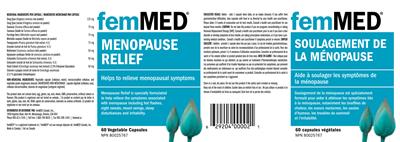
Menopause Relief by femMED label
The label scan from the NIH Dietary Supplement Label Database. Tap to enlarge.
Label images are published by the NIH Dietary Supplement Label Database for the version of this product on file. Always read your actual product label.
View the full label (PDF)The Ingredients in Menopause Relief by femMED
These are the 7 active ingredients this product is made of. Select any to open its full monograph.
Serving size1 Capsule(s) Dosage formCapsule Servings per container60 Amounts shown are per serving.
Most supplement products combine several ingredients, and a medication can interact with the product through any one of them. Each ingredient below shows whether it has known drug interactions.
Damiana powder
Interacts with86 drugs
Damiana is a traditional herb most famous as an aphrodisiac and mild mood-lifter, but solid human evidence for any of its uses is very limited. It is...
Damiana powder monograph & interactionsSchizandra fruit extract
Interacts with804 drugs
Schisandra is a traditional Chinese medicine berry used as an adaptogen for stress, fatigue, and liver support. Human evidence is limited and most cla...
Schizandra fruit extract monograph & interactionsBlack Cohosh Root Extract
Interacts with654 drugs
Black cohosh is a North American plant most often used to ease menopause symptoms like hot flashes, but the research is mixed and far from settled. It...
Black Cohosh Root Extract monograph & interactionsPomegranate fruit extract
Interacts with924 drugs
Pomegranate is a nutrient-rich fruit that is high in antioxidants and is widely enjoyed as food and juice. Early research suggests it may support hear...
Pomegranate fruit extract monograph & interactionsDong Quai powder
Interacts with163 drugs
Dong Quai is a traditional Chinese herb often called "female ginseng" and is mostly used for menstrual and menopausal complaints. High-quality scienti...
Dong Quai powder monograph & interactionsPartridge Berry, Powder
Motherwort, Powder
Interacts with248 drugs
Motherwort is a traditional herb in the mint family long used for anxiety, heart palpitations, and women's reproductive complaints, but solid human ev...
Motherwort, Powder monograph & interactionsOther (inactive) ingredients: Cellulose, Water, Microcrystalline Cellulose, Magnesium Stearate. These complete the product’s ingredient list but are not active constituents.
Menopause Relief by femMED Drug Interactions
HelloPharmacist Interaction Report
femMED Menopause Relief contains seven ingredients, and several of them interact with medications.
The most serious interaction we've found is between Dong Quai and warfarin (Coumadin), a blood thinner — case reports show this combination can increase bleeding risk significantly.
Read the full breakdown — every affected drug type, severity by severity
Schisandra fruit extract interacts with a large number of medications metabolized by your liver's processing enzymes (CYP3A4, CYP2C19, and CYP2C9), including immunosuppressants like tacrolimus, antifungals like voriconazole, and sedatives like midazolam. It may also affect warfarin.
Black Cohosh interacts with medications metabolized by liver enzyme CYP2D6, with drugs that affect blood pressure or liver function, with estrogen therapy, and with serotonin-boosting antidepressants — one case reported serotonin syndrome after combining black cohosh with duloxetine and sertraline.
Pomegranate fruit extract can theoretically affect blood pressure medications, blood thinners like warfarin, and cholesterol drugs like rosuvastatin and atorvastatin, though some of these interactions may not be clinically significant. Damiana may increase the risk of low blood sugar (hypoglycemia) when combined with diabetes medications.
Motherwort may add to the sedating effects of CNS depressants. We could not check Partridge Berry for interactions, as we hold no data for it.
Altogether, these interactions span 1,401 individual medications.
Use the medication checker below with your exact prescriptions and any over-the-counter drugs or blood thinners you take before starting this product.
Check your own medications below · Editorial policy · How we use AI
Want to check YOUR meds against Menopause Relief?
Ask about interactions with your drugs in plain English — “Can I take it with lisinopril?” — and we find you the answer in seconds, ingredient by ingredient.
Go to the checkerIngredients driving the most interactions
Individual Drug Interactions
The ingredients in Menopause Relief interact with 1,423 drugs. Click any drug to see the details.
6 of the 7 ingredients in Menopause Relief interact with drugs. Each result below shows which ingredient is responsible. Pomegranate fruit extract Schizandra fruit extract Black Cohosh Root Extract Motherwort, Powder Dong Quai powder Damiana powder
WarfarinWarfarin
How Warfarin interacts with Menopause Relief — through 3 ingredients. Tap an ingredient for the detail:
Dong Quai PowderAnticoagulant/antiplatelet Drugs, Warfarin (coumadin) Major
Interaction Summary
Theoretically, dong quai may increase the risk of bleeding when used with anticoagulant or antiplatelet drugs; however, research is conflicting.
Read the full Dong Quai Powder + Warfarin interactionSchizandra Fruit ExtractWarfarin (coumadin), Cytochrome P450 3a4 (cyp3a4) Substrates +2 Moderate
Interaction Summary
Theoretically, schisandra might decrease the levels and clinical effects of warfarin.
Read the full Schizandra Fruit Extract + Warfarin interactionPomegranate Fruit ExtractWarfarin (coumadin), Cytochrome P450 3a4 (cyp3a4) Substrates +1 Moderate
Interaction Summary
Theoretically, pomegranate might increase warfarin levels and increase the risk of bleeding.
Read the full Pomegranate Fruit Extract + Warfarin interactionWarfarin SodiumCoumadin, Panwarfin, Sofarin
How Warfarin Sodium interacts with Menopause Relief — through 3 ingredients. Tap an ingredient for the detail:
Dong Quai PowderAnticoagulant/antiplatelet Drugs, Warfarin (coumadin) Major
Interaction Summary
Theoretically, dong quai may increase the risk of bleeding when used with anticoagulant or antiplatelet drugs; however, research is conflicting.
Read the full Dong Quai Powder + Warfarin Sodium interactionPomegranate Fruit ExtractCytochrome P450 3a4 (cyp3a4) Substrates, Warfarin (coumadin) +1 Moderate
Interaction Summary
Theoretically, pomegranate might increase levels of drugs metabolized by CYP3A4, but most research suggests this interaction is unlikely to be clinically significant.
Read the full Pomegranate Fruit Extract + Warfarin Sodium interactionSchizandra Fruit ExtractCytochrome P450 2c19 (cyp2c19) Substrates, Cytochrome P450 2c9 (cyp2c9) Substrates +2 Moderate
Interaction Summary
Theoretically, schisandra might increase the levels and clinical effects of CYP2C19 substrates.
Read the full Schizandra Fruit Extract + Warfarin Sodium interaction6-mercaptopurinePurinethol
How 6-mercaptopurine interacts with Menopause Relief — through 1 ingredient. Tap an ingredient for the detail:
Black Cohosh Root ExtractHepatotoxic Drugs Moderate
Interaction Summary
Theoretically, taking black cohosh with hepatotoxic drugs may increase the risk of liver damage.
Read the full Black Cohosh Root Extract + 6-mercaptopurine interactionAdo-trastuzumab EmtansineKadcyla
How Ado-trastuzumab Emtansine interacts with Menopause Relief — through 2 ingredients. Tap an ingredient for the detail:
Schizandra Fruit ExtractCytochrome P450 3a4 (cyp3a4) Substrates Moderate
Interaction Summary
Schisandra can increase the levels and clinical effects of drugs metabolized by CYP3A4.
Read the full Schizandra Fruit Extract + Ado-trastuzumab Emtansine interactionPomegranate Fruit ExtractCytochrome P450 3a4 (cyp3a4) Substrates Minor
Interaction Summary
Theoretically, pomegranate might increase levels of drugs metabolized by CYP3A4, but most research suggests this interaction is unlikely to be clinically significant.
Read the full Pomegranate Fruit Extract + Ado-trastuzumab Emtansine interactionAbacavir Sulfate, Dolutegravir, LamivudineTriumeq
How Abacavir Sulfate, Dolutegravir, Lamivudine interacts with Menopause Relief — through 1 ingredient. Tap an ingredient for the detail:
Black Cohosh Root ExtractHepatotoxic Drugs Moderate
Interaction Summary
Theoretically, taking black cohosh with hepatotoxic drugs may increase the risk of liver damage.
Read the full Black Cohosh Root Extract + Abacavir Sulfate, Dolutegravir, Lamivudine interactionAbacavir, LamivudineEpzicom
How Abacavir, Lamivudine interacts with Menopause Relief — through 1 ingredient. Tap an ingredient for the detail:
Black Cohosh Root ExtractHepatotoxic Drugs Moderate
Interaction Summary
Theoretically, taking black cohosh with hepatotoxic drugs may increase the risk of liver damage.
Read the full Black Cohosh Root Extract + Abacavir, Lamivudine interactionAbciximabReoPro
How Abciximab interacts with Menopause Relief — through 1 ingredient. Tap an ingredient for the detail:
Dong Quai PowderAnticoagulant/antiplatelet Drugs Moderate
Interaction Summary
Theoretically, dong quai may increase the risk of bleeding when used with anticoagulant or antiplatelet drugs; however, research is conflicting.
Read the full Dong Quai Powder + Abciximab interactionAbemaciclibVerzenio
How Abemaciclib interacts with Menopause Relief — through 2 ingredients. Tap an ingredient for the detail:
Schizandra Fruit ExtractCytochrome P450 3a4 (cyp3a4) Substrates Moderate
Interaction Summary
Schisandra can increase the levels and clinical effects of drugs metabolized by CYP3A4.
Read the full Schizandra Fruit Extract + Abemaciclib interactionPomegranate Fruit ExtractCytochrome P450 3a4 (cyp3a4) Substrates Minor
Interaction Summary
Theoretically, pomegranate might increase levels of drugs metabolized by CYP3A4, but most research suggests this interaction is unlikely to be clinically significant.
Read the full Pomegranate Fruit Extract + Abemaciclib interactionAbiraterone
How Abiraterone interacts with Menopause Relief — through 3 ingredients. Tap an ingredient for the detail:
Schizandra Fruit ExtractCytochrome P450 3a4 (cyp3a4) Substrates Moderate
Interaction Summary
Schisandra can increase the levels and clinical effects of drugs metabolized by CYP3A4.
Read the full Schizandra Fruit Extract + Abiraterone interactionBlack Cohosh Root ExtractHepatotoxic Drugs Moderate
Interaction Summary
Theoretically, taking black cohosh with hepatotoxic drugs may increase the risk of liver damage.
Read the full Black Cohosh Root Extract + Abiraterone interactionPomegranate Fruit ExtractCytochrome P450 3a4 (cyp3a4) Substrates Minor
Interaction Summary
Theoretically, pomegranate might increase levels of drugs metabolized by CYP3A4, but most research suggests this interaction is unlikely to be clinically significant.
Read the full Pomegranate Fruit Extract + Abiraterone interactionAbiraterone AcetateYonsa, Zytiga
How Abiraterone Acetate interacts with Menopause Relief — through 3 ingredients. Tap an ingredient for the detail:
Black Cohosh Root ExtractHepatotoxic Drugs Moderate
Interaction Summary
Theoretically, taking black cohosh with hepatotoxic drugs may increase the risk of liver damage.
Read the full Black Cohosh Root Extract + Abiraterone Acetate interactionSchizandra Fruit ExtractCytochrome P450 3a4 (cyp3a4) Substrates Moderate
Interaction Summary
Schisandra can increase the levels and clinical effects of drugs metabolized by CYP3A4.
Read the full Schizandra Fruit Extract + Abiraterone Acetate interactionPomegranate Fruit ExtractCytochrome P450 3a4 (cyp3a4) Substrates Minor
Interaction Summary
Theoretically, pomegranate might increase levels of drugs metabolized by CYP3A4, but most research suggests this interaction is unlikely to be clinically significant.
Read the full Pomegranate Fruit Extract + Abiraterone Acetate interactionAbrocitinibCibinqo
How Abrocitinib interacts with Menopause Relief — through 3 ingredients. Tap an ingredient for the detail:
Schizandra Fruit ExtractCytochrome P450 2c19 (cyp2c19) Substrates, Cytochrome P450 2c9 (cyp2c9) Substrates Moderate
Interaction Summary
Theoretically, schisandra might increase the levels and clinical effects of CYP2C19 substrates.
Read the full Schizandra Fruit Extract + Abrocitinib interactionDong Quai PowderAnticoagulant/antiplatelet Drugs Moderate
Interaction Summary
Theoretically, dong quai may increase the risk of bleeding when used with anticoagulant or antiplatelet drugs; however, research is conflicting.
Read the full Dong Quai Powder + Abrocitinib interactionPomegranate Fruit ExtractCytochrome P450 2c9 (cyp2c9) Substrates Minor
Interaction Summary
Theoretically, pomegranate might increase levels of drugs metabolized by CYP2C9.
Read the full Pomegranate Fruit Extract + Abrocitinib interactionAcalabrutinibCalquence
How Acalabrutinib interacts with Menopause Relief — through 2 ingredients. Tap an ingredient for the detail:
Schizandra Fruit ExtractCytochrome P450 3a4 (cyp3a4) Substrates, P-glycoprotein Substrates Moderate
Interaction Summary
Schisandra can increase the levels and clinical effects of drugs metabolized by CYP3A4.
Read the full Schizandra Fruit Extract + Acalabrutinib interactionPomegranate Fruit ExtractCytochrome P450 3a4 (cyp3a4) Substrates Minor
Interaction Summary
Theoretically, pomegranate might increase levels of drugs metabolized by CYP3A4, but most research suggests this interaction is unlikely to be clinically significant.
Read the full Pomegranate Fruit Extract + Acalabrutinib interactionAcarboseGlucobay, Prandase, Precose
How Acarbose interacts with Menopause Relief — through 2 ingredients. Tap an ingredient for the detail:
Damiana PowderAntidiabetes Drugs Moderate
Interaction Summary
Theoretically, taking damiana with antidiabetes drugs might increase the risk of hypoglycemia.
Read the full Damiana Powder + Acarbose interactionBlack Cohosh Root ExtractHepatotoxic Drugs Moderate
Interaction Summary
Theoretically, taking black cohosh with hepatotoxic drugs may increase the risk of liver damage.
Read the full Black Cohosh Root Extract + Acarbose interactionAcebutololRhotral, Sectral
How Acebutolol interacts with Menopause Relief — through 2 ingredients. Tap an ingredient for the detail:
Black Cohosh Root ExtractHepatotoxic Drugs Moderate
Interaction Summary
Theoretically, taking black cohosh with hepatotoxic drugs may increase the risk of liver damage.
Read the full Black Cohosh Root Extract + Acebutolol interactionPomegranate Fruit ExtractAntihypertensive Drugs Moderate
Interaction Summary
Theoretically, taking pomegranate with antihypertensive drugs might increase the risk of hypotension.
Read the full Pomegranate Fruit Extract + Acebutolol interactionAcenocoumarolSintrom
How Acenocoumarol interacts with Menopause Relief — through 1 ingredient. Tap an ingredient for the detail:
Dong Quai PowderAnticoagulant/antiplatelet Drugs Moderate
Interaction Summary
Theoretically, dong quai may increase the risk of bleeding when used with anticoagulant or antiplatelet drugs; however, research is conflicting.
Read the full Dong Quai Powder + Acenocoumarol interactionAcepromazineAtravet
How Acepromazine interacts with Menopause Relief — through 1 ingredient. Tap an ingredient for the detail:
Motherwort, PowderCns Depressants Moderate
Interaction Summary
Theoretically, taking motherwort concomitantly with other CNS depressants may increase the risk of sedation.
Read the full Motherwort, Powder + Acepromazine interactionAcetaminophenChildren's Tylenol, Children's Tylenol Meltaways, Tylenol, Tylenol Ex Strength
How Acetaminophen interacts with Menopause Relief — through 1 ingredient. Tap an ingredient for the detail:
Black Cohosh Root ExtractHepatotoxic Drugs Moderate
Interaction Summary
Theoretically, taking black cohosh with hepatotoxic drugs may increase the risk of liver damage.
Read the full Black Cohosh Root Extract + Acetaminophen interactionAcetaminophen, AspirinGemnisyn
How Acetaminophen, Aspirin interacts with Menopause Relief — through 2 ingredients. Tap an ingredient for the detail:
Black Cohosh Root ExtractHepatotoxic Drugs Moderate
Interaction Summary
Theoretically, taking black cohosh with hepatotoxic drugs may increase the risk of liver damage.
Read the full Black Cohosh Root Extract + Acetaminophen, Aspirin interactionDong Quai PowderAnticoagulant/antiplatelet Drugs Moderate
Interaction Summary
Theoretically, dong quai may increase the risk of bleeding when used with anticoagulant or antiplatelet drugs; however, research is conflicting.
Read the full Dong Quai Powder + Acetaminophen, Aspirin interactionAcetaminophen, Aspirin, CaffeineExcedrin, Excedrin Extra Strength, Excedrin Migraine
How Acetaminophen, Aspirin, Caffeine interacts with Menopause Relief — through 4 ingredients. Tap an ingredient for the detail:
Dong Quai PowderAnticoagulant/antiplatelet Drugs Moderate
Interaction Summary
Theoretically, dong quai may increase the risk of bleeding when used with anticoagulant or antiplatelet drugs; however, research is conflicting.
Read the full Dong Quai Powder + Acetaminophen, Aspirin, Caffeine interactionBlack Cohosh Root ExtractHepatotoxic Drugs Moderate
Interaction Summary
Theoretically, taking black cohosh with hepatotoxic drugs may increase the risk of liver damage.
Read the full Black Cohosh Root Extract + Acetaminophen, Aspirin, Caffeine interactionSchizandra Fruit ExtractCytochrome P450 3a4 (cyp3a4) Substrates Moderate
Interaction Summary
Schisandra can increase the levels and clinical effects of drugs metabolized by CYP3A4.
Read the full Schizandra Fruit Extract + Acetaminophen, Aspirin, Caffeine interactionPomegranate Fruit ExtractCytochrome P450 3a4 (cyp3a4) Substrates Minor
Interaction Summary
Theoretically, pomegranate might increase levels of drugs metabolized by CYP3A4, but most research suggests this interaction is unlikely to be clinically significant.
Read the full Pomegranate Fruit Extract + Acetaminophen, Aspirin, Caffeine interactionAcetaminophen, Brompheniramine, PhenylpropanolamineDimetapp Cold and Flu
How Acetaminophen, Brompheniramine, Phenylpropanolamine interacts with Menopause Relief — through 1 ingredient. Tap an ingredient for the detail:
Black Cohosh Root ExtractHepatotoxic Drugs Moderate
Interaction Summary
Theoretically, taking black cohosh with hepatotoxic drugs may increase the risk of liver damage.
Read the full Black Cohosh Root Extract + Acetaminophen, Brompheniramine, Phenylpropanolamine interactionAcetaminophen, ButalbitalAxocet, Bancap, Bucet, Butex Forte, Esgic CF, Orbivan CF +5 more
How Acetaminophen, Butalbital interacts with Menopause Relief — through 1 ingredient. Tap an ingredient for the detail:
Black Cohosh Root ExtractHepatotoxic Drugs Moderate
Interaction Summary
Theoretically, taking black cohosh with hepatotoxic drugs may increase the risk of liver damage.
Read the full Black Cohosh Root Extract + Acetaminophen, Butalbital interactionAcetaminophen, Butalbital, CaffeineEsgic, Esgic Plus, Fiogesic, Fioricet, Repan, Tecnal +1 more
How Acetaminophen, Butalbital, Caffeine interacts with Menopause Relief — through 3 ingredients. Tap an ingredient for the detail:
Black Cohosh Root ExtractHepatotoxic Drugs Moderate
Interaction Summary
Theoretically, taking black cohosh with hepatotoxic drugs may increase the risk of liver damage.
Read the full Black Cohosh Root Extract + Acetaminophen, Butalbital, Caffeine interactionSchizandra Fruit ExtractCytochrome P450 3a4 (cyp3a4) Substrates Moderate
Interaction Summary
Schisandra can increase the levels and clinical effects of drugs metabolized by CYP3A4.
Read the full Schizandra Fruit Extract + Acetaminophen, Butalbital, Caffeine interactionPomegranate Fruit ExtractCytochrome P450 3a4 (cyp3a4) Substrates Minor
Interaction Summary
Theoretically, pomegranate might increase levels of drugs metabolized by CYP3A4, but most research suggests this interaction is unlikely to be clinically significant.
Read the full Pomegranate Fruit Extract + Acetaminophen, Butalbital, Caffeine interactionAcetaminophen, Butalbital, Caffeine, CodeineEsgic with Codeine, Fioricet w/ Codeine
How Acetaminophen, Butalbital, Caffeine, Codeine interacts with Menopause Relief — through 4 ingredients. Tap an ingredient for the detail:
Schizandra Fruit ExtractCytochrome P450 3a4 (cyp3a4) Substrates Moderate
Interaction Summary
Schisandra can increase the levels and clinical effects of drugs metabolized by CYP3A4.
Read the full Schizandra Fruit Extract + Acetaminophen, Butalbital, Caffeine, Codeine interactionMotherwort, PowderCns Depressants Moderate
Interaction Summary
Theoretically, taking motherwort concomitantly with other CNS depressants may increase the risk of sedation.
Read the full Motherwort, Powder + Acetaminophen, Butalbital, Caffeine, Codeine interactionPomegranate Fruit ExtractCytochrome P450 2d6 (cyp2d6) Substrates, Cytochrome P450 3a4 (cyp3a4) Substrates Moderate
Interaction Summary
Theoretically, pomegranate might increase levels of drugs metabolized by CYP2D6.
Read the full Pomegranate Fruit Extract + Acetaminophen, Butalbital, Caffeine, Codeine interactionBlack Cohosh Root ExtractHepatotoxic Drugs, Cytochrome P450 2d6 (cyp2d6) Substrates Moderate
Interaction Summary
Theoretically, taking black cohosh with hepatotoxic drugs may increase the risk of liver damage.
Read the full Black Cohosh Root Extract + Acetaminophen, Butalbital, Caffeine, Codeine interactionAcetaminophen, Butalbital, CodeineBancap w/ Codeine
How Acetaminophen, Butalbital, Codeine interacts with Menopause Relief — through 3 ingredients. Tap an ingredient for the detail:
Black Cohosh Root ExtractCytochrome P450 2d6 (cyp2d6) Substrates, Hepatotoxic Drugs Moderate
Interaction Summary
Some research suggests that black cohosh might inhibit CYP2D6, but there is conflicting evidence.
Read the full Black Cohosh Root Extract + Acetaminophen, Butalbital, Codeine interactionPomegranate Fruit ExtractCytochrome P450 2d6 (cyp2d6) Substrates Moderate
Interaction Summary
Theoretically, pomegranate might increase levels of drugs metabolized by CYP2D6.
Read the full Pomegranate Fruit Extract + Acetaminophen, Butalbital, Codeine interactionMotherwort, PowderCns Depressants Moderate
Interaction Summary
Theoretically, taking motherwort concomitantly with other CNS depressants may increase the risk of sedation.
Read the full Motherwort, Powder + Acetaminophen, Butalbital, Codeine interactionAcetaminophen, Butalbital, Codeine PhosphatePhrenilin #3
How Acetaminophen, Butalbital, Codeine Phosphate interacts with Menopause Relief — through 3 ingredients. Tap an ingredient for the detail:
Motherwort, PowderCns Depressants Moderate
Interaction Summary
Theoretically, taking motherwort concomitantly with other CNS depressants may increase the risk of sedation.
Read the full Motherwort, Powder + Acetaminophen, Butalbital, Codeine Phosphate interactionPomegranate Fruit ExtractCytochrome P450 2d6 (cyp2d6) Substrates Moderate
Interaction Summary
Theoretically, pomegranate might increase levels of drugs metabolized by CYP2D6.
Read the full Pomegranate Fruit Extract + Acetaminophen, Butalbital, Codeine Phosphate interactionBlack Cohosh Root ExtractHepatotoxic Drugs, Cytochrome P450 2d6 (cyp2d6) Substrates Moderate
Interaction Summary
Theoretically, taking black cohosh with hepatotoxic drugs may increase the risk of liver damage.
Read the full Black Cohosh Root Extract + Acetaminophen, Butalbital, Codeine Phosphate interactionAcetaminophen, Caffeine, Chlorpheniramine, Hydrocodone, PhenylephrineHycomine Compound
How Acetaminophen, Caffeine, Chlorpheniramine, Hydrocodone, Phenylephrine interacts with Menopause Relief — through 4 ingredients. Tap an ingredient for the detail:
Black Cohosh Root ExtractCytochrome P450 2d6 (cyp2d6) Substrates, Hepatotoxic Drugs Moderate
Interaction Summary
Some research suggests that black cohosh might inhibit CYP2D6, but there is conflicting evidence.
Read the full Black Cohosh Root Extract + Acetaminophen, Caffeine, Chlorpheniramine, Hydrocodone, Phenylephrine interactionPomegranate Fruit ExtractCytochrome P450 3a4 (cyp3a4) Substrates, Cytochrome P450 2d6 (cyp2d6) Substrates Moderate
Interaction Summary
Theoretically, pomegranate might increase levels of drugs metabolized by CYP3A4, but most research suggests this interaction is unlikely to be clinically significant.
Read the full Pomegranate Fruit Extract + Acetaminophen, Caffeine, Chlorpheniramine, Hydrocodone, Phenylephrine interactionMotherwort, PowderCns Depressants Moderate
Interaction Summary
Theoretically, taking motherwort concomitantly with other CNS depressants may increase the risk of sedation.
Read the full Motherwort, Powder + Acetaminophen, Caffeine, Chlorpheniramine, Hydrocodone, Phenylephrine interactionSchizandra Fruit ExtractCytochrome P450 3a4 (cyp3a4) Substrates Moderate
Interaction Summary
Schisandra can increase the levels and clinical effects of drugs metabolized by CYP3A4.
Read the full Schizandra Fruit Extract + Acetaminophen, Caffeine, Chlorpheniramine, Hydrocodone, Phenylephrine interactionAcetaminophen, Caffeine, CodeineGesic C15, Gesic C30, Gesic C8, Lenoltec 1, Lenoltec 2, Lenoltec 3 +1 more
How Acetaminophen, Caffeine, Codeine interacts with Menopause Relief — through 4 ingredients. Tap an ingredient for the detail:
Schizandra Fruit ExtractCytochrome P450 3a4 (cyp3a4) Substrates Moderate
Interaction Summary
Schisandra can increase the levels and clinical effects of drugs metabolized by CYP3A4.
Read the full Schizandra Fruit Extract + Acetaminophen, Caffeine, Codeine interactionMotherwort, PowderCns Depressants Moderate
Interaction Summary
Theoretically, taking motherwort concomitantly with other CNS depressants may increase the risk of sedation.
Read the full Motherwort, Powder + Acetaminophen, Caffeine, Codeine interactionPomegranate Fruit ExtractCytochrome P450 2d6 (cyp2d6) Substrates, Cytochrome P450 3a4 (cyp3a4) Substrates Moderate
Interaction Summary
Theoretically, pomegranate might increase levels of drugs metabolized by CYP2D6.
Read the full Pomegranate Fruit Extract + Acetaminophen, Caffeine, Codeine interactionBlack Cohosh Root ExtractHepatotoxic Drugs, Cytochrome P450 2d6 (cyp2d6) Substrates Moderate
Interaction Summary
Theoretically, taking black cohosh with hepatotoxic drugs may increase the risk of liver damage.
Read the full Black Cohosh Root Extract + Acetaminophen, Caffeine, Codeine interactionAcetaminophen, Caffeine, Codeine, SalicylamideCodalan No.1, Codalan No.2, Codalan No.3
How Acetaminophen, Caffeine, Codeine, Salicylamide interacts with Menopause Relief — through 4 ingredients. Tap an ingredient for the detail:
Black Cohosh Root ExtractCytochrome P450 2d6 (cyp2d6) Substrates, Hepatotoxic Drugs Moderate
Interaction Summary
Some research suggests that black cohosh might inhibit CYP2D6, but there is conflicting evidence.
Read the full Black Cohosh Root Extract + Acetaminophen, Caffeine, Codeine, Salicylamide interactionPomegranate Fruit ExtractCytochrome P450 3a4 (cyp3a4) Substrates, Cytochrome P450 2d6 (cyp2d6) Substrates Moderate
Interaction Summary
Theoretically, pomegranate might increase levels of drugs metabolized by CYP3A4, but most research suggests this interaction is unlikely to be clinically significant.
Read the full Pomegranate Fruit Extract + Acetaminophen, Caffeine, Codeine, Salicylamide interactionMotherwort, PowderCns Depressants Moderate
Interaction Summary
Theoretically, taking motherwort concomitantly with other CNS depressants may increase the risk of sedation.
Read the full Motherwort, Powder + Acetaminophen, Caffeine, Codeine, Salicylamide interactionSchizandra Fruit ExtractCytochrome P450 3a4 (cyp3a4) Substrates Moderate
Interaction Summary
Schisandra can increase the levels and clinical effects of drugs metabolized by CYP3A4.
Read the full Schizandra Fruit Extract + Acetaminophen, Caffeine, Codeine, Salicylamide interactionAcetaminophen, Caffeine, DihydrocodeineDHC Plus, Panlor DC, Panlor SS
How Acetaminophen, Caffeine, Dihydrocodeine interacts with Menopause Relief — through 4 ingredients. Tap an ingredient for the detail:
Schizandra Fruit ExtractCytochrome P450 3a4 (cyp3a4) Substrates Moderate
Interaction Summary
Schisandra can increase the levels and clinical effects of drugs metabolized by CYP3A4.
Read the full Schizandra Fruit Extract + Acetaminophen, Caffeine, Dihydrocodeine interactionMotherwort, PowderCns Depressants Moderate
Interaction Summary
Theoretically, taking motherwort concomitantly with other CNS depressants may increase the risk of sedation.
Read the full Motherwort, Powder + Acetaminophen, Caffeine, Dihydrocodeine interactionPomegranate Fruit ExtractCytochrome P450 2d6 (cyp2d6) Substrates, Cytochrome P450 3a4 (cyp3a4) Substrates Moderate
Interaction Summary
Theoretically, pomegranate might increase levels of drugs metabolized by CYP2D6.
Read the full Pomegranate Fruit Extract + Acetaminophen, Caffeine, Dihydrocodeine interactionBlack Cohosh Root ExtractHepatotoxic Drugs, Cytochrome P450 2d6 (cyp2d6) Substrates Moderate
Interaction Summary
Theoretically, taking black cohosh with hepatotoxic drugs may increase the risk of liver damage.
Read the full Black Cohosh Root Extract + Acetaminophen, Caffeine, Dihydrocodeine interactionAcetaminophen, Caffeine, IsomethepteneMigralam
How Acetaminophen, Caffeine, Isometheptene interacts with Menopause Relief — through 3 ingredients. Tap an ingredient for the detail:
Black Cohosh Root ExtractHepatotoxic Drugs Moderate
Interaction Summary
Theoretically, taking black cohosh with hepatotoxic drugs may increase the risk of liver damage.
Read the full Black Cohosh Root Extract + Acetaminophen, Caffeine, Isometheptene interactionSchizandra Fruit ExtractCytochrome P450 3a4 (cyp3a4) Substrates Moderate
Interaction Summary
Schisandra can increase the levels and clinical effects of drugs metabolized by CYP3A4.
Read the full Schizandra Fruit Extract + Acetaminophen, Caffeine, Isometheptene interactionPomegranate Fruit ExtractCytochrome P450 3a4 (cyp3a4) Substrates Minor
Interaction Summary
Theoretically, pomegranate might increase levels of drugs metabolized by CYP3A4, but most research suggests this interaction is unlikely to be clinically significant.
Read the full Pomegranate Fruit Extract + Acetaminophen, Caffeine, Isometheptene interactionEach ingredient & the kinds of drugs it affects
For each ingredient in Menopause Relief with known interactions, here are the types of medications they can affect. Open any type for the detail — or search your exact drug in the checker above.
Pomegranate fruit extract
Ace Inhibitors (Aceis)
Theoretically, taking pomegranate with ACEIs might increase the risk of adverse effects.
Pomegranate juice is thought to have ACE inhibitor-like effects.
Antihypertensive Drugs
Theoretically, taking pomegranate with antihypertensive drugs might increase the risk of hypotension.
Consuming pomegranate juice can modestly lower blood pressure.
Cytochrome P450 2D6 (Cyp2D6) Substrates
Theoretically, pomegranate might increase levels of drugs metabolized by CYP2D6.
In vitro, pomegranate juice inhibits CYP2D6. However, the clinical significance of this potential interaction in humans is not known.
Rosuvastatin (Crestor)
Theoretically, taking pomegranate with rosuvastatin might increase the risk of adverse effects.
In one case, a patient taking rosuvastatin 5 mg every other day in combination with ezetimibe 10 mg daily developed rhabdomyolysis after drinking pomegranate juice 200 mL twice weekly for 3 weeks. This patient had a history of elevated creatine kinase levels while not receiving any statin treatment. This suggests a possible underlying myopathy and predisposition to rhabdomyolysis.
Warfarin (Coumadin)
Theoretically, pomegranate might increase warfarin levels and increase the risk of bleeding. Also, discontinuing regular consumption of pomegranate juice might decrease warfarin levels.
In one case report, a patient had a stable, therapeutic bleeding time, as measured by international normalized ratio (INR), while taking warfarin in combination with pomegranate juice 2-3 times per week. The patient became subtherapeutic within about 10 days after discontinuing pomegranate juice, which required a warfarin dose increase. In another case report, a patient with a stable INR for over one year presented with an INR of 14. The patient noted no changes to medications or diet but did report consuming around 3 liters of pomegranate juice over the previous week. The patient's INR stabilized upon moderation of pomegranate juice consumption. The mechanism of this potential interaction is unclear.
Carbamazepine (Tegretol)
Theoretically, taking pomegranate with carbamazepine might increase the risk of adverse effects, although research suggests this interaction is unlikely to be clinically significant.
Animal research shows that pomegranate juice may inhibit cytochrome P450 3A4 (CYP3A4) metabolism of carbamazepine and increase levels of carbamazepine by 1.5 times without prolonging the elimination half-life. This suggests that pomegranate juice inhibits intestinal CYP3A4, but might not inhibit hepatic CYP3A4. However, some human research suggests that pomegranate does not significantly inhibit CYP3A4 drug metabolism in humans.
Cytochrome P450 2C9 (Cyp2C9) Substrates
Theoretically, pomegranate might increase levels of drugs metabolized by CYP2C9.
Some animal and in vitro research shows that pomegranate juice inhibits intestinal, but not hepatic, CYP2C9 isoenzyme activity. However, clinical research shows that neither pomegranate juice nor pomegranate extract have a significant effect on CYP2C9 activity in humans.
Cytochrome P450 3A4 (Cyp3A4) Substrates
Theoretically, pomegranate might increase levels of drugs metabolized by CYP3A4, but most research suggests this interaction is unlikely to be clinically significant.
Pomegranate contains several polyphenols that have individually been shown to inhibit CYP3A4. However, there is contradictory evidence about the effect of whole pomegranate juice on CYP3A4 activity. In vitro, pomegranate juice significantly inhibits the CYP3A4 enzyme, with comparable inhibition to grapefruit juice. In an animal model, pomegranate juice inhibits CYP3A4 metabolism of carbamazepine and increases levels of carbamazepine by 1.5 times; however, in human volunteers, drinking a single glass of pomegranate juice 240 mL or taking 200 mL daily for 2 weeks does not significantly affect levels of the CYP3A4 substrate midazolam after oral or intravenous administration. Another study in healthy volunteers shows that consuming pomegranate juice 300 mL three times daily for three days also does not significantly affect levels of simvastatin, a CYP3A4 substrate This suggests that pomegranate is unlikely to significantly affect levels of CYP3A4 substrates in humans.
Tolbutamide (Orinase)
Theoretically, pomegranate might increase levels of tolbutamide, although research suggests this interaction is unlikely to be clinically significant.
Animal research shows that pomegranate juice inhibits the cytochrome P450 2C9 (CYP2C9) metabolism of tolbutamide. Pomegranate juice increased tolbutamide levels by 1.2 times without prolonging the elimination half-life. This suggests that pomegranate juice inhibits intestinal CYP2C9, but might not inhibit hepatic CYP2C9. Despite this evidence, clinical research shows that neither pomegranate juice nor pomegranate extract have a significant effect on CYP2C9 activity in humans. This interaction does not appear to be clinically significant in humans.
Schizandra fruit extract
Cyclophosphamide
Theoretically, schisandra might increase the levels and clinical effects of cyclophosphamide.
In vitro research shows that schisandra increases the concentration of cyclophosphamide, likely through inhibition of cytochrome P450 3A4. After multiple doses of the schisandra constituents schisandrin A and schisantherin A, the maximum concentration of cyclophosphamide was increased by 7% and 75%, respectively, while the overall exposure to cyclophosphamide was increased by 29% and 301%, respectively.
Cyclosporine (Neoral, Sandimmune)
Schisandra can increase the levels and clinical effects of cyclosporine.
A small observational study in children with aplastic anemia found that taking schisandra with cyclosporine increased cyclosporine trough levels by 93% without increasing the risk of adverse events. However, the dose of cyclosporine was reduced in 9% of children to maintain appropriate cyclosporine blood concentrations.
Cytochrome P450 2C19 (Cyp2C19) Substrates
Theoretically, schisandra might increase the levels and clinical effects of CYP2C19 substrates.
In vitro research shows that schisandra inhibits CYP2C19, and animal research shows that schisandra increases the concentration of voriconazole, a CYP2C19 substrate. Theoretically, schisandra may also inhibit the metabolism of other CYP2C19 substrates. This effect has not been reported in humans.
Cytochrome P450 2C9 (Cyp2C9) Substrates
Theoretically, schisandra might decrease the levels and clinical effects of CYP2C9 substrates.
In vitro and animal research suggests that schisandra induces CYP2C9 enzymes. This effect has not been reported in humans.
Cytochrome P450 3A4 (Cyp3A4) Substrates
Schisandra can increase the levels and clinical effects of drugs metabolized by CYP3A4.
Most clinical and laboratory research shows that schisandra, administered either as a single dose or up to twice daily for 14 days, inhibits CYP3A4 and increases the concentration of CYP3A4 substrates such as cyclophosphamide, midazolam, tacrolimus, and talinolol. Although one in vitro and animal study shows that schisandra may induce CYP3A4 metabolism, this effect appears to be overpowered by schisandra's CYP3A4 inhibitory activity and has not been reported in humans.
Midazolam (Versed)
Schisandra can increase the levels and clinical effects of midazolam.
A small pharmacokinetic study in healthy adults shows that taking schisandra extract (Hezheng Pharmaceutical Co.) containing deoxyschizandrin 33.75 mg twice daily for 8 days and a single dose of midazolam 15 mg on day 8 increases the overall exposure to midazolam by about 119%, increases the peak plasma level of midazolam by 86%, and decreases midazolam clearance by about 52%. This effect has been attributed to inhibition of CYP3A4 by schisandra.
P-Glycoprotein Substrates
Schisandra might increase the levels and clinical effects of P-glycoprotein substrates.
In vitro research shows that schisandra extracts and constituents such as schisandrin B inhibit P-glycoprotein mediated efflux in intestinal cells and in P-glycoprotein over-expressing cell lines. Additionally, a small clinical study shows that schisandra increases the peak concentration and overall exposure to talinolol, a P-glycoprotein probe substrate. Theoretically, schisandra might inhibit the efflux of other P-glycoprotein substrates.
Sirolimus (Rapamune)
Schisandra can increase the levels and clinical effects of sirolimus.
A small pharmacokinetic study in healthy volunteers shows that taking 3 capsules of schisandra (Hezheng Pharmaceutical Company) containing a total of 33.75 mg deoxyschizandrin twice daily for 13 days and then taking a single dose of sirolimus 2 mg increases the overall exposure and peak level of sirolimus by two-fold. This effect is thought to be due to inhibition of cytochrome P450 3A4 by schisandra, as well as possible inhibition of the P-glycoprotein drug transporter.
Tacrolimus (Prograf)
Schisandra can increase the levels and clinical effects of tacrolimus.
Clinical research in healthy children and adults, transplant patients, and patients with nephrotic syndrome and various rheumatic immunologic disorders shows that taking schisandra with tacrolimus increases tacrolimus peak levels by 183% to 268%, prolongs or delays time to peak tacrolimus concentrations, increases overall exposure to tacrolimus by 126% to 343%, and decreases tacrolimus clearance by 19% to 73%. This effect is thought to be due to inhibition of P-glycoprotein drug transporter and CYP3A4 and CYP3A5 by schisandra. Some clinical and observational studies suggest that schisandra increases tacrolimus levels similarly in both expressors and non-expressors of CYP3A5, while other studies suggest it does so to a greater degree in CYP3A5 expressors than non-expressors. Animal research suggests that the greatest increase in tacrolimus levels occurs when schisandra is taken either concomitantly or up to 2 hours before tacrolimus, and clinical and observational research in humans suggests that schisandra may increase whole blood levels of tacrolimus and decrease clearance of tacrolimus in a dose-dependent manner.
Talinolol
Schisandra can increase the levels and clinical effects of talinolol.
A small pharmacokinetic study in healthy volunteers shows that taking schisandra extract 300 mg twice daily for 14 days with a single dose of talinolol 100 mg on day 14 increases the peak talinolol level by 51% and the overall exposure to talinolol by 47%. This effect is thought to be due to the possible inhibition of cytochrome P450 3A4 and P-glycoprotein by schisandra.
tly.
Voriconazole (Vfend)
Theoretically, schisandra might increase the levels and clinical effects of voriconazole.
Animal research shows that oral schisandra given daily for 1 or 14 days increases levels of intravenously administered voriconazole, a cytochrome P450 (CYP) 2C19 substrate. This effect is thought to be due to inhibition of CYP2C19 by schisandra. However, this interaction has not been reported in humans.
Warfarin (Coumadin)
Theoretically, schisandra might decrease the levels and clinical effects of warfarin.
Animal research suggests that oral schisandra extract, given daily for 6 days, reduces levels of intravenously administered warfarin. This effect might be due to the induction of cytochrome P450 (CYP) 2C9 metabolism by schisandra. However, this interaction has not been reported in humans.
Black Cohosh Root Extract
Atorvastatin (Lipitor)
Taking black cohosh with atorvastatin might increase the risk for elevated liver function tests.
In one case report, a patient taking atorvastatin (Lipitor) developed significantly elevated liver function enzymes after starting black cohosh 100 mg four times daily. Liver enzymes returned to normal when black cohosh was discontinued. It is unclear whether the elevated liver enzymes were due to black cohosh itself or an interaction between atorvastatin and black cohosh.
Cisplatin (Platinol-Aq)
Theoretically, black cohosh may reduce the clinical effects of cisplatin.
Animal research suggests that black cohosh might decrease the cytotoxic effect of cisplatin on breast cancer cells.
Cytochrome P450 2D6 (Cyp2D6) Substrates
Some research suggests that black cohosh might inhibit CYP2D6, but there is conflicting evidence.
Some clinical research suggests that black cohosh might modestly inhibit CYP2D6 and increase levels of drugs metabolized by this enzyme. However, contradictory clinical research shows a specific black cohosh product (Remifemin, Enzymatic Therapy) 40 mg twice daily does not significantly inhibit metabolism of a CYP2D6 substrate in healthy study volunteers. Until more is known, use black cohosh cautiously in patients taking drugs metabolized by CYP2D6.
Estrogens
Theoretically, black cohosh may alter the effects of estrogen therapy.
Some research suggests that black cohosh has estrogenic effects. This may enhance or inhibit the effects of estrogen therapy.
Hepatotoxic Drugs
Theoretically, taking black cohosh with hepatotoxic drugs may increase the risk of liver damage.
There is concern that black cohosh might be linked to cases of liver failure and autoimmune hepatitis.
Serotonergic Drugs
Combining serotonergic drugs with black cohosh might cause additive serotonergic effects.
Black cohosh might increase the risk of serotonin syndrome when combined with other serotonergic drugs. Black cohosh acts as an agonist at several serotonin receptor subtypes and might interact with other serotonergic medications. In one case, a 55-year-old female who had been on stable treatment with sertraline 50 mg and duloxetine 60 mg daily developed serotonin syndrome after taking black cohosh extract 40 mg daily for 3 days.
Organic Anion-Transporting Polypeptide Substrates (Oatp)
Black cohosh may inhibit one form of OATP, OATP2B1, which could reduce the bioavailability and clinical effects of OATP2B1 substrates.
In vitro research shows that black cohosh modestly inhibits OATP2B1. OATPs are expressed in the small intestine and liver and are responsible for the uptake of drugs and other compounds into the body. Inhibition of OATP may reduce the bioavailability of oral drugs that are substrates of OATP.
Motherwort, Powder
Cns Depressants
Theoretically, taking motherwort concomitantly with other CNS depressants may increase the risk of sedation.
Motherwort has been reported to cause CNS depression and sedation.
Dong Quai powder
Warfarin (Coumadin)
Dong quai may increase the risk of bleeding when used with warfarin.
Case reports suggest that concomitant use of dong quai with warfarin can increase the anticoagulant effects of warfarin and increase the risk of bleeding. In one case, after 4 weeks of taking dong quai 565 mg once or twice daily, the international normalized ratio (INR) increased to 4.9. The INR normalized 4 weeks after discontinuation of dong quai.
Anticoagulant/Antiplatelet Drugs
Theoretically, dong quai may increase the risk of bleeding when used with anticoagulant or antiplatelet drugs; however, research is conflicting.
Animal studies suggest that dong quai has antithrombin activity and inhibits platelet aggregation due to its coumarin components. Additionally, some case reports in humans suggest that dong quai can increase the anticoagulant effects of warfarin. However, clinical research in healthy adults shows that taking 1 gram of dong quai root daily for 3 weeks does not significantly inhibit platelet aggregation or cause bleeding. Until more is known, use dong quai with caution in patients taking antiplatelet/anticoagulant drugs.
Estrogens
Theoretically, dong quai may reduce the effects of estrogens.
Dong quai has estrogenic effects. Theoretically, concomitant use of large amounts of dong quai might interfere with hormone replacement therapy due to competition for estrogen receptors.
Damiana powder
Antidiabetes Drugs
Theoretically, taking damiana with antidiabetes drugs might increase the risk of hypoglycemia.
Animal research shows that taking damiana lowers blood glucose level.
Brand information
Manufacturer and brand details for Menopause Relief, from the product label.
femMED
See all femMED products- Name
- femMed Cananda, Inc.
- Street Address
- 2850 Argentia Road, Unit #4
- City
- Mississauga
- State
- Ontario
- ZipCode
- L5N 8G4
- Phone Number
- 1-866-799-8035
- Web Address
- femmed.ca
Menopause Relief by femMED: Common Questions
Does Menopause Relief by femMED interact with any medications?
How can one product interact with so many drugs?
Where does this information come from?
Does this help with hot flashes and night sweats?
Can I take this if I'm on blood thinners?
What are the most common side effects?
Is it safe to take while breastfeeding?
Does it interact with antidepressants?
What is Dong Quai and why is it in here?
Written and reviewed by the HelloPharmacist editorial staff. Our editorial policy
Not sure if Menopause Relief is safe with your meds?
Our pharmacists answer your medication & supplement questions — free.
Label information is sourced from the NIH Dietary Supplement Label Database and reflects the product version on file; always read your actual product label. This page is for education only and is not a substitute for professional medical advice. Confirm with your pharmacist or doctor before combining supplements and medications.
The Full Monographs Behind Menopause Relief’s Ingredients
Every ingredient we hold a full HelloPharmacist monograph for — uses, evidence, safety, and the complete interaction list.
Damiana
Interacts with 86 drugsDamiana is a traditional herb most famous as an aphrodisiac and mild mood-lifter, but solid human evidence for any of its uses is very limited. It is generally well tolerated in the small am...
Read the full Damiana monograph → Herb & supplement monographSchisandra
Interacts with 804 drugsSchisandra is a traditional Chinese medicine berry used as an adaptogen for stress, fatigue, and liver support. Human evidence is limited and most claims are not well proven, but it appears...
Read the full Schisandra monograph → Herb & supplement monographBlack Cohosh
Interacts with 654 drugsBlack cohosh is a North American plant most often used to ease menopause symptoms like hot flashes, but the research is mixed and far from settled. It is generally well tolerated for short-t...
Read the full Black Cohosh monograph → Herb & supplement monographPomegranate
Interacts with 924 drugsPomegranate is a nutrient-rich fruit that is high in antioxidants and is widely enjoyed as food and juice. Early research suggests it may support heart health and blood pressure, but the evi...
Read the full Pomegranate monograph → Herb & supplement monographDong Quai
Interacts with 163 drugsDong Quai is a traditional Chinese herb often called "female ginseng" and is mostly used for menstrual and menopausal complaints. High-quality scientific evidence that it works for these use...
Read the full Dong Quai monograph → Herb & supplement monographMotherwort
Interacts with 248 drugsMotherwort is a traditional herb in the mint family long used for anxiety, heart palpitations, and women's reproductive complaints, but solid human evidence is very limited. It should be avo...
Read the full Motherwort monograph →Sources & How We Checked
Menopause Relief's label data comes from the NIH Dietary Supplement Label Database; the ingredient interaction data is from the Natural Medicines database, reviewed by our pharmacists.
- NIH Dietary Supplement Label Database (DSLD) — The official product label on file for this supplement.
- Natural Medicines (Therapeutic Research Center) — Evidence-graded clinical reference behind the ingredient interaction data.
Content is written and reviewed by licensed HelloPharmacist pharmacists. See our data sources and editorial standards for how this information is built and checked.
The 148 references behind this product’s interaction data
Every citation that drives the interaction findings for this product’s ingredients, from the evidence-graded Natural Medicines (TRC Healthcare) database. Open an ingredient to browse its citations — links open the study on PubMed or the publisher’s site.
Damiana 2 references
- Newall CA, Anderson LA, Philpson JD. Herbal Medicine: A Guide for Healthcare Professionals. London, UK: The Pharmaceutical Press, 1996.
- Alarcon-Aquilar FJ, Roman-Ramos R, Perez-Gutierrez S, et al. Study of the anti-hyperglycemic effect of plants used as antidiabetics. J Ethnopharmacol 1998;61:101-10. PubMed
Schisandra 26 references
- Leung AY, Foster S. Encyclopedia of Common Natural Ingredients Used in Food, Drugs and Cosmetics. 2nd ed. New York, NY: John Wiley & Sons, 1996.
- Iwata H, Tezuka Y, Kadota S, et al. Identification and characterization of potent CYP3A4 inhibitors in Schisandra fruit extract. Drug Metab Dispos 2004;32:1351-8. PubMed
- Mu Y, Zhang J, Zhang S, et al. Traditional Chinese medicines Wu Wei Zi (Schisandra chinensis Baill) and Gan Cao (Glycyrrhiza uralensis Fisch) activate pregnane X receptor and increase warfarin clearance in rats. J Pharmacol Exp Ther 2006;316:1369-77. PubMed
- Xin HW, Wu XC, Li Q, et al. Effects of Schisandra sphenanthera extract on the pharmacokinetics of tacrolimus in healthy volunteers. Br J Clin Pharmacol 2007;64:469-75.
- Qin XL, Bi HC, Wang XD, et al. Mechanistic understanding of the different effects of Wuhzi Tablet (Schisandra sphenanthera extract) on the absorption and first-pass intestinal and hepatic metabolism of tacrolimus (FK506). Int J Pharm 2010;389:114-21.
- Makino, T., Mizuno, F., and Mizukami, H. Does a kampo medicine containing schisandra fruit affect pharmacokinetics of nifedipine like grapefruit juice? Biol.Pharm.Bull. 2006;29(10):2065-2069. PubMed
- Fan L, Mao XQ, Tao GY, Wang G, Jiang F, Chen Y, Li Q, Zhang W, Lei HP, Hu DL, Huang YF, Wang D, Zhou HH. Effect of Schisandra chinensis extract and Ginkgo biloba extract on the pharmacokinetics of talinolol in healthy volunteers. Xenobiotica. 2009 Mar;39(
- Jiang W, Wang X, Xu X, Kong L. Effect of Schisandra sphenanthera extract on the concentration of tacrolimus in the blood of liver transplant patients. Int J Clin Pharmacol Ther. 2010 Mar;48(3):224-9. PubMed
- Xin HW, Wu XC, Li Q, Yu AR, Xiong L. Effects of Schisandra sphenanthera extract on the pharmacokinetics of midazolam in healthy volunteers. Br J Clin Pharmacol. 2009 May;67(5):541-6.
- Li J, Chen S, Qin X, et at. Wuzhi Tablet (<i>Schisandra sphenanthera</i> Extract) is a Promising Tacrolimus-Sparing Agent for Renal Transplant Recipients Who are CYP3A5 Expressers: a Two-Phase Prospective Study. Drug Metab Dispos. 2017;45(11):1114-1119.
- Qin XL, Li JL, Wang SH, Chen X, Huang M, Bi HC. Co-administration of Wuzhi tablet (Schisandra sphenanthera extract) alters tacrolimus pharmacokinetics in a dose- and time-dependent manner in rats. J Ethnopharmacol. 2020;263:113233. PubMed
- Yuan F, Liang X, Chen X, Qin X, Tan C, Wang L. CYP2C19 is involved in the effect of Wuzhi tablet (Schisandra sphenanthera extract) and its constituents on the pharmacokinetics of intravenous voriconazole. Pharmazie. 2020;75(11):559-564. DOI
- Zhang Z, Lu X, Dong L, Ma J, Fan X. Clinical observation on the effect of Wuzhi soft capsule on FK506 concentration in membranous nephropathy patients. Medicine (Baltimore). 2019;98(48):e18150. PubMed
- Yoo HH, Lee M, Lee MW, Lim SY, Shin J, Kim DH. Effects of Schisandra lignans on P-glycoprotein-mediated drug efflux in human intestinal Caco-2. Planta Med. 2007;73(5):444-50.
- Qiangrong P, Wang T, Lu Q, Hu X. Schisandrin B--a novel inhibitor of P-glycoprotein. Biochem Biophys Res Commun. 2005;335(2):406-11. PubMed
- Chen L, Ji N, Zhang M, Chen W. The influence of Wuzhi capsule on the pharmacokinetics of cyclophosphamide. Recent Pat Anticancer Drug Discov 2021. PubMed
- Cheng X, Ma J, Xu X, Zhang L, Wang X, Wu R. Effect of Wuzhi capsules on cyclosporine A concentration in children with aplastic anemia immunotherapy: a single-center observational study. Expert Rev Clin Pharmacol 2022:1-5. PubMed
- Cheng F, Li Q, Wang J, Zeng F, Zhang Y. Effects and safety evaluation of Wuzhi capsules combined with tacrolimus for the treatment of kidney transplantation recipients. J Clin Pharm Ther 2021;46(6):1636-49. PubMed
- Teng F, Wang W, Zhang W, et al. Effect of hepar-protecting Wuzhi capsule on pharmacokinetics and dose-effect character of tacrolimus in healthy volunteers. Biopharm Drug Dispos 2022.
- Kou K, Sun X, Li M, et al. Beneficial effects of Wuzhi capsule on tacrolimus blood concentrations in liver transplant patients with different donor-recipient CYP3A5 genotypes. J Clin Pharm Ther 2022;47(2):200-10. PubMed
- Peng Y, Jiang F, Zhou R, et al. Clinical evaluation of the efficacy and safety of co-administration of Wuzhi capsule and tacrolimus in adult Chinese patients with myasthenia gravis. Neuropsychiatr Dis Treat 2021;17:2281-9. PubMed
- Chen P, Dai R, She Y, et al. Prediction of tacrolimus and Wuzhi tablet pharmacokinetic interaction magnitude in renal transplant recipients. Clin Transplant 2022;36(12):e14807. PubMed
- Qu J, Bian R, Liu B, et al. The pharmacokinetic study of tacrolimus and Wuzhi capsule in Chinese liver transplant patients. Front Pharmacol 2022;13:956166. PubMed
- Zhou Y, Huang X, Liu L, et al. Effect of Wuzhi preparations on tacrolimus in CYP3A5 expressers during the early period after transplantation: A real-life experience from heart transplant recipients. Transpl Immunol 2023;76:101748. PubMed
- Huang Q, Lin X, Wang Y, et al. Tacrolimus pharmacokinetics in pediatric nephrotic syndrome: A combination of population pharmacokinetic modelling and machine learning approaches to improve individual prediction. Front Pharmacol 2022;13:942129. PubMed
- Wang CB, Zhang YJ, Zhao MM, Zhao LM. Population pharmacokinetic analyses of tacrolimus in non-transplant patients: a systematic review. Eur J Clin Pharmacol 2023;79(7):897-913. PubMed
Black Cohosh 68 references
- McFarlin BL, Gibson MH, O'Rear J, Harman P. A national survey of herbal preparation use by nurse-midwives for labor stimulation. Review of the literature and recommendations for practice. J Nurse Midwifery 1999;44:205-16. PubMed
- Whiting PW, Clouston A, Kerlin P. Black cohosh and other herbal remedies associated with acute hepatitis. Med J Aust 2002;177:440-3. PubMed
- Pepping J. Black cohosh: Cimicifuga racemosa. Am J Health Syst Pharm 1999;56:1400-2. PubMed
- Liske E. Therapeutic efficacy and safety of Cimicifuga racemosa for gynecologic disorders. Adv Ther 1998;15:45-53.
- Kruse SO, Lohning A, Pauli GF, et al. Fukiic and piscidic acid esters from the rhizome of Cimicifuga racemosa and the in vitro estrogenic activity of fukinolic acid. Planta Med 1999;65:763-4.
- Jacobson JS, Troxel AB, Evans J, et al. Randomized trial of black cohosh for the treatment of hot flashes among women with a history of breast cancer. J Clin Oncol 2001;19:2739-45. PubMed
- Gunn TR, Wright IM. The use of black and blue cohosh in labour. N Z Med J 1996;109:410-1.
- Baillie N, Rasmussen P. Black and blue cohosh in labour. N Z Med J 1997;110:20-1.
- Lontos S, Jones RM, Angus PW, Gow PJ. Acute liver failure associated with the use of herbal preparations containing black cohosh. Med J Aust 2003;179:390-1.. DOI
- Wuttke W, Seidlova-Wuttke D, Gorkow C. The Cimicifuga preparation BNO 1055 vs. conjugated estrogens in a double-blind placebo-controlled study: effects on menopause symptoms and bone markers. Maturitas 2003;44:S67-77. PubMed
- Huntley A, Ernst E. A systematic review of the safety of black cohosh. Menopause 2003;10:58-64.. DOI
- Cohen SM, O'Connor AM, Hart J, et al. Autoimmune hepatitis associated with the use of black cohosh: a case study. Menopause 2004;11:575-7. PubMed
- Vitetta L, Thomsen M, Sali A. Black cohosh and other herbal remedies associated with acute hepatitis. Med J Aust 2003;178:411-2.. PubMed
- Thomsen M, Vitetta L, Schmidt M, Sali A. Acute liver failure associated with the use of herbal preparations containing black cohosh. Med J Aust 2004;180:598-600.. DOI
- Cohen B, Schardt D. Center for Science in the Public Interest. Letter to Food and Drug Administration. Commissioner Mark McClellan, MD, PhD. March 4, 2004.
- Seidlova-Wuttke D, Hesse O, Jarry H, et al. Evidence for selective estrogen receptor modulator activity in a black cohosh (Cimicifuga racemosa) extract: comparison with estradiol-17beta. Eur J Endocrinol 2003;149:351-62. PubMed
- Rockwell S, Liu Y, Higgins SA. Alteration of the effects of cancer therapy agents on breast cancer cells by the herbal medicine black cohosh. Breast Cancer Res Treat 2005;90:233-9. PubMed
- Levitsky J, Alli TA, Wisecarver J, Sorrell MF. Fulminant liver failure associated with the use of black cohosh. Dig Dis Sci 2005;50:538-9. PubMed
- Cheong JL, Bucknall R. Retinal vein thrombosis associated with a herbal phytoestrogen preparation in a susceptible patient. Postgrad Med J 2005;81:266-7.. PubMed
- Nappi RE, Malavasi B, Brundu B, Facchinetti F. Efficacy of Cimicifuga racemosa on climacteric complaints: a randomized study versus low-dose transdermal estradiol. Gynecol Endocrinol 2005;20:30-5.
- Gurley BJ, Gardner SF, Hubbard MA, et al. In vivo effects of goldenseal, kava kava, black cohosh, and valerian on human cytochrome P450 1A2, 2D6, 2E1, and 3A4/5 phenotypes. Clin Pharmacol Ther 2005;77:415-26. PubMed
- Minciullo PL, Saija A, Patafi M, et al. Muscle damage induced by black cohosh (Cimicifuga racemosa). Phytomedicine 2006;13:115-8. PubMed
- Wuttke W, Gorkow C, Seidlova-Wuttke D. Effects of black cohosh (Cimicifuga racemosa) on bone turnover, vaginal mucosa, and various blood parameters in postmenopausal women: a double-blind, placebo-controlled, and conjugated estrogens-controlled study. Men PubMed
- MHRA. Black cohosh (Cimicifuga racemosa) - risk of liver problems. Herbal Safety News July 2006. Available at: http://www.mhra.gov.uk/home/idcplg?IdcService=SS_GET_PAGE&useSecondary= true&ssDocName=CON2024131&ssTargetNodeId=663.
- Dugoua JJ, Seely D, Perri D, et al. Safety and efficacy of black cohosh (cimicifuga racemosa) during pregnancy and lactation. Can J Clin Pharmacol 2006;13:e257-61.
- Raus K, Brucker C, Gorkow C, Wuttke W. First-time proof of endometrial safety of the special black cohosh extract (Actaea or Cimicifuga racemosa extract) CR BNO 1055. Menopause 2006;13:678-91. PubMed
- Lynch CR, Folkers ME, Hutson WR. Fulminant hepatic failure associated with the use of black cohosh: a case report. Liver Transpl 2006;12:989-92. PubMed
- Bai W, Henneicke-von Zepelin HH, Wang S, et al. Efficacy and tolerability of a medicinal product containing an isopropanolic black cohosh extract in Chinese women with menopausal symptoms: A randomized, double blind, parallel-controlled study versus tibol
- Meyer S, Vogt T, Obermann EC, et al. Cutaneous pseudolymphoma induced by Cimicifuga racemosa. Dermatology 2007;214:94-6.
- Gori L, Firenzuoli F. Is black cohosh a hepatotoxic medicinal herb? Forsch Komplementarmed 2007;14:109-10. PubMed
- Assessment of case reports connected to herbal medicinal products containing cimicifugae racemosa rhizoma (black cohosh, root). Doc. Ref. EMEA/269259/2006. Available at: www.emea.eu.int/pdfs/human/hmpc/26925806en.pdf (Accessed 30 November 2007).
- Chung DJ, Kim HY, Park KH, et al. Black cohosh and St. John's wort (GYNO-Plus) for climacteric symptoms. Yonsei Med J 2007;48:289-94. PubMed
- Chow ECY, Teo M, Ring JA, Chen JW. Liver failure associated with the use of black cohosh for menopausal symptoms. Med J Aust 2008;188:420-2. PubMed
- Mahady GB, Low Dog T, Barrett ML, et al. United States Pharmacopeia review of the black cohosh case reports of hepatotoxicity. Menopause 2008;15:628-38. PubMed
- Hepatotoxicity with black cohosh. Australian Adv Drug Reactions Bull 2006;25:6. Available at: www.tga.gov.au/adr/aadrb/aadr0604.htm#a1.
- Dunbar K, Solga SF. Black cohosh, safety, and public awareness. Liver Int 2007;27:1017. PubMed
- Patel NM, Derkits RM. Possible increase in liver enzymes secondary to atorvastatin and black cohosh administration. J Pharm Pract 2007;20:341-6. DOI
- Joy D, Joy J, Duane P. Black cohosh: a cause of abnormal postmenopausal liver function tests. Climacteric 2008;11:84-8. PubMed
- Australian Adverse Drug Reactions Advisory Committee. Black cohosh and liver toxicity - an update. Aust Adv Drug Reactions Bull 2007;26:11.
- Gurley BJ, Swain A, Hubbard MA, et al. Clinical assessement of CYP2D6-mediated herb-drug interactions in humans: Effects of milk-thistle, black cohosh, goldenseal, kava kava, St. John's wort, and Echinacea. Mol Nutr Food Res 2008;52:755-63.
- Spangler L, Newton KM, Grothaus LC, et al. The effects of black cohosh therapies on lipids, fibrinogen, glucose and insulin. Maturitas 2007;57:195-204. PubMed
- Teschke R, Bahre R, Genthner A, et al. Suspected black cohosh hepatotoxicity - challenges and pitfalls of causality assessment. Maturitas 2009;63:302-14. PubMed
- Brasky TM, Lampe JW, Potter JD, et al. Specialty supplements and breast cancer risk in the VITamins And Lifestyle (VITAL) cohort. Cancer Epidemiol Biomarkers Prev 2010;19:1696-708. PubMed
- Fuchikami H, Satoh H, Tsujimoto M, Ohdo S, Ohtani H, Sawada Y. Effects of herbal extracts on the function of human organic anion-transporting polypeptide OATP-B. Drug Metab Dispos 2006;34:577-82. PubMed
- Vermes G, Bánhidy F, Acs N. The effects of remifemin on subjective symptoms of menopause. Adv Ther 2005;22:148-54. PubMed
- Nuntanakorn, P., Jiang, B., Einbond, L. S., Yang, H., Kronenberg, F., Weinstein, I. B., and Kennelly, E. J. Polyphenolic constituents of Actaea racemosa. J Nat Prod 2006;69(3):314-318.
- Oktem M, Eroglu D, Karahan HB, Taskintuna N, Kuscu E, Zeyneloglu HB. Black cohosh and fluoxetine in the treatment of postmenopausal symptoms: a prospective, randomized trial. Adv Ther 2007;24:448-61. PubMed
- Briese V, Stammwitz U, Friede M, Henneicke-von Zepelin HH. Black cohosh with or without St. John's wort for symptom-specific climacteric treatment--results of a large-scale, controlled, observational study. Maturitas 2007;57:405-14. PubMed
- Naser, B. and Liske, E. Liver failure associated with the use of black cohosh for menopausal symptoms. Med J Aust. 1-19-2009;190(2):99. PubMed
- van de Meerendonk, H. W., van Hunsel, F. P., and van der Wiel, H. E. [Autoimmune hepatitis induced by Actaea racemosa. Side affects of an herb extract]. Ned.Tijdschr.Geneeskd. 2-7-2009;153(6):246-249.
- Wong, V. C., Lim, C. E., Luo, X., and Wong, W. S. Current alternative and complementary therapies used in menopause. Gynecol.Endocrinol. 2009;25(3):166-174. PubMed
- Pierard, S., Coche, J. C., Lanthier, P., Dekoninck, X., Lanthier, N., Rahier, J., and Geubel, A. P. Severe hepatitis associated with the use of black cohosh: a report of two cases and an advice for caution. Eur J Gastroenterol Hepatol. 2009;21(8):941-945 PubMed
- Vannacci, A., Lapi, F., Gallo, E., Vietri, M., Toti, M., Menniti-Ippolito, F., Raschetti, R., Firenzuoli, F., and Mugelli, A. A case of hepatitis associated with long-term use of Cimicifuga racemosa. Altern.Ther Health Med 2009;15(3):62-63.
- Zimmermann, R., Witte, A., Voll, R. E., Strobel, J., and Frieser, M. Coagulation activation and fluid retention associated with the use of black cohosh: a case study. Climacteric. 2010;13(2):187-191. PubMed
- Amsterdam JD, Yao Y, Mao JJ, Soeller I, Rockwell K, Shults J. Randomized, double-blind, placebo-controlled trial of Cimicifuga racemosa (black cohosh) in women with anxiety disorder due to menopause. J Clin Psychopharmacol 2009;29:478-83. PubMed
- Bai WP, Wang SY, Liu JL, Geng L, Hu LN, Zhang ZL, Chen SL, Zheng SR. [Efficacy and safety of remifemin compared to tibolone for controlling of perimenopausal symptoms]. Zhonghua Fu Chan Ke Za Zhi 2009;44:597-600.
- McKenzie, S. C. and Rahman, A. Bradycardia in a patient taking black cohosh. Med J Aust. 10-18-2010;193(8):479-481. PubMed
- Stolze H. [An alternative to treat menopausal complaints]. Gynecologie 1982;1:14-16.
- Guzman G, Kallwitz ER, Wojewoda C, et al. Liver Injury with Features Mimicking Autoimmune Hepatitis following the Use of Black Cohosh. Case Rep Med. 2009;2009:918156. PubMed
- Enbom ET, Le MD, Oesterich L, Rutgers J, French SW. Mechanism of hepatotoxicity due to black cohosh (Cimicifuga racemosa): histological, immunohistochemical and electron microscopy analysis of two liver biopsies with clinical correlation. Exp Mol Pathol. PubMed
- Sen A. Orobuccolingual dyskinesia after long-term use of black cohosh and ginseng. J Neuropsychiatry Clin Neurosci 2013 Fall;25(4):E50. PubMed
- Hoban CL, Byard RW, Musgrave IF. Analysis of spontaneous adverse drug reactions to echinacea, valerian, black cohosh and ginkgo in Australia from 2000 to 2015. J Integr Med. 2019;17(5):338-343. PubMed
- Pkhaladze L, Davidova N, Khomasuridze A, Shengelia R, Panossian AG. Actaea racemosa L. is more effective in combination with Rhodiola rosea L. for relief of menopausal symptoms: a randomized, double-blind, placebo-controlled study. Pharmaceuticals (Basel) PubMed
- Yalçin M, Oguz A, Bestepe EE, Saglam NGU, Ergelen M. Black cohosh associated mania in a patient with unipolar depression. Int J Psychiatry Med 2020 Sep 21:91217420961185. doi: 10.1177/0091217420961185. PubMed
- Brar HS, Marathi R. Case of cholestatic drug-induced liver injury (DILI) associated with black cohosh. BMJ Case Rep 2021;14(5):e240408. PubMed
- Castelo-Branco C, Navarro C, Beltrán E, Losa F, Camacho M; on the behalf of the Natural Products Study Group of the Spanish Menopause Society. Black cohosh efficacy and safety for menopausal symptoms. The Spanish Menopause Society statement. Gynecol Endoc PubMed
- Trant AA, Chagpar A, Wei W, et al. The Effect of Black Cohosh on Ki67 expression and Tumor Volume: A Pilot Study of Ductal Carcinoma in Situ Patients. Integr Cancer Ther 2022;21:15347354221137290. PubMed
- Dernbach MR, Carpenter JE, Shah N, Carter GB. Black Cohosh Interactions with Prescription Medications Associated with Serotonin Toxicity and Rhabdomyolysis: A Case Report. J Emerg Med 2024;66(5):e592-e596. PubMed
Pomegranate 27 references
- Igea JM, Cuesta J, Cuevas M, et al. Adverse reaction to pomegranate ingestion. Allergy 1991;46:472-4. DOI
- Gaig P, Bartolome B, Lleonart R, et al. Allergy to pomegranate (Punica granatum). Allergy 1999;54:287-8.
- Aviram M, Dornfeld L. Pomegranate juice consumption inhibits serum angiotensin converting enzyme activity and reduces systolic blood pressure. Atherosclerosis 2001;158:195-8. PubMed
- Valsecchi R, Reseghetti A, Leghissa P, et al. Immediate contact hypersensitivity to pomegranate. Contact Dermatitis 1998;38:44-5. PubMed
- Esmaillzadeh A, Tahbaz F, Gaieni I, et al. Concentrated pomegranate juice improves lipid profiles in diabetic patients with hyperlipidemia. J Med Food 2004;7:305-8. PubMed
- Aviram M, Rosenblat M, Gaitini D, et al. Pomegranate juice consumption for 3 years by patients with carotid artery stenosis reduces common carotid intima-media thickness, blood pressure and LDL oxidation. Clin Nutr 2004;23:423-33. DOI
- Hidaka M, Okumura M, Fujita K, et al. Effects of pomegranate juice on human cytochrome p450 3A (CYP3A) and carbamazepine pharmacokinetics in rats. Drug Metab Dispos 2005;33:644-8. PubMed
- Loren DJ, Seeram NP, Schulman RN, Holtzman DM. Maternal dietary supplementation with pomegranate juice is neuroprotective in an animal model of neonatal hypoxic-ischemic brain injury. Pediatr Res 2005;57:858-64. PubMed
- Kim ND, Mehta R, Yu W, et al. Chemopreventive and adjuvant therapeutic potential of pomegranate (Punica granatum) for human breast cancer. Breast Cancer Res Treat 2002;71:203-17. PubMed
- Sorokin AV, Duncan B, Panetta R, Thompson PD. Rhabdomyolysis associated with pomegranate juice consumption. Am J Cardiol 2006;98:705-6. PubMed
- Farkas D, Oleson LE, Zhao Y, et al. Pomegranate juice does not impair clearance of oral or intravenous midazolam, a probe for cytochrome P450-3A activity: comparison with grapefruit juice. J Clin Pharmacol 2007;47:286-94. PubMed
- Yeo C, Shon J, Liu K, et al. The effects of pomegranate juice on the pharmacokinetics of simvastatin in healthy Korean subjects (PI-63). Clin Pharmacol Ther 2006;79:23.
- Farkas D, Greenblatt DJ. Influence of fruit juices on drug disposition: discrepancies between in vitro and clinical studies. Expert Opin Drug Metab Toxicol 2008;4:381-93.
- Nagata M, Hidaka M, Sekiya H, et al. Effects of pomegranate juice on human cytochrome P450 2C9 and tolbutamide pharmacokinetics in rats. Drug Metab Dispos 2007;35:302-5. PubMed
- Komperda KE. Potential interaction between pomegranate juice and warfarin. Pharmacotherapy 2009;29:1002-6. PubMed
- Gangemi S, Mistrello G, Roncarolo D, et al. Pomegranate-dependent exercise-induced anaphylaxis. J Investig Allergol Clin Immunol 2008;18:491-2.
- Misaka S, Nakamura R, Uchida S, et al. Effect of 2 weeks' consumption of pomegranate juice on the pharmacokinetics of a single dose of midazolam: an open-label, randomized, single-center, 2-period crossover study in healthy Japanese volunteers. Clin Ther PubMed
- Jarvis S, Li C, Bogle RG. Possible interaction between pomegranate juice and warfarin. Emerg Med J 2010;27:74-5. PubMed
- Esmaillzadeh, A., Tahbaz, F., Gaieni, I., Alavi-Majd, H., and Azadbakht, L. Cholesterol-lowering effect of concentrated pomegranate juice consumption in type II diabetic patients with hyperlipidemia. Int J Vitam.Nutr Res 2006;76(3):147-151. PubMed
- Forest, C. P., Padma-Nathan, H., and Liker, H. R. Efficacy and safety of pomegranate juice on improvement of erectile dysfunction in male patients with mild to moderate erectile dysfunction: a randomized, placebo-controlled, double-blind, crossover study PubMed
- Wright, H. and Pipkin F. B. Pomegranates (Punica granatum), kiwifruit (Actinidia deliciosa) and blood pressure: a pilot study. Proceedings of the Nutrition Society 2008;67(8):1.
- Sohrab G, Sotoodeh G, Siasi F, et al. Effect of pomegranate juice consumption on blood pressure in type 2 diabetic patients. Iranian Journal of Endocrinology and Metabolism 2008;9:399-405, 470.
- Enrique E, Utz M, De Mateo JA, et al. Allergy to lipid transfer proteins: cross-reactivity among pomegranate, hazelnut, and peanut. Ann Allergy Asthma Immunol 2006;96(1):122-3. PubMed
- Hanley MJ, Masse G, Harmatz JS, et al. Pomegranate juice and pomegranate extract do not impair oral clearance of flurbiprofen in human volunteers: divergence from in vitro results. Clin Pharmacol Ther 2012;92(5):651-7. PubMed
- Paller CJ, Ye X, Wozniak PJ, et al. A randomized phase II study of pomegranate extract for men with rising PSA following initial therapy for localized prostate cancer. Prostate Cancer Prostatic Dis 2013;16(1):50-5. PubMed
- Park SJ, Yeo CW, Shim EJ, et al. Pomegranate juice does not affect the disposition of simvastatin in healthy subjects. Eur J Drug Metab Pharmacokinet 2016;41(4):339-44. PubMed
- Ross MM, Cherkerzian S, Mikulis ND, et al. A randomized controlled trial investigating the impact of maternal dietary supplementation with pomegranate juice on brain injury in infants with IUGR. Sci Rep. 2021;11(1):3569. PubMed
Dong Quai 19 references
- Hirata JD, Swiersz LM, Zell B, et al. Does dong quai have estrogenic effects in postmenopausal women? A double-blind, placebo-controlled trial. Fertil Steril 1997;68:981-6. PubMed
- Page RL II, Lawrence JD. Potentiation of warfarin by dong quai. Pharmacotherapy 1999;19:870-6. PubMed
- Heck AM, DeWitt BA, Lukes AL. Potential interactions between alternative therapies and warfarin. Am J Health Syst Pharm 2000;57:1221-7. DOI
- Eagon PK, Elm MS, Hunter DS, et al. Medicinal herbs: modulation of estrogen action. Era of Hope Mtg, Dept Defense; Breast Cancer Res Prog, Atlanta, GA 2000;Jun 8-11.
- Dr. Duke's Phytochemical and Ethnobotanical Databases. Available at: http://www.ars-grin.gov/duke/.
- Amato P, Christophe S, Mellon PL. Estrogenic activity of herbs commonly used as remedies for menopausal symptoms. Menopause 2002;9:145-50. PubMed
- Shi M, Chang L, He G. [Stimulating action of Carthamus tinctorius L., Angelica sinensis (Oliv.) Diels and Leonurus sibiricus L. on the uterus]. Zhongguo Zhong Yao Za Zhi 1995;20:173-5, 192.
- Hoult JR, Paya M. Pharmacological and biochemical actions of simple coumarins: natural products with therapeutic potential. Gen Pharmacol 1996;27:713-22.. PubMed
- Cheong JL, Bucknall R. Retinal vein thrombosis associated with a herbal phytoestrogen preparation in a susceptible patient. Postgrad Med J 2005;81:266-7.. PubMed
- Chang CJ, Chiu JH, Tseng LM, et al. Modulation of HER2 expression by ferulic acid on human breast cancer MCF7 cells. Eur J Clin Invest 2006;36:588-96. PubMed
- Chuang CH, Doyle P, Wang JD, et al. Herbal medicines used during the first trimester and major congenital malformations: an analysis of data from a pregnancy cohort study. Drug Saf 2006;29:537-48. PubMed
- Lau CBS, Ho TCY, Chan TWL, Kim SCF. Use of dong quai (Angelica sinensis) to treat peri- and postmenopausal symptoms in women with breast cancer: is it appropriate? Menopause 2005;12:734-40.
- Ellis GR, Stephens MR. Untitled (photograph and a brief case report). BMJ 1999;319:650.
- Nambiar, S., Schwartz, R. H., and Constantino, A. Hypertension in mother and baby linked to ingestion of Chinese herbal medicine. West J Med 1999;171(3):152.
- Lee, S. K., Cho, H. K., Cho, S. H., Kim, S. S., Nahm, D. H., and Park, H. S. Occupational asthma and rhinitis caused by multiple herbal agents in a pharmacist. Ann.Allergy Asthma Immunol. 2001;86(4):469-474. PubMed
- Xu, J. and Li, G. [Observation on short-term effects of Angelica injection on chronic obstructive pulmonary disease patients with pulmonary hypertension]. Zhongguo Zhong Xi Yi Jie He Za Zhi 2000;20(3):187-189.
- Scott, G. N. and Elmer, G. W. Update on natural product--drug interactions. Am J Health Syst.Pharm 2-15-2002;59(4):339-347. PubMed
- Circosta, C., Pasquale, R. D., Palumbo, D. R., Samperi, S., and Occhiuto, F. Estrogenic activity of standardized extract of Angelica sinensis. Phytother.Res. 2006;20(8):665-669.
- Fung FY, Wong WH, Ang SK, et al. A randomized, double-blind, placebo- controlled study on the anti-haemostatic effects of Curcuma longa, Angelica sinensis and Panax ginseng. Phytomedicine. 2017;32:88-96. PubMed
Motherwort 6 references
- Newall CA, Anderson LA, Philpson JD. Herbal Medicine: A Guide for Healthcare Professionals. London, UK: The Pharmaceutical Press, 1996.
- McGuffin M, Hobbs C, Upton R, Goldberg A, eds. American Herbal Products Association's Botanical Safety Handbook. Boca Raton, FL: CRC Press, LLC 1997.
- Brinker F. Herb Contraindications and Drug Interactions. 2nd ed. Sandy, OR: Eclectic Medical Publications, 1998.
- Wojtyniak K, Szymanski M, Matlawska I. Leonurus cardiaca L. (motherwort): a review of its phytochemistry and pharmacology. Phytother Res 2013;27(8):1115-20.
- Xia WT, Zhou H, Wang Y, et al. Motherwort injection in preventing post-abortion hemorrhage after induced abortion: A multi-center, prospective, randomized controlled trial. Explore (NY). 2019. pii: S1550-8307(19)30447-1. PubMed
- Cao Shan DOSOGC, Zhang W, Zhao Z, et al. Post-marketing safety surveillance and reevaluation of Motherwort injection: A clinical study of 10 094 cases. J Tradit Chin Med. 2018 Aug;38(4):625-635. DOI
Parts of this content are provided by the Therapeutic Research Center, LLC.
DISCLAIMER: Currently this does not check for drug-drug interactions. This is not an all-inclusive comprehensive list of potential interactions and is for informational purposes only. Not all interactions are known or well-reported in the scientific literature, and new interactions are continually being reported. Input is needed from a qualified healthcare provider including a pharmacist before starting any therapy. Application of clinical judgment is necessary.
© 2021 Therapeutic Research Center, LLC