
Sleep Benefits Ingredients & Drug Interactions
What is this page for?
First and foremost: checking Sleep Benefits against your medications. The heart of this page is the interaction checker and the full interaction report — how this product’s ingredients may interact with prescription and over-the-counter medicines you may be taking.
Around that, we add a pharmacist’s high-level view of the product as a whole — what’s inside, the evidence for its stated use, how transparent the label is, and what safety data exists — so you can see the full picture in one place. It’s educational information from our licensed clinical databases and the clinical staff at HelloPharmacist — not medical advice — and we don’t sell or endorse products. Our editorial policy
Sleep Benefits is a dietary supplement by DaVinci Benefits Line with 5 active ingredients. Its ingredients are commonly taken for anxiety and stress, sleep problems, relaxation.Based on those ingredients, 1,612 medications have a known interaction with it, the most serious rated moderate. The ingredients most likely to interact are Melatonin, Shoden Ashwagandha Extract, Suntheanine. Use the checker below to test your specific medication, or read the full HelloPharmacist Interaction Report.
Check Your Meds Against Sleep Benefits by DaVinci Benefits Line
Ask about any prescription or over-the-counter medication and we check it for interactions with Sleep Benefits by DaVinci Benefits Line — and tell you which ingredient is responsible.
AI summaries are generated from our interaction database for education only — always confirm with your pharmacist. How we use AI
Ask the Pharmacist
A licensed pharmacist will answer your question by email — free, usually within 24 hours.
Got it — thank you!
A licensed pharmacist will answer within 24 hours. Keep an eye on your email (worth checking spam, just in case).
HelloPharmacist Scorecard of Sleep Benefits by DaVinci Benefits Line
Our pharmacy team’s full take, with four database checks built into the cards below — a summary of what is known, not a grade of the product itself.
What’s inside
Full disclosure
Sleep Benefits contains five active ingredients. Melatonin helps regulate your sleep-wake cycle and is used for sleep disorders.
GABA and theanine (Suntheanine) are compounds that promote relaxation—GABA works on brain receptors linked to calming, and theanine supports a calm, focused state. Lemon balm extract and Shoden ashwagandha extract are herbal ingredients traditionally used for stress, mood, and sleep support.
The product also contains inactive ingredients—hypromellose, microcrystalline cellulose, and leucine—which are the capsule material and binders.
Does it work?
Strong evidence
Melatonin is likely effective for two specific sleep disorders: non-24-hour sleep-wake disorder and delayed sleep phase syndrome. It's possibly effective for pre-procedural anxiety and may help with high blood pressure.
The evidence for GABA, theanine, lemon balm, and ashwagandha for sleep and related conditions is more limited. GABA has insufficient evidence for anxiety, ADHD, and other conditions listed.
Theanine is possibly effective for cognitive function but insufficient evidence exists for cognitive decline or anxiety. Lemon balm is possibly effective for cold sores, stress, and depression.
Ashwagandha is possibly effective for insomnia, anxiety, stress, and generalized anxiety disorder. The bottom line: melatonin has the strongest evidence here, but the herbal and amino acid ingredients have weaker or unproven support for their roles in this sleep formula.
How safe is it?
Well-documented data
Melatonin and ashwagandha are generally well tolerated for short-term use, though long-term safety data are limited for both. GABA is often well tolerated short-term but long-term safety isn't well studied, and there's not enough safety information to recommend it unless your doctor advises otherwise.
Theanine and lemon balm are generally well tolerated short-term in healthy adults, but long-term safety isn't established. Common side effects across these ingredients include drowsiness, headache, nausea, and gastrointestinal upset.
Ashwagandha rarely causes diarrhea or vomiting at typical doses. Melatonin rarely may increase seizure risk.
Lemon balm with alcohol didn't affect reaction time in studies. For pregnancy: the facts advise against ashwagandha (traditionally thought to risk miscarriage), against theanine (insufficient data), and against lemon balm (insufficient data).
GABA and melatonin have no pregnancy/breastfeeding data on file. For breastfeeding: avoid melatonin and ashwagandha (insufficient safety data), use lemon balm with caution and doctor guidance, and avoid theanine.
No breastfeeding data are on file for GABA.
Meds to double-check
Moderate interaction found
Before taking Sleep Benefits, double-check if you're on any of these: blood pressure medications (antihypertensives), blood thinners or antiplatelet drugs (especially warfarin), seizure medications, diabetes drugs, medications that suppress your immune system, thyroid hormone replacements, liver-damaging drugs, or sedatives and CNS depressants. Melatonin and ashwagandha have the broadest interaction profiles here.
If you're on any prescription medication, search it in the tool below.
The bottom line
Scorecard at a glanceFully disclosed formula with clinical evidence supporting its stated purpose. Moderate medication interactions have been identified, and safety information is well characterized.
Sleep Benefits is built around melatonin, which has solid evidence for certain sleep disorders, plus four herbal and amino acid ingredients with weaker or unproven roles. If you take any blood pressure medication, diabetes drug, blood thinner, seizure medication, thyroid hormone, or immune suppressant, talk to your pharmacist or doctor before starting—several ingredients in this product interact with them.
If you're pregnant or breastfeeding, check with your doctor first.
Educational only — not medical advice; always confirm with your pharmacist. Our editorial policy · How we use AI
Assessment coverage: 5 of 5 active ingredients matched to our full ingredient reviews (monographs). Based on the product label dated Nov 22, 2024.
This Scorecard evaluates available label information, ingredient evidence, and known medication-safety considerations. It does not independently verify product identity, purity, potency, contamination, or manufacturing quality. How these ratings are computed
General information
Key facts about Sleep Benefits, straight from the product label.
| Brand | DaVinci Benefits Line |
|---|---|
| Barcode (UPC) | 026664006172 |
| Net contents | 60 Capsule(s) |
| Market status | On market |
| Date entered into DSLD | Nov 22, 2024 |
| DSLD ID | 322197 |
| Product type | Other Combinations |
| Supplement form | Capsule |
| Dietary claims / uses | All Other, Structure/Function |
| Intended target group(s) | Vegetarian, Adult (18 - 50 Years), Gluten Free |
Everything in this section is reproduced from the manufacturer’s own product label — it’s the label speaking, not HelloPharmacist. We show it so you can see exactly what the maker states; we don’t verify or endorse those statements.
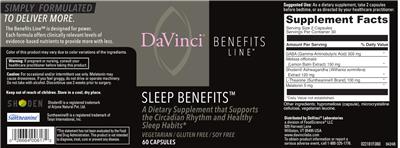
Supplement Facts
The label details for Sleep Benefits by DaVinci Benefits Line, sourced from the NIH Dietary Supplement Label Database.
Supplement Facts
| Ingredient | Amount | % DV |
|---|---|---|
| GABA | 500 mg | -- |
| Melatonin | 5 mg | -- |
| Suntheanine | 100 mg | -- |
| Lemon Balm Extract | 150 mg | -- |
| Shoden Ashwagandha Extract | 120 mg | -- |
Other ingredients: Hypromellose, Microcrystalline Cellulose, Leucine
Tap any ingredient to jump to its full detail below.
These statements are the manufacturer’s wording, reproduced from the product label — the label is saying it, not HelloPharmacist. We don’t verify or endorse them.
General Statements
Simply Formulated To Deliver More. The Benefits Line is designed for power. Each formula offers clinically relevant levels of evidence-based nutrients to provide more with less.
Formulation
Color of this product may vary due to color variations of the ingredients.
A Dietary Supplement that Supports the Circadian Rhythm and Healthy Sleep Habits
Vegetarian
Gluten Free Soy Free
Precautions
Warning: If pregnant or nursing, consult your healthcare practitioner before taking this product.
Caution: For occasional and/or intermittent use only. Melatonin may cause drowsiness. If you feel groggy, do not drive or operate machinery. Do not take with alcohol. Discontinue use 2 weeks prior to surgery.
Keep out of reach of children.
To obtain product information or report a serious adverse event, call 1-800-325-1776.
Storage
Store in a cool, dry place.
Brand IP Statement(s)
Shoden is a registered trademark of Arjuna Natural Pvt. Ltd. Suntheanine is a registered trademark of Taiyo International, Inc.
FDA Disclaimer Statement
This statement has not been evaluated by the Food and Drug Administration. This product is not intended to diagnose, treat, cure or prevent any disease.
FDA Statement of Identity
A Dietary Supplement that Supports the Circadian Rhythm and Healthy Sleep Habits
Suggested/Recommended/Usage/Directions
Suggested Use: As a dietary supplement, take 2 capsules before bedtime, or as directed by your healthcare practitioner.
Is this label outdated? Report a formula or label change and our pharmacy team will review it.
Sleep Benefits by DaVinci Benefits Line label
The label scan from the NIH Dietary Supplement Label Database. Tap to enlarge.
Label images are published by the NIH Dietary Supplement Label Database for the version of this product on file. Always read your actual product label.
View the full label (PDF)The Ingredients in Sleep Benefits by DaVinci Benefits Line
These are the 5 active ingredients this product is made of. Select any to open its full monograph.
Serving size2 Capsule(s) Dosage formCapsule Servings per container30 Amounts shown are per serving.
Most supplement products combine several ingredients, and a medication can interact with the product through any one of them. Each ingredient below shows whether it has known drug interactions.
GABA
Interacts with419 drugs
GABA is a calming chemical messenger (neurotransmitter) that your body makes on its own, and it is sold as a supplement for stress, anxiety, and sleep...
GABA monograph & interactionsMelatonin
Interacts with1,461 drugs
Melatonin is a hormone your body makes naturally to help control your sleep-wake cycle, and the supplement form is widely used to help with sleep timi...
Melatonin monograph & interactionsSuntheanine
Interacts with565 drugs
Theanine (usually L-theanine) is an amino acid found naturally in tea leaves that many people take to feel calmer and less stressed without strong dro...
Suntheanine monograph & interactionsLemon Balm Extract
Interacts with264 drugs
Lemon balm is a gentle, lemon-scented mint-family herb traditionally used to ease stress, support sleep, and calm digestion, and topically for cold so...
Lemon Balm Extract monograph & interactionsShoden Ashwagandha Extract
Interacts with1,372 drugs
Ashwagandha is an Ayurvedic herb most often taken to help with stress, anxiety, and sleep, and some small studies suggest it may help, though the evid...
Shoden Ashwagandha Extract monograph & interactionsOther (inactive) ingredients: Hypromellose, Microcrystalline Cellulose, Leucine. These complete the product’s ingredient list but are not active constituents.
Sleep Benefits by DaVinci Benefits Line Drug Interactions
HelloPharmacist Interaction Report
Sleep Benefits by DaVinci Benefits Line contains five active ingredients, and several of them interact with medications.
The most serious interaction we've documented is with ashwagandha and hepatotoxic drugs (liver-damaging medications)—ashwagandha has been linked to acute hepatitis, liver failure, and in rare cases, death from liver damage.
Read the full breakdown — every affected drug type, severity by severity
Multiple ingredients in this product also interact with blood pressure medications (antihypertensives). GABA, theanine (Suntheanine), and ashwagandha can all lower blood pressure, which may increase your risk of dangerously low blood pressure (hypotension) if you're already taking drugs to control high blood pressure.
Melatonin can either lower or raise blood pressure depending on the situation—worth checking on specifically.
You'll also want to watch for CNS depressants (sedatives, sleep aids, anxiety medications)—GABA, theanine, lemon balm, and ashwagandha all theoretically add to their drowsy effects, though we don't have strong clinical evidence this is a real problem in practice. Melatonin interacts with blood thinners (anticoagulants) like warfarin, and can interfere with seizure medications, diabetes drugs, immune-suppressing medications, and thyroid hormone replacement.
Ashwagandha also affects diabetes drugs, thyroid hormones, and immune suppressants, and it can speed up how your liver breaks down certain medications (CYP1A2 substrates).
We could not check lemon balm or ashwagandha's pregnancy and breastfeeding safety data on file. Altogether, these interactions span 1,591 individual medications.
Run your exact prescriptions through the search tool below before starting this product.
Check your own medications below · Editorial policy · How we use AI
Want to check YOUR meds against Sleep Benefits?
Ask about interactions with your drugs in plain English — “Can I take it with lisinopril?” — and we find you the answer in seconds, ingredient by ingredient.
Go to the checkerIngredients driving the most interactions
Individual Drug Interactions
The ingredients in Sleep Benefits interact with 1,612 drugs. Click any drug to see the details.
5 of the 5 ingredients in Sleep Benefits interact with drugs. Each result below shows which ingredient is responsible. Melatonin Shoden Ashwagandha Extract Suntheanine GABA Lemon Balm Extract
6-mercaptopurinePurinethol
How 6-mercaptopurine interacts with Sleep Benefits — through 2 ingredients. Tap an ingredient for the detail:
Shoden Ashwagandha ExtractHepatotoxic Drugs, Immunosuppressants Moderate
Interaction Summary
Theoretically, taking ashwagandha with hepatotoxic drugs might increase the risk of liver damage.
Read the full Shoden Ashwagandha Extract + 6-mercaptopurine interactionMelatoninImmunosuppressants Moderate
Interaction Summary
Theoretically, melatonin might interfere with immunosuppressive therapy.
Read the full Melatonin + 6-mercaptopurine interactionAbacavir Sulfate, Dolutegravir, LamivudineTriumeq
How Abacavir Sulfate, Dolutegravir, Lamivudine interacts with Sleep Benefits — through 1 ingredient. Tap an ingredient for the detail:
Shoden Ashwagandha ExtractHepatotoxic Drugs Moderate
Interaction Summary
Theoretically, taking ashwagandha with hepatotoxic drugs might increase the risk of liver damage.
Read the full Shoden Ashwagandha Extract + Abacavir Sulfate, Dolutegravir, Lamivudine interactionAbacavir, LamivudineEpzicom
How Abacavir, Lamivudine interacts with Sleep Benefits — through 1 ingredient. Tap an ingredient for the detail:
Shoden Ashwagandha ExtractHepatotoxic Drugs Moderate
Interaction Summary
Theoretically, taking ashwagandha with hepatotoxic drugs might increase the risk of liver damage.
Read the full Shoden Ashwagandha Extract + Abacavir, Lamivudine interactionAbciximabReoPro
How Abciximab interacts with Sleep Benefits — through 1 ingredient. Tap an ingredient for the detail:
MelatoninAnticoagulant/antiplatelet Drugs Moderate
Interaction Summary
Theoretically, melatonin may have anticoagulant effects and may increase the risk of bleeding if used with anticoagulant or antiplatelet drugs.
Read the full Melatonin + Abciximab interactionAbiraterone
How Abiraterone interacts with Sleep Benefits — through 2 ingredients. Tap an ingredient for the detail:
Shoden Ashwagandha ExtractCytochrome P450 3a4 (cyp3a4) Substrates, Hepatotoxic Drugs Moderate
Interaction Summary
Theoretically, ashwagandha might decrease the levels and clinical effects of CYP3A4 substrates.
Read the full Shoden Ashwagandha Extract + Abiraterone interactionMelatoninCytochrome P450 3a4 (cyp3a4) Substrates Minor
Interaction Summary
Theoretically, melatonin might increase levels of drugs metabolized by CYP3A4.
Read the full Melatonin + Abiraterone interactionAbiraterone AcetateYonsa, Zytiga
How Abiraterone Acetate interacts with Sleep Benefits — through 2 ingredients. Tap an ingredient for the detail:
Shoden Ashwagandha ExtractHepatotoxic Drugs, Cytochrome P450 3a4 (cyp3a4) Substrates Moderate
Interaction Summary
Theoretically, taking ashwagandha with hepatotoxic drugs might increase the risk of liver damage.
Read the full Shoden Ashwagandha Extract + Abiraterone Acetate interactionMelatoninCytochrome P450 3a4 (cyp3a4) Substrates Minor
Interaction Summary
Theoretically, melatonin might increase levels of drugs metabolized by CYP3A4.
Read the full Melatonin + Abiraterone Acetate interactionAbrocitinibCibinqo
How Abrocitinib interacts with Sleep Benefits — through 2 ingredients. Tap an ingredient for the detail:
MelatoninCytochrome P450 2c19 (cyp2c19) Substrates, Anticoagulant/antiplatelet Drugs +1 Moderate
Interaction Summary
Theoretically, melatonin might increase levels of drugs metabolized by CYP2C19.
Read the full Melatonin + Abrocitinib interactionShoden Ashwagandha ExtractImmunosuppressants Moderate
Interaction Summary
Theoretically, taking ashwagandha might decrease the effects of immunosuppressants.
Read the full Shoden Ashwagandha Extract + Abrocitinib interactionAcarboseGlucobay, Prandase, Precose
How Acarbose interacts with Sleep Benefits — through 2 ingredients. Tap an ingredient for the detail:
Shoden Ashwagandha ExtractHepatotoxic Drugs, Antidiabetes Drugs Moderate
Interaction Summary
Theoretically, taking ashwagandha with hepatotoxic drugs might increase the risk of liver damage.
Read the full Shoden Ashwagandha Extract + Acarbose interactionMelatoninAntidiabetes Drugs Moderate
Interaction Summary
Theoretically, taking melatonin with antidiabetes drugs might increase the risk of hypoglycemia.
Read the full Melatonin + Acarbose interactionAcebutololRhotral, Sectral
How Acebutolol interacts with Sleep Benefits — through 4 ingredients. Tap an ingredient for the detail:
SuntheanineAntihypertensive Drugs Moderate
Interaction Summary
Theanine might lower blood pressure, potentiating the effects of antihypertensive drugs.
Read the full Suntheanine + Acebutolol interactionMelatoninAntihypertensive Drugs Moderate
Interaction Summary
Theoretically, taking melatonin with antihypertensive drugs might increase the risk of hypotension or hypertension.
Read the full Melatonin + Acebutolol interactionGabaAntihypertensive Drugs Moderate
Interaction Summary
Theoretically, taking GABA with antihypertensive drugs might increase the risk of hypotension.
Read the full Gaba + Acebutolol interactionShoden Ashwagandha ExtractAntihypertensive Drugs, Hepatotoxic Drugs Moderate
Interaction Summary
Theoretically, taking ashwagandha with antihypertensive drugs might increase the risk of hypotension.
Read the full Shoden Ashwagandha Extract + Acebutolol interactionAcenocoumarolSintrom
How Acenocoumarol interacts with Sleep Benefits — through 1 ingredient. Tap an ingredient for the detail:
MelatoninAnticoagulant/antiplatelet Drugs Moderate
Interaction Summary
Theoretically, melatonin may have anticoagulant effects and may increase the risk of bleeding if used with anticoagulant or antiplatelet drugs.
Read the full Melatonin + Acenocoumarol interactionAcepromazineAtravet
How Acepromazine interacts with Sleep Benefits — through 5 ingredients. Tap an ingredient for the detail:
Shoden Ashwagandha ExtractCns Depressants Moderate
Interaction Summary
Theoretically, taking ashwagandha might increase the sedative effects of CNS depressants.
Read the full Shoden Ashwagandha Extract + Acepromazine interactionLemon Balm ExtractCns Depressants Moderate
Interaction Summary
Theoretically, concomitant use of lemon balm might have additive effects with CNS depressant drugs.
Read the full Lemon Balm Extract + Acepromazine interactionMelatoninCns Depressants Moderate
Interaction Summary
Theoretically, taking melatonin might increase the sedative effects of CNS depressants.
Read the full Melatonin + Acepromazine interactionSuntheanineCns Depressants Minor
Interaction Summary
Theoretically, theanine might have additive sedative effects when used in conjunction with CNS depressants.
Read the full Suntheanine + Acepromazine interactionGabaCns Depressants Minor
Interaction Summary
Theoretically, GABA might have additive sedative effects when used in conjunction with CNS depressants.
Read the full Gaba + Acepromazine interactionAcetaminophenChildren's Tylenol, Children's Tylenol Meltaways, Tylenol, Tylenol Ex Strength
How Acetaminophen interacts with Sleep Benefits — through 2 ingredients. Tap an ingredient for the detail:
MelatoninCytochrome P450 1a2 (cyp1a2) Substrates Moderate
Interaction Summary
Theoretically, melatonin might increase levels of drugs metabolized by CYP1A2.
Read the full Melatonin + Acetaminophen interactionShoden Ashwagandha ExtractHepatotoxic Drugs, Cytochrome P450 1a2 (cyp1a2) Substrates Moderate
Interaction Summary
Theoretically, taking ashwagandha with hepatotoxic drugs might increase the risk of liver damage.
Read the full Shoden Ashwagandha Extract + Acetaminophen interactionAcetaminophen, AspirinGemnisyn
How Acetaminophen, Aspirin interacts with Sleep Benefits — through 2 ingredients. Tap an ingredient for the detail:
Shoden Ashwagandha ExtractCytochrome P450 1a2 (cyp1a2) Substrates, Hepatotoxic Drugs Moderate
Interaction Summary
Theoretically, ashwagandha might decrease the levels and clinical effects of CYP1A2 substrates.
Read the full Shoden Ashwagandha Extract + Acetaminophen, Aspirin interactionMelatoninAnticoagulant/antiplatelet Drugs, Cytochrome P450 1a2 (cyp1a2) Substrates Moderate
Interaction Summary
Theoretically, melatonin may have anticoagulant effects and may increase the risk of bleeding if used with anticoagulant or antiplatelet drugs.
Read the full Melatonin + Acetaminophen, Aspirin interactionAcetaminophen, Aspirin, CaffeineExcedrin, Excedrin Extra Strength, Excedrin Migraine
How Acetaminophen, Aspirin, Caffeine interacts with Sleep Benefits — through 2 ingredients. Tap an ingredient for the detail:
MelatoninCaffeine, Anticoagulant/antiplatelet Drugs +2 Moderate
Interaction Summary
Theoretically, taking caffeine with melatonin might increase levels of melatonin.
Read the full Melatonin + Acetaminophen, Aspirin, Caffeine interactionShoden Ashwagandha ExtractHepatotoxic Drugs, Cytochrome P450 1a2 (cyp1a2) Substrates +1 Moderate
Interaction Summary
Theoretically, taking ashwagandha with hepatotoxic drugs might increase the risk of liver damage.
Read the full Shoden Ashwagandha Extract + Acetaminophen, Aspirin, Caffeine interactionAcetaminophen, Brompheniramine, PhenylpropanolamineDimetapp Cold and Flu
How Acetaminophen, Brompheniramine, Phenylpropanolamine interacts with Sleep Benefits — through 2 ingredients. Tap an ingredient for the detail:
MelatoninCytochrome P450 1a2 (cyp1a2) Substrates, Seizure Threshold Lowering Drugs Moderate
Interaction Summary
Theoretically, melatonin might increase levels of drugs metabolized by CYP1A2.
Read the full Melatonin + Acetaminophen, Brompheniramine, Phenylpropanolamine interactionShoden Ashwagandha ExtractHepatotoxic Drugs, Cytochrome P450 1a2 (cyp1a2) Substrates Moderate
Interaction Summary
Theoretically, taking ashwagandha with hepatotoxic drugs might increase the risk of liver damage.
Read the full Shoden Ashwagandha Extract + Acetaminophen, Brompheniramine, Phenylpropanolamine interactionAcetaminophen, ButalbitalAxocet, Bancap, Bucet, Butex Forte, Esgic CF, Orbivan CF +5 more
How Acetaminophen, Butalbital interacts with Sleep Benefits — through 2 ingredients. Tap an ingredient for the detail:
Shoden Ashwagandha ExtractCytochrome P450 1a2 (cyp1a2) Substrates, Hepatotoxic Drugs Moderate
Interaction Summary
Theoretically, ashwagandha might decrease the levels and clinical effects of CYP1A2 substrates.
Read the full Shoden Ashwagandha Extract + Acetaminophen, Butalbital interactionMelatoninCytochrome P450 1a2 (cyp1a2) Substrates Moderate
Interaction Summary
Theoretically, melatonin might increase levels of drugs metabolized by CYP1A2.
Read the full Melatonin + Acetaminophen, Butalbital interactionAcetaminophen, Butalbital, CaffeineEsgic, Esgic Plus, Fiogesic, Fioricet, Repan, Tecnal +1 more
How Acetaminophen, Butalbital, Caffeine interacts with Sleep Benefits — through 2 ingredients. Tap an ingredient for the detail:
MelatoninCytochrome P450 1a2 (cyp1a2) Substrates, Cytochrome P450 3a4 (cyp3a4) Substrates +1 Moderate
Interaction Summary
Theoretically, melatonin might increase levels of drugs metabolized by CYP1A2.
Read the full Melatonin + Acetaminophen, Butalbital, Caffeine interactionShoden Ashwagandha ExtractHepatotoxic Drugs, Cytochrome P450 3a4 (cyp3a4) Substrates +1 Moderate
Interaction Summary
Theoretically, taking ashwagandha with hepatotoxic drugs might increase the risk of liver damage.
Read the full Shoden Ashwagandha Extract + Acetaminophen, Butalbital, Caffeine interactionAcetaminophen, Butalbital, Caffeine, CodeineEsgic with Codeine, Fioricet w/ Codeine
How Acetaminophen, Butalbital, Caffeine, Codeine interacts with Sleep Benefits — through 5 ingredients. Tap an ingredient for the detail:
MelatoninCaffeine, Cytochrome P450 1a2 (cyp1a2) Substrates +4 Moderate
Interaction Summary
Theoretically, taking caffeine with melatonin might increase levels of melatonin.
Read the full Melatonin + Acetaminophen, Butalbital, Caffeine, Codeine interactionShoden Ashwagandha ExtractCns Depressants, Cytochrome P450 1a2 (cyp1a2) Substrates +2 Moderate
Interaction Summary
Theoretically, taking ashwagandha might increase the sedative effects of CNS depressants.
Read the full Shoden Ashwagandha Extract + Acetaminophen, Butalbital, Caffeine, Codeine interactionLemon Balm ExtractCns Depressants Moderate
Interaction Summary
Theoretically, concomitant use of lemon balm might have additive effects with CNS depressant drugs.
Read the full Lemon Balm Extract + Acetaminophen, Butalbital, Caffeine, Codeine interactionGabaCns Depressants Minor
Interaction Summary
Theoretically, GABA might have additive sedative effects when used in conjunction with CNS depressants.
Read the full Gaba + Acetaminophen, Butalbital, Caffeine, Codeine interactionSuntheanineCns Depressants Minor
Interaction Summary
Theoretically, theanine might have additive sedative effects when used in conjunction with CNS depressants.
Read the full Suntheanine + Acetaminophen, Butalbital, Caffeine, Codeine interactionAcetaminophen, Butalbital, CodeineBancap w/ Codeine
How Acetaminophen, Butalbital, Codeine interacts with Sleep Benefits — through 5 ingredients. Tap an ingredient for the detail:
Shoden Ashwagandha ExtractCytochrome P450 1a2 (cyp1a2) Substrates, Hepatotoxic Drugs +1 Moderate
Interaction Summary
Theoretically, ashwagandha might decrease the levels and clinical effects of CYP1A2 substrates.
Read the full Shoden Ashwagandha Extract + Acetaminophen, Butalbital, Codeine interactionMelatoninCytochrome P450 2d6 (cyp2d6) Substrates, Cns Depressants +2 Moderate
Interaction Summary
Theoretically, melatonin might increase levels of drugs metabolized by CYP2D6.
Read the full Melatonin + Acetaminophen, Butalbital, Codeine interactionLemon Balm ExtractCns Depressants Moderate
Interaction Summary
Theoretically, concomitant use of lemon balm might have additive effects with CNS depressant drugs.
Read the full Lemon Balm Extract + Acetaminophen, Butalbital, Codeine interactionSuntheanineCns Depressants Minor
Interaction Summary
Theoretically, theanine might have additive sedative effects when used in conjunction with CNS depressants.
Read the full Suntheanine + Acetaminophen, Butalbital, Codeine interactionGabaCns Depressants Minor
Interaction Summary
Theoretically, GABA might have additive sedative effects when used in conjunction with CNS depressants.
Read the full Gaba + Acetaminophen, Butalbital, Codeine interactionAcetaminophen, Butalbital, Codeine PhosphatePhrenilin #3
How Acetaminophen, Butalbital, Codeine Phosphate interacts with Sleep Benefits — through 5 ingredients. Tap an ingredient for the detail:
MelatoninSeizure Threshold Lowering Drugs, Cns Depressants +2 Moderate
Interaction Summary
Theoretically, taking melatonin with drugs that lower the seizure threshold might increase the risk of seizure activity.
Read the full Melatonin + Acetaminophen, Butalbital, Codeine Phosphate interactionLemon Balm ExtractCns Depressants Moderate
Interaction Summary
Theoretically, concomitant use of lemon balm might have additive effects with CNS depressant drugs.
Read the full Lemon Balm Extract + Acetaminophen, Butalbital, Codeine Phosphate interactionShoden Ashwagandha ExtractHepatotoxic Drugs, Cytochrome P450 1a2 (cyp1a2) Substrates +1 Moderate
Interaction Summary
Theoretically, taking ashwagandha with hepatotoxic drugs might increase the risk of liver damage.
Read the full Shoden Ashwagandha Extract + Acetaminophen, Butalbital, Codeine Phosphate interactionGabaCns Depressants Minor
Interaction Summary
Theoretically, GABA might have additive sedative effects when used in conjunction with CNS depressants.
Read the full Gaba + Acetaminophen, Butalbital, Codeine Phosphate interactionSuntheanineCns Depressants Minor
Interaction Summary
Theoretically, theanine might have additive sedative effects when used in conjunction with CNS depressants.
Read the full Suntheanine + Acetaminophen, Butalbital, Codeine Phosphate interactionAcetaminophen, Caffeine, Chlorpheniramine, Hydrocodone, PhenylephrineHycomine Compound
How Acetaminophen, Caffeine, Chlorpheniramine, Hydrocodone, Phenylephrine interacts with Sleep Benefits — through 5 ingredients. Tap an ingredient for the detail:
MelatoninCaffeine, Cytochrome P450 2d6 (cyp2d6) Substrates +4 Moderate
Interaction Summary
Theoretically, taking caffeine with melatonin might increase levels of melatonin.
Read the full Melatonin + Acetaminophen, Caffeine, Chlorpheniramine, Hydrocodone, Phenylephrine interactionShoden Ashwagandha ExtractCns Depressants, Cytochrome P450 1a2 (cyp1a2) Substrates +2 Moderate
Interaction Summary
Theoretically, taking ashwagandha might increase the sedative effects of CNS depressants.
Read the full Shoden Ashwagandha Extract + Acetaminophen, Caffeine, Chlorpheniramine, Hydrocodone, Phenylephrine interactionLemon Balm ExtractCns Depressants Moderate
Interaction Summary
Theoretically, concomitant use of lemon balm might have additive effects with CNS depressant drugs.
Read the full Lemon Balm Extract + Acetaminophen, Caffeine, Chlorpheniramine, Hydrocodone, Phenylephrine interactionGabaCns Depressants Minor
Interaction Summary
Theoretically, GABA might have additive sedative effects when used in conjunction with CNS depressants.
Read the full Gaba + Acetaminophen, Caffeine, Chlorpheniramine, Hydrocodone, Phenylephrine interactionSuntheanineCns Depressants Minor
Interaction Summary
Theoretically, theanine might have additive sedative effects when used in conjunction with CNS depressants.
Read the full Suntheanine + Acetaminophen, Caffeine, Chlorpheniramine, Hydrocodone, Phenylephrine interactionAcetaminophen, Caffeine, CodeineGesic C15, Gesic C30, Gesic C8, Lenoltec 1, Lenoltec 2, Lenoltec 3 +1 more
How Acetaminophen, Caffeine, Codeine interacts with Sleep Benefits — through 5 ingredients. Tap an ingredient for the detail:
Shoden Ashwagandha ExtractHepatotoxic Drugs, Cytochrome P450 1a2 (cyp1a2) Substrates +2 Moderate
Interaction Summary
Theoretically, taking ashwagandha with hepatotoxic drugs might increase the risk of liver damage.
Read the full Shoden Ashwagandha Extract + Acetaminophen, Caffeine, Codeine interactionMelatoninCytochrome P450 3a4 (cyp3a4) Substrates, Cytochrome P450 2d6 (cyp2d6) Substrates +4 Moderate
Interaction Summary
Theoretically, melatonin might increase levels of drugs metabolized by CYP3A4.
Read the full Melatonin + Acetaminophen, Caffeine, Codeine interactionLemon Balm ExtractCns Depressants Moderate
Interaction Summary
Theoretically, concomitant use of lemon balm might have additive effects with CNS depressant drugs.
Read the full Lemon Balm Extract + Acetaminophen, Caffeine, Codeine interactionSuntheanineCns Depressants Minor
Interaction Summary
Theoretically, theanine might have additive sedative effects when used in conjunction with CNS depressants.
Read the full Suntheanine + Acetaminophen, Caffeine, Codeine interactionGabaCns Depressants Minor
Interaction Summary
Theoretically, GABA might have additive sedative effects when used in conjunction with CNS depressants.
Read the full Gaba + Acetaminophen, Caffeine, Codeine interactionAcetaminophen, Caffeine, Codeine, SalicylamideCodalan No.1, Codalan No.2, Codalan No.3
How Acetaminophen, Caffeine, Codeine, Salicylamide interacts with Sleep Benefits — through 5 ingredients. Tap an ingredient for the detail:
Lemon Balm ExtractCns Depressants Moderate
Interaction Summary
Theoretically, concomitant use of lemon balm might have additive effects with CNS depressant drugs.
Read the full Lemon Balm Extract + Acetaminophen, Caffeine, Codeine, Salicylamide interactionMelatoninCns Depressants, Seizure Threshold Lowering Drugs +4 Moderate
Interaction Summary
Theoretically, taking melatonin might increase the sedative effects of CNS depressants.
Read the full Melatonin + Acetaminophen, Caffeine, Codeine, Salicylamide interactionShoden Ashwagandha ExtractCytochrome P450 3a4 (cyp3a4) Substrates, Hepatotoxic Drugs +2 Moderate
Interaction Summary
Theoretically, ashwagandha might decrease the levels and clinical effects of CYP3A4 substrates.
Read the full Shoden Ashwagandha Extract + Acetaminophen, Caffeine, Codeine, Salicylamide interactionGabaCns Depressants Minor
Interaction Summary
Theoretically, GABA might have additive sedative effects when used in conjunction with CNS depressants.
Read the full Gaba + Acetaminophen, Caffeine, Codeine, Salicylamide interactionSuntheanineCns Depressants Minor
Interaction Summary
Theoretically, theanine might have additive sedative effects when used in conjunction with CNS depressants.
Read the full Suntheanine + Acetaminophen, Caffeine, Codeine, Salicylamide interactionAcetaminophen, Caffeine, DihydrocodeineDHC Plus, Panlor DC, Panlor SS
How Acetaminophen, Caffeine, Dihydrocodeine interacts with Sleep Benefits — through 5 ingredients. Tap an ingredient for the detail:
MelatoninCytochrome P450 2d6 (cyp2d6) Substrates, Caffeine +4 Moderate
Interaction Summary
Theoretically, melatonin might increase levels of drugs metabolized by CYP2D6.
Read the full Melatonin + Acetaminophen, Caffeine, Dihydrocodeine interactionShoden Ashwagandha ExtractCns Depressants, Cytochrome P450 1a2 (cyp1a2) Substrates +2 Moderate
Interaction Summary
Theoretically, taking ashwagandha might increase the sedative effects of CNS depressants.
Read the full Shoden Ashwagandha Extract + Acetaminophen, Caffeine, Dihydrocodeine interactionLemon Balm ExtractCns Depressants Moderate
Interaction Summary
Theoretically, concomitant use of lemon balm might have additive effects with CNS depressant drugs.
Read the full Lemon Balm Extract + Acetaminophen, Caffeine, Dihydrocodeine interactionGabaCns Depressants Minor
Interaction Summary
Theoretically, GABA might have additive sedative effects when used in conjunction with CNS depressants.
Read the full Gaba + Acetaminophen, Caffeine, Dihydrocodeine interactionSuntheanineCns Depressants Minor
Interaction Summary
Theoretically, theanine might have additive sedative effects when used in conjunction with CNS depressants.
Read the full Suntheanine + Acetaminophen, Caffeine, Dihydrocodeine interactionAcetaminophen, Caffeine, IsomethepteneMigralam
How Acetaminophen, Caffeine, Isometheptene interacts with Sleep Benefits — through 2 ingredients. Tap an ingredient for the detail:
Shoden Ashwagandha ExtractHepatotoxic Drugs, Cytochrome P450 1a2 (cyp1a2) Substrates +1 Moderate
Interaction Summary
Theoretically, taking ashwagandha with hepatotoxic drugs might increase the risk of liver damage.
Read the full Shoden Ashwagandha Extract + Acetaminophen, Caffeine, Isometheptene interactionMelatoninCytochrome P450 3a4 (cyp3a4) Substrates, Caffeine +1 Moderate
Interaction Summary
Theoretically, melatonin might increase levels of drugs metabolized by CYP3A4.
Read the full Melatonin + Acetaminophen, Caffeine, Isometheptene interactionAcetaminophen, Caffeine, PyrilamineMidol Max Strength Menstrual
How Acetaminophen, Caffeine, Pyrilamine interacts with Sleep Benefits — through 2 ingredients. Tap an ingredient for the detail:
MelatoninCytochrome P450 1a2 (cyp1a2) Substrates, Caffeine +1 Moderate
Interaction Summary
Theoretically, melatonin might increase levels of drugs metabolized by CYP1A2.
Read the full Melatonin + Acetaminophen, Caffeine, Pyrilamine interactionShoden Ashwagandha ExtractCytochrome P450 3a4 (cyp3a4) Substrates, Hepatotoxic Drugs +1 Moderate
Interaction Summary
Theoretically, ashwagandha might decrease the levels and clinical effects of CYP3A4 substrates.
Read the full Shoden Ashwagandha Extract + Acetaminophen, Caffeine, Pyrilamine interactionAcetaminophen, Chlorpheniramine Maleate, Dextromethorphan HbrVicks Formula 44M Cough, Cold & Flu Relief
How Acetaminophen, Chlorpheniramine Maleate, Dextromethorphan Hbr interacts with Sleep Benefits — through 3 ingredients. Tap an ingredient for the detail:
MelatoninCytochrome P450 2d6 (cyp2d6) Substrates, Cytochrome P450 3a4 (cyp3a4) Substrates +2 Moderate
Interaction Summary
Theoretically, melatonin might increase levels of drugs metabolized by CYP2D6.
Read the full Melatonin + Acetaminophen, Chlorpheniramine Maleate, Dextromethorphan Hbr interactionShoden Ashwagandha ExtractSerotonergic Drugs, Hepatotoxic Drugs +2 Moderate
Interaction Summary
Some animal studies have reported that ashwagandha can enhance serotonergic transmission by altering certain serotonin (5-HT) receptors.
Read the full Shoden Ashwagandha Extract + Acetaminophen, Chlorpheniramine Maleate, Dextromethorphan Hbr interactionSuntheanineSerotonergic Drugs Minor
Interaction Summary
Clinical studies regarding the effects of L-theanine on serotonin levels are conflicting.
Read the full Suntheanine + Acetaminophen, Chlorpheniramine Maleate, Dextromethorphan Hbr interactionAcetaminophen, Chlorpheniramine, Codeine, PhenylephrineColrex
How Acetaminophen, Chlorpheniramine, Codeine, Phenylephrine interacts with Sleep Benefits — through 5 ingredients. Tap an ingredient for the detail:
Shoden Ashwagandha ExtractCytochrome P450 1a2 (cyp1a2) Substrates, Cytochrome P450 3a4 (cyp3a4) Substrates +3 Moderate
Interaction Summary
Theoretically, ashwagandha might decrease the levels and clinical effects of CYP1A2 substrates.
Read the full Shoden Ashwagandha Extract + Acetaminophen, Chlorpheniramine, Codeine, Phenylephrine interactionMelatoninCytochrome P450 1a2 (cyp1a2) Substrates, Cns Depressants +3 Moderate
Interaction Summary
Theoretically, melatonin might increase levels of drugs metabolized by CYP1A2.
Read the full Melatonin + Acetaminophen, Chlorpheniramine, Codeine, Phenylephrine interactionLemon Balm ExtractCns Depressants Moderate
Interaction Summary
Theoretically, concomitant use of lemon balm might have additive effects with CNS depressant drugs.
Read the full Lemon Balm Extract + Acetaminophen, Chlorpheniramine, Codeine, Phenylephrine interactionGabaCns Depressants Minor
Interaction Summary
Theoretically, GABA might have additive sedative effects when used in conjunction with CNS depressants.
Read the full Gaba + Acetaminophen, Chlorpheniramine, Codeine, Phenylephrine interactionSuntheanineCns Depressants, Serotonergic Drugs Minor
Interaction Summary
Theoretically, theanine might have additive sedative effects when used in conjunction with CNS depressants.
Read the full Suntheanine + Acetaminophen, Chlorpheniramine, Codeine, Phenylephrine interactionAcetaminophen, Chlorpheniramine, DextromethorphanCoricidin II Extra Strength Cold and Flu
How Acetaminophen, Chlorpheniramine, Dextromethorphan interacts with Sleep Benefits — through 3 ingredients. Tap an ingredient for the detail:
Shoden Ashwagandha ExtractSerotonergic Drugs, Cytochrome P450 1a2 (cyp1a2) Substrates +2 Moderate
Interaction Summary
Some animal studies have reported that ashwagandha can enhance serotonergic transmission by altering certain serotonin (5-HT) receptors.
Read the full Shoden Ashwagandha Extract + Acetaminophen, Chlorpheniramine, Dextromethorphan interactionMelatoninSeizure Threshold Lowering Drugs, Cytochrome P450 3a4 (cyp3a4) Substrates +2 Moderate
Interaction Summary
Theoretically, taking melatonin with drugs that lower the seizure threshold might increase the risk of seizure activity.
Read the full Melatonin + Acetaminophen, Chlorpheniramine, Dextromethorphan interactionSuntheanineSerotonergic Drugs Minor
Interaction Summary
Clinical studies regarding the effects of L-theanine on serotonin levels are conflicting.
Read the full Suntheanine + Acetaminophen, Chlorpheniramine, Dextromethorphan interactionAcetaminophen, Chlorpheniramine, Dextromethorphan HydrobromideCoricidin HBP Maximum Strength Flu
How Acetaminophen, Chlorpheniramine, Dextromethorphan Hydrobromide interacts with Sleep Benefits — through 3 ingredients. Tap an ingredient for the detail:
MelatoninCytochrome P450 2d6 (cyp2d6) Substrates, Cytochrome P450 3a4 (cyp3a4) Substrates +2 Moderate
Interaction Summary
Theoretically, melatonin might increase levels of drugs metabolized by CYP2D6.
Read the full Melatonin + Acetaminophen, Chlorpheniramine, Dextromethorphan Hydrobromide interactionShoden Ashwagandha ExtractSerotonergic Drugs, Hepatotoxic Drugs +2 Moderate
Interaction Summary
Some animal studies have reported that ashwagandha can enhance serotonergic transmission by altering certain serotonin (5-HT) receptors.
Read the full Shoden Ashwagandha Extract + Acetaminophen, Chlorpheniramine, Dextromethorphan Hydrobromide interactionSuntheanineSerotonergic Drugs Minor
Interaction Summary
Clinical studies regarding the effects of L-theanine on serotonin levels are conflicting.
Read the full Suntheanine + Acetaminophen, Chlorpheniramine, Dextromethorphan Hydrobromide interactionEach ingredient & the kinds of drugs it affects
For each ingredient in Sleep Benefits with known interactions, here are the types of medications they can affect. Open any type for the detail — or search your exact drug in the checker above.
Melatonin
Anticoagulant/Antiplatelet Drugs
Theoretically, melatonin may have anticoagulant effects and may increase the risk of bleeding if used with anticoagulant or antiplatelet drugs.
There are isolated case reports of minor bleeding and decreased prothrombin activity in people taking melatonin with warfarin (Coumadin). The mechanism, if any, of this interaction is unknown. Taking melatonin orally seems to decrease coagulation activity within one hour of dosing in healthy men.
Anticonvulsants
Theoretically, melatonin may reduce the effects of anticonvulsants. Some clinical research suggests that melatonin may increase the frequency of seizures in certain patients, particularly children with neurological impairment.
Antidiabetes Drugs
Theoretically, taking melatonin with antidiabetes drugs might increase the risk of hypoglycemia.
Some clinical research shows that melatonin reduces levels of fasting blood glucose and improves glycemic control. However, other research suggests that melatonin might impair glucose utilization and increase insulin resistance, while other research has found no effect on glucose levels. Until more is known, use melatonin cautiously in combination with antidiabetes drugs.
Antihypertensive Drugs
Theoretically, taking melatonin with antihypertensive drugs might increase the risk of hypotension or hypertension.
Some clinical research suggests that taking melatonin decreases blood pressure in healthy adults. Also, melatonin seems to lower systolic and diastolic blood pressure in individuals with high blood pressure at nighttime or untreated essential hypertension. However, melatonin seems to worsen blood pressure in patients who are taking antihypertensive medications. Immediate-release melatonin 5 mg at night in combination with nifedipine GITS (Procardia XL) increases systolic blood pressure an average of 6.5 mmHg, diastolic blood pressure by an average of 4.9 mmHg, and heart rate by 3.9 bpm. Also, results from animal research suggest that melatonin reduces the effectiveness of certain antihypertensive drugs, including methoxamine and clonidine.
Caffeine
Theoretically, taking caffeine with melatonin might increase levels of melatonin.
Some evidence suggests that caffeine consumption can decrease endogenous melatonin levels, while other evidence suggests that caffeine increases endogenous melatonin levels. When administered in combination with melatonin supplements, caffeine seems to increase melatonin effects and levels. The reason for this discrepancy is not completely clear. Part of the discrepancy may result from the fact that caffeine can inhibit melatonin synthesis as well as inhibit melatonin metabolism. By functioning as an adenosine receptor antagonist, caffeine may indirectly inhibit the synthesis of melatonin. Conversely, because melatonin and caffeine are both metabolized by cytochrome P450 1A2 (CYP1A2) enzyme, concomitant use of melatonin and caffeine may reduce the metabolism of melatonin, resulting in higher serum levels.
Cns Depressants
Theoretically, taking melatonin might increase the sedative effects of CNS depressants.
Melatonin has sedative effects. Theoretically, concomitant use of melatonin with alcohol, benzodiazepines, or other sedative drugs might cause additive sedation.
Contraceptive Drugs
Theoretically, taking contraceptive drugs with melatonin might increase the effects and adverse effects of melatonin.
Contraceptive drugs can increase the levels of endogenous melatonin. Theoretically, these drugs may increase the effects and adverse effects of oral melatonin.
Cytochrome P450 1A2 (Cyp1A2) Substrates
Theoretically, melatonin might increase levels of drugs metabolized by CYP1A2. Also, other CYP1A2 substrates might decrease the metabolism of melatonin, increasing melatonin levels.
Melatonin is metabolized in the liver primarily by the CYP2C19 and CYP1A2 enzymes. Theoretically, combined administration of melatonin with drugs metabolized by the CYP1A2 enzyme might reduce the metabolism of these drugs, resulting in increased serum levels. Conversely, some drugs metabolized by CYP1A2 may inhibit the metabolism of melatonin, resulting in increased serum levels of melatonin. Until more is known, use melatonin cautiously in patients taking drugs metabolized by these enzymes.
Cytochrome P450 2C19 (Cyp2C19) Substrates
Theoretically, melatonin might increase levels of drugs metabolized by CYP2C19. Also, other CYP2C19 substrates might decrease the metabolism of melatonin, increasing melatonin levels.
Melatonin is metabolized in the liver primarily by the CYP2C19 and CYP1A2 enzymes. Theoretically, combined administration of melatonin with certain drugs metabolized by the CYP2C19 enzyme may reduce the metabolism of these drugs, resulting in increased serum levels. Conversely, some drugs metabolized by CYP2C19 may inhibit the metabolism of melatonin, resulting in increased serum levels of melatonin. Until more is known, use melatonin cautiously in patients taking drugs metabolized by these enzymes.
Fluvoxamine (Luvox)
Theoretically, taking fluvoxamine with melatonin might increase levels of melatonin.
Fluvoxamine can significantly increase melatonin levels. In some cases, fluvoxamine might increase bioavailability of exogenously administered melatonin by up to 20 times. Some researchers think this might be a beneficial interaction and be potentially useful for cases of refractory insomnia. However, this interaction might also cause unwanted excessive drowsiness and possibly other adverse effects. Fluvoxamine is known to increase endogenous melatonin secretion. It seems to increase serum levels of exogenously administered melatonin possibly by decreasing melatonin metabolism by inhibiting cytochrome P450 (CYP450) 1A2 and 2C19 or by inhibiting melatonin elimination. This effect has been found in healthy people taking fluvoxamine 50-75 mg and melatonin 5 mg.
Immunosuppressants
Theoretically, melatonin might interfere with immunosuppressive therapy.
Melatonin can stimulate immune function. Theoretically, melatonin might interfere with immunosuppressive therapy.
Methamphetamine (Desoxyn)
Theoretically, taking melatonin with methamphetamine may increase the adverse effects of methamphetamine.
Animal research suggests that melatonin exacerbates the adverse effects of methamphetamine, resulting in greater depression of tryptophan hydroxylase (TPH) and tyrosine hydroxylase (TH) activity, as well as a significant reduction in dopamine levels. This has not been shown in humans.
Nifedipine Gits (Procardia Xl)
Theoretically, taking melatonin with extended release nifedipine reduces the effects of nifedipine.
Melatonin can decrease the effectiveness of extended release nifedipine (GITS). Immediate-release melatonin 5 mg at night in combination with nifedipine GITS 30-60 mg daily increases systolic and blood pressure by an average of 6.5 mmHg and 4.9 mmHg, respectively. Concomitant use with melatonin also increases heart rate by 3.9 bpm. The mechanism of this interaction is not known.
Seizure Threshold Lowering Drugs
Theoretically, taking melatonin with drugs that lower the seizure threshold might increase the risk of seizure activity.
Some clinical evidence suggests that melatonin may increase the frequency of seizures in certain patients, particularly children with neurological disabilities.
Warfarin (Coumadin)
Theoretically, melatonin may have antiplatelet effects and may increase the risk of bleeding with warfarin.
Three cases of increased prothrombin time have been reported for patients aged 48-72 years who took melatonin orally in combination with warfarin. However, three cases of decreased prothrombin time have also been reported for patients aged 51-84 years who took melatonin orally in combination with warfarin. Until more is known, use melatonin cautiously in patients taking warfarin.
Cytochrome P450 2D6 (Cyp2D6) Substrates
Theoretically, melatonin might increase levels of drugs metabolized by CYP2D6.
Laboratory research suggests that certain lots of melatonin inhibit CYP2D6. Theoretically, combined administration of melatonin with certain drugs metabolized by the CYP2D6 enzyme may reduce the metabolism of these drugs, resulting in increased serum levels. Until more is known, use melatonin cautiously in patients taking drugs metabolized by these enzymes.
Cytochrome P450 3A4 (Cyp3A4) Substrates
Theoretically, melatonin might increase levels of drugs metabolized by CYP3A4.
Laboratory research shows that certain lots of melatonin inhibit CYP3A4. Theoretically, combined administration of melatonin with certain drugs metabolized by CYP3A4 may reduce the metabolism of these drugs, resulting in increased serum levels. Until more is known, use melatonin cautiously in patients taking drugs metabolized by these enzymes.
Flumazenil (Romazicon)
Theoretically, taking flumazenil with melatonin might reduce the effects of melatonin.
Animal research shows that flumazenil may inhibit the effect of melatonin.
Shoden Ashwagandha Extract
Antidiabetes Drugs
Theoretically, taking ashwagandha with antidiabetes drugs might increase the risk of hypoglycemia.
There is preliminary clinical evidence suggesting that ashwagandha might lower blood glucose levels. Theoretically, ashwagandha might have additive effects when used with antidiabetes drugs and increase the risk of hypoglycemia.
Antihypertensive Drugs
Theoretically, taking ashwagandha with antihypertensive drugs might increase the risk of hypotension.
Animal research suggests that ashwagandha might lower systolic and diastolic blood pressure. Theoretically, ashwagandha might have additive effects when used with antihypertensive drugs and increase the risk of hypotension.
Benzodiazepines
Theoretically, taking ashwagandha might increase the sedative effects of benzodiazepines.
There is preliminary evidence that ashwagandha might have an additive effect with diazepam (Valium) and clonazepam (Klonopin). This may also occur with other benzodiazepines.
Cns Depressants
Theoretically, taking ashwagandha might increase the sedative effects of CNS depressants.
Ashwagandha seems to have sedative effects. Theoretically, this may potentiate the effects of barbiturates, other sedatives, and anxiolytics.
Hepatotoxic Drugs
Theoretically, taking ashwagandha with hepatotoxic drugs might increase the risk of liver damage.
Ashwagandha has been linked to cases of acute hepatitis, liver failure, hepatic encephalopathy, autoimmune hepatitis, the need for liver transplantation, and death due to liver failure.
Immunosuppressants
Theoretically, taking ashwagandha might decrease the effects of immunosuppressants.
Ashwagandha has demonstrated immunostimulant effects in humans. Animal research has shown that ashwagandha can attenuate the immunosuppression caused by cyclophosphamide.
Thyroid Hormone
Ashwagandha might increase the effects and adverse effects of thyroid hormone.
Concomitant use of ashwagandha with thyroid hormones may cause additive therapeutic and adverse effects. Preliminary clinical research and animal studies suggest that ashwagandha boosts thyroid hormone synthesis and secretion. In one clinical study, ashwagandha increased triiodothyronine (T3) and thyroxine (T4) levels by 41.5% and 19.6%, respectively, and reduced serum TSH levels by 17.4% from baseline in adults with subclinical hypothyroidism.
Cytochrome P450 1A2 (Cyp1A2) Substrates
Theoretically, ashwagandha might decrease the levels and clinical effects of CYP1A2 substrates.
In vitro research shows that ashwagandha extract induces CYP1A2 enzymes.
Cytochrome P450 3A4 (Cyp3A4) Substrates
Theoretically, ashwagandha might decrease the levels and clinical effects of CYP3A4 substrates.
In vitro research shows that ashwagandha extract induces CYP3A4 enzymes.
Serotonergic Drugs
Some animal studies have reported that ashwagandha can enhance serotonergic transmission by altering certain serotonin (5-HT) receptors. However, there is no evidence to suggest that ashwagandha increases the risk of serotonin-related effects, and there have been no published case reports of serotonin syndrome when combined with other serotonergic drugs. Nevertheless, due to the lack of extensive studies on the matter and the fact that ashwagandha appears to affect serotonergic pathways, it would be prudent to exercise caution when combining it with drugs that affect serotonin. [References: - Effects of Withania somnifera (Ashwaga ndha) on Stress and the Stress-Related Neuropsychiatric Disorders Anxiety, Depression, and Insomnia. Curr Neuropharmacol. 2021 Sep 14; 19: 1468–1495. - A Prospective, Randomized Double-Blind, Placebo-Controlled Study of Safety and Efficacy of a High-Concentration Full-Spectrum Extract of Ashwagandha Root in Reducing Stress and Anxiety in Adults. https://www.ncbi.nlm.nih.gov/pmc/articles/PMC3573577/]
Suntheanine
Antihypertensive Drugs
Theanine might lower blood pressure, potentiating the effects of antihypertensive drugs.
Animal research shows that theanine can lower blood pressure in spontaneously hypertensive animals. Theoretically, concomitant use of theanine and antihypertensive drugs might potentiate the antihypertensive activity.
Cns Depressants
Theoretically, theanine might have additive sedative effects when used in conjunction with CNS depressants. However, it is unclear if this concern is clinically relevant.
Theoretically, theanine may compete with glutamate and/or increase plasma gamma-aminobutyric acid (GABA) levels, which could cause CNS depression. In one clinical study, some subjects taking oral theanine reported drowsiness.
Serotonergic Drugs
Clinical studies regarding the effects of L-theanine on serotonin levels are conflicting. Some studies suggest it can increase serotonin levels in the brain while others report that it may decrease them. Nevertheless, there have been no reports of l-theanine being a causative agent in serotonergic-related side effects or serotonin syndrome.
GABA
Antihypertensive Drugs
Theoretically, taking GABA with antihypertensive drugs might increase the risk of hypotension.
Some clinical research shows that GABA can decrease blood pressure in patients with hypertension.
Cns Depressants
Theoretically, GABA might have additive sedative effects when used in conjunction with CNS depressants. However, it is unclear if this concern is clinically relevant.
Endogenous GABA has well-established relaxant effects and GABA(A) receptors have an established physiological role in sleep. However, the effects of GABA supplements are unclear, as it is unknown whether exogenous GABA crosses the blood-brain barrier. Although there have been limited reports of drowsiness or tiredness with GABA supplements, these effects have not been widely reported in clinical studies. Additionally, intravenous GABA 0.1-1 mg/kg has been shown to induce anxiety in a dose-dependent manner.
Lemon Balm Extract
Cns Depressants
Theoretically, concomitant use of lemon balm might have additive effects with CNS depressant drugs.
Lemon balm seems to have CNS depressant activity in animals and in humans.
Thyroid Hormone
Theoretically, lemon balm might interfere with thyroid hormone replacement therapy.
In vitro, constituents of lemon balm extract bind to thyroid stimulating hormone (TSH), preventing TSH receptor-binding and leading to the inhibition of TSH-stimulated adenylate cyclase activity. In animals, lemon balm extract has been shown to decrease levels of circulating TSH and inhibit thyroid secretion.
Brand information
Manufacturer and brand details for Sleep Benefits, from the product label.
DaVinci Benefits Line
See all DaVinci Benefits Line products- Name
- DaVinci Laboratories a division of FoodScience LLC
- Street Address
- 929 Harvest Lane
- City
- Williston
- State
- VT
- ZipCode
- 05495
- Phone Number
- 1-800-325-1776
- Web Address
- www.davincilabs.com
Sleep Benefits by DaVinci Benefits Line: Common Questions
Does Sleep Benefits by DaVinci Benefits Line interact with any medications?
How can one product interact with so many drugs?
Where does this information come from?
Can I take this if I'm on a blood pressure medication?
What is Suntheanine and what does it do?
Will this help me sleep?
Is this safe to take long-term?
Can I take this while pregnant?
What are the most common side effects?
Written and reviewed by the HelloPharmacist editorial staff. Our editorial policy
Not sure if Sleep Benefits is safe with your meds?
Our pharmacists answer your medication & supplement questions — free.
Label information is sourced from the NIH Dietary Supplement Label Database and reflects the product version on file; always read your actual product label. This page is for education only and is not a substitute for professional medical advice. Confirm with your pharmacist or doctor before combining supplements and medications.
The Full Monographs Behind Sleep Benefits’s Ingredients
Every ingredient we hold a full HelloPharmacist monograph for — uses, evidence, safety, and the complete interaction list.
Gamma-aminobutyric Acid (gaba)
Interacts with 419 drugsGABA is a calming chemical messenger (neurotransmitter) that your body makes on its own, and it is sold as a supplement for stress, anxiety, and sleep. The science behind oral GABA supplemen...
Read the full Gamma-aminobutyric Acid (gaba) monograph → Herb & supplement monographMelatonin
Interacts with 1,461 drugsMelatonin is a hormone your body makes naturally to help control your sleep-wake cycle, and the supplement form is widely used to help with sleep timing problems and jet lag. The evidence is...
Read the full Melatonin monograph → Herb & supplement monographTheanine
Interacts with 565 drugsTheanine (usually L-theanine) is an amino acid found naturally in tea leaves that many people take to feel calmer and less stressed without strong drowsiness. Early research suggests it may...
Read the full Theanine monograph → Herb & supplement monographLemon Balm
Interacts with 264 drugsLemon balm is a gentle, lemon-scented mint-family herb traditionally used to ease stress, support sleep, and calm digestion, and topically for cold sores. Early studies are promising but gen...
Read the full Lemon Balm monograph → Herb & supplement monographAshwagandha
Interacts with 1,372 drugsAshwagandha is an Ayurvedic herb most often taken to help with stress, anxiety, and sleep, and some small studies suggest it may help, though the evidence is still limited. It is generally w...
Read the full Ashwagandha monograph →Sources & How We Checked
Sleep Benefits's label data comes from the NIH Dietary Supplement Label Database; the ingredient interaction data is from the Natural Medicines database, reviewed by our pharmacists.
- NIH Dietary Supplement Label Database (DSLD) — The official product label on file for this supplement.
- Natural Medicines (Therapeutic Research Center) — Evidence-graded clinical reference behind the ingredient interaction data.
Content is written and reviewed by licensed HelloPharmacist pharmacists. See our data sources and editorial standards for how this information is built and checked.
The 180 references behind this product’s interaction data
Every citation that drives the interaction findings for this product’s ingredients, from the evidence-graded Natural Medicines (TRC Healthcare) database. Open an ingredient to browse its citations — links open the study on PubMed or the publisher’s site.
Gamma-aminobutyric Acid (gaba) 12 references
- Cavagnini F, Invitti C, Pinto M, et al. Effect of acute and repeated administration of gamma aminobutyric acid (GABA) on growth hormone and prolactin secretion in man. Acta Endocrinol (Copenh) 1980;93:149-54.
- Nurnberger JI Jr, Berrettini WH, Simmons-Alling S, et al. Intravenous GABA administration is anxiogenic in man. Psychiatry Res 1986;19:113-7. PubMed
- Gershman RN, Vasilenko MA, Iliushina GG, et al. [Gammalon in the rehabilitation in infantile cerebral palsy]. Pediatr.Akus.Ginekol. 1977;(6):26-7.
- Loeb C, Benassi E, Bo, GP, et al. Preliminary evaluation of the effect of GABA and phosphatidylserine in epileptic patients. Epilepsy Res. 1987;1:209-12 . PubMed
- Inoue K, Shirai T, Ochiai H, et al. Blood-pressure-lowering effect of a novel fermented milk containing gamma-aminobutyric acid (GABA) in mild hypertensives. Eur J Clin Nutr 2003;57:490-95.
- ELLIOTT, K. A. and JASPER, H. H. Gammaaminobutyric acid. Physiol Rev. 1959;39(2):383-406.
- Winsky-Sommerer, R. Role of GABAA receptors in the physiology and pharmacology of sleep. Eur.J.Neurosci. 2009;29(9):1779-1794.
- Meldrum, B. S. GABAergic mechanisms in the pathogenesis and treatment of epilepsy. Br.J.Clin.Pharmacol. 1989;27 Suppl 1:3S-11S. PubMed
- Loeb, C., Marinari, U. M., Benassi, E., Besio, G., Cottalasso, D., Cupello, A., Maffini, M., Mainardi, P., Pronzato, M. A., and Scotto, P. A. Phosphatidylserine increases in vivo the synaptosomal uptake of exogenous GABA in rats. Exp.Neurol. 1988;99(2):4 PubMed
- Melis, G. B., Paoletti, A. M., Mais, V., and Fioretti, P. Interference of dopamine infusion on gamma-amino butyric acid (GABA)-stimulated prolactin increase. J.Endocrinol.Invest 1980;3(4):445-448.
- Boonstra E, de Kleijn R, Colzato LS, Alkemade A, Forstmann BU, Nieuwenhuis S. Neurotransmitters as food supplements: the effects of GABA on brain and behavior. Front Psychol. 2015 Oct 6;6:1520. doi: 10.3389/fpsyg.2015.01520. eCollection 2015. PubMed
- de Bie TH, Witkamp RF, Balvers MG, Jongsma MA. Effects of ?-aminobutyric acid supplementation on glucose control in adults with prediabetes: A double-blind, randomized, placebo-controlled trial. Am J Clin Nutr 2023;118(3):708-719. PubMed
See these in context on the Gamma-aminobutyric Acid (gaba) monograph →
Melatonin 118 references
- Voordouw BC, Euser R, Verdonk RE, et al. Melatonin and melatonin-progestin combinations alter pituitary-ovarian function in women and can inhibit ovulation. J Clin Endocrinol Metab 1992;74:108-17. DOI
- Ellis CM, Lemmens G, Parkes JD. Melatonin and insomnia. J Sleep Res 1996;5:61-5. PubMed
- Petrie K, Dawson AG, Thompson L, Brook R. A double-blind trial of melatonin as a treatment for jet lag in international cabin crew. Biol Psychiatr 1993;33:526-30. PubMed
- Claustrat B, Brun J, David M, et al. Melatonin and jet lag: confirmatory result using a simplified protocol. Biol Psychiatr 1992;32:705-11.
- Fauteck J, Schmidt H, Lerchl A, et al. Melatonin in epilepsy: first results of replacement therapy and first clinical results. Biol Signals Recept 1999;8:105-10. PubMed
- Arangino S, Cagnacci A, Angiolucci M, et al. Effects of melatonin on vascular reactivity, catecholamine levels, and blood pressure in healthy men. Am J Cardiol 1999;83:1417-9. PubMed
- Pierce A. The American Pharmaceutical Association Practical Guide to Natural Medicines. New York: The Stonesong Press, 1999:19.
- Lancioni GE, O'Reilly MF, Basili G. Review of strategies for treating sleep problems in persons with severe or profound mental retardation or multiple handicaps. Am J Ment Retard 1999;104:170-86. PubMed
- Carman JS, Post RM, Buswell R, et al. Negative effects of melatonin on depression. Am J Psychiatry 1976;133:1181-1186. PubMed
- Hartter S, Grozinger M, Weigmann H, et al. Increased bioavailability of oral melatonin after fluvoxamine coadministration. Clin Pharmacol Ther 2000;67:1-6.
- Fetrow CW, Avila JR. Professional's Handbook of Complementary & Alternative Medicines. 1st ed. Springhouse, PA: Springhouse Corp., 1999.
- Lusardi P, et al. Cardiovascular effects of melatonin in hypertensive patients well controlled by nifedipine: a 24-hour study. Br J Clin Pharmacol 2000;49:423-7. PubMed
- von Bahr C, Ursing C, Yasui N, et al. Fluvoxamine but not citalopram increases serum melatonin in healthy subjects – an indication that cytochrome P450 CYP1A2 and CYP2C19 hydroxylate melatonin. Eur J Clin Pharmacol 2000;56:123-7.
- Grozinger M, Hartter S, Wang X, et al. Fluvoxamine strongly inhibits melatonin metabolism in a patient with low-amplitude melatonin profile. Arch Gen Psychiatry 2000 Aug;57:812-3. PubMed
- Lissoni P, Barni S, Mandala M, et al. Decreased toxicity and increased efficacy of cancer chemotherapy using the pineal hormone melatonin in metastatic solic tumor patients with poor clinical status. Eur J Cancer 1999;35:1688-92.
- Sheldon SH. Pro-convulsant effects of oral melatonin in neurologically disabled children. Lancet 1998;351:1254. PubMed
- Hartter S, Grozinger M, Weigmann H, et al. Increased bioavailability of oral melatonin after fluvoxamine coadministration. Clin Pharmacol Ther 2000;67:1-6.
- Wright KP Jr, Myers BL, Plenzler SC, et al. Acute effects of bright light and caffeine on nighttime melatonin and temperature levels in women taking and not taking oral contraceptives. Brain Res 2000;873:310-7.
- Herxheimer A, Petrie KJ. Melatonin for preventing and treating jet lag. Cochrane Database Syst Rev 2001;(1):CD001520.
- Briggs, Freeman, Yafee. Update Drugs in Pregnancy and Lactation. Lippincott Williams & Wilkins, 2001.
- Suhner A, Schlagenhauf P, Johnson R, et al. Comparative study to determine the optimal melatonin dosage form for the alleviation of jet lag. Chronobiol Int 1998;15:655-66. PubMed
- Herxheimer A, Petrie KJ. Melatonin for the prevention and treatment of jet lag. Cochrane Database Syst Rev 2002;2:CD001520. PubMed
- Munoz-Hoyos A, Sanchez-Forte M, Molina-Carballo A, et al. Melatonin's role as an anticonvulsant and neuronal protector: experimental and clinical evidence. J Child Neurol 1998;13:501-9.. PubMed
- Sandyk R, Tsagas N, Anninos PA. Melatonin as a proconvulsive hormone in humans. Int J Neurosci 1992;63:125-35.. PubMed
- Golombek DA, Escolar E, Burin LJ, et al. Chronopharmacology of melatonin: inhibition by benzodiazepine antagonism. Chronobiol Int 1992;9:124-31.. PubMed
- Smits MG, Nagtegaal EE, van der Heijden J, et al. Melatonin for chronic sleep onset insomnia in children: a randomized placebo-controlled trial. J Child Neurol 2001;16:86-92.. PubMed
- Cagnacci A, Arangino S, Renzi A, et al. Influence of melatonin administration on glucose tolerance and insulin sensitivity of postmenopausal women. Clin Endocrinol (Oxf) 2001;54:339-46.. PubMed
- Williamson BL, Tomlinson AJ, Naylor S, Gleich GJ. Contaminants in commercial preparations of melatonin. Mayo Clin Proc 1997;72:1094-5. PubMed
- Williamson BL, Tomlinson AJ, Mishra PK, et al. Structural characterization of contaminants found in commercial preparations of melatonin: similarities to case-related compounds from L-tryptophan associated with eosinophilia-myalgia syndrome. Chem Res To
- Stewart LS. Endogenous melatonin and epileptogenesis: facts and hypothesis. Int J Neurosci 2001;107:77-85.. PubMed
- Molina-Carballo A, Munoz-Hoyos A, Reiter RJ, et al. Utility of high doses of melatonin as adjunctive anticonvulsant therapy in a child with severe myoclonic epilepsy: two years' experience. J Pineal Res 1997;23:97-105.. PubMed
- Tjon Pian Gi CV, Broeren JP, Starreveld JS, A Versteegh FG. Melatonin for treatment of sleeping disorders in children with attention deficit/hyperactivity disorder: a preliminary open label study. Eur J Pediatr 2003;162:554-5. PubMed
- Secreto G, Chiechi LM, Amadori A, et al. Soy isoflavones and melatonin for the relief of climacteric symptoms: a multicenter, double-blind, randomized study. Maturitas 2004;47:11-20. PubMed
- Weiss MD, Wasdell MB, Bomben MM, et al. Sleep hygiene and melatonin treatment for children and adolescents with ADHD and initial insomnia. J Am Acad Child Adolesc Psychiatry 2006;45:512-9. DOI
- Saha L, Malhotra S, Rana S, et al. A preliminary study of melatonin in irritable bowel syndrome. J Clin Gastroenterol 2007;41:29-32. PubMed
- Hussain, SA, Khadim, HM, Khalaf, BH, et al. Effects of melatonin and zinc on glycemic control in type 2 diabetic patients poorly controlled with metformin. Saudi Med J 2006;27:1483-8. DOI
- Kadhim, HM, Ismail, SH, Hussein, KI, et al. Effects of melatonin and zinc on lipid profile and renal function in type 2 diabetic patients poorly controlled with metformin. J Pineal Res 2006;41:189-93. PubMed
- Mutluay R. Elbeg S. Karakus R. et al. The Impact of Melatonin on Glucose Homeostasis. Turkish Journal of Endocrinology and Metabolism 2009;13:52-55.
- Wright KP Jr, Badia P, Myers BL, et al. Caffeine and light effects on nighttime melatonin and temperature levels in sleep-deprived humans. Brain Res. 1997;747(1):78-84. PubMed
- Peuhkuri K, Sihvola N, Korpela R. Dietary factors and fluctuating levels of melatonin. Food Nutr Res. 2012;56. doi: 10.3402/fnr.v56i0.17252. Epub 2012 Jul 20. PubMed
- Gibb JW, Bush L, Hanson GR. Exacerbation of methamphetamine-induced neurochemical deficits by melatonin. J Pharmacol Exp Ther. 1997;283(2):630-5. DOI
- Sunami E, Usuda K, Nishiyama Y, et al. A preliminary study of fluvoxamine maleate on depressive state and serum melatonin levels in patients after cerebral infarction. Intern Med. 2012;51(10):1187-93. PubMed
- Babkoff, H., French, J., Whitmore, J., and Sutherlin, R. Single-dose bright light and/or caffeine effect on nocturnal performance. Aviat.Space Environ.Med. 2002;73(4):341-350.
- Rossignol, D. A. Novel and emerging treatments for autism spectrum disorders: a systematic review. Ann.Clin Psychiatry 2009;21(4):213-236. DOI
- Yeleswaram, K., Vachharajani, N., and Santone, K. Involvement of cytochrome P-450 isozymes in melatonin metabolism and clinical implications. J Pineal Res 1999;26(3):190-191. PubMed
- Jan, J. E., Connolly, M. B., Hamilton, D., Freeman, R. D., and Laudon, M. Melatonin treatment of non-epileptic myoclonus in children. Dev.Med Child Neurol. 1999;41(4):255-259. PubMed
- Edwards, B. J., Atkinson, G., Waterhouse, J., Reilly, T., Godfrey, R., and Budgett, R. Use of melatonin in recovery from jet-lag following an eastward flight across 10 time-zones. Ergonomics 2000;43(10):1501-1513. PubMed
- Cagnacci, A., Arangino, S., Angiolucci, M., Melis, G. B., Facchinetti, F., Malmusi, S., and Volpe, A. Effect of exogenous melatonin on vascular reactivity and nitric oxide in postmenopausal women: role of hormone replacement therapy. Clin Endocrinol (Oxf PubMed
- Wakatsuki, A., Okatani, Y., Ikenoue, N., Kaneda, C., and Fukaya, T. Effects of short-term melatonin administration on lipoprotein metabolism in normolipidemic postmenopausal women. Maturitas 4-20-2001;38(2):171-177. PubMed
- Kitajima, T., Kanbayashi, T., Saitoh, Y., Ogawa, Y., Sugiyama, T., Kaneko, Y., Sasaki, Y., Aizawa, R., and Shimisu, T. The effects of oral melatonin on the autonomic function in healthy subjects. Psychiatry Clin Neurosci. 2001;55(3):299-300. PubMed
- Calvo, J. R., Guerrero, J. M., Osuna, C., Molinero, P., and Carrillo-Vico, A. Melatonin triggers Crohn's disease symptoms. J Pineal Res 2002;32(4):277-278. PubMed
- Luboshitzky, R., Shen-Orr, Z., Nave, R., Lavi, S., and Lavie, P. Melatonin administration alters semen quality in healthy men. J Androl 2002;23(4):572-578. DOI
- Rufo-Campos, M. [Melatonin and epilepsy]. Rev Neurol. 2002;35 Suppl 1:S51-S58.
- Ursing, C., Wikner, J., Brismar, K., and Rojdmark, S. Caffeine raises the serum melatonin level in healthy subjects: an indication of melatonin metabolism by cytochrome P450(CYP)1A2. J.Endocrinol.Invest 2003;26(5):403-406. PubMed
- Smits, M. G., van Stel, H. F., van der, Heijden K., Meijer, A. M., Coenen, A. M., and Kerkhof, G. A. Melatonin improves health status and sleep in children with idiopathic chronic sleep-onset insomnia: a randomized placebo-controlled trial. J Am Acad.Chi PubMed
- Boeve, B. F., Silber, M. H., and Ferman, T. J. Melatonin for treatment of REM sleep behavior disorder in neurologic disorders: results in 14 patients. Sleep Med. 2003;4(4):281-284. PubMed
- Hartter, S., Nordmark, A., Rose, D. M., Bertilsson, L., Tybring, G., and Laine, K. Effects of caffeine intake on the pharmacokinetics of melatonin, a probe drug for CYP1A2 activity. Br.J.Clin.Pharmacol. 2003;56(6):679-682. PubMed
- Scheer, F. A., Van Montfrans, G. A., van Someren, E. J., Mairuhu, G., and Buijs, R. M. Daily nighttime melatonin reduces blood pressure in male patients with essential hypertension. Hypertension 2004;43(2):192-197. PubMed
- Buscemi, N., Vandermeer, B., Pandya, R., Hooton, N., Tjosvold, L., Hartling, L., Baker, G., Vohra, S., and Klassen, T. Melatonin for treatment of sleep disorders. Evid.Rep.Technol.Assess.(Summ.) 2004;(108):1-7.
- Cavallo, A., Ris, M. D., Succop, P., and Jaskiewicz, J. Melatonin treatment of pediatric residents for adaptation to night shift work. Ambul.Pediatr. 2005;5(3):172-177. PubMed
- Faber, M. S., Jetter, A., and Fuhr, U. Assessment of CYP1A2 activity in clinical practice: why, how, and when? Basic Clin Pharmacol Toxicol. 2005;97(3):125-134. PubMed
- Cagnacci, A., Cannoletta, M., Renzi, A., Baldassari, F., Arangino, S., and Volpe, A. Prolonged melatonin administration decreases nocturnal blood pressure in women. Am J Hypertens. 2005;18(12 Pt 1):1614-1618. PubMed
- Weekley, L. B. Melatonin-induced relaxation of rat aorta: interaction with adrenergic agonists. J Pineal Res 1991;11(1):28-34. PubMed
- Grossman, E., Laudon, M., Yalcin, R., Zengil, H., Peleg, E., Sharabi, Y., Kamari, Y., Shen-Orr, Z., and Zisapel, N. Melatonin reduces night blood pressure in patients with nocturnal hypertension. Am J Med 2006;119(10):898-902. PubMed
- van der Heijden, K. B., Smits, M. G., van Someren, E. J., Ridderinkhof, K. R., and Gunning, W. B. Effect of melatonin on sleep, behavior, and cognition in ADHD and chronic sleep-onset insomnia. J Am Acad.Child Adolesc.Psychiatry 2007;46(2):233-241. PubMed
- Klupinska, G., Poplawski, T., Drzewoski, J., Harasiuk, A., Reiter, R. J., Blasiak, J., and Chojnacki, J. Therapeutic effect of melatonin in patients with functional dyspepsia. J.Clin.Gastroenterol. 2007;41(3):270-274. PubMed
- Bjorvatn, B., Stangenes, K., Oyane, N., Forberg, K., Lowden, A., Holsten, F., and Akerstedt, T. Randomized placebo-controlled field study of the effects of bright light and melatonin in adaptation to night work. Scand.J Work Environ.Health 2007;33(3):204 PubMed
- Wirtz, P. H., Spillmann, M., Bartschi, C., Ehlert, U., and von Kanel, R. Oral melatonin reduces blood coagulation activity: a placebo-controlled study in healthy young men. J Pineal Res 2008;44(2):127-133. PubMed
- Bendz, L. M. and Scates, A. C. Melatonin treatment for insomnia in pediatric patients with attention-deficit/hyperactivity disorder. Ann.Pharmacother. 2010;44(1):185-191. PubMed
- Elkhayat, H. A., Hassanein, S. M., Tomoum, H. Y., Abd-Elhamid, I. A., Asaad, T., and Elwakkad, A. S. Melatonin and sleep-related problems in children with intractable epilepsy. Pediatr.Neurol. 2010;42(4):249-254. PubMed
- van Geijlswijk, I. M., van der Heijden, K. B., Egberts, A. C., Korzilius, H. P., and Smits, M. G. Dose finding of melatonin for chronic idiopathic childhood sleep onset insomnia: an RCT. Psychopharmacology (Berl) 2010;212(3):379-391. PubMed
- Wade AG, Ford I, Crawford G, et al. Nightly treatment of primary insomnia with prolonged release melatonin for 6 months: a randomized placebo controlled trial on age and endogenous melatonin as predictors of efficacy and safety. BMC Med 2010;8:51. PubMed
- Al-Aama, T., Brymer, C., Gutmanis, I., Woolmore-Goodwin, S. M., Esbaugh, J., and Dasgupta, M. Melatonin decreases delirium in elderly patients: a randomized, placebo-controlled trial. Int.J.Geriatr.Psychiatry 2011;26(7):687-694. PubMed
- Alstadhaug, K. B., Odeh, F., Salvesen, R., and Bekkelund, S. I. Prophylaxis of migraine with melatonin: a randomized controlled trial. Neurology 10-26-2010;75(17):1527-1532. PubMed
- Wade, A. G., Crawford, G., Ford, I., McConnachie, A., Nir, T., Laudon, M., and Zisapel, N. Prolonged release melatonin in the treatment of primary insomnia: evaluation of the age cut-off for short- and long-term response. Curr.Med.Res.Opin. 2011;27(1):87 PubMed
- van Geijlswijk, I. M., Korzilius, H. P., and Smits, M. G. The use of exogenous melatonin in delayed sleep phase disorder: a meta-analysis. Sleep 2010;33(12):1605-1614. PubMed
- Guenole, F., Godbout, R., Nicolas, A., Franco, P., Claustrat, B., and Baleyte, J. M. Melatonin for disordered sleep in individuals with autism spectrum disorders: systematic review and discussion. Sleep Med.Rev. 2011;15(6):379-387. PubMed
- Rossignol, D. A. and Frye, R. E. Melatonin in autism spectrum disorders: a systematic review and meta-analysis. Dev.Med.Child Neurol. 2011;53(9):783-792. PubMed
- Eryilmaz, O. G., Devran, A., Sarikaya, E., Aksakal, F. N., Mollamahmutoglu, L., and Cicek, N. Melatonin improves the oocyte and the embryo in IVF patients with sleep disturbances, but does not improve the sleeping problems. J.Assist.Reprod.Genet. 2011;28 PubMed
- Batioglu, A. S., Sahin, U., Gurlek, B., Ozturk, N., and Unsal, E. The efficacy of melatonin administration on oocyte quality. Gynecol.Endocrinol. 2012;28(2):91-93.
- Grossman, E., Laudon, M., and Zisapel, N. Effect of melatonin on nocturnal blood pressure: meta-analysis of randomized controlled trials. Vasc.Health Risk Manag. 2011;7:577-584. PubMed
- Nickelsen, T., Demisch, L., Demisch, K., Radermacher, B., and Schoffling, K. Influence of subchronic intake of melatonin at various times of the day on fatigue and hormonal levels: a placebo-controlled, double-blind trial. J Pineal Res 1989;6(4):325-334. PubMed
- Wright, J., Aldhous, M., Franey, C., English, J., and Arendt, J. The effects of exogenous melatonin on endocrine function in man. Clin Endocrinol (Oxf) 1986;24(4):375-382. PubMed
- Papavasiliou, P. S., Cotzias, G. C., Duby, S. E., Steck, A. J., Bell, M., and Lawrence, W. H. Melatonin and parkinsonism. JAMA 7-3-1972;221(1):88-89. DOI
- Middleton, B. A., Stone, B. M., and Arendt, J. Melatonin and fragmented sleep patterns. Lancet 8-24-1996;348(9026):551-552. PubMed
- Holliman, B. J. and Chyka, P. A. Problems in assessment of acute melatonin overdose. South.Med J 1997;90(4):451-453. PubMed
- Hong, Y. G. and Riegler, J. L. Is melatonin associated with the development of autoimmune hepatitis? J Clin Gastroenterol 1997;25(1):376-378. PubMed
- Cagnacci, A., Arangino, S., Angiolucci, M., Maschio, E., and Melis, G. B. Influences of melatonin administration on the circulation of women. Am J Physiol 1998;274(2 Pt 2):R335-R338. PubMed
- U.S.Food and Drug Administration. Special Nutritionals Adverse Events Monitoring System: registered case reports.
- Brueske V, Allen J, Kepic T, and et al. Melatonin inhibition of seizure activity in man [abstract]. Electroencephalog Clin Neurophysiol 1981;51:20P.
- Siddiqui MA, Nazmi AS, Karim S, and et al. Effect of melatonin and valproate in epilepsy and depression. Indian J Pharmacol 2001;33:378-381.
- Appleton RE, Jones AP, Gamble C, et al. The use of MElatonin in children with neurodevelopmental disorders and impaired sleep: a randomised, double-blind, placebo-controlled, parallel study (MENDS). Health Technol Assess. 2012;16(40):i-239. PubMed
- Bardazzi F, Placucci F, Neri I, D'Antuono A, Patrizi A. Fixed drug eruption due to melatonin. Acta Derm Venereol. 1998 Jan;78(1):69-70. PubMed
- Eckerberg B, Lowden A, Nagai R, Akerstedt T. Melatonin treatment effects on adolescent students' sleep timing and sleepiness in a placebo-controlled crossover study. Chronobiol Int. 2012;29(9):1239-48.
- Khezri MB, Merate H. The effects of melatonin on anxiety and pain scores of patients, intraocular pressure, and operating conditions during cataract surgery under topical anesthesia. Indian J Ophthalmol. 2013;61(7):319-24. PubMed
- Khezri MB, Oladi MR, Atlasbaf A. Effect of melatonin and gabapentin on anxiety and pain associated with retrobulbar eye block for cataract surgery: a randomized double-blind study. Indian J Pharmacol. 2013;45(6):581-6. PubMed
- Nishihara T, Hashimoto S, Ito K, et al. Oral melatonin supplementation improves oocyte and embryo quality in women undergoing in vitro fertilization-embryo transfer. Gynecol Endocrinol. 2014;30(5):359-62.
- De Bleecker JL, Lamont BH, Verstraete AG, Schelfhout VJ. Melatonin and painful gynecomastia. Neurology. 1999 Jul 22;53(2):435-6. PubMed
- Waldron DL, Bramble D, Gringras P. Melatonin: prescribing practices and adverse events. Arch Dis Child. 2005 Nov;90(11):1206-7. PubMed
- Chojnacki C, Walecka-Kapica E, Lokiec K, et al. Influence of melatonin on symptoms of irritable bowel syndrome in postmenopausal women. Endokrynol Pol. 2013;64(2):114-20.
- Kim MK, Park EA, Kim HJ, et al. Does supplementation of in-vitro culture medium with melatonin improve IVF outcome in PCOS? Reprod Biomed Online. 2013;26(1):22-9. PubMed
- Silman RE. Melatonin: a contraceptive for the nineties. Eur J Obstet Gynecol Reprod Biol. 1993;49(1-2):3-9. PubMed
- Briggs GG, Freeman RK, Forinash AB, Towers CV. Drugs in Pregnancy and Lactation. 11th ed. Philadelphia, PA: Wolters Kluwer, 2017.
- Onseng K, Johns NP, Khuayjarernpanishk T, et al. Beneficial Effects of Adjuvant Melatonin in Minimizing Oral Mucositis Complications in Head and Neck Cancer Patients Receiving Concurrent Chemoradiation. J Altern Complement Med 2017;23(12):957-63. PubMed
- Foster BC, Cvijovic K, Boon HS, et al. Melatonin Interaction Resulting in Severe Sedation. J Pharm Pharm Sci 2015;18(2):124-31. PubMed
- Gonçalves AL, Martini Ferreira A, Ribeiro RT, Zukerman E, Cipolla-Neto J, Peres MF. Randomised clinical trial comparing melatonin 3 mg, amitriptyline 25 mg and placebo for migraine prevention. J Neurol Neurosurg Psychiatry 2016;87(10):1127-32. PubMed
- Gringras P, Nir T, Breddy J, Frydman-Marom A, Findling RL. Efficacy and Safety of Pediatric Prolonged-Release Melatonin for Insomnia in Children With Autism Spectrum Disorder. J Am Acad Child Adolesc Psychiatry 2017;56(11):948-57.e4. PubMed
- Baandrup L, Lindschou J, Winkel P, Gluud C, Glenthoj BY. Prolonged-release melatonin versus placebo for benzodiazepine discontinuation in patients with schizophrenia or bipolar disorder: A randomised, placebo-controlled, blinded trial. World J Biol Psychi PubMed
- Lui MFG, Chow HKD, Wong WMK, Tsang WNW. Melatonin affects postural control in community-dwelling older adults while dual-tasking: a randomized observation study. J Aging Phys Act. 2018 May 29:1-24. PubMed
- Fallah R, Shoroki FF, Ferdosian F. Safety and efficacy of melatonin in pediatric migraine prophylaxis. Curr Drug Saf. 2015;10(2):132-5. PubMed
- Scheuer C, Pommergaard HC, Rosenberg J, Gogenur I. Effect of topical application of melatonin cream 12.5% on cognitive parameters: a randomized, placebo-controlled, double-blind crossover study in healthy volunteers. J Dermatolog Treat. 2016 Nov;27(6):488 PubMed
- Doosti-Irani A, Ostadmohammadi V, Mirhosseini N et al. The effects of melatonin supplementation on glycemic control: A systematic review and meta-analysis of randomized controlled trials. Horm Metab Res. 2018;50(11):783-790. PubMed
- Farrokhian A, Tohidi M, Ahanchi NS, et al. Effect of bedtime melatonin administration in patients with type 2 diabetes: A triple-blind, placebo-controlled, randomized trial. Iran J Pharm Res. 2019;18(Suppl1):258-268.
- Hayashi M, Mishima K, Fukumizu M, et al. Melatonin treatment and adequate sleep hygiene interventions in children with autism spectrum disorder: A randomized controlled trial. J Autism Dev Disord 2021. PubMed
- Esmaeili A, Nassiri Toosi M, Taher M, et al. A pilot randomized, clinical trial of the anti-pruritus effect of melatonin in patients with chronic liver disease. Iran J Pharm Res 2021;20(2):462-472.
- Yan W, Li C, Song X, Zhou W, Chen Z. Prophylactic melatonin for delirium in critically ill patients: A systematic review and meta-analysis with trial sequential analysis. Medicine (Baltimore) 2022;101(43):e31411. PubMed
- Ameri A, Frouz Asadi M, Ziaei A, et al. Efficacy and safety of oral melatonin in patients with severe COVID-19: a randomized controlled trial. Inflammopharmacology 2023;31(1):265-274. PubMed
- Ha M, Yoon D, Lee CY, et al. Investigating the safety profiles of exogenous melatonin and associated adverse events: A pharmacovigilance study using WHO-VigiBase. J Pineal Res 2024;76(2):e12949. PubMed
Theanine 6 references
- Yokogoshi H, Kobayashi M. Hypotensive effect of gamma-glutamylethylamide in spontaneously hypertensive rats. Life Sci 1998;62:1065-8.
- Haskell, C. F., Kennedy, D. O., Milne, A. L., Wesnes, K. A., and Scholey, A. B. The effects of L-theanine, caffeine and their combination on cognition and mood. Biol.Psychol. 2008;77(2):113-122. PubMed
- Yokogoshi, H., Kato, Y., Sagesaka, Y. M., Takihara-Matsuura, T., Kakuda, T., and Takeuchi, N. Reduction effect of theanine on blood pressure and brain 5-hydroxyindoles in spontaneously hypertensive rats. Biosci.Biotechnol.Biochem. 1995;59(4):615-618. PubMed
- Lyon MR, Kapoor MP, Juneja LR. The effects of L-theanine (Suntheanine®) on objective sleep quality in boys with attention deficit hyperactivity disorder (ADHD): a randomized, double-blind, placebo-controlled clinical trial. Altern Med Rev. 2011;16(4):348-
- Hidese S, Ota M, Wakabayashi C, et al. Effects of chronic l-theanine administration in patients with major depressive disorder: an open-label study. Acta Neuropsychiatr 2017;29(2):72-9.
- Tsuchiya T, Honda H, Oikawa M, et al. Oral administration of the amino acids cystine and theanine attenuates the adverse events of S-1 adjuvant chemotherapy in gastrointestinal cancer patients. Int J Clin Oncol 2016;21(6):1085-90. PubMed
Lemon Balm 12 references
- Wolbling RH, Leonhardt K. Local therapy of herpes simplex with dried extract from Melissa officinalis. Phytomedicine 1994;1:25-31.
- Akhondzadeh S, Noroozian M, Mohammadi M, et al. Melissa officinalis extract in the treatment of patients with mild to moderate Alzheimer's disease: a double blind, randomised, placebo controlled trial. J Neurol Neurosurg Psychiatry 2003;74:863-6. PubMed
- Kennedy DO, Scholey AB, Tildesley NT, et al. Modulation of mood and cognitive performance following acute administration of Melissa officinalis (lemon balm). Pharmacol Biochem Behav 2002;72:953-64. PubMed
- Albrecht M, Berger W, Laux P, Schmidt U, et al. Psychopharmaka und Verkehrssicherheit. Der Einfluß von Euvegal® - Dragees forte auf die Fahrtüchtigkeit und Kombinationswirkungen mit Alkohol Z Allg Med 1995;71:1215-25.
- Herberg, KW. Nebenwirkungen pflanzlicher Beruhigungsmittel/ Leistung und Befinden nach Einnahme einer Baldrian-Hopfen-Kombination. Z.Allg Med 1996;72:234-240.
- Soulimani R, Fleurentin J, Mortier F, et al. Neurotropic action of the hydroalcoholic extract of Melissa officinalis in the mouse. Planta Med. 1991 Apr;57:105-9.
- Sourgens H, Winterhoff H, Gumbinger HG, et al. Antihormonal effects of plant extracts. TSH- and prolactin-suppressing properties of Lithospermum officinale and other plants. Planta Med. 1982 Jun;45:78-86. DOI
- Auf'mkolk M, Ingbar JC, Amir SM, et al. Inhibition by certain plant extracts of the binding and adenylate cyclase stimulatory effect of bovine thyrotropin in human thyroid membranes. Endocrinology. 1984 Aug;115:527-34. PubMed
- Santini F, Vitti P, Ceccarini G, et al. In vitro assay of thyroid disruptors affecting TSH-stimulated adenylate cyclase activity. J Endocrinol Invest. 2003 Oct;26:950-5. PubMed
- Alijaniha F, et al. Heart palpitation relief with Melissa officinalis leaf extract: double blind, randomized, placebo controlled trial of efficacy and safety. J Ethnopharmacol. 2015;164:378-384. doi: 10.1016/j.jep.2015.02.007. Epub 2015 Feb 11. PubMed
- Araj-Khodaei M, Noorbala AA, Yarani R, et al. A double-blind, randomized pilot study for comparison of Melissa officinalis L. and Lavandula angustifolia Mill. with Fluoxetine for the treatment of depression. BMC Complement Med Ther. 2020;20(1):207. PubMed
- Kucuk U, Pham M, Raza Raja MH, Saad Shaukat MH, Clark R. Transient complete atrioventricular block associated with herbal supplement use. S D Med 2023;76(7):311-313.
Ashwagandha 32 references
- McGuffin M, Hobbs C, Upton R, Goldberg A, eds. American Herbal Products Association's Botanical Safety Handbook. Boca Raton, FL: CRC Press, LLC 1997.
- Upton R, ed. Ashwagandha Root (Withania somnifera): Analytical, quality control, and therapuetic monograph. Santa Cruz, CA: American Herbal Pharmacopoeia 2000:1-25.
- Davis L, Kuttan G. Effect of Withania somnifera on cyclophosphamide-induced urotoxicity. Cancer Lett 2000;148:9-17. PubMed
- Davis L, Kuttan G. Suppressive effect of cyclophosphamide-induced toxicity by Withania somnifera extract in mice. J Ethnopharmacol 1998;62:209-14. PubMed
- Mishra LC, Singh BB, Dagenais S. Scientific basis for the therapeutic use of Withania somnifera (ashwagandha): a review. Altern Med Rev 2000;5:334-46. DOI
- Andallu B, Radhika B. Hypoglycemic, diuretic and hypocholesterolemic effect of winter cherry (Withania somnifera, Dunal) root. Indian J Exp Biol 2000;38:607-9.
- Kulkarni RR, Patki PS, Jog VP, et al. Treatment of osteoarthritis with a herbomineral formulation: a double-blind, placebo-controlled, cross-over study. J Ethnopharmacol 1991;33:91-5. PubMed
- Ahumada F, Aspee F, Wikman G, Hancke J. Withania somnifera exract. Its effects on arterial blood pressure in anaesthetized dogs. Phytother Res 1991;5:111-14.
- Panda S, Kar A. Withania somnifera and Bauhinia purpurea in the regulation of circulating thyroid hormone concentrations in female mice. J Ethnopharmacol 1999;67:233-39. PubMed
- Panda S, Kar A. Changes in thyroid hormone concentrations after administration of ashwagandha root extract to adult male mice. J Pharm Pharmacol 1998;50:1065-68. PubMed
- Sehgal, V. N., Verma, P., and Bhattacharya, S. N. Fixed-drug eruption caused by ashwagandha (Withania somnifera): a widely used Ayurvedic drug. Skinmed. 2012;10(1):48-49.
- Agnihotri AP, Sontakke SD, Thawani VR, Saoji A, Goswami VS. Effects of Withania somnifera in patients of schizophrenia: a randomized, double blind, placebo controlled pilot trial study. Indian J Pharmacol. 2013;45(4):417-8. PubMed
- Biswal BM, Sulaiman SA, Ismail HC, Zakaria H, Musa KI. Effect of Withania somnifera (Ashwagandha) on the development of chemotherapy-induced fatigue and quality of life in breast cancer patients. Integr Cancer Ther. 2013;12(4):312-22.
- Sharma AK, Basu I, Singh S. Efficacy and safety of Ashwagandha root extract in subclinical hypothyroid patients: a double-blind, randomized placebo-controlled trial. J Altern Complement Med. 2018 Mar;24(3):243-248. PubMed
- Durg S, Bavage S, Shivaram SB. Withania somnifera (Indian ginseng) in diabetes mellitus: A systematic review and meta-analysis of scientific evidence from experimental research to clinical application. Phytother Res. 2020;34(5):1041-1059.
- Björnsson HK, Björnsson ES, Avula B, et al. Ashwagandha-induced liver injury: A case series from Iceland and the US Drug-Induced Liver Injury Network. Liver Int. 2020;40(4):825-829. PubMed
- Tharakan A, Shukla H, Benny IR, Tharakan M, George L, Koshy S. Immunomodulatory Effect of Withania somnifera (Ashwagandha) Extract-A Randomized, Double-Blind, Placebo Controlled Trial with an Open Label Extension on Healthy Participants. J Clin Med 2021;1 PubMed
- Ireland PJ, Hardy T, Burt AD, Donnelly MC. Drug-induced hepatocellular injury due to herbal supplement ashwagandha. J R Coll Physicians Edinb. 2021;51(4):363-365. PubMed
- Kamal HI, Patel K, Brdak A, Heffernan J, Ahmad N. Ashwagandha as a unique cause of thyrotoxicosis presenting with supraventricular tachycardia. Cureus. 2022 Mar 25;14(3):e23494. PubMed
- Suryawanshi G, Abdallah M, Thomson M, Desai N, Chauhan A, Lim N. Ashwagandha-Associated Acute Liver Failure Requiring Liver Transplantation. Am J Ther 2023;30(1):e80-e83. PubMed
- Pusec CM, Wolsky R, Llerena C, Sura P. A Case of Supplement-Induced Hepatitis. Cureus 2022;14(10):e30433. PubMed
- Ajgaonkar A, Jain M, Debnath K. Efficacy and Safety of Ashwagandha (Withania somnifera) Root Extract for Improvement of Sexual Health in Healthy Women: A Prospective, Randomized, Placebo-Controlled Study. Cureus 2022;14(10):e30787. PubMed
- Haron MH, Dale O, Martin K, et al. Evaluation of the Herb-Drug Interaction Potential of Commonly Used Botanicals on the US Market with Regard to PXR- and AhR-Mediated Influences on CYP3A4 and CYP1A2. J Diet Suppl 2022. PubMed
- Lubarska M, Halasinski P, Hryhorowicz S, et al. Liver Dangers of Herbal Products: A Case Report of Ashwagandha-Induced Liver Injury. Int J Environ Res Public Health 2023;20(5):3921. PubMed
- Tóth M, Benedek AE, Longerich T, Seitz HK. Ashwagandha-induced acute liver injury: A case report. Clin Case Rep 2023;11(3):e7078.
- Bokan G, Glamocanin T, Mavija Z, et al. Herb-Induced Liver Injury by Ayurvedic Ashwagandha as Assessed for Causality by the Updated RUCAM: An Emerging Cause. Pharmaceuticals (Basel) 2023;16(8):1129. PubMed
- Patel PA, Sanborn E, Then R, Williams DM. Recurrent Reversible Cerebral Vasoconstriction Syndrome: A Report of Two Cases. Cureus 2023;15(8):e42992. PubMed
- Majeed M, Nagabhushanam K, Murali A, Vishwanathan DT, Mamidala RV, Mundkur L. A Standardized Withania somniferra (Linn.) Root Extract with Piperine Alleviates the Symptoms of Anxiety and Depression by Increasing Serotonin Levels: A Double-Blind, Randomize
- Philips CA, Valsan A, Theruvath AH, et al. Ashwagandha-induced liver injury-A case series from India and literature review. Hepatol Commun 2023;7(10):e0270. PubMed
- Hayashi M, Hamada H, Azuma SI, Hayashi K. Painless Thyroiditis by Withania somnifera (Ashwagandha). Cureus 2024;16(3):e55352. PubMed
- Vazirani S, Kothari A, Fujimoto J, Gomez M. Supplements Are Not a Synonym for Safe: Suspected Liver Injury From Ashwagandha. Fed Pract 2023;40(9):315-319. PubMed
- Patel M, Newell R, Hillier M, Ramalingam R. Herbal remedies as a potential cause of hypoadrenalism. Br J Hosp Med (Lond) 2024;85(6):1-4. PubMed
Parts of this content are provided by the Therapeutic Research Center, LLC.
DISCLAIMER: Currently this does not check for drug-drug interactions. This is not an all-inclusive comprehensive list of potential interactions and is for informational purposes only. Not all interactions are known or well-reported in the scientific literature, and new interactions are continually being reported. Input is needed from a qualified healthcare provider including a pharmacist before starting any therapy. Application of clinical judgment is necessary.
© 2021 Therapeutic Research Center, LLC