
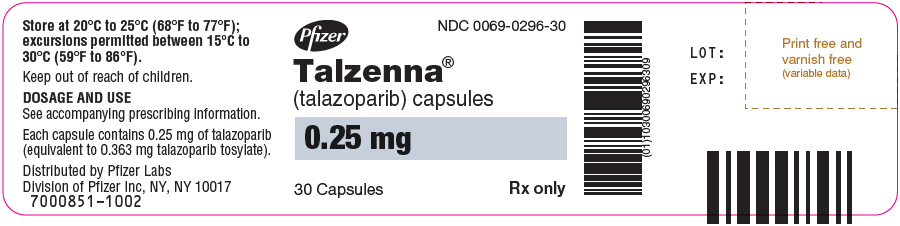
Talzenna talazoparib .25 mg Capsule, 30-count — NDC 0069-0296-30 (Billing 00069-0296-30)
This is a package of 30 capsules of Talzenna talazoparib .25 mg Capsule from Pfizer Laboratories Div Pfizer Inc, marketed since Oct 2018 and currently FDA-listed, this package's marketing is listed to end Jan 2027. It is this product's only package size.
NDC database record
One package, one record: these facts belong to NDC 0069-0296-30 alone.
- Record
- FDA NDC Directory package listing · Human prescription drug
- Code segments
- 0069 labeler · 0296 product · 30 package
- Package marketed since
- Oct 26, 2018
- Package marketing ended
- Jan 31, 2027
- Sample package
- No — commercial package
- Billing quantity
- 30 EA per package
- Barcode (UPC-A, from the NDC)
- 3 0069029630 2
- FDA record last changed
- Jul 24, 2026
Identity & classification
Regulatory identifiers FDA, NLM and CMS codes for this package
Drug-database identifiers Medi-Span GPI and First Databank GCN / HICL / AHFS classification
- GSN (GCN sequence number): 079147
- GCN: 45595
- GPI-14 (Medi-Span): 21535580400110
- HICL (First Databank): 045368
- AHFS class code: 10:00.00.00
- RxCUI (RxNorm): 2099946
Where does this data come from?
- FDA openFDA NDC Directory · synced Oct 8, 2026
- FDA label on DailyMed · label index refreshed Oct 6, 2026
- RxNorm (NLM RxNav) · catalog refreshed Oct 1, 2026
- Medi-Span GPI (licensed)
- First Databank (licensed) · refreshed Oct 8, 2026
RxNorm drug class
This medicine belongs to the Poly(ADP-Ribose) Polymerase Inhibitor class.
Where does this data come from?
- RxClass (NLM) · catalog refreshed Oct 1, 2026
Clinical
- It treats adults with BRCA-mutated, HER2-negative advanced breast cancer, used alone. It also treats prostate cancer that has spread and no longer responds to hormone-lowering trea...
- Swallow Talzenna capsules whole once a day, with or without food. Don't open or dissolve them. If you vomit or miss a dose, just take your next dose at the usual time. Follow your...
- Tiredness, nausea, vomiting, diarrhea, headache, hair loss and lower appetite are common. Low blood counts are also common, which is why you'll have monthly blood tests. Call your...
- Check with me or your doctor first. Some drugs, like itraconazole, amiodarone, carvedilol, clarithromycin and verapamil, can raise talazoparib levels. Your dose may need to change...
Patient education
Supplement & herbal interactions
Some supplements/herbs that may interact with Talazoparib — tap one for details:
Where does this data come from?
- MedlinePlus (NLM) · refreshed Oct 1, 2026
- FDA label on DailyMed · label index refreshed Oct 6, 2026
Ask a licensed pharmacist directly — free, answered by our team.
Pricing
A drug doesn't have one price. Each row is a different public payment system, and none is what you'd pay at the counter — that depends on your insurance. The ⓘ on each row explains what it measures.
| Price system | Per each | Per package |
|---|---|---|
| Retail pharmacies payNADAC · weekly | Not in the retail survey — common for institutional, discontinued, or low-volume packs. | |
| Medicaid paysCMS SDUD · 12 mo | No recent Medicaid claims on file for this NDC — rare and low-volume NDCs are suppressed in the public data. | |
| Medicare drug plans payPart D · Q2 2026 | $658.93 | $19,768.00 / 30 capsules |
Where does this data come from?
- CMS NADAC weekly file
- CMS ASP pricing files · refreshed Sep 20, 2026
- CMS Medicaid State Drug Utilization Data · refreshed Oct 8, 2026
- CMS Part D plan pricing files · refreshed Sep 24, 2026
- VA National Acquisition Center price file
Packaging — all sizes for this product
| Package NDC | Description | Marketing start | Marketing end | Status |
|---|---|---|---|---|
| 00069-0296-30 You're viewing this Main listing | 1 BOTTLE in 1 CARTON / 30 CAPSULE in 1 BOTTLE | 2018-10-26 | Jan 31, 2027 | Active |
Therapeutic equivalents
| Product | Labeler | Pack | NADAC/unit | TE | Status | Price vs. this |
|---|---|---|---|---|---|---|
| Talzenna .25 mgthis 00069-0296-30 | Pfizer | 30 capsules | — | — | FDA listed | — |
| Talzenna .25 mg 00069-0353-30 | Pfizer | 30 capsules | — | — | FDA listed | — |
Where does this data come from?
- FDA openFDA NDC Directory · synced Oct 8, 2026
- FDA Orange Book · refreshed Oct 3, 2026
- CMS NADAC weekly file
Availability & generic status
We did not find an FDA-approved generic match for this exact strength, form and route. Patent/protection dates below may affect future generic timing.
Why the date isn’t exact: Generic timing can change because patents may be challenged, settled, licensed, added, removed, or worked around with a narrower label — and FDA approval does not always mean a pharmacy can get the generic today.
🛈 What do these terms mean?
- Patent
- Legal protection listed in the Orange Book that may delay generic approval or launch. Issued by the U.S. Patent & Trademark Office.
- Substance patent
- Covers the active drug molecule itself — the hardest to design around. A generic generally can’t launch until it expires.
- Formulation (product) patent
- Covers a specific formulation or dosage form. A generic can sometimes work around it with a different formulation.
- Method-of-use patent
- A patent covering one specific approved use of the drug — not necessarily the whole molecule. A generic can sometimes launch with a “skinny label” that carves out the protected use and keeps the others.
- Skinny label
- A generic label that omits a still-patented use when the FDA allows it — letting a generic reach the market for the unprotected uses.
- Exclusivity
- FDA-granted marketing protection, separate from patents — e.g. 5-yr new chemical entity, 7-yr orphan drug, or a +6-month pediatric extension.
- Paragraph IV
- A generic applicant’s formal challenge to a listed patent. It can potentially lead to earlier generic entry, but often involves litigation or a settlement.
- RLD / RS
- Reference Listed Drug — the brand product the FDA uses as the reference for generic applications. Reference Standard — the product the FDA expects generics to compare against in bioequivalence testing.
- TE / AB rating
- FDA therapeutic-equivalence rating. An AB rating generally means the FDA considers a generic therapeutically equivalent to — and substitutable for — the brand.
- LOE (loss of exclusivity)
- The latest patent or exclusivity currently listed — the loss-of-exclusivity / latest-listed-protection date shown on this page. Paragraph-IV challenges and settlements can move the real date earlier; FDA approval and a manufacturer’s decision to market can move it later.
Built from the FDA Orange Book. The bars above are scaled to each protection’s expiry; the red LOE marker is the last one to lapse.
| Patent | Type | Use code | Expires |
|---|---|---|---|
| US 9820985 ↗ | Method of use | U-2437 | Jul 27, 2029 |
| US 9820985 ↗ | Method of use | U-2437 | Jul 27, 2029 |
| US 9820985 ↗ | Method of use | U-2437 | Jul 27, 2029 |
| US 9820985 ↗ | Method of use | U-2437 | Jul 27, 2029 |
| US 9820985 ↗ | Method of use | U-2437 | Jul 27, 2029 |
| US 9820985 ↗ | Method of use | U-2437 | Jul 27, 2029 |
| US 10780088 ↗ | Method of use | U-3651 | Jul 27, 2029 |
| US 10780088 ↗ | Method of use | U-3651 | Jul 27, 2029 |
| US 10780088 ↗ | Method of use | U-3651 | Jul 27, 2029 |
| US 10780088 ↗ | Method of use | U-3651 | Jul 27, 2029 |
| US 8420650 ↗ | Drug substance | — | Jul 27, 2029 |
| US 8735392 ↗ | Drug substance | — | Oct 20, 2031 |
| US 8012976 ↗ | Drug substance | — | Jul 27, 2029 |
| US 8420650 ↗ | Drug substance | — | Jul 27, 2029 |
| US 8735392 ↗ | Drug substance | — | Oct 20, 2031 |
| US 8012976 ↗ | Drug substance | — | Jul 27, 2029 |
| US 8735392 ↗ | Drug substance | — | Oct 20, 2031 |
| US 8012976 ↗ | Drug substance | — | Jul 27, 2029 |
| US 8735392 ↗ | Drug substance | — | Oct 20, 2031 |
| US 8420650 ↗ | Drug substance | — | Jul 27, 2029 |
| US 10189837 ↗ | Drug substance | — | Oct 20, 2031 |
| US 8012976 ↗ | Drug substance | — | Jul 27, 2029 |
| US 10189837 ↗ | Drug substance | — | Oct 20, 2031 |
| US 8012976 ↗ | Drug substance | — | Jul 27, 2029 |
| US 8735392 ↗ | Drug substance | — | Oct 20, 2031 |
| US 8420650 ↗ | Drug substance | — | Jul 27, 2029 |
| US 10189837 ↗ | Drug substance | — | Oct 20, 2031 |
| US 8420650 ↗ | Drug substance | — | Jul 27, 2029 |
| US 8735392 ↗ | Drug substance | — | Oct 20, 2031 |
| US 10189837 ↗ | Drug substance | — | Oct 20, 2031 |
| US 10189837 ↗ | Drug substance | — | Oct 20, 2031 |
| US 8012976 ↗ | Drug substance | — | Jul 27, 2029 |
| US 10189837 ↗ | Drug substance | — | Oct 20, 2031 |
| US 8420650 ↗ | Drug substance | — | Jul 27, 2029 |
| Code | What it grants | Expires |
|---|---|---|
| I-920 | New indication (3-year) | Jun 20, 2026 |
| I-920 | New indication (3-year) | Jun 20, 2026 |
| I-920 | New indication (3-year) | Jun 20, 2026 |
Is there a generic version of TALZENNA 0.25 MG CAPSULE?
The FDA approved a generic — why can’t I get it at my pharmacy yet?
Why do different websites show different generic release dates?
What does “FDA listed” mean?
What does a patent or protection date mean here?
What does “current Orange Book estimate” mean?
Can a generic come out before the last patent expires?
Can a generic come out after the listed dates?
What is the difference between patents and exclusivity?
Why are there multiple patent dates?
Where does this data come from?
- FDA Orange Book · refreshed Oct 3, 2026
What it looks like
Where does this data come from?
- FDA label on DailyMed · label index refreshed Oct 6, 2026
Inactive Ingredients / Excipients
Inactive ingredients, also called excipients, are components of the drug product other than the active ingredient. They may include fillers, dyes, coatings, preservatives, flavors, or other formulation ingredients.
🧪 Avoiding an ingredient? See Talazoparib inactive ingredients by manufacturer: every current product's list side by side, so you can ask your pharmacy for the version that does not list it.
💡 Tap an ingredient (hover on desktop) to see what it is and why it’s used.
-
UNII 5138Q19F1X
Ammonia is a colorless gas made from nitrogen and hydrogen. It's used in medicines as a pH buffer to maintain the correct acidity level and help keep the product stable.
-
UNII 1K09F3G675
Ferric oxide red is an inorganic iron compound used as a colorant in medicines. It gives tablets, capsules, or other dosage forms a red or reddish tint for identification and appearance.
-
UNII EX438O2MRT
Ferric oxide yellow is a naturally occurring iron compound used as a colorant in medications. It gives tablets, capsules, and other forms a yellow or golden hue for identification and appearance.
-
UNII XM0M87F357
A dark iron oxide compound that gives medicines their black or dark color. It's used as a colorant in tablets and capsules to help identify the product and make it visually distinctive.
-
UNII 3NXW29V3WO
Hypromellose is a plant-based thickener made from cellulose. It's used in medicines as a binder to hold ingredients together, a coating for tablets, and a thickener for liquids.
-
UNII OP1R32D61U
Microcrystalline cellulose is a purified form of cellulose, a natural fiber from plant sources. It acts as a binder and filler in tablets and capsules, helping hold ingredients together and give the medicine its shape and size.
-
UNII WZH3C48M4T
Potassium hydroxide is a strong alkaline chemical used in medicines to adjust and maintain the pH level of liquid formulations, helping keep the product stable and the active ingredients effective.
-
UNII 602HN5L69H
A clear liquid derived from propylene, used as a solvent, humectant, and preservative in medicines. It helps dissolve active ingredients and maintains moisture in liquid formulations.
-
UNII 46N107B71O
Shellac is a natural resin secreted by the lac beetle. It's used as a coating on tablets and capsules to control how quickly the medicine dissolves and to improve appearance and stability.
-
UNII 15FIX9V2JP
Titanium dioxide is a bright white mineral powder commonly used as a colorant and opacifying agent. It makes pills and tablets white or lighter in color and helps make coatings non-transparent.
10 inactive ingredients listed in the exact product block matched to this NDC.
Where does this data come from?
ingredient classCode="IACT" elements from the exact product block matched by this NDC. Label-section narrative from DailyMed / the openFDA label index is shown separately when available.- FDA label on DailyMed · label index refreshed Oct 6, 2026
- FDA openFDA NDC Directory · synced Oct 8, 2026
Inactive ingredient FAQ
Are inactive ingredients the same for every manufacturer?
Why might an inactive ingredient be missing?
Can inactive ingredients matter?
Manufacturer & labeler
More NDCs from Pfizer Laboratories Div Pfizer Inc labeler code 00069
- Doxorubicin Hydrochloride 2 mg/mL Injection, Solution NDC 0069-0277-02
- Ibrance palbociclib 75 mg Tablet, Film Coated NDC 0069-0284-03
- Nivestym filgrastim-aafi 300 ug/.5mL Injection, Solution NDC 0069-0291-01
- Nivestym filgrastim-aafi 480 ug/.8mL Injection, Solution NDC 0069-0292-01
- Nivestym filgrastim-aafi 300 ug/mL Injection, Solution NDC 0069-0293-10
- Nivestym filgrastim-aafi 480 ug/1.6mL Injection, Solution NDC 0069-0294-10
- TicoVac Tick-Borne Encephalitis Vaccine 1.2 ug/.25mL Injection NDC 0069-0297-02
- Daurismo glasdegib 25 mg Tablet, Film Coated NDC 0069-0298-60
- Trazimera trastuzumab-qyyp Kit NDC 0069-0305-01
- Trazimera trastuzumab-qyyp 150 mg/7.15mL Injection, Powder, Lyophilized, For Solution NDC 0069-0308-01
- Zirabev bevacizumab-bvzr 100 mg/4mL Injection, Solution NDC 0069-0315-01
- NYVEPRIA pegfilgrastim-apgf 6 mg/.6mL Injection, Solution NDC 0069-0324-01
Where does this data come from?
- FDA openFDA NDC Directory · synced Oct 8, 2026
- Drugs@FDA
Full prescribing information FDA SPL
🎯 Indications and Usage ▾
1 INDICATIONS AND USAGE TALZENNA is a poly (ADP-ribose) polymerase (PARP) inhibitor indicated for: Breast Cancer • As a single agent, for the treatment of adult patients with deleterious or suspected deleterious germline BRCA -mutated (g BRCA m) HER2-negative locally advanced or metastatic breast cancer. Select patients for therapy based on an FDA-approved companion diagnostic for TALZENNA. ( 1.1 ) HRR Gene-mutated Metastatic Castration-Resistant Prostate Cancer (mCRPC) • In combination with enzalutamide for the treatment of adult patients with HRR gene-mutated metastatic castration-resistant prostate cancer (mCRPC).
( 1.2 )
1.1BRCA -mutated (g BRCA m) HER2-negative Locally Advanced or Metastatic Breast Cancer TALZENNA is indicated as a single agent for the treatment of adult patients with deleterious or suspected deleterious germline breast cancer susceptibility gene ( BRCA )-mutated (g BRCA m) human epidermal growth factor receptor 2 (HER2)-negative locally advanced or metastatic breast cancer. Select patients for therapy based on an FDA-approved companion diagnostic for TALZENNA [see Dosage and Administration (2.1) ] .
1.2HRR Gene-mutated Metastatic Castration-Resistant Prostate Cancer (mCRPC) TALZENNA is indicated in combination with enzalutamide for the treatment of adult patients with homologous recombination repair (HRR) gene-mutated metastatic castration-resistant prostate cancer (mCRPC) [see Dosage and Administration (2.3) ] .
⏱️ Dosage and Administration ▾
2 DOSAGE AND ADMINISTRATION • Take TALZENNA with or without food. ( 2.4 ) Breast Cancer • The recommended dosage of TALZENNA is 1 mg taken orally once daily until disease progression or unacceptable toxicity. ( 2.2 ) • For adverse reactions, consider dosing interruption or dose reduction.
( 2.5 ) HRR Gene-mutated Metastatic Castration-Resistant Prostate Cancer (mCRPC) • The recommended dosage of TALZENNA is 0.5 mg taken orally once daily with enzalutamide until disease progression or unacceptable toxicity. ( 2.3 ) • Patients should also receive a gonadotropic-releasing hormone (GnRH) analog concurrently or should have had bilateral orchiectomy. ( 2.3 )
2.1Patient Selection Information on the FDA-approved tests for the detection of genetic mutations is available at http://www.fda.gov/companiondiagnostics . g BRCA m HER2-negative Locally Advanced or Metastatic Breast Cancer Select patients for the treatment of advanced breast cancer with TALZENNA based on the presence of germline BRCA mutations [see Indications and Usage (1.1) , Clinical Studies (14.1) ] . HRR Gene-mutated Metastatic Castration-Resistant Prostate Cancer Select patients for the treatment of HRR gene-mutated mCRPC with TALZENNA based on the presence of alterations in genes directly or indirectly involved in HRR ( ATM , ATR , BRCA1 , BRCA2 , CDK12 , CHEK2 , FANCA , MLH1 , MRE11A , NBN , PALB2 , or RAD51C ) [see Indications and Usage (1.2) , Clinical Studies (14.2) ] .
An FDA-approved test for the detection of HRR gene mutations for use with TALZENNA is not currently available.
2.2Recommended Dosage for g BRCA m HER2-negative Locally Advanced or Metastatic Breast Cancer The recommended dosage of TALZENNA is 1 mg taken orally once daily, until disease progression or unacceptable toxicity.
2.3Recommended Dosage for HRR Gene-mutated mCRPC The recommended dosage of TALZENNA is 0.5 mg taken orally once daily with enzalutamide until disease progression or unacceptable toxicity. Refer to the enzalutamide prescribing information for recommended enzalutamide dosing information. Patients receiving TALZENNA and enzalutamide should also receive a gonadotropin-releasing hormone (GnRH) analog concurrently or should have had bilateral orchiectomy.
2.4Administration Take TALZENNA with or without food. Swallow TALZENNA capsules whole. Do not open or dissolve. If a patient vomits or misses a dose of TALZENNA, instruct them to take the next prescribed dose at the usual time.
2.5Dosage Modifications for Adverse Reactions To manage adverse reactions, consider interruption of treatment with or without dose reduction based on severity and clinical presentation. Recommended dose reductions are indicated in Table 1 and Table 2. Treatment with TALZENNA should be discontinued if more than 3 dose reductions are required. g BRCA m HER2-negative Locally Advanced or Metastatic Breast Cancer Table 1.
Dose Reduction Levels for Adverse Reactions—Breast Cancer Dose Reductions Dose Level Recommended starting dose 1 mg once daily First dose reduction 0.75 mg once daily Second dose reduction 0.5 mg once daily Third dose reduction 0.25 mg once daily HRR Gene-mutated mCRPC Table 2. Dose Reduction Levels for Adverse Reactions—mCRPC Dose Reductions Dose Level Recommended starting dose 0.5 mg once daily First dose reduction 0.35 mg once daily Second dose reduction 0.25 mg once daily Third dose reduction 0.1 mg once daily Refer to the enzalutamide prescribing information for dose modifications for adverse reactions associated with enzalutamide. g BRCA m HER2-negative Locally Advanced or Metastatic Breast Cancer and HRR Gene-mutated mCRPC Monitor complete blood counts monthly and as clinically indicated [see Warnings and Precautions (5.2) ] .
Table 3. Dose Modification and Management for Adverse Reactions Adverse Reactions Withhold TALZENNA Until Levels Resolve to Resume TALZENNA Hemoglobin <8 g/dL ≥9 g/dL Resume TALZENNA at a reduced dose Platelet count <50,000/μL ≥75,000/μL Neutrophil count <1,000/μL ≥1… [Excerpted — this section continues on DailyMed.]
💊 Dosage Forms and Strengths ▾
3 DOSAGE FORMS AND STRENGTHS Table 4. Dosage Forms and Strengths Capsule Strength Description 0.1 mg White cap (printed with “Pfizer” in black) and a white body (printed with “TLZ 0.1” in black) 0.25 mg Ivory cap (printed with “Pfizer” in black) and a white body (printed with “TLZ 0.25” in black) 0.35 mg Ivory cap (printed with “Pfizer” in black) and an ivory body (printed with “TLZ 0.35” in black) 0.5 mg Light pink cap (printed with “Pfizer” in black) and a white body (printed with “TLZ 0.5” in black) 0.75 mg Light orange cap (printed with “Pfizer” in black) and a white body (printed with “TLZ 0.75” in black) 1 mg Light red cap (printed with “Pfizer” in black) and a white body (printed with “TLZ 1” in black) Capsules: 0.1 mg, 0.25 mg, 0.35 mg, 0.5 mg, 0.75 mg, and 1 mg ( 3 )
⛔ Contraindications ▾
4 CONTRAINDICATIONS None. None. ( 4 )
⚠️ Warnings and Cautions ▾
5 WARNINGS AND PRECAUTIONS • Myelodysplastic Syndrome/Acute Myeloid Leukemia (MDS/AML) : MDS/AML occurred in patients exposed to TALZENNA, and some cases were fatal. Monitor patients for hematological toxicity and discontinue if MDS/AML is confirmed. ( 5.1 ) • Myelosuppression : TALZENNA may affect hematopoiesis and can cause anemia, neutropenia, and/or thrombocytopenia.
( 5.2 ) • Embryo-Fetal Toxicity : TALZENNA can cause fetal harm. Advise of the potential risk to the fetus and to use effective contraception. ( 5.3 , 8.1 , 8.3 )
5.1Myelodysplastic Syndrome/Acute Myeloid Leukemia Myelodysplastic Syndrome/Acute Myeloid Leukemia (MDS/AML), including cases with a fatal outcome, has been reported in patients who received TALZENNA. Overall, MDS/AML has been reported in 0.4% (3 out of 788) of solid tumor patients treated with TALZENNA as a single agent in clinical studies. In TALAPRO-2, MDS/AML occurred in 2 out of 511 (0.4%) patients treated with TALZENNA and enzalutamide and in 0 out of 517 (0%) patients treated with placebo and enzalutamide [see Adverse Reactions (6.1) ] .
The durations of TALZENNA treatment in these 5 patients prior to developing MDS/AML were 0.3, 1, 2, 3, and 5 years. Most of these patients had received previous chemotherapy with platinum agents and/or other DNA damaging agents including radiotherapy. Do not start TALZENNA until patients have adequately recovered from hematological toxicity caused by previous chemotherapy.
Monitor blood counts monthly during treatment with TALZENNA. For prolonged hematological toxicities, interrupt TALZENNA and monitor blood counts weekly until recovery. If counts do not recover within 4 weeks, refer the patient to a hematologist for further investigations including bone marrow analysis and blood sample for cytogenetics.
If MDS/AML is confirmed, discontinue TALZENNA.
5.2Myelosuppression Myelosuppression consisting of anemia, neutropenia, and/or thrombocytopenia, have been reported in patients treated with TALZENNA [see Adverse Reactions (6.1) ] . Grade ≥3 anemia, neutropenia, and thrombocytopenia were reported, respectively, in 39%, 21%, and 15% of patients receiving TALZENNA as a single agent. Discontinuation due to anemia, neutropenia, and thrombocytopenia occurred, respectively, in 0.7%, 0.3%, and 0.3% of patients.
In TALAPRO-2, Grade ≥3 anemia, neutropenia, and thrombocytopenia were reported, respectively, in 48%, 19%, and 9% of patients receiving TALZENNA and enzalutamide. Forty-two percent of patients (216/511) required a red blood cell transfusion, including 25% (127/511) who required more than one transfusion. Discontinuation due to anemia, neutropenia, and thrombocytopenia occurred, respectively, in 8%, 3%, and 0.4% of patients.
Withhold TALZENNA until patients have adequately recovered from hematological toxicity caused by previous therapy. Monitor blood counts monthly during treatment with TALZENNA. If hematological toxicities do not resolve within 28 days, discontinue TALZENNA and refer the patient to a hematologist for further investigations including bone marrow analysis and blood sample for cytogenetics [see Dosage and Administration (2.5) ] .
5.3Embryo-Fetal Toxicity Based on its mechanism of action and findings from animal data, TALZENNA can cause fetal harm when administered to a pregnant woman. In an animal reproduction study, administration of talazoparib to pregnant rats during the period of organogenesis caused fetal malformations and structural skeletal variations, and embryo-fetal death at exposures that were 0.24 times the area under the concentration-time curve (AUC) in patients receiving the recommended human dose of 1 mg daily. Apprise pregnant women and females of reproductive potential of the potential risk to a fetus.
Advise females of reproductive potential to use effective contraception during treatment and for 7 months following the last dose of TALZENNA [see Use in Specific Populations (8.1 , 8.3) , Clinical Pharmacology (12.1) ] . Based o… [Excerpted — this section continues on DailyMed.]
🤒 Adverse Reactions ▾
6 ADVERSE REACTIONS The following clinically significant adverse reactions are described elsewhere in the labeling: • Myelodysplastic Syndrome/Acute Myeloid Leukemia [see Warnings and Precautions (5.1) ] • Myelosuppression [see Warnings and Precautions (5.2) ] Most common adverse reactions (≥20%) as a single agent, including laboratory abnormalities, are: • Hemoglobin decreased, neutrophils decreased, lymphocytes decreased, platelets decreased, fatigue, glucose increased, aspartate aminotransferase increased, alkaline phosphatase increased, alanine aminotransferase increased, calcium decreased, nausea, headache, vomiting, alopecia, diarrhea, and decreased appetite.
( 6.1 ) Most common adverse reactions (≥10%) in combination with enzalutamide, including laboratory abnormalities, are: • Hemoglobin decreased, neutrophils decreased, lymphocytes decreased, fatigue, platelets decreased, calcium decreased, nausea, decreased appetite, sodium decreased, phosphate decreased, fractures, magnesium decreased, dizziness, bilirubin increased, potassium decreased, and dysgeusia. ( 6.1 ) To report SUSPECTED ADVERSE REACTIONS, contact Pfizer Inc. at 1-800-438-1985 or FDA at 1-800-FDA-1088 or www.fda.gov/medwatch .
6.1Clinical Trials Experience Because clinical trials are conducted under widely varying conditions, adverse reaction rates observed in the clinical trials of a drug cannot be directly compared to rates in the clinical trials of another drug and may not reflect the rates observed in practice. The data described in the WARNINGS AND PRECAUTIONS section reflect exposure to single agent TALZENNA in solid tumor clinical studies, including 286 patients enrolled in EMBRACA trial and to TALZENNA 0.5 mg daily with enzalutamide in 511 patients enrolled in the TALAPRO-2 trial that included 197 patients with HRR gene-mutated mCRPC. g BRCA m HER2-negative Locally Advanced or Metastatic Breast Cancer EMBRACA The safety of TALZENNA as a single agent was evaluated in g BRCA m patients with HER2-negative locally advanced or metastatic breast cancer who had previously received no more than 3 lines of chemotherapy for the treatment of locally advanced/metastatic disease [see Clinical Studies (14.1) ] .
EMBRACA was a randomized, open-label, multi-center study in which 412 patients received either TALZENNA 1 mg once daily (N=286) or a chemotherapy agent (capecitabine, eribulin, gemcitabine, or vinorelbine) of the healthcare provider's choice (N=126) until disease progression or unacceptable toxicity. The median duration of study treatment was 6.1 months in patients who received TALZENNA and 3.9 months in patients who received chemotherapy. Serious adverse reactions of TALZENNA occurred in 32% of patients.
Serious adverse reactions reported in >2% of patients included anemia (6%) and pyrexia (2%). Fatal adverse reactions occurred in 1% of patients, including cerebral hemorrhage, liver disorder, veno-occlusive liver disease, and worsening neurological symptoms (1 patient each). Permanent discontinuation due to adverse reactions occurred in 5% of TALZENNA patients.
Dosing interruptions due to an adverse reaction of any grade occurred in 65% of patients receiving TALZENNA; dose reductions due to any cause occurred in 53% of TALZENNA patients. The most common (≥20%) adverse reactions, including laboratory abnormalities, were hemoglobin decreased, neutrophils decreased, lymphocytes decreased, platelets decreased, fatigue, glucose increased, aspartate aminotransferase increased, alkaline phosphatase increased, alanine aminotransferase increased, calcium decreased, nausea, headache, vomiting, alopecia, diarrhea, and decreased appetite.
Table 5 and Table 6 summarize the most common adverse reactions and laboratory abnormalities, respectively, in patients treated with TALZENNA or chemotherapy in the EMBRACA study. Table 5. Adverse Reactions Graded according to NCI CTCAE 4.03.
(≥20%) in Patients Receiving TALZENNA in EMBRACA Adverse Reactions TALZENNA N=286 (%) Che… [Excerpted — this section continues on DailyMed.]
🔄 Drug Interactions ▾
7 DRUG INTERACTIONS • P-gp Inhibitors : Reduce the dose when coadministered with certain P-gp inhibitors. Monitor for increased adverse reactions. ( 2.7 , 7.1 ) • BCRP Inhibitors : Monitor for potential increased adverse reactions. ( 7.1 )
7.1Effect of Other Drugs on TALZENNA Effect of P-gp Inhibitors Breast Cancer Avoid coadministration of TALZENNA with the following P-gp inhibitors: itraconazole, amiodarone, carvedilol, clarithromycin, itraconazole, and verapamil. If coadministration of TALZENNA with these P-gp inhibitors cannot be avoided, reduce the dose of TALZENNA [see Dosage and Administration (2.7) ] . When the P-gp inhibitor is discontinued, increase the dose of TALZENNA [see Dosage and Administration (2.7) ] .
Coadministration of TALZENNA with these P-gp inhibitors increased talazoparib concentrations [see Clinical Pharmacology (12.3) ] , which may increase the risk of adverse reactions. Monitor for increased adverse reactions and modify the dosage as recommended for adverse reactions when TALZENNA is coadministered with other P-gp inhibitors [see Dosage and Administration (2.5) ] . HRR Gene-mutated mCRPC The effect of coadministration of P-gp inhibitors on talazoparib exposure when TALZENNA is taken with enzalutamide has not been studied.
Monitor patients for increased adverse reactions and modify the dosage as recommended for adverse reactions when TALZENNA is coadministered with a P-gp inhibitor [see Dosage and Administration (2.5) ] . Effect of Breast Cancer Resistance Protein (BCRP) Inhibitors Monitor patients for increased adverse reactions and modify the dosage as recommended for adverse reactions when TALZENNA is coadministered with a BCRP inhibitor [see Dosage and Administration (2.5) ] . Coadministration of TALZENNA with BCRP inhibitors may increase talazoparib exposure [see Clinical Pharmacology (12.3) ] , which may increase the risk of adverse reactions.
👥 Use in Specific Populations ▾
8 USE IN SPECIFIC POPULATIONS • Lactation : Advise women not to breastfeed. ( 8.2 ) • Renal Impairment : Reduce the dose and monitor for increased adverse reactions for patients with moderate or severe renal impairment. ( 2.6 , 8.7 )
8.1Pregnancy Risk Summary Based on findings from animal studies and its mechanism of action [see Clinical Pharmacology (12.1) ] , TALZENNA can cause embryo-fetal harm when administered to a pregnant woman. There are no available data on TALZENNA use in pregnant women to inform a drug-associated risk. In an animal reproduction study, the administration of talazoparib to pregnant rats during the period of organogenesis caused fetal malformations and structural skeletal variations and embryo-fetal death at maternal exposures that were 0.24 times the AUC in patients receiving the recommended dose of 1 mg daily (see Data ) .
Apprise pregnant women and females of reproductive potential of the potential risk to a fetus. The background risk of major birth defects and miscarriage for the indicated population is unknown. In the general U.S. population, the estimated background risks of major birth defects and miscarriage in clinically recognized pregnancies are 2% to 4% and 15% to 20%, respectively.
Data Animal Data In an embryo-fetal development toxicity study, pregnant rats received oral doses of 0.015, 0.05, and 0.15 mg/kg/day talazoparib during the period of organogenesis. Talazoparib caused embryo-fetal death at doses ≥0.015 mg/kg/day (approximately 0.24 times the AUC in patients at the recommended dose of 1 mg daily). A dose of 0.015 mg/kg/day caused decreased fetal body weights and an increased incidence of fetal malformations (depressed eye bulge, small eye, split sternebra, and fused cervical vertebral arch) and structural variations including misshapen or incomplete ossification of the sternebra, skull, rib, and vertebra.
8.2Lactation Risk Summary There are no data on the presence of talazoparib in human milk, the effects of the drug on milk production, or the effects of the drug on the breastfed child. Because of the potential for serious adverse reactions in a breastfed child from talazoparib, advise lactating women not to breastfeed during treatment with TALZENNA and for 1 month after the last dose.
8.3Females and Males of Reproductive Potential TALZENNA can cause fetal harm when administered to pregnant women [see Use in Specific Populations (8.1) ] . Pregnancy Testing Verify pregnancy status in females of reproductive potential prior to initiating TALZENNA treatment. Contraception Females Advise females of reproductive potential to use effective contraception during treatment and for 7 months following the last dose of TALZENNA.
Males Based on genotoxicity and animal reproduction studies, advise male patients with female partners of reproductive potential and pregnant partners to use effective contraception during treatment with TALZENNA and for 4 months following the last dose [see Use in Specific Populations (8.1) , Nonclinical Toxicology (13.1) ] . Infertility Males Based on animal studies, TALZENNA may impair fertility in males of reproductive potential [see Nonclinical Toxicology (13.1) ].
8.4Pediatric Use The safety and effectiveness of TALZENNA have not been established in pediatric patients.
8.5Geriatric Use In clinical trials of TALZENNA enrolling 494 patients with advanced solid tumors who received TALZENNA 1 mg daily as a single agent, 85 (17%) patients were ≥65 years of age, and this included 19 (4%) patients who were ≥75 years old. There were 5 patients ≥85 years old. In the TALAPRO-2 trial, of 197 patients who received TALZENNA, 77% were ≥65 years of age, while 30% were ≥75 years of age.
No overall differences in safety or effectiveness of TALZENNA were observed between these patients and younger patients.
8.6Hepatic Impairment No dosage modification is recommended for patients with hepatic impairment [see Clinical Pharmacology (12.3) ] .
8.7Renal Impairment Reduce the re… [Excerpted — this section continues on DailyMed.]
🤰 Pregnancy ▾
8.1Pregnancy Risk Summary Based on findings from animal studies and its mechanism of action [see Clinical Pharmacology (12.1) ] , TALZENNA can cause embryo-fetal harm when administered to a pregnant woman. There are no available data on TALZENNA use in pregnant women to inform a drug-associated risk. In an animal reproduction study, the administration of talazoparib to pregnant rats during the period of organogenesis caused fetal malformations and structural skeletal variations and embryo-fetal death at maternal exposures that were 0.24 times the AUC in patients receiving the recommended dose of 1 mg daily (see Data ) .
Apprise pregnant women and females of reproductive potential of the potential risk to a fetus. The background risk of major birth defects and miscarriage for the indicated population is unknown. In the general U.S. population, the estimated background risks of major birth defects and miscarriage in clinically recognized pregnancies are 2% to 4% and 15% to 20%, respectively.
Data Animal Data In an embryo-fetal development toxicity study, pregnant rats received oral doses of 0.015, 0.05, and 0.15 mg/kg/day talazoparib during the period of organogenesis. Talazoparib caused embryo-fetal death at doses ≥0.015 mg/kg/day (approximately 0.24 times the AUC in patients at the recommended dose of 1 mg daily). A dose of 0.015 mg/kg/day caused decreased fetal body weights and an increased incidence of fetal malformations (depressed eye bulge, small eye, split sternebra, and fused cervical vertebral arch) and structural variations including misshapen or incomplete ossification of the sternebra, skull, rib, and vertebra.
🧒 Pediatric Use ▾
8.4Pediatric Use The safety and effectiveness of TALZENNA have not been established in pediatric patients.
🧓 Geriatric Use ▾
8.5Geriatric Use In clinical trials of TALZENNA enrolling 494 patients with advanced solid tumors who received TALZENNA 1 mg daily as a single agent, 85 (17%) patients were ≥65 years of age, and this included 19 (4%) patients who were ≥75 years old. There were 5 patients ≥85 years old. In the TALAPRO-2 trial, of 197 patients who received TALZENNA, 77% were ≥65 years of age, while 30% were ≥75 years of age.
No overall differences in safety or effectiveness of TALZENNA were observed between these patients and younger patients.
🧬 Clinical Pharmacology ▾
12 CLINICAL PHARMACOLOGY
12.1Mechanism of Action Talazoparib is an inhibitor of PARP enzymes, including PARP1 and PARP2, which play a role in DNA repair. In vitro studies with cancer cell lines that harbored defects in DNA repair genes, including BRCA1 and BRCA2 , have shown that talazoparib-induced cytotoxicity may involve inhibition of PARP enzymatic activity and increased formation of PARP-DNA complexes resulting in DNA damage, decreased cell proliferation, and apoptosis. Talazoparib anti-tumor activity was observed in patient-derived xenograft breast cancer models bearing mutated BRCA1 or mutated BRCA2 or wild type BRCA1 and BRCA2 .
12.2Pharmacodynamics The exposure-response relationship and time course of pharmacodynamic response for the safety and effectiveness of TALZENNA have not been fully characterized. Cardiac Electrophysiology At a dose of 1 mg (the recommended dosage for treatment of breast cancer), TALZENNA had no large QTc prolongation (i.e., >20 ms).
12.3Pharmacokinetics After administration of TALZENNA 1 mg orally once daily as a single agent (the recommended dosage for breast cancer), the mean [% coefficient of variation (CV%)] AUC and maximum observed plasma concentration (C max ) of talazoparib at steady-state was 208 (37%) ng.hr/mL and 16.4 (32%) ng/mL, respectively. The mean (CV%) steady-state C trough was 3.53 (61%) ng/mL. After administration of TALZENNA 0.5 mg orally once daily (the recommended dosage for prostate cancer) with enzalutamide, the mean (CV%) steady-state C trough ranged from 3.29 to 3.68 ng/mL (45% to 48%).
The pharmacokinetics (PK) of talazoparib is linear from 0.025 mg to 2 mg (2 times the recommended dose for breast cancer). The median accumulation ratio of talazoparib following 1 mg orally once daily is 2.3 to 5.2. Talazoparib plasma concentrations reached steady-state within 2 to 3 weeks when administered as a single agent and within 9 weeks when coadministered with enzalutamide.
Absorption The median time to C max (T max ) was generally between 1 to 2 hours after dosing. Food Effect Following a single TALZENNA 0.5 mg dose with high-fat, high-calorie food (approximately 800 to 1000 calories with 150, 250, and 500 to 600 calories from protein, carbohydrate, and fat, respectively), the mean C max was decreased by 46%, the median T max was delayed from 1 to 4 hours, and AUC was not affected. Distribution The mean apparent volume of distribution of talazoparib is 420 L.
In vitro , protein binding of talazoparib is 74% and is independent of talazoparib concentration. Elimination The mean terminal plasma half-life (±standard deviation) is 90 (±58) hours and the mean apparent oral clearance (inter-subject variability) is
6.45L/h (31%). Metabolism Talazoparib undergoes minimal hepatic metabolism. The identified metabolic pathways include mono-oxidation, dehydrogenation, cysteine conjugation of mono-desfluoro-talazoparib, and glucuronide conjugation.
Excretion Excretion of talazoparib in urine was the major route of elimination. Approximately 68.7% (54.6% unchanged) of the total administered radiolabeled dose of talazoparib was recovered in urine, and 19.7% (13.6% unchanged) was recovered in feces. Specific Populations Age (18 to 88 years), sex, race (361 White, 41 Asian, 16 Black, 9 Others, and 63 Not Reported), body weight (36 to 162 kg), and mild to severe hepatic impairment had no clinically significant effect on the PK of talazoparib.
Patients with Renal Impairment Mild (eGFR 60 – 89 mL/min/1.73 m 2 ) renal impairment had no clinically significant effect on talazoparib pharmacokinetics. Talazoparib steady-state total exposure (AUC) increased by 43% in subjects with moderate (eGFR 30 – 59 mL/min/1.73 m 2 ) renal impairment and 163% in patients with severe (eGFR 15 – 29 mL/min/1.73 m 2 ) renal impairment relative to subjects with normal renal function (eGFR ≥ 90 mL/min/1.73 m 2 ). Talazoparib steady-state peak concentration (C max ) increased by 32% in subjects with moderate renal impa… [Excerpted — this section continues on DailyMed.]
🧬 Mechanism of Action ▾
12.1Mechanism of Action Talazoparib is an inhibitor of PARP enzymes, including PARP1 and PARP2, which play a role in DNA repair. In vitro studies with cancer cell lines that harbored defects in DNA repair genes, including BRCA1 and BRCA2 , have shown that talazoparib-induced cytotoxicity may involve inhibition of PARP enzymatic activity and increased formation of PARP-DNA complexes resulting in DNA damage, decreased cell proliferation, and apoptosis. Talazoparib anti-tumor activity was observed in patient-derived xenograft breast cancer models bearing mutated BRCA1 or mutated BRCA2 or wild type BRCA1 and BRCA2 .
📦 How Supplied / Storage and Handling ▾
16 HOW SUPPLIED/STORAGE AND HANDLING TALZENNA is supplied in strengths and package configurations as described in Table 12: Table 12. TALZENNA Capsules Package Configuration Capsule Strength (mg) NDC Print Bottles of 30 capsules
0.1NDC 0069-1031-30 White cap (printed with “Pfizer” in black) and a white body (printed with “TLZ 0.1” in black). Bottles of 30 capsules
0.25NDC 0069-0296-30 Ivory cap (printed with “Pfizer” in black) and a white body (printed with “TLZ 0.25” in black). Bottles of 30 capsules
0.35NDC 0069-1235-30 Ivory cap (printed with “Pfizer” in black) and an ivory body (printed with “TLZ 0.35” in black). Bottles of 30 capsules
0.5NDC 0069-1501-30 Light pink cap (printed with “Pfizer” in black) and a white body (printed with “TLZ 0.5” in black). Bottles of 30 capsules
0.75NDC 0069-1751-30 Light orange cap (printed with “Pfizer” in black) and a white body (printed with “TLZ 0.75” in black). Bottles of 30 capsules 1 NDC 0069-1195-30 Light red cap (printed with “Pfizer” in black) and a white body (printed with “TLZ 1” in black). Storage Store at 20°C to 25°C (68°F to 77°F); excursions permitted between 15°C to 30°C (59°F to 86°F). [See USP Controlled Room Temperature].
📦 Storage and Handling ▾
Storage Store at 20°C to 25°C (68°F to 77°F); excursions permitted between 15°C to 30°C (59°F to 86°F). [See USP Controlled Room Temperature].
📋 Description ▾
11 DESCRIPTION Talazoparib is an inhibitor of mammalian polyadenosine 5'-diphosphoribose (ADP-ribose) polymerase (PARP) enzymes. The chemical name of talazoparib tosylate is (8 S ,9 R )-5-Fluoro-8-(4-fluorophenyl)-9-(1-methyl-1 H -1,2,4-triazol-5-yl)-2,7,8,9-tetrahydro-3 H -pyrido[4,3,2- de ]phthalazin-3-one 4-methylbenzenesulfonate (1:1). The chemical formula of talazoparib tosylate is C 26 H 22 F 2 N 6 O 4 S, and the relative molecular mass is 552.56 Daltons.
The chemical structure of talazoparib tosylate is shown below: Talazoparib tosylate is a white to yellow solid. TALZENNA capsules for oral use are available as: • 0.1 mg hard hypromellose (HPMC) capsule that contains 0.145 mg talazoparib tosylate equivalent to 0.1 mg talazoparib free base, or • 0.25 mg HPMC capsule that contains 0.363 mg talazoparib tosylate equivalent to 0.25 mg talazoparib free base, or • 0.35 mg HPMC capsule that contains 0.509 mg talazoparib tosylate equivalent to 0.35 mg talazoparib free base, or • 0.5 mg HPMC capsule that contains 0.727 mg talazoparib tosylate equivalent to 0.5 mg talazoparib free base, or • 0.75 mg HPMC capsule that contains 1.09 mg talazoparib tosylate equivalent to 0.75 mg talazoparib free base, or • 1 mg HPMC capsule that contains 1.453 mg talazoparib tosylate equivalent to 1 mg talazoparib free base.
Inactive ingredients: silicified microcrystalline cellulose (sMCC). The capsule shells contain hypromellose (HPMC), yellow iron oxide, red iron oxide and titanium dioxide; and the printing ink contains shellac, black iron oxide, potassium hydroxide, ammonium hydroxide, and propylene glycol. Chemical Structure
💬 Information for Patients ▾
17 PATIENT COUNSELING INFORMATION Advise the patient to read the FDA-approved patient labeling (Patient Information). • MDS/AML : Advise patients to contact their healthcare provider if they experience weakness, feeling tired, fever, weight loss, frequent infections, bruising, bleeding easily, breathlessness, blood in urine or stool, and/or laboratory findings of low blood cell counts, or a need for blood transfusions. This may be a sign of hematological toxicity or a more serious uncommon bone marrow problem called MDS or AML, which have been reported in patients who received PARP inhibitors [see Warnings and Precautions (5.1) ] . • Myelosuppression : Advise patients that TALZENNA may affect hematopoiesis and can cause anemia, leukopenia/neutropenia, and/or thrombocytopenia [see Warnings and Precautions (5.2) ] . • Administration Instructions : Advise patients that TALZENNA can be taken once daily with or without food.
Instruct patients that if they miss a dose of TALZENNA, they should take their next normal dose at the usual time. Also advise patients to swallow each capsule whole, and that capsules must not be opened or dissolved [see Dosage and Administration (2.4) ] . • Embryo-Fetal Toxicity : Advise females to inform their healthcare provider if they are pregnant or become pregnant. Inform female patients of the risk to a fetus and potential loss of the pregnancy [see Use in Specific Populations (8.1) ] .
Advise females of reproductive potential to use effective contraception during treatment with TALZENNA and for 7 months after the last dose. Advise male patients with female partners of reproductive potential or who are pregnant to use effective contraception during treatment and for 4 months after receiving the last dose of TALZENNA [see Warnings and Precautions (5.3) , Use in Specific Populations (8.1 , 8.3) ] . • Lactation : Advise patients not to breastfeed while taking TALZENNA and for 1 month after receiving the last dose [see Use in Specific Populations (8.2) ] .
🧬 Pharmacokinetics ▾
12.3Pharmacokinetics After administration of TALZENNA 1 mg orally once daily as a single agent (the recommended dosage for breast cancer), the mean [% coefficient of variation (CV%)] AUC and maximum observed plasma concentration (C max ) of talazoparib at steady-state was 208 (37%) ng.hr/mL and 16.4 (32%) ng/mL, respectively. The mean (CV%) steady-state C trough was 3.53 (61%) ng/mL. After administration of TALZENNA 0.5 mg orally once daily (the recommended dosage for prostate cancer) with enzalutamide, the mean (CV%) steady-state C trough ranged from 3.29 to 3.68 ng/mL (45% to 48%).
The pharmacokinetics (PK) of talazoparib is linear from 0.025 mg to 2 mg (2 times the recommended dose for breast cancer). The median accumulation ratio of talazoparib following 1 mg orally once daily is 2.3 to 5.2. Talazoparib plasma concentrations reached steady-state within 2 to 3 weeks when administered as a single agent and within 9 weeks when coadministered with enzalutamide.
Absorption The median time to C max (T max ) was generally between 1 to 2 hours after dosing. Food Effect Following a single TALZENNA 0.5 mg dose with high-fat, high-calorie food (approximately 800 to 1000 calories with 150, 250, and 500 to 600 calories from protein, carbohydrate, and fat, respectively), the mean C max was decreased by 46%, the median T max was delayed from 1 to 4 hours, and AUC was not affected. Distribution The mean apparent volume of distribution of talazoparib is 420 L.
In vitro , protein binding of talazoparib is 74% and is independent of talazoparib concentration. Elimination The mean terminal plasma half-life (±standard deviation) is 90 (±58) hours and the mean apparent oral clearance (inter-subject variability) is
6.45L/h (31%). Metabolism Talazoparib undergoes minimal hepatic metabolism. The identified metabolic pathways include mono-oxidation, dehydrogenation, cysteine conjugation of mono-desfluoro-talazoparib, and glucuronide conjugation.
Excretion Excretion of talazoparib in urine was the major route of elimination. Approximately 68.7% (54.6% unchanged) of the total administered radiolabeled dose of talazoparib was recovered in urine, and 19.7% (13.6% unchanged) was recovered in feces. Specific Populations Age (18 to 88 years), sex, race (361 White, 41 Asian, 16 Black, 9 Others, and 63 Not Reported), body weight (36 to 162 kg), and mild to severe hepatic impairment had no clinically significant effect on the PK of talazoparib.
Patients with Renal Impairment Mild (eGFR 60 – 89 mL/min/1.73 m 2 ) renal impairment had no clinically significant effect on talazoparib pharmacokinetics. Talazoparib steady-state total exposure (AUC) increased by 43% in subjects with moderate (eGFR 30 – 59 mL/min/1.73 m 2 ) renal impairment and 163% in patients with severe (eGFR 15 – 29 mL/min/1.73 m 2 ) renal impairment relative to subjects with normal renal function (eGFR ≥ 90 mL/min/1.73 m 2 ). Talazoparib steady-state peak concentration (C max ) increased by 32% in subjects with moderate renal impairment and 89% in subjects with severe renal impairment, relative to subjects with normal renal function.
Similar increases in AUC were observed with talazoparib when given with enzalutamide for patients with moderate and severe renal impairment. The PK of talazoparib has not been studied in patients requiring hemodialysis. There was no evidence of a relationship between the protein binding of talazoparib and renal function.
Drug Interaction Studies Clinical Studies Effect of P-gp Inhibitors: Coadministration of a P-gp inhibitor (itraconazole) with a single 0.5 mg dose of TALZENNA increased talazoparib AUC and C max by approximately 56% and 40%, respectively. Coadministration with the following other P-gp inhibitors: amiodarone, carvedilol, clarithromycin, itraconazole, and verapamil increased talazoparib exposure by 45%. Coadministration with other P-gp inhibitors (including azithromycin, atorvastatin, diltiazem, felodipine, fluvoxamine, and quercetin) had no clinical… [Excerpted — this section continues on DailyMed.]
🧬 Pharmacodynamics ▾
12.2Pharmacodynamics The exposure-response relationship and time course of pharmacodynamic response for the safety and effectiveness of TALZENNA have not been fully characterized. Cardiac Electrophysiology At a dose of 1 mg (the recommended dosage for treatment of breast cancer), TALZENNA had no large QTc prolongation (i.e., >20 ms).
🔬 Clinical Studies ▾
14 CLINICAL STUDIES
14.1Deleterious or Suspected Deleterious Germline BRCA -mutated HER2-negative Locally Advanced or Metastatic Breast Cancer EMBRACA (NCT01945775) was an open-label study in which patients (N=431) with g BRCA m HER2-negative locally advanced or metastatic breast cancer were randomized 2:1 to receive TALZENNA 1 mg or healthcare provider's choice of chemotherapy (capecitabine, eribulin, gemcitabine, or vinorelbine) until disease progression or unacceptable toxicity. Randomization was stratified by prior lines of chemotherapy for metastatic disease (0 versus 1, 2, or 3), by triple-negative disease status [triple-negative breast cancer (TNBC) versus non-TNBC], and history of central nervous system (CNS) metastasis (yes versus no).
Patients received no more than 3 prior cytotoxic chemotherapy regimens for their metastatic or locally advanced disease. Patients were required to have received treatment with an anthracycline and/or a taxane (unless contraindicated) in the neoadjuvant, adjuvant, and/or metastatic treatment setting. First-line treatment for advanced or metastatic disease with no prior adjuvant chemotherapy was allowed if the investigator determined that 1 of the 4 chemotherapy choices in the control arm would be an appropriate treatment option for the patient.
Patients with prior platinum therapy for advanced disease were required to have no evidence of disease progression during platinum therapy. No prior treatment with a PARP inhibitor was permitted. Of the 431 patients randomized in the EMBRACA study, 408 (95%) were centrally confirmed to have a deleterious or suspected deleterious g BRCA m using a clinical trial assay; out of which 354 (82%) were confirmed using the BRACAnalysis CDx ® .
BRCA mutation status [breast cancer susceptibility gene 1 ( BRCA1 )-positive or breast cancer susceptibility gene 2 ( BRCA2 )-positive] was similar across both treatment arms. The median age of patients treated with TALZENNA was 46 years (range 28 to 84) and 51 years (range 24 to 89) among patients treated with chemotherapy. Among all randomized patients, 1% versus 2% were males, 67% versus 75% were White; 11% versus 11% were Asian, and 4% versus 1% were Black or African American in the TALZENNA and chemotherapy arms, respectively.
Almost all patients (98%) in both arms had an Eastern Cooperative Oncology Group (ECOG) performance status of 0 or 1. Approximately 56% of patients had estrogen receptor-positive and/or progesterone receptor-positive disease; 44% of patients had triple-negative disease, and the proportions were balanced across both treatment arms. Fifteen percent (15%) of patients in the TALZENNA arm and 14% of patients in the chemotherapy arm had a history of CNS metastases.
Ninety-one percent (91%) of patients in the TALZENNA arm had received prior taxane therapy, and 85% had received prior anthracycline therapy in any setting. Sixteen percent (16%) of patients in the TALZENNA arm and 21% of patients in the chemotherapy arm had received prior platinum treatment in any setting. The median number of prior cytotoxic regimens for patients with advanced breast cancer was one; 38% received no prior cytotoxic regimens for advanced or metastatic disease, 37% received one, 20% received two, and 5% received three or more prior cytotoxic regimens.
The major efficacy outcome measure was progression-free survival (PFS) evaluated according to Response Evaluation Criteria in Solid Tumors (RECIST) version 1.1, as assessed by blinded independent central review (BICR). A statistically significant improvement in PFS was demonstrated for TALZENNA compared to chemotherapy. A sensitivity analysis of investigator-assessed PFS was consistent with the BICR-assessed PFS results.
Consistent PFS results were observed across patient subgroups defined by study stratification factors (prior lines of chemotherapy, TNBC status, and history of CNS metastases). Efficacy data from the EMBRACA study are summarized in Table 9, and the Kapla… [Excerpted — this section continues on DailyMed.]
🧪 Nonclinical Toxicology ▾
13 NONCLINICAL TOXICOLOGY
13.1Carcinogenesis, Mutagenesis, Impairment of Fertility Carcinogenicity studies have not been conducted with talazoparib. Talazoparib was clastogenic in an in vitro chromosomal aberration assay in human peripheral blood lymphocytes and in an in vivo bone marrow micronucleus assay in rats. This clastogenicity is consistent with genomic instability resulting from the primary pharmacology of talazoparib, indicating the potential for genotoxicity in humans.
Talazoparib was not mutagenic in a bacterial reverse mutation (Ames) test. Fertility studies in animals have not been conducted with talazoparib. In repeat-dose toxicity studies up to 3-months duration, talazoparib-related findings in the testis and epididymis at doses ≥0.04 mg/kg/day in rats and ≥0.01 mg/kg/day in dogs included decreased organ weights, luminal cellular debris, reduced sperm, and degeneration/atrophy.
These doses in rats and dogs resulted in approximately 1.0 times and 0.2 times, respectively, the exposure (AUC) in humans at the recommended dose of 1 mg daily. Follicular atresia of the ovary was observed in rats at doses ≥1 mg/kg/day talazoparib, approximately 9.5 times the AUC in patients at the recommended dose of 1 mg daily.
📄 Carcinogenesis, Mutagenesis, Impairment of Fertility ▾
13.1Carcinogenesis, Mutagenesis, Impairment of Fertility Carcinogenicity studies have not been conducted with talazoparib. Talazoparib was clastogenic in an in vitro chromosomal aberration assay in human peripheral blood lymphocytes and in an in vivo bone marrow micronucleus assay in rats. This clastogenicity is consistent with genomic instability resulting from the primary pharmacology of talazoparib, indicating the potential for genotoxicity in humans.
Talazoparib was not mutagenic in a bacterial reverse mutation (Ames) test. Fertility studies in animals have not been conducted with talazoparib. In repeat-dose toxicity studies up to 3-months duration, talazoparib-related findings in the testis and epididymis at doses ≥0.04 mg/kg/day in rats and ≥0.01 mg/kg/day in dogs included decreased organ weights, luminal cellular debris, reduced sperm, and degeneration/atrophy.
These doses in rats and dogs resulted in approximately 1.0 times and 0.2 times, respectively, the exposure (AUC) in humans at the recommended dose of 1 mg daily. Follicular atresia of the ovary was observed in rats at doses ≥1 mg/kg/day talazoparib, approximately 9.5 times the AUC in patients at the recommended dose of 1 mg daily.
📄 Patient Package Insert ▾
This Patient Information has been approved by the U.S. Food and Drug Administration. Revised: 6/2025 PATIENT INFORMATION TALZENNA ® (Tal-ZEN-ah) (talazoparib) capsules What is the most important information I should know about TALZENNA?
TALZENNA may cause serious side effects, including: • Bone marrow problems called Myelodysplastic Syndrome (MDS) or Acute Myeloid Leukemia (AML). Some people who have cancer and who have received previous treatment with chemotherapy or certain other medicines for their cancer have developed MDS or AML during or after treatment with TALZENNA. MDS or AML may lead to death.
If you develop MDS or AML, your healthcare provider will stop treatment with TALZENNA. Symptoms of low blood cell counts are common during treatment with TALZENNA, but can be a sign of serious problems, including MDS or AML. Tell your healthcare provider if you have any of the following symptoms during treatment with TALZENNA: ○ weakness ○ weight loss ○ fever ○ frequent infections ○ blood in urine or stool ○ shortness of breath ○ feeling very tired ○ bruising or bleeding more easily Your healthcare provider will do blood tests to check your blood cell counts: ○ every month during treatment with TALZENNA. ○ weekly if you have low blood cell counts that last a long time.
Your healthcare provider may change your dose, temporarily stop, or permanently stop treatment with TALZENNA if you get certain side effects. See “ What are the possible side effects of TALZENNA? ” below for other side effects of TALZENNA. What is TALZENNA?
TALZENNA is a prescription medicine used: • alone to treat adults with human epidermal growth factor receptor 2 (HER2)-negative breast cancer: o who have a certain type of an abnormal inherited BRCA gene, and o whose cancer has spread to other parts of the body (locally advanced or metastatic). Your healthcare provider will perform a test to make sure that TALZENNA is right for you. • in combination with a medicine called enzalutamide, to treat adults with prostate cancer o with certain abnormal inherited or acquired genes called homologous recombination repair (HRR genes) and o which no longer responds to hormone therapy or surgical treatment to lower testosterone and has spread to other parts of the body (metastatic).
Your healthcare provider will perform a test to make sure that TALZENNA is right for you. It is not known if TALZENNA is safe and effective in children. Before taking TALZENNA, tell your healthcare provider about all of your medical conditions, including if you: • have kidney problems. • are pregnant or plan to become pregnant.
TALZENNA can harm your unborn baby and may cause loss of pregnancy (miscarriage). You should not become pregnant during treatment with TALZENNA. Females who are able to become pregnant: o Your healthcare provider may do a pregnancy test before you start treatment with TALZENNA. o You should use effective birth control (contraception) during treatment with TALZENNA and for 7 months after the last dose of TALZENNA.
Talk to your healthcare provider about forms of birth control that may be right for you. o Tell your healthcare provider right away if you are pregnant or think you are pregnant during treatment with TALZENNA. Males with female partners who are pregnant or are able to become pregnant: o You should use effective birth control during treatment with TALZENNA and for 4 months after the last dose of TALZENNA. • are breastfeeding or plan to breastfeed. It is not known if TALZENNA passes into your breast milk.
Do not breastfeed during treatment with TALZENNA and for 1 month after the last dose of TALZENNA. Talk to your healthcare provider about the best way to feed your baby during this time. Tell your healthcare provider about all the medicines you take, including prescription and over-the-counter medicines, vitamins, and herbal supplements.
Taking TALZENNA with certain other medicines can affect how TALZENNA works and may cause side effects. Know the medicines you ta… [Excerpted — this section continues on DailyMed.]
📄 Package Label / Principal Display Panel ▾
PRINCIPAL DISPLAY PANEL - 0.25 mg Capsule Bottle Label Pfizer NDC 0069-0296-30 Talzenna ® (talazoparib) capsules 0.25 mg 30 Capsules Rx only PRINCIPAL DISPLAY PANEL - 0.25 mg Capsule Bottle Label
PRINCIPAL DISPLAY PANEL - 0.25 mg Capsule Bottle Carton Pfizer NDC 0069-0296-30 Talzenna ® (talazoparib) capsules 0.25 mg 30 Capsules Rx only PRINCIPAL DISPLAY PANEL - 0.25 mg Capsule Bottle Carton
PRINCIPAL DISPLAY PANEL - 1 mg Capsule Bottle Label Pfizer NDC 0069-1195-30 Talzenna ® (talazoparib) capsules 1 mg 30 Capsules Rx only PRINCIPAL DISPLAY PANEL - 1 mg Capsule Bottle Label
PRINCIPAL DISPLAY PANEL - 1 mg Capsule Bottle Carton Pfizer NDC 0069-1195-30 Talzenna ® (talazoparib) capsules 1 mg 30 Capsules Rx only PRINCIPAL DISPLAY PANEL - 1 mg Capsule Bottle Carton
PRINCIPAL DISPLAY PANEL - 0.5 mg Capsule Bottle Label Pfizer NDC 0069-1501-30 Talzenna ® (talazoparib) capsules 0.5 mg 30 Capsules Rx only PRINCIPAL DISPLAY PANEL - 0.5 mg Capsule Bottle Label
PRINCIPAL DISPLAY PANEL - 0.5 mg Capsule Bottle Carton Pfizer NDC 0069-1501-30 Talzenna ® (talazoparib) capsules 0.5 mg 30 Capsules Rx only PRINCIPAL DISPLAY PANEL - 0.5 mg Capsule Bottle Carton
PRINCIPAL DISPLAY PANEL - 0.75 mg Capsule Bottle Label Pfizer NDC 0069-1751-30 Talzenna ® (talazoparib) capsules 0.75 mg 30 Capsules Rx only PRINCIPAL DISPLAY PANEL - 0.75 mg Capsule Bottle Label
PRINCIPAL DISPLAY PANEL - 0.75 mg Capsule Bottle Carton Pfizer NDC 0069-1751-30 Talzenna ® (talazoparib) capsules 0.75 mg 30 Capsules Rx only PRINCIPAL DISPLAY PANEL - 0.75 mg Capsule Bottle Carton
PRINCIPAL DISPLAY PANEL - 0.1 mg Capsule Bottle Label Pfizer NDC 0069-1031-30 Talzenna ® (talazoparib) capsules 0.1 mg 30 Capsules Rx only PRINCIPAL DISPLAY PANEL - 0.1 mg Capsule Bottle Label
PRINCIPAL DISPLAY PANEL - 0.1 mg Capsule Bottle Carton Pfizer NDC 0069-1031-30 Talzenna ® (talazoparib) capsules 0.1 mg 30 Capsules Rx only PRINCIPAL DISPLAY PANEL - 0.1 mg Capsule Bottle Carton
PRINCIPAL DISPLAY PANEL - 0.35 mg Capsule Bottle Label Pfizer NDC 0069-1235-30 Talzenna ® (talazoparib) capsules 0.35 mg 30 Capsules Rx only PRINCIPAL DISPLAY PANEL - 0.35 mg Capsule Bottle Label
PRINCIPAL DISPLAY PANEL - 0.35 mg Capsule Bottle Carton Pfizer NDC 0069-1235-30 Talzenna ® (talazoparib) capsules 0.35 mg 30 Capsules Rx only PRINCIPAL DISPLAY PANEL - 0.35 mg Capsule Bottle Carton
Medicare Part D spend CMS · PART D · 2026 (Q1)
Reported adverse events (FAERS)
Top reported reactions
Age at onset
Reporter sex
Serious outcomes
Where does this data come from?
About this NDC listing & data coverage
What data is (and isn’t) available for this NDC — tap to expand
| NDC identity (package / product / labeler codes) | ✓ Available |
| Labeler | ✓ Available |
| Product & package description | ✓ Available |
| Marketing category & status | ✓ Available |
| Active ingredient / dosage form / route | ✓ Available |
| FDA label (SPL via DailyMed) | ✓ Available |
| Package photos | ✓ Available |
| Inactive ingredients (structured) | ✓ Available |
| NADAC pharmacy acquisition price (CMS) | — Not published for this NDC CMS publishes NADAC only for NDCs reported in its retail-pharmacy survey. |
| Orange Book / therapeutic-equivalence data | ✓ Available |
| HCPCS J-code billing crosswalk | — Not published for this NDC Most self-administered / retail products have no J-code — that is normal. |
| Medicaid utilization (CMS SDUD) | — Not published for this NDC CMS reports utilization only for NDCs with Medicaid claims above its privacy threshold. |