
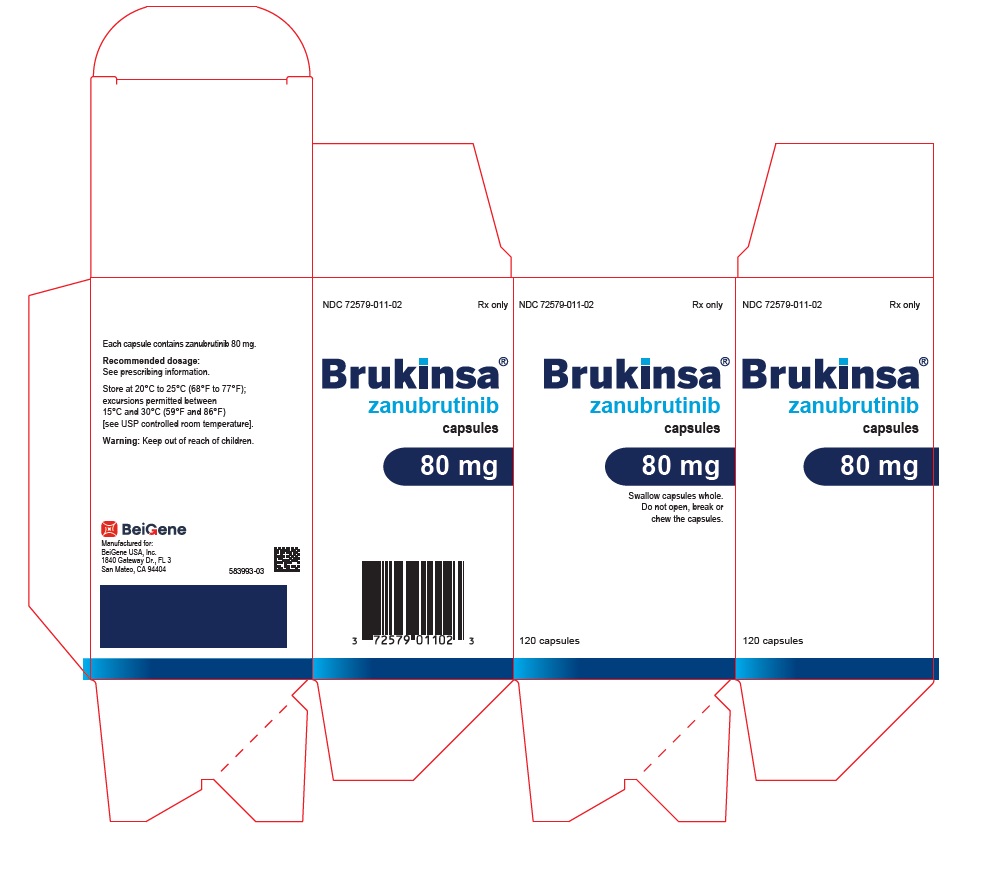
Brukinsa zanubrutinib 80 mg Capsule, 120-count — NDC 72579-011-02 (Billing 72579-0011-02)
This is a package of 120 capsules of Brukinsa zanubrutinib 80 mg Capsule from BeOne Medicines USA, Inc., marketed since Nov 2019 and currently FDA-listed. It is this product's only package size.
NDC database record
One package, one record: these facts belong to NDC 72579-011-02 alone.
- Record
- FDA NDC Directory package listing · Human prescription drug
- Code segments
- 72579 labeler · 011 product · 02 package
- Package marketed since
- Nov 14, 2019
- Sample package
- No — commercial package
- Listing certified through
- Dec 31, 2027
- Billing quantity
- 120 EA per package
- Barcode (UPC-A, from the NDC)
- 3 7257901102 3
- Medicaid fills, this package
- 2,622 prescriptions in the last four reported quarters
- FDA record last changed
- Oct 8, 2026
Identity & classification
Regulatory identifiers FDA, NLM and CMS codes for this package
Drug-database identifiers Medi-Span GPI and First Databank GCN / HICL / AHFS classification
- GSN (GCN sequence number): 080479
- GCN: 47336
- HICL (First Databank): 046212
- AHFS class code: 10:00.00.00
Where does this data come from?
- FDA openFDA NDC Directory · synced Oct 8, 2026
- FDA label on DailyMed · label index refreshed Oct 8, 2026
- RxNorm (NLM RxNav) · catalog refreshed Oct 8, 2026
- Medi-Span GPI (licensed)
- First Databank (licensed) · refreshed Oct 8, 2026
Clinical
Zanubrutinib is used to treat mantle cell lymphoma (MCL; a fast-growing cancer that begins in the cells of the immune system) in adults who have already been treated with at least one other chemotherapy medication. Zanubrutinib is also used to treat adults with Waldenstrom's macroglobulinemia (WM; a slow-growing cancer that begins in certain white blood cells in your bone marrow), chronic lymphocytic leukemia (CLL; a type of cancer that begins in the white blood cells), and small lymphocytic lymphoma (SLL; a type of cancer that begins mostly in the lymph nodes). It is also used to treat margin...
Read the full MedlinePlus article ↗- It treats certain B-cell cancers in adults: mantle cell lymphoma, Waldenström's macroglobulinemia, marginal zone lymphoma, chronic lymphocytic leukemia or small lymphocytic lymphom...
- Take Brukinsa by mouth, once or twice a day as prescribed, with or without food. Swallow it whole with water. Don't open, break or chew capsules, and don't chew or crush tablets. I...
- Common ones include low white blood cell and platelet counts, colds and other upper respiratory infections, bruising or bleeding, muscle and joint pain, and rash. Your doctor will...
- Call for fever or signs of infection, unusual or severe bleeding, black or bloody stools, a severe headache, a racing or irregular heartbeat, fainting, chest discomfort, or signs o...
Patient education
Supplement & herbal interactions
Some supplements/herbs that may interact with Zanubrutinib — tap one for details:
Where does this data come from?
- MedlinePlus (NLM) · refreshed Oct 8, 2026
- FDA label on DailyMed · label index refreshed Oct 8, 2026
Ask a licensed pharmacist directly — free, answered by our team.
Pricing
A drug doesn't have one price. Each row is a different public payment system, and none is what you'd pay at the counter — that depends on your insurance. The ⓘ on each row explains what it measures.
| Price system | Per each | Per package |
|---|---|---|
| Retail pharmacies payNADAC · weekly | Not in the retail survey — common for institutional, discontinued, or low-volume packs. | |
| Medicaid paysCMS SDUD · 12 mo | $130.12 | $15,614.08 / 120 capsules |
| Medicare drug plans payPart D · Q2 2026 | $282.18 | $33,861.24 / 120 capsules |
Where does this data come from?
- CMS NADAC weekly file
- CMS ASP pricing files · refreshed Sep 20, 2026
- CMS Medicaid State Drug Utilization Data · through Q1 2026
- CMS Part D plan pricing files · refreshed Sep 24, 2026
- VA National Acquisition Center price file
Packaging — all sizes for this product
| Package NDC | Description | Marketing start | Marketing end | Status |
|---|---|---|---|---|
| 72579-0011-02 You're viewing this Main listing | 1 BOTTLE, PLASTIC in 1 CARTON / 120 CAPSULE in 1 BOTTLE, PLASTIC | 2019-11-14 | — | Active |
Therapeutic equivalents
| Product | Labeler | Pack | NADAC/unit | TE | Status | Price vs. this |
|---|---|---|---|---|---|---|
| Brukinsa 80 mgthis 72579-0011-02 | BeOne | 120 capsules | — | — | FDA listed | — |
Where does this data come from?
- FDA openFDA NDC Directory · synced Oct 8, 2026
- FDA Orange Book · refreshed Oct 9, 2026
- CMS NADAC weekly file
Availability & generic status
We did not find an FDA-approved generic match for this exact strength, form and route. Patent/protection dates below may affect future generic timing.
Why the date isn’t exact: Generic timing can change because patents may be challenged, settled, licensed, added, removed, or worked around with a narrower label — and FDA approval does not always mean a pharmacy can get the generic today.
Our estimate: 2036 to 2037 a wide window
How sure: Probable. More likely than not, but it can still move.
Why then: The patent fight is likely to end in an agreement that sets the launch. The terms are not public yet.
That is before the January 2043 date above, which is common: a court ruling or a deal with the brand’s maker often lets a generic in before the last patent runs out.
See the full forecast for generic Brukinsa →🛈 What do these terms mean?
- Patent
- Legal protection listed in the Orange Book that may delay generic approval or launch. Issued by the U.S. Patent & Trademark Office.
- Substance patent
- Covers the active drug molecule itself — the hardest to design around. A generic generally can’t launch until it expires.
- Formulation (product) patent
- Covers a specific formulation or dosage form. A generic can sometimes work around it with a different formulation.
- Method-of-use patent
- A patent covering one specific approved use of the drug — not necessarily the whole molecule. A generic can sometimes launch with a “skinny label” that carves out the protected use and keeps the others.
- Skinny label
- A generic label that omits a still-patented use when the FDA allows it — letting a generic reach the market for the unprotected uses.
- Exclusivity
- FDA-granted marketing protection, separate from patents — e.g. 5-yr new chemical entity, 7-yr orphan drug, or a +6-month pediatric extension.
- Paragraph IV
- A generic applicant’s formal challenge to a listed patent. It can potentially lead to earlier generic entry, but often involves litigation or a settlement.
- RLD / RS
- Reference Listed Drug — the brand product the FDA uses as the reference for generic applications. Reference Standard — the product the FDA expects generics to compare against in bioequivalence testing.
- TE / AB rating
- FDA therapeutic-equivalence rating. An AB rating generally means the FDA considers a generic therapeutically equivalent to — and substitutable for — the brand.
- LOE (loss of exclusivity)
- The latest patent or exclusivity currently listed — the loss-of-exclusivity / latest-listed-protection date shown on this page. Paragraph-IV challenges and settlements can move the real date earlier; FDA approval and a manufacturer’s decision to market can move it later.
Built from the FDA Orange Book. The bars above are scaled to each protection’s expiry; the red LOE marker is the last one to lapse.
| Patent | Type | Use code | Expires |
|---|---|---|---|
| US 9447106 ↗ | Drug substance | U-2145 | Apr 22, 2034 |
| US 11911386 ↗ | Method of use | U-3715 | Jan 19, 2043 |
| US 11911386 ↗ | Method of use | U-3720 | Jan 19, 2043 |
| US 11911386 ↗ | Method of use | U-3719 | Jan 19, 2043 |
| US 11911386 ↗ | Method of use | U-3718 | Jan 19, 2043 |
| US 11911386 ↗ | Method of use | U-3717 | Jan 19, 2043 |
| US 11911386 ↗ | Method of use | U-3716 | Jan 19, 2043 |
| US 11884674 ↗ | Method of use | U-1745 | Aug 15, 2037 |
| US 11884674 ↗ | Method of use | U-2145 | Aug 15, 2037 |
| US 11884674 ↗ | Method of use | U-2537 | Aug 15, 2037 |
| US 11884674 ↗ | Method of use | U-2666 | Aug 15, 2037 |
| US 11884674 ↗ | Method of use | U-3063 | Aug 15, 2037 |
| US 11884674 ↗ | Method of use | U-3486 | Aug 15, 2037 |
| US 11591340 ↗ | Method of use | U-1745 | Aug 15, 2037 |
| US 11591340 ↗ | Method of use | U-2145 | Aug 15, 2037 |
| US 11591340 ↗ | Method of use | U-2537 | Aug 15, 2037 |
| US 11591340 ↗ | Method of use | U-2666 | Aug 15, 2037 |
| US 11591340 ↗ | Method of use | U-3063 | Aug 15, 2037 |
| US 11591340 ↗ | Method of use | U-3486 | Aug 15, 2037 |
| US 11701357 ↗ | Method of use | U-3860 | Jun 24, 2039 |
| US 9447106 ↗ | Drug substance | U-1745 | Apr 22, 2034 |
| US 10570139 ↗ | Method of use | U-1745 | Apr 22, 2034 |
| US 9447106 ↗ | Drug substance | U-3063 | Apr 22, 2034 |
| US 9447106 ↗ | Drug substance | U-2537 | Apr 22, 2034 |
| US 9447106 ↗ | Drug substance | U-2666 | Apr 22, 2034 |
| US 10570139 ↗ | Method of use | U-2666 | Apr 22, 2034 |
| US 10570139 ↗ | Method of use | U-2537 | Apr 22, 2034 |
| US 11142528 ↗ | Method of use | U-2666 | Apr 22, 2034 |
| US 11142528 ↗ | Method of use | U-2537 | Apr 22, 2034 |
| US 11142528 ↗ | Method of use | U-1745 | Apr 22, 2034 |
| US 11142528 ↗ | Method of use | U-2145 | Apr 22, 2034 |
| US 11142528 ↗ | Method of use | U-3063 | Apr 22, 2034 |
| US 9447106 ↗ | Drug substance | U-3860 | Apr 22, 2034 |
| US 11911386 ↗ | Method of use | U-3875 | Jan 19, 2043 |
| US 11786531 ↗ | Method of use | U-3875 | Jan 19, 2043 |
| US 11786531 ↗ | Method of use | U-3715 | Jan 19, 2043 |
| US 11786531 ↗ | Method of use | U-3716 | Jan 19, 2043 |
| US 11786531 ↗ | Method of use | U-3717 | Jan 19, 2043 |
| US 11786531 ↗ | Method of use | U-3718 | Jan 19, 2043 |
| US 11786531 ↗ | Method of use | U-3719 | Jan 19, 2043 |
| US 11786531 ↗ | Method of use | U-3720 | Jan 19, 2043 |
| US 11970500 ↗ | Method of use | U-1745 | Aug 15, 2037 |
| US 11970500 ↗ | Method of use | U-3860 | Aug 15, 2037 |
| US 11970500 ↗ | Method of use | U-3486 | Aug 15, 2037 |
| US 11970500 ↗ | Method of use | U-3063 | Aug 15, 2037 |
| US 11970500 ↗ | Method of use | U-2666 | Aug 15, 2037 |
| US 11970500 ↗ | Method of use | U-2537 | Aug 15, 2037 |
| US 11970500 ↗ | Method of use | U-2145 | Aug 15, 2037 |
| US 10570139 ↗ | Method of use | U-3860 | Apr 22, 2034 |
| US 11142528 ↗ | Method of use | U-3860 | Apr 22, 2034 |
| US 11884674 ↗ | Method of use | U-3860 | Aug 15, 2037 |
| US 11591340 ↗ | Method of use | U-3727 | Aug 15, 2037 |
| US 11591340 ↗ | Method of use | U-3729 | Aug 15, 2037 |
| US 11591340 ↗ | Method of use | U-3728 | Aug 15, 2037 |
| US 10570139 ↗ | Method of use | U-3063 | Apr 22, 2034 |
| US 10570139 ↗ | Method of use | U-3486 | Apr 22, 2034 |
| US 9447106 ↗ | Drug substance | U-3486 | Apr 22, 2034 |
| US 11142528 ↗ | Method of use | U-3486 | Apr 22, 2034 |
| US 10570139 ↗ | Method of use | U-2145 | Apr 22, 2034 |
| US 11896596 ↗ | Method of use | U-3715 | Jan 19, 2043 |
| US 11896596 ↗ | Method of use | U-3720 | Jan 19, 2043 |
| US 11896596 ↗ | Method of use | U-3719 | Jan 19, 2043 |
| US 11896596 ↗ | Method of use | U-3718 | Jan 19, 2043 |
| US 11896596 ↗ | Method of use | U-3717 | Jan 19, 2043 |
| US 11896596 ↗ | Method of use | U-3716 | Jan 19, 2043 |
| US 11896596 ↗ | Method of use | U-3875 | Jan 19, 2043 |
| US 11851437 ↗ | Drug substance | — | Aug 15, 2037 |
| US 10927117 ↗ | Drug substance | — | Aug 15, 2037 |
| Code | What it grants | Expires |
|---|---|---|
| I-817 | New indication (3-year) | Jan 19, 2026 |
| I-936 | New indication (3-year) | Mar 7, 2027 |
| ODE-274 | Orphan Drug Exclusivity (7-year) | Jan 19, 2030 |
| ODE-276 | Orphan Drug Exclusivity (7-year) | Nov 14, 2026 |
| ODE-370 | Orphan Drug Exclusivity (7-year) | Sep 14, 2028 |
| ODE-371 | Orphan Drug Exclusivity (7-year) | Aug 31, 2028 |
| ODE-467 | Orphan Drug Exclusivity (7-year) | Mar 7, 2031 |
Is there a generic version of BRUKINSA 80 MG CAPSULE?
The FDA approved a generic — why can’t I get it at my pharmacy yet?
Why do different websites show different generic release dates?
What does “FDA listed” mean?
What does a patent or protection date mean here?
What does “current Orange Book estimate” mean?
Can a generic come out before the last patent expires?
Can a generic come out after the listed dates?
What is the difference between patents and exclusivity?
Why are there multiple patent dates?
Where does this data come from?
- FDA Orange Book · refreshed Oct 9, 2026
What it looks like
Where does this data come from?
- FDA label on DailyMed · label index refreshed Oct 8, 2026
Inactive Ingredients / Excipients
Inactive ingredients, also called excipients, are components of the drug product other than the active ingredient. They may include fillers, dyes, coatings, preservatives, flavors, or other formulation ingredients.
🧪 Avoiding an ingredient? See Zanubrutinib inactive ingredients by manufacturer: every current product's list side by side, so you can ask your pharmacy for the version that does not list it.
💡 Tap an ingredient (hover on desktop) to see what it is and why it’s used.
-
UNII M28OL1HH48
Croscarmellose sodium is a plant-based substance derived from cellulose. It acts as a disintegrant, helping tablets and capsules break down quickly in the digestive system so the medicine can be absorbed.
-
UNII XM0M87F357
A dark iron oxide compound that gives medicines their black or dark color. It's used as a colorant in tablets and capsules to help identify the product and make it visually distinctive.
-
UNII 2G86QN327L
Gelatin is a protein derived from animal collagen, commonly used in medicines as a gelling agent and capsule material. It helps create soft or hard capsule shells that hold and release medication, and can also thicken liquid formulations.
-
UNII 70097M6I30
Magnesium stearate is a salt made from magnesium and stearic acid, a fatty substance. It's used in tablets and capsules as a lubricant and glidant to help ingredients flow smoothly during manufacturing and prevent sticking.
-
UNII OP1R32D61U
Microcrystalline cellulose is a purified form of cellulose, a natural fiber from plant sources. It acts as a binder and filler in tablets and capsules, helping hold ingredients together and give the medicine its shape and size.
-
UNII ETJ7Z6XBU4
Silicon dioxide is a naturally occurring mineral used as a glidant and anti-caking agent. It helps powder ingredients flow smoothly and prevents clumping during manufacturing and storage.
-
UNII 368GB5141J
A detergent and foaming agent derived from coconut or palm oil. In medications, it helps break down and mix oil and water-based ingredients, aids in tablet disintegration, and improves how the drug dissolves and spreads in the mouth or digestive system.
-
UNII 15FIX9V2JP
Titanium dioxide is a bright white mineral powder commonly used as a colorant and opacifying agent. It makes pills and tablets white or lighter in color and helps make coatings non-transparent.
8 inactive ingredients listed in the exact product block matched to this NDC.
Where does this data come from?
ingredient classCode="IACT" elements from the exact product block matched by this NDC. Label-section narrative from DailyMed / the openFDA label index is shown separately when available.- FDA label on DailyMed · label index refreshed Oct 8, 2026
- FDA openFDA NDC Directory · synced Oct 8, 2026
Inactive ingredient FAQ
Are inactive ingredients the same for every manufacturer?
Why might an inactive ingredient be missing?
Can inactive ingredients matter?
Manufacturer & labeler
More NDCs from BeOne Medicines USA, Inc. labeler code 72579
- BEQALZI sonrotoclax Kit NDC 72579-015-04
- Beqalzi sonrotoclax 5 mg Tablet, Film Coated NDC 72579-017-01
- Beqalzi sonrotoclax 1 mg Tablet, Film Coated NDC 72579-020-01
- Beqalzi sonrotoclax 80 mg Tablet, Film Coated NDC 72579-022-01
- Beqalzi sonrotoclax 20 mg Tablet, Film Coated NDC 72579-025-01
- TEVIMBRA tislelizumab-jsgr 10 mg/mL Injection, Solution, Concentrate NDC 72579-121-01
Where does this data come from?
- FDA openFDA NDC Directory · synced Oct 8, 2026
- Drugs@FDA
Full prescribing information FDA SPL
🎯 Indications and Usage ▾
1 INDICATIONS AND USAGE BRUKINSA is a kinase inhibitor indicated for the treatment of adult patients with: Mantle cell lymphoma (MCL) who have received at least one prior therapy. ( 1.1 ) This indication is approved under accelerated approval based on overall response rate. Continued approval for this indication may be contingent upon verification and description of clinical benefit in a confirmatory trial.
Waldenström's macroglobulinemia (WM). ( 1.2 ) Relapsed or refractory marginal zone lymphoma (MZL) who have received at least one anti–CD20-based regimen. ( 1.3 ) This indication is approved under accelerated approval based on overall response rate.
Continued approval for this indication may be contingent upon verification and description of clinical benefit in a confirmatory trial. Chronic lymphocytic leukemia (CLL) or small lymphocytic lymphoma (SLL). ( 1.4 ) Relapsed or refractory follicular lymphoma (FL), in combination with obinutuzumab, after two or more lines of systemic therapy.
( 1.5 ) This indication is approved under accelerated approval based on response rate and durability of response. Continued approval for this indication may be contingent upon verification and description of clinical benefit in a confirmatory trial.
1.1Mantle Cell Lymphoma BRUKINSA is indicated for the treatment of adult patients with mantle cell lymphoma (MCL) who have received at least one prior therapy. This indication is approved under accelerated approval based on overall response rate [see Clinical Studies (14.1) ] . Continued approval for this indication may be contingent upon verification and description of clinical benefit in a confirmatory trial.
1.2Waldenström's Macroglobulinemia BRUKINSA is indicated for the treatment of adult patients with Waldenström's macroglobulinemia (WM) [see Clinical Studies (14.2) ] .
1.3Marginal Zone Lymphoma BRUKINSA is indicated for the treatment of adult patients with relapsed or refractory marginal zone lymphoma (MZL) who have received at least one anti–CD20-based regimen. This indication is approved under accelerated approval based on overall response rate [see Clinical Studies (14.3) ] . Continued approval for this indication may be contingent upon verification and description of clinical benefit in a confirmatory trial.
1.4Chronic Lymphocytic Leukemia or Small Lymphocytic Lymphoma BRUKINSA is indicated for the treatment of adult patients with chronic lymphocytic leukemia (CLL) or small lymphocytic lymphoma (SLL) [see Clinical Studies (14.4) ] .
1.5Follicular Lymphoma BRUKINSA is indicated for the treatment of adult patients with relapsed or refractory follicular lymphoma (FL), in combination with obinutuzumab, after two or more lines of systemic therapy. This indication is approved under accelerated approval based on response rate and durability of response [see Clinical Studies (14.5) ] . Continued approval for this indication may be contingent upon verification and description of clinical benefit in a confirmatory trial.
⏱️ Dosage and Administration ▾
2 DOSAGE AND ADMINISTRATION Recommended dosage: 160 mg orally twice daily or 320 mg orally once daily with or without food; swallow whole with water. Tablets can be split in half as prescribed by the healthcare provider. ( 2.1 ) Reduce BRUKINSA dose in patients with severe hepatic impairment.
( 2.2 , 8.7 ) Advise patients not to open, break, or chew capsules. ( 2.1 ) Advise patients not to chew or crush tablets. ( 2.1 ) Manage toxicity using treatment interruption, dose reduction, or discontinuation.
( 2.4 )
2.1Recommended Dosage The recommended dosage of BRUKINSA for monotherapy or in combination with obinutuzumab is 160 mg taken orally twice daily or 320 mg taken orally once daily until disease progression or unacceptable toxicity. Capsule Administration Instructions Administer BRUKINSA capsules with or without food [see Clinical Pharmacology (12.3) ] . Advise patients to swallow capsules whole with water and not to open, break, or chew capsules.
Tablet Administration Instructions Administer BRUKINSA tablets with or without food [see Clinical Pharmacology (12.3) ]. Advise patients to swallow tablets whole with water and not to chew or crush the tablets. The tablets can be split in half as prescribed by the healthcare provider.
Missed Dose If a dose of BRUKINSA is missed, it should be taken as soon as possible on the same day with a return to the normal schedule the following day.
2.2Dosage Modification for Use in Hepatic Impairment The recommended dosage of BRUKINSA for patients with severe hepatic impairment (Child-Pugh class C) is 80 mg orally twice daily; no dosage modification is recommended for patients with mild or moderate hepatic impairment (Child-Pugh class A or B) [see Use in Specific Populations (8.7) and Clinical Pharmacology (12.3) ].
2.3Dosage Modifications for Drug Interactions Recommended dosage modifications of BRUKINSA for drug interactions are provided in Table 1 [see Drug Interactions (7.1) ] . Table 1: Dosage Modifications for Use with CYP3A Inhibitors or Inducers Coadministered Drug Recommended BRUKINSA Dosage (Starting Dose: 160 mg twice daily or 320 mg once daily) Clarithromycin 250 mg twice daily Since clarithromycin 250 mg twice daily acts as a moderate CYP3A inhibitor, it is recommended that patients be administered clarithromycin 250 mg twice daily with 80 mg BRUKINSA twice daily [see Clinical Pharmacology (12.3) ] .
80 mg twice daily Modify or interrupt zanubrutinib dose as recommended for adverse reactions [see Dosage and Administration (2.4) ] . Clarithromycin 500 mg twice daily 80 mg once daily Posaconazole suspension 100 mg once daily 80 mg twice daily Posaconazole suspension dosage higher than 100 mg once daily Posaconazole delayed-release tablets 300 mg once daily Posaconazole intravenous 300 mg once daily 80 mg once daily Other strong CYP3A inhibitor 80 mg once daily Moderate CYP3A inhibitor 80 mg twice daily Strong CYP3A inducer Avoid concomitant use.
Moderate CYP3A inducer Avoid concomitant use. If these inducers cannot be avoided, increase BRUKINSA dose to 320 mg twice daily. After discontinuation of a CYP3A inhibitor or moderate CYP3A inducer, resume previous dose of BRUKINSA [see Dosage and Administration (2.1 , 2.2) and Drug Interactions (7.1) ] .
2.4Dosage Modifications for Adverse Reactions Recommended dosage modifications of BRUKINSA for Grade 3 or higher adverse reactions are provided in Table 2. Table 2: Recommended Dosage Modifications for Adverse Reaction Adverse Reaction Adverse Reaction Occurrence Dosage Modification (Starting Dose: 160 mg twice daily or 320 mg once daily) Hematological toxicities [see Warnings and Precautions (5.3) ] Grade 3 or Grade 4 febrile neutropenia Platelet count decreased to 25,000-50,000/mm 3 with significant bleeding Neutrophil count decreased to <500/mm 3 (lasting more than 10 consecutive days) Platelet count decreased to <25,000/mm 3 (lasting more than 10 consecutive days) First Interrupt BRUKINSA Once toxicity has resolved to Grade 1 or low… [Excerpted — this section continues on DailyMed.]
💊 Dosage Forms and Strengths ▾
3 DOSAGE FORMS AND STRENGTHS Capsules: Each 80 mg capsule is a size 0, white to off-white opaque capsule marked with "ZANU 80" in black ink. Tablets: 160 mg, blue, oval, film-coated tablets debossed with "zanu" on one side and functional scoring on the other side. Capsules: 80 mg. ( 3 ) Tablets: 160 mg with functional scoring. ( 3 )
⛔ Contraindications ▾
4 CONTRAINDICATIONS None. None. ( 4 )
⚠️ Warnings and Cautions ▾
5 WARNINGS AND PRECAUTIONS Hemorrhage : Monitor for bleeding and manage appropriately. ( 5.1 ) Infections : Monitor patients for signs and symptoms of infection, including opportunistic infections, and treat as needed. ( 5.2 ) Cytopenias : Monitor complete blood counts during treatment.
( 5.3 ) Second Primary Malignancies : Other malignancies have developed including skin cancers and non-skin carcinomas. Monitor and advise patients to use sun protection. ( 5.4 ) Cardiac Arrhythmias : Monitor for signs and symptoms of arrhythmias and manage appropriately.
( 5.5 ) Hepatotoxicity, Including Drug-Induced Liver Injury : Monitor hepatic function throughout treatment. ( 5.6 ) Embryo-Fetal Toxicity : Can cause fetal harm. Advise women of the potential risk to a fetus and to use effective contraception.
( 5.7 )
5.1Hemorrhage Fatal and serious hemorrhage has occurred in patients with hematological malignancies treated with BRUKINSA. Grade 3 or higher hemorrhage including intracranial and gastrointestinal hemorrhage, hematuria, and hemothorax was reported in 3.8% of patients treated with BRUKINSA in clinical trials, with fatalities occurring in 0.2% of patients. Bleeding of any grade, excluding purpura and petechiae, occurred in 32% of patients.
Bleeding has occurred in patients with and without concomitant antiplatelet or anticoagulation therapy. Coadministration of BRUKINSA with antiplatelet or anticoagulant medications may further increase the risk of hemorrhage. Monitor for signs and symptoms of bleeding.
Discontinue BRUKINSA if intracranial hemorrhage of any grade occurs. Consider the benefit-risk of withholding BRUKINSA for 3-7 days before and after surgery depending upon the type of surgery and the risk of bleeding.
5.2Infections Fatal and serious infections (including bacterial, viral, or fungal infections) and opportunistic infections have occurred in patients with hematological malignancies treated with BRUKINSA. Grade 3 or higher infections occurred in 26% of patients, most commonly pneumonia (7.9%), with fatal infections occurring in 3.2% of patients. Infections due to hepatitis B virus (HBV) reactivation have occurred.
Consider prophylaxis for herpes simplex virus, pneumocystis jirovecii pneumonia, and other infections according to standard of care in patients who are at increased risk for infections. Monitor and evaluate patients for fever or other signs and symptoms of infection and treat appropriately.
5.3Cytopenias Grade 3 or 4 cytopenias, including neutropenia (21%), thrombocytopenia (8%), and anemia (8%) based on laboratory measurements, developed in patients treated with BRUKINSA [see Adverse Reactions (6.1) ]. Grade 4 neutropenia occurred in 10% of patients, and Grade 4 thrombocytopenia occurred in 2.5% of patients. Monitor complete blood counts regularly during treatment and interrupt treatment, reduce the dose, or discontinue treatment as warranted [see Dosage and Administration (2.4) ] .
Treat using growth factor or transfusions, as needed.
5.4Second Primary Malignancies Second primary malignancies, including non-skin carcinoma, have occurred in 14% of patients treated with BRUKINSA. The most frequent second primary malignancy was non-melanoma skin cancers (8%), followed by other solid tumors in 7% of the patients (including melanoma in 1% of patients) and hematologic malignancies (0.7%). Advise patients to use sun protection and monitor patients for the development of second primary malignancies.
5.5Cardiac Arrhythmias Serious cardiac arrhythmias have occurred in patients treated with BRUKINSA. Atrial fibrillation and atrial flutter were reported in 4.4% of patients treated with BRUKINSA, including Grade 3 or higher cases in 1.9% of patients. Patients with cardiac risk factors, hypertension, and acute infections may be at increased risk.
Grade 3 or higher ventricular arrhythmias were reported in 0.3% of patients. Monitor for signs and symptoms of cardiac arrhythmias (e.g., palpitations, dizziness, syncope, d… [Excerpted — this section continues on DailyMed.]
🤒 Adverse Reactions ▾
6 ADVERSE REACTIONS The following clinically significant adverse reactions are discussed in more detail in other sections of the labeling: Hemorrhage [see Warnings and Precautions (5.1) ] Infections [see Warnings and Precautions (5.2) ] Cytopenias [see Warnings and Precautions (5.3) ] Second Primary Malignancies [see Warnings and Precautions (5.4) ] Cardiac Arrhythmias [see Warnings and Precautions (5.5) ] Hepatotoxicity, including DILI [see Warnings and Precautions (5.6) ] The most common adverse reactions (≥30%), including laboratory abnormalities, are neutrophil count decreased, platelet count decreased, upper respiratory tract infection, hemorrhage, and musculoskeletal pain.
( 6.1 ) To report SUSPECTED ADVERSE REACTIONS, contact BeOne Medicines at 1-877-828-5596 or FDA at 1-800-FDA-1088 or www.fda.gov/medwatch .
6.1Clinical Trials Experience Because clinical trials are conducted under widely varying conditions, adverse reaction rates observed in the clinical trials of a drug cannot be directly compared to rates in the clinical trials of another drug and may not reflect the rates observed in practice. The data in the WARNINGS AND PRECAUTIONS reflect exposure to BRUKINSA in nine monotherapy and 2 combination clinical trials, administered at 160 mg twice daily in 1608 patients and at 320 mg once daily in 121 patients. Among these 1729 patients, the median duration of exposure was 27.6 months, 78% of patients were exposed for at least 12 months, and 60% of patients were exposed for at least 24 months.
In this pooled safety population, the most common adverse reactions (≥30%), including laboratory abnormalities, were neutrophil count decreased (51%), platelet count decreased (41%), upper respiratory tract infection (38%), hemorrhage (32%), and musculoskeletal pain (31%). Mantle Cell Lymphoma (MCL) The safety of BRUKINSA was evaluated in 118 patients with MCL who received at least one prior therapy in two single-arm clinical trials, BGB-3111-206 [NCT03206970] and BGB-3111-AU-003 [NCT02343120] [see Clinical Studies (14.1) ] .
The median age of patients who received BRUKINSA in studies BGB-3111-206 and BGB-3111-AU-003 was 62 years (range: 34 to 86), 75% were male, 75% were Asian, 21% were White, and 94% had an ECOG performance status of 0 to 1. Patients had a median of 2 prior lines of therapy (range: 1 to 4). The BGB-3111-206 trial required a platelet count ≥75 × 10 9 /L and an absolute neutrophil count ≥1 × 10 9 /L independent of growth factor support, hepatic enzymes ≤2.5 × upper limit of normal, total bilirubin ≤1.5 × ULN.
The BGB-3111-AU-003 trial required a platelet count ≥50 × 10 9 /L and an absolute neutrophil count ≥1 × 10 9 /L independent of growth factor support, hepatic enzymes ≤3 × upper limit of normal, total bilirubin ≤1.5 × ULN. Both trials required a creatinine clearance (CLcr) ≥30 mL/min. Both trials excluded patients with prior allogeneic hematopoietic stem cell transplant, exposure to a BTK inhibitor, known infection with HIV, and serologic evidence of active hepatitis B or hepatitis C infection, and patients requiring strong CYP3A inhibitors or strong CYP3A inducers.
Patients received BRUKINSA 160 mg twice daily or 320 mg once daily. Among patients receiving BRUKINSA, 79% were exposed for 6 months or longer, and 68% were exposed for greater than one year. Fatal adverse reactions within 30 days of the last dose of BRUKINSA occurred in 8 (7%) of 118 patients with MCL.
Fatal cases included pneumonia in 2 patients and cerebral hemorrhage in one patient. Serious adverse reactions were reported in 36 patients (31%). The most frequent serious adverse reactions that occurred were pneumonia (11%) and hemorrhage (5%).
Of the 118 patients with MCL treated with BRUKINSA, 8 (7%) patients discontinued treatment due to adverse reactions in the trials. The most frequent adverse reaction leading to treatment discontinuation was pneumonia (3.4%). One (0.8%) patient experienced an adverse reaction leading to dose reduction (hep… [Excerpted — this section continues on DailyMed.]
🔄 Drug Interactions ▾
7 DRUG INTERACTIONS CYP3A Inhibitors: Modify BRUKINSA dose with moderate or strong CYP3A inhibitors as described. ( 2.3 , 7.1 ) CYP3A Inducers: Avoid coadministration with strong or moderate CYP3A inducers. Dose adjustment may be recommended with moderate CYP3A inducers. ( 2.3 , 7.1 )
7.1Effect of Other Drugs on BRUKINSA Table 17: Drug Interactions that Affect Zanubrutinib Moderate and Strong CYP3A Inhibitors Clinical Impact Coadministration with a moderate or strong CYP3A inhibitor increases zanubrutinib C max and AUC [see Clinical Pharmacology (12.3) ] which may increase the risk of BRUKINSA toxicities. Prevention or management Reduce BRUKINSA dosage when coadministered with moderate or strong CYP3A inhibitors [see Dosage and Administration (2.3) ] . Moderate and Strong CYP3A Inducers Clinical Impact Coadministration with a moderate or strong CYP3A inducer decreases zanubrutinib C max and AUC [see Clinical Pharmacology (12.3) ] which may reduce BRUKINSA efficacy.
Prevention or management Avoid coadministration of BRUKINSA with strong CYP3A inducers [see Dosage and Administration (2.3) ] . Avoid coadministration of BRUKINSA with moderate CYP3A inducers [see Dosage and Administration (2.3) ] . If these inducers cannot be avoided, increase BRUKINSA dosage to 320 mg twice daily [see Dosage and Administration (2.3) ] .
👥 Use in Specific Populations ▾
8 USE IN SPECIFIC POPULATIONS Lactation: Advise not to breastfeed. ( 8.2 )
8.1Pregnancy Risk Summary Based on findings in animals, BRUKINSA can cause fetal harm when administered to pregnant women. There are no available data on BRUKINSA use in pregnant women to evaluate for a drug-associated risk of major birth defects, miscarriage, or adverse maternal or fetal outcomes. In animal reproduction studies, oral administration of zanubrutinib to pregnant rats during the period of organogenesis was associated with fetal heart malformation at approximately 5-fold human exposures (see Data ) .
Women should be advised to avoid pregnancy while taking BRUKINSA. If BRUKINSA is used during pregnancy, or if the patient becomes pregnant while taking BRUKINSA, the patient should be apprised of the potential hazard to the fetus. The estimated background risk of major birth defects and miscarriage for the indicated population is unknown.
All pregnancies have a background risk of birth defect, loss, or other adverse outcomes. In the U.S. general population, the estimated background risk of major birth defects and miscarriage in clinically recognized pregnancies is 2% to 4% and 15% to 20%, respectively. Data Animal Data Embryo-fetal development toxicity studies were conducted in both rats and rabbits.
Zanubrutinib was administered orally to pregnant rats during the period of organogenesis at doses of 30, 75, and 150 mg/kg/day. Malformations in the heart (2 or 3-chambered hearts) were noted at all dose levels in the absence of maternal toxicity. The dose of 30 mg/kg/day is approximately 5 times the exposure (AUC) in patients receiving the recommended dose of 160 mg twice daily.
Administration of zanubrutinib to pregnant rabbits during the period of organogenesis at 30, 70, and 150 mg/kg/day resulted in postimplantation loss at the highest dose. The dose of 150 mg/kg is approximately 32 times the exposure (AUC) in patients at the recommended dose and was associated with maternal toxicity. In a pre and postnatal developmental toxicity study, zanubrutinib was administered orally to rats at doses of 30, 75, and 150 mg/kg/day from implantation through weaning.
The offspring from the middle and high dose groups had decreased body weights preweaning, and all dose groups had adverse ocular findings (e.g., cataract, protruding eye). The dose of 30 mg/kg/day is approximately 5 times the AUC in patients receiving the recommended dose.
8.2Lactation Risk Summary There are no data on the presence of zanubrutinib or its metabolites in human milk, the effects on the breastfed child, or the effects on milk production. Because of the potential for serious adverse reactions from BRUKINSA in a breastfed child, advise lactating women not to breastfeed during treatment with BRUKINSA and for two weeks following the last dose.
8.3Females and Males of Reproductive Potential BRUKINSA can cause embryo-fetal harm when administered to pregnant women [see Use in Specific Populations (8.1) ] . Pregnancy Testing Pregnancy testing is recommended for females of reproductive potential prior to initiating BRUKINSA therapy. Contraception Females Advise female patients of reproductive potential to use effective contraception during treatment with BRUKINSA and for 1 week following the last dose of BRUKINSA.
If this drug is used during pregnancy, or if the patient becomes pregnant while taking this drug, the patient should be informed of the potential hazard to a fetus. Males Advise men to avoid fathering a child while receiving BRUKINSA and for 1 week following the last dose of BRUKINSA.
8.4Pediatric Use Safety and effectiveness of BRUKINSA in pediatric patients have not been established.
8.5Geriatric Use Of the 1729 patients with MCL, MZL, WM, CLL/SLL, and FL in clinical studies with BRUKINSA, 59% were ≥65 years of age, and 21% were ≥75 years of age. Patients ≥65 years of age had numerically higher rates of Grade 3 or higher adverse reactions and serious adverse reactions (57% a… [Excerpted — this section continues on DailyMed.]
🤰 Pregnancy ▾
8.1Pregnancy Risk Summary Based on findings in animals, BRUKINSA can cause fetal harm when administered to pregnant women. There are no available data on BRUKINSA use in pregnant women to evaluate for a drug-associated risk of major birth defects, miscarriage, or adverse maternal or fetal outcomes. In animal reproduction studies, oral administration of zanubrutinib to pregnant rats during the period of organogenesis was associated with fetal heart malformation at approximately 5-fold human exposures (see Data ) .
Women should be advised to avoid pregnancy while taking BRUKINSA. If BRUKINSA is used during pregnancy, or if the patient becomes pregnant while taking BRUKINSA, the patient should be apprised of the potential hazard to the fetus. The estimated background risk of major birth defects and miscarriage for the indicated population is unknown.
All pregnancies have a background risk of birth defect, loss, or other adverse outcomes. In the U.S. general population, the estimated background risk of major birth defects and miscarriage in clinically recognized pregnancies is 2% to 4% and 15% to 20%, respectively. Data Animal Data Embryo-fetal development toxicity studies were conducted in both rats and rabbits.
Zanubrutinib was administered orally to pregnant rats during the period of organogenesis at doses of 30, 75, and 150 mg/kg/day. Malformations in the heart (2 or 3-chambered hearts) were noted at all dose levels in the absence of maternal toxicity. The dose of 30 mg/kg/day is approximately 5 times the exposure (AUC) in patients receiving the recommended dose of 160 mg twice daily.
Administration of zanubrutinib to pregnant rabbits during the period of organogenesis at 30, 70, and 150 mg/kg/day resulted in postimplantation loss at the highest dose. The dose of 150 mg/kg is approximately 32 times the exposure (AUC) in patients at the recommended dose and was associated with maternal toxicity. In a pre and postnatal developmental toxicity study, zanubrutinib was administered orally to rats at doses of 30, 75, and 150 mg/kg/day from implantation through weaning.
The offspring from the middle and high dose groups had decreased body weights preweaning, and all dose groups had adverse ocular findings (e.g., cataract, protruding eye). The dose of 30 mg/kg/day is approximately 5 times the AUC in patients receiving the recommended dose.
🧒 Pediatric Use ▾
8.4Pediatric Use Safety and effectiveness of BRUKINSA in pediatric patients have not been established.
🧓 Geriatric Use ▾
8.5Geriatric Use Of the 1729 patients with MCL, MZL, WM, CLL/SLL, and FL in clinical studies with BRUKINSA, 59% were ≥65 years of age, and 21% were ≥75 years of age. Patients ≥65 years of age had numerically higher rates of Grade 3 or higher adverse reactions and serious adverse reactions (57% and 38%, respectively) than patients <65 years of age (51% and 29%, respectively). No overall differences in effectiveness were observed between younger and older patients.
🧬 Clinical Pharmacology ▾
12 CLINICAL PHARMACOLOGY
12.1Mechanism of Action Zanubrutinib is a small-molecule inhibitor of Bruton's tyrosine kinase (BTK). Zanubrutinib forms a covalent bond with a cysteine residue in the BTK active site, leading to inhibition of BTK activity. BTK is a signaling molecule of the B-cell antigen receptor (BCR) and cytokine receptor pathways.
In B-cells, BTK signaling results in activation of pathways necessary for B-cell proliferation, trafficking, chemotaxis, and adhesion. In nonclinical studies, zanubrutinib inhibited malignant B-cell proliferation and reduced tumor growth.
12.2Pharmacodynamics BTK Occupancy in PBMCs and Lymph Nodes The median steady-state BTK occupancy in peripheral blood mononuclear cells was maintained at 100% over 24 hours at a total daily dose of 320 mg in patients with B-cell malignancies. The median steady-state BTK occupancy in lymph nodes was 94% to 100% following the approved recommended dosage. Cardiac Electrophysiology At the approved recommended doses (160 mg twice daily or 320 mg once daily), there were no clinically relevant effects on the QTc interval.
The effect of BRUKINSA on the QTc interval above the therapeutic exposure has not been evaluated. In Vitro Platelet Aggregation In blood samples from healthy donors, patients on anticoagulant or antiplatelet therapy, and those with severe renal dysfunction, zanubrutinib demonstrated inhibition of platelet aggregation mediated by collagen, CRP-XL, or rhodocytin. Zanubrutinib did not show meaningful inhibition of platelet aggregation for ADP and PAR4-AP.
12.3Pharmacokinetics Zanubrutinib maximum plasma concentration (C max ) and area under the plasma drug concentration over time curve (AUC) increase proportionally over a dosage range from 40 mg to 320 mg (0.13 to 1 time the recommended total daily dose). Limited systemic accumulation of zanubrutinib was observed following repeated administration. The geometric mean (%CV) zanubrutinib steady-state daily AUC is 2,099 (42%) ng∙h/mL following 160 mg twice daily and 1,917 (59%) ng∙h/mL following 320 mg once daily.
The geometric mean (%CV) zanubrutinib steady-state C max is 295 (55%) ng/mL following 160 mg twice daily and 537 (55%) ng/mL following 320 mg once daily. Absorption The median t max of zanubrutinib is 2 hours. Effect of Food BRUKINSA Capsules: Zanubrutinib AUC decreased 7% and C max increased 3% following administration of BRUKINSA capsules with a high-fat meal (1,000 calories, 50% fat) in healthy subjects.
BRUKINSA Tablets: Zanubrutinib AUC increased up to 17% and C max up to 79% following administration of BRUKINSA tablets with a high-fat meal (1,000 calories, 50% fat) in healthy subjects. Distribution The geometric mean (%CV) apparent volume of distribution (Vz/F) of zanubrutinib is 537 (73%) L. The plasma protein binding of zanubrutinib is approximately 94% and the blood-to-plasma ratio is 0.7 to 0.8.
Elimination The mean half-life (t ½ ) of zanubrutinib is approximately 2 to 4 hours following a single oral zanubrutinib dose of 160 mg or 320 mg. The geometric mean (%CV) apparent oral clearance (CL/F) of zanubrutinib is 128 (58%) L/h. Metabolism Zanubrutinib is primarily metabolized by cytochrome P450(CYP)3A.
Excretion Following a single radiolabeled zanubrutinib dose of 320 mg to healthy subjects, approximately 87% of the dose was recovered in feces (38% unchanged) and 8% in urine (less than 1% unchanged). Specific Populations No clinically significant differences in the pharmacokinetics of zanubrutinib were observed based on age (19 to 90 years), sex, race (Asian, White, and Other), body weight (36 to 144 kg), or mild, moderate or severe renal impairment (CLcr ≥15 mL/min as estimated by Cockcroft-Gault). The effect of dialysis on zanubrutinib pharmacokinetics is unknown.
Hepatic Impairment The total AUC of zanubrutinib increased by 11% in subjects with mild hepatic impairment (Child-Pugh class A), by 21% in subjects with moderate hepatic impairment (Child-Pugh class B), and by 60%… [Excerpted — this section continues on DailyMed.]
🧬 Mechanism of Action ▾
12.1Mechanism of Action Zanubrutinib is a small-molecule inhibitor of Bruton's tyrosine kinase (BTK). Zanubrutinib forms a covalent bond with a cysteine residue in the BTK active site, leading to inhibition of BTK activity. BTK is a signaling molecule of the B-cell antigen receptor (BCR) and cytokine receptor pathways.
In B-cells, BTK signaling results in activation of pathways necessary for B-cell proliferation, trafficking, chemotaxis, and adhesion. In nonclinical studies, zanubrutinib inhibited malignant B-cell proliferation and reduced tumor growth.
📦 How Supplied / Storage and Handling ▾
16 HOW SUPPLIED/STORAGE AND HANDLING How Supplied Strength Description Package Size NDC Number 80 mg white to off-white opaque capsule, marked with "ZANU 80" in black ink 120-count capsules in a bottle with a child-resistant cap 72579-011-02 160 mg blue, oval, film-coated tablets debossed with "zanu" on one side and functional scoring on the other side 60-count tablets in a bottle with a child-resistant cap 72579-122-01 Storage Store at 20°C to 25°C (68°F to 77°F); excursions permitted between 15°C and 30°C (59°F and 86°F) [See USP Controlled Room Temperature].
📦 Storage and Handling ▾
Storage Store at 20°C to 25°C (68°F to 77°F); excursions permitted between 15°C and 30°C (59°F and 86°F) [See USP Controlled Room Temperature].
📋 Description ▾
11 DESCRIPTION BRUKINSA (zanubrutinib) is a kinase inhibitor. The empirical formula of zanubrutinib is C 27 H 29 N 5 O 3 and the chemical name is ( S )-7-(1-acryloylpiperidin-4-yl)-2-(4-phenoxyphenyl)-4,5,6,7-tetrahydropyrazolo[1,5- a ]pyrimidine-3-carboxamide. Zanubrutinib is a white to off-white powder, with a pH of 7.8 in saturated solution.
The aqueous solubility of zanubrutinib is pH dependent, from very slightly soluble to practically insoluble. The molecular weight of zanubrutinib is 471.55 Daltons. Zanubrutinib has the following structure: Each BRUKINSA capsule for oral administration contains 80 mg zanubrutinib and the following inactive ingredients: colloidal silicon dioxide, croscarmellose sodium, magnesium stearate, microcrystalline cellulose, and sodium lauryl sulfate.
The capsule shell contains edible black ink, gelatin, and titanium dioxide. Each BRUKINSA tablet for oral administration contains 160 mg zanubrutinib and the following inactive ingredients: colloidal silicon dioxide, croscarmellose sodium, lactose monohydrate, magnesium stearate, microcrystalline cellulose, povidone, and sodium lauryl sulfate. The film coating contains FD&C Blue No.
1, FD&C Blue No. 2, hypromellose, titanium dioxide, and triacetin. Chemical Structure
💬 Information for Patients ▾
17 PATIENT COUNSELING INFORMATION Advise patients to read the FDA-approved patient labeling (Patient Information). Hemorrhage Inform patients to report signs or symptoms of severe bleeding. Inform patients that BRUKINSA may need to be interrupted for major surgeries or procedures [see Warnings and Precautions (5.1) ] .
Infections Inform patients to report signs or symptoms suggestive of infection [see Warnings and Precautions (5.2) ] . Cytopenias Inform patients that they will need periodic blood tests to check blood counts during treatment with BRUKINSA [see Warnings and Precautions (5.3) ] . Second Primary Malignancies Inform patients that other malignancies have been reported in patients who have been treated with BRUKINSA, including skin cancer and other solid tumors.
Advise patients to use sun protection and have monitoring for development of other cancers [see Warnings and Precautions (5.4) ] . Cardiac Arrhythmias Counsel patients to report any signs of palpitations, lightheadedness, dizziness, fainting, shortness of breath, and chest discomfort [see Warnings and Precautions (5.5) ] . Hepatotoxicity, Including Drug-Induced Liver Injury Inform patients that liver problems, including drug-induced liver injury and abnormalities in liver tests, may develop during BRUKINSA treatment.
Advise patients to contact their healthcare provider immediately if they experience abdominal discomfort, dark urine, or jaundice [see Warnings and Precautions (5.6) ] . Embryo-Fetal Toxicity Advise pregnant women and females of reproductive potential of the potential hazard to a fetus and to use effective contraception during treatment and for 1 week after the last dose of BRUKINSA [see Warnings and Precautions (5.7) ] . Advise males with female sexual partners of reproductive potential to use effective contraception during BRUKINSA treatment and for 1 week after the last dose of BRUKINSA [see Use in Specific Populations (8.3) ] .
Lactation Advise females not to breastfeed during treatment with BRUKINSA and for 2 weeks after the last dose [see Use in Specific Populations (8.2) ] . Administration Instructions BRUKINSA capsules may be taken with or without food. Advise patients that BRUKINSA capsules should be swallowed whole with a glass of water and not to open, break, or chew the capsules [see Dosage and Administration (2.1) ] .
BRUKINSA tablets may be taken with or without food. Advise patients that BRUKINSA tablets should be swallowed whole with a glass of water and not to chew or crush the tablets. Tablets can be split in half as prescribed by the healthcare provider [see Dosage and Administration (2.1) ].
Missed Dose Advise patients that if they miss a dose of BRUKINSA, they may still take it as soon as possible on the same day with a return to the normal schedule the following day [see Dosage and Administration (2.1) ] . Drug Interactions Advise patients to inform their healthcare providers of all concomitant medications, including over-the-counter medications, vitamins, and herbal products [see Drug Interactions (7.1) ] .
🧬 Pharmacokinetics ▾
12.3Pharmacokinetics Zanubrutinib maximum plasma concentration (C max ) and area under the plasma drug concentration over time curve (AUC) increase proportionally over a dosage range from 40 mg to 320 mg (0.13 to 1 time the recommended total daily dose). Limited systemic accumulation of zanubrutinib was observed following repeated administration. The geometric mean (%CV) zanubrutinib steady-state daily AUC is 2,099 (42%) ng∙h/mL following 160 mg twice daily and 1,917 (59%) ng∙h/mL following 320 mg once daily.
The geometric mean (%CV) zanubrutinib steady-state C max is 295 (55%) ng/mL following 160 mg twice daily and 537 (55%) ng/mL following 320 mg once daily. Absorption The median t max of zanubrutinib is 2 hours. Effect of Food BRUKINSA Capsules: Zanubrutinib AUC decreased 7% and C max increased 3% following administration of BRUKINSA capsules with a high-fat meal (1,000 calories, 50% fat) in healthy subjects.
BRUKINSA Tablets: Zanubrutinib AUC increased up to 17% and C max up to 79% following administration of BRUKINSA tablets with a high-fat meal (1,000 calories, 50% fat) in healthy subjects. Distribution The geometric mean (%CV) apparent volume of distribution (Vz/F) of zanubrutinib is 537 (73%) L. The plasma protein binding of zanubrutinib is approximately 94% and the blood-to-plasma ratio is 0.7 to 0.8.
Elimination The mean half-life (t ½ ) of zanubrutinib is approximately 2 to 4 hours following a single oral zanubrutinib dose of 160 mg or 320 mg. The geometric mean (%CV) apparent oral clearance (CL/F) of zanubrutinib is 128 (58%) L/h. Metabolism Zanubrutinib is primarily metabolized by cytochrome P450(CYP)3A.
Excretion Following a single radiolabeled zanubrutinib dose of 320 mg to healthy subjects, approximately 87% of the dose was recovered in feces (38% unchanged) and 8% in urine (less than 1% unchanged). Specific Populations No clinically significant differences in the pharmacokinetics of zanubrutinib were observed based on age (19 to 90 years), sex, race (Asian, White, and Other), body weight (36 to 144 kg), or mild, moderate or severe renal impairment (CLcr ≥15 mL/min as estimated by Cockcroft-Gault). The effect of dialysis on zanubrutinib pharmacokinetics is unknown.
Hepatic Impairment The total AUC of zanubrutinib increased by 11% in subjects with mild hepatic impairment (Child-Pugh class A), by 21% in subjects with moderate hepatic impairment (Child-Pugh class B), and by 60% in subjects with severe hepatic impairment (Child-Pugh class C) relative to subjects with normal liver function. The unbound AUC of zanubrutinib increased by 23% in subjects with mild hepatic impairment (Child-Pugh class A), by 43% in subjects with moderate hepatic impairment (Child-Pugh class B) and by 194% in subjects with severe hepatic impairment (Child-Pugh class C) relative to subjects with normal liver function.
Drug Interaction Studies Clinical Studies and Model-Informed Approaches CYP3A Inhibitors : Coadministration of multiple doses of CYP3A inhibitors increases zanubrutinib C max and AUC (Table 18). Table 18: Observed or Predicted Increase in Zanubrutinib Exposure After Coadministration of CYP3A Inhibitors Coadministered CYP3A Inhibitor Increase in Zanubrutinib C max Increase in Zanubrutinib AUC Observed Itraconazole (200 mg once daily) The assessment was conducted in healthy subjects with a single dose of zanubrutinib 20 mg.
157% 278% Fluconazole (400 mg once daily) The assessment was conducted in patients with B-cell lymphoma administered multiple doses of zanubrutinib at the respective recommended zanubrutinib dosages in Table 1. 81% 88% Diltiazem (180 mg once daily) 62% 62% Voriconazole (200 mg twice daily) 229% 230% Clarithromycin (250 mg twice daily) 101% 92% Predicted Posaconazole suspension (100 mg once daily) The predicted values were based on simulations with patients administered multiple doses of zanubrutinib at the respective recommended dosages in Table 1.
169% 180% Posaconazole suspension (100 mg twice daily) 207%… [Excerpted — this section continues on DailyMed.]
🧬 Pharmacodynamics ▾
12.2Pharmacodynamics BTK Occupancy in PBMCs and Lymph Nodes The median steady-state BTK occupancy in peripheral blood mononuclear cells was maintained at 100% over 24 hours at a total daily dose of 320 mg in patients with B-cell malignancies. The median steady-state BTK occupancy in lymph nodes was 94% to 100% following the approved recommended dosage. Cardiac Electrophysiology At the approved recommended doses (160 mg twice daily or 320 mg once daily), there were no clinically relevant effects on the QTc interval.
The effect of BRUKINSA on the QTc interval above the therapeutic exposure has not been evaluated. In Vitro Platelet Aggregation In blood samples from healthy donors, patients on anticoagulant or antiplatelet therapy, and those with severe renal dysfunction, zanubrutinib demonstrated inhibition of platelet aggregation mediated by collagen, CRP-XL, or rhodocytin. Zanubrutinib did not show meaningful inhibition of platelet aggregation for ADP and PAR4-AP.
🔬 Clinical Studies ▾
14 CLINICAL STUDIES
14.1Mantle Cell Lymphoma The efficacy of BRUKINSA was assessed in BGB-3111-206 [NCT03206970], a Phase 2, open-label, multicenter, single-arm trial of 86 previously treated patients with MCL who had received at least one prior therapy. BRUKINSA was given orally at a dose of 160 mg twice daily until disease progression or unacceptable toxicity. The median age of patients was 60.5 years (range: 34 to 75) and the majority were male (78%).
The median time since diagnosis to study entry was 30 months (range: 3 to 102) and the median number of prior therapies was 2 (range: 1 to 4). The most common prior regimens were CHOP-based (91%) followed by rituximab-based (74%). The majority of patients had extranodal involvement (71%) and refractory disease (52%).
Blastoid variant of MCL was present in 14% of patients. The MIPI score was low in 58%, intermediate in 29%, and high risk in 13%. The efficacy of BRUKINSA was also assessed in BGB-3111-AU-003 [NCT02343120], a Phase 1/2, open-label, dose-escalation, global, multicenter, single-arm trial of B cell malignancies including 32 previously treated MCL patients treated with BRUKINSA.
BRUKINSA was given orally at doses of 160 mg twice daily or 320 mg daily. The median age of patients with previously treated MCL was 70 years (range: 42 to 86) and 38% of patients were ≥75 years old. Most patients were male (69%) and White (78%).
The MIPI score was low in 28%, intermediate in 41%, and high risk in 31%. Tumor response was according to the 2014 Lugano Classification for both studies, and the primary efficacy endpoint was overall response rate as assessed by an Independent Review Committee (IRC). Table 19: Efficacy Results per IRC in Patients with MCL Study BGB-3111-206 (N=86) Study BGB-3111-AU-003 (N=32) ORR: overall response rate, CR: complete response, PR: partial response, DOR: duration of response, CI: confidence interval, NE: not estimable.
ORR (95% CI) 84% (74, 91) 84% (67, 95) CR 59% 22% FDG-PET scans were not required for response assessment. PR 24% 62% Median DOR in months (95% CI) 19.5 (16.6, NE) 18.5 (12.6, NE)
14.2Waldenström's Macroglobulinemia The efficacy of BRUKINSA was evaluated in ASPEN [NCT03053440], a randomized, active control, open-label trial, comparing BRUKINSA and ibrutinib in patients with MYD88 L265P mutation ( MYD88 MUT ) WM. Patients in Cohort 1 (n=201) were randomized 1:1 to receive BRUKINSA 160 mg twice daily or ibrutinib 420 mg once daily until disease progression or unacceptable toxicity. Randomization was stratified by number of prior therapies (0 vs 1-3 vs >3) and CXCR4 status (presence or absence of a WHIM-like mutation as measured by Sanger assay).
The major efficacy outcome was the response rate defined as PR or better as assessed by IRC based on standard consensus response criteria from the International Workshop on Waldenström's Macroglobulinemia (IWWM)-6 criteria. An additional efficacy outcome measure was duration of response (DOR). The median age was 70 years (range: 38 to 90) and 68% were male.
Of those enrolled, 2% were Asian, 91% were White, and 7% were of unknown race. ECOG performance status of 0 or 1 was present in 93% patients at baseline and 7% had a baseline ECOG performance status of 2. A total of 82% had relapsed/refractory disease with 85% having received prior alkylating agents and 91% prior anti-CD20 therapy.
The median number of prior therapies in those with relapsed/refractory disease was 1 (range: 1 to 8). A total of 91 (45%) patients had International Prognostic Scoring System (IPSS) high WM. The study did not meet statistical significance for the prespecified efficacy outcome of superior CR+VGPR as assessed by IRC, tested first in patients with R/R disease in ASPEN.
Table 20 shows the response rates in ASPEN based on IRC assessment. Table 20: Response Rate and Duration of Response Based on IRC Assessment in ASPEN Standard IWWM-6 IWWM-6 criteria (Owen et al, 2013) require complete resolution of extramedullary disease… [Excerpted — this section continues on DailyMed.]
🧪 Nonclinical Toxicology ▾
13 NONCLINICAL TOXICOLOGY
13.1Carcinogenesis, Mutagenesis, Impairment of Fertility Carcinogenicity studies have not been conducted with zanubrutinib. Zanubrutinib was not mutagenic in a bacterial mutagenicity (Ames) assay, was not clastogenic in a chromosome aberration assay in mammalian (CHO) cells, nor was it clastogenic in an in vivo bone marrow micronucleus assay in rats. A combined male and female fertility and early embryonic development study was conducted in rats at oral zanubrutinib doses of 30 to 300 mg/kg/day.
Male rats were dosed 4 weeks prior to mating and through mating and female rats were dosed 2 weeks prior to mating and to gestation day 7. No effect on male or female fertility was noted at lower doses, but at the highest dose tested, morphological abnormalities in sperm and increased postimplantation loss were noted. The high dose of 300 mg/kg/day is approximately 10 times the human recommended dose, based on body surface area.
📄 Carcinogenesis, Mutagenesis, Impairment of Fertility ▾
13.1Carcinogenesis, Mutagenesis, Impairment of Fertility Carcinogenicity studies have not been conducted with zanubrutinib. Zanubrutinib was not mutagenic in a bacterial mutagenicity (Ames) assay, was not clastogenic in a chromosome aberration assay in mammalian (CHO) cells, nor was it clastogenic in an in vivo bone marrow micronucleus assay in rats. A combined male and female fertility and early embryonic development study was conducted in rats at oral zanubrutinib doses of 30 to 300 mg/kg/day.
Male rats were dosed 4 weeks prior to mating and through mating and female rats were dosed 2 weeks prior to mating and to gestation day 7. No effect on male or female fertility was noted at lower doses, but at the highest dose tested, morphological abnormalities in sperm and increased postimplantation loss were noted. The high dose of 300 mg/kg/day is approximately 10 times the human recommended dose, based on body surface area.
📄 Patient Package Insert ▾
PATIENT INFORMATION BRUKINSA ® (BROO-kin-sah) (zanubrutinib) capsules BRUKINSA ® (BROO-kin-sah) (zanubrutinib) tablets This Patient Information has been approved by the U.S. Food and Drug Administration. Revised: 7/2026 What is BRUKINSA?
BRUKINSA is a prescription medicine used to treat adults with: Mantle cell lymphoma (MCL) who have received at least one prior treatment for their cancer. Waldenström's macroglobulinemia (WM). Marginal zone lymphoma (MZL) when the disease has come back or did not respond to treatment and who have received at least one certain type of treatment.
Chronic lymphocytic leukemia (CLL) or small lymphocytic lymphoma (SLL). Follicular lymphoma (FL), in combination with the medicine obinutuzumab, when the disease has come back or did not respond to treatment and who have received at least two prior treatments. It is not known if BRUKINSA is safe and effective in children.
Before taking BRUKINSA, tell your healthcare provider about all of your medical conditions, including if you: have bleeding problems. have had recent surgery or plan to have surgery. Your healthcare provider may stop BRUKINSA for any planned medical, surgical, or dental procedure. have an infection or have been advised that you are at increased risk of infection. have or had heart rhythm problems. have high blood pressure. have liver problems, including a history of hepatitis B virus (HBV) infection. are pregnant or plan to become pregnant.
BRUKINSA can harm your unborn baby. Females who are able to become pregnant: You should avoid getting pregnant during treatment and for 1 week after the last dose of BRUKINSA. Your healthcare provider may do a pregnancy test before starting treatment with BRUKINSA.
You should use effective birth control (contraception) during treatment and for 1 week after the last dose of BRUKINSA. Tell your healthcare provider right away if you become pregnant or think you are pregnant during treatment with BRUKINSA. Males with female partners who are able to become pregnant: You should avoid getting female partners pregnant during treatment and for 1 week after the last dose of BRUKINSA.
You should use effective birth control (contraception) during treatment and for 1 week after the last dose of BRUKINSA. are breastfeeding or plan to breastfeed. It is not known if BRUKINSA passes into your breast milk. Do not breastfeed during treatment with BRUKINSA and for 2 weeks after the last dose of BRUKINSA.
Tell your healthcare provider about all the medicines you take , including prescription and over-the-counter medicines, vitamins, and herbal supplements. Especially tell your healthcare provider if you take a blood thinner medicine. Taking BRUKINSA with certain other medications may affect how BRUKINSA works and can cause side effects.
How should I take BRUKINSA? Take BRUKINSA exactly as your healthcare provider tells you to take it. Do not change your dose or stop taking BRUKINSA unless your healthcare provider tells you to.
Your healthcare provider may tell you to decrease your dose, temporarily stop, or completely stop taking BRUKINSA if you develop certain side effects. Take BRUKINSA with or without food. Swallow BRUKINSA capsules whole with a glass of water.
Do not open, break, or chew the capsules. Swallow BRUKINSA tablets whole with a glass of water. Do not chew or crush the tablets.
BRUKINSA tablets can be split in half as prescribed by your healthcare provider. If you miss a dose of BRUKINSA, take it as soon as you remember on the same day. Return to your normal schedule the next day.
What are the possible side effects of BRUKINSA? BRUKINSA may cause serious side effects, including: Bleeding problems (hemorrhage). Bleeding problems are common with BRUKINSA, and can be serious and may lead to death.
Your risk of bleeding may increase if you are also taking a blood thinner medicine. Tell your healthcare provider if you develop any signs or symptoms of bleeding, including: blood in your stools or black stools (lo… [Excerpted — this section continues on DailyMed.]
📄 Package Label / Principal Display Panel ▾
PRINCIPAL DISPLAY PANEL - 80 mg Capsule Carton NDC 72579-011-02 Rx only Brukinsa ® zanubrutinib capsules 80 mg Swallow capsules whole. Do not open, break or chew the capsules. 120 capsules PRINCIPAL DISPLAY PANEL - 80 mg Capsule Carton
PRINCIPAL DISPLAY PANEL - 160 mg Tablet Carton Rx only Brukinsa ® zanubrutinib tablets 160 mg Swallow tablets whole. Do not crush or chew the tablets. 60 tablets PRINCIPAL DISPLAY PANEL - 160 mg Tablet Carton
Medicaid utilization & spend
Medicare Part D spend CMS · PART D · 2026 (Q1)
About this NDC listing & data coverage
What data is (and isn’t) available for this NDC — tap to expand
| NDC identity (package / product / labeler codes) | ✓ Available |
| Labeler | ✓ Available |
| Product & package description | ✓ Available |
| Marketing category & status | ✓ Available |
| Active ingredient / dosage form / route | ✓ Available |
| FDA label (SPL via DailyMed) | ✓ Available |
| Package photos | ✓ Available |
| Inactive ingredients (structured) | ✓ Available |
| NADAC pharmacy acquisition price (CMS) | — Not published for this NDC CMS publishes NADAC only for NDCs reported in its retail-pharmacy survey. |
| Orange Book / therapeutic-equivalence data | ✓ Available |
| HCPCS J-code billing crosswalk | — Not published for this NDC Most self-administered / retail products have no J-code — that is normal. |
| Medicaid utilization (CMS SDUD) | ✓ Available |