
BactereXX Ingredients & Drug Interactions
What is this page for?
First and foremost: checking BactereXX against your medications. The heart of this page is the interaction checker and the full interaction report — how this product’s ingredients may interact with prescription and over-the-counter medicines you may be taking.
Around that, we add a pharmacist’s high-level view of the product as a whole — what’s inside, the evidence for its stated use, how transparent the label is, and what safety data exists — so you can see the full picture in one place. It’s educational information from our licensed clinical databases and the clinical staff at HelloPharmacist — not medical advice — and we don’t sell or endorse products. Our editorial policy
BactereXX is a dietary supplement by Viatrexx Bio Incorporated with 15 active ingredients. Its ingredients are commonly taken for zinc deficiency, immune support, cold symptoms.Based on those ingredients, 1,532 medications have a known interaction with it, the most serious rated major. The ingredients most likely to interact are Goldenseal, St. John's Wort, Echinacea. Use the checker below to test your specific medication, or read the full HelloPharmacist Interaction Report.
Check Your Meds Against BactereXX by Viatrexx Bio Incorporated
Ask about any prescription or over-the-counter medication and we check it for interactions with BactereXX by Viatrexx Bio Incorporated — and tell you which ingredient is responsible.
AI summaries are generated from our interaction database for education only — always confirm with your pharmacist. How we use AI
Ask the Pharmacist
A licensed pharmacist will answer your question by email — free, usually within 24 hours.
Got it — thank you!
A licensed pharmacist will answer within 24 hours. Keep an eye on your email (worth checking spam, just in case).
HelloPharmacist Scorecard of BactereXX by Viatrexx Bio Incorporated
Our pharmacy team’s full take, with four database checks built into the cards below — a summary of what is known, not a grade of the product itself.
What’s inside
Low disclosure
BactereXX is a liquid supplement containing 15 ingredients. The active ones include zinc and iron—both minerals essential for immune function and oxygen transport—along with herbal extracts: horseradish (a peppery plant used traditionally for respiratory health), echinacea (purple coneflower, used for immune support), arnica montana (an herb applied topically for bruising and muscle soreness), goldenseal (a plant containing berberine, used for digestive and respiratory health), and St.
John's Wort (an herb studied for mood support). The product also includes lomatium dissectum, tecoma, and organ extracts (lymph node, adrenal, spleen, thymus), plus the minerals phosphorus and iridium and a proprietary micro blend of trace minerals and essences.
The liquid form is preserved with alcohol and water.
Does it work?
Couldn't assess
The evidence we hold varies widely by ingredient and condition. Zinc is effective for zinc deficiency and likely effective for Wilson disease; it's possibly effective for acne, age-related macular degeneration (AMD), and diabetes.
Iron is effective for iron deficiency anemia and anemia of chronic disease, and possibly effective for heart failure. St.
John's Wort is likely effective for depression and possibly effective for menopausal symptoms, but appears possibly ineffective for HIV/AIDS. Arnica is possibly effective for osteoarthritis.
For horseradish, echinacea, lomatium dissectum, goldenseal, and the organ extracts, the evidence we hold is insufficient or not established—no reliable proof of benefit for the conditions they're marketed toward. We hold no effectiveness data for phosphorus, iridium, or tecoma.
How safe is it?
Well-documented data
Zinc is generally well tolerated at recommended doses (below 40 mg daily for adults), but high doses can cause abdominal cramps, nausea, vomiting, diarrhea, and a metallic taste; long-term high-dose use raises concern for copper deficiency. Iron is generally well tolerated when used appropriately and is considered acceptable in pregnancy and breastfeeding at appropriate doses, but can cause constipation, diarrhea, nausea, and abdominal pain; high intake has raised theoretical concerns about heart disease risk, though evidence is mixed.
Horseradish is safe in food amounts but medicinal amounts can irritate the digestive tract and mucous membranes; avoid medicinal amounts in pregnancy, and limit to food amounts while breastfeeding. Echinacea is generally well tolerated short-term but may cause allergic reactions (especially in people sensitive to ragweed), rashes, nausea, or diarrhea; rare cases of hepatitis have been reported.
Arnica is unsafe when swallowed in full strength and can cause serious effects including bleeding, paralysis, and even death—topical and homeopathic forms are safer. Goldenseal has limited safety data and should generally be used short-term only; avoid in pregnancy (berberine may harm the fetus) and breastfeeding.
St. John's Wort is generally well tolerated short-term but causes sun sensitivity; avoid in pregnancy and breastfeeding.
Meds to double-check
Major interaction found
Before taking BactereXX, check with your doctor or pharmacist about these medication types: digoxin and other heart rhythm drugs (Major); cancer medications including irinotecan and docetaxel, and HIV protease inhibitors and integrase inhibitors (Major); the immunosuppressant tacrolimus and other immunosuppressants (Major); seizure medications including phenytoin, phenobarbital, and mephenytoin (Major); blood thinners (anticoagulants) and antiplatelet drugs; antibiotics including quinolones, tetracyclines, and cephalexin; levothyroxine (Synthroid) and other thyroid hormones; blood pressure medications (antihypertensives); diabetes medications; and any drug metabolized by liver enzymes (CYP3A4, CYP2D6, CYP2C9, CYP1A2). If any of these apply to you, check your exact medications with your doctor or pharmacist before starting.
The bottom line
Scorecard at a glanceFormula with limited ingredient disclosure with no assessable stated purpose. Major medication interactions have been identified, and safety information is well characterized.
This is a multi-ingredient formula most suitable for people without serious medical conditions and not taking medications affected by its components. If you take heart medications, cancer drugs, HIV medications, immunosuppressants, blood thinners, diabetes drugs, seizure medications, or thyroid hormone, you'll need to check your specific medications against the interaction tool below before using this product—the risks are real and could affect how your drugs work.
Talk with your doctor or pharmacist about whether this product is right for you and whether you need to separate doses of any medications from it.
Educational only — not medical advice; always confirm with your pharmacist. Our editorial policy · How we use AI
Assessment coverage: 7 of 15 active ingredients matched to our full ingredient reviews (monographs). Based on the product label dated Jun 20, 2024.
This Scorecard evaluates available label information, ingredient evidence, and known medication-safety considerations. It does not independently verify product identity, purity, potency, contamination, or manufacturing quality. How these ratings are computed
General information
Key facts about BactereXX, straight from the product label.
| Brand | Viatrexx Bio Incorporated |
|---|---|
| Barcode (UPC) | 041910045507 |
| Net contents | 1.7 Ounce(s); 50 mL |
| Market status | On market |
| Date entered into DSLD | Jun 20, 2024 |
| DSLD ID | 309864 |
| Product type | Other Combinations |
| Supplement form | Liquid |
| Dietary claims / uses | All Other, Structure/Function |
| Intended target group(s) | Adult (18 - 50 Years), Gluten Free, Dairy Free, Sugar Free |
Everything in this section is reproduced from the manufacturer’s own product label — it’s the label speaking, not HelloPharmacist. We show it so you can see exactly what the maker states; we don’t verify or endorse those statements.
Supplement Facts
The label details for BactereXX by Viatrexx Bio Incorporated, sourced from the NIH Dietary Supplement Label Database.
Supplement Facts
| Ingredient | Amount | % DV |
|---|---|---|
| Phosphorus | 0 NP | -- |
| Zinc | 0 NP | -- |
| Iron | 0 NP | -- |
| Horseradish | 0 NP | -- |
| Echinacea | 0 NP | -- |
| Iridium | 0 NP | -- |
| Proprietary Micro Blend of Trace and Essences | 0 NP | -- |
| Lymph Node | 0 NP | -- |
| Adrenal | 0 NP | -- |
| Arnica montana | 0 NP | -- |
| Goldenseal | 0 NP | -- |
| Lomatium dissectum | 0 NP | -- |
| Spleen | 0 NP | -- |
| St. John's Wort | 0 NP | -- |
| Tecoma | 0 NP | -- |
| Thymus | 0 NP | -- |
Other ingredients: Alcohol, Water
Tap any ingredient to jump to its full detail below.
These statements are the manufacturer’s wording, reproduced from the product label — the label is saying it, not HelloPharmacist. We don’t verify or endorse them.
Formulation
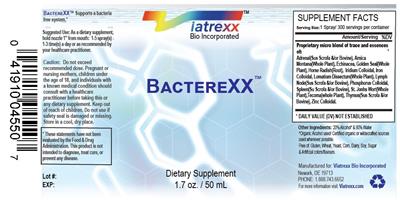
BactereXX Supports a bacteria free system.
Organic alcohol used/Certified organic or wildcrafted sources used whenever possible.
Free of: Gluten, wheat, yeast, corn, dairy, soy, sugar & artificial colors/flavours.
Suggested/Recommended/Usage/Directions
Suggested use: As a dietary supplement, hold nozzle 1" from mouth: 1-5 spray(s) - 1-3 time(s) a day or as recommended by your healthcare practitioner.
Precautions
Caution: Do not exceed recommended dose. Do not use if safety seal is damaged or missing.
Pregnant or nursing mothers, children under the age of 18, and individuals with a known medical condition should consult with a healthcare practitioner before taking this or any dietary supplement.
Pregnant or nursing mothers, children under the age of 18, and individuals with a known medical condition should consult with a healthcare practitioner before taking this or any dietary supplement. Keep out of reach of children.
Storage
Store in a cool, dry place.
FDA Disclaimer Statement
These statements have not been evaluated by the Food & Drug Administration. This product is not intended to diagnose, treat, cure, or prevent any disease.
FDA Statement of Identity
Dietary Supplement
General Statements
For more information visit: Viatrexx.com
Is this label outdated? Report a formula or label change and our pharmacy team will review it.
BactereXX by Viatrexx Bio Incorporated label
The label scan from the NIH Dietary Supplement Label Database. Tap to enlarge.
Label images are published by the NIH Dietary Supplement Label Database for the version of this product on file. Always read your actual product label.
View the full label (PDF)The Ingredients in BactereXX by Viatrexx Bio Incorporated
These are the 15 active ingredients this product is made of. Select any to open its full monograph.
Serving size1 Spray(s) Dosage formLiquid Servings per container300 Amounts shown are per serving.
Most supplement products combine several ingredients, and a medication can interact with the product through any one of them. Each ingredient below shows whether it has known drug interactions.
Proprietary Micro Blend of Trace and Essences
- › Phosphorus
- › Zinc
- › Iron
- › Horseradish
- › Echinacea
- › Iridium
- › Lymph Node
- › Adrenal
- › Arnica montana
- › Goldenseal
- › Lomatium dissectum
- › Spleen
- › St. John's Wort
- › Tecoma
- › Thymus
Other (inactive) ingredients: Alcohol, Water. These complete the product’s ingredient list but are not active constituents.
BactereXX by Viatrexx Bio Incorporated Drug Interactions
HelloPharmacist Interaction Report
BactereXX by Viatrexx Bio Incorporated can interact with medications, chiefly through its zinc, iron, echinacea, goldenseal, arnica, and St.
John's Wort content. The most serious interaction is St.
John's Wort with digoxin (Lanoxin)—a heart rhythm medication—where St. John's Wort reduces digoxin levels by about 25%, potentially causing the drug to lose effectiveness.
This is a Major severity interaction.
Read the full breakdown — every affected drug type, severity by severity
St. John's Wort also carries Major interactions with several cancer and transplant medications: irinotecan (Camptosar), docetaxel (Taxotere), protease inhibitors used for HIV, tacrolimus (an immunosuppressant), and the anti-seizure drugs phenytoin (Dilantin), mephenytoin (Mesantoin), and phenobarbital (Luminal).
In each case, St. John's Wort speeds up how your body clears these drugs, reducing their effectiveness.
Zinc and iron both interact with multiple antibiotic classes and other drugs at Moderate severity. Zinc can decrease levels of quinolone antibiotics, tetracycline antibiotics, and cephalexin (Keflex), as well as ritonavir (an HIV medication), penicillamine (used for Wilson disease), and several others through chelation—forming complexes that block absorption.
Iron similarly reduces absorption of quinolone and tetracycline antibiotics, levothyroxine (Synthroid), methyldopa (Aldomet), bisphosphonates, and other drugs. Echinacea may inhibit or induce liver enzymes affecting medications like caffeine, warfarin (Coumadin), and immunosuppressants.
Goldenseal inhibits multiple liver enzymes (CYP2D6, CYP3A4, CYP2C9) that clear many drugs, potentially raising their levels; it may also theoretically increase bleeding risk with anticoagulants and blood thinners, and raise the risk of low blood sugar with diabetes medications. Arnica theoretically has additive effects with anticoagulant and antiplatelet drugs.
We could not check phosphorus, iridium, the proprietary micro blend (whose individual components are listed separately), lymph node, adrenal, lomatium dissectum, spleen, or tecoma—no interaction data are held for these ingredients. Altogether, these interactions span 1,533 individual medications.
Check your exact medications using the search tool on this page before starting this product.
Check your own medications below · Editorial policy · How we use AI
Want to check YOUR meds against BactereXX?
Ask about interactions with your drugs in plain English — “Can I take it with lisinopril?” — and we find you the answer in seconds, ingredient by ingredient.
Go to the checkerIngredients driving the most interactions
Individual Drug Interactions
The ingredients in BactereXX interact with 1,532 drugs. Click any drug to see the details.
7 of the 15 ingredients in BactereXX interact with drugs. Each result below shows which ingredient is responsible. Goldenseal St. John's Wort Echinacea Arnica montana Iron Zinc Horseradish
Ado-trastuzumab EmtansineKadcyla
How Ado-trastuzumab Emtansine interacts with BactereXX — through 3 ingredients. Tap an ingredient for the detail:
St. John's WortCytochrome P450 3a4 (cyp3a4) Substrates Major
EchinaceaCytochrome P450 3a4 (cyp3a4) Substrates Moderate
Interaction Summary
Echinacea may induce hepatic CYP3A4 and inhibit intestinal CYP3A4.
Read the full Echinacea + Ado-trastuzumab Emtansine interactionGoldensealCytochrome P450 3a4 (cyp3a4) Substrates Moderate
Interaction Summary
Goldenseal might increase serum levels of drugs metabolized by CYP3A4.
Read the full Goldenseal + Ado-trastuzumab Emtansine interactionAbemaciclibVerzenio
How Abemaciclib interacts with BactereXX — through 3 ingredients. Tap an ingredient for the detail:
St. John's WortCytochrome P450 3a4 (cyp3a4) Substrates Major
EchinaceaCytochrome P450 3a4 (cyp3a4) Substrates Moderate
Interaction Summary
Echinacea may induce hepatic CYP3A4 and inhibit intestinal CYP3A4.
Read the full Echinacea + Abemaciclib interactionGoldensealCytochrome P450 3a4 (cyp3a4) Substrates Moderate
Interaction Summary
Goldenseal might increase serum levels of drugs metabolized by CYP3A4.
Read the full Goldenseal + Abemaciclib interactionAbiraterone
How Abiraterone interacts with BactereXX — through 3 ingredients. Tap an ingredient for the detail:
St. John's WortCytochrome P450 3a4 (cyp3a4) Substrates Major
GoldensealCytochrome P450 3a4 (cyp3a4) Substrates Moderate
Interaction Summary
Goldenseal might increase serum levels of drugs metabolized by CYP3A4.
Read the full Goldenseal + Abiraterone interactionEchinaceaCytochrome P450 3a4 (cyp3a4) Substrates Moderate
Interaction Summary
Echinacea may induce hepatic CYP3A4 and inhibit intestinal CYP3A4.
Read the full Echinacea + Abiraterone interactionAbiraterone AcetateYonsa, Zytiga
How Abiraterone Acetate interacts with BactereXX — through 3 ingredients. Tap an ingredient for the detail:
St. John's WortCytochrome P450 3a4 (cyp3a4) Substrates Major
EchinaceaCytochrome P450 3a4 (cyp3a4) Substrates Moderate
Interaction Summary
Echinacea may induce hepatic CYP3A4 and inhibit intestinal CYP3A4.
Read the full Echinacea + Abiraterone Acetate interactionGoldensealCytochrome P450 3a4 (cyp3a4) Substrates Moderate
Interaction Summary
Goldenseal might increase serum levels of drugs metabolized by CYP3A4.
Read the full Goldenseal + Abiraterone Acetate interactionAcalabrutinibCalquence
How Acalabrutinib interacts with BactereXX — through 3 ingredients. Tap an ingredient for the detail:
St. John's WortCytochrome P450 3a4 (cyp3a4) Substrates, P-glycoprotein Substrates Major
GoldensealCytochrome P450 3a4 (cyp3a4) Substrates, P-glycoprotein Substrates Moderate
Interaction Summary
Goldenseal might increase serum levels of drugs metabolized by CYP3A4.
Read the full Goldenseal + Acalabrutinib interactionEchinaceaCytochrome P450 3a4 (cyp3a4) Substrates Moderate
Interaction Summary
Echinacea may induce hepatic CYP3A4 and inhibit intestinal CYP3A4.
Read the full Echinacea + Acalabrutinib interactionAcetaminophen, Aspirin, CaffeineExcedrin, Excedrin Extra Strength, Excedrin Migraine
How Acetaminophen, Aspirin, Caffeine interacts with BactereXX — through 4 ingredients. Tap an ingredient for the detail:
St. John's WortCytochrome P450 1a2 (cyp1a2) Substrates, Cytochrome P450 3a4 (cyp3a4) Substrates Major
Interaction Summary
St.
Read the full St. John's Wort + Acetaminophen, Aspirin, Caffeine interactionGoldensealAnticoagulant/antiplatelet Drugs, Cytochrome P450 2e1 (cyp2e1) Substrates +1 Moderate
Interaction Summary
Theoretically, goldenseal might increase the risk of bleeding when used with anticoagulant or antiplatelet drugs.
Read the full Goldenseal + Acetaminophen, Aspirin, Caffeine interactionEchinaceaCaffeine, Cytochrome P450 1a2 (cyp1a2) Substrates +1 Moderate
Interaction Summary
Echinacea can increase plasma levels of caffeine by inhibiting its metabolism.
Read the full Echinacea + Acetaminophen, Aspirin, Caffeine interactionArnica MontanaAnticoagulant/antiplatelet Drugs Moderate
Interaction Summary
Theoretically, arnica might have additive effects with anticoagulant and antiplatelet drugs.
Read the full Arnica Montana + Acetaminophen, Aspirin, Caffeine interactionAcetaminophen, Butalbital, CaffeineEsgic, Esgic Plus, Fiogesic, Fioricet, Repan, Tecnal +1 more
How Acetaminophen, Butalbital, Caffeine interacts with BactereXX — through 3 ingredients. Tap an ingredient for the detail:
St. John's WortCytochrome P450 1a2 (cyp1a2) Substrates, Cytochrome P450 3a4 (cyp3a4) Substrates Major
Interaction Summary
St.
Read the full St. John's Wort + Acetaminophen, Butalbital, Caffeine interactionGoldensealCytochrome P450 2e1 (cyp2e1) Substrates, Cytochrome P450 3a4 (cyp3a4) Substrates Moderate
Interaction Summary
Theoretically, goldenseal might increase serum levels of drugs metabolized by CYP2E1.
Read the full Goldenseal + Acetaminophen, Butalbital, Caffeine interactionEchinaceaCytochrome P450 3a4 (cyp3a4) Substrates, Caffeine +1 Moderate
Interaction Summary
Echinacea may induce hepatic CYP3A4 and inhibit intestinal CYP3A4.
Read the full Echinacea + Acetaminophen, Butalbital, Caffeine interactionAcetaminophen, Butalbital, Caffeine, CodeineEsgic with Codeine, Fioricet w/ Codeine
How Acetaminophen, Butalbital, Caffeine, Codeine interacts with BactereXX — through 3 ingredients. Tap an ingredient for the detail:
St. John's WortCytochrome P450 3a4 (cyp3a4) Substrates, Cytochrome P450 1a2 (cyp1a2) Substrates Major
Interaction Summary
St.
Read the full St. John's Wort + Acetaminophen, Butalbital, Caffeine, Codeine interactionEchinaceaCytochrome P450 1a2 (cyp1a2) Substrates, Cytochrome P450 3a4 (cyp3a4) Substrates +1 Moderate
Interaction Summary
Echinacea might inhibit the metabolism of CYP1A2 and increase plasma levels of some drugs.
Read the full Echinacea + Acetaminophen, Butalbital, Caffeine, Codeine interactionGoldensealCytochrome P450 2e1 (cyp2e1) Substrates, Cytochrome P450 3a4 (cyp3a4) Substrates +2 Moderate
Interaction Summary
Theoretically, goldenseal might increase serum levels of drugs metabolized by CYP2E1.
Read the full Goldenseal + Acetaminophen, Butalbital, Caffeine, Codeine interactionAcetaminophen, Caffeine, Chlorpheniramine, Hydrocodone, PhenylephrineHycomine Compound
How Acetaminophen, Caffeine, Chlorpheniramine, Hydrocodone, Phenylephrine interacts with BactereXX — through 3 ingredients. Tap an ingredient for the detail:
St. John's WortCytochrome P450 1a2 (cyp1a2) Substrates, Cytochrome P450 3a4 (cyp3a4) Substrates +1 Major
EchinaceaCytochrome P450 1a2 (cyp1a2) Substrates, Caffeine +1 Moderate
Interaction Summary
Echinacea might inhibit the metabolism of CYP1A2 and increase plasma levels of some drugs.
Read the full Echinacea + Acetaminophen, Caffeine, Chlorpheniramine, Hydrocodone, Phenylephrine interactionGoldensealCytochrome P450 2e1 (cyp2e1) Substrates, Cytochrome P450 2d6 (cyp2d6) Substrates +2 Moderate
Interaction Summary
Theoretically, goldenseal might increase serum levels of drugs metabolized by CYP2E1.
Read the full Goldenseal + Acetaminophen, Caffeine, Chlorpheniramine, Hydrocodone, Phenylephrine interactionAcetaminophen, Caffeine, CodeineGesic C15, Gesic C30, Gesic C8, Lenoltec 1, Lenoltec 2, Lenoltec 3 +1 more
How Acetaminophen, Caffeine, Codeine interacts with BactereXX — through 3 ingredients. Tap an ingredient for the detail:
St. John's WortCytochrome P450 1a2 (cyp1a2) Substrates, Cytochrome P450 3a4 (cyp3a4) Substrates Major
Interaction Summary
St.
Read the full St. John's Wort + Acetaminophen, Caffeine, Codeine interactionGoldensealCns Depressants, Cytochrome P450 2d6 (cyp2d6) Substrates +2 Moderate
Interaction Summary
Theoretically, goldenseal might increase the sedative effects of CNS depressants.
Read the full Goldenseal + Acetaminophen, Caffeine, Codeine interactionEchinaceaCaffeine, Cytochrome P450 1a2 (cyp1a2) Substrates +1 Moderate
Interaction Summary
Echinacea can increase plasma levels of caffeine by inhibiting its metabolism.
Read the full Echinacea + Acetaminophen, Caffeine, Codeine interactionAcetaminophen, Caffeine, Codeine, SalicylamideCodalan No.1, Codalan No.2, Codalan No.3
How Acetaminophen, Caffeine, Codeine, Salicylamide interacts with BactereXX — through 3 ingredients. Tap an ingredient for the detail:
St. John's WortCytochrome P450 3a4 (cyp3a4) Substrates, Cytochrome P450 1a2 (cyp1a2) Substrates Major
Interaction Summary
St.
Read the full St. John's Wort + Acetaminophen, Caffeine, Codeine, Salicylamide interactionEchinaceaCytochrome P450 3a4 (cyp3a4) Substrates, Caffeine +1 Moderate
Interaction Summary
Echinacea may induce hepatic CYP3A4 and inhibit intestinal CYP3A4.
Read the full Echinacea + Acetaminophen, Caffeine, Codeine, Salicylamide interactionGoldensealCytochrome P450 2e1 (cyp2e1) Substrates, Cytochrome P450 3a4 (cyp3a4) Substrates +2 Moderate
Interaction Summary
Theoretically, goldenseal might increase serum levels of drugs metabolized by CYP2E1.
Read the full Goldenseal + Acetaminophen, Caffeine, Codeine, Salicylamide interactionAcetaminophen, Caffeine, DihydrocodeineDHC Plus, Panlor DC, Panlor SS
How Acetaminophen, Caffeine, Dihydrocodeine interacts with BactereXX — through 3 ingredients. Tap an ingredient for the detail:
St. John's WortCytochrome P450 3a4 (cyp3a4) Substrates, Cytochrome P450 1a2 (cyp1a2) Substrates Major
Interaction Summary
St.
Read the full St. John's Wort + Acetaminophen, Caffeine, Dihydrocodeine interactionEchinaceaCytochrome P450 1a2 (cyp1a2) Substrates, Cytochrome P450 3a4 (cyp3a4) Substrates +1 Moderate
Interaction Summary
Echinacea might inhibit the metabolism of CYP1A2 and increase plasma levels of some drugs.
Read the full Echinacea + Acetaminophen, Caffeine, Dihydrocodeine interactionGoldensealCytochrome P450 2e1 (cyp2e1) Substrates, Cytochrome P450 2d6 (cyp2d6) Substrates +2 Moderate
Interaction Summary
Theoretically, goldenseal might increase serum levels of drugs metabolized by CYP2E1.
Read the full Goldenseal + Acetaminophen, Caffeine, Dihydrocodeine interactionAcetaminophen, Caffeine, IsomethepteneMigralam
How Acetaminophen, Caffeine, Isometheptene interacts with BactereXX — through 3 ingredients. Tap an ingredient for the detail:
St. John's WortCytochrome P450 1a2 (cyp1a2) Substrates, Cytochrome P450 3a4 (cyp3a4) Substrates Major
Interaction Summary
St.
Read the full St. John's Wort + Acetaminophen, Caffeine, Isometheptene interactionGoldensealCytochrome P450 3a4 (cyp3a4) Substrates, Cytochrome P450 2e1 (cyp2e1) Substrates Moderate
Interaction Summary
Goldenseal might increase serum levels of drugs metabolized by CYP3A4.
Read the full Goldenseal + Acetaminophen, Caffeine, Isometheptene interactionEchinaceaCaffeine, Cytochrome P450 3a4 (cyp3a4) Substrates +1 Moderate
Interaction Summary
Echinacea can increase plasma levels of caffeine by inhibiting its metabolism.
Read the full Echinacea + Acetaminophen, Caffeine, Isometheptene interactionAcetaminophen, Caffeine, PyrilamineMidol Max Strength Menstrual
How Acetaminophen, Caffeine, Pyrilamine interacts with BactereXX — through 3 ingredients. Tap an ingredient for the detail:
St. John's WortCytochrome P450 3a4 (cyp3a4) Substrates, Cytochrome P450 1a2 (cyp1a2) Substrates Major
Interaction Summary
St.
Read the full St. John's Wort + Acetaminophen, Caffeine, Pyrilamine interactionGoldensealCytochrome P450 2e1 (cyp2e1) Substrates, Cytochrome P450 3a4 (cyp3a4) Substrates Moderate
Interaction Summary
Theoretically, goldenseal might increase serum levels of drugs metabolized by CYP2E1.
Read the full Goldenseal + Acetaminophen, Caffeine, Pyrilamine interactionEchinaceaCytochrome P450 3a4 (cyp3a4) Substrates, Caffeine +1 Moderate
Interaction Summary
Echinacea may induce hepatic CYP3A4 and inhibit intestinal CYP3A4.
Read the full Echinacea + Acetaminophen, Caffeine, Pyrilamine interactionAcetaminophen, Chlorpheniramine Maleate, Dextromethorphan HbrVicks Formula 44M Cough, Cold & Flu Relief
How Acetaminophen, Chlorpheniramine Maleate, Dextromethorphan Hbr interacts with BactereXX — through 3 ingredients. Tap an ingredient for the detail:
St. John's WortPhotosensitizing Drugs, Cytochrome P450 1a2 (cyp1a2) Substrates +2 Major
Interaction Summary
Theoretically, St.
Read the full St. John's Wort + Acetaminophen, Chlorpheniramine Maleate, Dextromethorphan Hbr interactionGoldensealCytochrome P450 2e1 (cyp2e1) Substrates, Dextromethorphan (robitussin Dm, Others) +2 Moderate
Interaction Summary
Theoretically, goldenseal might increase serum levels of drugs metabolized by CYP2E1.
Read the full Goldenseal + Acetaminophen, Chlorpheniramine Maleate, Dextromethorphan Hbr interactionEchinaceaCytochrome P450 1a2 (cyp1a2) Substrates, Cytochrome P450 3a4 (cyp3a4) Substrates Moderate
Interaction Summary
Echinacea might inhibit the metabolism of CYP1A2 and increase plasma levels of some drugs.
Read the full Echinacea + Acetaminophen, Chlorpheniramine Maleate, Dextromethorphan Hbr interactionAcetaminophen, Chlorpheniramine, Codeine, PhenylephrineColrex
How Acetaminophen, Chlorpheniramine, Codeine, Phenylephrine interacts with BactereXX — through 3 ingredients. Tap an ingredient for the detail:
St. John's WortCytochrome P450 1a2 (cyp1a2) Substrates, Photosensitizing Drugs +2 Major
GoldensealCns Depressants, Cytochrome P450 2d6 (cyp2d6) Substrates +2 Moderate
Interaction Summary
Theoretically, goldenseal might increase the sedative effects of CNS depressants.
Read the full Goldenseal + Acetaminophen, Chlorpheniramine, Codeine, Phenylephrine interactionEchinaceaCytochrome P450 1a2 (cyp1a2) Substrates, Cytochrome P450 3a4 (cyp3a4) Substrates Moderate
Interaction Summary
Echinacea might inhibit the metabolism of CYP1A2 and increase plasma levels of some drugs.
Read the full Echinacea + Acetaminophen, Chlorpheniramine, Codeine, Phenylephrine interactionAcetaminophen, Chlorpheniramine, DextromethorphanCoricidin II Extra Strength Cold and Flu
How Acetaminophen, Chlorpheniramine, Dextromethorphan interacts with BactereXX — through 3 ingredients. Tap an ingredient for the detail:
St. John's WortPhotosensitizing Drugs, Cytochrome P450 1a2 (cyp1a2) Substrates +2 Major
Interaction Summary
Theoretically, St.
Read the full St. John's Wort + Acetaminophen, Chlorpheniramine, Dextromethorphan interactionEchinaceaCytochrome P450 3a4 (cyp3a4) Substrates, Cytochrome P450 1a2 (cyp1a2) Substrates Moderate
Interaction Summary
Echinacea may induce hepatic CYP3A4 and inhibit intestinal CYP3A4.
Read the full Echinacea + Acetaminophen, Chlorpheniramine, Dextromethorphan interactionGoldensealCytochrome P450 2e1 (cyp2e1) Substrates, Dextromethorphan (robitussin Dm, Others) +2 Moderate
Interaction Summary
Theoretically, goldenseal might increase serum levels of drugs metabolized by CYP2E1.
Read the full Goldenseal + Acetaminophen, Chlorpheniramine, Dextromethorphan interactionAcetaminophen, Chlorpheniramine, Dextromethorphan HydrobromideCoricidin HBP Maximum Strength Flu
How Acetaminophen, Chlorpheniramine, Dextromethorphan Hydrobromide interacts with BactereXX — through 3 ingredients. Tap an ingredient for the detail:
St. John's WortSerotonergic Drugs, Cytochrome P450 1a2 (cyp1a2) Substrates +2 Major
Interaction Summary
Theoretically, St.
Read the full St. John's Wort + Acetaminophen, Chlorpheniramine, Dextromethorphan Hydrobromide interactionGoldensealCytochrome P450 3a4 (cyp3a4) Substrates, Cytochrome P450 2e1 (cyp2e1) Substrates +2 Moderate
Interaction Summary
Goldenseal might increase serum levels of drugs metabolized by CYP3A4.
Read the full Goldenseal + Acetaminophen, Chlorpheniramine, Dextromethorphan Hydrobromide interactionEchinaceaCytochrome P450 3a4 (cyp3a4) Substrates, Cytochrome P450 1a2 (cyp1a2) Substrates Moderate
Interaction Summary
Echinacea may induce hepatic CYP3A4 and inhibit intestinal CYP3A4.
Read the full Echinacea + Acetaminophen, Chlorpheniramine, Dextromethorphan Hydrobromide interactionAcetaminophen, Chlorpheniramine, Dextromethorphan, PhenylpropanolamineMulti Symptom Cold Relief
How Acetaminophen, Chlorpheniramine, Dextromethorphan, Phenylpropanolamine interacts with BactereXX — through 3 ingredients. Tap an ingredient for the detail:
St. John's WortCytochrome P450 3a4 (cyp3a4) Substrates, Serotonergic Drugs +2 Major
GoldensealCytochrome P450 3a4 (cyp3a4) Substrates, Cytochrome P450 2d6 (cyp2d6) Substrates +2 Moderate
Interaction Summary
Goldenseal might increase serum levels of drugs metabolized by CYP3A4.
Read the full Goldenseal + Acetaminophen, Chlorpheniramine, Dextromethorphan, Phenylpropanolamine interactionEchinaceaCytochrome P450 1a2 (cyp1a2) Substrates, Cytochrome P450 3a4 (cyp3a4) Substrates Moderate
Interaction Summary
Echinacea might inhibit the metabolism of CYP1A2 and increase plasma levels of some drugs.
Read the full Echinacea + Acetaminophen, Chlorpheniramine, Dextromethorphan, Phenylpropanolamine interactionAcetaminophen, Chlorpheniramine, Dextromethorphan, PseudoephedrineChildren's Tylenol Cold Plus Cough, Tylenol Cold Ex Strength
How Acetaminophen, Chlorpheniramine, Dextromethorphan, Pseudoephedrine interacts with BactereXX — through 3 ingredients. Tap an ingredient for the detail:
St. John's WortPhotosensitizing Drugs, Cytochrome P450 3a4 (cyp3a4) Substrates +2 Major
Interaction Summary
Theoretically, St.
Read the full St. John's Wort + Acetaminophen, Chlorpheniramine, Dextromethorphan, Pseudoephedrine interactionGoldensealCytochrome P450 2e1 (cyp2e1) Substrates, Dextromethorphan (robitussin Dm, Others) +2 Moderate
Interaction Summary
Theoretically, goldenseal might increase serum levels of drugs metabolized by CYP2E1.
Read the full Goldenseal + Acetaminophen, Chlorpheniramine, Dextromethorphan, Pseudoephedrine interactionEchinaceaCytochrome P450 3a4 (cyp3a4) Substrates, Cytochrome P450 1a2 (cyp1a2) Substrates Moderate
Interaction Summary
Echinacea may induce hepatic CYP3A4 and inhibit intestinal CYP3A4.
Read the full Echinacea + Acetaminophen, Chlorpheniramine, Dextromethorphan, Pseudoephedrine interactionAcetaminophen, Chlorpheniramine, Guaifenesin, Phenylephrine, SalicylamideRhinogesic GG
How Acetaminophen, Chlorpheniramine, Guaifenesin, Phenylephrine, Salicylamide interacts with BactereXX — through 3 ingredients. Tap an ingredient for the detail:
St. John's WortSerotonergic Drugs, Photosensitizing Drugs +2 Major
Interaction Summary
Theoretically, St.
Read the full St. John's Wort + Acetaminophen, Chlorpheniramine, Guaifenesin, Phenylephrine, Salicylamide interactionGoldensealCytochrome P450 2e1 (cyp2e1) Substrates, Cytochrome P450 3a4 (cyp3a4) Substrates Moderate
Interaction Summary
Theoretically, goldenseal might increase serum levels of drugs metabolized by CYP2E1.
Read the full Goldenseal + Acetaminophen, Chlorpheniramine, Guaifenesin, Phenylephrine, Salicylamide interactionEchinaceaCytochrome P450 1a2 (cyp1a2) Substrates, Cytochrome P450 3a4 (cyp3a4) Substrates Moderate
Interaction Summary
Echinacea might inhibit the metabolism of CYP1A2 and increase plasma levels of some drugs.
Read the full Echinacea + Acetaminophen, Chlorpheniramine, Guaifenesin, Phenylephrine, Salicylamide interactionAcetaminophen, Chlorpheniramine, PhenylephrineAlka-Seltzer PLUS, Histex SR, Protid
How Acetaminophen, Chlorpheniramine, Phenylephrine interacts with BactereXX — through 3 ingredients. Tap an ingredient for the detail:
St. John's WortCytochrome P450 3a4 (cyp3a4) Substrates, Photosensitizing Drugs +2 Major
Interaction Summary
St.
Read the full St. John's Wort + Acetaminophen, Chlorpheniramine, Phenylephrine interactionGoldensealCytochrome P450 3a4 (cyp3a4) Substrates, Cytochrome P450 2e1 (cyp2e1) Substrates Moderate
Interaction Summary
Goldenseal might increase serum levels of drugs metabolized by CYP3A4.
Read the full Goldenseal + Acetaminophen, Chlorpheniramine, Phenylephrine interactionEchinaceaCytochrome P450 3a4 (cyp3a4) Substrates, Cytochrome P450 1a2 (cyp1a2) Substrates Moderate
Interaction Summary
Echinacea may induce hepatic CYP3A4 and inhibit intestinal CYP3A4.
Read the full Echinacea + Acetaminophen, Chlorpheniramine, Phenylephrine interactionAcetaminophen, Chlorpheniramine, Phenylephrine, SalicylamideRhinogesic, Rhinogesic JR
How Acetaminophen, Chlorpheniramine, Phenylephrine, Salicylamide interacts with BactereXX — through 3 ingredients. Tap an ingredient for the detail:
St. John's WortPhotosensitizing Drugs, Cytochrome P450 3a4 (cyp3a4) Substrates +2 Major
Interaction Summary
Theoretically, St.
Read the full St. John's Wort + Acetaminophen, Chlorpheniramine, Phenylephrine, Salicylamide interactionGoldensealCytochrome P450 2e1 (cyp2e1) Substrates, Cytochrome P450 3a4 (cyp3a4) Substrates Moderate
Interaction Summary
Theoretically, goldenseal might increase serum levels of drugs metabolized by CYP2E1.
Read the full Goldenseal + Acetaminophen, Chlorpheniramine, Phenylephrine, Salicylamide interactionEchinaceaCytochrome P450 1a2 (cyp1a2) Substrates, Cytochrome P450 3a4 (cyp3a4) Substrates Moderate
Interaction Summary
Echinacea might inhibit the metabolism of CYP1A2 and increase plasma levels of some drugs.
Read the full Echinacea + Acetaminophen, Chlorpheniramine, Phenylephrine, Salicylamide interactionAcetaminophen, Chlorpheniramine, PhenylpropanolamineAlumadrine, Conex, Sinadrin Max Strength, Sinulin
How Acetaminophen, Chlorpheniramine, Phenylpropanolamine interacts with BactereXX — through 3 ingredients. Tap an ingredient for the detail:
St. John's WortPhotosensitizing Drugs, Cytochrome P450 1a2 (cyp1a2) Substrates +2 Major
Interaction Summary
Theoretically, St.
Read the full St. John's Wort + Acetaminophen, Chlorpheniramine, Phenylpropanolamine interactionEchinaceaCytochrome P450 1a2 (cyp1a2) Substrates, Cytochrome P450 3a4 (cyp3a4) Substrates Moderate
Interaction Summary
Echinacea might inhibit the metabolism of CYP1A2 and increase plasma levels of some drugs.
Read the full Echinacea + Acetaminophen, Chlorpheniramine, Phenylpropanolamine interactionGoldensealCytochrome P450 2e1 (cyp2e1) Substrates, Cytochrome P450 3a4 (cyp3a4) Substrates Moderate
Interaction Summary
Theoretically, goldenseal might increase serum levels of drugs metabolized by CYP2E1.
Read the full Goldenseal + Acetaminophen, Chlorpheniramine, Phenylpropanolamine interactionAcetaminophen, Chlorpheniramine, Phenylpropanolamine, OpiumHista-Derfule
How Acetaminophen, Chlorpheniramine, Phenylpropanolamine, Opium interacts with BactereXX — through 3 ingredients. Tap an ingredient for the detail:
St. John's WortCytochrome P450 3a4 (cyp3a4) Substrates, Photosensitizing Drugs +2 Major
GoldensealCytochrome P450 3a4 (cyp3a4) Substrates, Cns Depressants +1 Moderate
Interaction Summary
Goldenseal might increase serum levels of drugs metabolized by CYP3A4.
Read the full Goldenseal + Acetaminophen, Chlorpheniramine, Phenylpropanolamine, Opium interactionEchinaceaCytochrome P450 1a2 (cyp1a2) Substrates, Cytochrome P450 3a4 (cyp3a4) Substrates Moderate
Interaction Summary
Echinacea might inhibit the metabolism of CYP1A2 and increase plasma levels of some drugs.
Read the full Echinacea + Acetaminophen, Chlorpheniramine, Phenylpropanolamine, Opium interactionAcetaminophen, Chlorpheniramine, Phenylpropanolamine, PhenyltoloxamineNorel Plus
How Acetaminophen, Chlorpheniramine, Phenylpropanolamine, Phenyltoloxamine interacts with BactereXX — through 3 ingredients. Tap an ingredient for the detail:
St. John's WortSerotonergic Drugs, Photosensitizing Drugs +2 Major
Interaction Summary
Theoretically, St.
Read the full St. John's Wort + Acetaminophen, Chlorpheniramine, Phenylpropanolamine, Phenyltoloxamine interactionEchinaceaCytochrome P450 3a4 (cyp3a4) Substrates, Cytochrome P450 1a2 (cyp1a2) Substrates Moderate
Interaction Summary
Echinacea may induce hepatic CYP3A4 and inhibit intestinal CYP3A4.
Read the full Echinacea + Acetaminophen, Chlorpheniramine, Phenylpropanolamine, Phenyltoloxamine interactionGoldensealCytochrome P450 2e1 (cyp2e1) Substrates, Cytochrome P450 3a4 (cyp3a4) Substrates Moderate
Interaction Summary
Theoretically, goldenseal might increase serum levels of drugs metabolized by CYP2E1.
Read the full Goldenseal + Acetaminophen, Chlorpheniramine, Phenylpropanolamine, Phenyltoloxamine interactionAcetaminophen, Chlorpheniramine, PseudoephedrineAlka-Seltzer PLUS Liquid Gels, Children's Tylenol Cold, Codimal, Comtrex, Extra Strength Tylenol Allergy Sinus, Lorsin +3 more
How Acetaminophen, Chlorpheniramine, Pseudoephedrine interacts with BactereXX — through 3 ingredients. Tap an ingredient for the detail:
St. John's WortCytochrome P450 1a2 (cyp1a2) Substrates, Photosensitizing Drugs +2 Major
Interaction Summary
St.
Read the full St. John's Wort + Acetaminophen, Chlorpheniramine, Pseudoephedrine interactionEchinaceaCytochrome P450 1a2 (cyp1a2) Substrates, Cytochrome P450 3a4 (cyp3a4) Substrates Moderate
Interaction Summary
Echinacea might inhibit the metabolism of CYP1A2 and increase plasma levels of some drugs.
Read the full Echinacea + Acetaminophen, Chlorpheniramine, Pseudoephedrine interactionGoldensealCytochrome P450 2e1 (cyp2e1) Substrates, Cytochrome P450 3a4 (cyp3a4) Substrates Moderate
Interaction Summary
Theoretically, goldenseal might increase serum levels of drugs metabolized by CYP2E1.
Read the full Goldenseal + Acetaminophen, Chlorpheniramine, Pseudoephedrine interactionAcetaminophen, DextromethorphanTylenol Cough Ex Strength
How Acetaminophen, Dextromethorphan interacts with BactereXX — through 3 ingredients. Tap an ingredient for the detail:
St. John's WortCytochrome P450 1a2 (cyp1a2) Substrates, Cytochrome P450 3a4 (cyp3a4) Substrates +1 Major
GoldensealCytochrome P450 2e1 (cyp2e1) Substrates, Dextromethorphan (robitussin Dm, Others) +2 Moderate
Interaction Summary
Theoretically, goldenseal might increase serum levels of drugs metabolized by CYP2E1.
Read the full Goldenseal + Acetaminophen, Dextromethorphan interactionEchinaceaCytochrome P450 1a2 (cyp1a2) Substrates, Cytochrome P450 3a4 (cyp3a4) Substrates Moderate
Interaction Summary
Echinacea might inhibit the metabolism of CYP1A2 and increase plasma levels of some drugs.
Read the full Echinacea + Acetaminophen, Dextromethorphan interactionAcetaminophen, Dextromethorphan, Doxylamine, PseudoephedrineVicks NyQuil
How Acetaminophen, Dextromethorphan, Doxylamine, Pseudoephedrine interacts with BactereXX — through 3 ingredients. Tap an ingredient for the detail:
St. John's WortSerotonergic Drugs, Cytochrome P450 3a4 (cyp3a4) Substrates +1 Major
Interaction Summary
Theoretically, St.
Read the full St. John's Wort + Acetaminophen, Dextromethorphan, Doxylamine, Pseudoephedrine interactionGoldensealCytochrome P450 2e1 (cyp2e1) Substrates, Dextromethorphan (robitussin Dm, Others) +2 Moderate
Interaction Summary
Theoretically, goldenseal might increase serum levels of drugs metabolized by CYP2E1.
Read the full Goldenseal + Acetaminophen, Dextromethorphan, Doxylamine, Pseudoephedrine interactionEchinaceaCytochrome P450 1a2 (cyp1a2) Substrates, Cytochrome P450 3a4 (cyp3a4) Substrates Moderate
Interaction Summary
Echinacea might inhibit the metabolism of CYP1A2 and increase plasma levels of some drugs.
Read the full Echinacea + Acetaminophen, Dextromethorphan, Doxylamine, Pseudoephedrine interactionAcetaminophen, Dextromethorphan, Guaifenesin, PhenylephrineConar-A
How Acetaminophen, Dextromethorphan, Guaifenesin, Phenylephrine interacts with BactereXX — through 3 ingredients. Tap an ingredient for the detail:
St. John's WortCytochrome P450 1a2 (cyp1a2) Substrates, Serotonergic Drugs +1 Major
EchinaceaCytochrome P450 3a4 (cyp3a4) Substrates, Cytochrome P450 1a2 (cyp1a2) Substrates Moderate
Interaction Summary
Echinacea may induce hepatic CYP3A4 and inhibit intestinal CYP3A4.
Read the full Echinacea + Acetaminophen, Dextromethorphan, Guaifenesin, Phenylephrine interactionGoldensealCytochrome P450 2e1 (cyp2e1) Substrates, Dextromethorphan (robitussin Dm, Others) +2 Moderate
Interaction Summary
Theoretically, goldenseal might increase serum levels of drugs metabolized by CYP2E1.
Read the full Goldenseal + Acetaminophen, Dextromethorphan, Guaifenesin, Phenylephrine interactionEach ingredient & the kinds of drugs it affects
For each ingredient in BactereXX with known interactions, here are the types of medications they can affect. Open any type for the detail — or search your exact drug in the checker above.
Goldenseal
Anticoagulant/Antiplatelet Drugs
Theoretically, goldenseal might increase the risk of bleeding when used with anticoagulant or antiplatelet drugs.
Goldenseal contains berberine. In vitro and animal research shows that berberine can inhibit platelet aggregation. However, this effect has not been reported in humans.
Antidiabetes Drugs
Theoretically, goldenseal might increase the risk of hypoglycemia when used with antidiabetes drugs.
Goldenseal contains berberine. Clinical research shows that berberine can lower blood glucose levels. However, this effect has not been reported with goldenseal.
Antihypertensive Drugs
Theoretically, goldenseal might increase the risk of hypotension when taken with antihypertensive drugs.
Goldenseal contains berberine. Animal research shows that berberine can have hypotensive effects. Also, an analysis of clinical research shows that taking berberine in combination with amlodipine can lower systolic and diastolic blood pressure when compared with amlodipine alone. However, this effect has not been reported with goldenseal.
Cns Depressants
Theoretically, goldenseal might increase the sedative effects of CNS depressants.
Goldenseal contains berberine. Animal research shows that berberine can have sedative effects. However, this effect has not been reported in humans.
Cytochrome P450 2C9 (Cyp2C9) Substrates
Theoretically, goldenseal might increase serum levels of drugs metabolized by CYP2C9.
In vitro research shows that goldenseal root extract can modestly inhibit CYP2C9. This effect may be due to its alkaloid constituents, hydrastine and berberine. However, this effect has not been reported in humans.
Cytochrome P450 2D6 (Cyp2D6) Substrates
Goldenseal might increase serum levels of drugs metabolized by CYP2D6.
Clinical and in vitro research shows that goldenseal can significantly inhibit CYP2D6 enzymes, potentially increasing levels of drugs metabolized by CYP2D6.
Cytochrome P450 2E1 (Cyp2E1) Substrates
Theoretically, goldenseal might increase serum levels of drugs metabolized by CYP2E1.
In vitro research shows that goldenseal root extract can inhibit the activity of CYP2E1. However, this effect has not been reported in humans.
Cytochrome P450 3A4 (Cyp3A4) Substrates
Goldenseal might increase serum levels of drugs metabolized by CYP3A4.
Most clinical and in vitro research shows that goldenseal inhibits CYP3A4 enzyme activity and increases serum levels of CYP3A4 substrates, such as midazolam. However, in one small clinical study, goldenseal did not affect the levels of indinavir, a CYP3A4 substrate, in healthy volunteers. This is likely due to the fact that indinavir has a high oral bioavailability, making it an inadequate probe for CYP3A4 interactions and/or that it is primarily metabolized by hepatic CYP3A, while goldenseal has more potential to inhibit intestinal CYP3A enzyme activity. Both goldenseal extract and its isolated constituents berberine and hydrastine inhibit CYP3A, with hydrastine possibly having more inhibitory potential than berberine.
Dextromethorphan (Robitussin Dm, Others)
Theoretically, goldenseal might increase serum levels of dextromethorphan.
Goldenseal contains berberine. A small clinical study shows that berberine can inhibit cytochrome P450 2D6 (CYP2D6) activity and reduce the metabolism of dextromethorphan.
Digoxin (Lanoxin)
Goldenseal might increase serum levels of digoxin, although this effect is unlikely to be clinically significant.
Clinical research shows that goldenseal modestly increases digoxin peak levels by about 14% in healthy volunteers. However, goldenseal does not seem to affect other pharmacokinetic parameters such as area under the curve (AUC). This suggests that goldenseal does not cause a clinically significant interaction with digoxin. Digoxin is a P-glycoprotein substrate. Some evidence suggests that goldenseal constituents might affect P-glycoprotein; however, it is unclear whether these constituents inhibit or induce P-glycoprotein.
Losartan (Cozaar)
Theoretically, goldenseal might decrease the conversion of losartan to its active form.
Goldenseal contains berberine. A small clinical study shows that berberine inhibits cytochrome P450 2C9 (CYP2C9) activity and reduces the metabolism of losartan. However, this effect has not been reported with goldenseal.
Metformin (Glucophage)
Theoretically, goldenseal might reduce blood levels of metformin.
In vitro research shows that goldenseal extract decreases the bioavailability of metformin, likely by interfering with transport, intestinal permeability, or other processes involved in metformin absorption. It is unclear which, if any, of metformin's transporters are inhibited by goldenseal. Goldenseal does not appear to alter the clearance or half-life of metformin.
P-Glycoprotein Substrates
Theoretically, goldenseal might increase or decrease serum levels of P-glycoprotein (P-gp) substrates.
There is conflicting evidence about the effect of goldenseal on P-gp. In vitro research suggests that berberine, a constituent of goldenseal, modestly inhibits P-gp efflux. Other evidence suggests that berberine induces P-gp. In healthy volunteers, goldenseal modestly increases peak levels of the P-gp substrate digoxin by about 14%. However, it does not seem to affect other pharmacokinetic parameters such as area under the curve (AUC). This suggests that goldenseal is not a potent inhibitor of P-gp-mediated drug efflux. Until more is known, goldenseal should be used cautiously with P-gp substrates.
Pentobarbital (Nembutal)
Theoretically, goldenseal might increase the sedative effects of pentobarbital.
Animal research shows that berberine, a constituent of goldenseal, can prolong pentobarbital-induced sleeping time. However, this effect has not been reported with goldenseal.
Tacrolimus (Prograf)
Theoretically, goldenseal might increase serum levels of tacrolimus.
Goldenseal contains berberine. In a 16-year-old patient with idiopathic nephrotic syndrome who was being treated with tacrolimus 6.5 mg twice daily, intake of berberine 200 mg three times daily increased the blood concentration of tacrolimus from 8 to 22 ng/mL. Following a reduction of tacrolimus dosing to 3 mg daily, blood levels of tacrolimus decreased to 12 ng/mL.
Oseltamivir (Tamiflu)
Theoretically, goldenseal might reduce the therapeutic effects of oseltamivir by decreasing its conversion to its active form.
In vitro evidence suggests that goldenseal reduces the formation of the active compound from the prodrug oseltamivir. The mechanism of action and clinical relevance is unclear.
St. John's Wort
Alprazolam (Xanax)
St. John's wort increases the clearance of alprazolam and decreases its effects.
Alprazolam, which is used as a probe for cytochrome P450 3A4 (CYP3A4) activity, has a two-fold increase in clearance when given with St. John's wort. St. John's wort reduces the half-life of alprazolam from 12.4 hours to 6 hours.
Contraceptive Drugs
St. John's wort increases the clearance of contraceptive drugs and reduces their clinical effects.
Females taking St. John's wort and oral contraceptives concurrently should use an additional or alternative form of birth control. St. John's wort can decrease norethindrone and ethinyl estradiol levels by 13% to 15%, resulting in breakthrough bleeding, irregular menstrual bleeding, or unplanned pregnancy. Bleeding irregularities usually occur within a week of starting St. John's wort and regular cycles usually return when St. John's wort is discontinued. Unplanned pregnancy has occurred with concurrent use of oral contraceptives and St. John's wort extract. St. John's wort is thought to induce the cytochrome P450 1A2 (CYP1A2), 2C9 (CYP2C9), and 3A4 (CYP3A4) enzymes, which are responsible for metabolism of progestins and estrogens in contraceptives.
Cyclosporine (Neoral, Sandimmune)
St. John's wort reduces the levels and clinical effects of cyclosporine.
Concomitant use can decrease plasma cyclosporine levels by 30% to 70%. Using St. John's wort with cyclosporine in patients with heart, kidney, or liver transplants can cause subtherapeutic cyclosporine levels and acute transplant rejection. This interaction has occurred with a St. John's wort extract standardized to 0.3% hypericin and dosed at 300-600 mg per day. Withdrawal of St. John's wort can result in a 64% increase in cyclosporine levels. St. John's wort induces cytochrome P450 3A4 (CYP3A4) and the multi-drug transporter, P-glycoprotein/MDR-1, which increases cyclosporine clearance.
Cytochrome P450 3A4 (Cyp3A4) Substrates
St. John's wort increases the metabolism and reduces the levels of CYP3A4 substrates.
St. John's wort induces CYP3A4 enzymes and increases metabolism of CYP3A4 substrates. Clinically significant interactions have been reported with St. John's wort products containing hyperforin 1 mg or more.
Digoxin (Lanoxin)
St. John's wort reduces the levels and clinical effects of digoxin.
St. John's wort can reduce the bioavailability, serum levels, and therapeutic effects of digoxin. Taking an extract of St. John's wort 900 mg, containing hyperforin 7.5 mg or more, daily for 10-14 days, can reduce serum digoxin levels by 25% in healthy people. St. John's wort is thought to affect the multidrug transporter, P-glycoprotein, which mediates the absorption and elimination of digoxin and other drugs. St. John's wort products providing less than 7.5 mg of hyperforin daily do not appear to affect digoxin levels.
Docetaxel (Taxotere)
St. John's wort reduces the levels and clinical effects of docetaxel.
Clinical research shows that taking a specific St. John's wort product (Hyperiplant, VSM) 300 mg three times daily for 14 days increases docetaxel clearance by about 14%, resulting in decreased plasma concentrations of docetaxel in cancer patients. This is most likely due to induction of cytochrome P450 3A4 (CYP3A4) by St. John's wort.
Imatinib (Gleevec)
St. John's wort reduces the levels and clinical effects of imatinib.
Taking St. John's wort 900 mg daily for 2 weeks reduces the bioavailability and half-life of a single dose of imatinib and decreases its serum levels by 30% in healthy volunteers. This is most likely due to induction of cytochrome P450 3A4 (CYP3A4) by St. John's wort, which increases clearance of imatinib.
Irinotecan (Camptosar)
St. John's wort reduces the levels and clinical effects of irinotecan.
St. John's wort 900 mg daily for 18 days decreases serum levels of irinotecan by at least 50%. Clearance of the active metabolite of irinotecan, SN-38, is also increased, resulting in a 42% decrease in the area under the concentration-time curve. This is thought to be due to induction of cytochrome P450 3A4 (CYP3A4) by St. John's wort.
Mephenytoin (Mesantoin)
St. John's wort reduces the levels and clinical effects of mephenytoin.
Preliminary clinical research in healthy males shows that taking St. John's wort for 14 days induces cytochrome P450 2C19 (CYP2C19) and significantly increases metabolism of mephenytoin (Mesantoin). In people with wild-type 2C19, metabolism was almost 4-fold greater in subjects who received St. John's wort compared to placebo. In contrast, patients with 2C19*2/*2 and *2/*3 genotypes did not demonstrate a similar increase in metabolism.
Non-Nucleoside Reverse Transcriptase Inhibitors (Nnrtis)
St. John's wort decreases the levels and clinical effects of NNRTIs.
St. John's wort increases the oral clearance of nevirapine (Viramune) by 35%. Subtherapeutic concentrations are associated with therapeutic failure, development of viral resistance, and development of drug class resistance. St. John's wort induces intestinal and hepatic cytochrome P450 3A4 (CYP3A4) and intestinal P-glycoprotein/MDR-1, a drug transporter.
Omeprazole (Prilosec)
St. John's wort decreases the levels and clinical effects of omeprazole.
Taking St. John's wort, 300 mg orally three times daily for 14 days, reduces serum concentrations of omeprazole by inducing its metabolism via cytochrome P450 (CYP) 2C19 and 3A4. The reduction of omeprazole serum levels is dependent on CYP2C19 genotype, with reductions up to 50% in extensive metabolizers and 38% in poor metabolizers.
Oxycodone (Oxycontin)
St. John's wort decreases the levels and clinical effects of oxycodone.
St. John's wort can increase oxycodone metabolism by inducing cytochrome P450 3A4 (CYP3A4), reducing plasma levels and analgesic activity.
P-Glycoprotein Substrates
St. John's wort decreases the levels and clinical effects of P-glycoprotein substrates.
St. John's wort induces P-glycoprotein. P-glycoprotein is a carrier mechanism responsible for transporting drugs and other substances across cell membranes. When P-glycoprotein is induced in the gastrointestinal (GI) tract, it can prevent the absorption of some medications. In addition, induction of p-glycoprotein can decrease entry of drugs into the central nervous system (CNS) and decrease access to other sites of action.
Phenobarbital (Luminal)
St. John's wort decreases the levels and clinical effects of phenobarbital.
St. John's wort may increase the metabolism of phenobarbital. Plasma concentrations of phenobarbital should be monitored carefully. The dose of phenobarbital may need to be increased when St. John's wort is started and decreased when it is stopped.
Phenprocoumon (Marcoumar, Others)
St. John's wort decreases the levels and clinical effects of phenprocoumon.
St. John's wort appears to increase the metabolism of phenprocoumon (an anticoagulant that is not available in the US) by increasing the activity of the cytochrome P450 2C9 (CYP2C9) enzyme. This may result in decreases in the anticoagulant effect and international normalized ratio (INR).
Phenytoin (Dilantin)
St. John's wort decreases the levels and clinical effects of phenytoin.
St. John's wort may increase the metabolism of phenytoin. Plasma concentrations of phenytoin should be monitored closely. The dose of phenytoin may need to be increased when St. John's wort is started and decreased when it is stopped.
Protease Inhibitors (Pis)
St. John's wort reduces the levels and clinical effects of PIs.
In healthy volunteers, St. John's wort can reduce the plasma concentrations of indinavir (Crixivan) by inducing cytochrome P450 3A4 (CYP3A4). This might result in treatment failure and viral resistance. St. John's wort also induces P-glycoprotein, which can result in decreased intracellular protease inhibitor concentrations and increased elimination.
Rivaroxaban (Xarelto)
St. John's wort decreases the levels and clinical effects of rivaroxaban.
A small pharmacokinetic study in healthy volunteers shows that taking a single dose of rivaroxaban 20 mg after using a specific St. John's wort extract (Jarsin, Vifor SA) 450 mg orally twice daily for 14 days reduces the bioavailability of rivaroxaban by 24% and reduces rivaroxaban's therapeutic inhibition of factor Xa by 20%.
Tacrolimus (Prograf)
St. John's wort decreases the levels and clinical effects of tacrolimus.
Taking a St. John's wort extract (Jarsin) 600 mg daily significantly decreases tacrolimus serum levels. Dose increases of 60% may be required to maintain therapeutic tacrolimus levels in patients taking St. John's wort. St. John's wort is thought to lower tacrolimus levels by inducing cytochrome P450 3A4 (CYP3A4) enzymes. A small clinical study in healthy adults also shows that taking St. John's wort 300 mg three times daily for 10 days decreases the total systemic exposure to tacrolimus by 27% and 33% after taking a single 5 mg dose of immediate-release or prolonged-release tacrolimus, respectively.
Warfarin (Coumadin)
St. John's wort decreases the levels and clinical effects of warfarin.
Taking St. John's wort significantly increases clearance of warfarin, including both its R- and S-isomers. This is likely due to induction of cytochrome P450 (CYP) 1A2 and CYP3A4. St. John's wort can also significantly decrease International Normalized Ratio (INR) in people taking warfarin. In addition, taking warfarin at the same time as St. John's wort might reduce warfarin bioavailability. When a dried extract is mixed with warfarin in an aqueous medium, up to 30% of warfarin is bound to particles, reducing its absorption.
Aminolevulinic Acid
St. John's wort might have additive phototoxic effects with aminolevulinic acid.
Concomitant use with St. John's wort extract may cause synergistic phototoxicity. Delta-aminolevulinic acid can cause a burning erythematous rash and severe swelling of the face, neck, and hands when taken with St. John's wort.
Bupropion (Wellbutrin)
St. John's wort might reduce the levels and effects of bupropion.
Clinical research shows that taking St. John's wort 325 mg three times daily for 14 days along with bupropion reduces the area under the concentration-time curve by approximately 14% and increases the clearance of bupropion by approximately 20%. This effect is attributed to the induction of cytochrome P450 2B6 (CYP2B6) by St. John's wort.
Clopidogrel (Plavix)
St. John's wort might increase the levels and effects of clopidogrel.
Taking St. John's wort with clopidogrel seems to increase the activity of clopidogrel. In clopidogrel non-responders, taking St. John's wort seems to induce metabolism of clopidogrel to its active metabolite by cytochrome P450 enzymes 3A4 and 2C19. This leads to increased antiplatelet activity. Theoretically, this might lead to an increased risk of bleeding in clopidogrel responders.
Clozapine (Clozaril)
St. John's wort might decrease the levels and clinical effects of clozapine.
A case report describes a female with schizophrenia controlled on clozapine who had a return of symptoms when she started taking St. John's wort. The plasma concentration of clozapine was reduced, likely because its clearance was increased due to induction of the cytochrome P450 enzymes 3A4, 1A2, 2C9, and 2C19 by St. John's wort.
Cytochrome P450 1A2 (Cyp1A2) Substrates
St. John's wort may increase the metabolism and reduce the levels of CYP1A2 substrates.
Clinical and in vitro research shows that St. John's wort induces CYP1A2, but to a lesser extent than CYP3A4.
Echinacea
Caffeine
Echinacea can increase plasma levels of caffeine by inhibiting its metabolism.
Echinacea seems to increase plasma concentrations of caffeine by around 30%. This is likely due to inhibition of cytochrome P450 1A2 (CYP1A2) by echinacea.
Cytochrome P450 1A2 (Cyp1A2) Substrates
Echinacea might inhibit the metabolism of CYP1A2 and increase plasma levels of some drugs.
Echinacea appears to inhibit CYP1A2 enzymes in humans. Additionally, echinacea seems to increase plasma concentrations of caffeine, a CYP1A2 substrate, by around 30%. Theoretically, echinacea might increase levels of other drugs metabolized by CYP1A2.
Cytochrome P450 3A4 (Cyp3A4) Substrates
Echinacea may induce hepatic CYP3A4 and inhibit intestinal CYP3A4. This may increase or decrease levels of drugs metabolized by CYP3A4.
Several clinical trials have shown that taking echinacea for up to one month does not significantly affect the metabolism of various CYP3A4 substrates, including midazolam, docetaxel, etravirine, lopinavir-ritonavir, and darunavir-ritonavir. However, other clinical research shows that echinacea may increase the clearance of midazolam, suggesting that echinacea might induce CYP3A4. The discrepancy is thought to be due to differing effects of echinacea on intestinal versus hepatic CYP3A4 enzymes. Echinacea appears to induce hepatic CYP3A4 but inhibit intestinal CYP3A4. In some cases, these effects might cancel each other out, but in others, drug levels may be increased or decreased depending on the level of effect at hepatic and intestinal sites. The effect of echinacea on CYP3A4 activity may differ depending on the CYP3A4 substrate.
Etoposide (Vepesid)
Echinacea may increase levels of etoposide.
In one report, concomitant use of etoposide and echinacea was associated with more severe thrombocytopenia than the use of etoposide alone, suggesting inhibition of etoposide metabolism. Etoposide is a cytochrome P450 3A4 (CYP3A4) substrate. Echinacea has variable effects on CYP3A4, but some studies have reported inhibition of the enzyme.
Immunosuppressants
Echinacea has immunostimulant activity which may interfere with immunosuppressant therapy.
Theoretically, echinacea may interfere with immunosuppressant therapy because of its immunostimulant activity.
Darunavir (Prezista)
Theoretically, echinacea may interfere with the metabolism of darunavir; however, a small clinical study found no effect.
Darunavir is metabolized by cytochrome P450 3A4 (CYP3A4) and is administered with the CYP3A4 inhibitor ritonavir to increase its plasma concentrations. Echinacea has variable effects on CYP3A4, but administration of an E. purpurea root extract (Arkocapsulas Echinacea, Arkopharma) 500 mg four times daily for 14 days did not affect darunavir/ritonavir pharmacokinetics in 15 HIV-infected patients.
Dayquil Severe
Echinacea is reported to have varying effects on a number of Cytochrome P450 metabolizing enzymes in the liver, including CYP1A2 and CYP3A4, which play a role in acetaminophen and dextromethorphan metabolism (both contained in DayQuil Severe), respectively. Studies have reported both enzyme inhibition and induction, making it difficult to predict clinically significant drug interactions with reliability. Specific drug interaction studies reporting definitive results are rare, and potential drug interactions involving echinacea should likely be taken on a case-by-case basis. Based on what we know about how acetaminophen and dextromethorphan are metabolized, the risk of a clinically significant interaction between echinacea and DayQuil Severe is low.
Docetaxel (Taxotere)
Theoretically, echinacea may interfere with the metabolism of docetaxel; however, a small clinical study found no effect.
Docetaxel is metabolized by cytochrome P450 3A4 (CYP3A4). Echinacea has variable effects on CYP3A4, but taking E. purpurea whole plant extract (Echinaforce, A. Vogel Biopharma AG) 20 drops three times daily for 2 weeks did not alter the pharmacokinetics of docetaxel in one clinical study.
Etravirine (Intelence)
Theoretically, echinacea may interfere with the metabolism of etravirine; however, a small clinical study found no effect.
Etravirine is metabolized by cytochrome P450 3A4 (CYP3A4). Echinacea has variable effects on CYP3A4, but taking E. purpurea root extract (Arkocapsulas Echinacea, Arkopharma) 500 mg three times daily for 14 days did not alter the pharmacokinetics of etravirine in HIV-infected patients.
Lopinavir/Ritonavir (Kaletra)
Theoretically, echinacea may interfere with the metabolism of lopinavir; however, a small clinical study found no effect.
Lopinavir is metabolized by cytochrome P450 3A4 (CYP3A4) and is administered with the CYP3A4 inhibitor ritonavir to increase its plasma concentrations. Echinacea has variable effects on CYP3A4, but taking E. purpurea (Echinamide, Natural Factors Nutritional Products, Inc.) 500 mg three times daily for 14 days did not alter the pharmacokinetics of lopinavir/ritonavir in healthy volunteers.
Midazolam (Versed)
Theoretically, echinacea may increase the metabolism of intravenous midazolam.
Echinacea induces hepatic CYP3A4 and might decrease plasma levels of midazolam by about 20%, reducing the effectiveness of intravenous midazolam. Echinacea also appears to inhibit intestinal CYP3A4, which could theoretically increase the bioavailability of oral midazolam. This may cancel out the decrease in availability caused by induction of hepatic CYP3A4, such that overall plasma levels after oral administration of midazolam are not affected by echinacea.
Warfarin (Coumadin)
Echinacea seems to increase the clearance of warfarin, although the effect may not be clinically significant.
Preliminary clinical research in healthy male volunteers suggests that taking echinacea increases the clearance of the active S-isomer of warfarin after a single dose of warfarin, but there was not a clinically significant effect on the INR.
Arnica montana
Anticoagulant/Antiplatelet Drugs
Theoretically, arnica might have additive effects with anticoagulant and antiplatelet drugs. Homeopathic arnica preparations are unlikely to have this interaction.
In vitro evidence shows that sesquiterpene lactones in arnica flowers can decrease platelet aggregation. However, this effect has not been reported in humans.
Iron
Bictegravir/Emtricitabine/Tenofovir Alafenamide (Biktarvy)
Iron might decrease levels of bictegravir/emtricitabine/tenofovir alafenamide by reducing its absorption when taken in a fasting state.
Advise patients that bictegravir/emtricitabine/tenofovir alafenamide and iron can be taken together if taken with food. However, if taken on an empty stomach, bictegravir/emtricitabine/tenofovir alafenamide should not be taken with, or 2 hours after, iron containing products.
Bisphosphonates
Iron reduces the absorption of bisphosphonates.
Advise patients that doses of bisphosphonates should be separated by at least two hours from doses of all other medications, including supplements such as iron. Divalent cations, including iron, can decrease absorption of bisphosphonates by forming insoluble complexes in the gastrointestinal tract.
Denosumab (Prolia, Others)
Administration of intravenous iron within one month of denosumab administration might increase the risk of severe hypophosphatemia and hypocalcemia.
A case of severe hypocalcemia (albumin corrected calcium 6.88 mg/dL, ionized calcium 3.68 mg/dL) and hypophosphatemia (<0.5 mg/dL) with respiratory acidosis, QT interval prolongation, and nonsustained ventricular tachycardia was reported in a 76-year-old male who had received an iron polymaltose infusion within 2 weeks of a subcutaneous injection of denosumab. Serum parathyroid hormone was also elevated (348 pg/mL). Subsequent iron infusions with iron polymaltose and ferric carboxymaltose were followed by transient hypophosphatemia, but without hypocalcemia. Additionally, a literature review describes 6 additional cases of hypophosphatemia and hypocalcemia in patients 52-92 years of age who had been administered intravenous iron as either ferric carboxymaltose or iron polymaltose and subcutaneous denosumab within 1-4 weeks of each other.
Dolutegravir (Tivicay)
Iron might decrease dolutegravir levels by reducing its absorption.
Advise patients to take dolutegravir at least 2 hours before or 6 hours after taking iron. Pharmacokinetic research shows that iron can decrease the absorption of dolutegravir from the gastrointestinal tract through chelation. When taken under fasting conditions, a single dose of ferrous fumarate 324 mg orally along with dolutegravir 50 mg reduces overall exposure to dolutegravir by 54%.
Integrase Inhibitors
Theoretically, taking iron along with integrase inhibitors might decrease the levels and clinical effects of these drugs.
Iron is a divalent cation. There is concern that iron may decrease the absorption of integrase inhibitors from the gastrointestinal tract through chelation. One pharmacokinetic study shows that iron can decrease blood levels of the specific integrase inhibitor dolutegravir through chelation. Also, other pharmacokinetic research shows that other divalent cations such as calcium can decrease the absorption and levels of some integrase inhibitors through chelation.
Levodopa
Iron might decrease levodopa levels by reducing its absorption.
Advise patients to separate doses of levodopa and iron as much as possible. There is some evidence in healthy people that iron forms chelates with levodopa, reducing the amount of levodopa absorbed by around 50%. The clinical significance of this hasn't been determined.
Levothyroxine (Synthroid, Others)
Iron might decrease levothyroxine levels by reducing its absorption.
Advise patients to separate levothyroxine and iron doses by at least 2 hours. Iron can decrease the absorption and efficacy of levothyroxine by forming insoluble complexes in the gastrointestinal tract.
Methyldopa (Aldomet)
Iron might decrease methyldopa levels by reducing its absorption.
Advise patients to separate methyldopa and iron doses by at least 2 hours. Iron can decrease the absorption of methyldopa from the gastrointestinal tract through chelation, resulting in increases in blood pressure.
Mycophenolate Mofetil (Cellcept)
Theoretically, iron might decrease mycophenolate mofetil levels by reducing its absorption.
Advise patients to take iron 4-6 hours before, or 2 hours after, mycophenolate mofetil. It has been suggested that a decrease of absorption is possible, probably by forming nonabsorbable chelates. However, mycophenolate pharmacokinetics are not affected by iron supplementation in available clinical research.
Penicillamine (Cuprimine, Depen)
Iron might decrease penicillamine levels by reducing its absorption.
Advise patients to separate penicillamine and iron doses by at least 2 hours. Oral iron supplements can reduce absorption of penicillamine by 30% to 70%, probably due to chelate formation. In people with Wilson's disease, this interaction has led to reduced efficacy of penicillamine.
Quinolone Antibiotics
Iron might decrease levels of quinolone antibiotics by reducing their absorption.
Advise patients to separate quinolone antibiotics and iron doses by at least 2 hours. Iron decreases the absorption of quinolones due to formation of insoluble complexes in the gastrointestinal tract.
Tetracycline Antibiotics
Iron might decrease levels of tetracycline antibiotics by reducing their absorption.
Advise patients to take iron at least 2 hours before or 4 hours after tetracycline antibiotics. Concomitant use can decrease absorption of tetracycline antibiotics from the gastrointestinal tract by 50% to 90%.
Chloramphenicol
Theoretically, taking chloramphenicol with iron might reduce the response to iron therapy in iron deficiency anemia.
Chloramphenicol interferes with erythrocyte maturation. However, since chloramphenicol isn't usually taken for prolonged periods, this isn't likely to be clinically significant.
Zinc
Bictegravir/Emtricitabine/Tenofovir Alafenamide (Biktarvy)
Theoretically, zinc might decrease levels of bictegravir/emtricitabine/tenofovir alafenamide by reducing its absorption.
Advise patients that bictegravir/emtricitabine/tenofovir alafenamide should be taken at least 2 hours before or 6 hours after zinc containing products.
Cephalexin (Keflex)
Zinc might decrease cephalexin levels by chelating with cephalexin in the gut and preventing its absorption.
A pharmacokinetic study shows that zinc sulfate 250 mg taken concomitantly with cephalexin 500 mg decreases peak levels of cephalexin by 31% and reduces the exposure to cephalexin by 27%. Also, taking zinc sulfate 3 hours before cephalexin decreases peak levels of cephalexin by 11% and reduces the exposure to cephalexin by 18%. By decreasing cephalexin levels, zinc might increase the risk of treatment failure. This effect does not occur when zinc is taken 3 hours after the cephalexin dose. To avoid an interaction, advise patients take zinc sulfate 3 hours after taking cephalexin.
Cisplatin (Platinol-Aq)
Theoretically, zinc might interfere with the therapeutic effects of cisplatin.
Animal research suggests that zinc stimulates tumor cell production of the protein metallothionein, which binds and inactivates cisplatin. It is not known whether zinc supplements or high dietary zinc intake can cause clinically significant interference with cisplatin therapy. Cisplatin might also increase zinc excretion.
Integrase Inhibitors
Theoretically, taking zinc along with integrase inhibitors might decrease the levels and clinical effects of these drugs.
Zinc is a divalent cation. Pharmacokinetic studies have shown that other divalent cations such as calcium and iron can decrease blood levels of the integrase inhibitor dolutegravir through chelation.
Penicillamine (Cuprimine, Depen)
Zinc might reduce the levels and clinical effects of penicillamine.
By forming an insoluble complex with penicillamine, zinc interferes with penicillamine absorption and activity. Zinc supplements reduce the efficacy of low-dose penicillamine (0.5-1 gram/day), but do not seem to affect higher doses (1-2.75 gram/day), provided dosing times are separated. Advise patients to take zinc and penicillamine at least 2 hours apart.
Quinolone Antibiotics
Zinc can decrease the levels and clinical effects of quinolones antibiotics.
Quinolones form complexes with zinc in the gastrointestinal tract, reducing absorption of both the quinolone and zinc if taken at the same time. Advise patients to take these drugs at least 2 hours before, or 4-6 hours after, zinc supplements.
Ritonavir (Norvir)
Zinc modestly reduces levels of ritonavir.
Clinical research shows that zinc might reduce serum ritonavir levels by chelating with ritonavir in the gut and preventing its absorption. In patients with HIV, ritonavir is taken with atazanavir to prevent the metabolism and increase the effects of atazanavir. A pharmacokinetic study shows that, in patients being treated with atazanavir/ritonavir, co-administration of zinc sulfate (Solvazinc tablets) 125 mg as a single dose or as multiple daily doses for 2 weeks reduces plasma levels of ritonavir by about 16%. However, atazanavir levels still remains high enough to prevent HIV virus replication. Therefore, the decrease in ritonavir levels is not likely to be clinically significant.
Tetracycline Antibiotics
Zinc might reduce levels of tetracycline antibiotics.
Tetracyclines form complexes with zinc in the gastrointestinal tract, which can reduce absorption of both the tetracycline and zinc when taken at the same time. Taking zinc sulfate 200 mg with tetracycline reduces absorption of the antibiotic by 30% to 40%. Demeclocycline and minocycline cause a similar interaction. However, doxycycline does not seem to interact significantly with zinc. Advise patients to take tetracyclines at least 2 hours before, or 4-6 hours after, zinc supplements to avoid any interactions.
Amiloride (Midamor)
Amiloride can modestly reduce zinc excretion and increase zinc levels.
Clinical research shows that amiloride can reduce urinary zinc excretion, especially at doses of 10 mg per day or more. This zinc-sparing effect can help to counteract zinc losses caused by thiazide diuretics, but it is unlikely to cause zinc toxicity at usual amiloride doses. The other potassium-sparing diuretics, spironolactone (Aldactone) and triamterene (Dyrenium), do not seem to have a zinc-sparing effect.
Atazanavir (Reyataz)
Zinc modestly reduces levels of atazanavir, although this effect does not seem to be clinically significant.
Clinical research shows that zinc might decrease serum atazanavir levels by chelating with atazanavir in the gut and preventing its absorption. Although a single dose of zinc sulfate (Solvazinc tablets) 125 mg orally does not affect atazanavir concentrations in patients being treated with atazanavir/ritonavir, co-administration of zinc sulfate 125 mg daily for 2 weeks reduces plasma levels of atazanavir by about 22% in these patients. However, despite this decrease, atazanavir levels still remain at high enough concentrations for the prevention of HIV virus replication.
Horseradish
Thyroid Hormone
Theoretically, horseradish might interfere with the effects of thyroid hormone.
Horseradish and other members of the cabbage and mustard family are associated with depressed thyroid function.
Brand information
Manufacturer and brand details for BactereXX, from the product label.
Viatrexx Bio Incorporated
See all Viatrexx Bio Incorporated products- Name
- Viatrexx Bio Incorporated
- City
- Newark
- State
- DE
- ZipCode
- 19713
- Phone Number
- 1.888.743.6652
- Web Address
- Viatrexx.com
BactereXX by Viatrexx Bio Incorporated: Common Questions
Does BactereXX by Viatrexx Bio Incorporated interact with any medications?
How can one product interact with so many drugs?
Where does this information come from?
Is it safe to take BactereXX while I'm pregnant?
Can I take this while breastfeeding?
What are the most common side effects I might notice?
Will this help with immune support?
Is it safe to take this long-term?
What ingredients in this product interact with the most medications?
Written and reviewed by the HelloPharmacist editorial staff. Our editorial policy
Not sure if BactereXX is safe with your meds?
Our pharmacists answer your medication & supplement questions — free.
Label information is sourced from the NIH Dietary Supplement Label Database and reflects the product version on file; always read your actual product label. This page is for education only and is not a substitute for professional medical advice. Confirm with your pharmacist or doctor before combining supplements and medications.
The Full Monographs Behind BactereXX’s Ingredients
Every ingredient we hold a full HelloPharmacist monograph for — uses, evidence, safety, and the complete interaction list.
Zinc
Interacts with 67 drugsZinc is an essential mineral that your body needs for immune function, wound healing, taste, and smell. Most people get enough from food, but supplements can help correct or prevent a defici...
Read the full Zinc monograph → Herb & supplement monographIron
Interacts with 80 drugsIron is an essential mineral your body needs to make hemoglobin and carry oxygen in the blood. Supplements are mainly useful for treating or preventing iron deficiency and iron-deficiency an...
Read the full Iron monograph → Herb & supplement monographHorseradish
Interacts with 16 drugsHorseradish is a pungent root used as a food and folk remedy, most often for sinus congestion and urinary tract complaints. Human evidence is limited, and while culinary amounts are generall...
Read the full Horseradish monograph → Herb & supplement monographEchinacea
Interacts with 818 drugsEchinacea is a popular herb taken to help prevent or shorten the common cold, but study results are mixed and the overall benefit appears small at best. It is generally well tolerated for sh...
Read the full Echinacea monograph → Herb & supplement monographArnica
Interacts with 122 drugsArnica is a daisy-family plant used mainly in topical and homeopathic products for bruising, muscle soreness, and pain. The evidence is mixed and mostly weak, and undiluted arnica taken by m...
Read the full Arnica monograph → Herb & supplement monographGoldenseal
Interacts with 1,238 drugsGoldenseal is a popular North American herb that contains berberine, a compound studied for antimicrobial effects. However, strong human evidence for its many traditional uses is largely lac...
Read the full Goldenseal monograph → Herb & supplement monographSt. John's Wort
Interacts with 1,143 drugsSt. John's wort is a well-studied herb most often used for mild to moderate depression, and some research suggests it may help with this. However, it has many serious interactions with presc...
Read the full St. John's Wort monograph →Sources & How We Checked
BactereXX's label data comes from the NIH Dietary Supplement Label Database; the ingredient interaction data is from the Natural Medicines database, reviewed by our pharmacists.
- NIH Dietary Supplement Label Database (DSLD) — The official product label on file for this supplement.
- Natural Medicines (Therapeutic Research Center) — Evidence-graded clinical reference behind the ingredient interaction data.
Content is written and reviewed by licensed HelloPharmacist pharmacists. See our data sources and editorial standards for how this information is built and checked.
The 413 references behind this product’s interaction data
Every citation that drives the interaction findings for this product’s ingredients, from the evidence-graded Natural Medicines (TRC Healthcare) database. Open an ingredient to browse its citations — links open the study on PubMed or the publisher’s site.
Zinc 88 references
- Barceloux DG. Zinc. J Toxicol Clin Toxicol 1999;37:279-92.
- Eby GA, Davis DR, Halcomb WW. Reduction in duration of common colds by zinc gluconate lozenges in a double-blind study. Antimicrob Agents Chemother 1984;25:20-4. DOI
- Smith DS, Helzner EC, Nuttall CE Jr, et al. Failure of zinc gluconate in treatment of acute upper respiratory tract infections. Antimicrob Agents Chemother 1989;33:646-8. PubMed
- Blondeau JM. Expanded activity and utility of the new fluoroquinolones: a review. Clin Ther 1999;21:3-40. PubMed
- Reyes AJ, Olhaberry JV, Leary WP, et al. Urinary zinc excretion, diuretics, zinc deficiency and some side-effects of diuretics. S Afr Med J 1983;64:936-41.
- Kugelmas M. Preliminary observation: oral zinc sulfate replacement is effective in treating muscle cramps in cirrhotic patients. J Am Coll Nutr 2000;19:13-5. PubMed
- Hebel SK, ed. Drug Facts and Comparisons. 52nd ed. St. Louis: Facts and Comparisons, 1998.
- Chan S, Gerson B, Subramaniam S. The role of copper, molybdenum, selenium, and zinc in nutrition and health. Clin Lab Med 1998;18:673-85. DOI
- Brewer GJ, Yuzbasiyan-Gurkan V, Johnson V, et al. Treatment of Wilson's disease with zinc: XI. Interaction with other anticopper agents. J Am Coll Nutr 1993;12:26-30. PubMed
- Fosmire GJ. Zinc toxicity. Am J Clin Nutr 1990;51:225-7.
- Lomaestro BM, Bailie GR. Absorption interactions with fluoroquinolones. 1995 update. Drug Saf 1995;12:314-33. PubMed
- Hansten PD, Horn JR. Drug Interactions Analysis and Management. Vancouver, WA: Applied Therapeutics Inc., 1997 and updates.
- Seelig MS. Auto-immune complications of D-penicillamine - A possible result of zinc and magnesium depletion and of pyridoxine inactivation. J Am Coll Nutr 1982;1:207-14. PubMed
- Neuvonen PJ. Interactions with the absorption of tetracyclines. Drugs 1976;11:45-54.. PubMed
- Hirt M, Nobel S, Barron E. Zinc nasal gel for the treatment of common cold symptoms: A double-blind, placebo-controlled trial. Ear Nose Throat J 2000;79:778-82.. DOI
- Simkin PA. Oral zinc sulphate in rheumatoid arthritis. Lancet 1976;2:539-42. PubMed
- Wray D. A double-blind trial of systemic zinc sulfate in recurrent aphthous stomatitis. Oral Surg Oral Med Oral Pathol 1982;53:469-72. PubMed
- Douglas RM, Miles HB, Moore BW, et al. Failure of effervescent zinc acetate lozenges to alter the course of upper respiratory tract infections in Australian adults. Antimicrob Agents Chemother 1987;31:1263-5. PubMed
- Lagiou P, Wuu J, Trichopoulou A, et al. Diet and benign prostatic hyperplasia: a study in Greece. Urology 1999;54:284-90. PubMed
- Ewing CI, Gibbs AC, Ashcroft C, David TJ. Failure of oral zinc supplementation in atopic eczema. Eur J Clin Nutr 1991;45:507-10.
- Food and Nutrition Board, Institute of Medicine. Dietary Reference Intakes for Vitamin A, Vitamin K, Arsenic, Boron, Chromium, Copper, Iodine, Iron, Manganese, Molybdenum, Nickel, Silicon, Vanadium, and Zinc. Washington, DC: National Academy Press, 2002.
- Age-Related Eye Disease Study Research Group. A randomized, placebo-controlled, clinical trial of high-dose supplementation with vitamins C and E, beta carotene, and zinc for age-related macular degeneration and vision loss. AREDS report no. 8. Arch Oph
- Greenberg JE, Lynn M, Kirsner RS, et al. Mucocutaneous pigmented macule as a result of zinc deposition. J Cutan Pathol 2002;29:613-5. PubMed
- Godfrey HR, Godfrey NJ, Godfrey JC, Riley D. A randomized clinical trial on the treatment of oral herpes with topical zinc oxide/glycine. Altern Ther Health Med 2001;7:49-56.
- Turner RB. Ineffectiveness of intranasal zinc gluconate for prevention of experimental rhinovirus colds. Clin Infect Dis 2001;33:1865-70. PubMed
- Belongia EA, Berg R, Liu K. A randomized trial of zinc nasal spray for the treatment of upper respiratory illness in adults. Am J Med 2001;111:103-8. PubMed
- Mossad SB. Effect of zincum gluconicum nasal gel on the duration and symptom severity of the common cold in otherwise healthy adults. QJM 2003;96:35-43. DOI
- Leitzmann MF, Stampfer MJ, Wu K, et al. Zinc supplement use and risk of prostate cancer. J Natl Cancer Inst 2003;95:1004-7.. PubMed
- Jafek BW, Linschoten M, Murrow BW. Zicam Induced Anosmia. American Rhinologic Society 49th Annual Fall Scientific Meeting abstract. Orlando, Florida. September 20, 2003. http://app.american-rhinologic.org/programs/2003ARSFallProgram071503.pdf (Accessed 24
- Uebayashi H, Hatanaka T, Kanemura F, Tonosaki K. Acute anosmia in the mouse: behavioral discrimination among the four basic taste substances. Physiol Behav 2001;72:291-6.. PubMed
- Barrett S. Zicam Marketers Sued. United States District Court Western District of Michigan Southern Division, Filed October 14, 2003, Case No. 4:03CV0146.
- Bilici M, Yildirim F, Kandil S, et al. Double-blind, placebo-controlled study of zinc sulfate in the treatment of attention deficit hyperactivity disorder. Prog Neuropsychopharmacol Biol Psychiatry 2004;28:181-90.. PubMed
- Polk RE, Healy DP, Sahai J, et al. Effect of ferrous sulfate and multivitamins with zinc on absorption of ciprofloxacin in normal volunteers. Antimicrob Agents Chemother 1989;33:1841-4. PubMed
- Mery C, Delrieu F, Ghozlan R, et al. Controlled trial of D-penicillamine in rheumatoid arthritis. Dose effect and the role of zinc. Scand J Rheumatol 1976;5:241-7. PubMed
- Penttila O, Hurme H, Neuvonen PJ. Effect of zinc sulfate on the absorption of tetracycline and doxycycline in man. Eur J Clin Pharmacol 1975;9:131-4.
- Kondo Y, Yamagata K, Satoh M, et al. Optimal administration schedule of cisplatin for bladder tumor with minimal induction of metallothionein. J Urol 2003;170:2467-70. PubMed
- Doz F, Berens ME, Deschepper CF, et al. Experimental basis for increasing the therapeutic index of cis-diamminedicarboxylatocyclobutaneplatinum(II) in brain tumor therapy by a high-zinc diet. Cancer Chemother Pharmacol 1992;29:219-26.
- Wester PO. Urinary zinc excretion during treatment with different diuretics. Acta Med Scand 1980;208:209-12. PubMed
- Golik A, Modai D, Weissgarten J, et al. Hydrochlorothiazide-amiloride causes excessive urinary zinc excretion. Clin Pharmacol Ther 1987;42:42-4. PubMed
- Leary WP, Reyes AJ, Van der Byl K. Urinary magnesium and zinc excretion after two different single doses of amiloride in healthy adults. Curr Ther Res 1983;34:205-16.
- McBride K, Slotnick B, Margolis FL. Does intranasal application of zinc sulfate produce anosmia in the mouse? An olfactometric and anatomical study. Chem Senses 2003;28:659-70. PubMed
- Burd GD. Morphological study of the effects of intranasal zinc sulfate irrigation on the mouse olfactory epithelium and olfactory bulb. Microsc Res Tech 1993;24:195-213. PubMed
- Ducray A, Bondier JR, Michel G, et al. Recovery following peripheral destruction of olfactory neurons in young and adult mice. Eur J Neurosci 2002;15:1907-17. PubMed
- Mayer AD, Rosenblatt JS. Peripheral olfactory deafferentation of the primary olfactory system in rats using ZnSO4 nasal spray with special reference to maternal behavior. Physiol Behav 1993;53:587-92. PubMed
- DeCook CA, Hirsch AR. Anosmia due to inhalational zinc: a case report (abstract). Chem Senses 2000;25:659.
- Tisdall FF, Brown A, Defries RD. Persistent anosmia following zinc sulfate nasal spraying. JPed 1938;18:60-2. DOI
- Lawson KA, Wright ME, Subar A, et al. Multivitamin use and risk of prostate cancer in the National Institutes of Health-AARP Diet and Health Study. J Natl Cancer Inst 2007;99:754-64. PubMed
- Public Health Advisory. Loss of sense of smell with intranasal cold remedies containing zinc. U.S. Food and Drug Administration, June 16, 2009. Available at: http://www.fda.gov/Drugs/DrugSafety/PublicHealthAdvisories/ucm166059.htm (Accessed 16 June 2009)
- Dooren JC. FDA warns against use of Zicam. The Wall Street Journal, June 16, 2009. Available at: http://online.wsj.com/article/SB124516778692319231.html#mod=djemHL?mg=com-wsj (Accessed 16 June 2009).
- Alexander TH, Davidson TM. Intranasal zinc and anosmia: the zinc-induced anosmia syndrome. Laryngoscope 2006;116:217-20.
- Health Canada / GlaxoSmithKline Consumer Healthcare. Association of long-term, excessive use of zinc-containing Poli-Grip products with myeloneuropathy and blood dyscrasias. February 18, 2010. Available at: http://hc-sc.gc.ca/dhp-mps/alt_formats/pdf/medef
- GlaxoSmithKline Consumer Advisory. GlaxoSmithKline (GSK) warns about a potential health risk associated with long-term, excessive use of GSK's zinc-containing denture adhesives Super Polygrip Original, Ultra Fresh and Extra Care. February 18, 2010. Availa
- Science M, Johnstone J, Roth DE, et al. Zinc for the treatment of the common cold: a systematic review and meta-analysis of randomized controlled trials. CMAJ 2012;184:E551-61. PubMed
- Castilla-Higuero, L., Romero-Gomez, M., Suarez, E., and Castro, M. Acute hepatitis after starting zinc therapy in a patient with presymptomatic Wilson's disease. Hepatology 2000;32(4 Pt 1):877. PubMed
- Sharquie, K. E., Najim, R. A., Farjou, I. B., and Al Timimi, D. J. Oral zinc sulphate in the treatment of acute cutaneous leishmaniasis. Clin.Exp.Dermatol. 2001;26(1):21-26. PubMed
- Dreno, B., Moyse, D., Alirezai, M., Amblard, P., Auffret, N., Beylot, C., Bodokh, I., Chivot, M., Daniel, F., Humbert, P., Meynadier, J., and Poli, F. Multicenter randomized comparative double-blind controlled clinical trial of the safety and efficacy of
- Moore, R. Bleeding gastric erosion after oral zinc sulphate. Br.Med J 3-25-1978;1(6115):754. PubMed
- Jafek, B. W., Linschoten, M. R., and Murrow, B. W. Anosmia after intranasal zinc gluconate use. Am J Rhinol. 2004;18(3):137-141. DOI
- Simonart, T. and de, Maertelaer, V. Systemic treatments for cutaneous warts: a systematic review. J Dermatolog.Treat. 2012;23(1):72-77. PubMed
- Cochran, R. J., Tucker, S. B., and Flannigan, S. A. Topical zinc therapy for acne vulgaris. Int.J Dermatol. 1985;24(3):188-190. DOI
- Morgan, A. A. Bleeding gastric erosion after oral zinc sulphate. Br.Med.J. 5-13-1978;1(6122):1283-1284. PubMed
- Murphy, J. V. Intoxication following ingestion of elemental zinc. JAMA 6-22-1970;212(12):2119-2120.
- Lang, C. J., Rabas-Kolominsky, P., Engelhardt, A., Kobras, G., and Konig, H. J. Fatal deterioration of Wilson's disease after institution of oral zinc therapy. Arch Neurol. 1993;50(10):1007-1008. PubMed
- Fjellner, B. Drug-induced lupus erythematosus aggravated by oral zinc therapy. Acta Derm.Venereol. 1979;59(4):368-370. DOI
- Varas Lorenzo, M. J. Zinc acexamate and ranitidine in the short- and mid-term management of gastroduodenal ulcers. Curr Ther Res 21986;39:19-29.
- Bosch, F. and Jimenez, E. Post-marketing surveillance of zinc acexamate in peptic ulcer treatment. Clin Trials J 1990;27:301-312.
- DeCook, C. A. and Hirsch, A. R. Anosmia due to inhalational zinc: a case report (abstract). Chem Senses 2000;25:659.
- Crown LA, May JA. Zinc toxicity: denture adhesives, bone marrow failure and polyneuropathy. Tenn Med. 2012 Feb;105(2):39-40, 42.
- Dadamio J, Van Tournout M, Teughels W, Dekeyser C, Coucke W, Quirynen M. Efficacy of different mouthrinse formulations in reducing oral malodour: a randomized clinical trial. J Clin Periodontol. 2013 May;40(5):505-13. PubMed
- Moyle G, Else L, Jackson A, Back D, Yapa MH, Seymour N, Ringner-Nackter L, Karolia Z, Gazzard B, Boffito M. Coadministration of atazanavir-ritonavir and zinc sulfate: impact on hyperbilirubinemia and pharmacokinetics. Antimicrob Agents Chemother. 2013 Aug PubMed
- Zittel S, Ufer F, Gerloff C, Münchau A, Rosenkranz M. Severe myelopathy after denture cream use--is copper deficiency or excess zinc the cause? Clin Neurol Neurosurg. 2014 Jun;121:17-8. PubMed
- Jalloh MA, Gregory PJ, Hein D, et al. Dietary supplement interactions with antiretrovirals: a systematic review. Int J STD AIDS. 2017 Jan;28(1):4-15. PubMed
- Guidelines for the Use of Antiretroviral Agents in HIV-1-Infected Adults and Adolescents: Drug Interactions between Integrase Inhibitors and Other Drugs. AIDSinfo. July 14, 2016. Available at: https://aidsinfo.nih.gov/guidelines/html/1/adult-and-adolescen
- Ding Y, Jia YY, Li F, et al. The effect of staggered administration of zinc sulfate on the pharmacokinetics of oral cephalexin. Br J Clin Pharmacol. 2012 Mar;73(3):422-7. PubMed
- Fallah R, Sabbaghzadegan S, Karbasi SA, Binesh F. Efficacy of zinc sulfate supplement on febrile seizure recurrence prevention in children with normal serum zinc level: A randomised clinical trial. Nutrition. 2015;31(11-12):1358-61. PubMed
- Lazzerini M, Wanzira H. Oral zinc for treating diarrhoea in children. Cochrane Database Syst Rev. 2016;12:CD005436. PubMed
- Mahmoud AM, Al-Alem U, Dabbous F, et al. Zinc intake and risk of prostate cancer: Case-control study and meta-analysis. PLoS One. 2016;11(11):e0165956. PubMed
- Nagraj SK, George RP, Shetty N, Levenson D, Ferraiolo DM, Shrestha A. Interventions for managing taste disturbances. Cochrane Database Syst Rev. 2017 Dec 20;12(12):CD010470. PubMed
- Yee BE, Richards P, Sui JY, Marsch AF. Serum zinc levels and efficacy of zinc treatment in acne vulgaris: A systematic review and meta-analysis. Dermatol Ther. 2020:e14252. PubMed
- Janyajirawong R, Vilaichone RK, Sethasine S. Efficacy of zinc supplement in minimal hepatic encephalopathy: A prospective, randomized controlled study (Zinc-MHE Trial). Asian Pac J Cancer Prev 2021;22(9):2879-2887. PubMed
- Nakano M, Nakamura Y, Miyazaki A, Takahashi J. Zinc pharmacotherapy for elderly osteoporotic patients with zinc deficiency in a clinical setting. Nutrients 2021;13(6):1814. PubMed
- Tolino E, Skroza N, Mambrin A, et al. An open-label study comparing oral zinc to lymecycline in the treatment of acne vulgaris. J Clin Aesthet Dermatol 2021;14(5):56-58.
- Hunter J, Arentz S, Goldenberg J, et al. Zinc for the prevention or treatment of acute viral respiratory tract infections in adults: a rapid systematic review and meta-analysis of randomised controlled trials. BMJ Open. 2021;11(11):e047474. PubMed
- Yamazaki K, Kageyama H, Fujiyama T, Ito T, Urano S, Honda T. A case of systemic contact dermatitis due to zinc supplements. Int J Dermatol 2022. PubMed
- Magham K, Han J, Eilbert W, Bunney EB. Severe copper deficiency anemia caused by zinc supplement use. Am J Emerg Med 2023;72:222. PubMed
- Sivakumar RR, Chinnaiah Govindareddy D, Sahoo J, Bobby Z, Chinnakali P. Effect of daily zinc supplementation for 12 weeks on serum thyroid auto-antibody levels in children and adolescents with autoimmune thyroiditis - a randomized controlled trial. J Pedi PubMed
- AlDhasee O, AlMalki H, AlKharashi N, AlJeraisy N, Al Deeb M. Acute zinc sulfate overdose: clinical presentation and management. BMJ Case Rep 2025;18(1):e263899. PubMed
- US Food and Drug Administration (FDA). Biktarvy Prescribing Information. October 2024. Available at: https://www.accessdata.fda.gov/drugsatfda_docs/label/2024/210251Orig1s020lbl.pdf. Accessed July 16, 2025.
Iron 72 references
- McEvoy GK, ed. AHFS Drug Information. Bethesda, MD: American Society of Health-System Pharmacists, 1998.
- Bruner AB, Joffe A, Duggan AK, et al. Randomized study of cognitive effects of iron supplementation in non- anaemic iron-deficient adolescent girls. Lancet 1996;348:992-6.
- Ullen H, Augustsson K, Gustavsson C, Steineck G. Supplementary iron intake and risk of cancer: reversed causality? Cancer Lett 1997;114:215-6.
- Reunanen A, Takkunen H, Knekt P, et al. Body iron stores, dietary iron intake and coronary heart disease mortality. J Intern Med 1995;238:223-30. PubMed
- Lund EK, Wharf SG, Fairweather-Tait SJ, Johnson IT. Oral ferrous sulfate supplements increase the free radical-generating capacity of feces from healthy volunteers. Am J Clin Nutr 1999;69:250-5.
- Rehman A, Collis CS, Yang M, et al. The effects of iron and vitamin C co-supplementation on oxidative damage to DNA in healthy volunteers. Biochem Biophys Res Comm 1998;246:293-8. PubMed
- Klipstein-Grobusch K, Grobbee DE, den Breeijen JH, et al. Dietary iron and risk of myocardial infarction in the Rotterdam Study. Am J Epidemiol 1999;149:421-8. PubMed
- Hansten PD, Horn JR. Drug Interactions Analysis and Management. Vancouver, WA: Applied Therapeutics Inc., 1997 and updates.
- Tatro DS, ed. Drug Interactions Facts. Facts and Comparisons Inc., St. Louis, MO. 1999.
- Food and Nutrition Board, Institute of Medicine. Dietary Reference Intakes for Vitamin A, Vitamin K, Arsenic, Boron, Chromium, Copper, Iodine, Iron, Manganese, Molybdenum, Nickel, Silicon, Vanadium, and Zinc. Washington, DC: National Academy Press, 2002.
- Campbell N, Paddock V, Sundaram R. Alteration of methyldopa absorption, metabolism, and blood pressure control by ferrous sulfate and ferrous gluconate. Clin Pharmacol Ther 1988;43:381-6..
- Schumann K, Borch-Iohnsen B, Hentze MW, Marx JJ. Tolerable upper intakes for dietary iron set by the US Food and Nutrition Board (commentary). Am J Clin Nutr 2002;76:499-500. PubMed
- Tuomainen TP, Punnonen K, Nyyssonen K, Salonen JT. Association between body iron stores and the risk of acute myocardial infarction in men. Circulation 1998;97:1461-6.. PubMed
- Salonen JT, Nyyssonen K, Korpela H, et al. High stored iron levels are associated with excess risk of myocardial infarction in Eastern Finnish men. Circulation 1992;86:803-11.. PubMed
- Campbell NRC, Hasinoff B. Ferrous sulfate reduces levodopa bioavailability: Chelation as a possible mechanism. Clin Pharmacol Ther 1989;45:220-5.. PubMed
- Campbell NRC, Hasinoff BB, Stalts H, et al. Ferrous sulfate reduces thyroxine efficacy in patients with hypothyroidism. Ann Int Med 1992;117:1010-3.. PubMed
- Kiechl S, Willeit J, Egger G, et al. Body iron stores and the risk of carotid atherosclerosis: prospective results from the Bruneck study. Circulation 1997;96:3300-07. PubMed
- Comparison of oral iron supplements. Pharmacist's Letter / Prescriber's Letter 2008;24(8):240811.
- Tran T., Wax J. R., Philput C., Steinfeld J. D., Ingardia C. J. Intentional iron overdose in pregnancy--management and outcome. J Emerg Med 2000;18(2):225-228. PubMed
- Toblli J. E., Brignoli, R. Iron(III)-hydroxide polymaltose complex in iron deficiency anemia / review and meta-analysis. Arzneimittelforschung 2007;57(6A):431-438. PubMed
- Köpcke W., Sauerland M. C. Meta-analysis of efficacy and tolerability data on iron proteinsuccinylate in patients with iron deficiency anemia of different severity. Arzneimittelforschung 1995;45(11):1211-1216.
- Campbell N. R., Campbell R. R., Hasinoff B. B. Ferrous sulfate reduces methyldopa absorption: methyldopa: iron complex formation as a likely mechanism. Clin Invest Med 1990;13(6):329-332.
- Morii M., Ueno K., Ogawa A., Kato R., Yoshimura H., Wada K., Hashimoto H., Takada M., Tanaka K., Nakatani T., Shibakawa M. Impairment of mycophenolate mofetil absorption by iron ion. Clin Pharmacol Ther 2000;68(6):613-616. PubMed
- Gelone D. K., Park J. M., Lake K. D. Lack of an effect of oral iron administration on mycophenolic acid pharmacokinetics in stable renal transplant recipients. Pharmacotherapy 2007;27(9):1272-1278. PubMed
- Ducray P. S., Banken L., Gerber M., Boutouyrie B., Zandt H. Absence of an interaction between iron and mycophenolate mofetil absorption. Br J Clin Pharmacol 2006;62(4):492-495. PubMed
- Lorenz M., Wolzt M., Weigel G., Puttinger H., Hörl W. H., Födinger M., Speiser W., Sunder-Plassmann G. Ferrous sulfate does not affect mycophenolic acid pharmacokinetics in kidney transplant patients. Am J Kidney Dis 2004;43(6):1098-1103. PubMed
- Osman M. A., Patel R. B., Schuna A., Sundstrom W. R., Welling P. G. Reduction in oral penicillamine absorption by food, antacid, and ferrous sulfate. Clin Pharmacol Ther 1983;33(4):465-470. PubMed
- Michael, B., Coyne, D. W., Fishbane, S., Folkert, V., Lynn, R., Nissenson, A. R., Agarwal, R., Eschbach, J. W., Fadem, S. Z., Trout, J. R., Strobos, J., and Warnock, D. G. Sodium ferric gluconate complex in hemodialysis patients: adverse reactions compar
- Zhang, X., Ouyang, J., Wieczorek, R., and DeSoto, F. Iron medication-induced gastric mucosal injury. Pathol.Res Pract 2009;205(8):579-581. PubMed
- Barbieri, P. G. [To-day exposure to occupational carcinogens and their effects. The experience of the rubber industry, iron metallurgy, asphalt work and aviculture]. Epidemiol.Prev 2009;33(4-5 Suppl 2):94-105.
- Macedo, A. and Cardoso, S. [Routine iron supplementation in pregnancy]. Acta Med Port. 2010;23(5):785-792.
- Bastide, N. M., Pierre, F. H., and Corpet, D. E. Heme iron from meat and risk of colorectal cancer: a meta-analysis and a review of the mechanisms involved. Cancer Prev Res (Phila) 2011;4(2):177-184. PubMed
- Stevens, R. G. Iron and the risk of cancer. Med Oncol Tumor Pharmacother. 1990;7(2-3):177-181. PubMed
- van den, Hombergh J., Dalderop, E., and Smit, Y. Does iron therapy benefit children with severe malaria-associated anaemia? A clinical trial with 12 weeks supplementation of oral iron in young children from the Turiani Division, Tanzania. J.Trop.Pediatr. PubMed
- Liabeuf S, Gras V, Moragny J, et al. Ulceration of the oral mucosa following direct contact with ferrous sulfate in elderly patients: a case report and a review of the French National Pharmacovigilance Database. Clin Interv Aging. 2014 Apr 25;9:737-40. PubMed
- Qiao L, Feng Y. Intakes of heme iron and zinc and colorectal cancer incidence: a meta-analysis of prospective studies. Cancer Causes Control. 2013 Jun;24(6):1175-83. PubMed
- Jalloh MA, Gregory PJ, Hein D, et al. Dietary supplement interactions with antiretrovirals: a systematic review. Int J STD AIDS. 2017 Jan;28(1):4-15. PubMed
- Guidelines for the Use of Antiretroviral Agents in HIV-1-Infected Adults and Adolescents: Drug Interactions between Integrase Inhibitors and Other Drugs. AIDSinfo. July 14, 2016. Available at: https://aidsinfo.nih.gov/guidelines/html/1/adult-and-adolescen
- Song I, Borland J, Arya N, Wynne B, Piscitelli S. Pharmacokinetics of dolutegravir when administered with mineral supplements in healthy adult subjects. J Clin Pharmacol. 2015;55(5):490-6. PubMed
- Esan MO, Boele van Hensbroek M, Nkhoma E, et al. Iron supplementation in HIV infected Malawian children with anemia: a double-blind, randomized, controlled trial. Clin Inf Dis 2013;57(11):1626-34.doi:10.1093/cid/cit528. PubMed
- Zlotkin S, Newton S, Aimone AM, et al. Effect of iron fortification on malaria incidence in infants and young children in Ghana: a randomized trial. JAMA 2013;310(9):938-47. PubMed
- Khambalia AZ, Aimone A, Nagubandi P, et al. High maternal iron status, dietary iron intake and iron supplement use in pregnancy and risk of gestational diabetes mellitus: a prospective study and systematic review. Diabet Med. 2016;33(9):1211-21. PubMed
- Kinnunen TI, Luoto R, Helin A, Hemminki E. Supplemental iron intake and the risk of glucose intolerance in pregnancy: re-analysis of a randomised controlled trial in Finland. Matern Child Nutr. 2016;12(1):74-84.
- Low MS, Speedy J, Styles CE, De-Regil LM, Pasricha SR. Daily iron supplementation for improving anaemia, iron status and health in menstruating women. Cochrane Database Syst Rev. 2016;4:CD009747. PubMed
- Melit LE, Marginean CO, Mocanu S, Marginean MO. A rare case of iron-pill induced gastritis in a female teenager: A case report and a review of the literature. Medicine (Baltimore). 2017;96(30):e7550. PubMed
- Neuberger A, Okebe J, Yahav D, Paul M. Oral iron supplements for children in malaria-endemic areas. Cochrane Database Syst Rev. 2016;2:CD006589. PubMed
- Peña-Rosas JP, De-Regil LM, Gomez Malave H, Flores-Urrutia MC, Dowswell T. Intermittent oral iron supplementation during pregnancy. Cochrane Database Syst Rev. 2015;(10):CD009997. PubMed
- Brabin B, Gies S, Roberts SA, et al. Excess risk of preterm birth with periconceptional iron supplementation in a malaria endemic area: analysis of secondary data on birth outcomes in a double blind randomized controlled safety trial in Burkina Faso. Mala PubMed
- Kaundal R, Bhatia P, Jain A, et al. Randomized controlled trial of twice-daily versus alternate-day oral iron therapy in the treatment of iron-deficiency anemia. Ann Hematol 2020;99(1):57-63. PubMed
- Li N, Zhao G, Wu W, et al. The efficacy and safety of vitamin C for iron supplementation in adult patients with iron deficiency anemia: A randomized clinical trial. JAMA Netw Open. 2020;3(11):e2023644.<br> PubMed
- Houston BL, Hurrie D, Graham J, et al. Efficacy of iron supplementation on fatigue and physical capacity in non-anaemic iron-deficient adults: a systematic review of randomised controlled trials. BMJ Open. 2018;8(4):e019240. PubMed
- Koch RM, Tchernodrinski S, Principe DR. Case report: Rapid onset, ischemic-type gastritis after initiating oral iron supplementation. Front Med (Lausanne) 2022;9:1010897. PubMed
- Milman NT. Iron supplementation in pregnant Danish women revisited: Effects on prepartum and postpartum iron deficiency, anemia, serum erythropoietin; including iron status, erythropoietin and anthropometrics in newborns. A randomized, placebo-controlled
- Rogozinska E, Daru J, Nicolaides M, et al. Iron preparations for women of reproductive age with iron deficiency anaemia in pregnancy (FRIDA): a systematic review and network meta-analysis. Lancet Haematol 2021;8(7):e503-e512. PubMed
- Shah AA, Donovan K, Seeley C, et al. Risk of infection associated with administration of intravenous iron: A systematic review and meta-analysis. JAMA Netw Open 2021;4(11):e2133935. PubMed
- Gamad N, Saha PK, Sharma P, Suri V, Chakrabarti A, Saha L. A randomized controlled trial comparing the efficacy, tolerability, and cost of oral iron preparations in iron-deficiency anemia in pregnancy. J Obstet Gynaecol Res 2021;47(11):3828-3841. PubMed
- El-Hawy MA, Abd Al-Salam SA, Bahbah WA. Comparing oral iron bisglycinate chelate, lactoferrin, lactoferrin with iron and iron polymaltose complex in the treatment of children with iron deficiency anemia. Clin Nutr ESPEN 2021;46:367-371. PubMed
- Adams A, Scheckel B, Habsaoui A, et al. Intravenous iron versus oral iron versus no iron with or without erythropoiesis- stimulating agents (ESA) for cancer patients with anaemia: a systematic review and network meta-analysis. Cochrane Database Syst Rev 2 PubMed
- Kancherla K, Constantin H, Kanawati A, Graham E. Iron-induced Hypophosphatemic Osteomalacia-An Atypical Case of Bilateral Femoral Stress Fractures. J Am Acad Orthop Surg Glob Res Rev 2023;7(5):e22. PubMed
- Shi R, Marin JG, Beaulieu M. Skin staining following intravenous iron extravasation in a patient with chronic kidney disease: A case report. Can J Kidney Health Dis 2023;10:20543581231165705. PubMed
- Varandas C, Vieira J, Correia CJ, et al. Hypersensitivity reactions to iron products: 10-year experience in a Portuguese tertiary Centre. Eur Ann Allergy Clin Immunol 2023.
- Jara Vidal M, López García MC, Quílez Toboso RP. Kounis syndrome after intravenous iron administration. Med Clin (Barc) 2023. DOI
- Jara Vidal M, Ruiz de Assín Valverde A, Aznar Rodríguez S. Severe hypophospathemia secondary to intravenous iron. Med Clin (Barc) 2023. DOI
- Samões B, Silva B, Martins A, et al. Hypophosphatemic osteomalacia induced by intravenous iron therapy: a case report. Joint Bone Spine 2023;90(5):105586. PubMed
- Seng NW, Barco JB, Wong MH, et al. Hypophosphatemia related to intravenous iron therapy with ferric carboxymaltose: A case series. Transfus Med 2023. PubMed
- Fernandez-Flores A, Fernandez-Parrado M, Alzoghby-Abi Chaker J, Angulo AG. Axillary cutaneous hemosiderosis in a patient with hyperhidrosis, after intravenous iron infusion. Am J Dermatopathol 2023;45(7):463-465. PubMed
- Ye S, Grill V, Luo J, Nguyen HH. Concurrent Denosumab and Parenteral Iron Therapy Precipitating Severe Hypocalcemia and Hypophosphatemia. JCEM Case Rep 2024;2(2):luae005. PubMed
- Yerigeri K. Hemochromatosis in an Adult Female With Previous Iron Deficiency Anemia on Iron Supplementation. Cureus 2023;15(12):e50166. PubMed
- Meyers M, Salmon M, Libert I, Klášterský J. A meta-analysis on the risk of infection associated with intravenous iron therapy in cancer-associated anaemia: a double-edged sword?. Curr Opin Oncol 2024;36(4):223-232. PubMed
- Short V, Allen R, Earley CJ, et al. A randomized double-blind pilot study to evaluate the efficacy, safety, and tolerability of intravenous iron versus oral iron for the treatment of restless legs syndrome in patients with iron deficiency anemia. Am J Hem PubMed
- Bellos I, Frountzas M, Pergialiotis V. Comparative Risk of Hypophosphatemia Following the Administration of Intravenous Iron Formulations: A Network Meta-Analysis. Transfus Med Rev 2020;34(3):188-194. PubMed
- US Food and Drug Administration (FDA). Biktarvy Prescribing Information. October 2024. Available at: https://www.accessdata.fda.gov/drugsatfda_docs/label/2024/210251Orig1s020lbl.pdf. Accessed July 16, 2025.
Horseradish 6 references
- Blumenthal M, ed. The Complete German Commission E Monographs: Therapeutic Guide to Herbal Medicines. Trans. S. Klein. Boston, MA: American Botanical Council, 1998.
- Newall CA, Anderson LA, Philpson JD. Herbal Medicine: A Guide for Healthcare Professionals. London, UK: The Pharmaceutical Press, 1996.
- The Review of Natural Products by Facts and Comparisons. St. Louis, MO: Wolters Kluwer Co., 1999.
- Electronic Code of Federal Regulations. Title 21. Part 182 -- Substances Generally Recognized As Safe. Available at: https://www.accessdata.fda.gov/scripts/cdrh/cfdocs/cfcfr/CFRSearch.cfm?CFRPart=182
- Panter, K. E. and James, L. F. Natural plant toxicants in milk: a review. J Anim Sci 1990;68(3):892-904. PubMed
- Lehmann CU, Puckett AL, Betz BO. 56-year-old man - increased heart rate - weakness - intense sweating - horseradish consumption - Dx?. J Fam Pract 2022;71(7):317-321. PubMed
Echinacea 51 references
- Mullins RJ. Echinacea-associated anaphylaxis. Med J Aust 1998;168:170-1. PubMed
- Mullins RJ. Allergic reactions to Echinacea. J Allergy Clin Immunol 2000;104:S340-341 (Abstract 1003).
- Chavez ML, Chavez PI. Echinacea. Hosp Pharm 1998;33:180-8.
- Grimm W, Muller HH. A randomized controlled trial of the effect of fluid extract of Echinacea purpurea on the incidence and severity of colds and respiratory infections. Am J Med 1999;106:138-43. PubMed
- Taylor JA, Weber W, Standish L, et al. Efficacy and safety of echinacea in treating upper respiratory tract infections in children: a randomized controlled trial. JAMA 2003;290:2824-30.. PubMed
- Luettig B, Steinmuller C, Gifford GE, et al. Macrophage activation by the polysaccharide arabinogalactan isolated from plant cell cultures of Echinacea purpurea. J Natl Cancer Inst 1989;81:669-75. PubMed
- Stimpel M, Proksch A, Wagner H, et al. Macrophage activation and induction of macrophage cytotoxicity by purified polysaccharide fractions from the plant Echinacea purpurea. Infect Immun 1984;46:845-9. PubMed
- Budzinski JW, Foster BC, Vandenhoek S, Arnason JT. An in vitro evaluation of human cytochrome P450 3A4 inhibition by selected commercial herbal extracts and tinctures. Phytomedicine 2000;7:273-82. PubMed
- Gallo M, Sarkar M, Au W, et al. Pregnancy outcome following gestational exposure to echinacea: A prospective controlled study. Arch Intern Med 2000;160:3141-3. PubMed
- Soon SL, Crawford RI. Recurrent erythema nodosum associated with echinacea herbal therapy. J Am Acad Dermatol 2001;44:298-9. PubMed
- Mullins RJ, Heddle R. Adverse reactions associated with echinacea: the Australian experience. Ann Allergy Asthma Immunol 2002;88:42-51. PubMed
- Logan JL, Ahmed J. Critical hypokalemic renal tubular acidosis due to Sjogren's syndrome: association with the purported immune stimulant echinacea. Clin Rheumatol 2003;22:158-9.
- Schulten B, Bulitta M, Ballering-Bruhl B, et al. Efficacy of Echinacea purpurea in patients with a common cold. A placebo-controlled, randomised, double-blind clinical trial. Arzneimittelforschung 2001;51:563-8.. PubMed
- Yale SH, Glurich I. Analysis of the inhibitory potential of Ginkgo biloba, Echinacea purpurea, and Serenoa repens on the metabolic activity of cytochrome P450 3A4, 2D6, and 2C9. J Altern Complement Med 2005;11:433-9.
- Yale SH, Liu K. Echinacea purpurea therapy for the treatment of the common cold: a randomized, double-blind, placebo-controlled clinical trial. Arch Intern Med 2004;164:1237-41. PubMed
- Gorski JC, Huang S, Zaheer NA, et al. The effect of echinacea (Echinacea purpurea root) on cytochrome P450 activity in vivo.Clin Pharmacol Ther 2003;73 (Abstract PDII-A-8):P94. PubMed
- Lee AN, Werth VP. Activation of autoimmunity following use of immunostimulatory herbal supplements. Arch Dermatol 2004;140:723-7. PubMed
- Goel V, Lovlin R, Barton R, et al. Efficacy of a standardized echinacea preparation (Echinilin) for the treatment of the common cold: a randomized, double-blind, placebo-controlled trial. J Clin Pharm Ther 2004;29:75-83.
- Barrett B. Medicinal properties of Echinacea: a critical review. Phytomedicine 2003;10:66-86. PubMed
- Huntley AL, Thompson Coon J, Ernst E. The safety of herbal medicinal products derived from Echinacea species: a systematic review. Drug Saf 2005;28:387-400. PubMed
- Turner RB, Bauer R, Woelkart K, et al. An evaluation of Echinacea angustifolia in experimental rhinovirus infections. N Engl J Med 2005;353:341-8.
- Gurley BJ, Gardner SF, Hubbard MA, et al. In vivo assessment of botanical supplementation on human cytochrome P450 phenotypes: Citrus aurantium, Echinacea purpurea, milk thistle, and saw palmetto. Clin Pharmacol Ther 2004;76:428-40. .
- Perri D, Dugoua JJ, Mills E, Koren G. Safety and efficacy of echinacea (Echinacea augustafolia, e. purpurea and e. pallida) during pregnancy and lactation. Can J Clin Pharmacol 2006;13:e262-7.
- Kocaman O, Hulagu S, Senturk O. Echinacea-induced severe acute hepatitis with features of cholestatic autoimmune hepatitis. Eur J Intern Med 2008;19:148. PubMed
- Barrett B, Brown R, Rakel D. et al. Echinacea for treating the common cold: a randomized trial. Ann Intern Med 2010;153:769-77. PubMed
- Press Release: Echinacea herbal products should not be used in children under 12 years old. Medicines and Healthcare Products Regulatory Agency (UK). August 20, 2012. Available at: www.mhra.gov.uk/NewsCentre/Pressreleases/CON180627. (Accessed 21 October
- Barrett B, Brown R, Rakel D, Rabago D, et al. Placebo effects and the common cold: a randomized controlled trial. Ann.Fam.Med 2011;9:312-22. PubMed
- Haller J, Freund, TF, Pelczer, KG, et al. The anxiolytic potential and psychotropic side effects of an echinacea preparation in laboratory animals and healthy volunteers. Phytother.Res. 2013;27:54-61.
- Grbic J, Wexler I, Celenti R, et al. A phase II trial of a transmucosal herbal patch for the treatment of gingivitis. J Am Dent.Assoc. 2011;142:1168-75. PubMed
- Schapowal A, Berger D, Klein P, et al. Echinacea/sage or chlorhexidine/lidocaine for treating acute sore throats: a randomized double-blind trial. Eur.J Med Res 9-1-2009;14:406-12. PubMed
- Bossaer JB and Odle BL. Probable etoposide interaction with Echinacea. J.Diet.Suppl 2012;9:90-5.
- Abdul MI, Jiang X, Williams KM, et al. Pharmacokinetic and pharmacodynamic interactions of echinacea and policosanol with warfarin in healthy subjects. Br J Clin.Pharmacol. 2010;69:508-15. PubMed
- Kemp, D. E. and Franco, K. N. Possible leukopenia associated with long-term use of echinacea. J Am Board Fam.Pract. 2002;15(5):417-419.
- Liatsos, G., Elefsiniotis, I., Todorova, R., and Moulakakis, A. Severe thrombotic thrombocytopenic purpura (TTP) induced or exacerbated by the immunostimulatory herb Echinacea. Am J Hematol. 2006;81(3):224.
- Penzak, S. R., Robertson, S. M., Hunt, J. D., Chairez, C., Malati, C. Y., Alfaro, R. M., Stevenson, J. M., and Kovacs, J. A. Echinacea purpurea significantly induces cytochrome P450 3A activity but does not alter lopinavir-ritonavir exposure in healthy s
- Maskatia, Z. K. and Baker, K. Hypereosinophilia associated with echinacea use. South.Med J 2010;103(11):1173-1174. PubMed
- Parnham MJ. Benefit-risk assessment of the squeezed sap of the purple coneflower (Echinacea purpurea) for long-term oral immunostimulation. Phytomed 1996;3:95-102. PubMed
- Schroder-Aasen T, Molden G, Nilsen OG. In vitro inhibition of CYP3A4 by the multiherbal commercial product Sambucus Force and its main constituents Echinacea purpurea and Sambucus nigra. Phytother Res 2012;26(11):1606-13.
- Moltó J, Valle M, Miranda C, et al. Herb-drug interaction between Echinacea purpurea and darunavir-ritonavir in HIV-infected patients. Antimicrob Agents Chemother 2011;55(1):326-30.
- Goey AK, Meijerman I, Rosing H, et al. The effect of Echinacea purpurea on the pharmacokinetics of docetaxel. Br J Clin Pharmacol 2013;76(3):467-74.
- Moltó J, Valle M, Miranda C, et al. Herb-drug interaction between Echinacea purpurea and etravirine in HIV-infected patients. Antimicrob Agents Chemother 2012;56(10):5328-31. PubMed
- Lawrenson JA, Walls T, Day AS. Echinacea-induced acute liver failure in a child. J Paediatr Child Health 2014;50(10):841.
- Hansen TS, Nilsen OG. In vitro CYP3A4 metabolism: inhibition by Echinacea purpurea and choice of substrate for the evaluation of herbal inhibition. Basic Clin Pharmacol Toxicol 2008;103:445-9.
- Gabranis I, Koufakis T1, Papakrivos I, Batala S. Echinacea-associated acute cholestatic hepatitis. J Postgrad Med. 2015;61(3):211-2. PubMed
- Jalloh MA, Gregory PJ, Hein D, et al. Dietary supplement interactions with antiretrovirals: a systematic review. Int J STD AIDS. 2017 Jan;28(1):4-15. PubMed
- Karsch-Völk M, Barrett B, Kiefer D, Bauer R, Ardjomand-Woelkart K, Linde K. Echinacea for preventing and treating the common cold. Cochrane Database Syst Rev.2014;(2):CD000530. doi: 10.1002/14651858.CD000530.pub3. PubMed
- Hoban CL, Byard RW, Musgrave IF. Analysis of spontaneous adverse drug reactions to echinacea, valerian, black cohosh and ginkgo in Australia from 2000 to 2015. J Integr Med. 2019;17(5):338-343. PubMed
- Ogal M, Johnston SL, Klein P, Schoop R. Echinacea reduces antibiotic usage in children through respiratory tract infection prevention: a randomized, blinded, controlled clinical trial. Eur J Med Res. 2021 Apr 8;26(1):33. PubMed
- Lopresti AL, Smith SJ. An investigation into the anxiety-relieving and mood-enhancing effects of Echinacea angustifolia (EP107 ™): A randomised, double-blind, placebo-controlled study. J Affect Disord 2021;293:229-237.
- Weishaupt R, Buchkov A, Kolev E, Klein P, Schoop R. Reduction of viral load in patients with acute sore throats: Results from an observational clinical trial with Echinacea / Salvia lozenges [published online ahead of print, 2023 Mar 8]. Complement Med Re
- Sumer J, Keckeis K, Scanferla G, et al. Novel Echinacea formulations for the treatment of acute respiratory tract infections in adults-A randomized blinded controlled trial. Front Med (Lausanne) 2023;10:948787. PubMed
Arnica 10 references
- Leung AY, Foster S. Encyclopedia of Common Natural Ingredients Used in Food, Drugs and Cosmetics. 2nd ed. New York, NY: John Wiley & Sons, 1996.
- McGuffin M, Hobbs C, Upton R, Goldberg A, eds. American Herbal Products Association's Botanical Safety Handbook. Boca Raton, FL: CRC Press, LLC 1997.
- Schroder H, Losche W, Strobach H, et al. Helenalin and 11 alpha, 13-dihydrohelenalin, two constituents from Arnica montana L., inhibit human platelet function via thiol-dependent pathways. Thromb Res 1990;57:839-45.
- Adkison JD, Bauer DW, Chang T. The effect of topical arnica on muscle pain. Ann Pharmacother 2010;44:1579-84. PubMed
- No authors listed. Final report on the safety assessment of Arnica montana extract and Arnica montana. Int.J.Toxicol. 2001;20:1-11. DOI
- Karow JH, Abt HP, Frohling M, and Ackermann H. Efficacy of Arnica montana D4 for healing of wounds after Hallux valgus surgery compared to diclofenac. J Altern Complement Med 2008;14:17-25.
- Venkatramani DV, Goel S, Ratra V, et al. Toxic optic neuropathy following ingestion of homeopathic medication Arnica-30. Cutan.Ocul.Toxicol. 2013;32:95-97. PubMed
- Moghadam BK, Gier R, and Thurlow T. Extensive oral mucosal ulcerations caused by misuse of a commercial mouthwash. Cutis 1999;64:131-134.
- Stevinson C, Devaraj VS, Fountain-Barber A, et al. Homeopathic arnica for prevention of pain and bruising: randomized placebo-controlled trial in hand surgery. J R Soc Med 2003;96:60-65. PubMed
- Canders CP, Stanford SR, Chiem AT. A dangerous cup of tea. Wilderness Environ Med. 2014 Mar;25(1):111-2. PubMed
Goldenseal 34 references
- Chan E. Displacement of bilirubin from albumin by berberine. Biol Neonate 1993;63:201-8. PubMed
- Budzinski JW, Foster BC, Vandenhoek S, Arnason JT. An in vitro evaluation of human cytochrome P450 3A4 inhibition by selected commercial herbal extracts and tinctures. Phytomedicine 2000;7:273-82. PubMed
- Sandhu RS, Prescilla RP, Simonelli TM, Edwards DJ. Influence of goldenseal root on the pharmacokinetics of indinavir. J Clin Pharmacol 2003;43:1283-8.. PubMed
- Janbaz KH, Gilani AH. Studies on preventive and curative effects of berberine on chemical-induced hepatotoxicity in rodents. Fitoterapia 2000;71:25-33.. PubMed
- Gurley BJ, Gardner SF, Hubbard MA, et al. In vivo effects of goldenseal, kava kava, black cohosh, and valerian on human cytochrome P450 1A2, 2D6, 2E1, and 3A4/5 phenotypes. Clin Pharmacol Ther 2005;77:415-26. PubMed
- Gurley BJ, Swain A, Barone GW, et al. Effect of goldenseal (Hydrastis canadensis) and kava kava (Piper methysticum) supplementation on digoxin pharmacokinetics in humans. Drug Metab Dispos 2007;35:240-5. PubMed
- Gurley BJ, Swain A, Hubbard MA, et al. Clinical assessement of CYP2D6-mediated herb-drug interactions in humans: Effects of milk-thistle, black cohosh, goldenseal, kava kava, St. John's wort, and Echinacea. Mol Nutr Food Res 2008;52:755-63.
- Zhang Y, Li X, Zou D, et al. Treatment of type 2 diabetes and dyslipidemia with the natural plant alkaloid berberine. J Clin Endocrinol Metab 2008;93:2559-65. PubMed
- Chatterjee P, Franklin MR. Human cytochrome p450 inhibition and metabolic-intermediate complex formation by goldenseal extract and its methylenedioxyphenyl components. Drug Metab Dispos 2003;31:1391-7. PubMed
- Choudhry, V. P., Sabir, M., and Bhide, V. N. Berberine in giardiasis. Indian Pediatr. 1972;9(3):143-146.
- Shanbhag, S. M., Kulkarni, H. J., and Gaitonde, B. B. Pharmacological actions of berberine on the central nervous system. Jpn.J Pharmacol 1970;20(4):482-487. PubMed
- Wu, J. F. and Liu, T. P. [Effects of berberine on platelet aggregation and plasma levels of TXB2 and 6-keto-PGF1 alpha in rats with reversible middle cerebral artery occlusion]. Yao Xue.Xue.Bao. 1995;30(2):98-102.
- Peng, W. H., Hsieh, M. T., and Wu, C. R. Effect of long-term administration of berberine on scopolamine-induced amnesia in rats. Jpn J Pharmacol 1997;74(3):261-266. DOI
- Sharda DC. Berberine in the treatment of diarrhoea of infancy and childhood. J Indian M A 1970;54(1):22-24.
- Sabir M and Bhide NK. Study of some pharmacological actions of berberine. Ind J Physiol & Pharmac 1971;15(3):111-132.
- Tripathi YB and Shukla SD. Berberis artistata inhibits PAF induced aggregation of rabbit platelets. Phytotherapy Research 1996;10:628-630.
- Zhang, Y., Li, X., Zou, D., Liu, W., Yang, J., Zhu, N., Huo, L., Wang, M., Hong, J., Wu, P., Ren, G., and Ning, G. Treatment of type 2 diabetes and dyslipidemia with the natural plant alkaloid berberine. J Clin Endocrinol.Metab 2008;93(7):2559-2565. PubMed
- Yin, J., Xing, H., and Ye, J. Efficacy of berberine in patients with type 2 diabetes mellitus. Metabolism 2008;57(5):712-717. PubMed
- Zhang, H., Wei, J., Xue, R., Wu, J. D., Zhao, W., Wang, Z. Z., Wang, S. K., Zhou, Z. X., Song, D. Q., Wang, Y. M., Pan, H. N., Kong, W. J., and Jiang, J. D. Berberine lowers blood glucose in type 2 diabetes mellitus patients through increasing insulin re
- Guo, Y., Chen, Y., Tan, Z. R., Klaassen, C. D., and Zhou, H. H. Repeated administration of berberine inhibits cytochromes P450 in humans. Eur J Clin Pharmacol 2012;68(2):213-217. PubMed
- Wei, W., Zhao, H., Wang, A., Sui, M., Liang, K., Deng, H., Ma, Y., Zhang, Y., Zhang, H., and Guan, Y. A clinical study on the short-term effect of berberine in comparison to metformin on the metabolic characteristics of women with polycystic ovary syndro
- Meng, S., Wang, L. S., Huang, Z. Q., Zhou, Q., Sun, Y. G., Cao, J. T., Li, Y. G., and Wang, C. Q. Berberine ameliorates inflammation in patients with acute coronary syndrome following percutaneous coronary intervention. Clin Exp.Pharmacol Physiol 2012;39 PubMed
- Chun YT, Yip TT, Lau KL, and et al. A biochemical study on the hypotensive effect of berberine in rats. Gen Pharmac 1979;10:177-182. PubMed
- Sevior, D. K., Hokkanen, J., Tolonen, A., Abass, K., Tursas, L., Pelkonen, O., and Ahokas, J. T. Rapid screening of commercially available herbal products for the inhibition of major human hepatic cytochrome P450 enzymes using the N-in-one cocktail. Xeno PubMed
- Bhowmick, S. K., Hundley, O. T., and Rettig, K. R. Severe hypernatremia and hyperosmolality exacerbated by an herbal preparation in a patient with diabetic ketoacidosis. Clin Pediatr (Phila) 2007;46(9):831-834. PubMed
- Gurley BJ, et al. Supplementation with goldenseal (Hydrastis canadensis), but not kava kava (Piper methysticum), inhibits human CYP3A activitiy In Vivo. Clin Pharmacol Ther. 2008;83(1):61-69.
- Dong H, Zhao Y, Zhao L, Lu F. The effects of berberine on blood lipids: a systemic review and meta-analysis of randomized controlled trials. Planta Med 2013;79(6):437-46. PubMed
- Hou Q, Han W, Fu X. Pharmacokinetic interaction between tacrolimus and berberine in a child with idiopathic nephrotic syndrome. Eur J Clin Pharmacol 2013;69(10):1861-2. PubMed
- Lan J, Zhao Y, Dong F, et al. Meta-analysis of the effect and safety of berberine in the treatment of type 2 diabetes mellitus, hyperlipemia and hypertension. J Ethnopharmacol. 2015;161:69-81. PubMed
- Jalloh MA, Gregory PJ, Hein D, et al. Dietary supplement interactions with antiretrovirals: a systematic review. Int J STD AIDS. 2017 Jan;28(1):4-15. PubMed
- Yamaura K, Shimada M, Nakayama N, Ueno K. Protective effects of goldenseal (Hydrastis canadensis L.) on acetaminophen-induced hepatotoxicity through inhibition of CYP2E1 in rats. Pharmacognosy Res. 2011;3(4):250-5. PubMed
- Nguyen JT, Tian DD, Tanna RS, et al. Assessing transporter-mediated natural product-drug interactions via in vitro-in vivo extrapolation: clinical evaluation with a probe cocktail. Clin Pharmacol Ther 2021;109(5):1342-52.
- Liu R, Tam TW, Mao J, et al. The effect of natural health products and traditional medicines on the activity of human hepatic microsomal-mediated metabolism of oseltamivir. J Pharm Pharm Sci 2010;13(1):43-55. PubMed
- Nguyen JT, Tian DD, Tanna RS, et al. An Integrative Approach to Elucidate Mechanisms Underlying the Pharmacokinetic Goldenseal-Midazolam Interaction: Application of In Vitro Assays and Physiologically Based Pharmacokinetic Models to Understand Clinical Ob
St. John's Wort 152 references
- Miller LG. Herbal Medicinals: Selected clinical considerations focusing on known or potential drug-herb interactions. Arch Intern Med 1998;158:2200-11.
- Gulick RM, McAuliffe V, Holden-Wiltse J, et al. Phase I studies of hypericin, the active compound in St. John's Wort, as an antiretroviral agent in HIV-infected adults. AIDS Clinical Trials Group Protocols 150 and 258. Ann Intern Med 1999;130:510-4. PubMed
- O'Breasail AM, Argouarch S. Hypomania and St John's wort. Can J Psychiatry 1998;43:746-7.
- Johne A, Brockmoller J, Bauer S, et al. Pharmacokinetic interaction of digoxin with an herbal extract from St John's wort (Hypericum perforatum). Clin Pharmacol Ther 1999;66:338-45.
- Gordon JB. SSRIs and St. John's Wort: possible toxicity? Am Fam Physician 1998;57:950, 953.
- Golsch S, Vocks E, Rakoski J, et al. [Reversible increase in photosensitivity to UV-B caused by St. John's wort extract]. Hautarzt 1997;48:249-52.
- Bove GM. Acute neuropathy after exposure to sun in a patient treated with St. John's Wort. Lancet 1998;352:1121-2. PubMed
- Brockmoller J, Reum T, Bauer S, et al. Hypericin and pseudohypericin: pharmacokinetics and effects on photosensitivity in humans. Pharmacopsychiatry 1997;30:94-101. PubMed
- Upton R, ed. St. John's wort, Hypericum perforatum: Quality control, analytical and therapeutic monograph. Santa Cruz, CA: American Herbal Pharmacopoeia 1997;1-32.
- Muller WE, Singer A, Wonnemann M, et al. Hyperforin represents the neurotransmitter reuptake inhibiting constituent of hypericum extract. Pharmacopsychiatry 1998;31:16-21.
- Abul-Ezz SR, Barone GW, Gurley BJ, et al. Effect of herbal supplements on cyclosporine blood levels and associated acute rejection. Am Soc of Nephrol Ann Mtg, Toronto, CAN 2000;Oct. 11-16:abstract A3754.
- Piscitelli SC, Burstein AH, Chaitt D, et al. Indinavir concentrations and St John's wort. Lancet 2000;355:547-8. PubMed
- Yue QY, Bergquist C, Gerden B. Safety of St. John's wort (Hypericum perforatum). Lancet 2000;355:576-7. PubMed
- Ruschitzka F, Meier PJ, Turina M, et al. Acute heart transplant rejection due to Saint John's wort. Lancet 2000;355:548-9. PubMed
- Roberts JE, Wang RH, Tan IP, et al. Hypericin (active ingredient in St. John's wort) photo-oxidation of lens proteins. Photochem Photobiol 1999;69:42S.
- Gurley BJ, Barone GW. Herb-drug interaction involving St. John's wort and cyclosporine. AAPS Ann Mtg & Expo Indianapolis, IN:2000;Oct 29- Nov 2: presentation #3443.
- Durr D, Stieger B, Kullak-Ublick GA, et al. St. John's Wort induces intestinal P-glycoprotein/MDR1 and intestinal and hepatic CYP3A4. Clin Pharmacol Ther 2000;68:598-604. PubMed
- Lee A, Minhas R, Ito S, et al. Safety of St. John's wort during breastfeeding. Clin Pharmacol Ther 2000;67:130, abstract PII-64.
- Schneck C. St. John's wort and hypomania. J Clin Psychiatry 1998;59:689. PubMed
- Nierenberg AA, Burt T, Matthews J, et al. Mania associated with St. John's wort. Biol Psychiatry 1999;46:1707-8. PubMed
- Nebel A, Schneider BJ, Baker RA, et al. Potential metabolic interaction between St. John's wort and theophylline. Ann Pharmacother 1999;33:502. PubMed
- Moses EL, Mallinger AG. St. John's wort: Three cases of possible mania induction. J Clin Psychopharmacol 2000;20:115-7. PubMed
- Beckman SE, Sommi RW, Switzer J. Consumer use of St. John's wort: A survey of effectiveness, safety, and tolerability. Pharmacotherapy 2000;20:568-74.
- Peirce A. The American Pharmaceutical Association Practical Guide to Natural Medicines. New York, NY: William Morrow and Co., 1999.
- Mai I, Kruger H, Budde K, et al. Hazardous pharmacokinetic interaction of Saint John's wort (Hypericum perforatum) with the immunosuppressant cyclosporin. Int J Clin Pharmacol Ther 2000;38:500-2. PubMed
- Schempp CM, Muller K, Winghofer B, et al. Single-dose and steady-state administration of Hypericum perfotatum extract (St. John's wort) does not influence skin sensitivity to UV radiation, visible light, and solar-stimulated radiation. Arch Dermatol 2001;
- Schempp CM, Ludtke R, Winghofer B, Simon JC. Effect of topical application of hypericum perforatum extract on skin sensitivity to solar simulated radiation. Photodermatol Photoimmunol Photomed 2000;16:125-8.
- Jacobson JM, Feinman L, Liebes L, et al. Pharmacokinetics, safety, and antiviral effects of hypericin, a derivative of St. John's Wort plant, in patients with chronic hepatitis C virus infection. Antimicrob Agents Chemother 2001;45:517-24. PubMed
- Moschella C, Jaber BL. Interaction between cyclosporine and Hypericum perforatum (St. John's wort) after organ transplantation. Amer J Kidney Dis 2001;38:1105-7. PubMed
- Karliova M, Treichel U, Malago M, et al. Interaction of Hypericum perforatum (SJW) with cyclosporin A metabolism in a patient after liver transplantation. J Hepatol 2000;33:853-5.
- Mandelbaum A, Pertzborn F, Martin-Facklam M, Wiesel M. Unexplained decrease of cyclosporin trough levels in a compliant renal transplant patient. Nephrol Dial Transplant 2000;15:1473-4. PubMed
- Assalian P. Sildenafil for SJW-induced sexual dysfunction. J Sex Marital Ther 2000;26:357-8.
- de Maat M, Hoetelmans R, Mathot R, et al. Drug interaction between St. John's wort and nevirapine. AIDS 2001;15:420-1. PubMed
- Schrader E. Equivalence of St. John's wort extract (Ze 117) and fluoxetine: a randomized, controlled study in mild-moderate depression. Int Clin Psychopharmacol 2000;15:61-8.
- Ernst E, Rand JI, Barnes J, Stevinson C. Adverse effects profile of the herbal antidepressant St. John's wort (Hypericum perforatum L.). Eur J Clin Pharmacol 1998;54:589-94. PubMed
- Shelton RC, Keller MB, Gelenberg A, et al. Effectiveness of St. John's wort in major depression: A randomized, placebo-controlled trial. JAMA 2001;285:1978-86. DOI
- Breidenbach T, Hoffmann MW, Becker T, et al. Drug interaction of St. John's wort with cyclosporin. Lancet 2000;355:1912.
- Brown TM. Acute St. John's wort toxicity. Am J Emerg Med 2000;18:231-2. PubMed
- Kleber E, Obry T, Hippeli S, et al. Biochemical activities of extracts from Hypericum perforatum L. 1st Communication: inhibition of dopamine-beta-hydroxylase. Arzneimittelforschung 1999;49:106-9.
- Barone GW, Gurley BJ, Ketel BL, et al. Drug interaction between St. John's wort and cyclosporin. Ann Pharmacother 2000;34:1013-6.
- Cheng TO. St. John's wort interaction with digoxin [letter]. Arch Intern Med 2000;160:2548. PubMed
- Lane-Brown MM. Photosensitivity associated with herbal preparations of St. John's wort (Hypericum perforatum). Med J Aust 2000;172:302.
- Mathijssen RHJ, Verweij J, De Bruijn P, et al. Modulation of irinotecan (CPT-11) metabolism by St. John's wort in cancer patients. American Association for Cancer Research Annual Meeting, San Francisco, April 2002. Abstract 2443.
- Mai I, Bauer S, Krueger H, et al. Wechselwirkungen von Johaniskraut mit tacrolismus bei nierentransplantierten patienten. Symposium Phytopharmaka VII. Forschung und Klinische Anwendung, Berlin, October, 2001.
- Bhopal JS. St John's wort-induced sexual dysfunction. Can J Psychiatry 2001;46:456-457. PubMed
- Schulz V. Incidence and clinical relevance of the interactions and side effects of Hypericum preparations. Phytomedicine 2001;8:152-60.
- Gorski JC, Hamman MA, Wang Z, et al. The effect of St. John's wort on the efficacy of oral contraceptives (abstract MPI-80). Clin Pharmacol Ther 2001;71:P25.
- Hennessy M, Kelleher D, Spiers JP, et al. St Johns wort increases expression of P-glycoprotein: implications for drug interactions. Br J Clin Pharmacol 2002;53:75-82.
- Parker V, Wong AH, Boon HS, Seeman MV. Adverse reactions to St John's Wort. Can J Psychiatry 2001;46:77-9. PubMed
- Patel S, Robinson R, Burk M. Hypertensive crisis associated with St. John's Wort. Am J Med 2002;112:507-8. PubMed
- Singhal AB, Caviness VS, Begleiter AF, et al. Cerebral vasoconstriction and stroke after use of serotonergic drugs. Neurology 2002;58:130-3. PubMed
- Holme SA, Roberts DL. Erythroderma associated with St John's wort. Br J Dermatol 2000;143:1127-8. PubMed
- Irefin S, Sprung J. A possible cause of cardiovascular collapse during anesthesia: long-term use of St. John's Wort. J Clin Anesth 2000;12:498-9. PubMed
- Calapai G, Crupi A, Firenzuoli F, et al. Serotonin, norepinephrine and dopamine involvement in the antidepressant action of hypericum perforatum. Pharmacopsychiatry 2001;34:45-9. PubMed
- Henderson L, Yue QY, Bergquist C, et al. St John's wort (Hypericum perforatum): drug interactions and clinical outcomes. Br J Clin Pharmacol 2002;54:349-56..
- Mathijssen RH, Verweij J, de Bruijn P, et al. Effects of St. John's wort on irinotecan metabolism. J Natl Cancer Inst 2002;94:1247-9.. PubMed
- Ladner DP, Klein SD, Steiner RA, Walt H. Synergistic toxicity of delta-aminolaevulinic acid-induced protoporphyrin IX used for photodiagnosis and hypericum extract, a herbal antidepressant. Br J Dermatol 2001;144:916-8. PubMed
- Ernst E. St. John's Wort supplements endanger the success of organ transplantation. Arch Surg 2002;137:316-9. PubMed
- Wang Z, Hamman MA, Huang SM, et al. Effect of St. John's wort on the pharmacokinetics of fexofenadine. Clin Pharmacol Ther 2002;71:414-20.. PubMed
- Chan LY, Chiu PY, Lau TK. A study of hypericin-induced teratogenicity during organogenesis using a whole rat embryo culture model. Fertil Steril 2001;76:1073-4. PubMed
- Schwarz UI, Buschel B, Kirch W. Unwanted pregnancy on self-medication with St John's wort despite hormonal contraception. Br J Clin Pharmacol 2003;55:112-3. PubMed
- Logan JL, Ahmed J. Critical hypokalemic renal tubular acidosis due to Sjogren's syndrome: association with the purported immune stimulant echinacea. Clin Rheumatol 2003;22:158-9.
- Mai I, Stormer E, Bauer S, et al. Impact of St John's wort treatment on the pharmacokinetics of tacrolimus and mycophenolic acid in renal transplant patients. Nephrol Dial Transplant 2003;18:819-22.. PubMed
- Groning R, Breitkreutz J, Muller RS. Physico-chemical interactions between extracts of Hypericum perforatum L. and drugs. Eur J Pharm Biopharm 2003;56:231-6.. PubMed
- Sugimoto K, Ohmori M, Tsuruoka S, et al. Different effects of St John's wort on the pharmacokinetics of simvastatin and pravastatin. Clin Pharmacol Ther 2001;70:518-24.. DOI
- Bauer S, Stormer E, Johne A, et al. Alterations in cyclosporin A pharmacokinetics and metabolism during treatment with St John's wort in renal transplant patients. Br J Clin Pharmacol 2003;55:203-11.. PubMed
- Markowitz JS, Donovan JL, DeVane CL, et al. Effect of St. John's wort on drug metabolism by induction of cytochrome P450 3A4 enzyme. JAMA 2003;290:1500-4.. PubMed
- Hypericum Depression Trial Study Group. Effect of Hypericum perforatum (St. John's wort) in major depressive disorder: a randomized controlled trial. JAMA 2002;287:1807-14. PubMed
- Hammerness P, Basch E, Ulbricht C, et al. St. John's wort: a systematic review of adverse effects and drug interactions for the consultation psychiatrist. Psychosomatics 2003;44:271-82. PubMed
- Gurley BJ, Gardner SF, Hubbard MA, et al. Cytochrome P450 phenotypic ratios for predicting herb-drug interactions in humans. Clin Pharmacol Ther 2002;72:276-87.. PubMed
- Foster BC, Vandenhoek S, Hana J, et al. In vitro inhibition of human cytochrome P450-mediated metabolism of marker substrates by natural products. Phytomedicine 2003;10:334-42.. PubMed
- Kim RB. Drugs as P-glycoprotein substrates, inhibitors, and inducers. Drug Metab Rev 2002;34:47-54. PubMed
- Dean AJ, Moses GM, Vernon JM. Suspected withdrawal syndrome after cessation of St. John's wort. Ann Pharmacother 2003;37:150. PubMed
- Morimoto T, Kotegawa T, Tsutsumi K, et al. Effect of St. John's wort on the pharmacokinetics of theophylline in healthy volunteers. J Clin Pharmacol 2004;44:95-101. PubMed
- Pfrunder A, Schiesser M, Gerber S, et al. Interaction of St John's wort with low-dose oral contraceptive therapy: a randomized controlled trial. Br J Clin Pharmacol 2003;56:683-90. PubMed
- Hall SD, Wang Z, Huang SM, et al. The interaction between St John's wort and an oral contraceptive. Clin Pharmacol Ther 2003;74:525-35. PubMed
- Frye RF, Fitzgerald SM, Lagattuta TT, et al. Effect of St. John's wort on imatinib mesylate pharmacokinetics. Clin Pharmacol Ther 2004;76:323-9. PubMed
- Komoroski BJ, Zhang S, Cai H, et al. Induction and inhibition of cytochromes P450 by the St. John's wort constituent hyperforin in human hepatocyte cultures. Drug Metab Dispos 2004;32:512-8. PubMed
- Jiang X, Williams KM, Liauw WS, et al. Effect of St John's wort and ginseng on the pharmacokinetics and pharmacodynamics of warfarin in healthy subjects. Br J Clin Pharmacol 2004;57:592-9. PubMed
- Shimizu K, Nakamura M, Isse K, Nathan PJ. First-episode psychosis after taking an extract of Hypericum perforatum (St John's Wort). Hum Psychopharmacol 2004;19:275-6.
- Szegedi A, Kohnen R, Dienel A, Kieser M. Acute treatment of moderate to severe depression with hypericum extract WS 5570 (St John's wort): randomised controlled double blind non-inferiority trial versus paroxetine. BMJ 2005;330:503. PubMed
- Lau WC, Carville DGM, Guyer KE, et al. St. John's Wort Enhances the Platelet Inhibitory Effect of Clopidogrel in Clopidogrel "Resistant" Healthy Volunteers. American College of Cardiology Annual Meeting, Orlando, FL 2005: Presentation 1043-129.
- Murphy PA, Kern SE, Stanczyk FZ, Westhoff CL. Interaction of St. John's Wort with oral contraceptives: effects on the pharmacokinetics of norethindrone and ethinyl estradiol, ovarian activity and breakthrough bleeding. Contraception 2005;71:402-8. PubMed
- Linde K, Knuppel L. Large-scale observational studies of hypericum extracts in patients with depressive disorders - a systematic review. Phytomedicine 2005;12:148-57. PubMed
- Dasgupta A, Hovanetz M, Olsen M, et al. Drug-herb interaction: effect of St John's wort on bioavailability and metabolism of procainamide in mice. Arch Pathol Lab Med 2007;131:1094-8. PubMed
- Dugoua JJ, Mills E, Perri D, Koren G. Safety and efficacy of St. John's wort (hypericum) during pregnancy and lactation. Can J Clin Pharmacol 2006;13:e268-76.
- Jiang X, Blair EY, McLachlan AJ. Investigation of the effects of herbal medicines on warfarin response in healthy subjects: a population pharmacokinetic-pharmacodynamic modeling approach. J Clin Pharmacol 2006;46:1370-8. PubMed
- Niederhofer H. St. John's wort may diminish methylphenidate's efficacy in treating patients suffering from attention deficit hyperactivity disorder. Med Hypotheses 2007;68:1189. PubMed
- Bell EC, Ravis WR, Lloyd KB, Stokes TJ. Effects of St. John's wort supplementation on ibuprofen pharmacokinetics. Ann Pharmacother 2007;41:229-34. PubMed
- Booth JN, McGwin G. The association between self-reported cataracts and St. John's Wort. Curr Eye Res 2009;34:863-6. PubMed
- Samadi S, Khadivzadeh T, Emami A, et al. The effect of Hypericum perforatum on the wound healing and scar of cesarean. J Altern Complement Med 2010;16:113-7.
- Wang LS, Zhu B, Abd El-Aty A, et al. The influence of St. John's wort on CYP2C19 activity with respect to genotype. J Clin Pharmacol 2004;44:577-81. PubMed
- Weber W, Vander Stoep A, McCarty RL, et al. Hypericum perforatum (St John's wort) for attention-deficit/hyperactivity disorder in children and adolescents: a randomized controlled trial. JAMA 2008;299:2633-41. PubMed
- Lee, A., Minhas, R., Matsuda, N., Lam, M., and Ito, S. The safety of St. John's wort (Hypericum perforatum) during breastfeeding. J Clin Psychiatry 2003;64(8):966-968.
- Eich-Hochli, D., Oppliger, R., Golay, K. P., Baumann, P., and Eap, C. B. Methadone maintenance treatment and St. John's Wort - a case report. Pharmacopsychiatry 2003;36(1):35-37. PubMed
- Smith M, Lin KM, and Zheng YP. PIII-89 an open trial of nifedipine-herb interactions: Nifedipine with St. John's wort, ginseng or ginkgo biloba. Clin Pharm Ther 2001;69:P86.
- Kawaguchi, A., Ohmori, M., Tsuruoka, S., Nishiki, K., Harada, K., Miyamori, I., Yano, R., Nakamura, T., Masada, M., and Fujimura, A. Drug interaction between St John's Wort and quazepam. Br.J.Clin Pharmacol. 2004;58(4):403-410. PubMed
- Dresser, G. K., Schwarz, U. I., Wilkinson, G. R., and Kim, R. B. Coordinate induction of both cytochrome P4503A and MDR1 by St John's wort in healthy subjects. Clin Pharmacol Ther 2003;73(1):41-50. PubMed
- Patel, J., Buddha, B., Dey, S., Pal, D., and Mitra, A. K. In vitro interaction of the HIV protease inhibitor ritonavir with herbal constituents: changes in P-gp and CYP3A4 activity. Am.J.Ther. 2004;11(4):262-277. PubMed
- Xu, H., Williams, K. M., Liauw, W. S., Murray, M., Day, R. O., and McLachlan, A. J. Effects of St John's wort and CYP2C9 genotype on the pharmacokinetics and pharmacodynamics of gliclazide. Br.J.Pharmacol. 2008;153(7):1579-1586.
- Wang, L. S., Zhou, G., Zhu, B., Wu, J., Wang, J. G., Abd El-Aty, A. M., Li, T., Liu, J., Yang, T. L., Wang, D., Zhong, X. Y., and Zhou, H. H. St John's wort induces both cytochrome P450 3A4-catalyzed sulfoxidation and 2C19-dependent hydroxylation of omepr
- Hojo, Y., Echizenya, M., Ohkubo, T., and Shimizu, T. Drug interaction between St John's wort and zolpidem in healthy subjects. J.Clin.Pharm.Ther. 2011;36(6):711-715. PubMed
- Izzo, A. A. and Ernst, E. Interactions between herbal medicines and prescribed drugs: an updated systematic review. Drugs 2009;69(13):1777-1798. PubMed
- Barbenel, D. M., Yusufi, B., O'Shea, D., and Bench, C. J. Mania in a patient receiving testosterone replacement postorchidectomy taking St John's wort and sertraline. J Psychopharmacol 2000;14(1):84-86.
- Ratz, A. E., von Moos, M., and Drewe, J. [St. John's wort: a pharmaceutical with potentially dangerous interactions]. Schweiz Rundsch.Med Prax. 5-10-2001;90(19):843-849.
- Guzelcan, Y., Scholte, W. F., Assies, J., and Becker, H. E. [Mania during the use of a combination preparation with St. John's wort (Hypericum perforatum)]. Ned.Tijdschr.Geneeskd. 10-6-2001;145(40):1943-1945.
- van Gurp, G., Meterissian, G. B., Haiek, L. N., McCusker, J., and Bellavance, F. St John's wort or sertraline? Randomized controlled trial in primary care. Can Fam Physician 2002;48:905-912.
- Lecrubier, Y., Clerc, G., Didi, R., and Kieser, M. Efficacy of St. John's wort extract WS 5570 in major depression: a double-blind, placebo-controlled trial. Am J Psychiatry 2002;159(8):1361-1366. PubMed
- Schempp, C. M., Winghofer, B., Muller, K., Schulte-Monting, J., Mannel, M., Schopf, E., and Simon, J. C. Effect of oral administration of Hypericum perforatum extract (St. John's Wort) on skin erythema and pigmentation induced by UVB, UVA, visible light
- Zullino, D. and Borgeat, F. Hypertension induced by St. John's Wort - a case report. Pharmacopsychiatry 2003;36(1):32. PubMed
- Nanayakkara, P. W., Meijboom, M., and Schouten, J. A. [Suicidal and aggressive thoughts as a result of taking a Hypericum preparation (St. John's wort)]. Ned.Tijdschr.Geneeskd. 6-11-2005;149(24):1347-1349.
- Fava, M., Alpert, J., Nierenberg, A. A., Mischoulon, D., Otto, M. W., Zajecka, J., Murck, H., and Rosenbaum, J. F. A Double-blind, randomized trial of St John's wort, fluoxetine, and placebo in major depressive disorder. J.Clin.Psychopharmacol. 2005;25(5 PubMed
- Gastpar, M., Singer, A., and Zeller, K. Comparative efficacy and safety of a once-daily dosage of hypericum extract STW3-VI and citalopram in patients with moderate depression: a double-blind, randomised, multicentre, placebo-controlled study. Pharmacops PubMed
- Cappuzzo, K. A. Herbal product use in a patient with polypharmacy. Consult Pharm. 2006;21(11):911-915. PubMed
- Papakostas, G. I., Crawford, C. M., Scalia, M. J., and Fava, M. Timing of clinical improvement and symptom resolution in the treatment of major depressive disorder. A replication of findings with the use of a double-blind, placebo-controlled trial of Hyp DOI
- Sardella, A., Lodi, G., Demarosi, F., Tarozzi, M., Canegallo, L., and Carrassi, A. Hypericum perforatum extract in burning mouth syndrome: a randomized placebo-controlled study. J.Oral Pathol.Med. 2008;37(7):395-401.
- Etogo-Asse, F., Boemer, F., Sempoux, C., and Geubel, A. Acute hepatitis with prolonged cholestasis and disappearance of interlobular bile ducts following tibolone and Hypericum perforatum (St. John's wort). Case of drug interaction? Acta Gastroenterol.Be
- Andreescu, C., Mulsant, B. H., and Emanuel, J. E. Complementary and alternative medicine in the treatment of bipolar disorder--a review of the evidence. J.Affect.Disord. 2008;110(1-2):16-26. PubMed
- Kasper, S., Volz, H. P., Moller, H. J., Dienel, A., and Kieser, M. Continuation and long-term maintenance treatment with Hypericum extract WS 5570 after recovery from an acute episode of moderate depression--a double-blind, randomized, placebo controlled
- Al-Akoum, M., Maunsell, E., Verreault, R., Provencher, L., Otis, H., and Dodin, S. Effects of Hypericum perforatum (St. John's wort) on hot flashes and quality of life in perimenopausal women: a randomized pilot trial. Menopause. 2009;16(2):307-314. PubMed
- Brattstrom, A. Long-term effects of St. John's wort (Hypericum perforatum) treatment: a 1-year safety study in mild to moderate depression. Phytomedicine. 2009;16(4):277-283. PubMed
- Canning, S., Waterman, M., Orsi, N., Ayres, J., Simpson, N., and Dye, L. The efficacy of Hypericum perforatum (St John's wort) for the treatment of premenstrual syndrome: a randomized, double-blind, placebo-controlled trial. CNS.Drugs 2010;24(3):207-225. PubMed
- Van Strater, A. C. and Bogers, J. P. Interaction of St John's wort (Hypericum perforatum) with clozapine. Int.Clin.Psychopharmacol. 2012;27(2):121-124. PubMed
- Sultana D, Peindl KS Wisner KL. Rash associated with St. John's wort treatment in premenstrual dysphoric disorder. Arch Women Ment Health 2000;3:99-101. DOI
- Bernd A, Ramirez-Bosca A, Kippenberger S, and et al. Phototoxic effects of Hypericum extract in cultures of human keratinocytes compared with those of psoralen. Photochem Photobiol 1999;2(69):218-221.
- Woelk H, Burkard G, and Grunwald J. Nutzen und Risikobewertung des Hypericum-extraktes LI 160 auf der Basis einer Drug-Monitoring-Studie mit 3250 patienten. Nervenheilkunde 1993;12:308-313.
- Schakau D, Hiller K, Schultz-Zehden W, and et al. Risk/benefit profile of St.John's wort extract: STEI 300 in 2404 patients with various degrees of psychiatric disturbance. Psychopharmakotherapie 1996;3:116-122.
- Laird RD and Webb M. Psychotic episode during use of St John's wort. J Herbal Pharmacother 2001;1(2):81-87. DOI
- Schrader E, Meier B, and Brattstrom A. Hypericum treatment of mild-moderate depression in a placebo-controlled study. A prospective, double-blind, randomized, placebo-controlled, multicentre study. Human Psychopharm 1998;13:163-169. DOI
- Dolton MJ, Mikus G, Weiss J, et al. Understanding variability with voriconazole using a population pharmacokinetic approach: implications for optimal dosing. J Antimicrob Chemother 2014;69(6):1633-41. PubMed
- Goey AK, Meijerman I, Rosing H, et al. The effect of St John's wort on the pharmacokinetics of docetaxel. Clin Pharmacokinet 2014;53(1):103-10. PubMed
- Lei HP, Yu XY, Xie HT, et al. Effect of St. John's wort supplementation on the pharmacokinetics of bupropion in healthy male Chinese volunteers. Xenobiotica 2010;40(4):275-81. PubMed
- Gurok MG, Mermi O, Kilic F, et al. Psychotic episode induced by St. John's wort (Hypericum perforatum): a case report. J Mood Dis 2014;4(1):38-40. DOI
- Yildirim O, Canan F. A case of panic attack induced by St John's wort. Prim Care Companion CNS Disord 2013;15(1). pii: PCC.12l01453. PubMed
- Abdali K, Khajehei M, Tabatabaee HR. Effect of St John's wort on severity, frequency, and duration of hot flashes in premenopausal, perimenopausal and postmenopausal women: a randomized, double-blind, placebo-controlled study. Menopause 2010;17(2):326-31. PubMed
- Trana C, Toth G, Wijns W, Barbato E. St. John's Wort in patients non-responders to clopidogrel undergoing percutaneous coronary intervention: a single-center randomized open-label trial (St. John's Trial). J Cardiovasc Transl Res 2013;6(3):411-4. PubMed
- Agollo MC, Miszputen SJ, Diament J. Hypericum perforatum-induced hepatotoxicity with possible association with copaiba (copaifera langsdorffii desf): a case report. Einstein (Sao Paulo) 2014;12(3):355-7.
- Hohmann N, Maus A, CarlsA, Haefeli WE, Mikus G. St. John's wort treatment in women bears risks beyond pharmacokinetic drug interactions. Arch Toxico. 2016;90(4):1013-15. doi:10.1007/s00204-015-1532-7. PubMed
- Jackson A, D'Avolio A, Moyle G, et al. Pharmacokinetics of the co-administration of boceprevir and St. John's wort to male and female healthy volunteers. J Antimicrob Chemother 2014;69:1911-1915. PubMed
- Jones D. Tourian LT, Margolese H. Possible association of syndrome of Inappropriate secretion of antidiuretic hormone with St. John's wort use. J of Clin Psychopharmacol 2014:34(6):759-60. PubMed
- Soleymani S, Bahramsoltani R, Rahimi R, Abdollahi M. Clinical risks of St John's Wort (Hypericum perforatum) co-administration. Expert Opin Drug Metab Toxicol. 2017;13(10):1047-62.
- Chrubasik-Hausmann S, Vlachojannis J, McLachlan AJ. Understanding drug interactions with St John's wort (Hypericum perforatum L.): impact of hyperforin content. J Pharm Pharmacol. 2018.
- Market C, Kastner IM, Hellwig, et al. The effect of induction of CYP3A4 by St. John's wort on ambrisentan plasma kinetics in volunteers of known CY2C19 genotype. Basic & Clinical Pharmacology & Toxicology 2015;116:423-428.
- Loughren MJ, Kharasch ED, Kelton-Rehkopf MC, Syrjala KL, Shen DD. Influence of St. John's wort on intravenous fentanyl pharmacokinetics, pharmacodynamics, and clinical effects: a randomized clinical trial. Anesthesiology 2020;132(3):491-503. PubMed
- Scholz I, Liakoni E, Hammann F, et al. Effects of Hypericum perforatum (St. John's wort) on the pharmacokinetics and pharmacodynamics of rivaroxaban in humans. Br J Clin Pharmacol. 2020. doi: 10.1111/bcp.14553.
- Fisher KA, Patel P, Abualula S, Concepion L. St. John's Wort-Induced Supraventricular Tachycardia. Cureus. 2021 Apr 7;13(4):e14356. PubMed
- Schäfer W, Wentzell N, Schink T, Haug U. Characterization of pregnancies exposed to St. John's wort and their outcomes: A claims data analysis. Reprod Toxicol. 2021 Jun;102:90-97. PubMed
- Adibelli Z, Karacay I, Demir M, Duran C. St. John's Wort (Hypericum perforatum)-related acute kidney injury. Blood Purif. 2021 Aug 24:1-3. doi: 10.1159/000518349.
- Sarris J, Ravindran A, Yatham LN, et al. Clinician guidelines for the treatment of psychiatric disorders with nutraceuticals and phytoceuticals: The World Federation of Societies of Biological Psychiatry (WFSBP) and Canadian Network for Mood and Anxiety T
- Haron MH, Dale O, Martin K, et al. Evaluation of the Herb-Drug Interaction Potential of Commonly Used Botanicals on the US Market with Regard to PXR- and AhR-Mediated Influences on CYP3A4 and CYP1A2. J Diet Suppl 2022. PubMed
- Pochet S, Lechon AS, Lescrainier C, et al. Herb-anticancer drug interactions in real life based on VigiBase, the WHO global database. Sci Rep 2022;12(1):14178. PubMed
- Gümüs KS, Teegelbekkers A, Sauter M, et al. Effect of Tacrolimus Formulation (Prolonged-Release vs Immediate-Release) on Its Susceptibility to Drug-Drug Interactions with St. John's Wort. Clin Pharmacol Drug Dev 2024. PubMed
Parts of this content are provided by the Therapeutic Research Center, LLC.
DISCLAIMER: Currently this does not check for drug-drug interactions. This is not an all-inclusive comprehensive list of potential interactions and is for informational purposes only. Not all interactions are known or well-reported in the scientific literature, and new interactions are continually being reported. Input is needed from a qualified healthcare provider including a pharmacist before starting any therapy. Application of clinical judgment is necessary.
© 2021 Therapeutic Research Center, LLC