
Beautiful Legs Ingredients & Drug Interactions
What is this page for?
First and foremost: checking Beautiful Legs against your medications. The heart of this page is the interaction checker and the full interaction report — how this product’s ingredients may interact with prescription and over-the-counter medicines you may be taking.
Around that, we add a pharmacist’s high-level view of the product as a whole — what’s inside, the evidence for its stated use, how transparent the label is, and what safety data exists — so you can see the full picture in one place. It’s educational information from our licensed clinical databases and the clinical staff at HelloPharmacist — not medical advice — and we don’t sell or endorse products. Our editorial policy
Beautiful Legs is a dietary supplement by Reserveage Beauty with 7 active ingredients. Its ingredients are commonly taken for chronic venous insufficiency, hemorrhoids, leg swelling and heaviness.Based on those ingredients, 1,254 medications have a known interaction with it, the most serious rated moderate. The ingredients most likely to interact are Grape Seed Extract, Diosmin, Japanese Knotweed Rhizome, Root Extract. Use the checker below to test your specific medication, or read the full HelloPharmacist Interaction Report.
Check Your Meds Against Beautiful Legs by Reserveage Beauty
Ask about any prescription or over-the-counter medication and we check it for interactions with Beautiful Legs by Reserveage Beauty — and tell you which ingredient is responsible.
AI summaries are generated from our interaction database for education only — always confirm with your pharmacist. How we use AI
Ask the Pharmacist
A licensed pharmacist will answer your question by email — free, usually within 24 hours.
Got it — thank you!
A licensed pharmacist will answer within 24 hours. Keep an eye on your email (worth checking spam, just in case).
HelloPharmacist Scorecard of Beautiful Legs by Reserveage Beauty
Our pharmacy team’s full take, with four database checks built into the cards below — a summary of what is known, not a grade of the product itself.
What’s inside
Low disclosure
Beautiful Legs contains 7 active ingredients. The star is diosmin, a plant compound that may help with leg circulation.
You also get Japanese knotweed (hu zhang), grape seed extract, butcher's broom root extract, French whole red grape, horse chestnut seed extract, and hesperidin—all traditionally used for vein and circulation support. The product includes cellulose and silica as inactive ingredients (standard capsule fillers).
Does it work?
Moderate evidence
Diosmin is possibly effective for chronic venous insufficiency (poor leg circulation) and venous leg ulcers, and possibly helpful for hemorrhoids. Grape seed extract, French whole red grape, horse chestnut seed extract, and butcher's broom are each possibly effective for chronic venous insufficiency.
Hesperidin shows possibly effective evidence for high triglycerides, but the evidence for most ingredients on other leg-related concerns—like back pain, diabetic nerve pain, or hemorrhoid relief—hasn't been reliably established in the data we hold.
How safe is it?
Well-documented data
Diosmin and the grape ingredients are generally well tolerated, though the most common side effects are mild: stomach pain, diarrhea, dizziness, nausea, and skin irritation. Rare serious effects include heart rhythm problems and hemolytic anemia (a type of low red blood cell count).
Japanese knotweed is used traditionally but has limited human safety data; its emodin content may upset your stomach. Butcher's broom and horse chestnut seed extract are generally well tolerated short-term but can cause nausea, vomiting, diarrhea, or stomach upset.
Horse chestnut carries a rare risk of serious heart or kidney effects. Hesperidin is generally well tolerated in food and short-term supplements, though long-term data are sparse.
One case of a drug rash was reported with a product containing both diosmin and hesperidin.
Meds to double-check
Moderate interaction found
Before taking this product, double-check with your doctor or pharmacist if you take blood thinners or antiplatelet drugs (like warfarin or aspirin)—diosmin, Japanese knotweed, grape ingredients, and horse chestnut all raise bleeding risk. If you take blood pressure medications, heart medications (especially verapamil or diltiazem), seizure drugs (carbamazepine), or muscle relaxants (like chlorzoxazone), the product may alter how they work.
Also check if you're on medications metabolized by your liver's cytochrome P450 enzymes or if you take cyclosporine for organ transplant—several ingredients here can interfere.
The bottom line
Scorecard at a glanceFormula with limited ingredient disclosure with some supporting evidence for its stated purpose. Moderate medication interactions have been identified, and safety information is well characterized.
Beautiful Legs may help support leg circulation and vein health, especially if you have chronic venous insufficiency. However, it's not for everyone—if you take blood thinners, blood pressure medications, seizure drugs, or certain heart medications, you need to clear it with your own doctor or pharmacist first.
Pregnant or breastfeeding women should avoid it due to insufficient safety data. Talk with your healthcare provider before starting to make sure it's right for you and your medications.
Educational only — not medical advice; always confirm with your pharmacist. Our editorial policy · How we use AI
Assessment coverage: 7 of 7 active ingredients matched to our full ingredient reviews (monographs). Based on the product label dated Dec 21, 2024.
This Scorecard evaluates available label information, ingredient evidence, and known medication-safety considerations. It does not independently verify product identity, purity, potency, contamination, or manufacturing quality. How these ratings are computed
General information
Key facts about Beautiful Legs, straight from the product label.
| Brand | Reserveage Beauty |
|---|---|
| Net contents | 30 Veggie Capsule(s) |
| Market status | On market |
| Date entered into DSLD | Dec 21, 2024 |
| DSLD ID | 327388 |
| Product type | Other Combinations |
| Supplement form | Capsule |
| Dietary claims / uses | All Other, Structure/Function |
| Intended target group(s) | Adult (18 - 50 Years) |
Everything in this section is reproduced from the manufacturer’s own product label — it’s the label speaking, not HelloPharmacist. We show it so you can see exactly what the maker states; we don’t verify or endorse those statements.
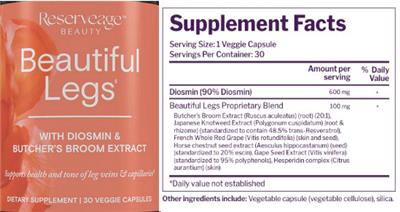
Supplement Facts
The label details for Beautiful Legs by Reserveage Beauty, sourced from the NIH Dietary Supplement Label Database.
Supplement Facts
| Ingredient | Amount | % DV |
|---|---|---|
| Diosmin | 600 mg | -- |
| Beautiful Legs Proprietary Blend | 100 mg | -- |
| Japanese Knotweed Rhizome, Root Extract | 0 NP | -- |
| Grape Seed Extract | 0 NP | -- |
| Butcher's Broom Root Extract | 0 NP | -- |
| French Whole Red Grape | 0 NP | -- |
| Horse Chestnut Seed Extract | 0 NP | -- |
| Hesperidin Complex | 0 NP | -- |
Other ingredients: Cellulose, Silica
Tap any ingredient to jump to its full detail below.
These statements are the manufacturer’s wording, reproduced from the product label — the label is saying it, not HelloPharmacist. We don’t verify or endorse them.
Formula
Beautiful Legs with Diosmin & Butcher's Broom Extract
Formulation
Supports health and tone of leg veins & capillaries
FDA Statement of Identity
Dietary Supplement
Is this label outdated? Report a formula or label change and our pharmacy team will review it.
Beautiful Legs by Reserveage Beauty label
The label scan from the NIH Dietary Supplement Label Database. Tap to enlarge.
Label images are published by the NIH Dietary Supplement Label Database for the version of this product on file. Always read your actual product label.
View the full label (PDF)The Ingredients in Beautiful Legs by Reserveage Beauty
These are the 7 active ingredients this product is made of. Select any to open its full monograph.
Serving size1 Veggie Capsule(s) Dosage formCapsule Servings per container30 Amounts shown are per serving.
Most supplement products combine several ingredients, and a medication can interact with the product through any one of them. Each ingredient below shows whether it has known drug interactions.
Diosmin
Interacts with885 drugs
Diosmin is a citrus-derived flavonoid most often used for vein-related problems such as chronic venous insufficiency and hemorrhoids, and it is usuall...
Diosmin monograph & interactionsBeautiful Legs Proprietary Blend
Other (inactive) ingredients: Cellulose, Silica. These complete the product’s ingredient list but are not active constituents.
Beautiful Legs by Reserveage Beauty Drug Interactions
HelloPharmacist Interaction Report
Beautiful Legs by Reserveage Beauty contains several ingredients with documented interactions: diosmin, Japanese knotweed (hu zhang), grape seed extract, butcher's broom, French whole red grape, horse chestnut seed extract, and hesperidin.
The most serious interactions are Moderate in severity. Diosmin is the primary concern—it can slow how your liver breaks down blood thinners (anticoagulants) like warfarin, which raises the risk of bleeding.
It also affects how your body processes certain muscle relaxants and anti-seizure medications.
Read the full breakdown — every affected drug type, severity by severity
The grape ingredients (grape seed extract and French whole red grape) and hesperidin may thin your blood or amplify blood thinners' effects. Japanese knotweed and hesperidin can interfere with how your liver metabolizes many drugs—everything from heartburn medications and antidepressants to sedatives and blood pressure drugs.
Butcher's broom may counteract blood pressure medications that relax blood vessels, while horse chestnut seed extract also carries a bleeding risk with anticoagulants.
Additionally, hesperidin could boost levels of certain heart medications (verapamil and diltiazem) or reduce effectiveness of others (celiprolol). Altogether, these interactions span 1,255 individual medications.
Before you start this product, check your exact medications with the search tool on this page or talk with your doctor or pharmacist—especially if you take blood thinners, blood pressure drugs, seizure medications, muscle relaxants, or heart medications.
Check your own medications below · Editorial policy · How we use AI
Want to check YOUR meds against Beautiful Legs?
Ask about interactions with your drugs in plain English — “Can I take it with lisinopril?” — and we find you the answer in seconds, ingredient by ingredient.
Go to the checkerIngredients driving the most interactions
Individual Drug Interactions
The ingredients in Beautiful Legs interact with 1,254 drugs. Click any drug to see the details.
6 of the 7 ingredients in Beautiful Legs interact with drugs. Each result below shows which ingredient is responsible. Grape Seed Extract Diosmin Japanese Knotweed Rhizome, Root Extract Hesperidin Complex Butcher's Broom Root Extract Horse Chestnut Seed Extract
"phentolamineOraVerse, Rogitine, Ryzumvi
How "phentolamine interacts with Beautiful Legs — through 1 ingredient. Tap an ingredient for the detail:
Butcher's Broom Root Extract Alpha-adrenergic Antagonists Moderate
Interaction Summary
Theoretically, butcher's broom might reduce the effects of alpha-adrenergic antagonists.
Read the full Butcher's Broom Root Extract + "phentolamine interactionAdo-trastuzumab EmtansineKadcyla
How Ado-trastuzumab Emtansine interacts with Beautiful Legs — through 3 ingredients. Tap an ingredient for the detail:
Japanese Knotweed Rhizome, Root ExtractCytochrome P450 3a4 (cyp3a4) Substrates Moderate
Interaction Summary
Theoretically, hu zhang might increase levels of drugs metabolized by CYP3A4.
Read the full Japanese Knotweed Rhizome, Root Extract + Ado-trastuzumab Emtansine interactionFrench Whole Red GrapeCytochrome P450 3a4 (cyp3a4) Substrates Moderate
Interaction Summary
It is unclear if grape seed extract inhibits or induces CYP3A4; research is conflicting.
Read the full French Whole Red Grape + Ado-trastuzumab Emtansine interactionDiosminCytochrome P450 3a4 (cyp3a4) Substrates Moderate
Interaction Summary
Theoretically, diosmin might inhibit the metabolism of CYP3A4 substrates.
Read the full Diosmin + Ado-trastuzumab Emtansine interactionAbciximabReoPro
How Abciximab interacts with Beautiful Legs — through 5 ingredients. Tap an ingredient for the detail:
French Whole Red GrapeAnticoagulant/antiplatelet Drugs Moderate
Interaction Summary
Theoretically, grape extracts may have antiplatelet effects and may increase the risk of bleeding if used with anticoagulant or antiplatelet drugs.
Read the full French Whole Red Grape + Abciximab interactionDiosminAnticoagulant/antiplatelet Drugs Moderate
Interaction Summary
Theoretically, diosmin may increase the risk of bleeding if used with anticoagulant or antiplatelet drugs.
Read the full Diosmin + Abciximab interactionJapanese Knotweed Rhizome, Root ExtractAnticoagulant/antiplatelet Drugs Moderate
Interaction Summary
Theoretically, hu zhang might increase the risk of bleeding when taken with anticoagulant or antiplatelet drugs.
Read the full Japanese Knotweed Rhizome, Root Extract + Abciximab interactionHesperidin ComplexAnticoagulant/antiplatelet Drugs Moderate
Interaction Summary
Theoretically, hesperidin may increase the risk of bleeding if used with anticoagulant or antiplatelet drugs.
Read the full Hesperidin Complex + Abciximab interactionHorse Chestnut Seed ExtractAnticoagulant/antiplatelet Drugs Moderate
Interaction Summary
Horse chestnut may have antiplatelet effects and may increase the risk of bleeding if used with anticoagulant or antiplatelet drugs.
Read the full Horse Chestnut Seed Extract + Abciximab interactionAbemaciclibVerzenio
How Abemaciclib interacts with Beautiful Legs — through 3 ingredients. Tap an ingredient for the detail:
Japanese Knotweed Rhizome, Root ExtractCytochrome P450 3a4 (cyp3a4) Substrates Moderate
Interaction Summary
Theoretically, hu zhang might increase levels of drugs metabolized by CYP3A4.
Read the full Japanese Knotweed Rhizome, Root Extract + Abemaciclib interactionFrench Whole Red GrapeCytochrome P450 3a4 (cyp3a4) Substrates Moderate
Interaction Summary
It is unclear if grape seed extract inhibits or induces CYP3A4; research is conflicting.
Read the full French Whole Red Grape + Abemaciclib interactionDiosminCytochrome P450 3a4 (cyp3a4) Substrates Moderate
Interaction Summary
Theoretically, diosmin might inhibit the metabolism of CYP3A4 substrates.
Read the full Diosmin + Abemaciclib interactionAbiraterone
How Abiraterone interacts with Beautiful Legs — through 3 ingredients. Tap an ingredient for the detail:
DiosminCytochrome P450 3a4 (cyp3a4) Substrates Moderate
Interaction Summary
Theoretically, diosmin might inhibit the metabolism of CYP3A4 substrates.
Read the full Diosmin + Abiraterone interactionJapanese Knotweed Rhizome, Root ExtractCytochrome P450 3a4 (cyp3a4) Substrates Moderate
Interaction Summary
Theoretically, hu zhang might increase levels of drugs metabolized by CYP3A4.
Read the full Japanese Knotweed Rhizome, Root Extract + Abiraterone interactionFrench Whole Red GrapeCytochrome P450 3a4 (cyp3a4) Substrates Moderate
Interaction Summary
It is unclear if grape seed extract inhibits or induces CYP3A4; research is conflicting.
Read the full French Whole Red Grape + Abiraterone interactionAbiraterone AcetateYonsa, Zytiga
How Abiraterone Acetate interacts with Beautiful Legs — through 3 ingredients. Tap an ingredient for the detail:
French Whole Red GrapeCytochrome P450 3a4 (cyp3a4) Substrates Moderate
Interaction Summary
It is unclear if grape seed extract inhibits or induces CYP3A4; research is conflicting.
Read the full French Whole Red Grape + Abiraterone Acetate interactionDiosminCytochrome P450 3a4 (cyp3a4) Substrates Moderate
Interaction Summary
Theoretically, diosmin might inhibit the metabolism of CYP3A4 substrates.
Read the full Diosmin + Abiraterone Acetate interactionJapanese Knotweed Rhizome, Root ExtractCytochrome P450 3a4 (cyp3a4) Substrates Moderate
Interaction Summary
Theoretically, hu zhang might increase levels of drugs metabolized by CYP3A4.
Read the full Japanese Knotweed Rhizome, Root Extract + Abiraterone Acetate interactionAbrocitinibCibinqo
How Abrocitinib interacts with Beautiful Legs — through 5 ingredients. Tap an ingredient for the detail:
Hesperidin ComplexAnticoagulant/antiplatelet Drugs Moderate
Interaction Summary
Theoretically, hesperidin may increase the risk of bleeding if used with anticoagulant or antiplatelet drugs.
Read the full Hesperidin Complex + Abrocitinib interactionHorse Chestnut Seed ExtractAnticoagulant/antiplatelet Drugs Moderate
Interaction Summary
Horse chestnut may have antiplatelet effects and may increase the risk of bleeding if used with anticoagulant or antiplatelet drugs.
Read the full Horse Chestnut Seed Extract + Abrocitinib interactionJapanese Knotweed Rhizome, Root ExtractAnticoagulant/antiplatelet Drugs, Cytochrome P450 2c19 (cyp2c19) Substrates Moderate
Interaction Summary
Theoretically, hu zhang might increase the risk of bleeding when taken with anticoagulant or antiplatelet drugs.
Read the full Japanese Knotweed Rhizome, Root Extract + Abrocitinib interactionFrench Whole Red GrapeAnticoagulant/antiplatelet Drugs, Cytochrome P450 2c9 (cyp2c9) Substrates Moderate
Interaction Summary
Theoretically, grape extracts may have antiplatelet effects and may increase the risk of bleeding if used with anticoagulant or antiplatelet drugs.
Read the full French Whole Red Grape + Abrocitinib interactionDiosminAnticoagulant/antiplatelet Drugs, Cytochrome P450 2c9 (cyp2c9) Substrates Moderate
Interaction Summary
Theoretically, diosmin may increase the risk of bleeding if used with anticoagulant or antiplatelet drugs.
Read the full Diosmin + Abrocitinib interactionAcalabrutinibCalquence
How Acalabrutinib interacts with Beautiful Legs — through 4 ingredients. Tap an ingredient for the detail:
DiosminCytochrome P450 3a4 (cyp3a4) Substrates, P-glycoprotein Substrates Moderate
Interaction Summary
Theoretically, diosmin might inhibit the metabolism of CYP3A4 substrates.
Read the full Diosmin + Acalabrutinib interactionJapanese Knotweed Rhizome, Root ExtractCytochrome P450 3a4 (cyp3a4) Substrates Moderate
Interaction Summary
Theoretically, hu zhang might increase levels of drugs metabolized by CYP3A4.
Read the full Japanese Knotweed Rhizome, Root Extract + Acalabrutinib interactionHesperidin ComplexP-glycoprotein Substrates Moderate
Interaction Summary
Theoretically, hesperidin might inhibit P-glycoprotein-mediated drug efflux and potentially increase levels of drugs that are substrates of P-glycoprotein.
Read the full Hesperidin Complex + Acalabrutinib interactionFrench Whole Red GrapeCytochrome P450 3a4 (cyp3a4) Substrates Moderate
Interaction Summary
It is unclear if grape seed extract inhibits or induces CYP3A4; research is conflicting.
Read the full French Whole Red Grape + Acalabrutinib interactionAcebutololRhotral, Sectral
How Acebutolol interacts with Beautiful Legs — through 1 ingredient. Tap an ingredient for the detail:
Hesperidin ComplexAntihypertensive Drugs Moderate
Interaction Summary
Theoretically, taking hesperidin with antihypertensive drugs might increase the risk of hypotension.
Read the full Hesperidin Complex + Acebutolol interactionAcenocoumarolSintrom
How Acenocoumarol interacts with Beautiful Legs — through 5 ingredients. Tap an ingredient for the detail:
DiosminAnticoagulant/antiplatelet Drugs Moderate
Interaction Summary
Theoretically, diosmin may increase the risk of bleeding if used with anticoagulant or antiplatelet drugs.
Read the full Diosmin + Acenocoumarol interactionFrench Whole Red GrapeAnticoagulant/antiplatelet Drugs Moderate
Interaction Summary
Theoretically, grape extracts may have antiplatelet effects and may increase the risk of bleeding if used with anticoagulant or antiplatelet drugs.
Read the full French Whole Red Grape + Acenocoumarol interactionHesperidin ComplexAnticoagulant/antiplatelet Drugs Moderate
Interaction Summary
Theoretically, hesperidin may increase the risk of bleeding if used with anticoagulant or antiplatelet drugs.
Read the full Hesperidin Complex + Acenocoumarol interactionHorse Chestnut Seed ExtractAnticoagulant/antiplatelet Drugs Moderate
Interaction Summary
Horse chestnut may have antiplatelet effects and may increase the risk of bleeding if used with anticoagulant or antiplatelet drugs.
Read the full Horse Chestnut Seed Extract + Acenocoumarol interactionJapanese Knotweed Rhizome, Root ExtractAnticoagulant/antiplatelet Drugs Moderate
Interaction Summary
Theoretically, hu zhang might increase the risk of bleeding when taken with anticoagulant or antiplatelet drugs.
Read the full Japanese Knotweed Rhizome, Root Extract + Acenocoumarol interactionAcepromazineAtravet
How Acepromazine interacts with Beautiful Legs — through 1 ingredient. Tap an ingredient for the detail:
Hesperidin ComplexCns Depressants Moderate
Interaction Summary
Theoretically, concomitant use with CNS depressants may cause additive sedative effects.
Read the full Hesperidin Complex + Acepromazine interactionAcetaminophenChildren's Tylenol, Children's Tylenol Meltaways, Tylenol, Tylenol Ex Strength
How Acetaminophen interacts with Beautiful Legs — through 3 ingredients. Tap an ingredient for the detail:
DiosminCytochrome P450 2e1 (cyp2e1) Substrates Moderate
Interaction Summary
Theoretically, diosmin might inhibit the metabolism of CYP2E1 substrates.
Read the full Diosmin + Acetaminophen interactionJapanese Knotweed Rhizome, Root ExtractCytochrome P450 2e1 (cyp2e1) Substrates, Cytochrome P450 1a2 (cyp1a2) Substrates Moderate
Interaction Summary
Theoretically, hu zhang might increase levels of drugs metabolized by CYP2E1.
Read the full Japanese Knotweed Rhizome, Root Extract + Acetaminophen interactionFrench Whole Red GrapeCytochrome P450 2e1 (cyp2e1) Substrates, Cytochrome P450 1a2 (cyp1a2) Substrates Moderate
Interaction Summary
Theoretically, grape seed extract might increase the levels of CYP2E1 substrates.
Read the full French Whole Red Grape + Acetaminophen interactionAcetaminophen, AspirinGemnisyn
How Acetaminophen, Aspirin interacts with Beautiful Legs — through 5 ingredients. Tap an ingredient for the detail:
French Whole Red GrapeCytochrome P450 1a2 (cyp1a2) Substrates, Cytochrome P450 2e1 (cyp2e1) Substrates +1 Moderate
Interaction Summary
Theoretically, grape juice might reduce the levels of CYP1A2 substrates.
Read the full French Whole Red Grape + Acetaminophen, Aspirin interactionDiosminAnticoagulant/antiplatelet Drugs, Cytochrome P450 2e1 (cyp2e1) Substrates Moderate
Interaction Summary
Theoretically, diosmin may increase the risk of bleeding if used with anticoagulant or antiplatelet drugs.
Read the full Diosmin + Acetaminophen, Aspirin interactionHorse Chestnut Seed ExtractAnticoagulant/antiplatelet Drugs Moderate
Interaction Summary
Horse chestnut may have antiplatelet effects and may increase the risk of bleeding if used with anticoagulant or antiplatelet drugs.
Read the full Horse Chestnut Seed Extract + Acetaminophen, Aspirin interactionJapanese Knotweed Rhizome, Root ExtractCytochrome P450 1a2 (cyp1a2) Substrates, Anticoagulant/antiplatelet Drugs +1 Moderate
Interaction Summary
Theoretically, hu zhang might increase levels of drugs metabolized by CYP1A2.
Read the full Japanese Knotweed Rhizome, Root Extract + Acetaminophen, Aspirin interactionHesperidin ComplexAnticoagulant/antiplatelet Drugs Moderate
Interaction Summary
Theoretically, hesperidin may increase the risk of bleeding if used with anticoagulant or antiplatelet drugs.
Read the full Hesperidin Complex + Acetaminophen, Aspirin interactionAcetaminophen, Aspirin, CaffeineExcedrin, Excedrin Extra Strength, Excedrin Migraine
How Acetaminophen, Aspirin, Caffeine interacts with Beautiful Legs — through 5 ingredients. Tap an ingredient for the detail:
Japanese Knotweed Rhizome, Root ExtractCytochrome P450 2e1 (cyp2e1) Substrates, Cytochrome P450 1a2 (cyp1a2) Substrates +2 Moderate
Interaction Summary
Theoretically, hu zhang might increase levels of drugs metabolized by CYP2E1.
Read the full Japanese Knotweed Rhizome, Root Extract + Acetaminophen, Aspirin, Caffeine interactionHesperidin ComplexAnticoagulant/antiplatelet Drugs Moderate
Interaction Summary
Theoretically, hesperidin may increase the risk of bleeding if used with anticoagulant or antiplatelet drugs.
Read the full Hesperidin Complex + Acetaminophen, Aspirin, Caffeine interactionHorse Chestnut Seed ExtractAnticoagulant/antiplatelet Drugs Moderate
Interaction Summary
Horse chestnut may have antiplatelet effects and may increase the risk of bleeding if used with anticoagulant or antiplatelet drugs.
Read the full Horse Chestnut Seed Extract + Acetaminophen, Aspirin, Caffeine interactionFrench Whole Red GrapeAnticoagulant/antiplatelet Drugs, Cytochrome P450 1a2 (cyp1a2) Substrates +2 Moderate
Interaction Summary
Theoretically, grape extracts may have antiplatelet effects and may increase the risk of bleeding if used with anticoagulant or antiplatelet drugs.
Read the full French Whole Red Grape + Acetaminophen, Aspirin, Caffeine interactionDiosminCytochrome P450 2e1 (cyp2e1) Substrates, Cytochrome P450 3a4 (cyp3a4) Substrates +1 Moderate
Interaction Summary
Theoretically, diosmin might inhibit the metabolism of CYP2E1 substrates.
Read the full Diosmin + Acetaminophen, Aspirin, Caffeine interactionAcetaminophen, Brompheniramine, PhenylpropanolamineDimetapp Cold and Flu
How Acetaminophen, Brompheniramine, Phenylpropanolamine interacts with Beautiful Legs — through 4 ingredients. Tap an ingredient for the detail:
DiosminCytochrome P450 2e1 (cyp2e1) Substrates Moderate
Interaction Summary
Theoretically, diosmin might inhibit the metabolism of CYP2E1 substrates.
Read the full Diosmin + Acetaminophen, Brompheniramine, Phenylpropanolamine interactionJapanese Knotweed Rhizome, Root ExtractCytochrome P450 2e1 (cyp2e1) Substrates, Cytochrome P450 1a2 (cyp1a2) Substrates Moderate
Interaction Summary
Theoretically, hu zhang might increase levels of drugs metabolized by CYP2E1.
Read the full Japanese Knotweed Rhizome, Root Extract + Acetaminophen, Brompheniramine, Phenylpropanolamine interactionFrench Whole Red GrapeCytochrome P450 2e1 (cyp2e1) Substrates, Cytochrome P450 1a2 (cyp1a2) Substrates Moderate
Interaction Summary
Theoretically, grape seed extract might increase the levels of CYP2E1 substrates.
Read the full French Whole Red Grape + Acetaminophen, Brompheniramine, Phenylpropanolamine interactionButcher's Broom Root Extract Alpha-adrenergic Agonists Moderate
Interaction Summary
Theoretically, butcher's broom might increase the effects and adverse effects of alpha-adrenergic agonists.
Read the full Butcher's Broom Root Extract + Acetaminophen, Brompheniramine, Phenylpropanolamine interactionAcetaminophen, ButalbitalAxocet, Bancap, Bucet, Butex Forte, Esgic CF, Orbivan CF +5 more
How Acetaminophen, Butalbital interacts with Beautiful Legs — through 3 ingredients. Tap an ingredient for the detail:
French Whole Red GrapeCytochrome P450 1a2 (cyp1a2) Substrates, Cytochrome P450 2e1 (cyp2e1) Substrates Moderate
Interaction Summary
Theoretically, grape juice might reduce the levels of CYP1A2 substrates.
Read the full French Whole Red Grape + Acetaminophen, Butalbital interactionDiosminCytochrome P450 2e1 (cyp2e1) Substrates Moderate
Interaction Summary
Theoretically, diosmin might inhibit the metabolism of CYP2E1 substrates.
Read the full Diosmin + Acetaminophen, Butalbital interactionJapanese Knotweed Rhizome, Root ExtractCytochrome P450 1a2 (cyp1a2) Substrates, Cytochrome P450 2e1 (cyp2e1) Substrates Moderate
Interaction Summary
Theoretically, hu zhang might increase levels of drugs metabolized by CYP1A2.
Read the full Japanese Knotweed Rhizome, Root Extract + Acetaminophen, Butalbital interactionAcetaminophen, Butalbital, CaffeineEsgic, Esgic Plus, Fiogesic, Fioricet, Repan, Tecnal +1 more
How Acetaminophen, Butalbital, Caffeine interacts with Beautiful Legs — through 3 ingredients. Tap an ingredient for the detail:
Japanese Knotweed Rhizome, Root ExtractCytochrome P450 2e1 (cyp2e1) Substrates, Cytochrome P450 3a4 (cyp3a4) Substrates +1 Moderate
Interaction Summary
Theoretically, hu zhang might increase levels of drugs metabolized by CYP2E1.
Read the full Japanese Knotweed Rhizome, Root Extract + Acetaminophen, Butalbital, Caffeine interactionFrench Whole Red GrapeCytochrome P450 2e1 (cyp2e1) Substrates, Cytochrome P450 1a2 (cyp1a2) Substrates +1 Moderate
Interaction Summary
Theoretically, grape seed extract might increase the levels of CYP2E1 substrates.
Read the full French Whole Red Grape + Acetaminophen, Butalbital, Caffeine interactionDiosminCytochrome P450 2e1 (cyp2e1) Substrates, Cytochrome P450 3a4 (cyp3a4) Substrates Moderate
Interaction Summary
Theoretically, diosmin might inhibit the metabolism of CYP2E1 substrates.
Read the full Diosmin + Acetaminophen, Butalbital, Caffeine interactionAcetaminophen, Butalbital, Caffeine, CodeineEsgic with Codeine, Fioricet w/ Codeine
How Acetaminophen, Butalbital, Caffeine, Codeine interacts with Beautiful Legs — through 4 ingredients. Tap an ingredient for the detail:
DiosminCytochrome P450 3a4 (cyp3a4) Substrates, Cytochrome P450 2e1 (cyp2e1) Substrates Moderate
Interaction Summary
Theoretically, diosmin might inhibit the metabolism of CYP3A4 substrates.
Read the full Diosmin + Acetaminophen, Butalbital, Caffeine, Codeine interactionHesperidin ComplexCns Depressants Moderate
Interaction Summary
Theoretically, concomitant use with CNS depressants may cause additive sedative effects.
Read the full Hesperidin Complex + Acetaminophen, Butalbital, Caffeine, Codeine interactionJapanese Knotweed Rhizome, Root ExtractCytochrome P450 1a2 (cyp1a2) Substrates, Cytochrome P450 2e1 (cyp2e1) Substrates +1 Moderate
Interaction Summary
Theoretically, hu zhang might increase levels of drugs metabolized by CYP1A2.
Read the full Japanese Knotweed Rhizome, Root Extract + Acetaminophen, Butalbital, Caffeine, Codeine interactionFrench Whole Red GrapeCytochrome P450 3a4 (cyp3a4) Substrates, Cytochrome P450 2e1 (cyp2e1) Substrates +2 Moderate
Interaction Summary
It is unclear if grape seed extract inhibits or induces CYP3A4; research is conflicting.
Read the full French Whole Red Grape + Acetaminophen, Butalbital, Caffeine, Codeine interactionAcetaminophen, Butalbital, CodeineBancap w/ Codeine
How Acetaminophen, Butalbital, Codeine interacts with Beautiful Legs — through 4 ingredients. Tap an ingredient for the detail:
French Whole Red GrapeCytochrome P450 2d6 (cyp2d6) Substrates, Cytochrome P450 2e1 (cyp2e1) Substrates +1 Moderate
Interaction Summary
Theoretically, grape seed extract may increase the levels of CYP2D6 substrates.
Read the full French Whole Red Grape + Acetaminophen, Butalbital, Codeine interactionDiosminCytochrome P450 2e1 (cyp2e1) Substrates Moderate
Interaction Summary
Theoretically, diosmin might inhibit the metabolism of CYP2E1 substrates.
Read the full Diosmin + Acetaminophen, Butalbital, Codeine interactionHesperidin ComplexCns Depressants Moderate
Interaction Summary
Theoretically, concomitant use with CNS depressants may cause additive sedative effects.
Read the full Hesperidin Complex + Acetaminophen, Butalbital, Codeine interactionJapanese Knotweed Rhizome, Root ExtractCytochrome P450 1a2 (cyp1a2) Substrates, Cytochrome P450 2e1 (cyp2e1) Substrates Moderate
Interaction Summary
Theoretically, hu zhang might increase levels of drugs metabolized by CYP1A2.
Read the full Japanese Knotweed Rhizome, Root Extract + Acetaminophen, Butalbital, Codeine interactionAcetaminophen, Butalbital, Codeine PhosphatePhrenilin #3
How Acetaminophen, Butalbital, Codeine Phosphate interacts with Beautiful Legs — through 4 ingredients. Tap an ingredient for the detail:
Japanese Knotweed Rhizome, Root ExtractCytochrome P450 2e1 (cyp2e1) Substrates, Cytochrome P450 1a2 (cyp1a2) Substrates Moderate
Interaction Summary
Theoretically, hu zhang might increase levels of drugs metabolized by CYP2E1.
Read the full Japanese Knotweed Rhizome, Root Extract + Acetaminophen, Butalbital, Codeine Phosphate interactionFrench Whole Red GrapeCytochrome P450 2e1 (cyp2e1) Substrates, Cytochrome P450 1a2 (cyp1a2) Substrates +1 Moderate
Interaction Summary
Theoretically, grape seed extract might increase the levels of CYP2E1 substrates.
Read the full French Whole Red Grape + Acetaminophen, Butalbital, Codeine Phosphate interactionDiosminCytochrome P450 2e1 (cyp2e1) Substrates Moderate
Interaction Summary
Theoretically, diosmin might inhibit the metabolism of CYP2E1 substrates.
Read the full Diosmin + Acetaminophen, Butalbital, Codeine Phosphate interactionHesperidin ComplexCns Depressants Moderate
Interaction Summary
Theoretically, concomitant use with CNS depressants may cause additive sedative effects.
Read the full Hesperidin Complex + Acetaminophen, Butalbital, Codeine Phosphate interactionAcetaminophen, Caffeine, Chlorpheniramine, Hydrocodone, PhenylephrineHycomine Compound
How Acetaminophen, Caffeine, Chlorpheniramine, Hydrocodone, Phenylephrine interacts with Beautiful Legs — through 5 ingredients. Tap an ingredient for the detail:
DiosminCytochrome P450 2e1 (cyp2e1) Substrates, Cytochrome P450 3a4 (cyp3a4) Substrates Moderate
Interaction Summary
Theoretically, diosmin might inhibit the metabolism of CYP2E1 substrates.
Read the full Diosmin + Acetaminophen, Caffeine, Chlorpheniramine, Hydrocodone, Phenylephrine interactionHesperidin ComplexCns Depressants Moderate
Interaction Summary
Theoretically, concomitant use with CNS depressants may cause additive sedative effects.
Read the full Hesperidin Complex + Acetaminophen, Caffeine, Chlorpheniramine, Hydrocodone, Phenylephrine interactionJapanese Knotweed Rhizome, Root ExtractCytochrome P450 3a4 (cyp3a4) Substrates, Cytochrome P450 2e1 (cyp2e1) Substrates +1 Moderate
Interaction Summary
Theoretically, hu zhang might increase levels of drugs metabolized by CYP3A4.
Read the full Japanese Knotweed Rhizome, Root Extract + Acetaminophen, Caffeine, Chlorpheniramine, Hydrocodone, Phenylephrine interactionFrench Whole Red GrapeCytochrome P450 2d6 (cyp2d6) Substrates, Cytochrome P450 3a4 (cyp3a4) Substrates +2 Moderate
Interaction Summary
Theoretically, grape seed extract may increase the levels of CYP2D6 substrates.
Read the full French Whole Red Grape + Acetaminophen, Caffeine, Chlorpheniramine, Hydrocodone, Phenylephrine interactionButcher's Broom Root Extract Alpha-adrenergic Agonists Moderate
Interaction Summary
Theoretically, butcher's broom might increase the effects and adverse effects of alpha-adrenergic agonists.
Read the full Butcher's Broom Root Extract + Acetaminophen, Caffeine, Chlorpheniramine, Hydrocodone, Phenylephrine interactionAcetaminophen, Caffeine, CodeineGesic C15, Gesic C30, Gesic C8, Lenoltec 1, Lenoltec 2, Lenoltec 3 +1 more
How Acetaminophen, Caffeine, Codeine interacts with Beautiful Legs — through 4 ingredients. Tap an ingredient for the detail:
French Whole Red GrapeCytochrome P450 1a2 (cyp1a2) Substrates, Cytochrome P450 2d6 (cyp2d6) Substrates +2 Moderate
Interaction Summary
Theoretically, grape juice might reduce the levels of CYP1A2 substrates.
Read the full French Whole Red Grape + Acetaminophen, Caffeine, Codeine interactionDiosminCytochrome P450 3a4 (cyp3a4) Substrates, Cytochrome P450 2e1 (cyp2e1) Substrates Moderate
Interaction Summary
Theoretically, diosmin might inhibit the metabolism of CYP3A4 substrates.
Read the full Diosmin + Acetaminophen, Caffeine, Codeine interactionHesperidin ComplexCns Depressants Moderate
Interaction Summary
Theoretically, concomitant use with CNS depressants may cause additive sedative effects.
Read the full Hesperidin Complex + Acetaminophen, Caffeine, Codeine interactionJapanese Knotweed Rhizome, Root ExtractCytochrome P450 1a2 (cyp1a2) Substrates, Cytochrome P450 3a4 (cyp3a4) Substrates +1 Moderate
Interaction Summary
Theoretically, hu zhang might increase levels of drugs metabolized by CYP1A2.
Read the full Japanese Knotweed Rhizome, Root Extract + Acetaminophen, Caffeine, Codeine interactionAcetaminophen, Caffeine, Codeine, SalicylamideCodalan No.1, Codalan No.2, Codalan No.3
How Acetaminophen, Caffeine, Codeine, Salicylamide interacts with Beautiful Legs — through 4 ingredients. Tap an ingredient for the detail:
Japanese Knotweed Rhizome, Root ExtractCytochrome P450 2e1 (cyp2e1) Substrates, Cytochrome P450 3a4 (cyp3a4) Substrates +1 Moderate
Interaction Summary
Theoretically, hu zhang might increase levels of drugs metabolized by CYP2E1.
Read the full Japanese Knotweed Rhizome, Root Extract + Acetaminophen, Caffeine, Codeine, Salicylamide interactionFrench Whole Red GrapeCytochrome P450 3a4 (cyp3a4) Substrates, Cytochrome P450 2e1 (cyp2e1) Substrates +2 Moderate
Interaction Summary
It is unclear if grape seed extract inhibits or induces CYP3A4; research is conflicting.
Read the full French Whole Red Grape + Acetaminophen, Caffeine, Codeine, Salicylamide interactionDiosminCytochrome P450 2e1 (cyp2e1) Substrates, Cytochrome P450 3a4 (cyp3a4) Substrates Moderate
Interaction Summary
Theoretically, diosmin might inhibit the metabolism of CYP2E1 substrates.
Read the full Diosmin + Acetaminophen, Caffeine, Codeine, Salicylamide interactionHesperidin ComplexCns Depressants Moderate
Interaction Summary
Theoretically, concomitant use with CNS depressants may cause additive sedative effects.
Read the full Hesperidin Complex + Acetaminophen, Caffeine, Codeine, Salicylamide interactionAcetaminophen, Caffeine, DihydrocodeineDHC Plus, Panlor DC, Panlor SS
How Acetaminophen, Caffeine, Dihydrocodeine interacts with Beautiful Legs — through 4 ingredients. Tap an ingredient for the detail:
DiosminCytochrome P450 3a4 (cyp3a4) Substrates, Cytochrome P450 2e1 (cyp2e1) Substrates Moderate
Interaction Summary
Theoretically, diosmin might inhibit the metabolism of CYP3A4 substrates.
Read the full Diosmin + Acetaminophen, Caffeine, Dihydrocodeine interactionHesperidin ComplexCns Depressants Moderate
Interaction Summary
Theoretically, concomitant use with CNS depressants may cause additive sedative effects.
Read the full Hesperidin Complex + Acetaminophen, Caffeine, Dihydrocodeine interactionJapanese Knotweed Rhizome, Root ExtractCytochrome P450 2e1 (cyp2e1) Substrates, Cytochrome P450 1a2 (cyp1a2) Substrates +1 Moderate
Interaction Summary
Theoretically, hu zhang might increase levels of drugs metabolized by CYP2E1.
Read the full Japanese Knotweed Rhizome, Root Extract + Acetaminophen, Caffeine, Dihydrocodeine interactionFrench Whole Red GrapeCytochrome P450 2d6 (cyp2d6) Substrates, Cytochrome P450 1a2 (cyp1a2) Substrates +2 Moderate
Interaction Summary
Theoretically, grape seed extract may increase the levels of CYP2D6 substrates.
Read the full French Whole Red Grape + Acetaminophen, Caffeine, Dihydrocodeine interactionAcetaminophen, Caffeine, IsomethepteneMigralam
How Acetaminophen, Caffeine, Isometheptene interacts with Beautiful Legs — through 3 ingredients. Tap an ingredient for the detail:
French Whole Red GrapeCytochrome P450 3a4 (cyp3a4) Substrates, Cytochrome P450 2e1 (cyp2e1) Substrates +1 Moderate
Interaction Summary
It is unclear if grape seed extract inhibits or induces CYP3A4; research is conflicting.
Read the full French Whole Red Grape + Acetaminophen, Caffeine, Isometheptene interactionDiosminCytochrome P450 2e1 (cyp2e1) Substrates, Cytochrome P450 3a4 (cyp3a4) Substrates Moderate
Interaction Summary
Theoretically, diosmin might inhibit the metabolism of CYP2E1 substrates.
Read the full Diosmin + Acetaminophen, Caffeine, Isometheptene interactionJapanese Knotweed Rhizome, Root ExtractCytochrome P450 3a4 (cyp3a4) Substrates, Cytochrome P450 2e1 (cyp2e1) Substrates +1 Moderate
Interaction Summary
Theoretically, hu zhang might increase levels of drugs metabolized by CYP3A4.
Read the full Japanese Knotweed Rhizome, Root Extract + Acetaminophen, Caffeine, Isometheptene interactionAcetaminophen, Caffeine, PyrilamineMidol Max Strength Menstrual
How Acetaminophen, Caffeine, Pyrilamine interacts with Beautiful Legs — through 3 ingredients. Tap an ingredient for the detail:
Japanese Knotweed Rhizome, Root ExtractCytochrome P450 1a2 (cyp1a2) Substrates, Cytochrome P450 3a4 (cyp3a4) Substrates +1 Moderate
Interaction Summary
Theoretically, hu zhang might increase levels of drugs metabolized by CYP1A2.
Read the full Japanese Knotweed Rhizome, Root Extract + Acetaminophen, Caffeine, Pyrilamine interactionFrench Whole Red GrapeCytochrome P450 1a2 (cyp1a2) Substrates, Cytochrome P450 2e1 (cyp2e1) Substrates +1 Moderate
Interaction Summary
Theoretically, grape juice might reduce the levels of CYP1A2 substrates.
Read the full French Whole Red Grape + Acetaminophen, Caffeine, Pyrilamine interactionDiosminCytochrome P450 3a4 (cyp3a4) Substrates, Cytochrome P450 2e1 (cyp2e1) Substrates Moderate
Interaction Summary
Theoretically, diosmin might inhibit the metabolism of CYP3A4 substrates.
Read the full Diosmin + Acetaminophen, Caffeine, Pyrilamine interactionAcetaminophen, Chlorpheniramine Maleate, Dextromethorphan HbrVicks Formula 44M Cough, Cold & Flu Relief
How Acetaminophen, Chlorpheniramine Maleate, Dextromethorphan Hbr interacts with Beautiful Legs — through 3 ingredients. Tap an ingredient for the detail:
DiosminCytochrome P450 2e1 (cyp2e1) Substrates, Cytochrome P450 3a4 (cyp3a4) Substrates Moderate
Interaction Summary
Theoretically, diosmin might inhibit the metabolism of CYP2E1 substrates.
Read the full Diosmin + Acetaminophen, Chlorpheniramine Maleate, Dextromethorphan Hbr interactionJapanese Knotweed Rhizome, Root ExtractCytochrome P450 2e1 (cyp2e1) Substrates, Cytochrome P450 1a2 (cyp1a2) Substrates +1 Moderate
Interaction Summary
Theoretically, hu zhang might increase levels of drugs metabolized by CYP2E1.
Read the full Japanese Knotweed Rhizome, Root Extract + Acetaminophen, Chlorpheniramine Maleate, Dextromethorphan Hbr interactionFrench Whole Red GrapeCytochrome P450 1a2 (cyp1a2) Substrates, Cytochrome P450 3a4 (cyp3a4) Substrates +2 Moderate
Interaction Summary
Theoretically, grape juice might reduce the levels of CYP1A2 substrates.
Read the full French Whole Red Grape + Acetaminophen, Chlorpheniramine Maleate, Dextromethorphan Hbr interactionAcetaminophen, Chlorpheniramine, Codeine, PhenylephrineColrex
How Acetaminophen, Chlorpheniramine, Codeine, Phenylephrine interacts with Beautiful Legs — through 5 ingredients. Tap an ingredient for the detail:
French Whole Red GrapeCytochrome P450 2d6 (cyp2d6) Substrates, Cytochrome P450 3a4 (cyp3a4) Substrates +2 Moderate
Interaction Summary
Theoretically, grape seed extract may increase the levels of CYP2D6 substrates.
Read the full French Whole Red Grape + Acetaminophen, Chlorpheniramine, Codeine, Phenylephrine interactionButcher's Broom Root Extract Alpha-adrenergic Agonists Moderate
Interaction Summary
Theoretically, butcher's broom might increase the effects and adverse effects of alpha-adrenergic agonists.
Read the full Butcher's Broom Root Extract + Acetaminophen, Chlorpheniramine, Codeine, Phenylephrine interactionDiosminCytochrome P450 2e1 (cyp2e1) Substrates, Cytochrome P450 3a4 (cyp3a4) Substrates Moderate
Interaction Summary
Theoretically, diosmin might inhibit the metabolism of CYP2E1 substrates.
Read the full Diosmin + Acetaminophen, Chlorpheniramine, Codeine, Phenylephrine interactionHesperidin ComplexCns Depressants Moderate
Interaction Summary
Theoretically, concomitant use with CNS depressants may cause additive sedative effects.
Read the full Hesperidin Complex + Acetaminophen, Chlorpheniramine, Codeine, Phenylephrine interactionJapanese Knotweed Rhizome, Root ExtractCytochrome P450 2e1 (cyp2e1) Substrates, Cytochrome P450 1a2 (cyp1a2) Substrates +1 Moderate
Interaction Summary
Theoretically, hu zhang might increase levels of drugs metabolized by CYP2E1.
Read the full Japanese Knotweed Rhizome, Root Extract + Acetaminophen, Chlorpheniramine, Codeine, Phenylephrine interactionAcetaminophen, Chlorpheniramine, DextromethorphanCoricidin II Extra Strength Cold and Flu
How Acetaminophen, Chlorpheniramine, Dextromethorphan interacts with Beautiful Legs — through 3 ingredients. Tap an ingredient for the detail:
Japanese Knotweed Rhizome, Root ExtractCytochrome P450 2e1 (cyp2e1) Substrates, Cytochrome P450 3a4 (cyp3a4) Substrates +1 Moderate
Interaction Summary
Theoretically, hu zhang might increase levels of drugs metabolized by CYP2E1.
Read the full Japanese Knotweed Rhizome, Root Extract + Acetaminophen, Chlorpheniramine, Dextromethorphan interactionFrench Whole Red GrapeCytochrome P450 1a2 (cyp1a2) Substrates, Cytochrome P450 2d6 (cyp2d6) Substrates +2 Moderate
Interaction Summary
Theoretically, grape juice might reduce the levels of CYP1A2 substrates.
Read the full French Whole Red Grape + Acetaminophen, Chlorpheniramine, Dextromethorphan interactionDiosminCytochrome P450 3a4 (cyp3a4) Substrates, Cytochrome P450 2e1 (cyp2e1) Substrates Moderate
Interaction Summary
Theoretically, diosmin might inhibit the metabolism of CYP3A4 substrates.
Read the full Diosmin + Acetaminophen, Chlorpheniramine, Dextromethorphan interactionAcetaminophen, Chlorpheniramine, Dextromethorphan HydrobromideCoricidin HBP Maximum Strength Flu
How Acetaminophen, Chlorpheniramine, Dextromethorphan Hydrobromide interacts with Beautiful Legs — through 3 ingredients. Tap an ingredient for the detail:
DiosminCytochrome P450 2e1 (cyp2e1) Substrates, Cytochrome P450 3a4 (cyp3a4) Substrates Moderate
Interaction Summary
Theoretically, diosmin might inhibit the metabolism of CYP2E1 substrates.
Read the full Diosmin + Acetaminophen, Chlorpheniramine, Dextromethorphan Hydrobromide interactionJapanese Knotweed Rhizome, Root ExtractCytochrome P450 1a2 (cyp1a2) Substrates, Cytochrome P450 2e1 (cyp2e1) Substrates +1 Moderate
Interaction Summary
Theoretically, hu zhang might increase levels of drugs metabolized by CYP1A2.
Read the full Japanese Knotweed Rhizome, Root Extract + Acetaminophen, Chlorpheniramine, Dextromethorphan Hydrobromide interactionFrench Whole Red GrapeCytochrome P450 3a4 (cyp3a4) Substrates, Cytochrome P450 1a2 (cyp1a2) Substrates +2 Moderate
Interaction Summary
It is unclear if grape seed extract inhibits or induces CYP3A4; research is conflicting.
Read the full French Whole Red Grape + Acetaminophen, Chlorpheniramine, Dextromethorphan Hydrobromide interactionEach ingredient & the kinds of drugs it affects
For each ingredient in Beautiful Legs with known interactions, here are the types of medications they can affect. Open any type for the detail — or search your exact drug in the checker above.
Grape Seed Extract
Anticoagulant/Antiplatelet Drugs
Theoretically, grape extracts may have antiplatelet effects and may increase the risk of bleeding if used with anticoagulant or antiplatelet drugs.
In vitro evidence suggests that grape extracts might decrease platelet aggregation.
Cyclosporine (Neoral, Sandimmune)
Ingesting grape juice with cyclosporine can reduce cyclosporine absorption.
A small pharmacokinetic study in healthy young adults shows that intake of purple grape juice 200 mL along with cyclosporine can decrease the absorption of cyclosporine by up to 30% when compared with water. Separate doses of grape juice and cyclosporine by at least 2 hours to avoid this interaction.
Cytochrome P450 1A2 (Cyp1A2) Substrates
Theoretically, grape juice might reduce the levels of CYP1A2 substrates.
A small pharmacokinetic study in healthy adults shows that ingestion of 200 mL of grape juice decreases phenacetin plasma levels. This is thought to be due to induction of CYP1A2.
Cytochrome P450 2D6 (Cyp2D6) Substrates
Theoretically, grape seed extract may increase the levels of CYP2D6 substrates.
In vitro evidence suggests that grape seed extract might inhibit CYP2D6 enzymes. However, this interaction has not been reported in humans.
Cytochrome P450 2E1 (Cyp2E1) Substrates
Theoretically, grape seed extract might increase the levels of CYP2E1 substrates.
In vitro and animal research suggests that grape seed proanthocyanidin extract inhibits CYP2E1 enzymes. However, this interaction has not been reported in humans.
Cytochrome P450 3A4 (Cyp3A4) Substrates
It is unclear if grape seed extract inhibits or induces CYP3A4; research is conflicting.
In vitro evidence suggests that grape seed extract might inhibit CYP3A4 enzymes. However, evidence from animal research shows that grape seed extract may induce CYP3A4 in the liver. So far, these interactions have not been reported in humans.
Midazolam (Versed)
Theoretically, long-term intake of grape seed extract might decrease the effects of midazolam.
Animal research shows that subchronic ingestions of grape seed extract can increase the elimination of intravenous midazolam by increasing hepatic CYP3A4 activity. Single doses of grape seed extract do not appear to affect midazolam elimination.
Phenacetin
Grape juice might decrease phenacetin absorption.
A small pharmacokinetic study in healthy adults shows that ingestion of 200 mL of grape juice decreases phenacetin plasma levels. This is thought to be due to induction of cytochrome P450 1A2 (CYP1A2).
Cytochrome P450 2C9 (Cyp2C9) Substrates
It is unclear if grape juice or grape seed extract inhibits CYP2C9; research is conflicting.
In vitro evidence shows that grape seed extract or grape juice might inhibit CYP2C9 enzymes. However, a small pharmacokinetic study in healthy adults shows that drinking 8 ounces of grape juice once does not affect the clearance of flurbiprofen, a probe-drug for CYP2C9 metabolism. The effects of continued grape juice consumption are unclear.
Diosmin
Anticoagulant/Antiplatelet Drugs
Theoretically, diosmin may increase the risk of bleeding if used with anticoagulant or antiplatelet drugs.
A case of spontaneous intraventricular hemorrhage has been reported for a 77-year-old female after 6 weeks of warfarin therapy, despite an international normalized ratio (INR) of only 1.8. The patient had also been taking aspirin and diosmin for several years. Experts speculate that chronic intake of diosmin predisposed the patient to spontaneous intraventricular hemorrhage by inducing chronic microcirculatory hypertension and inhibiting platelet aggregation. The presence of aspirin was also thought to play a role in this event.
Carbamazepine (Tegretol)
Theoretically, diosmin might reduce the effects of carbamazepine and increase the risk for convulsions.
A pharmacokinetic study in humans shows that taking diosmin (Venex) 500 mg daily for 10 days prior to oral administration of carbamazepine 200 mg increases blood levels of carbamazepine by approximately 58% and decreases carbamazepine clearance by 42%. It also decreases the formation of carbamazepine's active metabolite. It is speculated that diosmin reduces the metabolism of carbamazepine by inhibiting cytochrome P450 3A4 (CYP3A4).
Chlorzoxazone (Parafon Forte, Paraflex)
Theoretically, diosmin might increase the levels and clinical effects of chlorzoxazone.
A pharmacokinetic study in humans shows that taking diosmin (Venex 500) 500 mg daily for 9 days prior to oral administration of chlorzoxazone 250 mg increases blood levels of chlorzoxazone by 53% and decreases chlorzoxazone clearance by 40%. It is speculated that diosmin reduces the metabolism of chlorzoxazone by inhibiting cytochrome P450 2E1 (CYP2E1).
Cytochrome P450 2C9 (Cyp2C9) Substrates
Theoretically, diosmin might inhibit the metabolism of CYP2C9 substrates.
Diclofenac is metabolized by CYP2C9 enzymes. Clinical and laboratory research shows that diosmin inhibits the metabolism of diclofenac. A pharmacokinetic study in humans shows that taking diosmin (Venex 500) 500 mg daily for 9 days prior to oral administration of diclofenac 100 mg increases blood levels of diclofenac and decreases diclofenac clearance.
Cytochrome P450 2E1 (Cyp2E1) Substrates
Theoretically, diosmin might inhibit the metabolism of CYP2E1 substrates.
Chlorzoxazone is metabolized by CYP2E1 enzymes. A pharmacokinetic study in humans shows that taking diosmin (Venex 500) 500 mg daily for 9 days prior to oral administration of chlorzoxazone (Paraflex 250) 250 mg increases blood levels of chlorzoxazone by 34% and decreases chlorzoxazone clearance by 40%. It is speculated that diosmin reduces the metabolism of chlorzoxazone by inhibiting CYP2E1.
Cytochrome P450 3A4 (Cyp3A4) Substrates
Theoretically, diosmin might inhibit the metabolism of CYP3A4 substrates.
Laboratory research is conflicting with respect to the effects of diosmin on CYP3A4. Some research suggests that diosmin does not affect CYP3A4 activity. However, other research suggests that diosmin alters the metabolism of carbamazepine, a CYP3A4 substrate. Laboratory and animal research show that oral administration of diosmin for 7 days prior to oral administration of carbamazepine increases plasma concentrations of carbamazepine, decreases the clearance of carbamazepine, and decreases the formation of carbamazepine's active metabolite. Additionally, pharmacokinetic research in healthy male subjects shows that taking diosmin (Venex) 500 mg daily for 10 days prior to oral administration of carbamazepine 200 mg increases blood levels of carbamazepine by approximately 58% and decreases carbamazepine clearance by 42%. It is speculated that diosmin reduces the metabolism of carbamazepine by inhibiting CYP3A4. Diosmetin, a metabolite of diosmin, may also inhibit CYP3A4.
Diclofenac (Voltaren, Others)
Theoretically, diosmin might increase the levels and clinical effects of diclofenac.
Clinical and laboratory research shows that diosmin inhibits the metabolism of diclofenac. A pharmacokinetic study in humans shows that taking diosmin (Venex 500) 500 mg daily for 9 days prior to oral administration of diclofenac 100 mg increases blood levels of diclofenac and decreases diclofenac clearance. It is speculated that diosmin reduces the metabolism of diclofenac by inhibiting cytochrome P450 2C9 (CYP2C9).
Fexofenadine (Allegra)
Theoretically, diosmin might increase the levels and clinical effects of fexofenadine.
A pharmacokinetic study in humans shows that taking diosmin (Venex) 500 mg daily for 10 days prior to oral administration of fexofenadine 120 mg increases blood levels of fexofenadine by approximately 49% and decreases the apparent oral clearance of fexofenadine by 41%. The time taken to reach maximum plasma concentration, the half-life, and the apparent renal clearance of fexofenadine are not affected. For this reason, it is speculated that diosmin alters the pharmacokinetics of fexofenadine via inhibition of P-glycoprotein in the intestine, but not in the kidney or liver.
P-Glycoprotein Substrates
Theoretically, diosmin might increase levels of drugs that are substrates of P-glycoprotein (P-gp).
Preliminary laboratory research suggests that diosmin inhibits P-gp. Additionally, pharmacokinetic research in healthy male subjects shows that taking diosmin (Venex) 500 mg daily for 10 days prior to oral administration of fexofenadine 120 mg increases blood levels of fexofenadine, a P-gp substrate, by approximately 49% and decreases the apparent oral clearance of fexofenadine by 41%. The time taken to reach maximum plasma concentration, the half-life, and the apparent renal clearance of fexofenadine are not affected. For this reason, it is speculated that diosmin inhibits P-gp in the intestine, but not in the kidney or liver.
Japanese Knotweed Rhizome, Root Extract
Anticoagulant/Antiplatelet Drugs
Theoretically, hu zhang might increase the risk of bleeding when taken with anticoagulant or antiplatelet drugs.
Hu zhang contains the constituent resveratrol. Resveratrol seems to have antiplatelet effects.
Cytochrome P450 1A2 (Cyp1A2) Substrates
Theoretically, hu zhang might increase levels of drugs metabolized by CYP1A2.
Hu zhang contains the constituent resveratrol. In vitro research shows that resveratrol might inhibit the CYP1A2 enzyme. This interaction has not been reported in humans.
Cytochrome P450 2C19 (Cyp2C19) Substrates
Theoretically, hu zhang might increase levels of drugs metabolized by CYP2C19.
Hu zhang contains the constituent resveratrol. In vitro research shows that resveratrol might inhibit the CYP2C19 enzyme. This interaction has not been reported in humans.
Cytochrome P450 2E1 (Cyp2E1) Substrates
Theoretically, hu zhang might increase levels of drugs metabolized by CYP2E1.
Hu zhang contains the constituent resveratrol. In vitro research shows that resveratrol might inhibit the CYP2E1 enzyme. Also, a pharmacokinetic study shows that taking resveratrol 500 mg daily for 10 days prior to taking a single dose of chlorzoxazone 250 mg increases the maximum concentration of chlorzoxazone by about 54%, the area under the curve of chlorzoxazone by about 72%, and the half-life of chlorzoxazone by about 35%. Chlorzoxazone is used as a probe drug for CYP2E1.
Cytochrome P450 3A4 (Cyp3A4) Substrates
Theoretically, hu zhang might increase levels of drugs metabolized by CYP3A4.
Hu zhang contains the constituent resveratrol. In vitro research shows that resveratrol might inhibit the CYP3A4 enzyme. However, a clinical study in adults with NAFLD found that adding resveratrol 3000 mg daily for 8 weeks did not necessitate dose adjustments to any established medications metabolized by CYP3A4.
Estrogens
Theoretically, hu zhang might competitively inhibit the effects of estrogen replacement therapy.
In vitro research shows that hu zhang might have estrogenic activity.
Carbamazepine (Tegretol)
Theoretically, hu zhang might increase the effects and adverse effects of carbamazepine.
In animals, blood and tissue levels of carbamazepine were increased when given in combination with hu zhang. It is thought that increased levels of carbamazepine are due to cytochrome P450 3A4 (CYP3A4) inhibition. This interaction has not been reported in humans.
Hesperidin Complex
Anticoagulant/Antiplatelet Drugs
Theoretically, hesperidin may increase the risk of bleeding if used with anticoagulant or antiplatelet drugs.
Animal research suggests that hesperetin, a bioflavonoid aglycone derivative of hesperidin, may have antiplatelet activity.
Antihypertensive Drugs
Theoretically, taking hesperidin with antihypertensive drugs might increase the risk of hypotension.
Some clinical and animal research shows that hesperidin can decrease blood pressure. However, other clinical research shows that hesperidin does not affect blood pressure.
Celiprolol (Celicard)
Theoretically, hesperidin may decrease the levels and clinical effects of celiprolol.
Animal research shows that concomitant use of hesperidin may reduce the plasma area under the curve of celiprolol by up to 75%. This effect has not been reported in humans.
Cns Depressants
Theoretically, concomitant use with CNS depressants may cause additive sedative effects.
Animal studies show that hesperidin has sedative effects, due to opioid receptor activity and can increase sedation when used with diazepam. This effect has not been reported in humans.
Diltiazem (Cardizem, Others)
Theoretically, hesperidin may increase the levels and clinical effects of diltiazem.
Animal research suggests that hesperidin may enhance the bioavailability of diltiazem, increasing the plasma area under the curve of diltiazem by up to 65.3%. This effect has not been reported in humans.
P-Glycoprotein Substrates
Theoretically, hesperidin might inhibit P-glycoprotein-mediated drug efflux and potentially increase levels of drugs that are substrates of P-glycoprotein.
In vitro research shows that hesperidin can inhibit P-glycoprotein efflux. This effect has not been reported in humans.
Verapamil (Calan, Others)
Theoretically, hesperidin might increase the levels and clinical effects of verapamil.
Animal research suggests that hesperidin may enhance the bioavailability of verapamil, increasing the plasma area under the curve of verapamil by 96.8%. This effect has not been reported in humans
Butcher's Broom Root Extract
Alpha-Adrenergic Agonists
Theoretically, butcher's broom might increase the effects and adverse effects of alpha-adrenergic agonists.
Animal and in vitro studies show that butcher's broom has alpha-adrenergic agonist effects.
Alpha-Adrenergic Antagonists
Theoretically, butcher's broom might reduce the effects of alpha-adrenergic antagonists.
Animal and in vitro studies show that butcher's broom has alpha-adrenergic agonist effects.
Horse Chestnut Seed Extract
Anticoagulant/Antiplatelet Drugs
Horse chestnut may have antiplatelet effects and may increase the risk of bleeding if used with anticoagulant or antiplatelet drugs.
Horse chestnut contains the constituent esculin which has been shown to have antithrombotic effects. Therefore, horse chestnut might have antiplatelet effects. This has not been shown in humans.
Brand information
Manufacturer and brand details for Beautiful Legs, from the product label.
Beautiful Legs by Reserveage Beauty: Common Questions
Does Beautiful Legs by Reserveage Beauty interact with any medications?
How can one product interact with so many drugs?
Where does this information come from?
Will Beautiful Legs work for varicose veins or spider veins?
Can I take it if I'm pregnant or breastfeeding?
What are the most common side effects?
Is diosmin the same thing in every product?
Can I take this long-term?
Does it have any fillers?
Written and reviewed by the HelloPharmacist editorial staff. Our editorial policy
Not sure if Beautiful Legs is safe with your meds?
Our pharmacists answer your medication & supplement questions — free.
Label information is sourced from the NIH Dietary Supplement Label Database and reflects the product version on file; always read your actual product label. This page is for education only and is not a substitute for professional medical advice. Confirm with your pharmacist or doctor before combining supplements and medications.
The Full Monographs Behind Beautiful Legs’s Ingredients
Every ingredient we hold a full HelloPharmacist monograph for — uses, evidence, safety, and the complete interaction list.
Diosmin
Interacts with 885 drugsDiosmin is a citrus-derived flavonoid most often used for vein-related problems such as chronic venous insufficiency and hemorrhoids, and it is usually combined with a related flavonoid call...
Read the full Diosmin monograph → Herb & supplement monographHu Zhang
Interacts with 828 drugsHu Zhang (Japanese knotweed root) is a traditional Chinese herb that is one of the richest natural sources of resveratrol and emodin. Some lab and early human research looks interesting for...
Read the full Hu Zhang monograph → Herb & supplement monographGrape
Interacts with 912 drugsGrapes and grape products like grape seed extract contain antioxidant compounds such as resveratrol and proanthocyanidins that may support heart and blood vessel health. While the food is he...
Read the full Grape monograph → Herb & supplement monographButcher's Broom
Interacts with 158 drugsButcher's broom is a plant extract most often used for circulation problems in the legs, such as chronic venous insufficiency, where some evidence suggests it may help reduce swelling and di...
Read the full Butcher's Broom monograph → Herb & supplement monographHorse Chestnut
Interacts with 122 drugsHorse chestnut seed extract is most often used for chronic venous insufficiency, where standardized products may help reduce leg swelling, pain, and heaviness. Raw, unprocessed horse chestnu...
Read the full Horse Chestnut monograph → Herb & supplement monographHesperidin
Interacts with 703 drugsHesperidin is a flavonoid found in citrus fruits that is often combined with diosmin and used for vein and circulation problems like hemorrhoids and varicose veins. Some evidence supports th...
Read the full Hesperidin monograph →Sources & How We Checked
Beautiful Legs's label data comes from the NIH Dietary Supplement Label Database; the ingredient interaction data is from the Natural Medicines database, reviewed by our pharmacists.
- NIH Dietary Supplement Label Database (DSLD) — The official product label on file for this supplement.
- Natural Medicines (Therapeutic Research Center) — Evidence-graded clinical reference behind the ingredient interaction data.
Content is written and reviewed by licensed HelloPharmacist pharmacists. See our data sources and editorial standards for how this information is built and checked.
The 116 references behind this product’s interaction data
Every citation that drives the interaction findings for this product’s ingredients, from the evidence-graded Natural Medicines (TRC Healthcare) database. Open an ingredient to browse its citations — links open the study on PubMed or the publisher’s site.
Diosmin 20 references
- Misra MC, Parshad R. Randomized clinical trial of micronized flavonoids in the early control of bleeding from acute internal haemorrhoids. Br J Surgery 2000;87:868-72. PubMed
- Thanapongsathorn W, Vajrabukka T. Clinical trial of oral diosmin (Daflon) in the treatment of hemorrhoids. Dis Colon Rectum 1992;35:1085-8. PubMed
- Cospite M. Double-blind, placebo-controlled evaluation of clinical activity and safety of Daflon 500 mg in the treatment of acute hemorrhoids. Angiology 1994;45:566-73.
- Guilhou JJ, Dereure O, Marzin L, et al. Efficacy of Daflon 500 mg in venous leg ulcer healing: a double-blind, randomized, controlled versus placebo trial in 107 patients. Angiology 1997;48:77-85.. PubMed
- Cospite, M. and Dominici, A. Double blind study of the pharmacodynamic and clinical activities of 5682 SE in venous insufficiency. Advantages of the new micronized form. Int Angiol. 1989;8(4 Suppl):61-65.
- Buckshee, K., Takkar, D., and Aggarwal, N. Micronized flavonoid therapy in internal hemorrhoids of pregnancy. Int J Gynaecol Obstet 1997;57(2):145-151. PubMed
- Kumar RM, Van Gompel JJ, Bower R, Rabinstein AA. Spontaneous intraventricular hemorrhage associated with prolonged diosmin therapy. Neurocrit Care. 2011 Jun;14(3):438-40. PubMed
- Milano G, Leone S, Fucile C, Zuccoli ML, Stimamiglio A, Martelli A, Mattioli F. Uncommon serum creatine phosphokinase and lactic dehydrogenase increase during diosmin therapy: two case reports. J Med Case Rep. 2014 Jun 16;8:194. PubMed
- Rajnarayana K, Venkatesham A, Krishna DR. Bioavailability of diclofenac sodium after pretreatment with diosmin in healthy volunteers. Drug Metabol Drug Interact. 2007;22(2-3):165-74. PubMed
- Rajnarayana K, Venkatesham A, Nagulu M, Srinivas M, Krishna DR. Influence of diosmin pretreatment on the pharmacokinetics of chlorzoxazone in healthy male volunteers. Drug Metabol Drug Interact. 2008;23(3-4):311-21. PubMed
- Yoo HH, Lee M, Chung HJ, Lee SK, Kim DH. Effects of diosmin, a flavonoid glycoside in citrus fruits, on P-glycoprotein-mediated drug efflux in human intestinal Caco-2 cells. J Agric Food Chem. 2007 Sep 5;55(18):7620-5. PubMed
- Bedada SK, Neerati P. Modulation of CYP3A enzyme activity by diosmin and its consequence on carbamazepine pharmacokinetics in rats. Naunyn Schmiedebergs Arch Pharmacol. 2018;391(2):115-21. PubMed
- Burkina V, Zlabek V, Halsne R, Ropstad E, Zamaratskaia G. In vitro effects of the citrus flavonoids diosmin, naringenin and naringin on the hepatic drug-metabolizing CYP3A enzyme in human, pig, mouse and fish. Biochem Pharmacol. 2016;110-111:109-16 PubMed
- Bedada SK, Boga PK. Influence of diosmin on the metabolism and disposition of carbamazepine in healthy subjects. Xenobiotica. 2017;47(10):879-84. PubMed
- Bedada SK, Boga PK, Kotakonda HK. The effect of diosmin on the pharmacokinetics of fexofenadine in healthy human volunteers. Xenobiotica. 2017;47(3):230-35. PubMed
- Poór M, Boda G, Mohos V, et al. Pharmacokinetic interaction of diosmetin and silibinin with other drugs: Inhibition of CYP2C9-mediated biotransformation and displacement from serum albumin. Biomed Pharmacother. 2018;102:912-921. PubMed
- Gavrilov SG, Karalkin AV, Moskalenko YP, Grishenkova AS. Efficacy of two micronized purified flavonoid fraction dosing regimens in the pelvic venous pain relief. Int Angiol. 2021;40(3):180-186. PubMed
- Steinbruch M, Nunes C, Gama R, et al. Is nonmicronized diosmin 600?mg as effective as micronized diosmin 900?mg plus hesperidin 100?mg on chronic venous disease symptoms? Results of a noninferiority study. Int J Vasc Med. 2020;2020:4237204. PubMed
- Schastlivtsev I, Lobastov K, Barinov V, Kanzafarova I. Diosmin 600 in adjunction to rivaroxaban reduces the risk of post-thrombotic syndrome after femoropopliteal deep vein thrombosis: results of the RIDILOTT DVT study. Int Angiol. 2020;39(5):361-371. PubMed
- Mansilha A, Caldevilla H, Puskás A, Lucien A, Roby L, Kirienko A. MPFF 1000 mg chewable once daily vs. MPFF 500 mg twice daily in chronic venous disease: the double-blind, randomized, non-inferiority CHEWY trial. Int Angiol 2022;41(6):464-475. PubMed
Hu Zhang 19 references
- Pace-Asciak CR, Rounova O, Hahn SE, et al. Wines and grape juices as modulators of platelet aggregation in healthy human subjects. Clin Chim Acta 1996;246:163-82. PubMed
- Bertelli AA, Giovannini L, Bernini W, et al. Antiplatelet activity of cis-resveratrol. Drugs Exp Clin Res 1996;22:61-3.
- Pace-Asciak CR, Hahn S, Diamandis EP, et al. The red wine phenolics trans-resveratrol and quercetin block human platelet aggregation and eicosanoid synthesis: implications for protection against coronary heart disease. Clin Chim Acta 1995;235:207-19.
- Bertelli A, Bertelli AA, Gozzini A, Giovannini L. Plasma and tissue resveratrol concentrations and pharmacological activity. Drugs Exp Clin Res 1998;24:133-8.
- Bertelli AA, Giovannini L, Giannessi D, et al. Antiplatelet activity of synthetic and natural resveratrol in red wine. Int J Tissue React 1995;17:1-3.
- Piver B, Berthou F, Dreano Y, Lucas D. Inhibition of CYP3A, CYP1A and CYP2E1 activities by resveratrol and other non volatile red wine components. Toxicol Lett 2001;125:83-91. PubMed
- Matsuda H, Shimoda H, Morikawa T, Yoshikawa M. Phytoestrogens from the roots of Polygonum cuspidatum (Polygonaceae): structure-requirement of hydroxyanthraquinones for estrogenic activity. Bioorg Med Chem Lett 2001;11:1839-42. PubMed
- Zhang CZ, Wang SX, Zhang Y, et al. In vitro estrogenic activities of Chinese medicinal plants traditionally used for the management of menopausal symptoms. J Ethnopharmacol 2005;98:295-300. PubMed
- Chang, T. K., Chen, J., and Lee, W. B. Differential inhibition and inactivation of human CYP1 enzymes by trans-resveratrol: evidence for mechanism-based inactivation of CYP1A2. J.Pharmacol.Exp.Ther. 2001;299(3):874-882.
- Dobrydneva, Y., Williams, R. L., and Blackmore, P. F. trans-Resveratrol inhibits calcium influx in thrombin-stimulated human platelets. Br.J.Pharmacol. 1999;128(1):149-157.
- Kirk, R. I., Deitch, J. A., Wu, J. M., and Lerea, K. M. Resveratrol decreases early signaling events in washed platelets but has little effect on platalet in whole food. Blood Cells Mol.Dis. 2000;26(2):144-150.
- Zbikowska, H. M. and Olas, B. Antioxidants with carcinostatic activity (resveratrol, vitamin E and selenium) in modulation of blood platelet adhesion. J Physiol Pharmacol. 2000;51(3):513-520.
- Olas, B., Wachowicz, B., Saluk-Juszczak, J., and Zielinski, T. Effect of resveratrol, a natural polyphenolic compound, on platelet activation induced by endotoxin or thrombin. Thromb.Res 8-15-2002;107(3-4):141-145. PubMed
- Yu, C., Shin, Y. G., Kosmeder, J. W., Pezzuto, J. M., and van Breemen, R. B. Liquid chromatography/tandem mass spectrometric determination of inhibition of human cytochrome P450 isozymes by resveratrol and resveratrol-3-sulfate. Rapid Commun.Mass Spectro PubMed
- Ma, Z. H. and Ma, Q. Y. Resveratrol: a medical drug for acute pancreatitis. World J Gastroenterol. 6-7-2005;11(21):3171-3174. PubMed
- Pendurthi, U. R., Williams, J. T., and Rao, L. V. Resveratrol, a polyphenolic compound found in wine, inhibits tissue factor expression in vascular cells : A possible mechanism for the cardiovascular benefits associated with moderate consumption of wine. PubMed
- Chachay VS, Macdonald GA, Martin JH, Whitehead JP, O'Moore-Sullivan TM, Lee P, Franklin M, Klein K, Taylor PJ, Ferguson M, Coombes JS, Thomas GP, Cowin GJ, Kirkpatrick CM, Prins JB, Hickman IJ. Resveratrol does not benefit patients with nonalcoholic fatty
- Bedada SK, Neerati P. Resveratrol Pretreatment Affects CYP2E1 Activity of Chlorzoxazone in Healthy Human Volunteers. Phytother Res. 2016;30(3):463-8. PubMed
- Chi YC, Lin SP, Hou YC. A new herb-drug interaction of Polygonum cuspidatum, a resveratrol-rich nutraceutical, with carbamazepine in rats. Toxicol Appl Pharmacol 2012;263(3):315-22. PubMed
Grape 34 references
- Kiesewetter H, Koscielny J, Kalus U, et al. Efficacy of orally administered extract of red vine leaf AS 195 (folia vitis viniferae) in chronic venous insufficiency (stages I-II). A randomized, double-blind, placebo-controlled trial. Arzneimittelforschung
- Xiao Dong S, Zhi Ping Z, Zhong Xiao W, et al. Possible enhancement of the first-pass metabolism of phenacetin by ingestion of grape juice in Chinese subjects. Br J Clin Pharmacol 1999;48:638-40. PubMed
- Vaswani SK, Hamilton RG, Carey RN, et al. Anaphylaxis recurrent urticaria and angioedema from grape hypersensitivity. J Allergy Clin Immunol 1998;101:S31.
- Chevallier A. The Encyclopedia of Medicinal Plants. London, UK: Dorling Kindersley, Ltd., 1996.
- Bernstein DI, Bernstein CK, Deng C, et al. Evaluation of the clinical efficacy and safety of grapeseed extract in the treatment of fall seasonal allergic rhinitis: a pilot study. Ann Allergy Asthma Immunol 2002;88:272-8.. PubMed
- Greenblatt DJ, von Moltke LL, Perloff ES, et al. Interaction of flurbiprofen with cranberry juice, grape juice, tea, and fluconazole: in vitro and clinical studies. Clin Pharmacol Ther 2006;79:125-33. PubMed
- Ward NC, Hodgson JM, Croft KD, et al. The combination of vitamin C and grape-seed polyphenols increases blood pressure: a randomized, double-blind, placebo-controlled trial. J Hypertens 2005;23:427-34.. PubMed
- Ray, S. D., Parikh, H., Hickey, E., Bagchi, M., and Bagchi, D. Differential effects of IH636 grape seed proanthocyanidin extract and a DNA repair modulator 4-aminobenzamide on liver microsomal cytochrome 4502E1-dependent aniline hydroxylation. Mol Cell B PubMed
- O'Byrne, D. J., Devaraj, S., Grundy, S. M., and Jialal, I. Comparison of the antioxidant effects of Concord grape juice flavonoids alpha-tocopherol on markers of oxidative stress in healthy adults. Am J Clin.Nutr. 2002;76(6):1367-1374.
- Schaefer, E., Peil, H., Ambrosetti, L., and Petrini, O. Oedema protective properties of the red vine leaf extract AS 195 (Folia vitis viniferae) in the treatment of chronic venous insufficiency. A 6-week observational clinical trial. Arzneimittelforschun PubMed
- Nishikawa, M., Ariyoshi, N., Kotani, A., Ishii, I., Nakamura, H., Nakasa, H., Ida, M., Nakamura, H., Kimura, N., Kimura, M., Hasegawa, A., Kusu, F., Ohmori, S., Nakazawa, K., and Kitada, M. Effects of continuous ingestion of green tea or grape seed extra
- de Lange, D. W., Scholman, W. L., Kraaijenhagen, R. J., Akkerman, J. W., and van de Wiel, A. Alcohol and polyphenolic grape extract inhibit platelet adhesion in flowing blood. Eur.J Clin.Invest 2004;34(12):818-824. PubMed
- Samet, J. M. and Coultas, D. B. Reduced forced vital capacity in California grape workers. What does it mean? Am Rev.Respir.Dis 1992;145(2 Pt 1):255-256. PubMed
- Gamsky, T. E., McCurdy, S. A., Samuels, S. J., and Schenker, M. B. Reduced FVC among California grape workers. Am Rev.Respir.Dis 1992;145(2 Pt 1):257-262. PubMed
- de Lange, D. W., Verhoef, S., Gorter, G., Kraaijenhagen, R. J., van de Wiel, A., and Akkerman, J. W. Polyphenolic grape extract inhibits platelet activation through PECAM-1: an explanation for the French paradox. Alcohol Clin.Exp.Res 2007;31(8):1308-1314 PubMed
- Etheridge, A. S., Black, S. R., Patel, P. R., So, J., and Mathews, J. M. An in vitro evaluation of cytochrome P450 inhibition and P-glycoprotein interaction with goldenseal, Ginkgo biloba, grape seed, milk thistle, and ginseng extracts and their constitu
- Krikorian, R., Nash, T. A., Shidler, M. D., Shukitt-Hale, B., and Joseph, J. A. Concord grape juice supplementation improves memory function in older adults with mild cognitive impairment. Br J Nutr. 2010;103(5):730-734. PubMed
- Ingersoll, G. L., Wasilewski, A., Haller, M., Pandya, K., Bennett, J., He, H., Hoffmire, C., and Berry, C. Effect of concord grape juice on chemotherapy-induced nausea and vomiting: results of a pilot study. Oncol.Nurs.Forum 2010;37(2):213-221. PubMed
- Oliveira-Freitas, V. L., Dalla, Costa T., Manfro, R. C., Cruz, L. B., and Schwartsmann, G. Influence of purple grape juice in cyclosporine bioavailability. J Ren Nutr. 2010;20(5):309-313. PubMed
- Hollis, J. H., Houchins, J. A., Blumberg, J. B., and Mattes, R. D. Effects of concord grape juice on appetite, diet, body weight, lipid profile, and antioxidant status of adults. J Am Coll.Nutr. 2009;28(5):574-582. PubMed
- Dohadwala, M. M., Hamburg, N. M., Holbrook, M., Kim, B. H., Duess, M. A., Levit, A., Titas, M., Chung, W. B., Vincent, F. B., Caiano, T. L., Frame, A. A., Keaney, J. F., Jr., and Vita, J. A. Effects of Concord grape juice on ambulatory blood pressure in
- Rabe, E., Stucker, M., Esperester, A., Schafer, E., and Ottillinger, B. Efficacy and tolerability of a red-vine-leaf extract in patients suffering from chronic venous insufficiency--results of a double-blind placebo-controlled study. Eur.J Vasc.Endovasc. PubMed
- Trotta, M., Cesaretti, M., Conzi, R., Derchi, L. E., and Borgonovo, G. Elderly male with mesogastric pain. Small bowel obstruction caused by an intact fresh grape. Ann.Emerg.Med 2011;58(4):e1-e2. PubMed
- McCurdy, S. A., Wiggins, P., Schenker, M. B., Munn, S., Shaieb, A. M., Weinbaum, Z., Goldsmith, D., McGillis, S. T., Berman, B., and Samuels, S. Assessing dermatitis in epidemiologic studies: occupational skin disease among California grape and tomato ha
- Winter, C. K. and Kurtz, P. H. Factors influencing grape worker susceptibility to skin rashes. Bull.Environ.Contam Toxicol. 1985;35(3):418-426. PubMed
- Yamasaki, R., Dekio, S., and Jidoi, J. Contact dermatitis from grape bud. Contact Dermatitis 1985;12(4):226-227. PubMed
- Cox, J. and Grigg, M. Small bowel obstruction by an intact grape. J Am Geriatr.Soc 1986;34(7):550. PubMed
- Faircloth, D. E. and Robison, W. J. Obstruction of the sigmoid colon by grape seeds. JAMA 11-27-1981;246(21):2430. PubMed
- Marguerie, C. and Drouet, M. [Occupational eosinophilic lung in a grape grower: role of sulfites]. Allerg.Immunol.(Paris) 1995;27(5):163-167.
- Brito, FF., Martinez, A., Palacios, R., Mur, P., Gomez, E., Galindo, P. A., Borja, J., and Martinez, J. Rhinoconjunctivitis and asthma caused by vine pollen: a case report. J Allergy Clin Immunol 1999;103(2 Pt 1):262-266. PubMed
- Ras RT, Zock PL, Zebregs YE, et al. Effect of polyphenol-rich grape seed extract on ambulatory blood pressure in subjects with pre- and stage I hypertension. Br J Nutr 2013;110(12):2234-41. PubMed
- Berry AC, Nakshabendi R, Abidali H, et al. Adverse effects of grape seed extract supplement: A clinical case and long-term follow-up. J Diet Suppl. 2016;13(2):232-5. PubMed
- Martínez-Maqueda D, Zapatera B, Gallego-Narbón A, Vaquero MP, Saura-Calixto F, Pérez-Jiménez J. A 6-week supplementation with grape pomace to subjects at cardiometabolic risk ameliorates insulin sensitivity, without affecting other metabolic syndrome mark
- Moon SW, Shin YU, Cho H, Bae SH, Kim HK; and for the Mogen Study Group. Effect of grape seed proanthocyanidin extract on hard exudates in patients with non-proliferative diabetic retinopathy. Medicine (Baltimore) 2019;98(21):e15515. PubMed
Butcher's Broom 8 references
- Beltramino R, Penenory A, Buceta AM. An open-label, randomized multicenter study comparing the efficacy and safety of Cyclo 3 Fort versus hydroxyethyl rutoside in chronic venous lymphatic insufficiency. Angiology 2000;51:535-44.. PubMed
- Redman DA. Ruscus aculeatus (butcher's broom) as a potential treatment for orthostatic hypotension, with a case report. J Altern Complement Med 2000;6:539-49..
- Landa, N., Aguirre, A., Goday, J., Raton, J. A., and Diaz-Perez, J. L. Allergic contact dermatitis from a vasoconstrictor cream. Contact Dermatitis 1990;22(5):290-291. PubMed
- Cluzan, R. V., Alliot, F., Ghabboun, S., and Pascot, M. Treatment of secondary lymphedema of the upper limb with CYCLO 3 FORT. Lymphology 1996;29(1):29-35.
- Parrado F, Buzzi A. A study of the efficacy and tolerability of a preparation containing Ruscus aculeatus in the treatment of chronic venous insufficiency of the lower limbs. Clin Drug Invest 1999;18(4):255-61. DOI
- Sadarmin PP, Timperley J. An unusual case of Butcher's Broom precipitating diabetic ketoacidosis. J Emerg Med 2013;45(3):e63-e65. PubMed
- Ramirez-Hernandez M, Garcia-Selles J, Merida-Fernandez C, Martinez-Escribano JA. Allergic contact dermatitis to ruscogenins. Contact Dermatitis 2006;54(1):60. PubMed
- European Medicines Agency. Assessment report on Ruscus Aculeatus L rhizome. EMEA/HMPC/261939/2007. London, September 4, 2008. Available at: http://www.ema.europa.eu/docs/en_GB/document_library/Herbal_-_HMPC_assessment_report/2009/12/WC500018288.pdf. Acces
Horse Chestnut 21 references
- Blumenthal M, ed. The Complete German Commission E Monographs: Therapeutic Guide to Herbal Medicines. Trans. S. Klein. Boston, MA: American Botanical Council, 1998.
- Ellenhorn MJ, et al. Ellenhorn's Medical Toxicology: Diagnoses and Treatment of Human Poisoning. 2nd ed. Baltimore, MD: Williams & Wilkins, 1997.
- Gruenwald J, Brendler T, Jaenicke C. PDR for Herbal Medicines. 1st ed. Montvale, NJ: Medical Economics Company, Inc., 1998.
- Brinker F. Herb Contraindications and Drug Interactions. 2nd ed. Sandy, OR: Eclectic Medical Publications, 1998.
- Greeske K, Pohlmann BK. Horse chestnut seed extract-an effective therapy principle in general practice. Drug therapy of chronic venous insufficiency. Fortschr Med 1996;114:196-200.
- Robbers JE, Tyler VE. Tyler's Herbs of Choice: The Therapeutic Use of Phytomedicinals. New York, NY: The Haworth Herbal Press, 1999.
- Takegoshi K, Tohyama T, Okuda K, et al. A case of Venoplant-induced hepatic injury. Gastroenterol Jpn 1986;21:62-5.
- Jaspersen-Schib R, Theus L, Guirguis-Oeschger M, et al. [Serious plant poisonings in Switzerland 1966-1994. Case analysis from the Swiss Toxicology Information Center]. Schweiz Med Wochenschr 1996;126:1085-98.
- Popp W, Horak F, Jager S, et al. Horse chestnut (Aesculus hippocastanum) pollen: a frequent cause of allergic sensitization in urban children. Allergy 1992;47:380-3.
- Diaz-Perales A, Collada C, Blanco C, et al. Cross-reactions in the latex-fruit syndrome: A relevant role of chitinases but not of complex asparagine-linked glycans. J Allergy Clin Immunol 1999;104:681-7. PubMed
- Blanco C, Diaz-Perales A, Collada C, et al. Class I chitinases as potential panallergens involved in the latex-fruit syndrome. J Allergy Clin Immunol 1999;103:507-13. PubMed
- Comaish JS, Kersey PJ. Contact dermatitis to extract of horse chestnut (esculin). Contact Dermatitis 1980;6:150-1. PubMed
- Pittler MH, Ernst E. Horse chestnut seed extract for chronic venous insufficiency (Cochrane Review). In: The Cochrane Library, Issue 3, 2004. Chichester, UK: John Wiley & Sons, Ltd. PubMed
- Ottillinger, B. and Greeske, K. Rational therapy of chronic venous insufficiency--chances and limits of the therapeutic use of horse-chestnut seeds extract. BMC.Cardiovasc.Disord. 2001;1(1):5. PubMed
- Pittler, M. H. and Ernst, E. Horse chestnut seed extract for chronic venous insufficiency. Cochrane.Database.Syst.Rev. 2004;(2):CD003230. PubMed
- Fang, Y., Zhao, L., Yan, F., Xia, X., Xu, D., and Cui, X. Escin improves sperm quality in male patients with varicocele-associated infertility. Phytomedicine. 2010;17(3-4):192-196. PubMed
- De Smet, P. A., Van den Eertwegh, A. J., Lesterhuis, W., and Stricker, B. H. Hepatotoxicity associated with herbal tablets. BMJ 7-13-1996;313(7049):92.
- Rehn, D., Unkauf, M., Klein, P., Jost, V., and Lucker, P. W. Comparative clinical efficacy and tolerability of oxerutins and horse chestnut extract in patients with chronic venous insufficiency. Arzneimittelforschung 1996;46(5):483-487.
- Edem E, Kahyaoglu B, Çakar MA. Acute Effusive Pericarditis due to Horse Chestnut Consumption. Am J Case Rep. 2016;17:305-8. PubMed
- Costa Santos D, Lérias G, Madruga I. Drug-induced Liver Injury Due to a Horse Chestnut Dietary Supplement. Eur J Case Rep Intern Med 2021;8(3):002389. PubMed
- Yi HY, Lee JY. Poisoning due to consumption of horse chestnut seed. Clin Exp Emerg Med 2021;8(4):333-335. PubMed
Hesperidin 14 references
- Fernandez, S. P., Wasowski, C., Paladini, A. C., and Marder, M. Synergistic interaction between hesperidin, a natural flavonoid, and diazepam. Eur.J.Pharmacol. 4-11-2005;512(2-3):189-198. PubMed
- Jin, Y. R., Han, X. H., Zhang, Y. H., Lee, J. J., Lim, Y., Chung, J. H., and Yun, Y. P. Antiplatelet activity of hesperetin, a bioflavonoid, is mainly mediated by inhibition of PLC-gamma2 phosphorylation and cyclooxygenase-1 activity. Atherosclerosis 200
- Loscalzo, L. M., Wasowski, C., Paladini, A. C., and Marder, M. Opioid receptors are involved in the sedative and antinociceptive effects of hesperidin as well as in its potentiation with benzodiazepines. Eur.J.Pharmacol. 2-12-2008;580(3):306-313. PubMed
- Yamamoto, M., Suzuki, A., Jokura, H., Yamamoto, N., and Hase, T. Glucosyl hesperidin prevents endothelial dysfunction and oxidative stress in spontaneously hypertensive rats. Nutrition 2008;24(5):470-476. PubMed
- El-Readi, M. Z., Hamdan, D., Farrag, N., El-Shazly, A., and Wink, M. Inhibition of P-glycoprotein activity by limonin and other secondary metabolites from Citrus species in human colon and leukaemia cell lines. Eur.J.Pharmacol. 1-25-2010;626(2-3):139-145 PubMed
- Buckshee, K., Takkar, D., and Aggarwal, N. Micronized flavonoid therapy in internal hemorrhoids of pregnancy. Int J Gynaecol Obstet 1997;57(2):145-151. PubMed
- Uesawa, Y. and Mohri, K. Hesperidin in orange juice reduces the absorption of celiprolol in rats. Biopharm Drug Dispos. 2008;29(3):185-188. PubMed
- Cho, YA, Choi, DH, and Choi, JS. Effect of hesperidin on the oral pharmacokinetics of diltiazem and its main metabolite, desacetyldiltiazem, in rats. J Pharm Pharmacol. 2009;61(6):825-829. PubMed
- Piao, YJ and Choi, JS. Enhanced bioavailability of verapamil after oral administration with hesperidin in rats. Arch Pharm Res. 2008;31(4):518-522. PubMed
- Andersen KE. Hesperidin methyl chalcone?-?a new cosmetic contact allergen. Contact Dermatitis. 2015;72(6):402-4. PubMed
- Morand C, Dubray C, Milenkovic D, et al. Hesperidin contributes to the vascular protective effects of orange juice: a randomized crossover study in healthy volunteers. Am J Clin Nutr 2011;93(1):73-80. PubMed
- Homayouni F, Haidari F, Hedayati M, Zakerkish M, Ahmadi K. Blood pressure lowering and anti-inflammatory effects of hesperidin in type 2 diabetes; a randomized double-blind controlled clinical trial. Phytother Res. 2018;32(6):1073-1079. PubMed
- Mohammadi M, Ramezani-Jolfaie N, Lorzadeh E, Khoshbakht Y, Salehi-Abargouei A. Hesperidin, a major flavonoid in orange juice, might not affect lipid profile and blood pressure: A systematic review and meta-analysis of randomized controlled clinical trials PubMed
- Valls RM, Pedret A, Calderón-Pérez L, et al. Effects of hesperidin in orange juice on blood and pulse pressures in mildly hypertensive individuals: a randomized controlled trial (Citrus study). Eur J Nutr. 2021;60(3):1277-1288. PubMed
Parts of this content are provided by the Therapeutic Research Center, LLC.
DISCLAIMER: Currently this does not check for drug-drug interactions. This is not an all-inclusive comprehensive list of potential interactions and is for informational purposes only. Not all interactions are known or well-reported in the scientific literature, and new interactions are continually being reported. Input is needed from a qualified healthcare provider including a pharmacist before starting any therapy. Application of clinical judgment is necessary.
© 2021 Therapeutic Research Center, LLC